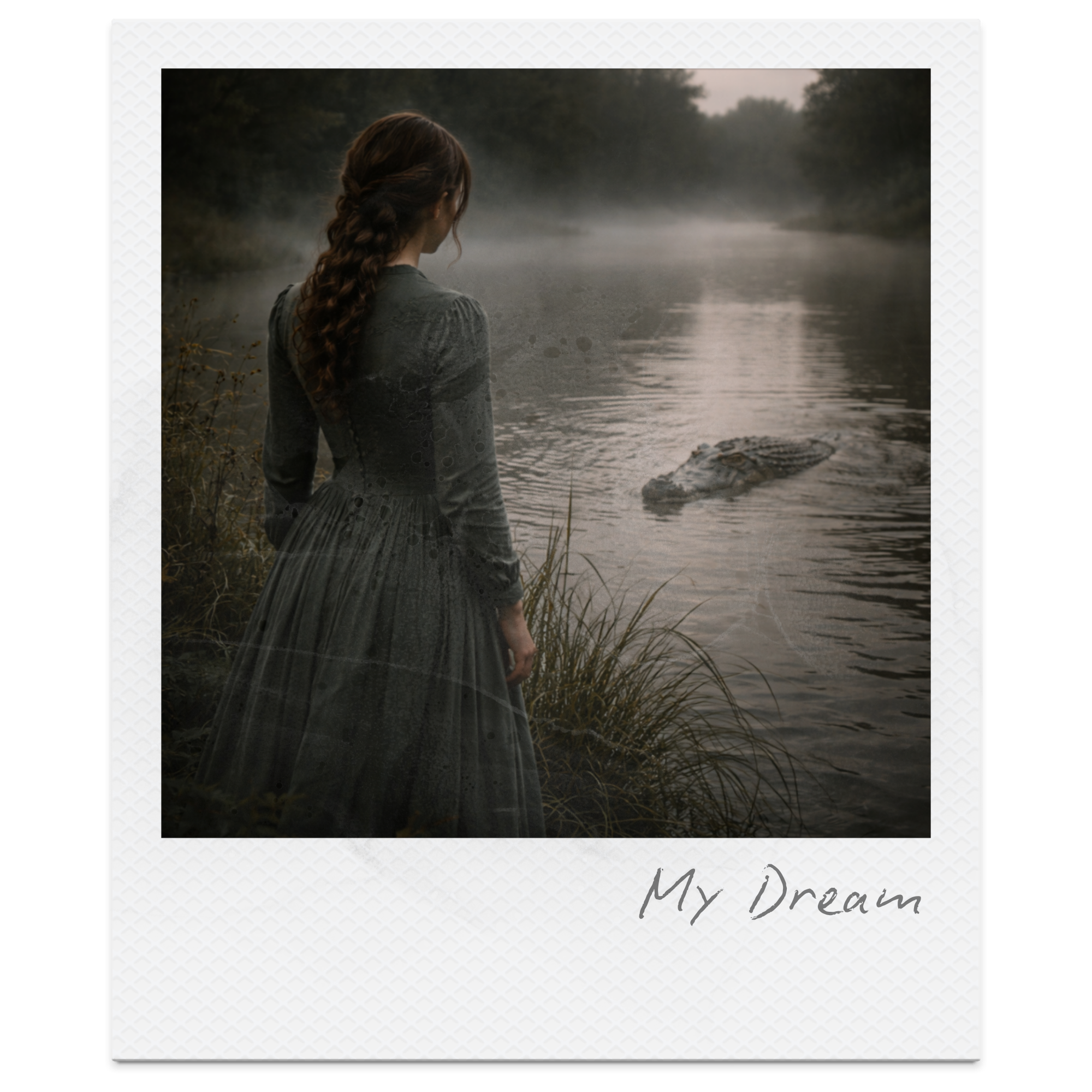
Echo by Christina Rossetti: Summary, Themes, Symbolism & Analysis
Christina Rossetti’s Echo is a deeply intimate exploration of love, memory, longing, and the blurred boundary between life and death. The poem presents a speaker who calls out to a lost beloved, not in waking life, but through the fragile, fleeting space of dreams. At its core, the poem is driven by a central tension between presence and absence, where emotional connection persists even when physical reunion is impossible.
Through its lyrical repetition and dreamlike imagery, Rossetti captures the paradox of desire: the speaker both recognises the impossibility of return and yet continues to yearn for it. The poem moves between comfort and pain, suggesting that memory can sustain love, but also intensify grief. This analysis will explore how Rossetti uses structure, imagery, and voice to construct a haunting meditation on love that refuses to fade, even in death.
For more poetry analysis, explore the Christina Rossetti Poetry Hub and the wider Literature Library.

Context of Echo
Christina Rossetti’s Echo reflects her enduring preoccupation with love beyond death, spiritual longing, and the tension between earthly desire and eternal rest. Written within a deeply Christian Victorian context, the poem explores the idea that true reunion belongs not to the physical world, but to the afterlife. This is evident in the speaker’s awareness that a perfect meeting place exists in Paradise, where “souls brimfull of love abide and meet,” yet remains inaccessible in life.
Rossetti’s own biography strongly informs this tension. Known for her devout Anglican faith and her repeated experiences of renounced or unfulfilled love, Rossetti often presents love as something that must be restrained, redirected, or postponed. In Echo, this conflict becomes particularly poignant: the speaker longs for reunion, but only dares to seek it within the safe, temporary realm of dreams, rather than in reality or through spiritual transgression.
The poem also reflects broader Victorian anxieties surrounding death, mourning, and memory. In an era marked by high mortality rates and elaborate mourning practices, the idea of maintaining a connection with the dead through memory and imagination was culturally significant. However, Rossetti complicates this by suggesting that such connections are both sustaining and painful—dreams allow reunion, but only as a fleeting echo of what has been lost.
For a deeper exploration of Rossetti’s influences, see the Rossetti Context Post.
Echo: At a Glance
Form: Lyrical three-stanza poem with a sonnet-like intensity
Mood: Yearning, intimate, bittersweet
Central tension: The desire for reunion with a lost beloved vs the reality of separation through death
Core themes: Love beyond death, memory and longing, dreams vs reality, spiritual reunion
One-sentence meaning:
The speaker longs to reunite with a lost loved one through dreams, knowing that true reunion belongs only to the afterlife, making each imagined encounter both comforting and painfully temporary.
Summary of Echo
The poem opens with the speaker calling urgently to a lost beloved, asking them to return in the “silence of the night” and within the “speaking silence of a dream.” This paradox immediately establishes the poem’s central idea: that dreams offer a space where absence can briefly become presence. The speaker recalls the beloved’s physical features with tenderness, suggesting that memory keeps them vividly alive, even in death. However, this act of remembering is not purely comforting; it is tied to grief, longing, and emotional dependence.
In the second stanza, the speaker reflects on the nature of dreams themselves, describing them as “too sweet, too bitter sweet.” This repetition emphasises the emotional contradiction at the heart of the poem. The speaker imagines an ideal reunion in Paradise, where love is complete and uninterrupted, contrasting this with the imperfect, fleeting nature of dreams. The image of souls waiting at a door that “lets out no more” reinforces the idea that true reunion belongs only to the afterlife, not the living world.
The final stanza returns to the speaker’s plea, but with greater urgency and vulnerability. Acknowledging that the beloved is “cold in death,” the speaker still begs for their presence in dreams, hoping to relive their “very life again.” The desire becomes almost physical, expressed through phrases like “pulse for pulse, breath for breath,” suggesting a longing not just for memory, but for full emotional and bodily connection. The poem closes on a note of aching intimacy, as the speaker calls the beloved close once more, underscoring the enduring power of love that persists beyond death, even if only as an echo.
Title, Form, Structure, and Metre
Christina Rossetti’s Echo is carefully shaped to mirror its central idea: the repetition of longing. Through its balanced stanza pattern, musical rhythm, and recurring sound structures, the poem formally enacts the very experience it describes—love returning again and again, never fully resolved.
Title
The title Echo immediately introduces the poem’s governing metaphor. An echo is something that returns after it has already passed, diminished yet recognisable. This reflects the speaker’s experience of love: it cannot exist in the present, but continues to resurface through memory and dreams. The title also suggests a lack of control—echoes are involuntary, just as the speaker cannot prevent their longing from repeating itself.
Form and Structure
The poem is organised into three sestets (six-line stanzas), each following the same structural pattern. Within each stanza, Rossetti begins with three longer lines, then shifts into two shorter, more compressed lines, before returning to a longer closing line. This repeated structure creates a cyclical effect, so that each stanza feels like a variation of the one before.
This pattern reinforces the idea of emotional recurrence. The speaker is not progressing toward resolution, but instead caught in a loop of desire and remembrance, returning repeatedly to the same plea. The shortening of the middle lines often intensifies the emotional focus, creating moments that feel almost like echoed fragments of thought or feeling. Structurally, the poem resists forward movement, mirroring the speaker’s inability to move beyond the past.
Rhyme Scheme and Poetic Pattern
The poem follows a consistent and carefully controlled rhyme scheme: ABABCC / DEDEFF / GHGHII. This regularity contributes to the poem’s musical, incantatory quality, reinforcing its dreamlike atmosphere.
The paired rhymes at the end of each stanza create a sense of closure that is never fully satisfying. Instead of resolution, these closing couplets feel like emotional refrains, returning the reader to the speaker’s central longing. The use of predominantly full rhyme enhances the poem’s harmony, making it feel smooth and lyrical, like a remembered song.
However, slight variations—such as softer or less exact rhymes—subtly disrupt this harmony. These moments can be read as reflecting the speaker’s awareness that their imagined reunion is imperfect, reinforcing the gap between idealised memory and reality.
Metre and Rhythmic Movement
The poem is primarily written in iambic pentameter, giving it a steady, flowing rhythm associated with lyric poetry and emotional reflection. However, Rossetti frequently introduces metrical variation to heighten emotional intensity.
Many lines begin with a trochaic inversion (a stressed syllable followed by an unstressed one), creating a more forceful opening:
Come TO | me IN | the SI- | lence OF | the NIGHT
This disruption of the expected rhythm places emphasis on the speaker’s plea, conveying urgency and desire. Elsewhere, Rossetti compresses lines into shorter rhythmic units, particularly in the fourth and fifth lines of each stanza. These shorter lines create a sense of hesitation or emotional contraction, as though the speaker’s voice falters under the weight of feeling.
Moments of spondaic stress (two stressed syllables together) further intensify key ideas. For example:
PULSE for | PULSE, BREATH | for BREATH
The repeated stresses emphasise the physical closeness the speaker longs to recreate, suggesting that memory is not only emotional but almost bodily in its persistence. Even the rhythm itself begins to imitate a heartbeat or breath, reinforcing the intimacy of the speaker’s desire.
Overall, Rossetti’s metrical control produces a poem that feels both fluid and insistent, where rhythmic variations echo the speaker’s emotional state—steady in its longing, yet punctuated by moments of heightened intensity.
The Speaker of Echo
The speaker of Echo appears to be someone mourning a lost beloved, addressing them directly in an intimate and urgent plea. The repeated commands—“Come to me,” “Come back to me”—establish a voice shaped by longing, grief, and emotional persistence, suggesting that the speaker remains deeply attached despite the passage of time. The reference to the beloved as “cold in death” confirms that this is not a temporary separation, but one caused by death, intensifying the emotional stakes of the poem.
The speaker’s perspective is intensely personal, yet deliberately undefined. Rossetti offers no specific details about identity, allowing the voice to feel universal and symbolic, rather than tied to a particular narrative. This lack of specificity makes the poem widely relatable, positioning the speaker as a figure through which broader experiences of loss, memory, and desire can be explored.
There is also a strong sense that the speaker exists between two states: acceptance and resistance. On one level, they acknowledge the reality of death and the impossibility of physical reunion. Yet at the same time, they actively resist this finality by seeking connection through dreams, a space where emotional and physical boundaries blur. This creates a tension between spiritual understanding and human desire, as the speaker knows that true reunion belongs to the afterlife, but still reaches for a more immediate, imagined form of return.
The speaker’s tone is both tender and insistent, moving between soft intimacy and quiet desperation. Phrases such as “Speak low, lean low” suggest closeness and affection, while the repetition of pleas reveals a deeper urgency beneath the surface. Ultimately, the speaker becomes a figure defined by enduring attachment, someone who cannot relinquish the past, and instead lives within its echoes—sustained, but also haunted, by memory.
Stanza-by-Stanza Analysis of Echo
A close reading of Echo reveals how Christina Rossetti gradually deepens the speaker’s emotional state, moving from invocation and memory, through reflection on loss and the afterlife, to an intense final expression of desire for reunion. Each stanza builds upon the last, not by progressing toward resolution, but by circling the same longing in increasingly intimate and urgent ways, mirroring the poem’s central idea of repetition and emotional return.
Stanza 1: Invocation of Memory and Dream-Reunion
The opening stanza is structured as a direct and urgent plea, with the repeated imperative “Come” establishing the speaker’s intense desire for reunion. This repetition creates a rhythmic insistence, suggesting that the speaker is attempting to summon the beloved through sheer force of longing. The phrase “silence of the night” evokes a liminal space—quiet, private, and removed from the distractions of the waking world—where emotional vulnerability becomes possible.
Rossetti develops this further through the paradox “speaking silence of a dream,” capturing the idea that dreams allow communication without words. This contradiction reflects the poem’s central tension between absence and presence, where the beloved cannot physically return, yet can still be experienced vividly in the mind. Dreams become a fragile bridge between life and death, offering connection while simultaneously emphasising loss.
The speaker’s memory of the beloved is strikingly sensory and idealised, focusing on “soft rounded cheeks” and eyes “bright / As sunlight on a stream.” This natural imagery conveys warmth, vitality, and beauty, suggesting that memory preserves the beloved in a state untouched by decay. However, this idealisation also reinforces the distance between past and present—the beloved exists only as a perfected image, not as a living presence.
The shorter line “Come back in tears” introduces a shift in tone, compressing the emotional intensity into a brief, almost fragmented expression. The ambiguity of this phrase allows for multiple interpretations: it may suggest that the speaker’s tears enable the return, or that the beloved themselves returns weeping. Either way, it marks a movement from tender recollection to overt grief, breaking the illusion of comfort established earlier in the stanza.
The final line—“O memory, hope, love of finished years”—draws together the stanza’s key ideas into a layered emotional address. The accumulation of abstract nouns suggests that the speaker is no longer speaking solely to the beloved, but to the emotional remnants of the past itself. The phrase “finished years” emphasises finality, reminding the reader that what is being recalled cannot be restored. In this way, the stanza establishes the central paradox of the poem: memory sustains love, but also confirms its irrevocable loss.
Stanza 2: The Bittersweet Nature of Dreams and the Ideal of Paradise
In the second stanza, the speaker shifts from direct invocation to reflection, focusing on the nature of dreams themselves. The exclamation “Oh dream how sweet, too sweet, too bitter sweet” captures the emotional contradiction at the heart of the poem. The repetition and intensification of “sweet” emphasise the pleasure of reunion, while the addition of “bitter” reveals its underlying pain. Dreams offer fulfilment, but only temporarily, making them both sustaining and emotionally destabilising.
The speaker then contrasts this imperfect dream-experience with the ideal of “Paradise,” introducing a distinctly religious dimension. In this imagined afterlife, “souls brimfull of love abide and meet,” suggesting a state of complete and permanent reunion. The fullness of “brimfull” conveys abundance and satisfaction, sharply opposing the lack and longing experienced in the living world. Here, Rossetti presents a vision of love that is no longer fragmented or interrupted, but wholly fulfilled.
However, this ideal is not accessible to the speaker. The image of “thirsting longing eyes” conveys an intense, almost physical desire for this reunion, while also emphasising its unattainability. The verb “thirsting” suggests both need and deprivation, reinforcing the idea that the speaker remains in a state of emotional lack. The eyes “watch” rather than participate, positioning the speaker as an observer, excluded from the fulfilment they imagine.
The metaphor of the “slow door” deepens this sense of separation. This door, which “opening, letting in, lets out no more,” represents the boundary between life and death. Its movement is described as gradual, suggesting inevitability rather than immediacy. Once crossed, it offers permanent entry into Paradise, but also confirms that return is impossible. This reinforces the poem’s central tension: while true reunion exists, it can only be achieved through death, not through the fleeting, imperfect medium of dreams.
Overall, the stanza moves from the emotional immediacy of dreaming to a more philosophical reflection on eternity and limitation, highlighting the painful gap between what is desired and what is possible.
Stanza 3: Desperate Longing and the Illusion of Recovered Life
The final stanza returns to the speaker’s plea, but with heightened urgency and emotional intensity. The opening “Yet” signals a shift—despite recognising the limitations of dreams and the perfection of Paradise, the speaker still insists on reunion in the only way available. The repetition of “come to me in dreams” reinforces this persistence, suggesting that longing overrides reason. Dreams may be imperfect, but they remain the speaker’s only access to the beloved.
The phrase “that I may live / My very life again” reveals the depth of the speaker’s attachment. Life itself is defined not as independent existence, but as something shared with the beloved. Without them, the speaker’s present existence feels incomplete, almost lifeless. This is made explicit in the stark acknowledgement “tho’ cold in death,” which grounds the stanza in the reality of loss even as the speaker attempts to transcend it through imagination.
Rossetti intensifies this desire through the physical imagery of “pulse for pulse, breath for breath.” This language suggests not just emotional closeness, but a longing for complete bodily reunion, as though the speaker wishes to restore the beloved to life through shared rhythm and sensation. The repetition creates a sense of merging, where boundaries between self and other begin to dissolve. It also echoes the fundamental signs of life—heartbeat and breath—highlighting the impossibility of what the speaker desires.
The shortened line “Speak low, lean low” creates a moment of hushed intimacy. The repetition and soft consonants slow the rhythm, drawing the reader into a private, almost whispered exchange. This contrasts with the urgency of earlier lines, suggesting a memory of closeness that is gentle and deeply personal. However, this intimacy is immediately undercut by the final line: “As long ago, my love, how long ago.”
The repetition of “long ago” emphasises the passage of time, bringing the poem back to its central awareness of loss and irretrievability. The address “my love” reinforces the emotional bond, but also highlights its distance—this relationship exists only in memory. The poem closes not with resolution, but with a lingering sense of absence, where the speaker remains suspended between past intimacy and present separation, sustained only by echoes of what has been.
Key Quotes from Echo
These key quotations reveal how Rossetti constructs a powerful exploration of longing, memory, and the desire for reunion beyond death. Through repetition, paradox, and sensory imagery, the poem captures the tension between emotional closeness and physical absence, showing how love persists even when it cannot be fulfilled.
“Come to me in the silence of the night”
◆ The imperative “Come” establishes immediate urgency, revealing the speaker’s intense longing for reunion
◆ “Silence of the night” creates a liminal, private space, where emotional vulnerability and memory can surface
◆ Suggests that connection is only possible when the external world is quiet, reinforcing isolation
“the speaking silence of a dream”
◆ A paradox that captures the tension between absence and presence
◆ Dreams allow communication without physical reality, acting as a bridge between life and death
◆ Reinforces the idea that emotional truth can exist beyond literal experience
“soft rounded cheeks and eyes as bright / As sunlight on a stream”
◆ Sensory imagery idealises the beloved, preserving them in a state of youth and vitality
◆ Natural imagery conveys warmth and beauty, suggesting memory resists decay
◆ Highlights the contrast between living memory and present absence
“O memory, hope, love of finished years”
◆ A triadic structure elevates abstract emotions into almost tangible presences
◆ “Finished years” emphasises finality and irreversibility, reinforcing loss
◆ Suggests the speaker is addressing not just the beloved, but the emotional residue of the past
“too sweet, too bitter sweet”
◆ Repetition intensifies the emotional contradiction at the heart of the poem
◆ Captures the dual nature of dreams as both comforting and painful
◆ Reflects the instability of longing that cannot be resolved
“Where souls brimfull of love abide and meet”
◆ Religious imagery presents an idealised vision of eternal reunion in Paradise
◆ “Brimfull” suggests abundance and emotional completeness, contrasting with earthly lack
◆ Reinforces the idea that true fulfilment exists beyond life
“thirsting longing eyes”
◆ Combines physical need with emotional desire, intensifying the sense of absence
◆ “Thirsting” implies deprivation, suggesting the speaker is denied fulfilment
◆ Positions the speaker as an observer rather than participant in reunion
“Pulse for pulse, breath for breath”
◆ Physical imagery conveys a desire for complete, embodied reunion
◆ Repetition suggests merging identities, blurring boundaries between self and other
◆ Echoes the rhythms of life, reinforcing the impossibility of restoring what is lost
“As long ago, my love, how long ago”
◆ Repetition emphasises the passage of time and the distance from the past
◆ The address “my love” maintains intimacy despite separation
◆ Concludes the poem with a lingering sense of irretrievable loss and enduring attachment
Key Techniques in Echo
Rossetti’s Echo relies on a carefully controlled blend of repetition, sound patterning, and figurative language to reinforce its central concerns with longing, memory, and emotional recurrence. These techniques do not simply decorate the poem; they actively shape its meaning, mirroring the speaker’s inability to escape the past.
◆ Repetition (Anaphora, Diacope, Polyptoton) – Repetition is central to the poem’s structure and meaning, reflecting the idea of an “echo.” The repeated imperative “Come” creates urgency and insistence, while phrases like “too sweet, too bitter sweet” show the speaker revising their own emotions in real time. Variations such as “live” / “life” and “let…lets” (polyptoton) reinforce thematic connections between existence, memory, and loss, suggesting the speaker is trapped in cycles of thought and feeling.
◆ Paradox – Phrases such as “speaking silence” and “bitter sweet” capture the poem’s emotional contradictions. These paradoxes reflect the speaker’s experience of dreams as both comforting and painful, highlighting the unstable boundary between presence and absence.
◆ Apostrophe – The speaker directly addresses the absent beloved and abstract concepts like “memory” and “love,” creating an intimate, almost ritualistic tone. This technique emphasises absence, as the speaker speaks to what cannot respond, reinforcing emotional isolation.
◆ Imagery (Sensory and Natural) – Rossetti uses vivid physical imagery—“soft rounded cheeks,” “sunlight on a stream”—to preserve the beloved in an idealised, living state. Natural imagery conveys warmth and vitality, contrasting with the reality of death and reinforcing the power of memory to resist decay.
◆ Religious Allusion – References to “Paradise” introduce a theological framework, presenting an idealised space of eternal reunion. This elevates the speaker’s longing beyond personal grief, connecting it to broader Victorian concerns with salvation, afterlife, and spiritual fulfilment.
◆ Sound Patterning (Alliteration, Internal Rhyme, Musicality) – Subtle sound effects, such as the soft consonants in “Speak low, lean low,” create a hushed, intimate tone. Internal echoes between words like “low” and “ago” enhance the poem’s musical quality, reinforcing the idea of emotional resonance and return.
◆ Structural Repetition and Cyclical Form – The mirrored stanza structure and recurring phrasing create a sense of circularity rather than progression. Each stanza revisits the same longing from a slightly different angle, suggesting the speaker is unable to move forward, instead reliving the past repeatedly.
◆ Metaphor (Dreams as Reunion) – Dreams function as an extended metaphor for temporary reunion, offering access to the beloved while simultaneously emphasising their absence. This reinforces the poem’s central tension between illusion and reality.
◆ Caesura and Pauses – Strategic pauses within lines slow the rhythm and create moments of reflection, mirroring the speaker’s emotional hesitations. These breaks often coincide with heightened feeling, allowing the weight of longing to settle.
◆ Parallelism – Phrases like “Pulse for pulse, breath for breath” create a balanced, mirrored structure that suggests unity and merging. This reinforces the speaker’s desire for complete connection, while also highlighting its impossibility.
Together, these techniques create a poem that is not only about memory and longing, but formally enacts them—each sound, structure, and repetition working as an echo of what has been lost.
Themes in Echo
Christina Rossetti’s Echo explores a tightly interwoven set of themes centred on love, loss, and the persistence of emotional connection beyond physical separation. The poem resists resolution, instead presenting these ideas as ongoing tensions that shape the speaker’s experience.
Love Beyond Death
At its core, the poem presents love as something that survives death, refusing to diminish over time. The speaker’s continued address to the beloved suggests that emotional attachment remains active, even when physical presence is impossible. However, Rossetti complicates this idea by showing that such enduring love is both sustaining and painful—it keeps the beloved alive in memory, but also prevents the speaker from moving forward.
Memory and Longing
Memory functions as both a source of comfort and a trigger for intensified longing. The speaker’s recollections are vivid and sensory, preserving the beloved in a state of idealised perfection. Yet this very clarity makes absence more acute, as the speaker becomes increasingly aware of what has been lost. The poem suggests that memory does not fade, but instead repeats and returns, trapping the speaker in an emotional loop.
Dreams vs Reality
Dreams offer a temporary escape from reality, allowing the speaker to experience reunion in a way that waking life cannot provide. However, this creates a tension between illusion and truth. While dreams feel real in the moment, they ultimately reinforce loss when the speaker awakens. Rossetti presents dreams as a fragile middle ground—neither fully real nor entirely unreal—where longing is both satisfied and deepened.
Spiritual Reunion
The idea of spiritual reunion in the afterlife introduces a religious dimension to the poem. Paradise is imagined as a space where love is complete and permanent, free from the limitations of earthly existence. However, this ideal remains inaccessible to the speaker in the present. As a result, the poem explores the gap between faith in eternal reunion and the immediate desire for connection, highlighting the difficulty of reconciling spiritual belief with human emotion.
The Passage of Time and Irretrievability
The repeated emphasis on “finished years” and “long ago” foregrounds the irreversible nature of time. The past cannot be recovered, only revisited through memory or dreams. This reinforces the poem’s melancholic tone, as the speaker becomes increasingly aware that what they long for belongs entirely to the past.
Emotional Dependence and Identity
The speaker’s sense of self appears deeply tied to the lost beloved, particularly in the desire to “live / My very life again.” This suggests that identity is not fully independent, but shaped through connection and shared experience. Without the beloved, the speaker feels diminished, as though their life has lost its defining meaning.
Together, these themes create a poem that is less about resolution and more about enduring emotional states—a meditation on how love, once formed, continues to echo long after it should have faded.
Alternative Interpretations of Echo
While Echo presents a clear emotional narrative of longing and loss, it also invites multiple interpretations. Rossetti’s use of ambiguity, symbolism, and emotional tension allows the poem to be read through different critical lenses, each revealing new dimensions of meaning.
Feminist Interpretation: Contained Desire and Emotional Restraint
From a feminist perspective, the poem can be read as an exploration of suppressed female desire within a restrictive Victorian context. The speaker’s longing is intense and persistent, yet it cannot be openly fulfilled or expressed in the physical world. Instead, it is redirected into the private, internal space of dreams, where emotional and physical closeness becomes permissible.
This suggests that desire is not absent, but contained and controlled, shaped by social expectations around female propriety and restraint. The repeated pleas—“Come to me”—take on a heightened significance, revealing a voice that is both yearning and constrained, seeking connection in a space that avoids transgression.
Psychological Interpretation: Grief, Memory, and Repetition
Psychologically, the poem can be understood as a portrayal of grief that resists resolution. The speaker repeatedly revisits the lost beloved through dreams, suggesting a form of emotional fixation or repetition compulsion, where the mind returns to the same loss in an attempt to process it.
Dreams function as a space of wish fulfilment, allowing the speaker to temporarily reconstruct what has been lost. However, this only deepens the cycle of longing, as each imagined reunion reinforces the absence that follows. The poem therefore reflects the way grief can become circular rather than progressive, trapping the speaker in an ongoing emotional loop.
Religious Interpretation: Earthly Longing vs Divine Order
Rossetti’s Christian worldview introduces a tension between human desire and spiritual acceptance. The poem acknowledges that true reunion belongs in Paradise, where love is complete and eternal. However, the speaker does not passively wait for this promised reunion; instead, they actively seek connection through dreams.
This can be read as a subtle conflict between faith and longing. While religious belief encourages patience and trust in divine timing, the speaker’s repeated pleas suggest a reluctance to fully surrender to this order. In this sense, the poem explores the difficulty of reconciling earthly emotion with spiritual doctrine.
Existential Interpretation: Memory, Identity, and Irreversible Time
From an existential perspective, the poem raises questions about identity and meaning in the absence of the beloved. The speaker’s desire to “live / My very life again” suggests that their sense of self is deeply tied to past experience, rather than present reality.
Time is presented as irreversible—“finished years” cannot be reclaimed—yet the speaker continues to inhabit them mentally. This creates a tension between what is lived and what is remembered, suggesting that meaning may reside more in memory than in the present moment. The poem therefore explores the instability of identity when it is anchored in something that no longer exists.
Gothic Interpretation: Dreams as a Haunted Liminal Space
The poem can also be read through a gothic lens, where dreams function as a haunted, liminal space between life and death. The beloved’s presence is neither fully real nor entirely absent, creating an uncanny atmosphere in which boundaries begin to blur.
This positions the speaker in a state of in-betweenness, suspended between mourning and reunion, reality and illusion. The act of calling the beloved back begins to resemble a form of summoning, giving the poem a subtle gothic undertone in which love persists in a ghost-like, echoing form.
Erotic / Embodied Interpretation: Desire, Intimacy, and Absence
The poem also contains an undercurrent of embodied desire, expressed through physical language that suggests intimacy even in absence. Phrases such as “pulse for pulse, breath for breath” evoke a longing for complete bodily closeness, while “Speak low, lean low” suggests proximity and tenderness.
However, this desire is not directly fulfilled; instead, it is displaced into the dream world, where physical connection becomes imagined rather than real. This reflects a transformation of desire into something more controlled and internalised, aligning with Rossetti’s broader tendency to spiritualise or restrain physical longing. As a result, intimacy becomes both intensely present and fundamentally unattainable, reinforcing the poem’s central tension between desire and absence.
Teaching Ideas for Echo
Echo offers rich opportunities for exploring voice, structure, and interpretation, making it ideal for developing both analytical precision and conceptual thinking. The poem’s layered meanings allow students to move beyond surface-level understanding and engage with multiple readings, close analysis, and evaluative argument.
1. Model Paragraph Deconstruction and Development
Provide students with the following analytical paragraph:
Rossetti presents dreams in Echo as both a source of comfort and a site of emotional instability. The speaker’s repeated plea, “Come to me in the silence of the night,” suggests an urgent desire to reclaim the past, while the paradox “speaking silence of a dream” reflects the fragile, illusory nature of this reunion. Although dreams allow the speaker to experience intimacy, they ultimately reinforce absence, as shown in the description of the dream as “too bitter sweet.” This contrast highlights the central tension of the poem: dreams offer temporary fulfilment, but also deepen the speaker’s awareness of loss. As a result, Rossetti presents longing not as something that fades, but as something sustained and intensified through memory and imagination.
Students then complete three stages:
First, they generate possible questions that this paragraph could answer. This develops awareness of how arguments are shaped by the question and encourages flexible thinking.
Next, students assess the paragraph using a mark scheme or success criteria, focusing on:
clarity of argument
use of textual evidence
integration of terminology and techniques
depth of interpretation
Finally, students develop the paragraph further, either by:
introducing an alternative interpretation (e.g. religious or psychological)
embedding more precise terminology
strengthening links between ideas and the poem’s wider themes
This task builds a clear understanding of what effective analytical writing looks like, while also reinforcing the importance of precision, structure, and evaluative depth. For further practice, students can apply this approach using prompts from the Rossetti Essay Questions post.
2. Dream vs Reality Debate
Students explore the tension between dreams and reality by debating the statement:
“Dreams offer genuine emotional fulfilment in Echo, rather than false comfort.”
Students gather evidence from across the poem, considering:
how dreams function for the speaker
whether they provide relief or intensify grief
how Rossetti presents their limitations
This encourages students to develop balanced arguments and engage with interpretive nuance, rather than settling for a single reading.
3. Close Reading: The Language of Intimacy
Students zoom in on phrases such as “pulse for pulse, breath for breath” and “Speak low, lean low.” They analyse:
how Rossetti uses physical imagery
the effect of repetition and sound
what these phrases reveal about the speaker’s desire
Students then write a short analytical response exploring how Rossetti conveys intimacy in absence, helping them practise precise, language-focused analysis.
4. Structural Mapping Activity
Students map the emotional progression of the poem across its three stanzas, identifying:
the shift from invocation to reflection to intensified longing
how structure reinforces repetition rather than resolution
where key turning points or emotional peaks occur
They then write a paragraph explaining how Rossetti’s structure reflects the idea of an “echo”, developing their ability to connect form and meaning.
5. Alternative Interpretations Carousel
Assign students different critical lenses (feminist, psychological, religious, existential, gothic, or embodied desire). Each group:
applies their lens to a specific stanza
selects key quotations
presents their interpretation to the class
Students then compare how meaning shifts depending on perspective, reinforcing the idea that literature supports multiple, coexisting interpretations.
6. Creative Reimagining: The Reply
Students write a response poem or monologue from the perspective of the absent beloved. They should consider:
whether the beloved is aware of the speaker
whether reunion is possible or denied
how tone differs from the original poem
This encourages deeper engagement with voice and perspective, while also reinforcing understanding of the poem’s emotional core.
7. Comparative Link Task
Students compare Echo with another Rossetti poem (such as Remember or Song (When I am dead, my dearest)), focusing on:
how each poem presents love and absence
the role of memory vs acceptance
differences in tone and resolution
They then write a comparative paragraph, building skills in synthesis and cross-textual analysis.
Go Deeper into Echo
Rossetti’s Echo sits within a wider body of work that repeatedly explores love, loss, memory, and spiritual tension. When read alongside her other poems, Echo becomes part of a larger pattern: a persistent questioning of whether emotional attachment can—or should—survive beyond separation.
◆ Remember – Both poems explore love after death, but while Echo clings to reunion through dreams, Remember moves toward acceptance and release. The speaker in Remember ultimately prioritises the beloved’s peace over continued remembrance, whereas Echo resists this, revealing a more emotionally dependent and unresolved voice.
◆ Song (When I am dead, my dearest) – This poem similarly challenges the value of memory, suggesting that the dead are beyond earthly awareness. In contrast, Echo imagines an ongoing connection, where the beloved can still be accessed through dreams. This highlights a tension in Rossetti’s work between detachment and continued emotional attachment.
◆ My Dream – Like Echo, this poem uses dreams as a space of idealised reunion and emotional intensity. However, My Dream presents a more sustained and immersive vision, whereas Echo emphasises the fragility and impermanence of such experiences, reinforcing the bittersweet nature of longing.
◆ Dream Land – Both poems create dreamlike, liminal spaces, but Dream Land offers a more complete withdrawal from reality, suggesting rest and escape. In contrast, Echo resists full retreat, using dreams not for peace, but for reconnection with what has been lost, making them emotionally charged rather than soothing.
◆ The World – This poem critiques the emptiness of surface appearances, particularly in relation to desire. When read alongside Echo, it highlights how Rossetti distinguishes between false, worldly fulfilment and deeper emotional or spiritual longing, positioning the speaker’s desire as sincere but unresolved.
◆ Twice – Both poems examine emotional vulnerability and dependence, particularly in relation to love. In Twice, the speaker redirects love toward God after rejection, whereas in Echo, the speaker remains fixated on the lost beloved. This contrast reveals different responses to unfulfilled desire: redirection versus persistence.
◆ Shut Out – This poem explores exclusion and separation, much like Echo. However, Shut Out presents a more definitive boundary, where access is denied entirely. In Echo, the boundary is more porous, as dreams allow temporary crossing, reinforcing the idea of partial, unstable access to what is lost.
◆ From the Antique – This poem expresses a desire for emotional detachment and release from longing, presenting love as something burdensome. In contrast, Echo embraces longing, suggesting that emotional attachment, even when painful, is central to the speaker’s identity.
◆ A Better Resurrection – Both poems explore spiritual struggle and emotional emptiness, but A Better Resurrection turns toward religious renewal. Echo, by contrast, remains focused on human attachment, highlighting the tension between spiritual aspiration and emotional need.
◆ At Home – This poem also presents a separation between the living and the dead, with the speaker observing life from a distance. Unlike Echo, where the speaker actively seeks reunion, At Home adopts a more detached and observational perspective, emphasising acceptance rather than yearning.
Together, these comparisons reveal that Echo occupies a distinctive place in Rossetti’s poetry. While many of her works move toward detachment, faith, or acceptance, Echo remains firmly rooted in longing, repetition, and emotional persistence, making it one of her most intimate and unresolved explorations of love beyond loss.
Final Thoughts
Christina Rossetti’s Echo is a powerful meditation on love that refuses to fade, even in the face of death. Through its cyclical structure, dreamlike imagery, and emotional intensity, the poem captures the experience of being caught between memory and reality, where the past continues to shape the present. Rather than offering resolution, Rossetti presents longing as something that persists, repeats, and deepens, much like the echo of the title itself.
What makes Echo particularly compelling is its refusal to settle into a single interpretation. It moves between spiritual belief and human desire, comfort and pain, presence and absence, creating a layered exploration of grief and attachment. The speaker’s voice remains intimate and unresolved, suggesting that some forms of love cannot be neatly reconciled, but instead continue to exist in a state of emotional return.
For more poetry analysis, explore the Christina Rossetti Poetry Hub and the wider Literature Library.
Choose Your Next Text