From the Antique Christina Rossetti Analysis: Themes, Feminism & Existential Meaning
Christina Rossetti’s From the Antique explores female dissatisfaction, existential despair, and the burden of identity, presenting a stark and unsettling reflection on what it means to exist within restrictive social and personal boundaries. Through the voice of a weary female speaker, the poem expresses a desire not only to escape the limitations of womanhood, but to withdraw entirely from existence, suggesting a profound sense of emotional exhaustion and disconnection from life itself.
At its core, the poem examines the tension between individual insignificance and the continuity of the world, highlighting how life continues unchanged regardless of personal suffering. This analysis explores themes, structure, voice, and key ideas, offering a clear and detailed interpretation of Rossetti’s bleak yet thought-provoking perspective. For more poetry analysis, explore the Christina Rossetti hub and the wider Literature Library.

From the Antique Context
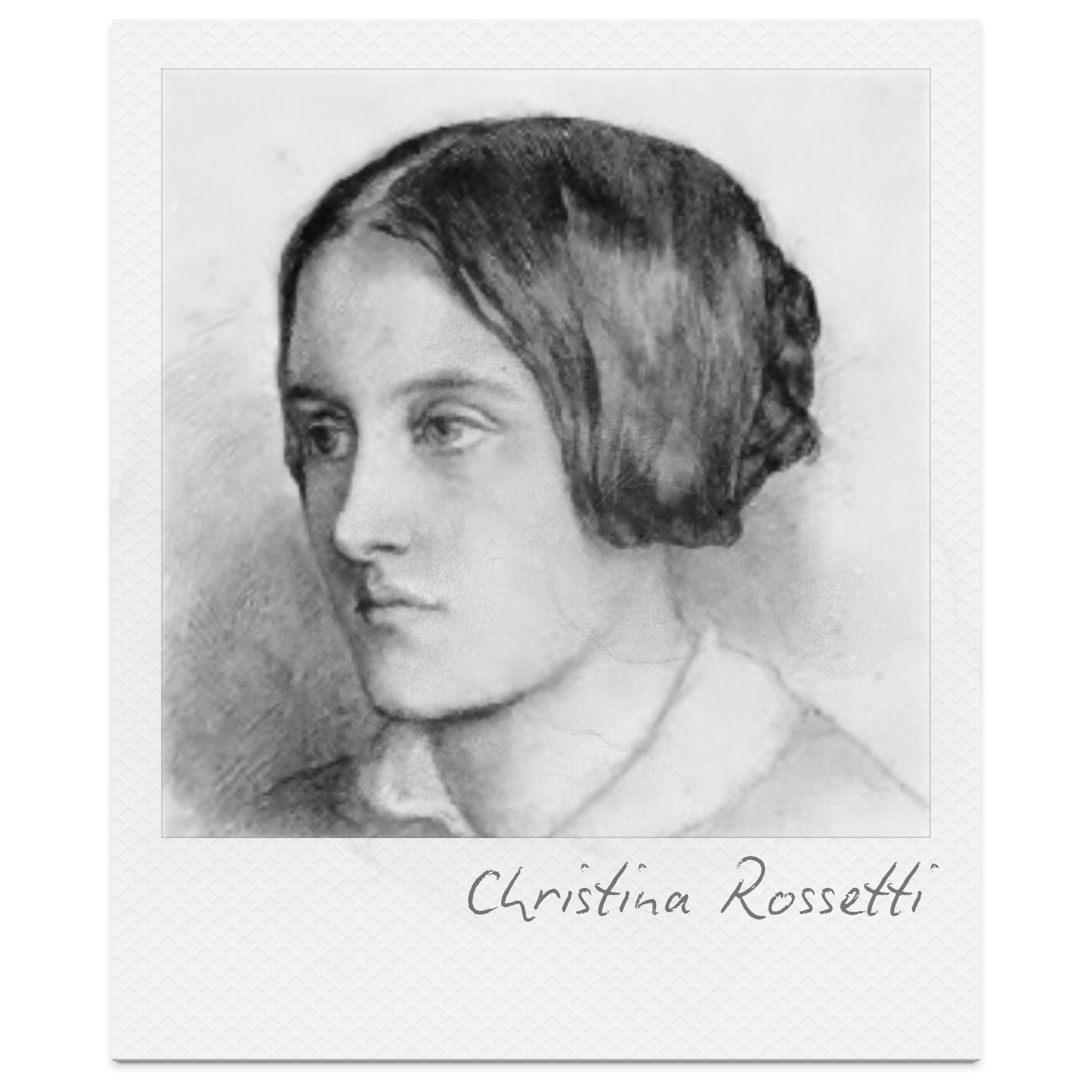
Christina Rossetti’s From the Antique reflects her engagement with questions of identity, gender, and existential purpose, shaped by both her personal circumstances and the wider constraints of Victorian society. As a woman writing in a culture that imposed strict expectations around marriage, domesticity, and female submission, Rossetti was acutely aware of the limited roles available to women. The speaker’s wish to “be a man” reflects this imbalance, suggesting that male identity offered greater agency, freedom, and value, while female existence could feel restrictive and diminished.
The poem also aligns with Rossetti’s recurring interest in self-denial and withdrawal, often influenced by her religious beliefs. While much of her work frames renunciation in spiritual terms, From the Antique presents a more unsettling perspective, where the desire to withdraw extends beyond the material world to a wish for complete non-existence. This reflects a deeper engagement with existential questions about meaning, purpose, and the individual’s place in the world, moving beyond purely moral or devotional concerns.
At the same time, the poem reflects a broader Victorian awareness of human insignificance within larger natural and temporal cycles. The speaker’s recognition that “the world would wag on the same” regardless of her absence highlights a tension between individual suffering and the indifference of the world. This idea resonates with wider nineteenth-century anxieties about identity, value, and permanence, particularly in a rapidly changing society. For a broader exploration of Rossetti’s life, beliefs, and recurring themes, see the Christina Rossetti Context Post.
From the Antique: At a Glance
Form: Lyric poem (monologue-style)
Mood: Weary, bleak, introspective
Central tension: The burden of existence vs the desire for non-existence
Core themes: Female limitation, existential despair, identity, insignificance
One-sentence summary:
The poem presents a speaker who, disillusioned with the limitations of womanhood and existence itself, expresses a desire to escape not just her identity, but life entirely, recognising that the world would continue unchanged without her.
From the Antique Summary
The poem opens with a direct and personal expression of exhaustion, as the speaker describes life as “weary” and immediately situates this weariness within the experience of being a woman. This dissatisfaction is presented as “doubly blank,” suggesting not only a lack of fulfilment, but an intensified sense of emptiness tied to gender. The speaker’s desire to “be a man” reflects a longing for escape from social and emotional limitation, though this quickly develops into a more extreme wish to cease existing altogether.
As the poem progresses, the speaker imagines a state of complete non-existence, rejecting both physical and spiritual presence. This desire is expressed in increasingly absolute terms, as she wishes to be “not so much as a grain of dust,” emphasising a longing for total erasure and absence of identity. The tone here is stark and unembellished, reinforcing the depth of her existential despair and disconnection from life.
In the final section, the speaker reflects on the indifference of the world to individual existence. Natural cycles—blossoms blooming, cherries ripening, bees humming—continue unchanged, suggesting that life operates independently of personal presence or absence. The poem concludes with the recognition that no one would miss her, reinforcing a sense of insignificance and invisibility. This ending shifts the poem from personal despair to a broader meditation on the continuity of the world and the fragility of individual identity, leaving a stark and unsettling impression.
Title, Form, Structure, and Metre
Rossetti’s formal choices in From the Antique create a striking contrast between simple structure and complex emotional depth, reinforcing the speaker’s sense of exhaustion, limitation, and existential despair. The poem’s controlled, almost childlike form contains ideas that are deeply unsettling, intensifying its overall impact.
Title
The title From the Antique suggests something drawn from the past or an earlier age, which may imply that the speaker’s experience is not unique, but part of a long-standing and recurring condition. This frames the poem as something timeless and universal, particularly in its exploration of female dissatisfaction. The title may also suggest a kind of translation or retelling, reinforcing the sense that this voice represents a shared and enduring perspective rather than an isolated experience.
Form and Structure
The poem is presented as a form of reported speech, where a narrator introduces the voice of an unnamed woman before allowing her perspective to dominate the poem. Although the narrator is almost entirely absent after the opening line, their presence subtly challenges the speaker’s claim that she would be completely unnoticed, suggesting that her voice is, in fact, being heard.
Structurally, the poem is composed of four quatrains, each contributing to the gradual development of the speaker’s argument. The first two stanzas focus on personal dissatisfaction and the desire for escape, while the latter half shifts outward, imagining a world that continues unchanged in her absence. This progression moves from internal despair to external indifference, reinforcing the poem’s exploration of insignificance.
Rhyme Scheme and Poetic Pattern
The poem follows a regular ABCB rhyme scheme, a pattern often associated with ballads and nursery rhymes. This familiar and almost simplistic structure contrasts sharply with the poem’s bleak subject matter, creating an unsettling effect.
By placing ideas of non-existence and emotional emptiness within such a controlled and recognisable pattern, Rossetti creates a sense of containment, as though the speaker’s despair is being expressed within rigid boundaries. The simplicity of the rhyme also mirrors the speaker’s thinking, which feels direct, absolute, and stripped of complexity, reinforcing the clarity of her desire for nothingness.
Metre and Rhythmic Movement
Rather than adhering strictly to a single metrical pattern such as iambic pentameter, the poem uses an accentual rhythm, with approximately four stressed beats per line. This allows Rossetti greater flexibility in shaping the speaker’s voice, creating a rhythm that feels both controlled and slightly uneven.
In lines such as:
Were NOthing at ALL in ALL the WORLD
Not a BOdy and NOT a SOUL
The stresses fall heavily on words associated with negation and erasure, such as “nothing,” “all,” and “not.” This creates a forceful, almost insistent rhythm, reflecting the speaker’s urgent and repetitive desire for non-existence.
Overall, the rhythmic movement reinforces the poem’s emotional tone: it is steady enough to feel controlled, yet flexible enough to convey the speaker’s intensity and underlying instability, mirroring the tension between order and despair that runs throughout the poem.
The Speaker of From the Antique
The speaker of From the Antique is presented as a deeply weary and disillusioned woman, whose voice expresses both personal exhaustion and broader dissatisfaction with existence. Her opening statement—“It’s a weary life”—immediately establishes a tone of resignation and emotional fatigue, which continues throughout the poem. While her complaint is rooted in the experience of being a woman, it quickly expands into a more profound rejection of identity itself, as she moves from wishing to “be a man” to wishing to cease existing altogether.
The speaker’s voice is strikingly direct and unembellished, lacking the lyrical softness often associated with poetry about emotion. This simplicity reinforces the sense that her despair is not dramatic or exaggerated, but deeply internalised and sustained. Her repeated focus on negation—“not a body,” “not a soul”—suggests a desire for complete erasure, highlighting the intensity of her existential detachment.
At the same time, the poem introduces a subtle complexity through its framing as reported speech. The speaker’s words are initially presented by a narrator, whose presence, though minimal, suggests that her voice is being heard and preserved. This creates a tension between the speaker’s belief that she would be entirely unnoticed and the fact that her thoughts are being recorded and shared. It raises the possibility that her experience is not entirely isolated, but part of a wider, shared condition.
Ultimately, the speaker functions both as an individual voice and as a representation of broader emotional and social realities, particularly those connected to female limitation, identity, and the burden of existence. Her perspective is not resolved or softened, leaving the reader with a stark and unsettling reflection on what it means to feel both present and insignificant at the same time.
From the Antique Stanza-by-Stanza Analysis
This stanza-by-stanza analysis of From the Antique explores how Rossetti develops meaning through voice, tone, and imagery, tracing the speaker’s movement from personal dissatisfaction to existential rejection of identity. Each stanza deepens the poem’s exploration of female limitation, emotional exhaustion, and the desire for non-existence, revealing how the speaker’s perspective expands from individual experience to a broader reflection on the insignificance of the self within the wider world.
Stanza 1: Weariness and Rejection of Identity
The opening stanza immediately establishes the speaker’s emotional exhaustion and dissatisfaction with existence, framing life as something burdensome rather than meaningful. The repetition in “It’s a weary life, it is” reinforces a sense of ongoing fatigue, suggesting that this feeling is not momentary, but deeply ingrained. The phrase “doubly blank in a woman’s lot” introduces a specifically gendered dimension, implying that the speaker’s experience of life is marked by both emptiness and limitation, intensified by her identity as a woman.
◆ The repetition of “weary” emphasises sustained exhaustion, creating a tone of resignation rather than dramatic despair.
◆ “Doubly blank” suggests a compounded sense of emptiness and lack of fulfilment, reinforcing the idea of life as devoid of meaning.
◆ The reference to “a woman’s lot” highlights social and gender constraints, positioning her dissatisfaction within a wider cultural context.
◆ The repeated wish “I wish and I wish” conveys a sense of longing and frustration, suggesting desires that cannot be realised.
◆ The progression from wishing to “be a man” to wishing to “be not” marks a shift from social dissatisfaction to existential rejection, intensifying the speaker’s despair.
This stanza establishes the central tension of the poem: the speaker’s struggle with both her identity and existence itself, setting the foundation for the more absolute desire for non-existence that follows.
Stanza 2: Desire for Total Erasure
In this stanza, the speaker’s dissatisfaction deepens into a clear and uncompromising desire for complete non-existence. The conditional phrasing—“Were nothing at all”—moves beyond frustration with identity and imagines a state in which the self is entirely absent. The language becomes increasingly absolute, rejecting not only social identity but also physical presence and spiritual existence, suggesting a profound form of existential negation.
◆ The phrase “nothing at all in all the world” uses repetition to emphasise total erasure, leaving no space for partial existence.
◆ “Not a body and not a soul” rejects both physical and spiritual identity, reinforcing the completeness of the speaker’s wish.
◆ The repeated use of “not” creates a rhythm of negation, mirroring the speaker’s desire to strip away every aspect of being.
◆ The comparison to “a grain of dust” suggests extreme smallness and insignificance, reducing existence to something almost imperceptible.
◆ “A drop of water from pole to pole” expands this idea globally, implying that even the smallest trace of presence should be erased across the entire world.
This stanza intensifies the poem’s movement from personal dissatisfaction to existential annihilation, presenting non-existence not as an abstract idea, but as something the speaker imagines in precise and absolute terms.
Stanza 3: The Indifference of the World
In this stanza, the speaker shifts her focus outward, imagining how the world would continue unchanged in her absence. The repeated use of “Still” emphasises continuity, suggesting that the rhythms of nature and time remain entirely unaffected by individual existence. This marks a movement from personal despair to a broader recognition of the world’s indifference, reinforcing the idea that the self is ultimately insignificant within larger cycles.
◆ The repetition of “Still” creates a sense of unbroken continuity, highlighting the persistence of the world beyond the individual.
◆ “The world would wag on the same” conveys a tone of casual indifference, suggesting that life continues without disruption or loss.
◆ The cyclical imagery of “seasons go and come” reinforces the idea of ongoing, inevitable natural patterns.
◆ Images such as “blossoms bloom” and “cherries ripen” evoke renewal and abundance, contrasting sharply with the speaker’s sense of emptiness.
◆ The detail of “wild bees hum” introduces a sense of life, movement, and quiet productivity, further emphasising the vitality of the world.
This stanza expands the poem’s perspective, showing that while the speaker feels weary and disconnected, the world remains vibrant and self-sustaining, deepening the contrast between individual insignificance and natural continuity.
Stanza 4: Insignificance and Final Acceptance
In the final stanza, the speaker brings her reflection to a stark conclusion, fully accepting her own insignificance within the wider world. The imagined absence introduced earlier becomes more personal and absolute, as she asserts that no one would “miss,” “care,” or “weep” for her. This progression intensifies the sense of emotional isolation, while also reinforcing the poem’s broader argument that individual existence has little impact on the continuity of life.
◆ The phrase “None would miss me” presents a blunt statement of perceived invisibility and lack of value, stripping away any sense of emotional connection.
◆ The escalation from “miss” to “care” to “weep” suggests diminishing levels of emotional response, emphasising complete indifference.
◆ “I should be nothing” returns to the poem’s central idea of non-existence, now framed as both desired and inevitable.
◆ The contrast between “I” and “all the rest” reinforces the divide between individual absence and collective continuity.
◆ The cyclical pattern of “wake and weary and fall asleep” mirrors the earlier seasonal imagery, suggesting that life continues in repetitive, unaltered rhythms.
This final stanza resolves the poem’s movement from personal dissatisfaction to existential acceptance, presenting non-existence not as a dramatic escape, but as something aligned with the speaker’s understanding of a world that continues unchanged and indifferent.
From the Antique Key Quotes
These key quotes from From the Antique highlight how Rossetti develops ideas about identity, negation, and insignificance, moving from personal dissatisfaction to a broader philosophical reflection on existence.
“It’s a weary life, it is”
◆ The circular repetition creates a sense of inescapable monotony, as though the speaker is trapped within the very statement she makes.
◆ The simplicity of the phrasing removes any dramatic flourish, suggesting that the exhaustion is ordinary and sustained, rather than momentary.
◆ The declarative tone presents weariness as a defining condition of life, not a passing feeling.
“Doubly blank in a woman’s lot”
◆ “Doubly blank” implies not just absence, but a compounded emptiness, intensifying the speaker’s dissatisfaction.
◆ The phrase “a woman’s lot” frames this emptiness as structural rather than personal, rooted in social expectation.
◆ The line suggests that identity itself may be experienced as limiting rather than fulfilling.
“I wish and I wish I were a man”
◆ The repetition of “I wish” conveys a sense of frustrated longing, emphasising desires that cannot be realised.
◆ The wish to “be a man” highlights perceived inequalities in agency and freedom, rather than admiration.
◆ This moment reveals that the speaker’s dissatisfaction begins as social and gendered, before becoming existential.
“Or, better than any being, were not”
◆ The comparative structure (“better than”) reframes non-existence as preferable, rather than tragic.
◆ The line marks a decisive shift from identity dissatisfaction to total rejection of existence.
◆ The phrasing is calm and controlled, making the idea of non-being feel disturbingly rational.
“Not a body and not a soul”
◆ The pairing of “body” and “soul” rejects both physical presence and spiritual identity, leaving nothing intact.
◆ The repeated “not” creates a rhythm of systematic erasure, as though dismantling the self piece by piece.
◆ This line extends the speaker’s desire beyond social escape to absolute annihilation.
“Not so much as a grain of dust”
◆ The comparison reduces existence to something microscopic and negligible, reinforcing insignificance.
◆ Dust suggests something that can be easily overlooked or removed, aligning with the speaker’s desire to vanish.
◆ The phrase “not so much as” intensifies the scale of negation, leaving no trace of presence.
“Still the world would wag on the same”
◆ “Wag on” introduces a tone of casual continuation, suggesting the world moves forward without reflection.
◆ The phrasing minimises human importance, presenting life as self-sustaining and indifferent.
◆ The line marks a shift from internal despair to external observation of continuity.
“Blossoms bloom as in days of old”
◆ The cyclical imagery reinforces the idea of repetition and renewal independent of the individual.
◆ “As in days of old” suggests permanence, positioning nature as unchanged across time.
◆ The vitality of “blossoms” contrasts with the speaker’s emptiness, intensifying the sense of disconnection.
“None would miss me in all the world”
◆ The absolute phrasing (“none,” “all the world”) reflects a belief in total invisibility and lack of impact.
◆ The line transforms earlier speculation into certainty, showing the speaker’s conviction.
◆ It highlights the emotional consequence of perceived insignificance: complete isolation.
“Would wake and weary and fall asleep”
◆ The cyclical pattern mirrors natural rhythms, suggesting life continues in endless repetition.
◆ The inclusion of “weary” implies that exhaustion is not unique to the speaker, but part of universal human experience.
◆ The line reinforces the poem’s final idea that existence persists regardless of individual presence, emphasising continuity over individuality.
Key Techniques in From the Antique
Rossetti’s From the Antique achieves its emotional power through deceptively simple techniques that build intensity, repetition, and philosophical depth. Beneath its almost nursery-rhyme surface lies a carefully controlled exploration of despair, identity, and erasure.
◆ Repetition, Anaphora, and Escalating Negation
Rossetti uses layered repetition to transform longing into insistence, and insistence into annihilation.
The diacope in “I wish and I wish” conveys a mind caught in a loop of unfulfilled desire, suggesting both idleness and emotional fixation.
This develops into anaphora with “were not… / Were nothing…” / “Not a body and not a soul”, where each repetition intensifies the speaker’s aim: not transformation, but total non-existence.
The progression is crucial — the poem moves from wanting to be different → wanting to be nothing → wanting to erase even the concept of self.
This creates a rhythm of systematic self-erasure, as though the speaker is dismantling her own existence line by line.
◆ Parallelism and the Indifference of the World
Rossetti reinforces the speaker’s insignificance through structural balance and repetition of form:
“Still the world would wag on the same, / Still the seasons go and come” uses anaphora to emphasise continuity without disruption.
The parallel listing of natural cycles — “Blossoms bloom… / Cherries ripen… / wild bees hum” — creates a sense of order and permanence.
This technique contrasts sharply with the speaker’s inner collapse, presenting a world that is:
stable
cyclical
entirely indifferent to individual existence
The emotional impact comes from this contrast: human despair exists within a system that does not acknowledge it.
◆ Polysyndeton and the Weight of Existence
In the final line, Rossetti uses polysyndeton:
“wake and weary and fall asleep”
The repeated conjunctions slow the rhythm, creating a sense of dragging continuity. Life becomes:
repetitive
exhausting
mechanically cyclical
Rather than presenting life as meaningful progression, Rossetti reduces it to a sequence of unavoidable states, reinforcing the speaker’s desire to escape it entirely.
◆ Accentual Meter and Nursery-Rhyme Form
The poem is written in accentual meter, maintaining a consistent number of stresses per line while allowing flexibility in rhythm.
This produces a regular, almost singsong quality, reinforced by the ABCB rhyme scheme.
The simplicity of form contrasts with the complexity of the subject matter.
This contrast is deeply unsettling:
The poem sounds like something childlike or familiar, yet expresses profound existential despair.
The structure may subtly reflect the limitations imposed on women’s lives, suggesting a constrained emotional and intellectual space.
◆ Dialogue and Framed Voice
The poem begins with reported speech:
“she said”
This framing device introduces a second, almost invisible presence:
a listener
a recorder
a witness
This is crucial because it undermines the speaker’s claim that “none would miss [her]”.
The structure suggests:
the speaker is not entirely alone
her despair is observed, possibly shared, or historically repeated
The title From the Antique reinforces this, implying that the voice may be:
ancient
transmitted
representative of a recurring condition
◆ Sound Devices: Alliteration and Sonic Emphasis
Rossetti uses subtle sound patterning to reinforce meaning:
The repetition of hard consonants in “body… not… soul” creates a sense of finality and closure.
Softer sounds in “bees hum” contrast this, reinforcing the gentle continuity of nature.
These sonic contrasts mirror the poem’s central tension:
human negation vs natural persistence
◆ Allusion and Philosophical Scope
While the poem avoids explicit reference, it gestures toward broader traditions:
The desire for non-existence aligns with existential and nihilistic thought, unusual for Victorian poetry.
The contrast between human insignificance and natural cycles echoes Romantic and philosophical reflections on nature.
The title itself (From the Antique) suggests:
a voice drawn from the past
a condition that is timeless rather than individual
Themes in From the Antique
Rossetti’s From the Antique explores a range of interconnected themes that move from social constraint to philosophical reflection. The poem begins with a seemingly personal complaint about gender, but quickly expands into a broader meditation on existence, identity, and human insignificance, revealing how individual experience can open into universal concerns.
Female limitation
Rossetti presents female existence as inherently restrictive, framing it as “doubly blank” to suggest both social confinement and emotional deprivation. The speaker’s wish to be a man is not rooted in admiration, but in a recognition of unequal freedom and agency. However, this desire quickly escalates beyond gender: even the possibility of male identity is insufficient, leading instead to a rejection of existence altogether.
Through this, Rossetti exposes how Victorian gender roles could produce a profound sense of entrapment, where identity is experienced not as fulfilment, but as limitation.
Existential despair
The poem develops into a striking expression of existential despair, moving far beyond dissatisfaction with circumstance. The speaker does not seek change, fulfilment, or even death — she wishes never to have existed at all.
This distinction is significant. Death still allows for memory, impact, or continuation; the speaker rejects all of this, instead desiring complete erasure. The calm, controlled tone makes this more unsettling, presenting despair as measured and rational rather than emotional.
Rossetti therefore anticipates later existential concerns, questioning whether existence itself has inherent meaning or value.
Identity
Identity in the poem is portrayed as something burdensome rather than stabilising. The speaker rejects not only her gender, but the very foundations of selfhood:
“Not a body and not a soul”
This line dismantles both physical identity and spiritual identity, suggesting that there is no aspect of self worth preserving. The movement from wishing to be someone else to wishing to be nothing reveals a complete collapse of identity into negation.
Rossetti presents identity not as something secure or fulfilling, but as something that can be questioned, diminished, and ultimately erased.
Insignificance
A central concern of the poem is the speaker’s belief that she is entirely insignificant within the wider world. She imagines that even if she vanished completely, nothing would change:
the seasons would continue
nature would renew itself
life would proceed unchanged
The repeated emphasis on continuity — “Still the world would wag on the same” — reinforces the idea that human existence is incidental rather than essential.
This creates a powerful contrast between individual despair and universal indifference, suggesting that the speaker’s suffering exists within a world that neither acknowledges nor responds to it.
Nature and cyclical time
Rossetti contrasts the speaker’s desire for erasure with the steady, repeating cycles of the natural world. Images such as:
“Blossoms bloom”
“Cherries ripen”
“wild bees hum”
emphasise renewal, continuity, and rhythm. Nature operates according to predictable cycles, unaffected by individual presence or absence.
This contrast deepens the speaker’s despair: while nature is enduring and regenerative, human life appears temporary and inconsequential. The world does not pause, mourn, or even register individual loss.
Isolation and emotional invisibility
The speaker’s assertion that “None would miss me in all the world” reflects a profound sense of emotional isolation. She perceives herself as entirely unseen and unvalued, reinforcing the idea that her existence lacks impact.
However, the structure of the poem complicates this. The presence of a reporting voice (“she said”) suggests that someone is listening, even if silently. This creates tension between:
the speaker’s belief in her invisibility
the poem’s implication that her voice is being heard
This tension highlights how feelings of insignificance can be psychological as well as social, shaped by perception as much as reality.
Alternative Interpretations of From the Antique
Rossetti’s poem supports a range of critical readings, each offering a different way of understanding the speaker’s despair, identity, and desire for non-existence. These interpretations reveal how the poem moves beyond personal complaint into a broader exploration of social, philosophical, and spiritual concerns.
Feminist Interpretation: The Erasure of Female Identity
From a feminist perspective, the poem can be read as a critique of Victorian gender roles and the limitations placed on women’s lives. The speaker’s description of existence as “doubly blank” suggests that she is denied both agency and fulfilment, reduced to a life that lacks purpose or recognition.
Her wish to be a man reflects an awareness of gender inequality, but the fact that this wish quickly escalates into a desire for non-existence suggests something more radical. The poem implies that the problem is not simply inequality, but the way in which female identity itself has been constructed as restrictive and diminishing.
In this reading, the speaker’s despair becomes a response to systemic erasure, where the only perceived escape from limitation is the removal of the self entirely.
Existential Interpretation: The Desire for Non-Existence
Through an existential lens, the poem becomes a meditation on the absence of inherent meaning in human life. The speaker does not seek change, fulfilment, or even death — she wishes never to have existed at all, rejecting both physical and spiritual identity.
The imagined continuation of the world — seasons turning, nature renewing itself — reinforces the idea that human existence is incidental rather than essential. The speaker’s reasoning is calm and structured, presenting her conclusion as logical rather than emotional.
This interpretation positions the poem as an early exploration of existential thought, questioning whether existence has intrinsic value, or whether meaning is something that must be constructed — and, in this case, has failed to be.
Religious Interpretation: Spiritual Absence and Crisis of Faith
Rossetti’s poetry is often deeply engaged with Christian belief, making this speaker’s desire for non-existence particularly striking. The rejection of both “body” and “soul” suggests not only physical erasure, but a refusal of spiritual continuity and salvation.
This could be read as a moment of spiritual crisis, where faith no longer offers comfort or purpose. In a religious context that emphasises the value of the soul and eternal life, the speaker’s wish to be nothing represents a profound disruption of belief.
Alternatively, the poem may highlight the tension between religious ideals and lived experience, suggesting that spiritual frameworks do not always alleviate human suffering.
Psychological Interpretation: Depression and Cognitive Distortion
From a psychological perspective, the poem can be understood as an expression of deep emotional exhaustion or depression. The speaker’s certainty that “none would miss me” reflects a form of cognitive distortion, where perception becomes skewed toward self-negation and invisibility.
The repetitive structure mirrors patterns of rumination, where thoughts loop and intensify rather than resolve. The progression from dissatisfaction to total erasure reflects a mind moving toward absolute conclusions, where intermediate possibilities are no longer visible.
In this reading, the poem captures not an objective truth, but a subjective emotional state, shaped by isolation and internalised limitation.
Philosophical Interpretation: Insignificance Within a Self-Sustaining World
Philosophically, the poem explores the relationship between the individual and the larger structures of existence. The speaker imagines a world that continues unchanged — seasons turning, nature renewing itself — regardless of her presence.
This positions human life as non-essential within a self-sustaining system, raising questions about value, impact, and purpose. The poem suggests that meaning may not be inherent in existence, but dependent on human perception and connection.
At the same time, the speaker’s conclusion is presented as absolute, inviting readers to question whether this sense of insignificance is truth, or interpretation.
Teaching Ideas for From the Antique
Christina Rossetti’s From the Antique offers rich opportunities for exploring voice, identity, existential thought, and poetic structure. The poem’s deceptively simple form and deeply unsettling ideas make it particularly effective for practising close reading, critical interpretation, and analytical writing.
1. Analytical Paragraph Evaluation
A useful activity is to ask students to evaluate and improve an analytical paragraph about the poem. This helps students understand what strong literary analysis looks like and practise developing more precise and conceptual interpretations.
Begin by giving students the following paragraph:
Rossetti presents the speaker’s desire for non-existence through repetition and negative language. The phrase “Not a body and not a soul” shows that the speaker does not just want to die, but wants to completely disappear. The repetition of “not” emphasises how strongly she feels about this. This suggests that the speaker is deeply unhappy with her life and sees no value in her existence.
Students then complete three stages:
◆ Question Writing – Students write possible essay questions that this paragraph could answer. This helps them understand how analysis connects to broader conceptual arguments. They can compare their ideas with the questions provided in your Rossetti Poetry Essay Questions resource.
◆ Evaluating the Paragraph – Students discuss what the paragraph does well and what could be improved. They might consider whether the analysis of language is precise enough or whether the ideas are developed fully.
◆ Improvement Task – Students rewrite the paragraph to strengthen it by adding closer language analysis, alternative interpretations, and links to themes such as existential despair or female limitation.
This activity encourages students to move beyond surface-level explanation and develop more sophisticated, conceptual analysis. For a wider range of essay questions across Rossetti’s poetry, see the Rossetti Poetry Essay Questions.
2. Language and Negation Mapping
Ask students to map how Rossetti constructs meaning through repetition and negation.
Students identify key phrases such as:
“I wish and I wish”
“Were not… Were nothing…”
“Not a body and not a soul”
They then explore questions such as:
◆ How does repetition change in intensity across the poem?
◆ What is the effect of repeatedly using negative constructions?
◆ How does the language move from dissatisfaction to total erasure?
This task helps students recognise how Rossetti uses pattern and progression to build the speaker’s psychological state.
3. Structural Progression Discussion
Students examine how the poem’s structure develops its central ideas.
They track the progression across the stanzas:
From personal dissatisfaction (“a woman’s lot”)
To desire for non-existence
To imagining a world unchanged
To final acceptance of insignificance
Students discuss:
◆ How does the poem move from social critique to philosophical reflection?
◆ Why does Rossetti place the natural imagery after the speaker’s desire for erasure?
◆ How does the final stanza reinforce or complicate earlier ideas?
This activity helps students understand how Rossetti builds meaning through careful structural development.
4. Critical Lens Discussion
Students explore how different interpretations shape the meaning of the poem.
Discussion prompts might include:
◆ How does a feminist reading change our understanding of the speaker’s despair?
◆ Does the poem support or challenge the speaker’s belief that she is insignificant?
◆ Can the speaker’s perspective be seen as rational, or is it shaped by emotional distortion?
Students can be asked to respond using one specific lens (e.g. feminist, existential, psychological), encouraging more nuanced and evaluative thinking.
Go Deeper into From the Antique
Christina Rossetti frequently explores questions of identity, limitation, spiritual struggle, and the value of existence across her poetry. Reading From the Antique alongside other Rossetti poems reveals how she repeatedly examines the tension between selfhood and erasure, faith and doubt, and the individual’s place within a wider moral or natural order. The following poems offer particularly useful comparisons for understanding Rossetti’s broader treatment of despair, identity, and human significance.
◆ Remember – This sonnet explores memory, loss, and selfless love, offering a striking contrast to From the Antique. While From the Antique presents a desire for complete non-existence, Remember accepts death but prioritises the emotional experience of those left behind. Both poems consider the value of the individual, but where From the Antique suggests insignificance, Remember implies that human connection still holds meaning, even in absence.
◆ A Better Resurrection – This poem explores spiritual exhaustion and the longing for renewal, closely aligning with the emotional state of the speaker in From the Antique. However, while From the Antique moves toward total erasure, A Better Resurrection seeks transformation through faith. The comparison highlights a key difference: one speaker rejects existence entirely, while the other endures despair in the hope of spiritual restoration.
◆ Shut Out – Shut Out presents a speaker excluded from a once-accessible space, symbolising loss, separation, and emotional exile. Like From the Antique, it explores the pain of being denied fulfilment, but instead of rejecting existence, the speaker remains conscious of what has been lost. This contrast emphasises how From the Antique takes exclusion further, transforming it into a desire for complete disappearance.
◆ In an Artist’s Studio – This poem critiques the objectification and limitation of women, offering a powerful feminist parallel. While In an Artist’s Studio exposes how women are reduced to passive images shaped by male desire, From the Antique presents the internal consequence of such limitation. Together, the poems suggest that restricted identity can lead to self-erasure, whether imposed externally or internalised.
◆ The World – This sonnet explores temptation, deception, and spiritual corruption, presenting the world as something alluring yet ultimately destructive. While The World frames existence as morally dangerous, From the Antique presents it as emotionally empty. Both poems question the value of earthly life, but from different angles: one warns against false beauty, while the other rejects existence as inherently meaningless or limiting.
◆ Up-Hill – Rossetti’s Up-Hill presents life as a difficult journey leading to eventual rest, offering a more hopeful interpretation of struggle. In contrast to the speaker in From the Antique, who seeks non-existence, Up-Hill reassures readers that endurance has purpose and reward. This comparison highlights how Rossetti’s work can move between despair and faith, presenting different responses to suffering.
◆ Winter: My Secret – This poem explores concealment, identity, and emotional withholding, particularly in relation to female experience. Like From the Antique, it engages with the idea of restricted selfhood, but instead of rejecting identity, the speaker actively controls what is revealed. This contrast suggests that limitation can produce different responses: withdrawal, concealment, or complete negation.
Final Thoughts
From the Antique stands as one of Christina Rossetti’s most stark and unsettling explorations of identity, limitation, and existence. What begins as a reflection on the constraints of a “woman’s lot” quickly expands into a broader meditation on what it means to exist at all, moving beyond social critique into philosophical territory.
Through its deceptively simple structure, repetitive language, and calm tone, the poem presents a voice that does not rage against life, but quietly rejects it. This restraint is what gives the poem its power: despair is not dramatic, but measured, logical, and absolute. At the same time, the presence of a listening voice subtly complicates the speaker’s belief in her own insignificance, suggesting that human perception may not always align with reality.
Reading From the Antique alongside Rossetti’s wider body of work reveals a poet deeply concerned with the limits of identity, the pressures of society, and the search for meaning within — or beyond — existence itself.
To explore more of Rossetti’s poetry and themes, visit our Rossetti Poetry Hub or browse the wider Literature Library for detailed analyses, teaching ideas, and essay resources.
Choose Your Next Text