Autumn Violets Christina Rossetti Analysis: Themes, Symbolism, Structure & Key Quotes
Christina Rossetti’s Autumn Violets explores love, ageing, seasonal symbolism, and emotional restraint, presenting a reflective meditation on how love changes over time. The poem contrasts youthful love associated with spring with a quieter, more restrained form of love in later life, shaped by loss, limitation, and acceptance. Through the recurring image of violets, Rossetti suggests that certain emotions belong to particular stages of life and may lose their natural place when forced beyond them.
At its core, the poem examines the tension between idealised expectations of love and the need to accept what is possible within one’s circumstances. This analysis explores themes, structure, symbolism, and key quotes, offering a clear and detailed guide to Rossetti’s ideas. For more poetry analysis, explore the Christina Rossetti hub and the wider Literature Library.

Autumn Violets Context
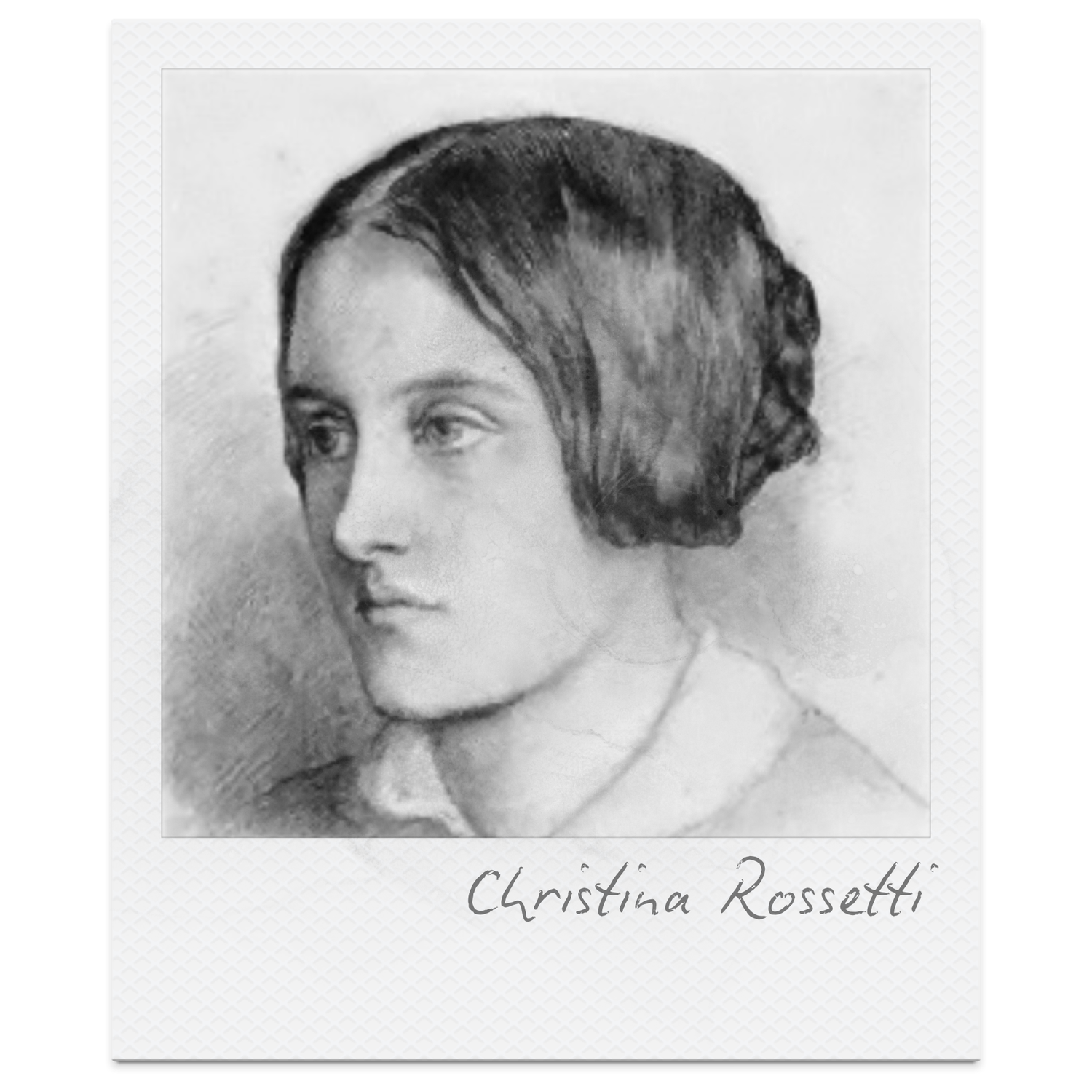
Christina Rossetti’s Autumn Violets reflects her ongoing preoccupation with time, restraint, and the moral boundaries of emotional experience, shaped by both her personal life and wider Victorian values. Rossetti never married, despite receiving several proposals, and her poetry often returns to the idea that love must be governed by spiritual awareness and self-discipline rather than romantic fulfilment alone. This perspective is central to Autumn Violets, where love is not rejected, but carefully redefined according to what is appropriate to one’s stage of life.
The poem also draws on Victorian associations between nature and human experience, particularly the symbolic use of the seasons. Spring is traditionally linked with youth, vitality, and romantic possibility, while autumn suggests decline, maturity, and reflection. By placing violets—flowers associated with modesty, delicacy, and early blooming—into an autumnal setting, Rossetti creates a subtle sense of emotional dislocation, reinforcing the idea that certain forms of love may feel out of place when they occur too late.
This tension reflects a broader Victorian concern with timing, propriety, and emotional restraint, where feelings are not only judged by their intensity but by whether they are appropriate and sustainable. For a deeper exploration of Rossetti’s life, beliefs, and recurring themes, see the Christina Rossetti context post.
Autumn Violets: At a Glance
Form: Petrarchan sonnet
Mood: Reflective, restrained, quietly melancholic
Central tension: Youthful, idealised love vs later, limited acceptance
Core themes: Love and ageing, limitation, acceptance, seasonal symbolism
One-sentence summary:
Love belongs most naturally to youth and spring, and when it arrives later in life, it must accept its limits rather than seek the fullness it once promised.
Autumn Violets Summary
The poem begins by establishing a clear association between love, youth, and spring, suggesting that both emotional and natural beauty belong most appropriately to their earliest phase. The speaker advises that violets—symbolising delicate, youthful love—should be kept for the spring, where they can exist in harmony with growth, renewal, and vitality. When placed in autumn, a season of decline, they appear out of place, hidden and diminished.
As the poem develops, this seasonal contrast becomes more explicitly tied to human experience. The imagery of birds, harvest, and changing landscapes reinforces the idea that life moves through distinct stages, each with its own expectations and limitations. Just as violets seem incongruous among withering leaves and harvested fields, love that arrives later in life may lack the natural ease and joy associated with youth.
In the final lines, the speaker shifts toward a more accepting and reflective tone, acknowledging that a “later sadder love” may still exist, but must be understood differently. Rather than seeking mutual fulfilment or idealised reciprocity, this love should be self-giving and modest, like Ruth gleaning leftover grain. The poem ultimately presents a quiet but powerful message: that meaning can still be found in love, even when it is shaped by limitation, provided it accepts its place without illusion.
Title, Form, Structure, and Metre
Rossetti’s formal choices in Autumn Violets reinforce the poem’s central concern with timing, limitation, and emotional restraint. By using a tightly controlled sonnet structure, she mirrors the idea that love itself must be disciplined and contained, rather than freely expressed without regard for circumstance.
Title
The title Autumn Violets immediately introduces a subtle tension between season and symbol. Violets are traditionally associated with spring, youth, and modest beauty, yet here they are placed in autumn—a season linked to decline, maturity, and the end of growth. This juxtaposition signals from the outset that the poem will explore something out of place or mistimed, reflecting the idea of love that arrives too late to fully flourish.
Form and Structure
The poem is written as a Petrarchan sonnet, a form often used to explore love, longing, and emotional conflict. It follows the traditional division between an octave (the first eight lines) and a sestet (the final six lines), allowing Rossetti to move from observation and reflection toward a more resolved or reflective conclusion.
In the octave, the speaker establishes the central metaphor, contrasting spring and autumn to suggest that certain forms of love belong to specific stages of life. The sestet then shifts in tone, offering a more measured and accepting perspective, where love is redefined rather than rejected. This structural “turn” reflects the poem’s movement from idealisation to acceptance, reinforcing the emotional progression at its core.
Rhyme Scheme and Poetic Pattern
The sonnet follows a controlled and symmetrical rhyme scheme, with the octave adhering to the traditional ABBAABBA pattern. This enclosed structure creates a sense of containment and stability, reflecting the speaker’s attempt to define clear boundaries for love and emotion.
In the sestet, Rossetti employs a variation of the expected pattern, using a CDEDCE arrangement. While slightly less predictable than some Petrarchan endings, this structure still maintains coherence while introducing a subtle sense of flexibility and reflection. The shift in rhyme mirrors the thematic shift in the poem, as the speaker moves from firm instruction toward a more nuanced understanding of later love.
Metre and Rhythmic Movement
The poem is written predominantly in iambic pentameter, with each line typically consisting of ten syllables following an unstressed-stressed pattern. For example:
Keep LOVE | for YOUTH, | and VI | olets FOR | the SPRING
This steady rhythmic movement contributes to the poem’s measured and contemplative tone, reinforcing the sense of control and restraint that underpins the speaker’s argument. The regularity of the metre reflects the idea that emotional experience should follow an ordered, natural progression, much like the seasons themselves.
At times, slight variations in stress or pacing draw attention to key ideas, particularly when the poem shifts toward its conclusion. These subtle disruptions prevent the rhythm from becoming mechanical, allowing Rossetti to maintain a balance between formal control and emotional nuance, mirroring the poem’s central tension between desire and acceptance.
The Speaker of Autumn Violets
The speaker of Autumn Violets adopts a reflective, advisory voice, presenting ideas about love with a tone that is both measured and quietly authoritative. Rather than recounting a personal narrative, the speaker speaks in general terms, offering guidance that suggests experience and emotional maturity.
The use of imperative verbs such as “Keep” positions the speaker as someone who is instructing or cautioning, reinforcing the sense that the poem functions as a form of reflection on how love should be understood across different stages of life. This voice is not overtly emotional or confessional; instead, it remains controlled and restrained, mirroring the poem’s message that feelings must be governed by awareness and limitation.
At the same time, there is an underlying sense of melancholy and acceptance within the speaker’s tone. The acknowledgement of a “later sadder love” suggests an awareness of personal or observed experience, even if it is not explicitly stated. This ambiguity allows the speaker to function both as an individual voice and as a more universal figure, representing a broader reflection on love, ageing, and the passage of time.
Ultimately, the speaker shapes the poem as a quiet meditation rather than a dramatic declaration, reinforcing the idea that emotional truth lies not in intensity, but in understanding and acceptance.
Autumn Violets Line-by-Line Analysis
This line-by-line analysis of Autumn Violets explores how Rossetti develops meaning through imagery, symbolism, and tone, revealing the contrast between youthful love and later emotional restraint. Each line contributes to the poem’s central idea that love, like the seasons, belongs to a particular moment in time and must be understood within its natural limits.
Line 1: “Keep love for youth, and violets for the spring:”
The poem opens with a clear and instructive statement, immediately establishing a connection between love, youth, and the natural cycle of spring. The speaker presents these associations as fixed and appropriate, suggesting that certain experiences belong to specific stages of life.
◆ The imperative verb “Keep” introduces a tone of guidance and control, implying that emotions should be managed rather than freely expressed.
◆ Violets symbolise modesty, delicacy, and early beauty, reinforcing their connection to youth.
◆ Spring represents renewal and vitality, aligning love with a time of growth and possibility.
◆ The pairing of love and violets suggests that both are fragile and time-sensitive, belonging to a particular moment.
Line 2: “Or if these bloom when worn-out autumn grieves,”
The second line introduces a conditional shift, imagining what happens when these natural associations are disrupted. The phrase “worn-out autumn” personifies the season, suggesting exhaustion and decline.
◆ The word “grieves” gives autumn a human emotional quality, linking seasonal change to loss and sorrow.
◆ The idea of violets blooming in autumn suggests something out of place or mistimed.
◆ “Worn-out” emphasises ageing and depletion, contrasting sharply with the vitality of spring.
◆ This line introduces the poem’s central tension between natural timing and emotional reality.
Line 3: “Let them lie hid in double shade of leaves,”
The speaker advises concealment, suggesting that such misplaced beauty should not be openly displayed.
◆ “Lie hid” implies suppression or restraint, reinforcing the idea that certain emotions should remain private.
◆ “Double shade” suggests both protection and obscurity, creating a layered sense of concealment.
◆ The imagery reflects a desire to shield what is fragile or inappropriate from exposure.
◆ This reinforces the poem’s emphasis on emotional discipline and propriety.
Line 4: “Their own, and others dropped down withering;”
The image becomes more complex, as the violets are surrounded by both their own leaves and those that are decaying.
◆ The reference to “withering” introduces a strong sense of decline and mortality.
◆ The layering of leaves suggests a merging of past vitality and present decay.
◆ The violets are visually and symbolically buried within a landscape of ageing.
◆ This reinforces the idea that beauty appearing too late becomes subdued and diminished.
Line 5: “For violets suit when home birds build and sing,”
The poem returns to its ideal setting, describing the appropriate environment for violets and, by extension, love.
◆ “Home birds” suggests stability, belonging, and domestic harmony.
◆ The imagery of building and singing conveys creation, joy, and vitality.
◆ This line reinforces the idea that love thrives in a context of growth and emotional security.
◆ The word “suit” emphasises appropriateness and natural harmony.
Line 6: “Not when the outbound bird a passage cleaves;”
In contrast, the image of departure introduces movement away from stability.
◆ “Outbound bird” suggests departure, separation, or transition.
◆ “Cleaves” conveys a sense of force and disruption, contrasting with the gentleness of earlier imagery.
◆ The movement away from “home” reinforces the idea of displacement and loss.
◆ This line suggests that love cannot flourish in moments of departure or instability.
Line 7: “Not with dry stubble of mown harvest sheaves,”
The imagery shifts to a harvested landscape, further emphasising the theme of endings.
◆ “Dry stubble” evokes emptiness and aftermath, suggesting that something has already passed.
◆ The harvested field represents the completion of a cycle, leaving little room for new growth.
◆ The dryness contrasts with the freshness of spring, reinforcing the poem’s seasonal divide.
◆ This imagery deepens the sense of finality and limitation.
Line 8: “But when the green world buds to blossoming.”
The octave concludes by returning once more to spring, reaffirming the natural setting for love.
◆ “Green world” symbolises life, renewal, and possibility.
◆ “Buds to blossoming” suggests a process of growth and unfolding potential.
◆ The contrast with earlier images highlights the difference between vitality and decline.
◆ This line reinforces the idea that love belongs to a time of beginning rather than ending.
Line 9: “Keep violets for the spring, and love for youth,”
The sestet begins by restating the poem’s central argument, reinforcing its importance.
◆ The repetition of “Keep” strengthens the tone of instruction and certainty.
◆ The parallel structure links natural imagery with emotional experience.
◆ This line acts as a turning point, shifting toward reflection and resolution.
◆ It reinforces the idea of boundaries within emotional life.
Line 10: “Love that should dwell with beauty, mirth, and hope:”
The poem briefly idealises youthful love, describing its natural companions.
◆ “Beauty, mirth, and hope” create a triple image of joy and vitality.
◆ The word “dwell” suggests permanence and belonging, reinforcing stability.
◆ This line defines love in its most ideal and harmonious form.
◆ It contrasts with the more limited version of love introduced later.
Line 11: “Or if a later sadder love be born,”
The tone shifts again, acknowledging the possibility of love beyond youth.
◆ The phrase “later sadder” immediately signals emotional compromise and loss.
◆ “Be born” suggests that love can still emerge, even in less ideal conditions.
◆ This line introduces a more realistic and reflective perspective.
◆ It marks the transition from idealisation to acceptance.
Line 12: “Let this not look for grace beyond its scope,”
The speaker advises restraint, emphasising the importance of recognising limitations.
◆ “Not look for grace” suggests lowering expectations.
◆ “Beyond its scope” reinforces the idea of natural limits.
◆ The tone becomes more philosophical and instructive.
◆ This reflects the poem’s broader message about accepting reality without illusion.
Line 13: “But give itself, nor plead for answering truth—”
The poem redefines love as selfless rather than reciprocal.
◆ “Give itself” emphasises generosity and self-sacrifice.
◆ “Nor plead” suggests the rejection of expectation or demand.
◆ The idea of “answering truth” introduces the absence of mutual fulfilment.
◆ This line presents love as something that may exist without return.
Line 14: “A grateful Ruth tho’ gleaning scanty corn.”
The final line introduces a biblical allusion, providing a powerful concluding image.
◆ Ruth symbolises loyalty, humility, and quiet devotion.
◆ “Gleaning scanty corn” suggests limited reward and modest survival.
◆ The image reinforces the idea of accepting what little is available with gratitude.
◆ This closing metaphor encapsulates the poem’s message: that love, even when diminished, can still hold dignity and meaning if it is accepted without expectation.
Key Techniques in Autumn Violets
Rossetti uses a range of carefully controlled poetic techniques in Autumn Violets to reinforce the poem’s central ideas about timing, restraint, and emotional limitation. These techniques work together to create a tone that is both measured and reflective, mirroring the poem’s message that love must be understood within natural boundaries.
◆ Enjambment – Rossetti frequently allows lines to flow into one another without a full stop, particularly in the later part of the poem. This creates a sense of continuity and emotional movement, reflecting how ideas about love develop gradually rather than abruptly. The enjambment between the final lines softens the conclusion, suggesting a gentle acceptance rather than a forceful resolution.
◆ Caesura – The use of internal pauses within lines, such as in “Keep love for youth, and violets for the spring,” introduces moments of reflection and control. These pauses slow the rhythm, encouraging the reader to consider each part of the statement carefully. This reinforces the speaker’s deliberate, advisory tone, as if weighing each idea before presenting it.
◆ Personification – Rossetti gives human qualities to abstract ideas and natural elements, such as autumn “grieving” or love that can “dwell.” This technique allows emotional states to be expressed through the natural world, strengthening the connection between human experience and seasonal change. By personifying both love and the seasons, Rossetti blurs the boundary between the external world and internal feeling.
◆ Seasonal Symbolism – The contrast between spring and autumn functions as an extended symbolic framework throughout the poem. Spring represents youth, vitality, and emotional possibility, while autumn signifies decline, maturity, and limitation. This symbolic opposition underpins the entire argument, allowing Rossetti to explore complex emotional ideas through accessible natural imagery.
◆ Imperative Voice – The repeated use of commands such as “Keep” establishes a tone of instruction and authority. This suggests that the poem is not merely descriptive, but prescriptive, offering guidance on how love should be understood and managed. The imperative voice reinforces the theme of emotional discipline, positioning the speaker as someone who has learned through experience.
◆ Biblical Allusion – The reference to Ruth in the final line draws on the Old Testament Book of Ruth, where Ruth, a widowed woman, gleans leftover grain in the fields to survive. Her actions symbolise loyalty, humility, and quiet perseverance despite limited resources. By invoking this image, Rossetti frames later love as something that may be modest and constrained, yet still dignified and meaningful when accepted with gratitude.
Autumn Violets Themes
The themes in Autumn Violets are closely interconnected, with Rossetti using natural imagery and controlled language to explore how love changes over time. The poem presents a movement from idealisation to acceptance, suggesting that emotional experience must be understood within the limits of circumstance, maturity, and timing.
Love and Ageing
At the heart of the poem is the relationship between love and the passage of time. Rossetti presents love as something most naturally aligned with youth, where it exists alongside “beauty, mirth, and hope.” In contrast, love that emerges later in life is described as “later sadder,” suggesting a loss of vitality and possibility.
Rather than rejecting this later love, the poem reframes it as something different in nature. It lacks the spontaneity and joy of youth, but it can still hold meaning if it is understood within its context. This reflects Rossetti’s broader concern with how ageing reshapes emotional experience, requiring a shift from expectation to reflection.
Limitation
The poem consistently emphasises the idea that love must operate within natural and emotional limits. The instruction that later love should not “look for grace beyond its scope” reinforces the importance of recognising what is possible, rather than striving for an ideal that no longer fits.
This theme is mirrored in the seasonal imagery: just as violets seem out of place in autumn, love that appears at the wrong time may be constrained by circumstance. Rossetti suggests that limitation is not necessarily negative, but rather a condition that must be acknowledged and respected.
Acceptance
Closely linked to limitation is the theme of acceptance, which becomes increasingly important in the sestet. The speaker advises that later love should “give itself” without expecting reciprocity, presenting a model of selfless and undemanding emotion.
The image of Ruth gleaning scanty corn encapsulates this idea. Despite receiving only a small amount, Ruth is described as “grateful,” suggesting that value lies not in abundance, but in the willingness to accept what is given. This theme reflects a broader message about finding dignity and meaning within constraint.
Seasonal Symbolism
Rossetti uses the contrast between spring and autumn as a central symbolic framework. Spring represents youth, growth, and emotional possibility, while autumn signifies decline, maturity, and the end of cycles.
By placing violets—flowers associated with spring—into an autumnal setting, the poem creates a sense of emotional dissonance. This reinforces the idea that certain experiences belong to specific moments in life. The natural world becomes a reflection of human experience, suggesting that love, like the seasons, follows an ordered and inevitable progression.
Emotional Restraint and Propriety
Underlying all of these themes is a strong emphasis on emotional restraint. The speaker repeatedly advises control, using imperatives such as “Keep” to suggest that feelings should be managed rather than indulged without consideration.
This reflects Victorian values surrounding propriety and self-discipline, where emotional expression was often guided by social and moral expectations. In the poem, restraint is not portrayed as repression, but as a form of wisdom and self-awareness, allowing individuals to navigate love in a way that aligns with reality rather than illusion.
Autumn Violets Alternative Interpretations
Autumn Violets invites multiple interpretations, as Rossetti’s exploration of love, timing, and limitation can be understood through different critical perspectives. Each lens reveals a slightly different dimension of the poem’s meaning, from social critique to psychological reflection.
Feminist Interpretation: Love, Age, and Female Value
From a feminist perspective, the poem can be read as reflecting the restricted roles and expectations placed on women, particularly in relation to youth and desirability. By associating love so strongly with youth and spring, the poem mirrors a cultural framework in which a woman’s value is tied to her age, beauty, and marriageability.
The idea that later love must accept limitation and avoid seeking “grace beyond its scope” may suggest an internalisation of these expectations. Women, in particular, may be encouraged to lower their expectations as they age, accepting diminished emotional fulfilment. However, the poem may also subtly critique this system by exposing how arbitrary and restrictive these boundaries are, raising questions about why love should be limited by time at all.
Psychological Interpretation: Restraint or Self-Denial?
A psychological reading focuses on the speaker’s emphasis on control, restraint, and emotional regulation. The repeated imperative “Keep” suggests a conscious effort to manage feeling, framing love as something that must be carefully contained.
This could be interpreted as a form of healthy acceptance, where the speaker recognises reality and adapts accordingly. Alternatively, it may suggest self-denial, where desire is suppressed to avoid disappointment or social judgement. The tension between these possibilities reflects an internal conflict between what is felt and what is permitted, highlighting the complexity of emotional experience.
Religious Interpretation: Love as Humility and Devotion
Rossetti’s religious beliefs strongly inform this poem, particularly in the final image of Ruth. From a religious perspective, love is redefined as an act of humility, self-giving, and quiet endurance, rather than mutual fulfilment.
The instruction to “give itself, nor plead for answering truth” aligns with Christian ideals of selfless love, where value lies in the act of giving rather than receiving. Ruth’s example reinforces this, presenting a model of faithful acceptance despite limited reward. In this reading, the poem suggests that later love becomes less about earthly satisfaction and more about spiritual integrity.
Existential Interpretation: Meaning Within Limitation
An existential reading emphasises the poem’s engagement with limitation, acceptance, and the realities of human existence. The speaker acknowledges that life does not always provide ideal conditions, and that love may not arrive at the “right” time.
Rather than resisting this, the poem advocates for finding meaning within these constraints. The idea that love should not “look for grace beyond its scope” reflects a broader philosophical acceptance that human experience is inherently limited. In this context, dignity arises not from achieving ideal outcomes, but from responding to reality with honesty and acceptance.
Temporal Interpretation: Love and the Timing of Life
The poem can also be understood through a temporal lens, focusing on the idea that experiences are shaped by their timing within the life cycle. Rossetti presents youth and spring as periods of possibility and growth, while autumn represents a stage of reflection and decline.
This perspective suggests that love is not simply defined by its intensity, but by when it occurs. The discomfort created by “autumn violets” reflects a disruption of this natural order, highlighting the importance of alignment between experience and stage of life. The poem ultimately suggests that meaning depends on recognising and respecting these temporal boundaries.
Autumn Violets Teaching Ideas
Autumn Violets offers strong opportunities for advanced analysis of symbolism, structure, and interpretive perspective, particularly in relation to how Rossetti constructs meaning through restraint and qualification. The poem is especially effective for developing conceptual arguments about love, time, and limitation. These activities can be paired with the Autumn Violets essay questions, which you can find on our Rossetti Poetry Essays Questions Post.
1. Model Paragraph and Independent Analytical Response
Use the following model to demonstrate a precise, conceptual approach to analysis, where argument is driven by interpretation rather than description:
Model paragraph:
Rossetti presents later love as something defined by limitation, yet not devoid of value. In the line “let this not look for grace beyond its scope,” the speaker imposes a clear boundary on emotional expectation, suggesting that love must be understood within the limits of circumstance. The phrase “beyond its scope” implies that fulfilment is not always attainable, reinforcing the idea that later love exists in a more constrained emotional landscape. However, this limitation is not framed as entirely negative. Instead, the poem redefines love as an act of conscious acceptance, where meaning arises not from reciprocity, but from the willingness to give without expectation.
Students should then produce their own paragraph in response to a question such as:
To what extent does Rossetti present love as limited in Autumn Violets?
Expect:
◆ Conceptual argument in the topic sentence
◆ Precise quotation integration
◆ Close language analysis
◆ Clear link to overarching themes
2. Structural Turn Analysis (Octave to Sestet)
Students analyse how the poem’s shift from octave to sestet reshapes its argument.
Focus:
◆ How the octave establishes idealised conditions for love
◆ How the sestet introduces qualification and limitation
◆ Whether the volta represents resolution, compromise, or resignation
This encourages students to move beyond identification of structure and towards evaluating its significance.
3. Conceptual Debate: Constraint or Wisdom?
Set a discursive task:
Is the speaker’s perspective on love ultimately restrictive or insightful?
Students should:
◆ Engage with multiple interpretations (feminist, religious, existential)
◆ Support arguments with precise textual evidence
◆ Evaluate rather than simply present viewpoints
This builds the ability to form nuanced, evaluative arguments.
4. Symbolism as Argument
Students explore how Rossetti uses seasonal imagery not just descriptively, but as a form of argument about emotional experience.
Focus:
◆ Spring as a symbolic framework for possibility and ideal love
◆ Autumn as a framework for limitation and acceptance
◆ How the extended metaphor shapes the poem’s overall meaning
Students should aim to articulate how symbolism functions as a structural and conceptual device, not just imagery.
5. Comparative Rossetti Lens
Students compare Autumn Violets with another Rossetti poem to explore how she presents love across different contexts.
Focus:
◆ Whether love is presented as fulfilling, restrained, or unattainable
◆ Differences in tone and speaker perspective
◆ The role of religion and morality in shaping emotional experience
This prepares students for high-level comparative analysis.
Go Deeper into Autumn Violets
Rossetti frequently returns to themes of love, restraint, time, and emotional limitation, and Autumn Violets can be more fully understood when read alongside her other poems. These connections reveal how she repeatedly explores the tension between desire and acceptance, often reshaping similar ideas in different emotional or symbolic contexts.
◆ An Apple-Gathering – Both poems explore the consequences of mistimed emotional experience, particularly in relation to love and fulfilment. While An Apple-Gathering presents regret more overtly, Autumn Violets adopts a quieter, more reflective tone, suggesting acceptance rather than loss.
◆ Shut Out – Like Autumn Violets, this poem explores exclusion and separation, particularly from something once desired or accessible. Both poems reflect on the experience of being outside a state of belonging, whether emotional or spiritual.
◆ Up-Hill – While Up-Hill presents life as a structured journey with eventual rest, Autumn Violets focuses more on limitation within that journey. Both poems emphasise acceptance and endurance, though Up-Hill offers clearer reassurance.
◆ A Better Resurrection – This poem similarly explores emotional emptiness and renewal, but with a stronger emphasis on spiritual transformation. In contrast, Autumn Violets remains grounded in acceptance rather than restoration, offering a more restrained resolution.
◆ Remember – Both poems engage with love and the passage of time, particularly in relation to what can and cannot be sustained. However, Remember focuses on memory after death, while Autumn Violets examines love within life’s later stages.
◆ Twice – Like Autumn Violets, this poem explores love shaped by disappointment and reflection. However, Twice moves toward spiritual redirection, whereas Autumn Violets emphasises quiet acceptance of limitation.
◆ Winter: My Secret – Both poems engage with concealment and emotional restraint, though in different ways. Winter: My Secret presents withholding as playful and controlled, while Autumn Violets presents it as necessary and reflective.
◆ Echo – This poem explores longing for lost connection, presenting desire as something that persists beyond absence. In contrast, Autumn Violets suggests that desire must be tempered and redefined, rather than pursued.
Final Thoughts
Autumn Violets presents a quietly powerful reflection on love, time, and emotional limitation, offering a perspective that values acceptance over idealisation. Rather than portraying love as something that must always fulfil or transform, Rossetti suggests that its meaning can lie in understanding its limits and giving without expectation.
Through its controlled structure and carefully sustained symbolism, the poem reinforces the idea that emotional experiences are shaped not only by intensity, but by timing, circumstance, and awareness. The image of autumn violets encapsulates this tension, presenting beauty that is still present, but subtly out of place, and therefore transformed.
Ultimately, the poem resists dramatic resolution, instead offering a more restrained and contemplative insight: that dignity in love comes not from what is received, but from how it is understood and accepted. For more poetry analysis, explore the Christina Rossetti hub and the wider Literature Library.
Choose Your Next Text