Maude Clare by Christina Rossetti: Summary, Themes, Symbolism & Analysis
Christina Rossetti’s Maude Clare is a dramatic and confrontational poem that explores female power, jealousy, social performance, and the fragile foundations of Victorian marriage. Set against the public backdrop of a wedding, the poem stages an unsettling confrontation between past and present love, as Maude Clare interrupts the ceremony to reclaim her voice and expose the emotional truth beneath a socially acceptable union. Through sharp contrasts in character and tone, Rossetti interrogates what it means to be loyal, virtuous, and chosen.
This analysis explores how Rossetti uses dialogue, symbolic objects, and shifting power dynamics to challenge traditional ideas of femininity and romantic devotion. By examining the tension between Maude Clare, Nell, and Thomas, we can see how the poem ultimately questions whether love can ever truly be erased—or whether it lingers, shaping the future long after it is publicly denied. For more poetry analysis, explore the Rossetti hub, or browse the wider Literature Library for further texts and resources.

Maude Clare Context
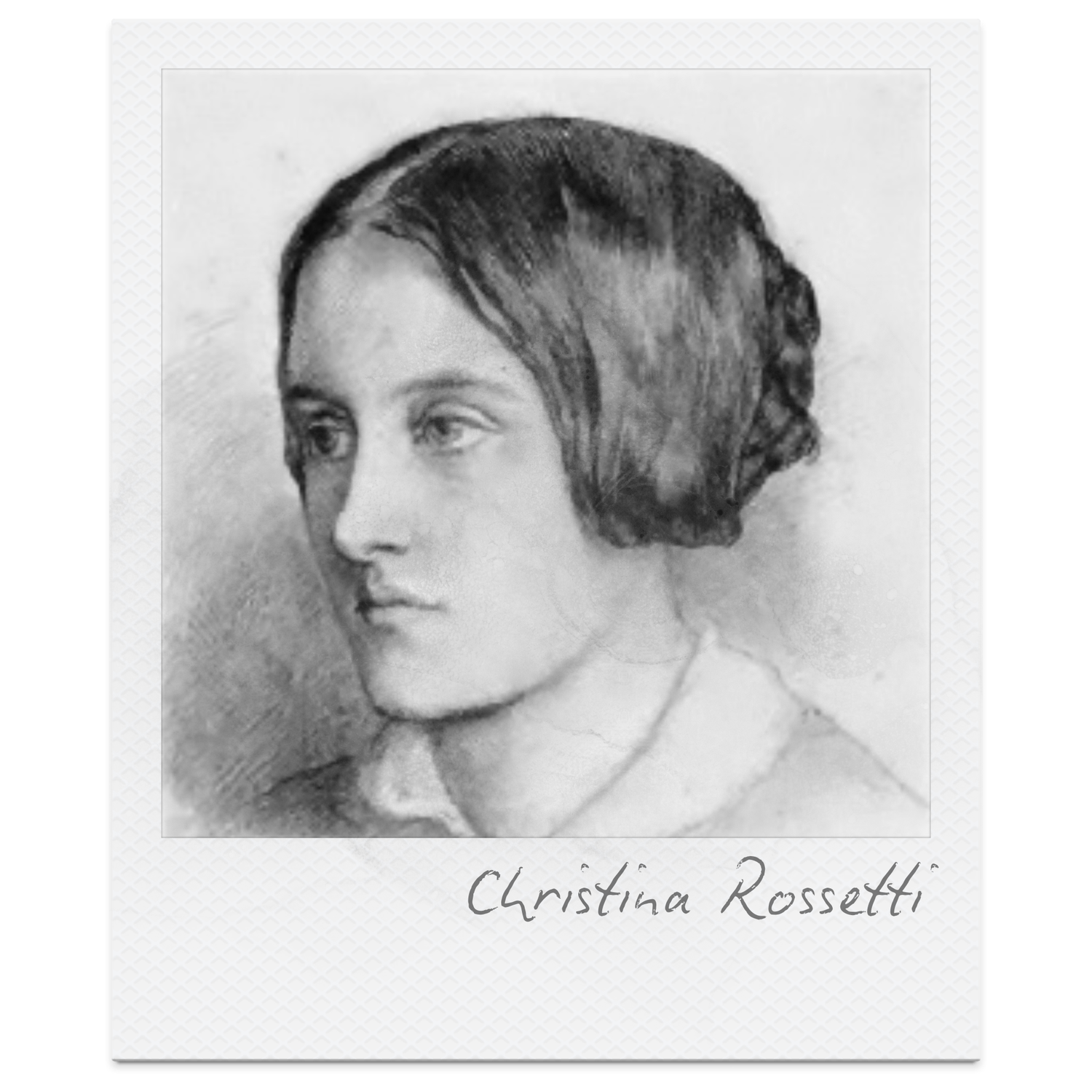
Christina Rossetti’s Maude Clare is shaped by the strict social expectations of Victorian courtship, marriage, and female respectability, where a woman’s value was closely tied to her purity and her ability to secure a socially approved union. Engagements were not only emotional commitments but public contracts, and a broken or displaced relationship—such as Maude Clare’s—could carry deep social consequences. Within this context, the poem dramatises a moment of disruption: a former lover refuses silence and instead publicly confronts the man who has abandoned her, challenging the idea that women should remain passive or discreet in matters of love.
Rossetti’s own life offers further insight into the poem’s tensions. She is known to have ended relationships due to religious and moral convictions, suggesting a personal awareness of the emotional cost of choosing principle over passion. In Maude Clare, this tension is inverted: rather than a quiet withdrawal, the poem imagines a woman who refuses erasure. Maude Clare’s bold entrance and commanding language sharply contrast with the expected modesty of Victorian femininity, allowing Rossetti to explore what happens when a woman steps outside prescribed roles and asserts her emotional truth.
The poem also reflects broader Victorian anxieties about female rivalry, reputation, and moral worth. Nell, the bride, outwardly embodies idealised femininity—loyal, submissive, and devoted—yet her responses reveal an undercurrent of competition and insecurity. Meanwhile, Maude Clare occupies a more ambiguous position: she is both socially transgressive and morally authoritative, exposing the instability of the values that are meant to define “proper” womanhood. Through this tension, Rossetti complicates the binary between the “pure” bride and the “fallen” woman, suggesting that emotional integrity may not align with social approval.
For a deeper exploration of Rossetti’s life, beliefs, and the Victorian context shaping her poetry, see the Rossetti context post.
Maude Clare: At a Glance
Form: Narrative poem with dramatic dialogue
Mood: Tense, confrontational, emotionally charged
Central tension: A former lover publicly challenges a marriage, exposing unresolved feelings and competing claims over love
Core themes: Female agency, love and betrayal, social expectation, power and voice, reputation and morality
One-sentence meaning:
A woman refuses to be erased from her former lover’s life, using a public confrontation to expose the emotional truth beneath a socially sanctioned marriage.
Maude Clare Summary
The poem opens as Maude Clare follows the wedding party out of the church, immediately establishing her presence as disruptive, commanding, and impossible to ignore. While the bride, Nell, is described in modest, almost passive terms, Maude Clare is elevated through imagery that likens her to a queen, signalling her authority and emotional significance. From the outset, the scene is charged with tension, as the contrast between the two women suggests that the marriage is not as secure or harmonious as it appears.
As the narrative unfolds, Thomas’s mother attempts to reinforce the legitimacy of the marriage by drawing parallels with her own long-lasting union. However, her words do little to ease the unease surrounding the situation, particularly as Thomas himself appears visibly conflicted. His pallor and hesitation reveal an internal struggle, suggesting that his commitment to Nell is overshadowed by unresolved feelings for Maude Clare. This emotional instability is further emphasised when he fails to confidently assert his new role as husband, reinforcing the idea that his authority is fragile.
Maude Clare then takes control of the moment, presenting symbolic “gifts” that represent her shared past with Thomas. These tokens—such as the golden chain and memories of gathering lilies—serve as reminders of a relationship that cannot simply be dismissed. Her tone is both scornful and deliberate, transforming what should be a celebratory occasion into a confrontation with the past. In doing so, she exposes the emotional cost of Thomas’s decision and challenges the idea that marriage can overwrite previous attachments.
The poem reaches its climax when Maude Clare turns her attention to Nell, offering her what remains of Thomas’s “fickle heart.” This gesture reframes the marriage as an act of compromise rather than fulfilment. However, Nell’s response introduces a final shift in power: she accepts Thomas fully, asserting her own form of devotion and determination. While her words seem to restore order, the tension lingers, leaving the reader uncertain whether love, loyalty, or social expectation has truly prevailed.
Title, Form, Structure, and Metre
Rossetti’s formal choices in Maude Clare are central to its meaning. By drawing on the ballad tradition, the poem adopts a familiar, almost musical structure that contrasts sharply with its emotional tension and social confrontation. This combination allows Rossetti to elevate what might seem like a private romantic conflict into something more public, dramatic, and almost legendary in tone.
Title
The title Maude Clare immediately centres the poem on the figure who is, socially, the outsider. Rather than naming the bride or the marriage, Rossetti foregrounds the displaced woman, signalling her importance before the poem even begins. This choice subtly disrupts expectations, suggesting that the true emotional and moral focus lies not with the sanctioned union, but with the woman who has been excluded from it. In doing so, the title prepares the reader for a poem that will challenge conventional ideas of authority, virtue, and romantic legitimacy.
Form and Structure
Maude Clare is written as a ballad, a traditional narrative form often associated with storytelling, music, and communal memory. The poem is organised into regular four-line stanzas (quatrains), creating a sense of order and familiarity. However, within this structured form, Rossetti stages a deeply uncomfortable and disruptive event: a public confrontation at a wedding.
The narrative unfolds largely through dialogue, giving the poem a dramatic, almost theatrical quality. Rather than relying heavily on descriptive narration, Rossetti allows characters to reveal themselves through speech, which heightens immediacy and tension. This structure places the reader in the position of a witness, observing the exchange as it happens, and reinforces the idea that this is not a private moment but a public spectacle.
Importantly, while the ballad form traditionally tells tales of romance and legend, Rossetti uses it to expose the instability of social ideals, particularly those surrounding love and marriage. The familiar structure therefore contrasts with the unsettling content, suggesting that beneath conventional appearances lies emotional conflict and unresolved truth.
Rhyme Scheme and Poetic Pattern
The poem follows a consistent ABCB rhyme scheme in each stanza, a hallmark of the ballad form. This means that the second and fourth lines of each quatrain rhyme, while the first and third do not. For example, in the opening stanza:
Out of the church she followed them
With a lofty step and mien
His bride was like a village maid,
Maude Clare was like a queen
This regular rhyme pattern creates a lyrical, song-like quality, reinforcing the poem’s roots in oral storytelling traditions. At the same time, the rhymes shift from stanza to stanza, allowing flexibility while maintaining overall cohesion. The effect is both controlled and fluid, mirroring the tension between social order and emotional disruption within the poem.
Metre and Rhythmic Movement
The poem alternates between iambic tetrameter (four beats per line) and iambic trimeter (three beats per line), producing a steady, rhythmic movement typical of ballads. This alternating pattern gives the poem a sense of forward motion, as though the narrative is unfolding with inevitability.
Out of the CHURCH she FOL-lowed THEM
With a LOFT-y STEP and MIEN
However, Rossetti does not adhere perfectly to this pattern in every line. Occasional variations—such as initial stresses or compressed syllables—create subtle disruptions in the rhythm. These moments of irregularity can be read as reflecting the emotional strain and social unease within the poem, where the outward structure of the wedding is undermined by inner conflict.
Overall, the metre maintains a musical consistency that elevates the narrative, transforming a potentially scandalous love triangle into something more formal, symbolic, and enduring. The steady rhythm contrasts with the instability of the characters’ emotions, reinforcing the poem’s central tension between appearance and reality.
The Speaker of Maude Clare
The speaker of Maude Clare functions as a largely observant, restrained narrator, recounting the events of the wedding and its disruption with minimal overt commentary. Although the poem is not deeply introspective, the speaker plays a crucial role in shaping how the scene is perceived, presenting the unfolding drama with a sense of controlled detachment that heightens its emotional impact.
For much of the poem, the speaker appears almost invisible, allowing the dialogue between characters to take centre stage. This creates a dramatic, almost theatrical effect, as though the reader is witnessing the confrontation in real time. By stepping back and avoiding explicit judgement, the speaker allows the tension between Maude Clare, Nell, and Thomas to emerge naturally, making their interactions feel immediate and unfiltered.
However, the speaker is not entirely neutral. Subtle cues—such as the repeated references to “my lord”—suggest that the speaker occupies a lower social position, likely one of the wedding guests observing the event. This detail reinforces the idea that the confrontation is not private but public, unfolding before an audience. The presence of this implied crowd intensifies the humiliation experienced by Thomas and adds further pressure to the social expectations governing the situation.
The speaker’s restrained perspective ultimately enhances the poem’s exploration of power, reputation, and social performance. By acting as a witness rather than an interpreter, the speaker invites the reader to evaluate the characters independently, while simultaneously emphasising that this moment of emotional exposure is being watched, judged, and remembered.
Stanza-by-Stanza Analysis of Maude Clare
A close reading of Maude Clare reveals how Rossetti carefully builds tension, power shifts, and emotional conflict through each stanza. The poem’s progression is not only narrative but psychological, with each exchange deepening the sense of unease and exposing the fragile foundations of the marriage. By examining the poem stanza by stanza, we can trace how Rossetti uses imagery, dialogue, and symbolism to construct a confrontation that is both intensely personal and publicly humiliating.
Each stanza contributes to the shifting dynamics between Maude Clare, Nell, and Thomas, gradually revealing who holds true emotional authority and how that authority is challenged, transferred, or reclaimed as the poem unfolds.
Stanza 1: Entrance and Immediate Power Contrast
The poem opens with Maude Clare following the wedding party out of the church, immediately positioning her as a disruptive presence who refuses to remain excluded. The verb “followed” suggests both persistence and defiance, implying that although she has been left behind socially, she will not accept erasure. Her movement into the scene transforms what should be a moment of celebration into one of tension and anticipation.
Rossetti establishes a striking contrast between the two women through sharply differentiated imagery. Nell is described as a “village maid,” evoking simplicity, modesty, and traditional femininity. In contrast, Maude Clare is elevated to the status of a “queen,” suggesting authority, confidence, and innate superiority. This juxtaposition immediately destabilises the hierarchy of the wedding: although Nell is the bride, it is Maude Clare who commands attention and presence.
The phrase “lofty step and mien” reinforces Maude Clare’s self-possession and refusal to appear diminished. Rather than embodying shame or regret, she carries herself with dignity and control, challenging expectations of how a rejected woman should behave. From the very first stanza, Rossetti signals that Maude Clare holds a form of emotional and symbolic power that rivals—and perhaps exceeds—that of the bride herself.
Stanza 2: Social Expectations and Performed Stability
In this stanza, Thomas’s mother attempts to restore a sense of order and respectability by framing the marriage within the language of tradition. Her address—“Son Thomas”—emphasises familial authority and positions her as a guardian of social values, reinforcing the expectation that this union should follow an established, acceptable pattern.
Her expression, “with smiles, almost with tears,” introduces an immediate note of emotional ambiguity. While she outwardly performs joy, the suggestion of tears hints at underlying unease, implying that the situation is not as stable as she presents it. This duality reflects the wider tension in the poem between appearance and reality, where public celebration masks private discomfort.
By invoking her own long marriage—“as we have done for years”—she offers it as a model of enduring loyalty and moral constancy. However, this comparison feels strained in the context of the unfolding drama, particularly given Thomas’s visible discomfort in surrounding stanzas. Her words therefore function less as reassurance and more as an attempt to impose social expectations onto a situation that resists them, highlighting the fragility of the ideal she seeks to uphold.
Stanza 3: Uneasy Parallels and Emotional Exposure
Thomas’s mother continues her speech by drawing a direct comparison between the present marriage and her own past, attempting to normalise the situation through generational precedent. The phrase “just your tale to tell” suggests that Thomas’s experience is not unique, framing his circumstances as part of a familiar narrative of love and marriage. However, this attempt at reassurance is immediately undermined by the imagery that follows.
The repeated emphasis on “pale” introduces a striking visual motif that signals emotional strain rather than contentment. Thomas’s pallor reflects his inner conflict, suggesting anxiety, guilt, or unresolved attachment. Meanwhile, Nell’s paleness—“pale as Nell”—can be read as a mixture of nervousness, pride, and the pressure to perform the role of the ideal bride. In contrast to the mother’s supposedly stable past, the present moment appears fragile and unsettled.
Crucially, the mother’s claim that they were “not so pale” subtly exposes the inadequacy of her comparison. Instead of reinforcing the strength of the marriage, her words highlight its instability, revealing that something is fundamentally different—and wrong—beneath the surface. What is intended as reassurance instead becomes an inadvertent admission that this union lacks the emotional certainty it is meant to represent.
Stanza 4: Divided Loyalties and Public Hesitation
This stanza intensifies the poem’s emotional tension by explicitly revealing the inner conflict that has so far been implied. The phrase “pale with inward strife” makes Thomas’s turmoil unmistakable, suggesting a deep psychological division between duty and desire. His role as bridegroom is outwardly fixed, yet internally he remains unsettled, unable to fully commit to the marriage he is enacting.
Nell, by contrast, is described as “pale with pride,” a phrase that captures both her determination and her vulnerability. Her pride suggests a conscious effort to maintain dignity and control in a situation that threatens to undermine her position. Unlike Thomas, whose conflict is internal, Nell’s response is performative—she holds her composure in the face of potential humiliation, embodying the expectations placed upon her as a Victorian bride.
The most striking moment comes as Thomas “gazed long on pale Maude Clare / Or ever he kissed the bride.” This pause is loaded with meaning: before fulfilling his public role, he lingers on the woman he has lost, revealing where his true emotional focus lies. The delay disrupts the symbolic act of the kiss, transforming it from a gesture of union into one overshadowed by hesitation and regret. In this moment, Rossetti exposes the instability of the marriage, suggesting that it is founded not on certainty, but on unresolved attachment and divided loyalty.
Stanza 5: Ironic Blessing and Controlled Confrontation
In this stanza, Maude Clare formally enters the exchange, announcing her presence through the repeated declaration, “I have brought my gift.” The repetition emphasises her deliberate control over the moment, as she frames her intervention not as an outburst, but as a composed and intentional act. By addressing Thomas as “my lord,” she both acknowledges social hierarchy and subtly asserts a prior claim, reminding him—and the audience—of their shared past.
The language of “gift” and “blessing” draws on the rituals of marriage, but Rossetti uses this vocabulary with clear irony. Rather than offering genuine goodwill, Maude Clare appropriates the language of celebration to expose the fragility of the union. Her words mimic the structure of a traditional blessing—“to bless the hearth… the board… the marriage-bed”—yet the context transforms this into something far more unsettling, suggesting that what she brings is not harmony, but truth and disruption.
The progression from “hearth” to “marriage-bed” traces the full scope of domestic life, from public space to private intimacy. By invoking these elements, Maude Clare symbolically inserts herself into every aspect of the marriage, refusing to be excluded from the narrative of Thomas’s life. This moment marks a shift in power: she is no longer a silent figure from the past, but an active force who reclaims her voice and challenges the legitimacy of the union in front of its witnesses.
Stanza 6: Tokens of the Past and Emotional Claim
Maude Clare’s “gift” becomes concrete in this stanza, as she presents physical objects that embody her shared history with Thomas. The “half of the golden chain” functions as a powerful symbol of connection, intimacy, and mutual commitment, suggesting a bond that once linked them together. By returning only her “half,” she implies that the relationship has been broken—but not erased—leaving behind a visible reminder of what has been divided.
The imagery of the chain also carries connotations of both unity and constraint, hinting that their past relationship was binding in more than one sense. Its golden quality suggests value and permanence, reinforcing the idea that what they shared cannot simply be dismissed as trivial or fleeting. In presenting it publicly, Maude Clare transforms a private token into a symbolic accusation, exposing Thomas’s past before an audience.
The memory of wading “ankle-deep / For lilies in the beck” introduces a softer, more intimate image of their relationship. The natural setting evokes innocence, romantic closeness, and a shared experience rooted in the natural world. Lilies, often associated with purity and transience, complicate this memory: they suggest both the beauty of the past and its impermanence. By invoking this moment, Maude Clare not only recalls what has been lost but reasserts the depth of their connection, challenging the idea that it can be replaced by a socially sanctioned marriage.
Stanza 7: Memory, Decay, and Lingering Renewal
Maude Clare continues her presentation of tokens, shifting from the golden chain to “the faded leaves,” which carry a more fragile and transient symbolism. Unlike gold, which suggests durability, these leaves evoke decay, time passing, and the inevitable fading of what was once vibrant. Yet, their origin—“from the budding bough”—reminds the reader that the relationship began in a moment of growth and possibility, reinforcing the sense of something prematurely cut short.
The contrast between “faded” and “budding” creates a layered temporal tension, linking past and present. While the leaves themselves have withered, the final line—“The lilies are budding now”—reintroduces the idea of renewal. This suggests that the emotional connection between Maude Clare and Thomas is not entirely dead; instead, it lingers, capable of resurfacing despite attempts to replace it. The cyclical imagery of nature implies that what once existed may return, unsettling the supposed finality of the marriage.
By revisiting the earlier image of lilies, Maude Clare strengthens her emotional claim, weaving together memory and symbolism to assert that her relationship with Thomas still holds meaning. The natural imagery stands in contrast to the constructed social ritual of the wedding, implying that authentic emotion—like nature—cannot be easily controlled or erased. In this moment, her “gift” becomes less an offering and more a reminder that the past remains present, quietly undermining the stability of the future.
Stanza 8: Failed Authority and Public Humiliation
This stanza marks a clear collapse in Thomas’s attempt to maintain authority and composure. The phrase “He strove to match her scorn with scorn” suggests a deliberate effort to reassert control, as though he recognises the need to defend his position publicly. However, the verb “strove” implies strain rather than success, immediately signalling that his response is forced and unsustainable.
His failure becomes explicit in the line “He faltered in his place,” where the physical stillness contrasts with his internal instability. The verb “faltered” conveys both hesitation and weakness, undermining his role as the central male figure in the scene. Instead of commanding the moment, he is overwhelmed by it, unable to reconcile his social role with his emotional reality.
The fragmented repetition—“Lady… Maude Clare… Maude Clare”—further exposes his loss of control. His shifting forms of address suggest confusion and an inability to position Maude Clare within a clear social category. The breakdown of his speech reflects his psychological disintegration, as he struggles to navigate the competing claims of past and present.
The stanza concludes with the powerful image of him hiding his face, a gesture of shame, defeat, and public humiliation. In contrast to Maude Clare’s composure, Thomas retreats, revealing that he lacks the strength to confront the truth she presents. This moment decisively shifts the balance of power: Maude Clare dominates the scene, while Thomas is reduced to silence and concealment.
Stanza 9: Redirected Power and Withered Offering
In this stanza, Maude Clare shifts her focus from Thomas to Nell, marking a significant change in the poem’s power dynamics. By addressing her as “My Lady Nell,” she adopts the language of politeness and formality, yet the tone carries an undercurrent of irony. The title “lady” acknowledges Nell’s new social position as bride, but it is delivered by someone who clearly questions the legitimacy and value of that position.
Maude Clare’s declaration of a “gift” mirrors her earlier address to Thomas, but here the gesture becomes more explicitly cutting. The conditional imagery—“were it fruit… were it flowers”—introduces symbols traditionally associated with fertility, beauty, and romantic fulfilment. However, both are immediately undermined: the “blooms were gone” and the “dew” has faded, suggesting something already diminished or spoiled.
This imagery conveys a sense of loss, emptiness, and emotional depletion, implying that what Nell receives in marriage is not fresh or whole, but already used and lacking vitality. Maude Clare reframes the union as one built on what remains, rather than what is newly offered. In doing so, she exposes the unsettling idea that Nell’s marriage is founded on something incomplete, reinforcing her dominance in the exchange while subtly destabilising Nell’s position as the bride.
Stanza 10: Rejection, Judgment, and Moral Superiority
In this stanza, Maude Clare delivers her most direct and devastating statement, redefining her “gift” as Thomas himself. By describing him as a “fickle heart” and a “paltry love,” she strips away any romantic idealisation, exposing him as inconstant, weak, and ultimately unworthy. The language is blunt and dismissive, signalling her complete withdrawal of emotional investment and her refusal to compete any longer.
The repetition of “take” places control firmly in Maude Clare’s hands, as she frames the situation as a transaction rather than a romantic union. Nell is not receiving a prize, but accepting what Maude Clare has consciously rejected. This reverses the expected hierarchy of bride and former lover, positioning Maude Clare as the one who chooses, while Nell is left to accept what remains.
The final line, “I wash my hands thereof,” carries strong biblical connotations, evoking ideas of cleansing, detachment, and moral judgment. By using this phrase, Maude Clare presents herself as absolved of responsibility, suggesting that she is morally superior to the situation she leaves behind. This moment completes her transformation from rejected woman to authoritative figure: she exits not as a victim, but as someone who has reclaimed power, leaving Thomas diminished and Nell to confront the reality of what she has chosen.
Stanza 11: Defiant Acceptance and Reclaimed Voice
In this stanza, Nell finally speaks, marking a crucial shift in the poem’s power dynamics. Until this point, she has been largely passive, defined through description rather than voice. Her response, however, is firm and deliberate, signalling a movement from silence to assertion as she actively claims her role within the marriage.
The repetition of “I’ll take” and “I’ll wear” suggests a conscious acceptance of what Maude Clare has rejected. Rather than denying the accusations, Nell embraces them, transforming potential humiliation into an act of defiance. The verb “wear” is particularly significant, implying that she will carry this reality openly, as though it were a visible part of her identity. This reframes the situation: instead of being diminished, she asserts control over how she is perceived.
Her declaration—“for better and worse”—echoes the language of marriage vows, reinforcing her commitment to Thomas despite his flaws. By openly acknowledging his shortcomings while still choosing him, Nell presents a version of love grounded in endurance rather than idealisation. At the same time, her direct address—“And him I love Maude Clare”—reasserts her position in relation to her rival, making her loyalty not only personal but also publicly declared.
This moment complicates the balance of power. While Maude Clare retains moral authority, Nell demonstrates a different kind of strength: one rooted in resilience, determination, and the refusal to relinquish her place. Her voice ensures that she is no longer merely the passive bride, but an active participant in defining the meaning of the marriage.
Stanza 12: Determined Devotion and Future Assertion
In the final stanza, Nell completes her response with a striking blend of acknowledgment and determination. She openly concedes Maude Clare’s superiority—“taller,” “more wise,” and “more fair”—a moment of honesty that reinforces the earlier contrast between the two women. However, rather than weakening her position, this admission strengthens it, as Nell demonstrates a clear awareness of the situation she is choosing to remain within.
The repetition of “best” becomes central to the stanza’s meaning, signalling Nell’s belief in the transformative power of love. Her declaration—“I’ll love him till he loves me best”—suggests that love is not fixed, but something that can be earned, reshaped, and ultimately secured through persistence. This introduces a forward-looking perspective, shifting the poem from past conflict to future possibility.
At the same time, the phrasing carries an undercurrent of uncertainty. Nell’s confidence depends on a future change in Thomas’s feelings, implying that his current emotional loyalty may still lie elsewhere. Her love is therefore both resilient and conditional, rooted in hope rather than certainty.
By ending the poem with Nell’s voice, Rossetti leaves the resolution unresolved. While Maude Clare exits with moral authority, Nell remains, asserting her place and staking a claim to the future. The tension between past love and future devotion lingers, ensuring that the poem closes not with clarity, but with a sense of ongoing emotional negotiation.
Key Quotes from Maude Clare
The key quotations in Maude Clare reveal how Rossetti constructs the poem’s power dynamics, emotional tension, and conflicting perspectives on love and marriage. Through carefully chosen lines, we can see how language exposes inner conflict, asserts authority, and challenges the stability of the union. These quotes capture the most significant moments where meaning shifts and characters reveal their true positions.
“Out of the church she followed them”
◆ Establishes Maude Clare as a disruptive force, refusing exclusion from the wedding
◆ The verb “followed” suggests defiance and persistence rather than passivity
◆ Immediately introduces the idea of public intrusion into a private ritual
“Maude Clare was like a queen”
◆ Elevates Maude Clare above the bride through imagery of authority and dominance
◆ Contrasts sharply with Nell as a “village maid,” reinforcing power imbalance
◆ Suggests that true presence and influence do not align with social roles
“He was not so pale as you, / Nor I so pale as Nell”
◆ Repetition of “pale” highlights emotional strain and instability
◆ Undermines the mother’s attempt to normalise the marriage
◆ Suggests that this union lacks the certainty and confidence of the past
“My lord gazed long on pale Maude Clare / Or ever he kissed the bride”
◆ Reveals Thomas’s divided loyalty and unresolved feelings
◆ The delay before the kiss disrupts the expected symbol of union
◆ Implies that the marriage is overshadowed by emotional hesitation
“Lo, I have brought my gift, my lord”
◆ Repetition emphasises Maude Clare’s control and deliberate entrance
◆ Uses the language of ritual to introduce irony and tension
◆ Frames her confrontation as formal rather than emotional, increasing impact
“Here’s my half of the golden chain”
◆ Symbolises a once shared bond that has now been broken
◆ The division of the chain reflects the fragmentation of the relationship
◆ Publicly exposes a private connection, intensifying humiliation
“The lilies are budding now”
◆ Suggests renewal and the persistence of past emotions
◆ Links nature to ongoing emotional connection
◆ Undermines the idea that the relationship is fully over
“Maude Clare, – and hid his face”
◆ Fragmented speech reveals Thomas’s loss of control
◆ Hiding his face symbolises shame, guilt, and public defeat
◆ Marks a clear shift in power away from him
“Take my share of a fickle heart”
◆ Reduces Thomas to an object of exchange and judgment
◆ Highlights his inconstancy and emotional weakness
◆ Reverses traditional power dynamics, with Maude Clare in control
“I’ll love him till he loves me best”
◆ Expresses Nell’s belief in enduring and transformative love
◆ Suggests love can be won over time, not fixed
◆ Introduces ambiguity, as her certainty depends on a future change
Key Techniques in Maude Clare
Rossetti’s Maude Clare is shaped by a range of poetic and structural techniques that heighten its dramatic tension and reinforce its exploration of power, love, and social expectation. Through carefully controlled language, repetition, and contrast, Rossetti transforms a seemingly simple narrative into a layered confrontation in which meaning is revealed through both what is said and how it is expressed.
◆ Anaphora – Rossetti uses repetition at the beginning of lines to create emphasis and authority, particularly in Maude Clare’s speech. Phrases such as “to bless” and “Here’s my half” give her language a ritualistic, incantatory quality, mimicking the structure of wedding blessings while subverting them. This reinforces her control over the scene and transforms her speech into a performative act of confrontation. Nell later mirrors this structure (“And what you leave… / And what you spurn…”), using the same technique to assert her own defiance and agency.
◆ Dialogue – The poem is driven by direct speech, giving it a dramatic, almost theatrical quality. This allows characters to reveal themselves through their own words rather than through narration, creating immediacy and immersing the reader in the unfolding confrontation. The reliance on dialogue also reinforces the sense that this is a public event, observed and judged by others.
◆ Imagery – Rossetti uses vivid and symbolic imagery—such as the golden chain, faded leaves, and budding lilies—to represent the progression of the relationship. These images move from connection to decay to renewal, reflecting the tension between past love and present reality. Natural imagery contrasts with the constructed setting of the wedding, suggesting that genuine emotion resists social control.
◆ Irony – Much of Maude Clare’s speech is layered with irony, particularly in her use of the language of blessing. While she appears to offer goodwill, her words expose the emptiness and instability of the marriage. This contrast between surface meaning and underlying intent reinforces the poem’s exploration of appearance versus reality.
◆ Juxtaposition – Rossetti places contrasting elements side by side, most notably in the depiction of Nell and Maude Clare. Nell is associated with modesty and social conformity, while Maude Clare embodies confidence and emotional truth. This juxtaposition destabilises traditional hierarchies, suggesting that moral or emotional authority does not necessarily align with social roles.
◆ Symbolism – Objects within the poem function as symbols of the characters’ relationships. The divided chain represents a broken bond, while the natural imagery of flowers and leaves reflects the changing state of love over time. These symbols allow Rossetti to communicate complex emotional ideas through concrete, memorable details.
◆ Repetition – Beyond anaphora, repetition throughout the poem reinforces key ideas and emotional states. The recurrence of words such as “pale” highlights anxiety and instability, while repeated names—particularly “Maude Clare”—emphasise her dominant presence within the scene.
◆ Simile – The comparison of Nell to a “village maid” and Maude Clare to a “queen” establishes a clear hierarchy of power and presence from the outset. These similes shape the reader’s perception, positioning Maude Clare as the more commanding and influential figure despite her social displacement.
◆ Caesura – Breaks within lines, particularly in moments of hesitation or emotional strain, reflect the characters’ inner conflict. Thomas’s fragmented speech, for example, mirrors his inability to maintain composure, reinforcing his loss of authority.
◆ Alliteration and Sound Patterning – Subtle sound devices contribute to the poem’s musicality and reinforce its ballad form. These patterns enhance the rhythm while also drawing attention to key emotional moments, supporting the poem’s blend of lyrical structure and dramatic tension.
Themes in Maude Clare
Rossetti’s Maude Clare explores a complex web of emotional conflict, social pressure, and shifting power, using the wedding setting to expose the instability beneath Victorian ideals. The poem moves beyond a simple love triangle to interrogate how gender roles, public performance, and moral judgment shape relationships, revealing that love is never purely private, but deeply influenced by the expectations of society.
Female Agency
One of the most striking themes in the poem is female agency, particularly through the character of Maude Clare. Rather than remaining silent or withdrawn, she actively confronts Thomas and reclaims her voice in a public space. Her composed yet cutting speech demonstrates control, self-possession, and a refusal to accept the passive role expected of a rejected woman.
At the same time, Nell’s response complicates this theme. While she initially appears passive, her later declaration reveals a quieter form of agency rooted in choice and endurance. Rossetti therefore presents multiple forms of female strength, challenging the idea that agency must always be loud or confrontational.
Love and Betrayal
The poem centres on the tension between love and betrayal, as Thomas’s past relationship with Maude Clare intrudes upon his marriage to Nell. Maude Clare’s “gifts” expose the depth of the bond that has been broken, suggesting that Thomas’s actions are not merely a transition, but a form of emotional betrayal.
However, Rossetti avoids presenting love as stable or idealised. Thomas’s “fickle heart” suggests that love can be inconstant, while Nell’s determination to be loved “best” implies that affection can shift over time. The poem ultimately portrays love as something uncertain, shaped by choice, circumstance, and power.
Social Expectation
Victorian social expectations loom over the entire poem, dictating how characters behave and how relationships are judged. Marriage is presented as a public institution tied to respectability and reputation, rather than purely personal feeling.
Thomas’s mother reinforces these expectations by appealing to tradition, while Nell performs the role of the dutiful bride. In contrast, Maude Clare disrupts these norms by refusing silence, exposing the tension between individual emotion and societal pressure. Rossetti suggests that adherence to social expectations can mask deeper emotional truths.
Power and Voice
The poem is driven by shifting dynamics of power and voice, with control moving between characters as the confrontation unfolds. Maude Clare dominates much of the poem through her confident speech, using language to assert authority and shape the narrative.
Thomas, despite his social position, is largely powerless, his faltering speech and physical gestures revealing his inability to assert control. Nell’s eventual response reintroduces her voice into the poem, demonstrating that power is not fixed, but can be claimed and redefined through language.
Reputation and Morality
Rossetti also interrogates reputation and morality, questioning whether social respectability truly reflects moral worth. Nell occupies the socially approved role of bride, yet her position is complicated by the knowledge of Thomas’s past. Maude Clare, meanwhile, exists outside this respectability, yet often appears more morally authoritative, particularly in her willingness to confront the truth.
The poem challenges the binary between the “pure” woman and the “fallen” woman, suggesting that morality is not determined by social status alone. Instead, Rossetti presents a more nuanced view in which honesty, integrity, and self-awareness complicate traditional moral judgments.
Appearance vs Reality
Throughout the poem, Rossetti contrasts appearance and reality, revealing the gap between what is publicly displayed and what is privately felt. The wedding, a symbol of unity and celebration, is undermined by visible discomfort and unresolved emotion.
Thomas’s hesitation, Nell’s controlled pride, and Maude Clare’s pointed intervention all expose the instability beneath the surface. This theme reinforces the idea that social rituals can create the illusion of harmony, even when deeper tensions remain unresolved.
Past vs Present
The tension between past and present runs through the poem, as Maude Clare’s memories and tokens disrupt the forward movement of the marriage. Her gifts serve as tangible reminders that the past cannot simply be erased or replaced.
At the same time, Nell’s focus on the future—her determination to be loved “best”—introduces a competing temporal perspective. The poem therefore becomes a negotiation between what has been and what might be, suggesting that both continue to shape the present in complex ways.
Alternative Interpretations of Maude Clare
While Maude Clare can be read as a dramatic love triangle, it also invites deeper interpretation through different critical lenses. These perspectives reveal how Rossetti’s poem engages with broader questions of gender, psychology, morality, and existence, allowing readers to explore multiple layers of meaning beneath the surface narrative.
Feminist Interpretation: Female Power and Resistance
From a feminist perspective, Maude Clare is a powerful exploration of female agency within a restrictive social system. Maude Clare refuses to conform to the expected silence of the rejected woman, instead reclaiming her voice in a public and confrontational way. Her composure and rhetorical control position her as a figure of authority, challenging the idea that women should be passive or submissive.
At the same time, Nell represents a more traditional model of femininity, grounded in loyalty, endurance, and acceptance. However, her final speech complicates this reading, as she asserts her own form of power through choice. Rossetti therefore presents not a single model of female strength, but multiple competing forms, exposing the limitations of Victorian gender expectations.
Psychoanalytical Interpretation: Desire, Repression, and Emotional Conflict
A psychoanalytical reading highlights the role of repressed desire and unresolved emotional attachment within the poem. Thomas’s visible hesitation—his pallor, faltering speech, and inability to act decisively—suggests an internal conflict between social duty and unconscious longing. His attraction to Maude Clare has not been fully resolved, and this suppressed desire resurfaces at the moment of marriage.
Maude Clare herself can be seen as the embodiment of this repressed past, returning to disrupt the carefully constructed present. Her “gifts” function as symbolic triggers, forcing hidden emotions into the open. The recurring natural imagery—particularly the budding lilies—reinforces the idea that desire cannot be permanently contained, but instead resurfaces in cyclical and unpredictable ways.
Nell’s response may also be interpreted psychologically, as an attempt to assert control over an unstable situation. Her insistence that she will be loved “best” reflects both determination and insecurity, suggesting an awareness that her position is not yet secure. The poem, therefore, becomes a study of how repression, denial, and emotional displacement shape human relationships.
Religious Interpretation: Sin, Judgment, and Moral Cleansing
Rossetti’s deeply religious background informs a reading of the poem as a meditation on sin, judgment, and moral accountability. Maude Clare’s declaration—“I wash my hands thereof”—echoes biblical language, suggesting a deliberate act of moral separation and purification. She positions herself as someone who has withdrawn from wrongdoing, leaving others to face the consequences of their choices.
From this perspective, Thomas’s “fickle heart” may be read as a form of moral weakness, while Nell’s acceptance reflects a commitment to duty and forgiveness, values often associated with Christian marriage. However, Rossetti complicates any clear moral hierarchy: Maude Clare’s honesty may appear more ethically grounded than the socially sanctioned union she disrupts.
Existential Interpretation: Choice, Identity, and Uncertainty
An existential reading focuses on the role of choice and the instability of identity within the poem. Each character is defined not by fixed qualities, but by the decisions they make under pressure. Thomas’s inability to act decisively reveals a fragmented sense of self, while Maude Clare asserts identity through action and speech, refusing to be defined by social rejection.
Nell’s final declaration foregrounds the idea that meaning is created through commitment. Her decision to love Thomas “for better and worse” reflects an attempt to impose stability on an uncertain situation, suggesting that identity and relationships are not given, but actively constructed.
Ultimately, the poem resists a clear resolution, leaving the future open and unresolved. This ambiguity reinforces an existential view in which individuals must navigate uncertainty, make choices without guarantees, and live with the consequences of those decisions.
Teaching Ideas for Maude Clare
Maude Clare offers rich opportunities for exploring voice, power, and interpretation, making it ideal for developing analytical writing and critical thinking. The poem’s dramatic structure and competing perspectives encourage students to engage with ambiguity, construct arguments, and evaluate multiple readings. For further practice, students can explore additional essay questions in our Rossetti poetry essay questions post.
1. Who Holds Power? Structured Debate
Ask students to track how power shifts across the poem. They should identify moments where control moves between Maude Clare, Nell, and Thomas, using quotations to support their ideas.
Students can then debate:
Does Maude Clare retain control throughout?
Or does Nell ultimately reclaim power?
This encourages close attention to language, tone, and speech patterns.
2. The Wedding as Performance
Students explore the idea of the wedding as a public performance rather than a private union.
Task:
Identify moments where characters are performing roles (bride, son, former lover)
Analyse how dialogue exposes cracks beneath these roles
This helps students engage with appearance vs reality and social expectation.
3. Analytical Writing Task (with Model Paragraph)
Question:
How does Rossetti present the conflict between emotional truth and social expectation in Maude Clare?
Students should write a developed analytical paragraph exploring one key moment in the poem.
Model Analytical Paragraph:
Rossetti presents the conflict between emotional truth and social expectation most clearly through Thomas’s hesitation at the moment of the wedding. The line “My lord gazed long on pale Maude Clare / Or ever he kissed the bride” disrupts the expected progression of the ceremony, transforming what should be a decisive act into one marked by delay and uncertainty. The verb “gazed” suggests a lingering emotional attachment, implying that Thomas’s true feelings remain with Maude Clare despite his public commitment to Nell. This moment exposes the gap between outward performance and inner reality, as Thomas fulfils his social role only after acknowledging the presence of his past. Furthermore, the repeated emphasis on “pale” throughout the stanza reinforces a sense of emotional strain, suggesting that the marriage is founded not on certainty, but on unresolved conflict. In this way, Rossetti undermines the stability of the wedding, revealing that social rituals cannot fully suppress genuine emotion.
4. Rewriting Perspective
Students rewrite a key stanza from the perspective of:
Nell
Maude Clare
Thomas
They must then justify how their choices reflect the character’s motivation, emotional state, and position within the conflict.
5. Comparative Task
Students compare Maude Clare with another Rossetti poem (e.g. Goblin Market or Cousin Kate), focusing on:
Female agency
Love and power
Social judgment
This supports deeper understanding of Rossetti’s recurring concerns and prepares students for extended comparative analysis.
6. Symbolism Mapping
Students create a visual or written map of key symbols:
Golden chain
Lilies
Faded leaves
For each, they analyse:
What it represents
How its meaning shifts across the poem
How it contributes to the overall argument
This reinforces interpretation of symbolism as a dynamic, evolving feature of the text.
Go Deeper into Maude Clare
Rossetti’s Maude Clare sits within a wider body of poetry that repeatedly explores female agency, love and rejection, and the tension between inner truth and social expectation. By comparing it with other poems, we can see how Rossetti revisits these concerns from different angles, often challenging traditional ideas of romance, morality, and identity.
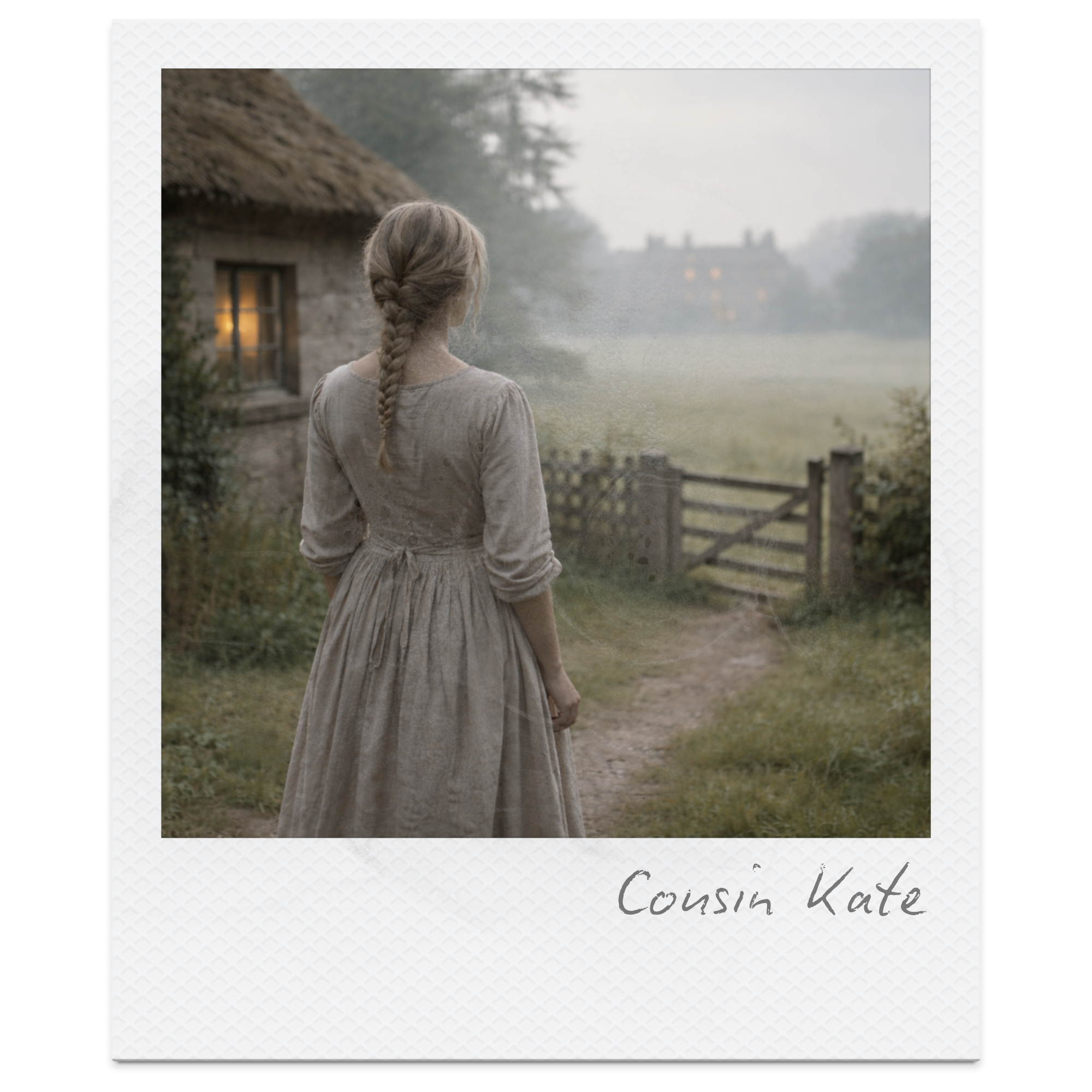
◆ Cousin Kate – Both poems explore a displaced woman confronting a socially sanctioned relationship, but while Cousin Kate emphasises loss and exclusion, Maude Clare foregrounds public defiance and reclaimed power
◆ No, Thank You, John – Like Maude Clare, this poem centres on a woman rejecting a man’s expectations, but here the tone is more controlled and polite, revealing a quieter assertion of female autonomy compared to Maude Clare’s dramatic confrontation
◆ An Apple-Gathering – Both poems explore the consequences of love outside social approval; however, An Apple-Gathering focuses on regret and exclusion, whereas Maude Clare presents a woman who refuses shame and instead asserts moral authority
◆ Twice – While Twice explores emotional vulnerability and the pain of rejected love, Maude Clare offers a contrasting response, where the rejected woman transforms vulnerability into strength and control
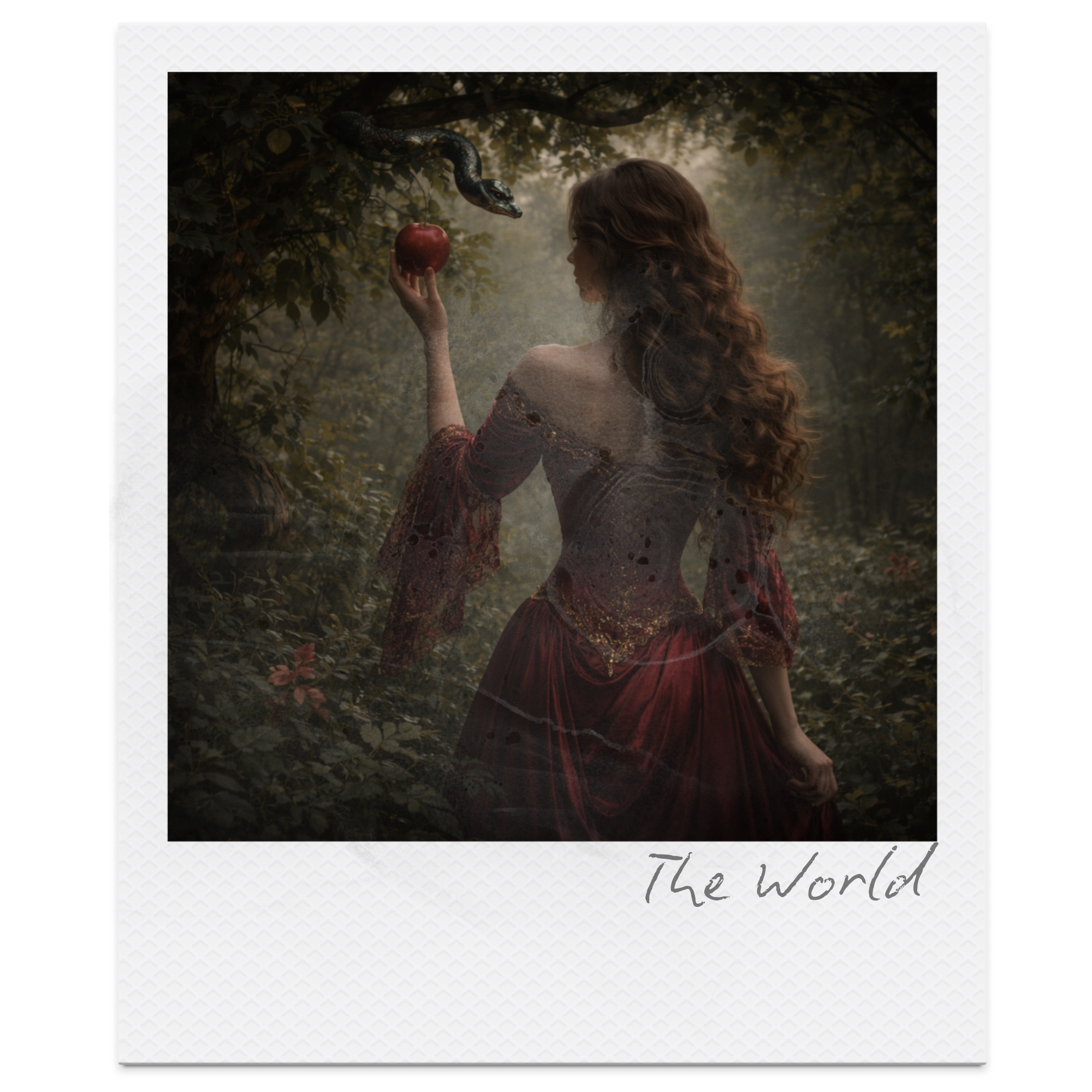
◆ The World – Both poems critique appearances and illusion, with The World exposing the false allure of surface beauty, and Maude Clare revealing the instability beneath a socially idealised marriage
◆ Winter: My Secret – This poem similarly explores female control over knowledge and disclosure, as the speaker withholds truth, while Maude Clare does the opposite—revealing truth publicly and forcefully
◆ Echo – Both poems engage with the persistence of the past, but while Echo presents memory as haunting and internal, Maude Clare externalises the past, making it visible and confrontational
◆ Remember – In contrast to Maude Clare’s insistence on being remembered, Remember explores the idea of letting go, suggesting a more selfless and restrained approach to love and memory
◆ At Home – Both poems depict a woman observing a social gathering from a position of exclusion, but At Home is marked by quiet detachment, whereas Maude Clare transforms exclusion into active intervention
◆ Shut Out – This poem also explores exclusion and displacement, yet the speaker remains outside looking in, while Maude Clare crosses that boundary, reclaiming.
Final Thoughts
Christina Rossetti’s Maude Clare is a striking exploration of power, love, and social expectation, using the public setting of a wedding to expose the instability beneath outward appearances. Through sharp contrasts in voice and character, Rossetti challenges traditional ideas of femininity, suggesting that authority, moral clarity, and emotional truth do not always align with socially approved roles.
What makes the poem particularly compelling is its refusal to offer a clear resolution. Maude Clare leaves with dignity and control, Nell remains with determination and hope, and Thomas is left diminished, caught between past and present. This unresolved tension ensures that the poem lingers, inviting readers to question who truly holds power and whether love can ever be fully claimed or replaced.
For more analysis of Rossetti’s poetry, explore the Rossetti hub, or continue your study through the Literature Library, where you’ll find a wider range of texts, themes, and critical approaches.
Choose Your Next Text