Some Ladies Dress in Muslin Full and White by Christina Rossetti: Summary, Themes, Satire & Analysis
Christina Rossetti’s Some Ladies Dress in Muslin Full and White is a sharply satirical poem that exposes the absurdities of Victorian fashion, social performance, and superficial judgement. Through a series of vivid, often exaggerated images, Rossetti critiques the ways in which individuals use clothing and appearance to construct identity, revealing the tension between outward display and inner worth.
This poem moves beyond light observation into biting social commentary, using humour and exaggeration to explore ideas of vanity, conformity, and moral hypocrisy. The analysis below will explore how Rossetti uses structure, tone, and imagery to ridicule social pretension, before examining how the poem reflects wider Victorian anxieties about class, gender, and respectability. For more poetry analysis, explore the Christina Rossetti Hub and the Literature Library.

Some Ladies Dress in Muslin Full and White Context
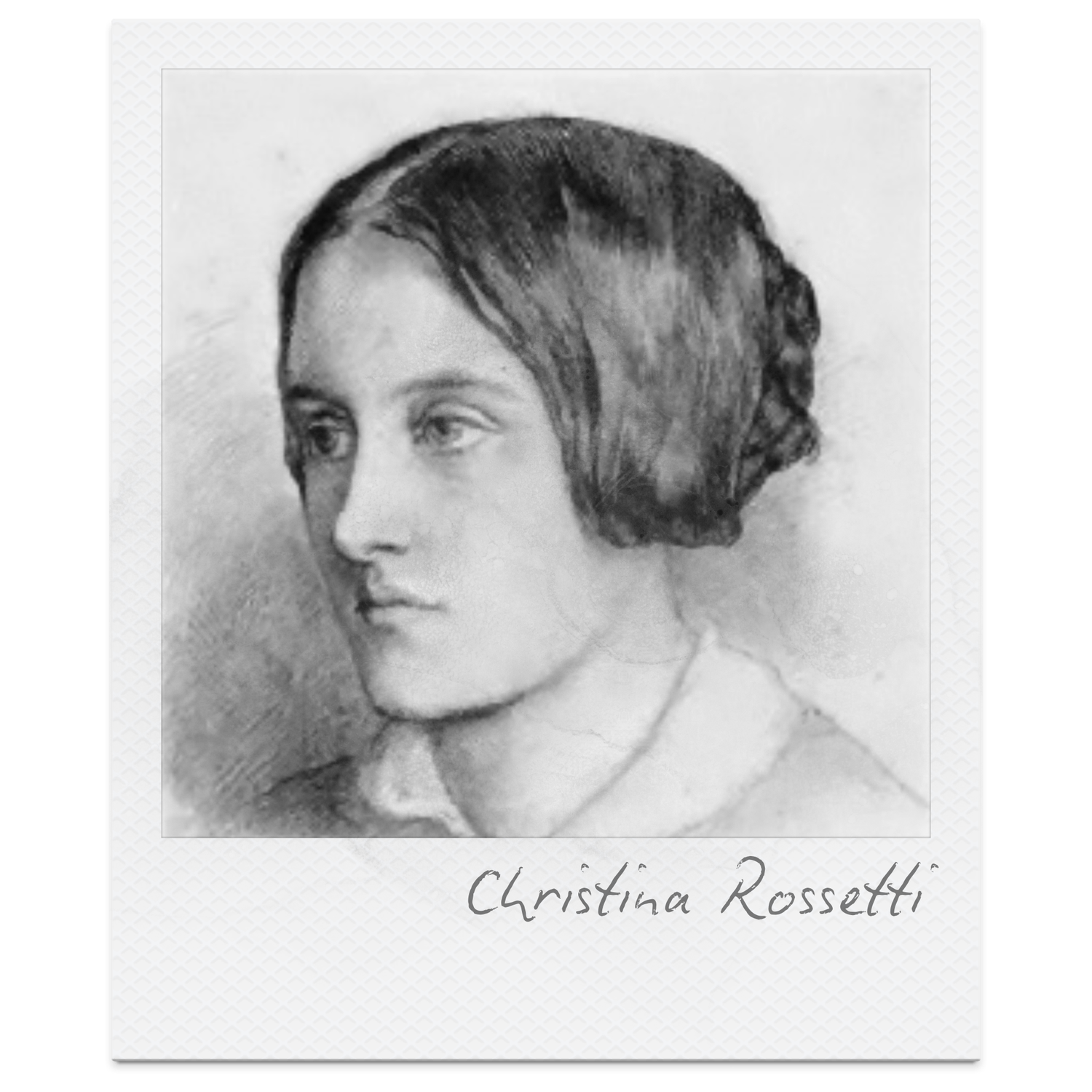
Christina Rossetti wrote during the Victorian period, a time marked by rigid social hierarchies, strict codes of respectability, and an intense emphasis on appearance as a marker of status and morality. Clothing in particular functioned as a visible signal of class, wealth, and propriety, with elaborate dress often used to assert social position or femininity. In this poem, Rossetti turns her attention to these outward displays, exposing the absurdity and artificiality that can lie beneath them.
Rossetti herself occupied a complex position within Victorian society. Associated with the Pre-Raphaelite movement through her family, she was deeply aware of the relationship between artifice and authenticity, often critiquing performative behaviour in both social and emotional contexts. Her poetry frequently challenges superficial values, instead privileging sincerity, spiritual integrity, and moral clarity over outward show.
In Some Ladies Dress in Muslin Full and White, this critique takes on a more overtly satirical tone. Rather than focusing on spiritual struggle or emotional restraint, Rossetti adopts a voice of sharp observation and even cruelty, mocking individuals whose appearance does not align with their age, status, or dignity. The poem reflects broader Victorian anxieties about impropriety, particularly in relation to women who transgress expected norms of dress or behaviour.
At the same time, the poem reveals the darker side of social judgement. The speaker’s willingness to ridicule — and even imaginatively punish — those deemed ridiculous suggests how quickly social policing can become moral condemnation. Rossetti’s satire therefore operates on two levels: it critiques the vanity of those being described, while also exposing the harshness and exclusivity of the society that judges them.
For a broader exploration of Rossetti’s influences and recurring themes, see the Christina Rossetti ContextPost.
Some Ladies Dress in Muslin Full and White: At a Glance
Form: Sonnet (irregular, satirical variation)
Mood: Mocking, critical, sharply observant
Central tension: The contrast between outward appearance and social appropriateness or inner worth
Core themes: Vanity, social performance, class display, judgement, conformity
One-sentence meaning:
A satirical critique of individuals who use clothing and appearance to project status or identity, exposing the absurdity of social pretension and the cruelty of judgement.
Some Ladies Dress in Muslin Full and White Summary
The poem opens with a catalogue of different people and their chosen modes of dress and transport, presenting a society preoccupied with appearance, fashion, and social display. Rossetti lists figures who carefully curate their outward image, suggesting that identity is being constructed through clothing, class markers, and public performance rather than any deeper sense of self.
As the poem develops, the tone becomes more openly critical. The speaker begins to highlight individuals whose appearance is deemed inappropriate or excessive, focusing particularly on those who disrupt expected norms of age, gender, and propriety. These descriptions become increasingly exaggerated, turning social observation into pointed satire and mockery.
In the final section, the poem shifts into darker territory. The speaker imagines a world in which certain individuals would be left to drown rather than saved, revealing a disturbing undercurrent of cruelty beneath the earlier humour. This closing image exposes the extremity of social judgement, suggesting that ridicule can easily harden into exclusion and moral condemnation.
Title, Form, Structure, and Metre
Rossetti’s use of the sonnet form is central to the poem’s effect. Traditionally associated with love, devotion, and idealisation, the sonnet is a form that elevates its subject, often presenting it as worthy of admiration or contemplation. Here, however, Rossetti subverts that expectation. Instead of praising beauty or expressing affection, she uses the sonnet to deliver sharp social satire, exposing vanity, artifice, and absurdity. This contrast between form and content creates an ironic tension: a structure designed to celebrate is instead used to criticise and diminish.
Title
The title immediately foregrounds appearance and fabric, drawing attention to clothing as a marker of identity. The phrase “muslin full and white” suggests delicacy, purity, and feminine refinement, but this apparent admiration is undercut by the poem’s tone. Instead of celebrating beauty or elegance, the title introduces a world obsessed with surface detail, preparing the reader for a critique of superficial values and social performance.
Form and Structure
The poem is an Italian (Petrarchan) sonnet, consisting of fourteen lines divided into an octave and a sestet. This traditional structure allows Rossetti to organise her satire with deliberate control.
In the octave, the speaker catalogues a range of figures defined by their clothing, transport, and outward presentation. These observations establish a social landscape dominated by display, where identity is constructed through visible markers rather than substance. The movement of the octave feels observational, as though the speaker is surveying a parade of carefully curated appearances.
The sestet introduces a tonal shift. Rather than simply describing social absurdities, the speaker moves toward a more general and unsettling reflection on judgement and exclusion. This structural turn (the volta) deepens the poem’s meaning, revealing that what begins as mockery develops into something closer to misanthropy. The poem no longer merely critiques individuals; it exposes a broader impulse to condemn and dismiss.
Crucially, Rossetti’s decision to use a sonnet intensifies this effect. The tight, recognisable structure gives the speaker’s voice a sense of authority and control, as though their judgements are reasoned and justified. Yet the content increasingly reveals the instability of that authority, as measured observation shifts into exaggerated disdain. In this way, the sonnet form itself becomes part of the satire, highlighting the gap between civilised expression and uncivil judgement.
Rhyme Scheme and Poetic Pattern
The poem follows the traditional Petrarchan rhyme scheme: ABBA ABBA CDE ECD. The enclosed rhyme of the octave creates a sense of containment and order, reinforcing the controlled, almost clinical nature of the speaker’s observations.
This tight pattern contributes to the poem’s tone of authority. The speaker appears composed and deliberate, as though passing judgement from a position of certainty. However, the shift in the sestet introduces a subtle destabilisation, reflecting the movement from structured observation to more extreme and emotionally charged conclusions.
Metre and Rhythmic Movement
The poem is written predominantly in iambic pentameter, giving it a steady and measured rhythm that aligns with the sonnet form’s traditional elegance. For example:
Some LAD- | ies DRESS | in MUS- | lin FULL | and WHITE
This regular rhythm initially mirrors the orderliness and decorum of the society being described. The controlled pace suggests calm observation, as though the speaker is carefully assessing each figure in turn.
However, Rossetti introduces subtle variations to disrupt this stability, particularly in moments of heightened emphasis. In the closing line, the rhythm shifts slightly to create a more forceful, abrupt movement:
GO to | the BA- | son, POKE | them O’ER | the RIM
The stronger opening stress gives the line a sharper, almost physical energy, reinforcing the speaker’s sudden escalation from critique to imagined action. This disruption of rhythm mirrors the poem’s tonal shift, as measured satire gives way to a more aggressive and unsettling conclusion.
The Speaker of Some Ladies Dress in Muslin Full and White
The speaker presents themselves as a sharply observant and highly judgemental commentator on the social world around them. Positioned as an onlooker, they survey a range of individuals defined by their appearance, dress, and social behaviour, adopting a tone that blends wit, mockery, and increasing contempt. Rather than offering neutral description, the speaker actively evaluates and categorises, revealing a mindset shaped by rigid expectations of propriety and taste.
There is a strong sense of authority in the speaker’s voice. Their confident, declarative observations suggest that they believe themselves capable of distinguishing what is appropriate from what is ridiculous. This is reinforced by their use of generalisations and categorical statements, which position their judgements as universal rather than personal.
However, as the poem progresses, this authority begins to feel unstable. What initially appears as controlled social critique develops into something more extreme, exposing an undercurrent of misanthropy. The speaker does not simply notice social absurdity; they take a certain satisfaction in condemning it, particularly in the final lines where their imagined response becomes almost punitive.
The use of the second person “you” is particularly significant. By shifting into this perspective, the speaker attempts to draw the reader into complicity, suggesting that their judgements are shared and self-evident. This creates an uneasy dynamic, as the reader is invited to participate in the speaker’s ridicule and exclusion, even as the extremity of these attitudes may prompt discomfort.
It is also possible to read the speaker as a deliberately exaggerated voice. Written when Rossetti was young, the poem may capture a heightened, almost performative irritation with social pretension. In this sense, the speaker becomes both a vehicle for satire and an object of critique in their own right, revealing how easily social judgement can become cruel, excessive, and morally questionable.
Some Ladies Dress in Muslin Full and White Line by Line Analysis
This sonnet invites close attention to how meaning is built line by line, with each image contributing to Rossetti’s wider critique of appearance, social performance, and judgement. Rather than developing a narrative, the poem accumulates a series of sharply observed figures, using satire, exaggeration, and contrast to expose the absurdities of Victorian society.
The analysis below explores each line in turn, examining how Rossetti constructs tone, develops imagery, and gradually intensifies the speaker’s mockery into something more unsettling and morally ambiguous.
Some ladies dress in muslin full and white,
The opening line immediately establishes a focus on appearance and fabric, presenting an image of refined femininity. However, the phrasing feels observational rather than admiring, suggesting that clothing is being assessed as a social signal rather than appreciated for its beauty.
◆ The reference to “muslin” evokes delicacy, purity, and upper-class fashion, aligning with Victorian ideals of femininity
◆ “Full and white” suggests excess and display, hinting at performative elegance rather than natural grace
◆ The detached tone introduces the poem’s satirical lens, positioning the speaker as an evaluator rather than a participant
Some gentlemen in cloth succinct and black;
This line mirrors the previous one, shifting from female to male dress while maintaining the same observational structure. The symmetry reinforces the idea that both genders participate in constructing identity through outward appearance.
◆ The parallel structure (“Some… Some…”) creates a sense of cataloguing, reducing individuals to types
◆ “Succinct” suggests neatness and restraint, aligning with ideals of masculine propriety and control
◆ The contrast between “white” and “black” introduces a visual binary, reinforcing social order and categorisation
Some patronise a dog-cart, some a hack,
Here, the focus shifts from clothing to modes of transport, expanding the critique to include broader markers of class and status. The repetition continues, emphasising the uniformity of social display.
◆ “Patronise” implies conscious choice, highlighting the deliberate performance of class identity
◆ “Dog-cart” versus “hack” reflects distinctions between private ownership and public hire, signalling wealth differences
◆ The ongoing list structure reinforces the sense of a society obsessed with external markers
Some think a painted clarence only right.
The line continues the pattern, suggesting that even within displays of wealth, there are hierarchies of taste and judgement. The speaker subtly mocks the idea that such preferences carry real significance.
◆ “Painted clarence” suggests ostentation and artificial embellishment, reinforcing themes of surface over substance
◆ “Only right” conveys rigidity, implying that social rules are treated as absolute and unquestioned
◆ The repetition of “Some” underscores the uniformity of social behaviour, despite superficial differences
Youth is not always such a pleasing sight,
The tone begins to shift here, moving from neutral observation to more explicit judgement. The speaker challenges the assumption that youth is inherently attractive or admirable.
◆ The line disrupts expectations, undermining the association between youth and beauty
◆ “Not always” introduces qualification, suggesting a more critical and discerning perspective
◆ The phrase “pleasing sight” reduces individuals to objects of visual evaluation, reinforcing the poem’s focus on appearance-based judgement
Witness a man with tassels on his back;
The speaker provides a specific example to support their claim, introducing a figure whose appearance is presented as ridiculous. The tone becomes more overtly mocking.
◆ “Witness” creates a sense of evidence, as though the speaker is proving a point
◆ “Tassels” suggest flamboyance and excess, possibly associated with dandyism or affectation
◆ The image ridicules deviation from expected norms of masculine restraint
Or woman in a great-coat like a sack
The focus shifts to a female figure, continuing the pattern of critique across genders. The simile introduces a harsher, more exaggerated tone.
◆ The comparison to a “sack” strips the woman of elegance, emphasising shapelessness and lack of refinement
◆ The “great-coat” implies a crossing of gender expectations, as such garments were typically associated with men
◆ The line reinforces rigid ideas about appropriate feminine appearance
Towering above her sex with horrid height.
The description intensifies, focusing on physicality as well as clothing. The speaker’s judgement becomes more extreme and less restrained.
◆ “Towering” suggests dominance or excess, framed negatively rather than admirably
◆ “Her sex” reinforces Victorian ideas of gender norms and expectations
◆ “Horrid height” reveals the speaker’s intolerance of deviation, exposing the cruelty underlying their judgement
If all the world were water fit to drown
The poem shifts into a hypothetical scenario, marking a clear tonal change. The imagery becomes more dramatic and symbolic.
◆ The conditional “If” introduces a thought experiment, expanding the poem’s scope beyond observation
◆ Water becomes a metaphor for judgement and consequence
◆ The shift signals a movement from satire into something darker and more unsettling
There are some whom you would not teach to swim,
The speaker begins to articulate a disturbing attitude toward those they criticise. The use of second person implicates the reader.
◆ “You” creates a sense of shared perspective, drawing the reader into complicity
◆ “Not teach to swim” implies withholding help, suggesting moral exclusion
◆ The phrasing normalises cruelty, presenting it as a reasonable response
Rather enjoying if you saw them sink;
The tone becomes explicitly harsh, revealing the full extent of the speaker’s disdain. What began as satire now edges into open hostility.
◆ “Enjoying” introduces a disturbing sense of pleasure in others’ suffering
◆ “Sink” reinforces the metaphor of social failure or rejection
◆ The line exposes the emotional core of the speaker’s judgement: not just critique, but contempt
Certain old ladies dressed in girlish pink,
The poem returns to specific examples, but the tone remains sharpened by the preceding lines. The focus is now on age and appropriateness.
◆ “Old ladies” contrasted with “girlish pink” highlights incongruity and social transgression
◆ The colour pink symbolises youth and femininity, making its use here appear inappropriate
◆ The line reflects Victorian anxieties about age and decorum
With roses and geraniums on their gown: —
The imagery becomes more elaborate, emphasising excess and artificial decoration. The tone remains mocking.
◆ Floral imagery suggests ornamentation and artificial beauty
◆ “Roses and geraniums” may imply over-decoration, reinforcing excess and bad taste
◆ The detail intensifies the sense of visual absurdity
Go to the Bason, poke them o'er the rim. —
The final line delivers a shocking and abrupt conclusion, transforming satire into imagined action. The tone becomes aggressively dismissive.
◆ The imperative “Go” introduces direct command, heightening the forcefulness of the statement
◆ “Poke them o’er the rim” suggests physical violence, albeit framed in a darkly comic way
◆ The ending exposes the extremity of social judgement, revealing how easily ridicule becomes exclusion and cruelty
Some Ladies Dress in Muslin Full and White Key Techniques
Rossetti’s satire is driven not just by what she describes, but by how she constructs those descriptions. Through repetition, contrast, and tonal escalation, she exposes a society obsessed with appearance, performance, and social judgement, while simultaneously revealing the instability and excess of the speaker’s own perspective.
◆ Hyperbole – The speaker’s irritation escalates into exaggerated, almost absurd fantasy. The imagined world “fit to drown” transforms social annoyance into moral exclusion, suggesting some people are not worth saving. This intensifies in the final line, where the vast idea of drowning becomes the smaller but still aggressive act of pushing someone into a basin. The shift from large-scale destruction to almost comic violence reinforces both dark humour and the speaker’s underlying cruelty.
◆ Anaphora – The repetition of “Some” at the start of multiple lines creates a pattern of classification and reduction. Individuals are not presented as unique, but as types within a social system defined by appearance and behaviour. This repetitive structure also mimics the monotony of social observation, suggesting the speaker’s judgement is both habitual and indiscriminate.
◆ Juxtaposition – Rossetti places contrasting images side by side, such as “muslin full and white” and “cloth succinct and black”, to highlight how identity is constructed through visual opposites. These contrasts reinforce rigid social binaries (male/female, excess/restraint, youth/age), exposing how superficial distinctions are treated as meaningful.
◆ Satirical Tone – The poem maintains a controlled, observational tone that gradually sharpens into mockery and contempt. What begins as detached description becomes increasingly hostile, revealing how easily social critique can become moral superiority. The tone itself becomes part of the poem’s meaning, exposing both society and the speaker.
◆ Imagery (Clothing and Appearance) – Detailed visual imagery dominates the poem, particularly in descriptions of dress. Clothing functions as a symbol of identity, class, and conformity, but is repeatedly shown to be inadequate or absurd. This focus on external detail reinforces the idea that society values surface over substance.
◆ Enjambment – Several lines run into the next without pause, creating a sense of flowing observation. This mirrors the speaker’s scanning of society, as though people are being quickly assessed and judged in passing. It also contributes to the accumulating rhythm of critique.
◆ Volta (Structural Shift) – The transition from the octave to the sestet marks a clear shift from observation to judgement. While the opening presents a catalogue of social types, the sestet moves into hypothetical and moral reflection, culminating in the speaker’s disturbing fantasy. This structural turn deepens the poem’s meaning and reveals its darker implications.
◆ Direct Address (Second Person “you”) – The use of “you” draws the reader into the speaker’s perspective, creating a sense of shared judgement. This implicates the reader in the poem’s cruelty, making the satire more uncomfortable and forcing reflection on one’s own tendencies to judge.
◆ Irony – The poem’s use of the sonnet form introduces structural irony. A form traditionally associated with love and admiration is used instead to express ridicule and disdain. This contrast heightens the poem’s satirical effect and reinforces its critique of superficial values.
◆ Caricature – The figures described (the man with tassels, the towering woman, the elderly women in pink) are exaggerated into almost grotesque versions of themselves. This technique simplifies individuals into comic types, reinforcing the poem’s satirical mode while also revealing the cruelty inherent in such reduction.
Some Ladies Dress in Muslin Full and White Themes
Rossetti’s poem explores a society governed by appearance, where identity is constructed through external display and enforced through social judgement. Beneath its satirical tone, the poem reveals deeper anxieties about authenticity, belonging, and the consequences of failing to conform.
Vanity
The poem presents vanity as a defining feature of the social world it depicts. Individuals are shown to invest heavily in their appearance, using clothing and accessories to construct an image of themselves that aligns with social expectations. However, this concern with outward display is repeatedly exposed as shallow and misguided.
Rossetti’s descriptions emphasise excess and artificiality, suggesting that vanity leads not to beauty, but to distortion. Figures such as the overdressed or inappropriately dressed become objects of ridicule, highlighting how the pursuit of appearance can result in self-caricature rather than refinement.
Social Performance
Closely linked to vanity is the idea that identity is something performed rather than inherently possessed. The repeated structure of the poem, with its catalogue of “Some…” figures, reinforces the sense that individuals are playing roles within a highly codified social system.
Clothing, transport, and behaviour all function as elements of this performance, signalling status, taste, and belonging. However, Rossetti’s satire reveals the fragility of this system: when individuals misjudge or exaggerate their role, they are quickly exposed and mocked. Social life becomes a kind of stage, where success depends on maintaining the correct appearance.
Class Display
The poem highlights how class distinctions are communicated through visible markers such as clothing and modes of transport. References to “dog-cart,” “hack,” and “painted clarence” suggest a hierarchy of status, where even subtle differences carry social meaning.
However, Rossetti undermines the significance of these distinctions by presenting them as arbitrary and superficial. The careful curation of class identity is shown to be another form of performance, reliant on external symbols rather than intrinsic worth. In this way, the poem critiques a society that prioritises display over substance.
Judgement
Judgement is central to the poem, not only as a theme but as a driving force behind the speaker’s perspective. The speaker continuously evaluates the individuals they observe, categorising them as appropriate or ridiculous based on their appearance.
As the poem progresses, this judgement becomes increasingly harsh. What begins as observation develops into open disdain, culminating in the imagined exclusion or even destruction of those deemed unworthy. Rossetti thus exposes the dangers of a culture built on constant evaluation, where ridicule can escalate into cruelty.
Conformity
The poem reflects a society governed by strict expectations regarding dress, behaviour, and identity. Those who conform to these norms are presented as conventional, while those who deviate are subject to ridicule.
However, Rossetti complicates this idea by suggesting that both conformity and non-conformity can be problematic. The overly proper are depicted as superficial, while those who deviate too far become absurd. This creates a tension in which individuals are trapped between the pressure to conform and the risk of being judged regardless.
Appearance vs Reality
Beneath its focus on clothing and display, the poem explores the gap between surface appearance and inner reality. The emphasis on visual detail suggests a world where people are judged entirely by how they look, yet these outward signs often misrepresent or distort the truth.
Rossetti’s satire reveals that appearance is not a reliable indicator of worth, but rather a constructed and unstable façade. This theme reinforces the poem’s broader critique of a society that privileges visibility over authenticity.
Social Exclusion and Cruelty
In its final lines, the poem moves beyond satire into something more unsettling, revealing the potential for social judgement to become exclusionary and even violent. The speaker’s imagined pleasure in others “sink[ing]” exposes a darker impulse beneath the surface of polite society.
This suggests that systems of judgement are not neutral, but carry real consequences. Those who fail to meet social expectations are not simply criticised, but symbolically removed or erased. Rossetti thus highlights the moral dangers of a culture that values conformity and appearance above empathy and humanity.
Some Ladies Dress in Muslin Full and White Alternative Interpretations
Rossetti’s poem lends itself to multiple interpretive lenses, as its satire can be read not only as a critique of society, but also as an exploration of the speaker’s own attitudes and the cultural values of the Victorian world.
Feminist Interpretation: Policing the Female Body
From a feminist perspective, the poem can be read as exposing the rigid expectations placed on women’s appearance. Female figures are judged harshly for both excess and deviation, whether through overly elaborate dress or failure to conform to ideals of femininity.
However, the poem also complicates this reading. The speaker participates in this judgement, reinforcing the very standards that restrict women. This suggests how deeply internalised these expectations were, highlighting the role of women in maintaining systems of gendered surveillance and self-policing.
Marxist Interpretation: Class and Display
A Marxist reading focuses on how class identity is constructed and displayed through material possessions. Clothing and transport become symbols of wealth and status, with individuals attempting to position themselves within a visible social hierarchy.
Rossetti’s satire undermines these distinctions by presenting them as superficial and performative. The obsession with display reflects a society in which value is tied to external markers, exposing the instability of class identity and the emptiness of status built on appearance alone.
Psychological Interpretation: Projection and Irritation
From a psychological perspective, the poem can be read as an exploration of the speaker’s own mindset. The intensity of their judgement, particularly in the final lines, suggests that their irritation may be disproportionate or exaggerated.
The speaker’s focus on others’ flaws may function as a form of projection, displacing their own anxieties or insecurities onto those around them. The imagined pleasure in others’ downfall reveals a darker emotional undercurrent, suggesting that the poem critiques not only society, but also the psychology of judgement itself.
Religious Interpretation: Moral Judgement and Vanity
Given Rossetti’s strong religious background, the poem can be read as a critique of vanity and worldliness, both of which were traditionally viewed as moral failings. The emphasis on outward appearance reflects a society disconnected from spiritual values, prioritising surface over substance.
However, the speaker’s harsh and unforgiving tone complicates this interpretation. Rather than embodying Christian compassion, the speaker displays a lack of empathy, suggesting that moral judgement itself can become excessive and uncharitable.
Existential Interpretation: Absurdity and Meaninglessness
An existential reading highlights the sense of absurdity in the social behaviours described. Individuals invest time and energy in constructing appearances that ultimately lack deeper meaning, suggesting a world governed by arbitrary rules and expectations.
The speaker’s response — oscillating between mockery and hostility — reflects a struggle to find meaning within this superficial system. The poem can therefore be read as exposing the emptiness of social performance and the difficulty of establishing authentic identity within it.
Satirical Self-Awareness: The Speaker as Target
The poem can also be interpreted as subtly turning its critique back on the speaker. While they position themselves as perceptive and superior, their escalating hostility reveals their own lack of balance and empathy.
In this reading, the speaker becomes part of the satire. Their exaggerated reactions and willingness to condemn others expose the same flaws they criticise, suggesting that judgement itself is one of the poem’s central targets.
Some Ladies Dress in Muslin Full and White Teaching Ideas
This poem is particularly effective for exploring satire, social judgement, and contextual expectations with students. Its clear structure and vivid imagery make it accessible, while its tonal shifts allow for deeper, evaluative discussion.
1. Who Is Being Judged? (Discussion + Annotation)
Ask students to identify each figure presented in the poem and categorise them:
Who is being criticised?
Why are they being judged?
Is the judgement fair?
Students can annotate the poem, highlighting references to appearance, class, and gender expectations. This activity encourages close reading while introducing the idea that the poem critiques both society and the speaker.
2. Satire or Cruelty? (Debate Task)
Present students with the statement:
“The speaker is justified in their criticism of society.”
Students must argue for or against this view, using evidence from the poem. Encourage them to consider:
At what point does satire become excessive?
Does the speaker lose credibility?
How does the ending affect our view of the speaker?
This develops evaluative thinking, a key skill for higher-level responses.
3. Line-by-Line Close Reading (Paired Analysis)
Assign pairs or small groups a set of lines from the poem. Each group must:
Explain the imagery and tone
Identify one key technique
Link their section to a broader theme
Groups then share their analysis, building a full class interpretation of how meaning develops across the poem.
4. Model Analytical Paragraph Task (Exam Skills Focus)
Provide students with the following model paragraph:
Rossetti uses satire to expose the superficial nature of Victorian society. The repeated structure of “Some…” reduces individuals to types, suggesting that identity is constructed through outward appearance rather than inner value. This creates a sense of uniformity, as though people are interchangeable within a system governed by social expectations. However, the speaker’s tone becomes increasingly harsh, particularly in the final lines, where the imagined pleasure in others “sink[ing]” reveals a shift from observation to cruelty. This suggests that the poem not only critiques vanity, but also exposes the dangers of excessive judgement.
Students then:
Write 3–5 questions that this paragraph would answer
Use a mark scheme to assess the paragraph (e.g. clarity, use of evidence, analysis)
Improve the paragraph, adding more precise terminology, deeper analysis, or stronger conceptual links
This task develops exam awareness, helping students understand what strong analytical writing looks like. For additional practice, students can use the essay questions from the Rossetti Essay Questions post to apply their improved responses.
5. Rewriting the Speaker
Students rewrite part of the poem from the perspective of one of the figures being judged (e.g. the “old ladies dressed in girlish pink” or the man with “tassels”).
They must:
Defend their appearance or choices
Challenge the speaker’s judgement
Maintain a clear sense of voice
This encourages students to engage with alternative interpretations and recognise the subjectivity of the speaker’s perspective.
6. Context in Action
Students explore how Victorian expectations of dress, gender, and class shape the poem. They can:
Research norms of Victorian fashion
Identify where the poem reflects or challenges these norms
Link context directly to specific lines
This strengthens their ability to integrate contextual understanding into analysis rather than treating it as separate knowledge.
These activities allow students to move from understanding to analysis to evaluation, supporting a full range of responses from accessible discussion to top-band analytical writing.
Go Deeper into Some Ladies Dress in Muslin Full and White
Rossetti frequently explores the tension between appearance and reality, social expectation, and moral judgement. This poem sits within a wider body of work that critiques both external display and the consequences of emotional or social performance.
◆ In an Artist’s Studio – Both poems critique the construction of identity through surface image. While Some Ladies Dress in Muslin Full and White satirises social display through clothing, In an Artist’s Studio explores how a woman is reduced to a repeated aesthetic object, exposing the dangers of being defined by appearance alone.
◆ Cousin Kate – This poem similarly examines social judgement and the rigid expectations placed on women. However, while Some Ladies Dress in Muslin Full and White adopts a mocking, external perspective, Cousin Kate gives voice to a woman directly affected by these judgements, revealing their emotional consequences.
◆ The World – Both poems expose the deceptiveness of outward beauty. In The World, physical attractiveness masks moral corruption, while in Some Ladies Dress in Muslin Full and White, elaborate dress becomes a symbol of superficiality. Together, they reinforce Rossetti’s distrust of surface appearances.
◆ Winter: My Secret – This poem also plays with performance and concealment, but in a more controlled and self-aware way. While the speaker in Some Ladies Dress in Muslin Full and White judges others for their outward display, Winter: My Secret explores the deliberate withholding of identity, suggesting a more empowered relationship with self-presentation.
◆ No, Thank You, John – Both poems feature a speaker who adopts a tone of assertion and judgement, though in different contexts. While No, Thank You, John presents a controlled rejection of romantic expectation, Some Ladies Dress in Muslin Full and White shows judgement becoming excessive and indiscriminate, highlighting the fine line between discernment and cruelty.
◆ From the Antique – This poem explores dissatisfaction with prescribed roles, particularly for women. While Some Ladies Dress in Muslin Full and White mocks those who fail to meet social expectations, From the Antique questions the value of those expectations altogether, offering a more introspective critique.
◆ Shut Out – Both poems engage with themes of exclusion. In Shut Out, the speaker is denied access to a space, while in Some Ladies Dress in Muslin Full and White, the speaker metaphorically excludes others through judgement. This contrast highlights how power operates in different ways across Rossetti’s work.
◆ Maude Clare – This poem also interrogates social performance, particularly in relation to marriage and reputation. While Maude Clare exposes the fragility of social respectability through dramatic confrontation, Some Ladies Dress in Muslin Full and White uses satire to undermine it more subtly.
These connections reveal how Rossetti consistently interrogates appearance, identity, and social expectation, though she does so through a wide range of tones—from restrained lyricism to sharp, almost biting satire.
Final Thoughts
Some Ladies Dress in Muslin Full and White offers a sharply controlled yet increasingly unsettling critique of a society governed by appearance, performance, and judgement. What begins as observational satire develops into something more revealing, exposing not only the absurdity of social display, but also the darker impulses that underpin it. The speaker’s progression from detached commentary to imagined cruelty highlights how easily criticism can become condemnation, and how fragile the boundary is between discernment and misanthropy.
At the same time, Rossetti’s use of the sonnet form elevates this critique, placing trivial social behaviours within a structure traditionally associated with love and admiration. This contrast reinforces the poem’s central irony: a world obsessed with surface beauty is rendered through a form that once celebrated it, only to expose its emptiness. In doing so, Rossetti not only critiques Victorian society, but also invites readers to reflect on their own tendencies toward judgement and superficial evaluation.
For further exploration of Rossetti’s poetry and recurring themes, visit the Christina Rossetti Hub, or explore a wider range of texts and analysis in the Literature Library.
Choose Your Next Text