Enchanted Forest Worldbuilding: The Ultimate Guide to Creating Magical Forests
There is a reason writers keep returning to the forest.
Forests sit naturally at the edge of the known world. Paths disappear beneath leaves, trees obscure what waits ahead and familiar landmarks become difficult to find. Even a short walk beneath the canopy can create the feeling of having crossed into somewhere entirely separate from the world outside.
Fantasy, folklore and fairytale writers have used that uncertainty for centuries.
Hansel and Gretel are led through the woods towards the witch's impossible cottage. Little Red Riding Hood encounters the wolf after leaving the familiar path. Snow White flees into the forest before discovering the dwarfs' home. In Shakespeare's A Midsummer Night's Dream, the woods become a place where ordinary social rules unravel beneath the influence of fairies, magic and mistaken identities.
The best enchanted forests, however, are rarely just collections of magical trees.
They have rules, histories, inhabitants, boundaries and secrets.
A path might only appear beneath a full moon. A river may demand payment before allowing travellers to cross. Trees might remember everyone who has harmed them. A village could have survived beneath the canopy for centuries by following rules outsiders dismiss as superstition.
Your forest might be whimsical and filled with talking animals, tiny cottages and helpful fairies. It might belong to an ancient fae court, conceal an entire woodland civilisation, protect a sacred place or imprison something dangerous.
It might welcome lost travellers.
Or it might deliberately make sure they remain lost.
The important question is not simply: What magical things exist in your forest?
It is: What makes this particular forest impossible to mistake for any other?
Throughout this guide, you'll build your own enchanted forest from the ground up, exploring its landscape, ecology, inhabitants, settlements, magic, rules, history, dangers and secrets. Whether you're creating a whimsical fairytale woodland, an ancient mythical forest or an entire fantasy forest civilisation, you'll learn how to turn an atmospheric collection of trees into a distinctive world capable of shaping the characters and stories that enter it.
If you're developing a larger magical world, explore the Fantasy Writing Hub for more fantasy worldbuilding resources, visit the Fairytales & Folklore Hub for enchanted kingdoms, folklore, fae and traditional story inspiration, or browse the Creative Writing Archive for hundreds of writing prompts, story ideas and creative writing resources.
1. Types of Enchanted Forests
Not every enchanted forest needs to be a shadowy ancient woodland filled with twisted trees and mysterious lights. A magical forest can be beautiful, unsettling, playful, sacred, dangerous or completely impossible.
The type of forest you create will influence its atmosphere, magic, inhabitants, history and role within the wider world. It can also determine what kinds of stories naturally belong there.
You don't need to choose a single category. Some of the most interesting fantasy forests combine several: an ancient forest might also belong to the fae, while a beautiful seasonal woodland could conceal a curse that only becomes visible during winter.
The Ancient Forest
An ancient forest should feel as though it has outlived the world around it.
Its oldest trees might predate nearby kingdoms, religions or even the people who currently inhabit the region. Roads disappear beneath roots, ruined structures reveal earlier civilisations and local legends preserve fragments of events nobody remembers clearly.
Consider what the forest has survived. Wars may have changed the borders beyond its trees while the woodland remained untouched. A vanished civilisation might have worshipped there. Creatures thought extinct elsewhere could still survive beneath its canopy.
Ancient forests work particularly well when their age has consequences: the deeper characters travel, the further they move into an older version of the world.
The Fae Forest
A fae forest exists alongside ordinary civilisation but does not necessarily follow its rules.
Beauty can be part of the danger. Flowers bloom out of season, music carries between the trees and paths lead towards feasts, palaces or clearings that were not there before.
Think about the rules governing interaction with the fae. Perhaps travellers should never accept food, reveal their true name, step inside a particular ring of mushrooms or agree to a favour without establishing its price.
Time might also behave differently. A traveller could spend one night beneath the trees and return to discover that years have passed outside.
The important question is who understands the rules — and what happens to those who don't.
The Cursed Forest
Something has happened to this forest.
Perhaps a ruler ordered a massacre beneath its trees. A witch cursed the land. An ancient magical object was buried there. Something imprisoned beneath the roots is slowly waking.
The curse should affect the forest in visible ways.
Trees might grow twisted around abandoned buildings. Animals could be born without shadows. Nothing planted beyond a particular clearing survives. Travellers might repeatedly return to the same place no matter which direction they walk.
Decide whether the curse can be broken — and whether breaking it would actually make things better.
The Living Forest
A living forest is not merely inhabited by magical creatures.
The forest itself possesses some form of awareness.
Trees might communicate through their roots, paths could move deliberately and branches may close behind unwanted visitors. Animals could behave as extensions of the forest's will.
Then decide how intelligent it actually is.
Does it think like a person? Does it experience time differently because individual trees live for centuries? Can it distinguish between one human and another? Does it remember kindness, destruction or promises made beneath its branches?
Most importantly, decide what the forest wants.
The Sacred Forest
A sacred forest is protected because people believe something within it deserves reverence.
Perhaps it belongs to a deity, contains the burial places of ancient rulers or surrounds a spring believed to possess healing powers. Certain trees might never be cut, particular animals may be protected and entry into the deepest groves could be restricted to priests, rulers or people completing specific rituals.
Sacred forests also create conflict.
What happens when the woodland contains resources somebody desperately needs? What if another culture does not recognise its sacred status? What happens when the people responsible for protecting it begin breaking their own rules?
The Whimsical Forest
Not every enchanted forest needs to threaten the people entering it.
A whimsical forest might contain talking animals, peculiar cottages, miniature kingdoms, strange celebrations and small impossibilities that inhabitants regard as perfectly ordinary.
Perhaps squirrels operate a postal service. Mushrooms rearrange themselves into directions. A tea shop appears wherever somebody becomes hopelessly lost. Birds gossip about travellers moving along the road.
Whimsy works best when the forest still possesses internal logic. Decide what inhabitants consider normal, even when those things would seem completely extraordinary elsewhere.
The Seasonal Forest
Season can become part of the forest's magic rather than simply its weather.
Spring might awaken dormant creatures. Summer could make certain paths accessible. Autumn may bring the arrival of a travelling fae court, while winter reveals ruins normally concealed beneath vegetation.
You could also make the seasons themselves unusual.
Perhaps different parts of the forest exist permanently in different seasons. Maybe winter lasts until somebody completes an ancient ritual. A particular tree might blossom for one night every hundred years.
Ask what changes when the season changes — and what becomes possible only during a particular part of the year.
The Haunted Forest
A haunted forest allows the past to remain physically present.
Its ghosts might belong to travellers who became lost, soldiers killed in an old battle, inhabitants of an abandoned settlement or people sacrificed as part of a forgotten ritual.
But haunting does not have to mean visible ghosts.
Characters might hear axes in a forest where logging ended centuries ago. Lanterns could appear along an abandoned road. An empty cottage might produce woodsmoke every winter.
Decide what happened here, why the forest remembers it and what the dead still want.
The Impossible Forest
An impossible forest breaks the ordinary rules of geography.
It might be larger inside its boundaries than it appears from outside. Travelling north could eventually return someone to the southern edge. Rivers might flow uphill. A path walked yesterday may lead somewhere completely different today.
Different regions could even obey different physical rules.
The key is to give the impossibility some consistency. Complete randomness quickly stops feeling mysterious. Instead, establish patterns characters can gradually recognise, exploit or misunderstand.
The Hidden Forest
Some forests are magical because finding them is part of the story.
A hidden forest might appear only during a particular season, lie beyond an ordinary stretch of woodland or require travellers to follow an exact sequence of landmarks. Perhaps its entrance moves, only certain people can see it or everyone who leaves gradually forgets how to return.
Then ask why it is hidden.
It could protect a surviving civilisation, conceal a dangerous creature, preserve an extinct ecosystem or have deliberately withdrawn from the wider world.
And consider who already knows it exists. A forest can remain hidden from most of the world while smugglers, witches, royal families or local villagers have quietly known the way inside for generations.
Combine Different Types of Enchanted Forest
You don't have to choose only one.
An ancient fae forest might contain sacred groves protected by rules older than the neighbouring kingdom. A whimsical forest could become haunted after sunset. A hidden forest might only become accessible during autumn, while an apparently cursed forest could actually be a living woodland deliberately defending itself from outsiders.
Combining two or three ideas can help you move beyond a generic magical woodland and begin creating a forest with its own identity.
Before moving on, decide:
What kind of enchanted forest is this?
Why is it magical?
What makes it different from the land beyond its boundaries?
What can happen here that cannot happen anywhere else in your world?
Create Your Enchanted Forest
Not sure what your forest looks like yet? Use the Enchanted Forest Generator to create a complete magical woodland, including its name, atmosphere, landscape, plant life, wildlife, magic, hidden places, inhabitants, dangers, rules, secrets and story hook.
Keep the elements you love, refresh anything that doesn't fit, then use the rest of this guide to develop your generated forest into a world of its own.
Try the Enchanted Forest Generator now to create your own magical forest.
2. Build the Landscape
Before adding hidden palaces, fae courts or magical creatures, decide what your enchanted forest physically looks like.
A forest is not simply an endless collection of trees. It has terrain, waterways, clearings, changes in vegetation, natural barriers and different layers of plant life. The landscape determines where people can settle, which creatures can survive, how characters travel and which parts of the forest remain difficult to reach.
Magic can then change those natural features in ways that make the forest uniquely yours.
Choose the Kind of Forest
Start with the environment itself.
A dense evergreen forest creates a very different world from an open deciduous woodland filled with oak, beech and birch. A temperate rainforest might be dripping with moss, ferns and moisture, while a northern forest could contain dark conifers, frozen lakes and months of snow.
Your enchanted forest might be:
an ancient oak woodland
a dense pine or fir forest
a mixed woodland
a misty temperate rainforest
a snowy northern forest
a tropical rainforest
a mountain forest
a swampy or flooded forest
a coastal woodland
a forest transformed by permanent autumn, winter or spring
Think about the climate and location as well as the aesthetic. Rainfall, temperature, altitude and seasons influence what grows there and how people and animals live within it.
Then decide what magic has changed.
Perhaps snow falls permanently within one valley. A grove remains in blossom throughout winter. Trees growing around an ancient magical site have developed silver bark, while a cursed region no longer produces leaves at all.
The ordinary landscape gives the magic something to transform.
Think in Layers
Forests exist vertically as well as horizontally.
Above everything is the canopy, where branches and leaves control how much light reaches the ground. Beneath it, smaller trees and shrubs form the understory, while ferns, mosses, fungi, roots, fallen leaves and decaying wood cover the forest floor.
Those layers create opportunities for fantasy worldbuilding.
Enormous trees might support settlements high within the canopy. Rare magical plants could survive only in the deep shade below. Creatures living among the branches may never descend to the ground, while something else inhabits the network of roots, caves and tunnels beneath it.
Ask yourself what exists above, below and between the trees, rather than building everything at ground level.
Decide the Size of Your Forest
How large is the forest?
A small enchanted wood outside a village creates a very different story from a wilderness stretching across half a continent.
Consider how long it takes to cross, whether anyone has mapped it completely and how much of it the surrounding population actually knows.
A small forest might be mysterious because nobody dares enter it.
An enormous forest might contain rivers, mountains, kingdoms and entire civilisations unknown to people living beyond its borders.
Magic can make size unreliable too. Perhaps the forest occupies only a few miles on a map but takes weeks to cross, or distances change depending on which path a traveller chooses.
Create Paths & Roads
Paths determine how characters move through the forest — and whether the forest allows them to reach their destination at all.
You might include:
an ancient road almost completely reclaimed by roots
narrow animal tracks leading towards hidden places
a royal road connecting distant settlements
an abandoned trade route
paths created by hunters and foragers
a trail visible only during a particular season
crossroads where travellers traditionally leave offerings
paths that change whenever nobody is looking
Think about who created each route and why.
A broad road suggests regular travel, trade or military movement. A narrow woodland track might connect nearby settlements. An overgrown road tells the reader that people once travelled somewhere they no longer visit.
And if your forest changes its paths, decide whether this happens randomly or for a reason.
Perhaps the forest directs some travellers towards safety and others towards danger.
Add Clearings & Open Spaces
Breaking the canopy immediately makes a place feel significant.
Clearings can form naturally when trees fall or be deliberately created by the people living within the forest. They might contain cottages, grazing animals, wildflower meadows, standing stones, shrines, markets, camps or the remains of abandoned buildings.
In an enchanted forest, ask why the trees do not grow there.
Perhaps generations of inhabitants have maintained the clearing. Nothing planted there survives. An ancient spell prevents the trees from crossing its boundary.
Or perhaps the forest itself deliberately leaves the space open.
Use Rivers, Streams & Forest Lakes
Water can determine where people settle, how they travel and which parts of the forest they can reach.
Streams provide drinking water. Rivers create natural routes through otherwise difficult terrain. Lakes attract animals and settlements, while marshes and flooded woodland can make areas almost impossible to cross on foot.
In a magical forest, waterways can also become boundaries.
A river might separate human territory from land belonging to the fae. A lake could conceal a drowned palace. Crossing a particular stream might cause travellers to forget the path home.
Think about what exists upstream and downstream, too. Rivers connect different parts of your world even when roads do not.
Shape the Terrain
Not every forest grows across flat ground.
Hills, mountains, valleys, cliffs, ravines and caves can divide the woodland into distinct regions and make travelling through it much more difficult.
A deep valley might conceal a civilisation from the outside world. A rocky ridge could mark the boundary between two territories. Caves beneath the trees might contain underground rivers, creatures, burial places or entrances to an older world.
Ask what your characters cannot simply walk around.
Natural obstacles force people to build bridges, create mountain passes, follow rivers or find alternative routes — making the geography matter to the story.
Decide What Grows There
Trees establish the character of the forest, but they should not be the only plants you consider.
Think about:
dominant tree species
flowering plants
shrubs and thorny undergrowth
ferns
mosses and lichens
mushrooms and other fungi
berries and nuts
climbing plants and vines
medicinal herbs
poisonous plants
magical plants found nowhere else
Plant life can influence food, medicine, trade, crafts and magic.
A community surrounded by chestnut trees may depend on the annual harvest. Rare mushrooms might be exported to distant cities. Resin could be burned during religious ceremonies, while a particular flower is essential to healing magic.
The forest begins to feel more convincing when its natural resources affect the people living inside it.
Leave Evidence of the Past
Forests are particularly good at swallowing evidence that people were there before.
Collapsed towers, moss-covered statues, abandoned roads, ruined temples, forgotten graveyards and foundations hidden beneath roots can suggest that the forest has a much longer history than its current inhabitants understand.
Think about how quickly the woodland reclaims abandoned places.
Roots might split stone floors. Trees grow through ruined roofs. Former gardens become almost indistinguishable from the surrounding vegetation.
You do not necessarily need to explain every ruin.
Sometimes evidence that something existed here before is more intriguing than immediately revealing what happened to it.
Establish the Forest Boundary
Finally, decide where the enchanted forest begins.
The boundary might be obvious. Cultivated fields end abruptly against an immense wall of trees. An old stone bridge crosses into the woodland. A line of ancient standing stones marks the place where ordinary land ends.
Or the transition might be much more subtle.
Locals may recognise a particular species of tree as the real boundary. Birdsong changes. The air becomes colder. Familiar plants disappear. Travellers gradually realise that the road behind them no longer looks the way it did when they entered.
Then decide whether the boundary exists simply because the landscape changes — or because something is keeping the forest separate from the world outside.
Once you understand the physical landscape, you can begin deciding how it feels to actually stand beneath its trees.
Next, we'll look at how to describe your enchanted forest, using atmosphere, sensory detail, light, weather and language to make the setting feel distinctive on the page.
3. Describe Your Enchanted Forest
Once you know what your forest physically looks like, the next step is deciding how it feels to stand beneath its trees.
Description does more than show the reader what is there. It establishes atmosphere, reveals whether the forest feels welcoming or dangerous and can introduce its magic long before a character understands how that magic works.
The same landscape can feel completely different depending on the details you choose to emphasise.
Decide on the Atmosphere
Start with the emotional impression you want the forest to create.
Is it ancient, whimsical, eerie, peaceful, romantic, mysterious, sacred, dreamlike or threatening?
A whimsical forest might contain soft moss, spring flowers, birdsong and shafts of warm sunlight. An ancient forest could feel cathedral-like, with enormous trunks disappearing into a distant canopy and centuries of fallen leaves beneath them. A darker woodland might crowd the path with thorns, tangled roots and branches that block almost all natural light.
You don't need to describe everything.
Choose details that reinforce the atmosphere you want the reader to experience.
Describe What Your Character Can See
Think beyond simply describing the trees.
Look at the forest in layers: the canopy overhead, trunks and branches at eye level, undergrowth beside the path and the forest floor beneath your character's feet.
Notice:
the shape, height and colour of the trees
how densely they grow
leaves, needles, bark and exposed roots
moss, ferns, flowers and fungi
fallen branches and decaying wood
mist, rain, frost or snow
animal tracks and signs of habitation
distant landmarks visible between the trees
the condition of paths and clearings
unusual or magical details
Scale matters too. Enormous ancient trees can make characters feel insignificant, while dense young woodland can feel claustrophobic because the next few metres are all they can see.
Use All Five Senses
A convincing forest is not only visual.
Think about what your character can hear. There might be birdsong overhead, insects humming among flowers, water running somewhere nearby, branches moving in the wind or an animal disturbing leaves beyond the path.
Then consider smell: damp earth, pine resin, crushed herbs, rain, wild garlic, mushrooms, woodsmoke or decaying leaves.
Touch can make the setting immediate. Moss might give beneath a character's boots. Brambles catch at clothing. Rough bark scrapes a palm. Humid air clings to skin.
Taste will usually appear more sparingly, but characters might eat berries, drink from a stream, taste rain or notice smoke, pollen or salt in the air.
For more detailed guidance, explore Enchanted Forest Descriptive Writing for sensory descriptions, atmospheric writing ideas and examples for bringing a magical woodland to life.
Use Light & Shadow
Light changes constantly beneath a forest canopy.
Dense leaves might create permanent greenish shade, while gaps overhead allow narrow shafts of sunlight to reach the forest floor. Clearings can feel startlingly bright after hours beneath the trees.
Time of day changes the atmosphere again.
Morning mist softens the landscape. Late-afternoon sunlight turns leaves and bark golden. Moonlight reduces familiar trees to pale trunks and dark silhouettes.
Magic gives you even more possibilities, but it does not have to mean covering everything in glowing lights.
Perhaps moonlight reveals markings invisible during the day. Shadows point in the wrong direction. A particular grove remains strangely bright even beneath a dense canopy.
Describe Sound — and Silence
Forests are rarely completely silent, which means silence itself can become significant.
Birds, insects, wind, rain and moving animals create a constant background of small sounds. Your character might hear something without being able to see its source.
Then imagine those sounds suddenly stopping.
If birds fall silent as a character approaches a particular clearing, the reader understands that something has changed before you explain what it is.
You can use sound to suggest distance as well. An axe striking wood, bells from an unseen settlement, music carried through the trees or running water can reveal that something exists beyond what the character can currently see.
Let Weather & Season Change the Forest
The same forest can become almost unrecognisable at different times of year.
Spring introduces new leaves, flowers, mud and nesting animals. Summer creates dense vegetation and deep shade. Autumn changes colour, fills the ground with fallen leaves and exposes branches that were previously hidden. Winter can open sightlines through deciduous woodland while snow conceals paths and familiar landmarks.
Weather transforms it again.
Rain darkens bark and intensifies earthy smells. Fog reduces visibility. Wind makes the canopy move overhead. Snow muffles sound.
If your forest is enchanted, seasonal changes might also affect its magic. Certain paths could appear only in autumn, magical plants may bloom for a few days each spring or winter might awaken creatures that sleep beneath the roots for the rest of the year.
Show the Magic Rather Than Announcing It
You don't always need to tell the reader that a forest is enchanted.
Let them notice that something is wrong — or wonderful.
Flowers might close when somebody tells a lie. Footprints disappear seconds after they are made. Leaves turn towards a passing traveller. A stream whispers names beneath the sound of running water. Mushrooms form arrows pointing away from the path.
Small impossibilities can be more effective than immediately revealing enormous displays of magic.
They also encourage the reader to ask the same question as the character:
What are the rules here?
Choose More Precise Forest Vocabulary
Sometimes you know exactly what you want the forest to feel like but cannot find the right word for it.
Instead of relying repeatedly on magical, beautiful, dark or mysterious, choose vocabulary that communicates something more precise about the atmosphere, landscape or enchantment.
A forest might be verdant, primordial, tangled, secluded, spectral, luminous, overgrown, hushed, labyrinthine or otherworldly — and each word creates a slightly different image.
Explore 100 Words to Describe an Enchanted Forest for vocabulary covering magical atmosphere, trees and plants, light and colour, sound, weather, darkness and different enchanted forest moods.
The goal isn't to describe every tree, flower and sound your character encounters.
Choose the details that tell the reader what kind of forest they have entered — and how being there makes them feel.


4. Name Your Enchanted Forest
A good forest name can tell the reader something about the woodland before a character ever steps beneath its trees.
It might reveal the landscape, preserve a piece of history, warn travellers about what waits inside or hint at magic nobody fully understands. The Whispering Wood creates a very different expectation from Silverleaf Grove, The Widow's Forest or The King's Hunting Wood.
Before choosing a name, think about who named the forest and why.
Decide Who Named the Forest
Places are usually named by people, and different groups may have completely different names for the same woodland.
Nearby villagers might use a practical name based on geography. Travellers could know it by a frightening nickname. Scholars may use an older name found on maps, while the fae living beneath its canopy call their home something humans cannot properly translate.
Names can also change over time.
A woodland once known as the King's Forest might become the Widow's Wood after a ruler disappears there. An ancient ceremonial name could survive even though nobody remembers what it originally meant.
This gives you an opportunity to build history and perspective into something as simple as a place name.
Use the Landscape
Many forest names can grow naturally from distinctive features of the landscape.
Look at the trees, plants, wildlife, waterways and terrain you created earlier.
You might draw inspiration from:
dominant trees such as oak, ash, birch, pine or willow
flowers and unusual plants
rivers, lakes, springs and waterfalls
mountains, valleys and surrounding landmarks
mist, snow, rain or other weather
animals associated with the woodland
unusual colours
the shape or size of the forest
A woodland filled with silver-barked trees might acquire a name such as Silverwood, while a forest surrounding a dark lake could become Blackwater Wood.
Simple geographical names can make even highly magical settings feel as though they belong to a larger, lived-in world.
Use History & Legend
Forest names can preserve stories long after the truth behind them has been forgotten.
A woodland might be named after:
a vanished ruler
an ancient battle
a legendary creature
a saint or deity
a destroyed settlement
a famous disappearance
a murder or betrayal
an old family
a historical kingdom
an event believed to have happened beneath its trees
The interesting part is that the story doesn't necessarily have to be true.
Everyone might call it the Widow's Wood, but nobody agrees who the widow was. A forest named Dragonfell may not have contained a dragon for hundreds of years — if it ever contained one at all.
That uncertainty can turn the name itself into a piece of folklore.
Let the Magic Shape the Name
If the forest possesses an unusual magical characteristic, its name can hint at it without explaining everything.
Perhaps travellers hear whispers between the trees, paths vanish after sunset or the entire forest becomes covered in white flowers during a particular moon.
Names such as Whisperwood, The Wandering Forest, Moonfall Grove or The Sleepless Wood immediately suggest that something unusual happens there.
You can also name the forest after what local people believe happens there rather than what is actually true.
A place called the Witchwood may contain no witches at all.
Think About the Mood of the Name
The sound of a name helps establish atmosphere.
A whimsical fairytale forest might suit soft, lyrical names built around flowers, animals, light or seasons. Dark enchanted forests can draw on words associated with thorns, shadows, death, cold or decay. Ancient and mythical forests often benefit from names that sound older, stranger or rooted in forgotten languages.
Think about the expectations the name creates.
If you want the forest to feel welcoming, Honeybell Wood tells a different story from The Hollow Weald.
If you want something mysterious, the name can raise a question rather than answer one.
Why is it called The Forest of Seven Doors?
What happened in The Queen's Last Wood?
Why does nobody call The Nameless Forest by its original name?
Give Different People Different Names
You do not have to settle on a single name.
The official map might label a place The Western Royal Forest, while villagers call it Wolfwood and the fae know it as The Forest Beneath the Stars.
Those differences can reveal relationships between cultures.
A conquering kingdom might rename a forest without ever persuading its inhabitants to use the new name. A frightening human name could describe a place the fae consider sacred. Two neighbouring communities may even argue over what the forest should be called.
This is particularly useful when your enchanted forest contains several cultures, kingdoms or species.
Build the Name from Your World
If your fantasy world has its own languages, naming traditions or regional history, let those influence the forest too.
You don't necessarily need to invent an entire language. Repeated sounds, prefixes, suffixes and naming patterns can make locations from the same region feel connected.
A kingdom whose towns, rivers and mountains all follow one naming tradition should not suddenly have a forest whose name sounds as though it belongs to a completely different world — unless there is a historical reason for it.
You can also allow older names to survive beneath newer ones, giving the landscape evidence of conquest, migration and cultural change.
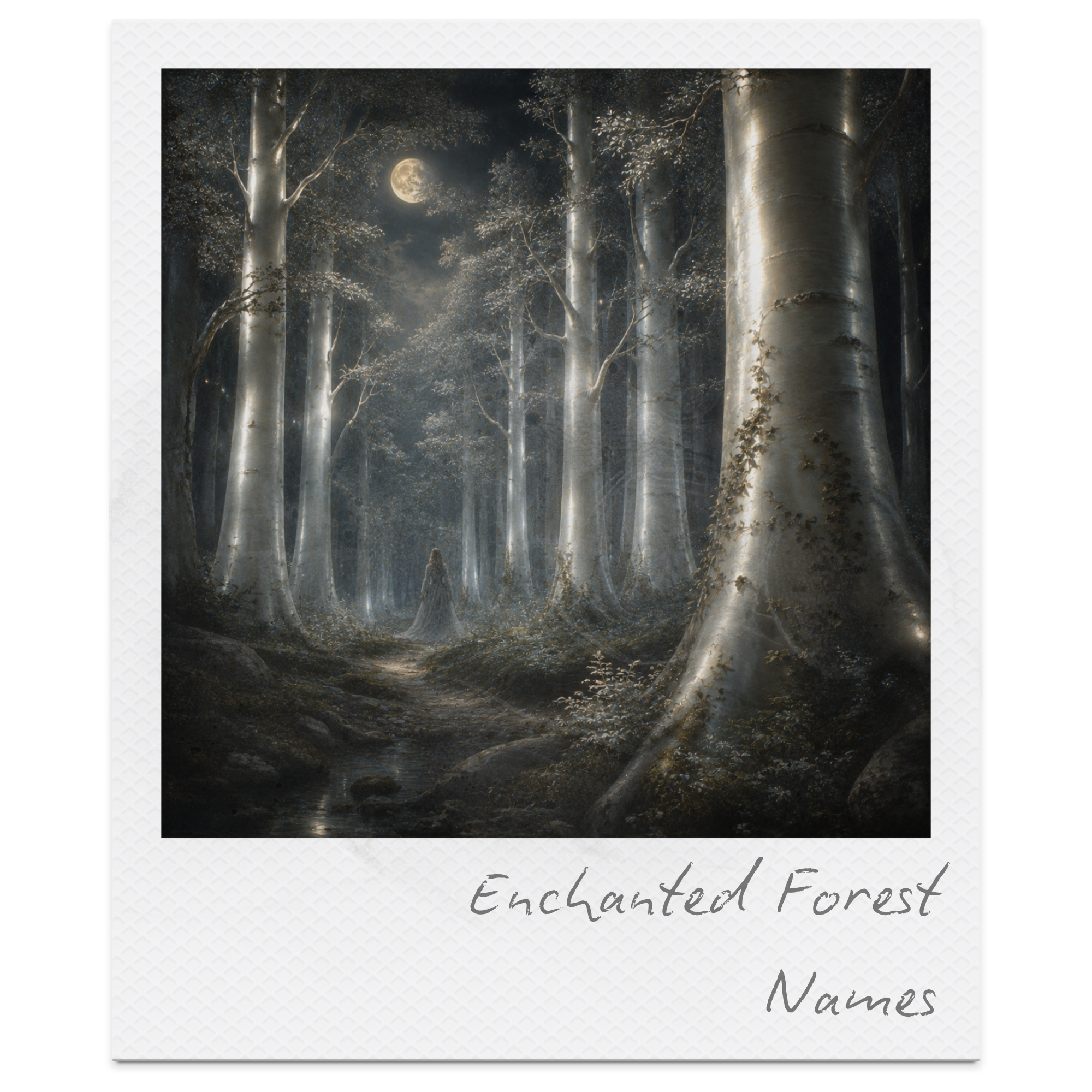
For more inspiration, explore 100 Enchanted Forest Names for magical woodland ideas and naming inspiration.
If your forest contains an entire realm or civilisation, explore 100 Fantasy Forest Kingdom Names with Meanings & Story Ideas for woodland kingdoms, hidden realms and forest civilisations.
A good enchanted forest name doesn't need to explain everything about the place.
It only needs to make the reader wonder what happened beneath those trees to give the forest its name.


5. Forest Kingdoms & Civilisations
An enchanted forest does not have to be wilderness.
Beneath the canopy might lie kingdoms, courts, clans or entire civilisations that have developed alongside the forest for centuries. Some may be deliberately hidden from the outside world. Others might control and manage the woodland so carefully that travellers mistake cultivated landscapes for untouched wilderness.
The forest should shape the civilisation just as much as the civilisation shapes the forest.
Think about what people eat, where they build, how they travel, what resources they depend upon and which parts of the woodland they protect or exploit. A community surrounded by oak and chestnut forest might gather nuts, hunt deer and wild boar, keep pigs beneath the trees and trade timber, charcoal, bark, mushrooms, honey, medicinal plants or crafted wooden goods. A magical civilisation might harvest ingredients, plants and materials found nowhere else in your world.
Then consider how much they are willing to take.
Perhaps cutting living trees is forbidden, so buildings are constructed from fallen timber and stone. A royal family might claim exclusive hunting rights over part of the forest. Certain groves could be protected while other areas are coppiced, harvested or cleared. Fae inhabitants may consider the idea that anybody can own a forest completely absurd.
Start by asking:
How has this civilisation adapted to living within the forest rather than simply clearing it away?
Decide Where People Live
A woodland civilisation should feel shaped by its environment.
Homes, palaces and gathering places might be built among enormous roots, suspended within the canopy, arranged around sacred groves or clustered beside forest rivers and lakes. Settlements may occupy natural clearings to avoid unnecessary tree-felling, while older roads, temples and ruined cities could be incorporated into newer communities.
Think about why people chose this particular place to settle.
A river provides fresh water, fish and a route for transporting people and goods. Higher ground offers protection from flooding. A clearing creates space for crops and livestock. An enormous ancient tree might become the religious or political centre of a settlement, while a crossroads could develop into a market where communities from different parts of the forest meet.
The forest will also shape how settlements grow.
Buildings might be constructed from local timber, stone, clay, thatch or woven branches. Communities could build raised walkways across marshy ground, rope bridges between enormous trees or wooden bridges across streams and ravines. In particularly dense woodland, rivers may be easier to navigate than roads.
Food and resources matter too. People might gather chestnuts, hazelnuts, berries, mushrooms, herbs and honey, hunt deer or wild boar, fish forest rivers and keep animals in woodland clearings. Timber, charcoal, resin, bark, medicinal plants, dyes, hides and crafted wooden goods could all become important sources of trade.
Magic can change those possibilities further. Perhaps certain trees produce valuable spell ingredients, a particular mushroom grows only beneath fae-touched oaks or the civilisation's most important resource can only be harvested without harming the living forest.
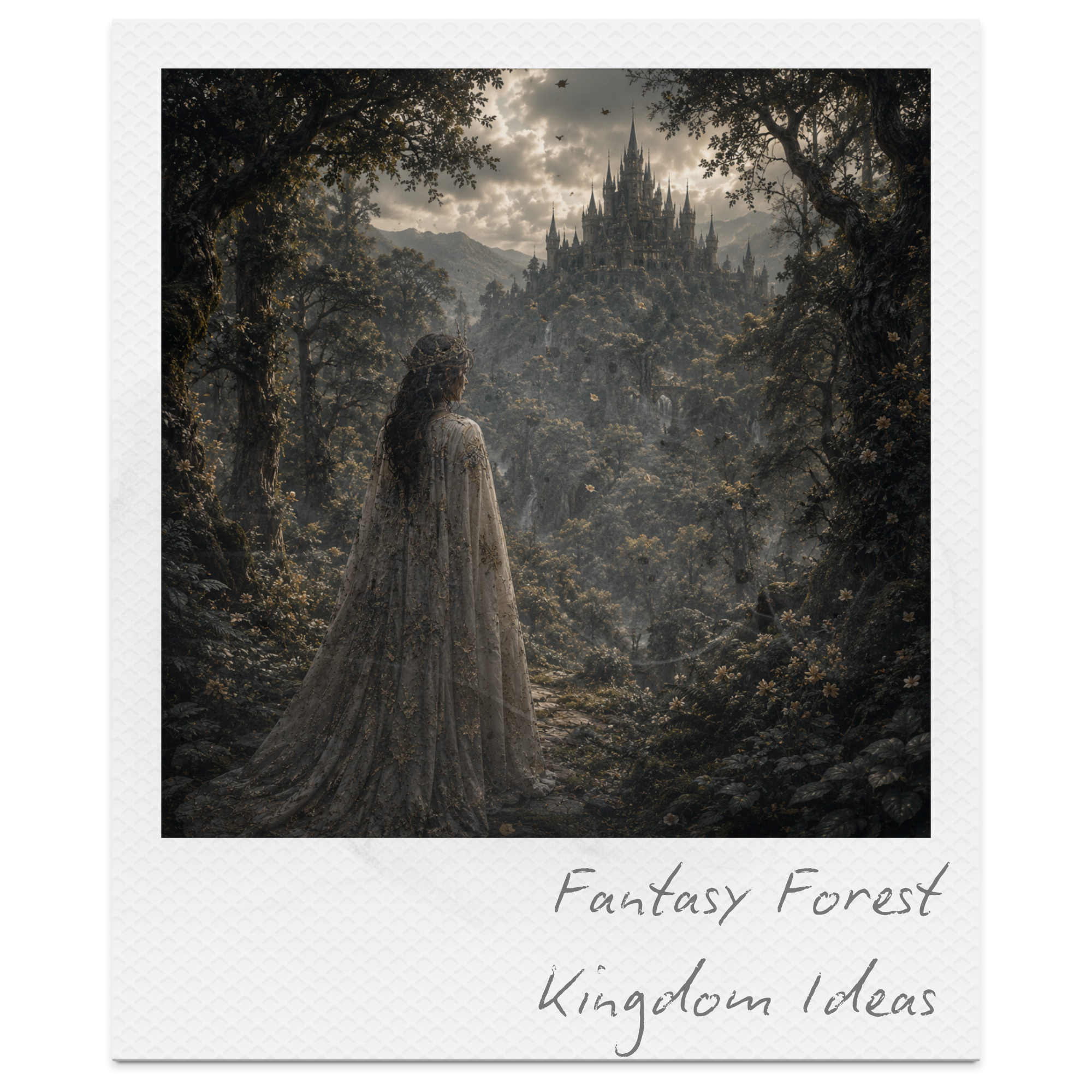
For more inspiration, explore Fantasy Forest Kingdom Ideas, with enchanted woodland realms, ancient forest civilisations, hidden kingdoms, fae courts, magical tree cities, seasonal forests and forgotten ruins.
Build a Woodland Culture
Living inside an enchanted forest should influence far more than where people build their homes.
Think about how generations of living beneath the canopy have shaped beliefs, traditions, occupations, food, clothing, laws and everyday behaviour.
A community that depends upon the forest for survival may develop strict customs around what can be taken from it. Families might gather nuts, berries and mushrooms from particular areas while sharing rights to hunt or fish elsewhere. Certain trees could be coppiced for firewood and building materials, while ancient groves are protected completely.
Crafts are likely to reflect the materials available. Woodcarvers, herbalists, charcoal burners, beekeepers, hunters, foresters, mushroom gatherers, healers and dyers might all hold important roles within the community. In a magical forest, occupations could become more unusual: someone may cultivate enchanted fungi, collect fallen branches from sentient trees or negotiate with forest spirits before each harvest.
Create Traditions & Beliefs
The rhythms of the forest can shape the civilisation's calendar.
The first appearance of spring flowers might begin a festival. Autumn nut harvests could bring communities together before winter. The return of a particular bird may signal the beginning of marriages, journeys or religious ceremonies.
Magic can make these traditions even more important.
Perhaps nobody travels during the longest night because the forest paths change. Children leave offerings beneath a particular tree on their thirteenth birthday. Couples marry beneath flowering branches believed to remember every promise made below them.
Over centuries, practical rules and superstition may become almost impossible to separate.
Develop Laws & Taboos
What is considered a serious crime in a forest civilisation?
Cutting down a sacred tree might carry a harsher punishment than theft. Hunting a protected white stag could be forbidden. Nobody may enter a particular grove without permission, light fires during the dry season or take more medicinal plants than their household needs.
Some rules may exist for reasons people no longer remember.
Everyone knows never to answer a voice calling from beyond the path after dark.
Nobody remembers why.
Consider the civilisation's:
values and beliefs
family and social structure
traditions and festivals
food and resources
crafts and occupations
religion and superstition
laws and taboos
relationship with magical creatures
relationship with the forest itself
attitudes towards outsiders
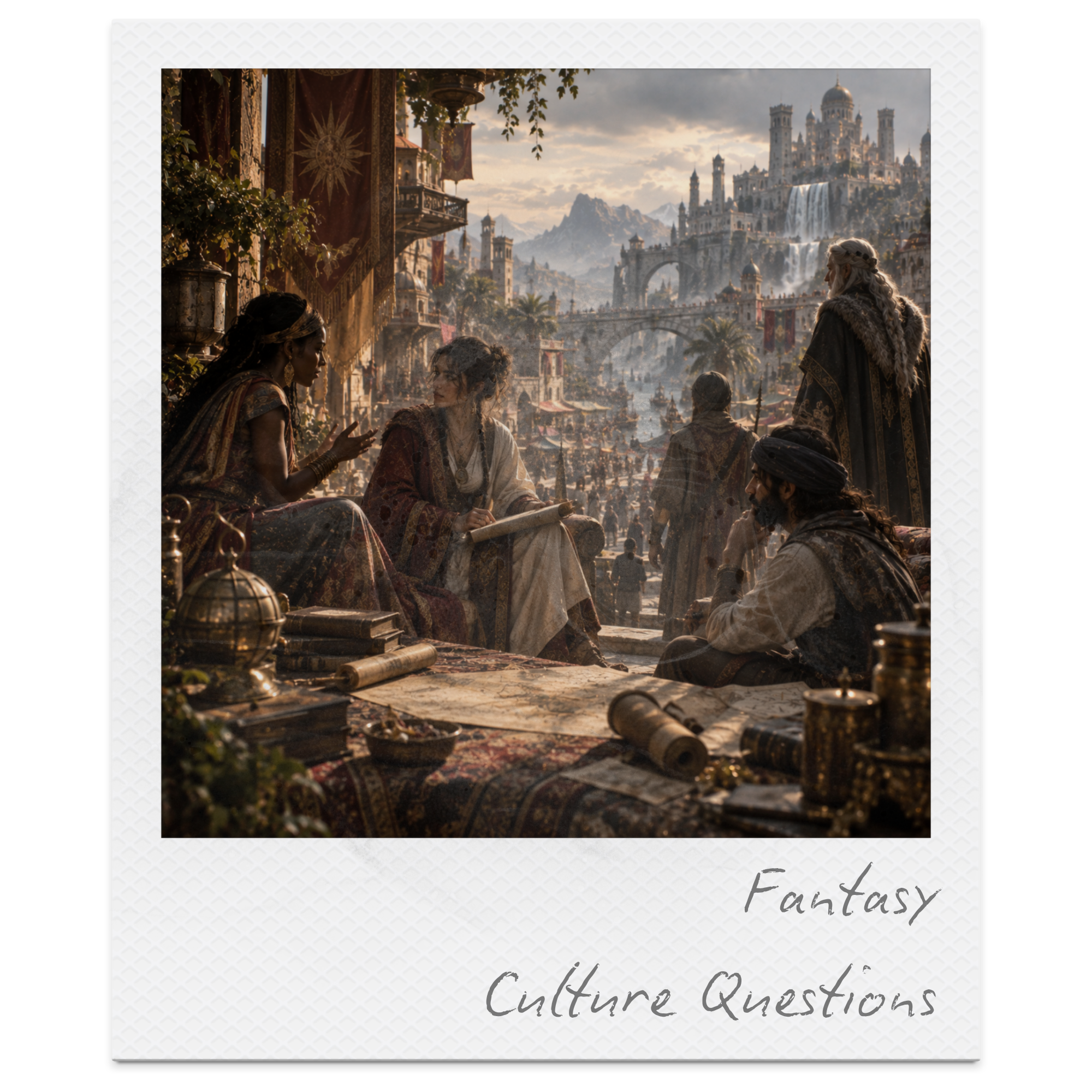
Use Fantasy Culture Worldbuilding Questions to develop values, family, social structure, customs, everyday life, religion, art, traditions, laws, cultural conflict and change.
Decide Who Rules
A forest civilisation does not automatically need a king or queen.
Think about who controls the woodland, who controls its resources and whether those are even considered the same thing.
A forest kingdom might be ruled by a hereditary monarch whose family has protected the woodland for centuries. Different regions could send representatives to a council, while a fae forest might be divided between rival courts. Religious leaders could govern a sacred woodland, powerful magical families might control particular territories or the forest itself could somehow choose its ruler.
Government can also grow directly from the landscape.
Scattered settlements may govern themselves because travelling across the forest takes weeks. Communities along a major river might become politically powerful because they control transport and trade. A family controlling the only safe road through the forest could collect tolls, while whoever controls a valuable magical grove may possess enormous influence despite holding no official title.
Decide Who Owns the Forest
Land ownership can become particularly interesting in a woodland civilisation.
Does the ruler own the entire forest? Do families inherit particular areas? Are hunting, fishing and gathering rights shared between communities? Can somebody own the land but not the trees growing upon it?
Perhaps nobody can own ancient woodland at all.
A human king may insist that the forest lies within his borders, while the fae living there consider his claim meaningless. Villagers might possess ancient rights to gather fallen wood, graze animals or harvest nuts from royal land. Sacred groves could belong to temples rather than rulers, while magical creatures defend territories according to boundaries established long before the current kingdom existed.
These competing ideas about ownership can create conflict without requiring armies or wars.
Connect Power to Responsibility
Consider what the people expect their rulers to do for the forest.
A monarch may be responsible for maintaining roads, preventing illegal logging, protecting settlements from dangerous creatures or ensuring woodland resources are not exhausted. A sacred ruler might perform seasonal rituals believed to keep the forest healthy.
Failure could have consequences.
If the deer disappear, crops fail or an ancient grove begins dying, people might interpret it as evidence that their ruler has lost the forest's favour. A succession crisis becomes much more complicated if the new monarch must also be accepted by an ancient tree, magical creature or forest spirit.
The system of government should reveal what the civilisation values — and what it believes its relationship with the forest ought to be.
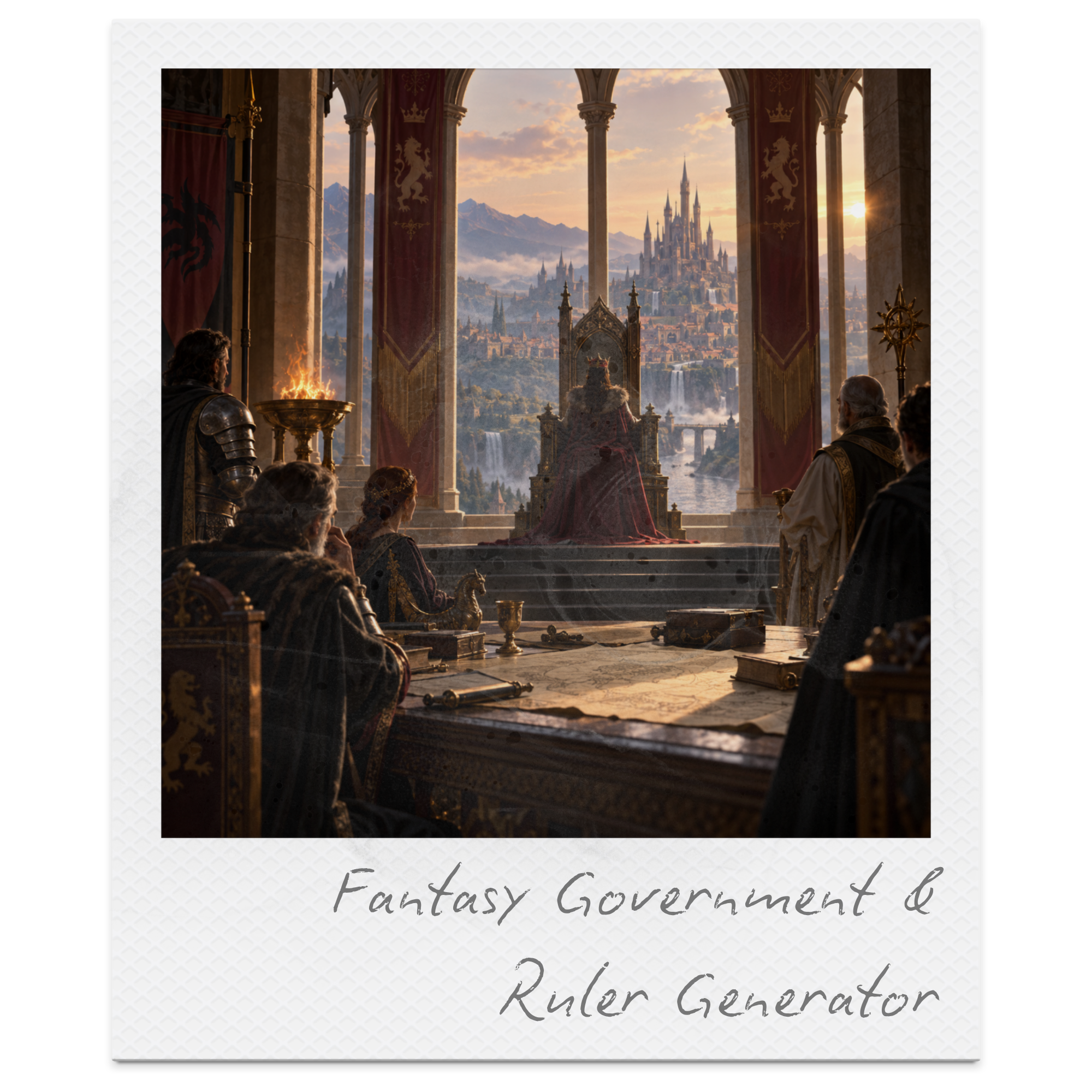
Use the Fantasy Government Generator to explore monarchies, councils, theocracies, magocracies and other political systems, along with rulers, succession, hidden influences and immediate political problems.
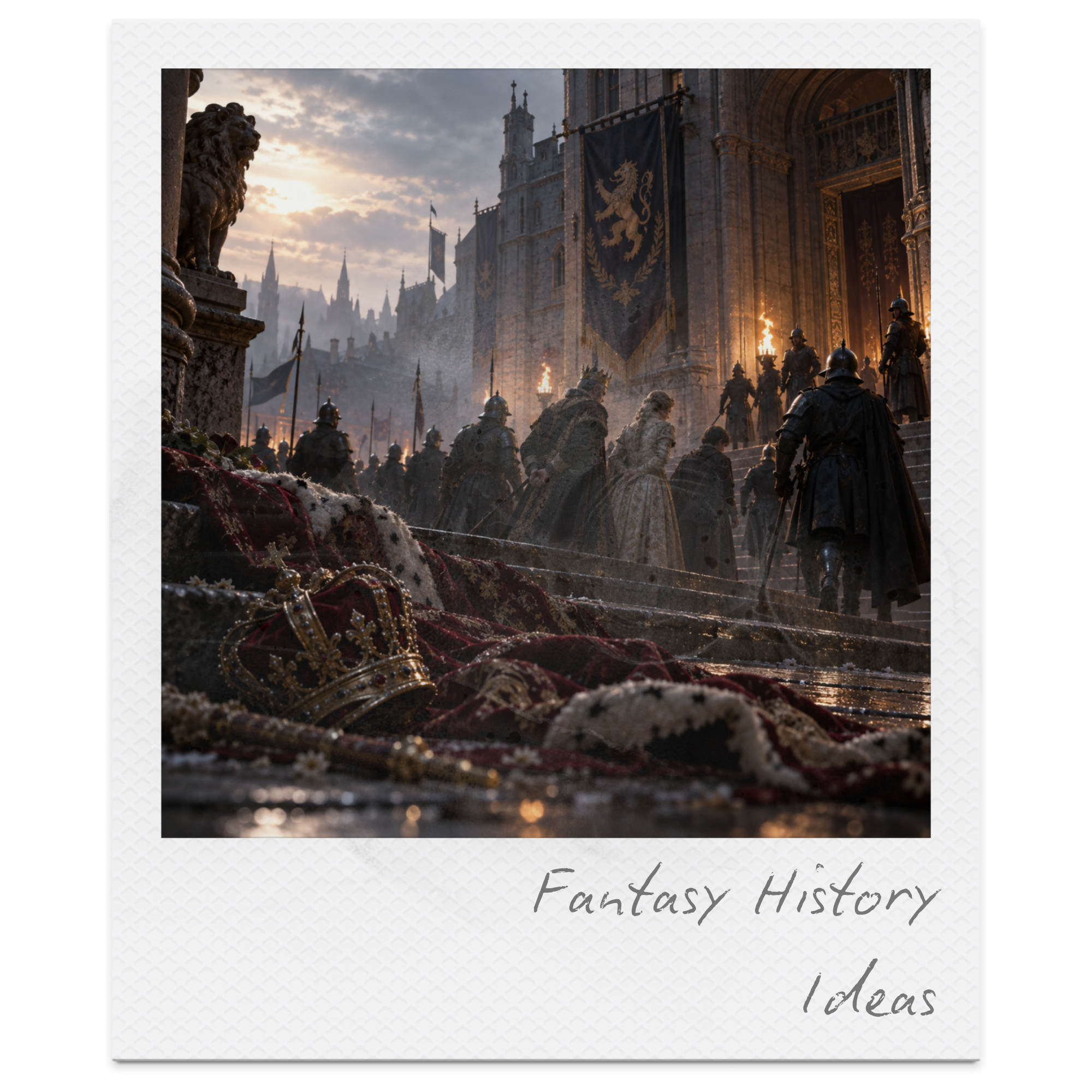
Give the Civilisation a History
Your woodland civilisation existed before your story began, and its history should have left physical, cultural and political traces throughout the forest.
Perhaps the current kingdom grew from several rival forest clans that once controlled different rivers, hunting grounds and sacred groves. An older civilisation might have vanished entirely, leaving roads, bridges, temples and settlements slowly disappearing beneath roots and moss. A magical catastrophe could have created the forest itself, or the woodland may have gradually reclaimed territory once occupied by farms, towns and fortifications.
Let the Forest Preserve the Past
Forests can hide history remarkably well.
An old road may continue beneath the undergrowth even though nobody remembers where it once led. Trees grow through abandoned buildings. Boundary stones remain long after the kingdoms they divided have disappeared. A ruined hunting lodge might reveal that land now considered sacred wilderness once belonged to a royal estate.
In an enchanted forest, the landscape can preserve stranger evidence.
Perhaps trees retain marks from an ancient battle. A grove grows where hundreds of people were buried. Ruins appear only during winter when the leaves fall, or an abandoned settlement remains untouched because the forest refuses to reclaim it.
Think about what evidence of earlier generations still survives and what your current inhabitants believe it means.
Build Layers of Settlement
The people living in the forest now do not need to be its first inhabitants.
One civilisation may have built over another. A human kingdom might occupy roads originally created by the fae. A palace could stand on the foundations of an older temple, while villages use stones taken from ruins whose original purpose has been forgotten.
Names can preserve these layers too. Rivers, mountains and forests may retain words from languages nobody speaks anymore.
This makes the woodland feel as though it has experienced migration, conquest, abandonment and change rather than appearing fully formed when your story begins.
Let Old Conflicts Shape the Present
History becomes most useful when it still matters.
An ancient treaty might determine who is allowed to hunt in a particular part of the forest. Two families could inherit a dispute over the same stretch of woodland. A sacred grove might sit on land claimed by two kingdoms. Communities may still distrust one another because of a betrayal that happened centuries earlier.
Even traditions can contain fragments of forgotten history.
Perhaps villagers leave offerings at the forest boundary without remembering the bargain their ancestors made. Nobody cuts down a particular species of tree, although the original reason has become a children's story. An annual festival might celebrate a victory whose official version is very different from what actually happened.
Ask not only what happened in the past, but what consequences of it are still visible now.
Explore Fantasy Kingdom History Ideas for ancient wars, fallen dynasties, rebellions, magical catastrophes, golden ages, lost cities, forgotten civilisations and buried secrets.
Think Beyond a Single Kingdom
One forest can contain several kingdoms, cultures and competing territories.
Humans might occupy settlements around its borders while fae courts control the ancient interior. Different peoples could claim particular rivers, valleys, sacred groves or regions of the canopy. Nomadic groups might move through the forest seasonally, while isolated communities deeper beneath the trees have little contact with anyone beyond their own territory.
Think about why those civilisations need one another.
One kingdom may control the only navigable river through the forest, while another possesses rich hunting grounds or valuable timber. A fae court could control access to magical plants needed for human medicine. One community might produce charcoal, honey or crafted goods while relying on neighbouring settlements for grain, metal, salt or livestock that are difficult to produce beneath dense woodland.
Trade creates routes, markets and relationships — but it also creates dependence.
Create Borders & Disputed Territory
Forest borders do not need to appear as neat lines on a map.
A river might divide two kingdoms. Particular trees could mark the beginning of fae territory. Hunting grounds may overlap, while ownership of a valuable grove changes depending on which ruler you ask.
Some places might belong to nobody.
A sacred woodland could be protected by several neighbouring peoples. An ancient road may be considered neutral territory. A dangerous region might technically lie inside one kingdom while remaining completely beyond its control.
Disputes can emerge when resources cross those boundaries. Animals migrate. Rivers flow downstream. Magical plants spread. The forest itself may expand into territory somebody else claims.
Build Alliances & Rivalries
Relationships between woodland civilisations can stretch back generations.
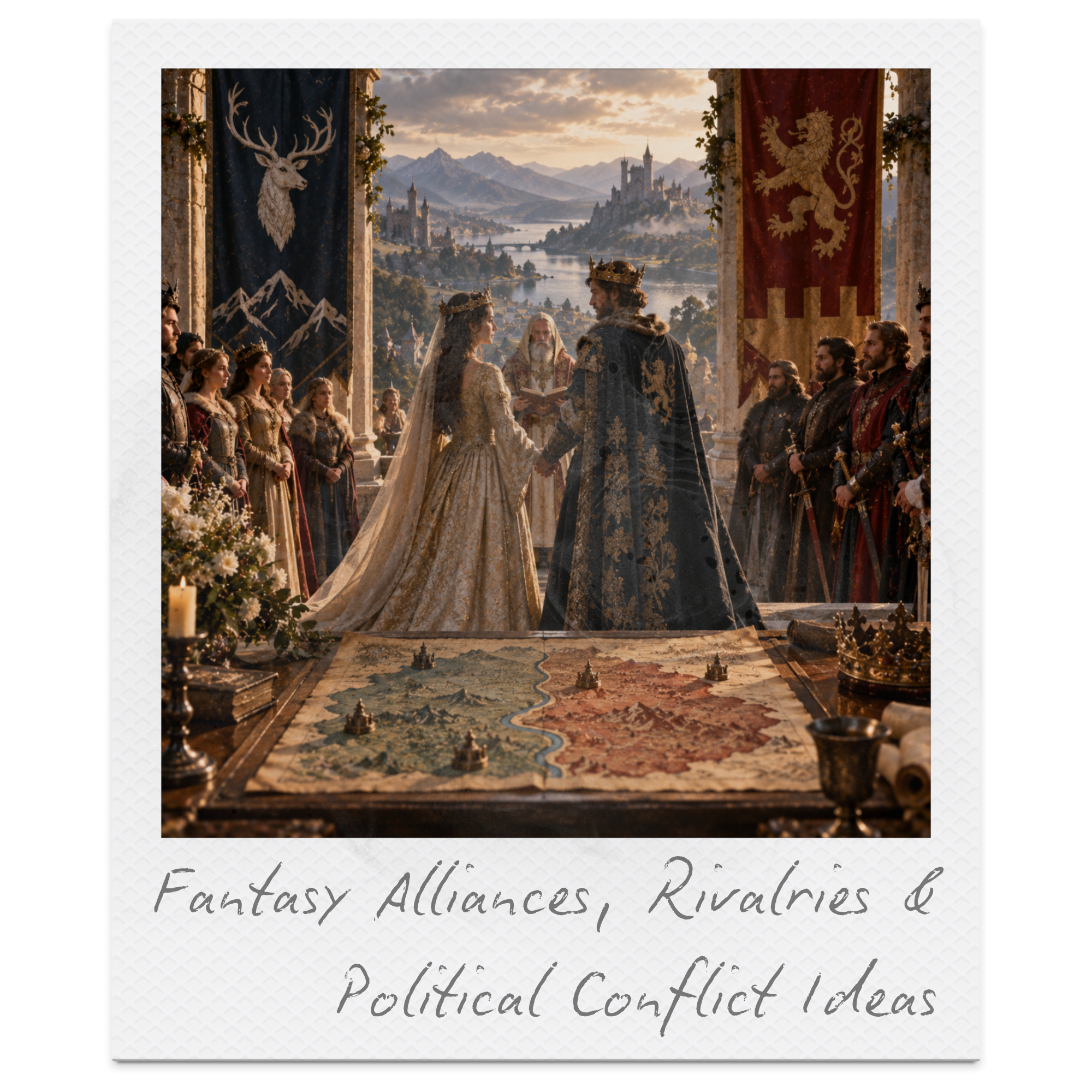
Two kingdoms might maintain peace through marriage alliances. Rival fae courts could compete for influence over the same region. Several communities may cooperate to protect the forest from an outside threat while distrusting one another completely.
Old rivalries can survive even when nobody remembers exactly how they began.
Perhaps one civilisation accuses another of destroying a sacred grove centuries ago. A valuable hunting ground might have changed hands repeatedly. One kingdom could still demand payment under the terms of a treaty signed by rulers who died hundreds of years earlier.
Consider the Outside World
Finally, think about how the forest's civilisations relate to the kingdoms beyond the trees.
Outside rulers may see the woodland as a source of timber, land, minerals or magical resources. Merchants might want safer roads through it. Settlers could begin clearing its borders for farmland, while the people already living there regard that expansion as an invasion.
Alternatively, forest kingdoms might depend upon the outside world for resources they cannot easily produce themselves — particularly metals, salt, grain or goods from distant regions.
That creates opportunities for alliances, territorial disputes, trade, diplomacy, old rivalries and competing claims to the forest without requiring every conflict to become a war.
Use Fantasy Alliances, Rivalries & Political Conflict Ideas to develop marriage alliances, succession disputes, secret treaties, betrayals, rebellions and shifting loyalties between the powers sharing your woodland world.
6. Creatures & Inhabitants
An enchanted forest begins to feel alive when you decide who — or what — considers it home.
Its inhabitants should feel connected to the woodland rather than randomly placed inside it. Think about what creatures can survive there, what they eat, where they shelter, what territories they occupy and how generations of living beneath the canopy have shaped their behaviour.
Then add magic.
A magical creature becomes much more convincing when it feels as though it belongs to the ecosystem around it.
Decide Who Belongs to the Forest
Start with the creatures you would expect to find in the landscape.
Depending on the climate and type of woodland, your forest might contain deer, foxes, wolves, wild boar, squirrels, rabbits, bats, owls, ravens, insects, amphibians and countless smaller creatures living beneath leaves, inside trees or beside water.
Then decide how enchantment has changed them.
Perhaps white deer appear only near sacred places. Ravens remember every traveller they have seen. Moths gather around entrances to the fae realm. An ancient species of wolf has survived here because it disappeared everywhere else centuries ago.
Your forest might also contain creatures that exist nowhere beyond its boundaries: spirits, mythical beasts, shapeshifters, guardians or beings created by the forest itself.
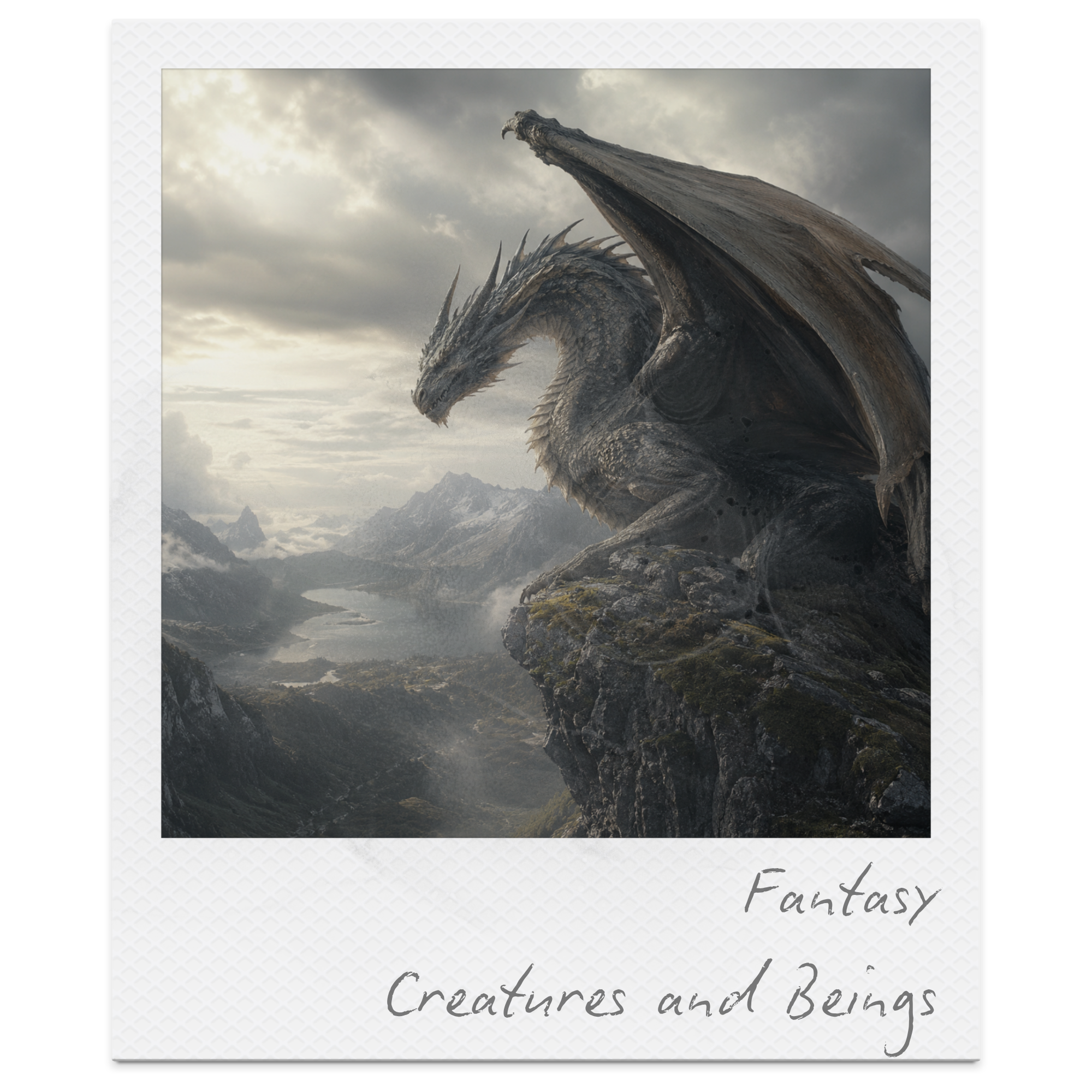
For more inspiration, explore Fantasy Creatures & Magical Beings for legendary creatures, ancient spirits, magical guardians, enchanted beasts and other inhabitants to bring your forest to life.
Build a Forest Ecosystem
Think about how different inhabitants depend upon one another.
Ordinary forests contain complex relationships between plants, animals, fungi, insects and microorganisms. Your magical forest can do the same.
Perhaps tiny fae pollinate flowers that produce an important magical fruit. A particular creature spreads the seeds of enormous enchanted trees. Dragons keep the population of another dangerous animal under control. Mushrooms growing on fallen magical trees provide food for creatures found nowhere else.
Then consider what happens when something disappears.
If hunters kill too many magical deer, perhaps the plants whose seeds they spread begin vanishing too. If an ancient predator becomes extinct, another creature might multiply uncontrollably. Removing one magical species could change the entire forest.
This makes your creatures feel like part of a living world rather than a collection of fantasy monsters.
Create Woodland Fae
Forests and fae naturally belong together, but your woodland fae do not all need to be tiny fairies hiding among flowers.
They might be ancient nobles controlling territories beneath the canopy, solitary guardians bound to particular trees, dangerous bargain-makers, hunters, warriors, craftspeople or beings whose customs make little sense to the humans who encounter them.
Think about where they actually live.
Some might occupy elaborate courts hidden deep within the forest, while others live alone beside rivers, inside ancient trees, beneath hills or in settlements humans repeatedly walk past without seeing.
Their magic might also reflect the woodland around them. A spring fae could disappear when its flowers die back. A river fae may be unable to travel beyond its water. A guardian might be physically connected to one ancient tree and weaken whenever it is damaged.
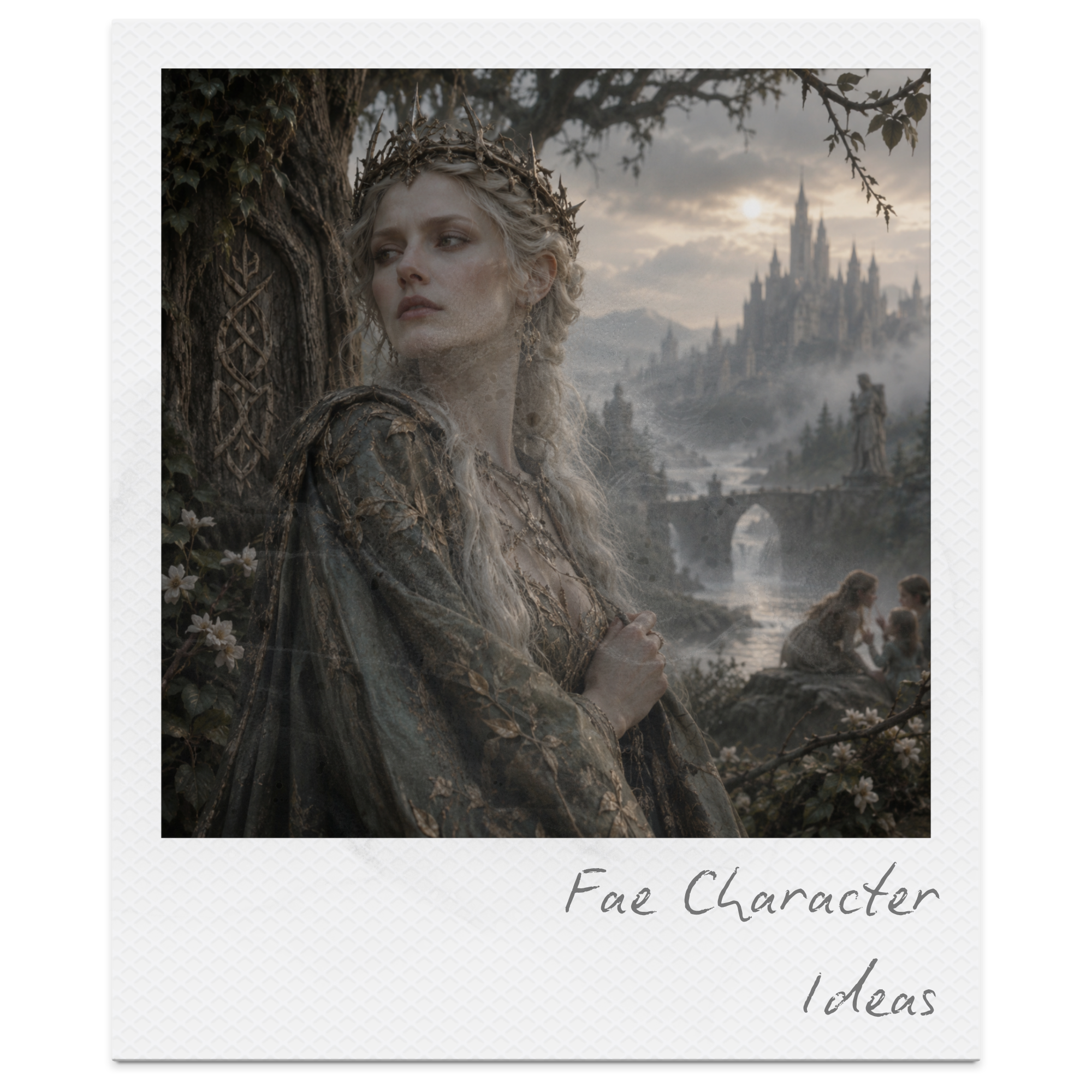
Explore 100 Fae Character Ideas for Fairy Courts, Folklore & Fantasy Stories for High Fae royalty, woodland guardians, dangerous bargain-makers, witches, artisans, changelings, tricksters, exiles and other Otherworldly characters.
Give Your Creatures a Purpose
Ask what each inhabitant actually does within the forest.
Some creatures might spread seeds, pollinate magical plants or control other animal populations. Others could protect sacred places, maintain ancient boundaries, guide travellers or prevent something imprisoned deep within the woods from escaping.
Even dangerous creatures can have a purpose.
A monster feared by nearby kingdoms might actually prevent people from entering a grove that needs protecting. A flock of strange birds could carry messages between distant parts of the forest. An enormous stag might appear whenever the woodland is threatened.
Some creatures may also have relationships with the people living there.
Forest communities might hunt particular animals for meat and hides while protecting others completely. Beekeepers could depend upon magical insects. Healers may need venom, antlers, feathers or shed scales for medicines. A woodland civilisation might domesticate creatures that outsiders consider dangerous.
Think About Territory
Not every creature needs to live peacefully beside every other inhabitant.
Different species might control particular rivers, groves, caves, ruins or regions of the canopy. Some territories could overlap, while others are separated by boundaries established centuries ago.
A creature's territory should reflect what it needs.
A river spirit may be unable to move far from water. A large predator needs enough land to hunt. Tiny fae might occupy a single ancient oak while an enormous magical beast ranges across hundreds of miles.
Ask yourself:
Which creatures dominate the forest?
Which are rare?
Which are hunted?
Which are protected?
What hunts what?
What does each species eat?
Who competes for the same resources?
Which creatures depend upon one another?
Which creatures avoid one another?
What happens when someone enters another creature's territory?
These relationships can create conflicts and stories before your main character even arrives.
Include Witches & Magical Communities
Not every inhabitant needs to belong to a magical species.
Witches might establish covens deep within the forest because rare plants grow there, because the woodland strengthens their magic or simply because its isolation protects them from the outside world.
The forest could provide ingredients they cannot obtain elsewhere: poisonous plants, medicinal herbs, mushrooms, bark, roots, flowers, animal products or water collected from a particular spring.
In return, witches might protect parts of the woodland, heal injured creatures, maintain magical boundaries or negotiate with beings humans would otherwise struggle to understand.
They could live peacefully alongside the forest's other inhabitants, act as intermediaries between humans and magical beings or be responsible for some of the enchantments that shape the woodland.
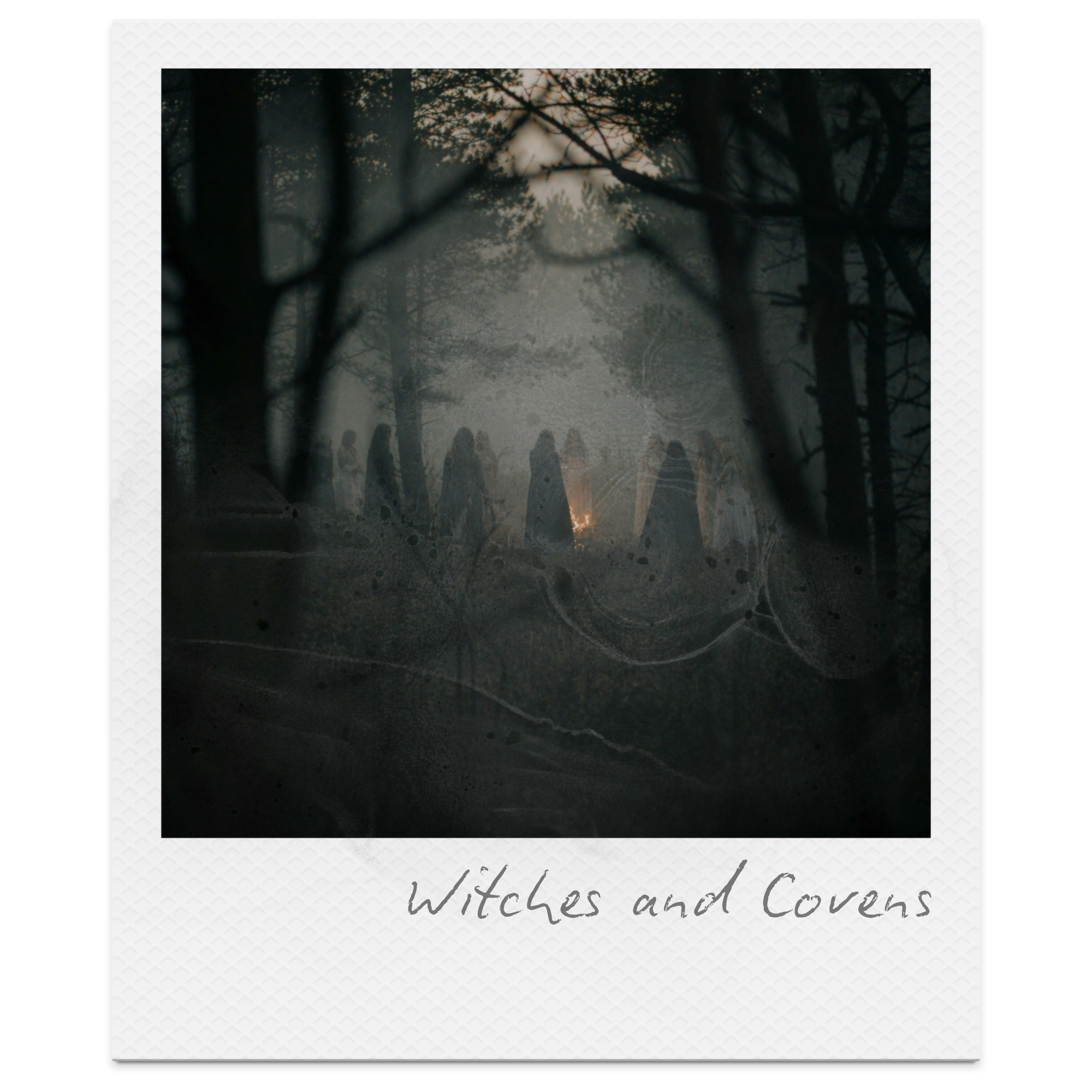
Explore Witches & Covens for ideas involving magical communities shaped by ritual, secrecy, hierarchy and shared power.
Decide How the Forest Treats Outsiders
Finally, consider the difference between inhabitants and visitors.
A creature that appears dangerous to an outsider may behave completely differently around people who understand its territory and habits.
Perhaps woodland animals ignore local inhabitants but become hostile towards strangers. Fae recognise ancient agreements that allow particular families to travel safely. Villagers know never to approach a certain animal during winter, while outsiders mistake its behaviour for aggression.
Some inhabitants might help lost travellers. Others deliberately lead them deeper into the trees.
And some may have very good reasons to distrust anyone arriving from beyond the forest.
Instead of simply asking what creatures live in your enchanted forest?, ask: why do they live here, what do they need to survive, what role do they play within the forest, and what happens when somebody else enters their world?
7. Settlements & Hidden Places
Not everyone who lives in an enchanted forest needs to belong to a vast woodland kingdom.
Some of the most memorable places beneath the trees might be much smaller: isolated cottages, woodland villages, hidden markets, hunting lodges, monasteries, abandoned settlements or communities built around rivers, roads and clearings.
These places make the forest feel inhabited rather than simply explored.
The important question is why this place exists here.
Create Woodland Settlements
Think first about what allowed a settlement to develop in this particular part of the forest.
People need reliable access to food, fresh water, fuel, building materials and routes to other communities. A village might grow beside a river because it provides drinking water, fish and transport, or around a large clearing where there is enough sunlight to grow crops.
Forest communities could gather chestnuts, hazelnuts, berries, mushrooms and herbs; keep pigs or other livestock; hunt deer and wild boar; fish woodland streams; keep bees; or cultivate small fields and kitchen gardens around their homes.
The surrounding forest might also support particular trades. Foresters, woodcarvers, charcoal burners, herbalists, hunters, trappers, beekeepers and healers could all depend upon woodland resources. Timber, charcoal, honey, medicinal plants, mushrooms, dyes, hides, resin and crafted wooden goods might be exchanged with communities elsewhere.
Magic adds another layer.
Perhaps a settlement survives by cultivating enchanted plants, gathering fallen branches from magical trees or trading with fae who live deeper in the forest. One village might be famous for medicines made from plants that grow nowhere else, while another guards the only spring capable of breaking certain curses.
Consider:
What do people eat?
Where does their water come from?
What materials do they build with?
How do they heat their homes?
How do they travel through the forest?
What do they produce or trade?
Which resources come from outside the forest?
What dangers do they prepare for?
How do they communicate with distant settlements?
What rules must everyone learn to survive?
The forest should shape the settlement just as strongly as the people living there.
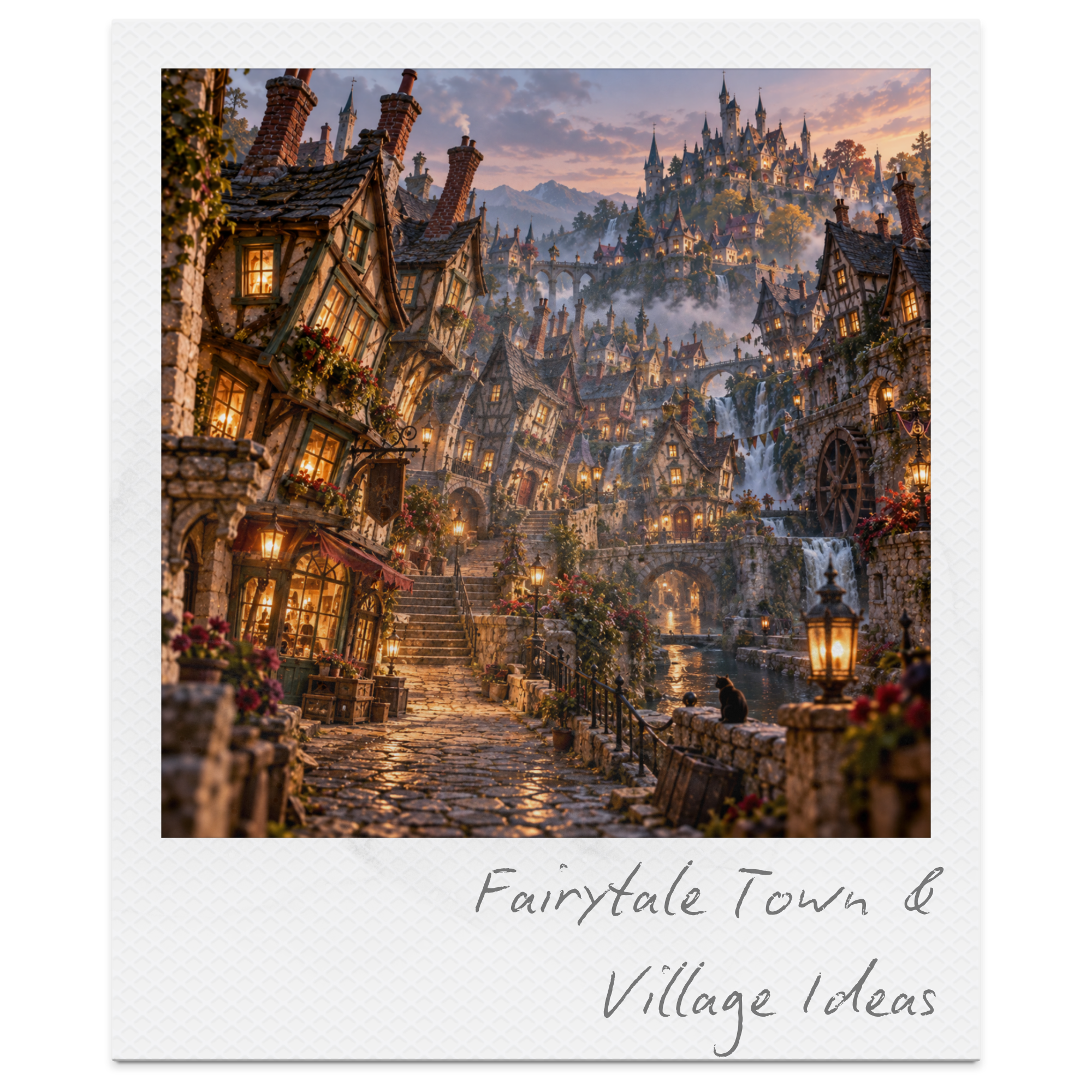
For more inspiration, explore Fairytale Town & Village Ideas for magical villages, unusual communities, woodland settlements, hidden towns and story ideas for developing the people and places within them.
Decide Why the Settlement Is Hidden
Some communities may want to remain undiscovered.
A village could be protected by magic, concealed beyond a shifting path or surrounded by landmarks deliberately designed to send travellers in the wrong direction. Perhaps its inhabitants are hiding from a kingdom outside the forest, protecting something valuable or preserving a way of life that would disappear if outsiders found them.
Think about how the community remains hidden.
Smoke from hundreds of fireplaces would eventually reveal a supposedly secret village. People still need food, tools and materials. Children grow up and may want to leave. Traders arrive with goods the forest cannot provide.
A genuinely hidden settlement therefore needs systems for dealing with the outside world — or a convincing reason it does not need it at all.
Other settlements might be hidden accidentally.
An abandoned road has vanished beneath centuries of growth. A landslide closed the only mountain pass. The forest expanded around a community until nobody outside remembered it existed.
The inhabitants themselves may not even realise they have been forgotten.
Add Solitary Homes
Not every inhabited place needs to contain an entire community.
A single cottage can raise far more questions.
Who lives there? Why have they chosen somewhere so isolated? How do they survive? Where do they get food during winter? Do they ever visit nearby settlements? Do the creatures of the forest leave them alone?
A witch might cultivate impossible plants behind her home. A retired knight could guard a road nobody uses anymore. An elderly woman might offer shelter to every lost traveller except those who arrive after sunset.
The building itself can reveal its inhabitant.
A forester's cottage may have stacked firewood, traps, tools and animal skins. A healer's home could be surrounded by herb gardens and bundles of plants drying beneath the eaves. A fae dwelling might appear abandoned to anyone who has not been invited inside.
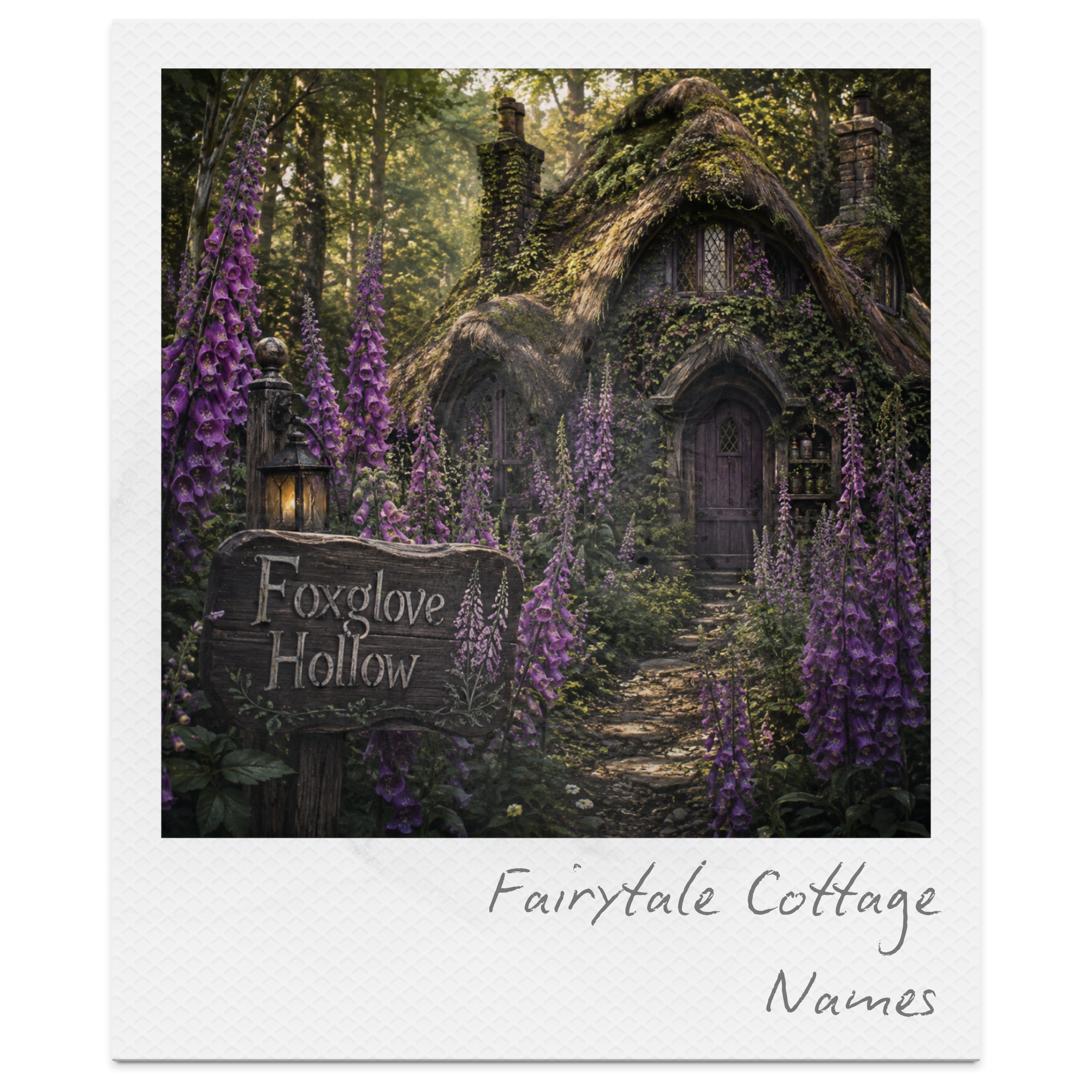
Explore Fairytale Cottage Names for cosy woodland homes, witches' cottages, fairy dwellings, magical hideaways, cursed houses and hidden retreats.
Create Places People Seek
Some locations exist at the end of the journey.
Deep within your forest there might be a sacred grove, ruined palace, healing spring, hidden library, ancient temple, magical market, oracle or legendary tree.
Decide why people risk entering the forest to reach this place.
Perhaps it offers something valuable: healing, knowledge, magic, sanctuary or access to another realm. A character might need to find a person who deliberately lives beyond ordinary roads, retrieve something left inside an abandoned settlement or reach a shrine visited by pilgrims for centuries.
Then decide why reaching it is difficult.
The place may be physically remote, appear only at particular times or require travellers to follow instructions that sound suspiciously like folklore: cross the river before sunset, never leave the path after hearing bells, bring an offering for the gatekeeper.
The journey towards a hidden place can become part of its mythology.
Create Places People Avoid
Other locations should have the opposite reputation.
Perhaps an abandoned settlement still contains meals sitting on tables decades after everyone disappeared. Nobody approaches a particular clearing after dark. A ruined tower is visible above the canopy, although every path towards it eventually turns back on itself.
These places allow the forest's history to become part of its geography.
People living nearby may have practical responses to them. Roads bend around forbidden areas. Children are warned about particular ruins. Hunters refuse to follow animals across certain boundaries. Maps deliberately leave some places unnamed.
The reason might be magical.
Or the original danger might have disappeared centuries ago while the warning survived.
Give Every Place a Story
The most interesting locations are rarely memorable only because they look unusual.
Ask:
Why is this place here, and what has happened here since it was built?
A beautiful clearing becomes more intriguing if two kingdoms once signed a disastrous treaty there. An ordinary bridge matters if crossing it breaks an ancient bargain. A ruined cottage becomes unsettling when local people insist somebody still lights its fire every winter.
Places also change purpose.
A hunting lodge becomes a rebel hideout. A ruined temple becomes somebody's home. An abandoned road turns into a pilgrimage route. A market once used by humans is now visited only by fae.
Those layers make your forest feel as though people have been living, travelling, trading, hiding, building and abandoning places beneath its trees for generations.
Your settlements and hidden places should ultimately reveal something about the wider forest: how people survive within it, what they value, what happened there before and which secrets the woodland has managed to keep hidden from the rest of the world.
8. Enchanted Forests in Literature & Folklore
Forests have been places of danger, transformation, magic and uncertainty for centuries.
Long before fantasy writers began creating elaborate magical forests, traditional stories used the woods as places where characters could leave the safety of the familiar world and encounter something they did not fully understand.
Studying how forests work in literature, fairytales and folklore can help you decide what role your own enchanted forest plays in the story.
The Forest as a Liminal Space
Forests often function as liminal spaces — places between one state and another.
A character crosses the boundary of the forest and temporarily leaves behind the ordinary rules of home, family or society. Inside, identities can change, social hierarchies can collapse and encounters that would be impossible elsewhere suddenly become possible.
This is part of what makes the forest in Shakespeare's A Midsummer Night's Dream so effective. Once the characters leave Athens and enter the woods, the social order governing their lives begins to unravel. Fairies interfere, lovers pursue the wrong people and Bottom is physically transformed.
The forest allows the impossible to happen.
When creating your own woodland, ask:
What becomes possible once a character crosses its boundary that could not happen in the world outside?
Fairytales & the Dangerous Forest
In traditional fairytales, entering the forest often means leaving safety behind.
Hansel and Gretel become lost beneath the trees before discovering the witch's cottage. Little Red Riding Hood encounters the wolf while travelling through the woods. Snow White flees into the forest after being threatened by the Queen and eventually discovers the dwarfs' home.
These forests contain danger, but they also contain possibility.
The character who enters the woods may encounter witches, helpers, animals, cottages, hidden homes or opportunities that simply do not exist within the ordered world they left behind.
That makes the forest more than an obstacle.
It becomes a place where the story can change direction.
Explore the Fairytales & Folklore Hub for more traditional stories, magical characters, enchanted places and fairytale inspiration.
Forests in Fantasy Literature
Modern fantasy continues to use forests as worlds with identities of their own.
In Tolkien's Middle-earth, forests are not interchangeable scenery. Fangorn feels ancient and inhabited by beings whose relationship with trees stretches far beyond ordinary human lifetimes, while Lothlórien possesses its own culture, history and atmosphere.
The Forbidden Forest in Harry Potter sits immediately beyond the apparent safety of Hogwarts. Students are warned against entering it, but the forest repeatedly becomes a place where characters encounter creatures, knowledge and dangers hidden from the ordinary school environment.
Shakespeare's A Midsummer Night's Dream offers another useful model. Beyond Athens, the forest becomes a world governed by different forces, where fairies interfere with human lives, identities become unstable and characters experience transformations that could not happen within the ordered world of the city.
The useful lesson for worldbuilding is not simply to put magical things among the trees.
Give the forest a function within the wider world.
What does your forest contain that the world outside does not? Why do people enter it despite the danger? Why do others refuse to go near it? What becomes possible beneath its trees that could not happen anywhere else?
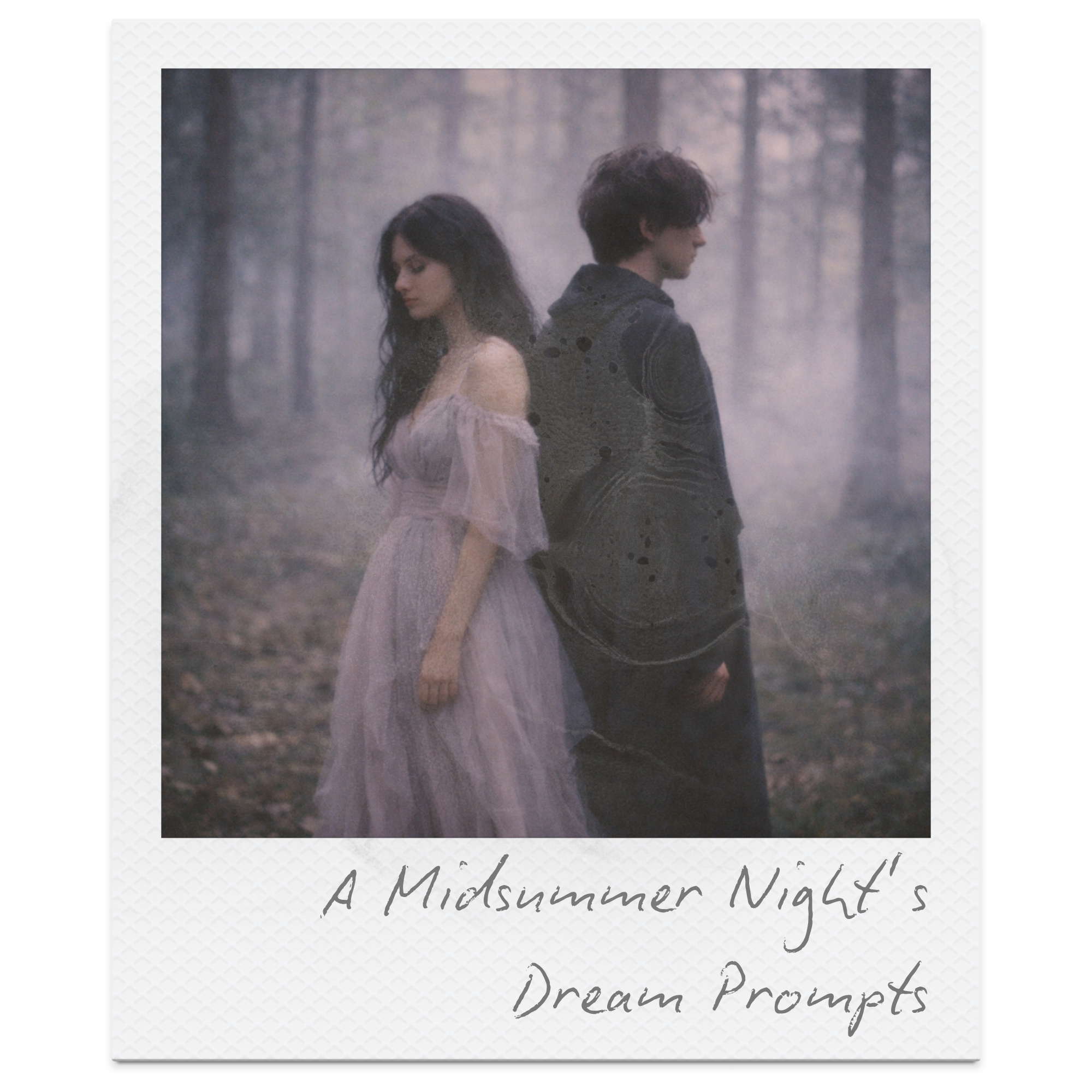
Explore A Midsummer Night's Dream Inspired Writing Prompts for creative writing ideas inspired by Shakespeare's magical woodland, fairies, transformation, mistaken identities and the strange possibilities that emerge once characters enter the forest.
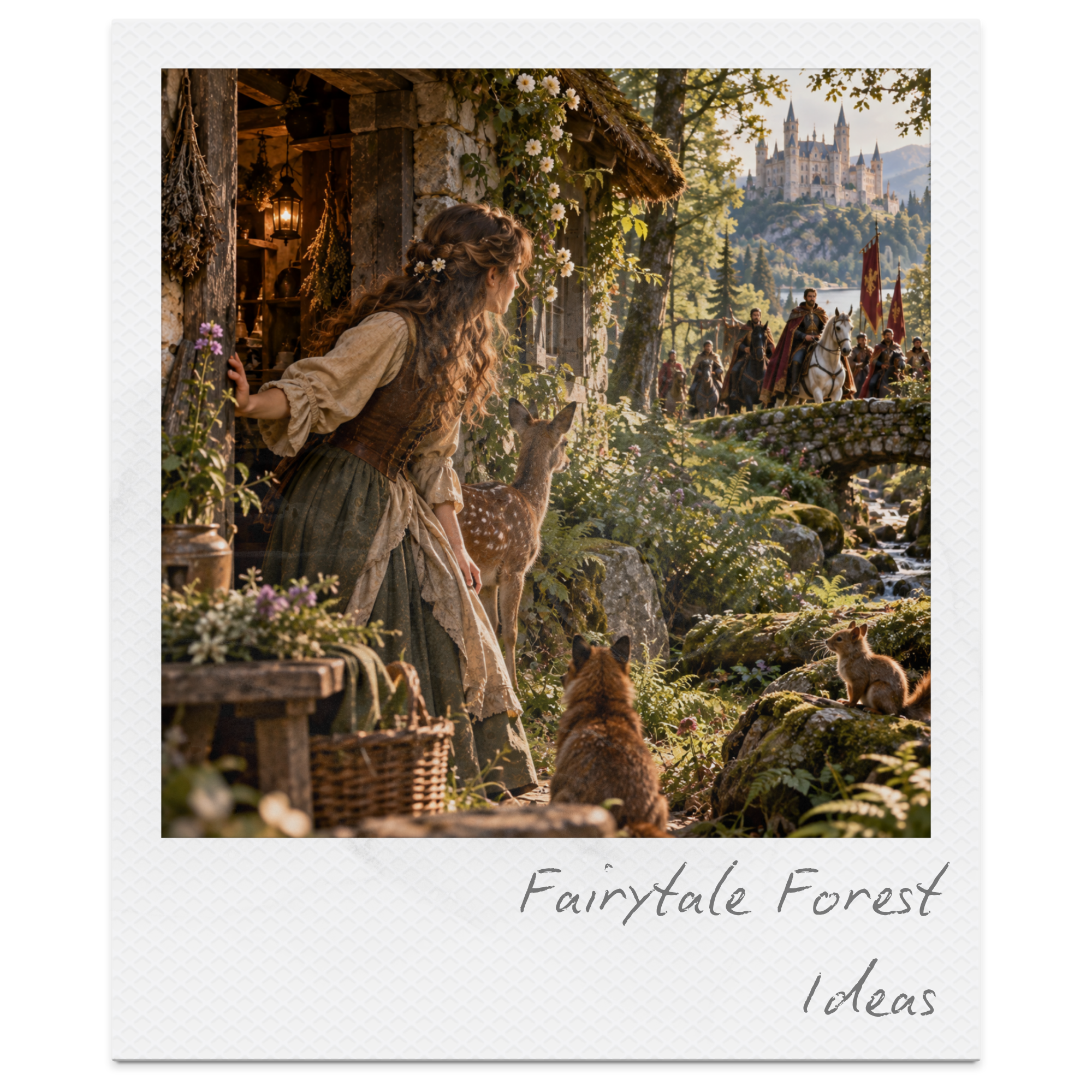
Forests in Fairytales
Fairytale forests can be beautiful, dangerous or both at once.
They contain wolves and witches, but also cottages, helpers, hidden royalty, magical creatures and unexpected places of refuge. A character who enters the woods rarely knows which they are going to encounter.
In Hansel and Gretel, becoming lost leads the children to the witch's cottage. Snow White escapes one danger by fleeing into the forest and eventually discovers the dwarfs' home. Little Red Riding Hood's journey through the woods creates the opportunity for her encounter with the wolf.
The forest therefore often acts as a threshold between the familiar world and the unknown.
Characters leave behind homes, villages, parents, courts and other places where the rules are understood. Beneath the trees, they encounter strangers, tests, temptations and dangers without the protection those familiar structures provide.
But becoming lost can also create opportunity.
A hidden cottage cannot be discovered from the safety of the village. A mysterious helper may only appear to somebody who has wandered from the road. A forgotten prince might have survived for years in a place nobody else can find. The path that leads to another kingdom may only reveal itself after a traveller takes the wrong turning.
This creates one of the most useful principles for building your own enchanted forest:
The forest should change what becomes possible.
Think about what your character can find, become, learn or encounter only because they entered the woods.
And consider what they must leave behind to do it.
Explore Fairytale Forest Story Ideas for magical woods, hidden paths, witches, fairy creatures, cursed forests, lost royalty, mysterious cottages and ancient secrets.
Draw from Folklore & Mythology
You can also look beyond familiar fairytales when deciding what your forest means and what people believe lives within it.
Folklore is particularly useful for enchanted forest worldbuilding because it connects supernatural stories to specific landscapes, communities and traditions. A strange tree might have a legend explaining why nobody cuts its branches. A pool could be associated with a spirit or supernatural creature. Standing stones, ruined buildings, caves and ancient roads may all accumulate warnings and stories over generations.
Rather than filling your forest with generic magical creatures, think about the folklore that might have developed because people have lived beside this particular landscape for centuries.
Perhaps villagers leave offerings at the forest boundary because their ancestors believed something guarded it. Children are warned not to follow a particular bird. Woodcutters refuse to fell trees growing around an ancient stone. Nobody crosses one stream after sunset, although different families tell completely different stories about what happens if they do.
You can also draw inspiration from real folklore traditions when developing your own.
Explore English Myths & Legends for haunted forests, Herne the Hunter, Black Shuck, ancient sites, enchanted wells and local legends; Scottish Myths & Legends for kelpies, the Cailleach, the Bean Nighe, standing stones, mist-covered landscapes, enchanted islands and Highland folklore; or Welsh Myths & Legends for The Mabinogion, Annwn, spectral hounds, enchanted lakes, ancient forests, hidden valleys and Otherworld traditions.
The goal is not simply to borrow creatures from mythology. Look at how folklore attaches stories to the landscape, then consider what legends the people in your own world would create to explain the strange places, creatures and rules of their forest.
Decide What Your Forest Represents
Finally, think about what the forest represents within the story.
Forests have long been used to explore ideas beyond the physical landscape. They can represent the unknown, freedom, danger, transformation, isolation, temptation, childhood, wilderness, memory or the boundary between civilisation and something older.
But your forest does not need to carry only one meaning.
To one character, entering the woods might mean escape. To another, the same forest represents everything dangerous beyond the safety of home. A kingdom may regard it as untamed land waiting to be controlled, while the people living beneath its trees see it as an ancestral home that needs protecting.
The meaning can also change during the story.
A forest that initially feels threatening might gradually become a place of refuge. A beautiful enchanted woodland may reveal something much darker beneath its surface. A character who enters the trees frightened of becoming lost might eventually realise that getting lost allowed them to leave an old version of themselves behind.
Think about:
What does the forest represent to your protagonist?
What does it represent to the people living inside it?
What does the outside world believe about it?
Does entering the forest represent crossing a boundary?
How does the character change while they are there?
Does the forest feel different when they eventually leave?
What can happen beneath its trees that could not happen anywhere else?
You don't need to explain the symbolism directly to the reader.
Let the landscape, stories, rules and experiences within the forest carry that meaning.
9. Create a Story in Your Enchanted Forest
Once you know what your forest looks like, who lives there, what happened beneath its trees and which rules shape life within it, the final step is to ask:
What happens when somebody enters it?
An enchanted forest becomes a story setting when its landscape, inhabitants, history and magic actively affect what happens to your characters. The forest should create obstacles, reveal possibilities and force decisions that could not happen anywhere else.
Decide Why Your Character Enters the Forest
Characters rarely wander into enchanted forests without a reason.
They might be searching for someone, escaping danger, travelling towards somewhere on the other side or deliberately seeking something hidden beneath the trees. Perhaps they have been warned never to enter the woods at all.
Your character might enter the forest to:
find a missing person
escape an enemy
break a curse
retrieve a magical object
reach a hidden kingdom
hunt a dangerous creature
find a legendary healer
investigate a disappearance
follow a prophecy
complete an impossible task
deliver a message
seek sanctuary
find a road that has disappeared
prove an old legend is true
discover what lies beyond a forbidden boundary
Think about what happens if they fail.
A character looking for a missing child has a very different relationship with the forest from a scholar searching for a legendary ruin. Give them a reason to continue even when turning back would be safer.
Give Them a Destination
A large enchanted forest can quickly become shapeless if characters are simply wandering through it.
Give them somewhere to reach.
It might be a hidden palace, isolated cottage, ruined temple, fae court, mountain pass, sacred grove, abandoned village or settlement on the opposite side of the forest.
Then use the landscape you have already created to make reaching it difficult.
A flooded river forces them away from the road. A familiar bridge has disappeared. Winter closes the mountain pass. The only person who knows the route refuses to guide them.
Their destination gives the journey structure, while the forest determines how difficult reaching it becomes.
Let the Forest Complicate the Journey
Think about what can go wrong specifically because the story takes place in this forest.
Paths might change. A bridge may disappear. A helpful stranger could demand something in return. Travellers might discover that time moves differently beneath the trees or realise that the creature they were sent to kill is actually protecting something far more dangerous.
Use the worldbuilding you have already created.
If your forest has rules, let somebody break one.
If it has rival kingdoms, send your character across a disputed border.
If certain creatures protect their territories, make the safest road pass directly through one.
If there is a hidden settlement, give your character something its inhabitants desperately want to keep secret.
If the forest remembers what happens within its boundaries, make sure your character leaves consequences behind.
The strongest conflicts should feel as though they could only happen in this particular forest.
Give the Forest Secrets
Your character should not understand everything when they first step beneath the trees.
The forest they have heard about and the forest that actually exists may be very different.
Perhaps the frightening local legend is only partly true. The abandoned palace is not actually abandoned. The road everyone avoids once led somewhere important. The monster protecting a ruined gate remembers why it was closed.
You can hide secrets within:
old ruins
local legends
forbidden territories
family histories
abandoned settlements
magical creatures
ancient treaties
place names
religious traditions
apparently meaningless rules
A good secret can connect the forest's history, inhabitants and magic to the central story.
Introduce Someone Who Knows the Forest Better
Your protagonist does not need to discover everything alone.
They might encounter a hunter who knows the old paths, a child from a hidden settlement, a witch living beside the river, a fae who offers to guide them or a traveller who claims to have crossed the forest before.
The important question is whether that person can be trusted.
A guide may deliberately avoid explaining certain rules. A local might know the safest route but refuse to enter a particular region. Someone offering help could have completely different reasons for wanting your character to reach their destination.
This allows you to reveal the forest gradually while creating relationships, bargains and conflicts along the way.
Make Choices Matter
An enchanted forest becomes particularly interesting when characters cannot simply fight their way through every problem.
They may need to decide whether to trust a stranger, accept a bargain, follow an unfamiliar path, respect a local tradition or ignore a warning.
Give those decisions consequences.
Taking fruit from a tree might seem insignificant until the character learns it belonged to someone. Helping an injured creature could earn an unexpected ally. Cutting across sacred land may save several hours but make an entire community hostile.
The forest might reward kindness, remember cruelty or remain completely indifferent to human ideas of fairness.
Either way, characters should leave the woodland having changed something — and been changed themselves.
Find Your Story Idea
You do not need to plan an entire novel before you begin.
Start with three things:
A character. A reason for entering the forest. Something they discover that they were never supposed to find.
Then ask what the forest does to complicate all three.
For more inspiration, explore Enchanted Forest Writing Prompts for magical landscapes shaped by hidden rules, transformation, shifting paths and unpredictable time.
You can also explore Woodland & Forest Fantasy for plot prompts, characters, settings, titles, opening and closing lines, and visual story ideas set beneath the trees.

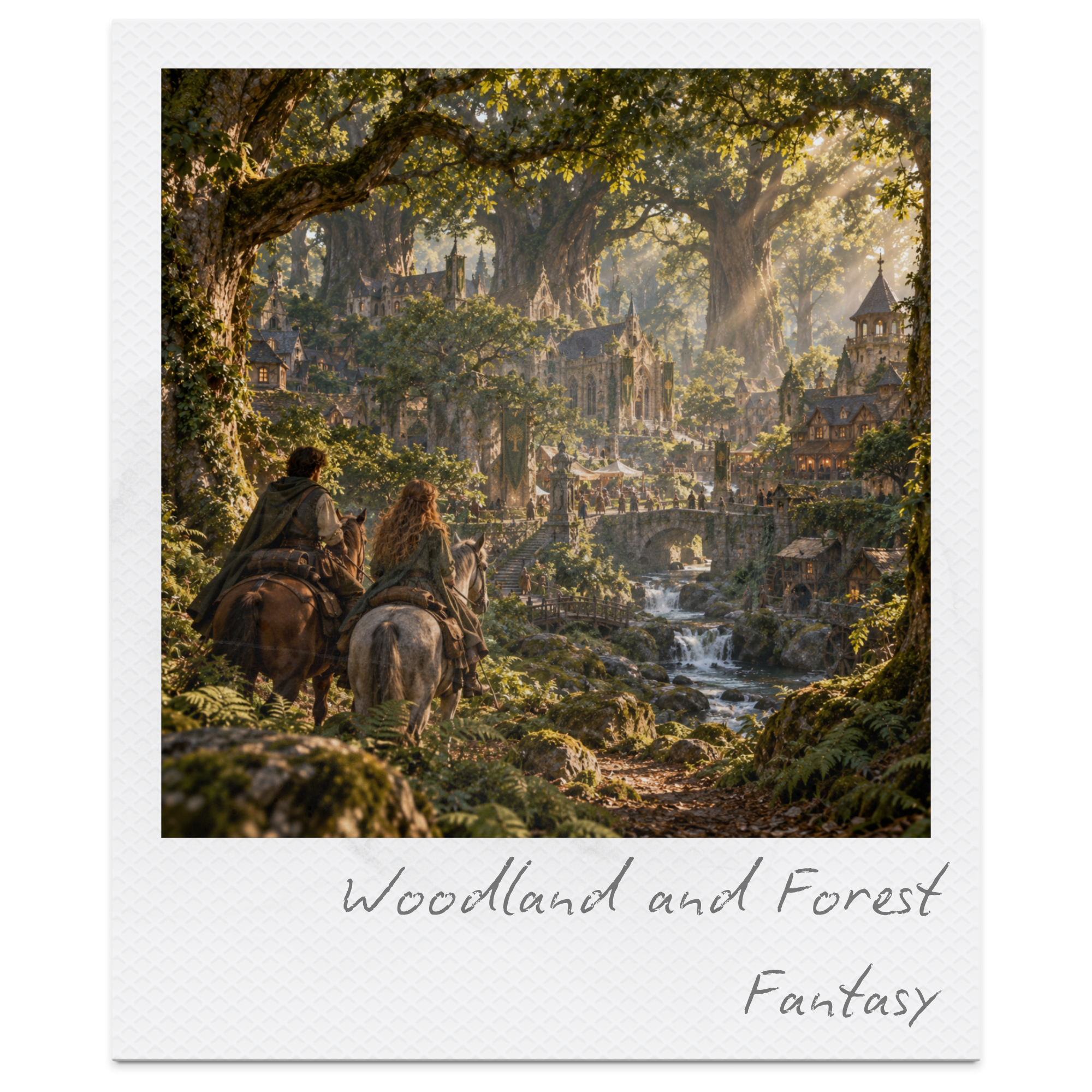

Every year, the fire burns.
Every year, someone is chosen.
For generations, the people of Ashwick have gathered to celebrate the Longlight Festival. Visitors see wildflowers, music, bonfires, and ancient traditions passed carefully from one generation to the next.
But every village has its secrets.
And some traditions survive for a reason.
The Kindling Collection is an immersive archive inspired by folk horror, ritual, superstition, and isolated communities bound by traditions nobody dares question. Inside you'll discover letters, diary entries, photographs, festival posters, warnings, drawings, church documents, and other forgotten fragments connected to Ashwick and the Longlight Festival.
Some documents describe a harmless celebration.
Others hint at something far darker.
Why do some villagers refuse to discuss the festival?
Why do certain names disappear from the records?
And why does every warning seem to arrive too late?
The truth has been buried beneath generations of stories.
What's Inside?
◆ 50+ printable documents and artefacts from the world of Ashwick
◆ Letters, diary entries, drawings, festival posters, photographs, orders of service, warnings, and more
◆ A printable prompt card to inspire exploration and storytelling
◆ Instant digital download in PDF format
Who Is It For?
Perfect for:
◆ Writers and worldbuilders
◆ Fans of folk horror and rural gothic fiction
◆ Mystery lovers and curious minds
◆ Teachers and students
◆ Anyone fascinated by folklore, ritual, and hidden histories
What Makes This Different?
This isn't a guided story or a mystery with a solution.
It's an archive.
The documents don't agree. Some details repeat. Others contradict one another entirely.
Every piece reveals part of a larger story, but none reveal the whole truth.
What happened in Ashwick depends on what you believe, what you dismiss, and what connections you choose to make.
Every reader uncovers a different story.
And every year, the fire still burns.
Go Deeper with The Kindling Collection
What if you didn't explain the history of your enchanted forest directly?
What if your reader had to piece it together?
A warning nailed to a tree. A missing name in an old register. A festival programme nobody wants to talk about. A letter written by someone who disappeared. A tradition everyone follows, although nobody will explain why.
explores exactly this kind of storytelling through the fictional village of Ashwick and its mysterious Longlight Festival. Inspired by folk horror, ritual, superstition and isolated communities, it contains more than 50 printable documents and artefacts — including letters, diary entries, photographs, drawings, festival posters, warnings and church documents — that gradually reveal fragments of a much larger story.
There is no single explanation waiting at the end. Documents contradict one another, details repeat and every piece offers only part of the truth, leaving you to decide what happened and which stories you believe.
For writers and worldbuilders, it is also an example of how folklore, local traditions, hidden histories and conflicting accounts can make an imagined place feel as though it existed long before the story began.
Explore The Kindling Collection now!
Final Thoughts
An enchanted forest becomes memorable when it feels like a world rather than a backdrop.
Give it landscapes that shape how characters travel, inhabitants who belong beneath its canopy, histories that have left traces behind and rules that make entering the woods feel different from walking anywhere else in your world.
Most importantly, give your forest an identity of its own. It might be whimsical, ancient, dangerous, sacred or deeply strange — but readers should understand that crossing beneath those trees means entering somewhere with its own stories, secrets and possibilities.
For more inspiration, explore the Fantasy Writing Hub for worldbuilding guides, characters, kingdoms and magical settings, visit the Fairytales & Folklore Hub for traditional stories, fae, folklore and enchanted worlds, or browse the Creative Writing Archive for hundreds of prompts, story ideas and resources to help you keep writing.
