Leaving Fingerprints by Imtiaz Dharker: Summary, Themes & Analysis
Leaving Fingerprints by Imtiaz Dharker is a reflective exploration of history, human presence, memory, nature and the traces people leave behind, in which an apparently empty winter landscape gradually reveals itself as crowded with evidence of lives that have disappeared. Moving from buried objects and forgotten makers to roots, worms, trees and the open sky, Dharker uses extended imagery of writing and fingerprints, personification, natural symbolism and shifting scale to suggest that the past is continually being uncovered, rewritten and carried forward by the natural world. Although individual names may be “lost”, their presence survives through the objects they touched and the landscape itself, creating a powerful tension between human transience and the persistence of memory. If you are studying or teaching Songs of Ourselves Volume 3 for Cambridge IGCSE World Literature, explore every prescribed poem in depth in the Songs of Ourselves Volume 3 Hub, or discover a wider range of poetry and literary analysis in the Literature Library.

Context of Leaving Fingerprints
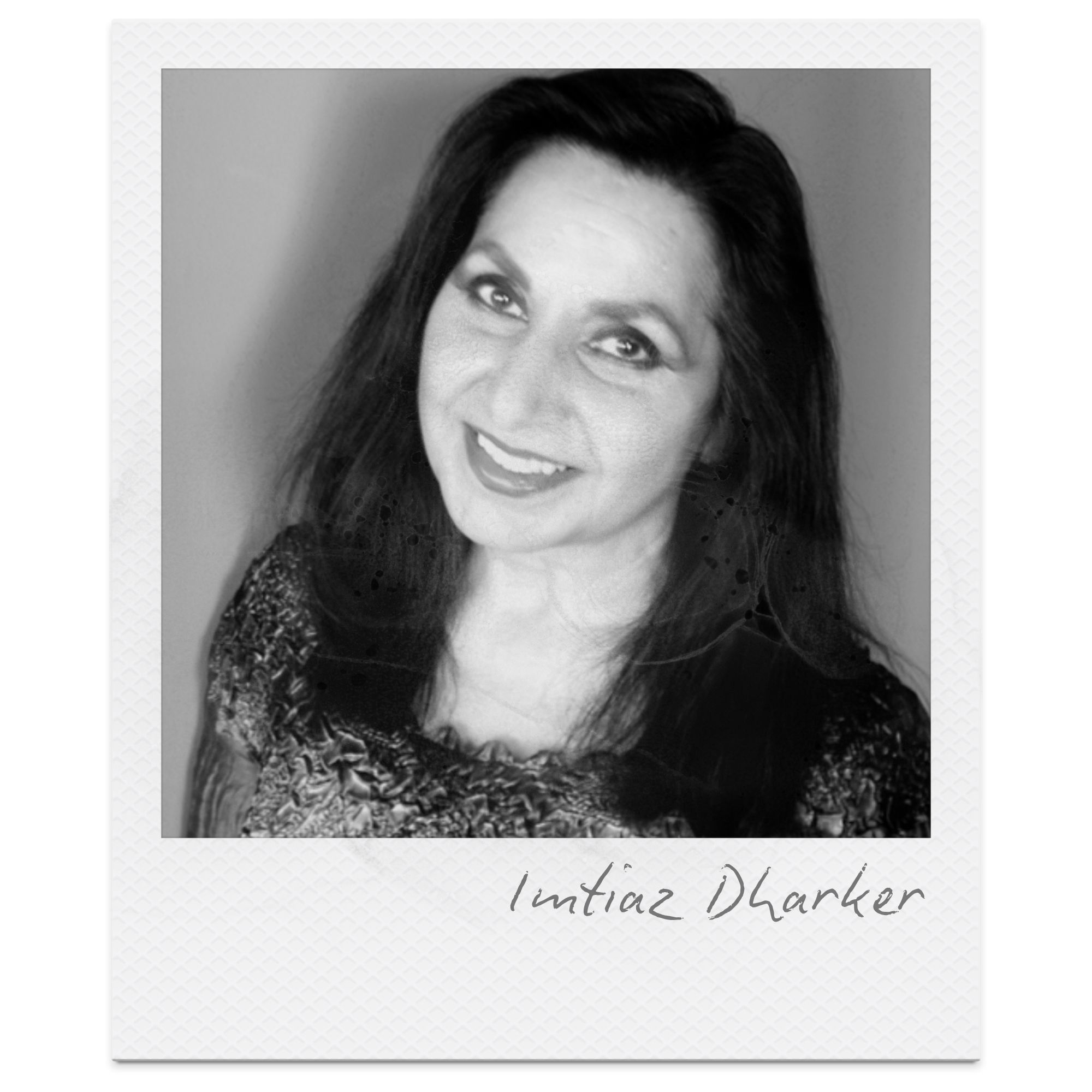
Imtiaz Dharker (born 1954) is a Pakistan-born poet and visual artist who grew up in Glasgow and has lived between Britain and India, experiences that have made journeys, home, displacement and identity recurring concerns in her work. Her poems frequently resist the idea that identity can be fixed neatly to a single place or category.
Leaving Fingerprints was published in 2009 in Dharker's collection of the same name, which combines poetry with her own drawings. Across the collection, fingerprints become a recurring image for identity, human contact and the traces left by people, places and objects; Dharker's publisher describes its missing people and things as continuing to send out clues and leave fingerprints.
This wider idea is particularly important to the poem. Its buried anklet, amulet and broken cup suggest lives whose names have disappeared, while roots, worms and trees continue to uncover and rewrite their presence. The landscape therefore becomes something like both a historical archive and a fingerprint: layered with evidence of people who are gone but not entirely erased. This connection between fingerprints, landscape, ancestry and identity has been recognised as central to the collection as a whole.
Leaving Fingerprints: At a Glance
Form: A seven-stanza free verse poem that moves through a winter landscape, gradually uncovering the physical and symbolic traces of previous human lives hidden within it.
Mood: Reflective, mysterious and contemplative, with an underlying sense of wonder as an apparently sparse landscape becomes increasingly crowded with history and human presence.
Central tension: The tension between absence and survival: the people themselves and even their names have disappeared, yet evidence of their existence remains in objects, soil, roots, trees and the landscape.
Core themes: History and memory; human transience; identity; nature; ancestry and inheritance; traces of the past; archaeology and artefacts; writing and communication; absence and presence.
One-sentence meaning: Dharker suggests that although individual lives may eventually be forgotten, human existence leaves traces that continue to be written into the natural world, allowing the past to remain present long after names and identities have disappeared.
Quick Summary of Leaving Fingerprints
The speaker walks through a frosted winter landscape that initially appears empty but is gradually revealed to contain layers of history beneath its surface. She senses the movement of slugs, snails and worms through the earth alongside small human artefacts — an “anklet”, “amulet” and “broken cup” — left behind by people whose names have been forgotten. Nature continues to disturb and reshape these traces, with roots and soil appearing to preserve and communicate fragments of the past.
As the poem develops, the imagery moves upwards from the buried earth towards the trees and sky. Roots become a form of “calligraphy”, branches develop “fingers” and twigs become “nails”, transforming the landscape into something that appears to write or leave fingerprints of its own. Although the people who once possessed the artefacts have disappeared, their presence has not vanished completely: the final declaration “Here I am” suggests that traces of past lives remain embedded within the landscape, leaving their metaphorical fingerprints on the world.
Title, Form, Structure, and Metre
Dharker uses free verse, flowing enjambment and a gradual upward movement through the landscape to connect buried human history with the living natural world. The poem's structure continually crosses boundaries — between past and present, human and natural, underground and sky — reinforcing the idea that traces of previous lives remain embedded in the world even when individual identities have been lost.
Title
The title Leaving Fingerprints initially suggests the distinctive physical marks left behind when someone touches an object. A fingerprint is intensely personal: it can identify an individual and provide evidence that they were once present, making it an appropriate metaphor for the poem's exploration of forgotten lives.
However, the title becomes increasingly metaphorical. The people associated with the “anklet”, “amulet” and “broken cup” have lost their names, yet traces of them remain within the landscape. The participle “Leaving” is particularly important because it suggests an ongoing process rather than something completed: human beings continually leave evidence of themselves behind, whether deliberately or accidentally.
By the ending, the fingerprint image has expanded beyond literal human hands. Trees develop “arms”, “fingers” and “nails”, before the lost names appear “fingerprinted on the sky”. The title therefore comes to represent the persistence of human presence: people may disappear, but something of their existence continues to mark the world.
Form and Structure
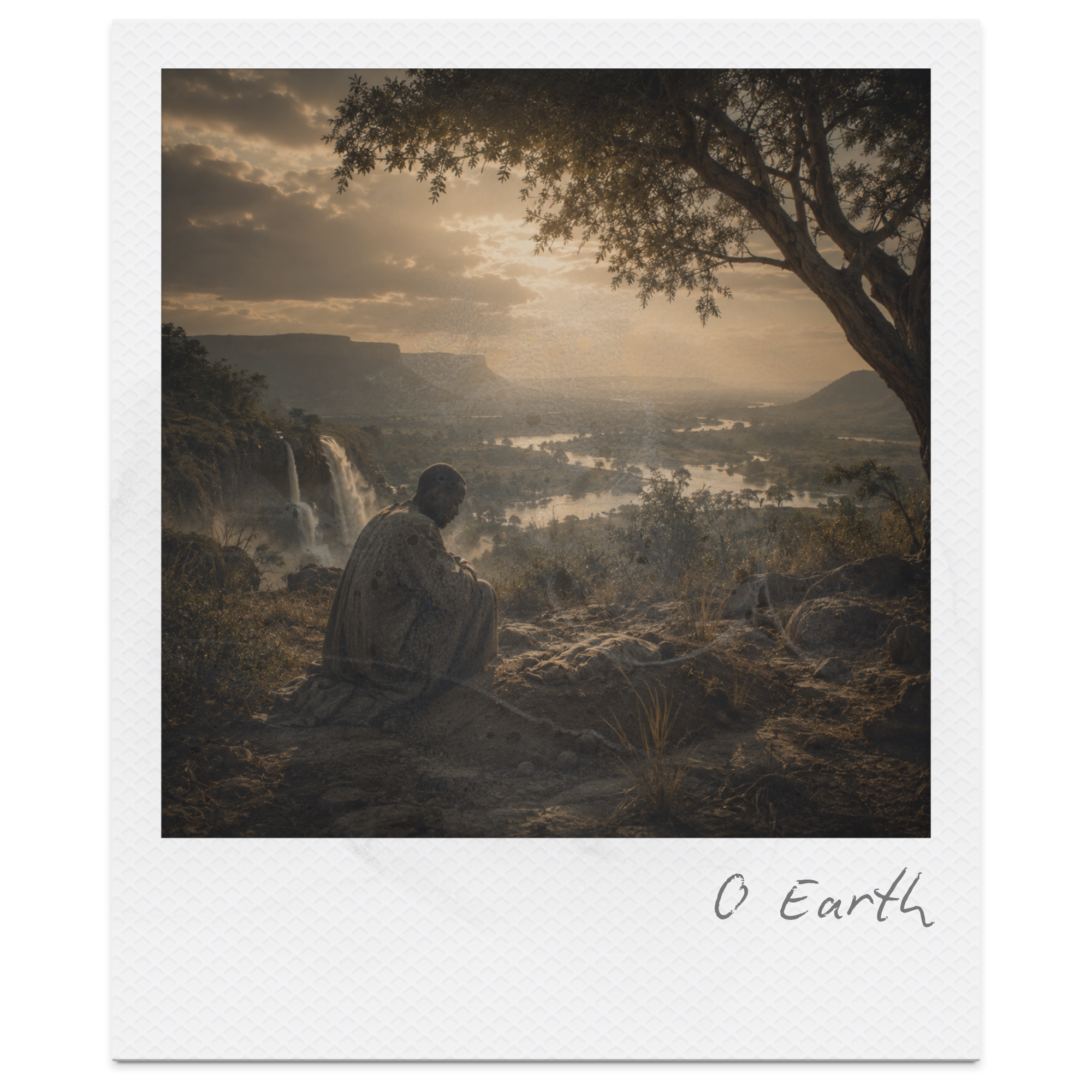
The poem consists of seven three-line stanzas, giving it a visible regularity even though it is written in free verse. This repeated tercet form may resemble layers or deposits, subtly complementing the speaker's description of the landscape as containing “layers / a busy clock of history”. Each stanza becomes another layer through which the poem uncovers the relationship between past and present.
There is also a significant vertical movement through the poem. It begins with the speaker looking down and sensing what lies “Under my feet”: slugs, snails, soil and buried artefacts. From there, movement gradually rises through the “roots” and “soil and mud”, into “trees”, “trunks”, “branches” and “twigs”, before finally reaching the “sky”. The structure effectively excavates history and then brings it to the surface, suggesting that what has been buried has not necessarily been erased.
Dharker repeatedly blurs the distinction between human beings and the natural landscape. The “calligraphy / of roots” turns nature into writing, while trees acquire human “arms”, “fingers” and “nails”. This transformation develops gradually rather than occurring in a single image, making the landscape appear increasingly capable of preserving and communicating human history.
Enjambment is central to this movement. Sentences repeatedly cross stanza boundaries, particularly between “things, / written and rewritten”, “messages up, / scribbled”, and “artefacts away / to be sparse as winter”. The ideas refuse to remain contained within individual stanzas, just as traces of the past refuse to remain neatly buried within a single historical layer.
The ending brings the poem's different images together. The anonymous people appear to speak through the landscape — “Here I am, they say. / Here and here for you to see” — before their presence becomes “fingerprinted on the sky”. The repetition of “Here” transforms apparent absence into presence: although their names have been “Lost”, their traces remain everywhere. Structurally, the poem therefore moves from burial and anonymity towards visibility and assertion.
Rhyme Scheme and Poetic Pattern
There is no regular rhyme scheme, allowing the poem to retain a natural, exploratory quality. Instead, Dharker creates cohesion through repeated clusters of imagery: hands and bodies, writing and language, earth and growth, and traces or marks.
One particularly important pattern is the developing imagery of writing. The past is “written and rewritten” in the “calligraphy / of roots”; messages are “scribbled” into soil; branches make “scratches on air”; and the landscape eventually resembles a “white page”. Nature becomes both writer and text, continually recording, altering and revealing the histories contained within it.
There is a parallel pattern of human anatomy: “fingers” initially belong implicitly to the forgotten makers of the artefacts, but trees develop “arms”, branches have “fingers”, and twigs have “nails”. By transferring human features onto nature, Dharker makes the distinction between human history and natural history increasingly difficult to maintain.
Metre and Rhythmic Movement
There is no consistent metre, and Dharker instead creates a flexible rhythm that follows the speaker's movement of thought and discovery. Lines vary considerably in length, while frequent enjambment draws the reader forward through the landscape as one trace leads unexpectedly to another.
At several moments, verbs create a sense of continuous physical activity beneath an apparently still winter scene: the earth “squirm[s]”, the worm performs a “heave / and turn”, roots rewrite, and afterthoughts “grow”. This movement contrasts with the “frosted” and “sparse” surface, reinforcing the idea that history remains active beneath apparent emptiness.
The final lines become noticeably simpler and more declarative: “Here I am, they say. / Here and here for you to see”. The repeated “Here” creates a firm rhythmic insistence after the poem's earlier flowing sentences. The effect is to give the forgotten people a momentary voice: despite their lost names, the marks of their existence continue to assert their presence.
The Speaker in Leaving Fingerprints
The speaker appears to be a thoughtful observer walking through and closely examining a winter landscape, but her perspective is more imaginative than simply descriptive. The opening assertion, “I know this frosted landscape / better than it knows itself”, establishes a confident, almost intimate relationship with the place, as though she can perceive the layers of human and natural history hidden beneath its apparently empty surface. Her repeated sensory awareness — “Under my feet I feel” — allows the visible present to merge with imagined traces of the past, while her attention to forgotten objects suggests an almost archaeological desire to recover lives whose names have been “Lost”. However, the speaker cannot actually restore those individual identities; instead, she interprets the marks left in soil, roots and trees as forms of communication, describing them as “messages”, “calligraphy” and “scribbled” writing. By the ending, her voice appears to merge with the imagined voices of the forgotten people — “Here I am, they say” — transforming the landscape into evidence of their continued presence. Dharker therefore uses the speaker as an intermediary between past and present, absence and presence, showing how imagination and close observation can recover traces of forgotten lives without claiming to know them completely.
Stanza-by-Stanza Analysis of Leaving Fingerprints
Across its seven tercets, Leaving Fingerprints gradually uncovers the hidden relationship between landscape, history and human memory. Dharker begins with a seemingly empty “frosted landscape” but repeatedly looks beneath its surface, discovering natural movement, abandoned artefacts and traces of forgotten lives. Through personification, extended metaphors of writing, tactile imagery, anatomical imagery and recurring contrasts between absence and presence, the poem transforms the natural world into a kind of living historical record. Its movement from earth and buried objects upwards through roots, trees and finally the sky suggests that although individual names can disappear, the evidence of human existence continues to be rewritten into the world around us.
Stanza 1: A Landscape Alive with History
The opening stanza immediately establishes the landscape as something that contains far more than its frozen surface appears to reveal. Dharker introduces the central idea that history is layered into the physical world, while the speaker presents herself as someone capable of recognising traces that the landscape itself seems unable to understand.
“I know this frosted landscape” begins with the emphatic first-person pronoun “I” and the confident verb “know”. Rather than simply saying that she can see the landscape, the speaker claims knowledge of it, suggesting a deeper understanding of the histories concealed beneath its visible surface. The adjective “frosted” initially creates an impression of whiteness, stillness and emptiness. Frost covers what lies underneath, so it can also suggest concealment: the landscape's history exists, but its traces are not immediately visible. There is an important contrast here between surface appearance and hidden depth, an opposition that develops throughout the poem.
The assertion that she knows the landscape “better than it knows itself” personifies the landscape by suggesting that it could possess self-knowledge. The comparison gives the speaker an almost archaeological or imaginative authority: she can interpret evidence that the landscape cannot consciously interpret for itself. However, the slightly paradoxical statement also raises questions about how the past is reconstructed. The speaker cannot literally know every forgotten person whose traces exist beneath her feet, so her “knowledge” depends partly upon imagination and interpretation. This anticipates the poem's later transformation of roots, soil and trees into forms of writing that she attempts to “read”.
The possessive phrase “its layers” shifts attention beneath the frosted surface. “Layers” has both a literal and metaphorical significance: soil accumulates physically over time, but the landscape also contains layers of human and natural history. The word evokes archaeological excavation, where increasingly deep layers can reveal increasingly distant periods. Dharker therefore presents the landscape not as a static setting but as a kind of archive, preserving evidence even when the people connected with it have disappeared.
Dharker then develops this idea through the metaphor “a busy clock of history”. A clock measures time, but describing the landscape itself as a clock suggests that time has been recorded materially within the earth. The adjective “busy” is particularly striking because it contradicts the apparent stillness of the “frosted landscape”. On the surface, winter appears quiet and inactive; underneath, however, history is crowded with movement, lives and change. The landscape therefore contains a tension between visible stillness and invisible activity.
The final phrase, “still ticking”, deepens this contrast. The adverb “still” can mean continuing even now, emphasising that history has not stopped simply because the people who created it have disappeared. Meanwhile, the present participle “ticking” creates a subtle sense of continuous movement and persistence. History is not presented as something finished and sealed safely in the past: its effects continue into the speaker's present.
There is also a productive paradox in the image of a “clock of history, still ticking”. A clock normally moves forwards, whereas archaeology often involves looking backwards. Dharker combines these directions, suggesting that the past remains active as time continues to move onwards. This becomes fundamental to the poem: the forgotten lives beneath the landscape are both gone and still present, leaving traces that nature continually uncovers, transforms and carries forward.
Structurally, the stanza moves from surface → depth → time. The speaker first sees the “frosted landscape”, then recognises its “layers”, before imagining those layers as an ongoing record of “history”. In only three lines, Dharker transforms what appears to be an empty winter scene into a landscape densely populated by the past, establishing the poem's central idea that absence does not necessarily mean erasure.
Stanza 2: Unearthing the Traces of Forgotten Lives
The second stanza takes the reader beneath the frozen surface introduced in stanza one. Dharker brings natural movement and human history together within the soil, suggesting that the earth is not simply preserving the past but continually moving around, disturbing and interacting with its remains.
The spatial phrase “Under my feet” immediately directs attention downwards, beginning the poem's exploration of what exists beneath visible surfaces. It also places the speaker physically above the histories she is discovering. The past is not somewhere distant: she is literally standing upon it. This makes history tangible and immediate, rather than something encountered only through books, museums or formal records.
The sensory verb in “I feel the trail of the slug” is particularly significant. The speaker does not merely see evidence of the natural world; she claims to “feel” it beneath her feet. This tactile language creates an unusually intimate connection between speaker and landscape, while also extending her almost extraordinary sensitivity from stanza one, where she claims to know the landscape “better than it knows itself”. She seems able to detect movements and histories that would normally remain unnoticed.
The noun “trail” also develops one of the poem's central ideas. A slug leaves a visible trace of where it has been, just as the forgotten people later leave objects and metaphorical “fingerprints” behind them. The slug therefore provides a small natural example of the larger pattern explored throughout the poem: existence produces traces. Even after the creature itself has moved on, evidence of its movement remains.
Dharker then adds “the snail”, creating an accumulation of small, easily overlooked forms of life. Slugs and snails move slowly and close to the ground, reinforcing the speaker's intense attention to what might ordinarily be dismissed as insignificant. Their movement may also suggest the slow processes through which landscapes and histories change, contrasting with the mechanical “ticking” of the clock in stanza one.
The syntax becomes more unusual in “the earth's deep squirm”. The noun “squirm” transforms a verb of bodily movement into something possessed by the earth itself, creating powerful personification. “Squirm” suggests twisting, writhing and restless movement, making the ground seem almost alive beneath the speaker. This directly develops the earlier paradox of the “frosted” landscape: what appears frozen and motionless above is actually active and restless below.
The adjective “deep” works both spatially and temporally. The movement occurs physically deep within the soil, but the speaker is also reaching into deep time, where layers of earlier human lives have accumulated. Dharker therefore continues to merge physical geography with history: digging down into the earth metaphorically means digging backwards into the past.
Crucially, the earth squirms “around an anklet or an amulet, a broken cup.” Human artefacts suddenly appear among the slugs, snails and moving soil, collapsing the distinction between natural history and human history. These objects have become incorporated into the landscape; nature does not preserve them separately but grows and moves around them.
The choice of “anklet” and “amulet” is especially evocative because both objects suggest intimate contact with an individual body. An anklet would have been worn against someone's skin, while an amulet may have carried personal, spiritual or protective significance. Yet Dharker gives us no information about their owners. The objects therefore create an intriguing tension between intimacy and anonymity: they once belonged closely to particular people, but those identities have disappeared.
The repeated sounds in “anklet or an amulet” subtly bind the objects together, while the conjunction “or” introduces uncertainty. The speaker cannot necessarily identify exactly what lies beneath the earth. This qualifies the apparent confidence of “I know” in stanza one: she may sense the presence of history, but she cannot completely reconstruct it. Dharker therefore avoids presenting the past as something that can simply be recovered intact.
The final object, “a broken cup”, is deliberately ordinary. Unlike an amulet, it does not necessarily suggest ceremonial or spiritual significance; it belongs to the everyday routines of drinking, eating and domestic life. Its adjective “broken” also makes it a particularly effective image for historical survival. What remains of the past is often fragmentary: an object survives, but its original context and owner do not.
There may also be significance in the movement from anklet → amulet → cup. Dharker offers traces of adornment, possible belief and ordinary domestic existence, allowing a handful of objects to suggest the breadth of lives that once occupied this landscape without inventing complete stories for them. The speaker can recognise that people were here, but she cannot recover precisely who they were.
The stanza therefore develops the poem's idea of the landscape as an unofficial archive. Instead of names and written documents, history survives through trails, movements and discarded objects. By placing a slug's “trail” beside an anklet, amulet and broken cup, Dharker suggests that humans and other living things share a fundamental condition: we move through the world, disappear, and leave traces behind.
Stanza 3: When Names Disappear but Objects Remain
The third stanza shifts attention from the artefacts themselves to the anonymous people who once owned them. Dharker introduces one of the poem's central tensions: physical evidence of human existence can survive for centuries, while the identities attached to those objects can disappear. The stanza therefore asks implicitly what it means to be remembered when your name is lost but your fingerprints remain.
The opening word “Lost,” is given immediate prominence through its position at the beginning of the stanza and the pause created by the comma. Dharker could simply have written that the names are lost, but the inversion places the condition of loss before the people themselves. Before we learn anything about these individuals, we are told that something fundamental about their identity has already disappeared.
Significantly, it is “the names” that are lost rather than the people alone. A name represents individual identity: it distinguishes one person from another and allows someone to be remembered, recorded and spoken about after death. Its disappearance therefore suggests the limitations of conventional historical memory. These people once existed, made things and interacted with the world, yet formal knowledge of who they were has vanished.
This develops the poem's distinction between official history and material traces. The landscape may contain no written record of these individuals' names, but the anklet, amulet and broken cup provide another kind of evidence. Dharker begins to suggest that history does not survive only through names, dates and documents; it can persist through the ordinary marks created by human contact.
The deliberately vague phrase “the ones” intensifies their anonymity. Dharker does not invent identities for them or attempt to reconstruct biographies that cannot be known. Like the speaker's uncertainty over “an anklet or an amulet”, this restraint acknowledges that the past can only ever be partially recovered. We know that somebody was here, but we cannot necessarily know who.
Yet the relative clause “whose fingers made and used” immediately restores a sense of physical humanity. The word “fingers” is crucial because it introduces the bodily image contained in the poem's title. These forgotten people are no longer accessible through their names, but Dharker imagines the actual hands that once touched the surviving objects. History becomes tactile rather than abstract.
The verb “made” emphasises creation and craftsmanship. The artefacts did not simply appear within the earth; someone shaped them. This invites the reader to look beyond an archaeological object towards the human labour and intention behind it. An anklet, amulet or cup becomes evidence of a person capable of making, choosing and creating.
Dharker then pairs this with the much more ordinary verb “used”. The movement from “made” to “used” gives the objects a lived history: they were not merely decorative museum pieces but belonged within someone's everyday existence. The understated diction is important because Dharker does not romanticise these forgotten people. Their humanity is recovered through ordinary actions rather than heroic achievements.
The sequence culminates in “and threw away these things”. The verb “threw” is strikingly casual. Objects that now seem precious because they provide evidence of an otherwise inaccessible past may once have been worthless enough to discard. Dharker creates an irony between the object's original significance and its later historical value: what one generation considers rubbish may become another generation's archaeological evidence.
There is also a subtle life cycle within the three verbs: “made and used / and threw away”. The objects move from creation to possession to abandonment, just as human lives move through existence before eventually disappearing. The repeated conjunction “and” creates a simple accumulating rhythm, making these actions feel ordinary and inevitable. People make things, use them and leave them behind.
Importantly, the artefacts outlast both their makers and their original purposes. The cup is broken, the owners' names are “Lost”, yet the objects remain beneath the speaker's feet. Dharker therefore complicates the idea of permanence: the human identity disappears while the apparently disposable object survives.
The demonstrative “these things” also changes the status of the objects. In stanza two they were individually named — “anklet”, “amulet”, “broken cup” — but they are now collectively reduced to “things”. This may reflect how detached they have become from their original human contexts. Without knowing their owners or stories, the speaker possesses objects without complete meanings.
Structurally, stanza three forms an important bridge between the buried artefacts of stanza two and the imagery of writing and communication that follows. Dharker has established that the people's conventional identifiers — their “names” — have disappeared. The next question becomes how those forgotten lives might nevertheless continue to communicate their existence.
The stanza therefore introduces a powerful paradox at the centre of Leaving Fingerprints: the people are simultaneously absent and present. Their names have vanished, yet their fingers once touched the objects that remain. Dharker begins replacing the lost written record of history with another form of evidence — touch, objects and fingerprints — suggesting that even anonymous lives can leave marks that survive long after their identities have been forgotten.
Stanza 4: Nature Rewrites the Forgotten Past
Stanza four develops the poem's central metaphor of history as a form of writing. Although the people's literal “names” have been “Lost”, Dharker suggests that another record of their existence remains within the landscape. Roots, worms and soil become alternative writers and messengers, continually disturbing, rewriting and carrying traces of the past towards the surface.
The opening “written and rewritten” directly follows “these things” from the previous stanza, creating important enjambment across the stanza boundary. The artefacts are not simply buried and preserved unchanged; their meanings and histories are continually being “written and rewritten” by what happens around them. The repetition of “written” with the prefix “re-” emphasises recurrence and revision. History is therefore presented not as a fixed account of the past, but as something continually altered as new generations and natural processes encounter its surviving traces.
This idea becomes particularly significant because stanza three has just declared the people's “names” lost. Conventional writing has failed to preserve their identities, yet Dharker immediately introduces a different kind of writing taking place within nature. There is a powerful paradox: their names have been erased from human records, but their presence continues to be written into the landscape.
The metaphor “the calligraphy / of roots” transforms the underground root system into elaborate handwriting. “Calligraphy” refers not simply to writing but to writing valued for its beauty, shape and visual form, encouraging us to imagine twisting roots as lines of script spreading through the earth. The comparison makes the soil resemble a page upon which nature records its own version of history.
“Calligraphy” also introduces the idea that the landscape must be read and interpreted. Just as handwriting contains meaning for someone capable of understanding its symbols, the roots and artefacts contain traces that the speaker attempts to decipher. This develops the confidence of the opening claim, “I know this frosted landscape”: perhaps what distinguishes the speaker is her willingness to read signs that others might overlook.
However, roots do not literally record names or coherent histories. Their “calligraphy” cannot tell the speaker exactly who wore the anklet or drank from the cup. Dharker therefore maintains the distinction between trace and complete knowledge. Nature preserves evidence of presence without restoring a lost biography. The metaphor suggests communication, but not necessarily perfect translation.
There is also an important visual connection between roots and fingerprints. Both consist of branching, irregular lines, and both can function as identifying marks. Dharker gradually builds a network of similar forms throughout the poem — trails, roots, writing, scratches, fingers and fingerprints — so that the landscape itself begins to resemble the intricate patterns left by human touch.
The focus then shifts from roots to “The worm's heave / and turn”. The noun “heave” conveys effortful physical movement, while “turn” suggests repeated twisting through the earth. Like the “earth's deep squirm” in stanza two, these bodily verbs make the supposedly frozen landscape intensely active beneath its surface. The “frosted” stillness seen above ground therefore continues to be contradicted by hidden movement below.
The line break after “heave” is particularly effective because the phrase itself seems to perform the worm's movement. The sentence has to “turn” across the line, allowing the enjambment to imitate the creature's progress through the soil. Dharker therefore makes the poem's physical structure participate in the movement it describes.
The worm is a humble and easily ignored creature, yet Dharker gives it an unexpectedly important role: its movement “delivers messages up”. The verb “delivers” personifies the worm as a messenger or courier, transforming an ordinary natural process into an act of communication between the buried past and the living present.
The noun “messages” extends the writing metaphor. The roots create “calligraphy”, while the worm transports “messages”, suggesting that the landscape contains a language through which forgotten lives can still communicate. Yet Dharker does not specify what these messages say. Their meaning remains fragmentary, much like the artefacts themselves. What survives most clearly is perhaps the simplest message eventually articulated near the ending: someone was here.
The directional adverb “up” is structurally crucial. Until this point, the poem has been travelling downwards: beneath the “frosted landscape”, “Under my feet”, into the earth and around buried objects. “Up” begins a major reversal in that movement. History is now being carried towards the surface, preparing for the roots to become trees, branches and twigs in the following stanza and ultimately for the forgotten presence to reach the “sky”.
There is also an ecological dimension to this movement. Worms physically turn and enrich soil, roots grow through it, and buried material becomes incorporated into continuing natural processes. The past is therefore not presented as lying untouched beneath the present. Instead, old and new continually interact: the landscape transforms what it inherits.
Stanza four consequently changes the meaning of historical survival. The past does not endure because it has been perfectly preserved. It survives through revision, disturbance and transformation. The forgotten people's names may be gone, but traces of their existence continue to move through a living landscape that “writes”, “rewrites” and sends its “messages” upwards. Dharker therefore presents memory not as a static archive but as an ongoing conversation between past, present and the natural world.
Stanza 5: The Past Growing into the Present
Stanza five continues directly from the “messages” being delivered upwards, transforming the earth into a surface upon which history is “scribbled” before physically growing into trees. Dharker's imagery now begins to merge human beings and nature more completely: soil becomes paper, roots become writing, and trees acquire “arms”, “fingers” and “nails”. The forgotten people are not literally restored, but their traces appear to be absorbed into a landscape that continues to grow.
The opening “scribbled in folds of soil and mud” extends the writing imagery established by the “calligraphy / of roots”. However, there is an important shift from “calligraphy” to “scribbled”. Calligraphy suggests beautiful, deliberate and controlled writing, whereas “scribbled” implies something hurried, irregular or difficult to decipher. Dharker may therefore be suggesting that the landscape contains history, but not in a clear or orderly form. The past survives as marks that require interpretation rather than as a complete written record.
The verb “scribbled” is also appropriately visual. Worm trails, tangled roots and irregular markings within the soil can resemble handwriting, allowing Dharker to turn natural patterns into a metaphorical language. This continues the poem's suggestion that traces can communicate even when literal names have disappeared. The speaker cannot read the names of the forgotten people, but she can recognise signs that lives existed before her.
The noun “folds” adds another layer to this metaphor. Soil does not literally fold like paper, so the image makes the earth resemble a creased manuscript, page or document containing writing within it. At the same time, “folds” can suggest layers of fabric or even folds in a body, subtly continuing Dharker's tendency to blur boundaries between landscape, text and human anatomy.
The pairing “soil and mud” keeps this metaphor grounded in something physical and ordinary. Dharker's historical record is not preserved in an elegant archive or monumental inscription; it exists in dirt, discarded objects and the movements of worms. This gives value to unofficial and overlooked forms of history, particularly the lives of people whose names were not preserved.
Dharker then introduces the surprising noun “afterthoughts”. Literally, an afterthought is something considered only later, often something secondary or initially forgotten. Calling the messages in the soil “afterthoughts” therefore captures the status of the anonymous people themselves: they have been left behind by conventional memory, surviving only indirectly through fragments and traces.
Yet “afterthoughts” also contains an important temporal idea. These are thoughts that come after — just as the speaker is thinking about these lives long after they have ended. The present continually reinterprets the past, connecting back to “written and rewritten”. History is not only what happened; it is also what later people notice, recover and imagine from what remains.
Most importantly, these “afterthoughts” “grow to trees”. The verb “grow” transforms something apparently marginal or forgotten into something large, living and visible. What begins underground as tiny traces eventually rises above the earth. Dharker therefore reverses the expected relationship between disappearance and survival: the supposedly forgotten past becomes capable of generating new forms of presence.
The movement also continues the vertical structure begun with the worm delivering messages “up”. The poem has travelled from buried artefacts and underground roots towards the surface, and now the traces rise into “trees”. This creates an almost organic model of memory: the past becomes the roots from which the visible present grows.
The phrase “trunks with arms” begins a striking sequence of personification. A tree trunk develops “arms”, immediately giving the natural landscape a recognisably human anatomy. The image may initially feel familiar — branches are often described as arms — but Dharker develops it much further, making the trees increasingly resemble the forgotten people whose physical bodies have disappeared.
This transformation continues through “branches with fingers”. The word “fingers” directly recalls both the title Leaving Fingerprints and stanza three's “fingers [that] made and used / and threw away these things”. The same bodily feature that once created and handled the artefacts now appears within the trees. Dharker therefore creates a powerful connection between human touch and natural growth: the fingers of the dead have vanished, but metaphorical fingers continue reaching through the landscape.
The final image, “twigs with nails”, completes the anatomical progression. There is a careful narrowing of scale:
trees → trunks → arms → branches → fingers → twigs → nails
Dharker moves from the enormous tree towards increasingly precise parts of the human hand. This reverses some of the poem's earlier movement from small artefacts towards vast historical significance. Here, the closer the speaker looks at nature, the more human detail she discovers within it.
“Nails” are especially significant because, like fingerprints, they belong to the extremities of the body — the places where people physically touch and interact with the world. The imagery therefore makes the landscape appear capable of touching, marking and perhaps even writing upon its surroundings.
The repeated structure “trunks with arms, / branches with fingers, twigs with nails” creates a cumulative transformation. Each image pushes the personification further until the boundary between tree and human body becomes difficult to separate. This reflects the poem's broader suggestion that human history and natural history are intertwined rather than independent.
There may also be something slightly uncanny about this imagery. “Arms”, “fingers” and “nails” make the supposedly empty winter trees resemble bodies reaching out of the earth. Dharker does not turn this into conventional ghost imagery, but she allows the forgotten people to acquire a kind of physical presence through nature. They cannot return as identifiable individuals, yet traces of human form seem to emerge everywhere.
Structurally, stanza five represents a crucial stage in the poem's movement from burial towards visibility. What was hidden “Under my feet” has travelled through roots and worms and now grows above ground as trees with human characteristics. The landscape is no longer simply preserving fingerprints from the past: it is beginning to resemble a fingerprint itself, made from branching lines that carry the traces of forgotten human lives towards the sky.
Stanza 6: Writing Absence onto the World
Stanza six carries the poem's imagery out of the earth and into the air, continuing the upward movement that began when the worm delivered its “messages up”. The humanised trees now appear to write upon the world around them, while Dharker introduces the striking image of “tear / after tear on a white page”. The stanza brings together writing, loss and disappearance before returning explicitly to the forgotten “names”, suggesting that although individuals relinquish their physical possessions, their traces continue beyond them.
The opening “scratches on air” follows directly from “twigs with nails” in the previous stanza. This enjambment is important because it initially allows “nails” to suggest fingernails before revealing what those nails are doing: they make “scratches”. Dharker therefore extends the human anatomy of the tree into human action. The branches have become fingers, the twigs nails, and those nails now seem capable of leaving marks.
“Scratches” develops the poem's extended motif of writing, but it is noticeably less controlled than the earlier “calligraphy”. Across these stanzas, Dharker moves through different kinds of marks:
“calligraphy” → “scribbled” → “scratches”
The progression becomes increasingly rough and elemental. “Calligraphy” implies deliberate artistry; “scribbled” suggests hurried or difficult-to-read writing; “scratches” may barely constitute writing at all. This reflects the fragmentary nature of historical survival: the further removed people become from the present, the less complete their stories may be, until what remains is simply evidence that something was once there.
Yet the surface being scratched is now “air”, creating a paradox. A scratch normally requires a solid surface capable of retaining a mark; air cannot permanently hold one. The image therefore captures the tension between leaving a trace and inevitable disappearance. The branches continually mark the air, but those marks vanish almost as soon as they are made. Human lives may similarly leave impressions on the world without those impressions remaining permanently recoverable.
The image also prepares for the final “fingerprinted on the sky”. Dharker is gradually expanding the scale of the fingerprint metaphor: what began with actual human “fingers” touching small artefacts beneath the soil eventually becomes enormous natural fingers apparently marking the air and sky. The traces of individual lives therefore move from something buried and almost invisible towards something vast and all-encompassing.
The next image, “tear / after tear on a white page”, is deliberately ambiguous. Most immediately, the noun “tear” can suggest a rip in paper, making the bare winter branches resemble repeated tears or marks across the blank whiteness of the landscape or sky. The phrase “white page” continues the extended writing metaphor: the natural world itself has become a surface upon which history appears to be written.
However, “tear” can also mean a drop produced by crying, introducing a possible emotional association with grief and loss. Dharker does not specify which pronunciation or meaning should dominate, allowing both to coexist. As a tear in paper, the image suggests rupture and fragmentation; as a tear of grief, it suggests mourning for the forgotten lives whose names have disappeared. The ambiguity therefore combines physical damage with emotional loss.
The line break after “tear” intensifies this uncertainty because the word temporarily stands alone at the end of the line. Before reaching “after tear”, the reader must briefly decide how to interpret it. Dharker makes the act of reading itself uncertain, mirroring the speaker's attempt to interpret incomplete traces of the past.
The repetition “tear / after tear” suggests accumulation. Just as the landscape contains layer after layer of history, the “white page” accumulates mark after mark. The phrase can therefore evoke generation after generation, each life leaving some alteration behind even as individual identities disappear.
The “white page” also recalls the opening “frosted landscape”. The whiteness that initially appeared to suggest emptiness can now be understood differently: the landscape is not truly blank. Like a page covered with faint scratches, it contains signs that become visible only when someone learns how to read them. Dharker thus transforms apparent emptiness into a surface densely marked by history.
There may even be a subtle circularity here. The poem began with the speaker claiming to understand a “frosted landscape”; now that landscape has effectively become a page. Her role throughout the poem has been to read the landscape, interpreting trails, objects, roots and branches as evidence of lives otherwise forgotten.
Dharker then shifts abruptly back towards the human past with “These names have given their artefacts away”. The demonstrative “These” recalls stanza three's “these things”, reconnecting the increasingly imaginative natural imagery with the actual objects buried beneath the soil.
Most strikingly, Dharker writes “These names” rather than these people. The metonymy reduces the forgotten individuals to the very identifiers that stanza three told us were “Lost”. This creates a poignant paradox: the names are absent, yet grammatically they become active, capable of “giving” something away. What history has lost momentarily acquires agency through the speaker's imagination.
The verb “given” also significantly transforms stanza three's “threw away”. Earlier, the people casually “threw away these things”; now, from the perspective of the distant present, they have “given their artefacts away”. Something once discarded has become a gift to the future. Dharker therefore shows how the meaning of an object changes across time: rubbish in one historical moment can become evidence, inheritance or archaeological treasure in another.
The noun “artefacts” reinforces that transformation. Previously the objects were simply an “anklet”, “amulet” and “broken cup”, and then the dismissive “things”. Now they are “artefacts” — objects valued because they reveal something about past human life. Language itself demonstrates how the present reinterprets what the past left behind.
There is consequently a subtle but important progression:
“threw away these things” → “given their artefacts away”
The objects themselves have not changed, but their meaning has been rewritten, perfectly illustrating the earlier phrase “written and rewritten”. Dharker shows that history is created partly through the changing interpretations later generations place upon surviving traces.
The stanza therefore brings the poem very close to its final revelation. The forgotten people have lost their names and “given” away their possessions, yet their presence has spread beyond those physical objects into roots, trees, air and the metaphorical page of the landscape. Their individual identities cannot be recovered, but the world remains marked by the fact that they existed. What appears to be disappearance is gradually becoming another kind of presence — preparing for the forgotten voices to insist in the final stanza: “Here I am.”
Stanza 7: Fingerprints of Human Presence
The final stanza completes the poem's movement from buried history towards visible presence. The people themselves remain anonymous and their physical possessions have been surrendered to time, yet Dharker ends not with disappearance but with an unexpectedly confident assertion: “Here I am.” Through the stark winter landscape, repeated deixis and the final image of fingerprints across the sky, absence is transformed into evidence that human lives continue to leave marks long after individual identities have been forgotten.
The opening phrase “to be sparse as winter” completes the sentence begun at the end of stanza six: “These names have given their artefacts away / to be sparse as winter.” The enjambment across the stanza boundary delays the result of this “giving away”, allowing the idea of relinquishment to carry directly into the poem's conclusion. The adjective “sparse” suggests something stripped back, reduced and almost empty. These forgotten lives have lost their names, possessions and identifiable histories until remarkably little appears to remain.
The simile “sparse as winter” returns directly to the “frosted landscape” of the opening stanza, creating a strong sense of structural circularity. Winter landscapes can appear bare because leaves, flowers and visible signs of growth have disappeared. Yet the poem has spent six stanzas demonstrating that apparent barrenness conceals enormous activity and accumulated history: worms move, roots grow and artefacts remain beneath the soil. “Sparse” therefore describes appearance rather than complete reality. What looks empty is filled with traces.
Winter also carries associations of death, endings and dormancy, making it appropriate for people whose lives have ended and whose names have disappeared. However, winter is not permanent: it is part of a continuing natural cycle. This subtly resists the idea of absolute disappearance. Just as dormant landscapes contain the potential for future growth, these forgotten people continue to exist through the marks incorporated into the living landscape.
Dharker then makes a dramatic shift with “Here I am, they say.” For the first time, the forgotten people appear to acquire a direct voice. Earlier, their “names” were “Lost” and the speaker could access them only through artefacts and natural “messages”. Now those indirect messages seem to become a simple declaration of existence.
The phrase “Here I am” is striking because of its simplicity. After the elaborate metaphors of “calligraphy”, “messages”, “scribbled” soil and humanised trees, the message ultimately communicated is not a detailed biography. The forgotten people cannot tell the speaker their names, occupations or stories. What survives is something more fundamental: the assertion that they existed at all.
The adverb “Here” is particularly important in a poem concerned with traces buried across time. It collapses the distance between past and present. These people belonged to another historical moment, yet the landscape allows them metaphorically to declare themselves present “here”. Dharker therefore challenges a simple division between those who are alive now and those who have disappeared into history.
There is also an important contrast between “Here I am” and “they say”. The singular pronoun “I” gives the declaration an individual quality, as though one forgotten person were speaking, while “they” reveals that the voice belongs collectively to many anonymous lives. Dharker briefly restores individuality without pretending that their actual identities can be recovered. Each unknown person can metaphorically say “I was here”, even though the speaker cannot name them.
The declaration develops through the repetition “Here and here for you to see”. Repeating “Here” makes the traces seem suddenly abundant. The people may be “sparse as winter”, but evidence of them is not confined to one archaeological object or one location. Their presence can be found throughout the landscape — in soil, artefacts, roots, trees and ultimately the sky.
The second-person pronoun “you” is also significant. Until now, the poem has been dominated by the speaker's perception: “I know” and “I feel”. In the final stanza, the reader is invited into the act of seeing. The landscape is “for you to see”, suggesting that its historical traces are available to anyone prepared to look closely enough. The movement from “I know” to “you to see” therefore widens the poem's perspective beyond the individual speaker.
However, “see” does not necessarily mean fully know. The poem has repeatedly shown the limitations of reconstructing the past: the names remain lost, the objects are fragmentary, and the landscape communicates through ambiguous “messages”. The reader can see the evidence of presence without recovering a complete identity. Dharker preserves the distinction between recognising that somebody existed and claiming to know exactly who they were.
The final phrase “fingerprinted on the sky” brings the poem's central imagery to its culmination. A fingerprint is a uniquely individual mark and a form of evidence that somebody has touched or occupied a place. The metaphor therefore answers the loss announced in stanza three. Their names may be gone, but another form of identification remains: their metaphorical fingerprints.
There is a striking transformation in scale. The poem began with tiny, buried objects — an anklet, amulet and broken cup — but ends with marks spread across the “sky”. Dharker expands the traces of apparently insignificant anonymous people until they become almost limitless. Those excluded from named history are not presented as insignificant; their presence has become part of the entire visible landscape.
The final image also completes the poem's sustained vertical movement:
under the speaker's feet → soil → roots → worms carrying messages “up” → trees → trunks → branches → twigs → air → sky
This progression gives the poem a powerful structural trajectory. History begins buried and hidden but gradually rises until it becomes impossible to regard the landscape as empty. The forgotten past has metaphorically moved from invisibility beneath the earth to visibility across the sky.
“Fingerprinted” also gathers together several earlier images. The actual “fingers” that once “made and used” objects become the tree's “branches with fingers”; the twigs make “scratches”; and finally the sky itself carries fingerprints. Dharker creates a chain connecting human hand → artefact → earth → tree → sky, dissolving the boundary between individual lives and the landscape that survives them.
Yet the ending is not simply reassuring. A fingerprint proves presence, but it does not necessarily reveal the complete story of the person who left it. The lost names remain lost. Dharker therefore does not suggest that history can perfectly recover forgotten lives. Instead, she offers something more restrained: absence can coexist with evidence, anonymity with presence, and forgetting with survival.
The final image consequently transforms the meaning of the opening “frosted landscape”. What initially appeared white, cold and potentially empty is now revealed as covered in human traces. By ending with “fingerprinted on the sky”, Dharker suggests that leaving a mark does not require being permanently named or formally recorded. Individual lives may disappear from written history, but their actions, objects and interactions with the world become part of what follows them. The poem ends with the powerful idea that to have existed is, in some form, to have left a trace.
Key Quotes and Methods in Leaving Fingerprints
The most useful quotations from Leaving Fingerprints reveal how Dharker develops the relationship between history, human identity, nature and the traces left behind by forgotten lives. Strong analysis should notice how recurring images of writing, touch, movement and growth gradually transform the landscape from something apparently empty into a record of human presence.
“I know this frosted landscape”
◆ Technique: First-person voice and visual imagery
◆ Meaning: The speaker presents herself as intimately familiar with a landscape whose frozen surface initially appears still and empty.
◆ Purpose: The confident verb “know” establishes the speaker as someone capable of looking beyond surface appearances and recognising the histories concealed within the land.
◆ Impact: Dharker immediately creates tension between what can be seen and what can be understood, preparing the reader to discover the hidden lives beneath the landscape.
“a busy clock of history, still ticking”
◆ Technique: Metaphor, personification and contrast
◆ Meaning: The landscape becomes a “clock” that contains and records the continual movement of history.
◆ Purpose: The adjective “busy” and present participle “ticking” contradict the apparent stillness of the “frosted” landscape, suggesting that the past remains active within the present.
◆ Impact: The reader begins to see history not as something finished, but as an ongoing process whose traces continue to shape the world.
“Under my feet I feel”
◆ Technique: Tactile imagery and spatial imagery
◆ Meaning: The speaker senses the hidden activity and history beneath the ground on which she stands.
◆ Purpose: Dharker makes the relationship with the past physically immediate: history is not somewhere distant but literally beneath the speaker's body.
◆ Impact: The tactile verb “feel” creates intimacy between the speaker and landscape, suggesting that understanding history requires sensitivity to traces that may not be immediately visible.
“the earth's deep squirm”
◆ Technique: Personification and kinetic imagery
◆ Meaning: The earth appears alive and physically restless beneath its frozen surface.
◆ Purpose: The bodily noun “squirm” challenges the impression that the winter landscape is lifeless or static.
◆ Impact: Dharker reinforces the contrast between surface stillness and hidden activity, making the landscape itself seem alive with natural and historical processes.
“an anklet or an amulet, a broken cup”
◆ Technique: Symbolism, listing and archaeological imagery
◆ Meaning: Ordinary objects survive after the identities of the people who made and possessed them have disappeared.
◆ Purpose: Dharker uses intimate and domestic objects rather than monuments or heroic historical records to represent ordinary human lives.
◆ Impact: The objects become poignant evidence of existence, encouraging the reader to imagine the anonymous people behind apparently insignificant artefacts.
“Lost, the names of the ones”
◆ Technique: Inversion and emphatic positioning
◆ Meaning: The people connected with the artefacts can no longer be individually identified.
◆ Purpose: Placing “Lost” first foregrounds disappearance before the people themselves are mentioned, emphasising the fragility of individual identity across time.
◆ Impact: The line establishes the poem's central tension between forgotten identity and surviving evidence: names vanish, but traces remain.
“whose fingers made and used / and threw away these things”
◆ Technique: Tactile imagery, polysyndeton and verb sequence
◆ Meaning: The surviving objects once passed through real human hands as part of ordinary life.
◆ Purpose: The sequence “made and used / and threw away” reconstructs a miniature life cycle for the artefacts, moving from creation through use to abandonment.
◆ Impact: The reference to “fingers” connects directly with the title, suggesting that human touch itself becomes a form of historical evidence.
“written and rewritten”
◆ Technique: Repetition and writing metaphor
◆ Meaning: History is continually altered and reinterpreted rather than preserved in one permanent form.
◆ Purpose: The prefix “re-” suggests repeated revision as natural processes and later observers encounter the traces left behind.
◆ Impact: Dharker challenges the idea of history as a fixed record, presenting it instead as something continually reconstructed from incomplete evidence.
“the calligraphy / of roots”
◆ Technique: Metaphor and visual imagery
◆ Meaning: Tangled roots resemble elaborate handwriting within the soil.
◆ Purpose: Dharker transforms nature into an alternative historical text, compensating for the literal “names” that have been lost.
◆ Impact: The landscape becomes something that can be “read”, although its writing remains mysterious and cannot completely restore the identities of the dead.
“The worm's heave / and turn delivers messages up”
◆ Technique: Personification, kinetic imagery and enjambment
◆ Meaning: The worm's movement through the earth metaphorically transports traces of buried history towards the surface.
◆ Purpose: The verb “delivers” turns the worm into a messenger between past and present, while “up” begins the poem's important upward structural movement.
◆ Impact: Even the smallest natural processes become part of the preservation and transmission of human history.
“scribbled in folds of soil and mud”
◆ Technique: Extended writing metaphor and tactile imagery
◆ Meaning: The earth resembles a folded page covered with irregular writing.
◆ Purpose: “Scribbled” is less controlled than the earlier “calligraphy”, suggesting that historical traces are fragmented and difficult to decipher rather than neatly recorded.
◆ Impact: Dharker presents the past as something that must be interpreted from incomplete marks, rather than something that can ever be perfectly recovered.
“afterthoughts / that grow to trees”
◆ Technique: Metaphor, enjambment and organic imagery
◆ Meaning: What has been forgotten or treated as insignificant develops into something large, living and visible.
◆ Purpose: Calling the traces “afterthoughts” reflects the marginal position of people whose names have disappeared from conventional history, while “grow” gives those traces continuing life.
◆ Impact: The image transforms forgetting into persistence: the buried past becomes part of the landscape from which the present grows.
“trunks with arms, / branches with fingers, twigs with nails”
◆ Technique: Extended personification, anatomical imagery and accumulation
◆ Meaning: The trees increasingly resemble human bodies as their parts become “arms”, “fingers” and “nails”.
◆ Purpose: Dharker deliberately merges human anatomy with the natural world, reconnecting the landscape with the forgotten fingers that once handled the artefacts.
◆ Impact: The boundary between people and landscape begins to disappear, suggesting that human traces have become incorporated into nature itself.
“scratches on air”
◆ Technique: Metaphor and paradoxical imagery
◆ Meaning: The tree's twig-like “nails” appear to scratch marks into something that cannot permanently retain them.
◆ Purpose: The impossible image captures the tension between the desire to leave evidence and the inevitability of disappearance.
◆ Impact: It reminds the reader that traces can be fragile and temporary even while the poem insists that some evidence of existence continues.
“tear / after tear on a white page”
◆ Technique: Ambiguity, repetition and extended writing imagery
◆ Meaning: The branches can resemble repeated tears or rips across a blank page, while “tear” can also evoke crying and grief.
◆ Purpose: Dharker allows physical rupture and emotional loss to overlap, while the “white page” recalls the apparently blank “frosted landscape” of the opening.
◆ Impact: The ambiguity encourages the reader to recognise that apparent emptiness is actually marked by loss, history and human absence.
“These names have given their artefacts away”
◆ Technique: Metonymy, personification and transformation of earlier imagery
◆ Meaning: The forgotten people are represented by their lost “names”, while the objects they once “threw away” have become historical “artefacts”.
◆ Purpose: Dharker deliberately transforms “threw away these things” into “given their artefacts away”, showing how later generations reinterpret what the past leaves behind.
◆ Impact: Discarded objects become an accidental inheritance, demonstrating that historical significance can emerge long after an object's original purpose has disappeared.
“sparse as winter”
◆ Technique: Simile and cyclical imagery
◆ Meaning: The forgotten people have been stripped of names, possessions and complete histories until very little appears to remain.
◆ Purpose: Returning to winter imagery connects the ending with the opening “frosted landscape”.
◆ Impact: The apparent emptiness is now understood differently: what looks sparse may actually contain layers of hidden presence.
“Here I am, they say.”
◆ Technique: Direct speech, personification and pronoun contrast
◆ Meaning: The forgotten people metaphorically speak through the traces they have left behind.
◆ Purpose: The singular “I” briefly restores individuality to the collective “they”, allowing each anonymous life to assert that it once existed.
◆ Impact: Dharker transforms absence into presence without pretending that the lost identities can be completely recovered.
“Here and here for you to see”
◆ Technique: Repetition, deixis and direct address
◆ Meaning: Evidence of previous human lives appears throughout the landscape rather than in one isolated location.
◆ Purpose: Repetition of “Here” makes the supposedly “sparse” landscape suddenly seem crowded with traces, while “you” invites the reader to become an observer alongside the speaker.
◆ Impact: The poem's perspective expands from “I know” to “you to see”, encouraging readers to recognise the histories embedded in the world around them.
“fingerprinted on the sky”
◆ Technique: Central metaphor, symbolism and visual imagery
◆ Meaning: The marks of forgotten human lives become metaphorical fingerprints spread across the natural world.
◆ Purpose: Dharker brings the title image to its culmination, transforming the literal fingers that “made and used” objects into an enormous symbol of human presence and survival.
◆ Impact: The scale is striking: lives represented initially by tiny buried artefacts ultimately seem to mark the whole “sky”. The poem therefore ends with the powerful suggestion that names may disappear, but existence leaves traces that become part of the world itself.
Key Techniques in Leaving Fingerprints
Dharker builds Leaving Fingerprints around interconnected patterns of touch, writing, natural growth and archaeological discovery. Rather than presenting history as a fixed record, she imagines the landscape as something that continually preserves, alters and communicates traces of earlier lives. Her most important techniques work together to blur the boundaries between human and natural history, absence and presence, forgetting and survival.
◆ Extended Metaphor of Writing – Writing imagery runs throughout the poem through “written and rewritten”, the “calligraphy / of roots”, messages “scribbled” in soil, “scratches” and the “white page”. Dharker transforms the landscape into an alternative historical text, suggesting that even when conventional records and names disappear, traces of human existence remain available to be interpreted.
◆ Fingerprints as a Central Symbol – Fingerprints represent individual identity, physical contact and evidence of presence. The poem begins with objects once touched by forgotten “fingers” and ends with their presence “fingerprinted on the sky”. Because fingerprints can prove that somebody was somewhere without revealing their complete story, they perfectly express Dharker's distinction between evidence of existence and complete knowledge of a life.
◆ Personification of Nature – The earth “squirm[s]”, the worm “delivers messages”, and trees develop “arms”, “fingers” and “nails”. Dharker makes the landscape increasingly human, suggesting that human history has become incorporated into the natural world rather than disappearing completely.
◆ Anatomical Imagery – The sequence “trunks with arms, / branches with fingers, twigs with nails” maps the human body onto the trees. This imagery reconnects nature with the forgotten “fingers” that originally “made and used” the buried objects, gradually dissolving the boundary between the bodies that have vanished and the landscape that remains.
◆ Archaeological Imagery – The landscape contains “layers”, buried artefacts and traces beneath the speaker's feet. The “anklet”, “amulet” and “broken cup” suggest archaeological discoveries through which otherwise anonymous lives can be partially reconstructed. Dharker presents the earth as an archive containing unofficial histories that survive outside written records.
◆ Tactile Imagery – Touch is fundamental to the poem. The speaker can “feel” beneath her feet; forgotten fingers once “made and used” objects; branches become fingers and twigs become nails. This emphasis on physical contact makes history material and intimate, rather than remote or abstract.
◆ Visual Imagery – Dharker moves from the white “frosted landscape” through soil, roots and trees to the final “sky”. The imagery teaches the reader to look differently at an apparently empty landscape: what initially seems sparse gradually becomes covered with signs of previous existence.
◆ Kinetic Imagery – Despite the frozen opening, the poem contains constant movement: the earth's “squirm”, the worm's “heave / and turn”, roots rewriting, afterthoughts growing and branches scratching the air. This hidden activity challenges the apparent stillness of winter and suggests that history remains active within the present.
◆ Contrast Between Stillness and Movement – The “frosted” and later “sparse” winter landscape appears motionless, yet beneath it everything is moving. Dharker uses this contrast to challenge surface appearances: what seems dead or empty may contain continuing processes of life, memory and transformation.
◆ Contrast Between Absence and Presence – The people's names are “Lost”, yet their objects remain; their bodies have disappeared, yet trees acquire human anatomy; they are absent, yet finally declare “Here I am”. This paradox forms one of the poem's central tensions, showing that being forgotten is not necessarily the same as leaving no trace.
◆ Metaphor of the Landscape as an Archive – Although Dharker never explicitly calls the landscape an archive, its “layers”, objects and markings function like one. Unlike a conventional archive organised through names and documents, however, this record is fragmentary, physical and continually changing.
◆ Metaphor of Time – The landscape becomes “a busy clock of history, still ticking”. By combining physical landscape with a device that measures time, Dharker suggests that history remains embedded within place while time continues to move forwards. The metaphor prevents the past from appearing finished or sealed away.
◆ Symbolism of Artefacts – The anklet, amulet and broken cup represent ordinary lives that formal history has forgotten. Their survival demonstrates how small material objects can outlast the identities of their owners, preserving fragments of everyday existence.
◆ Transformation of Objects Through Language – Dharker initially says the people “threw away these things”, but later describes how they have “given their artefacts away”. The change from “things” to “artefacts” shows how meaning changes over time: what was once rubbish becomes historically valuable evidence. The technique enacts the poem's claim that history is “written and rewritten”.
◆ Listing and Accumulation – Lists such as “an anklet or an amulet, a broken cup” and “trunks with arms, / branches with fingers, twigs with nails” gradually accumulate evidence. Dharker makes the landscape feel increasingly crowded with traces, contradicting its apparently “sparse” appearance.
◆ Repetition – “Written and rewritten”, “tear / after tear” and “Here and here” all emphasise continuation and accumulation. Particularly at the ending, the repetition of “Here” turns a landscape associated with lost names into one filled with assertions of presence.
◆ Deixis – The repeated “Here” in “Here I am” and “Here and here” is significant because it locates forgotten lives in the speaker's present. The past is no longer imagined as somewhere remote: its traces remain here, embedded within the contemporary landscape.
◆ Pronoun Shifts – The poem begins with the speaker's confident “I know” and “I feel”, later introduces the anonymous “ones” and “they”, and finally addresses “you”. This widening perspective moves from individual perception towards collective recognition, inviting the reader to participate in seeing the traces the speaker discovers.
◆ Metonymy – In “These names have given their artefacts away”, “names” stands for the people themselves. The choice is especially poignant because those names have already been declared “Lost”. Dharker temporarily gives agency to the very aspect of their identity that history has failed to preserve.
◆ Organic Imagery – Roots, worms, soil and trees dominate the middle of the poem. Most significantly, the forgotten “afterthoughts” “grow to trees”, suggesting that the past is not simply buried beneath the present but becomes part of what grows from it.
◆ Winter Imagery – The poem is framed by the “frosted landscape” and the simile “sparse as winter”. Winter initially suggests emptiness, stillness, death and disappearance, but Dharker gradually overturns those associations by revealing movement and history beneath its surface. The apparently barren landscape is anything but empty.
◆ Ambiguity and Double Meaning – “tear / after tear” can suggest either rips across the “white page” or tears associated with grief. Dharker allows physical marking and emotional loss to coexist, reflecting how the landscape can simultaneously contain material evidence and invite emotional interpretations of forgotten lives.
◆ Paradoxical Imagery – Images such as “scratches on air” describe marks made upon something incapable of permanently retaining them. This paradox captures the poem's tension between leaving evidence and inevitable disappearance: humans mark the world, but those marks can be fragile.
◆ Enjambment – Sentences frequently move across line and stanza boundaries: “things, / written and rewritten”, “messages up, / scribbled”, and “artefacts away / to be sparse as winter”. The flowing syntax mirrors the poem's idea that history crosses boundaries between generations and cannot be contained within neat layers.
◆ Regular Tercets – The seven three-line stanzas provide visual consistency beneath the poem's free verse. Their repeated layered appearance can subtly echo the “layers” of history introduced in stanza one, while enjambment repeatedly prevents those layers from becoming completely separate.
◆ Free Verse – The absence of a regular rhyme scheme or strict metre allows Dharker's thoughts and images to develop organically. The flexible form suits a poem concerned with roots, trails, irregular markings and histories that resist neat organisation.
◆ Vertical Structural Movement – One of the poem's most important structural techniques is its gradual movement upwards: feet → soil → buried artefacts → roots → worm → trees → branches → air → sky. What begins hidden underground eventually becomes “fingerprinted on the sky”, physically enacting the movement from concealment towards visibility.
◆ Circular Structure – The “frosted landscape” of the opening returns through “sparse as winter” near the end. However, the reader now understands that apparent winter emptiness conceals enormous historical depth. The circularity therefore demonstrates how the speaker has changed the reader's perception of the same landscape.
◆ Shifting Scale – Dharker moves between tiny details — a slug, worm, broken cup and fingernails — and enormous concepts such as history, trees and the sky. This expansion allows apparently insignificant traces of anonymous lives to acquire immense significance.
◆ Structural Transformation from Loss to Presence – The poem moves from hidden “layers” and “Lost” names towards the emphatic “Here I am” and “Here and here”. Dharker does not recover the people's identities, but she transforms anonymity into evidence of existence. The poem therefore ends not by defeating loss, but by showing that loss and continued presence can exist simultaneously.
How Imtiaz Dharker Creates Meaning and Impact in Leaving Fingerprints
At the heart of Leaving Fingerprints is the idea that human lives disappear without disappearing completely. Names can be forgotten, possessions discarded and individual stories lost, yet people continue to leave traces within the physical world. Dharker develops this idea by transforming a seemingly empty winter landscape into a living record of human and natural history, using imagery of touch, writing, growth and movement to explore the complicated relationship between memory, identity, absence and survival.
Language in Leaving Fingerprints
Dharker's language repeatedly challenges the difference between surface appearance and hidden reality. The poem opens with the apparently still “frosted landscape”, but the speaker immediately recognises its “layers” as “a busy clock of history, still ticking”. The contrast between “frosted” and “busy” is important: winter suggests stillness and dormancy, while the metaphor of the ticking clock implies continuous activity. Dharker therefore establishes that what appears empty may actually contain an immense accumulation of life and history.
This history is presented through deliberately small and ordinary details. Instead of monuments, famous names or significant historical events, Dharker gives us “an anklet or an amulet, a broken cup”. These objects make the past tangible while simultaneously emphasising how little can actually be recovered. The speaker knows that people “made and used” them, but their names are “Lost”. The contrast between the surviving object and the missing identity creates much of the poem's poignancy: material things can outlive the human beings who gave them meaning.
The word “fingers” becomes particularly significant because it links the anonymous people directly to the title. Their fingers once “made and used / and threw away” the objects, meaning that human presence is reconstructed through touch rather than biography. Dharker cannot restore their names, but she can imagine the physical contact that occurred between person and object. A fingerprint consequently becomes an ideal symbol for the poem: it proves someone was present without necessarily telling us who that person was.
Dharker develops this through an extended semantic field of writing and marking. The past is “written and rewritten” in the “calligraphy / of roots”; messages are “scribbled” through soil; trees create “scratches on air”; and the winter landscape becomes a “white page”. These metaphors transform nature into an alternative historical record. Where human writing has failed to preserve the people's names, the landscape appears to write its own version of their existence.
However, the changing vocabulary complicates this idea:
“calligraphy” → “scribbled” → “scratches”
The movement is from beautiful, recognisable writing towards increasingly irregular and fragmentary marks. Dharker therefore does not suggest that nature provides a perfectly readable account of history. Instead, the past reaches the present through partial signs that must be interpreted. We can recognise that lives existed without recovering everything about them.
This makes “written and rewritten” especially important. History is not simply preserved; it is continually reinterpreted. The discarded objects demonstrate this directly. What their owners once “threw away” becomes something they have apparently “given” to the future, while ordinary “things” become historically significant “artefacts”. Nothing about the objects themselves has changed; what has changed is how later observers understand them. Dharker therefore suggests that the meaning of the past is continually rewritten by the present.
Structure in Leaving Fingerprints
The poem's most significant structural movement is vertical. It begins at the surface of the “frosted landscape”, then moves “Under my feet” into soil, buried objects and roots before gradually travelling upwards:
earth → roots → worm → soil → trees → trunks → branches → twigs → air → sky
This movement gives physical form to the poem's exploration of historical recovery. What begins buried and invisible gradually rises into visibility, until the traces of forgotten people seem to cover the sky itself.
The pivotal word “up” in “The worm's heave / and turn delivers messages up” signals this transition. The worm becomes a metaphorical messenger carrying traces from beneath the earth towards the living world above it. From this point, buried “afterthoughts” begin to “grow to trees”. Dharker therefore presents history not simply as something excavated from the past, but as something that continues growing into the present.
The seven regular tercets create another possible visual connection with the landscape's “layers”. Each three-line stanza appears as another compact layer, while Dharker's frequent enjambment prevents those layers from remaining isolated. Sentences cross between stanzas just as roots, worms and historical traces cross physical layers of soil.
This is particularly effective between “these things, / written and rewritten”, “messages up, / scribbled” and “artefacts away / to be sparse as winter”. Past and present cannot be neatly separated; grammatically as well as thematically, one layer continually enters another.
There is also a broad structural movement from loss towards presence. In stanza three, the people's names are emphatically “Lost”. By the final stanza, however, they seem capable of declaring “Here I am” and “Here and here”. Dharker does not reverse their anonymity — their actual names remain unrecovered — but she changes what anonymity means. The reader may not know who they were, yet can no longer deny that they were here.
The poem also possesses a subtle circular structure. The opening “frosted landscape” returns through the closing comparison “sparse as winter”. Yet the reader's understanding of winter has fundamentally changed. What originally appeared white, cold and perhaps empty has been revealed as crowded with movement, artefacts, roots and histories. Dharker returns us to essentially the same landscape but teaches us to see it differently.
Voice and Tone in Leaving Fingerprints
The speaker's voice begins with remarkable confidence: “I know this frosted landscape / better than it knows itself”. The assertion establishes an intimate relationship with place and suggests that she can perceive meanings hidden beneath its surface.
Yet the poem gradually demonstrates that this “knowledge” has limits. The speaker can identify evidence but cannot recover names. She can offer “an anklet or an amulet”, with the conjunction “or” suggesting uncertainty, and can interpret roots as “calligraphy” and worm movements as “messages”, but these remain imaginative readings of incomplete evidence.
This creates an important tension between knowledge and imagination. The speaker does not literally hear forgotten people speaking or read actual messages in roots. Instead, her imagination allows her to recognise human significance within physical traces. Dharker suggests that recovering the past involves interpretation, but she avoids pretending that interpretation can recreate it perfectly.
The tone is therefore contemplative and quietly wondering rather than conventionally mournful. There is loss — names disappear, objects are discarded, the landscape is wintery — but the poem does not become an elegy for particular individuals. Instead, it seems fascinated by the persistence of traces.
That changes subtly with the ambiguous “tear / after tear”. If read as tears of grief, the image introduces emotional mourning; if understood as rips across a page, it emphasises fragmentation. Holding both meanings together allows Dharker to suggest that confronting historical disappearance can involve both intellectual interpretation and emotional response.
The final apparent voice of the dead — “Here I am, they say” — is deliberately simple. They do not reveal their names or explain their histories. Their imagined speech merely asserts existence. This restraint makes the ending more powerful because Dharker does not pretend that poetry can fully restore forgotten lives.
Sound and Rhythm in Leaving Fingerprints
Dharker uses free verse without a regular rhyme scheme or consistent metre, allowing the poem to develop according to the movement of the speaker's observations. Frequent enjambment creates a flowing rhythm in which one image seems to grow organically into another, mirroring the interconnected movement of roots, worms and trees.
There are also moments when the sound and rhythm become noticeably physical. “The worm's heave / and turn” uses short, weighty monosyllables that give the movement a sense of effort, while the line break after “heave” makes the reader momentarily pause before the sentence itself “turns” into the next line.
Dharker's repetitions create a different effect. “Written and rewritten” suggests continual revision, while “tear / after tear” creates accumulation. Most importantly, “Here” becomes increasingly insistent in the ending:
“Here I am” → “Here and here”
After a poem dominated by lost names and indirect traces, the repetition produces a simple rhythm of assertion. The forgotten people cannot provide detailed histories, but their presence seems to insist upon itself.
There is also a movement from relatively complex metaphorical language towards this final simplicity. “Calligraphy”, “afterthoughts” and the elaborate humanisation of the trees eventually resolve into the elemental declaration “Here I am”. The effect is to reduce the poem's entire exploration of history to its most fundamental message: someone existed here.
Overall Meaning of Leaving Fingerprints
Leaving Fingerprints ultimately suggests that history is much larger than the names that survive in official records. Beneath apparently empty landscapes are countless ordinary lives whose identities may have disappeared but whose actions have nevertheless contributed to the world inherited by later generations. The anklet, amulet and broken cup represent precisely these small, unofficial histories.
Dharker does not imply that these traces allow the past to be perfectly recovered. That distinction is crucial. A fingerprint is evidence, not a biography. The speaker can recognise presence but cannot restore the missing names; she can interpret artefacts but cannot know exactly what they meant to their owners. The poem therefore values historical imagination while acknowledging its limitations.
Nature becomes central to this survival because the landscape does not merely store the past; it transforms it. Roots grow through buried objects, worms turn the soil and trees emerge from what lies underneath. Human and natural history become inseparable. The progression from fingers that once handled objects to branches with “fingers” suggests that individual lives become absorbed into processes larger and longer-lasting than themselves.
The final image, “fingerprinted on the sky”, dramatically expands this idea. Tiny objects hidden underground eventually lead the speaker towards marks imagined across something vast and visible. Dharker transforms anonymous lives from historical “afterthoughts” into part of the landscape itself.
The poem therefore does not offer conventional immortality. Names can still be lost, objects broken and precise stories forgotten. Instead, Dharker proposes a subtler form of persistence: to live is to interact with the world, and interaction inevitably leaves traces. Leaving Fingerprints asks the reader to recognise those traces — and to reconsider how much apparently empty places may contain when we learn to look beyond their surfaces.
Themes in Leaving Fingerprints
The central themes of Leaving Fingerprints grow from Dharker's exploration of what remains after individual lives disappear. History survives not only through names and written records but through objects, landscapes and the physical consequences of human existence. By connecting forgotten artefacts with roots, worms, trees and fingerprints, Dharker explores memory, identity, nature, time and the relationship between absence and presence, ultimately suggesting that apparently empty places may contain countless traces of earlier lives.
History and the Past in Leaving Fingerprints
History is presented as something embedded within the physical landscape rather than confined to written records. The opening metaphor of the landscape as “a busy clock of history, still ticking” immediately makes the past active rather than finished.
The landscape's “layers” suggest archaeological layers accumulating across generations. Beneath the speaker's feet are natural traces alongside an “anklet”, “amulet” and “broken cup”, bringing together large historical time and small everyday objects.
Importantly, Dharker focuses on people who have not become famous historical figures. Their “names” are “Lost”; there are no dates, monuments or written biographies. What remains are fragments of ordinary existence. History is therefore widened to include anonymous people whose lives may never enter official historical narratives.
The repeated writing imagery reinforces this alternative form of history. The past is “written and rewritten” through roots, soil and natural processes. Dharker suggests that history is not simply preserved unchanged: each generation encounters and interprets what previous generations have left behind.
Memory and Forgetting in Leaving Fingerprints
The poem repeatedly balances what has survived against what has been forgotten. Its most explicit statement of loss comes in the emphatically positioned “Lost, the names of the ones”. The people's identities have disappeared even though evidence of their lives remains.
Dharker therefore distinguishes between remembering that someone existed and remembering precisely who they were. The artefacts cannot restore their owners' names, personalities or experiences. They provide only fragments from which the present can imagine the past.
The shift from “threw away these things” to “given their artefacts away” demonstrates how memory also changes meaning. Objects once considered disposable become valuable because later generations recognise them as evidence. The past is consequently “rewritten” through the meanings the present gives to what survives.
The ending does not magically overcome forgetting. The names remain lost. Instead, “Here I am, they say” offers a more limited form of remembrance: the forgotten can no longer be individually identified, but their existence can still be acknowledged.
Human Transience and the Traces We Leave in Leaving Fingerprints
Dharker repeatedly reminds us that human lives are temporary, while some of their effects continue after them. The people who made and used the objects have disappeared, yet the objects themselves remain within the earth.
The title's fingerprint metaphor captures this particularly effectively. A fingerprint is produced through contact: it is evidence that someone touched something and was once physically present. Yet a fingerprint is also only a trace. It cannot contain everything about the person who produced it.
This makes “whose fingers made and used / and threw away these things” central to the theme. The forgotten people survive not through extraordinary achievements but through ordinary interactions with the material world.
The final “fingerprinted on the sky” expands those tiny traces to an enormous scale. Dharker suggests that human significance does not depend upon permanent fame or recognition. Even lives whose names disappear can leave consequences within the world that continues after them.
Identity and Anonymity in Leaving Fingerprints
The poem raises an important question about what remains of identity when a person's name has disappeared. Names ordinarily distinguish individuals, but Dharker deliberately withholds them, referring instead to “the ones” and eventually “they”.
Against this anonymity, the recurring image of fingers and fingerprints is especially significant. A fingerprint is traditionally associated with unique individual identity, creating a paradox: these people are simultaneously unidentifiable and individually marked.
This tension becomes especially powerful in “Here I am, they say.” The collective pronoun “they” suddenly produces the singular declaration “I”. Although the speaker cannot restore any particular identity, each anonymous person is imaginatively allowed to assert an individual existence.
Dharker therefore separates identity from historical recognition. A person does not cease to have existed simply because later generations no longer know their name.
Nature and Human History in Leaving Fingerprints
Dharker gradually removes the boundary between the human world and the natural landscape. Initially, human artefacts lie among slugs, snails, worms and soil. As the poem progresses, however, nature itself begins acquiring human characteristics.
The transformation reaches its clearest point in “trunks with arms, / branches with fingers, twigs with nails”. Through extended personification, the trees acquire the anatomy of the people whose bodies have disappeared. The “fingers” that once handled artefacts seem metaphorically to reappear within the landscape.
Nature is therefore more than a passive container for history. Worms “deliver messages”, roots produce “calligraphy” and forgotten “afterthoughts” “grow to trees”. The natural world continually disturbs, incorporates and transforms what previous lives leave behind.
Dharker consequently presents human and natural history as interconnected processes. People become part of landscapes, while landscapes carry evidence of the people who have inhabited them.
Writing, Language and Communication in Leaving Fingerprints
One of the poem's most sustained themes concerns how the past communicates with the present. Literal names have disappeared, so Dharker imagines the landscape developing another kind of language.
Roots create “calligraphy”, traces are “scribbled” through soil, trees make “scratches”, and the landscape becomes a “white page”. This extended metaphor transforms the natural world into something resembling a text that the speaker attempts to read.
Yet the movement from “calligraphy” → “scribbled” → “scratches” also suggests increasingly fragmented communication. These are not clear sentences explaining who the forgotten people were. The past communicates through incomplete marks.
The worm's movement “delivers messages up”, but Dharker never tells us precisely what those messages contain. Only at the ending does their meaning seem to become clear: “Here I am.” Perhaps the most fundamental message the past can communicate is simply evidence of existence.
Time and Continuity in Leaving Fingerprints
Time is established immediately through the metaphor “a busy clock of history, still ticking”. The present participle “ticking” suggests continuity: although individual lives end, time and the processes through which their traces are transformed continue.
Dharker repeatedly combines different periods within the same physical space. The speaker walks through the present while standing above objects belonging to unknown people from the past. Different moments of history therefore coexist within the landscape's “layers”.
Natural growth reinforces this continuity. Roots pass through old soil; worms turn it; buried “afterthoughts” grow into trees. The present literally emerges from what existed before it.
The poem therefore resists a simple division between past and present. History is not somewhere behind the speaker: she walks upon it, feels it beneath her feet and sees its imagined traces extending above her.
Absence and Presence in Leaving Fingerprints
Perhaps the poem's most important paradox is that the forgotten people are both absent and present.
Their absence is unmistakable. Their names are “Lost”; their possessions have been abandoned; they cannot tell their own stories. Winter imagery reinforces this sense of disappearance through the “frosted” and “sparse” landscape.
Yet Dharker continually discovers forms of presence within that apparent emptiness. Artefacts remain. Roots grow. Trees acquire fingers. The landscape sends “messages”. Eventually the anonymous people metaphorically declare “Here I am”.
The repetition “Here and here” is particularly powerful because it transforms scarcity into abundance. The landscape described as “sparse” suddenly appears filled with evidence.
Dharker does not resolve the contradiction by claiming the dead literally survive. Instead, she suggests that absence can still leave a presence behind. Something can be gone while continuing to affect the world.
Archaeology, Artefacts and Ordinary Lives in Leaving Fingerprints
The “anklet”, “amulet” and “broken cup” allow Dharker to explore the importance of ordinary material objects as evidence of human lives. None is a grand monument designed to preserve someone's legacy.
The “broken cup” is especially significant because of its ordinariness. It suggests domestic routine rather than historical importance, reminding us that the people of the past ate, drank, made things and discarded things just as people do now.
Dharker's changing terminology is revealing. They first “threw away these things”, but later those same objects become “artefacts” that have been “given” away. Historical value is created partly by distance: rubbish becomes archaeology because the people who used it have disappeared.
The poem therefore gives dignity to small and unofficial evidence, suggesting that a broken cup can reveal human presence as meaningfully as more prestigious historical records.
Legacy and Human Connection in Leaving Fingerprints
Ultimately, Leaving Fingerprints asks what it means to leave something behind. The poem offers no guarantee that names, possessions or complete stories will survive. Its idea of legacy is much less deliberate.
The forgotten people did not necessarily intend to create a historical record. Indeed, they “threw away” the very objects that later become their “artefacts”. Their legacy is accidental, created simply through having lived and interacted with the world.
This makes the title particularly meaningful. People leave fingerprints simply by touching things. In the same way, Dharker suggests that living inevitably means affecting places, objects and perhaps later generations.
The final movement from buried artefacts to a sky that is “fingerprinted” dramatically enlarges that idea. The individuals may be unknown, but they belong to the accumulated human history that shapes the speaker's present. Their legacy is not immortality in the conventional sense; it is participation in a world that continues after them.
Across these themes, Dharker ultimately challenges the assumption that an apparently empty landscape is truly empty. Every place may contain layers of previous presence, from objects deliberately preserved to traces accidentally left behind. Leaving Fingerprints asks us to look more carefully at the world and recognise that history consists not only of the people whose names we remember, but also of the countless anonymous lives whose fingerprints remain.
Alternative Interpretations of Leaving Fingerprints
Dharker deliberately leaves much of Leaving Fingerprints open to interpretation. We never discover who the forgotten people were, how old the artefacts are, or precisely what relationship the speaker has with the landscape. Even the apparent “messages” carried through nature are created through metaphor rather than literal communication. This ambiguity allows the poem to be read psychologically, socially, historically and philosophically, while its recurring fingerprints raise a larger question: what does it actually mean for a human life to leave a mark?
Psychological Interpretation: The Desire to Recover Forgotten Lives
The poem can be read as an exploration of the human desire to create meaning from fragments of the past. The speaker begins with the extraordinary claim that she knows the landscape “better than it knows itself”, then interprets roots as “calligraphy”, worms as messengers and trees as human bodies.
From this perspective, the landscape may not literally contain readable messages at all. Instead, the speaker's imagination transforms physical evidence into stories of human presence. The “anklet”, “amulet” and “broken cup” are enough to make her imagine the fingers that “made and used” them.
Her certainty is nevertheless qualified by gaps. The object might be “an anklet or an amulet”, and the people's names remain “Lost”. Dharker could therefore be exploring a tension between our desire to know the past and the impossibility of completely recovering it.
The final “Here I am, they say” might consequently be understood not as the voices of the forgotten people themselves, but as the speaker's interpretation of the evidence they left behind. She cannot make them speak again, but imagination allows her to recognise their most basic message: someone was here.
Social Interpretation: Recovering the Lives Left Out of History
The poem can also be interpreted as a challenge to conventional ideas about whose lives are considered historically important. Dharker gives us no kings, political leaders, battles or famous names. Instead, the past survives through an anklet, an amulet and a “broken cup”.
The adjective “broken” is particularly important in this reading. The object is materially insignificant and may once have been rubbish, yet it becomes evidence of a human life. Similarly, the people themselves have disappeared from named history: they are simply “the ones” whose names are “Lost”.
Dharker may therefore encourage readers to think about the countless ordinary people who shaped the past without appearing in formal historical narratives. The poem's “layers” contain not only recognised history but anonymous domestic lives, labour, beliefs and everyday routines.
The ending then becomes quietly democratic. Each forgotten person can metaphorically declare “Here I am”. Historical significance is no longer dependent upon fame or having one's name preserved: merely having lived means having participated in the world inherited by later generations.
Archaeological Interpretation: Objects Tell Stories, but Never Complete Ones
The poem can be read almost as a meditation on archaeology itself. Archaeologists frequently reconstruct aspects of previous societies through material remains, and Dharker's “anklet”, “amulet” and “broken cup” function as precisely these kinds of evidence.
Yet the poem repeatedly emphasises the limitations of such reconstruction. We possess the object but not its owner; the artefact but not the name. Even the uncertainty of “anklet or an amulet” reminds us that interpretation is never necessarily complete.
The transformation from “threw away these things” to “given their artefacts away” is particularly revealing. The original owners may have regarded these objects as worthless, while later observers assign them historical significance. What an artefact means therefore changes according to who interprets it and when.
In this reading, “written and rewritten” applies not only to roots but to history itself. Every generation reconstructs the past from surviving evidence, meaning historical knowledge is always partly an act of interpretation.
Philosophical Interpretation: What Does It Mean to Leave a Trace?
At a philosophical level, the poem can be read as a meditation on mortality and the human need for continuity beyond an individual lifetime.
The forgotten people appear to have lost almost everything normally associated with personal identity. Their names have disappeared; their bodies are absent; their possessions have become disconnected “artefacts”. Yet something remains.
The fingerprint is especially powerful in this interpretation because it represents presence without permanence. A fingerprint exists because someone made contact with the world, but the person does not need to remain beside it for the mark to survive.
Dharker may therefore be suggesting that human legacy does not necessarily require deliberate achievement. The people actually “threw away” the objects through which the speaker now imagines them. Their survival in history is accidental.
The poem consequently offers a subtle answer to the fear of being forgotten: perhaps permanence does not require being remembered by name. To have lived is already to have affected the material world in some way.
Existential Interpretation: Can Anyone Truly Escape Disappearance?
A darker interpretation would emphasise not survival but how little ultimately remains of an individual life.
The optimistic declaration “Here I am” cannot change the fact that the people's names are “Lost”. Their complex identities, relationships, memories and experiences have disappeared. What remains is only a handful of objects and traces interpreted by someone living much later.
Even “scratches on air” can support this reading. Air cannot permanently retain a scratch, making the image an effective metaphor for the fragility of attempts to leave lasting evidence behind. Likewise, “sparse as winter” suggests lives progressively stripped of their details.
The ending can therefore be read as both reassuring and poignant. The landscape is “fingerprinted” with human presence, but fingerprints are not people. Evidence survives precisely because the complete individual does not.
Dharker may consequently leave the reader suspended between two truths: something of us survives, but much of us disappears.
Ecological Interpretation: Human History Becomes Natural History
Another interpretation focuses on the gradual dissolution of the boundary between human beings and the natural environment.
Initially, people and nature seem separate. Human artefacts lie within soil populated by slugs, snails, worms and roots. Gradually, however, the distinction collapses. Trees acquire “arms”, branches develop “fingers” and twigs possess “nails”.
The imagery may suggest that human history ultimately becomes absorbed into larger ecological processes. Objects enter the soil, roots grow around them, worms turn the earth and trees rise from it. What humans leave behind becomes part of a landscape that existed before them and will continue afterwards.
The phrase “afterthoughts / that grow to trees” is especially suggestive. Rather than imagining the past as dead matter beneath the present, Dharker imagines it participating in new growth.
From this perspective, the final “fingerprinted on the sky” does not necessarily suggest human domination over nature. Instead, human and natural markings have become impossible to distinguish. People leave traces within landscapes, while landscapes continually transform those traces into something new.
Artistic Interpretation: The Landscape as a Page
Because Dharker is both a poet and visual artist, the poem's sustained imagery of writing and mark-making can also support an artistic reading. The landscape repeatedly becomes something resembling a page: roots form “calligraphy”, soil is “scribbled” upon, branches make “scratches”, and finally there is explicitly a “white page”.
The winter landscape might therefore be imagined as a kind of enormous artwork created through accumulated marks. Human beings, animals, plants and time itself all contribute lines to it.
The progression from controlled “calligraphy” through “scribbled” marks to “scratches” is important because not every meaningful mark needs to resemble conventional writing. A root, worm trail, broken object or fingerprint can communicate presence without forming words.
This makes the lost “names” particularly significant. Words have failed to preserve these people, but marks have not. Dharker may therefore be exploring whether visual and physical traces can communicate forms of experience that conventional language cannot preserve.
Metapoetic Interpretation: The Poem Leaves Its Own Fingerprint
A particularly sophisticated interpretation is that Leaving Fingerprints may itself participate in the process it describes.
The forgotten people cannot speak directly. Their names have vanished, and their objects provide only incomplete evidence. Yet Dharker's poem takes these imagined fragments and turns them into language. In doing so, the poem becomes another act of “writing and rewriting” the past.
This creates an interesting tension. Poetry can draw attention to forgotten lives, but it cannot genuinely recover them. Dharker does not give the owners of the anklet, amulet and cup invented names or biographies. Instead, she preserves their anonymity.
The speaker's imagined “Here I am” may therefore represent what poetry can and cannot achieve. It cannot restore a lost individual completely, but it can insist that forgotten lives deserve recognition.
The title then gains another possible meaning. Just as the anonymous people leave fingerprints upon the landscape, the poet leaves marks through words. The poem itself becomes a temporary trace passed from writer to reader — another attempt to place evidence of human thought and experience onto the world's continuing “white page”.
Ultimately, these interpretations do not need to compete. Dharker's poem can simultaneously acknowledge the tragedy of forgetting and the persistence of traces. Its deepest ambiguity lies in the final image: being “fingerprinted on the sky” may seem triumphant, suggesting that anonymous lives become part of something vast and enduring, but a fingerprint remains only a fragment. The poem therefore leaves open the question of whether traces genuinely preserve us — or merely remind future observers how much has been lost.
Exam-Ready Insight for Leaving Fingerprints
Strong responses to Leaving Fingerprints should recognise that Dharker is doing more than describing artefacts buried in a winter landscape. The poem explores how human lives can disappear from recorded history while continuing to leave physical and imaginative traces behind. The strongest answers will examine the tension between loss and survival, anonymity and identity, nature and human history, while tracking the poem's structural movement from hidden objects beneath the earth to fingerprints across the sky.
What Strong Responses Should Notice
◆ Track the movement from absence to presence. The people's names are “Lost”, but by the ending they metaphorically announce “Here I am”. Explore how Dharker gradually transforms forgotten lives into increasingly visible traces.
◆ Follow the poem's vertical structure. The imagery moves from “Under my feet” through soil, roots and worms, then upwards into trees → branches → air → sky. This movement physically represents the buried past rising into the speaker's present.
◆ Explore the significance of fingerprints. A fingerprint is both uniquely personal and incomplete: it proves that somebody was present without revealing their entire identity. This makes it an important symbol for the anonymous people whose names have disappeared but whose traces survive.
◆ Analyse the extended writing metaphor. “Written and rewritten”, “calligraphy”, “scribbled”, “scratches” and the “white page” transform the landscape into a text containing traces of history. Strong responses should also notice that the writing becomes increasingly fragmentary.
◆ Do not simply say that the past is preserved. Dharker's idea is more complicated. The people's names remain lost and their lives cannot be completely reconstructed. The poem explores partial survival rather than perfect preservation.
◆ Notice how ordinary objects become historically significant. The “anklet”, “amulet” and especially the “broken cup” represent everyday lives rather than famous historical figures. Their transformation from “things” that were “threw away” into “artefacts” that have been “given” away demonstrates how later generations reinterpret the past.
◆ Explore the merging of humanity and nature. “Trunks with arms”, “branches with fingers” and “twigs with nails” gradually humanise the landscape. Dharker suggests that human history becomes incorporated into natural history.
◆ Analyse movement and stillness. The opening landscape is “frosted” and the ending “sparse as winter”, yet beneath this apparent stillness the earth “squirm[s]”, worms “heave” and “turn”, and traces “grow”. This contrast exposes the difference between surface appearance and hidden activity.
◆ Pay attention to uncertainty. The speaker confidently claims “I know”, but cannot identify whether something is “an anklet or an amulet” and cannot recover the lost names. Strong responses can explore the tension between interpreting the past and genuinely knowing it.
◆ Consider the ambiguity of “tear / after tear”. It can suggest both rips across the “white page” and tears of grief. Avoid insisting that only one reading is correct; the double meaning allows fragmentation and mourning to coexist.
◆ Analyse the pronouns in the ending. The collective “they” apparently speaks through the singular “I” in “Here I am”, momentarily restoring individuality to anonymous people. The shift to “you” in “for you to see” then draws the reader into the act of recognising their presence.
◆ Connect the opening and ending. The “frosted landscape” returns through “sparse as winter”, but our understanding of it has changed. What initially seemed empty is ultimately revealed as “fingerprinted” with history.
◆ Avoid reducing the poem to a simple message about immortality. Dharker does not suggest that people survive completely. A stronger argument recognises the tension: something remains, but much is irretrievably lost.
Strong Thesis Statement
In Leaving Fingerprints, Dharker uses extended metaphors of writing and touch, personification of the natural world and a structural movement from earth to sky to explore how anonymous human lives continue to leave traces after their identities have disappeared. By contrasting the “Lost” names of the past with the final assertion “Here I am”, she suggests that history can preserve evidence of existence without ever completely recovering the individuals who created it, making the poem both a celebration of human continuity and an acknowledgement of irreversible loss.
Model Analytical Paragraph
Dharker presents the landscape as a record through which forgotten human lives continue to leave traces. When the speaker describes the past as “written and rewritten in the calligraphy / of roots”, the metaphor of “calligraphy” transforms the natural patterns beneath the soil into a form of elaborate writing. This is particularly significant because the people's literal “names” have already been declared “Lost”, creating a contrast between the failure of conventional records and the alternative marks preserved within nature. The repetition in “written and rewritten” also suggests that history is not fixed but continually reinterpreted as later generations encounter surviving evidence. However, roots cannot literally communicate the identities of the people who owned the artefacts, so Dharker does not suggest that the past can be perfectly recovered. Instead, the landscape preserves traces rather than complete stories, encouraging the reader to recognise both the persistence of human presence and the limits of historical knowledge.
Teaching Ideas for Leaving Fingerprints
Leaving Fingerprints works particularly well for activities that encourage students to move between close language analysis and larger patterns across the poem. The strongest tasks should help students recognise how Dharker develops connected motifs — writing, fingerprints, artefacts, natural growth and movement — rather than analysing individual techniques in isolation.
1. Trace the Journey from Earth to Sky
In pairs or small groups, students create a visual pathway showing the poem's movement:
frosted landscape → under the speaker's feet → artefacts → roots → worm → soil → trees → branches → air → sky
Alongside each stage, students add a quotation and explain what happens to the idea of the forgotten people at that point. They should then identify the methods Dharker uses to create the transition from something buried and anonymous to something increasingly visible.
Analytical question: How does Dharker use the poem's movement from earth to sky to develop the relationship between loss and continued presence?
This is particularly useful for moving students beyond isolated quotation analysis towards understanding structure across the whole poem.
2. Reading the Landscape as a Text
Give groups the sequence:
“written and rewritten” → “calligraphy” → “messages” → “scribbled” → “scratches” → “white page” → “fingerprinted”
Students should explore how Dharker develops the extended metaphor of writing and mark-making, annotating each word for its connotations and considering whether the landscape becomes easier or harder to “read” as the poem progresses.
They can then construct a short analytical paragraph using method → purpose → impact, making sure they address the limitation of the metaphor: the landscape contains traces, but it cannot restore the people's “Lost” names.
Analytical question: Why might Dharker present the landscape as something that can be read but never completely understood?
3. Creative Writing: The Object Beneath the Ground
Students choose one of Dharker's objects — the anklet, amulet or broken cup — and write 150–200 words imagining a moment from its history. Alternatively, they can invent another ordinary artefact that might be discovered centuries from now and write about the person who once owned, made, used or discarded it.
Encourage them to imitate some of Dharker's methods by including tactile imagery, natural imagery, an ordinary physical detail and a recurring image of marks or traces. Afterwards, students should underline everything they invented and compare this with how little Dharker actually tells us about “the ones” whose names are “Lost”.
Reflective question: What is gained — and what might be lost — when we invent stories for people whose real histories cannot be recovered?
This creates a useful route back into the poem's distinction between imagination and historical knowledge: Dharker encourages us to recognise forgotten lives without pretending that we can reconstruct them completely.
For more imaginative activities, prompts and exercises that can be adapted for classroom writing, explore the Creative Writing Archive.
Go Deeper into Leaving Fingerprints
To extend the ideas in Leaving Fingerprints, the strongest companion texts are those that explore memory, traces of previous lives, relationships between people and place, ordinary objects as repositories of history, and the tension between disappearance and survival. These texts allow students to develop Dharker's central question: what remains of a human life after the individual has gone?
◆ Digging – Seamus Heaney
An especially strong companion because Heaney also imagines the present as connected to layers of previous generations beneath the earth. His imagery of digging becomes both literal and metaphorical as the speaker considers his father and grandfather, while Dharker moves through soil, roots and buried artefacts to encounter anonymous predecessors. Both poems explore how the present can uncover and respond to what earlier lives have left behind.
◆ The Listeners – Walter de la Mare
Like Dharker, de la Mare creates a landscape filled with the strange tension between absence and presence. The mysterious house appears empty, yet the “phantom listeners” suggest that places may retain something of those who have inhabited them. This sits particularly well beside Dharker's movement from “Lost” names towards “Here I am, they say”, allowing students to compare different ways poets make absence feel almost physically present.
◆ Cold Knap Lake – Gillian Clarke
Clarke's poem is particularly useful for exploring memory, landscape and the difficulty of reconstructing the past. A remembered childhood incident becomes increasingly uncertain as the adult speaker recognises that memory changes what it preserves. This connects closely with Dharker's “written and rewritten” history and the distinction between recognising traces of previous experience and recovering exactly what happened.
◆ The Émigrée – Carol Rumens
Rumens explores how a place can continue to exist powerfully through memory even when physical access to it has been lost. Her imagined city becomes intertwined with the speaker's identity, making it a useful comparison with Dharker's landscape containing layers of human presence. Both poems complicate the relationship between place, memory and what survives across time, although Rumens focuses on personal memory while Dharker reaches towards anonymous collective history.
◆ Follower – Seamus Heaney
Heaney's reflection on his father offers another valuable comparison for inheritance, time and the traces left by earlier generations. Physical movement and bodily imagery connect the speaker with the past, while the poem's reversal shows how relationships alter as time passes. Comparing it with Leaving Fingerprints can help students consider the difference between remembering a known individual and encountering people whose names have completely disappeared.
◆ Ozymandias – Percy Bysshe Shelley
Shelley's ruined statue offers a productive contrast to Dharker's humble “anklet”, “amulet” and “broken cup”. Ozymandias deliberately attempts to preserve his name, identity and power, yet his monument becomes fragmented and surrounded by an indifferent landscape. Dharker's anonymous people make no such attempt at immortality, yet their accidental traces remain “fingerprinted on the sky”. Together, the poems raise a compelling question about whether deliberate monuments actually preserve human presence more successfully than the ordinary marks people leave simply by living.
These comparisons work particularly well because they extend rather than duplicate Dharker's concerns. Digging and Follower develop inheritance and previous generations, Cold Knap Lake explores the instability of memory, The Listeners develops absence and lingering presence, The Émigrée connects place with identity, while Ozymandias provides a powerful counterpoint to Dharker's idea of anonymous legacy.
Final Thoughts on Leaving Fingerprints
Leaving Fingerprints transforms an apparently empty winter landscape into a powerful meditation on history, memory, identity and the traces left by ordinary human lives. Through buried artefacts, the “calligraphy” of roots and trees that develop human “arms”, “fingers” and “nails”, Dharker gradually dissolves the boundary between people and place. The past is not preserved perfectly: names disappear and individual stories become impossible to recover, yet evidence of existence remains embedded within the world.
The poem's movement from what lies “Under my feet” to what is finally “fingerprinted on the sky” gives this idea its greatest impact. Dharker does not promise immortality or suggest that history can restore everything that has been lost. Instead, the final “Here I am” offers something quieter and perhaps more profound: even an anonymous life can leave a mark. A fingerprint cannot tell us an entire story, but it can tell us that someone was here.
Ultimately, Leaving Fingerprints encourages us to look differently at apparently ordinary places and objects, recognising that they may contain layers of lives that preceded our own. History belongs not only to those whose names have been recorded, but also to the countless people whose presence survives through fragments, consequences and traces. For more detailed analysis of the prescribed poems, explore the Songs of Ourselves Volume 3 Hub, or browse the Literature Library for poetry, prose, drama and literary analysis.
Choose Your Next Text