An Old Colonial Building by Leung Ping-Kwan: Summary, Themes & Analysis
An Old Colonial Building by Leung Ping-Kwan is a reflective poem about colonial history, cultural identity, political change and the complicated relationship between the past and the present. Moving through an old colonial building and observing the circular pond beside it, the speaker encounters traces of imperial power that have survived physically even as their meanings have become unstable. Leung repeatedly transforms solid architecture into something uncertain: corridors lead unexpectedly towards ordinary streets, reflections distort in water, roots search beneath the surface and the apparently permanent symbols of political authority become "ridiculous" or "laughable". Rather than replacing colonial identity with a simple new nationalism, however, the poem resists both possibilities. Through fragmentation, shifting imagery, architectural symbolism and reflections, Leung presents identity as something continually reconstructed from incomplete pieces, asking whether the "ruins" of history might eventually create "yet another architecture". If you are studying or teaching Songs of Ourselves Volume 3 for CIE Literature in English, explore all the poems in depth in the Songs of Ourselves Volume 3 Hub, or discover a wider range of texts in the Literature Library.

Context of An Old Colonial Building
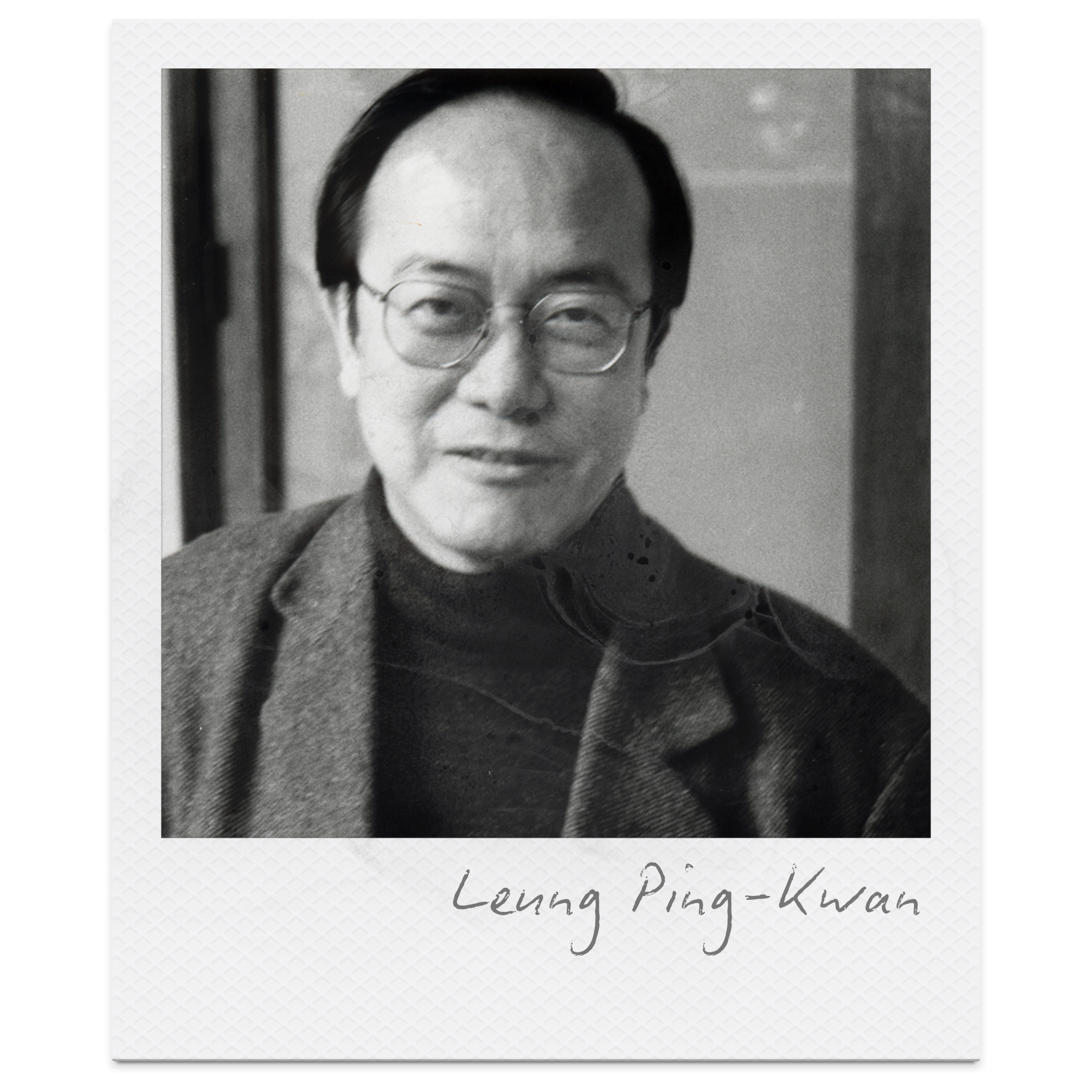
Leung Ping-Kwan (1949–2013), also known by his pen name Yesi, was a Hong Kong poet, novelist, critic and academic whose writing frequently explored the city's everyday life, changing identity and relationship with its colonial past. Having grown up in Hong Kong, Leung wanted to write about a city he felt earlier Chinese literature had often overlooked, while his poetry was also influenced by Western Modernists including T. S. Eliot and E. E. Cummings, encouraging his use of free verse and fragmented perspectives. An Old Colonial Building was written in October 1986, shortly after Leung had returned from completing a doctorate in Comparative Literature and begun teaching at the University of Hong Kong. The building that inspired the poem was HKU's Main Building, a red-brick, neo-classical structure whose architecture visibly reflects British colonial influence. Written eleven years before the 1997 handover of Hong Kong from Britain to China, the poem examines what might be constructed from the fragments of colonial history without simply replacing one rigid political identity with another. Its ordinary activities, changing reflections and architectural images are characteristic of Leung's preference for approaching large questions through concrete, everyday experiences rather than abstract political declarations.
An Old Colonial Building: At a Glance
Form: A three-part free verse poem that moves from observation of the colonial building, through reflections in a pond, towards a more explicitly philosophical consideration of history, identity and political power.
Mood: Reflective, questioning and quietly critical. Moments of uncertainty and disillusionment are balanced by curiosity and the possibility that something new might emerge from the fragments of the past.
Central tension: The poem explores the tension between inherited colonial history and the possibility of creating a new identity. However, Leung refuses a simple choice between colonialism and nationalism, questioning established authority while also rejecting unquestioning patriotism.
Core themes: Colonialism and its legacy; identity and belonging; political power; history and memory; change and reconstruction; uncertainty; fragmentation; resistance to nationalism; representation and language.
One-sentence meaning: Through the changing image of an old colonial building and its distorted reflection in a pond, Leung suggests that Hong Kong cannot simply erase its colonial past or replace it with another fixed political identity; instead, something new may have to be constructed from the shifting, fragmented remains of history.
Quick Summary of An Old Colonial Building
The poem begins with the speaker observing an old colonial building surrounded by scaffolding, where workers continue to maintain and reconstruct a structure whose "imperial / image" remains embedded within it. As the speaker moves through the building, its imposing architecture becomes increasingly complicated: grand features such as the "noble height of a rotunda" exist alongside corridors leading to "blocked places" and stairways that eventually open onto ordinary streets. In the second section, the speaker travels through these familiar spaces to make photocopies and looks into a circular pond, where the building's reflection mingles with duckweed, goldfish, lotus stems, daylight and darkness. The once-solid colonial architecture becomes murky, fluid and constantly changing when reflected in the water.
In the final section, the speaker moves from observing the building towards questioning what can be created from the remains of history, asking whether the "pieces of ruins" might form "yet another architecture". Political authority is treated with scepticism as the speaker dismisses the "great heads on money" and the "straight faces running things", yet the poem does not replace colonial power with straightforward nationalism. The speaker and an unnamed companion are "neither...in love with flags or fireworks", leaving instead only "fragmentary, unrepresentative words". The poem therefore ends without offering a single, stable answer about Hong Kong's identity: like the reflections moving across the circular pond, history, language and identity remain fragmented, shifting and open to reconstruction.
Title, Form, Structure, and Metre in An Old Colonial Building
Leung's formal choices make the poem itself feel exploratory rather than fixed. Free verse, long flowing sentences, irregular line lengths and shifting images allow the speaker to move between architecture, everyday experience and political reflection without arriving at a simple conclusion. This structural uncertainty reflects a poem concerned with how identity might be reconstructed from an unsettled past.
Title
The title An Old Colonial Building initially appears deliberately straightforward. The indefinite article "An" makes the building seem almost representative: it is one colonial structure, but it can also stand for the wider physical and cultural remains of colonial rule. Meanwhile, "Old" immediately positions colonialism as something inherited from the past, although the poem quickly demonstrates that its influence has not disappeared.
The word "Building" becomes increasingly significant as the poem develops. It can function as a noun describing the physical structure, but it also evokes the process of building and rebuilding. Workers "raise it brick by brick", roots search for earth and the speaker later wonders whether the fragments of ruins might create "yet another architecture". The title therefore introduces one of the poem's central questions: what should be preserved, dismantled or reconstructed when a society inherits the structures of its past?
Form and Structure
The poem is written in free verse and divided into three unequal sections. This lack of a rigid traditional form suits Leung's resistance to fixed political narratives. Rather than presenting history as orderly or easily understood, the poem develops through observation, association, reflection and questioning.
The first section concentrates primarily on the physical colonial building. However, even here its apparent solidity is undermined. The speaker moves from its foundations and "bitter soil" upwards towards the "noble height of a rotunda", before travelling through "wide, hollow corridors" and eventually down towards "ordinary streets". This movement from imperial grandeur towards everyday life reduces the distance between the imposing colonial monument and the ordinary people who continue to inhabit the city around it.
The second section shifts from the building itself to its reflection in the circular pond. This is structurally important because something apparently solid and permanent is now represented through water: unstable, "murky" and continually disrupted by duckweed, fish and plants. The poem therefore moves from architecture to reflection, suggesting a corresponding movement from inherited history towards the speaker's attempt to reconsider what that history means.
The final section becomes more openly philosophical and political. Significantly, it begins with a question: "Might all the pieces of ruins put together present / yet another architecture?" Instead of resolving the uncertainties established earlier, Leung turns them into a possibility. Fragmentation does not necessarily mean destruction; fragments might be rearranged into something new.
Yet the poem refuses a triumphant conclusion. Colonial authority is mocked through the "great heads on money", while patriotic certainty is also rejected through "flags or fireworks". The final image returns to the pond and its "patterns of moving signs", creating a loose circular structure. The poem ends where much of its thinking has occurred: beside a surface on which meanings continually appear, change and disappear. There is no final fixed image because there is no final fixed interpretation of history or identity.
Rhyme Scheme and Poetic Pattern
There is no regular rhyme scheme, reinforcing the poem's free verse form and conversational, meditative quality. Leung avoids the sense of completion and predictability that regular rhyme might create. Instead, coherence comes through recurring images and vocabulary: buildings, corridors, circles, reflections, movement, fragments and changing surfaces connect different parts of the poem.
Repetition is particularly important. The repeated "sometimes" in the opening section creates an uncertain, shifting movement through the architecture: the imperial image persists "sometimes" into the foundation, reaches "sometimes" towards grandeur and leads "sometimes" towards blocked spaces. The word prevents the speaker from making absolute statements and establishes the poem's wider reluctance to impose one definitive interpretation upon the building or its history.
There is also a recurring contrast between fixed structures and fluid movement. Brick, foundations, corridors, windows and architecture are repeatedly placed beside swirling dust, drifting duckweed, moving fish and rippling reflections. This pattern gradually weakens the apparent permanence of the colonial building and suggests that historical meanings can be altered by the lives that continue around them.
Metre and Rhythmic Movement
The poem has no consistent metre, and its rhythm is created primarily through syntax, enjambment and variations in line length. Long sentences frequently spill across line endings, particularly in the first two sections, producing a restless movement that mirrors the speaker physically travelling through the building and mentally moving between different impressions of it.
Enjambment also prevents architectural ideas from remaining neatly contained. The striking break in "the imperial / image", for example, visually separates "imperial" from the "image" it modifies. The imperial presence is therefore simultaneously asserted and fragmented on the page. Elsewhere, clauses accumulate through commas and repeated "sometimes", making the rhythm feel provisional and exploratory rather than authoritative.
The final section contains more direct statements and questions, giving the speaker's reflections greater immediacy, but the rhythm never settles into complete certainty. Even the concluding sentence flows towards the image of the pond "riddled with patterns of moving signs". The absence of regular metre therefore becomes meaningful: the poem refuses the stability and order associated with the architecture it examines, allowing its rhythm to embody a world in which history, identity and meaning remain in motion.
The Speaker in An Old Colonial Building
The speaker appears to be someone intimately familiar with the colonial building and the ordinary routines that take place within it, moving through its "familiar alcoves" simply to "go to xerox". This everyday purpose is significant because the speaker does not approach the building as a tourist admiring a historical monument, but as someone whose daily life continues within a space shaped by colonial history. The first-person voice gradually expands from "I" to "we", introducing an unnamed companion and potentially widening the speaker's perspective into a more collective experience of Hong Kong identity. However, the speaker refuses to claim that this experience represents everyone, describing the poem itself as "fragmentary, unrepresentative words". The tone is therefore observant, sceptical and deliberately uncertain: colonial authority becomes "ridiculous" and "laughable", but the speaker is equally resistant to patriotic certainty, insisting that "neither of us is in love with flags or fireworks". Rather than telling the reader what Hong Kong's identity should become, the speaker watches, questions and reflects, allowing meanings to remain as fluid as the reflections in the pond. This self-conscious refusal to speak with absolute authority is central to the poem: the speaker challenges the grand, fixed narratives of political power by offering a personal, incomplete and continually changing perspective instead.
Stanza-by-Stanza Analysis of An Old Colonial Building
Although An Old Colonial Building is divided into broad sections, Leung's long sentences and extensive enjambment allow ideas and images to flow across individual lines. A close reading reveals how the poem gradually transforms the colonial building from an apparently solid monument into something fragmented, unstable and capable of being reinterpreted. Architecture is repeatedly placed alongside images of movement and change — swirling dust, drifting duckweed, searching roots and rippling reflections — while the speaker moves from observing the physical remains of colonialism towards questioning political authority, national identity and what might be constructed from the fragments of history. The analysis below explores how Leung's choices of diction, imagery, symbolism, syntax, repetition, enjambment and shifting perspective create this movement, paying particular attention to the poem's refusal to replace one fixed interpretation of Hong Kong with another.
Stanza 1: Rebuilding the Remains of Empire
"Through sunlight and shadow dust swirls"
The poem opens not with the solidity of the colonial building itself, but with movement and instability. The contrast between "sunlight and shadow" immediately introduces opposing forces, suggesting that the building — and the colonial history it represents — cannot be viewed from one simple perspective. "Sunlight" may suggest visibility, understanding or even admiration, while "shadow" introduces what is obscured, uncomfortable or difficult to interpret. Leung therefore establishes from the opening line that the colonial past contains both what can be seen clearly and what remains uncertain or concealed.
More significant is the image of "dust", which carries associations of age, decay and destruction. A grand colonial building might conventionally be presented through its imposing architecture, yet Leung begins with its residue. Dust suggests that even apparently permanent structures eventually deteriorate. At the same time, the dynamic verb "swirls" prevents the dust from simply settling. The past remains in motion, disturbed by activity in the present.
The opening preposition "Through" also places the reader immediately inside a process rather than giving a stable external description. We seem to move "through" light, darkness and dust alongside the speaker. This creates an appropriately unsettled beginning to a poem concerned with moving through the physical remains of history and attempting to understand them from within.
"through the scaffolding raised-up around / the colonial edifice, over the wooden planks / men live on to raise it brick by brick"
The repeated "through" continues the sense of movement, while the introduction of "scaffolding" reveals that the old building is undergoing repair or reconstruction. Scaffolding is inherently temporary, creating an important contrast with the apparently permanent "colonial edifice" beneath it. The noun "edifice" sounds formal and monumental, carrying associations of imposing public architecture and institutional authority. Yet that monument is now surrounded by temporary structures and dependent upon contemporary workers for its survival.
Leung's description of the workers is particularly significant. The phrase "men live on to raise it brick by brick" places living human beings beside the inherited structure of colonialism. The verb "live" contrasts with the age and potential decay suggested by the building, while "brick by brick" reduces the grand "edifice" to its individual components. What appears monumental is ultimately something constructed by human labour and capable of being dismantled, repaired or reconstructed by human hands.
There is also a possible irony in the workers continuing to "raise" a colonial building. Colonial rule belongs to an inherited political system, yet people living in contemporary Hong Kong physically preserve its architecture. Leung does not present this simply as admiration for colonialism. Instead, the image demonstrates the complexity of historical inheritance: the present continues to inhabit, use and maintain structures produced by a past it did not choose.
The unusual phrase "live on" may carry a further implication of survival. The building survives, but so do the people around it. This subtly shifts importance away from imperial architecture towards the continuing lives that exist within and beyond it. Empire may have constructed the building, but ordinary people continue to determine what happens to it.
"the imperial / image of it persisting right down, sometimes, / to the bitter soil in the foundation"
The adjective "imperial" makes the building's symbolic significance explicit. It is not merely old architecture: its appearance preserves an "image" of British colonial power. However, Leung describes an imperial "image" rather than an imperial reality. The noun suggests representation, appearance and memory, implying that what survives is partly a visible symbol of a political order rather than that order itself.
The enjambment separating "imperial / image" is particularly effective. "Imperial" is left momentarily isolated at the end of the line before the next line reveals that what persists is its "image". Visually, the line break seems to fracture the very imperial identity it describes. The building may preserve the appearance of authority, but that authority is no longer presented as seamless or unquestionable.
Nevertheless, the participle "persisting" emphasises how deeply colonial history remains embedded within the landscape. Its influence reaches "right down" into the building's foundations, suggesting that colonialism cannot simply be removed from the surface. The architectural "foundation" becomes symbolic of the historical foundations upon which contemporary Hong Kong has partly been built.
The description of the ground as "bitter soil" complicates this inheritance further. "Bitter" gives the earth an emotional quality, potentially suggesting resentment, suffering or the painful history underlying imperial grandeur. There is a striking contrast between the impressive building above ground and the bitterness beneath it. Leung may therefore suggest that the visible achievements of empire cannot be separated from the more troubling history upon which they were constructed.
However, the repeated qualifier "sometimes" is crucial. The speaker repeatedly avoids absolute claims. The imperial image reaches the foundations "sometimes"; Leung does not impose one universal interpretation upon every part of the building. This cautious diction establishes the poem's characteristic resistance to simplified historical judgements.
"sometimes finding, too, / the noble height of a rotunda, the wide, hollow corridors / leading sometimes to blocked places"
Leung now shifts vertically from the "bitter soil" below the building towards the "noble height" of its architecture. The adjective "noble" acknowledges the grandeur and beauty of the colonial structure rather than simply condemning it. This is important because the poem refuses to make colonial history aesthetically or morally straightforward. The same building can contain both "bitter soil" and "noble height".
The "rotunda" evokes the grand neoclassical architecture frequently associated with civic and imperial institutions. Its height may suggest aspiration, prestige and authority. Yet this grandeur is immediately complicated by the "wide, hollow corridors". "Wide" initially continues the impression of spacious magnificence, but "hollow" introduces emptiness. Something can be architecturally impressive while lacking the certainty or substance its appearance promises.
"Hollow" may consequently operate both literally and symbolically. The corridors are physically empty spaces within the building, but the adjective can also imply that the authority represented by colonial architecture has become hollowed out. The building remains, while the political meanings once attached to it are changing.
The corridors also "lead" towards "blocked places", creating another contradiction. Corridors are designed to provide passage, yet these routes terminate in obstruction. As a metaphor for engaging with history, this suggests that attempts to follow the colonial past do not necessarily produce straightforward answers. Some historical routes are inaccessible, interrupted or deliberately closed.
Once again, "sometimes" prevents the description from becoming absolute. Its repeated appearance gives the sentence an exploratory rhythm, as though the speaker is testing possibilities rather than declaring certainties. This becomes structurally important throughout the poem: Leung's language behaves like someone navigating a complicated building, repeatedly encountering different routes, perspectives and interpretations.
"which, sometimes, / knocked open, are stairs down to ordinary streets."
The stanza ends with one of its most important transformations. The "blocked places" are not necessarily permanent barriers: they can be "knocked open". The forceful verb "knocked" suggests active intervention. Structures inherited from the past can be altered rather than merely accepted.
What lies beyond them is strikingly ordinary. Instead of discovering another grand chamber or symbol of imperial authority, the speaker finds "stairs down to ordinary streets". The downward movement reverses the earlier ascent towards the "noble height" of the rotunda. Structurally, Leung brings the reader from imperial elevation back towards everyday Hong Kong.
The adjective "ordinary" is therefore crucial. Throughout his poetry, Leung is interested in daily experience rather than allowing political abstractions to dominate representations of Hong Kong. Here, the grand colonial monument ultimately connects to streets occupied by ordinary people. Imperial history exists within the city, but it does not contain the entirety of the city's identity.
The staircase may also symbolise a route between historical structures and contemporary life. Rather than destroying the building or remaining trapped inside it, people can open previously blocked passages and discover new ways through inherited history. This anticipates the later question of whether "pieces of ruins" might create "yet another architecture".
The stanza therefore moves through a series of oppositions: sunlight and shadow, permanence and dust, bitter foundations and noble heights, wide corridors and blocked spaces, imperial architecture and ordinary streets. Leung does not resolve these contradictions. Instead, he makes them coexist, presenting colonial history as something simultaneously impressive and troubling, persistent and vulnerable, inherited and capable of reinterpretation. By ending not inside the monument but on the "ordinary streets", he begins to shift attention away from the grand narratives of empire towards the everyday lives that continue beyond them.
Stanza 2: Reflections, Distortion and Living History
"Down familiar alcoves sometimes brimming / with blooms sometimes barren I go to xerox"
The second stanza begins with another downward movement. The speaker travels "Down familiar alcoves", continuing the movement towards ordinary life established by the "stairs down to ordinary streets" at the end of the previous stanza. The adjective "familiar" is significant because it confirms that the speaker knows this building intimately. This is not a distant historical monument being examined by a visitor: it is part of the speaker's everyday environment.
Leung again repeats "sometimes", maintaining the poem's resistance to permanence and certainty. The alcoves are "sometimes brimming / with blooms sometimes barren", creating a natural cycle between abundance and emptiness. The alliteration of "brimming", "blooms" and "barren" draws the contrasting states together, emphasising how the same physical space can continually change. "Brimming" suggests excess, vitality and fullness, whereas "barren" suggests absence and sterility. The building therefore cannot be reduced to one fixed appearance or meaning.
The imagery of "blooms" also begins the stanza's increasing emphasis upon organic life. Whereas the first stanza was dominated by bricks, foundations, scaffolding and corridors, this section introduces flowers, duckweed, goldfish, lotus stems and roots. Living things gradually enter and disrupt the rigid architecture of colonialism.
Against these potentially symbolic images, the speaker suddenly states "I go to xerox". The mundane verb is deliberately anti-grandiose. The speaker is moving through a building loaded with colonial history simply to make photocopies. This juxtaposition reduces the monumental building to a place where ordinary contemporary activities occur.
There may also be a subtle connection between xeroxing and reproduction. A photocopy reproduces an image of an original rather than the original itself, immediately before the speaker looks at another reproduced "image" in the pond. This creates an intriguing pattern of copies, reflections and representations. The poem increasingly asks whether any image of history can be completely faithful to the thing it claims to represent.
"glancing at the images caught in the circular pond, / now showing the round window in the cupola as duckweed drifting"
The participle "glancing" reinforces the casual nature of the encounter. The speaker does not ceremonially contemplate the colonial building; the observation occurs almost incidentally while carrying out an ordinary task. This makes the philosophical questions that emerge from the pond feel rooted in daily experience rather than imposed political theory.
The phrase "images caught" is more ambiguous. "Caught" suggests that the pond temporarily captures reflections of the surrounding building, but a reflection cannot actually be held. The image exists only while conditions allow it to appear. This makes the pond an important metaphor for memory and historical representation: the past can be reflected in the present, but never preserved in a completely stable form.
The pond is "circular", while the window reflected within it is "round". The repetition of circular shapes creates visual harmony between colonial architecture and the natural environment. Yet the neat architectural form is immediately transformed when the window appears "as duckweed drifting".
The simile-like transformation is significant. The solid "round window" becomes indistinguishable from floating organic matter on the pond's surface. The verb "drifting" contrasts sharply with the solidity of the building. A window is fixed into architecture; duckweed moves according to water and external forces. In reflection, therefore, the apparently permanent colonial structure becomes fluid, mobile and vulnerable to change.
This transformation also suggests that the building is being absorbed into the environment around it. Rather than dominating the landscape as a monument to imperial power, its reflection becomes one pattern among many. Colonial architecture is no longer privileged as the single defining image of the place.
"day and night caught in the surface, no longer textbook / clean, but murky"
The pond expands beyond reflecting the building to contain "day and night", another pair of opposites. As with "sunlight and shadow" in the opening line, Leung repeatedly refuses simple binaries. Light and darkness coexist within the same reflective surface.
The repetition of "caught" connects these images to the earlier "images caught in the circular pond". Yet neither day nor night can literally be contained by water. The pond instead gathers fleeting appearances, becoming a metaphor for the way consciousness, memory or language attempts to hold experiences that are inherently changing.
The enjambment across "textbook / clean" draws particular attention to "textbook". A textbook traditionally promises organised, authoritative knowledge: historical events are selected, arranged and presented in comprehensible narratives. Leung's pond offers something very different. Its image is "no longer textbook / clean, but murky".
The contrast between "clean" and "murky" therefore has intellectual as well as visual significance. A "clean" account of colonial history might divide people neatly into rulers and ruled, past and present, coloniser and colonised. The pond refuses such simplicity. Different images overlap, move and interfere with one another.
"Murky" might initially appear negative, suggesting confusion or obscurity. Yet the poem increasingly suggests that this uncertainty may be more truthful than artificial clarity. History as actually lived is messy, overlapping and difficult to organise into a single authoritative narrative. The murky pond may therefore offer a more honest representation of Hong Kong's complicated inheritance than a "textbook clean" version of its past.
"the naive goldfish searching / mindlessly around in it"
Into this complicated reflective surface Leung introduces "the naive goldfish". The adjective "naive" personifies the fish, suggesting innocence or lack of understanding, while "searching" implies an attempt to find something. This creates a subtle contradiction: the fish searches, but apparently does not understand what it seeks.
The adverb "mindlessly" intensifies this uncertainty. On one level, Leung may simply be describing the repetitive movements of fish around a pond. However, within a poem concerned with history and identity, their searching can acquire symbolic significance. They may resemble people moving through inherited political and cultural structures without fully understanding the forces shaping them.
There is also a possible self-reflexive dimension. The speaker himself is searching for meaning in the reflected building, and the poem refuses to pretend that such a search will necessarily produce certainty. Calling the goldfish "naive" may therefore contain gentle irony: human attempts to interpret history may be no less limited.
Importantly, the fish inhabit the very medium that distorts the building's reflection. They do not stand outside history and objectively observe it; they live inside the shifting images. This parallels the speaker's own position. As someone inhabiting Hong Kong and using the colonial building in everyday life, he cannot examine colonial history from a completely detached position because he exists within its continuing consequences.
"shaking the pliant lotus stems / and the roots feeling for earth"
The goldfish physically disturb the pond as they move, "shaking the pliant lotus stems". The adjective "pliant" suggests flexibility: the stems bend rather than resist movement. This provides another contrast with the rigid bricks, foundations and architecture of the first stanza.
Flexibility may consequently become a form of survival. Whereas monumental structures attempt to endure through solidity, living organisms survive because they can bend, respond and adapt. This reflects the poem's developing suggestion that identity may need to remain flexible rather than becoming fixed around a single political narrative.
The lotus may carry additional cultural associations. In Chinese cultural traditions and Buddhist symbolism, the lotus can represent purity, resilience and the ability to emerge beautifully from muddy water. Leung does not make this symbolism explicit, so it should not be treated as a single definitive interpretation. However, its presence beside the deliberately "murky" water makes the association suggestive: something living and meaningful can grow from an impure or complicated environment.
Even more significant are "the roots feeling for earth". The personification of roots "feeling" suggests a tentative search for connection, stability or belonging. This echoes the speaker's larger investigation into historical and cultural identity.
"Earth" also recalls the "bitter soil in the foundation" from the first stanza. However, there is an important difference. The colonial building has a constructed "foundation" embedded in the soil, whereas the organic roots actively "feel" for earth. One represents imposed architectural permanence; the other represents living, exploratory attachment.
The roots therefore offer a possible alternative model of belonging. Identity does not necessarily require an artificial, rigid foundation. It may instead involve continually reaching towards the environment in which one actually lives.
"swirling orange and white, / gills opening and leeching"
The participle "swirling" directly echoes the opening image in which "dust swirls". This creates a subtle structural connection between the two stanzas. Yet what swirls has changed: the decaying dust surrounding colonial architecture has been replaced by the vibrant "orange and white" movement of living fish.
Colour brings vitality into the previously muted architectural setting. The fish transform the pond into a constantly changing visual pattern, further disrupting the stable reflection of the colonial building. What the viewer sees is no longer simply architecture but architecture mixed with contemporary life.
The physical detail of "gills opening" emphasises breathing and survival. Unlike the static building, the fish are living organisms engaged in the continuous process of sustaining themselves. Leung's attention to such a small bodily movement again shifts emphasis away from monumental political history towards ordinary forms of life.
The unusual word "leeching" is more unsettling. It may suggest drawing substances from the surrounding water or becoming inseparably involved with the environment. The fish cannot exist independently of the pond; they breathe through it. Similarly, individuals living within a historically complicated society cannot entirely separate themselves from the political and cultural environment that surrounds them.
"in and out of the high window bars."
The stanza ends by merging the fish completely with the reflected architecture. Because the window exists as an image on the pond's surface, the goldfish appear to swim "in and out of the high window bars".
The noun "bars" carries an obvious double meaning. Literally, these may be the architectural divisions or bars of the windows, but "bars" can also suggest confinement, imprisonment and restriction. The adjective "high" may further recall the elevated authority of the colonial building.
Yet the fish move "in and out" of them. In the reflected world of the pond, architectural boundaries cannot contain living movement. The fish appear capable of passing through barriers that would be solid in reality. This develops the stanza's suggestion that inherited structures can be reimagined, disrupted and moved through rather than simply obeyed.
The image also reverses the relationship between colonial architecture and its surroundings. In the first stanza, people physically move through corridors created by the building. Here, living creatures appear to move freely through the building itself. Nature and ordinary life have symbolically penetrated the architecture of imperial authority.
Across the stanza, Leung therefore transforms the building from a fixed physical monument into one unstable image among many. Its window becomes duckweed; its reflection mixes with day and night; fish disturb its surface; roots reach beneath it; and living creatures apparently swim through its bars. The pond does not erase colonial history, but neither does it preserve that history in "textbook clean" isolation. Instead, the past becomes entangled with everything that has happened since.
This prepares for the poem's final section. Once the colonial building has been broken visually into reflections, fragments and "moving signs", the speaker can ask the poem's central question: whether the pieces inherited from history might be rearranged into "yet another architecture" — a new identity that neither denies the past nor remains imprisoned by it.
Stanza 3: Fragments, Political Resistance and an Unfinished Identity
"Might all the pieces of ruins put together present / yet another architecture?"
The final stanza opens with a rhetorical question, marking an important shift from observation towards explicit reflection. The speaker has spent the previous sections moving through the colonial building and watching its image become fragmented in the pond; now he asks what might be made from those fragments. Significantly, however, the tentative modal verb "Might" avoids certainty. Leung does not announce that a new identity will emerge from the past. He presents reconstruction as a possibility that remains open to question.
The phrase "pieces of ruins" appears paradoxical in relation to the building, which is still standing and being maintained. The "ruins" may therefore be conceptual rather than entirely physical: they can represent the remains of colonial ideology, historical narratives and inherited ways of understanding Hong Kong. What once appeared coherent has been broken into pieces that can potentially be rearranged.
The phrase "put together" recalls the workers raising the building "brick by brick" in the opening stanza. This creates an important structural connection. Earlier, individual bricks were assembled to preserve the colonial edifice; now the speaker imagines assembling historical fragments into "yet another architecture". Reconstruction no longer has to mean restoring the past exactly as it was.
"Architecture" consequently develops into a metaphor for much more than buildings. It may represent culture, identity, language, political structures or ways of understanding history. The indefinite "another" is particularly important: Leung does not specify what this new architecture should look like. The possibility remains deliberately undefined.
The question therefore captures one of the poem's central concerns: can people inherit fragments of a colonial past without either preserving that past unchanged or attempting to erase it completely? Leung tentatively imagines a third possibility — using what remains to construct something different.
"Ridiculous the great heads on money, / laughable the straight faces running things."
The contemplative question is followed by an abrupt tonal shift into mockery. The adjectives "Ridiculous" and "laughable" appear emphatically at the beginnings of their clauses, immediately stripping political authority of its seriousness and dignity.
The "great heads on money" can be read as a metonymic image of institutional power. Portraits on currency traditionally represent monarchs, national leaders or other figures whose authority is reproduced through objects used in everyday life. Yet "great heads" sounds deliberately exaggerated and faintly absurd. Political power attempts to make itself appear permanent and important, but the speaker refuses to treat its symbols with reverence.
There is also an interesting contrast between the fixed portraits on money and the moving reflections in the pond. The "heads" printed on currency present controlled, official images of authority, whereas the pond produces reflections that ripple and change. Leung repeatedly places official representation against unstable lived experience, questioning whether institutional symbols can adequately represent the people whose lives exist beneath them.
The parallel construction "Ridiculous... / laughable..." intensifies the speaker's contempt. Meanwhile, the phrase "straight faces" suggests politicians, administrators or authority figures maintaining an appearance of seriousness. "Straight" may imply rigidity and conventionality, making these figures another version of the poem's fixed architecture.
The colloquial phrase "running things" further undermines their status. Rather than dignifying political authorities with titles or institutions, the speaker reduces their activities to a vague everyday expression. The effect is deliberately deflationary: the supposedly powerful people who organise society appear temporary and faintly absurd beside the larger, more complicated movement of history.
"We pass in this corridor / in the changing surface of the pond by chance / our reflections rippling a little."
The pronoun "We" marks an important shift from the earlier individual "I". The speaker is now accompanied by another person, although Leung deliberately leaves this companion unidentified. This movement from singular to plural may broaden the poem's perspective, suggesting that questions of history and belonging are shared rather than entirely private.
However, Leung does not allow "we" to become a confident collective voice speaking for an entire nation or population. The later description of the poem's words as "unrepresentative" explicitly prevents that interpretation. This is a small, personal "we", not a declaration made on behalf of everyone.
The "corridor" returns us to the architecture of the first stanza, but it now exists "in the changing surface of the pond". A corridor that was previously physically solid has become a reflection. Once again, fixed architecture is transformed into unstable representation.
The phrase "by chance" is especially significant. Their reflections are not deliberately staged portraits like the "great heads on money"; they appear accidentally as the two people happen to pass the pond. Leung therefore contrasts official images designed to project authority with ordinary human images produced casually and temporarily.
Their reflections are also "rippling a little". The diminutive phrase "a little" makes the image understated rather than dramatic, characteristic of the poem's preference for quiet observation over grand political gestures. Yet even this slight movement is enough to distort the reflection.
This creates an important metaphor for identity. Like the building, the speakers cannot produce perfectly stable images of themselves. Their identities exist within the same changing surface as the inherited colonial architecture. People and history are both subject to movement, reinterpretation and change.
"We'd rather not bend;"
This short clause interrupts the longer flowing sentences around it, giving the declaration unusual emphasis. The verb "bend" is deliberately ambiguous. Literally, the speakers may refuse to bend over the pond to examine their reflections more closely. Figuratively, however, "bend" can suggest submission, conformity or yielding to political pressure.
The phrase "rather not" is characteristically understated. The speaker does not make a dramatic declaration of rebellion; instead, resistance is expressed through restrained conversational language. This is significant in a poem that distrusts grand political gestures. Even resistance does not need to become spectacle.
There may also be a connection with the earlier "pliant lotus stems", which bend in response to the movement of the fish. The lotus survives through flexibility, whereas the human speakers now resist "bending". This creates a productive ambiguity rather than a simple symbolic opposition. How much should individuals adapt to historical and political change, and at what point does adaptation become submission? The poem does not resolve the question.
"neither of us is in love with flags or fireworks."
This is one of the poem's most important political statements. "Flags" function as symbols of national identity, patriotism and political allegiance, while "fireworks" suggest public celebration, spectacle and ceremonial displays of national pride.
The metaphorical phrase "in love with" is deliberately personal and understated. The speakers do not necessarily declare hatred for nations or political communities; instead, they refuse emotional devotion to their symbols. This distinction matters because Leung resists replacing criticism of colonial authority with an equally unquestioning form of nationalism.
The coordinating phrase "neither of us" reinforces the small scale of the statement. The speaker can describe his and his companion's attitudes, but he does not claim to represent everyone. This restraint anticipates the explicit description of his words as "unrepresentative".
Given the poem's historical context, the line carries particular resonance. Written in 1986, after the agreement that Hong Kong would be transferred from British to Chinese sovereignty in 1997, the poem emerges from a society facing a transition between two powerful national frameworks. Yet Leung does not present identity as a simple choice between them.
"Flags" can consequently be understood in the plural as particularly significant. The speaker refuses to define belonging through any single flag. Likewise, "fireworks" may suggest the celebratory spectacle through which political transitions and national identities are publicly presented as simple or triumphant.
The line therefore complicates any reading of the poem as merely anti-colonial. Leung is sceptical of colonial power, but he is equally sceptical of the idea that one grand political narrative can simply replace another and solve the problem of identity.
"So what's left are these fragmentary, unrepresentative words"
The connective "So" makes the line appear to offer a conclusion, yet what follows is deliberately inconclusive. After rejecting official political symbols and grand declarations, the speaker asks what remains. His answer is simply "words" — specifically, the words of the poem itself.
This creates a moment of metapoetry, as the poem draws attention to its own status as an attempt to represent experience. The adjective "fragmentary" connects language to the earlier "pieces of ruins". Just as the colonial past survives only in fragments that might be rearranged, the speaker's understanding can only be expressed through fragments of language.
"Fragmentary" also accurately describes the poem's method. It moves between dust, scaffolding, corridors, photocopying, reflections, fish, roots, currency and political symbols rather than constructing a single straightforward argument. Its form embodies the fragmented way in which the speaker encounters history.
Even more important is "unrepresentative". The speaker explicitly refuses to claim that his words speak for Hong Kong as a whole. This sharply contrasts with the authoritative "great heads on money" and "straight faces running things", whose images and institutions implicitly claim public authority.
There is therefore an ethical dimension to the speaker's uncertainty. Rather than replacing one authoritative narrative with his own, Leung acknowledges the limitations of his perspective. His poem can contribute to understanding Hong Kong, but it cannot become a definitive account of what Hong Kong is.
The line also challenges the reader. If political symbols are inadequate and individual poems are "unrepresentative", then perhaps no single image, ideology or text can completely contain a society's identity.
"not uttered amidst the buildings of chrome and glass, but beside / a circular pond"
The negative construction "not...but" establishes another important contrast. The speaker deliberately locates these "fragmentary, unrepresentative words" away from the "buildings of chrome and glass".
Chrome and glass suggest modernity, development and contemporary urban architecture. These buildings may appear to offer an obvious replacement for the old colonial structure: Hong Kong could leave the colonial past behind and define itself through modern economic and architectural progress.
Yet Leung resists this alternative too. His words are "not uttered amidst" these sleek modern buildings. Just as the poem refuses to romanticise colonial architecture, it does not automatically celebrate modernity as the answer to historical uncertainty.
"Chrome and glass" may also suggest smooth, polished surfaces — apparently clean, modern and complete. This recalls the earlier phrase "textbook / clean". The speaker instead chooses the murkier environment of the pond, where images overlap and meanings remain unstable.
The return to "a circular pond" creates structural circularity. The poem physically and conceptually returns to the place where architecture, nature, people and reflections become entangled. Rather than standing beneath a national flag, inside a government institution or among gleaming modern towers, the speaker locates his poetry beside this modest, ambiguous space.
The pond therefore becomes an alternative site for understanding Hong Kong: not a monument presenting one authoritative meaning, but a surface capable of containing many changing images at once.
"riddled with patterns of moving signs."
The final phrase condenses many of the poem's central ideas. The verb "riddled" is especially rich in implication. It can mean filled with something, but it also evokes a "riddle" — something difficult to interpret or solve. The pond is therefore both physically filled with patterns and symbolically filled with meanings that resist straightforward interpretation.
The noun "signs" expands the poem beyond visual reflection into questions of language and representation. A sign is something that stands for or communicates something else. Throughout the poem, almost everything has functioned this way: the building signifies colonial history, money signifies political authority, flags signify nations, reflections signify identities and words attempt to signify experience.
Yet these are specifically "moving signs". Meaning does not remain fixed. As the water moves, the relationship between the reflected building, fish, plants, people, light and surrounding environment continually changes.
"Patterns" suggests that this movement is not completely meaningless or chaotic. Patterns can still be recognised, interpreted and connected — but they remain temporary rather than permanent. This provides a subtle answer to the stanza's opening question about whether fragments might form "yet another architecture". New patterns can emerge from fragments without becoming rigid, permanent structures themselves.
The poem therefore ends neither with certainty nor despair. Leung does not provide a definitive answer to what Hong Kong should become, and he refuses the apparent certainty offered by imperial monuments, political leaders, nationalism, modern architecture or even his own poetry. Instead, the circular pond offers a different model of identity: multiple images coexist, overlap, distort and continually rearrange themselves.
This makes the final image profoundly appropriate for a poem written during a period of uncertainty about Hong Kong's future. Identity is not presented as a completed building waiting to be discovered, but as an ongoing process of interpretation. The colonial past remains visible within it, but so do ordinary lives, cultural traditions, contemporary experiences and possibilities that have not yet taken a final form.
The stanza therefore transforms the question "yet another architecture?" into something more complicated than the construction of a new national identity. Perhaps Leung ultimately distrusts the desire for any final architecture at all. The poem's last image remains fluid rather than solid: a society may be most truthfully represented not by one permanent monument or political symbol, but by the continually changing "patterns of moving signs" through which people make sense of themselves and their history.
Key Quotes and Methods in An Old Colonial Building
The most useful quotations from An Old Colonial Building reveal how Leung transforms physical architecture into a way of exploring colonial history, identity, political authority and representation. Strong exam responses should avoid treating these quotations as isolated examples: Leung repeatedly creates meaning through contrasts between solidity and movement, official images and ordinary experience, fixed structures and changing reflections. The quotations below are particularly useful because they can support arguments across several different themes.
"Through sunlight and shadow dust swirls"
◆ Technique: Juxtaposition, contrasting imagery and dynamic verb.
◆ Meaning: "Sunlight and shadow" introduce opposing ways of seeing the colonial building, while the "dust" suggests age, deterioration and the remains of the past.
◆ Purpose: Leung begins with movement rather than architectural solidity. The verb "swirls" immediately destabilises the supposedly permanent colonial structure and introduces the idea that its history cannot be viewed from one uncomplicated perspective.
◆ Impact: The reader enters a world where the colonial past is simultaneously visible and obscured, present and decaying. This prepares us for a poem that resists straightforward judgements about history.
"men live on to raise it brick by brick"
◆ Technique: Contrast, symbolism and repetition through the phrase "brick by brick".
◆ Meaning: Contemporary workers continue repairing and maintaining a building inherited from colonial rule.
◆ Purpose: By reducing the impressive "edifice" to individual bricks, Leung reminds us that apparently monumental structures are human constructions rather than permanent or natural realities. The living workers also contrast with the ageing building they preserve.
◆ Impact: The image complicates the relationship between past and present. Hong Kong continues to inhabit and maintain structures created by colonial history, suggesting that historical inheritance cannot simply be erased even when its original political meaning has changed.
"the imperial / image of it persisting"
◆ Technique: Enjambment, political diction and visual fragmentation.
◆ Meaning: Although colonial rule itself is historically temporary, its visible "image" continues through the architecture and environment it has left behind.
◆ Purpose: The line break separating "imperial" from "image" subtly fractures the phrase. Leung distinguishes between imperial power itself and the representation or memory of that power that remains after political circumstances change.
◆ Impact: The reader is encouraged to question what exactly survives from colonialism. Its influence may persist deeply, but what remains is increasingly subject to reinterpretation, fragmentation and change.
"the bitter soil in the foundation"
◆ Technique: Metaphor, symbolism and emotive adjective.
◆ Meaning: The literal foundation of the building becomes suggestive of the historical foundations upon which colonial society was constructed.
◆ Purpose: The adjective "bitter" introduces suffering, resentment or uncomfortable history beneath the grandeur of the colonial building. It contrasts strongly with the later "noble height of a rotunda".
◆ Impact: Leung prevents the reader from admiring colonial architecture without considering what may lie beneath its impressive appearance. Imperial grandeur and historical pain are made part of the same structure.
"no longer textbook / clean, but murky"
◆ Technique: Contrast, metaphor and enjambment.
◆ Meaning: The pond's reflection is visually unclear, but "textbook" also suggests neat, authoritative versions of history.
◆ Purpose: Leung contrasts the artificial clarity of organised historical narratives with the messiness of history as it is actually experienced. Colonialism, cultural identity and belonging cannot necessarily be divided into simple categories.
◆ Impact: The reader is encouraged to reconsider whether clarity is always truthful. The "murky" reflection may offer a more authentic representation of Hong Kong because it allows different histories, identities and experiences to overlap rather than forcing them into a single narrative.
"the roots feeling for earth"
◆ Technique: Personification, natural imagery and symbolism.
◆ Meaning: The lotus roots physically search through the pond for soil, but their movement can also suggest a search for connection, belonging and cultural foundations.
◆ Purpose: Leung contrasts these living, searching roots with the rigid architectural "foundation" of the colonial building. Rather than presenting identity as something permanently fixed, he imagines belonging as an active process of reaching and connecting.
◆ Impact: The image introduces a gentler alternative to political definitions of identity. Belonging may grow organically from lived experience rather than being imposed through institutions, buildings or national symbols.
"Might all the pieces of ruins put together present / yet another architecture?"
◆ Technique: Rhetorical question, architectural metaphor, fragmentation and tentative modal verb.
◆ Meaning: The speaker wonders whether the remains of the past might be rearranged to create something new.
◆ Purpose: The tentative "Might" prevents the question from becoming a confident political solution. Meanwhile, "architecture" expands beyond literal buildings to suggest identity, culture, society and systems of meaning.
◆ Impact: This becomes one of the poem's central questions. Rather than choosing between preserving colonial identity and destroying it completely, Leung asks whether fragments of history can be reconstructed into something different. Importantly, the question remains unanswered, preserving the poem's uncertainty.
"Ridiculous the great heads on money, / laughable the straight faces running things."
◆ Technique: Mocking tone, parallelism, metonymy and colloquial diction.
◆ Meaning: Official figures and symbols of political authority are stripped of their dignity and treated as absurd.
◆ Purpose: The emphatic adjectives "Ridiculous" and "laughable" undermine the seriousness with which political power presents itself. The vague, colloquial phrase "running things" further reduces supposedly important authorities to ordinary human beings.
◆ Impact: Leung encourages the reader to distrust official representations of power and authority. The fixed "heads" printed on money also contrast with the ordinary people's reflections that ripple in the pond, emphasising the difference between controlled political images and unstable lived experience.
"neither of us is in love with flags or fireworks"
◆ Technique: Symbolism, understated tone and metaphor.
◆ Meaning: "Flags" represent nations and political allegiance, while "fireworks" suggest patriotic celebration, spectacle and public displays of collective identity.
◆ Purpose: The metaphor "in love with" allows the speaker to reject unquestioning emotional devotion to national symbols without making another grand political declaration. The plural "flags" is particularly significant because the poem does not simply reject one political identity in favour of another.
◆ Impact: This complicates any interpretation of the poem as straightforwardly anti-colonial. Leung criticises colonial authority without replacing it with uncomplicated nationalism. For the reader, Hong Kong's identity therefore appears more complex than a choice between competing national loyalties.
"these fragmentary, unrepresentative words"
◆ Technique: Metapoetry, self-reflexivity and deliberately limiting adjectives.
◆ Meaning: The speaker acknowledges that his own poem consists only of fragments and cannot claim to represent the experience or identity of everyone in Hong Kong.
◆ Purpose: Leung refuses the authority he has criticised elsewhere. Instead of replacing official political narratives with another supposedly definitive account, he openly recognises the limitations of individual perspective and language.
◆ Impact: This makes the poem's uncertainty intellectually important rather than a weakness. The reader is reminded that no single speaker, poem, political ideology or historical narrative can completely represent a diverse society.
"a circular pond riddled with patterns of moving signs"
◆ Technique: Symbolism, visual imagery, ambiguity and metalinguistic imagery.
◆ Meaning: The pond contains constantly shifting reflections of architecture, nature and people. "Signs" can also refer to anything that communicates or represents meaning, while "riddled" suggests both being filled with something and the difficulty of solving a riddle.
◆ Purpose: Leung ends with movement rather than certainty. Unlike the solid colonial building, fixed portraits on money or symbolic flags, the pond allows multiple images and meanings to coexist and continually rearrange themselves.
◆ Impact: The final image becomes a powerful metaphor for history and identity. Hong Kong cannot be reduced to one permanent political or cultural definition; instead, its meanings remain fluid, plural and continually open to reinterpretation. The ending therefore leaves the reader not with a completed "architecture", but with an ongoing process of making meaning.
Key Techniques in An Old Colonial Building
Leung uses a combination of architectural symbolism, natural imagery, fragmentation, contrast and shifting reflections to explore Hong Kong's relationship with its colonial past. Rather than constructing a straightforward political argument, he repeatedly destabilises apparently fixed images and allows different meanings to overlap. This makes the poem's methods central to its argument: its language and structure resist the certainty offered by monuments, political symbols and simplified versions of history.
◆ Architectural Symbolism – The colonial building operates as the poem's central symbol for the physical and cultural inheritance of colonialism. Its "foundation", "rotunda", "corridors", "window bars" and eventual "pieces of ruins" allow Leung to turn architecture into a metaphor for history and identity. Most importantly, architecture can be constructed and reconstructed. The workers raise the building "brick by brick", while the speaker later wonders whether its fragments might form "yet another architecture". This suggests that inherited identities are human constructions capable of being reconsidered rather than permanent realities that must simply be accepted.
◆ Extended Metaphor of Construction and Reconstruction – Images of building extend throughout the poem, from the "scaffolding" and "wooden planks" to the "foundation" and eventual possibility of "another architecture". This creates an extended metaphor for reconstructing identity from inherited history. Leung does not imagine the past simply disappearing; instead, existing materials may be rearranged into something new. The metaphor allows him to explore postcolonial identity without presenting either complete preservation or complete destruction as an easy solution.
◆ Juxtaposition and Contrast – Leung repeatedly places opposites beside one another: "sunlight and shadow", alcoves "brimming / with blooms" and "barren", "bitter soil" and "noble height", "textbook / clean" and "murky", monumental architecture and "ordinary streets". These juxtapositions prevent the reader from adopting a single uncomplicated attitude towards the building. Colonial history can contain beauty and bitterness, grandeur and emptiness, persistence and decay simultaneously. Contrast therefore becomes a method of resisting simplistic historical judgement.
◆ Natural Imagery – Dust, blooms, duckweed, goldfish, lotus stems and roots gradually enter a poem that initially seems dominated by architecture. These organic images introduce growth, movement, adaptation and continuing life into the rigid colonial environment. The "pliant lotus stems" bend, the roots "feel" for earth and the goldfish disturb the reflected architecture as they swim. Nature therefore suggests that life continues around inherited political structures and may gradually transform the meanings attached to them.
◆ Reflection and Water Imagery – The circular pond becomes one of the poem's most important devices. When the colonial building appears as a reflection, its apparently solid architecture becomes fluid, distorted and temporary. The round window becomes "duckweed drifting", while corridors and window bars are disrupted by fish and rippling water. Leung uses reflection to question whether the past can ever be encountered directly: what survives is repeatedly mediated through memory, perspective and present experience.
◆ Symbolism of the Circular Pond – Beyond creating reflections, the pond becomes an alternative model for understanding identity. Unlike a building, it does not impose one permanent form. It can contain the building, day and night, plants, fish and human reflections simultaneously. By ending beside the pond rather than among "buildings of chrome and glass", Leung privileges multiplicity and movement over architectural permanence. The final "patterns of moving signs" suggest that meanings can form recognisable patterns without becoming permanently fixed.
◆ Repetition – The repeated word "sometimes" dominates the first two sections, qualifying descriptions and preventing absolute statements. The imperial image reaches the foundations "sometimes"; alcoves are "sometimes brimming" and "sometimes barren"; corridors "sometimes" lead to blocked spaces. This repeated uncertainty creates an exploratory voice. Rather than claiming authoritative knowledge, the speaker continually leaves room for alternative possibilities and perspectives.
◆ Enjambment – Lines repeatedly run into one another without syntactic closure, creating a fluid, restless movement through the building and the speaker's thoughts. Particularly significant is "the imperial / image", where the line break visually separates imperialism from the image through which it survives. Elsewhere, enjambment prevents ideas from being neatly contained, mirroring the poem's resistance to fixed historical and political categories.
◆ Free Verse and Irregular Rhythm – The poem has no consistent rhyme scheme or regular metre. Instead, its rhythm develops through long sentences, accumulating clauses, repeated words and shifting line lengths. This formal freedom contrasts with the ordered geometry of colonial architecture. The poem itself refuses to become a rigid structure, allowing its form to reflect the fluid and unfinished identity it explores.
◆ Accumulation and Listing – Particularly in the first two sections, Leung builds long sequences of images through commas and connected clauses: foundations lead to rotundas, corridors and streets; the pond contains windows, duckweed, day, night, goldfish, lotus stems and roots. This accumulation makes the reader experience Hong Kong as layers of different histories and experiences existing together, rather than as something that can be reduced to one defining image.
◆ Political Symbolism and Metonymy – The "great heads on money", "straight faces", "flags" and "fireworks" represent different forms of official political authority and national identity. Leung deliberately treats these symbols sceptically. Leaders become "laughable", while neither speaker is "in love with flags or fireworks". By reducing large political systems to recognisable objects and images, Leung questions whether these symbols can genuinely represent the complexity of people's lives.
◆ Mocking and Deflationary Diction – The language becomes unusually direct in "Ridiculous the great heads on money, / laughable the straight faces running things." "Ridiculous" and "laughable" puncture the dignity associated with political authority, while the colloquial phrase "running things" deliberately avoids respectful institutional language. This tonal shift allows the speaker to reduce apparently powerful figures to temporary human beings, challenging the seriousness with which authority represents itself.
◆ Understatement – Despite the poem's political concerns, Leung frequently avoids dramatic declarations. The reflections ripple only "a little"; the speakers "rather not bend"; they are simply not "in love" with flags. This restraint contrasts with the grand symbolism of imperial architecture and patriotic "fireworks". The understated voice suggests that ordinary, personal responses may be more authentic than spectacular political performances.
◆ Rhetorical Question – The question "Might all the pieces of ruins put together present / yet another architecture?" crystallises the poem's central concern without resolving it. The tentative modal verb "Might" is essential: Leung imagines reconstruction while refusing to guarantee its success or prescribe what the result should be. The rhetorical question therefore makes uncertainty productive, inviting the reader to participate in considering what might emerge from historical fragments.
◆ Shifting Pronouns – The poem moves from "I" in the second section to "We" in the third. This subtly expands the speaker's individual experience into something shared with another person. However, Leung immediately resists allowing this "we" to become representative of an entire population, later calling his words "unrepresentative". The shifting pronouns therefore explore the tension between personal experience and collective identity without pretending that one individual's perspective can speak for everyone.
◆ Metapoetry and Self-Reflexivity – The phrase "these fragmentary, unrepresentative words" draws attention to the poem itself as an imperfect act of representation. Leung has criticised official images that claim authority, so he refuses to give his own poetry the same status. Describing his words as "fragmentary" acknowledges that poetry can provide only one partial perspective. This creates a deliberate contrast between authoritative political narratives and a poetic voice willing to admit its limitations.
◆ Circularity – Circular imagery recurs through the "circular pond", "round window" and cupola before the poem finally returns to the pond in its closing lines. This creates a loose circular structure, bringing the speaker back to the place where architecture, nature and human identity overlap. However, returning to the same place does not mean returning to the same meaning: the surface is continually changing. Circularity therefore combines continuity with transformation, suggesting that history remains present even as interpretations of it change.
◆ Visual Fragmentation – Images that initially appear whole are repeatedly broken apart or disrupted. The imperial "image" is divided by enjambment; the building is fragmented within the pond; reflections ripple; the past becomes "pieces of ruins"; and the speaker finally offers "fragmentary" words. Fragmentation therefore becomes both a structural and thematic method. Leung rejects the idea that Hong Kong can be represented as one complete, coherent image, replacing wholeness with overlapping pieces from which new meanings may emerge.
◆ Semantic Field of Movement – Dynamic verbs and participles recur throughout the poem: dust "swirls", duckweed is "drifting", goldfish are "searching" and "shaking", roots are "feeling", colours are "swirling", reflections are "rippling", and the final signs are "moving". This constant motion contrasts with the apparently static architecture and political symbols. The pattern suggests that lived experience continually moves around and through structures that attempt to appear permanent.
◆ Ambiguity – Perhaps Leung's most important overall technique is his refusal to close down meaning. "Sometimes", "Might", "by chance", "fragmentary" and "unrepresentative" repeatedly qualify the speaker's claims, while images such as "bend", "roots" and "moving signs" allow several interpretations. This ambiguity is purposeful rather than evasive: a poem questioning fixed versions of history cannot logically replace them with another rigid explanation. Instead, Leung makes the reader experience the uncertainty, plurality and continual reinterpretation that define the poem's vision of identity.
How the Writer Creates Meaning and Impact in An Old Colonial Building
Leung creates meaning and impact in An Old Colonial Building by placing apparently permanent structures beside images of movement, uncertainty and change. The colonial building initially seems capable of preserving the "imperial / image" embedded within its foundations, yet its meaning is gradually destabilised by ordinary human activity, natural growth, shifting reflections and the speaker's questioning voice. Rather than telling the reader how to judge Hong Kong's colonial history, Leung creates a poem in which different interpretations coexist, encouraging us to experience the difficulty of constructing identity from a complicated historical inheritance.
◆ Leung transforms architecture into a symbol of historical inheritance. The colonial "edifice" is more than a physical setting: its "foundation", "rotunda", corridors and window bars represent the structures left behind by colonial rule. The phrase "the imperial / image of it persisting" suggests that political systems can continue to influence a place through architecture, institutions and cultural memory even when their authority is changing. However, the enjambment separating "imperial" from "image" also fractures that apparent permanence. For the reader, the building therefore becomes both evidence of colonial persistence and evidence that inherited meanings can be broken apart and reconsidered.
◆ Contrasts prevent the colonial past from being reduced to a simple judgement. The opening opposition between "sunlight and shadow" establishes a pattern that continues through "bitter soil" and "noble height", blooming and barren alcoves, and clean and murky reflections. Leung neither romanticises colonialism nor presents every element associated with it as worthless. The building can possess architectural grandeur while remaining connected to a troubling imperial history. This complexity encourages the reader to recognise that historical inheritance can contain contradictory meanings at the same time, making simplistic celebration or rejection inadequate.
◆ Everyday life reduces the authority of monumental history. Leung repeatedly places ordinary human experience beside the grandeur of colonial architecture. Workers continue to raise the building "brick by brick"; corridors lead towards "ordinary streets"; and the speaker moves through its familiar alcoves because "I go to xerox". These deliberately mundane details prevent the building from existing only as an imposing historical monument. The impact is quietly democratic: empire becomes part of the environment through which ordinary people live rather than the central force determining everything that place can mean.
◆ Natural imagery introduces movement, growth and adaptation into rigid architecture. The poem becomes increasingly populated by blooms, duckweed, goldfish, lotus stems and roots. These living things behave differently from the fixed colonial structure: duckweed "drift[s]", fish move through the water, stems are "pliant" and roots are "feeling for earth". Leung therefore contrasts constructed permanence with organic change. For the reader, nature suggests that societies and identities may survive not through rigidity but through adaptation, growth and continual connection with the environments in which people actually live.
◆ The circular pond destabilises apparently fixed versions of history. When the colonial building is reflected in water, its solidity disappears. The round window becomes "duckweed drifting"; its image mixes with day and night; fish disturb its outlines and apparently swim through its window bars. Most significantly, the reflection is "no longer textbook / clean, but murky". The reference to a "textbook" suggests neat, authoritative accounts of history, while the murky pond offers something much less orderly. Leung's purpose is not simply to create confusion: the reader is encouraged to consider whether a complicated, overlapping version of history might be more truthful than one that has been artificially made clean and coherent.
◆ Leung repeatedly contrasts official representation with lived experience. The poem contains numerous kinds of images: the "imperial / image" of the building, reflections in the pond, "great heads on money", flags and finally the speaker's own "words". Official images attempt to appear stable and authoritative, but ordinary reflections are "rippling" and accidental. This contrast makes representation itself a central concern. The reader is encouraged to question who has the authority to create the images through which a society understands itself and whether official symbols can ever represent the complexity of individual experience.
◆ Political authority is deliberately stripped of grandeur. The abrupt declarations "Ridiculous the great heads on money, / laughable the straight faces running things" create one of the poem's sharpest tonal changes. The parallel adjectives immediately mock political seriousness, while the colloquial "running things" reduces powerful authorities to ordinary human figures. Leung's deflationary diction challenges the assumption that political leaders possess the permanence suggested by their portraits, institutions or monuments. For the reader, power becomes temporary and constructed rather than naturally deserving obedience or reverence.
◆ The poem refuses to replace colonial authority with uncomplicated nationalism. After mocking political power, the speaker states that "neither of us is in love with flags or fireworks." Flags symbolise national identity and allegiance, while fireworks suggest spectacle, celebration and patriotic enthusiasm. Crucially, "flags" is plural: the speaker's scepticism is not directed solely towards one national symbol. In the context of a Hong Kong facing political transition, this prevents the poem from offering a simple choice between competing national identities. The reader is instead confronted with the more difficult possibility that belonging may exist outside absolute loyalty to either colonial or nationalist narratives.
◆ Fragmentation becomes a possible source of creation rather than merely destruction. The rhetorical question "Might all the pieces of ruins put together present / yet another architecture?" transforms the broken remains of history into potential materials for reconstruction. "Architecture" becomes metaphorical, suggesting a new cultural, social or personal identity assembled from what has been inherited. Yet the tentative "Might" preserves uncertainty. Leung does not prescribe what Hong Kong should become; instead, he invites the reader to imagine whether fragments of different histories can be rearranged without pretending that the contradictions between them have disappeared.
◆ The shifting voice challenges the idea that one person can speak for an entire society. The poem moves from the individual "I" towards "we", briefly widening the speaker's experience into something shared. However, Leung refuses to turn that plural pronoun into a confident national voice. Instead, he describes what remains as "these fragmentary, unrepresentative words". The self-conscious adjective "unrepresentative" acknowledges that his perspective cannot stand for every person in Hong Kong. This creates an important contrast with governments and political symbols that claim collective authority: the poet gains credibility precisely by admitting the limits of his ability to represent others.
◆ The free verse form embodies the poem's resistance to fixed structures. Irregular line lengths, extensive enjambment and long accumulating sentences prevent the poem from settling into a predictable rhythm or rhyme scheme. The reader moves through the poem much as the speaker moves through the building: along corridors, around obstacles and between changing perspectives. This formal openness supports Leung's purpose because a poem questioning rigid historical and political structures is itself unwilling to adopt an excessively rigid poetic structure.
◆ Repetition makes uncertainty central to the speaker's way of thinking. The repeated "sometimes" in the opening sections continually qualifies what the speaker observes. Later, the tentative "Might", accidental "by chance" and limiting adjectives "fragmentary" and "unrepresentative" perform a similar function. Leung therefore avoids the authoritative tone associated with textbooks, governments and national narratives. The effect on the reader is to make uncertainty seem intellectually valuable: questioning becomes more trustworthy than pretending to possess a complete answer.
◆ The ending replaces permanent architecture with continually changing signs. The poem finishes not inside the colonial building or among modern "buildings of chrome and glass", but beside the "circular pond riddled with patterns of moving signs". The word "signs" suggests the many systems through which meaning is created — architecture, political symbols, language, images and reflections — while "moving" prevents any of these meanings from becoming permanent. "Patterns" nevertheless suggests that interpretation remains possible: uncertainty does not mean complete chaos. Readers can identify relationships and construct meanings, but those meanings remain capable of change.
Ultimately, Leung's greatest impact comes from his refusal to provide the certainty that political and historical narratives often promise. The poem begins with a colonial building that appears to preserve an "imperial image", but by the ending almost every stable image has been disturbed: architecture becomes reflection, political leaders become ridiculous, national symbols lose their emotional authority and even poetry admits that it is fragmentary and unrepresentative. What remains is not emptiness but possibility. Leung presents identity as something continually made and remade from history, memory, place and lived experience — less like a permanent monument than the changing patterns across the surface of the pond.
Themes in An Old Colonial Building
The themes in An Old Colonial Building are closely interconnected because Leung uses the physical building to explore much wider questions about history, identity, political authority and representation. Rather than offering straightforward conclusions, the poem repeatedly places competing ideas beside one another: colonial architecture can be both "bitter" and "noble", history can persist while being reconstructed, and national identity can matter without requiring devotion to "flags or fireworks". Most importantly, Leung suggests that Hong Kong cannot be reduced to one fixed historical or political narrative.
Colonialism and Its Legacy
Colonialism is embedded into the poem from its title onwards, but Leung is particularly interested in what remains after colonial power begins to lose its apparent permanence. The building provides a physical manifestation of this inheritance. Its "imperial / image" is still "persisting", reaching "right down" towards the "foundation". The architectural imagery suggests that colonialism has become deeply incorporated into the structures of the society that developed around it.
The adjective "bitter" in "bitter soil" prevents this inheritance from appearing entirely benign. Beneath the "noble height of a rotunda" lies ground associated with discomfort or historical pain. Leung therefore acknowledges the grandeur of colonial architecture while simultaneously drawing attention to the more troubling system it represents.
However, colonialism is not presented as something that can simply be removed. Workers continue to maintain the building "brick by brick", while the speaker casually uses it during his ordinary routine. The colonial past has become part of the physical environment of the present, regardless of whether contemporary inhabitants identify with the political system that created it.
The pond eventually provides an alternative way of relating to this inheritance. When reflected in water, the colonial building remains visible but becomes distorted and mixed with contemporary life. Leung therefore suggests that the legacy of colonialism may persist without retaining complete control over what it means.
Identity and Belonging
Throughout the poem, Leung questions how identity can be formed within a place shaped by competing histories and political systems. The speaker belongs sufficiently to the environment to describe its alcoves as "familiar", yet he does not define himself through the colonial architecture surrounding him.
The natural image of "the roots feeling for earth" is particularly suggestive. Roots conventionally imply origins and belonging, but these roots are not securely fixed. They are actively "feeling" for connection. The personification presents belonging as a continuing search rather than something automatically determined by nationality or history.
This becomes particularly significant when the speaker rejects "flags or fireworks". National symbols might offer a ready-made collective identity, but neither speaker is "in love" with them. Leung therefore separates belonging to a place from unquestioning allegiance to the political symbols claiming to represent it.
The movement from "I" to "we" suggests that identity can be shared, but the speaker immediately limits this possibility by describing his words as "unrepresentative". Hong Kong identity cannot be reduced to one individual's experience. Instead, the poem presents belonging as personal, plural and continually negotiated.
Political Power
Political authority repeatedly attempts to present itself through permanent structures and controlled images. The colonial "edifice" embodies imperial authority, while "great heads on money" reproduce official figures through objects circulating throughout everyday life.
Yet Leung deliberately strips these symbols of their dignity. The "great heads" become "Ridiculous", while the "straight faces running things" are "laughable". The parallel adjectives create a mocking tone that exposes political authority as something constructed rather than inherently impressive.
There is an important contrast between the leaders' fixed images and the speaker's rippling reflection in the pond. Political authorities present controlled, permanent versions of themselves, while ordinary people appear accidentally and temporarily. Leung seems more interested in the unstable reality of ordinary experience than the polished images through which governments project power.
Even the colloquial phrase "running things" is deflationary. Political leaders who might present themselves as historically important are reduced to people temporarily administering society. Leung thereby encourages readers to recognise that systems of power which appear permanent may eventually become as historical as the colonial architecture surrounding the speaker.
History and Memory
The old building operates as a physical form of historical memory. Its architecture allows the past to remain visible within the contemporary city, while the "imperial / image" continues to persist through its foundations, corridors and rotunda.
However, Leung repeatedly questions whether history can ever be preserved exactly. The pond reflects the building, but its image becomes "no longer textbook / clean, but murky". This contrast challenges neat, organised versions of the past. Textbooks can arrange history into coherent narratives, but lived memory is more complicated.
The reflection therefore becomes an important metaphor for remembering. A reflection resembles what it represents but is never identical to it; it changes according to light, movement and perspective. Similarly, the meaning of history changes according to the present from which it is remembered.
The poem does not advocate forgetting colonial history. Instead, the speaker continues to observe its traces while questioning their meaning. Leung suggests that a mature relationship with history involves neither preserving one official interpretation nor erasing uncomfortable memories, but continually reconsidering what inherited fragments mean in the present.
Change and Reconstruction
Change is present from the opening image of "dust swirl[ing]" around scaffolding. The colonial building appears permanent, yet workers are actively repairing it. Even something designed to embody solidity depends upon continual reconstruction for its survival.
This develops into one of the poem's central metaphors when the speaker asks, "Might all the pieces of ruins put together present / yet another architecture?" Architecture now represents more than a building: it becomes a possible metaphor for reconstructing culture, identity and society from historical fragments.
The modal verb "Might" is essential because Leung refuses to guarantee that reconstruction will succeed. Nor does he specify what the new "architecture" should look like. The future remains open.
Nature provides another model of change. Duckweed drifts, fish move, lotus stems bend and roots search through the earth. These organic images contrast with rigid architecture and suggest that adaptation may be more sustainable than attempts to preserve absolute permanence.
Change therefore does not require complete destruction of the past. Instead, Leung imagines the possibility of reusing, reinterpreting and rearranging what has been inherited to create something that has not yet been fully defined.
Uncertainty
Uncertainty is not merely a subject of the poem; it shapes Leung's language throughout. The repeated "sometimes" prevents observations from becoming universal statements, while the rhetorical question beginning "Might" turns reconstruction into a possibility rather than a certainty.
The pond embodies this uncertainty visually. Its surface is "murky", and reflections change according to movement. Yet Leung does not necessarily present murkiness as a problem that needs to be solved. The apparently clearer alternative is "textbook / clean", suggesting that excessive clarity can result from simplifying complicated realities.
The speaker also refuses certainty about his own authority. His words are explicitly "fragmentary" and "unrepresentative", acknowledging that his perspective cannot provide a complete account of Hong Kong.
This creates a significant contrast with political institutions, which often speak as though their interpretations are definitive. Leung makes uncertainty a form of intellectual honesty. Recognising what cannot be known or represented completely becomes preferable to imposing an artificial certainty upon history and identity.
Fragmentation
Images of fragmentation appear throughout the poem. The colonial building is reduced to individual bricks; its image is broken apart by the pond; reflections ripple; historical remains become "pieces of ruins"; and the poem eventually describes its own language as "fragmentary".
Initially, fragmentation might seem associated with destruction. A ruin consists of pieces of something that was once whole. Yet Leung transforms this idea through the possibility of constructing "yet another architecture" from those pieces.
Fragmentation therefore creates possibility. Once an inherited structure is no longer treated as complete and untouchable, its individual elements can be examined, rearranged and given different meanings.
The poem itself reflects this process. Rather than offering one continuous historical argument, Leung assembles fragments of ordinary experience: workers, corridors, photocopying, fish, roots, reflections, money and conversation. From these apparently disconnected details, a larger pattern gradually emerges.
Fragmentation consequently becomes a model for identity itself. Wholeness does not have to mean uniformity. Something meaningful may be constructed from multiple histories and experiences without pretending that they have always formed one seamless narrative.
Resistance to Nationalism
One of the poem's most important complexities is that criticism of colonialism does not lead automatically to celebration of another national identity. The speaker explicitly states that "neither of us is in love with flags or fireworks."
Both images carry political associations. "Flags" symbolise nations and collective allegiance, while "fireworks" suggest public spectacle, celebration and patriotic ceremony. The phrase "in love with" suggests the emotional attachment nationalism often demands.
The plural "flags" broadens the speaker's scepticism. He does not merely reject one nation's symbols in favour of another's. Instead, Leung questions whether identity should be defined primarily through national allegiance at all.
This is especially significant in a poem written during Hong Kong's transition towards the 1997 handover. The political future might encourage identity to be framed as a choice between British colonial inheritance and Chinese nationalism, yet Leung refuses this binary.
His resistance is characteristically understated: "We'd rather not bend". Rather than creating another dramatic political manifesto, the speaker quietly retains the right not to surrender individual complexity to collective political symbolism. The poem therefore imagines Hong Kong identity as potentially existing beyond the simple opposition of competing national loyalties.
Representation and Language
Questions about who has the power to represent reality run throughout the poem. The colonial building presents an "imperial / image"; textbooks create clean versions of history; rulers appear as "great heads on money"; flags represent nations; the pond creates reflections; and finally the poet himself creates words.
Leung repeatedly contrasts official representation with unstable lived experience. The heads on money remain fixed and controlled, whereas the speakers' reflections appear "by chance" and ripple in the water. Similarly, the "textbook / clean" image is replaced by something "murky" and constantly moving.
The poem becomes explicitly self-reflexive through "these fragmentary, unrepresentative words". Leung acknowledges that poetry is itself another form of representation. Crucially, however, he refuses to claim that his representation is complete.
"Unrepresentative" is therefore one of the poem's most significant words. Political symbols often claim to represent entire nations or populations, whereas the poet admits that his individual voice cannot speak for everyone. This limitation becomes a source of honesty rather than weakness.
The final phrase "patterns of moving signs" brings these ideas together. A "sign" communicates or represents something beyond itself, but Leung's signs are moving. Their meanings therefore cannot remain permanently fixed.
At the same time, the noun "patterns" suggests that interpretation is still possible. Readers can make connections between fragments without pretending those connections are eternal truths. Language can help us understand history and identity, but it cannot imprison them within one final definition. The poem consequently ends by presenting meaning itself as fluid: continually constructed, questioned and reconstructed as the world around it changes.
Alternative Interpretations of An Old Colonial Building
An Old Colonial Building deliberately resists a single definitive interpretation. Leung's repeated use of "sometimes", "Might", shifting reflections and "unrepresentative words" encourages readers to accept that different meanings can coexist. The building can represent colonial history, but it can also become a metaphor for inherited identity; the pond can represent Hong Kong's changing culture, but equally memory, perception or language itself. Exploring these possibilities is particularly useful in stronger exam responses because the poem's ambiguity is part of its meaning rather than something that needs to be resolved.
Psychological Interpretation: Reconstructing a Fragmented Sense of Identity
From a psychological perspective, the colonial building can be interpreted as a metaphor for an identity partly constructed from experiences and histories the individual did not choose. Just as the building rests upon inherited foundations, people develop within cultural, political and familial structures already present before them. The speaker's movement through its "familiar alcoves" suggests that this inheritance is deeply familiar even when he remains critical of it.
The contrast between the building and its reflection may represent the difference between external identity and internal self-perception. The physical building appears relatively stable, whereas its reflected image becomes "murky", disrupted by fish, plants and movement. Similarly, an externally imposed label — colonial subject, citizen, national identity — may appear straightforward, while the individual's experience of belonging is considerably more complicated.
The "roots feeling for earth" become especially significant through this lens. Rather than roots already securely anchored, Leung imagines them actively searching. This could represent the psychological need to find a sense of belonging when traditional categories no longer provide certainty.
The speaker's accidental reflection reinforces this uncertainty. He sees himself "rippling a little", suggesting that self-image changes according to circumstance and perspective. His refusal to "bend" may consequently represent a determination not to distort himself in order to fit an identity imposed by political expectations.
Yet the poem does not suggest that a fragmented identity must be repaired into one perfectly unified whole. The possibility of constructing "yet another architecture" from "pieces of ruins" suggests instead that a coherent identity can be assembled from multiple, even contradictory influences. The individual does not have to erase the past to become something new.
Social and Postcolonial Interpretation: Who Gets to Define Hong Kong?
A postcolonial reading places greater emphasis on power, representation and the struggle to define Hong Kong's identity. The colonial building becomes a literal and symbolic reminder that imperial authority has shaped the city's institutions and physical landscape. Its "imperial / image" persists even as the society around it changes.
However, Leung repeatedly undermines the idea that colonial structures should continue to determine Hong Kong's meaning. The grand building eventually leads towards "ordinary streets", while contemporary workers physically maintain and reconstruct it. This movement can suggest a transfer of interpretive power: the colonial structure remains, but ordinary people increasingly determine how it is used and understood.
The pond intensifies this process. Colonial architecture no longer controls the image because its reflection is disturbed by duckweed, goldfish, lotus stems and human movement. The lived reality of Hong Kong symbolically enters and reshapes the image of colonialism.
Yet Leung refuses the conventional postcolonial narrative in which liberation from colonial rule automatically produces a unified national identity. "Neither of us is in love with flags or fireworks" rejects the assumption that the answer to colonialism must be passionate nationalism. In the political circumstances surrounding Hong Kong's future, the plural "flags" becomes especially suggestive: competing nations may both attempt to claim the authority to define what Hong Kong is.
The phrase "unrepresentative words" then raises a crucial political question: who has the right to speak for a place? Governments, currencies, flags and textbooks frequently behave as though they represent entire populations. Leung deliberately refuses that authority for himself.
Through this interpretation, the poem becomes a defence of plurality against competing political attempts to create one official Hong Kong identity. Neither colonial institutions nor nationalist symbolism can completely represent the complex experiences of the people living there.
Philosophical / Existential Interpretation: Nothing Remains Permanently Fixed
At its broadest philosophical level, the poem can be read as a meditation on impermanence and the human desire to create stable meanings in a world defined by change. The colonial building initially appears to embody permanence: brick, foundations, corridors and monumental architecture all suggest solidity. Yet from the opening line, "dust swirls" around it.
The contrast between architecture and water becomes central to this interpretation. Humans construct buildings, institutions and political systems partly because they create an impression of order and permanence. The pond exposes that permanence as conditional. Reflected in water, even the most solid architecture becomes unstable.
The natural world reinforces this sense of continual transformation. Blooms appear and disappear, duckweed drifts, fish search, lotus stems move and roots feel through the earth. Against these ongoing processes, political figures who present themselves as important become "Ridiculous" and "laughable". Their authority is temporary within a much larger process of change.
The rhetorical question "Might all the pieces of ruins put together present / yet another architecture?" can therefore extend beyond colonialism. Every supposedly permanent human structure eventually becomes material from which later generations construct something else. Political systems, cultures and interpretations are continually built upon the remains of what preceded them.
The ending may even question the human desire to replace one stable structure with another. The poem does not conclude with the promised "another architecture". Instead, it ends with "patterns of moving signs". Perhaps Leung ultimately suggests that accepting movement is wiser than continually searching for permanence.
From this perspective, the circular pond becomes a metaphor for existence itself: forms appear, change, overlap and disappear, while humans continually attempt to interpret the patterns they create.
Linguistic Interpretation: Language Can Never Completely Capture Reality
The poem can also be interpreted as an exploration of the limitations of language and representation itself. Throughout the poem, Leung presents different forms of representation: an imperial "image", a textbook, reflected architecture, portraits on money, flags and finally poetry.
Each apparently authoritative representation is gradually undermined. The textbook is too "clean"; the building's image becomes "murky"; official portraits become ridiculous; national symbols fail to inspire the speakers. The poem repeatedly demonstrates a gap between the symbol and the complicated reality it claims to represent.
This makes "these fragmentary, unrepresentative words" central to the poem. Leung acknowledges that his own writing faces exactly the same problem. A poem about Hong Kong cannot be Hong Kong, just as a flag cannot contain the experiences of everyone who lives beneath it.
The description "fragmentary" may also explain the poem's unusual construction. Rather than presenting a systematic argument, Leung collects fragments — dust, bricks, flowers, photocopies, fish, money, reflections and conversation — and allows meaning to emerge through the relationships between them.
The final "moving signs" can therefore be read almost literally as language. Words are signs whose meanings change according to context, history and the people interpreting them. Meaning exists, because the signs form "patterns", but it is never entirely permanent.
Through this reading, Leung's apparent uncertainty becomes a sophisticated statement about poetry itself: language cannot provide a final definition of identity, but it can create temporary patterns through which complicated experiences become visible.
Historical Interpretation: The Past Is Rewritten by the Present
Another interpretation is to view the poem primarily as an exploration of how each generation reconstructs history. The colonial building physically survives from an earlier period, yet contemporary workers surround it with scaffolding and raise it again "brick by brick". Preservation itself therefore involves intervention: the building that reaches the present has already been maintained and reconstructed by people who came later.
The pond provides a visual metaphor for this process. It reflects the old architecture, but the reflection inevitably includes whatever exists in the present — duckweed, fish, lotus stems, changing light and passing people. The past cannot be viewed separately from the moment in which it is being remembered.
This makes "no longer textbook / clean, but murky" particularly significant. Historical narratives often create the impression that the past can be organised into a stable sequence with clear meanings. Leung instead presents historical understanding as something continually affected by later experiences.
The question about constructing "another architecture" from ruins can consequently describe the work of historical interpretation itself. Every generation takes surviving fragments and rearranges them into new explanations of what the past meant.
The poem therefore suggests that history is neither completely objective nor entirely invented. The building genuinely exists, just as historical events genuinely occurred, but the meanings attached to those remains continue to change according to who is looking at them and when.
Taken together, these interpretations reinforce one of the poem's most important principles: no single reading should become the equivalent of another fixed monument. Psychological identity, colonial history, political representation, philosophical impermanence and the limitations of language can all be seen within the same images. Like the "circular pond riddled with patterns of moving signs", the poem creates meaning precisely because its images remain capable of changing according to the perspective from which they are viewed.
Exam-Ready Insight for An Old Colonial Building
Strong responses to An Old Colonial Building should recognise that Leung does more than criticise colonialism. The poem explores how people live with, interpret and reconstruct an inherited history, while refusing to replace one fixed political narrative with another. In an exam, students should follow the movement of the poem from the apparently solid colonial "edifice" towards the fluid "patterns of moving signs" in the final image. This allows them to show how language, imagery, structure and voice work together to move the poem from architectural permanence towards fragmentation, uncertainty and possibility.
◆ Stay focused on the exact wording of the question. If the question asks about the building, for example, do not simply write everything you know about colonialism. Consider how Leung changes the reader's perception of the building from an imposing "colonial edifice" into a reflected, fragmented and increasingly unstable image.
◆ Analyse methods rather than identifying themes alone. Instead of stating that the poem is about colonialism, explain how architectural symbolism, the "imperial / image", "bitter soil" and the contrast between foundations and moving water allow Leung to explore the persistence and instability of colonial influence.
◆ Track development across the poem. The building is initially physical and imposing; its image then becomes "murky" in the pond; finally, its ruins become possible materials for "yet another architecture". Showing this progression demonstrates an understanding of structure as a method of creating meaning.
◆ Explore Leung's contrasts. Some of the strongest analysis can come from connections such as "bitter soil" versus "noble height", "textbook / clean" versus "murky", fixed heads on money versus rippling human reflections, and architecture versus water. These contrasts reveal the poem's resistance to simple judgements.
◆ Discuss the ordinary alongside the political. Details such as "I go to xerox", workers rebuilding "brick by brick" and the stairs leading to "ordinary streets" are not irrelevant background details. They show how everyday human life continues within and around structures created by large historical forces.
◆ Do not oversimplify the speaker's politics. A weaker response might argue that Leung rejects British colonialism and celebrates a new national identity. The line "neither of us is in love with flags or fireworks" makes this interpretation difficult to sustain. Stronger responses recognise that the speaker is sceptical of both colonial authority and unquestioning nationalism.
◆ Use the pond as more than a symbol of change. It can represent memory, historical interpretation, identity and representation itself. Unlike the fixed building, the pond can contain multiple overlapping images. Its murkiness may therefore suggest complexity rather than simply confusion.
◆ Notice the importance of uncertainty. Words such as "sometimes", "Might", "by chance", "fragmentary" and "unrepresentative" prevent the speaker from sounding completely authoritative. Leung's uncertainty is purposeful: the poem challenges political and historical narratives precisely because they often claim to possess definitive answers.
◆ Analyse the ending closely. "Patterns of moving signs" is especially valuable because it brings together movement, representation and interpretation. The "patterns" suggest that meaning can be found, but the "moving signs" prevent that meaning from becoming permanent. The ending therefore encapsulates Leung's presentation of identity as something continually interpreted and reconstructed.
◆ Offer alternative interpretations where the language supports them. For example, "the roots feeling for earth" may suggest cultural belonging, but could also represent the broader human search for stability. "We'd rather not bend" may describe physical movement beside the pond while simultaneously suggesting resistance to political conformity or pressure.
Strong Thesis Statement
Leung Ping-Kwan presents the old colonial building as both a physical inheritance and a symbol of the difficulty of constructing identity from a complicated past. Through contrasts between rigid architecture and fluid natural imagery, increasingly fragmented reflections and a deliberately uncertain poetic voice, Leung undermines the apparent permanence of colonial and political authority. However, his rejection of "flags or fireworks" prevents the poem from replacing colonialism with straightforward nationalism; instead, the final "moving signs" present identity as plural, provisional and continually reconstructed through lived experience.
Model Analytical Paragraph
Leung uses the changing reflection of the colonial building to suggest that historical meanings cannot remain permanently fixed. When the speaker looks into the pond, the image is "no longer textbook / clean, but murky". The adjective "clean" initially suggests visual clarity, but the reference to a "textbook" also evokes organised and apparently authoritative versions of history. By contrasting this with "murky", Leung suggests that the reality of Hong Kong's relationship with its colonial past is more complicated than a simplified historical narrative might imply. The enjambment between "textbook" and "clean" also draws attention to the phrase, encouraging the reader to question whether history can ever genuinely be presented with such neat certainty. Significantly, the murkiness is produced partly because fish, plants and changing light mingle with the reflected architecture, meaning that the colonial past is literally disrupted by the living present. The pond may therefore represent historical memory itself: the past remains visible, but its meaning changes according to the experiences through which it is viewed. Rather than presenting uncertainty negatively, Leung encourages the reader to recognise that a complex and shifting understanding of history may be more truthful than one that appears artificially "clean".
Teaching Ideas for An Old Colonial Building
An Old Colonial Building works particularly well for collaborative analysis because students can approach the same images from several different perspectives. The activities below encourage students to move beyond identifying colonialism as the poem's subject and towards analysing how Leung uses architecture, reflection, fragmentation and an uncertain speaker to construct meaning.
1. Collaborative Analytical Paragraph (Paired Writing)
Give pairs the quotation "no longer textbook / clean, but murky" and the question:
How does Leung make the changing reflection in the pond significant?
Student A writes the first half of a PETAL paragraph, identifying the contrast between "clean" and "murky" and analysing the implications of "textbook". Student B must develop rather than repeat the interpretation, exploring how the pond's distorted reflection might represent history, memory or identity.
Pairs then combine and edit their ideas into one developed analytical paragraph.
As an extension, ask students to connect the quotation to "patterns of moving signs" at the end of the poem. This encourages them to move beyond isolated quotation analysis and recognise how imagery develops across the text.
2. Structured Group Close Analysis
Divide the class into small groups and assign each group one recurring pattern from the poem:
◆ Architecture – edifice, bricks, foundation, rotunda, corridors, window bars, ruins, architecture
◆ Movement – swirls, drifting, searching, shaking, swirling, rippling, moving
◆ Nature – dust, blooms, duckweed, goldfish, lotus stems, roots, earth
◆ Representation – image, textbook, reflections, money, flags, words, signs
◆ Uncertainty – sometimes, might, by chance, fragmentary, unrepresentative
Each group should select three or four quotations and answer the same questions:
What pattern can you identify?
How does the pattern develop or change?
Which methods does Leung use?
What larger idea does the pattern help him explore?
What impact does this development have on the reader?
Groups then present their findings while the rest of the class create a whole-poem pattern map. The aim is to demonstrate that strong analysis comes from tracing the development of methods across a poem, rather than treating quotations as disconnected examples.
3. Silent Debate
Place the statement "An Old Colonial Building is ultimately a poem rejecting colonialism" at the centre of the board or on a large sheet of paper.
Students respond silently by adding quotations and analytical comments around it. They may agree, disagree, qualify another student's argument or challenge an interpretation, but every contribution must include evidence from the poem.
Useful counter-evidence might include the "noble height of a rotunda", the workers continuing to preserve the building, the question about creating "another architecture", and particularly "neither of us is in love with flags or fireworks".
After the silent stage, ask students to decide whether they would agree, partially agree or disagree with the original statement and construct a thesis that reflects the poem's complexity.
This works particularly well because there is no single correct position. Students must distinguish between criticising colonial authority and completely rejecting everything inherited from the colonial past.
To explore how to run a successful silent debate in your classroom, check out this post on Silent Debates.
4. Creative Writing Task
Ask students to choose a building, monument or public space in their own environment that contains traces of the past. It might be an old school building, railway station, church, abandoned factory, war memorial, shopping centre or street where older and newer architecture exist together.
Students write a short poem or descriptive piece in which the place is seen through two different kinds of perspective: first as a solid physical structure, and then through something that changes or distorts it, such as water, glass, shadow, memory, weather or movement.
Their writing must include:
◆ one contrast between permanence and change
◆ one ordinary everyday action occurring beside something historically significant
◆ one recurring image that changes meaning
◆ one moment of uncertainty or questioning
◆ an ending that remains deliberately open rather than explaining its meaning directly
Afterwards, students annotate their own writing to identify three methods they deliberately used and the effects they intended to create. This helps reinforce the relationship between writer's choice and reader impact that students need to discuss in IGCSE Literature responses.
For more activities that develop students' understanding of writers' methods through their own writing, explore the Creative Writing Archive.
Go Deeper into An Old Colonial Building
To deepen your understanding of An Old Colonial Building, explore texts that similarly examine colonialism, cultural identity, political authority, memory and the relationship between people and place. Comparing Leung's poem with other works can help you recognise how different writers use buildings, landscapes, objects and personal experiences to explore much larger historical questions.
◆ Postcards from China by Leung Ping-Kwan – Explore more of Leung's poetry to see how he repeatedly approaches place, culture and identity through ordinary objects and everyday observations rather than grand political declarations. Reading his wider work helps illuminate why apparently mundane details such as going "to xerox", passing through corridors or watching goldfish are so important in An Old Colonial Building: everyday Hong Kong becomes a way of resisting simplified external representations of the city.
◆ The Planners by Boey Kim Cheng – A particularly useful comparison for Leung's treatment of architecture, history and modernisation. Boey presents urban planning as an attempt to erase imperfection and historical memory, while Leung's "buildings of chrome and glass" similarly raise questions about whether modern development can provide a satisfactory replacement for complicated historical inheritance. Compare how both poets use the built environment to question what may be lost when cities attempt to construct cleaner, more controlled identities.
◆ The City Planners by Margaret Atwood – Atwood's apparently perfect suburban landscape gradually becomes unsettling because its rigid order seems to suppress irregularity and human unpredictability. This provides an interesting contrast with Leung's preference for the "murky" pond and "moving signs" over neat, permanent structures. Both poems can be used to explore whether excessive order — architectural, social or ideological — actually produces security or instead restricts the complexity of human life.
◆ The Émigrée by Carol Rumens – Rumens explores the relationship between place, memory and identity, particularly the difficulty of separating a person's sense of self from a location transformed by history and politics. Like Leung, she presents place not simply as geography but as something continually reconstructed through perception. Comparing the poems can deepen understanding of how writers use uncertain or changing images of places to represent identities that cannot easily be contained by political borders.
◆ A Far Cry from Africa by Derek Walcott – Walcott's poem offers a powerful comparison for the experience of divided cultural inheritance under colonialism. His speaker struggles with competing affiliations rather than finding an easy political identity, just as Leung refuses to resolve Hong Kong's history through straightforward nationalism. Both poets demonstrate that colonialism can leave individuals with identities shaped by multiple traditions that cannot simply be separated into opposing sides.
◆ Things Fall Apart by Chinua Achebe – Achebe's novel provides a broader exploration of how colonialism interacts with existing cultures and how societies respond when established structures are disrupted. Although its setting and historical circumstances are very different from Leung's Hong Kong, it can deepen understanding of colonial power, cultural change and the dangers of reducing complex societies to one dominant narrative. It is particularly useful alongside Leung's description of his own words as "unrepresentative", since both writers raise questions about who has the authority to represent a culture.
Final Thoughts on An Old Colonial Building
An Old Colonial Building is ultimately a poem about what people do with the histories they inherit. Leung begins with a structure that appears to preserve the "imperial / image" of Hong Kong's colonial past, but gradually destabilises its apparent permanence. Dust swirls around its walls, ordinary workers rebuild it "brick by brick", corridors open onto everyday streets and its reflection becomes entangled with duckweed, goldfish, lotus roots and moving water. The building remains, but its meaning cannot remain unchanged.
What makes the poem particularly compelling is Leung's refusal to offer an easy replacement for colonial identity. Political authority becomes "Ridiculous" and "laughable", yet the speakers are equally unwilling to define themselves through "flags or fireworks". Instead, Leung accepts uncertainty, describing his own poem as "fragmentary" and "unrepresentative". This modesty becomes central to the poem's argument: no government, national symbol, textbook or individual writer can completely represent the experiences of an entire place and its people.
The final "patterns of moving signs" therefore provide an appropriate alternative to the solidity of the colonial building. Identity is not presented as another monument waiting to replace the old one, but as something continually created from history, memory, language, place and lived experience. The past remains visible within those patterns, yet it no longer determines their final form. For students, this complexity makes An Old Colonial Building especially rewarding: beneath its observations of architecture and an ordinary pond lies a sophisticated exploration of how societies might remember their past without becoming trapped inside it.
If you are studying or teaching Songs of Ourselves Volume 3, explore the Songs of Ourselves Volume 3 Hub for detailed analysis of every poem in the collection, or visit the Literature Library for more poetry guides, literary analysis, and resources designed to strengthen close-reading and exam skills.
Choose Your Next Text