From Andromeda by Charles Kingsley: Summary, Themes & Analysis
In this extract from Charles Kingsley’s Andromeda, the mortal Andromeda watches an extraordinary procession of sea-maids, nymphs, Tritons, dolphins and sea-horses emerge from the ocean, transforming the surrounding landscape into a spectacle of supernatural beauty, colour, movement and light. Kingsley draws heavily on the conventions and imagery of classical epic, using repeated phrases, elaborate visual description, personification, sound imagery and rich contrasts between stillness and movement to present the sea-maids as joyous, powerful and unmistakably divine. Yet the wonder of the scene is sharpened by Andromeda’s position as an observer: while the immortal figures move freely through a world filled with laughter, love and abundance, she remains vulnerable and separate from the divine existence she witnesses. Through this contrast, the extract explores divine beauty, nature, freedom, mortality, awe and the relationship between the human and supernatural worlds, creating a vision of the sea that is simultaneously physical, mythical and sublime. Students and teachers studying the prescribed extract for Cambridge IGCSE World Literature can explore the other poems in the Songs of Ourselves Volume 3 Hub, or discover further poetry and literary analysis in the Literature Library.

Context of From Andromeda
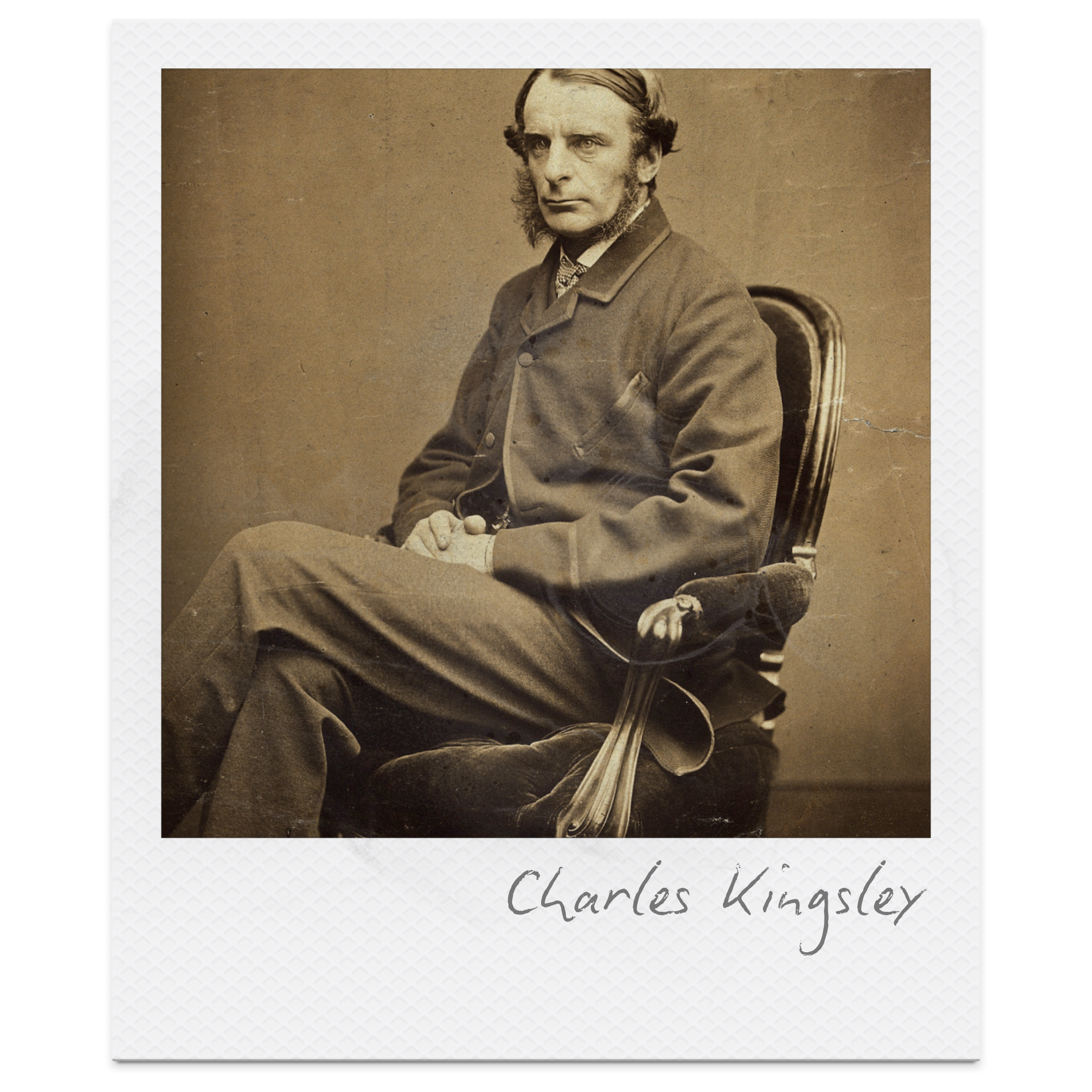
Charles Kingsley (1819–1875) was an English Victorian writer, poet, Anglican clergyman and social thinker whose work ranged across poetry, historical fiction, children’s literature and religious and political writing. His best-known works include The Water-Babies (1863), Westward Ho! (1855) and Hypatia (1853). Kingsley was particularly interested in questions of heroism, morality, physical courage, nature and the relationship between human beings and larger forces, concerns that also emerge in his treatment of classical mythology. His writing often combines intellectual or moral ideas with intensely physical descriptions of landscapes, bodies and movement.
Kingsley was deeply influenced by Greek and Roman literature and classical epic, and Andromeda allowed him to recreate an ancient myth using a deliberately classical poetic style. In particular, he experimented with English hexameter, attempting to reproduce something of the long, rolling rhythm associated with Greek and Latin epic poetry. English poets had been debating and experimenting with hexameter during the nineteenth century, including Henry Wadsworth Longfellow and Arthur Hugh Clough, and Kingsley had already engaged with the question of whether the form could successfully work in English. Andromeda became one of the most prominent Victorian experiments with the metre and was later praised by critics for the fluency and energy of its hexameters.
Andromeda was published as the opening and title poem of Kingsley’s 1858 collection Andromeda and Other Poems. It retells the ancient Greek myth of Andromeda, the princess condemned to be sacrificed to a sea-monster before eventually being rescued by the hero Perseus. Kingsley expands the familiar story into a substantial narrative poem populated by gods, sea-nymphs, Tritons and other figures from classical mythology. His version consciously evokes the world of classical epic through its mythological vocabulary, elaborate descriptions, supernatural interventions and elevated narrative voice. Even the extract’s description of the sea as “wine-dark” recalls a famous Homeric way of imagining the ocean, strengthening the sense that Kingsley is deliberately recreating an ancient poetic world within Victorian English.
The prescribed extract concentrates on a particularly spectacular moment in that larger narrative: Andromeda watches the supernatural inhabitants of the sea approaching her. This context matters because she is not simply observing an attractive seascape. She is a vulnerable mortal confronted by beings who belong to an entirely different order of existence. Kingsley fills their arrival with laughter, music, erotic energy, brilliant colour, supernatural light and effortless movement, while the surrounding waves, cliffs, mountains and trees become silent before them. Their freedom and exuberance therefore stand in striking contrast to Andromeda’s own situation, making their beauty simultaneously enchanting and potentially unsettling.
For students analysing this extract, the wider myth is useful primarily because it illuminates this contrast rather than because the entire story needs to be discussed. The focus should remain on how Kingsley presents the supernatural procession through Andromeda’s experience of it. The repeated movement “Onward”, the extraordinary accumulation of colour and light, the personification of the natural world and the flowing hexameter rhythm all contribute to a scene of almost overwhelming abundance. At its centre is a fundamental distinction between human mortality and divine immortality: Andromeda can watch this joyous supernatural world, but she does not belong to it, while the sea-maids ultimately appear “self-lighted, immortal”. The extract can therefore be read not only as a celebration of mythical beauty, but as an exploration of awe, freedom, divinity, nature and the distance between mortal and immortal existence.
From Andromeda: At a Glance
Form: An extract from a longer narrative poem, written in English hexameter and strongly influenced by the traditions of classical epic poetry.
Mood: Joyful, wondrous, sensuous and awe-filled, as the supernatural procession transforms the sea into a spectacle of colour, movement, music and light.
Central tension: The contrast between mortal human vulnerability and immortal divine freedom, as Andromeda watches the joyous supernatural beings approaching her.
Core themes: Divine beauty; mortality and immortality; nature and the supernatural; awe and wonder; freedom; joy; sensuality; human vulnerability.
One-sentence meaning: Kingsley presents the sea-maids’ procession as an overwhelming vision of supernatural beauty, vitality and freedom, using their radiant immortality and harmony with nature to emphasise the extraordinary divine world that the mortal Andromeda can witness but cannot fully belong to.
Quick Summary of From Andromeda
The extract begins with Andromeda watching as a choir of supernatural sea-maids rises from the ocean and moves towards her. Their arrival fills the landscape with extraordinary life: the waves become calm, the cliffs and mountains fall silent, and the darkness beneath the sea is illuminated by glowing lights and brilliant colours. Around the sea-maids swim Tritons, dolphins and magnificent sea-horses, creating an increasingly elaborate vision of joy, beauty and supernatural abundance.
As the procession continues, the sea-maids appear completely at home within this mythical world, laughing, singing, embracing and moving freely through the water while the creatures surrounding them share in their happiness. Light seems to emerge from the supernatural beings themselves until the entire scene sparkles with a strange combination of fire and water. The extract ends by emphasising the sea-maids’ separation from ordinary human existence: they need neither sunlight nor moonlight because they are “self-lighted, immortal”, leaving Andromeda witnessing a radiant world of divine life to which she does not belong.
Title, Form, Structure, and Metre
Kingsley’s formal choices give the extract the scale, movement and elevated quality of classical epic. Long hexameter lines, repeated phrases and flowing accumulations of detail allow the supernatural procession to seem almost continuously in motion, while changes in pace and sound help communicate Andromeda’s growing sense of wonder.
Title
Because this is an extract from the longer poem Andromeda, the title immediately centres Andromeda as the human figure through whose experience the mythical world is encountered. Yet much of the extract is dominated not by Andromeda herself but by the extraordinary beings approaching her. This creates an important contrast: although the sea-maids occupy the description, Andromeda remains the vulnerable mortal observer watching their apparently effortless beauty, freedom and immortality.
The title also places the poem within the tradition of the Greek myth of Andromeda, preparing the reader for gods, supernatural creatures and heroic narrative. Kingsley therefore takes a familiar classical story but recreates it through unusually elaborate sensory description, allowing the reader to share something of Andromeda’s astonishment at the divine world surrounding her.
Form and Structure
Andromeda is a narrative poem influenced by classical epic, and this extract functions almost like an extended processional scene. Rather than dividing the description into short stanzas, Kingsley uses long, continuous lines that allow one image to flow into another. The lack of stanza breaks is particularly effective because the sea-maids appear to advance without interruption, making their approach feel expansive and unstoppable.
The repeated “Onward” provides the extract with its clearest structural pattern. Variations including “Onward toward her they came”, “Onward they came in their joy” and “Onward they went in their joy” repeatedly return the reader to the procession after increasingly elaborate passages of description. The repetition acts almost like a refrain, creating forward momentum while also emphasising the sea-maids’ shared joy.
Kingsley also structures the extract through expansion and accumulation. The scene begins with the sea-maids rising from their “seaweed chamber”, but gradually widens to include waves, cliffs, mountains, underwater gardens, Tritons, birds, dolphins and sea-horses. This accumulation makes the supernatural arrival seem increasingly magnificent, as though the whole natural and mythical world is participating in the procession.
There is also a movement from external light towards inherent divinity. At first the sea is filled with “lamps”, “fiery globes”, “rainbows” and “star-showers”; by the ending, however, the immortals are revealed as “self-lighted”. The progression therefore moves beyond simply describing a beautiful spectacle towards establishing that these beings possess supernatural radiance within themselves.
Rhyme Scheme and Poetic Pattern
There is no regular rhyme scheme. Instead, Kingsley creates cohesion through repetition, parallel phrasing and recurring semantic fields of light, colour, movement, water and joy. This absence of end rhyme allows the long lines to flow forward without the strong sense of closure that repeated rhyming couplets or stanzas might create.
Repetition becomes especially important in place of rhyme. “Onward” repeatedly renews the movement of the procession, while “joy”, “laughter” and related images recur throughout the passage. The effect is cumulative: instead of progressing towards a conventional rhyming conclusion, the extract seems to gather more movement, sound, colour and supernatural life as it develops.
Metre and Rhythmic Movement
Kingsley writes Andromeda in English hexameter, deliberately drawing upon the metre associated with classical Greek and Latin epic. Rather than following the more familiar rhythms of much English verse, the lines are unusually long and contain six principal metrical units or feet, helping to give the narrative an expansive, elevated quality appropriate to its mythological subject.
English hexameter is not always perfectly regular, but it often contains six main stresses. The following examples use capital letters for stressed syllables and lower-case letters for unstressed syllables:
ONward they CAME in their JOY
ON-ward they CAME in their JOYLAUGHing and SINGing, and TOSSing and TWINing
LAUGH-ing and SING-ing, and TOSS-ing and TWIN-ingONward toWARD her they CAME in their JOY
ON-ward to-WARD her they CAME in their JOY
These examples show that the rhythm is not simply a sequence of six identical feet. Instead, Kingsley combines stressed and unstressed syllables flexibly. The repeated opening “ONward” gives the lines a strongly propulsive quality, while the succession of stressed words in “CAME”, “JOY”, “LAUGH”, “SING”, “TOSS” and “TWIN” creates energy and movement.
The metre is therefore not mechanically regular. Kingsley adapts classical hexameter to the natural stresses of English, allowing the lines to accelerate or slow according to what they describe. The repeated opening “ONward they CAME in their JOY”, for example, has a strongly propulsive quality that suits the advancing procession.
Elsewhere, the long lines accommodate cascading lists such as “Laughing and singing, and tossing and twining”. The repeated conjunctions and succession of participles make the rhythm feel energetic and almost breathless, mirroring the exuberant movements of the supernatural figures. By contrast, when the waves sink and the cliffs become “silent”, the rhythm feels more restrained, helping Kingsley create a momentary sense of stillness and awe.
The hexameter therefore does more than imitate classical poetry. Its unusually spacious lines allow Kingsley to combine narrative movement with elaborate description, while rhythmic variation enables the verse to surge, pause and move onward like the sea itself. This gives the extract both its epic grandeur and its distinctive sense of continuous, joyous motion.
The Speaker in From Andromeda
The extract is narrated by a third-person omniscient speaker who describes the supernatural procession while remaining closely connected to Andromeda’s experience of witnessing it. The narrator briefly gives access to her physical response through “her heart beat loud at their coming”, establishing her as the mortal observer through whom the extraordinary scene gains much of its emotional intensity. However, the voice then expands beyond what Andromeda alone could realistically perceive, travelling through the “wine-dark depths” of the sea and describing its hidden gardens, creatures and divine inhabitants in rich detail. The narrator’s tone is therefore elevated, celebratory and awe-filled, resembling the authoritative storytelling voice of classical epic. Through increasingly elaborate descriptions of colour, light, sound and movement, the speaker makes the procession seem almost overwhelming in its abundance, while the final description of the beings as “self-lighted, immortal” reinforces the distance between Andromeda’s vulnerable human existence and the supernatural world she is allowed to witness.
Line-by-Line Analysis of From Andromeda
As From Andromeda is presented as one continuous passage rather than a series of separate stanzas, it is more useful to follow the extract through groups of closely connected lines. Across the passage, Kingsley gradually expands the supernatural procession from the first appearance of the sea-maids into an increasingly spectacular vision of colour, light, movement, sensuality and divine power. Close analysis reveals how repetition, classical imagery, personification, sound, rhythmic movement and extraordinary sensory detail allow the scene to grow in intensity, while Andromeda’s position as a mortal observer creates an important contrast between human vulnerability and immortal freedom.
Lines 1–4: The Sea-Maids Appear
“afar, like a dawn in the midnight,
Rose from their seaweed chamber the choir of the mystical sea-maids.
Onward toward her they came, and her heart beat loud at their coming,
Watching the bliss of the gods, as they wakened the cliffs with their laughter.”
The extract begins in darkness, but Kingsley immediately introduces the sea-maids through the striking simile “like a dawn in the midnight”. “Dawn” normally marks the natural ending of night, so placing it within “midnight” creates an impossible image. The sea-maids seem capable of producing light where light should not exist, immediately establishing them as supernatural beings who exceed the ordinary laws of nature. The contrast between “dawn” and “midnight” also anticipates the extract’s fascination with opposites, particularly light and darkness, fire and water, mortality and immortality.
The verb “Rose”, placed prominently at the beginning of the next line, gives their emergence a sense of upward movement and revelation. They do not simply swim towards Andromeda; they appear to rise into her world. Their origin in a “seaweed chamber” combines the familiar and the fantastical: “seaweed” grounds the image in the physical ocean, while “chamber” transforms the underwater environment into something resembling a private room or royal dwelling. Kingsley therefore makes the sea simultaneously natural landscape and mythical kingdom.
Describing the group as a “choir” introduces associations with collective music, harmony and even worship. Rather than appearing as isolated individuals, the sea-maids form a unified supernatural company. The adjective “mystical” reinforces their separation from ordinary human experience, while “sea-maids” combines human femininity with the non-human world of the ocean.
The repeated directional phrase “Onward toward her they came” shifts attention back to Andromeda. Until this point, the description could simply be an independent vision of supernatural beauty; “toward her” makes the procession personal and potentially intimidating. The repetition of “came” / “coming” places Andromeda at the destination of this extraordinary movement.
Her response is physical rather than verbal: “her heart beat loud”. Kingsley does not explicitly label the emotion as fear, excitement or wonder, allowing the accelerated heartbeat to suggest a mixture of reactions. Andromeda is therefore established as physically vulnerable and emotionally affected by beings who appear effortlessly powerful.
The phrase “bliss of the gods” defines their existence through intense happiness. “Bliss” is stronger than ordinary pleasure and can carry spiritual or heavenly associations, elevating their joy beyond everyday human emotion. Their laughter is so powerful that it “wakened the cliffs”, personifying the landscape as though even stone responds to divine presence. The sea-maids therefore arrive not merely within nature but with the apparent power to animate and transform it.
Lines 5–7: Nature Falls Silent in Awe
“Onward they came in their joy, and before them the roll of the surges
Sank, as the breeze sank dead, into smooth green foam-flecked marble,
Awed; and the crags of the cliff, and the pines of the mountain were silent.”
The repetition of “Onward they came in their joy” establishes a refrain-like pattern and reinforces the unstoppable forward movement of the procession. Significantly, their emotional state remains “joy” even as the natural world around them changes dramatically. Their happiness appears constant and effortless, suggesting a divine existence untouched by the anxiety and danger associated with mortal life.
Kingsley then creates an extraordinary transformation of the sea. The “roll of the surges / Sank” removes the movement and noise normally associated with powerful waves. The repetition in “Sank, as the breeze sank dead” slows the image further, while “dead” introduces an unexpectedly absolute stillness. Before the immortals, even wind and water seem compelled to stop.
The metaphor “smooth green foam-flecked marble” transforms moving water into apparently solid stone. “Marble” has associations with smoothness, permanence, sculpture and classical art, making the comparison particularly appropriate within a poem recreating an ancient Greek world. The sea temporarily becomes something resembling a vast classical sculpture, frozen into beauty by the arrival of the gods.
Yet the compound adjective “foam-flecked” retains evidence of the sea’s previous movement. The water is simultaneously liquid and apparently solid, another impossible combination that contributes to the extract’s supernatural atmosphere.
The isolated word “Awed” explains this transformation. Nature itself seems overwhelmed by the sea-maids. Kingsley personifies the “crags of the cliff” and “pines of the mountain” by describing them as “silent”, extending the response beyond the ocean to the surrounding land. The scale widens from sea to cliff to mountain, suggesting that the entire landscape recognises the magnificence of the divine procession.
There is also a striking contrast with the previous image of laughter that “wakened” the cliffs. The sea-maids simultaneously awaken nature and silence it: their vitality brings the landscape imaginatively to life, yet their magnificence also inspires reverential stillness. Kingsley therefore presents divine beauty as something capable of producing both exuberance and awe.
Lines 8–12: An Underwater World of Light and Colour
“Onward they came in their joy, and around them the lamps of the sea-nymphs,
Myriad fiery globes, swam panting and heaving; and rainbows
Crimson and azure and emerald, were broken in star-showers, lighting
Far through the wine-dark depths of the crystal, the gardens of Nereus,
Coral and sea-fan and tangle, the blooms and the palms of the ocean.”
Another repetition of “Onward they came in their joy” returns the reader to the procession before Kingsley expands the spectacle again. Structurally, these repeated phrases act as anchors within the abundance of description: however far the narrator travels imaginatively into the supernatural environment, the sea-maids continue moving towards Andromeda.
The “lamps of the sea-nymphs” introduce artificial-seeming illumination into a natural underwater environment. Yet these lamps become “Myriad fiery globes”, with “myriad” suggesting a number too great to count. The scene therefore becomes overwhelming in scale, filled not with a single source of light but countless individual points of brilliance.
The juxtaposition of “fiery” imagery with the ocean is especially important. Fire and water are normally opposites, yet Kingsley repeatedly combines them. The contradiction suggests that ordinary physical rules cannot adequately describe this supernatural world.
The globes “swam panting and heaving”, verbs normally associated with living bodies. Through personification, light itself seems alive, breathing and moving with the procession. “Panting” implies rapid breath and excitement, while “heaving” suggests the rise and fall of waves or a body breathing deeply. Kingsley therefore merges light, water and living movement until distinctions between them begin to disappear.
Colour then explodes across the scene through the tricolon “Crimson and azure and emerald”. Rather than using ordinary red, blue and green, Kingsley chooses richer colour terms associated with jewels, luxury and intensity. The visual abundance makes the supernatural world appear precious and almost impossibly beautiful.
The “rainbows” are “broken in star-showers”, transforming one phenomenon of light into another. “Broken” suggests light fragmenting into countless pieces, while “star-showers” transfers imagery from the heavens into the depths of the ocean. Sea and sky begin to merge: stars appear underwater, just as fire exists within water.
The phrase “wine-dark depths” deliberately recalls the language of Homeric epic, particularly the famous Homeric description of the “wine-dark sea”. Kingsley’s classical allusion helps place his Victorian poem within an older tradition of epic storytelling. Yet the darkness is immediately complicated by “the crystal”, suggesting transparency, brilliance and clarity. Once again, apparently contradictory qualities coexist.
The light reveals “the gardens of Nereus”, referring to the ancient Greek sea-god associated with the sea and its divine inhabitants. Calling the underwater landscape “gardens” transforms the ocean floor into a fertile, cultivated paradise.
Kingsley reinforces this through the list “Coral and sea-fan and tangle”, before describing them metaphorically as “the blooms and the palms of the ocean”. Underwater plants become flowers and trees, making the sea resemble a terrestrial garden while remaining unmistakably marine. The effect is one of abundance and harmony, as though the supernatural ocean contains its own complete and flourishing world.
Lines 13–18: Laughter, Love and Sensual Freedom
“Onward they came in their joy, more white than the foam which they scattered,
Laughing and singing, and tossing and twining, while eager, the Tritons
Blinded with kisses their eyes, unreproved, and above them in worship
Hovered the terns, and the seagulls swept past them on silvery pinions
Echoing softly their laughter; around them the wantoning dolphins
Sighed as they plunged, full of love;”
The renewed “Onward they came in their joy” again emphasises the consistency of the sea-maids’ happiness. Their joy is not momentary: it becomes almost a defining condition of their immortal existence.
They are described as “more white than the foam”, creating an image of extraordinary brightness and purity. Because they are even whiter than the sea foam surrounding them, the sea-maids seem to exceed nature itself. The comparative “more white than” establishes supernatural beauty through excess: ordinary natural whiteness is insufficient to describe them.
The sequence “Laughing and singing, and tossing and twining” produces a rapid accumulation of continuous actions. The present participles create the impression that everything is happening simultaneously, while the repeated “and” gives the line an overflowing, breathless quality. The paired sounds of “tossing” and “twining” also suggest bodies moving freely around one another. Kingsley presents the immortals as uninhibited, energetic and intensely physical.
The Tritons are described as “eager”, and their kisses are so abundant that they metaphorically “Blinded with kisses their eyes”. The hyperbole transforms affection into something almost overwhelming. Crucially, the sea-maids are “unreproved”: there is no condemnation or restraint within this divine world. The word subtly distinguishes their behaviour from the social expectations and restrictions that might govern human conduct, contributing to the sense of supernatural sensual freedom.
Above them, the birds appear “in worship”. This religious diction elevates the sea-maids from merely beautiful creatures to figures apparently worthy of reverence. The terns “Hovered”, while the seagulls move on “silvery pinions”. “Pinions”, rather than simply “wings”, gives the birds a more elevated, poetic quality, while “silvery” continues the extract’s imagery of brilliance and precious materials.
The birds also “Echoing softly their laughter”, allowing the sea-maids’ joy to spread through the natural world. Their laughter is no longer confined to their own voices: it is reproduced by the creatures surrounding them. Kingsley thus imagines joy as almost contagious, passing between supernatural beings and nature.
The dolphins are described as “wantoning”, a word suggesting playful, uninhibited and potentially sensual behaviour. Like the Tritons and sea-maids, they participate in a world of physical pleasure and freedom. Their human-like response is intensified when they “Sighed as they plunged, full of love”. The juxtaposition of “sighed” and “plunged” combines emotional tenderness with energetic physical movement.
By this stage, Kingsley has created a world in which laughter, song, kisses, movement, worship and love coexist without conflict. This exuberant freedom can also sharpen our awareness of Andromeda’s position outside the procession. She watches the “bliss of the gods”, but remains a mortal observer rather than a participant in their apparently effortless pleasure.
Lines 18–21: The Sea Itself Becomes Jewelled
“and the great sea-horses which bore them
Curved up their crests in their pride to the delicate arms of the maidens,
Pawing the spray into gems, till a fiery rainfall, unharming,
Sparkled and gleamed on the limbs of the nymphs, and the coils of the mermen.”
The description moves from dolphins to the “great sea-horses”, continuing Kingsley’s accumulation of mythological and natural creatures. The adjective “great” emphasises their size and magnificence, yet this power is contrasted with the “delicate arms of the maidens”. Strength and delicacy exist harmoniously within the procession rather than threatening one another.
The sea-horses “Curved up their crests in their pride”, personifying them with a recognisably human emotion. “Pride” suggests that even the creatures carrying the sea-maids understand the splendour of the procession and are honoured to participate in it.
The verb “Pawing” gives the sea-horses energetic physical force, while the resulting spray is transformed “into gems”. Kingsley repeatedly turns ordinary natural substances into precious materials: water becomes marble, colours resemble jewels, wings become silver and now spray becomes gemstones. This imagery makes the supernatural world seem immeasurably rich and beautiful, as though everything touched by the procession acquires greater value.
The metaphor develops further through “a fiery rainfall”. Again, Kingsley deliberately combines opposites: rain belongs to water, while “fiery” belongs to flame. The paradox is immediately qualified by “unharming”. This supernatural fire possesses brilliance without destructive heat, allowing the divine world to contain apparently incompatible qualities without danger.
The verbs “Sparkled and gleamed” intensify the visual brilliance. Both emphasise reflected light, but “sparkled” suggests rapid individual flashes while “gleamed” suggests a smoother, sustained radiance. The combination makes the scene seem continuously alive with shifting light.
That illumination falls across “the limbs of the nymphs, and the coils of the mermen”, returning attention to supernatural bodies. “Limbs” and “coils” contrast human-like and non-human forms, yet both belong naturally within the same scene. Kingsley creates a mythical environment in which human, animal and supernatural bodies merge into one harmonious spectacle.
Lines 22–23: Self-Lighted and Immortal
“Onward they went in their joy, bathed round with the fiery coolness,
Needing nor sun nor moon, self-lighted, immortal”
The final repetition changes subtly from “Onward they came” to “Onward they went”. The procession is no longer merely approaching: it continues beyond the moment being described. “Went” therefore gives the ending a sense of ongoing movement, suggesting that the immortals belong to a world whose existence extends beyond Andromeda’s brief encounter with it.
Again, they move “in their joy”, completing one of the extract’s strongest patterns. Joy is repeated so consistently that it becomes almost inseparable from immortality itself. The sea-maids do not simply experience happiness; Kingsley presents them as existing within a permanent state of divine abundance and delight.
The paradoxical phrase “fiery coolness” condenses one of the extract’s central patterns into two words. Throughout the passage, fire has existed within water and light has existed within darkness. “Fiery” suggests heat, energy and brilliance, while “coolness” evokes the sea and physical refreshment. Their combination demonstrates that the divine world can reconcile opposites that would be incompatible in ordinary human experience.
The verb “bathed” is particularly appropriate because it can describe immersion both in water and in light. The immortals seem surrounded by both simultaneously, making it difficult to separate the physical ocean from their supernatural radiance.
Kingsley then removes their dependence upon the external universe altogether. They need “nor sun nor moon”, the two great natural sources of light associated with day and night. The balanced pairing encompasses the whole cycle of earthly time, so their independence from both may also suggest that the immortals exist beyond ordinary human rhythms and limitations.
The compound adjective “self-lighted” provides the culmination of the extract’s extensive light imagery. At the beginning, the sea-maids appear “like a dawn”; later they are surrounded by lamps, fiery globes, rainbows, star-showers, gems and sparkling spray. Now Kingsley reveals that their radiance ultimately comes from within themselves. They do not merely inhabit a magical environment: they are themselves the source of its supernatural brilliance.
The final word “immortal” makes explicit what the imagery has increasingly suggested. Its position at the end gives it particular weight, leaving the reader with the defining difference between these beings and Andromeda. Their impossible light, endless joy, freedom and harmony with nature all belong to creatures who cannot die.
This ending therefore changes the significance of the spectacle. The extract is certainly a celebration of supernatural beauty, but it also makes Andromeda’s human position more poignant. She can see the divine world and experience its magnificence, yet she remains mortal. Kingsley ends not simply with beauty but with the profound contrast between a human life bounded by vulnerability and time and a supernatural existence that appears radiant, joyous and eternal.
Key Quotes and Methods in From Andromeda
Kingsley’s most useful quotations reveal how he builds the procession through light, movement, sound, colour and classical imagery, gradually establishing the sea-maids as beings whose beauty and freedom exceed the ordinary natural world. Strong analysis should pay particular attention to the repeated movement “Onward”, the interaction between the immortals and the landscape, and Kingsley’s recurring combination of apparent opposites such as darkness and light, fire and water, movement and stillness.
“like a dawn in the midnight”
◆ Technique: Simile, juxtaposition and contrasting light imagery.
◆ Meaning: The approaching sea-maids resemble dawn appearing impossibly in the middle of the night.
◆ Purpose: Kingsley immediately establishes their arrival as supernatural, combining two states that cannot normally exist simultaneously.
◆ Impact: The sea-maids appear capable of overcoming natural boundaries, creating an immediate sense of wonder and divine radiance.
“Rose from their seaweed chamber”
◆ Technique: Dynamic verb and metaphorical description of setting.
◆ Meaning: The sea-maids emerge upwards from their home beneath the ocean.
◆ Purpose: “Rose” gives their appearance a sense of revelation, while “chamber” transforms an ordinary underwater environment into a private, almost palatial space.
◆ Impact: The sea becomes more than a natural setting: it begins to resemble a hidden supernatural kingdom existing alongside the human world.
“the choir of the mystical sea-maids”
◆ Technique: Collective noun, auditory imagery and supernatural diction.
◆ Meaning: The sea-maids appear as a harmonious collective rather than as separate individuals.
◆ Purpose: “Choir” associates them with music, unity and potentially worship, while “mystical” places them beyond ordinary human experience.
◆ Impact: Their arrival feels both celebratory and sacred, elevating the procession above an ordinary gathering.
“Onward toward her they came”
◆ Technique: Repetition, directional language and rhythmic movement.
◆ Meaning: The supernatural procession is moving specifically towards Andromeda.
◆ Purpose: Kingsley repeatedly uses “Onward” to maintain forward momentum while reminding the reader that Andromeda is the destination of this extraordinary procession.
◆ Impact: The movement creates anticipation and makes Andromeda’s position increasingly significant: she is not simply observing the divine world from a distance; it is approaching her.
“her heart beat loud at their coming”
◆ Technique: Physical imagery and internal focalisation.
◆ Meaning: Andromeda responds physically to the sight of the approaching immortals.
◆ Purpose: Rather than naming a single emotion, Kingsley communicates her response through her body.
◆ Impact: The ambiguous heartbeat can suggest fear, excitement, anticipation or awe, emphasising Andromeda’s human vulnerability beside the apparently effortless immortals.
“the bliss of the gods”
◆ Technique: Emotive diction and classical imagery.
◆ Meaning: The supernatural beings appear to experience an intense, almost perfect form of happiness.
◆ Purpose: The noun “bliss” elevates their happiness beyond ordinary pleasure and presents joy as characteristic of divine existence.
◆ Impact: Their apparent freedom from suffering creates an important contrast with mortal vulnerability and limitation.
“they wakened the cliffs with their laughter”
◆ Technique: Personification and auditory imagery.
◆ Meaning: The sea-maids’ laughter appears powerful enough to awaken the surrounding landscape.
◆ Purpose: Kingsley makes their joy seem so energetic that it affects even apparently lifeless stone.
◆ Impact: The immortals appear to animate nature through their presence, suggesting extraordinary vitality and supernatural power.
“Onward they came in their joy”
◆ Technique: Refrain-like repetition and emotive diction.
◆ Meaning: The sea-maids repeatedly continue their journey in a state of happiness.
◆ Purpose: Repeating both “Onward” and “joy” makes movement and happiness the two defining qualities of the procession.
◆ Impact: The phrase creates a propulsive rhythm while suggesting that joy is almost the natural condition of these immortal beings.
“smooth green foam-flecked marble”
◆ Technique: Metaphor, visual imagery and classical association.
◆ Meaning: The moving sea becomes so calm that it resembles polished green marble.
◆ Purpose: Kingsley transforms unstable water into apparently solid stone, while “marble” evokes classical sculpture, permanence and beauty.
◆ Impact: The impossible transformation emphasises the sea-maids’ supernatural effect upon nature and makes the entire landscape appear momentarily sculpted into reverent stillness.
“Awed”
◆ Technique: Personification and emphatic diction.
◆ Meaning: The natural world appears capable of experiencing awe before the immortals.
◆ Purpose: Kingsley attributes a recognisably human emotional response to the landscape.
◆ Impact: If even the sea, cliffs and mountains are overwhelmed by the procession, the reader is encouraged to recognise the immense power and magnificence of what Andromeda witnesses.
“Myriad fiery globes”
◆ Technique: Hyperbolic scale, visual imagery and elemental juxtaposition.
◆ Meaning: Countless glowing lights surround the sea-nymphs beneath the water.
◆ Purpose: “Myriad” makes the spectacle seem almost limitless, while “fiery” introduces the normally incompatible element of fire into the ocean.
◆ Impact: The supernatural world becomes abundant, dazzling and impossible, operating beyond ordinary physical laws.
“Crimson and azure and emerald”
◆ Technique: Colour imagery, tricolon and polysyndeton.
◆ Meaning: Brilliant red, blue and green colours fill the underwater scene.
◆ Purpose: Kingsley chooses unusually rich colour terms rather than simple colour names, while repeated “and” makes the colours appear to accumulate.
◆ Impact: The procession becomes increasingly luxurious and visually overwhelming, creating the impression of a world overflowing with beauty.
“broken in star-showers”
◆ Technique: Celestial metaphor and visual imagery.
◆ Meaning: The coloured light appears to fragment into showers resembling falling stars.
◆ Purpose: Kingsley transfers imagery associated with the night sky into the ocean.
◆ Impact: Sea and heavens seem to merge, expanding the supernatural spectacle beyond the boundaries of any ordinary landscape.
“wine-dark depths”
◆ Technique: Classical allusion and compound epithet.
◆ Meaning: Kingsley describes the deep sea through a phrase strongly reminiscent of Homeric descriptions of the “wine-dark sea”.
◆ Purpose: The allusion deliberately connects Kingsley’s Victorian narrative with the language and imaginative world of classical Greek epic.
◆ Impact: The description gives the extract greater epic authority while making its mythical world feel rooted in an ancient literary tradition.
“the gardens of Nereus”
◆ Technique: Classical allusion and metaphor.
◆ Meaning: The underwater landscape is imagined as the garden of the Greek sea-god Nereus.
◆ Purpose: Kingsley transforms the ocean floor into a fertile divine realm, reinforcing the classical mythology surrounding the procession.
◆ Impact: The sea appears inhabited, abundant and ordered rather than empty or hostile, creating the impression of an entire supernatural civilisation beneath the water.
“more white than the foam”
◆ Technique: Comparative imagery and hyperbole.
◆ Meaning: The sea-maids appear even whiter and brighter than the foam surrounding them.
◆ Purpose: Kingsley describes supernatural beauty by presenting the immortals as surpassing nature itself.
◆ Impact: Their bodies appear luminous and extraordinary, strengthening their separation from ordinary mortal humanity.
“Laughing and singing, and tossing and twining”
◆ Technique: Polysyndeton, present participles, auditory imagery and kinetic imagery.
◆ Meaning: The sea-maids laugh, sing and move energetically together.
◆ Purpose: The succession of continuous verbs and repeated “and” creates an overflowing sequence of simultaneous actions.
◆ Impact: The line feels breathless, fluid and exuberant, mirroring the physical freedom and seemingly limitless vitality of the immortals.
“Blinded with kisses their eyes, unreproved”
◆ Technique: Hyperbole, sensual imagery and loaded diction.
◆ Meaning: The Tritons kiss the sea-maids so enthusiastically that the kisses metaphorically blind them, without anyone condemning their behaviour.
◆ Purpose: The hyperbole emphasises overwhelming affection, while “unreproved” draws attention to the absence of restraint or judgement.
◆ Impact: Kingsley presents the divine world as unusually sensual and uninhibited, governed by pleasure and freedom rather than ordinary human restrictions.
“above them in worship / Hovered the terns”
◆ Technique: Personification and religious diction.
◆ Meaning: The birds appear to hover reverently above the sea-maids.
◆ Purpose: “Worship” transforms an ordinary movement of birds into an act of reverence.
◆ Impact: The sea-maids appear almost sacred, while the natural world becomes an active participant in the celebration of divine beauty.
“the wantoning dolphins / Sighed as they plunged, full of love”
◆ Technique: Personification, sensual diction and kinetic imagery.
◆ Meaning: The dolphins appear playful, emotionally responsive and filled with affection.
◆ Purpose: Kingsley extends the emotions of the supernatural procession into the animal world.
◆ Impact: Love and joy appear to permeate the entire environment, dissolving boundaries between divine beings, animals and nature.
“Pawing the spray into gems”
◆ Technique: Metaphor, kinetic imagery and precious-material imagery.
◆ Meaning: Spray thrown up by the sea-horses appears to transform into gemstones.
◆ Purpose: Kingsley repeatedly turns ordinary elements of the sea into precious and extraordinary substances.
◆ Impact: Everything touched by the procession seems transformed into greater beauty, intensifying the sense of supernatural abundance.
“a fiery rainfall, unharming”
◆ Technique: Paradox, elemental juxtaposition and reassuring modifier.
◆ Meaning: The sparkling spray resembles falling fire but causes no injury.
◆ Purpose: Kingsley combines the incompatible elements of fire and water, then uses “unharming” to remove the danger normally associated with flame.
◆ Impact: The divine world appears capable of reconciling opposites, creating beauty without destruction or suffering.
“Sparkled and gleamed”
◆ Technique: Light imagery and paired dynamic verbs.
◆ Meaning: The supernatural light continually flashes across the bodies of the nymphs and mermen.
◆ Purpose: Kingsley sustains the extract’s semantic field of brilliance right to its conclusion.
◆ Impact: The immortals appear surrounded by constantly shifting radiance, making the procession feel alive with supernatural light.
“fiery coolness”
◆ Technique: Oxymoron and elemental imagery.
◆ Meaning: The immortals are surrounded by something that possesses both the brilliance of fire and the coolness of water.
◆ Purpose: Kingsley compresses the extract’s repeated combination of opposites into a single paradoxical phrase.
◆ Impact: The oxymoron reinforces the idea that the supernatural world operates beyond ordinary physical limitations, allowing contradictory qualities to exist harmoniously.
“Needing nor sun nor moon”
◆ Technique: Parallelism, celestial imagery and negation.
◆ Meaning: The immortals do not depend upon either of the natural sources of light associated with day and night.
◆ Purpose: By encompassing both “sun” and “moon”, Kingsley separates the sea-maids from the normal cycles governing earthly existence.
◆ Impact: Their independence makes them appear self-sufficient and timeless, strengthening the contrast between divine existence and mortal limitation.
“self-lighted, immortal”
◆ Technique: Compound adjective, light symbolism and climactic diction.
◆ Meaning: The supernatural beings generate their own radiance and cannot die.
◆ Purpose: “Self-lighted” completes the imagery that began with “a dawn in the midnight”: the reader finally understands that divine radiance belongs intrinsically to these beings.
◆ Impact: Ending on “immortal” reveals the fundamental distinction underlying the entire spectacle. Andromeda can witness their beauty, joy and freedom, but she remains a vulnerable mortal looking into a world that exists beyond ordinary human limitations.
Key Techniques in From Andromeda
Kingsley combines classical epic conventions with intensely sensory description, making the sea-maids’ arrival feel simultaneously ancient, supernatural and immediate. His techniques repeatedly blur boundaries between water and fire, earth and sky, nature and divinity, movement and stillness, creating a world that seems to operate beyond ordinary physical laws while emphasising the difference between Andromeda’s mortality and the immortals she watches.
◆ Classical Epic Style – Kingsley deliberately adopts the elevated scale and descriptive richness associated with classical epic. Mythological figures including the sea-nymphs, Tritons and Nereus, together with the long hexameter lines and Homeric echoes such as “wine-dark depths”, make Andromeda’s experience part of an ancient heroic world. The elevated style magnifies the procession, making it seem far beyond ordinary human experience.
◆ Extended Light Imagery – Light develops throughout the extract from “a dawn in the midnight” through “fiery globes”, “rainbows”, “star-showers”, “gems” and “fiery rainfall” to the climactic “self-lighted”. This progression gradually reveals that supernatural radiance does not merely surround the immortals but belongs intrinsically to them, making light a symbol of their divine nature.
◆ Colour Imagery – Kingsley saturates the underwater world with intense colours including “smooth green”, “Crimson”, “azure”, “emerald” and “silvery”. These unusually rich colour choices make the procession visually overwhelming and transform the ocean into a luxurious supernatural environment. Colour allows the reader to experience something of the visual astonishment that Andromeda encounters.
◆ Kinetic Imagery – Movement dominates the passage through verbs including “Rose”, “swam”, “heaving”, “tossing”, “twining”, “swept”, “plunged”, “Curved” and “Pawing”. The constant physical activity gives the supernatural world tremendous vitality, presenting immortality not as static perfection but as energetic, exuberant life.
◆ Auditory Imagery – Laughter, singing, the “roll of the surges” and the birds that “Echo” the sea-maids create a richly audible environment. Kingsley contrasts these sounds with moments when nature becomes “silent”, allowing sound and silence to measure the impact of the immortals upon their surroundings.
◆ Repetition and Refrain – Variations of “Onward they came in their joy” recur throughout the extract. “Onward” continually restores forward momentum after passages of elaborate description, while the repetition of “joy” makes happiness seem fundamental to the immortals’ existence. The eventual change to “Onward they went” suggests that their procession continues beyond the moment Andromeda witnesses.
◆ Personification of Nature – The cliffs are “wakened”, the landscape is “Awed”, lights swim “panting and heaving”, birds appear “in worship”, dolphins sigh “full of love” and sea-horses display “pride”. Kingsley projects consciousness and emotion throughout the environment so that the whole natural world seems to respond to and participate in the divine procession.
◆ Simile – The opening comparison “like a dawn in the midnight” immediately establishes the sea-maids as extraordinary. Because dawn cannot naturally occur at midnight, the simile introduces a world in which normal boundaries can be transcended, preparing the reader for the increasingly impossible images that follow.
◆ Metaphor – Kingsley repeatedly transforms the physical sea through metaphor: water becomes “marble”, underwater vegetation becomes “blooms” and “palms”, spray becomes “gems”, and coloured light becomes “star-showers”. These transformations make the ocean appear more beautiful and valuable than ordinary reality, reinforcing the supernatural quality of the scene.
◆ Paradox and Oxymoron – Apparently incompatible elements repeatedly coexist, particularly in “fiery rainfall” and “fiery coolness”. Fire exists harmlessly within a watery environment, while light appears within midnight darkness. These contradictions suggest that the laws governing mortal experience do not restrict the divine world.
◆ Juxtaposition of Movement and Stillness – The sea-maids are characterised by relentless movement, yet the waves sink, the breeze becomes “dead” and the mountains fall silent before them. Kingsley juxtaposes divine vitality with reverential stillness, suggesting that the procession possesses enough power to command the surrounding landscape without any deliberate act of force.
◆ Sensual Imagery – The sea-maids are presented through physical movement, whiteness, laughter and touch, while the Tritons “Blinded with kisses their eyes” and the dolphins are “wantoning” and “full of love”. The sensuality presents divine existence as uninhibited and intensely embodied, creating a world of pleasure, affection and physical freedom that contrasts with Andromeda’s vulnerable position.
◆ Religious Diction – Words including “choir”, “bliss” and “worship” give the procession a sacred quality. Although Kingsley is describing figures from Greek mythology, this vocabulary encourages the reader to experience their appearance as something worthy of reverence and awe.
◆ Hyperbole – The sea-maids are “more white than the foam”, the lights are “Myriad”, and the Tritons effectively blind them with kisses. Such exaggeration is appropriate to the epic and supernatural setting because ordinary measurements seem inadequate to describe these beings. Hyperbole therefore communicates excess: excessive beauty, excessive joy, excessive light and excessive vitality.
◆ Polysyndeton – Kingsley repeatedly links actions and images with “and”, particularly in “Laughing and singing, and tossing and twining”. The accumulation makes the description feel overflowing and breathless, as though one image cannot finish before another arrives. This mirrors the abundance and continuous movement of the procession.
◆ Listing and Accumulation – Kingsley steadily adds colours, creatures, plants, movements and sources of light. The procession expands from the sea-maids themselves to include waves, cliffs, mountains, underwater gardens, Tritons, birds, dolphins, sea-horses and mermen. This accumulation creates increasing scale and gives the impression that an entire supernatural ecosystem has gathered around them.
◆ Semantic Field of Precious Materials – “Marble”, “emerald”, “silvery”, “gems”, “sparkled” and “gleamed” repeatedly associate the environment with valuable and beautiful materials. Kingsley effectively transforms nature into treasure, implying that the divine presence makes the ordinary physical world appear extraordinarily precious.
◆ Elemental Imagery – Kingsley repeatedly combines sea, air, earth, fire and celestial light. The ocean contains fire and stars; birds participate above the water; cliffs and mountains react from the land. By drawing together different elements of the natural world, Kingsley makes the procession feel cosmic rather than merely aquatic.
◆ Celestial Imagery – “Dawn”, “star-showers”, “sun” and “moon” connect the sea-maids with the heavens despite their emergence from beneath the ocean. The movement between sea and sky enlarges their significance, while the final claim that they need “nor sun nor moon” establishes their independence from the natural sources of earthly light.
◆ Classical Allusion – The “gardens of Nereus” locate the scene explicitly within Greek mythology, while “wine-dark depths” evokes Homeric epic. These references do more than decorate the setting: they allow Kingsley to recreate the atmosphere and imaginative scale of ancient literature for a Victorian audience.
◆ Contrast – Kingsley repeatedly works through oppositions: midnight and dawn, movement and stillness, fire and water, mortal and immortal. These contrasts intensify the supernatural quality of the procession because the sea-maids appear capable of existing harmoniously between states that ordinary experience keeps separate.
◆ Third-Person Omniscient Narration – The narrative voice can reveal Andromeda’s physical response through “her heart beat loud” while also travelling imaginatively into the deepest parts of the ocean. This perspective combines Andromeda’s human experience with a much wider epic vision, allowing readers to recognise both her personal awe and the enormous scale of what surrounds her.
◆ Long Hexameter Lines – Kingsley’s long lines provide enough space for elaborate descriptions, lists and sequences of movement to unfold without frequent interruption. Their rolling rhythm can resemble the movement of waves and the continuous advance of the procession, while also connecting the poem formally to classical epic.
◆ Enjambment – Images frequently continue across line endings, as in the movement from the “surges” to “Sank”, or “rainbows” to “Crimson and azure and emerald”. Enjambment prevents the long lines from becoming static and allows images to spill forward, reinforcing the sense that the spectacle cannot easily be contained.
◆ Present Participles – Words such as “Watching”, “lighting”, “Laughing”, “singing”, “tossing”, “twining”, “Echoing” and “Pawing” create actions that seem ongoing rather than completed. This grammatical pattern helps make the procession feel immediate and continuously alive.
◆ Climactic Ending – The extract progresses from the sea-maids appearing “like a dawn” to the revelation that they are actually “self-lighted, immortal”. Kingsley therefore saves the clearest explanation of their supernatural nature until the end. The final word “immortal” gives the passage its most important contrast: behind all the colour, laughter and beauty lies the fundamental difference between these radiant beings and the mortal Andromeda who watches them.
How Charles Kingsley Creates Meaning and Impact in From Andromeda
Kingsley creates meaning and impact by turning the sea-maids’ arrival into an increasingly overwhelming experience of divine beauty, supernatural vitality and immortal freedom. Rather than simply telling the reader that these beings are extraordinary, he builds their magnificence through accumulating images of light, colour, sound and movement. At the same time, Andromeda remains the mortal observer of this spectacle, allowing the extract’s celebration of divine life to reveal an important contrast between human vulnerability and immortal existence.
Language and Imagery
Kingsley’s language repeatedly presents the supernatural world as something that exceeds ordinary nature. The opening simile “like a dawn in the midnight” immediately combines two incompatible states. Dawn should end darkness rather than appear within its deepest point, so the image suggests that the sea-maids possess a radiance capable of overcoming normal physical boundaries. This develops throughout the extract through “fiery globes”, “star-showers”, “gems” and “fiery rainfall”, before culminating in “self-lighted”. The progression matters: initially the immortals appear surrounded by extraordinary light, but eventually Kingsley reveals that they are themselves its source.
The richness of the colour imagery makes the spectacle similarly excessive. “Crimson and azure and emerald” replaces ordinary colour vocabulary with more luxurious terms, particularly “emerald”, which carries associations with precious stones. Elsewhere, spray becomes “gems” and wings become “silvery”. Kingsley repeatedly describes the natural world through the language of precious materials, making the immortals’ surroundings appear transformed by their presence. The effect is to suggest a world of abundance and almost immeasurable beauty, far removed from ordinary mortal experience.
Kingsley also repeatedly combines apparently contradictory elements. The underwater world contains “fiery” lights, the spray becomes a “fiery rainfall”, and the immortals are finally surrounded by “fiery coolness”. Fire and water would ordinarily oppose one another, yet here they coexist without conflict. The particularly striking adjective “unharming” removes the destructive qualities normally associated with fire. Divine existence is therefore imagined as a state in which contradictions can be reconciled: there can be fire without pain and extraordinary power without destruction.
Structure and Progression
The extract is structured around the recurring word “Onward”, which continually restores the forward motion of the sea-maids. Each repetition returns the reader to the procession after another burst of elaborate description. This prevents the rich imagery from becoming static: however much Kingsley pauses to describe the supernatural environment, the immortals are always moving.
The repeated phrase “in their joy” is equally significant. Kingsley does not simply mention happiness once; he makes it a recurring condition of the procession. Their laughter, singing, kisses and physical play all develop this impression, so that joy seems almost inseparable from their immortality. This creates a subtle contrast with Andromeda. Her most prominent physical reaction is that “her heart beat loud”, whereas the sea-maids move effortlessly through an existence defined by pleasure and freedom.
Kingsley also increases the scale of the spectacle as the extract progresses. It begins with the distant appearance of the sea-maids, but soon incorporates waves, cliffs, mountains, underwater gardens, Tritons, birds, dolphins, sea-horses and mermen. The accumulation suggests that their arrival affects not one isolated part of nature but an entire interconnected world.
There is a corresponding progression in the presentation of their divinity. At first they merely appear “like a dawn”; later the environment surrounding them becomes filled with supernatural light; finally they are explicitly described as “self-lighted, immortal”. Kingsley therefore moves from suggestion to revelation, saving the clearest statement of what separates these beings from humanity until the conclusion.
Voice and Tone
The third-person narrative voice combines epic authority with Andromeda’s human perspective. Kingsley can describe hidden “gardens of Nereus” far beneath the sea while also drawing attention to Andromeda’s immediate bodily response. This allows the reader both to observe the supernatural spectacle on an enormous scale and to experience something of the astonishment it creates in an individual mortal.
The dominant tone is celebratory and awe-filled. Words such as “bliss”, “joy”, “laughter”, “love” and “worship” make the procession intensely positive, while the richness of Kingsley’s description encourages the reader to share in its wonder. Yet “awe” is particularly important because the immortals inspire not merely admiration but something approaching reverence.
This is most apparent when the landscape itself responds. The cliffs are “wakened” by laughter before the waves, breeze, crags and pines become “Awed” and “silent”. Kingsley personifies nature so that it behaves almost like another spectator. The effect magnifies the immortals’ power: if even mountains and the ocean respond to them, Andromeda’s racing heart becomes part of a much larger reaction to divine presence.
The sensuality of the passage also contributes to its tone. The sea-maids are “Laughing and singing, and tossing and twining”, the Tritons cover them with kisses, dolphins are “wantoning”, and creatures “Sighed” with love. This is a physical, uninhibited supernatural world. The unusual word “unreproved” is particularly revealing because it explicitly removes judgement from the scene. Kingsley presents divine pleasure as free from the restraints that might govern ordinary human behaviour.
Sound and Rhythm
Kingsley’s long hexameter lines allow images and actions to accumulate, creating the expansive movement expected of epic narrative. Rather than containing each image within a short, tightly controlled line, the verse repeatedly carries the reader forward through sequences of movement and description. This helps the passage feel abundant and almost overflowing.
Polysyndeton intensifies this effect. In “Laughing and singing, and tossing and twining”, repeated “and” makes each new action seem to arrive before the previous one has finished. Combined with the present participles, this creates a sense of simultaneous, continuous activity. The reader does not encounter a sequence of static pictures but a living procession constantly changing before Andromeda’s eyes.
Kingsley also uses sound to create contrast. The “roll of the surges” gives way to the breeze sinking “dead” and the landscape becoming “silent”, before laughter, singing and echoes fill the scene again. Silence therefore does not indicate emptiness; it becomes a response of reverence. The immortals can both awaken the world with their laughter and silence it through awe.
The recurring “Onward” gives the passage an additional rhythmic pulse. Its strong opening stress repeatedly pushes the verse forward, resembling the continuous advance of the procession and, potentially, the rolling movement of the sea itself. The rhythm therefore reinforces the central impression of supernatural beings whose vitality seems inexhaustible.
Nature and the Supernatural
One of Kingsley’s most important effects is the dissolution of boundaries between nature and the supernatural. The sea-maids emerge from a “seaweed chamber”; underwater vegetation becomes the “blooms and the palms of the ocean”; birds worship; dolphins love; sea-horses feel pride. Nature is not merely the backdrop against which mythology appears. It is completely integrated into the mythical world.
The personification of animals and landscape is therefore particularly significant. By allowing cliffs, dolphins and sea-horses to possess apparently human emotions, Kingsley creates an environment in which everything seems conscious of divine beauty. Human, animal, natural and supernatural forms begin to overlap.
This can be seen especially clearly in the “gardens of Nereus”. Coral, sea-fan and tangle become an underwater equivalent of terrestrial flowers and palms. Kingsley makes the unfamiliar understandable by describing one natural environment through another, but he simultaneously suggests that the sea contains an entire hidden world of its own, flourishing beyond ordinary human sight.
Mortality and Immortality
Although Andromeda occupies relatively little of the description, her presence is essential to its meaning. The immortals appear extraordinary partly because a mortal is watching them. Her “heart beat loud” establishes physical vulnerability near the beginning of the extract, while their immortality is made explicit at its end.
The final statement that they need “nor sun nor moon” separates them from the cycles governing ordinary earthly existence. Sun and moon mark day and night and, by extension, the passage of time. The sea-maids need neither because they are “self-lighted”. They appear self-sufficient in a way that mortal beings cannot be.
The final adjective “immortal” therefore provides more than a factual description. It retrospectively explains the seemingly impossible qualities Kingsley has associated with the procession: their excessive joy, inexhaustible movement, supernatural light and harmony with the natural world all belong to beings free from the ultimate human limitation of death.
Yet Kingsley does not need to make Andromeda explicitly lament her mortality. The contrast itself creates the impact. She is temporarily able to see into a world beyond human existence, but seeing it does not make her part of it. This gives the extract an underlying poignancy beneath its exuberance: the reader shares Andromeda’s wonder precisely because the divine existence before her is so extraordinary and inaccessible.
Overall Meaning and Impact
Kingsley ultimately presents the supernatural procession as a vision of life intensified beyond ordinary human limits. Everything associated with the immortals exists in abundance: there is more light, more colour, more movement, more beauty, more laughter and more love. Even opposing forces such as fire and water coexist harmoniously around them.
The extract therefore does more than create a beautiful mythological scene. Through classical epic form, cumulative sensory imagery, personification, repetition and paradox, Kingsley allows the reader to experience the same sense of astonishment that surrounds Andromeda. The natural world itself appears unable to remain indifferent: it wakes, falls silent, worships, laughs and loves alongside the supernatural beings.
Most importantly, the movement from “her heart beat loud” to “self-lighted, immortal” establishes the deeper contrast underlying the passage. Andromeda represents embodied, vulnerable humanity; the sea-maids represent an existence apparently liberated from darkness, restraint and death. Their procession is memorable because it offers a dazzling glimpse of what mortal life is not: endlessly joyous, effortlessly radiant and untouched by time.
Themes in From Andromeda
The extract explores a world in which divine beauty, supernatural power and the natural environment become almost inseparable. Kingsley’s sea-maids embody qualities that appear intensified beyond ordinary human experience: they are beautiful, joyful, free, sensual and immortal, while the landscape itself responds to their presence with silence, movement and apparent worship. Beneath the exuberance of the procession, however, Andromeda’s position as a mortal observer creates a quieter tension between divine possibility and human limitation.
Divine Beauty
Divine beauty is central to Kingsley’s presentation of the sea-maids. Their beauty is repeatedly described as something that surpasses the natural world rather than simply belonging within it. They first appear “like a dawn in the midnight”, while later they are “more white than the foam”. Both comparisons suggest that ordinary nature is insufficient to describe them: they possess greater brightness than dawn or the whiteness of the sea itself.
Kingsley surrounds them with an extraordinary visual vocabulary of “Crimson and azure and emerald”, “star-showers”, “gems” and “silvery pinions”. Precious materials, brilliant colours and supernatural light make their world appear almost impossibly beautiful. Even the spray created by the sea-horses becomes a “fiery rainfall” that “Sparkled and gleamed” across supernatural bodies.
Yet their beauty is not merely decorative. It has power over the world around them. The waves become still, cliffs and mountains fall silent, and birds hover “in worship”. Beauty therefore inspires awe and reverence, making the sea-maids seem not simply physically attractive but genuinely divine.
The final description “self-lighted” brings this idea to its climax. The immortals do not depend upon external light to make them beautiful; radiance originates within them. Kingsley therefore presents divine beauty as intrinsic, supernatural and almost self-generating.
Mortality and Immortality
The fundamental difference between Andromeda and the beings she watches is revealed most clearly through the theme of mortality and immortality. Andromeda is physically present in the scene, but she remains outside the immortals’ experience. Her “heart beat loud at their coming”, emphasising her vulnerable human body, while the sea-maids move through the ocean with apparently inexhaustible energy.
Kingsley delays the explicit word “immortal” until the end of the extract. This allows the preceding imagery to prepare for the revelation. The impossible light, endless movement, constant joy and harmony of the supernatural world all gradually suggest a form of existence beyond normal human limits.
The phrase “Needing nor sun nor moon” strengthens this separation. Sun and moon govern ordinary earthly cycles of day and night and therefore suggest the passage of time. The immortals appear independent of both, implying an existence beyond the temporal rhythms experienced by human beings.
The final “self-lighted, immortal” therefore casts the entire procession in a different light. Its apparently limitless beauty and joy belong to beings untouched by death. Andromeda can witness this existence but cannot share its immortality, creating an underlying poignancy beneath the spectacular description.
Nature and the Supernatural
Kingsley does not present nature and the supernatural as separate worlds. Instead, the extract repeatedly blends them together, creating a mythical environment in which gods, animals, plants, landscapes and natural forces participate in the same experience.
The sea-maids emerge from a “seaweed chamber”, immediately combining supernatural inhabitants with a recognisable natural environment. Similarly, the underwater “gardens of Nereus” contain “Coral and sea-fan and tangle”, which Kingsley transforms into “the blooms and the palms of the ocean”. The sea becomes an alternative natural world with its own gardens, vegetation and inhabitants.
Personification strengthens this connection. The cliffs are “wakened”, the landscape becomes “Awed”, birds appear “in worship”, dolphins sigh “full of love” and sea-horses display “pride”. Kingsley gives the natural world emotional responses normally associated with human beings.
As a result, nature becomes more than a setting for supernatural events. Nature itself participates in the mythology. The boundaries between human, animal, landscape and divine life become increasingly fluid, suggesting a world in which supernatural presence is embedded within nature rather than imposed upon it.
Awe and Wonder
The extract is structured to create an escalating sense of awe and wonder, both for Andromeda and for the reader. Kingsley begins with something impossible — “a dawn in the midnight” — and then continually increases the scale and richness of what is being witnessed.
Andromeda’s “heart beat loud” provides the clearest human response to the spectacle. Kingsley does not define precisely what she feels, allowing fear, excitement and astonishment to coexist. Her bodily reaction gives the reader a human measure of how overwhelming the supernatural procession appears.
More remarkably, the landscape itself experiences awe. The waves and breeze become still, while “the crags of the cliff, and the pines of the mountain were silent”. The emphatic “Awed” personifies the whole environment as a spectator alongside Andromeda.
Kingsley then continually introduces new sources of wonder: underwater lights, rainbows, “star-showers”, divine gardens, singing nymphs, Tritons, worshipping birds, loving dolphins and jewelled spray. This accumulation prevents the spectacle from settling into familiarity. Each new image expands the reader’s sense of what this supernatural world contains.
Awe therefore comes from both beauty and excess. The procession is overwhelming because there is almost too much to perceive at once, allowing Kingsley to recreate through language the astonishment of encountering something beyond ordinary experience.
Freedom
The sea-maids are characterised by an extraordinary sense of physical and emotional freedom. They move continuously “Onward”, laughing, singing, “tossing and twining” through an environment in which they appear entirely at home.
The repeated present participles make their movements seem ongoing and unrestricted. There is no suggestion of hesitation or confinement; instead, their bodies move fluidly through the sea while other supernatural creatures join their procession. The ocean is not an obstacle but the environment through which their freedom is expressed.
The word “unreproved” is particularly significant. The Tritons kiss the sea-maids enthusiastically, yet their behaviour receives no criticism or restraint. Kingsley explicitly imagines a world in which affection and sensual pleasure can exist without judgement.
This freedom becomes especially meaningful when considered alongside Andromeda. The sea-maids can move wherever they wish, while Andromeda’s position in the wider myth is defined by extreme vulnerability and lack of control. Even within the extract, she is primarily the watcher rather than the participant. The immortals’ freedom therefore appears even more striking when viewed through the experience of a mortal whose circumstances are profoundly different.
Joy
Joy is perhaps the most persistent emotion in the extract. Kingsley repeatedly returns to the phrase “Onward they came in their joy”, making happiness one of the defining characteristics of the supernatural procession.
Their joy is expressed physically and audibly. They are “Laughing and singing”, the birds echo their laughter, dolphins are “full of love”, and the entire procession is filled with energetic movement. Happiness therefore does not remain an internal emotion: it spreads outward through voices, bodies, animals and landscape.
The noun “bliss” intensifies this idea. “Bliss” suggests a happiness more complete than ordinary pleasure and can carry associations with heavenly or divine existence. The “bliss of the gods” therefore presents joy as something almost inherent to immortality.
Kingsley also makes joy appear contagious. The birds echo the laughter of the sea-maids, animals share in their affection, and the whole natural world seems drawn into their celebration. This creates the impression of a supernatural environment governed not by struggle or fear but by abundant life and pleasure.
Yet this constant happiness can also reinforce the distinction between divine and mortal existence. The repeated “their joy” emphasises that the emotion belongs to them. Andromeda can watch it and respond to it, but she remains outside the effortless bliss that characterises the immortals.
Sensuality
Kingsley’s supernatural world is strikingly physical and sensual. The sea-maids are not distant, abstract spiritual beings; they laugh, sing, move, touch and receive kisses, while the creatures around them respond through equally embodied expressions of pleasure.
The sequence “Laughing and singing, and tossing and twining” combines sound with bodily movement, making their happiness intensely physical. “Twining” particularly suggests bodies moving around or alongside one another, contributing to the fluid sensuality of the scene.
The Tritons “Blinded with kisses their eyes”, an exaggerated image of affection that presents physical intimacy as overwhelming but pleasurable. The accompanying “unreproved” removes moral judgement from this behaviour, reinforcing the unusual freedom of the divine environment.
Kingsley extends sensuality beyond human-like figures. The “wantoning dolphins” sigh as they plunge “full of love”, while sea-horses curve towards the “delicate arms of the maidens”. Desire, affection and physical pleasure seem to circulate throughout the entire supernatural ecosystem.
Sensuality therefore contributes to Kingsley’s larger presentation of immortality as life experienced in abundance. The gods possess not only greater beauty and longevity but seemingly greater freedom to experience movement, touch, pleasure and desire.
Human Vulnerability
Andromeda occupies relatively little of the extract directly, yet human vulnerability is essential to the impact of the supernatural spectacle. Without her mortal perspective, the passage could simply become an elaborate description of divine beings. Her presence gives the reader something human against which their extraordinary existence can be measured.
The simple physical detail “her heart beat loud” contrasts sharply with the elaborate descriptions surrounding the immortals. Her body reacts involuntarily, revealing how deeply she is affected by their approach. Unlike the supernatural beings, whose movements appear effortless and controlled, Andromeda’s body exposes her emotional vulnerability.
The directional phrase “toward her they came” can also create tension. Their beauty is magnificent, but they are not distant figures safely observed from afar. These powerful supernatural beings are moving directly towards a mortal woman, making wonder and uncertainty difficult to separate completely.
Kingsley further emphasises Andromeda’s vulnerability by giving so much of the extract to the “bliss of the gods”. The immortals possess everything that ordinary human beings cannot permanently possess: endless vitality, freedom, radiance and, ultimately, freedom from death.
The closing word “immortal” therefore indirectly defines Andromeda as its opposite. Kingsley does not need to call her mortal explicitly. By ending with the immortals’ exemption from death, he reminds the reader that the woman watching them remains subject to time, physical danger and mortality.
Human vulnerability consequently gives the extract much of its emotional depth. The procession is beautiful partly because it offers Andromeda — and the reader — a glimpse of something beyond ordinary existence. Yet the very magnificence of that vision emphasises its distance from humanity. Kingsley therefore allows wonder and vulnerability to coexist: Andromeda can witness the divine, but she remains unmistakably human.
Alternative Interpretations of From Andromeda
Although Kingsley’s extract can initially appear to be a straightforward celebration of supernatural beauty and divine joy, its contrasts between mortal and immortal existence allow for more complex readings. The sea-maids may represent an ideal of freedom and vitality, but their perfection can also make Andromeda’s position more poignant. Equally, the extraordinary interaction between the immortals and their environment invites interpretations concerned with psychology, gender, nature, spirituality and the human desire to imagine existence beyond ordinary limitations.
Psychological Interpretation: The Divine Procession as Andromeda’s Overwhelming Experience
The extraordinary richness of the procession can be read as reflecting the intensity of Andromeda’s psychological experience. Kingsley briefly establishes her response through “her heart beat loud”, before the description expands into increasingly extravagant images of light, colour, movement and sound.
From this perspective, the excess of the imagery may communicate how an extraordinary experience feels to someone overwhelmed by it. The sea contains “Myriad fiery globes”, rainbows become “star-showers”, spray turns into “gems”, and the whole landscape appears conscious of the immortals’ presence. The reader therefore experiences something resembling sensory overload, mirroring Andromeda’s awe.
However, Kingsley’s omniscient narrator describes far more than Andromeda herself could necessarily perceive, so the passage should not simply be treated as a literal representation of her mind. More convincingly, her racing heart provides a human emotional centre for an otherwise enormous supernatural spectacle.
Social Interpretation: A Fantasy of Freedom from Human Restraint
The supernatural procession can be interpreted as an imagined world of freedom from social restraint. The sea-maids laugh, sing, move freely and receive the Tritons’ kisses “unreproved”, while dolphins “wanton” and creatures openly express love and pleasure.
The word “unreproved” is especially suggestive because to be reproved is to be criticised or morally corrected. Its presence introduces the possibility of judgement precisely in order to remove it. Within this mythical world, behaviour that might be subjected to human rules or expectations exists without condemnation.
For a Victorian reader, this uninhibited sensuality may have seemed particularly striking. Kingsley uses the distance provided by classical mythology to imagine forms of bodily pleasure and freedom that could be presented more openly within an ancient mythical setting than within an explicitly contemporary social scene.
The immortals can therefore represent not simply supernatural beings but a fantasy of existence outside ordinary human restriction, where pleasure, affection and physical freedom require no justification.
Gender Interpretation: Female Beauty, Freedom and the Watching Andromeda
The sea-maids can be read as striking images of female freedom and physical confidence. They are not passive figures waiting to be admired: they move “Onward”, laugh, sing, toss and twine through an environment in which they appear completely at home.
Their presentation creates an interesting contrast with Andromeda. The sea-maids possess mobility, companionship and supernatural power, whereas Andromeda is positioned primarily as the watching mortal woman. Within the wider myth, her vulnerability makes the contrast with these freely moving immortal women even sharper.
At the same time, Kingsley’s language frequently emphasises their physical beauty: their whiteness exceeds the foam, their “delicate arms” are admired, kisses cover their eyes, and supernatural light sparkles across their “limbs”. A gender-focused reading might therefore question whether the sea-maids are fully autonomous figures or whether their freedom is partly presented through an idealising male poetic gaze.
The extract permits both possibilities. Kingsley makes the sea-maids objects of extraordinary visual admiration, but he also gives them movement, laughter, sensual pleasure and collective energy, preventing them from becoming entirely passive objects within the scene.
Philosophical Interpretation: Immortality as an Idealised Form of Existence
The sea-maids may represent a philosophical fantasy of life without the limitations that define human existence. They experience constant “joy”, possess extraordinary physical vitality and ultimately need “nor sun nor moon” because they are “self-lighted, immortal”.
Human existence depends upon external conditions: light, time, physical safety and ultimately the finite duration of the body. Kingsley’s immortals appear independent of these restrictions. Even apparently dangerous opposites become harmless around them, as suggested by “fiery rainfall, unharming” and “fiery coolness”.
Their world can therefore be interpreted as an imaginative answer to the question of what existence might look like if mortality, suffering and physical limitation were removed. Kingsley’s answer is a world of extraordinary abundance in which beauty, movement, love and pleasure seem inexhaustible.
Yet the perfection of that world may also make it fundamentally alien. The immortals fascinate precisely because they are not human. Their freedom from ordinary limitations creates wonder, but it also establishes an unbridgeable distance between their existence and Andromeda’s.
Existential Interpretation: The Painful Distance Between Mortal and Immortal Life
The extract can also be read more poignantly as an exploration of the distance between human beings and an existence they can imagine but never possess.
Andromeda sees the “bliss of the gods”, but Kingsley never describes her joining it. Grammatically, the joy repeatedly belongs to “they” and “their”: “they came in their joy”. Andromeda remains outside this collective state of happiness.
The final movement towards “self-lighted, immortal” makes that separation absolute. The supernatural beings possess within themselves the light that sustains their existence, whereas human beings remain dependent upon the physical world and subject to time and death.
On this reading, the beauty of the passage contains an underlying sadness. Andromeda is granted a glimpse of something extraordinary precisely because she cannot permanently become what she sees. The immortals therefore embody both human aspiration and human limitation.
Ecological Interpretation: Nature as a Living, Interconnected World
Kingsley’s extensive personification allows the extract to be interpreted as presenting nature as interconnected and responsive rather than passive. The cliffs awaken, mountains become silent, birds worship, dolphins love and sea-horses display pride.
The distinction between different forms of life repeatedly dissolves. Sea-maids possess both human and marine qualities; underwater vegetation becomes “blooms” and “palms”; lights “swam panting and heaving”; animals experience recognisably human emotions.
The supernatural may therefore intensify something Kingsley sees within nature itself: energy, movement, interdependence and vitality. Rather than placing divine beings above an inert natural world, he imagines divinity flowing through the environment.
However, the extract should not be reduced to a modern environmental message. Its primary framework remains classical mythology. An ecological interpretation is most convincing when used to explore how Kingsley makes the entire natural world participate in the supernatural event.
Spiritual Interpretation: Divine Presence Revealed Through Light
The persistent imagery of radiance allows the sea-maids to be interpreted in broadly spiritual terms, even though they belong specifically to Greek mythology.
They first appear “like a dawn in the midnight”, are surrounded by “fiery globes” and “star-showers”, and ultimately become “self-lighted”. Light traditionally carries associations with revelation, transcendence and divine presence, while words such as “choir”, “bliss” and “worship” strengthen the passage’s religious vocabulary.
The natural world also responds as though encountering something sacred. Birds hover “in worship”, while cliffs, sea and mountains become “Awed”. Kingsley therefore borrows some of the emotional language of religious revelation to communicate the experience of encountering pagan immortals.
This does not mean the sea-maids should be read as Christian figures. Instead, the vocabulary helps Kingsley convey a more universal experience of awe before something perceived as greater than humanity.
Aesthetic Interpretation: Beauty as a Transformative Force
The extract can be read as an exploration of beauty’s power to transform perception. Almost everything surrounding the sea-maids becomes more extraordinary as they approach.
Moving water becomes “marble”; colour becomes precious “emerald”; underwater light becomes “star-showers”; spray becomes “gems”; and the ocean floor becomes a garden. Kingsley does not merely describe beautiful objects: his figurative language continually turns one thing into another.
Beauty therefore becomes transformative. Under the influence of the supernatural procession, familiar natural phenomena can be perceived as sculpture, jewellery, celestial light or paradise.
This interpretation also draws attention to the role of poetry itself. Kingsley’s language performs the transformations it describes. Water does not literally become marble or gemstones; metaphor makes the reader temporarily see it that way. The supernatural power of the scene is therefore partly the power of imaginative language to make the ordinary world appear extraordinary.
Classical Interpretation: Recreating the Wonder of Ancient Epic
The passage can finally be understood as Kingsley’s Victorian attempt to recover the scale and imaginative freedom of classical epic. The hexameter form, Nereus, Tritons, sea-nymphs and the Homeric echo of “wine-dark depths” deliberately locate the poem within the literary world of ancient Greece.
The abundance of the description is important to this interpretation. Kingsley does not present mythology as a distant collection of old stories. He attempts to make the ancient world sensuously immediate, filling it with moving bodies, brilliant colours, sounds, textures and emotions.
The extract therefore becomes an act of literary revival. Just as the sea-maids rise from their hidden “seaweed chamber”, Kingsley imaginatively brings the classical mythical world into Victorian English poetry, asking his readers not simply to recognise the myth but to experience its wonder.
Ultimately, these interpretations need not exclude one another. The procession can simultaneously represent divine beauty, sensual freedom, the vitality of nature, classical imagination and an existence beyond mortal limitation. What makes the extract especially rich is that Kingsley’s exuberant celebration of immortal life can produce two responses at once: delight at the extraordinary world Andromeda witnesses and a quieter awareness that, as a mortal, she can see its perfection without ever fully belonging to it.
Exam-Ready Insight for From Andromeda
Strong responses to From Andromeda should move beyond describing the procession as simply beautiful or magical. Kingsley carefully builds a contrast between Andromeda’s vulnerable human perspective and a supernatural world characterised by radiance, freedom, sensuality, joy and immortality. The strongest answers will analyse how his methods make this world feel increasingly overwhelming, while recognising that its magnificence also emphasises Andromeda’s separation from it.
◆ Focus closely on the question – Select evidence that directly addresses the key idea in the question rather than trying to include every striking image in the extract.
◆ Analyse Kingsley’s methods precisely – Identify techniques such as simile, personification, paradox, polysyndeton, classical allusion, repetition, sensory imagery and hexameter, then explain why Kingsley uses them and what effect they create.
◆ Track the development of the extract – The passage grows progressively more spectacular. It moves from the distant appearance of the sea-maids, through the response of nature and an explosion of colour and movement, towards the final revelation that they are “self-lighted, immortal”.
◆ Explore the repeated “Onward” – This is more than simple repetition. It provides a structural and rhythmic anchor, repeatedly returning the reader to the sea-maids’ forward movement while the surrounding descriptions become increasingly elaborate.
◆ Notice how Kingsley repeatedly combines opposites – “dawn” appears within “midnight”, moving water becomes “marble”, fire exists beneath the sea, and the immortals are surrounded by “fiery coolness”. These paradoxes help establish a supernatural world that operates beyond ordinary physical laws.
◆ Analyse the relationship between sound and silence – The sea-maids “wakened the cliffs with their laughter”, yet shortly afterwards the waves, cliffs and mountains become “Awed” and “silent”. Kingsley uses this contrast to show divine beauty producing both exuberant life and reverential stillness.
◆ Explore accumulation rather than analysing images in isolation – Kingsley continually adds lights, colours, plants, Tritons, birds, dolphins, sea-horses and mermen. This abundance makes the procession increasingly overwhelming and suggests that the whole natural and supernatural world participates in it.
◆ Recognise the importance of classical epic – The mythological figures, English hexameter and Homeric echo of “wine-dark depths” contribute to the elevated scale of the passage. Strong responses should explain the effect of these classical features rather than simply identifying them.
◆ Consider Andromeda even when she disappears from the description – Her “heart beat loud” establishes the human perspective early in the extract. The subsequent magnificence of the immortals is partly meaningful because a vulnerable mortal is witnessing it.
◆ Explore the sensuality carefully – “Laughing and singing”, “tossing and twining”, kisses, “wantoning dolphins” and creatures “full of love” create a world of physical pleasure and uninhibited vitality. “Unreproved” is especially useful because it explicitly suggests an absence of judgement or restraint.
◆ Track the light imagery towards the ending – The sequence develops from “dawn” through “fiery globes”, “star-showers”, “gems” and sparkling spray until the immortals are revealed as “self-lighted”. Their radiance becomes increasingly intrinsic rather than external.
◆ Give the final word “immortal” sufficient attention – It provides the clearest explanation of the difference between the sea-maids and Andromeda. The extract ultimately contrasts human mortality with an existence apparently free from darkness, limitation and death.
◆ Avoid reducing the extract to a celebration of beauty – Its exuberance is central, but Kingsley also creates meaningful tensions between mortal and immortal, observer and participant, stillness and movement, restraint and freedom, nature and the supernatural.
Strong Thesis Statement
In From Andromeda, Kingsley uses cumulative sensory imagery, refrain-like repetition, paradox and the expansive rhythms of classical epic to present the sea-maids’ procession as an overwhelming vision of supernatural beauty, freedom and vitality. As the scene develops from “a dawn in the midnight” towards beings who are “self-lighted, immortal”, their increasing radiance and joyous movement emphasise both the magnificence of divine existence and the vulnerability of the mortal Andromeda who witnesses it.
Model Analytical Paragraph
Kingsley presents the supernatural beings as possessing a form of radiance that exceeds the ordinary laws of nature. When they first appear “like a dawn in the midnight”, the simile juxtaposes two normally incompatible states, since dawn cannot naturally occur at midnight. The image therefore immediately suggests that the sea-maids can transcend normal physical boundaries, making their arrival seem miraculous to both Andromeda and the reader. This imagery develops throughout the extract through “fiery globes”, “star-showers” and “fiery rainfall”, before culminating in the description “self-lighted, immortal”. The compound adjective “self-lighted” reveals that the supernatural beings do not simply reflect the brilliant environment around them but possess radiance intrinsically. Furthermore, the final adjective “immortal” connects this supernatural light directly with their freedom from death. Kingsley therefore develops light from an initially beautiful visual effect into a symbol of divine existence, intensifying the contrast between the radiant immortals and Andromeda’s vulnerable humanity.
Teaching Ideas for From Andromeda
1. Tracking the Supernatural Procession
Ask students to divide the extract into its main stages: the appearance of the sea-maids, nature falling silent, the underwater world of colour and light, the celebration of love and movement, and the final revelation of immortality. Students should select one quotation from each stage and explain how Kingsley makes the procession increasingly spectacular.
Question: How does Kingsley gradually increase the reader’s sense of awe as the extract develops?
2. Exploring Contrasts and Impossible Images
Give students a selection of Kingsley’s contrasting images, including “a dawn in the midnight”, “smooth green foam-flecked marble”, “fiery rainfall, unharming” and “fiery coolness”. Students should identify the technique used in each example before considering why Kingsley repeatedly combines things that would normally be incompatible.
Question: How does Kingsley’s use of opposites help distinguish the supernatural world from ordinary human experience?
3. Creative Writing: An Encounter with the Supernatural
Ask students to write 150–200 words describing a mortal character witnessing the arrival of supernatural beings. Encourage them to borrow Kingsley’s methods rather than his specific images: they might use an extended sequence of sensory imagery, repeated words or phrases to create movement, personification of the landscape, rich colour imagery and one apparently impossible combination such as fire within water or light within darkness. The character’s emotional response should be suggested through physical details rather than directly stated, just as Andromeda’s reaction is conveyed through her beating heart.
Students could then highlight three deliberate methods in their writing and briefly explain the effect they intended to create, reinforcing the connection between creative choices and literary analysis.
For more imaginative writing activities, story prompts and exercises that can be adapted for classroom use, explore the Creative Writing Archive.
Go Deeper into From Andromeda
To explore the ideas in From Andromeda further, compare Kingsley’s presentation of divine beauty, mortality, supernatural nature and overwhelming wonder with other writers who draw upon mythology or imagine encounters with something beyond ordinary human experience.
◆ On Seeing the Elgin Marbles – John Keats
One of the strongest comparisons for the contrast between human mortality and apparently godlike beauty. Keats’s speaker becomes painfully conscious of his own mortality while contemplating ancient Greek sculpture, whereas Andromeda watches beings who are literally “immortal”. Both poems explore the complicated experience of a mortal person confronting something magnificent that seems to exceed ordinary human existence.
◆ Ode on a Grecian Urn – John Keats
A particularly useful comparison for beauty, permanence and the limitations of mortal life. Keats contrasts the permanently suspended figures on the urn with human lives that change and end, while Kingsley contrasts Andromeda’s vulnerability with the endlessly radiant sea-maids. Students could consider whether immortality appears desirable in both poems, or whether Kingsley’s immortals possess a vitality that Keats’s frozen figures cannot.
◆ The Lotos-Eaters – Alfred, Lord Tennyson
Like Kingsley, Tennyson reimagines a world drawn from Greek mythology through rich, sensuous description. Both poems create environments that seem removed from ordinary human existence, although Kingsley’s world is filled with exuberant movement and “joy”, while Tennyson’s lotos-land encourages stillness, dreaminess and withdrawal. The contrast makes these poems especially useful for comparing how sensory imagery can create very different forms of enchantment.
◆ Kubla Khan – Samuel Taylor Coleridge
Coleridge’s visionary landscape offers a valuable comparison for Kingsley’s presentation of nature transformed into something beautiful, strange and almost supernatural. Both poets accumulate intense visual and sensory details until the landscape seems to exceed realistic description. Students could compare how each writer uses natural imagery to create awe and how beauty becomes intertwined with forces that feel beyond normal human control.
◆ Ozymandias – Percy Bysshe Shelley
Shelley provides an illuminating contrast to Kingsley’s treatment of mortality and permanence. Kingsley ends with beings who are explicitly “immortal”, apparently untouched by time, while Shelley presents human attempts at greatness being destroyed by it. Reading the poems together raises a useful question: what, if anything, can truly escape the limitations of mortality?
◆ The Rime of the Ancient Mariner – Samuel Taylor Coleridge
Both poems transform the sea into a setting where nature and the supernatural become inseparable. Coleridge’s ocean can inspire terror, isolation and spiritual suffering, whereas Kingsley fills his sea with colour, laughter, love and divine vitality. Comparing the two allows students to explore how writers can use the same natural environment to create radically different experiences of awe, supernatural power and human vulnerability.
Together, these texts open useful comparisons around mortality and immortality, classical mythology, the sublime, supernatural landscapes, beauty and human limitation. They also help students recognise that Kingsley’s dazzling sea-maids belong to a much wider literary tradition in which encounters with extraordinary beauty often force human observers to confront the boundaries of their own existence.
Final Thoughts
In From Andromeda, Charles Kingsley transforms the arrival of the sea-maids into an extraordinary celebration of divine beauty, joy, freedom and supernatural vitality. Beginning with their appearance “like a dawn in the midnight”, he gradually expands the scene through brilliant colour, music, movement, mythical creatures and impossible combinations of fire and water. The repeated “Onward” keeps the procession moving through this abundance, while the long hexameter lines and classical allusions give the extract the expansive grandeur of ancient epic.
Yet the passage becomes more meaningful when its beauty is considered alongside Andromeda’s human vulnerability. Her “heart beat loud” provides a brief but important mortal perspective on the spectacle, while the sea-maids seem untouched by the limitations governing ordinary human existence. They move freely, experience pleasure “unreproved”, inspire worship from the natural world and ultimately require “nor sun nor moon”. Kingsley’s progression towards “self-lighted, immortal” therefore reveals the deeper contrast beneath the dazzling imagery: Andromeda is witnessing an existence characterised by freedoms that mortality can never completely possess.
What makes the extract particularly memorable is Kingsley’s ability to make the supernatural feel sensuous, physical and intensely alive. His gods are not remote abstractions but laughing, singing, moving beings surrounded by a natural world that seems to share their delight. At the same time, the very perfection of their existence reminds the reader of the distance between the human and divine. Kingsley therefore creates more than an elaborate mythical spectacle: he uses Andromeda’s encounter with the immortals to explore the enduring human fascination with beauty, freedom, wonder and life beyond the boundaries of mortality. For detailed analysis of the other prescribed poems, explore the Songs of Ourselves Volume 3 Hub, or discover a wider range of poetry and literary texts in the Literature Library.
Choose Your Next Text