when faces called flowers float out of the ground by E. E. Cummings: Summary, Themes & Analysis
In when faces called flowers float out of the ground, E. E. Cummings presents spring as an exhilarating experience of renewal, love, freedom and abundant life, transforming the natural world into a joyful reflection of human intimacy. Flowers become “faces”, birds “frolic”, fish “gambol” and even “the mountains are dancing”, while the speaker repeatedly turns towards an intimate “darling” or “dear”, intertwining romantic and erotic awakening with the seasonal rebirth of nature. Through unconventional punctuation, playful syntax, repetition, paradox and increasingly animated personification, Cummings contrasts the openness of “wishing”, “giving” and “living” with the restrictive impulse of “keeping”, which becomes associated with “downward”, “darkness” and “winter”. The poem therefore celebrates spring not simply as a season but as a way of being: to be truly alive is to embrace change, generosity, desire and connection rather than attempting to possess or preserve what is naturally in motion. If you are studying or teaching Songs of Ourselves Volume 3, explore all the prescribed poems in depth in the Songs of Ourselves Volume 3 Hub, or discover a wider range of texts in the Literature Library.

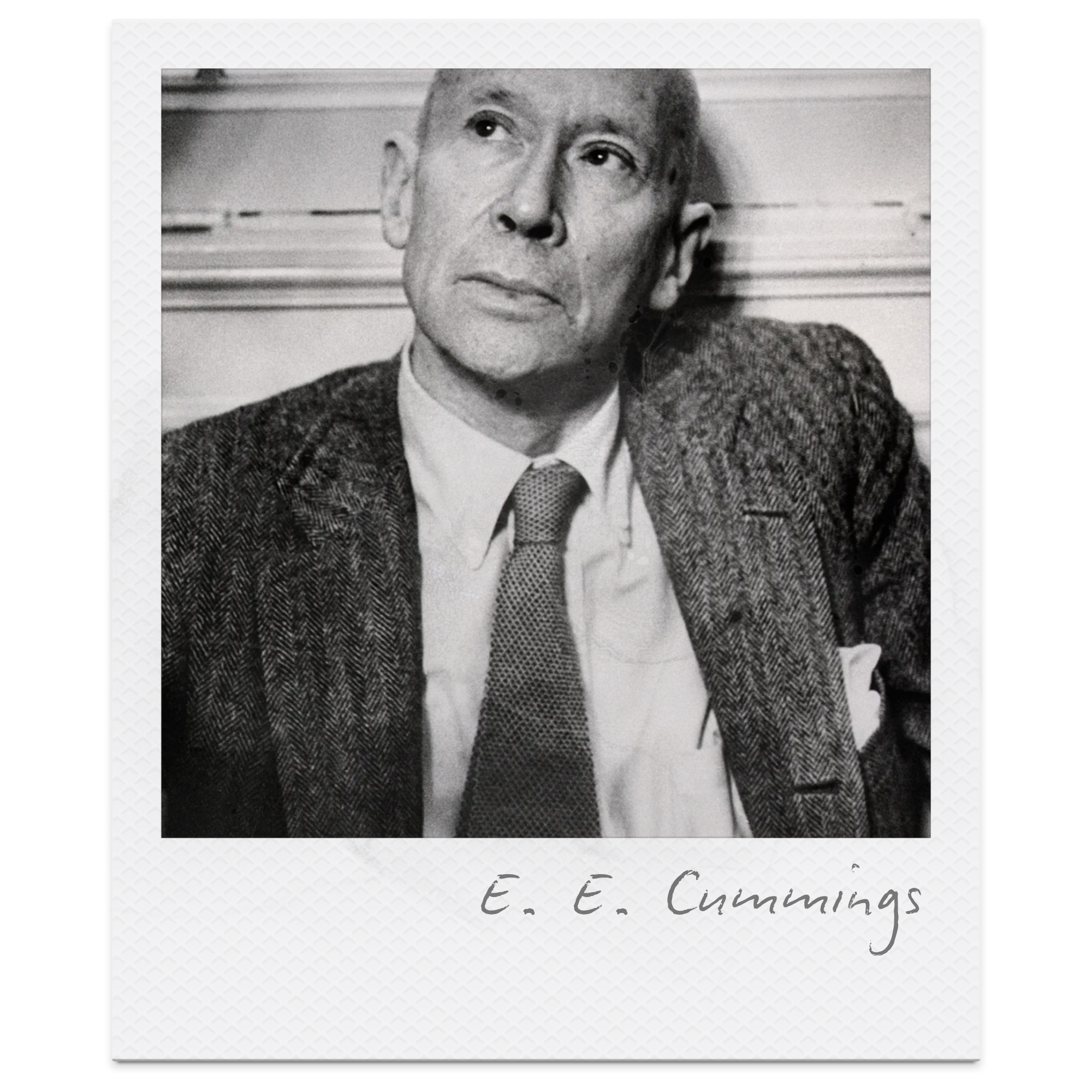
Context of when faces called flowers float out of the ground
E. E. Cummings was an American Modernist poet known for breaking conventional rules of grammar, syntax, punctuation and typography, while repeatedly returning to traditional subjects such as love, nature, individuality and renewal. His work combines Modernist experimentation with a Romantic-like reverence for natural life, intuition and imagination over restrictive social conventions.
Published in 1950 in Xaipe — a title derived from the Greek for “rejoice” — the poem belongs to a collection increasingly concerned with rural scenery, personal experience and the everyday miracle of the natural world. At this time, Cummings divided his life between Greenwich Village and his New Hampshire farm, and poems in Xaipe frequently celebrate nature as a source of wonder and vitality.
In when faces called flowers float out of the ground, these influences converge: Cummings takes the familiar poetic subject of spring as rebirth and makes it feel new through disrupted syntax, compressed punctuation, repetition and playful transformations of ordinary language. Spring becomes simultaneously natural, emotional and erotic renewal, while the poem's opposition between “keeping” and “giving” reflects Cummings's broader celebration of openness, individual freedom and fully experienced life.
when faces called flowers float out of the ground: At a Glance
Form: A three-stanza lyric poem that combines regular structural patterns with Cummings’s characteristically unconventional punctuation, syntax and typography.
Mood: Joyful, playful, intimate and celebratory, becoming increasingly exuberant as spring transforms both the natural world and the speaker’s experience of love and life.
Central tension: The contrast between giving and keeping, openness and restriction, life and stagnation, as the poem suggests that fulfilment comes through embracing rather than attempting to possess life, love and change.
Core themes: Spring and renewal; love and intimacy; nature; freedom; giving and generosity; joy; transformation; life and vitality.
One-sentence meaning: Cummings presents spring as a powerful awakening of nature, love and human vitality, suggesting that truly living means embracing change, giving freely and participating joyfully in the movement of life rather than trying to hold onto or control it.
Quick Summary of when faces called flowers float out of the ground
The poem begins with the arrival of spring, as flowers emerge from the earth and the natural world seems to awaken into movement, happiness and possibility. The speaker connects this seasonal renewal with a philosophy of living in which “wishing” leads to “having” and eventually to “giving”, while “keeping” is repeatedly associated with limitation and stagnation. Birds, fish and mountains participate in the celebration, while intimate addresses such as “my darling” and “kiss me now” connect the renewal of nature with romantic love and physical desire.
As the poem develops, its celebration becomes increasingly intense. What begins with flowers appearing and leaves opening culminates in the declaration that “more than was lost has been found”, suggesting restoration after a period of absence, difficulty or emotional winter. Darkness becomes day, birds dive towards “the heart of the sky”, fish move through “the mind of the sea”, and the mountains continue dancing. The poem ends in exuberant affirmation, presenting spring as a transformation that restores love, freedom, generosity and the sheer experience of being alive.
You're right. “he” / “i” and “fly” / “be” are not rhymes, and there is no reason to manufacture a rhyme scheme when Cummings is doing something much more interesting with repetition, syntax, sound and structural patterning. The section should distinguish clearly between rhyme, repeated sounds, repeated syntax and rhythm.
Here is the corrected full section.
Title, Form, Structure, and Metre
Although Cummings rejects many conventional poetic rules, the poem is carefully and recognisably patterned. Its three balanced stanzas, repeated phrases, developing sequences and recurring images give it structural coherence, while unconventional punctuation and flexible rhythm create the impression of spontaneous, irrepressible life.
Title
The title when faces called flowers float out of the ground immediately makes the familiar arrival of spring seem strange and wonderful. The metaphorical phrase “faces called flowers” gives the flowers a human identity, suggesting that their emergence resembles living faces appearing from beneath the earth. The verb “float” adds a sense of effortless movement, making spring seem less like an ordinary seasonal process and more like a magical awakening.
The title is also written entirely in lower-case letters, continuing Cummings's characteristic rejection of conventional capitalisation throughout the poem. Even “april” and the first words of sentences remain lower case. Visually, this removes the usual hierarchy created by capital letters and contributes to the poem's sense of continuity, informality and freedom from imposed rules. The unconventional typography is therefore appropriate to a poem that repeatedly favours openness and movement over restriction and “keeping”.
Beginning with the subordinating conjunction “when” is equally significant. The title does not present a complete statement but introduces a condition or moment that seems to require continuation. This sense of grammatical incompleteness draws the reader immediately into a poem concerned with process, change and becoming: flowers are emerging, spring is arriving and life is moving from one state into another.
Form and Structure
The poem is a lyric composed of three seven-line stanzas. The equal stanza lengths create an underlying formal stability, but Cummings fills this framework with unusual syntax, punctuation and increasingly exuberant imagery. The combination of order and apparent spontaneity reflects the poem's presentation of spring: the season is part of a recurring natural cycle, yet its arrival feels fresh, unpredictable and intensely alive.
The three stanzas are strongly parallel. Each begins with “when”, before moving through a chain of abstract ideas:
“breathing is wishing and wishing is having”
“wishing is having and having is giving”
“having is giving and giving is living”
This is one of the poem's most important structural developments. Cummings uses repetition with progression, carrying a word from one statement into the next so that each stage seems to generate another. “breathing” develops into “wishing”, “wishing” into “having”, “having” into “giving”, and finally “giving” into “living”. The structure itself therefore enacts growth: ideas do not remain static but continually transform.
Against this movement, every stanza introduces the repeated phrase “but keeping”. “Keeping” becomes increasingly negative: it is first associated with “downward and doubting and never”, then with “doting and nothing and nonsense”, and finally with “darkness and winter and cringing”. The structural opposition between “giving” and “keeping” is crucial. While giving belongs to the poem's forward progression towards life, keeping represents an attempt to hold onto something and consequently becomes associated with stagnation, fear and winter.
The fourth line of each stanza forms another recurring pattern:
“it's april(yes,april;my darling)it's spring!”
“alive;we're alive,dear:it's(kiss me now)spring!”
“it's spring(all our night becomes day)o,it's spring!”
Cummings places intimate statements inside parentheses, allowing private emotion and physical desire to interrupt the poem's larger celebration of spring. The progression is significant: “my darling” becomes “we're alive,dear”, then the direct physical invitation “kiss me now”. Natural renewal and human intimacy become increasingly inseparable.
The final three lines of each stanza also follow a repeated pattern involving birds, fish and mountains. Their actions become progressively more extraordinary. The birds move from “frolic” to “hover” and finally “dive to the heart of the sky”; the fish move from “gambol” to “quiver” and eventually “climb through the mind of the sea”. The mountains dance throughout, but the image becomes increasingly emphatic:
“the mountains are dancing together”
“the mountains are dancing,the mountains”
“all the mountains are dancing;are dancing”
The structure therefore creates intensification rather than simple repetition. By the final stanza, ordinary distinctions between earth, sea and sky seem to have dissolved, suggesting that spring has released such vitality that the entire natural world participates in its transformation.
Rhyme Scheme and Poetic Pattern
The poem has no regular end-rhyme scheme, and it would be misleading to impose one upon it. Instead, Cummings creates musical coherence through repetition, internal sound patterning, parallel syntax and recurring grammatical structures.
There are occasional genuine rhyming or near-rhyming effects within the lines. Most noticeably, “giving” and “living” form a clear rhyme:
“and giving is living”
The repeated -ing endings elsewhere — “breathing”, “wishing”, “having”, “giving”, “living”, “doubting”, “doting” and “cringing” — do not all rhyme with one another, but they create a recurring morphological and sonic pattern. This repeated ending connects actions and states throughout the poem while reinforcing its preoccupation with things that are actively happening rather than remaining fixed.
Cummings also uses alliteration and consonance to give individual phrases playful energy. “faces called flowers float” brings together repeated f sounds, making the opening light and fluid, while phrases such as “pretty birds”, “frolic as spry” and “fish… as glad” create smaller sound patterns within the natural imagery.
More important than rhyme is syntactic repetition. Phrases such as:
“wishing is having and having is giving”
“having is giving and giving is living”
create musicality through repeated sentence construction. Similarly, the parallel phrases “the pretty birds”, “the little fish” and “the mountains” return in every stanza. The reader therefore experiences a strong sense of pattern even without conventional rhyme.
The repeated mountain lines function almost as a refrain, but Cummings changes them each time rather than reproducing them exactly. The final:
“(all the mountains are dancing;are dancing)”
repeats the verb itself, so the poem ends not with closure but with an action apparently continuing beyond the final line. This is particularly appropriate to a poem that associates life with movement and transformation rather than containment.
Metre and Rhythmic Movement
Cummings does not use a consistent traditional metre. The lines vary in their number and arrangement of stressed and unstressed syllables, and the poem's rhythm is instead created through natural speech stresses, repetition, parallel syntax and changes in pace. This flexibility allows the language itself to seem energetic and unpredictable.
The opening line demonstrates this irregularity. One natural reading places the strongest stresses on the key images:
when FACes called FLOWers FLOAT out of the GROUND
The unstressed syllables between these prominent stresses prevent the line from settling into a regular iambic or trochaic pattern. Instead, the stresses draw attention to the transformation at the centre of the image: faces, flowers, floating and ground.
The philosophical sequences have a more repetitive rhythmic quality because the same grammatical units recur:
and WISHing is HAVing and HAVing is GIVing
and HAVing is GIVing and GIVing is LIVing
The recurring stressed first syllables of WISHing, HAVing, GIVing and LIVing create a chain of rhythmic emphasis. Because each important word is picked up and transformed into the next idea, rhythm reinforces the poem's movement towards “living”. The reader is carried forward rather than allowed to settle on any single state.
Cummings also changes pace through punctuation. Parentheses compress intimate statements into the surrounding lines, while semicolons, colons and exclamation marks create abrupt shifts in emphasis:
“alive;we're alive,dear:it's(kiss me now)spring!”
The line can feel almost breathless, as declarations of life, intimacy, desire and spring crowd together without conventional spacing or syntactical restraint. Form therefore reinforces emotional excitement.
By contrast, repetition can slow the reader and intensify particular moments. In the final line:
all the MOUNtains are DANCing;are DANCing
the return of “are dancing” gives additional rhythmic weight to the action. Rather than concluding with a neat metrical resolution, the poem ends by repeating movement itself.
Cummings therefore uses rhythmic freedom rather than metrical regularity. The poem contains enough repetition and parallelism to feel controlled, but its stresses continually shift and its punctuation disrupts predictable movement. This tension between pattern and freedom perfectly suits a poem in which spring represents renewal, spontaneity, generosity and life escaping the restrictions of “keeping”.
The Speaker in when faces called flowers float out of the ground
The speaker appears to be someone experiencing spring alongside a romantic lover, addressed intimately as “my darling” and “dear”. Although the speaker begins by observing the awakening natural world, the voice quickly becomes personal and emotionally involved: “we’re alive,dear” and “kiss me now” connect spring’s physical renewal with love, desire and a heightened awareness of being alive. The tone is exuberant, playful and increasingly ecstatic, while the repeated movement from “wishing” to “having”, “giving” and finally “living” suggests that the speaker is also expressing a wider philosophy about how life should be experienced. Rather than valuing possession or “keeping”, the voice celebrates openness, generosity, spontaneity and participation, qualities mirrored by the freely moving birds, fish and dancing mountains. Cummings therefore blurs the boundary between personal emotion and the natural world: the speaker does not simply observe spring but seems to experience love, nature and renewal as parts of the same joyful awakening.
Stanza-by-Stanza Analysis of when faces called flowers float out of the ground
Across its three closely patterned stanzas, when faces called flowers float out of the ground develops from the first awakening of spring towards an increasingly intense celebration of love, generosity, freedom and being alive. Cummings repeatedly returns to the same structural elements — the transformation of abstract ideas, the rejection of “keeping”, intimate declarations between lovers, and the movements of birds, fish and mountains — but subtly changes them each time. Through repetition with variation, personification, paradox, unconventional punctuation, sound patterning and increasingly impossible natural imagery, the poem itself seems to grow and transform. The stanza structure therefore mirrors its central idea: genuine life is not static or possessive but continually moving, giving, changing and becoming.
Stanza 1: Spring Awakens the World
Cummings begins with the striking image “when faces called flowers float out of the ground”, immediately transforming the ordinary appearance of spring flowers into something strange and almost miraculous. The metaphor “faces called flowers” personifies the flowers, suggesting that the earth itself is producing new living identities, while the alliteration of “faces”, “flowers” and “float” gives the line a soft, fluid quality. The verb “float” is particularly unusual because flowers physically grow rather than float from the earth. Cummings deliberately makes the familiar process of seasonal growth feel unfamiliar, encouraging the reader to experience spring with renewed wonder.
The second line moves abruptly from the natural world towards a more philosophical sequence:
“and breathing is wishing and wishing is having-”
The repeated construction “X is Y and Y is Z” collapses distinctions between desire and fulfilment. Even “breathing”, the most basic evidence of physical life, becomes connected with “wishing”, while wishing itself becomes equivalent to “having”. This creates an idealistic vision in which being alive, desiring something and experiencing fulfilment become part of the same continuous process. The repetition of “wishing” also carries the reader rhythmically forward, reflecting a world in which nothing remains static.
Cummings immediately introduces an opposing philosophy:
“but keeping is downward and doubting and never”
The conjunction “but” creates a sharp contrast between the expansive movement of wishing and having and the restrictive idea of “keeping”. Significantly, Cummings does not present “having” negatively; it is specifically “keeping” that becomes problematic. The distinction suggests that experiencing or receiving something is natural, while attempting to possess and preserve it permanently prevents further movement. The abstract metaphor “keeping is downward” associates possession with sinking rather than growth, directly opposing the flowers that have just risen “out of the ground”.
The accumulation “downward and doubting and never” intensifies this negativity. “Doubting” introduces fear and hesitation, while the absolute “never” suggests complete denial of possibility. The repeated d sounds in “downward” and “doubting” give the phrase additional emphasis. Cummings therefore establishes one of the poem's central oppositions: life moves upwards and forwards, while possessiveness produces restriction and stagnation.
The dash carries this thought directly into an ecstatic announcement:
“- it's april(yes,april;my darling)it's spring!”
The exclamation “it’s spring!” breaks through the previous negativity with sudden excitement. Cummings's unconventional punctuation allows several voices or emotional impulses to seem compressed into one line. The parenthetical “(yes,april;my darling)” sounds intimate and spontaneous, revealing that the celebration of spring is also being shared with a lover. The possessive “my” might initially seem to contradict the rejection of “keeping”, but here it functions as affectionate address rather than literal ownership.
The repetition of “april” conveys delighted recognition: the speaker seems almost amazed that spring has genuinely returned. By placing the romantic address inside the declaration of the season, Cummings begins to merge natural renewal with emotional and romantic awakening. Spring is not simply happening around the speaker; it is changing how life and love are experienced.
The final three lines widen the celebration across the natural world:
“yes the pretty birds frolic as spry as can fly”
“yes the little fish gambol as glad as can be”
The repeated “yes” creates a tone of joyful affirmation, directly opposing the earlier negativity of “never”. Where “never” closes possibilities, “yes” repeatedly opens them. The playful verbs “frolic” and “gambol” usually describe energetic, carefree movement and make the animals seem almost childlike in their happiness. Cummings's alliterative phrases — “pretty birds” and “fish… frolic”–style sound play across the lines — add to the lightness and exuberance of the description.
The deliberately playful expressions “as spry as can fly” and “as glad as can be” avoid precise description in favour of uncomplicated delight. Cummings is less interested in realistically observing the animals than in presenting a world temporarily governed by energy, freedom and happiness. Birds move through the air and fish through water, extending the poem's celebration beyond the flowers and across different parts of nature.
The stanza concludes:
“(yes the mountains are dancing together)”
The personification of the “mountains” as “dancing” takes the animation of nature to an impossible extreme. Mountains are among the most fixed and immovable features of the landscape, yet even they participate in spring's movement. This makes the image particularly important within a poem that rejects “keeping” and celebrates change: even what appears permanent and static can dance.
Placing the entire line within parentheses gives it the quality of an extraordinary aside, as though the speaker suddenly notices that the transformation extends even further than expected. The final word “together” is also significant. Spring has brought flowers, animals, landscape and lovers into a shared experience of vitality. The first stanza therefore establishes Cummings's central vision of spring as more than seasonal change: it represents an exuberant affirmation of movement, connection, possibility and life itself.
Stanza 2: Giving, Love and the Joy of Being Alive
The second stanza closely mirrors the structure of the first, but Cummings develops its ideas from awakening towards fuller participation in life and love. The opening image shifts from flowers emerging from the earth to leaves unfolding:
“when every leaf opens without any sound”
The verb “opens” is central to the poem's developing philosophy. Spring causes the natural world literally to open, but the word also suggests receptiveness, freedom and emotional openness, directly opposing the restrictive idea of “keeping”. The inclusive determiner “every” makes the transformation seem universal, while “without any sound” introduces an unexpected moment of quietness. Spring is exuberant throughout the poem, yet its most fundamental transformations happen silently and naturally. Cummings suggests that renewal does not need to be forced: life simply opens.
The philosophical sequence from stanza one then returns, but it has progressed:
“and wishing is having and having is giving -”
Previously, “breathing” became “wishing” and “wishing” became “having”; now Cummings carries the sequence forward so that “having” becomes “giving”. The repetition links the stanzas while creating development rather than circularity. Possession is not presented as an endpoint. To “have” something fully is ultimately to be capable of giving it away, reinforcing the poem's rejection of static ownership.
The repeated grammatical construction also creates a sense of continuous transformation, with each concept flowing naturally into the next. “Giving” becomes particularly significant because it offers the positive alternative to “keeping”: one allows experience, love and life to circulate, while the other attempts to stop that movement.
Cummings strengthens this contrast in the following line:
“but keeping is doting and nothing and nonsense”
The repeated “but keeping” recreates the interruption from stanza one, but its associations have changed. “Doting” can suggest excessive or foolish attachment, implying that attempting to hold onto something too tightly can distort genuine affection. More absolute is “nothing”: paradoxically, the attempt to keep everything results in having nothing of real value.
The final word “nonsense” adds a playful dismissiveness. Rather than solemnly condemning possessiveness, the speaker almost laughs it away as absurd. The repeated n sounds of “nothing and nonsense” reinforce the connection between the two words, while their negativity contrasts sharply with the stanza's movement towards giving and life. Cummings suggests that trying to preserve experience permanently misunderstands the nature of living itself.
That abstract argument suddenly becomes intensely personal:
“- alive;we're alive,dear:it's(kiss me now)spring!”
The declaration “we’re alive” marks an important development from the first stanza. The speaker no longer simply announces that “it’s spring”; spring has become evidence of the lovers' own vitality. The repeated “alive” conveys excitement and wonder at existence itself, while the inclusive pronoun “we” makes this a shared experience.
Cummings's unconventional punctuation intensifies the emotional rush. The semicolon, comma, colon and parentheses appear in rapid succession, preventing the sentence from settling into a conventional shape. This visual and syntactical compression reflects emotion overflowing ordinary grammatical boundaries.
Most strikingly, the parenthetical aside changes from “my darling” to:
“(kiss me now)”
The imperative “kiss” transforms affectionate address into physical action, while “now” emphasises immediacy. This is perfectly aligned with the poem's philosophy: rather than “keeping”, postponing or doubting, the speaker wants to experience love in the present moment. Spring therefore becomes not merely a metaphor for romantic feeling but a stimulus for sensual participation in life.
The next two lines develop the connection between nature and the lovers:
“now the pretty birds hover so she and so he”
“now the little fish quiver so you and so i”
The repeated “now” replaces the “yes” that introduced these lines in stanza one. This subtle structural change is important. “Yes” expressed affirmation; “now” emphasises presence, immediacy and the current moment. Cummings repeatedly directs attention away from preserving the past or worrying about the future and towards fully inhabiting the present.
The verbs have also changed. The birds that previously “frolic” now “hover”, while the fish that “gambol” now “quiver”. “Hover” suggests suspension and delicate movement, whereas “quiver” can suggest excitement, sensitivity or physical desire. The natural world therefore seems increasingly charged with the same romantic and sensual energy experienced by the speaker.
Cummings then explicitly connects the animals with human relationships through the unusual constructions “so she and so he” and “so you and so i”. The parallel pairings move from the general “she” and “he” towards the personal “you” and “i”, drawing the speaker and lover directly into the natural pattern.
The continued lower-case “i” is visually important here. Rather than giving the individual self the conventional prominence of a capital “I”, Cummings places “i” alongside “you”, the birds, fish and wider natural world. The speaker becomes one participant within spring's shared vitality rather than its dominant centre.
The stanza ends by returning to its most impossible image:
“(now the mountains are dancing,the mountains)”
The mountains are still “dancing”, maintaining the personification from stanza one, but “together” has disappeared and “the mountains” is instead repeated. The repetition creates a sense of astonishment, as though the speaker cannot quite move beyond the extraordinary image: even mountains, symbols of solidity and permanence, have become animated.
Once again, “now” emphasises that this transformation is happening in the present. The stanza therefore develops the first stanza's celebration of spring into something more intimate and philosophical. Nature does not merely awaken; having becomes giving, existence becomes shared existence, affection becomes physical expression, and observation becomes participation. Through these developments, Cummings presents being fully “alive” as an act of openness — to nature, to another person and to the immediate experience of life.
Stanza 3: From Winter and Loss to Living
The final stanza brings the poem's patterns to their culmination. Images and phrases from the previous stanzas return, but Cummings intensifies them so that spring becomes not simply an awakening but a triumph over loss, darkness and emotional restriction. The stanza begins:
“when more than was lost has been found has been found”
The contrast between “lost” and “found” immediately introduces the idea of recovery. Spring restores what winter appeared to take away, but Cummings goes further: “more than was lost” has returned. Renewal is therefore not merely restoration to a previous state. The new life of spring creates an abundance that exceeds what existed before, suggesting that experiences of absence or loss can be followed by unexpected growth.
The repetition “has been found has been found” reinforces this sense of joyful discovery. Grammatically, the second phrase is unnecessary, but emotionally it feels essential: the speaker repeats the discovery as though scarcely able to believe it. The repetition also creates a sense of accumulation, appropriate to a stanza in which life seems increasingly abundant and irrepressible.
The philosophical sequence that has developed across the poem then reaches its conclusion:
“and having is giving and giving is living -”
In stanza one, “breathing” became “wishing” and “wishing” became “having”; stanza two moved from “wishing” through “having” to “giving”. Now Cummings begins with “having” and reaches “living”. The progression across the poem can therefore be traced as:
breathing → wishing → having → giving → living
This chain provides one of the clearest statements of the poem's philosophy. Merely possessing something is not sufficient: “having” achieves its fullest meaning through “giving”, and giving becomes inseparable from truly living. The repeated structure makes each state seem to grow naturally from the previous one, just as the natural world develops from flower to leaf to the abundance of spring.
The rhyme of “giving” and “living” adds particular emphasis to the final stage of this progression. Their closeness in both sound and meaning makes generosity and vitality seem almost inseparable. Cummings's language suggests that life reaches its fullest expression not through possession but through openness, exchange and connection.
For the third and final time, however, this forward movement is interrupted:
“but keeping is darkness and winter and cringing”
The repeated “but keeping” has become increasingly severe across the poem. Previously, keeping was “downward and doubting and never”, then “doting and nothing and nonsense”; now it becomes “darkness and winter and cringing”. “Winter” is especially important because it gives the abstract argument a seasonal equivalent. If spring represents openness, giving and life, winter represents the attempt to remain closed and unchanged.
“Darkness” also establishes an opposition with the light that appears in the following line, while “cringing” suggests a physical contraction of the body. This is the opposite of the flowers floating upwards and leaves opening outwards in the previous stanzas. The contrast makes Cummings's spatial imagery significant: life expands and opens; keeping contracts and withdraws.
The poem immediately overturns this darkness:
“- it's spring(all our night becomes day)o,it's spring!”
The contrast between “night” and “day” transforms seasonal renewal into a broader image of emotional transformation. “Our night” may suggest a shared period of sadness, separation, difficulty or simply the figurative winter from which the lovers are emerging. Cummings leaves the exact nature of this “night” undefined, allowing it to represent whatever has previously restricted or darkened their experience.
The possessive “our” also continues the development of the relationship. The poem has moved from “my darling” to “we’re alive” and “you and i”, and now the lovers possess a shared history: “our night”. Yet unlike the negative “keeping”, this shared possession is immediately transformed — their night “becomes day”. What matters is not preserving the darkness but passing through it.
The interjection “o” gives the declaration an almost lyrical or ecstatic quality. Combined with the repeated “it’s spring”, it suggests that ordinary syntax is increasingly inadequate to express the speaker's joy. The parentheses no longer merely contain an intimate aside such as “my darling” or “kiss me now”; they now contain a complete transformation from darkness into light. Personal renewal and seasonal renewal have become inseparable.
The final three lines take the natural imagery beyond realistic possibility:
“all the pretty birds dive to the heart of the sky”
Earlier, the birds “frolic” and then “hover”; now they “dive”, a more decisive and energetic verb. Yet birds normally dive downwards, whereas these birds dive “to the heart of the sky”. Cummings deliberately disrupts ordinary spatial expectations, suggesting a natural world no longer constrained by conventional directions or boundaries.
The metaphor “heart of the sky” makes the sky seem like a living being with an emotional centre. “Heart” also connects the natural world with the poem's celebration of love: the birds do not merely fly through the sky but penetrate towards its deepest source of life. The image makes spring feel simultaneously physical, emotional and cosmic.
Cummings creates a parallel impossibility in the next line:
“all the little fish climb through the mind of the sea”
The verb “climb” is unexpected for fish, just as “dive” is used unexpectedly for the birds. The parallel construction connects air and water while making both environments seem liberated from ordinary physical rules.
Even more striking is the metaphor “the mind of the sea”. Where the sky possesses a “heart”, the sea possesses a “mind”, personifying the natural world as something both emotional and conscious. The pairing of “heart” and “mind” may also suggest a new harmony between feeling and thought. By this stage, nature is no longer simply being personified through isolated details: the entire world seems alive, sentient and participating in spring.
The stanza — and poem — concludes with its recurring image:
“(all the mountains are dancing;are dancing)”
The change from “yes”, to “now”, to “all” across the three stanzas completes another subtle progression. “Yes” affirms the miracle, “now” locates it in the immediate present, and “all” makes it universal. Spring's transformative energy has spread until nothing appears excluded from the dance.
The repetition “are dancing;are dancing” is particularly effective because Cummings ends with a verb of continuing action rather than a statement of completion. The mountains do not dance and stop: they “are dancing”. Repeating the phrase after the semicolon seems to restart the movement just as the poem reaches its end.
There is a deliberate paradox in choosing mountains for this final image. Mountains conventionally represent permanence, solidity and immobility, yet Cummings makes them dance. The image therefore becomes the ultimate rejection of “keeping”: even the most apparently fixed things in existence are capable of movement and transformation.
The final stanza completes the poem's progression from breathing to living, loss to abundance, winter to spring, night to day and stillness to dance. Rather than simply describing seasonal change, Cummings makes spring embody a philosophy of existence in which life flourishes through giving, openness, love and continual transformation. Ending with the mountains still “dancing” leaves that transformation unfinished, suggesting that to be alive is not to arrive at a fixed state, but to remain joyfully in motion.
Key Quotes and Methods in when faces called flowers float out of the ground
Cummings's most useful quotations reveal how the poem develops from the first emergence of spring towards a much broader celebration of renewal, love, generosity and fully experienced life. Strong analysis should pay particular attention to the poem's developing patterns: images of opening and upward movement, the opposition between “giving” and “keeping”, increasingly intimate language, and the transformation of the entire natural world.
“faces called flowers float out of the ground”
◆ Technique: Metaphor, personification, alliteration and visual imagery.
◆ Meaning: Flowers emerging in spring are imagined as human “faces”, transforming ordinary growth into the appearance of new living beings.
◆ Purpose: Cummings makes a familiar seasonal event seem strange and miraculous, encouraging the reader to rediscover the natural world rather than take it for granted.
◆ Impact: The repeated f sounds give the opening a light, fluid quality, while “float” creates an effortless upward movement that immediately associates spring with awakening and possibility.
“breathing is wishing and wishing is having”
◆ Technique: Repetition, parallel syntax and metaphorical equivalence.
◆ Meaning: Cummings collapses the distinction between simply being alive, desiring something and experiencing fulfilment.
◆ Purpose: The sequence begins the poem's developing philosophy in which different experiences naturally transform into one another.
◆ Impact: The reader is carried forward through the repeated structure, creating the impression that life itself generates possibility and fulfilment.
“but keeping is downward and doubting and never”
◆ Technique: Contrast, metaphor, alliteration and accumulation.
◆ Meaning: “Keeping” is associated with restriction, hesitation and ultimately the denial of possibility.
◆ Purpose: Cummings distinguishes between experiencing something and attempting to possess or preserve it permanently.
◆ Impact: “Downward” directly opposes the upward emergence of the flowers, establishing the poem's larger contrast between growth and stagnation.
“it's april(yes,april;my darling)it's spring!”
◆ Technique: Repetition, parenthesis, direct address, exclamation and unconventional punctuation.
◆ Meaning: The arrival of spring is experienced simultaneously as a natural event and an intimate moment shared with a lover.
◆ Purpose: Cummings begins merging seasonal renewal with romantic awakening, showing that the speaker's response to spring is deeply personal.
◆ Impact: The compressed punctuation and exclamation create excitement and spontaneity, making the declaration sound almost too joyful for conventional syntax.
“yes the pretty birds frolic as spry as can fly”
◆ Technique: Kinetic imagery, playful diction, alliteration and personification.
◆ Meaning: The birds embody the energy and freedom that spring has released into the natural world.
◆ Purpose: The playful verb “frolic” makes nature seem exuberantly alive rather than passive scenery.
◆ Impact: The repeated affirmation “yes” counters the earlier “never”, replacing denial with possibility and creating a mood of uncomplicated joy.
“yes the mountains are dancing together”
◆ Technique: Personification, hyperbole and visual imagery.
◆ Meaning: Even the apparently permanent and immovable mountains participate in spring's celebration.
◆ Purpose: Cummings takes the animation of nature beyond realism, suggesting that spring's transformative power affects the whole world.
◆ Impact: The impossible image is joyful but also philosophically significant: even what appears fixed can move and change.
“when every leaf opens without any sound”
◆ Technique: Visual imagery, symbolism and contrast between movement and silence.
◆ Meaning: Spring's renewal occurs quietly and naturally as the leaves unfold.
◆ Purpose: The verb “opens” develops the poem's association between spring and receptiveness, opposing the restrictive impulse of “keeping”.
◆ Impact: The quietness creates a moment of delicacy within the poem's exuberance, suggesting that profound transformation can happen effortlessly and without spectacle.
“wishing is having and having is giving”
◆ Technique: Repetition, parallel syntax and structural progression.
◆ Meaning: The sequence introduced in stanza one develops so that possession leads naturally towards generosity.
◆ Purpose: Cummings refuses to make “having” the final goal; fulfilment becomes meaningful when it develops into “giving”.
◆ Impact: The evolving pattern encourages the reader to understand life as movement and exchange rather than accumulation.
“but keeping is doting and nothing and nonsense”
◆ Technique: Repetition, accumulation, alliteration and dismissive diction.
◆ Meaning: Excessive attachment or possessiveness ultimately produces emptiness rather than security.
◆ Purpose: The repeated “but keeping” strengthens the poem's rejection of attempts to hold life or love in a fixed state.
◆ Impact: “Nothing and nonsense” makes keeping sound both futile and absurd, giving the speaker's rejection of possessiveness a playful confidence.
“alive;we're alive,dear:it's(kiss me now)spring!”
◆ Technique: Repetition, direct address, imperative, parenthesis and unconventional punctuation.
◆ Meaning: Spring's renewal becomes inseparable from the lovers' awareness of their own physical and emotional vitality.
◆ Purpose: The imperative “kiss me now” turns observation into action: the speaker wants to participate immediately in the life spring represents.
◆ Impact: The compressed punctuation creates a breathless rush of feeling, capturing desire, intimacy and excitement at simply being alive.
“now the little fish quiver so you and so i”
◆ Technique: Parallelism, kinetic imagery, pronouns and sensual diction.
◆ Meaning: The movement of the fish becomes connected directly with the emotional and physical experience of the speaker and lover.
◆ Purpose: By moving from the more general “she” and “he” to “you” and “i”, Cummings draws the lovers into the same patterns of vitality visible throughout nature.
◆ Impact: Human love no longer appears separate from spring; the lovers become participants in its shared natural energy.
“more than was lost has been found has been found”
◆ Technique: Antithesis, repetition and paradoxical abundance.
◆ Meaning: Spring restores not merely what disappeared during winter but “more than was lost”, turning recovery into growth.
◆ Purpose: Cummings expands the idea of renewal beyond simple return: new life can exceed what existed previously.
◆ Impact: The emotionally insistent repetition of “has been found” conveys astonishment and relief, making renewal feel like unexpected abundance after loss.
“having is giving and giving is living”
◆ Technique: Parallel syntax, repetition, internal rhyme and structural culmination.
◆ Meaning: The philosophical sequence running through all three stanzas finally arrives at “living”: true possession becomes generosity, and generosity becomes life.
◆ Purpose: Cummings condenses one of the poem's central ideas into a memorable progression: breathing → wishing → having → giving → living.
◆ Impact: The clear rhyme of “giving” and “living” strengthens their connection, making openness and generosity seem fundamental to being fully alive.
“but keeping is darkness and winter and cringing”
◆ Technique: Metaphor, seasonal symbolism, accumulation and contrast.
◆ Meaning: “Keeping” reaches its darkest form, associated with fear, contraction and the lifelessness of winter.
◆ Purpose: Cummings gives his abstract philosophy a natural equivalent: giving belongs to spring and life, while keeping belongs to winter and stagnation.
◆ Impact: “Cringing” is especially physical, suggesting a body shrinking inward rather than opening towards experience.
“all our night becomes day”
◆ Technique: Antithesis, symbolism and metaphor.
◆ Meaning: Darkness is transformed into light, suggesting emotional recovery, renewed love or a broader movement from difficulty towards possibility.
◆ Purpose: Cummings connects the seasonal transition from winter to spring with personal transformation shared by the lovers.
◆ Impact: The simple opposition between “night” and “day” makes renewal feel complete and powerful, while “our” gives the transformation emotional intimacy.
“all the pretty birds dive to the heart of the sky”
◆ Technique: Metaphor, personification, kinetic imagery and paradoxical spatial imagery.
◆ Meaning: The birds move towards an imagined emotional centre of the sky, transforming nature into something living and feeling.
◆ Purpose: The unexpected verb “dive” disrupts ordinary direction: the birds appear liberated even from conventional physical expectations.
◆ Impact: The image expands the poem from seasonal observation into an almost surreal vision of complete natural freedom.
“all the little fish climb through the mind of the sea”
◆ Technique: Metaphor, personification, kinetic imagery and parallelism.
◆ Meaning: The sea is imagined as possessing a “mind”, while fish perform the impossible action of “climbing” through it.
◆ Purpose: Paired with the “heart of the sky”, the image gives nature both emotional and intellectual life, dissolving distinctions between human consciousness and the natural world.
◆ Impact: The surreal imagery makes the final stanza feel liberated from ordinary physical restrictions, reflecting the poem's celebration of freedom and transformation.
“all the mountains are dancing;are dancing”
◆ Technique: Personification, repetition, refrain and climactic imagery.
◆ Meaning: The poem's recurring dancing mountains return for a final time, with the whole landscape participating in spring's vitality.
◆ Purpose: Repeating “are dancing” prevents the image from becoming static even as the poem reaches its conclusion.
◆ Impact: Cummings ends with continuing action rather than closure. The mountains — symbols of permanence and immobility — remain dancing, leaving the reader with the idea that being fully alive means remaining open to movement, change and renewal.
Key Techniques in when faces called flowers float out of the ground
Cummings combines experimental language and typography with carefully controlled repetition and structural patterning. Although the poem initially appears spontaneous, its recurring phrases, parallel stanza structures and developing images allow its celebration of spring to build systematically towards a wider philosophy of love, generosity, freedom and fully experienced life.
◆ Personification – Cummings repeatedly gives the natural world human or animate qualities. Flowers become “faces”, the sky has a “heart”, the sea possesses a “mind”, and “the mountains are dancing”. This makes nature seem conscious, emotional and intensely alive, allowing the whole landscape to participate in spring's awakening.
◆ Metaphor – Transformative metaphors make familiar natural experiences seem new. “faces called flowers” turns emerging flowers into living presences, while the “heart of the sky” and “mind of the sea” give the natural world emotional and intellectual dimensions. These metaphors blur the boundary between human experience and nature.
◆ Repetition with Variation – Cummings repeatedly returns to phrases and structures but changes them each time. “breathing is wishing” develops through “having” and “giving” until it reaches “giving is living”, while the dancing mountains recur in altered forms. Repetition therefore represents development rather than stagnation, reinforcing the poem's belief in continual transformation.
◆ Parallelism – Similar grammatical constructions create strong patterns across the poem: “wishing is having and having is giving” and “having is giving and giving is living”. This allows one concept to flow naturally into another, structurally enacting the idea that life is a continuous process rather than a fixed state.
◆ Structural Progression – The poem develops a clear conceptual chain across its three stanzas: breathing → wishing → having → giving → living. This progression provides an underlying philosophical argument beneath the playful natural imagery, culminating in the suggestion that generosity and openness are essential to truly living.
◆ Contrast – Cummings repeatedly places positive and negative states against one another: giving / keeping, spring / winter, day / night, opening / cringing, found / lost. These oppositions establish the poem's central distinction between openness and restriction, with spring representing movement, possibility and life.
◆ Seasonal Symbolism – Spring and winter operate symbolically as opposing states of existence. Spring represents renewal, love, openness and vitality, whereas “winter” becomes associated with “darkness” and “cringing”. Seasonal change therefore becomes a way of exploring emotional and philosophical renewal.
◆ Paradox – Cummings creates deliberately surprising relationships between ideas, particularly when “wishing” becomes “having” and “having” becomes “giving”. The apparent contradictions challenge conventional ideas about possession and fulfilment, suggesting that genuine abundance may come from giving rather than keeping.
◆ Surreal and Impossible Imagery – Birds “dive to the heart of the sky”, fish “climb through the mind of the sea”, and mountains dance. By overturning ordinary physical possibilities, Cummings presents spring as a state in which familiar restrictions disappear, creating a world governed by imaginative freedom.
◆ Kinetic Imagery – Verbs such as “float”, “frolic”, “gambol”, “hover”, “quiver”, “dive”, “climb” and “dancing” fill the poem with movement. The increasing energy of these verbs makes vitality something the reader can almost physically experience and contrasts with the contraction implied by “keeping” and “cringing”.
◆ Spatial Imagery – Direction is important throughout the poem. Flowers move “out of the ground”, while “keeping” is “downward”; later birds dive into the sky and fish climb through the sea. Cummings disrupts ordinary ideas of up and down to create a world in which life refuses conventional boundaries.
◆ Natural Imagery – Flowers, leaves, birds, fish, mountains, sky and sea create a poem saturated with the natural world. Nature is not simply decorative scenery: its transformations provide the central means through which Cummings explores renewal, love and what it means to be alive.
◆ Romantic and Sensual Language – Direct addresses such as “my darling”, “dear” and “kiss me now” connect spring with romantic and physical desire. The lovers' awakening occurs alongside the awakening landscape, suggesting that sexuality and intimacy are natural expressions of life's regenerative energy.
◆ Direct Address – The speaker repeatedly addresses a lover, moving from “my darling” and “dear” towards the more reciprocal “you and so i”. This makes the poem intimate rather than purely philosophical and turns its celebration of spring into a shared human experience.
◆ Imperative – The command “kiss me now” is brief but significant. The imperative and emphatic “now” express spontaneity and immediate participation, embodying the speaker's rejection of hesitation and his desire to experience life rather than preserve or postpone it.
◆ Unconventional Punctuation – Cummings removes conventional spaces around punctuation and combines parentheses, semicolons, colons, dashes and exclamation marks in unexpected ways. Lines such as “alive;we're alive,dear:it's(kiss me now)spring!” feel compressed and breathless, allowing typography to reproduce emotional excitement.
◆ Parenthesis – Parenthetical phrases such as “(yes,april;my darling)”, “(kiss me now)” and the recurring mountain images create intimate interruptions within the larger movement of the poem. They can feel like spontaneous thoughts breaking into the speaker's observations, reinforcing the immediacy of his response.
◆ Lower-Case Typography – The poem consistently avoids conventional capitalisation, including the pronoun “i” and the month “april”. This characteristic Cummings technique visually challenges grammatical hierarchy and convention, complementing a poem that celebrates freedom, openness and resistance to restriction.
◆ Alliteration – Phrases such as “faces called flowers float” use repeated consonant sounds to give the language additional musicality. The soft repeated f sound in the opening contributes to the lightness of the flowers' emergence and makes the language itself feel playful.
◆ Sound Patterning – Rather than relying on a regular rhyme scheme, Cummings creates musicality through recurring sounds, repeated grammatical forms and -ing endings. The genuine rhyme of “giving” / “living” is particularly important because it sonically connects the two concepts at the climax of the poem's philosophical progression.
◆ Polysyndeton – Repeated “and” links ideas together throughout the poem: “downward and doubting and never”, “doting and nothing and nonsense”, and “darkness and winter and cringing”. This accumulation makes ideas seem to generate one another and contributes to the poem's energetic forward movement.
◆ Semantic Fields – Cummings creates opposing networks of vocabulary. “opens”, “giving”, “living”, “alive”, “day” and “spring” suggest expansion and vitality, whereas “downward”, “doubting”, “nothing”, “darkness”, “winter” and “cringing” suggest contraction and limitation. These patterns make the poem's central philosophy visible throughout its language.
◆ Anaphora – Repeated openings create cohesion across the three stanzas. Each begins with “when”, while “yes”, “now” and finally “all” introduce corresponding natural images later in the stanzas. These repeated beginnings establish pattern while their subtle changes demonstrate progression.
◆ Refrain – The image of “the mountains are dancing” concludes every stanza in a slightly altered form. Because mountains normally symbolise permanence and immobility, their continuing dance becomes an increasingly powerful image of transformation and unrestricted life.
◆ Present Participles and Continuous Action – Words such as “wishing”, “having”, “giving”, “living”, “doubting”, “doting”, “cringing” and “dancing” emphasise processes rather than completed actions. This grammatical pattern supports a poem that consistently values becoming and experiencing over fixed states.
◆ Climactic Imagery – The final stanza expands beyond recognisable spring imagery into “the heart of the sky”, “the mind of the sea” and mountains that continue dancing. The increasingly impossible scale of these images makes the ending feel almost ecstatic, suggesting that renewal has spread across the entire world.
◆ Open-Ended Conclusion – The poem finishes with “are dancing;are dancing”, repeating an ongoing action rather than providing firm closure. Cummings leaves the mountains — and metaphorically life itself — still moving, reinforcing his central suggestion that living means continuing to change, give, love and participate rather than attempting to keep experience fixed.
How E. E. Cummings Creates Meaning and Impact in when faces called flowers float out of the ground
Cummings creates meaning by making the poem itself behave like the spring it celebrates: language opens, patterns develop, conventional boundaries are disrupted and images become increasingly free from ordinary limitations. Through playful imagery, structural progression, an intimate and exuberant voice, and flexible rhythms, he transforms seasonal renewal into a wider exploration of love, generosity, freedom and what it means to be fully alive.
Language and Imagery
Cummings begins with recognisable spring imagery but deliberately makes it unfamiliar. Flowers become “faces called flowers”, leaves “open”, birds “frolic” and fish “gambol”. These images present spring not as a passive change in scenery but as an awakening in which everything appears newly alive. The metaphor of flowers as “faces” immediately blurs the distinction between human beings and the natural world, encouraging the reader to see human renewal as part of the same process as seasonal growth.
Movement becomes increasingly important. The verbs develop from relatively believable actions such as “float”, “frolic” and “hover” towards the impossible: birds “dive to the heart of the sky”, fish “climb through the mind of the sea”, and mountains dance. Cummings progressively abandons physical realism because ordinary language and natural laws seem insufficient to express the intensity of spring. The impact is a sense of liberation, as though the natural world has escaped its usual restrictions.
Cummings also creates meaning through repeated oppositions. “Spring”, “day”, “giving”, “living” and “alive” belong to a semantic field of openness and vitality, while “downward”, “nothing”, “darkness”, “winter” and “cringing” suggest restriction and withdrawal. These contrasts turn seasonal change into a broader philosophy: spring becomes a metaphor for choosing openness and participation over fear and stagnation.
Structure and Progression
The poem's structure is essential to this philosophy because Cummings repeatedly uses development rather than simple repetition. The central sequence changes across the three stanzas:
breathing → wishing → having → giving → living
Each new stanza picks up an idea from the previous one and carries it further. The structure therefore performs the process it describes: nothing is simply “kept”. Each concept must change into something else. By culminating in “giving is living”, Cummings suggests that fulfilment does not come from possession but from allowing experience, affection and life to continue circulating.
Against this progression, “but keeping” returns in every stanza. Its consequences become increasingly severe: “downward and doubting and never” develops into “doting and nothing and nonsense”, before finally becoming “darkness and winter and cringing”. The repeated structural interruption makes “keeping” feel like an obstacle to the poem's forward movement. Its purpose is therefore both philosophical and formal: keeping attempts to stop the very process through which the poem grows.
The natural imagery follows a similar progression. Flowers emerge, leaves open, birds and fish become increasingly animated, and the mountains continue dancing. By the final stanza, “all” has replaced the earlier “yes” and “now”, giving the transformation an almost universal scale. Spring has expanded from a particular seasonal moment into a state encompassing the whole natural and human world.
Voice and Tone
The speaker's voice is intimate, playful and increasingly ecstatic. Cummings avoids the detached voice of a conventional nature poem by repeatedly allowing the speaker's relationship with a lover to interrupt the description:
“(yes,april;my darling)”
and later:
“(kiss me now)”
These intimate moments reveal that spring's significance is being experienced personally. The movement from “my darling” to “we're alive” and “you and so i” increasingly connects the lovers with the natural world. Love is not separate from seasonal renewal but another manifestation of the same vitality.
The imperative “kiss me now” is especially important. “Now” rejects postponement and hesitation: the speaker wants to participate in life immediately rather than merely observe it. This directly supports the opposition between “giving” and “keeping”. Love, like spring, achieves meaning through expression and experience rather than preservation or possession.
The tone also develops from delighted observation into something approaching ecstasy. By “o,it's spring!”, conventional syntax can barely contain the speaker's excitement. The reader therefore experiences spring not simply as an idea to understand but as an emotional state that seems to overflow the normal boundaries of language.
Sound and Rhythm
Rather than using a rigid metre or regular rhyme scheme, Cummings creates musicality through repetition, parallel syntax, recurring sounds and shifting natural stresses. This balance between pattern and freedom is particularly appropriate to the poem's meaning.
Sequences such as:
“wishing is having and having is giving”
create rhythm through repeated grammatical units. Each stressed concept leads towards the next, producing a feeling of forward momentum. When this progression eventually reaches “giving is living”, the genuine rhyme between “giving” and “living” strengthens the connection between the two ideas.
Cummings also uses alliteration to animate individual images. The repeated f sounds of “faces called flowers float” give the opening a soft, flowing quality, while repeated -ing forms throughout the poem emphasise actions and processes. Words such as “wishing”, “having”, “giving”, “living” and “dancing” repeatedly suggest something continuing rather than something completed.
The unconventional punctuation alters the pace further. A line such as:
“alive;we're alive,dear:it's(kiss me now)spring!”
compresses several emotional impulses together, creating an almost breathless rhythm. The effect is to make conventional punctuation seem inadequate to the speaker's excitement, reinforcing the idea that life exceeds imposed forms and restrictions.
Typography and Grammatical Freedom
Cummings's unconventional presentation is not simply decorative experimentation. The consistent lower case, compressed punctuation, unexpected parentheses and unusual syntax all contribute to a poem concerned with escaping restrictive conventions.
The lower-case “i” is especially effective when the speaker writes “so you and so i”. The self is not visually elevated above the lover or natural world through the conventional capital “I”. Instead, the speaker appears as one small participant within a much larger network of birds, fish, mountains, sky and sea.
Similarly, Cummings repeatedly breaks grammatical expectations without making the poem meaningless. His language remains patterned and purposeful, suggesting that freedom does not require the absence of structure. The poem can reject conventional rules while creating its own forms of order — just as spring is simultaneously part of a recurring natural cycle and an eruption of apparently spontaneous new life.
Human Love and the Natural World
One of the poem's most important effects comes from Cummings's refusal to separate romantic love from natural renewal. The lover appears within descriptions of April and spring, while “she and… he” and “you and… i” are placed alongside birds and fish.
By the final stanza, this connection becomes even deeper. The sky possesses a “heart” and the sea a “mind”, giving nature qualities normally associated with human emotional and intellectual experience. Cummings reverses conventional personification: rather than simply making nature human, he suggests that human beings and nature participate in the same forms of life, desire and consciousness.
This helps explain the sensual immediacy of “kiss me now”. Human desire is presented not as something shameful or separate from nature but as another expression of spring's instinct towards connection, movement and renewed life.
The Opposition Between Giving and Keeping
At the centre of the poem is Cummings's distinction between “giving” and “keeping”. Importantly, the poem does not condemn “having”: having becomes problematic only if it ends in keeping. The positive sequence instead allows having to develop into giving and ultimately living.
“Keeping” suggests the desire to possess, preserve and prevent change, which conflicts with everything spring represents. Flowers emerge, leaves open, animals move and seasons change. Nothing living can remain permanently fixed.
This gives the poem's celebration of spring a deeper philosophical meaning. Cummings suggests that attempts to protect ourselves by holding tightly to people, experiences or possessions can become a form of emotional winter. By contrast, giving requires openness to change and vulnerability, but it is precisely this openness that makes genuine living possible.
The Ending and Overall Impact
The final stanza brings the poem's central oppositions towards resolution. What was “lost” becomes “found”, “winter” becomes “spring”, and “night becomes day”. Yet the poem deliberately avoids suggesting that renewal means simply returning to what existed before: “more than was lost has been found”. Change produces something new.
The final natural images push this freedom beyond ordinary possibility. Birds “dive” into the sky, fish “climb” through the sea, and:
“(all the mountains are dancing;are dancing)”
The repeated present participle refuses conventional closure. Cummings does not end with the mountains having danced, but with them still dancing. Even mountains — perhaps the strongest natural symbols of permanence and stability — are transformed into participants in continual movement.
The poem therefore creates its deepest impact through the relationship between form and philosophy. Cummings does not simply tell the reader that life should remain open, generous and responsive to change: his repetitions continually develop, his syntax refuses confinement, his natural images escape physical laws and his final action refuses to stop. when faces called flowers float out of the ground ultimately presents spring as a model for living itself, suggesting that to be alive is to open, love, give, change and keep dancing.
Themes in when faces called flowers float out of the ground
The central themes of when faces called flowers float out of the ground are closely interconnected. Cummings uses the arrival of spring to explore not simply seasonal change but a much broader philosophy of openness, love, generosity and fully experienced life. As flowers emerge, leaves open and the natural world begins to move, the poem repeatedly contrasts growth with “keeping”, suggesting that vitality depends upon accepting change rather than resisting it. Through increasingly exuberant imagery and playful language, spring becomes both a physical season and a metaphor for emotional and human renewal.
Spring and Renewal
Spring provides the poem's central setting and its most important symbolic framework. From the opening image of flowers floating “out of the ground” to the leaves that “open”, Cummings presents the season as a period when dormant life re-emerges and the world becomes active again.
The repeated declarations “it’s spring!” are therefore more than observations about the weather. Their exclamatory quality reveals the speaker's intense emotional response to renewal. Spring represents possibility: what appeared dormant or absent during winter can return and develop into something new.
This becomes clearest in the final stanza:
“when more than was lost has been found has been found”
The antithesis between “lost” and “found” presents spring as restoration, but “more than” suggests something beyond simple recovery. Renewal does not recreate the past exactly; it produces new abundance. This is reinforced when “our night becomes day”, transforming darkness into light.
Cummings therefore presents renewal as an active process of moving beyond what has been lost. Spring matters because it demonstrates that apparent endings can become beginnings and that life continually creates new possibilities.
Love and Intimacy
The celebration of spring is inseparable from the speaker's relationship with a lover. Cummings repeatedly inserts intimate addresses into descriptions of seasonal change:
“(yes,april;my darling)”
and later:
“alive;we're alive,dear:it's(kiss me now)spring!”
The movement from “my darling” to “kiss me now” makes the relationship increasingly physical and immediate. Spring awakens not only flowers and animals but human desire, suggesting that romantic and sensual love belong naturally within the wider renewal of life.
The pronouns also develop across the poem. “My darling” becomes “we’re alive”, before the speaker places “you and… i” alongside the birds and fish. Love is therefore presented as a shared experience rather than possession of another person.
This is important within a poem that rejects “keeping”. Cummings suggests that meaningful intimacy depends upon participation, expression and giving, rather than attempting to control or preserve another person. The imperative “kiss me now” captures this philosophy particularly clearly: love is something to be experienced in the present.
Nature
Nature is not simply the poem's setting; it becomes an active participant in its celebration of life. Flowers have “faces”, birds “frolic”, fish “gambol”, leaves “open” and mountains dance. Through personification and kinetic imagery, Cummings creates a natural world filled with consciousness, emotion and movement.
As the poem progresses, the distinction between humanity and nature becomes increasingly unstable. Birds dive:
“to the heart of the sky”
while fish climb:
“through the mind of the sea”
Giving the sky a “heart” and the sea a “mind” attributes human qualities to the landscape. At the same time, the lovers themselves are placed alongside birds and fish through the parallel “she and… he” and “you and… i”.
Cummings therefore presents humanity as part of nature rather than separate from it. Human love, desire and vitality belong to the same processes of movement and renewal that cause flowers to emerge and leaves to open.
Freedom
Freedom is expressed through both the poem's ideas and its unconventional form. Cummings rejects conventional capitalisation, punctuation, syntax and regular metre, creating language that seems to resist being confined by established rules.
The natural world demonstrates similar freedom. Birds “dive” upwards into the sky, fish “climb” through the sea and immovable mountains dance. These deliberately impossible actions overturn physical expectations, creating a world in which ordinary restrictions seem temporarily suspended.
This freedom directly opposes “keeping”, which is associated with “downward”, “doubting”, “darkness”, “winter” and “cringing”. The contrast suggests that attempts to hold experience still can become restrictive.
Cummings's formal experimentation therefore reinforces the poem's meaning. The poem itself refuses to behave conventionally while remaining carefully patterned, suggesting that freedom does not mean chaos but the ability to move, change and create beyond imposed limitations.
Giving and Generosity
The contrast between “giving” and “keeping” forms the philosophical centre of the poem. Across the three stanzas, Cummings constructs a developing sequence:
breathing → wishing → having → giving → living
Significantly, Cummings does not condemn “having”. Instead, the problem arises when having becomes “keeping” rather than giving. “Keeping” suggests holding tightly to something and preventing further movement, whereas giving allows experience and affection to continue circulating.
Its negative associations intensify across the poem. Keeping becomes “downward and doubting and never”, then “doting and nothing and nonsense”, before finally becoming “darkness and winter and cringing”. The accumulation makes possessiveness increasingly incompatible with life.
By contrast:
“having is giving and giving is living”
The rhyme between “giving” and “living” makes the connection particularly memorable. Generosity becomes more than moral goodness; it is presented as a fundamental condition of being fully alive. Cummings suggests that fulfilment comes through sharing and openness rather than possession and preservation.
Joy
Joy permeates the poem's voice, imagery and movement. The speaker repeatedly responds to spring with enthusiastic affirmations such as “yes”, “we’re alive” and “o,it’s spring!”, while the natural world seems equally delighted by its own existence.
Cummings chooses deliberately playful verbs to communicate this happiness. Birds “frolic”, fish “gambol”, and mountains dance. These words suggest movement undertaken for pleasure rather than necessity, presenting life as something capable of being enjoyed for its own sake.
The unconventional punctuation contributes to this emotional exuberance. In:
“alive;we're alive,dear:it's(kiss me now)spring!”
ideas appear almost too quickly for conventional sentence structure. The breathless quality makes the speaker's happiness seem spontaneous and difficult to contain.
Importantly, joy is connected with presence. The movement from the repeated “yes” of stanza one to “now” in stanza two emphasises immediate experience. Cummings presents happiness not as something to store for the future but as something that exists through participation in the present moment.
Transformation
Almost everything in the poem is in the process of becoming something else. Flowers emerge from the ground, leaves open, winter becomes spring and “night becomes day”. Even abstract concepts transform as breathing becomes wishing, wishing becomes having, having becomes giving and giving becomes living.
Cummings reinforces this theme through repetition with variation. Each stanza resembles the previous one without reproducing it exactly. Images return altered, phrases develop and the movements of animals become increasingly extraordinary. The poem's structure therefore demonstrates transformation rather than simply describing it.
The final natural images take this process beyond realistic possibility. Birds “dive” through the sky, fish “climb” through the sea and mountains dance. The ordinary world has been imaginatively transformed into something almost miraculous.
This makes transformation one of the poem's deepest principles: nothing truly alive remains fixed. Cummings presents change not as something to fear but as the very process through which renewal, love and fuller existence become possible.
Life and Vitality
All the poem's themes ultimately converge in its celebration of being alive. Movement fills the poem: flowers “float”, birds “frolic”, fish “gambol”, leaves “open”, animals “hover” and “quiver”, and mountains repeatedly dance.
The explicit declaration:
“alive;we're alive”
reveals the emotional centre of this celebration. The speaker experiences existence itself as something extraordinary, and spring seems to make that usually ordinary fact newly visible.
Cummings repeatedly contrasts this vitality with images of contraction and absence. “Nothing”, “darkness”, “winter” and “cringing” suggest states in which life's potential has been restricted. In contrast, “giving is living” identifies life with openness and active engagement.
The final “are dancing;are dancing” is therefore particularly significant. Cummings ends not with a completed action but with something still happening. Even the mountains — the most apparently permanent objects in the poem — remain in motion. The ending encapsulates Cummings's wider vision: life is not something to possess or preserve in a fixed form, but an ongoing process of loving, giving, changing and participating in the world.
Alternative Interpretations of when faces called flowers float out of the ground
Although the poem can be read straightforwardly as a celebration of spring, love and renewed life, Cummings's abstract statements about “having”, “giving”, “keeping” and “living” invite broader interpretations. The relationship between the lovers, the transformation of nature and the poem's unconventional language can support psychological, social, philosophical, romantic and spiritual readings, particularly because Cummings leaves ideas such as what has been “lost” deliberately undefined.
Psychological Interpretation: Spring as Emotional Recovery
The movement from winter towards spring can be interpreted as representing recovery from a period of emotional difficulty. The final stanza's declaration that “more than was lost has been found” introduces a sense of previous absence, while “darkness”, “winter” and “cringing” create associations with withdrawal, fear and emotional contraction.
This makes “all our night becomes day” particularly suggestive. “Our night” could represent a difficult period experienced by the speaker and lover, with spring symbolising renewed emotional connection and hope. Importantly, Cummings does not suggest that recovery simply restores what existed before: “more than was lost” is found. Difficult experiences may therefore be followed by growth into something new rather than a return to an unchanged past.
However, because Cummings never identifies a specific loss or crisis, this interpretation should remain deliberately broad. The poem may represent emotional renewal generally rather than recovery from one particular event.
Social Interpretation: Rejecting Restriction and Possession
The poem can also be read as a rejection of social attitudes that value possession, control and conformity. Cummings repeatedly opposes the positive progression towards “giving” and “living” with the restrictive consequences of “keeping”.
Under this interpretation, “keeping” represents more than simply holding possessions. It may suggest the human desire to control relationships, experiences or identities, preventing them from changing naturally. Its increasingly negative associations — “doubting”, “nothing”, “darkness”, “winter” and “cringing” — suggest that excessive attachment to security can become limiting.
Cummings's unconventional typography reinforces this resistance to imposed rules. By refusing conventional capitalisation and punctuation while still producing a highly patterned poem, he demonstrates that meaning and order can exist outside established conventions. The poem's form therefore enacts the freedom its ideas celebrate.
Philosophical Interpretation: Giving as the Meaning of Living
The poem's repeated sequence can be interpreted as a compact philosophy of existence:
breathing → wishing → having → giving → living
Under this reading, Cummings distinguishes between merely existing and living fully. “Breathing” represents biological existence, but the sequence gradually develops through desire and experience until “giving” becomes “living”.
The crucial distinction is between “giving” and “keeping”. Cummings does not reject having things or experiencing fulfilment; instead, he rejects the attempt to stop movement by keeping. Life becomes meaningful precisely because experiences, love and happiness cannot remain permanently fixed.
The poem can therefore be interpreted as suggesting that generosity is an existential principle. To live is to participate in processes of exchange, connection and transformation rather than trying to preserve oneself or one's experiences unchanged.
Existential Interpretation: Accepting Change as a Condition of Life
A related but darker interpretation focuses on the inevitability of change. Spring is joyful because winter has existed before it, while things can only be “found” because something has previously been “lost”.
From this perspective, “keeping” may represent the understandable human desire to resist impermanence. People attempt to keep relationships, happiness, youth or security because change involves the possibility of loss. Yet Cummings associates this impulse with “darkness and winter and cringing”, suggesting that fear of losing life can prevent us from fully experiencing it.
The dancing mountains become especially significant under this interpretation. Mountains conventionally represent permanence, yet even they are imagined in movement. If mountains themselves can dance, nothing needs to remain completely fixed. Cummings transforms impermanence from something threatening into something joyful.
Romantic Interpretation: Spring as Sexual and Emotional Awakening
The poem can be interpreted as an increasingly sensual celebration of romantic and physical desire. The progression from “my darling” towards “we’re alive,dear” and finally “kiss me now” parallels the increasingly energetic awakening of nature.
The fish “quiver”, birds move in male-and-female pairings — “she and so he” — and the speaker places the lovers directly within this pattern through “you and so i”. Human attraction therefore becomes another manifestation of the reproductive and regenerative energies associated with spring.
Under this reading, the rejection of “keeping” also becomes relevant to love. Cummings may be distinguishing between possessing another person and actively loving them: genuine intimacy depends upon giving and shared experience rather than ownership.
Ecological Interpretation: Humanity as Part of the Living World
Although it would be anachronistic to turn the poem into a modern environmental argument, it can productively be read as challenging the separation between human beings and nature.
Flowers possess “faces”, the sky has a “heart”, the sea has a “mind”, while human lovers are placed alongside birds and fish. Cummings continually transfers characteristics between human and non-human life until the distinction becomes increasingly difficult to maintain.
The effect is to present existence as interconnected rather than hierarchical. The lower-case “i” may contribute to this impression: the individual speaker is not visually elevated above “you”, the animals or the landscape. Humanity becomes one participant within a much larger awakening world.
Spiritual Interpretation: Spring as Resurrection and Transcendence
The poem's movement from winter to spring, darkness to day and loss to recovery can also support a broadly spiritual interpretation. Spring has traditionally carried associations with resurrection and renewed life, and Cummings's language repeatedly describes transformation in ways that exceed ordinary seasonal observation.
The declaration that “more than was lost has been found” can suggest restoration beyond expectation, while “all our night becomes day” resembles a movement from darkness towards illumination. By the ending, physical limitations have disappeared: birds dive into the “heart” of the sky, fish climb through the “mind” of the sea and mountains dance.
The poem does not establish a specific religious doctrine, so it is safer to see this as spiritual or transcendent imagery rather than explicit Christian allegory. Spring allows the ordinary physical world to reveal something miraculous about existence itself.
Linguistic Interpretation: Language Must Change to Express Life
Cummings's unusual grammar and typography can themselves become a way of interpreting the poem. Conventional language depends upon fixed distinctions and rules, yet the poem repeatedly challenges them: flowers become faces, birds dive upwards, fish climb and mountains dance.
The same instability appears in abstract language. “Breathing” becomes “wishing”, “having” becomes “giving”, and giving becomes living. Words are not treated as possessing single, permanent meanings; instead, one meaning continually transforms into another.
Cummings's lower-case letters, compressed punctuation and unusual syntax therefore do more than establish his recognisable style. They suggest that conventional language may be too restrictive to represent an experience of life defined by movement, transformation and possibility. The poem must itself become linguistically free in order to express freedom.
Cyclical Interpretation: Spring as Both Return and New Beginning
Because spring returns every year, the poem can also be read as exploring the paradox of renewal through repetition. Its three stanzas repeatedly return to the same structures, animals, ideas and dancing mountains, just as the seasons themselves return.
Yet nothing returns in exactly the same form. “Breathing” develops into “living”; “yes” becomes “now” and then “all”; the animals perform different actions; and the mountains' refrain changes each time. Cummings therefore creates a structure that is simultaneously repetitive and progressive.
This reflects a larger idea about renewal: life may move through recurring cycles, but recurrence does not necessarily mean returning unchanged. The claim that “more than was lost has been found” captures this possibility. Spring comes back, yet each spring can produce something new.
Exam-Ready Insight for when faces called flowers float out of the ground
Strong responses should recognise that Cummings is doing much more than describing the arrival of spring. The seasonal imagery provides a framework through which he explores renewal, love, freedom, generosity and the experience of being fully alive. The strongest answers will show how the poem's apparently playful language is carefully structured: repeated phrases continually develop, natural imagery becomes increasingly impossible, and Cummings's unconventional punctuation and typography reinforce his rejection of restriction, possession and emotional stagnation.
◆ Follow the poem's development rather than treating each stanza separately. Cummings deliberately repeats structures while changing them. Track how “breathing” eventually becomes “living”, how “yes” develops into “now” and finally “all”, and how the recurring natural imagery becomes increasingly extraordinary.
◆ Explore the distinction between “having”, “giving” and “keeping”. Cummings does not suggest that “having” is inherently negative. Instead, “having” becomes positive when it develops into “giving”, whereas “keeping” attempts to prevent movement and becomes associated with “darkness and winter and cringing”.
◆ Analyse the natural imagery as more than description. Flowers, leaves, birds, fish and mountains represent different forms of movement, opening and vitality. By the final stanza, birds “dive” through the sky and fish “climb” through the sea, showing how spring seems to overturn ordinary limitations.
◆ Discuss Cummings's unconventional form purposefully. Lower-case letters, unusual punctuation, parentheses and disrupted syntax should not simply be identified as “Cummings's style”. Explain how they allow language to feel free, spontaneous and resistant to conventional restriction, reflecting the poem's ideas.
◆ Track the relationship between nature and human love. “my darling”, “we’re alive”, “kiss me now” and “you and so i” gradually draw the lovers into the natural awakening. Spring becomes simultaneously seasonal, emotional, romantic and sensual renewal.
◆ Notice the importance of movement. “float”, “frolic”, “gambol”, “hover”, “quiver”, “dive”, “climb” and “dancing” create increasingly energetic kinetic imagery. Contrast these verbs with “cringing”, which suggests contraction and fear.
◆ Use the poem's contrasts. Spring/winter, day/night, found/lost, giving/keeping and opening/cringing provide some of the clearest routes into Cummings's meaning. Strong analysis should explain how these oppositions establish life as openness and movement rather than permanence.
◆ Analyse repetition as progression. The poem does not simply repeat itself. Each repeated pattern changes, making the structure itself resemble natural growth. Cummings uses repetition with variation to demonstrate that renewal involves both continuity and transformation.
◆ Comment on sound selectively. There is no regular rhyme scheme, so do not invent one. Instead, useful sound effects include the alliteration of “faces called flowers float”, recurring -ing forms and the significant rhyme of “giving” with “living”.
◆ Explore the final stanza as the culmination of the poem. “more than was lost has been found”, “our night becomes day” and the increasingly impossible natural imagery enlarge spring from seasonal renewal into a much broader vision of recovery, transformation and liberated existence.
◆ Pay close attention to the ending. The final “are dancing;are dancing” leaves the mountains in continuous movement. Rather than providing firm closure, Cummings ends with ongoing action, reinforcing the idea that life depends upon continual change.
◆ Keep alternative interpretations grounded in the language. For example, “our night becomes day” might suggest emotional recovery within the relationship, but the poem does not identify a specific event. Strong responses distinguish between what the language suggests and what it actually confirms.
Strong Thesis Statement
In when faces called flowers float out of the ground, Cummings uses repetition with variation, unconventional typography, increasingly surreal natural imagery and structural contrasts between “giving” and “keeping” to transform the arrival of spring into a celebration of love and fully experienced life. As the poem progresses from “breathing” towards “living” and from winter and darkness towards dancing mountains, Cummings suggests that true vitality depends upon openness, generosity and willingness to embrace continual change rather than attempting to possess or preserve experience.
Model Analytical Paragraph
Cummings presents giving and openness as essential to truly living, particularly through the developing verbal sequence that runs across the three stanzas. In the first stanza, “breathing is wishing and wishing is having”, but this pattern gradually develops until the final stanza declares that “having is giving and giving is living”. The parallel syntax and repetition allow each state to grow naturally into the next, while the rhyme between “giving” and “living” strengthens their connection. Significantly, Cummings contrasts this forward movement with the repeated phrase “but keeping”, which culminates in “darkness and winter and cringing”. The seasonal metaphor associates possessiveness with the lifelessness of winter, while “cringing” suggests physical contraction, opposing the flowers that rise and leaves that “open” elsewhere in the poem. Through this contrast, Cummings suggests that attempting to keep life or love permanently fixed actually restricts it; instead, fulfilment comes through giving, changing and remaining open to experience.
Teaching Ideas for when faces called flowers float out of the ground
1. Collaborative Analytical Paragraph: Giving Versus Keeping
In pairs, students explore the developing contrast between “giving” and “keeping” across the three stanzas. Ask them to track the sequence from “breathing” through to “living” alongside the increasingly negative descriptions of “keeping”.
Students should then collaboratively write one analytical paragraph answering:
How does Cummings use language and structure to present his ideas about what it means to live fully?
Encourage students to move beyond identifying repetition by explaining how the repeated pattern develops across the poem and why that progression matters.
2. Structured Group Close Analysis: How Spring Changes
Divide the class into three groups and allocate one stanza to each. Students identify:
◆ one important image of nature
◆ one example of structural repetition
◆ one significant contrast
◆ one example of unusual punctuation or syntax
◆ one quotation showing the speaker's relationship with the lover
◆ one way their stanza develops an idea from the previous stanza
Groups then present their findings in stanza order. As a class, build a progression from awakening → participation → transformation, considering how Cummings makes each stanza more intense than the last.
Finish by asking:
How does Cummings make repetition feel like growth rather than simply repeating the same ideas?
3. Silent Debate: Is Keeping Always the Opposite of Living?
Place the statement:
“Cummings presents the desire to keep things as fundamentally opposed to being fully alive.”
at the centre of a silent debate. Students respond in writing using evidence from the poem, then read and challenge one another's interpretations without speaking. Encourage them to consider “having”, “giving”, “keeping”, loss, change and the relationship between the two lovers.
A useful extension is to ask whether “keeping” could also represent the understandable human desire to preserve love or happiness. This encourages students to develop alternative interpretations rather than treating the poem's philosophy as completely straightforward.
For a full classroom method and variations on this activity, see the Silent Debate post.
4. Creative Writing Task: Make the Familiar Strange
Ask students to write 150–200 words describing an ordinary seasonal or natural event as though they are experiencing it for the first time. They might choose the first snowfall, a summer storm, autumn leaves falling, sunrise, frost melting or flowers beginning to bloom.
Rather than copying Cummings's imagery, students should experiment with three of his methods:
◆ personifying or transforming an ordinary natural object
◆ using repetition that changes slightly each time
◆ combining human emotion with natural imagery
◆ breaking one conventional rule of punctuation or syntax for a deliberate effect
◆ creating an impossible image similar in principle to fish that “climb” or mountains that dance
After writing, students should annotate their own work, identifying each method and explaining its intended effect on the reader. This turns the creative task into practical preparation for analysing how writers make purposeful language choices.
For more story prompts, imaginative exercises and classroom writing activities, explore the Creative Writing Archive.
Go Deeper into when faces called flowers float out of the ground
To deepen your understanding of when faces called flowers float out of the ground, compare Cummings's celebration of spring, natural renewal, love, freedom and transformation with poems that explore similar relationships between human emotion and the natural world. These comparisons can help students think more carefully about how different poets use seasonal imagery, personification, structure and voice to explore what it means to be alive.
◆ in Just- – E. E. Cummings – Another of Cummings's most famous celebrations of spring and awakening, using unconventional spacing, punctuation, compound words and playful language to capture the excitement of a world returning to life. Comparing the two poems reveals how Cummings repeatedly experiments with form to make seasonal renewal feel spontaneous and newly experienced.
◆ O sweet spontaneous – E. E. Cummings – Cummings again presents nature as spontaneous and resistant to human attempts to control or explain it. This provides a particularly useful comparison with the rejection of “keeping” in when faces called flowers float out of the ground, as both poems value natural vitality over restrictive human systems.
◆ Spring – Gerard Manley Hopkins – Hopkins also transforms the arrival of spring into an intense sensory experience, celebrating a world that appears fresh, abundant and extraordinarily alive. His rich sound patterns and compressed language provide an interesting comparison with Cummings's experimental syntax and typography, while both poets connect natural renewal with ideas extending beyond simple landscape description.
◆ Nothing Gold Can Stay – Robert Frost – Frost's short poem provides a revealing contrast to Cummings's exuberant celebration of renewal. Both poets recognise change as fundamental to the natural world, but Frost emphasises the impossibility of preserving beautiful moments. This makes it especially useful for exploring Cummings's argument that “keeping” leads towards stagnation while living requires accepting transformation.
◆ Love After Love – Derek Walcott – Walcott's poem offers another perspective on renewal, love and rediscovering life after a period of loss or separation. It can be compared particularly effectively with Cummings's declaration that “more than was lost has been found”, allowing students to explore how poets present recovery as the discovery of a new way of living rather than simply returning to the past.
◆ Sonnet 18 – William Shakespeare – Shakespeare's attempt to preserve beauty against the destructive effects of time creates an intriguing contrast with Cummings's rejection of “keeping”. Where Shakespeare's speaker seeks permanence through poetry, Cummings associates genuine vitality with giving, movement and continual change. Comparing the poems raises a valuable question: should beautiful experiences be preserved, or does their value depend partly upon their impermanence?
Together, these texts provide useful comparison routes through spring and seasonal renewal, nature and human emotion, love, impermanence, freedom, transformation and different responses to change. They also allow students to compare Cummings's distinctive formal experimentation with poets who use very different structures and voices to explore the same fundamental question: how should human beings respond to a world in which everything living must change?
You're right — that was too long and started becoming another analysis section. Final Thoughts should synthesise the argument, not introduce another layer of close reading. I'd use this instead:
Final Thoughts
In when faces called flowers float out of the ground, E. E. Cummings uses the arrival of spring to celebrate renewal, love, generosity and the exhilaration of being alive. The awakening natural world becomes increasingly animated as flowers emerge, leaves open, birds and fish move freely and mountains dance, while the speaker's intimate addresses to a lover connect seasonal renewal with romantic and emotional awakening. Through repetition, personification, playful syntax, unconventional punctuation and surreal imagery, Cummings makes spring feel spontaneous, transformative and almost limitless.
At the heart of the poem is the contrast between “giving” and “keeping”. The progression from “breathing” through “wishing”, “having” and “giving” towards “living” suggests that fulfilment depends upon openness and participation rather than possession. By contrast, “keeping” becomes associated with “darkness and winter and cringing”, representing the stagnation that comes from attempting to prevent change. The final image of “all the mountains…dancing;are dancing” leaves the poem in continuing movement, perfectly capturing Cummings's belief that life is something to be experienced rather than preserved in a fixed state.
Ultimately, the poem is memorable because its form embodies its message: language breaks conventional rules, repeated patterns continually transform, and even the natural world escapes its ordinary limitations. Cummings turns spring into a wider affirmation of what it means to live fully — to love, give, change and remain open to possibility. For detailed analysis of the other prescribed poems, explore the Songs of Ourselves Volume 3 Hub, or discover a wider range of poetry and literary texts in the Literature Library.
Choose Your Next Text