Tears, Idle Tears by Alfred, Lord Tennyson: Summary, Themes & Analysis
Alfred, Lord Tennyson’s Tears, Idle Tears explores memory, loss, and emotional longing, capturing a powerful sense of nostalgia through rich imagery, repetition, and shifting emotional intensity. The poem centres on an undefined but overwhelming sadness triggered by reflection on the past, where the speaker cannot fully explain their grief yet feels its depth profoundly. If you are studying or teaching Songs of Ourselves Volume 1 for CIE English World Literature (0408), explore all the poems in depth in our Songs of Ourselves Volume 1 Hub, or a wider range of texts in the Literature Library.
Context of Tears, Idle Tears
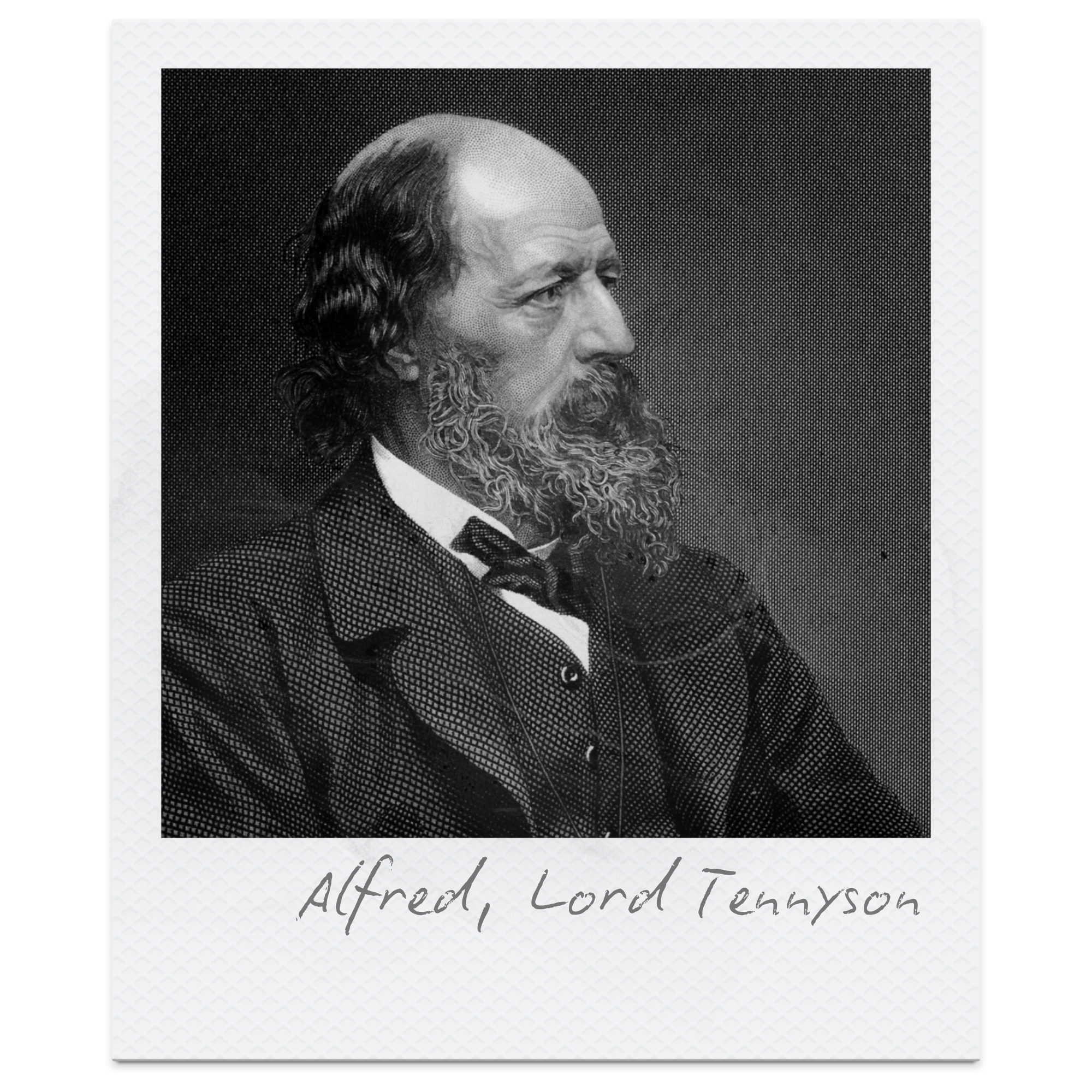
Alfred, Lord Tennyson was writing during the Victorian period, a time marked by rapid industrial change, scientific advancement, and growing uncertainty about faith and human purpose. Much Victorian poetry reflects a tension between progress and emotional loss, often turning inward to explore memory, identity, and the passage of time.
Tennyson himself was deeply preoccupied with grief, memory, and mortality, shaped in part by the early death of his close friend Arthur Hallam. His work frequently explores how the past continues to affect the present, even when it cannot be fully understood or recovered.
Tears, Idle Tears (from The Princess, 1847) reflects this context through its focus on nostalgia and emotional memory, presenting a speaker overwhelmed by a sense of loss that cannot be logically explained. Rather than describing a specific event, the poem captures a more universal experience of longing for the irretrievable past, where meaning emerges through imagery and emotional intensity rather than narrative clarity.
Tears, Idle Tears: At a Glance
Form: Lyric poem (song-like, reflective, from The Princess)
Mood: Melancholic, reflective, yearning
Central tension: The speaker feels an intense emotional response to the past but cannot fully explain or control it
Core themes: Memory and loss, nostalgia, time and transience, death and longing, emotional ambiguity
One-sentence meaning: The poem explores how memories of the past create a powerful, inexplicable sense of longing, where beauty and sorrow are inseparably intertwined.
Quick Summary of Tears, Idle Tears
The poem begins with the speaker experiencing sudden, unexplained tears while looking at “happy Autumn-fields,” suggesting that even scenes of beauty can trigger deep emotional responses. These tears rise from a “divine despair,” indicating a powerful but unclear sense of loss tied to memories of the past, described as “the days that are no more.” The speaker reflects on this feeling through a series of images that connect the past with both joy and sadness.
As the poem develops, each stanza intensifies this emotional reflection, comparing memory to moments of arrival and departure, life and death, and love and regret. The final stanza brings these ideas together, presenting the past as something deeply desired yet permanently lost. The phrase “O Death in Life” suggests that living with memory can feel like a kind of ongoing loss, leaving the speaker caught between appreciation and grief for what can never be recovered.
Title, Form, Structure, and Metre of Tears, Idle Tears
Tennyson’s formal choices create a sense of controlled reflection while allowing emotion to remain fluid and unresolved, mirroring the speaker’s attempt to understand feelings that resist clear explanation.
Title
The title Tears, Idle Tears immediately suggests emotion without clear cause, where “idle” implies purposelessness or lack of control. However, the poem gradually complicates this idea, revealing that these tears are not meaningless at all, but arise from a deep, instinctive response to memory and loss, making the title subtly ironic.
Form and Structure
The poem is a lyric elegy, written in four regular quintains (five-line stanzas), each ending with a variation of the refrain “the days that are no more.” This repeated return creates a cyclical structure, reinforcing the speaker’s inability to move beyond the past.
Each stanza develops a different emotional perspective on memory—moving from vague feeling to increasingly intense and personal reflections—while maintaining structural consistency. This balance between repetition and progression mirrors the way memory works: revisiting the same idea but deepening its emotional impact each time. The final exclamation, “O Death in Life,” disrupts the calm pattern, suggesting a climax where reflection turns into emotional realisation.
Rhyme Scheme and Poetic Pattern
The poem does not follow a regular end-rhyme scheme, instead relying on assonance, repetition, and internal echoes to create musicality. For example, the internal connection between “Rise in the heart, and gather to the eyes” subtly links sound and meaning, reinforcing the movement of emotion.
This lack of fixed rhyme contributes to the poem’s reflective tone, as the absence of closure mirrors the speaker’s inability to fully resolve their feelings. The refrain acts as a structural anchor, providing consistency in place of rhyme.
Metre and Rhythmic Movement
The poem is primarily written in iambic pentameter, giving it a steady, flowing rhythm that reflects natural speech and supports its reflective tone. For example:
Tears, i-dle TEARS, | I KNOW | not WHAT | they MEAN
However, Tennyson frequently introduces variations that disrupt this regularity. The opening phrase “Tears, idle tears” can be read with a heavier stress pattern, drawing immediate attention to the emotional weight of the moment. Similarly, lines such as:
DEAR as | reMEM | ber’d KIS | ses AF | ter DEATH
begin with a stronger initial stress, creating a more forceful, emotional emphasis.
These rhythmic shifts mirror the speaker’s fluctuating emotional state: the underlying structure suggests control, while variations reveal moments where feeling intensifies or breaks through. Overall, the metre supports the poem’s central tension between composure and emotional overwhelm, reinforcing how memory is both structured and unpredictable.
The Speaker in Tears, Idle Tears
The speaker in Tears, Idle Tears is unnamed and undefined, which allows the poem’s exploration of memory and loss to feel universal rather than personal to a specific identity. The voice is reflective and introspective, attempting to understand an emotional response that arises without clear cause, as shown in the admission “I know not what they mean.”
The tone shifts between calm observation and intense feeling, suggesting a speaker who is both analytical and emotionally overwhelmed. While the language remains controlled and structured, the imagery reveals a deep sense of longing and grief, particularly in the repeated focus on “the days that are no more.” This contrast between composure and emotional intensity shapes the reader’s interpretation, presenting memory as something that cannot be fully understood, only experienced.
Stanza-by-Stanza Analysis of Tears, Idle Tears
This section closely examines how Tennyson develops meaning across the poem, showing how each stanza builds on the last to deepen the speaker’s emotional response. Through imagery, repetition, and shifting tone, the poem moves from vague, unexplained feeling to a more intense and complex understanding of memory and loss, with each stanza offering a new perspective on “the days that are no more.”
Stanza 1: Unexplained Emotion and the Power of Memory
The opening stanza establishes the speaker’s emotional state through immediate repetition in “Tears, idle tears,” drawing attention to a feeling that is both intense and difficult to define. The admission “I know not what they mean” introduces the central tension of the poem: the speaker experiences deep emotion without fully understanding its cause. This creates a reflective tone, where feeling precedes explanation.
The phrase “divine despair” suggests that this sadness is both profound and almost sacred, elevating it beyond ordinary grief. The movement from “the heart” to “the eyes” traces the physical manifestation of emotion, linking internal feeling to visible expression. However, this sorrow is triggered not by something obviously tragic, but by “happy Autumn-fields,” creating a striking contrast between external beauty and internal sadness.
This juxtaposition reflects how memory operates: the present moment becomes a catalyst for reflection, leading the speaker to “the days that are no more.” The refrain introduces the poem’s central idea—nostalgia shaped by loss—establishing a pattern where each stanza revisits the past from a different emotional angle.
Stanza 2: Arrival and Departure – Life Framed by Loss
This stanza develops the speaker’s reflection through a series of contrasting images, using simile to explore the emotional complexity of memory. The phrase “Fresh as the first beam glittering on a sail” evokes a moment of arrival and hope, suggesting reunion and renewal. However, this is immediately linked to “the underworld,” introducing an unsettling ambiguity where return is associated with death rather than life.
The second half of the stanza shifts to an image of departure: “the last which reddens over one / That sinks with all we love below the verge.” Here, the sunset becomes a symbol of final loss, with the verb “sinks” suggesting irreversible disappearance. The juxtaposition of arrival and departure highlights how memory holds both beginnings and endings simultaneously.
The repetition of “So sad, so fresh” captures this paradox, showing how the past can feel vividly present while also being permanently lost. Through these opposing images, Tennyson presents memory as something that is both life-giving and painful, reinforcing the idea that the past cannot be experienced without also confronting its absence.
Stanza 3: Threshold Between Life and Death
This stanza deepens the emotional intensity by placing memory within a liminal moment between life and death, using simile to create a haunting, almost dreamlike atmosphere. The opening “Ah, sad and strange” signals a shift from reflection to a more visceral emotional response, while the setting of “dark summer dawns” blends light and darkness, reinforcing a sense of uncertainty and transition.
The image of “the earliest pipe of half-awaken’d birds” suggests the beginning of a new day, traditionally associated with renewal. However, this is immediately undercut by the perspective of “dying ears” and “dying eyes,” transforming what should be hopeful into something deeply unsettling. The slow emergence of light in “the casement slowly grows a glimmering square” mirrors the gradual awareness of death, where perception fades even as the world continues.
The repetition of “So sad, so strange” emphasises the speaker’s inability to fully comprehend this experience, presenting memory as something both familiar and alien. Through this imagery, Tennyson suggests that reflecting on the past is like existing at a threshold, where life and loss, presence and absence, coexist, intensifying the emotional complexity of “the days that are no more.”
Stanza 4: Love, Loss, and Emotional Climax
The final stanza brings the poem to an emotional climax, intensifying the exploration of memory through a series of deeply personal and intimate comparisons. The simile “Dear as remember’d kisses after death” connects memory directly with loss, suggesting that the past becomes more precious precisely because it is irretrievable. This is reinforced by “hopeless fancy feign’d,” where imagined affection replaces reality, highlighting the speaker’s awareness that what is remembered or imagined cannot be restored.
The reference to “lips that are for others” introduces a sense of exclusion and emotional distance, suggesting that the past is not only lost but also belongs to a different time or reality. The repetition in “Deep as love, / Deep as first love” emphasises the intensity of feeling, while “wild with all regret” reveals the emotional consequences of remembering—love becomes inseparable from loss.
The exclamation “O Death in Life” disrupts the poem’s earlier restraint, presenting a powerful paradox where living is defined by the awareness of what has been lost. This final line transforms the refrain “the days that are no more” into something more profound: not just a reflection on the past, but a recognition that memory itself creates a kind of ongoing absence.
Key Quotes and Methods in Tears, Idle Tears
This section selects precise, longer quotations and explores how Tennyson uses language, imagery, and structure to create meaning and emotional impact.
“Tears, idle tears, I know not what they mean”
◆ Technique: Repetition + declarative statement
◆ Meaning: The speaker experiences intense emotion but cannot fully explain its origin
◆ Purpose: To establish the central tension between feeling and understanding
◆ Impact: Creates immediacy and draws the reader into a state of shared uncertainty
“Tears from the depth of some divine despair”
◆ Technique: Metaphor + elevated diction
◆ Meaning: The sorrow feels profound and almost sacred, beyond ordinary emotion
◆ Purpose: To elevate personal feeling into something universal and timeless
◆ Impact: Suggests that memory and loss operate at a deep, almost spiritual level
“In looking on the happy Autumn-fields”
◆ Technique: Juxtaposition (external beauty vs internal sadness)
◆ Meaning: The present moment is peaceful, yet it triggers unexpected grief
◆ Purpose: To show how memory disrupts the present
◆ Impact: Highlights the unpredictability of emotional response
“Fresh as the first beam glittering on a sail”
◆ Technique: Simile + visual imagery
◆ Meaning: Memory feels vivid and immediate, like a moment of arrival or hope
◆ Purpose: To present the past as emotionally alive
◆ Impact: Creates a sense of brightness that contrasts with underlying sadness
“That sinks with all we love below the verge”
◆ Technique: Symbolism + metaphor (sunset/departure)
◆ Meaning: Suggests irreversible loss and the disappearance of what is valued
◆ Purpose: To emphasise the finality of time passing
◆ Impact: Reinforces the emotional weight of loss
“The earliest pipe of half-awaken’d birds / To dying ears”
◆ Technique: Juxtaposition + auditory imagery
◆ Meaning: A symbol of new life is experienced from the perspective of death
◆ Purpose: To blur boundaries between beginnings and endings
◆ Impact: Creates an unsettling, liminal atmosphere
“The casement slowly grows a glimmering square”
◆ Technique: Visual imagery + gradual progression
◆ Meaning: Light emerges slowly, symbolising awareness or transition
◆ Purpose: To mirror the gradual realisation of mortality
◆ Impact: Produces a quiet, reflective sense of inevitability
“Dear as remember’d kisses after death”
◆ Technique: Simile + emotive imagery
◆ Meaning: Memory becomes more precious because it is lost
◆ Purpose: To link love directly with absence
◆ Impact: Intensifies the emotional depth of the poem
“Deep as first love, and wild with all regret”
◆ Technique: Repetition + emotive language
◆ Meaning: The past is associated with intense, formative emotion
◆ Purpose: To emphasise how deeply memory affects identity
◆ Impact: Creates a sense of overwhelming feeling
“O Death in Life, the days that are no more!”
◆ Technique: Paradox + exclamatory tone
◆ Meaning: Living with memory creates a sense of ongoing loss
◆ Purpose: To summarise the poem’s central idea
◆ Impact: Leaves the reader with a powerful, unresolved emotional tension
Key Techniques in Tears, Idle Tears
Tennyson uses a rich combination of sound, structure, and imagery to explore the emotional complexity of memory, where meaning emerges through contrast, repetition, and subtle shifts in tone.
◆ Refrain – The repeated phrase “the days that are no more” anchors each stanza, but its surrounding modifiers shift (“so sad, so fresh,” “so sad, so strange,” “O Death in Life”), showing how the speaker’s understanding of the past evolves. This creates a cyclical structure that mirrors how memory is revisited but never resolved, reinforcing the tension between emotional clarity and confusion.
◆ Simile – Extended similes dominate the poem (e.g. “Fresh as the first beam glittering on a sail”, “Dear as remember’d kisses after death”), allowing the speaker to approach emotion indirectly. These comparisons suggest that the feeling cannot be defined directly, only approximated through imagery, emphasising its complexity.
◆ Paradox – The final line “O Death in Life” encapsulates the poem’s central contradiction, where memory keeps the past alive while simultaneously emphasising its absence. This highlights the idea that living with memory creates an ongoing form of loss.
◆ Juxtaposition – Tennyson repeatedly places opposing ideas side by side, such as “happy Autumn-fields” and “divine despair,” or images of dawn alongside death. This reflects how memory blends beauty and grief, reinforcing the speaker’s conflicted emotional state.
◆ Sibilance – The soft repetition of /s/ sounds (e.g. “Sad as the last which reddens over one / That sinks with all we love”) creates a hushed, flowing quality. This gentle sound pattern mirrors the quiet, reflective tone of the poem, while also suggesting the fading, slipping nature of memory.
◆ Alliteration – Subtle alliterative patterns (e.g. “first beam… glittering,” “deep… first… love”) draw attention to key emotional moments. This reinforces intensity without disrupting the poem’s overall smooth rhythm.
◆ Assonance and Consonance – Repeated vowel and consonant sounds create a musical, almost hypnotic quality, particularly in phrases like “Rise in the heart, and gather to the eyes.” This contributes to the poem’s reflective tone and reinforces the idea of emotion building gradually.
◆ Caesura – Pauses within lines slow the rhythm and create space for reflection, mirroring the speaker’s thought process. These breaks emphasise key phrases and allow emotion to linger, rather than rushing forward.
◆ Enjambment – Lines often flow into one another without full stops, reflecting the continuous movement of thought and memory. This creates a sense of emotional progression, where one idea leads naturally into the next.
◆ Parallelism – The repeated syntactic structure (e.g. “Fresh as… / Sad as…” / “Dear as… / Deep as…”) creates a pattern of comparison that builds intensity. This reinforces the speaker’s attempt to define emotion through multiple perspectives, while also highlighting its complexity.
◆ Diacope (repetition with variation) – The repetition of key words with slight variation (e.g. “sad… sad,” “deep… deep”) emphasises emotional fixation. This suggests the speaker is circling the same feeling, unable to move beyond it.
◆ Imagery (light and darkness) – Contrasting images of light (dawn, beams, glimmering) and darkness (death, underworld, fading) symbolise transitions between life and loss, reinforcing the poem’s focus on liminal states.
Overall, these techniques work together to create a poem that feels controlled on the surface but emotionally unstable underneath, reflecting the speaker’s struggle to understand and articulate the power of memory.
How the Writer Creates Meaning and Impact in Tears, Idle Tears
Tennyson creates meaning through a careful interplay of imagery, structure, and sound, allowing emotion to emerge gradually rather than being directly explained. The poem begins with uncertainty, and meaning develops through the speaker’s attempt to articulate a feeling that remains intuitive rather than logical.
At the level of language, Tennyson relies heavily on sensory imagery and simile to approximate emotion. Images such as “the first beam glittering on a sail” and “remember’d kisses after death” do not define the feeling precisely, but instead build a network of associations. This suggests that memory cannot be explained in fixed terms; instead, it must be experienced through layered impressions. The repeated contrast between beauty and loss reinforces this, showing how the past is both vivid and painful.
In terms of structure, the recurring refrain “the days that are no more” creates a cyclical pattern, reflecting how the speaker returns again and again to the same idea without resolving it. Each stanza offers a slightly different perspective, moving from general reflection to increasingly intense and personal imagery. This progression mirrors the way memory deepens over time, becoming more emotionally charged rather than clearer. The final shift to “O Death in Life” disrupts the established pattern, marking a moment where reflection becomes realisation.
The poem’s voice and tone also contribute to its meaning. The speaker’s controlled, reflective voice contrasts with the intensity of the imagery, creating a tension between composure and emotional depth. This suggests that while the speaker attempts to understand and contain their feelings, the experience of memory resists this control.
Finally, sound and rhythm reinforce the poem’s impact. The use of iambic pentameter provides a steady, flowing rhythm that mirrors natural thought, while variations and pauses introduce moments of emphasis and emotional shift. Techniques such as sibilance and assonance create a soft, reflective musicality, allowing the poem to feel meditative rather than dramatic.
Together, these elements show that meaning in the poem is not presented as a clear conclusion, but as an evolving emotional experience. Tennyson demonstrates that memory is shaped through repetition, contrast, and sensory detail, creating a powerful sense of longing that remains unresolved.
Themes in Tears, Idle Tears
Tennyson’s poem explores a complex emotional response to the past, where memory is both beautiful and painful, and meaning emerges through tension rather than resolution.
Memory and Loss
At the centre of the poem is the idea that memory is inseparable from loss. The repeated focus on “the days that are no more” highlights the permanence of the past, while imagery such as “remember’d kisses after death” shows how memory intensifies emotional experience. Tennyson presents memory as something that preserves moments but also emphasises their absence, creating a continuous sense of longing.
Nostalgia and Longing
The speaker’s emotional response is rooted in nostalgia, but this is not presented as comforting. Instead, it is described through phrases like “divine despair,” suggesting that longing for the past can be overwhelming and difficult to control. The repeated similes show how the speaker tries to define this feeling, but the inability to settle on a single comparison reflects the complexity of nostalgia itself.
Time and Transience
The poem reflects on the passage of time and the inevitability of change. Images of sunrise and sunset, beginnings and endings, reinforce the idea that life moves forward while memory looks backward. The past is presented as something that cannot be recovered, and the poem’s structure—returning repeatedly to the same refrain—mirrors this sense of being caught between past and present.
Love and Regret
Love is shown as a powerful but fragile force, particularly in the final stanza where the speaker reflects on “first love” and imagined affection. These moments are described as “deep” and “wild with all regret,” suggesting that love, once lost, leaves a lasting emotional impact. Tennyson presents love not as something stable, but as something that becomes more intense through absence.
Life, Death, and Liminal States
The poem repeatedly blurs the boundary between life and death, particularly in images such as “the underworld” and the final paradox “O Death in Life.” This suggests that memory places the speaker in a liminal state, where the past feels alive but is also permanently gone. The poem does not present death as a clear ending, but as something that exists alongside life through memory.
Emotional Uncertainty
The speaker’s admission “I know not what they mean” establishes a theme of uncertainty that continues throughout the poem. Despite the use of rich imagery and repeated reflection, the speaker never fully explains their emotions. This suggests that some experiences—particularly those related to memory and loss—resist clear understanding, existing instead as powerful but ambiguous feelings.
Alternative Interpretations of Tears, Idle Tears
This poem resists a single, fixed meaning, instead offering a range of possible interpretations shaped by its ambiguity and emotional depth.
Psychological Interpretation: Unresolved Emotion and Subconscious Memory
From a psychological perspective, the speaker’s tears emerge from the subconscious rather than conscious thought, as shown in “I know not what they mean.” The phrase “divine despair” suggests an emotion that feels overwhelming but cannot be rationalised. The repeated use of simile reflects an attempt to articulate something that cannot be directly expressed, implying unprocessed or unresolved feeling. Memory here becomes intrusive and uncontrollable, surfacing unexpectedly through sensory experience.
Social Interpretation: Victorian Grief and Emotional Restraint
In a social context, the poem reflects Victorian expectations of emotional restraint, where grief was often contained within formal structures. The speaker’s calm, measured tone contrasts with the intensity of the imagery, suggesting a tension between external composure and internal turmoil. The structured stanzas mirror this control, while the increasingly emotional comparisons reveal its limits, suggesting that grief cannot be fully regulated by social norms.
Philosophical / Existential Interpretation: Time and the Nature of Experience
Philosophically, the poem explores how time defines human existence through loss. The past is presented as both vividly present and permanently inaccessible, creating a paradox where memory sustains and undermines identity at the same time. The final line, “O Death in Life,” suggests that living involves a constant awareness of absence, where memory becomes a reminder of transience. From this perspective, the poem reflects a broader existential truth: to exist is to experience time as both presence and loss simultaneously.
Exam-Ready Insight for Tears, Idle Tears
This section shows how to turn your understanding of Tears, Idle Tears into a strong, exam-focused response for IGCSE Literature (0475), with a clear focus on how meaning is created through methods.
What strong responses do
◆ focus closely on the question
◆ analyse methods (language, structure, and sound), not just ideas
◆ explain how effects are created, not just what happens
◆ track shifts in tone and emotional intensity across the poem
◆ use short, precise quotations to support points
Conceptual argument
A strong thesis for Tears, Idle Tears might be:
Tennyson presents memory as a powerful and unresolved emotional experience, using cyclical structure, contrasting imagery, and extended similes to show how the past remains vividly present while being permanently lost, creating a tension between beauty and grief that cannot be resolved.
Model analytical paragraph
Tennyson presents the emotional power of memory through contrast and imagery to show how the past creates both beauty and pain. In the image “happy Autumn-fields,” the positive connotations of “happy” contrast with the speaker’s “divine despair,” highlighting how external calm can trigger internal grief. This is reinforced by the refrain “the days that are no more,” which emphasises the permanence of loss through repetition. The simile “Fresh as the first beam glittering on a sail” suggests vividness and renewal, but is immediately undercut by “that sinks with all we love,” introducing imagery of disappearance and finality. The final paradox, “O Death in Life,” captures the poem’s central idea that memory keeps the past alive while also emphasising its absence. Through these methods, Tennyson shows that memory is both sustaining and painful, creating an emotional experience that cannot be resolved.
Teaching Ideas for Tears, Idle Tears
This poem is ideal for exploring how writers use language, structure, and imagery to create meaning, while also supporting discussion-based and interpretive classroom approaches.
1. Collaborative Analytical Paragraph (Paired Writing)
Give students a focused question, for example:
How does Tennyson present the effects of memory in Tears, Idle Tears?
Students work together to produce a single paragraph. They should:
◆ select and embed quotations
◆ identify methods (imagery, simile, structure)
◆ explain meaning → purpose → impact
Because both students contribute, they can challenge and refine each other’s ideas, leading to a stronger, more developed response.
2. Structured Group Close Analysis (Role-Based)
Assign students specific roles in small groups for stanza-by-stanza analysis:
◆ Structure specialist – tracks shifts, refrain, and progression
◆ Language analyst – explores imagery and word choices
◆ Methods expert – identifies techniques (simile, repetition, contrast)
◆ Tone tracker – analyses emotional shifts
Each group feeds back, building a full class interpretation.
3. Silent Debate
Set up a silent debate around the question:
Is memory presented as more painful than comforting in the poem?
Students respond in writing, building on each other’s ideas. They should:
◆ use quotations as evidence
◆ respond directly to other viewpoints
◆ develop and refine arguments
If you would like to read about how to run an effective silent debate in your classroom, then check out this post.
4. Creative Writing: Memory as Emotion
Ask students to write a reflective piece based on a memory that triggers unexpected emotion.
Prompt:
Write about a moment that appears peaceful or beautiful but reveals a deeper emotional response.
Students should aim to:
◆ use extended simile and imagery
◆ create contrast between surface and emotion
◆ develop a reflective voice
◆ show how meaning is shaped through language
This reinforces how writers construct meaning through method. For more structured ideas, explore the Creative Writing Archive.
Go Deeper into Tears, Idle Tears
To develop stronger comparative responses, it helps to connect Tears, Idle Tears to other texts that explore memory, loss, and emotional reflection across different perspectives and forms.
◆ Childhood by Frances Cornford – explores how perception shifts over time, linking memory to growing awareness and emotional understanding
◆ Remember by Christina Rossetti – presents memory in the context of death, but with a more controlled and selfless perspective on remembrance
◆ Because I could not stop for Death by Emily Dickinson – examines death and time through a reflective, structured journey, offering a more composed response to mortality
◆ One Art by Elizabeth Bishop – explores loss through repetition and controlled structure, contrasting with Tennyson’s more fluid emotional expression
◆ Neutral Tones by Thomas Hardy – presents memory as emotionally draining and bleak, offering a more cynical view of the past
These comparisons help students see how different writers use structure, voice, and imagery to present memory as either comforting, painful, or unresolved.
Final Thoughts
Tears, Idle Tears remains powerful because it captures something deeply recognisable yet difficult to explain: the way memory can create sudden, overwhelming emotion without clear cause. Tennyson avoids offering resolution, instead using repetition, contrast, and shifting imagery to show how the past continues to shape the present.
The poem’s strength lies in its balance between control and emotional intensity. Its structured stanzas and recurring refrain suggest order, while the imagery reveals a deeper instability, reflecting how memory operates beneath the surface. Ultimately, Tennyson presents the past not as something that can be understood or resolved, but as something that must simply be felt, leaving the speaker—and the reader—caught between beauty and loss.
For further study and comparison, revisit the Songs of Ourselves Volume 1 Hub or deepen your analysis through the Literature Library.
Choose Your Next Text