Childhood by Frances Cornford: Summary, Themes & Analysis
Frances Cornford’s Childhood explores innocence, perception, and the sudden recognition of human vulnerability, as a child’s simplistic understanding of adulthood is disrupted by a quiet but revealing moment. Through contrast, imagery, and a reflective first-person voice, the poem captures the shift from naïve belief to unsettling awareness, revealing that ageing is not a chosen state but an inevitable loss of control. If you are studying or teaching Songs of Ourselves Volume 1 for CIE English World Literature (0408), explore all the poems in depth in our Songs of Ourselves Volume 1 hub, or a wider range of texts in the Literature Library.
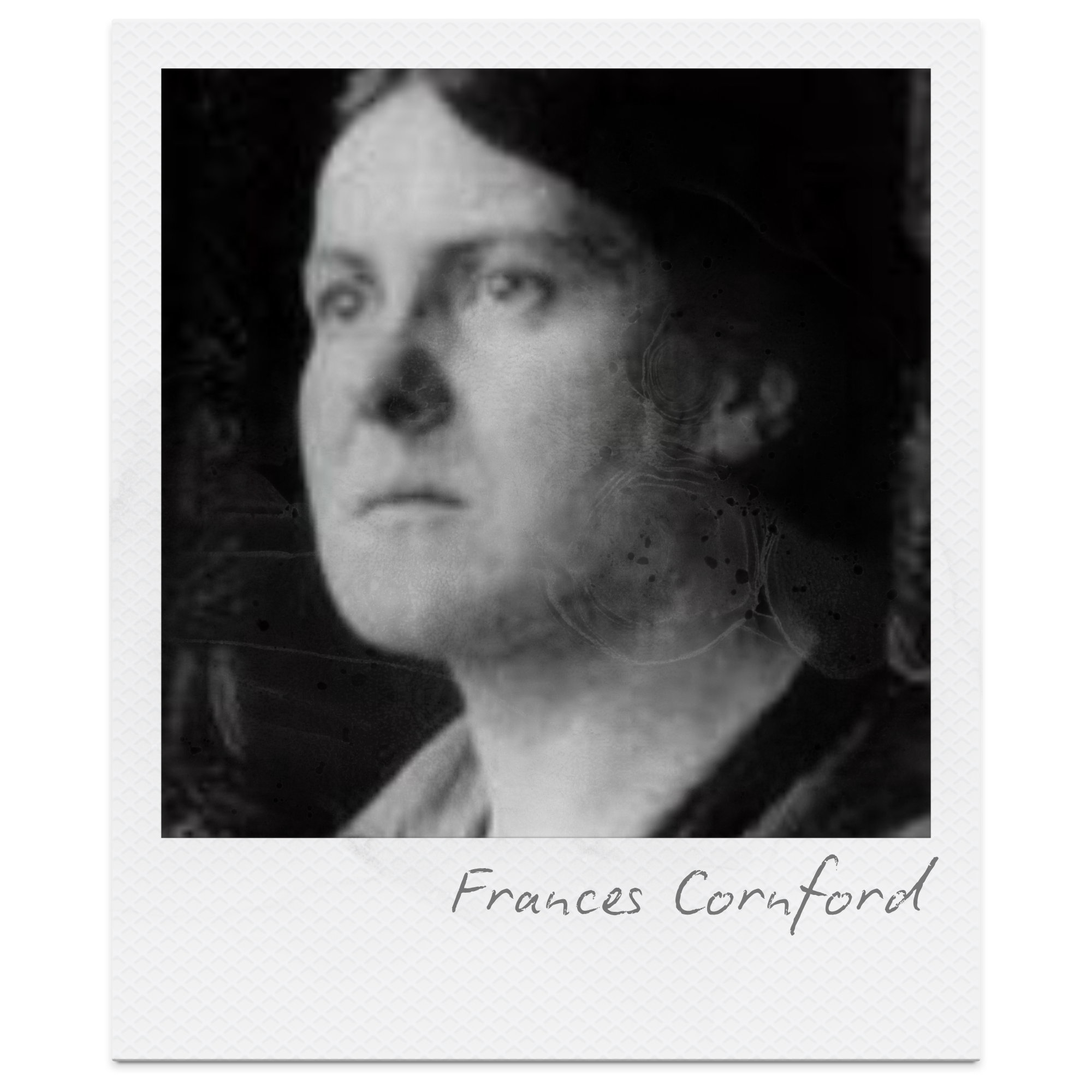
Context of Childhood
Frances Cornford, writing in the early twentieth century, often explores memory, childhood perspective, and the quiet moments that reveal deeper truths about human experience. Her poetry reflects a period shaped by shifting social structures and increased attention to individual psychology, where writers became more interested in how people perceive and interpret the world around them. In Childhood, Cornford draws on this focus by capturing a seemingly ordinary domestic moment that leads to a profound realisation about ageing and vulnerability, suggesting that maturity is not a state of control but an unavoidable condition that challenges earlier, simplistic beliefs.
Childhood: At a Glance
Form: Lyric poem
Mood: Reflective, tender, quietly unsettling
Central tension: The contrast between a child’s belief that adulthood is chosen and the realisation that ageing brings helplessness
Core themes: Innocence and experience, ageing, vulnerability, perception, loss of control
One-sentence meaning: The poem uses childlike perspective and contrast to reveal the moment when innocence is disrupted by the unsettling realisation that both youth and old age involve a lack of control.
Quick Summary of Childhood
The poem begins with the speaker reflecting on a childhood belief that adults deliberately choose to appear “grand,” with physical signs of ageing—such as “stiff backs” and “wrinkles”—interpreted as intentional markers of status and control. This perspective reflects innocence and misunderstanding, where the child assumes that adulthood is self-determined and that outward appearance is a conscious performance of authority.
This belief is disrupted when the speaker witnesses an older woman struggling to gather her scattered beads, a moment that reveals frailty and loss of control. This triggers a shift in understanding, as the speaker realises that ageing is not chosen but imposed, just as childhood is. The poem ends with a balanced and unsettling recognition that both youth and old age are defined by helplessness, deepening the speaker’s awareness of the human condition.
Title, Form, Structure, and Metre
The poem’s formal choices reinforce its movement from childlike certainty to a more complex awareness of human limitation, using structure and rhythm to mirror this shift in understanding.
Title
The title Childhood initially suggests innocence, simplicity, and a focus on early experience. However, as the poem develops, it becomes clear that “childhood” is defined by a limited understanding of reality, particularly the mistaken belief that adulthood is controlled and intentional. By the final line, the title takes on a deeper meaning, as the speaker recognises that both childhood and old age are shaped by helplessness, reframing childhood as a state of unawareness rather than freedom.
Form and Structure
The poem is written as a single stanza of ten lines, creating a continuous flow that reflects the speaker’s reflective memory. Structurally, it moves from assumption to realisation: the opening lines present the speaker’s naïve belief that adulthood is chosen, while the later lines introduce a specific moment of observation that disrupts this view. This shift is subtle but significant, as the poem transitions from generalised thinking to a concrete experience. The final line functions as a balanced conclusion, linking youth and old age and reinforcing the poem’s central idea that both are defined by a lack of control.
Rhyme Scheme and Poetic Pattern
The poem begins with a regular AABBCC rhyme pattern, evident in “chose / nose,” “hand / grand,” and “day / away,” which creates a sense of order and confidence that reflects the child’s assured perspective. However, this pattern shifts in the final lines, becoming less predictable with “unstrung / young” and “rolled / old.” This subtle disruption mirrors the speaker’s changing understanding, as the earlier sense of certainty gives way to a more complex and unsettling awareness of reality.
Metre and Rhythmic Movement
The poem is predominantly iambic (unstressed followed by stressed syllables), giving it a steady, conversational rhythm that reflects the speaker’s initial confidence. For example:
i USED / to THINK / that GROWN / up PEO / ple CHOSE
This regular movement supports the child’s sense of certainty. However, Cornford introduces slight rhythmic variations, particularly through extra unstressed syllables, which create a more natural, spoken quality. For instance:
and VEINS / like SMALL / fat SNAKES / on EI / ther HAND
Here, the phrasing slightly loosens the strict iambic pattern, creating a subtle anapestic feel. These variations are not dominant, but they soften the rhythm and reflect the speaker’s reflective voice, as if recalling the moment rather than presenting a fixed idea. The contrast between the mostly regular rhythm and these small disruptions mirrors the poem’s movement from certainty to uncertainty, reinforcing the shift in understanding.
The Speaker in Childhood
The speaker is a retrospective first-person voice, looking back on a moment from childhood with the insight of later understanding. While the opening lines present a child’s naïve perspective, the framing of the poem makes it clear that this is a remembered belief, shaped and reconsidered by an older, more aware voice. The tone is therefore both innocent and reflective, capturing the gap between what the child once believed and what the speaker now understands.
There is a subtle form of irony in this dual perspective. The child assumes that adults choose to appear “grand,” interpreting visible signs of ageing as deliberate and controlled. However, the reader recognises—alongside the older speaker—that this belief is fundamentally mistaken. This creates dramatic irony, as the initial confidence of the child contrasts with the reality revealed later in the poem. By the final line, the speaker’s voice becomes more balanced and philosophical, acknowledging that both childhood and old age involve a form of helplessness, which deepens the poem’s reflective and slightly unsettling tone.
Line by Line Analysis of Childhood
This close reading explores how Cornford uses imagery, contrast, and voice to move from a child’s confident misunderstanding to a more unsettling recognition of human vulnerability, with each moment building towards the final realisation.
Lines 1–2: Naïve assumptions about adulthood
The opening lines establish the speaker’s childhood belief that adults deliberately choose their appearance, with phrases like “grown-up people chose” suggesting control and intention. The description of “stiff backs” and “wrinkles” reflects how the child interprets physical signs of ageing as purposeful, revealing a misunderstanding of adulthood as something constructed rather than inevitable.
Lines 3–4: Grotesque imagery and exaggerated perception
The simile “veins like small fat snakes” introduces slightly unsettling imagery, showing how the child’s perception is both imaginative and distorted. The idea that these features exist “on purpose to be grand” highlights the child’s assumption that adulthood is linked to status and performance, reinforcing the gap between appearance and reality.
Lines 5–6: Shift to observation and specific memory
The poem shifts from general belief to a specific moment, marked by “Till… one day”, signalling a turning point. The detail of watching “through the banisters” suggests a physical and symbolic barrier, reinforcing the speaker’s position as a child observing the adult world from a distance.
Lines 7–8: Moment of vulnerability and loss of control
The image of “onyx beads… come unstrung” symbolises a loss of control, as something once ordered becomes scattered. The verb “grope” emphasises physical weakness and uncertainty, presenting the adult figure as fragile and dependent, directly contradicting the speaker’s earlier belief in control and dignity.
Lines 9–10: Realisation and balanced conclusion
The final lines mark a clear moment of realisation, with “then I knew” signalling a shift in understanding. The repetition of “helplessly” creates a powerful parallel between old age and youth, suggesting that both are defined by lack of control. This balanced conclusion deepens the poem’s meaning, transforming it from a simple childhood memory into a more philosophical reflection on the human condition.
Key Quotes and Methods in Childhood
These quotations reveal how Cornford uses imagery, contrast, and voice to move from innocence to a more unsettling awareness of vulnerability and loss of control.
“I used to think that grown-up people chose”
◆ Technique: First-person reflective voice
◆ Meaning: The phrase “I used to think” signals a past belief shaped by childhood innocence
◆ Purpose: To establish a clear contrast between past misunderstanding and present awareness
◆ Impact: Positions the reader to recognise the naivety of the speaker’s earlier perspective
“stiff backs and wrinkles round their nose”
◆ Technique: Physical imagery
◆ Meaning: Describes visible signs of ageing in a literal, almost observational way
◆ Purpose: To show how the child interprets these features as deliberate markers of adulthood
◆ Impact: Reinforces the idea that the speaker initially sees ageing as controlled and intentional
“veins like small fat snakes on either hand”
◆ Technique: Simile
◆ Meaning: Compares veins to “small fat snakes,” creating slightly grotesque imagery
◆ Purpose: To reflect the child’s imaginative but distorted perception of ageing
◆ Impact: Introduces an unsettling tone, hinting at the reality beneath the child’s assumptions
“on purpose to be grand”
◆ Technique: Colloquial phrasing / tone
◆ Meaning: Suggests that adults choose to appear “grand” and dignified
◆ Purpose: To reveal the child’s belief that adulthood is a performance of status
◆ Impact: Highlights the gap between appearance and reality
“through the banisters I watched one day”
◆ Technique: Symbolic imagery
◆ Meaning: The speaker observes from behind banisters, suggesting separation
◆ Purpose: To emphasise the child’s distance from adult experience
◆ Impact: Reinforces the idea of limited understanding and partial perspective
“her onyx beads had come unstrung”
◆ Technique: Symbolism
◆ Meaning: The beads, once ordered, are now scattered
◆ Purpose: To represent a loss of control and composure
◆ Impact: Marks the turning point where the illusion of control begins to break down
“I saw her grope to find them as they rolled”
◆ Technique: Verb choice / dynamic imagery
◆ Meaning: The verb “grope” suggests uncertainty and physical weakness
◆ Purpose: To show the woman’s fragility and lack of control
◆ Impact: Directly challenges the speaker’s earlier belief in adult authority
“then I knew that she was helplessly old”
◆ Technique: Declarative statement / shift in tone
◆ Meaning: Marks the moment of realisation
◆ Purpose: To show the collapse of the speaker’s earlier assumptions
◆ Impact: Creates a more serious, reflective tone as understanding deepens
“As I was helplessly young”
◆ Technique: Parallel structure / repetition
◆ Meaning: Links youth and old age through the shared word “helplessly”
◆ Purpose: To present both stages of life as lacking control
◆ Impact: Provides a balanced and philosophical conclusion, reinforcing the poem’s central idea
Key Techniques in Childhood
Cornford uses a range of language, structural, and sound devices to move the poem from innocence to a more unsettling awareness of vulnerability, carefully shaping how the reader experiences the speaker’s shift in understanding.
◆ Simile – The comparison “veins like small fat snakes” reflects a child’s imaginative but distorted perception of ageing. The image is slightly grotesque, transforming something ordinary into something unsettling, which hints at a deeper discomfort beneath the speaker’s initial assumptions.
◆ Irony (dramatic and situational) – The poem is shaped by a quiet but powerful irony, as the child confidently believes adults choose to appear “grand,” while the reader recognises this as a misunderstanding. The later realisation exposes the illusion of control, revealing that ageing is not empowering but marked by helplessness, overturning the speaker’s earlier belief.
◆ Enjambment – The poem frequently uses run-on lines, particularly in the opening, to create a sense of flowing thought that reflects the speaker’s natural, conversational voice. This mirrors the way a child explains their reasoning, while also allowing ideas to develop gradually until they are disrupted by the moment of realisation.
◆ Alliteration – Subtle sound patterning in phrases such as “how her” and “them as they” creates a gentle rhythm that reinforces the poem’s spoken quality, making the memory feel immediate and personal rather than formally structured.
◆ Repetition and Parallelism – The repetition of “helplessly” in the final lines creates a deliberate parallel between old age and youth. This structural echo emphasises the poem’s central idea that both stages of life are defined by a lack of control, providing a balanced and memorable conclusion.
◆ Symbolism (the onyx beads) – The image of “onyx beads… come unstrung” is highly symbolic. Beads are typically associated with order, elegance, and control, often worn as decorative items that suggest composure or dignity. The fact that they are made of onyx, a dark stone often linked with mourning, ageing, or gravity, subtly reinforces themes of decline and mortality. When the beads become unstrung and scattered, this order collapses, symbolising the loss of control, dignity, and stability in old age. The woman’s inability to gather them further reinforces her physical vulnerability, making this the central image that triggers the speaker’s realisation.
◆ Contrast – The poem is built around a clear contrast between appearance and reality, as well as between childhood belief and adult truth. This contrast drives the poem’s structure, moving from confident assumption to unsettling understanding.
◆ First-person reflective voice – The use of a retrospective first-person voice allows Cornford to present both the child’s original belief and the older speaker’s revised understanding. This dual perspective creates depth and irony, as the voice itself embodies the shift from innocence to awareness.
How the Writer Creates Meaning and Impact in Childhood
Cornford creates meaning through the interplay of childlike voice, vivid imagery, and a carefully controlled structural shift, guiding the reader from confident misunderstanding to a more unsettling recognition of human vulnerability.
◆ Language (imagery and diction) – The poem uses concrete, often slightly exaggerated imagery such as “stiff backs,” “wrinkles,” and “veins like small fat snakes” to reflect how a child interprets the physical signs of ageing. This language captures a perspective that is both observant and distorted, revealing how meaning is shaped by limited understanding. The shift to more dynamic and revealing verbs like “grope” introduces a sense of frailty and uncertainty, exposing the reality beneath the child’s assumptions.
◆ Symbolism – The image of the “onyx beads… come unstrung” functions as a central symbol of loss of control. Beads suggest order and composure, but when they scatter, this order collapses, mirroring the woman’s physical vulnerability. This moment transforms the poem, turning an abstract belief into a concrete realisation, and prompting the speaker’s shift in understanding.
◆ Structure (shift and progression) – The poem is structured around a clear movement from belief to realisation. The opening presents a generalised, confident assumption about adulthood, while the later lines introduce a specific moment that disrupts this view. This progression allows the reader to experience the same shift as the speaker, with the final line providing a balanced conclusion that links youth and old age.
◆ Voice and perspective – The retrospective first-person voice is central to the poem’s meaning, as it captures both the innocence of the child and the awareness of the older speaker. This dual perspective creates subtle irony, as the reader recognises the flaw in the child’s thinking before the speaker fully articulates it, deepening the impact of the final realisation.
◆ Sound and rhythm – The mostly regular rhythm creates a sense of stability and confidence, reflecting the speaker’s initial certainty. However, slight variations and a more natural, conversational flow soften this pattern, reinforcing the reflective tone and mirroring the shift from certainty to uncertainty.
Through this combination of method → purpose → impact, Cornford transforms a simple childhood memory into a more complex exploration of ageing, perception, and the limits of human control, leaving the reader with a quiet but lasting sense of unease.
Themes in Childhood
Cornford explores how perception, ageing, and control shape human experience, using a simple childhood memory to reveal a more unsettling truth about the limits of understanding.
Innocence and Experience
The poem centres on the movement from childhood innocence to greater awareness, as the speaker’s early belief that adults “chose” their appearance reflects a limited and simplified understanding of the world. Through first-person reflection and a clear structural shift, Cornford shows how this innocence is disrupted by a moment of observation, transforming assumption into insight. This transition highlights how experience often brings not clarity alone, but a more complex and unsettling understanding of reality.
Ageing and Physical Decline
Ageing is presented not as a dignified or controlled process, but as one marked by physical vulnerability and loss of control. The imagery of “stiff backs,” “wrinkles,” and “veins like small fat snakes” initially appears exaggerated through a child’s perspective, but later becomes grounded in reality through the woman’s inability to gather her “unstrung” beads. This shift reveals the gap between how ageing is perceived and how it is actually experienced.
Helplessness and Lack of Control
A central theme of the poem is the idea that both youth and old age are defined by helplessness. The repetition of “helplessly” in the final lines creates a deliberate parallel, suggesting that neither stage of life is truly autonomous. Structurally, this idea is reinforced by the poem’s movement from perceived control to revealed vulnerability, challenging the assumption that adulthood brings power or stability.
Appearance vs Reality
The poem explores the contrast between outward appearance and underlying reality, as the child initially interprets visible signs of ageing as intentional and meaningful. Through imagery and irony, Cornford exposes this as a misunderstanding, revealing that these physical markers are not chosen but imposed. The moment with the scattered beads becomes the point where appearance is stripped away, and reality is exposed.
Perception and Misinterpretation
Cornford highlights how meaning is shaped by perspective, particularly through the child’s tendency to misinterpret what they observe. The use of simile and descriptive imagery reflects a mind that is imaginative but not yet fully informed. By contrasting this with the speaker’s later understanding, the poem suggests that perception is not fixed, but evolves with experience, often revealing uncomfortable truths.
Alternative Interpretations of Childhood
While the poem can be read as a simple reflection on growing up, Cornford’s use of voice, imagery, and structure allows for multiple, more complex interpretations of its meaning.
Psychological Interpretation: The Loss of Childhood Certainty
From a psychological perspective, the poem captures the moment when a child’s simplified worldview begins to break down. The belief that adults “chose” their appearance reflects a need to see the world as ordered and controllable, which provides a sense of security. The image of the woman struggling with the unstrung beads disrupts this illusion, forcing the speaker to confront a more unsettling reality. This moment can be read as an early experience of cognitive development, where the speaker moves from certainty to ambiguity, recognising that not everything is within human control.
Social Interpretation: Status, Appearance, and Reality
The poem can also be interpreted as a subtle commentary on social status and appearance. The child associates adulthood with being “grand,” suggesting a belief that age brings respect, authority, and dignity. However, this idea is undermined when the adult figure is shown to be physically vulnerable and dependent, exposing the gap between how people appear in society and their actual condition. The onyx beads, often associated with elegance and formality, further reinforce this idea, as their scattering symbolises the collapse of carefully maintained appearances.
Philosophical Interpretation: The Illusion of Control
On a broader level, the poem can be read as a reflection on the human condition, particularly the illusion that individuals have control over their lives. The child believes that adulthood involves choice and self-determination, but the speaker’s realisation reveals that both youth and old age are defined by helplessness. The repetition of “helplessly” creates a symmetrical structure that suggests a cyclical view of life, where control is limited at both ends. This interpretation positions the poem as a quiet but powerful exploration of existence, where certainty gives way to a more complex understanding of vulnerability.
Exam-Ready Insight for Childhood
This section shows how to turn your understanding of Childhood into a strong, exam-focused response for IGCSE Literature (0408), with a clear focus on how meaning is created through methods.
What strong responses do
◆ focus closely on the question
◆ analyse methods (language, structure, and sound), not just ideas
◆ explain how effects are created, not just what happens
◆ track shifts in voice and tone across the poem
◆ use short, precise quotations to support points
Conceptual argument
A strong thesis for Childhood might be:
Cornford presents the shift from childhood innocence to awareness through a reflective voice that reveals irony, using contrast, symbolism, and a structural movement from assumption to observation to show that both youth and old age are defined by a lack of control rather than choice.
Model analytical paragraph
Cornford presents the illusion of control in adulthood through contrast and symbolism to reveal human vulnerability. In the claim “grown-up people chose,” the verb “chose” suggests deliberate control, reflecting the speaker’s childlike misunderstanding. This is reinforced by the description of physical features such as “stiff backs” and “wrinkles,” which the child interprets as intentional signs of being “grand.” However, this belief is undermined by the image of “onyx beads… come unstrung,” where the symbol of order and elegance breaks apart, representing a loss of control. The verb “grope” further emphasises frailty and uncertainty, showing the adult figure as vulnerable rather than powerful. Through this shift from assumption to observation, Cornford reveals that adulthood is not defined by choice, but by inevitable limitation, creating a more complex and unsettling understanding of the human condition.
Teaching Ideas for Childhood
This poem is ideal for exploring how writers use language, structure, and voice to present ideas, while also building collaborative and discussion-based classroom approaches.
1. Collaborative Analytical Paragraph (Paired Writing)
Give students a focused question, for example:
How does Cornford present the idea of control in Childhood?
Students work together to produce a single paragraph, combining their ideas and interpretations. They should:
◆ select and embed quotations
◆ identify methods (language, structure, sound)
◆ explain meaning → purpose → impact
Because both students contribute, they can challenge and refine each other’s ideas, leading to a stronger, more developed response. This approach helps students understand that effective analytical writing is built through discussion, comparison, and improvement, not just individual effort.
2. Structured Group Close Analysis (Role-Based)
Instead of traditional annotation, assign students specific roles in small groups for a line-by-line reading of the poem:
◆ Structure specialist – tracks shifts, voice, and progression
◆ Language analyst – explores word choices and imagery
◆ Methods expert – identifies poetic devices and techniques
◆ Tone tracker – comments on voice and emotional shifts
Each group analyses a section, then feeds back to the class. As responses are shared, build a full analysis together.
This approach makes close reading more active and collaborative, avoiding a “talk and chalk” lesson while still developing detailed analytical skills.
3. Silent Debate
Set up a silent debate around the question:
Is Childhood more about growing up or about the realities of ageing?
Students respond to prompts in writing, building on and challenging each other’s ideas. They should:
◆ use quotations as evidence
◆ respond directly to others’ interpretations
◆ develop and refine arguments over time
This encourages deeper thinking, ensures all students participate, and allows ideas to develop more thoughtfully than in fast-paced verbal discussion. For guidance on structuring this activity, see this post on how to run an effective silent debate in your classroom.
4. Creative Writing: Rewriting the Moment
Ask students to write a short piece based on a moment when their understanding of something changed.
Prompt:
Write about a moment when something you believed turned out to be untrue.
Students should aim to:
◆ use contrast between expectation and reality
◆ include imagery and symbolism
◆ develop a clear voice
◆ show how meaning is shaped through language choices
This activity helps students apply literary methods by using techniques such as imagery, contrast, and voice in their own writing. Many of the texts they study in Literature are strong starting points for creative writing, giving them regular practice with the skills they need for their Language paper. For more ideas and structured prompts, explore the Creative Writing Archive.
Go Deeper into Childhood
Exploring connections between texts helps strengthen comparison skills and supports more sophisticated, top-band responses.
◆Before the Sun by Charles Mungoshi
A similarly reflective poem that explores ageing and the passage of time, allowing comparison of how different writers present vulnerability and inevitability.
◆ Hide and Seek by Vernon Scannell
Focuses on a child’s emotional experience, offering a useful comparison of childhood perspective and moments of realisation.
◆ Piano by D. H. Lawrence
Explores memory and emotional return to childhood, providing contrast in how nostalgia and reflection shape meaning.
◆ Poem at Thirty-Nine by Alice Walker
Examines memory and identity, allowing comparison of how a reflective voice reconstructs the past.
◆ The Chimney Sweeper by William Blake
Uses a child’s voice to reveal deeper truths about society, making it useful for comparing irony and the gap between appearance and reality.
Final Thoughts
Childhood turns a seemingly simple memory into a powerful reflection on perception, ageing, and the limits of human control, revealing how easily early assumptions can be overturned by experience. Through contrast, imagery, and a carefully structured shift from belief to realisation, Cornford shows that both youth and old age are defined by a shared helplessness, challenging the idea that adulthood brings certainty or authority. The poem remains memorable for its quiet, unsettling insight, capturing the moment when innocence gives way to a more complex understanding of the human condition.
For more support with the anthology, explore the Songs of Ourselves Volume 1 hub, or browse a wider range of poetry and prose resources in the Literature Library.
Choose Your Next Text