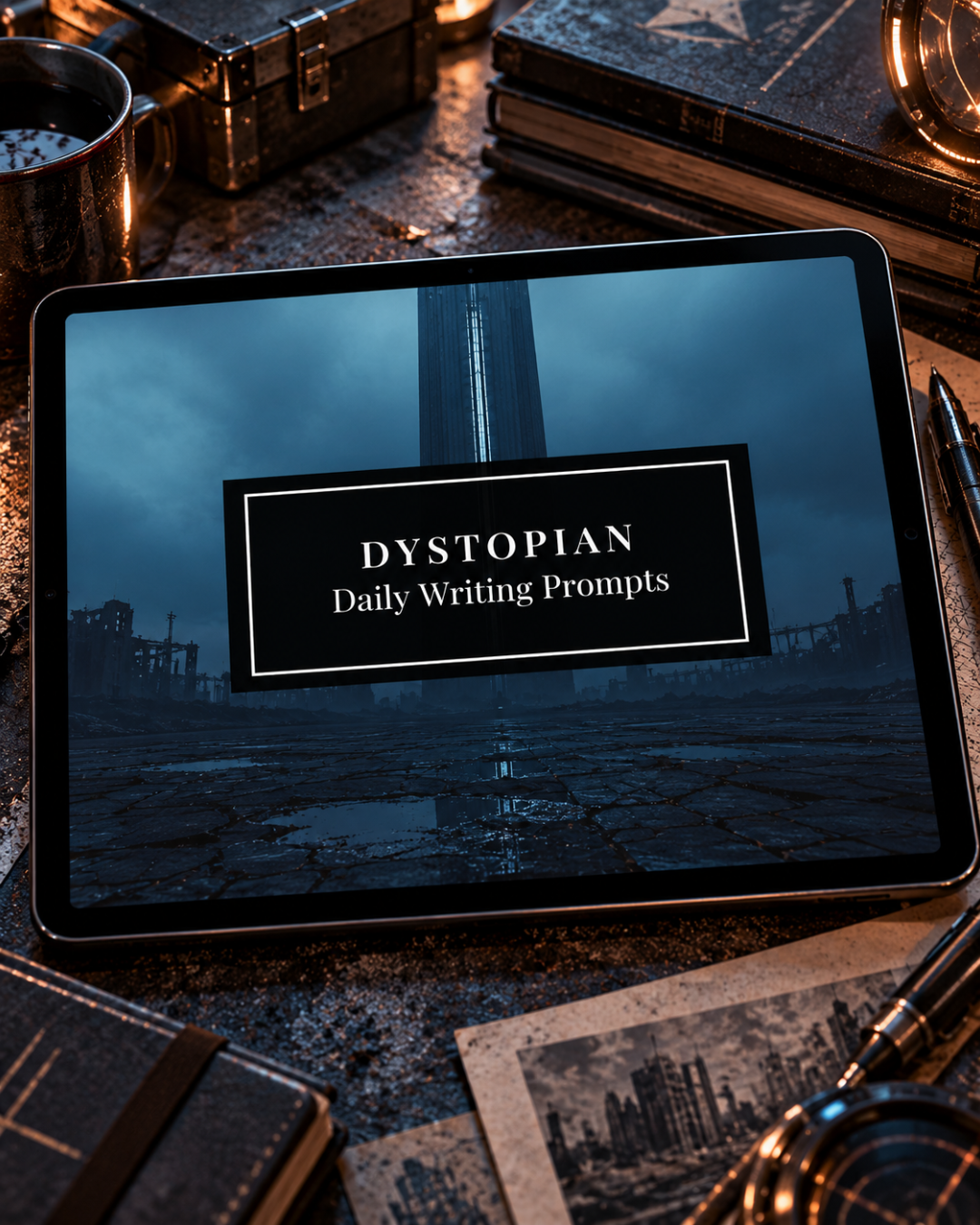
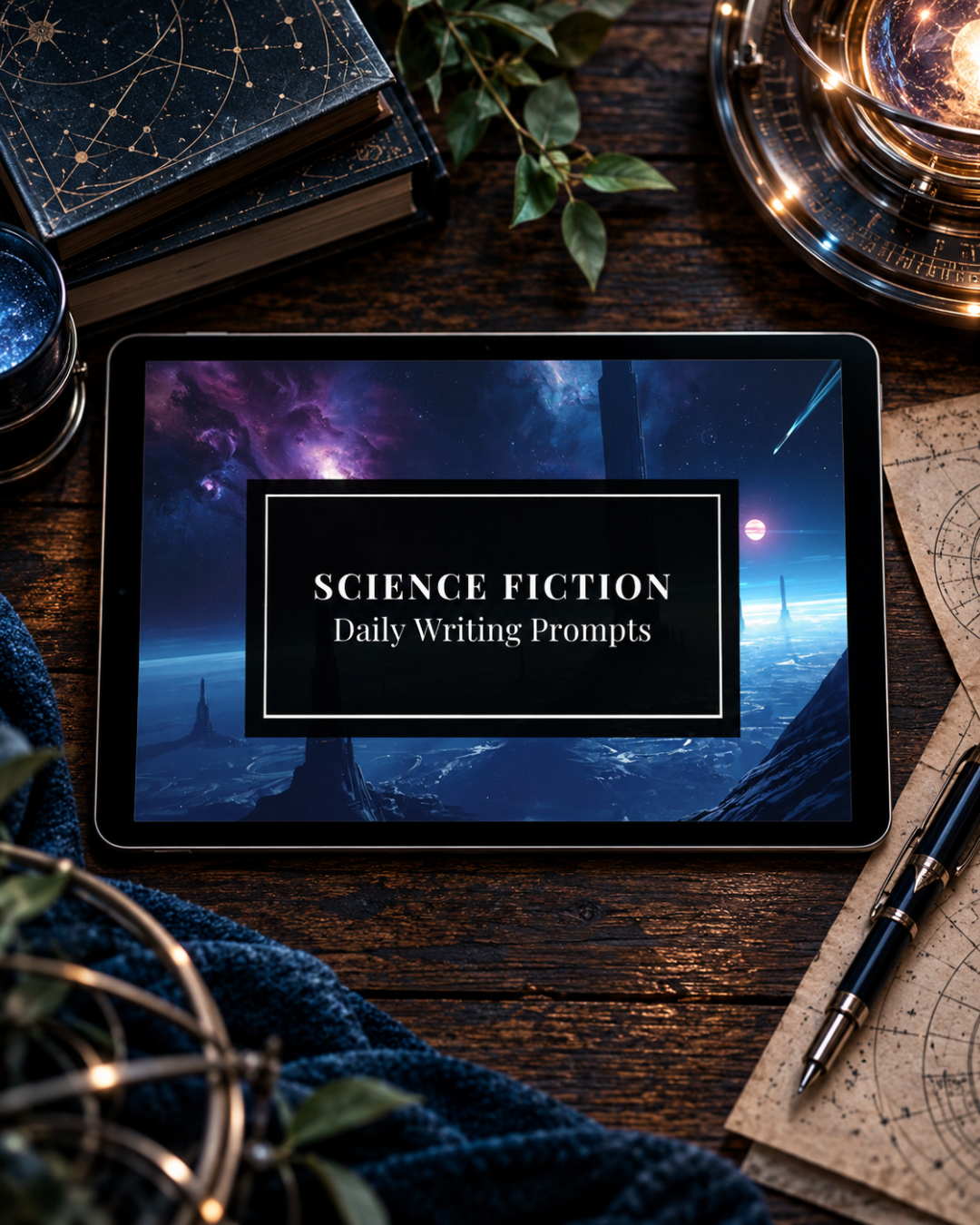
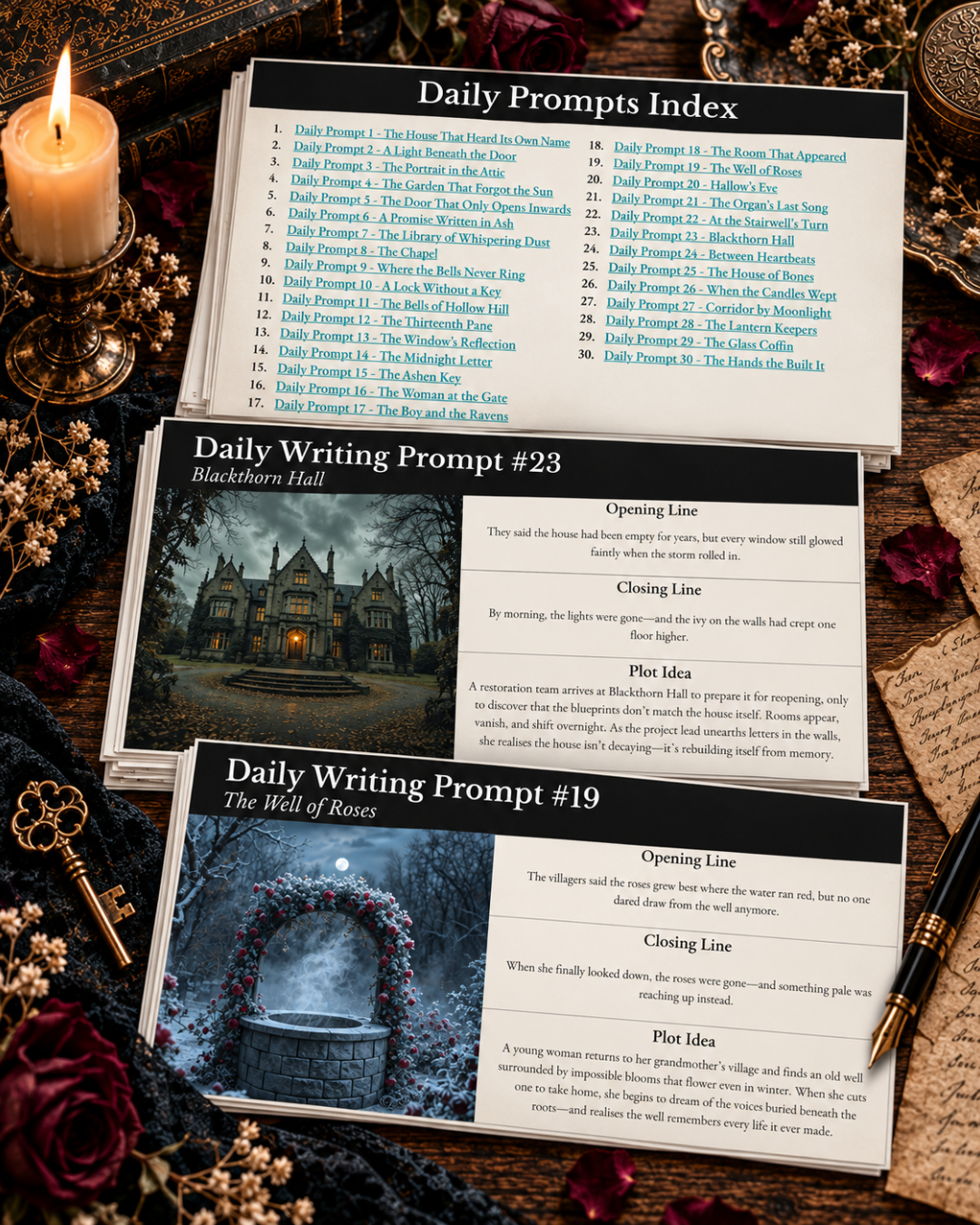
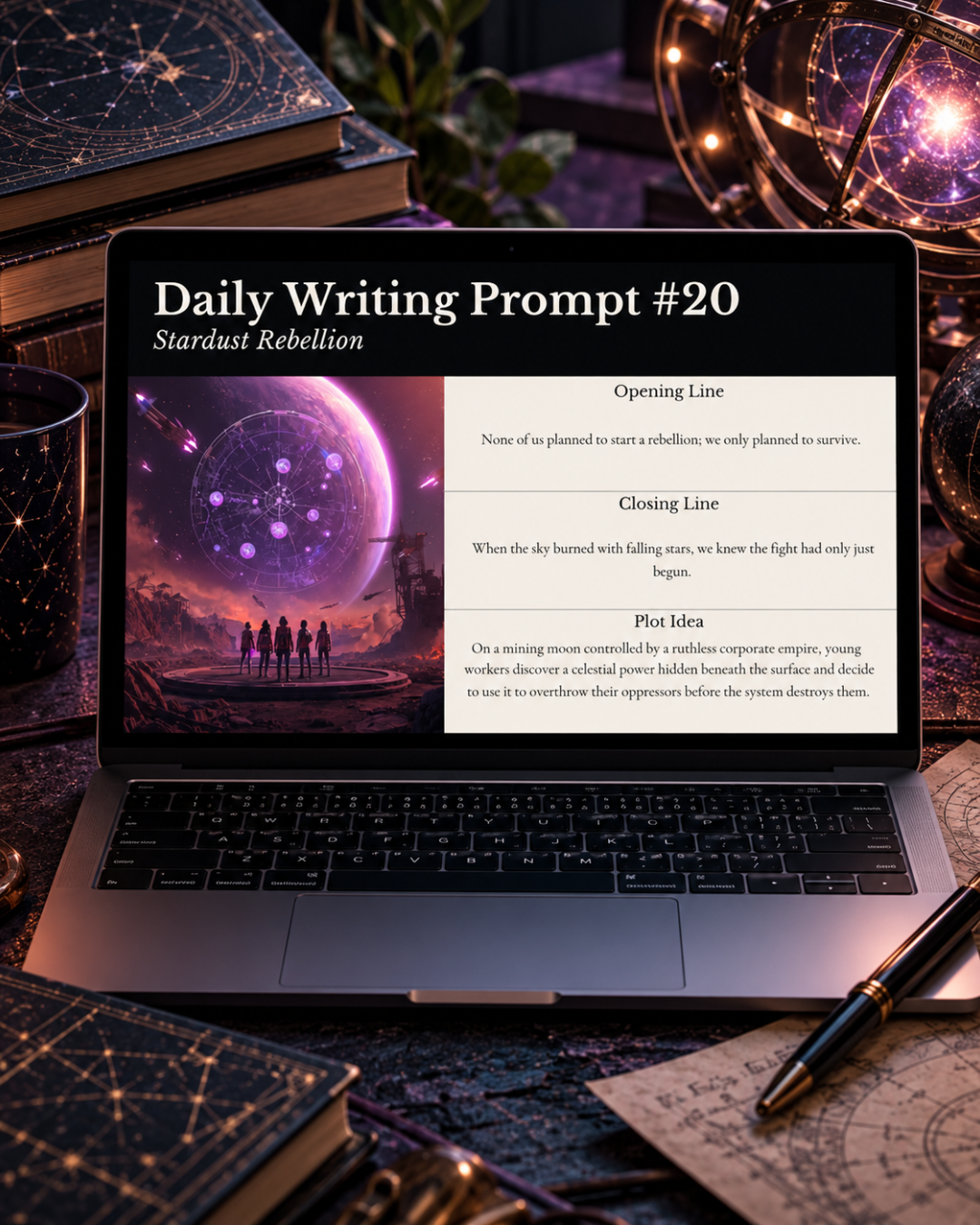
30 terrifying scenarios. 30 imaginative writing challenges. Endless possibilities for horror storytelling.
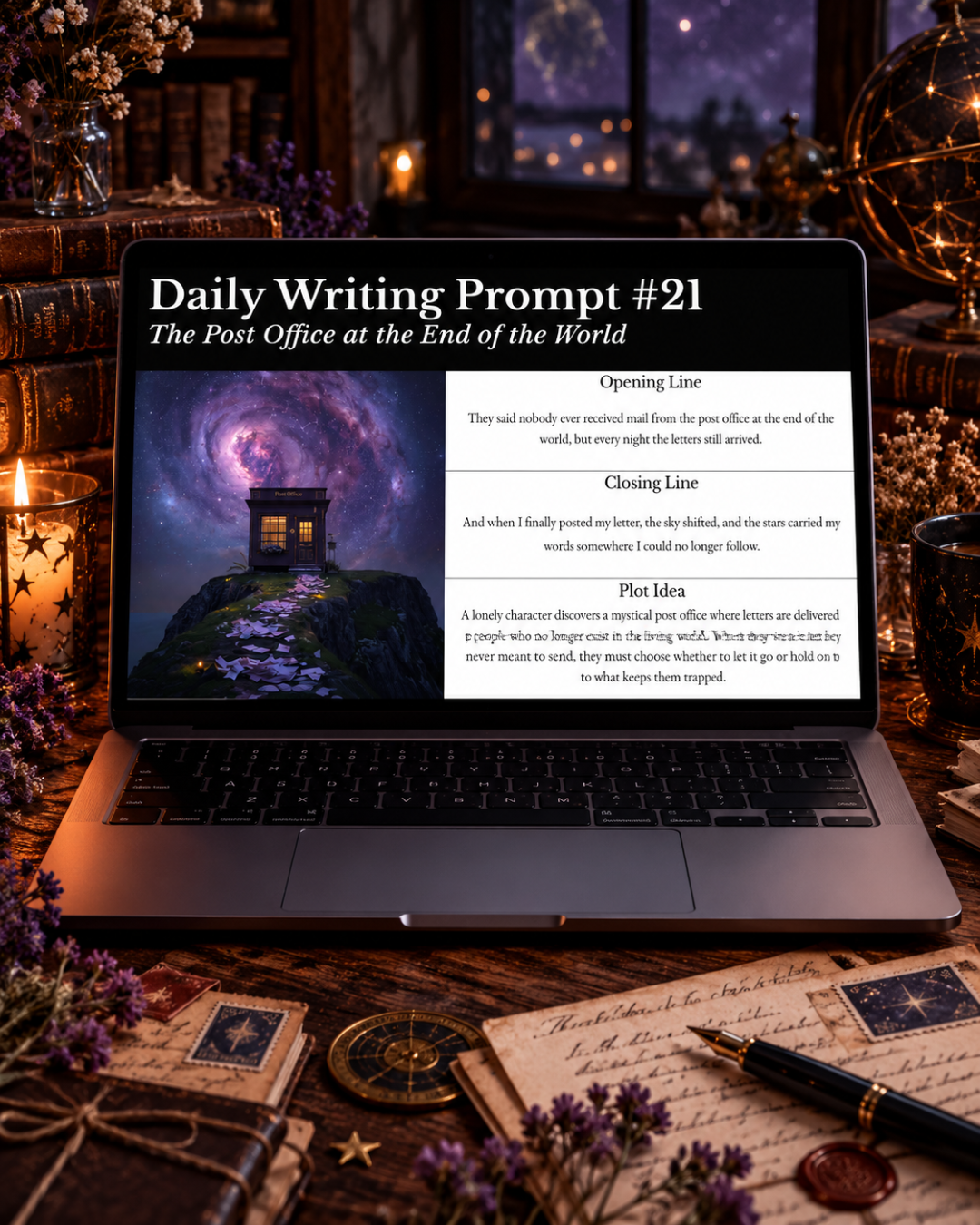
Step into worlds where shadows conceal sinister secrets, ordinary places become terrifying and nightmares begin to feel dangerously real with this collection of 30 Horror Daily Writing Prompts, designed to inspire imaginative storytelling, develop creative writing skills and build confidence in students and independent writers.
From haunted houses and supernatural encounters to psychological terror, sinister creatures, unexplained disappearances and disturbing discoveries, these illustrated writing prompts encourage writers to explore their darkest imaginations and experiment with the unsettling possibilities of horror fiction.
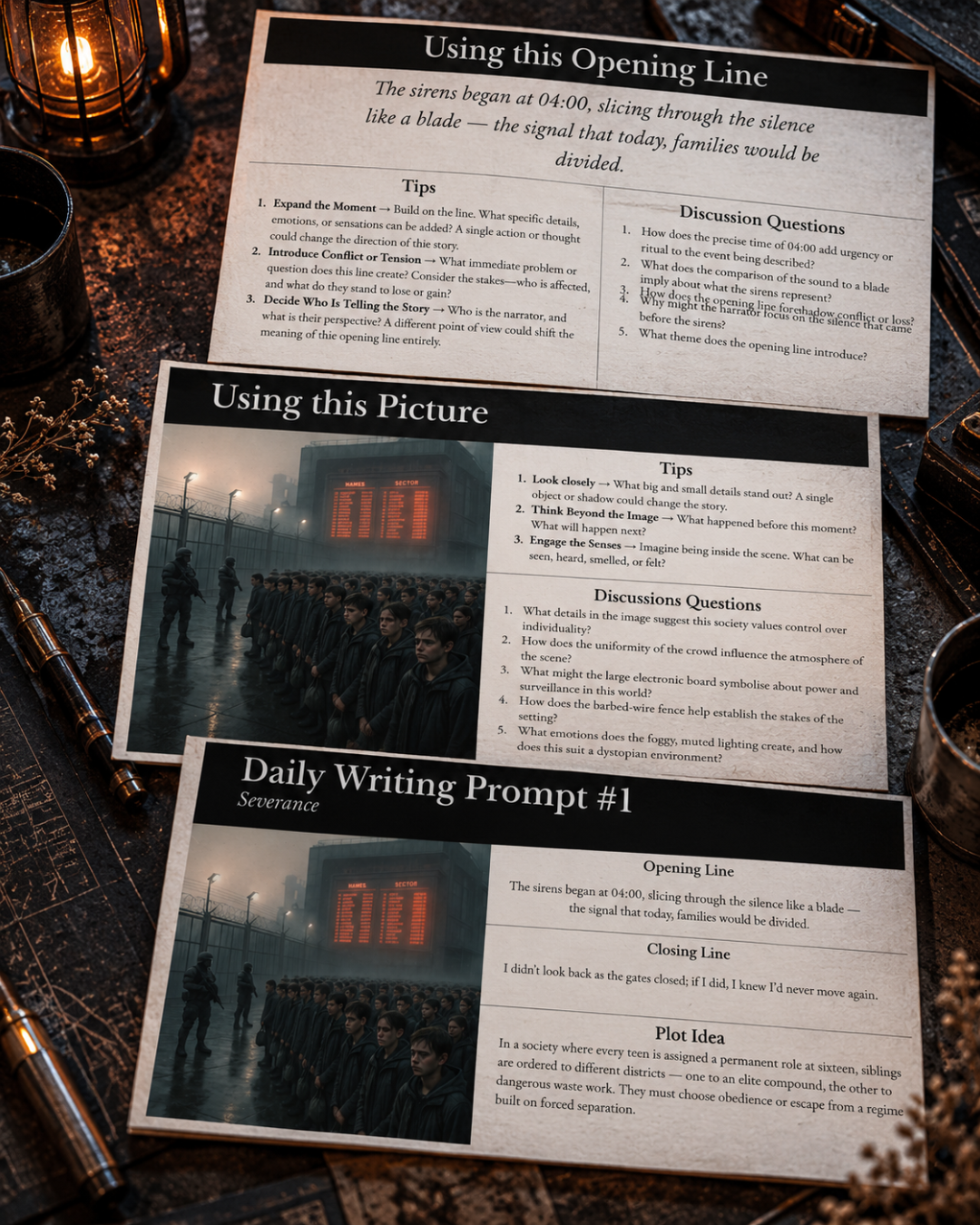
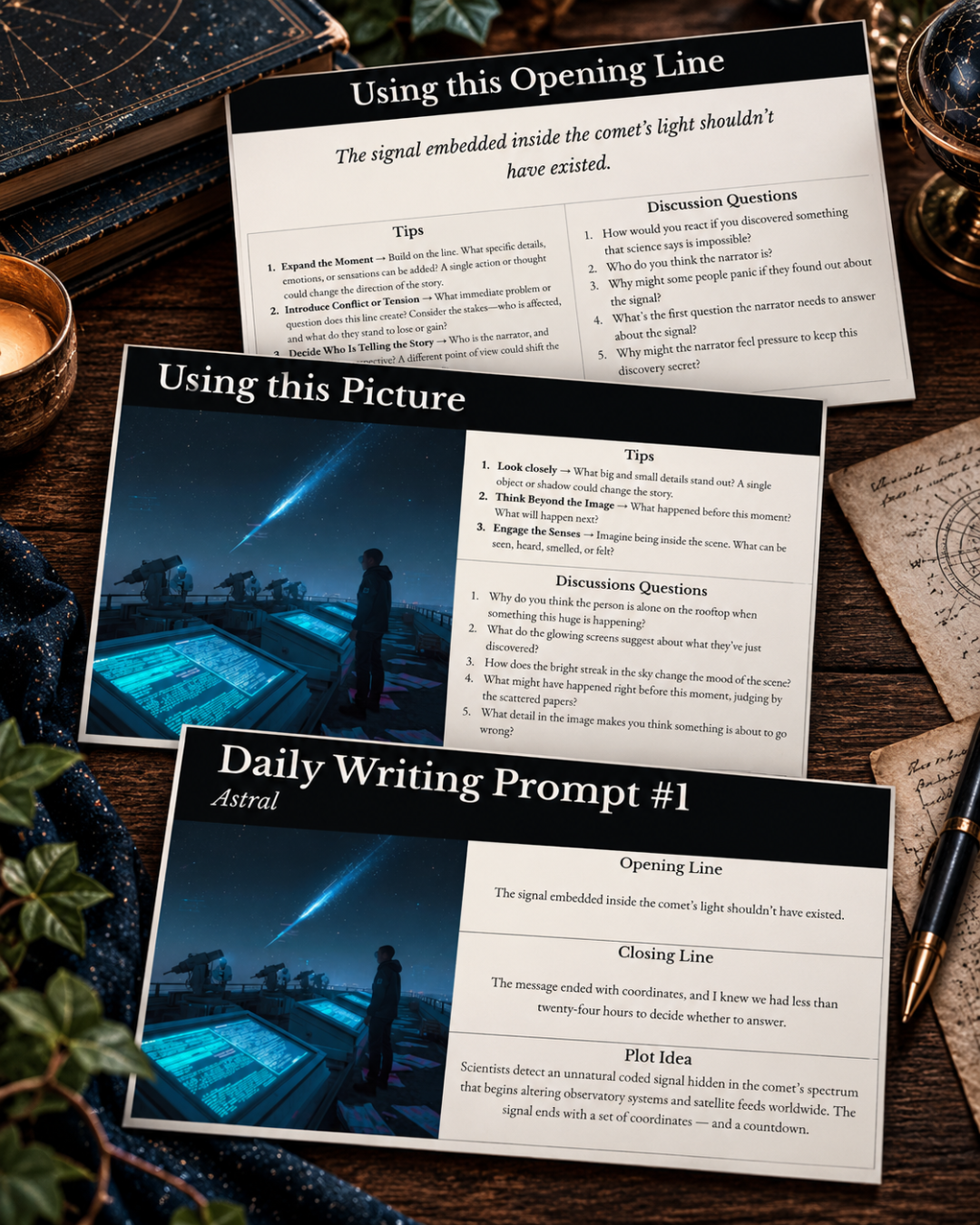
Each prompt provides an engaging creative starting point alongside structured writing guidance, helping writers experiment with atmosphere, suspense, character development, sensory description, narrative tension and the conventions of horror storytelling.
Ideal for English lessons, creative writing workshops, classroom starters, homework and independent writing practice.
What's Inside?
Each of the 30 horror writing prompts offers multiple ways to approach a story, allowing students to develop their own interpretations while strengthening essential storytelling techniques.
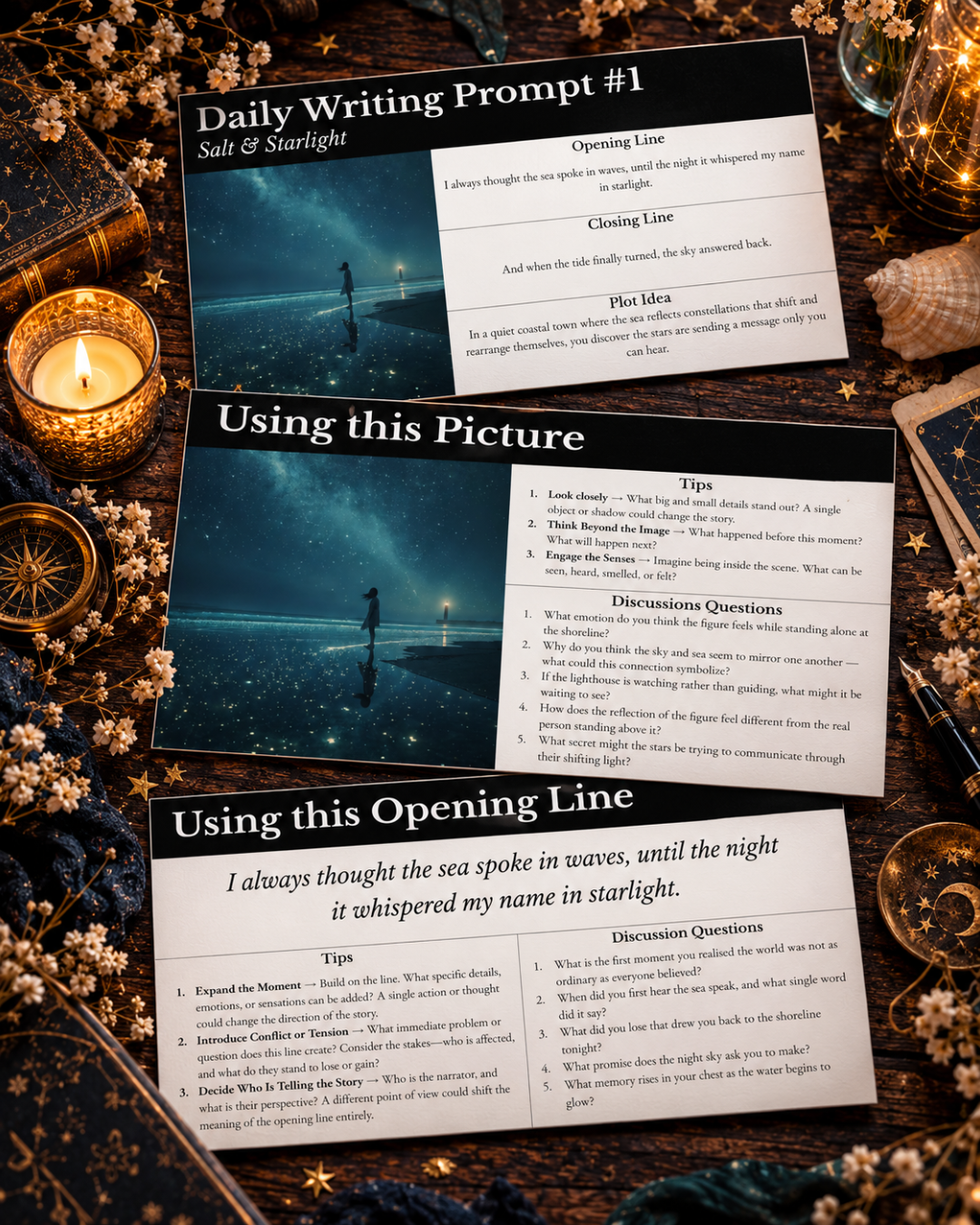
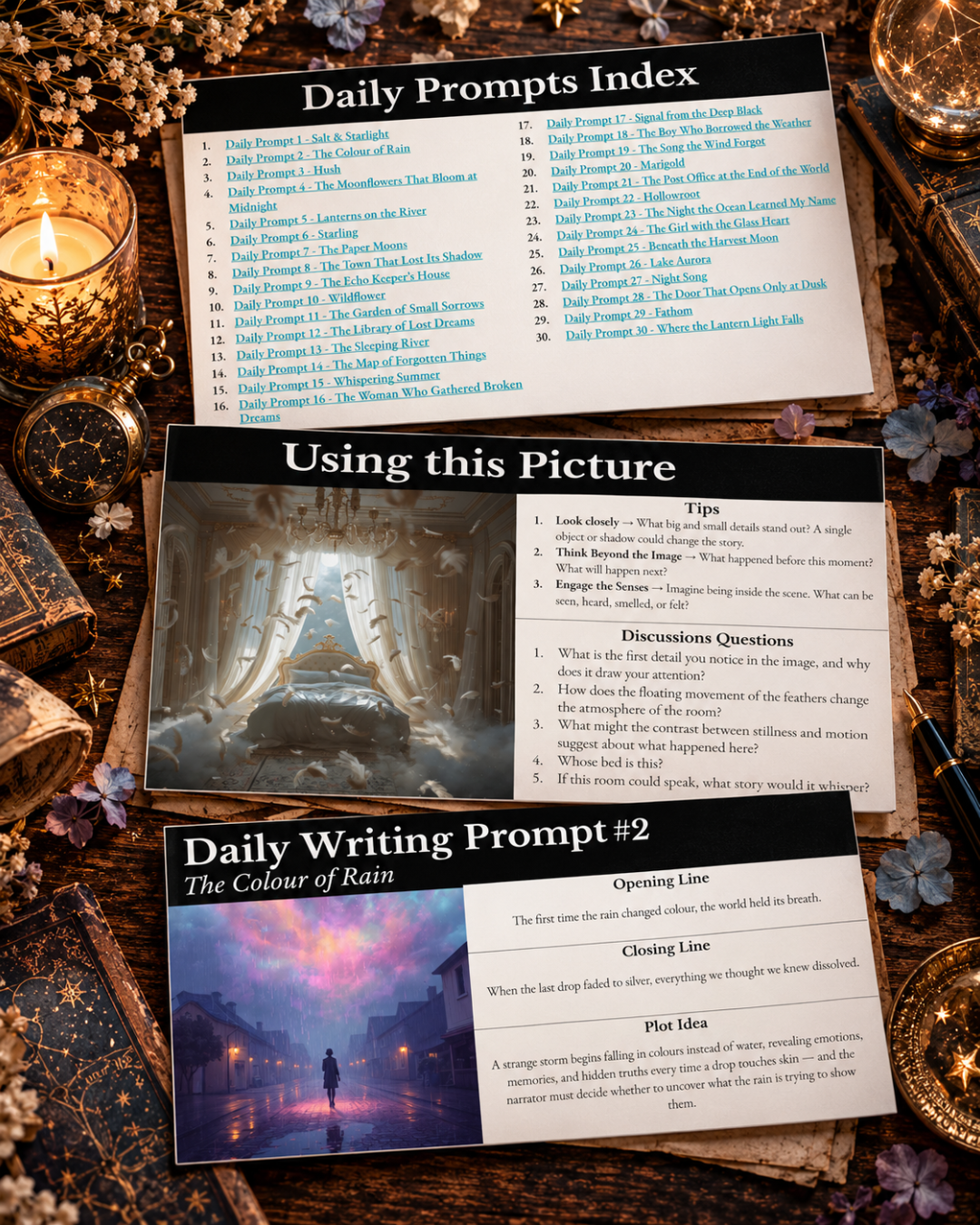
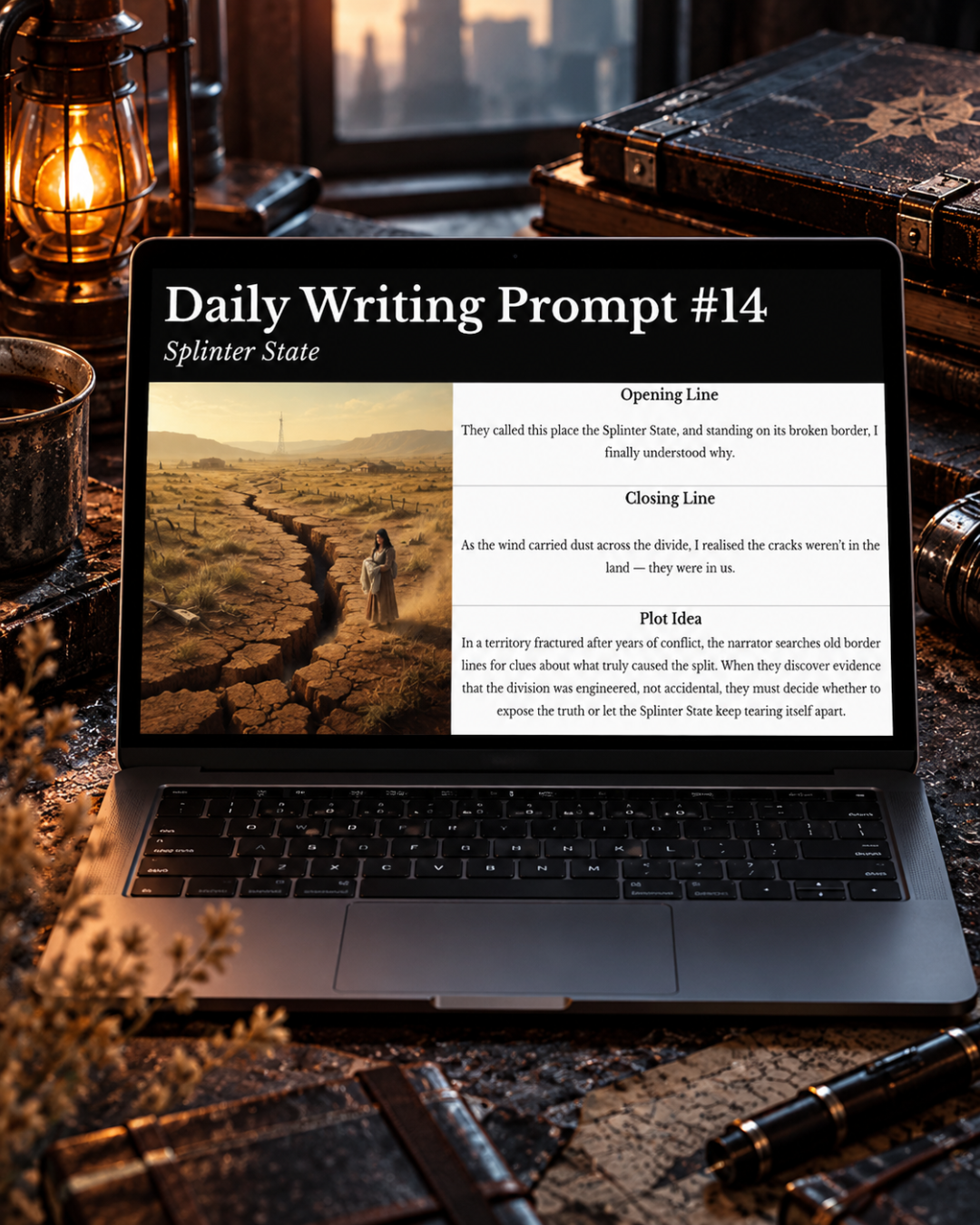
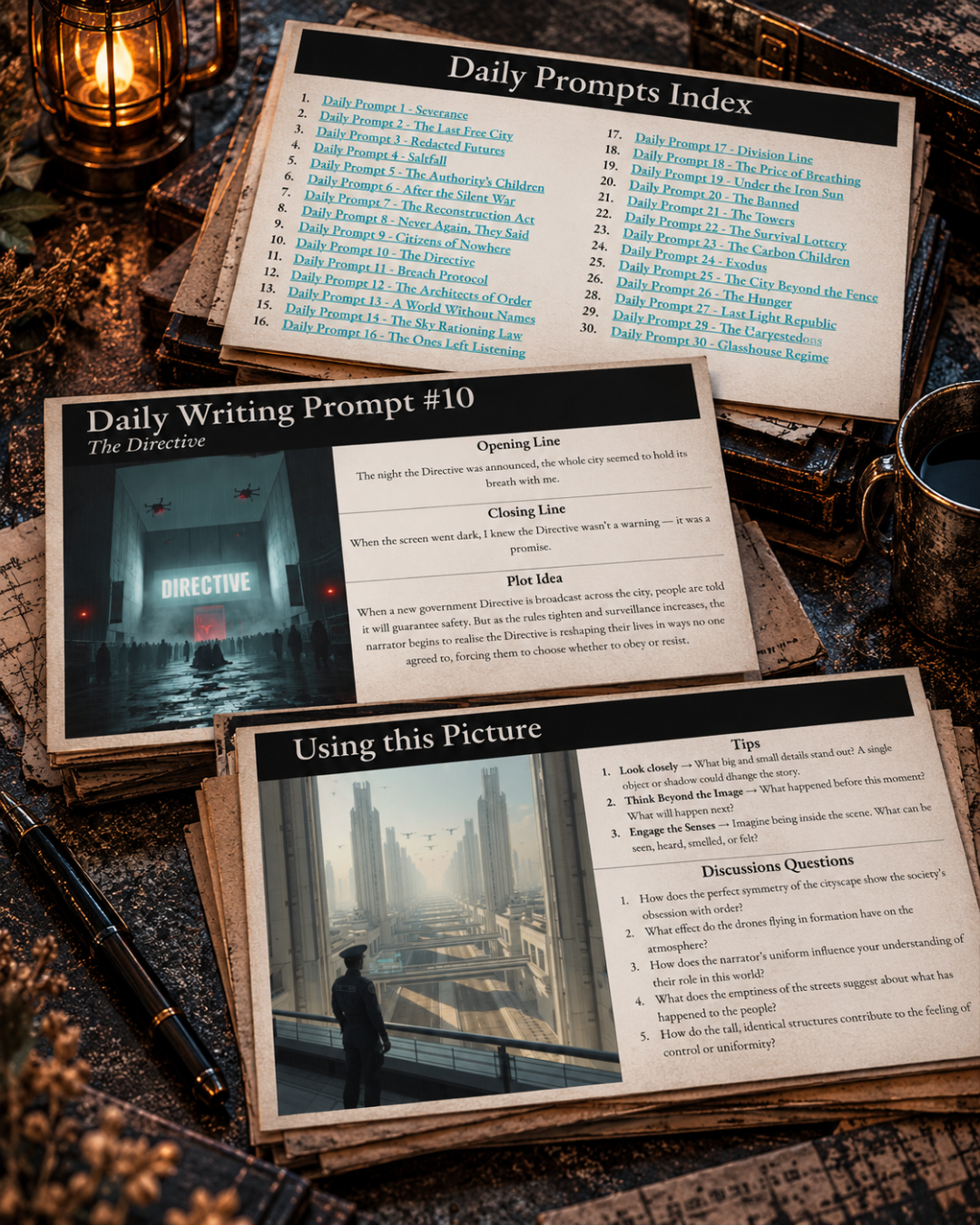
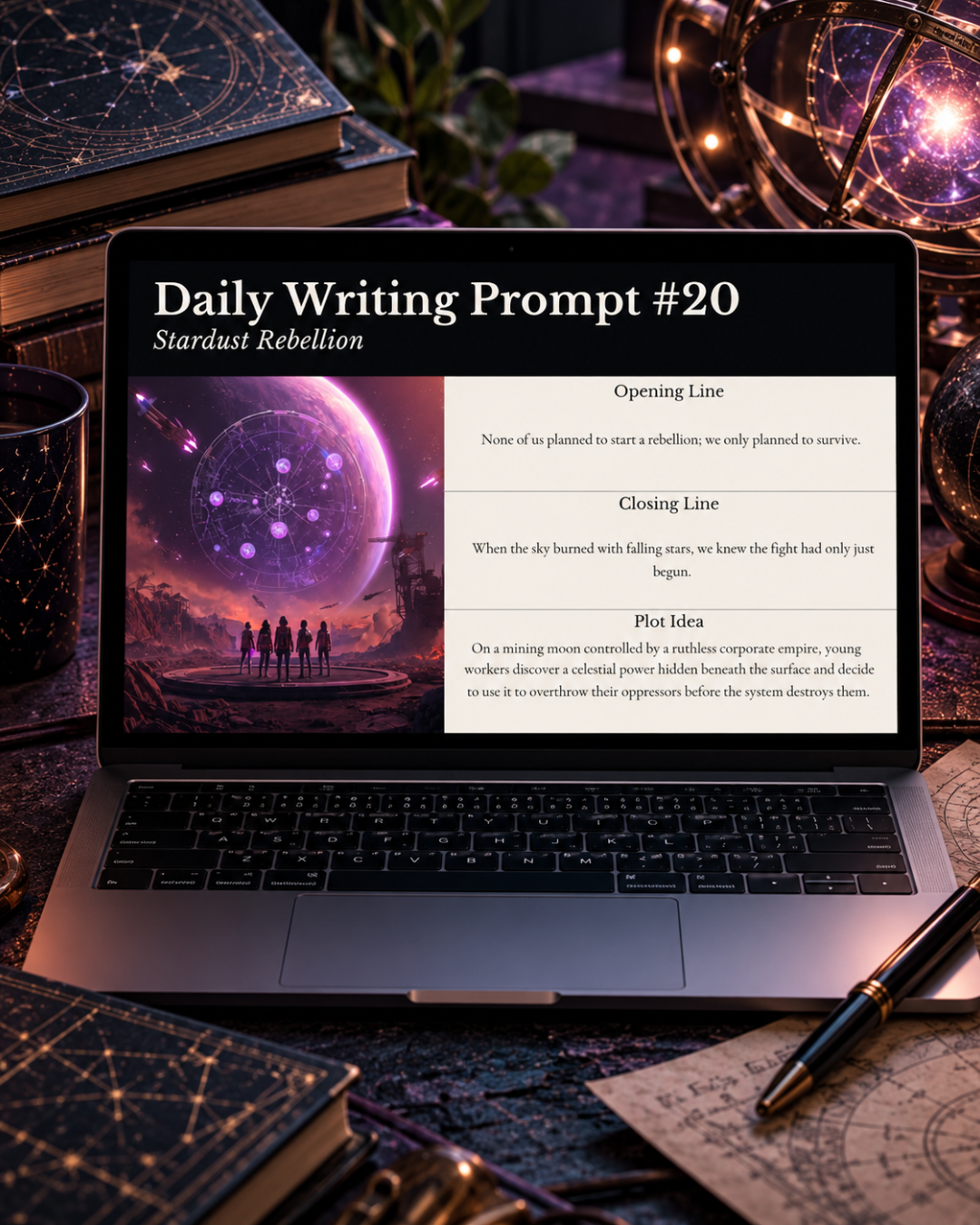
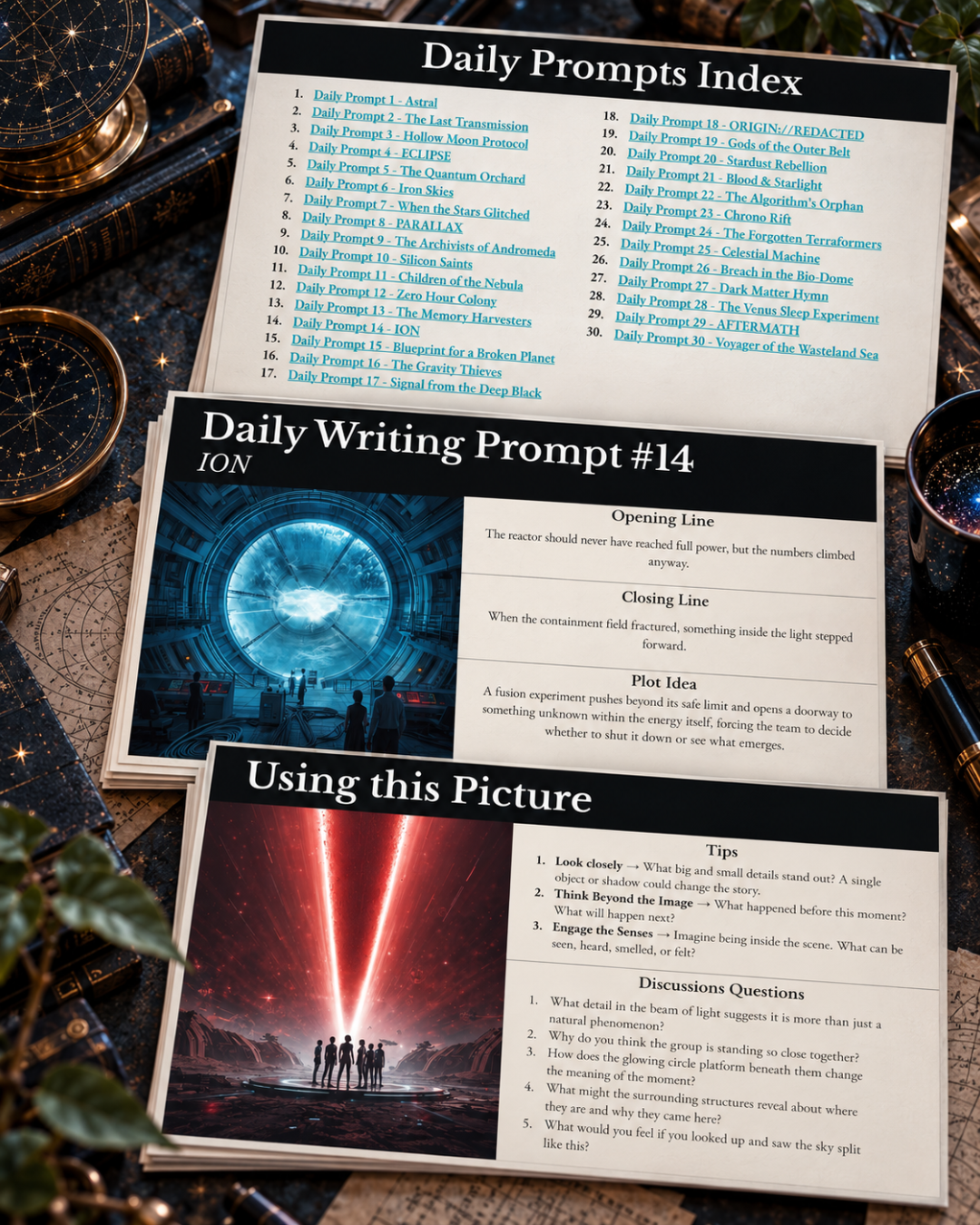
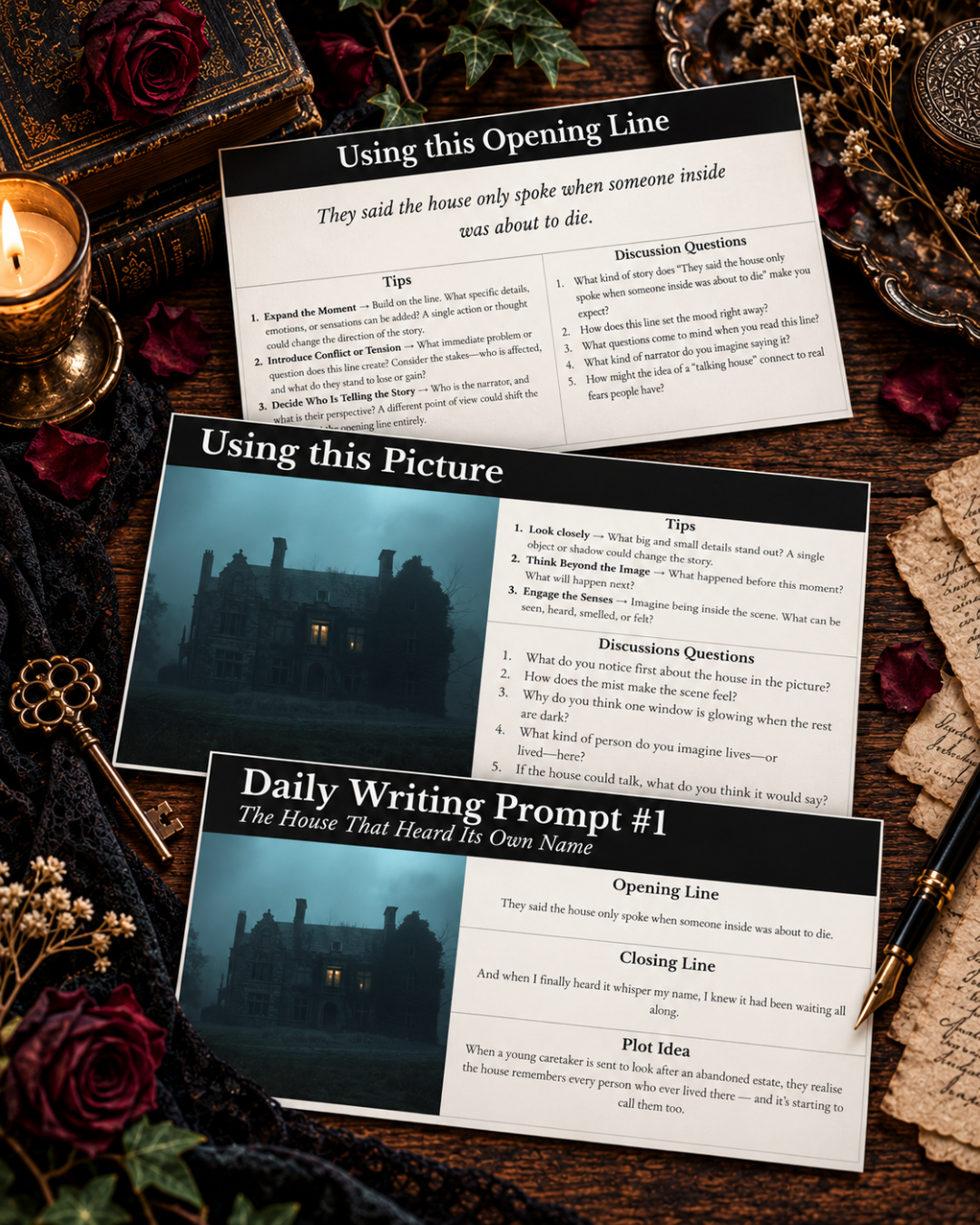
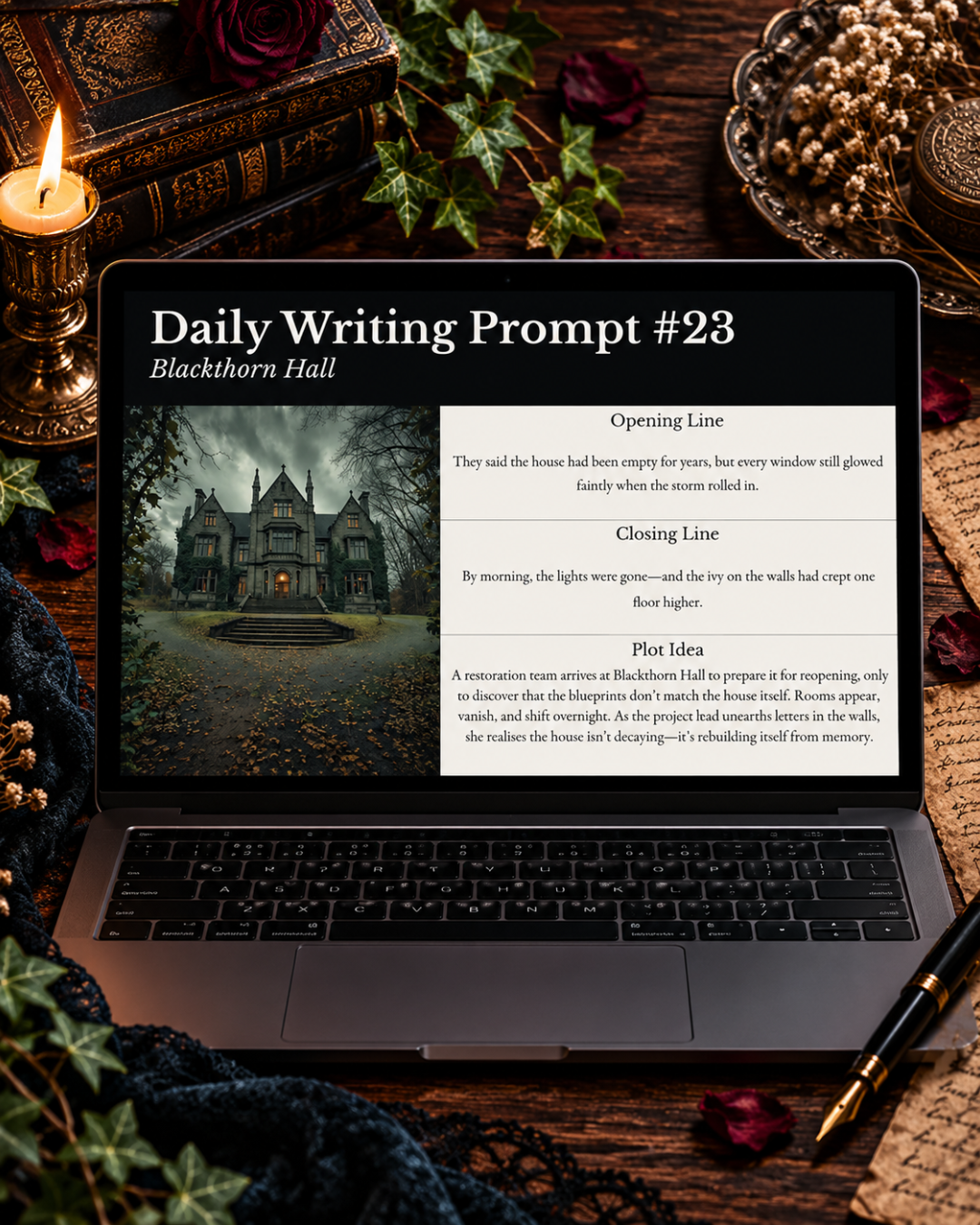
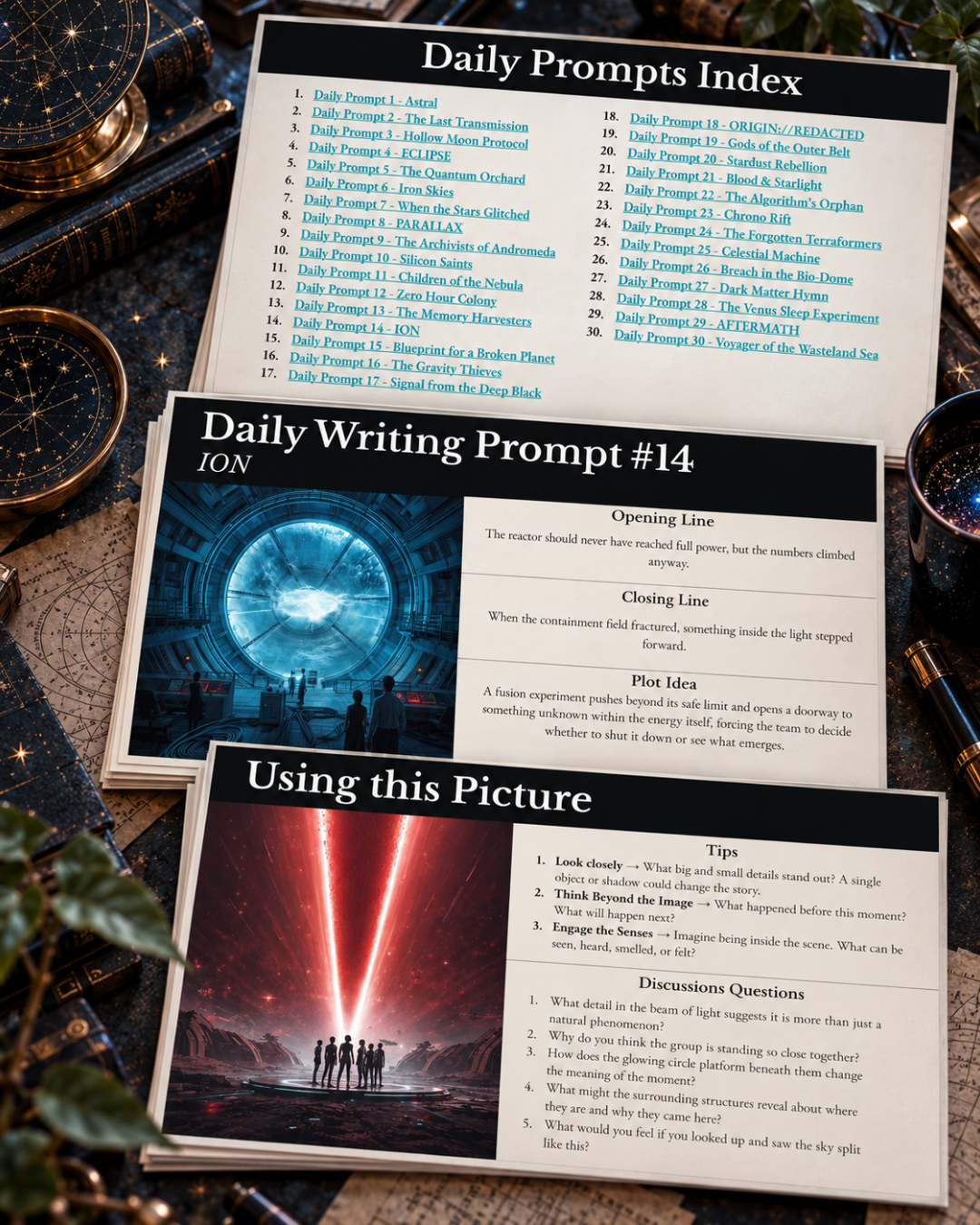
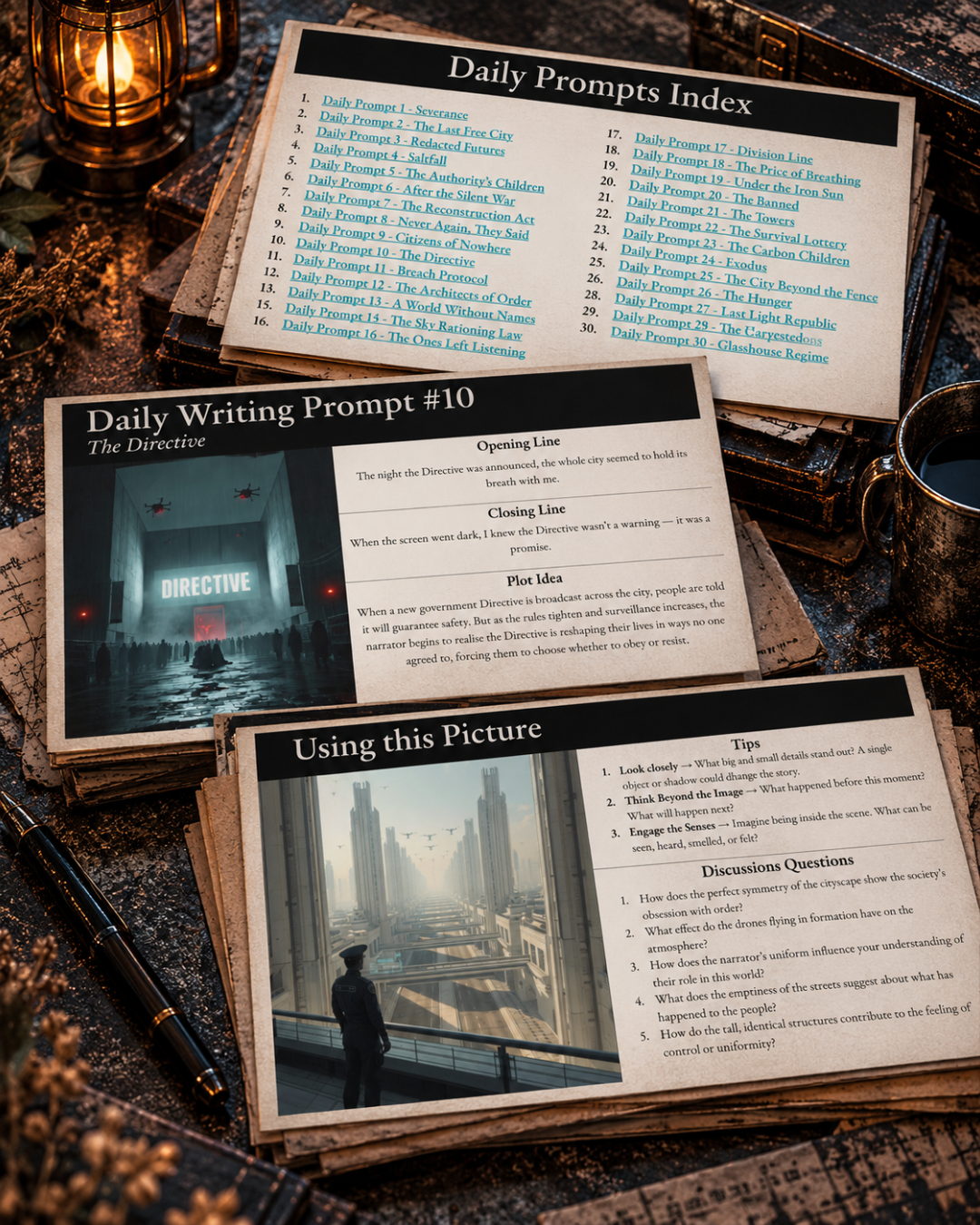
Atmospheric Horror Illustrations: Eerie visual prompts designed to inspire imaginative storytelling, descriptive writing and the creation of unsettling fictional environments.
Opening Lines: Intriguing story starters that introduce mystery, establish tension and help students overcome the challenge of beginning a story.
Closing Lines: Chilling final sentences that encourage writers to consider narrative structure, unexpected revelations and memorable endings.
Plot Ideas: Original horror scenarios involving supernatural encounters, disturbing mysteries, psychological suspense, sinister discoveries and unexplained events.
Picture-Based Writing Activities: Guided questions that develop observation, visual literacy, inference and imaginative interpretation.
Writing Tips and Discussion Questions: Structured guidance that encourages students to explore narrative possibilities, develop their ideas and make deliberate storytelling choices.
Scaffolding Horror Creative Writing in the Classroom
Horror fiction offers exciting opportunities for students to explore fear, uncertainty, suspense, the supernatural and the unsettling possibilities hidden within familiar places and everyday experiences.
However, creating a genuinely frightening atmosphere while developing believable characters, compelling conflicts and carefully controlled narrative tension can be challenging, particularly for students who lack confidence in their creative writing.
This collection provides flexible scaffolding for students with different abilities, confidence levels and writing experience.
Students who need additional support can use the supplied illustrations, opening lines, plot ideas and guided questions to develop their stories step by step.
More confident writers can use the same materials as inspiration for independent storytelling, experimenting with psychological horror, unreliable narrators, foreshadowing, dramatic irony, ambiguous endings and the gradual revelation of disturbing secrets.
The activities can help teachers support:
Differentiated learning: Allow students to choose the level of guidance they need, from structured story starters to independent narrative exploration.
Descriptive writing: Develop sensory imagery, unsettling atmosphere and vivid descriptions of eerie settings, mysterious figures and disturbing events.
Horror conventions: Explore suspense, isolation, supernatural threats, psychological fear, foreshadowing, the uncanny and the fear of the unknown.
Setting and atmosphere: Encourage students to transform ordinary locations into frightening environments through carefully chosen details, imagery and mood.
Narrative development: Practise creating compelling openings, escalating tension, unexpected twists and memorable endings.
Character development: Explore fear, vulnerability, motivation, emotional responses and the decisions characters make when confronted with danger.
Creative thinking: Consider how uncertainty, suggestion, mystery and the unexpected can create fear without relying on graphic descriptions.
Speaking and listening: Use discussion questions for paired conversations, group work and whole-class exploration.
Writing confidence: Provide accessible starting points for reluctant writers while challenging more experienced storytellers.
Rather than prescribing a single correct interpretation, each prompt encourages students to develop their own frightening scenarios and discover how different storytelling choices can transform an ordinary idea into an unforgettable horror story.
Flexible Activities for Teachers and Writers
Use these horror writing prompts for:
Daily creative writing practice and classroom starters
Horror literature and creative writing units
English and literacy lessons
Descriptive writing and atmospheric setting exercises
Suspense, tension and foreshadowing activities
Short story writing and narrative development
Halloween-themed creative writing activities
Creative writing clubs and workshops
Paired discussions and collaborative storytelling
Homework, extension tasks and independent learning
Homeschooling and personal writing challenges
These activities can also complement the study of horror literature by encouraging students to explore the genre's conventions through their own creative writing.
Each prompt can be completed as a short writing exercise, developed into a longer horror narrative or revisited to experiment with different storytelling techniques.
What You'll Receive
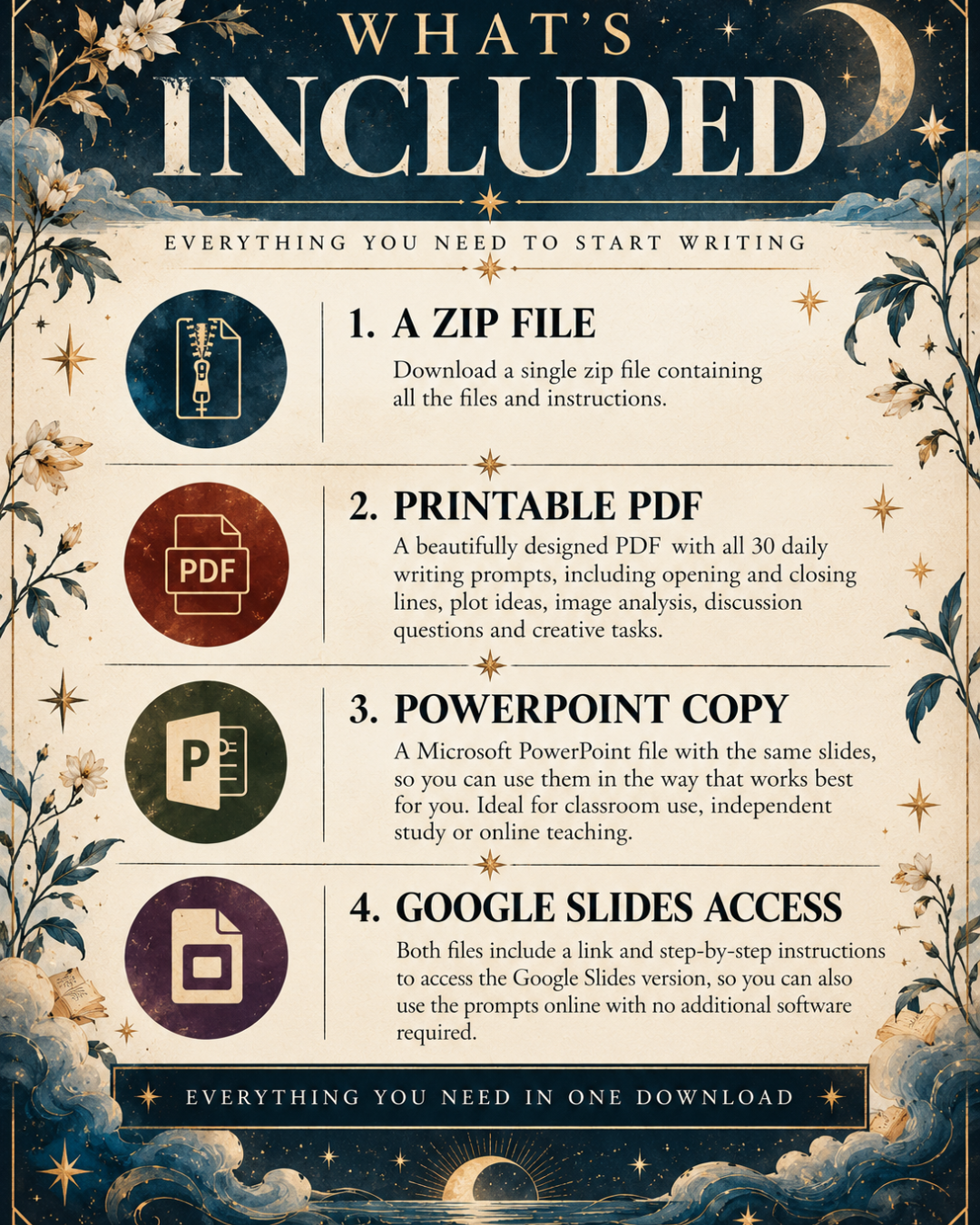
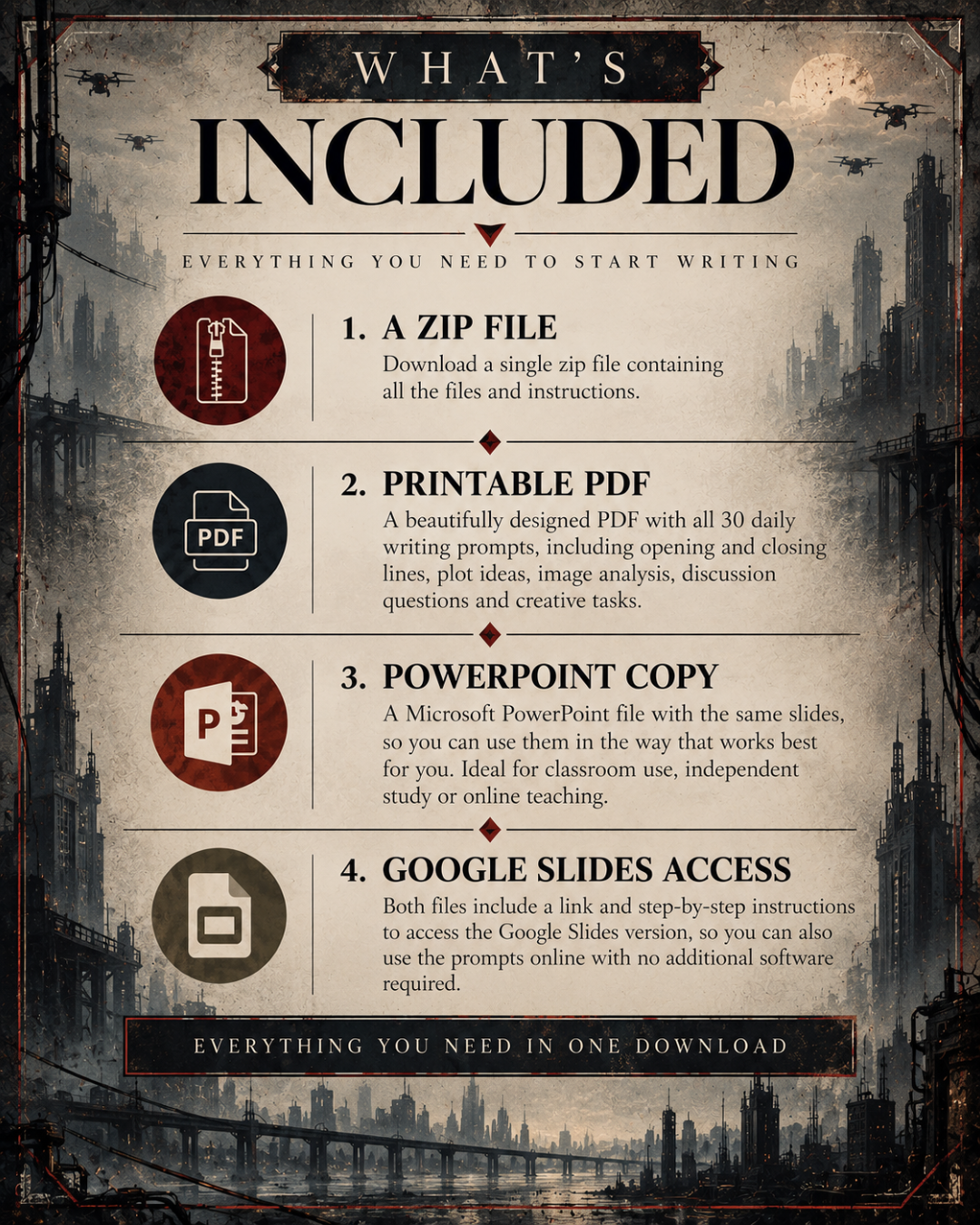
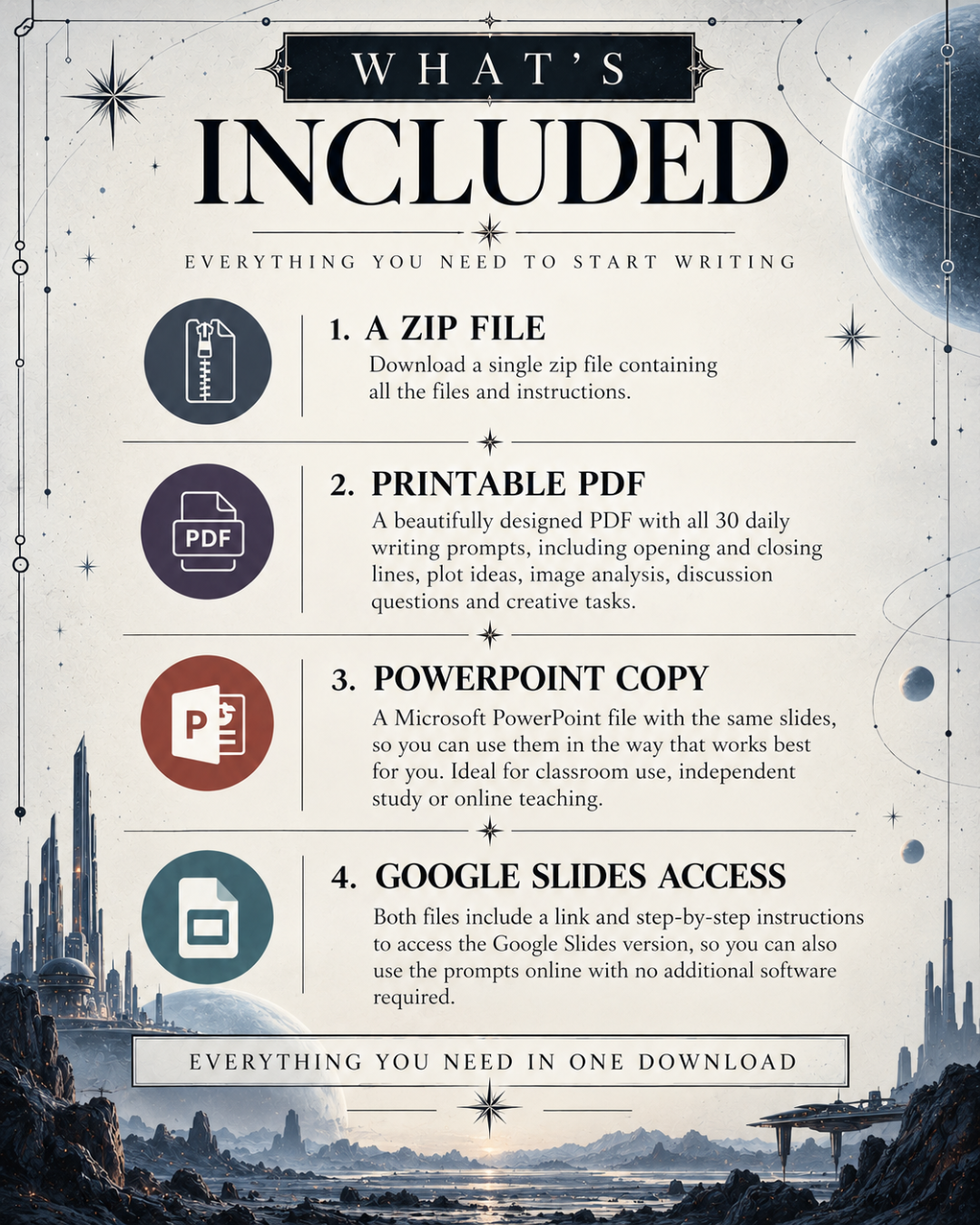
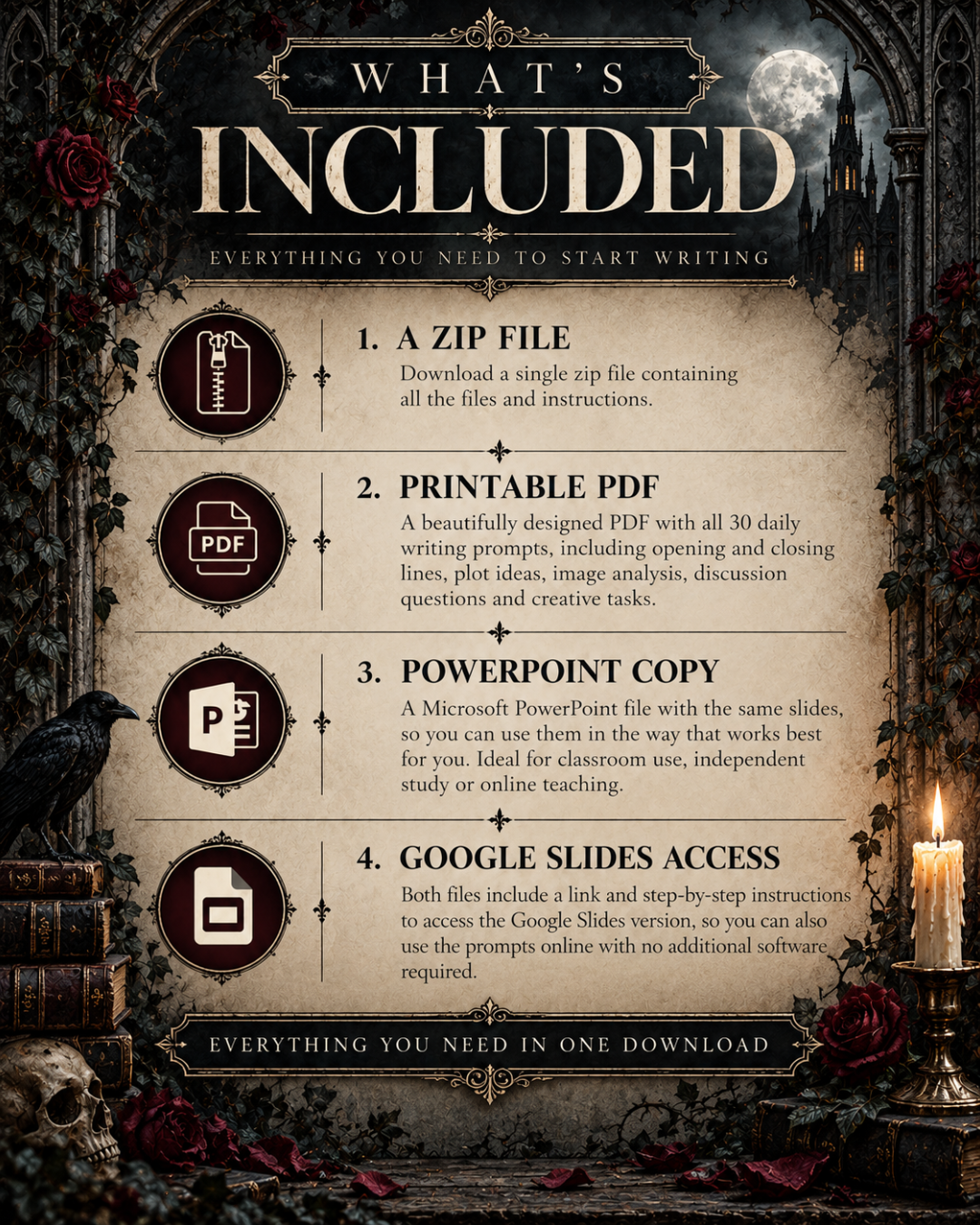
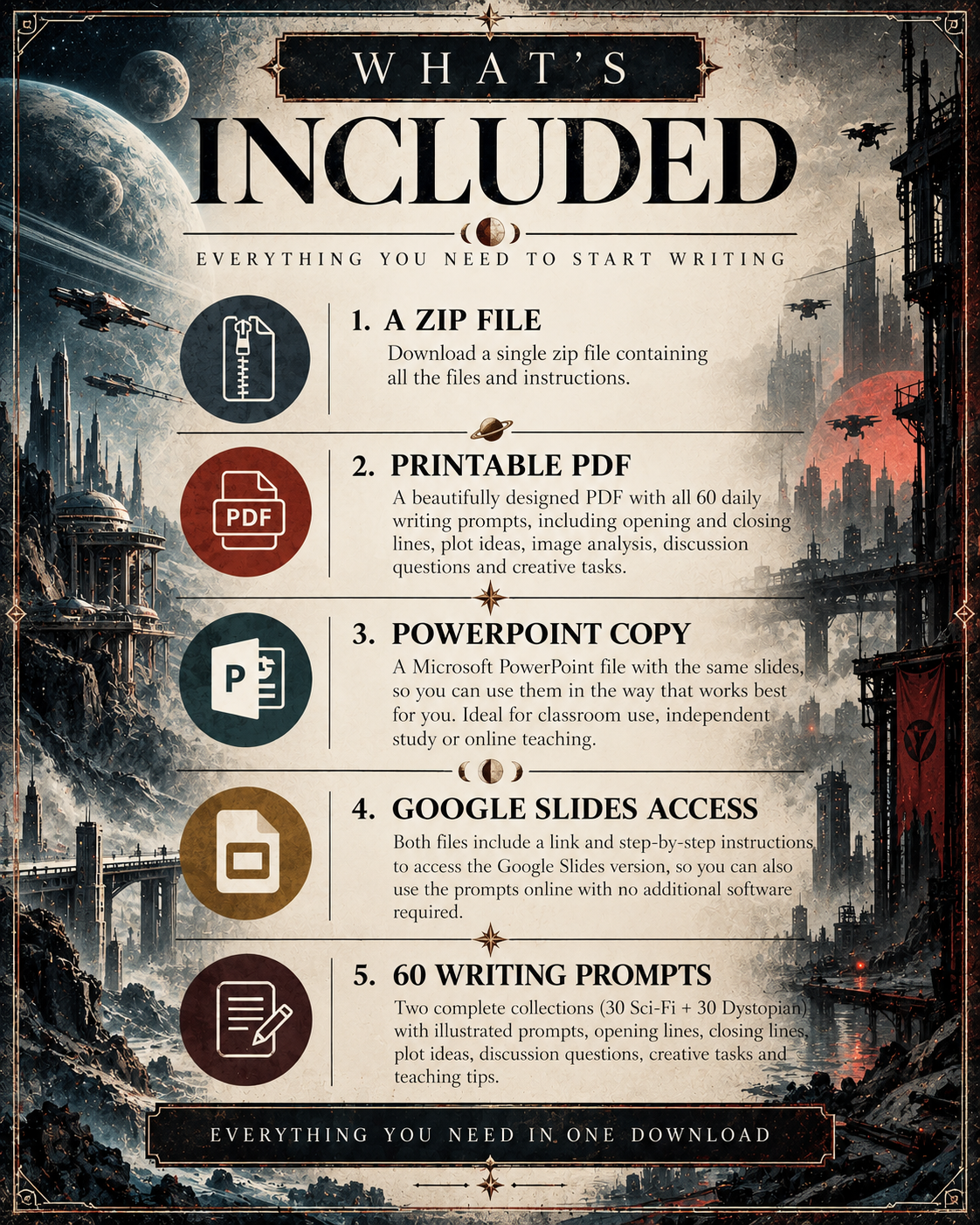
Your purchase includes one downloadable ZIP file containing:
1. PDF Version
A PDF featuring all 30 illustrated horror writing prompts, accompanying activities and structured writing guidance. Ideal for viewing, printing or displaying in the classroom.
2. Microsoft PowerPoint Version
A PowerPoint copy of the slides, providing an additional format for presenting and using the activities.
3. Google Slides Access
Both files include links and step-by-step instructions for accessing the Google Slides version, allowing you to use the collection online.
All materials are digital downloads. No physical product will be shipped.
A New Nightmare Every Day
Whether you're introducing students to horror fiction, helping reluctant writers discover their confidence or encouraging experienced storytellers to experiment with suspense, atmosphere and psychological fear, these prompts offer countless opportunities for imaginative and unsettling writing.
The most memorable horror stories don't always begin with monsters or haunted houses. Sometimes, they begin with an ordinary moment, a strange sound or the unsettling feeling that something is terribly wrong.
Enter the darkness. Uncover the mystery. Begin a story.
Your next story is waiting...
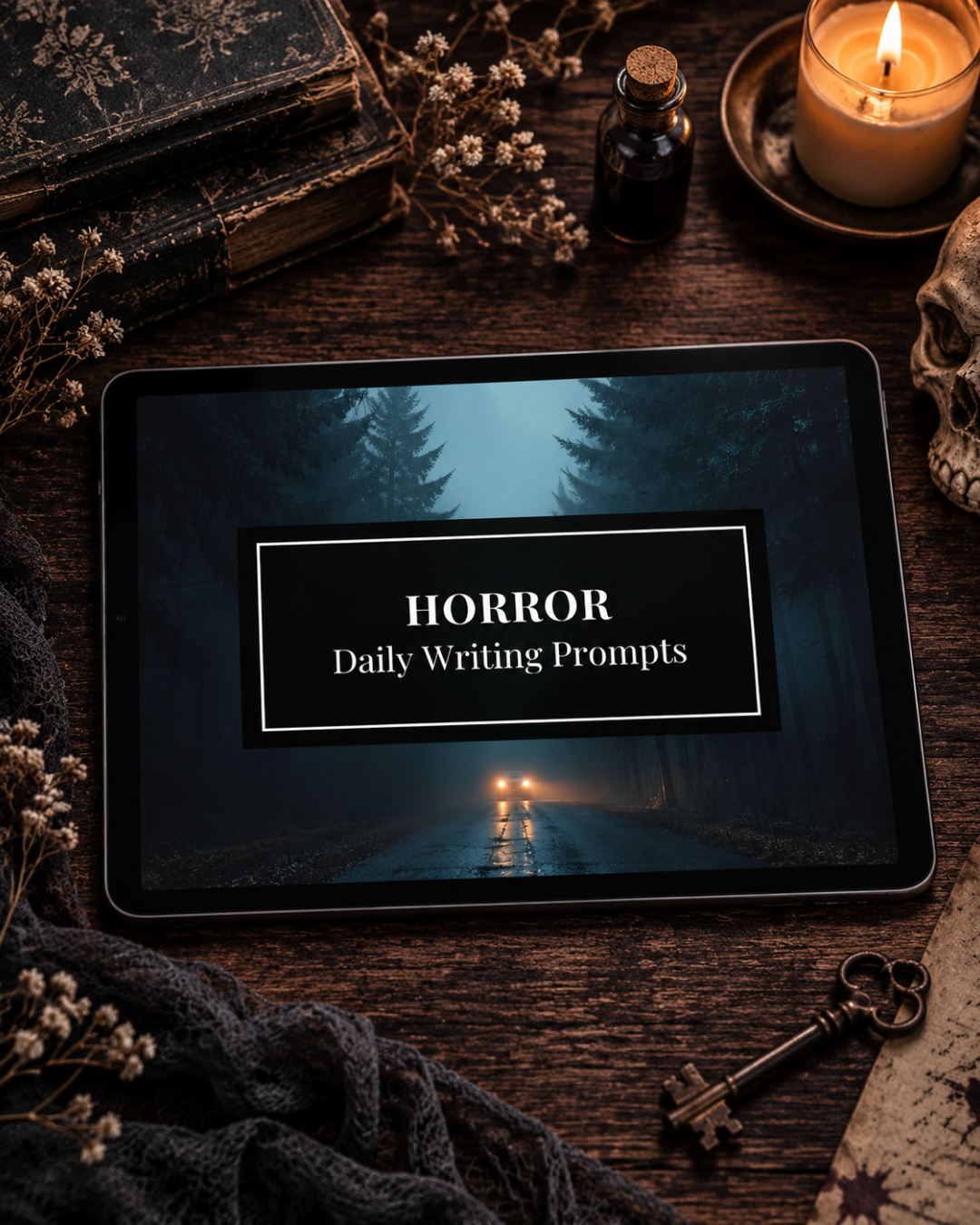 Image 1 of 5
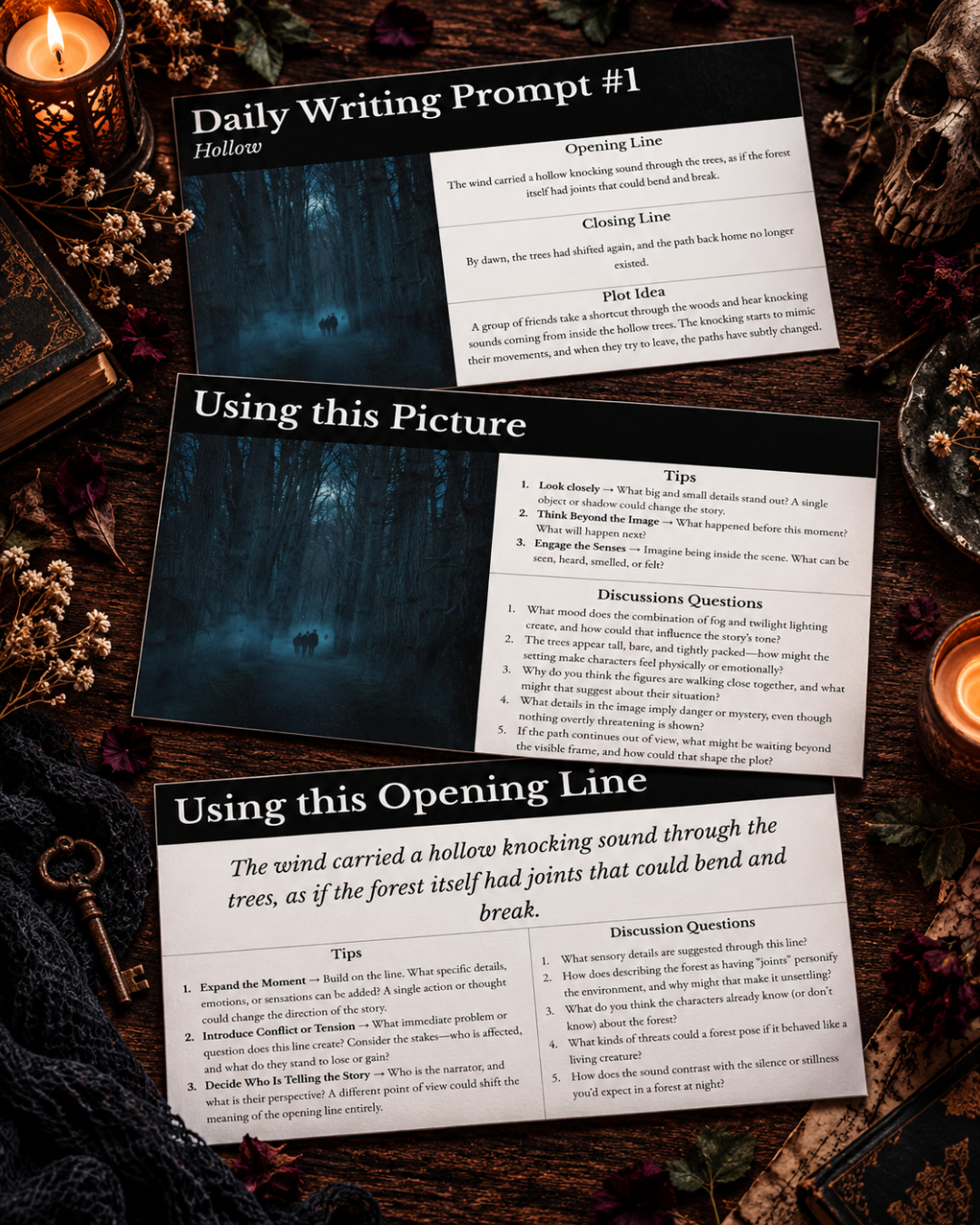 Image 2 of 5
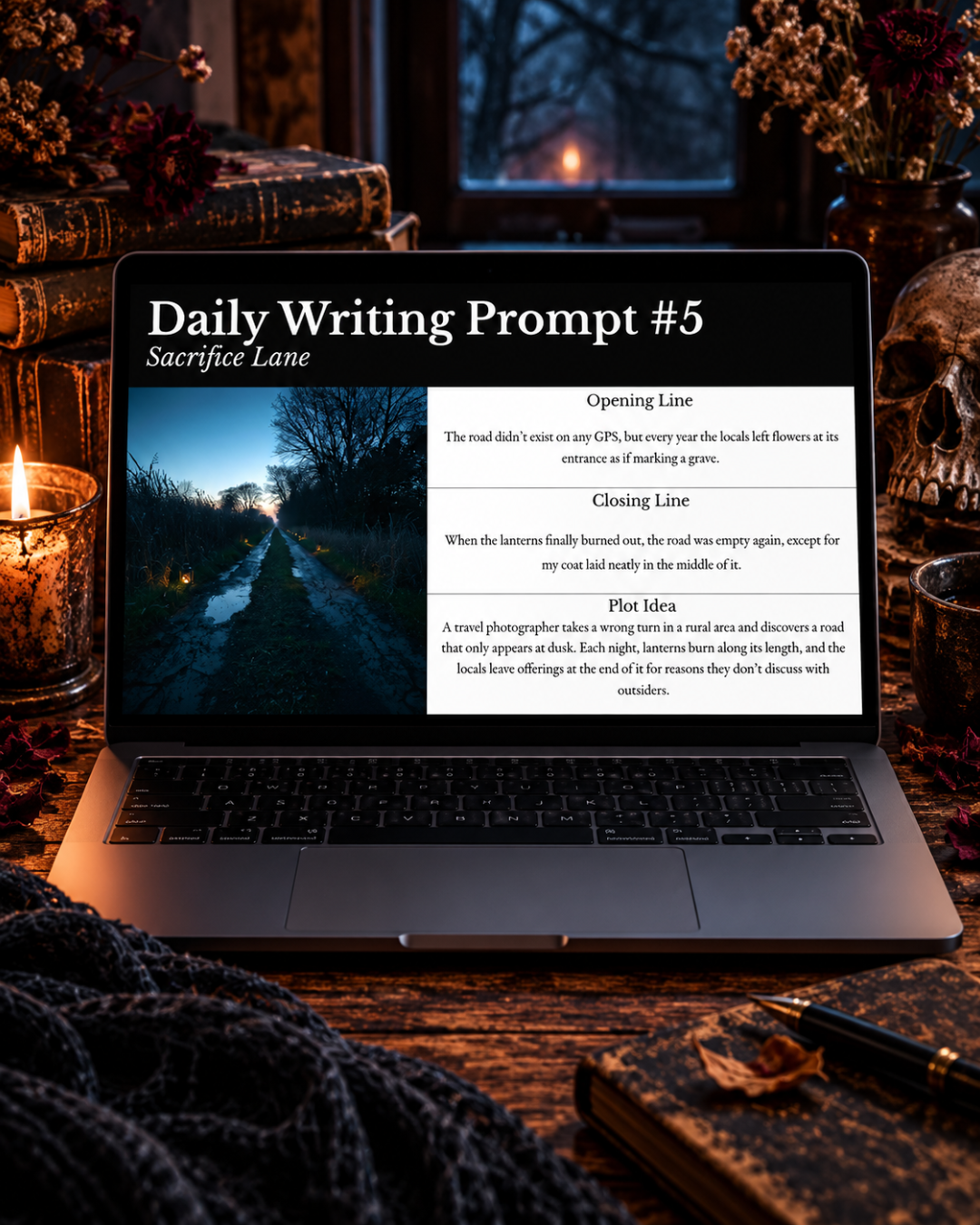 Image 3 of 5
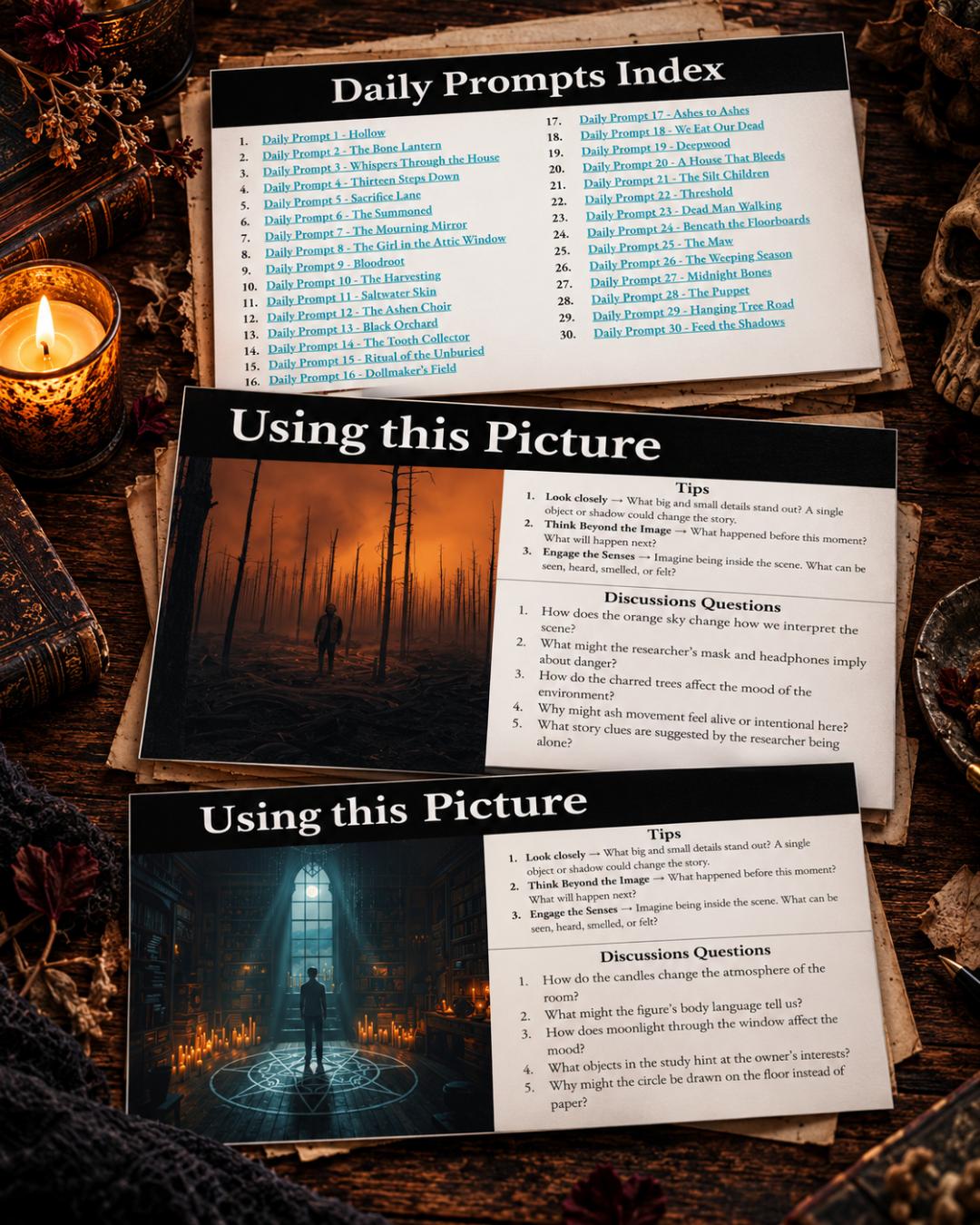 Image 4 of 5
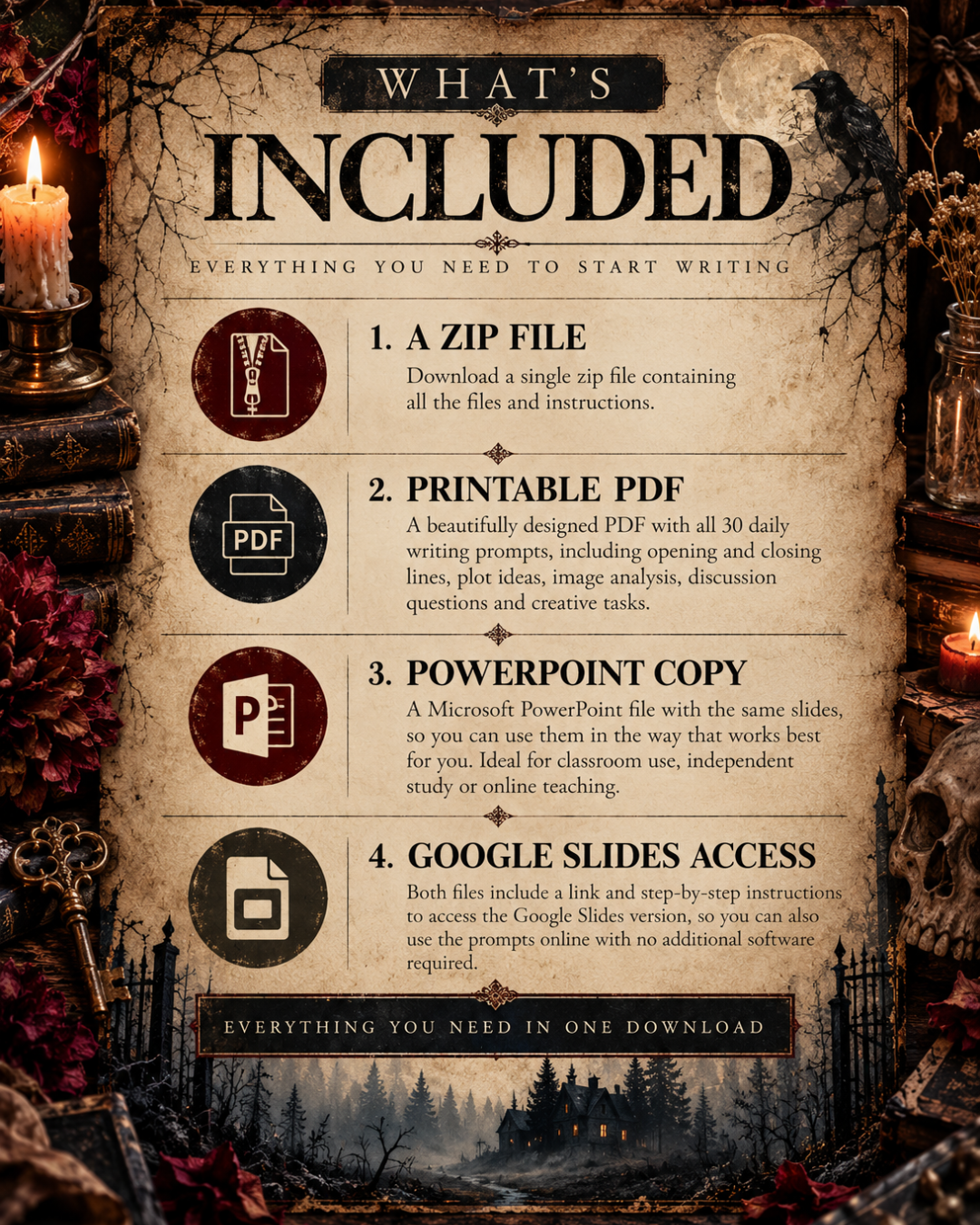 Image 5 of 5