70 Gothic Bride Writing Prompts: Cursed Brides, Dark Romance & Secrets
There is something inherently Gothic about a bride. She stands at a threshold between one life and another, surrounded by promises, expectations and traditions — making her the perfect character through which to explore obsession, confinement, inheritance, secrecy and fear. Give her a crumbling ancestral house, a family determined to see the marriage take place and a locked room containing the portraits of the brides who came before her, and a celebration of love can quickly become something much darker.
Gothic fiction has long been fascinated by marriage as both desire and danger. A bride might be travelling towards an isolated estate to marry someone she barely knows, discovering that her new family has carefully concealed the fate of a previous wife or beginning to suspect that the vows she exchanged were part of an agreement made generations before she was born. Others might never reach the altar at all — becoming runaway brides, abandoned brides, murdered brides, spectral brides or women determined to discover why nobody in the village will speak about what happened on their wedding day.
But the bride does not always have to be the victim. She might deliberately marry into a cursed bloodline, conceal something monstrous beneath her veil, return from the grave to complete an interrupted marriage or discover that becoming the mistress of an ancient house gives her considerably more power than anyone expected. Gothic brides can be frightened, dangerous, romantic, calculating, grieving, rebellious or entirely supernatural.
Below you'll find 70 Gothic Bride Writing Prompts, including plot ideas, story titles, opening lines, closing lines, character ideas, atmospheric settings and picture prompts. Expect ruined estates, forbidden marriages, family secrets, ghostly brides, mysterious disappearances, inherited curses, dangerous husbands, black veils, old portraits and wedding vows that should always have been read more carefully.
For more dark and atmospheric inspiration, explore the Gothic Writing Hub for Gothic characters, settings, story ideas and writing prompts, or browse the Creative Writing Archive to discover hundreds of ideas across Gothic fiction, horror, paranormal stories, dark fantasy and more.
1. Plot Prompts
Gothic brides exist at the intersection of romance and danger. A marriage can offer escape, security or love, but it can also bind a character to an unfamiliar family, an ancient house or a promise she does not fully understand. These prompts explore brides who disappear, return from the dead, uncover the secrets of previous wives or bring dangerous secrets of their own to the altar.
A young woman agrees to marry the reclusive owner of a decaying coastal estate after a whirlwind courtship. On her first night in the house, she discovers a wardrobe containing twelve perfectly preserved wedding dresses — each labelled with the name of one of his previous brides and the date she disappeared.
For two hundred years, every bride married in a remote village chapel has died before her first anniversary. When a woman deliberately chooses the chapel for her own wedding, she reveals that she is descended from the bride whose murder began the curse and has come to end it.
A wealthy heiress awakens on the morning after her wedding with no memory of the ceremony and blood covering the hem of her gown. Her new husband has disappeared, the servants refuse to discuss what happened, and a freshly dug grave has appeared beneath her bedroom window.
A bride travelling through a snowstorm towards her fiancé's ancestral castle takes shelter in an abandoned inn. Inside, she finds an old guestbook containing her own signature beneath an entry dated exactly one hundred years earlier.
An impoverished woman accepts an arranged marriage to the heir of an ancient family whose brides are forbidden from leaving the estate after sunset. She assumes the rule exists to protect her from something outside the house until she discovers that every exterior door is locked from the outside.
A bride dies hours before her wedding but rises from her coffin on the evening the ceremony should have taken place. She remembers being murdered but not who killed her, and every member of the wedding party had a reason to prevent the marriage.
A woman becomes fascinated by the portrait of her fiancé's great-grandmother, who disappeared on her wedding night. As her own ceremony approaches, the painted bride begins changing position each night, gradually raising one hand towards a hidden door in the background.
A reluctant bride plans to flee an arranged marriage at midnight, only to encounter the ghost of her fiancé's first wife waiting beside her carriage. The ghost does not want to stop her leaving — she desperately wants to come with her.
Every woman in an aristocratic family wears the same antique veil on her wedding day. When the newest bride places it over her face, she begins seeing fragments of every marriage the veil has witnessed, including a murder nobody knows occurred.
A notorious widow has married and buried four wealthy husbands, leading society to whisper that she murdered them for their fortunes. When her fifth fiancé begins investigating, he discovers the opposite: each husband tried to kill her, and something attached to the bride refuses to let her die.
2. Story Title Ideas
Gothic bride titles can be romantic, ominous, melancholic or quietly threatening. A title might evoke the bride herself, the marriage awaiting her, something inherited from previous wives or the unsettling possibility that the ceremony is only the beginning of the story.
Veiled
The Thirteenth Bride
She Wore White to Her Funeral
Black Lace
Bridegloom
Before the Wedding Bells Stop
Vespers
The Bride in the West Wing
Mourning Silk
Something Followed Her Down the Aisle
3. Opening Lines
The opening of a Gothic bride story can turn something traditionally associated with celebration into an immediate source of unease. Begin with an unexplained tradition, a missing bride, a disturbing wedding gift or the first indication that marriage has brought your character into a story that began long before she arrived.
“My husband's first wife attended our wedding, although she had been buried beneath the chapel for twenty-three years.”
“The morning I was supposed to marry Edward Vale, someone left a black wedding dress hanging outside my bedroom door.”
“There were seven brides in the family portrait and six of them had been painted without faces.”
“Mother warned me never to lift the veil until after the vows, but she never explained what might look back at me if I did.”
“My new husband carried me across the threshold just before midnight and quietly asked me not to scream when the house recognised me.”
“They found the bride standing barefoot in the graveyard, still holding her bouquet and unable to remember whom she had married.”
“Three days before my wedding, I received a letter addressed to the future Mrs Blackwood from the current Mrs Blackwood.”
“Everyone in the village knew that Hawthorne House required a bride every generation.”
“The wedding photographer took forty-seven photographs that afternoon, and in every one a different dead woman stood behind me.”
“I knew I had married the wrong man when the chapel doors locked themselves before he said his name.”
4. Closing Lines
A Gothic bride's final moment might bring escape, transformation, revenge, tragedy or the revelation that she has become part of the very tradition she tried to escape. These closing lines leave the marriage — and sometimes the bride herself — with one final shadow hanging over it.
“Years later, they still call me the missing bride, although I have never left the house.”
“I folded my veil beside his grave and finally went home.”
“When the next bride arrived, I was already waiting for her behind the wall.”
“He had spent months wondering what kind of woman he was marrying; by sunrise, he finally understood.”
“The bells began ringing again as they lowered my empty coffin into the earth.”
“I had entered the chapel as his bride and left it as the last surviving member of his family.”
“When my daughter asked whether she could wear my wedding dress one day, something beneath the lace whispered yes.”
“The portrait now hangs above the staircase, and visitors occasionally notice that my husband is slowly disappearing from it.”
“They thought the curse required a bride, but nobody had ever asked what the bride received in return.”
“This time, when the carriage arrived at midnight, I was the woman waiting inside.”
5. Character Ideas
The Gothic bride does not need to be helpless, innocent or even alive. She might be entering marriage reluctantly, pursuing it for reasons of her own or using the expectations surrounding brides to conceal an entirely different agenda. Give her desires beyond romance and consider what marriage might cost — or offer — her.
A practical young heiress who agrees to marry the disgraced heir of a ruined aristocratic family because she wants access to the enormous private archive hidden inside his ancestral home.
A spectral bride who appears in a different church every decade wearing the same mud-stained gown, searching the congregation for the person who murdered her.
A widowed countess whose four husbands have died under mysterious circumstances and who has just announced an unexpected fifth engagement despite rumours that no man survives a year in her house.
A timid seamstress commissioned to restore an antique wedding gown who gradually begins adopting the voice, mannerisms and memories of the bride who originally wore it.
A fiercely independent bride sent to marry the heir of a remote estate as part of a family agreement, who secretly arrives determined to discover what happened to her older sister after she was sent there for the same purpose.
A vampire bride who has married into the same mortal family once every generation for three hundred years, changing her identity each time while quietly searching for something hidden in their bloodline.
A former nun who abandons the convent to marry a childhood sweetheart, only to discover that something she encountered behind the monastery walls has followed her into her new life.
A beautiful society bride famous for having broken six engagements who is not afraid of commitment at all — she has been searching for the descendant of the man responsible for her mother's death.
A young bride who cannot see ghosts until she puts on her mother-in-law's antique veil, after which every dead woman who has ever lived in her husband's house begins following her.
An apparently grieving bride whose fiancé disappears on the morning of their wedding and who is far more concerned about recovering the locked suitcase he took with him than finding the man himself.
6. Setting Ideas
The places surrounding a Gothic bride can transform marriage from a celebration into something uncertain and claustrophobic. Consider spaces associated with transition — chapels, bedrooms, family estates and journeys towards unfamiliar homes — and fill them with evidence of the brides who came before.
A ruined private chapel attached to an enormous country house, where generations of family brides have carved their initials beneath the altar alongside dates that do not correspond with their weddings.
A cliffside estate reached only by a narrow tidal causeway, leaving the newly married bride completely isolated from the mainland whenever the sea rises.
An abandoned bridal shop preserved exactly as it appeared in 1923, filled with mannequins wearing unfinished gowns and an appointment book containing the names of women who subsequently disappeared.
A vast honeymoon hotel built during the Victorian era where every room is named after a famous bride and one permanently locked suite has been removed from all modern floor plans.
A winter palace whose bridal apartments have remained untouched since a royal wedding ended in massacre, with frost permanently covering the mirrors regardless of the temperature outside.
A family crypt beneath a Gothic mansion where wives are buried separately from their husbands and every bridal coffin contains a small locked box that nobody living is permitted to open.
A remote convent converted into an exclusive wedding venue, where the bridal suite occupies the former cell of a woman imprisoned there after refusing an arranged marriage.
A sprawling manor surrounded by white rose gardens planted by generations of brides, where one section produces dark red flowers despite repeated attempts to replace the soil.
An ancient woodland chapel with no road leading to it, where local brides traditionally walk alone through the forest before sunrise and never speak about what happens during the journey.
A grand but decaying townhouse inherited through the female line, containing a hidden dressing room where every bride in the family has left behind one object from her wedding day and a written warning for whoever marries next.
7. Picture Prompts
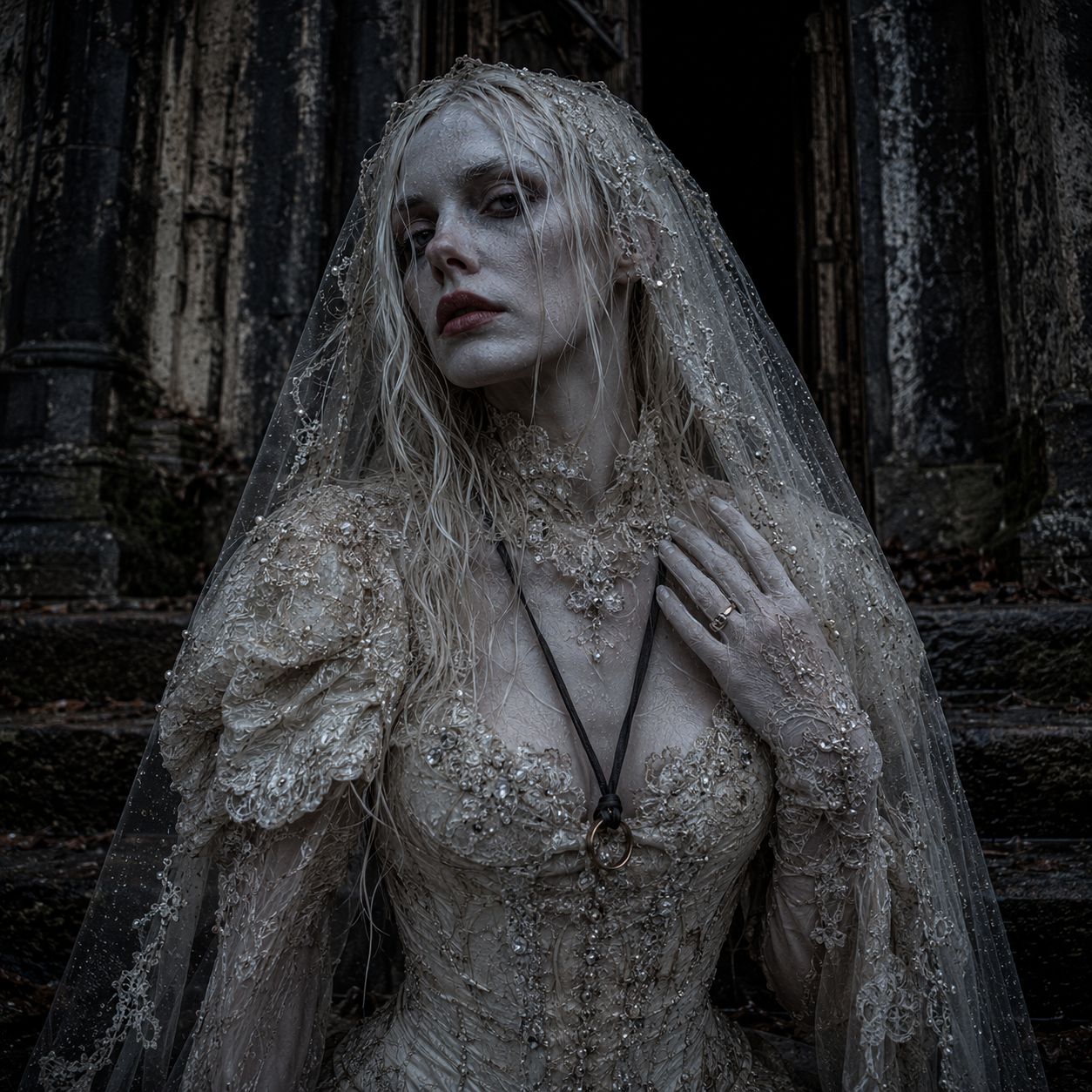
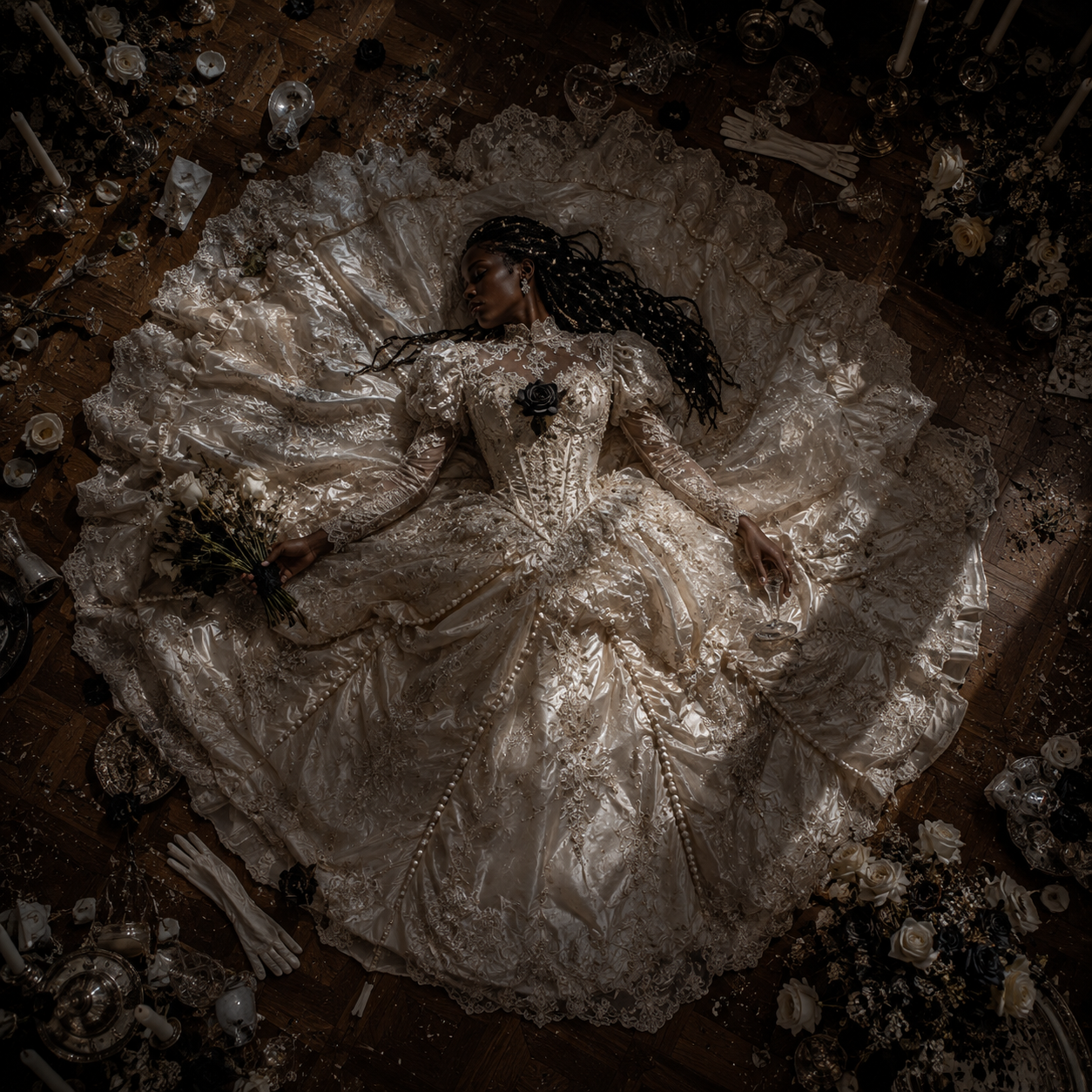
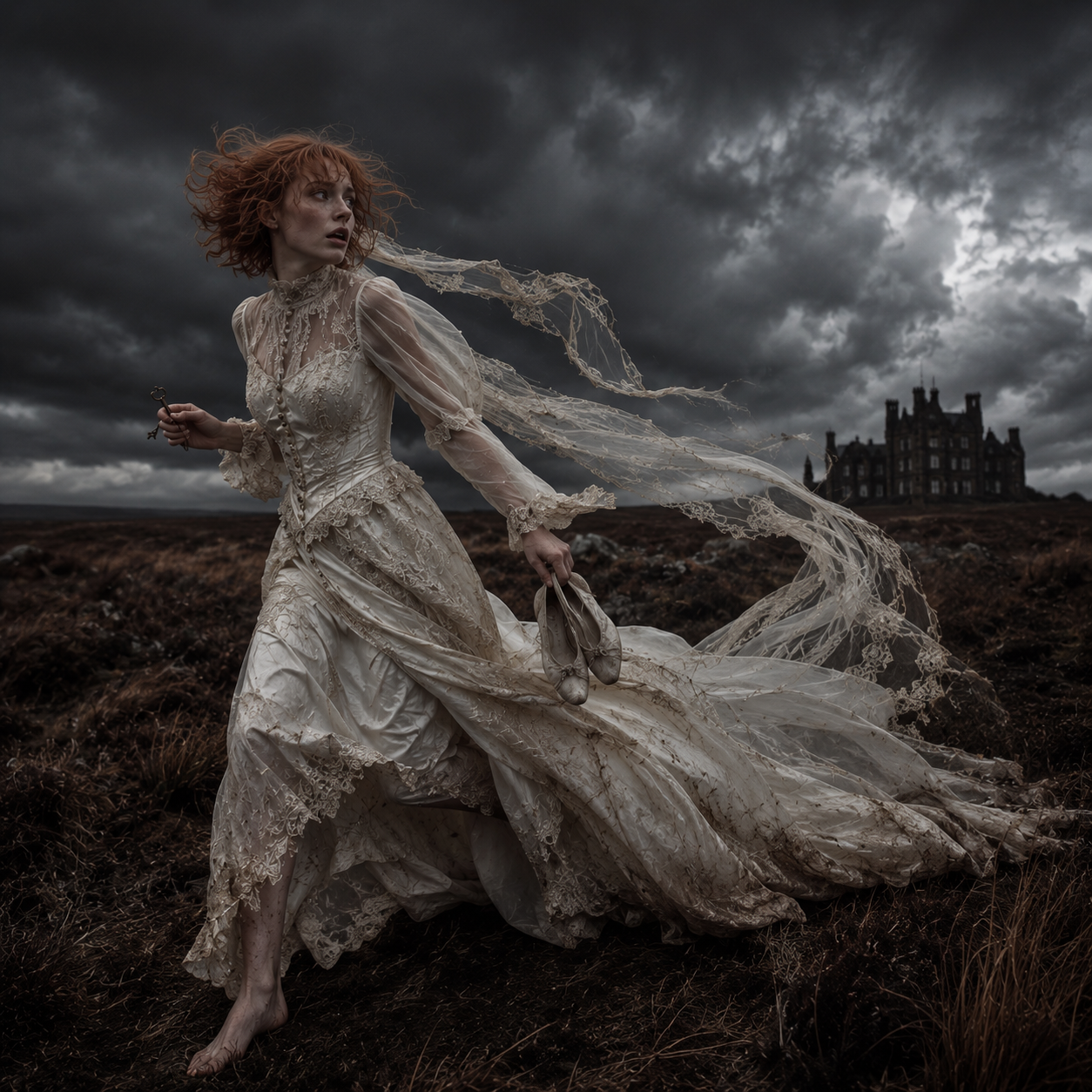
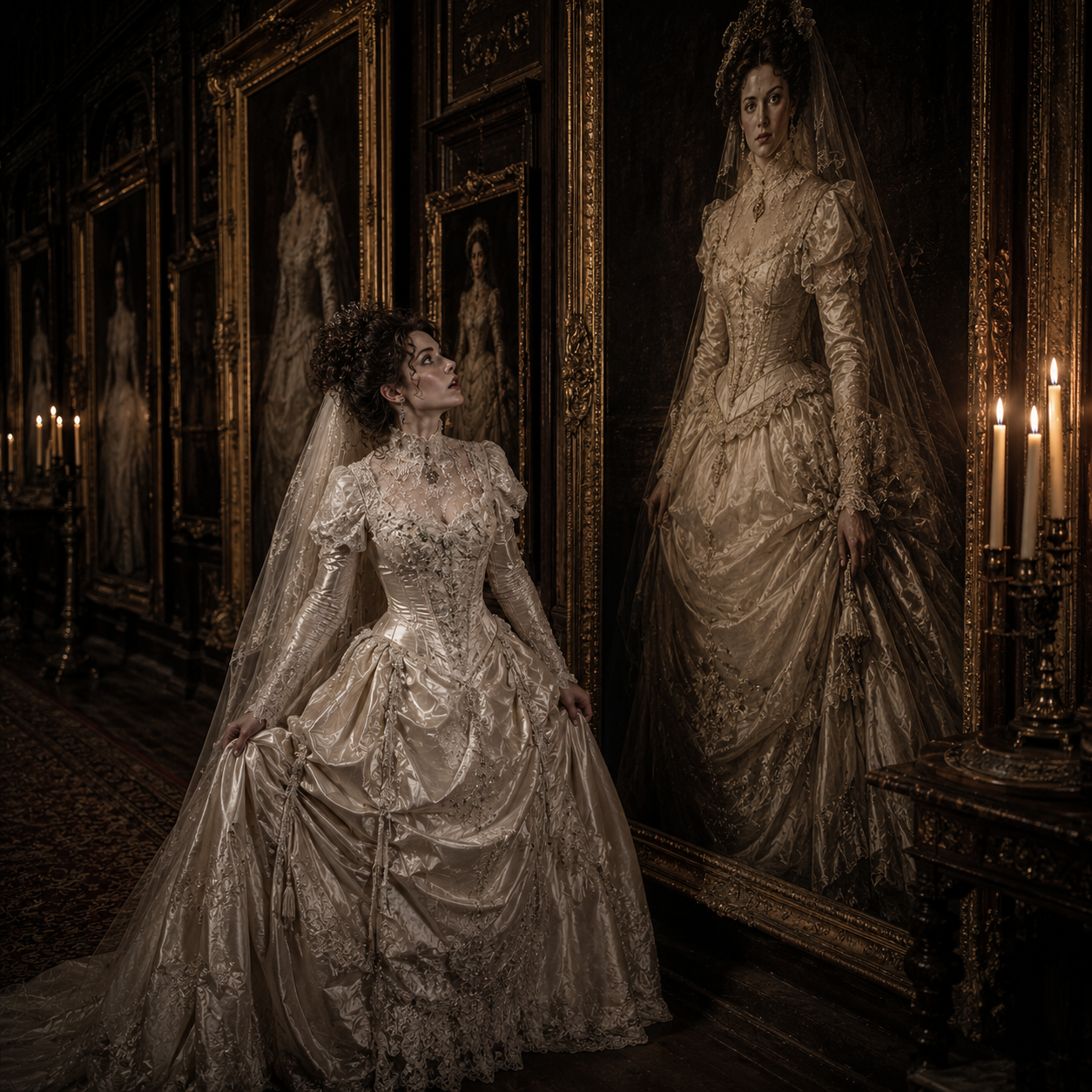
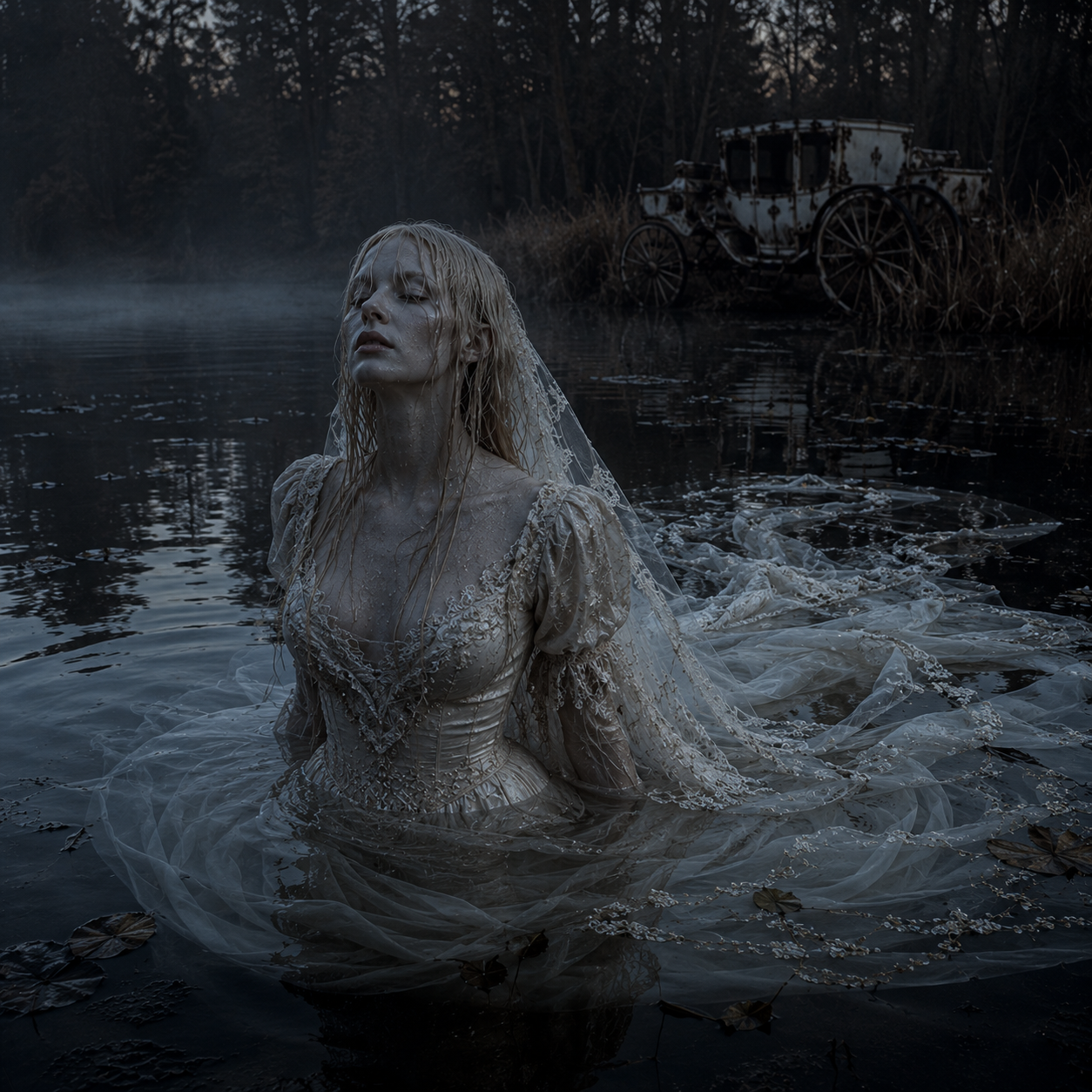
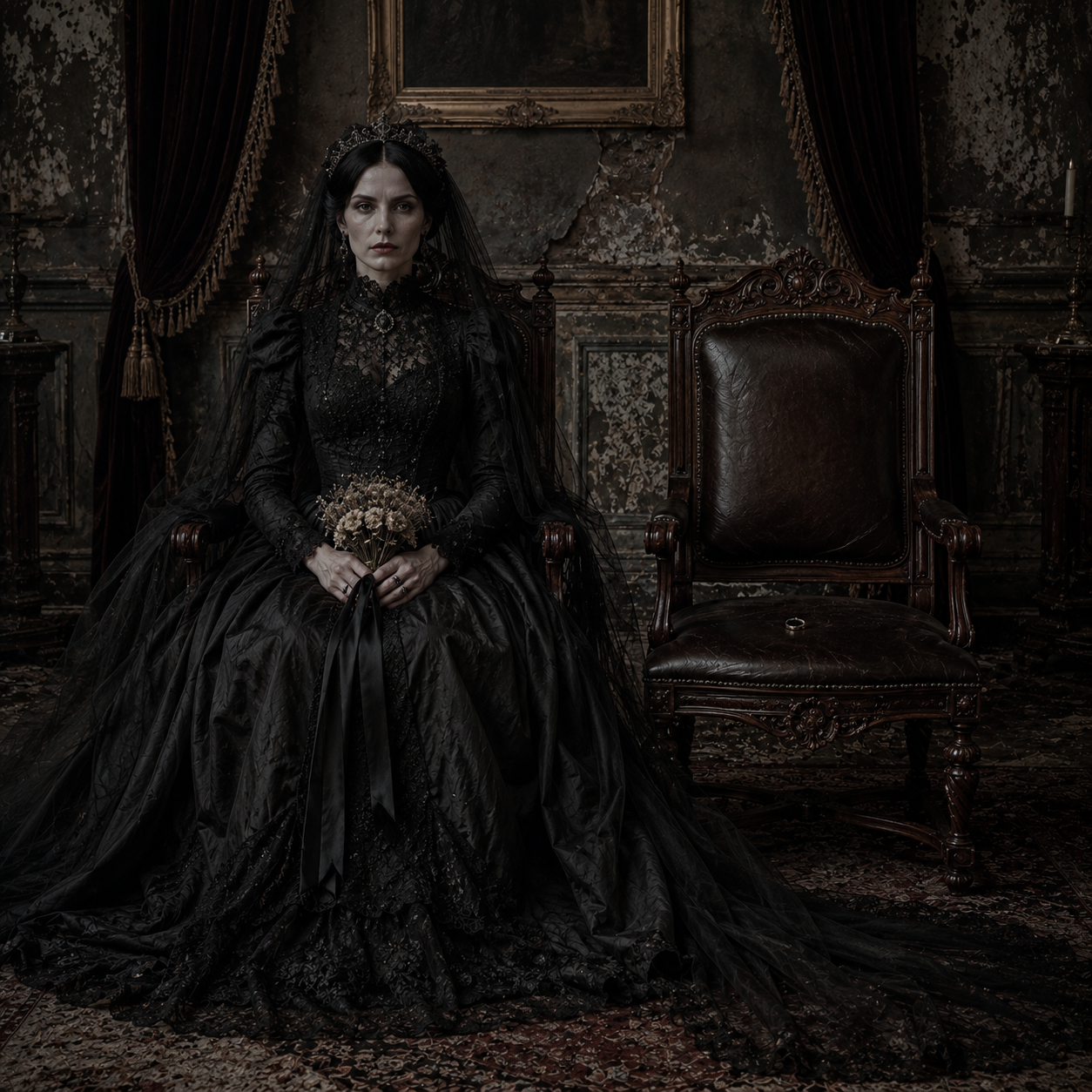
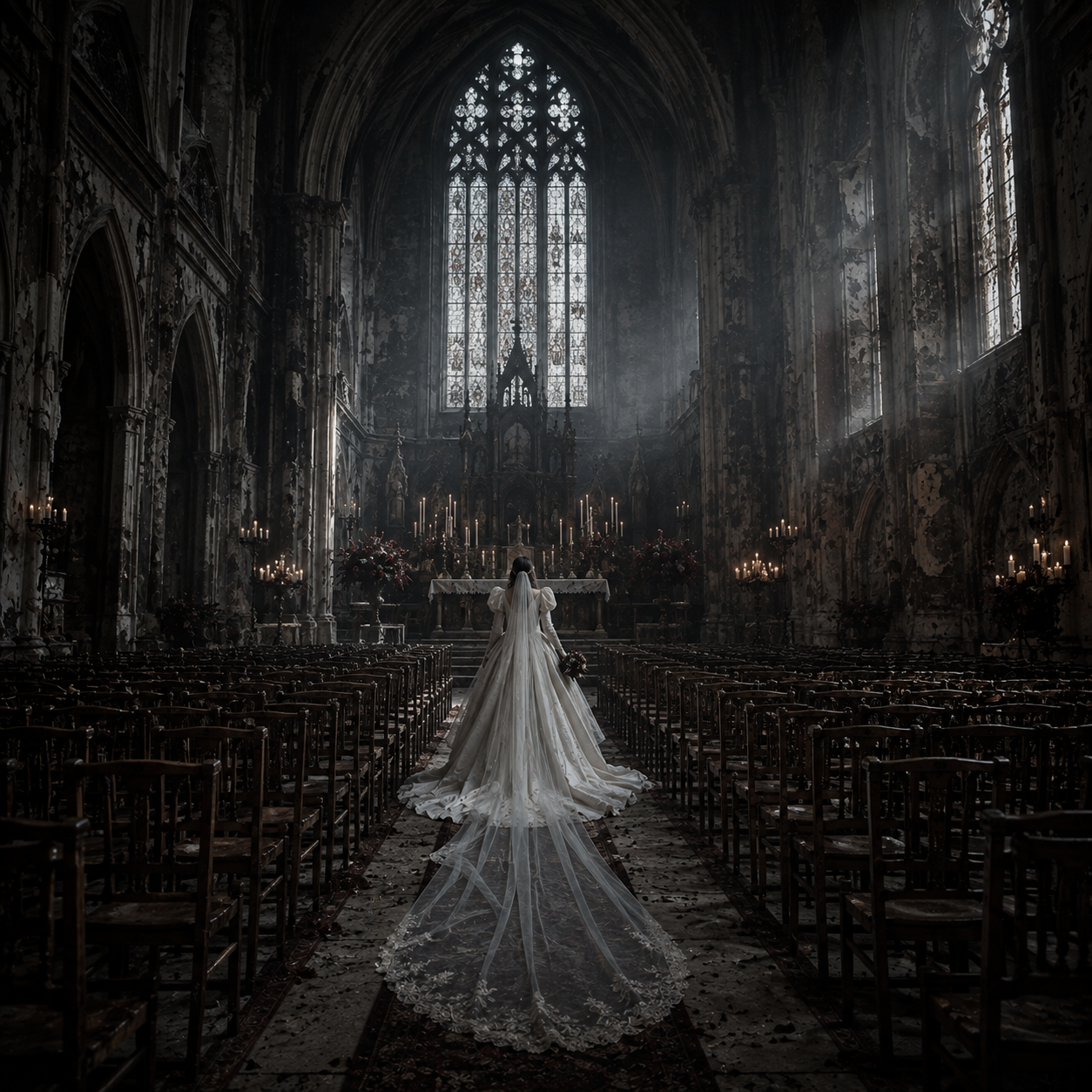
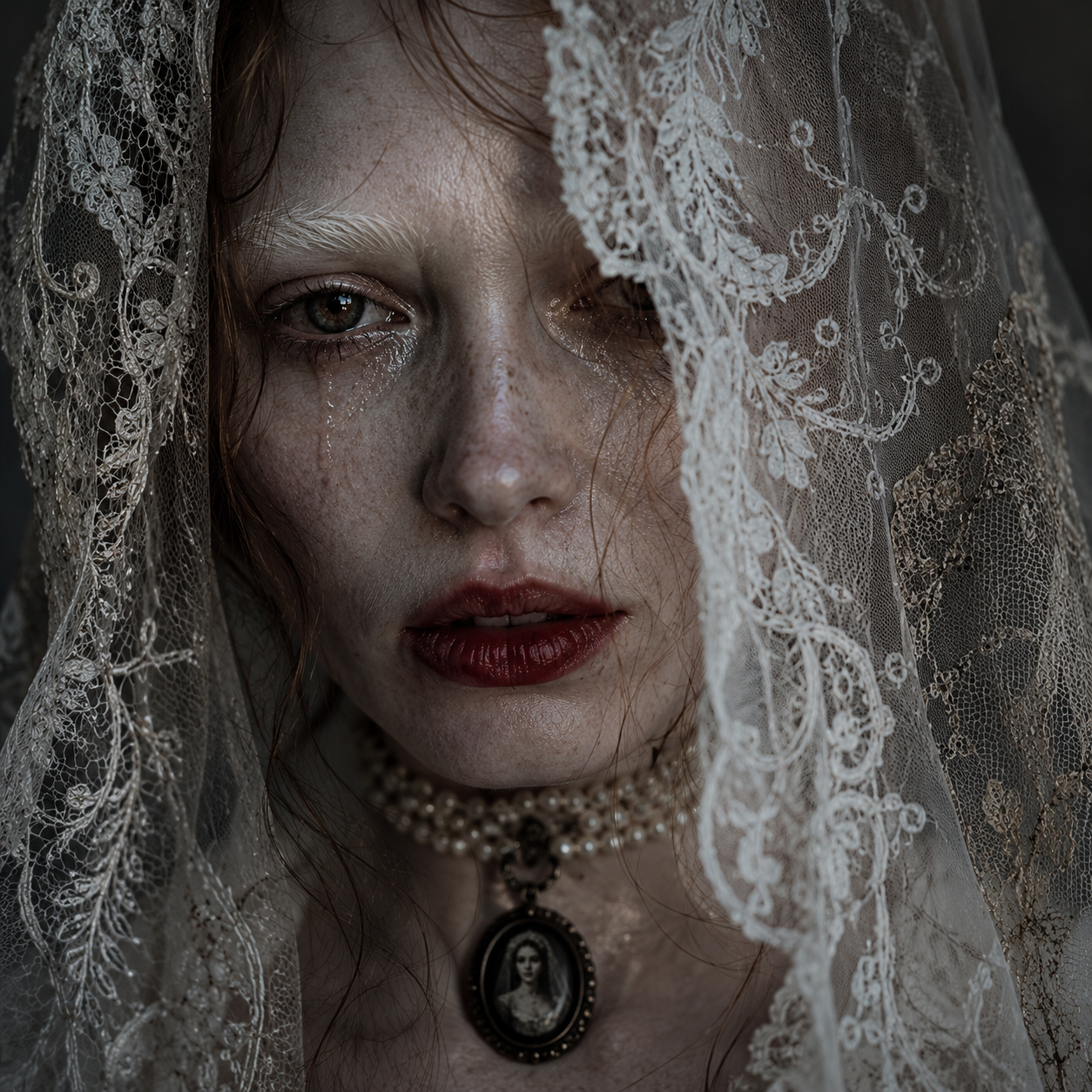
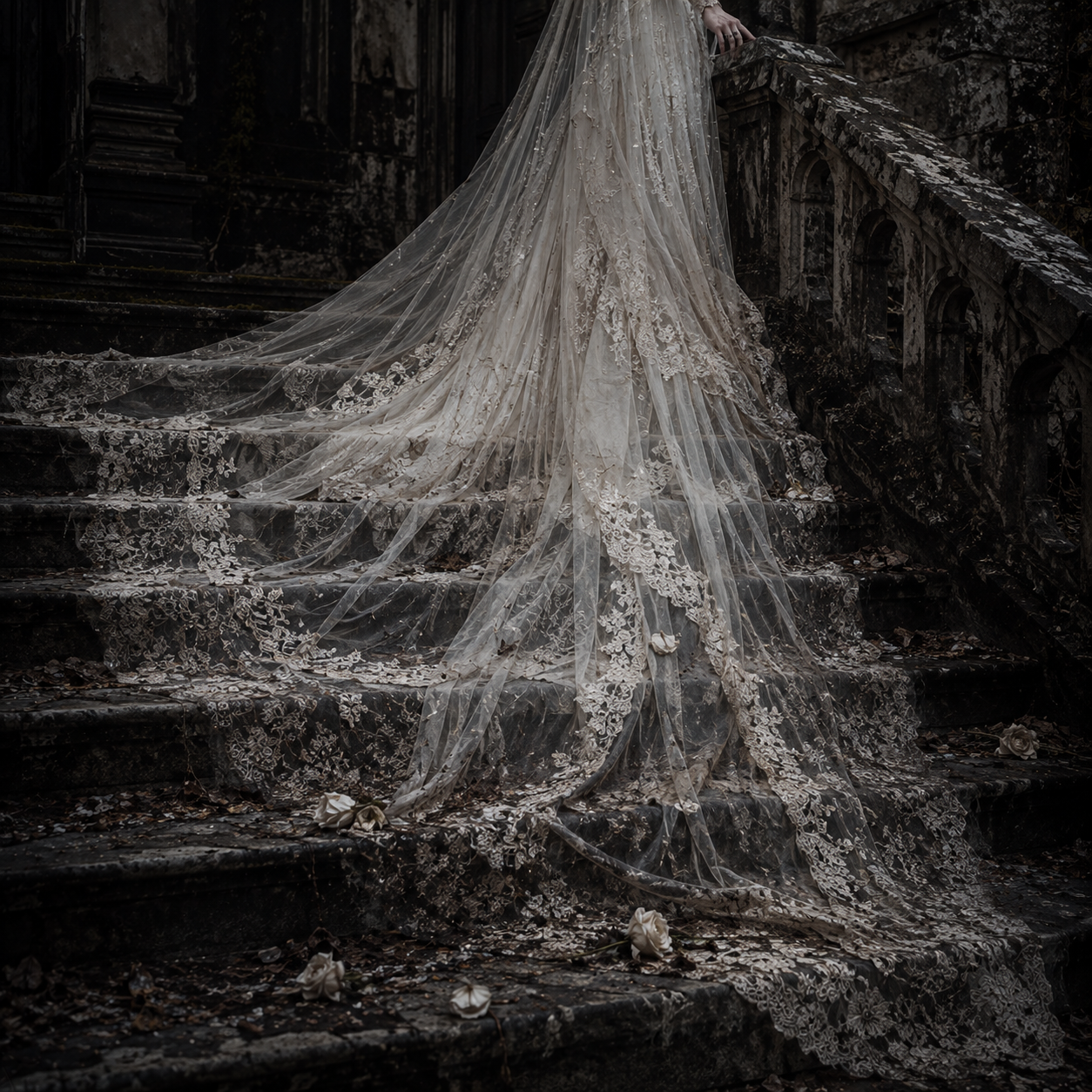
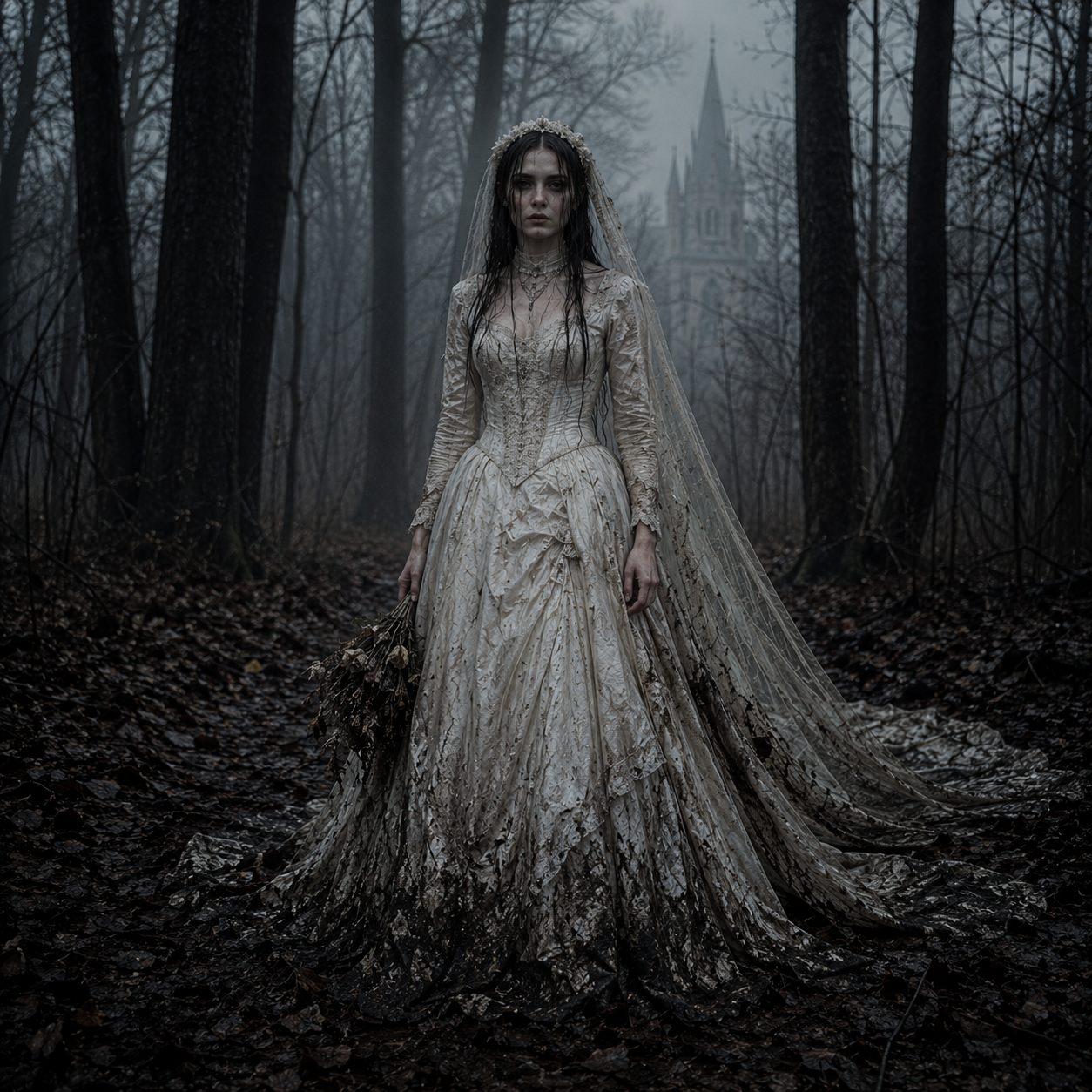
Gothic brides create striking visual stories because beauty, ceremony and romance can sit directly beside decay, fear and the supernatural. Think antique lace, heavy silk, elaborate veils, candlelit chapels, winter estates, ancestral portraits, wilted flowers, dark corridors and bridal finery that feels slightly out of place in its surroundings. Each image should capture a specific moment in a larger story rather than simply a beautiful woman wearing a wedding dress: Who is she marrying? What has she just discovered? Why is she alone? Who wore the dress before her? And what is waiting once she lifts the veil?
Go Deeper into Writing Gothic Brides
The Gothic bride is powerful because she occupies a moment of transition. Marriage promises a new identity, family and home, but Gothic fiction can turn each of those promises into a source of uncertainty. Rather than treating the bride as simply a frightened woman in a beautiful dress, consider what she wants from the marriage, what she risks losing and whether she understands the world she is about to enter.
◆ Decide what the marriage really represents. A Gothic marriage might offer love, wealth, escape, protection, social status or access to something the bride desperately wants. Alternatively, it could represent imprisonment, obligation or the fulfilment of an agreement made long before she was born. Give your bride a compelling reason to proceed even when warning signs begin to appear.
◆ Give your bride agency. She does not have to be an innocent woman unknowingly walking into danger. Perhaps she suspects exactly what awaits her and marries anyway. She might be investigating a disappearance, seeking revenge, attempting to break a curse or deliberately marrying into a powerful family because she wants something hidden inside their estate.
◆ Explore the brides who came before. Previous wives and brides can haunt a story without literally becoming ghosts. Their portraits, dresses, letters, jewellery and altered rooms can reveal patterns the newest bride gradually begins to recognise. Ask whether these women were victims, accomplices or participants in a secret that has survived across generations.
◆ Turn bridal traditions into Gothic symbols. Veils conceal as much as they reveal. Rings bind people together. White dresses suggest innocence, while bouquets, vows, bells and processions all carry their own associations. Take familiar wedding traditions and alter their meaning within your story. Perhaps the veil protects the groom rather than the bride, or removing the ring has consequences nobody mentioned before the ceremony.
◆ Make the new home important. Marriage often involves entering another household, making the ancestral estate a natural Gothic setting. Allow the bride to slowly learn its geography: which rooms are locked, which staircase servants avoid, whose portrait has been removed and why nobody sleeps in the bedroom beside hers.
◆ Use marriage to explore identity. Historically, marriage could profoundly alter a woman's social and legal identity, making the Gothic bride particularly suited to stories about autonomy and control. Even in contemporary fiction, marriage can raise questions about how much of ourselves we surrender, preserve or reinvent when our lives become intertwined with someone else's.
◆ Question who the dangerous partner is. Gothic conventions encourage readers to distrust the mysterious spouse waiting inside the enormous house, so use that expectation against them. The bride may be marrying a monster — but she might also be one herself. Perhaps the supposedly threatening groom is frightened of her, or an entire family has unknowingly invited something dangerous into its bloodline.
◆ Let romance remain complicated. A dark setting does not mean the relationship must be abusive, nor does a romantic relationship have to be safe. Two characters might genuinely love one another while being separated by curses, supernatural appetites, family obligations or terrible secrets. Decide whether love saves your characters, destroys them or simply gives them something worth risking everything for.
◆ Use clothing to reveal story. A wedding dress can carry history. It might have belonged to a mother, grandmother or missing bride; contain something sewn into its lining; bear a stain that cannot be removed; or have been altered repeatedly as it passes through generations. The veil, gloves, shoes, jewellery and bouquet can all become clues rather than decoration.
◆ Ask what happens after the vows. The wedding does not need to be the climax. In Gothic bride fiction, it can be the moment the real story begins. What happens when the guests leave, the chapel doors close and the bride finally enters the house that is now supposed to be her home? Sometimes the most interesting Gothic question is not whether she will marry, but what she has just married into.
Step Inside The Victoriana Collection
A Gothic bride rarely enters a marriage alone. She brings family expectations, inherited secrets and a past of her own — while the house waiting for her may contain generations of stories nobody has thought to tell her.
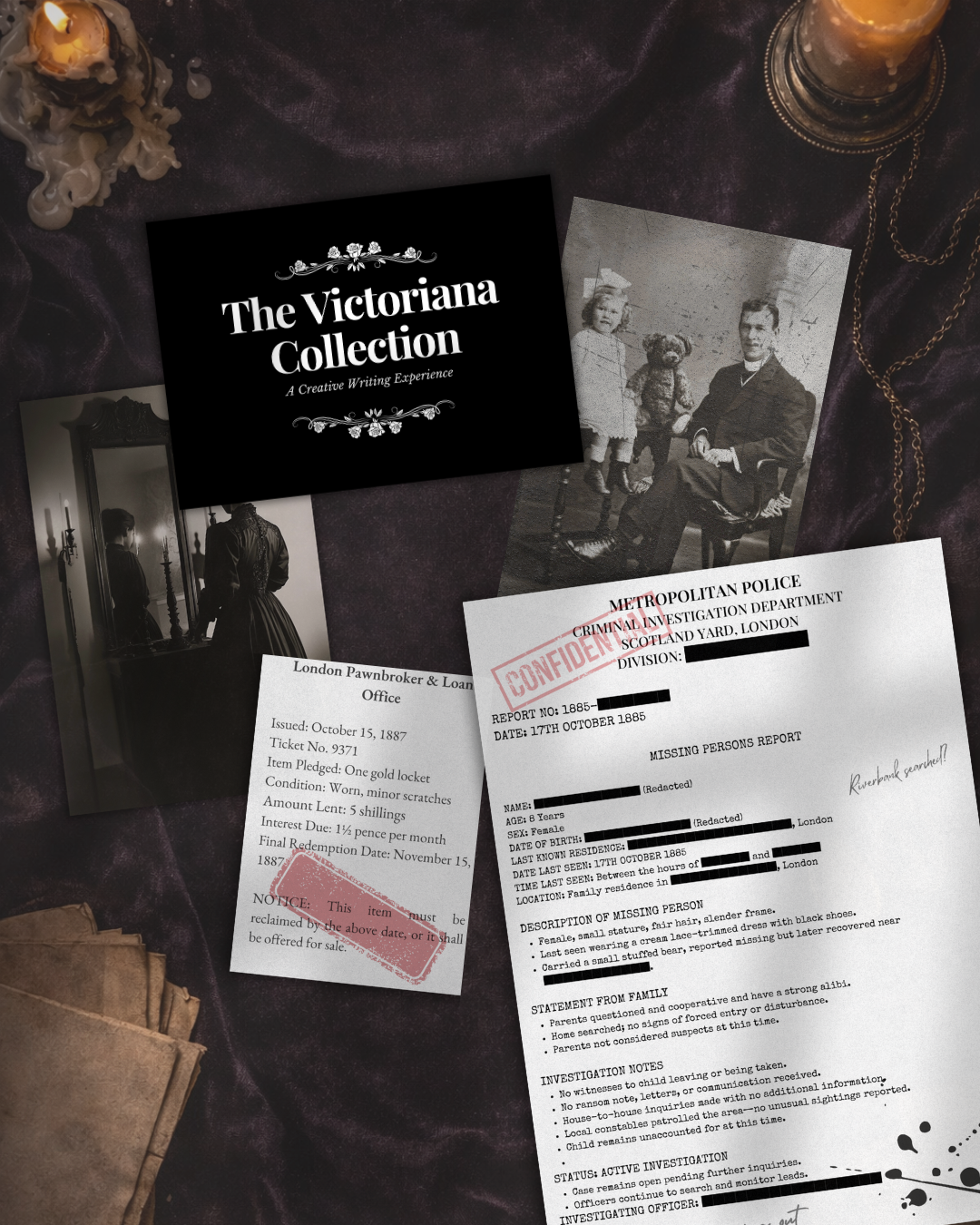
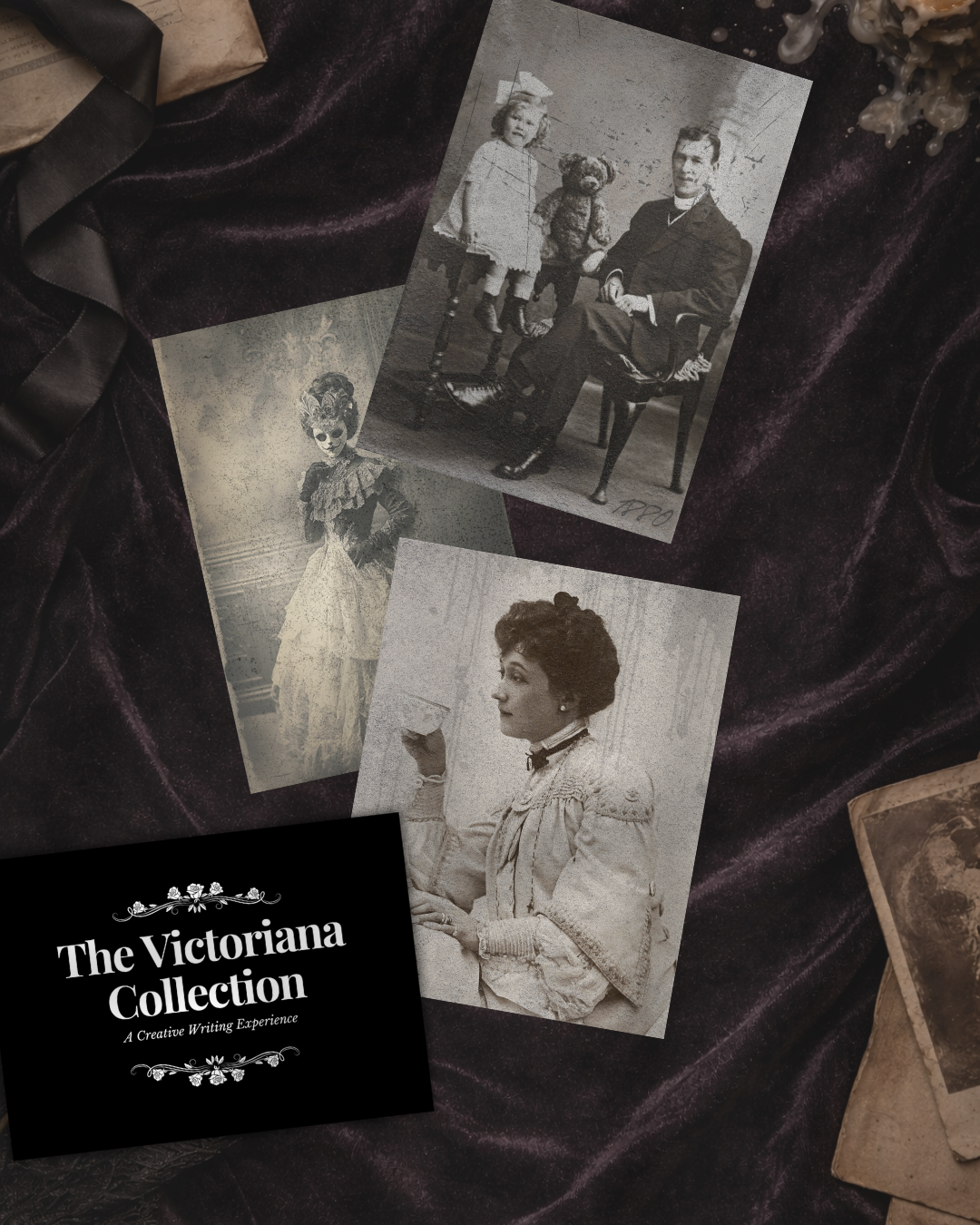
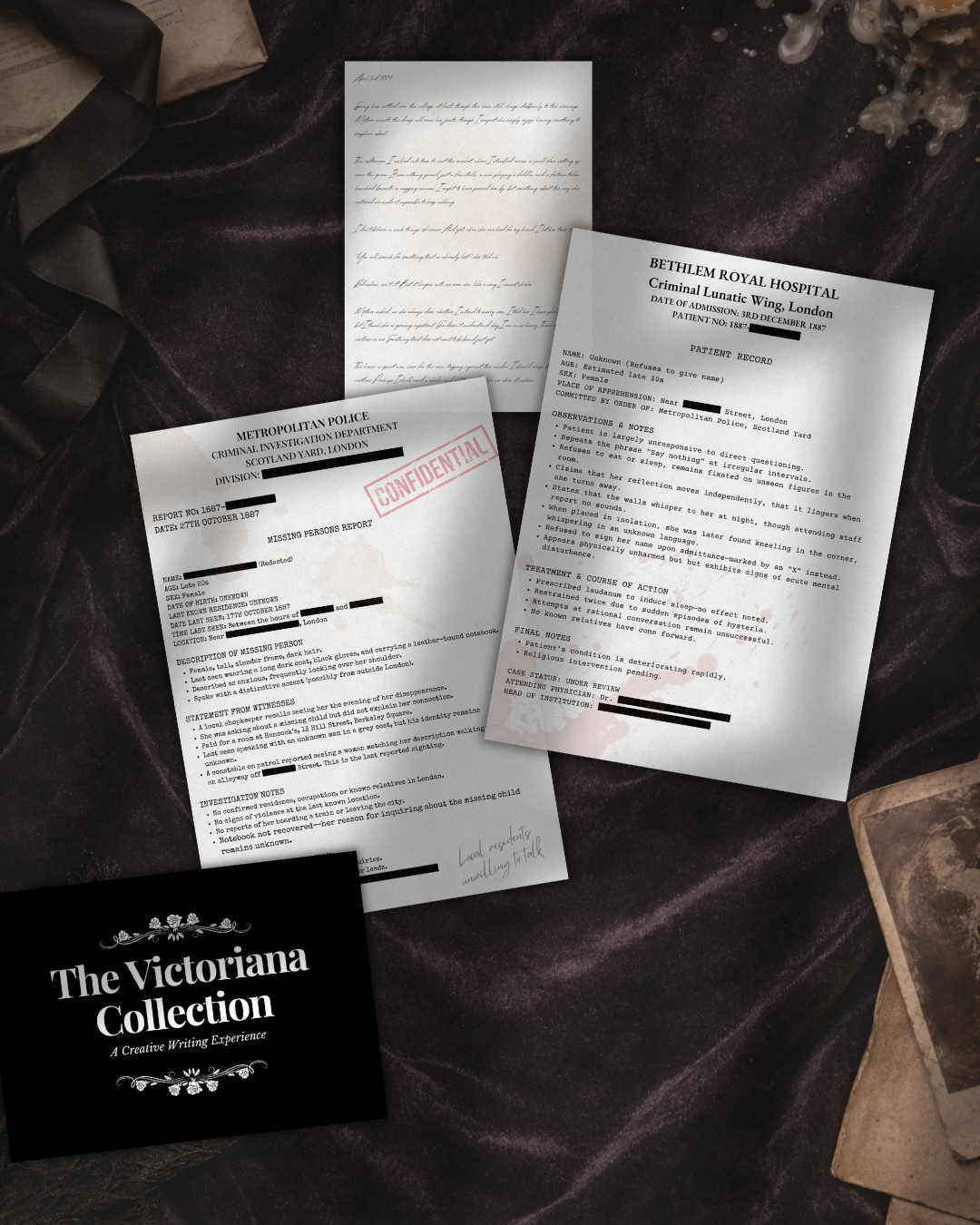
If you love the idea of piecing together those hidden histories, The Victoriana Collection invites you to step inside a Gothic mystery told through the fragments its characters left behind.
Inside you'll discover more than 50 printable documents and artefacts, including old photographs, letters, diary entries, newspaper clippings, reports, spiritualist material and personal mementoes. There is no narrator waiting to explain what happened. Instead, the story emerges gradually as you examine the evidence, notice contradictions and begin connecting details scattered throughout the collection.
For writers exploring Gothic brides, it is a chance to think beyond the central character and imagine the physical traces a story might leave behind. What would be hidden inside an old letter? Which photograph would someone remove from the family album? What might a bride discover among the possessions of a woman who lived in the house before her?
Some mysteries are inherited long before anyone says I do.
◆ Explore The Victoriana Collection now and see what story you uncover.
Final Thoughts
Gothic brides are compelling because they stand at the beginning of something that is supposed to be hopeful. A wedding promises love, companionship and a new life, while Gothic fiction immediately asks what might be concealed beneath those promises. Behind the veil might be an unwilling bride, an ambitious heiress, a grieving ghost, a woman entering a dangerous family or something far more frightening than the person waiting for her at the altar.
The strongest stories move beyond making the bride simply a victim. Give her secrets, desires and reasons for walking down the aisle even when every instinct tells her to run. She might enter an ancient house determined to uncover what happened to its previous mistress, accept a supernatural bargain to protect someone she loves or discover that generations of women before her have been quietly preparing for her arrival.
And remember that the wedding itself does not have to be the destination. Sometimes it is simply the doorway. Follow your bride beyond the ceremony and into the unfamiliar bedroom, the forbidden wing, the family crypt or the first morning of a marriage that suddenly feels very different in daylight.
Mix the prompts above together, change their eras and supernatural elements, or reverse their expected roles. Turn a character idea into the subject of an ancestral portrait, place a spectral bride inside a modern setting or take an apparently romantic opening line somewhere horrifying. Your bride can escape the Gothic story, succumb to it, uncover its secrets — or become the reason the next person should be afraid.
For more dark and atmospheric inspiration, explore the Gothic Writing Hub for Gothic characters, settings, story ideas and writing prompts, or browse the Creative Writing Archive for hundreds of prompts and ideas across Gothic fiction, horror, paranormal stories, fantasy and more.
Choose Your Next Adventure