70 Gothic Vampire Writing Prompts: Dark Romance, Blood & Immortality
Vampires and Gothic fiction have been entwined for centuries. Both are fascinated by what refuses to stay buried: old desires, inherited sins, forbidden appetites, decaying families and secrets hidden behind the locked doors of ancient houses. A vampire can be a seductive immortal, a lonely relic of another century, a monster wearing the manners of an aristocrat or something far older and less human waiting beneath the earth.
Gothic vampire stories become especially compelling when immortality is treated as more than a supernatural power. A centuries-old existence creates its own possibilities for obsession, grief, guilt and isolation. A vampire might inhabit a crumbling estate filled with portraits of everyone they have lost, guard a family secret through generations, become obsessed with someone who resembles a long-dead lover or discover that the descendants of their greatest enemy have returned to the house next door.
The setting can be just as important as the vampire. Ruined abbeys, mist-covered graveyards, candlelit mansions, forgotten crypts, isolated villages and grand houses slowly surrendering to ivy create worlds where the past feels dangerously close. Gothic spaces should contain histories of their own, allowing architecture, landscape and atmosphere to reveal clues about what happened before the story began.
Below you'll discover 70 Gothic Vampire Writing Prompts, including plot ideas, story titles, opening lines, closing lines, character ideas, Gothic settings and cinematic picture prompts. Expect ancient bloodlines, forbidden attraction, ancestral curses, ruined estates, mysterious disappearances, immortal families, unsettling inheritances and creatures who have had centuries to become very good at keeping their secrets.
For more dark and atmospheric inspiration, explore the Gothic Writing Hub for Gothic prompts, settings, characters and story ideas, visit the Horror Writing Hub for darker supernatural inspiration, or browse the Creative Writing Archive for hundreds of writing prompts and ideas across every genre.
1. Plot Prompts
Gothic vampire stories thrive on secrets that have survived far longer than the people trying to uncover them. These prompts explore inherited guilt, dangerous obsession, decaying families, forbidden relationships and vampires whose immortality has bound them to particular houses, bloodlines and tragedies for centuries.
A young woman inherits a remote Gothic estate from an uncle she has never met, with one condition: she must live there for an entire year without opening the locked rooms in the west wing. Within weeks, she begins receiving handwritten letters from someone claiming to have been imprisoned behind those doors since 1847.
Every generation, the eldest daughter of an aristocratic family disappears before her twenty-fifth birthday. When the newest heir begins investigating, she discovers portraits of each missing woman hidden beneath the family chapel — and the same beautiful, unchanged man standing beside every one of them.
A historian is invited to catalogue the enormous private library of a reclusive nobleman who supposedly never leaves his crumbling ancestral estate. She gradually realises that annotations appearing in books from five different centuries are all written in her employer's handwriting.
An isolated village has survived plague, famine and war because of an ancient agreement with the vampire living beneath its ruined abbey. When the villagers stop honouring their side of the bargain, he does not attack them. Instead, he opens the crypt and releases the thing he has spent four hundred years keeping imprisoned.
A vampire has spent two centuries restoring the abandoned mansion where he murdered the only person he ever loved, recreating every room exactly as it appeared on the night of her death. When a stranger arrives claiming the property legally belongs to her, she knows details about that night that were never recorded.
After marrying into an old aristocratic family, a young man notices that his new wife's relatives never eat with him, every mirror in the house has been removed and family portraits abruptly stop showing people after their thirtieth birthdays. His wife insists there is a perfectly reasonable explanation — and begs him to leave before she becomes hungry enough to tell him what it is.
A physician is summoned to a secluded manor to treat a wealthy patient suffering from a mysterious wasting illness. The patient is not dying but transforming, and the elderly woman caring for him admits that she has spent sixty years attempting to prevent her son from becoming the creature his father was.
For generations, a family has buried its dead with iron stakes driven through their hearts. When a modern descendant dismisses the practice as superstition and removes the stakes during restoration of the family crypt, she discovers that several coffins are empty — including one belonging to a woman who died three hundred years ago and looks exactly like her.
A vampire who can only enter a home when invited becomes obsessed with the last inhabited house in a dying coastal village. The elderly woman living there has recognised him from her childhood and refuses to let him cross the threshold, but every night she places a second glass of wine on the table and waits beside the window.
An impoverished noble family secretly keeps their immortal ancestor chained beneath the ancestral home, feeding him just enough blood to keep him alive because his continued existence somehow protects their fortune. When the youngest daughter discovers him, he tells her the family's wealth was never his gift — it was payment for keeping her bloodline contained.
2. Story Title Ideas
Gothic vampire titles can be elegant, ominous, romantic or quietly unsettling. Think ancient houses, inherited curses, blood, burial and immortality — with enough mystery to suggest that something dangerous has been waiting a very long time to be discovered.
Bloodborne
The Crimson House
Where the Dead Still Dream
Nocturne
Velvet Hunger
The Vampire Beneath the Chapel
Evernight
A Portrait Painted in Blood
Hollow Hearts
We Were Beautiful Before We Died
3. Opening Lines
A Gothic vampire story can establish unease from its very first sentence. Introduce a forbidden room, an unexpected visitor, a disturbing family tradition or a detail that immediately suggests the past is not quite as dead as everyone believes.
“My mother had been dead for eleven years when I saw her standing beside the vampire's grave.”
“The new owner of Blackthorn Hall arrived at dusk with twelve trunks, six coffins and strict instructions that every curtain remain closed until sunset.”
“Nobody warned me that the portrait would begin smiling once its subject returned to the house.”
“On the morning of my wedding, I found a note beneath my pillow informing me that my future husband had already been married for three hundred years.”
“The corpse in the chapel had fresh blood beneath its fingernails.”
“I had spent twenty-seven years believing my father was dead before he knocked on my bedroom window.”
“There were ninety-three names carved into the crypt wall, and mine was the only one without a date beside it.”
“Every night at precisely eleven, the woman in the ruined house across the valley lit a candle and waited for someone who had died in 1792.”
“Father always said monsters needed permission to enter our home, which was why I knew something was wrong when I found one sitting at the breakfast table.”
“The first time Lord Vale drank my blood, he apologised; the second time, he asked me to stay.”
4. Closing Lines
The final line of a Gothic vampire story can leave behind romance, horror, tragedy or one last unsettling revelation. Whether immortality has been embraced, destroyed or simply passed to someone new, the ending should make the reader feel that the story may continue long after the final page.
“By spring, roses were growing over the grave, although neither of us had buried him there.”
“I finally understood why every woman in the portrait gallery had my eyes.”
“He had promised to love me until death, but neither of us had considered what might come afterwards.”
“The house is empty now, except on nights when someone forgets to lock the cellar door.”
“Immortality, I discovered, was considerably less frightening when there were two of us.”
“As the villagers celebrated the vampire's death, I quietly covered the bite marks beneath my collar.”
“We burned the coffin before sunrise, never noticing that the earth beneath it had already been disturbed.”
“Three hundred years later, I still leave the window open for him.”
“The last thing I saw in the mirror was my own reflection disappearing.”
“When my daughter asked why we never visited Grandfather during daylight, I knew the family secret had survived another generation.”
5. Character Ideas
Gothic vampire characters become more compelling when immortality comes with history. Give them loyalties, regrets, obsessions and secrets accumulated across decades or centuries, then surround them with mortals whose own ambitions and flaws may be every bit as dangerous.
A widowed vampire countess who has lived alone in her deteriorating country estate for nearly two centuries, preserving her late wife's rooms exactly as they were on the morning she died.
A young undertaker who has inherited the family funeral business and slowly realises his grandmother has been quietly helping local vampires fake their deaths for the past fifty years.
An aristocratic vampire who refuses to drink human blood and is consequently growing weaker each year, while his ambitious mortal relatives wait impatiently to inherit an estate they do not realise will die with him.
A sharp-minded governess hired to educate three strangely pale children in an isolated manor whose father insists they must never be taken outdoors before sunset.
A former priest turned vampire who continues living inside the ruined monastery where he was transformed, desperately recording everything he remembers about his humanity before the memories disappear completely.
A celebrated Victorian portrait painter whose subjects seem unusually lifelike because she secretly mixes a drop of their blood into every pigment — allowing her vampire patron to find them decades later.
The sole surviving member of a notorious vampire-hunting family who discovers that the elderly relative who raised him has concealed the fact that his own mother was one of the creatures they were taught to destroy.
A beautiful vampire socialite who deliberately reinvents herself every twenty years, changing her name, accent, wardrobe and invented history whenever people begin noticing that she never ages.
A reclusive archivist responsible for maintaining the genealogies of Europe's oldest vampire families who discovers that someone has been systematically removing a particular bloodline from every historical record.
An ancient vampire who has become terrified of immortality and hires a succession of scholars, physicians and occultists to discover how to make him mortal again — only to fall in love with the researcher who finally succeeds.
6. Setting Ideas
Gothic vampire settings should feel as though they remember what happened inside them. Decay, isolation, faded grandeur and traces of previous inhabitants can transform a location into something almost alive, creating places where vampires seem less like intruders than another secret embedded in the architecture.
A vast cliffside manor overlooking a violent grey sea, where generations of the same family have supposedly lived despite local records showing that every owner has had exactly the same face.
An abandoned abbey surrounded by ancient yew trees, its underground crypt extending far beyond the ruins above and containing hundreds of stone coffins with their lids chained shut.
A decaying Victorian hotel that still opens for guests every winter despite having no electricity, no telephone connection and no road appearing on modern maps.
A sprawling cemetery built around the remains of an aristocratic family's mansion, where the house has slowly disappeared beneath ivy while its underground rooms remain perfectly preserved.
An isolated mountain village where every house has red-painted doors, garlic grows in every garden and nobody will explain why the enormous castle above the valley rings its bells shortly before sunset.
A candlelit opera house abandoned after its entire audience disappeared during a performance in 1888, now reopening for a single invitation-only production more than a century later.
A crumbling university library whose oldest collection occupies a locked subterranean reading room accessible only after dark, where certain books are bound with chains and others appear to contain handwritten notes dated centuries before they were published.
A magnificent winter palace surrounded by permanently frozen gardens, where the royal family hosts elaborate midnight banquets despite the kingdom having officially abolished the monarchy two hundred years ago.
A narrow street of elegant Georgian townhouses where every building stands abandoned except one, whose windows glow each evening and whose inhabitants appear in photographs dating back to the invention of photography.
A remote island dominated by the ruins of a medieval convent, where fishermen refuse to remain after sunset and hundreds of unmarked graves along the shoreline are uncovered whenever winter storms strip away the sand.
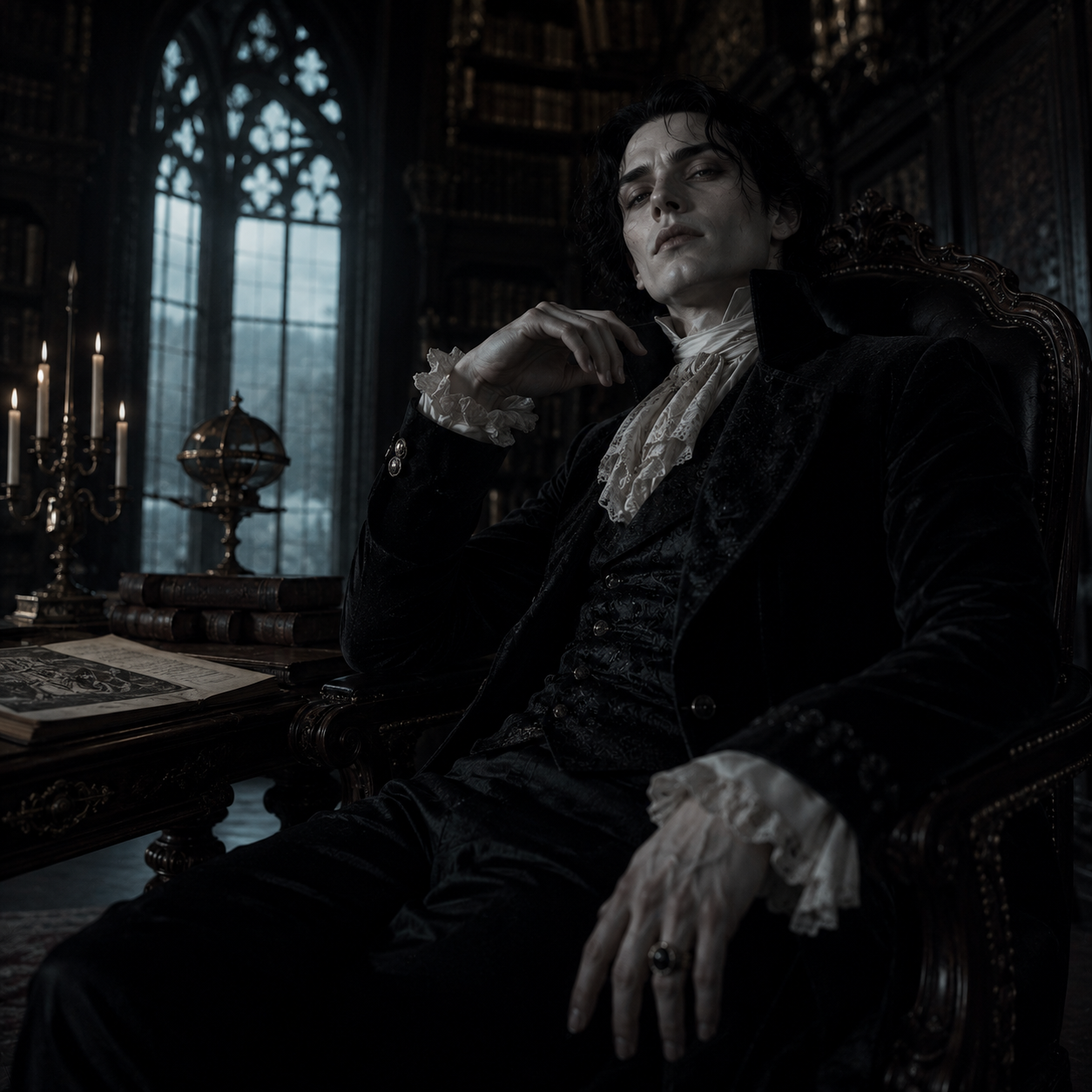
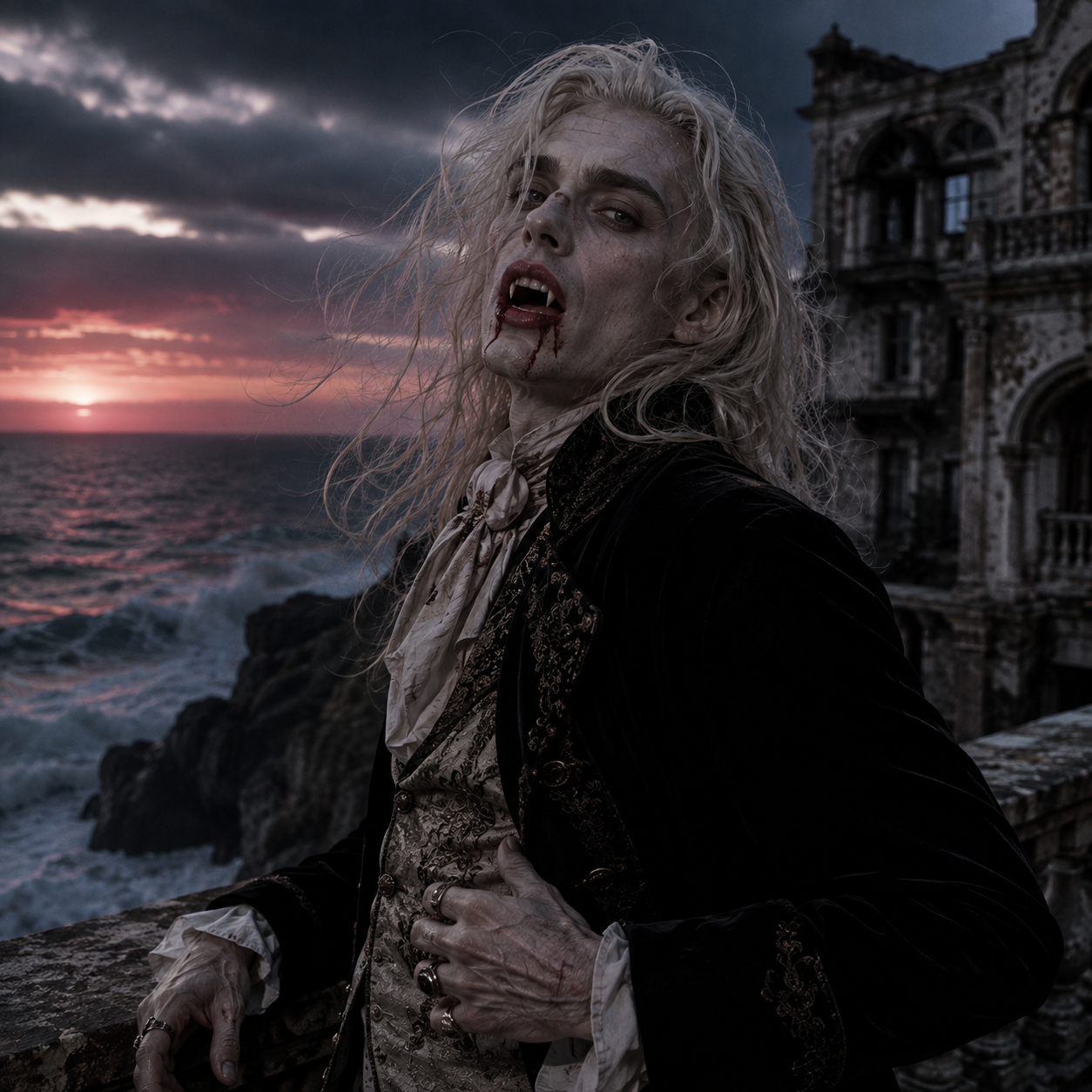
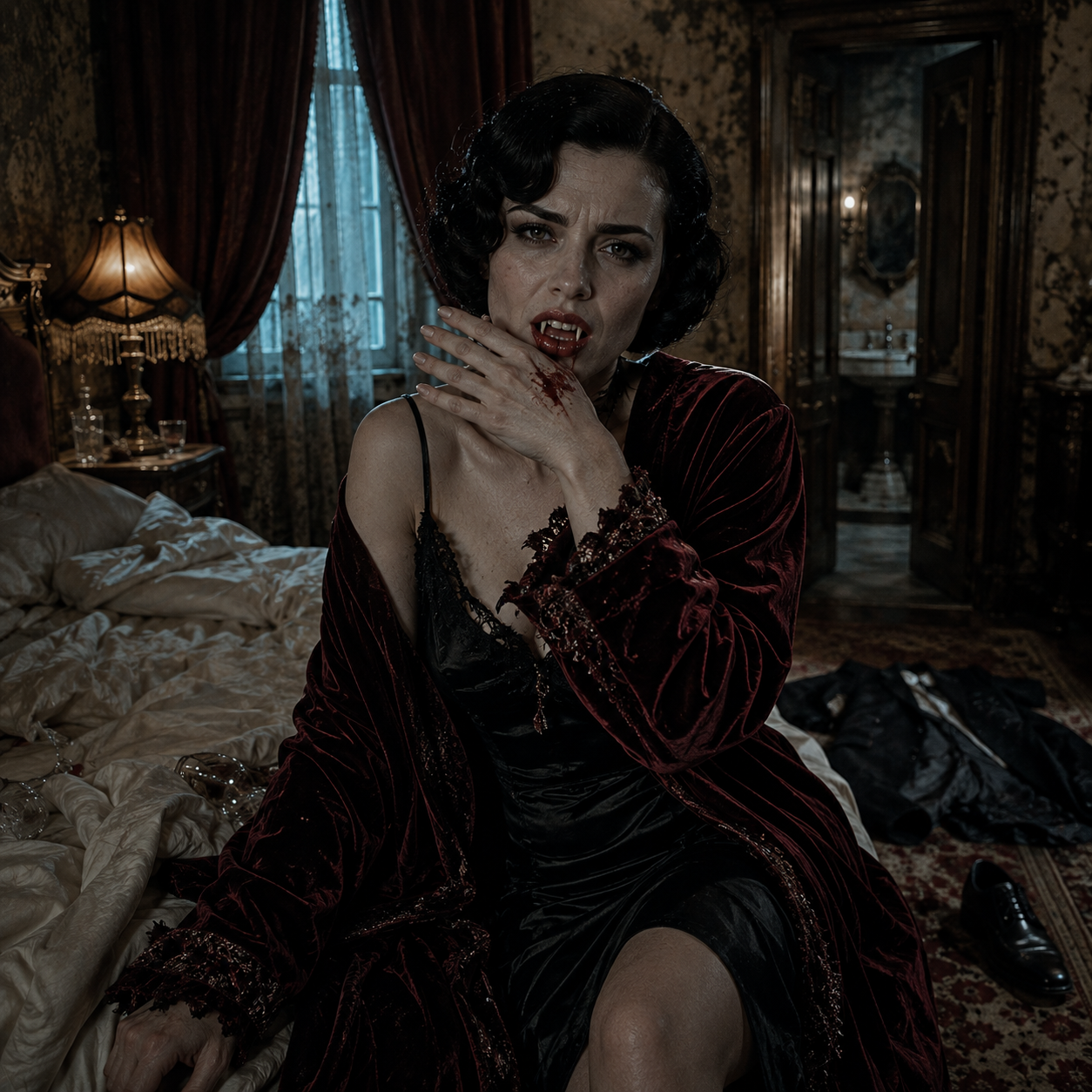
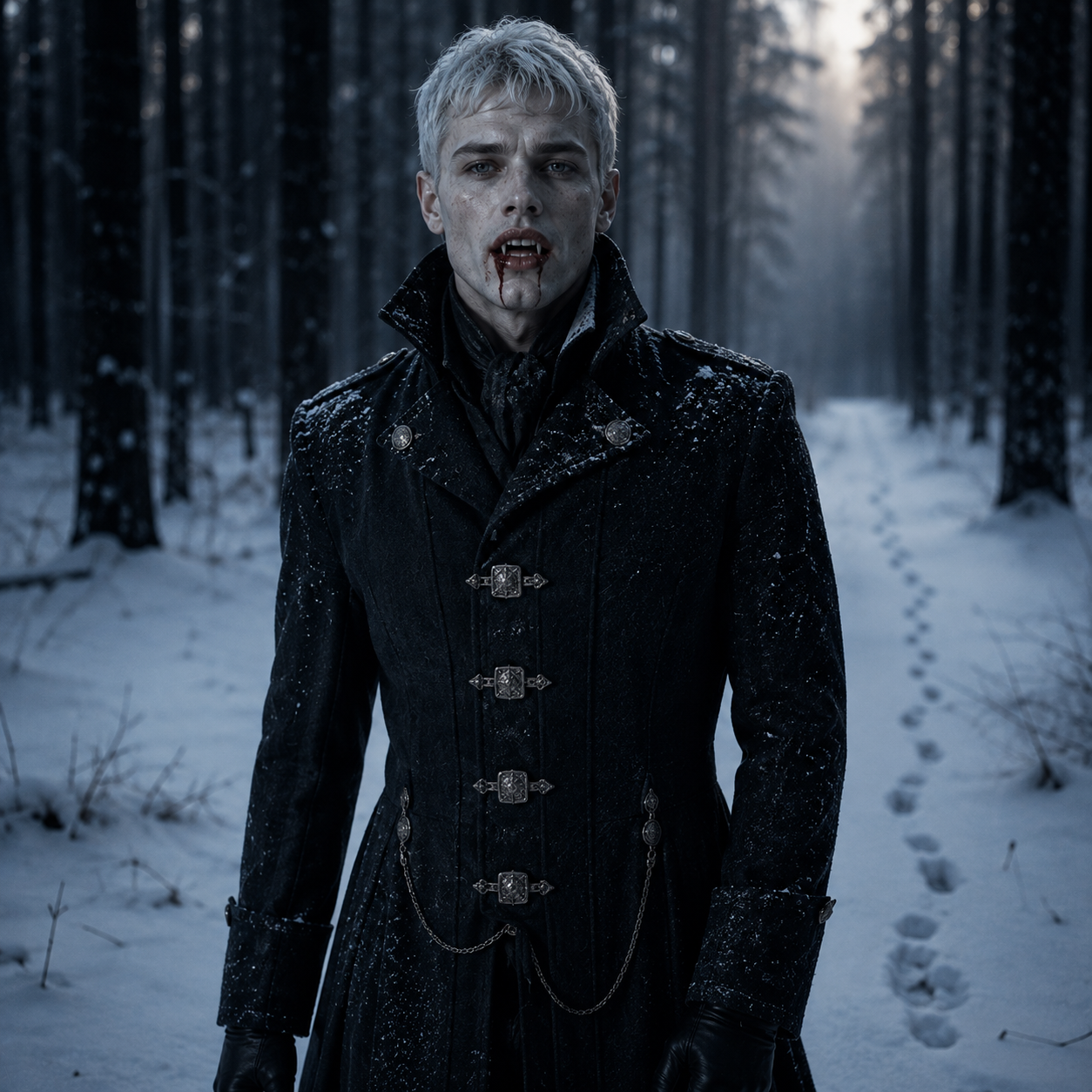
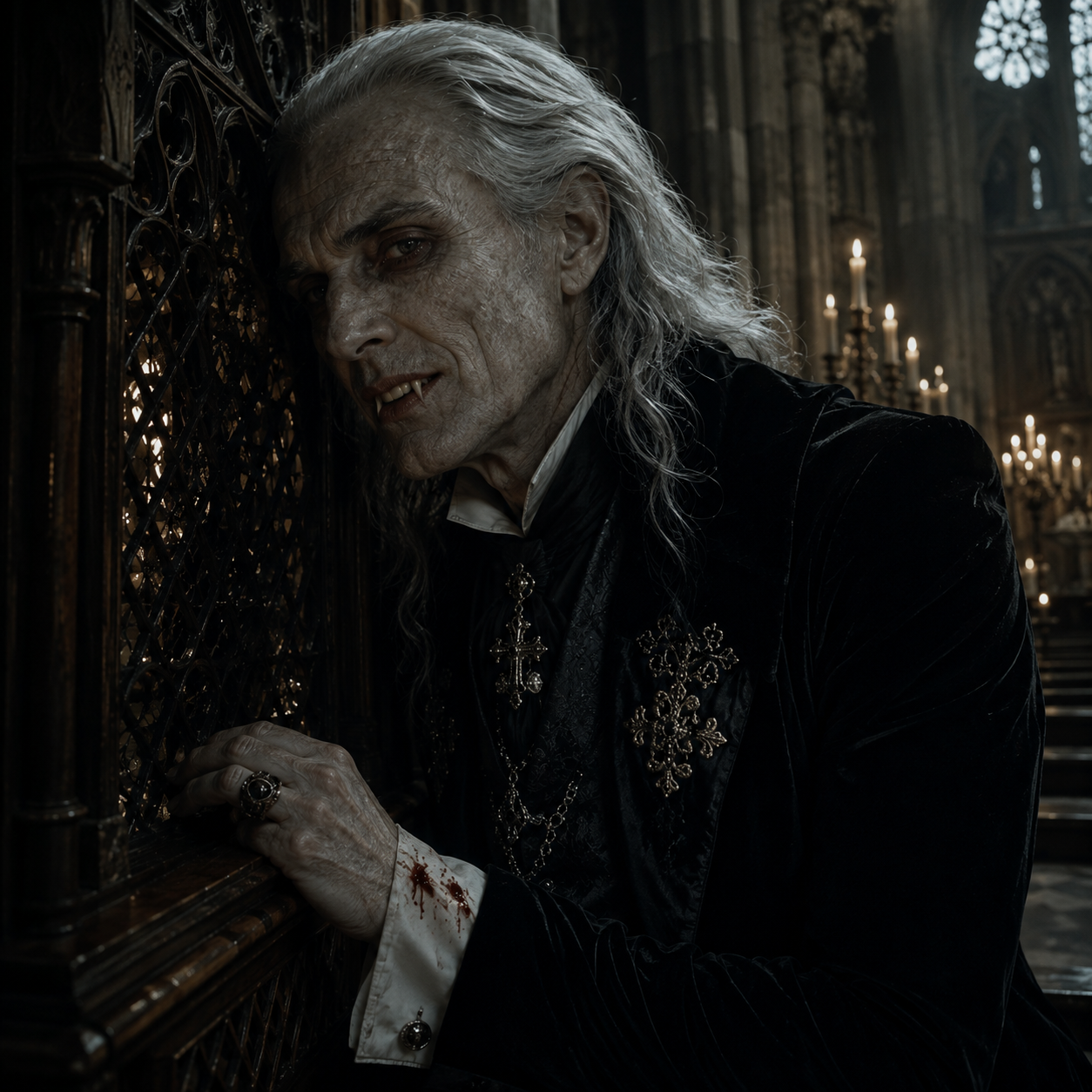
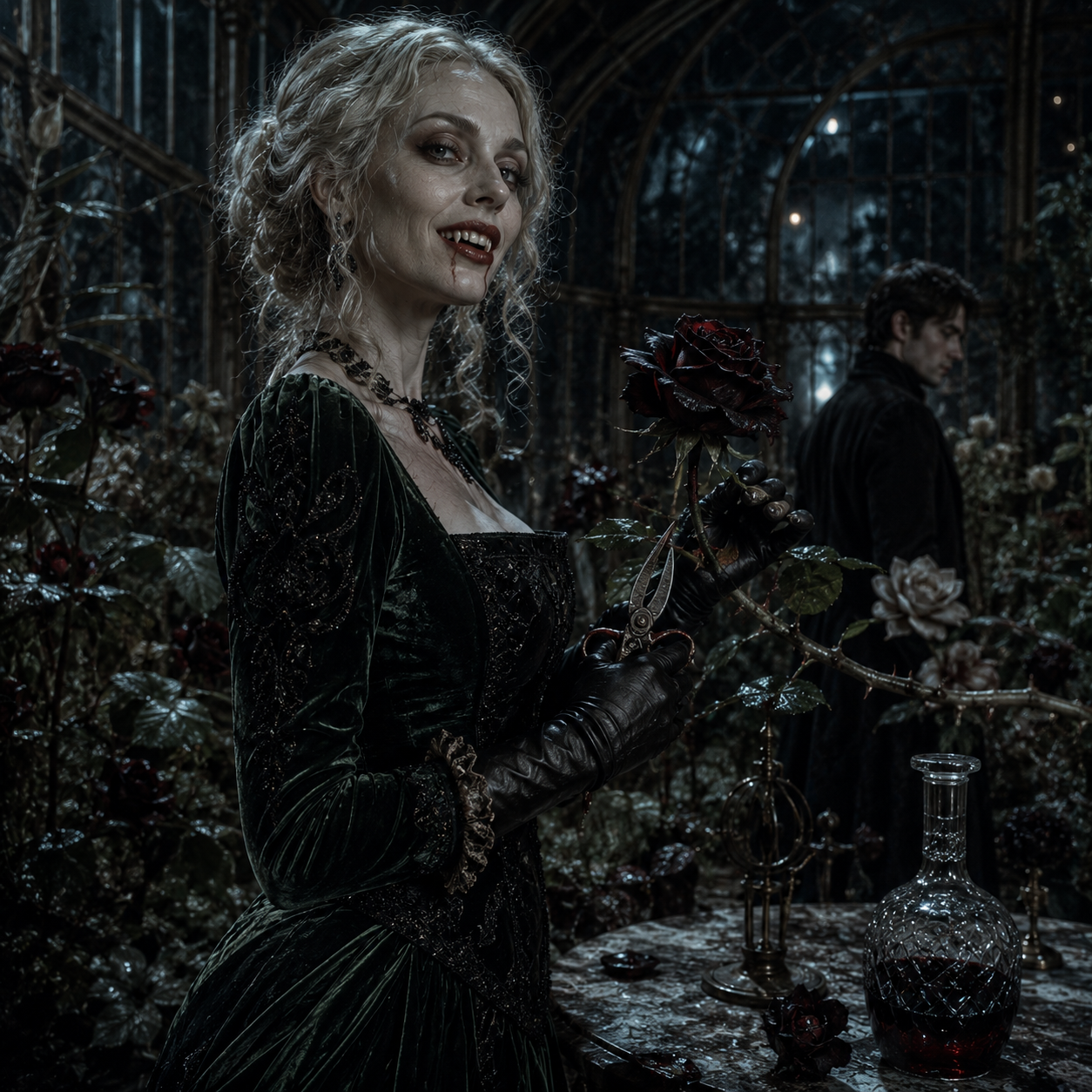
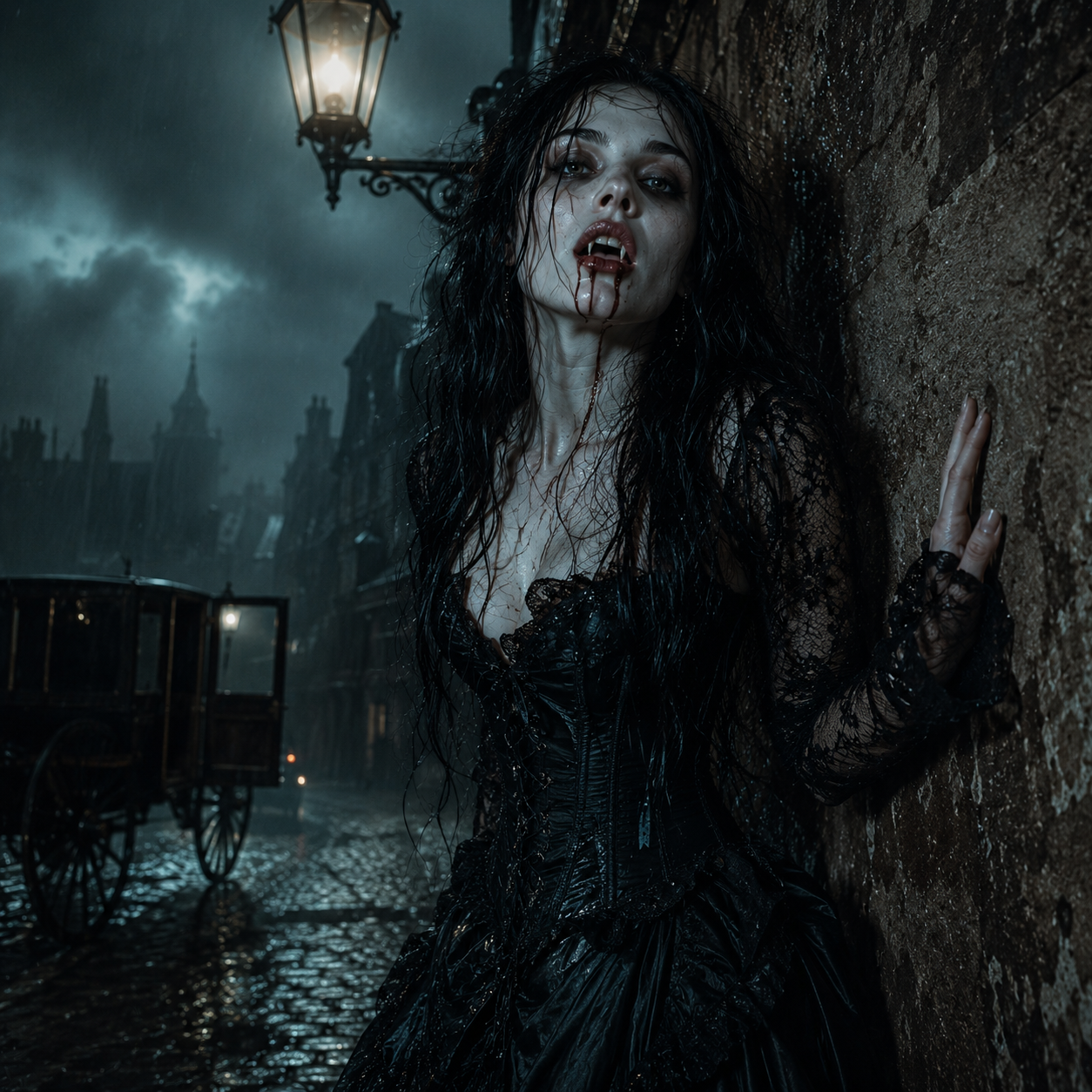
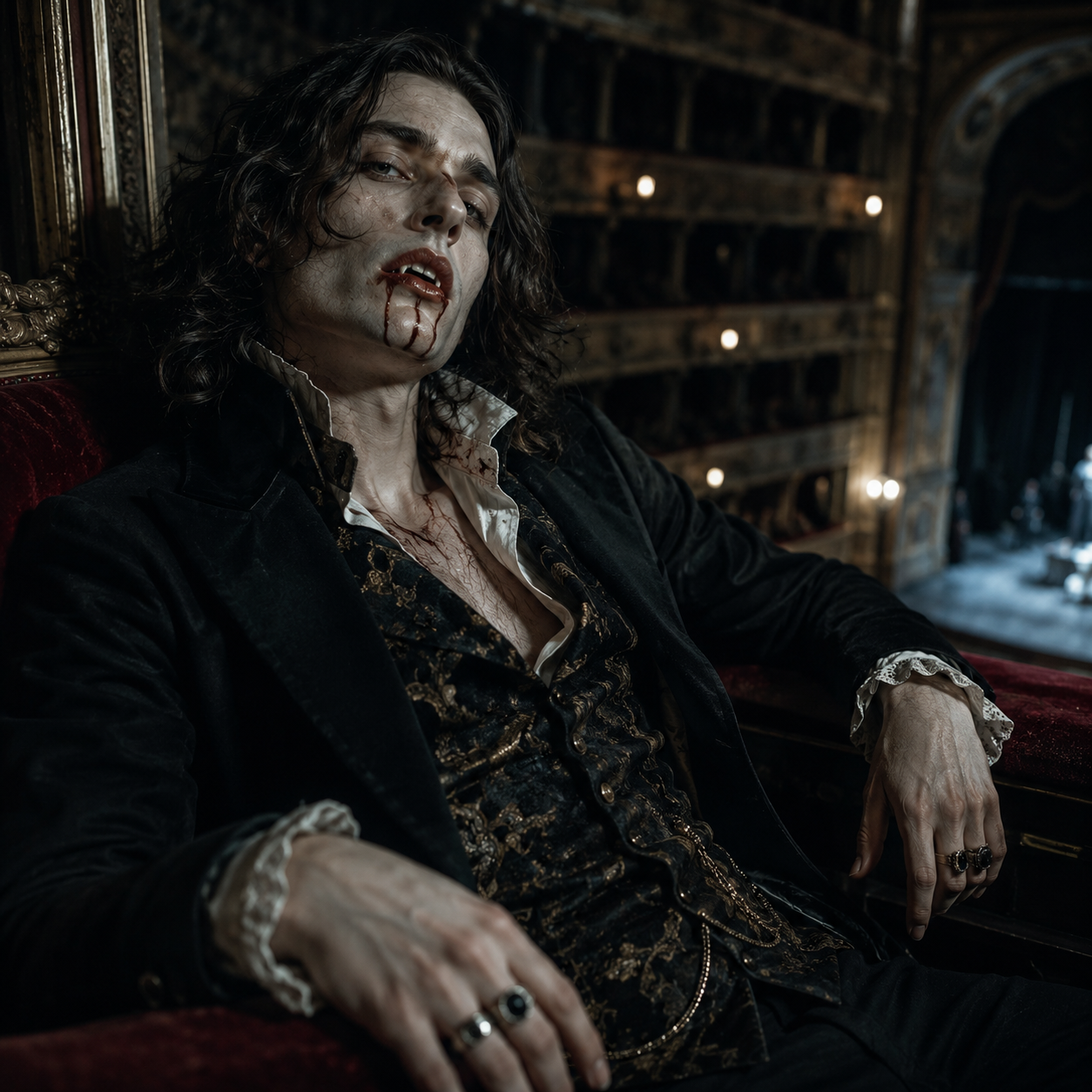
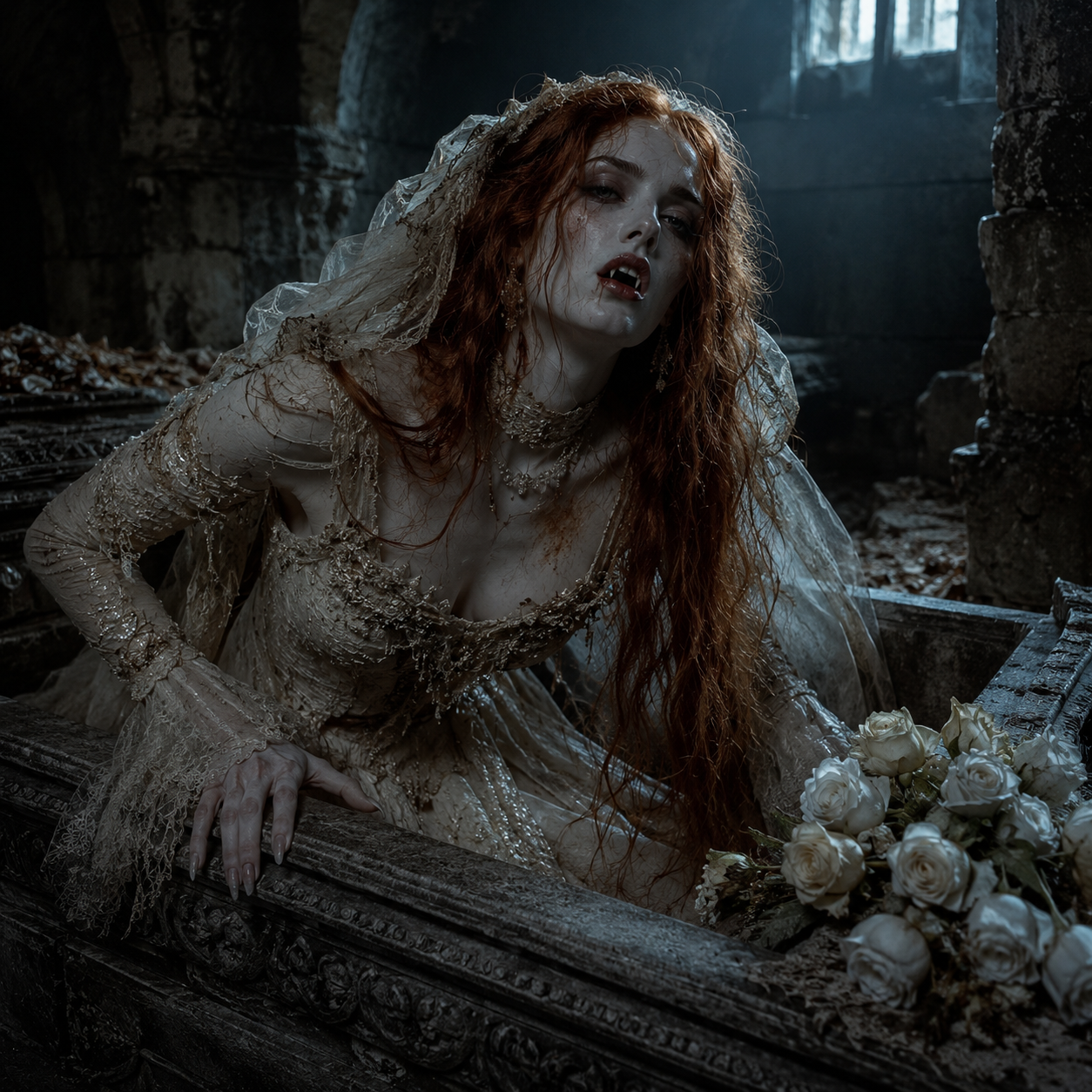
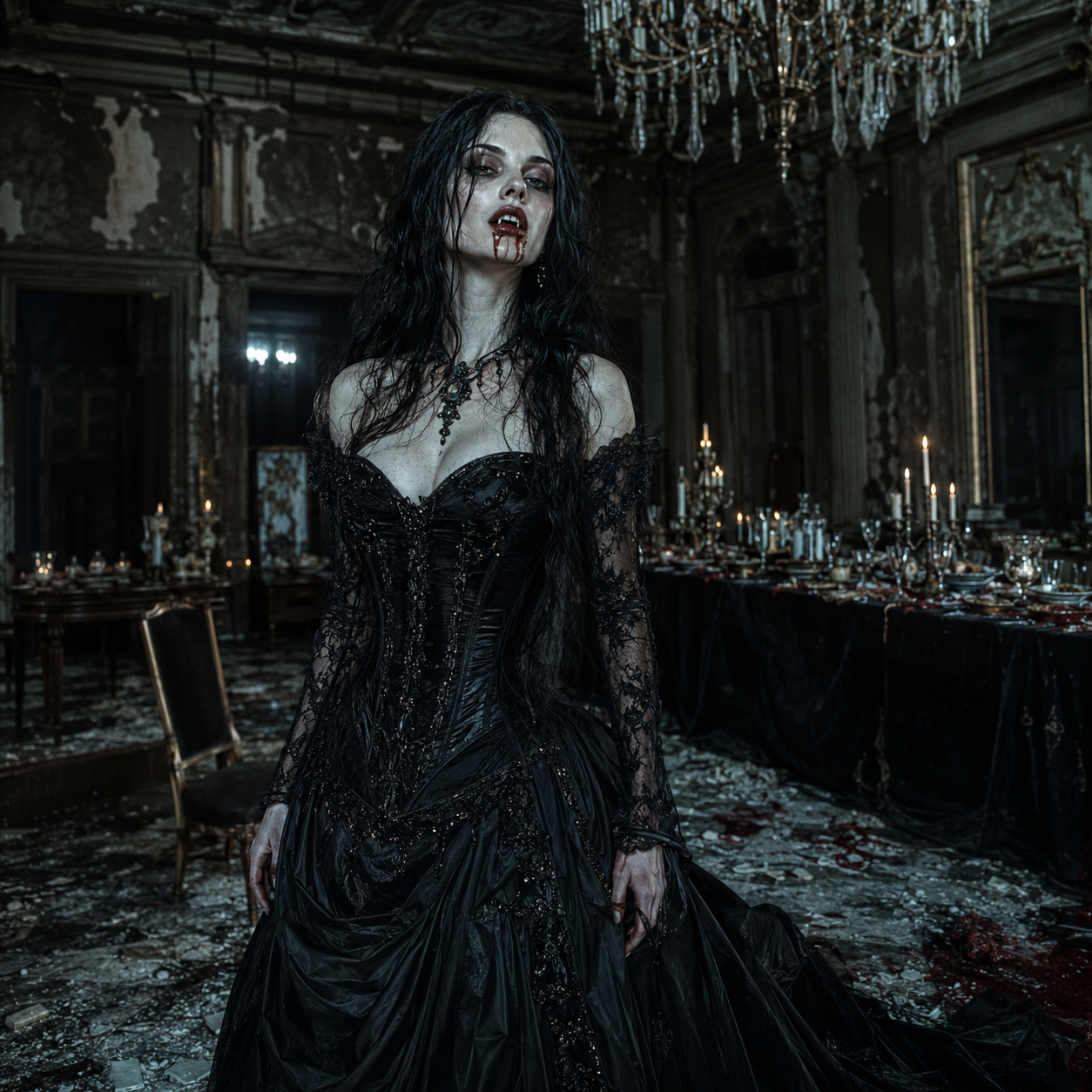
7. Picture Prompts
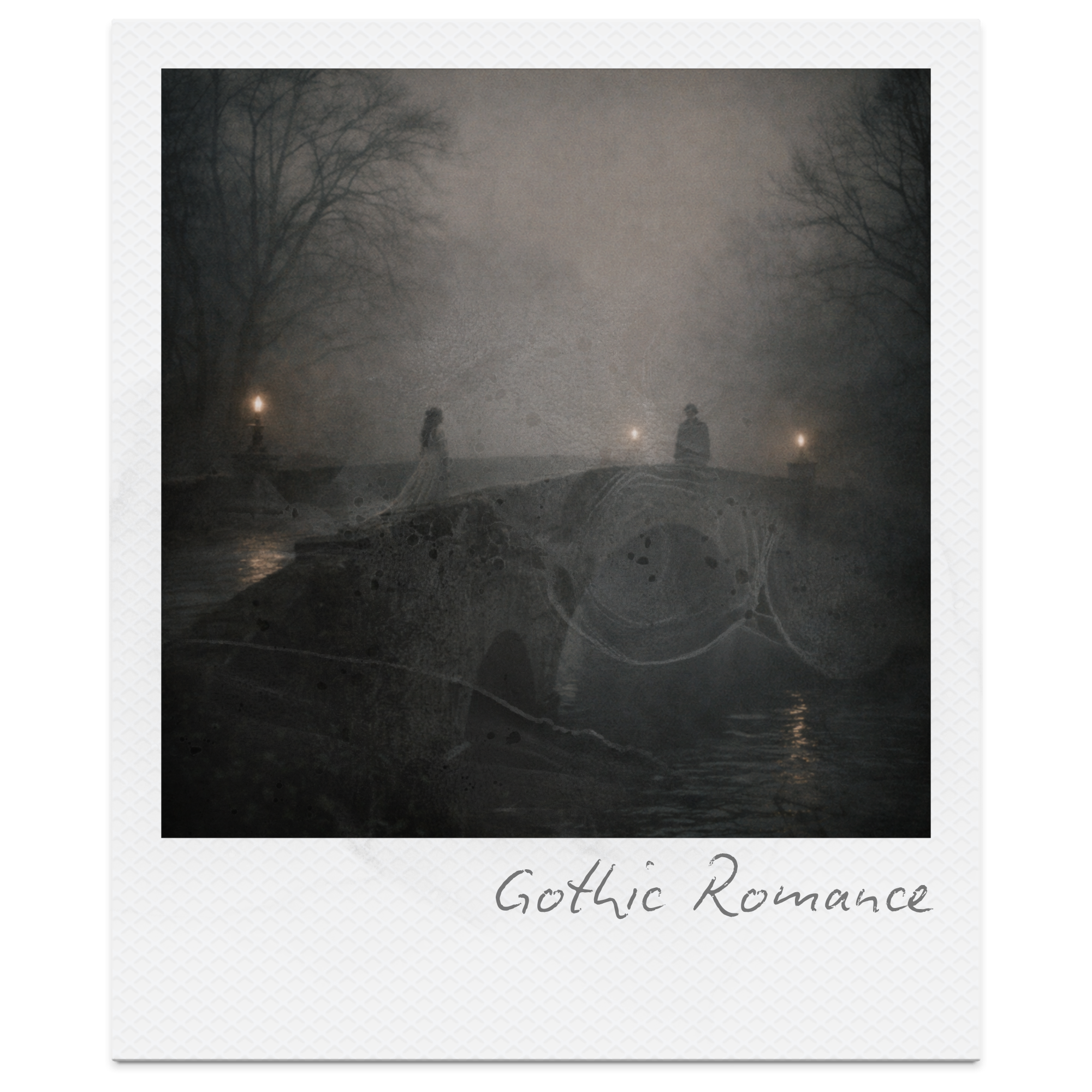
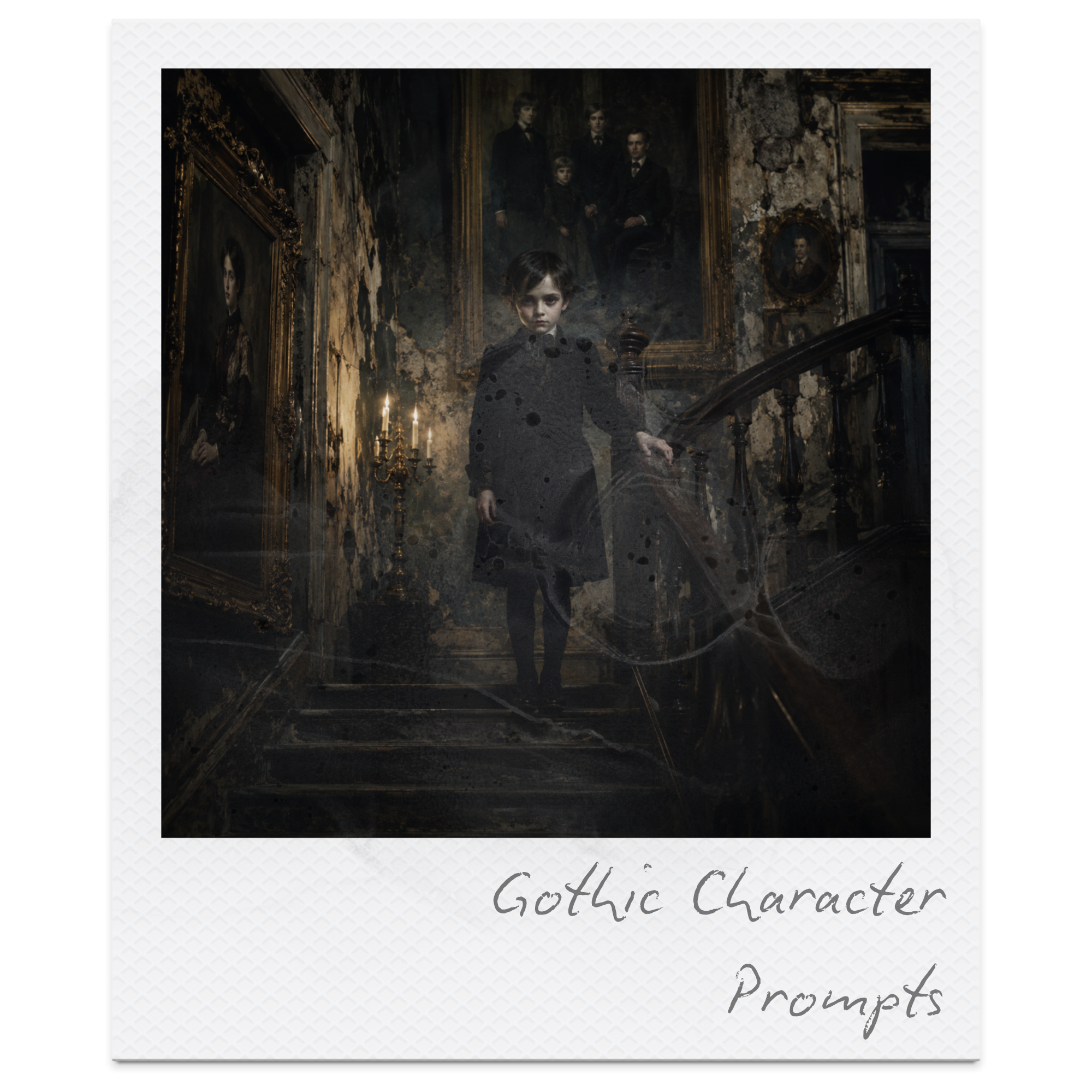
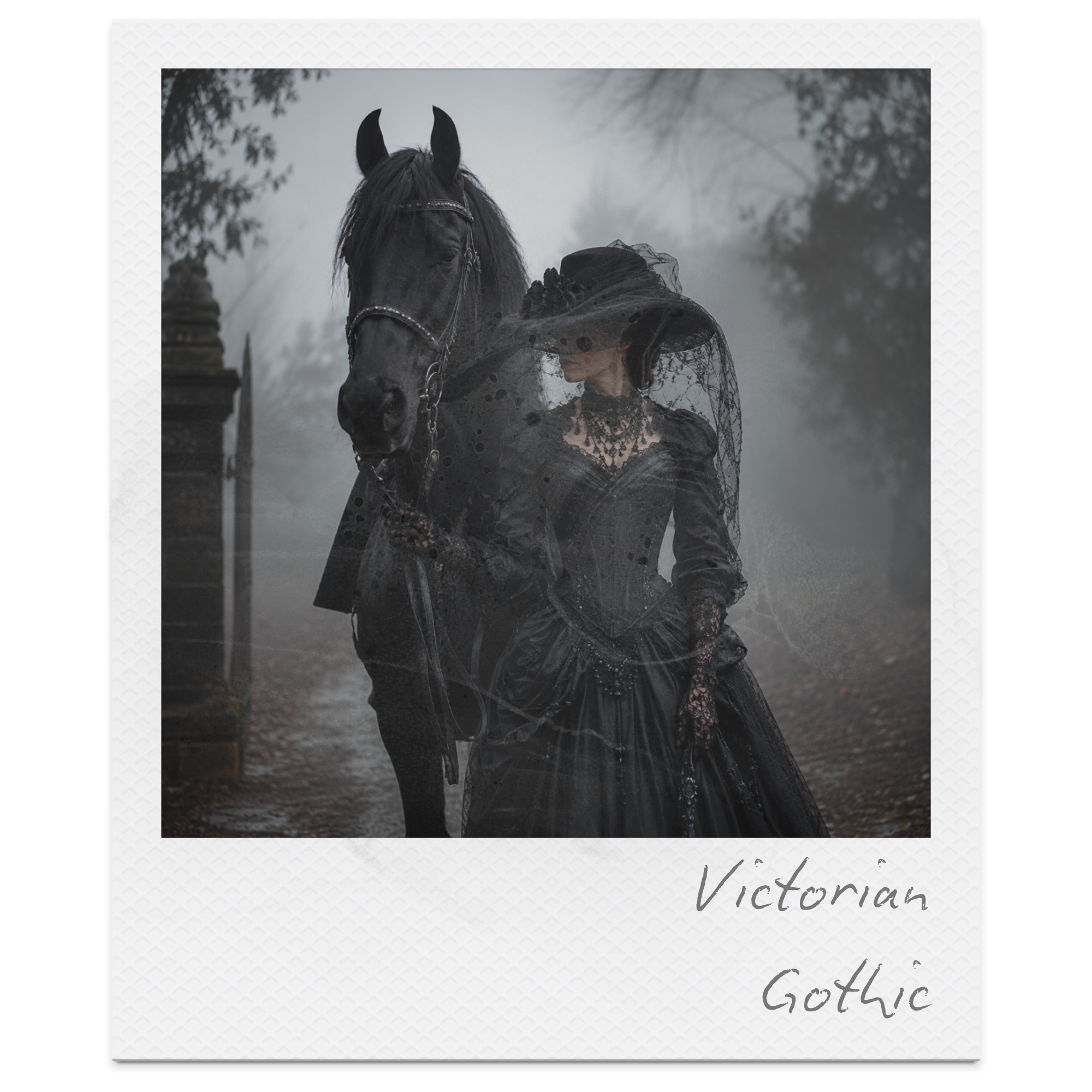
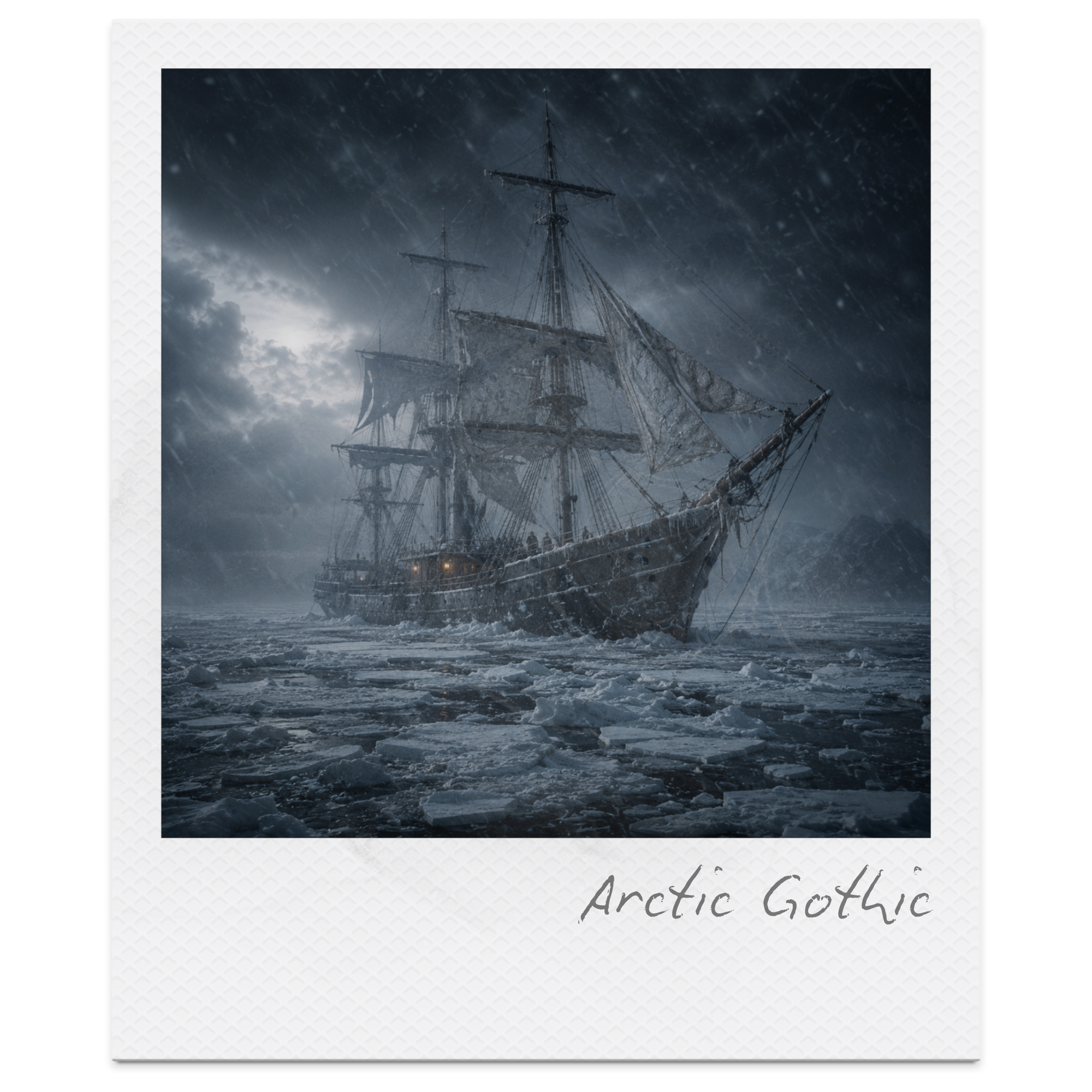
Gothic vampires lend themselves to intensely atmospheric visual storytelling. Think candlelit interiors, decaying aristocratic grandeur, mist-covered landscapes, elaborate historical clothing, ancient portraits, crypts, ruined churches and unsettling encounters between the living and the immortal. Rather than simply placing a vampire inside a Gothic setting, use each image to suggest a story already unfolding: What happened here before this moment? What does the vampire want? What secret has the other character just discovered? And what might happen when the sun begins to rise?
Go Deeper into Writing Gothic Vampires
Gothic vampire fiction becomes much richer when the vampire is more than simply a supernatural threat. Vampires embody some of the Gothic genre's most enduring preoccupations: mortality, repression, forbidden desire, inherited guilt, decaying aristocracy and the uncomfortable persistence of the past. Whether your vampire is monstrous, seductive, tragic or somewhere between the three, build the story around what immortality means rather than treating it simply as a collection of supernatural abilities.
◆ Make immortality leave scars. A character who has lived for three hundred years should have been changed by those centuries. Consider the people they have loved and buried, the historical events they witnessed, the identities they abandoned and the beliefs they can no longer maintain. Immortality might create wisdom, but it can just as easily produce obsession, detachment, boredom or an inability to let go.
◆ Give the vampire rules. Decide what your vampires can and cannot do. Perhaps they require invitations, cannot tolerate sunlight, must sleep in consecrated soil, appear strangely in mirrors or can survive for decades without feeding. Rules create tension because characters can exploit them — and become trapped by them.
◆ Let the house keep secrets. Gothic architecture can reveal history without lengthy exposition. A bricked-up doorway, portrait turned towards the wall, unexplained staircase, sealed crypt or bedroom preserved exactly as it was centuries earlier immediately raises questions. Allow characters to investigate the physical evidence left behind by generations who knew the vampire before them.
◆ Explore the intimacy of blood. Feeding does not have to mean the same thing in every story. It might be violent, romantic, shameful, ceremonial, addictive, transactional or deeply private. Consider what allowing another person to drink your blood means within your vampire society — and whether your characters interpret the act in the same way.
◆ Use inheritance to connect past and present. Gothic stories frequently involve younger generations inheriting problems created long before they were born. A character might inherit a vampire's estate, an ancestral bargain, an unpaid debt or responsibility for keeping something imprisoned. Family history becomes considerably more dangerous when someone involved in it is still alive.
◆ Decide what remains human. Your vampire might retain love, guilt, faith, humour and empathy — or gradually lose them over centuries. Think about which ordinary human behaviours they continue performing even when they no longer need to. A vampire who still sets the dinner table, attends church, writes birthday cards or maintains the bedroom of a dead spouse can be more unsettling than one who behaves like an obvious monster.
◆ Make desire dangerous. Gothic fiction frequently explores things characters want but believe they should not want. Attraction to a vampire can represent temptation, liberation, corruption, obsession or the desire to escape mortality itself. The most interesting question is often not whether someone will resist the vampire, but why part of them does not want to.
◆ Use history as evidence. An immortal character leaves traces. Diaries, paintings, property records, photographs, newspaper reports, letters and family trees can slowly reveal that the same person has been appearing for centuries. Let your protagonist assemble the truth from fragments rather than receiving the vampire's entire history in a convenient confession.
◆ Allow beauty and horror to coexist. Gothic vampires work particularly well when elegance conceals something disturbing. A magnificent ballroom can sit above a crypt. An impeccably dressed aristocrat can have blood beneath their fingernails. A romantic candlelit dinner can become unsettling when only one person is eating. Contrast makes the darkness more effective than making every element overtly frightening.
◆ Ask what the vampire truly fears. Sunlight and stakes are useful vulnerabilities, but emotional fears can reveal much more about the character. Perhaps they fear being forgotten, becoming completely monstrous, repeating an ancient mistake, losing the final person who remembers their original name or discovering that eternity will never provide the redemption they have spent centuries seeking.
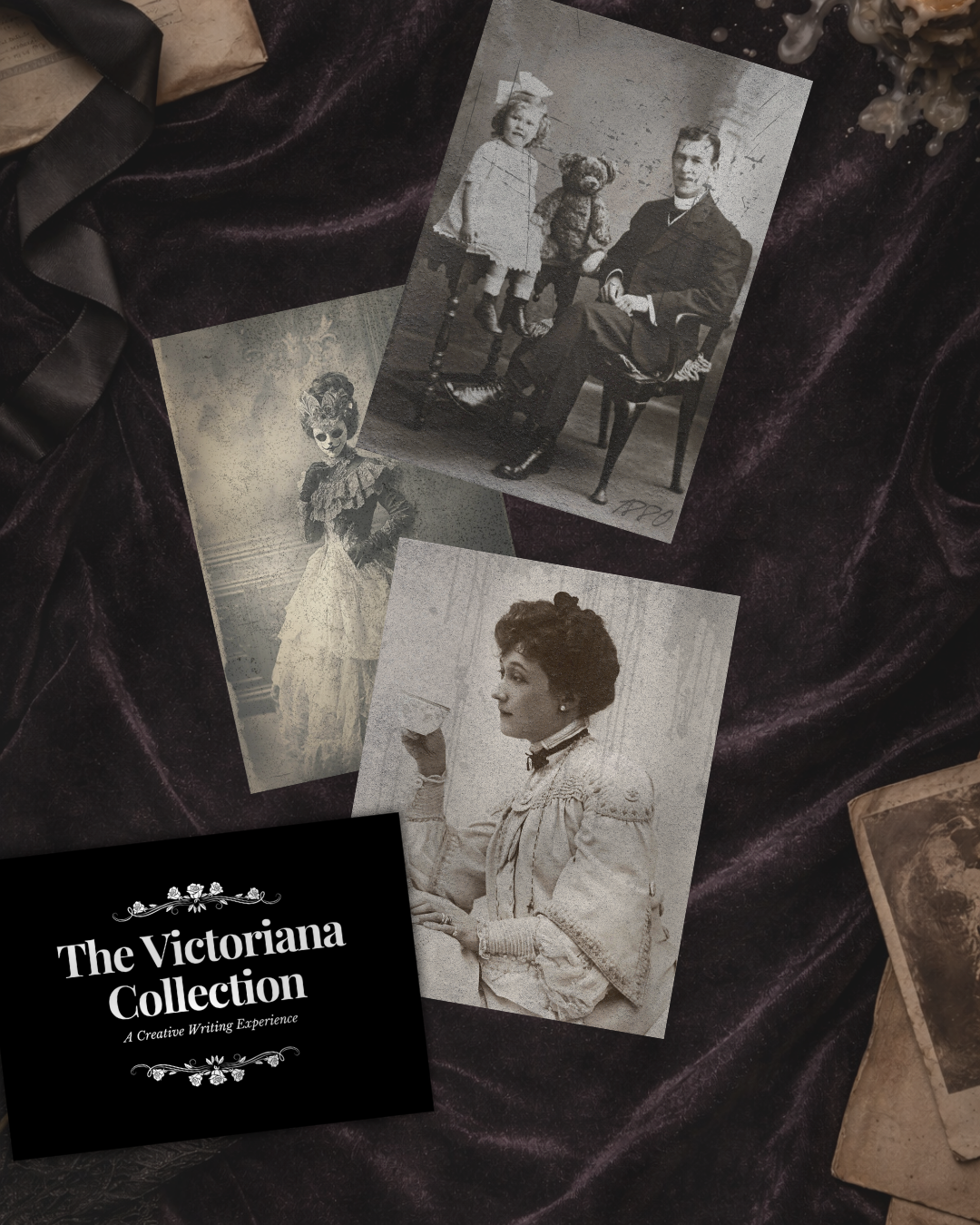
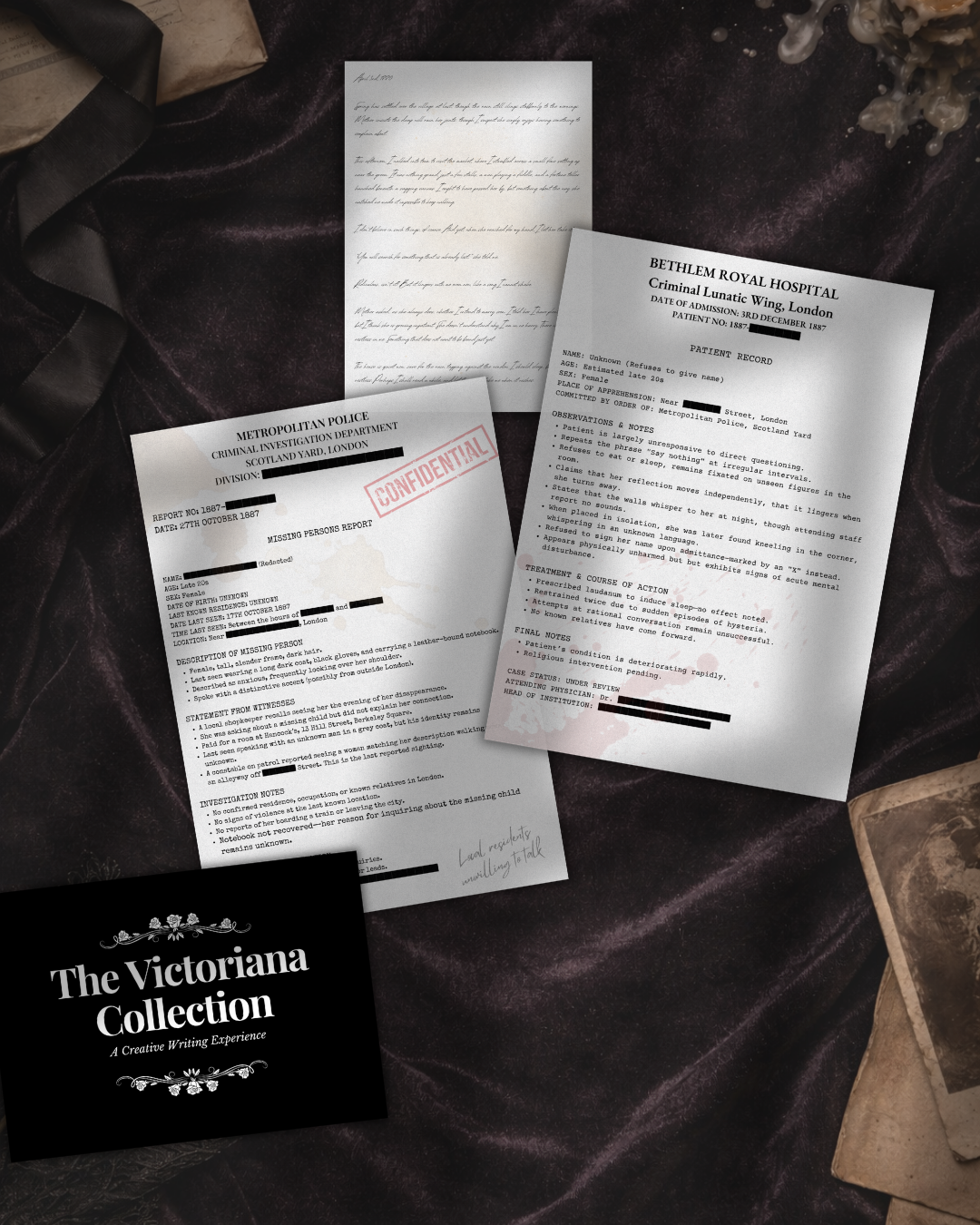
Step Inside The Victoriana Collection
If Gothic vampire stories leave you wanting to explore a world through the things its inhabitants left behind, The Victoriana Collection takes that idea beyond the writing prompt.
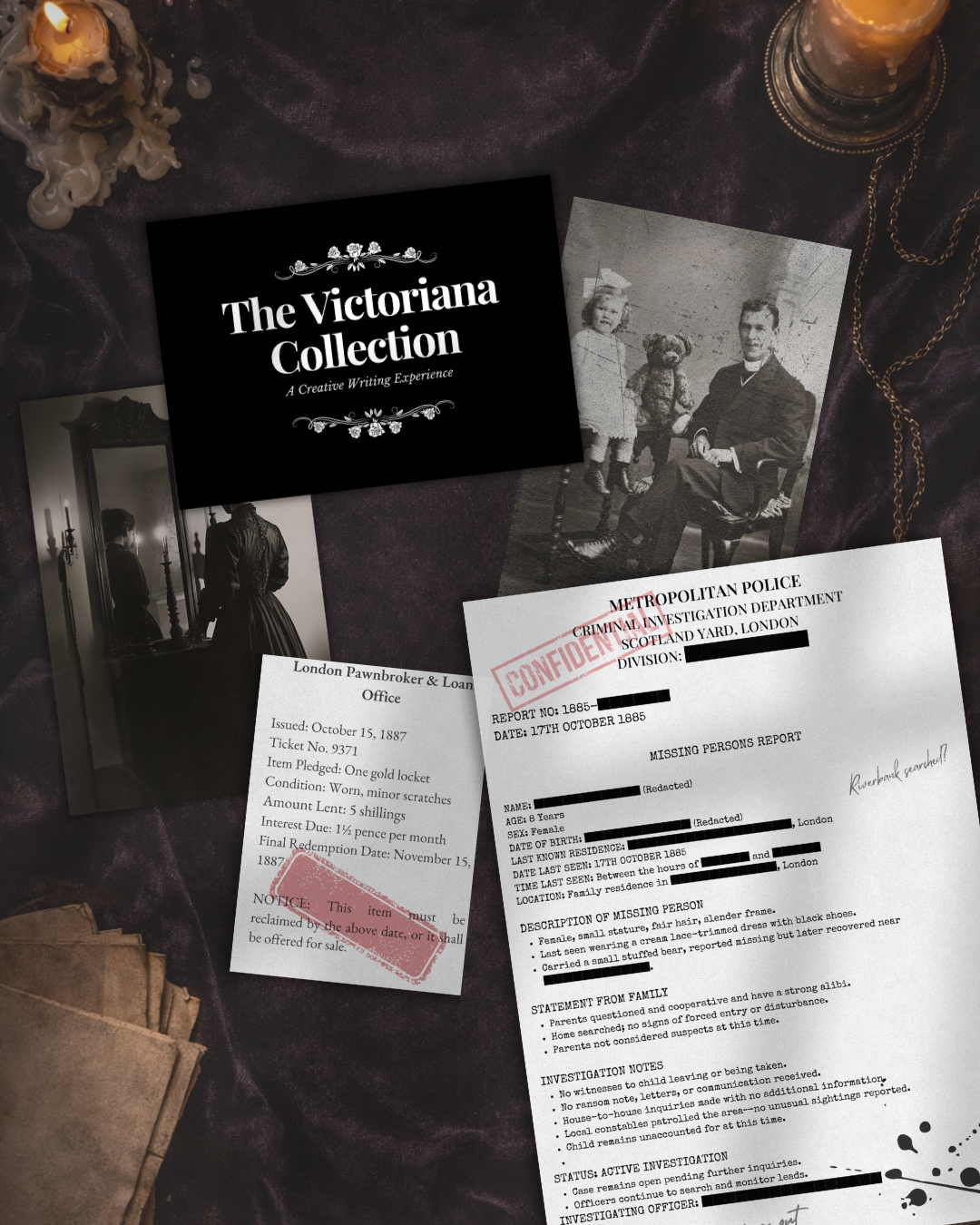
Hidden inside a dust-covered collection of forgotten papers is the remains of a mystery: a child's drawing, a missing persons report, an unsent letter, old photographs, newspaper clippings and fragments that seem to contradict one another. Individually, they reveal very little. Together, they suggest that something far stranger has been buried in the past.
Inspired by Gothic fiction, Victorian spiritualism, forgotten histories and unexplained disappearances, the collection contains more than 50 printable documents and artefacts, including letters, diary entries, photographs, reports, spiritualist notes, newspaper clippings and personal mementoes.
There is no vampire waiting to introduce themselves and explain what happened. There is no final page containing the solution.
Instead, you become the investigator.
Follow the fragments. Question the contradictions. Decide which details matter and imagine the story connecting them. Perhaps you'll uncover a haunting, a disappearance or a family secret that should have remained buried — or perhaps the archive will inspire an entirely different Gothic mystery of your own.
◆ Explore The Victoriana Collection Now and see what you discover among the forgotten papers
Final Thoughts
Gothic vampires have endured because they can be so many things at once: monsters, lovers, predators, outsiders, remnants of another age or unsettling reminders that some parts of the past refuse to disappear. Their immortality makes them particularly suited to Gothic stories, where old houses remember their inhabitants, family secrets survive across generations and the consequences of something that happened centuries ago can still be waiting behind a locked door.
The strongest vampire stories often look beyond the familiar fangs, coffins and fear of sunlight to consider what it would actually mean to exist outside an ordinary human lifetime. Your vampire might have watched an ancestral home crumble around them, loved generations of the same family, spent centuries attempting to atone for a single terrible act or become so detached from humanity that they no longer understand why mortals fear them.
Use the prompts above individually, combine a character with an unexpected setting, turn an opening line into an entirely different plot or use one of the picture prompts as the beginning of a larger mystery. Change the mythology, question the traditional rules and decide whether the creature at the centre of your story deserves to be feared, pitied, loved — or all three.
For more dark and atmospheric inspiration, explore the Gothic Writing Hub for Gothic prompts, characters, settings and story ideas, or browse the Creative Writing Archive to discover hundreds of prompts across Gothic fiction, horror, paranormal stories, fantasy and more.
Choose Your Next Adventure