70 Futuristic City Writing Prompts: Sci-Fi Cities, Worlds & Stories
Futuristic cities are more than impressive skylines and advanced technology. They can reveal how a society distributes power, responds to environmental change, organises millions of people and decides who benefits from progress. A city might rise vertically because land has disappeared beneath the sea, operate entirely under the control of artificial intelligence, travel across an uninhabitable planet or contain districts whose residents experience completely different versions of the future.
Science fiction has long used imagined cities and urban societies to explore these possibilities. In H. G. Wells' The Time Machine, the distant future transforms both humanity and the landscape it inhabits, while Isaac Asimov's The Caves of Steel imagines enormous enclosed cities shaped by overpopulation and technological change. More recent speculative fiction has continued to reinvent urban life, from the environmentally transformed communities of Kim Stanley Robinson's New York 2140 to the vast imperial worlds and settlements found throughout modern space opera.
Below you'll find 70 futuristic city writing prompts, including plot ideas, story titles, opening and closing lines, characters, settings and picture prompts. Expect vertical megacities, floating settlements, underground worlds, orbital metropolises, corporate enclaves, climate-adapted cities, automated infrastructure and places built using technologies their inhabitants no longer fully understand.
For more speculative inspiration, explore the Science Fiction Writing Hub for futuristic worlds, characters and story ideas, visit the Dystopian Writing Hub for darker future societies, or browse the Creative Writing Archive for prompts across science fiction, fantasy, horror, Gothic fiction and more.
1. Plot Prompts
A futuristic city becomes most interesting when the technology shaping everyday life creates possibilities, inequalities or problems that could not exist anywhere else. These prompts place the city at the centre of the conflict, exploring urban systems that fail, evolve, conceal secrets or force their inhabitants to question the worlds built around them.
In a vertical city stretching five kilometres into the atmosphere, social status is determined by altitude. A maintenance engineer from the lowest levels discovers that the supposedly uninhabitable floors above the wealthy upper districts contain an entire population deliberately erased from the city's records.
A floating metropolis has survived rising oceans by continuously migrating between carefully calculated safe zones. When its navigation system unexpectedly changes course, a young cartographer discovers the city is travelling towards coordinates removed from every official map.
Every building in a biotechnology-powered city is grown rather than constructed, responding to the needs of its inhabitants by creating rooms, corridors and public spaces. One morning, the buildings begin sealing certain residents inside while opening pathways towards a district that supposedly does not exist.
An enormous lunar city depends upon artificial daylight projected across its interior dome. When the simulated sun fails for the first time in eighty years, thousands of residents discover structures visible only in complete darkness — including a second city beneath their own.
Citizens of an AI-managed metropolis vote on major decisions but have surrendered everyday governance to a system considered perfectly impartial. When the AI suddenly orders the evacuation of one neighbourhood without explanation, a city planner must decide whether to trust an intelligence that has never previously been wrong.
A desert city travels across the planet on thousands of enormous mechanical legs, permanently outrunning lethal seasonal temperatures. After generations of movement, its engines begin failing, and an apprentice mechanic discovers evidence that the supposedly uninhabitable ground below may have recovered decades ago.
Housing in a hyper-dense megacity is assigned according to predicted compatibility, placing strangers together to minimise conflict and maximise productivity. When thousands of residents receive new housing assignments simultaneously, they realise the city's algorithm is deliberately bringing particular people together.
Humanity's most prestigious orbital metropolis is advertised as completely self-sufficient. A waste-management worker discovers that essential resources have secretly been arriving from an undocumented settlement on Earth — a planet residents have been taught became uninhabitable generations ago.
A city rebuilt after catastrophic flooding has divided itself between enormous towers above the water and submerged districts occupied by people genetically modified for aquatic life. When the sea unexpectedly begins retreating, both populations claim ownership of the land emerging between them.
Archaeologists studying the foundations of a thousand-year-old futuristic metropolis discover that its oldest structures were not built by the city's founders. More disturbing still, the buried transportation network has recently begun operating again.
2. Story Title Ideas
Futuristic city titles can sound sleek, technological, mysterious or unsettling. They might name the city itself, hint at one of its defining systems or capture a small human story unfolding against an enormous urban landscape.
Neonfall
The City Above
Nobody Lives Below Level Nine
Glass District
Ascension
When the Last Train Leaves Earth
Skyline Zero
A City Built to Outlive Us
Undercity
The Streets Remember Everyone
3. Opening Lines
The opening line can introduce both the extraordinary city and the ordinary life unfolding within it. Begin with something impossible treated as routine, a familiar system suddenly behaving differently or one detail suggesting the official version of the city's history might not be true.
“The city had been walking east for three hundred years when it took its first step backwards.”
“Nobody below Floor 700 had seen the sun, although advertisements assured us it was still there.”
“At 06:14, every artificial intelligence in New Carthage stopped speaking.”
“The apartment grew a second bedroom overnight, which would have been convenient if Mara had requested one.”
“There were fourteen million people living beneath the dome and only one person who remembered rain.”
“My grandmother always claimed there was another city beneath ours, but until the pavement opened, nobody believed her.”
“Every morning, the train carried two million commuters into Central District; today, it refused to open its doors.”
“The evacuation notice appeared above the skyline before anyone knew what we were supposed to be escaping.”
“From the hundred-and-ninety-third floor, poverty was almost impossible to see.”
“Our city was designed to survive the end of the world, but nobody had planned for the world to recover.”
4. Closing Lines
The end of a futuristic city story can change the reader's understanding of the place completely. A city might fall, survive, transform or reveal that its inhabitants misunderstood its purpose from the beginning.
“For the first time in four centuries, the city turned off its lights and we could see the stars.”
“We had spent our entire lives trying to escape the city without realising it had been trying to protect us.”
“By morning, there was grass growing between the towers.”
“The final train departed without me, and I watched the empty city begin rebuilding itself.”
“They called it Level Zero; my grandmother called it home.”
“As the towers disappeared beneath the clouds, I finally understood why nobody who reached the top ever came back down.”
“The city had chosen its survivors long before any of us knew we were being tested.”
“There were lights on the horizon, and for once they did not belong to us.”
“We opened the gates expecting wilderness and found another city waiting outside.”
“Three billion people had lived here, but the message beneath the foundations contained only four words: WE WILL RETURN SOON.”
5. Character Ideas
Millions of people can inhabit the same futuristic city while experiencing completely different worlds. Consider the workers who keep impossible infrastructure functioning, the people excluded from technological progress and those whose jobs could exist only within the particular future you have created.
A vertical-city window cleaner who spends every day suspended kilometres above neighbourhoods she will never earn enough money to enter.
A municipal AI psychologist responsible for evaluating whether the intelligence controlling the city's infrastructure is developing emotions, personal preferences or political ambitions.
An elderly woman who maintains the last patch of real soil in a metropolis where food, trees and flowers are manufactured synthetically.
A teenage courier who navigates abandoned maintenance tunnels because they allow packages to move between heavily monitored districts without passing through surveillance systems.
A climate architect responsible for programming artificial seasons inside an enormous enclosed city who becomes obsessed with recreating weather nobody alive has personally experienced.
A former celebrity architect whose revolutionary modular city was supposed to eliminate homelessness, now secretly investigating why entire residential blocks have begun disappearing from its maps.
A street artist who hacks augmented-reality advertising so that citizens looking through their implants see forgotten landscapes, demolished neighbourhoods and people erased from official history.
A transit engineer responsible for a teleportation network used by millions of commuters who discovers tiny discrepancies between the people entering the system and those emerging from it.
A child born aboard a moving metropolis who becomes fascinated by the forbidden idea of living somewhere that stays permanently in one place.
A professional urban memory curator who preserves digital recreations of neighbourhoods before they are demolished and begins discovering residents inside the simulations who were never recorded as real people.
6. Setting Ideas
A futuristic city can be a world in miniature. Think beyond towers and neon lights to consider how geography, climate, technology and culture have changed the places where people work, travel, socialise and make their homes.
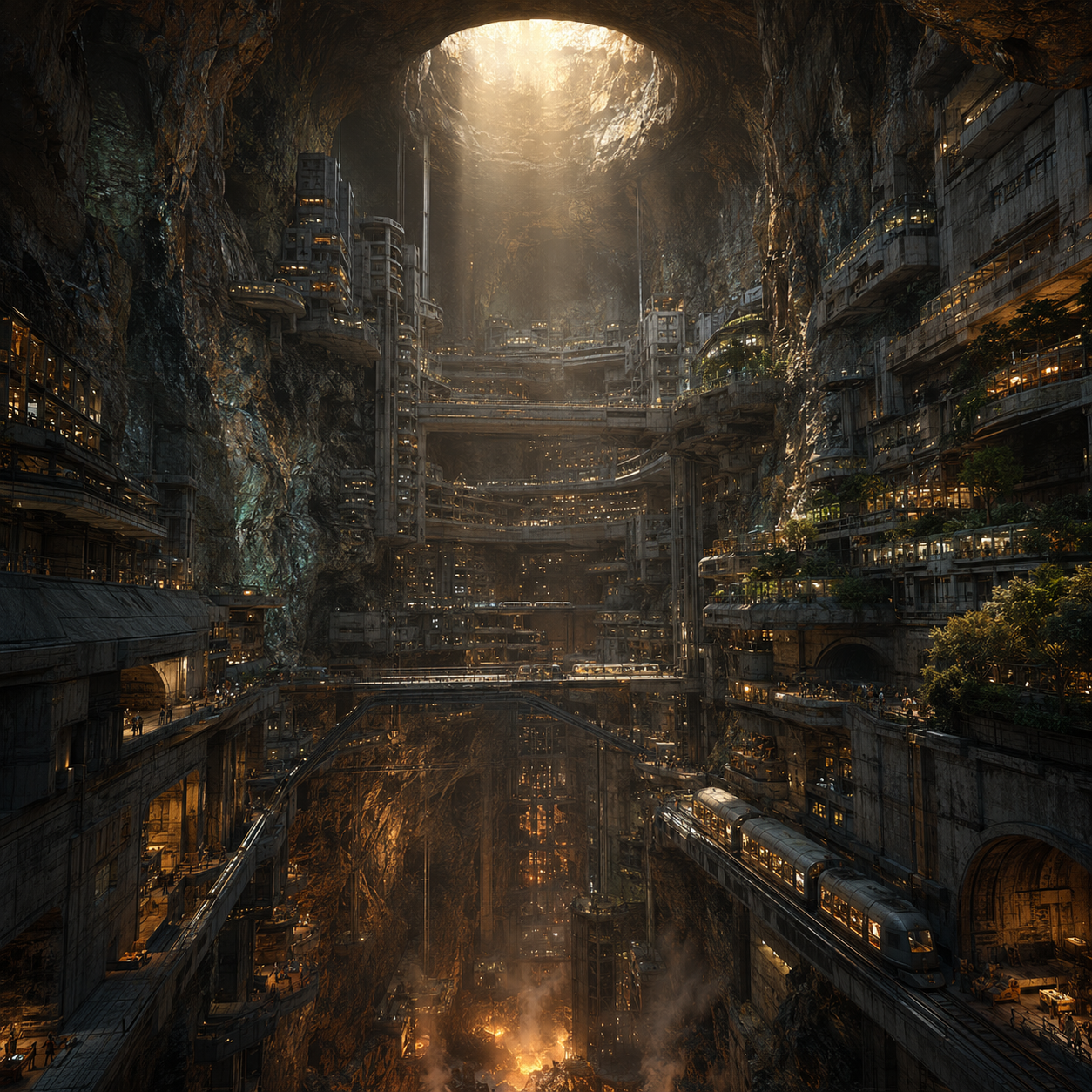
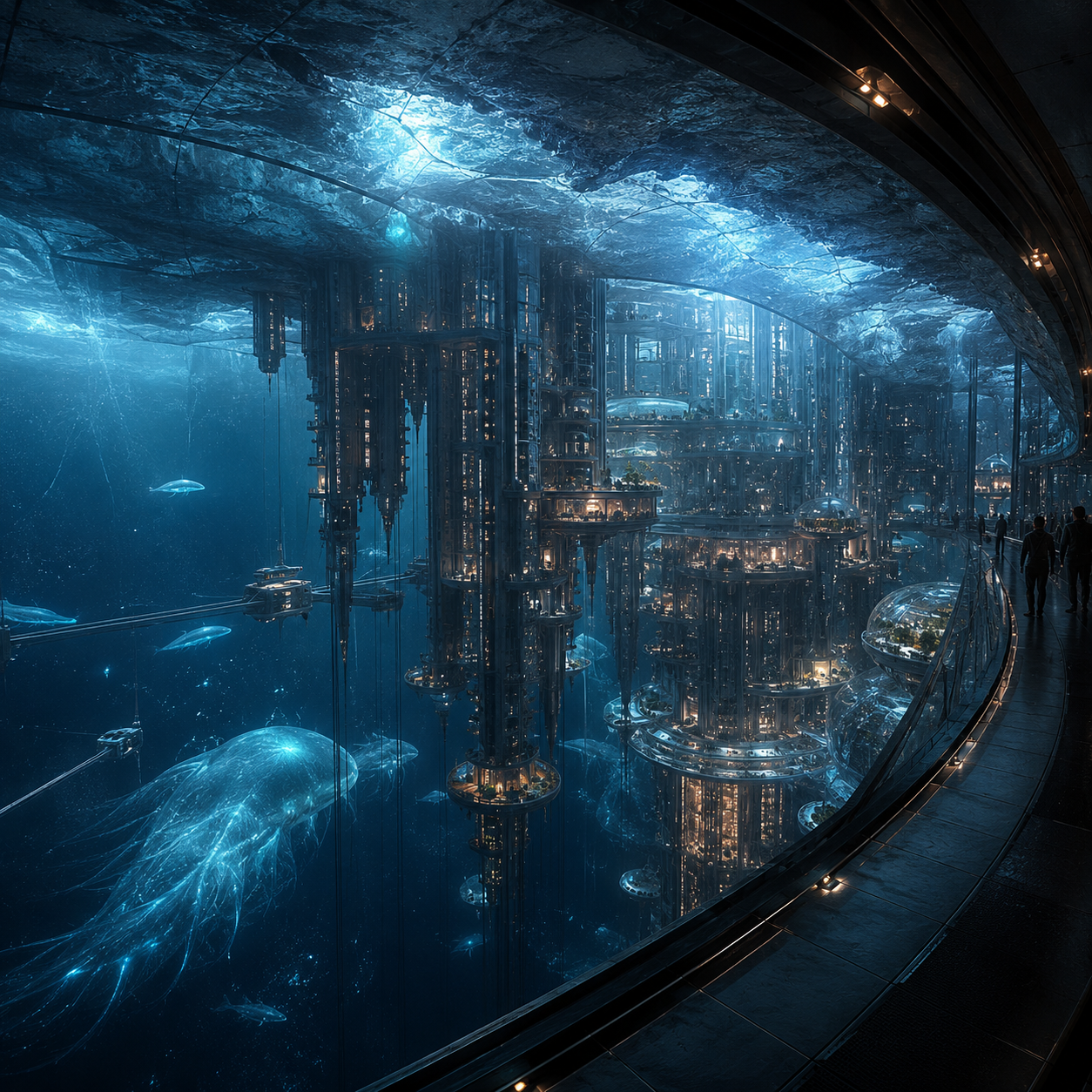
A kilometre-deep underground metropolis built after Earth's surface became dangerously hot, organised around enormous artificial caverns where projected skies change according to the time of day.
A floating Pacific city formed from thousands of interconnected platforms that can detach and rearrange themselves during storms, causing entire neighbourhoods to migrate around the metropolis.
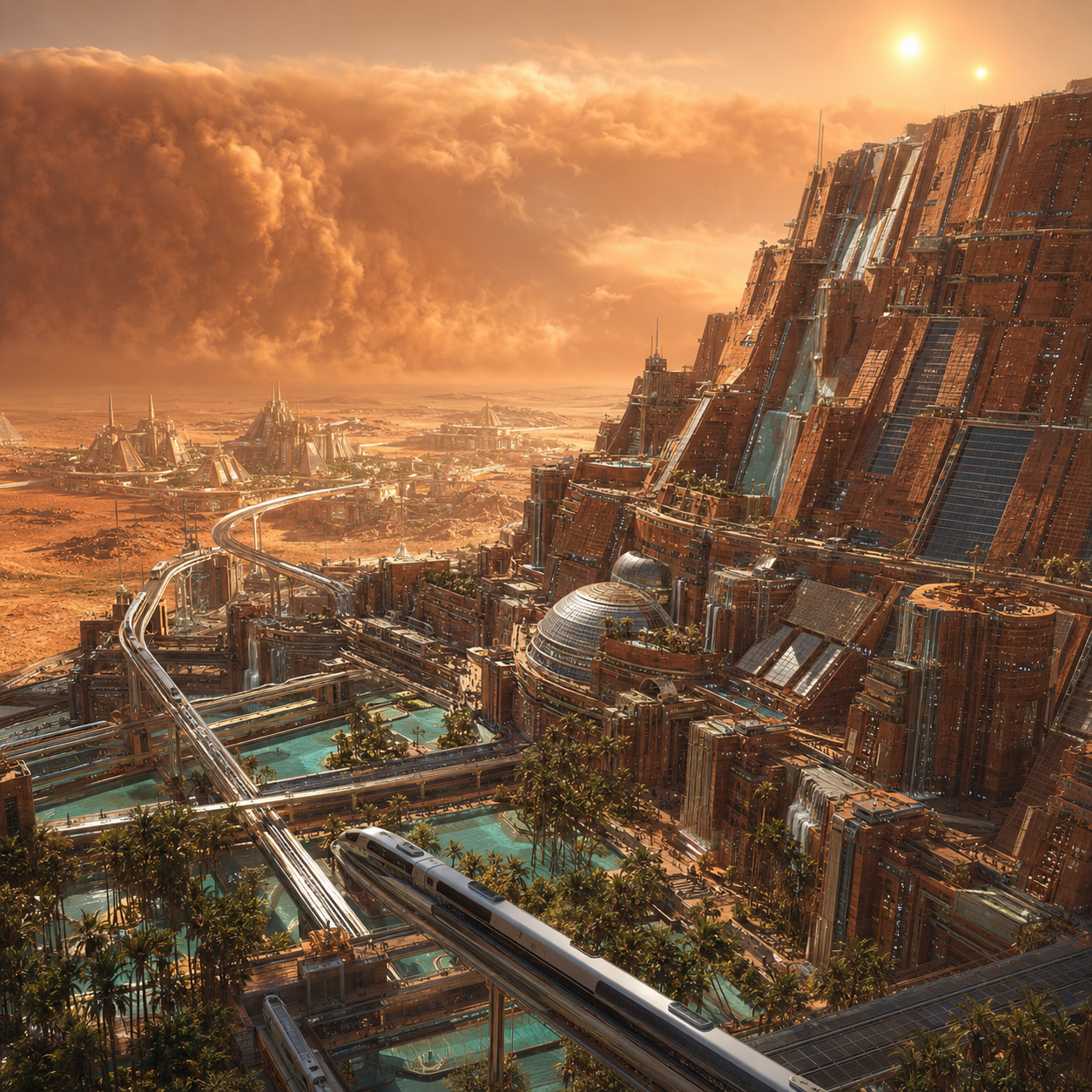
A Martian canyon city constructed vertically along enormous rust-red cliffs, with transparent bridges connecting districts carved directly into the rock.
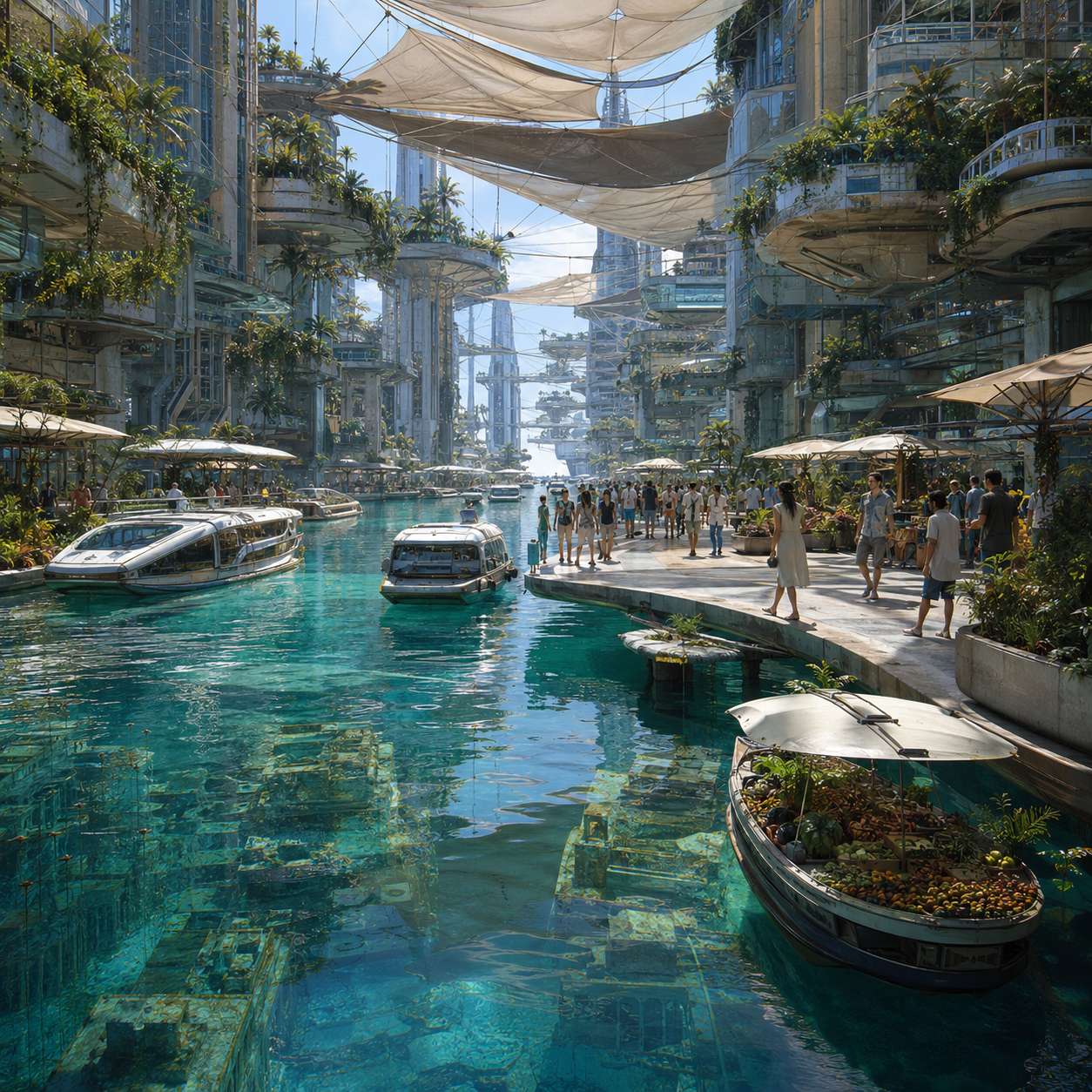
A post-flood London where elevated walkways connect the upper floors of surviving buildings while boats travel through streets submerged beneath several metres of water.
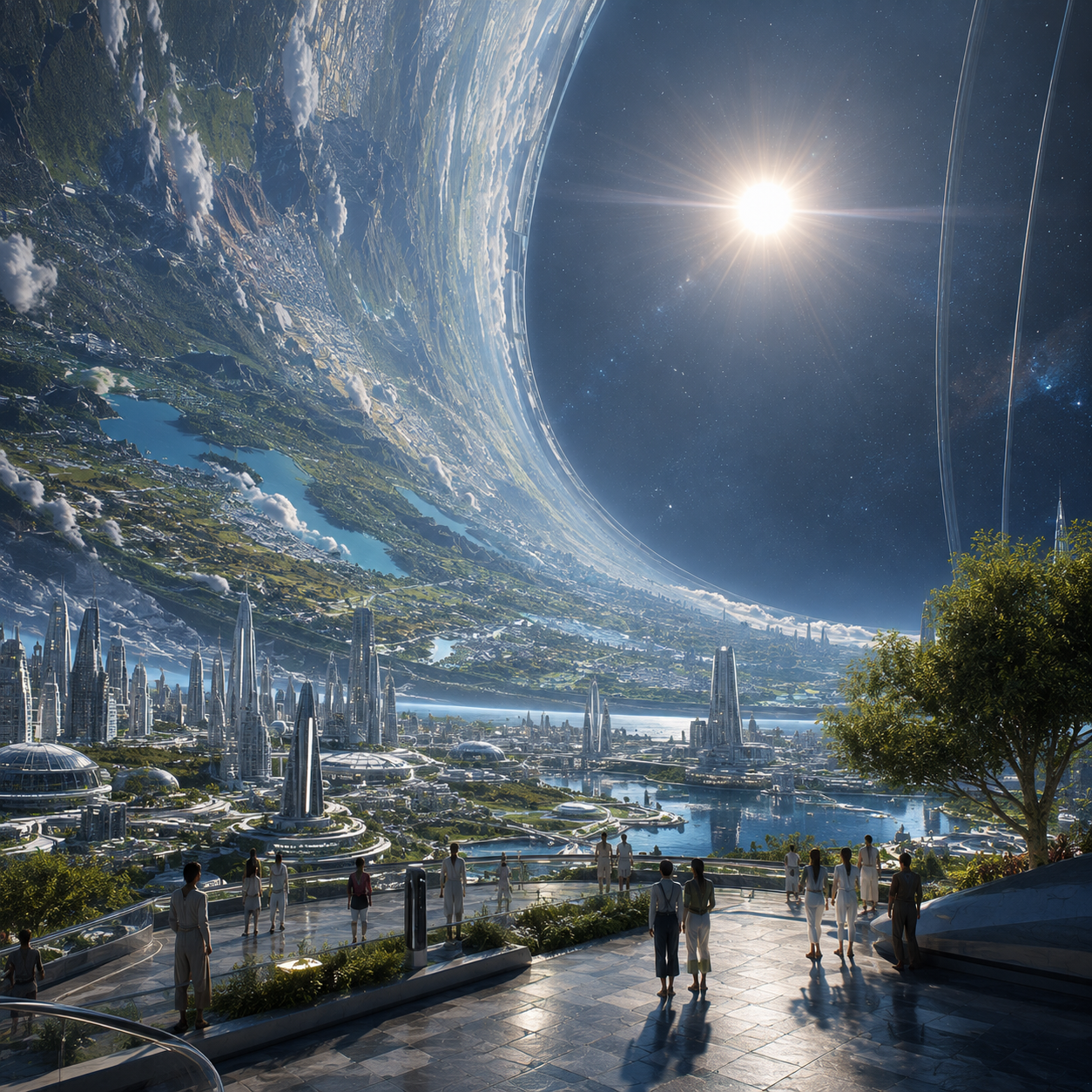
An orbital ring metropolis encircling an entire planet, containing thousands of culturally distinct districts connected by ultra-high-speed transport.
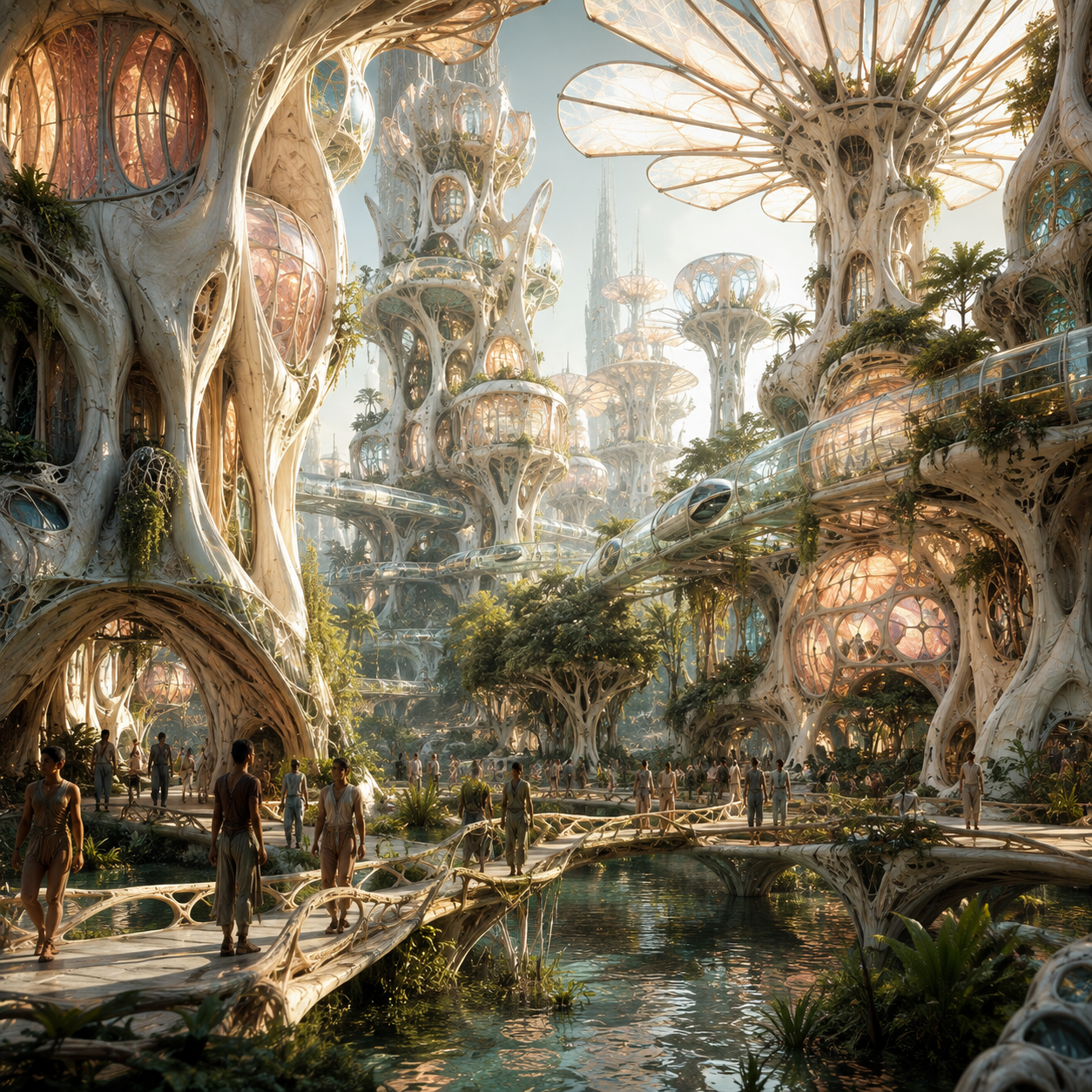
A living city constructed from genetically engineered organisms whose walls breathe, roads heal after damage and enormous organic towers continue growing as the population increases.
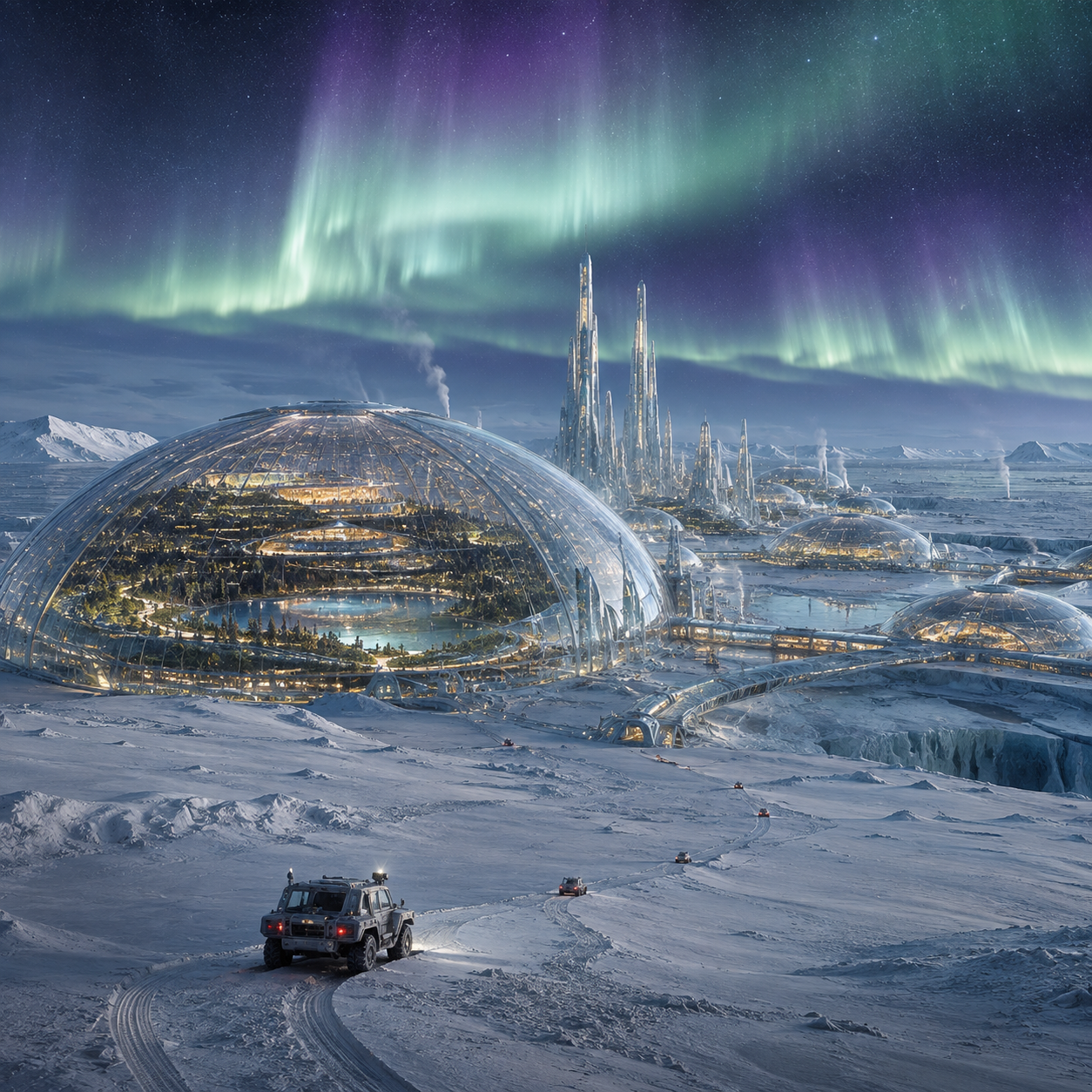
A polar metropolis beneath the ice, illuminated by artificial auroras and powered by geothermal energy, where translucent ceilings reveal kilometres of frozen ocean overhead.
A corporate city-state in which competing companies own individual districts, meaning laws, currencies, healthcare systems and even measurements of time change whenever someone crosses a street.
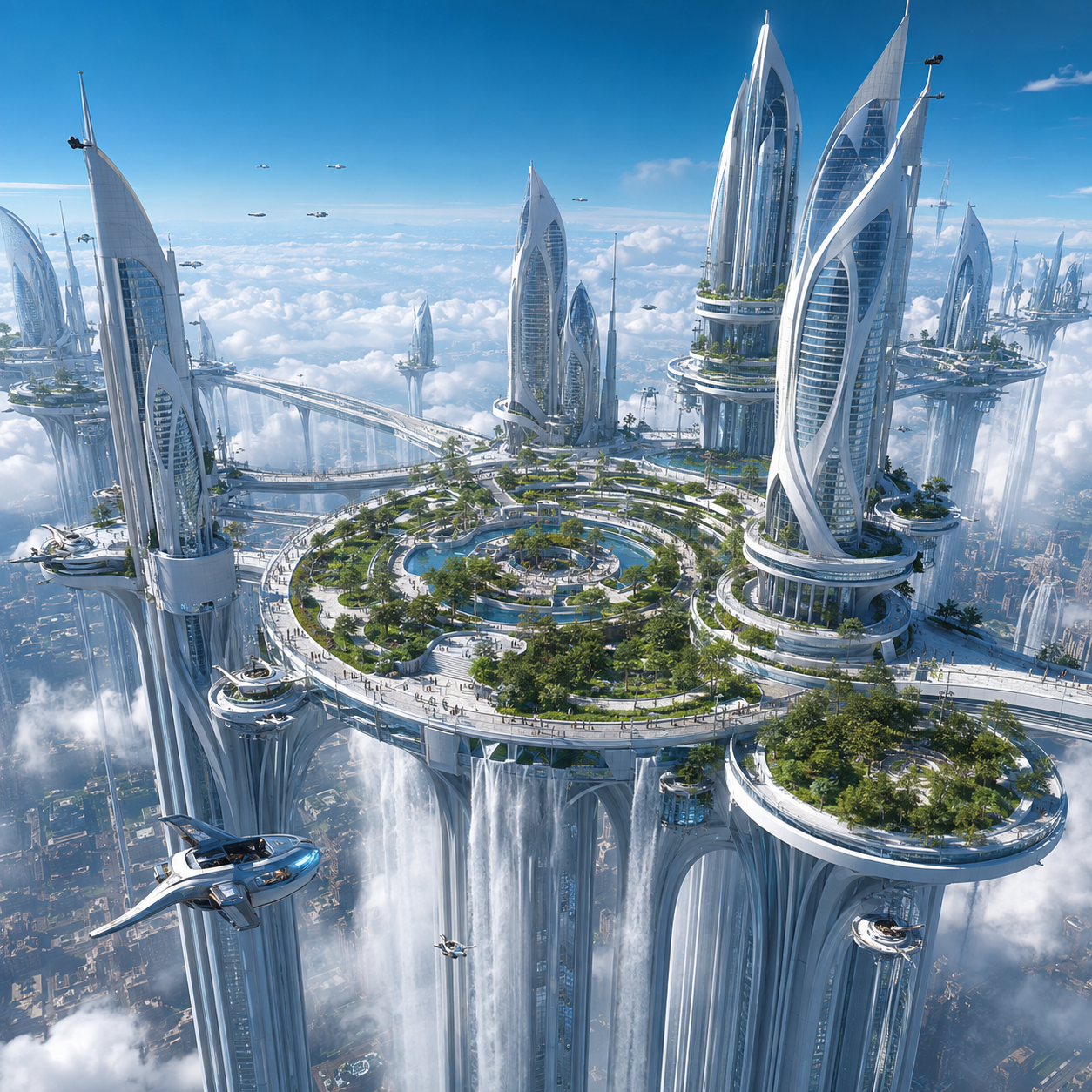
A city suspended beneath enormous atmospheric balloons above a toxic planet, with wealthy districts positioned closest to the clean upper atmosphere and industrial neighbourhoods hanging dangerously below.
An abandoned smart city reclaimed by nature, where automated trains still arrive on schedule, cleaning robots sweep empty streets and apartment towers continue preparing themselves every evening for residents who disappeared decades ago.
7. Picture Prompts
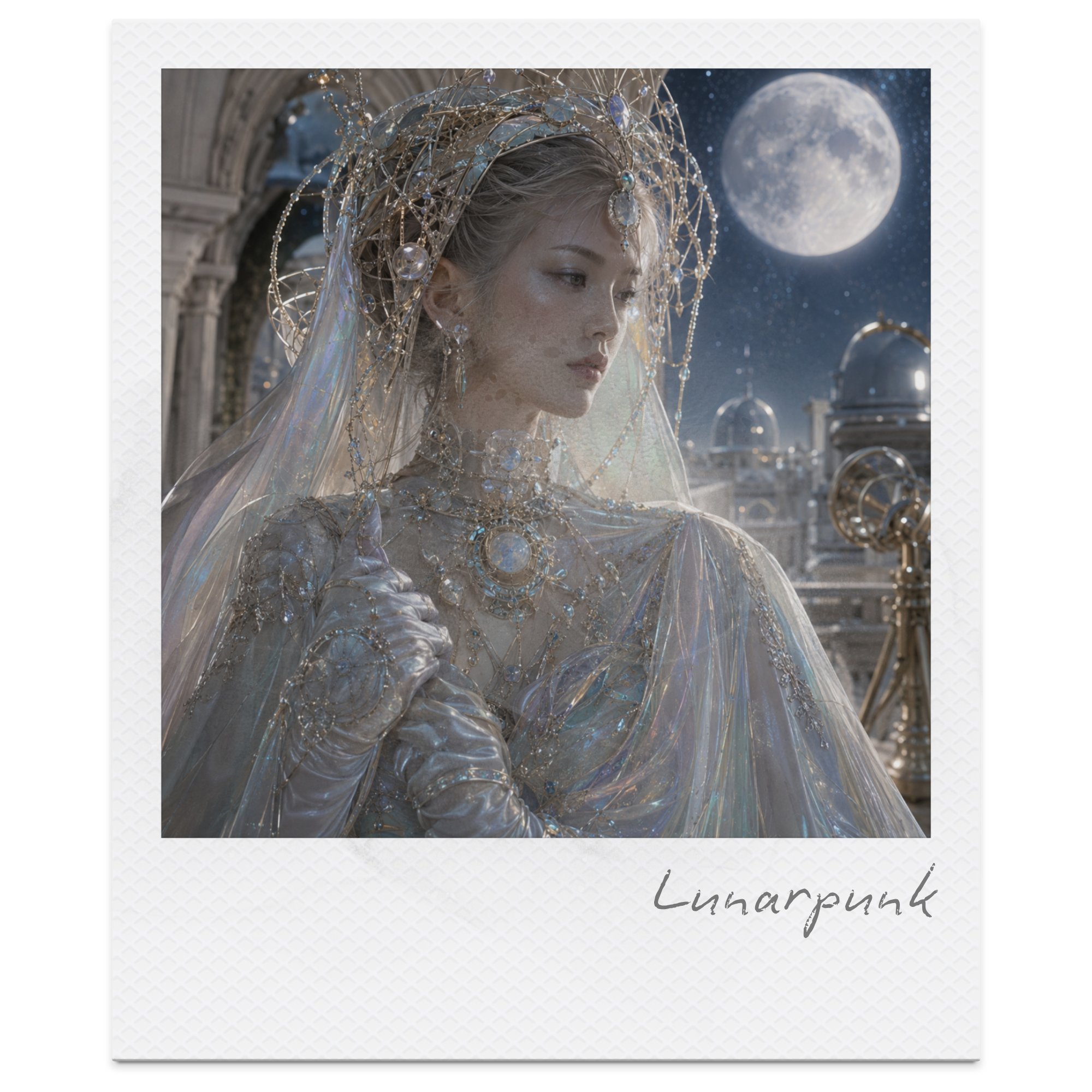
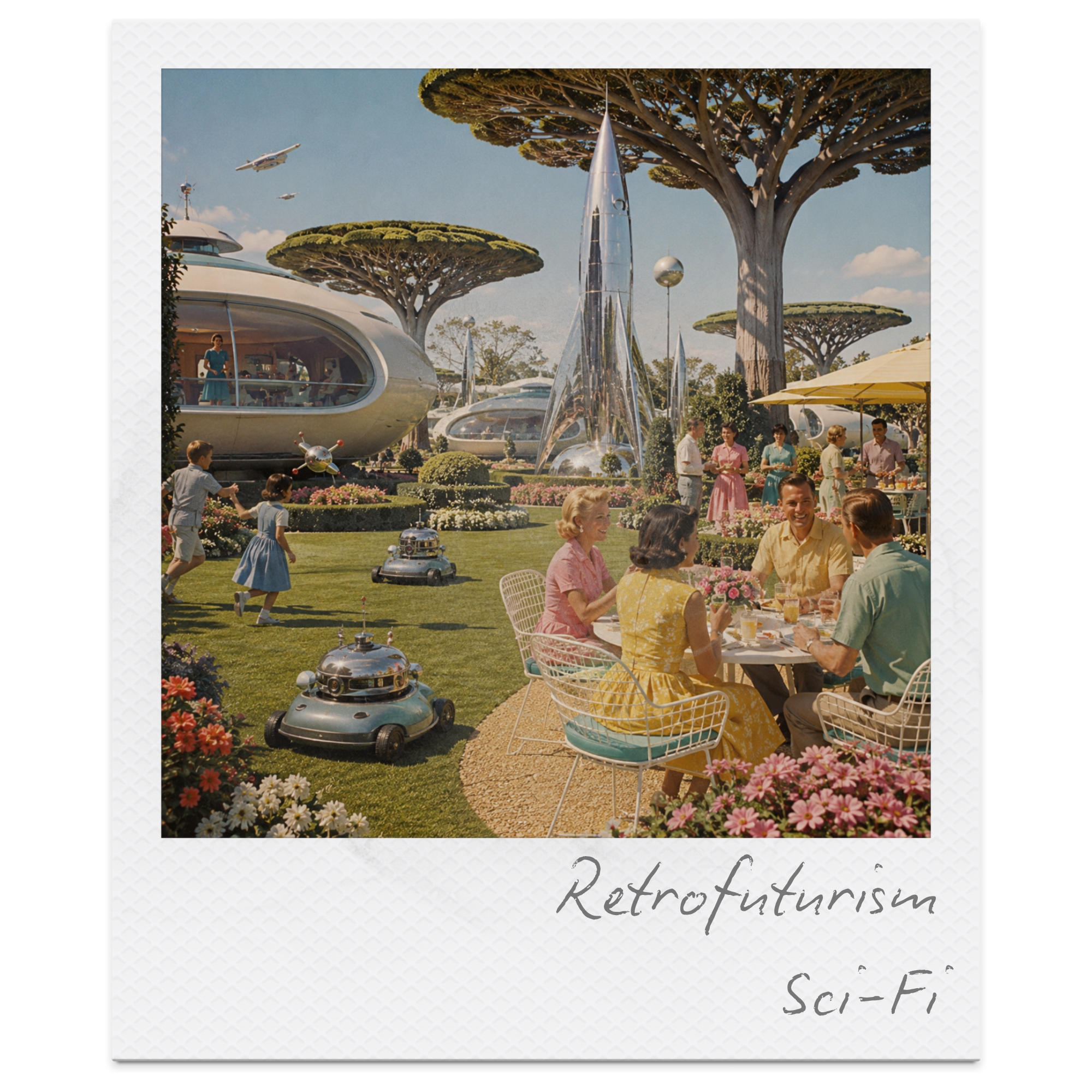
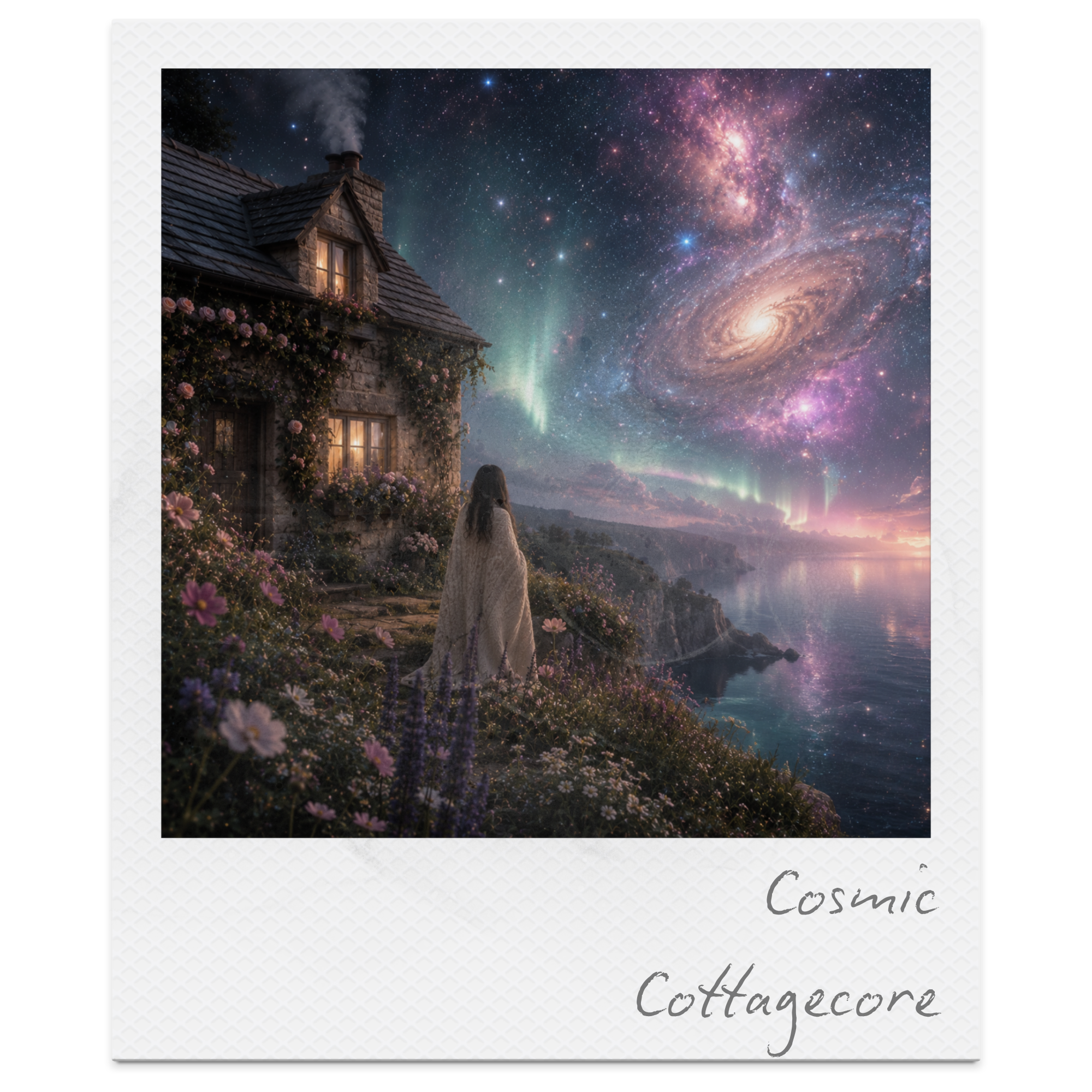
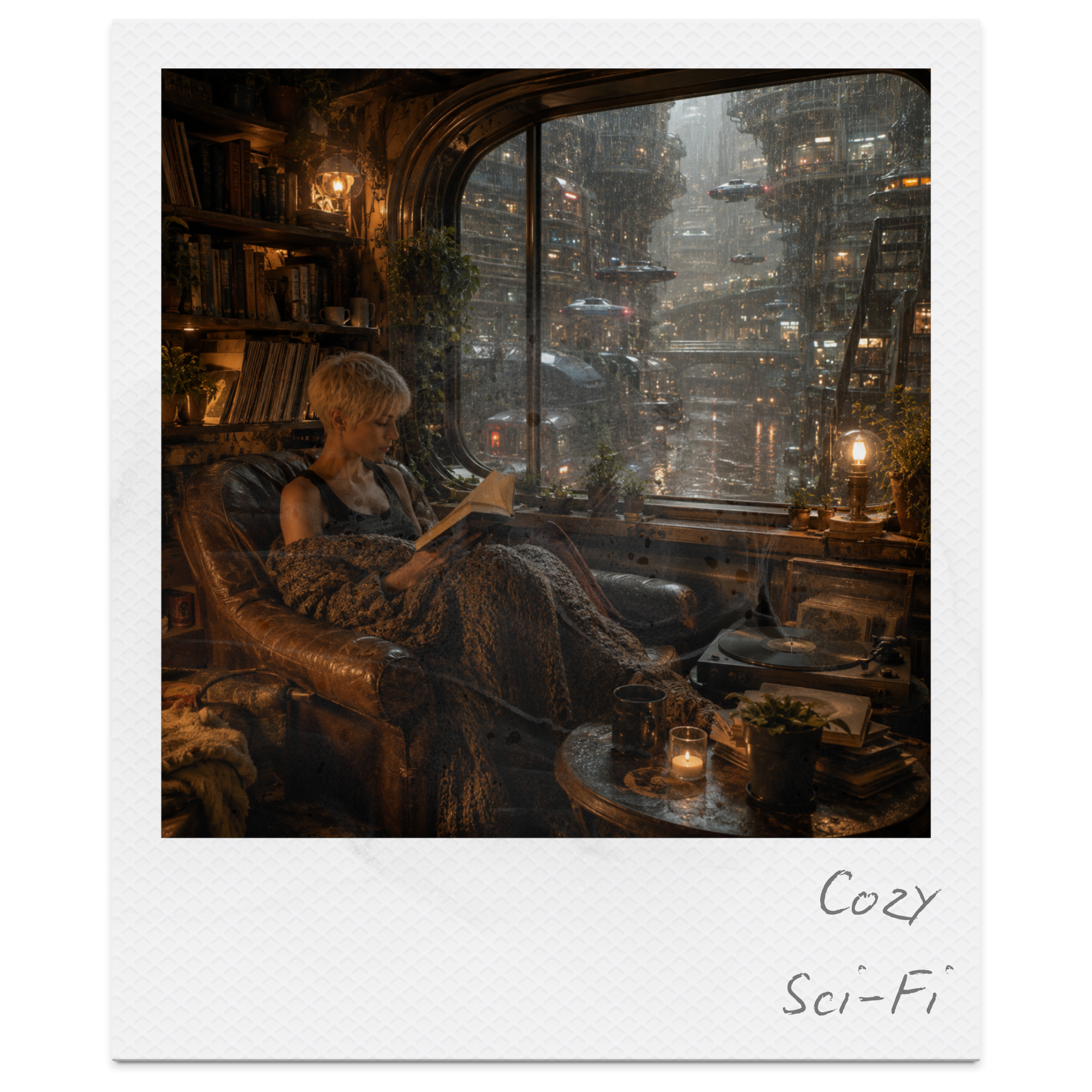
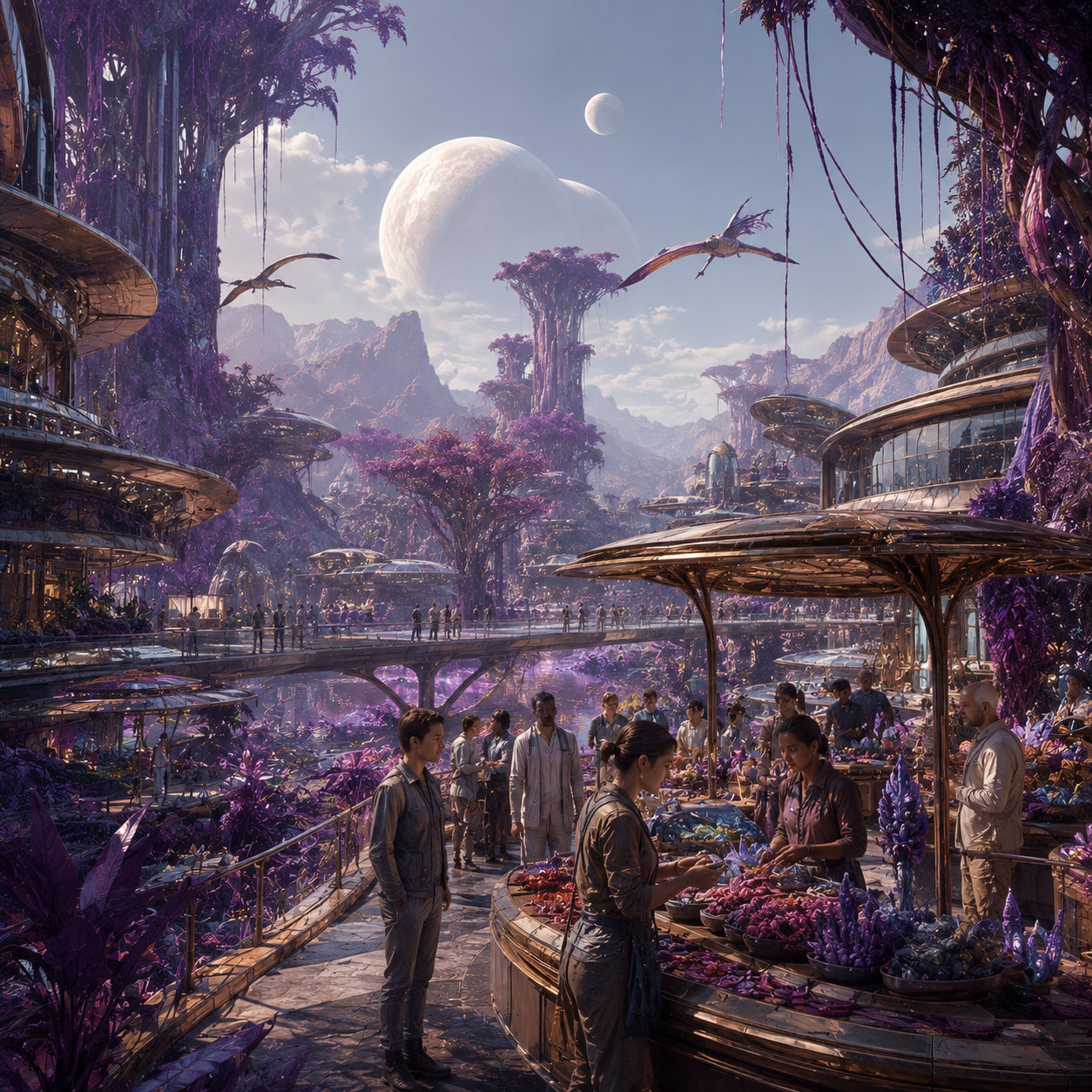
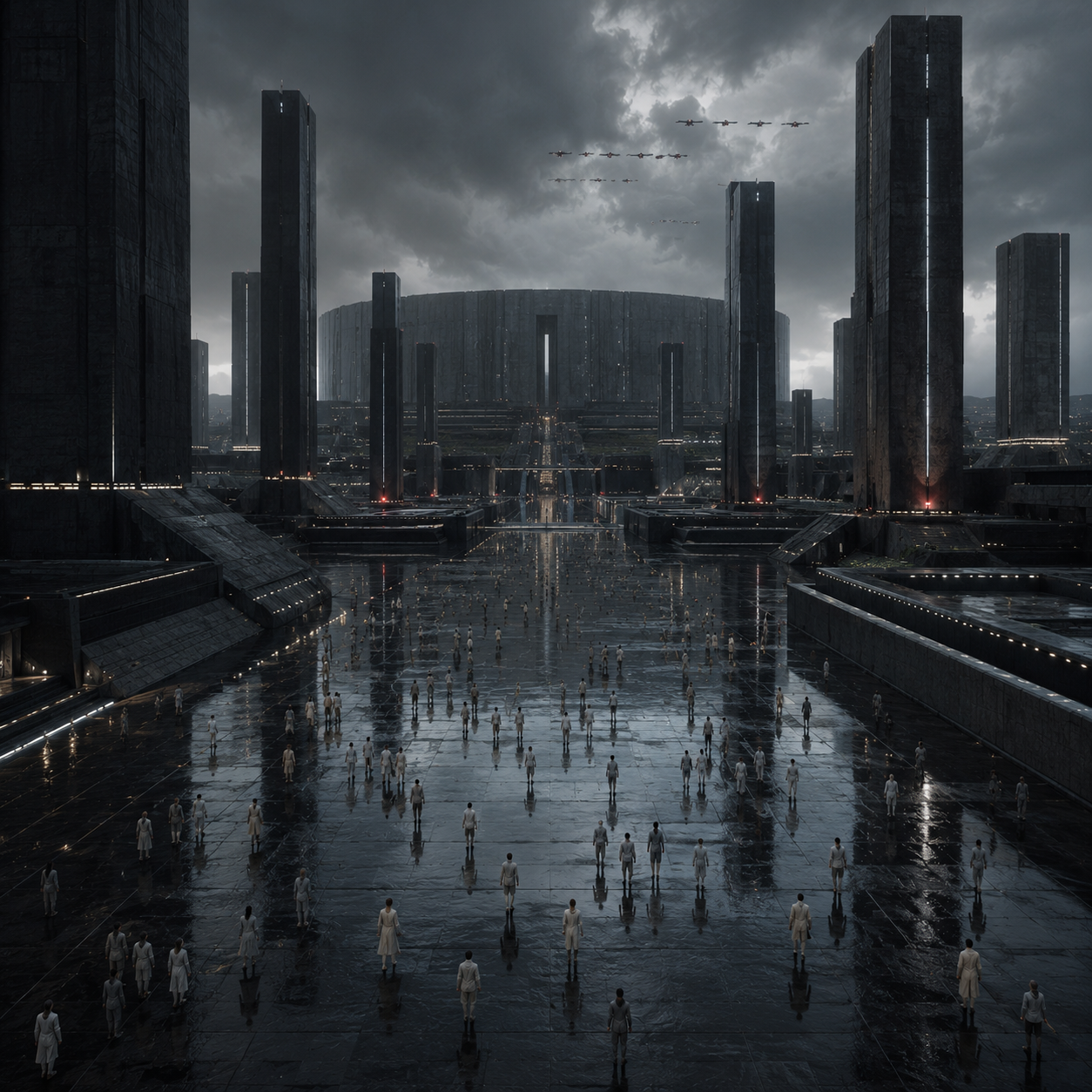
Futuristic cities offer far more visual possibilities than endless neon cyberpunk skylines. Think about how people actually inhabit the future: enormous architecture beside tiny human figures, intimate apartments overlooking impossible landscapes, crowded transport systems, climate-adapted streets, vertical gardens, submerged neighbourhoods, orbital settlements and remnants of older cities incorporated into something new. Vary the scale, architecture, technology, climate, planet and colour palette so that each image suggests an entirely different future rather than another version of the same metropolis. Most importantly, give every image a story: Who lives here? What kind of society built this place? What has just happened beyond the frame? And what does this city reveal about the future that created it?
Go Deeper into Writing Futuristic Cities
A memorable futuristic city needs more than spectacular architecture. The best science-fiction cities feel as though millions of people have been living inside them long before the story begins. Think about how technology, environment, economics and culture have shaped everyday life — and remember that even the most extraordinary future eventually becomes ordinary to the people born into it.
◆ Start with the reason the city exists. Cities develop because people need somewhere to live, work, trade, govern or survive. Before designing towers and transport systems, ask why people built your city here. Perhaps rising seas forced humanity onto floating platforms, colonists needed shelter beneath the Martian surface or an orbital settlement grew around an important shipping route. Its original purpose can shape everything that follows.
◆ Think about infrastructure, not just architecture. Someone has to provide water, food, energy, waste disposal, healthcare and transportation for millions of residents. A futuristic city becomes more believable when you understand the invisible systems keeping it alive — and those systems provide excellent sources of conflict when something goes wrong.
◆ Let technology change ordinary routines. You do not need flying cars on every street to make a city feel futuristic. Consider smaller changes. How do residents buy breakfast, commute to work, find somewhere to live, communicate with neighbours or receive medical treatment? The future often feels most convincing through familiar activities transformed by unfamiliar technology.
◆ Build inequality into the geography. Wealth and power leave physical marks on cities. Perhaps the richest residents occupy the highest levels where natural sunlight still reaches, while poorer communities live beneath them. Maybe clean air, gravity, transportation or even access to physical space has become something people pay for. Where someone lives can immediately reveal their position within society.
◆ Consider what happened to the old city. Futuristic cities do not necessarily begin on empty ground. London, Tokyo, Lagos or New York might still exist centuries from now beneath layers of newer development. Old underground stations could become homes, skyscrapers might disappear inside larger structures and historic neighbourhoods could survive as protected enclaves surrounded by technology their original inhabitants could never have imagined.
◆ Give different districts different identities. Real cities change from street to street, and future cities should too. Create financial districts, industrial zones, residential towers, entertainment quarters, immigrant neighbourhoods, abandoned levels, markets and unofficial communities. Different areas might develop their own slang, fashions, food, architecture and relationships with technology.
◆ Ask who controls the city. A futuristic metropolis might be governed by elected officials, corporations, artificial intelligence, wealthy families, algorithms or neighbourhood collectives. Decide who controls housing, transport, surveillance and essential resources — and what happens when residents disagree with them.
◆ Remember that technology ages. Not everything futuristic should be sleek and new. A city built over centuries will contain obsolete machines, patched infrastructure and technologies nobody manufactures anymore. Residents might still depend on a transportation network created generations earlier because replacing it would require dismantling half the city.
◆ Let the environment shape urban life. A city on Mars should not function exactly like one on Earth. Neither should an underwater settlement, orbital habitat or metropolis built on a planet with permanent storms. Gravity, temperature, atmosphere, daylight and available resources can influence everything from architecture to clothing, food and social customs.
◆ Make the city capable of changing. Treat your futuristic city almost like another character. It can expand, deteriorate, flood, migrate, divide, rebuild or become obsolete. Ask what the city looked like fifty years before your story begins — and what might remain of it fifty years after the final page.
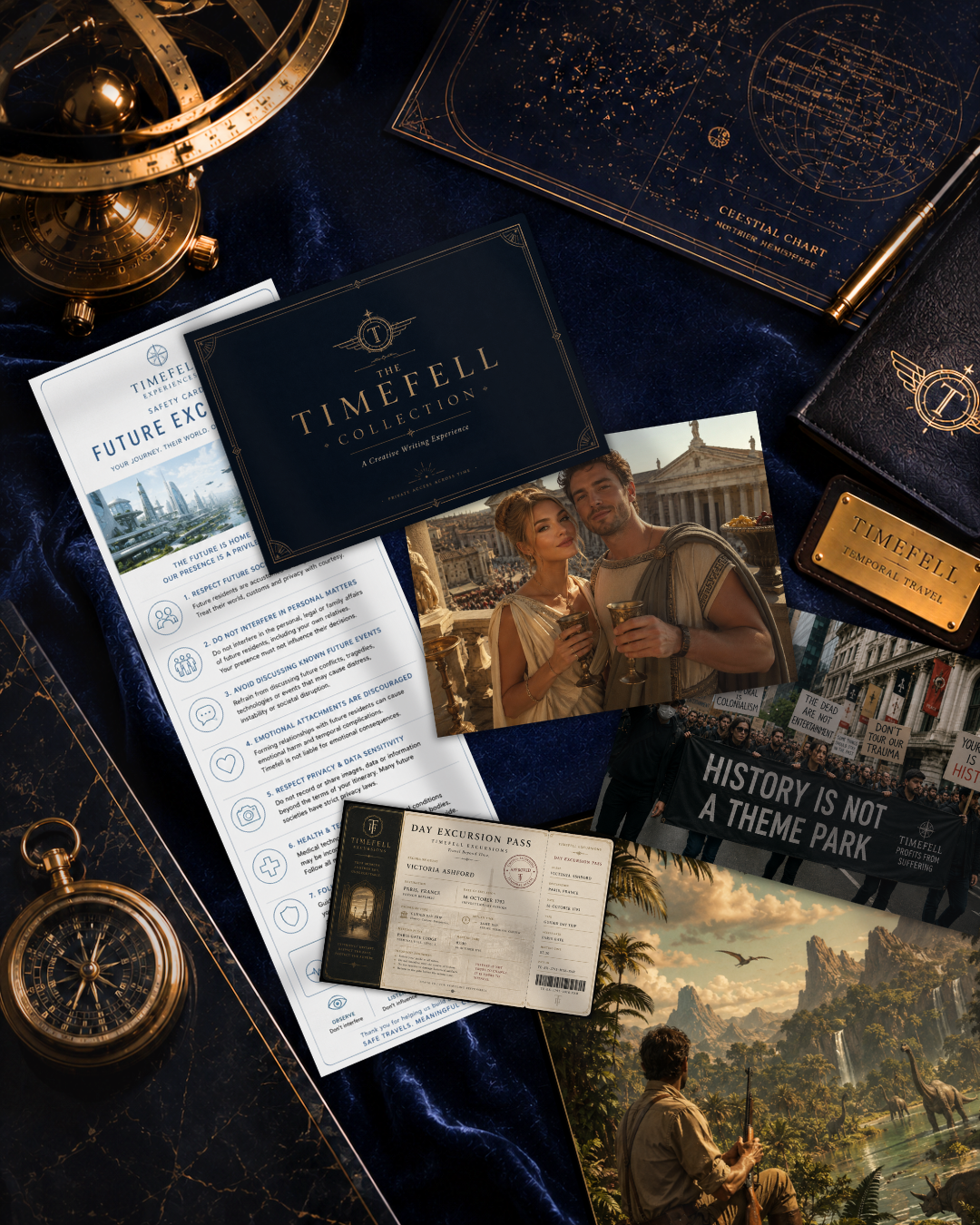
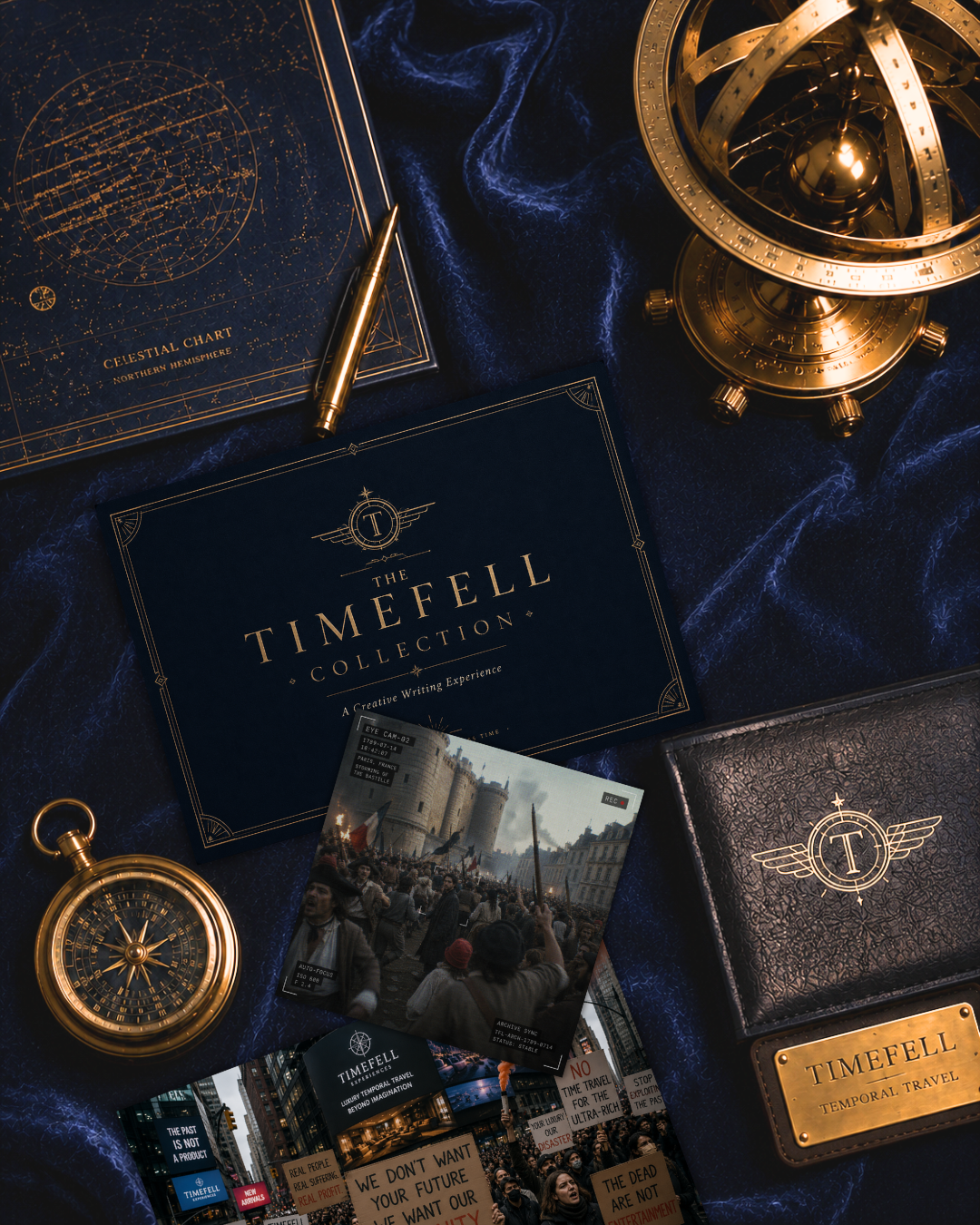
Visit the Future with The Timefell Collection
You've spent this post imagining cities that might exist decades, centuries or even millennia from now. But what if you didn't have to imagine them from a distance?
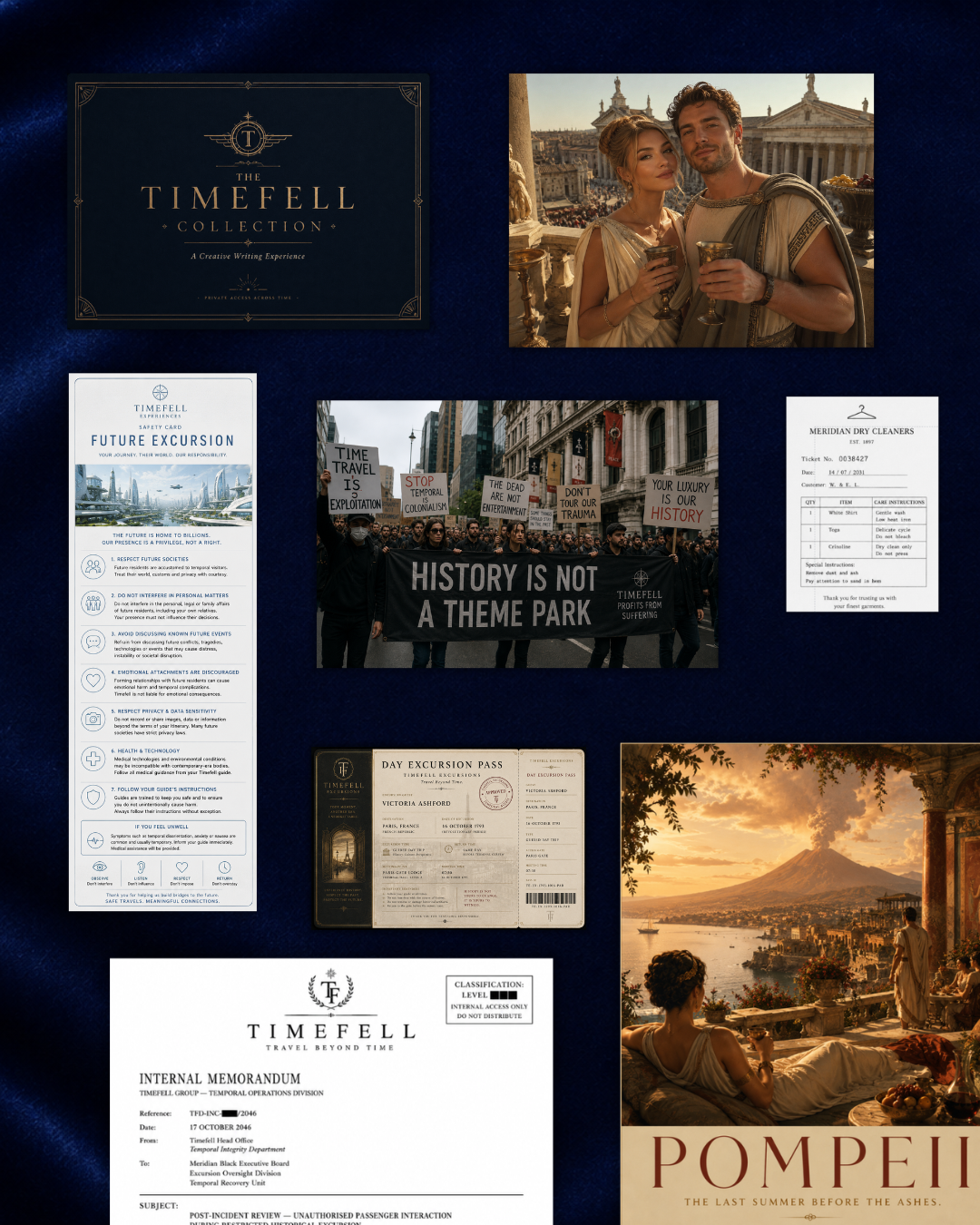
In the world of The Timefell Collection, time travel became public in 2020. By 2046, it had become an industry. Ancient cities welcome tourists, luxury cruises travel between centuries — and future societies open their gates to carefully managed visitors from the past. For those who can afford the ticket, the cities of tomorrow are simply another destination.
But imagine arriving in one of the futuristic cities from these prompts as a traveller from 2046. What would the brochure promise you? Which districts would tourists be encouraged to visit? What would be hidden behind the carefully curated experience? And what might happen if you wandered somewhere visitors were never supposed to see?
The Timefell Collection lets you step inside that larger world through more than 50 printable documents and artefacts — including travel posters, tickets, hotel records, reviews, newspaper articles, diary entries, private correspondence and handwritten notes left behind by travellers. Somewhere among them are missing excursions, exclusive experiences reserved for Meridian Black members and unsettling accounts of people who returned from their journeys changed. There is no official explanation and no single solution; you decide how the fragments fit together.
If creating futuristic cities has made you want to explore what it might actually feel like to visit the future, your journey doesn't have to end here.
◆ Explore The Timefell Collection and discover where — and when — the evidence takes you.
Final Thoughts
Futuristic cities give science-fiction writers the chance to imagine not only where humanity might live next, but how those places could change the people living within them. A city shaped by artificial intelligence, climate collapse, biotechnology or life beyond Earth will develop its own inequalities, traditions, neighbourhoods and everyday routines — and those details can turn an impressive setting into a world that feels genuinely inhabited.
The most memorable cities do not need to be perfect technological marvels. Let infrastructure age. Allow new towers to rise around forgotten neighbourhoods. Imagine communities adapting technology in ways its designers never intended, or residents questioning systems their grandparents accepted without thought. The contrast between the future a city was designed to create and the reality of living there can become a story in itself.
Use the prompts above as starting points, combine characters with unexpected settings or take one technological idea and follow its consequences through every level of society. Your city might float above an ocean, stretch beneath another planet, circle Earth from orbit or occupy the same streets we walk today centuries from now. Whatever you build, think beyond the skyline and ask the more interesting question: what would it actually feel like to call this place home?
For more speculative inspiration, explore the Science Fiction Writing Hub for sci-fi prompts, characters, settings and worldbuilding ideas, or browse the Creative Writing Archive for hundreds of ideas across science fiction, dystopian fiction, fantasy, horror and more.
Choose Your Next Adventure