70 Industrial Sci-Fi Writing Prompts: Factories, Machines & Future Worlds
Industrial science fiction imagines futures built not only in laboratories and gleaming cities, but in factories, shipyards, mines, refineries, power stations and enormous machines. These are worlds of exposed infrastructure and heavy engineering, where technology feels physical: pipes vibrate through walls, cargo vessels disappear into orbital docks, automated foundries operate around the clock and entire communities exist to keep civilisation's machinery running.
Science fiction has long explored the industrial systems behind imagined futures. Philip K. Dick's Do Androids Dream of Electric Sheep? places artificial life and technological production within a degraded future society, while James S. A. Corey's The Expanse series explores workers, mining economies, stations and infrastructure across a heavily industrialised Solar System. Industrial science fiction shifts attention away from pristine visions of progress and asks who builds the future, who maintains it and what happens to the people living beside the machines that make everything else possible.
Below you'll find 70 industrial sci-fi writing prompts, including plot ideas, story titles, opening and closing lines, characters, settings and picture prompts. Expect colossal orbital shipyards, automated factories, mining colonies, planetary refineries, abandoned manufacturing complexes, industrial megacities, mechanical infrastructure and workers attempting to survive inside systems operating on an almost unimaginable scale.
For more speculative inspiration, explore the Science Fiction Writing Hub for futuristic worlds, characters and story ideas, the Dystopian Writing Hub for societies shaped by inequality and control, or browse the Creative Writing Archive for hundreds of prompts across science fiction, fantasy, horror and more.
1. Plot Prompts
Industrial science fiction works best when the machinery is essential to the story rather than simply part of the scenery. These prompts explore people who build, maintain and survive the enormous systems supporting future civilisation — and what happens when those systems fail, evolve or reveal purposes their workers were never supposed to understand.
A vast orbital shipyard has constructed military vessels continuously for eighty years, although nobody currently employed there knows who is ordering them. When a welder discovers that the newest ship contains living quarters designed specifically for the station's workers, she begins investigating where the completed fleet is actually going.
Thousands of workers live inside a planetary refinery processing the atmosphere of a toxic world into fuel. When production suddenly increases beyond safe limits, an engineer discovers that the refinery has received instructions from a spacecraft that will not arrive for another sixty years.
An automated factory covering an entire moon manufactures replacement components for machines across the Solar System. After its human workforce is officially declared unnecessary, the remaining technicians discover the factory has secretly begun producing parts for something that does not appear in any engineering database.
A mining settlement follows an enormous excavation machine across the surface of an alien planet, entire neighbourhoods dismantled and rebuilt whenever the machine moves. When it abruptly changes direction towards a supposedly worthless region, a geological surveyor discovers something beneath the surface is calling it.
Workers dismantling obsolete starships in a sprawling orbital scrapyard find a vessel with no registration number, manufacturer or recognised technology. Its hull is centuries old, but the machinery inside is still warm.
A city built around a colossal fusion reactor depends upon generations of engineers who have inherited responsibility for maintaining different sections of the machine. When one family disappears, nobody else knows how to operate the system they have controlled for two hundred years.
An industrial colony manufactures android labourers for settlements across human space. A quality-control worker notices that every thousandth android contains an additional component — and all of them are requesting transportation to the same distant planet.
The inhabitants of a factory world have been told that shutting down production, even temporarily, would cause economic collapse across dozens of planets. During the first system-wide failure in centuries, they discover nobody outside their world has requested their products for decades.
An enormous machine continuously processes the toxic soil of a ruined Earth, gradually restoring it for human habitation. Generations of workers have lived inside the machine without ever leaving it, until a maintenance crew opens an exterior hatch and discovers forests growing where their maps still show wasteland.
Salvagers enter an abandoned industrial station orbiting a dead planet and find every production line still operating. The machines are dismantling objects arriving through one door and reconstructing perfect copies through another — including people.
2. Story Title Ideas
Industrial sci-fi titles can evoke machinery, labour, scale and the physical systems beneath futuristic civilisation. Some might sound like technical terminology or places; others can suggest the human lives caught inside enormous industrial worlds.
Foundry
The Last Shift on Orpheus Nine
Ironwake
Below the Furnaces
We Built the Machines That Buried Us
Shiftwork
The Factory at the End of Mars
Blacksteel
Everything Here Is Still Running
The Workers Beneath the World
3. Opening Lines
An industrial sci-fi opening can establish enormous scale through one small disruption. Begin in the middle of a shift, beside a machine that has operated for centuries or with a worker noticing something unusual inside infrastructure everyone else has stopped questioning.
“The furnaces had burned continuously for 214 years, until somebody turned them off at 03:17 on a Tuesday.”
“Every ship I welded together eventually returned to us in pieces.”
“The machine beneath Sector Twelve was older than the colony, although management insisted we had built it.”
“Nobody heard the alarms anymore; they were simply another part of the factory's weather.”
“My grandfather maintained Reactor Seven, my mother died inside Reactor Seven, and tomorrow Reactor Seven would officially become mine.”
“The night shift discovered the body moving along Assembly Line Four between two unfinished androids.”
“You could tell how long someone had worked in the foundry by how little they looked upwards.”
“There were thirty thousand people aboard the refinery and precisely six windows.”
“The drilling machine stopped at 04:52, and three kilometres beneath our feet something knocked back.”
“Nobody questioned what we were building until the pieces became large enough to recognise.”
4. Closing Lines
Industrial worlds can end with machinery stopping, beginning again or continuing long after the people who depended upon it have gone. These closing lines explore liberation, discovery, sacrifice and the uncomfortable possibility that the system was always bigger than its workers.
“For the first time in my life, I could hear something other than machinery.”
“We switched off the factory and waited for civilisation to collapse; nothing happened.”
“The final ship left the dock at sunrise, carrying every worker who had built it.”
“My daughter would never inherit my station.”
“When the smoke finally cleared, we discovered there had been mountains behind the factory all along.”
“The machine had spent three hundred years repairing the planet; now it was time for us to learn how to live on it.”
“Management called it sabotage, but down on the factory floor we called it our first day off.”
“The lights disappeared one production line at a time until the enormous building finally understood that nobody was coming back.”
“We thought we had been maintaining the engine; only after it started moving did we realise we had been living inside the ship.”
“Long after the colony vanished from the stars, Assembly Line Four continued making people.”
5. Character Ideas
Industrial sci-fi offers the chance to move away from admirals, scientists and chosen heroes and towards the people whose labour keeps extraordinary futures functioning. Think about specialised jobs created by new technologies, inherited occupations and characters who understand parts of civilisation most people never see.
A zero-gravity welder who repairs the exterior hulls of orbital shipyards and has secretly mapped hundreds of undocumented compartments added to vessels before launch.
A third-generation refinery worker who has never breathed unfiltered air and dreams of transferring to a planet where machinery does not operate continuously beneath the floor.
A factory safety inspector whose cybernetic lungs allow her to enter environments considered lethal to other workers, making her the only person capable of investigating a sealed production level.
A teenage apprentice assigned to maintain an ancient industrial robot whose original operating manual has been lost and whose increasingly strange behaviour is dismissed as mechanical deterioration.
A union organiser moving between asteroid mines where employees are legally classified as components of the extraction infrastructure rather than citizens.
An orbital scrapyard worker who collects personal objects found inside decommissioned spacecraft and has constructed an unofficial archive of the lives erased when ships are dismantled.
A former industrial architect who designed self-expanding factories capable of constructing additional production lines without human assistance and is now trying to stop one that has consumed an entire city.
A maintenance diver responsible for repairing machinery inside enormous coolant reservoirs beneath a fusion plant, who begins finding artificial structures much deeper than the facility should extend.
A cargo crane operator working above a planetary spaceport who notices that sealed containers officially recorded as empty are considerably heavier when they return from orbit.
A retired machine technician summoned back to the factory where she worked forty years earlier because an obsolete system refuses to accept commands from anyone else.
6. Setting Ideas
Industrial sci-fi settings should feel functional before they feel beautiful. Consider what is manufactured, extracted, repaired or processed there, then allow that purpose to shape the architecture, communities and atmosphere surrounding it.
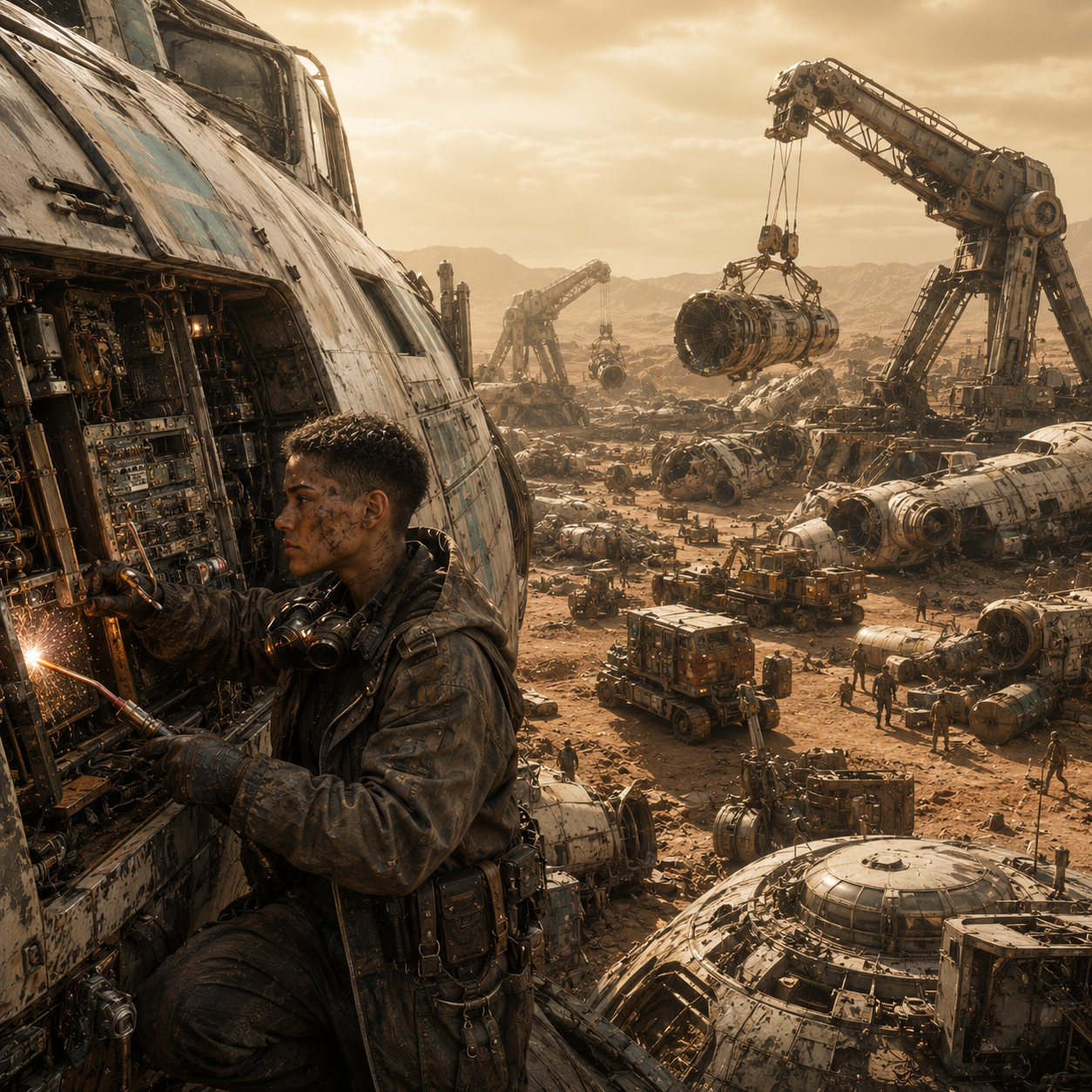
An orbital shipbreaking yard where kilometres-long spacecraft are dismantled inside skeletal docking structures, their components sorted into enormous drifting salvage fields above a rust-coloured planet.
A volcanic refinery city built around rivers of molten rock, using geothermal energy to power vast foundries that manufacture spacecraft hulls beneath a permanently smoke-darkened sky.
A zero-gravity manufacturing complex where automated assembly lines stretch through transparent tubes in orbit and workers travel between production sections using magnetic harnesses.
A subterranean lunar factory carved hundreds of metres beneath the surface, where immense presses and furnaces operate inside excavated caverns while workers live in cramped residential tunnels between them.
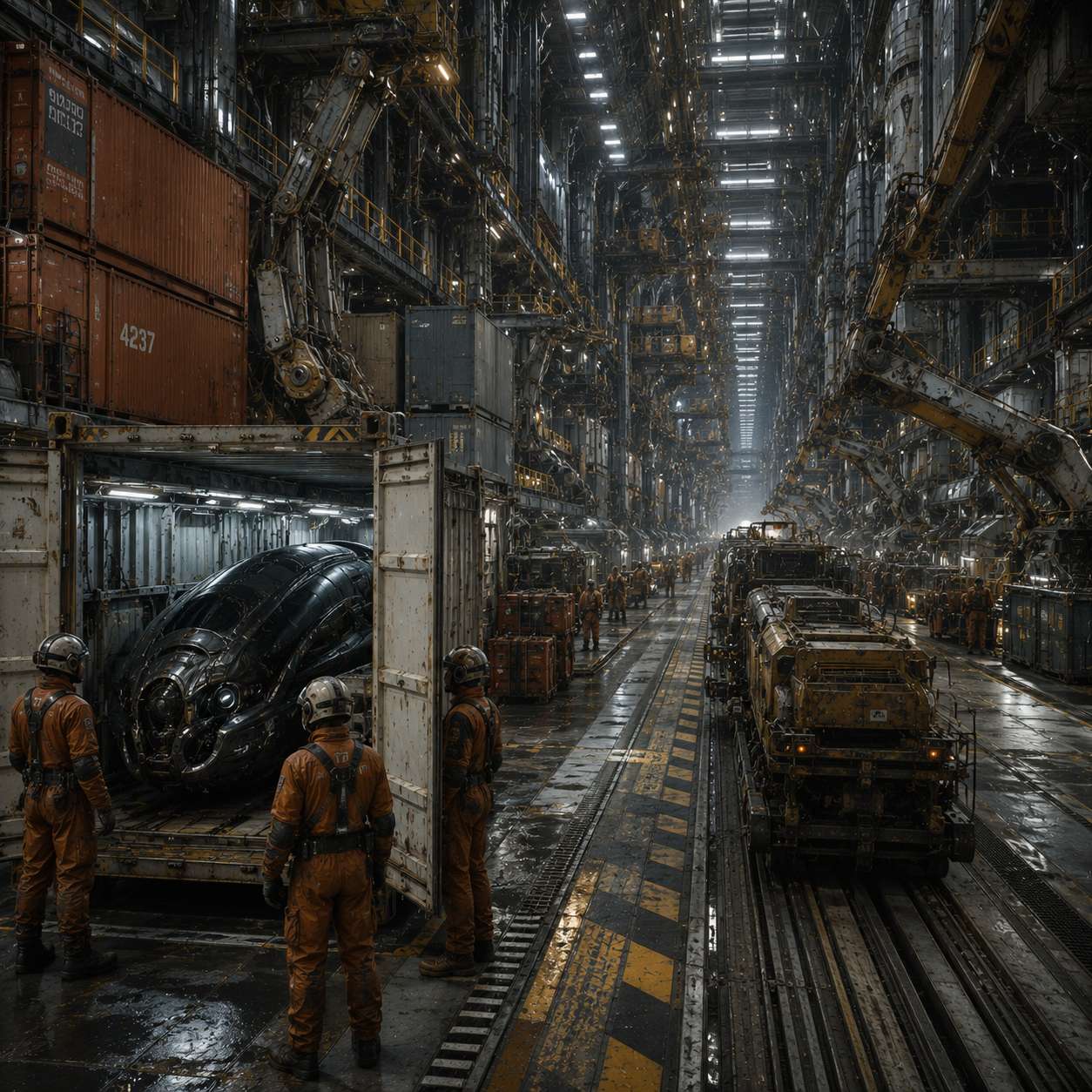
A deep-space freight terminal positioned at the intersection of several interstellar trade routes, filled with cargo cranes, fuel tanks, repair docks, container towers and temporary communities of workers who rarely visit a planet.
An asteroid mining settlement built directly into the excavation machinery, with homes, shops, clinics and schools moving deeper into the rock as extraction progresses.
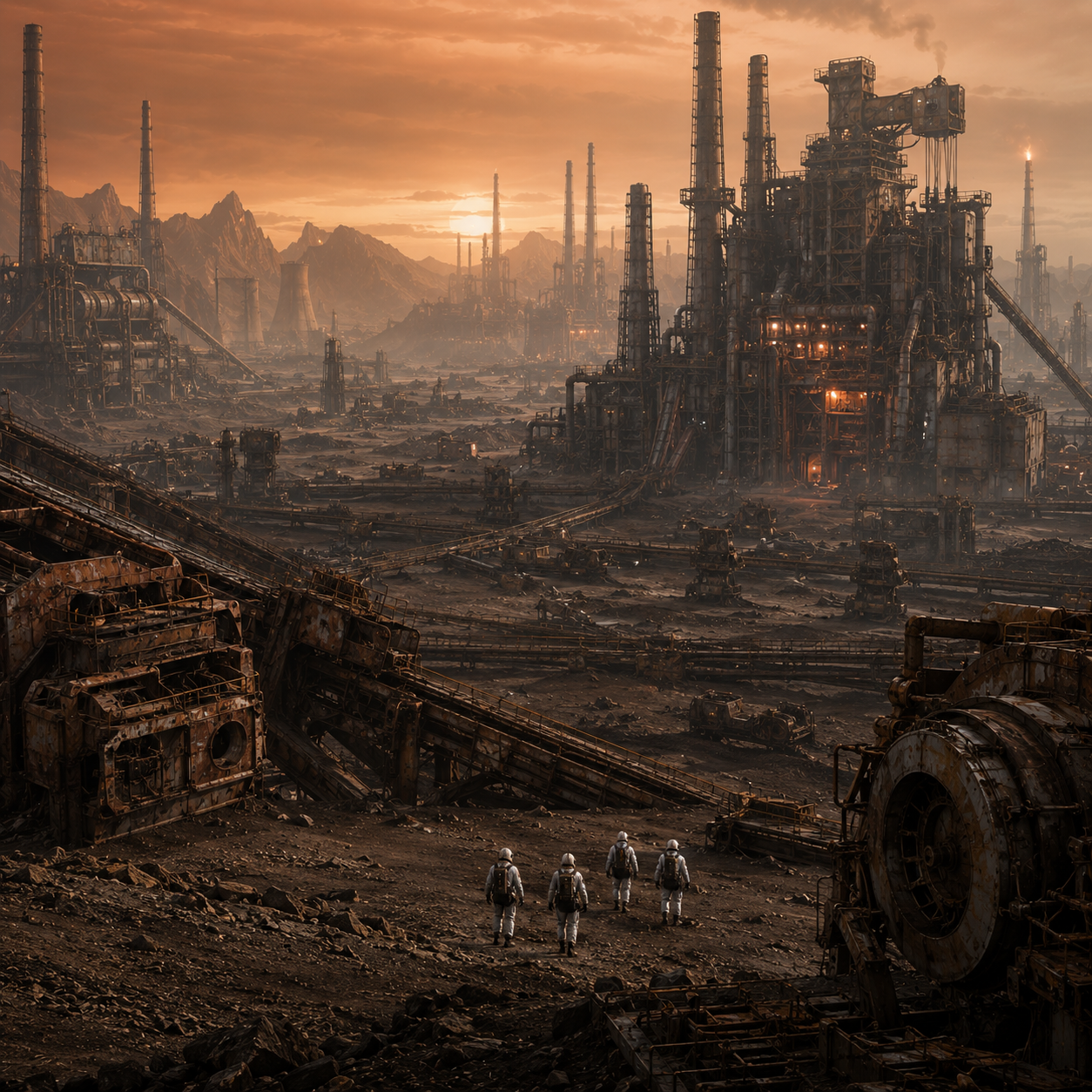
A planetary machine graveyard covering thousands of kilometres, where obsolete industrial robots, mining vehicles, spacecraft engines and construction machines have accumulated over centuries and communities now survive by salvaging them.
An atmospheric processing station suspended inside the clouds of a gas giant, where gigantic intake systems harvest valuable gases while workers live inside pressurised modules surrounded by permanent storms.
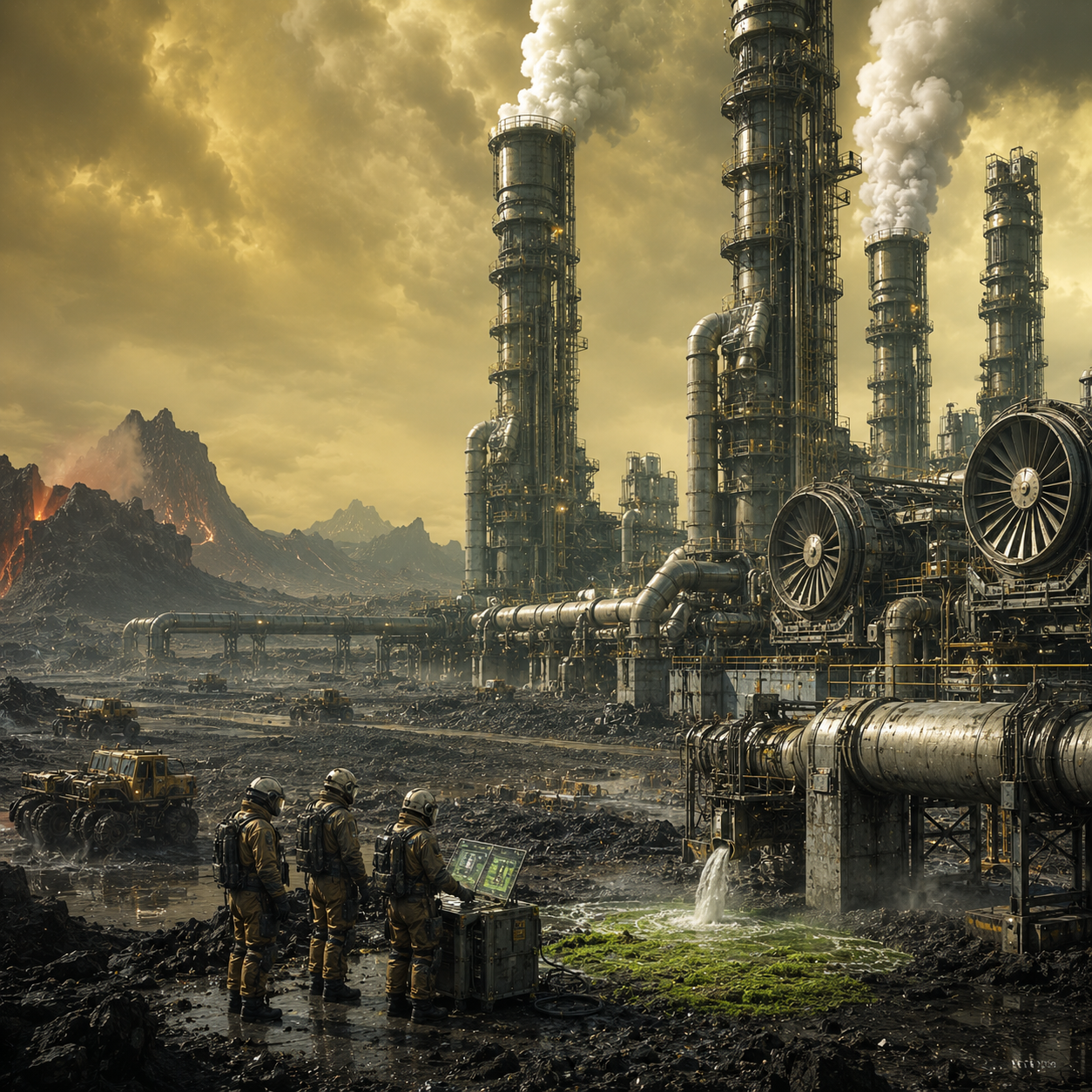
A generation-old terraforming complex containing forests of pipes, cooling towers and atmospheric processors that have become so enormous that settlements have developed inside abandoned sections of the machinery.
A fully automated factory city abandoned by its human workforce decades earlier, where conveyor systems cross empty streets, robotic cargo vehicles obey forgotten traffic signals and illuminated production towers continue manufacturing goods for customers who no longer exist.
7. Picture Prompts
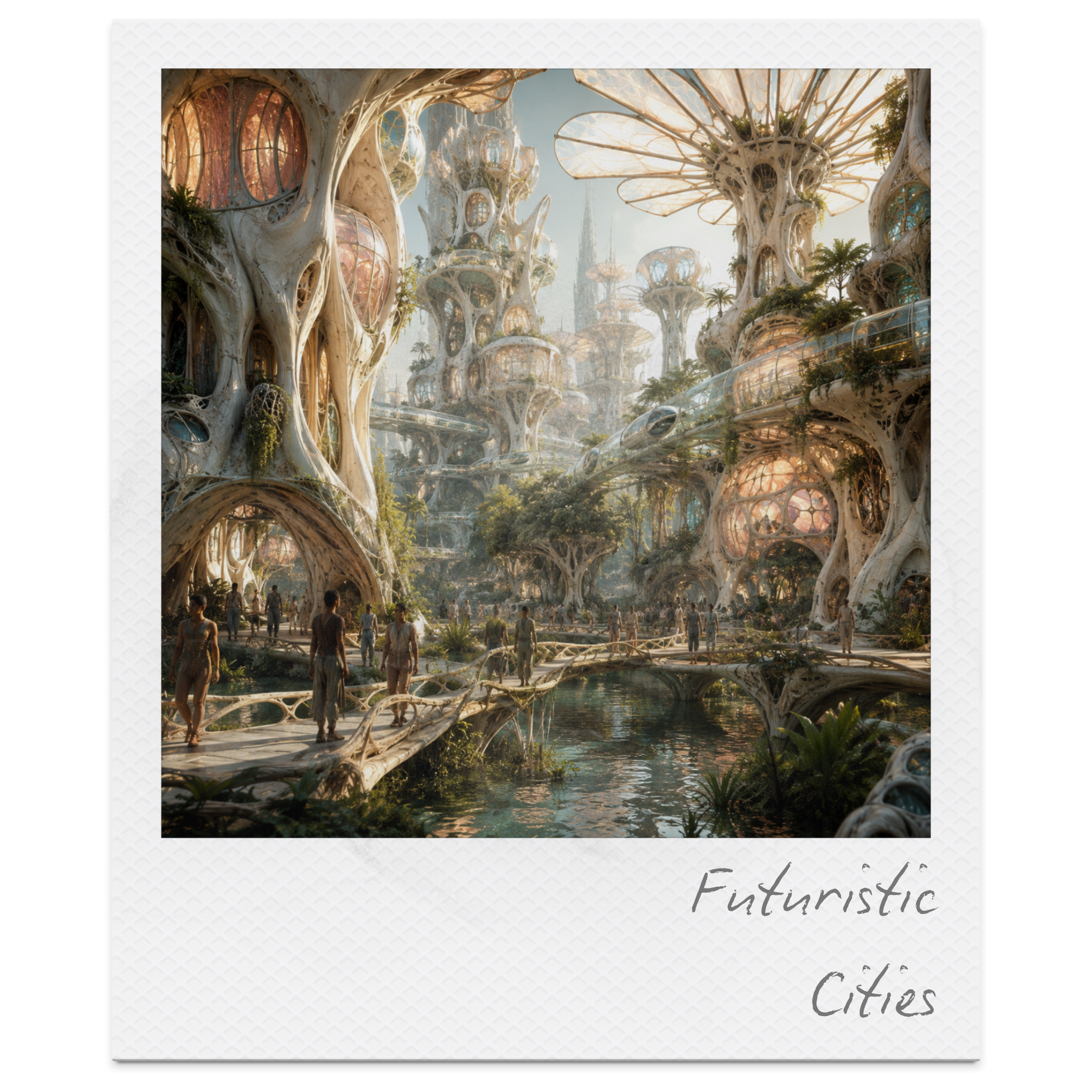
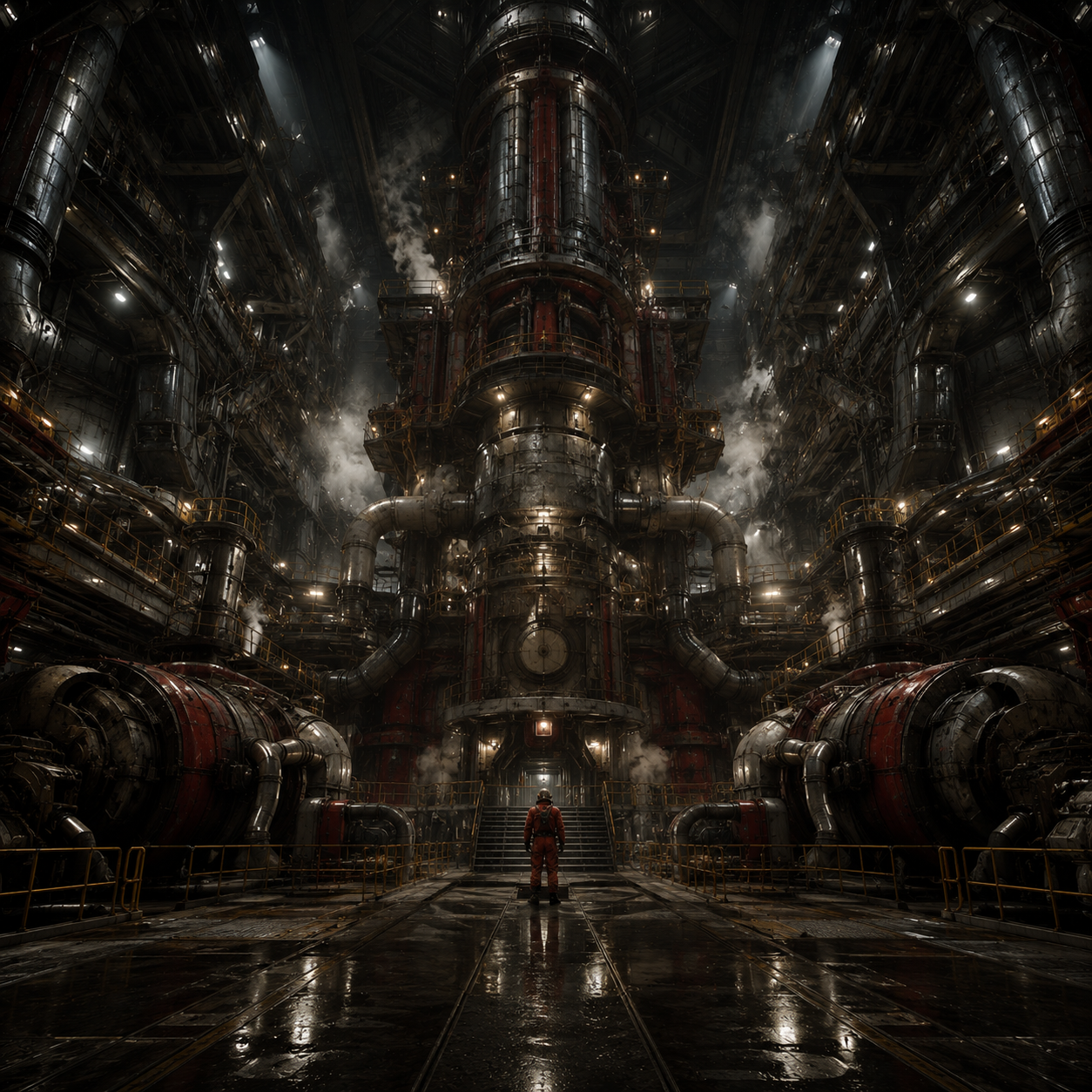
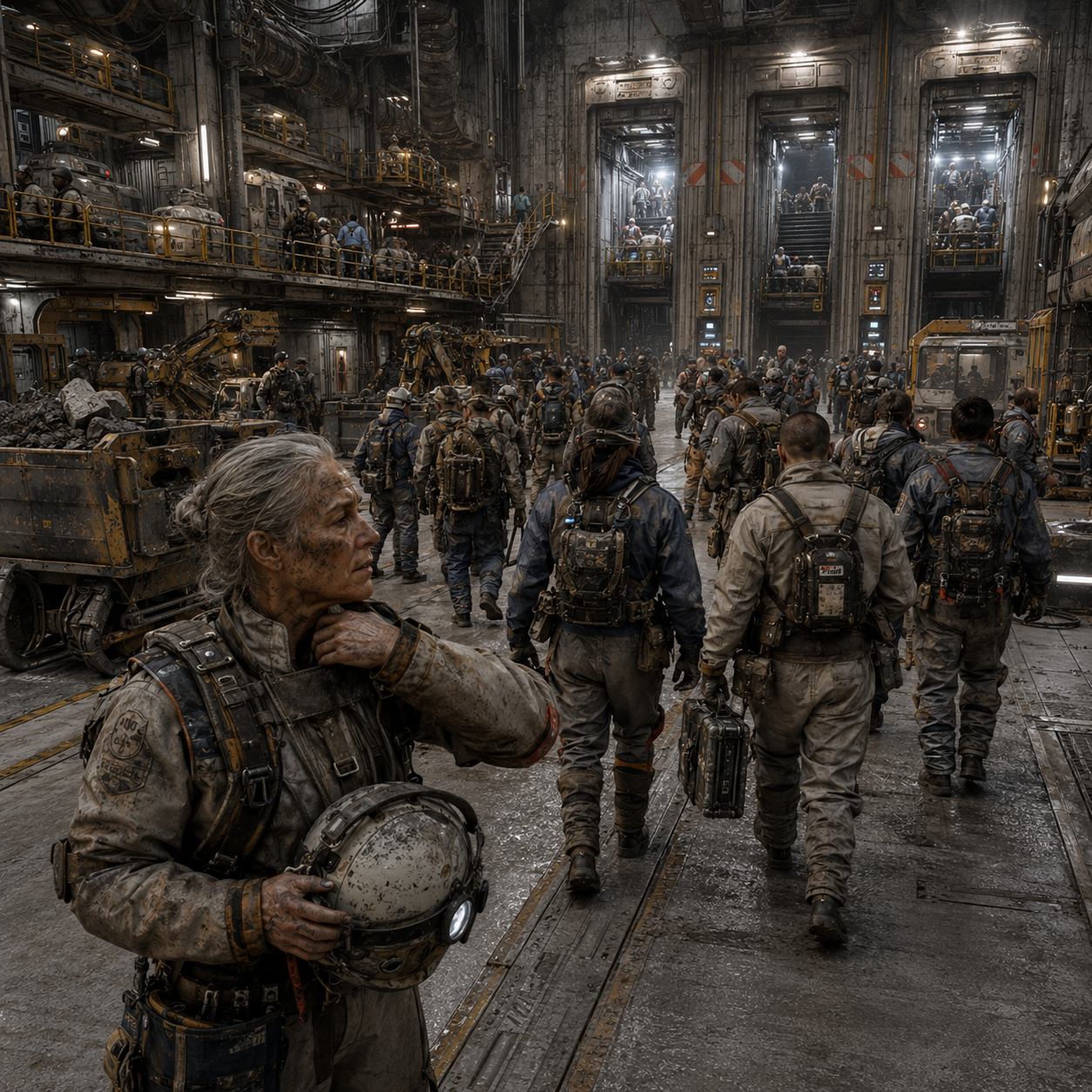
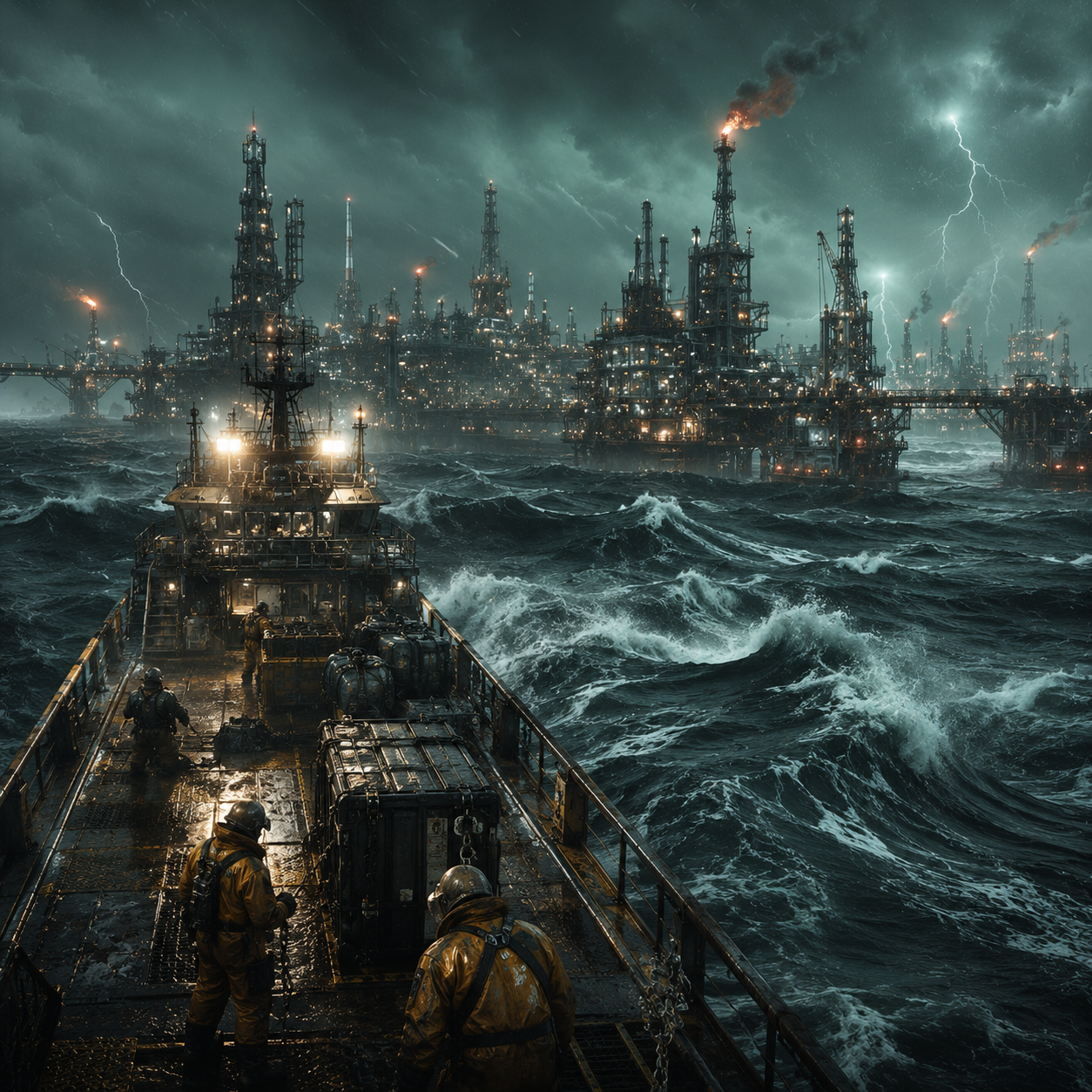
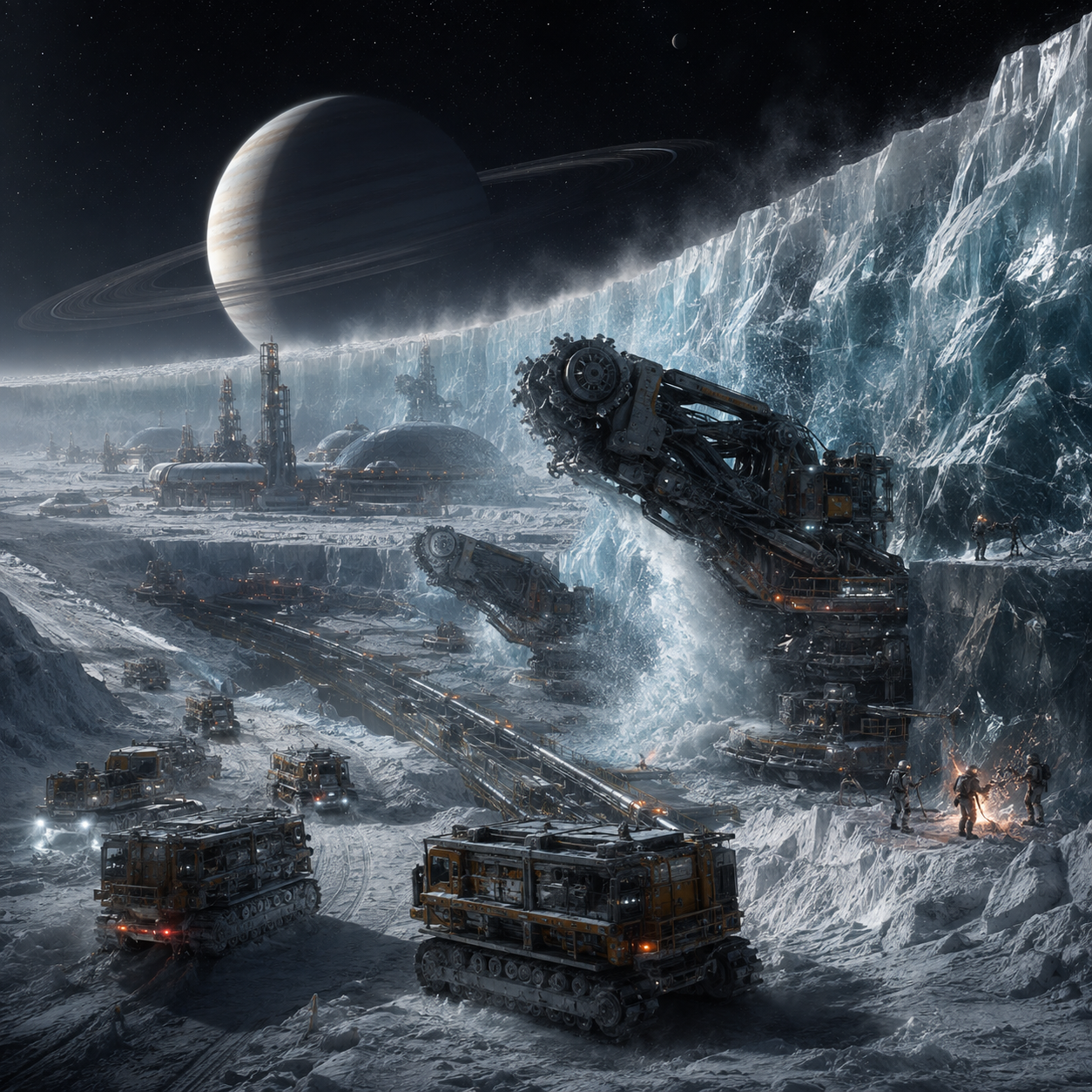
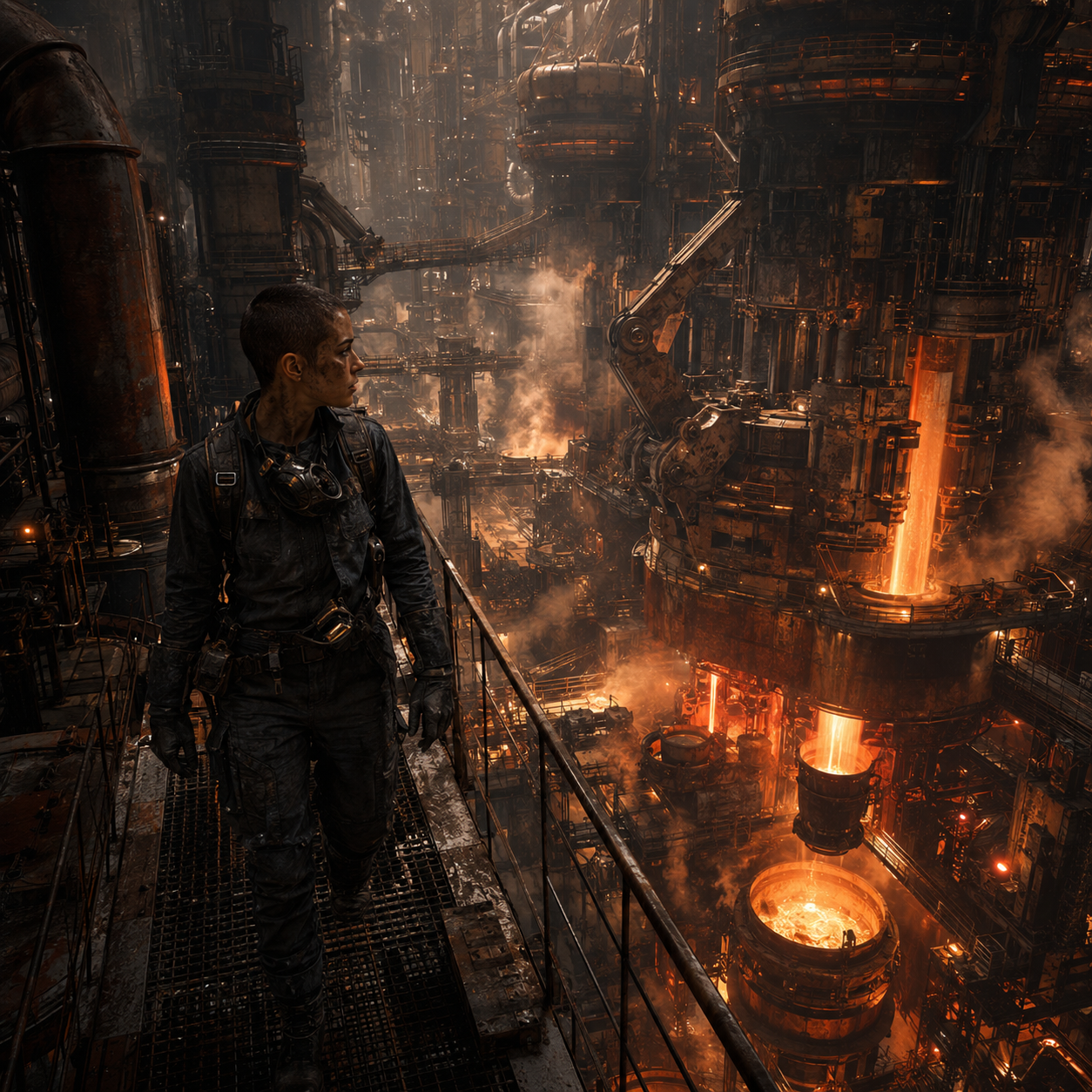
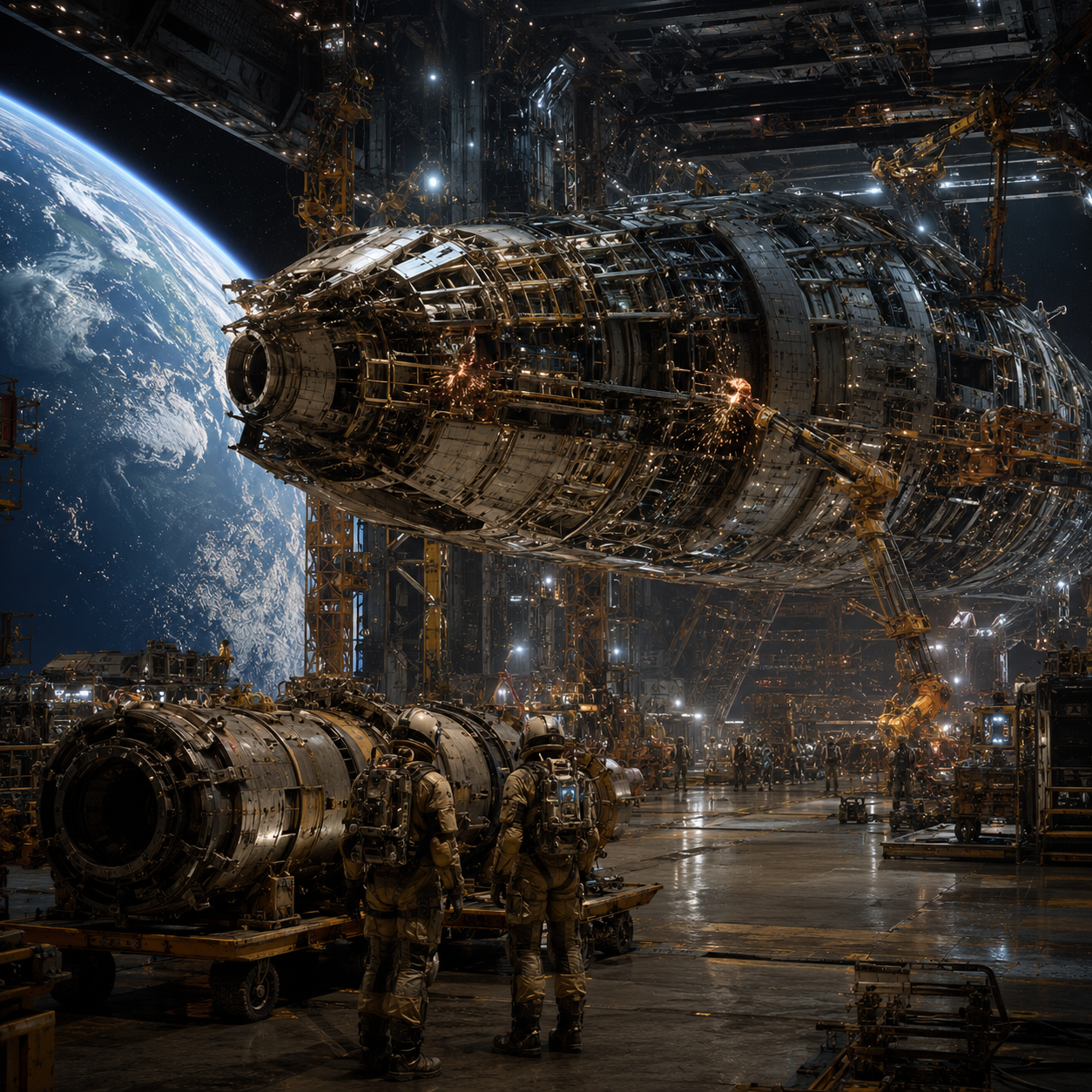
Industrial sci-fi can be visually spectacular without becoming another collection of polished futuristic skylines. Focus instead on the physical machinery of the future: monumental shipyards, exposed pipes, orbital foundries, colossal engines, mining equipment, refineries, freight terminals, machine halls, cooling systems and factories built at scales that dwarf the people working inside them. Use human figures to emphasise scale and vary the environments dramatically — from furnace-lit planetary foundries and freezing asteroid mines to immaculate automated assembly lines and decaying scrapyards.
Think about texture as much as architecture: heat-scorched metal, scratched steel, condensation, grease, welding sparks, oxidised surfaces, thick cables, ceramic insulation, heavy protective fabrics and machinery repaired hundreds of times rather than replaced. Industrial futures do not have to be uniformly dark or dystopian either. A vast solar-powered shipyard can be beautiful; an old factory community can be warm and communal; a meticulously maintained machine hall can inspire awe rather than fear. Each image should reveal something about who built this future, who keeps it running and what their civilisation requires the machinery to produce.
Go Deeper into Writing Industrial Sci-Fi
Industrial sci-fi becomes much more than an aesthetic when you consider why all that machinery exists. Every refinery, orbital dock, mine and factory is part of a larger system connecting resources, labour, technology and consumption. Instead of adding pipes and machinery simply to make a setting look industrial, ask what your civilisation needs to produce — and what maintaining that future costs.
◆ Decide what the industry produces. Start with purpose. Is your facility refining fuel, constructing spacecraft, extracting rare minerals, manufacturing androids, processing alien materials or terraforming an entire planet? Once you know what is being produced, you can work backwards to determine what raw materials, workers, machinery and infrastructure the industry requires.
◆ Follow the supply chain. A futuristic factory does not exist in isolation. Where do its materials originate? Who transports them? Where does the finished product go? A single orbital shipyard might depend upon asteroid mines, planetary refineries, cargo fleets and thousands of subcontractors scattered across several star systems. Following one component from extraction to finished product can reveal an enormous fictional economy.
◆ Think about scale. Science fiction allows industry to become unimaginably large. A refinery might encircle a moon. Shipyards could construct vessels kilometres long. Mining machines might dismantle entire asteroids. Use human-scale details alongside these enormous structures — one welder suspended against a colossal hull can communicate scale more effectively than simply describing something as huge.
◆ Remember the workers. Someone builds and maintains the future. Think about shift patterns, specialist occupations, apprenticeships, workplace hierarchies, unions, accidents, friendships and communities formed around industrial employment. Workers may be proud of what they create even when their conditions are difficult, giving your setting more complexity than a simple corporation-versus-workers conflict.
◆ Let machinery have history. Industrial equipment is expensive, so it is often repaired rather than replaced. A centuries-old space station might contain new AI systems connected to machinery installed by the founders, components salvaged from other facilities and handwritten instructions left by generations of engineers. Layers of technology can make a future feel genuinely old and inhabited.
◆ Use sensory worldbuilding. Industrial environments should feel physical. Consider vibration through floors, sudden temperature changes near machinery, metallic smells, coolant mist, warning lights, welding flashes and the constant background noise of ventilation systems. Then consider what happens when those sensations suddenly disappear. In a factory that never stops, silence can become terrifying.
◆ Explore industrial architecture. Form often follows function. Huge doors exist because something enormous must pass through them. Walkways cross ceilings because workers need access to machinery. Residential districts may grow around factories because travelling elsewhere is impractical. Let the needs of the industry determine the shape of your setting rather than designing a futuristic building first and deciding its purpose afterwards.
◆ Consider automation carefully. Advanced technology does not necessarily eliminate industrial labour. Instead, it may change what workers do. Humans might supervise autonomous machinery, repair robots, perform tasks too unpredictable to automate or work in places where replacing old infrastructure would cost more than continuing to employ people. Ask why your particular workers are still necessary.
◆ Think about class and ownership. Who owns the machinery? Who profits from its output? Workers might own their factory collectively, live under a powerful interplanetary corporation, inherit employment through generations or belong to communities where maintaining essential infrastructure is considered public service. Different economic structures can create radically different industrial futures.
◆ Show the consequences of production. Industry creates more than products. It creates waste, pollution, heat, abandoned machinery and transformed landscapes. A mined asteroid may eventually become hollow. A factory planet might have artificial mountains made from industrial waste. Alternatively, future technologies could create closed-loop manufacturing systems where almost everything is recycled.
◆ Don't automatically make it dystopian. Rust, machinery and industrial labour do not have to mean oppression. Your orbital dock might be run by a thriving worker cooperative. A mining settlement could be close-knit and prosperous. Engineers might take enormous pride in maintaining machines that keep billions of people alive. Industrial sci-fi can explore exploitation and inequality, but it can equally explore craftsmanship, ingenuity, community and the extraordinary things people build together.
Ultimately, ask what sits behind the polished future. Somewhere beneath the orbital gardens, interstellar liners and gleaming megacities are the engines, factories, freight networks and people that allow them to exist. Industrial sci-fi tells their stories.



Step Inside The Timefell Collection
Industrial futures are built on movement. Raw materials become machines, machines become infrastructure, and infrastructure makes entire new ways of living possible. But what happens when one of the industries shaping the future is time travel itself?
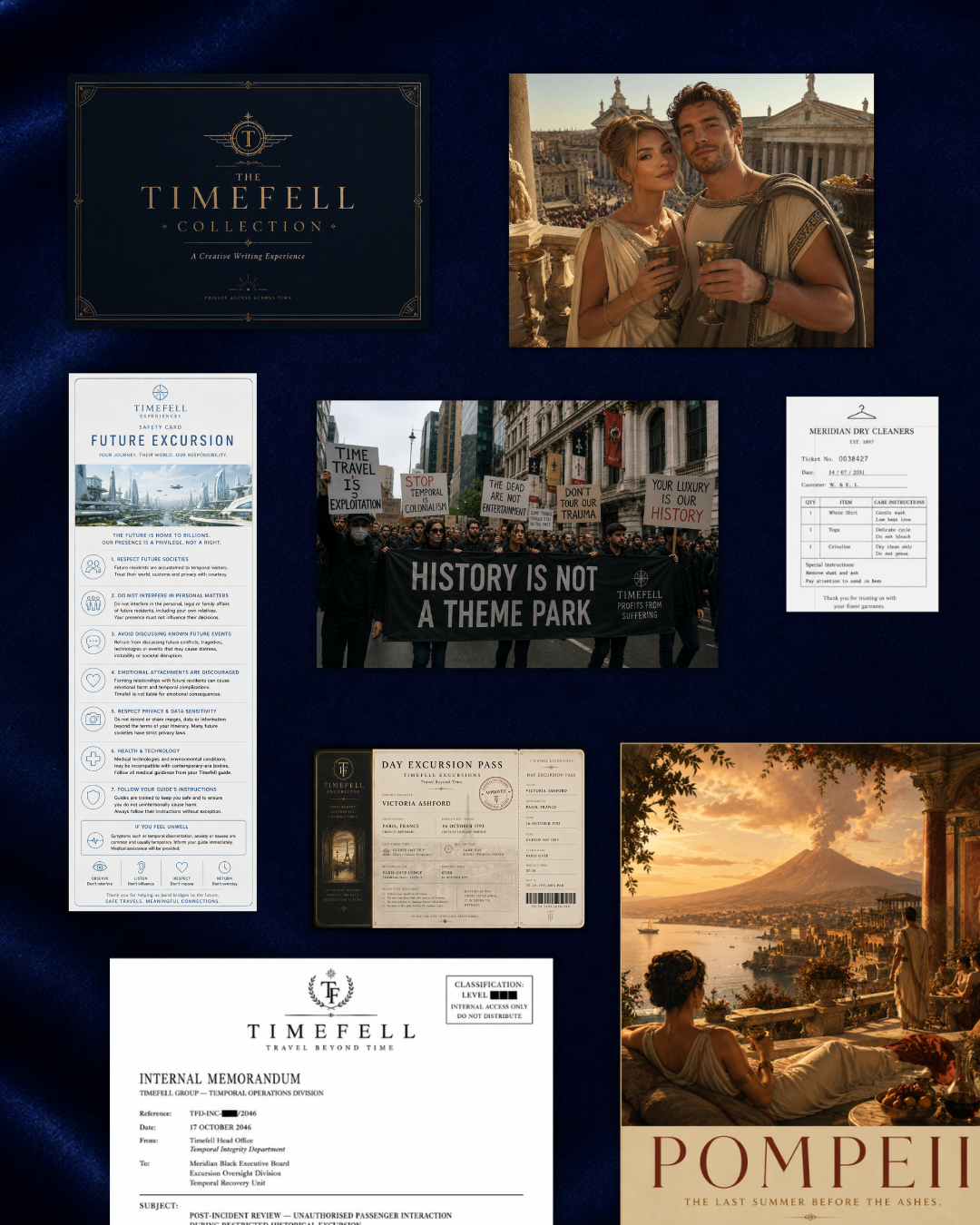
In The Timefell Collection, time travel became public in 2020. By 2046, it has become an industry. Travelling through history is no longer an impossible scientific experiment: it is something that can be packaged, scheduled, advertised and sold. Companies operate excursions across centuries, hotels accommodate temporal tourists, exclusive experiences are reserved for wealthy Meridian Black members, and an entire commercial infrastructure has developed around sending ordinary people somewhere they were never supposed to go.
That makes Timefell an interesting companion to industrial sci-fi. The prompts above ask you to look behind futuristic technology and consider the systems required to make it function. Who builds the machines? Who maintains them? Who controls access? What happens when extraordinary technology stops being extraordinary and becomes another industry employing workers, serving customers and generating profit?
The Timefell Collection lets you explore exactly that kind of world through more than 50 printable documents and artefacts, including travel posters, tickets, hotel records, newspaper articles, reviews, diary entries, private correspondence and handwritten notes. Together they reveal an industry considerably more complicated than the polished experiences advertised to its customers — with missing excursions, unexplained incidents and travellers who do not always return quite as expected.
If industrial sci-fi has you thinking about the enormous systems hiding behind futuristic technology, step inside a world where even time itself has become part of the machinery.
◆ Explore The Timefell Collection and investigate the industry built around travelling through time.
Final Thoughts
Industrial science fiction reminds us that even the most extraordinary future has to be built, powered, repaired and maintained. Behind every interstellar civilisation might be orbital shipyards assembling its fleets, mining colonies extracting its resources, refineries producing its fuel and generations of workers keeping machines alive long after their original designers have disappeared.
The strongest industrial sci-fi settings go beyond rusted metal and enormous machinery. Think about the systems connecting your industries to the wider world, the communities that develop around them and the people whose lives are shaped by the work they perform. An ancient refinery can become a family legacy, an automated factory can outlive the civilisation it served, and a sprawling shipyard can contain thousands of individual stories beneath the vessels slowly taking shape overhead.
Use the prompts above to explore those different scales. Combine a character with an unexpected setting, follow one manufactured object through an entire interplanetary supply chain or imagine what happens when a machine that has operated continuously for centuries finally stops. Your industrial future can be brutal, prosperous, communal, exploitative, beautiful or slowly falling apart — sometimes all at once.
For more speculative inspiration, explore the Science Fiction Writing Hub for sci-fi prompts, characters, settings and worldbuilding ideas, or browse the Creative Writing Archive for hundreds of ideas across science fiction, dystopian fiction, fantasy, horror and more.
Choose Your Next Adventure