A Quoi Bon Dire by Charlotte Mew: Summary, Themes & Analysis
Charlotte Mew’s À Quoi Bon Dire explores enduring love, memory and absence, and the quiet tension between public perception and private truth, presenting a speaker who resists the finality of loss through subtle, controlled voice and understated irony. Through contrast, repetition, and a deceptively simple structure, the poem reveals how emotional reality can persist beyond what others accept as fact, creating a deeply personal meditation on time, ageing, and the persistence of feeling. If you are studying or teaching Songs of Ourselves Volume 1 for CIE English World Literature (0408), explore all the poems in depth in our Songs of Ourselves Volume 1 Hub, or a wider range of texts in the Literature Library.
Context of À Quoi Bon Dire
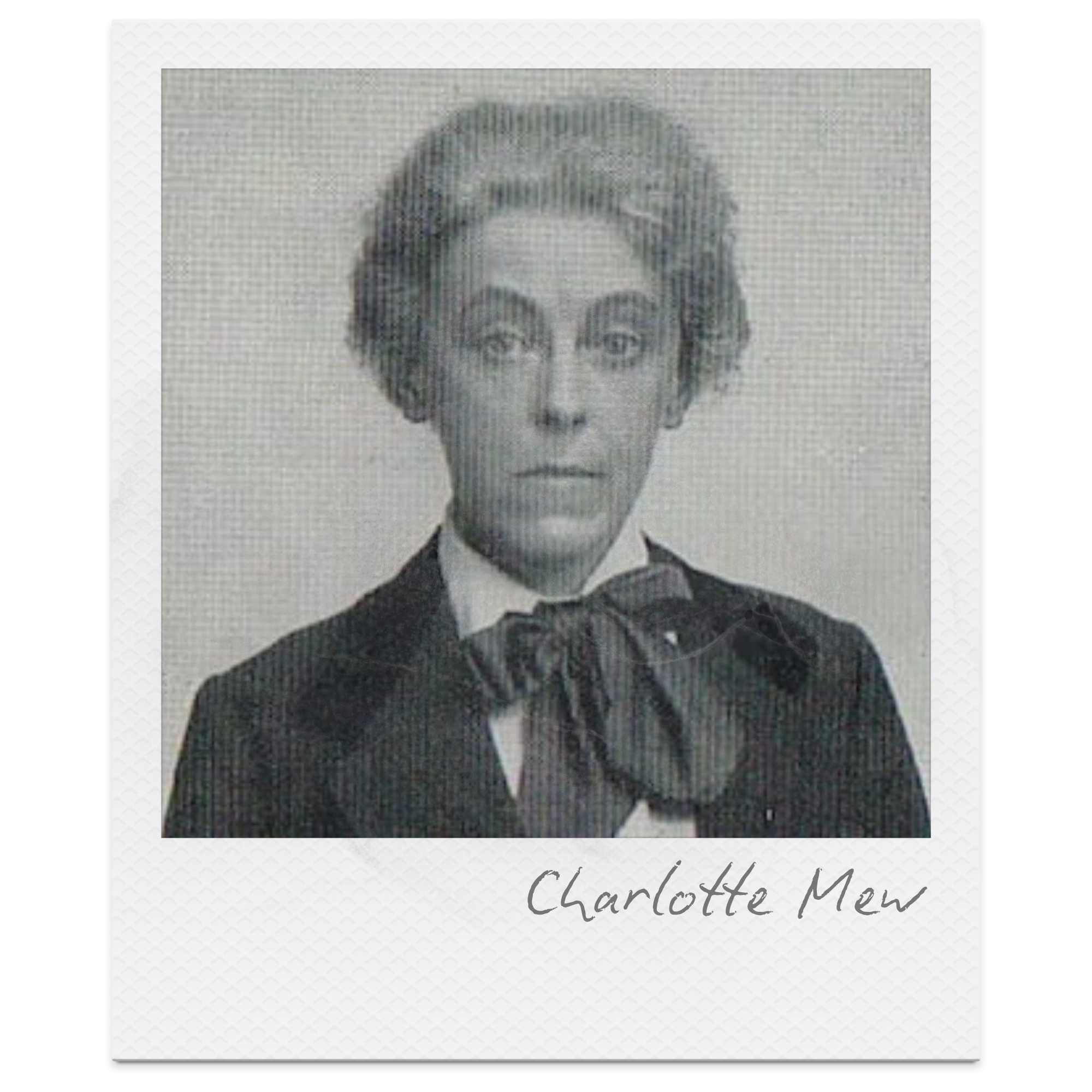
Charlotte Mew wrote during the late Victorian and early modernist period, a time shaped by shifting attitudes towards gender roles, emotional restraint, and social expectation, all of which inform the poem’s quiet resistance to conventional ideas about love and loss. Mew herself lived a life marked by personal isolation, unfulfilled relationships, and a deep awareness of social judgement, often exploring speakers who exist at odds with the world around them.
The poem reflects an early twentieth-century context in which expressions of grief, desire, and especially female emotional autonomy were often constrained by social norms. Within this framework, the speaker’s refusal to accept the lover’s “death” becomes significant, suggesting a tension between public narrative (“everybody thinks”) and private emotional truth. This creates a subtle but powerful critique of how society defines absence, love, and what it means to “move on.”
À Quoi Bon Dire: At a Glance
Form: Three regular quatrains with a consistent rhyme pattern, creating a controlled, reflective tone
Mood: Quietly melancholic, restrained, and gently ironic
Central tension: The conflict between public belief that the lover is gone and the speaker’s private refusal to accept this loss
Core themes: Enduring love, memory and absence, time and ageing, private truth vs public perception
One-sentence meaning: The poem suggests that love can persist beyond physical absence, with the speaker maintaining an emotional reality that quietly resists the world’s assumption of final loss.
Quick Summary of À Quoi Bon Dire
The poem begins with the speaker recalling a moment seventeen years earlier when a lover said something that resembled a goodbye. Although “everybody” believes this person to be dead, the speaker quietly resists this assumption, maintaining a sense of their continued presence. This contrast between public belief and private certainty establishes the poem’s central tension.
As the poem develops, the speaker reflects on their own ageing, noting how others see them as “stiff and cold,” while the absent figure remains unchanged in their perception. The final stanza introduces an imagined future couple, who believe their love is unique, while, in a parallel moment, the absent lover still exists within the speaker’s emotional reality—suggesting that love endures beyond time, change, and conventional endings.
Title, Form, Structure, and Metre
The poem’s formal choices create a sense of control and restraint, while subtle variations in structure, rhyme, and rhythm mirror the tension between private emotional certainty and public perception.
Title
The French title À Quoi Bon Dire (loosely meaning “what is the use of saying?”) immediately suggests futility and withheld expression. This reflects the speaker’s situation: there is no point explaining their emotional truth to others who would not understand it. The title therefore frames the poem as an inward, almost private meditation, reinforcing the divide between inner feeling and external judgement.
Form and Structure
The poem is structured as two quatrains followed by a cinquain, creating a subtle shift in perspective. The first two stanzas mirror each other in both structure and idea, presenting the relationship from two angles: the speaker’s continued belief in the lover’s presence, and the way others perceive her ageing. This mirroring reinforces the idea of enduring connection, suggesting that the bond between “I” and “you” remains balanced and intact.
The final stanza expands outward, imagining a future scene with a “boy and girl,” which places the speaker’s experience within a wider, almost cyclical view of human love. The shift from intimate reflection to broader observation allows the poem to move from personal memory to universal insight, while the closing line returns to the speaker’s private world, maintaining emotional continuity.
Rhyme Scheme and Poetic Pattern
The rhyme scheme follows a clear but evolving pattern: ABAB CDCD EFEFF.
In the first stanza:
“said” (A) / “Good-bye” (B) / “dead” (A) / “I” (B)
The repetition of this pattern in the second stanza reinforces a sense of symmetry and stability, echoing the idea that the relationship itself remains unchanged despite time. The consistent alternation between “I” and “you” sounds also subtly emphasises the continuing connection between speaker and absent lover.
The final stanza shifts slightly, ending with a rhyming couplet (“there” / “hair”), which draws attention to the poem’s conclusion. This closing pattern mirrors the idea of a pair, reinforcing the enduring unity of the speaker and the absent figure, even as the poem acknowledges the passage of time.
Metre and Rhythmic Movement
The poem is largely based on iambic rhythm (unstressed → stressed), but Mew varies line length and pattern to create emphasis. For example:
SevEN | teen YEARS | aGO | you SAID
Here, the rhythm approximates iambic tetrameter, though the opening stress creates a slight disruption, drawing attention to the passage of time.
Longer lines introduce a more flowing rhythm, such as:
And EV | ery BO | dy THINKS | that YOU | are DEAD
This line moves closer to iambic pentameter, expanding the rhythm to emphasise the weight of collective belief.
In contrast, the abrupt final lines of the first two stanzas:
But I
But you
reduce the rhythm to a single stressed beat, creating a striking pause. This sharp contraction foregrounds the speaker’s private conviction, isolating it from the longer, more socially oriented lines.
In the final stanza, the rhythm becomes more consistently pentameter, for example:
Some BOY | and GIRL | will MEET | and KISS | and SWEAR
This smoother, more traditional rhythm reflects the romantic idealism of the imagined young lovers. However, it is interrupted by the shorter line:
While O | ver THERE
This sudden contraction disrupts the flow, undercutting the lovers’ sense of uniqueness and reinforcing the poem’s suggestion that such feelings are part of a repeating human pattern.
Overall, the poem’s shifting rhythm mirrors its central idea: beneath apparent change—time, ageing, and loss—there remains a persistent emotional core that resists closure.
The Speaker in À Quoi Bon Dire
The speaker presents themselves as someone who is ageing, reflective, and quietly certain in their emotional reality, addressing a lover who is believed by others to be dead but remains vividly present to them. The tone is restrained, almost conversational, yet underpinned by a deep and unwavering conviction that the relationship has not truly ended. This creates a voice that feels both intimate and subtly defiant, as the speaker resists the authority of “everybody” in favour of their own experience.
Crucially, the speaker’s perspective is shaped by a tension between external perception and internal truth: while others see them as “old” and alone, they continue to experience the lover as unchanged and emotionally available. This suggests a psychological state rooted in memory, imagination, or even a deliberate refusal to accept loss. The calm, controlled delivery—without overt grief or protest—reinforces the idea that this belief is not unstable, but instead forms a sustaining emotional framework, allowing the speaker to maintain a sense of connection that transcends time, absence, and conventional definitions of reality.
Stanza-by-Stanza Analysis of À Quoi Bon Dire
This close reading explores how language, structure, and voice work together across each stanza to develop the poem’s central tension between public belief and private emotional truth, revealing how meaning is constructed gradually rather than stated directly.
Stanza 1: Private Certainty Against Public Belief
The opening stanza establishes a contrast between memory and collective assumption, beginning with the precise time marker “seventeen years ago,” which immediately grounds the relationship in a long past. The phrase “something that sounded like Good-bye” introduces ambiguity, suggesting that the separation was never fully defined, allowing emotional continuity to persist. This uncertainty becomes crucial, as it creates space for the speaker’s continued belief.
The line “everybody thinks that you are dead” introduces the force of social consensus, presenting absence as an accepted fact. However, the abrupt final line, “But I,” disrupts this certainty through both structure and rhythm, isolating the speaker’s voice. This contrast between the longer, socially oriented line and the sharply reduced ending emphasises the speaker’s quiet resistance, positioning their personal truth as more meaningful than external judgement.
Stanza 2: Ageing and Emotional Stasis
The second stanza mirrors the first in both structure and syntax, reinforcing the sense of a relationship that remains balanced and reciprocal despite time. The speaker acknowledges physical decline through “grow stiff and cold,” using imagery associated with ageing and even death, which ironically aligns them more closely with the absent figure.
Again, the collective perspective appears in “everybody sees that I am old,” emphasising how the speaker is defined by external observation. However, the final line, “But you,” reverses this perception, suggesting that the lover does not recognise this ageing. Structurally, this echo of “But I” creates a parallel that reinforces mutual connection, while the shift in pronoun subtly implies that the relationship exists within a shared, preserved emotional space untouched by time.
Stanza 3: Universalising Love and Ironic Distance
The final stanza expands beyond the speaker’s private world, imagining “some boy and girl” meeting in a “sunny lane,” an image that evokes youth, innocence, and conventional romantic idealism. The verbs “kiss and swear” suggest impulsive, absolute declarations, reinforced by the claim that “nobody can love their way again,” highlighting the naivety of believing in unique, unprecedented love.
This idealised scene is interrupted by the shorter line “While over there,” which creates a moment of structural disruption. This shift draws attention away from the imagined couple and back to the speaker’s own relationship, subtly undermining the younger lovers’ certainty. The final line, “You will have smiled, I shall have tossed your hair,” introduces a temporal ambiguity through the use of future perfect tense, suggesting that the speaker’s love exists beyond linear time.
This ending creates a layered effect: it both mirrors the actions of the young couple and quietly asserts the endurance of the speaker’s own relationship. The juxtaposition reveals that what feels uniquely intense in the present is, in fact, part of a repeating human experience, reinforcing the poem’s exploration of love as both deeply personal and universally shared.
Key Quotes and Methods in À Quoi Bon Dire
This section explores how key quotations reveal the poem’s central ideas through precise language choices, structural contrast, and subtle shifts in voice, always linking method → purpose → impact.
“Seventeen years ago you said”
◆ Technique: Temporal marker / direct address
◆ Meaning: Establishes a clear distance in time while maintaining a sense of immediacy through “you”
◆ Purpose: To anchor the relationship in the past while showing it remains emotionally active
◆ Impact: Emphasises the persistence of memory, suggesting that time does not weaken the speaker’s attachment
“Something that sounded like Good-bye”
◆ Technique: Ambiguity / tentative phrasing
◆ Meaning: The farewell is uncertain, never fully confirmed as a final ending
◆ Purpose: To create space for the speaker’s continued belief in the lover’s presence
◆ Impact: Undermines the idea of closure, reinforcing the theme of enduring emotional connection
“And everybody thinks that you are dead”
◆ Technique: Collective voice / declarative statement
◆ Meaning: Society accepts the lover’s absence as a fixed reality
◆ Purpose: To introduce external authority and contrast it with the speaker’s personal truth
◆ Impact: Highlights the tension between public perception and private certainty, making the speaker’s resistance more striking
“But I.”
◆ Technique: Structural isolation / truncated line
◆ Meaning: The speaker rejects the collective belief without elaboration
◆ Purpose: To foreground the speaker’s individual perspective through minimal language
◆ Impact: Creates a powerful pause, emphasising quiet defiance and emotional conviction
“So I, as I grow stiff and cold”
◆ Technique: Physical imagery / metaphor
◆ Meaning: Suggests ageing and gradual physical decline
◆ Purpose: To contrast the speaker’s changing body with the unchanging presence of the lover
◆ Impact: Reinforces the idea that while time affects the physical self, it does not alter emotional reality
“And everybody sees that I am old”
◆ Technique: Repetition of collective perspective
◆ Meaning: The speaker is defined by how others perceive them
◆ Purpose: To mirror the earlier “everybody thinks,” strengthening the structural parallel
◆ Impact: Highlights how social judgement contrasts with the speaker’s inner experience, deepening the poem’s central tension
“But you.”
◆ Technique: Parallel structure / truncated line
◆ Meaning: The lover does not recognise the speaker’s ageing
◆ Purpose: To suggest that within the relationship, time has not passed
◆ Impact: Reinforces the idea of a mutual, preserved connection, untouched by external reality
“Some boy and girl will meet and kiss and swear”
◆ Technique: Generic imagery / future projection
◆ Meaning: Represents a typical romantic scenario of young love
◆ Purpose: To broaden the poem’s scope beyond the speaker’s personal experience
◆ Impact: Creates a contrast between naive idealism and the speaker’s more reflective understanding of love
“That nobody can love their way again”
◆ Technique: Hyperbole / absolute language
◆ Meaning: The young lovers believe their love is uniquely intense
◆ Purpose: To highlight a common illusion within romantic experience
◆ Impact: Introduces gentle irony, suggesting that such feelings are not unique but part of a wider human pattern
“While over there”
◆ Technique: Structural interruption / spatial shift
◆ Meaning: Abruptly redirects attention from the imagined couple
◆ Purpose: To disrupt the romantic idealism of the previous lines
◆ Impact: Creates distance and subtly undermines the certainty of the young lovers, reinforcing the speaker’s perspective
“You will have smiled, I shall have tossed your hair.”
◆ Technique: Future perfect tense / parallel action
◆ Meaning: Suggests a moment that exists beyond conventional time
◆ Purpose: To blur boundaries between past, present, and future, reinforcing emotional continuity
◆ Impact: Leaves the reader with a sense of enduring intimacy, suggesting that love transcends time and finality
Key Techniques in À Quoi Bon Dire
Charlotte Mew uses a controlled but nuanced range of techniques to explore enduring love, memory, and the tension between external reality and inner experience, with each device contributing to the poem’s quiet emotional power.
◆ Apostrophe – The speaker directly addresses a lover believed to be dead, creating an intimate, conversational tone. This allows the relationship to feel present and reciprocal, rather than lost, reinforcing the idea that emotional connection continues beyond physical absence.
◆ Parallelism – The mirrored structure of the first two stanzas (“everybody thinks… But I” / “everybody sees… But you”) creates a sense of balance and mutuality, suggesting that the bond between speaker and lover remains intact despite time and separation.
◆ Repetition – The repeated use of “everybody” emphasises the weight of social consensus, while the echoing structure highlights the tension between public belief and private truth, reinforcing the speaker’s quiet resistance.
◆ Structural contrast – The shift from quatrains to a final cinquain, along with the interruption of shorter lines such as “But I” and “While over there,” creates moments of emphasis. These disruptions draw attention to the speaker’s individual perspective, breaking away from the smoother flow of collective or romantic assumptions.
◆ Paradox – The poem presents the lover as both dead and not dead, creating a central paradox that challenges conventional ideas of loss. This reflects the speaker’s belief that emotional reality can exist independently of physical fact.
◆ Irony – The imagined young couple who believe that “nobody can love their way again” introduces gentle irony, as the speaker recognises this as a repeating illusion of love. This contrasts youthful certainty with the speaker’s more reflective understanding.
◆ Temporal ambiguity – The use of future perfect tense (“you will have smiled, I shall have tossed your hair”) blurs distinctions between past, present, and future, suggesting that the relationship exists outside linear time and reinforcing the idea of enduring connection.
◆ Sound patterns (sibilance and softness) – Subtle sibilance in phrases such as “seventeen years” and “stiff and cold” contributes to a hushed, reflective tone. This soft sound pattern mirrors the speaker’s restrained emotional expression and enhances the poem’s intimate atmosphere.
◆ Juxtaposition – The contrast between the speaker’s enduring relationship and the naive idealism of the “boy and girl” highlights the difference between experienced love and romantic illusion, deepening the poem’s exploration of how love is perceived over time.
Together, these techniques create a poem that feels quietly controlled yet emotionally complex, where meaning emerges through subtle contrasts and structural precision rather than overt declaration.
How the Writer Creates Meaning and Impact in À Quoi Bon Dire
Charlotte Mew creates meaning through a careful interplay of language, structure, voice, and sound, allowing the poem’s emotional depth to emerge subtly through contrast rather than direct statement.
◆ Language (imagery, ambiguity, diction) – Mew uses deliberately simple, understated language to convey complex emotional ideas. Phrases such as “something that sounded like Good-bye” introduce ambiguity, preventing closure and allowing the speaker’s belief in continued presence to remain plausible. This restraint avoids overt sentimentality, making the emotion feel more authentic and controlled, while the contrast between words like “dead” and the speaker’s continued address creates tension between fact and feeling.
◆ Structure (mirroring, contrast, progression) – The mirrored first two stanzas establish a pattern of balance and repetition, reinforcing the sense of an ongoing, reciprocal connection. The shift to a longer final stanza expands the poem outward, moving from private memory to a more universal reflection on love. Structural interruptions, such as “But I” and “While over there,” disrupt the flow, drawing attention to moments where the speaker’s individual perspective resists or reframes wider assumptions.
◆ Voice and tone – The speaker’s voice is calm, restrained, and quietly assured, avoiding dramatic expressions of grief. This controlled tone suggests that their belief is not irrational but deeply internalised, creating a sense of emotional certainty. The contrast between the speaker’s steady voice and the confident declarations of the imagined young lovers introduces subtle irony, positioning the speaker as more perceptive and reflective.
◆ Sound and rhythm – Variations in rhythm and line length contribute to meaning by shaping emphasis. Longer, flowing lines often present shared or social ideas, while shorter, abrupt lines isolate the speaker’s private truth, creating a pause that foregrounds their perspective. Soft sound patterns, including sibilance, reinforce the poem’s reflective tone, supporting its intimate and meditative quality.
Together, these elements work to show that meaning in the poem is not stated directly but constructed through contrast, repetition, and subtle disruption, allowing the reader to experience the tension between external reality and inner emotional truth.
Themes in À Quoi Bon Dire
Charlotte Mew explores a small number of tightly controlled themes, using language, structure, and voice to reveal how meaning develops beneath the poem’s surface simplicity.
Enduring Love
The poem presents love as something that persists beyond time, absence, and even death. Through the speaker’s continued address to the absent lover, Mew uses apostrophe and structural repetition to suggest that the relationship remains active and reciprocal. The refusal to accept the lover’s death is not framed as denial, but as an alternative emotional reality, reinforcing the idea that love can exist independently of physical presence.
Memory and Absence
Memory functions as a space in which the lover remains present, blurring the boundary between past and present. The ambiguous phrasing “something that sounded like Good-bye” prevents closure, allowing the speaker to sustain this connection. Structurally, the poem avoids clear progression away from the past, instead creating a sense of emotional stasis, where absence is redefined as a different form of presence.
Private Truth vs Public Perception
A central tension in the poem lies between what “everybody thinks” and what the speaker knows. The repetition of collective phrases introduces the authority of social judgement, while the isolated lines “But I” and “But you” assert a competing individual truth. This contrast highlights how emotional experience can resist or contradict accepted reality, positioning the speaker’s perspective as both marginalised and powerful.
Time and Ageing
The poem acknowledges the physical effects of time through phrases like “grow stiff and cold” and “I am old,” using imagery of decline to show the speaker’s changing body. However, this is contrasted with the lover’s unchanged presence, suggesting that while time alters the physical self, it does not affect emotional connection. This tension reinforces the idea that love exists outside the normal progression of time.
The Universality of Love
In the final stanza, the imagined “boy and girl” introduce a broader perspective, suggesting that feelings of unique, unparalleled love are actually part of a shared human experience. Through irony and juxtaposition, Mew shows that each generation believes their love is singular, while quietly implying that this belief itself is universal. This shifts the poem from a purely personal reflection to a meditation on the repeating patterns of human emotion.
Alternative Interpretations of À Quoi Bon Dire
While the poem presents a clear emotional narrative, its ambiguity, restraint, and subtle use of voice and structure allow for multiple interpretations of the speaker’s experience.
Psychological Interpretation: Memory as Emotional Survival
From a psychological perspective, the speaker’s refusal to accept the lover’s death can be read as a form of emotional preservation. The continued address and certainty that the lover still perceives them (“But you”) suggest a mind sustaining itself through memory and imagined reciprocity. Rather than confronting loss directly, the speaker constructs a reality in which the relationship remains intact, allowing them to resist the finality of grief. This interpretation emphasises the poem as a study of how the mind protects itself by reshaping absence into presence.
Social Interpretation: Resistance to Public Narratives
Socially, the poem can be read as a quiet challenge to collective authority and accepted narratives. The repeated references to “everybody” highlight how society defines reality through shared assumptions, particularly around death, ageing, and what it means to “move on.” The speaker’s refusal to conform suggests a subtle act of resistance, asserting individual emotional truth over socially imposed definitions. This positions the poem as a critique of how personal experience is often overridden by external judgement.
Philosophical / Existential Interpretation: Love Beyond Time
On a philosophical level, the poem explores the idea that love exists outside linear time. The use of temporal ambiguity, particularly in the final line (“you will have smiled, I shall have tossed your hair”), disrupts conventional distinctions between past, present, and future. This suggests that emotional experience is not bound by chronological progression, but instead exists in a continuous, almost timeless state. From this perspective, the poem becomes a meditation on the nature of existence, proposing that what is emotionally real may persist regardless of physical reality or temporal boundaries.
Exam-Ready Insight for À Quoi Bon Dire
This section shows how to turn your understanding of À Quoi Bon Dire into a strong, exam-focused response for IGCSE World Literature (0408), with a clear focus on how meaning is created through methods.
What strong responses do
◆ focus closely on the question
◆ analyse methods (language, structure, and sound), not just ideas
◆ explain how effects are created, not just what happens
◆ track shifts in voice and tone across the poem
◆ use short, precise quotations to support points
Conceptual argument
A strong thesis for À Quoi Bon Dire might be:
Mew presents love as enduring beyond absence, using structural contrast, parallelism, and temporal ambiguity to show how private emotional truth can resist public definitions of loss and time.
Model analytical paragraph
Mew presents love as enduring through structural contrast and controlled language. In the line “everybody thinks that you are dead,” the collective noun “everybody” establishes a fixed social reality, positioning absence as undeniable fact. However, this is immediately disrupted by the isolated line “But I,” where the abrupt structure foregrounds the speaker’s private conviction, challenging this consensus. This pattern is mirrored in the second stanza with “But you,” reinforcing a sense of mutual connection that exists beyond external perception. Structurally, the poem shifts in the final stanza to a broader, more fluid rhythm as it introduces “some boy and girl,” before interrupting this idealised scene with “While over there.” This disruption undercuts the younger lovers’ certainty and redirects focus to the speaker’s own enduring relationship, suggesting that love persists beyond time, change, and socially accepted endings.
Teaching Ideas for À Quoi Bon Dire
This poem is ideal for exploring how writers use language, structure, and voice to present complex ideas, while also supporting collaborative and discussion-based classroom approaches.
1. Collaborative Analytical Paragraph (Paired Writing)
Give students a focused question, for example:
How does Mew present the idea of enduring love in À Quoi Bon Dire?
Students work together to produce a single paragraph, combining their ideas and interpretations. They should:
◆ select and embed quotations
◆ identify methods (language, structure, sound)
◆ explain meaning → purpose → impact
Because both students contribute, they can challenge and refine each other’s ideas, leading to a stronger, more developed response. This approach reinforces that strong analysis is built through discussion and refinement, not just individual effort.
2. Structured Group Close Analysis (Role-Based)
Instead of traditional annotation, assign students specific roles in small groups for a close reading:
◆ Structure specialist – tracks shifts, voice, and progression
◆ Language analyst – explores word choices and imagery
◆ Methods expert – identifies poetic devices and techniques
◆ Tone tracker – comments on voice and emotional shifts
Each group analyses part of the poem, then feeds back to the class, building a full interpretation together.
This makes close reading more active and collaborative, while still developing detailed analytical skills.
3. Silent Debate
Set up a silent debate around the question:
Is À Quoi Bon Dire more about love or denial?
Students respond to prompts in writing, building on and challenging each other’s ideas. They should:
◆ use quotations as evidence
◆ respond directly to others’ interpretations
◆ develop and refine arguments over time
This encourages deeper thinking and ensures all students participate. For guidance on structuring this activity, see this post on Silent Debate Activities.
4. Creative Writing: Voice and Perspective
Ask students to write a short piece exploring memory and absence.
Prompt:
Write from the perspective of someone who refuses to accept that a person or relationship has ended.
Students should aim to:
◆ use sensory imagery (sound, sight, texture)
◆ develop a reflective voice
◆ include contrast between public reality and private belief
◆ show how meaning is shaped through language choices
This helps students apply literary techniques in their own writing, reinforcing their understanding of how texts create meaning. For more structured prompts, explore the Creative Writing Archive.
Go Deeper into À Quoi Bon Dire
Exploring À Quoi Bon Dire alongside other texts can deepen understanding of how writers present love, memory, and the tension between presence and absence, helping students build more comparative and conceptual responses.
◆ Remember by Christina Rossetti – Explores love in the face of death and separation, but ultimately encourages letting go, offering a powerful contrast to Mew’s insistence on emotional continuity.
◆ Sonnet 43 by Elizabeth Barrett Browning – Presents love as enduring beyond death, using structured repetition to express permanence, closely aligning with Mew’s idea of love transcending time.
◆ Neutral Tones by Thomas Hardy – Examines a relationship defined by emotional distance and decay, offering a stark contrast to Mew’s portrayal of love as unchanged and preserved.
◆ When You Are Old by W. B. Yeats – Reflects on ageing and remembered love, similarly exploring how emotional connection persists in memory, though with a more elegiac tone.
◆ The Farmer’s Bride by Charlotte Mew – Explores distance within a relationship, but through physical and emotional separation rather than absence, offering insight into Mew’s recurring interest in unfulfilled connection.
◆ Love After Love by Derek Walcott – Presents a more inward resolution, focusing on self-recognition and emotional reconciliation, contrasting with Mew’s outward focus on a continued bond with another.
Final Thoughts
À Quoi Bon Dire offers a restrained yet powerful meditation on enduring love, memory, and the tension between public reality and private truth. Through its carefully controlled structure, parallelism, and subtle shifts in voice, the poem reveals how emotional experience can resist the finality imposed by time and social expectation.
Rather than presenting loss as something to be accepted and resolved, Mew reframes it as a condition that can be reinterpreted, where absence becomes a different form of presence. The speaker’s quiet certainty challenges conventional ideas of closure, suggesting that what is emotionally real may persist beyond what can be seen or verified.
This creates a poem that is both deeply personal and quietly universal, showing how love exists not only in shared moments but in the ways it continues to shape perception across time. For more detailed poetry analysis and teaching resources, explore the Songs of Ourselves Volume 1 Hub and the wider Literature Library.
Choose Your Next Text