Meeting at Night by Robert Browning: Summary, Themes, Meaning & Analysis
Robert Browning’s Meeting at Night explores romantic desire, secrecy, and anticipation, presenting a speaker driven by an intense need to reach a lover despite physical distance. Through vivid sensory imagery, carefully controlled structure, and rhythmic movement that mirrors the journey itself, the poem creates a sense of mounting urgency and emotional focus. The contrast between the expansive natural setting and the intimate final moment highlights how external obstacles are overcome by emotional connection, revealing love as both private and powerful. If you are studying or teaching Songs of Ourselves Volume 1 for CIE English World Literature (0408), explore all the poems in depth in our Songs of Ourselves Volume 1 Hub, or a wider range of texts in the Literature Library.
Context of Meeting at Night
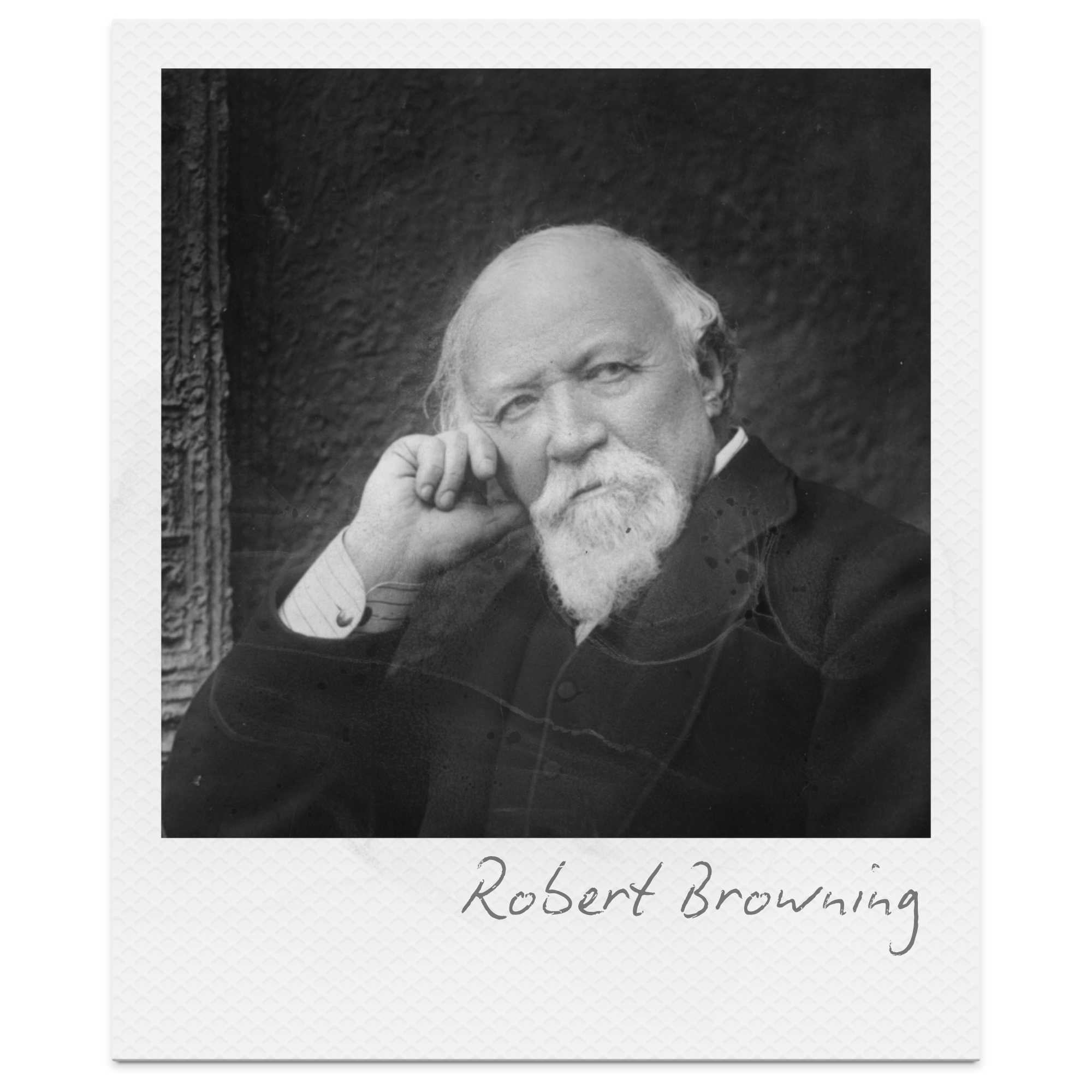
Robert Browning wrote during the Victorian period, a time shaped by strict expectations around courtship, privacy, and social reputation, which inform the poem’s focus on secrecy and controlled expression of desire. Rather than presenting love openly, the speaker’s journey unfolds in hidden, transitional spaces, reflecting the need for discretion within social norms.
The poem is part of a paired sequence with Parting at Morning, highlighting the contrast between private emotional experience and the return to public life. Within this context, Meeting at Night captures a moment of intense, almost suspended anticipation, where the physical journey becomes a metaphor for emotional pursuit. Browning’s emphasis on sensory detail and movement reflects a broader Victorian interest in psychological experience, while the poem’s structure reinforces the idea that love exists within a space that is both intimate and temporarily removed from societal constraints.
Meeting at Night: At a Glance
Form: Two balanced sestets, creating a structured progression from journey to arrival
Mood: Intimate, urgent, and quietly intense
Central tension: The speaker’s need to overcome distance and obstacles to reach a private moment of connection
Core themes: Romantic desire, secrecy, anticipation, journey as pursuit, private vs public experience
One-sentence meaning: The poem presents love as a powerful force that drives the speaker across physical and emotional distance, culminating in a deeply private and intimate connection.
Quick Summary of Meeting at Night
The poem begins with the speaker travelling across a dark, atmospheric landscape, moving from the “grey sea” towards the “long black land,” guided by the “yellow half-moon.” As the journey progresses, the speaker reaches the shore and moves inland, crossing a “mile of warm sea-scented beach” and then “three fields,” with the movement creating a sense of growing anticipation and focus.
In the second stanza, the journey becomes more intimate and immediate, as the speaker approaches a house and signals their arrival with a “tap at the pane.” Small, vivid details such as the “blue spurt of a lighted match” bring the scene to life, culminating in the final image of “two hearts beating each to each.” This shift from expansive landscape to close emotional connection emphasises the intensity of the meeting, presenting love as both private and deeply felt.
Title, Form, Structure, and Metre
The poem’s tightly controlled form and shifting rhythm mirror the speaker’s physical journey and growing emotional intensity, allowing structure and sound to enact the movement from distance to intimacy.
Title
The title Meeting at Night immediately foregrounds a sense of secrecy and anticipation, suggesting that the encounter takes place outside normal, public life. “Meeting” implies a purposeful coming together, while “Night” introduces associations of privacy, concealment, and heightened emotion. As the poem develops, the title’s simplicity is deepened: what initially appears to be a straightforward meeting becomes a moment charged with desire and emotional urgency.
Form and Structure
The poem is composed of two sestets, clearly divided into two numbered stanzas. This visual symmetry reflects the poem’s two-part movement: the first stanza focuses on the journey across sea and land, while the second presents the arrival and reunion. This structural division reinforces the idea of initial separation, while the poem as a whole unites these halves, mirroring the lovers’ eventual connection.
The progression from expansive landscape to intimate detail creates a clear shift in scale and focus. The first stanza is dominated by natural imagery and distance, while the second moves into a confined, human space, culminating in the intensely private image of “two hearts beating each to each.” This structural narrowing reflects the speaker’s increasing emotional focus, as everything moves towards the moment of contact.
Rhyme Scheme and Poetic Pattern
Each stanza follows the same ABCCBA rhyme scheme. For example, in the first stanza:
“land” (A) / “low” (B) / “leap” (C) / “sleep” (C) / “prow” (B) / “sand” (A)
This pattern creates a sense of movement towards closure, as the outer rhymes gradually draw inward to meet at the central couplet (“leap” / “sleep”). This inward motion mirrors the speaker’s journey, where physical and emotional distance is reduced until a point of contact is reached. The repetition of this pattern in the second stanza reinforces the idea of completion, as the journey’s structure is echoed in the meeting itself.
Metre and Rhythmic Movement
The poem broadly follows an iambic rhythm, often approximating iambic tetrameter, but Browning frequently introduces variations. For example:
the GREY | SEA and | the LONG | BLACK LAND
While this line suggests a four-beat pattern, the heavy stresses on “GREY SEA” and “LONG BLACK LAND” create a more forceful rhythm, reflecting the physical effort and weight of the journey.
In contrast, more fluid lines such as:
and the YEL | low HALF- | moon LARGE | and LOW
move more smoothly, creating a sense of flow and continuity, mirroring the speaker’s progress across the landscape.
As the poem approaches the meeting, the rhythm becomes more irregular and compressed, particularly in:
a TAP | at the PANE, | the QUICK | SHARP SCRATCH
Here, the clustered stresses disrupt the regular pattern, reflecting the speaker’s heightened urgency and emotional intensity. This rhythmic tightening culminates in the final line, where the steady beat of:
than the TWO | HEARTS BEAT | ing EACH | to EACH
echoes the physical closeness and synchronisation of the lovers, allowing sound to reinforce the poem’s final moment of connection.
Overall, the poem’s metre is not rigid but responsive, with variations in rhythm mirroring the speaker’s movement, effort, and ultimately the intensity of reunion.
The Speaker in Meeting at Night
The speaker presents themselves as a determined, focused individual driven by romantic desire and a powerful need for connection, undertaking a physically demanding journey to reach a lover. Although their identity is unspecified, their perspective is intensely personal and immediate, shaped by sensory detail and forward movement rather than reflection, which creates a sense of urgency and purpose.
The tone is controlled but increasingly intense, with the speaker’s attention fixed on the destination rather than the obstacles. This focus suggests a mindset where external challenges—distance, darkness, and effort—are secondary to the emotional goal. As the poem progresses, the speaker’s voice becomes more compressed and concentrated, particularly in the second stanza, where shorter, sharper details reflect heightened anticipation.
Crucially, the speaker’s perspective shapes the poem’s movement from expansive landscape to intimate encounter, guiding the reader through the journey as a lived experience. The final image of “two hearts beating each to each” suggests that the speaker’s identity becomes defined through connection, reinforcing the idea that the journey is not just physical, but emotional, culminating in a moment of shared intensity that overrides all separation.
Stanza-by-Stanza Analysis of Meeting at Night
This close reading explores how Browning uses imagery, sound, and structural progression to move from distance to intimacy, showing how meaning is created through the speaker’s physical and emotional journey.
Stanza 1: Journey Through Landscape and Distance
The opening stanza immerses the reader in a dark, atmospheric landscape, beginning with “grey sea” and “long black land,” where the use of colour imagery creates a sense of obscurity and distance. The repetition of “And” at the start of lines produces a steady, cumulative movement, reflecting the speaker’s continuous progress across the environment. This syntactic pattern reinforces the idea of persistence, as each detail builds towards the destination.
The sea is personified through “startled little waves that leap” and “fiery ringlets,” transforming the landscape into something alive and responsive. This animation of nature heightens the sense of effort and interaction, as though the speaker is moving through a space that reacts to their presence. The verbs “gain” and “quench” suggest active control, emphasising the speaker’s determination to overcome physical barriers. By the end of the stanza, the movement from sea to shore signals progress, but the journey is not yet complete, maintaining a sense of anticipation.
Stanza 2: Arrival and Intensifying Intimacy
The second stanza shifts from expansive landscape to increasingly specific, human detail, beginning with “a mile of warm sea-scented beach” and “three fields,” which continue the sense of measured progression. However, the focus quickly narrows, moving from open space to the confined setting of a house, signalling the speaker’s approach to the final goal.
The sequence “a tap at the pane, the quick sharp scratch / And blue spurt of a lighted match” uses sharp, tactile imagery and clustered consonant sounds to convey sudden urgency and heightened emotion. The compressed rhythm of these lines reflects the speaker’s anticipation, as the journey culminates in immediate action. The final line, “two hearts beating each to each,” shifts from external description to internal experience, using repetition and balanced phrasing to emphasise unity and synchronisation.
This progression from distance to closeness, and from external movement to internal connection, reinforces the idea that the journey is both physical and emotional. The poem ends not with a broad statement, but with an intensely private moment, suggesting that the true significance of the journey lies in the achievement of intimacy.
Key Quotes and Methods in Meeting at Night
This section explores how Browning uses precise imagery, sound, and structural progression to create meaning, always linking method → purpose → impact.
“The grey sea and the long black land”
◆ Technique: Colour imagery / juxtaposition
◆ Meaning: Contrasts sea and land through muted, dark tones
◆ Purpose: To establish a sense of distance and obscurity at the start of the journey
◆ Impact: Creates an atmosphere of separation, reinforcing the physical and emotional gap the speaker must cross
“And the yellow half-moon large and low”
◆ Technique: Visual imagery / symbolism
◆ Meaning: The moon provides a dim, guiding presence
◆ Purpose: To introduce a subtle sense of direction within the darkness
◆ Impact: Suggests that even in obscurity, the speaker is guided by purpose and desire
“The startled little waves that leap”
◆ Technique: Personification / dynamic verb choice
◆ Meaning: The waves are described as reactive and alive
◆ Purpose: To animate the natural world, making the journey feel interactive
◆ Impact: Heightens the sense of movement and effort, reinforcing the speaker’s active progression
“In fiery ringlets from their sleep”
◆ Technique: Metaphor / sensory imagery
◆ Meaning: The waves are transformed into something vivid and almost decorative
◆ Purpose: To intensify the visual experience of the journey
◆ Impact: Adds energy and vibrancy, contrasting with the darker opening imagery and suggesting rising intensity
“As I gain the cove with pushing prow”
◆ Technique: First-person verb / physical action
◆ Meaning: Emphasises the speaker’s effort and control
◆ Purpose: To show determination in overcoming physical obstacles
◆ Impact: Reinforces the idea of purposeful movement, driven by emotional motivation
“Then a mile of warm sea-scented beach”
◆ Technique: Sensory imagery (touch and smell)
◆ Meaning: Introduces warmth and familiarity after the cold sea
◆ Purpose: To signal progress and transition towards the destination
◆ Impact: Creates a shift from distance to increasing closeness and comfort
“Three fields to cross till a farm appears”
◆ Technique: Measured progression / spatial imagery
◆ Meaning: The journey is broken into clear stages
◆ Purpose: To emphasise the final effort before arrival
◆ Impact: Builds anticipation, showing that the destination is now within reach
“A tap at the pane, the quick sharp scratch”
◆ Technique: Onomatopoeia / consonant clustering
◆ Meaning: Captures the sound of signalling the lover
◆ Purpose: To convey urgency and immediacy
◆ Impact: Heightens tension, reflecting the speaker’s heightened emotional state
“And blue spurt of a lighted match”
◆ Technique: Visual imagery / sudden illumination
◆ Meaning: A brief flash of light in darkness
◆ Purpose: To mark the moment of connection and recognition
◆ Impact: Symbolises the shift from separation to contact, intensifying the emotional climax
“Than the two hearts beating each to each!”
◆ Technique: Repetition / metaphor / exclamatory ending
◆ Meaning: The lovers’ emotional and physical connection is synchronised
◆ Purpose: To present the culmination of the journey as a moment of unity
◆ Impact: Creates a powerful sense of intimacy and fulfilment, emphasising that the journey’s true purpose is emotional connection
Key Techniques in Meeting at Night
Browning uses a carefully controlled range of techniques to create a poem driven by movement, anticipation, and intimacy, where sound, structure, and imagery work together to mirror the speaker’s emotional journey.
◆ Alliteration and consonance – Repeated sounds such as “long black land” and “large and low” create a sense of weight and continuity, reinforcing the vastness of the landscape. Later, plosive sounds in “pushing prow” emphasise physical effort, while softer consonants in “slushy sand” mimic texture, immersing the reader in the journey.
◆ Sibilance – The repeated s sounds in “slushy sand” and “sea-scented beach” create a soft, flowing sound that mirrors the movement of water and shoreline. This contributes to the poem’s atmospheric quality, reinforcing the quiet, secretive nature of the journey.
◆ Polysyndeton – The repeated use of “And” at the beginning of lines creates a cumulative, forward-driving rhythm. This structure reflects the speaker’s continuous movement, suggesting persistence and reinforcing the sense of a journey unfolding step by step.
◆ Enjambment – Many lines run into the next without pause, particularly in the first stanza, creating a sense of fluid motion. This technique mirrors the speaker’s physical progression, allowing the poem itself to move forward without interruption, reinforcing momentum.
◆ Caesura – Pauses within lines, such as in “A tap at the pane, the quick sharp scratch,” break the flow and introduce moments of sudden action. These interruptions reflect the speaker’s heightened urgency as the meeting approaches.
◆ Onomatopoeia – The phrase “quick sharp scratch” imitates the actual sound of tapping or striking a match, bringing the moment vividly to life. This sharp sound contrasts with the earlier fluid movement, signalling the transition from journey to immediate contact.
◆ Extended metaphor (journey as desire) – The physical journey across sea, shore, and fields operates as an extended metaphor for romantic pursuit. Each stage of movement reflects increasing emotional intensity, culminating in the final moment of connection.
◆ Pathetic fallacy – Elements of the natural world, such as the “startled little waves,” are given human qualities, suggesting that the environment reflects or responds to the speaker’s emotional state. This creates a sense of interaction between inner feeling and external setting.
◆ Structural contrast – The shift from expansive, descriptive imagery in the first stanza to sharp, focused detail in the second creates a movement from distance to intimacy. This contrast reinforces the poem’s central progression towards emotional fulfilment.
◆ End-stopped lines and closure – While enjambment dominates early on, the poem moves towards more contained phrasing in the final line, “two hearts beating each to each.” This creates a sense of resolution and unity, mirroring the completion of the journey.
Together, these techniques create a poem where sound, structure, and imagery are tightly integrated, allowing the reader to experience the journey not just as description, but as a gradual intensification of emotion and connection.
How the Writer Creates Meaning and Impact in Meeting at Night
Browning creates meaning through the interplay of sensory language, structural progression, voice, and sound, allowing the poem’s emotional intensity to build gradually as the speaker moves from distance to intimacy.
◆ Language (imagery, symbolism, diction) – The poem is driven by rich sensory imagery, particularly visual and tactile details such as “grey sea,” “slushy sand,” and “warm sea-scented beach.” These images ground the journey in physical experience, making the effort feel immediate and real. At the same time, elements such as the “yellow half-moon” function symbolically, suggesting guidance and reinforcing the speaker’s sense of purpose. The shift from expansive natural imagery to precise, human detail reflects the movement from external environment to emotional fulfilment.
◆ Structure (progression, contrast, narrowing focus) – The poem’s two-part structure creates a clear progression from journey to arrival, with the first stanza focused on movement across landscape and the second narrowing into a confined, intimate space. This structural contraction mirrors the speaker’s increasing focus and urgency, as the world becomes less important than the destination. The transition from broad description to specific actions (“a tap at the pane”) marks the shift from anticipation to immediate connection.
◆ Voice and tone – The speaker’s voice is controlled and purposeful, with little reflection or distraction. This creates a tone of steady determination, where emotional intensity is conveyed through action rather than direct expression. As the poem progresses, the tone becomes more compressed and urgent, particularly in the second stanza, reflecting the speaker’s heightened anticipation as the meeting approaches.
◆ Sound and rhythm – Browning uses variations in rhythm and sound patterns to mirror movement and emotion. The flowing rhythm of earlier lines reflects the continuous journey, while sharper, more fragmented sounds (“quick sharp scratch”) introduce tension and immediacy. The final line, “two hearts beating each to each,” uses balanced phrasing and steady rhythm to suggest synchronisation and unity, reinforcing the emotional climax of the poem.
Together, these elements create a poem in which meaning emerges through movement and contrast, allowing the reader to experience the journey as a gradual intensification of desire, culminating in a moment of private, powerful connection.
Themes in Meeting at Night
Browning explores a tightly focused set of themes, using imagery, structure, and sound to show how meaning develops through the speaker’s movement from distance to intimacy.
Romantic Desire
At the centre of the poem is a powerful sense of romantic desire, which drives the speaker across physical obstacles. The journey itself becomes a manifestation of this desire, with verbs such as “gain” and “quench” emphasising purposeful action. Through this sustained movement, Browning presents love as something active and compelling, rather than passive, culminating in the intense image of “two hearts beating each to each.”
Secrecy and Privacy
The setting of night immediately introduces a sense of concealment, reinforced by the quiet, controlled actions in the second stanza, such as “a tap at the pane.” These details suggest that the meeting takes place outside the boundaries of public life, reflecting the constraints of Victorian society. The poem therefore presents love as something that must exist within a private, hidden space, intensifying its emotional significance.
Journey as Pursuit
The physical journey across sea, shore, and fields operates as a metaphor for emotional pursuit. Each stage—“grey sea,” “slushy sand,” “three fields”—marks progress towards the goal, creating a sense of determination and persistence. Structurally, the movement from wide landscape to confined space mirrors the narrowing focus of the speaker, reinforcing the idea that the journey is both literal and symbolic.
Nature and Emotion
The natural world is presented as vivid and responsive, with imagery such as “startled little waves” and “fiery ringlets” giving the environment a sense of life. This use of pathetic fallacy suggests a connection between the speaker’s inner state and the external world, where the landscape reflects or amplifies emotional intensity. Nature becomes not just a setting, but an active participant in the journey.
Distance and Connection
The poem is structured around the movement from separation to unity, with the first stanza emphasising distance and the second focusing on connection. The repeated narrowing of space—from sea to shore to house—mirrors the reduction of emotional distance. The final line resolves this tension through the image of synchronised hearts, presenting connection as the ultimate goal and fulfilment of the journey.
Private vs Public Experience
Although the poem does not explicitly depict society, the emphasis on secrecy and controlled action suggests a contrast between private emotion and public expectation. The lovers’ meeting exists outside ordinary visibility, implying that their relationship must remain hidden. This tension reinforces the idea that some forms of emotional truth cannot be fully expressed within social frameworks, making the private moment more intense and meaningful.
Alternative Interpretations of Meeting at Night
While the poem presents a clear narrative of journey and reunion, its use of imagery, structure, and ambiguity allows for multiple interpretations of the speaker’s experience.
Psychological Interpretation: Desire as Obsession
From a psychological perspective, the speaker’s intense focus on reaching the lover can be read as a form of fixation or obsession. The absence of reflection or hesitation, combined with the relentless forward movement, suggests a mind driven entirely by desire, where external obstacles are minimised or ignored. The increasingly compressed imagery in the second stanza reflects a narrowing of attention, implying that the speaker’s identity becomes consumed by the need for connection.
Social Interpretation: Secret Love and Constraint
Socially, the poem can be interpreted as a portrayal of restricted or forbidden love, shaped by the expectations of Victorian society. The meeting takes place at night, with quiet, coded actions such as “a tap at the pane,” suggesting the need for discretion. This implies that the relationship exists outside acceptable norms, whether due to class, family, or social rules. The journey, therefore, represents not just physical movement, but a crossing of social boundaries, highlighting the tension between private desire and public constraint.
Philosophical / Existential Interpretation: Meaning Through Pursuit
On a philosophical level, the poem can be read as suggesting that meaning lies not only in the final moment of connection, but in the act of pursuit itself. The detailed progression across sea, shore, and fields gives the journey its own significance, with each stage contributing to the overall experience. The final image of “two hearts beating each to each” may represent fulfilment, but it is made meaningful by the preceding effort, implying that purpose and identity are shaped through movement towards a goal rather than the goal alone.
Exam-Ready Insight for Meeting at Night
This section shows how to turn your understanding of Meeting at Night into a strong, exam-focused response for IGCSE World Literature (0408), with a clear focus on how meaning is created through methods.
What strong responses do
◆ focus closely on the question
◆ analyse methods (language, structure, and sound), not just ideas
◆ explain how effects are created, not just what happens
◆ track shifts in voice and tone across the poem
◆ use short, precise quotations to support points
Conceptual argument
A strong thesis for Meeting at Night might be:
Browning presents love as an urgent, driving force, using sensory imagery, structural progression, and rhythmic variation to transform a physical journey into a powerful expression of desire and intimate connection.
Model analytical paragraph
Browning presents the journey as a reflection of intensifying desire through imagery and structural progression. In the phrase “grey sea” and “long black land,” muted colour imagery establishes distance and obscurity, positioning the speaker at the start of an extended journey. As the poem progresses, this expansive setting narrows into specific, tactile details such as “a tap at the pane” and “quick sharp scratch,” where the use of onomatopoeia and clustered consonants creates a sense of urgency and immediacy. Structurally, the movement from wide landscape to confined interior space mirrors the speaker’s increasing emotional focus, culminating in the final image of “two hearts beating each to each.” This progression emphasises that the journey is not merely physical, but driven by romantic desire, with each stage intensifying the sense of anticipation until it resolves in intimate connection.
Teaching Ideas for Meeting at Night
This poem is ideal for exploring how writers use language, structure, and voice to create meaning, while also supporting collaborative and discussion-based classroom approaches.
1. Collaborative Analytical Paragraph (Paired Writing)
Give students a focused question, for example:
How does Browning present desire and anticipation in Meeting at Night?
Students work together to produce a single paragraph, combining their ideas and interpretations. They should:
◆ select and embed quotations
◆ identify methods (language, structure, sound)
◆ explain meaning → purpose → impact
Because both students contribute, they can challenge and refine each other’s ideas, leading to a stronger, more developed response. This approach reinforces that strong analysis is built through discussion and refinement, not just individual effort.
2. Structured Group Close Analysis (Role-Based)
Instead of traditional annotation, assign students specific roles in small groups for a close reading:
◆ Structure specialist – tracks shifts, voice, and progression
◆ Language analyst – explores word choices and imagery
◆ Methods expert – identifies poetic devices and techniques
◆ Tone tracker – comments on voice and emotional shifts
Each group analyses part of the poem, then feeds back to the class, building a full interpretation together.
This makes close reading more active and collaborative, while still developing detailed analytical skills.
3. Silent Debate
Set up a silent debate around the question:
Is Meeting at Night more about the journey or the destination?
Students respond to prompts in writing, building on and challenging each other’s ideas. They should:
◆ use quotations as evidence
◆ respond directly to others’ interpretations
◆ develop and refine arguments over time
This encourages deeper thinking and ensures all students participate. For guidance on structuring this activity, see this post on Silent Debate Activities.
4. Creative Writing: Voice and Perspective
Ask students to write a short piece exploring anticipation and secrecy.
Prompt:
Write from the perspective of someone travelling at night to meet someone important, focusing on the journey and emotional build-up rather than the meeting itself.
Students should aim to:
◆ use sensory imagery (sound, sight, texture)
◆ develop a focused, purposeful voice
◆ show progression from distance to closeness
◆ create tension through structure and pacing
This helps students apply literary techniques in their own writing, reinforcing their understanding of how texts create meaning. For more structured prompts, explore the Creative Writing Archive.
Go Deeper into Meeting at Night
Exploring Meeting at Night alongside other texts can deepen understanding of how writers present desire, journey, and the movement from distance to intimacy, helping students build more comparative and conceptual responses.
◆ Parting at Morning by Robert Browning – Acts as a direct counterpart, shifting from private desire to public duty, highlighting how Meeting at Night isolates a moment of intense emotional focus.
◆ The Sun Rising by John Donne – Presents love as powerful enough to override the external world, similarly positioning intimacy as more significant than wider reality.
◆ Sonnet 43 by Elizabeth Barrett Browning – Explores the depth and permanence of romantic love, offering a more declarative expression compared to Browning’s sensory, journey-based approach.
◆ Neutral Tones by Thomas Hardy – Provides a stark contrast, presenting love as decayed and emotionally distant, rather than urgent and sustaining.
◆ Porphyria’s Lover by Robert Browning – Explores desire and control in a more extreme form, offering a darker perspective on intimacy and possession, which contrasts with the mutual connection in Meeting at Night.
◆ Remember by Christina Rossetti – Examines love in the context of separation and memory, providing a quieter, more reflective contrast to Browning’s focus on immediate physical reunion.
Final Thoughts
Meeting at Night offers a concentrated exploration of romantic desire, anticipation, and the movement from separation to connection, showing how meaning is created through the interplay of imagery, structure, and sound. The poem’s tightly controlled form and sensory detail transform a simple journey into an experience of growing intensity, where each stage contributes to the final moment of intimacy.
Rather than presenting love through abstract reflection, Browning grounds it in physical movement and sensory experience, allowing the reader to feel the progression from distance to closeness. The narrowing focus—from expansive landscape to the synchronised rhythm of “two hearts beating each to each”—reinforces the idea that emotional fulfilment lies in connection, achieved through persistence and desire.
This creates a poem that is both immediate and universal, capturing a moment of private intensity that exists beyond public life. For more detailed poetry analysis and teaching resources, explore the Songs of Ourselves Volume 1 Hub and the wider Literature Library.
Choose Your Next Text