Gabriel-Ernest by Saki: Summary, Themes & Analysis
Saki’s Gabriel-Ernest is a dark and deeply unsettling Gothic short story exploring civilisation versus savagery, hidden violence, identity, predatory instinct, fear of the unknown, and the fragile illusion of social order. Set within a quiet rural community, the story follows the mysterious Gabriel-Ernest, a strange boy whose connection to the surrounding wilderness gradually becomes increasingly disturbing. Through suspense, ambiguity, and sinister atmosphere, Saki creates a narrative filled with growing unease and psychological tension.
What makes the story especially powerful is the way Saki combines supernatural horror, social satire, and subtle irony. Beneath the story’s dark humour lies a disturbing exploration of how easily respectable society ignores danger when appearances remain convenient or attractive. The contrast between polite Edwardian society and the violent forces represented by Gabriel-Ernest creates lasting emotional impact, while the story’s ambiguity leaves readers questioning the true nature of civilisation, morality, and human instinct. If you are studying or teaching Stories of Ourselves Volume 2 for CIE IGCSE World Literature (0408), explore the full anthology in the Stories of Ourselves Volume 2 Hub, or discover more prose and poetry analysis in the Literature Library.

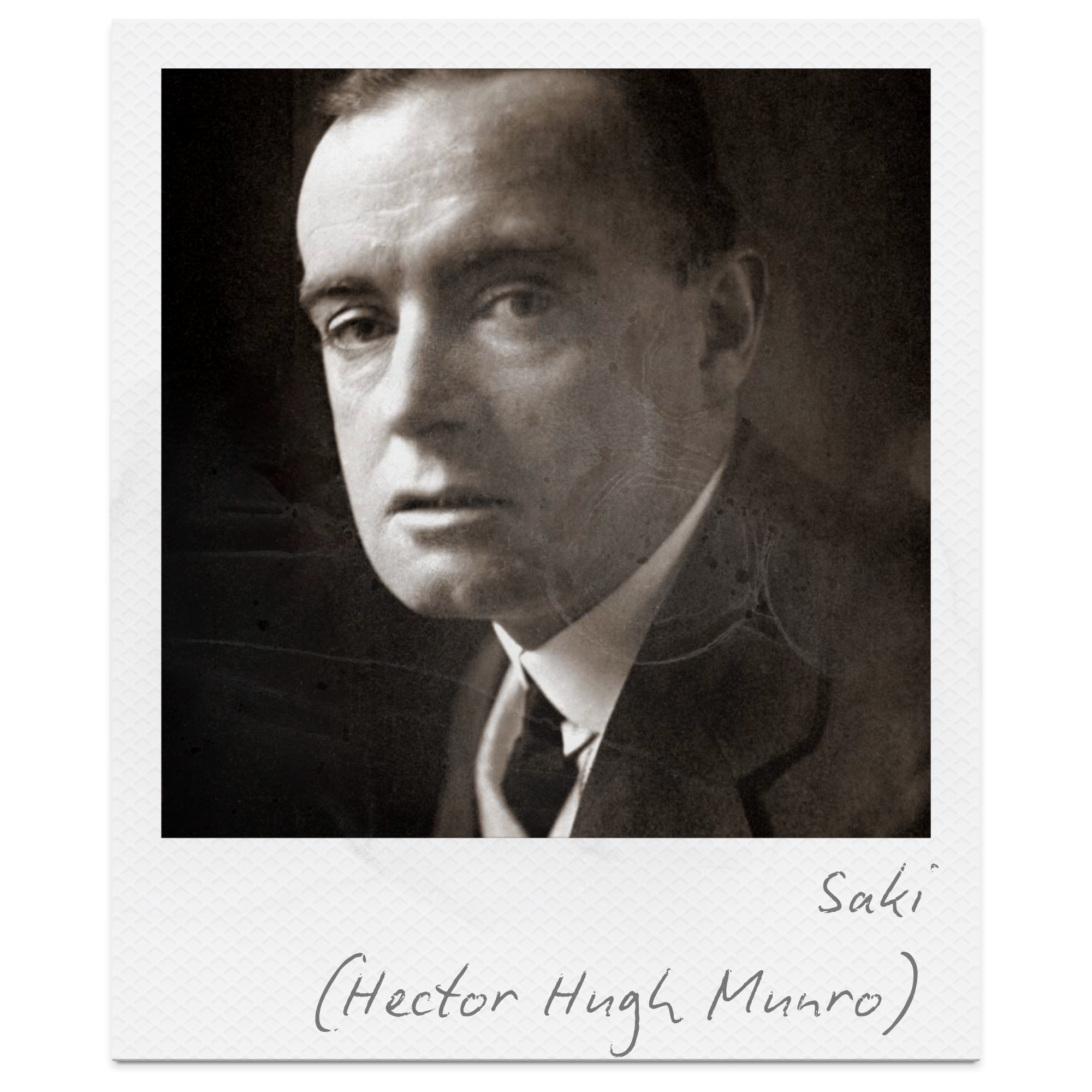
Context of Gabriel-Ernest
Saki, the pen name of Hector Hugh Munro, was writing during the late Victorian and Edwardian periods, a time when British society outwardly valued respectability, order, and social control. However, many writers of the period were increasingly interested in the darker instincts hidden beneath polite civilisation. In Gabriel-Ernest, Saki explores this tension through the contrast between refined upper-class society and the violent, untamed forces represented by Gabriel-Ernest himself. The story reflects anxieties surrounding civilisation versus savagery, the fragility of social order, and humanity’s connection to primitive instinct.
The story is heavily influenced by the Gothic tradition, particularly tales involving transformation, supernatural ambiguity, and predatory figures hidden within ordinary society. Saki combines these Gothic elements with his characteristic social satire, mocking the complacency and blindness of respectable Edwardian communities. Gabriel-Ernest’s mysterious presence repeatedly unsettles social boundaries between human and animal, civilised and wild, and innocence and danger. The rural setting, references to folklore, and recurring imagery of nature and hunting also connect the story to older myths surrounding werewolves and wilderness creatures. Through this mixture of dark humour, horror, and satire, Saki creates a story that feels both entertaining and deeply disturbing.
Gabriel-Ernest at a Glance
Form: Gothic short story / supernatural horror
Mood: Unsettling, sinister, suspenseful, darkly ironic
Central conflict: The story explores the clash between civilised society and the violent, predatory instincts represented by Gabriel-Ernest.
Core themes: Civilisation versus savagery, identity, fear of the unknown, nature and instinct, predation, social blindness, innocence and danger, transformation
Narrative perspective: Third-person narration closely following Van Cheele’s limited and uncertain perspective
One-sentence meaning: Saki uses Gothic atmosphere, irony, and supernatural ambiguity to suggest that beneath the surface of polite society lurk violent instincts and dangerous forces that civilisation cannot fully control.
Quick Summary of Gabriel-Ernest
The story begins when Van Cheele, a nervous and respectable member of rural society, encounters a strange naked boy lying in the countryside at sunset. The boy introduces himself as Gabriel-Ernest and speaks with unsettling confidence and ambiguity, particularly when discussing local stories about a dangerous wild beast that attacks children. Although Van Cheele feels increasingly uncomfortable around him, he is unable to fully explain or understand his fear.
Gabriel-Ernest is eventually taken into the home of the kindly and respectable Miss Van Cheele, who assumes he is simply an abandoned child in need of care and civilisation. However, Gabriel-Ernest continues to behave in disturbing and unpredictable ways, particularly around small children and animals. His fascination with hunting, blood, and physical violence creates growing tension throughout the story, while repeated references to wolves and transformation strengthen the atmosphere of supernatural danger.
The climax occurs when Gabriel-Ernest disappears while escorting a small child home at sunset. Soon afterwards, local reports suggest that both the child and Gabriel-Ernest have vanished near the woods, accompanied by sightings of a wild beast. The story ends ambiguously, strongly implying that Gabriel-Ernest was a werewolf or supernatural predator all along. Saki leaves readers with an unsettling sense that polite society completely failed to recognise the danger hidden within its own community.
Title of Gabriel-Ernest
The title immediately draws attention to the mysterious central character, placing all focus on the strange and unsettling figure of Gabriel-Ernest himself. By using a double name rather than a descriptive title, Saki creates curiosity and ambiguity from the beginning, encouraging readers to question who — or what — Gabriel-Ernest truly is. The simplicity of the title also mirrors the story’s gradual unfolding of mystery, since readers only slowly discover the darker significance behind the character’s identity.
The name “Gabriel” carries strong religious and symbolic associations, particularly connections to the angel Gabriel, who is traditionally linked with messages, revelation, and divine presence. This creates sharp irony because Gabriel-Ernest is associated not with holiness or protection, but with violence, predation, and fear. The contrast between the innocence suggested by the name and the character’s disturbing behaviour deepens the story’s unsettling atmosphere.
The second name, “Ernest,” may suggest honesty or sincerity, yet this too becomes ironic. Gabriel-Ernest rarely lies directly, but he constantly speaks in ways that conceal or blur the truth. Many of his disturbing comments about hunting children or transforming at sunset initially appear playful or absurd, even though they later seem horrifyingly literal. Saki therefore uses the title to establish ambiguity and foreshadowing long before the supernatural implications become fully clear.
By the ending of the story, the title takes on an even darker meaning because Gabriel-Ernest no longer appears as simply an unusual boy, but as a symbolic embodiment of hidden savagery and predatory instinct. The ordinary-sounding human name becomes deeply unsettling once readers recognise the violence concealed beneath it, reinforcing one of the story’s central ideas: that danger can exist hidden beneath apparently civilised appearances.
Structure of Gabriel-Ernest
Saki carefully structures the story to build suspense, ambiguity, and psychological unease. The narrative gradually shifts from social comedy and mild curiosity into increasingly disturbing supernatural horror, allowing tension to develop slowly through suggestion, implication, and withheld certainty. Much of the story’s impact comes from the way Saki controls revelation, never fully confirming the truth outright while still guiding readers toward a horrifying conclusion.
Opening / Exposition
The opening immediately establishes an atmosphere of unease through the isolated countryside setting and Van Cheele’s strange encounter with Gabriel-Ernest. Saki delays explanation from the beginning, introducing Gabriel-Ernest as a mysterious figure lying naked in the wilderness at sunset. His calm confidence and unsettling conversation create tension before any obvious threat has appeared.
The exposition is especially effective because it combines ordinary social realism with disturbing supernatural hints. Gabriel-Ernest speaks casually about local disappearances and hunting children, yet his remarks are presented ambiguously enough that both Van Cheele and readers initially struggle to interpret them seriously. This uncertainty becomes central to the story’s structure because the horror develops gradually through implication rather than direct revelation.
Saki also establishes several important structural patterns early in the story:
◆ repeated references to sunset and transformation
◆ tension between civilisation and wilderness
◆ ironic misunderstandings
◆ the contrast between politeness and hidden danger
These elements quietly foreshadow the darker events of the ending.
Development
As the story develops, Saki steadily increases tension by placing Gabriel-Ernest within increasingly civilised and domestic settings. His presence inside Miss Van Cheele’s respectable household creates dramatic irony because readers begin recognising the danger long before the adult characters fully do.
The development section relies heavily on escalating discomfort rather than dramatic action. Gabriel-Ernest’s fascination with hunting, blood, and predatory behaviour becomes increasingly disturbing, especially when linked to his physical descriptions and animalistic imagery. Saki repeatedly withholds certainty, however, preventing the story from becoming straightforward supernatural fiction too early.
Dialogue becomes structurally important during this section because Gabriel-Ernest repeatedly speaks in ways that sound playful, strange, or metaphorical while simultaneously hinting at literal violence. This creates growing tension between appearance and reality, forcing readers to question whether the danger is supernatural, psychological, or both.
Turning Point / Climax
The turning point occurs when Gabriel-Ernest is trusted with escorting a small child home at sunset. Structurally, this moment brings together many of the story’s recurring warnings and symbols:
◆ sunset
◆ children in danger
◆ wilderness imagery
◆ social blindness
◆ predatory instinct
The climax itself happens largely offstage, which makes it even more unsettling. Instead of describing violence directly, Saki allows implication and absence to create horror. The disappearance of both Gabriel-Ernest and the child, combined with reports of a beast near the woods, forces readers to reconstruct what has happened themselves.
This structural choice is highly effective because the lack of explicit confirmation maintains ambiguity while still creating a powerful emotional shock. Readers experience horror through suggestion rather than graphic detail.
Ending / Resolution
The ending leaves the story unresolved in a literal sense while still strongly implying the truth about Gabriel-Ernest’s identity. Saki avoids complete explanation, refusing to fully confirm whether Gabriel-Ernest was truly supernatural or whether events could theoretically be interpreted differently.
This ambiguity gives the ending lasting psychological impact because readers are left with uncertainty rather than closure. The story concludes not with restored order, but with the disturbing suggestion that civilisation completely failed to recognise or control the violence hidden within its own environment.
The final structure also reinforces the story’s central irony. Respectable society repeatedly ignores warning signs because Gabriel-Ernest appears outwardly human and socially manageable. By the time the truth becomes unavoidable, it is already too late. This gives the ending a deeply cynical tone, suggesting that social confidence and politeness are dangerously inadequate against more primal or violent forces.
Setting of Gabriel-Ernest
Saki uses setting to create atmosphere, reinforce the story’s supernatural ambiguity, and symbolise the conflict between civilisation and untamed instinct. The shifting settings throughout the story move between respectable Edwardian society and the threatening natural world, with the contrast between these spaces intensifying the reader’s sense of unease and danger.
The countryside setting is central to the story’s Gothic atmosphere. Gabriel-Ernest is first introduced lying “in a patch of warm sunshine” on a hillside at sunset, immediately connecting him with nature, wilderness, and animal instinct rather than human civilisation. The isolated landscape creates vulnerability and uncertainty, while the fading evening light contributes to the sense that ordinary social rules are weakening. Saki repeatedly associates sunset with transformation and danger, making the natural setting feel unpredictable and threatening.
The woods and surrounding countryside also symbolise the presence of older, primitive forces existing beyond human control. Local stories about missing children and wild animals create an atmosphere shaped by fear, folklore, and hidden violence. Nature in the story is not peaceful or comforting; instead, it becomes associated with predation and survival. Gabriel-Ernest appears most powerful when connected to these wild spaces, reinforcing the idea that he belongs to the natural world rather than polite society.
In contrast, Miss Van Cheele’s home represents civilisation, social order, and respectable domestic life. However, Saki deliberately undermines the apparent safety of this setting by placing Gabriel-Ernest within it. His unsettling presence inside a polite household creates dramatic irony because readers increasingly recognise the danger while the adults remain blind to it. This contrast between domestic respectability and hidden threat deepens the story’s tension.
Saki also uses sensory detail carefully to shape atmosphere. The descriptions of warmth, fading light, and silence create a strange mixture of beauty and menace. Gabriel-Ernest himself is repeatedly associated with animalistic imagery and physical vitality, making him seem almost inseparable from the surrounding landscape. The setting therefore reflects the story’s wider tensions between restraint and instinct, order and savagery, civilisation and the wild.
By the ending, the woods become a symbolic space of disappearance and violence. The final reports of the child vanishing near the forest reinforce the idea that the wilderness represents forces beyond social control or understanding. Saki ultimately presents the setting not simply as background, but as an active reflection of the story’s deeper fears surrounding hidden danger and the fragility of civilisation.
Narrative Voice in Gabriel-Ernest
Saki uses a third-person narrative voice that remains closely connected to Van Cheele’s limited perspective, shaping the reader’s uncertainty and gradually building suspense. Because readers experience Gabriel-Ernest largely through Van Cheele’s observations and reactions, the narrative carefully controls how much information is revealed at any moment. This limited perspective is essential to the story’s atmosphere because it allows mystery and ambiguity to develop slowly.
The narration often adopts an ironic and subtly mocking tone, particularly when describing respectable Edwardian society. Van Cheele himself is presented as nervous, socially cautious, and slightly ridiculous, while many of the adults around him appear overly confident in their assumptions about civilisation, morality, and social order. Saki’s dry humour creates contrast between polite conversation and the increasingly disturbing implications beneath it.
At the same time, the narrative voice frequently creates unease through understatement. Gabriel-Ernest says openly threatening things about hunting children or transforming at sunset, yet these remarks are often presented casually within ordinary dialogue. This restrained narration makes the horror more unsettling because danger is implied rather than dramatically announced.
The narrative perspective also shapes reader sympathy and interpretation very carefully. Since Van Cheele only partially understands what is happening, readers are forced to interpret clues alongside him. This creates tension between rational explanation and supernatural possibility throughout the story. Saki never allows the narration to fully confirm Gabriel-Ernest’s identity directly, preserving ambiguity even at the ending.
Importantly, the narrative voice combines elements of Gothic horror with social satire. Moments of suspense and supernatural tension are repeatedly interrupted by ironic observations about class, manners, and social respectability. This mixture creates a distinctive tone that feels simultaneously entertaining, unsettling, and cynical, reinforcing the story’s wider criticism of social blindness and complacency.
Characters in Gabriel-Ernest
Saki’s characters represent conflicting ideas surrounding civilisation, instinct, social respectability, and hidden violence. Rather than functioning simply as realistic individuals, many of the characters symbolise wider fears and tensions within Edwardian society. The contrasts between them help Saki explore the fragile boundary between the civilised world and the savage forces lurking beneath it.
Gabriel-Ernest
Gabriel-Ernest is the story’s central source of mystery, fear, and ambiguity. From his first appearance, Saki presents him as deeply connected to the natural world rather than human society. He is introduced lying naked in the countryside at sunset, immediately associating him with wilderness, instinct, and animalistic freedom. His behaviour constantly unsettles social expectations because he appears simultaneously childlike, predatory, innocent, and threatening.
Saki repeatedly uses animalistic imagery to describe Gabriel-Ernest. His physical movements are “swift and noiseless,” while his smile is often described in predatory or unnatural terms. He also speaks casually about violence and hunting children, blurring the line between humour and genuine menace. One of the story’s most disturbing features is that Gabriel-Ernest rarely hides what he is; instead, the adults around him fail to recognise the danger.
Gabriel-Ernest symbolises untamed instinct and the violent forces hidden beneath civilisation. His apparent transformation at sunset links him strongly to Gothic werewolf traditions, but he also functions more broadly as a representation of primal savagery resisting social control. Even when placed inside respectable domestic environments, he remains emotionally detached from ordinary morality or human empathy.
Importantly, Saki preserves ambiguity around Gabriel-Ernest throughout the story. Although the ending strongly implies supernatural transformation, the narration never confirms it completely. This uncertainty makes him more psychologically unsettling because he exists between categories:
◆ human and animal
◆ civilised and savage
◆ child and predator
◆ innocence and violence
Van Cheele
Van Cheele functions as both observer and representative of respectable Edwardian society. He is cautious, socially conventional, and highly uncomfortable with anything that disrupts ordinary behaviour. Through Van Cheele’s perspective, readers gradually become aware of Gabriel-Ernest’s disturbing nature.
Although Van Cheele senses danger almost immediately, he repeatedly hesitates to act decisively because he fears appearing foolish or irrational. This hesitation becomes symbolically important because it reflects the wider social blindness criticised throughout the story. He recognises fragments of the truth but lacks the confidence or imagination to confront it fully.
Saki also uses Van Cheele for ironic humour. His nervousness and awkward politeness often make him appear slightly comic, particularly when contrasted with Gabriel-Ernest’s confidence and physical power. However, beneath this humour lies criticism of a society more concerned with appearances and manners than genuine danger.
Van Cheele’s limited understanding shapes the story’s suspense because readers remain trapped within his uncertainty. His inability to fully interpret Gabriel-Ernest’s behaviour mirrors the wider failure of civilisation to recognise the violence hidden beneath respectable surfaces.
Miss Van Cheele
Miss Van Cheele represents conventional ideas of charity, respectability, and social order. She immediately assumes Gabriel-Ernest is simply a neglected child who can be corrected through kindness, discipline, and proper domestic care.
Saki uses her character ironically because her confidence in civilisation blinds her completely to the danger around her. She believes social structures and moral instruction are naturally capable of controlling behaviour, yet Gabriel-Ernest fundamentally resists these assumptions. Her attempts to “civilise” him therefore become unintentionally absurd and tragic.
Miss Van Cheele also symbolises the complacency of respectable society more generally. She interprets Gabriel-Ernest entirely through conventional social expectations, refusing to imagine anything outside ordinary explanations. This makes her both sympathetic and deeply naïve.
Importantly, Saki does not portray her as cruel or foolish in a simple sense. Her kindness and concern for Gabriel-Ernest are genuine, which makes the story’s ending even more disturbing because good intentions prove completely powerless against the darker forces represented in the story.
Cunningham
Although Cunningham appears only briefly, he contributes significantly to the story’s atmosphere and thematic tension. His stories about the local beast and missing children introduce folklore, superstition, and fear into the narrative early on.
Cunningham functions partly as a voice of rural knowledge and instinctive understanding. Unlike the more respectable characters, he appears willing to accept the possibility that dangerous forces exist beyond rational explanation. His warnings therefore foreshadow the supernatural implications of the ending.
At the same time, Saki presents these local stories ambiguously enough that readers initially remain uncertain whether they should be interpreted seriously. This uncertainty strengthens the story’s tension between rational civilisation and older, more primitive fears.
Key Themes in Gabriel-Ernest
Saki explores a range of unsettling and interconnected themes throughout the story, using Gothic horror, irony, and supernatural ambiguity to question the stability of civilisation and the darker instincts hidden beneath respectable society. Many of the themes overlap, creating a constant tension between the civilised world and the primitive violence represented by Gabriel-Ernest.
Civilisation Versus Savagery
The central conflict of the story is the clash between civilised society and untamed instinct. Respectable Edwardian society believes itself orderly, rational, and morally controlled, yet Gabriel-Ernest repeatedly exposes how fragile these assumptions really are.
Gabriel-Ernest himself is strongly associated with wilderness, animal instinct, and predatory violence. He appears most powerful outdoors at sunset, surrounded by nature rather than human civilisation. His casual references to hunting children and his animalistic physical descriptions suggest a force that exists beyond ordinary morality or social restraint.
In contrast, characters such as Miss Van Cheele believe that politeness, education, and domestic structure can control behaviour. Saki undermines this confidence throughout the story, suggesting that civilisation may simply disguise more primitive instincts rather than eliminate them.
The ending reinforces this theme because the supposedly civilised community completely fails to recognise or stop the danger in its midst.
Fear of the Unknown
Much of the story’s tension comes from uncertainty and ambiguity. Neither Van Cheele nor the reader fully understands what Gabriel-Ernest is for most of the narrative, creating growing psychological unease.
Saki carefully withholds direct confirmation about the supernatural elements of the story. Gabriel-Ernest’s strange behaviour, references to wolves, disappearances, and transformation at sunset all strongly imply something monstrous, but the narration never fully explains events outright. This uncertainty makes the story more disturbing because readers are forced to imagine possibilities rather than receiving clear answers.
The fear of the unknown also reflects wider anxieties about things that cannot be controlled through logic or social order. Gabriel-Ernest represents a threat that respectable society cannot properly classify or understand, making him especially dangerous.
Identity and Transformation
The story repeatedly blurs boundaries between human and animal, civilisation and instinct, innocence and violence. Gabriel-Ernest’s identity remains unstable throughout the narrative, with the story constantly questioning what he truly is.
Transformation becomes particularly important through the repeated references to sunset. Gabriel-Ernest implies that he changes physically and psychologically after dark, linking the story to traditional werewolf mythology. However, the transformations in the story are symbolic as well as supernatural.
Gabriel-Ernest represents hidden aspects of identity that society attempts to suppress or ignore. His existence suggests that beneath civilised appearances lie more primitive instincts connected to violence, hunger, and survival.
The uncertainty surrounding his identity also increases the story’s horror because he cannot be easily categorised or controlled.
Predation and Violence
Violence exists beneath the surface of the entire story, even during moments of humour or ordinary conversation. Gabriel-Ernest repeatedly speaks about hunting and eating children in ways that sound simultaneously playful and horrifying.
Saki connects violence closely to instinct and nature. Gabriel-Ernest does not appear morally conflicted about predation because it is presented as natural behaviour rather than deliberate cruelty. This makes him more unsettling because he lacks ordinary human guilt or empathy.
The repeated references to missing children and unseen attacks create an atmosphere of hidden threat throughout the story. Violence is often implied rather than directly shown, making the horror feel psychological and anticipatory rather than graphic.
The final disappearance of the child confirms the danger that polite society repeatedly ignored, reinforcing the destructive consequences of social blindness.
Social Blindness and Complacency
One of the story’s most ironic themes is society’s inability to recognise obvious danger. Gabriel-Ernest frequently hints openly at his true nature, yet the adults around him repeatedly dismiss or misunderstand these warnings.
Miss Van Cheele’s belief that kindness and civilisation can “improve” Gabriel-Ernest symbolises the complacency of respectable Edwardian society. Characters interpret Gabriel-Ernest according to social expectations rather than instinctive fear or evidence.
Saki uses this blindness satirically, suggesting that social respectability often prevents people from confronting uncomfortable truths. Characters are more concerned with maintaining polite assumptions than recognising genuine danger.
This theme gives the story a cynical edge because it suggests civilisation may weaken survival instincts rather than strengthen them.
Nature and Instinct
Nature in the story is presented as beautiful but deeply threatening. The countryside setting, sunset imagery, and wilderness landscapes are closely associated with freedom, transformation, and predatory instinct.
Gabriel-Ernest appears almost inseparable from the natural world. His physical vitality, animalistic behaviour, and comfort outdoors contrast sharply with the awkwardness and restraint of the civilised characters. Saki suggests that instinctive forces remain powerful beneath the surface of human society despite attempts to suppress them.
The story also challenges the idea that nature is peaceful or morally ordered. Instead, nature is connected to survival, hunger, and violence. The wilderness becomes a symbolic space where civilisation’s rules lose their authority.
Innocence and Danger
Saki repeatedly contrasts innocence with hidden threat throughout the story. Gabriel-Ernest physically appears as a beautiful adolescent boy, yet this appearance conceals extreme danger. The tension between outward innocence and inner savagery creates much of the story’s unsettling atmosphere.
Children become especially important symbols within this theme. Gabriel-Ernest is both childlike and predatory, while the vulnerable children of the village represent innocence endangered by forces society refuses to acknowledge.
The story ultimately suggests that appearances are dangerously deceptive. Respectability, youth, beauty, and politeness all conceal darker realities beneath the surface.
Supernatural Ambiguity
The story never fully confirms whether Gabriel-Ernest is literally supernatural, which makes ambiguity itself an important theme. Readers are left balancing rational explanations against increasingly strong evidence of transformation and predation.
Saki’s refusal to provide certainty keeps the story psychologically disturbing because the unknown remains unresolved. Gabriel-Ernest exists between reality and myth, making him both believable and impossible at the same time.
This ambiguity also strengthens the wider themes of fear and instability. The story suggests that some forces cannot be fully explained or controlled through logic, leaving civilisation permanently vulnerable to what exists beyond its understanding.
Symbolism in Gabriel-Ernest
Saki uses recurring symbols throughout the story to reinforce themes surrounding civilisation, instinct, violence, and hidden danger. Many of the story’s symbols operate ambiguously, creating uncertainty and psychological tension while also strengthening the Gothic atmosphere. The symbolism repeatedly suggests that beneath the surface of polite society exist darker, more primitive forces that cannot fully be controlled.
Sunset
Sunset is one of the story’s most important symbols, representing transformation, instability, and the weakening of civilisation’s control. Gabriel-Ernest first appears at sunset, and repeated references to fading light become closely associated with danger and supernatural possibility.
The transition between daylight and darkness symbolises the blurred boundary between civilisation and savagery. During the day, social order appears secure and rational, but sunset introduces uncertainty and fear. Gabriel-Ernest himself suggests that he changes after dark, making sunset symbolic of hidden instincts emerging from beneath controlled appearances.
Sunset also creates psychological unease because it marks a liminal moment between states:
◆ human and animal
◆ safety and danger
◆ civilisation and wilderness
◆ reason and instinct
Saki repeatedly uses this symbolic transition to increase tension throughout the story.
The Woods and Wilderness
The countryside and woods symbolise untamed instinct, hidden violence, and the power of nature beyond human control. Gabriel-Ernest is closely connected to these wild spaces, appearing almost inseparable from the landscape itself.
The wilderness contrasts sharply with the orderly domestic environments of respectable society. While characters like Miss Van Cheele believe in social rules, education, and civilisation, the woods represent older and more primal forces connected to survival and predation.
The forest setting also reflects traditional Gothic and folkloric symbolism. Woods often function in Gothic fiction as spaces where ordinary social rules break down and hidden fears emerge. In Gabriel-Ernest, the wilderness becomes associated with disappearance, transformation, and death, especially by the ending of the story.
Gabriel-Ernest Himself
Gabriel-Ernest functions symbolically as an embodiment of hidden savagery and primal instinct. Although he outwardly appears beautiful and human, he repeatedly hints at violence, hunger, and predatory behaviour.
His physical descriptions reinforce this symbolism. He is associated with animalistic movement, physical vitality, sharpness, and natural freedom rather than emotional warmth or morality. Saki therefore turns Gabriel-Ernest into a symbolic challenge to the belief that civilisation fully separates humans from animal instinct.
At the same time, Gabriel-Ernest symbolises the danger hidden beneath attractive appearances. Respectable society repeatedly ignores warning signs because he outwardly appears harmless or appealing. This makes him symbolic not only of savagery itself, but also of society’s inability to recognise uncomfortable truths.
Wolves and Beast Imagery
References to wolves and wild beasts symbolise predation, fear, and humanity’s connection to primitive violence. Local rumours about a dangerous creature attacking children gradually merge symbolically with Gabriel-Ernest himself.
The wolf imagery links the story to traditional werewolf mythology, but it also operates more broadly as a symbol of instinctive violence existing beyond moral restraint. Wolves are associated with hunting, hunger, and wilderness, all qualities repeatedly connected to Gabriel-Ernest.
Importantly, the “beast” remains partly unseen throughout the story. This hiddenness increases fear because readers imagine the horror rather than seeing it directly. The symbolic beast therefore becomes a representation of unknown danger and the violent impulses hidden beneath civilisation.
Clothing
Clothing functions symbolically as a marker of civilisation and social control. Gabriel-Ernest’s initial nakedness immediately separates him from ordinary society and aligns him with nature and instinct rather than culture and restraint.
When Miss Van Cheele later attempts to dress and civilise him, the clothing symbolises society’s attempt to impose order and respectability onto something fundamentally resistant to control. However, Gabriel-Ernest never fully appears comfortable within these civilised expectations.
The symbolism of clothing therefore reflects one of the story’s central tensions: the attempt to disguise or restrain primitive instinct beneath the outward appearance of social respectability.
Children
Children symbolise vulnerability and innocence throughout the story. The repeated references to missing children create emotional tension while reinforcing Gabriel-Ernest’s predatory nature.
At the same time, Gabriel-Ernest himself occupies an unsettling position between child and predator. His youthful appearance creates sympathy and trust even while his behaviour becomes increasingly disturbing. Saki uses this contrast to show how innocence itself can become deceptive or unstable.
The threatened children of the village also symbolise civilisation’s failure to protect its most vulnerable members. The adults’ inability to recognise danger ultimately allows violence to enter spaces that should have been safe.
Domestic Spaces
Miss Van Cheele’s home symbolises social order, respectability, and belief in civilisation’s ability to shape behaviour. The domestic environment initially appears safe and morally secure, yet Gabriel-Ernest’s presence gradually contaminates this sense of safety.
The contrast between polite domestic routines and the hidden violence surrounding Gabriel-Ernest creates dramatic irony throughout the story. Saki symbolically suggests that civilisation’s structures may be weaker and more fragile than society assumes.
By placing a predatory figure within an ordinary household, Saki turns the domestic setting itself into a symbol of social blindness and misplaced confidence.
Key Quotes and Methods in Gabriel-Ernest
Saki’s key quotations gradually build suspense and ambiguity while exploring themes surrounding civilisation, instinct, predation, and hidden violence. Much of the story’s horror comes from the contrast between polite social behaviour and the increasingly disturbing implications beneath Gabriel-Ernest’s words and actions.
“On a shelf of smooth stone overhanging a deep pool in the hollow of an oak coppice a boy of about sixteen lay asprawl, drying his wet brown limbs luxuriously in the sun.”
◆ Method: Sensory imagery and naturalistic description
◆ Meaning: Gabriel-Ernest is introduced as deeply connected to nature and physical instinct rather than civilisation or domestic order.
◆ Purpose: Saki immediately associates him with wilderness, freedom, and animal vitality.
◆ Impact: The calm beauty of the image creates contrast with the darker revelations that follow, making the horror more unsettling.
◆ Link to theme, conflict, or symbolism: Links to nature and instinct, civilisation versus savagery, and wilderness symbolism.
“I don’t sleep at night; that’s my busiest time.”
◆ Method: Foreshadowing and ambiguous dialogue
◆ Meaning: Gabriel-Ernest hints at a hidden nocturnal identity connected to hunting and transformation.
◆ Purpose: Saki gradually introduces supernatural tension without directly explaining the danger.
◆ Impact: Readers experience growing unease because the statement feels unnatural and threatening despite its calm tone.
◆ Link to theme, conflict, or symbolism: Connects to fear of the unknown, transformation, and predatory instinct.
“Flesh,” said the boy, and he pronounced the word with slow relish, as though he were tasting it.
◆ Method: Sensory language and disturbing imagery
◆ Meaning: Gabriel-Ernest’s enjoyment of the word “flesh” reveals his predatory and animalistic nature.
◆ Purpose: Saki creates horror through psychological discomfort rather than explicit violence.
◆ Impact: The description makes Gabriel-Ernest seem physically and emotionally disconnected from ordinary human morality.
◆ Link to theme, conflict, or symbolism: Links to predation, violence, and hidden savagery.
“Children when I can get any; they’re usually too well locked in at night.”
◆ Method: Dark humour and shocking understatement
◆ Meaning: Gabriel-Ernest casually discusses hunting children as though it were entirely ordinary.
◆ Purpose: Saki blurs the boundary between joke and genuine threat to increase psychological tension.
◆ Impact: Readers become deeply unsettled because the violence is treated so casually and naturally.
◆ Link to theme, conflict, or symbolism: Connects to innocence and danger, predation, and civilisation’s failure to recognise threat.
“At night I hunt on four feet.”
◆ Method: Symbolism and cryptic dialogue
◆ Meaning: Gabriel-Ernest strongly hints at animal transformation and supernatural identity.
◆ Purpose: Saki maintains ambiguity while gradually guiding readers toward the werewolf interpretation.
◆ Impact: The statement creates suspense because its meaning becomes increasingly horrifying in retrospect.
◆ Link to theme, conflict, or symbolism: Links to identity, transformation, and supernatural ambiguity.
“The boy laughed again, a laugh in which the snarl had nearly driven out the chuckle.”
◆ Method: Animalistic imagery and auditory description
◆ Meaning: Gabriel-Ernest’s humanity and savagery appear to merge together unnervingly.
◆ Purpose: Saki blurs the line between human behaviour and animal instinct.
◆ Impact: Readers experience growing fear because Gabriel-Ernest increasingly seems less human.
◆ Link to theme, conflict, or symbolism: Connects to civilisation versus savagery and hidden violence.
“What an extraordinary wild animal!”
◆ Method: Exclamatory language and ironic description
◆ Meaning: Van Cheele instinctively describes Gabriel-Ernest as animal rather than human.
◆ Purpose: Saki reveals that the truth is psychologically recognised before it is consciously accepted.
◆ Impact: The quotation highlights Van Cheele’s growing fear and confusion.
◆ Link to theme, conflict, or symbolism: Links to fear, instinctive understanding, and blurred identity.
“His pose was so suggestive of some wild faun of Pagan myth.”
◆ Method: Mythological allusion and imagery
◆ Meaning: Gabriel-Ernest is linked to ancient, uncivilised forces associated with pagan wilderness mythology.
◆ Purpose: Saki connects the story to older folkloric fears and supernatural traditions.
◆ Impact: Readers see Gabriel-Ernest as something primitive and outside ordinary society.
◆ Link to theme, conflict, or symbolism: Connects to nature, mythology, and civilisation versus instinct.
“On the open hillside where the boy had been standing a second ago, stood a large wolf.”
◆ Method: Sudden revelation and visual imagery
◆ Meaning: The story finally provides direct evidence of Gabriel-Ernest’s supernatural transformation.
◆ Purpose: Saki confirms the horror while still maintaining some ambiguity through second-hand narration.
◆ Impact: The abrupt transformation creates shock and validates the earlier tension and foreshadowing.
◆ Link to theme, conflict, or symbolism: Links to identity, transformation, and supernatural horror.
“Nothing was ever seen again of the Toop child or Gabriel-Ernest.”
◆ Method: Understatement and unresolved ending
◆ Meaning: The disappearance confirms the tragic consequences of society’s blindness and failure to act.
◆ Purpose: Saki leaves the horror psychologically unresolved rather than fully explained.
◆ Impact: The ending feels cold, disturbing, and haunting because certainty is replaced by implication.
◆ Link to theme, conflict, or symbolism: Connects to social blindness, predation, and the fragility of civilisation.
Key Techniques in Gabriel-Ernest
Saki combines Gothic atmosphere, irony, animalistic imagery, and carefully controlled ambiguity to create psychological tension throughout the story. The techniques are especially effective because the horror develops gradually through suggestion and implication rather than graphic description.
◆ Foreshadowing — Early references to a “wild beast,” missing animals, and the vanished child quietly prepare readers for the supernatural revelation at the ending.
◆ Supernatural ambiguity — Saki never immediately confirms Gabriel-Ernest’s true nature, forcing readers to balance rational explanation against increasingly disturbing evidence.
◆ Animalistic imagery — Gabriel-Ernest is repeatedly associated with “tigerish” eyes, snarling laughter, and predatory movement, blurring the line between human and animal.
◆ Gothic atmosphere — Isolated woods, sunset imagery, fading light, and supernatural uncertainty create an atmosphere of fear and instability.
◆ Dark humour — Gabriel-Ernest’s casual comments about eating children combine humour with horror, making the dialogue psychologically unsettling.
◆ Irony — Respectable society repeatedly ignores obvious warning signs while believing itself civilised and rational.
◆ Symbolism — Sunset symbolises transformation and the collapse of civilisation’s control, while the woods represent instinct, danger, and untamed nature.
◆ Dialogue — Much of the suspense develops through Gabriel-Ernest’s cryptic and ambiguous speech, which sounds playful while concealing genuine threat.
◆ Contrast — Saki contrasts polite domestic order with violent predatory instinct throughout the story.
◆ Pathetic fallacy — The fading sunset and darkening landscape reflect the growing supernatural tension and danger.
◆ Limited perspective — Readers experience events largely through Van Cheele’s uncertainty, which strengthens suspense and psychological unease.
◆ Mythological allusion — References to a “wild faun of Pagan myth” connect Gabriel-Ernest to older supernatural folklore and primal instinct.
◆ Understatement — Saki often presents horrifying ideas casually or indirectly, making the horror feel colder and more disturbing.
◆ Narrative pacing — The story moves from mild curiosity to growing unease before accelerating rapidly toward the final disappearance and implied attack.
◆ Sensory imagery — Descriptions of movement, sound, light, and physical detail make Gabriel-Ernest feel vividly real and physically threatening.
◆ Dramatic irony — Readers increasingly understand the danger before characters such as Miss Van Cheele fully recognise it.
◆ Transformation motif — Repeated references to changing at sunset reinforce the instability of identity and the tension between civilisation and instinct.
◆ Unresolved ending — The story concludes with implication rather than certainty, leaving readers psychologically unsettled long after the narrative ends.
How the Writer Creates Meaning and Impact in Gabriel-Ernest
Saki creates meaning and emotional impact through a careful combination of Gothic atmosphere, ambiguity, animalistic imagery, irony, and controlled narrative perspective. Rather than relying on graphic violence, the story gradually develops psychological unease through implication, foreshadowing, and the growing contrast between civilised behaviour and hidden savagery.
One of the most important ways Saki creates meaning is through his presentation of Gabriel-Ernest himself. From his first appearance “drying his wet brown limbs luxuriously in the sun,” Gabriel-Ernest is closely associated with the natural world rather than human society. Saki repeatedly uses animalistic imagery to blur the line between human and beast, particularly through descriptions of his “tigerish gleam,” snarling laughter, and unnatural physical movement. These methods gradually make Gabriel-Ernest seem increasingly primitive and predatory, reinforcing the story’s central conflict between civilisation and instinct.
Saki also creates tension through ambiguity and delayed revelation. Gabriel-Ernest repeatedly hints at hunting on “four feet” and eating “child-flesh,” yet these comments are presented casually enough that both Van Cheele and readers initially struggle to decide whether they are jokes, fantasies, or genuine warnings. By withholding direct confirmation for most of the story, Saki forces readers into the same uncertainty experienced by Van Cheele. This gradual movement from doubt to horror makes the ending far more psychologically effective than immediate explanation would have done.
The story’s setting is equally important in shaping meaning and atmosphere. The woods, hillsides, and fading sunset repeatedly symbolise instability and hidden danger. Sunset becomes especially significant because it marks the transition between civilisation and savagery, humanity and animal instinct. Cunningham’s description of the landscape turning “cold and grey” at the exact moment of transformation reinforces the sense that ordinary reality itself is becoming unstable. Through these symbolic settings, Saki creates a world where primal forces exist just beneath the surface of respectable society.
Saki’s use of irony also deepens the story’s impact. Miss Van Cheele believes completely in the power of civilisation, charity, and domestic order, assuming Gabriel-Ernest can simply be dressed, educated, and absorbed into society. However, readers increasingly recognise that these social structures are powerless against the violent instincts Gabriel-Ernest represents. The decision to allow him to escort the Toop child home becomes especially tragic because the adults remain blind to dangers that have repeatedly been signalled throughout the narrative.
The narrative perspective strengthens this tension further. Because the story largely follows Van Cheele’s limited understanding, readers experience growing fear alongside him. Van Cheele senses instinctively that something is wrong long before he fully understands the truth. His uncertainty creates suspense while also symbolising the wider inability of respectable society to recognise uncomfortable realities.
Saki also combines horror with dark humour throughout the story. Gabriel-Ernest’s calm, conversational references to eating children or hunting by night are simultaneously absurd and horrifying. This mixture of humour and menace makes the dialogue deeply unsettling because the violence feels instinctive and casual rather than emotionally dramatic.
Finally, Saki creates lasting impact through the story’s unresolved ending. The disappearance of Gabriel-Ernest and the Toop child is never fully explained in direct terms, yet the implication is unmistakable. The understated narration makes the conclusion feel colder and more disturbing because readers are left imagining the horror for themselves. Even more unsettling is the final irony that Gabriel-Ernest is memorialised as a heroic child who “bravely sacrificed his life for another.” This ending reinforces one of the story’s central ideas: civilisation repeatedly misunderstands and disguises the dangerous forces hidden within itself.
Alternative Interpretations of Gabriel-Ernest
Saki’s story supports multiple interpretations because the supernatural horror can also be read symbolically, psychologically, and socially. The ambiguity surrounding Gabriel-Ernest’s identity allows readers to interpret the story in several different but equally convincing ways.
Psychological Interpretation: Gabriel-Ernest as repressed instinct
From a psychological perspective, Gabriel-Ernest can be interpreted as a symbolic embodiment of violent human instinct hidden beneath civilisation. His connection to hunting, animal behaviour, and transformation suggests the darker impulses that polite society attempts to suppress or deny.
The story repeatedly contrasts respectable domestic order with predatory violence, implying that civilisation may only disguise humanity’s more primitive nature rather than remove it completely. Gabriel-Ernest therefore becomes a symbolic reminder that savagery still exists beneath the surface of supposedly rational society.
Under this interpretation, the werewolf elements matter less as literal supernatural horror and more as representations of the instincts that civilised people fear within themselves.
Social Interpretation: Critique of Edwardian complacency
The story can also be interpreted as a satire of upper-class Edwardian society and its blindness to genuine danger. Characters such as Miss Van Cheele assume that social respectability, manners, and domestic care are naturally capable of controlling behaviour.
Gabriel-Ernest repeatedly gives obvious warnings about his dangerous nature, yet the adults around him dismiss or misunderstand them because they cannot imagine anything existing outside their narrow social assumptions. Saki therefore criticises a society more concerned with appearances and politeness than genuine awareness or responsibility.
From this perspective, the story becomes a warning about complacency and the dangers of ignoring uncomfortable truths simply because they do not fit accepted social expectations.
Gothic Interpretation: Fear of the outsider
A Gothic interpretation would focus on Gabriel-Ernest as an outsider figure who threatens social stability and order. He enters the story from the wilderness, exists outside normal rules, and gradually disrupts the apparent safety of domestic life.
Like many Gothic figures, Gabriel-Ernest blurs categories:
◆ human and animal
◆ child and predator
◆ civilisation and savagery
◆ innocence and violence
This uncertainty creates fear because he cannot be easily understood or controlled. The story’s tension therefore comes partly from anxiety surrounding things that exist outside ordinary human understanding.
Under this interpretation, Gabriel-Ernest represents the fear that civilisation is weaker and more fragile than society believes.
Supernatural Interpretation: A literal werewolf story
The story can also be read more directly as a traditional supernatural tale involving an actual werewolf. Cunningham’s account of seeing the boy transform into “a large wolf,” combined with Gabriel-Ernest’s repeated references to hunting at night and moving on “four feet,” strongly supports this interpretation.
Saki draws heavily on folkloric and Gothic werewolf traditions, including transformation at sunset, attacks on livestock and children, and the connection between wilderness and predation.
From this perspective, the horror comes from the existence of genuinely supernatural evil hidden within ordinary rural society. The adults’ failure to recognise the danger then becomes tragic rather than symbolic.
Philosophical Interpretation: Civilisation as fragile illusion
A more philosophical interpretation might suggest that the story questions whether civilisation is truly capable of controlling violence at all. Gabriel-Ernest repeatedly appears stronger, freer, and more instinctively powerful than the civilised characters around him.
Van Cheele and his aunt rely entirely on social systems, manners, and rational explanations, yet these structures ultimately prove powerless against the primal force represented by Gabriel-Ernest. Even after the tragedy, society immediately creates a comforting false explanation by turning Gabriel-Ernest into a heroic figure.
This interpretation suggests that civilisation survives partly by refusing to confront disturbing truths directly. The story therefore becomes not just a Gothic horror narrative, but a cynical exploration of humanity’s need for comforting illusions.
Why Gabriel-Ernest Still Matters
Although Gabriel-Ernest was written in the Edwardian period, its exploration of fear, hidden violence, social blindness, and the tension between civilisation and instinct still feels deeply relevant today. Modern readers continue to connect with stories that question how well society truly understands or controls the darker aspects of human behaviour.
One reason the story remains powerful is its exploration of appearances versus reality. Gabriel-Ernest outwardly appears attractive, calm, and almost harmless, yet danger exists beneath the surface from the very beginning. This idea still resonates strongly in modern culture, where people continue to fear hidden threats concealed behind ordinary or respectable appearances.
The story also remains relevant because of its criticism of complacency and social denial. The adults repeatedly ignore warning signs because Gabriel-Ernest does not fit their expectations of danger. Saki’s portrayal of society refusing to recognise uncomfortable truths still feels strikingly modern, particularly in discussions surrounding violence, manipulation, and collective denial.
The theme of civilisation versus instinct also continues to resonate. The story questions whether human beings are truly as rational and morally controlled as society likes to believe. Gabriel-Ernest symbolises primal instinct and predatory violence existing beneath polite behaviour, making the story psychologically unsettling even for contemporary readers.
In addition, the story’s ambiguity gives it lasting power. Saki never fully explains everything directly, leaving readers uncertain about where reality ends and supernatural horror begins. This unresolved tension encourages interpretation and debate, making the story especially effective for classroom discussion and literary analysis.
Finally, Gabriel-Ernest still matters because its atmosphere and psychological horror remain highly effective. The isolated woods, fading sunset, and gradual movement from ordinary conversation into supernatural terror continue to influence modern Gothic and horror storytelling. Even over a century later, the story retains its ability to feel eerie, disturbing, and deeply unsettling.
Exam-Ready Insight and Teaching Ideas for Gabriel-Ernest
Strong responses to Gabriel-Ernest move beyond simply identifying the story as a werewolf narrative and instead focus closely on how Saki uses ambiguity, animalistic imagery, irony, and Gothic atmosphere to explore civilisation, instinct, fear, and social blindness. The strongest essays track how Gabriel-Ernest gradually becomes less human and more symbolic of the violent instincts hidden beneath polite society.
What Strong Responses Do
◆ analyse how Saki uses ambiguity to sustain suspense and uncertainty
◆ track the growing connection between Gabriel-Ernest and animal imagery
◆ explore how sunset symbolises transformation and instability
◆ examine the contrast between civilisation and wilderness
◆ analyse how irony shapes the story’s criticism of respectable society
◆ explore the significance of the unresolved ending
◆ use short embedded quotations to support conceptual interpretations
◆ connect methods directly to emotional and thematic impact
Conceptual Argument
A strong thesis for the story would be:
Saki presents civilisation as fragile and dangerously complacent, using Gothic atmosphere, supernatural ambiguity, and animalistic imagery to suggest that violent instinct remains hidden beneath the surface of respectable society.
Model Analytical Paragraph
Saki uses animalistic imagery and ambiguity to make Gabriel-Ernest increasingly unsettling throughout the story. From his first appearance “drying his wet brown limbs luxuriously in the sun,” Gabriel-Ernest is closely associated with the wilderness rather than human civilisation. His “tigerish gleam” and snarling laughter gradually blur the boundary between human and animal, while his cryptic references to hunting on “four feet” foreshadow his supernatural identity. Saki deliberately avoids confirming the truth immediately, forcing readers to experience the same uncertainty as Van Cheele. This ambiguity makes the horror more psychologically effective because Gabriel-Ernest feels both impossible and disturbingly believable at the same time. Through these methods, Saki suggests that civilisation only partially conceals more primitive instincts lurking beneath the surface of society.
Teaching Ideas for Gabriel-Ernest
This story works especially well for close analysis, Gothic interpretation, symbolism, and discussion-based learning because Saki combines supernatural horror with deeper social and psychological tensions.
1. Structured Close Analysis
Students track:
◆ animalistic descriptions of Gabriel-Ernest
◆ symbolism connected to sunset and the woods
◆ shifts in tone from humour to horror
◆ moments of foreshadowing
◆ how dialogue creates ambiguity
◆ contrasts between civilisation and instinct
◆ the significance of the ending and memorial brass
Students can then use these observations to build conceptual analytical paragraphs focused on method → meaning → impact.
2. Silent Debate
Students respond to conceptual statements such as:
◆ “Gabriel-Ernest represents human instinct rather than a literal monster.”
◆ “The adults are responsible for the Toop child’s death.”
This story works particularly well with discussion-led lessons focused on ambiguity, interpretation, symbolism, and Gothic fear. To explore how to run an effective classroom discussion activity, check out the silent debate blog post.
3. Model Paragraph Development
Provide students with a model analytical paragraph focused on the woods, sunset symbolism, or Gabriel-Ernest’s dialogue.
Students then:
◆ identify where embedded quotations are used effectively
◆ track where the analysis explains method → meaning → impact
◆ highlight conceptual vocabulary connected to civilisation and instinct
◆ improve the paragraph using the mark scheme
◆ add an alternative interpretation using another quotation
◆ rewrite the paragraph from a psychological or supernatural perspective
This helps students develop more conceptual and interpretative literary analysis.
4. Comparative Thinking Task
Students compare:
◆ civilisation versus savagery
◆ hidden danger beneath ordinary society
◆ supernatural ambiguity
◆ predatory imagery
◆ innocence and violence
◆ fear of the unknown
◆ Gothic atmosphere and symbolism
with another anthology story or wider prose text from the Literature Library.
5. Creative Writing Extension
Students write:
◆ a retelling from Gabriel-Ernest’s perspective
◆ an internal monologue from Van Cheele after the disappearance
◆ a modern Gothic story centred around hidden danger
If you’re looking for creative writing prompts, Gothic story ideas, and classroom-ready activities across multiple genres and themes, explore the Creative Writing Archive and the Gothic Writing Hub.
Go Deeper into Gabriel-Ernest
Comparing Gabriel-Ernest with other Gothic and psychologically unsettling texts can help students develop more conceptual interpretations surrounding civilisation, instinct, fear, transformation, and hidden violence.
◆ The Were-Wolf by Clemence Housman — both stories use werewolf mythology to explore fear, predation, hidden identity, and the danger concealed beneath outward appearances.
◆ The Signalman by Charles Dickens — similarly combines supernatural uncertainty with psychological tension, atmosphere, and the fear of forces beyond human understanding.
◆ The Fall of the House of Usher by Edgar Allan Poe — both stories create Gothic unease through atmosphere, instability, and the collapse of rational control.
◆ The Strange Case of Dr Jekyll and Mr Hyde by Robert Louis Stevenson — strongly linked through themes of dual identity, hidden savagery, repression, and the darker instincts beneath respectable society.
◆ The Open Window by Saki — useful for comparing Saki’s use of irony, deception, narrative manipulation, and unsettling tonal shifts beneath apparently ordinary social situations.
◆ The Lottery by Shirley Jackson — both stories explore social blindness, hidden violence within ordinary communities, and the disturbing fragility of civilisation.
These comparisons help students move beyond simple supernatural interpretation and instead explore wider literary ideas surrounding fear, instinct, morality, and the instability of social order.
Final Thoughts
Saki’s Gabriel-Ernest remains one of the most unsettling stories in Stories of Ourselves Volume 2 because it combines Gothic horror, dark humour, and social satire with disturbing psychological ambiguity. Through the mysterious figure of Gabriel-Ernest, Saki explores the tension between civilisation and instinct, suggesting that beneath polite society lurk violent forces that cannot easily be controlled or understood.
What makes the story especially effective is its gradual movement from ordinary conversation into genuine horror. Saki avoids graphic violence and instead relies on implication, atmosphere, symbolism, and ambiguity to create fear. The story’s unresolved ending leaves readers haunted not only by Gabriel-Ernest himself, but also by the disturbing suggestion that society repeatedly fails to recognise danger even when it is openly visible.
For students studying Stories of Ourselves Volume 2 for CIE IGCSE World Literature (0408), the story offers rich opportunities to explore symbolism, narrative voice, Gothic conventions, and alternative interpretations. If you would like to explore more anthology analysis, visit the Stories of Ourselves Volume 2 Hub, or discover further prose and poetry resources in the Literature Library.
Choose Your Next Text