I Loved You First: But Afterwards Your Love by Christina Rossetti: Summary, Themes, Symbolism & Analysis
Christina Rossetti’s sonnet I Loved You First: But Afterwards Your Love explores the complex relationship between mutual devotion, emotional reciprocity, and the merging of identities within love. At first, the speaker appears to question which lover has given more — asking whether love can be measured through time, intensity, or emotional understanding. Yet as the poem unfolds, Rossetti gradually dismantles this idea of comparison, suggesting that genuine love ultimately dissolves the boundaries between “mine” and “thine.”
Through the imagery of song, unity, and shared identity, the poem reflects on the way love can transform two separate individuals into something inseparable. What begins as a meditation on who loved first or most deeply becomes a philosophical reflection on how love transcends ownership, rivalry, and individuality itself.
This poem forms part of Christina Rossetti’s wider exploration of love, devotion, and spiritual connection, themes that appear across many of her poems. If you would like to explore more of Rossetti’s poetry and analysis, visit the Christina Rossetti poetry hub, or browse the Literature Library for more poetry guides and teaching resources.

Context of I Loved You First: But Afterwards Your Love
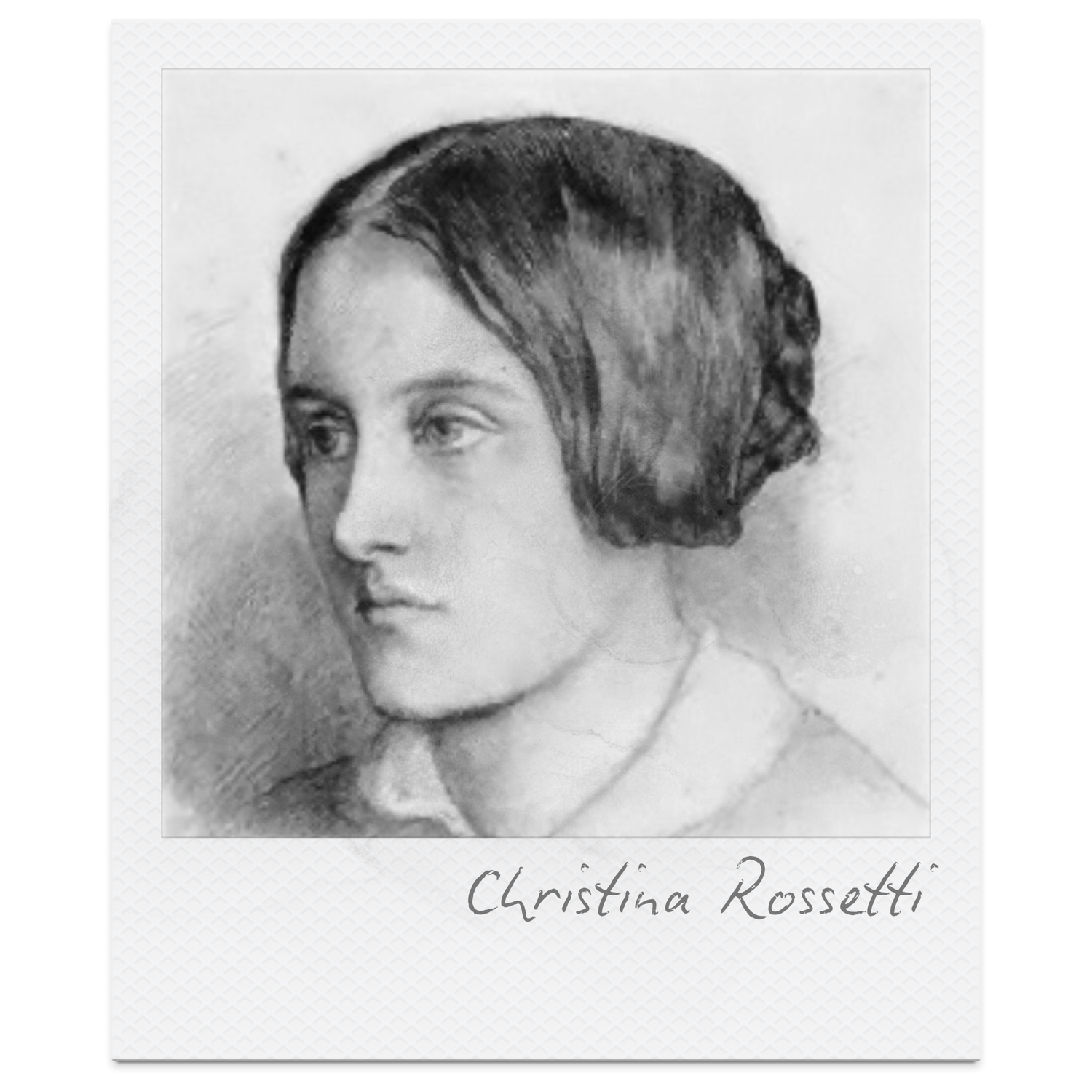
Christina Rossetti often explored love as something that existed between human emotion and spiritual unity, and this idea sits at the centre of I Loved You First: But Afterwards Your Love. The poem reflects on a relationship where the speaker initially believes their love came first and endured longer. However, as the sonnet unfolds, this sense of emotional precedence becomes less important. Rossetti gradually reframes the relationship as one defined not by comparison, but by mutual understanding and shared devotion.
This perspective reflects Rossetti’s wider interest in the way love can blur the boundaries between two individuals. Victorian culture frequently framed romantic relationships through ideas of duty, constancy, and moral seriousness, but Rossetti’s poetry often questions whether love can truly be measured through time, sacrifice, or intensity. In this poem, the speaker initially tries to weigh affection through ideas such as duration, interpretation, and emotional insight, before recognising that love ultimately escapes such calculations.
Rossetti also places the poem within a broader literary tradition by opening it with epigraphs from Dante and Petrarch, two major figures associated with philosophical and devotional love poetry. Their presence signals that the poem is engaging with long-standing literary debates about the nature of love — particularly the idea that love can elevate or transform the lover. By the end of the sonnet, Rossetti pushes this idea further, suggesting that love does not simply elevate individuals but unites them into a shared identity.
For a deeper exploration of the cultural and literary influences shaping Rossetti’s poetry, see the Christina Rossetti context post, which explores the Victorian religious, literary, and social ideas that inform many of her poems
I Loved You First: But Afterwards Your Love: At a Glance
Form: Petrarchan sonnet
Mood: Reflective, contemplative, quietly reconciliatory
Central tension: Whether love can be measured between two people or whether true love dissolves such distinctions
Core themes: mutual love, unity of identity, the limits of comparison, spiritualised love
One-sentence meaning:
The poem explores a speaker who initially tries to measure and compare two lovers’ devotion, but ultimately realises that genuine love transcends ownership and dissolves the boundaries between “mine” and “thine,” uniting both lovers into a shared identity.
Quick Summary of I Loved You First: But Afterwards Your Love
The poem begins with the speaker reflecting on the origins of the relationship, stating that they loved first. However, the speaker quickly acknowledges that the other person’s love eventually rose higher and stronger, like a powerful song overwhelming the quieter “cooings” of a dove. What initially appears to be a claim of emotional precedence becomes a moment of uncertainty, as the speaker begins to question whether love can truly be compared.
As the sonnet progresses, the speaker reflects on the different ways the two lovers came to understand one another. The speaker suggests that their own love involved anticipation and imagination, while the beloved was able to interpret and understand the speaker more clearly. This difference introduces the possibility that love is not simply measured by who loved first or longest, but also by how deeply each person understands the other.
By the final lines of the poem, the speaker abandons the attempt to weigh or measure love altogether. Rossetti reframes love as something that dissolves individual ownership, arguing that genuine love cannot be divided into “mine” and “thine.” Instead, the lovers become united through their shared devotion, suggesting that true love erases the boundaries between two separate selves and creates a deeper sense of emotional unity.
Title, Form, Structure, and Metre
The poem is written as a Petrarchan sonnet, a form traditionally associated with philosophical reflections on love. This structure allows the poem to begin with a question or tension before gradually resolving it through reflection. Here, the form mirrors the speaker’s shifting understanding of love: the poem moves from comparing two lovers’ devotion toward recognising that love ultimately dissolves such comparisons.
Title
The title immediately introduces the central tension of the poem: the question of who loved first. This phrasing suggests a relationship where emotional history matters and where affection might be measured through time or priority. However, the poem quickly complicates this assumption. While the speaker claims to have loved first, they also acknowledge that the beloved’s love eventually surpassed their own. The title therefore introduces the poem’s central debate — whether love can be ranked or weighed between two people.
Form and Structure
The poem follows the structure of a Petrarchan sonnet, consisting of fourteen lines divided into an octave and a sestet. The octave presents the initial tension of the poem: the speaker compares their love with that of the beloved, questioning whose devotion is greater or more meaningful.
The sestet then shifts the poem’s perspective. Instead of continuing to compare the two loves, the speaker begins to question the very idea of measuring affection. By the end of the poem, the speaker suggests that love dissolves the boundaries between individuals, creating a shared emotional identity rather than a competition.
Rhyme Scheme and Poetic Pattern
The poem follows a rhyme scheme typical of the Petrarchan sonnet form. The octave uses the pattern ABBAABBA, creating a sense of enclosure and reflection as the argument develops. This circular structure reinforces the speaker’s attempt to examine and reconsider the relationship between the two lovers.
The sestet then shifts to a more flexible pattern, CDCDCD, which allows the poem to move toward its philosophical conclusion. This structural change mirrors the shift in the poem’s thinking, as the speaker abandons comparison and embraces the idea that love cannot be divided into separate portions.
Metre and Rhythmic Movement
The poem is written primarily in iambic pentameter, the most common metre in English sonnets. Each line typically contains five iambs — pairs of unstressed and stressed syllables — creating a steady and reflective rhythm appropriate for philosophical meditation.
For example:
I LOVED | you FIRST | but AF | terWARDS | your LOVE
The regular rhythm gives the poem a sense of balance and control, reflecting the speaker’s attempt to reason through the nature of love. At the same time, subtle variations in stress allow the poem to emphasise key emotional ideas, particularly in moments where the speaker questions the possibility of measuring love.
Speaker in I Loved You First: But Afterwards Your Love
The speaker reflects thoughtfully on the nature of mutual love within a relationship. At the beginning of the sonnet, the voice claims emotional precedence, stating that they “loved first.” This suggests an initial belief that love might be measured through time, devotion, or emotional constancy. The statement carries a quiet confidence, implying that the speaker’s love developed gradually and endured over a long period.
However, the speaker quickly complicates this idea. They acknowledge that the beloved’s love eventually “outsoared” their own, rising suddenly and powerfully. This admission reveals a speaker who is not rigidly defending their position but instead reconsidering how love actually works. The tone therefore becomes reflective rather than argumentative, suggesting someone who is trying to understand the relationship rather than win a comparison.
As the poem progresses, the speaker’s perspective becomes increasingly philosophical. Instead of measuring love through duration, intensity, or interpretation, the speaker recognises that such comparisons misunderstand the nature of genuine devotion. By the final lines, the voice concludes that love dissolves the boundaries between individuals, suggesting that true love transcends ideas of “mine” and “thine.” The speaker ultimately moves from attempting to measure love to recognising that love creates a shared emotional identity between two people.
Line-by-Line Analysis of I Loved You First: But Afterwards Your Love
Before the sonnet begins, two literary epigraphs introduce the poem’s central ideas about love, devotion, and emotional unity. By quoting Dante and Petrarch, the poem places itself within the long tradition of European love poetry that explores how love can transform the self. These epigraphs frame the sonnet as a reflection on how love grows, intensifies, and ultimately unites two people.
Epigraph: Dante — “Poca favilla gran fiamma seconda.”
Translation: “From a small spark comes a great flame.”
◆ The line suggests that a small beginning can produce a powerful result, introducing the idea that love may grow far stronger than its original form.
◆ This idea reflects the poem’s central tension. Although the speaker claims to have loved first, the beloved’s love eventually becomes more powerful, echoing the image of a flame growing from a small spark.
◆ By invoking Dante, the poem connects itself to the tradition of spiritualised love, where emotional devotion develops into something larger and transformative.
Epigraph: Petrarch — “Ogni altra cosa, ogni pensier va fore…”
Translation:
“All other things, all thoughts depart,
And only love remains there with you.”
◆ These lines suggest that when love is present, all other concerns fall away, reinforcing the idea that love can dominate emotional experience.
◆ Petrarch’s words introduce the poem’s later claim that love dissolves boundaries between individuals, replacing distinctions such as “mine” and “thine.”
◆ The reference to Petrarch also signals that the poem is engaging with the long literary tradition of courtly and philosophical love, where devotion reshapes identity and perception.
Line-by-Line Analysis of I Loved You First: But Afterwards Your Love
Rossetti’s sonnet unfolds as a gradual rethinking of love, identity, and reciprocity. Rather than simply declaring devotion, the speaker moves through a process of reflection: first comparing two loves, then questioning that comparison, and finally rejecting it altogether. A line-by-line reading helps show how the poem shifts from individual feeling to shared union.
Line 1: The Claim of Emotional Priority
“I loved you first: but afterwards your love”
The sonnet begins with a confident declaration of emotional precedence. The speaker establishes a chronology, insisting that their love came first, as though this might give it a kind of authority or legitimacy. However, the line immediately introduces complication through the conjunction “but”, signalling that this initial claim will not remain stable for long.
◆ The phrase “I loved you first” introduces the idea that love might be measured through sequence and duration.
◆ The colon creates a pause that gives the opening statement weight, as though the speaker is laying out the terms of an argument.
◆ The word “but” immediately unsettles the claim, suggesting that emotional priority may not be the same as emotional superiority.
Line 2: The Beloved’s Love Surpasses the Speaker’s
“Outsoaring mine, sang such a loftier song”
Here the beloved’s love is imagined as something rising above the speaker’s own affection. The verb “outsoaring” suggests elevation, transcendence, and movement upwards, giving the beloved’s love a quality that feels almost spiritual. Rossetti transforms love into music, implying that it is not only stronger but more expansive and resonant.
◆ “Outsoaring” suggests that the beloved’s love rises above the speaker’s, introducing the idea of transcendent or elevated love.
◆ The phrase “loftier song” gives the beloved’s love a musical and almost sacred quality, making it seem more powerful than ordinary human feeling.
◆ Rossetti shifts from the language of sequence to the language of intensity and height, complicating the idea that loving first means loving most.
Line 3: The Speaker’s Love Becomes Smaller in Comparison
“As drowned the friendly cooings of my dove.”
The speaker’s own love is now represented through the soft image of a dove’s cooing, but this gentler sound is overwhelmed by the beloved’s “loftier song.” The contrast between the two images is striking: the beloved’s love is high, expansive, and commanding, while the speaker’s is intimate, tender, and easily submerged. Rossetti presents comparison itself as diminishing.
◆ The verb “drowned” suggests that the beloved’s love does not simply accompany the speaker’s but overwhelms it.
◆ The image of “my dove” evokes tenderness, peace, and traditional love symbolism, but it also makes the speaker’s love seem softer and more vulnerable.
◆ The contrast between a “loftier song” and “friendly cooings” highlights the inadequacy of trying to compare two different forms of love.
Line 4: Love Becomes a Question of Debt
“Which owes the other most? my love was long,”
The speaker now turns explicitly to the language of comparison, framing love in terms of debt and obligation. The question “Which owes the other most?” suggests a desire to calculate emotional value, as though love could be quantified like an exchange. Yet the awkwardness of this question already hints that such a framework may be flawed.
◆ The language of “owes” introduces an economic or transactional model of love.
◆ The rhetorical question reveals the speaker’s attempt to assess emotional balance, but it also exposes the limits of that approach.
◆ The claim “my love was long” returns to duration as a possible measure of value, reinforcing the speaker’s belief that constancy might count for more.
Line 5: Intensity Challenges Duration
“And yours one moment seemed to wax more strong;”
This line challenges the previous one by suggesting that a brief moment of intense love may outweigh a longer period of quieter devotion. The phrase “wax more strong” suggests growth and expansion, echoing the earlier idea of love rising or soaring. Rossetti therefore sets up a tension between length and force, making it increasingly difficult to decide what kind of love matters most.
◆ The contrast between “long” and “one moment” creates a tension between duration and intensity.
◆ “Wax more strong” suggests organic growth, as though love develops a life of its own.
◆ The line deepens the poem’s central uncertainty: love cannot easily be measured because it may take different forms in different people.
Line 6: The Speaker Loved Through Imagination
“I loved and guessed at you, you construed me”
The relationship now shifts from strength to understanding. The speaker admits that their own love involved guessing, suggesting uncertainty, projection, or idealisation. By contrast, the beloved “construed” the speaker, implying interpretation, comprehension, and intellectual clarity. This line introduces an imbalance not of feeling but of knowledge.
◆ “Guessed” suggests that the speaker’s love involved uncertainty and imagination rather than full understanding.
◆ The beloved’s ability to “construed” the speaker implies a more precise and perceptive form of love.
◆ Rossetti complicates devotion by suggesting that love may differ not only in strength but in how deeply one person understands the other.
Line 7: Love Extends Beyond Certainty
“And loved me for what might or might not be –”
This line opens up ambiguity. The beloved does not merely love the speaker as they are, but for what they might be — or even might not be. Love here becomes something imaginative, interpretive, and uncertain. Rossetti suggests that human love often involves possibility, projection, and an openness to what cannot be fully known.
◆ The phrase “might or might not be” introduces uncertainty into the beloved’s love.
◆ This ambiguity suggests that love is partly rooted in possibility, hope, or imagined potential, not just present reality.
◆ Rossetti presents love as an act of interpretation, but also as something that risks misunderstanding or idealisation.
Line 8: The Rejection of Measurement
“Nay, weights and measures do us both a wrong.”
This line marks the sonnet’s decisive turn. The speaker abruptly interrupts the process of comparison with “Nay,” rejecting the logic that has governed the octave. The language of “weights and measures” exposes the inadequacy of treating love as something quantifiable. What seemed like an emotional debate is now revealed as a conceptual mistake.
◆ “Nay” acts as a forceful self-correction, signalling a shift in the poem’s thinking.
◆ The phrase “weights and measures” makes the earlier comparisons sound mechanical and reductive.
◆ The speaker realises that trying to calculate love does “both a wrong,” because it misrepresents the nature of genuine reciprocity.
Line 9: Love Rejects Possession
“For verily love knows not ‘mine’ or ‘thine;’”
Having rejected measurement, the speaker now rejects possession. The word “verily” gives the statement an almost biblical or doctrinal authority, as though the poem has moved from personal reflection to a broader truth. Love is presented as something that cannot be divided into separate ownership.
◆ “Verily” gives the line a solemn, declarative force, making it sound like a truth discovered rather than merely felt.
◆ The opposition between “mine” and “thine” represents possessiveness and separation.
◆ Rossetti suggests that true love resists ownership, replacing the language of possession with the idea of unity.
Line 10: Individual Boundaries Are Dissolved
“With separate ‘I’ and ‘thou’ free love has done,”
The poem now moves beyond possessions to identities themselves. Not only does love reject “mine” and “thine,” but it also overcomes “I” and “thou.” This is one of the sonnet’s most radical claims: love does not simply join two individuals while leaving them unchanged; it dissolves the very separateness that defines them.
◆ The phrase “free love” suggests a love unbound by ego, calculation, or possession.
◆ “I” and “thou” represent individual identity, so their dissolution suggests a profound emotional and philosophical union.
◆ Rossetti presents love as a force that transcends separateness, moving toward shared being.
Line 11: Union Becomes the Poem’s Central Truth
“For one is both and both are one in love:”
This line crystallises the poem’s final vision of love as unity. The balanced phrasing creates a sense of symmetry and completeness, reinforcing the idea that love makes division meaningless. Rossetti’s syntax itself mirrors the harmony the line describes.
◆ The repetition and reversal in “one is both and both are one” creates a circular, unified structure.
◆ The line expresses the paradox that in love, individuality is not erased violently but absorbed into a greater wholeness.
◆ Rossetti’s balanced phrasing reinforces the poem’s movement away from rivalry and toward mutual completion.
Line 12: Love Abolishes Ownership Completely
“Rich love knows nought of ‘thine that is not mine;’”
The adjective “Rich” suggests abundance, fullness, and generosity. This is not a love marked by lack, jealousy, or competition, but one defined by shared possession and emotional plenitude. The line continues the poem’s rejection of private ownership, insisting that true love does not divide experience into separate claims.
◆ “Rich love” suggests abundance and generosity rather than scarcity or competition.
◆ The phrase “nought of ‘thine that is not mine’” extends the poem’s rejection of possessive boundaries.
◆ Rossetti presents fulfilled love as something shared so completely that distinctions between self and other lose their force.
Line 13: Equality Replaces Comparison
“Both have the strength and both the length thereof,”
The earlier tension between the speaker’s long love and the beloved’s strong love is resolved here. Rossetti deliberately returns to the competing qualities introduced in the octave — strength and length — only to redistribute them equally. What once seemed opposed is now held in common.
◆ The repetition of “both” emphasises equality and reciprocity.
◆ “Strength” and “length” directly recall the earlier contrast between intensity and duration.
◆ The line resolves the poem’s earlier debate by suggesting that in shared love, neither lover exclusively owns one quality or the other.
Line 14: The Sonnet Ends in Complete Union
“Both of us, of the love which makes us one.”
The final line brings the sonnet to its fullest conclusion: love is not simply something the two individuals feel, but something that actively makes them one. This gives love creative power. It does not merely describe the relationship; it produces and defines it. The ending is calm, assured, and deeply conclusive.
◆ The repetition of “Both” carries the poem’s emphasis on mutuality into its final line.
◆ The phrase “makes us one” presents love as an active, transformative force rather than a passive emotion.
◆ The sonnet ends by replacing comparison with unity, offering a final vision of love as something that dissolves division and creates shared identity.
Key Techniques in I Loved You First: But Afterwards Your Love
Rossetti uses the controlled structure of the sonnet alongside imagery, contrast, and philosophical language to explore the evolving understanding of love within the poem. These techniques help move the poem from comparison and uncertainty toward the final realisation of shared identity and unity.
◆ Contrast and comparison – Much of the poem’s early tension arises from the comparison between the speaker’s love and the beloved’s love. The speaker emphasises that their love was “long,” while the beloved’s love appeared suddenly but “wax[ed] more strong.” This contrast between duration and intensity highlights the difficulty of measuring emotional devotion.
◆ Metaphor of music and birds – Rossetti represents the two forms of love through musical imagery. The beloved’s love becomes a “loftier song,” while the speaker’s affection is symbolised by the “friendly cooings” of a dove. This contrast suggests that the beloved’s love is expansive and powerful, while the speaker’s love is gentle and intimate.
◆ Rhetorical questioning – The line “Which owes the other most?” introduces a moment of self-interrogation within the poem. The question reveals the speaker attempting to evaluate the relationship logically, but it also exposes the inadequacy of treating love as something that can be calculated or balanced.
◆ Language of measurement – Rossetti briefly frames love through the vocabulary of calculation and evaluation. Words such as “owes,” “weights,” and “measures” suggest an attempt to quantify emotional value. However, the poem ultimately rejects this approach, declaring that such measurements “do us both a wrong.”
◆ Philosophical paradox – In the final lines, Rossetti uses paradoxical phrasing to express the unity created by love. The statement “one is both and both are one in love” collapses the distinction between two individuals, reflecting the poem’s movement from separation toward shared identity.
◆ Repetition and balance – The repeated use of “both” in the closing couplet reinforces the poem’s final message of equality and mutual devotion. This balanced phrasing mirrors the emotional harmony that the speaker ultimately recognises within the relationship.
◆ Biblical or devotional tone – Words such as “verily” give the poem a tone of moral authority, suggesting that the speaker has arrived at a broader truth about love. This language elevates the poem from a personal reflection to a more universal philosophical insight about the nature of devotion.
Themes in I Loved You First: But Afterwards Your Love
This sonnet explores how love moves from individual devotion toward shared unity. At first, the speaker attempts to understand love through comparison and measurement, but the poem gradually reveals that genuine love transcends ideas of ownership, rivalry, or emotional hierarchy. Through this movement, the poem explores several interconnected themes about the nature of love and identity.
Mutual Love
At the beginning of the poem, the speaker appears to frame love as something uneven. They claim that they “loved first,” implying that their devotion may have greater weight or legitimacy. However, this sense of precedence quickly becomes complicated when the beloved’s love is described as “outsoaring” the speaker’s own.
As the sonnet develops, the speaker abandons the idea that love can be ranked or compared. Instead, the poem concludes that both lovers share equally in the relationship. The repeated emphasis on “both” in the final lines reinforces the idea that love is not owned by one person but shared between two individuals.
Unity of Identity
One of the poem’s most striking ideas is that love dissolves the boundaries between individuals. Rossetti moves beyond rejecting possession and instead challenges the very idea of separate identity within love. The line “With separate ‘I’ and ‘thou’ free love has done” suggests that love transcends the division between two selves.
By the end of the sonnet, the poem presents love as a force that creates unity rather than simply connection. The statement “one is both and both are one in love” reflects the idea that true emotional intimacy merges individual experiences into something shared.
The Limits of Comparison
Much of the poem’s early tension comes from the speaker attempting to measure love through different criteria. They compare the length of their own love with the strength of the beloved’s affection, asking “Which owes the other most?” This language introduces the idea that love might be evaluated through time, intensity, or understanding.
However, the sonnet ultimately rejects this logic. The declaration that “weights and measures do us both a wrong” reveals that treating love as something quantifiable misunderstands its nature. Rossetti suggests that emotional devotion cannot be reduced to comparison because it exists outside the frameworks used to measure ordinary experience.
Spiritualised Love
The poem also reflects Rossetti’s interest in the idea of love as something that transcends ordinary human boundaries. By dissolving distinctions such as “mine” and “thine”, the poem suggests that love operates on a level beyond individual possession or personal pride.
This perspective aligns with Rossetti’s wider poetic interest in spiritual devotion and unity, where love becomes a force capable of transforming identity itself. The poem’s closing vision of two people becoming “one in love” echoes religious ideas about unity and harmony, suggesting that human love can reflect a deeper spiritual truth.
Love as Interpretation
The poem also explores the idea that love involves understanding another person. The speaker admits that they “loved and guessed” at the beloved, suggesting that their affection involved imagination and uncertainty. By contrast, the beloved “construed” the speaker, implying a deeper or clearer understanding.
This contrast suggests that love is not only emotional but interpretive. Lovers attempt to read and understand one another, sometimes projecting hopes or possibilities onto the other person. Rossetti therefore presents love as something shaped by perception as much as by feeling.
Love as Transformation
By the end of the poem, love is no longer something possessed by two separate individuals. Instead, it becomes a force that actively reshapes identity and relationship. The final line, which declares that love “makes us one,” presents love as transformative rather than static.
Through this idea, Rossetti suggests that love does not simply connect two people; it changes them. The relationship becomes something larger than either individual, replacing competition and comparison with unity and shared existence.
Alternative Interpretations of I Loved You First: But Afterwards Your Love
Although the poem appears to present a simple reflection on romantic devotion, its ideas about identity, reciprocity, and emotional unity allow for several different interpretive approaches. The speaker’s movement from comparison toward unity can be read through feminist, psychological, religious, and philosophical lenses, each revealing different aspects of the poem’s meaning.
Feminist Interpretation: Love and Equality in Relationships
From a feminist perspective, the poem can be read as a quiet challenge to the hierarchical expectations often embedded in Victorian ideas of love. Romantic relationships were frequently framed in terms of duty, sacrifice, and emotional obligation, particularly for women. The speaker initially engages with this logic by asking “Which owes the other most?”, using the language of debt and emotional balance.
However, the poem ultimately rejects this framework. The declaration that “weights and measures do us both a wrong” dismantles the idea that love should operate through obligation or comparison. Instead, the final lines emphasise equality, with repeated references to “both” and the shared identity created by love.
From this perspective, the poem suggests that healthy love is not based on hierarchy or emotional indebtedness, but on mutual recognition and equality between partners.
Psychological Interpretation: Processing Emotional Comparison
Psychologically, the poem can be read as a process of reflection in which the speaker works through feelings of emotional imbalance or insecurity within the relationship. The opening claim that the speaker “loved first” suggests an attempt to establish stability by defining the history of the relationship.
Yet the speaker immediately complicates this claim by acknowledging that the beloved’s love “outsoar[s]” their own. This creates a subtle tension: if the beloved’s love is stronger, does that diminish the speaker’s devotion? The poem’s rhetorical questioning — “Which owes the other most?” — reveals the speaker attempting to make sense of this imbalance.
By line eight, the speaker rejects this entire way of thinking. The realisation that “weights and measures do us both a wrong” represents a psychological shift from comparison toward acceptance. The poem therefore traces an internal movement from uncertainty to clarity, as the speaker recognises that love cannot be understood through emotional competition.
Religious Interpretation: Love as Spiritual Unity
The poem also reflects Rossetti’s wider interest in the idea that love can transcend individual identity. The language of the final sestet has a distinctly devotional tone, particularly in the line “For verily love knows not ‘mine’ or ‘thine.’” The word “verily” echoes biblical language, giving the statement the authority of a spiritual truth rather than a personal opinion.
In this interpretation, the dissolution of “I” and “thou” suggests a form of unity that echoes Christian ideas about selflessness and spiritual harmony. Love becomes something that moves beyond personal possession or pride, replacing individual boundaries with shared existence.
The final statement that love “makes us one” therefore reflects the idea that genuine love involves the surrender of individual ego in favour of deeper unity.
Philosophical Interpretation: Love Beyond Ownership
The poem can also be read within the broader philosophical tradition of European love poetry, particularly the tradition associated with Dante and Petrarch, whose epigraphs appear at the beginning of the sonnet. In this tradition, love is often seen as something that elevates or transforms the lover.
Rossetti initially engages with the conventional language of romantic comparison, considering whether love should be measured through time, strength, or understanding. Yet the poem ultimately rejects these frameworks as inadequate. The statement that “weights and measures do us both a wrong” suggests that love cannot be reduced to logical calculation.
Instead, the poem presents love as something that dissolves the boundaries between individuals. The line “one is both and both are one in love” expresses a philosophical vision of love as unity — not simply a bond between two separate people, but a force that transforms them into something shared.
Teaching Ideas for I Loved You First: But Afterwards Your Love
This sonnet works particularly well in the classroom because it allows students to explore how poetry develops philosophical ideas about love, identity, and reciprocity through structure and language. The poem also provides a strong opportunity to discuss how a sonnet’s volta shifts the direction of meaning. Activities can focus on helping students trace the movement from comparison to unity across the poem.
1. Mapping the Volta: When the Poem Changes Direction
Ask students to identify where the poem’s argument shifts. They should read the sonnet carefully and consider how the speaker’s thinking develops from the beginning to the end.
Students can annotate the poem by dividing it into two sections:
• lines where the speaker compares or measures love
• lines where the speaker rejects comparison and emphasises unity
Encourage them to focus particularly on the line “Nay, weights and measures do us both a wrong.”
Students can then discuss:
What ideas about love appear before this line?
What ideas appear after it?
Why might Rossetti place this turning point where she does?
This activity helps students understand how sonnet structure supports meaning, especially the shift between octave and sestet.
2. Interpreting the Metaphor of Music
Ask students to examine the contrasting images in the opening lines:
“loftier song”
“friendly cooings of my dove”
Students should explore how these images represent different forms of love.
Possible discussion prompts:
What qualities does each image suggest?
Why might the speaker describe their own love through a quieter image?
Does the poem ultimately suggest one type of love is superior?
This activity encourages students to analyse symbolism and metaphor while connecting imagery to the poem’s broader themes.
3. Writing an Analytical Paragraph
Students can practise constructing a structured analytical paragraph using a key quotation from the poem.
Prompt:
How does the poem suggest that love cannot be measured or compared?
Model analytical paragraph:
Rossetti suggests that love cannot be measured through comparison in the line “Nay, weights and measures do us both a wrong.” The phrase “weights and measures” evokes the language of calculation and evaluation, suggesting an attempt to quantify emotional devotion. By rejecting this vocabulary, the speaker recognises that love cannot be treated like something that can be weighed or balanced. The firm interjection “Nay” signals a turning point in the poem, marking the moment when the speaker abandons the earlier attempt to compare the two lovers’ feelings. Instead, the poem moves toward a vision of love as something shared rather than divided. This shift prepares the reader for the final lines, where the speaker concludes that love ultimately “makes us one.”
4. Exploring the Idea of Shared Identity
Ask students to focus on the lines:
“With separate ‘I’ and ‘thou’ free love has done.”
“For one is both and both are one in love.”
Students should discuss what these lines suggest about the relationship between individual identity and emotional connection.
Discussion questions:
Does the poem suggest that love removes individuality or strengthens connection?
Why might the speaker reject the ideas of “mine” and “thine”?
How does the poem’s language emphasise equality between the lovers?
This discussion helps students explore the poem’s philosophical dimension and encourages them to think about how Rossetti presents love as unity rather than competition.
Go Deeper into I Loved You First: But Afterwards Your Love
Rossetti frequently returned to questions about love, identity, devotion, and emotional reciprocity across her poetry. This sonnet can be read alongside several other poems that explore similar tensions between individual feeling and shared emotional experience, particularly the movement from uncertainty or imbalance toward emotional clarity.
◆ Remember – Both poems explore the nature of devotion and emotional continuity, but they approach it from different directions. Remember focuses on love that persists through absence and memory, while I Loved You First: But Afterwards Your Love examines how love develops within a relationship and ultimately becomes shared rather than possessed.
◆ Echo – Both poems explore longing and emotional connection, but Echo presents love as something that survives through memory and dreams, whereas I Loved You moves toward the idea that love dissolves the boundary between two people, creating a unified emotional identity.
◆ Twice – In Twice, Rossetti explores vulnerability and emotional risk within love, particularly the uncertainty of offering one’s heart to another person. This poem similarly reflects on the complexity of romantic devotion, but ultimately resolves its uncertainty through the idea of mutual recognition and equality.
◆ No, Thank You, John – While No, Thank You, John focuses on rejecting romantic expectation and asserting emotional honesty, both poems explore the importance of authentic relationships rather than social conventions. Together they reveal Rossetti’s interest in examining how love should function ethically and emotionally.
◆ Winter: My Secret – Both poems explore the tension between revealing and concealing emotional truth. In Winter: My Secret, the speaker refuses to reveal the truth of her feelings, while I Loved You presents a speaker gradually arriving at clarity about the nature of love itself.
◆ A Better Resurrection – This poem shares the theme of spiritualised love and transformation. While A Better Resurrection focuses on spiritual renewal and faith, both poems suggest that genuine devotion involves a movement beyond individual ego toward deeper unity and understanding.
If you would like to explore more poems that examine love, identity, and devotion in Rossetti’s work, visit the Christina Rossetti poetry hub in the Literature Library.
Final Thoughts
This sonnet offers a thoughtful exploration of mutual love, emotional reciprocity, and the unity created by genuine devotion. What begins as a reflection on who loved first gradually becomes a deeper philosophical meditation on whether love can ever be measured at all. Through the speaker’s shifting perspective, the poem moves from comparison and uncertainty toward the realisation that true love dissolves ideas of ownership, rivalry, and emotional hierarchy.
By the final lines, Rossetti presents love as a force that transcends individual identity. The repeated emphasis on “both” and the declaration that love “makes us one” suggest that authentic love is not divided between two people but shared equally between them. Rather than asking who loved more, the poem ultimately suggests that love achieves its fullest meaning when it moves beyond the language of “mine” and “thine.”
If you would like to explore more poems that examine love, identity, and spiritual devotion, visit the Christina Rossetti poetry hub, where you can find detailed analysis of many of her poems. You can also browse the Literature Library for further poetry guides, literary context posts, and teaching resources.
Choose Your Next Text