The Long Rain by Ray Bradbury: Summary, Themes, Symbolism & Analysis
The Long Rain by Ray Bradbury explores the psychological and physical limits of human endurance in an environment defined by relentless oppression, isolation, and sensory overload. Blending science fiction with elements of psychological horror and speculative fiction, the story follows a group of men stranded on Venus, where perpetual rain erodes not only their bodies but their sanity. Bradbury transforms the natural world into a hostile force, using the environment itself as the central antagonist.
At its core, the story examines how individuals respond when stripped of control, comfort, and hope. Through the men’s gradual mental collapse and their desperate search for the Sun Dome, Bradbury explores themes of survival, madness, and the fragility of human resilience. For more explorations of Bradbury’s work, visit the Ray Bradbury Hub, or browse the Literature Library for a wider range of texts and analyses.

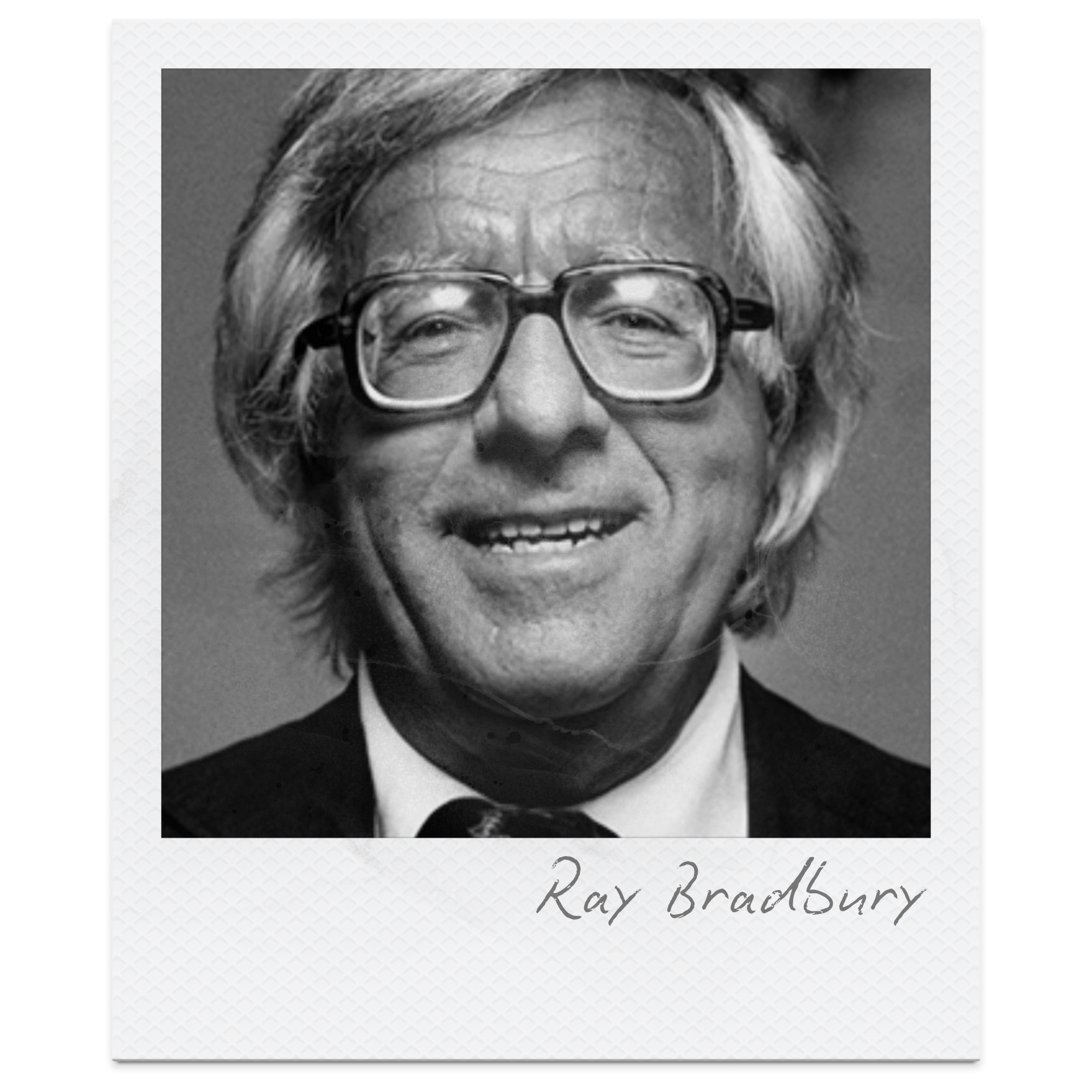
Context of The Long Rain
The Long Rain reflects Ray Bradbury’s fascination with how extreme environments expose the limits of human endurance and psychological stability. Written during the mid-20th century, the story sits within a broader wave of Cold War-era science fiction, where alien worlds often functioned as testing grounds for human resilience. However, unlike technological or political dystopias, Bradbury’s Venus is defined by a single overwhelming condition: endless rain. This focus aligns the story with psychological and environmental science fiction, where the true threat is not an enemy, but the erosion of the mind under sustained pressure. For a broader exploration of these ideas, see the Ray Bradbury Context Post.
This context is central to the story’s meaning. The rain operates as more than setting; it becomes a force that strips away identity, control, and reason. The men are not defeated by a single catastrophic event, but by constant, unrelenting discomfort, reflecting a deeper anxiety about how fragile human systems are when removed from familiar conditions. In this way, the story speaks to a wider concern about adaptation, survival, and the limits of human control, suggesting that even advanced exploration cannot protect individuals from environments that fundamentally oppose human existence.
The Long Rain: At a Glance
Form: Short story (science fiction / psychological survival narrative)
Mood: Oppressive, claustrophobic, relentlessly tense
Central tension: The struggle between human endurance and the overwhelming, unending force of the environment
Core themes: Survival, madness, isolation, environmental hostility, loss of control, hope versus despair
One-sentence meaning: Bradbury suggests that when humans are subjected to relentless, inescapable conditions, both the body and mind begin to break down, revealing the fragile limits of endurance.
Quick Summary of The Long Rain
A group of four men, led by a lieutenant, struggle through the relentless, unending rain on Venus after their rocket has crashed. The environment is immediately established as hostile and disorienting, with no clear direction and no escape from the constant downpour. Their only hope is to reach a Sun Dome, a shelter that provides warmth, dryness, and artificial sunlight.
As they journey through the jungle, the men face increasing physical and psychological strain. They cross rivers, endure exhaustion, and are attacked by a massive electrical storm, which kills one of their companions. The constant rain begins to erode their sanity, leading to paranoia, despair, and breakdown. One man becomes unresponsive and is killed by another to prevent him from becoming a burden, while another loses hope entirely and chooses to remain behind.
Eventually, only the lieutenant continues the journey alone, weakened and on the verge of collapse. After pushing through the jungle with diminishing hope, he finally reaches a Sun Dome. Unlike the previous ruined shelter, this one is intact, offering warmth, food, and artificial sunlight. The story ends with the lieutenant stepping inside, leaving the oppressive rain behind and finding temporary relief from the environment that has nearly destroyed him.
Title of The Long Rain
Bradbury’s titles often do more than label a story; they establish tone, suggest conflict, and hint at deeper symbolic meanings. In The Long Rain, the title immediately foregrounds the story’s central force: not a character or a journey, but an endless, oppressive environment. It prepares the reader for something extended, exhausting, and inescapable, setting expectations of endurance rather than action.
At first, the phrase “long rain” suggests duration, but as the story unfolds, it becomes clear that this is not simply a matter of time—it is a condition without relief. The rain is not just prolonged; it is perpetual, overwhelming, and total, shaping every aspect of the characters’ experience. This shifts the title from a description to a symbol of psychological and physical erosion, as the men are gradually worn down by its unrelenting presence.
There is also a quiet irony in the simplicity of the title. It understates the true horror of the situation, reducing a brutal, life-destroying force to something almost mundane. This mirrors the way the characters themselves try to endure the rain, initially treating it as something manageable before realising its devastating impact. Ultimately, the title resonates as a symbol of endurance pushed beyond its limits, capturing both the external environment and the internal collapse it causes.
Structure of The Long Rain
The structure of The Long Rain is shaped by relentless progression and repetition, mirroring the unending nature of the environment itself. Rather than building toward a single dramatic climax, Bradbury constructs the narrative as a series of escalating physical and psychological trials, where tension arises from endurance, attrition, and gradual breakdown. The structure reinforces the idea that survival is not determined by one moment, but by the ability to withstand continuous pressure.
Opening (Exposition)
The story opens with an overwhelming description of the rain, immediately establishing the environment as the dominant force. The repetition—“it was a rain… it was a rain…”—creates a sense of infinite continuation, immersing the reader in the same oppressive conditions as the characters. The introduction of the men and their mission to find the Sun Dome sets up the central conflict: survival in an environment that actively resists human presence.
Rising Action
The rising action is driven by the group’s journey through the jungle, with each stage intensifying their physical exhaustion and mental strain. Encounters such as crossing rivers and navigating the terrain reinforce the lack of direction and control. The electrical storm, described as a monstrous force, marks a key escalation, as it kills one of the men and demonstrates the environment’s violent unpredictability. Tension builds not through surprise, but through the growing certainty that the men cannot endure much longer.
Turning Point / Climax
The turning point occurs when the group begins to fragment psychologically. Pickard’s breakdown and subsequent death, followed by Simmons’s decision to abandon hope, mark a shift from collective survival to individual collapse. At this stage, the journey is no longer about reaching the Sun Dome as a group, but about whether anyone can continue at all. The climax is internal rather than external, centred on the collapse of human resilience under sustained pressure.
Falling Action
The falling action follows the lieutenant alone as he continues the journey. His physical weakness and mental instability reflect the cumulative effect of the rain. His attempts to survive—eating plants, forcing himself forward—emphasise the diminishing possibility of success. The repetition of movement through the jungle reinforces the sense of endless struggle, even as the narrative moves toward resolution.
Ending (Resolution)
The story concludes with the lieutenant reaching a functioning Sun Dome, where warmth, food, and artificial sunlight offer relief. This ending contrasts sharply with the relentless suffering that precedes it, creating a moment of release. However, the resolution is ambiguous in its emotional impact: while the lieutenant survives, the journey has stripped away everything else. The structure ultimately moves from overwhelming chaos to fragile sanctuary, reinforcing the idea that survival is temporary and conditional, rather than complete.
Setting of The Long Rain
The setting of The Long Rain is not simply a backdrop but the dominant force shaping the narrative, acting as both antagonist and symbolic landscape. Bradbury constructs Venus as an environment of relentless hostility, sensory overload, and disorientation, where the natural world actively works against human survival. Through vivid, repetitive description, the setting becomes a reflection of psychological breakdown as much as physical endurance.
The story opens with an overwhelming depiction of the rain: “It was a hard rain, a perpetual rain… it was a rain to drown all rains and the memory of rains.” This repetition establishes the setting as infinite and inescapable, creating a sense of suffocation. The rain is not passive; it “hacked at the jungle and cut the trees like scissors,” personifying it as a destructive force. This transforms the environment into something aggressive and alive, reinforcing the idea that the men are not simply travelling through nature, but are being attacked by it.
The jungle itself is equally unnatural and disorienting. It is described as “an immense cartoon nightmare,” with “the white, white jungle with the pale cheese-colored leaves,” stripping away the familiar associations of green, living vegetation. This distorted imagery creates a setting that feels alien and unstable, reflecting the men’s growing मानसिक disorientation. The lack of sunlight further contributes to this effect, as the world exists in a state of permanent dusk, removing any sense of time, direction, or normality.
Water dominates every aspect of the landscape. Rivers, streams, and seas blur together—“a creek, a stream, a puddle, a pool, a lake, a river, and then, at last the sea”—suggesting a world where boundaries have dissolved. This constant presence of water reinforces the theme of loss of control, as the environment becomes fluid and unpredictable. Even the ground itself feels unstable, described as “earth carved of wet Camembert,” emphasising the lack of solid footing both physically and metaphorically.
The Sun Dome functions as a symbolic counter-setting. Imagined as “a yellow house, round and bright as the sun,” it represents warmth, order, and human control in contrast to the chaos outside. However, when the men reach the first Dome, it is “empty and dark… with a thousand holes,” and the rain continues to fall inside. This collapse of the sanctuary reinforces the idea that there is no true escape from the environment, deepening the sense of despair.
Only at the end does the setting shift to genuine relief. The final Sun Dome offers “a silver pot of hot chocolate, steaming” and a “great thick green Turkish towel,” introducing sensory warmth and comfort in direct contrast to the cold rain. The presence of “the sun… large and yellow and warm” restores a sense of normality and stability. This final setting highlights the stark divide between natural hostility and artificial sanctuary, suggesting that survival depends on creating controlled spaces within an uncontrollable world.
Narrative Voice in The Long Rain
The narrative voice in The Long Rain is a third-person perspective that closely follows the lieutenant and his group, creating a balance between immediacy and controlled distance. This allows the reader to experience the physical and psychological strain of the environment while still observing the broader implications of the men’s gradual breakdown.
The narration often shifts between descriptive intensity and sparse dialogue. The opening passage, filled with repetition—“it was a rain… it was a rain…”—establishes a voice that is almost overwhelming in its detail, mirroring the environment itself. This contrasts with the clipped, exhausted dialogue between the men, which becomes increasingly fragmented as their mental state deteriorates. The effect is a narrative that feels both immersive and draining, reinforcing the theme of sensory overload.
Perspective is limited, keeping the reader confined within the same disorienting environment as the characters. There is no external viewpoint or wider explanation of Venus; everything is filtered through the men’s experience. This creates a sense of entrapment, as the reader, like the characters, has no escape from the rain or its effects. The lack of broader context also heightens the tension, as survival depends entirely on immediate perception rather than understanding.
Tone plays a crucial role in shaping the reader’s response. It is consistently oppressive and relentless, with moments of intensity punctuated by brief, almost hollow expressions of hope—particularly in references to the Sun Dome. As the story progresses, the tone becomes increasingly unstable, reflecting the men’s psychological decline. Moments such as Pickard’s breakdown are presented without emotional cushioning, making the descent into madness feel abrupt and inevitable.
Ultimately, Bradbury uses narrative voice to immerse the reader in a world where external environment and internal experience become indistinguishable. The controlled yet intense perspective ensures that the reader not only understands the characters’ struggle but feels the weight of it, creating a powerful sense of exhaustion, tension, and fragility.
The Purpose and Impact of The Long Rain
In The Long Rain, Ray Bradbury is less interested in the mechanics of survival and more concerned with what prolonged suffering does to the human mind and body. The story functions as an exploration of endurance pushed beyond its limits, using the hostile environment of Venus to examine how quickly control, identity, and reason can erode under constant pressure. Rather than presenting a single catastrophic event, Bradbury constructs a scenario where the true danger lies in continuous exposure—to discomfort, noise, and isolation.
Emotionally, the story creates a powerful sense of claustrophobia and exhaustion. The unending rain, described in repetitive and overwhelming detail, forces the reader into the same oppressive experience as the characters. This produces a cumulative effect: instead of shock, the reader feels worn down, mirroring the men’s own gradual collapse. Moments of hope—such as the promise of the Sun Dome—offer brief relief, but are often undermined, reinforcing the instability of emotional refuge.
Intellectually, the story raises questions about the limits of human adaptability. Despite technological advancement and the ability to travel to another planet, the men are ultimately unable to cope with an environment that fundamentally opposes their biology. The failure of the first Sun Dome further suggests that even human attempts to impose order on nature are fragile and temporary. In this way, Bradbury challenges the assumption that progress equates to control, highlighting the tension between human ambition and environmental reality.
The moral unease of the story emerges through the men’s decisions under pressure. Simmons’s choice to kill Pickard, justified as an act of practicality, blurs the line between necessity and brutality. These moments force the reader to confront uncomfortable questions about what survival demands, and whether maintaining humanity is possible in extreme conditions. The story does not offer clear answers, instead leaving a lingering ambiguity about what is lost when survival becomes the only priority.
What makes the story particularly impactful is its after-effect. Even with the lieutenant’s eventual arrival at a functioning Sun Dome, the sense of relief is fragile and temporary. The reader is left with the knowledge that survival has come at a cost—physical, psychological, and moral. The story lingers as a meditation on endurance, fragility, and the limits of human resilience, leaving behind a quiet but persistent sense of unease.
Characters in The Long Rain
Bradbury’s characters in The Long Rain are not deeply individualised in a traditional sense; instead, they function as representations of different psychological responses to extreme conditions. Each man embodies a particular way of reacting to the relentless environment, allowing the story to explore how endurance, control, and sanity break down under pressure.
The Lieutenant
The lieutenant represents discipline, leadership, and rational control in the face of overwhelming adversity. From the beginning, he attempts to maintain order, even when certainty is impossible. His admission—“I’m lying to keep you happy”—reveals that his authority is built not on truth, but on necessary illusion, highlighting the fragility of leadership in extreme situations.
Physically, the environment begins to erase his identity: “the rain had washed the color from his eyes… he was all white.” This imagery suggests a loss of individuality, as the lieutenant becomes almost indistinguishable from the others. Despite this, he continues to push forward, embodying the idea that survival depends on persistence rather than hope. Even at the end, when he approaches the final Sun Dome, his hesitation—fearing it may be another ruined shelter—reveals how deeply the environment has affected his ability to trust or believe.
Simmons
Simmons represents pragmatism and emotional detachment, responding to the situation with a focus on survival at any cost. His most defining action—killing Pickard—is justified through cold logic: “He’d have killed us by being a burden.” This moment highlights how extreme conditions force individuals to prioritise efficiency over empathy, raising questions about the moral boundaries of survival.
As the story progresses, however, Simmons himself begins to deteriorate. His loss of hearing—“My ears… they’ve gone out on me”—symbolises a breakdown in both physical and psychological connection to the world. Eventually, he chooses to remain behind, stating, “I just don’t give a damn any more.” This shift from control to resignation illustrates how even the most practical mindset cannot withstand prolonged, relentless pressure.
Pickard
Pickard embodies psychological collapse and emotional vulnerability, providing a stark contrast to the lieutenant’s control and Simmons’s pragmatism. His breakdown is gradual but intense, driven by the constant sensory assault of the rain. He compares it to torture: “Why don’t he leave me alone? why don’t he leave me alone?” This repetition reflects his inability to escape the experience, both physically and mentally.
His eventual withdrawal—standing motionless in the rain, unresponsive—represents a complete surrender to the environment. The description of him as unfeeling—“He can’t even feel you”—suggests that he has lost not only sanity but also physical awareness, becoming almost part of the landscape. His death, whether inevitable or hastened, symbolises the point at which the human mind can no longer endure.
The Fourth Man
The unnamed fourth man serves as an early example of the environment’s lethal power. His death during the electrical storm—described through the image of being struck like “a fly… upon the grill wires of an exterminator”—emphasises the sudden, violent unpredictability of the setting. Unlike Pickard, whose breakdown is gradual, this man’s death highlights how quickly the environment can destroy those who resist or misjudge it.
Humanity as a Collective
Taken together, the men represent different facets of human response to extreme conditions: control, pragmatism, collapse, and vulnerability. As the story progresses, these distinctions begin to blur, with each character ultimately succumbing in some way to the environment. Their shared physical transformation—becoming “as white as mushrooms”—reinforces the idea that individuality is gradually erased, leaving only the basic struggle for survival.
In this way, the characters function collectively to explore the limits of endurance, showing that under relentless pressure, human identity, morality, and reason are all at risk of dissolution.
Key Themes in The Long Rain
Bradbury develops the themes of The Long Rain through relentless description, physical suffering, and psychological breakdown. The story moves beyond a simple survival narrative, exploring how extreme conditions expose the limits of human endurance, control, and identity, with the environment acting as both setting and antagonist.
Survival
At its core, the story is a test of human survival against overwhelming odds. The men’s journey toward the Sun Dome represents their attempt to endure in a world fundamentally hostile to their existence. However, survival is not heroic or triumphant; it is exhausting, painful, and often dependent on chance. The lieutenant’s persistence contrasts with the others’ collapse, suggesting that survival is not guaranteed, but fragile and uneven.
Madness
Madness emerges gradually as a response to prolonged sensory and psychological strain. The constant rain erodes the men’s mental stability, leading to paranoia, irrational behaviour, and emotional breakdown. Pickard’s comparison of the rain to torture—“Why don’t he leave me alone?”—reveals how repetition and inescapability drive him toward insanity. The story suggests that madness is not sudden, but the inevitable result of unrelenting pressure without relief.
Isolation
The men are isolated both physically and psychologically. Stranded on Venus, cut off from Earth, and surrounded by an environment that prevents rest or communication, they exist in a state of complete separation from normal human experience. This isolation intensifies their suffering, as there is no external support or escape. Even within the group, individuals become isolated in their own मानसिक breakdowns, unable to connect or rely on one another.
Environmental Hostility
The environment itself functions as the central antagonist, embodying continuous, impersonal hostility. The rain is described as active and destructive—“it hacked at the jungle”—transforming nature into a force that opposes human survival. Unlike traditional threats, this hostility is constant rather than episodic, creating a sense that the men are trapped in a world designed to wear them down rather than destroy them quickly.
Loss of Control
A key theme is the gradual loss of physical, psychological, and moral control. The men cannot control their direction, their environment, or even their own bodies, as the rain erodes their senses and strength. Simmons’s decision to kill Pickard reflects a breakdown of moral boundaries, where survival overrides ethical considerations. The inability to impose order on their surroundings highlights the limits of human power in the face of overwhelming conditions.
Hope Versus Despair
The Sun Dome represents hope, offering warmth, safety, and relief from the rain. However, this hope is repeatedly undermined, particularly when the first Dome is found destroyed. This creates a tension between belief and disillusionment, as the men struggle to maintain motivation. The lieutenant’s continued journey reflects a fragile commitment to hope, while Simmons’s resignation—“I just don’t give a damn any more”—embodies despair. The story suggests that hope is essential for survival, but also dangerously unstable.
Endurance and Human Limits
Bradbury explores the limits of endurance, showing that there is a point at which both body and mind begin to fail. The men’s physical deterioration—bleached skin, numb senses—and their psychological decline reveal that humans are not equipped to withstand continuous, inescapable hardship. Survival becomes less about strength and more about how long one can endure before breaking.
Dehumanisation
As the story progresses, the men lose aspects of their humanity, both physically and mentally. Descriptions such as “hands of wrinkled apes” and their transformation into pale, indistinct figures suggest a regression or erasure of identity. This dehumanisation reflects the power of the environment to strip away individuality, reducing people to basic, instinctive responses.
Nature Versus Humanity
The story presents a conflict between human presence and an environment that resists it. Despite technological advancement and exploration, the men are ultimately powerless against Venus. The failure of the Sun Dome reinforces the idea that human attempts to control nature are temporary and vulnerable, highlighting the imbalance between human ambition and environmental reality.
Symbolism in The Long Rain
Bradbury uses the environment, objects, and recurring imagery in The Long Rain to carry deeper symbolic meaning, transforming physical experiences into reflections of psychological collapse, endurance, and the limits of human control. The symbols in the story are often grounded in the ordinary—rain, light, shelter—but become increasingly powerful through repetition and contrast.
The Rain
The rain is the central symbol of the story, representing relentless oppression and psychological erosion. It is described as “a rain to drown all rains and the memory of rains,” suggesting not only physical suffocation but the loss of identity and memory. The constant, unending nature of the rain symbolises a force that cannot be escaped or reasoned with, reflecting the idea that some conditions gradually destroy rather than suddenly overwhelm.
As the story progresses, the rain becomes almost a form of torture, echoing Pickard’s comparison to the “Chinese water cure.” This reinforces its symbolic role as a force that breaks the mind through repetition, highlighting the theme of madness born from endurance.
The Sun Dome
The Sun Dome symbolises hope, order, and human control over nature. It is imagined as “round and bright as the sun,” offering warmth, light, and relief from the oppressive environment. The artificial sun inside represents the human attempt to recreate stability and normality in an unnatural world.
However, the first ruined Sun Dome—“empty and dark… with a thousand holes”—undermines this symbol, showing that human systems are fragile and easily destroyed. This transforms the Dome into a symbol of false security, suggesting that even carefully constructed refuges cannot guarantee survival. The final functioning Dome restores some of this meaning, but its fragility remains implicit, reinforcing the idea that hope is temporary and conditional.
Light and the Artificial Sun
Light in the story symbolises sanity, warmth, and psychological stability. The absence of natural sunlight creates a world of perpetual gloom, contributing to disorientation and despair. The artificial sun in the Dome—“large and yellow and warm”—represents not just physical comfort, but the restoration of mental clarity and emotional balance.
The contrast between darkness and light highlights the dependence of human well-being on controlled conditions. Light becomes a symbol of human survival, while its absence reflects the descent into madness.
Water and Flooded Landscapes
Water appears in multiple forms—rain, rivers, seas—blurring the boundaries between them. The description of the land as “a creek, a stream, a puddle, a pool, a lake, a river, and then… the sea” suggests a world where distinctions have dissolved. This symbolises loss of structure and control, both physically and mentally.
Water also represents engulfment, as the men are constantly surrounded, soaked, and threatened by it. It reflects the idea that the environment is not something they move through, but something that consumes and absorbs them.
The Electrical Storm (“The Monster”)
The electrical storm, described as a “monster,” symbolises the violent unpredictability of nature. With its “thousand electric blue legs,” it transforms a natural phenomenon into something monstrous and incomprehensible. This reinforces the idea that the environment is not only oppressive but also capable of sudden, catastrophic violence.
The storm’s destruction of one of the men highlights the fragility of human life, suggesting that survival is not just about endurance, but also about chance and vulnerability.
The Colour White
The repeated imagery of whiteness—“as white as mushrooms,” “he was all white”—symbolises erasure and dehumanisation. As the rain strips away colour, it removes individuality, reducing the men to indistinct figures within the landscape. This loss of colour reflects the loss of identity, reinforcing the idea that prolonged exposure to the environment leads to psychological and physical dissolution.
The Jungle Growth
The rapid growth of vegetation, particularly around the dead, symbolises nature’s indifference and reclamation. The image of plants overtaking a body—“little vines and ivy and creepers… even flowers for the dead”—suggests that nature quickly absorbs and erases human presence. This reinforces the theme that humanity is temporary, while the environment is endlessly self-sustaining.
The Journey
The journey toward the Sun Dome symbolises the human drive to find meaning, safety, and relief. However, the repeated setbacks, misdirection, and loss of companions transform the journey into a reflection of endurance without certainty. It represents both hope and futility, as progress is constantly undermined by the environment.
By the end, the journey becomes less about reaching a destination and more about whether the individual can continue at all, reinforcing the story’s focus on the limits of human resilience.
Key Techniques in The Long Rain
Bradbury uses a range of language and structural techniques to create an intense, immersive experience, where the reader feels the same relentless pressure and psychological strain as the characters. His methods rely heavily on repetition, sensory detail, and symbolic language to reinforce the story’s themes.
◆ Pathetic fallacy — The environment reflects and intensifies the characters’ mental state, with the endless rain mirroring their psychological breakdown and emotional exhaustion, blurring the line between external world and internal experience.
◆ Repetition — The opening description (“it was a rain… it was a rain…”) and recurring references to the rain create a sense of infinite continuation, reinforcing the idea that there is no escape from the environment.
◆ Sensory imagery — Bradbury uses vivid tactile and auditory imagery—“whipping at the eyes,” “slamming their head”—to immerse the reader in the physical discomfort, creating a visceral, almost overwhelming experience.
◆ Personification — The rain and storm are given human or animal qualities, such as the storm described as a “monster,” making the environment feel active, hostile, and intentional.
◆ Simile and metaphor — Comparisons like “hands of wrinkled apes” and the rain like “BB shot” emphasise physical degradation and pain, reinforcing the theme of dehumanisation.
◆ Symbolic language — Elements such as the rain, Sun Dome, and artificial sun carry deeper meanings, representing oppression, hope, and fragile human control.
◆ Contrast — The stark contrast between the oppressive jungle and the imagined comfort of the Sun Dome highlights the divide between despair and hope, intensifying the emotional impact.
◆ Narrative contrast — Moments of hope (reaching a Sun Dome) are quickly undermined (finding it destroyed), creating a pattern of rising expectation followed by collapse.
◆ Foreshadowing — Early references to exhaustion, madness, and the need for the Sun Dome hint at the men’s eventual psychological breakdown and loss.
◆ Hyperbole — Exaggerated descriptions of the rain (“to drown all rains”) emphasise its overwhelming nature, reinforcing the sense of inescapable force.
◆ Fragmented dialogue — As the story progresses, the men’s speech becomes shorter and more erratic, reflecting their mental deterioration and loss of coherence.
◆ Structural repetition — The repeated cycle of walking, suffering, and hoping mirrors the unending rain, reinforcing the theme of endurance without resolution.
Important Quotes from The Long Rain
The quotations in The Long Rain reveal the story’s relentless atmosphere, the men’s psychological deterioration, and Bradbury’s exploration of survival, madness, and environmental hostility. Through vivid imagery and fragmented dialogue, the text captures both physical suffering and mental collapse.
Quotes on Environmental Hostility
“It was a rain to drown all rains and the memory of rains.”
◆ The hyperbolic phrasing emphasises the overwhelming, totalising nature of the environment.
◆ The repetition of “rain” reinforces its inescapability and dominance.
◆ The idea of erasing “memory” suggests psychological as well as physical destruction.
◆ This establishes the rain as a force that consumes identity and experience.
“It hacked at the jungle and cut the trees like scissors.”
◆ The verb “hacked” personifies the rain as violent and aggressive.
◆ The simile “like scissors” suggests precision and destruction working together.
◆ This transforms the environment into an active antagonist.
◆ It reinforces the theme of nature as hostile rather than passive.
Quotes on Madness
“Why don’t he leave me alone? why don’t he leave me alone?”
◆ The repetition reflects Pickard’s mental breakdown and obsession.
◆ The informal grammar suggests loss of control and coherence.
◆ The line echoes torture, reinforcing the idea of the rain as psychological assault.
◆ It highlights how constant pressure leads to madness.
“A thousand hands were touching him.”
◆ The metaphor transforms the rain into a suffocating, invasive force.
◆ The imagery creates a sense of claustrophobia and loss of bodily autonomy.
◆ It reflects the character’s heightened psychological distress.
◆ This reinforces the theme of sensory overload leading to collapse.
Quotes on Dehumanisation
“It shrank men’s hands into the hands of wrinkled apes.”
◆ The simile suggests regression, reducing humans to a more primitive state.
◆ The physical transformation reflects loss of identity and dignity.
◆ It emphasises the body’s inability to withstand the environment.
◆ This reinforces the theme of dehumanisation through endurance.
“He was all white.”
◆ The repetition of whiteness symbolises erasure of individuality.
◆ It reflects the stripping away of identity by the environment.
◆ The lack of distinguishing features suggests the men are becoming indistinct.
◆ This reinforces the idea of humans being absorbed into the landscape.
Quotes on Hope and the Sun Dome
“A yellow house, round and bright as the sun.”
◆ The imagery contrasts sharply with the dark, oppressive jungle.
◆ The simile reinforces the Sun Dome as a symbol of warmth and salvation.
◆ The colour “yellow” evokes light, life, and hope.
◆ This highlights the psychological importance of believing in escape.
“It was empty and dark… and through a thousand holes… the rain fell down.”
◆ The contrast between expectation and reality creates dramatic irony.
◆ The ruined Dome symbolises the fragility of human solutions.
◆ The repetition of damage (“thousand holes”) reinforces destruction.
◆ This moment deepens the theme of hope undermined by reality.
Quotes on Survival and Moral Breakdown
“He’d have killed us by being a burden.”
◆ The blunt tone reflects pragmatic, survival-driven thinking.
◆ It justifies violence as necessary, blurring moral boundaries.
◆ The language reduces a human life to a practical problem.
◆ This highlights the theme of moral compromise under pressure.
“I just don’t give a damn any more.”
◆ The informal, abrupt phrasing signals emotional exhaustion.
◆ It reflects the shift from resistance to complete resignation.
◆ The loss of concern suggests psychological collapse.
◆ This reinforces the tension between hope and despair.
Quotes on Final Survival and Relief
“He was looking at the sun.”
◆ The simplicity of the sentence reflects a moment of clarity and release.
◆ The sun symbolises warmth, life, and restored sanity.
◆ The contrast with the earlier darkness heightens its impact.
◆ This suggests survival, but also the fragility of that relief.
“The rain only a memory to his tingling body.”
◆ The phrase marks a shift from constant presence to absence.
◆ The sensory detail (“tingling”) suggests physical recovery.
◆ The idea of memory reinforces how overwhelming the experience was.
◆ This ending highlights survival as temporary escape rather than resolution.
Alternative Interpretations of The Long Rain
Bradbury’s The Long Rain resists a single fixed meaning, allowing for multiple interpretations depending on how the reader understands the environment, the characters’ mental states, and the ending. The story’s intensity and lack of certainty—particularly in its final moments—invite a range of critical lenses, each offering a different perspective on survival, reality, and perception.
Psychological Interpretation: Breakdown of the Mind
From a psychological perspective, the story charts the gradual collapse of the human mind under constant sensory assault. The relentless rain functions as a form of environmental torture, eroding the men’s ability to think clearly or maintain identity. Pickard’s breakdown and Simmons’s eventual resignation illustrate different stages of this collapse.
The ending can be read through this lens as ambiguous: the lieutenant’s arrival at the Sun Dome may not be real, but a hallucination born from extreme exhaustion and desperation. The sudden shift from overwhelming suffering to perfect comfort—hot food, warmth, and sunlight—feels almost too complete, suggesting it could be the mind’s final attempt to create relief before total breakdown.
Existential Interpretation: Endurance Without Meaning
An existential reading focuses on the idea that the men’s struggle is ultimately without purpose or guarantee of success. The endless rain represents a universe that is indifferent to human existence, where survival is uncertain and often arbitrary.
The lieutenant’s journey becomes a test of endurance rather than a meaningful quest. Even if he reaches the Sun Dome, the victory is temporary and fragile. If the ending is interpreted as real, it suggests that meaning is found in continuing despite uncertainty; if it is imagined, it reinforces the idea that the search for meaning may itself be illusory.
Dystopian Interpretation: Fragility of Human Systems
The story can also be read as a dystopian commentary on the limits of human control and technological solutions. The Sun Domes represent humanity’s attempt to impose order on a hostile world, yet their vulnerability—one destroyed, others possibly unreliable—reveals the fragility of these systems.
From this perspective, the ending raises questions about whether any human structure can truly provide safety. Even if the lieutenant has reached a functioning Dome, it exists within a world that can destroy it at any moment, suggesting that security is temporary and dependent on unstable systems.
Moral Interpretation: Survival and Ethical Collapse
A moral lens highlights the ethical compromises made under extreme conditions. Simmons’s decision to kill Pickard, justified as necessary, forces the reader to confront uncomfortable questions about what survival demands.
This interpretation suggests that the true cost of survival is not just physical suffering, but the erosion of moral boundaries. The lieutenant’s continued journey may represent persistence, but it also raises the question of what kind of person survives when others are abandoned or killed.
Contemporary Interpretation: Environmental and Psychological Crisis
A modern reading connects the story to contemporary concerns about environmental crisis and human limits. The relentless rain can be seen as a metaphor for conditions that are not immediately catastrophic, but become unbearable through constant exposure over time.
The men’s inability to adapt reflects anxieties about how humans cope with environments that fundamentally oppose their needs. The ambiguity of the ending—whether the Sun Dome is real or imagined—mirrors modern uncertainties about whether solutions to large-scale crises are genuine or temporary illusions.
Ambiguous Ending Interpretation: Reality or Hallucination?
The ending of The Long Rain is deliberately open to interpretation. The sudden transition from relentless suffering to perfect comfort—“a silver pot of hot chocolate,” “the sun… large and yellow and warm”—can be read in two ways.
If taken literally, the lieutenant has survived, and the story becomes one of endurance rewarded. However, the idealised nature of the scene, combined with his extreme physical and psychological exhaustion, suggests the possibility that he has succumbed to madness, imagining the Sun Dome as a final refuge.
This ambiguity is central to the story’s power. Bradbury leaves the reader uncertain, forcing us to question whether survival is real or constructed—whether the final image represents hope, illusion, or the last moment of a collapsing mind.
Why The Long Rain Still Matters
The Long Rain remains strikingly relevant because it captures a form of suffering that feels deeply modern: not sudden catastrophe, but prolonged, inescapable pressure. Bradbury’s vision of a world defined by relentless conditions reflects contemporary experiences of environmental crisis, mental strain, and situations where there is no clear escape or resolution. The story’s focus on endurance rather than action mirrors how many modern challenges are faced—not through dramatic moments, but through the difficulty of continuing over time.
The story also speaks powerfully to issues of mental health and psychological resilience. The gradual breakdown of the characters highlights how constant stress, sensory overload, and lack of rest can erode even the strongest individuals. Pickard’s collapse and Simmons’s resignation feel particularly relevant in a world where burnout and emotional exhaustion are widely recognised. Bradbury suggests that the mind has limits, and when those limits are exceeded, identity, control, and reason begin to dissolve.
In addition, the story raises important questions about human attempts to control hostile environments. The Sun Domes represent technological solutions to an uninhabitable world, yet their fragility reflects ongoing concerns about whether human systems can truly protect us from environmental extremes. This connects to modern anxieties about climate change and sustainability, where solutions often feel temporary, incomplete, or vulnerable.
Finally, The Long Rain continues to resonate because of its ambiguity. The uncertain ending—whether the lieutenant reaches safety or imagines it—mirrors the uncertainty of many real-world situations, where outcomes are unclear and hope can feel fragile. The story leaves readers reflecting not just on survival, but on what survival means, and whether endurance alone is enough in a world that continually tests human limits.
Teaching Ideas for The Long Rain
The Long Rain is highly effective for classroom teaching because it combines accessible narrative structure with complex ideas about endurance, madness, and environmental hostility. It supports both analytical writing and creative response, making it ideal for KS3–KS5 classrooms.
1. Discussion Questions
These questions are designed to move students beyond surface-level understanding, encouraging them to engage with interpretation, ambiguity, and moral complexity within the story.
How does Bradbury present the environment as an antagonist?
Which character response feels most realistic—and why?
Is survival presented as something positive in the story?
How does the rain affect both the body and the mind?
Does the story suggest humans are capable of adapting to any environment?
Is the ending hopeful, or is it ambiguous?
2. Model Paragraph Task (Analysis + Development)
This task encourages students to evaluate analytical writing, identify strengths and weaknesses, and actively improve a response using clear success criteria.
Example paragraph:
Bradbury presents the environment as overwhelming and destructive. This is shown in the description of the rain as “a rain to drown all rains and the memory of rains.” The repetition of “rain” emphasises how constant it is. This makes the reader feel that the characters cannot escape it. Bradbury uses this to show that the environment is more powerful than the men.
Student tasks:
What question could this paragraph answer?
What does the paragraph do well?
Where is the analysis too simple or underdeveloped?
How could it be improved to reach a higher level?
Success criteria / marking focus:
Clear, conceptual topic sentence
Accurate and embedded quotation
Zoom-in analysis of language
Explanation of effect on reader
Clear link to theme (e.g. environmental hostility, loss of control)
Developed, thoughtful interpretation
Extension / improvement task:
Students rewrite the paragraph to:
Analyse individual words in more detail (e.g. “drown,” “memory”)
Add a second layer of interpretation (psychological or symbolic)
Link more clearly to a broader idea such as madness or human limits
3. Silent Debate Activity
A silent debate allows students to explore the story’s ambiguity through written, student-led discussion, making it particularly effective for more complex or controversial ideas.
Example statements:
“The environment is the true villain of the story.”
“Simmons is justified in killing Pickard.”
“The ending is a hallucination, not reality.”
“Humans are not meant to survive in environments like Venus.”
Students circulate, responding to and building on each other’s ideas in writing, creating layered, thoughtful debate.
You can read more about running a silent debate in your classroom here and we offer Silent Debate Resources for The Long Rain over on TpT.
4. Symbolism Focus
This activity helps students move beyond plot into deeper analysis by tracking how meaning develops across the text.
Students track one key symbol (e.g. rain, light, the Sun Dome, water) across the story:
Identify where the symbol appears
Explain what it represents at different stages
Track how its meaning develops
Link it to a central theme
This can be developed into a paragraph or extended response.
5. Creative Writing Extension
This task allows students to apply Bradbury’s techniques in their own writing, focusing on atmosphere, repetition, and psychological tension.
Students write their own piece inspired by an environment that becomes unbearable over time:
A narrative set in a different extreme environment (heat, darkness, silence)
A first-person account of psychological breakdown
A story where hope (like the Sun Dome) may or may not be real
For further inspiration, explore the Creative Writing Archive, which offers a wide range of prompts designed to develop voice, perspective, and imaginative storytelling.
6. The Long Rain Resource Bundle (Time-Saving, High-Impact)
Teaching The Long Rain effectively requires a balance of discussion, analysis, retrieval, and creative engagement, which can be time-consuming to plan from scratch.
The Long Rain Bundle is designed to save time while still challenging students at a high level, offering a structured mix of activities that support progression across lessons. It combines discussion-based tasks, independent practice, and revision-focused activities, making it easy to move from first reading to deeper analysis and extended responses.
This allows lessons to flow more smoothly while ensuring students engage with key ideas such as survival, madness, and environmental hostility in a consistent and meaningful way.
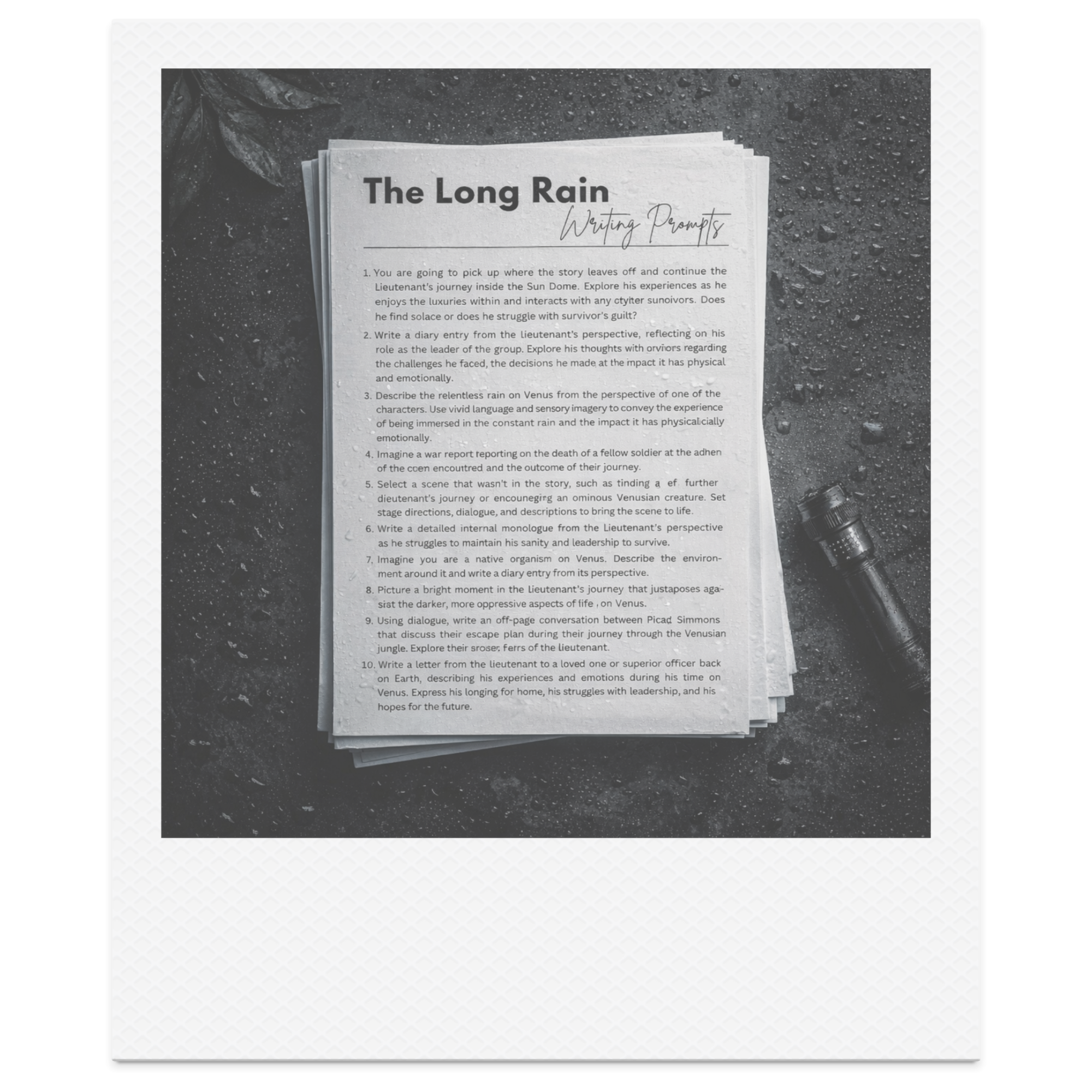
Go Deeper into The Long Rain
The Long Rain becomes even more powerful when read alongside other texts that explore endurance, environmental pressure, psychological breakdown, and the limits of human control. These comparisons help students move beyond plot and into more complex discussions about how writers present survival and collapse. You can also explore further through Best Bradbury for the Classroom and Using Black Mirror to Teach Bradbury.
◆ There Will Come Soft Rains by Ray Bradbury — both stories explore environments that outlast or overpower humanity, but while The Long Rain focuses on human suffering, this story presents a world continuing without humans at all.
◆ The Veldt by Ray Bradbury — both texts examine how environments can become hostile, though here the danger is technological rather than natural, highlighting different forms of uncontrolled environments.
◆ The Pedestrian by Ray Bradbury — this story similarly explores isolation and conformity, showing how environments (social rather than physical) can restrict and erode individuality.
◆ The Road by Cormac McCarthy — both texts explore survival in extreme conditions, though McCarthy focuses more on human connection in a dying world, while Bradbury emphasises psychological collapse.
◆ Lord of the Flies by William Golding — both texts examine how humans behave under pressure, particularly how civilisation breaks down and instinct takes over.
◆ Annihilation by Jeff VanderMeer — like Bradbury’s Venus, this text presents an environment that is alien, disorienting, and psychologically destabilising, reinforcing themes of human fragility in the face of the unknown.
These comparisons help students explore how different writers present survival, control, and psychological endurance, deepening their understanding of how extreme environments shape human behaviour.
Final Thoughts
The Long Rain stands as one of Ray Bradbury’s most intense explorations of endurance, environmental hostility, and psychological collapse. By stripping survival down to its most basic form—movement, persistence, and resistance—Bradbury reveals how fragile human control becomes when faced with conditions that cannot be escaped or overcome. The story transforms a simple premise into a powerful study of how quickly identity, morality, and reason begin to erode under relentless pressure.
What lingers most is the ambiguity of survival itself. The lieutenant’s arrival at the Sun Dome offers relief, but whether this moment is real or imagined remains uncertain, leaving the reader with a sense that escape may be as fragile as the structures meant to provide it. This unresolved tension reinforces the story’s central warning: that survival is not always victory, and that even when we endure, something essential may already have been lost. For further exploration, visit the Ray Bradbury Hub, browse the Literature Library, or compare this story with others such as There Will Come Soft Rains and The Veldt to deepen understanding of Bradbury’s exploration of human limits.
Choose Your Next Text