How Great Fantasy Authors Build Their Worlds: 10 Lessons Every Writer Can Learn
Fantasy worldbuilding is about far more than drawing maps, inventing magical creatures or giving imaginary kingdoms elaborate names. The most memorable fantasy worlds feel as though they existed long before the first page of the story and will continue to exist long after the final chapter. They have histories, cultures, traditions, political tensions, belief systems and ordinary people whose lives extend far beyond the adventures of the main characters.
But what makes some fictional worlds feel so extraordinarily real?
Why does Middle-earth feel like a place shaped by thousands of years of history? How does Ursula K. Le Guin transform a scattered archipelago into a world where geography influences everything from travel and trade to magic and identity? And what can aspiring fantasy writers learn from the intricate political relationships of Westeros or the carefully constructed magic systems of Brandon Sanderson?
The answer lies in understanding that effective fantasy worldbuilding is not simply about creating an imaginary setting. It is about constructing a believable world in which geography, history, culture, power and human experience influence the stories that unfold.
Some authors achieve this through extraordinary attention to historical detail. Others develop distinctive magical systems, explore the relationship between society and its environment, or reveal their worlds gradually through the experiences of their characters. Although their approaches differ, each demonstrates how thoughtful worldbuilding can strengthen character development, create compelling conflicts and make even the most extraordinary fictional settings feel convincing.
In this guide, we'll explore 10 fantasy worldbuilding lessons from some of the genre's most influential authors, including J. R. R. Tolkien, Ursula K. Le Guin, George R. R. Martin, N. K. Jemisin and Philip Pullman.
Rather than simply recommending popular fantasy novels, we'll examine each book as a practical worldbuilding case study, exploring:
What the story is about: A spoiler-conscious introduction to the novel, its characters and central conflicts.
How the fictional world works: An exploration of the geography, cultures, political structures, magical systems, traditions and other details that make the setting distinctive.
What fantasy writers can learn: A closer examination of the author's worldbuilding techniques and why they are so effective.
How to apply the lesson: A practical creative writing exercise to help you develop your own fictional worlds.
Whether you're planning an epic fantasy novel, developing a magical kingdom, writing a short story or introducing students to fantasy creative writing, these examples will help you think more critically about the worlds you create.
You don't need to invent thousands of years of history or design an entire continent before writing your first chapter. Sometimes, a single carefully considered detail — an ancient superstition, a disputed border, an unusual cultural tradition or a magical rule with unexpected consequences — can make an imaginary world feel remarkably alive.
The goal isn't to recreate the worlds of famous fantasy authors. It's to understand the creative decisions that make those worlds work, and use those lessons to build something entirely your own.
Affiliate Disclosure: This article contains affiliate links to books mentioned throughout the guide. If you make a purchase through one of these links, Ink & Insights may earn a small commission at no additional cost to you.
As an Amazon Associate I earn from qualifying purchases.
What Makes Great Fantasy Worldbuilding?
Great fantasy worldbuilding creates the impression that a fictional world exists independently of the story taking place within it. Its kingdoms have histories that extend beyond the lives of the main characters, its cultures have developed their own traditions and beliefs, and its inhabitants experience ordinary problems alongside extraordinary events.
A convincing fantasy world doesn't necessarily need to be enormous or complicated. A single village with a distinctive history, an unusual superstition and a long-standing conflict can feel more believable than an entire continent filled with kingdoms that have little to distinguish them.
What matters is how the different elements of a fictional world connect, influence one another and shape the lives of its inhabitants.
1. Internal Consistency Makes Imaginary Worlds Believable
Fantasy allows writers to invent extraordinary possibilities, from dragons and ancient prophecies to enchanted forests and powerful magical abilities. However, even the most imaginative settings benefit from an underlying sense of logic.
If magic can solve every problem without limitations, it becomes difficult to establish meaningful consequences. If a kingdom has strict laws, readers should be able to understand how those laws influence society. If an ancient war transformed a civilisation, some evidence of that conflict should remain in its architecture, traditions, political relationships or collective memory.
Readers don't need to understand every rule governing a fictional world, but they should feel that those rules exist.
2. The Strongest Fantasy Worlds Are Interconnected
Geography, history, politics, religion, economics and culture rarely develop independently.
A kingdom surrounded by mountains might become geographically isolated, developing distinctive customs and defensive traditions. A coastal civilisation may depend on maritime trade, creating wealthy merchant families whose influence rivals that of the monarchy. A society that believes magic is a divine gift might treat its practitioners very differently from one that considers supernatural abilities dangerous or forbidden.
These relationships create depth because one worldbuilding decision produces consequences elsewhere in the fictional world.
Instead of inventing isolated details, consider how each element might influence another. A shortage of natural resources could create political tensions. An ancient religious disagreement might divide neighbouring kingdoms. A magical discovery could transform transportation, warfare or social hierarchies.
The result is a world that feels shaped by centuries of decisions, conflicts, discoveries and change.
3. Worldbuilding Should Influence the Story
One of the most important distinctions between decorative worldbuilding and effective worldbuilding is whether the fictional setting actually matters to the narrative.
An elaborate map may help readers visualise a kingdom, but its geography becomes more meaningful when dangerous mountain passes delay an army or an isolated settlement develops its own suspicious attitude towards outsiders.
Similarly, a political hierarchy becomes more interesting when it determines who can inherit a throne, who is permitted to practise magic or whose testimony is believed during a trial.
The strongest fantasy authors use their worlds to create obstacles, shape characters' beliefs, establish competing motivations and generate conflicts that could not unfold in quite the same way anywhere else.
A useful question to ask is: If I moved this story into a completely different setting, how much of the plot would need to change?
If the answer is very little, there may be opportunities to make your worldbuilding more integral to the narrative.
Ultimately, successful fantasy worldbuilding is not measured by how many details a writer invents, but by how convincingly those details work together.
The following ten novels demonstrate different approaches to achieving this, offering practical lessons in everything from constructing believable histories and magical systems to developing distinctive cultures, political conflicts and immersive fictional environments.
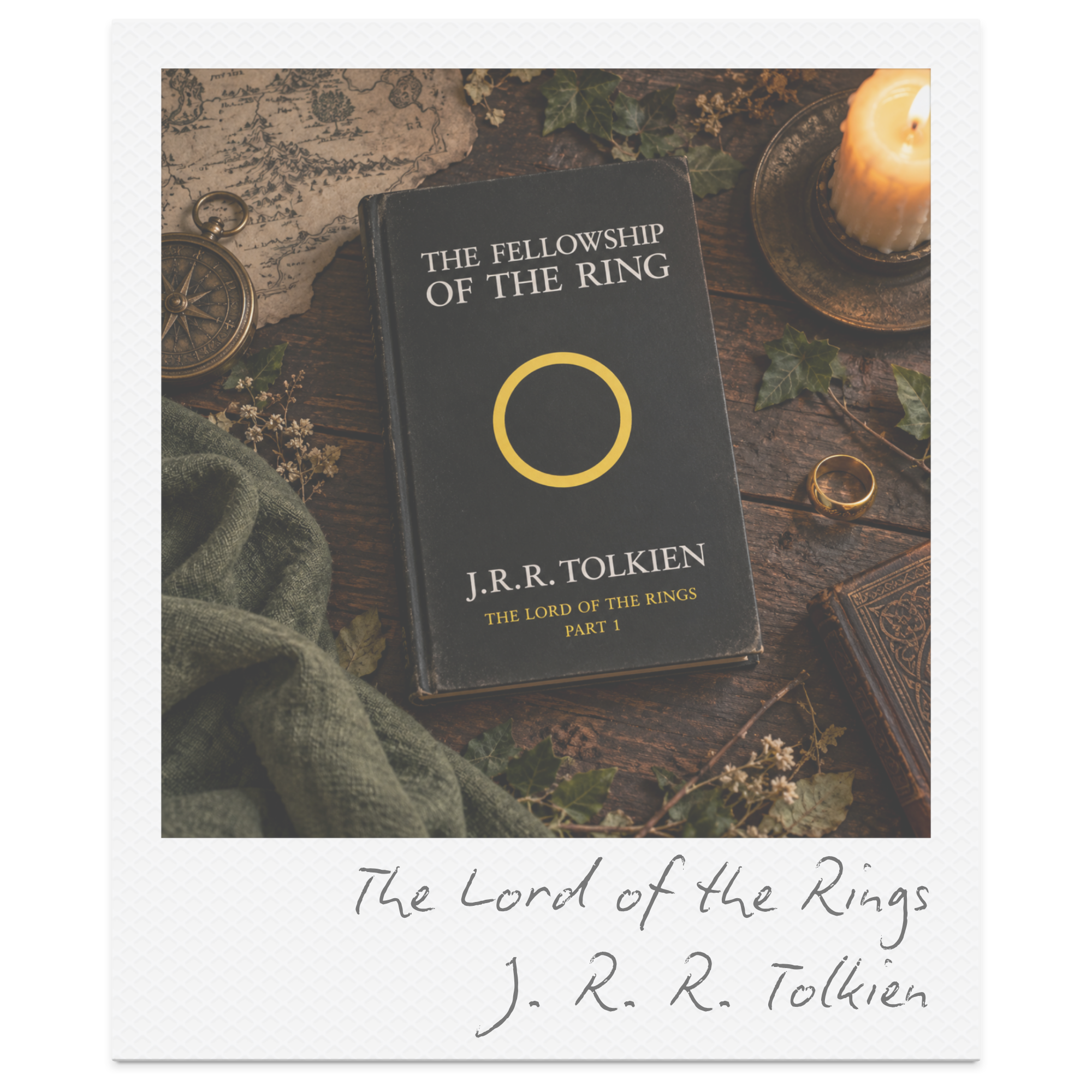
1. J. R. R. Tolkien — The Lord of the Rings: Give Your World a History
What Is The Lord of the Rings About?
J. R. R. Tolkien's The Lord of the Rings follows Frodo Baggins, an unlikely hero from the peaceful Shire, who inherits a mysterious ring possessing the power to determine the fate of Middle-earth.
When Frodo discovers that the ring belongs to Sauron, a powerful Dark Lord seeking to regain his former strength, he must undertake a dangerous journey to destroy it in the fires of Mount Doom. Accompanied by a fellowship of Hobbits, Men, an Elf, a Dwarf and a wizard, Frodo travels through ancient kingdoms, forgotten landscapes and territories increasingly threatened by war.
Yet the struggle against Sauron is only the latest chapter in a much older history. The peoples of Middle-earth carry memories of lost kingdoms, broken alliances, ancient battles and civilisations that have gradually disappeared. Their decisions are influenced not only by the immediate danger but also by events that occurred centuries or even thousands of years before the story begins.
Exploring Middle-earth: A World Shaped by Thousands of Years of History
<italic>The Lord of the Rings</italic> is one of fantasy literature's most influential examples of historical worldbuilding. Tolkien developed an extensive mythology for Middle-earth, complete with distinct historical ages, genealogies, languages, legends, wars and the rise and fall of powerful civilisations.
However, what makes this history so effective is not simply its extraordinary scale. It is the way the past remains visible and influential throughout the present-day story.
Consider the kingdom of Gondor. Once part of a much greater civilisation established by the Númenóreans, Gondor is a surviving fragment of an older world. Its political institutions, monumental architecture and traditions reflect a glorious history that its inhabitants are struggling to preserve. The absence of a reigning king is not merely a political inconvenience; it represents a centuries-old interruption in the kingdom's succession and identity.
Rohan, by contrast, possesses its own cultural traditions, ancestral loyalties and heroic history. Its relationship with Gondor has developed through generations of alliance and mutual obligation, giving political significance to the decisions its leaders make during the War of the Ring.
History also shapes Middle-earth's physical landscape. The ruins of Weathertop, the abandoned kingdom of Moria and the ancient watchtowers scattered across the wilderness suggest that the world was once occupied by powerful peoples whose achievements have faded into legend.
These places are not simply atmospheric locations. They provide evidence of earlier civilisations, introduce dangers inherited from the past and remind readers that the characters are travelling through a world much older than themselves.
Tolkien reinforces this historical depth through songs, poetry, languages and storytelling. Characters recount ancient events, preserve ancestral knowledge and interpret the present through inherited legends. Even seemingly minor references to forgotten rulers or distant battles contribute to the impression of a vast, interconnected history.
Importantly, different peoples experience this history differently. For the Elves, the passing of time represents the gradual fading of their influence in Middle-earth. For Men, it is connected to questions of inheritance, mortality, political legitimacy and the restoration of lost kingdoms. For Hobbits, whose lives are generally more concerned with local customs and familiar comforts, the ancient conflicts of the wider world initially seem remote.
These contrasting perspectives make Middle-earth feel like a place inhabited by cultures with their own relationships to the past.
What Can Fantasy Writers Learn from Tolkien?
The most important lesson from Tolkien is that fictional history becomes powerful when its consequences remain visible in the present.
You do not need to create thousands of years of detailed chronology to achieve this effect. Instead, begin by identifying a handful of historical events that fundamentally changed your fictional world.
Perhaps an ancient civil war divided a kingdom into rival territories. A magical catastrophe might have rendered an entire region uninhabitable. The disappearance of a royal dynasty could have created competing claims to the throne, while the destruction of a religious sanctuary might still influence relations between neighbouring cultures.
Once you've established these events, consider their lasting consequences.
What ruins, monuments or abandoned settlements remain? Which families gained power, and which lost everything? How are these events remembered by different communities? Are there official histories that contradict local legends? Have important details been forgotten, exaggerated or deliberately concealed?
One particularly effective technique is to introduce historical information through the characters' immediate experiences. A traveller might notice the remains of an ancient battlefield. A noble family could display a damaged banner inherited from a defeated ancestor. Two characters might disagree over whether a historical ruler was a hero or a tyrant.
Rather than presenting readers with lengthy explanations of your world's history, allow them to discover the past through the ways it continues to shape everyday life, political relationships and personal identities.
Try It Yourself: Create a Historical Event That Still Matters
Choose one significant event that occurred at least 100 years before your fantasy story begins. This might be a war, rebellion, royal assassination, magical disaster, religious schism or the collapse of an ancient civilisation.
Develop the event by answering five questions:
What happened? Describe the event and its immediate consequences.
Who benefited and who suffered? Identify the groups whose fortunes changed.
What physical evidence remains? Consider ruins, monuments, abandoned settlements, artefacts or altered landscapes.
How is the event remembered? Create two communities with conflicting interpretations of what happened.
How does it influence your current story? Identify a law, political conflict, family rivalry, cultural tradition or character motivation that exists because of this event.
Finally, write a short scene in which a character encounters one surviving consequence of this history. Reveal its significance through dialogue, action or observation rather than a lengthy explanation.
Explore the Book
Discover the extraordinary history, mythology and interconnected cultures of Middle-earth in J. R. R. Tolkien's The Lord of the Rings.
Explore The Lord of the Rings on Amazon — paid link
Explore Further with Ink & Insights
Inspired by Tolkien's richly layered history of Middle-earth? Explore our Fantasy Kingdom History Ideas for inspiration drawn from ancient wars, fallen dynasties, magical catastrophes, lost civilisations and historical secrets that continue to influence the present.
For a more structured approach, try our 100 Fantasy History Worldbuilding Questions, designed to help you develop the events, traditions, conflicts and forgotten knowledge that shaped your fictional world.
You can also explore The Kingfell Collection, an immersive Storyworld Archive that brings a fictional kingdom's troubled history to life through royal proclamations, noble houses, historical records, mysterious artefacts and conflicting accounts of a vanished young queen. Discover how fragments of the past can inspire entirely new stories.
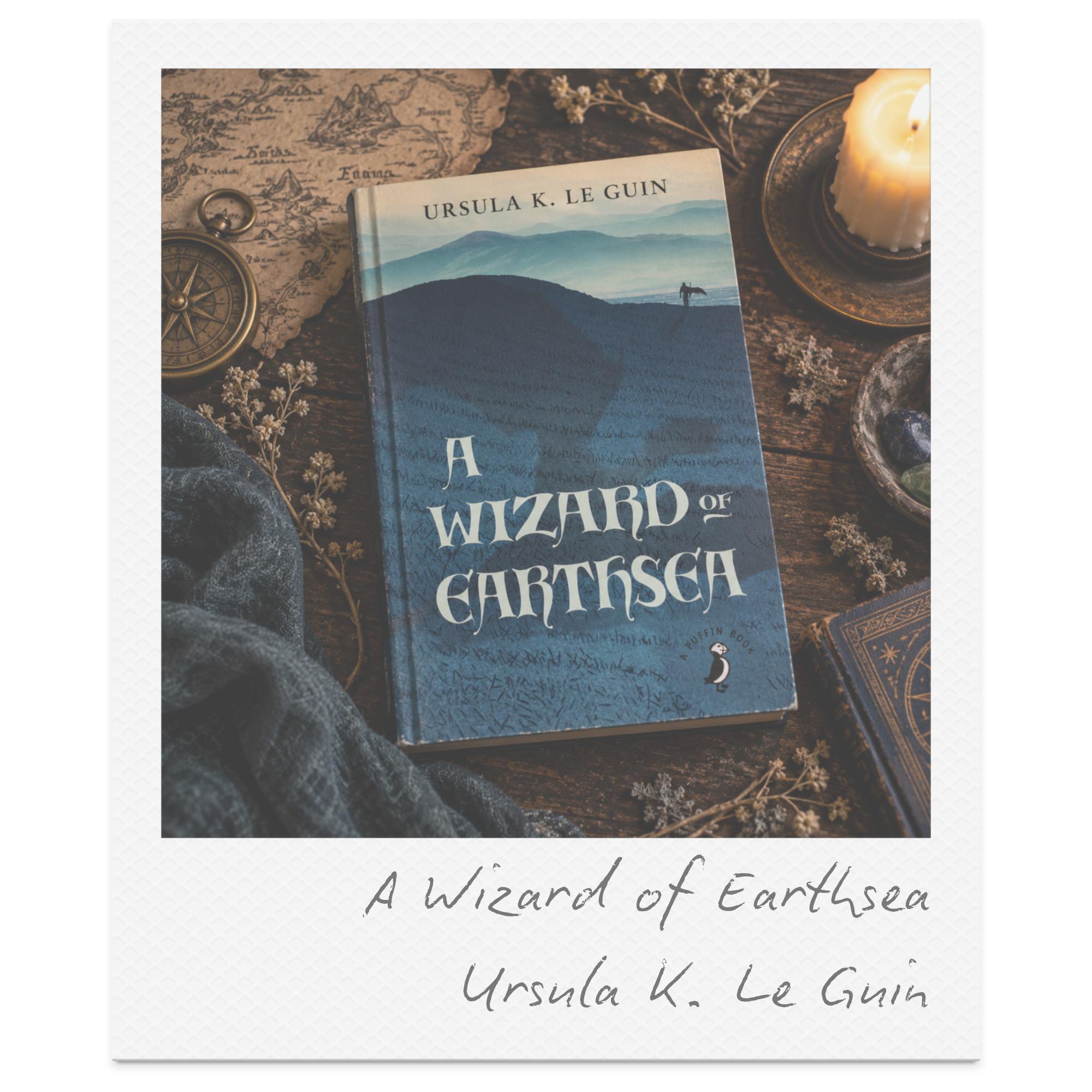
2. Ursula K. Le Guin — A Wizard of Earthsea: Make Geography Shape Your Story
What Is A Wizard of Earthsea About?
Ursula K. Le Guin's A Wizard of Earthsea follows Ged, a gifted young boy who discovers an extraordinary talent for magic while growing up on the remote island of Gont.
After his abilities attract the attention of a powerful wizard, Ged leaves his mountain village to study the ancient art of magic. His journey eventually takes him to the island of Roke, home to a prestigious school of wizardry, where his ambition and desire to prove himself lead him to make a dangerous mistake.
When Ged unleashes a mysterious shadow that threatens to destroy him, he must travel across the islands of Earthsea, confronting the consequences of his actions and discovering the true nature of power, fear and responsibility.
Although magic plays a central role in the novel, Earthsea's geography is equally important. Ged's journey unfolds across a vast archipelago of islands, each separated by dangerous waters and shaped by its own landscapes, communities and traditions.
The ocean is not simply the space between destinations. It influences how people travel, communicate, trade, practise magic and understand their place in the wider world.
Exploring Earthsea: An Archipelago Where Geography Shapes Civilisation
Unlike fantasy worlds dominated by enormous continents, sweeping plains and connected kingdoms, Earthsea consists of hundreds of islands scattered across a vast ocean.
Some islands are large and mountainous, while others are little more than isolated settlements surrounded by open water. The Inner Lands form a relatively connected cultural and geographical centre, while the distant Reaches contain smaller, more remote communities.
This fragmented landscape influences almost every aspect of life.
Travel depends heavily on boats, ships, favourable winds and knowledge of the sea. Journeys between islands can be dangerous, particularly when travellers venture beyond familiar waters. The distance between communities creates opportunities for cultural differences to develop, while the ocean simultaneously connects them through trade, exploration and shared traditions.
Ged's home island of Gont provides an especially effective example of how landscape can influence character.
Gont is a mountainous island whose villages are separated by steep terrain and difficult paths. Ged grows up in a relatively isolated community, far removed from the larger centres of magical learning. His early understanding of the world is shaped by the mountains, forests and local traditions surrounding him.
When he eventually leaves Gont, the contrast between his familiar surroundings and the wider archipelago reinforces both his inexperience and the extraordinary possibilities awaiting him.
Roke, meanwhile, occupies a very different position within Earthsea. As the centre of formal magical education, the island possesses cultural and intellectual significance that extends far beyond its physical size. Its importance demonstrates how geography can be shaped by institutions, knowledge and the movement of people rather than natural resources alone.
Le Guin also uses the sea to influence the atmosphere and structure of the narrative.
Long voyages create opportunities for reflection, uncertainty and discovery. Remote islands introduce unfamiliar communities and ways of life, while stretches of open water emphasise Ged's vulnerability. As his journey takes him further from familiar places, the geographical distances mirror his growing psychological and spiritual isolation.
There is also a deeper relationship between Earthsea's geography and its magical philosophy.
Magic in Earthsea depends upon understanding the true names of things and respecting the balance of the natural world. The wind, water, weather and living environment are not merely obstacles to overcome. They are part of a world whose underlying order must be understood before it can be influenced.
By connecting magic to the natural environment, Le Guin makes Earthsea's geography feel inseparable from its culture, philosophy and storytelling.
What Can Fantasy Writers Learn from Le Guin?
The central worldbuilding lesson from A Wizard of Earthsea is that geography should influence how a fictional civilisation develops and how its characters experience the world.
When creating a fantasy map, it can be tempting to begin with visually interesting features: dramatic mountain ranges, enormous forests, scattered islands and mysterious deserts.
However, the most effective geographical worldbuilding goes further by asking how these landscapes influence the societies that inhabit them.
A kingdom divided by a mountain range might develop two distinct cultures with different languages, traditions and political loyalties. An isolated island civilisation may depend on fishing, shipbuilding and maritime trade, while a desert kingdom might establish powerful settlements around scarce water sources.
Geographical barriers can also generate narrative conflict.
A dangerous sea crossing might prevent an army from reaching its allies. A narrow mountain pass could become a strategically important trade route. A remote settlement might preserve ancient magical traditions that have disappeared elsewhere.
Consider how distance influences communication and political control. How quickly can news travel between settlements? Which communities have regular contact, and which remain isolated for generations? Does the landscape encourage cooperation, competition or territorial disputes?
Le Guin demonstrates that geography becomes especially powerful when it influences both the practical and emotional dimensions of a story.
For Ged, travelling between islands is not simply a means of reaching new locations. Each journey exposes him to unfamiliar experiences, challenges his understanding of the world and contributes to his personal transformation.
Your fantasy landscape should do more than provide somewhere for the story to happen. It should help determine which stories are possible.
Try It Yourself: Build a Fantasy World Shaped by Geography
Imagine a fantasy realm consisting of five settlements separated by a significant geographical feature. You might choose an archipelago, mountain range, vast desert, dense forest or enormous river system.
Begin by sketching a simple map, then answer the following questions:
How do people travel? Consider the available routes, transport methods, travel times and natural dangers.
What resources does each settlement possess? Identify how the environment influences food production, trade, occupations and wealth.
How has isolation shaped different cultures? Explore variations in customs, beliefs, languages, architecture and attitudes towards outsiders.
Who controls the important routes? Consider the political and economic power associated with harbours, bridges, mountain passes or navigable rivers.
How does geography create conflict? Introduce a natural disaster, blocked trade route, territorial dispute or dangerous journey that threatens the relationships between your settlements.
Finally, choose a character who must travel from one settlement to another. Write a short scene in which the landscape creates an obstacle, forces an important decision or exposes the character to an unfamiliar culture.
Try to make the geography essential to the scene rather than simply describing the scenery.
Explore the Book
Discover the islands, ancient magic and distinctive cultures of Earthsea in Ursula K. Le Guin's A Wizard of Earthsea, a fantasy classic that demonstrates how geography can shape both civilisation and character.
Explore A Wizard of Earthsea on Amazon — paid link
Explore Further with Ink & Insights
Inspired by Earthsea's island cultures and extraordinary maritime landscapes? Explore our Fantasy Landscapes: The Ultimate Guide for ideas on developing immersive settings shaped by forests, mountains, coastlines, oceans, deserts and other distinctive environments.
You can also discover our Fantasy Island Names collection, featuring enchanted islands, remote kingdoms, mysterious shores and imaginative worldbuilding ideas to help you create your own archipelago.
For additional inspiration, visit the Fantasy Writing Hub to explore more fantasy settings, worldbuilding exercises and creative writing resources.
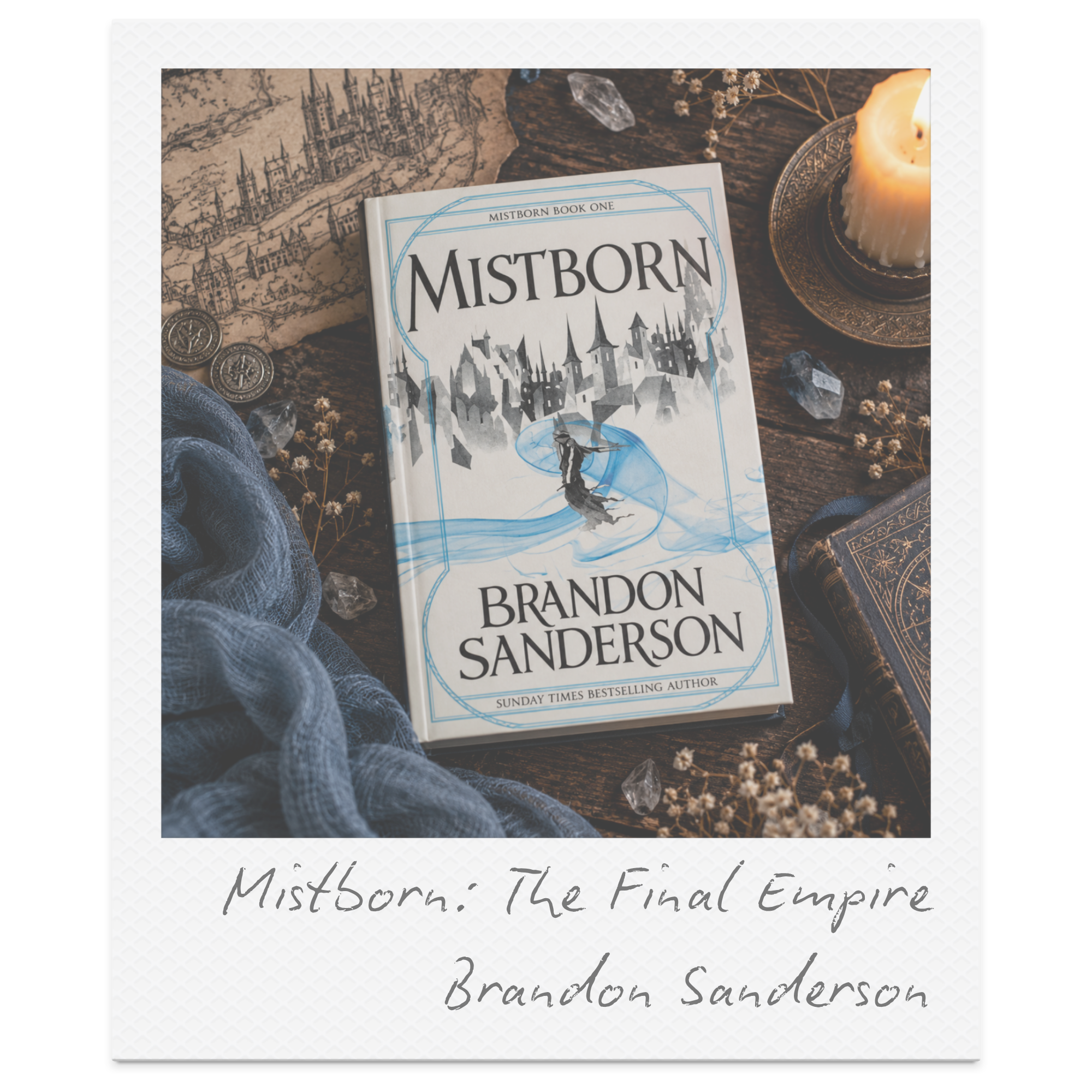
3. Brandon Sanderson — Mistborn: The Final Empire: Give Your Magic Rules and Consequences
What Is Mistborn: The Final Empire About?
Brandon Sanderson's Mistborn: The Final Empire takes place in a dark, oppressive world where ash falls from the sky, mysterious mists cover the streets at night, and an immortal ruler has maintained his power for a thousand years.
The Final Empire is governed by the Lord Ruler, a seemingly invincible figure worshipped as a god. Beneath his authority, powerful noble families enjoy wealth and privilege, while the skaa, an oppressed underclass, endure generations of exploitation and persecution.
At the centre of the story is Vin, a young street thief who has spent much of her life surviving through secrecy, suspicion and instinct. When she encounters Kelsier, a charismatic criminal with extraordinary magical abilities, she discovers that she possesses a rare power known as Allomancy.
Kelsier recruits Vin into an ambitious rebellion intended to overthrow the Lord Ruler and dismantle the political system that has sustained his empire for centuries.
However, success depends upon more than courage and determination. Vin must learn to understand her abilities, master their limitations and navigate a society in which magical power is closely connected to wealth, ancestry and political influence.
Exploring the Final Empire: A World Governed by Magical Rules
One of the most distinctive features of Mistborn is its carefully structured magic system, Allomancy.
Unlike fictional magic that allows characters to produce almost any supernatural effect, Allomancy operates according to established principles. Practitioners gain specific abilities by ingesting and metabolising particular metals, a process known as burning.
Each Allomantic metal produces a different effect.
Burning pewter enhances physical strength, speed and endurance, while tin heightens the senses. Iron allows an Allomancer to pull on nearby metal objects, whereas steel enables them to push against metal. Other metals influence emotions or reveal information about the use of magic.
These abilities are powerful, but they are not unlimited.
An Allomancer must possess a supply of the appropriate metal to use its associated power. Different metals burn at different rates, creating practical limitations on how long particular abilities can be maintained. Certain powers also depend upon environmental conditions: pushing against metal, for example, requires a suitable metallic object and involves physical forces that can affect the Allomancer's own movement.
These restrictions make magical encounters more strategically interesting. Characters cannot simply invent new abilities whenever they face danger. They must understand the resources available to them, anticipate their opponents' actions and use established powers creatively.
Sanderson develops this system further through the distinction between Mistings and Mistborn.
Most Allomancers can burn only one metal, making them Mistings with a specialised ability. Mistborn, however, can use all the standard Allomantic metals, giving them extraordinary versatility and making them particularly valuable within the Final Empire's political hierarchy.
Crucially, Allomancy is not distributed equally throughout society.
The ability is associated primarily with noble bloodlines, reflecting the Lord Ruler's historical control over magical power. Noble families benefit from abilities that strengthen their political influence, while the skaa are largely excluded from the privileges associated with Allomantic inheritance.
Magic therefore reinforces existing social divisions rather than operating independently of them.
The Final Empire's wider environment also contributes to its distinctive atmosphere. Falling ash, unnatural mists and a population accustomed to oppressive conditions create a world in which the landscape itself reflects the apparent permanence of the Lord Ruler's authority.
Together, these elements demonstrate how a structured magic system can influence combat, social hierarchy, political control and the everyday experience of living within a fictional world.
What Can Fantasy Writers Learn from Sanderson?
The central worldbuilding lesson from Mistborn is that magical abilities become more compelling when they have understandable rules, meaningful limitations and consequences that influence the wider world.
A magic system does not necessarily need to be explained in scientific detail. However, writers should understand what their magic can accomplish, what prevents it from solving every problem and how its existence affects the societies that use it.
Begin by considering the source of magical power.
Does magic come from inherited abilities, ancient artefacts, natural elements, supernatural beings or years of specialised training? Can anyone learn to use it, or is access restricted to particular individuals?
Next, establish its limitations.
Perhaps magic requires a rare material, gradually exhausts its practitioner or becomes unreliable under certain conditions. Some abilities might demand years of preparation, while others carry physical, psychological or social consequences.
These restrictions are especially useful for creating narrative tension.
If a character can teleport anywhere without difficulty, distance becomes largely irrelevant. However, if teleportation requires an expensive resource, only works between particular locations or leaves the practitioner dangerously weakened, the same ability creates opportunities for difficult decisions and unexpected complications.
Sanderson also demonstrates the importance of exploring magic beyond individual characters.
Consider how supernatural abilities might influence warfare, medicine, transportation, education, religion and political authority.
If certain people can manipulate emotions, how would society regulate their abilities? If magical healing exists, who can afford access to it? If some families inherit extraordinary powers, might they establish hereditary ruling classes?
The most convincing magic systems do more than give characters extraordinary abilities. They change how the fictional world functions.
Try It Yourself: Create a Magic System with Rules and Consequences
Design a magic system for your own fantasy world by establishing the following elements:
Source of power: Where does magic originate? Is it inherited, learned, borrowed or obtained through particular materials?
Three abilities: Identify three specific things practitioners can accomplish using magic.
Three limitations: Establish restrictions involving resources, physical conditions, knowledge, time or the abilities themselves.
The cost of magic: What must practitioners sacrifice, risk or endure when using their powers?
Social consequences: How has magic influenced wealth, education, political authority, laws or cultural traditions?
Once you've established these rules, imagine a character facing a dangerous situation in which their most useful magical ability is unavailable.
Perhaps they have exhausted a necessary resource, encountered an unexpected environmental restriction or discovered that using magic would harm someone they care about.
Write a short scene in which the character must solve the problem creatively without breaking the rules of your magic system.
The aim is to demonstrate how limitations can generate more interesting storytelling possibilities than unlimited power.
Explore the Book
Discover a world of ash, political rebellion and intricately designed magical abilities in Brandon Sanderson's Mistborn: The Final Empire, an excellent example of how consistent magical rules can strengthen fantasy worldbuilding and narrative conflict.
Explore Mistborn: The Final Empire on Amazon — paid link
Explore Further with Ink & Insights
Ready to develop a magic system for your own fantasy world? Explore our Fantasy Magic Worldbuilding Questions, covering magical origins, abilities, training, limitations, forbidden practices, political power, inequality and the consequences of supernatural abilities.
You can also experiment with our Fantasy Magic System Generator, which creates combinations of magical sources, powers, costs, restrictions, institutions and story complications to help you develop an original system.
For a broader approach to creating interconnected kingdoms, cultures and magical societies, explore our Fantasy Kingdoms: The Ultimate Guide to Names, Ideas & Worldbuilding.
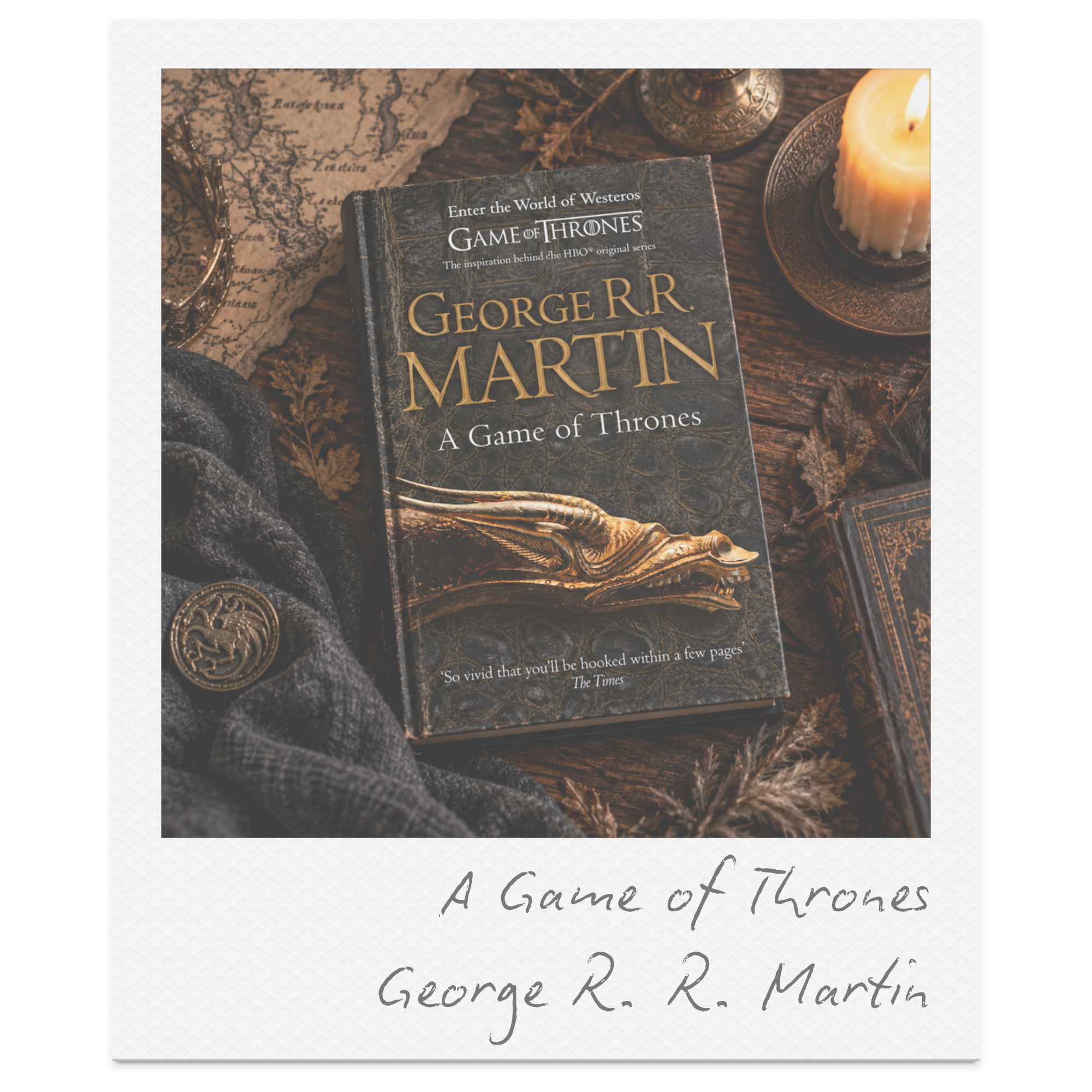
4. George R. R. Martin — A Game of Thrones: Build Politics Around Competing Interests
What Is A Game of Thrones About?
George R. R. Martin's A Game of Thrones, the first novel in the A Song of Ice and Fire series, takes place in Westeros, a continent where powerful noble families compete for influence over the Seven Kingdoms and the Iron Throne.
When King Robert Baratheon travels north to appoint Eddard Stark as his new Hand of the King, Eddard leaves his ancestral home of Winterfell and enters the dangerous political world of King's Landing. What initially appears to be an honourable appointment soon draws him into a network of secrets, rivalries and competing ambitions that threaten the stability of the kingdom.
Meanwhile, across the Narrow Sea, Daenerys Targaryen, one of the surviving descendants of the dynasty overthrown by Robert, becomes entangled in her brother's ambitions to reclaim the throne. Far to the north, beyond the enormous Wall that separates the Seven Kingdoms from the wilderness, an ancient supernatural threat begins to emerge.
Although A Game of Thrones contains magic, prophecy and extraordinary creatures, much of its tension comes from political relationships, inherited loyalties and the conflicting interests of people who believe they have legitimate claims to power.
Exploring Westeros: A Kingdom Built on Competing Loyalties
One of Martin's greatest worldbuilding achievements is the construction of a political landscape in which power is constantly negotiated, challenged and defended.
Westeros is formally united beneath the Iron Throne, but the Seven Kingdoms are far from culturally or politically uniform.
The North, ruled by House Stark from Winterfell, is geographically vast, relatively isolated and strongly influenced by ancient traditions. Its inhabitants retain their allegiance to the old gods, while their political identity is shaped by longstanding loyalties and a history that predates the Targaryen conquest.
The Westerlands, associated with House Lannister, possess enormous mineral wealth, giving the family considerable economic and political influence. House Tyrell's power in the Reach is connected to fertile agricultural lands, prosperous settlements and the resources needed to sustain large populations and armies.
Other regions possess their own geographical advantages, cultural identities, military traditions and political interests.
These differences matter because the noble houses do not simply compete for power; they possess different resources, obligations, ambitions and ideas about how the kingdom should be governed.
The political structure of Westeros is also shaped by its history.
Robert Baratheon's claim to the throne emerged from a rebellion that overthrew the Targaryen dynasty. Although Robert now rules the Seven Kingdoms, the consequences of that conflict remain visible in the relationships between noble families.
Some houses supported the rebellion, while others remained loyal to the Targaryens. Marriages, political appointments and personal alliances helped establish the new regime, but they did not erase earlier grievances or competing claims to legitimacy.
This creates a particularly convincing political environment because the apparent stability of the kingdom depends upon relationships that are neither permanent nor entirely trustworthy.
Martin also explores the difference between possessing a title and exercising genuine power.
The king may occupy the Iron Throne, but his authority depends upon noble support, military strength, financial resources and the willingness of powerful families to recognise his decisions.
House Lannister's wealth provides influence that extends beyond its ancestral territories. Marriage alliances create political obligations between families, while the royal court becomes a place where information, reputation and personal relationships can be as valuable as armies.
Individual characters experience these structures differently.
Eddard Stark approaches political responsibility through personal honour and a belief in legitimate authority. Other figures understand power primarily through negotiation, secrecy, family advancement or strategic compromise.
The resulting conflicts are compelling because the characters operate within the same political system while interpreting its obligations and opportunities in fundamentally different ways.
Even seemingly personal decisions can have consequences for entire kingdoms. A marriage, inheritance dispute, broken promise or accusation of treason may threaten alliances that have existed for generations.
Through these interconnected relationships, Martin creates a fictional society in which political conflict emerges naturally from the worldbuilding itself.
What Can Fantasy Writers Learn from Martin?
The central worldbuilding lesson from A Game of Thrones is that convincing political systems require competing interests, conflicting loyalties and believable reasons for different groups to pursue power.
When creating a fantasy kingdom, it can be tempting to establish a monarch, invent several noble houses and describe a straightforward hierarchy of authority.
However, political depth comes from exploring what happens beneath that formal structure.
Who actually controls the kingdom's wealth? Which families command military forces? Who possesses religious authority? Are merchants, landowners or magical institutions powerful enough to challenge the monarchy?
Consider how different factions depend upon one another.
A wealthy trading city might require protection from a powerful military house. An agricultural region could supply food to the capital while resenting the taxes imposed by its ruler. A religious institution might support the monarchy publicly while privately questioning its legitimacy.
These relationships become especially interesting when different groups have reasonable but incompatible ambitions.
A noble family seeking independence may believe it is protecting an ancient cultural identity. A monarch attempting to centralise authority might consider the same movement a dangerous threat to national stability.
Neither faction needs to view itself as villainous.
Historical events can deepen these tensions. Perhaps an earlier rebellion resulted in confiscated lands, disputed inheritances or political marriages that continue to influence the present.
Martin demonstrates that political worldbuilding becomes most effective when power has practical foundations, loyalty has conditions and every major decision creates consequences for someone else.
Rather than inventing political conflict solely to advance your plot, develop a system of relationships in which conflict becomes increasingly difficult to avoid.
Try It Yourself: Create Three Rival Factions
Imagine a fantasy kingdom experiencing a period of political uncertainty.
Create three influential factions, such as noble houses, religious institutions, merchant guilds, military organisations or regional governments.
For each faction, establish:
Its source of power: Does it control land, wealth, armies, magical knowledge, religion or an important trade route?
Its political ambition: What does the faction want to achieve or protect?
Its greatest vulnerability: What could threaten its influence or survival?
Its relationship with the other factions: Who are its allies, rivals and reluctant partners?
Its historical grievance: What event from the kingdom's past continues to influence its decisions?
Now introduce a political crisis.
Perhaps the monarch dies without naming an heir, a valuable resource is discovered in disputed territory, or a neighbouring kingdom threatens invasion.
Consider how each faction responds according to its own priorities. Which alliances become stronger? Which relationships begin to collapse? Who might benefit from allowing the crisis to continue?
Finally, write a short council meeting in which representatives of all three factions attempt to resolve the situation.
Give each character a clear objective, but prevent any single faction from obtaining everything it wants.
Explore the Book
Discover the rival noble houses, political intrigue and complex power struggles of Westeros in George R. R. Martin's A Game of Thrones, a compelling example of how competing interests can shape an entire fantasy world.
Explore Further with Ink & Insights
Ready to create the political structures of your own fantasy kingdom? Explore our How to Create a Fantasy Kingdom: Government, Rulers, Power & Politics for guidance on designing systems of government, royal authority and political relationships.
For inspiration, our Fantasy Alliances, Rivalries & Political Conflict Ideas collection explores succession disputes, marriage alliances, betrayals, rebellions, secret treaties and competing noble houses, with story ideas to help you develop conflicts within your own fictional realm.
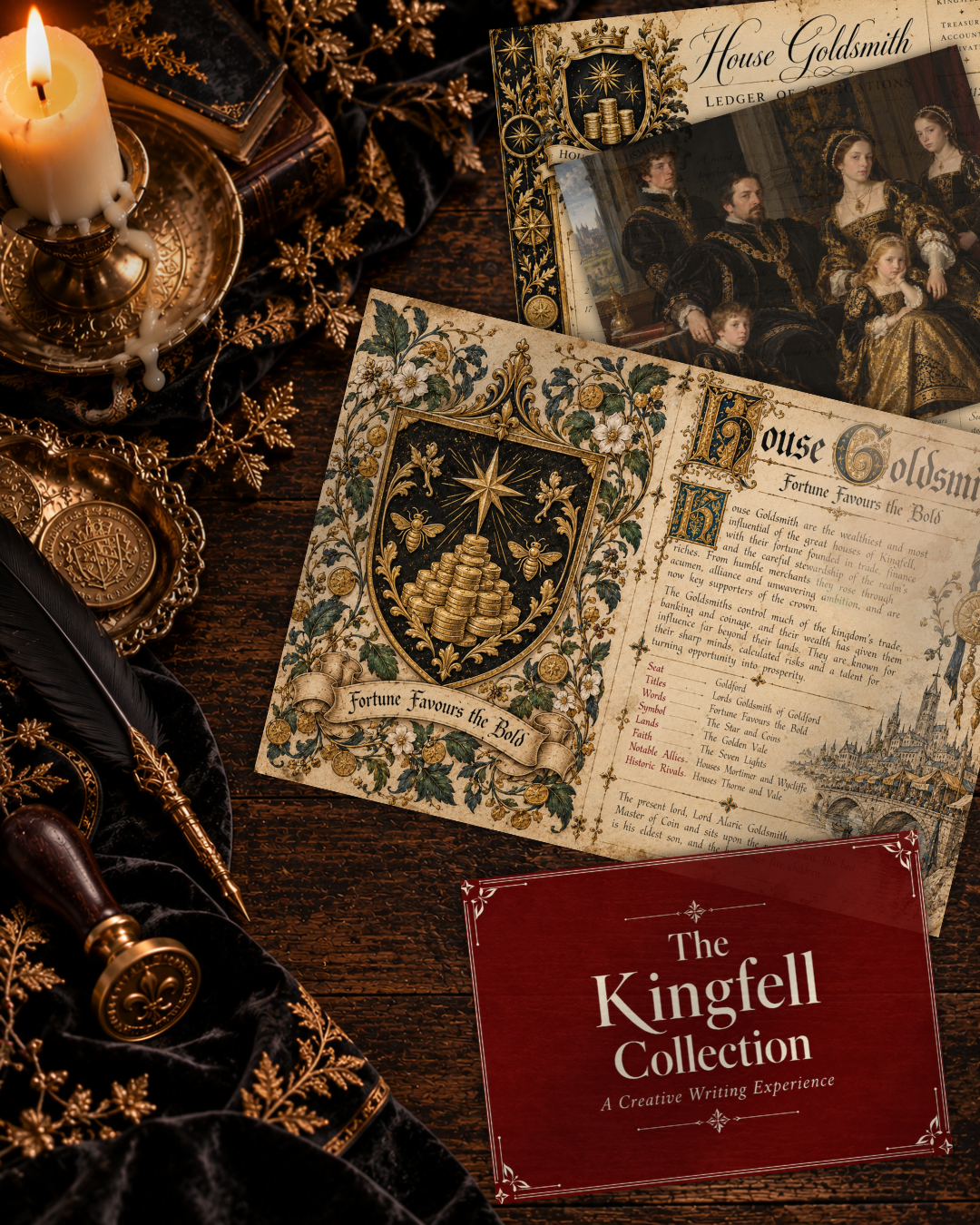
You can also step inside The Kingfell Collection, an immersive fantasy Storyworld Archive centred on the mysterious disappearance of a young queen. Through royal proclamations, noble houses, political accusations, historical documents and conflicting accounts, writers can investigate a kingdom where every powerful family has its own version of the truth.
New to Storyworld Archives? Explore Kingfell for Free!
Step inside a kingdom of rival noble houses, ancient prophecies and royal secrets with a FREE 7-page sample of The Kingfell Collection.
Discover mysterious artefacts, historical documents and fragments of a larger story waiting to be uncovered. See how a fictional world's history and political intrigue can inspire your own creative writing.
Enter your email address below to receive your free Kingfell sample and begin exploring!
5. N. K. Jemisin — The Fifth Season: Make Your World's Environment Matter
What Is The Fifth Season About?
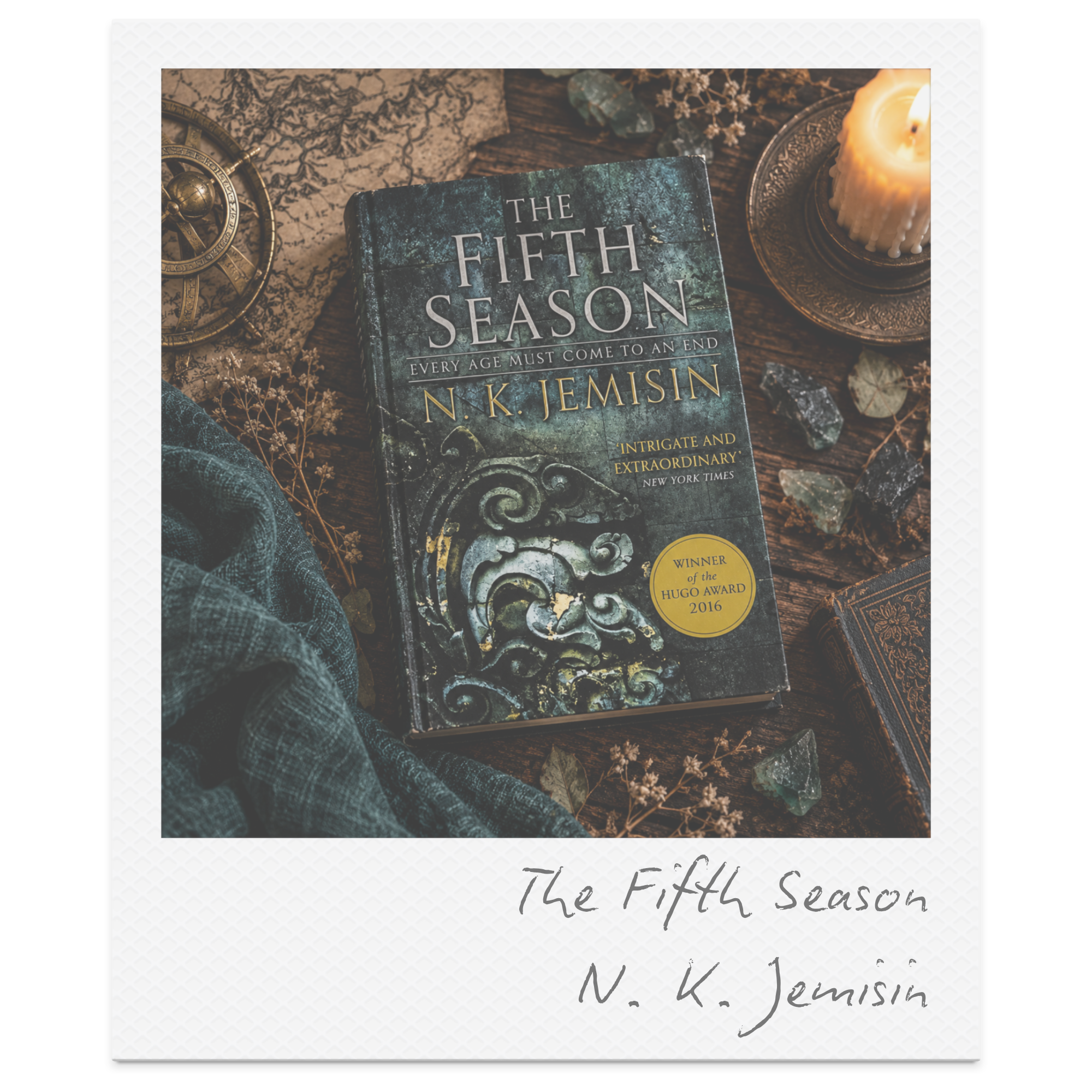
N. K. Jemisin's The Fifth Season, the first novel in The Broken Earth trilogy, takes place on a continent known as the Stillness, where civilisation exists under the constant threat of devastating geological catastrophes.
Earthquakes, volcanic eruptions and other environmental disasters regularly transform the landscape, destroying settlements, disrupting agriculture and threatening entire populations. Particularly severe periods of environmental instability are known as Fifth Seasons, catastrophic events that can plunge civilisation into years of famine, darkness and desperate struggles for survival.
Against this dangerous backdrop, the novel follows three women whose lives are shaped by a world that both fears and depends upon people with extraordinary abilities.
Essun is a woman living in a small community whose carefully constructed life collapses following a devastating personal tragedy. Damaya is a young girl discovering that her unusual abilities make her both valuable and dangerous in the eyes of society. Syenite is a trained orogene whose power allows her to manipulate geological forces, although her abilities come with profound restrictions on her personal freedom.
As their stories unfold, Jemisin reveals a civilisation whose political institutions, cultural traditions and systems of oppression have developed in response to the unstable environment.
Exploring the Stillness: A Civilisation Built Around Catastrophe
The Stillness is one of contemporary fantasy's most striking examples of environmental worldbuilding because its geological instability influences almost every aspect of civilisation.
Unlike fictional worlds where natural disasters occur as occasional dramatic events, the Stillness experiences recurring catastrophes so severe that societies have developed entire systems around anticipating and surviving them.
These disasters, known as Fifth Seasons, can last for years or even generations. Volcanic eruptions may fill the atmosphere with ash, earthquakes can destroy cities, and environmental disruption can make agriculture impossible across enormous regions.
As a result, survival is not simply an individual concern. It is a fundamental principle around which communities organise themselves.
Settlements, known as comms, maintain stores of food, water and other essential resources in preparation for future disasters. Communities must consider whether their location offers access to defensible land, reliable supplies and sufficient protection against geological instability.
The possibility of catastrophe also influences social organisation.
People are assigned practical roles according to their skills and perceived usefulness to the community. Occupations connected to food production, construction, medicine and survival become especially important in a society where resources can disappear almost overnight.
Jemisin demonstrates how these environmental pressures can create cultural values that appear reasonable within the context of survival but become deeply troubling when applied to human relationships.
The fear of scarcity encourages communities to prioritise collective security, sometimes at the expense of individual freedom, compassion and equality.
This tension is particularly evident in the treatment of orogenes.
Orogenes possess the ability to manipulate thermal and kinetic energy, allowing them to influence seismic activity and potentially prevent devastating geological events. Their abilities make them extraordinarily valuable in a world threatened by earthquakes and volcanic instability.
However, they are also feared because uncontrolled orogeny can cause destruction.
Rather than granting orogenes freedom or political authority, the dominant social system subjects them to surveillance, discrimination and institutional control. The Fulcrum trains orogenes to use their abilities, while Guardians enforce the structures designed to regulate them.
This creates a powerful contradiction at the heart of the Stillness: the people most capable of protecting civilisation from environmental catastrophe are also among those most systematically oppressed by it.
The environment therefore influences far more than architecture, agriculture or settlement patterns. It helps shape political authority, institutional violence, social prejudice and the distribution of power.
Jemisin also uses the physical landscape to establish the novel's atmosphere.
The threat of geological destruction creates a persistent sense of instability. Even seemingly secure settlements exist beneath the possibility of sudden collapse, while the remains of earlier civilisations suggest that survival has always been temporary.
The result is a world in which environmental danger is not simply something characters encounter during their journeys. It is an enduring force that shapes their beliefs, opportunities, relationships and understanding of what it means to survive.
What Can Fantasy Writers Learn from Jemisin?
The central worldbuilding lesson from The Fifth Season is that environmental conditions become most compelling when they fundamentally influence how a civilisation develops.
Many fantasy writers begin by creating an interesting landscape. They might imagine a kingdom surrounded by active volcanoes, a civilisation beneath an enormous glacier or a city built within a vast desert.
However, effective environmental worldbuilding requires more than describing unusual geographical features.
Consider how people would adapt to living within those conditions over hundreds or thousands of years.
A civilisation regularly threatened by volcanic eruptions might construct settlements using fire-resistant materials, develop elaborate evacuation routes and maintain specialised occupations connected to geological monitoring.
An isolated desert kingdom might establish strict laws governing water ownership, while communities living in a permanently frozen environment could develop distinctive food preservation techniques, seasonal traditions and systems of shared shelter.
These adaptations can influence culture as well as practical survival.
Perhaps a society celebrates the end of a dangerous storm season with an annual festival. A community threatened by floods might regard high ground as sacred, while an ancient catastrophe could become the foundation of a religious belief or political institution.
Environmental pressures can also generate conflict.
Who controls essential resources? Which communities receive protection during a disaster? Are wealthy citizens able to purchase safety while poorer populations remain exposed? Does the government possess the authority to abandon settlements considered too expensive to defend?
Jemisin's worldbuilding is particularly effective because these questions are inseparable from the novel's exploration of power, oppression and survival.
Rather than treating the environment as a passive setting, she examines how repeated catastrophes can influence a society's values and how those values can be used to justify deeply unequal systems.
For fantasy writers, the important question is not simply what makes your environment extraordinary, but how living within it has changed the people who call it home.
Try It Yourself: Create a Civilisation Shaped by Catastrophe
Imagine a fantasy civilisation that has survived a recurring environmental disaster for at least 500 years.
Choose one major threat, such as volcanic eruptions, magical storms, devastating floods, prolonged winters, earthquakes, spreading deserts or an unusual supernatural phenomenon.
Develop your civilisation by answering the following questions:
What makes the environment dangerous? Describe the disaster, how frequently it occurs and how much warning communities receive.
How have settlements adapted? Consider architecture, transport, food production, emergency shelters and the locations people choose to inhabit.
What resources are essential for survival? Identify who produces, stores and controls them.
How has the environment shaped society? Explore occupations, laws, political institutions, social hierarchies and cultural traditions.
Who benefits from the existing system? Consider whether certain groups possess greater access to safety, resources or political influence.
What happens when the system fails? Imagine a catastrophe that exceeds the civilisation's preparations or exposes an injustice within its survival strategies.
Finally, write a short scene set during the first warning signs of an approaching disaster.
Rather than focusing exclusively on the catastrophe itself, show how ordinary people respond according to the customs, institutions and survival practices their society has developed.
Perhaps a family begins sealing its home, merchants close their shops, officials distribute emergency supplies or a character discovers that their community's protection system excludes certain inhabitants.
The aim is to reveal your worldbuilding through behaviour, decisions and conflict rather than explanation alone.
Explore the Book
Discover a world where geological catastrophe, magical power and social oppression are deeply interconnected in N. K. Jemisin's The Fifth Season, a remarkable example of environmental worldbuilding and its influence on civilisation.
Explore The Fifth Season on Amazon UK — paid link
Explore Further with Ink & Insights
Inspired by the dangerous landscapes of the Stillness? Explore our Fantasy Landscapes: The Ultimate Guide for ideas on developing fictional environments shaped by mountains, deserts, volcanic regions, frozen wildernesses, oceans and other distinctive geographical features.
For a more specific creative challenge, discover our Volcanic Fantasy Writing Prompts, featuring ash-covered landscapes, sleeping volcanoes, obsidian cities, geothermal settlements and kingdoms shaped by fire. Use these ideas to explore how communities might survive, adapt and develop cultures around extraordinary environmental conditions.
You can also experiment with our Fantasy Kingdom Worldbuilding Questions, which explore the relationships between geography, resources, society, political power, culture and conflict, helping you create a fictional civilisation whose environment influences far more than its appearance.
6. Samantha Shannon — The Priory of the Orange Tree: Use Religion and Mythology to Shape Cultures
What Is The Priory of the Orange Tree About?
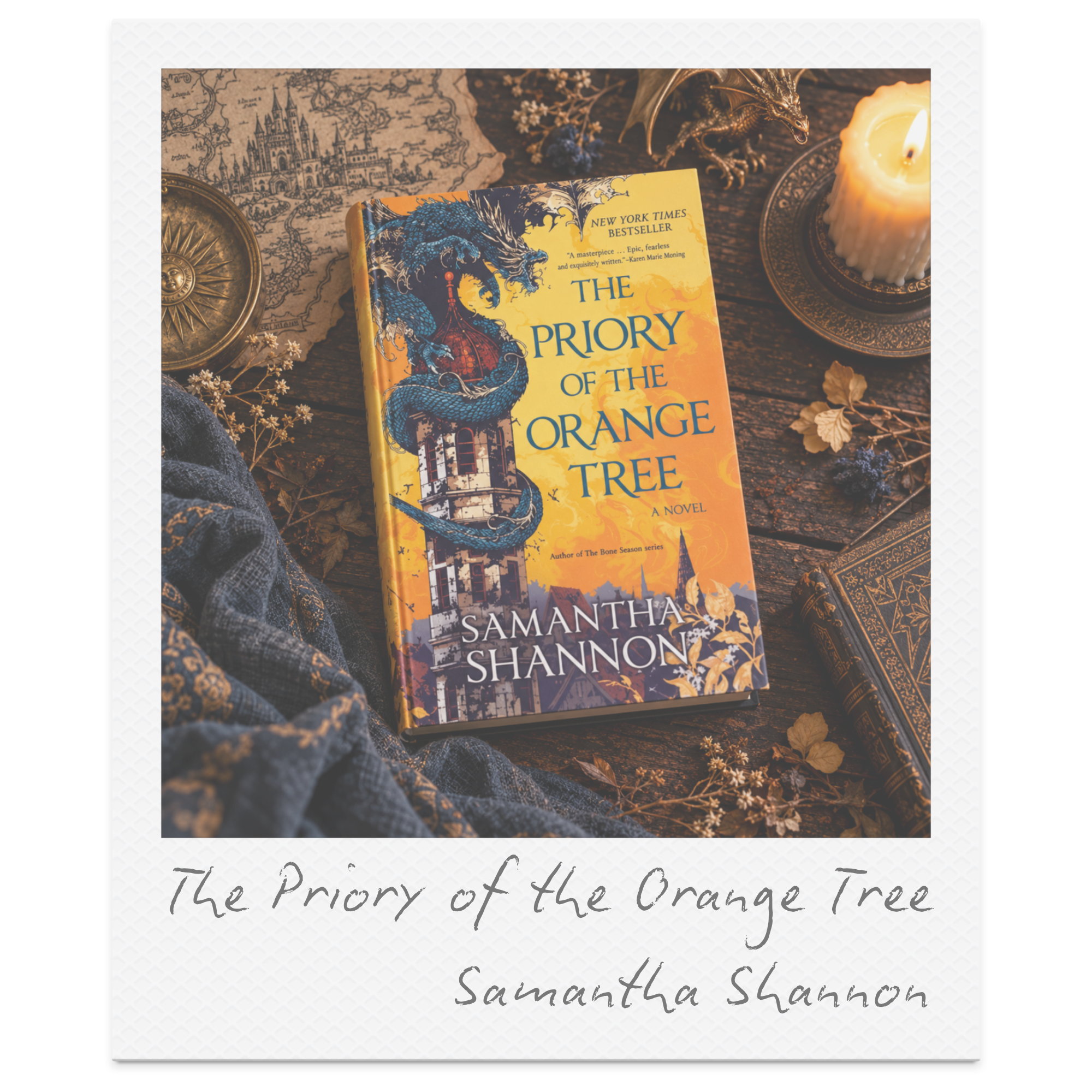
Samantha Shannon's The Priory of the Orange Tree is an epic fantasy novel set in a world divided by religious beliefs, ancient legends and conflicting interpretations of a shared history.
In the western kingdom of Inys, Queen Sabran the Ninth rules as the latest monarch in a dynasty believed to protect humanity from the return of a terrifying ancient dragon known as the Nameless One. Her position is both political and religious, with the stability of her kingdom resting upon the belief that her bloodline is essential to preserving the world.
Within the royal court, Ead Duryan serves as one of Sabran's ladies-in-waiting. Unknown to the queen, Ead belongs to a secret society of mages connected to the Priory of the Orange Tree, an organisation dedicated to protecting the world from the return of draconic evil.
Meanwhile, in the East, Tané dreams of becoming a dragonrider in a society where dragons are revered rather than feared. As ancient threats begin to reawaken, the characters find themselves confronting religious divisions, political secrets and long-held assumptions about the world's history.
At its heart, The Priory of the Orange Tree explores how beliefs about the past can shape entire civilisations — and what happens when those beliefs are challenged.
Exploring Shannon's World: Religion, Dragons and Competing Versions of History
One of the most distinctive elements of Shannon's worldbuilding is the way different cultures interpret the same supernatural forces through radically different religious traditions.
In the West, the dominant religion is the Virtudom, a faith centred upon the teachings and legendary achievements of Galian Berethnet. Its followers believe that Galian defeated the Nameless One and that the continuation of the Berethnet royal bloodline helps prevent the ancient enemy's return.
This belief gives the monarchy an extraordinary form of legitimacy.
Sabran is not simply a political ruler whose authority comes from inheritance. Her existence is understood as part of the world's supernatural protection, making questions of marriage, succession and royal duty matters of religious significance.
The queen's personal life therefore becomes inseparable from the expectations of her kingdom.
Religion also influences how western societies understand dragons. The fire-breathing creatures associated with the Nameless One are regarded as dangerous manifestations of an ancient evil, reinforcing a cultural fear of their return.
In the East, however, dragons occupy a very different position.
Eastern traditions honour water-associated dragons as wise and powerful beings. In Seiiki, the relationship between humans and dragons is reflected in institutions, customs and the prestigious role of dragonriders.
Tané's ambition to become a dragonrider demonstrates how these beliefs influence individual identity. Her aspirations are shaped by a society in which serving alongside dragons carries honour and cultural significance.
The contrast between East and West is particularly effective because the same broad category of mythical creature inspires reverence in one culture and terror in another.
Shannon also introduces the Priory of the Orange Tree, whose beliefs and knowledge challenge the religious narratives accepted elsewhere.
The Priory preserves an alternative understanding of the ancient struggle against the Nameless One, including the significance of Cleolind, a woman whose role in the world's history differs from the version celebrated within the Virtudom.
These conflicting traditions raise important questions about who controls historical knowledge and how religious institutions preserve particular interpretations of the past.
Rather than presenting mythology as a collection of decorative legends, Shannon makes it central to the political and cultural divisions of her world.
Religious beliefs influence diplomatic relationships, attitudes towards magic, perceptions of dragons and the legitimacy of political authority. They also create barriers between societies that might otherwise have reasons to cooperate.
Importantly, these divisions are not simply disagreements about abstract theology.
They affect the decisions characters make, the institutions they trust, the people they fear and the information they are willing to accept.
As the novel progresses, the tension between inherited belief and emerging evidence becomes increasingly important, demonstrating how a fictional world's mythology can generate conflict while also providing the foundations for its eventual transformation.
What Can Fantasy Writers Learn from Shannon?
The central worldbuilding lesson from The Priory of the Orange Tree is that religion and mythology become most convincing when they influence how different cultures understand history, authority and the supernatural.
When creating a fantasy world, it can be tempting to invent a pantheon of gods, write a creation myth or establish an ancient prophecy without considering how these beliefs affect everyday life.
However, religious worldbuilding becomes much more interesting when beliefs have practical consequences.
A kingdom that considers its monarch divinely appointed might regard rebellion as both a political crime and a religious offence. A society that worships dragons could protect their nesting grounds, develop ceremonies around their appearance or establish prestigious occupations connected to their care.
Another culture might interpret those same creatures as dangerous omens and organise its military, architecture and traditions around preventing their return.
These differences create opportunities for cultural misunderstanding and political conflict.
Consider how religions develop institutions. Who interprets sacred texts? Who performs ceremonies? Are religious leaders independent of the monarchy, or do they possess political authority of their own?
Think about how beliefs are preserved and challenged.
A religious tradition might originate from an actual historical event that has gradually become distorted through centuries of storytelling. Different communities could preserve conflicting accounts, each shaped by their own cultural experiences and political interests.
Perhaps one civilisation celebrates an ancient conqueror as a heroic founder, while another remembers the same figure as a ruthless invader.
Neither culture necessarily considers its interpretation false.
Shannon demonstrates that mythology can become especially powerful when different societies inherit different versions of the same story, and those interpretations influence how they treat one another.
For fantasy writers, the challenge is to create belief systems that feel like living traditions rather than background information.
Religion should influence festivals, architecture, laws, social expectations, political decisions and personal identity. Individual characters should also have different relationships with their society's beliefs, whether through devotion, doubt, indifference, rebellion or reinterpretation.
Try It Yourself: Create Two Cultures with Conflicting Mythologies
Imagine two neighbouring fantasy kingdoms that share an ancient historical event but interpret its meaning in completely different ways.
The event might involve the appearance of a dragon, the disappearance of a powerful ruler, a devastating magical catastrophe or the intervention of a mysterious supernatural being.
Develop both cultures by answering the following questions:
What actually happened? Establish the historical event as you understand it, even if neither civilisation knows the complete truth.
How does each culture explain it? Create two contrasting legends, religious teachings or historical traditions.
Who preserves these beliefs? Consider temples, priesthoods, storytellers, royal families, scholars or magical institutions.
How do the beliefs influence everyday life? Develop a festival, law, custom, architectural feature or social expectation for each society.
How do they create political tension? Consider disagreements over sacred places, magical practices, historical responsibility or the legitimacy of rulers.
What happens when new evidence emerges? Introduce an artefact, forgotten document or supernatural event that challenges both interpretations.
Finally, write a short scene in which two characters from the different cultures encounter the same ancient monument, sacred object or mythical creature.
Allow their contrasting beliefs to influence how they interpret what they see.
The aim is not simply to establish which character is correct, but to demonstrate how culture, religion and inherited stories shape people's understanding of the world around them.
Explore the Book
Discover a world of ancient dragons, rival religious traditions, powerful queens and competing mythologies in Samantha Shannon's The Priory of the Orange Tree, an excellent example of how belief systems can shape cultures, political authority and epic fantasy conflict.
Explore The Priory of the Orange Tree on Amazon UK — paid link
Explore Further with Ink & Insights
Inspired by the competing religious traditions and cultural identities in The Priory of the Orange Tree? Explore our Fantasy Culture Worldbuilding Questions, designed to help you develop the values, beliefs, customs, social structures, traditions and religious practices that distinguish your fictional societies.
You can also use our 100 Fantasy Kingdom Worldbuilding Questions to explore how religion connects with government, royal succession, magical practices, historical events and political relationships.
For further inspiration, visit our Fantasy Writing Hub to discover more resources on mythical creatures, ancient prophecies, magical kingdoms and culturally distinctive fantasy worlds.
7. Susanna Clarke — Piranesi: Give Your World a Distinctive Atmosphere
What Is Piranesi About?
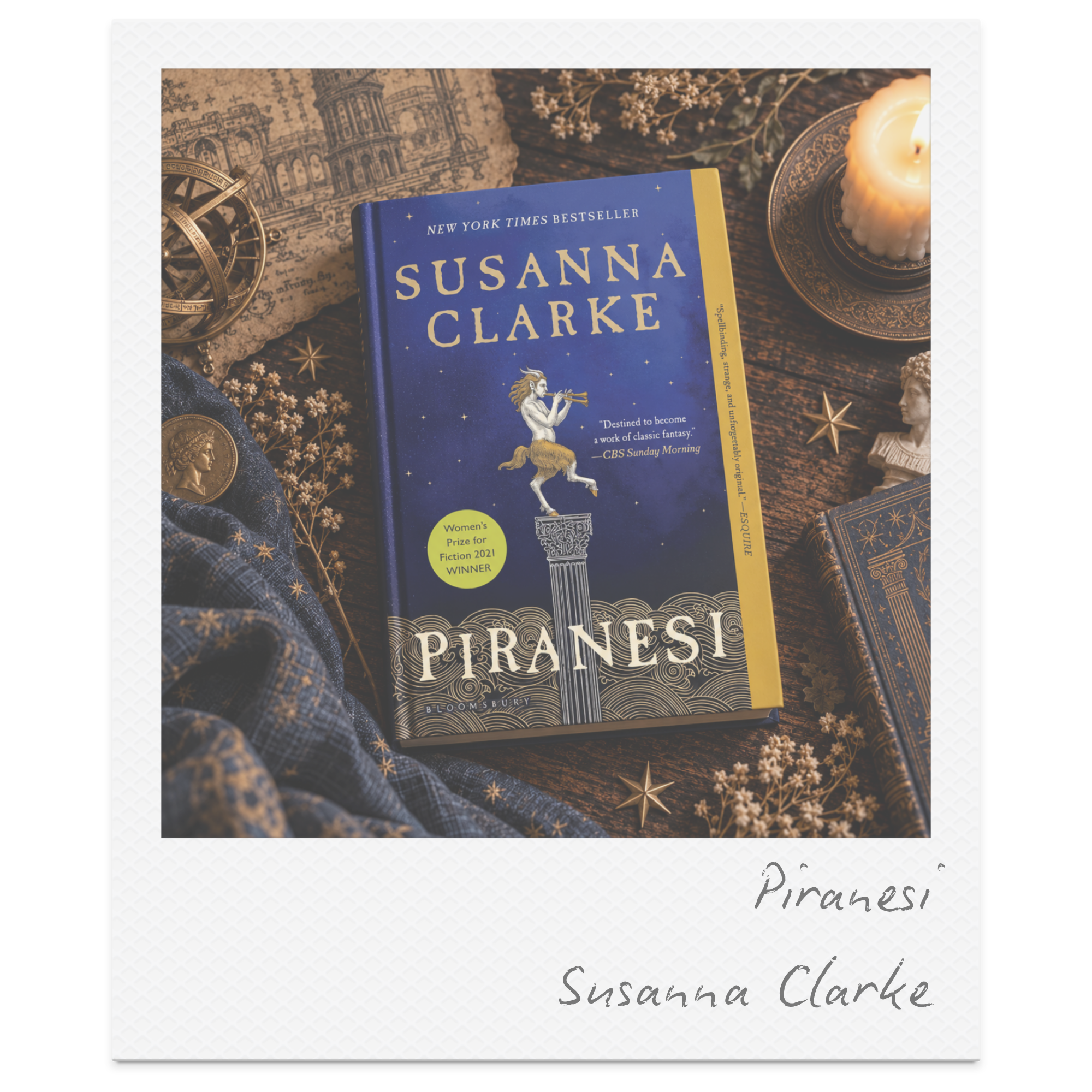
Susanna Clarke's Piranesi takes place in an extraordinary, seemingly endless House filled with magnificent marble halls, towering statues, sweeping staircases and mysterious chambers partially submerged beneath the sea.
The novel follows a man known as Piranesi, who spends his days exploring the House, recording his discoveries and carefully observing the strange environment he considers his home.
The House is unlike any ordinary building. Its enormous halls stretch across multiple levels, with clouds drifting through the upper chambers and ocean tides surging through the lower rooms. Thousands of statues depict unfamiliar figures, creatures and scenes, while birds nest among the architecture and the remains of earlier inhabitants lie hidden within its passages.
Piranesi believes that only two living people inhabit this remarkable world: himself and a mysterious figure known as the Other, whom he meets regularly to discuss their investigations into the House's secrets.
However, as Piranesi encounters unusual evidence and begins questioning aspects of his existence, the familiar world around him becomes increasingly mysterious.
Rather than relying on enormous kingdoms, elaborate political systems or epic battles, Clarke constructs a deeply immersive fantasy through architecture, sensory detail, isolation and the protagonist's relationship with his surroundings.
Exploring the House: Architecture, Isolation and an Unforgettable Atmosphere
One of the most remarkable aspects of Piranesi is how Clarke transforms a single architectural environment into an entire fictional world.
The House appears to extend indefinitely, containing countless halls, corridors, vestibules and staircases. Its vast chambers are filled with statues depicting everything from ordinary human activities to mythical creatures and symbolic figures.
Although the architecture possesses a sense of order, its extraordinary scale makes the House difficult to comprehend.
Piranesi navigates this environment through careful observation, recording the locations of important rooms, monitoring the movement of tides and identifying places where food, shelter and other necessities can be found.
These practical details are essential to the novel's atmosphere.
The House is beautiful, but it is not entirely safe. Powerful tides can flood the lower halls, making certain areas dangerous or inaccessible. The upper chambers are exposed to changing weather, while the immense distances between rooms create a profound sense of isolation.
Clarke repeatedly contrasts the grandeur of the architecture with the vulnerability of the individual moving through it.
Enormous statues tower above Piranesi, empty halls extend beyond his immediate surroundings, and the sound of moving water echoes through spaces that appear to have existed long before his arrival.
The resulting atmosphere combines wonder, tranquillity, loneliness and an underlying sense of unease.
Importantly, Clarke does not achieve this through elaborate descriptions alone.
The House feels convincing because its environment possesses recurring patterns, physical consequences and a distinctive relationship with its inhabitant.
Piranesi understands the tides, recognises particular statues and treats the House's natural resources with care. He has developed routines around its rhythms, transforming an apparently impossible environment into a place where everyday life can continue.
His relationship with the House also shapes how readers experience it.
Rather than regarding the endless halls as frightening or unnatural, Piranesi approaches them with curiosity, reverence and affection. He sees beauty in the statues, finds companionship in the birds and treats the remains of the dead with tenderness and respect.
This perspective creates an unusual emotional tension.
Readers may find the House unsettling because of its emptiness, mystery and impossible dimensions, yet Piranesi experiences it as a place of generosity and belonging.
Clarke also uses repetition to establish atmosphere. The recurring presence of water, stone, birds, clouds and statues creates a recognisable sensory identity, making the House feel cohesive despite its seemingly infinite scale.
The setting gradually acquires symbolic significance, raising questions about knowledge, memory, identity and the different meanings people attach to the places they inhabit.
Through these techniques, Clarke demonstrates that a fantasy world does not need numerous kingdoms or complex geographical regions to feel extraordinary.
A single carefully imagined environment can possess enough depth, mystery and emotional significance to sustain an entire novel.
What Can Fantasy Writers Learn from Clarke?
The central worldbuilding lesson from Piranesi is that atmosphere becomes most powerful when it emerges from the consistent interaction of setting, sensory detail and character perspective.
When creating a fantasy environment, writers often focus on what a location looks like.
An enchanted palace might contain golden towers, floating staircases and glowing windows. A mysterious forest could feature enormous trees, unusual flowers and ancient ruins.
These details can establish visual interest, but a distinctive atmosphere requires more than an impressive appearance.
Consider how the environment behaves.
Does the temperature change unexpectedly? Are particular sounds constantly present? Does light move through the setting in unusual ways? Are there natural patterns, supernatural phenomena or physical dangers that inhabitants must understand?
Next, explore how people experience the location.
A traveller entering an ancient underground city might find its enormous chambers oppressive and frightening. Someone who has lived there since childhood could associate the same spaces with safety, family and familiar routines.
Neither perspective is necessarily incorrect.
Clarke demonstrates that atmosphere is not simply a property of the setting; it also emerges from the relationship between a place and the characters experiencing it.
You can strengthen this relationship by developing recurring sensory details.
Perhaps a magical city is always accompanied by the sound of distant bells, the scent of rain on warm stone or a faint blue glow beneath its streets. A haunted castle might possess corridors that remain unnaturally cold, rooms filled with drifting dust and windows that reveal landscapes that no longer exist.
These recurring details establish a recognisable identity.
However, avoid treating atmosphere as something that exists only within descriptive passages.
The environment should influence movement, behaviour, emotional responses and practical decisions.
A character might arrange their daily routine around dangerous tides, avoid particular corridors after sunset or develop a personal attachment to an apparently insignificant landmark.
When setting influences how characters live, it becomes more than scenery.
The most memorable fantasy environments feel like places with their own rhythms, mysteries and personalities, even when they contain very little conventional worldbuilding.
Try It Yourself: Create a Fantasy Setting with a Distinctive Atmosphere
Imagine a single extraordinary location that could serve as the central setting for an entire fantasy story.
You might choose an abandoned palace, an underground city, a floating monastery, an enchanted library, an impossible garden or a vast building whose rooms change with the seasons.
Develop the location by answering the following questions:
What makes the environment extraordinary? Identify one impossible or unusual feature that distinguishes it from an ordinary location.
What are its recurring sensory details? Choose three sounds, textures, smells, colours or patterns that establish its atmosphere.
How does the environment behave? Consider changing light, unusual weather, magical phenomena, natural cycles or physical dangers.
How do inhabitants survive? Explore food, water, shelter, movement, daily routines and the practical challenges of living there.
What emotional responses does it inspire? Consider why one character might find the location beautiful while another considers it frightening.
What remains unexplained? Introduce a mystery, architectural feature or recurring event that suggests the setting contains secrets.
Finally, write two short descriptions of the same location.
In the first, describe it through the eyes of someone entering for the first time.
In the second, describe it from the perspective of someone who has lived there for twenty years.
Try to use many of the same physical details while creating two contrasting emotional experiences.
The aim is to demonstrate how character perspective can transform the atmosphere of a fictional world without changing the world itself.
Explore the Book
Discover the haunting beauty, impossible architecture and extraordinary atmosphere of Susanna Clarke's Piranesi, a remarkable example of how a single fictional environment can become the emotional and imaginative centre of a fantasy novel.
Explore Piranesi on Amazon — paid link
Explore Further with Ink & Insights
Inspired by the impossible architecture and dreamlike atmosphere of Piranesi? Explore our Magical & Impossible Fantasy Kingdom Ideas, featuring shifting landscapes, strange dimensions, reality-bending environments, enchanted realms and extraordinary structures that challenge the boundaries of conventional worldbuilding.
You can also discover our Fantasy Picture Prompts, featuring atmospheric settings such as magical libraries, ancient ruins, forgotten kingdoms, celestial observatories and other extraordinary environments. Use the images as starting points for developing sensory descriptions, mysterious locations and immersive fantasy scenes.
For more inspiration, explore the Fantasy Settings & Landscapes section of our Fantasy Writing Hub, where you'll find ideas for creating distinctive forests, mountains, oceans, islands, magical cities and other extraordinary fictional environments.
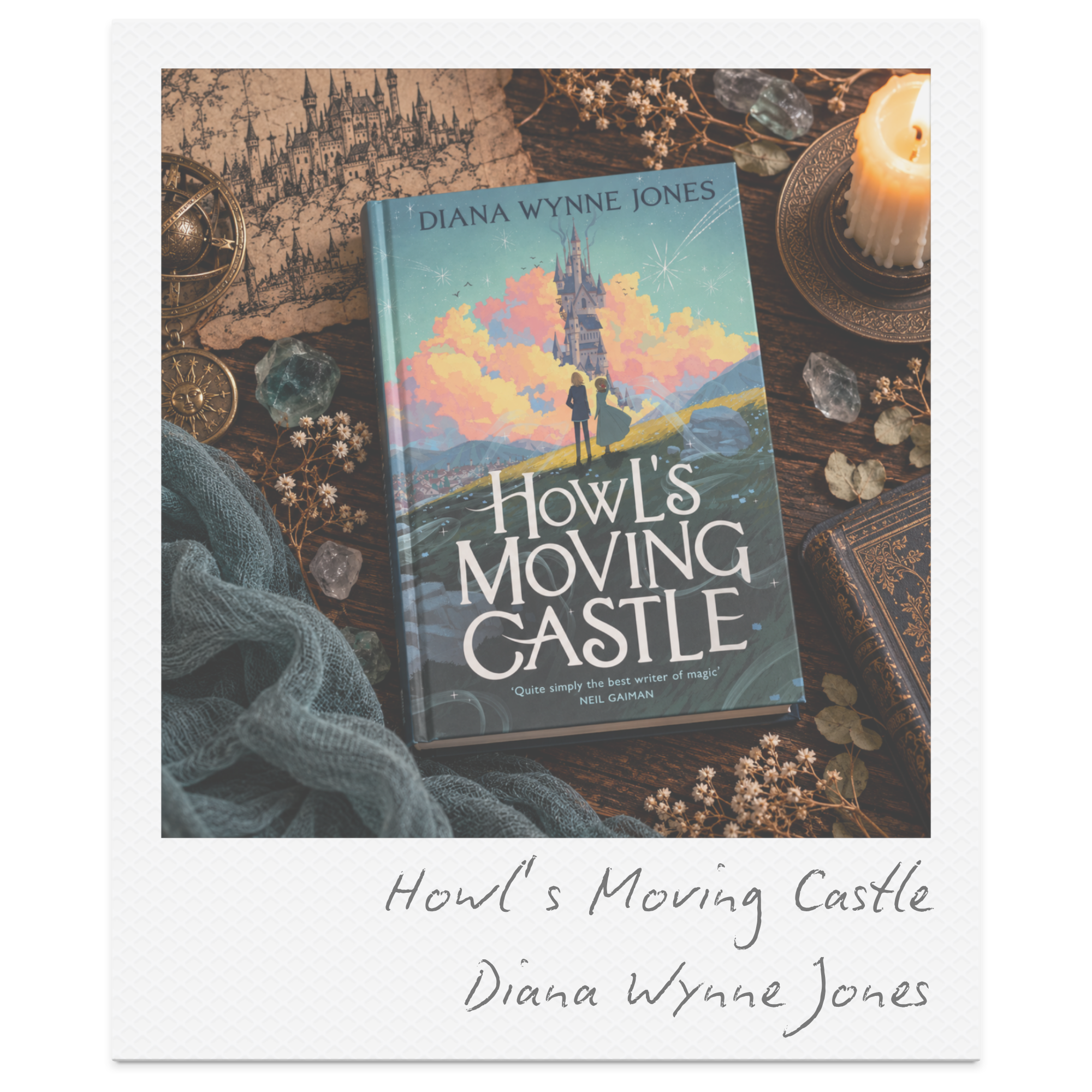
8. Diana Wynne Jones — Howl's Moving Castle: Make Everyday Life Feel Magical
What Is Howl's Moving Castle About?
Diana Wynne Jones's Howl's Moving Castle is a fantasy novel set in the magical kingdom of Ingary, where witches, wizards, curses and enchanted objects exist alongside ordinary towns, family businesses and everyday domestic life.
The story follows Sophie Hatter, the eldest of three sisters, who works in her family's hat shop in the town of Market Chipping. Convinced that being the eldest means she is destined for an unremarkable future, Sophie expects little adventure from her life.
However, everything changes when the Witch of the Waste places a curse upon her, transforming her into an elderly woman.
Unable to explain her predicament, Sophie leaves home and eventually finds refuge inside the extraordinary moving castle belonging to the mysterious wizard Howl.
There, she encounters Michael, Howl's young apprentice, and Calcifer, a fire demon bound to the castle's hearth by a magical contract.
Although Howl possesses considerable magical power, his household is far from the grand and orderly residence Sophie might have imagined. The castle is untidy, its inhabitants argue over ordinary responsibilities, and magical problems frequently become entangled with personal disagreements.
As Sophie attempts to break her curse, she becomes increasingly involved in the complicated lives of Howl, Calcifer and Michael, discovering that magic can be just as troublesome, unpredictable and domestic as ordinary life.
Rather than presenting fantasy as something separate from everyday existence, Jones creates a world where the extraordinary and the familiar continually overlap.
Exploring Ingary: A Magical World That Feels Lived-In
One of the most distinctive features of Howl's Moving Castle is how naturally magic exists within the ordinary routines of its fictional world.
Ingary is a recognisably fairytale-inspired kingdom, complete with royal authority, witches, wizards, enchanted landscapes and supernatural dangers.
However, Jones does not concentrate exclusively on spectacular magical events.
Much of the novel's charm comes from the everyday details surrounding its characters.
Sophie begins her story working in a hat shop, an ordinary family business that becomes a surprisingly important part of the novel's magical worldbuilding.
She trims and decorates hats, deals with customers and worries about the expectations associated with her position in the family. Yet Sophie also has an unusual ability to speak life and qualities into objects, allowing the hats she works on to acquire magical significance.
This is an excellent example of Jones blending magic with an ordinary occupation.
Rather than introducing enchantment exclusively through ancient rituals or powerful artefacts, she allows it to emerge through familiar acts of making, decorating and speaking.
The moving castle itself develops this idea even further.
From the outside, Howl's castle appears to be a strange, wandering structure travelling across the landscape. Inside, however, it functions as a peculiar household, complete with rooms, a kitchen, a hearth and the usual difficulties of people living together.
Calcifer, the fire demon responsible for powering the castle, is not simply a mysterious supernatural force.
He is also a temperamental member of the household who complains, negotiates and becomes involved in domestic disagreements.
His magical abilities are extraordinary, but his personality makes him feel like an everyday presence.
The castle's magical doorway is another particularly effective worldbuilding detail.
By turning a coloured dial beside the door, its inhabitants can access different locations, including places far beyond the castle's apparent surroundings.
This extraordinary feature has obvious magical possibilities, yet it is also used for practical purposes, allowing characters to move between locations as part of their daily routines.
The effect is that an impossible architectural feature begins to feel almost ordinary within the context of the household.
Jones also explores how magical abilities connect with work and reputation.
Howl is a powerful wizard, but he is also someone who undertakes magical commissions, maintains different identities and must navigate relationships with clients and figures of authority.
Magic is therefore not merely a mysterious force possessed by exceptional individuals. It exists within a society where people have occupations, responsibilities, ambitions and financial concerns.
Even the novel's central curse becomes intertwined with everyday experience.
Sophie's transformation into an elderly woman changes how others perceive her, but it also influences her confidence, behaviour and willingness to challenge the expectations that previously constrained her.
The enchantment is not simply an obstacle to be removed. It becomes part of her developing relationship with herself and the world around her.
Throughout the novel, Jones combines fairytale magic with humour, domestic conflict and recognisable human behaviour.
The result is a fantasy world that feels believable not because its magic is ordinary, but because its inhabitants treat extraordinary things as part of ordinary life.
What Can Fantasy Writers Learn from Jones?
The central worldbuilding lesson from Howl's Moving Castle is that magical worlds become more convincing when writers consider how enchantment influences everyday routines, occupations, relationships and practical problems.
Fantasy worldbuilding often begins with large-scale questions.
What magical powers exist? Who rules the kingdom? Which supernatural creatures inhabit the landscape? What ancient conflict threatens the world?
These questions are important, but they do not necessarily reveal what it feels like to live within that world.
To create a convincing magical society, consider the smaller details of everyday existence.
How do people prepare meals, clean their homes, travel to work or communicate with distant relatives?
If magic exists, how might it change these activities?
Perhaps a bakery employs enchanted ovens that respond to the baker's mood. A travelling merchant might sell bottled weather, while a village carpenter specialises in repairing doors that open into unexpected places.
A magical household could use animated cleaning tools, although these objects might require maintenance, occasionally misunderstand instructions or develop inconvenient personalities.
The possibilities become especially interesting when magic creates problems rather than solving everything effortlessly.
Jones frequently uses magical abilities to complicate ordinary situations.
Howl's power does not prevent him from being vain, dramatic or irresponsible. Calcifer's extraordinary abilities do not make him endlessly cooperative. Sophie's enchantment does not remove the need to cook, clean or negotiate with difficult people.
These contrasts create humour, character development and a strong sense of everyday reality.
Another useful technique is to develop magical occupations.
If enchantment is relatively common, people are likely to establish businesses, professions and services around it.
A fantasy town might employ curse-breakers, magical gardeners, enchanted-object repairers, potion inspectors or specialists who investigate unusual disturbances in supposedly ordinary houses.
Consider who can afford these services, how practitioners are trained and whether magical professions are respected, regulated or regarded with suspicion.
Small details can also reveal the limitations of a magical system.
An enchanted lantern might illuminate an entire street but require an expensive ingredient to operate. A magical messenger service could deliver letters instantly, although certain destinations remain inaccessible.
These practical restrictions make magic feel integrated into a functioning society rather than existing solely to advance the plot.
For fantasy writers, one of the most useful questions is: what does an ordinary Tuesday look like in a world where magic exists?
The answer may reveal more about your fictional civilisation than another description of its royal palace or ancient battlefield.
Try It Yourself: Create an Ordinary Day in a Magical World
Imagine a small town, village or neighbourhood where magic is part of everyday life.
Rather than beginning with an epic quest or supernatural catastrophe, focus on an ordinary character completing a familiar task.
This might involve opening a shop, preparing breakfast, visiting a market, cleaning a house, repairing something broken or travelling to work.
Develop the setting by answering the following questions:
How common is magic? Can most people perform simple enchantments, or must they rely on trained specialists?
Which everyday activities involve magic? Consider cooking, cleaning, transport, communication, shopping, gardening and household repairs.
What magical occupations exist? Invent three professions or businesses that would be useful in your fictional community.
What are the practical limitations? Consider cost, availability, maintenance, training, magical side effects or unreliable enchantments.
How do people feel about magic? Is it exciting, expensive, inconvenient, prestigious or so familiar that nobody thinks much about it?
What happens when something goes wrong? Introduce a small magical inconvenience that disrupts an otherwise ordinary day.
Finally, write a short scene in which your character attempts to complete a simple task while dealing with a magical complication.
Perhaps an enchanted wardrobe refuses to return someone's clothes, a bakery's spell causes its pastries to float away or a magical delivery arrives at the wrong address.
Avoid explaining the entire magical system.
Instead, reveal how the world works through your character's reactions, habits, expectations and attempts to solve the problem.
The aim is to demonstrate how small, familiar experiences can make an extraordinary fantasy world feel inhabited, functional and believable.
Explore the Book
Discover a world of enchanted hats, temperamental fire demons, mysterious curses and wonderfully chaotic domestic magic in Diana Wynne Jones's Howl's Moving Castle.
It is an excellent example of how humour, character relationships and ordinary routines can make a magical setting feel distinctive and alive.
Explore Howl's Moving Castle on Amazon — paid link
Explore Further with Ink & Insights
Inspired by the magical occupations and unusual everyday routines of Howl's Moving Castle? Explore our Fantasy Occupations and Jobs Ideas, featuring imaginative professions, unusual trades and magical careers that can help make your fictional kingdoms feel like functioning societies.
For a gentler approach to fantasy storytelling, discover our Cozy Fantasy Story Ideas, featuring enchanted villages, magical shops, curious neighbours, unusual friendships and everyday adventures in extraordinary settings.
You can also explore our Fairytales & Folklore Writing Hub for more inspiration involving witches, enchantments, magical objects, unusual bargains and the unexpected consequences of supernatural interference.
Together, these resources can help you develop fantasy worlds where magic influences not only great adventures, but also the small details of everyday life.
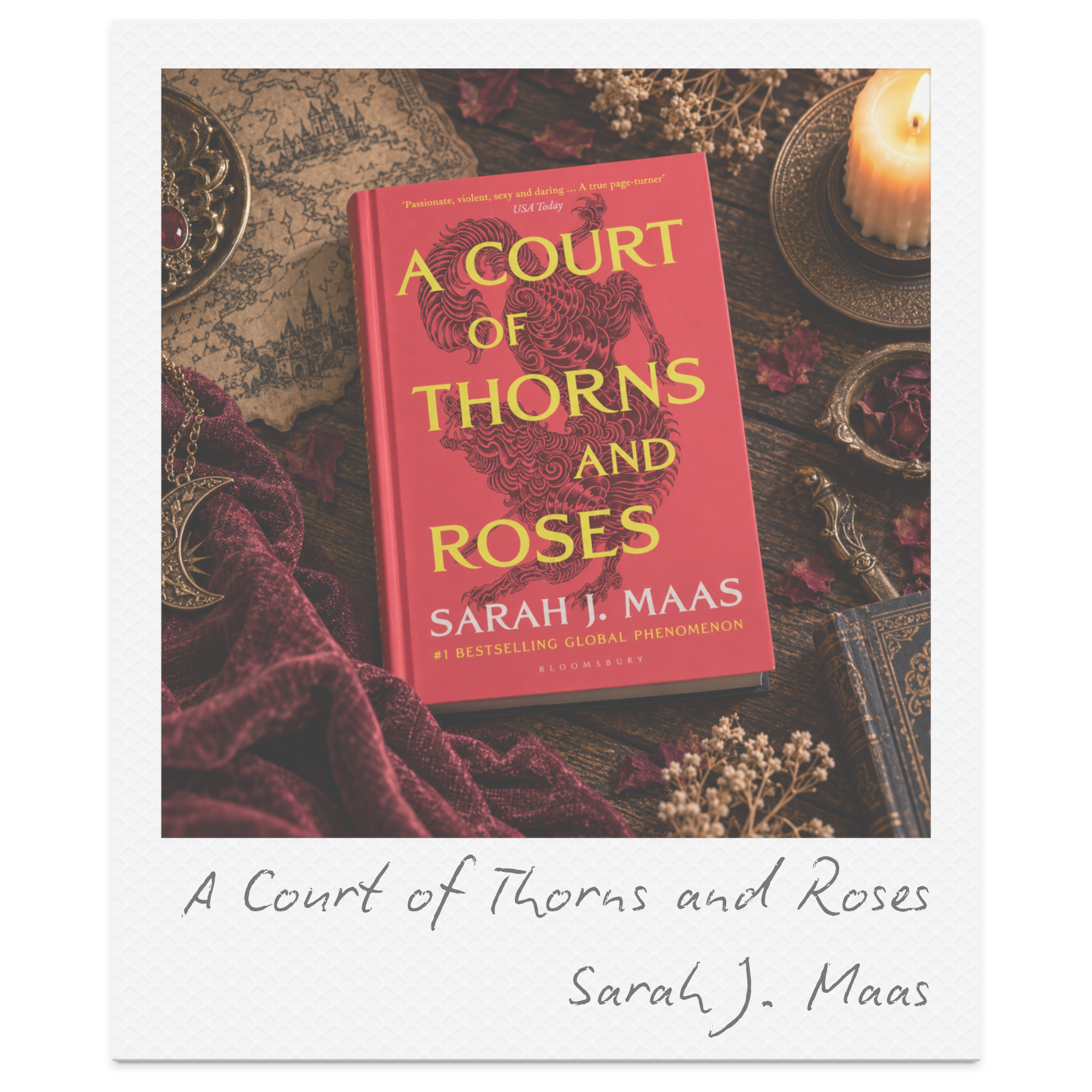
9. Sarah J. Maas — A Court of Thorns and Roses: Use Magical Societies to Create Conflict
What Is A Court of Thorns and Roses About?
Sarah J. Maas's A Court of Thorns and Roses is a romantasy novel set in a world divided between human territories and the magical lands of Prythian, where powerful faeries rule over distinct courts.
The story follows Feyre Archeron, a nineteen-year-old human huntress struggling to provide for her impoverished family. When she kills a wolf in the forest, she unknowingly violates an ancient agreement between humans and faeries.
Her actions bring her into contact with Tamlin, a powerful High Fae lord who takes her across the border into Prythian as punishment for killing one of his people.
Feyre finds herself in the Spring Court, a beautiful but dangerous realm of enchanted landscapes, powerful magic and unfamiliar social customs. Although its surroundings initially resemble something from a fairytale, she gradually discovers that the faerie world is governed by complicated hierarchies, ancient agreements and threats that extend far beyond the borders of Tamlin's territory.
As Feyre begins to understand the inhabitants of Prythian, her assumptions about faeries are challenged. However, she must also navigate a society in which magical power, social status and political authority are distributed very differently from the human world she has left behind.
Through Feyre's experiences, Maas explores how divisions between magical societies can generate prejudice, political tension, personal conflict and dangerous inequalities of power.
Exploring Prythian: Faerie Courts, Social Hierarchies and Magical Conflict
One of the most distinctive aspects of A Court of Thorns and Roses is its organisation of the faerie world into separate territories known as courts.
Prythian is divided into seven courts, each ruled by a High Lord and associated with a particular seasonal or celestial identity.
The Spring, Summer, Autumn and Winter Courts are connected to the seasons, while the Dawn, Day and Night Courts possess their own distinctive magical associations.
This structure immediately creates opportunities for cultural and political differentiation.
Rather than presenting faeries as a single unified population, Maas establishes a world in which magical beings belong to different territories, recognise different rulers and exist within a wider network of political relationships.
The Spring Court, where much of the first novel takes place, is characterised by its lush landscapes, enchanted surroundings and seemingly perpetual springtime.
Its natural beauty creates an atmosphere of romance and wonder, but the court is also affected by a mysterious blight that has weakened its inhabitants and placed its future in danger.
This contrast between beauty and instability is central to the novel's worldbuilding.
The Spring Court may appear idyllic, but its magical environment does not protect it from political threats, supernatural danger or the consequences of events beyond its borders.
Maas also establishes important distinctions within faerie society.
The High Fae occupy positions of considerable magical and political influence, with High Lords exercising authority over their respective courts. Other faerie beings possess different abilities, appearances and levels of social power.
These differences create a society in which magical identity can influence status, freedom and vulnerability.
The divide between humans and faeries is equally important.
Centuries before the events of the novel, humans were enslaved by faeries. A devastating war eventually led to the creation of a magical barrier known as the Wall, separating human lands from Prythian.
Although the Wall establishes a physical boundary, it does not eliminate the resentment and fear created by this history.
Many humans regard faeries as cruel and dangerous, while faerie attitudes towards humans are shaped by their own prejudices, assumptions and memories of the conflict.
Feyre enters Prythian carrying these inherited fears.
Her initial understanding of faeries is influenced by stories, warnings and the historical relationship between the two populations. However, her experiences force her to reconsider the idea that an entire magical society can be understood through a single reputation.
This provides an effective way to introduce readers to an unfamiliar world.
Because Feyre begins as an outsider, the reader discovers Prythian's customs, dangers and social expectations alongside her.
The Treaty between humans and faeries provides another important layer of worldbuilding.
Rather than relying solely on physical borders, the relationship between the two populations is governed by ancient agreements with consequences for those who violate them.
Feyre's killing of a faerie disguised as a wolf demonstrates how these agreements can become directly involved in the plot.
A seemingly ordinary hunting decision becomes the catalyst for a journey into another society because it carries legal and magical consequences that Feyre does not fully understand.
Maas also uses magical bargains and obligations to explore questions of power.
In Prythian, agreements can carry extraordinary consequences, particularly when made between individuals who possess very different levels of knowledge, authority or magical ability.
This makes negotiation dangerous.
A character's freedom may depend upon the exact conditions of an agreement, while an apparently simple promise can create obligations that are difficult to escape.
The novel's broader conflict further demonstrates how magical power can be used to establish political control.
As Feyre learns more about the threat facing Prythian, it becomes clear that the courts do not exist independently of one another. Their rulers, inhabitants and magical protections are affected by forces capable of reaching across territorial boundaries.
The result is a fantasy world where political geography, magical identity, historical prejudice and supernatural rules all create opportunities for conflict.
What Can Fantasy Writers Learn from Maas?
The central worldbuilding lesson from A Court of Thorns and Roses is that magical societies become more compelling when their differences create meaningful consequences for characters.
When designing a fantasy world, writers often invent several magical kingdoms, faerie courts or supernatural factions.
Each might possess a distinctive landscape, colour palette, emblem or form of magic.
These details help establish visual identity, but they do not automatically make the societies feel different.
For stronger worldbuilding, consider how each society operates.
Who holds political authority? How is that authority inherited or challenged? Which magical abilities are admired, feared or restricted? What expectations govern relationships between rulers and ordinary inhabitants?
Think about the historical relationships between different groups.
Two magical kingdoms might have fought a devastating war centuries earlier, leaving behind territorial disputes, cultural prejudices and competing interpretations of the conflict.
A faerie court could regard magical bargains as sacred obligations, while a neighbouring society considers them exploitative or dishonourable.
One kingdom might celebrate magical ancestry as the foundation of political legitimacy, while another grants authority according to demonstrated ability.
These differences can produce conflict without requiring every society to be openly hostile.
Diplomatic negotiations, arranged marriages, trade agreements, border crossings and personal relationships all become more complicated when characters must navigate unfamiliar rules.
Maas also demonstrates the importance of establishing consequences.
A magical law becomes much more interesting when breaking it changes a character's circumstances.
A bargain matters when its terms restrict future choices. A territorial boundary becomes significant when crossing it exposes someone to unfamiliar dangers or legal obligations.
Similarly, social hierarchy becomes a meaningful part of worldbuilding when it influences who possesses freedom, protection, wealth or political influence.
The strongest magical societies are not simply distinguished by what their inhabitants can do, but by what their inhabitants are permitted, expected or forbidden to do.
For romantasy writers, these differences can be especially useful.
A relationship between characters from opposing magical societies may involve more than personal attraction. It could challenge inherited prejudices, violate social expectations, create political complications or force both characters to question the values of their respective cultures.
The romance becomes more closely connected to the worldbuilding because the fictional society creates genuine obstacles, choices and consequences.
Try It Yourself: Create Two Rival Magical Courts
Imagine two neighbouring magical courts that share a border but possess very different beliefs, customs and political structures.
They might be associated with opposing seasons, celestial forces, natural elements, magical traditions or supernatural species.
Develop both courts by answering the following questions:
What defines each court? Choose a magical identity, geographical environment and distinctive cultural characteristic for each society.
Who rules them? Consider whether authority is inherited, earned through magical ability, granted by a supernatural force or decided through another system.
How does magic influence social status? Identify which abilities are valued, feared, restricted or associated with particular groups.
What historical event divided them? Invent a broken alliance, ancient war, betrayal, disputed territory or magical catastrophe that continues to influence their relationship.
Which laws or customs create conflict? Establish at least one rule that is accepted in one court but considered unacceptable in the other.
What happens when someone crosses the border? Consider the rights, restrictions, dangers and obligations facing an outsider.
Finally, create a character who must enter the rival court to retrieve an important object, negotiate an agreement or protect someone they love.
Give the character a goal that conflicts with at least one of the court's established customs.
Perhaps they must accept a magical bargain they do not fully understand, conceal an ability considered forbidden or seek assistance from someone whose social position prevents them from offering it openly.
Write a short scene in which the character encounters one of these obstacles.
Rather than explaining every detail of the court's history, allow its laws, traditions and power structures to emerge through the character's choices and interactions.
The aim is to demonstrate how magical societies can generate conflict naturally through their customs, hierarchies and competing interests.
Explore the Book
Discover a world of powerful faerie courts, ancient treaties, magical bargains and dangerous political divisions in Sarah J. Maas's A Court of Thorns and Roses.
It offers an engaging example of how distinct magical societies can shape character relationships, create conflict and provide the foundations for a larger romantasy world.
Explore A Court of Thorns and Roses on Amazon UK — paid link
Explore Further with Ink & Insights
Inspired by the magical courts and supernatural politics of Prythian? Explore our Romantasy Story Sparks for ideas on combining fantasy worldbuilding with romance, dangerous bargains, magical relationships and conflicts between powerful supernatural societies.
You can also discover our Dark Fae Writing Prompts and Seelie and Unseelie Court Ideas, which offer inspiration for creating rival faerie factions, mysterious rulers, enchanted territories and the complicated rules governing interactions between magical beings.
For a deeper approach to designing distinctive supernatural cultures, explore our Fantasy Culture Worldbuilding Questions, which will help you develop political hierarchies, social expectations, magical traditions, historical rivalries and the beliefs that shape your fictional societies.
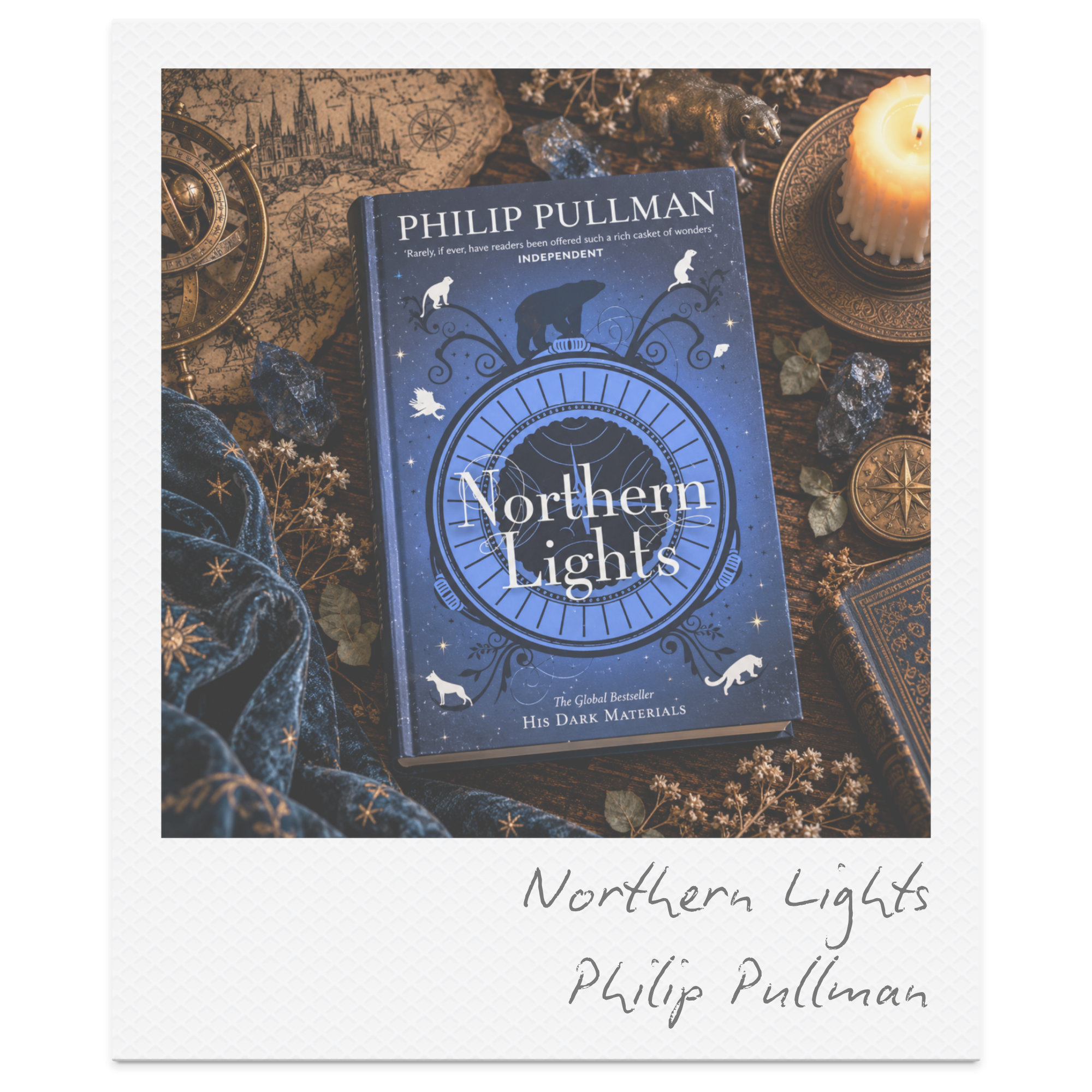
10. Philip Pullman — Northern Lights: Reveal Your World Through Its Characters
What Is Northern Lights About?
Philip Pullman's Northern Lights, the first novel in His Dark Materials trilogy, is set in an alternative version of our world where every human is accompanied by a dæmon: an animal-shaped manifestation of their inner self.
The story follows Lyra Belacqua, an adventurous and fiercely independent young girl who has grown up among the scholars of Jordan College in Oxford.
Lyra's world initially appears familiar, with universities, bustling cities, scientific institutions and recognisable social structures. However, important differences soon emerge.
Human beings share their lives with dæmons, an influential religious organisation known as the Magisterium exercises considerable authority, and mysterious particles called Dust have become the subject of dangerous scientific and theological investigations.
When children begin disappearing, including Lyra's friend Roger, she becomes involved in a journey that takes her far beyond the sheltered surroundings of Jordan College.
Along the way, she encounters the Gyptians, an itinerant community who travel Britain's waterways; witches who inhabit the northern regions; and armoured bears, intelligent beings with their own traditions, political structures and sense of identity.
As Lyra travels north, she gradually discovers that the world she thought she understood contains far more complexity, danger and mystery than she ever imagined.
Rather than introducing every aspect of this extraordinary setting through lengthy explanations, Pullman reveals much of his worldbuilding through Lyra's experiences, relationships and encounters with unfamiliar people.
Exploring Lyra's World: Discovering Fantasy Through Character Experience
One of the most effective features of Northern Lights is the way Pullman introduces readers to an unfamiliar world through a character who considers many of its extraordinary features completely ordinary.
From the beginning, Lyra's dæmon, Pantalaimon, is an inseparable part of her existence.
Because Lyra is still a child, Pantalaimon can change between different animal forms, reflecting his emotions, circumstances and responses to danger.
For Lyra, however, having a dæmon is not remarkable.
It is simply part of being human.
This creates an effective contrast between the reader's perspective and the protagonist's understanding of her world.
Readers must gradually learn what dæmons are, how they behave and why they matter, while Lyra already possesses an instinctive understanding of their significance.
Pullman reveals these details through interactions rather than relying entirely on exposition.
When people speak to one another, their dæmons may also communicate or react. When characters experience fear, affection or hostility, their dæmons can reveal emotions that remain unspoken.
The relationship between a human and their dæmon also influences social customs.
Touching another person's dæmon is generally considered a profound violation, making physical boundaries between individuals an important part of the world's cultural expectations.
As children grow older, their dæmons eventually settle into a permanent animal form, connecting this supernatural feature to identity, maturity and the transition into adulthood.
Through these everyday interactions, Pullman establishes an entire system of magical biology, social etiquette and personal identity without needing to explain every rule at once.
Lyra's upbringing at Jordan College provides another effective worldbuilding technique.
She is familiar with the college's buildings, scholars, servants and routines, but her understanding of the wider world is limited.
This allows Pullman to establish a convincing starting point before gradually expanding the reader's knowledge.
When Lyra encounters the Gyptians, she experiences a community with different customs, relationships and ways of organising daily life.
Their close connections, loyalty to their people and knowledge of Britain's waterways reveal a social world that differs considerably from the academic environment in which she grew up.
Her journey north introduces further cultural differences.
The witches possess abilities, traditions and perspectives that extend beyond ordinary human experience, while the armoured bears have their own society, leadership structures and understanding of honour.
Iorek Byrnison, an armoured bear who becomes an important figure in Lyra's journey, is particularly significant.
Through Iorek, readers discover that the bears are not simply fantastical creatures included to make the setting more exciting.
They possess intelligence, cultural traditions, political relationships and a distinctive understanding of their armour, which is closely connected to their identity.
Pullman allows these details to emerge through Iorek's behaviour, conversations and circumstances.
The Magisterium provides another important dimension of the world.
Its influence over scientific investigation, religious belief and political authority is revealed through the dangers faced by the characters and the restrictions placed upon knowledge.
Rather than presenting the institution only through a detached description of its structure, Pullman demonstrates its power through the decisions people make, the subjects they fear discussing and the consequences of challenging accepted beliefs.
Lyra's perspective is essential throughout this process.
She is curious, impulsive, observant and sometimes mistaken in her assumptions.
Her understanding of the world changes as she encounters new people and experiences, allowing readers to revise their own interpretations alongside her.
The result is a fantasy setting that feels expansive without requiring the reader to memorise its entire history, geography or political structure before the story begins.
What Can Fantasy Writers Learn from Pullman?
The central worldbuilding lesson from Northern Lights is that readers can discover a fictional world most naturally through the experiences, assumptions and interactions of its characters.
Fantasy writers often spend considerable time developing the history, geography, political institutions and magical systems of their fictional worlds.
However, creating detailed worldbuilding and communicating that worldbuilding effectively are two different challenges.
A writer might know exactly how a kingdom's government operates, how its magic developed and why its inhabitants follow particular traditions.
That does not mean readers need to learn all of this information immediately.
Pullman demonstrates how worldbuilding can emerge gradually through character experience.
Consider how your protagonist understands their own society.
Which customs seem completely ordinary to them? What do they assume everyone knows? Which aspects of their culture would appear strange or unsettling to an outsider?
A character who has grown up in a city where people communicate through magical birds might never stop to explain the system.
Instead, readers could discover how it works when the character sends a message, complains about a delayed delivery or becomes concerned when a familiar bird fails to return.
The magical communication system becomes part of the story because the character uses it.
This approach is especially effective when characters encounter unfamiliar cultures.
A traveller entering a neighbouring kingdom might misunderstand a religious ceremony, violate an unexpected social custom or discover that their own society's historical accounts are considered inaccurate elsewhere.
These moments reveal cultural differences while also creating opportunities for conflict and character development.
Pullman also demonstrates the value of using relationships to explain supernatural concepts.
The relationship between humans and dæmons is not merely an interesting magical idea. It influences affection, privacy, identity, social behaviour and emotional vulnerability.
Readers understand its importance because they see how characters respond when these relationships are threatened.
When developing your own world, consider how its unusual features influence personal experiences.
How does a magical ability affect family relationships? What happens when someone violates a cultural taboo? How might an ordinary person feel about an institution that controls access to supernatural knowledge?
These questions connect worldbuilding to emotion and action.
Another useful technique is to limit what your viewpoint character knows. A protagonist does not need to understand every aspect of their world, particularly if they are young, sheltered, inexperienced or encountering unfamiliar societies. Their incomplete knowledge creates natural opportunities for discovery.
However, it is equally important to recognise what the character already understands. Avoid having inhabitants explain familiar customs to one another solely for the reader's benefit. Instead, reveal those customs through ordinary behaviour, dialogue and the consequences of breaking expectations.
The most effective worldbuilding often feels discovered rather than explained.
By allowing readers to experience a world through the people who inhabit it, writers can create a setting that feels both extraordinary and emotionally convincing.
Try It Yourself: Reveal Your World Without Explaining It
Imagine a fantasy society with one unusual feature that every inhabitant considers completely normal.
This might involve magical companions, enchanted communication, unusual social customs, supernatural occupations, ritualised greetings or a distinctive relationship with mythical creatures.
Develop the feature by answering the following questions:
What makes this society different? Identify one magical, cultural or supernatural feature that influences everyday life.
How do inhabitants interact with it? Consider ordinary routines, personal relationships, work, education and social expectations.
What rules do people instinctively understand? Establish at least two customs or restrictions that members of the society rarely need to explain.
What happens when someone breaks a rule? Consider embarrassment, conflict, punishment, danger or an unexpected magical consequence.
What does your protagonist know? Decide which aspects of the society are familiar to them and which remain mysterious.
How might an outsider interpret the same behaviour? Identify a misunderstanding that could reveal something important about the culture.
Now write a short scene in which your protagonist completes an ordinary activity involving this unusual feature.
Perhaps they attend a family meal, visit a market, travel to school or speak with a neighbour.
Do not explain the magical system directly.
Instead, reveal its rules through dialogue, behaviour, physical actions and the character's emotional responses. For an additional challenge, introduce an outsider who misunderstands one of the society's customs.
Allow the resulting interaction to reveal something about the world while also developing the relationship between the characters.
The aim is to practise making worldbuilding feel like a natural part of storytelling rather than a separate explanation.
Explore the Book
Discover a richly imagined alternative world of dæmons, witches, armoured bears, mysterious scientific discoveries and powerful institutions in Philip Pullman's Northern Lights.
It is an excellent example of how fantasy writers can reveal extraordinary worlds through character relationships, cultural encounters and the gradual discovery of unfamiliar truths.
Explore Northern Lights on Amazon — paid link
Explore Further with Ink & Insights
Inspired by the way Lyra's experiences reveal the extraordinary world of Northern Lights? Explore our Fantasy Character Writing Prompts for ideas that place characters at the centre of magical discoveries, unfamiliar cultures, dangerous journeys and extraordinary encounters.
You can also experiment with our Fantasy Character Generator, designed to inspire distinctive protagonists, unusual backgrounds, personal motivations and relationships that can shape how readers experience your fictional world.
For a deeper approach to character-driven worldbuilding, use these resources to explore how your characters' backgrounds, personalities, motivations and relationships influence the way they experience your fictional world. Consider what your protagonist takes for granted, which traditions they might question and how their understanding of the world changes when they encounter unfamiliar people or places.
Together, these resources can help you create fantasy characters who do more than inhabit your fictional world — they help readers discover it.
Love Fantasy Books? Discover Your Next Great Read
Exploring the worlds created by great fantasy authors is one of the most enjoyable ways to develop your own storytelling skills. Whether you're drawn to intricate magical systems, atmospheric settings, political intrigue or richly imagined cultures, reading widely can introduce you to new techniques and inspire ideas for your own fictional worlds.
If you're looking to discover more fantasy fiction, Kindle Unlimited offers a changing selection of ebooks across the genre, while Audible allows you to experience stories through audiobook performances. Both services offer eligible new customers opportunities to try their subscriptions, making them useful options for readers looking to expand their fantasy reading.
Discover Fantasy Books with Kindle Unlimited
Explore fantasy novels, emerging authors and new series from the Kindle Unlimited catalogue. Read eligible titles on a Kindle or through the free Kindle app on your phone, tablet or computer.
Explore Kindle Unlimited on Amazon
Experience Fantasy Worlds with Audible
From atmospheric descriptions to memorable dialogue, listening to fantasy fiction can offer a different perspective on how authors bring their worlds to life. Explore audiobooks while travelling, walking or relaxing, and pay attention to how writers establish atmosphere, develop characters and reveal their fictional worlds.
Free trials and promotional offers are subject to eligibility and availability. Subscriptions renew automatically at the applicable rate unless cancelled. Available titles and membership terms may change.
How to Apply These 10 Fantasy Worldbuilding Lessons to Your Own Writing
The fantasy worlds created by Tolkien, Le Guin, Sanderson, Martin, Jemisin, Shannon, Clarke, Jones, Maas and Pullman are remarkably different, yet they share one important quality: their settings are not simply backgrounds against which stories unfold. History, geography, magic, culture and social structures influence what characters believe, how they behave and the conflicts they encounter.
The most useful lesson for aspiring fantasy writers is that effective worldbuilding is interconnected. A kingdom's geography might determine its resources, those resources might influence its political relationships, and its history might explain why neighbouring societies distrust one another. A magical system could shape everyday occupations, while religious traditions might determine who is permitted to practise certain forms of magic.
You do not need to develop every aspect of your fictional world before beginning your story. Instead, start with the elements that matter most to your characters and gradually build the connections between them.
1. Begin with the Central Idea Behind Your World
Before drawing maps, inventing languages or developing centuries of history, identify what makes your fictional world interesting.
Perhaps your story takes place in a kingdom where the royal family has mysteriously disappeared, a civilisation that survives beneath a permanent winter or a city where memories can be bought and sold. Your central idea should provide a foundation for the decisions you make about the setting.
Consider the questions raised by that premise. If memories can be purchased, who controls the trade? Are certain memories considered illegal? Could wealthy citizens buy experiences that poorer people cannot afford? What happens to someone's identity when important memories are removed?
A single imaginative concept can generate political systems, social divisions, occupations, magical restrictions and compelling story conflicts. Rather than inventing disconnected details, develop the consequences of your central idea.
2. Connect Geography, History and Culture
Tolkien, Le Guin and Jemisin demonstrate how geography and history can influence the development of fictional societies. Mountains, rivers, islands, deserts and dangerous environments affect where people settle, how they travel and which resources they can access. Historical events then help explain why those settlements develop particular traditions, alliances and rivalries.
Imagine a mountain kingdom whose only accessible trade route passes through a neighbouring territory. That geographical limitation might create an uneasy political alliance, encourage the construction of fortified roads or lead to generations of conflict over access to essential supplies.
Over time, those experiences could become part of the kingdom's cultural identity. Its inhabitants might celebrate the opening of the mountain passes each spring, honour ancestors who defended the trade routes or distrust outsiders because of an ancient betrayal.
When developing your own setting, ask how its physical environment and historical experiences have shaped the people who live there. These connections make cultures feel as though they have developed naturally over time.
3. Decide How Magic Changes Society
Sanderson, Jones and Maas demonstrate three different approaches to integrating magic into fantasy worldbuilding. Magic can operate through clearly established rules and limitations, influence ordinary domestic routines or become the foundation of political authority and social hierarchy.
Consider how your magical system affects people who are not central to the story. If healing magic exists, does every village have access to a healer? Are magical practitioners regulated by the government? Can wealthy families afford treatments unavailable to poorer communities?
If magical abilities are inherited, they might influence marriage, family expectations and political succession. If enchantments are widely available, entire industries could develop around their production, maintenance and sale.
Establishing limitations is equally important. Magic that requires rare materials, extensive training or significant personal sacrifice creates choices and consequences. These restrictions can also explain why certain problems remain unsolved despite the existence of supernatural abilities.
The goal is to make magic feel like an established part of your fictional civilisation rather than a convenient solution that appears whenever the plot requires it.
4. Develop Beliefs, Institutions and Competing Interests
Martin and Shannon demonstrate how political systems, religion and cultural beliefs can generate conflict between individuals and societies. A fictional kingdom becomes more convincing when its inhabitants disagree about how power should be exercised, which traditions deserve protection and whose interpretation of history should be trusted.
Begin by identifying the major institutions within your world. These might include royal families, religious organisations, magical academies, merchant guilds, military orders or councils representing different regions.
Consider what each institution wants and what it stands to lose. A religious order might oppose a new form of magic because it challenges established teachings, while a merchant guild could support the same discovery because it promises enormous profits.
Neither organisation needs to exist solely as a villain. Their competing priorities can create political tension, difficult decisions and unexpected alliances.
You can deepen these conflicts by giving different societies contrasting interpretations of a shared historical event. An ancient war might be remembered as a glorious victory in one kingdom and a devastating act of aggression in another, influencing diplomatic relationships centuries later.
5. Make Your World Feel Inhabited
Clarke and Jones show that memorable fantasy settings are not created through grand historical events and political systems alone. Atmosphere, domestic routines, occupations and sensory experiences also contribute to the impression that a fictional world exists beyond the immediate story.
Think about what an ordinary person experiences during a typical day. Where do they buy food? How do they travel? What sounds fill the streets? Which traditions do they observe without questioning them?
A magical city might contain extraordinary towers and enchanted bridges, but its inhabitants still need somewhere to sleep, something to eat and ways to earn a living. They might complain about unreliable transport spells, gather at familiar markets or argue with neighbours over minor inconveniences.
These everyday details can reveal larger aspects of your worldbuilding without requiring lengthy explanations. A shopkeeper refusing to accept coins from a rival kingdom might hint at an ongoing political dispute, while a family preparing supplies for an approaching magical storm could reveal how environmental danger shapes ordinary life.
Small details become especially effective when they connect to the wider systems you have already established.
6. Reveal the World Through Your Characters
Pullman's Northern Lights demonstrates that readers do not need to understand every aspect of a fictional world immediately. Instead, they can discover its customs, institutions and supernatural features through the experiences of the characters who inhabit it.
Consider what your protagonist already knows and what they have yet to discover. A young noble might understand court etiquette but know very little about life beyond the capital. A village healer could possess extensive knowledge of local magical traditions while remaining unfamiliar with the religious beliefs of neighbouring kingdoms.
These differences create opportunities to reveal worldbuilding through action, dialogue and misunderstanding. A character entering an unfamiliar society might accidentally violate a custom, misinterpret a religious ceremony or discover that their understanding of an ancient conflict is incomplete.
You can also use relationships to demonstrate how your world operates. Family expectations, friendships, rivalries and romantic relationships may all be influenced by social hierarchies, magical abilities or cultural traditions.
Rather than stopping the narrative to explain a particular rule, consider how that rule could influence a character's choices. When worldbuilding creates meaningful consequences, readers learn about the setting while remaining engaged with the story.
7. Bring Everything Together with One Worldbuilding Exercise
To see how these ten lessons can work together, begin with a simple fantasy premise:
A coastal kingdom has survived for centuries by keeping an ancient sea creature asleep beneath its capital. One morning, the creature begins to wake.
Now develop the idea through the different approaches explored in this guide.
| Worldbuilding Element | Questions to Explore |
|---|---|
| History | How was the creature discovered, and what happened the last time it awakened? |
| Geography | Why was the capital built above it, and how does the coastline influence the kingdom? |
| Magic | What keeps the creature asleep, and what limitations does that magic possess? |
| Politics | Who controls the protective magic, and which factions disagree about what should happen next? |
| Environment | How do changes in the sea, weather or landscape reveal that the creature is stirring? |
| Religion and Mythology | Do the inhabitants worship the creature, fear it or believe it is only a legend? |
| Atmosphere | What unusual sounds, sights or sensations distinguish the capital from other cities? |
| Everyday Life | How do ordinary citizens live with the traditions and restrictions associated with the creature? |
| Magical Societies | Are certain families, species or magical groups responsible for maintaining the ancient protection? |
| Character Perspective | Whose experience would provide the most compelling introduction to this world? |
Notice how the different elements begin to influence one another. The kingdom's religion might originate from an ancient catastrophe, while its political hierarchy could depend upon the magical families responsible for protecting the capital. Fishermen might notice changes in the tides before the royal court acknowledges the danger, creating tension between ordinary citizens and those in power.
By connecting these details, you begin developing a setting with its own history, culture, internal logic and potential conflicts. You also create opportunities for characters whose personal ambitions, relationships and fears are shaped by the world around them.
Explore Worldbuilding Through Storyworld Archives
If you enjoy discovering fictional worlds through their histories, mysteries and everyday objects, our Storyworld Archives offer another approach to creative writing inspiration.
Rather than presenting a fictional setting through a conventional worldbuilding guide, each collection invites you to investigate a world through interconnected documents, artefacts, correspondence and fragments of forgotten history. A royal proclamation might suggest political unrest, an old photograph could raise questions about a missing person, or a mysterious object might reveal something unexpected about a society's beliefs.
For example, The Kingfell Collection introduces a fantasy kingdom through its noble houses, royal history, political tensions and the mysterious disappearance of a young queen. As you explore its contents, you can consider how individual pieces of evidence connect to a larger fictional world and use those discoveries to inspire characters, conflicts and original stories.
You can explore our Storyworld Archives to discover more imaginative settings and creative writing resources. If you're new to the collections, you can also sign up for our free seven-page Kingfell sample to experience this approach to worldbuilding for yourself.
Ultimately, you do not need to create an encyclopaedia of fictional history before writing your first chapter. Begin with a compelling idea, develop the elements that influence your story and allow the world to grow through the connections between its people, places, beliefs and conflicts.
Want to Explore a Fantasy Kingdom in Action?
Discover the rival noble houses, royal secrets and mysterious artefacts of Kingfell with our FREE 7-page sample of The Kingfell Collection. See how history, politics and storytelling come together to create an immersive fictional world.
Final Thoughts: What Great Fantasy Authors Can Teach Us About Worldbuilding
The most memorable fantasy worlds are not necessarily the largest, most complicated or most extensively documented. They are the worlds that feel as though they exist beyond the boundaries of the story, with their own histories, cultures, conflicts and everyday experiences. From Tolkien's ancient kingdoms and Le Guin's island societies to Jemisin's environmentally threatened civilisation and Clarke's mysterious House, each of these authors demonstrates a different way to make an imagined setting feel convincing.
What connects their approaches is the relationship between worldbuilding and storytelling. Geography influences journeys, history creates rivalries, magic shapes society, and cultural beliefs affect the choices characters make. Even seemingly small details, such as an unusual occupation, a household enchantment or an unfamiliar social custom, can reveal something meaningful about the wider fictional world. The strongest settings develop through these connections rather than through isolated collections of imaginative ideas.
As you begin developing your own fantasy world, remember that you do not need to invent every kingdom, historical event or magical tradition before writing your first chapter. Start with a compelling premise, identify the worldbuilding elements that matter most to your story and allow your setting to develop alongside your characters. Studying the techniques of established fantasy authors can provide valuable inspiration, but your own creative decisions will ultimately give your world its distinctive identity.
If you're ready to continue building your fictional setting, explore our Fantasy Writing Hub for detailed guides to magical systems, kingdoms, cultures, landscapes, characters and other essential elements of fantasy worldbuilding. For fresh ideas to develop into original stories, discover our Fantasy Story Sparks, featuring imaginative scenarios, intriguing conflicts and unusual possibilities to inspire your next adventure.
You can also browse our Creative Writing Archive for a wider collection of writing prompts, storytelling exercises, genre guides and practical resources designed to help you develop your ideas.
Whether you're imagining an ancient kingdom, an enchanted city, a dangerous magical society or an entirely unfamiliar world, the most important thing is to begin exploring its possibilities. Every extraordinary fantasy world starts with an idea, and every detail you develop offers another opportunity to bring that world to life.
