Anthem for Doomed Youth by Wilfred Owen: Summary, Themes & Analysis
Wilfred Owen’s Anthem for Doomed Youth presents the deaths of young soldiers in the First World War through a devastating contrast between traditional funeral rituals and the mechanical violence of the battlefield. Written in 1917, the poem replaces passing-bells, prayers, choirs and candles with gunfire, rifles, shells and bugles, suggesting that soldiers are denied the individual mourning and dignity normally associated with death. Yet the poem gradually moves away from the battlefield towards those grieving at home, where love, memory and private sorrow become substitutes for the ceremonies the dead cannot receive. Through its sonnet form, religious imagery, sound devices, rhetorical questions and repeated contrasts, Owen explores death, dehumanisation, youth, grief, remembrance and the human cost of war. Discover more about the poet and his wartime experiences in Wilfred Owen: Historical, Social & Literary Context Guide, explore more writing from the conflict in the WWI Poetry Hub, or browse poetry and literary analysis throughout the Literature Library.

Context of Anthem for Doomed Youth
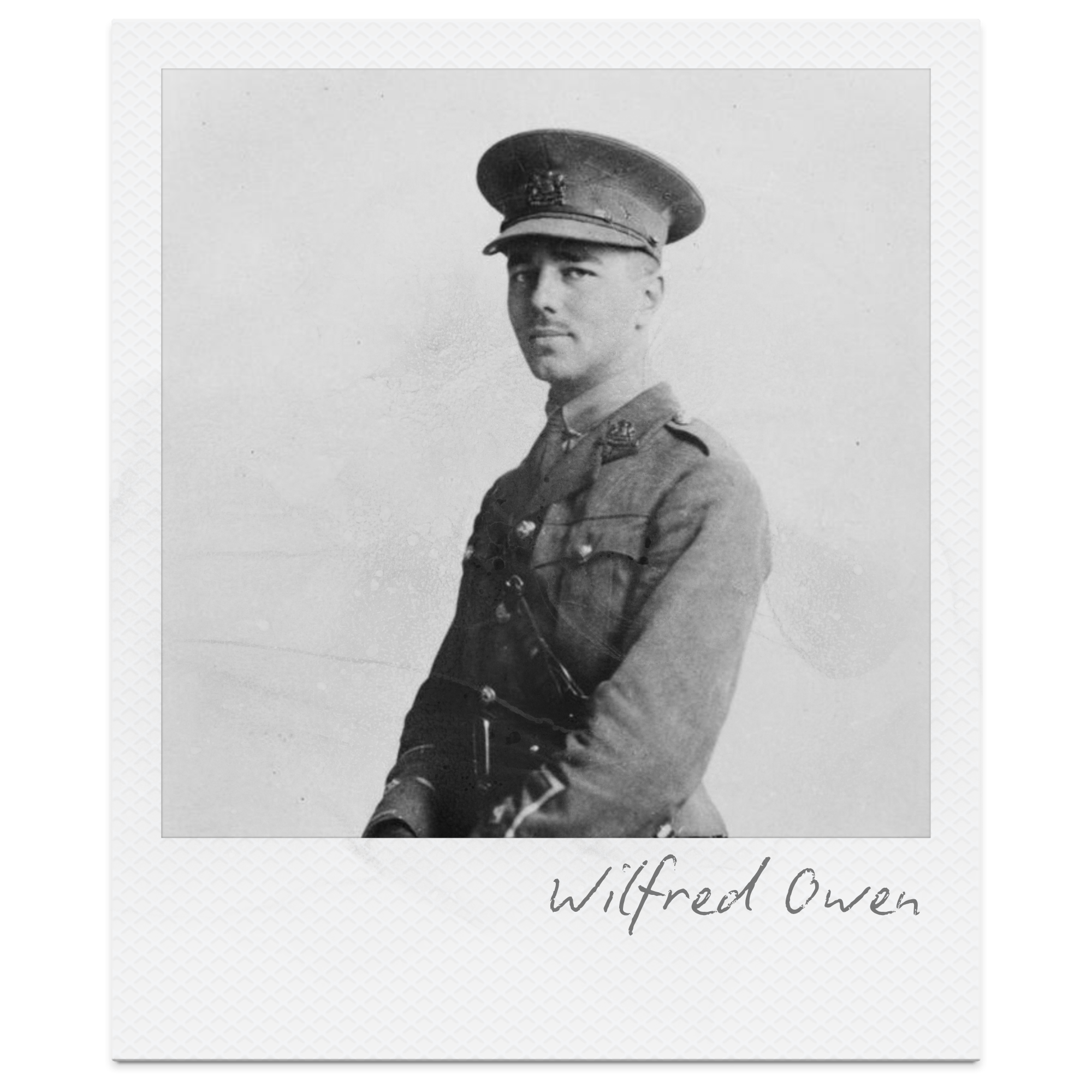
Owen wrote Anthem for Doomed Youth in 1917, while recovering from shell shock at Craiglockhart War Hospital in Edinburgh after serving on the Western Front. There he met Siegfried Sassoon, who encouraged Owen’s developing poetry and made suggestions to the manuscript of this poem. By this stage of the war, Owen had experienced combat directly, and the poem reflects his increasing determination to represent the physical violence, suffering and loss experienced by ordinary soldiers rather than presenting death in conventionally heroic or ceremonial terms.
The poem’s funeral imagery is particularly significant within this context. Soldiers killed at the Front could die far from their families and without the familiar rituals of civilian mourning, so Owen replaces bells, prayers, choirs, candles, flowers and funeral palls with the sounds and images of warfare. The result is not simply an attack on traditional ceremony: the sestet shifts towards the people left at home, suggesting that private grief, love and remembrance become the soldiers’ true funeral rites. This tension between industrialised warfare and individual human loss is central to Owen’s writing; explore his experiences, influences and literary development further in Wilfred Owen: Historical, Social & Literary Context Guide.
Anthem for Doomed Youth: Full Poem
Written in 1917, Anthem for Doomed Youth is now in the public domain in the UK. The poem takes the recognisable language and rituals of a traditional funeral and relocates them to the battlefield, where the sounds of weapons replace the ceremonies normally offered to the dead.
What passing-bells for these who die as cattle?
— Only the monstrous anger of the guns.
Only the stuttering rifles' rapid rattle
Can patter out their hasty orisons.
No mockeries now for them; no prayers nor bells;
Nor any voice of mourning save the choirs,—
The shrill, demented choirs of wailing shells;
And bugles calling for them from sad shires.
What candles may be held to speed them all?
Not in the hands of boys, but in their eyes
Shall shine the holy glimmers of goodbyes.
The pallor of girls' brows shall be their pall;
Their flowers the tenderness of patient minds,
And each slow dusk a drawing-down of blinds.
Anthem for Doomed Youth — Wilfred Owen (1917)
Anthem for Doomed Youth: At a Glance
Poet: Wilfred Owen
Written: 1917
Published: 1920, posthumously
Form: Sonnet combining elements of the Petrarchan and Shakespearean traditions
Speaker: An unnamed observer questioning how young soldiers killed in war can be properly mourned
Mood: Bitter, mournful, angry and increasingly tender
Central tension: The violent, impersonal deaths of soldiers on the battlefield contrasted with the intimate rituals of mourning, love and remembrance associated with home
Core themes: Death, dehumanisation, youth, grief, mourning, remembrance, sacrifice, religion and the brutality of war
Key symbols: Passing-bells, guns, rifles, choirs, candles, eyes, the pall, flowers, dusk and closing blinds
One-sentence meaning: Owen exposes the dehumanising scale and violence of wartime death by replacing traditional funeral rites with the sounds of weapons, before suggesting that the most meaningful acts of mourning survive through the love, grief and remembrance of those left behind.
Quick Summary of Anthem for Doomed Youth
Anthem for Doomed Youth contrasts the traditional rituals used to mourn the dead with the violent reality of soldiers dying on the battlefield. Owen begins by asking what funeral rites these soldiers receive, only to replace passing-bells, prayers and choirs with the sounds of guns, rifles, shells and bugles. The comparison of soldiers dying “as cattle” immediately emphasises the scale and impersonality of their deaths, while the battlefield’s weapons create a grotesque imitation of a funeral service.
In the second half, the poem moves away from the battlefield towards those mourning the soldiers at home. Candles become the light in boys’ eyes, girls’ pale faces become funeral palls, tenderness replaces flowers, and the closing of blinds at dusk becomes a final gesture of mourning. Owen therefore moves from anger at the dehumanising conditions of wartime death towards quieter, personal grief, suggesting that although the soldiers are denied conventional funerals, they are still mourned through the love and remembrance of those they leave behind.
Title, Form, Structure and Metre in Anthem for Doomed Youth
Owen uses the conventions of the sonnet but reshapes them around the experience of modern warfare. The poem’s fourteen-line structure, controlled rhyme and predominantly iambic pentameter create a sense of formal order, while its violent soundscape repeatedly disrupts that order. Most importantly, the poem is structurally divided between the battlefield and the home front, allowing Owen to move from the brutal circumstances of the soldiers’ deaths towards the quieter grief of those who mourn them.
Title
The title contains an immediate contradiction. An “anthem” traditionally suggests a formal song of celebration, worship or collective identity, yet these young men are already described as “doomed”. Owen therefore takes a word associated with ceremony and public honour and attaches it to inevitable death, undermining any expectation that this will be a conventional celebration of military sacrifice.
“Youth” is equally important. Owen does not call them soldiers in the title, instead foregrounding their age and humanity before their military role. The collective noun also makes the scale of the loss feel larger: the poem is not an elegy for one individual but for a generation of young people exposed to mass death.
Form and Structure
Anthem for Doomed Youth is a fourteen-line sonnet, divided visually into an octave of eight lines and a sestet of six. This resembles the structure of a Petrarchan sonnet, while its rhyme scheme draws more strongly upon Shakespearean patterns, making the poem a deliberate hybrid rather than a straightforward example of either form.
The sonnet is traditionally associated with love, making Owen’s choice of form especially significant. Instead of romantic love, the poem explores the love expressed through mourning, tenderness and remembrance. The form therefore becomes appropriate to the poem’s movement: the soldiers may be denied formal funeral ceremonies, but the sestet reveals the private human affection that survives them.
Both sections begin with rhetorical questions. The octave asks, “What passing-bells for these who die as cattle?”, while the sestet begins, “What candles may be held to speed them all?” The repeated structure creates a searching quality, but the answers change significantly. In the octave, religious rituals are replaced by the violent sounds of weapons; in the sestet, conventional funeral objects are replaced by human emotion and acts of remembrance.
There is also an important structural shift around line 8. “And bugles calling for them from sad shires” begins to turn the poem away from the battlefield and towards home even before the sestet formally begins. The traditional sonnet volta, or turn, is therefore anticipated as the poem moves geographically and emotionally from public violence towards private grief.
Rhyme Scheme and Poetic Pattern
The rhyme scheme can be represented as:
ABAB / CDCD / EFFE / GG
This is closer to a Shakespearean pattern than a conventional Petrarchan sestet, despite the poem’s visual division into octave and sestet. The combination allows Owen to borrow from both major sonnet traditions while adapting them to his own purpose.
The regular rhyme creates a degree of ceremony and control, which contrasts sharply with the chaotic violence described in the octave. This is particularly effective because the poem repeatedly imitates funeral ritual: its formal patterning provides the order that the soldiers themselves have been denied in death.
The final rhyming couplet —
“Their flowers the tenderness of patient minds,
And each slow dusk a drawing-down of blinds.”
— brings the poem to a quieter conclusion. The neat closure of “minds” / “blinds” gives formal completion to an image of private mourning, replacing the deafening battlefield sounds of the octave with silence and domestic grief.
Metre and Rhythmic Movement
The poem is written predominantly in iambic pentameter, meaning its underlying rhythm usually contains five feet built around an unstressed–stressed movement. This connects Anthem for Doomed Youth to the traditional sonnet while giving much of the poem a controlled, measured rhythm.
A relatively clear example appears at the beginning of the sestet:
What CAND | les MAY | be HELD | to SPEED | them ALL?
The steady movement suits the increasingly solemn and reflective mood of the second half. However, Owen does not maintain perfectly smooth iambic movement throughout. Variations in stress become particularly noticeable when the poem turns towards the violence of the battlefield.
Lines two and three, for example, place unusual emphasis upon the repeated word “Only”:
— ONly | the MONS | trous AN | ger OF | the GUNS
ONly | the STUT | tering RI | fles’ RA | pid RATtle
The initial stressed syllable disrupts the expected iambic movement and makes “Only” more forceful. The soldiers receive no conventional funeral music: there is only the noise of weapons.
Owen therefore uses metre in much the same way that he uses the sonnet itself: a traditional poetic structure remains recognisable, but it is repeatedly disturbed by the language and sounds of modern warfare. The tension between formal control and rhythmic disruption reinforces the poem’s central contrast between the rituals society expects to accompany death and the brutal reality experienced by soldiers at the Front.
Speaker and Setting in Anthem for Doomed Youth
The speaker and setting work together to create one of the poem’s central contrasts. Owen moves from an unnamed voice confronting the violent deaths of soldiers on the battlefield towards the quieter experiences of those mourning them at home. As the physical setting changes, the speaker’s tone changes with it, moving from anger and condemnation towards tenderness, grief and remembrance.
Speaker
The speaker is unnamed and deliberately impersonal, allowing Owen to focus attention on the soldiers and those who mourn them rather than on an individual narrator. Although Owen’s own experience of warfare informs the poem, the speaker should not automatically be treated as Owen himself. Instead, the voice acts as an observer who questions whether conventional ideas of ceremony and honour can adequately respond to deaths occurring on such an enormous and violent scale.
The speaker’s tone is established immediately through the rhetorical question, “What passing-bells for these who die as cattle?” The comparison reduces the soldiers to creatures being slaughtered, creating a voice characterised by anger, disbelief and condemnation. This continues through the repeated negatives of “No mockeries”, “no prayers” and “Nor any voice of mourning”, which emphasise everything the soldiers are denied. Even the conventional language of mourning becomes inadequate beside the mechanical violence of the battlefield.
In the sestet, however, the speaker becomes noticeably quieter and more compassionate. The second rhetorical question — “What candles may be held to speed them all?” — again asks how the soldiers can be mourned, but the answer now comes through human emotion rather than the sounds of warfare. The “holy glimmers” in boys’ eyes, the “pallor” of girls’ brows and the “tenderness of patient minds” suggest that genuine mourning survives through the people who remember the dead. The speaker therefore moves from exposing the brutality of the soldiers’ deaths towards recognising private grief and love as meaningful forms of remembrance.
Setting
The poem moves between two sharply contrasting settings: the battlefield and the home front. The octave is dominated by the battlefield, although Owen provides remarkably little conventional visual description of it. Instead, he creates the setting primarily through sound. The “monstrous anger of the guns”, “stuttering rifles’ rapid rattle” and “wailing shells” produce a landscape that feels deafening, mechanical and relentlessly violent.
These sounds also transform the battlefield into a disturbing imitation of a funeral service. Guns replace “passing-bells”, rifle fire replaces prayers, and shells become “choirs”. The soldiers therefore receive a kind of grotesque battlefield funeral, in which the machinery responsible for killing them also provides the sounds that accompany their deaths. The contrast makes the absence of ordinary human ceremony particularly striking.
The geographical movement begins in line eight with the “bugles calling for them from sad shires”. The word “shires” evokes English counties and communities far removed from the battlefield, creating a connection between the soldiers dying abroad and the people waiting or grieving at home. This line begins the poem’s movement away from the war front even before the sestet formally starts.
The sestet then shifts fully towards a quieter, more intimate world. Instead of guns, rifles and shells, Owen introduces boys, girls, flowers, pale faces and the closing of household blinds. The change in setting is accompanied by a dramatic change in sound: the deafening battlefield gradually gives way to the silence of private mourning. The final image of “each slow dusk a drawing-down of blinds” places grief within ordinary domestic life, suggesting a repeated ritual performed across countless homes.
By moving from battlefield to home, noise to silence and mass killing to individual grief, Owen shows that war occupies more than the place where soldiers fight. Its consequences extend into the communities, families and everyday lives left behind, where mourning continues long after the immediate violence has ended.
Stanza-by-Stanza Analysis of Anthem for Doomed Youth
Across its two stanzas, Owen moves from the violent, impersonal deaths of soldiers on the battlefield to the quiet, deeply personal grief of those left at home. The octave transforms the sounds of warfare into a grotesque version of a funeral service, while the sestet replaces traditional mourning rituals with human expressions of love and sorrow. This structural movement from noise to silence, battlefield to home and mass death to individual remembrance reveals how completely war has disrupted the ceremonies normally used to give death meaning.
Stanza 1: The Battlefield as a Grotesque Funeral
The opening stanza immediately establishes the poem’s central contrast between traditional funeral rites and the mechanical violence of the battlefield. Owen begins with the rhetorical question, “What passing-bells for these who die as cattle?”, invoking the bells traditionally rung to mark a death before brutally reducing the soldiers to animals being slaughtered. The simile “die as cattle” strips the men of individuality and dignity, suggesting mass, impersonal killing rather than meaningful heroic sacrifice. The word “these” may also create a sense of immediacy, directing attention towards the soldiers themselves rather than abstract ideas about war.
The answer is devastating: “Only the monstrous anger of the guns.” Through personification, the guns appear to possess the emotion that human mourners might ordinarily express, but their “anger” is destructive rather than compassionate. The adjective “monstrous” makes the machinery seem unnatural and threatening, while the emphatic “Only” stresses how completely conventional funeral rituals have disappeared. Instead of bells marking the soldiers’ deaths, the weapons responsible for killing them become their accompaniment.
Owen intensifies this soundscape through “the stuttering rifles’ rapid rattle”. The combination of personification, alliteration and onomatopoeia imitates the repeated bursts of rifle fire. “Stuttering” is particularly unsettling because it gives the weapon an almost human voice, yet that voice cannot offer prayer or comfort. Instead, the rifles “patter out their hasty orisons”. An “orison” is a prayer, so the battlefield again produces a distorted substitute for religious ceremony. “Hasty” suggests both the rapid firing of the weapons and the speed with which soldiers are dying, leaving little opportunity for the careful rituals normally associated with death.
The repeated negatives in “No mockeries now for them; no prayers nor bells” become increasingly important. Calling conventional rites “mockeries” suggests that traditional ceremonies may seem hollow or inadequate beside the reality of industrialised warfare. The soldiers are not surrounded by mourners, clergy or church music; instead, Owen constructs a terrible alternative ceremony from the sounds of battle.
This reaches its most disturbing point in the “shrill, demented choirs of wailing shells”. The metaphor transforms artillery shells into a grotesque funeral choir, while “shrill”, “demented” and “wailing” create a soundscape of panic, suffering and disorder. “Wailing” also carries associations with human mourning, so the shells simultaneously resemble the cries of mourners and the weapons causing the deaths being mourned. Owen therefore takes the language of religious ceremony and systematically corrupts it through the vocabulary of warfare.
The final line begins to shift the poem beyond the immediate battlefield: “And bugles calling for them from sad shires.” Bugles have genuine military associations, but “sad shires” introduces the distant communities from which the soldiers came. The personification of the shires as “sad” spreads grief beyond the battlefield and across the home country. Structurally, this line begins the movement that the sestet will develop more fully, carrying the poem from the noise of mass death towards the quieter sorrow of those left behind.
Overall, the octave creates a distorted funeral service in which every expected ritual has been replaced by warfare: passing-bells become guns, prayers become rifle fire, choirs become shells and mourning voices become distant bugles. Owen’s transformation of sacred ceremony into battlefield noise emphasises both the dehumanising conditions in which the soldiers die and the absence of the personal dignity normally afforded to the dead.
Stanza 2: Private Grief and the Rituals of Remembrance
The sestet shifts away from the deafening battlefield towards the quiet, intimate grief of those left at home. Owen begins with another rhetorical question — “What candles may be held to speed them all?” — maintaining the pattern established in the octave. Traditionally, candles could form part of Christian funeral and mourning rituals, while “speed” carries the sense of helping the dead on their spiritual journey. Yet once again, the soldiers are physically separated from the ceremonies that would normally accompany death.
This time, however, Owen does not replace the missing ritual with weapons. Instead, the candles are transformed into the “holy glimmers” shining in the eyes of boys saying goodbye. The contrast between “hands” and “eyes” moves mourning away from physical religious objects and towards human emotion. The adjective “holy” is especially significant: sacredness has not disappeared, but has been relocated. Rather than belonging to institutional ceremony, it exists within the love and grief of those remembering the dead.
The gentle visual imagery of “glimmers” also contrasts sharply with the violent sound imagery of the octave. Guns “anger”, rifles “rattle” and shells “wail”, whereas the sestet increasingly depends upon light, faces and silence. “Goodbyes” makes the loss personal: these are no longer simply anonymous soldiers dying in large numbers but sons, brothers, friends and loved ones whose deaths create individual experiences of separation.
Owen continues to transform traditional funeral objects in “The pallor of girls’ brows shall be their pall”. A pall is the cloth traditionally placed over a coffin, but the soldiers’ distance from home means that even this ritual object is absent. Instead, the “pallor” of grieving girls becomes their symbolic pall. The close sound relationship between “pallor” and “pall” reinforces the substitution, while the physical paleness of grief becomes more meaningful than an elaborate ceremonial covering.
The same transformation occurs with funeral flowers: “Their flowers the tenderness of patient minds”. Owen replaces a visible offering with an emotional one. “Tenderness” suggests affection, compassion and gentle remembrance, while “patient” conveys the prolonged nature of grief. Those at home cannot alter what has happened or recover the dead; they can only continue to remember them. The line therefore presents mourning as something enduring and inward rather than decorative or public.
The final line, “And each slow dusk a drawing-down of blinds”, brings the poem into an ordinary domestic setting. Closing blinds traditionally signalled that a household was in mourning, but the image also resembles the gradual ending of a day. The adjective “slow” radically changes the pace after the “rapid rattle” and “hasty orisons” of the octave: death on the battlefield is frighteningly fast, while grief at home is prolonged and measured. “Dusk” also symbolises ending and fading light, creating a natural metaphor for death.
The phrase “each slow dusk” suggests repetition. Evening will continue to arrive, blinds will continue to be drawn, and those who survive will continue to experience the soldiers’ absence. The poem therefore ends not with the noise of battle or a grand declaration of patriotic sacrifice, but with silence, darkness and an understated domestic gesture.
Overall, the sestet provides a quieter answer to the problem established in the octave. The soldiers may not receive candles, palls or flowers in a conventional funeral, but these objects are recreated through eyes, grieving faces, tenderness and everyday acts of remembrance. Owen does not restore the rituals that war has taken away; instead, he suggests that the most meaningful tribute to the dead lies in the genuine human grief of those who loved them.
Key Quotes and Methods in Anthem for Doomed Youth
Owen compresses much of the poem’s argument into a series of striking images and contrasts. The most significant quotations repeatedly place religious and funeral language beside the vocabulary of industrial warfare, before the sestet replaces public ceremony with quieter expressions of human grief. Together, these quotations trace the poem’s movement from dehumanisation and violence towards mourning, tenderness and remembrance.
“What passing-bells for these who die as cattle?”
◆ Technique: Rhetorical question, simile and religious imagery
◆ Meaning: “Passing-bells” evoke the traditional ringing of church bells for the dead, but the simile “die as cattle” presents the soldiers as being slaughtered in large numbers without individuality or dignity.
◆ Purpose: Owen immediately challenges conventional ideas about honourable wartime death by contrasting a dignified funeral tradition with brutal mass killing.
◆ Impact: The shocking comparison establishes the poem’s central concern: how can traditional rituals of mourning respond adequately to industrialised death?
“Only the monstrous anger of the guns”
◆ Technique: Personification and emotive language
◆ Meaning: The guns possess the “anger” that might normally belong to human beings, while “monstrous” makes the machinery of war appear inhuman, threatening and grotesque.
◆ Purpose: Owen turns the weapons into a distorted replacement for the funeral bells the soldiers do not receive.
◆ Impact: The battlefield becomes a place where machines appear more powerful and expressive than the human beings being killed by them, reinforcing the soldiers’ dehumanisation.
“Only the stuttering rifles’ rapid rattle”
◆ Technique: Personification, alliteration and onomatopoeia
◆ Meaning: The repeated consonant sounds imitate bursts of rifle fire, while “stuttering” gives the rifles an unsettling imitation of a human voice.
◆ Purpose: Owen transforms gunfire into a grotesque substitute for spoken prayer and funeral ceremony.
◆ Impact: The dense sound patterning allows the reader almost to hear the violence of the battlefield, intensifying the contrast between warfare and peaceful mourning.
“Can patter out their hasty orisons”
◆ Technique: Religious diction, auditory imagery and irony
◆ Meaning: An “orison” is a prayer, yet the soldiers’ prayers are effectively produced by the rapid “patter” of gunfire rather than by mourners or clergy.
◆ Purpose: Owen continues to replace each element of a conventional funeral with something produced by the battlefield itself.
◆ Impact: “Hasty” suggests both the speed of the gunfire and the frightening rapidity with which soldiers are dying, making their substitute funeral feel rushed and inadequate.
“No mockeries now for them; no prayers nor bells”
◆ Technique: Repetition, negative construction and religious imagery
◆ Meaning: The repeated “no” emphasises everything absent from the soldiers’ deaths. Describing conventional ceremonies as “mockeries” also suggests that familiar rituals may seem hollow or inadequate beside the reality of mass warfare.
◆ Purpose: Owen strips away idealised representations of military death and focuses attention on what the soldiers are actually denied.
◆ Impact: The accumulation of negatives creates a powerful sense of absence and deprivation, reinforcing how far these deaths are removed from ordinary human mourning.
“The shrill, demented choirs of wailing shells”
◆ Technique: Metaphor, personification, auditory imagery and religious imagery
◆ Meaning: Artillery shells become the soldiers’ “choirs”, replacing sacred music with the sounds of destruction. “Shrill” and “demented” make this substitute ceremony feel chaotic and horrifying.
◆ Purpose: Owen deliberately corrupts the language of worship by applying it to weapons, continuing the poem’s transformation of funeral ritual into battlefield violence.
◆ Impact: The image creates a grotesque battlefield funeral, in which the weapons killing the soldiers simultaneously provide their funeral music.
“And bugles calling for them from sad shires”
◆ Technique: Auditory imagery, personification and geographical imagery
◆ Meaning: The “shires” evoke the English communities from which the soldiers have come, while “sad” projects human grief onto the landscape itself.
◆ Purpose: The line begins to connect the battlefield with the home front, preparing for the sestet’s shift towards civilian mourning.
◆ Impact: Grief expands beyond individual deaths and families, suggesting that the soldiers’ absence is felt throughout entire communities.
“What candles may be held to speed them all?”
◆ Technique: Rhetorical question, religious symbolism and parallel structure
◆ Meaning: The second stanza asks what can replace the candles traditionally associated with funeral and religious ceremony.
◆ Purpose: By echoing the opening rhetorical question, Owen returns to the problem of how the soldiers can be properly mourned, but prepares to offer a more intimate and human response.
◆ Impact: The structural parallel connects the two halves of the sonnet while marking a shift from the circumstances of death towards the experience of grief.
“Not in the hands of boys, but in their eyes”
◆ Technique: Contrast, symbolism and visual imagery
◆ Meaning: The candles will not literally be carried in “hands”; their light appears metaphorically within the eyes of grieving boys.
◆ Purpose: Owen transfers sacred meaning away from ceremonial objects and into human emotion and personal loss.
◆ Impact: The image begins the poem’s movement towards a quieter form of remembrance in which genuine grief becomes more meaningful than formal ritual.
“Shall shine the holy glimmers of goodbyes”
◆ Technique: Light imagery, religious diction and metaphor
◆ Meaning: The “glimmers” in the mourners’ eyes may suggest tears, while “holy” gives their grief a sacred quality.
◆ Purpose: Owen suggests that love and sorrow themselves can become a form of ceremony when traditional funeral rites are impossible.
◆ Impact: The gentle light imagery contrasts sharply with the violent sounds of the octave, changing the poem’s emotional atmosphere from aggression towards tenderness.
“The pallor of girls’ brows shall be their pall”
◆ Technique: Wordplay, visual imagery and symbolism
◆ Meaning: A funeral “pall” is replaced by the “pallor” of grieving girls’ faces. Their physical response to loss becomes the soldiers’ symbolic funeral covering.
◆ Purpose: Owen continues replacing material elements of funeral ceremony with the visible effects of genuine human grief.
◆ Impact: The close sound relationship between “pallor” and “pall” strengthens the substitution while connecting death overseas with the suffering experienced at home.
“Their flowers the tenderness of patient minds”
◆ Technique: Metaphor and symbolism
◆ Meaning: Traditional funeral flowers are replaced by the “tenderness” of those who continue to think about and remember the dead.
◆ Purpose: Owen presents remembrance as emotional and enduring rather than decorative or ceremonial.
◆ Impact: “Patient” suggests that grief must be carried over time, extending the consequences of war far beyond the soldiers’ immediate deaths.
“And each slow dusk a drawing-down of blinds”
◆ Technique: Symbolism, visual imagery, alliteration and metaphor
◆ Meaning: The closing of blinds evokes a traditional sign of household mourning, while “dusk” naturally suggests ending, fading light and death.
◆ Purpose: Owen concludes with an ordinary domestic action rather than a grand public ceremony, locating remembrance within everyday life.
◆ Impact: The adjective “slow” contrasts sharply with the earlier “rapid rattle” and “hasty orisons”. The soldiers die quickly, but the grief of those who survive them unfolds slowly and repeatedly. “Each slow dusk” therefore suggests that mourning does not finish with a funeral: it returns day after day.
Poetic Techniques and Literary Devices in Anthem for Doomed Youth
Owen’s techniques are central to the poem’s contrast between the violence of the battlefield and the tenderness of mourning at home. The octave is dominated by harsh sound effects, personification and disrupted religious imagery, creating a loud and disturbing imitation of a funeral service. As the poem moves into the sestet, the language becomes increasingly visual, symbolic and subdued. This change in method mirrors the poem’s wider movement from mechanised killing towards private human grief.
Tone
The tone undergoes a significant transformation across the sonnet. The octave is angry, bitter and accusatory, beginning with the disturbing question “What passing-bells for these who die as cattle?” Words such as “monstrous”, “stuttering”, “shrill” and “demented” make the battlefield seem chaotic and brutal, while the description of funeral rites as “mockeries” introduces a particularly sceptical edge.
The sestet becomes quieter, more tender and elegiac. Images of “holy glimmers”, “pallor”, “tenderness” and “slow dusk” replace the aggression of the guns and shells. Owen does not abandon grief or criticism, but changes how they are expressed. The movement from outrage towards restrained sorrow allows the poem to condemn the circumstances of the soldiers’ deaths while still creating a genuine elegy for them.
Alliteration
Owen uses alliteration most dramatically in:
“Only the stuttering rifles’ rapid rattle”
The repeated /r/ sounds make the line difficult to read smoothly and help imitate the repeated bursts of rifle fire. The sound is deliberately intrusive: instead of simply describing gunfire, Owen makes the language itself reproduce something of its harshness and repetition.
Alliteration becomes much gentler towards the end of the poem. In “slow dusk a drawing-down of blinds”, the repeated /d/ sounds contribute to the measured movement of the final line. The contrast between the aggressive sound patterning of the octave and the subdued patterning of the ending supports the wider movement from battlefield noise to domestic silence.
Anaphora and Repetition
The repetition of “Only the” at the beginning of lines two and three creates anaphora:
“Only the monstrous anger of the guns.”
“Only the stuttering rifles’ rapid rattle”
“Only” is crucial because it emphasises what the soldiers do not have. There are no proper bells, prayers or choirs: only weapons.
Owen develops this pattern through “No mockeries”, “no prayers” and “Nor any voice of mourning”. The accumulation of negatives creates a sense of absence and deprivation, systematically removing the rituals normally associated with death.
Rhetorical Questions
Both sections begin with rhetorical questions:
“What passing-bells for these who die as cattle?”
and
“What candles may be held to speed them all?”
The parallel questions provide structural unity, but they lead towards very different answers. The first produces the violent substitute rituals of the battlefield, while the second leads towards the private grief of those at home.
The questions also make the poem feel searching rather than declarative. Owen asks what forms of mourning could possibly be adequate for deaths occurring under these conditions, forcing the reader to consider the distance between conventional ideas of honour and the reality of mass warfare.
Personification
Weapons repeatedly acquire human characteristics. The guns possess “monstrous anger”, rifles “stutter”, and shells form “demented choirs” that are capable of “wailing”.
This personification creates a disturbing reversal: machines become animated while human beings are reduced to “cattle”. The weapons seem to possess voices, emotions and agency, while the soldiers themselves are increasingly powerless. This contributes strongly to the poem’s presentation of industrialised warfare as dehumanising.
Onomatopoeia
The phrase “rapid rattle” evokes the actual sound of rifle fire, while “patter” similarly suggests a sequence of quick, repeated noises. Owen therefore uses language not simply to describe the battlefield but to construct its soundscape.
This makes the absence of ordinary funeral sounds particularly noticeable. Passing-bells, prayers and human choirs are overwhelmed by the sounds of weaponry, suggesting that war has replaced the familiar language of mourning with mechanical noise.
Sibilance
Sibilant sounds appear particularly strongly around the description of the shells:
“The shrill, demented choirs of wailing shells”
The repeated /s/ and /sh/ sounds can evoke the movement and hiss of shells through the air, adding another layer to the octave’s threatening soundscape.
Similar sounds appear in “sad shires”, but their effect is less violent. As the poem begins to turn towards home, the sound becomes associated with distance and sorrow rather than immediate destruction, helping prepare for the quieter sestet.
Consonance
Owen repeatedly clusters consonant sounds to strengthen both meaning and atmosphere. The harsh consonants of “stuttering rifles’ rapid rattle” make the octave feel abrasive and unstable, while the repeated sounds of “pallor” and “pall” connect two ideas directly through sound.
This latter example is particularly important because the similarity between the words helps Owen transform a traditional funeral object into an expression of grief: the soldiers’ “pall” becomes the “pallor” of those mourning them.
Simile
The poem’s most shocking simile appears immediately:
“these who die as cattle”
Rather than presenting the soldiers as heroic warriors, Owen compares them with animals being slaughtered. The simile suggests mass death, helplessness and the destruction of individuality.
Its position in the opening line is significant because it immediately destabilises any heroic expectations created by the word “Anthem” in the title. Before the reader can imagine glory or ceremony, Owen confronts them with the degrading reality of death.
Metaphor
The poem is built around an extended metaphor in which the battlefield becomes a distorted funeral service. Guns replace passing-bells, rifle fire replaces prayers and shells become choirs.
In the sestet, Owen continues the pattern but changes its emotional effect. Candles become glimmers in mourners’ eyes, pallor becomes a pall, tenderness becomes flowers, and closing blinds become a final act of mourning. The metaphors therefore reveal an important distinction: war can grotesquely imitate funeral ceremony, but genuine remembrance comes from human emotion.
Religious Imagery
The poem draws extensively upon the vocabulary of Christian worship and funeral practice: “passing-bells”, “orisons”, “prayers”, “choirs”, “candles”, “holy”, “pall” and “flowers” all contribute to its ceremonial framework.
In the octave, this religious imagery is repeatedly corrupted by warfare. Rifles perform the “orisons” and shells become “choirs”. In the sestet, however, sacred language is reclaimed through human grief, particularly in the “holy glimmers of goodbyes”. Owen therefore does not simply reject religious imagery; he uses it to contrast empty or impossible ceremony with authentic mourning.
Auditory Imagery
Sound dominates the octave. Guns, rifles, shells and bugles create an overwhelming sequence of noises, making the battlefield feel loud, chaotic and almost inescapable.
This auditory emphasis is particularly effective because the stanza is supposedly concerned with funeral music and prayer. Instead of hearing bells and mourners, the reader hears weapons. As the poem progresses, this soundscape gradually disappears, making the relative silence of the sestet increasingly powerful.
Visual Imagery
The sestet relies much more heavily on visual imagery than the octave. Owen gives us eyes shining with grief, pale brows, flowers, dusk and closing blinds.
The shift from auditory to visual imagery mirrors the movement from battlefield to home. The soldiers’ deaths are experienced through violent sound, while mourning is expressed through faces, light, darkness and small domestic gestures. This makes the second stanza feel more intimate and restrained.
Caesura
Owen uses pauses to control emphasis and disrupt the movement of individual lines. The opening answer —
“— Only the monstrous anger of the guns.”
— begins after a dramatic interruption, making “Only” feel like a stark response to the opening question.
The semicolon in “No mockeries now for them; no prayers nor bells” similarly divides the line into a sequence of absences. These pauses prevent the poem from flowing too smoothly and allow individual images and negatives to carry greater weight.
Enjambment
Several sentences continue across line breaks, allowing Owen to create movement between ideas. In the sestet:
“Not in the hands of boys, but in their eyes
Shall shine the holy glimmers of goodbyes.”
the meaning is suspended across the line break before the image of light is completed. This encourages the reader to move forward and helps the metaphor unfold gradually.
The technique is especially effective in the quieter second stanza, where the syntax can move more fluidly than the fragmented, explosive soundscape of the octave.
End-Stopped Lines
Owen balances enjambment with strongly end-stopped lines, particularly where he wants an image or statement to feel decisive. “Only the monstrous anger of the guns.” ends firmly, giving the answer to the opening rhetorical question a sense of brutal finality.
This mixture of continuation and closure prevents the sonnet from becoming mechanically regular. The structure remains controlled, but individual lines can be tightened or extended according to their emotional purpose.
Juxtaposition and Contrast
Contrast is arguably the poem’s most important organising technique. Owen repeatedly places religion beside warfare, ceremony beside slaughter, noise beside silence, public ritual beside private grief and battlefield beside home.
Even individual words create these collisions: “choirs” are paired with “wailing shells”, while “holy” describes the glimmers in mourners’ eyes rather than an official religious ceremony. These juxtapositions allow Owen to question whether conventional language about honour and remembrance can adequately represent the experience of modern war.
Overall, Owen’s techniques reinforce the poem’s movement from violent imitation to authentic remembrance. The octave overwhelms the reader with harsh sounds and corrupted funeral imagery, while the sestet gradually strips that noise away. By the final “drawing-down of blinds”, the weapons have fallen silent and the poem ends with a small human gesture, suggesting that tenderness, grief and memory offer the dead a dignity that the battlefield could not.
Symbolism in Anthem for Doomed Youth
Symbolism allows Owen to transform the poem into a funeral service that the soldiers are never able to receive. Objects associated with Christian burial and public mourning — bells, prayers, choirs, candles, palls and flowers — are repeatedly replaced by either the machinery of warfare or the emotions of those left behind. As the poem moves from battlefield to home, its symbols also change, shifting from violent distortions of ceremony towards quieter images of love, grief and remembrance.
Passing-Bells
The “passing-bells” symbolise the formal recognition of an individual death. Traditionally rung when someone was dying or had died, they represent a community acknowledging that a particular life has ended.
Their absence therefore matters. The soldiers are dying far from home and in such numbers that they cannot receive the individual rituals normally associated with death. Instead, the “guns” become their bells. Owen uses this substitution to emphasise the contrast between personal mourning and anonymous mass death.
Guns and Rifles
The guns and rifles symbolise the mechanised and dehumanising nature of modern warfare. They dominate the opening stanza, possessing “anger”, “stuttering” voices and the ability to perform the soldiers’ substitute prayers.
This creates a disturbing reversal. Human beings “die as cattle”, while machines appear animated and powerful. The weapons therefore represent a world in which technology has acquired greater agency than the individuals caught within it.
Choirs and Wailing Shells
Choirs traditionally suggest worship, community and sacred ceremony, but Owen replaces human singers with “wailing shells”. The battlefield becomes a grotesque church in which artillery provides the music for the soldiers’ deaths.
The symbol captures the poem’s wider treatment of funeral ritual. War has not simply removed conventional ceremony; it has created a violent imitation of it, replacing expressions of human compassion with the noises of the machinery responsible for killing.
Bugles
The bugles occupy an important position between battlefield and home. Unlike the guns and shells, they have genuine associations with military ceremony, remembrance and communication, yet their call comes “from sad shires”.
They therefore act almost as a bridge between the poem’s two worlds. Through the bugles, the consequences of the battlefield begin to travel back towards the communities that have lost their young men, preparing for the sestet’s movement into civilian grief and remembrance.
Candles and Light
Candles traditionally symbolise prayer, spiritual guidance, remembrance and the sacred treatment of the dead. Owen asks what candles can be held for soldiers who cannot receive conventional funeral rites, before transforming their light into the “holy glimmers” visible in mourners’ eyes.
Light consequently survives even when formal ceremony does not. The sacred quality associated with the candle is transferred to human grief itself, suggesting that genuine sorrow can provide a more meaningful tribute than physical ritual.
Eyes
The boys’ eyes become symbolic candles:
“Not in the hands of boys, but in their eyes”
The movement from “hands” to “eyes” shifts the poem from external ceremony towards internal emotion. The mourners do not need to physically carry candles because their grief is already visible.
Eyes may also suggest tears, making mourning something involuntary and deeply personal. Unlike the mechanical sounds of the battlefield, this response is unmistakably human.
Pallor and the Pall
A pall is traditionally a cloth covering a coffin, but Owen replaces it with “The pallor of girls’ brows”. The wordplay transforms the physical signs of grief into a symbolic funeral covering for the dead.
This is particularly significant because the soldiers themselves may be far from those mourning them. The girls cannot place a pall over their bodies, but their pale, grief-stricken faces become evidence of the loss. Once again, emotional experience replaces material ceremony.
Flowers
Flowers conventionally symbolise mourning, respect, beauty and remembrance and are frequently associated with funerals and graves. Owen removes the physical flowers altogether:
“Their flowers the tenderness of patient minds”
“Tenderness” becomes the offering. This transforms remembrance from something visible and temporary into something emotional and potentially enduring. Real flowers eventually fade, whereas the memory and affection held within “patient minds” can continue long after the funeral itself would have ended.
Dusk
Dusk symbolises ending, fading life and the transition into darkness. Its position at the end of the poem makes it a natural parallel for death, as daylight gradually disappears.
However, Owen writes “each slow dusk”, making the image cyclical rather than final. Dusk returns every day, just as grief repeatedly returns to those who survive. The symbol therefore represents not only death but the continuing experience of bereavement.
The Drawing-Down of Blinds
The final “drawing-down of blinds” carries both literal and symbolic meaning. Closing blinds could signify that a household was in mourning, connecting the image directly with domestic experiences of death and loss.
More broadly, the action resembles a final closing or extinguishing of light. After the violent noise of the octave, the poem ends with an understated gesture performed within the home. It can suggest death, withdrawal, privacy and the quiet continuation of grief.
The symbol is especially powerful because it completes the poem’s movement away from public spectacle. There is no triumphant anthem at the end, only a blind slowly being lowered.
The Funeral Service
The most important symbolic pattern is created by the poem as a whole. Anthem for Doomed Youth can itself be understood as a symbolic funeral for soldiers who have been denied conventional funerals.
The octave constructs a grotesque battlefield ceremony: guns become bells, rifles perform prayers and shells become choirs. The sestet then rebuilds the funeral through human grief: eyes become candles, pallor becomes a pall, tenderness becomes flowers and closing blinds become the final ritual.
This progression is crucial. Owen does not simply catalogue missing funeral traditions. He first shows how warfare has violently corrupted them, then replaces them with expressions of genuine human feeling. The poem itself therefore performs an act of remembrance, giving the “doomed youth” something the battlefield cannot provide: individual attention, mourning and dignity.
Meaning and Impact of Anthem for Doomed Youth
At its heart, Anthem for Doomed Youth asks how the dead can be properly mourned when war has stripped death of individuality, ceremony and dignity. Owen begins with the brutal reality of soldiers dying amid gunfire and artillery, but the poem does not remain entirely within that violence. Instead, it moves towards the people who remember them, suggesting that love, grief and remembrance can restore some of the humanity that warfare has taken away.
The Dehumanisation of Mass Warfare
The opening image of soldiers who “die as cattle” immediately presents wartime death as impersonal, repetitive and dehumanising. These are not individual deaths surrounded by family, ceremony and recognition; they occur amid the enormous scale and machinery of modern warfare.
Owen strengthens this idea by giving the weapons more apparent agency than the soldiers themselves. Guns possess “anger”, rifles “stutter” and shells “wail”, while the men are collectively reduced to “these” and “cattle”. The effect is a disturbing reversal in which machines seem animated while human beings are stripped of individuality.
The poem therefore challenges representations of war that turn individual deaths into abstract ideas of sacrifice or glory. Owen repeatedly draws attention back to the human lives concealed within large-scale military loss.
The Failure of Traditional Funeral Rituals
Funeral customs normally provide a structure through which death can be acknowledged and grief expressed. In the octave, however, those rituals have become impossible. There are no passing-bells, prayers or human choirs for the soldiers dying at the Front.
Owen initially replaces these traditions with grotesque battlefield equivalents. Guns become bells, rifles provide prayers and shells become choirs. The substitutions expose the enormous distance between the dignity associated with conventional mourning and the reality of violent death in war.
Yet the poem does not simply suggest that ritual is meaningless. Instead, it asks what can take its place when ordinary ceremony is unavailable. That question becomes increasingly important as the sonnet turns towards home.
Public Ceremony and Private Grief
The title promises an “Anthem”, a word associated with collective ceremony, public expression and formal tribute. What follows is strikingly different. The poem ultimately moves away from grand public gestures towards eyes, faces, thoughts and closing blinds.
This creates an important distinction between public commemoration and private bereavement. Large-scale ceremonies can recognise collective loss, but they cannot fully represent what the death of one person means to those who loved them.
The sestet therefore brings the emotional consequences of war into individual homes. Behind military casualty figures are families, relationships and communities experiencing personal absence.
The Impact of War Beyond the Battlefield
The shift from battlefield to “sad shires” expands the poem’s understanding of war. Its consequences are not confined to the soldiers who fight and die. They travel home to the people who must continue living without them.
The “boys” and “girls” of the sestet are important because they redirect attention towards those left behind. Their eyes, faces and “patient minds” carry the evidence of loss.
By ending with “each slow dusk”, Owen also emphasises the duration of grief. A soldier may be killed in an instant, but bereavement continues through ordinary days and evenings. The contrast with the earlier “rapid rattle” and “hasty orisons” is particularly powerful: death is fast; mourning is slow.
Youth and Lost Futures
The title does not describe the dead simply as soldiers but as “Youth”. This places their age and humanity at the centre of the poem before the first line even begins.
“Youth” also carries associations with possibility, development and futures that have not yet been lived. Calling these young people “doomed” creates a painful contradiction: those who should possess the greatest sense of future are instead defined by approaching death.
The mourners in the sestet reinforce this sense of a generation affected by loss. Owen’s focus is therefore broader than battlefield mortality alone. War destroys relationships, anticipated futures and the lives people expected to share.
Love and Grief as Acts of Remembrance
Although the sestet remains deeply sorrowful, it introduces something largely absent from the octave: human tenderness. Candles are replaced by light in mourners’ eyes, a funeral pall by grieving faces and flowers by “the tenderness of patient minds”.
These substitutions suggest that remembrance does not depend entirely upon formal objects or ceremonies. The soldiers can still be honoured through love, memory and sustained grief.
This gives the second half of the poem a different emotional quality. Owen cannot undo the soldiers’ deaths or provide them with the funerals they were denied, but the poem can insist that they remain individual human beings worthy of tenderness and remembrance.
The Impact of the Shift from Noise to Silence
One of the poem’s most powerful effects comes from its changing sensory atmosphere. The octave is filled with the “anger” of guns, the “rapid rattle” of rifles, “wailing shells” and calling bugles. It is almost overwhelmingly loud.
By the final line, that noise has disappeared. The poem closes instead with the quiet image of “a drawing-down of blinds”.
This movement from noise to silence mirrors the emotional journey of the sonnet. The violence that kills the soldiers is immediate and explosive; the grief that follows is quieter, slower and more enduring. Owen therefore leaves the reader not with the spectacle of battle, but with the private consequences that remain after it.
The Overall Meaning of Anthem for Doomed Youth
Anthem for Doomed Youth exposes the terrible contradiction between the human significance of an individual death and the impersonal way soldiers can die in mass warfare. The octave shows a world in which traditional funeral rites have been overwhelmed and grotesquely replaced by weapons, while the sestet searches for a more meaningful form of mourning.
The answer lies not in the machinery of war or in grand ceremonial language, but in the people who remember the dead. Their tears become candles, their faces become a pall, their tenderness becomes flowers and their everyday acts of mourning become the soldiers’ funeral rites.
Owen therefore transforms the sonnet itself into an act of remembrance. The young men may have been denied individual ceremony at the moment of death, but the poem refuses to allow them to remain an anonymous mass. Its lasting impact comes from holding two realities together: war can reduce human beings to numbers and bodies, but grief restores names, relationships, value and humanity to the dead.
Themes in Anthem for Doomed Youth
The themes of Anthem for Doomed Youth are closely connected by Owen’s central contrast between the human significance of death and the impersonal brutality of warfare. Death on the battlefield is rapid, violent and stripped of conventional ceremony, while mourning at home is slow, intimate and deeply personal. Through this contrast, Owen explores not only what happens to soldiers who die in war, but what is lost with them, how they are remembered and how those deaths affect the people who remain.
Death
Death dominates the poem from its opening question:
“What passing-bells for these who die as cattle?”
Owen does not present death as distant or abstract. The direct verb “die” immediately establishes the reality confronting the poem, while the funeral imagery throughout reminds the reader that every military death is also a human death requiring acknowledgement and mourning.
However, these soldiers cannot experience the rituals normally surrounding death. There are no proper bells, prayers, choirs, candles or flowers at the battlefield. This absence becomes one of the poem’s central tensions: death is occurring on an enormous scale, while the rituals designed to recognise individual lives cannot keep pace with it.
By the final “slow dusk”, death has moved beyond the battlefield and entered everyday domestic life. Owen therefore presents death not simply as a moment in combat, but as an event whose consequences continue long afterwards.
Dehumanisation
The simile “die as cattle” provides the poem’s clearest image of dehumanisation. Cattle are killed collectively rather than mourned individually, making the comparison particularly disturbing when applied to young soldiers.
Owen develops this theme through his treatment of weapons. Guns possess “anger”, rifles “stutter” and shells “wail”, giving human qualities to machinery at the same time that human beings are reduced to an anonymous mass.
This reversal reflects the dehumanising potential of industrialised warfare. Individual personalities, relationships and futures can disappear behind the scale of military casualties. The sestet works against this process by returning attention to human faces, emotions and relationships, restoring some of the individuality that the battlefield has erased.
Youth
The importance of youth is established before the poem begins through the title Anthem for Doomed Youth. Owen deliberately chooses “Youth” rather than “soldiers”, defining the dead by their age and humanity rather than simply their military role.
Youth usually suggests possibility, growth and an unwritten future. Placing it beside “doomed” creates a painful contradiction: these young people possess futures that should still lie ahead of them, yet the title presents their deaths as already determined.
The references to “boys” and “girls” in the sestet continue this emphasis. War affects a generation of young people on both sides of the battlefield divide — those who die and those who must live with their absence and the futures that will never take place.
Grief
The poem gradually shifts from death itself towards the emotional experience of those left behind. In the octave, grief seems almost impossible to hear because the sounds of guns, rifles and shells dominate everything.
In the sestet, grief becomes visible:
“Not in the hands of boys, but in their eyes”
and:
“The pallor of girls’ brows shall be their pall”
The mourners’ bodies reveal what formal ceremonies cannot. Their eyes and faces become evidence of personal, involuntary sorrow.
Owen therefore contrasts the enormous public scale of war with the private experience of loss. Thousands may die within the conflict, but grief is experienced person by person, relationship by relationship and household by household.
Mourning
Grief and mourning are closely connected in the poem, but Owen particularly explores how mourning is expressed. Traditional funeral customs provide the structural framework of the entire sonnet: bells, prayers, choirs, candles, palls, flowers and the closing of blinds.
The octave shows these rituals being violently disrupted. Weapons provide grotesque substitutes for the funeral rites the soldiers cannot receive. The sestet then reconstructs mourning through the actions and emotions of people at home.
The result is a movement from formal ritual towards personal mourning. Owen suggests that even when ordinary ceremonies are impossible, the need to acknowledge death remains. The dead continue to be mourned through tears, tenderness, memory and repeated domestic acts of grief.
Remembrance
Remembrance becomes increasingly important as the poem moves towards its conclusion. The battlefield may reduce soldiers to an apparently anonymous mass, but the sestet insists that they remain present within the minds of those who knew them.
This is particularly clear in:
“Their flowers the tenderness of patient minds”
“Patient” suggests something enduring. Remembering the dead is not confined to a single funeral or moment of public commemoration; it continues over time.
The final “each slow dusk” develops this idea further. The word “each” makes mourning repetitive, suggesting day after day of continued remembrance. In this sense, the poem itself also becomes an act of remembrance, directing sustained attention towards young men whose individual identities risk being lost within mass wartime death.
Sacrifice
The idea of sacrifice is present throughout the poem, but Owen treats it very differently from poetry that presents military sacrifice primarily through glory, honour or patriotic achievement.
The title’s “doomed” immediately complicates any celebratory interpretation. These young men have sacrificed their lives, yet the poem concentrates on what that sacrifice actually involves: violent death, separation from loved ones, missing funeral rites and lasting grief.
Owen therefore encourages the reader to consider the human cost contained within the language of sacrifice. The poem does not need to deny that soldiers have sacrificed themselves in order to question whether ceremonial or heroic language can adequately express what has been lost.
The emphasis remains on the young lives themselves and on the people who must live with the consequences of their deaths.
Religion
Religious language runs throughout the poem. “Passing-bells”, “orisons”, “prayers”, “choirs”, “candles” and “holy” create a vocabulary associated with Christian worship, death and funeral ceremony.
In the octave, however, these sacred traditions are repeatedly distorted. Guns replace bells, rifle fire replaces prayer and artillery shells become choirs. The effect can be read as questioning the ability of conventional religious ceremony to respond adequately to the conditions of modern warfare.
Yet Owen does not simply remove the sacred from the poem. In the sestet, holiness is relocated:
“Shall shine the holy glimmers of goodbyes.”
The “holy” is now found within human grief, love and remembrance. This creates a more complex treatment of religion in which formal ceremony may be absent or inadequate, but sacred value survives within the emotional bonds between the dead and the living.
The Brutality of War
Owen presents the brutality of war through both physical implication and sensory experience. The soldiers “die as cattle”, guns possess “monstrous anger”, rifles produce a “rapid rattle” and shells form “shrill, demented choirs”.
He does not need to describe wounded bodies in detail. Instead, sound communicates the violence. The octave becomes almost oppressively noisy, surrounding the soldiers with weapons and giving the reader little sense of escape.
The brutality is also emotional. War does not end when the firing stops: it produces “sad shires”, grieving young people, “patient minds” and repeated evenings of mourning. Owen therefore presents brutality as something that extends from the battlefield into homes, relationships and memories.
Taken together, these themes make Anthem for Doomed Youth much more than a description of soldiers dying in battle. Owen explores what mass warfare does to the meaning of individual death: it dehumanises the soldiers, interrupts familiar rituals, destroys young futures and leaves grief behind for others to carry. Yet the poem also resists that dehumanisation. Through mourning and remembrance, the dead recover something the battlefield denied them — human significance, tenderness and dignity.
Alternative Interpretations of Anthem for Doomed Youth
Although Anthem for Doomed Youth clearly presents the suffering created by war, Owen’s treatment of religion, ceremony, remembrance and grief allows the poem to support several interpretations. Different readings can place greater emphasis on its historical context, its transformation of the sonnet form, its treatment of religious ritual or its movement from collective death towards individual mourning.
Historical Interpretation: Industrial Warfare Has Made Traditional Mourning Inadequate
The poem can be read as a response to the unprecedented conditions of industrialised warfare, where enormous numbers of soldiers could be killed far from their homes and families.
From this perspective, the distorted funeral of the octave reflects a practical as well as symbolic reality. The soldiers cannot receive the individual ceremonies normally associated with death because warfare has made death too distant, rapid and numerous. Guns, rifles and shells become their substitute bells, prayers and choirs.
The poem therefore captures a collision between older cultural traditions surrounding death and the new technologies of modern warfare. The rituals remain meaningful, but the conditions in which soldiers die make them increasingly difficult to perform.
Religious Interpretation: Owen Questions Ritual but Preserves the Sacred
One interpretation might see the poem as deeply sceptical about organised religious ceremony. The word “mockeries” is particularly provocative, while prayers and choirs appear powerless beside the destructive force of modern weapons.
However, the sestet complicates a completely anti-religious reading. Owen continues to use sacred language when he describes the:
“holy glimmers of goodbyes”
Rather than removing holiness altogether, the poem may relocate the sacred from formal ceremony into human relationships. The boys’ eyes become candles, grieving faces become a pall and tenderness becomes funeral flowers.
Under this interpretation, Owen is not necessarily rejecting spirituality. Instead, he may be suggesting that love, compassion and genuine grief possess a sacred value that formal ritual alone cannot provide.
Psychological Interpretation: Ritual Helps People Give Meaning to Overwhelming Loss
The poem can also be approached as an exploration of the psychological importance of mourning rituals. Funerals provide structures through which people can acknowledge death, express grief and begin to understand loss.
The soldiers in the poem are physically separated from these processes. Their families cannot necessarily witness their deaths, hold conventional funerals around their bodies or perform every expected ritual.
The sestet therefore symbolically reconstructs the missing ceremony. Eyes become candles, pallor becomes a pall and tenderness becomes flowers. This can be interpreted as the mind’s attempt to create meaningful forms of mourning when ordinary forms have been taken away.
The final “drawing-down of blinds” suggests that grief continues through repeated private rituals long after the moment of death.
Formalist Interpretation: The Love Sonnet Becomes an Elegy
The choice of a sonnet is particularly significant because the form has a long association with love, beauty and intense personal emotion. Owen takes that literary tradition and redirects it towards wartime death.
From this perspective, the poem itself can be interpreted as an act of love for the dead. The octave exposes the violence that destroys them, while the sestet concentrates increasingly on tenderness, memory and emotional connection.
The movement resembles the traditional turn or volta of a sonnet, but instead of resolving a romantic problem, Owen moves from the question of how soldiers die to how they can be mourned.
The form therefore becomes part of the poem’s meaning: a structure traditionally associated with love is transformed into a means of preserving the humanity of those killed by war.
Social Interpretation: Private Grief Challenges Public Narratives of War
The poem can be read as contrasting public ways of representing wartime death with the private reality of bereavement. An “anthem” normally belongs to collective ceremony, while military bugles can similarly suggest formal commemoration.
Yet Owen gradually moves away from these public sounds. The poem ends instead with grieving eyes, pale faces, “patient minds” and the domestic action of closing blinds.
This shift can suggest that large public narratives about honour, sacrifice and national remembrance cannot fully express the personal consequences of death. A soldier may become part of a collective story about war, but to the people who loved him, his death remains individual.
The sestet therefore restores the private relationships that can disappear when the dead are discussed only as soldiers or casualties.
Humanist Interpretation: Love Restores the Individuality War Removes
The poem can ultimately be interpreted as a struggle between dehumanisation and rehumanisation.
The octave strips individuality away. The soldiers “die as cattle”, while weapons are given voices, emotions and agency. The machinery of war seems almost more alive than the people it destroys.
The sestet reverses this process. Owen introduces eyes, faces, tenderness and goodbyes — all images associated with human relationships and emotional connection. The soldiers may remain physically absent, but their importance survives through the people who remember them.
Under this reading, remembrance becomes an act of resistance against dehumanisation. War may reduce people to casualties, but love insists upon their individual human value.
These interpretations do not need to be mutually exclusive. Anthem for Doomed Youth can simultaneously be understood as a response to industrialised warfare, a questioning of conventional ceremony, an exploration of grief and a poetic act of remembrance. What remains consistent across these readings is Owen’s movement away from the impersonal machinery of the battlefield and towards the human relationships through which the dead continue to matter.
Teaching Ideas for Anthem for Doomed Youth
Anthem for Doomed Youth works particularly well for close analysis because its form, sound, imagery and structure are inseparable from its ideas about death and mourning. Activities can encourage students to trace patterns across the whole sonnet rather than identifying techniques in isolation, particularly the transformation of funeral rituals and the movement from battlefield violence to private grief.
Build the Battlefield Funeral
Ask students to identify every traditional element of a funeral or mourning ritual mentioned in the poem and match it with the substitute Owen provides.
For example:
◆ Passing-bells → guns
◆ Prayers → rifle fire
◆ Choirs → wailing shells
◆ Candles → glimmers in mourners’ eyes
◆ Pall → pallor of grieving faces
◆ Flowers → tenderness and remembrance
Students can then divide these substitutions into two groups: those created by warfare in the octave and those created by human grief in the sestet.
The important next step is interpretation. Why are the first substitutions grotesque while the second feel tender and meaningful? This helps students recognise that Owen is doing more than listing absent funeral traditions: he contrasts the dehumanising rituals created by war with the human rituals created by love.
Map the Poem’s Changing Soundscape
Read the poem aloud and ask students to mark every word connected with sound. They might identify “bells”, “guns”, “stuttering”, “rattle”, “patter”, “choirs”, “shrill”, “wailing” and “bugles”.
Students can then investigate how Owen creates those sounds through alliteration, consonance, onomatopoeia and word choice. Particular attention can be given to:
“the stuttering rifles’ rapid rattle”
The class can then compare this with the much quieter final line:
“And each slow dusk a drawing-down of blinds.”
This makes the structural movement of the poem audible. Students should be able to explain how Owen moves from noise, speed and violence towards silence, slowness and grief.
Track the Volta: What Changes?
Give students the poem divided into its octave and sestet and ask them to annotate what changes between the two sections.
They could track:
◆ Battlefield → home
◆ Soldiers → mourners
◆ Sound → visual imagery
◆ Weapons → human bodies and emotions
◆ Violence → tenderness
◆ Rapid movement → slow movement
◆ Grotesque ceremony → meaningful remembrance
Students can then decide what the volta contributes to the poem’s argument. Rather than simply identifying where the turn occurs, they should explore why Owen needs the second half of the sonnet and what would be lost if the poem ended after the octave.
Reconstruct the Sonnet
Give students the fourteen lines in a deliberately altered order and ask them to reconstruct the poem using clues from rhyme, syntax, imagery and meaning.
Once they have attempted their own arrangement, compare it with Owen’s structure. Students can then explain why the movement from battlefield to home matters and why:
“And each slow dusk a drawing-down of blinds”
is particularly effective as the final line.
This turns structural analysis into a practical problem and helps students see that the order of the poem creates its emotional progression.
Trace the Religious Imagery
Ask students to highlight every word connected with religion, funerals or sacred ceremony, including “passing-bells”, “orisons”, “prayers”, “choirs”, “candles” and “holy”.
They can then categorise the examples according to what happens to them:
◆ Absent — ceremonies the soldiers cannot receive
◆ Distorted — religious rituals replaced by weapons
◆ Transformed — sacred meaning transferred to human grief
This creates a useful foundation for considering Owen’s treatment of religion without reducing the poem to the claim that he simply rejects religious belief. Students can explore how formal religious imagery is disrupted in the octave but sacred language survives in the sestet.
Follow One Image Through the Poem
Assign students one recurring idea — sound, light, prayer, mourning, youth, ceremony or remembrance — and ask them to trace its development from beginning to end.
They should select several quotations and explain how the meaning changes rather than analysing each quotation separately.
For example, a student tracing ceremony could move from “passing-bells” to “choirs”, then “candles”, “pall”, “flowers” and finally “drawing-down of blinds”. This encourages students to recognise patterns developing across an entire poem, rather than treating techniques as isolated examples.
Compare the Title with the Ending
Begin with the title Anthem for Doomed Youth and ask students to predict what an “anthem” might normally sound like or achieve. They can consider associations with music, collective identity, ceremony, celebration and public expression.
Then return to the title after reading the final line.
The contrast is striking: instead of ending with something loud or triumphant, Owen concludes with the private image of blinds slowly closing at dusk. Students can explore how the poem redefines what an anthem for the dead should be, replacing grandeur with quiet remembrance.
Create an Interpretation Map
Place the statement “What does the poem suggest is the most meaningful way to honour the dead?” at the centre of a page.
Students can build outward using evidence connected with:
◆ Religious ceremony
◆ Military ritual
◆ Private grief
◆ Love and tenderness
◆ Memory
◆ Poetry itself
They should then draw connections between ideas that support or complicate one another. This is particularly useful preparation for the poem’s alternative interpretations because it encourages students to recognise that Owen can question conventional ceremony without necessarily rejecting every form of ritual or spirituality.
Comparison Activity: Two Ways of Remembering the War
Pair Anthem for Doomed Youth with a poem that approaches death or remembrance differently. For the Fallen works particularly well because students can compare Binyon’s more public, collective language of commemoration with Owen’s emphasis on violent death and private bereavement.
Students can choose one shared idea — such as sacrifice, remembrance, mourning or the representation of the dead — and trace how each poet develops it through language, imagery, form and tone.
The aim is not simply to list similarities and differences, but to consider why two poets writing about wartime death might construct remembrance in very different ways.
Discussion Questions
After students have completed their close analysis, use a small number of broader questions to bring the poem together:
◆ Does Owen reject funeral ceremony itself, or does he suggest that genuine human grief is a more meaningful form of ceremony?
◆ Why does the poem move away from the soldiers themselves and towards the people mourning them at home?
◆ By the end of the poem, has the title’s idea of an “anthem” been rejected, or has Owen created a different kind of anthem for the dead?
Go Deeper into Anthem for Doomed Youth
Anthem for Doomed Youth can be compared with other First World War poems exploring death, sacrifice, remembrance, youth and the human consequences of conflict. Try pairing it with poems that approach similar subjects from different perspectives, paying attention to how each poet uses form, imagery, tone and voice to shape their response to war.
◆ For the Fallen — Laurence Binyon — compare public commemoration with private grief, particularly the different ways Binyon and Owen attempt to preserve the dignity and memory of those killed in war. Consider Binyon’s ceremonial, collective approach alongside Owen’s movement from battlefield violence towards intimate mourning.
◆ The Soldier — Rupert Brooke — explore how both poets use the sonnet form to consider the death of a young soldier. Compare Brooke’s idealised connection between death, England and spiritual continuity with Owen’s emphasis on dehumanisation, violent death and the grief experienced at home.
◆ In Flanders Fields — John McCrae — compare different approaches to collective death and remembrance. McCrae allows the dead to speak and develops the poppy as a symbol of memory, while Owen’s soldiers remain largely silent and are remembered through the emotions and rituals of the living.
◆ Futility — Wilfred Owen — examine Owen’s different approaches to premature death, tenderness and the search for meaning. Where Anthem for Doomed Youth uses funeral and religious imagery, Futility turns towards sunlight, nature and creation to question what meaning can remain when a young life has been lost.
◆ Dulce et Decorum Est — Wilfred Owen — compare the brutality and dehumanisation of warfare across the two poems. Consider Owen’s use of sensory imagery, the physical experience of soldiers and the tension between conventional ideas of honour or sacrifice and the realities of violent death.
◆ Suicide in the Trenches — Siegfried Sassoon — explore youth, psychological suffering and the divide between the Front and the home front. Both poems challenge simplified ways of understanding wartime sacrifice while drawing attention to the individual young people who can disappear behind larger narratives about war.
Final Thoughts
Anthem for Doomed Youth transforms the traditional language of funeral ceremony into a powerful exploration of death, dehumanisation, grief and remembrance during the First World War. Owen begins with the horrifying contrast between passing-bells and men who “die as cattle”, creating a battlefield where guns replace bells, rifles replace prayers and shells replace choirs. Yet the poem does not end with this brutal distortion of mourning. Its movement from the battlefield towards home allows Owen to restore the individuality and humanity that mass warfare threatens to erase.
By the final lines, violence has given way to tenderness, noise to silence and public ceremony to private grief. Candles survive in mourners’ eyes, flowers become the “tenderness of patient minds”, and the slow closing of blinds becomes a final act of remembrance. Owen’s sonnet ultimately becomes the anthem promised by its title — not a triumphant celebration of war, but a solemn poetic memorial to young lives cut short and to those who continue to mourn them. Explore more poems, poets and perspectives from the conflict in the WWI Poetry Hub, or discover more poetry guides, contextual resources and literary analysis in the Literature Library.
Choose Your Next Text