Dulce et Decorum Est by Wilfred Owen: Summary, Themes & Analysis
Wilfred Owen’s Dulce et Decorum Est exposes the brutal physical and psychological reality of the First World War, directly challenging idealised ideas of patriotism, heroism and glorious sacrifice. Written from the perspective of a soldier caught in a gas attack, the poem moves from exhausted men struggling through mud to the horrifying death of one soldier who fails to fit his gas mask in time, before revealing how the memory continues to haunt the speaker’s dreams. Owen combines grotesque imagery, violent sensory detail, similes, disrupted rhythm and bitter irony to dismantle the belief that dying for one’s country is inherently noble, ultimately condemning the Latin declaration “Dulce et decorum est / Pro patria mori” — that it is sweet and fitting to die for one’s country — as “The old Lie”. Discover more about the poet and his wartime experiences in Wilfred Owen: Historical, Social & Literary Context Post, explore more writing from the conflict in the WWI Poetry Hub, or browse poetry and literary analysis throughout the Literature Library.
Context ◆ Full Poem ◆ At a Glance ◆ Summary ◆ Form & Structure ◆ Speaker & Setting ◆ Stanza Analysis ◆ Key Quotes ◆ Techniques ◆ Symbolism ◆ Meaning & Impact ◆ Themes ◆ Alternative Interpretations ◆ Teaching Ideas ◆ Go Deeper

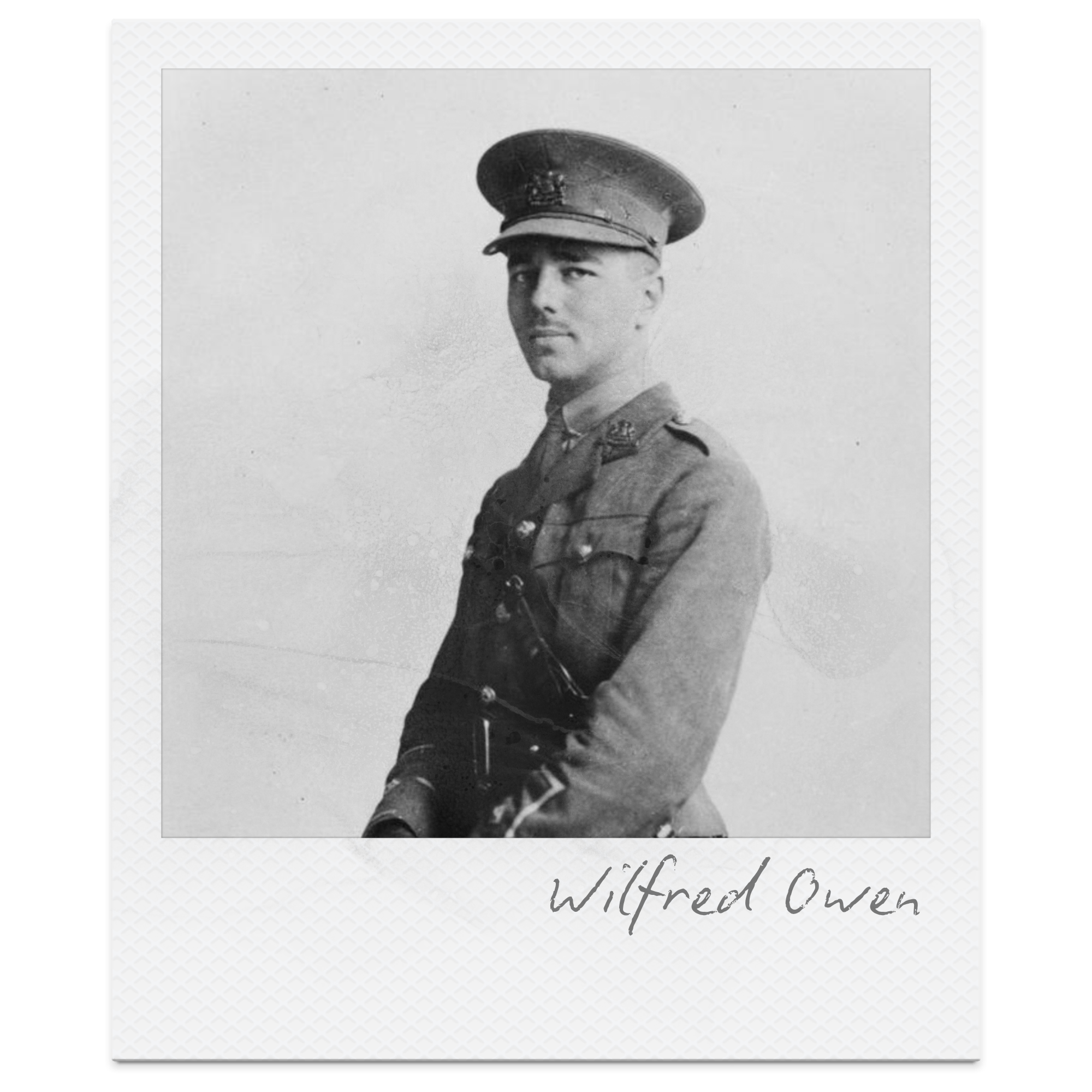
Context of Dulce et Decorum Est
Wilfred Owen wrote Dulce et Decorum Est during the First World War, drawing upon his direct experience of trench warfare and the extreme physical conditions endured by soldiers on the Western Front. Owen served in France from the end of 1916 and experienced heavy fighting before being diagnosed with shell shock and sent to Craiglockhart War Hospital in 1917. The poem was drafted during this period and revised several times, reflecting Owen’s developing determination to represent war without the heroic language traditionally associated with military sacrifice. Its exhausted soldiers — “Bent double”, “coughing”, “blood-shod” and “Drunk with fatigue” — are deliberately far removed from conventional images of strong, disciplined young servicemen. Gas warfare intensifies this destruction of heroic expectations: poison gas had become one of the First World War’s most feared weapons, and the frantic need to fit a respirator quickly could make the difference between survival and an agonising death. For more on the experiences and ideas shaping his writing, explore Wilfred Owen: Historical, Social & Literary Context Guide.
The poem also responds to the patriotic language through which war and military service could be presented to civilians, particularly young people. Its title comes from the Roman poet Horace’s Odes: “Dulce et decorum est pro patria mori”, meaning approximately “It is sweet and fitting to die for one’s country.” The phrase represented an established ideal of honourable patriotic sacrifice, but Owen places it after an intensely physical description of a soldier dying from gas, forcing that ideal into confrontation with the reality he has depicted. The final address to “My friend” has often been connected with contemporary writers who encouraged patriotic enthusiasm, and an early draft was specifically dedicated “To Jessie Pope etc”; however, the published poem broadens its challenge beyond any single individual. By addressing those who might repeat such ideas “with such high zest / To children ardent for some desperate glory,” Owen turns one soldier’s death into a wider criticism of the distance between idealised representations of warfare and the suffering experienced by those sent to fight.
Dulce et Decorum Est: Full Poem
First written in 1917 and later revised in 1918, Dulce et Decorum Est confronts the reader with the exhaustion of soldiers, the sudden terror of a gas attack and the lingering psychological horror of witnessing a violent death. The poem is in the public domain in the UK, allowing the complete text to be reproduced below.
Bent double, like old beggars under sacks,
Knock-kneed, coughing like hags, we cursed through sludge,
Till on the haunting flares we turned our backs,
And towards our distant rest began to trudge.
Men marched asleep. Many had lost their boots,
But limped on, blood-shod. All went lame; all blind;
Drunk with fatigue; deaf even to the hoots
Of gas-shells dropping softly behind.
Gas! GAS! Quick, boys!—An ecstasy of fumbling
Fitting the clumsy helmets just in time,
But someone still was yelling out and stumbling
And flound’ring like a man in fire or lime.—
Dim through the misty panes and thick green light,
As under a green sea, I saw him drowning.
In all my dreams before my helpless sight,
He plunges at me, guttering, choking, drowning.
If in some smothering dreams, you too could pace
Behind the wagon that we flung him in,
And watch the white eyes writhing in his face,
His hanging face, like a devil’s sick of sin;
If you could hear, at every jolt, the blood
Come gargling from the froth-corrupted lungs,
Obscene as cancer, bitter as the cud
Of vile, incurable sores on innocent tongues,—
My friend, you would not tell with such high zest
To children ardent for some desperate glory,
The old Lie: Dulce et decorum est
Pro patria mori.
Dulce et Decorum Est — Wilfred Owen
Dulce et Decorum Est: At a Glance
Poet: Wilfred Owen
Written: First drafted October 1917; revised in 1918
Published: 1920, posthumously
Form: War poem structured in four unequal stanzas, moving from collective experience to individual death, traumatic memory and direct address
Speaker: A soldier who participates in the march, witnesses another soldier’s death and remains haunted by the experience
Setting: The Western Front during a retreat from the front line, followed by the speaker’s recurring dreams and memories of the gas victim
Mood: Exhausted, nightmarish, frantic, horrific and increasingly accusatory
Central tension: The physical reality of warfare versus idealised claims that dying for one’s country is glorious or honourable
Core themes: Suffering, trauma, death, sacrifice, propaganda, patriotism, loss of innocence, the reality of war and the human cost of war
Key symbols: Gas, the gas mask, blood, the “green sea”, dreams and the Latin phrase “Dulce et decorum est / Pro patria mori”
One-sentence meaning: Owen uses the horrifying experience and lasting memory of a gas attack to expose the human suffering concealed by romanticised ideas of warfare, ultimately rejecting the claim that it is “sweet and fitting” to die for one’s country as “The old Lie.”
Quick Summary of Dulce et Decorum Est
Dulce et Decorum Est begins with a group of soldiers staggering away from the front line in a state of extreme physical exhaustion. Rather than appearing heroic, they are compared to “old beggars” and “hags”, stumbling through mud while injured, half-asleep and barely aware of the shells falling behind them. Their exhausted movement is suddenly interrupted by a gas attack. Most manage to fit their gas masks, but one soldier is too late. Through the speaker’s mask, he appears to be “drowning” in the poisonous green gas, and the speaker is powerless to save him.
The experience does not end with the attack. The dying soldier repeatedly returns in the speaker’s dreams, transforming the event into a continuing psychological memory rather than a moment left behind on the battlefield. Owen then addresses those who present warfare to young people as a source of honour and “glory”, forcing them imaginatively to witness the soldier’s grotesque death. The poem ends by confronting the Latin claim that it is sweet and fitting to die for one’s country, declaring it “The old Lie.” The poem therefore moves from collective exhaustion → sudden terror → traumatic memory → direct condemnation, exposing the gulf between romanticised ideas of patriotic sacrifice and the suffering experienced by soldiers themselves.
Title, Form, Structure and Metre in Dulce et Decorum Est
Owen gives Dulce et Decorum Est a recognisable framework of rhyme and predominantly iambic pentameter, but repeatedly disturbs that underlying order. The result is a poem that can sound controlled without ever becoming comfortable or predictable. Its structure is equally significant: the poem moves from collective exhaustion to sudden crisis, from witnessed death to recurring memory, and finally from memory to accusation. The formal control therefore exists alongside images of bodies, minds and assumptions about warfare being violently disrupted.
Title
The title comes from the Roman poet Horace's Odes and forms the beginning of the Latin statement completed at the end of Owen's poem: “Dulce et decorum est / Pro patria mori” — “It is sweet and fitting to die for one's country.” At first, the title can therefore appear to invoke a traditional ideal of patriotic sacrifice, honour and duty.
Its meaning changes completely once the reader reaches the ending. After witnessing exhausted soldiers, a gas attack and an agonising death, the phrase is labelled “The old Lie”. Owen effectively makes the reader experience the evidence before revealing his final judgement upon the maxim. The title consequently becomes deeply ironic: what initially sounds like an expression of honour is gradually exposed as a dangerously idealised description of something the poem presents as horrific.
Form and Structure
The poem contains 28 lines divided into four unequal stanzas of eight, six, two and twelve lines. It does not follow a conventional fixed form, although its 28 lines create an interesting possible relationship with the fourteen-line sonnet. The poem can be viewed as two broad fourteen-line movements: the first fourteen lines recount the soldiers' march and gas attack, while the final fourteen move from the speaker's recurring nightmare towards his direct argument against romanticising death in war.
This does not make Dulce et Decorum Est two conventional sonnets — its stanza divisions and rhyme scheme do not follow a standard sonnet pattern — but the possibility is useful because Owen takes a form traditionally associated with tightly controlled argument and turns it towards a disturbing wartime experience. The poem's movement is more important than applying a rigid formal label:
exhausted march → gas attack → witnessed death → recurring nightmare → confrontation with the reader → “The old Lie”
The two-line third stanza is particularly striking:
“In all my dreams before my helpless sight,
He plunges at me, guttering, choking, drowning.”
Visually isolating this memory separates it from the original gas attack while simultaneously showing that the speaker cannot separate himself psychologically from what happened. The narrative has moved beyond the battlefield, but the dying soldier remains present in his dreams. The abrupt stanza break therefore becomes part of Owen's representation of traumatic memory.
The final stanza also changes the poem's relationship with its audience. The earlier “we” places the speaker among the soldiers, but “If you could” turns outward towards an unnamed “you”. Personal experience becomes argument: the reader is imaginatively forced to walk behind the dying soldier's wagon, see his face and hear his breathing before encountering the patriotic maxim at the end.
Rhyme Scheme and Poetic Pattern
Despite the violence and disorder of the experience being described, Owen maintains a strong pattern of alternating end rhyme. Across the poem, the scheme can be represented as:
ABABCDCD / EFEFGH / GH / IJIJKLKLMNMN
The second and third stanzas are especially interesting because their rhymes connect across the stanza break. The second stanza ends with “light / drowning”, while the isolated couplet continues with “sight / drowning”. In rhyme terms, the six-line stanza and following couplet therefore remain connected even though they have been visually separated.
That tension between formal connection and visual disruption mirrors the speaker's experience: the gas attack belongs to the past, yet its memory continues into his present.
Most strikingly, “drowning” is rhymed with itself:
“I saw him drowning.”
and:
“guttering, choking, drowning.”
Instead of providing the progression normally created by a new rhyme word, the poem returns to exactly the same word and image. The effect is almost inescapable: the speaker moves forward in time, but his mind returns to the same moment of death. The repeated rhyme therefore helps make traumatic repetition audible within the poem's structure.
The broader regularity of the rhyme is also important. The soldiers' experience may be chaotic, but the poem itself remains carefully constructed. This allows Owen to control and communicate an experience that was itself characterised by confusion and helplessness, while the interruptions within that pattern prevent the verse from becoming comfortably musical.
Metre and Rhythmic Movement
The underlying metre is predominantly iambic pentameter, meaning that many lines move towards five metrical feet built around an unstressed syllable followed by a stressed syllable. One of the clearest examples comes after the gas attack:
In ALL | my DREAMS | beFORE | my HELP | less SIGHT
Here the relatively steady movement gives the statement an unsettling inevitability. The nightmare is not a single recollection: the soldier appears “in all my dreams”, suggesting that the memory repeatedly returns.
However, Owen frequently disrupts this underlying rhythm. The opening immediately resists smooth iambic movement:
BENT DOUble | like OLD | BEGgars | under SACKS
Rather than marching with an easy, regular beat, the line feels heavy, awkward and physically burdened. That rhythmic difficulty complements the image of soldiers whose bodies have been reduced to a bent, stumbling condition.
The next line is similarly forceful:
KNOCK-kneed, COUGHing like HAGS, we CURSED through SLUDGE
Clusters of stressed syllables and harsh monosyllabic words make the line difficult to move through smoothly. The reader is repeatedly slowed by “Knock-kneed”, “hags”, “cursed” and “sludge”, allowing the rhythm itself to suggest physical effort.
The sudden gas attack then produces an even more dramatic rhythmic change:
GAS! GAS! QUICK, boys!
The previous exhausted movement is shattered by short commands, exclamations and concentrated stresses. Rhythm becomes part of the emergency: there is suddenly no time for the measured movement of a poetic line because the soldiers must react immediately.
This contrast is central to Owen's use of metre. Regularity is continually established and disturbed, just as the soldiers attempt to continue marching through a world in which exhaustion, shellfire and gas can interrupt them without warning. The poem's rhythm therefore does more than provide musical pattern: it helps the reader experience the movement from exhaustion and stumbling, through panic and violence, into the haunting repetition of memory.
peaker and Setting in Dulce et Decorum Est
The speaker and setting of Dulce et Decorum Est continually shift as Owen moves between collective experience, individual witnessing, traumatic memory and direct confrontation with an audience. The battlefield is therefore not simply a physical location. By the end of the poem, war has followed the speaker away from the immediate gas attack and into his dreams, making memory itself another setting for the conflict.
Speaker: From the Collective “We” to the Individual “I”
The speaker is a soldier who initially presents himself as part of a larger group. The repeated use of “we” in the opening stanza creates a collective perspective:
“we cursed through sludge”
and:
“towards our distant rest began to trudge.”
There is little emphasis on individual identity at this stage. The soldiers have been reduced to a suffering mass, sharing exhaustion, injury and disorientation. Descriptions such as “All went lame; all blind” strengthen this sense that the conditions of war affect the men collectively.
During the gas attack, however, the perspective becomes increasingly personal. One soldier fails to fit his mask in time, and the speaker becomes an individual witness:
“I saw him drowning.”
The simple “I” is crucial. The speaker survives, but survival forces him into the position of watching another man die while being unable to intervene. The phrase “my helpless sight” later emphasises this powerlessness: he can see what is happening but cannot stop it.
The third stanza moves beyond witnessing into psychological aftermath:
“In all my dreams before my helpless sight,
He plunges at me, guttering, choking, drowning.”
The present-tense verb “plunges” makes the memory feel immediate even after the original event has ended. The dying soldier is no longer simply someone the speaker once saw; he has become a recurring presence within the speaker's dreams. The shift from “we” to “I” therefore reflects a movement from shared physical suffering towards intensely personal psychological trauma.
In the final stanza, the speaker's role changes again. He turns outward towards “you” and eventually “My friend”, transforming testimony into argument. The conditional repetition of “If you could…” asks the audience to imagine witnessing what he witnessed. The speaker does not simply tell readers that romanticised ideas of warfare are wrong; he attempts to make them see, hear and confront the physical consequences before reaching the final declaration of “The old Lie.”
Although Owen's own military experiences clearly inform the poem, it is still useful to distinguish Wilfred Owen the poet from the constructed speaker. The speaker functions as both soldier and witness, allowing Owen to transform an individual experience into a broader challenge to the language used to describe war.
Setting: From the Battlefield to the Mind
The opening setting is an unnamed part of the Western Front, where exhausted soldiers are moving away from immediate fighting towards a “distant rest”. Owen provides no precise geographical location. Instead, the environment is constructed through fragments of sensory experience: “sludge”, “haunting flares”, lost boots and distant gas-shells. This lack of precise geography keeps attention on what the soldiers physically experience rather than on a particular battlefield.
The setting then changes with extraordinary speed. The slow movement through mud is interrupted by:
“Gas! GAS! Quick, boys!”
Suddenly the soldiers occupy an environment in which the air itself has become dangerous. Seen through the speaker's gas-mask lenses, the world appears transformed:
“Dim through the misty panes and thick green light,
As under a green sea”
The simile creates an almost surreal underwater setting, making the poisoned battlefield seem alien and suffocating. The dying soldier appears to be “drowning” despite being on land, conveying the speaker's distorted view through his mask while also capturing the man's inability to breathe.
The third stanza relocates the poem from the physical battlefield into the speaker's dreams. This psychological setting is crucial because it shows that leaving the battlefield does not necessarily mean escaping the experience. The gas attack survives in memory, replaying itself with the same horrifying immediacy.
Finally, the poem creates an imagined setting for the reader. Through “If you could pace / Behind the wagon”, the audience is placed alongside the speaker and forced to accompany the dying man. Owen progressively collapses the distance between battlefield, memory and civilian imagination. By the time the Latin maxim appears, the reader has been made to travel through the reality that the language of “glory” threatens to conceal.
Dulce et Decorum Est: Stanza-by-Stanza Analysis
The four stanzas of Dulce et Decorum Est create a clear but disturbing progression from physical exhaustion to sudden terror, traumatic memory and finally direct condemnation. Owen continually changes the pace, perspective and intensity of the poem: the slow, stumbling movement of the opening is shattered by the gas attack, the dying soldier is isolated within the speaker's recurring dreams, and the final stanza forces the audience to confront the suffering that patriotic ideas of “glory” can conceal. Analysing each stanza separately reveals how Owen gradually dismantles the heroic image of warfare before delivering his final accusation: “The old Lie.”
Stanza 1: Exhaustion, Dehumanisation and the Reality of the Front
The opening stanza immediately destroys any expectation that soldiers will be presented as strong, disciplined or heroic figures. Instead, Owen introduces men whose bodies have been almost completely overwhelmed by warfare:
“Bent double, like old beggars under sacks,
Knock-kneed, coughing like hags, we cursed through sludge”
The opening similes are deliberately degrading. The soldiers are compared to “old beggars” and “hags”, figures associated with age, weakness and physical deterioration. These are presumably young men, yet war has prematurely aged them. The phrase “Bent double” is particularly effective because it begins the poem with physical distortion: before the reader learns anything about these soldiers as individuals, they are presented as bodies that can barely remain upright.
Owen intensifies this physical deterioration through the accumulation of bodily descriptions: “Knock-kneed”, “coughing”, “limped”, “lame” and “blind”. Rather than concentrating upon weapons, uniforms or military achievement, the stanza focuses on damaged human bodies. Even the repeated hard consonants in “Knock-kneed, coughing like hags, we cursed” contribute to the harshness of the description, while “sludge” makes the landscape itself seem difficult to move through.
The soldiers are moving away from danger towards:
“our distant rest”
Yet even “rest” remains “distant”. The adjective suggests that relief exists somewhere ahead of them but is not easily reached. The verb “trudge” reinforces their exhaustion, conveying slow, laborious movement rather than the coordinated marching traditionally associated with soldiers. Owen therefore replaces the image of a purposeful military march with a painful struggle simply to keep moving.
The next sentence makes their exhaustion even more extreme:
“Men marched asleep.”
The compressed statement is almost paradoxical. Marching normally requires conscious movement and coordination, yet these men are so exhausted that they seem to continue automatically. The sentence also reduces them simply to “Men”: individual personalities disappear as exhaustion turns the soldiers into a collective body moving mechanically through the landscape.
One of the stanza's most memorable images follows:
“Many had lost their boots,
But limped on, blood-shod.”
The compound adjective “blood-shod” transforms blood into a grotesque substitute for footwear. To be “shod” normally means to be wearing shoes, but these soldiers effectively wear their own blood instead. The image captures both their physical suffering and the necessity of continuing despite injury. There is no opportunity to stop simply because their bodies have been damaged.
Owen then intensifies the description through sweeping repetition:
“All went lame; all blind;”
The repeated “all” makes the suffering appear universal within the group. “Lame” suggests physical incapacity, while “blind” may convey both literal difficulty seeing through darkness, smoke or exhaustion and the soldiers' broader state of disorientation. The semicolon divides the two conditions while allowing them to accumulate, creating the impression that one form of bodily failure follows another.
The metaphor:
“Drunk with fatigue”
suggests that exhaustion has altered the soldiers' perception and control of their bodies as profoundly as alcohol might. Crucially, however, this condition has been imposed upon them by warfare. Their senses are beginning to fail: they are even “deaf” to the sound of shells falling behind them.
The final phrase creates an unsettling contrast:
“gas-shells dropping softly behind.”
The adverb “softly” is disturbingly gentle when attached to something potentially lethal. It also reflects the soldiers' extreme exhaustion: danger that should provoke immediate alarm has become almost background noise. The stanza therefore ends with a warning that the men are too physically depleted to respond normally to the threats surrounding them.
This makes the sudden opening of the next stanza — “Gas! GAS! Quick, boys!” — even more powerful. Stanza 1 has established men who are barely conscious, injured and moving with enormous difficulty. Owen is about to demand that these same exhausted bodies respond instantly and precisely to a life-threatening emergency, turning the slow misery of the opening into sudden panic.
Stanza 2: Panic, Gas and a Helpless Death
The second stanza violently interrupts the exhausted movement of the opening. The soldiers who could barely continue walking must suddenly respond to an immediate threat:
“Gas! GAS! Quick, boys!—An ecstasy of fumbling”
The abrupt exclamations “Gas! GAS!” transform the poem's pace. Short words, capitalisation and repeated punctuation recreate the urgency of the warning, while “Quick” emphasises that survival depends upon an almost instantaneous reaction. This sudden acceleration is especially disturbing because Owen has just established how physically exhausted the soldiers are.
The phrase “An ecstasy of fumbling” captures the frantic confusion that follows. “Ecstasy” usually suggests an overwhelming state of joy or emotional intensity, but here it describes terrified soldiers desperately trying to protect themselves. The unexpected word creates a sense of frenzied movement and loss of control, while “fumbling” suggests hands struggling to perform a task that must be completed precisely and immediately.
The soldiers are:
“Fitting the clumsy helmets just in time”
The gas masks are described as “clumsy”, emphasising the difficulty of responding quickly while exhausted and under pressure. The phrase “just in time” momentarily suggests escape, but Owen immediately undermines that relief:
“But someone still was yelling out and stumbling”
The indefinite pronoun “someone” initially leaves the victim unidentified. He is one soldier among many, which can suggest the frightening arbitrariness of survival: most of the group have fitted their masks successfully, while one man has not. The conjunction “But” marks the sudden movement from collective survival to individual catastrophe.
The verbs “yelling”, “stumbling” and “flound’ring” create a sequence of uncontrolled actions. Unlike the deliberate military movement expected of a soldier, this man has lost control of his body:
“And flound’ring like a man in fire or lime.—”
The simile makes the effects of the gas imaginable through other forms of extreme physical agony. “Fire” evokes burning and panic, while “lime” suggests something corrosive and destructive. The verb “flound’ring” also begins the stanza's developing imagery of drowning: the soldier appears to struggle helplessly within the contaminated air as though trapped in a hostile substance.
At this point, the speaker's own gas mask changes how he sees the scene:
“Dim through the misty panes and thick green light”
The “misty panes” create a physical barrier between the speaker and the dying man. He can witness what is happening but only through the obscured lenses of his mask. The adjectives “dim”, “misty” and “thick” make the environment difficult to see through, transforming the familiar battlefield into something strange and almost unreal.
That transformation culminates in one of the poem's central images:
“As under a green sea, I saw him drowning.”
The simile “under a green sea” turns poisoned air imaginatively into water. Although the soldier is surrounded by gas rather than submerged in a literal sea, his inability to breathe resembles drowning. The image makes an invisible threat appear dense, engulfing and inescapable, as though the atmosphere itself has become capable of swallowing him.
The final clause — “I saw him drowning” — also marks an important shift in perspective. The collective “we” of the opening has become “I” and “him”. The speaker is no longer simply one exhausted soldier among many; he has become the individual witness to another man's death.
Crucially, however, he remains separated from the victim by the “misty panes” of his own mask. The equipment keeping the speaker alive also forces him to watch from behind a barrier, unable to intervene. Stanza 2 therefore transforms the physical exhaustion of the opening into panic, isolation and helpless witnessing, preparing for the next stanza's revelation that this moment has never truly ended for the speaker.
Stanza 3: Trauma, Helplessness and the Recurring Nightmare
The third stanza consists of only two lines, but it marks one of the poem's most important structural shifts. The immediate gas attack has ended, yet the speaker reveals that the experience continues to replay within his mind:
“In all my dreams before my helpless sight,
He plunges at me, guttering, choking, drowning.”
The phrase “In all my dreams” suggests repetition rather than an isolated nightmare. The memory has become intrusive and unavoidable, following the speaker beyond the battlefield and into sleep. Significantly, Owen does not describe something that once appeared in his dreams. The present-tense verb “plunges” makes the dying soldier seem to return again and again, collapsing the distance between past and present. Physically, the speaker survived the gas attack; psychologically, he remains trapped within the moment.
The description of “my helpless sight” develops the powerlessness established in the previous stanza. During the attack, the speaker could only watch through the “misty panes” of his gas mask; now he remains a spectator even within his dreams. The adjective “helpless” suggests that witnessing suffering can itself become traumatic, particularly when the witness is unable to intervene or prevent another person's death.
The verb “plunges” also continues the drowning imagery established by the “green sea”. It creates violent forward movement, as though the dying man is falling towards the speaker rather than remaining safely contained within a distant memory. This makes the nightmare feel confrontational and immediate: the victim repeatedly enters the speaker's present consciousness.
The final sequence:
“guttering, choking, drowning.”
uses three present participles to prolong the man's suffering. There is no completed action and no peaceful moment of death; instead, the reader encounters an ongoing process of bodily failure. “Choking” and “drowning” focus attention on the inability to breathe, while “guttering” can evoke a flame flickering as it is about to go out, suggesting a life in the process of being extinguished.
The repetition of “drowning”, which also ends the previous stanza, is especially significant. Rather than progressing to a new image, the poem returns to exactly the same word. Structurally, this mirrors the speaker's psychological experience: his mind cannot move beyond what he witnessed.
By isolating these two lines as their own stanza, Owen gives the nightmare extraordinary prominence. The battlefield narrative briefly stops, leaving only the speaker and the recurring image of the dying man. Stanza 3 therefore acts as the bridge between experience and argument: having shown that the gas attack continues to haunt the survivor, Owen is ready to turn outward and challenge those who can speak enthusiastically about the “glory” of war without having witnessed its consequences.
Stanza 4: Forcing the Reader to Witness “The old Lie”
The final stanza transforms the poem from personal testimony into direct confrontation. Owen has shown the soldiers' exhaustion, the gas attack and the speaker's recurring nightmare; he now turns towards an audience that has not shared those experiences:
“If in some smothering dreams, you too could pace
Behind the wagon that we flung him in”
The conditional opening “If… you too could” invites — and almost challenges — the reader to experience what the speaker has experienced. The adjective “smothering” connects the speaker's dreams with the suffocation of the gas attack. Even within memory, the sensation of being unable to breathe remains present.
The verb “flung” is deliberately brutal:
“the wagon that we flung him in”
There is no ceremonial treatment of the wounded man and none of the dignity traditionally associated with heroic military death. His body is rapidly thrown into a wagon, reducing death to another practical consequence of warfare. Owen therefore continues to dismantle romantic ideas of sacrifice by concentrating upon the physical reality surrounding an individual casualty.
The reader is then instructed to “watch”:
“And watch the white eyes writhing in his face,
His hanging face, like a devil’s sick of sin;”
The repeated references to the man's “eyes” and “face” force attention onto his individuality and suffering. “Writhing” would ordinarily describe the movement of an entire body, but Owen transfers it to the eyes, creating a grotesque image in which agony appears visible within the man's face itself.
The simile “like a devil's sick of sin” is deliberately extreme. A devil should theoretically be accustomed to evil and suffering, yet this death is imagined as horrific enough to disgust even such a figure. The image overturns expectations in much the same way as the poem overturns conventional ideas about glorious death: the reality being described exceeds what should normally be bearable.
Owen then shifts from sight to sound:
“If you could hear, at every jolt, the blood
Come gargling from the froth-corrupted lungs”
The repetition of “If you could” reinforces the stanza's conditional argument. The audience is not merely asked to understand intellectually; they are made to imagine seeing and hearing the consequences of the gas attack.
The onomatopoeic “gargling” produces an unpleasant, bodily sound, while “froth-corrupted lungs” takes the reader inside the physical damage caused by the attack. The adjective “corrupted” suggests something that has been contaminated or destroyed from within. At “every jolt” of the wagon, the man's suffering becomes audible again, making the journey itself part of the horror.
Owen's imagery becomes even more disturbing:
“Obscene as cancer, bitter as the cud
Of vile, incurable sores on innocent tongues,—”
The simile “Obscene as cancer” rejects any possibility of finding beauty or nobility in this death. “Obscene” suggests something horrifying that should never have to be witnessed, while cancer evokes bodily destruction and disease rather than heroic sacrifice.
The description of “vile, incurable sores on innocent tongues” introduces the important idea of innocence. “Innocent” can describe those physically suffering, but it also anticipates the “children” who appear shortly afterwards. Owen begins connecting the soldier's destroyed body with the young people who may still be persuaded by idealised accounts of warfare.
Only after forcing the audience through these images does Owen reveal the conclusion of his extended conditional sentence:
“My friend, you would not tell with such high zest
To children ardent for some desperate glory”
The address “My friend” sounds superficially courteous, but within the context of the stanza it carries a bitter, accusatory edge. The phrase places responsibility upon those who enthusiastically communicate romantic ideas about warfare without confronting their consequences.
“High zest” suggests energetic enthusiasm, sharply contrasting with the exhaustion and suffering experienced by the soldiers themselves. Likewise, “ardent” conveys the passionate eagerness of the “children” who may be attracted by promises of “glory”. Calling them “children” emphasises their youth and inexperience, creating a disturbing imbalance between those who promote heroic ideals and those who may ultimately suffer because of them.
The adjective “desperate” complicates “glory” further. Glory is usually presented as desirable, yet “desperate glory” sounds unstable and dangerous. By this stage in the poem, the reader has seen exactly what such abstract language can conceal: blood, damaged lungs, terror, nightmares and death.
The poem finally reveals the complete Latin phrase introduced by its title:
“The old Lie: Dulce et decorum est
Pro patria mori.”
The capitalisation of “Lie” gives Owen's judgement extraordinary force. The Latin maxim — approximately “It is sweet and fitting to die for one's country” — is placed directly beside the grotesque death the reader has just been forced to imagine. Owen does not answer the ideal with an abstract political argument; the dying soldier's body becomes the evidence against it.
Ending in Latin is also significant because the elevated, classical language stands in stark contrast with the vocabulary that has dominated the poem: “sludge”, “blood-shod”, “choking”, “gargling”, “cancer” and “sores”. One language idealises patriotic death; the other exposes its physical consequences.
The final stanza therefore completes the poem's movement from experience → memory → testimony → accusation. By the time Owen calls the patriotic maxim “The old Lie”, the reader has already been made to witness the reality against which it must be judged. The ending consequently challenges not only romanticised ideas of war, but also the language through which those ideas can be passed from one generation to the next.
Key Quotes from Dulce et Decorum Est
Owen's most important quotations trace the poem's movement from physical exhaustion and dehumanisation to panic, traumatic memory and the rejection of patriotic “glory”. The strongest quotations are useful not simply because they contain striking imagery, but because they reveal how Owen repeatedly contrasts idealised representations of warfare with the suffering of individual soldiers.
“Bent double, like old beggars under sacks”
◆ Technique: Simile, visual imagery and degrading comparison
◆ Meaning: The soldiers resemble elderly, impoverished figures rather than strong young servicemen.
◆ Purpose: Owen immediately dismantles the conventional image of the heroic soldier by showing how war has prematurely aged and physically broken the men.
◆ Impact: Beginning with “Bent double” makes bodily damage the reader's first impression of warfare, establishing the poem's rejection of romanticised heroism from its opening words.
“Knock-kneed, coughing like hags”
◆ Technique: Simile, grotesque imagery and harsh consonance
◆ Meaning: The soldiers are physically weakened, ill and struggling to move normally.
◆ Purpose: The comparison with “hags” continues the imagery of premature ageing and transforms the soldiers into figures associated with frailty rather than military strength.
◆ Impact: The uncomfortable description strips warfare of glamour and makes the soldiers' physical deterioration impossible to ignore.
“Men marched asleep”
◆ Technique: Paradox, concise declarative sentence and imagery
◆ Meaning: The soldiers are so exhausted that they appear to continue marching almost unconsciously.
◆ Purpose: Owen emphasises the extreme fatigue and mechanical existence produced by prolonged warfare.
◆ Impact: The short sentence is stark and memorable, suggesting men whose bodies continue functioning even when their minds are barely alert.
“blood-shod”
◆ Technique: Compound adjective, metaphor and visceral imagery
◆ Meaning: Having lost their boots, some soldiers continue walking with feet so injured that blood effectively becomes their footwear.
◆ Purpose: Owen condenses the soldiers' suffering into a single grotesque image, replacing ordinary military equipment with their own damaged bodies.
◆ Impact: The phrase is shocking because it makes physical pain immediate while demonstrating the expectation that soldiers continue despite serious injury.
“All went lame; all blind”
◆ Technique: Repetition, parallelism and hyperbolic language
◆ Meaning: Exhaustion and injury have left the entire group physically impaired and disorientated.
◆ Purpose: The repeated “all” transforms suffering from an individual problem into a collective condition experienced across the group.
◆ Impact: The line creates an overwhelming sense of bodily collapse, suggesting that warfare systematically damages rather than glorifies those involved.
“Drunk with fatigue”
◆ Technique: Metaphor
◆ Meaning: Exhaustion has affected the soldiers' movement, awareness and senses as profoundly as intoxication might.
◆ Purpose: Owen shows that the men have been pushed beyond ordinary tiredness into a state of physical and mental impairment.
◆ Impact: The familiar idea of drunkenness makes otherwise unimaginable levels of exhaustion easier for the reader to understand.
“Gas! GAS! Quick, boys!”
◆ Technique: Exclamation, repetition, capitalisation, caesura and direct speech
◆ Meaning: A gas attack suddenly forces the exhausted soldiers into immediate action.
◆ Purpose: Owen violently interrupts the slow rhythm of the march, reproducing the unpredictability and panic of battlefield danger.
◆ Impact: The concentrated stresses and exclamations create an abrupt burst of urgency, making the reader experience the sudden transition from exhaustion to terror.
“An ecstasy of fumbling”
◆ Technique: Unexpected diction, irony and kinetic imagery
◆ Meaning: The soldiers desperately struggle to fit their gas masks in time.
◆ Purpose: “Ecstasy” conveys an overwhelming intensity of feeling and movement, while “fumbling” exposes the soldiers' lack of control as they attempt to save themselves.
◆ Impact: The unusual combination captures the frantic confusion of survival, making the gas attack feel chaotic rather than controlled or heroic.
“As under a green sea, I saw him drowning”
◆ Technique: Simile, colour imagery, metaphorical drowning imagery and first-person perspective
◆ Meaning: Through his gas mask, the speaker sees the poisoned atmosphere as a dense green environment in which another soldier appears to drown.
◆ Purpose: Owen transforms invisible air into something physical, engulfing and suffocating, communicating the victim's inability to breathe.
◆ Impact: The surreal image makes the gas attack simultaneously vivid and nightmarish, while “I saw” establishes the speaker as a helpless eyewitness.
“In all my dreams before my helpless sight”
◆ Technique: First-person voice, recurring dream motif and emotive diction
◆ Meaning: The speaker continues to relive the soldier's death after the immediate event has ended.
◆ Purpose: Owen reveals that warfare can continue psychologically long after physical danger has passed.
◆ Impact: “All my dreams” suggests relentless repetition, while “helpless” emphasises that the speaker remains unable to alter the event even when it returns in memory.
“He plunges at me, guttering, choking, drowning”
◆ Technique: Present tense, tripling, participles, visceral imagery and repetition
◆ Meaning: The dying soldier repeatedly appears within the speaker's nightmares as though his death is happening again.
◆ Purpose: The present-tense “plunges” collapses the distinction between past and present, while the three continuous verbs prolong the victim's suffering.
◆ Impact: Repeating “drowning” from the previous stanza mirrors the speaker's inability to move beyond the memory, making the structure itself suggest recurring trauma.
“the wagon that we flung him in”
◆ Technique: Violent verb choice and dehumanising imagery
◆ Meaning: The dying or dead soldier is rapidly thrown into a wagon rather than treated with ceremony or dignity.
◆ Purpose: Owen contrasts the rhetoric of honourable sacrifice with the practical brutality surrounding death in war.
◆ Impact: “Flung” is shockingly casual and forceful, exposing the gulf between abstract ideas of glorious death and the treatment of the actual human body.
“the blood / Come gargling from the froth-corrupted lungs”
◆ Technique: Onomatopoeia, auditory imagery, enjambment and grotesque bodily imagery
◆ Meaning: The victim's damaged lungs fill with fluid and blood, making his suffering horribly audible.
◆ Purpose: Owen forces the audience to confront the physical details that idealised descriptions of military sacrifice can exclude.
◆ Impact: “Gargling” gives the death an unpleasant sound as well as an image, making the scene difficult to distance oneself from.
“Obscene as cancer”
◆ Technique: Simile and shocking diction
◆ Meaning: The soldier's suffering is compared with destructive disease rather than anything noble or beautiful.
◆ Purpose: Owen deliberately chooses an image incompatible with heroic representations of death, presenting the reality as repulsive, destructive and bodily.
◆ Impact: The word “obscene” functions almost as a moral judgement upon what the reader has witnessed, intensifying the poem's rejection of romanticised warfare.
“vile, incurable sores on innocent tongues”
◆ Technique: Simile, disease imagery and contrast
◆ Meaning: The horrific effects of the gas are compared with painful sores afflicting those who are “innocent”.
◆ Purpose: The image introduces innocence immediately before the poem turns towards the “children” who may be encouraged to pursue military glory.
◆ Impact: The contrast between “vile” suffering and “innocent” victims strengthens the poem's concern with the consequences of passing idealised ideas about war to inexperienced young people.
“children ardent for some desperate glory”
◆ Technique: Emotive diction, contrast and irony
◆ Meaning: Young people enthusiastically desire the heroic reputation they have been taught to associate with warfare.
◆ Purpose: Calling them “children” stresses their youth and inexperience, while “desperate glory” destabilises the supposedly attractive ideal they pursue.
◆ Impact: Owen shifts attention from those already suffering in war towards those who might become its future victims, making the transmission of romanticised ideas itself part of the poem's criticism.
“The old Lie: Dulce et decorum est / Pro patria mori.”
◆ Technique: Irony, classical allusion, direct judgement and contrast
◆ Meaning: Owen rejects the traditional claim that it is “sweet and fitting to die for one's country” when that idea is used to idealise the reality of wartime death.
◆ Purpose: The conclusion brings the poem's horrifying physical evidence into direct conflict with elevated language about patriotic sacrifice.
◆ Impact: Calling the maxim “The old Lie” overturns the apparent meaning of the title and forces the entire poem to be reread as an argument against presenting death in war as inherently glorious.
Poetic Techniques and Literary Devices in Dulce et Decorum Est
Owen uses poetic techniques in Dulce et Decorum Est to make the experience of warfare feel physical, immediate and increasingly difficult for the reader to distance themselves from. Similes and grotesque imagery dismantle heroic representations of soldiers, disrupted sounds and rhythms reproduce exhaustion and panic, while shifts in pronouns and direct address eventually draw the audience into the poem. Most importantly, Owen places the elevated language of patriotic sacrifice against descriptions of mud, blood, damaged bodies and traumatic memory, allowing the poem's techniques to support its central challenge to romanticised warfare.
Allusion
The title and final lines allude to the Roman poet Horace:
“Dulce et decorum est
Pro patria mori.”
The Latin means approximately “It is sweet and fitting to die for one's country.” Rather than using the classical allusion to give authority to this idea, Owen deliberately places it in conflict with everything the reader has witnessed.
By the time the phrase appears in full, the poem has presented soldiers as “beggars”, shown a man choking during a gas attack and described blood “gargling” from his damaged lungs. The elevated classical statement therefore sounds profoundly disconnected from the physical reality Owen has constructed.
Calling it “The old Lie” makes the allusion explicitly confrontational. Owen takes inherited language about patriotic sacrifice and tests it against the experience of modern industrial warfare. The allusion consequently becomes part of the poem's wider examination of how established cultural ideas can shape attitudes towards war even when they fail to represent what soldiers actually experience.
Simile
Similes dominate some of the poem's most disturbing descriptions. Importantly, Owen repeatedly compares soldiers and warfare with things that are weak, diseased, grotesque or horrifying, rather than traditionally heroic:
“like old beggars under sacks”
“coughing like hags”
“flound’ring like a man in fire or lime”
“As under a green sea”
“like a devil's sick of sin”
“Obscene as cancer”
Each comparison removes another layer of romanticism. The soldiers resemble impoverished elderly people rather than idealised warriors; gas becomes an engulfing sea; the dying man's face becomes horrifying even by infernal standards; and death is compared with disease rather than noble sacrifice.
The cumulative effect is important. Owen does not provide one alternative image of war but repeatedly replaces heroic imagery with physical degradation.
Metaphor
Owen also uses metaphor to communicate experiences that may be difficult for a civilian audience to imagine. The soldiers are:
“Drunk with fatigue”
Their exhaustion becomes a form of intoxication, suggesting impaired movement, perception and awareness. They are not simply tired; warfare has pushed their bodies into an altered physical state.
The compound “blood-shod” is even more disturbing. “Shod” normally describes someone wearing footwear, but the soldiers who have lost their boots effectively wear their own blood. Owen transforms injury into clothing, suggesting how completely physical suffering has become part of the soldiers' existence.
Grotesque and Visceral Imagery
Much of the poem's power comes from its refusal to sanitise bodily suffering. Owen repeatedly directs attention towards feet, eyes, faces, lungs and blood:
“blood-shod”
“white eyes writhing in his face”
“froth-corrupted lungs”
“vile, incurable sores”
These details make death material rather than abstract. Words such as “sacrifice”, “honour” and “glory” can distance an audience from what death actually involves; Owen instead brings the reader uncomfortably close to the damaged human body.
This becomes especially important in the final stanza, where the reader is effectively instructed to “watch” and “hear”. Sensory imagery becomes evidence within Owen's argument.
Drowning Imagery
A sustained image of drowning develops during and after the gas attack:
“As under a green sea”
“I saw him drowning.”
“He plunges at me, guttering, choking, drowning.”
The metaphor makes the atmosphere appear dense and engulfing. A battlefield on land is imaginatively transformed into a hostile underwater environment in which breathing has become impossible.
The repetition of “drowning” is particularly important because it extends beyond the original attack. The soldier continues drowning within the speaker's dreams, so the image comes to represent not only the victim's physical suffocation but also the survivor's inability to escape the memory of witnessing it.
Sensory Imagery
Owen engages several senses to make the experience unusually immediate. The reader sees the “thick green light” and “white eyes”, hears the warning “Gas! GAS!” and the blood “gargling”, and encounters descriptions of mud, coughing, damaged lungs and bodily movement.
The final stanza deliberately intensifies this sensory experience through the commands implicit in:
“watch”
and:
“hear”
The audience is asked to imagine becoming a witness. Owen's argument therefore depends upon more than telling the reader what to believe: he constructs an experience and then asks what someone who had witnessed it could honestly say about glorious death.
Onomatopoeia
The most striking example occurs in:
“Come gargling from the froth-corrupted lungs”
“Gargling” imitates something of the wet, choking sound it describes. The technique gives the soldier's death an auditory dimension and makes the description deliberately unpleasant.
The word also contrasts sharply with the elevated sound of the Latin ending. The poem moves between the noises made by a dying human body and the polished language of classical patriotic idealism, strengthening the gulf between rhetoric and experience.
Repetition
Repetition appears at moments of particular urgency or psychological significance. During the gas attack:
“Gas! GAS!”
The immediate repetition creates alarm and reproduces the desperate warning passed between soldiers.
Later, “drowning” appears at the end of two closely connected sections:
“I saw him drowning.”
“guttering, choking, drowning.”
Here repetition has a different effect. Instead of urgency, it suggests psychological recurrence. The speaker's language returns to the same word because his dreams return him to the same moment.
The final stanza also repeats the conditional construction:
“If … you too could”
and:
“If you could hear”
This repetition builds towards the conclusion “you would not tell”, making the stanza function almost like an argument constructed from evidence.
Enjambment
Owen frequently allows sentences to continue across line breaks:
“Many had lost their boots,
But limped on, blood-shod.”
and:
“the blood
Come gargling from the froth-corrupted lungs”
Enjambment can create forward momentum, forcing the reader into the next line before the thought is complete. During descriptions of suffering, this can make events feel continuous and difficult to interrupt.
In the final stanza, the extended syntax runs across numerous lines before reaching its grammatical conclusion. The reader must travel through the horrific details before arriving at:
“you would not tell”
The structure therefore prevents the poem's final judgement from being separated from the evidence that produces it.
Caesura and Punctuation
Owen frequently disrupts the flow of individual lines with punctuation:
“Men marched asleep. Many had lost their boots”
“All went lame; all blind;”
“Gas! GAS! Quick, boys!—”
Full stops, semicolons, exclamation marks and dashes interrupt the underlying metre and prevent the poem from developing a comfortably regular rhythm.
The technique is especially effective during the gas attack. “Gas! GAS! Quick, boys!” breaks language into urgent fragments, sharply contrasting with the exhausted movement of the opening stanza.
Harsh Consonance and Sound
Owen frequently concentrates hard consonant sounds within descriptions of physical suffering:
“Knock-kneed, coughing like hags, we cursed through sludge”
The repeated k, g and hard c sounds contribute to the roughness of the line. Its sound is awkward rather than lyrical, complementing the soldiers' painful movement through the landscape.
Later, words such as “guttering”, “choking” and “gargling” create similarly harsh combinations of consonants. Sound therefore contributes to the poem's refusal to make suffering aesthetically comfortable.
Juxtaposition and Contrast
Much of Dulce et Decorum Est is constructed around contrasts. The greatest is between the language used to idealise war and the reality experienced by soldiers.
Owen repeatedly establishes smaller contrasts that contribute to this larger opposition:
young soldiers ↔ “old beggars” and “hags”
military marching ↔ stumbling and limping
glory ↔ bodily destruction
patriotic rhetoric ↔ individual suffering
elevated Latin ↔ “gargling”, “cancer” and “sores”
Even “gas-shells dropping softly” creates an unsettling contrast between the gentle adverb “softly” and the lethal object it describes.
These juxtapositions expose the inadequacy of heroic language when placed alongside the material consequences of warfare.
Direct Address and Second-Person Pronouns
The final stanza dramatically changes the relationship between speaker and reader:
“you too could pace”
“If you could hear”
“My friend, you would not tell”
The second-person “you” removes the distance created by observing someone else's experience. The audience is imaginatively placed behind the wagon and asked to see and hear what the speaker has witnessed.
This makes the poem increasingly confrontational. The speaker moves from telling what happened to “us”, to explaining what continues to happen to “me”, before demanding that “you” confront it too.
Apostrophe
The address:
“My friend”
can be understood as apostrophe, as the speaker directly addresses an individual or imagined audience who is not otherwise participating in the battlefield scene.
The phrase is deliberately complicated. “My friend” could initially sound intimate or courteous, but within the accusation that follows it becomes edged with bitterness and irony. The apparent politeness makes the condemnation more controlled rather than less severe.
The audience can also extend beyond one particular person. The poem ultimately challenges anyone who communicates romanticised ideas of warfare to those who have not experienced it.
Irony
Irony is fundamental to the entire poem. Its title initially appears to present a statement celebrating patriotic sacrifice, but the poem gradually reveals that statement as:
“The old Lie”
The experiences described between the title and ending transform the title's meaning. Nothing about the soldier's death is presented as “sweet” or “fitting”: it is chaotic, painful, degrading and psychologically devastating for the witness.
Owen therefore makes the title itself part of the poem's argument. The reader encounters the patriotic statement first and only later discovers the devastating judgement placed upon it.
Paradox and Unexpected Diction
Owen frequently combines words and ideas that feel uncomfortable together. One example is:
“Men marched asleep.”
The soldiers are simultaneously moving and almost unconscious, capturing the extraordinary extent of their exhaustion.
More strikingly:
“An ecstasy of fumbling”
combines a word associated with overwhelming intensity — and often joy — with awkward, panicked movement. The phrase captures the strange frenzy of the gas attack, when terror suddenly forces exhausted bodies into desperate action.
These unexpected combinations prevent the reader from encountering familiar or predictable descriptions of battle.
Semantic Fields of Illness and Physical Breakdown
Across the poem, Owen repeatedly draws vocabulary from disease, injury and bodily deterioration:
“coughing”
“lame”
“blood”
“choking”
“cancer”
“lungs”
“sores”
The cumulative effect is to present warfare less as an arena for heroic achievement than as something that damages, contaminates and destroys the human body.
This semantic field becomes particularly significant beside the final idea of “glory”. By the time that abstract word appears, Owen has surrounded it with a vocabulary of physical suffering that makes heroic abstraction increasingly difficult to sustain.
Shifts in Pronouns
The progression from “we” → “I” → “you” is one of the poem's most important structural techniques.
The opening “we” establishes collective soldiering experience. During the gas attack, “I saw him drowning” isolates the speaker as an individual witness. Finally, “you” transfers responsibility towards the audience.
This progression allows Owen to move from shared experience → personal trauma → public argument. What begins as the story of soldiers on the Western Front ultimately becomes a challenge directed beyond the battlefield.
Tone
The tone changes substantially across the poem. The opening is exhausted and bleak, the gas attack becomes frantic and terrified, the isolated third stanza is nightmarish, and the final stanza becomes increasingly horrified, bitter and accusatory.
These tonal changes mirror the poem's larger movement. Owen does not begin by announcing his conclusion. Instead, the reader experiences the soldiers' deterioration and the gas victim's death before reaching “The old Lie.”
The final condemnation therefore feels earned by everything that precedes it: the poem makes the reader encounter the human cost of war before asking them to reconsider the language through which that cost can be idealised.
Symbolism in Dulce et Decorum Est
The symbols in Dulce et Decorum Est develop Owen's central contrast between the language of heroic sacrifice and the physical reality of warfare. Ordinary objects and experiences — boots, gas masks, a wagon and even the surrounding air — become associated with bodily destruction, helplessness and traumatic memory. By the ending, the Latin phrase itself has become symbolic: it represents the inherited ideas about patriotism and glorious death that the poem sets out to challenge.
Blood-Shod Feet: The Physical Cost of War
The description of the soldiers as:
“blood-shod”
turns their injured feet into a powerful symbol of the physical price demanded by warfare. “Shod” normally refers to wearing shoes, yet some soldiers have lost their boots and effectively continue marching in their own blood.
The image also overturns the appearance traditionally associated with a properly equipped soldier. Uniform and military presentation disappear beneath injury and exhaustion. The men's blood becomes their footwear, suggesting that their own bodies are being consumed in order to keep the military movement continuing.
Gas and the “Green Sea”: Industrialised Warfare
The gas becomes more than a battlefield weapon. Through the speaker's gas-mask lenses, it transforms the surrounding world:
“As under a green sea”
The “green sea” can symbolise the engulfing power of modern warfare. The soldiers inhabit an environment in which even the air necessary for survival has become dangerous. Unlike an opponent who can be clearly seen and confronted, the gas surrounds its victims, making the battlefield itself seem hostile.
The drowning imagery also removes any sense of control. The victim is “flound’ring” and “drowning”, suggesting a man overwhelmed by forces against which physical strength or courage offers little protection. The gas therefore helps challenge traditional models of battlefield heroism: bravery cannot make poisoned air breathable.
The “Misty Panes”: Survival and Helpless Witnessing
The “misty panes” of the speaker's gas mask symbolise a disturbing separation between survivor and victim. The mask protects the speaker, but its lenses also become the barrier through which he watches another soldier die:
“Dim through the misty panes”
He is simultaneously protected and powerless. The equipment that saves his life cannot allow him to save the other man.
The panes can therefore represent the psychological position of the witness: close enough to observe suffering but unable to intervene. This idea continues in the description of “my helpless sight”, showing how witnessing another person's death can leave its own lasting wound.
Drowning: Inescapable Death and Recurring Trauma
Drowning becomes one of the poem's most persistent symbolic patterns:
“I saw him drowning.”
and:
“He plunges at me, guttering, choking, drowning.”
Initially, drowning represents the soldier's physical inability to breathe during the gas attack. However, when the image returns within the speaker's dreams, its significance expands.
The soldier is effectively still drowning within the speaker's memory. The repeated image symbolises the way a traumatic experience can resist becoming safely contained within the past. The event has ended historically, but psychologically it continues to happen.
Dreams: The Battlefield Continuing Beyond the Battlefield
The speaker's dreams symbolise the continuing psychological consequences of war:
“In all my dreams”
The soldiers may physically leave a particular battlefield, but the experience does not necessarily remain there. The recurring dream becomes another location in which the gas attack takes place.
This is particularly important to Owen's challenge to simplified ideas of military sacrifice. The cost of warfare is not confined to visible wounds or battlefield deaths. Those who survive may carry what they have witnessed with them, meaning that survival does not automatically produce escape.
The Wagon: The Loss of Heroic Ceremony
The wagon into which the soldier is “flung” becomes a symbol of the gulf between imagined heroic death and its practical reality:
“Behind the wagon that we flung him in”
There is no triumphant procession or dignified ceremonial treatment. The violent verb “flung” instead suggests urgency, roughness and the reduction of the body to something that must simply be transported.
The wagon therefore strips military death of the grandeur that words such as “sacrifice” and “glory” can create. Owen replaces the abstract image of dying nobly for one's country with the material reality of a damaged body being carried away.
“Children”: Innocence and the Next Generation
The “children ardent for some desperate glory” can symbolise those who have not yet experienced the realities described throughout the poem. Their enthusiasm exists partly because they encounter war through ideas of patriotism, courage and glory rather than through “blood-shod” feet, damaged lungs and recurring nightmares.
Calling them “children” emphasises vulnerability as well as youth. It creates a contrast between experience and innocence: the speaker knows what warfare can involve, while those eager for “glory” do not.
The image also gives the poem a forward-looking dimension. Owen is not only describing what has already happened to soldiers; he is concerned with what ideas about war are passed on to those who may become the next generation sent to fight.
“Glory”: The Dangerous Abstraction
The word:
“glory”
functions almost symbolically because it represents the attractive abstraction against which Owen places the poem's physical detail. Glory is intangible and idealised; the suffering Owen describes is bodily and specific.
Significantly, Owen calls it:
“some desperate glory”
The adjective “desperate” destabilises the apparently positive idea. After everything the poem has shown, “glory” begins to appear inadequate as a description of what military death actually involves.
“The old Lie”: Inherited Ideas of Patriotic Sacrifice
The poem's most important symbolic statement is the Latin maxim:
“Dulce et decorum est
Pro patria mori.”
Within the poem, the phrase comes to represent a much broader tradition of idealising death for one's country. Its Latin form gives it historical and cultural weight: this is not presented as a newly invented idea but as something inherited from the past.
Owen's description of it as “The old Lie” therefore challenges more than a single sentence. The phrase symbolises the narratives of honour and patriotic sacrifice that can make warfare appear meaningful or glorious to those who have not experienced its physical consequences.
The Contrast Between Latin and the Body
At the broadest level, the poem creates a symbolic opposition between elevated language and the human body.
On one side are words such as:
“glory”
and:
“Dulce et decorum est / Pro patria mori.”
On the other are:
“blood-shod”
“choking”
“gargling”
“cancer”
“sores”
The contrast is central to Owen's argument. Abstract language can make sacrifice sound clean, honourable and meaningful; the body reveals what that language can leave out. By ending with the Latin maxim only after forcing the reader through images of physical destruction, Owen makes the entire poem a confrontation between these two ways of representing war.
The symbolism of Dulce et Decorum Est therefore repeatedly returns to the same fundamental tension: what war can be made to mean from a distance versus what it can mean to the bodies and minds of those who experience it. Blood, gas, masks, dreams and the wagon expose the costs hidden beneath the language of “glory”, while “The old Lie” gives that idealised language its final symbolic form.
Meaning and Impact of Dulce et Decorum Est
At its centre, Dulce et Decorum Est examines the distance between representations of war and the experience of living through it. Owen does not simply state that warfare is horrific. He constructs that argument through the soldiers' exhausted bodies, the sudden gas attack, one man's agonising death and the speaker's recurring nightmares. Only after the reader has witnessed these experiences does the poem introduce the language of “glory” and patriotic sacrifice, making the contrast between abstract ideals and human consequences impossible to ignore.
War Destroys the Heroic Image of the Soldier
From its opening lines, the poem deliberately overturns expectations surrounding military heroism. The soldiers are:
“Bent double, like old beggars under sacks”
and:
“Knock-kneed, coughing like hags”
There is no physical splendour in this representation. The men are exhausted, injured and prematurely aged by their experiences. Even marching — an action associated with military discipline and unity — becomes an act of endurance performed by men who “marched asleep”.
Owen's portrayal does not suggest that the soldiers themselves lack courage. Instead, it challenges the expectation that courage somehow makes warfare look heroic. Their suffering exists regardless of bravery, and the poem insists upon recognising the vulnerable human bodies beneath the identity of “soldier”.
Modern Warfare Makes Individual Courage Insufficient
The gas attack introduces a form of danger against which traditional ideas of bravery offer little protection. Survival depends upon recognising the warning and fitting a gas mask quickly enough:
“Gas! GAS! Quick, boys!—An ecstasy of fumbling”
The soldier who fails is not presented as cowardly or morally weak. He is simply too late.
This matters because it destabilises the idea that battlefield outcomes neatly reflect courage or heroism. The victim's fate depends upon seconds, equipment and circumstance. When the speaker watches him “flound’ring” and “drowning”, war appears not as an arena in which noble qualities guarantee meaningful outcomes, but as an environment capable of destroying an individual with terrifying speed.
Witnessing War Can Continue After the Event
The two-line third stanza expands the poem beyond immediate physical suffering:
“In all my dreams before my helpless sight,
He plunges at me, guttering, choking, drowning.”
The gas attack is over, but its psychological impact is not. The present-tense “plunges” makes the memory continually active, while “all my dreams” suggests that the speaker cannot control when or how the dying man returns.
This gives the poem an important additional meaning: the human cost of war cannot be measured only through those killed or physically wounded. Witnessing suffering can itself leave a lasting psychological wound. The speaker survives the attack, but part of his experience remains trapped within it.
Experience and Distance Produce Different Visions of War
A crucial divide emerges between those who have witnessed warfare and those who can speak about it from a distance. The speaker has seen the victim's “white eyes”, heard blood “gargling” from his lungs and repeatedly encountered him again in dreams.
By contrast, the “children” at the end know war through the possibility of:
“some desperate glory”
Owen places these perspectives against each other. The poem suggests that distance makes idealisation easier. Concepts such as honour, sacrifice and glory can remain attractive when separated from the physical experiences to which they refer.
This explains why the final stanza works so hard to eliminate that distance. Through “If you could…”, Owen imaginatively places the audience behind the wagon and asks them to witness what the speaker witnessed.
The Poem Challenges the Language Used to Represent Death
Owen's argument is not only about warfare itself but also about language.
Throughout the poem, he uses vocabulary that is aggressively physical:
“sludge”
“blood-shod”
“choking”
“gargling”
“cancer”
“sores”
These words collide with the elevated abstractions of:
“glory”
and:
“Dulce et decorum est / Pro patria mori.”
The contrast asks what happens when beautiful, traditional or patriotic language is used to describe experiences that are neither beautiful nor abstract. Owen's answer is that such language can conceal the suffering of real people.
Calling the Latin maxim “The old Lie” therefore attacks the gap between words and experience. The poem insists that claims about noble sacrifice should be tested against what sacrifice actually demands from human bodies and minds.
The Reader Becomes Part of the Poem's Argument
The shift into second person fundamentally changes the poem's impact:
“If you could hear”
The reader can no longer remain merely an observer of the speaker's story. Owen constructs an imagined experience in which “you” must walk behind the wagon, watch the man's face and hear his damaged breathing.
This is why the final stanza contains such intense sensory detail. Owen attempts to reduce the experiential distance between soldier and civilian by making the reader imaginatively participate in the scene.
The poem's argument therefore becomes conditional: if you had truly witnessed this, could you still describe death in war with “high zest”?
Owen leaves the answer embedded within the structure of the sentence:
“you would not tell”
“The Old Lie” Challenges What Is Passed to the Next Generation
The phrase:
“To children ardent for some desperate glory”
moves the poem beyond one gas attack or one dead soldier. Owen becomes concerned with how ideas about warfare are transmitted.
The “children” have not yet acquired the knowledge possessed by the speaker. Their enthusiasm is therefore tragically vulnerable to language that presents military death as glorious without revealing its possible reality.
This gives “The old Lie” a generational dimension. It is “old” partly because the idea has survived across time. Owen's poem attempts to interrupt that inheritance by replacing an idealised representation with testimony.
The result is not simply a description of what happened to one soldier. It becomes a warning about what can happen when cultural narratives survive without being challenged by experience.
The Overall Meaning of Dulce et Decorum Est
Ultimately, Dulce et Decorum Est argues that the suffering of war cannot honestly be reduced to simple narratives of glory, honour and noble sacrifice. Owen exposes what those abstractions can leave unseen: exhausted soldiers struggling through mud, bleeding feet, panic, suffocation, undignified death and memories that continue to torment survivors.
The poem's power comes from the order in which Owen presents this argument. He does not begin with “The old Lie.” Instead, he makes the reader encounter the evidence first. The Latin maxim arrives only after the soldier's death has been seen, heard and remembered.
This structure transforms the ending into more than an anti-war declaration. Owen asks the reader to reconsider who gets to describe warfare, whose experiences are excluded from those descriptions, and what responsibility belongs to people who present sacrifice as glorious to those too inexperienced to understand its possible cost.
The lasting impact of Dulce et Decorum Est therefore lies in its confrontation between rhetoric and reality. Against the polished certainty of “Dulce et decorum est pro patria mori”, Owen places the damaged human body and the traumatised human mind. His final judgement — “The old Lie” — insists that any language celebrating death in war must first answer to the reality of those who are asked to endure it.
Themes in Dulce et Decorum Est
The major themes of Dulce et Decorum Est develop through the contrast between what war is imagined to be and what the soldiers actually experience. Owen begins with physical suffering, moves through violent death and psychological trauma, and ultimately challenges the language of sacrifice, patriotism and glory used to describe warfare. These themes are closely interconnected: the poem's criticism of propaganda and idealised patriotism gains its force because Owen first makes the reader confront the human consequences those ideas can conceal.
Suffering: The Destruction of the Human Body
Physical suffering dominates the poem from its opening line. The soldiers are:
“Bent double”
“Knock-kneed”
“coughing”
“blood-shod”
“lame”
Owen accumulates descriptions of bodily deterioration until suffering appears almost universal among the men. The repetition in “All went lame; all blind” suggests that war does not simply injure occasional individuals; suffering has become a shared condition.
The gas victim intensifies this theme. His death is represented through “yelling”, “stumbling”, “choking” and “gargling”, forcing attention onto the physical process of dying rather than allowing death to become an abstract idea.
This is essential to Owen's wider argument. Before the poem discusses patriotic sacrifice, it establishes what that sacrifice can physically involve.
Trauma: War Continuing in the Mind
The poem moves beyond physical suffering when the speaker reveals:
“In all my dreams before my helpless sight,
He plunges at me, guttering, choking, drowning.”
The gas attack has ended, but the experience continues psychologically. The phrase “all my dreams” suggests recurrence, while the present-tense “plunges” makes the dying soldier seem permanently trapped within the speaker's consciousness.
The isolated two-line stanza reinforces this separation between chronological time and psychological experience. The speaker has survived and moved beyond the original event, yet his mind repeatedly returns him to it.
Owen therefore presents trauma as another human consequence of warfare. Survival does not necessarily mean escape: the speaker carries the battlefield with him through memory and dreams.
Death: Violent, Physical and Undignified
Death in Dulce et Decorum Est is deliberately stripped of beauty. The dying soldier does not experience a peaceful or ceremonious end. He is:
“guttering, choking, drowning”
before being:
“flung”
into a wagon.
The final stanza makes his death increasingly physical through the “white eyes”, “hanging face”, blood and “froth-corrupted lungs”. Owen refuses to allow death to remain hidden behind abstract language.
This representation directly challenges the idea that death in battle automatically acquires dignity because it occurs in service of one's country. The soldier may die during war, but nothing about the process of his death resembles the glorious image suggested by the Latin maxim.
Sacrifice: The Difference Between an Ideal and Its Cost
Sacrifice lies at the heart of the poem because its title invokes the idea that dying for one's country is “sweet and fitting”. Such language can transform death into something meaningful, honourable and even desirable.
Owen complicates that idea by showing what sacrifice actually requires from the individual soldier. The men sacrifice physical health, safety and psychological wellbeing, while the gas victim ultimately sacrifices his life.
The poem therefore asks the reader to consider sacrifice from the perspective of the person who pays its cost, rather than only from the perspective of the society that gives that sacrifice meaning.
By ending with “The old Lie”, Owen rejects an uncomplicated celebration of sacrifice. His poem insists that any claim about the nobility of dying must acknowledge what death actually entails.
Propaganda: The Danger of Romanticising War
The final lines introduce the poem's clearest criticism of idealised representations of warfare:
“you would not tell with such high zest
To children ardent for some desperate glory”
The verb “tell” is significant because it draws attention to communication. Owen is concerned not only with war but with the stories people tell about war.
“High zest” suggests enthusiasm, while “glory” represents the attractive image offered to those without direct experience. The speaker's response is to replace that image with another narrative — one containing exhaustion, blood, gas, death and nightmares.
The poem can therefore be understood as a challenge to propaganda and other rhetoric that selectively emphasises honour while concealing suffering. Owen's weapon against such representation is testimony: he makes visible what idealised accounts leave out.
Patriotism: Questioning the Meaning of Dying for One's Country
The Latin phrase:
“Dulce et decorum est
Pro patria mori.”
places patriotism at the centre of the poem's conclusion. The statement associates dying for one's country with honour and moral value, but Owen forces the reader to reconsider that idea after witnessing the gas victim's death.
Importantly, the poem's target is not simply the existence of attachment to one's country. Its strongest criticism is directed towards the romanticisation of patriotic death — particularly when that ideal is communicated to people who have not experienced warfare themselves.
By describing the maxim as “The old Lie”, Owen challenges the assumption that patriotic purpose automatically transforms suffering into something beautiful or glorious. The poem demands that patriotic language remain accountable to the individual lives and bodies affected by war.
Loss of Innocence: From “Children” to Soldiers
The description:
“children ardent for some desperate glory”
introduces youth and innocence at the poem's conclusion. These “children” are eager because they have not yet experienced the reality the speaker has spent the poem describing.
This creates an implicit contrast with the soldiers of the opening stanza. If young people begin with dreams of “glory”, warfare transforms them into figures resembling:
“old beggars”
and:
“hags”
The contrast suggests premature ageing and the destruction of youthful expectations. War does not merely threaten physical life; it destroys the innocence that allows romantic ideas about warfare to seem convincing.
The word “children” also makes the transmission of those ideas more troubling. Those who are least experienced may be the most vulnerable to idealised promises of honour and glory.
The Reality of War: Experience Versus Romantic Representation
One of the poem's central themes is the conflict between war as it can be imagined and war as it can be experienced.
Owen's battlefield is made from:
“sludge”
“blood”
“gas-shells”
“froth-corrupted lungs”
This vocabulary is deliberately material. War involves bodies, mud, equipment, exhaustion and pain.
Against this reality stands the abstract vocabulary of:
“glory”
and the elevated Latin:
“Dulce et decorum est / Pro patria mori.”
The entire poem can therefore be read as an attempt to close the distance between representation and experience. Owen takes an audience that may know war through ideas of honour and leads them through an alternative reality constructed from a soldier's perspective.
The Human Cost of War: Individuals Behind the Language of Glory
The human cost of war brings many of the poem's other themes together. Owen repeatedly shifts attention away from armies, nations and military objectives towards individual human bodies and minds.
The poem begins with a group — “we” — but gradually concentrates upon one man:
“I saw him drowning.”
His suffering becomes increasingly individualised through his eyes, face, lungs and blood. The speaker is also affected, carrying the man's death into “all my dreams”.
The cost therefore spreads beyond the immediate casualty. One man dies, another survives but remains haunted, and the poem warns that more inexperienced young people may follow them in pursuit of “some desperate glory”.
This movement prevents war from being understood purely through large abstractions such as victory, nation or sacrifice. Owen continually returns attention to the individual people who must physically and psychologically experience what those abstractions demand.
Taken together, the themes of Dulce et Decorum Est create a sustained confrontation between ideal and experience. Suffering reveals the bodily cost of war; trauma shows that this cost can survive beyond the battlefield; death exposes the reality behind sacrifice; and the final attack on propaganda and idealised patriotism questions the language through which those experiences can be transformed into “glory”. At the centre of them all is Owen's insistence upon the human being concealed beneath the rhetoric of war.
Alternative Interpretations of Dulce et Decorum Est
Although Dulce et Decorum Est is frequently read as a straightforward condemnation of romanticised warfare, the poem supports several overlapping interpretations. It can be approached as a representation of psychological trauma, a response to contemporary patriotic writing, a challenge to inherited ideas of honour, an exploration of eyewitness responsibility and a poem about the difficulty of communicating wartime experience. These interpretations do not have to compete with one another; together, they reveal how Owen moves from one soldier's death towards much broader questions about memory, language and responsibility.
Psychological Interpretation: The Poem Records the Continuing Effects of Shell Shock
A psychological reading can focus on the extraordinary two-line third stanza:
“In all my dreams before my helpless sight,
He plunges at me, guttering, choking, drowning.”
Owen was treated for shell shock at Craiglockhart War Hospital in 1917, during the period in which much of his major war poetry was developed. “Shell shock” was the contemporary term applied to a range of psychological and neurological symptoms experienced by servicemen; aspects of these experiences would now be understood through concepts including post-traumatic stress, although shell shock and modern PTSD should not simply be treated as identical diagnoses.
Read in this context, the speaker's recurring dreams become more than a dramatic recollection. “All my dreams” suggests involuntary repetition, while the present-tense “plunges” makes an event from the past continually re-enter the speaker's present. The soldier survived the immediate attack, yet his mind has not successfully placed the experience in the past.
This reading also changes the significance of “helpless sight”. The speaker was powerless while watching the soldier die and remains powerless when the image returns in dreams. The poem therefore captures an important wartime recognition: the effects of combat could continue after immediate physical danger had ended. Craiglockhart itself was a military hospital treating officers suffering from shell shock, placing Owen within a contemporary environment in which the psychological consequences of warfare were actively being observed and treated.
Historical Interpretation: The Poem Participates in a Contemporary Argument About War
It would be too simple to imagine wartime Britain as unanimously enthusiastic about patriotic sacrifice until Owen exposed its reality. Different attitudes towards the war existed simultaneously, and by 1917 particularly, soldiers and writers were publicly questioning aspects of the conflict.
Siegfried Sassoon, whom Owen met at Craiglockhart, issued his famous protest against the continuation of the war in 1917. The Imperial War Museums describes soldier-poets including Sassoon, Owen, Robert Graves and Edmund Blunden as writers who expressed horror at fighting, frustration with public ignorance and criticism of how the war was being conducted.
Dulce et Decorum Est can therefore be read as one contribution to an existing cultural argument, rather than the isolated discovery that war was horrific. Patriotic ideals remained powerful, but they existed alongside grief, criticism, protest and increasingly complicated responses to prolonged warfare.
This makes “The old Lie” particularly significant. Owen is entering a debate about how war should be represented and whose account should carry authority.
Biographical Interpretation: The Address to Jessie Pope Sharpens the Poem's Argument
Early manuscript versions of Dulce et Decorum Est associated its final address with Jessie Pope, a poet known for energetic wartime verse encouraging participation in the conflict. This gives the otherwise ambiguous:
“My friend”
a much more specific historical context.
Through this lens, the poem becomes partly a response between writers offering radically different representations of warfare. Pope's recruitment poetry could employ accessible rhythms, direct address and images designed to make participation appear appealing; Owen responds by making his audience confront exhausted soldiers, gas and an agonising death.
However, reducing Dulce et Decorum Est to Owen versus Jessie Pope would narrow the published poem considerably. The removal of the specific dedication allows “My friend” to address a much broader audience: poets, commentators, educators, civilians and anyone who might pass idealised notions of warfare to the inexperienced.
The manuscript connection is therefore valuable because it demonstrates that Owen's argument emerged within a real contemporary disagreement about how war should be represented. The published version then expands that disagreement beyond one poet.
Rhetorical Interpretation: Owen Attempts to Replace Persuasion with Experience
Another reading sees the poem as a struggle between two competing forms of persuasion.
The patriotic maxim offers one extremely compressed narrative:
“Dulce et decorum est / Pro patria mori.”
It transforms death into honourable sacrifice.
Owen responds with twenty-eight lines of physical evidence. Instead of simply declaring that the maxim is wrong, he makes the audience encounter “sludge”, “blood-shod” feet, gas, “white eyes”, damaged lungs and recurring nightmares.
The final conditional structure is therefore crucial:
“If you could…”
“If you could hear…”
“you would not tell…”
The speaker's argument is essentially that direct knowledge would change the way the audience speaks about warfare. The poem tries to bridge the distance between those who experience war and those who describe it from elsewhere.
Ethical Interpretation: The Poem Questions Who Has the Right to Romanticise Sacrifice
The poem can also be read as an ethical challenge concerning who bears the consequences of patriotic ideals.
The people who may speak with “high zest” are not necessarily those choking on the battlefield. Likewise, the “children” who seek “glory” may not yet possess enough experience to understand what military sacrifice can involve.
This creates an imbalance between those who describe sacrifice and those required to make it.
From this perspective, Owen is not necessarily arguing that concepts such as courage, duty or patriotism have no meaning. Instead, the poem asks whether anyone can responsibly celebrate another person's potential death while concealing or minimising its reality.
The gas victim becomes central because his individual body resists abstraction. It is much easier to celebrate “sacrifice” than to celebrate blood “gargling from the froth-corrupted lungs”.
Classical Interpretation: Owen Puts an Ancient Ideal on Trial
The Latin ending connects the First World War with a much older cultural tradition:
“Dulce et decorum est
Pro patria mori.”
Rather than merely rejecting one contemporary recruitment message, Owen confronts an idea inherited from Horace and classical antiquity. The phrase itself continued to appear in British commemorative and military contexts; Imperial War Museums records examples of it on memorials associated with conflicts both before and during the First World War.
Owen therefore places an ancient statement beside the technological conditions of modern warfare: gas shells, respirators and industrialised killing.
One interpretation is that the poem asks whether traditional concepts of heroic death remain adequate when confronted with modern warfare. The Latin sounds ordered, elevated and culturally authoritative; the soldier's death is chaotic, bodily and grotesque.
Calling the maxim “The old Lie” is consequently an act of literary rebellion as well as a statement about war. Owen challenges the authority of inherited language by demanding that it answer to lived experience.
Testimonial Interpretation: The Speaker Becomes a Witness for Someone Who Cannot Speak
The gas victim never speaks intelligibly. He is:
“yelling”
“guttering”
“choking”
“gargling”
His suffering produces sounds, but he is never given an articulate account of his own experience.
The surviving speaker therefore becomes a witness responsible for telling what happened.
This gives the repeated emphasis upon sight additional importance:
“I saw him drowning”
“before my helpless sight”
“watch the white eyes”
The speaker first witnesses the death himself and then attempts to make “you” witness it imaginatively. Poetry becomes a means of transmitting testimony from the battlefield to people who were absent from it.
Through this interpretation, “The old Lie” represents more than anger. It becomes the speaker's attempt to ensure that the dead soldier's suffering is not overwritten by a cleaner and more comforting narrative of glorious sacrifice.
Taken together, these interpretations complicate the idea that Dulce et Decorum Est simply proves that “people used to think war was glorious, but Owen knew it was terrible.” Owen was writing within a society already containing patriotic enthusiasm, bereavement, psychological casualties, soldier testimony, protest and competing literary representations of war. His poem gains much of its power from entering that contested conversation and insisting that any discussion of patriotism or sacrifice must confront the physical and psychological experiences of the people actually sent to fight.
Teaching Ideas for Dulce et Decorum Est
Teaching Dulce et Decorum Est works particularly well when students move beyond identifying individual techniques and instead explore how Owen constructs an argument across the whole poem. Activities can trace the movement from exhaustion to panic, trauma and accusation, while also encouraging students to distinguish between the historical context of wartime writing and the oversimplified idea that everyone initially believed war was glorious.
Track the Poem's Changing Stages
Ask students to divide the poem into four stages:
exhaustion → gas attack → traumatic memory → accusation
For each stage, select two or three words that capture the soldiers' experience and identify how the pace, imagery, perspective and tone change.
Students can then consider why Owen does not begin with “The old Lie”. This helps them recognise that the poem builds its argument gradually: experience comes before judgement.
Compare the Opening Soldier with the Idea of the Heroic Soldier
Create two columns: Expected Heroic Soldier and Owen's Soldiers.
Students can collect descriptions including:
◆ “old beggars”
◆ “hags”
◆ “blood-shod”
◆ “lame”
◆ “blind”
◆ “Drunk with fatigue”
Ask students to explain how each description challenges qualities traditionally associated with military heroism, such as strength, youth, discipline, dignity and control.
The important extension is to ask whether Owen presents the soldiers themselves as unheroic, or whether he is challenging the unrealistic way heroism can be represented.
Map the Shift from “We” to “I” to “You”
Give students the three pronouns:
WE → I → YOU
Ask them to locate where each becomes important and explain what changes.
“We” establishes collective experience.
“I” isolates the speaker as witness and survivor.
“You” draws the audience into the experience.
Students can then turn this into an analytical paragraph explaining how Owen transforms a soldiers' experience into personal trauma and finally into a public argument.
Explore the Gas Attack Through Pace and Sound
Read the final lines of stanza 1 directly into:
“Gas! GAS! Quick, boys!”
Students can annotate everything that changes: sentence length, punctuation, rhythm, vocabulary, sound and movement.
They could then compare the slow “trudge” of stanza 1 with the “ecstasy of fumbling” in stanza 2.
This makes an effective way of demonstrating that poetic form is not separate from meaning: the reader experiences the sudden acceleration of danger through the language itself.
Build a Sensory Map of the Gas Attack
Divide evidence into what the speaker sees, hears and physically experiences or imagines.
For example:
Sight: “thick green light”, “white eyes”, “hanging face”
Sound: “Gas! GAS!”, “gargling”, “choking”
Physical suffering: “blood-shod”, “froth-corrupted lungs”, “sores”
Students can then explore why Owen uses so much sensory detail before introducing “glory” and the Latin maxim.
This helps establish a central contrast between concrete experience and abstract language.
Examine the Two-Line Third Stanza as a Representation of Trauma
Display only:
“In all my dreams before my helpless sight,
He plunges at me, guttering, choking, drowning.”
Ask students to investigate tense, repetition, stanza length and verb choices.
Introduce the historical concept of shell shock and explain carefully that it was a contemporary term covering a range of wartime psychological and neurological symptoms. Students can consider why the present-tense “plunges” matters when the original event occurred in the past.
This can lead to an important distinction between surviving an event physically and escaping it psychologically.
Compare the First and Final Images of the Soldiers
Place:
“Bent double, like old beggars under sacks”
beside:
“children ardent for some desperate glory”
Students can trace the implied journey between these two images.
At the end are inexperienced young people attracted by “glory”; at the beginning are soldiers who have been prematurely aged and physically damaged by actual warfare.
Students could create a short evidence chain showing how the poem fills the gap between expectation and experience.
Put the Latin Phrase on Trial
Give students the translation of:
“Dulce et decorum est pro patria mori”
without initially giving them Owen's “The old Lie”.
Ask them to gather evidence from throughout the poem that either complicates or contradicts the statement. Their evidence should include examples from physical suffering, death, psychological trauma and the speaker's final address.
Only afterwards return to Owen's description of the maxim as “The old Lie” and examine why the adjective “old” matters as much as “Lie”.
Compare Owen with Jessie Pope Without Creating a False Binary
Use a short example of Jessie Pope's wartime recruitment poetry alongside Owen's final stanza. Students can compare direct address, tone, rhythm, audience and representations of participation in war.
Then introduce the fact that an early draft of Dulce et Decorum Est directly connected its address with Jessie Pope.
The important extension is to avoid turning this into “everyone was patriotic until Owen revealed the truth.” Students can investigate how the First World War produced competing voices and attitudes, including patriotic writing, recruitment literature, soldier testimony, grief, protest and criticism.
This allows Dulce et Decorum Est to be understood as part of a contemporary debate about how war should be represented.
Trace the Language of the Body Against the Language of Glory
Ask students to sort vocabulary into two groups.
The body and experience:
“sludge”, “blood-shod”, “choking”, “lungs”, “cancer”, “sores”
Ideas and ideals:
“glory”, “Dulce”, “decorum”, “Pro patria”
Students can then explain why Owen places these two types of language within the same poem.
A strong conclusion should recognise that Owen repeatedly uses specific bodily evidence to challenge abstract descriptions of patriotic sacrifice.
Follow One Image Through the Poem
Give students one recurring image or idea to track from beginning to end. Strong choices include:
◆ Drowning and suffocation
◆ Sight and witnessing
◆ Sleep and dreams
◆ Age and innocence
◆ Movement and loss of control
Students should identify where the motif appears, how it changes and what it contributes to the poem's overall meaning. This encourages analysis across the poem rather than treating quotations as isolated examples.
Build an Evidence Chain from “Glory” to “The old Lie”
Start with the statement:
Owen presents romanticised ideas of war as dangerous because they conceal human consequences.
Students then choose four or five quotations from different parts of the poem and arrange them in the strongest analytical order.
For each quotation, they add:
evidence → method → immediate effect → connection to Owen's wider argument
This is particularly useful for showing students that a strong interpretation should develop across several pieces of evidence rather than depend upon one famous quotation.
Discussion Questions
◆ Why does Owen make the reader witness the gas victim's suffering before introducing “The old Lie”?
◆ Does the poem primarily condemn war itself, the romanticisation of war, or the people who encourage others to pursue military glory? What evidence supports different interpretations?
◆ How does the recurring image of “drowning” connect the soldier who dies with the speaker who survives?
Go Deeper: Poems to Compare with Dulce et Decorum Est
Dulce et Decorum Est works particularly well alongside poems that explore death, patriotic sacrifice, recruitment, remembrance and the psychological consequences of warfare from different perspectives. Comparing Owen with both fellow soldiers and civilian writers also prevents First World War poetry from being reduced to a simple opposition between early patriotism and later disillusionment.
◆ Anthem for Doomed Youth — Wilfred Owen — compare how Owen presents death without traditional glory or ceremony. Dulce et Decorum Est concentrates on the grotesque physical reality of one soldier's death, while Anthem for Doomed Youth explores the absence of proper mourning for soldiers killed in enormous numbers. Both challenge idealised representations of sacrifice, but through very different imagery and sound.
◆ The Send-Off — Wilfred Owen — compare Owen's presentation of soldiers before and after imagined battlefield experience. The Send-Off follows men departing for war beneath an atmosphere of secrecy and foreboding, whereas Dulce et Decorum Est confronts what soldiers may actually experience once there. Both also question the distance between the civilian world and the realities facing servicemen.
◆ Who’s for the Game? — Jessie Pope — an especially useful contextual contrast because Pope uses direct address, energetic rhythm and the language of participation to encourage involvement in the war, while Owen's direct address forces an audience to confront physical suffering. The connection becomes particularly interesting because an early draft of Dulce et Decorum Est explicitly associated its address with Jessie Pope, allowing the poems to be studied as competing ways of representing war.
◆ The Soldier — Rupert Brooke — compare two radically different treatments of patriotism, death and sacrifice. Brooke imagines the soldier's possible death through England, belonging and spiritual transformation, while Owen focuses upon the damaged physical body. The contrast between Brooke's elevated representation of patriotic death and Owen's visceral imagery opens useful questions about what each poem chooses to emphasise.
◆ For the Fallen — Laurence Binyon — compare how the poems approach sacrifice and remembrance without assuming that all patriotic poetry presents war in the same way. Binyon's public, elegiac voice gives meaning and dignity to those who have died, while Owen deliberately concentrates upon an individual death that resists beautification. Both recognise loss, but construct very different relationships between death, nation and memory.
◆ In Flanders Fields — John McCrae — compare the relationship between the dead, the living and continuing responsibility. McCrae allows the dead to speak and passes the “torch” to those who remain, whereas Owen questions rhetoric that encourages another generation towards “desperate glory”. Both poems consider what the living should do in response to wartime death, but their answers create a revealing contrast.
Together, these poems allow Dulce et Decorum Est to sit within a much broader conversation about the First World War. Rather than treating wartime poetry as a single movement from enthusiasm to disillusionment, comparison reveals writers simultaneously exploring patriotism, duty, recruitment, grief, trauma, remembrance, sacrifice and the responsibility of representing war truthfully.
Final Thoughts
Dulce et Decorum Est is ultimately a poem about the dangerous distance between the idea of war and the experience of it. Owen begins with soldiers whose bodies have already been transformed by exhaustion, moves into the sudden terror of a gas attack, and then reveals that the consequences continue within the survivor's dreams. By the final stanza, the suffering of one soldier has become evidence within a much larger argument about death, sacrifice, patriotism, propaganda and the human cost of war. The progression from “we” to “I” to “you” is crucial: collective suffering becomes personal trauma before responsibility is finally transferred towards those who speak about warfare from a distance.
The ending gives the poem its lasting force because Owen places “The old Lie” only after the reader has encountered what patriotic abstractions can conceal: “sludge”, bleeding feet, suffocation, damaged lungs and recurring nightmares. His challenge is therefore not simply that war is terrible, but that language matters when describing what other people may be asked to endure. The poem demands that ideas of honour and sacrifice be tested against lived human experience, making Dulce et Decorum Est both a devastating representation of First World War suffering and a wider warning about romanticising violence for those who have never witnessed its consequences. Explore different responses to conflict, remembrance and sacrifice throughout the WWI Poetry Hub, or discover more poetry and literary analysis in the Literature Library.
Choose Your Next Text