The Send-Off by Wilfred Owen: Summary, Themes & Analysis
Wilfred Owen’s The Send-Off presents the departure of soldiers for the First World War as a strangely secretive and unsettling journey towards an uncertain fate. Rather than depicting a triumphant public farewell, Owen follows the men through “darkening lanes” towards a waiting train, surrounding their departure with imagery of death, secrecy and emotional detachment. The flowers pinned to their uniforms resemble funeral wreaths, railway signals appear indifferent to their fate, and the poem ultimately questions how many of the departing soldiers will ever return. Through contrasts between celebration and mourning, movement and stillness, public expectations and private suffering, Owen explores death, sacrifice, isolation, uncertainty, remembrance and the human cost of war. Discover more about the poet and his wartime experiences in Wilfred Owen: Historical, Social & Literary Context, explore more writing from the conflict in the WWI Poetry Hub, or browse poetry and literary analysis throughout the Literature Library.
EXPLORE THIS POEM
Context ◆ Full Poem ◆ At a Glance ◆ Summary ◆ Form & Structure ◆ Speaker & Setting ◆ Stanza Analysis ◆ Key Quotes ◆ Techniques ◆ Symbolism ◆ Meaning & Impact ◆ Themes ◆ Alternative Interpretations ◆ Teaching Ideas ◆ Go Deeper

Context of The Send-Off
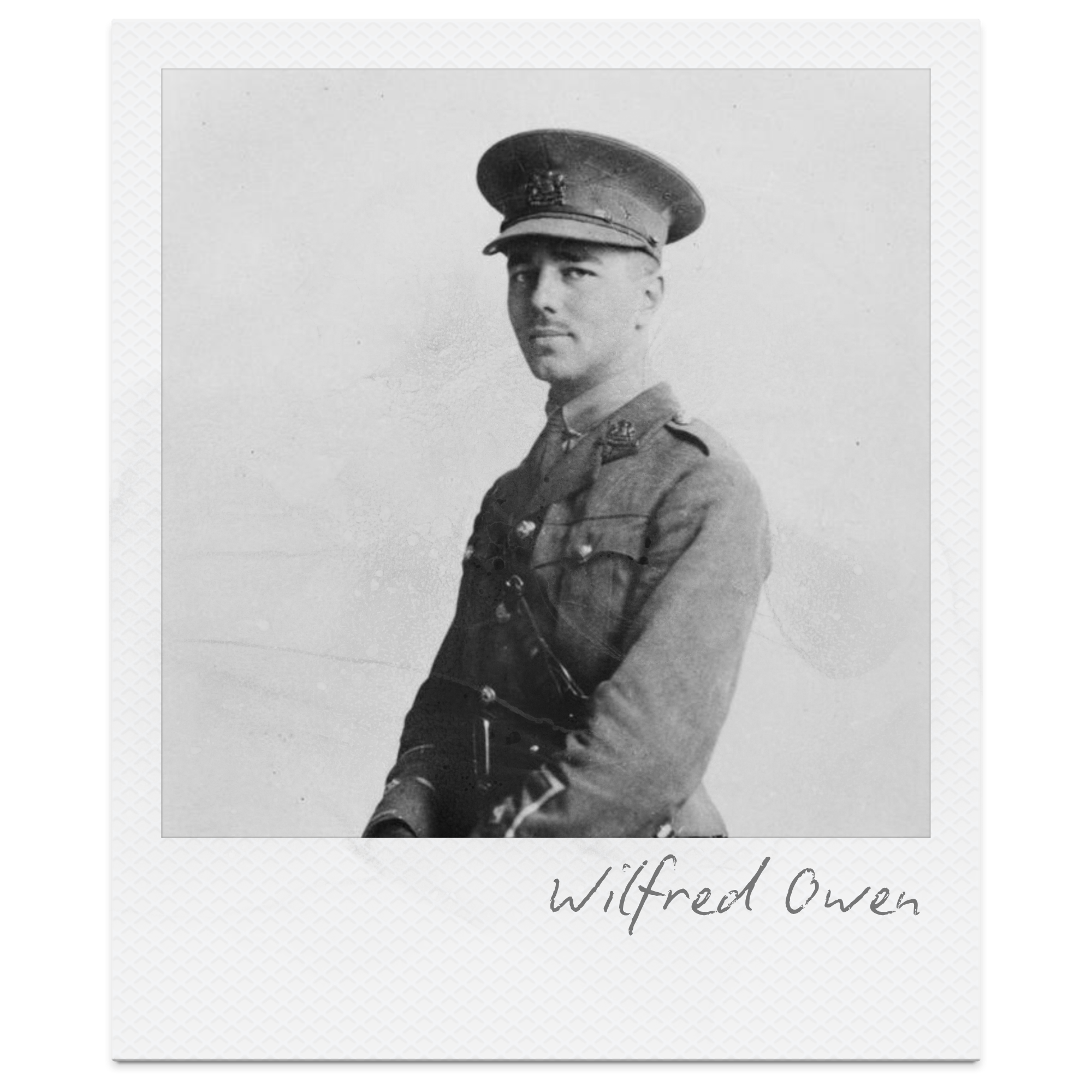
Wilfred Owen wrote The Send-Off in 1918, after returning to military service following his treatment for shell shock at Craiglockhart War Hospital. The poem is thought to have been influenced by Owen’s experience of watching soldiers leave Ripon in Yorkshire, where he had been stationed before returning to the Western Front. Unlike the large public recruitment scenes and patriotic departures associated with the earlier years of the war, Owen presents the soldiers leaving through “close, darkening lanes” towards a railway siding, watched only by porters and a passing tramp. By this stage of the conflict, enormous casualties had transformed public understanding of what departure for the Front might mean, and Owen fills the scene with secrecy, uncertainty and barely concealed associations with death. For more on Owen’s experiences and changing relationship with the war, explore Wilfred Owen: Historical, Social & Literary Context Post.
The railway journey also carries particular significance within the First World War. Trains transported huge numbers of soldiers between camps, ports and the fighting fronts, making railway stations and sidings transitional spaces between civilian life and military service. Owen turns that movement into something almost funereal: the flowers attached to the soldiers resemble the wreaths placed upon dead men, while the train quietly carries them towards an unnamed destination. The poem never reveals exactly where the soldiers are sent or what happens to them, reflecting the distance between those fighting and the communities they left behind. Instead of ending with heroic return, Owen imagines that only “a few, a few, too few” may eventually come home, travelling quietly along “half-known roads”. The historical setting therefore intensifies one of the poem’s central tensions: the soldiers depart as part of a collective military movement, but each man faces an uncertain and potentially anonymous fate.
The Send-Off: Full Poem
Written in 1918, The Send-Off is in the public domain in the UK. Across five short stanzas, Owen follows a group of soldiers from their subdued departure by train towards the possibility of death at the Front and an uncertain return home. The poem’s arrangement on the page is preserved below.
Down the close, darkening lanes they sang their way
To the siding-shed,
And lined the train with faces grimly gay.
Their breasts were stuck all white with wreath and spray
As men's are, dead.
Dull porters watched them, and a casual tramp
Stood staring hard,
Sorry to miss them from the upland camp.
Then, unmoved, signals nodded, and a lamp
Winked to the guard.
So secretly, like wrongs hushed-up, they went.
They were not ours:
We never heard to which front these were sent.
Nor there if they yet mock what women meant
Who gave them flowers.
Shall they return to beatings of great bells
In wild trainloads?
A few, a few, too few for drums and yells,
May creep back, silent, to still village wells
Up half-known roads.
The Send-Off — Wilfred Owen (1918)
The Send-Off: At a Glance
Poet: Wilfred Owen
Written: 1918
Published: 1919, posthumously
Form: Five irregular stanzas arranged around a recurring three-line and two-line pattern, with tightly controlled rhyme
Speaker: An unnamed observer reflecting on a group of soldiers being quietly transported towards the Front
Setting: A railway siding and the surrounding countryside, before the poem imagines the soldiers’ possible return to their villages
Mood: Ominous, subdued, uneasy and increasingly mournful
Central tension: The soldiers appear to be participating in a conventional military departure, yet almost every detail anticipates death, disappearance or a painfully diminished return
Core themes: Death, sacrifice, uncertainty, isolation, remembrance, loss, separation, the home front and the human cost of war
Key symbols: The train, flowers and wreaths, darkening lanes, signals, the lamp, bells, village wells and half-known roads
One-sentence meaning: Owen transforms a military departure into an almost funeral-like procession, suggesting that soldiers sent anonymously towards the Front may disappear from their communities and that those few who return will do so profoundly changed.
Quick Summary of The Send-Off
The Send-Off follows a group of soldiers as they quietly leave a military camp and board a train bound for an unspecified front. Although the men sing and wear flowers given to them by women, the departure feels more like a funeral than a celebration. Their expressions are “grimly gay”, the flowers resemble the wreaths placed on dead bodies, and the railway workers watch without emotion as the train carries the soldiers away. The speaker emphasises how secretive and anonymous their departure becomes, admitting that those left behind never even learn where the men have been sent.
In the final stanza, Owen turns from departure towards the possibility of return. The speaker initially imagines soldiers coming home to bells, drums and public celebration, but immediately undermines this image with the repetition of “A few, a few, too few”. Rather than returning triumphantly in crowded trains, the survivors may “creep back, silent” along familiar but now “half-known roads”. The poem therefore traces a disturbing movement from departure to disappearance and possible return, suggesting that war not only kills soldiers but can leave survivors estranged from the communities and lives they once knew.
Title, Form, Structure and Metre in The Send-Off
Owen gives The Send-Off a deceptively controlled structure. Regular rhyme and recurring stanza patterns suggest organisation and inevitability, while variations in line length create a more hesitant, unsettled movement. This tension suits a poem about soldiers being efficiently transported by the military while their individual futures remain completely uncertain. The poem repeatedly combines apparent order with disturbing images of death, secrecy and disappearance.
Title
The title The Send-Off initially sounds relatively ordinary. A “send-off” can suggest farewell, celebration and good wishes, particularly when someone is beginning a journey. However, Owen gradually makes the phrase darker. The soldiers are not given a great public departure but are taken through “darkening lanes” to a railway siding and sent towards an unnamed front.
There is also something unsettlingly passive about the title. The men are being “sent” rather than choosing where they are going, placing emphasis on the forces moving them towards war. By the end of the poem, “send-off” has acquired an almost funereal meaning: the soldiers have effectively been accompanied towards the possibility of their own deaths.
Form and Structure
The poem contains five stanzas, but Owen divides them visually into alternating groups of longer and shorter lines. The opening two sections each contain five lines, while the central section becomes fragmented before the final five-line stanza restores the earlier pattern. This gives the poem a sense of controlled movement interrupted by uncertainty, mirroring the soldiers' journey away from the familiar world.
There is also a clear structural progression:
departure → observation → disappearance → uncertainty → imagined return
At first, the soldiers are physically visible: they sing, wear flowers and fill the train with their faces. Once the train leaves, however, they effectively vanish from the poem's immediate world. “We never heard to which front these were sent” creates a striking break between those who leave and those who remain.
The final stanza then looks towards the future through the question “Shall they return?”. Structurally, this prevents the poem from offering certainty or closure. Owen does not show the soldiers fighting or dying; instead, he leaves them suspended between departure and possible return. This makes absence itself one of the poem's most powerful effects.
Rhyme Scheme and Poetic Pattern
Owen uses an unusually tight rhyme scheme. The five-line stanzas generally follow:
ABAAB
For example:
way / shed / gay / spray / dead
The first, third and fourth lines rhyme, while the second and fifth create another rhyme. This pattern is repeated in the second and final stanzas, creating a noticeable sense of formal control and enclosure.
The central section modifies this pattern as the soldiers disappear from view. The rhymes nevertheless continue to connect the lines across the stanza divisions, meaning that formal order persists even when the men's destination becomes unknown. This can reflect the disturbing efficiency of the military system: trains, signals and orders continue to operate regardless of what happens to the individuals being transported.
Rhyme can also create uncomfortable connections between ideas. Most strikingly, “way” / “gay” / “spray” culminates in the contrasting rhyme of “shed” / “dead”, allowing the apparently cheerful departure to become shadowed almost immediately by death.
Metre and Rhythmic Movement
The metre of The Send-Off is deliberately variable rather than consistently regular. Owen alternates longer lines with much shorter ones, producing a rhythm that repeatedly expands and contracts. The longer lines often carry description or reflection, while short lines such as:
“To the siding-shed,”
and
“They were not ours:”
interrupt the movement sharply. These shortened lines can feel like pauses, jolts or moments of recognition, preventing the poem from developing the smooth forward momentum that might be expected from a song of departure.
There are nevertheless passages with a strong underlying iambic movement, particularly in the longer lines, but Owen frequently disrupts this with additional stresses and variations. The opening, for example, carries a measured forward movement:
Down the CLOSE | DARKening LANES | they SANG their WAY
Rather than forcing the line into perfectly regular feet, it is more useful to notice how its stresses fall heavily on “close”, “darkening”, “lanes”, “sang” and “way”. The soldiers are moving forwards, but the rhythm does not resemble a confident military march.
This becomes particularly important in the final stanza. The repetition “A few, a few, too few” slows the line and repeatedly stresses the soldiers' reduced numbers, while “May creep back, silent” feels markedly different from the singing departure of the opening. Across the poem, rhythm therefore helps trace the movement from collective departure and outward motion towards absence, silence and the uncertain return of survivors.
Speaker and Setting in The Send-Off
The speaker and setting of The Send-Off reinforce the poem’s sense of distance, secrecy and disappearance. Owen does not place the departure at a crowded station surrounded by cheering civilians. Instead, the soldiers move through darkening country lanes towards an isolated railway siding, observed by only a handful of detached figures. The speaker initially appears close enough to witness their departure, but once the train leaves, even he loses knowledge of what happens to them. This movement from observation to uncertainty reflects the wider separation between soldiers sent to the Front and the communities they leave behind.
Speaker
The poem is spoken by an unnamed observer rather than explicitly by Owen himself. At first, the speaker describes the soldiers from outside the group, noticing their singing, their “grimly gay” faces and the flowers attached to their uniforms. This observational position allows the speaker to recognise disturbing implications that the departing soldiers may not acknowledge: their flowers already resemble the wreaths placed upon dead men, making the send-off appear ominously similar to a funeral procession.
The speaker becomes more personally involved through the collective pronouns “ours” and “we”: “They were not ours: / We never heard to which front these were sent.” The precise identity of this “we” remains ambiguous, but it creates a community of people left behind who are separated from the soldiers once they depart. The statement “They were not ours” is particularly unsettling because it suggests how soldiers can become anonymous within the enormous scale of war, passing briefly through places before disappearing towards unknown destinations.
In the final stanza, observation gives way to speculation. The rhetorical question “Shall they return” reveals that the speaker cannot know what will happen to the men. The imagined triumphant return of “wild trainloads” is quickly reduced to “A few, a few, too few”, and the speaker ultimately pictures survivors creeping home silently. His voice therefore moves from detached observation towards increasingly sombre reflection, allowing the poem to question both how many soldiers will return and what kind of men they will be if they do.
Setting
The opening setting is deliberately removed from the conventional spectacle of a public military departure. The soldiers travel down “close, darkening lanes” towards a “siding-shed”, creating an enclosed, increasingly shadowed landscape. “Darkening” establishes an ominous atmosphere while also symbolically suggesting the men are moving away from ordinary life and towards danger, death and the unknown.
The railway siding itself becomes an important transitional space. The soldiers have left their “upland camp”, but they have not yet reached the battlefield. They exist temporarily between home and war, waiting to be transported somewhere the speaker will never know. The setting is also strangely indifferent to them. “Dull porters” watch, a “casual tramp” stares, the signals remain “unmoved”, and the lamp merely “winked to the guard”. Even the mechanisms controlling the train appear to continue routinely while the soldiers are carried towards potentially catastrophic consequences.
The Front is notably absent as a physical setting. Owen never shows the soldiers arriving there, fighting or dying. Instead, “which front” remains unknown, making the battlefield almost a blank space into which the men disappear. This absence intensifies the separation between the home front and the fighting front: once the train has gone, those left behind can only imagine what has happened.
The final lines return imaginatively to the English countryside through “still village wells” and “half-known roads”. Yet this is not simply a return to the familiar setting of the opening. The roads are now only “half-known”, suggesting that surviving soldiers may find their former homes strangely unfamiliar or may themselves have been changed by what they experienced. The poem therefore moves from darkening lanes to an unknown Front and finally towards altered village roads, using setting to trace a journey from familiarity through disappearance towards an uncertain homecoming.
Stanza-by-Stanza Analysis of The Send-Off
Across its five stanzas, The Send-Off traces the soldiers’ movement from visible departure towards disappearance and uncertain return. Owen begins with men singing as they approach the train, but immediately introduces images associated with funerals and death. The observers become increasingly detached, the soldiers vanish towards an unnamed Front, and the poem ends by imagining how few may eventually return. This progression allows Owen to transform what should be a celebratory military send-off into something secretive, funereal and deeply uncertain, while the contrast between the singing soldiers of the opening and the silent survivors of the ending reveals how profoundly war may alter those who come home.
Stanza 1: A Departure Already Shadowed by Death
The poem opens with the soldiers moving through “close, darkening lanes”, immediately giving their departure an enclosed and ominous atmosphere. Although “they sang their way”, the surrounding landscape complicates any impression of celebration. “Close” suggests confinement, while “darkening” can describe the approaching evening but also foreshadows the increasingly threatening future towards which the men are travelling. Their destination within the stanza is merely the functional and unceremonious “siding-shed”, far removed from the grandeur of a public military departure.
Owen intensifies this uneasy contrast through the oxymoronic description “faces grimly gay”. “Gay” suggests cheerfulness, perhaps reflecting the singing and outward appearance expected during a send-off, while “grimly” introduces fear, seriousness and foreboding. The soldiers therefore appear caught between public displays of optimism and the darker reality underlying their departure. Even before reaching the Front, celebration and death have become inseparable.
The flowers pinned to the soldiers make this connection explicit. Their breasts are “stuck all white with wreath and spray”, imagery that initially resembles the flowers traditionally presented to departing soldiers. However, Owen immediately transforms them into funeral decorations through the simile “As men's are, dead.” The inversion delays the word “dead” until the very end of the stanza, giving it particular emphasis and forcing the reader to reinterpret everything that precedes it. The soldiers are still alive, yet they have already been symbolically decorated like corpses.
This creates one of the poem’s most disturbing ideas: the send-off resembles a funeral taking place before the men have actually died. Singing, flowers and departure might conventionally suggest celebration, but Owen turns each of these details towards mortality. The stanza therefore establishes the pattern that will shape the rest of the poem, in which apparently ordinary or celebratory elements repeatedly acquire darker associations with death, disappearance and loss.
Stanza 2: Indifference as the Soldiers Leave
The second stanza shifts attention from the soldiers themselves to the people and objects watching their departure. The “Dull porters” merely “watched them”, while the “casual tramp” stands “staring hard”. Neither figure participates in the patriotic celebration that might traditionally accompany soldiers leaving for war. The adjective “dull” suggests emotional flatness or weary familiarity, while “casual” makes the tramp appear almost accidentally present. Owen creates a strangely muted scene in which men are being sent towards possible death with remarkably little ceremony.
The description of the tramp introduces a more complicated response. He is “Sorry to miss them from the upland camp”, suggesting some awareness that the soldiers’ presence will be lost. Yet “miss” is deliberately ambiguous: it can simply mean noticing their absence from the camp, but within a poem already filled with funeral imagery, it can also anticipate the more permanent absence created by death. The soldiers are beginning to disappear from the landscape even before their train has departed.
Owen then turns from human observers to the machinery of the railway: “unmoved, signals nodded, and a lamp / Winked to the guard.” The signals and lamp are personified through the verbs “nodded” and “Winked”, giving mechanical objects strangely human gestures. However, the signals are explicitly “unmoved”. The word can mean physically stationary, but it also suggests emotional indifference. The railway system acknowledges the soldiers’ departure without caring about its consequences.
This creates an unsettling reversal. The machinery appears human, while the human observers seem detached and passive. The porters watch, the tramp stares, the signals nod and the lamp winks, but nobody can interrupt the process carrying the soldiers towards war. The stanza therefore presents their departure as part of an impersonal system already in motion: once the signal has been given to the guard, the men will simply be transported onwards towards an unknown fate.
Stanza 3: Secrecy, Separation and Disappearance
The third stanza marks a significant shift from watching the soldiers depart to confronting how completely they disappear from the lives of those left behind. The adverb “secretly” transforms the military departure into something concealed rather than celebrated, while the simile “like wrongs hushed-up” gives that secrecy a disturbing moral dimension. A “wrong” is something shameful or unjust that people might deliberately conceal, so Owen makes the soldiers’ departure resemble an uncomfortable truth being quietly hidden from public view.
The phrase “hushed-up” is particularly striking after the singing of the opening stanza. Sound is gradually disappearing from the poem: the men initially “sang”, but their departure is now associated with silence and suppression. “Hushed-up” can therefore suggest more than physical quietness; it raises questions about what civilians know about the realities of war and how openly its consequences are acknowledged. Owen does not explicitly identify who is responsible for this concealment, leaving the comparison deliberately unsettling rather than turning it into a simple accusation.
The isolated statement “They were not ours:” intensifies the separation between the soldiers and the speaker’s community. The possessive pronoun “ours” suggests belonging, familiarity and connection, yet its negation emphasises that these men are strangers merely passing through. At the same time, the line can make their anonymity more disturbing: individual soldiers become part of a larger military movement, briefly visible at one station before being carried somewhere else.
The final line completes this disappearance: “We never heard to which front these were sent.” The collective “we” represents those remaining behind, while “never heard” establishes a permanent absence of knowledge. Even the soldiers’ destination is withheld. The passive construction “were sent” is also important because it emphasises what is being done to the men rather than any choice they make themselves. By the end of the stanza, the soldiers who were physically visible only moments earlier have effectively vanished, reinforcing the poem’s movement from departure into uncertainty, anonymity and silence.
Stanza 4: Flowers, Expectations and the Reality of War
The fourth stanza is the shortest in the poem, but it returns to one of its most important images: the flowers given to the departing soldiers. The opening word “Nor” directly continues the previous stanza, extending the speaker’s uncertainty. Those left behind do not know where the soldiers were sent, “Nor there if they yet mock what women meant” when they gave them flowers. The physical separation created by the train has therefore become a separation of knowledge: the speaker cannot know what the men now think about the gestures that accompanied their departure.
The verb “mock” is deliberately uncomfortable. The women presumably intended the flowers as expressions of admiration, affection, encouragement or patriotic support, but the soldiers’ experiences at the Front may have changed how those gestures appear to them. What once seemed celebratory could become painfully naïve when compared with the reality of warfare. Owen does not say that the soldiers definitely reject the women’s intentions; the conditional “if” preserves uncertainty, allowing the poem to question whether experiences at the Front might transform the meaning of the send-off itself.
The flowers also develop the funeral imagery established in the opening stanza. There, the soldiers were covered with “wreath and spray / As men’s are, dead”; here, Owen reminds us that those funeral-like decorations were originally given by women to living men. The same flowers can therefore represent affection and celebration while simultaneously anticipating mourning. Their meaning changes according to what happens to the soldiers after departure.
By separating “Who gave them flowers” onto its own short line, Owen gives the apparently simple gesture additional weight. The stanza exposes the gulf between those who send soldiers away and those who experience the war directly. The women’s intentions may be sincere, but intention cannot control what the flowers will eventually signify. In the context of the poem, a symbol of encouragement has already become a possible symbol of death, remembrance and the painful distance between the home front and the battlefield.
Stanza 5: An Uncertain and Silent Return
The final stanza turns from the soldiers’ departure towards the question that has remained unresolved throughout the poem: will they ever return? Owen opens with the rhetorical question “Shall they return to beatings of great bells / In wild trainloads?”, briefly imagining the conventional image of victorious soldiers arriving home to public celebration. The “great bells”, crowded trains, “drums” and “yells” create a noisy vision of collective triumph, sharply contrasting with the secrecy surrounding the soldiers when they were sent away.
Owen immediately dismantles this possibility through the repetition “A few, a few, too few”. Each repetition reduces the imagined “wild trainloads” until only a small number of survivors remain. The phrase is almost painfully simple, and the addition of “too few” transforms numerical reduction into human loss. The expected mass return cannot happen because so many of the men who departed will not survive. Structurally, this also reverses the opening: the soldiers originally filled the train with their faces, but the imagined returning train has been emptied by war.
The manner of the survivors’ return is equally significant. Instead of arriving to “drums and yells”, they “creep back, silent”. The verb “creep” suggests exhaustion, caution and diminished physical or emotional strength, while “silent” directly contrasts with the men who “sang their way” towards the train in the opening stanza. Owen therefore creates a powerful circular contrast between departure and return: those who leave singing may come back unable or unwilling to celebrate. Survival itself is presented without conventional military triumph.
The “still village wells” return the poem to the quiet rural landscape associated with home. “Still” contrasts with the movement and noise of trains, bells and drums, but it can also suggest a world that has remained physically unchanged while the soldiers themselves have been transformed. This idea becomes even more powerful in the final phrase, “Up half-known roads.” These should be familiar roads leading through familiar communities, yet they are now only “half-known”. The phrase can suggest the estrangement of returning soldiers who recognise their homes but no longer experience them in quite the same way.
The ending therefore refuses both heroic death and uncomplicated homecoming. Owen leaves the reader with a small number of silent survivors moving through a landscape that is simultaneously familiar and strange. The poem begins with soldiers disappearing down “darkening lanes” and ends with possible survivors travelling along “half-known roads”, creating a loose circular structure in which roads frame the experience of war. What has changed most profoundly is not necessarily the landscape, but the men who have travelled away from it and somehow returned.
Key Quotes and Methods in The Send-Off
Owen concentrates much of The Send-Off’s meaning into a relatively small number of striking phrases. Darkening landscapes, funeral flowers, indifferent railway machinery and uncertain questions about return gradually transform an apparently ordinary military departure into a meditation on death and disappearance. The quotations below are particularly useful because they reveal how Owen develops the poem’s central contrasts between celebration and mourning, movement and absence, noise and silence, and departure and return.
“close, darkening lanes”
◆ Technique: Symbolic setting, visual imagery and foreshadowing
◆ Meaning: The soldiers begin their journey through an increasingly enclosed and shadowed landscape.
◆ Purpose: Owen makes the journey ominous before the soldiers have even boarded the train, suggesting that they are moving towards danger and an unknowable future.
◆ Impact: The reader senses immediately that this will not be a straightforwardly celebratory departure.
“faces grimly gay”
◆ Technique: Oxymoron and juxtaposition
◆ Meaning: The soldiers appear cheerful, yet their happiness is qualified by the darker adjective “grimly”.
◆ Purpose: Owen exposes the contradiction between outward celebration and underlying fear or seriousness surrounding their departure.
◆ Impact: Their apparent happiness becomes uncomfortable, encouraging the reader to question whether the men truly feel as cheerful as they appear.
“wreath and spray / As men’s are, dead”
◆ Technique: Simile, funeral imagery and foreshadowing
◆ Meaning: The flowers decorating the living soldiers resemble those traditionally placed upon the dead.
◆ Purpose: Owen transforms the send-off into a symbolic funeral, suggesting that death already hangs over the men before they reach the Front.
◆ Impact: The delayed final word “dead” sharply changes the meaning of the flowers from celebration to anticipated mourning.
“unmoved, signals nodded”
◆ Technique: Personification and double meaning
◆ Meaning: The railway signals physically remain stationary while appearing to “nod” permission for the train to leave. “Unmoved” can also suggest emotional indifference.
◆ Purpose: Owen presents the machinery transporting the soldiers as efficient but completely unconcerned with their individual fate.
◆ Impact: The departure feels mechanical and inevitable, as though the men have entered a system that will continue regardless of what happens to them.
“a lamp / Winked to the guard”
◆ Technique: Personification and visual imagery
◆ Meaning: The railway lamp signals that the journey can continue, but Owen gives this routine action the strangely human gesture of a “wink”.
◆ Purpose: The almost casual gesture contrasts with the potentially fatal consequences of allowing the train to depart.
◆ Impact: The reader becomes aware of the disturbing gap between an ordinary railway procedure and the extraordinary danger awaiting the soldiers.
“So secretly, like wrongs hushed-up”
◆ Technique: Simile, adverb and language of concealment
◆ Meaning: The soldiers leave so quietly that their departure resembles something shameful being deliberately hidden.
◆ Purpose: Owen challenges expectations of the heroic public send-off and introduces the possibility that the realities and consequences of war are being concealed or left unspoken.
◆ Impact: The comparison creates moral unease, making the soldiers’ departure feel disturbing rather than glorious.
“They were not ours”
◆ Technique: Collective pronoun, negation and caesura
◆ Meaning: The soldiers do not belong to the speaker’s immediate community and are merely passing through on their journey.
◆ Purpose: Owen emphasises distance and anonymity, showing how individual groups of soldiers can briefly appear and then disappear within the enormous movement of wartime armies.
◆ Impact: The short statement feels detached and final, reinforcing the separation between the soldiers and those who watch them leave.
“We never heard to which front these were sent”
◆ Technique: Collective pronoun, passive construction and ambiguity
◆ Meaning: Those left behind never discover the soldiers’ destination or what ultimately happens to them.
◆ Purpose: The passive phrase “were sent” emphasises the soldiers as people being moved by forces beyond their control, while “never heard” makes their disappearance permanent.
◆ Impact: The men seem to vanish from both the landscape and the speaker’s knowledge, strengthening the poem’s atmosphere of uncertainty.
“if they yet mock what women meant”
◆ Technique: Ambiguity and ironic contrast
◆ Meaning: The speaker wonders whether experiences at the Front have caused the soldiers to view the women’s supportive gestures differently.
◆ Purpose: Owen introduces a potential divide between wartime expectations at home and the experiences of those actually fighting.
◆ Impact: The line complicates the apparently innocent act of giving flowers, suggesting that its meaning may change radically after exposure to war.
“Who gave them flowers”
◆ Technique: Symbolism and isolated short line
◆ Meaning: The flowers represent affection and encouragement, but the poem has already associated them with funeral wreaths.
◆ Purpose: Owen allows a single object to embody the tension between celebration, love, sacrifice, death and remembrance.
◆ Impact: The simplicity of the line makes the gesture poignant because the reader now understands the darker meaning the flowers may acquire.
“Shall they return”
◆ Technique: Rhetorical question
◆ Meaning: The speaker cannot know whether the departing soldiers will survive and return home.
◆ Purpose: Owen replaces certainty about heroic homecoming with an unresolved question about survival itself.
◆ Impact: The reader is forced to confront the possibility that many of the men seen at the beginning will never appear again.
“A few, a few, too few”
◆ Technique: Repetition, incremental repetition and internal rhythm
◆ Meaning: The imagined mass return of soldiers rapidly contracts into a much smaller number of survivors.
◆ Purpose: Owen reduces the abstract scale of wartime casualties to the devastating idea that only a fraction of those who leave may return.
◆ Impact: The repeated “few” slows the line and makes the reduction in numbers feel increasingly painful and unavoidable.
“creep back, silent”
◆ Technique: Verb choice, auditory imagery and contrast
◆ Meaning: The surviving soldiers may return quietly and without the triumph expected of victorious troops.
◆ Purpose: Owen directly reverses the opening image of soldiers who “sang their way” towards the train. War has potentially transformed noisy, collective departure into subdued individual return.
◆ Impact: The contrast challenges romantic ideas of military homecoming and suggests exhaustion, trauma, alienation or grief.
“still village wells”
◆ Technique: Rural imagery, symbolism and contrast
◆ Meaning: The villages awaiting the soldiers appear quiet and physically unchanged.
◆ Purpose: Owen contrasts the apparent permanence of home with the profound changes experienced by the men who have left it.
◆ Impact: The peaceful setting becomes melancholy rather than comforting because the reader recognises how few soldiers may return to it.
“half-known roads”
◆ Technique: Paradoxical imagery and symbolism
◆ Meaning: Roads that should be familiar to returning soldiers have somehow become only partly recognisable.
◆ Purpose: Owen suggests that returning from war does not necessarily mean recovering the life that existed before it; home itself may feel unfamiliar to those transformed by their experiences.
◆ Impact: The poem ends without complete resolution, leaving the surviving soldiers caught between familiarity and estrangement and turning the journey home into another uncertain passage.
Poetic Techniques and Literary Devices in The Send-Off
Owen uses a relatively restrained range of techniques in The Send-Off, allowing contrast, symbolism, sound and carefully chosen images to create the poem’s unease. Rather than describing the battlefield directly, he makes an ordinary railway departure increasingly disturbing. Celebratory images acquire associations with death, apparently human gestures are transferred to machinery, and the noisy departure of the soldiers is eventually replaced by an imagined silent return. These techniques allow Owen to suggest the consequences of war without ever showing the fighting itself.
Tone
The tone is ominous, subdued and increasingly mournful. Even apparent moments of celebration are disturbed by darker language: the soldiers are “grimly gay”, their flowers resemble funeral wreaths, and their departure occurs “secretly”. By the final stanza, the possibility of triumphant return has almost disappeared.
The changing tone reflects the poem’s movement from uneasy departure to absence and anticipated loss. Owen avoids dramatic outrage; instead, the restraint of the voice makes the soldiers’ disappearance particularly unsettling.
Oxymoron
The description “grimly gay” combines apparently contradictory emotions. “Gay” suggests cheerfulness and celebration, while “grimly” introduces seriousness, danger and death.
The oxymoron captures the uncomfortable atmosphere surrounding the send-off: the soldiers may participate in the expected rituals of cheerful departure, but the possibility of death already exists beneath that performance.
Simile
Owen uses two particularly important similes. The flowers are described as:
“wreath and spray / As men’s are, dead.”
The comparison transforms decorations given to living soldiers into funeral flowers, foreshadowing their possible deaths.
Later, the men leave:
“like wrongs hushed-up”
Here, their secret departure is compared to something shameful being concealed. Together, the similes steadily undermine any interpretation of the send-off as heroic or celebratory.
Personification
The railway machinery is repeatedly given human actions:
“signals nodded”
and:
“a lamp / Winked to the guard.”
These gestures might ordinarily seem friendly or familiar, but their context makes them unsettling. The signals are explicitly “unmoved”, a word that can suggest both physical stillness and emotional indifference.
The personification creates a disturbing reversal: mechanical objects appear almost human while the system itself remains indifferent to human life.
Symbolism
Many ordinary objects acquire symbolic significance. The train becomes a vehicle carrying soldiers away from civilian life and towards an unknown fate; the flowers move between celebration and funeral mourning; and the final roads and village wells represent the home to which survivors may struggle to return.
These recurring symbols allow Owen to explore death and transformation without depicting combat directly. The poem’s most familiar objects become reminders that war alters the meaning of ordinary experiences.
Visual Imagery
Owen creates several memorable visual images, including the “darkening lanes”, the train lined with “faces”, white flowers against the soldiers’ uniforms and the quiet “village wells” of the final stanza.
The imagery moves from a visible group of departing soldiers towards increasingly empty landscapes. By the end, Owen asks the reader to imagine only “a few” survivors creeping through familiar countryside, visually reinforcing the enormous absence created by war.
Auditory Imagery
Sound plays an important structural role. The soldiers initially “sang their way”, while the imagined victorious return would involve “great bells”, “drums” and “yells”. Yet the actual return Owen imagines is characterised by the word “silent”.
This movement from sound towards silence reflects the transformation caused by war. The men leave together and singing, but those who survive may return quietly, individually and without celebration.
Repetition
The most striking repetition occurs in:
“A few, a few, too few”
Repeating “few” forces the reader to dwell on the diminishing number of soldiers who may return. The progression towards “too few” changes a description of quantity into an emotional judgement about loss.
The repetition also interrupts the imagined spectacle of “wild trainloads”, replacing the fantasy of mass homecoming with the reality of drastically reduced numbers.
Rhetorical Question
The final stanza begins:
“Shall they return”
The question cannot be confidently answered. Rather than promising that the soldiers will return victorious, Owen makes survival itself uncertain.
The rhetorical question also shifts the poem into the future. Because the soldiers have disappeared from the speaker’s knowledge, both speaker and reader can only imagine what might eventually happen to them.
Contrast and Juxtaposition
Contrast is one of the poem’s most important methods. Owen repeatedly places opposing ideas beside one another:
singing / silence
gay / grim
flowers / death
departure / return
wild trainloads / a few
drums and yells / silent survivors
These contrasts expose the distance between the expectations surrounding war and its possible consequences. What begins as a conventional send-off becomes increasingly indistinguishable from mourning.
Irony
There is a persistent irony in the soldiers being decorated and celebrated as they leave. The women give them flowers as a supportive gesture, but Owen has already made those flowers resemble funeral wreaths.
The title itself therefore becomes increasingly ironic. A “send-off” usually implies celebration and good wishes, yet this send-off may ultimately be a farewell to men who will never return.
Enjambment
Owen frequently allows sentences to continue across line breaks, as in:
“a casual tramp
Stood staring hard”
and:
“a lamp
Winked to the guard.”
The enjambment creates forward movement that can echo the soldiers’ continuing journey. However, this movement is repeatedly interrupted by shorter lines and punctuation, preventing the poem from developing a smooth or confident marching rhythm.
Caesura
Punctuation creates significant pauses throughout the poem, particularly in:
“They were not ours:”
and:
“A few, a few, too few”
These pauses slow the reader at moments concerned with separation and loss. “They were not ours:” feels especially abrupt, momentarily suspending the poem before the speaker admits that nobody knows where the soldiers were sent.
Short Lines
Owen repeatedly places short lines between much longer ones:
“To the siding-shed,”
“Stood staring hard,”
“They were not ours:”
These compressed lines interrupt the visual and rhythmic flow of the poem. They can create a sense of hesitation, interruption or emotional restraint, preventing the soldiers’ journey from becoming a smooth procession towards heroic adventure.
Foreshadowing
Death is anticipated long before the poem explicitly considers whether the soldiers will return. The “darkening” landscape, funeral “wreath and spray” and comparison with dead men all foreshadow the casualties implied by the final stanza.
This means the reader approaches “Shall they return” already expecting an unsettling answer. The poem effectively treats the soldiers as potential casualties from the moment they leave.
Ambiguity
Owen leaves several important questions unresolved. The reader never learns which Front the soldiers reach, what happens to them, whether they mock the flowers or precisely who returns. Even “half-known roads” can suggest several forms of estrangement rather than one fixed meaning.
This ambiguity is central to the poem’s effect. Like the people watching the train disappear, the reader is denied certainty. Owen therefore makes not knowing what happens to the soldiers part of the experience of the poem itself.
Symbolism in The Send-Off
Symbolism allows Owen to transform an ordinary railway departure into something far more disturbing. Flowers become funeral decorations, the train carries the soldiers towards an unknowable future, darkness surrounds their departure, and familiar roads become strange when survivors return. Many of these symbols also change meaning as the poem progresses, reflecting the wider movement from apparent celebration towards death, absence, survival and alienation.
The Darkening Lanes
The “close, darkening lanes” symbolise the soldiers’ movement away from safety and familiarity towards an increasingly uncertain future. Literally, the light may simply be fading as evening approaches, but “darkening” also carries associations with danger, death and the unknown.
The fact that the lanes are “close” adds to this effect. Rather than entering an expansive landscape of adventure, the soldiers appear enclosed and channelled towards the railway. Their physical journey therefore becomes symbolic of a much larger movement from ordinary life towards the darkness of war.
The Train
The train is one of the poem’s central symbols. It physically transports the soldiers from military camp towards the Front, but it also represents the larger machinery of war carrying individuals towards destinations they cannot fully control.
Significantly, the train is filled with individual “faces” at the beginning, yet once it departs the soldiers effectively disappear. The speaker never learns “to which front these were sent”. The train therefore becomes a boundary between visibility and absence, home and battlefield, known and unknown.
Its meaning changes again in the final stanza. The speaker imagines soldiers returning in “wild trainloads”, only to replace that possibility with “A few, a few, too few”. The vehicle that carried a visible group away may never bring that same group home.
The Flowers, Wreath and Spray
Flowers initially appear to be symbols of affection, admiration and encouragement. They have been given to the departing soldiers by women and belong to the traditional rituals surrounding a military send-off.
Owen immediately gives them a second meaning, however, describing them as “wreath and spray / As men’s are, dead.” Flowers presented to living soldiers become indistinguishable from flowers used at funerals. They therefore symbolise both celebration and anticipated mourning.
When the flowers reappear later, their meaning has become even more complicated. The speaker wonders whether the soldiers now “mock what women meant / Who gave them flowers”. Experience at the Front may have altered how the original gesture appears. The flowers consequently become a powerful symbol of the distance between hopeful intentions at home and the realities encountered by soldiers at war.
The Railway Signals and Lamp
The signals and lamp symbolise the impersonal mechanisms that enable the soldiers’ journey towards war. Owen personifies them: the signals “nodded” and the lamp “Winked to the guard”. Yet the signals are also described as “unmoved”.
This creates an unsettling contradiction. The machinery appears to acknowledge the men while remaining completely indifferent to what may happen to them. Once the signal is given, the train continues onwards. The railway system can therefore symbolise a larger wartime system in which individuals are transported efficiently despite the potentially devastating human consequences.
Darkness and Secrecy
Darkness operates symbolically throughout the departure. The men travel through “darkening lanes” and leave “So secretly”, while their disappearance is compared to “wrongs hushed-up”.
Together, these images associate the journey with concealment and uncertainty. The soldiers are not simply travelling somewhere geographically distant; they are entering a world inaccessible to those left behind. Even their destination becomes unknown.
The secrecy surrounding the departure can therefore symbolise the broader separation between the home front and the realities experienced by soldiers, particularly when the poem later questions whether the men still understand the gestures of those who sent them away in the same way.
Bells, Drums and Yells
The “great bells”, “drums” and “yells” symbolise the public rituals of military celebration and victorious homecoming. They belong to the imagined version of the soldiers’ return: a noisy communal welcome in which large numbers of men arrive home together.
Owen deliberately presents this as a question rather than a certainty. The imagined noise is immediately undermined by “A few, a few, too few”, before the survivors are pictured returning “silent”.
These sounds therefore become symbols of the heroic public narrative of return that reality may not fulfil. The louder the imagined celebration becomes, the more striking the silence of the actual survivors appears.
The Village Wells
The “still village wells” symbolise the ordinary communities and domestic lives the soldiers have left behind. Wells are fixed features of traditional village landscapes, creating a sense of continuity, familiarity and permanence.
Yet the returning soldiers may no longer experience this familiar world in the same way. The wells remain “still” while the men have travelled through war and returned changed. Owen therefore creates a contrast between a home that appears unchanged and survivors who may have been profoundly altered.
The Half-Known Roads
The final image of “half-known roads” is one of the poem’s most suggestive symbols. Roads normally represent movement and connection, while these particular roads should presumably be familiar to soldiers returning towards home. Yet they are only “half-known”.
The phrase can symbolise estrangement after war. The survivors may recognise their physical surroundings while feeling disconnected from the lives they once lived there. Alternatively, the roads may seem unfamiliar because so much time and experience now separates the returning men from the people they were when they departed.
The image also echoes the “darkening lanes” of the opening. Roads frame both departure and return, but their meaning has changed. The soldiers initially move together and singing; those who return may travel quietly through a landscape they no longer completely recognise.
Taken together, the poem’s symbols trace the soldiers’ entire imagined journey. Darkening lanes lead towards the train; flowers anticipate death; signals permit disappearance; bells imagine a triumphant return; and half-known roads reveal how incomplete that return may be. Owen therefore uses familiar objects and landscapes to show that war changes not only whether soldiers come home, but potentially their relationship with the home to which they return.
Meaning and Impact of The Send-Off
At its heart, The Send-Off explores what it means to watch soldiers leave for war without knowing what will happen to them. Owen never takes the reader onto the battlefield. Instead, he concentrates on the moments immediately before the soldiers disappear and imagines the possibility of their eventual return. This unusual perspective makes absence, uncertainty and separation central to the poem, while the transformation from singing departure to silent homecoming reveals how profoundly war may alter both the soldiers who survive and the communities waiting for them.
The Send-Off Becomes a Symbolic Funeral
One of the poem’s most important effects is the gradual transformation of a military departure into something resembling a funeral procession. The soldiers sing and carry flowers, but their “wreath and spray” are immediately compared with decorations placed upon dead men.
Owen therefore collapses the distinction between sending soldiers to war and mourning them afterwards. The men have not yet reached the Front, yet death already shapes the way their departure is presented. This creates a powerful sense of foreboding: the reader is encouraged to see possibilities within the scene that the departing soldiers themselves may not fully confront.
War Makes Individual Soldiers Disappear
The soldiers begin as visible individuals whose “faces” line the train, but after departure they become increasingly difficult to trace. The speaker admits:
“We never heard to which front these were sent.”
This disappearance is crucial to the poem’s meaning. Owen shows how individual human beings can become anonymous within the enormous organisation of wartime movement. The railway carries them away, their destination remains unknown, and the speaker cannot tell the reader what eventually happens to them.
Their absence becomes more powerful because Owen never supplies the missing information. The reader experiences something similar to those left behind: we watch the soldiers leave and then lose them.
The Poem Questions Conventional Images of Military Departure
A military send-off might traditionally involve celebration, encouragement, music and communal pride, and traces of these expectations remain throughout the poem. The soldiers sing, women give them flowers, and the speaker later imagines bells, drums and cheering crowds welcoming them home.
Yet Owen repeatedly undermines these images. The soldiers are “grimly gay”, their flowers resemble funeral wreaths, their departure occurs “secretly”, and the imagined mass homecoming is reduced to “A few, a few, too few”.
The poem therefore exposes the disturbing tension between the rituals surrounding war and the possible reality awaiting those who participate in it.
The Home Front and Fighting Front Become Separated
The poem repeatedly emphasises the distance between those who leave and those who remain. Once the soldiers depart, the speaker does not know where they are sent or even whether they still understand the flowers they received in the way the women intended.
This creates a divide between experience and intention. The flowers may have represented affection, encouragement or admiration when they were given, but the soldiers’ experiences may transform their meaning. Owen does not attack the women who gave them; instead, he reveals how difficult it can be for people at home to understand what happens to soldiers once they enter the world of the Front.
Survival Is Not Presented as Simple Victory
The final stanza makes an important distinction between returning from war and returning unchanged. At first, the speaker imagines a conventional victorious homecoming involving “great bells”, “wild trainloads”, “drums and yells”. That possibility quickly collapses.
Instead:
“A few, a few, too few”
may:
“creep back, silent”
The verb “creep” and adjective “silent” remove almost every suggestion of triumph. Those who return may have survived physically, but Owen leaves open the possibility that their experiences have profoundly changed them.
Home May No Longer Feel Entirely Like Home
The final image of “half-known roads” extends the poem beyond physical survival. These roads should presumably be familiar to the returning soldiers, yet Owen describes them as only partly known.
The phrase suggests that war may create alienation between survivors and their former lives. The villages may remain physically unchanged, but the soldiers returning to them are not necessarily the same people who left. Homecoming therefore becomes another uncertain journey rather than a straightforward restoration of normal life.
This makes the poem particularly powerful because Owen recognises that the consequences of war do not necessarily end when a soldier leaves the battlefield.
The Impact of Sound and Silence
One of the poem’s most important patterns is its movement from sound towards silence. At the beginning, the soldiers “sang their way” towards the train. The imagined return contains even greater noise through “bells”, “drums” and “yells”.
But the survivors Owen ultimately imagines return “silent”.
This creates a striking reversal. The men who leave singing may return unable or unwilling to participate in the celebrations imagined for them. Silence can suggest exhaustion, grief, trauma, isolation or simply the inadequacy of conventional celebration after what they have experienced. Owen does not specify one explanation, allowing the silence to carry several possible meanings.
The Impact of the Circular Journey
The poem begins and ends with roads. At first, the soldiers move together through “close, darkening lanes” towards the train. At the end, a much smaller number may return along “half-known roads”.
This creates a loose circular structure, but the return does not restore the beginning. The men leave collectively but may return only as “a few”; they leave singing but return silently; they depart through recognisable countryside but may come home through roads that now seem only partly familiar.
The circularity therefore emphasises transformation rather than restoration. The geographical journey may eventually lead back towards home, but the psychological and emotional journey cannot simply be reversed.
The Overall Meaning of The Send-Off
Ultimately, The Send-Off presents departure for war as a movement into uncertainty from which many soldiers will never return and from which even survivors may not return unchanged. Owen avoids depicting battle itself, concentrating instead on the quieter human consequences surrounding it: the flowers given in farewell, the train disappearing from view, the absence of information and the question of who will eventually come home.
The poem’s impact comes largely from its restraint. There is no graphic battlefield violence and no dramatic declaration of its message. Instead, death is anticipated through funeral imagery, loss is represented through absence, and trauma is suggested through silence and estrangement. By ending with survivors creeping along “half-known roads”, Owen leaves the reader with a deeply unsettling idea: war does not simply divide the living from the dead. It may also create a distance between those who return and the lives they once recognised as their own.
Themes in The Send-Off
The Send-Off explores war primarily through departure, absence and imagined return rather than combat itself. Owen follows the soldiers only as far as the railway siding before allowing them to disappear towards an unnamed Front, meaning that the consequences of war must be understood through what is left behind: uncertainty, silence, empty spaces and the possibility that only a small number will return. Through funeral imagery, contrasts between celebration and mourning, and the movement from singing to silence, Owen develops themes of death, sacrifice, uncertainty, isolation, remembrance, loss, separation, the home front and the human cost of war.
Death
Death shadows the soldiers from the opening stanza, even though no death actually occurs within the poem. The flowers attached to their uniforms resemble the “wreath and spray” placed upon dead men, transforming their departure into a symbolic funeral before they have even reached the Front.
This anticipatory treatment of death is significant because Owen does not need to show the battlefield to establish its threat. The possibility of death accompanies the men onto the train and shapes the speaker’s later question about whether they will return. By the final stanza, “A few, a few, too few” implies the deaths of those who will be missing without ever describing those deaths directly.
Sacrifice
The soldiers are being sent away from familiar communities towards an uncertain destination, creating an implicit theme of sacrifice without certainty of recognition or return. They receive flowers and participate in the rituals of departure, but Owen avoids presenting their sacrifice through conventional language of glory or heroism.
The passive phrase “these were sent” is particularly important. It emphasises what is being done to the soldiers rather than presenting them as heroic individuals confidently choosing their fate. Their sacrifice becomes part of a much larger military process in which trains, signals and orders continue moving men towards the Front.
Uncertainty
Uncertainty dominates the poem. The speaker does not know where the soldiers are sent, what they experience there, how they interpret the flowers they were given or whether they will return. Owen repeatedly refuses to provide information that would normally complete the soldiers’ story.
The rhetorical question “Shall they return” brings this uncertainty into the final stanza. Even the imagined homecoming remains conditional: they “May creep back”. This lack of certainty places the reader in a position similar to those remaining at home, forced to live with questions that may never receive answers.
Isolation
The soldiers become increasingly isolated as the poem progresses. They initially appear as a collective group, singing together and filling the train with their faces, but the train gradually separates them from everyone watching.
The statement “They were not ours” emphasises this distance. The soldiers are strangers passing through a place that does not belong to them, while those observing their departure have only a temporary connection with them. Once the train leaves, even that connection disappears.
Isolation also shapes the imagined return. Rather than arriving together in “wild trainloads”, the survivors may “creep back, silent”, suggesting a much lonelier form of homecoming.
Remembrance
Remembrance in The Send-Off is complicated by the fact that the soldiers almost disappear from the speaker’s knowledge. The people watching them do not know which Front receives them and may never learn what becomes of individual men.
The flowers therefore acquire particular significance. Initially given as expressions of support or affection, their resemblance to funeral wreaths allows them to anticipate the acts of remembrance that may eventually follow death. The poem itself can consequently be read as a form of remembrance: Owen preserves a brief image of otherwise anonymous soldiers passing through a railway siding before disappearing into war.
Loss
Loss appears through absence rather than direct descriptions of bereavement. The soldiers leave the landscape, information about them disappears, and the final stanza measures loss through the devastating reduction from imagined “wild trainloads” to “A few, a few, too few”.
The repetition makes the missing soldiers almost more important than those who return. Owen never identifies who has died, but the reader is made intensely aware of the empty spaces their deaths would create.
Loss can also apply to survivors. Those who return may have lost more than fellow soldiers: the “half-known roads” suggest the possibility of losing a former sense of familiarity, belonging or connection with home.
Separation
Physical separation drives the entire poem. The train carries the soldiers away from the people watching them, creating a boundary between those who experience the Front and those who remain behind.
This physical distance becomes emotional and experiential distance in the lines:
“Nor there if they yet mock what women meant
Who gave them flowers.”
The women may have intended affection and encouragement, but the soldiers’ experiences could cause them to interpret those gestures differently. Owen therefore suggests that war separates people not simply through geography but through experiences that those at home may struggle fully to understand.
The Home Front
Although The Send-Off concerns soldiers going to war, much of the poem remains firmly connected to the world they leave behind. Porters, a tramp and women giving flowers represent civilians whose encounters with the soldiers occur before the fighting begins, while the final village landscape represents the communities awaiting their possible return.
Owen does not simply condemn those at home. Instead, he exposes the limitations of their perspective. The women can give flowers, observers can watch the train and communities can imagine celebratory returns, but they cannot follow the soldiers into the experiences awaiting them.
The poem therefore reveals a gap between the home front and the fighting front, particularly through the speaker’s repeated inability to know what happens after the train disappears.
The Human Cost of War
The broader human cost of war brings many of the poem’s themes together. Owen does not represent that cost through statistics or graphic battlefield violence. Instead, he focuses on ordinary human details: faces in a train, flowers pinned to uniforms, people watching from a platform and familiar roads leading towards home.
The phrase “A few, a few, too few” provides the clearest expression of this cost. A large group departs, but only a fraction may return. Yet Owen also suggests that counting survivors cannot reveal the full consequences of war. Those who live may return “silent” along “half-known roads”, indicating that survival can carry its own emotional and psychological costs.
Across these themes, The Send-Off presents war as a force that creates death and survival, but also uncertainty, distance, absence and profound changes in belonging. The soldiers disappear from view long before they reach the battlefield, allowing Owen to show that the human consequences of war extend far beyond the moment of combat: into the communities people leave behind, the individuals who wait without answers and the altered lives to which survivors may eventually return.
Alternative Interpretations of The Send-Off
Owen leaves many aspects of The Send-Off deliberately unresolved, making the poem particularly open to alternative readings. The soldiers’ destination is unknown, their feelings are never directly expressed, their fate remains uncertain and even the meaning of the final homecoming is ambiguous. Different interpretations can therefore focus on the poem as a criticism of wartime systems, an exploration of psychological transformation, a study of the distance between soldiers and civilians, or a broader meditation on departure, death and the impossibility of returning unchanged.
Historical Interpretation: The Poem Exposes the Impersonal Machinery of War
From a historical perspective, the railway can represent the large-scale organisation required to transport soldiers towards the fighting fronts. The men become one group among countless others being moved through camps, stations and railway networks, while “signals”, lamps and guards ensure that the system continues operating.
The passive statement that the soldiers “were sent” reinforces this interpretation. Owen gives little sense that they control either their destination or what happens next. The poem can therefore be read as exposing the contrast between the efficient organisation of modern warfare and the uncertain human consequences for the individuals being transported.
Psychological Interpretation: The Survivors Return as Different People
The final image of soldiers creeping home along “half-known roads” can be interpreted psychologically. The roads themselves may not have changed; instead, the soldiers’ experiences may have altered their relationship with what was once familiar.
Their possible return “silent” strengthens this reading. The men leave singing but may return unable or unwilling to participate in public celebration. Owen does not explicitly identify trauma as the explanation, so the image should remain open, but the contrast can suggest psychological estrangement, exhaustion or difficulty reconnecting with civilian life after warfare.
Social Interpretation: Soldiers and Civilians Occupy Different Worlds
The poem can also be read as exploring the growing distance between those who experience war directly and those who remain at home. The women give flowers with particular intentions, but the speaker wonders whether the soldiers now “mock what women meant”.
This does not necessarily make the women objects of Owen’s criticism. Instead, the flowers can demonstrate how the same gesture acquires different meanings according to experience. What represents affection, encouragement or patriotism at home may appear painfully inadequate after exposure to the Front. War consequently creates not only geographical separation but a gulf in understanding.
Political Interpretation: The Secret Departure Suggests Unease About Sending Men to War
The simile “like wrongs hushed-up” allows a more politically critical interpretation. If the soldiers’ departure resembles something shameful being concealed, Owen may be encouraging readers to question the systems and decisions responsible for sending them towards possible death.
However, the poem never identifies a particular government, commander or institution as the object of criticism. The comparison is therefore more suggestive than explicit. It creates moral discomfort around the act of sending men to war, leaving readers to consider why something supposedly honourable should resemble a “wrong” being hidden.
Formalist Interpretation: The Poem Is Structured Around Disappearance
A formalist reading can focus on how the poem makes absence part of its structure. The soldiers dominate the opening stanza visually, with their singing, faces and flowers. Once the train leaves, however, they disappear from direct observation.
The poem never follows them to the battlefield. Instead, a gap opens between departure and imagined return, filled only with uncertainty. Even the final stanza cannot confirm their fate. Structurally, Owen therefore makes the reader experience the same loss of knowledge as the speaker: we see the soldiers leave, but we cannot follow them.
Symbolic Interpretation: The Journey Functions as a Passage Towards Death
The soldiers’ railway journey can be interpreted more broadly as a symbolic passage from life towards death. They travel through “darkening lanes”, are decorated like corpses, enter the train and then disappear towards an unknown destination.
Under this reading, the railway siding becomes a threshold. The soldiers are temporarily suspended between the familiar world behind them and the unknowable world ahead. The send-off consequently resembles a funeral procession in which the living are symbolically treated as dead before their actual fate has been decided.
The final stanza complicates this interpretation because some may cross that boundary again. Yet even those who return do not simply recover their previous lives: they come back silently along “half-known roads”.
Humanist Interpretation: The Poem Restores Individual Humanity to Anonymous Soldiers
The soldiers are never named, and the speaker admits that “They were not ours”. They could therefore represent any of the enormous numbers of men transported towards the Front during the war.
Yet Owen repeatedly draws attention to small human details: their faces, singing, flowers and possible journey home. A humanist interpretation might therefore see the poem itself as resisting their anonymity. Although the military system sends them somewhere unknown, the poem pauses to notice them.
In this reading, The Send-Off becomes a quiet act of remembrance. Owen cannot tell us who these particular soldiers are or what happens to them, but by recording their departure he prevents them from disappearing completely into the anonymous scale of war.
Teaching Ideas for The Send-Off
The Send-Off works particularly well for activities that encourage students to investigate contrast, structural movement and the changing meaning of repeated images. Because Owen never takes the reader onto the battlefield, students can also explore how a poet can communicate the consequences of war through absence, implication and uncertainty rather than direct descriptions of combat. The activities below move from close textual analysis towards interpretation and comparison.
Track the Journey Through the Poem
Ask students to divide the poem into the different stages of the soldiers’ journey:
camp → darkening lanes → railway siding → unknown Front → possible return → village roads
For each stage, students can identify the dominant mood, an important quotation and what the reader knows about the soldiers at that point.
This helps reveal that the poem is structured around movement into uncertainty. The most important part of the soldiers’ journey — their experience of the Front — is completely absent from the poem.
Follow the Movement from Sound to Silence
Students can highlight every reference to sound in the poem, including:
“sang” → “hushed-up” → “bells” → “drums” → “yells” → “silent”
They can then arrange these into the order in which they appear and consider how the soundscape changes.
The key contrast is between soldiers who leave singing and may return silent. Students can explore what this transformation might suggest about death, survival and the effects of wartime experience without assuming that “silent” has only one possible interpretation.
Explore the Changing Meaning of the Flowers
Give students the three important stages of the flower image:
flowers given by women → “wreath and spray” → “As men’s are, dead”
Students can create a short interpretation for what the flowers represent at each point in the poem.
They should then return to:
“if they yet mock what women meant
Who gave them flowers.”
Ask them to consider why the same flowers might mean something different before and after experiencing the Front. This provides a useful route into discussing symbolism and the distance between soldiers and civilians.
Compare the Opening and Ending
Place these two images beside one another:
“Down the close, darkening lanes they sang their way”
and:
“May creep back, silent, to still village wells
Up half-known roads.”
Students can annotate the contrasts between “sang” and “silent”, collective movement and “a few”, “lanes” and “roads”, departure and return.
They can then explain how Owen creates a loose circular structure while ensuring that the ending does not simply restore the beginning. The landscape may be similar, but the returning soldiers may have been fundamentally changed.
Investigate the Missing Battlefield
Ask students to identify everything Owen actually tells the reader about fighting at the Front.
The answer is striking: almost nothing.
Students can then investigate how Owen nevertheless makes war feel threatening through funeral imagery, uncertainty, disappearance and the anticipated reduction in the number of soldiers returning.
This can lead to a useful analytical question: why might Owen choose not to show the battlefield at all?
Analyse the Railway as a System
Students can collect the references to the railway:
“siding-shed”, “train”, “porters”, “signals”, “lamp”, “guard” and later “trainloads”.
They can divide these into references to people, machinery and movement, before considering how much control the individual soldiers appear to possess.
Particular attention can be given to “unmoved, signals nodded” and “a lamp / Winked to the guard”. Students can explore why Owen gives human gestures to machinery while describing the signals as “unmoved”.
Build an Evidence Chain for Foreshadowing
Ask students to find the clues that suggest death before the final stanza raises the question of whether the soldiers will return.
They might trace:
“darkening” → “grimly gay” → “wreath and spray” → “dead” → “wrongs hushed-up” → “A few, a few, too few”
Students can then use the sequence to explain how Owen gradually develops foreboding rather than suddenly introducing death at the end.
Interpret “half-known roads”
Give students the final phrase “half-known roads” without supplying an interpretation. Ask them to generate several possible readings supported by the rest of the poem.
For example, the roads might suggest estrangement from home, psychological change, the passage of time, altered identity or the difficulty of returning to civilian life.
Students can then rank their interpretations according to the strength of the textual evidence, encouraging them to distinguish between a possible interpretation and a well-supported interpretation.
Comparison Activity: Two Different Forms of Mourning
Pair The Send-Off with Anthem for Doomed Youth.
Students can compare how both poems use flowers, sound, silence, death and people remaining at home, while recognising their different perspectives. Anthem for Doomed Youth imagines the funeral rituals denied to soldiers dying at the Front, whereas The Send-Off makes the departure itself resemble a funeral taking place before death.
Students can finish by identifying one important similarity in Owen’s methods and one significant difference in how each poem presents loss.
Discussion Questions
Why does Owen make the soldiers disappear from the poem before they ever reach the battlefield?
How does the contrast between “they sang their way” and “creep back, silent” shape our understanding of the soldiers’ journey?
Does the ending of The Send-Off focus more strongly on death or survival, and what evidence supports your interpretation?
Go Deeper into The Send-Off
The Send-Off works particularly well alongside poems exploring departure, death, remembrance, civilian expectations and the experiences of soldiers returning from war. Comparing it with poems written from different stages of the conflict also reveals how writers use very different perspectives to explore what it means to send men to fight and how those experiences are understood by people at home.
◆ Anthem for Doomed Youth — Wilfred Owen — Both poems transform familiar rituals into images of death and mourning. In The Send-Off, flowers given to living soldiers resemble funeral wreaths before they have even reached the Front; in Anthem for Doomed Youth, battlefield weapons replace the funeral ceremonies the dead should receive. Compare Owen’s use of sound, silence, funeral imagery and the relationship between soldiers and those remaining at home.
◆ The Soldier — Rupert Brooke — Both poems imagine soldiers leaving England and facing the possibility of death abroad, but their treatment of that possibility differs significantly. Brooke presents death through idealised images of England, belonging and spiritual continuity, while Owen surrounds departure with secrecy, uncertainty and anticipated loss. Compare how each poet presents home, sacrifice and the relationship between the soldier and England.
◆ Who’s for the Game? — Jessie Pope — Pope’s energetic recruitment rhetoric provides a striking contrast with Owen’s subdued departure scene. Her use of direct address, sporting imagery and social encouragement can be compared with Owen’s “grimly gay” soldiers, funeral flowers and secretive railway siding. Together, the poems invite discussion of the difference between encouraging men to go to war and imagining what actually happens when they leave.
◆ The Call — Jessie Pope — Both poems are concerned with the movement of men from civilian life towards military service, making them particularly useful for exploring recruitment, duty and social expectations. Pope addresses potential recruits directly, whereas Owen observes soldiers who have already answered that call and are now being physically transported towards the Front. Comparing them creates a natural progression from being asked to enlist to actually being sent away.
◆ For the Fallen — Laurence Binyon — Binyon and Owen both confront the possibility that many soldiers will not return, but they approach loss differently. For the Fallen develops a formal language of collective commemoration and continuing remembrance, whereas The Send-Off emphasises uncertainty, anonymity and the unsettling absence of men whose fate remains unknown. Compare their treatment of sacrifice, community, death and remembrance.
◆ War Girls — Jessie Pope — This comparison shifts attention towards the people and communities remaining at home. The Send-Off briefly introduces women through the flowers they give departing soldiers, while War Girls places women’s wartime experiences and changing roles at the centre of the poem. Reading them together can open discussion about gender, the home front and the different ways civilians participate in and experience wartime change.
Together, these poems allow The Send-Off to sit within a much wider conversation about recruitment, departure, sacrifice, civilian expectations, death, remembrance and return.
Final Thoughts
Wilfred Owen’s The Send-Off transforms an apparently ordinary departure for war into a quiet anticipation of death, disappearance and loss. The soldiers leave singing and decorated with flowers, yet almost every detail undermines the possibility of straightforward celebration: their faces are “grimly gay”, their flowers resemble funeral wreaths, the railway machinery remains “unmoved”, and the train carries them secretly towards an unnamed Front. By keeping the battlefield entirely outside the poem, Owen makes uncertainty and absence themselves part of the experience of war. The soldiers simply disappear from the knowledge of those who watched them leave.
The imagined return completes this transformation. The men who depart together singing may return only as “A few, a few, too few”, creeping silently through a landscape that has become strangely “half-known”. Owen therefore refuses to present survival as a simple restoration of the life that existed before war. Some soldiers will not return at all, while those who do may find themselves changed by experiences that separate them from the communities they once knew. Through its contrasts between flowers and funerals, singing and silence, departure and return, familiarity and estrangement, The Send-Off becomes a deeply understated exploration of the human consequences of sending people to war. Explore more of Owen’s poetry and other perspectives from the conflict in the WWI Poetry Hub, or continue exploring poetry and literary analysis throughout the Literature Library.
Choose Your Next Text