For the Fallen by Laurence Binyon: Summary, Themes & Analysis
Laurence Binyon’s For the Fallen is one of the most enduring poems of the First World War, transforming the deaths of soldiers into an act of collective mourning, remembrance and national commemoration. Written in 1914, while the scale and meaning of the conflict were still unfolding, the poem moves between the physical absence of the dead and the idea that they can be preserved within cultural memory, using personification, ceremonial language, natural imagery and recurring images of light and stars to give permanence to lives cut short. Its fourth stanza has become particularly significant through its use in remembrance ceremonies, but the complete poem offers a more complex meditation on youth, sacrifice, grief, separation and the relationship between the living and the dead. Explore the wider historical and literary setting of Binyon’s work in our Laurence Binyon: Historical, Social & Literary Context Guide, discover more writing from the conflict in the WWI Poetry Hub, or browse poetry and literary analysis throughout the Literature Library.

Context of For the Fallen
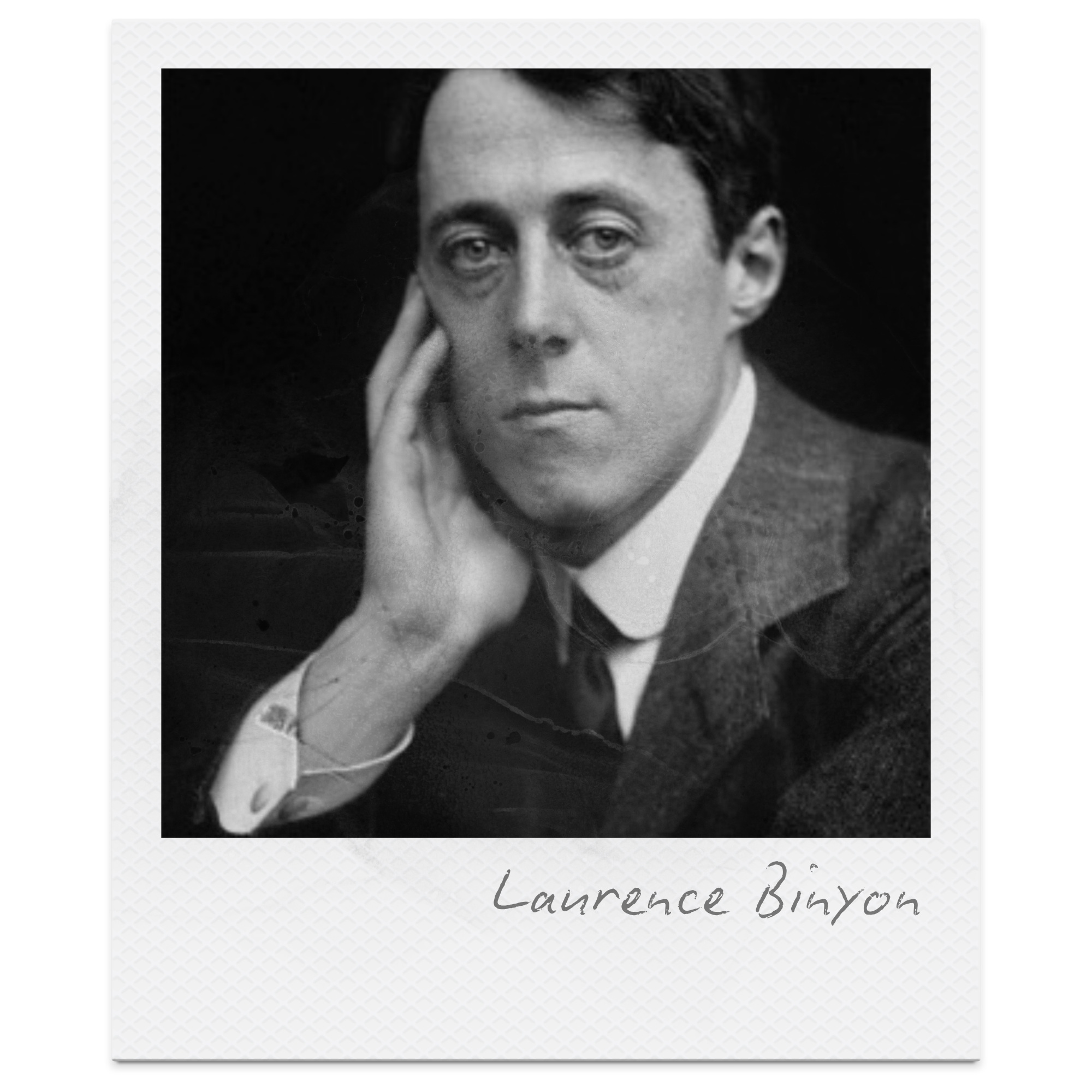
Laurence Binyon wrote For the Fallen in September 1914, during the opening weeks of the First World War, after British forces had already suffered significant losses in France and Belgium. The poem was published in The Times on 21 September 1914, when the conflict was still relatively new and before the prolonged trench warfare that would come to dominate many later literary representations of the war. Binyon was too old for military service when war began, and the poem therefore emerges from the perspective of a civilian attempting to respond to deaths occurring overseas rather than from direct experience of the battlefield.
That early date is important when interpreting the poem. For the Fallen does not contain the bitterness or graphic battlefield imagery associated with some later First World War poetry; instead, Binyon adopts a solemn, ceremonial language of sacrifice, grief and remembrance. England is imagined as a grieving mother, while the dead gradually move from physical soldiers who have been lost to almost timeless figures preserved within the nation's memory. The poem therefore records both the immediate grief of wartime loss and an attempt to give that loss enduring meaning. For a fuller exploration of Binyon's life, literary career and the historical world surrounding his writing, read our Laurence Binyon: Historical, Social & Literary Context Guide.
For the Fallen: Full Poem
For the Fallen was first published in 1914. Laurence Binyon's text is now in the public domain in the UK.
With proud thanksgiving, a mother for her children,
England mourns for her dead across the sea.
Flesh of her flesh they were, spirit of her spirit,
Fallen in the cause of the free.
Solemn the drums thrill; Death august and royal
Sings sorrow up into immortal spheres,
There is music in the midst of desolation
And a glory that shines upon our tears.
They went with songs to the battle, they were young,
Straight of limb, true of eye, steady and aglow.
They were staunch to the end against odds uncounted;
They fell with their faces to the foe.
They shall grow not old, as we that are left grow old:
Age shall not weary them, nor the years condemn.
At the going down of the sun and in the morning
We will remember them.
They mingle not with their laughing comrades again;
They sit no more at familiar tables of home;
They have no lot in our labour of the day-time;
They sleep beyond England's foam.
But where our desires are and our hopes profound,
Felt as a well-spring that is hidden from sight,
To the innermost heart of their own land they are known
As the stars are known to the Night;
As the stars that shall be bright when we are dust,
Moving in marches upon the heavenly plain;
As the stars that are starry in the time of our darkness,
To the end, to the end, they remain.
For the Fallen — Laurence Binyon (1914)
For the Fallen: At a Glance
Poet: Laurence Binyon
Written: September 1914
Published: 21 September 1914 in The Times
Form: Elegy; seven quatrains
Speaker: A collective, commemorative voice mourning the British war dead
Mood: Solemn, mournful, reverent and ultimately consoling
Central tension: The physical absence and mortality of the fallen soldiers contrasted with their enduring presence in collective memory
Core themes: Remembrance, death, sacrifice, grief, national identity, youth, memory and immortality
Key symbols: England as a mother, drums, music, light, sleep, the sun, stars and night
One-sentence meaning: Binyon acknowledges the devastating loss of young soldiers while presenting remembrance as a form of permanence, through which the fallen continue to occupy a lasting place within the lives and identity of those who survive them.
Quick Summary of For the Fallen
For the Fallen begins with England personified as a grieving mother, mourning the soldiers who have died fighting overseas. Binyon presents their deaths through elevated, ceremonial language, balancing sorrow with pride and honour. The soldiers are remembered as young, courageous and steadfast, while the sounds of drums and music transform private grief into a shared act of public mourning.
As the poem develops, attention shifts from the soldiers' deaths to the permanence of their absence: they will never grow old, return to their homes or participate in ordinary daily life. Yet Binyon ultimately moves towards consolation rather than despair. The fallen remain present within the emotional life and collective memory of their country, culminating in the image of stars continuing to shine through darkness. Although the soldiers themselves have died, remembrance allows their significance to endure beyond the lives of those who remember them.
Title, Form, Structure and Metre in For the Fallen
The formal qualities of For the Fallen contribute strongly to its measured, ceremonial character. Seven consistently shaped quatrains and a recurring rhyme pattern give Binyon's act of mourning a sense of order, while variations in line length and rhythm prevent the poem from becoming mechanically regular. This balance between formal control and rhythmic flexibility allows grief, pride and remembrance to coexist within the poem.
Title
The title For the Fallen immediately establishes the poem as an offering or tribute to the dead. The preposition "for" is significant: this is not simply a poem about fallen soldiers, but something presented on their behalf and in their memory. The title therefore anticipates the commemorative function that becomes increasingly important as the poem develops.
"Fallen" also carries more than its literal association with soldiers killed in battle. It avoids the direct bluntness of "dead", instead drawing upon the established language of military remembrance and sacrifice. Within the poem itself, however, Binyon repeatedly confronts the reality behind that euphemism: the soldiers cannot return to their friends, sit at their tables or participate in ordinary life. The title therefore introduces the tension between honouring the dead and acknowledging the permanence of their loss.
Form and Structure
For the Fallen is an elegy, a poem of mourning for the dead, and its movement broadly follows an elegiac progression from grief towards consolation. The opening presents England mourning her dead; the middle stanzas confront their youth, deaths and absence from everyday life; and the final movement searches for a form of permanence beyond physical survival. Binyon does not undo the loss. Instead, he gradually relocates the soldiers from the battlefield into memory, national consciousness and finally a vast celestial landscape.
The poem consists of seven quatrains, creating an immediately visible sense of consistency. Each stage of the meditation is contained within the same four-line structure, giving even intensely emotional material a controlled shape. That restraint contributes to the poem's public, commemorative quality: grief is expressed collectively and ceremonially rather than through an uncontrolled outpouring of private emotion.
There is also a significant movement in scale. Binyon begins with the national image of England as a mother, moves closer to the physical soldiers who were "young" and "Straight of limb", then turns towards the domestic spaces from which they are permanently absent. In the final two stanzas, the perspective expands dramatically towards "stars", "Night" and the "heavenly plain". The structure therefore carries the soldiers from historical death towards symbolic permanence, culminating in the assertion that "To the end, to the end, they remain."
The fourth stanza forms the emotional centre of this progression. Its movement from the soldiers who "shall grow not old" to the collective promise "We will remember them" turns mourning into an obligation undertaken by the living. The stanza can therefore function independently as an act of remembrance, but within the complete poem it also acts as a bridge: Binyon moves from describing the fallen towards considering how they will continue to exist within those left behind.
Rhyme Scheme and Poetic Pattern
Each quatrain broadly follows an ABCB rhyme scheme, in which the second and fourth lines rhyme while the first and third remain unrhymed. The opening stanza establishes the pattern clearly:
A – children
B – sea
C – spirit
B – free
The pattern continues across the poem, including royal / spheres / desolation / tears and again / home / day-time / foam. Because the rhyme is not established until the fourth line completes the relationship with the second, each stanza creates a subtle movement from openness towards resolution. The first and third lines are not required to find partners, while the final line provides the sound that completes the stanza.
This repeated ABCB structure gives the poem stability without making every line sound heavily rhymed. That distinction suits Binyon's subject: the poem has the formal control required for public commemoration while retaining enough flexibility for its language to sound reflective rather than sing-song. The repeated return of rhyme can also be read as a small form of restoration—each stanza encounters grief or absence but nevertheless arrives at a point of formal closure.
The effect becomes particularly powerful in the fourth stanza:
A – old
B – condemn
C – morning
B – them
The rhyme between "condemn" and "them" brings the stanza towards the collective declaration "We will remember them." Sound therefore reinforces the promise of remembrance: the final word is not left isolated but is drawn into the poem's established pattern.
Metre and Rhythmic Movement
Unlike its highly consistent stanza and rhyme structure, For the Fallen does not maintain a single strict metre throughout. Many lines contain strong recurring stresses and passages that approach iambic movement, but Binyon varies the number and arrangement of unstressed syllables. The result is a poem that feels measured without sounding mechanically metrical.
In the third stanza, for example, the line
They WENT | with SONGS | to the BATtle | they WERE | YOUNG
contains a strong sequence of beats that gives the sentence a forward-driving, almost processional movement. The stresses fall naturally on "went", "songs", "battle", "were" and "young", foregrounding action, courage and youth. Yet the extra unstressed syllables around "to the battle" interrupt any perfectly regular iambic pattern. The soldiers' movement can sound purposeful without becoming an artificially perfect military march.
Binyon creates a very different rhythm in:
THERE is | MUsic | in the MIDST | of desoLAtion
Here the stresses are separated by changing numbers of lighter syllables. Rather than fitting neatly into a sequence of identical feet, the line expands around the multisyllabic "desolation". The rhythm consequently feels slower and more spacious, appropriate to a moment in which sorrow is being transformed into something ceremonial and almost transcendent.
The most famous stanza demonstrates why rhythm matters more here than assigning a single metrical label:
They shall GROW not OLD, as WE that are LEFT grow OLD:
AGE shall not WEAry them, nor the YEARS conDEMN.
At the GOing DOWN of the SUN and in the MORNing
We will reMEMber THEM.
The recurring stresses on words associated with age, time, natural cycles and remembrance give the stanza its solemn spoken cadence. Most strikingly, the final line is dramatically shorter than those surrounding it. "We will remember them" strips away the longer rhythmic movement of the preceding lines and leaves a compact collective promise. Its simplicity makes it memorable and gives the stanza a powerful sense of conclusion.
Across the poem, then, Binyon combines formal regularity with metrical flexibility. The quatrains and ABCB rhyme scheme provide order and ceremony, while the changing rhythms allow individual lines to respond naturally to grief, pride, absence and remembrance. The poem sounds controlled, but it does not sound emotionally static—a balance that helps explain its suitability for spoken commemoration.
Speaker and Setting in For the Fallen
The speaker of For the Fallen is not presented as a named individual, but as a collective voice speaking on behalf of those who remain at home. This becomes clearest through the inclusive pronouns “we” and “our”, culminating in the declaration “We will remember them.” Rather than focusing on personal bereavement, Binyon creates a voice capable of expressing shared national grief, allowing the soldiers' deaths to be mourned collectively. The speaker's tone moves between sorrow, admiration and consolation: the fallen are remembered as young and courageous, but their absence is never entirely softened by the language of honour. The collective voice ultimately assumes responsibility for preserving them through memory.
The poem's setting is similarly broad rather than tied to one precisely described location. It begins with England looking outward towards soldiers who have died “across the sea”, establishing a physical separation between the dead and those mourning them at home. Binyon later evokes the ordinary domestic world the soldiers have lost—“familiar tables of home” and the “labour of the day-time”—before expanding the poem beyond any realistic geographical setting. In the final stanzas, the dead are associated with “stars”, “Night” and the “heavenly plain”, creating an increasingly celestial and symbolic landscape. This movement from England → overseas death → absent domestic life → the heavens enlarges the poem's perspective, transforming soldiers lost in a particular historical conflict into figures imagined as enduring beyond ordinary human time.
Stanza-by-Stanza Analysis of For the Fallen
Across its seven stanzas, For the Fallen develops from national mourning towards enduring remembrance, gradually changing both its focus and scale. Binyon begins with England grieving for soldiers killed overseas, before considering their courage, youth and permanent absence from ordinary life. As the poem progresses, its imagery becomes increasingly symbolic and transcendent, culminating in the stars as an image of memory surviving death and the passage of time. Close analysis reveals how Binyon uses shifts in imagery, tone, sound and perspective to transform immediate wartime loss into a broader meditation on grief, sacrifice, mortality and commemoration.
Stanza 1: England as a Grieving Mother
Binyon opens with an apparent contradiction: “proud thanksgiving” exists alongside mourning. The phrase immediately establishes the emotional complexity that shapes the poem. England is grateful for the soldiers' sacrifice and proud of their service, yet that pride cannot erase the reality of their deaths. By placing “proud” before “thanksgiving”, Binyon gives the opening a formal, ceremonial quality, suggesting that the response to the fallen should involve recognition as well as grief.
England is then personified as “a mother for her children”, transforming military casualties into a familial loss. The soldiers are not initially presented through ranks, regiments or statistics; they become the children of a grieving maternal nation. The metaphor intensifies through the parallel construction “Flesh of her flesh… spirit of her spirit”. “Flesh” emphasises the physical connection between England and its soldiers, while “spirit” extends that relationship into shared identity, values and belonging. The repetition of “her” strengthens the sense that the men have emerged from, and remain connected to, their homeland.
Yet Binyon also establishes physical separation. England mourns those who have died “across the sea”, placing the living at home and the dead somewhere beyond them. The sea therefore becomes more than geographical detail: it marks the distance between home and battlefield, mourner and fallen soldier, anticipating the later stanza in which the dead “sleep beyond England's foam”.
The final line, “Fallen in the cause of the free,” gives their deaths an explicitly idealised purpose. The euphemistic “Fallen” avoids the bluntness of killed, while “cause of the free” frames the soldiers' deaths as sacrifice in defence of freedom. The alliteration of “Fallen” and “free” binds death and its stated purpose together, helping Binyon transform individual loss into collective sacrifice. Given the poem's early date in 1914, this language also reflects a moment when Binyon's response to the conflict could still present military death through honour, duty and national purpose, even as the stanza acknowledges the profound grief such sacrifice creates.
Stanza 2: Finding Glory Within Grief
The second stanza transforms mourning into something ceremonial and almost transcendent. Binyon begins with the auditory image “Solemn the drums thrill”, evoking the drums of a military funeral or public commemoration. “Solemn” establishes dignity and seriousness, while the verb “thrill” is more complex: the drums do not simply sound but seem to vibrate through those who hear them. Their beat gives collective grief a physical presence, turning mourning into a shared public ritual.
Binyon then personifies Death as “august and royal”, elevating it from a frightening or destructive force into something dignified and majestic. The adjective “august” suggests reverence and grandeur, while “royal” gives Death an almost sovereign authority. This idealisation continues when Death “Sings sorrow up into immortal spheres”. The upward movement of “up” and the celestial implications of “immortal spheres” begin a pattern that becomes increasingly important later in the poem: although the soldiers have physically fallen, Binyon's imagery repeatedly imagines them being raised beyond ordinary mortality.
The juxtaposition in “music in the midst of desolation” captures one of the poem's central tensions. “Desolation” conveys devastation, loneliness and profound loss, yet Binyon insists that music can exist within it. The repeated m sounds in “music” and “midst” soften the line, while the musical imagery suggests that grief itself can be shaped into ceremony, poetry and remembrance. Significantly, Binyon does not claim that music removes desolation; it exists “in the midst” of it. Consolation and suffering are therefore allowed to coexist.
That same tension culminates in “a glory that shines upon our tears.” The visual metaphor of “glory” as light places brightness directly alongside the physical evidence of grief. The collective pronoun “our” also widens the mourning beyond individual families, reinforcing the speaker's role as the voice of a grieving community. Light does not dry or erase the tears; it “shines upon” them. Binyon's consolation therefore depends upon finding honour and meaning within grief rather than replacing it, while the imagery of immortality and light begins the poem's gradual movement towards the celestial symbolism of its final stanzas.
Stanza 3: Youth, Courage and Sacrifice
The third stanza shifts attention away from the collective mourning of England and towards the soldiers themselves, presenting an idealised portrait of their youth, vitality and courage. The opening, “They went with songs to the battle, they were young,” places the liveliness of “songs” beside the threat of “battle”. The simple declaration “they were young” is particularly poignant: after the elevated language of the previous stanza, Binyon briefly reduces the loss to its most human reality. These were young people moving towards deaths they could not yet foresee.
The description “Straight of limb, true of eye, steady and aglow” creates an almost sculptural image of the soldiers at their physical peak. The sequence of adjectives and parallel phrases gives the line a measured, accumulative rhythm, while “straight”, “true” and “steady” suggest qualities beyond physical appearance: strength, honesty, reliability and determination. “Aglow” introduces the imagery of light that runs throughout the poem, presenting the soldiers as vividly alive before the darkness of death. There is consequently a painful contrast between the vitality Binyon records and the fate the reader already knows awaits them.
Their courage is intensified through “staunch to the end against odds uncounted”. “Staunch” suggests steadfast loyalty and refusal to retreat, while “uncounted” makes the opposition seem almost immeasurable. Binyon does not describe the physical violence of battle; instead, he concentrates on the soldiers' response to danger. This contributes to the poem's commemorative purpose, constructing the fallen through courage and endurance rather than bodily suffering.
The final line brings the stanza abruptly to their deaths: “They fell with their faces to the foe.” “Fell” echoes the poem's title and continues its euphemistic treatment of death, while “faces to the foe” implies that the soldiers confronted the enemy directly rather than turning away. The alliteration of the repeated f sound binds “fell”, “faces” and “foe” together, making the line particularly memorable. Structurally, the stanza therefore moves from songs → youth → strength → death, compressing an entire trajectory from hopeful departure to sacrifice into four lines. That progression makes the soldiers' courage central, but it also heightens the tragedy: everything Binyon celebrates about their youth and vitality is precisely what has been lost.
Stanza 4: Remembrance Against the Passage of Time
The fourth stanza marks the poem's emotional centre, shifting from the circumstances of the soldiers' deaths towards the relationship between the fallen and those who survive them. Binyon opens with the paradox “They shall grow not old, as we that are left grow old”. Death has permanently separated the soldiers from the ordinary processes of ageing: while “we” continue to change, the dead remain fixed at the age at which they were lost. The contrast between “they” and “we” divides the fallen from the living, while the repetition of “grow old” makes the passage of time itself painfully visible. Immortality here is therefore bittersweet—the soldiers remain eternally young precisely because they have been denied the opportunity to grow older.
Binyon develops this idea through the personification of time in “Age shall not weary them, nor the years condemn.” “Age” and “the years” become forces capable of exhausting or diminishing human beings, yet the dead now exist beyond their reach. The parallel construction “shall not… nor…” gives the line a firm, declarative quality, transforming mortality into a strange form of permanence. At the same time, the verbs “weary” and “condemn” remind readers of experiences the soldiers will never have: their immunity to ageing is inseparable from the life they have lost.
The perspective then expands into the natural cycle of “the going down of the sun and in the morning”. Sunset and morning represent the repeated movement from darkness into light, but they also measure the passing days that the living continue to experience. Binyon's use of these universal natural images moves remembrance beyond a particular ceremony or moment. Morning and evening encompass the whole day, suggesting that memory should endure continually, while their endless recurrence implies that commemoration can continue across generations.
The stanza culminates in the short, direct declaration “We will remember them.” After the longer lines surrounding it, its simplicity gives it exceptional weight. The collective pronoun “we” transforms remembrance into a shared promise made by the living to the dead, while the future-tense “will” expresses determination rather than possibility. The poem can offer no physical return for the fallen, but it can resist another kind of disappearance: being forgotten. This line therefore crystallises one of Binyon's central ideas—human mortality cannot be defeated, but memory can challenge the erasure created by death.
Its later use as the central stanza of the Ode of Remembrance has given these lines a public life far beyond their original 1914 context. Yet within the complete poem, their position is equally significant: this promise of remembrance stands between Binyon's depiction of the soldiers' courageous deaths and the next stanza's stark recognition of everything they will never return to.
Stanza 5: The Empty Spaces Left Behind
After the elevated promise of remembrance in the previous stanza, Binyon returns to the ordinary human consequences of death. The repeated negatives—“not”, “no more”, “no lot”—create a cumulative sense of absence. Rather than describing what the soldiers now possess through honour or immortality, the stanza focuses on everything they have permanently lost. The repetition makes death tangible through missing friendships, empty places at home and exclusion from everyday life.
The opening line, “They mingle not with their laughing comrades again,” creates a particularly painful contrast between the dead and the living. “Laughing” evokes vitality, companionship and pleasure, while “again” emphasises finality: the fallen have been permanently separated from experiences that once formed part of their lives. “Comrades” is also significant because it can suggest both military companionship and broader friendship, reminding readers that some survived to return to lives their dead companions could no longer share.
Binyon moves still closer to domestic life with “They sit no more at familiar tables of home.” The “table” becomes an understated symbol of family, belonging and everyday routine. Rather than depicting death through wounds or battlefield violence, Binyon represents it through an empty place within a familiar setting. The adjective “familiar” intensifies the loss because these are not extraordinary experiences the soldiers have been denied, but the ordinary rituals of home that once seemed permanent.
The third line broadens the absence from family life to the wider community: “They have no lot in our labour of the day-time.” “Labour” suggests the work and responsibilities through which ordinary life continues, while the possessive pronoun “our” again separates the living from the dead. Those left behind continue to work, age and participate in daily existence; the fallen cannot. The stanza therefore develops the divide established earlier between “they” and “we”, showing that remembrance does not remove the fundamental separation created by death.
The final line, “They sleep beyond England's foam,” returns to the geographical distance established in the opening stanza, where England mourns her dead “across the sea”. “Sleep” is a traditional euphemism for death, softening its physical reality while also suggesting peace and rest. Meanwhile, the poetic image of “England's foam” evokes the sea surrounding the soldiers' homeland: they remain beyond its shores, unable to return.
Structurally, this stanza is therefore crucial because it prevents the poem's consolatory language from completely obscuring loss. Between the famous declaration “We will remember them” and the increasingly transcendent imagery of the final stanzas, Binyon pauses to acknowledge what remembrance cannot restore. The fallen may endure in collective memory, but their chairs remain empty, their work continues without them, and home remains beyond their reach.
Stanza 6: The Fallen Within the Heart of England
The sixth stanza marks another important transition. Having confronted the soldiers' physical absence from home, Binyon turns towards an internal and emotional form of presence. The opening conjunction “But” directly challenges the separation established in the previous stanza: the soldiers may no longer participate in ordinary life, but death has not entirely removed them from those who remain. Instead, they survive within “our desires” and “our hopes profound”, placing remembrance within the deepest aspirations and emotions of the living.
Binyon develops this idea through the simile “Felt as a well-spring that is hidden from sight”. A well-spring is a source of water rising naturally from beneath the earth, making it an effective symbol for something unseen yet continuously present and life-giving. The fallen cannot physically be seen, but their influence continues beneath the visible surface of everyday existence. The natural image also contrasts with the machinery and destruction associated with modern warfare: Binyon's dead become connected instead with continuity, renewal and an enduring source of feeling.
The phrase “the innermost heart of their own land” develops the personification of England established in the opening stanza. At first, England is the mother mourning children who have died “across the sea”; now those geographically distant soldiers are imagined within the nation's very “heart”. “Innermost” intensifies this movement inward, suggesting that remembrance has incorporated the fallen into the deepest part of national identity and collective memory. The possessive phrase “their own land” also restores a sense of belonging that their physical burial overseas might otherwise appear to have broken.
The final simile, “As the stars are known to the Night,” introduces the celestial symbolism that dominates the poem's conclusion. Stars and night depend upon contrast: it is against darkness that stars become most visible. Similarly, Binyon suggests that loss itself makes remembrance more intensely felt. The capitalised “Night” gives darkness an almost personified or cosmic presence, moving the poem beyond the immediate geography and history of the First World War towards a larger meditation on mortality.
There is also an important reversal taking place. Earlier, the soldiers were physically present but moving towards death; now they are physically absent yet emotionally and symbolically present. The stanza therefore prepares for the final movement of the poem, where the star imagery expands further and remembrance is imagined not simply as something preserved within one generation, but as something capable of enduring beyond it.
Stanza 7: Stars, Immortality and Enduring Memory
The final stanza extends the celestial imagery introduced at the end of the previous stanza, opening with the repeated phrase “As the stars”. This repetition creates continuity between the two quatrains and allows the stars to become the poem's final and most powerful symbol of the fallen. Stars are distant and physically unreachable, yet their light remains visible; similarly, the soldiers can no longer be reached by the living, but their presence continues through memory.
Binyon immediately places this endurance against human mortality: the stars “shall be bright when we are dust.” “Dust” is a stark image of physical death and decay, and the shift is significant because the speaker now acknowledges that the mourners themselves will eventually die. Earlier, the poem contrasted the permanently young soldiers with “we that are left” to grow old; now even those survivors are imagined disappearing. The future tense “shall be” nevertheless places the stars beyond that mortality, suggesting that remembrance can pass from one generation to another rather than depending solely upon those who personally knew the dead.
The stars are then described as “Moving in marches upon the heavenly plain”. “Marches” deliberately returns to military language, but the battlefield has been transformed into a celestial landscape. Instead of soldiers marching towards physical conflict, Binyon imagines them moving across a “heavenly” realm. The image therefore preserves their identity as soldiers while removing them from the violence that caused their deaths. “Plain” may also faintly recall the open landscapes of battle, but here that earthly space has been elevated into something timeless and peaceful.
Binyon intensifies the symbolism through “the stars that are starry in the time of our darkness.” The deliberate repetition of “stars” and “starry” gives the line an incantatory quality, while the contrast between brightness and “darkness” gathers together several meanings developed throughout the poem. Darkness can suggest war, grief, death and periods of collective suffering, while the stars become points of guidance, hope and memory within it. As in the second stanza's “glory that shines upon our tears”, Binyon does not eliminate darkness; instead, he imagines light existing within it.
The poem ends with the emphatic repetition “To the end, to the end, they remain.” Repeating “to the end” stretches the assertion beyond the immediate conflict and even beyond the lives of the original mourners. The final verb “remain” is particularly significant. The soldiers have been repeatedly defined by absence—they cannot grow old, return home, work or sit with their families—yet Binyon's final word insists upon presence rather than disappearance.
The ending therefore completes one of the poem's most important structural transformations. The soldiers begin as England's children who have “Fallen”, but finish as stars that “remain”. Binyon cannot reverse their deaths; instead, through poetry and collective remembrance, he imagines a form of permanence capable of surviving both individual mortality and historical time.
Key Quotes and Methods in For the Fallen
Several of the most important quotations in For the Fallen trace Binyon’s movement from national grief and youthful sacrifice towards absence, remembrance and symbolic immortality. The strongest quotations are useful not because they contain isolated techniques, but because individual words and images often connect several of the poem’s central ideas, revealing how Binyon balances the reality of death with his determination to preserve the fallen within collective memory.
“proud thanksgiving”
◆ Technique: Juxtaposition / paradoxical phrasing
◆ Meaning: Binyon places pride and gratitude alongside the grief caused by death, capturing the complicated emotions surrounding wartime sacrifice.
◆ Purpose: The phrase establishes from the opening line that mourning will not be presented as despair alone; the soldiers will also be honoured for what their deaths are understood to represent.
◆ Impact: The reader encounters pride and sorrow simultaneously, establishing the ceremonial and commemorative tone that continues throughout the poem.
“Flesh of her flesh they were, spirit of her spirit”
◆ Technique: Personification, repetition and parallelism
◆ Meaning: England is imagined as a mother whose soldiers are connected to her both physically through “flesh” and emotionally or spiritually through “spirit”.
◆ Purpose: Binyon transforms military casualties into children belonging intimately to their homeland, making national loss resemble familial bereavement.
◆ Impact: The parallel phrasing intensifies the bond between England and the fallen, making their deaths feel personal rather than statistical.
“Solemn the drums thrill; Death august and royal”
◆ Technique: Auditory imagery, personification and elevated diction
◆ Meaning: The sound of ceremonial drums accompanies a personified Death, which is presented as dignified and commanding rather than merely frightening.
◆ Purpose: Describing Death as “august and royal” elevates the soldiers’ deaths into a solemn public act of sacrifice and commemoration, while the drums evoke military ceremony.
◆ Impact: Binyon creates a stately atmosphere in which grief becomes ritualised, preparing for the stanza’s movement from earthly sorrow towards the “immortal spheres”.
“music in the midst of desolation”
◆ Technique: Juxtaposition, auditory imagery and alliteration
◆ Meaning: Beauty and ceremony continue to exist within devastation and grief.
◆ Purpose: By placing “music” inside rather than outside “desolation”, Binyon suggests that commemoration does not remove suffering but can create meaning within it.
◆ Impact: The contrast captures one of the poem’s central tensions: sorrow and consolation are able to coexist.
“they were young”
◆ Technique: Simple declarative statement
◆ Meaning: Beneath the poem’s ceremonial language lies the basic tragedy that those killed had their lives ended while still young.
◆ Purpose: The simplicity briefly strips away the elevated language of glory and sacrifice, drawing attention to what the soldiers personally lost.
◆ Impact: Its directness creates pathos and makes the following description of their strength and vitality more poignant.
“Straight of limb, true of eye, steady and aglow”
◆ Technique: Parallelism, cumulative description and light imagery
◆ Meaning: The soldiers are presented at the height of their youth and vitality, while “true” and “steady” also suggest moral qualities such as loyalty and courage.
◆ Purpose: The accumulation of positive descriptions creates an idealised portrait of the young soldiers before death, emphasising precisely what the war has destroyed.
◆ Impact: Their physical strength and brightness make their subsequent deaths more poignant: the reader is encouraged to remember them as vividly alive rather than defined solely by how they died.
“They fell with their faces to the foe”
◆ Technique: Euphemism and alliteration
◆ Meaning: “Fell” represents death indirectly, while “faces to the foe” presents the soldiers as confronting danger rather than retreating from it.
◆ Purpose: The repeated f sounds bind together “fell”, “faces” and “foe”, helping Binyon construct an image of courage maintained until death.
◆ Impact: The line memorialises the soldiers through bravery and determination rather than graphic descriptions of battlefield suffering.
“They shall grow not old, as we that are left grow old”
◆ Technique: Contrast, repetition and inclusive pronouns
◆ Meaning: The dead remain permanently young while the survivors continue through the ordinary processes of ageing.
◆ Purpose: The contrast between “they” and “we” exposes the divide death has created between the fallen and the living.
◆ Impact: The apparent consolation of eternal youth becomes deeply poignant because the soldiers remain young only because their futures have been taken from them.
“We will remember them”
◆ Technique: Collective pronoun, declarative sentence and future tense
◆ Meaning: The living make a direct commitment to preserve the memory of the dead.
◆ Purpose: “We” turns remembrance into a collective responsibility, while “will” gives the statement certainty and determination.
◆ Impact: Its brevity gives the line unusual weight and memorability, transforming private mourning into a shared promise that can be repeated by later generations.
“familiar tables of home”
◆ Technique: Domestic imagery and symbolism
◆ Meaning: The table represents the ordinary routines, relationships and security of home to which the soldiers can never return.
◆ Purpose: Binyon makes the consequences of death understandable through everyday absence rather than battlefield violence.
◆ Impact: The familiar domestic image encourages readers to imagine the empty spaces left within families and communities, making large-scale wartime loss intimate and recognisable.
“They sleep beyond England’s foam”
◆ Technique: Euphemism, metaphor and geographical imagery
◆ Meaning: “Sleep” gently represents death, while “England’s foam” evokes the sea separating the fallen soldiers from their homeland.
◆ Purpose: Binyon combines peace with separation: the soldiers are imagined at rest, but they remain physically beyond the country and homes to which they belonged.
◆ Impact: The line recalls the opening image of England mourning her dead “across the sea”, creating structural continuity and reinforcing the permanence of their absence.
“As the stars are known to the Night”
◆ Technique: Simile, celestial symbolism and contrast
◆ Meaning: The fallen are compared with stars whose presence becomes visible against darkness.
◆ Purpose: Binyon transforms physical absence into symbolic presence, suggesting that grief and darkness can make remembrance particularly powerful.
◆ Impact: The imagery expands the poem beyond its immediate historical setting, giving remembrance a timeless and almost cosmic quality.
“As the stars that shall be bright when we are dust”
◆ Technique: Simile, symbolism, contrast and future tense
◆ Meaning: The enduring stars are contrasted with the eventual physical decay of the living, represented starkly by “dust”.
◆ Purpose: Binyon extends mortality beyond the soldiers themselves: the mourners will also die, yet the memory represented by the stars is imagined as surviving them.
◆ Impact: The contrast between “bright” and “dust” enlarges the poem’s timescale, transforming remembrance from something practised by the soldiers’ contemporaries into something capable of continuing across generations.
“To the end, to the end, they remain”
◆ Technique: Repetition and emphatic final statement
◆ Meaning: Although the soldiers have physically died, their significance is imagined as surviving through memory.
◆ Purpose: Repeating “to the end” extends remembrance beyond the immediate war and beyond the generation that personally experienced it.
◆ Impact: The final verb “remain” provides a powerful counterpoint to the soldiers’ earlier absence. The poem begins by mourning those who have “Fallen” but ends by insisting that, through remembrance, they endure.
Poetic Techniques and Literary Devices in For the Fallen
Binyon uses a combination of personification, repetition, sound patterning, imagery, simile and structural techniques to give For the Fallen its distinctive ceremonial quality. Many of these methods work together: repeated sounds create solemnity, personification elevates the fallen, and recurring images of light and the natural world gradually transform physical death into enduring memory.
Personification
Personification is particularly important because Binyon repeatedly gives human qualities to abstract ideas, places and natural images.
In the opening stanza, England becomes a grieving mother, mourning soldiers who are described as “her children”. The relationship is strengthened by the parallel expression “Flesh of her flesh” and “spirit of her spirit”, which presents the soldiers as intimately connected to their homeland. Rather than allowing wartime deaths to become anonymous casualties, Binyon imagines the loss through the recognisable emotional relationship between a parent and her children.
Death itself is personified in the second stanza as “august and royal” and capable of singing “sorrow up into immortal spheres”. Instead of appearing monstrous or frightening, Death is given dignity and authority. This contributes to the poem's elevated commemorative tone, presenting the soldiers' deaths as worthy of solemn recognition.
Personification becomes more subtle towards the conclusion. The stars are imagined “Moving in marches upon the heavenly plain”, giving them the organised movement of soldiers. Binyon therefore carries military imagery beyond earthly death: the men who once marched into battle are symbolically transformed into stars continuing their march across the heavens.
Repetition
Repetition gives several of the poem's most memorable statements their force. Binyon repeatedly uses “they” when describing the soldiers, creating a collective identity that unites individual deaths within a larger act of remembrance.
The fourth stanza makes particularly effective use of repeated ideas surrounding ageing:
“They shall grow not old, as we that are left grow old”
The repetition of “grow old” intensifies the contrast between the fallen and the survivors. The same process that naturally awaits the living has become impossible for the dead.
The final line contains the poem's most emphatic repetition: “To the end, to the end, they remain.” Repeating the phrase slows the conclusion and extends its sense of duration. The poem therefore ends not on “death” or “fallen”, but on “remain”, reinforcing Binyon's central idea that remembrance allows the significance of the dead to endure.
Caesura
Binyon frequently uses punctuation to create pauses within lines, helping establish the poem's measured, ceremonial rhythm.
The opening phrase, “With proud thanksgiving, a mother for her children,” is broken by commas that slow the reader and allow the contradictory emotions of pride, gratitude and mourning to settle.
A stronger pause appears in “Solemn the drums thrill; Death august and royal”. The semicolon divides the sound of earthly military ceremony from the personified figure of Death, while still connecting the two images.
The comma in “They went with songs to the battle, they were young” is particularly poignant. The first clause describes action and movement towards battle; after the pause comes the stark reminder that “they were young”. The caesura therefore helps shift attention from soldiers as a military group towards the human lives placed at risk.
Alliteration
Binyon uses alliteration selectively to give particular phrases greater cohesion and emphasis.
One of the clearest examples appears in “They fell with their faces to the foe.” The repeated f sound links “fell”, “faces” and “foe”, drawing together death, courage and confrontation within a single memorable phrase.
A softer pattern occurs in “music in the midst”, where the repeated m sound contributes to the quieter, more reflective atmosphere of the line. This gentle sound contrasts with the “desolation” surrounding it, supporting the idea that beauty and commemoration can emerge within grief.
Alliteration therefore contributes both to the poem's musicality and its memorability, particularly in lines intended to elevate or commemorate the soldiers.
Consonance
Repeated consonant sounds also help give the poem its controlled, resonant quality. Unlike alliteration, these sounds do not necessarily occur at the beginnings of neighbouring words.
Binyon's repeated harder consonants in phrases associated with soldiers and military action can give the verse greater firmness, while softer sounds appear frequently in passages concerned with mourning and remembrance. This creates subtle shifts in the poem's soundscape as it moves between battle, grief and consolation.
Consonance is therefore most useful when considered alongside the poem's wider sound patterning rather than as an isolated technique: Binyon carefully shapes how individual lines feel when spoken aloud.
Assonance
Repeated vowel sounds contribute to the poem's solemn and often expansive rhythm. Long vowel sounds are particularly noticeable in some of the poem's most reflective passages, helping lines linger rather than rush towards their conclusions.
This becomes especially effective in the later celestial imagery, where the language becomes broader and more meditative. The sound of the verse complements the poem's movement away from immediate wartime death towards distance, memory and permanence.
As with consonance, the significance lies less in identifying individual repeated vowels than in recognising how Binyon's sound choices help create the poem's ceremonial, almost hymn-like quality.
Parataxis
Binyon sometimes places related clauses or descriptions alongside one another without heavily explaining the relationship between them. This is particularly effective in the compact description:
“Straight of limb, true of eye, steady and aglow.”
The sequence accumulates qualities rapidly, presenting physical strength, moral integrity and emotional vitality almost as a catalogue. Because the descriptions are placed alongside one another, the soldiers appear complete, vigorous and admirable immediately before the poem confronts their deaths.
A similar effect appears in the fourth stanza, where statements about ageing, time, natural cycles and remembrance follow one another with increasing certainty. This relatively direct syntax contributes to the sense that the speaker is making formal declarations rather than tentative reflections.
Enjambment
Although the poem contains frequent punctuation, Binyon also allows meaning to continue across line endings. Enjambment prevents the seven regular quatrains from becoming completely rigid and creates moments in which an idea expands beyond the visual boundary of a line.
This is particularly effective in the later stanzas, where ideas of memory and symbolic immortality become increasingly expansive. The movement of syntax across lines can reflect the poem's movement beyond physical boundaries, geographical distance and eventually human mortality itself.
Binyon's combination of enjambment with strongly punctuated lines is important: the poem feels formally controlled without becoming mechanically regular.
Simile
Simile becomes especially significant towards the end of the poem, when Binyon searches for a way to represent the continued presence of people who are physically absent.
The fallen are first compared indirectly to a hidden “well-spring”, something invisible beneath the surface but nevertheless present and sustaining. The image suggests that remembrance can continue beneath ordinary daily life even when its source cannot be seen.
The extended comparison with stars is even more important:
“As the stars are known to the Night”
Stars are distant and unreachable, yet visible within darkness. They therefore become an effective symbol for soldiers who can no longer physically return but whose presence can still be experienced through memory.
The comparison develops in the final stanza, where the stars remain bright “when we are dust”. The simile ultimately allows Binyon to imagine remembrance extending beyond the lifetime of those who originally mourned the soldiers.
Juxtaposition and Contrast
Contrast runs throughout For the Fallen and allows Binyon to hold apparently contradictory experiences together.
The poem begins with “proud thanksgiving”, immediately combining emotions that might initially appear incompatible. Later there is “music” within “desolation” and “glory” shining upon “tears”. Binyon repeatedly refuses to present grief and honour as opposites: mourning can coexist with pride, beauty with devastation and remembrance with absence.
The most important contrast develops between the dead and the living. “They” remain permanently young while “we” grow old; the living continue working while the fallen have “no lot in our labour”; eventually even the living become “dust” while the symbolic stars remain.
These contrasts create the poem's central tension between human mortality and the desire for remembrance to endure.
Euphemism
Binyon rarely describes death directly. Instead, he repeatedly uses softened or figurative expressions such as “fallen” and “sleep”.
The word “fallen” is particularly significant because it appears in the title and repeatedly connects death with established language of military sacrifice. It allows Binyon to acknowledge death without depicting its physical violence.
Similarly, “They sleep beyond England's foam” replaces the reality of dead soldiers buried overseas with an image of peaceful rest. The euphemistic language contributes to the poem's commemorative purpose, although it also distances the reader from the bodily realities of warfare.
Imagery
Binyon's imagery develops significantly across the poem. It begins with familial and national imagery, moves through military and domestic images, and ends in the natural and celestial world.
Images such as the grieving mother, drums, young bodies, familiar tables, daylight, sunset and stars create a gradual expansion in scale. The reader moves from England and its soldiers towards homes and ordinary routines before finally reaching night, stars and the “heavenly plain”.
This progression is important because it mirrors the poem's developing argument. The soldiers initially belong to a particular historical conflict and nation, but by the conclusion they have been transformed into symbols of enduring remembrance.
Light and Dark Imagery
Images of brightness and darkness recur throughout the poem and become increasingly significant.
The soldiers are initially described as “aglow”, associating youth with vitality and brightness. Later, “glory” itself “shines” through tears. Finally, the soldiers become associated with stars shining during “our darkness”.
Light therefore develops from a characteristic of the living soldiers into a symbol of their remembered presence after death. Darkness can suggest grief, war and mortality, but Binyon consistently places some form of brightness within it. Crucially, the light does not remove the darkness; instead, its significance depends upon the darkness surrounding it.
Allusion and Religious Language
Binyon's language occasionally carries biblical and religious echoes without turning the poem into an explicitly doctrinal statement.
“Flesh of her flesh” recalls biblical language describing profound human connection, strengthening the presentation of England and the soldiers as belonging to one another. Elsewhere, expressions such as “immortal spheres” and “heavenly plain” introduce spiritual and celestial associations.
These echoes allow Binyon to place the deaths within a larger framework of sacrifice, immortality and existence beyond physical life, while leaving the poem's central promise rooted primarily in remembrance rather than a detailed religious account of the afterlife.
Overall, Binyon's techniques work towards the same central transformation: the soldiers move from living young men, to the fallen, to absent members of homes and communities, and finally to enduring figures within collective memory. The poem's controlled form, ceremonial sound, recurring contrasts and increasingly celestial imagery allow Binyon to acknowledge death while searching for a language through which the dead might nevertheless “remain”.
<div id="symbolism"></div>Symbolism in For the Fallen
Symbolism becomes increasingly important as For the Fallen progresses. Binyon begins with recognisable images of family, military ceremony and home, before moving towards natural and celestial symbols that allow him to explore memory, mortality and permanence. These symbols help transform the fallen from soldiers who have physically disappeared into figures who continue to occupy a place within personal, national and collective memory.
England as a Mother
In the opening stanza, England is symbolised as a mother grieving for her children:
“a mother for her children”
The image turns the relationship between country and soldier into a familial bond. The men are not presented simply as members of an army but as children whose deaths create an intimate form of bereavement. The description “Flesh of her flesh” strengthens this connection, suggesting that the soldiers are almost physically part of the nation itself.
The maternal symbolism also makes their geographical separation more painful. England mourns children who have died “across the sea”, unable to bring them home. When the poem later describes them sleeping “beyond England's foam”, this separation remains unresolved. England can preserve them within memory, but the mother cannot physically recover her children.
Drums and Music
The drums of the second stanza symbolise military ceremony and public mourning:
“Solemn the drums thrill”
Drums traditionally accompany military movement and ceremonial occasions, so their presence connects the soldiers' deaths with both their military identity and their commemoration. Their sound helps transform individual grief into a shared public ritual.
Music develops this symbolism further through the statement that there is “music in the midst of desolation”. Music becomes a way of creating order, beauty and meaning within suffering. It does not undo the “desolation”; instead, it suggests that mourning itself can become an act through which the dead are honoured.
Light
Images of light recur throughout the poem and gradually become associated with life, honour and remembrance.
The soldiers are initially described as “aglow”, connecting brightness with their youth and vitality. In the second stanza, there is “a glory that shines upon our tears”, placing light directly alongside grief. By the final stanzas, this imagery has expanded into the light of stars shining within darkness.
The development is significant. The soldiers possess light while alive, but after death their symbolic light continues. Brightness therefore becomes one of Binyon's ways of imagining how the influence and memory of the fallen might survive their physical destruction.
The Sun and Morning
The natural cycle of the sun becomes a symbol of time, continuity and repeated remembrance:
“At the going down of the sun and in the morning”
Sunset and morning mark opposite ends of the daily cycle. By connecting remembrance with both, Binyon makes it part of the continuing rhythm of ordinary existence rather than something confined to a single memorial occasion.
There is also a painful contrast within the image. Days continue to begin and end for the living, while the fallen remain permanently outside that process of ageing and change. Nature continues its cycles even though individual human lives have ended.
The Familiar Table
The “familiar tables of home” symbolise domestic life, family and belonging.
A table is deliberately ordinary. It represents meals, conversations and repeated routines rather than heroic military experience. Its significance comes from the fact that the fallen will never sit there again.
The symbol therefore allows Binyon to represent the consequences of war through absence. The reader does not need to see the battlefield to understand what has been lost: an empty place at a familiar table can represent the permanent disruption created within countless homes.
Sleep
Binyon describes the fallen through the traditional symbolic association between sleep and death:
“They sleep beyond England's foam.”
Sleep softens the physical reality of death and introduces a sense of stillness and peace. Unlike ordinary sleep, however, this sleep has no earthly awakening. The preceding lines have already made clear that the soldiers cannot return to friends, family or work.
The symbolism therefore carries both consolation and finality. The soldiers can be imagined peacefully at rest, but their separation from ordinary life remains permanent.
The Well-Spring
The hidden “well-spring” is one of the poem's quieter but most significant symbols:
“Felt as a well-spring that is hidden from sight”
A spring exists beneath the visible surface of the landscape while continuing to supply water. Binyon uses this natural image to represent a similar form of invisible continuation: the fallen cannot be physically seen, yet their presence can still be felt within the emotional life of those who remember them.
Water also carries associations with life, renewal and continuity. The image therefore begins the poem's movement away from physical absence towards the possibility of a different kind of endurance.
Stars
The stars are the poem's most fully developed symbol of remembrance and permanence. Introduced at the end of the sixth stanza, they dominate the conclusion:
“As the stars are known to the Night”
Stars are physically distant and unreachable but remain visible. They therefore provide Binyon with an image for the fallen themselves: absent but not entirely lost.
Their apparent permanence becomes even more important when Binyon imagines them remaining bright “when we are dust”. The original mourners are themselves mortal, but the symbolic stars can outlast them. Remembrance is therefore imagined as capable of passing beyond direct personal memory and continuing across generations.
The stars also transform the soldiers' military identity. They are described as “Moving in marches upon the heavenly plain”, transferring the language of soldiers and battlefields into the night sky. Their earthly march has ended, but Binyon symbolically gives them another, timeless existence.
Night and Darkness
Night provides the necessary contrast for the symbolism of the stars:
“the stars that are starry in the time of our darkness”
Darkness can represent death, grief, war and periods of collective suffering. Yet Binyon does not present darkness as absolute because the stars remain visible within it.
This relationship is important to the poem's treatment of consolation. Binyon does not suggest that remembrance removes grief. Instead, like stars visible because the surrounding sky is dark, memory acquires particular significance because loss exists.
Dust
The image of “dust” provides a stark contrast with the brightness of the stars:
“the stars that shall be bright when we are dust”
Dust symbolises human mortality, bodily decay and the eventual disappearance of the living generation. This is an important development because death is no longer restricted to the soldiers. Those who remember them will eventually die too.
Placed beside the apparently enduring stars, “dust” establishes the final distinction between the temporary human body and the possibility of lasting cultural memory. People die; generations disappear; remembrance can nevertheless continue.
Taken together, the symbols create a clear movement across the poem. Binyon begins with England as a grieving mother, moves through the drums and domestic spaces of human life, and eventually reaches sun, water, stars, night and dust. The scale steadily expands from one nation's immediate bereavement towards universal experiences of mortality and memory. Through this progression, the fallen move from being physically absent soldiers to symbolic figures whose significance can “remain” long after both they and their original mourners have died.
<div id="meaning-impact"></div>Meaning and Impact of For the Fallen
At its heart, For the Fallen explores how the living respond to the deaths of people who cannot return. Binyon acknowledges the physical finality of death—the soldiers will never grow older, sit at their tables, work alongside their communities or return across the sea—but refuses to allow physical absence to become complete disappearance. Instead, the poem gradually develops the idea that remembrance can preserve a different kind of presence.
Mourning and Honour Exist Together
Binyon does not present grief and pride as opposites. From the opening phrase “proud thanksgiving”, the poem holds several emotions together: sorrow for lives lost, gratitude for sacrifice and admiration for those who died.
This complexity continues through images such as “music in the midst of desolation” and “glory that shines upon our tears”. Neither music nor glory removes the suffering represented by “desolation” and “tears”. Instead, Binyon suggests that honour can exist within grief without making the grief disappear.
This gives the poem its distinctive elegiac tone. It mourns death while simultaneously searching for a language through which the dead can be honoured.
Death Creates Permanent Absence
Despite its consolatory language, For the Fallen repeatedly acknowledges what death has taken away. The soldiers “shall grow not old”, but their preserved youth is not simply a comforting form of immortality. They remain young because they have been denied the opportunity to age.
This becomes even clearer in the fifth stanza. The fallen cannot laugh with their comrades, return to the “familiar tables of home” or participate in “our labour of the day-time”. Binyon makes loss visible through the ordinary experiences that will never happen again.
The poem's emotional impact therefore depends partly upon the contrast between extraordinary commemoration and ordinary absence. The soldiers may be honoured publicly, but their deaths also leave empty spaces within friendships, families and communities.
The Living Have a Responsibility to Remember
The central declaration “We will remember them” shifts some of the poem's attention from the dead towards the living. The soldiers themselves cannot control how they will be remembered; that responsibility belongs to those who survive them.
The collective pronoun “we” is therefore significant. Remembrance becomes something shared rather than private, while the future tense “will” turns it into a continuing commitment. Binyon's poem suggests that although the living cannot reverse death, they can resist the disappearance of the dead from collective memory.
This idea also helps explain why the fourth stanza occupies such an important position within the poem. It acts as a bridge between the soldiers' deaths and the later exploration of how their presence might endure.
Memory Offers a Form of Immortality
The final two stanzas develop the poem's central consolation: physical death does not have to mean complete erasure.
The fallen become like a hidden “well-spring”, invisible but still felt, before being compared with stars. These images allow Binyon to imagine presence without physical existence. The soldiers cannot be seen or reached, yet their significance can continue within the emotional and cultural lives of others.
Importantly, the poem eventually recognises that the original mourners are mortal too. The stars will remain bright “when we are dust”. Remembrance must therefore extend beyond individual memory if it is genuinely to endure.
The poem moves from people remembering soldiers they knew towards later generations remembering people they never met.
The Poem Transforms the Fallen
There is a clear transformation in the way the soldiers are represented across the seven stanzas. Initially, they are England's “children” who have died overseas. They are then remembered as young men who went into battle “steady and aglow”, before becoming absent figures who can no longer participate in ordinary life.
By the final stanzas, however, their representation has changed. They become associated with hidden springs, stars, light and the heavens. The movement from earthly to celestial imagery symbolically removes them from the limitations of individual human mortality.
The final word “remain” completes this transformation. The soldiers have physically disappeared, but the poem constructs a form of symbolic permanence for them.
The Poem Turns Private Grief into Collective Remembrance
Although Binyon writes about individual human deaths, his speaker repeatedly uses collective language such as “we” and “our”. England itself becomes a grieving mother, while the dead occupy the “innermost heart” of their homeland.
Grief therefore expands from something experienced by individual families into a shared cultural act of mourning. The poem creates a language through which a community can remember people lost on a scale that might otherwise become overwhelming or impersonal.
This helps explain the ceremonial quality of the verse. Its repeated patterns, formal quatrains, elevated diction and memorable declarations make the poem suitable not only for private reading but for communal recitation and remembrance.
The Impact of “We Will Remember Them”
The fourth stanza has developed a cultural life extending far beyond the original publication of the complete poem. Its lines about ageing and remembrance became part of the Ode of Remembrance and are now closely associated with commemorations of those killed in war.
This later use has inevitably shaped how For the Fallen is encountered. Many readers recognise “We will remember them” before reading the poem from which it comes. Within the complete work, however, the statement forms part of a much larger meditation on youth, absence, domestic loss, mortality and the question of what remains after those who personally remember the dead have themselves disappeared.
Reading the entire poem therefore gives the familiar declaration additional significance: remembrance is not presented as the denial of death, but as the response of the living to its permanence.
The Overall Meaning of For the Fallen
Ultimately, For the Fallen does not suggest that memory can undo what war has destroyed. The soldiers remain separated from their homes, their futures and the people who loved them. Instead, Binyon's consolation lies in the belief that a life can continue to possess meaning after it has ended.
The poem's movement from “Fallen” to “remain” captures that idea particularly clearly. Death determines what happens to the soldiers physically; remembrance determines whether their significance disappears with them.
For the Fallen therefore becomes both an elegy for a particular generation of soldiers and a broader meditation on what human beings do with grief: we mourn absence, preserve memory and attempt to carry the dead forward into a future they cannot enter themselves.
<div id="themes"></div>Themes in For the Fallen
The central themes of For the Fallen are closely connected. Death creates grief and absence; sacrifice gives those deaths a wider national meaning; remembrance preserves the fallen within collective memory; and memory ultimately becomes Binyon’s answer to mortality. Across the poem, these ideas develop alongside questions about youth, national identity and what it means for the dead to achieve a form of symbolic immortality.
Remembrance
Remembrance is the central theme of For the Fallen and becomes increasingly important as the poem progresses. Binyon does not simply mourn the soldiers who have died; he considers how the living can continue to acknowledge them once their physical presence has disappeared.
This idea reaches its clearest expression in:
“We will remember them.”
The collective pronoun “we” makes remembrance a shared responsibility, while “will” transforms it into a promise extending into the future. Remembering the fallen becomes an active choice made by the living rather than simply an emotional response to immediate loss.
The final stanzas extend remembrance beyond those who personally knew the soldiers. The stars remain bright even “when we are dust”, suggesting that commemoration can pass between generations. Remembrance therefore becomes Binyon’s means of resisting a second kind of disappearance: the possibility that the dead might eventually be forgotten.
Death
Death is present throughout the poem, but Binyon rarely depicts its physical violence. Instead, he approaches death through euphemism, personification and the consequences of absence.
The soldiers have “fallen”; Death itself becomes “august and royal”; and later the dead are said to “sleep beyond England’s foam”. This elevated language gives death dignity and contributes to the poem’s commemorative tone.
Yet Binyon also reveals death through what the soldiers can no longer do. They will not grow old, laugh with their comrades, sit at home or participate in daily work. Death is therefore not only an event on a battlefield but the permanent removal of someone from the future they would otherwise have experienced.
The poem ultimately accepts that death is universal. Even those who survive will eventually become “dust”. What distinguishes the fallen is not an escape from mortality, but the possibility that their memory might endure beyond physical death.
Sacrifice
The soldiers’ deaths are repeatedly presented within the language of sacrifice, duty and honour. In the opening stanza, they are described as:
“Fallen in the cause of the free.”
Their deaths are therefore connected with a purpose larger than themselves. The ceremonial drums, references to “glory” and descriptions of their courage further contribute to this presentation.
However, Binyon does not allow the idea of sacrifice to erase the cost involved. These soldiers “were young”, and the poem repeatedly reminds readers of the lives they can no longer experience. The language of honour exists alongside empty tables, lost companionship and permanent separation from home.
Sacrifice in the poem therefore contains both public meaning and private cost. The soldiers can be celebrated for what they gave, but what they gave was ultimately their entire future.
Grief
Grief appears from the opening image of England mourning “her dead across the sea” and continues throughout the poem. Importantly, Binyon rarely presents grief as an isolated personal emotion. It becomes collective and communal, expressed through “our tears”, “our desires”, “our hopes” and ultimately the promise that “we” will remember.
The poem repeatedly places grief beside apparently contrasting emotions. There is “proud thanksgiving”, “music in the midst of desolation” and “glory” shining upon “tears”. These combinations suggest that mourning can contain pride, gratitude and consolation without ceasing to be painful.
The domestic imagery of the fifth stanza makes this grief especially tangible. The fallen no longer occupy the “familiar tables of home”. Rather than describing mourning abstractly, Binyon shows how grief is created by recognising the ordinary spaces in which someone is now missing.
National Identity
England is central to the poem’s representation of the fallen. In the opening stanza, the nation is personified as a mother whose soldiers are her children:
“Flesh of her flesh they were, spirit of her spirit”
The image creates both physical and spiritual connections between individuals and their country. The soldiers are presented as belonging to England, while their deaths become a loss experienced by the nation collectively.
This relationship develops throughout the poem. Although the soldiers die beyond England’s shores, they eventually become known within “the innermost heart of their own land”. Physical distance is therefore countered by symbolic closeness.
Binyon’s presentation of national identity is closely connected with the poem’s historical moment. The soldiers are commemorated through ideas of belonging, shared sacrifice and national memory, with England becoming both the homeland they have lost and the community responsible for remembering them.
Youth
The theme of youth gives the poem much of its emotional force. Binyon interrupts the description of soldiers going into battle with the strikingly simple statement:
“they were young”
The directness of the phrase contrasts with the poem’s more elevated language. It reminds readers that behind ideas of military glory and national sacrifice were young people whose lives had barely developed.
Their youth is reinforced through the description “Straight of limb, true of eye, steady and aglow”. The soldiers are presented as physically strong, energetic and full of potential immediately before the poem acknowledges their deaths.
Youth later becomes permanently fixed through the famous declaration that “They shall grow not old”. This can initially sound consolatory, but it contains a painful paradox. The soldiers remain young because they have been denied the experience of ageing. Their eternal youth therefore symbolises both remembrance and the future that death has taken away.
Memory
Memory is closely related to remembrance, but the poem explores it as something deeper than the deliberate act of commemorating the dead. The fallen become embedded within the emotional consciousness of those who survive them:
“To the innermost heart of their own land they are known”
The image of the hidden “well-spring” is particularly important. A spring may exist beneath the surface even when it cannot be seen, just as memories can remain present beneath the visible routines of everyday life.
Binyon therefore presents memory as a way in which absence and presence can coexist. The soldiers are physically gone, yet they continue to influence the people and culture that remember them.
The poem eventually moves beyond individual memory towards cultural memory. Those who personally remember the fallen will themselves die, but the stars remain bright “when we are dust”. Memory can therefore become something inherited, preserving the significance of people beyond the lifespan of those who knew them.
Immortality
For the Fallen gradually develops a form of immortality that is symbolic rather than simply physical. The soldiers cannot escape death, but Binyon increasingly associates them with images that suggest permanence.
The movement towards immortality begins with Death singing into “immortal spheres” and develops through the hidden well-spring before reaching the extended symbolism of the stars. Unlike individual human lives, the stars appear constant across generations.
This reaches its strongest expression in:
“As the stars that shall be bright when we are dust”
The contrast between “stars” and “dust” separates symbolic endurance from bodily mortality. Human beings eventually decay, but the meanings attached to them can continue.
The final declaration, “To the end, to the end, they remain,” brings this theme to its conclusion. Binyon cannot give the soldiers literal earthly immortality, but the poem can give them another kind: continued existence within language, ceremony and collective memory.
Taken together, these themes create the poem’s movement from loss towards remembrance. Binyon never reverses the soldiers’ deaths or restores the futures they have lost. Instead, For the Fallen asks how communities can respond to irreversible loss, ultimately locating its consolation in the belief that the dead can continue to matter to the living, even after those who first remembered them are gone.
Alternative Interpretations of For the Fallen
For the Fallen can be approached through several interpretive lenses, particularly because its ideas about war, sacrifice, national identity, grief and remembrance have acquired additional meanings since the poem was written in 1914. Different readings can emphasise the poem’s historical circumstances, its psychological response to bereavement, its presentation of patriotism or its attempt to give the dead a form of symbolic immortality.
Historical Interpretation: An Early-War Vision of Honourable Sacrifice
Written during the opening months of the First World War, For the Fallen can be read as reflecting an early-war understanding of military death as meaningful national sacrifice. The soldiers are “Fallen in the cause of the free”, while expressions such as “proud thanksgiving”, “glory” and “faces to the foe” associate their deaths with courage, duty and honour.
The personification of England as a grieving mother strengthens this interpretation. The soldiers belong intimately to the nation—“Flesh of her flesh” and “spirit of her spirit”—so their deaths become both personal tragedies and collective national sacrifices.
However, the poem was written before years of prolonged trench warfare had transformed British experiences and literary representations of the conflict. Its elevated treatment of sacrifice can therefore also be understood as belonging to a particular moment in the war, rather than representing all First World War poetry or attitudes towards military death.
Psychological Interpretation: Remembrance as a Way of Living with Irreversible Loss
From a psychological perspective, the poem can be read as an attempt to make overwhelming and irreversible loss emotionally manageable. Binyon cannot restore the soldiers to life, so the poem gradually relocates them from the physical world into memory.
This movement becomes especially clear after the fifth stanza establishes everything the soldiers have lost. They cannot return to friends, family or work, yet the following stanza places them within the “innermost heart” of their homeland. Physical presence is replaced by internalised presence.
The stars provide the final expression of this process. The dead remain unreachable, but they can continue to possess emotional significance. Under this interpretation, the poem's consolation lies not in overcoming death but in finding a way to maintain a relationship with those who are absent through memory.
Political Interpretation: Individual Death Becomes National Sacrifice
A political reading might focus on the way Binyon connects individual soldiers with England, freedom and collective national identity. The soldiers do not die solely as individuals; they become England's “children” who have fallen “in the cause of the free”.
This language places their deaths within a larger national narrative and gives military sacrifice a shared purpose. Their individual identities are largely absent, while their collective identity as courageous soldiers becomes increasingly important.
A critical reading could therefore consider how commemorative language can transform individual deaths into symbols of national values. At the same time, the poem repeatedly returns to youth, families and ordinary life, preventing those symbolic meanings from entirely erasing the human beings behind them.
Critical Interpretation: The Poem Both Idealises the Fallen and Reveals What They Lost
The soldiers are presented in highly idealised terms. They are “Straight of limb, true of eye, steady and aglow”, remain “staunch” against overwhelming odds and ultimately become associated with stars and the heavens.
Such idealisation suits the poem's elegiac purpose: Binyon commemorates the dead by emphasising their youth, courage and dignity rather than the physical horror of their deaths.
Yet the poem also contains details that complicate this heroic representation. The soldiers “were young”. They will never grow old, return to familiar tables or participate in ordinary work. A reader could therefore interpret the poem as simultaneously constructing an idealised image of sacrifice and revealing the enormous human cost required to create that image.
Existential Interpretation: Memory Becomes Humanity's Answer to Mortality
The final stanzas allow the poem to be read beyond its immediate wartime context as a broader meditation on death and the human desire to leave something behind.
The line “when we are dust” acknowledges that mortality is universal. The distinction between the soldiers and the survivors is ultimately temporary: those who remain alive will eventually die as well.
Against that certainty, Binyon places the stars. Their continuing brightness represents something capable of outlasting an individual lifespan. Under this interpretation, “We will remember them” becomes part of a much larger human response to mortality: people cannot prevent death, but they can preserve meaning through memory, language and ritual.
Symbolic Interpretation: The Fallen Move from Human Beings to Timeless Stars
The poem can also be interpreted as charting a gradual symbolic transformation of the soldiers.
Initially, they are recognisably human: England's children, young men with bodies, eyes and faces. After death, they disappear from increasingly ordinary spaces—they cannot laugh with friends, sit at home or work during the day.
Binyon then moves them into increasingly symbolic landscapes. They become like a hidden “well-spring” before finally becoming associated with stars moving across a “heavenly plain”. The physical soldiers disappear while their symbolic presence becomes increasingly powerful.
The movement from “Fallen” to “remain” therefore becomes central to this reading. Their bodies are mortal, but the poem gradually reconstructs the soldiers as symbols capable of existing beyond physical death.
Modern Interpretation: The Poem Has Become Part of the Remembrance It Describes
A modern reading must also consider what has happened to For the Fallen since its publication. The fourth stanza, particularly “We will remember them”, became embedded within remembrance ceremonies, giving these lines a cultural significance extending beyond their original place in the poem.
This creates an unusual relationship between the poem's message and its later history. Binyon imagines the memory of the fallen surviving after the original mourners have themselves become “dust”, and the continued recitation of his words demonstrates precisely that process of inherited remembrance.
Modern readers may therefore encounter the poem differently from its first audience. Its words now carry accumulated associations with later wars, remembrance ceremonies and generations of commemoration. For the Fallen has consequently become not only a poem about cultural memory, but an artefact within that cultural memory itself.
<div id="teaching-ideas"></div>Teaching Ideas for For the Fallen
For the Fallen works particularly well for activities that encourage students to look beyond the familiar fourth stanza and consider how Binyon constructs remembrance across the complete poem. The following activities focus on close reading, interpretation, structure and the relationship between the poem's 1914 context and its later cultural significance.
Track the Journey: From “Fallen” to “Remain”
Ask students to trace how Binyon presents the soldiers across all seven stanzas. They might begin as England's “children”, become young soldiers going into battle, disappear from ordinary domestic life and finally become associated with stars.
Students can create a simple sequence:
Children → Soldiers → Fallen → Absent → Remembered → Stars → “Remain”
For each stage, students should select a quotation and explain what has changed. This helps them recognise that the poem has a deliberate emotional and symbolic progression, rather than treating each stanza separately.
Colour-Code the Poem: Grief, Honour and Remembrance
Give students three colours and ask them to annotate language associated with grief, honour or sacrifice, and remembrance or permanence.
Some expressions may fit more than one category. “Proud thanksgiving”, for example, combines mourning with honour, while “glory that shines upon our tears” places consolation directly alongside sorrow.
The most useful discussion comes from these overlaps. Ask students to choose two examples where Binyon combines apparently conflicting emotions and explain why this makes the poem more complex than a straightforward celebration or lament.
Build the Symbolism Chain
Assign students one recurring symbol or image from the poem, such as light, stars, home, England, sleep, the sun or darkness. They should trace where that image appears and how its meaning develops.
Light provides a particularly useful example:
“aglow” → “glory that shines” → stars → “bright” → “our darkness”
Students can then explain how Binyon develops a concrete image into a larger symbol of life, memory and endurance.
Rewrite the Famous Stanza in Plain English
Ask students to rewrite:
“They shall grow not old, as we that are left grow old…”
entirely in straightforward modern prose.
They can then compare their version with Binyon's original and identify what has been lost. This creates an effective route into discussing rhythm, repetition, contrast, pronouns and imagery, while demonstrating why poetic language can communicate emotional ideas differently from literal explanation.
Map Absence in Stanza Five
Use the fifth stanza to explore how writers can represent death without describing death itself.
Students can identify everything the soldiers can no longer experience:
friends → laughter → home → family routines → work → England
They can then consider why Binyon chooses familiar experiences rather than battlefield imagery. This is particularly useful for exploring how absence can function as a form of imagery, with empty spaces revealing the scale of loss.
Compare the First and Final Stanzas
Place stanza one and stanza seven side by side and ask students to identify what has changed.
The opening contains England, motherhood, children, death and geographical separation. The ending contains stars, heaven, darkness, dust and permanence.
Students can then write a short explanation of how the poem travels from a particular national loss towards a much broader meditation on memory and mortality.
Put “We Will Remember Them” Back Into the Poem
Because the fourth stanza is so frequently encountered independently, show students only “We will remember them” first and ask what the statement appears to mean on its own.
Then return it to the complete poem.
Students can investigate what comes immediately before and after it: permanent youth precedes the promise, while lost friendships, empty tables and separation from home follow it. This demonstrates how context within a poem can significantly deepen the meaning of even a very familiar quotation.
Explore How Context Changes Interpretation
After studying the poem itself, give students a short account of its September 1914 context and its later use within remembrance culture.
Students can then consider two questions:
How might the poem's early-war context help explain its language of honour and sacrifice?
How might hearing its fourth stanza during later remembrance ceremonies affect the way a modern reader interprets the complete poem?
The aim is not to decide which reading is “correct”, but to demonstrate that historical and cultural context can add layers to literary interpretation without replacing close analysis of the text.
Create a One-Page Visual Analysis
Ask students to place “We will remember them” at the centre of a page and build connections outward to five key ideas:
Youth | Death | Home | Memory | Immortality
Each connection should include one quotation, one visual image tied to that part of the poem, one technique and a brief explanation. By the end, students have a compact visual representation of how many of the poem's major ideas converge upon its central promise of remembrance.
Write the Poem's Argument in Five Sentences
As a final synthesis activity, challenge students to explain the movement of the entire poem in exactly five sentences. They should cover:
mourning → sacrifice → youth and death → absence → remembrance and permanence
Restricting the length forces students to identify the poem's most important developments rather than retelling every stanza. Their final sentence should explain why Binyon ends with “they remain”, encouraging them to connect structure directly with the poem's overall meaning.
Go Deeper: Poems to Compare with For the Fallen
For the Fallen becomes particularly interesting when compared with other First World War poems exploring death, sacrifice, patriotism, youth and remembrance. The strongest comparisons do not necessarily present the same attitude as Binyon; contrasting perspectives can reveal how differently poets responded to war depending on when they wrote, their experiences and what they wanted their poetry to achieve.
◆ Rupert Brooke, The Soldier – Compare the poets' treatment of patriotism, national identity and death overseas. Both poems were written during the early stages of the war and connect fallen soldiers closely with England, but Brooke focuses on an individual soldier imagining his own death, while Binyon adopts a collective voice mourning many soldiers already lost.
◆ John McCrae, In Flanders Fields – Explore how both poems transform dead soldiers into symbols of continuing remembrance. Binyon's fallen become stars that “remain”, while McCrae uses the recurring natural image of poppies growing among the graves. Consider how each poet connects the dead with the responsibility of the living.
◆ Wilfred Owen, Dulce et Decorum Est – Contrast Binyon's elevated language of honour and sacrifice with Owen's later representation of the physical suffering of warfare. The comparison is especially useful for considering how different contexts and purposes produce radically different treatments of what it means to die in war.
◆ Wilfred Owen, Anthem for Doomed Youth – Compare two different forms of mourning for young soldiers. Binyon uses ceremonial drums, elevated language and collective remembrance, while Owen draws attention to soldiers dying without the traditional rituals of civilian funerals. Both poems ask how the dead should be mourned, but their answers are strikingly different.
◆ Siegfried Sassoon, Suicide in the Trenches – Compare Binyon's idealised description of soldiers who are “young” and “aglow” with Sassoon's depiction of what warfare can do to an individual young soldier. This pairing opens up particularly strong discussion of youth, sacrifice, public attitudes towards soldiers and the distance between the home front and battlefield experience.
◆ Laurence Binyon, The Fourth of August – Compare For the Fallen with another of Binyon's own responses to the outbreak of war. Reading the poems together can reveal recurring ideas about duty, sacrifice, national identity and the meaning attached to wartime death, while also showing how a poet can approach related concerns differently across separate works.
These comparisons also help place For the Fallen within the wider development of First World War poetry. Rather than treating the period as a simple movement from patriotism to disillusionment, compare how individual poets use different speakers, forms and images to respond to death, grief, national belonging and the question of what the living owe to the dead.
Final Thoughts
For the Fallen has endured because Binyon does more than commemorate soldiers killed during the opening months of the First World War. Across its seven stanzas, the poem moves from immediate national mourning towards a much larger meditation on absence, memory and mortality, acknowledging both the honour attached to sacrifice and the ordinary futures the soldiers have lost. Its familiar promise that “We will remember them” becomes more complex when read within the complete poem, surrounded by images of youth, empty places at home, passing time and the eventual mortality of those left behind.
The final transformation of the fallen into stars gives Binyon his answer to irreversible loss. The soldiers cannot return, but their significance can survive through poetry, ritual and collective memory, allowing them symbolically to “remain” even when later generations have become “dust”. For more poetry from the conflict, explore the WWI Poetry Hub, or discover poetry, context and literary analysis across the Literature Library.
Choose Your Next Text