First World War Poetry: Context, Poets & Poem Analysis
The First World War transformed poetry. Writers responded to the conflict from the trenches and the home front, producing work shaped by patriotism, propaganda, grief, anger, disillusionment, remembrance and the unprecedented realities of industrial warfare. Together, their poems reveal not one experience of the war, but many competing perspectives on what it meant to fight, wait, survive, mourn and remember.
This First World War Poetry hub brings together detailed guides to the poets, poems and contexts of WWI poetry. Explore writers including Wilfred Owen, Siegfried Sassoon, Jessie Pope, Rupert Brooke, Isaac Rosenberg and Edward Thomas, alongside the historical, social and literary circumstances that shaped their writing. Individual poem guides examine language, imagery, structure, form, themes and interpretation, helping you move from understanding a poem to analysing how it creates meaning.
Studying First World War poetry also means looking beyond the familiar idea of the disillusioned soldier-poet. Poetry was used to encourage enlistment, communicate patriotic ideals, challenge romanticised representations of battle, record individual experiences, express grief and question the enormous human cost of the conflict. Writers differed profoundly in their experiences and attitudes, and those differences are essential to understanding the literature of the period.
Use this hub to explore First World War poets and their work, investigate the context surrounding the conflict, compare different representations of war and develop deeper literary analysis. For poetry, prose, drama, author context and more study resources, visit the Literature Library.
Understanding First World War Poetry
First World War poetry is not a single type of poetry, nor does it express a single attitude towards war. The poems written during and around the conflict capture radically different experiences: excitement and patriotism, fear and boredom, friendship and separation, physical suffering, grief, anger, humour, protest and remembrance.
Today, First World War poetry is often associated with the powerful writing of soldiers such as Wilfred Owen and Siegfried Sassoon, whose work exposes the violence of industrial warfare and challenges idealised ideas of military glory. Their poetry has profoundly influenced the way later generations imagine the conflict. However, concentrating only on disillusionment can create an incomplete picture of the literature produced between 1914 and 1918.
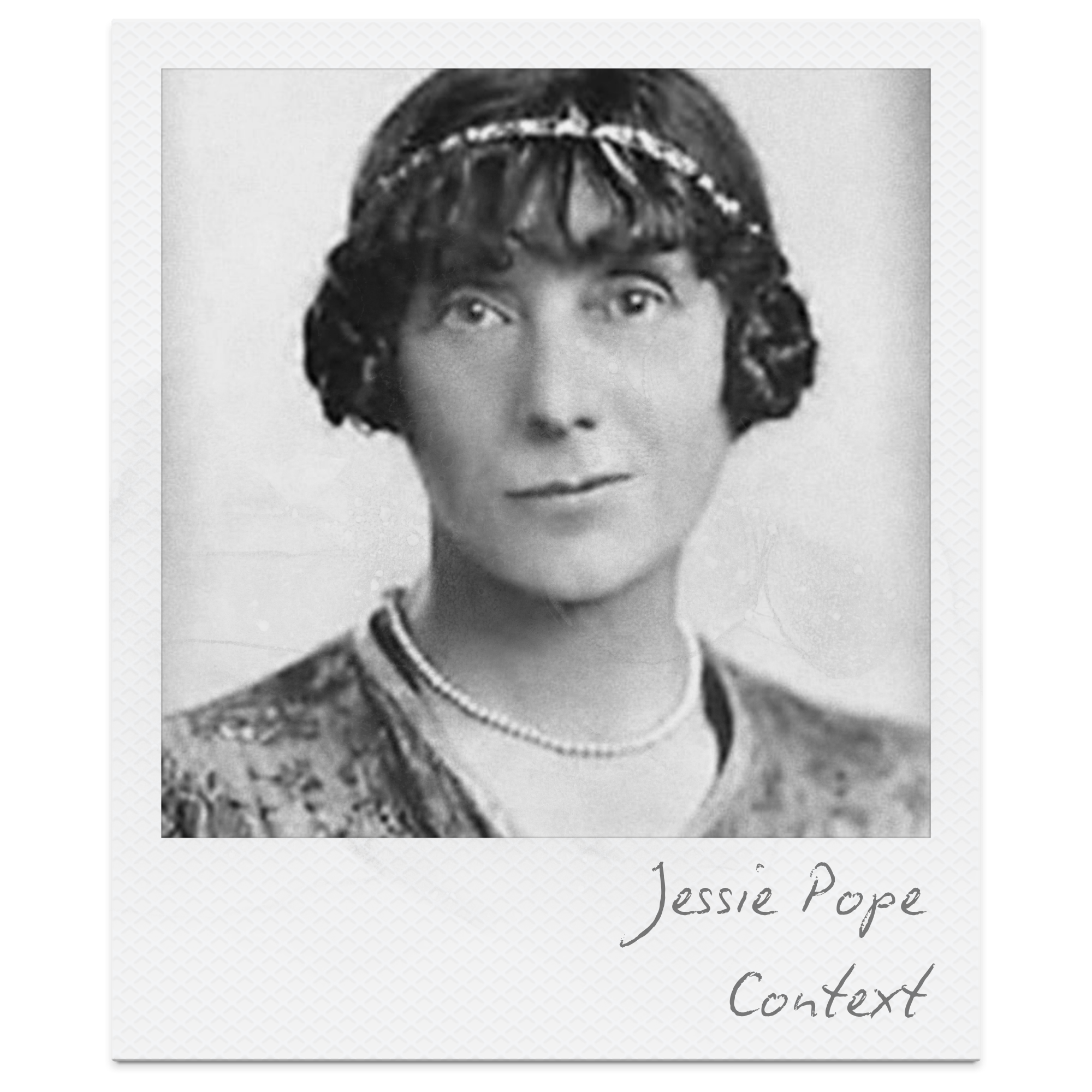
At the beginning of the war, some writers responded with patriotism, idealism and a belief in sacrifice. Poetry appeared in newspapers and magazines, circulated among civilians and soldiers, and sometimes supported the wider culture of recruitment and national duty. Writers such as Rupert Brooke became associated with an idealised vision of patriotic sacrifice, while Jessie Pope used energetic, direct verse to address potential recruits.
Other poets recorded the war from increasingly different perspectives. Soldiers wrote about trenches, wounds, exhaustion, comradeship, fear and death, while writers on the home front explored absence, waiting, bereavement and the consequences of a conflict being fought elsewhere. Some poems protested against military leadership or civilian complacency; others mourned individual deaths without making a straightforward political argument at all.
Who Were the War Poets?
The term “war poet” is commonly used for writers whose poetry was significantly shaped by the First World War, particularly those who experienced military service. Yet the literary history of the conflict extends much further than a small group of male soldiers writing from the Western Front.
First World War poetry includes work by combatants, officers, medical workers, civilians, women, propagandists, pacifists and bereaved family members. Writers also came from different nations, social classes and cultural backgrounds, meaning that their relationship with the conflict could vary enormously.
Even poets who shared similar experiences did not necessarily interpret them in the same way. One writer might find meaning in sacrifice while another saw only waste; one might describe comradeship, another isolation; one might use traditional poetic forms while another searched for language capable of representing experiences that seemed to resist conventional ideas of beauty and heroism.
Poetry as a Record — and an Interpretation
War poetry can provide extraordinary insight into how individuals experienced the First World War, but a poem is not simply a historical document. Poets select images, construct speakers, manipulate rhythm and sound, choose forms and deliberately shape the reader's response.
A trench poem therefore does more than tell us what happened in a trench. Its imagery, structure, voice, symbolism and language determine how that experience is presented and what the reader is encouraged to feel or question.
Understanding First World War poetry means reading these poems in both ways: as literature shaped by artistic choices and as writing produced within a specific historical moment.
As you move through this hub, pay attention not only to what each poet says about war, but to when they were writing, where they were writing from, who they were addressing and how they transform experience into poetry. Following the literature chronologically reveals just how varied — and how rapidly changing — the poetic responses to the First World War could be.
Explore the First World War Poets
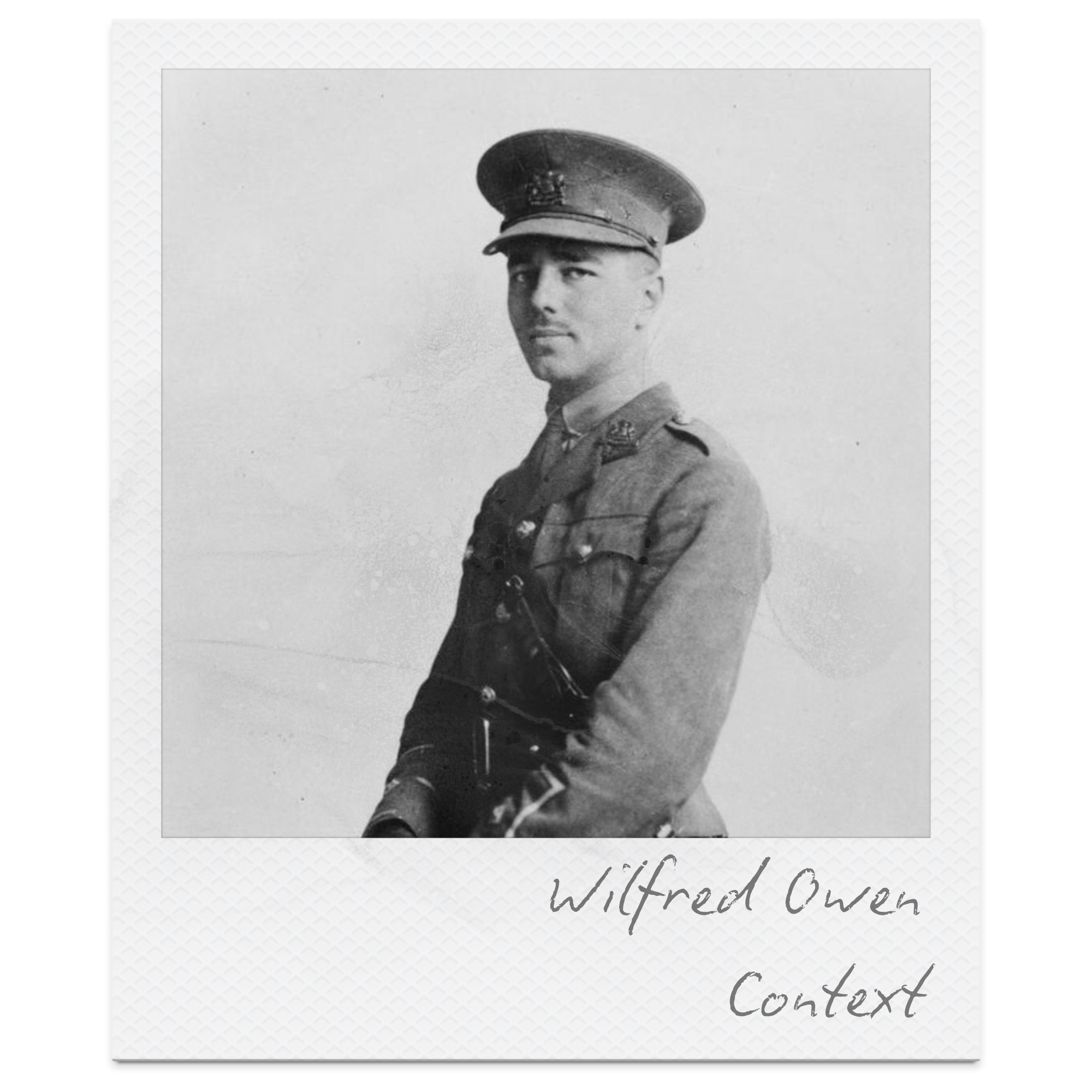
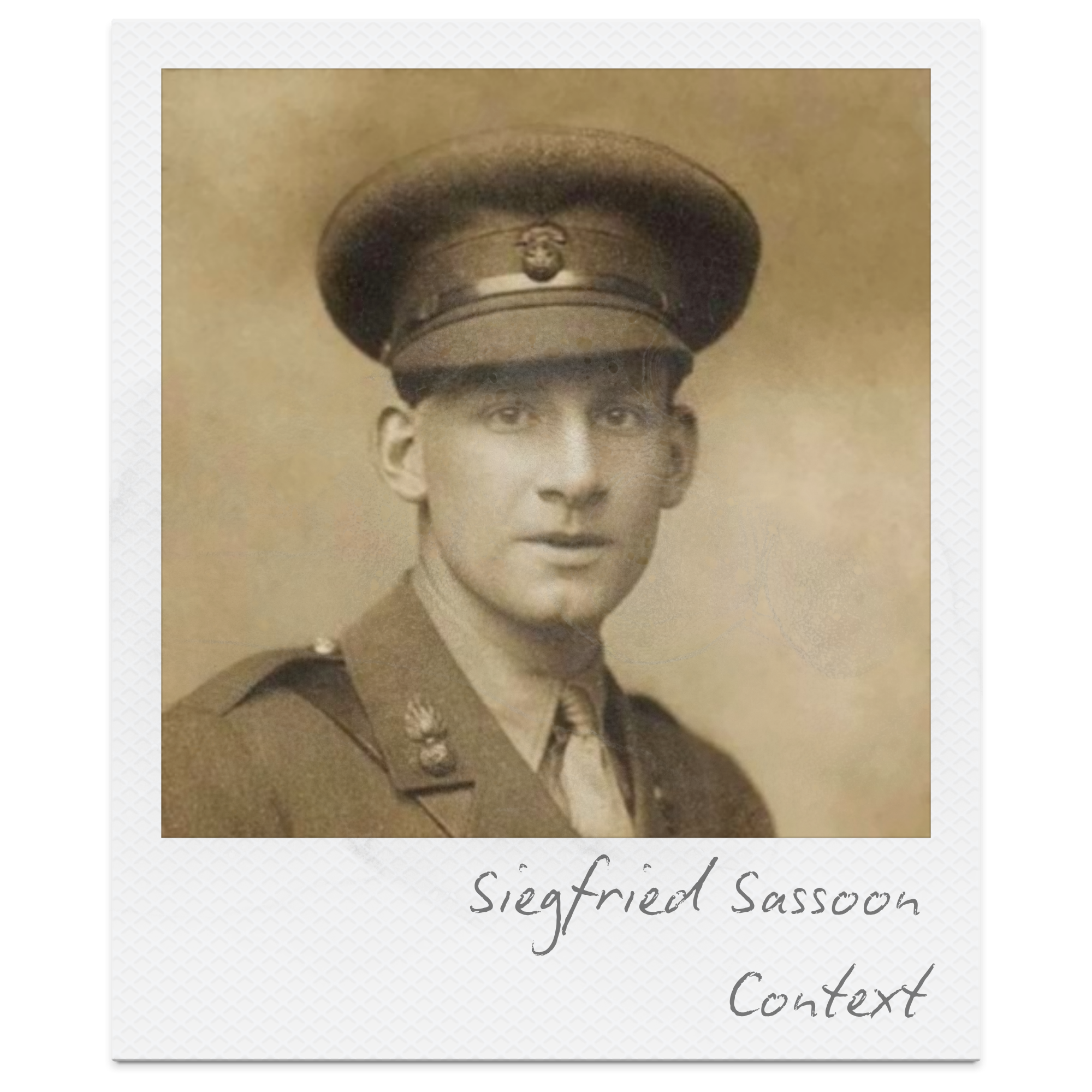
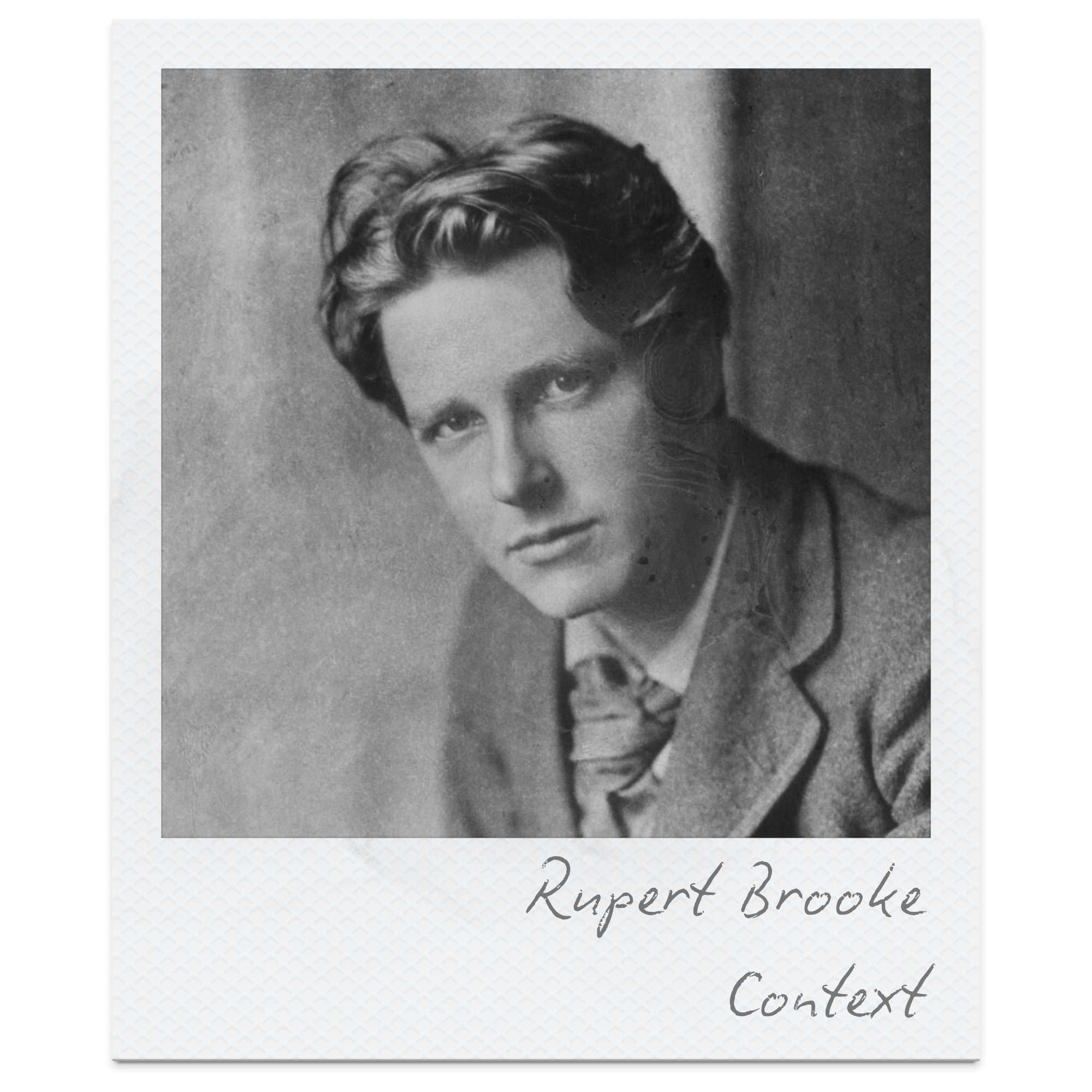
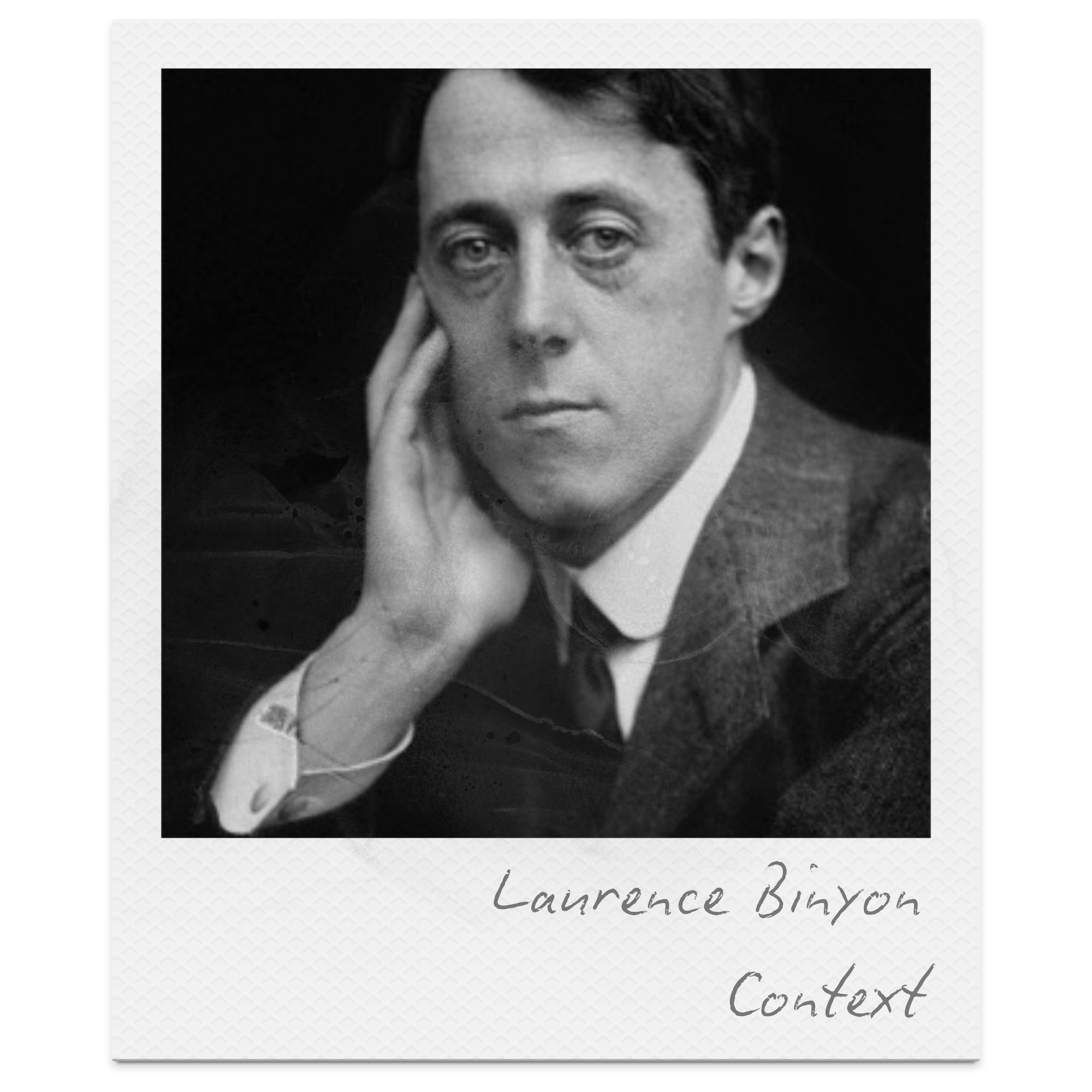
Discover the writers behind the poetry of the First World War. Click the Polaroids below to explore each poet’s life, historical and social context, literary influences, key themes and significance, before discovering their individual poems throughout the library.
Before the War: Poetry & the World Before 1914
The poetry of the First World War did not emerge in isolation. When war broke out in August 1914, British poets brought with them established literary traditions and ideas about nature, England, patriotism, heroism, death and sacrifice. Understanding this pre-war poetry helps us recognise what wartime poets would later preserve, transform or deliberately reject.
One important influence was Georgian poetry, associated with writers including Rupert Brooke and the influential Georgian Poetry anthologies that began appearing shortly before the war. Georgian poetry frequently turned towards rural landscapes, nature, ordinary experience and an idealised English countryside. Brooke's early work is particularly useful for seeing the poetic world from which his famous war sonnets would emerge.
The period also inherited much older literary traditions. Ideas of honour, courage, patriotic duty and noble sacrifice had long appeared in British literature, while Romantic and Victorian poetry provided writers with familiar ways of representing nature, death, memory and national identity. These traditions did not disappear when war began. Instead, the unprecedented experiences of the First World War would increasingly place pressure upon them.
Looking at poetry from immediately before 1914 therefore creates an important point of comparison. The peaceful landscapes, personal concerns and established poetic forms of the pre-war years allow us to see more clearly what happens when the same generation of writers is confronted by mass mobilisation, industrial warfare and enormous loss of life.
Coming Soon:
◆ The Old Vicarage, Grantchester — Rupert Brooke — nostalgia, Englishness and the idealised rural landscape in one of Brooke's best-known pre-war poems, written in 1912.
◆ Pre-War Poetry and the Georgian Poets — explore the Georgian movement, pastoral poetry and the literary environment surrounding writers such as Rupert Brooke before the outbreak of war.
◆ Poetry, Patriotism and Heroism Before 1914 — examine the literary traditions through which ideas of military courage, national identity, duty and sacrifice were represented before the realities of the First World War transformed them.
1914: Patriotism, Recruitment & the Beginning of War
When the First World War began in the summer of 1914, poetry became one of the many ways writers responded to a conflict whose scale and consequences were not yet fully understood. Ideas of patriotism, honour, duty, sacrifice and national identity appear prominently in some of the poetry associated with the opening months of the war, but responses were never completely uniform.
For some writers, the outbreak of war seemed to offer a sense of purpose and collective responsibility. Established ideas of courage and noble sacrifice provided a familiar language through which an unfamiliar conflict could initially be understood. Rupert Brooke's 1914 sonnets became particularly associated with this early idealism, presenting service and even death through ideas of purification, honour, peace and devotion to England. Brooke wrote the five-sonnet sequence during the closing months of 1914.
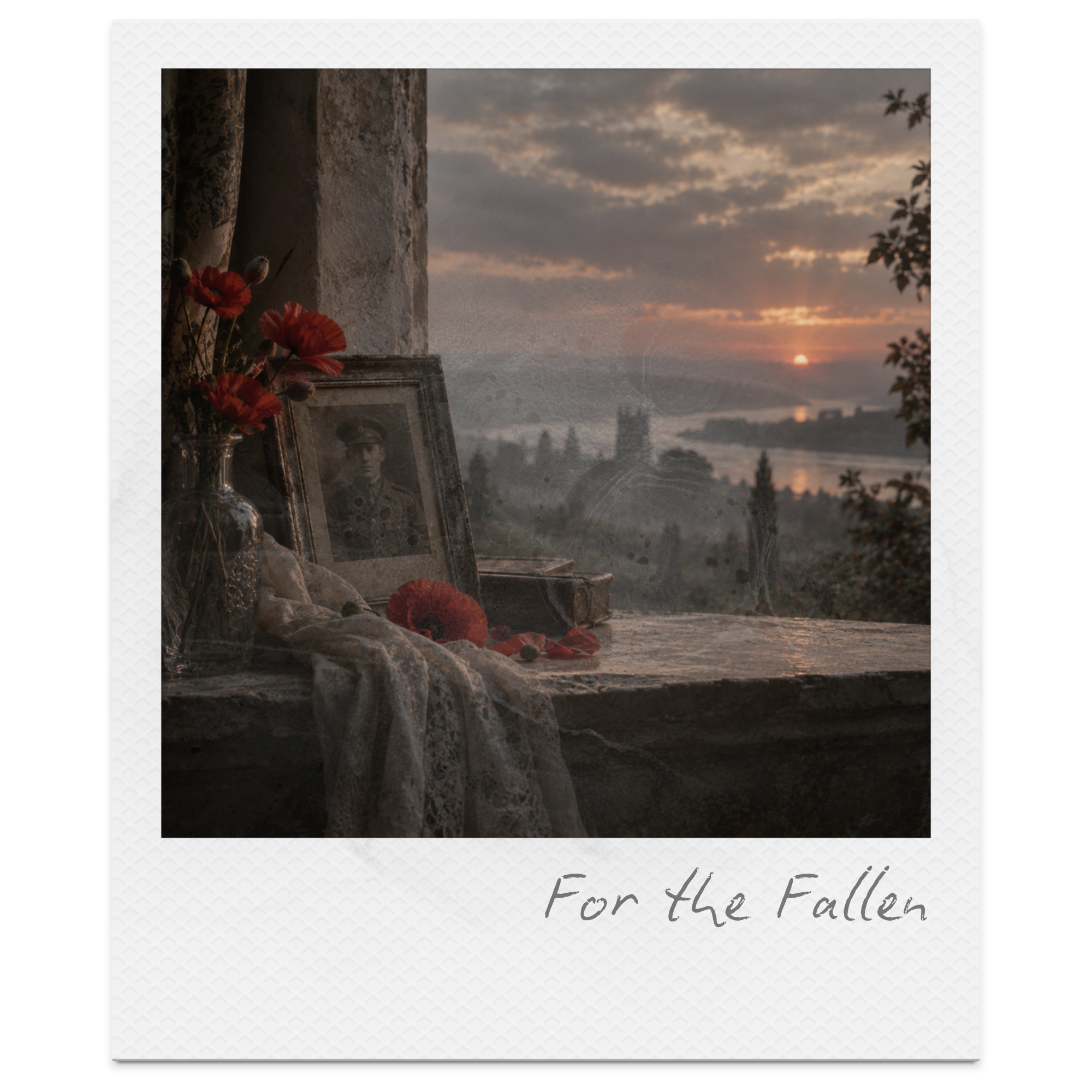
Poetry also responded to the rapidly growing reality of death and bereavement. Laurence Binyon's For the Fallen, written in 1914, commemorates those already killed and helped establish a language of remembrance that would survive long beyond the conflict itself. Its solemn treatment of sacrifice demonstrates that mourning was present in war poetry from the conflict's earliest months, even before the enormous casualties of later battles transformed public understanding of the war.
Yet 1914 poetry should not be treated as uniformly patriotic or enthusiastic. Writers including Isaac Rosenberg and Thomas Hardy produced more troubled responses to the outbreak of war, while other poets questioned or complicated the language through which conflict was being represented. From the beginning, First World War poetry contained different and sometimes contradictory voices.
Reading the poetry of 1914 therefore captures a moment of profound uncertainty. The trench systems of the Western Front were only beginning to develop, and the years of attrition that would follow could not yet be fully imagined. As the war continued, poets would increasingly have to negotiate the distance between inherited ideals of warfare and the realities of modern industrial conflict.
Inside this Section:
◆ For the Fallen — Laurence Binyon — explore Binyon’s powerful meditation on remembrance, sacrifice, grief and the enduring memory of the fallen, with detailed analysis of the poem’s language, imagery, symbolism, form, structure and metre.
1915: Trench Warfare, Loss & Changing Perspectives
By 1915, the First World War was becoming increasingly difficult to imagine as a short or straightforward conflict. The Western Front had developed into an extensive system of trenches, while battles including the Second Battle of Ypres and the Gallipoli campaign brought further casualties. The year also saw the use of poison gas on a large scale on the Western Front, adding another disturbing dimension to modern industrial warfare.
Poetry written during this period reflects a striking mixture of attitudes. Traditional ideas of courage, duty, sacrifice and patriotism remained powerful, and some poets continued to represent military service through heroic or idealistic language. At the same time, writers were increasingly confronting the physical realities of war: mud, cold, exhaustion, separation and death. The poetry of 1915 therefore occupies an important position between the early responses of 1914 and the increasingly critical voices associated with the later years of the conflict.
One of the year's most enduring poems was John McCrae's In Flanders Fields, written following the death of a friend during the Second Battle of Ypres. Its images of graves and poppies connect the beauty of the natural landscape with the presence of the dead, while its final stanza calls upon the living to continue the struggle. The poem became closely associated with remembrance, but it was also used during the war to support recruitment and war-bond campaigns.
Other poets were already producing much less consoling representations of death. Charles Hamilton Sorley, who was killed at the Battle of Loos in October 1915 at the age of twenty, approached war with considerable ambivalence. His work strips away some of the conventional language surrounding heroic death and remembrance, anticipating the more sceptical treatment of sacrifice that would become increasingly prominent in later war poetry.
The poetry of 1915 therefore resists a simple narrative in which patriotic enthusiasm suddenly disappeared. Idealism, grief, duty, realism and doubt existed alongside one another. As the conflict continued, however, poets were accumulating experiences that would make inherited ideas of glorious warfare increasingly difficult to sustain.
Coming Soon:
◆ In Flanders Fields — John McCrae — explore remembrance, sacrifice, nature and the relationship between the living and the dead in one of the most enduring poems of the First World War.
◆ The Owl — Edward Thomas — examine isolation, physical discomfort, gratitude and Thomas's awareness of soldiers and others suffering beyond the speaker's temporary safety.
◆ Into Battle — Julian Grenfell — explore nature, courage, masculinity and an idealised vision of the soldier entering battle.
◆ When You See Millions of the Mouthless Dead — Charles Hamilton Sorley — examine Sorley's stark rejection of sentimental remembrance and conventional ideas of honour in the face of mass death.
1916: The Somme, Mass Loss & a Changing Poetic Voice
By 1916, the First World War had entered a devastating new phase. The enormous battles of Verdun and the Somme demonstrated the destructive power of industrial warfare on an unprecedented scale, while soldiers on the Western Front continued to experience artillery bombardment, machine-gun fire, mud, exhaustion and the constant presence of death. The possibility of a short war had long disappeared.
The Battle of the Somme, which began on 1 July 1916 and continued for months, became particularly significant in British cultural memory. Enormous casualties intensified questions about military leadership, sacrifice, heroism and the human cost of war. For poets who experienced the Western Front, traditional language surrounding glorious battle could become increasingly difficult to reconcile with what they had witnessed.
The poetry associated with 1916 consequently contains some striking challenges to conventional representations of warfare. Siegfried Sassoon's poetic voice became increasingly direct, angry and confrontational. In poems such as The Poet as Hero, he explicitly contrasts earlier romantic ideas of knighthood and heroism with the violence and hatred produced by modern war. His developing use of satire, irony and deliberately uncomfortable imagery would become central to his later war poetry.
Isaac Rosenberg offers a different perspective. In Break of Day in the Trenches, published in December 1916, the ordinary appearance of a rat moving freely between British and German trenches becomes a way of questioning the divisions created by war. Soldiers who appear physically strong are paradoxically more vulnerable than the small animal crossing between them, while the natural world continues amid human destruction.
Yet the poetry of 1916 was not concerned only with scenes of battle. Edward Thomas frequently allowed the war to intrude upon landscapes and ordinary rural life. In As the Team's Head Brass, a conversation between the speaker and a ploughman gradually reveals how a soldier's death has altered life at home, connecting a quiet English field to events taking place in France. The war is therefore represented not as something confined to the battlefield, but as a force capable of changing communities, landscapes and individual lives far beyond the front line.
The poetry of 1916 shows that there was still no single response to the war. What becomes increasingly apparent, however, is the pressure that prolonged conflict placed upon inherited ideas of heroism and sacrifice. Poetry could mourn the dead, record the experiences of soldiers, question romantic representations of warfare or expose the distance between traditional ideals and the realities writers now encountered.
Coming Soon:
◆ Break of Day in the Trenches — Isaac Rosenberg — explore trench warfare, mortality, nature and the sardonic figure of the rat that crosses freely between opposing armies.
◆ The Poet as Hero — Siegfried Sassoon — examine Sassoon's rejection of romantic heroism and the transformation of his poetic voice through his experience of war.
◆ As the Team's Head Brass — Edward Thomas — explore the subtle intrusion of war into rural England and the relationship between individual death, absence and ordinary life.
◆ The Death-Bed — Siegfried Sassoon — examine suffering, memory, nature and the movement between consciousness and death in Sassoon's portrayal of a wounded soldier.
1917: Protest, Anger & Disillusionment
By 1917, the First World War had entered its fourth year. Enormous casualties, prolonged trench warfare and battles including the Third Battle of Ypres, commonly associated with Passchendaele, contributed to an increasingly bleak picture of a conflict with no obvious end. The United States entered the war in April, revolution transformed Russia, and millions of soldiers and civilians continued to experience the physical and psychological consequences of prolonged warfare.
For some British soldier-poets, 1917 produced increasingly direct challenges to the language traditionally used to describe war. Siegfried Sassoon became one of the most prominent critical voices. After being wounded, he issued a public declaration protesting against the continuation of the conflict, arguing that a war he had initially regarded as defensive was being deliberately prolonged. Rather than court-martial him, the authorities sent Sassoon to Craiglockhart War Hospital, where he was treated for shell shock.
It was at Craiglockhart that Sassoon met Wilfred Owen, whose poetry would become central to later understandings of First World War literature. Owen had experienced severe fighting on the Western Front before being diagnosed with shell shock. His poetry increasingly confronted readers with the physical realities of warfare, using disturbing imagery, disrupted expectations and bitter irony to challenge romanticised ideas of military sacrifice. His experiences early in 1917 contributed to the development of Dulce et Decorum Est, while Anthem for Doomed Youth was developed later that year during his time at Craiglockhart.
The poetry of 1917 also demonstrates how writers experimented with different ways of representing mass death and industrial warfare. Sassoon used satire and graphic realism; Owen combined compassion with anger; Isaac Rosenberg found startling images within the landscape of the trenches. Poems including Rosenberg's Dead Man's Dump confront the physical presence of the dead with a directness far removed from idealised representations of heroic sacrifice. Poetry Foundation's chronology places these works alongside writing by Robert Graves, Ivor Gurney, Mary Borden and others, demonstrating the diversity of wartime voices active during the year.
Yet it is important not to reduce 1917 poetry to a simple story of patriotism becoming disillusionment. Writers continued to respond to the conflict differently, and individual poets themselves could express contradictory attitudes. What becomes particularly visible by this stage of the war is a growing willingness among some writers to expose the distance between public representations of warfare and the experiences of those living through it.
Inside this Section:
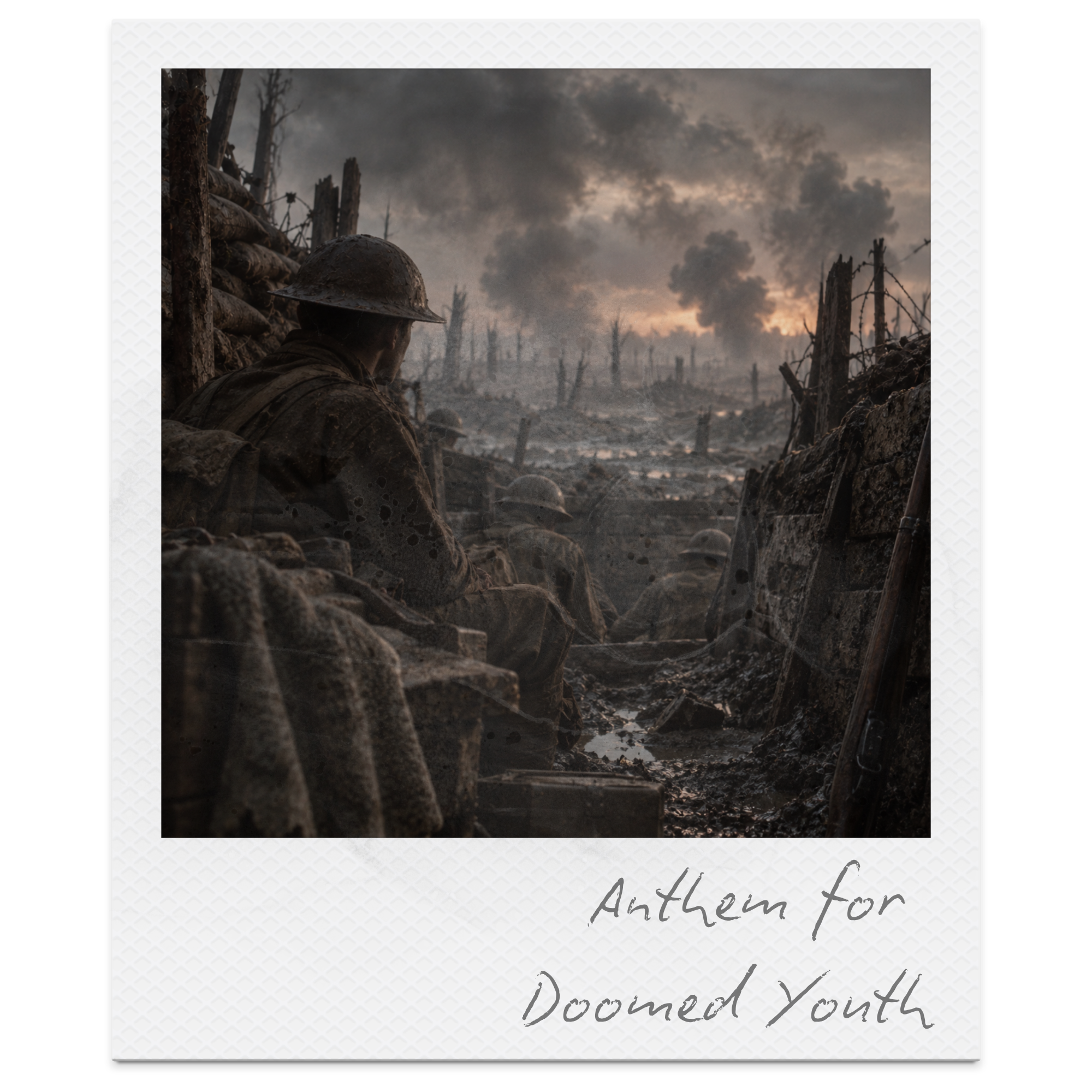
◆ Anthem for Doomed Youth — Wilfred Owen — examine mass death, mourning and the contrast between the sounds of industrial warfare and the traditional rituals denied to soldiers killed overseas.
1918: Final Battles, Death & the Armistice
By 1918, the First World War had entered its final and intensely destructive year. Germany launched its Spring Offensive in an attempt to break the Allied lines before growing American involvement could decisively alter the balance of the conflict. This was followed by a series of Allied advances that eventually pushed German forces backwards. After more than four years of fighting, the Armistice was signed on 11 November 1918, bringing the fighting on the Western Front to an end.
For the poets writing during this final year, however, the approaching end of the war did not erase its consequences. Poetry continued to confront death, psychological trauma, exhaustion, grief and the apparent futility of enormous human loss. The conflict had transformed the language through which many writers represented heroism and sacrifice, and some of the most enduring First World War poems emerged from this final period.
Wilfred Owen produced much of his major poetry during 1917 and 1918. Poems such as Futility and Strange Meeting move beyond descriptions of individual battles to ask larger questions about humanity, mortality and the purpose of war itself. In Futility, the death of a soldier prompts the speaker to question the forces that create life only for it to be destroyed, while Strange Meeting imagines an encounter between opposing soldiers after death, collapsing the distinction between enemy and friend.
Owen returned to active service in France in September 1918. He was killed in action on 4 November, while leading his men across the Sambre–Oise Canal, just seven days before the Armistice. His death has become inseparable from his literary reputation, particularly because so little of his poetry had been published during his lifetime. Most of the work for which he is now remembered reached readers only after his death.
Other poets approached the final stages of the conflict differently. Siegfried Sassoon continued to expose the fear and brutality experienced by ordinary soldiers, while writers beyond the trenches explored survival, memory and the enormous personal consequences of four years of warfare. The poetry associated with 1918 therefore contains both the continuing horror of battle and an increasing awareness that the war itself was moving towards an end.
The Armistice did not provide a simple conclusion to First World War poetry. Millions were dead, survivors returned carrying physical and psychological injuries, and families across Europe faced bereavement on an extraordinary scale. The end of fighting instead opened another period of writing concerned with memory, mourning, survival and remembrance — themes that would continue long after 1918.
Inside this section:
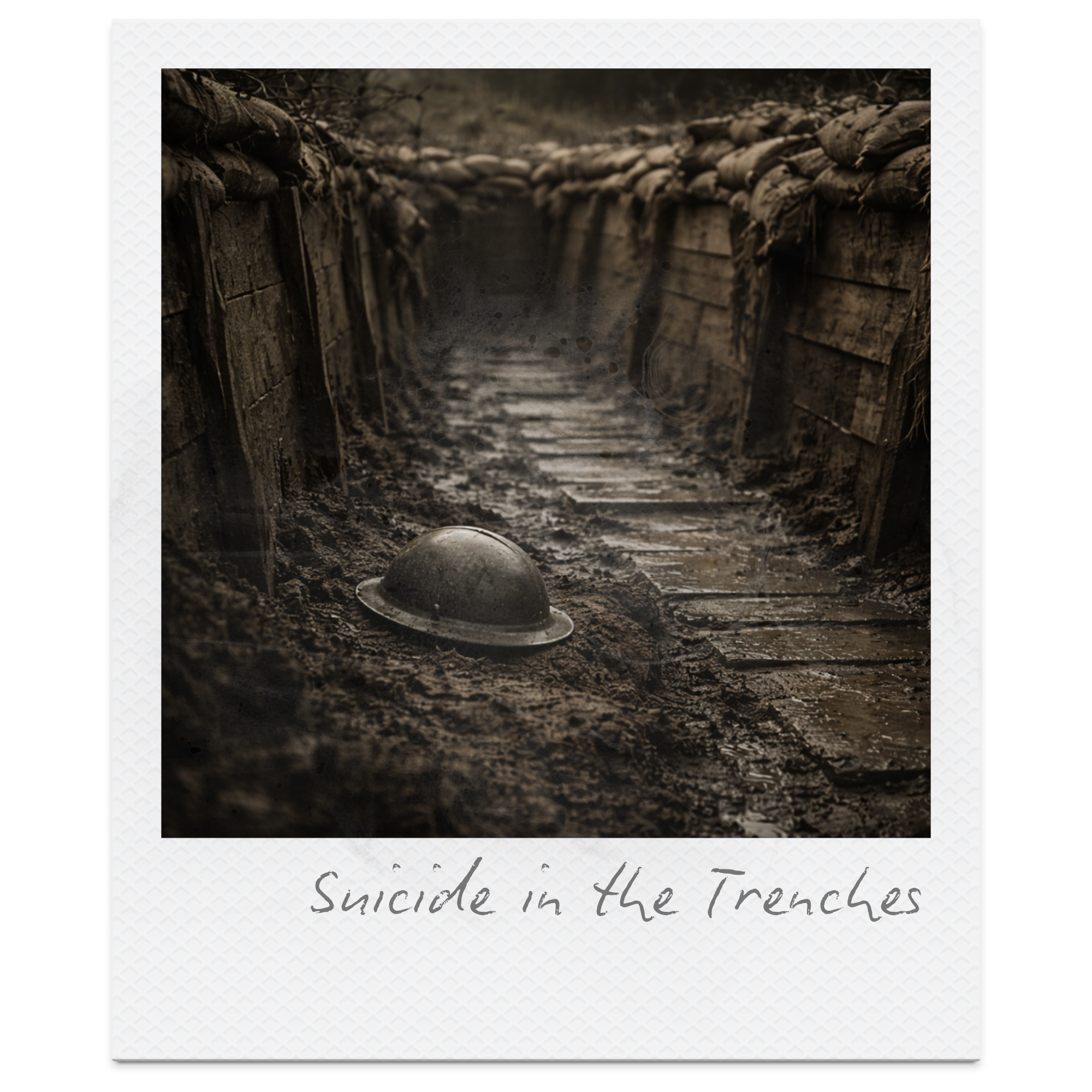
◆ Suicide in the Trenches — Siegfried Sassoon — explore Sassoon's stark contrast between the life and death of a young soldier and the patriotic crowds who celebrate returning troops, with detailed analysis of the poem's language, imagery, form, structure and metre.
After the War: Grief, Memory & Remembrance
The Armistice of 11 November 1918 ended the fighting on the Western Front, but it did not end the literary response to the First World War. The years that followed were shaped by bereavement, physical and psychological injury, remembrance and attempts to understand the enormous scale of the conflict. For poets, survivors and readers, the war became something not only to record but also to remember, interpret and reconsider.
Many of the poets now most closely associated with the First World War did not survive to see its aftermath. Wilfred Owen, Isaac Rosenberg, Rupert Brooke, Edward Thomas and Charles Hamilton Sorley were among the writers who died during the war. Their poetry continued to reach new audiences after their deaths, meaning that the literary reputation of the First World War was partly constructed retrospectively, through the publication, editing and anthologising of work left behind.
Owen is particularly important to this process. Only a small number of his poems appeared in print during his lifetime, but the publication of Poems in 1920, edited by Siegfried Sassoon and Edith Sitwell, helped introduce his work to a much wider readership. His reputation continued to grow throughout the twentieth century, and poems such as Dulce et Decorum Est, Anthem for Doomed Youth and Futility eventually became central to the way generations of readers encountered the literature of the war.
Writers who survived the conflict also continued to return to their experiences. War could be reconsidered from a distance through poetry, memoir, autobiography and fiction, while public acts of remembrance created their own language of mourning. Memorials, commemorative ceremonies and the annual observance of Armistice Day helped establish cultural traditions through which the dead could be collectively remembered.
The meaning of First World War poetry also changed as later generations encountered it. The poetry of Owen and Sassoon, with its powerful representations of suffering, anger and disillusionment, became particularly influential in shaping modern perceptions of the conflict. Yet the wider poetic record remains much more varied, encompassing patriotism, grief, religious faith, humour, comradeship, protest, remembrance and conflicting ideas about sacrifice.
Reading beyond 1918 therefore allows us to ask not only how poets experienced the First World War, but how the war itself came to be remembered. Poetry became part of an ongoing cultural conversation about what had happened, what had been lost and how the experiences of millions of individuals should be understood by those who came afterwards.
Coming Soon:
◆ Everyone Sang — Siegfried Sassoon — explore release, freedom and collective emotion in a poem written as the First World War came to an end.
◆ Aftermath — Siegfried Sassoon — examine memory, responsibility and Sassoon's insistence that the suffering of the First World War must not simply be forgotten.
◆ Wilfred Owen's Poems (1920) — discover how Owen's posthumously published collection helped establish his literary reputation and influenced later understandings of First World War poetry.
◆ Remembering the First World War Through Poetry — explore how poetry, anthologies, memorials and acts of remembrance helped shape the cultural memory of the conflict.
Choose Your Next Author or Collection
Looking for your next text? Explore other authors and literature collections, with clear analysis, study guides, and teaching resources to support revision and deeper understanding.