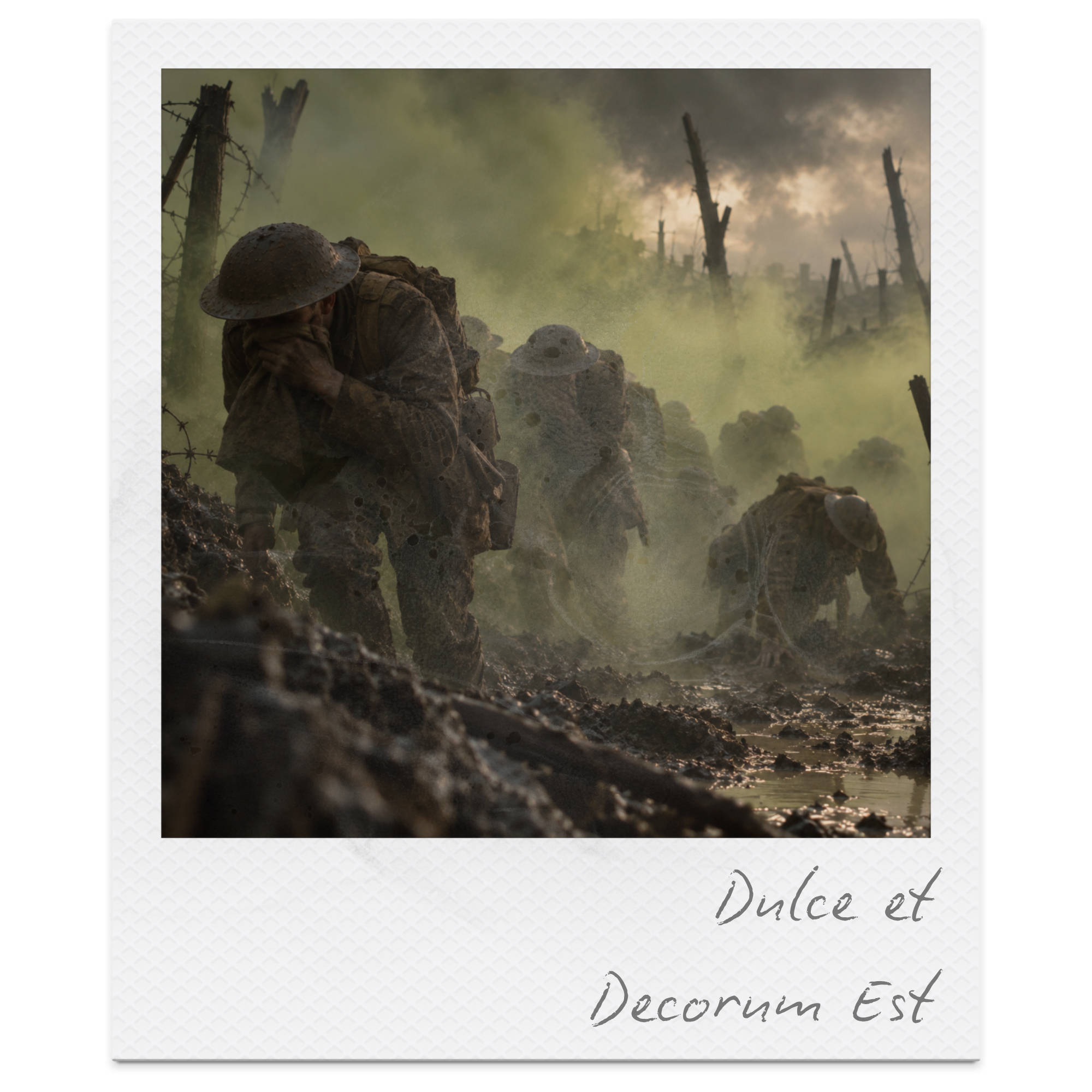
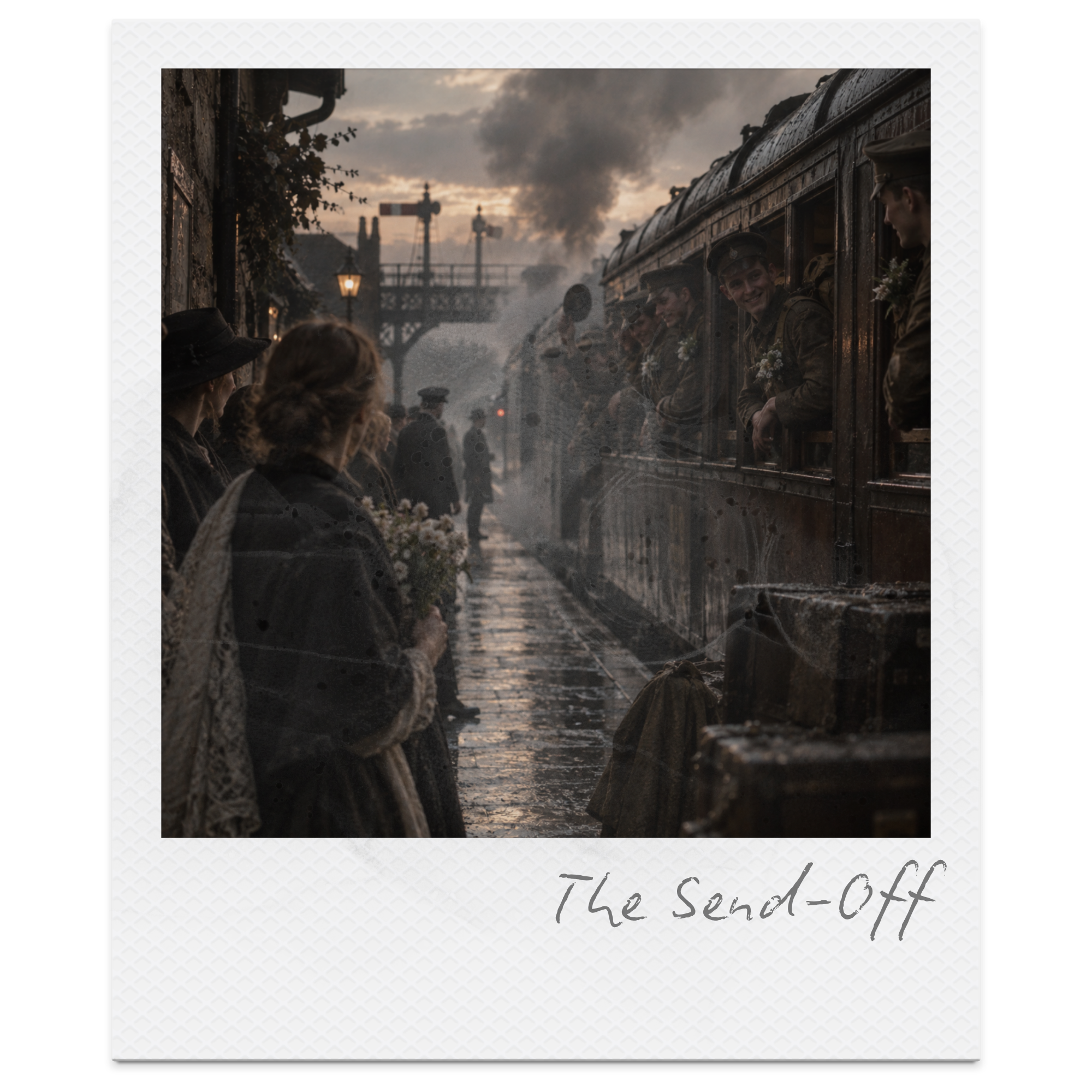
The Call by Jessie Pope: Summary, Themes & Analysis
The Call by Jessie Pope is a patriotic recruitment poem published during the First World War, encouraging young British men to enlist through a combination of direct address, rhetorical questions, repetition, humour and appeals to masculine pride. Written at a time when Britain relied on voluntary military recruitment, the poem presents joining the army as an opportunity to demonstrate courage, physical strength, loyalty and patriotic duty, while suggesting that reluctance to serve reveals cowardice or selfishness. Through its repeated challenge, “Will you, my laddie?”, Pope creates a conversational yet increasingly pressurising voice that invites readers to measure themselves against an ideal of heroic masculinity. The poem's lively rhythm, regular rhyme and references to military uniforms, battlefield victory and public celebrations help transform the dangers of warfare into an apparently exciting opportunity for personal achievement and national glory. Yet beneath its playful tone lies a powerful form of social pressure, particularly in the contrast between those willing to fight and those accused of wanting to “save his skin”. As an example of Jessie Pope's war poetry, The Call provides valuable insight into wartime propaganda, recruitment culture, patriotism, masculinity and the expectations placed upon young men during the First World War. Its confident celebration of military service also offers a revealing contrast with the disillusionment expressed in Wilfred Owen's anti-war poetry, particularly Dulce et Decorum Est. For further background, explore Jessie Pope: Historical, Social & Literary Context, discover related poems in the WWI Poetry Hub, or browse the wider Literature Library.
Context ◆ Full Poem ◆ At a Glance ◆ Summary ◆ Form & Structure ◆ Speaker & Setting ◆ Stanza Analysis ◆ Key Quotes ◆ Techniques ◆ Symbolism ◆ Meaning & Impact ◆ Themes ◆ Alternative Interpretations ◆ Teaching Ideas ◆ Teaching Resources ◆ Go Deeper


Context of The Call by Jessie Pope
The Call by Jessie Pope was published in 1915, during the early years of the First World War, when Britain was still relying on volunteers to fill the ranks of its expanding army. Following the outbreak of war in August 1914, recruitment campaigns encouraged young men to enlist by appealing to patriotism, courage, duty and national pride. Posters, newspaper advertisements, public speeches and popular poetry presented military service as both an honourable responsibility and an opportunity to prove one's masculinity. Those who remained at home could face increasing social pressure, particularly as enlistment became associated with bravery and loyalty to Britain and its Empire. Pope's poem reflects this recruitment culture through its repeated questions, lively rhythm and direct challenges to young men who might hesitate to volunteer. References to the “khaki suit”, the “Empire's thanks” and the prospect of a victorious procession present enlistment as a route to personal recognition and collective national triumph, while deliberately drawing attention away from the physical dangers and psychological consequences of warfare.
Jessie Pope (1868–1941) was a British poet, journalist and writer whose patriotic verse appeared in popular publications during the war. Her recruitment poems, including The Call and Who's for the Game?, frequently used accessible language, humour, sporting imagery, regular rhyme and conversational direct address to make military service seem appealing to ordinary readers. In The Call, the repeated phrase “my laddie” creates an apparently friendly relationship between the speaker and the young man being addressed, but this familiarity also makes the poem's challenges more personal and difficult to dismiss. Pope's enthusiastic presentation of enlistment contrasts sharply with the poetry of soldiers such as Wilfred Owen and Siegfried Sassoon, whose experiences of combat informed their depictions of suffering, disillusionment and the human cost of war. However, Pope's writing should also be understood within its original historical circumstances: her poetry participated in a wider culture of patriotic mobilisation rather than simply expressing an isolated personal enthusiasm for conflict. Reading The Call in this context reveals how popular literature could shape public attitudes, reinforce expectations of masculine behaviour and turn military recruitment into a question of individual honour. For a broader exploration of her life, wartime writing and literary reputation, visit Jessie Pope: Historical, Social & Literary Context.
The Call by Jessie Pope: Full Poem
The following is the complete text of The Call by Jessie Pope, a First World War recruitment poem that uses repeated questions and direct appeals to encourage young men to volunteer for military service.
Who's for the trench—
Are you, my laddie?
Who'll follow French—
Will you, my laddie?
Who's fretting to begin,
Who's going out to win?
And who wants to save his skin—
Do you, my laddie?
Who's for the khaki suit—
Are you, my laddie?
Who longs to charge and shoot—
Do you, my laddie?
Who's keen on getting fit,
Who means to show his grit,
And who'd rather wait a bit—
Would you, my laddie?
Who'll earn the Empire's thanks—
Will you, my laddie?
Who'll swell the victor's ranks—
Will you, my laddie?
When that procession comes,
Banners and rolling drums—
Who'll stand and bite his thumbs—
Will you, my laddie?
The Call — Jessie Pope (1915)
The Call by Jessie Pope: At a Glance
The Call by Jessie Pope is a First World War recruitment poem that uses repetition, rhetorical questions and appeals to masculine pride to encourage young men to volunteer for military service. Its cheerful, challenging tone conceals a powerful message about patriotism, courage and the social expectations placed upon men during wartime.
Poet: Jessie Pope (1868–1941)
Written: During the early years of the First World War, around 1915
Published: 1915
Form: Three eight-line stanzas (octaves), using regular rhyme, repeated questions and a refrain-like pattern of direct address
Speaker: An enthusiastic, persuasive recruitment voice addressing a young British man as “my laddie”
Mood: Energetic, playful, patriotic, challenging and increasingly pressurising
Central tension: The contrast between volunteering for military service as a demonstration of courage and patriotism and remaining at home, which the speaker presents as evidence of cowardice or selfishness
Core themes: Patriotism and national duty; masculinity and courage; recruitment and propaganda; social pressure and shame; heroism and sacrifice; public honour and recognition
Key symbols: The “khaki suit” as a symbol of military identity and masculine duty; the “victor's ranks” as an image of collective triumph; “banners and rolling drums” as symbols of public celebration and national glory; “bite his thumbs” as an image of regret and exclusion
One-sentence meaning: The Call presents military enlistment as a test of patriotism, courage and masculine identity, using apparently light-hearted questions and the promise of national glory to pressure young men into volunteering for war.
Quick Summary of The Call by Jessie Pope
The Call by Jessie Pope is a patriotic First World War poem in which an enthusiastic speaker repeatedly challenges young British men to volunteer for military service. In the first stanza, the speaker asks who is willing to enter the trenches, follow the military leadership of General French and help secure victory. The questions contrast those eager to fight with men who would rather “save his skin”, suggesting that avoiding danger is a sign of cowardice. In the second stanza, the speaker focuses on the attractions of joining the army, including wearing the “khaki suit”, becoming physically fit and demonstrating courage through military action. Once again, the speaker challenges anyone who might prefer to delay enlistment, presenting hesitation as something shameful.
In the final stanza, the poem shifts towards the rewards of military service, imagining a victorious army receiving the gratitude of the British Empire. The speaker describes a celebratory procession with “banners and rolling drums”, suggesting that soldiers will return to public admiration and national recognition. By contrast, men who did not enlist are imagined standing apart, regretting their decision as others celebrate. Throughout the poem, the repeated questions “Are you, my laddie?” and “Will you, my laddie?” address the reader personally, making enlistment appear to be an immediate choice between courage and cowardice, participation and exclusion, honour and regret. The poem ultimately encourages recruitment by presenting war as an opportunity for patriotic achievement while leaving its suffering and dangers largely unacknowledged.
Title, Form, Structure and Metre in The Call by Jessie Pope
The Call by Jessie Pope uses a carefully controlled combination of rhetorical questions, regular rhyme, rhythmic repetition and direct address to create the impression of an energetic, almost playful recruitment appeal. Although the poem appears conversational and light-hearted, its structure is highly persuasive: each stanza presents military service as desirable before challenging the young man who might refuse to enlist. The movement from battlefield participation to masculine achievement and finally public recognition creates an increasingly powerful argument for volunteering.
The Significance of the Title: The Call
The title, “The Call”, immediately suggests a summons that demands a response. In the context of the First World War, it evokes the call to arms, encouraging men to volunteer for military service in defence of their country. However, the title also carries a broader moral significance: it suggests that enlistment is not simply a practical decision but a test of personal courage, patriotic loyalty and masculine responsibility.
The definite article “The” gives the summons an authoritative quality, as though there is one unmistakable duty that young men are expected to recognise. The noun “Call” implies that someone is being addressed and must decide whether to answer. This anticipates the poem's repeated questions, particularly “Will you, my laddie?”, which turn the act of reading into a personal confrontation with the speaker's expectations.
Importantly, the title does not explicitly mention war, trenches or military recruitment. Its simplicity allows the poem to present enlistment as something larger than participation in a particular conflict: an opportunity to answer a national and moral obligation. By the final stanza, the possibility of refusing this call has become associated with exclusion, shame and future regret.
Form and Structure: Three Stanzas of Persuasive Questions
The Call consists of three eight-line stanzas, each following a closely repeated structural pattern. The poem is dominated by questions rather than statements, creating the impression that the speaker is inviting the reader to make a choice. In reality, however, the questions are designed to make one response appear admirable and the alternative embarrassing.
Each stanza develops a different stage of the recruitment argument:
Stanza One — The Call to Battle: The speaker asks who is willing to enter the trenches, follow military leadership and pursue victory. The stanza ends by questioning whether the young man would rather protect himself from danger.
Stanza Two — The Test of Masculinity: Attention shifts to the uniform, physical fitness, courage and the opportunity to prove one's “grit”. Hesitation is again presented as a weakness.
Stanza Three — The Promise of Glory: The speaker imagines a victorious procession in which soldiers receive the “Empire's thanks”, while those who stayed behind are left to regret their decision.
This progression is significant because it moves from immediate action, through personal identity, towards future reward. The reader is first asked whether he will fight, then whether he possesses the necessary courage, and finally whether he wants to share in the honour of victory.
The structure therefore resembles a persuasive recruitment campaign, repeatedly associating enlistment with positive qualities before introducing the shame of refusal.
Repetition and the Refrain-Like Pattern
One of the poem's most distinctive structural features is the repeated direct address “my laddie”, which appears throughout all three stanzas. The phrase sounds affectionate, informal and encouraging, creating the impression of a friendly conversation with a young man.
However, the repetition also has a more pressurising effect. The reader is continually asked to identify himself as either a willing volunteer or someone reluctant to fight. Questions such as “Are you, my laddie?”, “Will you, my laddie?” and “Do you, my laddie?” transform general appeals for recruitment into personal challenges.
The repeated endings are particularly important because they give the poem a refrain-like quality, making its central message memorable and easy to repeat aloud. This is appropriate for poetry intended to influence public attitudes towards enlistment.
There is also a deliberate contrast between the apparently warm address “my laddie” and the increasingly uncomfortable choices the speaker presents. The friendly language softens the poem's underlying pressure, allowing an accusation of cowardice to be delivered in a playful rather than openly hostile manner.
Rhyme Scheme and Poetic Pattern
Pope uses a regular rhyme scheme of ABABCCCB in each of the three stanzas, although the rhymes change from stanza to stanza.
Stanza One:
A: “trench” / “French”
B: “laddie” / “laddie” / “laddie”
C: “begin” / “win” / “skin”
Stanza Two:
A: “suit” / “shoot”
B: “laddie” / “laddie” / “laddie”
C: “fit” / “grit” / “bit”
Stanza Three:
A: “thanks” / “ranks”
B: “laddie” / “laddie” / “laddie”
C: “comes” / “drums” / “thumbs”
The regular pattern gives the poem a catchy, song-like quality, reinforcing its energetic tone and making its persuasive message memorable.
The three consecutive C rhymes in lines five to seven of each stanza are particularly effective. They create a rapid sequence of ideas before the stanza ends with another direct challenge to the reader.
For example:
“Who's keen on getting fit,
Who means to show his grit,
And who'd rather wait a bit—”
The quick succession of “fit”, “grit” and “bit” makes the contrast between courage and hesitation sound almost like a teasing rhyme. Yet the apparent humour conceals a serious accusation: a man who delays enlistment may lack the determination expected of him.
The final return to “my laddie” gives each stanza a recognisable conclusion, ensuring that the pressure of the speaker's question remains directed towards the individual reader.
Metre and Rhythmic Movement
The metre of The Call is rhythmically regular in effect but not strictly uniform in its syllable counts or metrical feet. Pope combines short, emphatic questions with longer lines that develop the recruitment appeal. The result is a lively, bouncing rhythm resembling a popular song, chant or spoken challenge.
The opening illustrates this movement:
“Who's for the trench—
Are you, my laddie?”
The first line is short and forceful, placing emphasis on the question of who will volunteer. The second line shifts towards a more conversational rhythm, with “my laddie” creating a familiar, almost teasing cadence.
The alternating short questions and responses give the opening four lines of each stanza a call-and-response quality. The speaker appears to ask a question and immediately turns it towards the individual listener, as though expecting an answer.
The rhythm then becomes more insistent in the sequence of three rhyming lines:
“Who's fretting to begin,
Who's going out to win?
And who wants to save his skin—”
The repeated “Who's” establishes a driving pattern, while the quick succession of rhymes builds momentum towards the final question. The dash at the end of “skin—” creates a momentary pause before the speaker directly challenges the reader: “Do you, my laddie?”
This rhythmic movement is central to the poem's persuasive effect. The reader is carried forward by the lively sound before being confronted with the uncomfortable implication of the final question.
Rather than imitating the physical experience of battle, the poem's rhythm makes military recruitment sound energetic, exciting and socially engaging. Its musical quality helps disguise the seriousness of the decision being encouraged.
The Effect of the Poem's Overall Structure
The most striking feature of The Call is the contrast between its cheerful poetic form and its serious persuasive purpose. The regular rhyme, familiar address and lively rhythm make the poem sound entertaining, but the repeated questions consistently narrow the reader's choices.
Across the three stanzas, Pope constructs a progression from military action to personal courage to public glory, while presenting refusal as increasingly difficult to justify. The poem offers little space for fear, moral objection or concern about the realities of combat. Instead, hesitation becomes associated with selfishness, weakness and eventual regret.
The final question, “Will you, my laddie?”, leaves the reader with the same personal challenge that has dominated the poem from the beginning. There is no reassuring conclusion or opportunity to escape the speaker's expectations.
Ultimately, the poem's form and structure demonstrate how repetition, rhyme and rhythm can function as instruments of persuasion, turning a light-hearted recruitment verse into a sustained appeal to patriotism, masculine pride and social responsibility.
Speaker and Setting in The Call by Jessie Pope
In The Call by Jessie Pope, the speaker and setting are deliberately constructed to make military enlistment appear personal, exciting and socially desirable. Rather than describing a particular battlefield or presenting the experiences of an individual soldier, Pope creates an enthusiastic recruitment voice that addresses young British men directly. The poem moves between imagined military experiences and a future celebration of victory, allowing the speaker to emphasise the rewards of enlistment while largely excluding the realities of combat. Both the persuasive speaker and the idealised wartime setting contribute to the poem's central purpose: encouraging young men to regard military service as a test of courage, patriotism and masculine identity.
The Speaker: An Enthusiastic Recruitment Voice
The speaker of The Call is an energetic, confident voice who repeatedly questions a young man about his willingness to volunteer for military service. Although this voice reflects the patriotic recruitment culture in which Jessie Pope was writing, it is important to distinguish the speaker of the poem from the poet herself. Pope constructs a particular rhetorical persona: someone who appears friendly and encouraging but whose questions consistently place pressure on the listener.
The opening question immediately establishes the speaker's purpose:
“Who's for the trench—
Are you, my laddie?”
Rather than explaining the political causes of the war or describing the responsibilities of military service, the speaker begins with a direct challenge. The interrogative “Who's” suggests that volunteers are being sought, while “Are you” transforms a general recruitment appeal into a personal test.
The affectionate expression “my laddie” is especially significant. It creates a familiar, conversational relationship between the speaker and the young man being addressed. The word “laddie” suggests youth and informality, while the possessive “my” gives the address a warm, almost protective quality.
However, this friendliness is deceptive. The speaker's questions are rarely neutral invitations to consider enlistment. Instead, they imply that a courageous and honourable young man should already know the correct answer.
This becomes particularly apparent in the question:
“And who wants to save his skin—
Do you, my laddie?”
The colloquial expression “save his skin” reduces a legitimate desire for survival to something potentially shameful. By immediately asking “Do you”, the speaker forces the listener to confront the suggestion that protecting his own life might make him a coward.
The speaker therefore combines apparent affection with emotional pressure, using humour and familiarity to make the accusation less openly aggressive but no less persuasive.
Direct Address and the Relationship with the Reader
One of the most important features of the speaker is the consistent use of second-person address. Throughout the poem, the questions “Are you”, “Will you”, “Do you” and “Would you” repeatedly place the listener at the centre of the recruitment appeal.
This creates the impression of a conversation, although the poem never allows the young man to answer. His voice is entirely absent.
The absence of a response is significant because the speaker controls both the questions and the terms on which the decision is judged. The young man is presented with an apparently simple choice between volunteering and refusing, but the language makes one answer admirable and the other embarrassing.
For example:
“Who's keen on getting fit,
Who means to show his grit,
And who'd rather wait a bit—
Would you, my laddie?”
The speaker first associates enlistment with desirable qualities: physical fitness, determination and courage. The final question then presents hesitation as the opposite of these virtues.
The verb “wait” is particularly revealing. The speaker does not acknowledge that a young man might have practical responsibilities, moral objections or genuine fears about warfare. Instead, reluctance becomes a failure to act decisively.
The speaker's relationship with the reader is therefore unequal and manipulative. The repeated questions create the appearance of individual choice while encouraging the listener to accept the speaker's preferred response.
This technique reflects a broader feature of wartime recruitment propaganda: the transformation of military service from a personal decision into a public measure of character.
The Implied Audience: Young British Men
The poem's implied audience consists primarily of young British men who were potential military volunteers during the early years of the First World War.
The repeated address “my laddie” establishes a youthful male listener, while the references to physical fitness, courage and military achievement appeal to contemporary expectations of masculinity.
The speaker assumes that the young man will want to demonstrate his bravery and earn the respect of others. Military enlistment becomes an opportunity to prove that he possesses the qualities expected of an honourable man.
This is especially apparent in the second stanza:
“Who's keen on getting fit,
Who means to show his grit”
The informal noun “grit” suggests determination, toughness and the ability to endure difficulty. By associating these qualities with military service, the speaker implies that enlistment provides a visible demonstration of masculine worth.
The poem also assumes that public opinion matters deeply to its audience. Its repeated suggestions of cowardice and its final image of excluded non-combatants depend upon the young man's desire to avoid humiliation.
Although the speaker addresses an individual, the questions could also be heard by a wider audience. The poem's lively rhythm and repeated phrases make it suitable for public reading, allowing its challenges to operate both personally and collectively.
The implied listener is consequently not simply being asked whether he wants to fight. He is being asked what kind of man he wishes others to believe him to be.
The Setting: Britain During the First World War
The poem does not identify a specific physical location for its speaker. Instead, its implied setting is the British home front during the First World War, where young men were being encouraged to volunteer for military service.
This absence of a precisely described location is important. The speaker could be imagined addressing a potential recruit in an ordinary social environment, rather than speaking from a battlefield.
The conversational questions create a sense of immediacy, as though enlistment is being discussed directly with someone who must decide whether to join the army.
The reference to “French” places the poem within the military context of the early war:
“Who'll follow French—
Will you, my laddie?”
This refers to Sir John French, who commanded the British Expeditionary Force during the early stages of the conflict. His surname functions as a recognisable reference to military leadership, encouraging the listener to imagine himself joining an organised national effort.
The mention of the “Empire's thanks” also establishes the broader imperial context in which the poem was written. Military service is presented not merely as an obligation to Britain but as a contribution to the prestige and victory of the British Empire.
Yet the poem offers no detailed description of the home front itself. There are no recruiting offices, families, factories or streets. Instead, the historical setting emerges through military references, patriotic language and assumptions about national duty.
This allows the speaker's message to appear widely applicable: any young man who encounters the poem can become the person being challenged.
The Imagined Battlefield: Trenches, Uniforms and Military Action
Although the speaker's physical location remains unspecified, the poem repeatedly evokes the military world into which young men are being encouraged to enter.
The first stanza introduces the “trench”, one of the most recognisable features of First World War combat:
“Who's for the trench—”
The singular noun “trench” compresses the experience of frontline warfare into a simple, recognisable image. However, the speaker provides no description of mud, shellfire, injury, disease or death.
Instead, the trench is presented as a destination for enthusiastic volunteers.
This omission is central to the poem's persuasive purpose. The speaker invokes the setting of battle without confronting its dangers, allowing military service to appear adventurous rather than terrifying.
In the second stanza, the focus shifts towards the soldier's appearance and actions:
“Who's for the khaki suit—
Are you, my laddie?
Who longs to charge and shoot—
Do you, my laddie?”
The “khaki suit” represents the military uniform, making enlistment seem like entry into a recognisable and respected identity. The colloquial noun “suit” also gives the uniform an everyday familiarity, softening the distinction between civilian life and military service.
Meanwhile, the verbs “charge” and “shoot” emphasise action and excitement. They suggest an energetic battlefield experience in which soldiers demonstrate courage through decisive movement.
This is an idealised representation of combat. The speaker imagines war through visible action and personal bravery, rather than prolonged suffering or the vulnerability of soldiers exposed to modern weaponry.
The battlefield setting is therefore shaped less by realistic description than by the expectations and fantasies associated with heroic military service.
The Imagined Victory Parade: Public Honour and Recognition
The final stanza introduces a different setting: a future public celebration following military victory.
“When that procession comes,
Banners and rolling drums—”
The noun “procession” suggests an organised public event, while “banners” and “rolling drums” evoke the sights and sounds of ceremonial celebration.
Unlike the briefly mentioned trenches, this imagined setting receives vivid sensory detail. Readers can picture the banners and almost hear the drums.
This contrast is significant. The battlefield remains largely undescribed, while the rewards of victory become visible, audible and emotionally appealing.
The speaker encourages the listener to imagine not only surviving the war but returning as part of a celebrated group of victorious soldiers.
The phrase “victor's ranks” reinforces this collective identity. Soldiers are presented as members of a triumphant military body, united by service and recognised by the nation.
However, the procession also creates a division between those who participated and those who remained at home:
“Who'll stand and bite his thumbs—
Will you, my laddie?”
The image of a man standing apart suggests exclusion, frustration and regret. He is not part of the procession and cannot share in the public honour bestowed upon the soldiers.
The speaker uses this imagined future to place additional pressure on the listener in the present. Refusing to enlist is presented not simply as avoiding the dangers of war but as missing an opportunity for lasting pride and recognition.
There is also an important silence in this imagined scene: the poem does not acknowledge that many soldiers might never return to participate in such a celebration. Its vision of victory depends upon leaving the possibility of death and permanent injury outside the picture.
The Significance of Speaker and Setting
Together, the speaker and setting reveal the central persuasive strategy of The Call. The friendly but insistent recruitment voice creates a personal challenge, while the poem's shifting imagined settings transform military service into a journey from enlistment to courage and eventual public glory.
The speaker offers an idealised battlefield, a respected military identity and the promise of national gratitude. At the same time, he constructs an uncomfortable alternative in which the young man who refuses to volunteer faces shame and exclusion.
The absence of realistic battlefield suffering is therefore as important as the images Pope chooses to include. The poem directs attention towards honour, action, belonging and celebration, leaving little room for the human cost of warfare.
Ultimately, the speaker and setting work together to make enlistment appear both personally desirable and socially unavoidable, demonstrating how patriotic recruitment poetry could use familiar language and imagined rewards to influence young men's decisions during the First World War.
Stanza-by-Stanza Analysis of The Call by Jessie Pope
In The Call by Jessie Pope, each of the poem's three stanzas develops a different aspect of the argument for military enlistment, moving from the excitement of joining the war, through the opportunity to demonstrate masculine courage, to the promise of national gratitude and public recognition. Throughout the poem, Pope uses rhetorical questions, direct address, repetition, regular rhyme and a lively, conversational rhythm to make volunteering appear both desirable and socially expected. However, beneath the apparently playful tone lies a more forceful persuasive strategy: the speaker repeatedly contrasts the bravery of those willing to fight with the supposed cowardice of those who hesitate. A close analysis of each stanza reveals how Pope combines patriotism, emotional pressure and idealised images of military service to encourage young men to answer the call to arms, while largely avoiding the dangers and suffering associated with the First World War.
Stanza One: The Call to Arms, Patriotic Duty and the Shame of Cowardice
The opening stanza of The Call by Jessie Pope immediately establishes the poem's central purpose: to encourage young British men to volunteer for military service by appealing to their courage, patriotism and fear of appearing cowardly. Through a series of increasingly pointed rhetorical questions, the speaker presents enlistment as an exciting opportunity for victory while suggesting that reluctance to fight reveals selfishness or weakness. The stanza's direct address, repeated questions, colloquial language and lively rhythm create an apparently friendly recruitment appeal, but beneath this playful surface lies a deliberate attempt to influence the reader's behaviour.
“Who's for the trench— / Are you, my laddie?”
The poem opens with the rhetorical question “Who's for the trench—”, immediately placing military enlistment at the centre of the reader's attention. The interrogative “Who's” suggests that volunteers are being sought, creating the impression of an open invitation to participate in the war.
However, the phrasing is unusually casual for such a serious subject. The colloquial expression “Who's for” resembles the language of someone inviting others to join a game, sporting activity or social event. This informal diction makes entering the trenches sound like an exciting opportunity rather than a potentially fatal experience.
The noun “trench” is particularly significant because trench warfare had become a defining feature of the First World War. Trenches were associated with exposure to enemy fire, difficult living conditions and the constant threat of injury or death. Yet Pope offers no description of these dangers. Instead, the trench becomes a destination that an enthusiastic young man should willingly embrace.
This contrast between the realities of trench warfare and the speaker's cheerful invitation reveals the poem's idealised presentation of military service. The opening question minimises the seriousness of combat by presenting it as a straightforward test of willingness.
The dash at the end of the first line creates a pause before the speaker turns directly towards the listener:
“Are you, my laddie?”
The second-person pronoun “you” transforms the general question into a personal challenge. The reader is no longer simply observing a recruitment appeal but is positioned as someone expected to respond.
Meanwhile, the affectionate expression “my laddie” creates a familiar, encouraging tone. The word “laddie” suggests a young man, while the possessive “my” gives the speaker's address a sense of warmth and personal involvement.
However, this apparent affection also makes the question more difficult to dismiss. The speaker establishes a relationship in which refusing to volunteer may feel like disappointing someone who expects courage and enthusiasm.
Pope therefore combines friendliness with pressure, making the invitation to enlist appear welcoming while subtly challenging the listener's masculine identity.
“Who'll follow French— / Will you, my laddie?”
The next question introduces a specific reference to British military leadership:
“Who'll follow French—”
The proper noun “French” refers to Sir John French, commander of the British Expeditionary Force during the early years of the First World War. This reference places the poem within a recognisable historical and military context, connecting the individual reader to Britain's wider war effort.
The verb “follow” suggests loyalty, obedience and willingness to serve under military command. Rather than presenting enlistment as an isolated personal decision, the speaker encourages the young man to imagine himself becoming part of an organised national force.
There is also an implied appeal to authority. By invoking a prominent military commander, Pope associates volunteering with leadership, discipline and patriotic responsibility.
The question is followed by another direct challenge:
“Will you, my laddie?”
The auxiliary verb “Will” shifts the emphasis towards intention and commitment. Whereas “Are you” asks whether the listener is willing, “Will you” demands a decision about future action.
This subtle change reinforces the speaker's persuasive purpose. The young man is being encouraged not merely to admire military service but to commit himself to it.
The repetition of “my laddie” also establishes a recognisable refrain-like pattern. Its familiar sound gives the stanza a lively, memorable rhythm while repeatedly returning attention to the individual listener.
The rhyme between “trench” and “French” links the physical location of warfare with the military leader whom the volunteer is being asked to follow. This connection reinforces the impression that joining the trenches means participating in a legitimate and honourable national undertaking.
Importantly, the speaker still provides no information about what following French might involve. Military obedience is presented as admirable in itself, without consideration of the dangers or moral complexities of combat.
“Who's fretting to begin, / Who's going out to win?”
The following two lines intensify the speaker's enthusiasm:
“Who's fretting to begin,
Who's going out to win?”
The repeated interrogative “Who's” creates anaphora, giving the lines a forceful, rhythmic quality. Each question adds momentum to the recruitment appeal, suggesting that eager volunteers are already preparing to take part.
The verb “fretting” is particularly interesting. It ordinarily suggests anxiety, worry or restless agitation. In this context, however, the speaker uses it to convey impatience and eagerness to begin fighting.
This choice of language transforms the emotional experience of war. Rather than imagining young men as frightened or uncertain, the speaker presents them as restless with anticipation.
The infinitive “to begin” also suggests that military service is an exciting undertaking waiting to start. The phrase omits any explicit reference to killing, suffering or death, directing attention instead towards the moment of action.
The next question develops this idealised perspective:
“Who's going out to win?”
The verb “win” introduces the language of competition and victory. War is presented as something that can be approached with the confidence of a sporting contest, in which success depends upon determination and willingness to participate.
This is a significant example of the poem's sporting and competitive rhetoric. By emphasising victory rather than destruction, Pope makes military service appear purposeful, rewarding and potentially glorious.
The phrase “going out” also contributes to the informal tone. It makes departure for war sound almost ordinary, avoiding the emotional weight that might accompany leaving home for an uncertain future.
The rhyme between “begin” and “win” reinforces the connection between volunteering and victory. Their close placement suggests an apparently straightforward progression: a courageous young man joins the war and helps secure success.
However, this confident expectation leaves little room for the possibility of defeat, prolonged conflict or individual suffering.
The speaker therefore presents enthusiasm for enlistment as evidence of courage, while treating victory as the natural reward for participation.
“And who wants to save his skin— / Do you, my laddie?”
The final two lines introduce a sharp contrast with the enthusiasm of the preceding questions:
“And who wants to save his skin—
Do you, my laddie?”
The colloquial idiom “save his skin” means protecting oneself from danger or avoiding physical harm. In the context of warfare, the desire to survive would be entirely understandable. However, the speaker presents this instinct as something potentially shameful.
The word “skin” reduces the human body to its physical surface, making self-preservation sound selfish or undignified rather than a natural response to mortal danger.
The conjunction “And” connects this question to the preceding appeals, but the emotional direction changes dramatically. Having praised those eager to fight and win, the speaker now introduces the possibility that someone might prefer to remain safe.
The contrast establishes an implied opposition between bravery and self-preservation. A man who volunteers is associated with courage and patriotic achievement, while a man who wishes to protect his life risks being labelled a coward.
The dash after “skin—” is especially effective. It creates a pause before the final question, allowing the suggestion of cowardice to linger momentarily.
The speaker then delivers the direct challenge:
“Do you, my laddie?”
The second-person pronoun “you” makes the accusation personal. The young man must now consider whether he is willing to identify himself as someone who would rather avoid danger than serve his country.
The repeated affectionate address “my laddie” becomes more pointed in this context. What initially sounded like friendly encouragement now accompanies a question designed to provoke embarrassment.
This demonstrates the stanza's central persuasive technique: shaming the listener into accepting the speaker's preferred definition of courage.
There is also an important irony in the speaker's treatment of survival. The poem implies that wanting to remain alive is less honourable than volunteering for a conflict whose dangers are deliberately left unexplored.
Rather than acknowledging fear as a legitimate human emotion, the speaker uses it as evidence of moral weakness.
The final question is therefore not genuinely open-ended. It creates a situation in which the socially acceptable answer is to deny any desire for self-preservation and embrace military service instead.
The Overall Significance of Stanza One
The first stanza establishes the persuasive pattern that governs the remainder of The Call. Pope begins with an apparently cheerful invitation to volunteer, reinforces the appeal through references to military leadership and victory, and concludes by suggesting that reluctance to fight reveals cowardice.
The stanza's ABABCCCB rhyme scheme, repeated questions and informal address create a lively, memorable sound. However, the playful form conceals a more serious rhetorical purpose: to make military enlistment appear to be the only honourable response available to a young British man.
The progression from “Who's for the trench” to “who wants to save his skin” is especially revealing. The speaker moves from inviting participation to questioning the character of anyone who refuses.
Ultimately, Stanza One transforms the decision to volunteer into a test of masculinity, patriotism and personal courage, demonstrating how recruitment poetry could use humour, repetition and social pressure to make the dangers of warfare seem secondary to the shame of remaining at home.
Stanza Two: Military Identity, Masculine Courage and the Pressure to Enlist
In the second stanza of The Call by Jessie Pope, the speaker shifts attention from the initial invitation to fight towards the identity, qualities and experiences associated with becoming a soldier. The military uniform, the excitement of combat and the opportunity to demonstrate physical strength are presented as attractive reasons for volunteering. However, as in the opening stanza, these positive images are followed by a question that challenges the masculinity of anyone reluctant to enlist. Through symbolism, rhetorical questions, colloquial language, repetition and regular rhyme, Pope constructs an idealised image of military service in which courage becomes something a young man must publicly demonstrate.
“Who's for the khaki suit— / Are you, my laddie?”
The second stanza opens with another enthusiastic question:
“Who's for the khaki suit—
Are you, my laddie?”
The repeated opening “Who's for” creates a direct structural parallel with the first stanza's “Who's for the trench”. This repetition reinforces the speaker's persistent recruitment appeal, making each new question sound like another invitation to participate in an exciting activity.
However, there is a significant change in emphasis. Whereas the first stanza begins with the physical location of warfare, the second introduces “the khaki suit”, shifting attention towards the appearance and identity of the soldier.
The adjective “khaki” refers to the colour of the British military uniform, making it an immediately recognisable symbol of army service. Wearing khaki distinguishes the soldier from the civilian population, visibly identifying him as someone who has volunteered to serve.
The uniform therefore represents more than clothing. It becomes a symbol of patriotism, belonging, masculine identity and public recognition.
The noun “suit” is particularly interesting because it is more familiar and informal than the word uniform. A suit is something a person puts on, and the speaker's casual phrasing makes joining the army sound almost as simple as changing clothes.
This choice of diction reduces the apparent distance between civilian and military life. Instead of emphasising the discipline, training and dangers associated with enlistment, the speaker focuses on the attractive outward appearance of becoming a soldier.
The phrase also suggests that military identity can be acquired through a visible transformation. A young man who puts on the khaki uniform becomes recognisable as someone fulfilling his patriotic duty.
In the social climate of wartime Britain, this distinction carried considerable significance. The uniform could function as a public indication that a man had answered the call to arms, while civilian clothing might invite questions about why he had not enlisted.
Pope therefore draws upon the social prestige associated with military dress, making the uniform an object of aspiration.
The repeated question “Are you, my laddie?” once again transforms the general invitation into a personal challenge. Its apparently affectionate tone encourages the listener to imagine himself wearing the uniform, while implying that an enthusiastic young man should welcome the opportunity.
The line consequently combines the attraction of belonging with the pressure of public expectation.
“Who longs to charge and shoot— / Do you, my laddie?”
The next question moves from the soldier's appearance to the actions associated with combat:
“Who longs to charge and shoot—
Do you, my laddie?”
The verb “longs” is especially revealing because it expresses an intense desire or yearning. The speaker does not merely ask who is willing to fight; the question assumes that a courageous young man might actively desire the experience.
This transforms military combat from a dangerous responsibility into something emotionally appealing.
The paired verbs “charge” and “shoot” introduce dynamic images of battlefield action. Both are active, forceful verbs that suggest energy, movement and decisive participation in warfare.
The verb “charge” evokes the traditional image of soldiers advancing boldly towards an enemy. It carries associations of courage, momentum and heroic confrontation.
Meanwhile, “shoot” refers directly to the use of weapons, but the speaker presents it without acknowledging the consequences of firing upon another human being.
The two verbs are linked by the conjunction “and”, creating a compact sequence of military action. Their simplicity makes warfare appear straightforward: the soldier advances, fires his weapon and demonstrates bravery.
However, this image is notably selective. The speaker describes what the soldier does rather than what he might suffer or inflict. There is no mention of casualties, injury, fear or the destructive effects of modern weapons.
The phrase therefore reflects an idealised understanding of combat, emphasising heroic action over physical vulnerability.
The rhyme between “suit” and “shoot” also establishes a meaningful connection between military appearance and military activity. The soldier's uniform is immediately associated with the excitement of fighting, suggesting that wearing khaki naturally leads to active participation in battle.
This rhyme helps present military service as a coherent and attractive identity: the young man dresses as a soldier and acts as a soldier.
The following question, “Do you, my laddie?”, again places the listener under direct scrutiny.
The auxiliary verb “Do” asks whether the young man shares the desire expressed in the previous line. It is not enough to be willing to perform military duties; the speaker implies that he should positively welcome them.
This is an important aspect of the poem's recruitment rhetoric. Enthusiasm for combat is presented as a desirable masculine quality, while uncertainty or fear remains unacknowledged.
The affectionate phrase “my laddie” softens the challenge, making the speaker sound encouraging even as the question establishes an unrealistic expectation of eagerness for violence.
“Who's keen on getting fit, / Who means to show his grit,”
The next two lines shift attention from combat to the personal qualities supposedly developed or demonstrated through military service:
“Who's keen on getting fit,
Who means to show his grit,”
The adjective “keen” continues the stanza's emphasis on enthusiasm. Like “longs”, it suggests that the young man should approach enlistment with eagerness rather than reluctance.
The phrase “getting fit” introduces physical improvement as an attraction of army life. Instead of describing military training as exhausting, compulsory or demanding, the speaker presents it as an opportunity for self-development.
This appeal would be particularly relevant to an audience familiar with contemporary ideals of physical fitness, discipline and masculine strength.
The expression also draws upon the language of sport and exercise. By associating enlistment with becoming physically fit, the speaker makes military preparation sound similar to training for a competitive activity.
This reinforces the poem's wider tendency to present warfare through the appealing language of games, achievement and personal challenge.
The following line develops the appeal to masculinity:
“Who means to show his grit,”
The colloquial noun “grit” refers to courage, determination, resilience and the ability to persevere through difficulty. These qualities are presented as central to the identity of a successful soldier.
However, the verb “show” is particularly significant.
The speaker does not simply suggest that a young man should possess courage. Instead, he implies that courage must be demonstrated visibly to others.
This transforms masculinity into a form of public performance. A man's personal qualities are not enough unless they can be proven through action, with military enlistment presented as the most convincing opportunity to do so.
The possessive pronoun “his” also reinforces the connection between courage and individual masculine identity. The speaker treats determination as something the young man ought to possess and be prepared to display.
The rhyme between “fit” and “grit” links physical strength with moral determination, suggesting that the ideal volunteer combines bodily fitness with psychological toughness.
Together, the lines construct a model of masculine excellence in which the soldier is physically capable, emotionally resilient and eager to prove himself.
Yet this idealisation overlooks the fact that fear, uncertainty and reluctance are natural responses to the prospect of warfare.
The speaker's emphasis on proving courage therefore creates an implicit threat: a man who refuses to enlist may appear to lack the very qualities that society expects him to demonstrate.
“And who'd rather wait a bit— / Would you, my laddie?”
The final two lines repeat the first stanza's movement from enthusiastic encouragement towards a pointed challenge:
“And who'd rather wait a bit—
Would you, my laddie?”
The conjunction “And” introduces a contrasting possibility after the positive images of military uniform, action, fitness and determination.
The phrase “rather wait a bit” appears mild and conversational. The verb “wait” suggests postponement rather than outright refusal, while “a bit” minimises the length or significance of the delay.
However, within the speaker's persuasive framework, even this modest hesitation becomes questionable.
The expression is deliberately vague. The speaker does not consider why a young man might delay enlistment. He may have family responsibilities, financial obligations, health concerns or understandable fears about the dangers of military service.
Instead, hesitation itself is presented as evidence of insufficient enthusiasm or courage.
The rhyme between “fit”, “grit” and “bit” reinforces this contrast. The first two words describe desirable qualities, while the final phrase introduces the apparently undesirable alternative.
This creates a progression in which the listener is encouraged to associate volunteering with strength and determination, while regarding delay as weakness.
The colloquial expression “a bit” also contributes to the stanza's teasing tone. It makes the accusation sound light-hearted, almost as though the speaker is joking with someone who is reluctant to join a game.
Yet the implications are more serious. In the context of wartime recruitment, the suggestion that a young man lacks courage could carry considerable social and emotional weight.
The dash after “bit—” creates a brief pause before the final question:
“Would you, my laddie?”
The conditional auxiliary “Would” invites the listener to imagine himself choosing to delay. However, the preceding lines have already established that waiting is less admirable than volunteering.
The question therefore offers the appearance of choice while strongly discouraging one of the available answers.
The repeated address “my laddie” maintains the speaker's friendly persona, but its effect becomes increasingly pressurising. The listener is repeatedly asked to prove that he is not the kind of man who would hesitate.
There is also a revealing contrast between the stanza's opening and conclusion. It begins by inviting the young man to wear the “khaki suit”, a visible symbol of courage and belonging, but ends by questioning whether he might remain outside that military identity.
The stanza consequently establishes a division between the active, courageous volunteer and the hesitant civilian, reinforcing the idea that masculine worth can be judged through willingness to enlist.
The Overall Significance of Stanza Two
The second stanza develops the poem's recruitment message by presenting military service as an opportunity for personal transformation, physical achievement and public demonstrations of courage.
The “khaki suit” symbolises the respected identity of the soldier, while “charge and shoot” presents combat as exciting and purposeful. The references to “getting fit” and showing “grit” associate enlistment with physical strength, determination and masculine self-improvement.
However, these positive appeals are accompanied by a less obvious form of pressure. The speaker repeatedly suggests that a courageous young man should not only be willing to serve but should actively desire the experience.
The final question, “Would you, my laddie?”, turns even temporary hesitation into a potential source of embarrassment.
Structurally, the stanza repeats the ABABCCCB rhyme scheme and interrogative pattern of the opening stanza, reinforcing the poem's lively, song-like rhythm and memorable persuasive message. The repeated movement from attractive possibilities towards an uncomfortable final question ensures that the listener is continually encouraged to reject any association with cowardice.
Ultimately, Stanza Two presents enlistment as a means of proving masculine identity, using the appeal of military uniform, physical fitness and heroic action to make volunteering seem desirable while implying that delay reveals a failure of courage. This prepares the reader for the final stanza, where the speaker moves beyond personal achievement to imagine the public glory awaiting victorious soldiers and the regret supposedly experienced by those who remained at home.
Stanza Three: Imperial Glory, Public Recognition and the Fear of Regret
In the final stanza of The Call by Jessie Pope, the speaker shifts from the immediate attractions of military service towards the imagined rewards of victory and the public recognition awaiting those who volunteer. Having presented enlistment as an opportunity to demonstrate courage and masculine strength, Pope now appeals to the young man's desire for national gratitude, collective belonging and lasting honour. The stanza imagines a triumphant procession in which returning soldiers receive the admiration of the British Empire, while those who remained at home are left to regret their decision. Through imperial imagery, rhetorical questions, auditory imagery, repetition and contrasting visions of inclusion and exclusion, the speaker turns the prospect of future shame into a final argument for enlistment.
“Who'll earn the Empire's thanks— / Will you, my laddie?”
The final stanza opens with a question that introduces the prospect of national gratitude:
“Who'll earn the Empire's thanks—
Will you, my laddie?”
The verb “earn” is particularly significant because it suggests that recognition must be deserved through effort, achievement or sacrifice. Military service is therefore presented as something that allows young men to acquire honour through their actions.
Rather than describing enlistment simply as an obligation, the speaker portrays it as an opportunity to receive a valuable reward: the gratitude of the British Empire.
The proper noun “Empire” places the poem within the political and cultural context of early twentieth-century British imperialism. During the First World War, Britain was the centre of an extensive empire, and patriotic recruitment rhetoric frequently connected military service with loyalty to imperial power and national prestige.
By invoking the Empire rather than an individual community or family, the speaker enlarges the significance of the young man's decision. His participation in the war is presented as something that will be recognised by a vast political and national collective.
The possessive construction “Empire's thanks” also personifies the Empire, presenting it as though it were a single grateful authority capable of acknowledging individual soldiers.
This creates an appealing relationship between the volunteer and the nation. The young man is encouraged to imagine that his personal courage will be noticed and appreciated by something much greater than himself.
However, the phrase also establishes an implicit condition: gratitude must be earned through participation. Those who do not enlist are excluded from the promised recognition.
The repeated question “Will you, my laddie?” once again directs this appeal towards the individual listener.
The auxiliary verb “Will” encourages a decision about future action, while the affectionate expression “my laddie” maintains the speaker's familiar, apparently encouraging tone.
Yet the question now carries an additional emotional pressure. The young man is being asked not merely whether he will fight but whether he wishes to be among those who deserve the Empire's gratitude.
This creates a powerful association between military enlistment, moral worth and public recognition.
Importantly, the speaker offers no guarantee that the individual soldier will survive to receive such thanks. The possibility of death or injury is omitted, allowing the promise of national gratitude to remain uncomplicated and attractive.
The opening lines therefore reveal how the anticipation of honour can be used as an incentive for military recruitment, encouraging young men to imagine the rewards of service rather than its potential consequences.
“Who'll swell the victor's ranks— / Will you, my laddie?”
The next question develops the appeal to collective achievement:
“Who'll swell the victor's ranks—
Will you, my laddie?”
The verb “swell” suggests an increase in number, size or strength. In this context, it presents the individual volunteer as someone who will contribute to the growing power of a victorious army.
The word creates a sense of movement and expansion, implying that more young men are joining a collective effort towards success.
This is significant because the speaker does not ask whether Britain will win the war. Instead, the phrase “victor's ranks” assumes victory and invites the listener to become part of it.
The noun “victor” carries strongly positive associations of triumph, achievement and superiority. By using this term, the speaker presents the outcome of the conflict as though it were already determined.
This confident language reduces the uncertainty of warfare. There is no suggestion that the army might suffer defeat, experience prolonged stalemate or endure devastating casualties.
Instead, the listener is encouraged to imagine himself joining a successful military force whose eventual triumph is taken for granted.
The noun “ranks” is also important because it refers to the organised lines or collective body of soldiers. It emphasises military unity, discipline and shared purpose.
Within this image, the individual becomes part of something larger than himself. Enlistment offers not only personal achievement but membership in a respected and victorious community.
The phrase also creates an implicit contrast between those inside and outside the ranks. The soldier belongs to the group that will be celebrated, while the man who refuses to enlist risks remaining separate from that collective identity.
The rhyme between “thanks” and “ranks” reinforces this connection between participation and reward. Those who join the military ranks are presented as the people who will earn the Empire's gratitude.
The repeated question “Will you, my laddie?” again turns this imagined reward into a personal challenge.
The listener must decide whether he wishes to be included among the victors or excluded from their achievements.
However, the speaker's presentation of victory is highly selective. The phrase “victor's ranks” celebrates the collective army without acknowledging the individual soldiers who might die before victory is achieved.
The image therefore transforms warfare into a promise of belonging and success, concealing the uncertainty and human cost of military service.
“When that procession comes, / Banners and rolling drums—”
The next two lines introduce the stanza's most vivid imagined scene:
“When that procession comes,
Banners and rolling drums—”
The temporal conjunction “When” is especially significant. Rather than suggesting that a victory procession might occur, the speaker presents it as an expected future event.
This confident phrasing reinforces the assumption that military victory is inevitable.
The demonstrative “that” also makes the procession sound like a recognisable and anticipated occasion, as though the listener should already be able to imagine the celebration.
The noun “procession” suggests an organised public event in which participants move together before an audience. It evokes ceremony, collective pride and social recognition.
The speaker therefore shifts attention away from the battlefield towards the spectacle of victorious soldiers returning to public admiration.
The following line develops this image through visual and auditory details:
“Banners and rolling drums—”
The noun “Banners” creates visual imagery associated with military ceremonies, national identity and patriotic celebration. Banners may suggest flags, regimental colours and the public display of collective allegiance.
Their presence makes victory appear colourful, impressive and worthy of celebration.
The phrase “rolling drums” introduces auditory imagery. The adjective “rolling” evokes the continuous, resonant sound of ceremonial drumming, suggesting rhythm, movement and grandeur.
The drums also carry military associations, linking the celebration to the discipline and traditions of the army.
Together, the images of banners and drums create a vivid ceremonial atmosphere in which military service is rewarded with public honour.
There is an important contrast between this detailed depiction of celebration and the poem's earlier treatment of warfare.
In the first stanza, the speaker refers simply to “the trench”, without describing the conditions soldiers might experience there. In the second stanza, combat is reduced to the exciting actions of “charge and shoot”.
Yet in the final stanza, the rewards of victory receive appealing sensory detail.
The poem makes the celebration of war more vivid than the experience of war itself.
This imbalance is central to its persuasive effect. The reader is encouraged to imagine the sights and sounds of triumph rather than the physical suffering that might precede it.
The regular rhyme between “comes” and “drums” contributes to the stanza's musical quality, while the phrase “rolling drums” reinforces the rhythmic movement of the poem.
The sound of the verse almost echoes the ceremonial atmosphere it describes, creating a relationship between poetic rhythm and imagined military spectacle.
However, the procession is not simply decorative. It establishes the public setting in which the speaker's final accusation will become most powerful.
By imagining an audience celebrating victorious soldiers, Pope creates the possibility that those who did not enlist will experience their absence from the procession as a source of shame.
“Who'll stand and bite his thumbs— / Will you, my laddie?”
The final two lines bring the poem's persuasive strategy to its conclusion:
“Who'll stand and bite his thumbs—
Will you, my laddie?”
The rhetorical question introduces a figure who is excluded from the imagined victory procession.
The verb “stand” contrasts with the movement implied by the procession. While the victorious soldiers advance together in celebration, the man who remained at home is imagined as stationary and separate.
This contrast creates a visual division between active participation and passive exclusion.
The phrase “bite his thumbs” is particularly significant. In this context, it suggests a physical expression of frustration, disappointment or regret. The image implies that the man who did not enlist will be left watching others receive the honour he might have shared.
The gesture is deliberately undignified. Rather than presenting the non-combatant as someone who made a considered decision, the speaker imagines him displaying his discomfort through an awkward physical action.
This creates an image of humiliation and frustrated envy.
The contrast with the preceding lines is especially powerful. The soldiers are associated with “Banners and rolling drums”, images of public ceremony and collective pride, while the man who stayed behind is reduced to an isolated, uncomfortable figure.
The difference suggests that military service determines who belongs within the nation's celebration and who must remain outside it.
The speaker therefore uses anticipated regret as a recruitment technique. The young man is encouraged to imagine how he might feel in the future if he refuses to volunteer in the present.
This is a different form of emotional pressure from the earlier stanzas. In Stanza One, the speaker suggests that avoiding danger reveals cowardice. In Stanza Two, hesitation appears to undermine masculine courage. In Stanza Three, refusing to enlist becomes a decision that may lead to lasting social exclusion.
The final question intensifies this pressure:
“Will you, my laddie?”
The repetition of “Will you” recalls the earlier appeals to join the army, but its immediate context changes its meaning.
Previously, the question asked whether the listener would follow military leadership or join the victorious ranks. Now it asks whether he will become the excluded figure who watches others celebrate.
This shift is particularly effective because the same familiar phrase can express both invitation and accusation.
The speaker does not explicitly call the listener a coward. Instead, the question encourages him to reach that uncomfortable conclusion himself.
The affectionate address “my laddie” maintains the poem's apparently friendly tone, but by this point the repeated familiarity has become inseparable from the speaker's persistent challenges.
The poem ends without providing an answer.
This unresolved conclusion is significant because it leaves the reader responsible for responding to the speaker's final question. The decision about enlistment remains open, but the poem has carefully shaped the emotional consequences of each possible choice.
There is also a striking irony in the final image. The speaker treats exclusion from a victory celebration as a more immediate concern than the possibility of being killed in the war.
A young man who refuses to enlist is imagined alive but ashamed, while the poem does not consider the soldiers who might never return to take part in the procession.
The final question therefore reveals the extent to which the poem prioritises public honour and patriotic identity over the realities of individual survival.
The Overall Significance of Stanza Three
The final stanza completes the poem's persuasive progression by presenting military enlistment as a path towards imperial gratitude, collective victory and public recognition.
The references to the “Empire's thanks” and “victor's ranks” associate volunteering with patriotic duty and belonging to a triumphant national community. The imagined procession, with its “Banners and rolling drums”, transforms the aftermath of war into an appealing spectacle of honour and celebration.
However, the stanza's most powerful argument lies in its contrasting image of the man who will “stand and bite his thumbs”. By presenting non-participation as a source of future regret, the speaker encourages young men to fear the social consequences of remaining at home.
The stanza also exposes a central feature of the poem's recruitment rhetoric: victory is treated as certain, public gratitude as inevitable and the dangers of warfare as largely irrelevant to the decision to enlist.
Structurally, the repeated ABABCCCB rhyme scheme, rhetorical questions and refrain-like address bring the poem to a familiar conclusion. Yet the final “Will you, my laddie?” remains unanswered, ensuring that the challenge continues beyond the poem itself.
Across the three stanzas, Pope moves from the call to battle, through the demonstration of masculine courage, to the promise of public glory and the fear of exclusion. The final stanza brings these ideas together by suggesting that a young man's decision to enlist will determine not only his contribution to the war but also his place within the nation's imagined history of victory.
Ultimately, Stanza Three reveals how patriotic recruitment poetry could use the promise of honour and the threat of future shame to encourage enlistment, presenting military service as the route to collective belonging while leaving the suffering, uncertainty and human cost of the First World War largely outside its celebratory vision.
Key Quotes and Methods in The Call by Jessie Pope
The most important quotations from The Call by Jessie Pope reveal how the poem uses rhetorical questions, direct address, repetition, colloquial language, patriotic imagery and appeals to masculine pride to encourage young British men to enlist during the First World War. Although the poem adopts a cheerful, conversational tone, its language repeatedly presents military service as a test of courage and suggests that hesitation may result in shame or regret. The following ten key quotations demonstrate how Pope combines the promise of military achievement with the pressure of public expectations.
1. “Who's for the trench—”
◆ Technique: Rhetorical question, colloquial diction and understatement.
◆ Meaning: The speaker introduces military enlistment as an invitation to enter the trenches. The informal expression “Who's for” makes participation in warfare sound similar to joining a game or social activity.
◆ Purpose: Pope immediately establishes an energetic recruitment appeal, encouraging the listener to regard military service as an exciting opportunity rather than a dangerous responsibility.
◆ Impact: The contrast between the casual language and the realities of trench warfare reveals how recruitment rhetoric can minimise danger through apparently harmless expressions. The opening encourages enthusiasm while leaving the suffering associated with combat unmentioned.
2. “Are you, my laddie?”
◆ Technique: Direct address, rhetorical question, repetition and affectionate colloquial language.
◆ Meaning: The speaker turns the general invitation to enlist into a personal challenge. The phrase “my laddie” establishes an informal, familiar relationship with a young male listener.
◆ Purpose: The repeated address makes the recruitment appeal feel immediate and personal, while its apparently affectionate tone softens the pressure placed upon the reader.
◆ Impact: The listener is encouraged to feel personally accountable for his response. Although the speaker appears friendly, the repeated questions make refusal increasingly uncomfortable, demonstrating how social expectations can be reinforced through familiar language.
3. “Who'll follow French—”
◆ Technique: Historical allusion, rhetorical question and appeal to authority.
◆ Meaning: The reference to Sir John French, commander of the British Expeditionary Force during the early years of the war, connects enlistment with recognised British military leadership.
◆ Purpose: Pope encourages young men to imagine themselves joining an organised national effort under an established commander. The verb “follow” associates military service with loyalty, obedience and patriotic responsibility.
◆ Impact: The reference gives the recruitment appeal historical immediacy and authority. Volunteering becomes an act of national allegiance, while the practical dangers of following the army into battle remain unexplored.
4. “Who's going out to win?”
◆ Technique: Rhetorical question, competitive language and sporting associations.
◆ Meaning: The speaker presents warfare as a contest in which victory is the desired and seemingly attainable outcome. The verb “win” emphasises achievement rather than destruction.
◆ Purpose: Pope uses the language of competition to make military service sound exciting, purposeful and rewarding. The question appeals to young men's desire for success and recognition.
◆ Impact: War is framed through the optimistic language of games and sporting victory, obscuring the possibility of defeat, prolonged suffering or death. The question also implies that enthusiasm for victory should naturally lead to enlistment.
5. “And who wants to save his skin—”
◆ Technique: Colloquial idiom, rhetorical question and emotionally loaded language.
◆ Meaning: The idiom “save his skin” refers to protecting oneself from physical danger. However, the speaker presents the desire for survival as potentially selfish or cowardly.
◆ Purpose: Pope introduces shame as a recruitment strategy, encouraging the listener to reject the suggestion that he values personal safety above patriotic duty.
◆ Impact: The line creates a powerful tension between the natural human instinct for self-preservation and the social expectation of masculine bravery. By making survival sound dishonourable, the speaker pressures the reader to associate enlistment with courage and remaining at home with cowardice.
6. “Who's for the khaki suit—”
◆ Technique: Symbolism, metonymy, rhetorical question and colloquial diction.
◆ Meaning: The “khaki suit” represents the British military uniform and, by extension, the identity of the soldier. It symbolises belonging, patriotic service and publicly recognised masculine duty.
◆ Purpose: Pope presents the outward appearance of military service as something attractive and desirable. The familiar noun “suit” makes joining the army sound less intimidating than a direct description of military training or combat.
◆ Impact: The uniform becomes a visible marker of courage and national belonging, encouraging the listener to imagine the respect associated with becoming a soldier. At the same time, the focus on appearance distracts from the dangers of the role represented by the uniform.
7. “Who longs to charge and shoot—”
◆ Technique: Dynamic verbs, rhetorical question and idealised military imagery.
◆ Meaning: The speaker imagines a young man who actively desires the experience of combat. The verbs “charge” and “shoot” emphasise energetic military action.
◆ Purpose: Pope presents warfare as an opportunity for bravery and excitement, suggesting that a courageous volunteer should approach fighting with enthusiasm rather than fear.
◆ Impact: The line romanticises military action by focusing on the soldier's apparent agency and courage while omitting the consequences of violence. The verb “longs” is particularly revealing because it transforms willingness to fight into an expectation of eagerness.
8. “Who means to show his grit,”
◆ Technique: Colloquial diction, masculine ideals and emphasis on public performance.
◆ Meaning: The noun “grit” suggests determination, resilience and courage. The verb “show” implies that these qualities must be demonstrated visibly rather than simply possessed.
◆ Purpose: Pope appeals to contemporary expectations of masculinity, presenting military service as an opportunity for young men to prove their toughness and strength of character.
◆ Impact: The line makes courage a quality that must be publicly demonstrated, increasing the pressure to enlist. It implies that refusing military service might expose a young man to doubts about his masculinity, even though bravery can take many forms beyond participation in warfare.
9. “Who'll earn the Empire's thanks—”
◆ Technique: Personification, imperial imagery, rhetorical question and appeal to patriotic reward.
◆ Meaning: The British Empire is presented as a grateful collective authority that will recognise the contributions of its soldiers. The verb “earn” suggests that honour and gratitude are rewards obtained through service.
◆ Purpose: Pope connects military enlistment with national and imperial loyalty, encouraging young men to imagine that their personal actions will contribute to a much larger historical achievement.
◆ Impact: The promise of “the Empire's thanks” makes volunteering appear morally valuable and socially prestigious. However, it also presents recognition as conditional upon participation, while leaving uncertain whether individual soldiers will survive to receive such gratitude.
10. “Who'll stand and bite his thumbs— / Will you, my laddie?”
◆ Technique: Physical imagery, idiom, rhetorical question, direct address and contrast.
◆ Meaning: The speaker imagines a man who did not enlist standing apart from a victorious procession, expressing frustration or regret while others receive public recognition.
◆ Purpose: Pope concludes by encouraging the listener to fear the possibility of future exclusion and humiliation. Rather than merely promising honour to volunteers, the speaker suggests that those who remain at home will regret missing their opportunity.
◆ Impact: The contrast between the celebrated soldiers and the isolated spectator turns anticipated shame into a final recruitment argument. The repeated question “Will you, my laddie?” leaves the reader personally confronted with this possibility. Significantly, the poem treats missing a victory celebration as a source of anxiety while avoiding the possibility that many soldiers might never return from war.
What Do the Key Quotes Reveal About The Call?
Taken together, these quotations demonstrate how Jessie Pope constructs military enlistment as a test of patriotism, masculine identity and social responsibility. The poem's rhetorical questions repeatedly address the individual reader, while its references to uniforms, courage, military leadership and imperial victory present volunteering as an opportunity for achievement and recognition.
However, the poem's persuasive power also depends upon what its language excludes. The trenches are mentioned without their suffering, combat is described without its casualties, and victory is imagined without acknowledging the uncertainty of survival. By combining attractive images of military service with the threat of cowardice, shame and future regret, The Call reveals how patriotic recruitment poetry could use apparently playful language to exert serious emotional and social pressure upon young men during the First World War.
Poetic Techniques and Literary Devices in The Call by Jessie Pope
In The Call by Jessie Pope, poetic techniques and literary devices play a central role in transforming military recruitment into an apparently cheerful, exciting and honourable opportunity. Rather than relying on detailed descriptions of warfare, Pope uses rhetorical questions, direct address, repetition, regular rhyme, colloquial language, symbolism and patriotic imagery to influence the reader's attitudes towards enlistment. These techniques create a lively, conversational poem that seems to invite young men to volunteer freely, while repeatedly suggesting that hesitation reveals cowardice or a failure of masculine duty. Understanding how these methods work together reveals the poem's underlying persuasive and propagandistic purpose.
Rhetorical Questions: Making Enlistment a Personal Challenge
Rhetorical questions are the poem's dominant literary device. Almost every line is either a question or part of one, creating the impression that the speaker is engaged in an energetic conversation with a potential recruit.
The poem opens:
“Who's for the trench—
Are you, my laddie?”
The first question appears to invite volunteers, while the second immediately directs the challenge towards an individual listener.
However, these are not neutral questions designed to gather information. The speaker's language consistently implies that there is a socially desirable answer: a courageous young man should be willing to enlist.
This becomes particularly apparent in the first stanza:
“And who wants to save his skin—
Do you, my laddie?”
Here, the rhetorical question turns a natural desire for survival into something potentially embarrassing. The listener is encouraged to deny wanting to protect himself because admitting such a desire might suggest cowardice.
Pope repeats this pattern in the second stanza:
“And who'd rather wait a bit—
Would you, my laddie?”
Once again, the question appears to offer a choice, but the surrounding language makes hesitation seem undesirable.
The technique is effective because the reader is encouraged to supply the expected answer internally. Rather than explicitly ordering young men to enlist, the speaker creates situations in which refusing appears inconsistent with courage, patriotism and masculine identity.
By the final stanza, rhetorical questioning has become a means of encouraging anticipated regret:
“Who'll stand and bite his thumbs—
Will you, my laddie?”
The question invites the listener to imagine himself excluded from a future victory celebration.
Across the poem, rhetorical questions therefore function as instruments of persuasion and social pressure, repeatedly encouraging the reader to identify with the brave volunteer rather than the hesitant civilian.
Direct Address and Second-Person Pronouns: Creating Personal Responsibility
Pope uses direct address throughout The Call, repeatedly confronting the reader with variations of the same question:
“Are you, my laddie?”
“Will you, my laddie?”
“Do you, my laddie?”
“Would you, my laddie?”
The second-person pronoun “you” is essential to the poem's persuasive effect. It transforms military recruitment from a general national issue into an immediate personal decision.
Instead of discussing what young British men ought to do collectively, the speaker repeatedly asks what this particular young man intends to do.
The expression “my laddie” creates a familiar and apparently affectionate relationship. The possessive “my” suggests warmth or personal involvement, while “laddie” identifies the listener as a young man.
This informal address makes the speaker sound encouraging rather than authoritarian. However, it also increases the emotional pressure of the questions.
A reader who imagines himself being addressed directly may feel compelled to demonstrate that he possesses the courage and determination expected of him.
The technique also reflects the poem's assumptions about its intended audience. By addressing a “laddie”, the speaker appeals specifically to young male identity, reinforcing the idea that military service is connected to masculine responsibility.
Importantly, the listener never answers. The speaker controls the entire conversation, determining which choices appear honourable and which appear shameful.
Direct address therefore creates the appearance of personal engagement while allowing the speaker to dominate the terms of the argument.
Repetition and Anaphora: Reinforcing the Recruitment Message
Repetition is one of the most distinctive features of The Call. Pope repeatedly uses the interrogative “Who's” at the beginning of lines, creating a form of anaphora that gives the poem energy and momentum.
For example:
“Who's fretting to begin,
Who's going out to win?”
The repeated opening encourages the reader to imagine an increasing number of eager volunteers preparing for military service.
A similar pattern appears in the second stanza:
“Who's keen on getting fit,
Who means to show his grit,”
The repetition connects physical fitness with determination, reinforcing the qualities the speaker associates with the ideal soldier.
Pope also repeats the phrase “my laddie” at regular intervals throughout the poem. This creates a refrain-like pattern that gives the verse a memorable, song-like quality.
However, the repeated address does more than establish rhythm. Each return to “my laddie” places renewed pressure on the listener to respond.
The repetition becomes increasingly insistent because the speaker never receives an answer. The questions continue, moving from the decision to enter the trenches towards the possibility of future shame.
This creates a cumulative persuasive effect. The listener is repeatedly encouraged to associate enlistment with courage, enthusiasm and honour, while the alternatives become progressively less attractive.
The technique is particularly suited to recruitment poetry because repeated phrases are easy to remember, recognise and repeat aloud.
Colloquial Language: Making Recruitment Sound Friendly and Familiar
Pope uses colloquial diction to make the poem sound informal, approachable and conversational.
Expressions such as “Who's for”, “my laddie”, “save his skin”, “show his grit” and “wait a bit” belong to everyday speech rather than elevated or solemn poetic language.
This is significant because the subject of the poem is military enlistment during a devastating international conflict.
The opening phrase:
“Who's for the trench—”
sounds more like an invitation to join a recreational activity than a summons to participate in warfare.
Similarly, the phrase:
“Who's for the khaki suit—”
makes joining the army sound almost as simple as choosing an outfit.
The informality of these expressions reduces the emotional distance between the reader's ordinary life and the unfamiliar world of military service.
Colloquial language also helps the speaker establish a relationship with the intended audience. The young man is addressed in familiar terms rather than confronted with formal patriotic commands.
However, this conversational style conceals the seriousness of the poem's expectations.
When the speaker asks:
“And who wants to save his skin—”
the idiom makes the desire for survival sound almost comically selfish.
The apparently harmless expression carries a powerful judgement: a man who wishes to avoid danger may lack courage.
Pope's colloquial language therefore serves a dual purpose. It makes the poem accessible and memorable, while allowing emotionally pressurising arguments to appear playful rather than openly coercive.
Rhyme Scheme: Creating a Catchy, Song-Like Appeal
The poem follows a regular ABABCCCB rhyme scheme in each of its three eight-line stanzas.
In the opening stanza, the principal rhymes include:
“trench” / “French”
“begin” / “win” / “skin”
The repeated word “laddie” supplies the B endings, establishing a recognisable refrain-like sound.
The same pattern continues in the second stanza:
“suit” / “shoot”
“fit” / “grit” / “bit”
And in the third:
“thanks” / “ranks”
“comes” / “drums” / “thumbs”
This consistent rhyme scheme creates musicality, predictability and momentum. The reader quickly becomes familiar with the poem's sound, making the repeated recruitment questions easier to anticipate.
The sequence of three consecutive rhymes towards the end of each stanza is especially effective.
For example:
“Who's keen on getting fit,
Who means to show his grit,
And who'd rather wait a bit—”
The rapid rhymes create an almost teasing rhythm, reinforcing the contrast between desirable masculine qualities and the supposedly shameful alternative of hesitation.
The rhyme scheme also links important ideas. In the second stanza, “suit” and “shoot” connect the military uniform with the actions of combat, while “fit” and “grit” associate physical fitness with determination.
In the final stanza, “thanks” and “ranks” connect military participation with public gratitude.
The regular rhyme therefore does more than make the poem enjoyable to read. It helps organise and reinforce the associations on which the recruitment appeal depends.
Rhythm and Sound: Creating Energy and Urgency
The rhythm of The Call is lively and strongly patterned, although its lines do not follow a completely uniform metre.
Pope alternates short, emphatic questions with slightly longer phrases, producing a rhythm that resembles a chant, popular song or spoken challenge.
The opening demonstrates this effect:
“Who's for the trench—
Are you, my laddie?”
The first line is abrupt and forceful, while the second has a more conversational cadence.
This alternating movement creates a call-and-response effect, as though the speaker is addressing a group of potential volunteers and expecting an enthusiastic reply.
The rhythm becomes more insistent in sequences such as:
“Who's fretting to begin,
Who's going out to win?”
The repeated interrogative and closely positioned rhymes create forward momentum, reflecting the speaker's enthusiasm.
However, the poem's rhythm also helps disguise the seriousness of its subject.
The energetic sound encourages readers to experience the poem as entertaining and optimistic, even when it discusses trenches, shooting and the possibility of cowardice.
This contrast between cheerful sound and dangerous subject matter is central to the poem's persuasive character.
The rhythm makes enlistment appear exciting and socially engaging rather than frightening or morally complex.
Dashes and Pauses: Controlling the Reader's Response
Pope repeatedly uses dashes to interrupt the movement of the verse, particularly before direct questions.
The opening provides an example:
“Who's for the trench—
Are you, my laddie?”
The dash creates a brief pause between the general invitation and the personal challenge.
This allows the speaker to establish the subject before turning towards the individual listener.
The technique becomes particularly effective when the speaker introduces an undesirable alternative:
“And who wants to save his skin—
Do you, my laddie?”
The pause after “skin—” briefly suspends the accusation before the speaker directs it towards the listener.
A similar effect occurs in the second stanza:
“And who'd rather wait a bit—
Would you, my laddie?”
The dash gives the question a teasing, dramatic quality, as though the speaker is waiting to see whether the young man will admit to hesitation.
In the final stanza, the same technique contributes to the poem's closing challenge:
“Who'll stand and bite his thumbs—
Will you, my laddie?”
Here, the pause separates the image of an excluded spectator from the direct suggestion that the reader might become that person.
The dashes therefore help control timing, emphasis and emotional pressure. They create moments in which the reader is encouraged to anticipate the question and consider the implications of an unwelcome answer.
Symbolism and Metonymy: The Khaki Uniform as Military Identity
The most recognisable symbol in The Call is the “khaki suit”, which represents the British soldier's uniform and the wider identity associated with military service.
“Who's for the khaki suit—”
The uniform functions symbolically because it represents patriotism, belonging, discipline, courage and public recognition.
It can also be understood as a form of metonymy, since the clothing stands for the wider institution and experience of army service.
By focusing on the uniform rather than the realities of warfare, Pope presents enlistment through an attractive outward sign of participation.
The khaki clothing distinguishes the soldier from the civilian population. In wartime Britain, this visible distinction could carry considerable social meaning, identifying those who had joined the armed forces.
The speaker therefore encourages young men to imagine the prestige of becoming recognisable as soldiers.
However, the symbol also reveals the selective nature of the poem's recruitment rhetoric.
The uniform is presented as something desirable to wear, while the dangers associated with the soldier's role remain largely unexplored.
Military identity becomes an attractive symbol of masculine achievement, rather than a reminder of the responsibilities and risks of combat.
Patriotic and Imperial Imagery: Promising Honour and Belonging
Pope uses patriotic and imperial imagery to connect individual enlistment with national achievement.
The final stanza opens:
“Who'll earn the Empire's thanks—
Will you, my laddie?”
The phrase “Empire's thanks” presents the British Empire as a grateful collective authority that will recognise the service of its soldiers.
This can be read as a form of personification, since the Empire is given the human capacity to express gratitude.
The verb “earn” reinforces the idea that public recognition is a reward obtained through military participation.
The next question develops this collective appeal:
“Who'll swell the victor's ranks—”
The phrase “victor's ranks” imagines soldiers as members of a triumphant military community.
The noun “ranks” suggests unity and belonging, while “victor” assumes the eventual success of the war effort.
This confident language encourages the reader to imagine himself participating in an honourable national achievement.
The imperial imagery also places pressure on the individual. If the Empire will reward those who fight, remaining at home may appear to mean refusing an opportunity to contribute to its success.
Pope therefore connects personal masculine identity with the expectations of national and imperial loyalty, making enlistment seem both desirable and morally significant.
Visual and Auditory Imagery: Romanticising Victory
The poem's most vivid sensory imagery appears in the final stanza:
“When that procession comes,
Banners and rolling drums—”
The noun “Banners” creates visual imagery associated with flags, ceremonial displays and patriotic celebration.
The phrase “rolling drums” introduces auditory imagery, allowing the reader to imagine the resonant sounds of a military procession.
Together, these details construct an impressive public spectacle in which returning soldiers receive recognition for their service.
The imagery is particularly significant because Pope describes the rewards of warfare more vividly than its dangers.
The trench is mentioned without any description of its conditions, and combat is reduced to the actions of charging and shooting.
By contrast, the imagined victory procession is filled with sights, sounds and ceremonial excitement.
This selective use of imagery directs the reader's imagination towards triumph, admiration and collective pride, rather than injury, death or grief.
The procession also creates the setting for the final contrast between celebrated soldiers and the excluded man who did not enlist.
As a result, the imagery serves both an attractive and a pressurising purpose: it promises public glory while establishing what a reluctant volunteer might fear missing.
Contrast and Antithesis: Courage Versus Cowardice
Throughout The Call, Pope constructs a series of contrasts between the qualities associated with volunteers and those attributed to men who hesitate.
In the first stanza, the speaker contrasts eagerness for victory with the desire for self-preservation:
“Who's going out to win?
And who wants to save his skin—”
The contrast encourages readers to associate volunteering with courage and ambition, while interpreting reluctance as selfishness.
In the second stanza, the speaker opposes determination and hesitation:
“Who means to show his grit,
And who'd rather wait a bit—”
The rhyme emphasises the distinction between the man who acts and the man who delays.
In the final stanza, the contrast becomes visual and social. The victorious soldiers are imagined participating in a public procession, while the man who remained at home must:
“stand and bite his thumbs”
These oppositions create an implied division between bravery and cowardice, action and hesitation, belonging and exclusion, honour and regret.
However, the poem does not explore the possibility that refusing or delaying enlistment might result from considered moral, practical or personal reasons.
Instead, the speaker repeatedly presents two unequal alternatives, making military service appear to be the only admirable choice.
This use of contrast is therefore a central feature of the poem's persuasive simplification. Complex decisions about warfare are reduced to apparently straightforward judgements about character.
Idioms and Humour: Disguising Social Pressure
Pope's use of idiomatic expressions and teasing humour allows the speaker to make potentially harsh accusations without abandoning the poem's cheerful tone.
The first stanza asks:
“And who wants to save his skin—”
The idiom suggests that a man who prioritises his own survival may be acting selfishly.
In the second stanza, the speaker questions who would:
“rather wait a bit—”
The casual phrasing makes hesitation sound trivial, even though delaying enlistment could reflect serious concerns.
Finally, the poem imagines the non-combatant who will:
“stand and bite his thumbs—”
The physical image gives the man's supposed regret a slightly comic quality. Instead of presenting him as someone who made a legitimate personal decision, the speaker portrays him as an awkward spectator excluded from national celebration.
These expressions contribute to the poem's playful voice, but they also serve a more forceful purpose.
Humour makes the pressure to enlist appear socially acceptable, allowing the speaker to ridicule reluctance without resorting to direct insults.
The reader is encouraged to laugh at the imagined coward or hesitant civilian rather than identify with him.
This creates a subtle form of social control: the young man may feel compelled to volunteer partly to avoid becoming the object of similar ridicule.
Structural Progression: From Enlistment to Imagined Glory
The organisation of the three stanzas is itself an important persuasive technique.
Each stanza develops a different attraction of military service before concluding with a question that makes reluctance seem undesirable.
Stanza One introduces the call to battle, associating enlistment with military leadership, enthusiasm and victory. It ends by challenging anyone who wishes to “save his skin”.
Stanza Two presents the uniform, physical fitness and courage as desirable aspects of military identity. It concludes by questioning whether the listener would “rather wait a bit”.
Stanza Three imagines imperial gratitude and a triumphant public procession. It ends by asking whether the young man will be left standing apart in regret.
This progression moves from immediate military participation, through personal masculine achievement, towards future national recognition.
The speaker therefore builds a cumulative argument. Enlistment is first presented as an exciting opportunity, then as a demonstration of courage, and finally as the route to lasting honour.
At the same time, the consequences of refusing become increasingly uncomfortable.
The poem's final question:
“Will you, my laddie?”
leaves the reader confronting the possibility of exclusion from the imagined victory celebration.
By ending with an unanswered question, Pope ensures that the recruitment challenge extends beyond the final line, inviting the reader to make the decision that the poem has repeatedly encouraged.
The Overall Effect of Pope's Poetic Techniques
The poetic techniques in The Call work together to make military recruitment appear exciting, honourable and closely connected to masculine identity. Rhetorical questions and direct address personalise the appeal, while repetition, rhyme and rhythm make the message lively and memorable. Colloquial language and humour create an apparently friendly tone, even as the speaker repeatedly questions the courage of men who hesitate.
Meanwhile, symbolism, patriotic imagery and the imagined victory procession encourage readers to associate military service with belonging, achievement and public gratitude. The repeated contrasts between volunteers and non-combatants make refusal appear socially embarrassing.
Perhaps the most revealing feature of these techniques is the gap between what the poem emphasises and what it leaves unsaid. Pope vividly presents the uniform, the excitement of military action and the celebrations of victory, but offers almost no acknowledgement of battlefield suffering, death or the uncertainty of war.
Ultimately, The Call demonstrates how persuasive poetry can use familiar language, memorable sound patterns and emotional pressure to shape public attitudes, transforming the dangerous decision to enlist into an apparently simple choice between patriotic courage and personal shame.
Symbolism in The Call by Jessie Pope
In The Call by Jessie Pope, symbolism helps transform military enlistment into an attractive expression of patriotism, masculine courage, national belonging and public honour. Rather than relying on elaborate or mysterious symbols, Pope uses familiar images associated with the First World War, including the trenches, the khaki uniform, military ranks and a victorious procession, to shape the reader's understanding of what it means to become a soldier. These images are primarily persuasive: they encourage young men to imagine the rewards of volunteering while minimising the dangers of combat. However, not every image functions as a formal symbol. Some acquire wider significance through their placement within the poem's repeated contrasts between courage and cowardice, participation and exclusion, and honour and regret.
The Trench: A Symbol of Military Service and the Call to Duty
The poem opens with the question:
“Who's for the trench—
Are you, my laddie?”
The “trench” is the first significant image in the poem and immediately establishes its military context. During the First World War, trenches were closely associated with the fighting on the Western Front, where soldiers experienced bombardment, exposure, difficult living conditions and the constant threat of death.
However, Pope does not describe these realities. Instead, the trench becomes a simplified representation of active military service and willingness to participate in the national war effort.
The singular noun “trench” is significant because it reduces the complex experience of trench warfare to one recognisable location. The reader is not asked to imagine the physical conditions of the battlefield but simply whether he is willing to go there.
The colloquial expression “Who's for” reinforces this transformation. It makes entering the trenches sound like joining a voluntary activity rather than accepting the dangers of combat.
Symbolically, the trench becomes a threshold between civilian life and military responsibility. The young man who agrees to enter it demonstrates his willingness to leave the relative safety of home and participate in the war.
Yet this symbolism depends upon an important omission. The trench is presented as a destination associated with courage, but its suffering is excluded from the speaker's appeal.
This creates a contrast between the historical reality of trench warfare and the idealised meaning assigned to it by recruitment rhetoric.
The image therefore reveals how the poem turns a dangerous military environment into a test of patriotic character.
The Khaki Suit: A Symbol of Masculinity, Identity and Belonging
One of the poem's clearest symbols appears in the second stanza:
“Who's for the khaki suit—
Are you, my laddie?”
The “khaki suit” refers to the military uniform worn by British soldiers. However, its significance extends beyond its practical function as clothing.
The uniform symbolises military identity, patriotic service, masculine courage and membership of the armed forces.
By wearing khaki, a civilian becomes visibly identifiable as a soldier. The clothing distinguishes him from those who have not enlisted and marks his participation in the national war effort.
The adjective “khaki” would have been immediately recognisable to contemporary readers because of its association with military dress. It therefore functions as a powerful visual shorthand for becoming a soldier.
The noun “suit” is also important. Rather than using the more formal word uniform, Pope chooses an everyday expression that makes military service sound approachable and attractive.
This familiar language encourages the young man to imagine enlistment as a desirable transformation of personal identity.
The uniform also carries implications of public recognition. A man wearing khaki could be recognised as someone who had volunteered for military service, while a man in civilian clothing might face questions about his willingness to participate.
In this sense, the uniform symbolises not only belonging but also the social expectations surrounding masculinity during wartime.
The speaker's question suggests that a young man should actively want to acquire this identity.
However, there is a significant contrast between the uniform's symbolic appeal and the realities it represents. The poem celebrates the appearance of the soldier without acknowledging the physical and psychological dangers associated with military service.
The khaki suit therefore becomes a symbol of idealised masculine achievement, allowing Pope to present enlistment through the attractive image of belonging rather than the risks of warfare.
The Empire: A Symbol of National Duty and Imperial Loyalty
The final stanza introduces the promise of patriotic recognition:
“Who'll earn the Empire's thanks—
Will you, my laddie?”
The “Empire” refers to the British Empire, but within the poem it also represents the larger political and national community to which the speaker expects young men to demonstrate loyalty.
The capitalisation gives the term an authoritative and prestigious quality, reinforcing its significance as something greater than the individual.
The phrase “Empire's thanks” presents the Empire as though it were a single grateful authority capable of recognising the achievements of its soldiers.
This personification transforms an abstract political structure into an imagined source of approval and gratitude.
The verb “earn” suggests that recognition must be deserved through action. Military service becomes a way of proving one's value to the nation and receiving acknowledgement in return.
The Empire therefore represents patriotic duty, collective identity and the promise of public honour.
Its symbolic importance also lies in the relationship it establishes between the individual and the collective. The young man is encouraged to imagine that his personal decision will contribute to a much larger historical achievement.
However, the appeal also contains an implicit condition: those who do not volunteer may be excluded from the gratitude being promised.
The reference consequently reinforces the poem's distinction between the honourable volunteer and the supposedly inadequate civilian.
A modern reading may also question the assumptions behind this imperial imagery. The poem treats loyalty to the British Empire as an unquestioned virtue, reflecting the patriotic and imperial values that informed much British recruitment rhetoric during the early war.
Rather than examining the political complexities of empire, the speaker presents imperial gratitude as a universally desirable reward.
The Empire thus functions as a symbol of collective authority, lending moral weight to the speaker's demand that young men enlist.
The Victor's Ranks: A Symbol of Unity, Triumph and Collective Belonging
The next question develops the image of national achievement:
“Who'll swell the victor's ranks—
Will you, my laddie?”
The phrase “victor's ranks” represents the organised body of soldiers who will supposedly emerge triumphant from the war.
The noun “ranks” suggests military order, discipline and collective identity. Soldiers are imagined as members of a unified force rather than isolated individuals.
The verb “swell” reinforces this sense of collective growth, suggesting that each new volunteer contributes to the army's increasing strength.
Together, these words create an image of belonging to a successful and respected military community.
The word “victor” is especially significant because it assumes that the army will eventually triumph. The speaker does not acknowledge uncertainty about the outcome of the war.
Instead, victory becomes the defining characteristic of the group the listener is invited to join.
This makes the ranks symbolically attractive. They represent not simply military service but participation in a shared national success.
The image also creates a distinction between those who belong and those who remain outside.
A young man who volunteers may imagine himself standing among the victors, while someone who refuses enlistment risks exclusion from the collective celebration.
The phrase therefore combines two persuasive appeals: the desire for personal recognition and the desire to belong to an admired group.
However, this idealised image overlooks the fact that many soldiers might be killed or injured before any victory could be celebrated.
The ranks are presented as triumphant and complete, without acknowledging the losses that could reduce their numbers.
Symbolically, the image reveals how the poem prioritises collective glory over individual vulnerability, encouraging the reader to imagine the honour of membership rather than the risks of military participation.
Banners and Rolling Drums: Symbols of Victory and Public Celebration
The most vivid ceremonial imagery appears in the final stanza:
“When that procession comes,
Banners and rolling drums—”
The “Banners” and “rolling drums” are recognisable features of military and patriotic ceremonies. Within the poem, they evoke the public celebration of a victorious army.
The banners suggest national identity, military tradition, collective pride and public recognition. They are visual signs of the community's celebration and the soldiers' place within it.
The drums contribute a different sensory dimension. Their resonant sound suggests military ceremony, disciplined movement and the grandeur of a public procession.
Together, the images create an atmosphere of triumph, excitement and national unity.
Their symbolic significance is closely connected to the poem's recruitment purpose.
The speaker invites the young man to imagine a future in which military service will be rewarded not merely through private satisfaction but through visible public admiration.
The procession becomes a symbol of the honour supposedly awaiting those who answer the call to arms.
The temporal conjunction “When” is particularly important because it presents the celebration as an anticipated certainty rather than a possibility.
This confident phrasing encourages the reader to imagine victory as inevitable.
There is also a revealing contrast between the treatment of the battlefield and the treatment of the celebration.
The trenches are mentioned without description, while the imagined procession receives visual and auditory detail.
The rewards of war are made vivid and appealing, while its suffering remains largely invisible.
This selective imagery encourages the reader to focus on the imagined destination of military service rather than the dangers involved in reaching it.
The banners and drums therefore represent more than patriotic celebration. They symbolise the attractive future that the speaker uses to encourage enlistment in the present.
The Procession: A Symbol of Public Honour and National Belonging
Although closely connected to the banners and drums, the “procession” carries its own symbolic significance:
“When that procession comes,”
A procession is an organised public movement in which participants are recognised by an observing audience.
Within the poem, it represents the imagined moment when soldiers return as victors and receive the admiration of the nation.
The procession therefore symbolises public honour, collective achievement and inclusion within the nation's celebration of victory.
It also establishes a visible division between participants and spectators.
Those who enlisted are imagined as belonging to the celebrated group, while those who remained at home risk watching from the sidelines.
This distinction makes the procession particularly important to the poem's persuasive argument.
Military service becomes a means of securing a place within a future public narrative of courage and national achievement.
The image also suggests that the value of enlistment will eventually be judged by society, rather than remaining a private matter of conscience or personal responsibility.
However, the speaker's imagined celebration depends upon an idealised account of the war.
The procession includes the triumphant soldiers but does not acknowledge the dead, the wounded or the families whose losses might complicate the atmosphere of celebration.
The image therefore reveals how recruitment propaganda can construct an attractive vision of the future by excluding experiences that might weaken its appeal.
Biting His Thumbs: A Symbolic Image of Regret and Exclusion
The poem ends with an image of a man who has not shared in the soldiers' achievements:
“Who'll stand and bite his thumbs—
Will you, my laddie?”
The phrase “bite his thumbs” creates a physical image of frustration or regret. Within the context of the imagined victory procession, it suggests someone who watches others receive recognition while regretting his own failure to participate.
Although the expression is an idiomatic gesture rather than a formal symbol, it acquires wider significance through its position at the poem's conclusion.
The man who bites his thumbs represents the supposedly cowardly or hesitant civilian who has missed his opportunity for public honour.
The verb “stand” reinforces his separation from the victorious soldiers. While the procession implies movement, celebration and collective purpose, the spectator remains stationary.
This creates a symbolic contrast between participation and exclusion, achievement and regret, belonging and isolation.
The image also reverses the usual understanding of risk.
The young man who remains at home avoids the immediate dangers of military service, yet the speaker presents him as someone who will suffer emotionally because of his decision.
By contrast, the volunteer is associated with future glory, even though the poem does not acknowledge that he might be killed or permanently injured.
The speaker therefore makes the fear of future shame appear more important than the danger of physical harm.
The final question, “Will you, my laddie?”, reinforces this symbolic division by asking the reader to imagine himself as the excluded spectator.
The poem ends without an answer, leaving the listener confronted with the possibility that refusing to enlist will result in lasting regret.
This final image demonstrates how Pope uses social exclusion as a persuasive threat, encouraging young men to volunteer partly because they fear being left outside the nation's imagined celebration.
The Symbolic Contrast Between the Soldier and the Civilian
Beyond its individual images, The Call develops a broader symbolic opposition between the soldier and the civilian.
The soldier is associated with the trench, the khaki uniform, physical fitness, courage, military ranks and public celebration.
The reluctant civilian, by contrast, is associated with the desire to “save his skin”, the temptation to “wait a bit” and the possibility of standing apart from the victory procession.
These images construct two contrasting identities.
The soldier represents action, determination, patriotism and belonging, while the hesitant civilian is made to represent passivity, selfishness, cowardice and regret.
However, this division is created by the speaker's persuasive language rather than established as an objective truth.
The poem does not acknowledge that civilians might contribute to the war effort in other ways or that reluctance to enlist could arise from legitimate personal, moral or practical concerns.
Instead, the symbolic contrast reduces a complex decision to a simple opposition between honour and shame.
This is particularly significant because the poem rarely issues direct commands. Rather than ordering the listener to volunteer, the speaker encourages him to identify with the admired figure of the soldier and reject the embarrassing image of the reluctant civilian.
The symbolic identities become instruments of emotional pressure, making enlistment appear necessary for a young man who wishes to be recognised as courageous and patriotic.
The Overall Significance of Symbolism in The Call
The symbolism in The Call by Jessie Pope is closely connected to the poem's purpose as a piece of patriotic recruitment verse. Familiar military images are transformed into representations of courage, masculine identity, national duty, collective belonging and public honour.
The trench represents the challenge of military service, while the khaki suit symbolises the respected identity of the soldier. The Empire and the victor's ranks associate enlistment with patriotic loyalty and collective achievement, and the banners, drums and victory procession promise a future of public recognition.
By contrast, the final image of the man who will “stand and bite his thumbs” represents the shame and regret that the speaker associates with refusing to volunteer.
Together, these images create an idealised journey from civilian uncertainty to military courage and eventual national glory.
Yet their persuasive effect depends upon what remains absent. The poem offers recognisable symbols of military service without dwelling upon injury, death, grief or the possibility of defeat.
Ultimately, Pope's symbolism transforms enlistment into a choice between two imagined futures: the honour of belonging among victorious soldiers and the humiliation of being excluded from their celebration. This contrast reveals how wartime recruitment poetry could use familiar images and social expectations to make military service appear both personally desirable and morally necessary.
Meaning and Impact of The Call by Jessie Pope
The Call by Jessie Pope explores the relationship between patriotism, military service, masculine identity and social responsibility during the First World War. On the surface, the poem is an enthusiastic recruitment appeal that encourages young British men to volunteer for the army, presenting enlistment as an opportunity for courage, personal achievement and national recognition. However, its deeper significance lies in the way Pope transforms a dangerous and deeply personal decision into a public test of character. Through repeated rhetorical questions, playful language and idealised images of victory, the speaker encourages readers to associate military service with honour while suggesting that reluctance reveals cowardice or selfishness. The poem's meaning and impact therefore extend beyond its immediate recruitment message, revealing how wartime propaganda could shape attitudes towards masculinity, individual choice, national duty and the human cost of conflict.
The Call to Arms: Enlistment as a Patriotic Responsibility
At its most immediate level, The Call is a poem about the expectation that young British men should volunteer for military service.
The opening question establishes this purpose:
“Who's for the trench—
Are you, my laddie?”
The speaker does not begin by explaining why Britain is at war or presenting a reasoned argument for military intervention. Instead, the question assumes that enlistment is an attractive and appropriate response to the national situation.
The colloquial expression “Who's for” makes joining the army sound like participating in an ordinary group activity. Its casual tone reduces the apparent seriousness of entering the trenches, encouraging the listener to focus on willingness rather than danger.
The reference to military leadership reinforces this appeal:
“Who'll follow French—
Will you, my laddie?”
By invoking Sir John French, the speaker connects the individual recruit with the organised British war effort. The verb “follow” suggests loyalty, obedience and a willingness to contribute to a collective national purpose.
The underlying message is that military service represents an appropriate expression of patriotic responsibility. Young men are encouraged to regard enlistment not simply as one possible contribution to the war effort but as a demonstration of their commitment to their country.
This is significant within the poem's historical context. During the period of voluntary recruitment, patriotic appeals could encourage men to enlist without relying upon compulsory military service.
Pope's poem participates in this culture by making the decision appear morally straightforward. The speaker repeatedly asks whether the listener will volunteer, but never seriously considers why he might choose otherwise.
The impact of this approach is to transform national duty into a personal obligation, suggesting that an honourable young man should answer the call without hesitation.
Masculinity and Courage: War as a Test of Manhood
One of the poem's most important underlying messages is that military service provides an opportunity for young men to prove their masculinity.
This becomes particularly clear in the second stanza:
“Who's keen on getting fit,
Who means to show his grit,”
The phrase “getting fit” associates enlistment with physical strength and self-improvement, while “grit” suggests determination, resilience and courage.
These qualities reflect conventional ideals of masculine behaviour, particularly the expectation that men should demonstrate physical capability, emotional toughness and willingness to confront danger.
However, the verb “show” introduces an important distinction. The speaker does not merely suggest that a young man should possess courage. He implies that courage must be demonstrated through visible action.
Military service therefore becomes a public performance of masculine identity.
The repeated address “my laddie” reinforces this message by identifying the intended listener as a young man whose courage is being questioned.
The apparently affectionate expression creates a friendly tone, but it also allows the speaker to challenge the listener without appearing openly confrontational.
The poem's treatment of masculinity becomes particularly revealing when the speaker asks:
“And who wants to save his skin—
Do you, my laddie?”
The desire to survive is presented as something potentially embarrassing, as though self-preservation conflicts with the courage expected of a man.
This creates a narrow definition of masculine worth in which bravery is associated with volunteering for danger, while reluctance is associated with weakness.
The poem's impact therefore depends partly upon the reader's fear of failing to meet social expectations.
Rather than arguing that war is necessary or justified, the speaker encourages the young man to consider how his decision might reflect upon his character.
A critical interpretation reveals the limitations of this approach. Courage is not necessarily demonstrated through military participation alone, and reluctance to fight may arise from fear, moral conviction, family responsibilities or other legitimate concerns.
Nevertheless, the speaker excludes these possibilities, presenting enlistment as the clearest demonstration of masculine achievement.
The poem consequently reveals how ideals of manhood could be mobilised to encourage military recruitment, turning a young man's sense of identity into a source of patriotic pressure.
The Power of Social Pressure: Making Refusal Feel Shameful
Although The Call appears to invite young men to make a choice, its questions are carefully constructed to make one response admirable and the alternative humiliating.
The speaker repeatedly introduces positive images of military service before questioning the character of anyone who might refuse.
In the first stanza, the appeal to enthusiasm and victory is followed by:
“And who wants to save his skin—
Do you, my laddie?”
The phrase “save his skin” makes avoiding danger sound selfish rather than sensible.
In the second stanza, the speaker contrasts physical fitness and determination with hesitation:
“And who'd rather wait a bit—
Would you, my laddie?”
The casual expression “wait a bit” minimises the seriousness of delaying enlistment, while implying that even temporary reluctance reveals a lack of courage.
These questions are effective because they do not directly accuse the reader of cowardice. Instead, they invite him to recognise the accusation and reject it.
The repeated use of “you” makes the pressure personal. The listener is encouraged to imagine that his response will be judged by others, even though the poem presents itself as a friendly conversation.
This technique creates a form of socially enforced persuasion. The speaker does not need to threaten punishment or issue commands because the possibility of embarrassment becomes an incentive to comply.
The poem also relies upon the contrast between individual and collective identity. Volunteers are imagined as members of a courageous national group, while those who hesitate risk being separated from it.
The deeper meaning is therefore not simply that men should enlist. It is that refusing to enlist may threaten their reputation, sense of belonging and masculine self-image.
This makes The Call an important example of how recruitment propaganda could influence behaviour through emotional and social expectations rather than factual argument alone.
The Romanticisation of Warfare: Excitement Instead of Suffering
Another central aspect of the poem's meaning is its idealised presentation of military service.
Pope repeatedly emphasises action, enthusiasm and victory while providing almost no description of the dangers associated with the First World War.
The opening reference to “the trench” establishes a recognisable military setting, but the speaker offers no account of its conditions.
Instead, the trenches become a destination for eager volunteers.
The second stanza develops this idealisation:
“Who longs to charge and shoot—
Do you, my laddie?”
The verb “longs” suggests intense enthusiasm, while “charge” and “shoot” present combat through energetic, decisive actions.
The language encourages the reader to imagine warfare as an opportunity for heroism and excitement.
However, the speaker does not acknowledge the physical consequences of shooting or being shot. There are no wounded soldiers, grieving families or descriptions of battlefield destruction.
This absence is particularly significant because the poem was written during a conflict in which industrialised weapons and trench warfare exposed soldiers to extraordinary danger.
The poem's portrayal of combat therefore reflects the selective emphasis of recruitment rhetoric, in which the attractive possibilities of military service are foregrounded while its potential costs are left unexplored.
The phrase:
“Who's going out to win?”
also contributes to this romanticisation.
The verb “win” draws upon the language of sport and competition, suggesting that warfare can be approached with confidence and determination.
The question emphasises the desirable outcome rather than the suffering that might occur before it is achieved.
Importantly, this does not mean that Pope explicitly denies the dangers of war. Rather, the speaker's persuasive argument depends upon directing attention elsewhere.
The impact of this selective presentation is to make military service appear more straightforward, exciting and rewarding than its realities might justify.
A modern reader may find the contrast especially disturbing when considering the experiences described in the poetry of Wilfred Owen and Siegfried Sassoon.
Yet the difference also reveals how poetry could serve contrasting purposes during the First World War: encouraging participation in conflict or questioning the beliefs used to justify it.
Patriotism and Imperial Identity: The Promise of National Gratitude
In the final stanza, Pope develops the idea that military service will be rewarded through national and imperial recognition.
The speaker asks:
“Who'll earn the Empire's thanks—
Will you, my laddie?”
The phrase “Empire's thanks” presents the British Empire as a grateful collective authority that will recognise the contributions of its soldiers.
The verb “earn” suggests that gratitude is something obtained through achievement or sacrifice.
This transforms enlistment into a form of moral exchange: the young man offers his service, and the Empire promises recognition in return.
The reference to the Empire is important because it places the poem within the imperial values of its historical context.
Military service is presented as a contribution to a political community much larger than the individual, encouraging the listener to imagine himself participating in an event of national and historical significance.
The next question develops this collective appeal:
“Who'll swell the victor's ranks—
Will you, my laddie?”
The verb “swell” suggests growth and increasing strength, while “ranks” emphasises unity and belonging.
The phrase “victor's ranks” is particularly revealing because it presents military victory as an expected outcome.
The speaker does not ask whether Britain will win. Instead, the listener is invited to imagine himself already belonging to the victorious army.
This creates a powerful sense of anticipated collective achievement.
The young man is encouraged to see enlistment as an opportunity to become part of a respected group whose efforts will eventually be celebrated.
However, this message also reflects the poem's limited perspective. The political assumptions behind imperial loyalty are not questioned, and the possibility that individual soldiers might die before receiving public gratitude remains unacknowledged.
The poem's patriotic meaning therefore depends upon presenting military participation as both morally admirable and ultimately rewarding, without exploring the uncertainties that might complicate this promise.
The Fear of Missing Out: Honour, Exclusion and Future Regret
The final stanza introduces a particularly powerful emotional argument: the fear that refusing to enlist will result in future shame and exclusion.
The speaker imagines a victorious procession:
“When that procession comes,
Banners and rolling drums—”
The imagery creates an appealing vision of national celebration. The banners suggest patriotic pride, while the rolling drums evoke the sounds of military ceremony.
The temporal conjunction “When” presents the procession as an anticipated certainty, encouraging the reader to imagine victory as inevitable.
However, the speaker immediately introduces a contrasting figure:
“Who'll stand and bite his thumbs—
Will you, my laddie?”
The man who “bite[s] his thumbs” is imagined as a frustrated spectator, excluded from the honour received by the returning soldiers.
The contrast between the celebrated procession and the isolated civilian is central to the poem's final message.
The volunteer is associated with movement, belonging and public admiration, while the man who stayed at home is associated with passivity and regret.
The speaker therefore encourages the listener to imagine not only the rewards of volunteering but also the emotional consequences of refusing.
This resembles what might now be described as fear of missing out, although in the poem the stakes involve public reputation, national belonging and masculine honour rather than an ordinary social opportunity.
The imagined future becomes a means of influencing present behaviour.
Instead of asking the young man to evaluate the dangers and responsibilities of military service, the speaker encourages him to picture the shame he might experience if others return as celebrated victors.
There is a significant irony in this argument.
The man who remains at home is imagined alive but embarrassed, while the poem does not acknowledge the possibility that many volunteers might never survive to participate in the victory procession.
The fear of missing public glory is made more emotionally immediate than the possibility of death.
This contrast exposes the selective priorities of the speaker's recruitment message.
The final question therefore represents the culmination of the poem's emotional pressure, suggesting that enlistment is necessary to avoid future exclusion from the nation's celebration of victory.
The Appearance of Choice: Persuasion Without Direct Commands
One of the most interesting features of The Call is that the speaker rarely tells the reader directly what to do.
Instead, the poem consists almost entirely of questions.
This creates the impression that the young man is being invited to make his own decision.
However, the questions are constructed so that the desirable answer is repeatedly established before the listener is challenged.
The speaker asks who wants to fight, who intends to demonstrate courage and who hopes to receive the Empire's gratitude.
By contrast, the alternatives are associated with saving one's skin, delaying action or standing apart from a victorious procession.
The poem therefore presents an apparent choice between two unequal possibilities:
Volunteering means courage, patriotism, belonging and honour.
Refusing means selfishness, hesitation, exclusion and regret.
This is not a balanced exploration of military service. It is a persuasive framework designed to guide the reader towards a particular conclusion.
The repeated questions are especially effective because they encourage the listener to participate mentally in the argument.
Rather than simply receiving a command, the reader is prompted to imagine himself answering.
The speaker thus creates the appearance of individual freedom while controlling the emotional meaning of each possible response.
This technique helps explain the poem's wider significance as recruitment literature.
Its persuasive force does not depend upon detailed political reasoning or explicit threats. Instead, it relies upon familiar language, social expectations and the reader's desire to identify with admirable qualities.
The Call consequently demonstrates how persuasion can operate through the framing of choices, making one course of action appear natural and honourable while discouraging alternatives.
The Contrast Between Tone and Subject: Cheerfulness as Persuasion
A central tension in the poem lies between its playful, energetic tone and the seriousness of military enlistment.
The repeated phrase “my laddie”, regular rhyme and lively rhythm create the impression of a cheerful conversation.
The poem sounds almost like a popular song or spoken challenge, with its recurring questions encouraging the reader to anticipate each response.
Yet the subject is participation in a major international conflict.
This contrast is particularly striking in the opening:
“Who's for the trench—
Are you, my laddie?”
The casual invitation sits uneasily beside the realities associated with trench warfare.
Similarly, the enthusiastic question:
“Who longs to charge and shoot—”
makes violent combat sound like an exciting opportunity.
The cheerful tone therefore serves a persuasive purpose. It reduces the emotional weight of the subject, making the decision to volunteer appear less intimidating.
The poem also uses humour to disguise its accusations of cowardice.
Expressions such as “save his skin” and “wait a bit” sound conversational and teasing, but they imply that reluctance to enlist reflects personal weakness.
This combination of friendliness and pressure is especially significant because it allows the speaker to influence the listener without adopting an openly aggressive voice.
The poem's apparent light-heartedness is not separate from its recruitment purpose; it is one of the principal methods through which that purpose is achieved.
For a contemporary audience receptive to patriotic appeals, the lively tone might have made the poem memorable and encouraging.
For a modern reader, however, the same cheerfulness may create discomfort because of the historical knowledge of the suffering associated with the First World War.
The poem's emotional impact is therefore shaped by the relationship between its original persuasive intentions and the later historical perspectives through which it can be interpreted.
The Historical and Literary Impact of The Call
The Call is significant as an example of patriotic recruitment poetry produced during the early years of the First World War.
Its emphasis on enthusiasm, masculine courage and national duty reflects a culture in which voluntary enlistment was encouraged through public appeals to honour and responsibility.
The poem illustrates how popular verse could participate in wider recruitment efforts by making patriotic expectations memorable, accessible and emotionally persuasive.
However, its historical importance should not be confused with evidence of a measurable effect on enlistment. The poem clearly attempts to influence readers, but its text alone cannot establish how many men were persuaded to volunteer or how individual audiences responded.
Its literary significance also emerges through comparison with other First World War poetry.
In Dulce et Decorum Est, Wilfred Owen challenges the glorification of military sacrifice by depicting the physical suffering of soldiers and exposing the gap between patriotic ideals and battlefield experience.
Pope's poem, by contrast, foregrounds courage, action and anticipated victory while leaving the suffering of combat largely unspoken.
This contrast makes The Call particularly useful for examining different literary representations of warfare and the relationship between poetry, persuasion and public opinion.
Nevertheless, it is important not to assume that all early-war poetry celebrated conflict or that every later poem rejected it. First World War literature contains a wide range of perspectives shaped by different experiences, audiences and purposes.
Pope's work should therefore be understood within its own context as well as through later critical responses.
A modern interpretation may regard the poem's treatment of masculinity and self-preservation as manipulative, particularly because the speaker presents the desire to survive as shameful.
Yet the poem also offers insight into the values and expectations that could make such appeals persuasive during the period in which it was written.
Its lasting value lies not simply in what it says about military recruitment but in what it reveals about the cultural assumptions through which recruitment was encouraged.
The Overall Meaning of The Call by Jessie Pope
Ultimately, The Call by Jessie Pope presents military enlistment as an opportunity for young British men to demonstrate patriotism, masculine courage, personal determination and loyalty to the British Empire. Through repeated rhetorical questions, direct address and an energetic, conversational tone, the speaker encourages the listener to imagine volunteering as both an exciting experience and an honourable responsibility.
However, the poem's deeper meaning lies in its treatment of individual choice and social pressure. The speaker repeatedly associates military service with admirable qualities while presenting reluctance as evidence of cowardice, selfishness or weakness. The final image of an excluded spectator watching a victorious procession extends this pressure into the future, suggesting that refusing to enlist will result in lasting regret.
The poem's persuasive power also depends upon its selective representation of warfare. Trenches, uniforms and military action are presented through simplified, attractive images, while injury, death, grief and the uncertainty of victory remain largely absent. The speaker promises courage, belonging and national recognition without seriously confronting the dangers involved in obtaining them.
As a result, The Call can be read both as a patriotic recruitment appeal and as an illustration of how wartime propaganda uses emotional expectations to shape behaviour. Its cheerful rhythm and familiar language make the message accessible, but the repeated questions reveal an increasingly forceful attempt to define what a courageous young man ought to do.
The poem's enduring significance comes from this tension between the apparent freedom of the invitation and the pressure embedded within it. By presenting enlistment as the path to honour and refusal as the path to shame, Pope demonstrates how poetry could transform the complex realities of warfare into a seemingly simple moral choice.
Themes in The Call by Jessie Pope
The Call by Jessie Pope explores six interconnected themes that reflect the expectations, values and recruitment culture of Britain during the First World War: patriotism and national duty; masculinity and courage; recruitment and propaganda; social pressure and shame; heroism and sacrifice; and public honour and recognition. Through repeated rhetorical questions, colloquial language and an energetic, song-like rhythm, Pope presents military service as an exciting opportunity for young men to demonstrate their worth. However, the poem's apparent enthusiasm conceals a more complex persuasive strategy in which the desire for belonging and recognition is repeatedly contrasted with the fear of cowardice, exclusion and regret. Examining these themes reveals how the poem transforms enlistment from a personal decision into a test of patriotic loyalty and masculine identity.
Patriotism and National Duty
Patriotism and national duty are central themes in The Call, as the speaker presents military enlistment as an honourable responsibility that young British men should willingly accept. Rather than exploring the political causes of the First World War, the poem assumes that supporting Britain's military campaign is a natural expression of loyalty to the nation.
The opening question immediately establishes this expectation:
“Who's for the trench—
Are you, my laddie?”
The colloquial expression “Who's for” presents enlistment as an invitation to participate in a shared national undertaking. Its informal tone makes joining the army sound straightforward and desirable, while the direct question places responsibility upon the individual listener.
The speaker does not ask whether military service is justified or whether the young man agrees with the war. Instead, the question assumes that volunteering is an appropriate response to the country's circumstances.
This expectation becomes more explicit through the reference to military leadership:
“Who'll follow French—
Will you, my laddie?”
The proper noun “French” refers to Sir John French, who commanded the British Expeditionary Force during the early years of the conflict. By invoking a recognisable military leader, Pope connects the individual volunteer with Britain's organised war effort.
The verb “follow” suggests obedience, loyalty and willingness to serve under national military authority. The young man is encouraged to imagine himself joining a collective undertaking rather than acting solely for personal reasons.
The theme of patriotic responsibility develops further in the final stanza:
“Who'll earn the Empire's thanks—
Will you, my laddie?”
The phrase “Empire's thanks” presents military service as something deserving national and imperial gratitude. The personification of the Empire as a grateful authority reinforces the idea that volunteering creates a meaningful relationship between the individual and the wider political community.
The verb “earn” is particularly significant because it suggests that recognition must be deserved through action. Patriotism becomes something that can be demonstrated and rewarded rather than simply felt.
This reflects the wider recruitment culture of wartime Britain, in which military service was frequently associated with loyalty, honour and responsibility.
However, the poem's presentation of patriotism is highly selective. It assumes that volunteering for military service is the clearest demonstration of national duty, without considering other forms of contribution or the possibility of principled opposition to warfare.
The speaker also leaves the human cost of fulfilling this duty largely unexamined. The trenches are presented as a destination for willing volunteers rather than a place associated with suffering and death.
Ultimately, the theme of patriotism reveals how Pope connects individual behaviour with collective national expectations, encouraging young men to regard enlistment as a visible demonstration of their loyalty to Britain and its Empire.
Masculinity and Courage
The relationship between masculinity and courage is one of the poem's most persistent themes. Throughout The Call, the speaker suggests that volunteering for military service allows young men to demonstrate the physical strength, determination and bravery expected of them.
The repeated address “my laddie” immediately establishes a young male audience. Its affectionate, conversational quality makes the speaker sound encouraging, but it also allows the poem to challenge the listener's masculine identity.
This becomes particularly clear in the second stanza:
“Who's keen on getting fit,
Who means to show his grit,”
The phrase “getting fit” associates military service with physical improvement, suggesting that army life offers an opportunity to develop strength and endurance.
The noun “grit” carries associations of courage, determination and resilience. These qualities reflect conventional ideals of masculine behaviour, particularly the expectation that men should remain strong and decisive when confronted with difficulty.
However, the verb “show” introduces an important dimension to the theme.
The speaker does not simply suggest that a young man should possess courage. Instead, he implies that courage must be demonstrated publicly.
Military service therefore becomes a means of proving masculine worth through visible action.
The poem reinforces this expectation through its presentation of combat:
“Who longs to charge and shoot—
Do you, my laddie?”
The verb “longs” suggests intense enthusiasm, implying that a courageous young man should actively desire the opportunity to fight.
Meanwhile, the dynamic verbs “charge” and “shoot” present military action as energetic and exciting. They evoke a traditional image of the heroic soldier who confronts danger boldly.
Yet this idealisation creates a narrow understanding of courage. The speaker treats enthusiasm for warfare as evidence of masculine strength while leaving little room for fear, uncertainty or moral hesitation.
The first stanza exposes this assumption:
“And who wants to save his skin—
Do you, my laddie?”
The idiom “save his skin” refers to protecting oneself from danger, but the speaker uses it to suggest cowardice.
This creates a tension between the natural instinct for survival and the social expectation that men should willingly risk their lives.
The poem implies that a man who prioritises his safety may fail to meet the standards of masculine behaviour expected by others.
A critical interpretation challenges this assumption. Courage does not necessarily require enthusiasm for violence, and reluctance to fight may arise from thoughtful or morally serious concerns.
Nevertheless, Pope's speaker repeatedly frames enlistment as the most convincing demonstration of manhood.
The theme of masculinity therefore reveals how recruitment poetry could use gender expectations to influence behaviour, encouraging young men to volunteer partly because they feared being judged insufficiently brave.
Recruitment and Propaganda
Recruitment and propaganda provide the central purpose around which the poem's other themes are organised. The Call is designed to encourage young men to volunteer for military service, using attractive images, emotional appeals and repeated questions to shape their attitudes towards enlistment.
The poem's persuasive strategy begins with its conversational opening:
“Who's for the trench—
Are you, my laddie?”
The expression “Who's for” resembles an invitation to join a game or group activity. This informal language makes military service sound approachable rather than intimidating.
The repeated rhetorical questions are especially important because they create the appearance of personal choice.
The speaker does not simply command young men to enlist. Instead, he asks questions that make volunteering appear desirable and hesitation embarrassing.
The poem also emphasises the attractions of military life:
“Who's for the khaki suit—
Are you, my laddie?”
The “khaki suit” represents the military uniform and the respected identity associated with becoming a soldier.
By focusing on the uniform, Pope presents enlistment through an appealing outward symbol rather than the dangers of military service.
The next question continues this idealisation:
“Who longs to charge and shoot—
Do you, my laddie?”
The energetic verbs “charge” and “shoot” make combat sound active and adventurous.
However, the poem does not describe the consequences of these actions. There is no acknowledgement of wounded soldiers, battlefield destruction or the psychological effects of killing.
This selective representation is a central feature of the poem's propagandistic character.
The speaker highlights the attractions of military service while omitting information that might discourage enlistment.
The final stanza develops the recruitment appeal through the promise of reward:
“Who'll earn the Empire's thanks—”
The young man is encouraged to imagine receiving public gratitude for his participation in the war.
The imagined victory procession, complete with “Banners and rolling drums”, provides a vivid picture of the recognition awaiting successful soldiers.
However, this confident vision leaves the outcome of the war unquestioned and ignores the possibility that volunteers might never return.
The poem's regular rhyme, repetition and lively rhythm also support its persuasive purpose. These techniques make the message memorable and suitable for a broad popular audience.
Importantly, identifying The Call as recruitment propaganda does not require assuming that every reader accepted its message. The poem demonstrates a clear attempt to influence attitudes, but its actual effects on individual enlistment decisions cannot be established from the text alone.
Ultimately, the theme of recruitment reveals how Pope uses poetry as an instrument of persuasion, transforming military service into an apparently exciting and honourable opportunity while minimising the dangers involved.
Social Pressure and Shame
Although The Call adopts a friendly and enthusiastic tone, social pressure and shame are among its most powerful underlying themes.
Throughout the poem, the speaker repeatedly presents military enlistment as the admirable choice while suggesting that men who hesitate risk being judged cowardly, selfish or weak.
This pressure is particularly clear in the first stanza:
“And who wants to save his skin—
Do you, my laddie?”
The phrase “save his skin” describes the desire to avoid physical danger. However, the speaker transforms this understandable instinct into a potentially shameful admission.
The question “Do you, my laddie?” makes the accusation personal.
The young man is encouraged to imagine how embarrassing it would be to acknowledge that he values his own survival.
The speaker does not explicitly call him a coward. Instead, the question implies that an honourable man should reject the suggestion.
This technique creates a form of emotional pressure disguised as friendly conversation.
The second stanza develops the same theme:
“And who'd rather wait a bit—
Would you, my laddie?”
The colloquial expression “wait a bit” makes hesitation sound trivial, even though delaying enlistment might result from serious personal or practical considerations.
The speaker presents postponement as the opposite of determination and courage.
The rhyme between “fit”, “grit” and “bit” reinforces this contrast, linking positive masculine qualities with enlistment and placing hesitation in an unfavourable position.
By the final stanza, social pressure becomes connected to the fear of future humiliation:
“Who'll stand and bite his thumbs—
Will you, my laddie?”
The image suggests a man watching a victorious military procession while regretting that he did not participate.
He is imagined as an isolated spectator, excluded from the honour and recognition enjoyed by returning soldiers.
This represents a shift from immediate shame to anticipated regret.
The speaker encourages the listener to imagine that refusing to volunteer will not merely expose him to criticism in the present but may leave him embarrassed in the future.
The repeated second-person pronoun “you” intensifies this pressure by making the reader personally responsible for the decision.
At the same time, the poem's questions offer no opportunity for the listener to explain his reasons for hesitation.
The speaker controls the conversation, presenting the decision as a simple choice between courage and cowardice.
This is significant because the poem makes social judgement appear more threatening than the physical dangers of warfare.
The possibility of being embarrassed by others is repeatedly emphasised, while the possibility of injury or death receives almost no attention.
The theme of social pressure therefore exposes the poem's central persuasive mechanism: the fear of appearing dishonourable becomes a reason to enlist, even when the personal risks are considerable.
Heroism and Sacrifice
The theme of heroism and sacrifice runs throughout The Call, although Pope presents these ideas primarily through the promise of courageous action rather than detailed descriptions of suffering.
The opening question establishes military participation as an opportunity for bravery:
“Who's for the trench—”
The trench represents the dangerous environment into which soldiers are being encouraged to enter.
However, the speaker does not describe the conditions of trench warfare. Instead, willingness to enter the trenches is treated as evidence of courage.
This creates an idealised image of the heroic volunteer: a young man who willingly leaves the safety of civilian life to participate in the national war effort.
The poem develops this image through the language of combat:
“Who longs to charge and shoot—”
The verbs “charge” and “shoot” evoke active military engagement, suggesting a soldier who confronts danger boldly.
The verb “longs” goes further by implying that the ideal recruit should welcome the opportunity.
Heroism is therefore associated not simply with enduring danger but with actively seeking it.
The speaker also connects heroic behaviour with personal determination:
“Who means to show his grit,”
The noun “grit” suggests resilience and courage, while “show” implies that these qualities must be demonstrated through action.
In this sense, the poem presents heroism as something visible and measurable through military participation.
However, the theme becomes more complex when considered alongside the idea of sacrifice.
The question:
“And who wants to save his skin—”
implies that a courageous man should be willing to risk his life rather than prioritise his own safety.
The poem therefore depends upon an expectation of self-sacrifice in the service of a national cause.
Yet the speaker never directly explores what such sacrifice might involve.
There are no descriptions of death, serious injury, grief or permanent loss. The physical consequences of military service remain largely absent.
This creates a significant tension between the expectation of sacrifice and the avoidance of its realities.
The speaker celebrates the willingness to risk one's life without confronting the possibility that the sacrifice may actually be required.
The final stanza reinforces this selective treatment:
“Who'll earn the Empire's thanks—”
The promise of gratitude suggests that courageous service will be recognised and rewarded.
However, the poem imagines the soldier's future primarily through victory and public celebration rather than through the possibility of death.
This differs sharply from the representations of sacrifice found in poems such as Wilfred Owen's Dulce et Decorum Est, which confront the suffering obscured by idealised patriotic language.
Nevertheless, it is important to distinguish the poem's representation of heroism from the actual courage of First World War soldiers. The fact that Pope idealises military service does not mean that genuine bravery and sacrifice were absent from the conflict.
Rather, the poem demonstrates how real qualities of courage and self-sacrifice could be presented selectively to encourage recruitment.
Ultimately, the theme of heroism and sacrifice reveals the gap between the poem's celebration of bravery and its silence about the human cost of demonstrating it.
Public Honour and Recognition
The theme of public honour and recognition reaches its fullest expression in the final stanza, where the speaker imagines a future in which victorious soldiers receive the gratitude and admiration of the British Empire.
The stanza opens:
“Who'll earn the Empire's thanks—
Will you, my laddie?”
The verb “earn” suggests that public recognition is a reward obtained through military service.
The phrase “Empire's thanks” presents patriotic gratitude as something valuable and desirable, encouraging the young man to imagine that his contribution will be recognised by the wider nation.
The next question reinforces the appeal to collective achievement:
“Who'll swell the victor's ranks—
Will you, my laddie?”
The noun “ranks” suggests belonging to an organised military community, while “victor” assumes the eventual success of the war effort.
The speaker therefore offers the listener two forms of recognition: personal gratitude for his service and membership of a celebrated group.
The imagined procession develops these rewards through vivid sensory imagery:
“When that procession comes,
Banners and rolling drums—”
The noun “procession” suggests an organised public celebration, while “Banners” and “rolling drums” evoke the sights and sounds of patriotic ceremony.
The imagery makes victory appear impressive, memorable and emotionally rewarding.
It also creates an important contrast with the poem's earlier representation of warfare.
The trenches are mentioned without description, and combat is presented through brief, energetic verbs. Yet the anticipated celebration receives vivid visual and auditory detail.
The poem makes the rewards of military service more imaginable than its dangers.
This selective emphasis encourages young men to focus on the honour they might receive rather than the uncertainty of surviving the conflict.
However, the theme of recognition also depends upon the possibility of exclusion.
The final question asks:
“Who'll stand and bite his thumbs—
Will you, my laddie?”
The man who did not enlist is imagined watching the procession from outside, frustrated that he cannot share in the soldiers' achievements.
The contrast between the celebrated soldiers and the isolated spectator makes public honour appear dependent upon participation in the war.
The speaker therefore presents military service as a means of securing a place within the nation's collective memory of victory.
This is particularly significant because recognition becomes a form of social reward.
The poem suggests that a young man's decision to enlist will influence how he is perceived by others, both during the war and after it has ended.
Yet the promise of public gratitude is based upon an idealised future. The speaker does not consider that many soldiers might be killed, wounded or otherwise unable to participate in the imagined celebration.
The triumphant procession consequently reveals the gap between the rewards promised by recruitment rhetoric and the uncertain experiences of those who volunteer.
Ultimately, the theme of public honour and recognition shows how Pope appeals to the human desire for belonging, admiration and lasting achievement, encouraging young men to enlist by presenting military service as the route to a celebrated place within the nation's history.
How the Six Themes Work Together
The six major themes of The Call are closely connected, each contributing to the poem's wider recruitment message.
Patriotism and national duty establish military service as an honourable responsibility, while masculinity and courage suggest that volunteering provides an opportunity for young men to demonstrate their worth.
Recruitment and propaganda shape the poem's persuasive methods, using lively language, rhetorical questions and idealised images to make enlistment appear attractive.
At the same time, social pressure and shame discourage hesitation by associating reluctance with cowardice and future regret.
The themes of heroism and sacrifice present military participation as an expression of bravery, while public honour and recognition promise that such courage will eventually be rewarded.
Together, these ideas create a persuasive progression from the duty to volunteer, through the courage required to serve, towards the honour supposedly awaiting victorious soldiers.
However, the poem's deeper significance lies in the tension between these attractive ideals and the realities it leaves unspoken.
The speaker celebrates patriotism without questioning the demands placed upon individuals, praises courage without acknowledging fear, and promises public recognition without considering the possibility of death.
As a result, The Call reveals how wartime recruitment poetry could transform complex questions of duty, identity and personal survival into a seemingly simple choice between honour and shame. Its themes provide insight not only into patriotic attitudes during the First World War but also into the broader ways that literature can reinforce social expectations and influence individual decisions.
Alternative Interpretations of The Call by Jessie Pope
Although The Call by Jessie Pope is primarily understood as a patriotic recruitment poem, it can also be interpreted through several different historical, political, psychological and literary perspectives. Its repeated questions, idealised descriptions of military service and appeals to masculine courage reveal more than a straightforward encouragement to enlist. They also raise questions about individual freedom, social expectations, emotional manipulation, imperial identity and the relationship between literature and propaganda. Some interpretations emphasise the poem's original purpose within the recruitment culture of the First World War, while others explore how its language may appear troubling to readers familiar with the suffering of trench warfare. These interpretations are not necessarily mutually exclusive: the poem can be understood as both an expression of contemporary patriotic values and a revealing example of the pressures used to encourage military participation.
Historical Interpretation: A Reflection of Early First World War Recruitment Culture
From a historical perspective, The Call can be interpreted as a product of the voluntary recruitment campaigns that characterised the early years of Britain's involvement in the First World War.
The opening question immediately establishes this context:
“Who's for the trench—
Are you, my laddie?”
The speaker addresses a young man who is apparently free to decide whether to volunteer, reflecting the importance of individual enlistment before conscription was introduced in Britain in 1916.
The colloquial expression “Who's for” presents recruitment as an invitation to participate in a collective national undertaking. Its informal tone suggests that volunteering should be regarded as an ordinary and desirable response to the war.
The reference to military leadership reinforces the poem's historical setting:
“Who'll follow French—
Will you, my laddie?”
The proper noun “French” refers to Sir John French, commander of the British Expeditionary Force during the early stages of the conflict.
For contemporary readers, this reference would have connected the poem's appeal to a recognisable military figure and Britain's ongoing war effort.
From this perspective, the speaker's enthusiasm can be understood within a wider culture that celebrated patriotism, military duty and voluntary service.
The poem's regular rhyme, lively rhythm and conversational language would also have suited the accessible style of popular patriotic verse.
However, a historical interpretation should avoid assuming that all British people shared the speaker's attitudes. Public responses to the war varied, and enthusiasm, anxiety, obligation and opposition could coexist.
The poem is therefore best understood as evidence of a particular recruitment message rather than a complete representation of public opinion.
This interpretation encourages readers to consider how Pope's language reflected the values and expectations promoted by wartime recruitment campaigns, without assuming that those values were universally accepted.
Feminist and Gender Interpretation: Masculinity as a Social Performance
A gender-based interpretation of The Call focuses on how the speaker constructs military enlistment as a test of masculine identity.
Throughout the poem, the listener is repeatedly addressed as:
“my laddie”
The noun “laddie” identifies the intended audience as young men, while its affectionate tone creates the impression of friendly encouragement.
However, the speaker's questions repeatedly suggest that a young man must demonstrate particular qualities to be regarded as courageous and honourable.
This becomes especially apparent in the second stanza:
“Who's keen on getting fit,
Who means to show his grit,”
The phrase “getting fit” associates military service with physical strength, while “grit” suggests determination, resilience and emotional toughness.
The verb “show” is particularly significant because it implies that these qualities must be demonstrated to others.
From this perspective, the poem presents masculinity as something that must be publicly performed and socially validated.
A young man is not simply expected to possess courage; he must prove it through his willingness to fight.
The speaker reinforces this expectation through the question:
“And who wants to save his skin—
Do you, my laddie?”
The desire for self-preservation is presented as potentially shameful, implying that a man who prioritises his own safety may fail to meet conventional masculine expectations.
A feminist or gender-focused reading might therefore argue that the poem reveals the restrictive effects of wartime gender roles, particularly the pressure placed upon men to demonstrate bravery through military participation.
This interpretation also raises an interesting question about the speaker's position. Pope was a woman writing recruitment poetry that encouraged men to undertake dangerous military service.
However, it would be too simplistic to interpret the poem solely as a woman pressuring men to fight. Its rhetoric reflects broader social expectations about gender, patriotism and duty that were reinforced by both men and women.
The central issue is not the poet's gender but the way the poem defines masculine worth through willingness to participate in warfare.
This interpretation reveals how the speaker uses ideals of manhood to make enlistment appear necessary for social respect and personal identity.
Political Interpretation: Patriotism, Imperialism and the Authority of the State
A political interpretation examines how The Call presents loyalty to Britain and its Empire as a moral obligation.
The clearest example appears in the final stanza:
“Who'll earn the Empire's thanks—
Will you, my laddie?”
The capitalised noun “Empire” refers to the British Empire, but it also represents the wider political authority whose interests the speaker encourages young men to defend.
The phrase “Empire's thanks” personifies the Empire as a grateful collective body capable of recognising individual service.
This gives military participation an apparently unquestionable moral value.
The verb “earn” suggests that recognition must be deserved through action, implying that military enlistment is a way of proving loyalty to the political community.
From a political perspective, the poem can be read as an example of how patriotic language encourages individuals to identify their personal interests with those of the state or empire.
The speaker does not explain the political causes of the war, consider competing national interests or question the assumptions behind imperial loyalty.
Instead, participation is presented as an obvious duty.
The reference to “the victor's ranks” reinforces this political message by presenting the army as a unified and ultimately successful national force.
The individual volunteer is encouraged to imagine himself becoming part of a larger collective achievement.
A critical political reading might question the way the poem treats imperial service as inherently honourable, particularly given the unequal relationships and power structures associated with empire.
However, this interpretation should distinguish between the poem's explicit language and broader historical analysis. Pope does not directly discuss colonial rule or imperial exploitation.
Rather, the poem assumes that serving the Empire is a desirable achievement, and that assumption provides a basis for examining the political values underlying its recruitment appeal.
This perspective reveals how the poem connects individual identity with national and imperial authority, encouraging readers to regard military participation as a demonstration of political loyalty.
Psychological Interpretation: Shame, Belonging and the Fear of Rejection
A psychological interpretation focuses on the emotional pressures created by the speaker's repeated questions.
Although the poem appears cheerful and encouraging, it consistently presents volunteering as the admirable choice while suggesting that hesitation may expose the listener to embarrassment.
The first stanza introduces this pressure:
“And who wants to save his skin—
Do you, my laddie?”
The idiom “save his skin” refers to avoiding physical danger, but the speaker uses it to make self-preservation sound selfish or cowardly.
The question “Do you” invites the listener to imagine admitting that he wishes to remain safe.
From a psychological perspective, the speaker is appealing to the fear of negative social judgement.
The young man may be encouraged to reject the suggestion of cowardice, even if he genuinely feels anxious about military service.
The second stanza develops this pressure:
“And who'd rather wait a bit—
Would you, my laddie?”
Here, hesitation is presented as a potential weakness rather than a reasonable response to uncertainty.
The speaker repeatedly establishes an ideal of enthusiastic volunteering, then challenges the listener to prove that he meets it.
The final stanza introduces another psychological incentive:
“Who'll stand and bite his thumbs—
Will you, my laddie?”
The image suggests a man who regrets remaining at home while others receive public recognition.
This encourages the listener to anticipate future regret, exclusion and humiliation.
The speaker therefore combines two emotional pressures: the desire to belong to an admired group and the fear of being rejected or judged by that group.
The imagined victory procession makes these pressures especially vivid. Volunteers are associated with collective celebration, while the reluctant civilian is isolated.
This interpretation reveals how the poem's persuasive effect depends upon emotional identification rather than reasoned discussion of military service.
The speaker encourages young men to imagine how they will feel about themselves, and how others will perceive them, if they refuse to enlist.
However, this reading describes the psychological strategies apparent in the text. It cannot establish how any particular historical reader actually responded.
Rhetorical Interpretation: The Illusion of Freedom and Choice
A rhetorical interpretation examines how the poem appears to offer the reader a choice while repeatedly directing him towards one preferred answer.
The speaker rarely issues explicit commands. Instead, the poem consists almost entirely of questions:
“Are you, my laddie?”
“Will you, my laddie?”
“Do you, my laddie?”
“Would you, my laddie?”
These questions create the impression of a conversation in which the young man is being invited to make his own decision.
However, the speaker controls the alternatives.
Those willing to volunteer are associated with courage, fitness, determination, victory and public gratitude.
Those who hesitate are associated with saving their own skin, delaying action and regretting their exclusion from national celebration.
The poem therefore constructs a false dilemma, presenting military service and cowardice as though they were the only meaningful possibilities.
This becomes especially clear in the contrast between:
“Who means to show his grit,”
and:
“And who'd rather wait a bit—”
The first line associates enlistment with determination, while the second makes hesitation sound weak.
The speaker does not consider whether a young man might demonstrate courage through other actions or have legitimate reasons for remaining at home.
The repeated questions consequently encourage the listener to accept the speaker's definitions of bravery and responsibility.
The absence of an answering voice is also significant.
Although the poem appears conversational, the young man never speaks. The speaker determines what counts as an honourable response and leaves little space for disagreement.
From this perspective, The Call can be understood as a demonstration of how persuasive language shapes the terms of a decision.
The speaker does not need to remove the listener's freedom directly. Instead, the poem makes one choice appear morally desirable and the alternative socially unacceptable.
The apparent openness of the questions conceals the narrowness of the choices being presented.
Critical Interpretation: The Romanticisation and Sanitisation of War
A critical interpretation focuses on the contrast between the poem's enthusiastic presentation of military service and the suffering associated with the First World War.
The opening question is particularly revealing:
“Who's for the trench—”
The trench is presented as a destination for willing volunteers, but the speaker does not describe the physical conditions of trench warfare.
There is no mention of mud, bombardment, disease, injury or death.
Instead, the poem moves quickly towards military leadership, enthusiasm and victory.
The second stanza continues this idealisation:
“Who longs to charge and shoot—”
The dynamic verbs “charge” and “shoot” present combat as energetic and exciting, while the verb “longs” suggests that a courageous young man should actively desire the experience.
However, the line describes military action without acknowledging its consequences.
The soldier is imagined as someone who acts upon the battlefield, rather than someone who might suffer violence himself.
The final stanza reinforces this selective representation:
“When that procession comes,
Banners and rolling drums—”
The imagined victory procession receives vivid sensory detail, creating an appealing picture of national celebration.
By contrast, the battlefield remains largely undescribed.
A critical reading might therefore argue that the poem makes the rewards of war more vivid than its dangers.
This contrast is particularly striking when The Call is compared with Wilfred Owen's Dulce et Decorum Est, which depicts the physical suffering of soldiers and challenges idealised claims about the glory of dying for one's country.
However, it is important to avoid treating Pope's poem as though it were attempting to provide a realistic account of combat and simply failing.
Its primary purpose is recruitment, and its selective imagery is part of that persuasive design.
The poem's critical significance lies in how its language encourages enthusiasm by directing attention away from the human cost of warfare.
From this perspective, the absence of suffering is not merely an omission but a revealing feature of the speaker's argument.
Modern Interpretation: The Ethics of Persuasion and Personal Autonomy
A modern interpretation may question the ethical implications of using shame, gender expectations and anticipated regret to encourage young men to undertake dangerous military service.
The speaker repeatedly presents enlistment as an attractive opportunity, but the alternatives are framed negatively.
The question:
“And who wants to save his skin—
Do you, my laddie?”
is especially troubling from this perspective because it suggests that the desire to survive is something a young man should be ashamed to acknowledge.
The speaker makes personal safety appear incompatible with honour.
Similarly:
“And who'd rather wait a bit—
Would you, my laddie?”
presents hesitation as weakness rather than recognising that serious decisions may require reflection.
A modern reader might therefore question whether the poem respects the individual's freedom to make an informed choice.
The speaker does not provide a balanced account of military service. Instead, he repeatedly associates volunteering with admirable qualities and refusal with humiliation.
The final stanza makes this particularly clear:
“Who'll stand and bite his thumbs—
Will you, my laddie?”
The imagined shame of missing a victory celebration becomes a reason to risk one's life.
This creates an ethical tension between the value of patriotic service and the importance of personal autonomy.
A modern interpretation might also challenge the poem's assumption that masculinity must be demonstrated through physical danger.
The repeated appeals to courage and determination leave little room for alternative understandings of bravery, including moral conviction, responsibility towards others or the willingness to resist social pressure.
However, this perspective should not simply dismiss the poem as evidence of historical ignorance.
Pope was writing within a particular culture of patriotic mobilisation, and the poem's language reflects expectations that were influential in its original context.
The value of a modern reading lies in examining how those expectations operate, rather than assuming that contemporary ethical judgements were shared by all historical readers.
The poem remains relevant because it raises wider questions about the use of emotional pressure, social identity and promises of recognition to influence individual behaviour.
Alternative Reading: A Cheerful Recruitment Song or an Uncomfortable Series of Accusations?
One of the most revealing ways to interpret The Call is to consider how differently its tone may be experienced by different readers.
On one level, the poem sounds cheerful and entertaining.
Its regular rhyme, repeated questions and familiar address “my laddie” create the rhythm of a lively song or playful challenge.
A reader sympathetic to the recruitment message might experience the speaker as encouraging, energetic and patriotic.
The questions could be understood as invitations to participate in a collective national effort.
However, another reader may find the same language increasingly uncomfortable.
The repeated questions do not allow the listener to explain his feelings or circumstances.
Instead, they continually challenge his courage:
“And who wants to save his skin—”
“And who'd rather wait a bit—”
“Who'll stand and bite his thumbs—”
Each question introduces a different form of potential shame.
From this perspective, the speaker's friendliness becomes a means of disguising emotional pressure.
The repeated phrase “my laddie” may initially sound affectionate, but its constant association with challenges to the listener's courage gives it a more insistent quality.
This creates a tension between the poem's playful surface and its increasingly restrictive message.
Importantly, these interpretations are not necessarily contradictory.
The poem's cheerful tone may be precisely what makes its social pressure effective. Humour, familiarity and musical rhythm allow the speaker to communicate uncomfortable expectations without appearing openly hostile.
The same features that make The Call entertaining can therefore also make it persuasive.
This alternative reading reveals how tone can shape the emotional experience of a poem without changing the literal meaning of its words.
Which Interpretation of The Call Is Most Convincing?
The most convincing interpretation of The Call by Jessie Pope is one that recognises both its historical purpose as a patriotic recruitment poem and the persuasive pressures embedded within its language.
The historical reading explains why Pope presents military service through enthusiasm, duty and national recognition. The gender and psychological interpretations reveal how the speaker appeals to masculine identity, belonging and the fear of shame.
Meanwhile, the rhetorical and critical interpretations demonstrate how the poem controls the reader's choices and presents an idealised account of warfare.
These perspectives are particularly persuasive because they can be supported by the poem's repeated pattern: an attractive image of military service is followed by a question that makes reluctance appear embarrassing.
The progression from “Who's for the trench” to “Who'll stand and bite his thumbs” illustrates how the speaker moves from inviting participation to warning against future exclusion.
However, no single interpretation should obscure the poem's historical context or treat its speaker as a straightforward expression of every contemporary attitude towards the war.
Ultimately, The Call can be read as an enthusiastic celebration of patriotic service, a reflection of early twentieth-century expectations of masculinity, and a revealing example of how propaganda uses social pressure to influence personal decisions.
Its literary significance lies in the interaction between these interpretations. The poem's cheerful language and memorable form make its recruitment message appealing, while its repeated challenges expose the powerful assumptions about courage, duty and shame upon which that message depends.
Teaching Ideas for The Call by Jessie Pope
Teaching The Call by Jessie Pope offers opportunities to explore First World War recruitment poetry, persuasive language, historical context, masculinity, propaganda and the representation of conflict. Its accessible vocabulary, regular rhyme and repeated rhetorical questions make it suitable for close reading, while its treatment of courage, patriotism and shame encourages more sophisticated discussion about the relationship between literature and social expectations. The following classroom activities combine analytical, comparative, historical and creative approaches, helping students move beyond identifying techniques to evaluating how Pope's language influences readers.
1. Recruitment Language: How Does Pope Persuade the Reader?
This close-reading activity encourages students to examine the poem as a piece of persuasive writing rather than simply identifying its literary devices.
Ask students to reread The Call and highlight three different types of language: expressions that make military service sound attractive, phrases that challenge the listener's courage, and references to the rewards of enlistment.
Students should then select one quotation from each category and explain how its language might influence a young man considering military service.
For example, “Who's for the khaki suit” presents enlistment through the appealing image of the uniform, while “And who wants to save his skin” suggests that reluctance may indicate cowardice.
Encourage students to distinguish between what the speaker explicitly says and what the language encourages the listener to believe.
Discussion questions:
How does Pope make enlistment sound attractive without directly describing the realities of warfare?
Which quotation places the greatest pressure on the listener, and why?
Is the poem more persuasive because it asks questions rather than issuing commands?
Extension: Ask students to rank the poem's three stanzas according to their persuasive effectiveness, supporting their judgement with specific quotations.
2. The Unanswered Questions: Giving the Young Recruit a Voice
One of the most distinctive features of The Call is that the speaker repeatedly questions a young man who never responds.
This activity encourages students to explore voice, perspective and the appearance of choice.
Begin by examining the repeated address:
“Are you, my laddie?”
“Will you, my laddie?”
“Would you, my laddie?”
Ask students to consider why Pope never allows the listener to answer. Does the absence of a response make the questions more effective? Does it prevent the reader from considering alternative perspectives?
Students should then write a short dramatic monologue from the perspective of the young man being addressed.
His response might express enthusiasm, uncertainty, fear, family responsibilities or objections to the speaker's assumptions.
The aim is not to invent a definitive historical response but to explore the possibilities excluded from the poem's persuasive argument.
Discussion questions:
How does the poem change when the listener is allowed to speak?
What assumptions does the speaker make about the young man's circumstances?
Can someone demonstrate courage while refusing to enlist?
Extension: Invite students to perform the original poem alongside their responses, creating a dialogue that reveals the tension between public expectations and private feelings.
3. The Missing Battlefield: Exploring What the Poem Leaves Unsaid
This activity focuses on selective representation and omission, helping students understand how propaganda can influence audiences through the details it excludes.
Ask students to identify every direct reference to military service or combat in the poem, including:
“the trench”
“the khaki suit”
“charge and shoot”
Students should examine how much information these phrases actually provide about the experience of warfare.
Next, ask them to create two columns titled What the Poem Shows and What the Poem Leaves Unsaid.
In the first column, they might identify military uniforms, enthusiasm, courage, victory and public celebrations.
In the second, they might identify battlefield conditions, injuries, death, grief, uncertainty and the experiences of returning soldiers.
Students should then discuss why a recruitment poem might emphasise certain aspects of warfare while excluding others.
Discussion questions:
Why does Pope describe the victory procession more vividly than the trenches?
How might the poem's impact change if it included a realistic description of battlefield conditions?
Can an argument be misleading through omission even when its individual statements are not necessarily false?
Extension: Provide a short, age-appropriate historical source describing trench conditions. Students can compare its purpose, audience and language with those of Pope's poem, distinguishing historical evidence from persuasive literary representation.
4. Poetry and Propaganda: Comparing The Call with a Recruitment Poster
This activity places Pope's poem within the wider visual and verbal culture of First World War recruitment.
Provide students with a British recruitment poster from the voluntary enlistment period, ideally one that uses direct address, patriotic symbolism or appeals to masculine responsibility.
Ask students to examine the poster independently before comparing it with The Call.
They should consider how both texts attempt to influence their audiences through language, imagery and assumptions about duty.
For example, Pope's repeated questions:
“Will you, my laddie?”
can be compared with the use of direct address in recruitment posters that personally challenge the viewer.
Students can record their findings in a comparison table.
FeatureThe CallRecruitment PosterIntended audienceYoung men considering enlistmentIdentify from the selected posterDirect addressRepeated questions using “you”Examine the poster's wordingEmotional appealCourage, shame, honour and belongingIdentify the emotions being targetedVisual or verbal imageryUniforms, military ranks and victoryExamine symbols, figures and compositionTreatment of dangerLargely omittedAssess what is shown or excluded
Discussion questions:
Which medium creates a stronger personal challenge: poetry or visual propaganda?
How do both texts define patriotic behaviour?
What assumptions do they make about the people they are addressing?
Extension: Students write a comparative paragraph evaluating which text uses social expectations more effectively, supporting their argument with evidence from both sources.
5. Masculinity Under Pressure: What Makes a Man Courageous?
This discussion-based activity encourages students to examine the relationship between gender expectations, courage and military service.
Begin with the quotation:
“Who means to show his grit,”
Ask students to identify the qualities that the speaker associates with an admirable young man.
They might suggest physical fitness, determination, bravery, loyalty and willingness to confront danger.
Next, introduce:
“And who wants to save his skin—”
Ask students to consider why the speaker presents self-preservation as something embarrassing.
Students should then examine whether the poem offers a broad or restrictive definition of courage.
Encourage them to distinguish between the speaker's assumptions about masculinity and their own interpretations of bravery.
Discussion questions:
Does courage require a willingness to risk one's life?
Why might public expectations influence a young man's decision to enlist?
How does the poem make masculinity something that must be demonstrated to others?
Extension: Ask students to write an analytical paragraph beginning with the argument: “In The Call, courage is presented as a public performance rather than a private quality.” They should support or challenge the statement using evidence from the poem.
6. The Victory Procession: Analysing the Poem's Final Image
The final stanza offers an opportunity for focused analysis of imagery, symbolism, structure and emotional persuasion.
Display the lines:
“When that procession comes,
Banners and rolling drums—
Who'll stand and bite his thumbs—
Will you, my laddie?”
Ask students to annotate the imagery, paying particular attention to the contrast between the victorious soldiers and the isolated spectator.
They should consider how “Banners and rolling drums” creates an atmosphere of public celebration, while “stand and bite his thumbs” introduces frustration and regret.
Students can then sketch a simple visual representation of the scene, placing the procession and the spectator in relation to one another.
The purpose of the drawing is not artistic accuracy but to make the poem's implied division between belonging and exclusion visible.
Discussion questions:
Why does Pope end the poem with an image of someone who did not enlist?
How does the procession function as both a promise and a threat?
What is significant about the word “When” rather than “If”?
Extension: Ask students to rewrite the final four lines from the perspective of someone who has experienced the realities of trench warfare, then explain how their changes alter the poem's tone and message.
7. Comparing Jessie Pope and Wilfred Owen: Two Representations of War
A comparison between The Call and Wilfred Owen's Dulce et Decorum Est allows students to explore contrasting literary purposes and representations of warfare.
Begin by asking students to identify the central message of each poem.
In The Call, Pope encourages young men to volunteer by presenting military service as courageous and honourable.
In Dulce et Decorum Est, Owen depicts the suffering of soldiers and challenges the idealisation of dying for one's country.
Students should then compare the poets' treatment of patriotism, heroism, physical suffering and the language of persuasion.
Useful points of comparison include Pope's enthusiastic question:
“Who longs to charge and shoot—”
and Owen's disturbing depiction of the consequences of warfare.
Encourage students to examine not simply what each poet says but how form, imagery, tone and perspective shape the reader's response.
Discussion questions:
How do Pope and Owen present the relationship between military service and honour?
What does Owen describe that Pope leaves unmentioned?
How does knowledge of Owen's poem influence a modern reading of The Call?
Extension: Students write a comparative thesis responding to the question: “How do Jessie Pope and Wilfred Owen use poetry to influence attitudes towards the First World War?”
For a wider comparison, students could also explore Pope's Who's for the Game? or Sassoon's Suicide in the Trenches.
8. Changing the Tone: How Does Performance Affect Meaning?
This performance activity helps students understand the relationship between tone, rhythm, direct address and interpretation.
Divide students into small groups and ask each group to prepare a reading of The Call using a different vocal approach.
One group might perform the poem as an enthusiastic recruitment appeal, emphasising its lively rhythm and cheerful questions.
Another might use a more serious or insistent tone, highlighting the pressure placed upon the listener.
A third might read the poem slowly, allowing the pauses and repeated questions to create discomfort.
After each performance, students should discuss how changes in delivery influence their understanding of the speaker.
They should pay particular attention to the repeated phrase:
“my laddie”
Depending on its delivery, the expression may sound affectionate, encouraging, teasing or accusatory.
Students should also examine the effect of the dashes, which create pauses before the speaker directs each challenge towards the listener.
Discussion questions:
Which performance most closely reflects the poem's apparent recruitment purpose?
How does the repeated address change when spoken in a different tone?
Can a poem sound cheerful while communicating a pressurising message?
Extension: Ask students to write a short reflection explaining how performance reveals the tension between the poem's playful language and its serious subject.
9. Constructing an Argument: Is The Call Persuasive or Manipulative?
This activity develops critical thinking and analytical writing by asking students to evaluate the distinction between persuasion and manipulation.
Begin by establishing working definitions of both terms.
Students should then examine whether the speaker encourages enlistment through reasonable arguments, emotional appeals, social pressure or a combination of these methods.
Ask them to consider three key quotations:
“Who's going out to win?”
“And who wants to save his skin—”
“Who'll earn the Empire's thanks—”
Each quotation uses a different form of appeal: anticipated success, fear of cowardice and the promise of recognition.
Students should evaluate how these methods influence the reader and whether the poem allows meaningful consideration of alternatives.
They can then construct an argument responding to the statement:
“The Call is more concerned with making young men afraid of refusing to enlist than with explaining why they should volunteer.”
Encourage students to develop a balanced response that recognises the poem's historical purpose while critically evaluating its methods.
Discussion questions:
What is the difference between encouraging someone and pressuring them?
Does the poem provide enough information for the listener to make an informed decision?
Which is more important to the speaker: patriotic enthusiasm or fear of public judgement?
Extension: Students write a structured analytical response with a clear argument, close quotation analysis and consideration of an alternative interpretation.
10. Rewriting the Recruitment Appeal: Changing Audience and Purpose
This creative and analytical activity asks students to investigate how audience and purpose influence literary choices.
Begin by identifying the intended audience and persuasive purpose of The Call.
Students should then rewrite a short section of the poem for a different audience or purpose.
Possible approaches include a poem addressed to the families of potential recruits, a reflective poem written by a returning soldier, or an appeal encouraging young people to contribute to their communities without using shame or threats to their reputation.
Students should retain at least two recognisable features of Pope's original poem, such as rhetorical questions, repetition, direct address or a regular rhyme scheme.
However, they must deliberately change the underlying message.
For example, students might replace questions about military courage with questions about responsibility, compassion or the consequences of personal decisions.
After completing their writing, they should annotate their own language choices and explain how these alter the effect of the original techniques.
Discussion questions:
Which techniques remain effective when the poem's purpose changes?
How does changing the intended audience affect the speaker's language?
Is it possible to create an enthusiastic appeal without making refusal appear shameful?
Extension: Students write a commentary comparing their rewritten version with Pope's original, explaining how changes in tone, imagery and rhetorical questions influence the reader.
Using The Call to Develop Deeper Literary Analysis
These teaching activities encourage students to move beyond identifying literary devices towards explaining how language creates meaning and evaluating the assumptions behind a text. Close reading and performance reveal the poem's persuasive methods, while historical and comparative activities help students understand its relationship to First World War recruitment culture and contrasting representations of conflict.
The most productive discussions often emerge from the tension between the poem's cheerful presentation of military service and the serious consequences of the decision it encourages. By examining its unanswered questions, idealised imagery and appeals to masculine honour, students can develop more nuanced interpretations of how literature reflects social values while also attempting to influence them.
Ultimately, teaching The Call provides an opportunity to explore not only Jessie Pope's poetry and First World War propaganda, but also the wider questions of persuasion, identity, responsibility and individual choice that remain relevant to the critical study of literature.
Teach The Call with minimal prep.
If you’re teaching The Call by Jessie Pope, you don’t need to spend hours creating discussion questions, poetry analysis activities, essay tasks and creative responses from scratch.
This complete The Call teaching resources bundle brings together a varied collection of ready-to-use activities designed to take students from their first exploration of the poem to deeper, more confident independent analysis.
Use the resources across a sequence of lessons or choose individual activities to complement your existing teaching. Students can explore Pope’s presentation of military recruitment, patriotism, propaganda, masculinity, courage, cowardice, national duty, social pressure and personal choice, while examining how her use of rhetorical questions, direct address, repetition, rhyme, rhythm, colloquial language, contrasts, structure and tone shapes the poem’s persuasive message.
Designed for secondary English and English Literature, the bundle can be used flexibly for whole-class teaching, paired and group discussion, independent learning, homework, revision and analytical writing.
Why this works
This is not simply a collection of disconnected worksheets. The bundle combines close analysis, discussion, debate, extended writing and creative response, giving students multiple ways to engage with the poem while developing increasingly independent interpretations.
Supports close reading and detailed poetry analysis
Encourages active discussion, debate and interpretation
Develops students’ ability to support ideas with textual evidence
Combines analytical and creative approaches to poetry
Suitable for paired, group, whole-class and independent learning
Provides flexible activities for lessons, homework and revision
Explores Pope’s use of rhetorical questions, direct address, repetition, rhyme, rhythm, colloquial language, contrasts, structure and tone
Encourages students to consider the relationship between the poem and its First World War context, including recruitment campaigns, patriotic expectations and contemporary attitudes towards military service
Supports thoughtful exploration of masculinity, courage, cowardice, social pressure, propaganda and the relationship between individual choice and national duty
What’s included
Poetry Analysis Task Cards exploring context, form and structure, title, speaker, themes, imagery, language devices, sound techniques, lexical choices, shifts, tone, setting, mood and personal response
36-question Roll the Dice Discussion Board (A3) exploring military recruitment, patriotism, masculinity, courage, cowardice, rhetorical questions, repetition, direct address, rhyme, rhythm, language, structure, tone and Pope’s overall message
10 Silent Debate statements designed to encourage students to form, justify and challenge interpretations of the poem
15 essay questions covering key areas of analysis including recruitment, propaganda, patriotism, masculinity, courage, shame, social pressure, rhetorical questions, direct address, repetition, form, structure and tone
10 creative writing prompts encouraging imaginative responses to the poem’s themes and First World War setting through persuasive speeches, historical fiction, letters, diary entries, poetry and dramatic writing
9 creative classroom tasks including recruitment poster design, podcast scripts, illustrated poetry, playscripts, documentary storyboards, contrasting diary entries, WWI uniform design, propaganda collages and newspaper front pages
Teacher instructions for the Roll the Dice and Silent Debate activities, making both activities quick and straightforward to implement
How you can use it
Introduce The Call and develop students’ initial responses
Explore the historical context of the First World War, including voluntary enlistment, recruitment propaganda and patriotic expectations
Analyse the significance of the title “The Call” and its suggestion of duty, invitation and personal responsibility
Examine the opening rhetorical question “Who’s for the trench—” and how Pope immediately challenges her intended audience
Explore the repeated direct address “my laddie” and its possible effects on young male readers
Investigate how Pope presents military service as an exciting opportunity through references to action, competition and victory
Analyse the significance of “Who’s going out to win?” and its presentation of warfare as a contest
Explore how “save his skin” suggests negative attitudes towards men who prioritise their personal safety
Examine the reference to the “khaki suit” and how military clothing becomes associated with identity and enlistment
Investigate how the phrase “show his grit” connects courage, physical strength and traditional expectations of masculinity
Explore the implications of “rather wait a bit” and how Pope presents hesitation as something potentially shameful
Analyse how Pope uses rhetorical questions, direct address and repetition to challenge readers and encourage enlistment
Examine how the poem’s rhyme and energetic rhythm contribute to its persuasive and memorable qualities
Explore themes including patriotism, military recruitment, masculinity, courage, cowardice, national pride, social pressure and personal choice
Investigate the reference to “earn the Empire’s thanks” and its relationship to patriotic duty and imperial identity
Explore the imagery of “Banners and rolling drums” and how the anticipated victory procession makes military service appear rewarding
Analyse the significance of “bite his thumbs” and its suggestion that those who refuse to enlist may experience regret or exclusion
Examine how the poem contrasts the imagined rewards of military service with the possibility of being judged for remaining at home
Investigate the development of Pope’s persuasive message across the three-stanza structure
Explore how the poem’s lively, challenging and occasionally mocking tone influences its intended audience
Consider how The Call reflects the conventions and objectives of First World War recruitment propaganda
Discuss the contrast between Pope’s idealised presentation of enlistment and the historical realities of trench warfare
Debate whether the poem genuinely offers young men a choice or uses social pressure to make refusal appear unacceptable
Examine how the poem reflects contemporary expectations surrounding masculinity, courage and patriotic responsibility
Run low-prep paired, group or whole-class discussions
Encourage students to debate competing interpretations rather than search for a single “correct” reading
Set independent analytical, creative or revision work
Develop ideas for extended analytical and essay responses
What students gain
Greater confidence analysing The Call independently
A deeper understanding of Jessie Pope’s presentation of recruitment, patriotism and military service during the First World War
Stronger ability to analyse rhetorical questions, direct address, repetition, rhyme, rhythm, form and structure
Greater understanding of how poetry can be used to persuade, influence and shape public attitudes
Increased awareness of the relationship between historical context, poetic methods and meaning
A deeper appreciation of how expectations surrounding masculinity, courage and national duty influence individual decisions
Experience developing and defending interpretations
Improved discussion and analytical writing skills
Greater confidence selecting and using textual evidence
Opportunities to approach the poem through both analytical and creative thinking
Flexible enough for an entire teaching sequence
The variety of resources means the bundle can support far more than a single lesson. Begin with discussion and historical context, move into focused analysis of recruitment propaganda, rhetorical questions, direct address, masculinity and the poem’s persuasive structure, challenge students through Silent Debate, develop extended responses through the essay questions, or finish the unit with one of the creative tasks.
Teachers can select the activities that suit their class or combine them to create a broader The Call teaching sequence.
The resources also provide opportunities to make connections with other First World War poems, particularly those exploring patriotism, recruitment, propaganda, military service, courage, disillusionment and the human cost of conflict.
The Call works particularly well alongside Jessie Pope’s Who’s for the Game? and War Girls, as well as contrasting perspectives from poets such as Wilfred Owen and Siegfried Sassoon.
Download Now
Download the complete The Call by Jessie Pope Teaching Resources Bundle and start using it immediately, from first reading and classroom discussion through to detailed poetry analysis, independent interpretation and extended writing.
Digital download: Printable PDF resources. No physical product will be shipped.
Teaching Resources for The Call by Jessie Pope
Bring The Call by Jessie Pope into the classroom with a comprehensive collection of ready-to-use poetry analysis, discussion, essay-writing and creative activities. Designed to support close reading and critical engagement, these teaching resources help students explore the poem's treatment of patriotism, masculinity, military recruitment, propaganda, social pressure and public honour. The activities encourage students to examine Pope's rhetorical questions, repetition, colloquial language and idealised representations of warfare while developing their own evidence-based interpretations.
What's Included in the Teaching Bundle for The Call?
The The Call Teaching Activities Bundle brings together seven complementary resources that can be used for whole-class teaching, independent study, group work, revision and assessment preparation.
◆ Poetry Analysis Task Cards – Structured activities that guide students through close analysis of the poem's language, form, structure, tone, imagery, themes and persuasive techniques. Ideal for developing detailed interpretations supported by textual evidence.
◆ 15 Essay Questions – A varied collection of analytical essay prompts exploring patriotism, masculine identity, propaganda, social expectations, courage, sacrifice and the presentation of military service. Suitable for extended writing, assessment practice and independent revision.
◆ 10 Creative Writing Prompts – Imaginative tasks that encourage students to respond to the poem through alternative perspectives, dramatic monologues, letters and other creative forms. These activities help students explore the voices and experiences absent from Pope's recruitment appeal.
◆ 9 Creative Tasks – Engaging activities that combine literary understanding with creative responses, encouraging students to investigate the poem's historical context, persuasive language, symbolism and contrasting representations of war.
◆ Roll the Dice Discussion Board – 36 Questions – An interactive discussion resource featuring 36 questions designed to encourage close reading, collaborative interpretation and thoughtful debate. Students roll a die to select questions and develop responses supported by quotations from the poem.
◆ 10 Silent Debate Statements – Thought-provoking statements about patriotism, military duty, masculinity, courage, propaganda and individual choice. Students respond in writing, challenge interpretations and build evidence-based arguments through a structured, collaborative activity.
◆ Teacher Instructions – Guidance for using the activities flexibly in literature lessons, group discussions, independent work and revision sessions.
How to Use These Resources in the Classroom
The resources can be combined into a sequence of lessons or selected individually to complement an existing study of First World War poetry.
Begin with the Poetry Analysis Task Cards to establish students' understanding of Pope's language and persuasive methods. The Roll the Dice Discussion Board and Silent Debate Statements can then develop their interpretations through discussion and written argument.
The Creative Writing Prompts and Creative Tasks offer opportunities to explore alternative perspectives, particularly the experiences and concerns excluded from the poem's enthusiastic recruitment message.
Finally, the 15 Essay Questions allow students to bring their ideas together in sustained analytical responses, examining how Pope presents military service and influences her intended audience.
These activities are particularly useful when studying The Call alongside other First World War poems, including Who's for the Game?, War Girls, Dulce et Decorum Est and Suicide in the Trenches.
Whether used as a complete teaching sequence or as individual lesson activities, the bundle supports close textual analysis, independent interpretation, critical discussion and confident literary writing, helping students understand both the historical purpose and the enduring significance of Jessie Pope's recruitment poetry.

Go Deeper: Poems to Compare with The Call by Jessie Pope
To develop a deeper understanding of The Call by Jessie Pope, it is useful to compare the poem with other First World War poetry that explores patriotism, recruitment, masculine courage, sacrifice and the realities of military service. Pope's enthusiastic recruitment appeal offers a particularly revealing contrast with the work of poets who experienced the trenches and questioned idealised representations of warfare. However, comparisons with her own poems also reveal how she adapted similar persuasive techniques for different audiences and purposes. The following six poems provide opportunities to examine contrasting attitudes towards war, the relationship between poetry and propaganda, and the ways literary language shapes public perceptions of courage and duty.
◆ Who's for the Game? by Jessie Pope – One of the most useful comparisons with The Call, this poem also uses rhetorical questions, direct address and sporting imagery to encourage young men to volunteer for military service. Both poems present enlistment as an exciting opportunity and associate reluctance with cowardice. However, Who's for the Game? develops its extended comparison between warfare and competitive sport, while The Call places greater emphasis on the khaki uniform, imperial gratitude and the prospect of a victorious procession. Comparing the two reveals how Pope uses familiar recreational language to minimise the dangers of war and reinforce expectations of masculine courage.
◆ War Girls by Jessie Pope – This poem offers a contrasting perspective on gender roles, patriotism and women's contributions to the First World War. While The Call addresses young men and encourages them to demonstrate courage through military service, War Girls celebrates women undertaking roles associated with the wartime workforce. Both poems adopt an energetic, approving tone and present participation in the war effort as an opportunity for achievement and social recognition. A comparison can explore how Pope represents masculine and feminine responsibilities, as well as the ways wartime conditions challenged and reinforced traditional expectations about gender.
◆ Dulce et Decorum Est by Wilfred Owen – This is an especially powerful comparison because Owen exposes the physical suffering and psychological horror of warfare that Pope's recruitment appeal leaves largely unmentioned. Where The Call presents the trenches as a destination for eager volunteers and combat as an opportunity to “charge and shoot”, Owen depicts exhausted soldiers and the terrifying consequences of a gas attack. Both poems are concerned with the relationship between patriotism and military service, but their purposes differ sharply. Comparing them allows students to examine the gap between idealised recruitment rhetoric and the experiences of soldiers, particularly the ethical implications of encouraging young men to seek glory through warfare.
◆ Anthem for Doomed Youth by Wilfred Owen – Owen's poem provides a revealing contrast with Pope's presentation of public honour, military ceremony and national recognition. In The Call, the imagined victory procession features “Banners and rolling drums”, suggesting celebration and collective pride. In Anthem for Doomed Youth, Owen draws upon religious and ceremonial imagery to expose the absence of traditional mourning rituals for soldiers killed in battle. Both poems use sound and public ceremony, but Pope imagines the triumphant recognition of returning soldiers while Owen focuses on the loss of young lives. This comparison encourages exploration of the difference between celebrating military achievement and acknowledging the human cost of war.
◆ Suicide in the Trenches by Siegfried Sassoon – Sassoon's poem challenges the social attitudes and patriotic enthusiasm that underpin Pope's recruitment appeal. The Call encourages young men to volunteer by suggesting that those who remain at home will experience shame and regret. By contrast, Sassoon depicts the suffering of a young soldier and condemns civilians who celebrate marching troops without understanding the realities of trench warfare. Both poems address the relationship between soldiers and the public, but they offer sharply different perspectives on responsibility. Comparing them reveals how social pressure, patriotic celebration and public ignorance can shape attitudes towards military service.
◆ The Soldier by Rupert Brooke – Brooke's sonnet offers a more idealised representation of patriotism, sacrifice and national identity, making it an interesting comparison with Pope's recruitment poetry. Both poems present military service through positive associations with national belonging and honour. However, Brooke adopts a reflective, idealistic tone and imagines death in the service of England as a meaningful form of sacrifice, while Pope uses energetic questions and social pressure to encourage immediate enlistment. The comparison allows students to distinguish between the idealisation of patriotic sacrifice and the direct persuasion of potential recruits, while considering how poetic form and tone influence each poem's message.
Final Thoughts
The Call by Jessie Pope is a revealing example of how poetry was used to encourage military recruitment during the First World War. Through rhetorical questions, direct address, repetition, regular rhyme and colloquial language, Pope presents enlistment as an exciting opportunity for young British men to demonstrate patriotism, courage and loyalty to the Empire. However, beneath the poem's cheerful, conversational tone lies a powerful appeal to masculine pride, social expectations and the fear of shame. The speaker repeatedly contrasts the honour of volunteering with the embarrassment of hesitation, transforming a dangerous personal decision into an apparently straightforward test of character.
The poem's significance also lies in what it chooses not to reveal. While the khaki uniform, military achievement and imagined victory procession are presented as attractive rewards, the suffering, uncertainty and human cost of warfare remain largely absent. Read alongside the poetry of Wilfred Owen and Siegfried Sassoon, The Call exposes the striking contrast between the idealised promises of wartime recruitment and the realities experienced by soldiers. Ultimately, the poem remains important not simply as an expression of early wartime patriotism, but as an illustration of how literature can use familiar language, emotional pressure and collective ideals to influence individual choices.
For more detailed analyses, historical context, comparative poetry studies and classroom activities, explore the WWI Poetry Hub and the Literature Library.
Choose Your Next Text