Futility by Wilfred Owen: Summary, Themes & Analysis
Written in 1918 during the First World War, Futility by Wilfred Owen is a poignant exploration of death, grief, the fragility of human life and the apparent meaninglessness of war. The poem begins with a soldier's desperate attempt to revive a fallen comrade by moving his body into the sunlight, recalling how the sun once awakened him in the peaceful fields of home. However, this intimate moment of tenderness gradually develops into a profound questioning of existence, as Owen considers why life was created if it can be destroyed so suddenly and senselessly. Through personification, natural imagery, rhetorical questions, biblical allusions and contrasting tones, Owen explores the relationship between life and death, nature and humanity, hope and despair, ultimately challenging the purpose of creation itself. The poem's movement from quiet hope to anguished philosophical questioning makes Futility one of Owen's most affecting reflections on the human cost of conflict. This Futility poem analysis explores its summary, themes, language, structure, symbolism and deeper meaning, placing it within the wider tradition of First World War poetry. For further background, explore Wilfred Owen: Historical, Social & Literary Context, or discover related literary analysis in our WWI Poetry Hub and Literature Library.
Context ◆ Full Poem ◆ At a Glance ◆ Summary ◆ Form & Structure ◆ Speaker & Setting ◆ Stanza Analysis ◆ Key Quotes ◆ Techniques ◆ Symbolism ◆ Meaning & Impact ◆ Themes ◆ Alternative Interpretations ◆ Teaching Ideas ◆ Teaching Resources ◆ Go Deeper

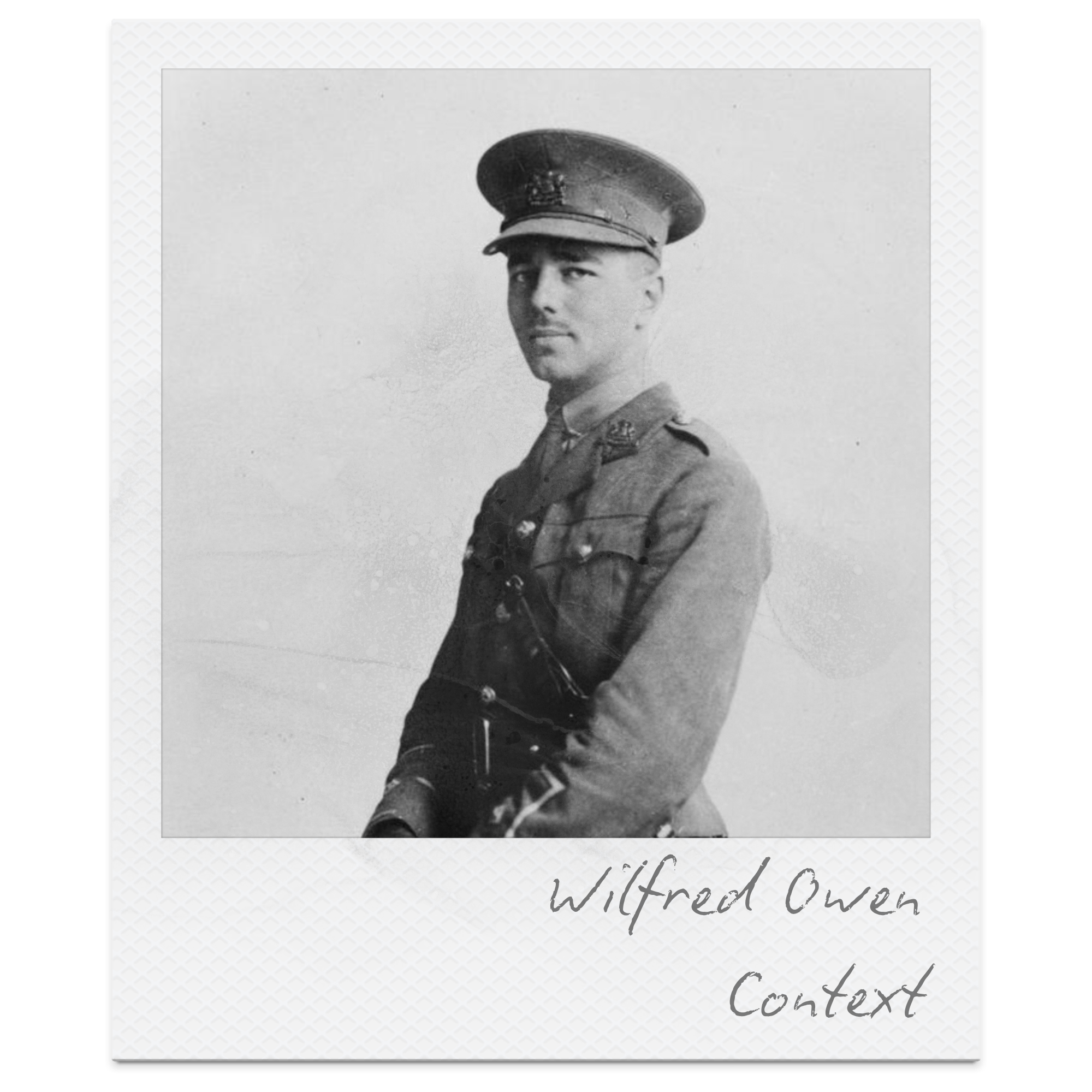
Context of Futility by Wilfred Owen
Futility by Wilfred Owen was written in May 1918, during the final year of the First World War, and first published in The Nation on 15 June 1918. Unlike many of Owen's poems, which were published posthumously, Futility appeared during his lifetime. Owen composed the poem while serving as an officer in the British Army, following his experiences of trench warfare on the Western Front and a period of treatment for shell shock at Craiglockhart War Hospital in Edinburgh. By this stage of the war, Owen had witnessed the devastating physical and psychological consequences of combat, experiences that profoundly shaped his poetry. Rather than describing the violence of battle directly, Futility focuses on the aftermath of a soldier's death, transforming a seemingly ordinary moment into a meditation on mortality, human suffering and the apparent futility of war.
The poem's historical context is particularly significant because of its movement beyond the immediate tragedy of an individual soldier towards a wider questioning of life, creation and the natural world. The references to snow, the warmth of the sun and the agricultural landscape of home establish a contrast between the soldier's former existence and the cold conditions of the battlefield. Owen's imagery also draws upon biblical creation narratives, particularly the idea of humanity being formed from clay, while questioning whether the extraordinary processes that produced life have any ultimate purpose. The poem therefore reflects not simply grief at the loss of a soldier, but a profound crisis of meaning in which the destruction of human life makes creation itself appear senseless. For a broader exploration of the poet's wartime experiences, literary influences and changing attitudes towards conflict, see Wilfred Owen: Historical, Social & Literary Context.
Futility by Wilfred Owen: Full Poem
First published in June 1918, Futility is a fourteen-line poem in which Wilfred Owen moves from a tender attempt to revive a fallen soldier towards a profound questioning of life and creation.
Move him into the sun—
Gently its touch awoke him once,
At home, whispering of fields half-sown.
Always it woke him, even in France,
Until this morning and this snow.
If anything might rouse him now
The kind old sun will know.
Think how it wakes the seeds—
Woke once the clays of a cold star.
Are limbs, so dear-achieved, are sides
Full-nerved, still warm, too hard to stir?
Was it for this the clay grew tall?
—O what made fatuous sunbeams toil
To break earth's sleep at all?
Futility — Wilfred Owen (1918)
Futility by Wilfred Owen: At a Glance
Poet: Wilfred Owen (1893–1918)
Written: May 1918, during the final year of the First World War.
Published: 15 June 1918, in The Nation, during Owen's lifetime.
Form: Fourteen-line lyric poem consisting of two seven-line stanzas, with an unconventional sonnet-like structure.
Speaker: An unidentified voice, possibly a fellow soldier, who initially addresses others attending to a fallen comrade before turning towards broader philosophical questions.
Mood: Initially tender, hopeful and elegiac, gradually becoming questioning, anguished and despairing.
Central tension: The contrast between the sun's apparent power to create and sustain life and its inability to restore a single dead soldier, raising questions about the purpose of existence.
Core themes: Death and mortality; the futility of war; grief and loss; nature and creation; hope and despair; the meaning of existence; faith and doubt.
Key symbols: The sun represents warmth, life and creative power; snow suggests coldness, death and the indifference of the battlefield; seeds and fields evoke growth, renewal and unrealised potential; clay alludes to the creation of humanity and the origins of life.
One-sentence meaning: Through the death of an individual soldier, Owen questions why nature and creation have invested so much in producing human life if that life can be destroyed so easily, transforming personal grief into a profound meditation on the apparent futility of existence.
Quick Summary of Futility by Wilfred Owen
In Futility by Wilfred Owen, the speaker asks that a fallen soldier be moved into the sunlight, hoping that its warmth might somehow awaken him. He remembers how the sun once roused the young man from sleep in the peaceful fields of home and continued to wake him even during his military service in France. Although the soldier now lies motionless in the snow, the speaker clings to the possibility that the sun, which has always sustained life, might possess the power to revive him. The first stanza therefore moves between tender remembrance, desperate hope and the growing recognition of death, as the speaker struggles to accept that something so familiar and life-giving can no longer awaken his companion.
In the second stanza, the speaker's thoughts expand beyond the individual soldier to consider the origins and purpose of life itself. Reflecting on the sun's ability to awaken seeds and its role in the development of life on Earth, he questions why the soldier's carefully formed body cannot be stirred back into consciousness. His grief develops into a series of increasingly anguished questions about why humanity was created if human life can end so abruptly. The poem concludes without offering an answer, leaving the reader to confront the apparent futility of creation, the permanence of death and the devastating waste of human potential during war.
Title, Form, Structure and Metre in Futility by Wilfred Owen
The form and structure of Futility by Wilfred Owen are central to its exploration of death, grief and the apparent pointlessness of human existence. Although the poem contains fourteen lines, recalling the traditional sonnet, Owen divides it into two seven-line stanzas and employs an unusual combination of partial rhyme, rhythmic variation and contrasting tones. These formal choices reflect the speaker's movement from a fragile belief in the restorative power of nature towards a much more disturbing questioning of creation itself. The poem's carefully balanced structure also creates a striking contrast between the familiar rhythms of life and the irreversible finality of death.
The Significance of the Title: Futility
The title “Futility” immediately introduces the idea of uselessness, wasted effort and the absence of meaningful results. In the context of the First World War, it suggests the senseless destruction of young lives and the apparent pointlessness of the suffering endured by soldiers. However, Owen's choice of title becomes increasingly complex as the poem develops, extending beyond the futility of warfare to question whether life itself has any lasting purpose.
At the beginning of the poem, futility is expressed through the attempt to revive a dead soldier. The command “Move him into the sun—” suggests that the speaker still hopes some familiar natural force might restore his companion to consciousness. Yet the reader gradually recognises that this action cannot succeed. The sunlight that once awakened the soldier every morning is powerless against death, transforming an ordinary gesture of care into an act of heartbreaking futility.
By the final lines, the meaning of the title expands considerably. When the speaker asks “Was it for this the clay grew tall?”, he questions why humanity was created if individual lives can be destroyed so abruptly. The final reference to “fatuous sunbeams” suggests that even the natural processes responsible for sustaining life may have been engaged in a meaningless endeavour. The title therefore acquires a philosophical significance: it is not merely the attempt to save the soldier that appears futile, but potentially the entire process of creation.
Form and Structure: An Unconventional Fourteen-Line Poem
Futility is a fourteen-line lyric poem arranged into two seven-line stanzas, a form that resembles a sonnet without following its conventional organisation. Traditional Petrarchan sonnets typically divide into an octave and sestet, while Shakespearean sonnets consist of three quatrains and a concluding couplet. Owen instead creates two equal stanzas, establishing a visual and structural balance between contrasting responses to death.
This resemblance to the sonnet is particularly interesting because the form has traditionally been associated with love, devotion and intense personal emotion. Owen's poem can be understood as an unconventional expression of love: not romantic love, but tenderness towards a fallen companion and a profound attachment to human life. The speaker's gentle recollections of the soldier's former existence suggest the emotional value of a life that warfare has prematurely ended.
The division between the two stanzas creates a distinct volta, or turning point, after line seven. In the first stanza, the speaker concentrates on the individual soldier and the possibility that sunlight might awaken him. The affectionate description “The kind old sun will know” presents nature as familiar, benevolent and potentially capable of restoring life.
However, the second stanza begins with the imperative “Think how it wakes the seeds—”, shifting attention away from the soldier's immediate circumstances towards the origins of life. The speaker no longer simply hopes for the soldier's recovery but begins to question why the natural world produces living beings that must eventually die.
This movement creates a powerful structural contrast:
Stanza One: Personal grief, memories of home, the sun's nurturing qualities and the fragile possibility of revival.
Stanza Two: Universal questions about creation, the physical complexity of human life, the permanence of death and the apparent meaninglessness of existence.
The poem also moves from an instruction to act towards an instruction to think. The opening command, “Move him”, proposes a practical response to the soldier's condition, while “Think how” introduces a philosophical response that cannot offer any practical solution. This progression suggests that, when physical action proves powerless against death, the speaker turns towards intellectual questioning.
The endings of the two stanzas reinforce this development. The first concludes with the relatively reassuring statement “The kind old sun will know”, while the second ends with the unresolved question “To break earth's sleep at all?”. The transition from a declaration of confidence to a question about the purpose of existence reveals the collapse of the speaker's earlier hope.
Rhyme Scheme and Poetic Pattern
The rhyme scheme of Futility can be represented approximately as:
ABABCCC DEDEFFF
However, this pattern depends on recognising Owen's use of pararhyme, also known as half-rhyme, alongside imperfect and occasional full rhymes. Rather than creating a consistently harmonious pattern, Owen establishes relationships between words whose sounds are similar but do not always match completely.
In the first stanza, “sun” and “half-sown” share consonantal similarities despite their different vowel sounds. Similarly, “once” and “France” create an imperfect correspondence, linking the soldier's peaceful memories with his later military experience. These unsettled sounds prevent the stanza from achieving the complete musical resolution associated with conventional rhyme.
The ending of the stanza contains the clearer rhyme between “snow” and “know”, separated by “now”, which creates an additional but less exact sound relationship. The effect is a mixture of familiarity and uncertainty, appropriate to a speaker who recognises the soldier's death yet continues to hope that the sun might somehow revive him.
The second stanza develops a comparable pattern. The endings “seeds” and “sides”, together with “star” and “stir”, establish imperfect sound correspondences. These connect the language of growth and creation with the physical reality of the dead soldier, while their lack of exact agreement contributes to the poem's unsettled atmosphere.
The final three lines bring together “tall”, “toil” and “all”. Although “tall” and “all” form a full rhyme, “toil” disrupts the expected sound. This interruption is particularly significant because the word describes the apparently wasted effort of the sun in bringing life into existence.
Owen's combination of full rhyme, pararhyme and other imperfect sound echoes therefore creates a poem that is patterned without being completely harmonious. The sounds repeatedly approach resolution without consistently achieving it, reflecting the speaker's struggle to reconcile the extraordinary processes of life with the finality of death.
Metre and Rhythmic Movement
The metre of Futility is broadly influenced by iambic rhythms, although Owen introduces variations that prevent the poem from becoming mechanically regular. Many of the longer lines approach iambic tetrameter, while the opening and closing lines of each stanza are shorter, often approximating three-beat or trimeter rhythms.
An iamb consists of an unstressed syllable followed by a stressed syllable. Owen's use of this familiar rhythmic movement gives the poem an underlying lyrical quality, but its variations allow individual words and emotional shifts to receive particular emphasis.
The opening line, “Move him into the sun—”, begins with the stressed imperative “Move”. This initial emphasis gives the line the urgency of a spoken instruction, immediately placing the reader within the scene. Yet the line is also relatively short, and the dash introduces a pause that encourages the reader to consider the tenderness and desperation behind the command.
The second stanza opens with a comparable stressed imperative:
“Think how it wakes the seeds—”
Here, “Think” replaces “Move”, creating a rhythmic and structural parallel between the two stanzas. Both begin with commands, but the first concerns physical action while the second demands reflection. The repeated emphatic openings draw attention to the speaker's changing response to death.
Owen also uses pauses, punctuation and disrupted rhythmic movement to express emotional uncertainty. The line “Are limbs, so dear-achieved, are sides” is interrupted by commas and an awkwardly repeated grammatical construction, suggesting that the speaker is struggling to articulate his disbelief. The following description, “Full-nerved, still warm, too hard to stir?”, places considerable emphasis on the physical qualities of the body, particularly its lingering warmth and inability to move.
The short final line, “To break earth's sleep at all?”, brings the poem to a questioning conclusion. Its relatively compact rhythm gives the question particular force, while the absence of an answer prevents the emotional and philosophical tension from being resolved.
Ultimately, Owen's metrical flexibility, emphatic opening commands and carefully positioned pauses create a rhythm that moves between tenderness, disbelief and anguish. The poem retains enough formal regularity to suggest the familiar continuity of life, yet its disruptions reflect a speaker confronting an event that makes those familiar patterns seem suddenly meaningless.
Speaker and Setting in Futility by Wilfred Owen
The speaker and setting in Futility by Wilfred Owen are essential to understanding the poem's movement from personal grief towards a broader questioning of human existence. Owen presents an unidentified speaker confronting the death of a fellow soldier in the cold conditions of the First World War. However, the poem's perspective gradually expands beyond this immediate scene, moving through memories of peaceful rural life towards an imagined vision of the Earth's creation. These shifts in perspective and setting establish powerful contrasts between war and peace, warmth and cold, life and death, reinforcing the tragedy of a young life brought to an abrupt end.
Who Is the Speaker in Futility?
The speaker in Futility is an unidentified individual who appears to be a soldier witnessing the death of a companion. Although the speaker's experiences may reflect Owen's own service on the Western Front, it is important to distinguish the poetic speaker from Wilfred Owen himself. The poem does not establish that the incident is autobiographical, and the absence of a named speaker allows the emotional experience to represent the grief of soldiers more widely.
The opening imperative, “Move him into the sun—”, suggests that the speaker is addressing another person or group of people, possibly fellow soldiers gathered around the body. The command is practical and direct, yet its underlying purpose is deeply emotional. Rather than immediately accepting the soldier's death, the speaker proposes an action that might restore him to consciousness, revealing a mixture of tenderness, desperation and disbelief.
The speaker's relationship with the dead soldier is suggested through his intimate knowledge of the man's former life. The recollection that sunlight once awakened him “At home, whispering of fields half-sown” introduces a peaceful existence far removed from the battlefield. Although the poem does not explicitly identify the soldier as a farmer, the agricultural imagery suggests a connection with rural life and the ordinary responsibilities interrupted by military service.
The description “The kind old sun” further reveals the speaker's emotional perspective. By personifying the sun as a familiar, benevolent presence, he appears to seek comfort in the natural world, trusting that the force which once awakened his companion might somehow do so again. This initial attitude is characterised by affection, hope and a reluctance to accept the permanence of death.
However, the speaker's tone changes significantly in the second stanza. The imperative “Think how it wakes the seeds—” redirects attention from the immediate attempt to revive the soldier towards a consideration of life's origins. The increasingly anguished rhetorical questions that follow reveal a speaker struggling to reconcile the complexity and apparent value of human existence with its sudden destruction.
By the final question, “To break earth's sleep at all?”, the speaker is no longer simply mourning one individual. His grief has developed into an existential crisis, in which the death of a companion causes him to question the purpose of creation itself. This progression gives the speaker both a personal and a representative significance, expressing the psychological and philosophical consequences of witnessing death during wartime.
The Setting of Futility: Battlefield, Home and Creation
The immediate setting of Futility is a cold, snowy location in France during the First World War. Although Owen does not describe trenches, weapons or the physical violence of combat, the reference to “France” establishes the soldier's military circumstances, while “this morning and this snow” creates an atmosphere of coldness, stillness and death. The presence of sunlight introduces a contrasting source of warmth, emphasising the speaker's desperate hope that the soldier might yet be awakened.
This contrast between sunlight and snow is particularly important. The sun traditionally suggests vitality, warmth and renewal, whereas snow can evoke coldness, silence and the suspension of natural activity. Their simultaneous presence creates an unsettling visual image: the soldier lies in a world where the conditions associated with life and death exist together, yet the warmth of the sun cannot reverse his condition.
The poem also introduces an imagined domestic setting through the memory of the soldier's life “At home, whispering of fields half-sown.” This brief reference establishes a world of agricultural labour, seasonal renewal and ordinary human activity. The unfinished fields may suggest work left incomplete, mirroring the soldier's prematurely ended life. By placing this peaceful landscape alongside the battlefield in France, Owen emphasises the disruption of civilian life and the loss of a future that might otherwise have continued.
In the second stanza, the setting expands dramatically beyond both the battlefield and the remembered home. The speaker imagines the origins of life on Earth, referring to “the clays of a cold star” and the sun's role in awakening the natural world. The image of the Earth before the emergence of life introduces an immense timescale, contrasting with the brief existence of the individual soldier.
This movement from a single body in the snow to the beginnings of life on Earth is central to the poem's meaning. The physical setting remains intimate and immediate, but the speaker's thoughts travel across the history of creation. Owen thereby transforms an individual wartime death into a question about the value and purpose of all human existence.
Ultimately, the contrasting settings of the battlefield, the peaceful fields of home and the primordial Earth reveal the widening scope of the speaker's grief. What begins as an attempt to restore one soldier to life becomes a confrontation with the apparent indifference of the universe, suggesting that the devastation of war can unsettle not only an individual's hopes but their understanding of existence itself.
Stanza-by-Stanza Analysis of Futility by Wilfred Owen
The stanza-by-stanza analysis of Futility by Wilfred Owen reveals how the poem develops from an intimate expression of grief into a profound questioning of life, death and the purpose of creation. Across two carefully balanced seven-line stanzas, Owen traces the speaker's emotional movement from tenderness and fragile hope to disbelief, frustration and existential despair. The first stanza focuses on the fallen soldier and the sun's familiar power to awaken and sustain life, while the second expands into a series of increasingly anguished questions about humanity's origins and the apparent waste of human existence. Through personification, contrasting imagery, rhetorical questions, biblical allusions and subtle changes in rhythm and tone, Owen transforms a single wartime death into a powerful meditation on the fragility of life and the seeming indifference of the natural world.
Stanza 1: The Sun as a Source of Hope and the Desperate Attempt to Restore Life
The opening stanza of Futility by Wilfred Owen presents a deeply intimate moment in which the speaker attempts to revive a fallen soldier through the familiar warmth of sunlight. Rather than describing the violence of the battlefield, Owen focuses on tenderness, remembrance and the desperate refusal to accept death. Through personification, agricultural imagery, contrasting temperatures and subtle changes in tone, the stanza establishes the sun as a symbol of life and renewal, while gradually revealing the limitations of its power.
The poem opens with the direct imperative “Move him into the sun—”, immediately placing the reader within an urgent but strangely quiet scene. The verb “Move” suggests that the soldier is incapable of moving himself, while the third-person pronoun “him” leaves his identity unspecified. This anonymity allows the dead soldier to represent the countless individuals whose lives were lost during the First World War. The instruction also implies the presence of other people, possibly fellow soldiers, who are being asked to help move the body. However, the absence of explicit references to wounds, weapons or violence makes the opening particularly poignant: the consequences of war are communicated through stillness rather than brutality.
The dash at the end of “Move him into the sun—” creates a pause that may suggest hesitation, emotional strain or the speaker's attempt to gather his thoughts. It also allows the following line to explain why sunlight might matter. The speaker appears to cling to a simple association between warmth and waking, treating death almost as though it were an unusually deep sleep. This establishes the stanza's central tension between the instinctive desire to preserve life and the irreversible reality of death.
Owen develops this tenderness through the personification “Gently its touch awoke him once”. The adverb “Gently” emphasises softness and care, while the noun “touch” gives the sun an almost human capacity for physical affection. Rather than appearing as an impersonal natural force, sunlight becomes a nurturing presence capable of awakening the soldier with the tenderness of a parent or loved one. The verb “awoke” also establishes an important distinction between sleep and death: the sun could once restore the soldier to consciousness, but the speaker has yet to acknowledge that his present condition is fundamentally different.
The temporal reference “once” introduces a note of loss. Although the speaker recalls the sun's former power with affection, the word also suggests that this experience belongs to a past that cannot be recovered. Owen therefore introduces the contrast between past vitality and present stillness before explicitly revealing the soldier's death.
The following line, “At home, whispering of fields half-sown”, shifts the reader's attention away from the battlefield towards an imagined or remembered rural landscape. The phrase “At home” evokes familiarity, safety and belonging, contrasting with the soldier's circumstances in France. The participle “whispering” extends the personification of the sun, suggesting a quiet, intimate communication between nature and the young man. Its soft sound contributes to the stanza's subdued, elegiac atmosphere.
The image of “fields half-sown” is especially significant. Literally, it refers to agricultural land in which planting remains unfinished, suggesting the ordinary work and responsibilities of rural life. Symbolically, however, the incomplete fields may represent the soldier's interrupted future and the potential that his death has left unrealised. Just as the fields have not yet been fully planted, the soldier's life has ended before its possibilities could be fulfilled. The agricultural imagery also introduces the natural cycle of planting, growth and renewal, preparing for the second stanza's exploration of seeds and creation.
The statement “Always it woke him, even in France” reinforces the sun's apparent reliability. The adverb “Always” suggests an unbroken pattern of renewal, while “even” implies that the sun's familiar presence continued despite the soldier's displacement from home to the battlefield. France, the location of much of the fighting on the Western Front, becomes a place where the ordinary rhythms of nature persist alongside extraordinary human destruction. The sun appears indifferent to national boundaries and military conflict, continuing to shine upon the soldier regardless of his circumstances.
However, this reassuring pattern is abruptly interrupted by “Until this morning and this snow.” The conjunction “Until” marks a decisive turning point, signalling that the sun's familiar ability to awaken the soldier has finally failed. The repeated demonstrative “this” brings the speaker's attention back to the immediate present, contrasting the remembered warmth of earlier mornings with the cold reality of the soldier's death. The noun “snow” introduces an image of coldness, stillness and lifelessness, sharply opposing the warmth and vitality associated with the sun.
The juxtaposition of sunlight and snow is particularly powerful because both belong to the natural world, yet they suggest opposing conditions. The sun offers warmth and the possibility of renewal, while the snow evokes the coldness of death. Owen does not present nature as straightforwardly comforting or hostile; instead, the two images reveal the speaker's growing uncertainty about whether nature possesses any meaningful power over human mortality.
The conditional statement “If anything might rouse him now” exposes the fragility of the speaker's remaining hope. The conjunction “If” introduces uncertainty, while the modal verb “might” acknowledges that revival is only a possibility, rather than an expectation. The verb “rouse” continues the poem's association between death and sleep, suggesting that the speaker still struggles to confront the permanence of the soldier's condition. Its gentle connotations are especially moving because they imply that the young man requires only awakening, rather than resurrection.
The stanza concludes with “The kind old sun will know.” The affectionate adjectives “kind” and “old” personify the sun as a wise, benevolent and familiar presence. The sun is imagined almost as an elderly guardian whose long experience might provide a solution beyond human understanding. The confident modal verb “will” contrasts with the uncertainty of “might” in the preceding line, suggesting that the speaker is attempting to reassure himself through faith in nature's restorative powers.
Yet the statement also contains a painful irony. The reader recognises that sunlight cannot revive the dead, making the speaker's confidence increasingly tragic. Furthermore, the assertion that the sun “will know” transfers responsibility away from the speaker, perhaps reflecting his helplessness in the face of a death he cannot prevent or reverse. What initially appears to be an expression of hope therefore also reveals the desperation of someone who has exhausted every human possibility.
Structurally, the stanza moves from an urgent command to an apparently reassuring declaration, passing through memories of the soldier's former life and the recognition that something has changed irrevocably. The repeated references to awakening create a pattern of natural renewal, while the interruption introduced by “Until” exposes the limits of that pattern. Owen's gentle diction and restrained imagery make the soldier's death particularly affecting because the speaker continues to approach it through the language of ordinary life rather than the language of violence.
Ultimately, the first stanza establishes the sun as a symbol of life, warmth, continuity and fragile hope, while quietly undermining the belief that these forces can overcome death. The speaker's tender attempt to revive his companion becomes the emotional foundation for the second stanza, in which the failure of sunlight to awaken one soldier develops into a much more profound questioning of creation, mortality and the purpose of human existence.
Stanza 2: From the Power of Creation to the Apparent Futility of Existence
The second stanza of Futility by Wilfred Owen marks a profound shift from personal grief towards existential questioning, the origins of life and the apparent meaninglessness of death. Having failed to find reassurance in the sun's familiar warmth, the speaker begins to question why nature possesses the extraordinary power to create and sustain life but cannot restore a single fallen soldier. Through biblical allusions, rhetorical questions, personification, contrasting imagery and increasingly anguished language, Owen transforms an intimate moment of mourning into a philosophical challenge to the purpose of creation itself.
The stanza opens with the imperative “Think how it wakes the seeds—”, echoing the first stanza's opening command, “Move him into the sun—”. This structural parallel is significant because it reveals a change in the speaker's response to death. Whereas “Move” demanded a physical action intended to revive the soldier, “Think” invites reflection upon the processes that make life possible. The speaker has moved from attempting to change the soldier's condition to questioning why that condition should exist at all.
The verb “wakes” continues the extended metaphor of life as wakefulness and death as sleep, established in the first stanza. However, its application to “seeds” broadens the image beyond human experience. Seeds contain the potential for new life, remaining dormant until suitable conditions allow them to germinate. By describing the sun as awakening them, Owen reinforces its association with fertility, renewal and the extraordinary power of the natural world.
The image also recalls the earlier reference to “fields half-sown”, creating a connection between the soldier's remembered rural life and the wider cycles of nature. Yet this connection introduces a painful contradiction: the sun can encourage apparently lifeless seeds to grow, but it cannot awaken a human being whose body remains physically intact. The speaker's grief is therefore intensified by the apparent inconsistency between nature's capacity to generate life and its inability to reverse death.
The following line, “Woke once the clays of a cold star”, expands the poem's perspective from agricultural growth to the origins of life on Earth. The verb “Woke” suggests that the emergence of life was itself a form of awakening, transforming an initially lifeless world into one capable of sustaining living organisms. The phrase “cold star” evokes the Earth in its ancient, barren condition, before the development of life, while the plural noun “clays” suggests the raw materials from which living beings emerged.
The reference to “clays” also introduces a significant biblical allusion to the creation of humanity from the dust of the ground, as described in Genesis. By combining this religious association with an image of the Earth's gradual development, Owen brings together ideas of divine creation and natural processes. The sun becomes a force associated with the emergence of life itself, rather than merely a source of everyday warmth.
However, the adjective “cold” also recalls the snow surrounding the dead soldier in the first stanza. This connection creates a disturbing parallel between the lifeless Earth before creation and the soldier's present condition. The sun apparently possessed the power to transform the former into a living world, yet cannot restore life to the latter. Owen thus establishes a contradiction that drives the stanza's increasingly desperate questions.
The speaker's attention returns abruptly to the soldier's body in “Are limbs, so dear-achieved, are sides / Full-nerved, still warm, too hard to stir?”. The rhetorical question expresses disbelief that a human body, produced through such extraordinary natural processes, should now be incapable of movement. The nouns “limbs” and “sides” emphasise the soldier's physical existence, while the repeated grammatical construction “Are limbs ... are sides” creates a hesitant, disrupted rhythm that reflects the speaker's emotional agitation.
The compound adjective “dear-achieved” is especially important. The word “dear” suggests both emotional preciousness and something obtained at considerable cost, while “achieved” implies effort, accomplishment and the successful completion of a difficult process. Together, they present the human body as something extraordinarily valuable, shaped through an immense investment of time and creative energy. The soldier's death therefore represents more than the loss of an individual life: it appears to invalidate the very processes responsible for producing that life.
Owen intensifies this sense of wasted potential through the description “Full-nerved, still warm”. The adjective “Full-nerved” draws attention to the complexity of the human nervous system, suggesting a body equipped for sensation, movement and responsiveness. Meanwhile, “still warm” implies that death may have occurred recently, making the soldier's condition particularly difficult to comprehend. His body retains some of the physical qualities associated with life, yet the animating force that once made those qualities meaningful has disappeared.
The phrase “too hard to stir?” returns to the vocabulary of awakening, but its implications are now more disturbing. The word “stir” suggests only the smallest movement, making the sun's inability to produce even this minimal response seem especially incomprehensible. The question also exposes the inadequacy of the speaker's earlier hope: death cannot be overcome simply by repeating the conditions that once accompanied ordinary waking.
The next question, “Was it for this the clay grew tall?”, represents a decisive movement towards philosophical despair. The demonstrative “this” refers to the soldier's death, reducing the apparent culmination of creation to a lifeless body on a battlefield. The noun “clay” returns to the biblical imagery of humanity's origins, while “grew tall” suggests the transformation of inanimate matter into the upright human form.
This image can also be interpreted as a reference to the soldier's personal development from infancy into adulthood. The body that once grew, strengthened and acquired the capacities necessary for human life has now been destroyed. The question therefore brings together the immense history of human creation and the tragically brief existence of one individual, suggesting that both processes may have been rendered meaningless by death.
The rhetorical construction “Was it for this” expresses outrage as well as bewilderment. The speaker appears to ask whether the purpose of humanity's emergence was merely to produce individuals who could be killed in war. The question is particularly devastating because it challenges the assumption that growth, development and creation necessarily lead towards something valuable or meaningful.
Owen's emotional language becomes more openly accusatory in the final two lines: “—O what made fatuous sunbeams toil / To break earth's sleep at all?”. The initial dash creates an abrupt interruption, while the exclamation “O” conveys an outburst of anguish that contrasts sharply with the gentle restraint of the opening stanza. The speaker's earlier tenderness has developed into frustration, as his inability to accept the soldier's death becomes a challenge to the processes that brought life into existence.
The adjective “fatuous” is particularly striking because it means foolish or lacking sound judgement. Earlier, the sun was described affectionately as “kind” and “old”, suggesting wisdom, benevolence and reliability. Now its efforts appear misguided, perhaps even absurd. This transformation in the sun's characterisation reflects the speaker's changing attitude towards existence: the natural world that once offered comfort has become a source of bewilderment and disillusionment.
The verb “toil” personifies the sunbeams as labourers engaged in difficult, sustained work. It also recalls the agricultural imagery of the first stanza, particularly the “fields half-sown”, connecting the labour of cultivating crops with the much greater labour of creating life. Yet the speaker now questions whether this effort was worthwhile. If every living being must eventually die, the work of bringing life into existence may appear tragically wasteful.
The final metaphor, “To break earth's sleep at all?”, completes the poem's extended association between sleep, awakening and creation. At the beginning, the speaker hoped that sunlight might awaken one soldier; by the ending, he questions why sunlight awakened the Earth itself. The movement from an individual body to the entire planet gives the conclusion an immense philosophical scope.
The verb “break” is also significant. Although it ordinarily suggests the interruption of sleep, it can carry connotations of force, damage and destruction. In this context, the awakening of the Earth is no longer presented as an unquestionably positive event. Instead, the speaker seems to contemplate whether a world without life might have been spared the suffering and loss that accompany existence.
The closing phrase “at all?” intensifies the question's absolute nature. Rather than asking why one soldier has died, the speaker questions why life should have begun in the first place. The poem offers no response, leaving its central philosophical problem unresolved. This absence of resolution is crucial to Owen's exploration of grief, faith, mortality and the apparent futility of human existence.
Structurally, the second stanza mirrors the first through its opening imperative, repeated references to awakening and continued focus on the sun. However, its tone moves in the opposite direction. Where the first stanza ends with the hopeful declaration “The kind old sun will know”, the second concludes with a question that challenges the value of the sun's creative work. The movement from certainty to uncertainty, affection to accusation and personal loss to universal doubt reveals the profound psychological consequences of the soldier's death.
Ultimately, the second stanza transforms Futility from an elegy for a fallen soldier into a meditation on the apparent contradictions of creation. Owen does not simply argue that war is pointless; he explores how the destruction of human life can make the entire process of existence seem incomprehensible. The poem's unanswered final question leaves readers confronting the same disturbing possibility as the speaker: that the extraordinary effort required to produce life offers no protection against its sudden and irreversible destruction.
Key Quotes and Methods in Futility by Wilfred Owen
The key quotations in Futility by Wilfred Owen reveal how the poet uses personification, natural imagery, biblical allusions, contrasting language and rhetorical questions to explore the relationship between life and death. Across just fourteen lines, Owen transforms the speaker's tender attempt to revive a fallen soldier into a profound questioning of creation itself. The following ten important quotations from Futility illustrate how individual words and poetic techniques communicate grief, hope, the futility of war and existential despair, making them particularly useful for close reading, literary analysis and comparative study.
1. “Move him into the sun—”
◆ Technique: Imperative verb, symbolism, caesura-like pause created by the dash and direct opening.
◆ Meaning: The speaker instructs someone to move the fallen soldier into the sunlight, hoping that its warmth might restore him to consciousness. The sun immediately becomes associated with life, warmth and the possibility of renewal.
◆ Purpose: Owen begins with a simple, practical command rather than a dramatic description of battlefield violence. The imperative “Move” establishes urgency, while the anonymous pronoun “him” allows the soldier to represent the many individuals killed during the First World War.
◆ Impact: The opening creates an atmosphere of tenderness, desperation and restrained grief. The dash encourages a momentary pause, allowing readers to recognise the emotional significance of an action that will ultimately prove futile.
2. “Gently its touch awoke him once”
◆ Technique: Personification, tactile imagery, adverbial emphasis and contrast between past and present.
◆ Meaning: The sun is presented as a caring presence whose gentle warmth once awakened the soldier from ordinary sleep. The adverb “Gently” suggests affection and tenderness, while “once” introduces the painful distinction between his former life and present death.
◆ Purpose: Owen personifies the sun to establish its familiar relationship with the soldier, making the speaker's belief in its restorative power emotionally understandable. The language also creates a contrast between the ordinary experience of waking and the impossibility of resurrection.
◆ Impact: The affectionate imagery humanises the dead soldier and intensifies the tragedy of his loss. Readers recognise that the sun's former ability to awaken him offers no protection against death, creating a sense of helplessness and dramatic irony.
3. “At home, whispering of fields half-sown.”
◆ Technique: Auditory imagery, personification, agricultural imagery and symbolism.
◆ Meaning: The speaker recalls the soldier's connection with a peaceful rural environment, where sunlight appeared to summon him towards the unfinished work of planting. The phrase “fields half-sown” suggests agricultural labour but may also symbolise an interrupted life and unrealised potential.
◆ Purpose: Owen contrasts the familiarity of home with the soldier's later experience of war. The gentle verb “whispering” creates an intimate relationship between humanity and nature, while the incomplete fields anticipate the poem's wider concern with creation and wasted effort.
◆ Impact: The quotation encourages readers to imagine the soldier as an individual with responsibilities, memories and a future beyond military service. The suggestion of unfinished work makes his death particularly poignant, emphasising the destruction of ordinary lives and possibilities by war.
4. “Always it woke him, even in France”
◆ Technique: Repetition of awakening imagery, temporal emphasis, geographical contrast and irony.
◆ Meaning: The sun's familiar ability to awaken the soldier continued even after he left home for military service in France. The adverb “Always” suggests reliability and continuity, while “even” emphasises the persistence of ordinary natural processes amid extraordinary circumstances.
◆ Purpose: Owen establishes the sun as a seemingly dependable force that transcends the distinction between peaceful civilian life and wartime experience. This prepares for the devastating interruption introduced by the following line.
◆ Impact: The quotation briefly reinforces the speaker's confidence in nature before exposing its limitations. The contrast between the sun's continuing presence and the soldier's sudden death highlights the fragility of human life despite the apparent permanence of natural cycles.
5. “Until this morning and this snow.”
◆ Technique: Volta-like tonal shift, repetition, demonstrative language, juxtaposition and cold imagery.
◆ Meaning: The word “Until” interrupts the established pattern of awakening, revealing that the soldier has died. The repeated demonstrative “this” brings attention to the immediate moment, while “snow” evokes coldness, stillness and the physical conditions surrounding his death.
◆ Purpose: Owen contrasts the sun's familiar warmth with the coldness associated with death, marking the point at which the speaker's recollections confront an irreversible reality. The abrupt temporal shift separates the soldier's living past from his lifeless present.
◆ Impact: The line introduces a quiet but devastating recognition of mortality. Its restrained language makes the soldier's death more affecting, while the opposition between sun and snow, warmth and cold, life and death develops the poem's central symbolic conflict.
6. “The kind old sun will know.”
◆ Technique: Personification, affectionate diction, symbolism, declarative statement and dramatic irony.
◆ Meaning: The speaker imagines the sun as a wise and benevolent presence capable of knowing how to revive the soldier. The adjectives “kind” and “old” suggest familiarity, experience and reassurance, while “will” conveys an apparent confidence in its power.
◆ Purpose: Owen presents the sun almost as a protective guardian, reflecting the speaker's desperate search for hope. The declaration also prepares for the second stanza, where the sun's supposed wisdom and benevolence are increasingly questioned.
◆ Impact: Readers recognise the painful irony that sunlight cannot restore life to the dead. The speaker's faith therefore becomes an expression of grief, denial and helplessness, making the subsequent movement towards philosophical despair especially powerful.
7. “Think how it wakes the seeds— / Woke once the clays of a cold star.”
◆ Technique: Imperative, extended metaphor, personification, biblical allusion and cosmic imagery.
◆ Meaning: The speaker reflects on the sun's role in encouraging seeds to germinate and, more broadly, in sustaining the conditions that allowed life to emerge on Earth. The reference to “clays” recalls creation narratives in which humanity originates from the earth, particularly the biblical account in Genesis.
◆ Purpose: Owen expands the poem's focus from the death of one soldier to the origins of life itself. The repeated language of awakening connects the sun's everyday effects with the much greater processes of creation, establishing a contradiction between its apparent power to generate life and its inability to restore it.
◆ Impact: The quotation dramatically enlarges the scale of the speaker's grief. The image of a “cold star” also recalls the snow surrounding the soldier, suggesting a disturbing parallel between the lifeless Earth before creation and the dead body on the battlefield.
8. “Are limbs, so dear-achieved, are sides / Full-nerved, still warm, too hard to stir?”
◆ Technique: Rhetorical question, compound adjectives, anatomical imagery, repetition and disrupted syntax.
◆ Meaning: The speaker struggles to understand why a human body, developed through such extraordinary natural processes, cannot be restored to movement. The phrase “dear-achieved” suggests something precious and obtained through immense effort, while “Full-nerved, still warm” emphasises the body's complexity and lingering physical warmth.
◆ Purpose: Owen draws attention to the apparent contradiction between the extraordinary achievement of human creation and the ease with which life can be extinguished. The repeated construction “Are limbs ... are sides” reflects the speaker's difficulty in articulating his disbelief.
◆ Impact: The physical detail makes the soldier's death immediate and disturbing. His body appears almost capable of life, yet remains motionless, intensifying the speaker's anguish, frustration and inability to reconcile creation with mortality.
9. “Was it for this the clay grew tall?”
◆ Technique: Rhetorical question, biblical allusion, metaphor and existential questioning.
◆ Meaning: The speaker questions whether humanity emerged from the earth only to experience suffering and death. The noun “clay” recalls the biblical creation of human beings from the ground, while “grew tall” suggests the development of the human form and the progression from infancy towards adulthood.
◆ Purpose: Owen transforms the soldier's death into a challenge to the apparent purpose of human creation. The demonstrative “this” reduces the culmination of life's development to the tragedy of a lifeless body, suggesting that the immense effort involved in producing human existence may have been wasted.
◆ Impact: The quotation expresses disillusionment, grief and a crisis of meaning. Rather than simply condemning the destruction caused by war, the speaker begins to question whether life itself possesses any enduring purpose.
10. “—O what made fatuous sunbeams toil / To break earth's sleep at all?”
◆ Technique: Rhetorical question, personification, metaphor, emotive exclamation, enjambment and tonal reversal.
◆ Meaning: The speaker questions why the sun expended its energy helping life emerge on Earth if all living things must eventually die. The adjective “fatuous” suggests foolishness or misguided effort, while “toil” presents the sunbeams as labourers engaged in the demanding work of creation.
◆ Purpose: Owen completes the transformation of the sun from a “kind old” guardian into a force whose creative work appears senseless. The metaphor “earth's sleep” returns to the poem's opening association between sleeping and waking, but now the speaker questions why the Earth was awakened into life at all.
◆ Impact: The poem ends with an unresolved philosophical question rather than consolation or reassurance. The final words “at all?” extend the speaker's anguish beyond the death of one soldier to encompass the purpose of existence itself, leaving readers confronting the apparent futility of creation, the permanence of death and the devastating consequences of war.
Poetic Techniques and Literary Devices in Futility by Wilfred Owen
The poetic techniques and literary devices in Futility by Wilfred Owen transform the death of a single soldier into a profound exploration of grief, mortality, creation and the apparent meaninglessness of human existence. Rather than relying on graphic descriptions of warfare, Owen employs personification, natural imagery, rhetorical questions, biblical allusions, metaphor, juxtaposition and carefully controlled sound patterns to communicate the psychological consequences of loss. Particularly important is the poem's shift in tone, as the speaker moves from tenderness and fragile hope towards bewilderment, frustration and existential despair. These techniques work together to expose the contradiction between nature's extraordinary capacity to produce life and its apparent powerlessness to reverse death.
Aporia and Rhetorical Questions: Questioning the Purpose of Existence
One of the most significant literary devices in Futility is aporia, a rhetorical expression of uncertainty, doubt or an apparently unanswerable problem. Owen develops this technique through the series of questions in the second stanza, allowing the speaker's personal grief to become a wider philosophical challenge to the purpose of creation.
The first major question, “Are limbs, so dear-achieved, are sides / Full-nerved, still warm, too hard to stir?”, reveals the speaker's difficulty in accepting that a body produced through such complex natural processes can suddenly become incapable of movement. The compound adjective “dear-achieved” suggests that human life is precious and the result of immense effort, while “still warm” emphasises the disturbing closeness between the soldier's former vitality and his present condition.
The speaker then asks “Was it for this the clay grew tall?”, extending his uncertainty from the soldier's death to the origins of humanity. The rhetorical question challenges the assumption that creation possesses a meaningful purpose, suggesting that the development of human life may have culminated only in suffering and destruction.
Finally, “—O what made fatuous sunbeams toil / To break earth's sleep at all?” expresses the speaker's most radical doubt. The question no longer concerns whether the soldier can be revived, but why life emerged in the first place. The progression of these questions creates a movement from physical disbelief to existential uncertainty, while the absence of answers leaves the poem's central philosophical problem unresolved.
Importantly, Owen does not necessarily present the speaker's despair as an objective truth about existence. Instead, the rhetorical questions dramatise the destabilising effects of grief, revealing how the death of one individual can undermine an entire understanding of life's value and purpose.
Personification: The Sun as a Benevolent but Powerless Force
Personification is central to the imagery and meaning of Futility, particularly through Owen's portrayal of the sun as a familiar presence capable of tenderness, knowledge and purposeful action.
In the first stanza, “Gently its touch awoke him once” gives the sun an almost human capacity for affection. The adverb “Gently” suggests care, while “touch” evokes physical intimacy, making sunlight resemble the reassuring presence of a parent or loved one. The description “whispering of fields half-sown” develops this personification further, presenting nature as something that communicates quietly with the soldier.
The phrase “The kind old sun will know” establishes the sun as a wise, benevolent figure. The adjectives “kind” and “old” imply compassion and experience, while the verb “know” suggests that nature might possess knowledge beyond human understanding. The speaker appears to place his remaining hope in a force that has always sustained life.
However, the personification changes dramatically in the second stanza. The sunbeams are described as “fatuous” and made to “toil”, transforming the sun from a nurturing guardian into a seemingly foolish labourer whose efforts have produced life without protecting it from death.
This reversal is essential to the poem's development. The sun itself has not changed; the speaker's interpretation of its power has changed. Owen therefore uses personification to reveal the movement from faith in nature's benevolence towards disillusionment with the apparent contradictions of creation.
Tone and Tonal Shift: From Tender Hope to Existential Despair
The tone of Futility by Wilfred Owen changes considerably across its two stanzas, reflecting the speaker's developing response to the death of his companion. Although the poem begins with an urgent instruction, its language is predominantly gentle, restrained and affectionate.
The opening description “Gently its touch awoke him once” establishes a tender, almost nostalgic tone. The soft diction and recollection of the soldier's former life create an atmosphere of intimate mourning rather than anger or condemnation. Similarly, “The kind old sun will know” introduces a note of fragile reassurance, suggesting that the speaker still wishes to believe in the restorative power of nature.
However, this hope is already complicated by the reference to “this morning and this snow”, which introduces a colder, more sombre atmosphere. The speaker's confidence becomes increasingly difficult to sustain as the reality of the soldier's death emerges.
The second stanza initially retains an explanatory tone through “Think how it wakes the seeds—”, but this develops into bewilderment as the speaker questions the relationship between creation and mortality. The disrupted syntax of “Are limbs, so dear-achieved, are sides” suggests emotional agitation, while the succession of rhetorical questions makes the speaker's uncertainty increasingly explicit.
The strongest tonal change occurs in the final lines, where the exclamation “—O” and the adjective “fatuous” introduce anguish and accusation. The sun, previously described with affection, now appears to have undertaken a meaningless task.
The poem therefore moves through tenderness, nostalgia, fragile hope, disbelief, frustration and philosophical despair. This tonal progression is especially powerful because Owen does not begin with an openly anti-war declaration. Instead, he allows the reader to experience the gradual collapse of reassurance as the speaker confronts the permanence of death.
Imagery: Nature, the Human Body and the Origins of Life
Owen uses natural and physical imagery to connect the soldier's individual death with the wider processes of growth, creation and mortality.
The image of “fields half-sown” evokes agricultural life, suggesting planting, seasonal renewal and the expectation of future growth. However, the adjective “half-sown” also implies incompletion, potentially reflecting the soldier's interrupted life and unrealised possibilities.
The reference to “this morning and this snow” creates a contrasting image of coldness and stillness. Snow may suggest the suspension of natural activity, while the sunlight introduces the possibility of warmth and revival. The two images coexist, reinforcing the speaker's difficulty in understanding why the conditions associated with life cannot overcome death.
In the second stanza, Owen introduces more expansive imagery through “the clays of a cold star”. This phrase imagines the Earth before the emergence of life, contrasting its former lifelessness with the extraordinary development of living organisms.
The focus then narrows to the soldier's physical body through “limbs”, “sides” and “Full-nerved, still warm”. These anatomical details emphasise the complexity of human life and the disturbing fact that the soldier's body retains some physical signs associated with vitality despite being incapable of movement.
The progression from agricultural imagery to cosmic imagery and anatomical detail connects the ordinary rhythms of life with its immense origins and sudden destruction. Owen thereby makes the soldier's death appear both intensely personal and philosophically significant.
Juxtaposition and Contrast: Life Against Death
Juxtaposition is one of the defining techniques in Futility, allowing Owen to expose contradictions between the apparent generosity of nature and the finality of death.
The most immediate contrast is between sunlight and snow. The sun evokes warmth, vitality and growth, while snow suggests coldness, stillness and lifelessness. Their simultaneous presence reflects the speaker's hope that the warmth associated with life might overcome the coldness associated with death.
Owen also contrasts home and France, setting the peaceful agricultural imagery of “fields half-sown” against the soldier's wartime circumstances. The familiar rhythms of civilian life are interrupted by the violence of conflict, emphasising the destruction of an ordinary human future.
A further contrast emerges between the soldier's physical condition and his inability to move. The description “Full-nerved, still warm” suggests a body equipped for sensation and movement, yet the question “too hard to stir?” reveals its complete helplessness.
The most significant juxtaposition, however, is between the creation of life and the permanence of death. The sun can awaken seeds and is imagined as contributing to the emergence of life on Earth, yet it cannot restore one fallen soldier.
Through these contrasts, Owen suggests that the very processes which make human existence extraordinary also make its destruction seem incomprehensible.
Metaphor and the Extended Image of Sleep and Awakening
The relationship between sleep, awakening, life and death forms an extended metaphor throughout Futility.
In the opening stanza, the speaker remembers how the sun “awoke him once” and “Always ... woke him”. These references initially describe the ordinary experience of waking from sleep, but their repetition becomes increasingly significant when the speaker attempts to apply the same process to death.
The verb “rouse” continues this metaphor, implying that the fallen soldier might simply need encouragement to awaken. This language reveals the speaker's reluctance to acknowledge the fundamental difference between temporary unconsciousness and permanent death.
In the second stanza, the metaphor expands beyond the individual soldier. The sun “wakes the seeds”, while the reference to the Earth's creation suggests that life itself emerged from a condition resembling sleep.
The final question, “To break earth's sleep at all?”, completes the extended metaphor by imagining the lifeless Earth as something that was once peacefully dormant. However, the speaker now questions whether awakening the planet into life was worthwhile.
The metaphor therefore changes in significance. Sleep initially represents a temporary condition from which life can return, but ultimately becomes an image of the lifeless state that preceded creation. This development reveals the speaker's movement from hoping to reverse death towards questioning the value of life itself.
Biblical Allusion: Humanity Created from Clay
Owen introduces a significant biblical allusion through the references to “the clays of a cold star” and “Was it for this the clay grew tall?”
These images recall the creation of humanity from the dust of the ground in the Book of Genesis. In the biblical narrative, human life emerges through divine creative power, giving humanity a distinctive relationship with its creator.
Owen's use of “clay” evokes this tradition while introducing a challenge to its reassuring implications. The speaker considers the extraordinary transformation of lifeless matter into living human beings, yet struggles to understand why such an achievement should culminate in death.
The phrase “grew tall” suggests the development of the human form, connecting the origins of humanity with the individual soldier's growth into adulthood. His death therefore appears to interrupt not only a personal life but the culmination of a much greater creative process.
Importantly, the poem does not explicitly deny the existence of God or establish a definitive religious position. Instead, its allusions create a tension between belief in purposeful creation and the apparent senselessness of human suffering.
The biblical imagery allows Owen to transform the death of one soldier into a question about faith, divine purpose and the value of existence, without providing a conclusive answer.
Enjambment and Line Breaks: Emotional and Philosophical Movement
Enjambment, the continuation of a grammatical unit beyond the end of a poetic line, contributes to the movement of thought in Futility.
The question “Are limbs, so dear-achieved, are sides / Full-nerved, still warm, too hard to stir?” continues across the line break, requiring the reader to move forward before the speaker's thought is complete. The continuation connects the soldier's physical characteristics with the disturbing question of why his body cannot respond.
Similarly, the final question extends across two lines:
“—O what made fatuous sunbeams toil / To break earth's sleep at all?”
The enjambment postpones the completion of the speaker's question, allowing the emphasis on “toil” to linger before its purpose is revealed. The following line then challenges the value of the entire process of creation.
By contrast, the dash at the end of “Move him into the sun—” introduces a more pronounced pause, encouraging readers to consider the emotional weight of the opening instruction.
These variations between continuity and interruption reflect the speaker's movement between recollection, hope and increasingly urgent questioning.
Caesura, Dashes and Disrupted Syntax
Owen's use of internal pauses, dashes and syntactic disruption reflects the speaker's difficulty in responding coherently to death.
The line “Are limbs, so dear-achieved, are sides” contains commas that interrupt the flow of the question. The repeated construction “Are limbs ... are sides” suggests hesitation or self-correction, as though the speaker is searching for language capable of expressing his disbelief.
The following line, “Full-nerved, still warm, too hard to stir?”, uses commas to separate physical details from the final question. These pauses draw attention to the contrast between the body's apparent readiness for life and its inability to move.
The dash at the beginning of “—O what made fatuous sunbeams toil” introduces a particularly significant disruption. Combined with the exclamation “O”, it suggests an emotional outburst that breaks through the poem's earlier restraint.
Rather than presenting grief as a smooth or orderly progression, Owen uses punctuation and syntax to suggest hesitation, disbelief and the breakdown of emotional composure.
Assonance, Consonance and Pararhyme
The sound devices in Futility contribute to its subdued atmosphere and unresolved emotional tension.
Owen's use of assonance, the repetition of vowel sounds, creates subtle connections between words and images. In “this morning and this snow”, the repeated short vowel in “this” gives emphasis to the immediate moment, while the longer vowel of “snow” slows the line's conclusion.
The poem also uses consonance, particularly in the relationships between words such as “sun” and “sown”, where consonantal similarities exist despite differing vowel sounds.
These correspondences contribute to Owen's use of pararhyme, a technique in which words share similar consonant patterns without forming a complete rhyme. The imperfect relationships between “sun” and “half-sown”, and between “once” and “France”, establish an unsettled musical quality.
The second stanza continues this tendency through the imperfect sound relationships between “seeds” and “sides”, and “star” and “stir”.
However, Owen also uses full rhyme, particularly in “snow” and “know”, and “tall” and “all”. These moments of greater sonic resolution are complicated by the surrounding imperfect rhymes, preventing the poem from achieving complete harmony.
The combination of assonance, consonance, pararhyme and full rhyme creates a musical structure that is recognisable but unstable. This reflects the speaker's struggle to reconcile his understanding of life's natural rhythms with the disruption caused by death.
Repetition and Parallelism: The Failure of Familiar Patterns
Repetition and parallelism reinforce the poem's central concern with the apparent reliability of nature and the sudden failure of that reliability.
The repeated references to waking — “awoke”, “woke”, “rouse” and “wakes” — establish a semantic pattern associated with renewal and restored consciousness. Initially, these words describe the ordinary effects of sunlight, but their repetition becomes increasingly painful as the speaker recognises that the soldier cannot awaken again.
The parallel opening commands “Move him” and “Think how” also establish a structural relationship between the two stanzas. The first invites physical intervention, while the second demands intellectual reflection, revealing the movement from practical hope towards philosophical uncertainty.
The repeated demonstrative “this” in “this morning and this snow” emphasises the immediacy of the soldier's death, distinguishing the present moment from the many mornings when sunlight successfully awakened him.
Through these patterns, Owen shows how the familiar repetitions of life can become sources of anguish when they are interrupted by death.
Diction and the Semantic Fields of Life, Labour and Futility
Owen's carefully selected vocabulary creates interconnected semantic fields of awakening, creation, physical life and labour, which gradually acquire more disturbing meanings.
Words such as “awoke”, “woke”, “rouse”, “wakes” and “sleep” establish a vocabulary of consciousness and renewal. However, the speaker's inability to awaken the soldier exposes the limitations of these familiar associations.
The agricultural and creative vocabulary of “fields half-sown”, “seeds”, “clays”, “grew” and “toil” presents life as the result of sustained natural processes. These words suggest growth, effort and development, making the soldier's death appear particularly wasteful.
The compound adjective “dear-achieved” is central to this idea because it combines emotional value with the suggestion of costly accomplishment. Human life appears to be something extraordinarily difficult and precious to produce.
However, the adjective “fatuous” transforms this vocabulary of achievement into one of apparent foolishness. The sun's labour, previously associated with renewal and vitality, is now questioned as potentially meaningless.
This progression reveals how Owen uses individual word choices to shift the poem from an appreciation of life's extraordinary complexity towards a questioning of whether that complexity serves any lasting purpose.
The Combined Effect of Owen's Poetic Techniques
The literary techniques in Futility are particularly effective because they develop together rather than functioning as isolated decorative features. Personification initially makes the sun appear nurturing, while natural imagery establishes its role in sustaining life. Repetition and the extended metaphor of awakening create expectations of renewal, only for juxtaposition and rhetorical questioning to expose the permanence of death.
Meanwhile, biblical allusions expand the poem's philosophical scope, and rhythmic disruptions, imperfect rhymes and changes in tone communicate the speaker's increasing emotional uncertainty.
Together, these techniques allow Owen to explore the devastating consequences of war without describing combat directly. The poem's most powerful effect lies in its transformation of a simple act of care into an unanswered question about creation itself, leaving readers to consider how the loss of one human life can challenge faith in the meaning and purpose of existence.
Symbolism in Futility by Wilfred Owen
The symbolism in Futility by Wilfred Owen transforms an intimate scene of wartime grief into a profound meditation on life, death, creation and the apparent futility of human existence. Through the recurring images of the sun, snow, seeds, clay, warmth and sleep, Owen explores the contradiction between nature's extraordinary ability to create and sustain life and its inability to restore a fallen soldier. These symbols develop across the poem, changing in significance as the speaker moves from tenderness and fragile hope towards disbelief and existential despair. Particularly important is the transformation of the sun from a seemingly benevolent guardian into a symbol of creation's apparent pointlessness.
The Sun: Life, Hope and the Limits of Creation
The sun is the central symbol in Futility, initially representing warmth, vitality, renewal and the familiar rhythms of everyday life. The opening instruction “Move him into the sun—” reveals the speaker's belief that sunlight might possess the power to revive the fallen soldier. Because the sun once awakened him from ordinary sleep, the speaker desperately hopes that its warmth might restore him to consciousness once again.
Owen develops the sun's symbolic significance through personification. The description “Gently its touch awoke him once” presents sunlight as a nurturing presence, while “The kind old sun will know” suggests wisdom, compassion and an almost parental concern for human life. The sun therefore represents more than a physical source of warmth: it becomes a symbol of the speaker's faith in nature's benevolence and restorative power.
However, the sun's meaning changes dramatically in the second stanza. The speaker reflects on its ability to awaken seeds and sustain the processes through which life emerged on Earth, yet struggles to understand why this extraordinary power cannot restore one dead soldier. The final description of “fatuous sunbeams” reverses the earlier affectionate imagery, suggesting that the sun's creative efforts may have been foolish or ultimately meaningless.
This symbolic transformation is central to the poem's argument. The sun changes from a source of hope into an object of accusation, reflecting the speaker's growing disillusionment with the apparent contradictions of existence. Its inability to overcome death forces him to question whether the creation of life serves any meaningful purpose.
The sun may also carry religious or divine associations, particularly through its apparent role in creation and the speaker's belief that it possesses knowledge beyond human understanding. Yet Owen does not explicitly identify the sun with God. Instead, its symbolic role allows the poem to explore the tension between faith in a benevolent creative power and the suffering that appears to contradict such faith.
Snow: Death, Stillness and the Indifference of Nature
The image of snow in Futility symbolises coldness, stillness and the apparent finality of death. Its appearance in “Until this morning and this snow” interrupts the speaker's recollection of the many mornings when sunlight successfully awakened the soldier, establishing a decisive contrast between his living past and lifeless present.
Snow is particularly significant because it exists alongside the sun, creating a visual opposition between warmth and cold, vitality and lifelessness, hope and despair. Although sunlight continues to shine, the soldier remains motionless, suggesting that the familiar conditions associated with life cannot reverse death.
The demonstrative “this”, repeated before both “morning” and “snow”, emphasises the immediacy of the scene. Unlike the remembered fields of home, the snow belongs to the speaker's present reality, confronting him with a death he cannot change.
Snow can also suggest silence and the suspension of natural activity. In this interpretation, its presence reflects the stillness of the soldier's body and the abrupt interruption of his life. However, snow is not inherently lifeless: it belongs to the seasonal cycles through which nature eventually renews itself. This creates a further contrast between the temporary dormancy of the natural world and the permanence of human death.
The symbolism of snow therefore reinforces the speaker's growing awareness that, although nature continues through recurring cycles of growth and renewal, individual human lives cannot necessarily participate in that renewal once death has occurred.
Seeds and Half-Sown Fields: Growth, Renewal and Unrealised Potential
The agricultural imagery of seeds and half-sown fields symbolises growth, fertility, renewal and the possibilities of a life that has been prematurely interrupted.
In the first stanza, the sun is remembered “whispering of fields half-sown”, evoking a peaceful rural landscape associated with the soldier's former existence. The image suggests ordinary agricultural responsibilities and the expectation that unfinished work will eventually be completed.
However, the adjective “half-sown” introduces a symbolic sense of incompletion. Just as the fields remain only partially planted, the soldier's life has ended before its possibilities could be fully realised. The image may therefore represent lost opportunities, interrupted ambitions and the destruction of an ordinary human future.
The second stanza returns to agricultural imagery through “Think how it wakes the seeds—”. Seeds possess the potential to develop into living plants, making them a powerful symbol of creation, regeneration and the continuation of life. The sun's ability to encourage their growth reinforces its association with natural renewal.
Yet this image also exposes a contradiction. If the sun can awaken dormant seeds, why can it not revive the soldier? The comparison suggests that nature's ability to generate new life does not extend to reversing the death of an individual human being.
The connection between “fields half-sown” and “seeds” also creates a structural relationship between the two stanzas. The first presents growth as part of the soldier's remembered world, while the second transforms it into evidence for a philosophical question about creation.
Ultimately, the agricultural symbolism emphasises the contrast between nature's continuing fertility and the irreversible loss of human potential during war.
Clay: Human Creation, Mortality and the Value of Life
Clay is one of the poem's most significant philosophical symbols, representing the origins of humanity, the physical substance of the human body and the extraordinary transformation of lifeless matter into living beings.
The phrase “Woke once the clays of a cold star” imagines the emergence of life on Earth, presenting the planet as a formerly lifeless world that gradually became capable of sustaining living organisms. The image also recalls biblical creation narratives, particularly the account in Genesis in which humanity is formed from the dust of the ground.
By invoking clay, Owen connects the soldier's individual existence with the much greater history of human creation. The body lying motionless in the snow becomes the result of an immense process of development, making its destruction appear particularly tragic.
The symbol returns in the question “Was it for this the clay grew tall?”. Here, “grew tall” suggests the emergence of the upright human form, but may also evoke an individual's growth from childhood into adulthood. The phrase therefore brings together the development of humanity as a species and the personal development of the fallen soldier.
The demonstrative “this” is especially devastating because it points towards death as the apparent outcome of creation. The speaker questions whether the transformation of clay into living human beings was worthwhile if those lives could end so suddenly.
Clay also carries associations with human fragility and mortality. As a material that can be shaped but also broken, it offers a possible symbolic parallel with the vulnerability of the human body. The soldier's death exposes the limitations of the apparently remarkable achievement of human creation.
Through this symbolism, Owen moves beyond condemning the waste of life in war to questioning whether the processes that produced humanity possess any enduring purpose.
Warmth and the Human Body: The Fragile Boundary Between Life and Death
The soldier's physical warmth becomes a powerful symbol of the closeness between life and death, particularly through the description “Full-nerved, still warm, too hard to stir?”
Throughout the first stanza, warmth is associated with the sun's familiar capacity to awaken the soldier. Its gentle touch once restored him to consciousness, establishing a relationship between physical warmth, movement and vitality.
However, the second stanza reveals that the soldier's body remains “still warm” despite being incapable of movement. This detail is particularly disturbing because warmth ordinarily suggests the presence of life, yet here it survives only as a temporary physical trace.
The adjective “Full-nerved” reinforces the apparent contradiction. The soldier possesses the intricate physical structures associated with sensation and movement, but these structures can no longer perform their functions. His body remains recognisably human, yet the life that animated it has disappeared.
The compound adjective “dear-achieved” further develops the body's symbolic significance. It presents human existence as something precious and produced through extraordinary effort, suggesting that the soldier's death represents the destruction of something both emotionally valuable and astonishingly complex.
The body's lingering warmth therefore symbolises the speaker's difficulty in accepting death as irreversible. It appears almost possible that the soldier might awaken, yet this apparent possibility only makes his stillness more painful.
Owen uses the physical body to expose the fragility of human existence and the inadequacy of outward signs of vitality as protection against death.
Sleep and Awakening: Renewal, Resurrection and the Finality of Death
The recurring images of sleep and awakening form an extended symbolic pattern throughout Futility, connecting ordinary daily experience with the larger processes of creation and mortality.
In the first stanza, sleep represents a temporary condition from which the soldier was repeatedly restored by sunlight. The verbs “awoke”, “woke” and “rouse” establish an expectation that the natural world can return living beings to consciousness.
The speaker's attempt to revive his companion depends upon this familiar association. By treating death as though it might resemble sleep, he reveals his desperate hope that the soldier's condition is temporary rather than permanent.
However, the distinction between sleep and death becomes increasingly significant as the poem develops. Although sunlight can awaken someone who is sleeping, it cannot restore consciousness to a person who has died.
In the second stanza, the symbolism expands through “Think how it wakes the seeds—”, where awakening represents germination and the emergence of new life. The metaphor then becomes cosmic in scope, culminating in the question “To break earth's sleep at all?”
Here, the Earth's original lifelessness is imagined as a form of sleep, while the emergence of life becomes an awakening. Yet the speaker no longer celebrates this transformation. Instead, he questions whether bringing life into existence was worthwhile if suffering and death are unavoidable.
The imagery may also evoke resurrection, particularly through the speaker's hope that the soldier might somehow be restored to life. However, Owen offers no miraculous intervention or religious consolation. The failure of the sun to awaken the soldier leaves the possibility of resurrection uncertain within the poem's immediate world.
The symbolism therefore undergoes a profound reversal: awakening initially represents hope and renewal, but ultimately becomes the very process whose value the speaker questions.
The Cold Star and the Earth: Creation on a Cosmic Scale
The image of “a cold star” symbolises the Earth before the emergence of life, allowing Owen to expand the poem's perspective beyond the immediate circumstances of the First World War.
The adjective “cold” recalls the snow surrounding the dead soldier, creating a connection between the lifeless planet of the distant past and the motionless human body of the present. Both appear incapable of sustaining conscious life, yet the sun is imagined as having awakened one while remaining powerless to restore the other.
The description also introduces an immense contrast in scale. The speaker begins by contemplating the death of one individual, but now considers the processes through which an entire living world emerged.
This movement is particularly significant because it places the brevity of human existence against the immense timescale of creation. The soldier's life appears tragically short when compared with the extraordinary natural history that made it possible.
The image of the Earth also complicates the poem's relationship with nature. The planet's transformation from lifeless matter into a world capable of sustaining life might ordinarily be understood as an extraordinary achievement. Yet the speaker's grief causes him to question whether this achievement possesses any ultimate value.
By the final line, “To break earth's sleep at all?”, the Earth has become a symbol of existence itself. The speaker no longer asks why one soldier has died, but why a world containing life, suffering and death was brought into being.
How the Symbols Work Together in Futility
The symbols in Futility form an interconnected pattern that develops alongside the speaker's changing emotional perspective. The sun initially represents warmth, care and the possibility of renewal, while snow establishes the coldness and stillness of death. Seeds and half-sown fields evoke growth and unrealised potential, while clay and the cold star extend these ideas towards the origins of humanity and the Earth itself.
Meanwhile, the soldier's lingering warmth reveals the disturbing closeness between physical life and death, and the extended symbolism of sleep and awakening connects the attempt to revive one individual with the much greater question of why life emerged at all.
The most important feature of Owen's symbolism is that its meaning changes. Images that initially appear comforting gradually become sources of uncertainty, as the speaker recognises that nature's power to sustain life offers no guarantee against death.
Ultimately, the symbolism of Futility transforms the loss of one soldier into a challenge to the apparent purpose of creation, revealing how the devastation of war can unsettle not only faith in humanity but confidence in the meaning of existence itself.
Meaning and Impact of Futility by Wilfred Owen
The meaning and impact of Futility by Wilfred Owen extend far beyond the death of an individual soldier, exploring profound questions about human existence, the purpose of creation, the permanence of death and the devastating consequences of war. Rather than presenting a direct condemnation of military conflict, Owen reveals how the loss of one human life can undermine faith in the natural world and the apparent value of existence itself. Through the speaker's movement from tender hope to philosophical despair, the poem challenges readers to consider why life should require such extraordinary processes of creation if it can be extinguished so suddenly. Its emotional power lies not in offering answers, but in revealing the disturbing questions that arise when human suffering appears to contradict the promise of life.
The Futility of War: The Destruction of Human Potential
One of the most significant meanings of Futility concerns the senseless destruction of human life during the First World War. Although Owen never explicitly describes weapons, wounds or the circumstances of the soldier's death, the poem's wartime setting makes the young man's loss inseparable from the wider violence of conflict.
The opening command “Move him into the sun—” immediately establishes the soldier's helplessness. He is no longer capable of acting for himself, and the speaker's attempt to restore him to life is ultimately unsuccessful. The absence of graphic battlefield imagery makes the moment particularly affecting because the consequences of war are communicated through the quiet stillness of a human body rather than the spectacle of violence.
The recollection of “fields half-sown” further emphasises the soldier's lost potential. The image evokes an ordinary existence shaped by agricultural work, familiar surroundings and the expectation of future growth. The unfinished fields may symbolise a life interrupted before its possibilities could be realised, suggesting that war destroys not only individuals but the futures they might have experienced.
Owen's focus on a single unnamed soldier also gives the poem a representative quality. The absence of a personal name, military rank or detailed biography allows the young man to stand for the many individuals whose lives were prematurely ended by the conflict.
However, the poem's criticism of war is largely indirect. Owen does not construct a political argument against a particular military campaign or national cause. Instead, he makes the destruction of one human life appear so profoundly wasteful that the reader is encouraged to question the circumstances that made such destruction possible.
The impact is therefore both emotional and ethical: the soldier is not presented as a glorious sacrifice, but as a human being whose death represents an irrecoverable loss of life, possibility and personal experience.
The Failure of Nature to Protect the Life It Creates
A central philosophical problem in Futility is the apparent contradiction between nature's power to create and sustain life and its inability to protect life from death.
Throughout the first stanza, the sun appears as a familiar and benevolent presence. The description “Gently its touch awoke him once” suggests that sunlight once participated in the soldier's daily existence, while “The kind old sun will know” reveals the speaker's hope that nature might possess some means of restoring him.
This confidence is grounded in the ordinary reliability of natural processes. The sun rises, the seasons change, plants grow and living beings awaken. Such patterns create an impression of continuity, encouraging the speaker to believe that the same force which once sustained the soldier might still be capable of helping him.
However, the soldier's death exposes the limitations of this belief. The sun continues to shine, but its warmth cannot restore consciousness to the motionless body.
In the second stanza, Owen expands this contradiction through “Think how it wakes the seeds—”. The sun can encourage new growth, yet it cannot revive the soldier. The distinction between creating or sustaining life and reversing death becomes the source of the speaker's increasing distress.
The final description of “fatuous sunbeams” reveals how completely his attitude has changed. The natural force previously associated with kindness now appears to have engaged in foolish or meaningless labour.
Importantly, this does not necessarily mean that Owen presents nature itself as malicious. The sun's physical properties remain unchanged throughout the poem. What changes is the speaker's interpretation of its significance, as grief transforms a source of comfort into evidence of an apparently indifferent universe.
The poem's impact therefore lies partly in exposing the tension between humanity's emotional expectations of nature and the reality that natural processes do not guarantee the survival of individual lives.
The Fragility of Human Life and the Permanence of Death
Futility explores the extraordinary fragility of human existence, particularly through its contrast between the complexity of the living body and the apparent simplicity with which life can end.
The description “Are limbs, so dear-achieved, are sides / Full-nerved, still warm, too hard to stir?” draws attention to the soldier's physical form. His body has developed through intricate natural processes and remains recognisably human, yet it is incapable of even the smallest movement.
The compound adjective “dear-achieved” is particularly significant because it combines the suggestion of emotional preciousness with the idea of something obtained through considerable effort. Human life appears not merely valuable, but extraordinarily difficult to produce.
Similarly, “Full-nerved” emphasises the body's complexity and its capacity for sensation and movement. The phrase “still warm” is especially disturbing because it suggests that death has occurred recently, leaving physical traces of the life that has disappeared.
Owen thereby confronts the reader with a painful contradiction: the body retains the structures and outward qualities associated with life, but the individual can no longer be restored.
This distinction also explains the importance of the poem's repeated references to sleep and awakening. At first, the speaker approaches death as though it might be another form of unconsciousness, something from which the soldier could be roused by sunlight.
However, the poem gradually exposes the inadequacy of this comparison. Sleep is temporary and ordinarily followed by awakening; death, within the immediate reality of the poem, is irreversible.
The emotional impact comes from the speaker's inability to reconcile these two conditions. His familiar understanding of waking no longer provides comfort, and the permanence of death becomes increasingly difficult to comprehend.
Through this contrast, Owen suggests that the value and complexity of human life offer no protection against its sudden destruction, making mortality appear both inevitable and profoundly unjust.
Creation Without Purpose: The Existential Crisis at the Heart of Futility
The poem's most radical philosophical implication emerges when the speaker begins to question why life exists at all.
The first stanza focuses on a specific problem: whether the sun can revive a dead soldier. However, the second stanza expands the question to encompass the origins of life, transforming individual grief into an existential crisis.
The reference to “the clays of a cold star” imagines the Earth before the emergence of life. Through the imagery of clay and awakening, Owen suggests the extraordinary transformation of lifeless matter into living beings.
The rhetorical question “Was it for this the clay grew tall?” then challenges the apparent purpose of that transformation. The phrase “grew tall” suggests the development of humanity, while “this” points towards the soldier's death as the outcome of an immense process of creation.
The question implies a disturbing possibility: if human life ultimately ends in death, perhaps the effort involved in creating it serves no meaningful purpose.
This uncertainty reaches its climax in “—O what made fatuous sunbeams toil / To break earth's sleep at all?”. The speaker now questions not merely the death of one soldier, but the emergence of life on Earth.
The adjective “fatuous” expresses the speaker's growing sense that creation itself may have been misguided. Meanwhile, “toil” suggests prolonged effort, making the possibility of wasted labour particularly significant.
However, the poem does not establish that existence is objectively meaningless. Its philosophical questions arise from the speaker's grief, and their emotional intensity reveals how profoundly the soldier's death has affected his understanding of the world.
This distinction is important because Futility dramatises a crisis of meaning rather than offering a definitive philosophical conclusion. The speaker cannot understand why life should exist under conditions that permit such suffering, but the poem leaves the question unresolved.
Its lasting impact lies in making readers confront the possibility that human beings may search for purpose in a universe that offers no simple explanation for suffering and death.
Faith, Divine Creation and the Absence of Consolation
The imagery of Futility also raises questions about religious faith, divine purpose and the apparent contradiction between creation and suffering.
The references to “clays” and “the clay grew tall” recall biblical accounts of humanity's creation from the earth. Such imagery evokes the possibility that human existence is the result of deliberate creative power rather than an accidental process.
The speaker's initial faith in “The kind old sun” may also suggest a desire to believe in a benevolent force capable of protecting or restoring life. Although the sun is not explicitly identified with God, its apparent wisdom and creative power allow it to acquire associations with divine care.
However, the soldier's death challenges this reassuring perspective. If life is the result of purposeful creation, the speaker struggles to understand why something so carefully formed should be destroyed.
The question “Was it for this the clay grew tall?” can therefore be interpreted as a challenge to the assumption that human existence fulfils a meaningful divine intention.
Similarly, the final question about “fatuous sunbeams” introduces the possibility that the work of creation has been pointless, undermining the comforting belief that life and suffering necessarily form part of a comprehensible plan.
Yet Owen avoids explicitly rejecting religious belief. The poem contains no direct declaration that God does not exist, nor does it provide an alternative explanation for creation.
Instead, the absence of religious consolation becomes significant in itself. The speaker receives no revelation, reassurance or answer to his questions, leaving the reader within the same uncertainty.
The poem's religious implications therefore remain open, allowing it to be read as an expression of doubt, spiritual anguish or a desperate search for meaning in the aftermath of human suffering.
The Psychological Impact of Grief: From Action to Anguish
Another important dimension of Futility is its portrayal of the psychological experience of grief, particularly the movement from attempted action towards disbelief and philosophical questioning.
The opening imperative “Move him into the sun—” suggests that the speaker's immediate response to death is to do something practical. Moving the soldier into sunlight offers a small possibility of intervention, however unrealistic that possibility may be.
This response can be understood as an attempt to preserve hope in circumstances where the speaker has little control. By recalling the sun's former ability to awaken his companion, he seeks reassurance in familiar experiences.
However, the conditional phrase “If anything might rouse him now” reveals the uncertainty beneath this hope. The speaker does not know whether the action can succeed, and his confidence appears increasingly fragile.
The second stanza begins with “Think how it wakes the seeds—”, marking a transition from physical intervention to intellectual reflection. When practical action cannot change the soldier's condition, the speaker attempts to understand the larger forces responsible for life and death.
Yet this reasoning produces no consolation. Instead, each question leads towards a more fundamental uncertainty, culminating in the possibility that creation itself may be meaningless.
This progression reflects how grief can disrupt familiar assumptions about the world. The speaker's distress is not confined to sadness at the loss of his companion; it extends into anger, disbelief and a crisis of understanding.
The poem's psychological realism lies in its refusal to present mourning as a straightforward movement towards acceptance. The speaker does not arrive at peace or reconciliation, and his final question remains unanswered.
Owen therefore communicates the emotional devastation of war through the collapse of certainty, revealing how the death of one person can unsettle an individual's entire sense of reality.
Why the Ending of Futility Is So Powerful
The ending of Futility is particularly significant because it transforms the poem's central question while refusing to resolve it.
At the beginning, the speaker hopes that the sun might awaken a fallen soldier. By the final lines, he questions why the sun helped bring life into existence at all.
This movement from the individual to the universal gives the poem an extraordinary emotional and philosophical range. The death of one unnamed soldier becomes the starting point for a challenge to the purpose of creation itself.
The final rhetorical question, “To break earth's sleep at all?”, also completes the extended metaphor of sleep and awakening. Initially, waking represents the possibility of renewed life; by the ending, the speaker questions whether the Earth's original lifelessness should ever have been disturbed.
The phrase “at all” makes the question absolute. The speaker is no longer asking why a particular death occurred, but why existence itself began.
There is also a striking contrast between the endings of the two stanzas. The first concludes with the reassuring declaration “The kind old sun will know”, while the second ends with a question that suggests the speaker no longer trusts the apparent wisdom of nature.
This shift from confidence to uncertainty prevents the poem from offering a comforting resolution. There is no restoration of life, no affirmation of sacrifice and no explanation that makes the soldier's death meaningful.
Instead, the unanswered question leaves readers confronting the apparent contradiction between the extraordinary achievement of creation and the ease with which human life can be destroyed.
The ending is therefore powerful not because it proves that existence is futile, but because it reveals how deeply the experience of loss can make existence appear so.
The Overall Meaning of Futility by Wilfred Owen
Ultimately, Futility by Wilfred Owen explores how the death of one soldier can transform personal grief into a profound questioning of life, creation and human purpose. Through the contrast between the sun's apparent power to sustain life and its inability to restore the dead, Owen exposes the fragility of human existence and the devastating waste of potential associated with war.
The poem's movement from tenderness and hope towards disbelief and existential despair reveals how suffering can undermine faith in nature, religious consolation and the assumption that creation possesses a meaningful purpose. Yet Owen does not provide a definitive answer to the questions he raises. Instead, the unresolved ending preserves the speaker's uncertainty, inviting readers to consider the value of life precisely because it is so vulnerable to destruction.
The lasting impact of Futility lies in its quiet but devastating recognition that the loss of a single human life can raise questions far greater than the circumstances of that death, making it one of Owen's most philosophically challenging reflections on the human cost of the First World War.
Themes in Futility by Wilfred Owen
The main themes in Futility by Wilfred Owen explore the devastating consequences of war through questions about death and mortality, grief and loss, nature and creation, hope and despair, the meaning of existence, and faith and doubt. Rather than describing the violence of battle directly, Owen focuses on a speaker who attempts to revive a fallen soldier using the warmth of sunlight. As this fragile hope gives way to disbelief, the poem develops into a profound meditation on why life exists if it can be extinguished so suddenly. Through personification, natural imagery, biblical allusions, rhetorical questions and a significant shift in tone, Owen reveals how the death of one individual can challenge the assumptions through which human beings understand the world.
Death and Mortality: The Fragility and Finality of Human Life
Death and mortality are central themes in Futility, as Owen explores the disturbing contrast between the extraordinary complexity of human life and the apparent ease with which it can end.
The poem opens with the instruction “Move him into the sun—”, immediately establishing the soldier's helplessness. Although his death is not explicitly announced, the need for others to move him suggests that he is incapable of acting for himself. The speaker's hope that sunlight might awaken him reveals an initial reluctance to recognise the permanence of his condition.
This reluctance becomes particularly significant through the repeated vocabulary of awakening. The sun “awoke him once” and “Always ... woke him”, establishing a familiar pattern in which sleep is followed by renewed consciousness. However, the abrupt reference to “this morning and this snow” interrupts that pattern, revealing that the soldier's present stillness is fundamentally different from ordinary sleep.
In the second stanza, Owen emphasises the complexity and value of the human body through “Are limbs, so dear-achieved, are sides / Full-nerved, still warm, too hard to stir?”. The compound adjective “dear-achieved” suggests that human existence is precious and the result of immense effort, while “Full-nerved” draws attention to the intricate structures responsible for sensation and movement.
The phrase “still warm” is especially poignant because it suggests that the soldier's death has occurred recently. His body retains some of the physical qualities associated with life, yet the individual can no longer be restored. This creates a disturbing contrast between the apparent readiness of the body for life and its complete inability to respond.
Owen's exploration of mortality is therefore not simply concerned with the inevitability of death. Instead, he questions why something so extraordinarily complex and valuable should be vulnerable to such sudden destruction.
The theme encourages readers to recognise the fragility of human life and the irreversible loss represented by every individual death, particularly within the context of the First World War.
The Futility of War: The Waste of Human Lives and Potential
The futility of war is one of the poem's most important themes, although Owen communicates his criticism through intimate grief rather than direct political argument or graphic battlefield imagery.
The soldier's death is presented without reference to military achievement, patriotic sacrifice or battlefield glory. Instead, the opening focuses on the simple human desire to restore a companion to life. This absence of heroic language is significant because it directs attention towards the individual human cost of conflict rather than the ideals used to justify it.
The recollection of “fields half-sown” is particularly important. The agricultural image suggests an ordinary life shaped by work, responsibility and the expectation of future growth. However, the adjective “half-sown” introduces a sense of incompletion, potentially symbolising the soldier's interrupted future.
The image therefore suggests that war destroys more than human bodies. It also extinguishes relationships, ambitions, responsibilities and possibilities that can never be fulfilled.
Owen develops this idea through the description of the soldier's body as “so dear-achieved”. The phrase implies that human life is the result of extraordinary effort and possesses immense value. Against this background, the soldier's death appears especially wasteful.
The question “Was it for this the clay grew tall?” intensifies the theme by suggesting that the long processes responsible for human development have culminated in a lifeless body. The demonstrative “this” points towards death as the apparent outcome of creation, making the destruction of human life seem incomprehensible.
However, the poem's criticism extends beyond the immediate futility of warfare. By the final lines, the speaker questions why life itself emerged, suggesting that war's destruction can make the entire process of human existence appear pointless.
The poem's anti-war impact therefore comes from its refusal to present the soldier's death as meaningful or redemptive. Instead, Owen invites readers to confront the immense waste involved when lives of extraordinary value are prematurely destroyed.
Grief and Loss: The Psychological Devastation of Bereavement
Grief and loss in Futility are presented through the speaker's desperate attempt to revive the fallen soldier and his gradual movement towards disbelief, frustration and philosophical uncertainty.
The opening imperative “Move him into the sun—” suggests that the speaker's first response to death is practical action. Rather than openly expressing sorrow, he attempts to change the soldier's condition, revealing a need to retain some sense of control.
The tenderness of “Gently its touch awoke him once” suggests an emotional attachment to the dead man. The speaker remembers the ordinary experiences of his companion's life, including the familiar warmth of sunlight and the agricultural landscape of home.
These recollections humanise the soldier, presenting him not simply as a casualty of war but as someone who possessed memories, routines and a life beyond the battlefield.
The declaration “The kind old sun will know” reveals the speaker's fragile hope that something might still be done. Its apparent confidence contrasts with the uncertainty of “If anything might rouse him now”, suggesting that reassurance is being sought precisely because the speaker fears that revival is impossible.
In the second stanza, grief develops into intellectual and emotional turmoil. The speaker begins asking increasingly difficult questions about the origins and purpose of life, as though understanding creation might help him understand the soldier's death.
However, the questions provide no consolation. Instead, the speaker's language becomes more anguished, culminating in “—O what made fatuous sunbeams toil”.
The exclamation “O” suggests an emotional outburst, while “fatuous” reveals a movement from tenderness towards accusation. The sun that previously appeared kind now seems foolish for having helped bring life into existence.
This tonal transformation reveals how grief can disrupt familiar beliefs and expectations. The speaker's suffering is not confined to sadness; it produces disbelief, helplessness, anger and a crisis of meaning.
Owen's portrayal of bereavement is especially powerful because it remains unresolved. The speaker receives no reassurance, and the poem ends before he can reconcile himself to the soldier's death.
Through this theme, Owen reveals the profound psychological consequences of wartime loss, showing how one death can destabilise an individual's understanding of the entire world.
Nature and Creation: The Contradiction Between Giving Life and Allowing Death
The relationship between nature and creation forms the philosophical foundation of Futility, particularly through Owen's portrayal of the sun as a force associated with warmth, growth and the emergence of life.
In the first stanza, the sun appears almost benevolent. The description “Gently its touch awoke him once” personifies sunlight as a caring presence, while “The kind old sun will know” suggests wisdom and compassion.
These affectionate descriptions reflect the speaker's confidence in the familiar processes of nature. Sunlight awakens living beings, encourages plants to grow and helps sustain the conditions necessary for life.
The second stanza expands this idea through “Think how it wakes the seeds—”. Seeds represent dormant potential, while the sun's ability to encourage germination reinforces its symbolic association with fertility, renewal and the continuation of life.
However, Owen immediately extends the image beyond agricultural growth through “Woke once the clays of a cold star.” This cosmic perspective imagines the Earth before the emergence of life, suggesting that the sun contributed to the extraordinary transformation of a lifeless world into one capable of sustaining living organisms.
The contrast with the dead soldier is devastating. If the sun can help sustain life on such an immense scale, why can it not restore one human being?
The question exposes the limitations of the speaker's belief in nature as a benevolent force. Although natural processes make life possible, they do not guarantee the survival of individual living beings.
The final description of “fatuous sunbeams” reveals the extent of the speaker's disillusionment. The sun's creative work, previously associated with kindness and renewal, now appears foolish because it has produced life without protecting it from death.
Importantly, Owen does not necessarily suggest that nature is deliberately cruel. Instead, the poem reveals the apparent indifference of natural processes to individual human suffering.
The theme challenges readers to consider whether the ability to create life necessarily implies a purpose for that life, or whether humanity imposes expectations of meaning and benevolence upon a natural world that cannot fulfil them.
Hope and Despair: The Collapse of Reassurance
The theme of hope and despair in Futility is developed through the poem's changing tone and the transformation of the sun's symbolic meaning.
The first stanza is characterised by tenderness and fragile optimism. The opening instruction “Move him into the sun—” implies that the speaker still believes an action might be taken to help the soldier.
This hope is reinforced by the recollection that sunlight “Always ... woke him”, suggesting that the sun has repeatedly demonstrated its ability to restore consciousness.
The word “Always” is particularly significant because it implies reliability and continuity. The speaker appears to trust a familiar natural pattern, even though the soldier's death has interrupted it.
However, the phrase “Until this morning and this snow” introduces the first decisive challenge to this confidence. The conjunction “Until” reveals that the sun's former success no longer applies, while the cold imagery of snow contrasts with the warmth associated with life.
The conditional statement “If anything might rouse him now” further exposes the uncertainty beneath the speaker's hope. The modal verb “might” suggests possibility rather than confidence, revealing that the speaker recognises the limitations of his attempted intervention.
Nevertheless, the first stanza ends with “The kind old sun will know”, an apparently reassuring declaration that attempts to preserve faith in nature's restorative power.
The second stanza gradually dismantles this reassurance. As the speaker considers the sun's role in the creation of life, he becomes increasingly disturbed by its inability to reverse death.
The rhetorical questions introduce disbelief and frustration, culminating in the bitter adjective “fatuous”. The sun is no longer a source of comfort but a symbol of apparently wasted effort.
The contrast between “kind old sun” and “fatuous sunbeams” captures the poem's emotional transformation. What begins as a desperate search for hope develops into an accusation against the very force in which the speaker initially placed his trust.
The final question “To break earth's sleep at all?” offers no reassurance or possibility of restoration, leaving the poem suspended in existential despair.
Through this theme, Owen reveals how the experience of death can undermine even the most familiar sources of comfort, transforming hope into doubt when the world fails to behave as human beings desperately wish it would.
The Meaning of Existence: Is Life Worth the Effort of Creation?
One of the most profound themes in Futility is the meaning of existence, as the speaker moves beyond the death of one soldier to question why life emerged in the first place.
The second stanza begins with a reflection on the sun's ability to awaken seeds, suggesting that nature possesses an extraordinary capacity to generate and sustain living organisms.
This idea develops through “Woke once the clays of a cold star”, which imagines the transformation of lifeless matter into a world capable of supporting life.
The speaker then considers the human body, describing it as “so dear-achieved”. This phrase suggests that life is the product of immense effort and possesses extraordinary value.
However, the soldier's death appears to contradict the assumption that such effort must lead towards something meaningful.
The rhetorical question “Was it for this the clay grew tall?” challenges the purpose of human development. The image of clay becoming an upright human being evokes the emergence of humanity, while “this” reduces the apparent outcome of creation to death on a battlefield.
The speaker appears to ask whether the extraordinary processes responsible for human existence have served any worthwhile purpose if life can end so suddenly.
The final question, “—O what made fatuous sunbeams toil / To break earth's sleep at all?”, extends this uncertainty to existence itself.
The verb “toil” suggests sustained labour, while the adjective “fatuous” implies that such effort may have been foolish. The speaker therefore questions whether the creation of life was worthwhile when mortality and suffering appear unavoidable.
This is the point at which the poem's title acquires its fullest significance. Futility refers not only to the speaker's unsuccessful attempt to revive the soldier or the wastefulness of war, but also to the possibility that existence itself may lack an ultimate purpose.
However, the poem does not prove that life is meaningless. The speaker's questions arise from intense grief, and Owen deliberately leaves them unanswered.
The theme is therefore best understood as an exploration of existential uncertainty rather than a definitive statement that human existence has no value.
Its impact lies in forcing readers to consider how the destruction of one precious life can challenge the belief that the universe possesses an understandable or benevolent purpose.
Faith and Doubt: Questioning the Purpose of Divine Creation
Faith and doubt in Futility emerge through the poem's biblical imagery, its portrayal of the sun as a seemingly benevolent force and the speaker's growing uncertainty about the purpose of creation.
The references to “the clays of a cold star” and “Was it for this the clay grew tall?” recall the biblical account of humanity's creation from the earth. These images introduce the possibility that human existence is the result of deliberate creative power.
In religious interpretations, creation may be understood as evidence of divine intention and purpose. However, the speaker struggles to reconcile such an understanding with the apparently senseless death of the soldier.
The personification “The kind old sun will know” may also suggest a desire to believe in a wise, benevolent power capable of restoring life. Although the sun is not explicitly identified with God, its apparent knowledge and nurturing qualities allow it to acquire associations with divine care.
The speaker's initial confidence resembles an act of faith: he trusts that a familiar source of life might possess the power to overcome death.
However, this confidence deteriorates as the poem progresses. The question “Was it for this the clay grew tall?” challenges the assumption that humanity was created for a meaningful purpose, while the final reference to “fatuous sunbeams” suggests that the work of creation may have been misguided.
The contrast between “kind” and “fatuous” is particularly important. The speaker's language shifts from affection and trust towards criticism and disbelief, revealing a growing crisis of faith in the apparent wisdom of creation.
Nevertheless, Owen does not explicitly reject God or establish a definitive theological argument. The poem contains no direct declaration of atheism, and the sun remains a natural force rather than an unambiguous representation of a deity.
Instead, the biblical allusions and unanswered questions allow readers to explore the tension between belief in purposeful creation and the experience of apparently meaningless suffering.
The absence of an answer is itself significant. The speaker receives no divine reassurance, and the poem offers no comforting explanation for the soldier's death.
Through this theme, Owen reveals how the suffering and destruction of war can provoke spiritual uncertainty, challenging assumptions about divine benevolence, human purpose and the possibility of finding meaning in loss.
How the Themes of Futility Work Together
The themes in Futility are closely interconnected, developing from the speaker's immediate response to a fallen soldier into a wider philosophical challenge to the purpose of existence.
Death and mortality establish the poem's central problem, while grief and loss explain the emotional intensity of the speaker's response. The futility of war emerges through the destruction of a valuable human life, and the imagery of nature and creation exposes the apparent contradiction between life's extraordinary origins and its vulnerability to death.
As the speaker's confidence deteriorates, hope gives way to despair, leading him to question the meaning of existence and the assumptions of faith and divine purpose.
The poem's progression is therefore essential to its meaning. Owen begins with a small, compassionate action and ends with a question about the creation of the entire living world.
Ultimately, the central message of Futility is not simply that war is wasteful, but that the destruction of human life can make the whole achievement of existence appear incomprehensible. By refusing to resolve the speaker's questions, Owen leaves readers to confront the immense value of life, the permanence of death and the difficulty of finding meaning in suffering.
Alternative Interpretations of Futility by Wilfred Owen
The alternative interpretations of Futility by Wilfred Owen reveal how the poem can be understood through several critical perspectives, including anti-war, religious, existentialist, psychological, ecological and humanist readings. Although the immediate subject is the death of a soldier during the First World War, Owen's imagery and unanswered questions allow the poem to explore much wider concerns about the value of human life, the purpose of creation and the relationship between humanity and the natural world. These interpretations are not mutually exclusive; rather, they demonstrate how the speaker's personal grief develops into a philosophical crisis that can be understood in different ways. The most convincing readings remain grounded in the poem's language, particularly the changing symbolism of the sun, the biblical imagery of clay and the increasingly anguished rhetorical questions.
Anti-War Interpretation: The Soldier's Death Exposes the Wastefulness of Conflict
An anti-war interpretation of Futility argues that Owen uses the death of one soldier to reveal the extraordinary waste of human life caused by the First World War. Rather than condemning military leaders or patriotic propaganda directly, the poem focuses on the irrecoverable destruction of an individual whose existence required immense natural effort.
The description “Are limbs, so dear-achieved, are sides / Full-nerved, still warm, too hard to stir?” is particularly significant. The compound adjective “dear-achieved” suggests that the soldier's life is both precious and the result of an extraordinary process of development. His death therefore represents the destruction of something immensely valuable.
Similarly, the recollection of “fields half-sown” may symbolise the soldier's interrupted future. The unfinished agricultural work evokes responsibilities and possibilities that can no longer be fulfilled, reminding readers that the casualties of war were individuals with lives beyond military service.
From this perspective, the question “Was it for this the clay grew tall?” becomes an implicit accusation against the forces responsible for the soldier's death. Humanity has emerged through an immense process of creation, only for individuals to destroy one another through warfare.
However, this interpretation must account for the poem's final movement beyond the battlefield. Owen does not simply ask why the soldier died in war; he asks why life was created at all. The anti-war reading is therefore particularly persuasive when understood as the starting point for a wider philosophical crisis.
This interpretation suggests that war is especially tragic because it destroys lives whose complexity, individuality and potential make them extraordinarily valuable.
Religious Interpretation: A Crisis of Faith in Benevolent Creation
A religious interpretation of Futility understands the speaker's questions as a challenge to the belief that human life has been created for a meaningful purpose by a benevolent divine power.
The references to “the clays of a cold star” and “Was it for this the clay grew tall?” evoke the biblical account of humanity's creation from the earth. This imagery connects the fallen soldier with the origins of human existence, suggesting that his life belongs to a much greater process of creation.
The sun may also acquire religious associations through its apparent wisdom and benevolence. In the first stanza, “The kind old sun will know” presents it as a reassuring presence whose knowledge exceeds that of the speaker. Although the sun is not explicitly identified with God, its nurturing qualities and association with the emergence of life allow it to function as a possible symbol of creative power.
The soldier's death challenges this reassuring image. If life is the result of purposeful creation, why should something so carefully formed be destroyed?
The question “Was it for this the clay grew tall?” can therefore be read as an expression of spiritual anguish. The speaker struggles to reconcile the apparent value of human creation with the suffering and mortality that characterise human existence.
The final description of “fatuous sunbeams” intensifies this challenge. The adjective “fatuous” suggests that the work of creation may have been foolish, undermining the earlier presentation of the sun as wise and benevolent.
However, the poem does not explicitly deny God's existence or reject religious faith. Its unanswered questions may instead represent the struggle of a grieving individual to maintain belief in a meaningful and benevolent creation.
This interpretation presents Futility as a crisis of faith, in which the experience of death makes divine purpose difficult to understand or accept.
Existentialist Interpretation: The Possibility That Life Has No Predetermined Purpose
An existentialist interpretation of Futility focuses on the speaker's growing uncertainty about whether human existence possesses any inherent meaning.
Although existentialism developed into a more clearly defined philosophical movement after Owen's lifetime, its concerns with mortality, suffering, meaning and the apparent indifference of the universe provide a useful modern lens through which to examine the poem.
The second stanza is particularly important because it expands the speaker's questions beyond the death of one individual. The image “Woke once the clays of a cold star” evokes the emergence of life from a previously lifeless world, while “Was it for this the clay grew tall?” questions whether that emergence served any meaningful purpose.
The speaker appears to assume that the extraordinary effort required to produce life should lead towards something worthwhile. Yet the soldier's death exposes the possibility that creation does not guarantee a meaningful outcome.
This uncertainty reaches its climax in “—O what made fatuous sunbeams toil / To break earth's sleep at all?”. The speaker questions why life emerged in the first place, suggesting that existence itself may be futile if suffering and death are unavoidable.
From an existentialist perspective, the sun's apparent indifference is particularly significant. Nature continues its ordinary processes without responding to the emotional significance of the soldier's death. The speaker therefore confronts a world that does not necessarily provide the meaning or reassurance he desires.
However, the poem does not establish that existence is objectively meaningless. Instead, it dramatises the human struggle to find purpose when familiar explanations no longer seem convincing.
This interpretation suggests that Futility explores the frightening possibility that life has no predetermined meaning, leaving human beings to confront mortality without guaranteed answers.
Psychological Interpretation: Grief Disrupts the Speaker's Understanding of Reality
A psychological interpretation of Futility understands the poem as a representation of how grief can undermine an individual's assumptions about life, death and the natural world.
The opening imperative “Move him into the sun—” suggests that the speaker initially responds to the soldier's death through practical action. Rather than accepting the body's stillness, he attempts to restore the conditions that previously accompanied waking.
The affectionate recollection “Gently its touch awoke him once” reveals how memory shapes this response. The speaker recalls the soldier's ordinary life and relies upon familiar experiences to make sense of an extraordinary loss.
The conditional phrase “If anything might rouse him now” exposes the uncertainty beneath his hope. The modal verb “might” suggests that the speaker recognises the possibility of failure, even while continuing to search for reassurance.
The second stanza reveals a movement from action towards increasingly desperate reflection. The opening command “Think how it wakes the seeds—” suggests that the speaker is attempting to reason through the contradiction between nature's ability to create life and its inability to reverse death.
However, his questions become progressively more expansive and anguished. The disrupted syntax of “Are limbs, so dear-achieved, are sides” may reflect emotional agitation, while the exclamation “—O” introduces a more openly distressed tone.
The transformation from “kind old sun” to “fatuous sunbeams” is especially significant. The natural world has not changed, but the speaker's emotional experience has altered his interpretation of it.
This reading should not be reduced to a rigid sequence of psychological stages. Instead, the poem captures the instability of grief, in which hope, disbelief, affection and anger can coexist or rapidly replace one another.
This interpretation presents the poem's philosophical questions as an expression of bereavement, revealing how the death of one person can destabilise an individual's entire understanding of existence.
Ecological Interpretation: Nature Is Indifferent Rather Than Cruel
An ecological interpretation of Futility examines the relationship between humanity and the natural world, particularly the speaker's tendency to attribute human qualities and intentions to natural processes.
In the first stanza, the sun is described through affectionate personification. “Gently its touch awoke him once” presents sunlight as caring, while “The kind old sun will know” suggests that it possesses wisdom and concern for the soldier.
However, these qualities reflect the speaker's interpretation of nature rather than anything the poem establishes as literally true. The sun provides warmth and sustains living processes, but it does not necessarily possess human intentions or emotions.
This distinction becomes particularly important in the second stanza. The speaker asks why the sun can awaken seeds and contribute to the emergence of life but cannot revive the soldier.
From an ecological perspective, the apparent contradiction arises partly because natural processes operate according to physical conditions rather than human expectations of fairness or compassion.
Sunlight can support germination and growth, but it cannot reverse the biological processes associated with death. The speaker's distress emerges from the difference between what nature does and what he desperately wishes it could do.
The change from “kind old sun” to “fatuous sunbeams” can therefore be interpreted as a projection of human emotions onto an impersonal natural force. The sun is neither benevolent nor foolish in any literal sense; these descriptions reveal the speaker's changing relationship with the world.
This interpretation does not diminish the emotional significance of the soldier's death. Instead, it highlights the painful possibility that nature can sustain life without possessing any particular concern for individual human survival.
This reading suggests that Futility exposes the limits of humanity's tendency to imagine the natural world as compassionate, purposeful or responsive to human suffering.
Humanist Interpretation: The Soldier's Life Has Value Even Without Cosmic Meaning
A humanist interpretation of Futility focuses on the intrinsic value of individual human life, suggesting that the poem's emotional force comes from the soldier's humanity rather than from any religious or cosmic explanation for his existence.
The speaker's tenderness is evident from the opening instruction “Move him into the sun—”. The request is simple, but it reveals an immediate concern for the soldier's wellbeing. Even when revival is impossible, the speaker continues to treat the body with care.
The recollection of “fields half-sown” also gives the soldier a personal history beyond the battlefield. He is associated with home, work and the ordinary rhythms of civilian existence, making him more than an anonymous military casualty.
The phrase “so dear-achieved” is especially important because it presents human life as something precious. The adjective “dear” suggests emotional value, while “achieved” emphasises the extraordinary processes responsible for producing a living person.
From a humanist perspective, this value need not depend upon proof of divine intention or an ultimate cosmic purpose. The soldier's life matters because he was a human being capable of experience, relationships, growth and participation in the world.
This creates an important alternative to the speaker's final despair. Although he questions whether creation was worthwhile, the poem's tenderness may itself demonstrate that human existence possesses value through the connections people form with one another.
The speaker's grief reveals how deeply the soldier mattered to someone else. His death is devastating precisely because his life was meaningful within a human relationship.
This interpretation suggests that Futility does not necessarily demonstrate the meaninglessness of life; instead, its emotional intensity may affirm the extraordinary value of the individual whose life has been lost.
Pacifist Interpretation: The Poem Rejects the Glorification of Military Sacrifice
A pacifist interpretation of Futility places particular emphasis on Owen's refusal to present the soldier's death through the language of honour, victory or patriotic duty.
Many conventional representations of wartime death attempt to give sacrifice a public meaning, presenting the fallen soldier as someone who has died for a nation, cause or ideal.
In Futility, however, the speaker offers no such explanation. The soldier's death is not celebrated or justified, and no military objective is presented as compensation for his loss.
Instead, Owen focuses on the physical stillness of the body and the desperate effort to restore life. The opening “Move him into the sun—” expresses care rather than admiration for martial achievement.
The reference to “fields half-sown” also shifts attention away from military identity towards ordinary civilian existence. The soldier is remembered through his connection with home and agricultural life rather than through his achievements in combat.
The question “Was it for this the clay grew tall?” becomes particularly powerful within this interpretation. It suggests that the extraordinary development of human life has culminated in destruction, challenging the idea that death in war necessarily fulfils a noble purpose.
Nevertheless, the poem does not explicitly advocate a political programme of pacifism. Its criticism is emotional and philosophical rather than a direct statement that all warfare must be rejected.
This interpretation suggests that Owen undermines the glorification of military sacrifice by presenting the soldier's death as an irreparable human loss for which no reassuring justification is supplied.
Absurdist Interpretation: The Contradiction Between Human Purpose and an Unresponsive Universe
An absurdist interpretation of Futility focuses on the tension between humanity's desire to find meaning in existence and a world that appears unable to provide satisfactory answers.
Like existentialism, absurdism became more clearly articulated as a philosophical approach after Owen's lifetime. Nevertheless, its central concern with the conflict between the human search for meaning and the apparent silence of the universe offers a productive way to interpret the poem.
The speaker's initial belief that “The kind old sun will know” suggests an expectation that the natural world possesses some explanation or solution beyond human understanding.
However, the soldier's death exposes the limitations of that expectation. The sun continues to shine, but it cannot respond to the speaker's emotional need or reverse the loss.
The second stanza intensifies this contradiction. The speaker recognises that the sun supports growth and life, yet cannot understand why such processes should exist if death ultimately destroys their achievements.
The adjective “fatuous” becomes particularly important because it suggests that creation itself may have been foolish. The speaker perceives a contradiction between the extraordinary effort required to produce life and the apparent absence of any guarantee that life will endure.
The final question “To break earth's sleep at all?” receives no response. The natural world remains silent, leaving the speaker's demand for meaning unanswered.
However, an absurdist reading does not require the conclusion that human life is worthless. Instead, it emphasises the unresolved tension between the desire for an explanation and the possibility that no satisfactory explanation will be provided.
This interpretation presents Futility as a confrontation between humanity's need for purpose and a universe that appears indifferent to that need.
Which Interpretation of Futility Is Most Convincing?
The strongest interpretations of Futility recognise that Owen's poem operates simultaneously on personal, political and philosophical levels.
An anti-war reading explains the historical significance of the fallen soldier, while a psychological reading reveals how grief shapes the speaker's increasingly anguished questions. Religious and existentialist interpretations illuminate the poem's concern with creation and purpose, while ecological and absurdist readings explore the apparent indifference of the natural world.
A humanist interpretation provides an especially thought-provoking counterpoint to the speaker's despair. Although the final question suggests that creation may be futile, the tenderness with which the soldier is remembered also reveals the value of individual human existence.
These readings become most persuasive when considered together. The soldier's death is simultaneously a personal tragedy, an example of the human cost of war and the catalyst for a much larger crisis of meaning.
Ultimately, Owen leaves readers without a definitive answer. The poem does not conclusively establish that war, creation or existence is meaningless; instead, it reveals how the destruction of one precious life can make those possibilities impossible to ignore. This openness is central to the enduring power of Futility, allowing different readers to find within its fourteen lines a challenge to war, faith, human certainty and the search for meaning itself.
Teaching Ideas for Futility by Wilfred Owen
These teaching ideas for Futility by Wilfred Owen offer creative, analytical and discussion-based approaches to exploring the poem's themes, imagery, symbolism, tone, structure and philosophical questions. Suitable for individual work, paired analysis and collaborative literature lessons, the activities encourage students to move beyond identifying poetic devices towards examining how Owen communicates grief, the futility of war, mortality and the meaning of existence. Each activity can be adapted for different levels of literary study and used as a standalone lesson task, an extension activity or part of a wider unit on First World War poetry.
1. The Changing Sun: Track a Symbol Across the Poem
Focus: Symbolism, personification, tone and changing perspectives.
Ask students to investigate how the sun's significance develops across the two stanzas. Begin with the affectionate descriptions “Gently its touch” and “The kind old sun”, before examining the more critical phrase “fatuous sunbeams”.
Students should create a two-column comparison chart showing the sun's characteristics in each stanza. For every quotation, they should identify the language choices, their connotations and what they reveal about the speaker's changing emotional state.
Discussion questions:
Why does the speaker initially imagine the sun as kind and knowledgeable?
Does the sun change during the poem, or does the speaker's understanding of it change?
Extension: Write an analytical paragraph exploring how Owen uses the changing symbolism of the sun to communicate the movement from hope to existential despair.
2. From Hope to Despair: Create an Emotional Timeline
Focus: Tone, structure, emotional development and close reading.
Challenge students to trace the speaker's emotional journey through the poem, beginning with the instruction “Move him into the sun—” and ending with “To break earth's sleep at all?”
Students should create an emotional timeline using six carefully selected quotations. Alongside each quotation, they should identify the speaker's likely emotional state and explain how Owen's language communicates it.
Encourage students to distinguish between tenderness, nostalgia, fragile hope, disbelief, frustration and despair, rather than treating the poem as uniformly sad.
Discussion questions:
At which point does the speaker's hope begin to collapse?
How does the final question change the emotional effect of the poem?
Extension: Students write a short commentary explaining why the shift from a declarative statement at the end of stanza one to a rhetorical question at the end of stanza two is structurally significant.
3. The Power of One Word: Close Reading Challenge
Focus: Diction, connotations, interpretation and analytical precision.
Provide students with six important words from the poem: “Gently”, “half-sown”, “Until”, “dear-achieved”, “fatuous” and “toil”.
Working individually or in pairs, students should investigate each word's literal meaning, possible connotations and contribution to the poem's wider concerns. They should then rank the words according to their significance, defending their choices with textual evidence.
Encourage students to consider why Owen selected these particular words rather than more neutral alternatives.
Discussion questions:
Which single word most powerfully communicates the speaker's changing attitude towards life?
How does the meaning of “fatuous” transform the earlier presentation of the sun?
Extension: Students replace one of Owen's words with a near-synonym and explain precisely what is lost or altered in the poem's meaning, tone or imagery.
4. Two Stanzas, Two Worlds: A Structural Comparison
Focus: Form, structure, parallelism and the development of ideas.
Divide students into two groups, assigning one stanza to each. Ask them to examine the opening imperative, imagery, sentence forms, presentation of the sun and overall tone.
Each group should prepare a short explanation of how its stanza contributes to the poem's argument. Bring the groups together to construct a comparison table, identifying both similarities and differences.
Draw particular attention to the parallel commands “Move him” and “Think how”, and the contrasting endings “The kind old sun will know” and “To break earth's sleep at all?”
Discussion questions:
Why might Owen have chosen two seven-line stanzas to develop these contrasting responses?
How does the movement from physical action to philosophical questioning affect the poem's meaning?
Extension: Students write a comparative paragraph beginning with the argument: Owen's two-stanza structure reflects the speaker's movement from attempted intervention towards an unresolved crisis of meaning.
5. The Symbolism of Sleep: Build an Imagery Map
Focus: Extended metaphor, symbolism and thematic connections.
Ask students to identify every reference to sleep, waking, awakening and movement in the poem, including “awoke”, “woke”, “rouse”, “wakes”, “stir” and “sleep”.
Students should arrange these quotations in a visual imagery map, connecting each to the ideas of ordinary sleep, seed germination, human creation, death or possible resurrection.
They should then annotate the map to show how the meaning of awakening develops from the first stanza to the second.
Discussion questions:
Why does the speaker repeatedly describe life and death through the language of sleeping and waking?
How does “earth's sleep” change the meaning of the earlier references to awakening?
Extension: Students write an analytical response explaining how the extended metaphor of sleep and awakening connects personal grief with the poem's philosophical questions about creation.
6. Is Futility Really an Anti-War Poem? Evidence-Based Debate
Focus: Interpretation, argument, context and textual evidence.
Present students with the proposition: “Futility is primarily a poem about the meaninglessness of war, rather than the meaninglessness of existence.”
Divide the class into two groups. One should argue that the poem's central concern is the destruction of human life during the First World War; the other should argue that its questions extend beyond war towards the nature of existence itself.
Each group should select at least four quotations to support its interpretation and prepare responses to possible counterarguments.
Discussion questions:
Does the poem condemn warfare directly, or does its criticism emerge through the soldier's death?
Does the final stanza make the poem more philosophical than political?
Extension: Students write a balanced critical judgement that acknowledges both interpretations before explaining which they find more convincing.
7. Creation on Trial: Investigating the Final Question
Focus: Rhetorical questions, biblical allusion, existential meaning and interpretation.
Write the poem's final question on the board:
“—O what made fatuous sunbeams toil / To break earth's sleep at all?”
Ask students to treat this question as the central problem of a philosophical investigation. In small groups, they should identify the assumptions behind the question, including the belief that creation should possess a purpose and that the effort involved in producing life should lead towards something meaningful.
Students should then examine how the earlier references to “seeds”, “clays” and “dear-achieved” prepare for the ending.
Discussion questions:
Does the inevitability of death make the creation of life pointless?
Is the speaker questioning the value of life itself, or expressing the emotional consequences of grief?
Extension: Students write two contrasting interpretations of the final question: one emphasising existential despair and the other arguing that the poem's tenderness reveals the value of human life despite its fragility.
8. A Soldier Without a Name: Exploring Absence and Identity
Focus: Characterisation, anonymity, perspective and the human cost of war.
Ask students to examine what the poem reveals about the dead soldier and, equally importantly, what it leaves unknown.
Students should construct a two-part evidence sheet. On one side, they should record details directly supported by the poem, such as the soldier's connection with home, the references to France and his body's condition. On the other, they should identify information Owen withholds, including his name, age, rank, personality and the precise circumstances of his death.
Students should consider how this absence of biographical detail affects the poem's emotional and universal significance.
Discussion questions:
Does the soldier's anonymity make his death less personal or more representative?
Why might Owen have chosen not to describe how the soldier died?
Extension: Students write a paragraph exploring how Owen communicates the human cost of war through what he leaves unsaid.
9. Sun, Snow and Clay: Create a Symbolism Gallery
Focus: Visual interpretation, symbolism, close reading and thematic connections.
Assign students one of the poem's central images: the sun, snow, half-sown fields, seeds, clay, the human body or the sleeping Earth.
Each student or group should create an annotated visual representation of their assigned image. Their work must include an accurate quotation, an explanation of its literal significance, at least two possible symbolic meanings and a connection to one of the poem's major themes.
Display the completed work as a classroom gallery. Students can examine the different symbols and identify connections between them.
Discussion questions:
Which symbol changes most significantly in meaning during the poem?
How do the images of growth and creation make the soldier's death more disturbing?
Extension: Students select two symbols and write a comparative paragraph explaining how they work together to develop the tension between life and death.
10. The Unanswered Question: Write a Critical Response
Focus: Independent interpretation, evaluative writing and the poem's overall meaning.
Ask students to consider why Owen ends Futility with a question rather than a statement, explanation or expression of consolation.
Students should revisit the poem's opening and closing lines, identifying how the speaker's concerns expand from the immediate problem of reviving one soldier to the much greater question of why life exists.
They should then write a short critical response to the statement: “The power of Futility lies in the questions Owen refuses to answer.”
Encourage students to develop a clear argument, use precise quotations and consider alternative interpretations rather than simply summarising the poem.
Discussion questions:
Would the poem be more or less powerful if the speaker received an answer?
What does the unresolved ending encourage readers to question about war, nature and human existence?
Extension: Students compare the ending of Futility with the conclusion of another Wilfred Owen poem, considering how different endings communicate grief, disillusionment or criticism of war.
Bringing the Teaching Activities Together
These Futility teaching activities can be combined into a sequence that moves from close reading and language analysis towards interpretation, debate and independent critical writing. Begin with the emotional timeline and changing symbolism of the sun to establish students' understanding of the poem, then develop their analytical skills through the word-choice challenge, imagery map and structural comparison.
The later activities encourage students to evaluate more complex questions about the futility of war, the purpose of creation, faith, mortality and the meaning of existence. By returning consistently to Owen's language and structural choices, students can develop interpretations that are thoughtful, evidence-based and attentive to the poem's unresolved philosophical tensions.
Teach Futility with minimal prep.
If you’re teaching Futility by Wilfred Owen, you don’t need to spend hours creating discussion questions, poetry analysis activities, essay tasks and creative responses from scratch.
This complete Futility teaching resources bundle brings together a varied collection of ready-to-use activities designed to take students from their first exploration of the poem to deeper, more confident independent analysis.
Use the resources across a sequence of lessons or choose individual activities to complement your existing teaching. Students can explore Owen’s presentation of war, death, grief, loss, nature, the fragility of human life, the futility of conflict and the questioning of creation, while examining how his choices of personification, natural imagery, rhetorical questions, religious allusions, contrasts, sound, structure and tone shape the poem’s movement from fragile hope towards despair.
Designed for secondary English and English Literature, the bundle can be used flexibly for whole-class teaching, paired and group discussion, independent learning, homework, revision and analytical writing.
Why this works
This is not simply a collection of disconnected worksheets. The bundle combines close analysis, discussion, debate, extended writing and creative response, giving students multiple ways to engage with the poem while developing increasingly independent interpretations.
Supports close reading and detailed poetry analysis
Encourages active discussion, debate and interpretation
Develops students’ ability to support ideas with textual evidence
Combines analytical and creative approaches to poetry
Suitable for paired, group, whole-class and independent learning
Provides flexible activities for lessons, homework and revision
Explores Owen’s use of personification, natural imagery, rhetorical questions, religious allusions, contrasts, sound patterns, structure and tone
Encourages students to consider the relationship between the poem and its First World War context, including Owen’s experiences of conflict, suffering and the loss of human life
Supports thoughtful exploration of mortality, creation, faith and the apparent indifference of nature
What’s included
Poetry Analysis Task Cards exploring context, form and structure, title, speaker, themes, imagery, language devices, sound techniques, lexical choices, shifts, tone, setting, mood and personal response
36-question Roll the Dice Discussion Board (A3) exploring the soldier’s death, the significance of the sun, nature, hope, grief, creation, religious imagery, rhetorical questions, language, structure, tone and Owen’s overall message
10 Silent Debate statements designed to encourage students to form, justify and challenge interpretations of the poem
15 essay questions covering key areas of analysis including death, grief, the futility of war, nature, the power and limitations of the sun, creation, religious doubt, imagery, rhetorical questions, structure and tone
10 creative writing prompts encouraging imaginative responses to the poem’s themes, imagery, emotional atmosphere and First World War setting
9 creative classroom tasks combining close reading, visual interpretation, historical exploration, creative response and critical thinking
Teacher instructions for the Roll the Dice and Silent Debate activities, making both activities quick and straightforward to implement
How you can use it
Introduce Futility and develop students’ initial responses
Explore the historical context of the First World War and Owen’s experiences as a soldier and poet
Analyse the significance of the title “Futility” and its relationship to the poem’s central ideas
Examine the opening instruction “Move him into the sun” and the speaker’s initial hope that warmth might restore the soldier to life
Explore how Owen personifies the sun through the description “Gently its touch awoke him once”
Investigate the contrast between the sun’s life-giving power and its inability to revive the dead soldier
Analyse the significance of “the clays of a cold star” and its possible connections to creation, humanity and the origins of life
Explore themes including war, death, grief, nature, mortality, creation, hope, despair and the fragility of existence
Examine how Owen presents the dead soldier through references to his body, his past and his lost potential
Investigate the poem’s movement from hope and tenderness to frustration, questioning and despair
Analyse the rhetorical question “Was it for this the clay grew tall?” and its implications for the purpose of human existence
Explore the final question “O what made fatuous sunbeams toil / To break earth’s sleep at all?” and its challenge to the apparent purpose of creation
Consider possible religious and biblical allusions, particularly the imagery of clay and the creation of humanity
Analyse how Owen uses personification, contrasts, imagery, diction and sound to communicate emotional and philosophical uncertainty
Explore the significance of the poem’s two-stanza structure, including the shift between the first and second stanzas
Examine how the poem challenges idealised or heroic representations of war through its focus on an individual soldier’s death
Run low-prep paired, group or whole-class discussions
Encourage students to debate competing interpretations rather than search for a single “correct” reading
Set independent analytical, creative or revision work
Develop ideas for extended analytical and essay responses
What students gain
Greater confidence analysing Futility independently
A deeper understanding of Wilfred Owen’s presentation of death, grief and the First World War
Stronger ability to analyse imagery, personification, rhetorical questions, form and structure
Greater understanding of how poetry can explore philosophical questions about life, death and creation
Increased awareness of the relationship between historical context, poetic methods and meaning
Experience developing and defending interpretations
Improved discussion and analytical writing skills
Greater confidence selecting and using textual evidence
Opportunities to approach the poem through both analytical and creative thinking
Flexible enough for an entire teaching sequence
The variety of resources means the bundle can support far more than a single lesson. Begin with discussion and historical context, move into focused analysis of the sun, natural imagery, death, creation and the poem’s structural shift, challenge students through Silent Debate, develop extended responses through the essay questions, or finish the unit with one of the creative tasks.
Teachers can select the activities that suit their class or combine them to create a broader Futility teaching sequence.
The resources also provide opportunities to make connections with other First World War poems, particularly those exploring death, suffering, disillusionment, religious uncertainty and the human cost of conflict.
Download Now
Download the complete Futility by Wilfred Owen Teaching Resources Bundle and start using it immediately, from first reading and classroom discussion through to detailed poetry analysis, independent interpretation and extended writing.
Digital download: Printable PDF resources. No physical product will be shipped.
Teaching Resources for Futility by Wilfred Owen
Bring Futility by Wilfred Owen to life in your classroom with a comprehensive collection of WW1 poetry teaching resources, designed to support close reading, literary analysis, critical discussion, essay writing and creative responses. The Futility Teaching Bundle provides a variety of engaging, ready-to-use activities that help students explore the poem's themes of death and mortality, the futility of war, grief and loss, nature and creation, hope and despair, and the meaning of existence. From analytical task cards and essay questions to creative writing challenges and collaborative discussion activities, these resources encourage students to examine Owen's language, imagery, symbolism, tone and structure while developing thoughtful, evidence-based interpretations.
What's Included in the Futility Teaching Bundle?
The Futility by Wilfred Owen Teaching Bundle brings together seven complementary resource types, offering opportunities for independent learning, group discussion, critical thinking and creative engagement. Each resource focuses on different aspects of the poem, making the collection suitable for literature lessons, revision, homework, extension work and assessment preparation.
◆ Futility Poetry Analysis Task Cards – A collection of focused literary analysis activities encouraging students to investigate Owen's use of personification, symbolism, imagery, rhetorical questions, biblical allusions, tone and structure. Students examine important quotations, explore the significance of individual word choices and develop interpretations of the poem's treatment of life, death and creation.
◆ 15 Futility Essay Questions – A selection of analytical and interpretive essay prompts covering the futility of war, grief, mortality, the symbolism of the sun, nature's apparent indifference, faith and doubt, and the meaning of existence. The questions encourage students to construct sustained arguments, support their ideas with textual evidence and consider alternative interpretations.
◆ 10 Futility Creative Writing Prompts – Imaginative writing challenges inspired by the poem's wartime setting, natural imagery, emotional atmosphere and philosophical concerns. Activities invite students to explore different perspectives, develop reflective or descriptive writing, and respond creatively to ideas of memory, loss, hope and the value of human life.
◆ 9 Futility Creative Tasks – A variety of visual, interpretive and practical activities that encourage students to engage with the poem in different ways. Tasks may include symbolism illustrations, annotated imagery maps, tone-tracking exercises, visual representations of key quotations and creative interpretations of the poem's contrasting stanzas.
◆ Futility Roll the Dice Discussion Board – 36 Questions – An interactive discussion activity featuring 36 questions exploring the poem's language, structure, themes, symbolism and wider philosophical implications. Students roll dice to select questions, encouraging collaborative analysis, spontaneous responses and the development of evidence-based interpretations. The resource also includes teacher instructions to support classroom implementation.
◆ 10 Futility Silent Debate Statements – A collection of 10 thought-provoking statements designed to encourage independent reflection and written discussion. Students respond to interpretations of the poem, consider contrasting viewpoints and build upon one another's arguments. Statements explore questions such as whether Futility is primarily an anti-war poem, whether nature is presented as indifferent and whether the poem ultimately suggests that existence is meaningless. Teacher instructions are included to explain how to organise and facilitate the activity.
These resources can be used individually or combined into a structured sequence of lessons, beginning with close reading and poetic techniques before progressing towards thematic exploration, alternative interpretations, critical discussion and extended analytical writing.
Whether you are introducing Owen's poetry for the first time, revisiting Futility as part of a wider First World War poetry unit, or looking for engaging activities to deepen students' understanding, the bundle offers flexible ways to explore one of Owen's most moving and philosophically challenging poems.
Explore the Futility by Wilfred Owen Teaching Bundle for a ready-to-use collection of literature activities that combine rigorous literary analysis, creative engagement and meaningful classroom discussion.

Go Deeper into Exploring Futility
Exploring poems to compare with Futility by Wilfred Owen can deepen our understanding of how First World War poets responded to death, grief, the futility of war, religious doubt and the destruction of human potential. While Futility approaches these concerns through the quiet image of a fallen soldier and the sun's inability to restore him, other war poems explore similar ideas through battlefield imagery, mourning, bitter irony and direct challenges to patriotic ideals. The following WW1 poetry comparisons offer opportunities to examine how different poets use tone, symbolism, imagery and structure to communicate the emotional and philosophical consequences of conflict.
◆ Anthem for Doomed Youth by Wilfred Owen – Compare how Owen presents the premature deaths of young soldiers and the inadequacy of traditional consolation. In Anthem for Doomed Youth, religious imagery and the conventions of mourning are transformed by the violence of warfare, while Futility questions whether nature or creation itself can provide reassurance in the face of death. Both poems reject comforting representations of wartime sacrifice, but Anthem for Doomed Youth emphasises the absence of proper funeral rituals, whereas Futility develops into an existential questioning of life's purpose. Consider how religious imagery, sound and contrasting tones shape each poem's treatment of grief.
◆ The Send-Off by Wilfred Owen – Explore how both poems reveal the tragic waste of young lives during the First World War. The Send-Off presents soldiers departing for war beneath an atmosphere of secrecy, foreboding and suppressed grief, while Futility concentrates on the aftermath of an individual death. The contrast between departure and death makes these poems particularly effective for examining lost potential, anonymity and the silencing of suffering. Compare how Owen uses restrained language and unsettling imagery to challenge the idea that military service necessarily leads to glory or recognition.
◆ Dulce et Decorum Est by Wilfred Owen – Examine two very different approaches to the futility of war and the destruction of human life. Dulce et Decorum Est confronts readers with the physical horror of a gas attack and explicitly condemns the idealisation of dying for one's country. Futility, by contrast, avoids graphic descriptions of combat and communicates its anti-war implications through tenderness, stillness and philosophical questioning. Both poems expose the suffering concealed by heroic representations of warfare, but their methods differ dramatically. Compare violent imagery and bitter accusation with gentle personification, rhetorical questions and existential despair.
◆ Suicide in the Trenches by Siegfried Sassoon – Compare how Owen and Sassoon explore the psychological devastation of war and the destruction of ordinary young lives. Sassoon's poem begins with a cheerful young soldier whose experiences in the trenches lead to despair and suicide, before turning towards a direct criticism of civilians who celebrate marching troops without understanding their suffering. Futility similarly begins with a personal loss but develops into a questioning of creation rather than an explicit accusation against the public. Both poems challenge idealised attitudes towards war, making them useful for comparing tonal shifts, simplicity of language, lost innocence and different forms of protest.
◆ For the Fallen by Laurence Binyon – Consider the contrast between public remembrance and private grief. Binyon's poem offers a solemn tribute to those who died in war, emphasising collective memory, sacrifice and the enduring responsibility of the living to remember the dead. In Futility, Owen presents a much less reassuring response, as the speaker struggles to discover any meaning in the soldier's death. This comparison allows students to investigate whether poetry can provide consolation in the face of mortality, and how commemorative language, religious associations and contrasting emotional perspectives influence the representation of wartime loss.
◆ The Soldier by Rupert Brooke – Compare two contrasting representations of death, nature and the meaning of sacrifice. Brooke's sonnet imagines a soldier's death abroad as a form of spiritual continuity, in which the foreign earth becomes permanently associated with England. Nature and the landscape provide a reassuring framework through which death acquires patriotic and emotional meaning. In Futility, however, the natural world offers no such consolation: the sun cannot revive the soldier, and the speaker ultimately questions why life was created at all. The poems provide a particularly rich comparison of idealism and disillusionment, the symbolism of the earth, religious imagery and contrasting attitudes towards mortality.
Together, these poems demonstrate the range of responses to death and suffering in First World War poetry, from patriotic remembrance and spiritual consolation to anger, psychological trauma and philosophical uncertainty. Comparing them with Futility reveals how Owen's distinctive use of quiet imagery, emotional restraint and unanswered questions creates an anti-war poem whose implications extend beyond the battlefield.
Final Thoughts
Futility by Wilfred Owen is one of the most moving and philosophically challenging poems of the First World War, transforming the quiet image of a fallen soldier into a profound exploration of death, grief, the futility of war and the meaning of human existence. Through the changing symbolism of the sun, the contrast between warmth and cold, and the biblical imagery of creation, Owen reveals how the loss of one individual can undermine even the most deeply held assumptions about life and its purpose. The poem's movement from tenderness and fragile hope towards anguish and existential uncertainty is particularly powerful because its final question remains unanswered. Rather than offering reassurance or presenting the soldier's death as a noble sacrifice, Owen leaves readers confronting the extraordinary value of human life and the devastating waste of its premature destruction.
For further exploration of Wilfred Owen's poetry, First World War literature and the different ways poets represent conflict, suffering and remembrance, visit the WW1 Poetry Hub, where you can discover more detailed analyses, comparisons and teaching resources. You can also explore the Literature Library for a wider collection of poetry and literary studies, including themes, symbolism, poetic techniques, alternative interpretations and classroom activities designed to deepen your understanding of literature.
Choose Your Next Text