The Soldier by Rupert Brooke: Summary, Themes & Analysis
Written in 1914, during the opening months of the First World War, The Soldier by Rupert Brooke is one of the most famous examples of early wartime patriotic poetry. Rather than depicting the violence and suffering of battle, Brooke imagines the possibility of his own death abroad, presenting sacrifice as a peaceful and almost sacred expression of love for England. Through its exploration of patriotism, national identity, death, remembrance and spiritual immortality, the poem transforms the prospect of dying in a foreign country into an affirmation of belonging, suggesting that England continues to exist within the soldier's body, memories and soul. Brooke's use of natural imagery, personification, religious symbolism and the traditional sonnet form creates an idealised vision of England as both a physical homeland and a spiritual presence. Yet the poem's confident celebration of national identity also invites questions about the romanticisation of war, particularly when considered alongside the more disillusioned poetry that emerged later in the conflict. To understand the attitudes and experiences that shaped Brooke's writing, explore Rupert Brooke: Historical, Social & Literary Context Post, or discover more First World War poetry and literary analysis in our WWI Poetry Hub and Literature Library.

Context of The Soldier
Rupert Brooke wrote The Soldier in late 1914, during the opening months of the First World War, when patriotic enthusiasm and a belief in the honour of military service remained influential in Britain. The poem forms part of Brooke's sequence 1914, a collection of five sonnets exploring war, duty, sacrifice and spiritual renewal, first published in New Numbers in December 1914 and subsequently included in 1914 and Other Poems (1915). Although the conflict had already produced devastating casualties, the prolonged horrors of trench warfare had not yet become the defining experience of British war literature. Against this background, The Soldier presents death in battle not as a violent or meaningless loss, but as an opportunity for the individual to become permanently united with the nation they love. Its idealised vision of England, expressed through images of familiar landscapes, natural beauty and spiritual peace, reflects a particular strand of early wartime patriotism, in which national identity could be understood as something worth preserving through personal sacrifice.
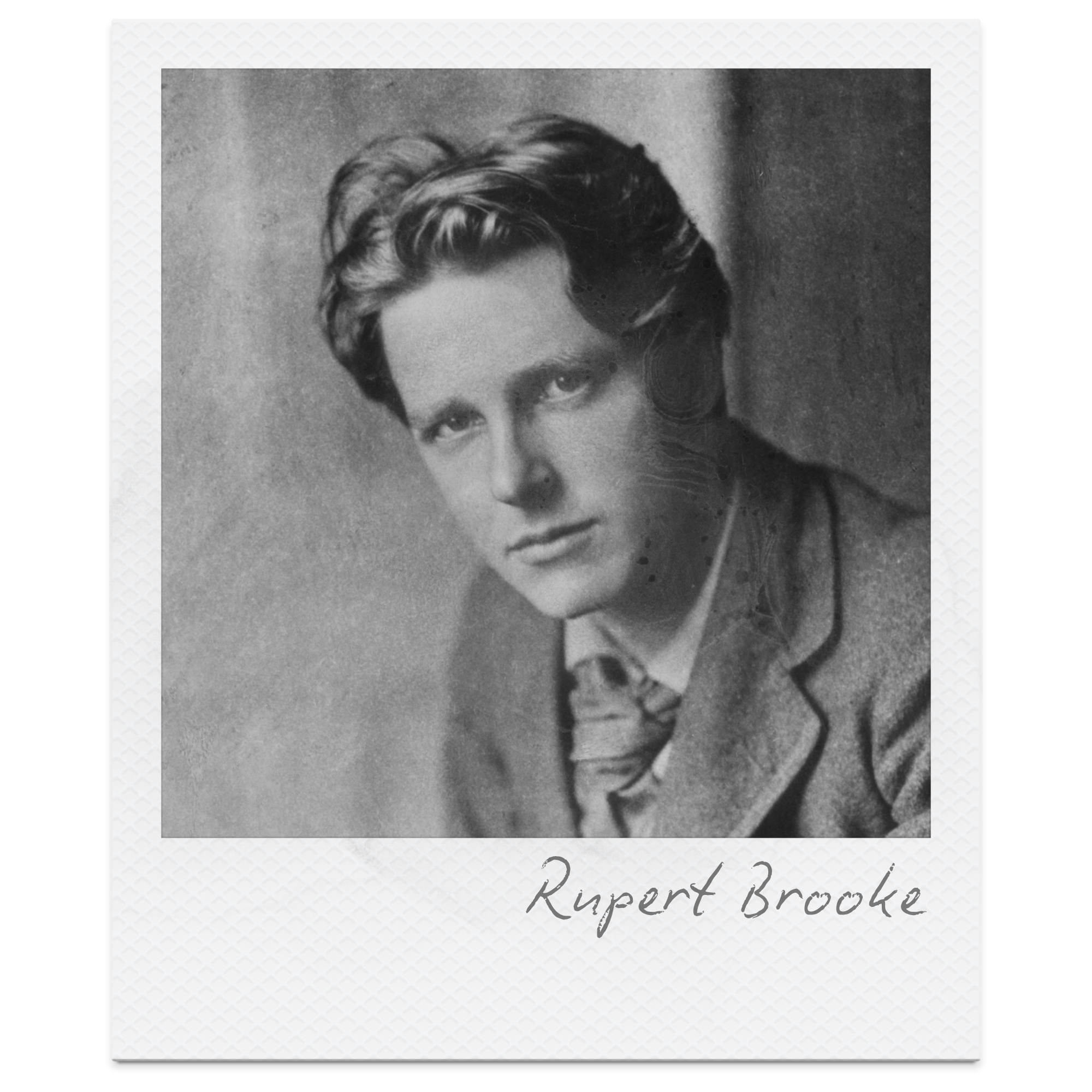
Brooke joined the Royal Naval Volunteer Reserve in 1914 and participated in the Antwerp expedition that October, although he had not experienced the sustained trench warfare that would later shape the poetry of writers such as Wilfred Owen and Siegfried Sassoon. His poem therefore emerges from an early stage of the conflict, when inherited ideas of honour, duty and patriotic sacrifice could still provide a powerful framework for imagining a soldier's death. Brooke himself died of septicaemia in April 1915, while travelling with British forces towards Gallipoli, and never experienced the major battles for which the campaign became notorious. His death helped establish his posthumous reputation as an emblem of youthful patriotic sacrifice, while The Soldier became one of the most widely remembered expressions of Britain's early wartime idealism. However, it is important not to reduce the poem simply to propaganda or to assume that all early war poetry celebrated conflict: Brooke's sonnet also expresses a deeply personal attachment to landscape, memory and belonging. For a fuller exploration of his life, literary influences and wartime experiences, see Rupert Brooke: Historical, Social & Literary Context Post.
The Soldier: Full Poem
The Soldier is the final sonnet in Rupert Brooke's 1914 sequence, presenting an idealised vision of patriotism, sacrifice and the possibility of death abroad.
If I should die, think only this of me:
That there's some corner of a foreign field
That is for ever England. There shall be
In that rich earth a richer dust concealed;
A dust whom England bore, shaped, made aware,
Gave, once, her flowers to love, her ways to roam;
A body of England's, breathing English air,
Washed by the rivers, blest by suns of home.
And think, this heart, all evil shed away,
A pulse in the eternal mind, no less
Gives somewhere back the thoughts by England given;
Her sights and sounds; dreams happy as her day;
And laughter, learnt of friends; and gentleness,
In hearts at peace, under an English heaven.
The Soldier — Rupert Brooke (1914)
The Soldier: At a Glance
Poet: Rupert Brooke
Written: 1914
Published: December 1914 in New Numbers; later collected in 1914 and Other Poems (1915)
Form: Petrarchan sonnet with an English-style alternating rhyme pattern in the octave
Speaker: A hypothetical English soldier contemplating the possibility of dying abroad
Mood: Patriotic, reflective, idealistic, reverent and ultimately peaceful
Central tension: The possibility of death in a foreign land contrasted with the speaker's belief that his national identity and spiritual connection to England will endure beyond death
Core themes: Patriotism, national identity, death, sacrifice, remembrance, belonging, spiritual immortality and the idealisation of England
Key symbols: The foreign field, English soil and dust, flowers, rivers, sunlight, the heart and the English heaven
One-sentence meaning: The Soldier presents the possibility of dying abroad as a peaceful and meaningful sacrifice, suggesting that a soldier's love for England transforms his physical death into an enduring expression of national identity, memory and spiritual belonging.
Quick Summary of The Soldier
In The Soldier, Rupert Brooke imagines the possibility of his own death while serving as a soldier in a foreign country. Rather than expressing fear or sorrow, the speaker asks those who remember him to think of his death as something meaningful and comforting. He suggests that wherever his body is buried, that small piece of foreign land will become “for ever England”, because his physical remains belong to the country that gave him life and shaped his identity. The speaker recalls England through its flowers, rivers, sunlight and familiar landscapes, presenting his homeland as a nurturing presence that has influenced every aspect of his existence.
In the second stanza, the speaker moves beyond the fate of his physical body to imagine what happens to his spirit after death. He describes his heart as being freed from earthly imperfections and becoming part of an eternal consciousness, where the memories, happiness, friendships and gentleness associated with England continue to exist. The poem ends with the peaceful image of “an English heaven”, suggesting that the speaker's connection to his homeland will endure even after his death. Ultimately, The Soldier presents death not as a tragic ending but as a form of spiritual fulfilment and lasting national belonging, transforming the possibility of wartime sacrifice into an idealised vision of peace and immortality.
Title, Form, Structure and Metre in The Soldier
Rupert Brooke's The Soldier uses the traditional sonnet form to transform the possibility of death in war into a meditation on patriotism, identity and spiritual belonging. Although sonnets are conventionally associated with love, Brooke redirects the form's emotional intensity towards the speaker's devotion to England, presenting his homeland as both the source of his identity and the foundation of his imagined afterlife. The poem combines elements of Petrarchan and Shakespearean sonnet traditions, using regular rhyme, predominantly iambic pentameter and a carefully controlled structural progression to create a sense of certainty, harmony and emotional reassurance. These formal choices are particularly significant because they impose order and beauty upon a subject that might otherwise evoke fear, grief and destruction.
Title
The title The Soldier immediately establishes the speaker's identity through his military role rather than his personal name, background or individual circumstances. The definite article “The” gives the title a representative quality, suggesting that the speaker might stand for a wider generation of English soldiers rather than one identifiable individual. Although the poem is written in the first person, the absence of specific biographical details allows its reflections on patriotism, sacrifice and national belonging to extend beyond the speaker's imagined experience.
The noun “Soldier” also establishes expectations of conflict, violence, courage and military duty. However, Brooke deliberately avoids the conventional imagery associated with warfare. There are no weapons, enemies, battlefields or descriptions of physical suffering. Instead, the poem concentrates on England's landscapes, the speaker's memories and the possibility of spiritual peace after death. This contrast between the military implications of the title and the peaceful imagery of the poem is central to Brooke's idealised presentation of sacrifice.
The title becomes increasingly significant as the poem develops. Although the speaker's identity as a soldier provides the context for his possible death, his emotional identity is defined almost entirely through his relationship with England. He is presented not primarily as a combatant but as a product of his homeland, shaped by its natural environment, culture and human relationships. In this sense, the poem transforms the soldier from an individual participant in war into a symbol of national identity and continuity.
Form and Structure
The Soldier is a 14-line sonnet, divided into an octave of eight lines and a sestet of six lines. Its stanza arrangement follows the broad structure of a Petrarchan sonnet, while its rhyme scheme combines elements of both Petrarchan and Shakespearean traditions.
The sonnet's traditional association with romantic love is particularly important. Rather than addressing a beloved person, Brooke directs the emotional devotion of the form towards England. His country becomes the object of affection, gratitude and almost spiritual reverence. The speaker's willingness to contemplate death is therefore presented as an extension of his love for the nation that has nurtured him.
The poem's two stanzas develop this relationship through a movement from physical identity to spiritual immortality.
In the octave, Brooke imagines the consequences of the speaker's death in a foreign country. The opening conditional statement, “If I should die”, introduces death as a possibility rather than an immediate certainty. The speaker then instructs others how to remember him, suggesting that his burial will transform a small area of foreign soil into something permanently English.
The octave develops this idea through images of the body and the natural world. England is presented as the force that has created, nurtured and shaped the speaker, while his physical remains are imagined as a continuation of the homeland itself.
The sestet begins with “And think”, echoing the instruction “think only this of me” in the opening line. This repetition links the two stanzas while marking a change in focus. Whereas the octave concerns the fate of the physical body, the sestet turns towards the heart, consciousness, memory and the possibility of existence beyond death.
This transition functions as the poem's volta, or structural turning point. Rather than introducing an opposing argument, as many traditional sonnets do, Brooke extends and elevates the ideas established in the octave. The speaker moves from imagining England's continued presence in his buried body to imagining its continued existence within his purified spirit.
The structural progression can therefore be understood as:
Physical death → National belonging → Spiritual transformation → Eternal peace
This movement creates a sense of emotional resolution. The poem begins with the possibility of death but ends with the reassuring image of “an English heaven”, transforming mortality into a vision of permanence and fulfilment.
Importantly, the poem does not move from uncertainty towards a rejection of its opening beliefs. Instead, each stage reinforces the speaker's conviction that his connection to England will survive the destruction of his physical body. The sonnet's carefully ordered structure contributes to the impression that death can be understood, accepted and even spiritually transcended.
Rhyme Scheme and Poetic Pattern
Brooke uses a regular rhyme scheme that draws upon two established sonnet traditions.
The octave follows:
ABAB CDCD
The alternating rhymes are:
me / be
field / concealed
aware / air
roam / home
This pattern resembles the opening eight lines of a Shakespearean sonnet, organised into two alternating rhyme groups. The consistency of the rhymes creates a measured, harmonious movement, reinforcing the speaker's confident and idealised presentation of England.
The rhyme between “roam” and “home” is particularly significant. Although the speaker imagines dying far from England, the rhyme connects movement and distance with the idea of belonging. The physical freedom suggested by “roam” is brought into a relationship with the emotional security of “home”, reinforcing the speaker's enduring attachment to his country.
The sestet follows:
EFG EFG
Its rhyming words are:
away / day
less / gentleness
given / heaven
This arrangement is characteristic of one possible Petrarchan sestet pattern. Unlike the Shakespearean sonnet, which typically concludes with a rhyming couplet, Brooke's poem ends by completing a pattern established across the six-line stanza.
The absence of a final couplet prevents the ending from sounding like a separate, emphatic conclusion. Instead, “heaven” completes a rhyme anticipated by “given”, creating a sense of fulfilment within the sestet's existing structure.
The final pairing is especially important because “given” and “heaven” form a feminine rhyme, with the principal stress falling before a softer, unstressed final syllable. The gentle movement of this rhyme complements the speaker's vision of an afterlife defined by peace, memory and spiritual harmony.
The relationship between the two words also reinforces the poem's central argument. Everything England has “given” the speaker during his life appears to find its ultimate continuation in the imagined “heaven” of the final line.
Taken together, the poem's complete rhyme scheme is:
ABAB CDCD EFG EFG
The combination of sonnet traditions creates a distinctive formal pattern while maintaining an impression of balance and control. The regularity of the rhyme can be understood as reflecting the speaker's desire to impose emotional and spiritual order upon the uncertainty of wartime death.
Metre and Rhythmic Movement
The Soldier is written predominantly in iambic pentameter, the traditional metre of the English sonnet. An iamb consists of an unstressed syllable followed by a stressed syllable, while pentameter usually contains five metrical feet in each line.
This produces a broadly alternating rhythm that gives the poem a measured, dignified quality. The regular movement supports the speaker's calm contemplation of death, helping to transform a potentially disturbing subject into something controlled and reassuring.
The opening line demonstrates the underlying iambic pattern:
If I | should DIE | think ON | ly THIS | of ME
The rhythmic movement gives prominence to the speaker's imagined death and the instruction that follows it. The phrase “think only this of me” acquires particular authority because the metre helps organise the speaker's words into a deliberate, almost ceremonial statement.
However, Brooke does not maintain an entirely mechanical rhythm. Variations in stress allow important words and ideas to receive additional emphasis.
Consider the fourth line:
“In that rich earth a richer dust concealed;”
The repeated adjective “rich” creates a concentration of emphasis around the relationship between the foreign soil and the speaker's body. Depending on how the line is spoken, “rich earth” may receive two closely placed stresses, briefly intensifying the rhythm.
This emphasis supports the speaker's suggestion that his remains will enrich the land in which they are buried. The rhythmic weight of the phrase draws attention to the extraordinary value he assigns to English identity.
A similar effect occurs in the fifth line:
“A dust whom England bore, shaped, made aware,”
The sequence “bore, shaped, made aware” introduces a succession of forceful verbs. The closely grouped stresses interrupt the smoother movement of the surrounding lines, emphasising England's active role in creating and developing the speaker.
The rhythm becomes particularly expressive because the verbs present England as more than a geographical location. It is imagined as a nurturing and formative power, responsible for the speaker's physical existence, consciousness and identity.
The final line also deserves attention:
“In hearts at peace, under an English heaven.”
Rather than ending with a strongly stressed final syllable, the line closes with the softer unstressed ending of “heaven”. This creates a feminine ending, allowing the rhythm to fall away gently rather than concluding with a forceful beat.
The effect is appropriate to the poem's closing vision of “hearts at peace”. Where a more emphatic ending might suggest triumph or military glory, Brooke's final rhythmic movement supports an atmosphere of tranquillity and spiritual rest.
Across the poem, the predominantly regular metre contributes to its formal dignity, while local variations highlight the ideas that matter most to the speaker: England's nurturing influence, the value of national belonging and the hope of peace beyond death.
Ultimately, Brooke's control of form, structure, rhyme and metre is inseparable from the poem's meaning. The sonnet transforms the uncertainty of death into an ordered progression towards spiritual reassurance, while its harmonious sound patterns reinforce the speaker's idealised vision of England. The formal beauty of The Soldier becomes part of its argument, suggesting that even the possibility of death in war can be understood through love, memory, belonging and the promise of eternal peace.
Speaker and Setting in The Soldier
In The Soldier, Rupert Brooke presents an unnamed English soldier contemplating the possibility of dying while serving his country abroad. Although the poem is written in the first person, the speaker should not automatically be identified with Brooke himself. Instead, he represents an idealised patriotic perspective in which personal identity, national belonging and spiritual fulfilment are inseparable. The poem's setting is similarly distinctive: rather than describing a specific battlefield, Brooke moves between an imagined burial place in a foreign country, an idealised vision of England and a peaceful conception of the afterlife. These interconnected settings allow the poem to explore how the speaker's attachment to his homeland transcends physical distance and even death.
Speaker: An Idealised English Soldier
The speaker is an unnamed English soldier who imagines the possibility of his own death and attempts to shape how others will remember him. His opening words, “If I should die, think only this of me”, establish a reflective and composed voice. Rather than expressing terror, regret or resentment, he offers instructions about the meaning others should attach to his death.
The conditional “If” is important because the speaker is not necessarily facing immediate death. Instead, he is considering a possible future and constructing a reassuring interpretation of it. The imperative “think” gives him a degree of authority over his imagined remembrance, suggesting that he wishes to determine the emotional legacy he leaves behind.
His request that others “think only this” is particularly revealing. The word “only” restricts the possibilities of interpretation, directing attention away from grief, physical suffering or the violence of war. The speaker wants his death to be understood through the single, consoling idea that his body will remain permanently connected to England.
This reveals a central feature of his perspective: he understands himself primarily through his national identity.
England is not simply the country in which he was born. It is presented as the force responsible for his development, experiences and emotional life. When the speaker describes himself as:
“A dust whom England bore, shaped, made aware,”
the personification of England as a nurturing, almost maternal figure suggests that his identity has been formed through an intimate relationship with his homeland.
The verbs “bore, shaped, made aware” establish a progression from physical creation to intellectual and emotional consciousness. England has not merely provided the speaker with a birthplace; it has supposedly determined the person he has become.
His language also suggests an unusually complete identification with his country. He describes his body as:
“A body of England's, breathing English air,”
The possessive construction “of England's” presents his physical existence as belonging to the nation. His individuality becomes secondary to the collective identity he embraces.
However, this idealised patriotism can also be interpreted critically. The speaker's absolute devotion leaves little room for questioning the political circumstances of war or the personal cost of military sacrifice. His confidence may be read as sincere love for his homeland, but it also demonstrates how patriotic identity can shape, and potentially limit, an individual's understanding of death and duty.
The speaker's tone remains remarkably calm throughout. Even when imagining his physical death, he concentrates on beauty, gratitude and spiritual continuity. By the final lines, his attention has shifted towards the possibility that his memories and emotions will survive within an eternal consciousness.
This movement presents the speaker as someone who finds reassurance in the belief that everything valuable about his life comes from England and will somehow endure beyond death.
Setting: The Foreign Field, an Idealised England and the Afterlife
The setting of The Soldier is unusual because Brooke provides almost no concrete details about the war itself. There is no identifiable battlefield, military location or description of combat. Instead, the poem unfolds across three interconnected imaginative spaces: the foreign field, the remembered English landscape and the spiritual world of the afterlife.
The first setting is introduced through the image of:
“some corner of a foreign field”
The indefinite expression “some corner” makes the location deliberately vague. The speaker does not know where he might die or where his body might eventually be buried. This uncertainty reflects the geographical displacement experienced by soldiers serving far from home, while allowing the imagined burial place to represent almost any foreign territory.
However, the speaker immediately transforms this unfamiliar location through the declaration:
“That is for ever England.”
The contrast between “foreign” and “England” is central to the poem's treatment of place. Although the land lies outside the nation's geographical boundaries, the speaker believes that his presence will permanently alter its identity.
The setting therefore becomes symbolic rather than merely physical. The foreign field represents both the possibility of death abroad and the speaker's conviction that national belonging cannot be erased by distance or mortality.
As the octave develops, Brooke moves away from the imagined burial site and towards the English landscape that has shaped the speaker's life.
England is evoked through references to:
“her flowers to love, her ways to roam”
and:
“Washed by the rivers, blest by suns of home.”
These images create an idealised pastoral setting characterised by natural beauty, freedom and warmth. Flowers suggest affection and growth; rivers evoke renewal and continuity; sunlight conveys comfort and blessing.
The personification of England through “her” strengthens the impression of a protective maternal presence, while the religious connotations of “blest” elevate the landscape beyond ordinary geography.
Importantly, this England is not presented as a complete or realistic portrait of the country. Brooke excludes industrial cities, poverty, social conflict and the harsher aspects of the natural environment. Instead, the speaker recalls a carefully selected landscape of beauty and harmony.
This idealisation is significant because the England of the poem is as much an emotional construction as a physical place. It represents the speaker's memories, attachments and beliefs about his homeland rather than an objective account of national life.
In the sestet, the setting becomes increasingly spiritual. The speaker imagines his heart transformed into:
“A pulse in the eternal mind”
This image shifts the poem away from the physical landscapes of the octave and towards an abstract realm of continuing consciousness. The speaker's memories of England appear to survive as part of something larger and everlasting.
The final setting is established through the poem's closing words:
“In hearts at peace, under an English heaven.”
The phrase “English heaven” merges national identity with the traditional religious concept of paradise. Rather than imagining an afterlife that transcends earthly distinctions, the speaker envisions one still defined by his attachment to England.
This final image brings the poem's different settings together. The foreign field represents physical death, the English countryside represents earthly life and memory, and the English heaven represents the hoped-for continuation of identity beyond mortality.
Through this progression, England becomes more than a geographical location: it becomes the organising principle of the speaker's entire existence, connecting his origins, experiences, death and imagined eternity.
The absence of a realistic battlefield is therefore essential to the poem's meaning. By replacing the violence of war with landscapes of beauty and spiritual reassurance, Brooke allows the speaker to present sacrifice as peaceful, meaningful and enduring. Yet this same absence also creates an important tension, inviting readers to question what the poem's idealised vision reveals about patriotic devotion—and what it leaves unspoken about the realities of war.
Stanza-by-Stanza Analysis of The Soldier
Rupert Brooke's The Soldier develops its idealised vision of patriotic sacrifice through two carefully structured stanzas, moving from the physical consequences of death to the possibility of spiritual immortality. In the opening octave, the speaker imagines his burial in a foreign country, presenting his body as an enduring extension of England and celebrating the natural landscape that shaped his identity. The closing sestet shifts towards memory, consciousness and the afterlife, suggesting that the speaker's connection to his homeland will survive beyond physical death. Throughout the sonnet, Brooke uses personification, natural imagery, religious symbolism, metaphor and carefully controlled language to transform the prospect of wartime death into an expression of national belonging and spiritual peace. However, the poem's idealised treatment of sacrifice also invites a more critical reading, particularly in its deliberate exclusion of violence, suffering and the realities of warfare.
Stanza 1: The Soldier's Body as an Eternal Part of England
The opening octave of The Soldier presents the possibility of death abroad as an opportunity for the speaker's national identity to endure beyond his physical life. Rather than describing the violence of warfare or expressing anxiety about dying, Brooke constructs an idealised relationship between the individual soldier and his homeland, suggesting that the speaker's body will carry something permanently English into foreign soil. Through conditional language, personification, natural imagery and religious associations, the stanza transforms the prospect of burial into an expression of gratitude, belonging and patriotic devotion.
The poem opens with the conditional statement:
“If I should die, think only this of me:”
The conjunction “If” establishes death as a possibility rather than an inevitable or immediate event, allowing the speaker to contemplate his mortality with apparent composure. The modal verb “should” further softens the prospect of death, creating a measured, reflective tone rather than one of fear or desperation. Although the speaker is imagining a potentially violent wartime death, his language remains strikingly restrained.
The imperative “think” directly addresses those who might remember him, positioning the poem as an attempt to influence how his death will be understood. Rather than asking for grief, sympathy or remembrance of his personal achievements, the speaker seeks to establish a particular interpretation of his sacrifice.
The restrictive adverb “only” is especially significant. It suggests that the speaker wishes to exclude other possible responses to his death, including sorrow, anger or questions about the human cost of war. His instruction therefore reveals both the strength and the limitations of his patriotic outlook: he attempts to replace the complexity of wartime death with a single, consoling belief about national belonging.
The colon at the end of the opening line introduces the explanation that follows, giving the stanza the quality of a carefully developed argument. The speaker does not simply express love for England; he attempts to demonstrate why that love should determine the meaning of his death.
Brooke continues:
“That there’s some corner of a foreign field
That is for ever England.”
The phrase “some corner” is deliberately indefinite, suggesting that the speaker neither knows nor considers it necessary to identify the exact location of his possible burial. The noun “field” carries a pastoral association with open countryside, although its wartime context also evokes the possibility of a battlefield.
This ambiguity is important. Brooke does not describe a landscape devastated by shellfire or filled with the dead. Instead, the imagined burial place is presented through the relatively peaceful language of the natural world, allowing the violence that might have caused the speaker's death to remain unspoken.
The adjective “foreign” establishes a geographical and emotional distance from England. However, this separation is immediately challenged by the declaration that the burial place will become “for ever England”.
The phrase transforms a small area of foreign territory into an imagined extension of the speaker's homeland. The emphatic certainty of “is” contrasts with the uncertainty of the opening “If”: although the speaker cannot know whether or where he will die, he expresses absolute confidence in the continuing significance of his English identity.
The unusual two-word spelling “for ever” reinforces the sense of permanence, suggesting that national belonging can survive both geographical displacement and physical death.
The enjambment between “There shall be” and “In that rich earth” also sustains the speaker's confident declaration, carrying the reader forward into his explanation of how the foreign landscape will be transformed.
Brooke develops this idea through the image:
“There shall be
In that rich earth a richer dust concealed;”
The repetition and comparative development of “rich” and “richer” suggest that the foreign soil will gain something of greater value through the presence of the speaker's remains.
The noun “dust” functions as a metaphor for the human body after death, recalling the traditional religious association between humanity and the earth from which it is formed and to which it eventually returns. By describing his body as dust, the speaker acknowledges the physical reality of mortality without dwelling on decay, injury or suffering.
The adjective “richer”, however, transforms this image of bodily dissolution into a declaration of national value. The speaker imagines his English remains enriching the foreign earth, implying that his identity retains significance even after his body has lost its living form.
This can be understood as an expression of patriotic devotion, but it also introduces a potentially nationalistic assumption that English identity possesses an inherent value capable of elevating foreign land. The comparative language invites readers to question whether the speaker's celebration of England depends partly upon an idealised sense of national superiority.
The verb “concealed” further softens the image of burial. Rather than explicitly describing a corpse or grave, Brooke imagines the body hidden within the earth. The word suggests preservation and quietness, contributing to the stanza's atmosphere of peaceful continuity rather than physical destruction.
The speaker then explains the origins of this supposedly valuable dust:
“A dust whom England bore, shaped, made aware,”
Here, England is personified as a nurturing maternal figure, responsible for bringing the speaker into existence and shaping his development.
The relative pronoun “whom” is particularly revealing. Although the speaker has described his remains as inanimate dust, he uses a pronoun normally associated with a person. This grammatical choice preserves a sense of humanity and identity within the image of bodily death, suggesting that the speaker remains more than lifeless matter.
The sequence of verbs “bore, shaped, made aware” presents England as an active force in the speaker's creation and development. The verb “bore” evokes childbirth, establishing the country as a symbolic mother. “Shaped” suggests the formation of his character and identity, while “made aware” extends England's influence into consciousness and understanding.
The accumulation of these verbs creates a sense of progression, moving from physical existence towards intellectual and emotional life. England is therefore presented not simply as the speaker's birthplace but as the source of everything that makes him who he is.
The repeated pauses created by the commas also give each verb individual emphasis, encouraging the reader to recognise the different ways in which the speaker believes his homeland has formed him.
Brooke continues the maternal personification through the lines:
“Gave, once, her flowers to love, her ways to roam;
A body of England’s, breathing English air,”
The verb “Gave” reinforces the image of England as a generous, nurturing presence. The speaker remembers his country through the experiences and freedoms it has provided, particularly the opportunity to appreciate its natural beauty and explore its landscapes.
The phrase “her flowers to love” presents England as a place of beauty and affection, while “her ways to roam” suggests freedom of movement, familiarity and a sense of belonging within the landscape.
The repeated possessive pronoun “her” strengthens the personification of England as a maternal figure, creating an intimate relationship between the nation and the individual.
The interruption created by “once”, enclosed between commas, introduces a subtle awareness of the past. These experiences belong to the speaker's earthly life and may no longer be available to him after death. Although the stanza remains predominantly reassuring, the word briefly acknowledges the distance between remembered life and imagined mortality.
The following line intensifies the speaker's identification with his homeland:
“A body of England’s, breathing English air,”
The possessive construction “of England’s” implies that the speaker's body belongs to the nation. His identity is presented almost as an extension of England itself, rather than as something entirely separate or individual.
The repetition of “England” and “English” reinforces this relationship, suggesting that national identity permeates the speaker's physical existence.
The participle “breathing” is especially significant because it evokes the ordinary, continuous process of living. Even the air that sustains the speaker is associated with his homeland, implying that England has shaped him through the most fundamental experiences of existence.
There is also an important contrast between the living body “breathing English air” and the earlier image of “dust concealed” in foreign earth. Brooke places life and death within the same imaginative framework, suggesting that the speaker's national identity remains constant despite the transformation of his body.
The octave concludes:
“Washed by the rivers, blest by suns of home.”
The final line develops the imagery of England as a nurturing environment through references to water and sunlight.
The verb “Washed” suggests cleansing, renewal and care, while the rivers evoke the familiar natural landscapes of the speaker's homeland. Water may also carry associations with purification, giving the image a subtle spiritual dimension.
The abbreviated form “blest” introduces more explicit religious language. By describing the speaker as blessed by the “suns of home”, Brooke elevates England's natural environment into a source of almost sacred influence.
The plural “suns” is unusual, since England is illuminated by the same sun as any other country. It can be understood as evoking the many days of sunlight experienced throughout the speaker's life, transforming individual memories into an accumulated sense of warmth, happiness and belonging.
The pairing of “Washed” and “blest” creates a parallel structure, presenting the natural world as both physically sustaining and spiritually enriching. England's rivers and sunlight appear to perform acts of care upon the speaker, continuing the stanza's maternal personification.
The final word “home” provides an emotionally resonant conclusion to the octave. It establishes the central significance of England not merely as a nation or political territory, but as a place of affection, memory and personal identity.
The rhyme between “roam” and “home” reinforces this connection. Although the speaker has experienced freedom and movement within England's landscapes, his memories return to the security and familiarity of belonging.
Across the octave, Brooke therefore develops a carefully idealised vision of the relationship between the soldier and his homeland. The speaker imagines his death not as the destruction of his identity but as the continuation of England's presence within foreign soil.
Yet the stanza's beauty also depends upon what it excludes. There is no description of the violence that might kill the speaker, no consideration of the grief experienced by those left behind and no acknowledgement of the foreign people whose land is imagined as becoming English.
This selective perspective is central to the poem's significance. Brooke transforms wartime death into an expression of national permanence by replacing the realities of conflict with images of natural beauty, maternal care and spiritual reassurance. The octave establishes the physical foundation of this belief, preparing for the sestet's movement beyond the body towards memory, consciousness and the imagined immortality of the soul.
Stanza 2: Spiritual Immortality and the Vision of an English Heaven
The closing sestet of The Soldier shifts the poem's focus from the physical body to the possibility of spiritual existence beyond death. While the opening octave imagines the speaker's remains becoming part of a foreign landscape, the second stanza explores how his memories, emotions and national identity might endure within an eternal consciousness. Brooke develops this transition through religious imagery, metaphor, personification and an accumulation of sensory and emotional experiences. The result is an increasingly idealised vision in which England becomes not only the source of the speaker's earthly identity but also the defining presence within his imagined afterlife.
The stanza begins:
“And think, this heart, all evil shed away,”
The opening conjunction “And” creates continuity between the two stanzas, suggesting that the speaker's reflections on spiritual immortality develop naturally from his earlier contemplation of physical death. Rather than introducing a contradiction or change in attitude, the sestet extends the patriotic argument established in the octave.
The repeated imperative “think” echoes the poem's opening instruction, “think only this of me”, reinforcing the speaker's desire to shape how others interpret his death. This repetition creates a structural connection between the two stanzas while introducing a new dimension to his imagined remembrance.
Where the octave concentrates on the body, the sestet begins with “this heart”.
The noun “heart” functions as a symbol of the speaker's emotional and spiritual identity. Unlike the physical body, which will eventually become dust, the heart represents his capacity for love, memory, affection and consciousness.
The demonstrative “this” gives the image a personal immediacy, drawing attention to the speaker's individual emotional existence. However, the heart is not presented simply as a physical organ. Instead, it becomes the means through which Brooke explores the possibility that the essential qualities of the individual can survive bodily death.
The phrase “all evil shed away” introduces the idea of spiritual purification.
The adjective “all” suggests a complete removal of moral imperfection, while the verb “shed” implies that evil can be discarded as something external or temporary. This creates an image of the speaker's heart being freed from the limitations and corruptions of earthly existence.
The phrase carries clear religious associations with purification and the soul's preparation for eternal life. Yet Brooke does not explicitly describe divine judgement, forgiveness or the requirements of a particular religious doctrine. Instead, the transformation appears almost effortless, as though death itself allows the speaker to enter a state of moral and spiritual perfection.
This is significant because the violence and moral complexity of warfare are absent from the speaker's vision of the afterlife. Rather than questioning whether participation in war might involve guilt, suffering or ethical conflict, the poem imagines a purified existence in which such concerns have disappeared.
The speaker continues:
“A pulse in the eternal mind, no less”
The metaphor “A pulse in the eternal mind” transforms the speaker's individual consciousness into part of something infinite and enduring.
The noun “pulse” evokes the rhythmic beating of a living heart, suggesting vitality, continuity and the persistence of life. Although the speaker imagines physical death, the metaphor retains an image of movement and animation, implying that something essential within him continues to exist.
The phrase “eternal mind” introduces a more abstract conception of immortality. It may suggest a divine consciousness, a universal spiritual intelligence or an existence beyond the limitations of the individual body.
Importantly, Brooke does not define this eternal presence precisely. Its ambiguity allows the poem to combine Christian associations with a broader, more philosophical vision of spiritual continuity.
The contrast between “pulse” and “eternal” is particularly effective. A pulse is normally temporary and dependent upon a living body, whereas eternity suggests existence without beginning or end. By bringing these ideas together, Brooke imagines the transformation of fragile human life into something permanent.
The phrase “no less” also deserves attention. It suggests that the speaker's contribution to this eternal consciousness remains meaningful, despite the loss of his physical form.
Rather than disappearing into insignificance, his individual experiences continue to possess value. This reinforces the poem's central conviction that death does not necessarily destroy what is most important about a person.
The enjambment at the end of the line carries the reader forward into the following statement, delaying the explanation of what the speaker's transformed consciousness will contribute.
Brooke continues:
“Gives somewhere back the thoughts by England given;”
The repetition of “Gives” and “given” creates a reciprocal relationship between the speaker and his homeland.
In the octave, England is presented as the nurturing force that has provided the speaker with life, identity and experience. Here, the speaker imagines returning those gifts through the continuation of his memories and consciousness after death.
The phrase “thoughts by England given” suggests that even the speaker's inner life has been shaped by his country. His memories, ideas and emotional responses are presented not as entirely independent creations but as products of the environment and culture in which he has lived.
This reinforces the poem's unusually complete identification of the individual with the nation. England is imagined as the origin of both the speaker's physical existence and his intellectual and emotional identity.
The indefinite adverb “somewhere” is also significant. Just as the octave refers vaguely to “some corner of a foreign field”, the sestet avoids identifying a precise location for the speaker's spiritual existence.
This parallel suggests that geographical certainty is unnecessary to the speaker's understanding of immortality. Whether his body lies in an unknown foreign field or his consciousness continues in an undefined spiritual realm, his connection to England remains unchanged.
The phrase “Gives somewhere back” may also be understood as expressing gratitude. The speaker imagines his existence as part of an ongoing exchange in which England first gives him life and experience, and he subsequently returns something of that gift through his death.
However, this reciprocal relationship invites a more critical interpretation. By presenting the individual's thoughts as belonging ultimately to the nation, Brooke risks diminishing the distinction between personal identity and patriotic obligation.
The speaker's imagined immortality is therefore not simply a continuation of himself. It is a continuation of the version of himself that England has supposedly created.
The next line develops this idea through a sequence of remembered experiences:
“Her sights and sounds; dreams happy as her day;”
The possessive pronoun “Her” continues the personification of England established in the octave, preserving the image of the country as a nurturing maternal presence.
The pairing of “sights and sounds” introduces sensory imagery, suggesting that the speaker's memories of England are rooted in the experiences of everyday life.
These details are deliberately broad. Brooke does not identify particular landmarks, landscapes, voices or sounds. Instead, he evokes the general richness of sensory experience, allowing England to become an idealised collection of everything the speaker has seen, heard and loved.
The phrase “dreams happy as her day” develops this idealisation through a simile.
By comparing the speaker's dreams to England's daylight, Brooke associates the homeland with happiness, brightness and emotional fulfilment. The image suggests that England has shaped not only the speaker's waking experiences but also his imagination and aspirations.
The singular noun “day” may evoke the warmth and light of an ideal English day, continuing the natural imagery of the octave. It also reinforces the poem's tendency to present England through selected images of beauty rather than through a realistic account of its social or geographical complexity.
The semicolons throughout this passage help organise the accumulating memories, giving each category of experience its own significance while maintaining the flow of the speaker's reflections.
Brooke continues:
“And laughter, learnt of friends; and gentleness,”
The repeated conjunction “and” extends the accumulation of experiences, suggesting an abundance of positive memories and emotional qualities.
The noun “laughter” introduces an explicitly human dimension to the speaker's recollections. Whereas much of the octave concentrates on England's natural environment, the sestet increasingly acknowledges the importance of relationships and shared experiences.
The phrase “learnt of friends” suggests that happiness is developed through companionship and social connection. The speaker's identity has been shaped not only by the physical landscape of England but also by the people with whom he has lived.
The verb “learnt” is especially important because it presents laughter as something acquired through experience. Just as England has supposedly taught the speaker to appreciate its landscapes, his friendships have taught him the emotional pleasures of human life.
The noun “gentleness” extends this movement from sensory memory towards moral and emotional qualities.
Unlike the more forceful language traditionally associated with military courage, heroism or victory, “gentleness” suggests tenderness, compassion and peace.
Its inclusion is particularly striking in a poem spoken from the perspective of a soldier. Brooke defines the speaker's most treasured qualities not through aggression or martial achievement but through affection, friendship and emotional sensitivity.
This contrast contributes to the poem's idealisation of sacrifice. The soldier is imagined as someone whose essential identity is peaceful, even though his military role places him within a violent conflict.
The repetition of soft sounds in “laughter, learnt” and the flowing rhythm of “and gentleness” also contribute to the stanza's increasingly tranquil atmosphere.
At the same time, the selective nature of these memories remains important. The speaker recalls happiness, friendship and tenderness but excludes fear, conflict, disappointment and grief.
His imagined afterlife is therefore constructed from a purified version of earthly experience, in which only the most comforting aspects of life appear to survive.
The poem concludes:
“In hearts at peace, under an English heaven.”
The final line brings together the stanza's religious, emotional and patriotic imagery in a vision of complete spiritual harmony.
The phrase “hearts at peace” suggests an existence free from conflict, suffering and emotional disturbance. The plural “hearts” broadens the focus beyond the individual speaker, implying a shared condition of tranquillity rather than an entirely private experience.
This is particularly significant because the poem begins with the possibility of a soldier's death in war but ends with an image of peace. Brooke creates a movement from anticipated mortality towards spiritual reassurance, replacing the destructive associations of warfare with a vision of harmony and fulfilment.
The final phrase “an English heaven” is the culmination of the poem's idealisation of national identity.
Heaven traditionally represents a realm beyond earthly divisions, yet Brooke qualifies it with the adjective “English”. The effect is to merge the speaker's patriotic devotion with his conception of eternal happiness.
England is no longer simply the place where the speaker was born or the landscape that shaped his memories. It has become the defining characteristic of paradise itself.
This fusion of national and religious imagery elevates the homeland to an almost sacred status. The speaker's love for England appears so complete that he cannot imagine spiritual fulfilment without it.
However, the phrase also invites critical reflection. By imagining heaven through a specifically national identity, the speaker appears to carry the boundaries and loyalties of earthly life into a realm conventionally associated with universality and transcendence.
The ending may therefore be understood both as a moving expression of personal belonging and an indication of the extraordinary power that patriotic ideology holds over the speaker's imagination.
The sound of the final line reinforces its meaning. The gentle rhythm and unstressed final syllable of “heaven” allow the poem to conclude softly, while its rhyme with “given” connects the speaker's imagined eternity to the gifts he believes England has provided throughout his life.
This creates a sense of completion. The homeland that gave the speaker his identity becomes the defining presence within his vision of eternal peace.
Across the sestet, Brooke transforms the speaker's imagined death into a process of spiritual purification, remembrance and continuing national belonging. The movement from the physical body to the heart and eternal consciousness suggests that the most valuable elements of human existence can survive mortality.
Yet the stanza's reassuring vision depends upon the same idealisation that shapes the octave. The speaker's memories contain only beauty and happiness, his heart is freed from all evil, and his imagined afterlife remains inseparable from England.
The sestet therefore completes the poem's central argument: the soldier's sacrifice is presented not as an ending but as the continuation of his love for England in a purified, eternal form.
By closing with “an English heaven”, Brooke transforms patriotic attachment into a spiritual ideal, leaving the reader with an image of profound peace while also inviting questions about the romanticisation of war, the idealisation of national identity and the experiences of suffering that the poem deliberately leaves outside its vision.
Key Quotes and Methods in The Soldier
Rupert Brooke's The Soldier uses carefully selected language to present patriotic sacrifice as an expression of love, belonging and spiritual continuity. Its most significant quotations reveal how personification, metaphor, natural imagery, religious symbolism and structural choices transform the possibility of wartime death into an idealised vision of England. The following quotations explore not only what Brooke's language suggests, but also why these methods are effective and how they contribute to the poem's wider meaning.
“If I should die, think only this of me:”
◆ Technique: Conditional language, modal verb, imperative and direct address.
◆ Meaning: The speaker imagines the possibility of his death and instructs others how he wishes to be remembered. The conditional “If” and modal verb “should” present death as a possibility, while “only” restricts the responses he wants others to consider.
◆ Purpose: Brooke establishes a calm, reflective voice that contrasts with the violence normally associated with wartime death. The imperative “think” allows the speaker to control the interpretation of his imagined sacrifice, directing attention towards patriotic remembrance rather than suffering or loss.
◆ Impact: The opening creates an atmosphere of composure and emotional certainty. However, the insistence upon a single interpretation also invites readers to question whether the speaker's patriotic idealism excludes more troubling realities of warfare.
“some corner of a foreign field”
◆ Technique: Indefinite language, spatial imagery and pastoral imagery.
◆ Meaning: The speaker imagines an unspecified burial place somewhere outside England. The phrase “some corner” emphasises the uncertainty of his possible resting place, while “field” evokes an ordinary rural landscape rather than the destruction of a battlefield.
◆ Purpose: Brooke makes the location of death geographically unimportant, suggesting that the speaker's identity will remain English regardless of where his body lies. The peaceful associations of “field” also soften the implied violence of military death.
◆ Impact: The image encourages readers to imagine a quiet resting place rather than a scene of suffering. The absence of explicit battlefield imagery contributes to the poem's romanticised treatment of wartime sacrifice.
“That is for ever England.”
◆ Technique: Metaphor, emphatic declaration and patriotic symbolism.
◆ Meaning: The speaker imagines that the foreign land containing his remains will become permanently English. His national identity is presented as something that survives death and extends beyond England's geographical boundaries.
◆ Purpose: Brooke transforms the soldier's burial into an act of symbolic national continuity. The certainty of “is” and the permanence of “for ever” reinforce the speaker's conviction that his connection to England cannot be destroyed.
◆ Impact: The short, declarative statement gives the poem one of its most memorable expressions of patriotism. It can be interpreted as a moving assertion of belonging, although the suggestion that English remains transform foreign territory also raises questions about nationalism and assumptions of cultural superiority.
“In that rich earth a richer dust concealed;”
◆ Technique: Metaphor, repetition, comparative adjective and religious allusion.
◆ Meaning: “Dust” represents the speaker's mortal remains, recalling the traditional association between human life and the earth. The comparative “richer” suggests that his English body will add something especially valuable to the foreign soil.
◆ Purpose: Brooke transforms the physical reality of death and decomposition into an image of enrichment. The repetition of “rich” connects the earth with the soldier's remains, while the comparative implies that his national identity possesses enduring worth.
◆ Impact: The image makes burial appear meaningful rather than disturbing. At the same time, the suggestion that English dust is richer than foreign earth exposes the idealised hierarchy of national value within the speaker's worldview.
“A dust whom England bore, shaped, made aware,”
◆ Technique: Personification, maternal imagery, accumulation and active verbs.
◆ Meaning: England is presented as a mother-like figure responsible for the speaker's birth, development and consciousness. The verbs “bore, shaped, made aware” suggest that his entire identity has emerged through his relationship with his homeland.
◆ Purpose: Brooke creates an intimate emotional connection between the individual and the nation. By presenting England as a nurturing parent, he makes the speaker's devotion appear natural, personal and deeply rooted.
◆ Impact: The accumulation of verbs emphasises England's formative influence, encouraging readers to understand patriotic loyalty as an expression of gratitude. The speaker's identity becomes almost inseparable from the country that supposedly created him.
“her flowers to love, her ways to roam”
◆ Technique: Personification, natural imagery, parallelism and pastoral idealisation.
◆ Meaning: England is remembered through its natural beauty and the freedom it has provided. “Flowers” suggest affection and growth, while “ways to roam” evoke exploration, familiarity and a sense of belonging within the landscape.
◆ Purpose: Brooke presents the homeland through pleasurable experiences rather than political institutions or military obligations. The repeated possessive “her” continues the maternal personification, reinforcing England's generosity towards the speaker.
◆ Impact: The imagery creates an affectionate, idealised portrait of English life. By emphasising beauty and freedom, Brooke encourages the reader to understand the speaker's patriotism as love for a cherished home rather than simply obedience to a nation.
“A body of England’s, breathing English air,”
◆ Technique: Possessive language, repetition, physical imagery and personification.
◆ Meaning: The speaker describes his body as belonging to England, while the reference to “English air” suggests that even his most fundamental experiences of living are connected to his homeland.
◆ Purpose: Brooke reinforces the idea that national identity is embedded within the speaker's physical existence. The repetition of “England's” and “English” makes his relationship with the country appear complete and inescapable.
◆ Impact: The line creates a powerful sense of belonging, but it also raises questions about individual autonomy. The speaker appears to understand himself less as an independent person than as an extension of the nation.
“Washed by the rivers, blest by suns of home.”
◆ Technique: Natural imagery, religious diction, parallelism and personification.
◆ Meaning: England's rivers and sunlight are presented as nurturing influences that have sustained and blessed the speaker throughout his life. The verb “Washed” suggests cleansing, while “blest” introduces associations of sacred protection.
◆ Purpose: Brooke elevates the English landscape from a physical environment into a source of spiritual nourishment. The parallel structure presents nature as actively caring for the speaker.
◆ Impact: The imagery creates an atmosphere of warmth, purity and gratitude. The religious associations prepare the reader for the sestet's movement towards spiritual immortality, while the final word “home” reinforces the emotional foundations of the speaker's patriotism.
“this heart, all evil shed away”
◆ Technique: Symbolism, metaphor and religious imagery of purification.
◆ Meaning: The heart represents the speaker's emotional and spiritual identity. The phrase “all evil shed away” imagines his consciousness freed from moral imperfection after death.
◆ Purpose: Brooke shifts the poem's focus from the physical body to the possibility of spiritual transformation. The verb “shed” makes purification appear natural and effortless, suggesting that death can release the individual from earthly limitations.
◆ Impact: The image contributes to the poem's reassuring vision of mortality. However, the complete removal of evil also distances the imagined afterlife from the moral complexity and violence of war, reinforcing the speaker's idealised understanding of sacrifice.
“A pulse in the eternal mind”
◆ Technique: Metaphor, spiritual imagery and juxtaposition.
◆ Meaning: The speaker imagines his individual consciousness continuing as part of an infinite spiritual existence. “Pulse” suggests the rhythm and vitality of a living heart, while “eternal mind” evokes a consciousness beyond physical mortality.
◆ Purpose: Brooke connects the temporary nature of human life with the possibility of immortality. The metaphor allows the speaker's identity to survive in a transformed state without specifying a precise religious doctrine.
◆ Impact: The contrast between a fleeting human pulse and eternity creates a sense of spiritual transcendence. Death becomes a transformation of consciousness rather than the complete extinction of the individual.
“Gives somewhere back the thoughts by England given;”
◆ Technique: Repetition, reciprocal imagery and personification.
◆ Meaning: The speaker imagines returning the thoughts and experiences that England has provided throughout his life. The repetition of “Gives” and “given” establishes a relationship of exchange between the individual and his homeland.
◆ Purpose: Brooke presents patriotic sacrifice as an act of gratitude. England has shaped the speaker's consciousness, and his imagined spiritual existence becomes a means of returning those gifts.
◆ Impact: The line reinforces the poem's portrayal of national identity as something deeply personal and enduring. Yet the suggestion that the speaker's thoughts originate in England also reveals how completely his individuality has been absorbed into his patriotic self-understanding.
“Her sights and sounds; dreams happy as her day;”
◆ Technique: Sensory imagery, personification, simile and idealisation.
◆ Meaning: The speaker recalls England through visual and auditory experiences, alongside dreams associated with happiness and daylight. The simile “dreams happy as her day” presents the homeland as a source of emotional fulfilment.
◆ Purpose: Brooke expands the idea of national belonging beyond the physical landscape to include memory, imagination and personal experience. The possessive “Her” maintains the personification of England as the source of these gifts.
◆ Impact: The accumulation of positive associations creates a richly affectionate vision of the homeland. However, the absence of painful or troubling memories reveals the selective nature of the speaker's idealisation, presenting England almost entirely through happiness and beauty.
“And laughter, learnt of friends; and gentleness,”
◆ Technique: Accumulation, repetition, alliteration and emotive diction.
◆ Meaning: The speaker remembers the happiness and kindness associated with human relationships. “Laughter” suggests shared pleasure, while “gentleness” evokes compassion, tenderness and emotional peace.
◆ Purpose: Brooke introduces the social and moral dimensions of the speaker's attachment to England. The repetition of “and” extends the sequence of treasured experiences, while “learnt” suggests that friendship has helped shape his character.
◆ Impact: The line creates a striking contrast with the military identity established by the title. Rather than celebrating aggression or victory, the speaker defines the most valuable aspects of his life through affection, friendship and kindness.
“In hearts at peace, under an English heaven.”
◆ Technique: Religious symbolism, metaphor, national imagery and feminine rhyme.
◆ Meaning: The speaker imagines an afterlife characterised by tranquillity and spiritual fulfilment. The phrase “English heaven” merges the traditional concept of paradise with his enduring attachment to his homeland.
◆ Purpose: Brooke brings the poem's central ideas together by presenting England as the defining presence within the speaker's imagined eternity. The gentle feminine rhyme between “given” and “heaven” contributes to the peaceful conclusion.
◆ Impact: The final image transforms the possibility of wartime death into a vision of spiritual harmony. Yet the national qualification of “heaven” also invites readers to question the extent to which patriotic identity shapes the speaker's understanding of existence itself. The poem ends with reassurance, while leaving open a more critical interpretation of its idealised vision of England.
Poetic Techniques and Literary Devices in The Soldier
Rupert Brooke uses a combination of figurative language, sound devices, religious imagery and structural techniques to present the possibility of death in war as an expression of patriotic love and spiritual fulfilment. Rather than depicting the violence of battle, The Soldier creates an idealised vision of England through its landscapes, memories and emotional associations. Brooke's language is carefully controlled, with recurring images of nurture, purity and permanence reinforcing the speaker's belief that his national identity will survive physical death. The poem's techniques are particularly effective because they establish a contrast between the potentially violent circumstances of the speaker's death and the peaceful, almost sacred way he imagines its consequences.
Tone: Reflective, Patriotic and Reverent
The tone of The Soldier is predominantly reflective, patriotic, idealistic and reverent, developing towards a sense of spiritual tranquillity in the final lines.
The opening statement, “If I should die, think only this of me”, establishes a calm and contemplative voice. The conditional “If” acknowledges the possibility of death without expressing panic, while the imperative “think” suggests that the speaker has already formed a confident understanding of how his sacrifice should be remembered.
This composure is significant because the speaker is contemplating death during wartime. Instead of describing fear, injury or suffering, he focuses on the enduring relationship between himself and England.
The tone becomes increasingly reverent through the personification of England as a nurturing presence:
“A dust whom England bore, shaped, made aware”
The verbs “bore”, “shaped” and “made aware” convey gratitude and affection, presenting England as responsible for the speaker's existence and identity. His language resembles a tribute to a beloved parent rather than a conventional declaration of military loyalty.
Religious diction further elevates this devotion. The description of the speaker as “blest by suns of home” gives the English landscape an almost sacred quality, suggesting that the country has provided spiritual as well as physical nourishment.
In the sestet, the tone becomes more explicitly spiritual and reassuring. Images of “all evil shed away” and “A pulse in the eternal mind” suggest purification and immortality, while the closing phrase “an English heaven” establishes a final atmosphere of peace.
The tonal development can therefore be understood as a movement from calm acceptance of mortality towards reverent confidence in spiritual continuity.
However, this consistently reassuring tone also invites a critical interpretation. The speaker's composure depends upon his refusal to acknowledge the physical suffering and emotional devastation associated with warfare. Brooke's idealised tone may express sincere patriotic conviction, but it also reveals how the language of honour, belonging and spiritual fulfilment can make death in war appear less troubling than its reality.
Personification: England as a Nurturing Mother
Personification is one of the poem's most significant techniques. Brooke repeatedly presents England as a living, maternal presence capable of giving birth, nurturing, educating and spiritually sustaining the speaker.
This is most explicit in:
“A dust whom England bore, shaped, made aware”
The verb “bore” associates England with childbirth, while “shaped” and “made aware” suggest the continuing influence of a parent upon a developing child.
The accumulation of active verbs presents England as the creator of the speaker's physical and intellectual identity. His relationship with the nation is therefore depicted as something more intimate and fundamental than political allegiance.
The maternal personification continues through:
“Gave, once, her flowers to love, her ways to roam”
The possessive pronoun “her” reinforces England's imagined femininity, while “Gave” presents the country as a generous provider of beauty, freedom and pleasurable experiences.
This image of England as a mother helps explain the speaker's willingness to contemplate sacrifice. If the nation has given him everything that makes his life meaningful, his death can be imagined as an expression of gratitude or a return of what he has received.
In the sestet, this relationship becomes reciprocal:
“Gives somewhere back the thoughts by England given”
The repetition of “Gives” and “given” suggests an exchange between the speaker and his homeland. England has provided his experiences and consciousness, and he imagines returning those gifts through his continuing spiritual existence.
The personification therefore transforms patriotism into a deeply personal relationship of nurture, affection and obligation.
Nevertheless, the technique can also be interpreted critically. By presenting the nation as a loving mother, Brooke obscures the distinction between the country as a cherished home and the political institutions responsible for conducting war. The speaker's loyalty appears natural and unquestionable because it is expressed through the familiar emotional language of family.
Metaphor: The Body as English Dust
Brooke uses metaphor to transform the speaker's physical death into a symbol of national permanence.
The central image appears in:
“In that rich earth a richer dust concealed”
The noun “dust” represents the speaker's mortal remains, reducing the human body to the material into which it will eventually decay.
Ordinarily, this image might emphasise the fragility of human life and the inevitability of death. However, Brooke reverses these associations by describing the dust as “richer” than the earth surrounding it.
The comparative adjective suggests that the speaker's remains possess an enduring value because of their English identity. His body may lose its living form, but it continues to represent the homeland that created him.
The metaphor is closely connected to the declaration:
“That is for ever England.”
Here, the burial place becomes a symbolic extension of the nation. The speaker does not literally alter the political boundaries of England; instead, his remains are imagined as carrying English identity into foreign territory.
This metaphor is central to the poem's presentation of sacrifice. Death becomes not simply the loss of an individual life but the preservation and extension of national belonging.
However, the comparison between “rich earth” and “richer dust” also introduces a potentially troubling assumption. The speaker appears to attribute exceptional value to English remains, suggesting that national identity can make one person's body more significant than the foreign land in which it rests.
Brooke's metaphor therefore expresses both the emotional power of patriotic attachment and the possibility of an idealised, hierarchical understanding of national worth.
Religious Imagery and Allusion: Death as Spiritual Transformation
Religious imagery runs throughout The Soldier, allowing Brooke to present death as a transition towards purity and eternal peace rather than a final destruction.
The metaphor of “dust” recalls the biblical association between humanity and the earth, suggesting both the physical origins of human life and its eventual return to the natural world.
The line:
“Washed by the rivers, blest by suns of home”
introduces the language of purification and blessing.
The verb “Washed” may evoke religious cleansing, while the abbreviated “blest” explicitly associates England's natural environment with sacred influence. The landscape appears to nurture the speaker in ways that are both physical and spiritual.
These associations become more pronounced in the sestet:
“this heart, all evil shed away”
The phrase suggests purification after death, imagining the speaker freed from moral imperfection. The verb “shed” presents evil as something that can be discarded, allowing the heart to continue in a transformed state.
Brooke then describes the speaker as:
“A pulse in the eternal mind”
This metaphor suggests participation in a consciousness that exists beyond individual mortality. Although it carries religious associations, the phrase does not explicitly identify the “eternal mind” with a particular Christian understanding of God or heaven.
The poem's spirituality is therefore suggestive rather than doctrinal, combining religious language with a broader vision of continuing consciousness.
The final phrase, “an English heaven”, brings the religious and patriotic imagery together.
Heaven is traditionally understood as a realm beyond earthly suffering, yet Brooke defines it through the speaker's national identity. England becomes inseparable from his imagined paradise.
This fusion is central to the poem's idealism. Patriotic love is elevated into a spiritual principle, while the possibility of dying for one's country is presented through the language of purification, immortality and peace.
At the same time, the religious imagery invites questions about the poem's treatment of war. By imagining death as spiritually rewarding, Brooke risks obscuring the violence and suffering that would bring about the speaker's imagined transformation.
Natural and Pastoral Imagery: An Idealised English Landscape
Brooke repeatedly evokes the natural world to establish England as a place of beauty, comfort and emotional belonging.
The octave contains a concentrated sequence of pastoral images:
“her flowers to love, her ways to roam”
and:
“Washed by the rivers, blest by suns of home.”
Flowers suggest growth, beauty and affection, while rivers evoke movement, renewal and continuity. Sunlight conveys warmth and vitality, reinforcing the speaker's gratitude towards the landscape that has sustained him.
The imagery creates an England defined almost entirely by pleasurable experiences of nature.
This is particularly significant because the poem is concerned with wartime death. The expected imagery of mud, destruction, weapons and wounded bodies is replaced by flowers, rivers and sunlight.
The contrast is especially striking in:
“some corner of a foreign field”
Although “field” may suggest a battlefield in the context of war, Brooke avoids describing it as a place of violence. Instead, the word retains its peaceful rural associations.
The pastoral imagery therefore helps transform the prospect of burial into a continuation of the speaker's relationship with the natural world.
However, this England is selective and idealised. Brooke does not describe industrial landscapes, poverty, social division or the harsher aspects of the environment. The country exists primarily as a remembered landscape of beauty and affection.
The technique is effective because it makes the speaker's patriotic attachment emotionally accessible, while also revealing how his vision depends upon the exclusion of less comforting realities.
Repetition: Reinforcing National Identity and Remembrance
Repetition strengthens the poem's central ideas of patriotism, belonging and spiritual continuity.
The opening instruction:
“think only this of me”
is echoed at the beginning of the sestet:
“And think”
This repeated imperative creates a structural connection between the two stanzas, emphasising the speaker's desire to influence how others understand his death.
The first instruction introduces the physical consequences of burial abroad, while the second develops the possibility of spiritual immortality.
Repetition therefore helps organise the poem's movement from body to consciousness.
Brooke also repeats variations of England's name:
“That is for ever England”
and:
“A body of England's, breathing English air”
The recurrence of “England” and “English” continually returns the reader's attention to the nation as the foundation of the speaker's identity.
The repetition is particularly concentrated in the octave, where the speaker establishes that his body, experiences and memories all originate in England.
A further example occurs in:
“Gives somewhere back the thoughts by England given”
The related forms “Gives” and “given” create a reciprocal pattern, suggesting that the speaker's existence is part of an exchange with his homeland.
Similarly, the repeated adjective in:
“rich earth a richer dust”
emphasises the supposed value of the speaker's remains.
Across the poem, repetition creates a sense of unity and certainty. The recurring words reinforce the speaker's conviction that every aspect of his identity is connected to England, leaving little room for competing interpretations of his sacrifice.
Alliteration and Consonance: Creating Lyrical Harmony
Brooke uses alliteration and recurring consonant sounds to give The Soldier a lyrical, measured quality that supports its idealised treatment of death.
In the opening lines:
“That there's some corner of a foreign field
That is for ever England.”
The repeated initial /f/ sound in “foreign field” and “for ever” creates a clear connection between the foreign burial place and the speaker's claim of permanent English belonging.
This sound pattern subtly reinforces the relationship between geographical displacement and national continuity.
The repeated /ð/ sound at the beginning of “That” and “there's” also contributes to the measured movement of the opening declaration.
Later, Brooke writes:
“A body of England's, breathing English air,
Washed by the rivers, blest by suns of home.”
The alliteration of “body” and “breathing” connects the speaker's physical existence with the life-sustaining air of his homeland.
The initial /b/ sound returns in “blest”, creating another link between the body and the nurturing influence of England's landscape.
In the sestet, Brooke uses closely grouped sounds in:
“Her sights and sounds”
The repeated initial /s/ creates a gentle, flowing quality, appropriate to the speaker's recollection of pleasurable sensory experiences.
The phrase:
“laughter, learnt of friends”
similarly uses /l/ alliteration to connect happiness with companionship and shared experience.
These sound patterns contribute to the poem's overall musicality, but their significance extends beyond decoration. They help connect related images and ideas, reinforcing the speaker's belief that England's landscapes, people and memories form a harmonious whole.
The relative smoothness of the language also contrasts with the harsh sounds that might be expected in a poem about warfare. Brooke's sound choices contribute to an atmosphere of reassurance, allowing the poem to evoke death without reproducing the violence associated with it.
Caesura: Controlling Reflection and Emphasis
Caesura, a pause within a poetic line, is used throughout The Soldier to control the pace of the speaker's reflections and emphasise important ideas.
The opening line contains a significant pause:
“If I should die, think only this of me:”
The comma after “die” separates the possibility of death from the speaker's instruction about remembrance.
This pause allows the idea of mortality to register before the speaker redirects attention towards its patriotic meaning.
A more pronounced series of pauses occurs in:
“A dust whom England bore, shaped, made aware,”
The commas divide the sequence of verbs, giving each stage of England's supposed influence its own emphasis.
The effect is cumulative. The speaker presents his homeland as responsible for his birth, development and consciousness, while the measured pauses encourage the reader to consider each contribution separately.
In the sestet, Brooke writes:
“And think, this heart, all evil shed away,”
The pauses isolate “this heart”, drawing attention to the shift from the physical body to the speaker's spiritual identity.
The punctuation also gives the line a contemplative quality, appropriate to the poem's movement towards imagined immortality.
Further caesurae appear in:
“Her sights and sounds; dreams happy as her day;”
and:
“And laughter, learnt of friends; and gentleness,”
The semicolons separate different categories of experience, allowing the speaker's memories to accumulate without becoming a single undifferentiated list.
Across the poem, caesura contributes to a controlled, reflective rhythm, reinforcing the speaker's composure while drawing attention to the experiences and beliefs he considers most significant.
Enjambment: Connecting Life, Death and Spiritual Continuity
Enjambment occurs when a sentence or grammatical unit continues beyond the end of a poetic line without a full syntactic stop.
Brooke uses enjambment to connect ideas across line boundaries, creating a sense of movement within the sonnet's otherwise regular form.
An important example occurs in:
“That there's some corner of a foreign field
That is for ever England.”
The sentence continues across the line break, connecting the foreign location directly with the speaker's assertion of English identity.
The enjambment supports the idea that national belonging can extend beyond geographical boundaries.
Another example appears in:
“There shall be
In that rich earth a richer dust concealed;”
The line break delays the explanation of what the foreign field will contain.
This brief suspension encourages the reader to anticipate the speaker's claim before encountering the metaphor of “richer dust”.
The sestet also uses enjambment:
“A pulse in the eternal mind, no less
Gives somewhere back the thoughts by England given;”
The continuation between lines connects the speaker's imagined spiritual existence with the return of his memories and experiences.
This movement is particularly appropriate because the speaker is describing a form of continuity beyond physical death.
Enjambment therefore complements the poem's central argument: although the body may cease to live, the speaker imagines that his identity and connection to England will continue.
The flowing syntax also prevents the poem's regular rhyme and metre from becoming excessively rigid, contributing to its reflective and lyrical movement.
Asyndeton and Accumulation: England as the Source of Identity
Brooke uses accumulation to present England as responsible for the speaker's physical, intellectual and emotional development.
One of the clearest examples is:
“A dust whom England bore, shaped, made aware”
The sequence “bore, shaped, made aware” omits a coordinating conjunction between the verbs.
This is an example of asyndeton, a technique in which conjunctions are deliberately omitted from a series.
The effect is to create a compact, forceful progression through the different ways England has supposedly formed the speaker.
The verbs move from birth to development and consciousness, suggesting that the nation's influence extends across every stage of his existence.
The accumulation of experiences continues in the sestet:
“Her sights and sounds; dreams happy as her day;
And laughter, learnt of friends; and gentleness,”
Here, Brooke combines lists with punctuation and repeated conjunctions, creating a sense of abundance.
The catalogue moves from sensory experiences to imagination, friendship and moral qualities. This progression suggests that England has shaped not only what the speaker has seen and heard but also what he values and feels.
The technique contributes to the poem's idealised portrait of the homeland. By accumulating exclusively positive experiences, Brooke creates the impression that England is an inexhaustible source of beauty, happiness and emotional fulfilment.
However, the selectivity of this accumulation is equally important. The speaker includes no memories of conflict, hardship or disappointment, reinforcing the contrast between his imagined England and the complexities of actual national life.
Anaphora and Polysyndeton: The Continuity of Memory
Brooke uses limited but significant forms of repetition at the beginnings of phrases, particularly in the closing sestet.
The phrase:
“And laughter, learnt of friends; and gentleness,”
repeats “and” at the beginning of successive elements.
This creates a local example of anaphora, the repetition of a word or phrase at the beginning of neighbouring clauses or units of expression.
It also contributes to polysyndeton, the deliberate use of repeated conjunctions.
The repeated “and” suggests that the speaker's treasured memories continue to accumulate, with each experience adding to the emotional richness of his imagined England.
The conjunction also creates continuity between laughter and gentleness, presenting happiness and compassion as closely related aspects of the speaker's identity.
The sestet itself begins with:
“And think”
This echoes the opening instruction to “think”, although it is more accurately understood as a structural repetition of the imperative than as sustained anaphora.
Together, these patterns reinforce the sense that the speaker's memories and beliefs are interconnected. His imagined afterlife becomes a continuation of the experiences that England has provided, rather than a complete separation from his earthly identity.
Diction and Euphemism: Softening the Reality of Death
One of Brooke's most important stylistic choices is his use of language that avoids the physical brutality of warfare.
The poem begins with the direct possibility:
“If I should die”
Yet Brooke never describes how that death might occur.
Instead, the speaker imagines:
“a richer dust concealed”
The metaphor of “dust” acknowledges mortality, but it avoids the more disturbing vocabulary of wounds, blood, corpses or decomposition.
Similarly, “concealed” presents burial as a quiet process of being hidden within the earth rather than as the aftermath of violent destruction.
The phrase:
“some corner of a foreign field”
also softens the setting. The word “field” may carry military associations, but Brooke leaves its potentially violent implications unexplored.
This pattern of selective diction is essential to the poem's idealism.
The speaker's death is imagined through words associated with richness, beauty, nurture, blessing, memory and peace, while the language of physical suffering is almost entirely absent.
The result is a form of euphemistic treatment in which the consequences of death are emphasised while its potentially violent circumstances remain unspoken.
This creates an important interpretive tension. Brooke's language may offer genuine consolation by focusing upon what the speaker believes will endure. Equally, it may be understood as romanticising military sacrifice by removing the suffering that makes such sacrifice necessary.
Symbolic Contrast: The Foreign and the Familiar
Brooke establishes several important contrasts without presenting them as open conflicts.
The most obvious is the opposition between:
“a foreign field”
and:
“for ever England.”
The adjective “foreign” suggests unfamiliarity and separation, while “England” represents belonging, identity and emotional security.
Rather than allowing the contrast to remain unresolved, the speaker imagines overcoming it through the presence of his buried body.
A second contrast exists between the physical imagery of the octave and the spiritual imagery of the sestet.
The opening stanza describes “dust”, “earth” and “A body”, while the second introduces “this heart”, “the eternal mind” and “heaven”.
This movement from material existence to spiritual consciousness allows Brooke to present death as a transformation rather than a disappearance.
A further contrast emerges between the title's military associations and the poem's peaceful vocabulary.
Although the speaker is identified as a soldier, the poem concentrates upon flowers, rivers, sunlight, laughter and gentleness.
The absence of conventional military imagery makes this contrast especially significant.
Through these oppositions, Brooke suggests that the speaker's love for England can overcome the apparent divisions between home and abroad, life and death, and physical existence and spiritual immortality.
Yet the contrasts also expose the poem's idealised perspective. The speaker imagines resolving the uncertainties of war through patriotic conviction, without directly confronting the violence and suffering that lie behind his imagined death.
Sonnet Form and the Volta: From Physical Death to Eternal Peace
Although the sonnet's form, rhyme and metre are explored in detail earlier in this analysis, their contribution to the poem's figurative and emotional development is particularly important.
Brooke uses a 14-line sonnet divided into an octave and sestet, with the rhyme scheme:
ABAB CDCD EFG EFG
The traditional association of the sonnet with love allows Brooke to present patriotism through a form normally used to explore intimate emotional devotion.
England becomes the object of the speaker's affection, while his imagined death becomes an expression of the depth and permanence of that attachment.
The poem's volta, or structural turning point, occurs at the beginning of the sestet:
“And think, this heart, all evil shed away”
The shift moves the poem from the physical consequences of burial to the possibility of spiritual existence beyond death.
However, the volta does not introduce an opposing argument. Instead, it develops the same patriotic conviction through a new perspective.
The octave imagines the speaker's body remaining connected to England, while the sestet imagines his consciousness continuing within an eternal spiritual realm.
This progression allows the poem to move from physical mortality towards spiritual reassurance, culminating in the image of “an English heaven”.
The regularity of the sonnet form reinforces the speaker's sense of certainty and control. Its harmonious structure gives shape to the uncertainty of death, suggesting that even mortality can be understood within an ordered vision of love, belonging and permanence.
Ultimately, Brooke's poetic techniques work together to create an idealised and emotionally persuasive vision of patriotic sacrifice. Personification presents England as a nurturing mother, metaphor transforms the soldier's body into an enduring symbol of national identity, and religious imagery elevates his imagined death into spiritual fulfilment. Meanwhile, repetition, sound patterns, punctuation and structural progression establish an atmosphere of harmony and reassurance.
Yet these same techniques also invite critical reflection. By excluding the physical violence of warfare and presenting England almost entirely through beauty, gratitude and peace, Brooke constructs a vision of sacrifice that is powerful precisely because of its idealisation. The Soldier therefore demonstrates how poetic language can transform the fear and uncertainty of death into a compelling expression of national devotion, while simultaneously revealing the limitations of an unquestioningly patriotic perspective.
Symbolism in The Soldier
Rupert Brooke's The Soldier uses symbolism to transform the possibility of death in war into a meditation on patriotism, national identity, memory and spiritual immortality. Rather than presenting conventional symbols of military conflict, such as weapons, uniforms or battlefields, Brooke draws upon images of earth, dust, flowers, rivers, sunlight and the human heart. These apparently ordinary elements acquire deeper significance through their association with England, allowing the speaker to imagine his homeland as something that exists within his body, consciousness and soul. The poem's symbolism develops from the physical world of the opening octave towards the spiritual imagery of the sestet, suggesting that the speaker's connection to England will endure beyond geographical separation and bodily death.
The Foreign Field: Death, Displacement and National Belonging
The image of the foreign field is one of the poem's most important symbols, representing both the possibility of dying far from home and the speaker's conviction that his national identity will survive that separation.
Brooke introduces the image through:
“some corner of a foreign field
That is for ever England.”
The indefinite phrase “some corner” suggests an unknown and potentially insignificant location. The speaker cannot predict where he might die, and the burial place itself possesses no distinctive geographical features.
The adjective “foreign” establishes the contrast between the speaker's homeland and the unfamiliar territory in which his body may eventually rest. In the context of the First World War, this image evokes the experience of soldiers serving and dying beyond their national borders.
However, the speaker immediately transforms the meaning of the landscape through the declaration “That is for ever England.”
The field becomes a symbol of national continuity, suggesting that the speaker's presence can permanently alter the identity of the land in which he is buried.
This transformation is symbolic rather than literal. The speaker does not claim that England's political borders will physically expand. Instead, he imagines his body carrying something essentially English into foreign soil.
The contrast between “foreign” and “England” therefore expresses the belief that belonging is not dependent upon geographical location. Even after death, the speaker considers himself inseparable from the country that shaped his existence.
The image also has a consoling function. By imagining the foreign field as an extension of home, the speaker removes some of the emotional distance associated with dying abroad.
Yet the symbolism can also be interpreted critically. The suggestion that a foreign landscape becomes English through the presence of an English body may reflect a nationalistic assumption that English identity possesses the power to claim or redefine unfamiliar territory.
The field consequently represents both the emotional reassurance of enduring belonging and the potentially exclusionary implications of idealised patriotism.
Dust and Earth: Mortality, Sacrifice and the Value of National Identity
Brooke develops the symbolism of the burial place through the image:
“In that rich earth a richer dust concealed;”
The noun “dust” symbolises the speaker's mortal remains, recalling the traditional association between human life and the earth.
Dust is ordinarily associated with fragility, decay and the eventual disappearance of the physical body. Its use acknowledges that the speaker's death will involve the loss of his living form.
However, Brooke transforms this conventional symbol of mortality through the comparative adjective “richer”.
The foreign soil is already described as “rich”, but the speaker imagines his remains possessing an even greater value.
This comparison suggests that his English identity survives the destruction of his body and gives his remains a significance beyond their material existence.
The dust therefore becomes a symbol of national identity preserved through physical death.
The relationship between earth and dust also creates an image of continuity. The speaker's body will return to the natural world, but he imagines this process not as an erasure of identity but as a permanent contribution to the landscape.
The verb “concealed” reinforces this interpretation. His remains are hidden within the earth rather than presented as visibly destroyed, creating an atmosphere of preservation and quiet permanence.
There are also religious associations within the symbolism. The image of humanity returning to dust recalls biblical understandings of mortality, while the speaker's belief in continuing significance anticipates the spiritual transformation imagined in the sestet.
However, the distinction between “rich earth” and “richer dust” introduces an important tension.
The speaker appears to assign exceptional value to his remains because they are English. His body becomes precious not simply because it belonged to a human being, but because it carries a particular national identity.
The symbolism therefore reveals how patriotic devotion can elevate the meaning of individual sacrifice while also implying a hierarchy between nations and peoples.
England as a Mother: Creation, Nurture and Patriotic Obligation
Although England is a country rather than a physical object, Brooke transforms it into a symbolic maternal presence through sustained personification.
The speaker describes himself as:
“A dust whom England bore, shaped, made aware,”
The verb “bore” associates England with childbirth, presenting the nation as the source of the speaker's physical existence.
The subsequent verbs “shaped” and “made aware” extend this maternal role beyond birth, suggesting that England has also formed his character, consciousness and understanding of the world.
England consequently symbolises a nurturing parent whose influence reaches into every aspect of the speaker's identity.
This relationship continues through:
“Gave, once, her flowers to love, her ways to roam;”
The possessive pronoun “her” reinforces the maternal symbolism, while the verb “Gave” presents England as a generous provider of experiences, beauty and freedom.
The speaker's attachment to his homeland is therefore constructed through the emotional language of family and gratitude.
This symbolism is particularly significant in a poem about wartime sacrifice.
By presenting England as a mother, Brooke makes patriotic devotion resemble the natural affection of a child towards a parent. The speaker's willingness to contemplate death can then be understood as an expression of gratitude towards the country that has supposedly given him everything.
In the sestet, the relationship becomes reciprocal:
“Gives somewhere back the thoughts by England given;”
The repetition of “Gives” and “given” suggests that the speaker's existence involves an exchange of gifts. England has created and nurtured him, and his imagined spiritual continuation becomes a means of returning what he has received.
However, the maternal symbolism also invites a more questioning interpretation.
By treating the nation as a loving parent, the poem makes national loyalty appear deeply personal and almost unquestionable. The emotional bond between the speaker and England may obscure the distinction between affection for one's homeland and acceptance of the political or military demands made in its name.
England as a mother therefore symbolises both the intimacy of national belonging and the powerful emotional obligations that patriotic identity can create.
Flowers, Rivers and Sunlight: The Idealised Homeland
Brooke repeatedly uses natural imagery to symbolise the beauty, comfort and emotional richness of England.
The speaker remembers:
“her flowers to love, her ways to roam;”
and:
“Washed by the rivers, blest by suns of home.”
These images create a pastoral vision of England as a place of harmony and abundance.
Flowers symbolise beauty, affection and the pleasures of ordinary life. Their association with the verb “love” suggests that the speaker's attachment to England has developed through direct emotional experiences of its natural environment.
Rivers symbolise nourishment, continuity and renewal. The verb “Washed” suggests that the landscape has cared for the speaker, while also introducing associations of cleansing and purification.
Sunlight symbolises warmth, happiness and blessing. The phrase “blest by suns of home” gives the natural world a spiritual dimension, suggesting that England's landscape has provided more than physical sustenance.
Together, these symbols construct an image of the homeland as a nurturing environment that has shaped the speaker throughout his life.
Their significance extends beyond their individual associations. Brooke combines them to create an idealised England in which natural beauty becomes evidence of the nation's emotional and spiritual value.
The symbolism is particularly striking because it excludes the physical environment of warfare.
There are no devastated landscapes, trenches, shell craters or scenes of destruction. Instead, the natural world is presented through images of growth, purity and comfort.
This selective portrayal supports the speaker's confidence that dying for England is meaningful, because the country he imagines is almost entirely associated with positive experiences.
However, the symbolism also reveals the limitations of his perspective.
The England of the poem is not a complete representation of the country, with its social inequalities, industrial landscapes and political conflicts. It is a remembered and emotionally constructed homeland, shaped by affection and patriotic idealism.
The natural symbols therefore express genuine attachment while also contributing to the poem's romanticised understanding of national identity.
The Human Body and English Air: Identity as Something Inherited and Absorbed
The speaker's body becomes a symbol of his complete identification with England.
Brooke writes:
“A body of England's, breathing English air,”
The possessive construction “of England's” presents the body as belonging to the nation, while “breathing English air” suggests that national identity has been absorbed through the most fundamental processes of living.
Air is ordinarily invisible and essential to life. By identifying it as “English”, Brooke transforms a universal natural element into a symbol of national belonging.
The image suggests that England has sustained the speaker continuously, even through the unconscious act of breathing.
This symbolism reinforces the maternal imagery of the surrounding lines. Just as a parent provides the conditions necessary for a child's survival, England is presented as the environment that has made the speaker's existence possible.
The relationship between body and air also creates an important contrast with the earlier image of dust.
While the living body breathes English air, the dead body will eventually become part of foreign earth. Yet the speaker believes that both states preserve his connection to England.
The body therefore symbolises the continuity of national identity across the boundary between life and death.
However, the symbolism also raises questions about individuality.
By describing his body as belonging to England, the speaker appears to understand his physical existence through national possession rather than personal independence.
The image can consequently be interpreted as an expression of profound belonging, but also as evidence of the extent to which patriotic ideology has become inseparable from the speaker's sense of self.
The Heart: Emotional Identity and Spiritual Purification
At the beginning of the sestet, Brooke shifts from the physical body to the symbolic heart:
“And think, this heart, all evil shed away,”
The heart traditionally symbolises love, emotion, compassion and the essential qualities of an individual.
In The Soldier, it represents the part of the speaker that he imagines surviving beyond physical death.
This shift is structurally significant. Whereas the octave concentrates upon the body and its eventual burial, the sestet explores the continuation of emotional and spiritual identity.
The phrase “all evil shed away” introduces the symbolism of purification.
The verb “shed” suggests that moral imperfection can be discarded, leaving behind a transformed and purified essence.
The heart therefore becomes a symbol of the speaker's imagined spiritual renewal.
This image also establishes a contrast between earthly existence and the afterlife. Human life is associated with imperfection, while the speaker's imagined eternal existence is free from evil.
However, Brooke does not describe the specific nature of this evil or explain how purification occurs. The process is presented as an almost effortless consequence of spiritual transformation.
This ambiguity is significant because the poem's context is war, an experience involving violence, destruction and difficult moral questions.
By imagining the heart purified after death, the speaker avoids confronting those complexities directly.
The heart consequently symbolises both the hope that love and identity can survive mortality and the idealised belief that death can remove the moral difficulties of earthly life.
The Eternal Mind and Pulse: Consciousness Beyond Death
The phrase:
“A pulse in the eternal mind”
introduces one of the poem's most abstract and spiritually significant symbols.
The noun “pulse” represents life, rhythm and continuing activity. It evokes the beating of the human heart, suggesting that something vital remains even after the physical body has died.
However, Brooke places this pulse within “the eternal mind”, an image of consciousness extending beyond individual human existence.
The contrast between the temporary pulse of a mortal body and the permanence of eternity creates a symbolic movement from physical limitation towards spiritual continuity.
The speaker imagines that his individual identity will not simply disappear but will become part of something larger and everlasting.
The “eternal mind” may be interpreted as a symbol of divine consciousness, universal spiritual existence or an enduring realm of memory.
Brooke leaves its precise nature undefined, allowing the image to suggest immortality without requiring a detailed religious explanation.
The symbolism also connects the individual with the collective.
A pulse is a small, rhythmic movement within a larger living system. By imagining himself as a pulse within an eternal consciousness, the speaker suggests that his existence can retain significance even after becoming part of something greater than himself.
This relationship reflects the poem's treatment of national identity. Just as the individual soldier imagines himself as part of England, he now imagines his consciousness continuing within an eternal whole.
The symbol therefore reinforces the speaker's belief that individual mortality does not necessarily destroy personal meaning or belonging.
Sights, Sounds, Dreams and Laughter: The Immortality of Memory
In the sestet, Brooke moves away from physical landscapes towards the memories and experiences that have shaped the speaker's identity.
He recalls:
“Her sights and sounds; dreams happy as her day;
And laughter, learnt of friends; and gentleness,”
These images symbolise the emotional and sensory experiences that the speaker considers most valuable.
“Sights and sounds” represent the remembered world of England, suggesting that national belonging exists not only in physical geography but also in the accumulated impressions of everyday life.
“Dreams” symbolise imagination, happiness and aspiration. Their comparison with England's daylight suggests that even the speaker's inner world has been shaped by his homeland.
“Laughter” symbolises companionship and shared pleasure, while “gentleness” represents compassion, tenderness and moral goodness.
Together, these qualities construct a portrait of the speaker's identity through positive experiences rather than military achievements.
This is especially important because the poem is spoken by a soldier.
Brooke does not suggest that the speaker's defining memories are acts of bravery, combat or victory. Instead, the most enduring elements of his existence are associated with friendship, affection, beauty and kindness.
The memories also symbolise a form of immortality.
Although the speaker's physical body will become dust, he imagines these experiences continuing within the eternal consciousness described earlier in the stanza.
However, the selection of memories remains highly idealised.
There are no references to grief, disappointment, conflict or suffering. The speaker's imagined spiritual existence preserves only the most comforting aspects of his earthly life.
The symbolism therefore presents memory as a means of preserving identity while also revealing how the speaker constructs an idealised version of England through selective remembrance.
The English Heaven: Patriotism, Paradise and Eternal Peace
The poem's final and most significant spiritual symbol appears in:
“In hearts at peace, under an English heaven.”
Heaven traditionally symbolises eternal life, spiritual fulfilment and freedom from earthly suffering.
Brooke draws upon these associations to complete the speaker's imagined transformation from mortal soldier to enduring spiritual presence.
The phrase “hearts at peace” suggests an existence without conflict, anxiety or moral disturbance. Its plural form also implies that peace may be shared rather than experienced by the speaker alone.
However, the adjective “English” gives the image its distinctive significance.
Rather than imagining heaven as a universal spiritual realm detached from earthly identities, the speaker envisions paradise through the same national attachment that has defined his life.
England becomes not merely the source of his earthly happiness but the defining characteristic of his imagined eternity.
This is the culmination of the poem's symbolic progression.
The foreign field represents the possibility of physical death. The dust represents the continuation of national identity through the body. The heart and eternal mind represent spiritual transformation. Finally, the English heaven symbolises the complete union of patriotic belonging and eternal peace.
The image also creates a powerful contrast with the title.
A poem called The Soldier might be expected to conclude with a battlefield, a military victory or the consequences of violent death. Instead, Brooke ends with an image of tranquillity.
This contrast reinforces the speaker's belief that sacrifice can lead towards spiritual fulfilment rather than destruction.
Nevertheless, the symbolism invites a more critical interpretation.
By describing heaven as specifically English, the speaker carries the boundaries of national identity into a realm traditionally associated with spiritual universality.
The phrase may therefore suggest that his patriotism is so complete that he cannot imagine the highest form of happiness or existence independently of England.
The final symbol is consequently both consoling and potentially unsettling. It expresses the emotional depth of the speaker's attachment to his homeland while revealing the extent to which national identity shapes his understanding of life, death and eternity.
The Overall Significance of Symbolism in The Soldier
The symbols in The Soldier form a carefully connected progression from physical belonging to spiritual immortality. Brooke begins with the foreign field and the speaker's buried remains, develops the image of England as a nurturing mother, and moves through memories, the heart and eternal consciousness towards the final vision of an English heaven.
These symbols work together to present the speaker's identity as something that cannot be destroyed by death. His body, experiences, emotions and imagined soul are all understood through their relationship with England.
The symbolism is also central to the poem's idealised treatment of warfare. By replacing images of violence with earth, flowers, rivers, sunlight, memories and spiritual peace, Brooke transforms the possibility of a soldier's death into a vision of continuity and fulfilment.
Yet this transformation creates an important tension. The poem's symbols offer genuine emotional reassurance while simultaneously obscuring the physical suffering, political complexity and human cost of war.
Ultimately, Brooke's symbolism reveals the extraordinary power of patriotic attachment. England becomes not simply a place on a map, but the source of the speaker's identity, the meaning of his imagined sacrifice and the defining presence within his vision of eternal life.
Meaning and Impact of The Soldier
Rupert Brooke's The Soldier explores how patriotism can shape an individual's understanding of identity, mortality and the meaning of sacrifice. Written during the opening months of the First World War, the poem imagines the possibility of dying abroad without directly confronting the violence of battle. Instead, Brooke presents death as a continuation of the speaker's relationship with England, suggesting that his physical remains and spiritual identity will preserve the influence of his homeland beyond his lifetime. Yet the poem's significance extends beyond its celebration of national devotion. Its idealised language raises important questions about remembrance, the relationship between personal identity and national belonging, and the power of poetry to transform the disturbing realities of war into an emotionally reassuring vision.
The Transformation of Death into an Expression of Belonging
One of the poem's central achievements is its transformation of wartime death from an experience of loss into an affirmation of national identity.
The speaker begins:
“If I should die, think only this of me:”
The conditional opening acknowledges mortality, but the instruction that follows immediately redirects attention towards how his death should be remembered.
Rather than asking others to mourn his suffering or consider the circumstances of his death, the speaker presents a single consoling idea:
“That there's some corner of a foreign field
That is for ever England.”
The foreign field becomes meaningful because it contains the remains of someone shaped by England. Physical death therefore appears incapable of destroying the speaker's connection to his homeland.
This is significant because the poem reverses the usual relationship between death and absence. Although the soldier will no longer be physically present in England, his burial abroad becomes evidence of England's continued presence elsewhere.
The idea offers emotional reassurance to those imagining the loss of a loved one in a distant country. It suggests that geographical separation does not erase identity and that even an unfamiliar grave can retain the meaning of home.
However, this consolation depends upon the speaker's ability to define death almost entirely through patriotic belonging.
The individual life that has ended receives relatively little attention. Instead, the significance of the soldier's death emerges from what his body represents.
Brooke therefore creates a tension between the value of the individual person and the symbolic value assigned to that person by the nation.
The poem invites readers to admire the speaker's devotion while also considering whether national meaning can adequately compensate for the loss of human life.
Patriotism as Love Rather Than Military Glory
Although The Soldier is often understood as a patriotic war poem, its presentation of patriotism is distinctive because it contains almost no conventional celebration of military achievement.
There are no references to defeating an enemy, winning a battle or demonstrating courage through combat.
Instead, the speaker explains his attachment to England through the experiences it has provided:
“Gave, once, her flowers to love, her ways to roam;”
and:
“Washed by the rivers, blest by suns of home.”
These images associate patriotism with affection, familiarity and gratitude rather than aggression or conquest.
England is presented as a nurturing presence responsible for the speaker's development. The verbs “bore, shaped, made aware” suggest that his relationship with the country resembles the bond between a child and a parent.
This creates a more intimate understanding of national loyalty. The speaker does not explicitly argue that England is worth dying for because of its military power or political institutions. Instead, his devotion emerges from the belief that England has given him everything that makes his life meaningful.
The poem's use of the sonnet form strengthens this interpretation. Traditionally associated with romantic love, the sonnet allows Brooke to express patriotic attachment through the language and emotional intensity of personal devotion.
Yet this approach also has implications.
By presenting love of country as a natural extension of gratitude and belonging, the poem makes patriotic sacrifice appear emotionally inevitable.
The speaker's attachment to England is so complete that he does not distinguish between loving his homeland and accepting the possibility of dying in its service.
This raises a significant question: does the poem celebrate an individual's freely chosen devotion, or does it reveal how powerful emotional attachments can make national sacrifice appear unquestionable?
The answer remains open to interpretation, contributing to the poem's continuing relevance.
The Relationship Between Individual Identity and the Nation
The Soldier presents national identity as something far more fundamental than citizenship or geographical origin.
The speaker describes himself as:
“A body of England's, breathing English air,”
The possessive construction suggests that his body belongs to England, while the reference to breathing English air implies that his national identity has been absorbed through the ordinary processes of living.
The speaker's thoughts and emotions are similarly attributed to his homeland:
“Gives somewhere back the thoughts by England given;”
This creates an unusually complete relationship between the individual and the nation.
England is imagined as the source of the speaker's physical existence, consciousness, memories and moral qualities.
The impact of this representation is twofold.
On one level, it expresses the profound influence that place, culture and shared experience can have upon personal identity. The speaker's understanding of himself has developed through the environment and relationships that shaped his life.
On another level, his individuality appears almost entirely absorbed into his national belonging.
The poem reveals little about his personal ambitions, beliefs, relationships or experiences beyond those associated with England.
Even his imagined spiritual existence is defined through the continuation of English memories and qualities.
This creates a tension between personal identity and collective identity. The speaker finds meaning in belonging to something larger than himself, but that belonging also limits the extent to which he imagines himself as independent of the nation.
Brooke's poem therefore raises questions that extend beyond its wartime context: how much of an individual's identity comes from their homeland, and at what point can national loyalty overshadow personal autonomy?
The Idealisation of England and the Power of Selective Memory
The England presented in The Soldier is not a detailed representation of the country as it existed in 1914.
Instead, it is constructed through a selective collection of beautiful landscapes, pleasurable experiences and positive emotional qualities.
The speaker remembers flowers, rivers, sunlight and freedom of movement. In the sestet, he recalls:
“Her sights and sounds; dreams happy as her day;
And laughter, learnt of friends; and gentleness,”
These images create a vision of England characterised by natural beauty, happiness, friendship and compassion.
The cumulative effect is to present the homeland as a place of almost uninterrupted harmony.
This idealisation is central to the poem's emotional impact.
The speaker's willingness to contemplate death becomes more understandable because the country he loves is presented through experiences that appear precious and worth preserving.
However, the poem's England is also defined by what remains absent.
There are no references to poverty, industrialisation, political disagreement, social inequality or personal hardship. The landscape is free from ugliness, while the speaker's memories contain no apparent disappointment or suffering.
The poem therefore demonstrates how memory can transform a familiar place into an idealised emotional landscape.
This does not necessarily mean that the speaker's love for England is insincere. Rather, his devotion is expressed through the experiences he chooses to remember and preserve.
The impact is particularly significant in the context of wartime separation. A soldier facing the possibility of death abroad may remember home through its most comforting associations, creating an image that offers stability amid uncertainty.
Yet the idealisation also invites readers to distinguish between England as a real, complex nation and England as a cherished construction of memory and imagination.
The Absence of Violence and the Romanticisation of Sacrifice
One of the most striking features of The Soldier is the absence of explicit violence.
Despite its title and wartime context, the poem contains no descriptions of weapons, wounds, enemies, combat or physical suffering.
The speaker imagines the possibility of death, but not the process through which that death might occur.
Instead, the body becomes:
“a richer dust concealed”
The metaphor replaces the disturbing physical reality of a corpse with an image of valuable remains resting quietly within the earth.
Similarly, the imagined burial place is described as:
“some corner of a foreign field”
The pastoral associations of “field” soften the potentially violent implications of the setting.
This absence is not simply a lack of detail. It is fundamental to the poem's meaning.
By concentrating on what the speaker believes will survive death, Brooke allows the poem to offer reassurance rather than confrontation.
The speaker's sacrifice becomes meaningful because it is associated with national permanence and spiritual fulfilment, not because the poem describes any specific military objective.
This can be interpreted as an attempt to find consolation in the face of mortality.
However, the removal of violence also makes wartime death appear more peaceful and uncomplicated than it is.
The poem does not consider the suffering that might precede death, the grief of families or the wider consequences of military conflict.
Its idealism therefore raises questions about the relationship between patriotic poetry and the realities of war.
Importantly, this does not mean that all early First World War poetry shared Brooke's perspective or that the poem should be dismissed simply because later poets described warfare differently.
Instead, The Soldier offers a particular response to mortality, shaped by its historical moment and the speaker's conviction that national belonging gives death a transcendent meaning.
Its continuing impact lies partly in the tension between the emotional consolation it provides and the realities it leaves unspoken.
Spiritual Immortality and the Search for Meaning Beyond Death
The second stanza expands the poem's understanding of sacrifice beyond the physical body.
The speaker imagines his heart transformed into:
“A pulse in the eternal mind”
This metaphor suggests that individual consciousness may continue within something infinite and enduring.
The image is deliberately abstract. Brooke does not provide a detailed account of the afterlife or establish a precise religious doctrine.
Instead, the speaker imagines a spiritual existence in which his memories and emotional qualities remain meaningful.
The phrase:
“this heart, all evil shed away”
introduces the possibility of purification, suggesting that death may remove the imperfections associated with earthly life.
The speaker's imagined immortality is therefore not simply a continuation of his previous existence. It is a transformed state in which only what he considers valuable remains.
This vision develops the poem's central movement from physical mortality towards spiritual permanence.
In the octave, the speaker's body carries England into foreign soil. In the sestet, his consciousness carries England into eternity.
The impact of this progression is to make death appear less final.
The speaker imagines that his physical life may end while his essential identity continues through memory, love and spiritual belonging.
However, the relationship between immortality and national identity is especially important.
The speaker does not imagine an afterlife detached from the experiences and loyalties of his earthly existence.
Instead, England remains the foundation of his spiritual identity, suggesting that his attachment to his homeland is stronger even than the boundary between life and death.
The poem therefore explores a universal human desire to find continuity beyond mortality, while expressing that desire through a specifically patriotic vision.
The Meaning of the Final Image: An English Heaven
The closing line is central to the poem's overall meaning:
“In hearts at peace, under an English heaven.”
The phrase brings together the major ideas developed throughout the sonnet: national belonging, memory, spiritual transformation and the possibility of eternal peace.
The plural “hearts” suggests that tranquillity may extend beyond the individual speaker, while “at peace” establishes a striking contrast with the poem's wartime context.
The speaker imagines a condition in which conflict and suffering have disappeared.
However, the most significant feature is the adjective “English”.
By describing heaven through national identity, Brooke transforms the homeland into something more than a geographical location.
England becomes the defining presence within the speaker's imagined eternity.
The image completes the progression established in the opening lines.
At first, the speaker imagines a foreign field becoming permanently English through his burial. By the end, he imagines the spiritual realm itself through the language of English belonging.
The movement suggests that the speaker's love for England extends across every possible boundary: geographical distance, physical mortality and spiritual existence.
Yet the ending also introduces a subtle contradiction.
Heaven is conventionally associated with transcendence beyond earthly divisions, but the speaker continues to define it through the boundaries of national identity.
This may be interpreted as a moving expression of the depth of his attachment to home.
Alternatively, it may suggest that his patriotic imagination is so complete that he cannot conceive of fulfilment independently of England.
The final image is therefore both reassuring and potentially unsettling.
It offers a vision of profound peace while revealing the extent to which national identity shapes the speaker's understanding of existence itself.
The Historical and Emotional Impact of The Soldier
The Soldier became one of the most recognisable expressions of patriotic sacrifice associated with the early First World War.
Its emotional power was heightened by Brooke's own death in April 1915, which encouraged readers to connect the poem's imagined mortality with the loss of its young author.
The poem's public reception was also shaped by its association with religious remembrance. Its imagery of sacrifice, purity and eternal peace made it particularly suited to occasions of mourning and commemoration.
However, Brooke did not die in battle, and the poem should not be treated as a direct description of his final experiences. Its speaker is a poetic construction, and its vision of death is imaginative rather than documentary.
The poem's historical importance lies partly in the particular form of consolation it offered.
For readers confronting the possibility or reality of losing soldiers abroad, the idea that a foreign grave could remain “for ever England” provided a powerful way of understanding separation and loss.
At the same time, later experiences of the war complicated the ideals expressed in the poem.
The increasing visibility of prolonged trench warfare, mass casualties and psychological suffering created conditions in which Brooke's peaceful representation of sacrifice could appear increasingly distant from soldiers' lived experiences.
Poets such as Wilfred Owen and Siegfried Sassoon would explore the physical and emotional consequences of war through markedly different approaches.
Nevertheless, The Soldier should not be reduced to a simplistic contrast between early patriotic enthusiasm and later disillusionment. Attitudes towards the war were diverse throughout the conflict, and Brooke's poem continued to resonate with readers who valued its expression of love, remembrance and national belonging.
Its enduring significance lies in its capacity to produce different responses.
Some readers may find consolation in its suggestion that identity and love survive death. Others may question the idealisation of sacrifice or the extent to which the speaker's devotion to England overshadows his individuality.
The poem remains powerful because it presents patriotism as an intensely personal emotional experience while exposing the difficulties of separating that experience from the political and human realities of war.
The Overall Meaning of The Soldier
Ultimately, Rupert Brooke's The Soldier presents the possibility of dying abroad as an expression of enduring love for England. Through the speaker's imagined burial, the poem suggests that national identity survives physical death, transforming a foreign field into a symbolic extension of home. Its movement from the body to the heart and eternal consciousness develops this idea further, presenting patriotic belonging as something capable of transcending mortality itself.
However, the poem is not simply a celebration of military sacrifice. It is also an exploration of how individuals construct meaning through their attachment to place, memory and collective identity. The speaker's England is a deeply idealised homeland, shaped by natural beauty, friendship, gratitude and spiritual reassurance. By excluding the violence of warfare, Brooke creates a vision of death that is emotionally comforting but also open to criticism.
The poem's central tension therefore lies between the sincerity of the speaker's love for England and the idealisation through which that love is expressed. His conviction gives death meaning, yet it also leaves little room for grief, doubt or recognition of war's destructive consequences.
The Soldier ultimately asks readers to consider whether patriotic devotion can offer genuine consolation in the face of death, and whether that consolation comes at the cost of overlooking the individual suffering involved in sacrifice. Its lasting impact emerges from this combination of emotional beauty and interpretive complexity: a poem that transforms mortality into belonging, while inviting us to question the beliefs that make such a transformation possible.
Themes in The Soldier by Rupert Brooke
Rupert Brooke's The Soldier explores the relationship between patriotism, national identity, death, sacrifice, remembrance, belonging and spiritual immortality. Written during the opening months of the First World War, the poem presents a soldier contemplating his possible death abroad and finding reassurance in the belief that his connection to England will endure beyond mortality. Through its idealised descriptions of the English landscape, maternal personification and religious imagery, Brooke transforms the prospect of wartime death into an expression of gratitude and spiritual fulfilment. However, these themes also invite more critical interpretations, particularly concerning the romanticisation of sacrifice and the extent to which national identity can shape an individual's understanding of life and death.
Patriotism: Love of Country and Unquestioning Devotion
Patriotism is the central theme of The Soldier, shaping the speaker's understanding of his life, identity and possible death.
Rather than celebrating military victory or hostility towards an enemy, Brooke presents patriotism as an intimate emotional attachment to the homeland.
The speaker imagines his burial abroad:
“That there's some corner of a foreign field
That is for ever England.”
The declaration suggests that his connection to England is permanent and cannot be destroyed by geographical separation or death.
The phrase “for ever” is particularly important because it transforms national belonging into something eternal. The speaker does not imagine his death as an end to his relationship with England, but as another means through which that relationship can continue.
Brooke develops this devotion through the personification of England as a nurturing mother:
“A dust whom England bore, shaped, made aware”
The verbs “bore”, “shaped” and “made aware” present England as responsible for the speaker's birth, development and consciousness.
His patriotic loyalty therefore emerges from gratitude rather than an explicit political argument. He loves England because he believes it has given him everything that makes his existence meaningful.
This understanding of patriotism is reinforced by the poem's sonnet form. Traditionally associated with romantic love, the sonnet allows Brooke to express devotion to England with the emotional intensity normally reserved for a beloved person.
However, the theme also raises questions about the limits of patriotic loyalty.
The speaker's devotion is so complete that he never considers whether his country's participation in war might be questioned. Nor does he distinguish between affection for the English landscape and acceptance of the possibility of dying in military service.
The poem consequently presents patriotism as both a deeply personal source of meaning and a conviction powerful enough to make sacrifice appear natural and unquestionable.
National Identity: The Individual as an Extension of England
Closely connected to patriotism is the theme of national identity.
Throughout the poem, the speaker presents his Englishness not merely as a matter of birthplace or citizenship, but as an essential part of his physical, intellectual and emotional existence.
He describes himself as:
“A body of England's, breathing English air,”
The possessive construction “of England's” suggests that the speaker belongs to his homeland, while “breathing English air” implies that national identity has been absorbed through the ordinary processes of living.
The repetition of England's name reinforces the idea that the nation is inseparable from the speaker's understanding of himself.
His identity is not limited to his physical body. In the sestet, he imagines returning:
“the thoughts by England given”
This suggests that England has also shaped his consciousness, memories and imagination.
The relationship between individual and nation therefore extends across every dimension of existence.
Brooke presents national identity as something inherited through birth, developed through experience and preserved beyond death.
This can be understood as an expression of the powerful influence that homeland, culture and shared experiences exert upon personal identity.
However, it also creates a tension between individuality and collective belonging.
The speaker reveals relatively little about himself beyond his relationship with England. His personal ambitions, opinions and experiences are meaningful primarily because he associates them with his country.
Even his imagined afterlife is defined through English identity.
The poem therefore invites readers to consider whether national belonging enriches the individual's sense of self or risks overwhelming it.
Brooke's speaker finds certainty in identifying himself completely with England, but that certainty leaves little room for an identity independent of the nation.
Death: Mortality Without Fear or Despair
Death provides the starting point for the poem, yet Brooke presents it in a notably calm and reassuring manner.
The opening statement:
“If I should die, think only this of me:”
acknowledges the possibility of mortality without expressing panic or despair.
The conditional “If” establishes uncertainty, while the speaker's composed instruction suggests that he has already found a meaningful way to understand his potential death.
Rather than describing the physical process of dying, Brooke concentrates upon what might remain afterwards.
The speaker imagines:
“In that rich earth a richer dust concealed;”
The metaphor of “dust” acknowledges the body's eventual decay, but the comparative “richer” transforms the remains into something valuable.
Death is therefore presented not simply as destruction but as an opportunity for the speaker's national identity to become permanently associated with the foreign landscape.
The poem's treatment of death develops further in the sestet, where the focus moves from the physical body towards the possibility of spiritual existence.
This structural progression suggests that mortality may affect the body without destroying the essential qualities of the individual.
However, the absence of fear and suffering is significant.
Despite the wartime context, the poem contains no descriptions of wounds, violence or the pain of dying. The speaker's death is imagined through burial, memory and spiritual peace rather than through the circumstances that might bring it about.
This creates a tension between death as a physical reality and death as an emotionally consoling idea.
Brooke's representation may offer reassurance to those confronting mortality, but it also distances the reader from the suffering associated with warfare.
The theme of death is therefore inseparable from the poem's idealism: the speaker can contemplate mortality peacefully because he believes that something more enduring than physical life will survive.
Sacrifice: Giving One's Life Meaning Through the Nation
The theme of sacrifice emerges through the speaker's willingness to imagine death in military service without questioning the value of his national devotion.
Although the poem never explicitly describes an act of battlefield heroism, the title identifies the speaker as a soldier, establishing the context in which his possible death should be understood.
His imagined burial in a foreign field becomes a symbolic contribution to England:
“That is for ever England.”
The declaration suggests that the speaker's death will preserve or extend the presence of his homeland beyond its geographical boundaries.
The image of:
“a richer dust concealed”
reinforces the idea that his remains possess significance because of their English identity.
Brooke therefore presents sacrifice as a transformation of individual mortality into enduring national meaning.
However, the poem's most revealing expression of sacrifice appears in the sestet:
“Gives somewhere back the thoughts by England given;”
The repetition of “Gives” and “given” creates a reciprocal relationship between the individual and the nation.
England has given the speaker life, memories and consciousness. His imagined spiritual existence becomes a way of returning those gifts.
This suggests that sacrifice is motivated by gratitude rather than resentment, aggression or a desire for military glory.
Yet the poem's treatment of sacrifice remains idealised.
The speaker does not consider what his death might cost his family or friends, nor does he describe the physical suffering involved in warfare.
Instead, sacrifice appears almost entirely through its supposed spiritual and patriotic rewards.
This invites two possible responses.
Readers may admire the speaker's willingness to place something greater than himself above his own survival. Alternatively, they may question whether the poem makes the loss of human life appear too easily justified through the language of patriotic devotion.
The theme of sacrifice is consequently central to both the emotional appeal and the critical complexity of The Soldier.
Remembrance: Controlling How the Dead Are Remembered
Remembrance is established immediately through the speaker's instruction:
“If I should die, think only this of me:”
The imperative “think” directly addresses those who may survive him, making the poem an imagined act of communication between the living and the dead.
The restrictive adverb “only” is particularly significant.
The speaker does not simply ask to be remembered. He attempts to determine precisely how others should interpret his death.
Rather than encouraging grief or reflection upon suffering, he directs attention towards his continuing connection to England.
This creates an idealised form of remembrance in which the dead soldier is associated with national permanence rather than individual loss.
The imperative returns at the beginning of the sestet:
“And think, this heart, all evil shed away,”
The repetition connects the two dimensions of the speaker's imagined legacy.
The octave asks readers to remember the body as permanently connected to England, while the sestet asks them to imagine the continuation of his spiritual identity.
Remembrance therefore extends beyond the physical grave.
The speaker wants his memories, emotions and values to survive within the consciousness of those who remember him.
This is reinforced by the catalogue of experiences:
“Her sights and sounds; dreams happy as her day;
And laughter, learnt of friends; and gentleness,”
These memories preserve the pleasures of ordinary life, suggesting that what makes a person worth remembering may lie in affection, friendship and emotional experience rather than military achievement.
However, the speaker's insistence upon a particular form of remembrance also creates a tension.
By instructing others to “think only this”, he leaves little room for grief, anger, regret or disagreement about the meaning of his death.
The poem therefore raises an important question: does remembrance honour the dead most fully by celebrating the ideals they cherished, or must it also acknowledge the suffering and complexity of their loss?
Brooke's vision is consoling precisely because it concentrates upon what the speaker hopes will endure.
Belonging: Home Beyond Geographical Boundaries
The theme of belonging is developed through the speaker's conviction that home is more than a physical location.
Although he imagines dying in:
“some corner of a foreign field”
he believes that his connection to England will remain permanent.
The contrast between “foreign” and “England” establishes the emotional importance of homeland.
The foreign field represents distance and unfamiliarity, while England represents the place where the speaker's identity has been formed.
However, Brooke does not present belonging as dependent upon remaining within national borders.
Instead, the speaker imagines carrying England with him through his body, memories and consciousness.
The phrase:
“Washed by the rivers, blest by suns of home.”
suggests that belonging develops through intimate experiences of place.
Rivers and sunlight are ordinary natural features, yet they acquire emotional significance because they are associated with the speaker's homeland.
The noun “home” is particularly important because it expresses a personal attachment that extends beyond political or geographical definitions of nationhood.
England is not simply a country to which the speaker owes loyalty. It is the environment in which he has experienced love, freedom, friendship and happiness.
In the sestet, belonging becomes increasingly connected to memory.
The speaker recalls “sights and sounds”, dreams, laughter and gentleness, suggesting that the meaning of home survives through experiences carried within the individual.
This creates a comforting understanding of belonging: even when a person is physically separated from home, the influence of that place may remain part of their identity.
However, the poem's version of belonging is also exclusive.
The speaker imagines the foreign field becoming English rather than developing a new relationship with the unfamiliar landscape or its inhabitants.
His attachment to England is so complete that other places remain meaningful primarily through their relationship to his homeland.
The theme therefore expresses both the emotional security of belonging and the limitations of a worldview defined almost entirely by one national identity.
Spiritual Immortality: The Survival of Consciousness Beyond Death
Spiritual immortality becomes increasingly important in the sestet, where Brooke shifts from the fate of the speaker's physical body to the possibility of an enduring consciousness.
The speaker imagines his heart as:
“A pulse in the eternal mind”
The metaphor combines the temporary rhythm of human life with the permanence of eternity.
A pulse ordinarily depends upon a living body, but Brooke imagines it continuing within a consciousness that exists beyond physical mortality.
This suggests that the speaker's essential identity may survive even when his body has returned to dust.
The phrase:
“this heart, all evil shed away”
introduces the idea of spiritual purification.
The speaker imagines death removing moral imperfection, allowing his emotional and spiritual identity to continue in a transformed state.
However, the nature of this immortality remains deliberately undefined.
The “eternal mind” may suggest divine consciousness, a universal spiritual existence or a realm in which human experiences continue beyond individual life.
Brooke does not establish a detailed religious doctrine, instead drawing upon spiritual associations to create a broader vision of transcendence.
What makes the theme distinctive is the relationship between immortality and national identity.
The speaker does not imagine his consciousness surviving independently of England.
Instead, he believes that the thoughts, memories and qualities shaped by his homeland will remain central to his eternal existence.
The poem concludes:
“In hearts at peace, under an English heaven.”
The final image unites spiritual immortality with patriotic belonging.
Heaven represents peace and freedom from earthly suffering, but the adjective “English” suggests that the speaker's national identity remains intact even beyond death.
This creates a powerful expression of spiritual reassurance.
However, it also raises questions about the relationship between universal religious ideas and particular national loyalties.
The speaker's vision of eternity is so deeply shaped by England that even the afterlife becomes an extension of his homeland.
Spiritual immortality therefore offers consolation while revealing the extraordinary extent of the speaker's patriotic imagination.
The Idealisation of England: A Homeland Without Suffering or Conflict
The idealisation of England is one of the poem's most significant themes because it shapes the speaker's understanding of patriotism, sacrifice and death.
Brooke constructs England through images of natural beauty, emotional warmth and moral goodness.
The speaker remembers:
“her flowers to love, her ways to roam;”
and:
“Washed by the rivers, blest by suns of home.”
The natural imagery creates a pastoral landscape associated with growth, freedom, warmth and spiritual nourishment.
England appears as a nurturing environment that has provided the speaker with everything necessary for a meaningful life.
The sestet extends this idealisation beyond the physical landscape:
“Her sights and sounds; dreams happy as her day;
And laughter, learnt of friends; and gentleness,”
These experiences create a portrait of England characterised by happiness, companionship and compassion.
The accumulation of positive images suggests that the speaker's memories contain almost no conflict or disappointment.
This idealisation is important because it helps explain the emotional intensity of his patriotic devotion.
The England for which he imagines dying is not presented through political institutions, military power or historical achievements.
Instead, it is an idealised homeland constructed from the most beautiful and comforting aspects of personal memory.
However, the poem's vision is selective.
There are no references to poverty, inequality, industrialisation, political conflict or the difficulties of ordinary life.
The absence of such experiences does not necessarily invalidate the speaker's affection, but it reveals that his England is an emotional ideal rather than a comprehensive representation of the country.
The idealisation also extends to warfare.
Although the poem is spoken by a soldier contemplating death, it contains no explicit descriptions of battle, violence or physical suffering.
The same imaginative process that transforms England into a place of almost perfect beauty also transforms death into an experience of spiritual reassurance.
This creates a significant tension.
On one level, Brooke's idealisation expresses the genuine emotional power of homeland and memory. People often understand the places they love through selective recollections of happiness, familiarity and belonging.
On another level, the idealised vision makes patriotic sacrifice appear uncomplicated by excluding the experiences that might challenge its value.
The theme therefore invites readers to question the relationship between love of country and the stories nations tell about themselves.
Brooke's England is powerful not because it is represented in all its complexity, but because it becomes a symbol of everything the speaker considers beautiful, good and worth preserving.
How the Themes Connect in The Soldier
The themes of The Soldier are closely interconnected, each contributing to the speaker's belief that death cannot destroy his relationship with England.
Patriotism provides the emotional foundation of the poem, while national identity explains why the speaker considers himself inseparable from his homeland.
Belonging gives this attachment a personal dimension, connecting England with the landscapes, relationships and memories that have shaped his life.
The possibility of death introduces the threat of separation, but sacrifice transforms that threat into an expression of devotion.
Remembrance allows the speaker to influence how his death will be understood, while spiritual immortality extends his national identity beyond the limits of the physical body.
Finally, the idealisation of England sustains the entire vision by presenting the homeland as a source of beauty, happiness, moral goodness and spiritual fulfilment.
Together, these themes create a poem in which love of country becomes a means of overcoming the fear and finality of death.
Yet they also expose the central tension within Brooke's patriotic idealism. The speaker finds profound reassurance in his national identity, but that reassurance depends upon an idealised vision of England and an almost complete absence of the suffering associated with war.
Ultimately, The Soldier explores both the consoling power of patriotic belonging and the potential limitations of viewing mortality and sacrifice through an exclusively national perspective. Its enduring significance lies in this tension between sincere devotion and romanticised sacrifice, allowing readers to appreciate the poem's emotional beauty while questioning the assumptions upon which its vision of death and immortality depends.
Alternative Interpretations of The Soldier
Rupert Brooke's The Soldier can be interpreted through several schools of literary criticism, each revealing different assumptions about patriotism, identity, death and sacrifice. While a traditional reading emphasises the speaker's love for England, psychological, postcolonial, Marxist and other critical approaches question how that devotion is constructed and what the poem leaves unexamined.
Psychological Interpretation: Death Anxiety and the Need for Reassurance
A psychological reading suggests that the speaker's idealised vision of England helps him manage the fear of mortality. The instruction “think only this of me” may represent an attempt to control how his death is understood, replacing uncertainty and suffering with a reassuring narrative of patriotic belonging. His imagined spiritual survival as “A pulse in the eternal mind” can be interpreted as a defence against the possibility of personal extinction.
Psychoanalytic Interpretation: England as the Maternal Figure
A psychoanalytic reading focuses on the speaker's emotional attachment to England as a symbolic mother. The description “England bore, shaped, made aware” presents the nation as the source of his existence and identity. His imagined return to the earth may suggest a symbolic reunion with the maternal presence that created him. From this perspective, patriotism becomes an expression of a deeper desire for security, nurture and an enduring sense of belonging.
Postcolonial Interpretation: Imperialism and National Superiority
A postcolonial reading questions the assumption that an English soldier's burial can transform foreign territory into England. The declaration “That is for ever England” may reflect an imperial understanding of land and national possession. Similarly, “rich earth a richer dust” appears to privilege English remains over foreign soil. Although the poem does not explicitly advocate imperial expansion, its imagery can be examined in relation to British imperial attitudes towards territory, identity and cultural value.
Marxist Interpretation: Patriotism and the Interests of the State
A Marxist interpretation considers how patriotic ideology can encourage individuals to accept personal sacrifice on behalf of larger political institutions. The speaker's description of himself as “A body of England's” suggests that his identity belongs to the nation. His willingness to imagine death as meaningful may therefore be read as evidence of how national loyalty can obscure questions about power, class and whose interests are served by war. The poem's idealised England also excludes the social inequalities that shaped British society.
Feminist Interpretation: The Feminisation of the Nation
A feminist reading examines Brooke's presentation of England as a nurturing female figure. The verbs “bore, shaped, made aware” associate the nation with motherhood, while the repeated pronoun “her” reinforces its feminine identity. England is imagined as a provider of love, beauty and emotional security, while the male soldier assumes the role of devoted protector. This interpretation questions how the poem draws upon traditional gender roles, particularly the association of femininity with nurture and masculinity with military sacrifice.
New Historicist Interpretation: Patriotism in the Early First World War
A New Historicist reading considers how the poem reflects and participates in the cultural attitudes of its historical moment. Written in 1914, The Soldier draws upon ideas of patriotic duty, national belonging and honourable sacrifice that circulated in wartime Britain. Its peaceful representation of death can be examined alongside contemporary recruitment rhetoric, public commemoration and changing attitudes towards military service. This approach treats the poem not simply as Brooke's personal expression but as a literary work shaped by, and contributing to, the culture of its time.
Formalist Interpretation: The Sonnet as an Expression of Patriotic Love
A formalist reading concentrates on the poem's language, structure and literary techniques rather than its historical or biographical context. Brooke's use of the sonnet, traditionally associated with love, transforms England into the object of intimate devotion. The movement from the physical imagery of the octave to the spiritual imagery of the sestet creates a progression from mortality towards immortality. The poem's controlled rhythm, repetition and harmonious imagery reinforce the speaker's confidence in the permanence of his national identity.
Reader-Response Interpretation: Consolation or Romanticised Sacrifice?
A reader-response interpretation examines how the poem's meaning changes according to the experiences and expectations of its audience. Some readers may find comfort in “an English heaven”, interpreting the poem as a moving expression of love and remembrance. Others, particularly when considering the suffering associated with the First World War, may regard its absence of violence as a troubling romanticisation of military death. This approach emphasises that the poem's emotional impact is shaped partly by the perspective readers bring to it.
Deconstructive Interpretation: The Contradictions Within Patriotic Identity
A deconstructive reading examines tensions within the poem's apparently confident assertions. The speaker claims that a “foreign field” can become “for ever England”, unsettling the distinction between home and abroad. Similarly, the image of “an English heaven” introduces national boundaries into a supposedly transcendent spiritual realm. These contradictions suggest that the speaker's certainty depends upon distinctions that his own language repeatedly destabilises. The poem may therefore reveal the instability of the national identity it appears to celebrate.
Ecocritical Interpretation: Nature as a Symbol of National Possession
An ecocritical reading examines the relationship between landscape, human identity and national belonging. Brooke describes “flowers”, “rivers” and “suns of home” as though the natural world possesses an inherently English character. The foreign field similarly acquires national significance through the soldier's burial. This perspective questions the tendency to impose political and cultural identities upon nature, while recognising how landscapes become emotionally meaningful through memory, experience and attachment.
These critical perspectives demonstrate that The Soldier can be understood as more than a straightforward celebration of patriotism. Its language offers genuine emotional consolation, but it also invites questions about nationalism, gender, ideology, mortality and the construction of identity. Considering different schools of criticism allows readers to appreciate Brooke's poetic achievement while examining the cultural and psychological assumptions underlying the speaker's vision of England.
Teaching Ideas for The Soldier by Rupert Brooke
Rupert Brooke's The Soldier provides opportunities to explore patriotism, national identity, mortality and the idealisation of military sacrifice. Its sonnet structure, pastoral imagery and spiritual language make it particularly useful for teaching close reading and the development of alternative interpretations.
The following three classroom activities encourage students to examine Brooke's poetic choices, evaluate the relationship between language and meaning, and develop thoughtful responses to the poem.
1. The Missing Battlefield: Analysing What Brooke Leaves Out
Focus: Imagery, authorial choices and the representation of warfare.
Before reading the poem, ask students to consider its title, The Soldier, and identify the images and vocabulary they would expect to encounter in a war poem.
Students might suggest weapons, uniforms, battlefields, injuries, enemies, courage or suffering.
After reading, ask them to identify which expectations Brooke fulfils and which he challenges.
Students should highlight the imagery that actually appears, including flowers, rivers, sunlight, dust, laughter and heaven.
Discuss how these images create an atmosphere that differs from conventional representations of warfare.
Questions to explore:
Why does Brooke avoid describing combat or physical suffering?
How does his choice of imagery influence the reader's understanding of death?
What is the effect of describing a soldier's remains as “a richer dust concealed”?
Does the absence of violence make the poem more moving or less convincing?
Extension: Students write an analytical paragraph explaining how Brooke's exclusion of battlefield imagery shapes his presentation of sacrifice.
2. A Sonnet to England: Exploring Form and Structure
Focus: Sonnet conventions, structural development and patriotic devotion.
Introduce the sonnet as a poetic form traditionally associated with love, admiration and emotional intensity.
Ask students to consider why Brooke might choose this form for a poem about a soldier contemplating death.
Students annotate the poem's fourteen lines, identifying the octave and sestet.
They should then trace the poem's movement between two central ideas:
The octave: The speaker imagines his physical body becoming part of a foreign landscape while retaining its English identity.
The sestet: The speaker imagines his emotional and spiritual identity continuing beyond death.
Encourage students to examine how this structural movement transforms the poem's treatment of mortality.
Questions to explore:
How does the sonnet form make England resemble the beloved figure in a traditional love poem?
Why does Brooke move from physical imagery to spiritual imagery?
How does the controlled structure contribute to the poem's calm, reassuring tone?
Does the ending resolve the speaker's concerns about death?
Extension: Students write a paragraph exploring how Brooke uses the sonnet form to present patriotism as an expression of love.
3. Whose England? Exploring National Identity and Idealisation
Focus: Symbolism, selective memory and alternative interpretations.
Ask students to identify the words and phrases Brooke uses to construct his image of England.
These might include:
“her flowers to love” — natural beauty and affection.
“her ways to roam” — freedom and familiarity.
“Washed by the rivers” — nurture and purification.
“laughter, learnt of friends” — companionship and happiness.
“an English heaven” — spiritual belonging and eternal peace.
Students then consider what these images collectively suggest about the speaker's understanding of his homeland.
Next, ask them to identify aspects of England that the poem does not represent, such as industrialisation, poverty, social inequality or political disagreement.
Introduce two possible interpretations:
Interpretation A: Brooke's idealised imagery expresses sincere love for the country that shaped the speaker's life.
Interpretation B: Brooke's selective portrayal creates an unrealistic image of England that makes patriotic sacrifice appear unquestionably worthwhile.
Questions to explore:
Is the speaker describing a real country or an emotionally constructed memory of home?
How does the personification of England as a mother influence our response?
Can the poem express genuine patriotic love while also presenting a limited vision of national identity?
Which interpretation is better supported by the language of the poem?
Extension: Students develop a balanced analytical paragraph considering how Brooke's idealisation of England can be interpreted in different ways.
Developing Students' Understanding
Together, these activities introduce three important approaches to analysing The Soldier: examining what a poet includes and excludes, exploring how poetic form shapes meaning, and evaluating alternative interpretations of imagery.
They provide a foundation for more detailed study of Brooke's language, structure and historical context, while encouraging students to recognise that the poem's presentation of patriotism can be both emotionally powerful and open to criticism.
Teach The Soldier with minimal prep.
If you’re teaching The Soldier by Rupert Brooke, you don’t need to spend hours creating discussion questions, poetry analysis activities, essay tasks and creative responses from scratch.
This complete The Soldier teaching resource bundle brings together a varied collection of ready-to-use activities designed to take students from their first exploration of the poem to deeper, more confident independent analysis.
Use the resources across a sequence of lessons or choose individual activities to complement your existing teaching. Students can explore Brooke’s presentation of patriotism, national identity, death, sacrifice, remembrance, belonging and the idealisation of England, while examining how his choices of imagery, symbolism, religious language, sonnet form, structure, rhythm and tone shape the poem’s peaceful and idealistic portrayal of death during the First World War.
Designed for secondary English and English Literature, the bundle can be used flexibly for whole-class teaching, paired and group discussion, independent learning, homework, revision and analytical writing.
Why this works
This is not simply a collection of disconnected worksheets. The bundle combines close analysis, discussion, debate, extended writing and creative response, giving students multiple ways to engage with the poem while developing increasingly independent interpretations.
Supports close reading and detailed poetry analysis
Encourages active discussion, debate and interpretation
Develops students’ ability to support ideas with textual evidence
Combines analytical and creative approaches to poetry
Suitable for paired, group, whole-class and independent learning
Provides flexible activities for lessons, homework and revision
Explores Brooke’s use of natural imagery, religious symbolism, personification, repetition, sonnet form, structure and tone
Encourages students to consider the relationship between the poem and its First World War historical and cultural context
What’s included
Poetry Analysis Task Cards exploring context, form and structure, title, speaker, themes, imagery, language devices, sound techniques, lexical choices, shifts, tone, setting, mood and personal response
36-question Roll the Dice Discussion Board encouraging collaborative exploration of patriotism, national identity, death, sacrifice, remembrance, religious imagery, the idealisation of England, language, structure, tone and Brooke’s overall message
10 Silent Debate statements designed to encourage students to form, justify and challenge interpretations of the poem, including its presentation of patriotism, death, national identity and the realities of war
15 essay questions covering key areas of analysis including patriotism, sacrifice, national identity, memory, belonging, natural imagery, religious symbolism, sonnet form, structure, tone and historical context
10 creative writing prompts encouraging imaginative and reflective responses to the poem, its themes and its historical setting
9 creative classroom tasks, including a recruitment poster, podcast script, illustrated poem, playscript, documentary storyboard and script, diary entry, memorial design, two-perspectives collage and newspaper article
Teacher instructions for the Roll the Dice and Silent Debate activities, making both activities quick and straightforward to implement
How you can use it
Introduce The Soldier and develop students’ initial responses
Explore the historical context of the First World War and attitudes towards patriotism and military service
Investigate how Brooke presents England as a source of identity, belonging and emotional attachment
Analyse the speaker’s idealised presentation of death, sacrifice and remembrance
Explore themes including patriotism, national identity, mortality, spirituality, memory and belonging
Examine the significance of “some corner of a foreign field” and the idea of English identity extending beyond national borders
Explore the meaning of “a richer dust” and its implications for patriotism, identity and sacrifice
Analyse Brooke’s personification of England as a nurturing, almost maternal presence
Investigate the significance of flowers, rivers, sunlight and the English countryside
Explore the poem’s religious imagery, including “the eternal mind” and “an English heaven”
Examine how Brooke presents death as peaceful, comforting and spiritually meaningful
Analyse the relationship between the speaker’s physical body and spiritual identity
Explore how the poem’s sonnet form, structure, rhythm, imagery and tone contribute to its meaning
Consider the absence of violence, suffering and the realities of trench warfare
Compare Brooke’s idealised portrayal of sacrifice with more critical representations of war
Run low-prep paired, group or whole-class discussions
Encourage students to debate competing interpretations rather than search for a single “correct” reading
Set independent analytical, creative or revision work
Develop ideas for extended analytical and essay responses
What students gain
Greater confidence analysing The Soldier independently
A deeper understanding of Rupert Brooke’s presentation of patriotism, death and national identity
Stronger ability to analyse language, imagery, symbolism, form and structure
Greater understanding of early First World War attitudes towards sacrifice and military service
Experience developing and defending interpretations
Improved discussion and analytical writing skills
Greater confidence selecting and using textual evidence
Opportunities to approach the poem through both analytical and creative thinking
A stronger awareness of how historical context can shape literary representations of war
Flexible enough for an entire teaching sequence
The variety of resources means the bundle can support far more than a single lesson. Begin with discussion and historical context, move into focused analysis of patriotism, natural imagery, religious symbolism and sonnet structure, challenge students through Silent Debate, develop extended responses through the essay questions, or finish the unit with one of the creative tasks.
Teachers can select the activities that suit their class or combine them to create a broader The Soldier teaching sequence, including opportunities to compare Brooke’s idealistic perspective with the more critical attitudes expressed by other First World War poets.
Download Now
Download the complete The Soldier by Rupert Brooke Teaching Resources Bundle and start using it immediately, from first reading and classroom discussion through to detailed poetry analysis, independent interpretation and extended writing.
Teaching Resources for The Soldier by Rupert Brooke
Looking for ready-to-use classroom activities to accompany your teaching of Rupert Brooke's The Soldier?
The Soldier Teaching Resources Bundle brings together 9 downloadable PDFs for just £2.50, designed to help students explore the poem's language, structure, themes, historical context and alternative interpretations.
Whether you're introducing the poem for the first time, developing students' analytical skills or preparing a revision lesson, the collection offers a variety of ways to encourage close reading, independent thinking, classroom discussion and creative engagement.
What's Included in the Teaching Resources Bundle?
The collection includes:
Poetry Analysis Task Cards — focused activities encouraging students to examine Brooke's imagery, language, structure and presentation of patriotic sacrifice.
15 Essay Questions — a range of analytical questions exploring the poem's central ideas, literary methods and possible interpretations.
10 Creative Writing Prompts — imaginative writing opportunities inspired by the poem's themes, imagery and perspectives.
9 Creative Tasks — varied activities that encourage students to engage with the poem through different forms of creative response.
Roll the Dice Discussion Board — 36 differentiated prompts to encourage discussion, interpretation and closer engagement with the text.
10 Silent Debate Statements — thought-provoking statements designed to encourage students to evaluate competing interpretations and develop evidence-based arguments.
Teacher Instructions for Discussion Activities — guidance for organising and using the discussion resources in the classroom.
Together, the resources provide flexible opportunities for individual work, paired discussion, group activities, homework and revision.
Why Use These Resources?
The Soldier is particularly valuable for encouraging students to distinguish between what a poem appears to celebrate and what its language may also invite readers to question.
The activities support students in moving beyond straightforward identification of poetic techniques towards explaining their effects, selecting relevant evidence and developing more nuanced interpretations.
Teachers can select individual resources to complement an existing lesson or combine activities into a longer sequence of study.
Download The Soldier Teaching Resources Bundle
9 printable PDFs | £2.50 | Digital download
Explore The Soldier through ready-to-use activities designed to make literary analysis more engaging, varied and accessible.
Get The Soldier Teaching Resources Bundle now.
The resources are supplied as digital PDFs, ready to download and use in your teaching.

Go Deeper into Exploring The Soldier
Rupert Brooke's The Soldier can be explored alongside other First World War poems to develop a deeper understanding of patriotism, sacrifice, remembrance, national identity and the realities of warfare. Comparing Brooke's idealised vision of death with different poetic perspectives encourages students to consider how language, imagery, form and historical context shape attitudes towards conflict.
◆ Dulce et Decorum Est by Wilfred Owen — Compare Brooke's peaceful, idealised presentation of patriotic sacrifice with Owen's graphic depiction of suffering and his condemnation of the belief that dying for one's country is inherently glorious.
◆ Suicide in the Trenches by Siegfried Sassoon — Explore the contrast between Brooke's reassuring vision of military death and Sassoon's portrayal of psychological suffering, lost innocence and the gulf between public patriotism and soldiers' experiences.
◆ Anthem for Doomed Youth by Wilfred Owen — Examine how both poets use the sonnet form and religious imagery to explore death and remembrance, while offering different perspectives on the dignity and tragedy of wartime sacrifice.
◆ For the Fallen by Laurence Binyon — Compare two expressions of patriotic remembrance, considering how Brooke's individual speaker differs from Binyon's collective commemoration of soldiers who have died.
◆ The Send-Off by Wilfred Owen — Investigate how both poems present soldiers leaving home and facing the possibility of death abroad, contrasting Brooke's confidence in national belonging with Owen's atmosphere of uncertainty and unease.
◆ Who's for the Game? by Jessie Pope — Explore how patriotic language can influence attitudes towards military service, comparing Pope's energetic appeal for enlistment with Brooke's reflective idealisation of sacrifice.
◆ Futility by Wilfred Owen — Compare Brooke's belief in spiritual immortality with Owen's questioning of life, death and the apparent indifference of the natural world. Consider how both poets use sunlight and natural imagery to develop contrasting responses to mortality.
◆ The Call by Jessie Pope — Examine how patriotic duty is constructed through poetic language, comparing Pope's direct encouragement of enlistment with Brooke's more personal presentation of national loyalty.
Together, these poems provide opportunities to explore the diversity of literary responses to the First World War, from patriotic devotion and public commemoration to grief, disillusionment and criticism of military sacrifice.
Final Thoughts
Rupert Brooke's The Soldier remains one of the most recognisable poems of the First World War, offering a deeply idealised vision of patriotism, national belonging, sacrifice and spiritual immortality. Through its sonnet form, pastoral imagery and reverent tone, Brooke transforms the possibility of dying far from home into an expression of enduring love for England.
The poem's emotional power lies in its presentation of England as something greater than a geographical location. It becomes the source of the speaker's identity, memories, affections and understanding of the world. His imagined death does not sever this connection; instead, he believes that his body and spirit will continue to preserve the influence of his homeland.
Yet The Soldier is equally significant for what it chooses not to reveal. Its peaceful imagery excludes the violence, fear and suffering associated with warfare, creating a vision of sacrifice that can be interpreted as both profoundly consoling and troublingly romanticised. The speaker's unwavering devotion invites admiration, but also raises questions about the relationship between individual identity, national loyalty and the human cost of war.
Ultimately, Brooke's poem encourages readers to consider how love of country shapes the meaning people give to life and death, and whether the desire to find beauty and permanence in sacrifice can coexist with an honest recognition of suffering.
For further exploration of the historical and literary ideas surrounding Brooke's work, visit our Rupert Brooke: Historical, Social & Literary Context guide, or discover more poetry analysis, comparisons and classroom resources in our WWI Poetry Hub.
You can also explore our Literature Library for more literary analysis, teaching ideas and resources designed to support thoughtful, independent engagement with literature.
Choose Your Next Text