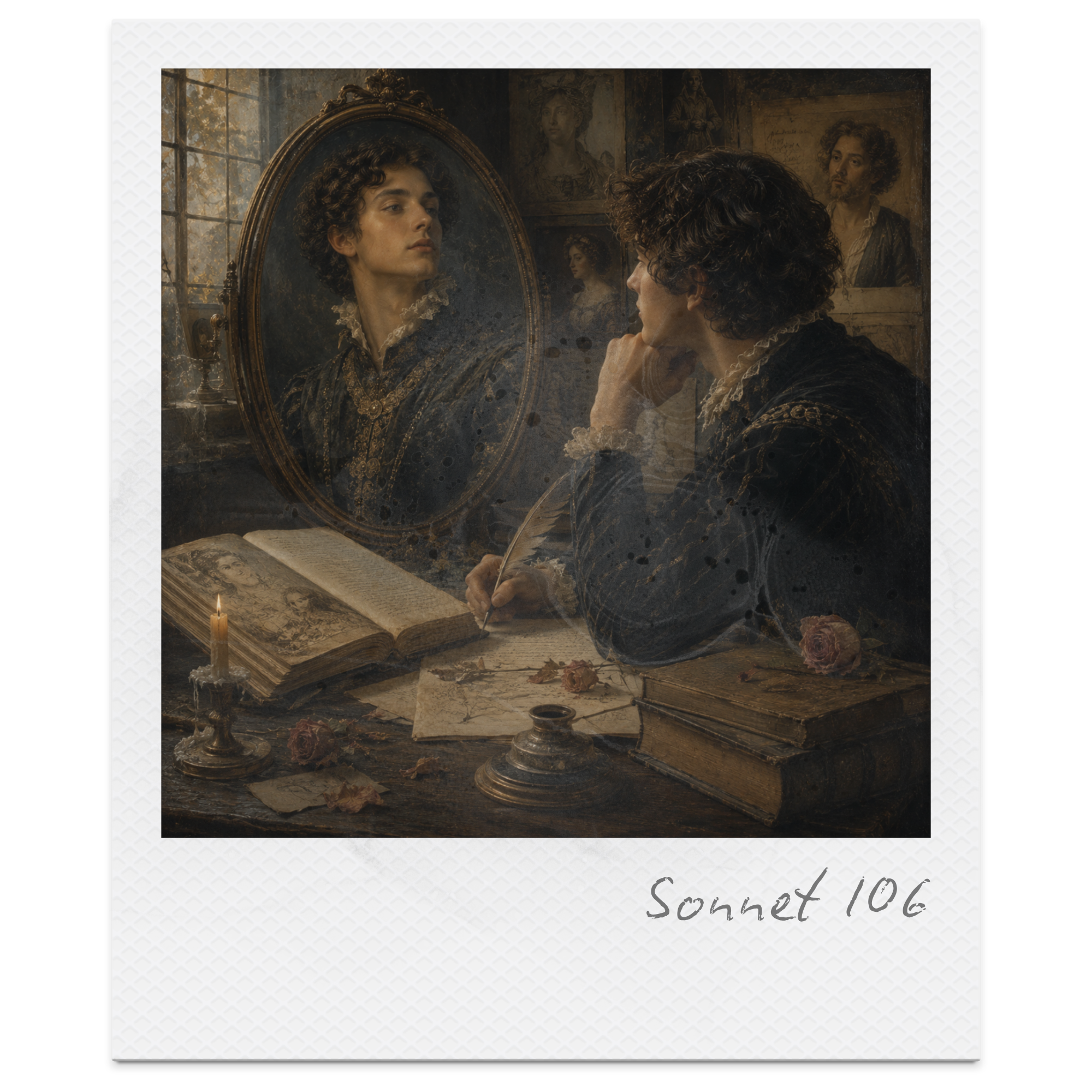
from My Heart and I by Elizabeth Barrett Browning: Summary, Themes & Analysis
from My Heart and I by Elizabeth Barrett Browning is a deeply introspective poem exploring emotional exhaustion, disillusionment, purpose, identity, and the enduring struggle to find meaning after disappointment. Through extended personification, repetition, symbolism, and a carefully controlled lyrical structure, Browning presents the heart as both companion and confidant, revealing the profound weariness of a speaker who feels alienated from the world around her. If you are studying or teaching Songs of Ourselves Volume 3 for Cambridge IGCSE Literature in English (0475), explore every poem in the Songs of Ourselves Volume 3 Hub, or discover more in-depth literary analysis in the Literature Library.

Context of from My Heart and I
Elizabeth Barrett Browning (1806–1861) was one of the most influential Victorian poets, celebrated for combining emotional intensity with intellectual depth. Although she is perhaps best known for Sonnets from the Portuguese, much of her poetry examines suffering, faith, love, mortality, and the search for purpose, often drawing upon her own experiences of chronic illness, bereavement, and social isolation without becoming purely autobiographical.
Published posthumously in 1862, from My Heart and I reflects many of the concerns that characterised Victorian literature, particularly the tension between idealism and disappointment. The speaker questions whether honesty, artistic dedication, and emotional sincerity have any lasting value in a world that seems indifferent to them. While the poem can be read in light of Barrett Browning's own life, it deliberately moves beyond personal experience to explore universal feelings of exhaustion, failure, and emotional disconnection.
The poem's most distinctive feature is its extended personification of the heart, treating it as a separate companion with whom the speaker shares every disappointment. This internal dialogue transforms private emotion into a conversation, allowing Browning to examine psychological conflict while suggesting that the struggle between hope and despair exists within every individual.
Although profoundly melancholic, the poem does not simply express hopelessness. Instead, it explores what happens when deeply held beliefs about love, friendship, art, and purpose collide with life's realities. By giving voice to emotional fatigue with remarkable honesty, Barrett Browning creates a meditation on resilience, identity, and the enduring human desire to find meaning even in moments of profound weariness.
from My Heart and I: At a Glance
Form:Three seven-line stanzas with a regular rhyme scheme and lyrical structure that contrasts with the speaker's emotional despair.
Mood:Melancholic, reflective, disillusioned, and quietly despairing, while remaining intimate and deeply personal.
Central tension: The conflict between idealism and reality, as the speaker reflects on a life of sincerity, love, and artistic dedication that seems to have resulted only in exhaustion and disappointment.
Core themes: Emotional exhaustion, mortality, disillusionment, identity, purpose, artistic expression, love, friendship, isolation, and resilience.
One-sentence meaning: Through the intimate conversation between the speaker and her own heart, Barrett Browning explores the weariness that follows repeated disappointment, questioning whether love, creativity, and integrity have lasting value while revealing the deeply human search for meaning in the face of emotional despair.
Quick Summary of from My Heart and I
The poem begins with the speaker and her heart sitting together beside a gravestone, united in their overwhelming sense of exhaustion. Both long for peace and release from life's struggles, suggesting that death appears gentler than continued emotional suffering. The speaker then reflects on a lifetime spent pursuing knowledge, trusting others, loving deeply, and expressing herself honestly through writing, only to discover that these ideals have brought disappointment rather than fulfilment.
In the final stanza, the speaker's despair becomes even more personal as she questions her place in the world. She feels that her imagination no longer inspires others, her voice has lost its power, and even her tears seem meaningless. Ending with the repeated question, "What do we here, my heart and I?", Barrett Browning leaves readers with a profound meditation on purpose, identity, and emotional exhaustion, suggesting that the search for meaning often continues even in moments of deepest despair.
Title, Form, Structure, and Metre
The formal qualities of from My Heart and I reinforce its exploration of emotional exhaustion, disillusionment, and the search for meaning. Barrett Browning combines a carefully controlled lyrical structure with recurring refrains and subtle rhythmic variations, creating a poem whose orderly form contrasts with the speaker's inner turmoil. This tension between external control and emotional despair reflects one of the poem's central concerns: maintaining dignity while confronting profound weariness.
Title
The title, from My Heart and I, immediately suggests an intimate conversation between two distinct voices. Rather than presenting the heart as merely the seat of emotion, Barrett Browning personifies it as an independent companion who shares the speaker's experiences and suffering. The conjunction "and" places the heart alongside the self as an equal participant, implying that thought and emotion are inseparable throughout the poem.
The word "from" is also significant. It suggests that the poem is being spoken out of a shared emotional experience rather than simply about it, creating the impression that both the speaker and her heart are jointly offering this confession. By the poem's conclusion, the title has gained greater significance, as readers recognise that every reflection has emerged from this intimate partnership between reason and feeling.
Form and Structure
The poem consists of three seven-line stanzas (septets), each ending with a repeated refrain centred on "my heart and I." This regular structure creates a cyclical pattern that mirrors the speaker's inability to escape her emotional state. Rather than progressing towards resolution, each stanza returns to the same shared weariness, reinforcing the sense that exhaustion has become permanent.
Each stanza develops the speaker's despair in a slightly different way. The first focuses on weariness with life itself, symbolised by the gravestone and longing for rest. The second reflects upon the causes of this exhaustion, recalling misplaced trust, artistic dedication, and emotional sincerity. The final stanza moves inward still further, questioning the speaker's usefulness and purpose within the world. This gradual narrowing from external imagery to existential self-questioning creates a clear emotional progression despite the poem's repetitive structure.
Repetition is one of Barrett Browning's most effective structural devices. Variations such as "Enough! we're tired," "You see we're tired," and "How tired we feel" create a cumulative effect, suggesting that exhaustion deepens with every reflection. Likewise, the recurring refrain "my heart and I" continually reunites the speaker with her emotional self, emphasising that neither reason nor feeling can escape the same burdens.
The poem ends not with certainty but with the question "What do we here, my heart and I?" Structurally, this unresolved conclusion is deeply significant. Rather than offering comfort or closure, Barrett Browning leaves both speaker and reader confronting the same uncertainty, reinforcing the poem's meditation on purpose and identity.
Rhyme Scheme and Poetic Pattern
Each stanza broadly follows the pattern ABBAACC, creating a strong sense of cohesion while allowing the repeated closing line to function almost like a refrain.
For example, the opening stanza follows:
AI
Bthus
Bus
Atenderly
Aknife
Clife
CI
The enclosed ABBA opening creates the feeling of thoughts folding back upon themselves, mirroring the speaker's introspection. The closing couplet before the refrain slows the poem and prepares readers for the repeated declaration of shared exhaustion. This carefully balanced rhyme scheme lends musicality to deeply melancholic subject matter, demonstrating how external poetic order contrasts with internal emotional instability.
Barrett Browning also employs numerous full rhymes—such as "thus/us," "knife/life," "men/pen," and "speak/sleep"—which create an impression of formal control. Ironically, this orderly sound pattern intensifies the emotional impact by containing feelings that threaten to overwhelm the speaker.
Metre and Rhythmic Movement
The poem is written predominantly in iambic tetrameter, although Barrett Browning introduces frequent metrical variations to reflect shifts in emotion and emphasis. The four-beat rhythm gives the poem a measured, conversational quality appropriate for its intimate dialogue between the speaker and her heart.
The opening line scans closely to iambic tetrameter:
enOUGH | we're TIRED | my HEART | and I
The strong stresses on "tired," "heart," and "I" immediately foreground the poem's emotional focus. Rather than creating a smooth lyrical flow, the emphatic rhythm gives the impression of weary insistence, as though the speaker is stating an undeniable truth.
Elsewhere, Barrett Browning subtly disrupts the rhythm for expressive effect. Consider:
We LOVED | too TRUE | to KEEP | a FRIEND
The repeated stresses on "loved," "true," and "friend" emphasise the painful irony that sincerity has resulted in isolation rather than companionship. Similarly, the final question,
What DO | we HERE | my HEART | and I?
places strong emphasis on "here" and "heart," slowing the rhythm and drawing attention to the speaker's existential uncertainty. The line's interrogative cadence leaves the poem emotionally unresolved, allowing its central question to linger long after the final word.
Overall, Barrett Browning's use of regular metre, carefully controlled rhyme, and subtle rhythmic variation reflects the poem's central tension between composure and emotional collapse. The speaker may feel exhausted and purposeless, but the disciplined craftsmanship of the verse demonstrates that even profound despair can be transformed into art, giving enduring shape and meaning to deeply personal suffering.
The Speaker in from My Heart and I
The speaker of from My Heart and I presents herself as someone who has become profoundly emotionally exhausted after a lifetime of loving deeply, trusting others, pursuing knowledge, and creating art. Rather than speaking to another person, she addresses and includes her own heart as a separate companion, using extended personification to externalise her inner emotional life. This creates the impression of an intimate conversation between reason and feeling, suggesting that both intellect and emotion have reached the same point of weariness. Although the speaker reflects experiences that resonate with Elizabeth Barrett Browning's own life, she is best understood as a carefully constructed poetic voice whose despair speaks to universal human experiences of disillusionment, failure, and the search for purpose. Her tone shifts between melancholy, self-reflection, and quiet resignation, yet her eloquence and lyrical control reveal that, even while questioning the value of her voice, she continues to transform suffering into meaningful poetry.
Stanza-by-Stanza Analysis of from My Heart and I
Elizabeth Barrett Browning structures from My Heart and I as a gradual journey through emotional exhaustion, moving from a longing for rest, to a reflection on the disappointments of the past, and finally to a profound questioning of purpose and identity. Each stanza deepens the speaker's despair while revealing how imagery, personification, repetition, and symbolism transform personal suffering into a universal meditation on the cost of loving, creating, and hoping in an indifferent world. Through this carefully controlled progression, the poem explores not only what it means to feel weary, but why that weariness has come to define both the speaker and her heart.
Stanza 1: Longing for Rest and Release
The opening stanza immediately establishes the poem's atmosphere of profound emotional exhaustion. Rather than beginning with a description of past suffering, Barrett Browning presents the speaker and her heart as already united in their weariness, suggesting that their despair has become all-consuming. Through personification, graveyard symbolism, and the contrast between human mortality and nature's quiet renewal, the stanza introduces the poem's central question of whether peace can ever be found after a lifetime of disappointment.
The opening exclamation, "Enough! we're tired, my heart and I," immediately conveys emotional intensity. The forceful interjection "Enough!" suggests that the speaker has reached the limit of what she can endure, implying that her exhaustion is not temporary but the result of prolonged emotional suffering. By immediately pairing herself with "my heart," Barrett Browning establishes the poem's central extended personification. The heart becomes a separate companion sharing the same burden, suggesting that both intellect and emotion have reached complete agreement in their desire for rest.
The image of the speaker and her heart sitting "beside the headstone" introduces powerful symbolism associated with death, remembrance, and peace. Rather than expressing fear of mortality, the speaker calmly contemplates it, creating the unsettling impression that death offers a form of comfort unavailable in life. The wish that "that name were carved for us" intensifies this idea. The gravestone symbolises not simply physical death but the possibility of release from emotional pain, revealing how deeply the speaker longs for an end to her struggles.
Barrett Browning then introduces a striking contrast between human craftsmanship and the natural world. The observation that "The moss reprints more tenderly / The hard types of the mason's knife" personifies nature as a gentle restorative force. The adjective "tenderly" sharply contrasts with the "hard" marks left by the mason, suggesting that time and nature soften the harshness created by human hands. The verb "reprints" is particularly significant. Rather than erasing the inscription, the moss covers and reshapes it, implying that suffering is not forgotten but gradually transformed by time.
The following line, "As heaven's sweet life renews earth's life," broadens this contrast into a spiritual reflection. The cyclical imagery of renewal suggests that nature continually restores what has decayed, offering a vision of hope that stands in stark opposition to the speaker's own inability to recover. While the earth experiences continual regeneration, the speaker remains trapped in emotional exhaustion. This contrast subtly raises questions about whether human suffering can ever be renewed in the same way that nature is.
The stanza ends by repeating the opening refrain: "With which we're tired, my heart and I." This circular structure reinforces the speaker's sense of being emotionally trapped. Although the stanza has moved from death to nature and finally to spiritual renewal, it ultimately returns to the same declaration of weariness. Structurally, this repetition mirrors the speaker's inability to escape her thoughts, suggesting that every reflection leads back to the same overwhelming fatigue.
Through its rich symbolism and carefully balanced imagery, the opening stanza establishes the poem as far more than a lament for personal suffering. Barrett Browning presents exhaustion as an all-encompassing psychological and spiritual condition, while the repeated companionship of "my heart and I" suggests that despair has become woven into the speaker's very identity.
Stanza 2: The Cost of Idealism
In the second stanza, Barrett Browning shifts from expressing exhaustion to examining its causes. The speaker reflects upon a lifetime devoted to learning, trust, art, and love, yet each ideal has ultimately led to disappointment rather than fulfilment. Through images of blood, writing, and failed relationships, the stanza explores the painful realisation that sincerity and integrity do not necessarily bring happiness, suggesting that emotional weariness has been earned through a life lived too honestly.
The repeated opening, "You see we're tired, my heart and I," creates the impression that the speaker is now justifying her despair. Unlike the emphatic "Enough!" that opens the poem, "You see" sounds quieter and more conversational, as though she is inviting the reader to understand the experiences that have brought her to this point. The repetition of "my heart and I" once again reinforces the inseparable partnership between intellect and emotion, suggesting that every disappointment has been shared equally by both.
The speaker begins to recount those disappointments through a sequence of parallel clauses: "We dealt with books, we trusted men." The balanced structure reflects the different aspects of a meaningful life—intellectual pursuit and human relationships. "Books" symbolise knowledge, learning, and artistic endeavour, while "men" represent society, friendship, and personal trust. By placing these experiences side by side, Barrett Browning suggests that neither intellectual achievement nor faith in others has provided lasting satisfaction.
Perhaps the stanza's most striking image appears in "And in our own blood drenched the pen." This powerful metaphor transforms writing into an act of personal sacrifice. Rather than using ink, the speaker figuratively writes with "our own blood," implying that her poetry has been created through genuine emotional suffering. Blood symbolises both life and identity, suggesting that every piece of writing contains part of the speaker herself. The image also elevates artistic creation into an act of profound self-giving, emphasising the emotional cost of producing authentic literature.
The following line, "As if such colours could not fly," extends this metaphor. "Colours" refers both to the literal colour of blood and to the emotional intensity invested in the speaker's work. The verb "fly" suggests fading, disappearing, or losing vibrancy over time. The speaker reflects with quiet irony that she once believed such passionate expression could endure forever, only to discover that even the deepest emotions may fade or be forgotten. Barrett Browning therefore questions the permanence of both art and human feeling.
The poem then turns from artistic disappointment to moral idealism: "We walked too straight for fortune's end." The metaphor of walking "too straight" suggests honesty, integrity, and unwavering moral principles. However, the adverb "too" transforms virtue into a disadvantage. Rather than rewarding goodness, life appears to favour compromise, implying that the speaker's refusal to deviate from her principles has prevented worldly success. The abstract noun "fortune" reinforces this ambiguity, encompassing both material prosperity and favourable destiny.
Similarly, "We loved too true to keep a friend" presents one of the poem's most poignant paradoxes. Love and loyalty are usually celebrated as qualities that strengthen relationships, yet here they become the very reason friendships fail. The balanced phrasing highlights the painful irony that complete sincerity is not always welcomed by others. Barrett Browning suggests that emotional honesty can leave individuals vulnerable within a world that often rewards caution, self-interest, or superficial affection.
The stanza concludes by returning to the refrain, "At last we're tired, my heart and I." The addition of "At last" is significant. It implies that exhaustion has not arisen suddenly but has accumulated gradually through years of disappointment, sacrifice, and unmet expectations. Structurally, the repeated ending once again creates a cyclical effect, but the refrain now carries greater emotional weight because readers understand the experiences that have produced it. Weariness is no longer simply declared—it has been fully justified through the speaker's reflections on a life devoted to ideals that the world has failed to reward.
Stanza 3: Questioning Purpose and Legacy
In the final stanza, Barrett Browning moves beyond reflecting on past disappointments to confront the speaker's deepest fear: that her life, imagination, and artistic voice no longer have any value. The repeated refrain of weariness reaches its emotional climax as the speaker questions not only what she has endured but why she continues to exist at all. Through colour symbolism, imagery of silence, and a powerful concluding rhetorical question, the poem ends with an unresolved meditation on purpose, creativity, and the fear of becoming forgotten.
The stanza opens with "How tired we feel, my heart and I!", the third variation of the poem's recurring refrain. The shift from "Enough! we're tired" and "You see we're tired" to "How tired we feel" makes the exhaustion increasingly intimate and immediate. Rather than declaring or explaining their weariness, the speaker now dwells within it, suggesting that fatigue has become an overwhelming emotional reality rather than simply a response to disappointment. Once again, "my heart and I" emphasises that both emotion and reason share this sense of despair equally.
The following declaration, "We seem of no use in the world," introduces a profound crisis of identity and purpose. The verb "seem" is significant because it leaves room for uncertainty. The speaker does not claim with certainty that she is worthless; instead, she reveals how she perceives herself. This subtle distinction reflects the psychological nature of despair, where feelings of uselessness may be emotionally convincing even if they are not objectively true. Barrett Browning therefore invites readers to recognise the difference between perception and reality while still acknowledging the intensity of the speaker's suffering.
The image "Our fancies hang grey and uncurled" develops this emotional decline through colour symbolism and visual imagery. "Fancies" refers to imagination, creativity, and poetic inspiration, suggesting that the speaker's artistic vision has lost its vitality. The adjective "grey" symbolises lifelessness, melancholy, and fading hope, replacing the rich emotional colour suggested by the "blood" of the previous stanza. Meanwhile, "uncurled" implies something that has failed to unfold or blossom fully. The image evokes ideas that once possessed energy and promise but now hang limply, unable to inspire either the speaker or those around her.
These fading imaginings drift "About men's eyes indifferently." The adverb "indifferently" is particularly painful because it suggests not active rejection but complete emotional detachment. The speaker believes her imagination passes before others without attracting attention or interest. Barrett Browning therefore presents indifference as more devastating than criticism, since it implies invisibility rather than disagreement. The line reflects the fear shared by many artists that their work may ultimately fail to move the people for whom it is created.
This anxiety continues in the poignant observation: "Our voice which thrilled you so, will let / You sleep." The contrast between "thrilled" and "sleep" creates a striking juxtaposition. The speaker remembers a time when her voice inspired, excited, or emotionally stirred others, yet now it has become incapable of provoking any response. Sleep symbolises not peaceful rest but emotional disengagement, suggesting that her words no longer awaken thought or feeling. The line therefore expresses a fear of artistic irrelevance as much as personal loneliness.
Similarly, "our tears are only wet" strips emotion of its perceived significance. Tears traditionally symbolise grief or compassion, yet here they are reduced to their simplest physical property. The adverb "only" conveys devastating self-diminishment, implying that even genuine suffering has become meaningless because it fails to affect anyone else. Barrett Browning exposes one of the poem's deepest anxieties: not simply that pain exists, but that it may go unnoticed and achieve nothing.
The poem concludes with the haunting question, "What do we here, my heart and I?" Unlike the earlier repeated statements, the refrain now becomes an existential question. The speaker no longer asks how she feels but why she continues to exist at all. Importantly, Barrett Browning offers no answer. The unresolved rhetorical question leaves readers sharing the speaker's uncertainty, ensuring that the poem ends not with resolution but with contemplation. Structurally, the circular return to "my heart and I" reinforces the inseparable relationship between the speaker and her emotional self, while the unanswered question transforms the poem from a personal lament into a universal exploration of purpose, creativity, and the enduring human search for meaning in the face of disillusionment.
Key Quotes and Methods in from My Heart and I
Throughout from My Heart and I, Barrett Browning uses extended personification, symbolism, repetition, metaphor, and lyrical structure to explore emotional exhaustion and the search for purpose. The poem's recurring dialogue between the speaker and her own heart transforms private despair into a universal reflection on love, creativity, disappointment, and identity.
"Enough! we're tired, my heart and I."
◆ Technique: Exclamation, repetition, and extended personification.
◆ Meaning: The poem opens with an immediate declaration of emotional exhaustion. By personifying the heart as a separate companion, the speaker suggests that both her rational mind and emotional self have reached the same point of despair.
◆ Purpose: Barrett Browning immediately immerses readers in the speaker's psychological state while establishing the intimate dialogue that structures the entire poem.
◆ Impact: Readers are drawn into the speaker's profound weariness from the opening line, recognising that this exhaustion is deep-rooted rather than temporary.
"And wish that name were carved for us."
◆ Technique: Graveyard symbolism and understated imagery.
◆ Meaning: The speaker expresses a longing to have her own name carved on the gravestone, implying that death appears more peaceful than continued emotional suffering.
◆ Purpose: Barrett Browning explores the depth of despair without resorting to melodrama, using the gravestone as a symbol of rest, release, and finality.
◆ Impact: The quiet acceptance of mortality unsettles readers, emphasising the extent of the speaker's emotional fatigue.
"The moss reprints more tenderly / The hard types of the mason's knife"
◆ Technique: Personification, symbolism, and contrast.
◆ Meaning: Nature gently softens the harsh marks carved into stone, suggesting that time possesses a restorative power absent from human experience.
◆ Purpose: Barrett Browning contrasts the hardness of human suffering with the quiet renewal found in the natural world, highlighting the speaker's inability to experience similar healing.
◆ Impact: Readers are encouraged to reflect on the relationship between time, memory, and emotional recovery, deepening the poem's contemplative tone.
"And in our own blood drenched the pen"
◆ Technique: Extended metaphor and vivid imagery.
◆ Meaning: Writing is presented as an act of profound personal sacrifice, with the speaker figuratively using her own blood instead of ink. Her poetry has been created through genuine emotional suffering.
◆ Purpose: Barrett Browning elevates artistic creation into an intensely personal act, demonstrating that authentic literature often emerges from lived experience and emotional vulnerability.
◆ Impact: Readers appreciate both the emotional cost of creativity and the speaker's deep commitment to truth in her writing.
"We walked too straight for fortune's end"
◆ Technique: Metaphor and irony.
◆ Meaning: Walking "too straight" symbolises honesty, integrity, and moral conviction, yet these virtues have prevented worldly success rather than securing it.
◆ Purpose: Barrett Browning questions whether society truly rewards goodness, suggesting that unwavering principles may sometimes lead to disappointment.
◆ Impact: Readers are prompted to consider the tension between personal integrity and practical success.
"We loved too true to keep a friend"
◆ Technique: Paradox and balanced phrasing.
◆ Meaning: The speaker suggests that complete sincerity and loyalty have ironically damaged relationships instead of strengthening them.
◆ Purpose: Barrett Browning challenges conventional assumptions about friendship and love, showing that emotional honesty can leave individuals vulnerable within an imperfect world.
◆ Impact: The paradox creates sympathy for the speaker while encouraging readers to reflect on the complexities of human relationships.
"Our fancies hang grey and uncurled"
◆ Technique: Colour symbolism, metaphor, and visual imagery.
◆ Meaning: The speaker's imagination and creativity are presented as faded and lifeless. The colour "grey" symbolises emotional decline, while "uncurled" suggests ideas that never fully bloom.
◆ Purpose: Barrett Browning conveys the speaker's fear that both her creativity and sense of purpose have withered through disappointment.
◆ Impact: Readers experience the emotional weight of artistic and psychological exhaustion, recognising creativity as something fragile rather than permanent.
"Our voice which thrilled you so, will let / You sleep"
◆ Technique: Juxtaposition and irony.
◆ Meaning: A voice that once inspired and moved others is now perceived as powerless, incapable of holding anyone's attention.
◆ Purpose: Barrett Browning explores one of the artist's deepest fears: that their work may eventually lose its ability to influence or inspire.
◆ Impact: Readers recognise that the poem examines not only personal despair but also anxieties surrounding legacy and artistic relevance.
"Our tears are only wet"
◆ Technique: Understatement and reduction.
◆ Meaning: The speaker reduces her tears to their physical property alone, implying that her suffering no longer carries emotional significance or affects those around her.
◆ Purpose: Barrett Browning highlights the isolating nature of despair, where even genuine emotion can seem empty or meaningless.
◆ Impact: The stark simplicity of the statement makes the speaker's hopelessness especially poignant, encouraging readers to empathise with her emotional isolation.
"What do we here, my heart and I?"
◆ Technique: Rhetorical question, repetition, and extended personification.
◆ Meaning: The poem concludes with an unanswered existential question, moving beyond weariness to question the speaker's purpose and place in the world.
◆ Purpose: Rather than offering resolution, Barrett Browning leaves readers contemplating the universal search for meaning, ensuring the poem's concerns extend beyond the speaker's personal experience.
◆ Impact: The unresolved ending lingers in the reader's mind, transforming the poem into a timeless meditation on identity, purpose, and the endurance of the human spirit in moments of profound disillusionment.
Key Techniques in from My Heart and I
In from My Heart and I, Elizabeth Barrett Browning combines lyrical form, extended personification, symbolism, and repetition to explore the emotional consequences of disappointment. Rather than presenting despair as a sudden emotion, she reveals it as something accumulated over a lifetime of love, trust, artistic dedication, and idealism. The poem's carefully controlled techniques allow intensely personal feelings to become a universal reflection on purpose, identity, and the endurance of the human spirit.
◆ Extended Personification – The poem's defining technique is the personification of "my heart" as an independent companion. Throughout the poem, the speaker speaks alongside rather than simply about her heart, creating an intimate dialogue between emotion and reason. This technique externalises the speaker's inner conflict, suggesting that every disappointment has been experienced equally by both her emotional and rational selves. It also transforms a private psychological struggle into a universal conversation about human suffering.
◆ Refrain and Repetition – Variations of "we're tired, my heart and I" appear throughout the poem, creating a cyclical structure that mirrors the persistence of emotional exhaustion. The subtle changes—from "Enough! we're tired" to "You see we're tired" and finally "How tired we feel"—show despair gradually deepening rather than remaining static. The repeated refrain also reinforces the inseparable relationship between the speaker and her heart, suggesting there is no escape from their shared weariness.
◆ Symbolism – Barrett Browning fills the poem with symbols that deepen its emotional and philosophical meaning. The headstone symbolises rest, mortality, and the desire for peace rather than simply death itself. Moss represents the healing power of time and nature, gently softening human suffering, while blood symbolises both life and the emotional sacrifices involved in artistic creation. Together, these symbols elevate the poem from a personal confession to a meditation on mortality, memory, and resilience.
◆ Metaphor – The poem repeatedly transforms abstract emotions into vivid physical images. The striking metaphor "in our own blood drenched the pen" presents writing as an act of personal sacrifice, suggesting that genuine creativity demands emotional investment. Similarly, "walked too straight" becomes a metaphor for moral integrity, while "our fancies hang grey and uncurled" visualises imagination as something that has withered through disappointment. These metaphors make psychological experiences tangible and emotionally immediate.
◆ Contrast and Juxtaposition – Barrett Browning frequently places opposing ideas side by side to emphasise the poem's central tensions. Nature's gentle renewal contrasts with the speaker's inability to recover emotionally, while ideals such as love, truth, and friendship are juxtaposed with disappointment and isolation. The poem also contrasts the permanence of artistic ideals with the impermanence of human recognition, reinforcing its exploration of hope colliding with reality.
◆ Religious and Natural Imagery – Images such as "heaven's sweet life renews earth's life" introduce subtle religious symbolism while emphasising nature's continual cycle of renewal. This imagery contrasts with the speaker's own emotional stagnation, raising questions about whether spiritual or emotional rebirth is possible. Rather than offering clear religious consolation, Barrett Browning presents nature as a quiet reminder of renewal that the speaker struggles to experience herself.
◆ Paradox and Irony – Much of the poem's emotional power comes from painful contradictions. The speaker has "loved too true to keep a friend" and "walked too straight for fortune's end," suggesting that virtues usually admired by society have ironically led to failure and loneliness. These paradoxes challenge simplistic assumptions about morality, implying that integrity and sincerity do not always bring happiness or success.
◆ Colour Imagery – Colour is used sparingly but effectively to chart the speaker's emotional decline. Earlier, blood suggests vitality, passion, and artistic commitment, whereas the "grey" imagination of the final stanza symbolises fading creativity, emotional numbness, and the loss of hope. This subtle progression from vivid colour to muted greyness mirrors the speaker's gradual psychological deterioration.
◆ Rhetorical Question – The poem ends with the unanswered question, "What do we here, my heart and I?" Rather than resolving the speaker's despair, Barrett Browning leaves both speaker and reader confronting uncertainty. The rhetorical question broadens the poem from an individual lament into a universal philosophical inquiry about purpose, identity, and the meaning of continued existence after repeated disappointment.
◆ Lyrical Structure and Controlled Rhythm – Despite its themes of emotional collapse, the poem remains carefully structured through regular septets, a consistent rhyme scheme, and predominantly iambic tetrameter. This contrast between disciplined form and overwhelming emotion reflects one of the poem's central ideas: although suffering may feel chaotic internally, art has the power to shape pain into something coherent and enduring. Barrett Browning's formal control therefore becomes an expression of resilience, demonstrating that creativity continues even when hope appears to have faded.
How the Writer Creates Meaning and Impact in from My Heart and I
In from My Heart and I, Elizabeth Barrett Browning uses language, structure, voice, and sound to explore the emotional consequences of disappointment, revealing how years of love, trust, creativity, and idealism can lead to profound exhaustion. Through the intimate dialogue between the speaker and her personified heart, Browning transforms personal despair into a universal meditation on purpose, identity, and the struggle to find meaning when life's deepest convictions appear to have failed. Although the poem is filled with melancholy, its carefully crafted form demonstrates that art itself can become an enduring response to suffering.
Language: Giving Emotional Weariness a Physical Presence
Barrett Browning's language is rich in metaphor, symbolism, and personification, allowing abstract emotional experiences to become vivid and tangible. From the opening declaration, "Enough! we're tired, my heart and I," exhaustion is presented not as a passing feeling but as an almost physical burden shared by two companions. By separating the heart from the self, Browning externalises the speaker's emotional life, suggesting that despair has become so overwhelming it feels like another presence beside her. This technique makes an intensely private psychological struggle accessible and relatable to readers.
The poem's imagery repeatedly transforms emotional suffering into concrete physical experiences. The gravestone symbolises not only mortality but the longing for peace, while the speaker's confession that she has "in our own blood drenched the pen" turns artistic creation into an act of sacrifice. The metaphor suggests that genuine poetry requires the writer to pour their own emotional life onto the page, implying that creativity is inseparable from vulnerability. Similarly, the faded image of "Our fancies hang grey and uncurled" visualises imagination itself as something lifeless and unable to flourish, allowing readers to witness the speaker's psychological decline rather than simply being told about it.
Barrett Browning also uses carefully chosen contrasts within her imagery. Nature, represented by the moss that "reprints more tenderly" the carved gravestone, possesses a quiet ability to soften pain through time. Human beings, however, appear unable to achieve the same renewal. This contrast between the restorative power of nature and the speaker's emotional stagnation deepens the poem's exploration of despair while subtly questioning why healing seems possible everywhere except within the human heart.
Structure: A Journey That Ends Where It Began
The poem's structure mirrors the cyclical nature of emotional exhaustion. Each of the three septets ends with a variation of the refrain "my heart and I," repeatedly bringing the speaker back to the same emotional state despite the different experiences explored within each stanza. This circular movement reflects the way despair often traps individuals in recurring patterns of thought, where every reflection ultimately returns to the same painful conclusion.
At the same time, the poem develops through a clear emotional progression. The first stanza focuses on a longing for rest, symbolised by the gravestone. The second explains how years of intellectual, emotional, and artistic commitment have produced this weariness. Finally, the third moves beyond reflection towards an existential crisis, questioning whether the speaker's voice, imagination, or life itself still possesses any purpose. This gradual narrowing from external images to internal questioning creates a powerful sense of psychological descent.
The poem's final line is particularly significant structurally. Rather than resolving the speaker's despair, Browning concludes with the unanswered question, "What do we here, my heart and I?" This rhetorical ending leaves readers sharing the speaker's uncertainty instead of observing it from a distance. The lack of resolution reinforces the poem's exploration of purpose, suggesting that some existential questions remain permanently open rather than comfortably answered.
Voice and Tone: Intimate Reflection and Quiet Despair
One of the poem's greatest strengths is the intimacy of its voice. The speaker never addresses society directly or delivers dramatic declarations; instead, she quietly reflects alongside her own heart, creating the impression that readers are listening to an intensely private conversation. This conversational quality makes the emotional honesty of the poem especially compelling, allowing its themes to emerge naturally rather than through overt philosophical statements.
The tone develops subtly throughout the poem. It begins with emphatic weariness before becoming increasingly reflective as the speaker explains the disappointments that have shaped her life. By the final stanza, the tone shifts again towards existential uncertainty. Importantly, however, Browning avoids melodrama. Even when contemplating death or questioning the value of her own life, the speaker remains measured and thoughtful. This restraint gives the poem much of its emotional power, suggesting that the deepest forms of despair are often expressed most quietly.
The repeated partnership between the speaker and her heart also softens the poem's sadness. Rather than presenting isolation, the dialogue implies companionship, even if that companion is the speaker's own emotional self. This subtle irony suggests that while external relationships may have failed, the speaker continues to endure through her ongoing conversation with herself.
Sound and Rhythm: Lyrical Control Amid Emotional Collapse
Although the poem explores despair, its sound patterns remain remarkably controlled. The consistent rhyme scheme and predominantly iambic tetrameter create a steady musical rhythm that contrasts with the speaker's emotional instability. This tension between formal discipline and psychological suffering reflects one of Barrett Browning's central artistic achievements: demonstrating that poetry can impose order upon experiences that otherwise feel overwhelming.
Repetition also plays a crucial role in shaping the poem's emotional impact. The recurring refrain "my heart and I" creates a haunting echo throughout the three stanzas, while repeated references to being "tired" reinforce the sense that exhaustion has become inescapable. Each repetition carries slightly different emotional weight, moving from declaration to explanation and finally to existential questioning. This subtle development prevents the refrain from becoming static, instead allowing readers to experience the gradual deepening of despair.
Barrett Browning also employs sound to emphasise moments of emotional intensity. The forceful exclamation "Enough!" immediately captures attention, while softer phrases such as "heaven's sweet life" introduce a gentler cadence that briefly suggests the possibility of renewal. By contrast, the closing rhetorical question slows the poem's rhythm, leaving readers with a lingering sense of uncertainty rather than closure.
Through the careful interplay of symbolic language, cyclical structure, intimate voice, and lyrical rhythm, Barrett Browning transforms an intensely personal expression of emotional exhaustion into a timeless exploration of the human condition. The poem ultimately suggests that although love, art, friendship, and idealism may lead to disappointment, the very act of shaping suffering into poetry becomes an enduring assertion of meaning. Ironically, while the speaker questions whether her voice still matters, the poem itself proves its lasting power by continuing to move readers more than a century later.
Themes in from My Heart and I
In from My Heart and I, Elizabeth Barrett Browning explores the emotional consequences of living with deep sincerity in a world that often fails to reward honesty, creativity, or compassion. Through the intimate dialogue between the speaker and her personified heart, the poem examines emotional exhaustion, mortality, purpose, and identity, while questioning whether love, art, and integrity have lasting value. Although the poem is filled with melancholy, it also reveals the resilience required to continue reflecting, creating, and searching for meaning despite profound disappointment.
Emotional Exhaustion
Emotional exhaustion dominates the poem from its opening line. The repeated refrain "we're tired, my heart and I" transforms weariness into the defining feature of the speaker's existence, suggesting that exhaustion has become permanent rather than temporary. Barrett Browning deliberately repeats and varies the refrain throughout the poem, allowing readers to feel how despair accumulates rather than suddenly appears.
Importantly, this weariness is not presented as simple physical fatigue but as the result of years spent loving deeply, trusting others, and pursuing artistic and intellectual ideals. The speaker's exhaustion therefore becomes symbolic of the emotional cost of living with sincerity and conviction in an imperfect world.
Mortality
Death appears throughout the poem not as something terrifying but as a possible source of peace. The image of the speaker sitting beside a headstone and wishing "that name were carved for us" suggests a longing for rest rather than destruction. The gravestone becomes a symbol of release from emotional suffering, reflecting the speaker's desire to escape disappointment.
However, Barrett Browning also contrasts mortality with the continual renewal of nature. The moss softens the stone, and "heaven's sweet life renews earth's life," suggesting that while nature continually regenerates, human beings often struggle to recover from emotional pain. This contrast deepens the poem's meditation on mortality by linking death, renewal, and the limits of human resilience.
Disillusionment
The poem traces the gradual collapse of the speaker's youthful ideals. She reflects on a life devoted to learning, trust, artistic expression, and love, only to conclude that these values have brought disappointment rather than fulfilment. Statements such as "We walked too straight for fortune's end" and "We loved too true to keep a friend" reveal the painful irony that the qualities usually admired by society have failed to produce happiness.
Rather than presenting bitterness, Barrett Browning portrays disillusionment as quiet recognition. The speaker does not reject her ideals; instead, she mourns the fact that the world has failed to reward them. This makes the poem's sadness more reflective than angry.
Identity
The poem explores identity through its extraordinary personification of the heart. By treating the heart as an independent companion, Barrett Browning divides the self into two voices while showing that both reason and emotion have arrived at the same conclusions. This internal dialogue suggests that identity is formed through the constant interaction between feeling and thought.
The repeated phrase "my heart and I" also emphasises that the speaker cannot separate herself from her emotional experiences. Her disappointments have become inseparable from her sense of self, demonstrating how profoundly relationships, creativity, and memory shape personal identity.
Purpose
One of the poem's central concerns is whether the speaker's life continues to have meaning. By the final stanza, she questions not only the value of her imagination and voice but also her very existence, asking "What do we here, my heart and I?" This unanswered question transforms the poem into a philosophical meditation on purpose.
Significantly, Barrett Browning offers no clear resolution. Instead, she leaves readers contemplating whether purpose is something discovered through external success or something created through perseverance, reflection, and artistic expression. Ironically, while the speaker doubts the value of her voice, the poem itself demonstrates its lasting significance.
Artistic Expression
Writing is presented as both a source of fulfilment and profound sacrifice. The powerful metaphor "in our own blood drenched the pen" suggests that genuine poetry demands emotional honesty, requiring the writer to give something deeply personal of themselves. Art becomes inseparable from suffering, transforming lived experience into creative expression.
Later, however, the speaker fears that her work no longer has any impact. The contrast between a voice that once "thrilled" listeners and one that now merely lets them "sleep" reflects anxieties about artistic relevance and legacy. Barrett Browning therefore explores both the rewards and burdens of creative life.
Love
Love is portrayed as one of the speaker's defining virtues, yet it also becomes one of her greatest sources of pain. The poignant line "We loved too true to keep a friend" presents sincere affection as something that has paradoxically led to loneliness. Barrett Browning challenges the assumption that love always strengthens relationships, suggesting instead that emotional honesty can expose individuals to disappointment.
Despite this, the poem never dismisses love itself. The speaker regrets the consequences of loving deeply rather than the act of loving, implying that compassion remains valuable even when it results in suffering.
Friendship
Friendship is presented as fragile and imperfect. The speaker reflects on trusting others only to discover that such trust has not been reciprocated. Her conclusion that she loved "too true to keep a friend" suggests that authentic relationships may be difficult to sustain within a world shaped by compromise and misunderstanding.
Rather than blaming others directly, Barrett Browning presents failed friendship as part of a broader pattern of disillusionment. The loss of companionship contributes significantly to the speaker's emotional isolation, reinforcing the poem's melancholic tone.
Isolation
Although the speaker is accompanied by her own heart, she remains emotionally isolated from the wider world. Her imagination hangs "About men's eyes indifferently," suggesting that her creativity no longer reaches others, while her once powerful voice now fails to move its audience. Even her tears seem meaningless, reduced to being "only wet."
This isolation is both artistic and personal. The speaker fears not only loneliness but irrelevance, believing that her thoughts, feelings, and creativity no longer matter to anyone else. Barrett Browning captures the profound loneliness that can accompany emotional exhaustion, where the greatest fear is not rejection but indifference.
Resilience
Despite its pervasive melancholy, the poem also contains a quiet thread of resilience. Although the speaker repeatedly questions the value of her life and work, she continues to reflect, to question, and, most importantly, to write. The very existence of the poem demonstrates that her creative voice has not fallen silent, even while she doubts its significance.
The poem's carefully controlled structure further reinforces this idea. Its disciplined rhyme, metre, and lyrical form contrast with the speaker's emotional turmoil, suggesting that art possesses the ability to shape suffering into something meaningful. Barrett Browning therefore leaves readers with a subtle paradox: while the speaker fears her voice no longer matters, the enduring power of the poem itself quietly proves otherwise.
Alternative Interpretations of from My Heart and I
Although from My Heart and I can be read as a deeply personal expression of emotional exhaustion, Barrett Browning deliberately leaves many of its images and symbols open to interpretation. The speaker's dialogue with her own heart, combined with the poem's reflections on love, creativity, and mortality, allows readers to approach it from psychological, feminist, religious, and existential perspectives.
Psychological Interpretation: Depression and Emotional Burnout
A psychological reading views the poem as a powerful portrayal of depression, emotional burnout, or prolonged grief. The repeated refrain "we're tired, my heart and I" suggests a level of exhaustion that extends far beyond physical fatigue, reflecting the emotional numbness often associated with chronic psychological distress.
The personified heart may also represent the speaker's internal emotional self, allowing Barrett Browning to externalise an inner dialogue between thought and feeling. The speaker's belief that she is "of no use in the world" and that her tears are "only wet" reflects distorted self-perception, demonstrating how despair can convince individuals that their lives and emotions have lost value even when this may not be objectively true.
Feminist Interpretation: The Emotional Cost of Women's Lives
A feminist reading places the poem within the context of the Victorian expectations placed upon women, particularly women writers. Barrett Browning lived in a society that often expected women to be self-sacrificing, emotionally restrained, and confined to domestic roles, while female intellectual and artistic achievement was frequently undervalued.
From this perspective, the line "in our own blood drenched the pen" becomes especially significant. It suggests that creative expression demands profound personal sacrifice, highlighting the emotional cost of establishing an independent artistic voice within a patriarchal culture. Likewise, the speaker's fear that her voice no longer moves others reflects broader anxieties about whether women's experiences and creative contributions are truly heard or valued.
Religious Interpretation: Longing for Spiritual Rest
The poem can also be interpreted through a religious lens. The speaker's desire to lie beneath the gravestone and the reference to "heaven's sweet life" suggest that death is viewed not simply as an ending but as the possibility of spiritual peace. Rather than expressing a desire for destruction, the speaker longs for release from earthly suffering and the renewal associated with divine life.
However, Barrett Browning avoids presenting faith as an uncomplicated solution. Although heaven is associated with renewal, the speaker herself remains trapped within earthly exhaustion. This tension reflects Victorian struggles to reconcile religious belief with personal suffering, leaving readers to question whether spiritual consolation can fully overcome emotional despair.
Existential Interpretation: The Search for Meaning
An existential interpretation views the poem as an exploration of what gives life meaning after repeated disappointment. The speaker reflects on a lifetime of learning, loving, trusting, and creating, only to question whether any of these pursuits have ultimately mattered. Her concluding question, "What do we here, my heart and I?", moves beyond personal sadness to become a universal inquiry into the purpose of human existence.
Importantly, Barrett Browning refuses to answer this question. Instead, the poem leaves readers confronting the uncertainty alongside the speaker. From this perspective, the poem suggests that meaning is not guaranteed by success, recognition, or even happiness. Ironically, although the speaker doubts the value of her own voice, the existence of the poem itself demonstrates that creating art remains a meaningful response to suffering, even when certainty is impossible.
Exam-Ready Insight for from My Heart and I
from My Heart and I rewards students who move beyond describing the speaker's sadness to analyse how Barrett Browning constructs emotional exhaustion through personification, repetition, symbolism, and structure. The strongest essays recognise that the poem is not simply about despair but about the consequences of living with integrity, loving deeply, and creating honestly in a world that often appears indifferent. Always connect the speaker's emotions to the writer's methods and explain how those methods shape the reader's response.
What Strong Responses Do
◆ Explore the extended personification of "my heart", explaining how separating the heart from the speaker externalises psychological conflict and creates an intimate dialogue between emotion and reason.
◆ Analyse the poem's structural progression, showing how it moves from a longing for rest, to reflecting on past disappointments, before ending with a profound question about purpose and identity.
◆ Comment on recurring symbolism, particularly the significance of the headstone, moss, blood, grey imagery, and the repeated refrain.
◆ Explain how repetition develops meaning, showing how each variation of "we're tired, my heart and I" deepens the speaker's emotional state rather than simply repeating the same idea.
◆ Explore the contrast between disciplined poetic form and emotional collapse, considering how Barrett Browning's controlled craftsmanship reflects the paradox of creating beautiful poetry from profound suffering.
Common Mistakes
◆ Simply describing the speaker as sad or depressed without analysing the language that creates this impression.
◆ Treating the heart as a decorative image instead of recognising it as the poem's central extended personification.
◆ Ignoring the poem's movement across the three stanzas and analysing each quotation in isolation.
◆ Explaining symbols literally without considering their wider emotional or philosophical significance.
◆ Assuming the poem is purely autobiographical instead of analysing the speaker as a crafted poetic voice with universal significance.
Strong Thesis Statement
In from My Heart and I, Elizabeth Barrett Browning uses extended personification, recurring symbolism, repetition, and a carefully controlled lyrical structure to explore the emotional cost of love, artistic integrity, and idealism, revealing how profound disillusionment can lead to an existential search for purpose while demonstrating the enduring power of poetry to shape suffering into meaning.
Model Analytical Paragraph
Barrett Browning's metaphor "And in our own blood drenched the pen" presents writing as an act of profound personal sacrifice. The image replaces ink with "blood," symbolising the speaker's emotional life and suggesting that genuine poetry demands complete honesty rather than detached observation. This vivid metaphor transforms artistic creation into something physically and psychologically costly, implying that every poem contains part of the writer herself. Positioned within the stanza reflecting on a lifetime of disappointment, the image also explains why the speaker has become so exhausted: her creativity has required continual emotional investment without guaranteeing fulfilment or recognition. At the same time, the metaphor reveals an important irony at the heart of the poem. Although the speaker doubts the value of her voice by the final stanza, the power of this image demonstrates that her artistry remains deeply affecting. Barrett Browning therefore suggests that while emotional suffering may leave individuals questioning their purpose, the very act of transforming pain into poetry creates a lasting form of meaning that outlives the despair from which it was born.
Teaching Ideas for from My Heart and I
from My Heart and I provides an excellent opportunity for students to explore how poets express complex emotions through symbolism, personification, and structure. These activities encourage close textual analysis while helping students understand how Barrett Browning transforms personal despair into a universal exploration of identity, purpose, and resilience.
1. Building an Analytical Paragraph
Give students one of the poem's central quotations, such as "And in our own blood drenched the pen" or "We loved too true to keep a friend." Working in pairs, students should write a detailed analytical paragraph exploring how Barrett Browning's language creates meaning. Encourage them to analyse individual word choices, explain the writer's purpose, and consider how the quotation develops the poem's wider themes rather than simply identifying techniques.
2. Structured Group Close Analysis
Divide the class into three groups and assign each group one stanza of the poem. Students should explore how imagery, personification, tone, structure, and symbolism contribute to the speaker's emotional journey. After presenting their findings, the class can discuss how Barrett Browning develops the poem from a longing for rest to a reflection on disappointment before ending with an unresolved question about purpose and identity.
3. Exploring Symbolism Through Discussion
Ask students to consider the question:
"Why does Barrett Browning make the heart a separate character rather than simply describing her emotions?"
Students should support their ideas with evidence from across the poem, exploring how the personified heart develops themes of emotional exhaustion, identity, and inner conflict. Encourage discussion about how this technique changes the reader's understanding of the speaker's psychological state and why the repeated phrase "my heart and I" is so significant.
4. Creative Writing Task
Invite students to write a short lyrical poem in which they personify an aspect of themselves—such as their mind, memory, fear, hope, or conscience—and present it as a companion in conversation with the speaker. Encourage them to use extended personification, symbolism, repetition, and reflective imagery to explore an internal conflict or emotional experience. Afterwards, students can annotate their work to explain how their techniques create meaning. For more activities like this, explore the Creative Writing Archive.
Go Deeper into from My Heart and I
Reading from My Heart and I alongside other poems and literary works helps students explore how different writers examine emotional suffering, identity, disillusionment, and the search for purpose. These comparisons strengthen analytical skills by highlighting how poets use voice, symbolism, and structure to transform personal experience into universal reflections on the human condition.
◆ Sonnets from the Portuguese 43 by Elizabeth Barrett Browning – While from My Heart and I explores emotional exhaustion and disillusionment, this famous sonnet celebrates enduring love and hope. Comparing the two poems reveals Barrett Browning's remarkable emotional range, showing how she writes with equal intensity about both fulfilment and despair.
◆ The Cry of the Children by Elizabeth Barrett Browning – Both poems examine suffering, but from different perspectives. Whereas The Cry of the Children condemns social injustice and the exploitation of child labour, from My Heart and I turns inward to explore personal and psychological suffering. Together, they demonstrate Barrett Browning's ability to combine emotional depth with moral seriousness.
◆ Tithonus by Alfred, Lord Tennyson – Both Victorian poems reflect on weariness and the burden of continued existence. Tennyson explores the exhaustion of endless life through myth, while Barrett Browning examines emotional fatigue through intimate self-reflection. Both question whether simply continuing to live is enough without renewal or purpose.
◆ Dover Beach by Matthew Arnold – Arnold's poem similarly explores disillusionment and the collapse of certainty. Both poets question whether traditional sources of meaning can still provide comfort, using reflective speakers and melancholic tones to examine isolation, uncertainty, and the search for stability in an indifferent world.
◆ Ode to a Nightingale by John Keats – Like Barrett Browning, Keats contrasts human suffering with the possibility of escape through imagination. Both poems contemplate mortality, artistic expression, and emotional exhaustion, yet ultimately suggest that poetry itself offers a way of giving lasting form to fleeting human experience.
◆ The Love Song of J. Alfred Prufrock by T. S. Eliot – Eliot's dramatic monologue explores self-doubt, isolation, and existential uncertainty in ways that echo Barrett Browning's closing question, "What do we here, my heart and I?" Although written in very different literary periods, both poems examine individuals who question their purpose, fear irrelevance, and struggle to connect with the world around them.
Final Thoughts
from My Heart and I is one of Elizabeth Barrett Browning's most intimate and psychologically complex poems, offering a moving exploration of emotional exhaustion, disillusionment, and the enduring search for purpose. Through the remarkable conversation between the speaker and her own heart, Browning captures the quiet despair that can follow a lifetime of loving deeply, trusting sincerely, and creating honestly. Yet the poem is never simply a lament. Its carefully crafted imagery, lyrical structure, and reflective voice transform personal suffering into something universally recognisable, inviting readers to consider how disappointment shapes identity without entirely extinguishing hope.
Perhaps the poem's greatest achievement lies in its central paradox. Although the speaker questions the value of her imagination, her relationships, and even her own existence, the poem itself stands as evidence of the lasting power of artistic expression. Barrett Browning demonstrates that while emotional pain may leave individuals questioning their place in the world, giving that pain shape through poetry creates meaning that extends far beyond the self. The unanswered question that closes the poem therefore becomes not an ending, but an invitation for readers to reflect on their own experiences of resilience, purpose, and the enduring relationship between the heart and the mind.
For more detailed analyses of every anthology poem, visit the Songs of Ourselves Volume 3 Hub, or explore a wider range of texts, authors, and exam resources in the Literature Library.
Choose Your Next Text