Sonnet 106 by William Shakespeare: Summary, Themes & Analysis of “When in the chronicle of wasted time”
William Shakespeare's Sonnet 106 explores the relationship between the past and present, beauty, poetry, time, and the limits of language itself. Looking back through old chronicles and poems praising legendary men and women, the speaker realises that earlier writers were unknowingly anticipating the incomparable beauty of the person addressed in the sonnet. Through extended metaphor, historical allusion, and the traditional sonnet form, Shakespeare suggests that even the greatest poets struggle to capture true beauty in words, inviting readers to reflect on both the enduring power and the inherent limitations of poetry. If you are studying or teaching Songs of Ourselves Volume 3 for CIE Literature in English (0475) Paper 1 (2028–2030), explore all the poems in depth in our Songs of Ourselves Volume 3 Hub, or discover a wider range of texts in the Literature Library.

Sonnet 106 (Original Text)
When in the chronicle of wasted time
I see descriptions of the fairest wights,
And beauty making beautiful old rhyme
In praise of ladies dead and lovely knights,
Then, in the blazon of sweet beauty's best,
Of hand, of foot, of lip, of eye, of brow,
I see their antique pen would have express'd
Even such a beauty as you master now.
So all their praises are but prophecies
Of this our time, all you prefiguring;
And, for they look'd but with divining eyes,
They had not skill enough your worth to sing:
For we, which now behold these present days,
Have eyes to wonder, but lack tongues to praise.
Sonnet 106 (Modern English Version)
When I read the records of long ago,
I find descriptions of the most beautiful people.
I read old poems celebrating beauty,
Written in honour of noble women and brave knights.
As those poets carefully described perfect beauty,
Every hand, foot, lip, eye, and brow,
I realise they were trying to describe
The very beauty that you possess today.
So all of their praises now seem like prophecies,
Foretelling someone exactly like you.
They could only imagine your beauty from afar,
So they could never praise you as fully as you deserve.
And we, who are lucky enough to see you today,
Can only admire you in wonder, because words are not enough to express your beauty.
Context of Sonnet 106
Sonnet 106 forms part of Shakespeare's Fair Youth sequence (Sonnets 1–126), a collection of poems traditionally understood to be addressed to a young man celebrated for his exceptional beauty, virtue, and promise. Although the identity of the Fair Youth has never been confirmed and remains one of literature's enduring mysteries, the sequence explores enduring themes including love, beauty, time, memory, mortality, and the ability of poetry to preserve what life inevitably changes.
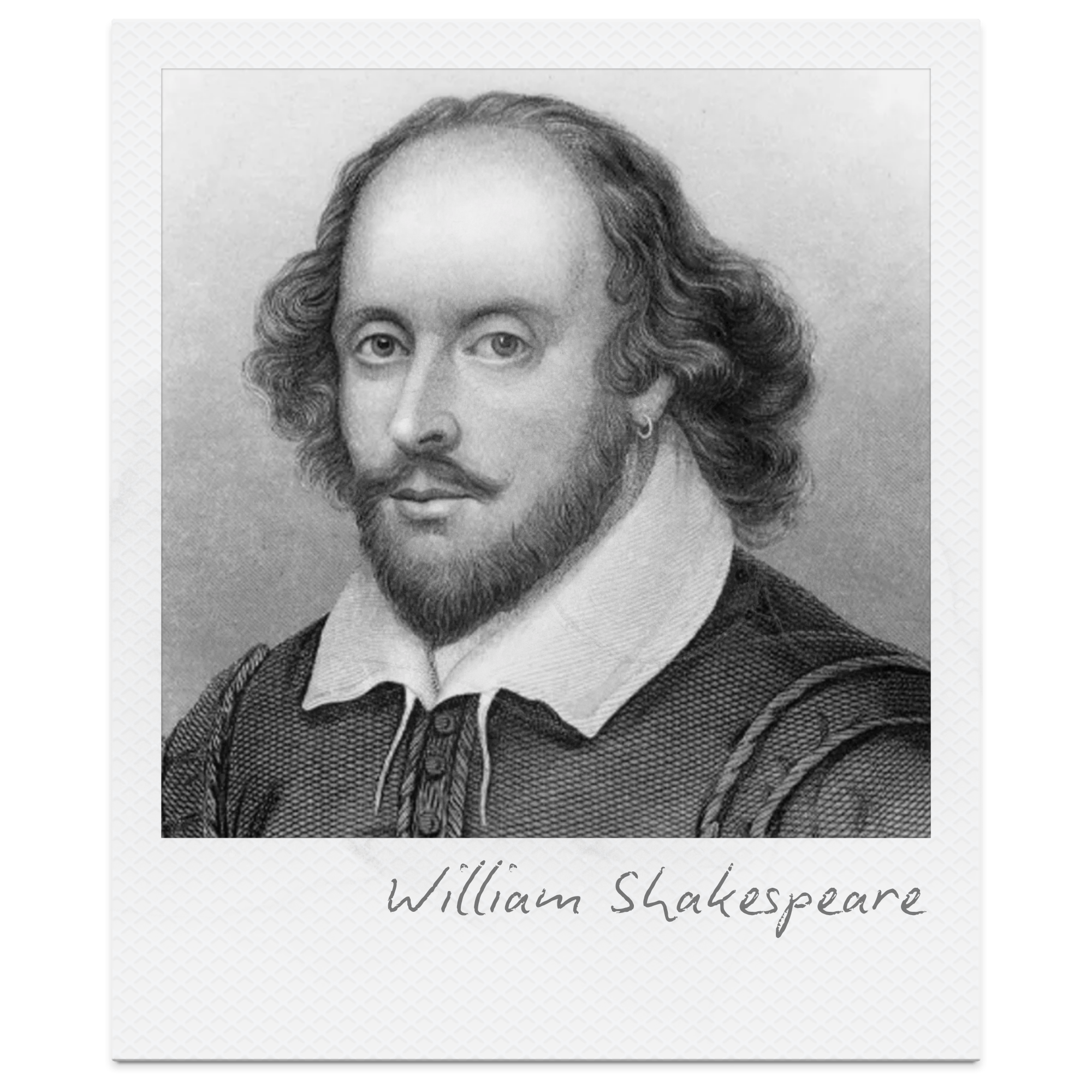
William Shakespeare (1564–1616) is widely regarded as one of the greatest writers in the English language, and his 154 sonnets have profoundly influenced English poetry for over four centuries. While many Renaissance sonnets idealise beauty through conventional praise, Sonnet 106 is distinctive because it reflects on the tradition of poetry itself. Instead of simply praising the beloved, Shakespeare considers how generations of earlier poets attempted to celebrate beauty and suggests that their works were unknowingly preparing readers for someone even more remarkable.
The poem was written during the Elizabethan era, when poets frequently used a technique known as a blazon—a catalogue praising individual physical features such as the eyes, lips, hands, or brow. Shakespeare deliberately refers to this tradition before subtly challenging it, arguing that conventional descriptions are ultimately inadequate. Rather than believing poetry can fully capture beauty, the speaker concludes that even the finest writers possess "eyes to wonder, but lack tongues to praise," highlighting both the extraordinary nature of the Fair Youth and the limitations of language itself. This self-reflective exploration of poetry's strengths and weaknesses helps explain why Sonnet 106 remains one of Shakespeare's most thoughtful meditations on art, admiration, and the passage of time.
For a broader understanding of how these ideas connect across Shakespeare’s work, see the William Shakespeare Context Post.
Sonnet 106: At a Glance
Form:Shakespearean sonnet that can be split into three quatrains and a concluding rhyming couplet, allowing the argument to develop before reaching a memorable final insight.
Mood:Reflective, admiring, and contemplative, with a growing sense of awe as the speaker realises that even great poets struggle to express true beauty.
Central tension:The desire to praise perfect beauty conflicts with the limitations of language, raising the question of whether words can ever fully capture extraordinary human qualities.
Core themes: Beauty, time, poetry, memory, artistic expression, history, and the relationship between the past and present.
One-sentence meaning: By comparing the praise found in historical poetry with the beauty of the present, Shakespeare suggests that earlier writers could only anticipate the Fair Youth, while even contemporary poets remain unable to find language worthy of fully expressing such exceptional beauty.
Quick Summary of Sonnet 106
The poem begins with the speaker reading old historical records and poems that celebrate the beauty of legendary women and noble knights from the past. As he reflects on these descriptions, he notices the elaborate praise given to physical features such as the hand, foot, lips, eyes, and brow. Rather than seeing these works as merely celebrating people who have long since died, he comes to believe that the poets of earlier ages were unknowingly describing the extraordinary beauty of the person he admires in the present.
As the sonnet develops, the speaker argues that these earlier praises were not complete descriptions but "prophecies" of a beauty that had not yet appeared. Although past writers possessed imagination and insight, they lacked the opportunity to witness the Fair Youth directly. In the closing couplet, the poem shifts from admiration of the past to an acknowledgement of the present, as the speaker concludes that even those fortunate enough to see such beauty are ultimately unable to express it fully. The sonnet ends by suggesting that wonder can exceed the limits of language, making silence itself the greatest tribute to true beauty.
Title, Form, Structure, and Metre
Shakespeare carefully combines the sonnet form, a tightly controlled rhyme scheme, and a predominantly iambic pentameter rhythm to create a poem that gradually develops an argument rather than simply expressing emotion. Every formal choice reinforces the poem's central concern: that human beauty may ultimately surpass the ability of poetry to describe it.
Title
Unlike many modern poems, Shakespeare's sonnets were originally identified by number rather than individual titles. The opening words, "When in the chronicle of wasted time," therefore function as the poem's title, immediately establishing its reflective tone.
The word "chronicle" suggests an official historical record rather than a personal memory, signalling that the speaker is looking back across centuries of literature and human achievement. This gives the poem an expansive timescale from its very first line. Meanwhile, the phrase "wasted time" carries multiple meanings. It refers to time that has passed irretrievably, reminding readers that beauty fades and generations disappear, but it may also suggest that previous poets unknowingly devoted their talents to describing only imperfect examples of beauty. As the sonnet unfolds, readers realise that the speaker believes history itself has been building towards the present moment.
Because the title begins with "When," it also establishes the poem as a process of discovery. Rather than announcing a conclusion immediately, Shakespeare invites readers to follow the speaker's changing understanding as he rereads the past through the lens of the present.
Form and Structure
Sonnet 106 follows the traditional Shakespearean sonnet structure of three quatrains followed by a concluding rhyming couplet. Rather than presenting separate ideas, each section advances the speaker's argument until the final couplet delivers the poem's central insight.
The first quatrain introduces the speaker reading ancient poems praising beautiful men and women. At this stage, the past appears complete in itself, with historical writers celebrating those they admired.
The second quatrain narrows its focus to the traditional blazon, listing individual features such as the hand, foot, lip, eye and brow. This progression from broad historical records to detailed physical description mirrors the Renaissance habit of attempting to define beauty through careful observation. However, Shakespeare subtly undermines this tradition by suggesting that these descriptions were unknowingly incomplete.
The third quatrain marks the poem's most significant structural shift through the declaration, "So all their praises are but prophecies." Suddenly, the past is reinterpreted. Earlier poems cease to be descriptions of their own age and instead become predictions of the Fair Youth. This transforms the reader's understanding of everything that has come before, revealing that history itself has been leading towards the present.
Finally, the rhyming couplet delivers the paradox on which the sonnet depends. Although the speaker has criticised earlier poets for failing to praise the Fair Youth adequately, he admits that his own generation is no more successful. The conclusion therefore shifts from confidence to humility, ending not with perfect praise but with an acknowledgement that true beauty exceeds language itself.
Rhyme Scheme and Poetic Pattern
The poem follows the classic Shakespearean rhyme scheme:
ABAB CDCD EFEF GG
This regular pattern creates a sense of balance, order, and intellectual control that reflects the speaker's careful reasoning. Each quatrain develops one stage of the argument before the closing couplet provides a memorable resolution.
The alternating rhyme also creates forward momentum, encouraging readers to move steadily through the speaker's changing ideas. Rather than producing a static meditation, the rhyme mirrors the gradual process of reinterpretation as the speaker moves from admiration of the past towards recognition of the present.
The closing GG couplet is particularly significant because its paired rhyme isolates the final observation from everything that precedes it. Shakespeare frequently uses this structural feature to introduce a decisive conclusion, and here the tightly linked rhyme gives extra weight to the admission:
"For we, which now behold these present days,
Have eyes to wonder, but lack tongues to praise."
The firmness of the couplet contrasts with the uncertainty of its meaning. Although the rhyme reaches formal closure, the poem ends by admitting that language can never fully achieve the task it has attempted throughout the sonnet. This creates an effective irony: the poem reaches a technically perfect ending while claiming that perfect expression is impossible.
Metre and Rhythmic Movement
Like most of Shakespeare's sonnets, Sonnet 106 is written predominantly in iambic pentameter, with each line generally consisting of five iambic feet, where an unstressed syllable is followed by a stressed one:
when I | in the CHRON | i cle of WAST | ed TIME
Although the opening foot is relatively regular, Shakespeare allows the natural stress of words such as "chronicle" to create subtle rhythmic flexibility. This prevents the line from sounding mechanical while preserving the measured, reflective movement of the poem.
Another representative example appears in the final line:
have EYES | to WON | der but LACK | tongues to PRAISE
Here, the strong stresses fall naturally on "eyes," "wonder," "lack," and "praise," drawing attention to the contrast between seeing and speaking. The rhythm slows slightly towards the close of the line, allowing the final stressed word, "praise," to resonate as both the poem's conclusion and its unresolved challenge.
Rather than using dramatic metrical disruption, Shakespeare relies on the steady pulse of iambic pentameter to imitate thoughtful reflection. The controlled rhythm suggests careful reasoning and measured admiration, while occasional natural variations stop the verse from becoming overly predictable. This balance between regularity and flexibility mirrors the poem itself: it follows the conventions of Renaissance sonnet writing while simultaneously arguing that conventional poetic forms are ultimately insufficient to express extraordinary beauty.
The Speaker in Sonnet 106
The speaker of Sonnet 106 is an admiring observer and reflective reader, someone who studies the literature of the past before comparing it with the beauty he witnesses in the present. Rather than presenting himself as an objective historian, he speaks with growing certainty as his interpretation develops, moving from quiet observation to the conviction that earlier poets were unknowingly anticipating the Fair Youth. His tone is thoughtful, reverential, and intellectually curious, suggesting that admiration can emerge through reflection as much as through emotion. Importantly, the speaker does not place himself above the writers he discusses. Instead, the closing couplet reveals a striking humility as he admits that his own generation is just as incapable of expressing such extraordinary beauty. This shift from confidence to self-awareness makes the voice feel both authoritative and deeply human, reinforcing Shakespeare's suggestion that language has limits, even in the hands of the greatest poets.
Line-by-Line Analysis of Sonnet 106
Understanding Sonnet 106 requires more than identifying individual techniques. Shakespeare constructs a carefully developed argument in which each group of lines builds upon the previous one, gradually shifting the reader's understanding of beauty, poetry, and time. The analysis below explores how language, imagery, structure, and voice work together, showing how the speaker moves from reflecting on the achievements of past poets to recognising the limitations of his own words. At every stage, the focus remains on how Shakespeare creates meaning and achieves his effects, helping readers see how the poem's ideas evolve towards its memorable conclusion.
Lines 1–4: Looking Back at the Poetry of the Past
The sonnet opens with the speaker reading "the chronicle of wasted time," immediately placing the poem within the vast sweep of history. The noun "chronicle" suggests an official historical record rather than a personal memory, giving the opening a sense of authority while implying that human achievements are preserved through writing. At the same time, the phrase "wasted time" is deliberately ambiguous. It refers to time that has passed and can never be recovered, but it also hints that previous generations may have unknowingly directed their poetic talents towards an incomplete understanding of beauty. From the outset, Shakespeare invites readers to reconsider the relationship between the past and the present.
As the speaker encounters "descriptions of the fairest wights", he recalls poems celebrating exceptionally beautiful people. The archaic word "wights," meaning people or beings, lends the poem an antiquated tone, reinforcing the impression that these figures belong to a distant age. Shakespeare therefore establishes a dialogue between historical literature and contemporary experience, encouraging readers to see poetry as a conversation that stretches across generations.
The phrase "beauty making beautiful old rhyme" is particularly self-conscious. Shakespeare is not only describing beauty but also reflecting on the way beauty inspires artistic creation. The repetition of "beauty" links the subject of the poems with the poetry itself, suggesting that beauty possesses the power to create art. At the same time, the adjective "old" subtly reminds readers that even celebrated poems eventually become part of history, raising questions about whether any artistic achievement can remain complete or permanent.
The quatrain concludes by referring to poems written "In praise of ladies dead and lovely knights." This pairing reflects the idealised figures often celebrated in medieval and Renaissance literature, where noble men and beautiful women became symbols of perfection. However, Shakespeare's inclusion of the word "dead" introduces mortality into the poem almost immediately. The admired figures of the past have vanished, leaving only poetry behind, preparing readers for the speaker's later suggestion that the greatest beauty belongs not to history but to the present.
Lines 5–8: Reinterpreting the Blazon Tradition
The second stage of the poem turns towards one of the best-known conventions of Renaissance love poetry: the blazon, a poetic catalogue praising individual physical features. Shakespeare deliberately lists "hand," "foot," "lip," "eye," and "brow," echoing the conventional language used by generations of earlier poets. The cumulative effect of this list mimics the careful observation associated with the blazon while also revealing its limitations. By reducing beauty to separate features, the tradition risks overlooking the complete person.
The phrase "sweet beauty's best" suggests that earlier poets believed they had identified the highest possible standard of physical perfection. Yet Shakespeare immediately begins to undermine this confidence. The speaker realises that the descriptions preserved by these "antique" writers seem remarkably familiar. The adjective "antique" does more than indicate age; it also creates respectful distance, acknowledging the achievements of previous generations while implying that they belong to another era with an incomplete perspective.
The turning point arrives in the declaration that "their antique pen would have express'd / Even such a beauty as you master now." The modal verb "would have" introduces speculation rather than certainty, suggesting that the speaker is reinterpreting the past rather than uncovering objective historical truth. The Fair Youth becomes the standard by which all previous poetry is judged. Instead of believing that the old poets successfully described the people of their own age, the speaker concludes that they were unknowingly anticipating someone whose beauty exceeded anything they had actually witnessed. This dramatically elevates the Fair Youth while transforming centuries of literary tradition into preparation for the present.
Lines 9–12: Poetry Becomes Prophecy
The opening of the third quatrain marks the poem's most significant structural and intellectual shift through the emphatic connective "So." With this single word, the speaker announces a new understanding of everything that has come before. The bold claim that "all their praises are but prophecies" completely redefines earlier poetry. Rather than functioning as accurate descriptions of historical individuals, the poems become predictions pointing towards the Fair Youth.
The metaphor of prophecy introduces ideas of destiny, vision, and revelation. Shakespeare suggests that great poets possess remarkable imaginative insight, yet even they cannot fully understand the significance of what they write. Their works acquire meanings beyond their own intentions, emphasising the enduring and evolving nature of literature.
This idea develops further through the assertion that previous writers looked "but with divining eyes." The verb "divining" evokes prophecy and supernatural foresight, implying that the poets glimpsed fragments of a future they could not fully comprehend. However, Shakespeare immediately qualifies this admiration. Although they possessed vision, "They had not skill enough your worth to sing." This apparent criticism is carefully balanced. It is not that the earlier poets lacked talent, but rather that the Fair Youth's beauty transcends the expressive power of even the greatest artists. In this way, Shakespeare praises both the beloved and the poetic tradition while simultaneously exposing the limitations of language itself.
Lines 13–14: The Limits of Language
The closing couplet introduces an unexpected twist. After suggesting that earlier generations failed because they had never witnessed the Fair Youth directly, readers might expect the speaker to claim that the present can finally provide an adequate description. Instead, Shakespeare overturns this expectation.
The inclusive pronoun "we" broadens the poem beyond the individual speaker, inviting readers to share in a collective experience of admiration. Unlike the poets of the past, "we... now behold these present days," possessing the privilege of direct observation rather than distant imagination. Yet this apparent advantage proves insufficient.
The final paradox—"Have eyes to wonder, but lack tongues to praise"—forms the emotional and philosophical climax of the sonnet. The contrast between "eyes" and "tongues" separates perception from expression. Human beings may fully recognise extraordinary beauty, but recognising it does not guarantee the ability to communicate it. The verbs "wonder" and "praise" also suggest different kinds of response: wonder is instinctive and emotional, while praise requires language and artistic skill. Shakespeare therefore concludes that experience can exceed expression, leaving silence as the only honest response to true greatness.
By ending with this admission, Shakespeare achieves a subtle irony. Throughout the sonnet, he has produced an exquisitely crafted poem about beauty, yet his final claim is that beauty ultimately resists poetic description. The reader is left to admire not only the Fair Youth but also Shakespeare's remarkable ability to explore the very limits of his own art.
Key Quotes and Methods in Sonnet 106
Shakespeare's language in Sonnet 106 carefully develops the poem's exploration of beauty, time, and the power—and limitations—of poetry. Rather than using quotations simply to praise the Fair Youth, Shakespeare builds an argument about how writers across history have attempted to capture beauty in words. Each quotation below demonstrates how his methods contribute to this evolving reflection on art, admiration, and human expression.
"When in the chronicle of wasted time"
◆ Technique: Metaphor, historical imagery, and evocative diction.
◆ Meaning: The speaker imagines history as a written chronicle, presenting the past as something preserved through literature rather than personal memory. The phrase "wasted time" suggests both time that has irretrievably passed and the inevitable loss that accompanies human life.
◆ Purpose: Shakespeare establishes the poem's broad historical perspective while introducing the idea that poetry connects different generations across time.
◆ Impact: Readers immediately recognise that this is not simply a love poem but a meditation on history, memory, and the enduring power of literature.
"beauty making beautiful old rhyme"
◆ Technique: Repetition, alliteration, and metapoetry.
◆ Meaning: The repeated word "beauty" links artistic inspiration with artistic creation, suggesting that beauty itself gives rise to poetry. At the same time, "old rhyme" reminds readers that even celebrated poems eventually become part of history.
◆ Purpose: Shakespeare reflects on poetry itself, showing that literature is both inspired by beauty and an attempt to preserve it.
◆ Impact: Readers become aware that the sonnet is examining the purpose of poetry as much as celebrating physical beauty.
"Of hand, of foot, of lip, of eye, of brow"
◆ Technique: Blazon, listing, repetition, and accumulation.
◆ Meaning: The catalogue of individual body parts reflects the Renaissance convention of praising beauty feature by feature. However, the fragmented list also suggests that breaking beauty into separate parts can never capture the complete person.
◆ Purpose: Shakespeare deliberately echoes a familiar poetic tradition before subtly revealing its limitations.
◆ Impact: Readers begin to question whether conventional poetic praise is capable of expressing truly exceptional beauty.
"Even such a beauty as you master now"
◆ Technique: Direct address, hyperbole, and comparison.
◆ Meaning: The speaker concludes that the poets of earlier generations were unknowingly describing the Fair Youth rather than the people of their own age. The verb "master" suggests complete possession of a beauty that surpasses previous ideals.
◆ Purpose: Shakespeare elevates the Fair Youth beyond every earlier example of beauty while linking the present with the literary achievements of the past.
◆ Impact: Readers see the beloved as the culmination of centuries of poetic admiration, reinforcing the sonnet's extraordinary praise.
"all their praises are but prophecies"
◆ Technique: Extended metaphor and structural turning point.
◆ Meaning: Earlier poems are reinterpreted as predictions rather than descriptions, suggesting that previous writers unknowingly anticipated the Fair Youth.
◆ Purpose: This line transforms the reader's understanding of the entire sonnet by redefining the relationship between past and present.
◆ Impact: Readers recognise that Shakespeare presents literature as something whose meanings continue to develop across generations.
"They had not skill enough your worth to sing"
◆ Technique: Hyperbole and metapoetic reflection.
◆ Meaning: The speaker argues that even the finest poets lacked the ability to express the Fair Youth's true worth. The limitation lies not in their effort but in the inadequacy of language itself.
◆ Purpose: Shakespeare shifts attention from praising the beloved to exploring the boundaries of poetic expression.
◆ Impact: Readers are encouraged to admire both the Fair Youth and the humility with which the speaker acknowledges poetry's limitations.
"Have eyes to wonder, but lack tongues to praise"
◆ Technique: Paradox, antithesis, and metaphor.
◆ Meaning: The contrast between "eyes" and "tongues" separates perception from expression. Human beings may fully appreciate extraordinary beauty but still fail to communicate it through words.
◆ Purpose: Shakespeare concludes the sonnet by suggesting that genuine wonder can exceed the expressive power of language.
◆ Impact: The final paradox leaves readers reflecting on the limits of poetry itself, making the sonnet as much a meditation on artistic expression as it is a celebration of beauty.
Key Techniques in Sonnet 106
Shakespeare combines the conventions of Renaissance love poetry with a reflective examination of poetry itself. Rather than simply praising the Fair Youth, he uses a range of literary techniques to question whether language can ever fully capture extraordinary beauty. Each method contributes to the sonnet's gradual movement from admiration of the past to an acknowledgement of poetry's limitations.
◆ Extended Metaphor – The poem develops the sustained metaphor that earlier poems were not simply descriptions of beautiful people but "prophecies" anticipating the Fair Youth. This extended comparison transforms historical literature into a continuous conversation across time, allowing Shakespeare to suggest that true beauty transcends any single generation. By sustaining this metaphor throughout the sonnet, he elevates the Fair Youth while exploring the evolving nature of literary meaning.
◆ Metapoetry – Throughout the sonnet, Shakespeare reflects on poetry itself rather than using it solely as a vehicle for praise. References to "old rhyme," "their antique pen," and the inability to "sing" someone's worth draw attention to the act of writing and the challenges faced by poets. This self-conscious approach encourages readers to consider both the power and the limitations of artistic expression, making the sonnet a meditation on literature as well as beauty.
◆ Historical Allusion – References to chronicles, ladies, knights, and earlier writers place the poem within a long literary and historical tradition. Instead of treating the past as separate from the present, Shakespeare presents history as something that continually informs modern understanding. These allusions broaden the sonnet's scope, suggesting that admiration and artistic ambition are timeless human experiences.
◆ Blazon – Shakespeare deliberately adopts the Renaissance convention of listing individual physical features—"hand... foot... lip... eye... brow"—before quietly exposing its shortcomings. Traditional blazons attempt to define beauty by examining each feature in isolation, but Shakespeare argues that such descriptions can never fully represent the person being admired. The technique therefore becomes both an imitation and a subtle critique of conventional love poetry.
◆ Paradox – The concluding declaration that readers have "eyes to wonder, but lack tongues to praise" creates one of the poem's central paradoxes. Although the speaker can directly witness the Fair Youth's beauty, this closer experience does not make description easier. Instead, Shakespeare argues that greater understanding may actually reveal the inadequacy of language, leaving admiration beyond verbal expression.
◆ Contrast Between Past and Present – The poem repeatedly contrasts historical writers with the speaker's own generation. At first, earlier poets appear disadvantaged because they could not witness the Fair Youth, yet the closing couplet reveals that the present fares little better. This evolving contrast demonstrates that the problem lies not with individual poets but with the inherent limitations of language itself.
◆ Repetition and Parallel Structure – Shakespeare frequently repeats key words and grammatical patterns, particularly "I see," "beauty," and the repeated use of "of" within the blazon. These repetitions create cohesion while reflecting the speaker's growing understanding. The recurring language mirrors the act of repeatedly looking back at earlier poetry before arriving at a new interpretation, reinforcing the sonnet's reflective and cumulative structure.
◆ Shakespearean Sonnet Structure – The poem's formal organisation mirrors the progression of its ideas. The first two quatrains establish the historical evidence, the third quatrain reinterprets that evidence through the metaphor of prophecy, and the final rhyming couplet delivers the poem's philosophical conclusion. This carefully controlled structure allows Shakespeare to lead readers step by step towards the surprising realisation that even the greatest poetry ultimately falls short of expressing perfect beauty.
How the Writer Creates Meaning and Impact in Sonnet 106
In Sonnet 106, Shakespeare explores far more than physical beauty. Through carefully controlled language, structure, voice, and rhythm, he examines how poetry attempts to preserve what time inevitably destroys while questioning whether words can ever truly capture exceptional human qualities. The sonnet gradually shifts from confidence in the achievements of earlier poets to the humbling recognition that some experiences remain beyond language, leaving readers to reflect on both the power and the limitations of art.
Language: Poetry as History and Prophecy
Shakespeare's language constantly moves between the worlds of history and imagination. Words such as "chronicle," "antique," and "old rhyme" evoke the literary achievements of earlier generations, giving the poem an authoritative historical perspective. However, these references are never merely nostalgic. Instead, Shakespeare reinterprets the past, suggesting that previous writers unknowingly anticipated a beauty they had never actually seen.
The sonnet also employs the vocabulary of vision and artistic creation. Verbs such as "see," "behold," and "wonder" repeatedly emphasise observation, while references to the "pen," "rhyme," and "sing" foreground the act of writing itself. This creates a subtle distinction between seeing and expressing, preparing readers for the final paradox in which direct experience proves easier than description. Rather than treating poetry as an unquestioned celebration of beauty, Shakespeare encourages readers to consider the challenges involved in transforming experience into language.
His diction also combines respect with gentle irony. The earlier poets are admired for their skill, yet their works are ultimately described as incomplete. This balanced language prevents the sonnet from dismissing the literary past, instead presenting poetry as an evolving tradition in which each generation builds upon those that came before.
Structure: An Argument That Gradually Changes Perspective
The sonnet's structure mirrors the development of the speaker's thinking. Each quatrain introduces a new stage in the argument, allowing readers to follow the gradual reinterpretation of history before arriving at the poem's philosophical conclusion.
The opening quatrain establishes the past as a source of wisdom and artistic achievement, while the second narrows its focus to the traditional blazon, examining how earlier poets praised physical beauty. These opening sections appear conventional, encouraging readers to expect another Renaissance love poem.
The structural turning point occurs in the third quatrain with the assertion that "all their praises are but prophecies." This single idea transforms everything that has preceded it. Earlier poems no longer function simply as historical descriptions but become predictions of the Fair Youth, fundamentally changing the reader's understanding of both literature and time.
The final rhyming couplet then overturns expectations once more. Instead of claiming that the speaker can finally express the Fair Youth's beauty, Shakespeare admits that his own generation is equally incapable of doing so. This ending gives the sonnet lasting resonance because it replaces certainty with humility, suggesting that the greatest truths often resist complete explanation.
Voice and Tone: Admiration Tempered by Humility
The speaker's voice develops significantly across the poem. He begins as a thoughtful reader of historical literature, calmly reflecting on the achievements of earlier poets. His tone is measured and scholarly, inviting readers to trust his interpretation of the past.
As the sonnet progresses, however, admiration becomes increasingly personal. The speaker grows more convinced that the Fair Youth surpasses every previous ideal of beauty, and his language becomes correspondingly more reverential. Importantly, this admiration never becomes exaggerated or emotionally uncontrolled. Instead, Shakespeare maintains a reflective tone that gives the praise intellectual as well as emotional weight.
The most striking shift occurs in the closing couplet, where the confident interpreter of history becomes someone who openly acknowledges his own limitations. By replacing criticism of earlier poets with shared human humility—"we... lack tongues to praise"—Shakespeare broadens the poem beyond an individual relationship. Readers are invited to recognise that the inability to express profound experience is a universal human condition rather than a personal failure.
Sound and Rhythm: Controlled Reflection Rather Than Emotional Overflow
The sonnet's predominantly regular iambic pentameter creates a measured, contemplative rhythm that reflects the speaker's careful reasoning. Unlike poems that use abrupt metrical disruption to convey emotional intensity, Sonnet 106 relies on rhythmic consistency to imitate thoughtful reflection. The steady movement allows the argument to unfold logically, reinforcing the impression that the speaker is gradually arriving at a profound realisation.
The poem's balanced Shakespearean rhyme scheme (ABAB CDCD EFEF GG) also contributes to this sense of order. Each quatrain feels complete while naturally leading into the next stage of the argument, creating a smooth progression from historical observation to philosophical insight.
Shakespeare also uses sound patterns to reinforce key ideas. The repeated soft consonants in phrases such as "sweet beauty's best" create a musical quality appropriate to a poem celebrating beauty, while the repeated preposition "of" in the blazon slows the rhythm, encouraging readers to linger over each individual feature before recognising the inadequacy of this method of description.
The final line is particularly memorable because its balanced rhythm mirrors its balanced meaning. The opposition between "eyes to wonder" and "tongues to praise" creates a satisfying symmetry, yet the thought itself remains unresolved. Shakespeare therefore ends the sonnet with a subtle tension: the poem achieves formal perfection while simultaneously arguing that perfect expression is impossible. This irony leaves readers reflecting not only on the Fair Youth's beauty but also on the remarkable ability of poetry to explore the very limits of its own expressive power.
Themes in Sonnet 106
Although Sonnet 106 appears to celebrate the beauty of the Fair Youth, Shakespeare uses this admiration to explore much broader ideas about history, time, memory, and the purpose of poetry itself. The poem gradually shifts from looking backwards to recognising the limitations of the present, encouraging readers to consider how beauty is remembered, interpreted, and ultimately expressed through art.
Beauty
Beauty is presented as extraordinary, timeless, and ultimately beyond complete description. Throughout the sonnet, Shakespeare deliberately echoes the conventions of Renaissance love poetry before challenging them. The catalogue of physical features in the blazon suggests that beauty can be analysed piece by piece, yet the speaker ultimately rejects this approach, arguing that no collection of descriptions can fully capture the Fair Youth's worth.
Importantly, Shakespeare presents beauty as something that inspires poetry while simultaneously exceeding it. The Fair Youth becomes not merely another beautiful person but the highest standard against which all previous ideals are measured. By concluding that even contemporary poets "lack tongues to praise," Shakespeare suggests that genuine beauty possesses a quality that language can admire but never completely contain.
Time
Time functions as both a historical journey and a force that transforms meaning. The speaker begins by exploring the "chronicle of wasted time," presenting history as something preserved through literature even after the people themselves have disappeared. Earlier generations have passed away, yet their poems continue to influence later readers.
However, Shakespeare does not present time solely as destructive. Instead, the poem suggests that the passage of time allows literature to acquire new significance. Poems once thought to describe medieval ladies and knights are reinterpreted as predictions of the present. In this way, time becomes a process through which understanding deepens, demonstrating that literary works continue to evolve long after they have been written.
Poetry
More than almost any other Shakespearean sonnet, Sonnet 106 reflects upon the nature and purpose of poetry itself. References to "old rhyme," "their antique pen," and the inability to "sing" someone's worth constantly remind readers that the poem is examining artistic creation as much as physical beauty.
Rather than claiming that poetry can preserve everything perfectly, Shakespeare presents writing as an ambitious but ultimately limited art form. Poetry can record admiration, preserve memory, and connect generations, yet it cannot fully reproduce the experience of witnessing extraordinary beauty. The sonnet therefore becomes both a celebration of poetry's enduring influence and a remarkably humble acknowledgement of its limitations.
Memory
Memory is presented as collective rather than personal. Instead of recalling individual experiences, the speaker looks to centuries of literature as humanity's shared memory, treating poems and chronicles as records through which the past continues to speak.
Yet memory is shown to be dynamic rather than fixed. The speaker does not simply accept earlier writings at face value but reinterprets them in light of the present. Shakespeare therefore suggests that remembering is an active process of rediscovery, where each generation finds fresh meanings in familiar texts. This idea reinforces the enduring relevance of literature, showing that great works continue to evolve as readers themselves change.
Artistic Expression
One of the poem's most important concerns is the relationship between experience and expression. Shakespeare repeatedly distinguishes between seeing and speaking, implying that recognising greatness is far easier than describing it. The speaker believes that both past and present poets possess genuine admiration, yet neither generation can translate that admiration into adequate language.
The final paradox, "Have eyes to wonder, but lack tongues to praise," encapsulates this idea. Artistic expression is shown to be both immensely powerful and inherently incomplete. Rather than presenting this limitation as failure, Shakespeare suggests that it reflects the exceptional nature of the beauty being described. In doing so, he elevates both the subject of the poem and the ambition of poetry itself.
History
History is not treated as a series of disconnected events but as an ongoing literary conversation linking successive generations of writers and readers. The opening reference to the "chronicle" immediately places the poem within a historical tradition, while the repeated references to earlier poets acknowledge the achievements upon which Shakespeare himself builds.
At the same time, Shakespeare challenges the assumption that history possesses fixed meanings. By arguing that earlier praises were actually "prophecies," he transforms historical writing into something fluid and open to reinterpretation. This suggests that literature continually acquires new significance as later readers discover connections that earlier writers themselves could never have anticipated.
The Relationship Between the Past and Present
The relationship between the past and present forms the intellectual foundation of the sonnet. Initially, these two worlds appear distinct: the past belongs to legendary ladies and knights, while the present belongs to the Fair Youth. As the poem develops, however, Shakespeare gradually dissolves this distinction.
Earlier poetry is reimagined as anticipating the present, while the present itself ultimately shares the same limitations as the past. Although contemporary readers can directly witness the Fair Youth, they remain no more capable of expressing that experience than the poets who came before them. This cyclical relationship suggests that every generation inherits both the achievements and the limitations of those preceding it.
By uniting history, memory, and artistic expression, Shakespeare presents literature as an enduring dialogue across centuries—one in which every new poem both honours and reinterprets the voices of the past.
Alternative Interpretations of Sonnet 106
Like many of Shakespeare's Fair Youth sonnets, Sonnet 106 invites multiple interpretations. While the poem is clearly concerned with beauty and poetry, its admiration for the Fair Youth, its reflections on artistic expression, and its treatment of history allow readers to approach it from several different critical perspectives. These interpretations are not mutually exclusive but instead reveal the richness and complexity of Shakespeare's writing.
LGBTQ+ Interpretation: Admiration Beyond Conventional Boundaries
Modern readers often approach Sonnet 106 through an LGBTQ+ lens because it forms part of the Fair Youth sequence, in which the speaker addresses and celebrates a young man. Unlike many Renaissance love poems written for women, the admiration expressed here is directed towards a male figure whose beauty is repeatedly presented as the highest ideal.
Although concepts of sexuality and identity in the Elizabethan period differed significantly from modern understandings, the sonnet undoubtedly challenges readers' expectations about who can be the object of intense poetic admiration. Shakespeare places the Fair Youth above the celebrated "ladies" and "lovely knights" of earlier literature, suggesting that conventional traditions of praise are no longer sufficient. From this perspective, the poem can be read as expanding the possibilities of love poetry by presenting admiration that transcends traditional gender expectations and refuses to fit neatly within conventional categories.
Metapoetic Interpretation: A Poem About Poetry
Rather than viewing the sonnet primarily as a love poem, it can also be read as a reflection on the nature of poetry itself. References to "old rhyme," "their antique pen," and the inability to "sing" someone's worth repeatedly draw attention to the act of writing rather than simply the subject being described.
From this perspective, the Fair Youth becomes less important as an individual and more important as a symbol of the ideal that all artists pursue but can never fully express. The poem's true subject is therefore the creative process itself, with Shakespeare exploring both the ambition and the inevitable limitations of artistic expression. The concluding admission that the speaker "lack[s] tongues to praise" becomes a humble recognition that even great poetry can only approach, never fully capture, reality.
Philosophical Interpretation: The Limits of Human Expression
A philosophical reading sees the poem as exploring the gap between human experience and human language. Throughout the sonnet, the speaker believes that direct experience should provide a clearer understanding than second-hand accounts. Yet by the closing couplet, this expectation has been overturned. Even those who witness the Fair Youth's beauty cannot describe it adequately.
From this perspective, Shakespeare suggests that language always falls short of reality. Some experiences—whether beauty, love, or profound wonder—cannot be completely translated into words. Rather than presenting this as a failure, the poem implies that the inability to express everything is an inevitable part of being human. The final paradox therefore becomes a broader meditation on the boundaries of knowledge, communication, and artistic achievement.
Exam-Ready Insight for Sonnet 106
Sonnet 106 is an excellent example of a poem in which Shakespeare develops an argument gradually rather than relying on dramatic events or obvious emotions. In the examination, the strongest responses focus on how Shakespeare builds this argument through language, structure, and shifts in perspective, rather than simply explaining that the speaker admires the Fair Youth.
What Strong Responses Do
◆ Develop a clear interpretation of the poem's central argument before analysing individual quotations.
◆ Explore how Shakespeare builds meaning across the sonnet, showing how each quatrain develops the speaker's thinking before the final couplet redefines the poem.
◆ Analyse methods closely, commenting on Shakespeare's choice of imagery, metaphor, diction, structure, and the sonnet form rather than simply identifying techniques.
◆ Track the shift from admiration of historical poetry to the recognition that even contemporary writers cannot adequately express true beauty.
◆ Select concise quotations and analyse individual words in detail instead of relying on long quotations or paraphrase.
Common Mistakes
◆ Explaining that the poem is simply about a beautiful person without considering Shakespeare's wider exploration of poetry and artistic expression.
◆ Identifying techniques such as metaphor or the sonnet form without explaining how they contribute to meaning.
◆ Treating the references to earlier poets as historical background instead of recognising that Shakespeare reinterprets their work as prophecy.
◆ Ignoring the significance of the final couplet, which changes the reader's understanding of everything that has come before.
◆ Retelling the poem instead of analysing how Shakespeare creates his effects.
Strong Thesis Statement
In Sonnet 106, Shakespeare uses the structured progression of the Shakespearean sonnet, historical imagery, and metapoetic reflection to argue that true beauty transcends both time and language, suggesting that while poetry can preserve admiration across generations, it can never fully capture the greatness it seeks to celebrate.
Model Analytical Paragraph
Shakespeare presents the limitations of poetry most powerfully when he concludes that "Have eyes to wonder, but lack tongues to praise." The contrast between "eyes" and "tongues" separates perception from expression, suggesting that recognising extraordinary beauty is far easier than describing it. Earlier in the sonnet, the speaker believes that previous poets failed because they had never witnessed the Fair Youth directly, but the final couplet overturns this assumption by revealing that direct experience does not solve the problem. Instead, Shakespeare uses this paradox to show that language itself has inherent limitations. The balanced structure of the line reinforces this idea, placing wonder and praise in parallel while demonstrating that one naturally exceeds the other. As a result, the poem moves beyond conventional praise of physical beauty and becomes a thoughtful meditation on the power—and ultimate inadequacy—of poetry itself, leaving readers with the impression that some experiences are too profound to be fully expressed in words.
Teaching Ideas for Sonnet 106
Studying Sonnet 106 provides an excellent opportunity for students to explore how Shakespeare develops an argument through language, structure, and shifts in perspective. These activities encourage close textual analysis while helping students build interpretative and analytical skills.
1. Tracking the Argument
Ask students to divide the sonnet into its four main sections (three quatrains and the final couplet). For each section, they should summarise how the speaker's understanding changes and identify the language or structural choices that create this development. This helps students recognise that Shakespeare builds an argument across the poem rather than presenting a single, fixed idea.
2. Close Language Analysis
Give small groups a different quotation from the sonnet, such as "chronicle of wasted time," "all their praises are but prophecies," or "Have eyes to wonder, but lack tongues to praise." Students should analyse Shakespeare's word choices, imagery, and techniques before explaining how their quotation contributes to the poem's wider meaning. Groups can then share their findings to build a complete interpretation of the sonnet.
3. Comparative Discussion
Ask students to compare Sonnet 106 with another Shakespeare sonnet from the Fair Youth sequence or another poem about beauty from the anthology. They should explore how each writer presents beauty, time, or the purpose of poetry, supporting their ideas with close textual analysis. This develops the comparative skills needed for higher-level literary study while encouraging students to think critically about different approaches to similar themes.
4. Creative Writing Task
Invite students to write a modern sonnet or short free verse poem inspired by someone or something they admire but find difficult to describe. Afterwards, ask them to annotate their own work, explaining where they deliberately used imagery, symbolism, or structural choices to communicate meaning. For more activities like this, explore the Creative Writing Archive.
Go Deeper into Sonnet 106
Reading Sonnet 106 alongside other poems allows students to explore how different writers present beauty, time, memory, and the purpose of poetry. These comparisons help develop the analytical skills needed for top-band responses by encouraging readers to consider both similarities and differences in methods and ideas.
◆ Sonnet 18 by William Shakespeare – Both sonnets explore how beauty resists the passage of time, but they reach different conclusions. Sonnet 18 confidently argues that poetry grants immortality, whereas Sonnet 106 questions whether poetry can ever fully express extraordinary beauty.
◆ Sonnet 130 by William Shakespeare – An excellent comparison for Shakespeare's treatment of love poetry. While Sonnet 106 reflects on the traditions of poetic praise and their limitations, Sonnet 130 deliberately rejects exaggerated comparisons, arguing that genuine admiration does not require unrealistic idealisation.
◆ Sonnet 55 by William Shakespeare – Both poems examine the relationship between time, memory, and poetry. Sonnet 55 presents poetry as more enduring than physical monuments, while Sonnet 106 offers a more reflective perspective, suggesting that although poetry preserves admiration, it cannot perfectly capture its subject.
◆ On Finding a Small Fly Crushed in a Book by Charles Tennyson Turner – Both poems consider how writing preserves traces of the past. Turner's poem explores accidental memory preserved within a book, while Sonnet 106 shows literature connecting generations through shared artistic expression.
◆ Sonnet by Elizabeth Barrett Browning – Comparing these sonnets highlights how both poets struggle to express profound admiration through language. Each suggests that the deepest emotions exceed ordinary words, although Browning focuses on romantic love while Shakespeare reflects more broadly on poetry itself.
◆ What Were They Like? by Denise Levertov – Although written in a very different context, Levertov's poem also explores how language shapes our understanding of the past. Both poems encourage readers to question how history is remembered and how literature influences our interpretation of people and events across time.
Final Thoughts
At first glance, Sonnet 106 appears to be a conventional poem praising extraordinary beauty, but Shakespeare gradually transforms it into a thoughtful meditation on time, history, and the purpose of poetry itself. By reinterpreting the works of earlier generations as prophecies rather than simple descriptions, he demonstrates that literature is never static. Each new reader brings fresh understanding, allowing old poems to acquire new meanings across the centuries.
Perhaps the sonnet's greatest achievement lies in its humility. Although Shakespeare is widely regarded as one of the greatest writers in the English language, the poem concludes by suggesting that even the finest poet cannot fully express what is truly remarkable. The final paradox—having "eyes to wonder, but lack tongues to praise"—reminds readers that some experiences exceed the limits of language. Rather than diminishing poetry, this acknowledgement highlights its greatest strength: not providing perfect answers, but bringing us as close as words can to the wonder they seek to capture.
For more detailed analyses of every anthology poem, visit the Songs of Ourselves Volume 3 Hub, or explore a wider range of texts, authors, and exam resources in the Literature Library.
Choose Your Next Text