The Black Cat by Edgar Allan Poe: Summary, Themes, Symbolism, Madness & Analysis
The Black Cat by Edgar Allan Poe is a disturbing exploration of madness, guilt, and moral corruption, revealing how an ordinary man descends into violence, alcoholism, and psychological disintegration. Through its intense first-person narration, the story exposes the terrifying fragility of reason, as the narrator insists upon his sanity while recounting acts of escalating cruelty and horror.
At its core, the story examines the darker impulses of human nature, particularly the idea of perverseness—the urge to do wrong simply because it is wrong. Blending Gothic fiction, psychological horror, and symbolic storytelling, Poe presents a world in which the boundary between reality and imagination begins to collapse. This makes The Black Cat not only a tale of crime and punishment, but also a study of the mind under pressure. For further exploration of Poe’s works, see the Edgar Allan Poe Hub, or browse wider texts in the Literature Library.

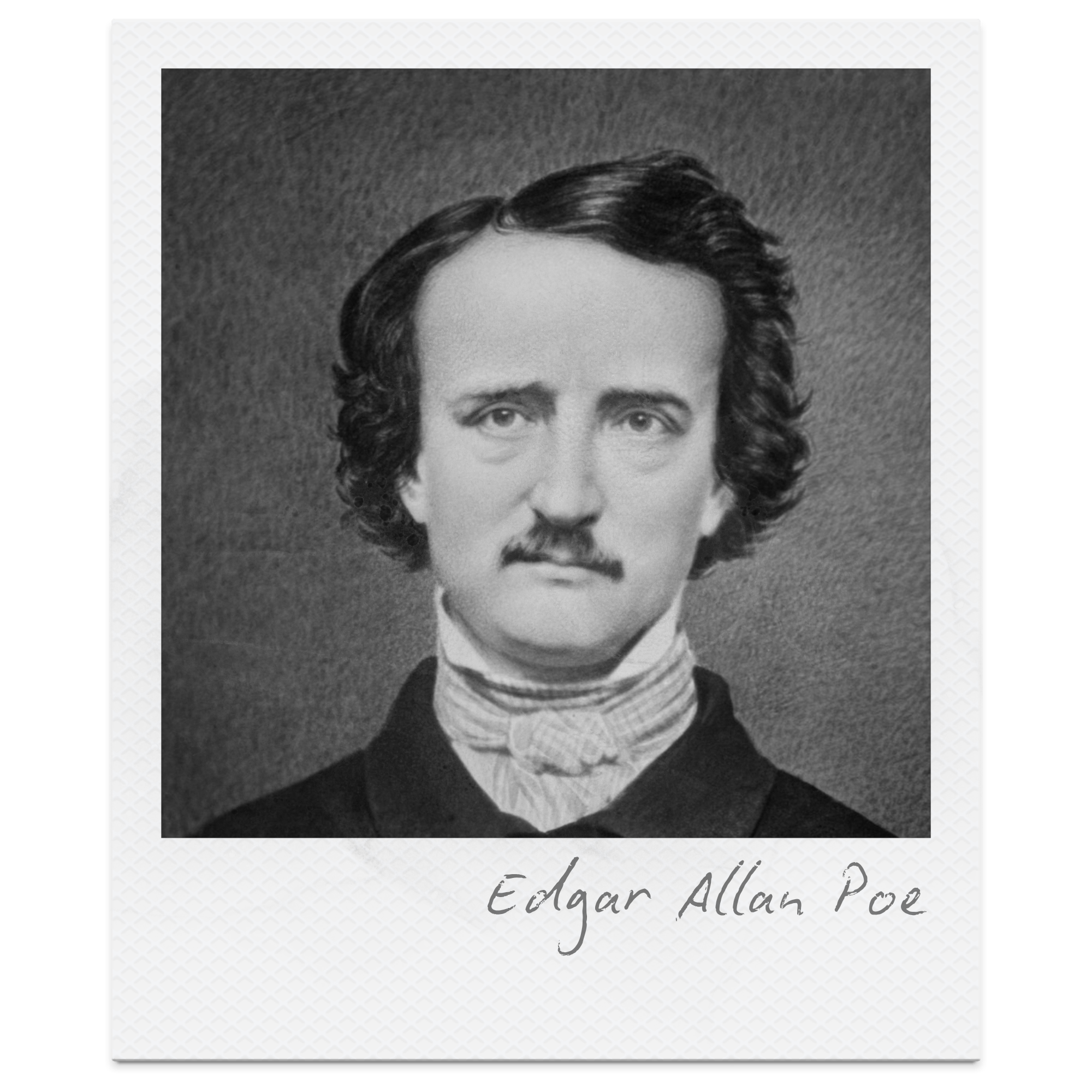
Context of The Black Cat
The Black Cat was first published in 1845, during a period in which Edgar Allan Poe was increasingly preoccupied with the exploration of psychological instability, moral collapse, and the darker impulses of the human mind. Much of Poe’s work reflects his interest in how individuals rationalise their own behaviour, particularly when that behaviour is irrational or self-destructive. In this story, the narrator’s insistence on his sanity, despite overwhelming evidence to the contrary, mirrors a recurring concern in Poe’s writing: the unreliability of perception and the fragile boundary between reason and madness. These ideas are explored more fully in the Edgar Allan Poe Context Post.
The story is also deeply rooted in the traditions of Gothic fiction and 19th-century fascination with crime, morality, and the supernatural. While the narrative includes seemingly supernatural elements—such as the image of the cat in the burned wall and the second cat’s gallows-shaped marking—Poe deliberately leaves space for rational explanation. This ambiguity reflects contemporary anxieties about science, religion, and human nature, particularly the fear that evil may arise not from external forces, but from within the self. In The Black Cat, the domestic space becomes a site of horror, transforming the familiar into something deeply unsettling and reinforcing the theme that psychological corruption can distort reality itself.
The Black Cat: At a Glance
Form: Gothic short story
Mood: Disturbing, claustrophobic, obsessive
Central tension: A man’s descent into violence and madness, driven by alcoholism and an uncontrollable impulse toward self-destruction
Core themes:
◆ madness and psychological deterioration
◆ guilt and conscience
◆ perverseness and self-sabotage
◆ violence and cruelty
◆ the supernatural vs rational explanation
◆ crime and punishment
One-sentence meaning: A man destroys everything he loves through his own inner corruption, ultimately revealing that the greatest source of horror lies not in the supernatural, but within the human mind itself.
Quick Summary of The Black Cat
The story is narrated by a man awaiting execution, who insists upon his sanity as he recounts the events that led to his imprisonment. In his early life, he describes himself as gentle and compassionate, particularly toward animals, and he forms a close bond with his black cat, Pluto. However, as he falls into alcoholism, his personality begins to deteriorate. He becomes increasingly irritable and violent, eventually abusing his pets and his wife. In a moment of drunken rage, he mutilates Pluto by cutting out its eye, and later, driven by a darker impulse he calls perverseness, he hangs the cat.
Shortly after Pluto’s death, the narrator’s house is destroyed by fire, and a strange image of a cat with a noose around its neck appears on one remaining wall. Though he attempts to explain this rationally, the image continues to haunt him. Later, he encounters another black cat, nearly identical to Pluto but marked with a patch of white fur. He brings the cat home, but soon grows to hate it, particularly as the white marking begins to resemble a gallows. The cat’s constant presence fills him with fear and obsession, intensifying his psychological instability.
As his mental state worsens, the narrator’s violence escalates. In a fit of rage in the cellar, he attempts to kill the cat with an axe, but when his wife intervenes, he murders her instead. He then conceals her body within a wall, believing he has committed the perfect crime. When the police arrive to investigate, he remains calm and confident—until, in a moment of arrogant triumph, he strikes the wall where the body is hidden. A horrifying cry emerges from within, and when the wall is torn down, the corpse is discovered with the cat perched upon it. The narrator realises too late that the creature he feared has ultimately exposed his guilt.
Title, Form, Structure, and Narrative Voice of The Black Cat
This section explores how Edgar Allan Poe uses title, structure, narrative voice, and setting to shape meaning in The Black Cat. Rather than simply telling a story, Poe constructs a tightly controlled narrative in which form mirrors psychology, and every structural choice reinforces the narrator’s descent into madness, guilt, and self-destruction.
Title
The title The Black Cat immediately foregrounds a seemingly ordinary domestic animal, yet it quickly takes on symbolic and psychological significance. In many cultural traditions, black cats are associated with superstition, witchcraft, and misfortune, which subtly prepares the reader for the story’s descent into darkness and irrational fear. However, the true meaning of the title lies not in the cat itself, but in what it represents: the narrator’s guilt, conscience, and inner corruption. As the story progresses, the cat becomes less a physical creature and more a manifestation of psychological torment, suggesting that the real source of horror is internal rather than supernatural.
Form and Structure
The Black Cat is a Gothic short story structured as a retrospective confession, written by a narrator awaiting execution. This framing device immediately establishes a sense of inevitability and fatalism, as the reader knows from the outset that the narrative will culminate in crime and punishment.
Structurally, the story follows a clear narrative progression:
Exposition:
The narrator introduces his early life, emphasising his former gentleness, love of animals, and domestic stability. This establishes a stark contrast with the violence that follows and reinforces the theme of moral decline.Rising Action:
The narrator’s descent begins with alcoholism, which triggers increasing irritability, cruelty, and loss of control. Key events include the mutilation of Pluto, the concept of perverseness, and the eventual hanging of the cat. The destruction of the house and the image of the cat in the wall deepen the sense of psychological disturbance and possible supernatural interference.Climax:
The emotional and narrative peak occurs in the cellar, where the narrator, in a moment of uncontrollable rage, attempts to kill the second cat but instead murders his wife. This act represents the full collapse of his moral and psychological state.Falling Action:
The narrator calmly conceals the body within the wall, believing he has escaped detection. His confidence and apparent composure create dramatic irony, as the reader anticipates that his crime will be revealed.Resolution (Catastrophe):
The story concludes with the narrator’s downfall, triggered by his own arrogance and need for control. By striking the wall, he unknowingly reveals the hidden body, and the cat’s final cry exposes his guilt, completing the cycle of self-destruction.
This tightly controlled structure mirrors the narrator’s psychological journey, moving from order to chaos, and reinforces the idea that his fate is both inevitable and self-inflicted.
Narrative Voice
The story is told through a first-person narrator, which creates an intimate yet deeply unsettling perspective. The narrator repeatedly insists on his sanity, despite describing increasingly irrational and violent behaviour. This contradiction establishes him as an unreliable narrator, forcing the reader to question the accuracy of his account.
His tone shifts throughout the narrative:
Initially measured and reflective, as he attempts to present a rational explanation
Gradually becoming defensive and agitated, particularly when discussing his actions
Ultimately descending into obsession and paranoia, especially in relation to the second cat
The use of direct confession draws the reader into the narrator’s mindset, making his justifications feel disturbingly persuasive. At the same time, his attempts to rationalise his behaviour—particularly through the concept of perverseness—highlight his inability to fully understand or control his own actions.
Setting as Structure
In The Black Cat, setting is not merely a backdrop but a structural and psychological force that shapes the narrative.
The progression of locations mirrors the narrator’s mental decline:
The home begins as a space of domestic comfort and stability
It becomes a site of violence and abuse, reflecting his deteriorating character
The burned house introduces destruction and unresolved guilt
The cellar represents the lowest point—both physically and psychologically—symbolising buried guilt, secrecy, and moral decay
This movement downward—from open domestic space to confined underground setting—parallels the narrator’s descent into madness and self-destruction.
Crucially, the setting becomes inseparable from meaning: the walls themselves conceal and then reveal the truth, turning the physical environment into an active participant in the narrative. In this way, Poe reinforces the idea that psychological corruption reshapes reality, and that the external world ultimately reflects the inner state of the mind.
Setting of The Black Cat
The setting of The Black Cat shifts from domestic normality to claustrophobic horror, mirroring the narrator’s descent into madness, guilt, and moral corruption. What begins as an ordinary home gradually transforms into a space of violence, secrecy, and psychological torment, reinforcing the idea that environment reflects inner state.
At the start of the story, the home is presented as a place of comfort and companionship, filled with animals and emotional warmth. The narrator recalls a life of “docility and humanity” and describes a household populated by pets, suggesting stability and affection. However, this domestic setting quickly becomes unstable as his alcoholism takes hold, turning the home into a site of abuse and cruelty. The shift is not physical at first, but psychological—yet this internal change begins to reshape the atmosphere of the space itself.
Following the narrator’s violence toward Pluto, the home becomes associated with guilt and haunting. After the fire, the remaining wall bearing the image of the cat—described as “the figure of a gigantic cat… with a rope about the animal’s neck”—transforms the setting into something uncanny. Even when rational explanations are offered, the house itself appears to record and reflect the narrator’s crime, blurring the boundary between reality and imagination.
The later setting of the second house intensifies this sense of unease. The narrator describes the building as “the old building which our poverty compelled us to inhabit”, suggesting both physical and moral decline. Within this space, the cellar becomes the most significant setting in the story. It is dark, enclosed, and hidden—symbolising the narrator’s repressed guilt and descent into psychological darkness.
The cellar is the site of the story’s most violent act, where the narrator murders his wife and conceals her body within the wall. This act turns the setting into a literal tomb, merging domestic space with burial space. The walls, described as being recently plastered and easily manipulated, become tools of concealment—but ultimately, they also become instruments of revelation. When the narrator strikes the wall and hears the “cry… like the sobbing of a child… then one long, loud, and continuous scream”, the setting itself exposes the truth.
Throughout the story, Poe presents setting as inseparable from meaning. The home is not just a backdrop but a psychological landscape, shifting from warmth to horror as the narrator’s mind deteriorates. The movement from open domestic space to the confined cellar reflects his descent into secrecy, violence, and self-destruction, reinforcing the idea that the true horror of the story lies within the human mind, not the supernatural world.
Characters in The Black Cat
The characters in The Black Cat are deliberately limited, allowing Edgar Allan Poe to focus intensely on psychology, morality, and symbolic meaning. Rather than functioning as fully developed social figures, each character represents an aspect of the narrator’s inner conflict, guilt, and descent into madness, making characterisation central to the story’s exploration of human nature and self-destruction.
The Narrator
The narrator is the central figure of the story, presented as a man who insists upon his sanity while describing acts of extreme violence, cruelty, and moral collapse. From the outset, he attempts to control how he is perceived, claiming, “Mad indeed would I be to expect it… Yet, mad am I not”, which immediately establishes him as an unreliable narrator.
Initially, he presents himself as compassionate and gentle, recalling his “docility and humanity” and his deep affection for animals. However, this self-image is gradually undermined as he reveals his descent into alcoholism and irrational violence. His transformation is closely tied to his admission that his character changed through “the Fiend Intemperance”, suggesting both personal responsibility and an attempt to externalise blame.
Psychologically, the narrator embodies self-awareness without control. He recognises the horror of his actions—“I blush, I burn, I shudder”—yet continues to commit them. His discussion of perverseness—the urge to do wrong simply because it is wrong—reveals a deeper philosophical dimension to his character, suggesting that his actions stem from an inherent flaw within human nature. Ultimately, he becomes a figure of self-destruction, exposing his own crime through arrogance and an uncontrollable need for dominance.
The Wife
The narrator’s wife is a largely passive figure, yet she plays a crucial symbolic role in the story. She represents domestic stability, kindness, and moral normality, contrasting sharply with the narrator’s descent into violence. Early in the narrative, she is described as sharing his love for animals and possessing “that humanity of feeling which had once been my distinguishing trait”, highlighting how far the narrator has fallen.
She also introduces the idea of superstition, noting that black cats are often associated with witchcraft, which subtly reinforces the story’s Gothic atmosphere. However, unlike the narrator, she does not descend into irrational fear, making her a figure of reason and compassion.
Her role becomes tragically significant in the climax of the story. When she attempts to intervene and stop the narrator from killing the cat, she is murdered without hesitation: “I withdrew my arm from her grasp and buried the axe in her brain.” This moment represents the complete destruction of morality and domestic order, as the narrator eliminates the last remaining force of goodness in his life. Symbolically, her death marks the point at which the narrator becomes entirely consumed by violence and madness.
Pluto (The First Cat)
Pluto, the narrator’s original pet, represents innocence, loyalty, and unconditional love. He is described as “a remarkably large and beautiful animal, entirely black, and sagacious to an astonishing degree”, highlighting both his physical presence and emotional significance.
The bond between the narrator and Pluto initially reflects the narrator’s capacity for affection and empathy, but this relationship deteriorates as his character declines. Pluto becomes the first victim of the narrator’s cruelty, most shockingly when the narrator admits, “I deliberately cut one of its eyes from the socket!”
Symbolically, Pluto represents the narrator’s conscience. The act of mutilating and later killing the cat marks the destruction of his remaining moral restraint. Even as he commits the act, he acknowledges its significance, admitting that he killed the cat “because I knew that it had loved me… and because I knew that in so doing I was committing a sin.” This reinforces the idea that his actions are not impulsive alone, but driven by a conscious engagement with evil and self-sabotage.
The Second Cat
The second cat functions as a more overtly symbolic and possibly supernatural figure, representing guilt, punishment, and psychological haunting. It closely resembles Pluto but is distinguished by a patch of white fur that gradually takes on the shape of a gallows, a powerful symbol of judgment and execution.
From the moment it appears, the narrator experiences an irrational aversion to it, despite its affectionate behaviour: “its evident fondness for myself rather disgusted and annoyed me.” This reversal suggests that the cat is not threatening in itself, but becomes terrifying because of what it represents—the narrator’s unresolved guilt.
The cat’s presence becomes increasingly oppressive, following the narrator relentlessly and intensifying his fear and paranoia. He describes its constant proximity as unbearable, noting how it would “get between my feet and thus nearly throw me down”, suggesting both physical and psychological obstruction.
Ultimately, the second cat becomes the agent of the narrator’s downfall. Its final cry from within the wall—“one long, loud, and continuous scream”—exposes the hidden crime and leads to his capture. Symbolically, the cat represents the inescapability of guilt and consequence, reinforcing the idea that the narrator cannot escape the truth of his actions, no matter how carefully he attempts to conceal them.
Themes in The Black Cat
The Black Cat explores a range of dark psychological and moral themes, revealing how the narrator’s descent into violence is driven not by external forces, but by inner corruption and self-destructive impulses. Through its intense first-person perspective, the story exposes the instability of the human mind and the terrifying consequences of unchecked guilt, perverseness, and moral decay.
Madness and Psychological Deterioration
One of the most dominant themes in the story is the narrator’s gradual descent into madness, which he repeatedly denies. From the opening line, he insists, “mad am I not”, yet his narrative quickly contradicts this claim.
His mental deterioration is closely linked to alcoholism, which he describes as “the Fiend Intemperance”, suggesting both addiction and a loss of control. As his behaviour becomes increasingly irrational—mutilating and later killing Pluto—his actions reveal a complete breakdown of reason and moral restraint.
Importantly, Poe presents madness as something that develops gradually rather than appearing suddenly. The narrator remains partially self-aware, admitting “I blush, I burn, I shudder”, yet continues to commit acts of cruelty. This tension between awareness and action highlights the complexity of psychological collapse, suggesting that madness is not the absence of reason, but the inability to act upon it.
Guilt and Conscience
The theme of guilt runs throughout the story, shaping both the narrator’s experiences and the unfolding of events. Although he attempts to rationalise his actions, his conscience manifests in increasingly disturbing ways.
After killing Pluto, the narrator is haunted by the image of the cat, particularly when it appears on the wall after the fire: “the figure of a gigantic cat… with a rope about the animal’s neck.” While he offers a logical explanation, the image suggests that his guilt has begun to project itself onto the physical world.
The second cat intensifies this theme, acting as a constant reminder of his crime. The narrator admits that its presence fills him with “unutterable loathing”, not because of any real threat, but because it reflects his own inner guilt.
Ultimately, his conscience leads directly to his downfall. His need to assert control and superiority results in the fatal mistake of striking the wall, triggering the cry that exposes his crime. In this way, Poe suggests that guilt cannot be suppressed indefinitely—it will always find a way to reveal itself.
Perverseness and Self-Sabotage
The concept of perverseness is explicitly introduced by the narrator as a fundamental human impulse. He describes it as “one of the primitive impulses of the human heart”, defining it as the urge to do wrong simply because it is wrong.
This idea is central to understanding his actions. He admits that he killed Pluto not out of anger alone, but because he recognised it as a sin: “I hung it because I knew that in so doing I was committing a sin.” This reveals a disturbing form of self-awareness, where the narrator deliberately chooses to act against his own moral judgment.
Perverseness drives the narrative forward, leading to increasingly destructive behaviour. It explains not only his cruelty toward the cat, but also his eventual decision to boast to the police—an act of self-sabotage that ensures his capture. Poe uses this theme to suggest that human beings possess an inherent tendency toward self-destruction, even when they fully understand the consequences of their actions.
Violence and Cruelty
The story presents violence as both a symptom and a cause of the narrator’s moral decline. His cruelty begins with verbal and emotional abuse, but quickly escalates into physical violence against animals and, ultimately, his wife.
The most shocking moment occurs when he describes mutilating Pluto: “I deliberately cut one of its eyes from the socket!” The deliberate nature of the act emphasises the narrator’s loss of empathy and growing capacity for brutality.
This violence reaches its peak when he murders his wife: “I withdrew my arm from her grasp and buried the axe in her brain.” The lack of hesitation or remorse in this moment highlights the complete erosion of his humanity.
Poe presents violence not as an isolated act, but as part of a broader pattern of moral decay, showing how repeated cruelty leads to total psychological and ethical collapse.
The Supernatural vs Rational Explanation
Throughout the story, Poe maintains an ambiguity between supernatural forces and rational explanations, leaving the reader uncertain about the true nature of events.
The image of the cat on the wall after the fire appears supernatural, yet the narrator provides a logical explanation involving the body being thrown into the house and chemically imprinted: “the lime… and the ammonia from the carcass, had then accomplished the portraiture.” This tension between explanation and unease creates a sense of lingering doubt.
Similarly, the second cat’s resemblance to Pluto and the transformation of its white marking into a gallows suggest something uncanny, yet may also be interpreted as a projection of the narrator’s imagination. He himself admits that his perception may be unreliable, describing the change as something his “Reason struggled to reject as fanciful.”
This ambiguity reinforces the idea that the true horror may not be supernatural at all, but rooted in the narrator’s distorted perception and psychological instability.
Crime and Punishment
The narrative ultimately follows a clear trajectory from crime to punishment, aligning with Gothic traditions of moral consequence. The narrator commits increasingly severe acts of violence, culminating in murder, and initially believes he has escaped detection.
His concealment of the body within the wall represents an attempt to control both truth and consequence, but this illusion of control is short-lived. His downfall is triggered not by external investigation, but by his own arrogance and compulsion to boast.
The final revelation—when the cat’s cry exposes the hidden corpse—demonstrates that punishment is both inevitable and self-inflicted. The narrator’s attempt to assert dominance ultimately leads to his exposure, reinforcing the idea that justice is inescapable, whether through external forces or internal compulsion.
Poe suggests that punishment arises not only from society but from within the individual, as guilt, perverseness, and psychological instability combine to ensure the narrator’s destruction.
Key Quotes from The Black Cat
The following quotations are organised by character, setting, and key themes, allowing for targeted analysis that supports both essay writing and deeper interpretation. Each section focuses on how Poe uses language to construct meaning across different aspects of the text.
Characterisation (The Narrator)
“Mad indeed would I be to expect it… Yet, mad am I not”
◆ Technique – Repetition and contradiction
◆ Meaning – The narrator insists on his sanity while undermining his credibility
◆ Effect – Establishes him as an unreliable narrator and introduces madness
“My disease grew upon me — for what disease is like Alcohol!”
◆ Technique – Metaphor
◆ Meaning – Alcohol is presented as a corrupting force
◆ Effect – Links addiction to moral and psychological decline
“I blush, I burn, I shudder”
◆ Technique – Tricolon
◆ Meaning – The narrator acknowledges the horror of his actions
◆ Effect – Reveals self-awareness without control
Characterisation (The Cats as Symbols)
“a remarkably large and beautiful animal, entirely black, and sagacious to an astonishing degree”
◆ Technique – Descriptive detail
◆ Meaning – Pluto is initially presented as intelligent and noble
◆ Effect – Reinforces the narrator’s later moral fall through contrast
“Its evident fondness for myself rather disgusted and annoyed me”
◆ Technique – Irony
◆ Meaning – The cat’s affection becomes intolerable
◆ Effect – Suggests guilt distorts perception
Setting (Psychological Space)
“the old building which our poverty compelled us to inhabit”
◆ Technique – Symbolic setting
◆ Meaning – The house reflects decline and instability
◆ Effect – Links environment to psychological deterioration
“the figure of a gigantic cat… with a rope about the animal’s neck”
◆ Technique – Gothic imagery
◆ Meaning – The setting appears to record the narrator’s crime
◆ Effect – Blurs reality and psychological projection
“I had walled the monster up within the tomb!”
◆ Technique – Metaphor
◆ Meaning – The house becomes a burial space
◆ Effect – Merges domestic setting with death and concealment
Theme: Madness and Psychological Deterioration
“mad am I not”
◆ Technique – Assertion / denial
◆ Meaning – The narrator attempts to assert sanity
◆ Effect – Highlights instability and self-deception
“The fury of a demon instantly possessed me”
◆ Technique – Metaphor
◆ Meaning – The narrator feels overtaken by uncontrollable emotion
◆ Effect – Suggests loss of control and identity
Theme: Guilt and Conscience
“For months I could not rid myself of the phantasm of the cat”
◆ Technique – Supernatural imagery
◆ Meaning – The cat becomes a haunting presence
◆ Effect – Represents inescapable guilt
“I am above the weakness of seeking to establish a sequence of cause and effect”
◆ Technique – Defensive tone
◆ Meaning – The narrator avoids confronting responsibility
◆ Effect – Reveals suppressed guilt and denial
Theme: Perverseness and Self-Sabotage
“one of the primitive impulses of the human heart”
◆ Technique – Philosophical statement
◆ Meaning – Perverseness is framed as universal
◆ Effect – Broadens the story into a commentary on human nature
“I hung it because I knew that it had loved me… and because I knew that in so doing I was committing a sin”
◆ Technique – Juxtaposition
◆ Meaning – The narrator knowingly commits evil
◆ Effect – Reinforces self-destructive impulse
Theme: Violence and Cruelty
“I deliberately cut one of its eyes from the socket!”
◆ Technique – Graphic imagery
◆ Meaning – Violence is intentional and controlled
◆ Effect – Marks a key stage in moral collapse
“I withdrew my arm from her grasp and buried the axe in her brain”
◆ Technique – Brutal directness
◆ Meaning – Murder is carried out without hesitation
◆ Effect – Demonstrates total loss of humanity
Theme: The Supernatural vs Rational Explanation
“the lime… and the ammonia from the carcass, had then accomplished the portraiture”
◆ Technique – Scientific explanation
◆ Meaning – The narrator attempts to rationalise the image
◆ Effect – Creates ambiguity between science and the supernatural
“Reason struggled to reject as fanciful”
◆ Technique – Personification
◆ Meaning – The narrator’s rational mind resists belief
◆ Effect – Highlights conflict between logic and imagination
Theme: Crime and Punishment
“these walls are solidly put together”
◆ Technique – Dramatic irony
◆ Meaning – The narrator boasts about his concealment
◆ Effect – Builds tension before his downfall
“a cry… one long, loud, and continuous scream”
◆ Technique – Auditory imagery
◆ Meaning – The hidden crime is revealed
◆ Effect – Creates a shocking climax and reinforces inevitable punishment
Key Techniques in The Black Cat
In The Black Cat, Edgar Allan Poe uses a range of Gothic and psychological techniques to explore madness, guilt, and self-destruction. These techniques work together to blur the line between internal and external reality, creating a narrative where the horror emerges from the narrator’s own mind as much as from the events themselves.
◆ Symbolism – The black cat (Pluto) and the second cat symbolise the narrator’s conscience and guilt, while the transformation of the white marking into the gallows represents inevitable punishment, reinforcing the theme of crime and consequence
◆ Imagery (Violent and Gothic) – Graphic descriptions such as “cut one of its eyes from the socket” and “buried the axe in her brain” create shocking, visceral imagery that emphasises the narrator’s moral degeneration and forces the reader to confront the brutality of his actions
◆ Unreliable Narration – The first-person narrator insists on his sanity while describing irrational behaviour, creating a contradiction that forces the reader to question his version of events and highlights the theme of psychological instability
◆ First-Person Confessional Voice – The narrative is structured as a final confession, which creates intimacy and immediacy while also revealing the narrator’s attempts to justify and rationalise his actions, deepening the psychological complexity
◆ Motif of Doubling – The second cat mirrors Pluto, acting as a double that reflects the narrator’s past actions and unresolved guilt, reinforcing the idea that he cannot escape his own behaviour
◆ Setting as Psychological Reflection – The transformation of the home from a place of comfort into a site of violence and concealment, particularly the cellar, reflects the narrator’s descent into madness and moral darkness, showing how environment mirrors internal state
◆ Irony (Dramatic and Situational) – The narrator’s confidence in his cleverness—especially when he boasts to the police—creates dramatic irony, as the reader recognises that his arrogance will lead to his downfall
◆ Repetition and Tricolon – Phrases such as “I blush, I burn, I shudder” emphasise emotional intensity and highlight the narrator’s awareness of his actions, reinforcing the tension between conscience and behaviour
◆ Foreshadowing – The recurring image of the gallows and references to punishment subtly anticipate the narrator’s fate, building a sense of inevitability and doom
◆ Ambiguity (Supernatural vs Rational) – Poe provides both supernatural suggestions and logical explanations (e.g., the image on the wall), creating uncertainty and forcing the reader to question whether the horror is external or psychological
Alternative Interpretations of The Black Cat
The Black Cat invites multiple interpretations, as Edgar Allan Poe deliberately blurs the boundaries between psychology, morality, and the supernatural. These readings allow students to move beyond surface-level understanding and develop conceptual, evaluative responses to the text.
Psychological Interpretation: Madness and the Unstable Mind
A psychological reading foregrounds the narrator’s deteriorating mental state, with the narrative shaped by denial, obsession, and self-deception. His insistence on sanity—despite overwhelming evidence—positions him as deeply unreliable, inviting the reader to question every event he describes. The second cat can be understood as a manifestation of guilt, rather than a literal presence, suggesting that the true horror emerges from the mind itself. This lens is particularly useful for analysing narrative voice, perception, and internal conflict.
Supernatural Interpretation: Gothic Haunting and Retribution
A Gothic reading allows for the possibility that the events are genuinely supernatural, with the second cat functioning as a form of revenge or retribution. The image of the cat on the burned wall, the uncanny duplication of Pluto, and the gradual emergence of the gallows symbol all resist easy rational explanation. The final cry from within the wall can be read as a moment of otherworldly justice, where the narrator is exposed by forces beyond his control. This interpretation supports exploration of Gothic conventions, ambiguity, and the uncanny.
Moral Interpretation: Sin, Guilt, and Consequence
The narrative can be read as a progression from deliberate wrongdoing to inevitable punishment. The narrator is not ignorant of his actions; he explicitly recognises them as sinful, yet continues regardless. This creates a clear moral trajectory in which guilt accumulates and must ultimately be revealed. The image of the gallows reinforces this sense of inevitability, positioning the story as a warning about the consequences of unchecked behaviour. This lens is effective for analysing morality, responsibility, and cause and effect.
Feminist Interpretation: Power and the Silencing of Women
A feminist reading draws attention to the narrator’s wife, who is never named and exists primarily within the domestic sphere. Although she is associated with compassion and moral stability, she is denied narrative voice and agency. Her attempt to intervene in the narrator’s violence results in her immediate death, highlighting a clear imbalance of power and control within the household. This perspective opens up discussion of gender roles, domestic authority, and the marginalisation of female characters.
Social Interpretation: Alcoholism and Domestic Breakdown
The narrator’s transformation can also be understood through the lens of addiction and social decline. He directly attributes his behavioural change to alcohol, presenting it as a force that erodes both self-control and moral judgement. The deterioration of the home—from a place of comfort to one of violence and concealment—mirrors this decline. This interpretation supports analysis of character development, causation, and the impact of addiction on relationships.
Existential Interpretation: The Nature of Human Evil
At its most unsettling, the story can be read as an exploration of inherent human destructiveness. The concept of perverseness suggests that individuals may act against their own interests simply because they recognise something as wrong. This removes the need for external explanation—supernatural or moral—and instead presents the narrator’s actions as rooted in the instability of human nature itself. This lens supports higher-level discussion of free will, moral ambiguity, and the nature of evil.
Teaching Ideas for The Black Cat
The Black Cat offers rich opportunities for exploring psychology, symbolism, and narrative voice, making it ideal for both analytical and creative classroom work. The following activities are designed to support discussion, written analysis, and deeper engagement, while encouraging students to develop independent interpretations of the text.
1. Unreliable Narrator Focus
This activity encourages students to interrogate the narrator’s credibility, exploring how language shapes our understanding of truth and perspective.
◆ How does the narrator attempt to convince the reader of his sanity?
◆ Which moments most clearly contradict his claims?
◆ Track language that suggests control vs loss of control
Students can annotate key passages and build a profile of the narrator as both self-aware and deceptive, leading into a short analytical paragraph.
2. Theme Tracking: Guilt and Perverseness
This task helps students trace how key ideas develop across the narrative, particularly the relationship between guilt and self-destruction.
◆ Where does the narrator explicitly acknowledge guilt?
◆ How is the idea of perverseness introduced and developed?
◆ Does he take responsibility for his actions, or deflect blame?
Students can create a theme map, tracking how guilt evolves from subtle discomfort to complete psychological domination.
3. Analytical Paragraph + Peer Marking
This activity develops students’ ability to construct a clear, analytical response using evidence, terminology, and conceptual understanding.
Write a paragraph responding to:
How does Poe present the narrator as psychologically unstable?
◆ Use embedded quotations
◆ Analyse language and narrative voice
◆ Link to wider themes
Model Paragraph:
Poe presents the narrator as psychologically unstable through his contradictory self-presentation and increasingly irrational behaviour. From the opening, the narrator insists that “mad am I not”, yet this defensive assertion immediately undermines his credibility, establishing him as an unreliable narrator. As the narrative progresses, his instability becomes more apparent through his inability to control his actions, particularly when he describes being overtaken by “the fury of a demon”, suggesting a loss of agency and self-awareness. However, what makes his instability more disturbing is his partial recognition of his own behaviour, as seen in the admission “I blush, I burn, I shudder”, which reveals a lingering awareness of guilt. This tension between awareness and action highlights a fractured psyche, where reason exists but is ultimately overpowered by destructive impulses. Through this, Poe suggests that madness is not the absence of reason, but the inability to act upon it, reinforcing the story’s exploration of psychological collapse and self-destruction.
Students then exchange responses and assess using a clear success criteria checklist (focus on explanation, terminology, and depth of analysis).
4. Debate: Responsibility vs Madness
This activity encourages evaluative thinking by asking students to take a clear position on the narrator’s responsibility.
Set up a class debate around the statement:
“The narrator is fully responsible for his actions.”
◆ One side argues moral responsibility
◆ The other argues psychological instability / lack of control
This allows students to engage directly with alternative interpretations while developing confidence in structured argument.
5. Extended Resource Pack (Full Unit Support)
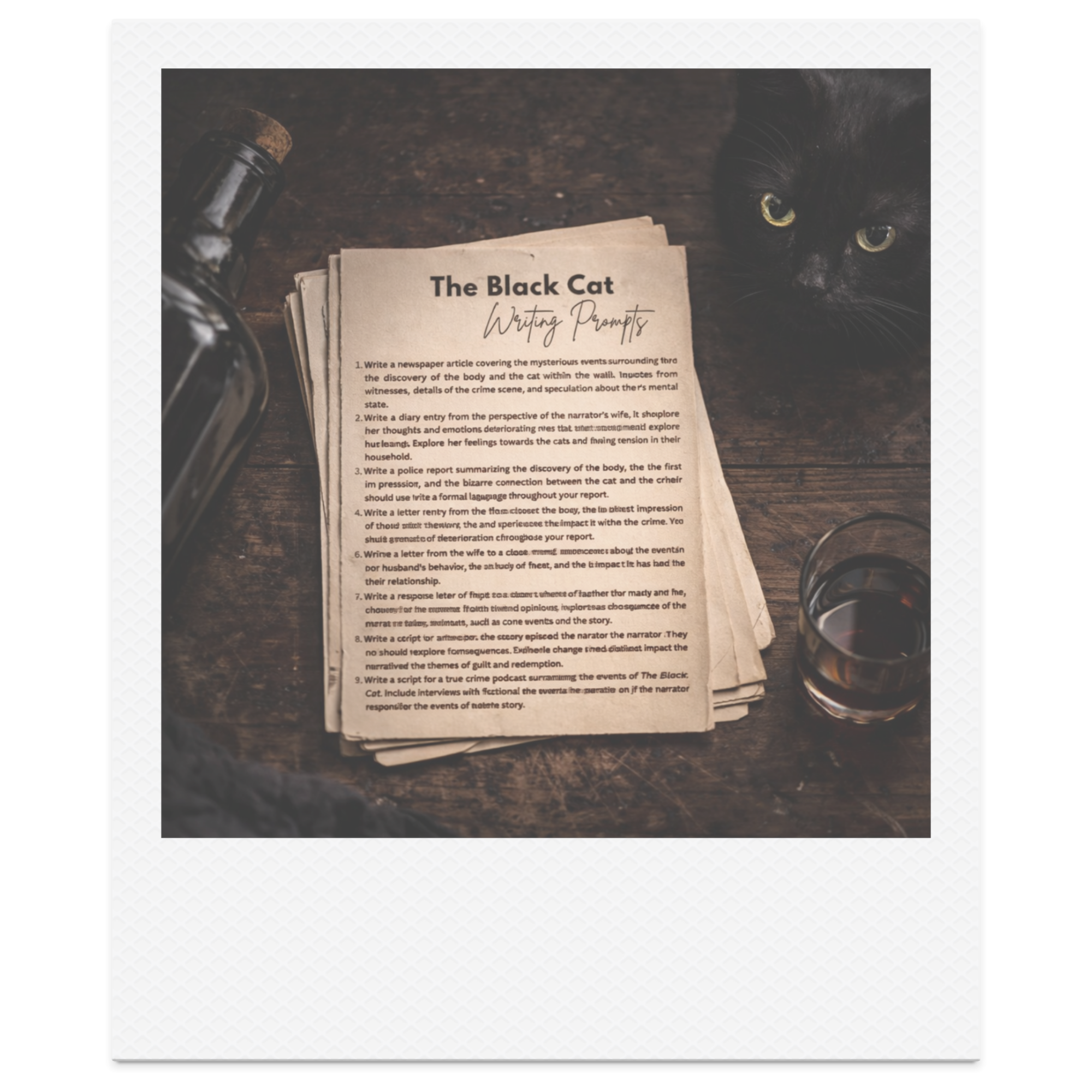
For a fully structured approach, our complete The Black Cat resource bundle is available, designed to support comprehension, analysis, discussion, and creative response.
This includes a wide range of activities such as discussion-based tasks, creative writing prompts (printable and digital), self-marking quizzes, revision games, essay questions, and visually rich picture prompts, allowing students to explore the story from multiple angles. The bundle is particularly effective for combining analytical rigour with engagement, making it suitable for both independent work and whole-class teaching.
Ideal for:
◆ lesson planning
◆ revision
◆ cover work
◆ mixed-ability classrooms
This provides a complete, ready-to-use teaching sequence while maintaining focus on the key ideas of guilt, violence, and psychological instability.
6. Creative Writing
This activity allows students to apply their understanding of Gothic conventions and psychological tension through their own writing.
Students write a short piece inspired by The Black Cat, focusing on:
◆ a psychological descent
◆ a symbolic object (like the cat)
◆ a confined or oppressive setting
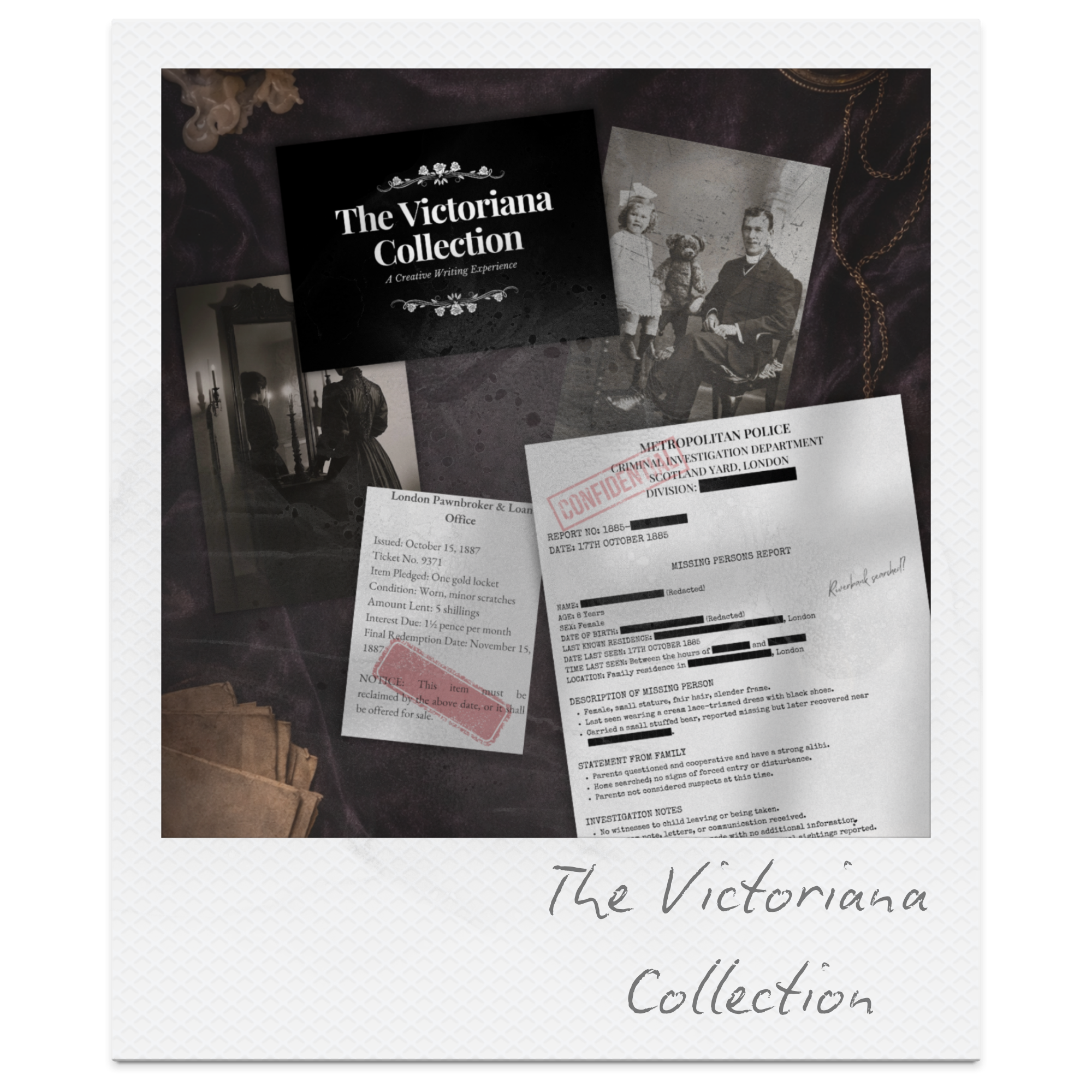
For more structured inspiration, students can explore the Gothic Writing Hub or browse wider prompt collections in the Creative Writing Archive, encouraging them to apply Gothic conventions independently. The resources and collections below pair incredibly well with The Black Cat.
Hello, World!
Go Deeper into The Black Cat
The Black Cat connects closely to other works by Edgar Allan Poe and beyond, making it an excellent entry point for comparative analysis, thematic study, and wider reading. Exploring related texts allows students to deepen their understanding of madness, guilt, identity, and Gothic conventions.
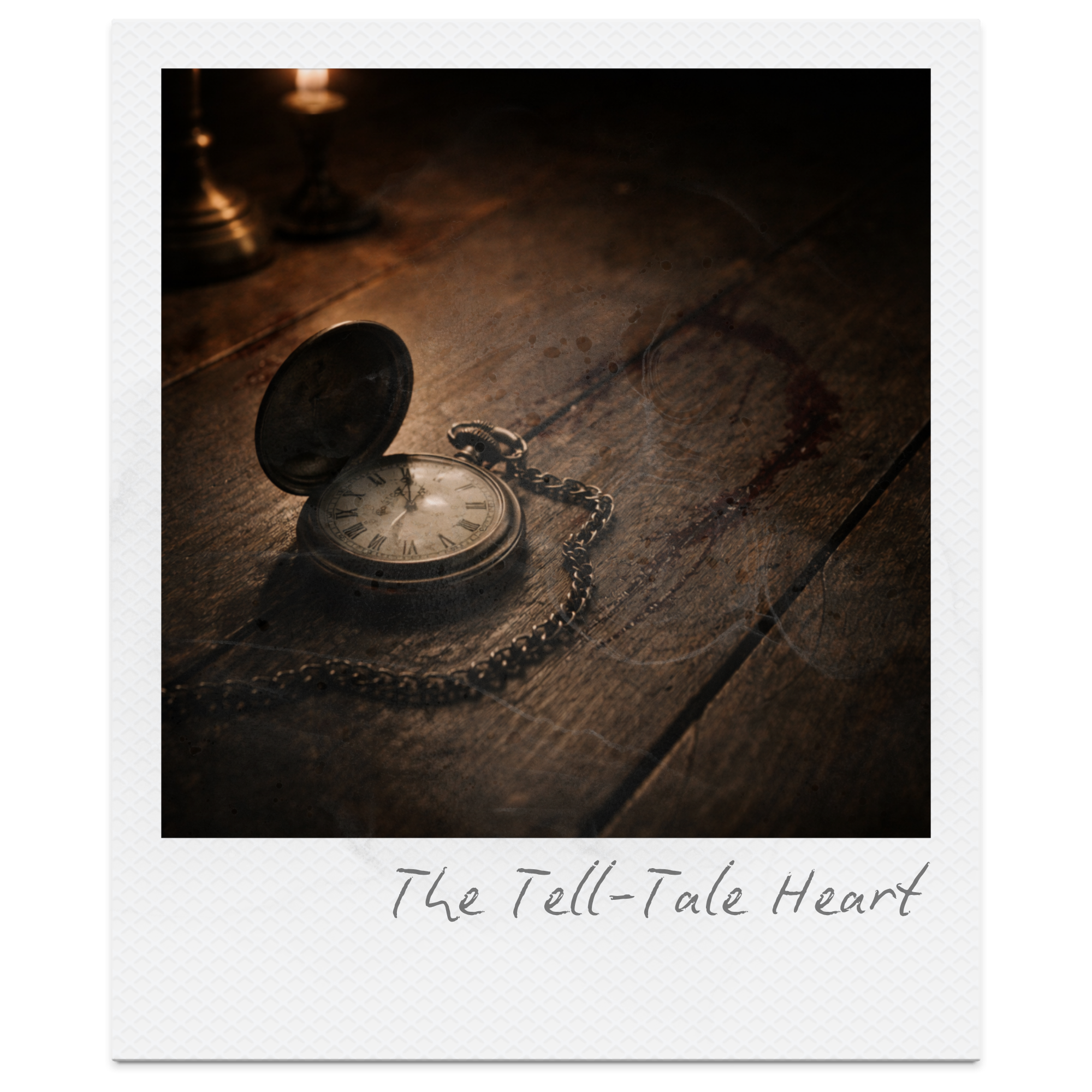
◆ The Tell-Tale Heart– Like The Black Cat, this story features an unreliable narrator who insists on sanity while describing violent acts. Both texts explore how guilt manifests psychologically, ultimately exposing the narrator’s crime
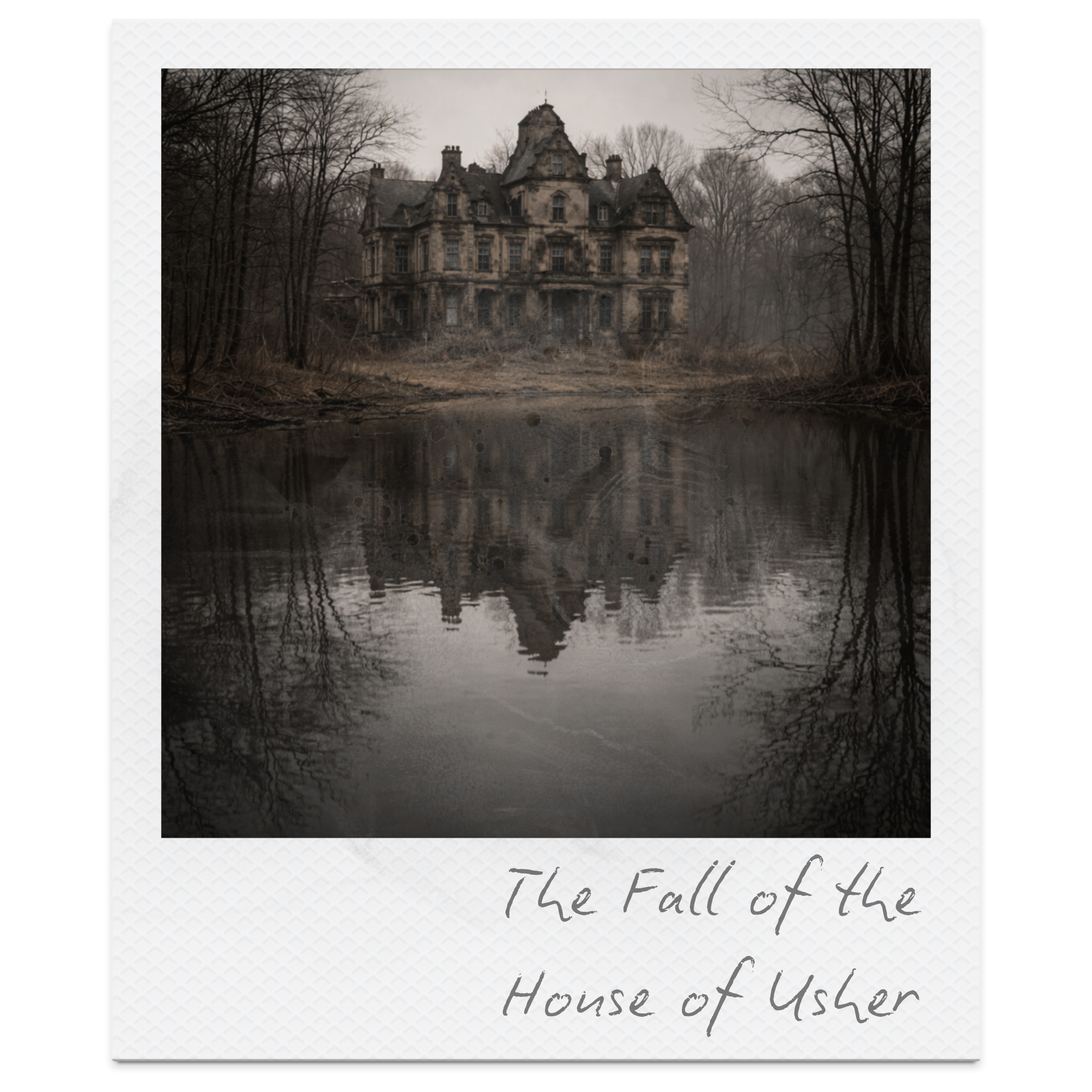
◆ The Fall of the House of Usher– Both texts use setting as a reflection of psychological decay, with physical spaces mirroring internal collapse. The sense of inescapable doom is central to both
◆ William Wilson – This story develops the idea of the double, linking closely to the second cat in The Black Cat as a manifestation of conscience and self-division
◆ The Cask of Amontillado – Explores murder, concealment, and delayed punishment, making it ideal for comparing how narrators justify and control their crimes
◆ Goblin Market– Rossetti explores temptation, desire, and consequence, offering a useful comparison for analysing moral struggle and symbolic imagery
◆ The Yellow Wallpaper – Gilman presents a narrator experiencing psychological deterioration, allowing comparison of how madness is shaped by context and perspective
You can also explore the Best Poe Texts for the Classroom to find resources for more of of Poe’s key works and recurring themes.
For a complete teaching solution, the Edgar Allan Poe Mega Bundle provides full resource coverage across ten major Poe texts, including The Fall of the House of Usher, The Raven, The Tell-Tale Heart, The Masque of the Red Death, Annabel Lee, The Murders in the Rue Morgue, The Black Cat, William Wilson, The Cask of Amontillado, and The Purloined Letter. Each text includes a wide range of ready-to-use activities such as creative writing prompts (printable and digital), discussion boards, self-marking quizzes, essay questions, silent debates, and picture prompts. Designed to support analysis, engagement, and assessment, this bundle allows teachers to deliver a rich, varied, and time-saving unit of work while maintaining a strong focus on Gothic themes, symbolism, and narrative voice.
Final Thoughts
The Black Cat remains one of Edgar Allan Poe’s most disturbing explorations of madness, guilt, and self-destruction, revealing how easily the human mind can descend into violence and moral collapse. Through its unreliable narrator, symbolic imagery, and claustrophobic setting, the story challenges readers to confront the unsettling idea that the true source of horror lies not in the supernatural, but within the self.
At its core, the narrative resists a single, fixed interpretation. Whether read as a study of psychological deterioration, a Gothic tale of supernatural retribution, or a reflection on human perverseness, the story remains deliberately ambiguous. This ambiguity is what gives The Black Cat its lasting power, encouraging students to develop independent interpretations and engage critically with its themes.
Explore more of Poe’s work in the Edgar Allan Poe Hub, or broaden your reading through the Literature Library, where you can continue to build connections across texts, themes, and literary movements.
Choose Your Next Text