The Ultimate Guide to Teaching Shakespeare in the Secondary English Classroom
Teaching Shakespeare in the secondary English classroom and further education remains one of the most enduring — and globally shared — practices in literature education. Despite frequent claims that Shakespeare is intimidating or inaccessible, his plays remain some of the most effective texts for developing close reading, interpretation, discussion, and critical thinking across middle school, high school, upper-secondary, and further education literature courses. At their core, Shakespeare’s works explore power, conflict, identity, love, ambition, and moral responsibility — universal concerns that continue to shape human behaviour across cultures and time periods.
When approached through language, performance, and interpretation, Shakespeare becomes far more than a historical author. His plays invite students to analyse how language creates power, how characters persuade, manipulate, resist, and self-justify, and how meaning shifts depending on voice, context, and audience. This makes Shakespeare particularly effective for discussion-led learning, advanced literary analysis, and oracy-focused teaching, while also supporting confidence and intellectual independence in mixed-ability and advanced classrooms alike.
This guide brings together the best Shakespeare plays to teach, key themes across Shakespeare’s work, and proven classroom strategies and teaching resources for educators working across secondary and further education contexts worldwide. Whether you are introducing Shakespeare to younger students, teaching a core literature text, or revisiting his plays in advanced or post-secondary study, this pillar offers a clear, flexible framework for teaching Shakespeare with confidence through language, performance, and critical interpretation.
Shakespeare: Context, Language, and Enduring Relevance

Understanding Shakespeare’s work begins with context, but effective teaching does not depend on overwhelming students with historical detail. Instead, Shakespeare’s Elizabethan and Jacobean context works best when framed as a pressure system — a world shaped by hierarchy, gender roles, religious authority, and political instability. These conditions inform character behaviour, social expectations, and the consequences of transgression, allowing students to see how power operates rather than memorise background facts.
Shakespeare was writing for a live audience in a culture where status, obedience, reputation, and public performance carried real consequences. Questions of loyalty to rulers, obedience within families, and the tension between private desire and public duty run through his plays. When students understand these pressures, they are better able to interpret character motivation, conflict, and moral choice across tragedies, comedies, and histories.
At the centre of Shakespeare’s enduring relevance is his use of language as action. Shakespeare’s characters do not merely speak — they persuade, deceive, threaten, seduce, justify, and resist. Power in Shakespeare is exercised through rhetoric, imagery, and verbal control, making his plays uniquely effective for teaching close language analysis and interpretation at secondary and further education levels. Soliloquies, in particular, offer moments of self-exposure where characters reveal internal conflict, ambition, fear, or moral hesitation, inviting students to examine how language constructs identity and authority.
Equally important is Shakespeare’s identity as a playwright rather than a novelist. His texts were written to be heard, seen, and embodied, not silently decoded on the page. Meaning in Shakespeare shifts through tone, emphasis, gesture, and staging, which is why performance-based approaches consistently deepen understanding. A single line can signal confidence, manipulation, irony, or vulnerability depending on how it is delivered, reinforcing the idea that interpretation is active rather than fixed.
Despite their historical setting, Shakespeare’s plays remain relevant because they explore human behaviour under pressure. His characters face dilemmas involving ambition, loyalty, love, jealousy, power, and conscience — conflicts that remain recognisable across cultures and time periods. This psychological precision allows Shakespeare to function not only as a foundational literary figure, but as a writer whose work supports advanced literary analysis, discussion-led learning, and critical thinking from early secondary study through further education and beyond.
Taken together, these ideas reflect the broader historical and social framework explored in William Shakespeare: Context, Themes, Plays & Literary Significance, where Shakespeare’s work is situated within the pressures of early modern England to support deeper interpretation across texts and genres.
The Pedagogical Value of Teaching Shakespeare
The enduring place of Shakespeare in literature education is not the result of tradition alone. Shakespeare’s plays offer exceptional pedagogical value because they develop the very skills that define strong literary study: close reading, interpretation, argument, discussion, and critical thinking. Across secondary and further education, Shakespeare provides a flexible framework for teaching language, structure, and meaning in ways that actively engage students rather than positioning them as passive readers.
One of Shakespeare’s greatest strengths in the classroom is his accessibility through extract-based teaching. Individual scenes, speeches, and exchanges can be studied in isolation while still supporting deep thematic exploration. This allows teachers to focus on language, power, and character without requiring students to hold entire narratives in working memory, making Shakespeare effective across mixed-ability classrooms and varied educational contexts.
Shakespeare also functions as a powerful training ground for interpretative confidence. His plays rarely offer a single authoritative meaning. Instead, ambiguity is built into character motivation, moral choice, and outcome. When students debate whether a character is manipulative or sincere, justified or corrupt, they learn to construct arguments, justify interpretations with evidence, and respond critically to alternative viewpoints. These skills are central to success in advanced literary analysis and further education study.
A further pedagogical strength lies in Shakespeare’s support for oracy and discussion-led learning. Because the plays were written for performance, speaking Shakespeare’s language is not an optional extension but a core analytical tool. Reading dialogue aloud, experimenting with tone, and exploring staging choices allow students to hear how meaning is shaped through delivery. This approach builds confidence, supports reluctant readers, and strengthens comprehension across age groups.
Finally, Shakespeare’s plays encourage sustained engagement with ethical and moral complexity. Characters are rarely entirely heroic or villainous; instead, they exist within systems of power, loyalty, desire, and consequence. Teaching Shakespeare allows students to explore responsibility, agency, and moral ambiguity without simplistic answers, fostering the kind of reflective, evaluative thinking expected at higher levels of study.
Taken together, these qualities explain why teaching Shakespeare remains central to literature education worldwide. His plays support analytical precision, discussion, performance, and ethical reasoning in equal measure, making Shakespeare not only a foundational writer, but an enduringly effective one across secondary and further education classrooms.
Types of Shakespeare’s Plays
Shakespeare’s plays are traditionally grouped into categories that reflect shared structures, themes, and dramatic concerns rather than rigid formulas. Understanding these play types helps students and teachers recognise patterns in character, conflict, and resolution, while also supporting curriculum planning across secondary and further education. These categories provide a useful framework for introducing Shakespeare’s range, selecting texts for study, and building thematic or genre-based units.
Each category below represents a different dramatic focus, offering distinct opportunities for language analysis, discussion, performance, and comparative study.
Tragedies
Shakespeare’s tragedies centre on the downfall of a central character whose choices, flaws, and circumstances lead to irreversible consequences. These plays explore ambition, power, guilt, revenge, and moral collapse, often within unstable political or familial systems. Tragedy in Shakespeare is less about fate alone and more about human responsibility under pressure, making these plays especially effective for teaching ethical complexity and character-driven analysis.
Common features include:
◆ A protagonist with status or authority
◆ Moral conflict and internal struggle
◆ Escalating consequences leading to catastrophe
Commonly taught tragedies:
Macbeth, Hamlet, Othello, King Lear, Romeo and Juliet
Comedies
Shakespeare’s comedies explore love, identity, deception, and social harmony, often using disguise, misunderstanding, and wordplay to generate conflict. While they typically end in reconciliation or marriage, these plays frequently raise serious questions about gender roles, power, consent, and appearance versus reality. Comedies offer rich opportunities for exploring language play, performance, and social commentary.
Common features include:
◆ Disguise or mistaken identity
◆ Romantic conflict and resolution
◆ Humour rooted in language and situation
Commonly taught comedies:
A Midsummer Night’s Dream, Much Ado About Nothing, Twelfth Night, The Merchant of Venice
Histories
Shakespeare’s history plays focus on English kings and the struggle for power, legitimacy, and national identity. Rather than presenting neutral historical accounts, these plays dramatise leadership, rebellion, loyalty, and the cost of political ambition. Histories are particularly valuable for teaching power, rhetoric, and public image, as well as for linking literature to historical and political contexts.
Common features include:
◆ Political conflict and contested authority
◆ Public performance of leadership
◆ Tension between private morality and public duty
Commonly taught histories:
Richard III, Henry V, Henry IV, Part 1, Henry IV, Part 2
Romances (Late Plays)
Often referred to as Shakespeare’s late plays, the romances blend elements of tragedy and comedy while focusing on loss, reconciliation, forgiveness, and restoration. These plays feature moments of intense suffering followed by unexpected resolution, often across long periods of time. Romances are especially effective for exploring redemption, identity, and emotional transformation.
Common features include:
◆ Separation and loss
◆ Time shifts and reunions
◆ Emphasis on forgiveness and renewal
Commonly taught romances:
The Tempest, The Winter’s Tale, Cymbeline, Pericles
Problem Plays
The problem plays resist easy categorisation, blending comic structures with dark themes and unresolved moral questions. These plays often leave audiences uncertain about justice, authority, and ethical responsibility, making them particularly well suited to advanced discussion and further education study. Rather than offering clear resolutions, problem plays invite sustained debate and interpretation.
Common features include:
◆ Moral ambiguity
◆ Uneasy or incomplete resolutions
◆ Tension between law, power, and personal ethics
Commonly taught problem plays:
Measure for Measure, All’s Well That Ends Well, Troilus and Cressida
A Note on Shakespeare’s Sonnets
Shakespeare’s sonnets sit alongside his plays as a complementary body of work rather than part of his dramatic output. While they are not staged texts, the sonnets offer concentrated explorations of love, time, power, identity, jealousy, and moral tension, making them especially valuable in further education and advanced literature study.
In teaching contexts, the sonnets are often used to:
◆ Develop close language analysis and structural precision
◆ Explore voice, perspective, and emotional argument
◆ Introduce Shakespeare’s themes in a non-dramatic form
◆ Support comparison between lyric and dramatic expression
Frequently taught sonnets include:
Sonnet 18, Sonnet 29, Sonnet 73, Sonnet 116, Sonnet 130
Rather than replacing the study of Shakespeare’s plays, the sonnets function as intensive case studies in language and meaning, offering a different entry point into Shakespeare’s concerns while reinforcing skills required for advanced literary analysis.
Core Themes Across Shakespeare’s Plays
Across tragedies, comedies, histories, and romances, Shakespeare returns repeatedly to a set of thematic concerns that explore human behaviour under pressure. These themes are not confined to individual play types; instead, they recur across genres, allowing teachers to build concept-driven units, support comparative study, and revisit ideas at increasing levels of complexity across secondary and further education.
Teaching Shakespeare through theme helps students move beyond plot summary toward interpretation, argument, and evaluation, while also supporting extract-based teaching and discussion-led learning.
Power, Authority, and Control
Shakespeare is relentlessly concerned with how power is gained, exercised, justified, and resisted. Authority appears in many forms — political, parental, marital, and social — and is frequently unstable or contested. His plays invite students to question who holds power, how it is maintained, and the consequences of its abuse.
◆ Political leadership and kingship
◆ Patriarchal and familial authority
◆ Language as a tool of domination and persuasion
Identity, Performance, and Selfhood
Many of Shakespeare’s characters exist in tension between their private selves and public roles. Disguise, role-playing, madness, and self-conscious performance recur across plays, raising questions about authenticity, reputation, and self-knowledge.
◆ Public image versus private identity
◆ Disguise, mistaken identity, and role-play
◆ Self-fashioning through language
Love, Desire, and Conflict
Love in Shakespeare is rarely uncomplicated or purely romantic. Desire often collides with duty, social expectation, family loyalty, or political ambition. Through love, Shakespeare explores vulnerability, obsession, manipulation, and transformation.
◆ Romantic love as a destabilising force
◆ Loyalty versus desire
◆ Jealousy, possession, and betrayal
Gender, Obedience, and Resistance
Shakespeare’s plays repeatedly examine the constraints placed on women and the expectations surrounding masculinity. Characters negotiate, resist, or exploit gender roles in ways that invite discussion around agency, voice, and power within restrictive social systems.
◆ Female obedience and patriarchal control
◆ Resistance through wit, silence, or performance
◆ Honour, masculinity, and reputation
Violence, Revenge, and Justice
From private revenge to public punishment, Shakespeare interrogates the ethics of violence and the systems that claim to regulate it. His plays often expose the gap between justice as an ideal and justice as it operates in practice.
◆ Cycles of revenge
◆ Law versus personal morality
◆ The consequences of unchecked violence
Fate, Choice, and Moral Responsibility
Prophecy, chance, and external pressure shape many of Shakespeare’s plots, yet characters are rarely absolved of responsibility. This tension allows students to explore agency, accountability, and the extent to which individuals shape their own outcomes.
◆ Fate versus free will
◆ Moral choice under pressure
◆ Responsibility and consequence
Best Shakespeare Plays to Teach (With Classroom Angles)
Shakespeare’s plays are particularly effective in educational settings because they combine rich language, clear dramatic conflict, and enduring human concerns. The plays below are among the most widely taught across secondary and further education because they support close analysis, discussion-led learning, performance-based interpretation, and extended written response. Each text works across multiple levels, allowing teachers to revisit Shakespeare’s ideas with increasing depth and sophistication.
Rather than presenting an exhaustive list, this section highlights core Shakespeare plays to teach, with clear classroom angles that make each text pedagogically valuable.

Macbeth
Macbeth explores ambition, power, guilt, and moral collapse within a tightly controlled tragic structure. The play offers exceptional opportunities for analysing persuasion, imagery, and psychological deterioration, making it one of the most effective Shakespeare texts for sustained close reading.
Why it works in the classroom:
The play’s compact structure and escalating tension support detailed language analysis, debate around responsibility and fate, and performance-based exploration of power and manipulation.

Romeo and Juliet
Often taught early, Romeo and Juliet is less a romantic ideal than a study of youth, conflict, and social pressure. Love in the play is impulsive and shaped by family loyalty, violence, and honour culture.
Why it works in the classroom:
The play is highly accessible while still supporting sophisticated analysis of identity, responsibility, and consequence.

Hamlet
Hamlet examines revenge, conscience, uncertainty, and the limits of action. Through soliloquies and delay, Shakespeare explores the tension between moral reflection and decisive behaviour.
Why it works in the classroom:
The play supports advanced interpretative debate, close language analysis, and discussion of ambiguity, making it especially valuable in further education.

Othello
Othello centres on manipulation, jealousy, trust, and the destructive power of language. Shakespeare exposes how rhetoric and insecurity destabilise identity and relationships.
Why it works in the classroom:
The play is ideal for exploring persuasion, character motivation, and language as power, alongside discussions of prejudice and vulnerability.

King Lear
King Lear explores authority, family loyalty, madness, and moral blindness. Power is repeatedly tested and dismantled, revealing the human cost of pride and misjudgement.
Why it works in the classroom:
The play supports thematic study of power and responsibility, as well as close analysis of language, suffering, and moral reckoning.

The Tempest
Often studied as one of Shakespeare’s late plays, The Tempest explores power, control, forgiveness, and authorship. The island setting becomes a space where authority is tested and redefined.
Why it works in the classroom:
The play supports symbolic analysis, discussion of power and reconciliation, and creative reinterpretation through performance.
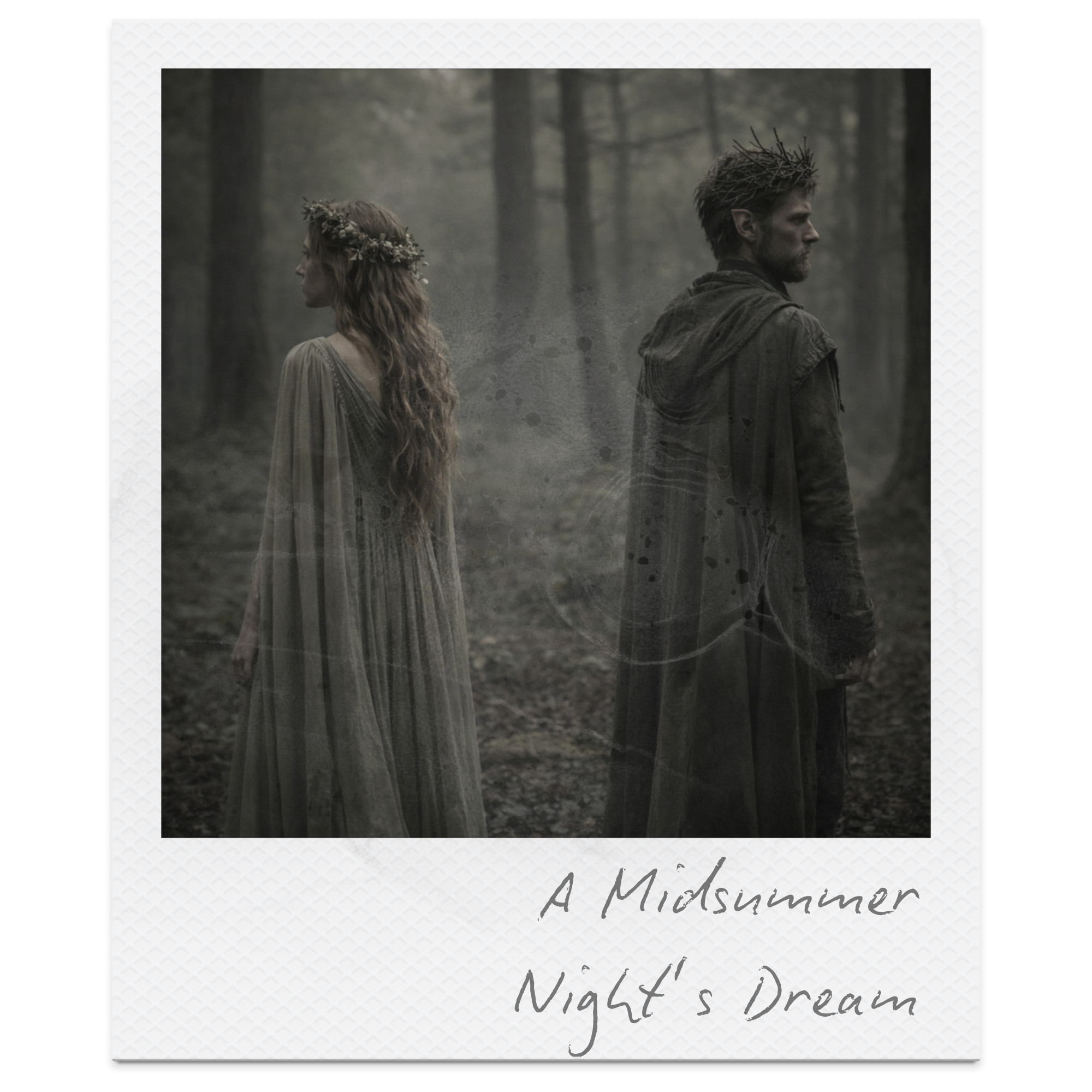
Explore Other Shakespeare Plays That Work in the Classroom
Alongside the core plays explored above, many of Shakespeare’s plays translate powerfully to the classroom through their dramatic structure, thematic depth, and adaptability for discussion, performance, and close reading. These texts are included because they support active interpretation, student engagement, and literary analysis across secondary and further education, rather than simply because they appear on prescribed curricula.
The gallery below highlights additional Shakespeare plays that work in the classroom, offering opportunities to explore power, identity, conflict, language, and moral choice through a range of genres and dramatic forms. This collection will continue to expand as new blog posts, teaching ideas, and classroom resources are added.
Click on a Polaroid to explore each Shakespeare play in more detail.


Teaching Approaches That Work Especially Well for Shakespeare
Shakespeare’s plays are uniquely suited to active, discussion-led teaching because meaning is created through language, performance, and interpretation, rather than fixed narration. The approaches below work particularly well across secondary and further education, supporting close analysis while also building confidence, engagement, and critical independence.
Discussion-Led Interpretation
Shakespeare’s writing rarely offers a single, definitive meaning. Characters speak with intention, contradiction, and self-interest, creating space for interpretation and debate. Discussion-led learning allows students to explore these tensions collaboratively, testing ideas and justifying interpretations with evidence.
Effective discussion approaches include:
◆ Structured debates around character motivation and responsibility
◆ Exploratory talk before written responses
◆ Justifying interpretations through close textual evidence
This approach strengthens critical thinking, argument construction, and interpretative confidence.
Language as Power
In Shakespeare’s plays, language creates power. Characters persuade, manipulate, threaten, flatter, and deceive through rhetoric rather than force. Teaching Shakespeare through the lens of language as action helps students understand how meaning is shaped by word choice, imagery, and tone.
Key teaching focuses include:
◆ Persuasive techniques and rhetorical devices
◆ Shifts in dominance within dialogue
◆ How imagery reinforces authority or vulnerability
This approach supports close reading and advanced language analysis across ability levels.
Performance as Analysis
Because Shakespeare wrote for the stage, performance is not an optional extra but a form of literary analysis. Meaning changes depending on tone, pacing, gesture, and emphasis, allowing students to explore interpretation physically and verbally.
Effective performance strategies include:
◆ Reading dialogue aloud with varied tone and emphasis
◆ Exploring alternative staging choices
◆ Using movement and positioning to reflect power dynamics
Performance-based teaching strengthens oracy, comprehension, and engagement.
Extract-Based Teaching
Shakespeare’s plays lend themselves particularly well to extract-based teaching, allowing focused study without cognitive overload. Individual scenes or speeches can be analysed in depth while still supporting understanding of wider themes.
This approach is especially effective for:
◆ Mixed-ability classrooms
◆ Building confidence with Shakespeare’s language
◆ Supporting close analysis and discussion
Extract-based teaching encourages precision, evidence selection, and depth over coverage.
Comparative and Thematic Study
Teaching Shakespeare through themes rather than chronology allows students to make connections across plays and genres. Comparative approaches help students recognise recurring concerns such as power, identity, love, and moral responsibility.
Comparative study might include:
◆ Comparing characters across different plays
◆ Exploring shared themes across tragedies and comedies
◆ Linking speeches that use similar rhetorical strategies
This approach supports higher-order thinking and evaluative writing.
Supporting Access Without Diluting Complexity
Shakespeare’s plays remain intellectually demanding, but they do not require simplification to be accessible. When teaching focuses on clear conceptual framing, purposeful extract selection, and discussion before writing, students are able to engage with complexity at an appropriate level while still developing confidence and independence.
Effective support strategies include:
◆ Establishing key concepts and patterns before detailed analysis
◆ Using spoken interpretation and discussion to clarify meaning
◆ Gradually increasing interpretative and analytical independence
Approached this way, Shakespeare remains challenging, rigorous, and inclusive, supporting progression from secondary study into further education without lowering intellectual expectations.
Shakespeare as a Foundation for Creative Writing
Shakespeare’s plays are not only central to literary study, but exceptionally effective as models for creative writing through literature. His texts demonstrate how language, structure, conflict, and character motivation work together to create meaning, making them ideal springboards for original writing that remains analytically grounded.
Using Shakespeare for creative writing allows students to move beyond passive interpretation and into active composition, where understanding is demonstrated through voice, perspective, and choice. Rather than separating analysis from creativity, this approach reinforces both.
Writing Through Character, Perspective, and Voice
Shakespeare’s characters are psychologically complex, morally conflicted, and driven by competing desires. These qualities make his plays ideal for creative tasks that ask students to inhabit voice and perspective while remaining rooted in the text.
Effective creative approaches include:
◆ Writing from the perspective of minor or marginalised characters
◆ Exploring private thoughts behind public speeches
◆ Reimagining key moments through internal monologue or alternative viewpoints
These tasks deepen understanding of character motivation, language choice, and dramatic tension.
Using Dramatic Conflict to Shape Narrative Writing
At the heart of every Shakespeare play is a clear dramatic conflict — between love and duty, ambition and morality, loyalty and power. These conflicts provide ready-made frameworks for original writing that is structurally sound and thematically purposeful.
Creative tasks might focus on:
◆ Extending moments of conflict beyond the stage
◆ Rewriting scenes with altered outcomes
◆ Translating dramatic tension into narrative prose
This approach helps students internalise how conflict drives structure, a key skill in effective storytelling.
Language as a Model for Style and Control
Shakespeare’s writing offers rich opportunities to explore language as craft. Students can examine how imagery, rhythm, and rhetorical patterning shape meaning, then apply these techniques in their own writing.
Creative writing through Shakespeare supports:
◆ Experimentation with imagery and symbolism
◆ Control of tone and emotional pacing
◆ Precision in word choice and sentence structure
By treating Shakespeare as a stylistic model rather than an untouchable authority, students develop confidence and intentionality in their own language use.
Creative Writing Prompts Inspired by Shakespeare
Structured prompts can help students move confidently from analysis into original writing. Creative writing tasks based on Shakespeare’s plays allow students to demonstrate understanding while producing meaningful, text-informed work.
A dedicated Shakespeare creative writing prompts bundle can support this approach across the year, offering flexible tasks suitable for:
◆ Bell ringers and lesson starters
◆ Homework and independent practice
◆ Sub lessons and low-prep activities
◆ Extended creative responses
The prompts currently explore a wide range of Shakespeare texts, including Romeo and Juliet, Macbeth, Twelfth Night, The Tempest, A Midsummer Night’s Dream, Julius Caesar, Hamlet, Othello, The Merchant of Venice, Much Ado About Nothing, and King Lear, with additional texts and prompts added over time.
Linking Shakespeare to Genre-Based Creative Writing
Shakespeare’s plays also provide a natural bridge into genre writing. His work spans tragedy, comedy, political drama, romance, and moral fable, allowing students to explore how genre conventions shape narrative choices.
Shakespeare-inspired writing can lead seamlessly into:
◆ Tragic writing driven by flaw and consequence
◆ Political and power-focused narratives
◆ Romantic or reconciliation-based storytelling
◆ Genre transformations and modern reimaginings
Linking Shakespeare to genre-based writing prompts encourages students to transfer literary understanding into new creative contexts while maintaining thematic and structural coherence.




Why this approach works
Using Shakespeare as a foundation for creative writing:
◆ Reinforces literary analysis through application
◆ Builds confidence and voice
◆ Supports both reluctant and advanced writers
◆ Keeps creativity anchored in textual understanding
Rather than treating creative writing as a break from literature, this approach positions it as a method of reading, thinking, and interpreting Shakespeare more deeply.
Shakespeare Classroom Resources
Shakespeare’s plays lend themselves to a wide range of classroom activities, from discussion and close reading to creative response, revision, and exam preparation. For teachers looking for ready-to-use materials that align with the teaching approaches outlined above, a comprehensive Shakespeare Mega Bundle brings together a full collection of flexible, classroom-tested resources.
This growing collection includes a wide range of Shakespeare teaching resources, such as:
◆ Creative writing prompts organised by act and play
◆ Discussion boards and discussion cards to support interpretation and debate
◆ Word searches, crosswords, and bingo activities for retrieval practice and review
◆ Quotation-based tasks and essay questions to support analytical writing
◆ Post-reading creative and analytical activities
The resources currently span a broad range of Shakespeare texts, including Macbeth, Romeo and Juliet, Hamlet, Othello, King Lear, The Tempest, Twelfth Night, A Midsummer Night’s Dream, Julius Caesar, Much Ado About Nothing, The Merchant of Venice, Antony and Cleopatra, and The Winter’s Tale, with additional materials added over time as the collection continues to expand.
Go Deeper into Teaching Shakespeare
Shakespeare’s plays often act as a starting point rather than an endpoint. His work opens wider conversations about how language shapes power, how stories construct identity, and how literature reflects — and challenges — the structures that govern human behaviour. For teachers and students who want to extend these ideas beyond individual texts, the pathways below offer opportunities for deeper literary and creative exploration.
◆ Explore how power, authority, and leadership operate across literature, from political drama to moral tragedy
◆ Trace recurring ideas of ambition, loyalty, betrayal, and moral responsibility across plays, novels, and short fiction
◆ Study rhetoric and persuasion as literary tools, examining how language influences belief, action, and control
◆ Compare dramatic and narrative forms to see how conflict and character function across genres
◆ Use creative writing prompts to test literary ideas through original composition, applying themes, structures, and voices in new contexts
◆ Extend study into related authors and traditions, including tragedy, political writing, and character-driven narratives
These pathways allow Shakespeare to remain central while encouraging comparative thinking, independent exploration, and transferable literary skills that deepen understanding across the curriculum.
Final Thoughts
Teaching Shakespeare is not about preserving tradition for its own sake, but about helping students understand how language creates power, how conflict shapes character, and how stories test moral responsibility. When approached through discussion, performance, close reading, and creative response, Shakespeare’s plays become intellectually demanding without being exclusionary, and challenging without being inaccessible.
Across secondary and further education, Shakespeare offers rare flexibility. His work supports interpretation, debate, comparative study, and original writing, allowing students to develop confidence in their analytical voice while engaging with texts that reward depth and disagreement. Rather than delivering fixed meanings, Shakespeare invites students to think, argue, and decide.
For teachers looking to extend this work beyond individual plays, explore the Literature Library, where Shakespeare sits alongside other writers, genres, and literary traditions connected through power, language, identity, and storytelling. These resources are designed to support deeper study, stronger connections, and more confident teaching across the literature curriculum.
Teaching Shakespeare well is ultimately an exercise in teaching attention, interpretation, and choice — skills that remain essential far beyond the classroom.
