70 Christmas Poetry Writing Prompts: Festive, Magical & Heartwarming Poem Ideas
Christmas has a poetry all its own. It lingers in the golden glow of candlelight, the hush of a snow-covered street, the scent of pine and cinnamon, and the familiar melodies that seem to carry memories of Christmases long past.
But Christmas is more than twinkling lights, stockings and festive cheer. It is a season of contrasts: warmth against winter's chill, joy mingled with nostalgia, crowded celebrations and quiet moments of solitude. For some, it is a time of wonder and possibility; for others, a season of remembrance, longing or bittersweet reflection. All of these experiences can become the beginnings of beautiful poetry.
Whether you're hoping to capture the enchantment of Christmas Eve, explore festive traditions through verse, write a heartfelt poem for someone you love or imagine a darker fairytale unfolding beneath the winter stars, these 70 Christmas Poetry Writing Prompts offer plenty of inspiration.
Inside this collection, you'll discover festive poetry ideas inspired by Christmas magic, childhood memories, snowy landscapes, kindness, winter folklore and unexpected seasonal mysteries. You'll also find prompts that explore the quieter emotions of Christmas, alongside creative writing techniques, literary inspiration and atmospheric picture prompts to help bring your poetry to life.
From traditional rhyming Christmas poems and playful festive verses to free verse, haiku and haunting winter imagery, there's room here for every poetic voice.
So pour yourself something warm, settle beside the Christmas lights and let the season work its magic.
Your next Christmas poem is waiting to be written.
Looking for even more inspiration? Explore our Poetry Writing Hub for poetry prompts, creative techniques and literary inspiration, or browse our Creative Writing Archive for hundreds of imaginative writing ideas across different genres, themes and styles.
Affiliate disclosure: This article contains Amazon affiliate links to books I recommend. As an Amazon Associate, I earn from qualifying purchases, at no extra cost to you.
Christmas Poetry Writing Prompts
Christmas is a season overflowing with poetic possibilities. From the soft glow of fairy lights and the excitement of Christmas morning to forgotten traditions, frost-covered landscapes and the bittersweet memories of celebrations gone by, even the smallest festive moment can inspire a poem.
The following 70 Christmas poetry writing prompts are divided into seven imaginative collections, each exploring a different side of the festive season. You'll find magical Christmas scenes, nostalgic memories, winter imagery, heartfelt wishes, melancholy reflections, enchanting folklore and unusual perspectives that transform familiar traditions into something wonderfully unexpected.
Whether you're writing a playful rhyming poem, experimenting with free verse, crafting a Christmas haiku or exploring the rich imagery of winter through metaphor and symbolism, these prompts are designed to inspire original poetry rather than simply describe the season.
You don't need to follow each idea literally. Change the perspective, introduce an unexpected emotion, experiment with poetic form or allow a single image to take your imagination somewhere entirely new.
Choose a theme that speaks to you, and let the poetry of Christmas unfold.
Christmas Magic & Wonder
There is something wonderfully poetic about the magic of Christmas: the anticipation of Christmas Eve, the sparkle of lights against a dark winter sky, the mysterious arrival of gifts and the possibility that, just for one night, the ordinary rules of the world might change.
These first ten Christmas poetry writing prompts invite you to explore festive wonder through imagination, enchantment and unexpected perspectives. Write a playful rhyming verse, a lyrical free-verse poem or something that feels like a fairytale whispered beside a winter fire.
1. The Hour Before Christmas
Write a poem about the final hour before midnight on Christmas Eve, when the world seems to hold its breath. Imagine clocks slowing, stars gathering closer and houses listening for something extraordinary. Capture the anticipation of a moment when anything might happen, using repetition or increasingly short lines to build a sense of expectation.
2. A Snowflake's Impossible Journey
Tell the story of a single snowflake travelling from the clouds to a particular window on Christmas morning. What does it witness along the way? Perhaps it passes over sleeping villages, frozen forests and brightly lit streets before arriving somewhere unexpected. Use delicate sensory imagery to make its brief existence feel magical and significant.
3. The Christmas Tree That Remembered
Imagine a Christmas tree that remembers every Christmas it has witnessed, from its earliest days as a sapling to the celebrations unfolding around it now. Write from the tree's perspective, giving it memories, emotions and a voice of its own. What does it understand about human happiness that the people gathered around it might overlook?
4. When the Christmas Lights Awoke
One December evening, the Christmas lights decorating a town begin to whisper to one another. Some remember celebrations from decades ago, while others dream of travelling beyond the streets they illuminate. Write a poem in which the lights become a chorus of tiny voices, using personification and sparkling imagery to bring the scene to life.
5. The Secret Workshop of Winter
Forget the familiar image of Santa's workshop. Imagine a hidden place where Christmas magic is created from unusual ingredients: bottled laughter, forgotten wishes, moonlit frost and the sound of distant bells. Describe this extraordinary workshop through a richly imaginative poem, allowing each strange ingredient to reveal something about the meaning of Christmas.
6. A Letter to the North Star
Write a Christmas poem addressed to the North Star, as though it were an ancient guardian watching over winter travellers, sleeping children and distant celebrations. What would you ask it? What secrets might it have witnessed over hundreds of Christmases? Experiment with apostrophe, addressing the star directly as though it could hear every word.
7. The Night the Snow Sang
Imagine waking on Christmas Eve to discover that falling snow has begun to sing. Each snowflake carries a different note, and together they create a melody that changes the world beneath them. Write a lyrical poem exploring the sound, movement and emotional effect of this impossible music. Consider using alliteration, assonance and rhythm to make the language feel musical.
8. The Gift That Could Not Be Wrapped
Somewhere beneath a Christmas tree sits a present that cannot be touched, held or wrapped in paper. Perhaps it is a moment of courage, a second chance, a precious memory or something far more mysterious. Write a poem that gradually reveals the nature of this unusual gift without naming it until the final lines.
9. The Christmas Eve Train
At midnight, a beautiful old-fashioned train appears at a deserted railway station, its windows glowing gold against the snow. Nobody knows where it travels, but every passenger carries a Christmas wish. Write a narrative poem about someone who steps aboard. Describe the journey through extraordinary winter landscapes and decide what awaits at the final destination.
10. If Christmas Were a Living Thing
Imagine Christmas itself as a living creature, spirit or mysterious visitor that arrives each December. What would it look like? Would it wear a cloak of starlight, carry bells in its pockets or leave the scent of cinnamon wherever it walked? Write a poem that brings Christmas to life through extended metaphor and personification, exploring not only its appearance but the feelings it awakens in others.
Christmas Memories & Nostalgia
Christmas has a remarkable way of bringing the past into the present. A familiar carol, the smell of oranges and cloves, a box of battered decorations or the flicker of coloured fairy lights can transport us to celebrations from years ago. Some memories glow with happiness; others carry a quiet ache for people, places and moments that have disappeared.
These Christmas poetry writing prompts explore nostalgia, childhood wonder, family traditions and the strange ways our memories transform over time. Experiment with sensory imagery, shifting timelines and the contrast between Christmas as we remember it and Christmas as it feels today.
11. The Christmas Decoration Box
Write a poem about opening an old box of Christmas decorations, each ornament holding a different memory. A chipped glass bauble might recall a childhood Christmas, while a handmade paper star brings back someone who is no longer there. Allow the poem to move between objects and memories, using each decoration as a doorway into the past.
12. The Christmases We Used to Know
Think of a Christmas tradition that has changed or disappeared over the years. Perhaps it was a family gathering, a particular meal, a journey to visit relatives or a ritual that once seemed as permanent as the season itself. Write a poem contrasting the Christmases of the past with the present, using repeated phrases to emphasise what has changed and what remains.
13. The House at Christmas
Imagine returning to the house where you spent your childhood Christmases, whether it still exists or lives only in memory. Describe its rooms, sounds, smells and familiar hiding places as they appeared during the festive season. Let the house become almost a character in your poem, holding memories within its walls long after the people who created them have gone.
14. The Last Christmas Before Everything Changed
Write about a Christmas that seemed completely ordinary at the time but later became precious because life changed afterwards. The change might be joyful, sorrowful or simply part of growing older. Build your poem around small, seemingly insignificant details that acquire deeper meaning when viewed through the lens of hindsight.
15. The Sound of Christmas Past
Choose a sound that instantly reminds you of Christmas: a particular song, the rustle of wrapping paper, laughter from another room, the creak of stairs on Christmas morning or the clatter of dishes during a family meal. Write a poem in which that sound becomes the thread connecting several different years. Experiment with repetition and auditory imagery to make the memory feel alive.
16. A Christmas Photograph
Imagine discovering an old photograph taken on Christmas Day. Everyone in the picture is smiling, but the image cannot reveal what happened before or after the shutter clicked. Write a poem exploring the lives, emotions and untold stories hidden behind that frozen moment. Consider addressing someone in the photograph directly, asking questions that can no longer be answered.
17. When Christmas Was Bigger
Remember how enormous Christmas once seemed when you were small: the endless wait for morning, the towering Christmas tree, the mystery of wrapped presents and the belief that December contained a kind of magic unavailable to adults. Write a poem exploring how the scale of Christmas changes as we grow older. Use exaggerated imagery to recreate the wonderful proportions of childhood.
18. The Recipe Written in Faded Ink
An old Christmas recipe, handwritten on a stained scrap of paper, has been passed through several generations. Imagine the hands that have prepared it, the kitchens it has travelled through and the celebrations it has witnessed. Write a poem using the ingredients and cooking instructions as metaphors for family, memory and the passage of time.
19. A Christmas Card from Long Ago
Write a poem inspired by a Christmas card discovered inside an old book or forgotten drawer. Its message is brief, but the handwriting, date and faded illustration suggest a much larger story. Who sent it, and what did they hope the coming year would bring? Let the poem unfold as an imagined conversation between the sender and someone reading the card many years later.
20. The Christmas That Never Happened
Not every cherished Christmas memory belongs to something that actually occurred. Sometimes we remember the celebrations we imagined, the people we hoped would arrive or the perfect Christmas that existed only in our expectations. Write a poem about an imagined Christmas that never came to pass. Explore the delicate boundary between nostalgia, longing and the beautiful stories we tell ourselves about the past.
Winter Landscapes & Festive Imagery
Winter transforms the familiar world into something extraordinary. Frost turns ordinary windows into delicate works of art, snow softens the sharp edges of streets and rooftops, and candlelight seems to glow a little brighter against the long December nights. Even the simplest winter scene can become a rich source of poetic inspiration.
These Christmas poetry writing prompts invite you to explore the sights, sounds, textures and contrasts of the festive season. From frozen rivers and moonlit forests to cosy firesides and glittering city streets, experiment with metaphor, personification, colour and sensory imagery to capture the beauty of Christmas in winter.
21. The City Dressed for Christmas
Imagine a bustling city transformed by Christmas decorations. Golden lights spill across wet pavements, shop windows glow with elaborate displays and hurried strangers move through the cold beneath illuminated stars. Write a poem that captures the contrast between the city's restless energy and its festive beauty. Experiment with enjambment to create movement, then introduce a moment of stillness that changes the atmosphere.
22. Frost's Secret Handwriting
One December morning, you discover that frost has covered your bedroom window with intricate patterns resembling letters, maps and forgotten languages. Write a poem imagining what winter might be trying to communicate. Use delicate visual imagery and extended metaphor to transform the frost into a mysterious message that disappears as the morning grows warmer.
23. A Christmas Eve Snowfall
Write a poem about snow beginning to fall on Christmas Eve, transforming a familiar neighbourhood into a silent, almost unrecognisable landscape. Describe the gradual disappearance of footprints, garden paths and ordinary sounds beneath the gathering white. Consider using increasingly gentle rhythms and shorter lines to mirror the hush settling over the world.
24. The Warmth Behind the Window
On a bitterly cold December evening, someone stands outside a house glowing with Christmas lights. Through the window, they glimpse a fire, a decorated tree and people gathered together. Write a poem exploring the contrast between the warmth indoors and the winter darkness outside. You might focus on physical sensations, or allow the scene to become a metaphor for belonging, longing or hope.
25. The Winter Forest at Midnight
Imagine entering a snow-covered forest at midnight during the Christmas season. The branches glitter beneath the moon, frozen streams lie hidden under ice and every sound seems unusually clear. Write a richly atmospheric poem that brings this landscape to life through all five senses. Introduce one unexpected detail that suggests the forest is not quite as empty as it appears.
26. The Colours of Christmas
Christmas is often described through familiar colours: red ribbons, green fir trees, golden lights and white snow. Write a poem that explores the season through a more unusual palette. Perhaps Christmas is the violet of an early winter sunset, the silver of frozen puddles or the amber glow of a streetlamp in the fog. Use colour symbolism to express different festive emotions without naming those emotions directly.
27. The River Beneath the Ice
A river winds through a small town decorated for Christmas, but its surface has frozen beneath the December cold. Beneath the ice, the water continues its invisible journey. Write a poem exploring the contrast between stillness and movement, using the frozen river as a metaphor for something that persists beneath an apparently quiet surface. Let the winter landscape reflect an emotion, memory or secret.
28. A Symphony of Christmas Sounds
Write a poem composed entirely around the sounds of a December evening: church bells, distant carol singers, boots crunching through snow, the crackle of a fireplace, the clink of glasses and the whisper of wind beneath the door. Build your poem like a piece of music, allowing sounds to overlap, repeat and fade. Experiment with onomatopoeia, alliteration and changes in rhythm.
29. The Last Candle in the Window
In a village filled with Christmas lights, one small candle continues to burn in an upstairs window long after every other house has gone dark. Write a poem centred on this solitary flame. Describe the surrounding winter night and imagine what the candle might represent: a promise, a welcome, a vigil or a wish. Use the contrast between light and darkness to create emotional depth.
30. December, the Artist
Imagine December as an artist painting the world in preparation for Christmas. Its brushes are made from icicles, its palette contains frost and starlight, and its canvas stretches across fields, rooftops and frozen lakes. Write a poem using extended personification to describe December at work. What does it choose to illuminate, conceal or leave unfinished? End with one small detail that reveals the artist's feelings about the approaching Christmas morning.
Love, Kindness & Christmas Wishes
At the heart of Christmas are the connections we share with others. A thoughtful gesture, a familiar embrace, a handwritten message or a moment of unexpected kindness can carry more meaning than the most extravagant gift. Christmas poetry offers a beautiful opportunity to explore love in all its forms, from romance and friendship to compassion, forgiveness and the simple comfort of being remembered.
These Christmas poetry writing prompts invite you to look beyond traditional festive sentiment and discover the extraordinary emotions hidden inside ordinary acts of love. Experiment with intimate imagery, heartfelt symbolism, unusual perspectives and the contrast between what we say and what we struggle to express.
31. A Christmas Wish for Someone Else
Write a poem about a person who is offered one extraordinary Christmas wish but chooses to use it for someone else. Perhaps they wish for a stranger's happiness, a loved one's courage or the return of something that cannot be bought. Explore the emotions behind their decision without revealing the wish immediately. Let its true meaning emerge gradually through imagery and implication.
32. Love Beneath the Christmas Lights
Two people find themselves alone beneath the Christmas lights of a busy town square. Around them, shoppers hurry past, music drifts from nearby shops and the winter air carries the promise of snow. Write a romantic Christmas poem that captures a small, intimate moment against this bustling backdrop. Use contrasts in sound, movement and temperature to make the connection between the two characters feel especially vivid.
33. The Stranger Who Left a Gift
On Christmas morning, someone discovers a small, beautifully wrapped present outside their door. There is no name, no card and no explanation, yet the gift seems to contain exactly what they needed. Write a poem about this mysterious act of kindness, focusing on its emotional impact rather than the identity of the giver. Consider using the gift as a symbol for hope, reassurance or human connection.
34. A Christmas Letter Never Sent
Imagine writing a Christmas letter to someone you love but have never found the courage to tell. Perhaps the relationship is romantic, perhaps it is a friendship that has endured for decades, or perhaps it is a family member who has never understood how much they mean to you. Write your poem in the form of an unsent letter, allowing ordinary Christmas details to reveal the feelings hidden between the lines.
35. The Gift of Five Minutes
A mysterious visitor offers someone the chance to give another person five extra minutes of something precious: time together, courage, peace, laughter or a moment they thought had passed forever. Write a Christmas poem exploring how such a small gift might transform someone's day. Use the passing of time as a recurring motif, perhaps structuring the poem around five short stanzas.
36. The Christmas Table with One More Chair
Every Christmas, a family places an extra chair at their dining table, even though they are not expecting another guest. One year, someone finally asks why. Write a poem that explores the meaning of this tradition. The chair might represent hospitality, an open invitation, a family story or a promise made long ago. Allow the empty space to become a powerful symbol of generosity and belonging.
37. A Christmas Wish Written in Snow
Someone writes a heartfelt wish in fresh snow, knowing it will disappear when the weather changes. Write a poem about this temporary message and the emotions behind it. Perhaps the wish concerns love, reconciliation, friendship or the courage to begin again. Explore the contrast between the fleeting words and the lasting feelings they express, using the melting snow as a metaphor for vulnerability or hope.
38. The Kindness Nobody Saw
Write a Christmas poem celebrating an act of kindness that goes completely unnoticed. It might be a neighbour quietly clearing someone's snowy path, a stranger paying for another person's meal or someone leaving a warm coat where it will be found. Tell the story through the perspective of an unexpected observer, such as a streetlamp, a robin or the falling snow. Explore the idea that generosity does not need an audience to matter.
39. The Christmas We Found Each Other
Imagine two people whose paths have crossed countless times without either noticing the other. On Christmas Eve, a small coincidence finally brings them together. They might become friends, fall in love or simply offer each other comfort at exactly the right moment. Write a narrative poem that moves between their separate journeys before bringing them into the same scene. Use parallel imagery or repeated phrases to suggest the invisible connections between strangers.
40. If Love Were a Christmas Tradition
Imagine a world in which love is expressed through an unusual Christmas tradition. Perhaps people hang handwritten promises on evergreen trees, exchange jars of cherished memories or light a candle for every kindness they have received. Invent your own symbolic custom and write a poem describing how it unfolds. Use rich festive imagery to explore what love means beyond gifts, grand declarations and familiar romantic gestures.
Melancholy & Lonely Christmases
Christmas is often portrayed as a season of happiness, togetherness and celebration, but its brightness can sometimes make our quieter emotions feel even more profound. An empty chair at the dinner table, a familiar song playing in an unfamiliar place or the sight of Christmas lights through a rain-streaked window can stir feelings of grief, loneliness, longing and remembrance.
Yet melancholy Christmas poetry need not be entirely sorrowful. There can be beauty in solitude, tenderness in memory and unexpected comfort in acknowledging the things we miss.
These Christmas poetry writing prompts explore the bittersweet emotions of the festive season. Experiment with symbolism, restrained language, contrasting imagery and the spaces between words to create poems that feel intimate, authentic and quietly moving.
41. The Empty Chair at Christmas
Write a poem about an empty chair at a Christmas dinner table, once occupied by someone whose presence is deeply missed. Rather than describing the person's absence directly, focus on the small details surrounding the chair: an untouched place setting, a familiar dish, a conversation that almost includes them. Use the empty space as a recurring image, allowing it to carry the emotional weight of the poem.
42. Christmas Through a Stranger's Window
Imagine walking alone through a neighbourhood on Christmas Eve, passing windows filled with warm lights, decorated trees and families gathered together. Write a poem about the fragments of other people's celebrations glimpsed from the street. Explore the contrast between what the observer sees and what they imagine, questioning whether happiness is ever quite as simple as it appears from the outside.
43. The Christmas Card That Never Arrived
Every December, someone waits for a Christmas card from a particular person. This year, the card does not arrive. Write a poem centred on the empty space where it should have been displayed, exploring the memories, questions and unspoken emotions that its absence awakens. Consider using the repeated phrase perhaps tomorrow to convey the gradual transformation of hope into acceptance.
44. A Christmas Carol in an Empty House
An old Christmas carol begins playing in a house where nobody has celebrated Christmas for years. The melody drifts through silent rooms, stirring memories of laughter, decorations and people who once filled the space. Write a poem from the perspective of the house itself, using personification to explore how places seem to remember the lives lived within them.
45. The Loneliest Christmas Light
Among thousands of festive lights illuminating a busy town, one small bulb flickers alone in the window of an abandoned building. Write a poem from the light's perspective, imagining what it sees, remembers and hopes for. Use the contrast between its fragile glow and the surrounding darkness to explore loneliness, resilience or the quiet determination to remain visible.
46. Christmas in a Different Country
Write a poem about spending Christmas far from home, surrounded by unfamiliar streets, traditions, languages or landscapes. Perhaps the weather is warm instead of cold, familiar foods are impossible to find or the celebrations unfold in ways you never imagined. Explore the strange mixture of discovery and homesickness, using sensory details to contrast the Christmas you remember with the one unfolding around you.
47. The Gift Still in Its Wrapping
Beneath a Christmas tree sits a beautifully wrapped present that has remained unopened for years. Nobody moves it, and nobody speaks about the person for whom it was intended. Write a poem exploring the story hidden inside this ordinary object. Allow the gift to become a symbol of unfinished conversations, promises or love that has nowhere obvious to go.
48. December's Longest Night
Imagine a person sitting awake during one of December's longest nights, watching the hours pass while the rest of the world sleeps. Outside, the streets are silent, and distant Christmas decorations glow against the darkness. Write an introspective poem that moves through the person's thoughts without revealing everything they are feeling. Use the changing light, the ticking clock or the movement of shadows to suggest the passage of time.
49. A Christmas for One
Write a poem about someone spending Christmas Day entirely alone, not necessarily because they are unhappy, but because their life has taken an unexpected direction. Describe the small rituals they create for themselves: preparing a favourite meal, opening a single gift, walking through quiet streets or watching the winter sky. Explore the delicate distinction between loneliness and solitude, allowing the poem to discover whether the day holds sadness, peace or a little of both.
50. The Christmas We Carry With Us
Imagine that every Christmas we experience leaves behind an invisible ornament that we carry throughout our lives. Some are bright with happiness, others fragile with sorrow, and a few have become too precious to touch. Write a reflective poem describing this imaginary collection of memories. Let each ornament represent a different Christmas, building towards the realisation that the season is shaped not only by the present but by everything we have loved, lost and remembered.
Christmas Folklore & Fairytales
Long before Christmas became a season of glittering decorations and brightly wrapped presents, the darkest weeks of winter were filled with stories of wandering spirits, mysterious visitors, enchanted forests and ancient customs. Across Europe, winter folklore tells of strange creatures moving through snow-covered villages, magical gifts bestowed upon the deserving and supernatural encounters on the longest nights of the year.
From the eerie legends of Krampus and the Yule Cat to the enchanting traditions of Christmas trees, mistletoe and the winter solstice, festive folklore offers a treasure trove of poetic inspiration.
These Christmas poetry writing prompts invite you to weave fairytales, mythology and a touch of Gothic mystery into your festive verse. Experiment with ballads, narrative poetry, symbolism and lyrical storytelling to create Christmas poems that feel as though they have been passed down through generations.
51. The Visitor at the Winter Door
On Christmas Eve, a mysterious traveller knocks on the door of a cottage standing alone at the edge of a frozen forest. Their cloak is dusted with snow, their face is hidden, and they offer the household a gift in exchange for a single act of hospitality. Write a narrative poem about the encounter, gradually revealing whether the visitor is a wandering spirit, an enchanted stranger or something older than Christmas itself. Explore the fairytale tradition of kindness being rewarded in unexpected ways.
52. The Yule Cat's Midnight Walk
Inspired by Icelandic folklore, imagine the enormous Yule Cat prowling through a snow-covered village on Christmas night. Its eyes gleam between rooftops, its whiskers brush against chimneys and its footprints leave strange patterns in the frost. Write a poem from the creature's perspective, exploring how it views the human traditions unfolding below. Will your Yule Cat be terrifying, mischievous, lonely or surprisingly sympathetic?
53. The Twelve Bells of Christmas
In an ancient village, twelve bells ring from a church tower at midnight on Christmas Eve, but each bell summons something different from the winter darkness. One awakens forgotten memories, another calls wandering spirits home, and a third makes the stars descend closer to the earth. Write a poem built around these mysterious chimes, using repetition and a steady rhythm to create the feeling of an old Christmas ballad. Decide what happens when the final bell rings.
54. The Christmas Tree in the Enchanted Forest
Deep within a forest stands a fir tree that has never been cut down, decorated or touched by human hands. Yet every Christmas Eve, its branches glow with impossible ornaments: frozen wishes, tiny captured stars, silver tears and memories shaped like glass. Write a poem describing the tree and the creatures who gather beneath it. Use rich symbolism to give each decoration a meaning, allowing the tree to become a living archive of winter magic.
55. Krampus and the Child Who Wasn't Afraid
Drawing inspiration from Alpine Christmas folklore, imagine a child encountering Krampus on a lonely mountain road. Instead of fleeing, the child asks the frightening figure a question nobody has ever dared to ask. Write a dramatic narrative poem exploring their conversation. Perhaps the creature reveals an unexpected sorrow, a secret about his ancient duties or a different understanding of what it means to be good. Use contrasting imagery to balance menace with wonder.
56. The Mistletoe Promise
In a forgotten kingdom, mistletoe possesses an ancient enchantment: any promise spoken beneath its branches on Christmas Eve must be kept, regardless of the consequences. Write a poem about two people who make such a promise without understanding its power. Explore the beauty and danger of binding words, using the evergreen leaves and pale berries as recurring symbols. Will the promise become a blessing, a burden or something more complicated?
57. The Snow Maiden's Christmas Wish
Inspired by the Snow Maiden of Slavic folklore, imagine a young woman fashioned from winter snow who longs to experience Christmas as humans do. She watches families gathering beside fires, hears laughter through cottage windows and wonders what warmth might feel like. Write a lyrical poem exploring her desire to belong to a world that could destroy her. Use contrasts between ice and flame, silence and music, or stillness and movement to convey her longing.
58. The Ghosts of Christmases Yet to Come
Imagine that the spirits of future Christmases gather each December in an abandoned manor, carrying glimpses of celebrations that have not yet happened. Some bring joyful visions, others troubling warnings, and one arrives with a future nobody expected. Write a poem about a person who accidentally witnesses their gathering. Rather than simply predicting events, explore the uncertainty of the future and the choices that might change it. Consider using shifting tenses to create an unsettling sense of time.
59. The Winter Market of Impossible Gifts
Once every hundred years, a mysterious Christmas market appears beneath the northern lights. Its stalls sell extraordinary things: bottled dreams, forgotten voices, a single hour of yesterday and keys to doors that have not yet been built. Write a poem about someone wandering through this enchanted market in search of the perfect Christmas gift. Use vivid sensory imagery and unusual metaphors to bring the market to life, then reveal what the visitor ultimately chooses and why.
60. The Last Keeper of Christmas Magic
In a world that has gradually forgotten its oldest winter traditions, one solitary figure remains responsible for keeping Christmas magic alive. Each December, they travel between villages, mending broken enchantments, awakening sleeping stars and whispering forgotten songs into the snow. Write a poem from the keeper's perspective as they prepare for what might be their final Christmas. Explore the relationship between magic, memory and belief, allowing the ending to suggest whether wonder can ever truly disappear.
Unusual & Imaginative Christmas Poetry
Who says Christmas poetry has to be about snowflakes, sleigh bells and stockings hanging beside the fireplace? Sometimes the most memorable poems begin with an impossible question, an unexpected narrator or an ordinary festive object behaving in an extraordinary way.
What if Christmas could be bought and sold? What if December disappeared from the calendar? What if the moon collected abandoned Christmas wishes, or every present beneath a tree contained a different version of the future?
These final ten Christmas poetry writing prompts encourage you to experiment with surrealism, magical realism, unusual poetic structures and imaginative storytelling. Forget the familiar rules of festive verse and discover what happens when Christmas becomes strange, surprising and beautifully unpredictable.
61. The Museum of Forgotten Christmases
Imagine a peculiar museum devoted entirely to Christmases that nobody remembers. Its glass cabinets contain abandoned traditions, vanished celebrations, unfinished songs and tiny fragments of happiness from forgotten centuries. Write a poem describing a visitor wandering through the exhibits. Experiment with a catalogue-style structure, allowing each object to reveal a different story. What extraordinary discovery waits in the final display case?
62. The Christmas That Fell Out of Time
One year, Christmas Day disappears from the calendar. December moves directly from the 24th to the 26th, and nobody seems to notice except one person who remembers everything that should have happened. Write a surreal poem exploring this missing day. Perhaps Christmas has slipped into another century, become trapped inside a clock or wandered away in search of something it has lost. Use fractured chronology and unusual imagery to create a dreamlike atmosphere.
63. The Moon's Collection of Christmas Wishes
Every Christmas Eve, the moon gathers wishes that were never spoken aloud. It stores them in silver jars, hangs them among the stars and occasionally sends one drifting back to earth. Write a poem from the moon's perspective, describing the strange collection it has accumulated over centuries. Explore the difference between the wishes people share openly and the ones they keep hidden, using celestial imagery and delicate personification.
64. A Christmas Dinner for Impossible Guests
Imagine hosting a Christmas dinner attended by guests who could never ordinarily share a table. Perhaps Yesterday sits beside Tomorrow, the North Wind argues with the Sun, and a forgotten childhood imaginary friend arrives carrying a beautifully wrapped gift. Write a poem capturing the extraordinary conversations unfolding over dinner. Use dialogue, contrasting voices and playful symbolism to explore what these impossible guests might reveal about Christmas.
65. The Shop That Sells Christmas Feelings
Hidden between two ordinary shops is a tiny establishment selling emotions associated with Christmas. Its shelves hold jars of anticipation, ribbons of nostalgia, boxes of festive excitement and bottles of the strange sadness that sometimes arrives on Christmas evening. Write a poem about someone entering the shop in search of a particular feeling. Describe the merchandise through inventive metaphors and consider whether emotions can truly be chosen, purchased or exchanged.
66. The Christmas Tree That Grew Upside Down
In the middle of a town square, a Christmas tree begins growing upside down, its roots stretching towards the stars while its branches reach deep beneath the earth. Nobody knows whether it is a miracle, a warning or simply nature behaving strangely. Write a poem exploring this impossible sight. Use inverted imagery and unexpected comparisons to challenge the reader's sense of direction, then imagine what the tree discovers in the sky and underground.
67. A Christmas Poem Written by the Future
Imagine receiving a Christmas poem written by your future self, dated fifty years from now. Its verses describe unfamiliar traditions, extraordinary changes and small moments that have not yet happened. Write the poem as though it were a message travelling backwards through time. Experiment with future tense, prophetic imagery and subtle contradictions. What might the future want the present to remember?
68. The Great Christmas Ornament Rebellion
Every Christmas decoration in a house suddenly develops a personality and decides it has had enough of its assigned role. The angel refuses to sit atop the tree, the baubles demand better views and the tinsel dreams of becoming something magnificent. Write a humorous or satirical poem about their rebellion. Give different ornaments distinctive voices and use rhythm, rhyme or playful dialogue to create a lively festive scene. Perhaps the decorations have something surprisingly insightful to say about human traditions.
69. The Christmas That Came in a Suitcase
A mysterious suitcase arrives at someone's doorstep on a cold December morning. Inside is an entire Christmas: miniature streets covered in snow, tiny carol singers, a glowing fireplace and a sky filled with impossibly small stars. Write a poem about opening the suitcase and watching its contents gradually expand into the surrounding world. Experiment with changes in scale, transforming tiny details into enormous landscapes. What happens when the suitcase can no longer contain its magic?
70. The Last Christmas in the Universe
Imagine the very last Christmas ever celebrated, somewhere at the edge of a dying universe. The stars are fading, the planets have grown quiet and only a handful of beings remain to observe a tradition whose origins have almost been forgotten. Write a poem about this final celebration, balancing cosmic imagery with intimate festive details: a single candle, a handmade decoration, a remembered song or a gift exchanged between two people. Explore what Christmas might mean when everything else is disappearing, and end with an image that suggests either a final farewell or an unexpected beginning.
What Is Christmas Poetry?
Christmas poetry is poetry inspired by the traditions, imagery, emotions and stories associated with the Christmas season. It can celebrate festive joy, explore the wonder of winter, reflect on family and childhood memories, or examine the more complicated feelings of nostalgia, loneliness and loss that often accompany this time of year.
Although Christmas poems are frequently associated with cheerful rhymes, snow-covered landscapes and familiar festive traditions, the genre is far more varied than it first appears. Christmas poetry can be playful or profound, religious or secular, traditional or experimental. It might tell a magical story, capture a fleeting moment or use the festive season as a backdrop for exploring universal human experiences.
From the atmospheric storytelling of Clement Clarke Moore's A Visit from St. Nicholas to the reflective beauty of Thomas Hardy's The Oxen, Christmas poetry has long combined imagination, tradition and emotion.
Common Themes in Christmas Poetry
Christmas offers poets a distinctive collection of images, symbols and experiences, many of which carry meanings beyond their familiar festive associations.
Magic and wonder: The anticipation of Christmas Eve, childhood imagination, extraordinary gifts and the possibility of impossible things.
Family and togetherness: Shared traditions, celebrations, friendship, generosity and the emotional connections that make Christmas meaningful.
Memory and nostalgia: Childhood Christmases, familiar decorations, treasured rituals and the bittersweet passage of time.
Winter and nature: Snow, frost, evergreen trees, candlelight, darkness and the contrast between the cold outdoors and warmth within.
Hope and renewal: Kindness, forgiveness, new beginnings and the promise of light returning after the darkest days of winter.
Grief and loneliness: Empty places at festive gatherings, separation from loved ones, homesickness and the complicated emotions that celebrations can awaken.
Folklore and spirituality: Christmas legends, supernatural visitors, ancient winter traditions, religious symbolism and stories of miracles.
These themes frequently overlap. A poem about decorating a Christmas tree might begin with joyful memories before revealing a sense of loss, while a description of a snowy landscape could become a metaphor for isolation, peace or renewal.
The most memorable Christmas poems often find fresh meaning in familiar seasonal details.
Different Types of Christmas Poetry
There is no single poetic form that defines Christmas poetry. Writers can explore the season through a wide variety of styles and structures, depending on the atmosphere and emotions they want to create.
Traditional Rhyming Christmas Poems
Rhyming couplets, regular stanzas and musical rhythms are especially well suited to playful festive poems, Christmas storytelling and verses intended to be read aloud. Their memorable patterns can echo the familiar sounds of carols and seasonal songs.
Christmas Free Verse
Free verse allows poets to explore Christmas without following a fixed rhyme scheme or metre. It is particularly effective for intimate reflections, atmospheric descriptions and poems that move naturally between memories, images and emotions.
Narrative Christmas Poetry
Narrative poems tell a story through verse. They might follow a mysterious visitor on Christmas Eve, describe an extraordinary winter journey or transform an ordinary festive encounter into a miniature fairytale.
Christmas Haiku and Short-Form Poetry
Short poetic forms encourage writers to concentrate on a single vivid image or moment. A candle reflected in a dark window, frost gathering on a branch or the silence after Christmas dinner can provide enough inspiration for an entire poem.
Traditional haiku have their roots in Japanese seasonal poetry, so writers can also explore the relationship between seasonal imagery and the natural world rather than simply treating haiku as three lines with a particular syllable count.
Reflective and Melancholy Christmas Poetry
Not every Christmas poem needs to celebrate. Reflective poetry can explore the contrast between festive expectations and personal experience, making space for grief, solitude, nostalgia and complicated family relationships.
Christmas Fantasy and Folklore Poetry
Christmas lends itself beautifully to magical storytelling. Poets can draw inspiration from winter legends, enchanted forests, supernatural visitors and imaginary traditions, creating lyrical fairytales or mysterious narrative ballads.
What Makes a Christmas Poem Memorable?
A memorable Christmas poem does more than list familiar festive decorations or describe a perfect Christmas morning. It invites the reader to experience the season through a particular perspective, emotion or moment.
Rather than simply writing that Christmas is magical, a poet might describe the trembling reflection of fairy lights in a child's eyes. Instead of stating that someone feels lonely, they might focus on a second Christmas stocking that remains folded in a drawer.
These carefully chosen details allow ordinary seasonal imagery to carry deeper emotional meaning.
The secret to writing evocative Christmas poetry is to make the familiar feel personal, surprising or newly discovered.
Whether your poem is joyful, whimsical, romantic, melancholy or wonderfully strange, begin with something that genuinely captures your imagination. The strongest festive poetry often emerges when the traditions everyone recognises become part of a story only you could tell.
How to Write Christmas Poetry: 7 Creative Techniques to Try
Writing a Christmas poem might seem straightforward. After all, the season offers an abundance of familiar inspiration: snowflakes, Christmas trees, twinkling lights, festive traditions and the excitement of Christmas morning.
But the challenge is finding something original to say about a season that has inspired centuries of poems, songs and stories.
The most evocative Christmas poetry often begins with a small observation, an unexpected emotion or a familiar tradition viewed from an unusual perspective. Rather than trying to capture everything about Christmas, focus on one image, memory or moment and explore it in depth.
Here are seven creative approaches to help you write Christmas poems that feel imaginative, atmospheric and meaningful.
1. Begin with a Single Christmas Image
Instead of starting with a broad theme such as Christmas joy or the magic of December, choose one specific image that captures your attention.
It might be a candle burning in a darkened window, a forgotten decoration beneath the sofa, a robin perched on a frozen garden fence or the last piece of wrapping paper lying beneath the Christmas tree.
A single image gives your poem a clear focus and allows meaning to develop naturally through description.
For example, rather than writing:
Christmas lights shine brightly everywhere.
You might write:
One golden bulb trembles in the window,
holding back a little of December's dark.
The second example introduces atmosphere, personification and a subtle emotional suggestion without explaining exactly what the reader should feel.
Try this: Choose one Christmas object and describe it in five different ways without naming it. Use colour, texture, movement, sound and an unexpected comparison. Select your strongest image as the opening line of a poem.
2. Use the Five Senses to Create Festive Atmosphere
Christmas is particularly rich in sensory experiences. The smell of cinnamon, the rough texture of pine needles, the sound of distant bells and the warmth of a mug held between cold hands can immediately transport readers into a festive scene.
However, effective sensory poetry does more than catalogue familiar details. It connects physical sensations to emotions, memories or changes in atmosphere.
Consider how the same sensory image might create different moods:
The scent of oranges and cloves could evoke childhood excitement.
A cold fireplace might suggest a house that has been empty for years.
The sound of Christmas bells could represent celebration, loneliness or the passing of time.
The warmth of candlelight might symbolise safety against the surrounding winter darkness.
Try this: Write a short Christmas poem using at least three senses, but avoid the words Christmas, festive, magical and beautiful. Let the sensory details establish the season without announcing it.
3. Explore the Contrast Between Warmth and Cold
One of the most powerful features of Christmas imagery is the contrast between the cold winter world and the warmth associated with home, celebration and companionship.
Snow-covered streets and glowing windows, frozen branches and candlelit rooms, winter darkness and golden Christmas lights all create natural visual contrasts.
These oppositions can also reflect emotional experiences.
A warm house might represent belonging, while the cold street outside suggests isolation. Alternatively, a snowy landscape could offer peace and freedom, while a crowded Christmas gathering feels overwhelming.
For example:
Beyond the glass, the garden sleeps in white;
inside, the fire remembers every name.
Here, the physical contrast between indoors and outdoors also suggests memory and human connection.
Try this: Divide a page into two columns headed Inside and Outside. List five Christmas images beneath each heading, then write a poem that moves between the two spaces. Consider whether the emotional meaning of warmth and cold changes by the final stanza.
4. Give Christmas Objects a Voice
Personification can transform ordinary Christmas decorations and traditions into memorable poetic characters.
Imagine the stories a battered Christmas bauble might tell, the wishes a Christmas stocking has overheard or the thoughts of a star that has watched over the same tree for generations.
An object can become an especially effective narrator because it notices things people overlook.
A Christmas tree might remember the excitement of children who have since grown up. A candle might fear the approaching dawn. A discarded ribbon could wonder why its brief moment of beauty has ended.
For example:
The old glass angel knows the names
of children who no longer climb the stairs.
The ornament becomes a witness to passing time, allowing nostalgia to emerge through a simple image.
Try this: Choose a Christmas decoration and write eight lines from its perspective. Give it one secret, one memory and one desire. Avoid describing what it looks like until the final two lines.
5. Write About an Emotion That Christmas Makes More Complicated
Christmas poetry doesn't have to be cheerful.
The festive season can intensify emotions that are difficult to express: nostalgia, loneliness, gratitude, disappointment, grief, hope and the longing for things to remain unchanged.
Exploring these contrasts can produce poetry that feels particularly authentic.
A Christmas poem about happiness might become more moving when it acknowledges how fleeting the moment is. A poem about loneliness might discover unexpected comfort in solitude. A nostalgic poem might explore the difference between childhood memories and the reality of the past.
Rather than naming an emotion directly, try expressing it through an object, action or setting.
Instead of writing:
I miss you every Christmas.
You might write:
Your favourite mug waits on the highest shelf,
untouched beneath December's dust.
The ordinary object becomes a symbol of absence, allowing the reader to discover the emotion for themselves.
Try this: Choose one Christmas emotion and write a poem without using the word itself or any obvious synonyms. Communicate the feeling entirely through setting, imagery and small physical details.
6. Experiment with Christmas Traditions and Folklore
Christmas offers a fascinating mixture of familiar customs, religious symbolism, winter folklore and imaginative storytelling.
You might explore the symbolism of evergreen trees, invent an unusual Christmas Eve ritual or imagine an ancient winter spirit encountering the modern festive season.
Traditional stories can also become starting points for entirely original poetry.
What if the star above a Christmas tree could grant one wish? What if every Christmas card contained a message from the future? What if a mysterious visitor arrived each December to collect forgotten promises?
These imaginative questions work particularly well in narrative poems and ballads, where a sense of mystery encourages the reader to continue.
Try this: Choose an ordinary Christmas tradition and change one fundamental rule. Perhaps presents can only contain memories, carols awaken sleeping spirits or mistletoe reveals hidden truths. Write a narrative poem exploring the consequences of your invention.
7. Choose a Poetic Form That Suits Your Christmas Story
The form of a poem can influence its atmosphere just as strongly as its imagery.
A playful Christmas poem might benefit from a regular rhyme scheme and lively rhythm, while a reflective poem about memory or loss may feel more natural in free verse.
Consider experimenting with different structures:
Rhyming couplets: Useful for cheerful, humorous or traditional Christmas verses.
Free verse: Ideal for personal memories, atmospheric imagery and emotional reflection.
Haiku: Encourages close observation of a single winter or festive moment.
Acrostic poetry: A playful way to explore Christmas words, objects and traditions.
Ballads: Particularly effective for Christmas folklore, mysterious visitors and magical adventures.
List poems: Perfect for collections of festive memories, unusual gifts, seasonal sounds or Christmas wishes.
Refrain poems: Repeating a particular line can evoke the musical qualities of carols or emphasise a recurring memory.
You can also use the shape of your poem to reflect its subject. A poem about falling snow might feature short, descending lines, while a Christmas countdown could become progressively shorter as midnight approaches.
Try this: Take one of the 70 Christmas poetry writing prompts above and write two versions of the same poem: one using a regular rhyme scheme and another in free verse. Notice how the rhythm, language and emotional atmosphere change.
Bringing Your Christmas Poem Together
Once you've chosen your inspiration, think about the emotional journey you want your poem to take.
Perhaps it begins with a familiar Christmas scene before revealing an unexpected memory. Perhaps a magical encounter gradually becomes a reflection on kindness, or a melancholy winter landscape ends with a small suggestion of hope.
Read your draft aloud and listen for lines that feel awkward, predictable or unnecessarily complicated. Replace general descriptions with precise images, remove words that explain too much and allow the strongest details to carry the emotion.
Most importantly, remember that Christmas poetry doesn't need to be perfect, cheerful or traditional to be meaningful.
Sometimes the most beautiful festive poem begins with something as simple as a forgotten ornament, a quiet street or a single light burning against the December darkness.
Poetic Techniques to Experiment With in Christmas Poetry
The most memorable Christmas poems don't simply describe festive scenes. They use language, rhythm and structure to transform familiar images into something meaningful, surprising or emotionally powerful.
A Christmas tree can become a symbol of childhood, a snowfall can represent silence or renewal, and the repeated sound of distant bells can evoke everything from joyful anticipation to bittersweet nostalgia.
Whether you're writing traditional rhyming verse, an atmospheric free-verse poem or an imaginative Christmas ballad, experimenting with different poetic techniques can help you discover new ways to express the season.
Here are eight literary devices and creative approaches to try in your Christmas poetry.
1. Metaphor: Transform Christmas into Something Unexpected
A metaphor describes one thing as though it were another, creating a connection that encourages readers to see a familiar subject in a new way.
Christmas is particularly well suited to metaphor because so many seasonal objects already carry emotional associations.
A Christmas tree might become a family history, its ornaments representing different generations. A frozen lake could symbolise unspoken feelings, while Christmas lights might represent small moments of hope against the darkness.
Christmas poetry example:
December is a velvet coat,
its pockets filled with borrowed stars;
each window wears a golden heart
against the winter's scars.
Here, December becomes a personified figure, while windows and stars help create a sense of warmth and wonder.
Try this: Complete the sentence Christmas is… with five unexpected comparisons. Avoid obvious answers such as magic or happiness. Choose your most unusual metaphor and develop it into a poem of at least eight lines.
2. Personification: Give Winter and Christmas a Personality
Personification gives human qualities to objects, animals, natural forces or abstract ideas.
In Christmas poetry, this technique can make the season feel alive. Snow might creep silently through the streets, candles could whisper to one another, and December might arrive like an elderly traveller carrying a suitcase of memories.
Personification can also create humour, mystery or melancholy, depending on the personality you give your subject.
Christmas poetry example:
The old clock sighed on Christmas Eve
and folded midnight in its hands;
the tired moon leaned against the roof
to watch the sleeping winter lands.
The clock and moon become characters, transforming an ordinary Christmas Eve scene into something dreamlike.
Try this: Choose a Christmas object or winter phenomenon and give it three human characteristics: a personality trait, a secret and something it wants. Write a poem from its perspective without revealing its identity until the final stanza.
3. Alliteration and Assonance: Create Musical Christmas Language
Christmas poetry often benefits from musical language, particularly when it is intended to be read aloud.
Alliteration is the repetition of initial consonant sounds in nearby words, while assonance involves repeated vowel sounds.
Both techniques can help establish rhythm, reinforce imagery and create a particular atmosphere.
Soft consonants might evoke falling snow or whispered Christmas wishes, while sharper sounds could suggest cracking ice, clattering dishes or the excitement of a busy festive morning.
Christmas poetry example:
Silver snow slips softly down,
a quiet quilt upon the town;
while golden windows glow below,
and winter winds forget to blow.
The repeated s sounds create a gentle, whispering quality, while the long vowel sounds contribute to the poem's musical rhythm.
Try this: Write four lines describing a Christmas Eve scene. Use soft consonant sounds to create a peaceful atmosphere, then write another four lines using harder sounds to describe a lively Christmas morning. Read both versions aloud and compare their effects.
4. Symbolism: Give Christmas Objects Deeper Meaning
Symbolism occurs when an object, image or action represents an idea beyond its literal meaning.
Christmas is full of recognisable symbols, but their meanings don't have to remain fixed.
An evergreen tree might suggest endurance, a candle could represent remembrance, and a wrapped present might symbolise an unspoken promise. Even an ordinary Christmas stocking could become a reminder of childhood or the passage of time.
The most effective symbolism often emerges naturally rather than being explained directly.
Christmas poetry example:
We hung the little wooden star
upon the highest branch once more;
its faded paint still held the years
that slipped beneath our kitchen door.
The wooden star becomes a symbol of memory and continuity without the poem explicitly stating what it represents.
Try this: Choose a Christmas decoration and write a poem in which its meaning changes. Perhaps it begins as a symbol of celebration but gradually comes to represent loss, forgiveness or hope. Allow the change to emerge through the poem's imagery rather than explaining it.
5. Enjambment: Control the Movement of Your Poem
Enjambment occurs when a sentence or phrase continues beyond the end of a poetic line without a grammatical pause.
It can create anticipation, emphasise particular words or influence the pace at which readers experience a poem.
In Christmas poetry, enjambment might mirror falling snow, the excitement of opening a present or the gradual revelation of a memory.
Christmas poetry example:
Beneath the tree, I found
the smallest gift, wrapped
in the paper we had saved
from Christmases before.
The line breaks encourage the reader to pause over individual details, allowing the memory to unfold gradually.
Compare this with a version written as a single sentence. The information remains the same, but the emotional pacing changes.
Try this: Write a six-line Christmas poem describing the discovery of an unexpected gift. Break your lines at moments that create curiosity or emphasise important images. Then rearrange the line breaks and notice how the meaning or rhythm shifts.
6. Repetition and Refrains: Echo the Sound of Christmas Carols
Repetition is one of the simplest ways to give a poem rhythm, emotional intensity and a memorable structure.
A refrain is a line or phrase repeated at intervals throughout a poem, often at the end of each stanza.
This technique is particularly effective in Christmas poetry because it echoes the musical traditions of carols, songs and festive storytelling.
A repeated phrase can remain reassuring throughout a poem, or its meaning can change as the poem develops.
Christmas poetry example:
And still the Christmas candles burn.
Imagine this line appearing at the end of three different stanzas. In the first, it might celebrate a joyful gathering. In the second, it could accompany a memory of someone absent. By the final stanza, the same words might suggest resilience and hope.
Try this: Choose a simple refrain such as Every Christmas, I remember… or When December comes again… Write three short stanzas that end with the same line, but allow its emotional meaning to change each time.
7. Juxtaposition: Explore the Contradictions of Christmas
Juxtaposition places contrasting images, emotions or ideas close together to emphasise their differences.
Christmas offers particularly rich opportunities for this technique.
The season brings together darkness and light, cold and warmth, abundance and absence, excitement and exhaustion, celebration and solitude.
These contrasts can make a poem feel more emotionally complex and authentic.
Christmas poetry example:
The street was bright with borrowed stars,
the windows dressed in gold;
but somewhere in the crowded square,
a pair of hands stayed cold.
The contrast between festive brightness and physical coldness suggests that not everyone experiences Christmas in the same way.
Try this: Choose two opposing Christmas experiences, such as a crowded party and an empty house, or a child's excitement and an adult's nostalgia. Write alternating lines describing each scene. In the final stanza, find one image that connects them.
8. Imagery and Synesthesia: Make Christmas Feel Extraordinary
Imagery uses descriptive language to appeal to the senses, helping readers experience a scene rather than simply understand it.
For a more experimental approach, try synesthesia, a poetic technique that blends different sensory experiences.
A sound might be described as a colour, a scent as a texture, or an emotion as a flavour.
Christmas provides wonderful opportunities for these unexpected combinations.
What colour is the sound of a Christmas bell? What does nostalgia taste like? Could candlelight have a scent, or might snowfall sound like something remembered?
Christmas poetry example:
The church bells rang in shades of blue,
while cinnamon warmed the silent air;
December tasted bittersweet,
like memories waiting on the stair.
The bells are given a colour, while December becomes something that can be tasted, creating a more dreamlike interpretation of the season.
Try this: Write down five familiar Christmas sensations, then describe each using a different sense. Turn your most surprising combinations into a short free-verse poem. Aim for imagery that evokes a particular emotion rather than simply sounding unusual.
Combining Poetic Techniques in Your Christmas Writing
You don't need to use every poetic device in a single poem. In fact, choosing just two or three complementary techniques can often produce stronger results.
For example, a poem about an old Christmas decoration might combine personification, symbolism and repetition to explore childhood memories. A mysterious Christmas Eve ballad could use rhyme, alliteration and a recurring refrain to create an enchanting, traditional atmosphere.
Try returning to one of the 70 Christmas poetry writing prompts and approaching it with a different technique. A simple scene of snowfall might become a metaphor for forgetting, a personified conversation between winter and the town, or a musical poem built around the repeated sound of falling snow.
The aim isn't to make your writing unnecessarily complicated. It's to discover which techniques help you express your ideas with greater originality, precision and emotional depth.
Sometimes one unexpected comparison, carefully chosen symbol or beautifully placed line break is enough to transform an ordinary Christmas image into a memorable poem.
Christmas Poets & Poems to Explore: 9 Festive Classics
Christmas has inspired some of literature's most memorable poetry, from enchanting tales of midnight visitors and snowy rooftops to deeply reflective verses exploring faith, memory, longing and the passing of time.
While some Christmas poems celebrate the excitement and wonder of the festive season, others reveal its quieter, more complicated emotions. Winter landscapes become symbols of spiritual reflection, Christmas bells carry messages of hope through troubled times, and familiar traditions inspire questions about belief, generosity and belonging.
If you're looking for inspiration for your own Christmas poetry writing, these nine poems offer a wonderful introduction to the different ways poets have captured the season.
As you read, pay attention not only to the subjects they explore but also to their imagery, rhythm, symbolism and storytelling techniques. Each offers something you can experiment with in your own festive verse.
1. A Visit from St. Nicholas — Clement Clarke Moore
Few poems have shaped our modern imagination of Christmas Eve quite like A Visit from St. Nicholas, traditionally attributed to Clement Clarke Moore.
With its lively rhythm, memorable rhymes and enchanting descriptions of a mysterious midnight visitor, the poem transforms an ordinary household into a place of extraordinary possibility. Its playful narrative captures the excitement of anticipation, while its vivid details make the magical events feel wonderfully immediate.
Poetic techniques to notice: Anapaestic rhythm, regular rhyme, narrative structure, vivid imagery and playful characterisation.
Writing inspiration: Write a Christmas Eve poem in which an unexpected visitor arrives while everyone else is asleep. Experiment with a lively rhythm and rhyming couplets to create a sense of movement and excitement.
2. The Oxen — Thomas Hardy
Thomas Hardy's The Oxen offers a quieter, more wistful vision of Christmas.
Inspired by the traditional belief that animals kneel at midnight on Christmas Eve, the poem explores the relationship between childhood faith, memory and adult scepticism. Hardy's speaker recognises that the certainty of earlier years has faded, yet still feels drawn towards the possibility of wonder.
The poem's gentle melancholy makes it particularly effective as an example of Christmas poetry that balances nostalgia with uncertainty.
Poetic techniques to notice: Nostalgic tone, folklore, conversational language, restrained imagery and the contrast between past and present.
Writing inspiration: Choose a Christmas belief or tradition you accepted without question as a child. Write a reflective poem exploring how your relationship with that belief has changed, allowing a small possibility of wonder to remain.
3. Christmas Bells — Henry Wadsworth Longfellow
Written during the American Civil War, Henry Wadsworth Longfellow's Christmas Bells moves beyond festive celebration to confront suffering, conflict and the longing for peace.
The familiar sound of Christmas bells becomes a powerful recurring image, linking the poem's moments of hope with its expressions of despair. As the emotional atmosphere shifts, the bells take on increasingly complex meanings.
It is a striking reminder that Christmas poetry can engage with difficult historical events and universal human struggles without losing its connection to hope.
Poetic techniques to notice: Refrains, repetition, auditory imagery, tonal shifts and the juxtaposition of peace and conflict.
Writing inspiration: Write a Christmas poem centred on a repeated sound, such as church bells, carol singing or a clock striking midnight. Allow the meaning of that sound to change as the poem progresses.
4. In the Bleak Midwinter — Christina Rossetti
Christina Rossetti's In the Bleak Midwinter combines stark winter imagery with spiritual reflection, creating a Christmas poem that feels both intimate and immense.
The frozen landscape establishes an atmosphere of stillness and hardship, while the poem's religious imagery explores humility, devotion and the significance of a simple gift.
Rossetti demonstrates how carefully chosen natural images can deepen a poem's emotional and symbolic meaning.
Poetic techniques to notice: Winter imagery, repetition, symbolism, contrasts in scale and religious allusion.
Writing inspiration: Begin with a bleak winter landscape and gradually introduce one small source of warmth or hope. Use the contrast between the vastness of the setting and the simplicity of your central image to create emotional depth.
5. Christmas Trees — Robert Frost
Robert Frost's Christmas Trees offers an unusual perspective on one of the season's most familiar traditions.
Through a conversation about trees growing on a rural property, Frost explores the relationship between nature, commerce and personal values. What one person sees as a marketable Christmas commodity, another sees as part of a landscape with its own beauty and significance.
The poem encourages readers to consider how ordinary seasonal traditions can reveal deeper questions about what we value.
Poetic techniques to notice: Conversational narrative, dialogue, natural imagery, understated humour and contrasting perspectives.
Writing inspiration: Choose a familiar Christmas object and write a poem exploring its value to two different people. One might see its practical or financial worth, while the other associates it with beauty, memory or emotional significance.
6. The Burning Babe — Robert Southwell
Robert Southwell's The Burning Babe is one of the more startling and visually intense poems associated with Christmas.
Rather than presenting the Nativity through familiar images of peace and tenderness, Southwell introduces a mysterious vision of an infant surrounded by flames. The poem combines religious symbolism with extraordinary contrasts between heat and cold, suffering and salvation.
Its dramatic imagery makes it particularly interesting for writers who enjoy Gothic atmosphere, paradox and unsettling symbolism.
Poetic techniques to notice: Allegory, paradox, religious symbolism, vivid visual imagery and contrasting sensations.
Writing inspiration: Take a familiar Christmas symbol and transform it into something surprising or unsettling. Write a poem in which two apparently contradictory ideas, such as fire and ice or joy and sorrow, exist within the same image.
7. Journey of the Magi — T. S. Eliot
T. S. Eliot's Journey of the Magi reimagines the journey of the wise men through the voice of a traveller reflecting on an arduous and spiritually transformative experience.
Rather than focusing on the splendour of the Nativity, Eliot emphasises discomfort, uncertainty, exhaustion and the unsettling consequences of profound change.
The result is a Christmas poem that feels psychologically complex, inviting readers to consider how extraordinary events can alter a person's understanding of the world.
Poetic techniques to notice: Dramatic monologue, symbolism, allusion, narrative perspective and ambiguity.
Writing inspiration: Retell a familiar Christmas story from the perspective of a minor character or overlooked witness. Focus on the emotional consequences of the experience rather than simply describing the events.
8. Ring Out, Wild Bells — Alfred, Lord Tennyson
Although primarily associated with the transition into a new year, Tennyson's Ring Out, Wild Bells is a beautiful companion to Christmas poetry, particularly for writers interested in winter, reflection and renewal.
The repeated command to ring out the old and welcome the new gives the poem a ceremonial, almost musical quality. Beneath its hopeful language lies an awareness of grief, social suffering and the desire for a better future.
Its structure demonstrates how repetition can transform a simple seasonal image into a powerful expression of change.
Poetic techniques to notice: Anaphora, repetition, imperative language, symbolism and contrasting imagery.
Writing inspiration: Write a poem built around the repeated phrases Let go of… and Welcome…. Use Christmas or the approaching new year as an opportunity to explore what should be remembered, released or carried forward.
9. Little Tree — E. E. Cummings
E. E. Cummings's Little Tree captures Christmas through a wonderfully tender and imaginative perspective.
The poem addresses a small Christmas tree directly, transforming it from an ordinary seasonal decoration into something delicate, vulnerable and deserving of affection.
Its unconventional presentation and childlike voice demonstrate how simplicity, intimacy and playful language can create a distinctive poetic atmosphere.
Poetic techniques to notice: Apostrophe, personification, unusual typography, intimate voice and free verse.
Writing inspiration: Write a Christmas poem addressed directly to an ordinary festive object. Treat it as a living companion with feelings and experiences of its own. Experiment with line spacing, punctuation and an unusually gentle or playful voice.
What Can We Learn from These Christmas Poets?
Together, these nine poems demonstrate just how varied Christmas poetry can be.
Moore celebrates imaginative storytelling and festive excitement, while Hardy and Frost discover deeper meaning in familiar traditions. Rossetti and Southwell transform winter and Christmas imagery into powerful religious symbolism, and Eliot explores the psychological complexity of a familiar biblical journey.
Longfellow and Tennyson use the sound of bells to express hope amid suffering and change, while Cummings finds extraordinary tenderness in something as simple as a small Christmas tree.
The most valuable lesson is that Christmas poetry doesn't need to follow a single mood, style or tradition.
It can be playful, reflective, spiritual, melancholy, mysterious or wonderfully unconventional.
As you explore these poems, choose a technique that interests you and return to one of the 70 Christmas poetry writing prompts above. You might borrow the rhythm of a traditional festive verse, experiment with an unusual narrator or use winter imagery to express an emotion that has nothing obvious to do with Christmas.
Let the poets inspire your approach, but allow your own memories, imagination and experiences to shape the poem you create.
Christmas Poetry Anthologies to Add to Your Bookshelf
If you're enchanted by the magic of Christmas poetry, a carefully chosen anthology can introduce you to timeless festive classics, beautiful winter imagery and heartfelt reflections on the season. These collections offer plenty of inspiration for readers and writers who love exploring the wonder, nostalgia, warmth and occasional melancholy of Christmas through poetry.
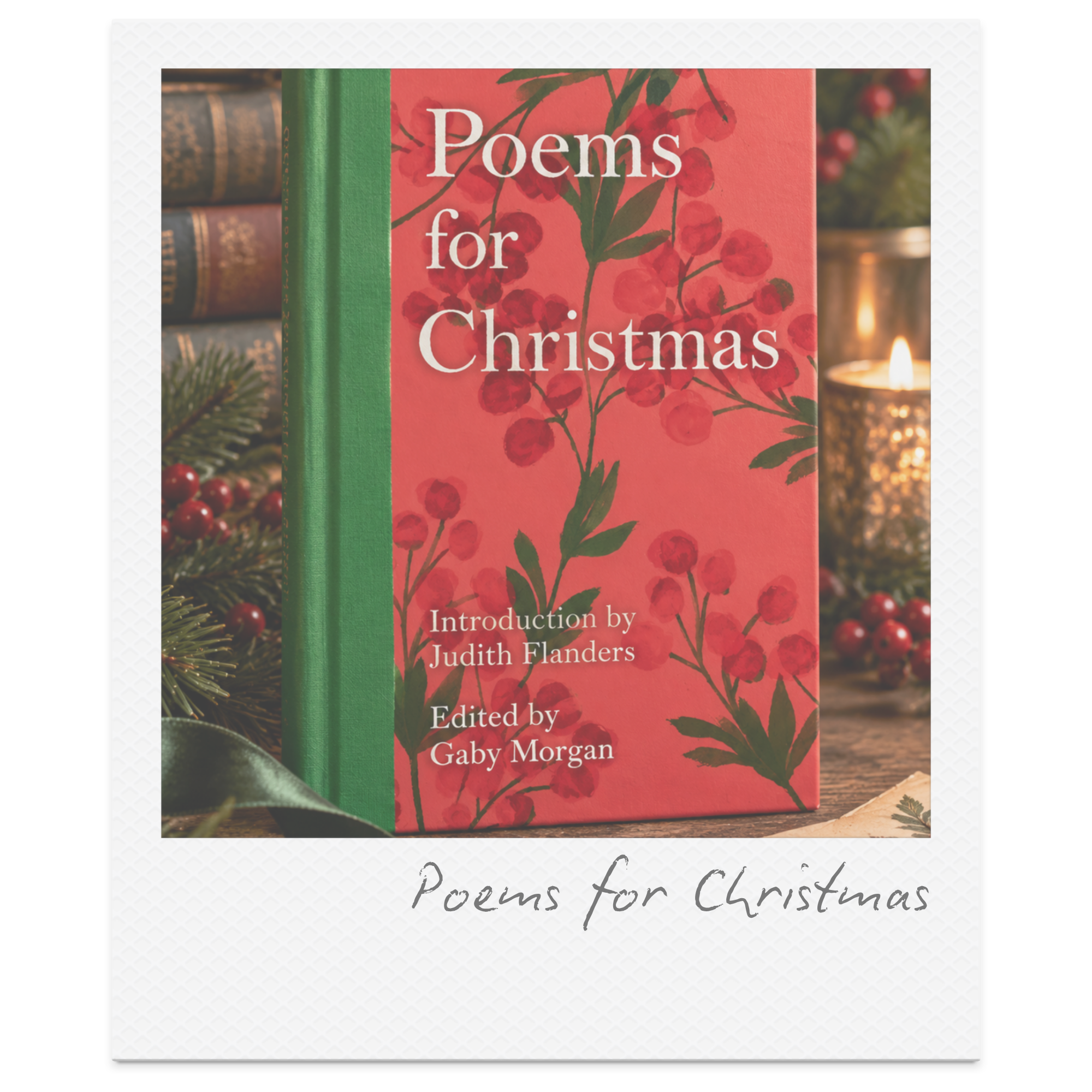
Poems for Christmas — Gaby Morgan
For anyone who loves the beauty and nostalgia of traditional Christmas poetry, Poems for Christmas, compiled by Gaby Morgan, is a lovely addition to a festive bookshelf.
Part of the elegant Macmillan Collector's Library, this seasonal anthology brings together poetry celebrating the magic, traditions and emotions of Christmas. From the wonder of winter landscapes to the warmth of familiar celebrations, it's an inviting collection for readers who enjoy discovering how different poets capture the spirit of the season.
It's also a wonderful source of inspiration for your own Christmas poetry writing. Dip into a poem before beginning a writing session, explore how established poets use seasonal imagery and symbolism, or simply enjoy a few quiet moments of festive reading.
Perfect for: Lovers of classic poetry, traditional Christmas atmosphere and anyone looking for a little literary inspiration during December.
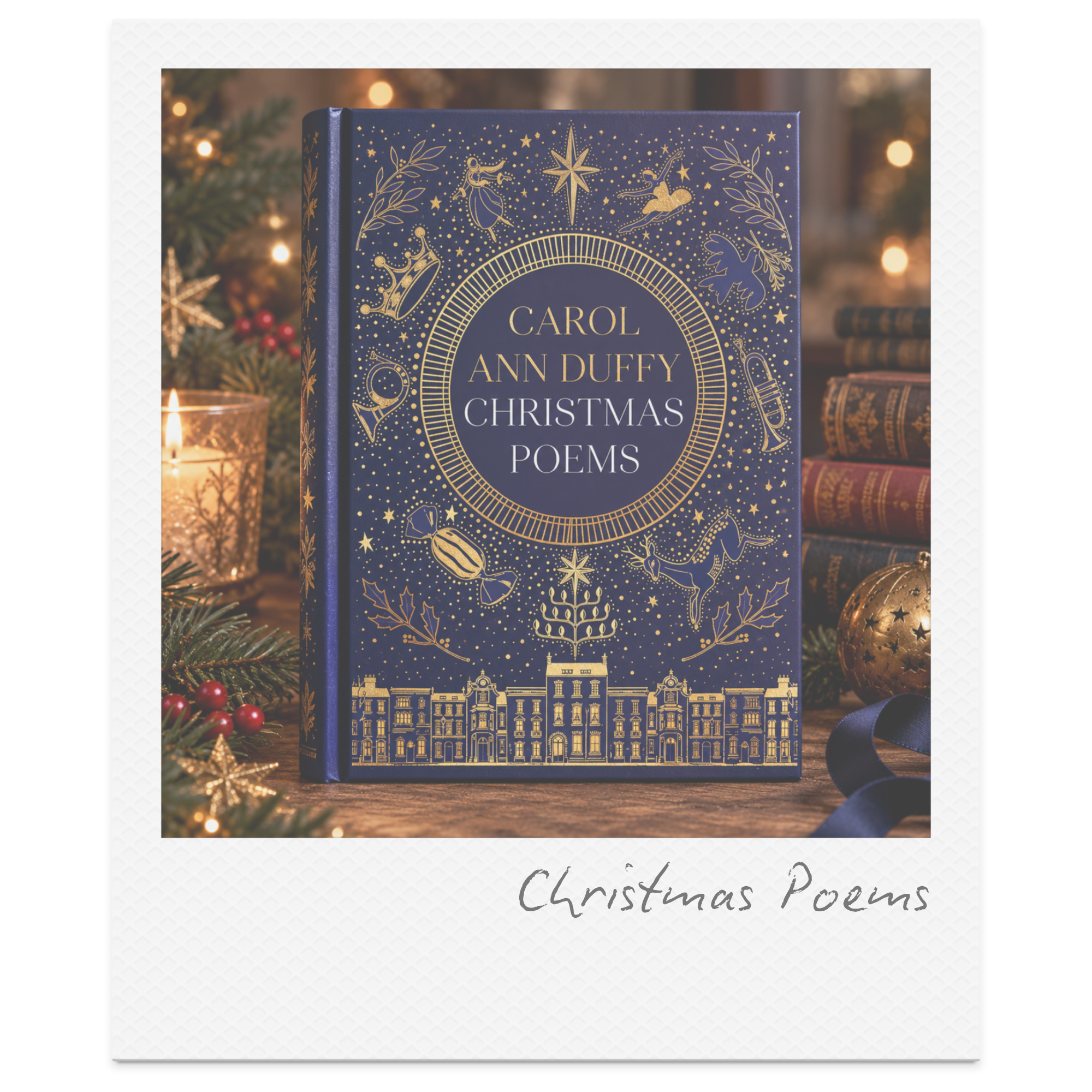
Christmas Poems — Carol Ann Duffy
For readers who enjoy Christmas poetry with a contemporary twist, Christmas Poems by Carol Ann Duffy offers a wonderfully imaginative exploration of the festive season.
Bringing together Duffy's distinctive poetic voice, this collection reimagines Christmas through a mixture of storytelling, humour, tenderness and unexpected perspectives. Familiar festive traditions take on fresh meanings, while moments of warmth and wonder sit alongside more thoughtful reflections on the season.
It's a particularly inspiring choice for creative writers who want to move beyond conventional Christmas imagery. Duffy's playful approach to language, character and narrative demonstrates how even the most familiar seasonal subjects can become the starting point for something original.
Perfect for: Lovers of contemporary poetry, imaginative storytelling and writers looking for fresh approaches to festive themes.
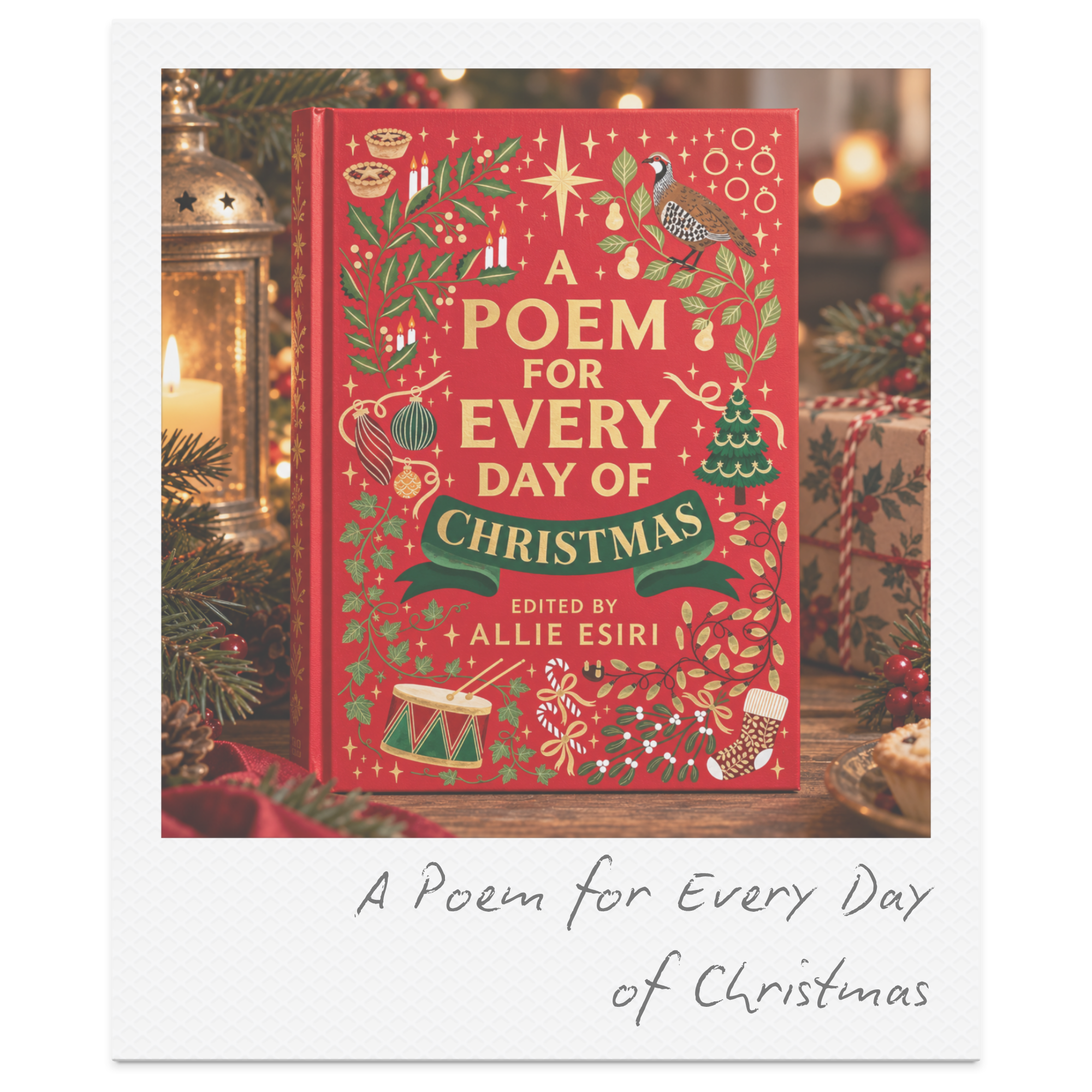
A Poem for Every Day of Christmas
For anyone who loves the idea of slowing down and savouring a little poetry during the festive season, A Poem for Every Day of Christmas is a delightful addition to a Christmas reading collection.
This seasonal anthology invites readers to discover poetry throughout the Christmas period, turning a few quiet moments with a book into a comforting festive ritual. It's a lovely way to explore different poetic voices, moods and perspectives, from the warmth of Christmas traditions to the beauty and stillness of winter.
For creative writers, it also offers a wonderful opportunity to develop a daily poetry habit. Read a poem with your morning coffee, notice an interesting image or turn of phrase, and use it as inspiration for a few lines of your own.
Perfect for: Poetry lovers, thoughtful Christmas gifts and writers looking to make reading and writing poetry part of their festive traditions.
10 Christmas Poetry Picture Prompts
Sometimes, the most beautiful poems begin not with words, but with an image.
Ekphrastic poetry is poetry inspired by a work of art. Rather than simply describing what you see, it invites you to explore the stories, emotions, memories and mysteries hidden within an image. A painting might become the setting for a forgotten Christmas, a stained-glass window might inspire a mythical encounter, or a quiet winter landscape might reveal something about loneliness, hope or the passing of time.
The following ten Christmas poetry picture prompts explore the festive season through a variety of artistic styles, from delicate watercolours and soft pastels to Gothic stained glass, surrealist paintings and intricate paper-cut illustrations.
Each artwork offers a different atmosphere and imaginative starting point. Some are filled with wonder and enchantment, while others invite you to explore nostalgia, longing, folklore and the more complicated emotions of Christmas.
How to use these Christmas poetry picture prompts: Spend a few moments studying each image before reading its writing challenge. Notice the colours, textures, lighting and small details. Consider what might be happening beyond the edges of the artwork, what happened just before the scene was captured, or what might happen next.
You don't need to describe the entire picture. Sometimes, a single detail is enough to inspire an extraordinary poem.
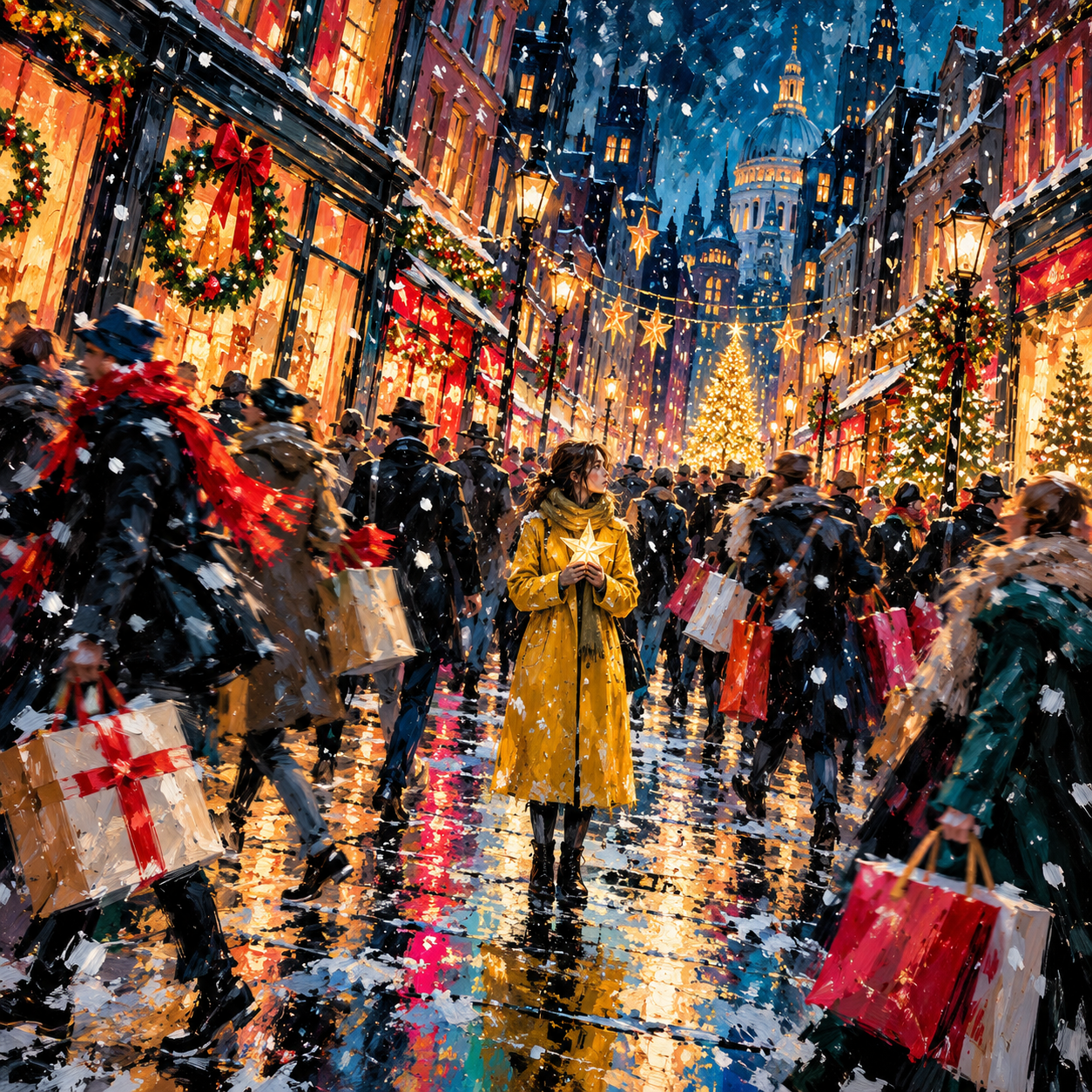
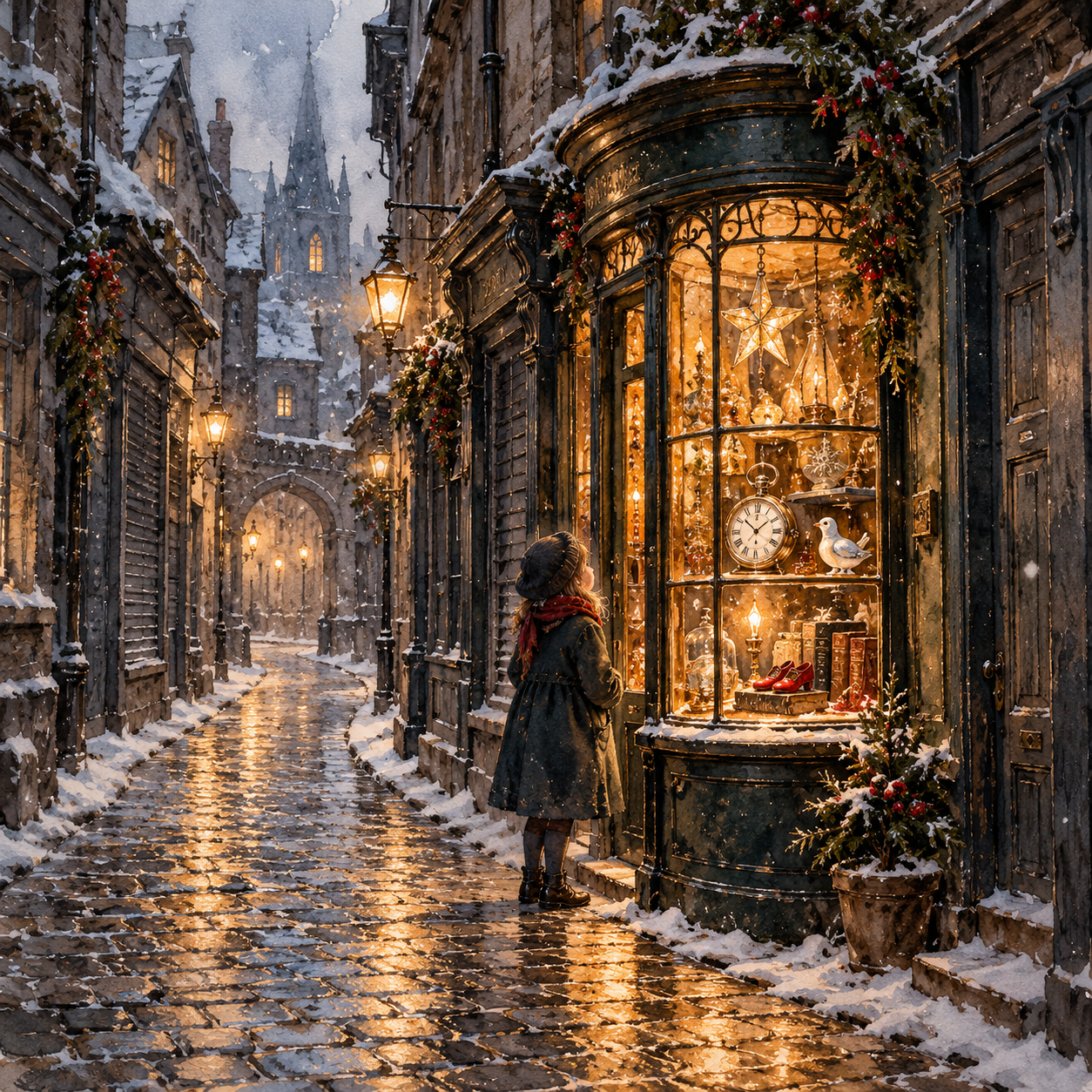

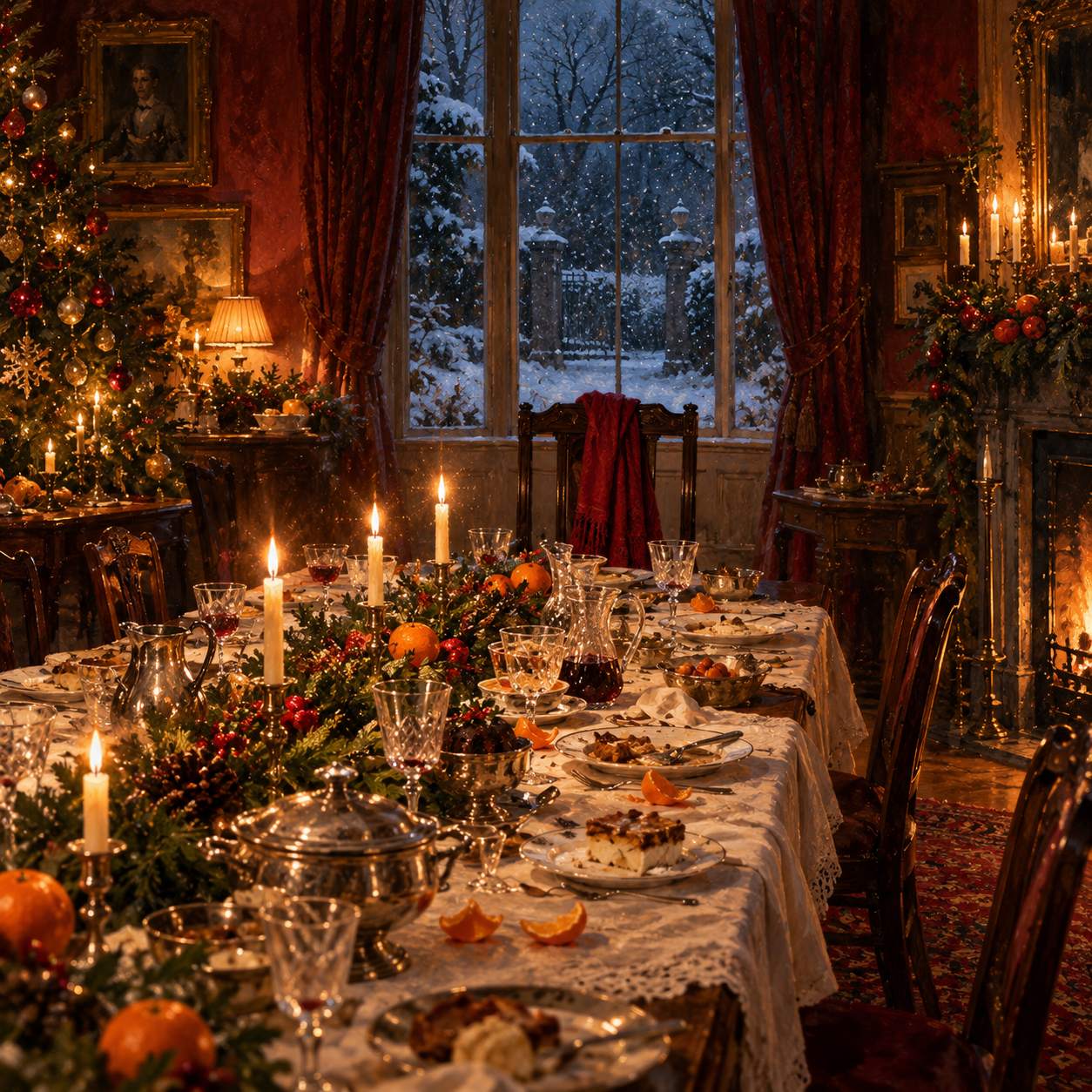
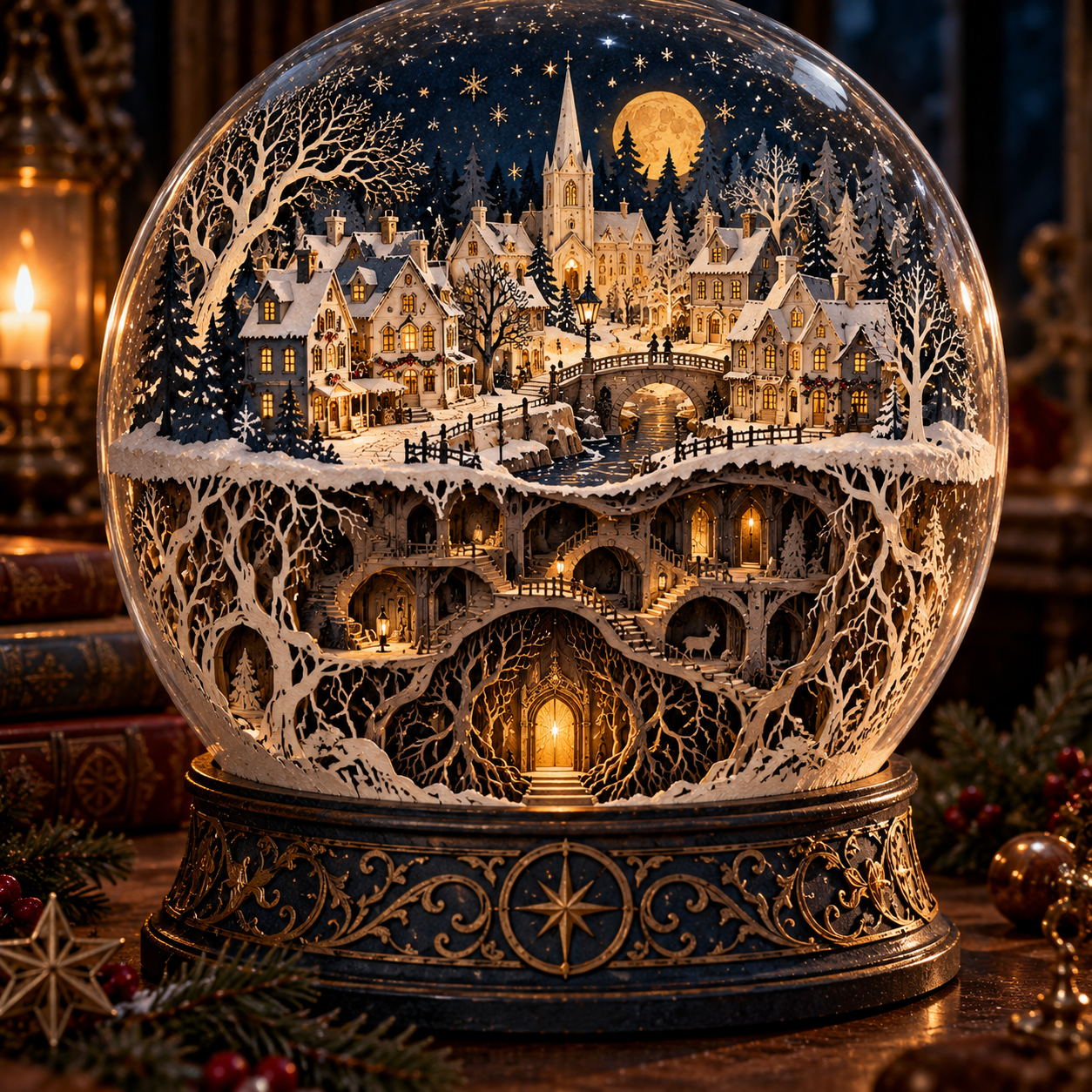
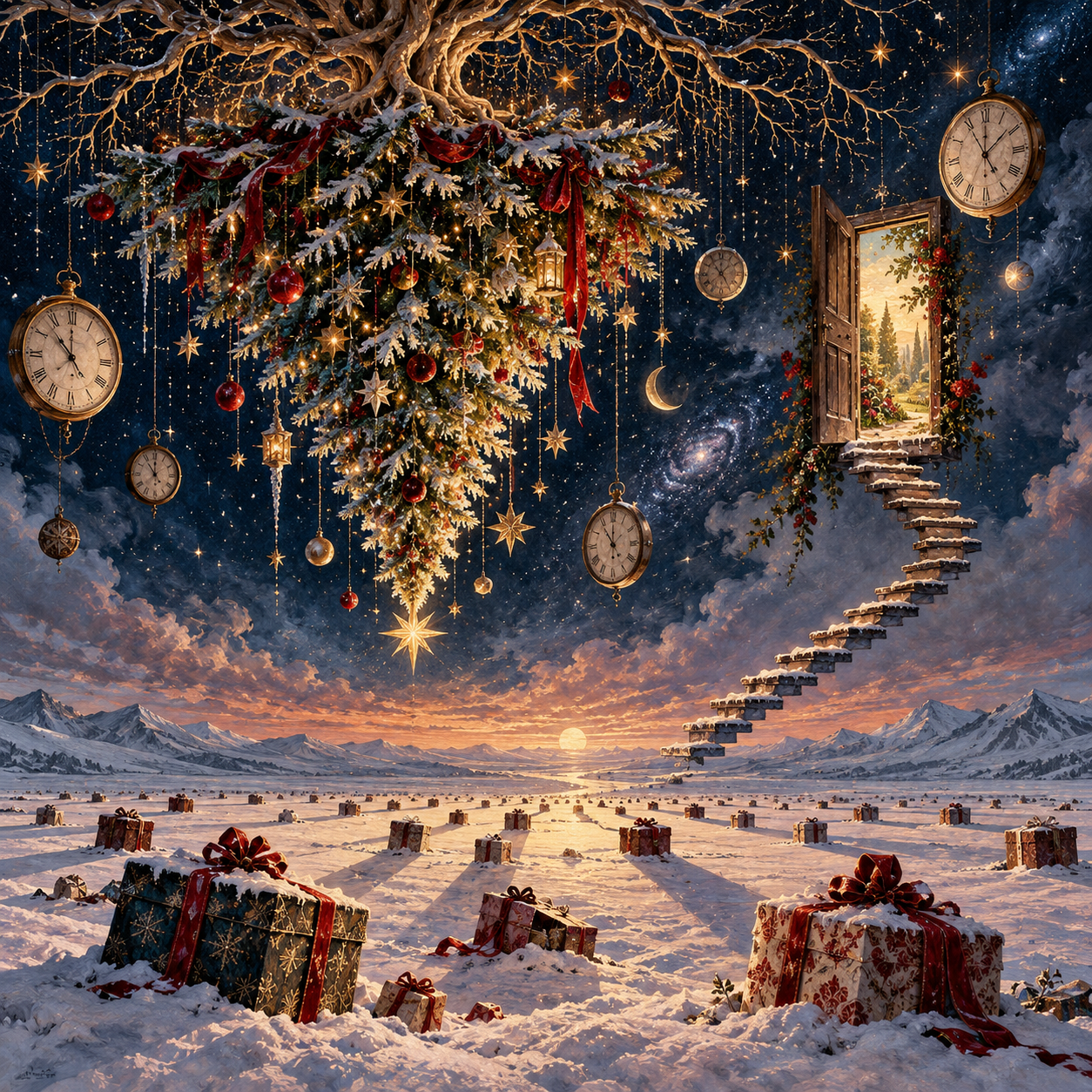

Go Deeper Into Christmas Poetry Writing: 7 Creative Exercises
Christmas poetry offers far more possibilities than festive rhymes, snowy landscapes and familiar seasonal traditions. It can become a way of exploring memory, capturing fleeting moments, reimagining folklore or discovering extraordinary meaning in the most ordinary details.
If you've experimented with the Christmas poetry writing prompts above and want to take your ideas further, these seven creative exercises will help you develop your poetic voice, experiment with different forms and approach the festive season from unexpected perspectives.
Whether you're writing a single Christmas poem or creating an entire collection of seasonal verse, each activity encourages you to look beyond the obvious and discover something uniquely your own.
1. The Christmas Memory in Five Senses
Think of a Christmas you remember vividly. It might be a childhood celebration, an unusually quiet Christmas morning, a family gathering or a moment that seemed insignificant at the time.
Instead of describing what happened, recreate the memory through sensory details.
Begin by writing down five things: a sound, a scent, a texture, a taste and a visual image associated with that particular Christmas.
Perhaps you remember the sharp scent of a real Christmas tree, the rustle of wrapping paper, the warmth of a kitchen crowded with relatives or the peculiar silence of a street on Christmas morning.
Now write a poem using those details, allowing the memory to emerge without directly explaining it.
Extra challenge: Avoid using the words Christmas, festive, snow or magic. Let your imagery reveal the season naturally.
Poetic techniques to explore: Sensory imagery, nostalgia, symbolism and free verse.
2. Write a Christmas Poem in Two Voices
Christmas can mean very different things to different people, even when they're sharing the same celebration.
Choose two contrasting perspectives and write a poem that alternates between them.
You might explore a child eagerly awaiting Christmas morning and a parent quietly worrying about money, a traveller returning home and someone preparing to leave, or two siblings remembering the same childhood Christmas in completely different ways.
Give each speaker a distinctive voice, allowing their emotions and observations to reveal what matters most to them.
You could alternate individual lines, create separate stanzas or allow the two voices to overlap towards the end.
Extra challenge: Include one Christmas object that both speakers mention, but give it a different meaning in each voice.
Poetic techniques to explore: Dual perspective, juxtaposition, dramatic monologue and contrasting tone.
3. The Christmas Object That Remembers
Choose an ordinary object associated with Christmas: a cracked bauble, a handwritten recipe, a tarnished bell, a faded photograph or a decoration that has been brought out every December for decades.
Imagine that this object remembers every Christmas it has witnessed.
What changes has it observed? Which people have come and gone? What secrets might it know about the household in which it lives?
Write a poem from the object's perspective, allowing its memories to unfold through a series of vivid images.
You might create a tender celebration of family traditions, a bittersweet reflection on the passage of time or a mysterious narrative about an object with an impossible history.
Extra challenge: Give the object one memory that its current owner knows nothing about.
Poetic techniques to explore: Personification, narrative poetry, extended metaphor and shifts in time.
4. A Christmas Carol for an Unusual Subject
Traditional Christmas carols celebrate familiar themes of joy, peace, faith and togetherness. But what happens when you borrow their musical structure for a less conventional subject?
Write an original Christmas carol about something unexpected.
Perhaps it's a song for the last train running on Christmas Eve, a carol for forgotten toys, a hymn to the winter moon or a celebration of the people working while everyone else is asleep.
Choose a repeated refrain that captures the emotional heart of your poem, then build your verses around it.
Think about how rhythm and repetition can make even unusual imagery feel ceremonial or timeless.
Extra challenge: Write a carol that begins joyfully but gradually reveals a more complicated emotion beneath its cheerful refrain.
Poetic techniques to explore: Refrain, rhyme, metre, repetition and tonal shifts.
5. The Christmas Poem That Changes Seasons
Christmas is closely associated with winter in much of the Northern Hemisphere, but the season doesn't look or feel the same everywhere.
Imagine Christmas taking place in an entirely different landscape.
You might write about Christmas beneath a blazing summer sun, in a desert city, beside a tropical ocean or in a fantastical world where the seasons behave according to their own strange rules.
How do familiar Christmas traditions change when their surroundings are transformed? Which symbols remain meaningful, and which take on entirely new associations?
Write a poem that explores this contrast, using the landscape to challenge familiar expectations.
Extra challenge: Begin with an image that seems completely unrelated to Christmas, then gradually introduce enough details for the reader to recognise the occasion.
Poetic techniques to explore: Setting, contrast, unexpected imagery and symbolism.
6. Twelve Lines Until Midnight
Imagine the final twelve minutes of Christmas Eve.
Somewhere, a clock is approaching midnight. A person is waiting for something to happen, someone to arrive or a decision to be made.
Write a poem of exactly twelve lines, with each line representing one minute.
Allow the atmosphere to develop as midnight approaches. Perhaps the speaker becomes increasingly hopeful, anxious, nostalgic or afraid.
You could focus on a single room, a deserted street, a railway platform or an entirely imaginary setting.
Think carefully about what changes between the first and final lines. Does the anticipated event actually happen, or does the meaning of waiting become the poem's central discovery?
Extra challenge: Make the final line no more than three words long.
Poetic techniques to explore: Compression, pacing, line breaks, suspense and imagery.
7. Create a Christmas Poetry Triptych
A triptych is a work of art divided into three related panels. Borrow this idea to create a Christmas poem in three distinct sections.
Choose a central theme, such as homecoming, generosity, winter magic, loneliness or the passage of time.
Then explore it through three connected moments:
I. Before: A moment of anticipation, preparation or longing.
II. During: The central Christmas event, encounter or revelation.
III. After: The quiet aftermath, when something has changed.
Your poem might follow one person through three Christmases, explore the changing meaning of a family tradition or tell a miniature story through three carefully chosen images.
Try giving each section a different atmosphere while allowing one recurring symbol to connect them.
Extra challenge: Repeat the same line in all three sections, changing its meaning through the surrounding imagery.
Poetic techniques to explore: Structure, motifs, repetition, imagery and emotional progression.
Keep Exploring Poetry Writing
The most rewarding poetry often begins with a small observation, an unexpected question or an image that refuses to leave your imagination.
If you've enjoyed experimenting with these Christmas poetry writing exercises, explore our Poetry Writing Hub for more inspiration, creative techniques and poetry prompts across a variety of themes and moods.
You might also return to the 70 Christmas poetry writing prompts earlier in this guide and challenge yourself to approach one idea in several different ways. Write it first as a rhyming poem, then as free verse, then as a dramatic monologue or a short sequence of haiku.
Notice how changing the form, narrator or imagery transforms the emotional possibilities of the same idea.
Above all, give yourself permission to experiment. A Christmas poem doesn't have to be cheerful, traditional or even recognisably festive at first glance.
Sometimes, the most memorable seasonal poetry emerges from the moments that seem least remarkable: a light left burning in an empty room, the last ornament placed in a box, or the sound of footsteps disappearing into the winter night.
Final Thoughts: Finding Poetry in the Magic of Christmas
Christmas is a season of stories. Some are told beside glowing fires and beneath twinkling lights, while others linger quietly in old photographs, familiar traditions and memories of people and places we wish we could visit again.
And somewhere among those stories, there is poetry waiting to be written.
Perhaps your inspiration comes from the wonder of Christmas Eve, the hush of a snow-covered landscape or the peculiar magic of a childhood memory. Perhaps you're drawn instead to winter folklore, forgotten wishes, lonely celebrations or the bittersweet beauty of watching another year draw to a close.
Whatever inspires you, remember that Christmas poetry doesn't have to be cheerful, sentimental or traditional to capture something meaningful about the season. It can be strange, playful, haunting, hopeful or deeply personal.
Use these 70 Christmas poetry writing prompts as invitations to experiment. Borrow an image, follow an unexpected idea, give a voice to an overlooked object or transform a familiar tradition into something entirely your own.
You might discover a poem in the glow of a candle, the silence after the last guest has gone home or the single ornament that remains hanging long after Christmas has ended.
Because sometimes, the most beautiful Christmas poetry isn't found in the grand celebrations.
It's waiting in the little moments we almost forget to notice.
Your next Christmas poem is waiting to be written.
Choose Your Next Theme