A Helpmeet for Him by Christina Rossetti: Summary, Themes, Symbolism & Analysis
Christina Rossetti’s A Helpmeet for Him is a compact yet complex exploration of gender roles, feminine identity, and quiet power within Victorian society. At first glance, the poem appears to reinforce traditional ideas of women as supportive and secondary—created for “man’s delight” and defined through service. However, beneath this surface lies a more nuanced tension between submission and strength, suggesting that feminine influence may operate in subtler, but equally significant, ways.
This poem raises important questions about power, dependency, and the performance of meekness, presenting a speaker who both accepts and complicates the expectations placed upon women. Through its cyclical structure and carefully controlled language, Rossetti invites us to consider whether the “helpmeet” is truly subordinate, or whether her influence quietly shapes the very man she is said to support. In the analysis below, we will explore the poem’s form, voice, and symbolism, as well as its engagement with Victorian ideals of womanhood. For more Rossetti analysis, visit the Rossetti poetry hub, or explore the wider Literature Library for related texts and teaching resources.

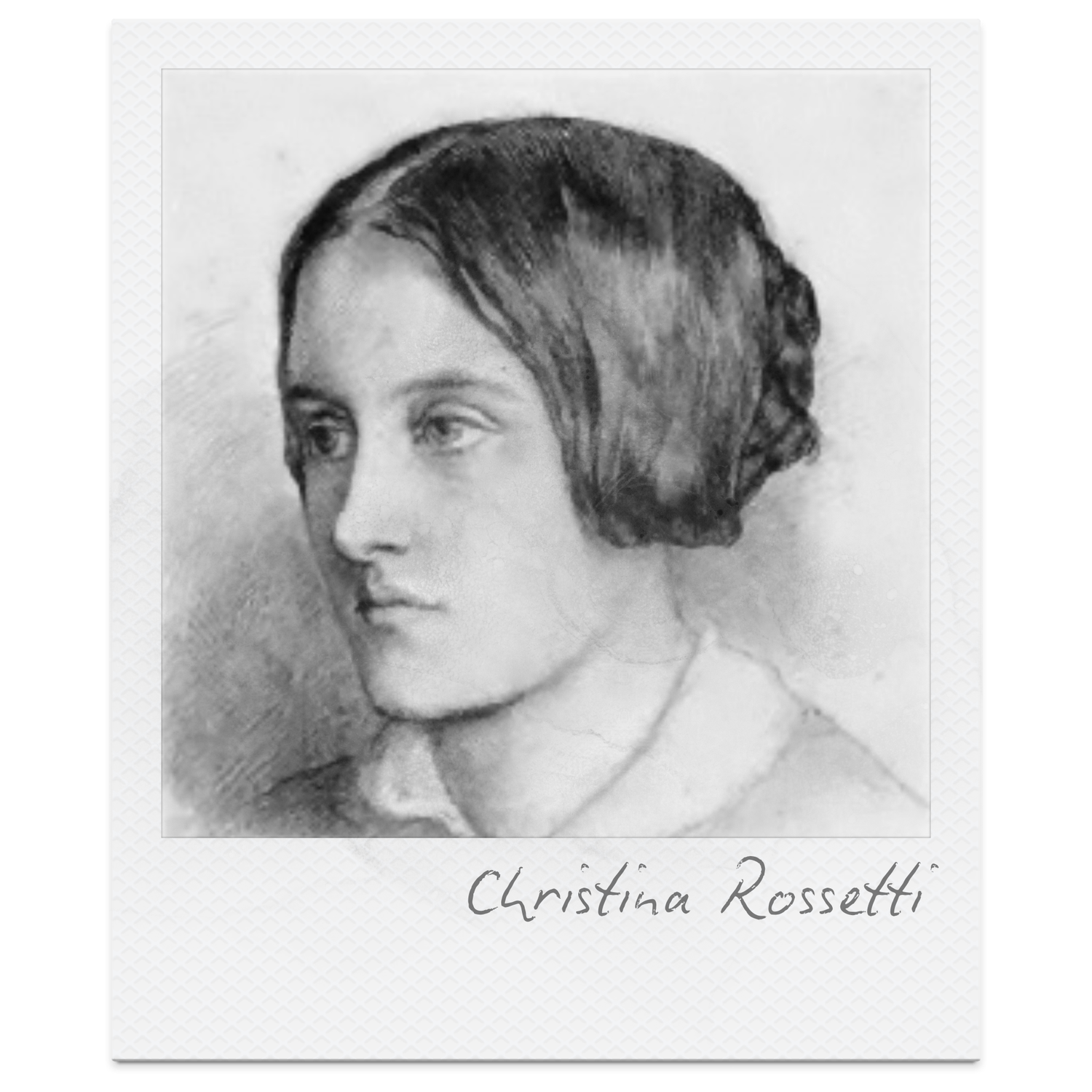
A Helpmeet for Him Context
Christina Rossetti wrote during the Victorian period, a time when gender roles were rigidly defined and women were often expected to embody ideals of modesty, obedience, and domestic devotion. The concept of the “helpmeet” itself originates from the Bible (Genesis 2:18), where woman is created as a companion and supporter for man. This religious framing shaped Victorian expectations of marriage, positioning women as morally guiding yet ultimately subordinate figures within the household.
Rossetti’s own life complicates this framework. Deeply influenced by her Anglo-Catholic faith, she often explored themes of spiritual duty, sacrifice, and inner strength, particularly in relation to women’s roles. Although she never married, Rossetti repeatedly examined the tensions between female independence and societal expectation, questioning whether submission was a virtue or a limitation. In many of her poems, apparent meekness conceals a more complex form of moral or emotional authority.
In A Helpmeet for Him, these tensions are distilled into a highly controlled and almost didactic form, reflecting the way Victorian ideology sought to define and contain women’s identities. Yet the poem subtly resists this containment. Phrases such as “meek compliances veil her might” suggest that female power is not absent, but deliberately hidden or softened, raising the possibility that the “helpmeet” exerts influence in ways that are not immediately visible.
For a deeper understanding of Rossetti’s background and recurring concerns, see the Christina Rossetti context overview, which explores her religious influences, personal life, and position within Victorian literary culture.
A Helpmeet for Him: At a Glance
Form: Three quatrains with a refrain-like closing line
Mood: Controlled, didactic, and quietly assertive
Central tension: Whether woman is truly subordinate or subtly powerful
Core themes: Gender roles, hidden strength, Victorian womanhood, dependency and influence
One-sentence meaning:
The poem presents woman as created to support man, yet suggests that her apparent meekness conceals a deeper, guiding power that quietly shapes the world around her.
A Helpmeet for Him Summary
The poem opens with a clear and almost authoritative declaration that woman exists for man’s “delight,” immediately establishing a framework of traditional gender hierarchy. The repeated phrase “Woman was made” reinforces the idea of purpose and design, suggesting that her role is not chosen but assigned. At this stage, the poem appears to align closely with Victorian ideals of femininity, emphasising charm, beauty, and emotional support.
However, the second stanza introduces a more complex perspective. While woman’s “strength” is described as being “overlaid” with weakness, this weakness is presented as a kind of protective covering rather than an inherent limitation. The phrase “meek compliances veil her might” suggests that submission may be performative, masking a deeper and more controlled form of power. The paradox within “Him she stays, by whom she is stayed” further complicates the relationship, implying mutual dependence rather than simple hierarchy.
By the final stanza, the poem expands its scope, presenting woman as a “world-wide champion of truth and right” and a source of “hope in gloom.” This elevated language contrasts with the earlier framing of her as merely supportive, suggesting that her role extends beyond the domestic sphere into something more universal and morally significant. The return of the refrain “Woman was made” now carries a more ambiguous weight, leaving the reader to question whether woman’s purpose is as limited as it first seemed, or whether it encompasses a far greater, though less visible, influence.
Title, Form, Structure, and Metre
Rossetti’s formal choices in A Helpmeet for Him reinforce the poem’s exploration of control, restraint, and concealed power. The tight structure and repeated phrasing mirror the way Victorian gender roles are both prescribed and internalised, while subtle variations within this framework hint at underlying tension and complexity.
Title
The title A Helpmeet for Him immediately situates the poem within a biblical and patriarchal framework, defining woman in relation to man. The word “helpmeet” suggests both companionship and assistance, but also implies secondary status, as her identity is constructed through her usefulness to him. However, the phrasing also raises questions about necessity: if she is created as a “help,” it suggests that man is not entirely self-sufficient, introducing an early hint of interdependence.
Form and Structure
The poem is structured in two quatrains surrounding a central tercet, creating a form that appears balanced but is subtly disrupted at its core. This arrangement reflects the poem’s exploration of stability versus underlying tension, as traditional ideas about women are framed as fixed, yet quietly complicated.
The repetition of the line “Woman was made” at the end of the first and final quatrains creates a cyclical effect, reinforcing the idea of a repeated, almost doctrinal assertion about women’s roles. This structural mirroring gives the poem a sense of closure and inevitability, as though these beliefs are continually reinforced within society.
However, the central tercet interrupts this symmetry. Its shorter form draws attention to itself, marking it as the conceptual centre of the poem. Here, Rossetti introduces paradox and ambiguity, particularly in the line “Him she stays, by whom she is stayed.” This disruption suggests that beneath the poem’s controlled exterior lies a more complex and reciprocal dynamic, where power is not fixed but shared and negotiated.
Rhyme Scheme and Poetic Pattern
Rossetti employs a regular rhyme scheme of ABAB in the first stanza, followed by a variation in the second (CDDC), before returning to a pattern similar to the opening. This controlled yet subtly shifting rhyme scheme reflects the poem’s tension between rigidity and quiet disruption. The recurrence of the same end sounds reinforces the sense of repetition and constraint, while the variation in the middle stanza mirrors the poem’s moment of conceptual instability.
The repetition of key phrases, particularly “Woman was made,” functions almost like a refrain, echoing the authoritative tone of religious or moral instruction while simultaneously inviting the reader to question its implications.
Metre and Rhythmic Movement
The poem largely follows an iambic rhythm, creating a steady and measured pace that reinforces its didactic tone. For example:
woMAN was MADE for MAN’s deLIGHT
This regular rhythm contributes to the sense of certainty and authority in the poem’s voice, as though the speaker is presenting an established truth rather than a subjective opinion.
However, slight variations in stress and pacing allow for moments of emphasis, particularly in lines that introduce tension or contradiction. The controlled rhythm, like the poem’s structure, reflects the careful balance between outward order and underlying complexity, reinforcing the idea that what appears stable and unquestioned may, in fact, contain subtle disruptions.
A Helpmeet for Him Speaker
The speaker of A Helpmeet for Him adopts a voice that is authoritative, declarative, and almost instructional, presenting ideas about womanhood as though they are established truths rather than personal opinions. This creates the impression of a speaker aligned with religious or societal doctrine, reinforcing the sense that the poem is engaging with widely accepted Victorian beliefs about gender roles.
At first, the tone appears to affirm a traditional perspective, describing woman as created for man’s “delight” and defined through her relationship to him. The speaker’s confident assertions give the poem a didactic quality, as if instructing the reader on the “proper” understanding of feminine identity. This can make the voice seem complicit in reinforcing patriarchal structures.
However, as the poem develops, the speaker introduces more ambiguous and paradoxical ideas, particularly in lines such as “meek compliances veil her might” and “Him she stays, by whom she is stayed.” These moments suggest that the speaker may not be entirely straightforward, and that the poem’s voice subtly reveals hidden layers beneath its surface certainty. Rather than simply endorsing traditional roles, the speaker seems to expose their complexity.
This creates an interpretive tension: the speaker may be read either as sincerely upholding Victorian ideals or as quietly undermining them by revealing the strength, influence, and mutual dependency embedded within those roles. In this way, the speaker becomes central to the poem’s ambiguity, shaping how the reader negotiates its balance between submission and power.
A Helpmeet for Him Stanza-by-Stanza Analysis
A close reading of A Helpmeet for Him reveals how Rossetti uses imagery, paradox, and controlled language to develop the poem’s central tension between submission and concealed strength. While the poem initially appears to present a fixed, almost doctrinal view of womanhood, each stanza subtly complicates this perspective, introducing moments of ambiguity and resistance.
By examining each stanza in turn, we can trace how the poem moves from assertion to complexity, and how Rossetti gradually reveals the possibility that the “helpmeet” holds a form of power that is quiet, indirect, and easily overlooked.
Stanza 1: Defined by Delight and Devotion
The opening stanza establishes a clear and seemingly unquestioned definition of woman’s role, presenting her as existing for man’s “delight.” This phrasing immediately frames woman as objectified and purpose-driven, suggesting that her identity is shaped by male desire rather than personal autonomy. The declarative tone gives this idea a sense of authority, as though it is an accepted truth rather than something open to challenge.
The imperative “Charm, O woman! Be not afraid!” reinforces this expectation, positioning femininity as something that must be performed and maintained. The exclamatory tone suggests encouragement, but it also carries an underlying pressure, implying that woman must actively embody charm in order to fulfil her role. This introduces the idea that femininity is not entirely natural, but instead constructed and sustained through behaviour.
The imagery of “His shadow by day, his moon by night” further defines woman in relational terms, emphasising her constant presence alongside man. As a “shadow,” she is secondary and dependent, existing only in relation to him. Yet the image of the “moon” complicates this dynamic: while the moon reflects the sun’s light, it also possesses its own quiet influence, governing tides and illuminating darkness. This dual imagery subtly introduces the idea that woman’s role, though framed as subordinate, may carry a more complex and quietly powerful significance.
The repetition of “Woman was made” at the close of the stanza reinforces the sense of inevitability, presenting these roles as fixed and preordained. However, the slightly insistent repetition also invites scrutiny, suggesting that what is presented as natural may, in fact, be something that needs to be continually asserted and reinforced.
Stanza 2: Veiled Strength and Mutual Dependence
The second stanza shifts the poem into a more complex and paradoxical exploration of feminine identity, challenging the simplicity of the opening assertions. The phrase “Her strength with weakness is overlaid” suggests that what appears to be fragility may actually function as a deliberate covering, implying that weakness is not inherent but imposed or performed. The verb “overlaid” is particularly significant, indicating that strength remains present beneath the surface, merely hidden rather than diminished.
This idea is developed further in “Meek compliances veil her might,” where submission is explicitly framed as a form of concealment. The word “veil” carries connotations of both modesty and disguise, reinforcing the notion that feminine meekness may act as a protective or strategic mask. Rather than signalling powerlessness, these “compliances” suggest a controlled and possibly intentional negotiation of societal expectations, allowing woman to operate within restrictive norms while retaining an underlying capacity for influence.
The final line, “Him she stays, by whom she is stayed,” introduces a striking paradox that destabilises the apparent hierarchy established earlier. The verb “stays” suggests support, stability, and even restraint, indicating that woman upholds or sustains man. However, this is immediately complicated by the reversal “by whom she is stayed,” which implies that her own existence is similarly dependent on him. This circular structure highlights a relationship of mutual dependence, rather than simple subordination, suggesting that both figures rely on one another in ways that blur the boundaries of power and control.
Stanza 3: Refrain and Reassertion
The final stanza returns to the repeated line “Woman was made,” echoing the opening and reinforcing the poem’s cyclical structure. At first glance, this repetition appears to reassert the original claim about woman’s purpose, giving the poem a sense of closure and finality. The brevity of this concluding line, isolated and emphatic, lends it a tone of authority, as though the argument has been definitively resolved.
However, in light of the complexities introduced in the second stanza, this repetition becomes more ambiguous. Rather than simply confirming a fixed role, the line now carries the weight of the contradictions that have emerged—particularly the idea that strength is concealed beneath weakness and that the relationship between man and woman is mutually sustaining. The repetition therefore feels less like a straightforward conclusion and more like a restatement that invites reconsideration.
The circular return to “Woman was made” suggests that societal definitions of womanhood are continually reinforced, repeated until they appear natural and unquestionable. Yet the poem’s internal tensions remain unresolved, leaving the reader to question whether this statement reflects an absolute truth or a constructed belief that depends on repetition for its authority.
A Helpmeet for Him Key Quotes
The following quotations highlight how Rossetti develops the poem’s central tension between submission, identity, and concealed power, revealing the complexity beneath its seemingly simple assertions.
Woman was made for man's delight
◆ Establishes a patriarchal framework, positioning woman as existing for male pleasure
◆ Suggests identity is defined externally, rather than through selfhood
◆ The declarative tone presents this as undisputed truth, reinforcing its authority
Charm, O woman! Be not afraid!
◆ Imperative verb “Charm” implies femininity must be actively performed
◆ Exclamatory tone suggests both encouragement and pressure
◆ Reinforces the idea that woman’s role involves pleasing and reassuring others
His shadow by day
◆ “Shadow” suggests dependence and secondary status
◆ Implies woman’s identity is shaped entirely in relation to man
◆ Carries connotations of constant presence but limited visibility
his moon by night
◆ The “moon” reflects light, reinforcing indirect power rather than autonomy
◆ Suggests a quieter, more subtle influence, particularly in darkness
◆ Introduces ambiguity: the moon governs tides, hinting at hidden strength
Her strength with weakness is overlaid
◆ “Overlaid” suggests weakness is a covering rather than a truth
◆ Implies strength remains intact beneath societal expectations
◆ Reinforces the theme of concealed or suppressed power
Meek compliances veil her might
◆ “Veil” suggests deliberate concealment or disguise
◆ “Compliances” implies submission may be performed strategically
◆ Suggests woman’s power operates in subtle, indirect ways
Him she stays
◆ “Stays” suggests support, stability, and guidance
◆ Implies woman plays an active role in sustaining man
◆ Challenges the idea of complete subordination
by whom she is stayed
◆ Reversal creates a paradox of mutual dependence
◆ Suggests power is reciprocal rather than hierarchical
◆ Highlights the complexity of their relationship
World-wide champion of truth and right
◆ Elevates woman beyond the domestic sphere into a moral and universal role
◆ Suggests influence that extends beyond private life
◆ Contrasts with earlier depiction of woman as merely supportive
Hope in gloom, and in danger aid
◆ Positions woman as a source of emotional and moral strength
◆ Suggests reliability in times of crisis
◆ Reinforces her role as both comforter and stabilising force
A Helpmeet for Him Key Techniques
Rossetti’s use of sound, repetition, and structural variation contributes to the poem’s controlled yet subtly destabilised tone, reinforcing its exploration of gender roles, concealment, and quiet power.
◆ Anaphora – The repetition of “Woman” at the beginning of multiple lines creates a sense of insistence and authority, as though the speaker is defining womanhood through repeated assertion. This reinforces the idea that these roles are socially reinforced beliefs, repeated until they appear natural.
◆ Alliteration – The recurring use of initial consonant sounds, particularly the repeated “h” in phrases such as “His…”, “Her…”, and “Him…”, creates a soft but persistent rhythm. This phonetic pattern links the figures of man and woman together linguistically, reflecting their interconnected roles within the poem.
◆ Repetition within lines – Key words such as “woman” and variations of “stay” are repeated within individual stanzas, drawing attention to the poem’s central concerns. The repetition of “stay” in particular emphasises the idea of mutual support and dependency, reinforcing the poem’s central paradox.
◆ Refrain – The line “Woman was made” is repeated verbatim and stands apart from the longer lines, creating a refrain that feels final and authoritative. Its brevity and repetition give it a doctrinal quality, as though it expresses an unquestioned truth, while also inviting the reader to scrutinise its meaning.
◆ Irregular metre – Rather than following a single strict metrical pattern, the poem moves between lines of varying length, typically between seven and nine syllables. This creates a rhythm that feels controlled but not rigid, reflecting the tension between order and underlying instability.
◆ Rhythmic contrast – The significantly shorter refrain line contrasts sharply with the longer lines that precede it, creating a moment of emphasis and pause. This structural shift draws attention to the repeated claim and reinforces its thematic importance.
◆ Assonance – The repetition of vowel sounds, particularly the long and short “a” sounds in the opening stanza, produces a soft, flowing musicality. This contributes to the poem’s persuasive and almost soothing tone, which contrasts with the complexity of its ideas.
◆ Consonance – Repeated consonant sounds subtly bind lines together, enhancing the poem’s cohesion and rhythmic consistency. This sonic patterning supports the sense of controlled structure, even as the poem introduces conceptual ambiguity.
◆ Paradox – The line “Him she stays, by whom she is stayed” exemplifies Rossetti’s use of paradox to destabilise fixed hierarchies. This technique highlights the poem’s central idea that power and dependency are intertwined, rather than clearly divided.
A Helpmeet for Him Themes
Rossetti’s poem explores a range of interconnected ideas about identity, power, and expectation, revealing how seemingly fixed roles can conceal deeper complexities.
Gender Roles
The poem presents a clear articulation of traditional gender roles, defining woman in relation to man as his “delight” and companion. These roles are framed as natural and preordained, reinforced through the repeated assertion “Woman was made.” However, the poem’s subtle tensions suggest that these roles may be constructed and maintained, rather than inherently true, inviting readers to question their stability.
Hidden Strength
A central theme of the poem is the idea that strength may be concealed beneath apparent weakness. Phrases such as “overlaid” and “veil her might” suggest that feminine power is not absent, but deliberately softened or hidden. This presents strength as something quiet, internal, and controlled, challenging the assumption that power must be visible to be real.
Victorian Womanhood
The poem reflects the expectations placed upon women in Victorian society, where ideals of modesty, obedience, and emotional support were strongly emphasised. Rossetti engages with this model of femininity, presenting a woman who appears to embody these traits while simultaneously hinting at their limitations. In doing so, the poem explores the tension between social expectation and individual identity.
Dependency and Influence
While the poem initially suggests a hierarchical relationship, it gradually reveals a more complex dynamic of mutual dependence. The paradox “Him she stays, by whom she is stayed” highlights the idea that both man and woman rely on one another, blurring the boundaries of power. This suggests that influence may operate in reciprocal and subtle ways, rather than through dominance alone.
Performance and Identity
The poem also explores the idea that femininity may be performed rather than innate. Commands such as “Charm… Be not afraid!” imply that woman must actively embody certain traits in order to fulfil her role. This raises questions about authenticity, suggesting that identity may be shaped by external expectation and internal negotiation.
Power and Subtle Authority
Although woman is presented as secondary, the poem repeatedly hints at a form of indirect authority. Descriptions of her as a “champion of truth and right” elevate her role beyond the domestic sphere, suggesting moral and emotional leadership. This theme reinforces the idea that power can exist in quiet, understated forms, operating beneath the surface of societal structures.
A Helpmeet for Him Alternative Interpretations
While the poem appears to present a clear and authoritative view of woman’s role, it can be read in multiple ways depending on the critical lens applied. These interpretations reveal how Rossetti’s seemingly simple assertions may conceal tension, ambiguity, and competing ideas about identity and power.
Feminist Interpretation: Submission or Subversion?
From a feminist perspective, the poem can be read as a reflection of patriarchal ideology, defining woman in relation to man and limiting her identity to support and service. The phrase “Woman was made for man’s delight” appears to reinforce the idea that women exist primarily to fulfil male needs.
However, the poem also contains moments of resistance. The idea that “meek compliances veil her might” suggests that submission may be strategic or imposed, rather than natural. This opens the possibility that Rossetti is not simply endorsing traditional roles, but subtly exposing their limitations, presenting femininity as something that is performed, negotiated, and quietly powerful.
Religious Interpretation: Divine Order and Moral Purpose
The title and central premise of the poem draw directly from the biblical concept of woman as a “helpmeet,” suggesting that her role is part of a divinely ordained structure. From this perspective, the poem may be read as affirming a spiritual hierarchy in which man and woman fulfil complementary roles.
Yet Rossetti complicates this idea by elevating woman as a “champion of truth and right,” suggesting a moral and spiritual authority that extends beyond mere support. This interpretation positions woman not as inferior, but as essential to the moral functioning of the world, reflecting Rossetti’s broader interest in faith, duty, and spiritual influence.
Psychological Interpretation: Identity and Internalised Roles
A psychological reading focuses on how the poem constructs femininity as something that must be internalised and performed. Commands such as “Charm… Be not afraid!” suggest that woman is encouraged to adopt certain behaviours, potentially masking her true self.
The idea that strength is “overlaid” with weakness implies a division between external presentation and internal reality, raising questions about authenticity. This interpretation suggests that the poem explores how individuals may come to accept and reproduce the roles imposed upon them, blurring the line between genuine identity and social expectation.
Existential Interpretation: Purpose and Constructed Meaning
From an existential perspective, the repeated assertion “Woman was made” highlights the idea of assigned purpose, where identity is defined externally rather than chosen. The poem presents a world in which roles are predetermined, leaving little room for individual autonomy.
However, the tensions within the poem—particularly the paradox of mutual dependence—suggest that meaning may not be as fixed as it appears. This interpretation raises questions about whether such roles are truly inherent, or whether they are constructed narratives that individuals are expected to inhabit, regardless of personal desire.
Marxist / Social Power Interpretation: Function and Hierarchy
A Marxist or social power reading considers how the poem reflects a structured system in which individuals are assigned roles based on function and utility. Woman is defined in terms of what she provides—support, comfort, and moral guidance—positioning her within a framework that prioritises service over autonomy.
Yet the poem also reveals cracks within this hierarchy. The suggestion of mutual dependence and concealed strength indicates that power is not entirely one-sided. Instead, it operates through interdependence and subtle influence, suggesting that even within rigid systems, individuals may hold forms of power that are not immediately visible.
A Helpmeet for Him Teaching Ideas
This poem is particularly effective for exploring interpretation, language analysis, and the tension between surface meaning and deeper implication. Its brevity allows students to engage in detailed close reading while developing more sophisticated responses to gender, power, and identity.
1. First Impressions: Surface vs Subtext
Ask students to read the poem and decide whether it presents a positive or limiting view of women.
Students then:
highlight phrases that suggest submission
highlight phrases that suggest strength or influence
Follow this with a class discussion exploring how the poem presents both ideas simultaneously, encouraging students to recognise its central ambiguity.
2. Language Focus: Veiled Power
Students focus on key phrases such as:
“overlaid”
“veil her might”
“shadow” and “moon”
They annotate:
connotations
implied meanings
whether the language suggests weakness, concealment, or control
Students then write a short paragraph explaining how Rossetti presents hidden strength through language.
3. Structural Thinking: Repetition and Control
Students examine:
the repetition of “Woman was made”
the shorter middle stanza
the cyclical opening and ending
They then answer:
How does the structure reinforce or challenge the idea of fixed gender roles?
This helps students move beyond content into form as meaning.
4. Analytical Writing Task: Evaluating Interpretations
Essay Question:
To what extent does Rossetti present women as powerful in A Helpmeet for Him?
Students are given two model paragraphs and asked to:
use a mark scheme (teacher-provided or generic criteria) to evaluate both
identify strengths and weaknesses
decide which is more effective and why
write their own improved version
Paragraph A
Rossetti presents women as weak because they are described as being made for men. The line “Woman was made for man's delight” shows that women exist only to please men and have no independence. The word “delight” suggests that women are there to make men happy. This shows that women are not equal to men. Rossetti uses this idea throughout the poem to show traditional gender roles.
Paragraph B
Rossetti initially presents women within a framework of apparent submission, particularly in the declarative statement “Woman was made for man's delight,” which positions female identity as defined through male satisfaction. However, this view is complicated through the suggestion that “meek compliances veil her might,” where the verb “veil” implies deliberate concealment rather than genuine weakness. This creates a tension between outward submission and inner strength, suggesting that women may possess a form of influence that operates subtly rather than overtly.
Students then write their own paragraph, aiming to:
develop a clear argument
embed quotations smoothly
analyse language in detail
explore alternative interpretations
For further practice, students can explore additional questions in the Rossetti poetry essay questions resource.
5. Debate Task: Power or Performance?
Split the class into two groups:
Group 1: The poem reinforces traditional gender roles
Group 2: The poem challenges and subverts them
Students gather evidence and present arguments, encouraging engagement with multiple interpretations and the poem’s ambiguity.
6. Creative Rewriting: Reclaiming the Voice
Students rewrite one stanza from the perspective of the woman, but:
removing all imposed expectations
revealing her true thoughts or feelings
This helps students explore the idea of performance vs authenticity and deepens their understanding of voice and perspective.
Go Deeper into A Helpmeet for Him
Rossetti frequently explores female identity, power, and constraint across her poetry. A Helpmeet for Him can be read alongside several of her other works to reveal how she repeatedly questions the balance between submission, autonomy, and hidden strength.
◆ From the Antique – Both poems explore the limitations placed on women, but while A Helpmeet for Him suggests concealed power beneath submission, From the Antique expresses a more overt desire to escape the constraints of female identity altogether.
◆ In an Artist’s Studio – This poem also presents woman as defined through male perception. However, whereas A Helpmeet for Him hints at subtle influence, In an Artist’s Studio depicts a woman trapped and objectified, lacking agency within the male gaze.
◆ No, Thank You, John – Offers a striking contrast, presenting a female speaker who directly rejects male expectation. Compared to the controlled, ambiguous tone of A Helpmeet for Him, this poem asserts clear independence and self-definition.
◆ Maude Clare – Like A Helpmeet for Him, this poem explores relationships shaped by societal expectations, but Maude Clare challenges these expectations openly. It highlights a more confrontational form of female power, compared to the quieter influence suggested in A Helpmeet for Him.
◆ A Daughter of Eve – Both poems engage with biblical ideas of womanhood, particularly notions of weakness and moral responsibility. However, A Daughter of Eve leans more heavily into themes of guilt and fallibility, whereas A Helpmeet for Him introduces the possibility of concealed strength within those expectations.
◆ Shut Out – Explores restriction and exclusion, presenting a speaker denied access and agency. In contrast, A Helpmeet for Him suggests that even within limitation, there may be forms of influence that remain hidden but active.
◆ Up-Hill – While structurally different, both poems engage with guidance and support. In Up-Hill, the speaker reassures and directs, reflecting a more explicit form of spiritual or emotional leadership, which parallels the quieter moral authority suggested in A Helpmeet for Him.
◆ Winter: My Secret – This poem plays with concealment and withheld identity. Like A Helpmeet for Him, it suggests that what is hidden may be intentional and powerful, reinforcing the idea that silence and secrecy can function as forms of control.
◆ Twice – Explores emotional vulnerability and transformation, particularly in relation to love and rejection. While A Helpmeet for Him presents a controlled and outwardly stable identity, Twice reveals the internal emotional cost of relational dependency.
◆ The World – Both poems examine external influence and internal truth. The World warns against surface appearances, while A Helpmeet for Him suggests that appearances themselves may conceal deeper realities and hidden strength.
Final Thoughts
A Helpmeet for Him is a deceptively simple poem that reveals a far more complex exploration of gender, power, and identity beneath its controlled surface. While it appears to present a traditional view of womanhood—defined through support, charm, and devotion—Rossetti subtly destabilises this framework, suggesting that strength may exist beneath submission, and that influence is not always visible.
Through its use of repetition, paradox, and carefully structured form, the poem invites readers to question whether these roles are natural truths or constructed expectations, sustained through constant reinforcement. The idea that “meek compliances veil her might” becomes central to this ambiguity, positioning femininity as something that is both performed and potentially powerful.
Ultimately, the poem resists a single, fixed interpretation. Instead, it leaves us with a tension between appearance and reality, dependence and control, encouraging a deeper consideration of how identity is shaped within social and cultural constraints.
For more analysis of Rossetti’s poetry and recurring themes, explore the Rossetti poetry hub. You can also browse the Literature Library to discover related texts, comparisons, and teaching resources.
Choose Your Next Text