L.E.L. by Christina Rossetti: Summary, Themes, Symbolism & Analysis
Christina Rossetti’s L.E.L. is a deeply introspective lyric that explores unfulfilled love, emotional isolation, and the quiet performance of happiness in a socially demanding world. Beneath its delicate seasonal imagery, the poem reveals a speaker who outwardly participates in joy and sociability, yet privately endures profound loneliness, repeating the haunting refrain that her “heart is breaking for a little love.” Through this contrast, Rossetti examines the painful divide between public identity and private suffering, using the renewal of spring to intensify, rather than relieve, emotional absence.
The analysis below explores how Rossetti uses seasonal symbolism, repetition, and dramatic contrast to present a speaker trapped between outward vitality and inward despair. It considers how the poem reflects both Victorian expectations of emotional restraint and Rossetti’s recurring concern with longing, spiritual patience, and deferred fulfilment. For more poetry analysis, you can explore the Rossetti Poetry Hub, or browse a wider range of texts and resources in the Literature Library.

L.E.L. Context
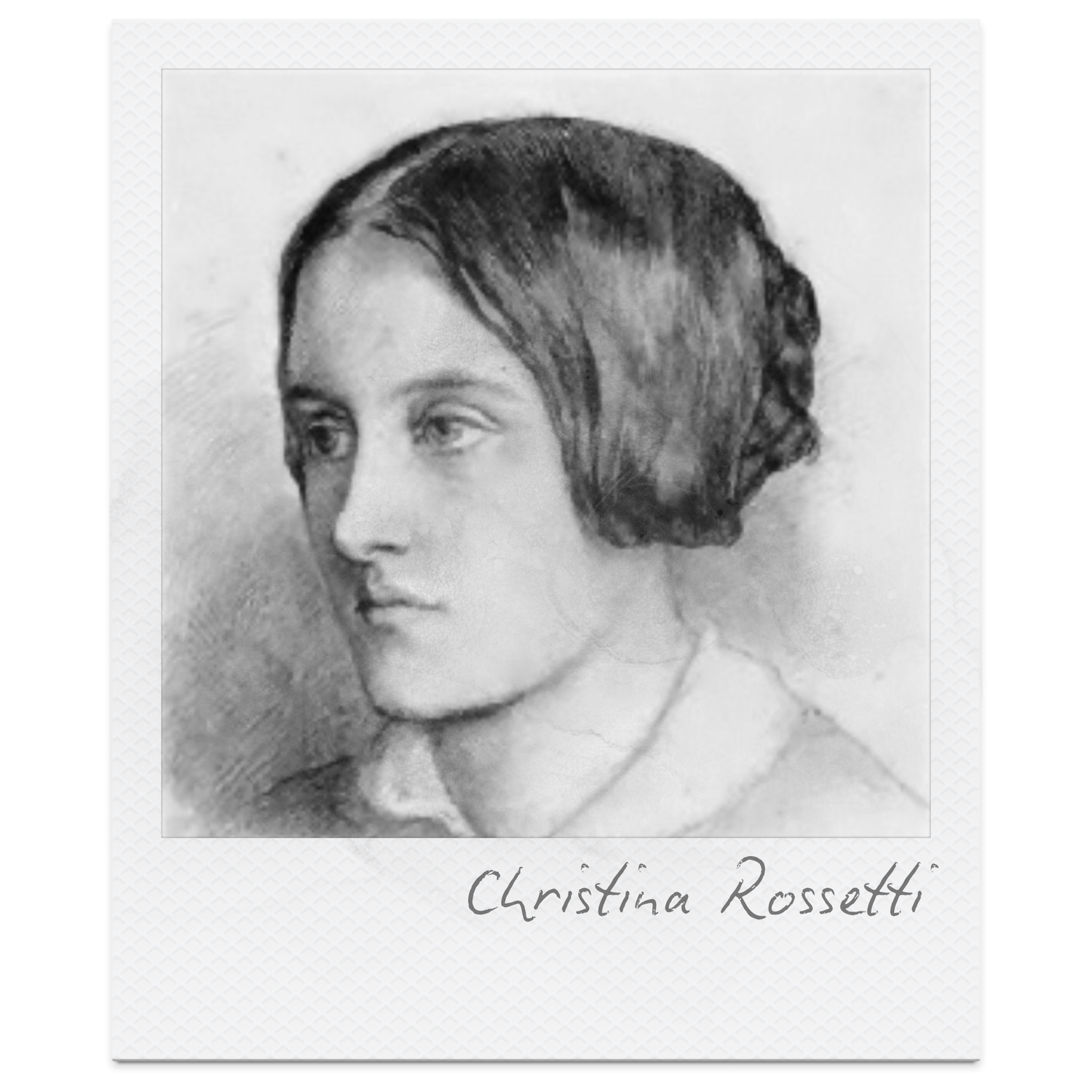
Christina Rossetti’s L.E.L. is both a poetic tribute and a subtle reflection on the life and reputation of Letitia Elizabeth Landon, a popular early nineteenth-century poet whose work often centred on romantic longing, emotional suffering, and unattainable love. Landon wrote under the initials “L.E.L.” and became known for her expressive, melancholic lyric voice—yet her personal life was marked by scandal, speculation, and loneliness, culminating in her mysterious death shortly after marriage. Rossetti’s poem engages with this literary figure not simply as an admirer, but as a poet reflecting on the emotional cost of such a public identity.
The poem reflects key elements of Victorian social expectations, particularly the pressure placed on women to appear composed, desirable, and socially successful, regardless of their inner emotional reality. The speaker’s contrast between lively participation “downstairs” and silent despair “in my solitary room above” mirrors the rigid divide between public performance and private feeling in nineteenth-century society. Rossetti, who often explored themes of renunciation, restraint, and unfulfilled desire, uses L.E.L. as a symbolic figure through which to examine the consequences of emotional repression and the longing for genuine connection.
At the same time, the poem reflects Rossetti’s enduring religious perspective, which reframes earthly suffering as something that may be resolved through patience, endurance, and spiritual fulfilment beyond this life. While the speaker’s pain is immediate and deeply human, the final stanza introduces a shift toward divine reassurance, suggesting that love denied in the present may be granted in a renewed, eternal state. This tension between earthly deprivation and spiritual hope is central to Rossetti’s work and gives the poem its layered emotional depth.
For a broader exploration of Rossetti’s life, influences, and recurring themes, see the Rossetti Context Post, which provides essential background for understanding her poetry more fully.
L.E.L.: At a Glance
Form: Lyric poem with a repeating refrain and regular stanza pattern
Mood: Melancholic, restrained, quietly despairing with a shift toward spiritual consolation
Central tension: The contrast between outward performance of happiness and inner emotional deprivation
Core themes: Unfulfilled love, emotional isolation, public vs private identity, seasonal symbolism, spiritual patience
One-sentence meaning:
A speaker outwardly participates in the vitality of spring and social life, yet privately suffers intense loneliness, finding solace only in the hope that love will be fulfilled beyond earthly life.
L.E.L. Quick Summary
The poem opens with a striking contrast between the speaker’s public persona and private suffering. “Downstairs,” she participates in laughter, social performance, and apparent joy; yet in solitude, she turns “in silence to the wall,” revealing a hidden emotional truth. This division establishes the central tension of the poem: a life outwardly aligned with others, while inwardly marked by longing, loneliness, and quiet despair. The repeated refrain, “my heart is breaking for a little love,” emphasises both the simplicity of her desire and the intensity of its absence.
As the poem develops, Rossetti deepens this contrast through rich seasonal symbolism. The natural world is filled with renewal, pairing, and growth—birds find mates, rivers flow, and flowers begin to bloom. However, the speaker remains excluded from this cycle of vitality. While everything around her is animated by connection and fertility, she experiences emotional stagnation, unable to “feel” the spring that surrounds her. This reinforces her sense of isolation, as her internal reality becomes increasingly disconnected from the world’s apparent joy.
In the later stanzas, the speaker attempts to compensate through self-adornment and outward beauty, presenting herself as desirable and socially acceptable. Yet this performance is ultimately hollow; others admire her appearance but fail to recognise her inner suffering. The poem then shifts toward a more spiritual perspective, suggesting that unseen observers—saints or angels—may perceive her pain even if society does not. In its final movement, Rossetti introduces religious consolation, proposing that patience, endurance, and faith will lead to eventual fulfilment, as love is deferred to a future, possibly divine renewal beyond earthly life.
Title, Form, Structure, and Metre
Rossetti’s formal choices in L.E.L. work to reinforce the poem’s central tension between outward control and inner emotional strain. The regular structure, patterned rhyme, and repeated refrain create a sense of order and restraint, mirroring the speaker’s composed exterior, while the repetition of longing subtly exposes the depth of her unresolved emotional need.
Title
The title L.E.L. directly references Letitia Elizabeth Landon, immediately positioning the poem as both tribute and interpretation. By using Landon’s initials rather than her full name, Rossetti evokes the public literary identity associated with romantic melancholy and emotional performance. The title therefore introduces themes of constructed identity, feminine authorship, and the blurred line between public persona and private experience, suggesting that the speaker’s voice may reflect not only Landon’s reputation but also broader experiences of women constrained by social expectations.
Form and Structure
The poem is structured into a sequence of six stanzas, each following a consistent pattern: a quatrain that establishes the speaker’s emotional state, followed by a tercet that situates this feeling within the wider natural world. This dual structure reinforces the contrast between internal experience and external reality, with the opening lines of each stanza focusing on the speaker’s loneliness, while the closing lines depict the vitality of spring.
The repeated refrain, “my heart is breaking for a little love,” appears at the end of each quatrain, creating a cyclical sense of emotional stasis. Despite the progression of the natural world and the passing of time, the speaker’s emotional condition remains unchanged. This structural repetition mirrors the persistence of her longing, suggesting that her suffering is not momentary but enduring and inescapable.
Rhyme Scheme and Poetic Pattern
Each stanza follows a regular rhyme scheme of ABABCCC. The alternating rhyme of the quatrain creates a sense of controlled movement, while the triplet at the end of each stanza provides closure, often tied to images of spring and renewal. For example, in the opening stanza, “all” rhymes with “wall,” and “love” with “above,” before the tercet closes with a unified sound pattern: “done / one / begun.”
This shift from alternating rhyme to a tight triplet reinforces the contrast between the speaker’s unstable emotional state and the apparent harmony of the natural world. The consistent rhyme scheme throughout the poem contributes to its lyrical quality, while also emphasising the speaker’s confinement within a repetitive emotional cycle.
Metre and Rhythmic Movement
The poem predominantly uses iambic tetrameter, creating a steady, measured rhythm that reflects the speaker’s controlled outward expression. Lines such as:
My HEART is BREAKing FOR a LITtle LOVE
demonstrate the regular alternation of unstressed and stressed syllables. However, Rossetti subtly varies this rhythm, occasionally introducing emphasis on key emotional words such as “breaking” and “love,” which disrupts the flow and draws attention to the speaker’s inner distress.
The refrain’s repeated rhythm becomes almost incantatory, reinforcing the persistence of longing. While the metre remains largely stable, these slight variations prevent the poem from becoming mechanical, instead reflecting the tension between emotional restraint and underlying intensity.
The Speaker of L.E.L.
The speaker of L.E.L. presents herself as a figure divided between public performance and private emotional truth. Outwardly, she is sociable, lively, and fully engaged in the rhythms of everyday life—“I laugh, I sport and jest with all”—suggesting a persona that conforms to expectations of femininity, charm, and social ease. However, this exterior is revealed to be a carefully maintained façade, masking an inner state of profound loneliness, longing, and emotional deprivation.
The shift from “downstairs” to “my solitary room above” is both literal and symbolic, positioning the speaker in two distinct spheres: one of visibility and performance, and one of isolation and introspection. This spatial contrast reflects the emotional divide at the heart of the poem, where the speaker must conceal her suffering from those around her. Her repeated admission that her “heart is breaking for a little love” is never voiced publicly within the poem’s world, reinforcing the idea that her pain is unseen and unacknowledged.
There is also an ambiguity to the speaker’s identity. While the poem references Letitia Elizabeth Landon, the voice extends beyond a single individual, representing a broader experience of women constrained by social expectations and denied authentic emotional expression. The speaker becomes a symbolic figure of hidden suffering, embodying the tension between how one is perceived and what one truly feels.
As the poem progresses, the speaker’s perspective shifts slightly toward a more reflective and spiritual awareness. While those around her remain oblivious, she imagines that “saints” and “angels” may recognise her pain, suggesting a desire for recognition beyond the human world. This introduces a quieter, more hopeful dimension to her voice, as her suffering is no longer entirely invisible. Ultimately, the speaker is defined by this tension: she is both socially present and emotionally absent, outwardly fulfilled yet inwardly incomplete.
Stanza-by-Stanza Analysis of L.E.L.
A close reading of L.E.L. reveals how Rossetti develops the speaker’s emotional state through repetition, seasonal imagery, and increasing contrast between inner and outer worlds. Each stanza follows a similar structural pattern, yet introduces subtle shifts in emphasis, gradually deepening the sense of isolation, longing, and eventual spiritual consolation. By examining each stanza in turn, we can see how the poem builds from private suffering toward a more reflective, almost redemptive conclusion.
Epigraph: A Framing of Hidden Suffering
The epigraph, “Whose heart was breaking for a little love,” establishes the poem’s central emotional condition before the speaker is even introduced. It immediately foregrounds unfulfilled love, emotional deprivation, and a quiet, almost understated form of suffering. The phrasing is deliberately simple—“a little love”—which emphasises not excess or passion, but a basic human need that remains unmet, making the speaker’s pain feel both intimate and universal.
By presenting this line as an epigraph, Rossetti frames the entire poem as an exploration of a known or remembered figure—likely connected to Letitia Elizabeth Landon—whose inner life was not fully visible to the world. This creates a sense of distance and reflection, as though the poem is uncovering a truth that was hidden beneath a public persona. The line therefore functions as both introduction and revelation, inviting the reader to interpret everything that follows through the lens of concealed emotional suffering.
There is also a tone of quiet pity or recognition embedded in the phrasing, suggesting that the speaker’s condition is something observed, perhaps too late, by others. This anticipates the poem’s later suggestion that only saints or angels might truly perceive such hidden pain. As a result, the epigraph not only introduces the speaker’s emotional state, but also establishes the poem’s broader concern with visibility, recognition, and the cost of a life lived without genuine emotional connection.
Stanza 1: Performance and Private Despair
The opening stanza establishes the poem’s central contrast between public performance and private suffering. The speaker presents herself as lively and sociable—“I laugh, I sport and jest with all”—suggesting ease, confidence, and full participation in social life. However, this image is immediately undermined by the shift to her “solitary room above,” where she turns “in silence to the wall.” The movement from communal space to isolation symbolises the divide between how she is perceived and how she truly feels, introducing the poem’s key tension between appearance and reality.
The phrase “in silence to the wall” is particularly powerful, evoking both withdrawal and emotional suppression. The speaker does not express her pain outwardly; instead, it is internalised and hidden from others. This reinforces the idea that her suffering is invisible within society, aligning with the poem’s broader concern that emotional pain often goes unnoticed when masked by outward composure. The refrain, “my heart is breaking for a little love,” follows this moment of isolation, revealing the depth of her longing and contrasting sharply with the lightness of her earlier social performance.
The stanza’s final tercet introduces seasonal imagery, marking the arrival of spring. The end of “winter frosts” and the pairing of birds symbolise renewal, fertility, and connection—everything the speaker lacks. While nature moves naturally toward union and growth, the speaker remains emotionally stagnant, excluded from this cycle. This contrast heightens her sense of alienation, as the world around her reflects abundance and vitality, while she experiences only absence.
Stanza 2: Exclusion from Renewal
In the second stanza, Rossetti deepens the speaker’s sense of alienation by intensifying the contrast between her internal state and the renewal of the natural world. The opening line, “I feel no spring,” establishes a powerful disconnection: although spring is fully present—“wellnigh blown”—the speaker is unable to experience its emotional or symbolic effects. This suggests a form of emotional numbness, where external change fails to produce any internal transformation.
The imagery of the “nest” further develops this sense of exclusion. Nests typically symbolise home, belonging, and romantic or familial union, yet the speaker explicitly states, “I find no nest.” While others are paired and settled within the natural order, her heart “dwells alone,” reinforcing her position outside the cycle of connection and stability. The phrase “Woe’s me” introduces a slightly more archaic, lamenting tone, heightening the sense of personal sorrow and self-awareness.
The refrain returns with a subtle variation—“my heart that breaketh”—which gives the suffering a more ongoing, continuous quality, rather than a single moment of pain. This grammatical shift reinforces the idea that her longing is not temporary, but sustained and unresolved.
In the final tercet, Rossetti again contrasts the speaker’s emotional isolation with vivid images of growth and movement. “Golden” rivulets suggest warmth and vitality, while “lilies bud” symbolise purity, beauty, and emerging life. Yet these images only serve to emphasise the speaker’s exclusion from such renewal. As spring continues to unfold around her, her emotional state remains unchanged, reinforcing the poem’s central idea that external abundance can intensify internal absence.
Stanza 3: Universality of Love and Intensified Isolation
In the third stanza, the speaker’s sense of isolation becomes more absolute, as she presents love as a universal condition from which she alone is excluded. The opening declaration, “All love, are loved, save only I,” is deliberately sweeping, suggesting that mutual affection is the natural and expected state of existence. By positioning herself as the sole exception, the speaker intensifies her emotional alienation, transforming personal loneliness into something that feels almost unjust or unnatural.
The description of others’ hearts as “warm” and “full” reinforces this contrast. These images evoke fullness, vitality, and emotional fulfilment, highlighting what the speaker lacks. In contrast, her own heart is defined by absence and longing, returning again to the refrain, “my heart is breaking for a little love.” The repetition now carries a heightened emotional weight, as it follows the assertion that love is abundant everywhere else.
Rossetti also introduces the idea of performance and perception more explicitly in this stanza. Those who “play the pleasant parts” are absorbed in their own happiness and unable to “guess” the speaker’s suffering. This suggests that social life is not only performative for the speaker, but also superficial and limited in its empathy, incapable of recognising hidden emotional realities. The speaker’s pain is therefore not only unfulfilled but also unseen and misunderstood.
The natural imagery in the final tercet becomes more dynamic and energetic. The “beehives” that “wake and whirr” and the rabbit shedding its winter fur both symbolise activity, transformation, and the continuation of life’s cycles. The phrase “living spring that sets the world astir” conveys a sense of widespread motion and awakening. Yet this vitality only serves to deepen the speaker’s exclusion, as she remains emotionally static while the rest of the world is animated by connection and renewal.
Stanza 4: Ornamentation and Invisible Suffering
In this stanza, Rossetti foregrounds the speaker’s deliberate self-presentation and the extent to which her identity is shaped by appearance rather than emotional truth. The verbs “deck” and “plume” suggest careful adornment, as the speaker dresses herself in “silks and jewelry” and fashions an image that aligns with ideals of beauty, femininity, and desirability. The simile “like any mated dove” is particularly striking: while doves traditionally symbolise love and partnership, the speaker is only imitating this state, reinforcing the idea that her outward appearance conceals an inner lack.
The phrase “rustling show” emphasises the artificiality of this performance. The word “show” implies something staged or constructed, while “rustling” evokes the sensory presence of fabric, suggesting that what others perceive is entirely surface-level. Those around her “praise” this display, yet crucially “never see” her emotional reality. This reinforces the poem’s ongoing concern with visibility and invisibility, as the speaker’s suffering remains hidden beneath a socially acceptable exterior. The refrain once again exposes the truth beneath the performance, reminding the reader that her carefully curated identity cannot resolve her emotional deprivation.
The natural imagery in the tercet introduces lavender, rosemary, and myrrh, each rich in symbolic meaning. Lavender is often associated with devotion and calm, rosemary with remembrance, and myrrh with both suffering and spiritual significance. Together, these plants suggest a blend of memory, longing, and quiet endurance, aligning with the speaker’s emotional state. Meanwhile, the phrase “the sap is all astir” conveys the restless energy of spring, reinforcing the sense that life and growth are actively unfolding.
However, this vitality once again contrasts with the speaker’s internal stillness. While nature is animated by movement, growth, and renewal, the speaker remains emotionally unchanged. The stanza therefore deepens the poem’s central tension: the more she perfects her outward image and the more the world comes alive around her, the more pronounced her hidden suffering becomes.
Stanza 5: Recognition Beyond the Human World
In this stanza, the speaker turns away from society and imagines a form of recognition beyond the human world, suggesting that while others fail to perceive her suffering, it may be visible to saints and angels. The repetition of “perhaps” introduces a tone of uncertainty and tentative hope, as the speaker does not claim this recognition with confidence, but rather entertains it as a possibility. This reflects her continued isolation, while also hinting at a desire for her pain to be acknowledged, even if only on a spiritual level.
The idea that angels might “read” her suffering suggests that her emotional state is written or inscribed in a way that transcends outward appearance. Unlike the people around her, who are deceived by her “rustling show,” these spiritual figures possess a deeper perceptive insight, capable of recognising truths that remain hidden in the physical world. The phrase “full of ruth” conveys compassion and pity, implying that her suffering is not only seen but also emotionally understood, offering a contrast to the indifference of those around her.
The refrain is now voiced by these imagined observers—“Her heart is breaking for a little love”—which creates a shift in perspective. Instead of the speaker confessing her own pain, it is articulated by others, suggesting a form of external validation. This moment subtly relieves the speaker’s isolation, as her suffering is no longer entirely unacknowledged, even if that recognition exists only in a speculative, spiritual realm.
However, the natural imagery in the final tercet continues to reinforce the speaker’s exclusion. The world is described as active and joyful—things “leap and sing for mirth” as spring “wakes and clothes and feeds the earth.” This language emphasises abundance, energy, and life, intensifying the contrast with the speaker’s emotional deprivation. Even as she imagines spiritual recognition, she remains physically situated in a world that is vibrant and fulfilled, while she herself is still marked by absence and longing.
Stanza 6: Spiritual Consolation and Deferred Fulfilment
In the final stanza, Rossetti introduces a more direct and authoritative form of spiritual consolation, as the imagined voices of a saint and an angel offer guidance to the suffering speaker. Unlike the uncertainty of the previous stanza’s “perhaps,” these voices speak with certainty, instructing her to “take patience” and to “wait.” This shift marks a movement from speculation to assurance, suggesting that her suffering has meaning within a larger, divinely ordered framework.
The phrase “for thy scathe” acknowledges the speaker’s pain as real and significant, yet something that can be endured. The angel’s declaration that “true best is last” and “true life is born of death” introduces a paradox central to Rossetti’s religious worldview: that fulfilment is not found in immediate gratification, but through delay, sacrifice, and eventual transformation. This reframes the speaker’s longing not as meaningless deprivation, but as part of a process that leads toward a higher, more enduring form of love.
The direct address—“O thou, heart-broken for a little love”—echoes the refrain while shifting its tone. No longer simply an expression of despair, it becomes a form of recognition and reassurance, as the speaker is now seen, named, and spoken to within a spiritual context. This moment suggests that her suffering has not gone unnoticed, and that it holds value beyond her immediate experience.
The final tercet expands this promise into a vision of renewal and abundance. Where the speaker previously experienced “dearth,” she is told that love will “fill” and “make fat” that emptiness, reversing the language of lack that has dominated the poem. The imagery of a “new spring” that builds a “new heaven and clean new earth” elevates the seasonal motif into a spiritual rebirth, suggesting not just earthly renewal, but a complete transformation of existence.
Thus, the poem concludes by resolving its central tension through deferred fulfilment. While the speaker remains deprived of love in the present, she is offered the promise that her longing will be satisfied in a future state. This ending does not erase her suffering, but reframes it within a faith-driven narrative of hope, where absence becomes the precondition for eventual abundance.
Key Quotes from L.E.L.
Rossetti’s use of repetition, contrast, and symbolic imagery allows relatively simple lines to carry significant emotional and thematic weight. The following quotations capture the poem’s central ideas of hidden suffering, unfulfilled love, and spiritual consolation.
Downstairs I laugh, I sport and jest with all
◆ Establishes the speaker’s public performance and outward conformity to social expectations
◆ The lively verbs suggest energy and sociability, masking deeper emotional truth
◆ Creates immediate contrast with the private suffering that follows
I turn my face in silence to the wall
◆ Evokes withdrawal, isolation, and emotional suppression
◆ The physical action symbolises a refusal or inability to engage with the world
◆ Suggests suffering that is unseen and unexpressed
My heart is breaking for a little love
◆ Central refrain that emphasises the persistence of longing
◆ The phrase “a little love” highlights the modesty of desire, intensifying the tragedy
◆ Repetition creates a sense of emotional entrapment and cyclical suffering
I feel no spring, while spring is wellnigh blown
◆ Demonstrates the speaker’s emotional numbness and disconnection from renewal
◆ Seasonal imagery reinforces contrast between external vitality and internal stagnation
◆ Suggests that change in the natural world does not translate to personal transformation
I find no nest, while nests are in the grove
◆ “Nest” symbolises belonging, home, and romantic union
◆ Highlights the speaker’s exclusion from natural cycles of pairing and stability
◆ Reinforces her position as an outsider within a world of connection
All love, are loved, save only I
◆ Hyperbolic statement that intensifies the speaker’s sense of isolation
◆ Suggests love as a universal condition from which she is uniquely excluded
◆ Creates a tone of injustice and emotional extremity
They praise my rustling show, and never see
◆ “Rustling show” conveys artificiality and performance
◆ Highlights the superficial nature of social perception
◆ Emphasises the theme of invisible suffering beneath outward beauty
Perhaps some angels read it as they move
◆ Introduces the possibility of spiritual recognition
◆ Suggests that true understanding exists beyond the human world
◆ Reflects the speaker’s desire to be seen and understood
True life is born of death
◆ Expresses a central religious paradox in Rossetti’s work
◆ Suggests that suffering and deprivation lead to spiritual fulfilment
◆ Reframes the speaker’s pain within a broader, redemptive framework
When new spring builds new heaven and clean new earth
◆ Expands seasonal imagery into a vision of spiritual rebirth
◆ Suggests ultimate renewal beyond earthly experience
◆ Concludes the poem with a sense of hope grounded in faith, rather than immediate resolution
Key Techniques in L.E.L.
Rossetti combines formal control, symbolic imagery, and repetition to explore the tension between emotional restraint and inner longing. The poem’s techniques work together to reveal suffering that is both deeply personal and socially concealed.
◆ Refrain – The repeated line “my heart is breaking for a little love” becomes increasingly powerful with each recurrence, transforming a simple statement into a persistent, almost incantatory expression of longing that emphasises emotional entrapment
◆ Seasonal Symbolism – The imagery of spring, growth, and pairing highlights the speaker’s exclusion; while the natural world renews itself, her emotional state remains unchanged, intensifying her sense of alienation
◆ Contrast (Public vs Private Self) – The juxtaposition between “laugh, sport and jest” and silent isolation reveals the divide between social performance and internal reality, exposing the emotional cost of maintaining outward composure
◆ Dramatic Irony – The speaker’s careful self-adornment (“deck myself,” “plume myself”) creates a situation where others admire her appearance, while the reader is fully aware of her hidden suffering, reinforcing the theme of invisible pain
◆ Religious Imagery and Consolation – References to saints, angels, and a “new heaven and clean new earth” reframe the speaker’s suffering within a Christian framework of patience and redemption, suggesting fulfilment is deferred rather than denied
◆ Hyperbole and Absolutism – Statements such as “All love, are loved, save only I” exaggerate the speaker’s isolation, conveying the intensity of her emotional experience and her perception of being uniquely excluded from universal connection
◆ Symbolism of Domestic and Natural Spaces – Images such as the “nest” and “grove” represent belonging, stability, and intimacy, reinforcing the speaker’s lack of emotional home within both society and nature
◆ Archaic and Devotional Language – Words such as “wellnigh,” “breaketh,” and “saith” lend the poem a biblical and solemn tone, aligning the speaker’s personal suffering with a broader tradition of spiritual endurance
◆ Structured Stanza Pattern – The regular quatrain followed by tercet creates a repeated movement between inner emotion and external world, reinforcing the poem’s central contrast while also containing intense feeling within a disciplined form
◆ Paradox – The final assertion that “true life is born of death” encapsulates a key Rossettian idea: that loss and deprivation are necessary precursors to fulfilment, linking emotional suffering to spiritual transformation
Teaching Ideas for L.E.L.
Rossetti’s L.E.L. is particularly effective for exploring voice, contrast, and hidden emotion, making it ideal for developing both analytical writing and personal interpretation. The poem’s clear structure and repeated refrain also support close reading and comparative discussion.
1. Public vs Private Identity Discussion
Ask students to identify the contrast between the speaker’s outward behaviour and inner emotional state. In pairs, they can create two columns:
What others see
What the speaker feels
Students should then explore how Rossetti presents emotional concealment and why this might be significant in a social or cultural context. This can lead into a wider discussion about performance in everyday life.
2. Seasonal Symbolism Mapping
Students track all references to spring, nature, and growth across the poem. They should annotate:
What is happening in the natural world
How it contrasts with the speaker’s emotions
Extension: Students write a short paragraph explaining how seasonal imagery intensifies isolation, rather than offering comfort.
3. Refrain Analysis
Focus on the repeated line: “my heart is breaking for a little love.”
Students explore:
How the meaning shifts across the poem
Why Rossetti repeats this line
How repetition affects tone and emotional intensity
They can then rewrite the refrain in different tones (hopeful, bitter, resigned) to explore how language shapes meaning.
4. Analytical Writing Workshop (Model Paragraph Task)
This task develops essay-style analysis, collaboration, and critical evaluation.
Step 1: Introduce the focus question
For example: How does Rossetti present hidden emotional suffering in L.E.L.?
(You can find more structured questions in the Rossetti Essay Questions Post.)
Step 2: Model paragraph
Provide students with the following model:
Christina Rossetti presents hidden emotional suffering through a sharp contrast between public performance and private isolation. The speaker claims that “Downstairs I laugh, I sport and jest with all,” suggesting outward sociability and ease; however, this is immediately undermined by the image of her turning “in silence to the wall.” This contrast highlights the speaker’s need to conceal her true emotions, reinforcing the idea that her suffering is invisible within society. The repeated refrain, “my heart is breaking for a little love,” further emphasises the persistence of this longing, transforming what appears to be a composed exterior into a mask for profound emotional deprivation. Through this juxtaposition, Rossetti exposes the tension between appearance and reality, suggesting that social performance often conceals deeper emotional truths.
Step 3: Pair work
Students work in pairs to:
Break down the paragraph into key components (argument, evidence, analysis)
Rebuild or improve it (e.g. adding deeper analysis, alternative interpretations, or more precise vocabulary)
Step 4: Swap and assess
Pairs swap paragraphs with another pair. Using a simplified mark scheme or success criteria, students:
Identify strengths
Suggest improvements
Comment on clarity, depth, and use of evidence
Step 5: Reflection
Students reflect on what makes an effective analytical paragraph and rewrite their own version.
5. Creative Perspective Task
Students rewrite one stanza from the perspective of:
A friend observing the speaker
One of the “angels” or “saints”
A modern equivalent of the speaker
This encourages exploration of voice, perspective, and interpretation, while reinforcing understanding of the poem’s emotional core.
6. Debate: Is the Ending Hopeful?
Students debate whether the poem’s ending offers genuine comfort or merely delayed consolation.
They should use evidence from:
The religious imagery
The language of patience and waiting
The contrast between present suffering and future promise
This develops critical thinking and encourages students to engage with alternative interpretations.
Go Deeper into L.E.L.
Rossetti’s L.E.L. connects closely with many of her other poems, particularly those exploring unfulfilled love, emotional restraint, and the tension between earthly longing and spiritual consolation. Reading these poems together helps reveal how consistently Rossetti returns to these concerns across her work.
◆ Remember – Both poems explore love and loss, but while Remember moves toward acceptance and selfless release, L.E.L. remains rooted in unfulfilled desire, emphasising the pain of absence rather than the grace of letting go
◆ Twice – Like L.E.L., this poem centres on rejected love and emotional vulnerability; however, Twice shifts more decisively toward spiritual redirection, whereas L.E.L. lingers longer in the tension between longing and deferred fulfilment
◆ Shut Out – Both poems depict a speaker excluded from belonging and emotional fulfilment; in Shut Out, this is externalised through the image of a locked garden, while L.E.L. internalises this exclusion as a hidden emotional state
◆ Winter: My Secret – This poem similarly explores concealment and emotional privacy, but with a more playful and controlled tone; in contrast, L.E.L. reveals the emotional cost of such concealment, presenting it as a source of quiet suffering
◆ A Better Resurrection – Both poems engage with spiritual renewal and the idea that emotional emptiness may lead to divine fulfilment; however, A Better Resurrection more fully embraces religious transformation, while L.E.L. retains a stronger focus on earthly longing
◆ An Apple-Gathering – Like L.E.L., this poem presents a speaker excluded from romantic fulfilment, using natural imagery to reflect emotional loss; both highlight the pain of arriving too late to share in love and abundance
◆ The World – Both poems examine the tension between external appearance and inner truth; however, The World critiques societal temptation more directly, while L.E.L. focuses on the emotional consequences of being unseen within that world
◆ Echo – This poem shares the theme of longing for connection beyond immediate reality, particularly through memory or dream; both poems suggest that fulfilment may exist outside the present moment, whether spiritually or imaginatively
◆ Up-Hill – While L.E.L. presents suffering as ongoing and unresolved, Up-Hill offers clearer assurance of rest and reward at the end of life’s journey, reinforcing Rossetti’s recurring idea of endurance leading to fulfilment
◆ At Home – Both poems explore exclusion and invisibility, with At Home presenting a speaker who observes life from the outside after death, mirroring the emotional detachment and unseen presence experienced by the speaker in L.E.L.
Final Thoughts
Christina Rossetti’s L.E.L. offers a powerful exploration of hidden emotional suffering, revealing how easily loneliness can exist beneath outward appearances of joy and participation. Through its careful structure, repeated refrain, and vivid seasonal symbolism, the poem captures the quiet persistence of unfulfilled love, presenting longing not as dramatic or excessive, but as a deeply human need that remains unmet.
What makes the poem particularly striking is its tension between earthly absence and spiritual hope. While the speaker remains isolated within the social and natural worlds around her, the final stanza reframes her suffering within a religious framework of patience and deferred fulfilment. This does not erase her pain, but instead gives it meaning, suggesting that what is denied in life may be granted beyond it.
Ultimately, L.E.L. reflects Rossetti’s enduring concern with the divide between appearance and reality, as well as the emotional cost of restraint, silence, and invisibility. It stands as a deeply reflective poem that invites readers to consider not only the nature of love, but also the ways in which it is hidden, withheld, or postponed.
For further exploration of Rossetti’s poetry, visit the Rossetti Poetry Hub, or browse a wider range of texts and analyses in the Literature Library.
Choose Your Next Text