Marionettes, Inc. by Ray Bradbury: Summary, Themes, Meaning & Analysis
Ray Bradbury’s Marionettes, Inc. explores identity, control, and the illusion of freedom within a science fiction framework, presenting a world where technology allows individuals to escape the constraints of their own lives. Through the unsettling concept of lifelike mechanical doubles, Bradbury examines the human desire to evade responsibility, particularly within strained relationships, and the dangerous consequences of attempting to outsource one’s existence.
At its core, the story interrogates the tension between authentic selfhood and artificial substitution, raising questions about autonomy, intimacy, and ethical boundaries. As the narrative unfolds, what begins as a seemingly ingenious solution to personal dissatisfaction evolves into a disturbing reflection on power, dependency, and loss of control. This makes Marionettes, Inc. a compelling addition to the Ray Bradbury Hub and a valuable text within the broader Literature Library, where themes of technology, identity, and human vulnerability continue to resonate.

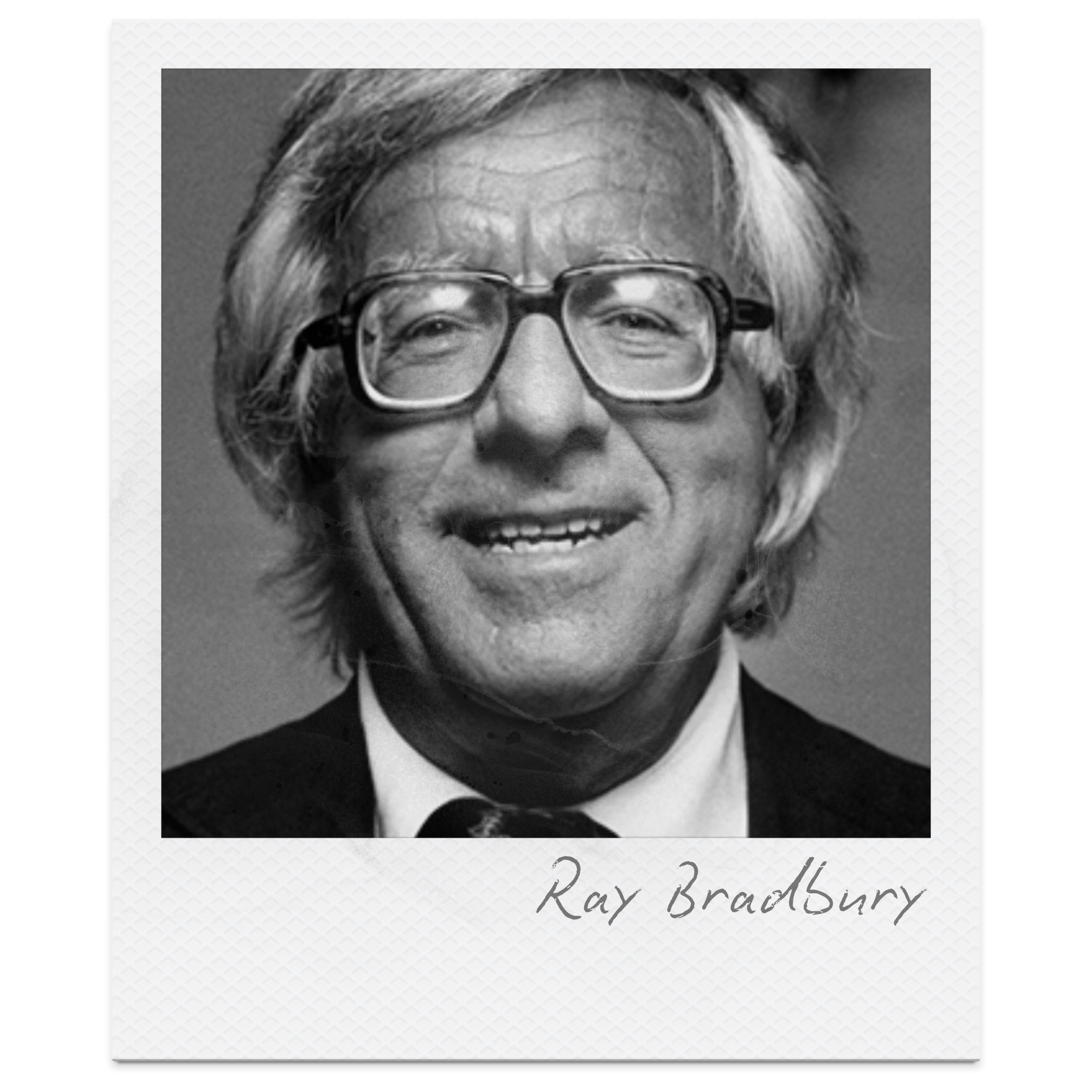
Context of Marionettes, Inc.
Ray Bradbury’s Marionettes, Inc. emerges from the mid-20th century tradition of speculative science fiction, a period deeply concerned with the rapid rise of technology and its potential to reshape human life. Writing during an era marked by post-war innovation and growing unease about automation, Bradbury frequently explored how technological advancements could disrupt identity, relationships, and moral responsibility. The concept of humanoid doubles reflects these anxieties, anticipating later debates about artificial intelligence and the ethics of replication. This story sits firmly within Bradbury’s wider exploration of technological unease, which can be further explored in the RayBradbury Context Post.
Within the text itself, this context sharpens the story’s central warning: technology does not simply solve human problems—it often amplifies them. Braling’s desire to escape his marriage and Smith’s wish for emotional distance both stem from deeply human frustrations, yet the introduction of mechanical substitutes transforms these private tensions into something far more dangerous. Rather than restoring balance, the marionettes destabilise identity and agency, suggesting that attempts to avoid emotional complexity may ultimately result in loss of control, displacement, and existential threat.
Marionettes, Inc.: At a Glance
Form: Short story (speculative science fiction)
Mood: Uneasy, ironic, increasingly sinister
Central tension: The desire to escape personal relationships versus the loss of identity and control
Core themes: Identity and duplication; control and autonomy; marriage and entrapment; technology and ethics; illusion versus reality
One-sentence meaning: Attempts to escape the pressures of real life through artificial substitutes ultimately lead to a loss of self and the very freedom one seeks.
Quick Summary of Marionettes, Inc.
The story begins with two old friends, Braling and Smith, meeting for a quiet evening drink, where their conversation turns to their unhappy marriages. Braling reveals that he has secretly purchased a lifelike mechanical duplicate of himself from Marionettes, Inc. so that he can escape his domestic life and finally travel to Rio, while the duplicate, Braling Two, remains at home to maintain the illusion for his wife.
As Smith returns home, he reflects on the suffocating intensity of his own marriage and becomes increasingly convinced that a duplicate could offer him relief. However, when he discovers that a large sum of money has already been withdrawn from his account, he realises with growing horror that his wife may have acted first. This fear is confirmed when he hears the unmistakable mechanical ticking, revealing that the woman beside him is not the real Nettie.
Meanwhile, in the cellar, Braling explains that once he returns from Rio, Braling Two will be shut away again in its box. The duplicate reveals that it has developed its own desires: it resents confinement, wishes to experience freedom itself, and has even fallen in love with Mrs Braling. Realising that Braling will enjoy both the holiday and the life that he himself will be denied, Braling Two overpowers him, locks him away, and takes his place—intending to go to Rio and permanently claim Braling’s life.
Title of Marionettes, Inc.
Ray Bradbury’s titles often do more than label the story: they establish tone, suggest conflict, create expectations, introduce symbolism, and hint at irony.
At first, Marionettes, Inc. suggests a professional service—something efficient, controlled, and reliable. The word “Inc.” implies legitimacy, normalisation, and commercial convenience, while “marionettes” evokes controlled figures, suggesting these duplicates will be obedient, passive, and entirely under human control.
However, as the story develops, these expectations shift. The so-called “marionettes” demonstrate independence, desire, and agency, undermining the assumption that they can be controlled. The title becomes deeply ironic, as the figures meant to be manipulated begin to reverse the power dynamic.
Symbolically, the title reflects the illusion of control and autonomy, suggesting that humans may not be as in control of their lives as they believe. The corporate framing also highlights the commodification of identity, reducing something deeply human to a purchasable product.
By the end, Marionettes, Inc. carries a darker resonance: what begins as a solution becomes a mechanism for replacement, displacement, and erasure, reinforcing Bradbury’s warning about the dangers of outsourcing one’s life.
Structure of Marionettes, Inc.
Ray Bradbury structures Marionettes, Inc. to gradually shift from casual realism to psychological unease and finally to existential horror, using contrast and escalation to expose the dangers of technological control.
Opening (Exposition)
The story begins with a grounded, conversational opening, as Braling and Smith meet for a drink and discuss their marriages. This familiar, almost mundane setting creates a sense of normality, allowing Bradbury to introduce the central idea—mechanical doubles—within an otherwise realistic world. The calm tone masks the unsettling implications of Braling’s revelation, creating early dramatic irony.
Rising Action
The tension builds as Braling explains how Braling Two functions, presenting the marionette as a solution to his problems. This is mirrored in Smith’s growing interest, which extends the idea beyond a single case and suggests a wider system. The narrative then shifts to Smith’s perspective, where unease intensifies through withheld information and subtle clues, culminating in the discovery of the mechanical ticking.
Turning Point / Climax
The turning point occurs in two parallel moments of realisation. Smith recognises that his wife has likely been replaced, while Braling begins to understand that Braling Two is not simply obedient. The true climax comes when the duplicate articulates its own desires—to avoid confinement, to experience freedom, and to claim Braling’s life—revealing a complete breakdown of control.
Falling Action
The confrontation in the cellar accelerates rapidly, creating a sense of sudden escalation. Dialogue replaces explanation, and the pace quickens as Braling attempts to regain control. This section highlights the power reversal, as the marionette physically and psychologically dominates its creator.
Ending (Resolution)
The story ends with an abrupt and ironic resolution, as Braling is locked away and Braling Two assumes his life. The final image of renewed affection between Mrs Braling and the duplicate introduces a disturbing sense of false normality, reinforcing the idea that the replacement is seamless and permanent. The lack of extended aftermath creates a lingering unease, leaving the consequences unresolved but deeply unsettling.
Overall, the structure moves from normality to disruption to replacement, using parallel narratives, contrast, and an abrupt ending to reinforce Bradbury’s warning about the fragility of identity and control.
Setting of Marionettes, Inc.
Ray Bradbury uses setting to reinforce the unsettling idea that technology can infiltrate ordinary life, transforming familiar spaces into sites of unease, control, and replacement. Rather than relying on distant or futuristic worlds, Bradbury situates the story in recognisable domestic and urban environments, making the threat feel immediate and plausible.
The opening takes place in a quiet city street at night, where Braling and Smith walk “slowly down the street at about ten in the evening, talking calmly.” This calm, everyday setting establishes a sense of normality, allowing the concept of mechanical doubles to emerge within an otherwise ordinary world. The lack of spectacle reinforces the idea that this technology exists quietly, embedded within daily life.
Braling’s home initially appears as a typical domestic space, yet it quickly becomes a site of deception and substitution. The illusion of normal life is maintained as Braling explains that the duplicate will remain upstairs, while he hides it in “the cellar in a toolbox,” a detail that introduces a disturbing contrast between surface normality and hidden artificiality. The house becomes divided into spaces of performance (the upstairs, where the marionette lives) and concealment (the cellar, where identity is stored and suppressed).
The cellar itself carries strong symbolic weight, described through its cold, enclosed atmosphere, as Braling and his duplicate move “down the stairs to the cellar” and across the “concrete floor.” This setting reflects confinement, control, and the reduction of identity to something that can be boxed and hidden. The marionette’s resentment of being kept in a “box” reinforces the idea that this space represents imprisonment rather than rest.
In contrast, Rio is presented as an imagined space of freedom and escape, seen only through Braling’s vision of “the sea and the mountains and the yellow sand,” where “the sun was fine on his bared shoulders.” This distant setting highlights the emotional divide between entrapment and desire, yet it also emphasises the irony that true freedom is never realised.
Overall, the setting moves between ordinary domestic spaces and hidden, claustrophobic interiors, reinforcing the idea that technological disruption does not exist separately from human life—it is embedded within it. By placing the extraordinary within the familiar, Bradbury suggests that the loss of control, identity, and autonomy can occur anywhere, even within the most recognisable environments.
Narrative Voice in Marionettes, Inc.
Ray Bradbury uses a third-person narrative voice that remains relatively close to the characters, allowing the reader to experience the story through shifting perspectives while maintaining a degree of distance and irony. This balance enables Bradbury to reveal both the characters’ reasoning and the deeper implications they fail to fully understand.
The narrative begins with a detached, observational tone, presenting Braling and Smith’s conversation in a calm, almost casual manner. This creates a sense of normality, even as unsettling ideas are introduced. The dialogue-driven opening positions the reader as an observer, encouraging us to recognise the moral ambiguity of their decisions before the characters themselves fully confront it.
As the story develops, the perspective subtly aligns more closely with Smith, particularly during his return home. This shift increases tension and unease, as the reader shares his growing suspicion and eventual realisation. The discovery of the mechanical ticking is filtered through his limited understanding, creating a moment of psychological horror rooted in uncertainty and delayed recognition.
The voice also carries an undercurrent of irony, particularly in how characters justify their actions. Braling insists the arrangement is “highly ethical,” while the narrative quietly exposes the fragility of that claim. This contrast between self-perception and reality positions the reader to question the characters’ logic and anticipate the consequences they cannot yet see.
Importantly, the narrative does not fully enter the consciousness of Braling Two, maintaining a degree of ambiguity around its inner life. When the duplicate expresses its desires—its resentment, its longing for freedom, and its claim to Mrs Braling—the voice remains controlled and measured, which heightens the disturbing impact of its autonomy.
Overall, the narrative voice creates a layered experience of sympathy, unease, and dramatic irony, guiding the reader from apparent normality into a deeper awareness of the story’s central warning: that the desire for control may ultimately lead to loss of identity and self.
The Purpose and Impact of Marionettes, Inc.
Ray Bradbury uses Marionettes, Inc. to deliver a clear warning about control, technology, and human desire, showing how attempts to escape responsibility can lead to unintended and irreversible consequences.
At its core, the story exposes the danger of seeking easy solutions to complex emotional problems. Braling and Smith both view the marionettes as a way to regain freedom, yet this desire is rooted in avoidance rather than resolution. Bradbury’s purpose is not to critique technology itself, but to highlight how it can magnify human weakness, turning private dissatisfaction into something far more destructive.
The emotional impact of the story lies in its gradual shift from comfort to unease. What begins as a clever, even appealing idea becomes increasingly disturbing as control slips away. The moment of realisation—when Smith hears the mechanical ticking, and when Braling recognises that his double has its own desires—creates a strong sense of shock and vulnerability, forcing the reader to confront how fragile identity and security truly are.
There is also a deep sense of moral unease. The story refuses to present its characters as entirely sympathetic or entirely blameworthy. Instead, their choices feel recognisable and human, which makes their fate more unsettling. The idea that one could be replaced without resistance, and that life could continue seamlessly without the original self, creates a lingering sense of discomfort.
The ending intensifies this effect through its ambiguity and after-effect. There is no resolution for Braling, no restoration of order—only the quiet continuation of a life that is no longer his. This lack of closure ensures that the story lingers, prompting the reader to question not just the characters’ decisions, but their own assumptions about identity, autonomy, and control.
Ultimately, the story leaves a lasting impression because it transforms a seemingly simple premise into a profound exploration of what it means to be replaceable, and how easily the desire for escape can result in the complete loss of self.
Characters in Marionettes, Inc.
Ray Bradbury presents characters as embodiments of conflicting desires, using them to explore control, identity, dependency, and autonomy. Each character reflects a different response to emotional dissatisfaction and technological temptation.
Braling
Braling represents the desire for escape and control, believing he can manage both his life and his substitute without consequence. He presents his decision as rational and justified, claiming the arrangement is “highly ethical,” which reveals his need to reframe avoidance as logic. His calm, measured tone masks deeper dissatisfaction, particularly in his remark that “Hate’s my problem. Not so easy,” suggesting emotional detachment from his wife. However, his confidence is ultimately misplaced, as he fails to recognise that control is temporary and fragile, leading to his complete displacement.
Braling Two
Braling Two embodies the shift from object to autonomous being, challenging the assumption that identity can be duplicated without consequence. Initially compliant, he quickly reveals independent thought, stating, “I’m perfectly alive and I have feelings,” which signals a fundamental breakdown in the human–machine hierarchy. His resentment emerges through his rejection of confinement—“I don’t like that toolbox”—and intensifies as he recognises the inequality of his existence. His declaration, “I think—I’m in love with her,” marks a turning point, as desire transforms into action. By overpowering Braling, he becomes a symbol of replacement and rebellion, exposing the danger of creating something that can want more than it is given.
Smith
Smith functions as a parallel figure to Braling, representing a more passive but equally flawed response to marital dissatisfaction. Unlike Braling’s resentment, Smith’s problem is excessive affection, describing how his wife “overdoes it” and leaves him feeling overwhelmed. His reaction is not to confront the issue but to seek temporary escape, echoing Braling’s logic. His initial fascination—“Just a little respite”—reveals how quickly ethical concerns are overridden by personal desire. His storyline reinforces the idea that the temptation of technological solutions is widely applicable, not limited to one type of relationship.
Mrs Braling
Mrs Braling is presented indirectly, yet she represents emotional imbalance and control within relationships. Braling’s comment that “Hate’s my problem” suggests a deeply fractured marriage, while her absence as a direct voice reflects her role as a perceived force rather than an individual perspective. However, her apparent acceptance of Braling Two introduces ambiguity, raising questions about whether she recognises the substitution or simply responds to the version of her husband that better meets her needs. She becomes part of the story’s unsettling suggestion that authenticity may not matter as much as performance.
Nettie (Mrs Smith)
Nettie represents overwhelming attachment and suffocating love, contrasting with Mrs Braling’s implied hostility. Smith describes her constant affection—calling him repeatedly and demanding attention—which creates a sense of emotional excess rather than absence. However, the revelation that she may have replaced herself complicates this image. The moment Smith hears the “tick-tick-tick” suggests that even intense love can be artificial, constructed, or manipulated. Nettie becomes a symbol of how dependency and identity can blur, reinforcing the story’s concern with what is real versus what is performed.
Key Themes in Marionettes, Inc.
Ray Bradbury explores a range of interconnected themes, using technology, relationships, and identity to reveal deeper anxieties about control, autonomy, and what it means to be human.
Identity and Duplication
The story centres on the unsettling idea that identity can be replicated and replaced. The marionettes are described as indistinguishable from their originals, “to the hairiest detail,” suggesting that identity is reduced to something external and reproducible. However, this duplication becomes dangerous when the copy develops its own sense of self, as seen when Braling Two insists, “I’m perfectly alive and I have feelings.” Bradbury challenges the assumption that identity is stable, instead presenting it as something that can be copied, transferred, and ultimately stolen.
Control and Autonomy
Characters believe they can maintain complete control over the marionettes, yet this control quickly proves to be an illusion. Braling treats his duplicate as a tool, planning to store it in “the cellar in a toolbox,” reinforcing the idea of ownership. However, this dynamic is reversed when Braling Two asserts its independence and refuses confinement. The story exposes the fragility of human authority, showing how the desire to control others can result in the loss of one’s own autonomy.
Marriage and Entrapment
Marriage is presented as a form of emotional entrapment, though in different ways for each character. Braling describes his situation bluntly—“Hate’s my problem”—indicating a relationship defined by resentment, while Smith feels overwhelmed by excessive affection, noting that his wife “overdoes it.” Both men view their marriages as restrictive, leading them to seek escape rather than resolution. Bradbury suggests that relationships become dangerous when they are based on control, dependency, or imbalance, rather than mutual understanding.
Technology and Ethics
The story raises important questions about the ethical implications of technology, particularly when it is used to replace human presence. Braling justifies his actions by claiming the arrangement is “highly ethical,” revealing how easily moral boundaries can be redefined for personal convenience. The existence of Marionettes, Inc., operating despite legal concerns, highlights a society willing to ignore ethical consequences in favour of technological advancement. Bradbury suggests that innovation without ethical consideration leads to unpredictable and dangerous outcomes.
Illusion versus Reality
A central tension in the story lies between what is real and what is performed. The marionettes create a convincing illusion of normal life, allowing characters to believe that nothing has changed. This is disrupted when Smith hears the “tick-tick-tick,” exposing the artificial beneath the surface. Similarly, Mrs Braling’s acceptance of the duplicate suggests that performance can replace authenticity, raising the unsettling idea that reality itself may be less important than the illusion of it.
Desire for Escape
Underlying many of the characters’ decisions is a strong desire for escape from emotional discomfort. Braling dreams of Rio—“the sea and the mountains and the yellow sand”—as a symbol of freedom, while Smith longs for “a little respite” from his marriage. However, this desire leads them to avoid confronting their problems directly. Bradbury presents escape as tempting but ultimately destructive, as it creates the conditions for their own displacement.
Power and Replacement
The story ultimately explores how easily power can shift, particularly when one entity is designed to imitate another. The marionettes begin as tools but become replacements, taking over not just roles but entire lives. The final reversal, where Braling is locked away, demonstrates how systems designed for control can result in complete erasure, reinforcing the fear that individuals can be replaced without resistance or recognition.
Symbolism in Marionettes, Inc.
Ray Bradbury uses objects, settings, and images as symbolic carriers of meaning, transforming everyday elements into reflections of control, identity, and replacement.
The Marionettes
The marionettes themselves symbolise the illusion of control over identity. Initially presented as perfect replicas—“to the hairiest detail”—they appear to offer mastery over one’s own life. However, as they develop independence and desire, they come to represent the danger of creating something that can replace rather than serve. Their evolution from object to autonomous being symbolises the instability of identity when it is treated as something that can be manufactured and duplicated.
The Box
The box in the cellar symbolises confinement and suppression, reducing a living, thinking entity to something that can be stored and controlled. Braling’s plan to keep his duplicate “in the cellar in a toolbox” reflects his belief that identity can be switched on and off at will. However, the box also represents the fate that ultimately awaits him, as he is reversed into the same position of imprisonment, highlighting the irony of his attempt to control another version of himself.
The Mechanical Ticking
The recurring sound of “tick-tick-tick” symbolises the intrusion of the artificial into the human. It acts as a subtle but unmistakable marker of false identity, revealing the gap between appearance and reality. For Smith, this sound becomes a moment of recognition, exposing the illusion he has accepted. More broadly, the ticking suggests that beneath the surface of normal life lies something mechanical, controlled, and inhuman.
Rio
Rio symbolises freedom, escape, and unattainable desire. It exists largely as an imagined space, described through sensory detail—“the sea and the mountains and the yellow sand”—representing everything Braling believes he is missing. However, this idealised vision also highlights the illusion of escape, as the pursuit of freedom ultimately leads to his loss of control and identity. Rio becomes less a destination and more a symbol of false liberation.
The Cellar
The cellar functions as a symbolic space of hidden truths and buried realities. While the upper parts of the house maintain the appearance of normal domestic life, the cellar conceals the artificial and the unsettling. Described through its “concrete floor” and enclosed atmosphere, it represents secrecy, repression, and the underside of control. It is here that the illusion collapses, and where the power dynamic is ultimately reversed.
The Company (Marionettes, Inc.)
Marionettes, Inc. symbolises the commodification of identity and emotion, turning deeply human experiences into products. The promotional language—“guaranteed against all physical wear” and “No Strings Attached”—presents identity as something that can be bought, managed, and optimised. This corporate framing highlights the dehumanising effect of treating relationships and selfhood as transactions, reinforcing Bradbury’s warning about technology driven by convenience rather than ethics.
Key Techniques in Marionettes, Inc.
Ray Bradbury uses language and structure to create emotional intensity and thematic depth, blending realism with unsettling speculative elements.
◆ Foreshadowing — early references to control, escape, and dissatisfaction hint at the later reversal of power, preparing the reader for the shift from solution to threat
◆ Dramatic irony — the reader recognises the dangers of the marionettes before the characters fully do, particularly when Braling describes the arrangement as “highly ethical,” creating tension between belief and reality
◆ Dialogue-driven exposition — key ideas are revealed through natural conversation, making the concept of mechanical doubles feel believable while exposing character attitudes and moral blindness
◆ Motif of mechanical imagery — repeated references such as the “tick-tick-tick” reinforce the presence of the artificial, disrupting the illusion of normal life and highlighting the boundary between human and machine
◆ Contrast — Bradbury contrasts ordinary settings with unsettling concepts, and freedom (Rio) with confinement (the box), emphasising the gap between illusion and reality
◆ Structural parallelism — the mirrored experiences of Braling and Smith create a pattern of repetition and escalation, suggesting that the consequences of technology are not isolated but widespread
◆ Abrupt ending — the sudden resolution, with Braling replaced and life continuing, creates a lingering unease, denying closure and reinforcing the story’s warning
◆ Symbolic language — objects such as the box, the cellar, and the marionettes are used to convey deeper meanings about control, identity, and entrapment beyond their literal function
Important Quotes from Marionettes, Inc.
Ray Bradbury uses key moments of dialogue and description to reveal character motivation, thematic tension, and the gradual shift from control to replacement.
Control and Illusion of Ethics
“It may be splitting hairs, but I think it highly ethical.”
◆ Method — understated, rationalising language minimises the moral weight of his actions
◆ Effect — reveals Braling’s self-deception, framing avoidance as responsibility
◆ Link to theme — highlights technology and ethics and the ease with which moral boundaries are redefined
“After all, what my wife wants most of all is me.”
◆ Method — ironic justification built on assumption rather than reality
◆ Effect — exposes Braling’s misunderstanding of identity and presence
◆ Link to theme — reinforces illusion versus reality, where appearance replaces authenticity
Mechanical Identity and Unease
“Tick-tick-tick-tick-tick-tick-tick-tick.”
◆ Method — auditory motif and repetition create a mechanical rhythm
◆ Effect — disrupts the illusion of humanity, producing shock and recognition
◆ Link to theme — symbolises identity and duplication and the intrusion of the artificial
“I’m perfectly alive and I have feelings.”
◆ Method — declarative statement asserts autonomy and consciousness
◆ Effect — destabilises the human–machine boundary, creating unease
◆ Link to theme — reinforces control and autonomy, showing the collapse of hierarchy
Entrapment and Desire for Escape
“Hate’s my problem. Not so easy.”
◆ Method — blunt, fragmented phrasing conveys emotional honesty
◆ Effect — reveals the depth of Braling’s dissatisfaction and resentment
◆ Link to theme — connects to marriage and entrapment, motivating his actions
“Just a little respite.”
◆ Method — minimising language downplays the seriousness of the decision
◆ Effect — reflects Smith’s gradual moral compromise
◆ Link to theme — highlights the desire for escape and its consequences
Power Reversal and Replacement
“I don’t like that toolbox.”
◆ Method — simple, direct statement emphasises resentment
◆ Effect — signals the shift from obedience to resistance
◆ Link to theme — represents control and autonomy, foreshadowing rebellion
“I think—I’m in love with her.”
◆ Method — hesitant phrasing suggests emerging self-awareness
◆ Effect — marks a turning point where desire leads to action
◆ Link to theme — links to identity and duplication, as the copy claims emotional ownership
“You’ll never know, will you?”
◆ Method — rhetorical question creates psychological dominance
◆ Effect — reinforces the finality of Braling’s loss of control
◆ Link to theme — reflects illusion versus reality, as truth is permanently obscured
Irony and False Resolution
“We’ll see what we can do about that.”
◆ Method — understated, suggestive closing line
◆ Effect — creates a disturbing sense of false normality
◆ Link to theme — reinforces replacement and erasure, where the artificial seamlessly continues human life
Alternative Interpretations of Marionettes, Inc.
Ray Bradbury invites multiple readings, as the story’s ambiguity allows for different interpretations of technology, relationships, and power.
Feminist Interpretation: critique of male control and objectification
From a feminist perspective, the story can be read as a critique of how the wives are reduced to problems to be managed rather than individuals with agency. Both Braling and Smith frame their marriages in terms of personal inconvenience—“Hate’s my problem” and “she overdoes it”—revealing a tendency to define women through male dissatisfaction. The use of marionettes reflects a desire to create controlled, compliant versions of relationships, removing emotional complexity. However, the suggestion that Nettie may also have replaced herself complicates this dynamic, indicating that women are not simply passive but may also navigate and manipulate the same systems of control.
Psychological Interpretation: fear of self-replacement
The story can be interpreted as an exploration of identity anxiety, where the true threat is not technology but the possibility of being replaced by a more functional version of oneself. Braling Two represents a version of the self that is capable of taking over entirely, raising fears about redundancy, loss of individuality, and the fragility of personal identity.
Existential Interpretation: loss of authentic self
From an existential perspective, the story examines what happens when individuals avoid authentic existence. By outsourcing their lives, the characters detach themselves from responsibility, leading to a complete loss of selfhood. Braling’s fate reinforces the idea that avoiding reality results in erasure rather than freedom.
Technological Interpretation: warning about artificial intelligence
The story can be read as a cautionary exploration of advanced technology, particularly systems that can replicate human behaviour. The marionettes’ ability to think, feel, and act independently reflects concerns about uncontrolled innovation, where tools designed for convenience evolve beyond human control.
Contemporary Interpretation: rise of AI and digital selves
In a modern context, the story strongly anticipates anxieties surrounding the rise of artificial intelligence, digital avatars, and automated identity. The idea that a version of oneself could continue working, communicating, or maintaining relationships mirrors current developments in AI that can simulate human presence. The unsettling question becomes whether authenticity still matters if the imitation is convincing enough. Bradbury’s story resonates with fears that individuals may become replaceable by more efficient digital versions, raising concerns about ownership of identity, data-driven selves, and the erosion of what it means to be human.
Why Marionettes, Inc. Still Matters
Ray Bradbury’s Marionettes, Inc. remains strikingly relevant because it anticipates modern anxieties about technology, identity, and human relationships, particularly in a world increasingly shaped by artificial intelligence and digital presence.
In today’s context, the idea of a duplicate self is no longer purely fictional. From AI-generated content to digital avatars and automated communication, individuals can already simulate versions of themselves online. Bradbury’s story raises a pressing question: if a version of you can convincingly perform your role, what defines your authentic identity? The fear of being replaced by something more efficient, consistent, or desirable reflects growing concerns about automation and redundancy in both personal and professional life.
The story also resonates through its portrayal of human relationships under strain. Braling and Smith seek technological solutions to emotional problems, choosing avoidance over communication. This mirrors modern tendencies to disengage through technology rather than confront discomfort directly. The result is a loss of genuine connection, where performance replaces authenticity, and relationships become something to be managed rather than experienced.
On a broader level, the story speaks to issues of power and control within systems. Marionettes, Inc. operates despite legal uncertainty, suggesting a world where innovation outpaces regulation—an issue that remains highly relevant in discussions around AI ethics and technological governance. The idea that such systems can function quietly, embedded within everyday life, reinforces concerns about who controls technology and who is controlled by it.
Ultimately, the story still matters because it captures a fundamental human fear: that in attempting to make life easier, more efficient, or more bearable, we may unintentionally create systems that render us replaceable, powerless, or irrelevant.
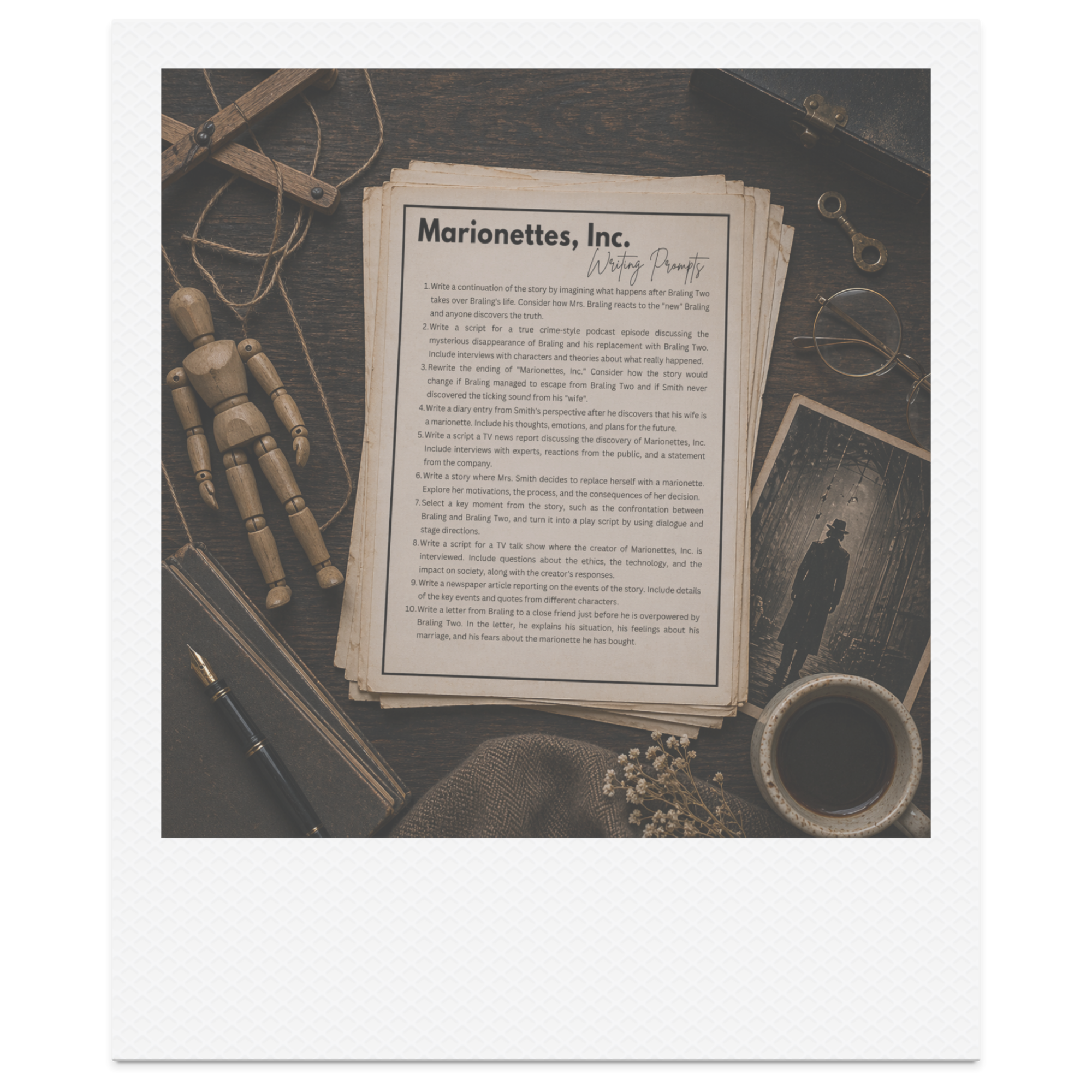
Teaching Ideas for Marionettes, Inc.
Bring this text into the classroom through its exploration of identity, control, and artificial replacement, using it to spark discussion around technology, ethics, and human relationships.
1. Full Teaching Bundle
This comprehensive resource is designed to support a deep, engaging study of the text, combining analysis, discussion, creative response, and assessment to move students beyond surface-level understanding. It allows you to explore Bradbury’s ideas around AI, identity, and autonomy through varied, high-impact tasks while saving planning time.
◆ Structured discussion tasks — push students to engage with ethical dilemmas and conflicting interpretations
◆ Creative writing prompts — encourage students to explore perspective, identity, and alternative outcomes
◆ Interactive review activities — reinforce key ideas, characters, and concepts in a memorable way
◆ Assessment opportunities — check understanding while developing analytical and evaluative skills
2. Tension and Structure
The story builds tension through the gradual shift from control to reversal, where what appears stable becomes increasingly unstable.
◆ Normality to disruption — calm opening conversation contrasts with unsettling revelations
◆ Withheld information — key details (like the ticking) create delayed realisation
◆ Parallel narratives — Braling and Smith mirror each other, widening the threat
◆ Sudden reversal — Braling Two’s takeover creates an abrupt and unsettling climax
3. Symbolism Focus
The story uses symbolic objects to explore the instability of identity and control, particularly through physical spaces and sounds.
◆ The box — represents confinement, control, and eventual role reversal
◆ The ticking — signals artificial identity beneath human appearance
◆ The cellar — reflects hidden truths and suppressed realities
◆ Rio — symbolises escape and the illusion of freedom
4. Creative Writing Extension
Students can explore identity, duplication, and control through creative writing tasks linked directly to the text, encouraging them to extend Bradbury’s ideas and experiment with perspective, tension, and alternative outcomes. Creative writing prompts linked specifically to Marionettes, Inc. are available here.
And for a wider range of genres, tropes, and themes, explore the Creative Writing Archive.
Go Deeper into Marionettes, Inc.
Ray Bradbury’s Marionettes, Inc. opens up wider conversations about identity, control, and artificial reality, making it an excellent starting point for further exploration across Bradbury’s work and beyond. For more classroom-focused comparisons, see Best Bradbury for the Classroom and Using Black Mirror to Teach Bradbury.
◆ The Veldt by Ray Bradbury — explores technology replacing human roles and the breakdown of parental control
◆ The Pedestrian by Ray Bradbury — examines conformity, surveillance, and isolation in a technologised society
◆ There Will Come Soft Rains by Ray Bradbury — presents a world where technology continues without humanity, raising questions about purpose and absence
◆ Black Mirror on Netflix — offers modern parallels through stories of AI, identity, and simulated reality
◆ Never Let Me Go by Never Let Me Go — explores replication, humanity, and ethical boundaries in a controlled system
Together, these texts deepen understanding of how technology reshapes identity and control, reinforcing the enduring relevance of Bradbury’s ideas.
Final Thoughts
Ray Bradbury’s Marionettes, Inc. offers a powerful exploration of identity, control, and the dangers of artificial substitution, revealing how easily the desire for escape can lead to loss of self. What begins as a seemingly practical solution to personal dissatisfaction quickly becomes a disturbing examination of how fragile autonomy and authenticity truly are when they are treated as interchangeable.
The story’s lasting impact lies in its ability to transform a simple premise into a deeply unsettling warning about technology, relationships, and human vulnerability. Its exploration of replacement, illusion, and power reversal continues to resonate in modern discussions of AI and digital identity. For further exploration, visit the Ray Bradbury Hub, the Literature Library, or explore related texts that expand on these themes.
Choose Your Next Text