A haunted house does not need a ghost to be frightening.
Sometimes, the most unsettling detail is a door standing slightly ajar in an otherwise abandoned room. A staircase that creaks beneath an invisible weight. The lingering scent of extinguished candles in a house where nobody has lived for decades. Or the peculiar sensation that, although every window is boarded shut, something inside the building is watching the world beyond its walls.
The most memorable haunted houses in Gothic fiction are more than sinister buildings. They possess an atmosphere so distinctive that their walls, corridors, rooms and forgotten possessions seem to participate in the story itself. Their architecture conceals secrets, their interiors preserve traces of former inhabitants, and their ordinary domestic features become sources of uncertainty and dread.
But how do you describe a haunted house without relying on familiar images of cobwebs, creaking floorboards and mysterious shadows?
The answer lies in sensory writing: the deliberate use of sight, sound, smell, touch and, occasionally, taste to create a convincing physical environment that readers can experience through the imagination.
A successful haunted house description does more than tell readers that a building is frightening. It allows them to hear the uneven ticking of a grandfather clock in an empty hallway, smell the damp plaster beneath peeling wallpaper, feel the unnatural cold of a brass door handle and notice the faint indentation of a head upon a bed that has supposedly remained untouched for years.
These details become particularly powerful when they suggest something beyond their immediate physical presence. A room that smells of fresh flowers might be comforting until the reader discovers that its occupant died fifty years earlier. The distant sound of children's laughter might seem harmless until it emerges from a sealed nursery. Even silence can become threatening when a house appears to be holding its breath.
Effective Gothic description transforms familiar domestic spaces into environments of psychological uncertainty, where the smallest sensory disturbance can suggest an unseen presence or a disturbing history.
In this guide, we'll explore how to describe a haunted house using all five senses, with 25 original sensory description examples covering abandoned corridors, decaying bedrooms, forgotten nurseries, unsettling sounds, strange smells and atmospheric Gothic interiors.
We'll also examine how writers including Shirley Jackson, Edgar Allan Poe and Susan Hill create unforgettable haunted settings, explore practical techniques for building suspense without relying on clichés, and work through five detailed descriptive writing exercises designed to help you develop your own haunted locations.
Whether you're writing a traditional ghost story, a Gothic novel, a psychological horror scene or an atmospheric piece of descriptive fiction, you'll discover how to make a haunted house feel like a place your readers have genuinely entered — and somewhere they might desperately wish to escape.
For further inspiration, explore the Gothic Writing Hub, Horror Writing Hub and Creative Writing Archive, where you'll find additional story ideas, atmospheric settings, writing techniques and creative challenges.
As an Amazon Associate, I earn from qualifying purchases. This post contains affiliate links, which may earn me a small commission at no additional cost to you.
Explore This Guide
Jump to a section below to explore sensory descriptions, Gothic writing techniques, literary inspiration and practical exercises.
What Makes a Haunted House Description Effective?
A haunted house becomes truly unsettling when the reader begins to suspect that something is wrong with the building long before anything supernatural actually happens.
The most effective descriptions rarely depend upon announcing that a house is frightening. Instead, they create an accumulation of small, disturbing observations: an unexplained smell, an architectural irregularity, a sound that seems to follow the protagonist from room to room, or an ordinary household object positioned somewhere it should not be.
Consider the difference between these two descriptions:
Basic description:
The old house was dark and frightening. Cobwebs covered the furniture, the floorboards creaked, and the rooms felt haunted.
Although this establishes a recognisable Gothic setting, it relies upon familiar details and tells readers how they should feel without giving them much opportunity to experience the environment themselves.
Atmospheric description:
The entrance hall smelled of damp wool and extinguished candles. Beneath the staircase, a grandfather clock stood with its hands fixed at twenty minutes past three, although something inside its wooden case continued to tick. A narrow trail of dust had been disturbed across the marble floor, ending at a locked door whose brass handle was still warm.
The second description introduces specific sensory information while withholding explanations. The smell suggests former occupants, the ticking clock creates an auditory disturbance, and the warm door handle implies recent human contact in a supposedly abandoned building.
Most importantly, these details encourage questions.
Who disturbed the dust? Why does the clock continue ticking? What lies behind the locked door?
The central principle of effective haunted house description is to make the reader notice what the characters cannot yet explain.
1. Establish the House as a Physical Place
Before a haunted house can become frightening, it must feel believable.
Readers need enough architectural and environmental detail to imagine themselves moving through the building. Consider its size, age, layout, condition and relationship with the surrounding landscape.
A remote Victorian manor overlooking a flooded valley will create a different atmosphere from a narrow terraced house concealed between occupied properties on an ordinary residential street.
The manor might contain cavernous entrance halls, shuttered drawing rooms, servants' staircases, disused nurseries and extensive grounds slowly being reclaimed by vegetation.
The terraced house might feel oppressive precisely because its proportions are familiar. A cramped kitchen, a narrow staircase and a bedroom overlooking the neighbouring garden can become disturbing when something inexplicable interrupts the routines associated with domestic life.
Physical details also help establish the building's history.
Peeling wallpaper might reveal an older decorative pattern beneath it. A boarded doorway could suggest an architectural alteration. A room containing children's furniture might indicate that the house was abandoned suddenly rather than gradually.
These observations make the setting feel inhabited by the past, even when its former occupants are absent.
Writing example:
The house stood at the end of a neglected avenue, its windows arranged with such rigid symmetry that the single bricked-up opening on the upper floor seemed almost deliberate. Inside, the entrance hall widened beneath a stained-glass ceiling. Rainwater had gathered in the hollows of the marble tiles, and the staircase disappeared into an upper landing where the wallpaper had darkened to the colour of old bruises.
Notice how the description establishes scale, architecture, deterioration and an unexplained irregularity without introducing a ghost.
2. Use Sensory Details to Create Immersion
A haunted house should be experienced through more than sight.
Visual imagery establishes the building's appearance, but sound, smell, touch and physical sensation often create a more immediate sense of presence.
Readers might imagine the stale sweetness of rotting flowers, the gritty texture of plaster beneath a character's fingertips or the uncomfortable sensation of stepping onto a carpet that feels unexpectedly damp.
Sound is particularly useful because it can suggest activity beyond the character's field of vision.
A faint scraping noise behind a wall is more disturbing when the reader cannot see its source. Footsteps on an upper landing become threatening when the character knows the staircase has collapsed.
Sensory details can also contradict one another.
A room might appear abandoned but smell of freshly brewed tea. A fireplace might contain glowing embers while the surrounding air remains unnaturally cold. A child's bedroom might be thick with dust except for the polished surface of a small wooden rocking horse.
Such contradictions suggest that the house does not obey ordinary expectations.
Writing example:
The drawing room smelled of wet ashes and something faintly medicinal. Beneath the dust sheets, the furniture retained the shapes of its former occupants: a high-backed chair beside the fireplace, a narrow sofa facing the window, a small table bearing the circular impression of a vanished vase. From somewhere overhead came three deliberate knocks. The sound stopped when she looked towards the ceiling.
The reader experiences the room through smell, sight and sound, while the final sentence introduces a possible relationship between the character and the unseen disturbance.
3. Make Ordinary Objects Feel Unsettling
One of the most effective Gothic techniques is to transform familiar domestic objects into sources of uncertainty.
A haunted house is filled with things readers already understand: mirrors, clocks, curtains, photographs, furniture, books, toys and household utensils.
These objects carry associations with safety, comfort and ordinary human activity. When they behave unexpectedly, their familiarity makes the disturbance more powerful.
An antique mirror is not necessarily frightening. A mirror reflecting a room that appears slightly different from the one in which the character stands is far more unsettling.
Similarly, a dining table covered in dust may simply indicate abandonment. A dining table laid for six people, with one place setting still warm to the touch, suggests something more troubling.
The key is restraint.
Not every object needs to possess supernatural qualities. One carefully chosen detail can establish uncertainty more effectively than a room filled with unexplained phenomena.
Writing example:
On the nursery shelf stood seven porcelain dolls, each dressed in a different shade of faded blue. Their painted eyes faced the doorway. Beneath them lay a small handwritten inventory, listing eight dolls in a careful, unfamiliar script.
Nothing moves. Nothing speaks. Yet the discrepancy creates a question that can sustain suspense.
4. Suggest the House Has a Memory
Haunted houses are often compelling because they preserve traces of people who are no longer present.
A house may contain the physical evidence of former lives: worn stair treads, faded photographs, clothing left inside wardrobes, handwritten letters, unfinished meals or the marks left by furniture that has long since disappeared.
These details can create melancholy as well as fear.
An abandoned nursery might evoke grief before it evokes terror. A dining room containing a family portrait with one face deliberately scratched away might suggest a history of resentment or violence.
The building becomes more than a setting. It becomes a repository of experiences, relationships and secrets.
Writers can strengthen this effect by allowing the house's physical condition to reflect its emotional history.
A neglected garden might suggest a family's gradual decline. A sealed bedroom might represent a loss nobody was willing to acknowledge. A staircase polished by generations of footsteps might contrast with the untouched dust gathering across the upper floors.
Writing example:
The bedroom had been preserved with an almost painful care. A pair of slippers stood beneath the bed, their toes pointing towards the window. On the dressing table, a silver-backed hairbrush rested beside a shallow porcelain dish containing three black hairpins. The flowers in the vase had dried into brittle brown fragments, but someone had recently replaced the water.
The final detail transforms an ordinary description of absence into evidence of an unexplained presence.
5. Control What the Reader Knows
Effective haunted house writing depends as much upon withheld information as upon description.
A writer does not need to reveal the source of every sound or explain every unusual detail immediately.
In fact, uncertainty often creates more suspense than an explicit supernatural encounter.
Imagine a character entering an abandoned house and hearing footsteps above them.
If the writer immediately reveals that the footsteps belong to a ghost, the reader understands the threat.
However, if the character discovers that the upper floor has been inaccessible for decades, the sound becomes more difficult to explain.
The reader is encouraged to imagine possibilities, some of which may be more disturbing than the eventual revelation.
This technique is particularly effective when paired with a limited narrative perspective.
Describe only what the viewpoint character can genuinely perceive. Allow them to misinterpret sounds, overlook details or become increasingly uncertain about their surroundings.
Writing example:
At the end of the corridor, a door stood open beneath a weak rectangle of afternoon light. She remembered closing it when she arrived. Beyond the threshold, the bedroom appeared unchanged, except that the wardrobe now stood against the opposite wall. She remained in the doorway, trying to remember whether there had always been two wardrobes.
The uncertainty is subtle. The description does not confirm whether the room has changed or whether the character's memory is unreliable.
6. Let the Atmosphere Develop Gradually
A haunted house should not necessarily reveal its most disturbing qualities the moment a character enters.
Atmosphere becomes more effective when it develops through a sequence of increasingly unsettling observations.
Begin with the ordinary physical condition of the building: its architecture, temperature, smell and visible deterioration.
Introduce a minor irregularity.
Perhaps a recently extinguished candle sits on a dusty mantelpiece, or a clock begins ticking in a room where the character has already checked that it is broken.
Allow the character to notice further inconsistencies.
A familiar corridor seems longer on the return journey. A door opens into a different room. A distant sound begins to resemble a human voice.
By the time something unmistakably supernatural occurs, the reader should already feel that the house is operating according to rules they do not understand.
Writing example:
The first room was exactly as she expected: damp, neglected and thick with the sour smell of rotting timber. The second contained a small fire burning behind an iron grate. In the third, the wallpaper was clean and the furniture newly polished. By the fourth, she could hear music playing somewhere beyond the walls, and the windows no longer overlooked the garden she had crossed to reach the house.
The progression from ordinary decay to impossible architecture creates a gradual disturbance rather than an immediate shock.
7. Give the House an Emotional Identity
Not every haunted house needs to feel openly hostile.
Some houses seem mournful, as though they are preserving the memory of a tragedy. Others feel watchful, resentful, abandoned or strangely welcoming.
A building might appear to resist the presence of strangers, or it might seem desperate to persuade someone to remain.
These emotional qualities should emerge through description rather than direct statements.
A grieving house might contain empty chairs, faded celebrations, unfinished letters and rooms preserved for people who will never return.
A hostile house might be characterised by narrow passages, obstructed exits, oppressive ceilings and sounds that seem to follow the protagonist.
A deceptively welcoming house might offer warmth, fresh flowers and inviting rooms while concealing subtle signs that its hospitality is unnatural.
Writing example:
Every room had been prepared for her arrival. Fresh linen covered the beds, a fire burned in the drawing room, and a porcelain cup waited beside the teapot. Yet the house contained no servants, no luggage and no evidence of another living soul. When she reached the front door, she found that someone had carefully hung her coat upon the hall stand.
The apparent hospitality becomes threatening because it suggests knowledge and intention.
The Essential Principle: Create Unease Before Revealing the Haunting
The strongest haunted house descriptions combine convincing physical details with carefully controlled uncertainty.
Architecture establishes the setting. Sensory imagery allows readers to experience it. Ordinary objects suggest the lives of former occupants, while subtle inconsistencies imply that something remains unresolved.
Most importantly, the writer allows the reader to recognise that something is wrong before explaining what that something might be.
A haunted house becomes memorable not simply because it contains a supernatural presence, but because the building itself begins to feel capable of remembering, observing and responding.
In the next section, we'll examine how to achieve this effect through the five senses, exploring the particular sights, sounds, smells, textures and physical sensations that can transform an ordinary abandoned building into an unforgettable Gothic setting.
How to Describe a Haunted House Using the Five Senses
The difference between a haunted house that readers can picture and one they can genuinely experience often lies in the quality of its sensory description.
A description of broken windows, peeling wallpaper and abandoned furniture establishes what a house looks like. But when readers can hear water dripping somewhere beyond a locked door, smell the sour dampness of old plaster or imagine the uncomfortable sensation of a banister that feels unexpectedly warm beneath their hand, the setting becomes far more immediate.
Sensory writing creates immersion by connecting the physical environment to the reader's imagination, memories and emotional responses.
This is particularly important in Gothic fiction, where the distinction between ordinary physical sensations and possible supernatural disturbances is often deliberately uncertain.
An unexplained sound might indicate a ghost, an intruder, an animal or simply the movement of an ageing building. A strange smell might reveal decay, suggest a forgotten tragedy or evoke the presence of someone who should no longer exist.
The most effective haunted house descriptions rarely overwhelm readers with all five senses at once. Instead, they select particular sensory details according to the atmosphere, emotional effect and narrative tension required.
Let's explore how each sense can transform an abandoned building into a convincing and deeply unsettling Gothic environment.
1. Sight: Describe What the House Reveals — and Conceals
Sight is usually the first sense readers encounter in descriptive writing.
Through visual imagery, writers establish the house's architecture, proportions, condition, lighting and relationship with the surrounding landscape.
However, describing a haunted house effectively requires more than listing recognisable Gothic features.
A description of cracked windows, dusty furniture and torn curtains might communicate neglect, but these details become more powerful when they suggest an unusual history or introduce something that cannot easily be explained.
Consider the contrast between a house that has simply deteriorated and one that appears to have been abandoned in the middle of ordinary life.
The first might contain collapsed ceilings, water-damaged walls and vegetation growing through broken masonry.
The second might preserve a dining table laid for breakfast, a newspaper folded beside an armchair or a child's unfinished drawing beneath a bedroom window.
Both settings can be atmospheric, but the second raises questions about the circumstances of its abandonment.
Use Light to Control What Readers Notice
Lighting influences how readers interpret a haunted environment.
Weak daylight filtering through dirty windows can reveal suspended dust, faded wallpaper and the outlines of furniture concealed beneath sheets.
Moonlight might illuminate only a narrow section of a corridor, leaving doorways and corners difficult to distinguish.
Candlelight creates moving shadows that can make stationary objects appear to shift or change shape.
Rather than repeatedly describing a room as dark, consider how limited or unreliable light affects the character's perception.
Example:
The last of the afternoon light entered through a narrow window above the staircase, falling across the landing in a pale, uneven rectangle. Beyond it, the corridor remained almost entirely obscured. Along the walls hung a succession of family portraits, their gilded frames catching the light while the faces within them disappeared into the gloom. At the far end, one painting had been removed, leaving a clean square of wallpaper surrounded by decades of discolouration.
The lighting directs attention towards the portraits and the missing painting, suggesting a history without explaining it.
Use Visual Contradictions to Create Unease
An unexpected detail is often more effective than an overtly frightening one.
A perfectly clean mirror in an otherwise filthy room.
Fresh flowers on a table surrounded by decaying furniture.
A staircase that appears to continue beyond the building's exterior dimensions.
Such details disrupt the reader's understanding of the environment.
Example:
Every window in the drawing room was covered with dust, except the one overlooking the courtyard. Its glass had been polished so carefully that the bare branches outside appeared almost unnaturally sharp. On the sill stood a small porcelain vase containing three white roses. Their petals were fresh, although the room had been sealed for forty years.
The description creates unease through the contrast between neglect and apparent recent activity.
Writing tip: Choose one unusual visual detail that the character notices immediately, then allow the surrounding description to explain why it seems out of place.
2. Sound: Make the Reader Listen for Something Unseen
Sound is one of the most effective tools available to Gothic writers because it allows a threatening presence to be suggested without being shown.
A character can close their eyes or turn away from a disturbing sight, but an unexpected noise can penetrate walls, travel through corridors and reveal activity in spaces that remain inaccessible.
Haunted houses offer an enormous range of possible sounds.
Old timber contracts and expands. Pipes knock inside walls. Wind passes through damaged window frames. Loose shutters strike against masonry. Rainwater gathers in ceilings before dripping onto floors.
These ordinary noises can become unsettling when their timing, rhythm or apparent source seems wrong.
A floorboard creaking in an empty room may be explained by the age of the building.
A sequence of slow creaks travelling towards the character suggests footsteps.
The distinction lies not in the sound itself, but in the pattern the writer gives it.
Use Silence as an Active Part of the Atmosphere
Silence can be more disturbing than noise, particularly when readers expect a building to produce familiar background sounds.
A house might contain the ordinary creaks and movements of old timber until a character enters a particular room.
Then everything stops.
No wind.
No dripping water.
No movement within the walls.
The absence of sound suggests that something has changed, even if the reader cannot identify what.
Example:
The house had been noisy since her arrival. Rain tapped against the windows, loose pipes rattled behind the plaster, and somewhere above her a shutter struck the wall at irregular intervals. But as she stepped into the nursery, every sound ceased. Even the rain seemed to have withdrawn. She stood listening to the silence until she became aware of another noise: the slow, deliberate breathing of someone standing very close behind her.
The sudden removal of familiar background sounds prepares the reader for the final disturbance.
Use Distance and Direction to Build Suspense
Sounds can also reveal the apparent size and structure of a haunted house.
A noise from the cellar might seem distant and muffled.
Footsteps above a character might suggest someone crossing an upper landing.
A whisper emerging from the opposite side of a locked door creates a more immediate threat.
Writers can increase tension by making sounds move through the building.
Example:
Three knocks came from the room at the end of the corridor. She waited, holding the candle away from her body. The knocks sounded again, this time from the room beside her. Then came a single tap against the wall directly behind her head.
The progression of sound creates the impression of an approaching presence without revealing anything visually.
Writing tip: Consider the rhythm, volume, direction and repetition of a sound. A single unexpected noise can create curiosity; a repeated noise that changes location can create dread.
3. Smell: Suggest Decay, Memory and Invisible Presences
Smell is frequently overlooked in descriptive writing, yet it can establish atmosphere with remarkable efficiency.
Unlike visual details, smells do not necessarily reveal their source.
A character might detect the scent of damp earth inside a locked bedroom, the sweetness of decaying flowers in an empty hallway or the lingering fragrance of perfume belonging to someone who died decades earlier.
These sensory details can suggest both the physical deterioration of the building and the possible persistence of its former inhabitants.
Smell is also closely associated with memory, making it especially useful in stories involving grief, family history and unresolved tragedy.
A particular fragrance might remind a character of their childhood home.
The smell of pipe tobacco might evoke a deceased grandfather.
A faint trace of lavender might suggest that an abandoned bedroom remains connected to its former occupant.
Such details allow a haunted house to feel emotionally inhabited even when it appears physically empty.
Describe the Smell of Neglect and Deterioration
An abandoned building might contain the smells of damp plaster, mould, stagnant water, rotting wood, dust, old textiles and cold ashes.
However, these smells should be selected according to the setting rather than accumulated indiscriminately.
A flooded cellar will smell different from a dry attic.
A neglected conservatory might contain the earthy sweetness of decomposing plants.
A sealed library might smell of brittle paper, leather bindings and furniture polish that has long since faded.
Example:
The cellar smelled of wet limestone and decaying timber. Beneath those familiar odours lingered something sweeter, almost floral, although nothing grew in the room. As he descended the final step, the smell became stronger. It seemed to rise from the narrow space beneath the stairs, where the mortar between the bricks was considerably newer than the surrounding wall.
The smell becomes a clue, drawing the character towards a particular location.
Use Unexpected Fragrances to Suggest a Haunting
A scent associated with warmth, comfort or ordinary domestic life can become disturbing when it appears in an abandoned setting.
Freshly baked bread.
Lavender soap.
Burning candles.
A familiar perfume.
These smells imply recent human activity, even when the building appears unoccupied.
Example:
The bedroom smelled faintly of rosewater and freshly laundered linen. It was an impossible fragrance in a room where the curtains had rotted against the windows and the mattress lay exposed beneath a blanket of dust. She recognised the perfume immediately. Her mother had worn it every Sunday, until the winter she died.
The sensory detail establishes both a possible supernatural presence and an emotional connection.
Writing tip: Use smell to introduce information that the character cannot yet see. A strange odour can foreshadow a discovery, reveal a concealed space or evoke a memory that changes the meaning of the setting.
4. Touch: Make the Haunted House Physically Uncomfortable
Touch allows readers to imagine direct contact with the environment.
While visual description places a character inside a room, tactile imagery makes them feel the building against their skin.
A staircase might be sticky with old varnish.
A wall might feel cold and damp beneath peeling wallpaper.
A carpet might be unexpectedly soft in a room where everything else has deteriorated.
A brass door handle might retain the warmth of a hand that should not have touched it.
Temperature is particularly useful because it can influence a character's physical and emotional state.
Cold air may suggest neglect, poor insulation or the presence of an unseen entity.
However, describing every haunted room as freezing can quickly become predictable.
Unexpected warmth may be equally disturbing.
A bed that feels recently occupied.
A fireplace radiating heat despite containing only ashes.
A patch of wallpaper that is warm beneath the character's fingertips.
These sensations imply activity that the visible environment cannot explain.
Use Texture to Communicate the Building's History
The physical condition of surfaces can reveal how a house has aged.
Splintered wood suggests deterioration.
Smooth, worn stone indicates generations of use.
Flaking paint and crumbling plaster suggest prolonged neglect.
Sticky residue, damp fabric or unexpectedly soft flooring can introduce discomfort and uncertainty.
Example:
The banister felt strangely soft beneath his hand. What appeared to be polished mahogany yielded slightly under the pressure of his fingers, as though the wood had become saturated from within. When he withdrew his hand, a dark impression remained upon the surface. Slowly, the indentation began to disappear.
The description begins with an ordinary tactile observation before introducing something physically impossible.
Use Physical Reactions to Intensify Atmosphere
Touch also includes bodily sensations.
A character might experience goosebumps, pressure against their skin, difficulty breathing or the sensation of being watched.
These reactions should emerge naturally from the environment rather than replacing its description.
Instead of writing that a character felt terrified, describe how their body responds to a particular sensory disturbance.
Example:
The air grew warmer as she approached the locked bedroom. By the time she reached the door, perspiration had gathered beneath her collar, although the corridor behind her remained bitterly cold. She pressed her palm against the painted wood. Something on the other side pressed back.
The physical sensation develops into an unmistakable encounter without requiring a visual revelation.
Writing tip: Pay attention to what characters touch while moving through a building. Door handles, banisters, wallpaper, curtains and furniture can become opportunities for subtle sensory disturbances.
5. Taste: Use Subtle Physical Sensations to Complete the Atmosphere
Taste is the least commonly used sense in haunted house descriptions, largely because characters do not ordinarily taste their surroundings.
However, it can still contribute to atmospheric writing when connected to the physical experience of breathing, swallowing or encountering substances in the environment.
A character might notice the metallic taste of blood after biting their lip.
Dust might settle unpleasantly upon their tongue.
The air in a flooded cellar might carry a faint mineral taste.
Smoke from an extinguished fireplace might leave an acrid bitterness in the mouth.
Taste works particularly well when it reinforces another sensory detail.
The smell of mould might accompany a stale sensation at the back of the throat.
A room filled with smoke might leave the character coughing and tasting ash.
A supernatural encounter might produce a peculiar metallic sensation, although writers should avoid relying upon this effect too frequently.
Use Taste to Make the Environment Feel Inescapable
Visual and auditory details can often be avoided by looking away or covering one's ears.
Taste suggests that the environment has entered the character's body.
Dust, smoke, dampness and airborne particles become difficult to ignore when they affect breathing and swallowing.
Example:
The attic air was thick with dust. Each breath left a dry, bitter coating upon her tongue, and the smell of old fabric caught at the back of her throat. She raised a handkerchief to her mouth, but the sensation remained. Beneath the dust lay another taste, faintly metallic, like the memory of a bitten lip.
The description uses taste sparingly to make the atmosphere physically oppressive.
Use Unusual Sensations to Suggest a Disturbance
An unexpected taste can also accompany a supernatural event, particularly when it appears without an obvious physical cause.
Example:
The moment he crossed the threshold, a sharp bitterness filled his mouth. He swallowed, but the taste remained, growing stronger with every step towards the fireplace. When he turned back towards the doorway, it disappeared completely.
The sensation becomes a warning associated with a particular location.
Writing tip: Use taste selectively. It should contribute something distinctive to the scene rather than appearing simply because a writing exercise requires all five senses.
6. Combine the Senses Without Overloading the Description
Although each sense offers different possibilities, the strongest haunted house descriptions often combine several sensory details within a single passage.
The key is to create a coherent experience rather than a checklist.
A character entering an abandoned dining room might first notice the arrangement of the furniture, then the smell of extinguished candles, followed by the uncomfortable warmth of a chair.
Each detail should develop the reader's understanding of the setting.
Consider this example:
Basic description:
The dining room was dark and dusty. It smelled strange, the furniture felt cold, and frightening noises came from somewhere upstairs.
This description includes several senses, but the details remain vague and disconnected.
Developed sensory description:
The dining room lay beneath a film of grey dust, its long mahogany table surrounded by twelve high-backed chairs. A chandelier hung motionless above the centre of the room, its candles reduced to uneven stumps of yellow wax. The air smelled of damp velvet and old smoke. As she passed the table, the floorboards gave a soft complaint beneath her weight, followed by a second creak somewhere behind her. She turned, expecting to find a loose board settling into place. Instead, she noticed that the chair nearest the fireplace had been pulled away from the table. Its upholstered seat was still warm.
The description progresses through sight, smell, sound and touch.
Each detail contributes to the atmosphere, but the final tactile sensation changes the meaning of everything that came before it.
The warmth suggests recent occupancy, transforming the abandoned dining room into a space where an unseen presence may still be active.
7. Choose Sensory Details According to the Emotion You Want to Create
Sensory writing becomes more effective when the details reflect the particular emotional atmosphere of the scene.
Not every haunted house should produce the same experience.
A house haunted by grief might be characterised by faded perfume, empty bedrooms, worn possessions and the gentle sounds of remembered domestic life.
A hostile house might contain oppressive heat, constricted spaces, scraping noises and surfaces that feel unpleasantly organic.
A house associated with childhood memories might initially appear comforting, with familiar furniture, warm light and recognisable smells, before those details begin to change.
Consider three different approaches to describing the same abandoned nursery.
Melancholy and grief:
The nursery smelled faintly of lavender and old linen. Afternoon light rested upon a wooden rocking horse beside the window, illuminating the places where small hands had worn the paint smooth. On the bed lay a folded blanket, its embroidered initials almost invisible beneath the dust.
Psychological unease:
The nursery contained six identical wooden chairs arranged in a circle. Their seats were perfectly clean, although dust covered every other surface. From inside the wardrobe came a soft, repetitive tapping, too irregular to be a clock and too deliberate to be the movement of settling timber.
Supernatural dread:
The nursery was warmer than the rest of the house. A faint smell of boiled milk lingered in the air, and the rocking horse moved gently beside the window. She watched it slow to a stop. Then, from the empty cot, came the unmistakable sound of a child turning over beneath its blankets.
The setting remains broadly similar, but the sensory choices produce three different emotional effects.
Before describing a haunted room, decide whether you want the reader to experience sorrow, curiosity, discomfort, suspense or outright terror. Then select the sensory details most likely to create that response.
The Essential Principle: Every Sensory Detail Should Have a Purpose
Sensory description is not simply about including more adjectives or adding a reference to each of the five senses.
It is about choosing physical details that make a fictional environment convincing while gradually revealing its atmosphere, history and possible dangers.
Sight establishes the architecture and visible evidence of former lives. Sound suggests movement beyond the character's immediate perception. Smell evokes decay, memory and invisible presences. Touch creates physical discomfort and uncertainty. Taste, used sparingly, can make an oppressive environment feel impossible to escape.
Together, these techniques allow writers to create haunted houses that feel tangible, emotionally distinctive and deeply unsettling.
The most memorable sensory descriptions do not merely tell readers what a haunted house contains. They make readers feel as though they have crossed its threshold, breathed its stale air and heard something moving in a room that should be empty.
In the next collection, we'll put these principles into practice through 25 original haunted house sensory description examples, exploring how different rooms, architectural features and physical disturbances can create distinctive Gothic atmospheres.

Some stories are best left buried.
But this one has surfaced.
Hidden inside a dust-covered box of forgotten papers lies the remains of a mystery. A child's drawing. A missing persons report. A letter never sent. Photographs with names scratched from the back. Newspaper clippings that seem to contradict one another.
Individually, they reveal very little.
Together, they suggest something far stranger.
The Victoriana Collection is an immersive archive inspired by gothic fiction, Victorian spiritualism, forgotten histories, and the mysteries that linger long after the people involved have vanished. Inside you'll discover letters, diary entries, photographs, reports, spiritualist notes, newspaper clippings, and personal mementoes that hint at a story hidden beneath layers of silence and time.
Some documents feel ordinary.
Others seem determined to be remembered.
Who disappeared?
Who was searching for them?
And why do so many pieces of the story appear to be missing?
There are no answers waiting at the end.
Only fragments.
What's Inside?
◆ 50+ printable documents and artefacts from the world of The Victoriana Collection
◆ Letters, diary entries, photographs, missing persons reports, spiritualist notes, newspaper clippings, personal mementoes, and more
◆ A printable prompt card to inspire exploration and storytelling
◆ Instant digital download in PDF format
Who Is It For?
Perfect for:
◆ Writers and worldbuilders
◆ Lovers of gothic fiction and Victorian mystery
◆ Mystery enthusiasts and curious minds
◆ Teachers and students
◆ Anyone fascinated by forgotten histories, spiritualism, and unexplained disappearances
What Makes This Different?
This isn't a guided story or a mystery with a solution.
It's an archive.
Every document reveals part of a larger narrative, but none reveal the whole truth.
Some pieces fit together neatly. Others raise more questions than they answer.
The story hidden inside these papers depends on what you notice, what you question, and what connections you choose to make.
Every reader uncovers a different mystery.
Explore Gothic Atmosphere with The Victoriana Collection
What if the most unsettling part of a haunted house wasn't the ghost itself, but the evidence of the people who once lived there?
A child's drawing tucked inside an abandoned desk. A letter that was written but never sent. A missing persons report that contradicts the family photographs hanging in the hallway. Sometimes, the smallest fragments of an unexplained history can create a more powerful sense of dread than an overt supernatural encounter.
If you're interested in developing this kind of atmospheric Gothic storytelling, The Victoriana Collection from Ink & Insights offers an immersive world of Victorian mystery, spiritualism and forgotten lives.
Rather than providing a conventional story with a predetermined ending, this digital collection invites you to explore a fictional archive of more than 50 printable documents and artefacts, including letters, diary entries, photographs, missing persons reports, newspaper clippings, spiritualist notes and personal mementoes.
Each fragment suggests something about the people who left it behind, but the complete story remains deliberately unresolved.
For writers exploring haunted houses, Gothic mansions or abandoned Victorian interiors, these materials offer inspiration for creating settings with a convincing history. Imagine discovering a photograph hidden behind a bedroom mirror, a spiritualist's notes concealed inside a locked cabinet or correspondence that reveals why an entire household disappeared.
You might use a single document to inspire a descriptive scene, develop a mysterious former occupant or build an original Gothic narrative around the secrets preserved within a house.
The Victoriana Collection is available as an instant digital PDF download, making it an accessible resource for creative writers, Gothic fiction enthusiasts, worldbuilders and teachers.
Explore The Victoriana Collection and uncover the fragments of its forgotten mystery.

25 Haunted House Sensory Description Examples
The most effective haunted house descriptions make readers feel as though they have stepped inside a building with a history of its own.
An abandoned staircase might suggest generations of footsteps. A locked bedroom might preserve the belongings of someone who disappeared decades earlier. A faint sound travelling through the walls might imply that the house is not quite as empty as it appears.
The following 25 haunted house sensory description examples explore how sight, sound, smell, touch and taste can create distinctive Gothic atmospheres.
Each example focuses on a particular sensory experience, but also demonstrates how carefully chosen details can suggest hidden histories, supernatural disturbances or psychological unease.
Use them as inspiration for ghost stories, Gothic novels, atmospheric horror scenes and descriptive writing exercises. Rather than copying the passages directly, consider how their techniques might be adapted to your own fictional buildings, characters and mysteries.
1. Haunted House Sight Descriptions
Visual description establishes the architecture, deterioration and atmosphere of a haunted house. However, the most memorable imagery often introduces something that feels subtly out of place.
A missing portrait, an impossible corridor or a room preserved in perfect condition can create unease without revealing anything supernatural.
Example 1: The Abandoned Victorian Manor
The manor stood beyond a wilderness of overgrown yew trees, its pale stone façade streaked with decades of rain. Tall sash windows reflected the colourless afternoon sky, although several had been boarded from within. Above the entrance, a carved stone angel leaned forward beneath the weight of creeping ivy, its face almost entirely concealed. The front steps were thick with moss, except for a narrow path leading towards the door, where the stone remained strangely clean. Beyond the glass panels, the entrance hall appeared empty, but a faint amber light glowed somewhere deep inside the house.
Why it works: The description establishes a recognisable Gothic setting through architecture, weathering and isolation. The clean path and unexplained interior light introduce contradictions that suggest recent activity.
Try it yourself: Describe an abandoned building from the outside, including three signs of neglect and one detail suggesting that somebody may still be using it.
Example 2: The Corridor That Should Not Exist
The corridor stretched ahead beneath a succession of low plaster arches, each one identical to the last. Narrow doors interrupted the wallpaper at regular intervals, their brass numbers progressing from eleven to seventeen. She had counted only six bedrooms from the courtyard, yet the passage continued beyond the point where the eastern wall of the house should have ended. At its farthest visible point stood a tall mirror, reflecting the corridor behind her. In the reflection, every door was open.
Why it works: Spatial inconsistency creates psychological unease. The mirror adds a second contradiction, allowing the writer to suggest that the house possesses an impossible internal structure.
Try it yourself: Describe a familiar architectural feature that changes in one small but physically impossible way.
Example 3: The Forgotten Nursery
Pale winter light filtered through lace curtains stiffened by age, falling across a wooden cot beneath the window. A faded paper mobile hung above it, its delicate stars suspended at different heights. Along the opposite wall stood a narrow bookshelf filled with picture books, their spines bleached almost white by sunlight. A row of tiny shoes had been arranged beneath the wardrobe, each pair facing towards the door. Everything was covered in dust except the cot, whose neatly folded blankets remained as clean as fresh linen.
Why it works: Familiar childhood objects create tenderness before the final detail introduces uncertainty. The contrast between widespread neglect and the carefully maintained cot suggests an emotional or supernatural attachment to the room.
Try it yourself: Describe a room associated with safety or happiness, then introduce one visual detail that changes its emotional meaning.
Example 4: The Portrait Gallery
The gallery occupied the entire northern wing, its walls crowded with oil portraits in heavy gilt frames. Generations of unsmiling faces looked out from beneath darkened varnish: women in high collars, children holding miniature dogs, gentlemen resting pale hands upon carved chairs. At the end of the gallery hung a portrait considerably newer than the others. Its canvas remained bright, its colours untouched by age. The figure depicted a woman standing in the very corridor where he now stood, wearing the same grey coat he had left hanging in the entrance hall.
Why it works: The gradual description of historical portraits establishes an ordinary explanation for the setting before the final painting introduces an impossible personal connection.
Try it yourself: Use a painting, photograph or reflection to reveal something that the character could not reasonably have known.
Example 5: The Ballroom Beneath the Dust
The ballroom lay beyond a pair of warped double doors, its parquet floor disappearing beneath a pale accumulation of dust. Torn velvet curtains hung from the windows, and the enormous chandelier had collapsed into a glittering heap of glass and tarnished brass. Across the floor, however, curved lines had been traced through the dust in overlapping circles. They resembled the intricate patterns of a formal dance, winding between the fallen crystals and abandoned chairs. At the centre of the room, two sets of footprints faced one another, their outlines delicate and perfectly preserved.
Why it works: The footprints suggest an event that may have occurred long after the ballroom was abandoned. The visual evidence allows readers to imagine unseen dancers without requiring the writer to describe them directly.
Try it yourself: Describe the physical traces of an event that nobody witnessed.
2. Haunted House Sound Descriptions
Sound can suggest movement, intention and unseen presences beyond the character's immediate field of vision.
In Gothic fiction, a noise becomes particularly unsettling when its rhythm, direction or timing contradicts the apparent emptiness of the building.
Example 6: Footsteps Above the Ceiling
The first footstep sounded directly above the drawing room fireplace. It was followed by another, then a third, each separated by a deliberate pause. She looked towards the ceiling, listening as the steps crossed the room overhead. The boards complained beneath an invisible weight. At the far wall, the footsteps stopped. For several seconds there was silence. Then came the slow scrape of furniture being dragged across the floor, although she knew the upper storey had collapsed years before.
Why it works: The measured rhythm suggests human movement, while the damaged upper floor makes an ordinary explanation impossible. The furniture sound extends the disturbance without revealing its source.
Try it yourself: Begin with a sound that could be explained naturally, then reveal a detail that makes the explanation doubtful.
Example 7: The Whispering Wallpaper
At first, the noise resembled wind passing through a narrow crack in the window frame. A soft, irregular murmur travelled along the bedroom wall, rising and falling beneath the peeling wallpaper. When he leaned closer, he could distinguish several overlapping voices, too faint to understand. The whispers shifted towards the ceiling as he followed them, then descended behind the bed. He pressed his ear against the plaster. Every voice stopped except one, which continued speaking in a slow, patient imitation of his own.
Why it works: The movement of the sound creates the impression that the walls conceal something active. The final detail turns an indistinct disturbance into a personal threat.
Try it yourself: Describe a sound that gradually becomes more recognisable, but less explainable.
Example 8: The Grandfather Clock
The grandfather clock stood in the entrance hall with its pendulum motionless behind a clouded glass panel. Nevertheless, a steady ticking echoed through the empty rooms. Each movement sounded unusually heavy, like a small stone striking the inside of a wooden box. As midnight approached, the ticking slowed. There was a long silence, followed by twelve deep chimes that seemed to emerge from different parts of the house. The final note came from somewhere beneath the floorboards.
Why it works: A familiar household sound becomes disturbing through its physical impossibility and changing location. The clock also creates an association with time, memory and the past.
Try it yourself: Choose an ordinary mechanical sound and make it behave in a way that contradicts the object producing it.
Example 9: The Locked Music Room
The music began shortly after dusk. A few uncertain piano notes drifted from the locked room at the end of the western passage, followed by a hesitant melody that repeatedly faltered at the same place. Sometimes the player stopped altogether, leaving a silence so complete that the rain against the windows seemed deafening. Then the notes resumed, a little faster, as though someone were practising an unfamiliar piece. On the fourth evening, she recognised the tune. It was the lullaby her father had sung when she was a child.
Why it works: Repetition establishes a pattern, while the gradual recognition of the melody creates emotional significance. The haunting becomes connected to the character's personal history.
Try it yourself: Introduce a repeated sound that changes meaning when the character recognises it.
Example 10: The Silence Beneath the Stairs
The house made its usual noises until he reached the staircase: water dripping into a distant basin, timber settling beneath the cold, rain brushing against the upper windows. Then, as he approached the small cupboard beneath the stairs, every sound disappeared. His own footsteps seemed muffled, and even the rustle of his coat became strangely faint. He held his breath. From behind the cupboard door came a single, careful exhalation, followed by the quiet sound of someone drawing breath again.
Why it works: The sudden absence of ordinary background noise draws attention to the concealed space. The breathing suggests an intimate, immediate presence without showing anything.
Try it yourself: Build a description around the disappearance of sound rather than the introduction of a frightening noise.
3. Haunted House Smell Descriptions
Smell can suggest deterioration, concealed spaces, forgotten memories and the possible presence of former inhabitants.
It is especially useful for introducing details that characters cannot yet see or understand.
Example 11: The Damp Cellar
The cellar smelled of soaked earth, mouldering wood and the mineral coldness of old stone. Water had gathered between the uneven floor slabs, and the air carried the sour odour of timber that had been rotting for years. Yet beneath the dampness lingered something unexpectedly sweet, like flowers left too long in a sealed room. The scent became stronger near the northern wall, where a narrow section of brickwork had been repaired with newer mortar. Pressed into one of the joints was the dried stem of a white rose.
Why it works: The contrast between decay and floral sweetness creates a sensory mystery. The smell guides the character towards physical evidence of a concealed history.
Try it yourself: Combine two contrasting smells, then make one of them a clue to something hidden.
Example 12: The Perfume in the Empty Bedroom
The bedroom had been locked since the previous owner's death, yet the moment she opened the door, the familiar fragrance of violet perfume surrounded her. It seemed strongest beside the dressing table, where a silver hairbrush lay beneath a thick coating of dust. She remembered the scent from childhood visits: the brief embrace of an elderly aunt, the rustle of silk, the warmth of a gloved hand against her cheek. As she approached the mirror, the fragrance intensified. A moment later, she heard the faint click of a perfume bottle being placed upon the table behind her.
Why it works: Smell creates an emotional connection between the present and the past. The remembered fragrance becomes evidence of a possible haunting rather than simply an atmospheric detail.
Try it yourself: Use a familiar scent to evoke a memory, then introduce an unexplained event associated with that memory.
Example 13: The Abandoned Kitchen
The kitchen smelled of cold grease, damp flour and the sharp, stale residue of extinguished cooking fires. Copper pans hung above a blackened range, their surfaces filmed with dust. On the central table stood a covered bread basket, its linen cloth yellowed with age. When he lifted the cloth, the smell of fresh bread rose into the room, warm and unmistakable. Beneath it lay a single loaf, its crust golden and its centre still soft enough to yield beneath his fingers.
Why it works: The familiar comfort of fresh bread becomes unsettling because it contradicts the room's apparent abandonment. The ordinary domestic detail suggests recent activity without identifying who was responsible.
Try it yourself: Place a comforting smell in an environment where it should no longer exist.
Example 14: The Smoke That Never Clears
Every evening, the corridor filled with the smell of woodsmoke. It began faintly, like the last breath of a dying fire, then grew stronger until the air seemed thick with burnt oak and scorched fabric. The fireplaces had been sealed for decades, and no chimney remained connected to the roof. On the third night, she noticed another odour beneath the smoke: the bitter sweetness of singed hair. The following morning, a small patch of wallpaper beside the staircase had blackened as though exposed to intense heat.
Why it works: The smell develops over time, creating a recurring mystery. The addition of physical evidence suggests that the disturbance may be connected to a past fire.
Try it yourself: Introduce a recurring smell that gradually reveals more about a building's history.
Example 15: The Greenhouse at Midnight
The abandoned greenhouse smelled of wet soil, crushed leaves and flowers decaying beneath their own weight. Broken glass glittered among the weeds, and thick vines had twisted around the iron supports. At the far end stood a long stone bench crowded with empty terracotta pots. As she approached, a powerful fragrance of jasmine filled the air, impossibly fresh and sweet. Every flowering plant had died years earlier. Then she noticed a trail of damp footprints crossing the stone floor, accompanied by the delicate scent of crushed blossoms.
Why it works: The fragrance introduces an unseen presence through a sensory detail associated with life and growth. Its contradiction with the dead plants makes the environment feel subtly unnatural.
Try it yourself: Use a pleasant smell to create unease by placing it in a setting associated with death or abandonment.
4. Haunted House Touch Descriptions
Touch makes a Gothic environment physically immediate.
Cold surfaces, damaged textures, unexpected warmth and unusual bodily sensations can suggest that the house is responding to the character's presence.
Example 16: The Warm Door Handle
The bedroom door stood at the end of the corridor, its paint cracked into a network of fine lines. She reached for the brass handle, expecting the familiar chill of metal in an unheated house. Instead, it felt warm beneath her palm, almost uncomfortably so. The warmth seemed concentrated around the centre, where another hand might recently have rested. She released it and waited. Slowly, the handle began to turn from the other side.
Why it works: The tactile contradiction creates immediate uncertainty. The handle's warmth suggests recent contact, while its movement confirms that something may be present beyond the door.
Try it yourself: Describe an object whose temperature contradicts the surrounding environment.
Example 17: The Staircase That Moves
The staircase felt uneven beneath his feet. Each wooden tread dipped slightly under his weight, releasing a faint complaint from the old joints. Halfway to the landing, he placed his hand against the banister and felt a subtle movement beneath the varnished surface. It was not the ordinary vibration of ageing timber. The wood seemed to contract beneath his palm, then relax, as though something inside it had drawn a slow breath. When he tried to remove his hand, the surface clung briefly to his skin.
Why it works: Familiar textures become unsettling through an almost organic response. The description suggests that the house itself may possess a form of life.
Try it yourself: Give an architectural feature a subtle physical behaviour associated with a living creature.
Example 18: The Bed That Has Been Occupied
The bedroom was cold enough for her breath to appear in the air. Frost had gathered along the edges of the windowpanes, and the blankets felt stiff beneath her fingers. Yet when she pressed her hand against the centre of the mattress, she found a shallow hollow that retained an unmistakable warmth. The pillow beside it was slightly indented, as though someone had only just lifted their head. She withdrew her hand. Slowly, the hollow deepened.
Why it works: The contrast between the freezing room and warm bedding implies recent occupancy. The final movement turns an unexplained physical trace into an active supernatural disturbance.
Try it yourself: Describe the physical evidence of someone who has apparently left a room moments before the character enters.
Example 19: The Wallpaper Beneath Her Fingers
The wallpaper had begun to peel beside the fireplace, revealing an older pattern of faded blue flowers beneath it. She caught a loose corner between her fingers and pulled. The paper resisted with an unpleasant elasticity, stretching rather than tearing. Its underside felt damp and faintly warm, and a thin residue clung to her fingertips. As she released it, the loosened strip slowly settled back against the wall. Beneath the surface, something shifted.
Why it works: Texture creates discomfort before the description suggests movement within the wall. The ordinary act of examining old wallpaper becomes a disturbing physical encounter.
Try it yourself: Transform a familiar household material by changing one of its expected tactile properties.
Example 20: The Invisible Hand in the Hallway
The corridor grew colder as she approached the staircase, although no windows were open. A faint pressure settled upon her shoulder, so light that she initially mistook it for the movement of her coat. Then the pressure increased. Five distinct points pressed through the fabric, arranging themselves around her collarbone like the fingers of a small hand. She stood perfectly still. When the sensation finally disappeared, the material remained creased beneath the weight of something she had never seen.
Why it works: The description moves from an ambiguous sensation to a recognisable physical pattern. The creased fabric provides evidence that the experience was not merely imagined.
Try it yourself: Describe a supernatural encounter using touch alone, without revealing the entity visually.
5. Haunted House Taste Descriptions
Taste is less commonly used in Gothic settings, but it can intensify the physical experience of an environment.
Dust, smoke, stagnant air and unexplained sensations can make a haunted house feel oppressive, particularly when characters cannot escape the effects of the atmosphere.
Example 21: The Dust-Filled Attic
The attic air was thick with the bitter taste of old dust. Each breath left a dry coating upon his tongue, and the smell of brittle paper caught at the back of his throat. Beneath the sloping roof stood several wooden trunks, their leather straps cracked with age. As he approached the largest, the taste changed. A faint metallic sharpness spread across his mouth, growing stronger until he could almost imagine blood against his teeth. Inside the trunk lay a collection of children's clothes, carefully folded around a small, rusted key.
Why it works: Taste creates physical discomfort and becomes associated with a particular object. The metallic sensation foreshadows a possible discovery without explaining its significance.
Try it yourself: Use an unexpected taste to guide a character towards a hidden object.
Example 22: The Air in the Sealed Chapel
The chapel air tasted stale and chalky, as though the room had been closed against the outside world for centuries. Dust drifted through narrow shafts of light, settling upon the pews and stone floor. When she approached the altar, a faint bitterness gathered at the back of her tongue, accompanied by the smell of extinguished incense. The taste grew stronger beside a small wooden confessional. She opened its door and found the interior empty, although the air within was warm and carried the unmistakable scent of fresh candle smoke.
Why it works: Taste reinforces the chapel's oppressive atmosphere while helping distinguish one particular location. The fresh smoke introduces a contradiction within the abandoned setting.
Try it yourself: Describe a religious or ceremonial space through lingering sensory traces of rituals that should have ended long ago.
Example 23: The Smoke in the Drawing Room
The drawing room had not contained a fire for years, yet the air carried the dry, acrid taste of smoke. It caught in his throat as he crossed the carpet, leaving a bitterness that intensified with every breath. The fireplace was cold, its grate filled with pale ash. Above it hung a portrait of a young woman dressed in white. As he examined the painting, the taste of smoke became almost unbearable. A thin black line had appeared along the hem of the woman's dress, spreading slowly upwards like a scorch mark.
Why it works: The taste of smoke foreshadows a visual transformation and suggests a connection between the room and a possible past fire. The sensory progression builds suspense.
Try it yourself: Introduce a taste associated with a particular event, then reveal visual evidence that the event may be recurring.
Example 24: The Metallic Taste of the Locked Room
The moment she entered the locked bedroom, a metallic taste filled her mouth. It was sharp and unpleasant, like the sensation of biting her tongue, although she had not injured herself. The room appeared ordinary: a narrow bed, a dressing table and a wardrobe standing against the far wall. Yet the taste intensified whenever she looked towards the wardrobe. When she turned away, it faded. She repeated the movement twice before noticing the thin dark stain spreading beneath the wardrobe door.
Why it works: Taste functions as an unexplained warning. Its connection to the wardrobe creates suspense and directs the reader's attention towards a possible hidden threat.
Try it yourself: Give a character a recurring physical sensation that becomes stronger near a particular object or location.
Example 25: The Taste of Winter in the Empty House
The air in the house tasted of cold stone and damp plaster, leaving a faint mineral sensation upon her tongue. Every room seemed to preserve the chill of a winter that had never ended. In the dining room, frost feathered across the inside of the windows, and a thin layer of ice covered the water remaining in a crystal glass. As she approached the fireplace, the cold became more intense. Her lips grew numb, and each breath carried a strange sweetness, like the scent of snow settling upon fresh earth. Beneath the ashes, something began to move.
Why it works: Taste works alongside temperature, smell and visual imagery to create an unnatural winter atmosphere. The final disturbance suggests that the cold may be connected to an unseen presence.
Try it yourself: Describe a room whose atmosphere seems to belong to a different season, then introduce one detail suggesting that the change is supernatural.
What Can Writers Learn from These 25 Sensory Descriptions?
Although these examples explore different rooms, objects and sensory experiences, several important principles connect them.
Specific details create stronger atmosphere than general adjectives. A grandfather clock ticking with a motionless pendulum is more evocative than describing a hallway as simply eerie. A warm indentation in an abandoned bed creates more uncertainty than telling readers that a bedroom feels haunted.
Contradictions make familiar environments unsettling. Fresh flowers in a neglected room, footsteps above a collapsed ceiling and the smell of cooking in an abandoned kitchen all suggest that the building contains something the characters cannot yet understand.
Sensory information can reveal a house's history. Old perfume, lingering smoke, worn furniture and forgotten possessions suggest the experiences of former occupants. These details allow the setting to communicate its past without lengthy exposition.
Restraint is often more effective than excess. A single unexplained sound or tactile disturbance can create greater suspense than an entire room filled with supernatural activity.
Finally, remember that sensory details should develop the story rather than exist purely for decoration. A smell might lead to a concealed room. A sound might reveal an impossible architectural feature. An unexpected texture might suggest that the building itself is alive.
The most effective haunted house descriptions make every observation feel meaningful, even when its significance remains uncertain.
A well-described haunted house does not simply surround the characters with frightening imagery. It gives readers the unsettling impression that the building has secrets of its own — and that some of those secrets are beginning to reveal themselves.
How to Build a Haunted House Atmosphere Without Relying on Clichés
Creaking floorboards, flickering candles, cobweb-covered furniture and shadows moving across empty corridors have become familiar features of haunted house fiction.
There is nothing inherently wrong with these details. They appear so frequently in Gothic stories because they can be effective: darkness conceals information, unfamiliar sounds suggest unseen activity, and decaying buildings evoke the passage of time.
The problem arises when writers rely upon these images without giving them a distinctive purpose.
A house described as dark, creepy and filled with strange noises might be recognisable as a haunted setting, but it does not necessarily feel like a particular place with its own architecture, history and emotional character.
Original Gothic atmosphere comes from the relationship between ordinary physical details and the disturbing possibilities they suggest.
A perfectly maintained bedroom can be more unsettling than a room filled with cobwebs. A house that welcomes its visitors can feel more threatening than one that openly resists them. A familiar domestic sound can become disturbing when it occurs in circumstances that make its presence impossible.
The following techniques will help you develop haunted house descriptions that feel distinctive, psychologically compelling and atmospheric without depending upon predictable horror imagery.
1. Replace Generic Horror Details with Specific Observations
One of the simplest ways to strengthen Gothic description is to replace broad adjectives with precise physical details.
Words such as creepy, spooky, terrifying, sinister and eerie communicate an intended emotional response, but they do not necessarily give readers enough information to experience that response themselves.
Compare these descriptions:
Predictable description:
The creepy hallway was filled with frightening shadows, and strange noises echoed through the haunted house.
More atmospheric description:
The hallway narrowed towards the rear of the house, its faded wallpaper interrupted by a succession of small, identical doors. Beneath each door lay a thin line of darkness, except the last, where a warm yellow light spilled across the carpet. Somewhere beyond it, a woman was humming.
The revised passage does not announce that the hallway is frightening. Instead, it introduces an architectural feature, an unexpected source of light and an unexplained human sound.
These details encourage readers to interpret the atmosphere for themselves.
Specificity also helps distinguish one haunted location from another.
An abandoned coastal manor might contain salt-stained windows, swollen doorframes and the persistent smell of seaweed.
A neglected urban townhouse might feature narrow staircases, soot-darkened ceilings, cracked plaster and the distant vibrations of traffic beyond its walls.
A remote country house might be characterised by waterlogged gardens, shuttered windows and the sound of branches scraping against upper-storey glass.
Writing technique: Replace each generic adjective with an observable detail. Rather than stating that a room is unsettling, describe something within it that would make a character hesitate.
2. Make Comfort Feel Unnatural
Writers often associate haunted houses with discomfort: cold rooms, broken furniture, unpleasant smells and visible deterioration.
However, comfort can become equally disturbing when it appears somewhere it does not belong.
A freshly made bed inside an abandoned mansion suggests that someone has been preparing the room.
A warm fire burning in a house without occupants raises questions about who lit it.
A dining table set with polished silverware may seem welcoming until the character realises that the number of places corresponds exactly to the number of people who have entered the building.
This technique works by reversing the reader's expectations.
Instead of presenting the house as openly threatening, the writer makes it appear unusually accommodating.
Example:
The guest bedroom was immaculate. Fresh linen covered the bed, a small fire burned behind the polished grate, and a vase of white lilies stood upon the dressing table. Someone had placed a folded nightdress beneath the pillow, together with a handwritten note welcoming her home. She had never visited the house before.
The final sentence transforms the room's hospitality into evidence of something deeply unsettling.
A welcoming house may also create an atmosphere of entrapment.
Its doors open easily, its rooms remain warm, and its occupants appear eager to provide everything the visitor requires. Yet the building seems strangely reluctant to let anyone leave.
Writing technique: Choose a comforting domestic detail and place it in a context that makes its presence impossible, inappropriate or suspicious.
3. Distort Familiar Architecture
A haunted house does not need to contain visible supernatural entities to feel unnatural.
Sometimes, the building's architecture can create the disturbance.
Readers understand the basic physical rules of domestic spaces. Staircases connect floors. Corridors lead between rooms. Windows look outside. Doors open into spaces that correspond with the building's exterior dimensions.
When these relationships begin to change, the reader's sense of spatial certainty becomes unstable.
A corridor might appear longer on the return journey.
A staircase might contain one additional step each time a character climbs it.
A window might overlook a landscape that cannot exist beyond that wall.
A bedroom might be accessible through two doors that should lead to entirely different parts of the house.
Example:
She descended the staircase slowly, counting seventeen steps before reaching the entrance hall. On the way back, she counted nineteen. She repeated the journey, keeping one hand against the banister and watching each tread carefully. This time there were twenty-one. At the top, the landing seemed narrower than before, and the door to her bedroom had moved several feet closer to the window.
The description creates uncertainty through measurable physical changes rather than overt supernatural imagery.
Architectural distortion is particularly effective when introduced gradually.
Begin with a minor discrepancy that the character might dismiss as a mistake. Allow subsequent observations to become more difficult to explain.
Writing technique: Establish the building's layout clearly before altering one feature. The reader must understand what should be possible before recognising what has become impossible.
4. Use Absence Instead of Apparitions
A haunted house can feel inhabited by the past without containing a visible ghost.
Sometimes, the most affecting descriptions focus upon what is missing.
An empty chair at a dining table.
A portrait removed from a gallery.
A nursery prepared for a child who never returned.
A staircase worn smooth by footsteps that have long since ceased.
These details suggest lives interrupted, relationships broken and histories deliberately concealed.
Absence can create several different emotional effects.
An empty bedroom might evoke grief.
A missing portrait might suggest shame or resentment.
An unexplained gap in a row of family photographs might imply that someone has been erased from the household's history.
Example:
Six portraits hung above the dining room mantelpiece, arranged in chronological order. Between the fourth and fifth was a pale rectangle of wallpaper where another frame had once rested. Beneath it, the polished wood bore two shallow marks left by a picture stand. Someone had removed the painting carefully, but the surrounding room had been neglected for decades.
The missing portrait becomes more interesting than the paintings that remain.
The writer can develop this technique by allowing the character to discover further evidence of the absent person elsewhere in the house.
A scratched-out name in a family Bible, an empty bedroom or an unfinished letter might gradually suggest a concealed history.
Writing technique: Describe the physical evidence left by someone who is no longer present. Allow the reader to reconstruct part of that person's story through what remains.
5. Create Psychological Uncertainty
One of the most effective techniques in Gothic fiction is to make readers question whether an unusual experience has a supernatural explanation.
A character might hear a voice in an empty room, but perhaps the sound came from the neighbouring property.
A figure might appear in a mirror, but perhaps it was a reflection distorted by damaged glass.
A corridor might seem to change length, but perhaps the character has become disoriented.
The uncertainty becomes particularly compelling when the viewpoint character is tired, grieving, isolated or emotionally connected to the building.
However, psychological uncertainty should not depend entirely upon characters repeatedly doubting their senses.
The physical environment should provide genuine reasons for conflicting interpretations.
Example:
The photograph had changed. She was certain of it. Yesterday, the woman standing beside the garden gate had been alone; now a second figure occupied the shadows behind her. She brought the photograph closer to the window, examining the damaged silver surface. Perhaps the shape had always been there, concealed beneath the reflections. Yet when she lowered the frame, she noticed that the second figure was wearing her coat.
The description leaves room for uncertainty while introducing a detail that makes an ordinary explanation increasingly difficult.
Psychological unease can also emerge through the character's relationship with memory.
A childhood home may contain rooms that appear smaller than remembered, familiar objects in unfamiliar places or evidence of events the character cannot recall.
Writing technique: Give the reader enough information to imagine at least two explanations for an unsettling event. Avoid resolving the uncertainty immediately.
6. Give the House an Emotional Atmosphere
A haunted house becomes more distinctive when its atmosphere reflects a particular emotional experience.
Not every Gothic setting needs to inspire immediate terror.
Some houses feel sorrowful, their rooms filled with evidence of loss.
Others feel resentful, as though the building has preserved an old injustice.
A house might seem lonely, waiting for occupants who will never return.
Another might feel possessive, gradually arranging itself around a visitor's memories and desires.
These emotional identities can influence the selection of sensory details, architectural features and recurring objects.
A house associated with grief might contain faded flowers, carefully preserved belongings, empty beds and clocks stopped at significant moments.
A house associated with resentment might feature locked rooms, damaged portraits, scratched furniture and evidence of deliberate destruction.
A house associated with obsession might contain repeated images, meticulously arranged possessions, identical rooms and objects that appear in unexpected locations.
Example:
Every room contained a photograph of the same young woman. In the drawing room, she stood beside a flowering rosebush. In the library, she sat at a writing desk. In the nursery, she appeared as a child, holding a porcelain doll. The photographs spanned more than forty years, yet her expression never changed. In the final picture, taken only weeks before the house was abandoned, she stood outside the front door, staring directly at the camera. Behind her, every window was filled with her own face.
The repeated imagery gives the house an atmosphere of obsession and suggests a history that the reader has not yet discovered.
Writing technique: Choose one dominant emotional quality for your haunted house. Select three recurring physical details that reinforce it without naming the emotion directly.
7. Control Pacing Through Sentence Structure
Atmosphere depends not only upon what a writer describes, but also upon how quickly the description unfolds.
Longer sentences can encourage readers to explore a room slowly, absorbing its architecture, textures and atmosphere.
Shorter sentences can interrupt that rhythm, drawing attention to a sudden disturbance.
Consider this passage:
The library occupied the entire western side of the house, its shelves rising towards a ceiling decorated with faded plaster roses, while heavy curtains concealed the tall windows and the smell of damp leather lingered between rows of neglected books. She moved towards the fireplace, where a small wooden chair stood facing the wall.
It was rocking.
She stopped.
So did the chair.
The longer opening establishes the environment before the shorter sentences create a sudden change in pace.
However, using short sentences too frequently can make a passage feel artificially dramatic.
The most effective approach is to vary sentence length according to the character's experience.
During exploration, allow descriptions to unfold gradually.
When something unexpected happens, narrow the focus.
As the character becomes increasingly frightened, the prose may become more fragmented, reflecting their heightened attention to individual sensations.
Writing technique: Write a descriptive paragraph using varied sentence lengths. Establish the room through a longer sentence, then interrupt the rhythm with one brief observation that changes the atmosphere.
8. Use Recurring Details to Build Dread
A single strange occurrence may create curiosity.
A recurring detail can create a pattern that readers begin to anticipate.
Perhaps every room contains a stopped clock.
Perhaps a particular scent appears whenever a character approaches a locked door.
Perhaps the same child's drawing is discovered in different parts of the house.
At first, the repetition might seem coincidental.
As it continues, readers begin to suspect that the detail has a hidden significance.
Example:
The first white feather lay upon the entrance hall carpet. She assumed it had drifted through a broken window. The second appeared on the library desk, beside a book she had been reading. By evening, she had found seven more, each resting in a room she had recently entered. The final feather lay upon her pillow. Beneath it, pressed into the linen, was the unmistakable impression of a human hand.
The recurring feathers establish a pattern before the final discovery suggests an intentional presence.
Repetition can also create anticipation.
Once readers recognise that a particular sound precedes an unsettling event, the sound itself becomes threatening.
A faint bell, a sequence of knocks or the smell of extinguished candles can function as a warning long before anything supernatural occurs.
Writing technique: Introduce an ordinary object or sensation three times. Change its location, intensity or significance with each appearance.
9. Let the Setting Interact with the Character
A haunted house becomes more compelling when it appears to respond to the person exploring it.
This response does not need to involve dramatic supernatural activity.
A door might open just as a character considers leaving.
A familiar photograph might appear in an unfamiliar room.
A particular smell might emerge when the character remembers someone from their past.
A staircase might creak only when the character stops moving.
These details suggest that the environment is not entirely passive.
Example:
The drawing room had been cold when she entered, but the temperature rose as she approached the fireplace. The ashes remained grey and lifeless. She stepped away, and the warmth faded. When she returned to the hearth, it gathered around her again, gentle and almost welcoming. On the mantelpiece stood a photograph of her childhood home, although she had never brought one into the building.
The house seems to possess knowledge of the character, creating an atmosphere that is both intimate and threatening.
This technique becomes particularly effective when the house's apparent responses reflect the character's fears, memories or unresolved experiences.
Writing technique: Describe three subtle ways in which a room might appear to recognise a visitor. Avoid revealing whether the response is supernatural or coincidental.
10. Know When to Leave Something Unexplained
Writers sometimes weaken Gothic atmosphere by explaining every disturbing detail too quickly.
A mysterious sound becomes less unsettling when its source is immediately identified.
An unusual architectural feature loses some of its power when the narrator explains exactly how it functions.
A supernatural presence may become less frightening once its appearance, intentions and limitations are fully understood.
This does not mean that Gothic stories should never provide answers.
Rather, writers should consider which details require explanation and which are more effective when left unresolved.
Example:
The bedroom contained a narrow wardrobe, a writing desk and a single bed beneath the window. Everything appeared ordinary except the small brass bell mounted beside the door. Its cord had been cut, and the bell itself was packed tightly with cotton wool. Beneath it, scratched into the paint, were four words: DO NOT ANSWER IT.
The warning introduces an implied history without revealing the event that prompted it.
Readers are encouraged to imagine what might happen if the bell rings.
A carefully chosen unexplained detail can remain in the reader's imagination long after the scene has ended.
Writing technique: End a descriptive passage with an observation that raises a compelling question. Resist the temptation to answer it immediately.
Before and After: Transforming a Clichéd Haunted House Description
To see how these techniques work together, consider the following basic description:
Before:
The old haunted house was terrifying. Cobwebs hung from the ceiling, and the floorboards creaked as Sarah walked through the dark hallway. Suddenly, a ghostly shadow appeared, making her scream. She knew the house was haunted and wanted to escape.
The passage establishes the setting and the character's fear, but relies upon familiar imagery and direct emotional statements.
Now consider a more developed version.
After:
The entrance hall was smaller than Sarah remembered. The staircase still curved towards the upper landing, and the narrow window above the front door admitted the same weak afternoon light, but the walls seemed to have drawn closer together. Beneath the staircase stood a wooden chair she did not recognise.
Its seat was covered with a folded grey coat.
She approached slowly. The fabric smelled faintly of lavender and rainwater, and the lining had been repaired with a crooked line of blue stitching. Her mother had owned a coat exactly like it.
From the upper landing came the soft sound of a door closing.
Sarah looked towards the stairs. There had never been a door on the landing.
The revised description uses familiar domestic details, architectural uncertainty, smell, personal memory and an unexplained sound.
Rather than announcing the character's fear, it allows the environment to create a disturbing emotional experience.
The scene also establishes questions that could develop into a larger Gothic narrative.
Why has the house changed?
Who placed the coat beneath the stairs?
Why does it resemble something belonging to Sarah's mother?
What lies behind the door that should not exist?
These questions create narrative momentum while preserving the atmosphere of uncertainty.
The Essential Principle: Make the Familiar Feel Unfamiliar
The most effective haunted house descriptions do not depend upon an endless succession of frightening objects or supernatural encounters.
Instead, they transform ordinary architectural features, domestic possessions and sensory experiences into sources of uncertainty.
A familiar room becomes unsettling when one detail changes.
A comforting smell becomes threatening when its source is impossible.
An empty house becomes disturbing when its objects suggest that somebody has recently been there.
A staircase becomes frightening when its dimensions no longer make sense.
Gothic atmosphere emerges when readers recognise the world being described but can no longer trust the rules that govern it.
By combining specific observations, emotional associations, controlled pacing and carefully withheld information, writers can create haunted houses that feel original, immersive and psychologically compelling.
And some of the most influential Gothic authors demonstrate just how powerful these techniques can become when the setting itself is treated as an essential part of the story.
How Great Gothic Authors Describe Haunted Houses: Three Literary Examples
Some of the most unforgettable haunted houses in literature are frightening long before their supernatural secrets are revealed.
Their power comes not simply from ghosts, unexplained noises or disturbing apparitions, but from the way their authors transform buildings into psychologically complex environments. Architecture becomes an expression of fear. Decaying interiors reflect the deterioration of the people who inhabit them. Isolated landscapes intensify feelings of vulnerability, while ordinary sensory details acquire increasingly sinister meanings.
For writers hoping to develop their own Gothic settings, studying these techniques can be far more valuable than simply collecting lists of frightening adjectives.
Consider the difference between describing a house as haunted and creating a building whose corridors, windows, furnishings and surrounding landscape seem to participate in the unfolding narrative.
The most accomplished Gothic authors understand that setting is not merely a backdrop for supernatural events. It can shape the characters' emotions, influence their behaviour, conceal important information and become a source of conflict in its own right.
In this section, we'll explore three distinctive approaches to haunted house description through the work of Shirley Jackson, Edgar Allan Poe and Susan Hill.
In The Haunting of Hill House, Shirley Jackson uses unsettling architecture, psychological ambiguity and sensory disorientation to create a building that seems almost conscious of its inhabitants.
In The Fall of the House of Usher, Edgar Allan Poe transforms a decaying ancestral mansion into a powerful reflection of family history, psychological deterioration and impending catastrophe.
And in The Woman in Black, Susan Hill demonstrates how isolation, landscape, silence and carefully controlled sounds can create an atmosphere of dread that extends far beyond the walls of a haunted building.
Each work offers a different lesson in Gothic atmosphere and descriptive writing. We'll examine how the setting functions within the story, identify techniques that contemporary writers can adapt, and explore practical ways to apply those lessons to original haunted houses, abandoned mansions and supernatural environments.
The aim is not to imitate these authors' descriptions, but to understand the creative decisions that make their settings so memorable — and use those principles to develop haunted places with histories, personalities and secrets of their own.
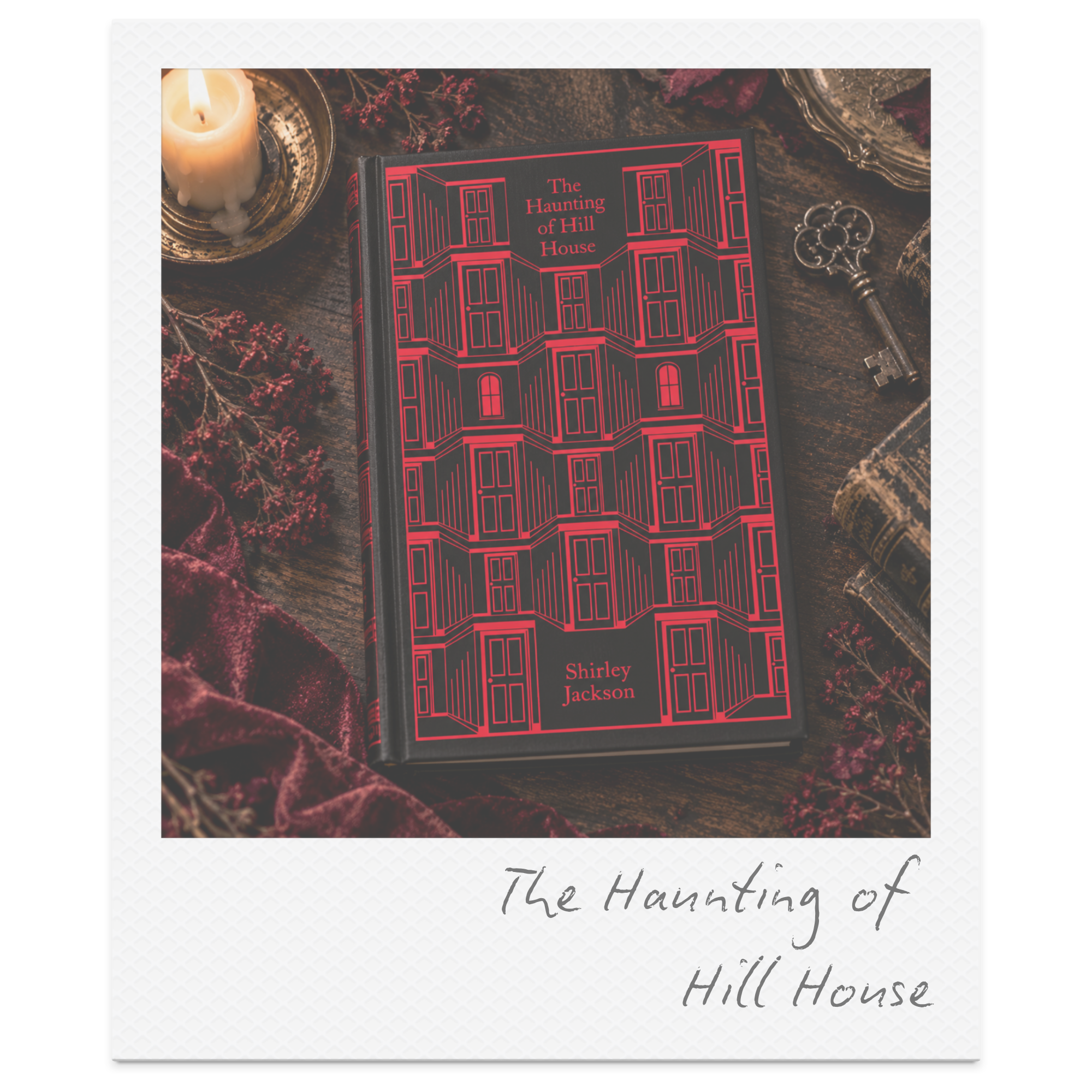
1. Shirley Jackson — The Haunting of Hill House: Make the Architecture Itself Feel Threatening
What Is The Haunting of Hill House About?
First published in 1959, Shirley Jackson's The Haunting of Hill House is one of the most influential works of twentieth-century Gothic fiction, renowned for its unsettling atmosphere, psychological complexity and extraordinary treatment of the haunted house as something far more disturbing than a conventional supernatural setting.
The novel follows Eleanor Vance, a lonely and emotionally vulnerable woman who has spent much of her adult life caring for her demanding mother. Following her mother's death, Eleanor finds herself without a clear sense of purpose, independence or belonging. When she receives an invitation to participate in a paranormal investigation at Hill House, she sees an opportunity to escape the restrictions of her ordinary existence and experience something entirely her own.
The investigation is organised by Dr John Montague, a scholar interested in supernatural phenomena who hopes to gather evidence of the house's reputation for paranormal activity. Eleanor joins a small group consisting of Theodora, a perceptive and unconventional young woman, and Luke Sanderson, a member of the family that owns the property. Together, they enter Hill House, an isolated mansion with a disturbing history and an architectural design that seems to resist the ordinary rules of domestic space.
Almost immediately, the house begins to exert a peculiar influence upon its visitors. Its rooms are difficult to navigate, its corridors seem disorientating, and its doors have an unsettling tendency to close. Strange sounds disturb the occupants at night, unexplained messages appear, and certain areas of the building seem to possess an atmosphere of almost deliberate hostility. Yet the most disturbing aspect of Hill House is not simply the possibility that something supernatural inhabits its rooms. It is the growing suggestion that the building itself might possess a form of awareness.
As the investigation progresses, Eleanor develops an increasingly complicated relationship with Hill House. The mansion frightens her, but it also appears to offer something she has desperately wanted: a place where she might finally belong. Her emotional vulnerability becomes entangled with the building's apparent supernatural activity, making it increasingly difficult to distinguish between the house's influence and Eleanor's own psychological experiences.
Jackson deliberately resists providing straightforward explanations. Readers are left questioning whether Hill House is genuinely haunted, whether the building possesses some form of consciousness, or whether Eleanor's isolation and emotional instability have shaped her interpretation of events. The novel's enduring power lies in the way these possibilities remain inseparable, transforming the haunted house into both a physical environment and a deeply unsettling psychological experience.
Exploring the Technique: Architecture as Psychological Horror
One of Jackson's most remarkable achievements is her ability to make Hill House feel fundamentally wrong before anything explicitly supernatural occurs. Rather than relying upon familiar Gothic imagery such as broken windows, cobweb-covered furniture or decaying corridors, she establishes unease through the building's architecture. Hill House is not simply an old mansion with a frightening reputation; its very construction appears to undermine the ordinary relationship between people and the spaces they inhabit.
The building's unusual angles and subtly distorted proportions create an environment that is difficult to understand or navigate. Rooms and corridors seem to resist the occupants' attempts to orient themselves, while doors close in ways that make the building feel strangely uncooperative. These architectural irregularities are particularly effective because they disturb something readers ordinarily accept without question: the reliability of physical space. A house should possess an understandable arrangement of rooms, corridors, staircases and exits. When these familiar relationships become uncertain, the building itself begins to feel threatening.
Jackson's approach demonstrates that architectural description can create psychological horror without requiring an obvious supernatural event. A corridor does not need to transform dramatically before the reader becomes uncomfortable. It may be enough for its proportions to feel slightly incorrect, or for a character to discover that navigating between two familiar rooms is unexpectedly difficult. Such disturbances create a persistent sense of disorientation, encouraging readers to question whether the building is physically unusual, supernaturally altered or simply affecting the perceptions of those who enter it.
Hill House also possesses an extraordinary sense of personality. Jackson's descriptions frequently encourage readers to interpret its architectural features as expressions of something almost human, giving the building an impression of watchfulness, hostility and intention. Its windows, doors and interior arrangements seem capable of influencing the experiences of its inhabitants, while its enclosed spaces create the uncomfortable suggestion that the characters are not merely exploring the mansion but being observed and contained by it. This personification remains effective because it emerges from the physical structure of the house rather than from exaggerated claims that the building is alive.
Sensory description strengthens this impression. The cold spot outside the nursery is a particularly memorable example of how Jackson transforms an ordinary architectural threshold into a source of supernatural uncertainty. The temperature changes so dramatically that the characters experience the disturbance physically, even though its cause remains unexplained. Elsewhere, unexplained knocking, voices and sounds travelling through the building create the impression of activity beyond the characters' immediate field of vision. The house becomes an environment that must be listened to, felt and cautiously interpreted, rather than simply observed.
What makes these techniques especially compelling is their connection to Eleanor's psychological development. Her loneliness, longing for affection and desire for independence shape the way she experiences Hill House. As the novel progresses, the building becomes increasingly associated with the possibility of belonging, even while its apparent hostility intensifies. This contradiction gives the setting an emotional complexity that extends far beyond conventional haunted house imagery. Hill House is frightening not only because it may contain a supernatural presence, but because it seems capable of offering Eleanor something she cannot find elsewhere.
For writers, this relationship between architecture and psychology is particularly valuable. Jackson demonstrates that a haunted house can reflect, exploit or intensify a character's emotional vulnerabilities without becoming a simplistic symbol of their mental state. The building remains a convincing physical environment, complete with rooms, doors, corridors and sensory disturbances, while simultaneously acquiring a deeper psychological significance. Its architecture becomes part of the story's conflict, influencing how characters move, what they believe and how they understand themselves.
What Can Writers Learn from Shirley Jackson?
The most important lesson from The Haunting of Hill House is that a haunted building becomes more compelling when its architecture influences the characters' experiences rather than merely providing a location for frightening events. Jackson does not depend upon constant apparitions or dramatic supernatural encounters. Instead, she establishes a persistent sense of uncertainty through the relationship between physical space, sensory perception and psychological vulnerability.
Writers can apply this technique by introducing subtle architectural irregularities into otherwise believable settings. A staircase might contain an unexpected number of steps, a corridor might appear longer when travelled in the opposite direction, or a familiar doorway might lead to a room that seems slightly different from the one the character remembers. These details become especially effective when they begin as minor inconsistencies that the protagonist can reasonably dismiss. As the disturbances accumulate, the reader's confidence in the building's physical reliability gradually deteriorates.
Jackson also demonstrates the importance of allowing a setting to influence character behaviour. A haunted house should not simply surround its inhabitants with frightening imagery; it can alter their decisions, movements and relationships. A character might begin avoiding a particular corridor without understanding why, repeatedly return to a room associated with a childhood memory, or discover that the building seems to guide them towards places they would rather not explore. Through these interactions, the setting becomes an active component of the narrative rather than a decorative backdrop.
Another valuable technique is the use of sensory disturbances that remain difficult to explain. Unexplained sounds, sudden changes in temperature and the uncomfortable impression of being watched can create sustained tension because they offer evidence of something unusual without identifying its source. Writers should consider how a character's physical experience of a room might change before anything visibly supernatural occurs. A doorway that feels unnaturally cold or a corridor where every sound seems muffled can establish unease while preserving uncertainty.
Perhaps the most sophisticated lesson, however, concerns the emotional relationship between a character and a haunted setting. Eleanor's experience of Hill House is inseparable from her longing for belonging, making the mansion simultaneously frightening and strangely appealing. Writers can create similar complexity by considering what their protagonists desire and how a particular building might appear to recognise or exploit that desire. A lonely character might encounter a house that seems welcoming, a grieving character might discover rooms preserved exactly as they remember them, or someone burdened by guilt might find that the building repeatedly confronts them with reminders of the past.
Ultimately, Jackson teaches writers that the most effective haunted houses are not necessarily those containing the most terrifying supernatural entities. They are buildings whose physical qualities, sensory disturbances and emotional associations gradually undermine the characters' understanding of the world around them. When architecture itself becomes a source of uncertainty, the house can feel threatening even during moments when nothing visibly frightening occurs.
Try It Yourself: The House That Refuses to Behave
Imagine a character returning to a house they know intimately. It might be their childhood home, a family property or a building they have visited hundreds of times. Begin by describing the interior as they remember it, establishing the staircase, hallway, windows, doorways and arrangement of rooms through precise architectural details. Give readers enough information to understand the building's ordinary layout before introducing anything unusual.
Next, introduce three increasingly disturbing irregularities. The first should be almost dismissible: a door opening in the wrong direction, a staircase containing one additional step or a window appearing slightly narrower than the character remembers. The second should interfere with the character's movement through the house, perhaps by making a familiar corridor unexpectedly difficult to navigate. The final disturbance should suggest an architectural impossibility that cannot be explained through faulty memory or ordinary deterioration.
Your challenge is to write 250–350 words without introducing a visible ghost or explaining why the building is changing. Concentrate on the character's physical experience of the space, using sight, sound, touch and subtle disorientation to create an atmosphere of increasing uncertainty. Consider how the character's personal memories of the house might make these changes more emotionally disturbing.
Explore the Book
For writers interested in psychological horror, Gothic architecture and the relationship between setting and character, Shirley Jackson's The Haunting of Hill House offers an exceptional example of how a building can become one of the most important presences in a story. Its carefully constructed atmosphere demonstrates that effective haunted house description depends less upon filling rooms with frightening objects than upon gradually undermining the reader's confidence in familiar domestic spaces.
Jackson's novel is particularly valuable for understanding how architectural details, sensory disturbances and emotional vulnerability can work together to create sustained psychological tension. Whether you're developing an abandoned mansion, an isolated country house or a seemingly ordinary family home, its techniques offer inspiration for creating settings that feel physically convincing while remaining deeply unsettling.
Explore Shirley Jackson's The Haunting of Hill House on Amazon.
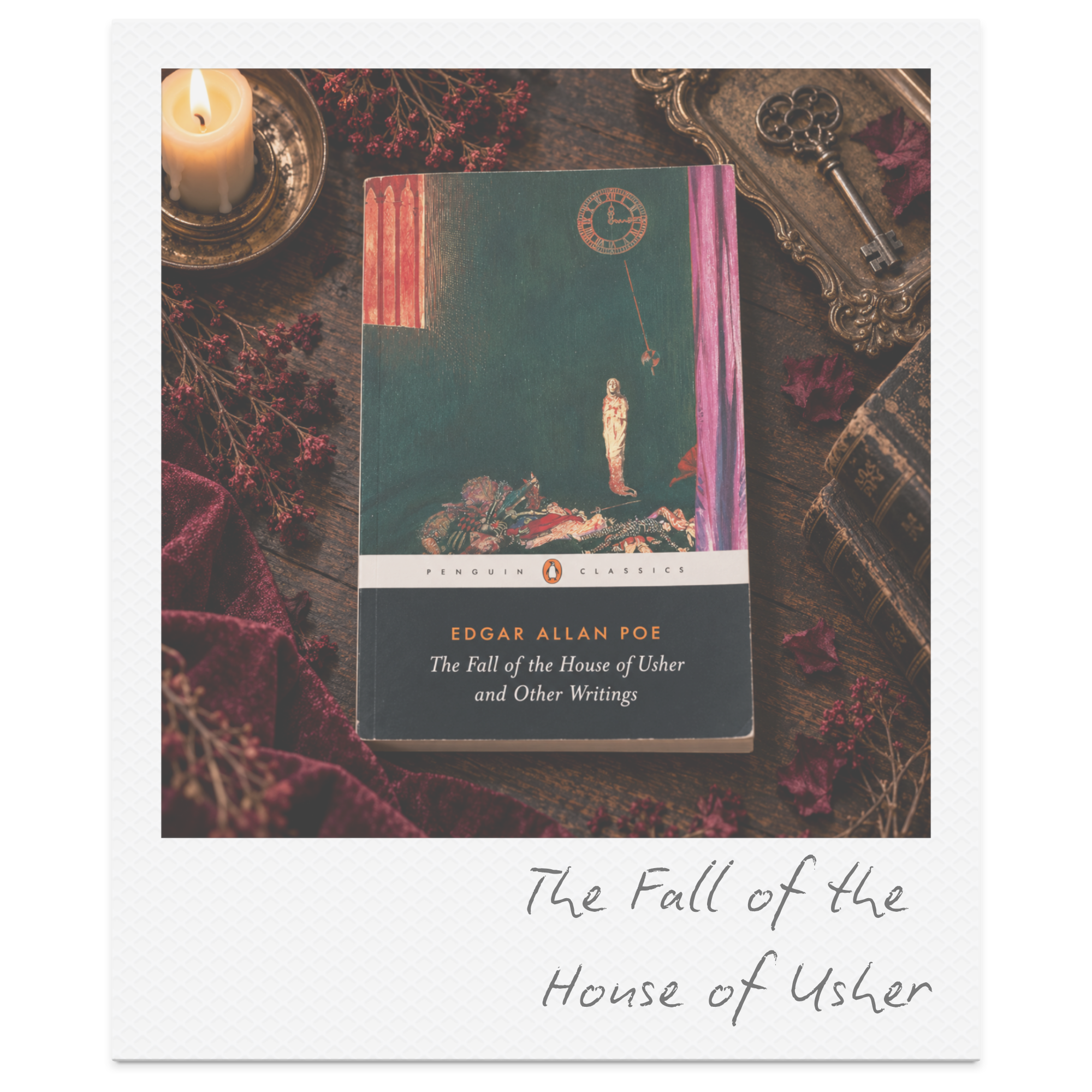
2. Edgar Allan Poe — The Fall of the House of Usher: Use Physical Decay to Reflect Psychological Deterioration
What Is The Fall of the House of Usher About?
First published in 1839, Edgar Allan Poe's The Fall of the House of Usher is one of the defining works of Gothic fiction, renowned for its oppressive atmosphere, elaborate descriptive imagery and extraordinary relationship between architecture, psychological deterioration and hereditary decline.
The story follows an unnamed narrator who receives an urgent letter from his childhood friend, Roderick Usher, requesting his companionship during a period of severe physical and emotional distress. Concerned by the desperate nature of the invitation, the narrator travels to the Usher family's ancestral mansion, an isolated building surrounded by a bleak landscape and a dark, stagnant tarn.
From the moment he approaches the property, the narrator experiences an overwhelming sense of unease. The mansion's discoloured walls, vacant windows, decaying vegetation and oppressive surroundings create an atmosphere of almost unbearable melancholy. Although the building remains structurally intact, its individual stones show unmistakable signs of deterioration, and a narrow fissure extends down its exterior towards the dark water below.
Inside, the narrator discovers that Roderick has become increasingly consumed by nervous agitation, sensory hypersensitivity and an intense fear of his own impending death. His twin sister, Madeline, suffers from a mysterious illness characterised by physical deterioration and periods of cataleptic immobility. As her condition worsens, Roderick becomes increasingly isolated, retreating into music, painting and obsessive contemplation of the mansion's apparent influence upon his family.
Following Madeline's apparent death, Roderick persuades the narrator to help temporarily entomb her body within a vault beneath the house. In the days that follow, the atmosphere grows increasingly oppressive, while Roderick's behaviour becomes more disturbed. During a violent storm, the narrator attempts to distract his friend by reading aloud, only to discover that sounds described within the fictional tale appear to correspond with noises emerging from elsewhere in the mansion.
The story culminates in a devastating revelation and the literal destruction of the ancestral house, bringing the physical building and the Usher family line to a simultaneous end.
What makes Poe's story particularly valuable for writers is the extraordinary degree to which its setting participates in the narrative. The mansion does not simply contain the suffering of its inhabitants; its deterioration appears inseparable from their physical, psychological and familial decline. The title itself operates on two levels, referring both to the ancestral building and to the family whose identity has become bound to its existence.
Exploring the Technique: Physical Decay as a Reflection of Psychological Collapse
One of Poe's most distinctive techniques is his use of the physical environment to establish an emotional atmosphere before the narrator encounters the story's central characters. The opening description of the Usher mansion is carefully constructed to create a sense of melancholy that appears to arise directly from the landscape and architecture. Rather than describing an obviously ruined building, Poe presents a structure whose appearance produces an emotional response that the narrator struggles to explain.
The mansion's exterior is characterised by discoloured stone, fungal growth, decaying vegetation and windows that seem almost human in their vacant expression. The surrounding tarn reflects the building and its bleak landscape, creating a second, inverted image of the house that intensifies the narrator's discomfort. This reflection is especially significant because it introduces the idea of doubling, a recurring feature of the story that also emerges through the relationship between Roderick and Madeline Usher.
Poe's descriptions demonstrate how carefully selected visual details can communicate psychological unease without explicitly revealing its cause. The narrator recognises that the mansion's individual features are not necessarily extraordinary, yet their arrangement produces a feeling of profound distress. This is an important lesson for Gothic writers: atmosphere can emerge from the relationship between ordinary objects, architectural features and environmental conditions rather than from any single obviously frightening detail.
The house's physical condition also reflects the deteriorating state of the Usher family. Its masonry remains standing, but the individual stones are weakened by age and decay. This contradiction between apparent structural stability and underlying deterioration parallels Roderick's own condition. He remains alive and intellectually active, yet his physical health, emotional stability and ability to tolerate ordinary sensory experiences are steadily collapsing.
The narrow fissure running down the exterior of the mansion is particularly important. Initially, it appears to be a minor architectural imperfection, almost insignificant when compared with the building's imposing appearance. Yet its presence suggests that the structure's apparent stability is deceptive. By the conclusion, the fissure becomes the site of the mansion's catastrophic destruction, transforming an early descriptive detail into a powerful symbol of the family's disintegration.
For writers, this demonstrates the value of introducing physical deterioration that possesses both an immediate descriptive function and a deeper narrative significance. A crack in a wall might initially establish the age of a building, but it can also suggest a fracture within a family, a concealed history or an approaching catastrophe. When the detail returns later in the story, its meaning can develop alongside the narrative.
Poe also makes extensive use of the relationship between interior spaces and psychological confinement. The mansion's dark passages, elaborate furnishings, oppressive rooms and underground vault contribute to an environment that feels increasingly removed from the ordinary world. These interiors reflect Roderick's withdrawal from society and his growing inability to escape the influence of his ancestral home. The building becomes both a physical residence and a representation of psychological entrapment.
Sensory description is central to this effect. Roderick's extreme sensitivity to light, sound, texture and other physical sensations makes the surrounding environment a source of almost continuous suffering. Ordinary experiences become intolerable, transforming the mansion's atmosphere into something that seems to act directly upon his nervous system. This connection between sensory perception and psychological distress allows Poe to create an unusually intimate relationship between character and setting.
The story's final sequence offers another remarkable example of sensory writing. As the narrator reads aloud during the storm, the sounds described in the fictional narrative begin to correspond with disturbances occurring within the mansion. The distinction between imagined events and physical reality becomes increasingly uncertain, while the reader is encouraged to listen alongside the characters. The accumulation of sounds prepares the revelation of Madeline's return and the collapse of the house itself.
Through these techniques, Poe creates a setting in which architecture, landscape, sensory experience and psychological deterioration reinforce one another. The mansion's decay is not simply decorative Gothic imagery; it forms part of the story's structure, symbolism and emotional development.
What Can Writers Learn from Edgar Allan Poe?
The most important lesson from The Fall of the House of Usher is that the physical condition of a haunted building can reflect the emotional and psychological condition of the people connected to it. Poe's mansion possesses a history and atmosphere that seem inseparable from the decline of its inhabitants, allowing the setting to communicate ideas that might otherwise require lengthy explanation.
Writers can adapt this technique by selecting architectural details that correspond with the central conflicts of their stories. A family divided by resentment might inhabit a house whose rooms have gradually been separated by locked doors and sealed passages. A character struggling with grief might return to a property where water damage has spread through the walls, destroying photographs, letters and other reminders of the past. A household concealing a long-standing secret might occupy a building whose exterior remains immaculate while its foundations slowly deteriorate.
Poe also demonstrates the importance of making a building's surrounding landscape part of its atmosphere. The tarn, decaying trees and oppressive weather surrounding the Usher mansion contribute to the narrator's emotional response before he enters the property. The landscape establishes isolation and reinforces the building's association with stagnation and decline. Writers developing their own Gothic settings should consider how gardens, forests, water, weather and neighbouring structures might reflect or intensify the emotional qualities of the house itself.
Another valuable lesson concerns the use of recurring visual details. The fissure in the mansion's exterior is introduced early, but its significance becomes fully apparent only at the story's conclusion. This creates a sense of structural unity, allowing the physical environment to foreshadow later events. A writer might introduce a damaged staircase, a spreading stain, a cracked mirror or an unstable ceiling that gradually acquires greater significance as the narrative progresses. The detail should remain believable within the setting while also contributing to the story's developing themes.
The relationship between sensory experience and psychological vulnerability is equally important. Roderick's hypersensitivity makes ordinary sounds, textures and lighting conditions sources of distress, demonstrating how the same environment can affect different characters in radically different ways. Rather than describing a haunted room as universally frightening, writers can consider how its sensory qualities interact with a particular character's memories, fears or emotional state. A sound that one character barely notices might be unbearable to another because of its association with a traumatic event.
Finally, Poe demonstrates that physical decay becomes especially powerful when it develops alongside the narrative. The Usher mansion's deterioration is not merely an introductory description that readers are expected to remember. Its structural weakness becomes increasingly significant until the building's destruction provides a physical conclusion to the family's collapse. This relationship between setting and plot can give Gothic fiction a stronger sense of inevitability, making the environment feel essential to the story rather than interchangeable with any other haunted location.
For contemporary writers, the central challenge is to make the physical environment meaningful without turning every architectural detail into an obvious symbol. A neglected room should still feel like a convincing room, with believable materials, textures and evidence of deterioration. Its symbolic significance should emerge through the characters' experiences and the story's progression, allowing readers to discover connections rather than having them explained immediately.
Try It Yourself: The House That Is Falling Apart
Imagine an ancestral house occupied by the last surviving members of a family whose relationships have become increasingly strained. The building was once impressive, but years of neglect have begun to reveal structural weaknesses that its inhabitants refuse to acknowledge.
Begin by describing the exterior of the property, selecting three specific signs of deterioration. These might include a widening crack in the masonry, discoloured stonework, a collapsing garden wall or vegetation spreading through the foundations. Consider how the surrounding landscape reinforces the building's condition, using weather, water, trees or neglected gardens to establish an atmosphere of gradual decline.
Next, move inside the house and introduce sensory details that suggest its deterioration has become more severe. Describe the smell of damp plaster, the sound of water travelling through concealed spaces or the texture of wood that has begun to soften beneath the character's touch. Connect these observations to the emotional condition of the person living there, allowing the setting to suggest something about their isolation, guilt, resentment or fear.
Your challenge is to write 300–400 words in which the house's physical deterioration reflects a character's psychological decline without directly stating the connection. Introduce one apparently minor structural defect that could become significant later in the story, and end the passage with a detail suggesting that the building's condition is worsening more quickly than anyone expected.
Explore the Story
For writers interested in Gothic symbolism, atmospheric description and the relationship between setting and psychological deterioration, Edgar Allan Poe's The Fall of the House of Usher offers an exceptional example of how a building can become inseparable from the narrative's central themes.
Poe's descriptions demonstrate that physical decay can communicate emotional instability, inherited suffering and the gradual collapse of a family long before these ideas are explicitly revealed through dialogue or action. His use of landscape, architectural detail and recurring imagery provides valuable inspiration for writers developing haunted mansions, deteriorating ancestral homes and Gothic settings shaped by unresolved histories.
Explore Edgar Allan Poe's The Fall of the House of Usher on Amazon.

3. Susan Hill — The Woman in Black: Use Isolation, Landscape and Sound to Create Supernatural Dread
What Is The Woman in Black About?
First published in 1983, Susan Hill's The Woman in Black is a modern Gothic ghost story that draws upon the traditions of nineteenth-century supernatural fiction. Through its isolated setting, carefully controlled sensory description and gradual revelation of a tragic history, the novel demonstrates how an atmosphere of dread can emerge from the relationship between a haunted building and the landscape surrounding it.
The story follows Arthur Kipps, a young London solicitor sent to the remote market town of Crythin Gifford to settle the affairs of Alice Drablow, a recently deceased widow. Mrs Drablow lived alone at Eel Marsh House, an isolated property situated beyond a tidal causeway and surrounded by an expansive landscape of marshes, mudflats and unpredictable coastal waters. Although Arthur initially approaches the assignment as an ordinary professional responsibility, he soon discovers that the house and its former occupant are associated with a history that the local community is deeply reluctant to discuss.
During Mrs Drablow's funeral, Arthur notices a mysterious woman dressed entirely in black, whose appearance provokes an unexpectedly fearful reaction from those around him. His attempts to discover her identity are met with evasions and discomfort, establishing a sense of secrecy before he has even visited the house. When he eventually travels across the Nine Lives Causeway to Eel Marsh House, he finds a building whose apparent isolation is intensified by the surrounding marshland and the knowledge that the incoming tide can sever its connection to the mainland.
As Arthur begins sorting through Mrs Drablow's papers, he experiences a series of increasingly disturbing events. A sudden sea mist obscures the causeway, leaving him disoriented and vulnerable to the surrounding marshes. From somewhere within the fog, he hears the sounds of a pony and trap in distress, accompanied by the cries of a terrified child. Yet the accident remains invisible, and Arthur is unable to locate its source or offer assistance.
Further disturbances occur within Eel Marsh House itself. Unexplained sounds emerge from a previously locked room, and Arthur eventually discovers a nursery containing children's belongings and a rocking chair that appears to move without an occupant. The room's preservation suggests an attachment to the past that has never been resolved, while the mysterious woman continues to appear in circumstances that increasingly challenge Arthur's rational understanding of events.
As the history of the house gradually emerges through letters, conversations and disturbing experiences, Arthur discovers that its haunting is connected to grief, separation and a terrible tragedy involving a child. What initially appeared to be a straightforward legal assignment becomes an encounter with a supernatural presence whose influence extends beyond the physical boundaries of Eel Marsh House.
For writers, the novel is particularly valuable because Hill demonstrates that a haunted house does not need to be constantly filled with supernatural activity to become frightening. Much of its atmosphere develops through the isolation of the property, the uncertainty created by its surrounding landscape and the terrifying possibilities suggested by sounds whose sources remain concealed.
Exploring the Technique: Isolation, Landscape and the Terror of Unseen Sounds
One of Hill's most effective techniques is her use of the surrounding landscape to establish vulnerability before Arthur encounters the most disturbing aspects of Eel Marsh House. The property is not merely situated in a remote location; its geographical position creates a practical and psychological separation from the ordinary world. The Nine Lives Causeway provides access to the house only when the tide permits, meaning that the landscape itself determines when Arthur can arrive, leave or seek assistance.
This is a particularly effective approach to Gothic setting because isolation becomes more than a descriptive quality. It directly influences the character's choices and circumstances. Arthur cannot simply walk away from the house whenever he becomes uncomfortable, and the possibility of being trapped by the rising tide introduces a realistic danger that exists independently of the supernatural haunting. The environment therefore creates suspense even during moments when nothing inexplicable is occurring.
The surrounding marshland also allows Hill to develop an atmosphere of deceptive beauty. The open landscape initially offers a sense of space and distance, contrasting with the enclosed interiors of more traditional Gothic mansions. Yet its apparent openness provides little reassurance. The marshes are difficult to navigate, the ground can be treacherous, and the shifting relationship between land and water makes the environment unpredictable. What might appear peaceful in clear weather becomes threatening when visibility deteriorates or the tide begins to rise.
Hill's use of sea mist is especially important because it transforms the landscape through a change in sensory perception. The physical environment remains broadly the same, but Arthur's ability to understand it is dramatically reduced. Familiar landmarks disappear, distances become difficult to judge, and the causeway no longer provides the reassuring sense of direction it offered during his arrival. The mist creates uncertainty by concealing information that Arthur needs in order to remain safe.
This is a valuable lesson for descriptive writers. A setting does not need to undergo a supernatural transformation to become frightening. Sometimes, a change in visibility, weather or sound is enough to make an ordinary environment feel unfamiliar. A garden that appears harmless in daylight may become disorientating beneath heavy fog. A familiar corridor may seem threatening when its lights fail. A coastal path may become dangerous when the sound of approaching water reveals that the tide is rising faster than expected.
Hill develops this sensory uncertainty further through her use of sound. One of the novel's most disturbing sequences occurs when Arthur hears the apparent accident involving a pony and trap somewhere within the mist-covered marshes. The sounds suggest a recognisable event: the movement of a horse-drawn vehicle, an animal in distress and the desperate cries of a child. Yet Arthur cannot see what is happening, determine its precise location or intervene.
The horror of this sequence emerges partly from the contrast between what Arthur can hear and what he cannot know. The sounds are specific enough to suggest an immediate human tragedy, but the mist prevents him from confirming the event or understanding its circumstances. His inability to act creates a powerful sense of helplessness, while the eventual discovery that the sounds belong to an earlier tragedy gives them a significance that extends beyond the immediate scene.
This demonstrates why auditory imagery can be especially effective in haunted house fiction. A visible apparition provides readers with information about its appearance and location, but an unexplained sound encourages the imagination to supply what remains concealed. A child crying behind a locked door, footsteps travelling through an empty upper floor or the sound of furniture moving in an abandoned room can become more disturbing when the writer refuses to reveal the source immediately.
Hill also uses repetition to transform particular sounds into sources of anticipation and dread. The recurring noises associated with the marshland tragedy acquire greater significance as Arthur begins to understand the history of Eel Marsh House. What initially appears to be an isolated disturbance gradually becomes evidence of an event that the supernatural presence seems unable or unwilling to leave behind. The repeated sounds connect the physical landscape to the emotional history of the haunting, allowing the past to intrude upon the present through sensory experience.
Within Eel Marsh House, the nursery provides a different but equally effective example of Gothic atmosphere. Unlike the exposed marshland, the nursery is an enclosed domestic space associated with childhood, care and security. Its preserved contents suggest a life interrupted and a grief that has remained unresolved. The movement of the rocking chair becomes disturbing precisely because the object itself is ordinary. Its familiar association with comforting a child contrasts with the absence of anyone who might be using it.
The nursery also demonstrates Hill's ability to combine supernatural suspense with emotional significance. The room's contents are not simply decorative objects selected to make the house appear frightening. They are connected to the history of its former occupants and gradually acquire meaning as Arthur uncovers the circumstances of the haunting. The setting therefore performs several functions simultaneously: it establishes atmosphere, provides clues, evokes sympathy and becomes the location of disturbing supernatural activity.
Another important feature of Hill's approach is the contrast between Eel Marsh House and the nearby community. Crythin Gifford represents the possibility of ordinary human contact, conversation and assistance, yet the townspeople's reluctance to discuss the house creates a different kind of isolation. Arthur is surrounded by people who appear to know more than they are willing to reveal, leaving him intellectually isolated even when he is no longer physically alone.
Through these techniques, Hill creates a haunted setting in which geography, weather, sound, domestic objects and concealed history work together. Eel Marsh House is frightening not simply because a ghost appears there, but because its location makes escape uncertain, its surrounding landscape conceals danger and its rooms preserve evidence of suffering that continues to affect the present.
What Can Writers Learn from Susan Hill?
The most important lesson from The Woman in Black is that a haunted house becomes more threatening when its surrounding environment creates genuine obstacles to safety, movement and understanding. Hill's marshland setting does not merely provide atmospheric scenery. The tides, causeway and unpredictable weather influence Arthur's decisions, restrict his movements and make the possibility of escape increasingly uncertain.
Writers can apply this technique by considering how the location of a haunted building might affect the characters' ability to leave or seek assistance. A mountain house might become inaccessible during heavy snowfall, while an isolated coastal property could be cut off by rising water. A mansion surrounded by dense woodland might become difficult to navigate after dark, and an abandoned building in a remote valley might lose contact with the outside world during a storm. These circumstances create believable practical dangers that can intensify supernatural suspense without requiring constant paranormal activity.
Hill also demonstrates the value of making landscape descriptions dynamic. The marshes are not frightening simply because they are remote or desolate; their appearance and accessibility change according to weather and tide. This creates opportunities for atmospheric progression. A location that initially appears beautiful or peaceful can gradually become threatening as conditions deteriorate. Writers should consider how changing light, temperature, visibility and weather might transform a setting over the course of a scene, allowing the environment to contribute directly to the development of tension.
The novel offers an equally important lesson in auditory description. Hill's use of the unseen pony and trap demonstrates that readers do not need to witness a frightening event in order to experience its emotional impact. Sounds can suggest movement, suffering and danger while leaving crucial information concealed. A writer might describe a heavy object being dragged across an inaccessible floor, the sound of water splashing in an empty cellar or a familiar voice calling from beyond a locked door. The effectiveness of these details depends upon their specificity and the uncertainty surrounding their source.
Repetition is another technique worth adapting. A sound that occurs once may be dismissed as an unexplained disturbance, but a sound that returns under particular circumstances can become part of the story's developing mystery. Writers might establish a recurring sequence of knocks, a distant bell that rings whenever a certain room is entered or the faint sound of a child laughing at the same time each evening. As the narrative progresses, the recurring detail can acquire new meaning through discoveries about the building's history.
Perhaps the most emotionally significant lesson concerns the relationship between haunting and memory. The nursery at Eel Marsh House is disturbing because its ordinary domestic contents are connected to grief and unresolved suffering. The supernatural activity does not exist separately from the setting's history; it emerges from the experiences associated with that place. Writers can develop similar effects by allowing rooms and objects to preserve evidence of former inhabitants, particularly when those objects possess emotional significance. An abandoned dining room might retain the place setting of a missing family member, while a neglected bedroom might contain possessions carefully preserved by someone unable to accept a death.
Hill's approach also demonstrates the importance of restraint. Although the novel contains frightening supernatural encounters, much of its suspense develops through anticipation, isolation and uncertainty. The reader becomes increasingly sensitive to ordinary environmental details because the narrative has established that those details may conceal something disturbing. The movement of a chair, a sound beyond a door or a sudden change in weather becomes meaningful within the larger atmosphere of the story.
For writers developing their own haunted houses, the central principle is to make the setting's physical circumstances essential to the narrative. The building's location should influence what characters can do, its sensory environment should shape what they can perceive, and its history should give significance to the disturbances they experience. When these elements work together, even a quiet scene of exploration can create sustained supernatural dread.
Try It Yourself: The House Beyond the Causeway
Imagine a haunted house situated in a location that becomes inaccessible under particular environmental conditions. It might stand on an island connected to the mainland by a narrow causeway, occupy a remote mountain pass vulnerable to snowfall or lie beyond a woodland path that floods during heavy rain.
Begin by describing the journey towards the building, establishing the surrounding landscape through precise visual and auditory details. Allow the setting to appear initially manageable, perhaps even beautiful, before introducing the environmental conditions that could make escape difficult. Consider how changing weather, fading daylight or rising water might gradually transform the character's understanding of the location.
Once the character reaches the house, introduce an unexplained sound somewhere beyond their field of vision. The noise should suggest a recognisable event, such as footsteps approaching across wet ground, a child calling from the surrounding landscape or the movement of a vehicle along a road that has been abandoned for decades. Use the environment to prevent the character from identifying the source, allowing the sound to become increasingly disturbing as they attempt to understand what is happening.
Your challenge is to write 300–400 words in which the landscape creates a realistic danger while an unexplained sound introduces the possibility of a supernatural presence. Avoid revealing the source of the noise, and end the passage with a sensory detail suggesting that the disturbance is connected to the house's history.
Explore the Book
For writers interested in traditional ghost stories, atmospheric horror and the relationship between setting and supernatural suspense, Susan Hill's The Woman in Black offers an outstanding example of how landscape and sensory description can create sustained dread.
Hill's treatment of Eel Marsh House demonstrates that isolation becomes most effective when it influences the practical circumstances of the story, while her use of mist, recurring sounds and preserved domestic spaces shows how ordinary sensory experiences can acquire disturbing supernatural significance. The novel is particularly valuable for writers who want to develop haunted settings that feel physically convincing, emotionally resonant and deeply connected to the histories of their former inhabitants.
How to Write Your Own Haunted House Description: A Step-by-Step Guide
Describing a haunted house effectively requires more than choosing frightening adjectives or filling an abandoned building with cobwebs, shadows and unexplained noises. The strongest Gothic descriptions establish a convincing physical environment, introduce carefully selected sensory details and gradually create the impression that something about the setting is profoundly wrong.
The following six steps will help you build an atmospheric haunted house description, whether you're writing a short Gothic scene, a supernatural mystery or an entire horror story.
Step 1: Decide What Makes Your Haunted House Unsettling
Before describing the building, decide what kind of fear you want it to create. A house associated with grief and loss will feel different from one that seems deliberately hostile to its visitors, while an abandoned family home might be unsettling because it preserves evidence of a life that ended unexpectedly.
Consider the building's history, the emotions associated with it and the particular aspect of its existence that makes people uncomfortable. You do not need to explain this history to the reader immediately, but understanding it will help you select descriptive details that contribute to a consistent atmosphere.
For example, a house haunted by unresolved grief might contain carefully preserved bedrooms, faded photographs and furniture arranged for people who are no longer alive. A building that seems predatory might feature narrow corridors, heavy doors and rooms that appear to restrict movement.
Step 2: Establish the Building's Physical Appearance
Begin with the features that make the house recognisable as a real place. Consider its architectural style, size, materials, condition and surrounding landscape. A Victorian manor with weathered stonework and tall sash windows will create a different impression from a neglected farmhouse surrounded by overgrown fields.
Choose a few precise details rather than attempting to describe every feature. The angle of a roof, the condition of the front steps or the arrangement of darkened windows can communicate more atmosphere than a long catalogue of Gothic decorations.
Example:
The house stood beyond a row of neglected yew trees, its pale stone frontage discoloured by years of rain. Most of the windows had been boarded from within, although one remained uncovered on the upper floor. Behind its glass, a pair of faded curtains hung perfectly still.
This description establishes a believable building while introducing a single detail that invites curiosity: the uncovered window.
Step 3: Build Atmosphere Through the Senses
Once the physical setting is established, introduce sensory details that allow readers to experience the environment alongside the character. Sight is important, but sound, smell, touch and even taste can make a haunted house feel more immediate.
Avoid using all five senses mechanically. Instead, select the sensations most relevant to the scene. A damp cellar might be characterised by the smell of stagnant water and the cold texture of its walls, while an abandoned nursery might be defined by its unusual silence and the faint scent of old fabric.
Example:
Inside, the air smelled of wet plaster and something faintly medicinal. Each footstep disturbed the dust along the hallway, yet the sound seemed to disappear before reaching the staircase. When she touched the banister, the wood felt unexpectedly warm beneath her fingers.
Notice how the final detail disrupts the reader's expectations without revealing anything supernatural.
Step 4: Introduce One Detail That Doesn't Belong
An effective haunted house description often becomes unsettling when something ordinary behaves in an unexpected way. Rather than introducing an apparition immediately, consider a small inconsistency that the character notices but cannot explain.
This might be a clock ticking inside an abandoned room, fresh footprints crossing a dusty floor or the smell of recently extinguished candles in a house without electricity. The detail should feel specific enough to be memorable but subtle enough to preserve uncertainty.
Example:
The dining room had been untouched for decades. Dust softened the silver cutlery, and a grey film covered the empty glasses. Yet at the head of the table, one chair had been drawn back from its place, leaving two clean lines across the floorboards.
The disturbed chair suggests recent movement without identifying who, or what, might have caused it.
Step 5: Let the Character's Reactions Shape the Description
A haunted house becomes more compelling when readers understand how its atmosphere affects the person exploring it. Two characters might interpret the same room differently depending on their memories, fears and expectations.
Rather than repeatedly stating that a character feels frightened, reveal their discomfort through physical reactions and changes in behaviour. They might hesitate before opening a door, become unusually conscious of their breathing or avoid looking towards a particular part of the room.
Example:
She had crossed the hallway three times before noticing the narrow door beneath the stairs. There was nothing remarkable about it, except that she remembered it being painted white. Now it was black. She remained at the foot of the staircase, trying to recall whether anyone had mentioned redecorating.
The character's uncertainty makes the architectural detail more disturbing than an immediate declaration of fear.
Step 6: End with an Unanswered Question
When writing a short descriptive passage, resist the temptation to explain every strange detail. An effective ending can leave readers with a new observation that changes their understanding of the scene.
This might involve an unexpected sound, a change in the building's appearance or evidence that the character is not alone. The strongest final details often connect to something established earlier, giving the passage a sense of deliberate progression.
Example:
She returned to the entrance hall, relieved to see daylight beyond the front door. Only when she reached for the handle did she notice the muddy footprints crossing the tiles. They began at the staircase, passed directly behind where she stood, and ended at the door.
The description leaves readers to imagine what moved through the house and whether it might still be nearby.
Putting It All Together: A Haunted House Description Example
The following passage combines physical description, sensory detail, psychological uncertainty and a gradual supernatural suggestion.
The house stood at the end of a narrow gravel drive, half-concealed behind the bare branches of an ancient beech tree. Its windows were tall and dark, and the stone steps leading to the entrance had sunk unevenly into the earth. Someone had once planted roses along the front wall, but their blackened stems now tangled around the iron railings.
Inside, the hallway smelled of damp wood and extinguished candles. A grandfather clock stood beside the staircase, its hands stopped at twenty minutes past three. Somewhere overhead, water dripped at irregular intervals, although the ceiling showed no sign of a leak.
She moved towards the drawing room, brushing her fingertips against the faded wallpaper. Beneath the peeling surface, the plaster felt strangely warm. She withdrew her hand and listened. The dripping had stopped.
Across the room, an oval mirror reflected the open doorway behind her. She glanced towards it, expecting to see the empty hallway.
The hallway was empty. But in the reflection, the grandfather clock was ticking.
The passage begins with a recognisable, deteriorating house before introducing sensory inconsistencies. The warm plaster and interrupted dripping gradually suggest that the building is behaving unnaturally, while the final reflection creates a supernatural possibility without explaining it.
The key is progression: establish what is ordinary, introduce something subtly wrong, and allow the reader's imagination to make the disturbance frightening.
Five Haunted House Descriptive Writing Exercises to Build Gothic Atmosphere
The best way to develop atmospheric descriptive writing is to experiment with how a setting influences the reader's senses, expectations and emotions. These five exercises explore different approaches to haunted house description, from creating tension through sound to transforming familiar domestic spaces into something deeply unsettling.
Each challenge focuses on a particular technique, encouraging you to develop original Gothic imagery rather than relying upon conventional descriptions of darkness, cobwebs and creaking floorboards.
1. The House You Can Hear but Cannot See
Focus: Auditory imagery, suspense and the unseen
Your character enters an abandoned house during a complete power failure. The windows have been boarded shut, and their torch stops working almost immediately. They must navigate the building using sound, touch and their memory of the rooms they passed through before the lights disappeared.
Describe the building without relying upon visual imagery. Consider how footsteps change between carpeted rooms and bare floorboards, how distant noises travel through walls, and how silence might become unsettling when the character expects to hear something.
Introduce three distinct sounds, each suggesting a different possibility. One might have an ordinary explanation, another might indicate movement elsewhere in the house, and the final sound should challenge the character's understanding of their surroundings.
Writing challenge: Write 250 words using no visual descriptions. End with a sound that reveals something has entered the room without the character noticing.
2. A Room Preserved in Time
Focus: Sensory contrast, nostalgia and emotional atmosphere
Your character discovers a locked room inside a long-abandoned house. Unlike the rest of the building, this room appears almost perfectly preserved. Its furniture remains carefully arranged, its surfaces are clean, and familiar domestic objects suggest that someone expected to return.
Choose a particular room, such as a nursery, bedroom, dining room or study, and establish its original purpose through specific objects. Think about the emotional associations of those belongings and how their preservation might become increasingly uncomfortable.
Rather than introducing an obvious ghost, allow one small sensory detail to suggest that the room is not entirely untouched. Perhaps the bedclothes retain a faint warmth, fresh flowers stand in a vase or a recently extinguished candle leaves a trace of smoke in the air.
Writing challenge: Write 200–300 words in which a room initially feels comforting but gradually becomes disturbing. Use at least three senses and avoid the words ghost, haunted, terrifying and scary.
3. The House That Remembers
Focus: Personification, architectural imagery and psychological horror
Imagine a house that responds to the memories of the person exploring it. The building does not speak or move in obviously supernatural ways, but its rooms seem to alter according to experiences the character would rather forget.
A character returning to their childhood home might discover that a bedroom door has become unusually difficult to open, that the wallpaper carries the faint smell of a forgotten summer or that a staircase seems longer whenever they approach a particular room.
Choose one significant memory and identify three architectural or sensory details that could evoke it. Allow the house to reveal its apparent awareness gradually, beginning with something the character can dismiss as coincidence.
Writing challenge: Write 300 words in which the building appears to recognise a character's past. Do not reveal the memory directly; allow readers to infer its emotional significance through the setting.
4. From Beautiful to Unsettling
Focus: Contrast, atmosphere and gradual tonal shifts
A haunted house does not have to appear sinister when a character first encounters it. In fact, an attractive or welcoming setting can become particularly disturbing when familiar details begin to acquire unexpected meanings.
Begin with a beautiful house on a clear autumn afternoon. Describe its architecture, gardens and interior using warm, inviting sensory imagery. The building might contain polished wooden floors, sunlight falling across old furniture and the comforting scent of flowers.
Gradually transform the atmosphere without introducing dramatic weather, sudden darkness or a visible supernatural presence. Instead, change the character's interpretation of details already established. The polished floor might reveal faint marks beneath its surface, the flowers might possess an unfamiliar scent, or the sunlight might illuminate something that should not be there.
Writing challenge: Write two descriptions of the same room, each approximately 150 words. The first should feel welcoming; the second should feel threatening. Keep the room's main physical features unchanged.
5. The Final Door
Focus: Pacing, sensory escalation and withheld information
Your character has explored most of an abandoned mansion and discovered nothing that conclusively proves it is haunted. Only one room remains unopened.
Describe their approach to the final door, concentrating on how the building's atmosphere changes as they draw nearer. Consider the temperature of the corridor, the texture of the door handle, the quality of the silence and any unusual smells or sounds emerging from the room.
Use sentence length to control pacing. Longer, more detailed sentences can establish the physical environment, while shorter sentences can emphasise moments of hesitation, discovery or sudden uncertainty. Avoid introducing too many supernatural details at once; allow the tension to develop through the character's growing awareness that something is wrong.
Writing challenge: Write 250–350 words ending at the exact moment the character opens the door. Do not describe what lies beyond it. Your final sentence should create a strong sense of anticipation without relying upon a dramatic cliffhanger or an unexplained scream.
Developing Your Descriptive Writing Further
Once you've completed an exercise, return to your description and identify the details that contribute most effectively to its atmosphere. Look for places where a precise sensory observation could replace a general adjective, where an ordinary object might acquire a more unsettling significance, or where withholding information could strengthen the reader's curiosity.
You can also experiment by rewriting the same passage from a different character's perspective. A house that feels threatening to a stranger might appear comforting to someone who grew up there, while a room associated with happy childhood memories could become deeply disturbing to a character who knows what happened within it.
The aim is not simply to make a building frightening, but to create a setting with a distinctive atmosphere, a believable physical presence and enough unanswered questions to remain in the reader's imagination after the scene has ended.
Go Deeper: Gothic Writing, Haunted Settings & Descriptive Techniques
A memorable haunted house is rarely frightening because of its appearance alone. Its atmosphere emerges from the relationship between architecture, sensory detail, character psychology and the histories concealed within its rooms. Once you've experimented with the techniques in this guide, you can develop them further through Gothic writing prompts, descriptive language exercises and more focused explorations of supernatural settings.
Develop Your Gothic Descriptive Language
If you want to make your descriptions more original and evocative, begin with Figurative Language for Death and Decay. This guide explores 50 metaphors, similes, examples of personification and symbolic descriptions inspired by crumbling mansions, abandoned graveyards, deteriorating objects and the passage of time. It's particularly useful for developing the kind of meaningful architectural imagery found in Edgar Allan Poe's The Fall of the House of Usher.
For a more practical challenge, try Descriptive Writing Sparks, a free interactive generator featuring exercises involving interiors, textures, sounds, smells, light, atmosphere and contrasting scenes. Use it to experiment with describing the same haunted room in different ways, or to practise creating unease without relying on conventional Gothic imagery.
You can also explore the wider Descriptive Writing Prompts collection for exercises involving sensory detail, figurative language, setting and atmosphere across different genres.
Create Haunted Houses with Histories and Secrets
For inspiration focused specifically on supernatural buildings, explore Haunted Houses, a collection of writing ideas centred on isolated spaces, lingering presences, forgotten histories and the secrets concealed within seemingly ordinary homes.
If you'd like to develop an entire Gothic story around your setting, Gothic Story Sparks offers a free interactive generator combining eerie locations, unsettling characters, mysterious objects, dark secrets, opening lines, plot hooks and unexpected discoveries. It's a useful way to turn an atmospheric description into a larger narrative with characters, conflict and mystery.
You might also enjoy Gothic Manor Names, which explores ancestral estates, ruined abbeys, secluded priories and decaying family seats. Giving your haunted house a distinctive name and history can help establish its identity before you begin describing its interiors.
Explore Gothic Literature Through Creative Writing
If Edgar Allan Poe's treatment of architectural decay particularly interested you, continue with The Fall of the House of Usher by Edgar Allan Poe Inspired Prompts. These writing ideas explore family decline, psychological uncertainty, haunted spaces and the relationship between a character's mental state and their physical environment.
Alternatively, Gothic Story Ideas offers a broader collection of inspiration involving haunted manors, ancestral secrets, supernatural mysteries, forgotten villages and tragic family histories. These prompts can help you develop the events, relationships and hidden conflicts that make a Gothic setting meaningful.
For even more inspiration, browse the Gothic Writing Hub or explore the wider Creative Writing Archive, where you'll find genre-based prompts, interactive generators, story ideas and resources for developing original fiction.
Whether you're describing a deserted Victorian mansion, a forgotten family home or a house that seems to possess a consciousness of its own, the most effective Gothic writing begins with careful observation. Give your building a believable physical presence, select sensory details that contribute to its atmosphere, and allow its secrets to emerge gradually through the experiences of the characters who enter it.
Final Thoughts: Bringing Your Haunted House to Life
The most memorable haunted houses are more than frightening buildings. They are places shaped by memory, atmosphere and secrets, where every unfamiliar sound, decaying surface and unexplained detail contributes to the reader's growing unease.
Whether you draw inspiration from Shirley Jackson's unsettling architecture, Edgar Allan Poe's imagery of deterioration or Susan Hill's masterful use of isolation and sound, the key is to make your setting feel both believable and deeply unsettling. Use precise sensory details, allow tension to develop gradually and remember that what remains unseen can often be more frightening than what is revealed.
For more inspiration, explore the Gothic Writing collection, experiment with Gothic Story Sparks, or browse the Creative Writing Archive to discover your next story.
Choose Your Next Adventure