There is a particular kind of fear that belongs to Gothic fiction. It is not the sudden appearance of a monster or the violence of an unexpected attack, but the terrible anticipation of something that has not yet happened. A door stands slightly ajar in a house that has been empty for decades. Footsteps echo along an upstairs corridor, although everyone is gathered downstairs. A woman discovers a letter addressed to her in handwriting she recognises from a gravestone. Nothing has been explained, and that uncertainty is precisely what makes these moments so unsettling.
Gothic suspense thrives on the space between suspicion and revelation. It transforms ordinary details into sources of anxiety, encourages readers to distrust familiar surroundings and allows the imagination to construct horrors far more disturbing than anything immediately revealed. Through isolation, ominous settings, unreliable perceptions, buried secrets and the suggestion of supernatural forces, Gothic writers create an atmosphere in which even silence can feel threatening.
Unlike conventional thriller suspense, which often centres on immediate danger, Gothic suspense frequently develops through psychological unease and the gradual erosion of certainty. A character may be physically safe yet increasingly convinced that something is wrong. A house may conceal a terrible history, a stranger may know something they should not, or an apparently innocent object may acquire a sinister significance. The reader senses that a revelation is approaching, but cannot predict its nature or consequences.
In this guide, you'll discover 10 Gothic Suspense Writing Exercises designed to help you build dread, manipulate pacing, withhold information and create scenes charged with anticipation. Each exercise explores a different technique, with original examples and practical challenges you can adapt to your own stories. We'll also examine how Gothic authors such as Daphne du Maurier, Henry James and Ann Radcliffe use suspense to sustain uncertainty and psychological tension.
Whether you're writing a haunted-house mystery, a Victorian ghost story or a contemporary Gothic novel, these exercises will help you make readers hesitate before turning the page — and then feel compelled to turn it anyway.
For further inspiration, explore our Gothic Writing Hub, discover atmospheric language and imagery in our Descriptive Writing Hub, or browse the Creative Writing Archive for more prompts, exercises and storytelling resources.
What Is Suspense in Gothic Fiction?
Gothic suspense is the deliberate creation of uncertainty, anticipation and psychological unease within a story. Rather than frightening readers through immediate violence or sudden revelations, it encourages them to imagine what might be waiting beyond a locked door, concealed beneath an ordinary conversation or hidden within the history of an apparently respectable family. The threat may be supernatural, entirely human or something the reader cannot yet distinguish.
At its heart, Gothic suspense depends on the relationship between what a character knows, what they suspect and what the reader fears might be true. A distant footstep is unsettling because its source remains unknown. A portrait becomes disturbing when its subject resembles someone who died a century earlier. A locked room inspires dread not because its contents have been revealed, but because someone has taken extraordinary measures to keep them concealed.
How Is Gothic Suspense Different from Horror?
Although Gothic fiction and horror frequently overlap, they do not always create fear in the same way. Horror may confront readers directly with something terrifying, while Gothic suspense often prolongs the anticipation of that confrontation. Its power lies in suggestion, atmosphere and the gradual accumulation of details that appear insignificant until they begin to form a disturbing pattern.
Consider the difference between these two descriptions.
Direct horror:
The creature emerged from beneath the staircase, its pale fingers scraping across the floorboards as it crawled towards Eleanor.
Gothic suspense:
Eleanor had passed the staircase three times that evening. On the fourth, she noticed that the narrow door beneath it stood open. She was certain it had been locked that morning. From the darkness came the soft, unmistakable sound of someone breathing.
The first example reveals the threat immediately, directing the reader's attention towards the creature and the danger it presents. The second withholds that information. The open door, the broken expectation and the unexplained breathing create questions that the reader must carry forward. What is beneath the staircase? How did the door open? Is someone hiding there, or has Eleanor misunderstood what she heard?
Neither approach is inherently better, but Gothic suspense gains much of its power from delaying certainty.
The Four Foundations of Gothic Suspense
Four interconnected elements are particularly important when creating sustained Gothic tension.
1. Anticipation
The reader senses that something significant is approaching, even when the characters cannot identify what it might be. A warning, an approaching storm or a recurring sound can establish the expectation of a disturbing event long before it occurs.
2. Uncertainty
Gothic fiction frequently blurs the distinction between reality and imagination. Characters may misinterpret their surroundings, conceal information or question their own perceptions. Readers become increasingly uneasy because they cannot confidently separate genuine danger from psychological disturbance.
3. Atmosphere
Settings do more than provide a backdrop. Isolated estates, decaying buildings, oppressive weather and unfamiliar rooms can reinforce a character's vulnerability. Even an ordinary domestic space can become threatening when its familiar details begin to change.
4. Delayed Revelation
Information is released gradually, allowing suspicion to deepen before an explanation arrives. A mysterious object might appear early in a story, acquire significance through repeated encounters and only reveal its true purpose much later. The delay gives readers time to imagine possibilities, often making the eventual discovery more powerful.
Why Gothic Suspense Works
One of the most effective features of Gothic suspense is its ability to turn the reader into an active participant. When a writer deliberately leaves something unexplained, the imagination begins searching for an answer. Every creaking floorboard, hesitant response and unexplained absence becomes potential evidence of something sinister.
The challenge is to provide enough information to sustain curiosity without resolving the mystery prematurely. Withhold too much, and the reader may lose interest; reveal too much, and the atmosphere of uncertainty disappears. Effective Gothic suspense exists between these extremes, offering carefully chosen details that deepen suspicion while leaving the central threat unresolved.
The following writing exercises will help you practise this balance, using Gothic settings, psychological tension, unsettling discoveries and delayed revelations to create scenes in which the anticipation of danger becomes as compelling as the danger itself.

Some stories are best left buried.
But this one has surfaced.
Hidden inside a dust-covered box of forgotten papers lies the remains of a mystery. A child's drawing. A missing persons report. A letter never sent. Photographs with names scratched from the back. Newspaper clippings that seem to contradict one another.
Individually, they reveal very little.
Together, they suggest something far stranger.
The Victoriana Collection is an immersive archive inspired by gothic fiction, Victorian spiritualism, forgotten histories, and the mysteries that linger long after the people involved have vanished. Inside you'll discover letters, diary entries, photographs, reports, spiritualist notes, newspaper clippings, and personal mementoes that hint at a story hidden beneath layers of silence and time.
Some documents feel ordinary.
Others seem determined to be remembered.
Who disappeared?
Who was searching for them?
And why do so many pieces of the story appear to be missing?
There are no answers waiting at the end.
Only fragments.
What's Inside?
◆ 50+ printable documents and artefacts from the world of The Victoriana Collection
◆ Letters, diary entries, photographs, missing persons reports, spiritualist notes, newspaper clippings, personal mementoes, and more
◆ A printable prompt card to inspire exploration and storytelling
◆ Instant digital download in PDF format
Who Is It For?
Perfect for:
◆ Writers and worldbuilders
◆ Lovers of gothic fiction and Victorian mystery
◆ Mystery enthusiasts and curious minds
◆ Teachers and students
◆ Anyone fascinated by forgotten histories, spiritualism, and unexplained disappearances
What Makes This Different?
This isn't a guided story or a mystery with a solution.
It's an archive.
Every document reveals part of a larger narrative, but none reveal the whole truth.
Some pieces fit together neatly. Others raise more questions than they answer.
The story hidden inside these papers depends on what you notice, what you question, and what connections you choose to make.
Every reader uncovers a different mystery.
Featured Gothic Writing Resource: The Victoriana Collection
What if the most unsettling part of a Gothic mystery wasn't what you discovered, but everything that remained unexplained?
Imagine opening a forgotten box of Victorian papers. Inside lies a child's drawing, a missing persons report, a letter that was never sent and a collection of photographs with names scratched from their backs. Individually, the documents seem ordinary. Together, they suggest a disturbing history that someone may have deliberately concealed.
The Victoriana Collection is an immersive digital Gothic archive inspired by Victorian spiritualism, unexplained disappearances and forgotten histories. Containing over 50 printable documents and artefacts, it invites writers to investigate a fragmented mystery through letters, diary entries, photographs, newspaper clippings, spiritualist notes and personal mementoes.
Unlike a conventional writing prompt collection, Victoriana doesn't provide a predetermined solution. Instead, its conflicting accounts, missing information and unanswered questions encourage you to construct your own interpretations. Who disappeared? Which documents can be trusted? What might have happened between the events recorded on paper?
This makes the collection particularly useful for exploring Gothic suspense through delayed revelation, unreliable evidence and psychological uncertainty. You might use a contradictory newspaper report to inspire a scene, develop a character whose family history contains a disturbing secret, or practise revealing a mystery through seemingly insignificant objects.
The collection also includes a printable writing prompt card to help you begin exploring its world.
Available as an instant digital PDF download now.

10 Gothic Suspense Writing Exercises: Build Dread, Tension & Psychological Unease
Gothic suspense rarely begins with something openly terrifying. More often, it develops through a small disturbance: a sound that cannot be explained, an architectural detail that seems to have changed, or the uncomfortable suspicion that a character is not alone. The most effective scenes give readers just enough information to recognise that something is wrong, while withholding the explanation they desperately want.
These ten Gothic suspense writing exercises explore different ways of creating that uncertainty. Each focuses on a particular technique, combining an original atmospheric example with a practical writing task and an additional challenge. You can use them to develop individual scenes, experiment with unfamiliar approaches or build the foundations of a longer Gothic story.
1. The Sound Behind the Door
Technique: Withholding Information & Building Anticipation
A sound becomes particularly unsettling when its source remains hidden. In Gothic fiction, a locked door, an inaccessible room or a darkened passage can separate a character from something they desperately want to understand. The writer controls what the character can hear, how they interpret it and how long the reader must wait for an explanation.
The secret is to make the sound specific enough to suggest a presence, but ambiguous enough to encourage several possible interpretations.
Gothic Writing Example
The scratching began shortly after midnight.
At first, Eleanor mistook it for a branch against the window. Then she remembered that the room had no windows. She sat upright, listening as the sound travelled slowly along the other side of the bedroom door, stopping directly opposite her bed.
Three gentle knocks followed.
Eleanor reached for the candle.
From the corridor came the unmistakable sound of her own voice.
"Don't open it."
Your Writing Exercise
Write a Gothic scene of 300–500 words in which a character hears something disturbing behind a closed door.
Choose a setting that naturally creates isolation: an abandoned manor, a remote boarding school, a deserted convent or an unfamiliar room in an inherited house. Establish what your character expects to hear before introducing a sound that contradicts those expectations.
Allow the sound to change or develop. It might move closer, become recognisable or suggest that someone on the other side knows the character is listening. Concentrate on the character's physical reactions, the surrounding silence and the questions raised by what they hear.
Do not reveal what is behind the door. End the scene at the moment when the character must decide whether to open it.
Additional Challenge
Write the scene again, but remove every direct reference to fear, terror or anxiety. Convey the character's emotional state entirely through their actions, observations and changing interpretation of the sound. Aim to make the reader feel threatened without explicitly telling them that the character is frightened.
2. The Corridor That Changes
Technique: Uncanny Architecture & Unreliable Surroundings
Gothic buildings frequently behave as though they possess intentions of their own. A familiar staircase leads somewhere unexpected, a room appears where none existed before, or a corridor seems longer on the return journey. These disturbances are effective because they undermine something characters ordinarily trust: their understanding of physical space.
Rather than immediately presenting an impossible transformation, introduce a small architectural inconsistency and allow the character to question their memory. The suspense develops as ordinary explanations become increasingly difficult to maintain.
Gothic Writing Example
Margaret had counted seven doors along the western corridor that morning. She remembered because the final door, painted a faded green, had been locked.
At dusk, there were eight.
She stood beneath the weak light of the wall lamps and counted again. Seven oak doors, followed by a narrow white one she had never seen before. Its brass handle was polished, unlike the tarnished fittings elsewhere in the house.
From somewhere beyond it came the gentle ticking of a clock.
Margaret glanced towards the staircase. When she looked back, the white door was standing open.
Your Writing Exercise
Write 350–500 words in which a character discovers that a familiar Gothic building has changed in a subtle but impossible way.
Begin by establishing the architecture clearly. Your character might know the house from childhood, have studied its floor plans or recently explored the corridor in daylight. Give the reader a reliable understanding of the space before introducing the discrepancy.
Allow your character to investigate using ordinary reasoning. Perhaps they count the doors, examine the wallpaper or retrace their steps. Each attempt to explain the change should uncover another detail that makes the situation more troubling.
End when the building appears to respond to the character's investigation.
Additional Challenge
Write the scene without using any overtly supernatural vocabulary. Avoid words such as haunted, ghostly, impossible or unnatural. Let the architectural details establish the disturbance.
3. Something Is Watching
Technique: Unseen Presence & Psychological Paranoia
The sensation of being watched can create powerful Gothic suspense because it introduces the possibility of another consciousness without confirming its existence. A character may notice a movement at the edge of their vision, feel compelled to turn around or discover evidence that someone has observed their private activities.
The strongest scenes resist the temptation to reveal a watcher too quickly. Instead, they gradually blur the distinction between genuine surveillance and an increasingly anxious imagination.
Gothic Writing Example
For three evenings, Clara had noticed the same pale shape beyond the conservatory windows.
It appeared shortly after sunset, standing among the overgrown rose bushes. Whenever she approached the glass, it disappeared into the gathering darkness.
On the fourth evening, she decided not to look.
She sat beside the fire with her embroidery, determined to ignore the familiar pressure of an unseen gaze. Only when the clock struck nine did she notice the condensation forming on the inside of the window.
Someone had written her name.
Your Writing Exercise
Write a scene of 300–500 words in which a character becomes convinced that someone is observing them.
Choose a setting that provides opportunities for concealment: a walled garden, a darkened library, a mist-covered estate or a house filled with portraits. Introduce three increasingly unsettling details that suggest the character is being watched.
The first should be easily dismissed. The second should raise a reasonable suspicion. The third should challenge the character's understanding of who could possibly be observing them.
Focus on the character's changing behaviour. Do they avoid certain rooms, cover mirrors, close curtains or deliberately act as though nothing is wrong?
Additional Challenge
Make the character's response to the suspected watcher create a new source of suspense. Perhaps covering a mirror reveals a message behind it, or locking a window prevents someone from escaping rather than entering.
4. The Letter That Should Not Exist
Technique: Buried Secrets & Delayed Revelation
Letters, diaries, photographs and forgotten records are particularly effective in Gothic fiction because they allow the past to intrude upon the present. A document may contradict an accepted family history, expose a carefully concealed relationship or suggest that a long-dead person possessed knowledge they should never have had.
Suspense emerges not simply from discovering the document, but from deciding how much of its contents to reveal. A writer can disclose enough to establish a disturbing mystery while preserving the information that would explain it.
Gothic Writing Example
The letter was hidden beneath the lining of her grandmother's jewellery box.
Its envelope bore no stamp, only a date written in brown ink: 14 November 1893. Inside, the handwriting was precise and unusually small.
My dearest Alice,
If you are reading this, then your mother has finally told you what happened in the nursery. You must not believe her account. There was no accident, and the child buried beneath the yew tree was not your sister.
Beatrice stopped reading.
Her grandmother had been born in 1901.
Your Writing Exercise
Write 400–600 words about a character who discovers a document that contradicts something they have always believed.
Decide what the character thinks they know before the discovery. It might concern a death, an inheritance, a disappearance or a family member's identity. Then introduce a document that makes this accepted version of events increasingly doubtful.
Reveal the document gradually, interrupting the reading with the character's reactions, memories and observations. A familiar name, an unexpected date or a reference to a forbidden room might acquire new significance as the scene develops.
Finish with a detail suggesting that the secret has consequences in the present.
Additional Challenge
Include two documents that contradict each other. Make both accounts plausible, leaving your character uncertain which version to trust.
5. The House Falls Silent
Technique: Silence, Sensory Contrast & Interrupted Patterns
Silence becomes threatening when it interrupts an established pattern of sound. A house filled with ticking clocks, distant voices and creaking floorboards may suddenly become unnaturally quiet. The absence of familiar noises draws attention to the environment and encourages readers to anticipate whatever caused the change.
This technique is particularly effective when the writer first establishes a rich soundscape. Without that contrast, silence may feel ordinary rather than ominous.
Gothic Writing Example
The house had never been quiet.
Even after the servants retired, the old pipes knocked behind the walls, the grandfather clock marked the passing minutes and the wind worried at the loose panes above the staircase.
At twenty minutes past eleven, every sound stopped.
Elizabeth lowered her book.
The fire continued burning, but its flames made no noise. Rain moved across the windows without a whisper. She could see the pendulum swinging inside the clock, yet its familiar ticking had vanished.
Then, from the nursery overhead, someone began to hum.
Your Writing Exercise
Write a Gothic scene of 300–500 words in which a familiar environment becomes unsettling because its ordinary sounds disappear.
Begin with at least five distinct noises that establish the setting. Consider mechanical sounds, weather, human activity, animals and the natural movement of an ageing building.
Interrupt this soundscape at a significant moment. Describe how your character notices the silence and what they do to test it. Perhaps they speak aloud, drop an object or listen for a sound that should be impossible to miss.
Introduce one new noise near the end of the scene. Make it quiet, specific and deeply inappropriate to the setting.
Additional Challenge
Create suspense without describing darkness, shadows or visual disturbances. Build the entire scene around sound and its absence.
6. The Unreliable Reflection
Technique: Distorted Perception & Psychological Uncertainty
Mirrors, windows and reflective surfaces are familiar Gothic devices because they create an apparent duplicate of reality. When a reflection behaves differently from the object or person it represents, the character's confidence in their own senses begins to fracture.
The suspense becomes more interesting when the character cannot establish whether the disturbance is supernatural, psychological or the result of an ordinary optical illusion.
Gothic Writing Example
The dressing-room mirror had been covered when Isabel arrived at the estate.
She removed the linen on her third evening, revealing a tall glass darkened with age. At first, she noticed nothing unusual beyond the faint distortion around its edges.
Then she saw the chair.
In the reflection, it stood beside the window. Behind her, the actual chair remained against the opposite wall.
Isabel turned to confirm its position.
When she faced the mirror again, the chair had moved closer.
Someone was sitting in it.
Your Writing Exercise
Write 350–500 words in which a character notices a discrepancy between reality and its reflection.
Choose a reflective surface appropriate to your setting: an antique mirror, a darkened window, a polished silver tray or the still water of an ornamental pond.
Begin with a minor inconsistency that could plausibly be dismissed. Develop the disturbance through a series of observations, allowing your character to test whether their perception is reliable.
Avoid immediately revealing a ghost or other supernatural figure. Instead, concentrate on the unsettling possibility that the reflected world possesses its own rules.
Additional Challenge
Write two possible endings: one that suggests a supernatural explanation and another that suggests psychological disturbance. Keep both interpretations credible.
7. The Visitor Who Knows Too Much
Technique: Dialogue, Subtext & Implied Threats
Gothic suspense does not always require an isolated building or supernatural event. An apparently polite conversation can become deeply threatening when one character reveals knowledge they should not possess.
The key is restraint. A visitor who openly announces their sinister intentions creates immediate conflict, but a visitor who offers a seemingly innocent remark about a private memory introduces uncertainty. Readers begin searching the dialogue for hidden meanings.
Gothic Writing Example
The gentleman arrived shortly before dinner, carrying a black leather case and a letter of introduction from a distant relative.
"I hope the journey was not unpleasant," Eleanor said.
"Not at all. I know these roads rather well."
He accepted the tea she offered, although he did not drink it.
"Your father always preferred this room in winter," he observed.
Eleanor looked towards the fireplace.
"You knew my father?"
"Only briefly."
"He died before I was born."
The gentleman smiled.
"Yes," he said. "I remember."
Your Writing Exercise
Write 400–600 words depicting a conversation between a Gothic protagonist and an unfamiliar visitor.
Give the visitor a plausible reason for being present. They might be a solicitor, physician, distant relation, antiquarian or traveller seeking shelter.
During the conversation, introduce three remarks that suggest the visitor knows something private or impossible. The first should pass almost unnoticed, the second should make the protagonist suspicious, and the third should fundamentally alter the meaning of the encounter.
Keep the dialogue outwardly civil. Let hesitation, evasive answers and carefully chosen words create the threat.
Additional Challenge
Write the entire scene without the visitor making a single explicit threat. Make their politeness increasingly disturbing.
8. The Return of a Familiar Sound
Technique: Recurring Motifs & Escalating Dread
A recurring detail can become more frightening each time it appears, particularly when its meaning changes. A bell heard at midnight, a child's laughter or the repeated scraping of furniture may initially seem insignificant. When the sound returns under increasingly troubling circumstances, readers begin anticipating its next appearance.
Repetition works best when each occurrence adds information or changes the character's understanding of the event. Simply repeating the same disturbance without development risks weakening its effect.
Gothic Writing Example
The first time the bell rang, Arthur assumed someone had arrived at the front gate.
He found nobody waiting.
The second time, it rang from the abandoned chapel, where the bell had been removed twenty years earlier.
On the third night, the sound came from somewhere inside the house.
Arthur followed it upstairs, passing the locked bedrooms and the portraits of relatives whose names he had never learned.
The ringing stopped outside his mother's room.
From within came a faint voice.
"You must answer it this time."
Your Writing Exercise
Write 400–600 words built around a recurring sound, phrase or physical detail.
Plan three appearances of the motif. During the first, it should seem ordinary or easily explained. During the second, it should appear somewhere unexpected. During the third, it should reveal a disturbing connection to the protagonist.
Use the character's growing recognition to build anticipation. By the final occurrence, readers should understand that the repeated detail matters, even if they cannot yet explain why.
Additional Challenge
Create a fourth occurrence in which the expected motif does not appear. Use that absence to suggest that something even more disturbing has changed.
9. The Safe Room
Technique: False Security & Reversal of Expectations
Suspense often depends on the contrast between danger and safety. In Gothic fiction, a character may retreat into a familiar bedroom, a locked study or a brightly lit drawing room, believing they have escaped whatever threatens them.
The writer can exploit this expectation by allowing the character and reader to relax before introducing a detail that suggests the danger was never outside the supposedly secure space.
The reversal should emerge from something already established rather than an entirely unexpected intrusion.
Gothic Writing Example
At last, Catherine reached the library.
She locked the door, drew the curtains and turned the key twice for reassurance. The fire still burned in the grate, and her father's old armchair stood beside the hearth. Everything was precisely as she remembered.
She remained there until her breathing steadied.
Only then did she notice the second cup of tea.
It stood on the small table beside her own, its surface trembling faintly.
Someone had been waiting for her.
Your Writing Exercise
Write 350–500 words in which a character escapes a threatening situation and reaches a place they believe is safe.
Establish why the location offers reassurance. It might contain familiar possessions, reliable locks, comforting memories or another person the character trusts.
Allow the pace to slow as the character recovers. Introduce ordinary details that reinforce their sense of security before revealing one small inconsistency.
The inconsistency should suggest that the character has misunderstood the nature or location of the threat.
Additional Challenge
Avoid using a sudden attack, apparition or dramatic confrontation. End the scene with a quiet discovery that completely changes the reader's interpretation of the supposedly safe room.
10. The Door Finally Opens
Technique: Revelation, Suspense Payoff & Lingering Ambiguity
Gothic suspense cannot rely indefinitely on withholding information. Eventually, a locked door must open, a secret must emerge or a character must confront the source of their fear. The challenge is to deliver a revelation that feels earned without destroying the unsettling atmosphere established throughout the scene.
A satisfying Gothic revelation often answers one important question while introducing another. The immediate mystery becomes clearer, but its implications remain disturbing.
Gothic Writing Example
For seventeen years, the eastern bedroom had remained locked.
Thomas had been told that his sister died there during the winter of 1876. He had never questioned why his father refused to speak of her, or why fresh flowers appeared outside the door every Sunday.
When the key finally turned, the room beyond was immaculate.
The bed had been made. A small fire burned in the grate. On the dressing table stood a silver-backed brush, a porcelain basin and a photograph of Thomas as a young man.
He approached the photograph slowly.
On its reverse, in his sister's handwriting, someone had written:
He still believes I am the one who died.
Your Writing Exercise
Write 500–700 words in which a Gothic character finally discovers the answer to a mystery that has troubled them throughout the story.
Before writing, establish three things: what the character believes, what they fear and what they desperately hope to discover. The revelation should challenge at least one of these expectations.
Build towards the discovery through physical action and sensory detail. Slow the narrative as the character approaches the truth, then allow the revelation to emerge through a carefully chosen object, document, conversation or observation.
Make the discovery meaningful. It should alter the character's understanding of the past, their identity or the danger they face.
Additional Challenge
End with a revelation that resolves the original mystery but leaves one unsettling possibility unexplained. Avoid introducing an unrelated twist; the final uncertainty should grow naturally from details established earlier.
These exercises demonstrate how Gothic suspense can develop through architecture, sound, dialogue, recurring details, unreliable perception and carefully controlled revelations. Although each technique can be practised independently, combining several within a single story allows uncertainty to deepen gradually, transforming small disturbances into sustained psychological dread.
How to Sustain Gothic Suspense Across an Entire Story
Creating suspense within a single scene is one thing; sustaining it across an entire Gothic story requires a more deliberate approach. A mysterious sound, an unexplained disappearance or a disturbing discovery might capture a reader's attention, but these moments must gradually develop into something more significant. Without progression, even the most atmospheric details can become predictable.
The secret to sustained Gothic suspense is escalation rather than constant danger. Each unsettling event should alter the character's understanding of their surroundings, deepen an existing mystery or make the consequences of discovering the truth increasingly difficult to ignore.
1. Begin with a Small Disturbance
Some of the most effective Gothic stories begin with an apparently insignificant detail that does not quite belong. A family portrait has been turned towards the wall. An elderly servant refuses to enter a particular room. A newly inherited house contains a staircase that appears on no architectural plan.
These details work because they introduce uncertainty without immediately demanding an explanation. The reader recognises that something may be wrong, while the character still has reasonable grounds to dismiss it.
For example, imagine a young woman arriving at an isolated country estate and discovering that every mirror in the house has been covered. Her host explains that the family is observing an old mourning tradition. The explanation seems plausible, but the detail establishes a question that can return throughout the story.
2. Escalate Through Consequences, Not Just Bigger Frights
A common mistake in suspense writing is assuming that every new disturbance must be more dramatic than the last. A whisper becomes a scream, a shadow becomes an apparition, and eventually the story has nowhere further to go.
Gothic suspense often becomes more compelling when each event carries greater personal significance, even if the event itself remains relatively quiet.
The covered mirrors might initially seem eccentric. Later, the protagonist discovers that her bedroom mirror has been uncovered during the night. Eventually, she finds a family photograph in which every face has been deliberately obscured except her own.
The incidents are not necessarily more frightening in isolation, but their implications become increasingly difficult to dismiss. What began as a strange household custom now appears connected to the protagonist herself.
3. Control What the Reader Knows
Suspense depends partly on the relationship between the reader's knowledge and the character's understanding. Sometimes readers should discover something before the protagonist, allowing them to anticipate a danger the character has not yet recognised. At other moments, the character may possess information that the reader has not been given.
Both approaches can work in Gothic fiction, provided the withholding feels deliberate rather than artificial.
Consider a protagonist who discovers an old diary and immediately burns several pages. The reader knows that something significant has been concealed, but not what the pages contained. The character's decision becomes a mystery in itself.
Withhold explanations, not essential clarity. Readers should understand what is happening within a scene, even when they cannot explain why it is happening.
4. Use Recurring Motifs to Deepen Unease
A recurring object, sound or image can connect otherwise separate scenes while gradually accumulating sinister meaning. Gothic fiction is particularly suited to this technique because its settings are often filled with symbolic details: portraits, locked rooms, clocks, mourning jewellery, dead flowers and inherited possessions.
Choose a motif that initially appears ordinary, then allow its significance to change.
A stopped clock might first suggest neglect. When the protagonist discovers that every clock in the house has stopped at the same hour, it becomes suspicious. When a surviving family member refuses to explain what happened at that precise time, the motif acquires a connection to the central mystery.
Repetition creates anticipation because readers begin watching for the detail's next appearance. Each return should reveal something new rather than merely remind them of the original disturbance.
5. Alternate Tension with Moments of Reassurance
A story cannot maintain maximum intensity indefinitely. If every corridor contains a threat and every conversation ends with a sinister revelation, readers may become accustomed to the atmosphere rather than increasingly affected by it.
Quieter passages allow characters to recover, establish relationships and reconsider what they have experienced. They also provide opportunities to introduce explanations that temporarily make the situation seem less threatening.
A physician might attribute strange noises to the building's deteriorating structure. A family member might offer a convincing account of a mysterious death. The protagonist may begin to believe that exhaustion or grief has distorted their perceptions.
These moments of reassurance become especially effective when a later discovery challenges them. The reader experiences not simply renewed fear, but the loss of an explanation they had begun to trust.
6. Make the Mystery Increasingly Personal
At the beginning of a Gothic story, a character may investigate something out of curiosity. As the narrative develops, the mystery should begin to affect their relationships, choices or sense of identity.
A locked nursery is intriguing. Discovering that the nursery belonged to a forgotten relative is troubling. Learning that the relative shared the protagonist's name, appearance and childhood memories makes the mystery profoundly personal.
This progression transforms suspense from a question of what happened here? into something more urgent: what does this mean for me?
Personal stakes also create difficult decisions. The protagonist may have to choose between uncovering the truth and preserving a relationship, obeying a warning or risking another person's safety.
7. Time Your Revelations Carefully
An effective Gothic mystery rarely withholds every answer until the final chapter. Smaller revelations should occur throughout the narrative, rewarding the reader's attention while opening new questions.
A character might discover who wrote an anonymous letter without learning why it was hidden. They might identify the figure in an old photograph but remain uncertain how that person appeared in a much more recent image.
Each discovery should change the direction of the investigation. Ideally, it should also encourage readers to reconsider something they encountered earlier.
When planning your story, distinguish between three kinds of information:
What the reader already knows: Established facts, observations and discoveries.
What the reader suspects: Possible explanations supported by incomplete evidence.
What the reader has yet to discover: Information that will significantly alter their interpretation of events.
The strongest revelations often occur when something in the third category transforms the meaning of something in the first.
8. Preserve a Measure of Gothic Ambiguity
Not every Gothic story requires a supernatural explanation, and not every mystery needs to be resolved completely. Sometimes the most disturbing ending is one that establishes what happened while leaving uncertainty about why it happened, whether it could happen again or how much of the protagonist's experience can be trusted.
However, ambiguity should not become an excuse for an unfinished narrative. Readers need a sense that the central conflict has developed towards a meaningful conclusion, even when some questions remain unanswered.
A protagonist might finally discover the identity of the person responsible for a series of disappearances, only to find evidence suggesting that the culprit died decades before the first disappearance occurred. The immediate investigation has reached an answer, but the implications remain deeply unsettling.
The aim is not to leave readers confused, but to leave them thinking. A carefully chosen uncertainty can linger long after the final page.
A Final Writing Challenge: The Escalating Gothic Mystery
To practise these techniques together, outline a Gothic story in five stages:
The disturbance: Introduce one small detail that appears out of place.
The repetition: Allow the detail to return under circumstances that make it harder to explain.
The reassurance: Offer a plausible explanation that temporarily reduces the character's anxiety.
The personal revelation: Connect the disturbance to the protagonist's history, identity or relationships.
The final discovery: Resolve one important question while revealing a more disturbing implication.
You do not need to write the entire story immediately. Begin with a paragraph describing each stage, paying particular attention to how the reader's understanding changes between them. Once the sequence feels convincing, expand the most unsettling moment into a complete scene.
By treating suspense as a developing pattern rather than a succession of frightening incidents, you can create Gothic stories in which every discovery carries weight and every unanswered question draws the reader further into the mystery.
Further Reading: Three Gothic Novels That Master Suspense
Some of the most enduring works of Gothic fiction demonstrate that suspense is not simply a matter of concealing a frightening secret. It is an art of controlling atmosphere, manipulating expectations and allowing uncertainty to reshape the reader's understanding of characters, settings and events. A locked room, an ambiguous encounter or the lingering influence of someone long dead can become more disturbing than an openly supernatural confrontation.
For writers hoping to develop their own Gothic storytelling techniques, studying how established authors construct and sustain suspense offers invaluable insight. Pay attention not only to what these novels reveal, but also to what they deliberately leave unexplained, how they control the pace of discovery and how their settings become inseparable from the mysteries unfolding within them.
The following three novels offer particularly compelling examples of Gothic suspense in action. Daphne du Maurier's Rebecca explores the psychological power of absence, secrecy and an oppressive domestic environment; Henry James's The Turn of the Screw transforms unreliable perception into sustained supernatural uncertainty; and Ann Radcliffe's The Mysteries of Udolpho demonstrates how atmosphere, isolation and delayed revelation can maintain anticipation across an expansive Gothic narrative.
Each offers a different lesson in making readers fear what they cannot yet understand — and practical techniques you can adapt to your own fiction.
As an Amazon Associate, I earn from qualifying purchases. This section contains affiliate links, which may earn me a small commission at no additional cost to you.
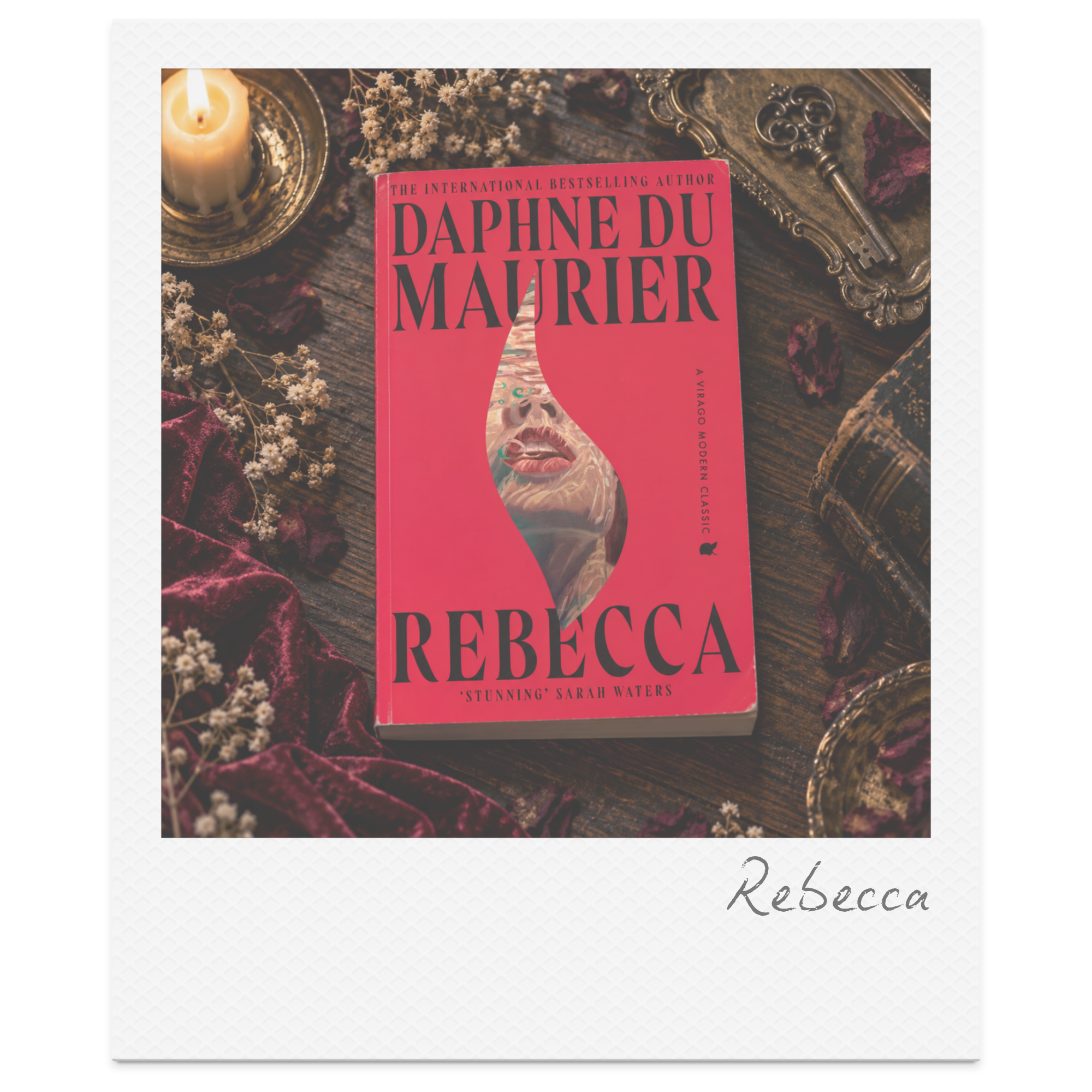
1. Rebecca — Daphne du Maurier
Gothic Suspense Techniques: Psychological Unease, Secrets, Foreshadowing & the Power of Absence
Few Gothic novels demonstrate the power of an unseen presence as effectively as Daphne du Maurier's Rebecca. Set against the imposing backdrop of Manderley, a grand country estate shadowed by its former mistress, the novel follows a young, unnamed woman whose marriage to the wealthy widower Maxim de Winter draws her into a household dominated by memories of his first wife.
Rebecca herself is dead before the narrative begins, yet her influence permeates almost every aspect of the story. Her possessions remain carefully preserved, her reputation appears impossible to challenge, and the sinister housekeeper Mrs Danvers ensures that her memory continues to overshadow the new Mrs de Winter. What begins as insecurity and social discomfort gradually develops into a far more disturbing mystery surrounding Rebecca's life, marriage and death.
How Du Maurier Creates Suspense
One of the novel's most effective techniques is its use of absence as a threatening presence. Rebecca does not need to appear physically to dominate the narrative. Instead, her influence emerges through objects, conversations, rooms and the protagonist's increasingly troubled imagination. Every reminder of the former mistress reinforces the suggestion that something remains unresolved.
Du Maurier also uses the narrator's limited understanding to control the reader's knowledge. Because the young Mrs de Winter is inexperienced, isolated and uncertain of her position, she frequently misinterprets the behaviour of those around her. Readers share her suspicions without possessing enough information to determine whether they are justified.
Manderley itself contributes to this tension. Its impressive rooms, carefully maintained traditions and oppressive atmosphere transform what should be a luxurious home into a place of psychological confinement. The estate becomes inseparable from the secrets it conceals.
Most importantly, Du Maurier allows the reader to construct an understanding of Rebecca long before revealing the complexities behind that carefully preserved image. The resulting revelations force us to reconsider earlier scenes, demonstrating how suspense can develop through misleading impressions rather than outright deception.
What Gothic Writers Can Learn
When writing your own Gothic fiction, consider how an absent character might influence the present. A deceased relative, missing spouse or forgotten ancestor could shape a household's behaviour without ever appearing directly.
Rather than explaining the character's history immediately, reveal their influence through possessions, conflicting memories and the reactions of people who knew them. Allow your protagonist to form assumptions that gradually become more difficult to sustain.
Rebecca demonstrates that one of the most compelling Gothic mysteries is not always whether a supernatural presence exists, but whether the living can ever escape the power of the dead.
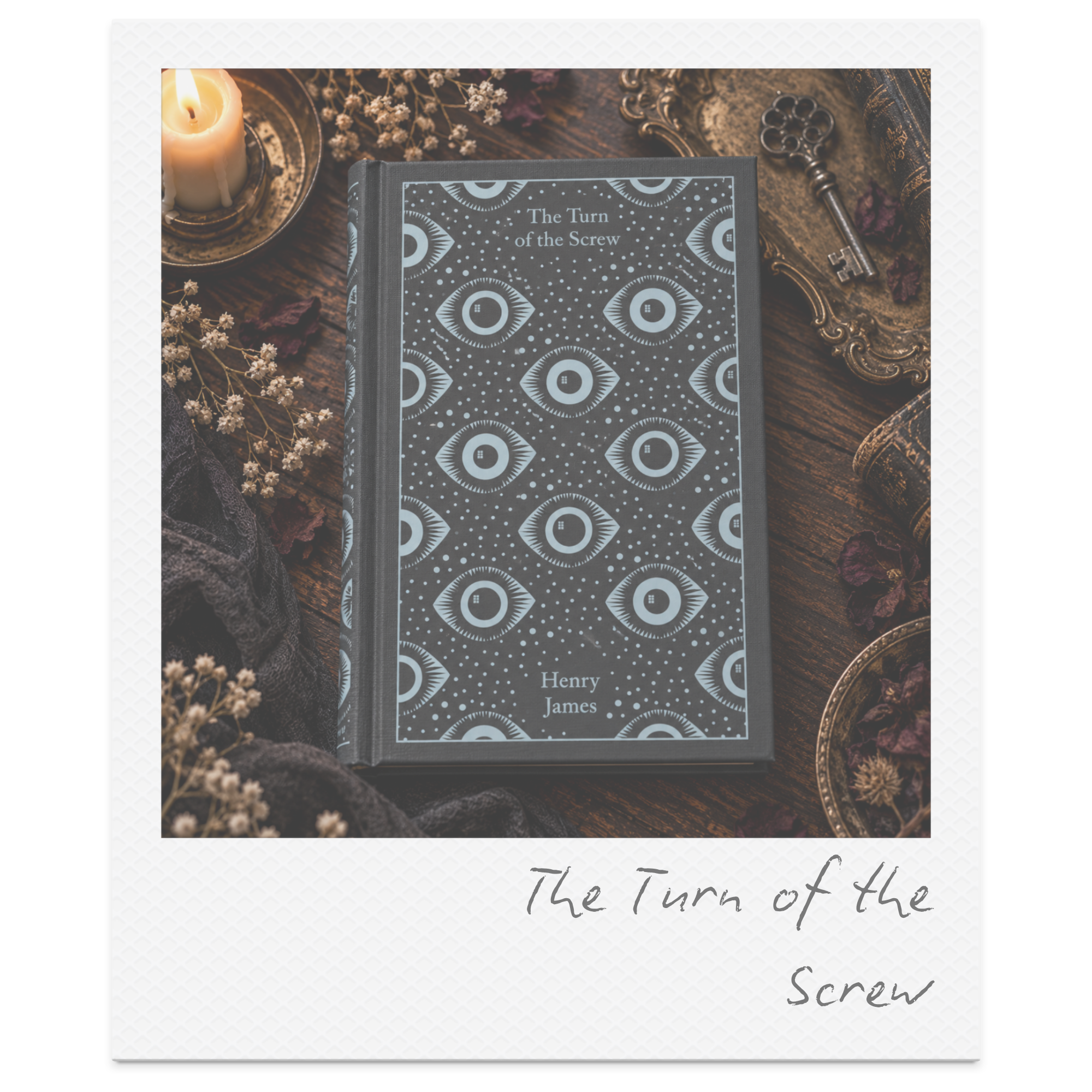
2. The Turn of the Screw — Henry James
Gothic Suspense Techniques: Unreliable Narration, Supernatural Ambiguity, Psychological Isolation & Uncertainty
Few Gothic works create such persistent uncertainty as Henry James's The Turn of the Screw. First published in 1898, this unsettling novella follows a young governess who arrives at Bly, an isolated English country estate, to care for two orphaned children, Miles and Flora. Initially enchanted by their beauty and apparently innocent behaviour, she soon becomes convinced that the household is threatened by the malevolent influence of two deceased former inhabitants.
As the governess encounters mysterious figures around the estate, her concern for the children develops into an increasingly desperate determination to protect them. Yet James refuses to establish whether the apparitions are genuine supernatural presences or manifestations of the governess's own troubled imagination. The result is a narrative in which the reader must continually question the evidence presented.
How James Creates Suspense
The novella's greatest strength lies in its use of unreliable narration and deliberately unresolved ambiguity. Almost everything the reader knows about Bly comes through the governess's perspective, but her interpretations are not necessarily supported by the events she describes. She frequently attributes sinister intentions to the children's behaviour, transforming ordinary silences, glances and conversations into possible evidence of supernatural corruption.
James also exploits the unsettling contrast between childhood innocence and concealed knowledge. Miles and Flora appear charming and well-mannered, yet the governess becomes increasingly convinced that they understand far more than they admit. Their apparent innocence therefore becomes a source of suspicion rather than reassurance.
The setting reinforces this psychological uncertainty. Bly initially appears beautiful and welcoming, but its secluded grounds, corridors, windows and towers gradually acquire disturbing associations. Familiar spaces become locations where the governess expects to encounter something inexplicable, encouraging readers to anticipate another apparition even during seemingly ordinary scenes.
Perhaps most importantly, James creates suspense through the absence of independent confirmation. The governess's experiences are intensely described, but their meaning remains uncertain. Readers are left to consider whether she is uncovering a genuine supernatural threat or constructing one through fear, obsession and misinterpretation.
What Gothic Writers Can Learn
When writing psychological Gothic fiction, consider giving readers access to a character's experiences without guaranteeing the accuracy of their conclusions. A narrator may describe events truthfully while misunderstanding their significance, or interpret ambiguous behaviour through the influence of personal anxieties and expectations.
You might create a protagonist who becomes convinced that a child is communicating with someone invisible, that a deceased relative is haunting an estate or that an apparently ordinary household conceals a sinister conspiracy. Present details that support their suspicions alongside evidence that allows an alternative explanation.
The key is to make both interpretations compelling. If every disturbance can be explained too easily, the suspense disappears. If the supernatural explanation becomes undeniable, the psychological uncertainty is lost.
The Turn of the Screw demonstrates how a Gothic narrative can sustain dread by refusing to settle the question of what is truly happening. Sometimes the most disturbing possibility is not that a character is surrounded by supernatural forces, but that neither the character nor the reader can confidently distinguish reality from imagination.
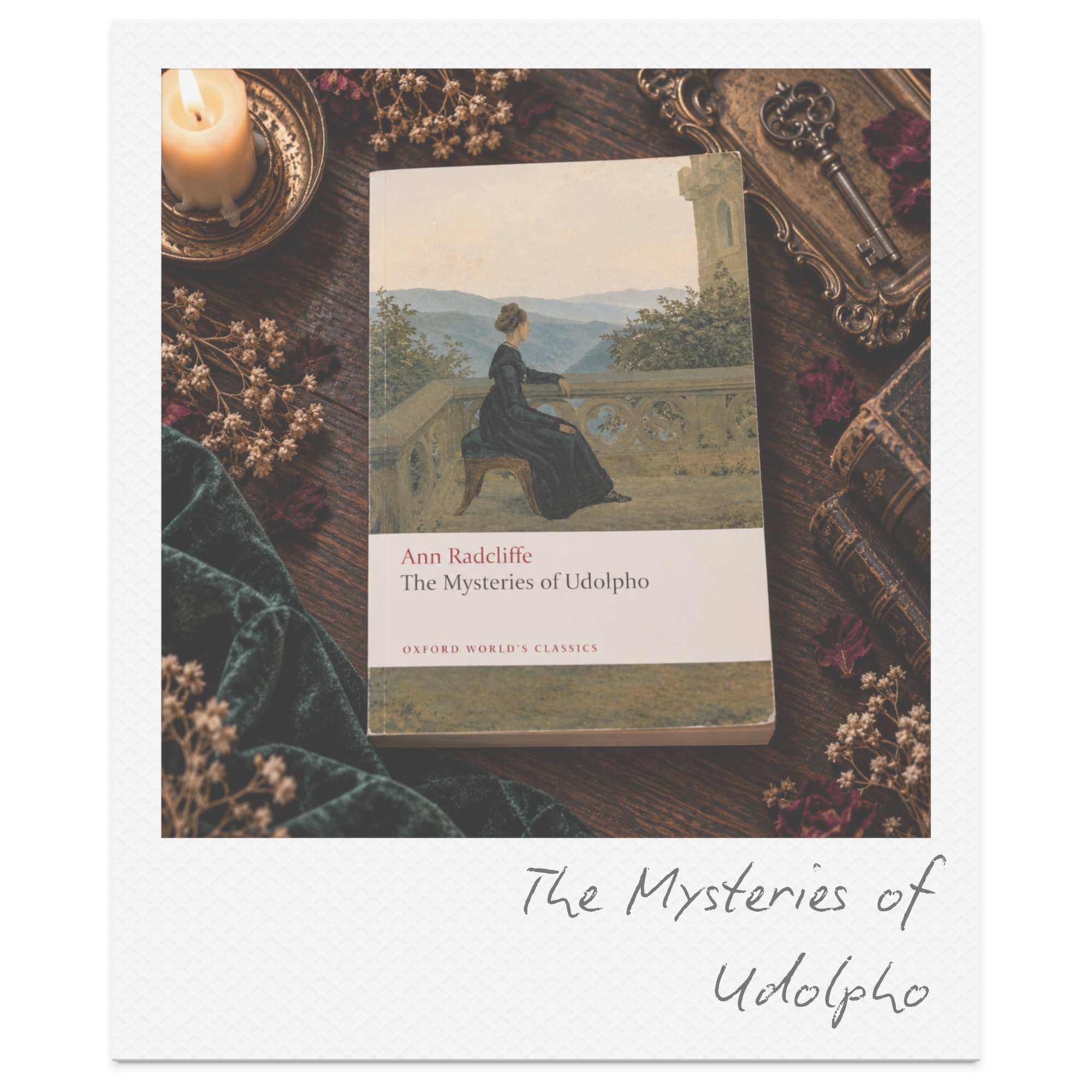
3. The Mysteries of Udolpho — Ann Radcliffe
Gothic Suspense Techniques: Atmospheric Dread, Prolonged Anticipation, Isolation & Delayed Revelation
Published in 1794, Ann Radcliffe's The Mysteries of Udolpho is one of the defining novels of Gothic fiction and a remarkable demonstration of how suspense can be sustained through atmosphere, uncertainty and the careful withholding of information.
The novel follows Emily St. Aubert, a young woman whose life is transformed by bereavement, financial insecurity and the threatening ambitions of those entrusted with her welfare. Eventually confined within the remote Castle Udolpho, Emily finds herself surrounded by unfamiliar corridors, mysterious chambers, disturbing rumours and the increasingly menacing behaviour of her guardian, Montoni.
Yet the novel's suspense does not depend solely on the possibility of supernatural danger. Radcliffe creates a world in which isolation, secrecy and the threat of human cruelty become inseparable from the imposing architecture of the castle. Emily must navigate a setting that seems designed to conceal information, while struggling to distinguish genuine threats from the frightening possibilities suggested by her imagination.
How Radcliffe Creates Suspense
One of Radcliffe's most influential techniques is her use of prolonged anticipation. Rather than revealing the source of every disturbance immediately, she allows characters and readers to dwell upon unexplained sights, sounds and discoveries. An inaccessible chamber, an indistinct figure or an object concealed beneath a veil can generate considerable tension precisely because its significance remains uncertain.
Radcliffe also makes extraordinary use of Gothic architecture. Castle Udolpho is more than an atmospheric backdrop: its remote location, labyrinthine passages, darkened apartments and seemingly endless rooms restrict Emily's movements and reinforce her vulnerability. The building creates opportunities for concealment, overheard conversations and unexpected encounters, allowing suspense to emerge naturally from the physical environment.
Another defining feature is Radcliffe's manipulation of the relationship between imagination and evidence. Emily frequently encounters situations that appear to suggest supernatural activity, yet the novel repeatedly explores how fear, incomplete knowledge and heightened emotion can influence perception. Radcliffe's famous approach to the explained supernatural allows apparently inexplicable events to acquire rational explanations, while preserving the intense emotional experience of uncertainty that precedes them.
Crucially, these explanations do not eliminate the genuine dangers Emily faces. The possibility of supernatural horror may be questioned, but human manipulation, coercion and violence remain deeply threatening. This distinction allows Radcliffe to sustain suspense even when individual mysteries are resolved.
What Gothic Writers Can Learn
When developing a longer Gothic narrative, consider how your setting might control the movement of characters and the release of information. A sprawling estate, ruined monastery, remote castle or isolated country house can create natural barriers between the protagonist and the truth.
Use these restrictions deliberately. A locked gallery might prevent access to an important object. An unfamiliar passage could allow a character to overhear a conversation without understanding its context. A distant light might suggest someone has entered a supposedly abandoned part of the building.
Rather than revealing the explanation immediately, allow the protagonist to investigate, speculate and occasionally reach the wrong conclusion. Each discovery should provide enough information to maintain curiosity while introducing a new question or complication.
You can also experiment with Radcliffe's approach to the explained supernatural. Construct an event that initially appears impossible, then develop a plausible explanation that emerges from details already established in the story. The explanation should feel satisfying without diminishing the atmosphere or removing every source of danger.
The Mysteries of Udolpho demonstrates that Gothic suspense can be sustained across an expansive narrative through carefully paced revelations, atmospheric settings and the persistent tension between what characters fear and what they can actually prove.
Go Deeper: Gothic Writing, Atmospheric Description & Psychological Suspense
Gothic suspense becomes particularly powerful when it draws upon several storytelling techniques at once. A disturbing discovery gains significance through carefully chosen imagery; an isolated setting becomes threatening through sensory description; and a character's growing uncertainty can transform an ordinary conversation into something deeply sinister.
If you'd like to develop these skills further, the Gothic Writing Hub brings together atmospheric prompts, mysterious characters, haunted settings, buried family secrets and supernatural storytelling inspiration. You can also explore the Descriptive Writing Hub for practical techniques that strengthen imagery, sensory detail and atmosphere, or browse the Creative Writing Archive for an extensive collection of genre-based prompts and creative exercises.
Create More Atmospheric Gothic Settings
Setting is one of the foundations of Gothic suspense. A house that seems to conceal its own history, a corridor filled with unexplained sounds or a landscape that isolates its inhabitants can establish tension before anything overtly frightening occurs.
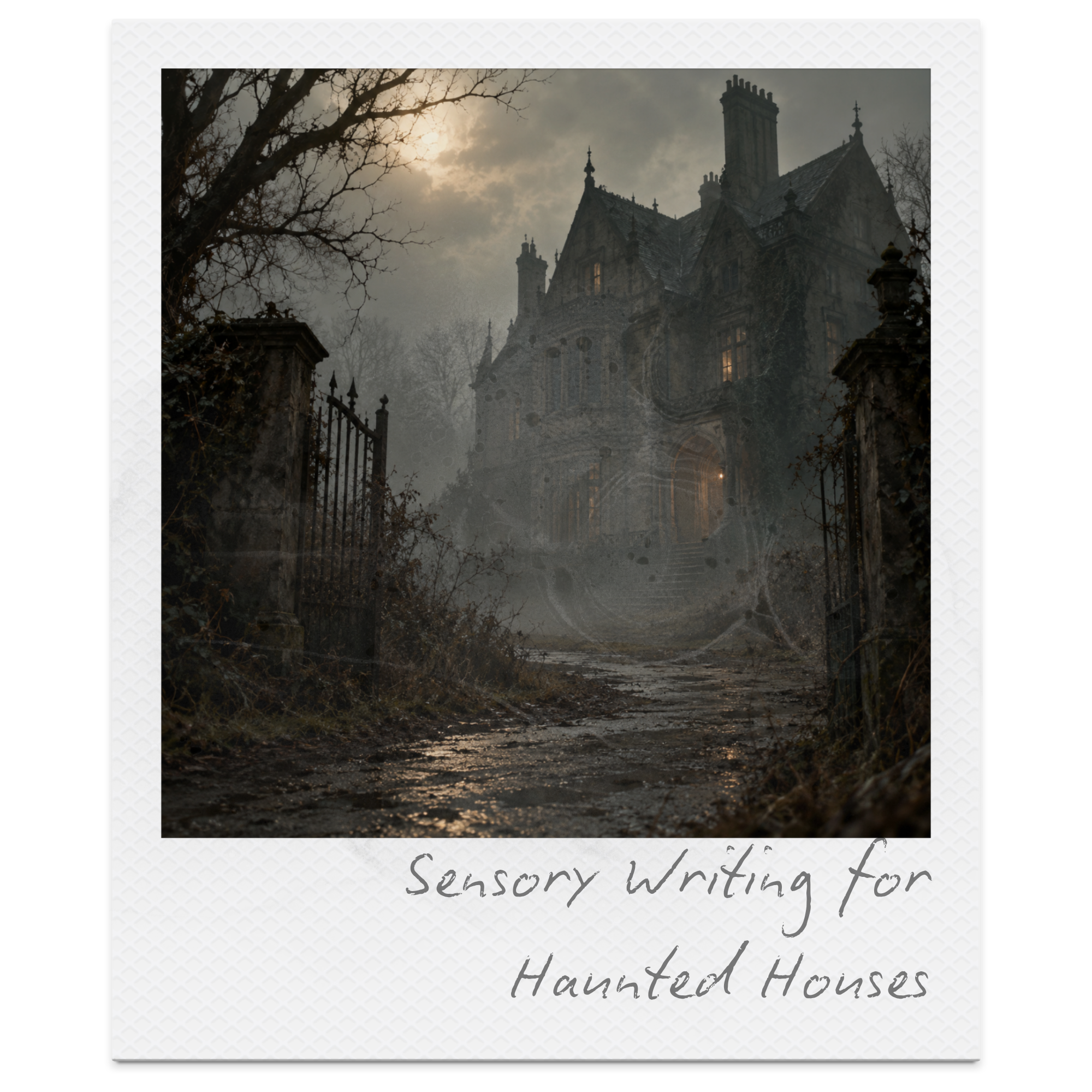
For a closer examination of this technique, explore Sensory Writing: How to Describe a Haunted House with Atmospheric Examples & Gothic Writing Techniques. This guide focuses on using sight, sound, smell, touch and other sensory details to transform an ordinary building into an unsettling fictional environment. It is particularly useful when developing the architectural disturbances and threatening silences explored in the exercises above.
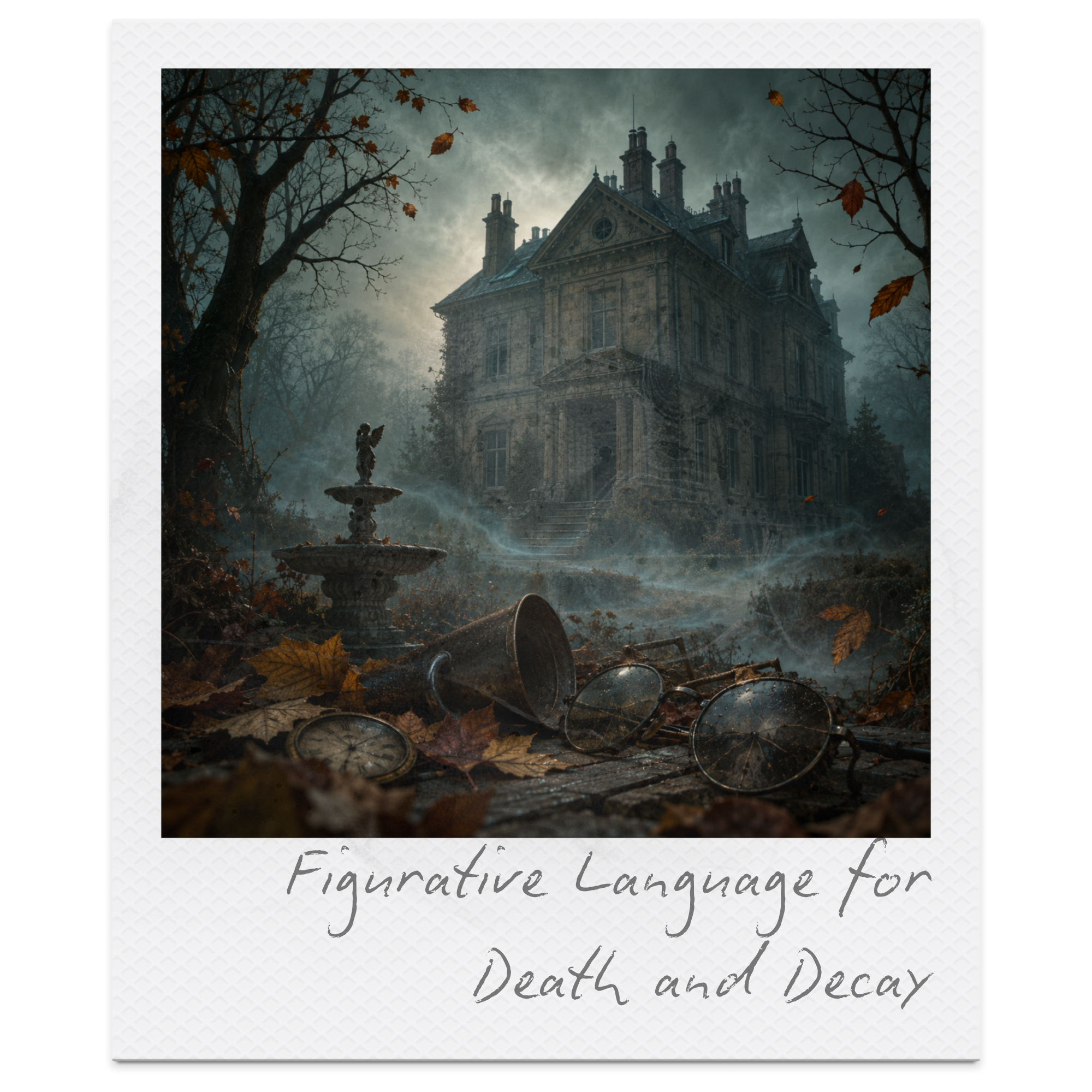
You can deepen your descriptive language further with Figurative Language for Death and Decay, which features 50 original metaphors, similes, examples of personification and other techniques for describing deterioration, mortality and the passage of time. These approaches can help you make a crumbling estate, neglected garden or forgotten room feel inseparable from the secrets it conceals.
Develop Psychological Fear and Unreliable Perception
Some of the most compelling Gothic suspense arises from a character's inability to trust their surroundings or even their own interpretation of events. Rather than repeatedly stating that a protagonist is frightened, writers can reveal anxiety through small physical reactions, changes in behaviour, hesitant dialogue and heightened sensory awareness.
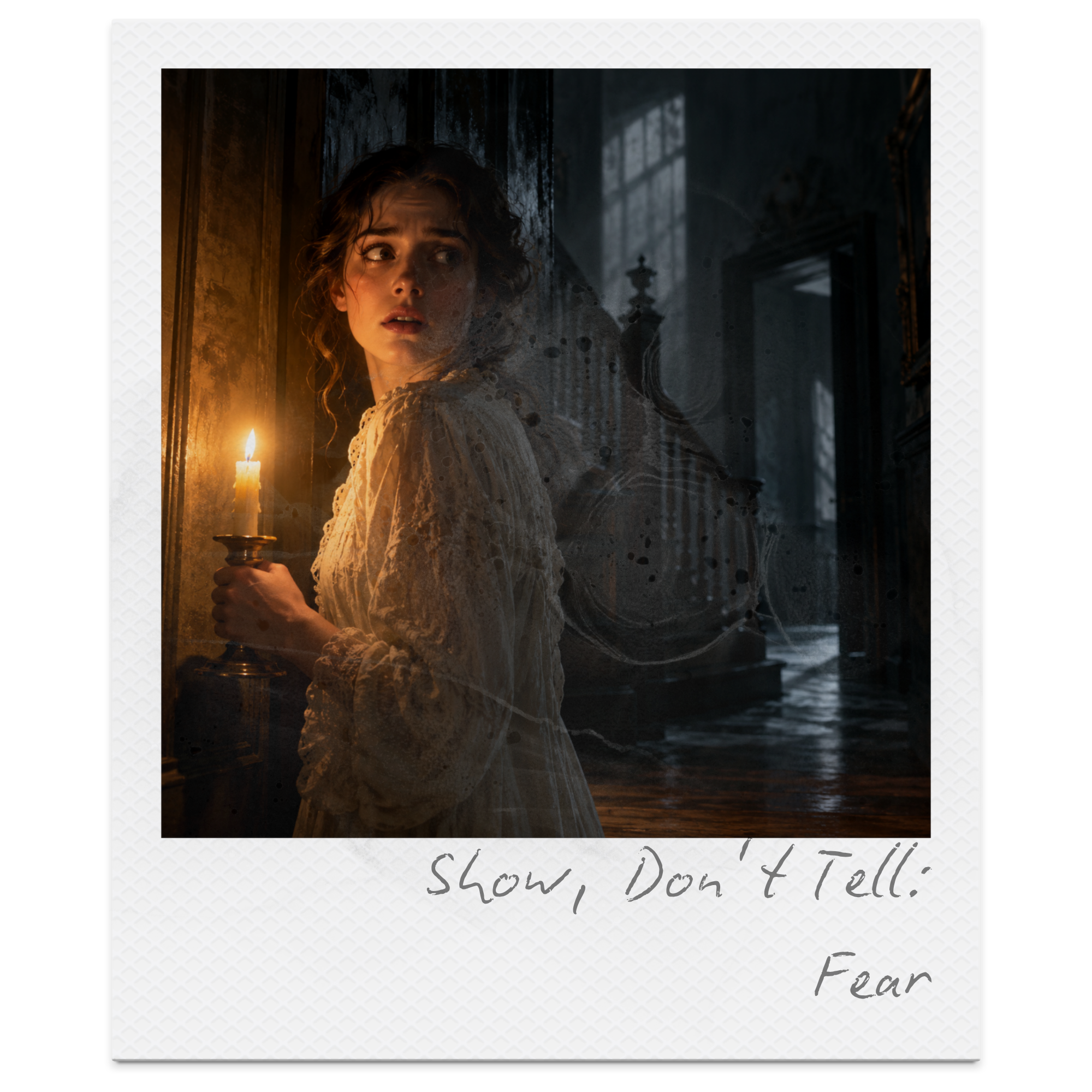
Our Show, Don't Tell: Fear guide explores 50 original examples of these techniques, alongside before-and-after scene transformations and practical exercises. Use it to strengthen scenes in which a character hears an unexplained noise, suspects an unseen presence or struggles to conceal their growing panic.
For a more literary approach to psychological uncertainty, explore The Turn of the Screw by Henry James Inspired Prompts. Drawing upon the novella's themes of unreliable narration, ambiguous apparitions and innocence under suspicion, these prompts encourage stories in which the reader cannot confidently distinguish supernatural danger from psychological disturbance.
You might also explore The Fall of the House of Usher by Edgar Allan Poe Inspired Prompts for inspiration involving family decline, oppressive architecture, psychological instability and the disturbing relationship between a character's inner world and their surroundings.
Build Mysteries Around Secrets and Unsettling Discoveries
Gothic suspense often begins with a question that refuses to disappear. Why has a particular room been sealed? What happened to a missing family member? Why do two surviving witnesses remember the same event differently?
Our Gothic Secrets collection offers inspiration involving hidden identities, cursed bloodlines, forgotten rooms, mysterious correspondence, forbidden relationships and long-buried histories. These ideas are particularly useful when developing stories built around delayed revelations and discoveries that change the meaning of earlier events.
For more substantial plots, explore Gothic Mystery writing prompts, featuring isolated estates, suspicious deaths, strange inheritances, hidden passages and unresolved family histories. Alternatively, Gothic Story Ideas provides a broader collection of atmospheric concepts spanning supernatural mysteries, psychological unease, Gothic romance and haunted family legacies.
If you're developing an ancestral estate as the centre of your story, Gothic Manor Names offers inspiration for naming haunted houses, ruined abbeys, secluded priories and decaying family seats, each shaped by the atmosphere and history of its imagined setting.
Experiment with Interactive Gothic Storytelling
Sometimes the best way to practise suspense is to begin with an unexpected combination of details and discover how they might connect.
Gothic Story Sparks is a free interactive writing prompt generator featuring eerie settings, unsettling characters, mysterious objects, ominous messages, dark secrets, discoveries, conflicts and plot twists. Use it to construct an original Gothic mystery, then apply the suspense techniques from this guide to control when each detail becomes significant.
You can also experiment with the Gothic Story Generator, which combines atmospheric settings, troubled characters, supernatural threats and haunting revelations into new story concepts.
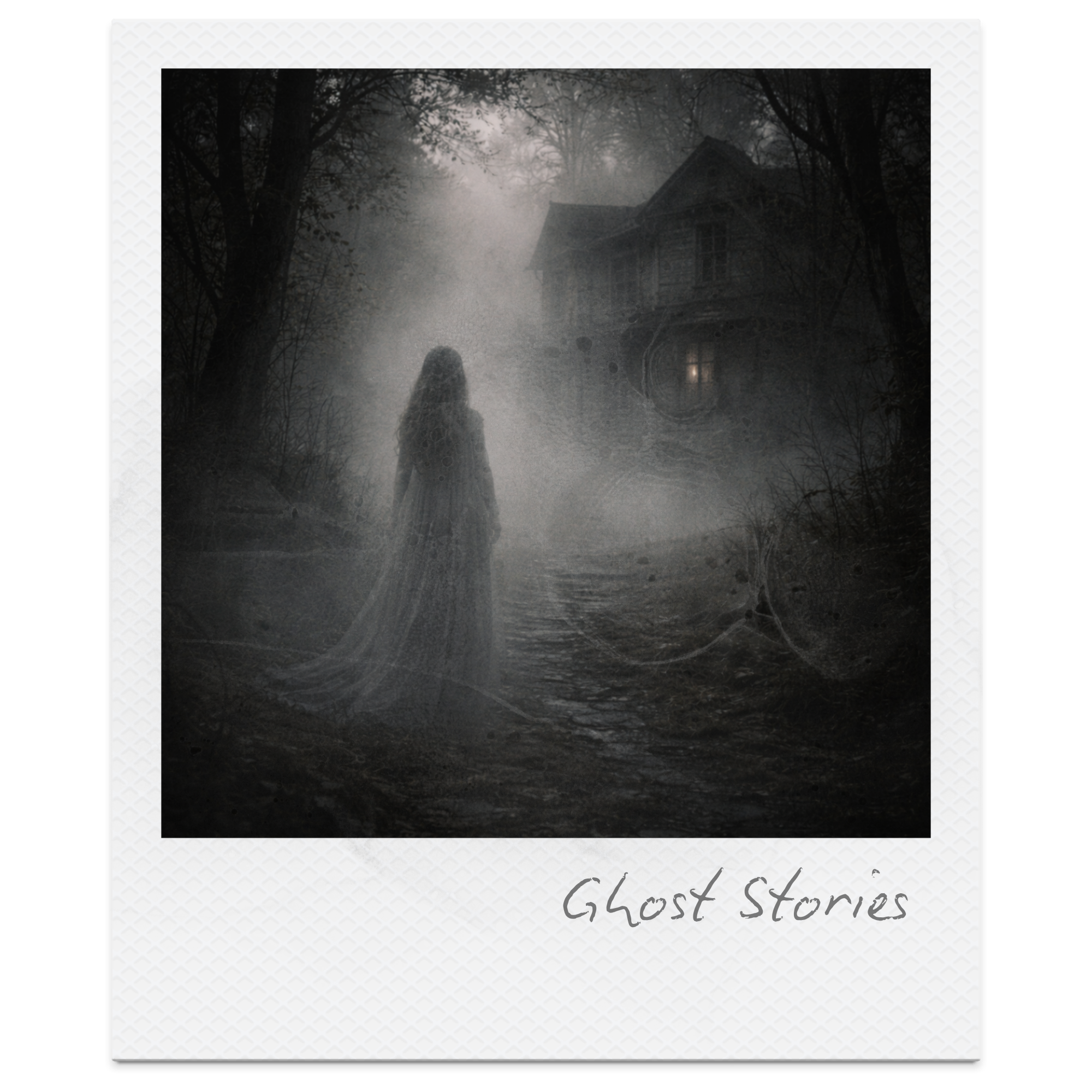
For a different approach, Ghost Story Sparks offers supernatural inspiration involving restless spirits, mysterious manifestations, séances, messages from the dead and unfinished business. These elements can be particularly effective when writing suspense in which the boundary between memory, grief and the supernatural remains uncertain.
Turn Your Gothic Ideas into a Complete Story
Once you've developed a compelling premise, try combining several of these resources into one sustained writing project. Begin with a setting from your Gothic prompts, introduce a secret or unexplained disturbance, and choose a recurring detail that can acquire new significance as the story progresses.
Use sensory description to establish atmosphere, show fear through your protagonist's behaviour and plan a sequence of discoveries that gradually changes the reader's understanding of events. Most importantly, consider what your character believes at the beginning of the story — and what they will be forced to confront by its conclusion.
Whether you're writing a short Victorian ghost story, a contemporary haunted-house mystery or a longer psychological Gothic novel, the aim is the same: to create a world in which every detail might matter, every explanation invites another question and the truth remains just beyond the reader's reach.
Final Thoughts: The Art of Making Readers Dread What Comes Next
The most memorable Gothic suspense rarely begins with a scream, a violent encounter or an unmistakable supernatural event. More often, it emerges from something almost imperceptible: a door that was closed moments earlier, an unfamiliar sound in an otherwise silent house, a portrait that seems subtly altered or a conversation that leaves one important question unanswered.
What makes these moments frightening is not necessarily what happens, but what they suggest might happen next.
Throughout these ten Gothic suspense writing exercises, we've explored how withholding information, manipulating atmosphere, introducing unreliable perceptions and carefully controlling revelations can transform ordinary situations into deeply unsettling experiences. We've also examined how writers such as Daphne du Maurier, Henry James and Ann Radcliffe use these techniques to sustain uncertainty, allowing readers' imaginations to become an essential part of the storytelling.
As you develop your own Gothic fiction, remember that suspense depends upon more than keeping secrets. It requires giving readers just enough information to become afraid of what they do not yet know. Every strange detail should invite curiosity, every revelation should carry consequences, and every moment of apparent safety should feel earned rather than guaranteed.
If you're ready to experiment further, explore the Gothic Writing Hub for more atmospheric story ideas, characters and settings, or visit Gothic Story Sparks to generate unexpected combinations of secrets, disturbances and discoveries. For an immersive approach to Victorian Gothic storytelling, The Victoriana Collection offers a world of mysterious documents, hidden histories and unsettling artefacts waiting to inspire your next story.
And when you return to your writing, consider one final question:
What could you leave unexplained that would make your reader afraid to turn the page — but unable to resist doing so?
Choose Your Next Adventure