The Thread of Life by Christina Rossetti: Summary, Meaning & Analysis
Christina Rossetti’s “The Thread of Life” is a poem about isolation, identity, and spiritual redemption. The speaker begins in a state of profound emotional separation, describing a world that appears joyful and harmonious while she herself remains inwardly imprisoned. Nature sings, birds rejoice, and the world seems bright and alive, yet she feels unable to participate in that vitality.
Rather than presenting this solitude purely as tragedy, Rossetti gradually reframes it. What begins as emotional confinement becomes an opportunity for spiritual recognition: the self that feels isolated is also the only true possession the speaker has. By the final stanza, that self is offered to God, transforming solitude into a form of devotion.
The poem therefore moves from alienation to spiritual surrender, tracing a quiet but profound shift in perspective. Rossetti suggests that the self may feel imprisoned by its own separateness, yet that same self can become an offering — a “thread of life” ultimately woven into divine redemption.
This poem is part of a wider exploration of Rossetti’s work. You can find more analyses and comparisons in the Christina Rossetti Poetry Hub.

Context: Christina Rossetti, Faith, and Inner Solitude
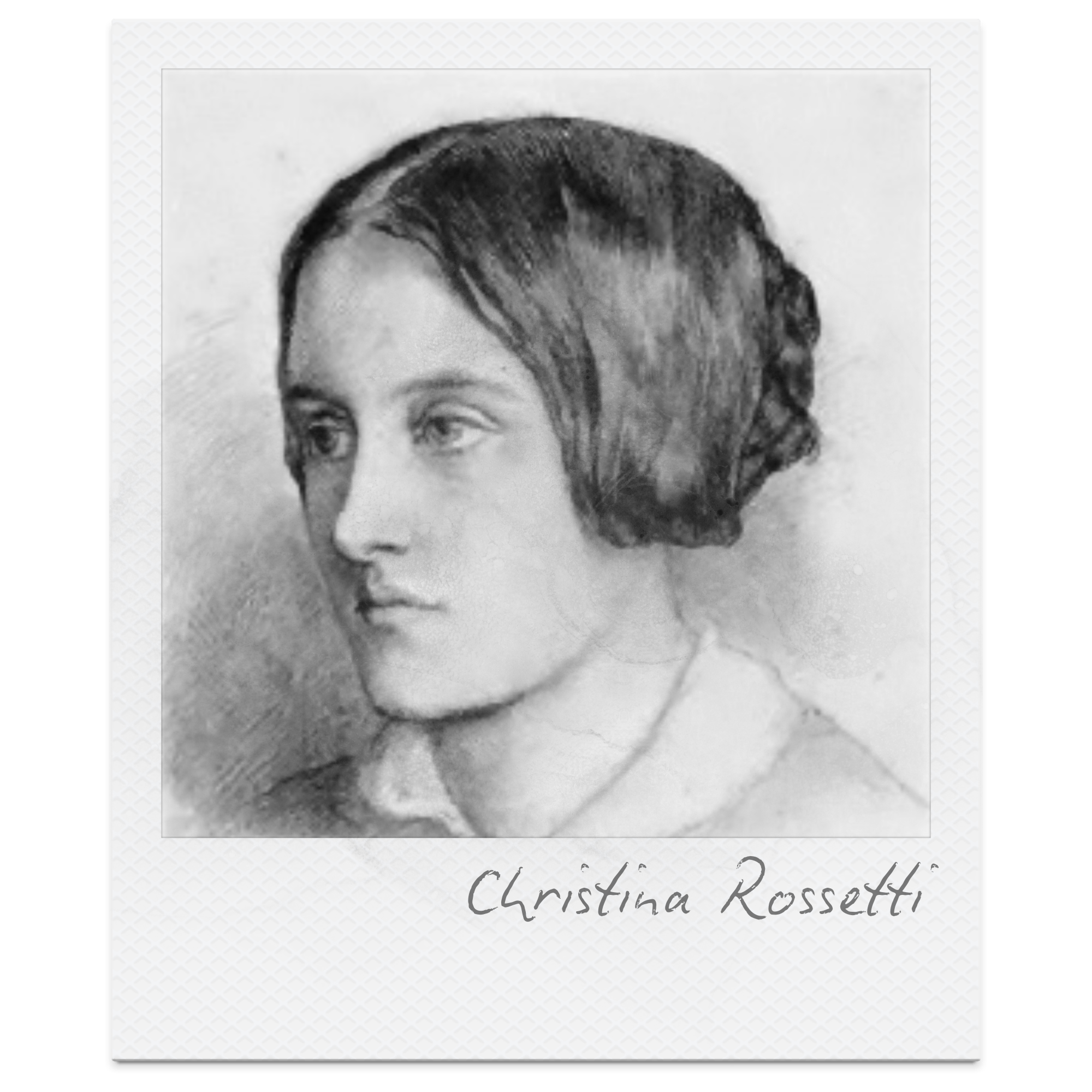
Christina Rossetti’s poetry is deeply shaped by spiritual reflection, emotional restraint, and the experience of inward solitude. Writing in the Victorian period, she lived within a culture that often valued self-discipline, religious devotion, and moral introspection, particularly for women. Many of her poems explore the tension between human isolation and spiritual belonging, asking how the self relates to both the world and to God.
Rossetti was closely connected to the Anglo-Catholic movement within the Church of England, a tradition that emphasised personal sacrifice, spiritual vigilance, and the redemptive value of suffering. This religious framework strongly influenced her writing. Rather than presenting faith as simple comfort, Rossetti frequently portrays it as something discovered through self-examination and renunciation.
These concerns are especially visible in “The Thread of Life.” The poem begins with a speaker who feels emotionally separated from the joyful world around her, describing nature as “irresponsive” and herself as bound by “inner solitude.” This sense of isolation reflects a recurring pattern in Rossetti’s poetry, where speakers confront the limitations of the self before discovering spiritual meaning.
Victorian culture also placed significant emphasis on individual moral responsibility, particularly within religious life. Rossetti’s repeated emphasis on the self as something “mine own” reflects this idea that each person is ultimately responsible for the state of their own soul. The poem therefore treats the self not simply as a psychological identity, but as a spiritual possession that must be consciously offered or withheld.
By the final sonnet, Rossetti resolves the poem’s tension through Christian redemption. The speaker offers the self to God and concludes with lines echoing 1 Corinthians 15:55, celebrating victory over death. In this way, The Thread of Life transforms a meditation on inner solitude into a declaration of faith and spiritual belonging.
For a broader exploration of these themes across her work, see the Christina Rossetti context guide, which examines how faith, restraint, and inward struggle shape many of her poems.
The Thread of Life: At a Glance
Form: three Petrarchan-style sonnets
Mood: reflective, introspective, spiritually searching
Central tension: human isolation vs spiritual belonging
Core themes: identity, solitude, faith, redemption
One-sentence meaning:
Rossetti presents the self as both a prison and a sacred possession, ultimately resolving human isolation through spiritual surrender to God.
Quick Summary of The Thread of Life
In the first sonnet, the speaker describes a world that feels emotionally distant despite its beauty and vitality. Both land and sea appear “irresponsive,” suggesting a universe that does not answer the speaker’s emotional needs. Although she remembers a time when hope and fellowship felt possible, the present moment feels colder and more distant.
The second sonnet deepens this sense of separation. The speaker recognises that the source of her isolation lies within herself: “Thus am I mine own prison.” Nature continues to flourish with sunlight, birdsong, and movement, yet she cannot share in that joy.
In the final sonnet, the poem turns toward spiritual resolution. The self that once felt like a prison becomes the speaker’s only true possession, and she ultimately offers that self to God, transforming isolation into redemption beyond death.
Title, Form, and Structure
Christina Rossetti’s “The Thread of Life” carefully uses title, poetic form, and structural progression to mirror the poem’s exploration of identity, solitude, and spiritual redemption. The poem unfolds across three connected sonnets, allowing Rossetti to trace a gradual movement from emotional isolation to spiritual realisation. Examining the significance of the title and the organisation of the poem reveals how Rossetti transforms personal reflection into a meditation on the nature of the self and its relationship with God.
The Significance of the Title: The Thread of Life
The title “The Thread of Life” introduces the poem’s central metaphor: human life as something delicate, continuous, and held together by a single strand. A thread suggests both fragility and continuity, implying that life may be easily broken yet also capable of extending across time.
The metaphor also carries strong religious and philosophical associations. In many traditions, the idea of a thread represents the individual soul moving through time, linking past, present, and future. Within Rossetti’s Christian framework, this image suggests that a human life is not simply a sequence of experiences but a spiritual journey whose ultimate direction lies beyond earthly existence.
At the same time, a thread is singular and individual, reinforcing the poem’s concern with personal identity and inner solitude. The speaker repeatedly emphasises the self as something owned and possessed — “mine own” — suggesting that each individual life is a separate strand that cannot fully merge with others. The title therefore prepares the reader for a poem that explores both the isolation of the individual self and the possibility that this isolated thread may ultimately be offered back to its divine source.
Importantly, the title also hints at the poem’s structural movement. A thread must be drawn out gradually, and the poem mirrors this idea by slowly unfolding its argument across three sonnets. Each section adds another stage in the speaker’s understanding of herself, gradually weaving the thread of thought toward its spiritual conclusion.
Form and the Triple Sonnet Structure
“The Thread of Life” is written as a sequence of three interconnected Petrarchan sonnets, a form traditionally associated with introspection, meditation, and emotional development. The sonnet form is particularly suited to Rossetti’s purposes because it naturally encourages reflection and intellectual turning points.
Each sonnet contains the familiar octave–sestet structure, in which the first eight lines introduce a situation or problem while the final six lines move toward reflection or resolution. This pattern allows Rossetti to explore different aspects of selfhood and isolation, gradually shifting the poem’s focus from psychological experience to spiritual interpretation.
The use of three sonnets rather than one significantly expands the poem’s scope. Instead of presenting a single emotional moment, Rossetti constructs a progressive meditation, with each sonnet functioning as a stage in the speaker’s thinking.
◆ The first sonnet introduces the theme of emotional distance and inner solitude.
◆ The second sonnet recognises that this isolation originates within the self: the speaker becomes “mine own prison.”
◆ The third sonnet reframes the self through Christian redemption, transforming solitude into a spiritual offering.
Through this extended form, Rossetti allows the poem to develop with measured deliberation, mirroring the slow process of spiritual understanding.
Metre and Rhythmic Control
Like many traditional sonnets, The Thread of Life is written predominantly in iambic pentameter, a metre consisting of five iambic feet per line (an unstressed syllable followed by a stressed syllable). This steady rhythmic pattern creates a sense of measured reflection, reinforcing the poem’s contemplative tone.
For example, the opening line follows a clear iambic pattern:
“The irresponsive silence of the land,”
The regular rhythm mirrors the speaker’s controlled meditation, allowing the poem’s philosophical ideas to unfold with clarity and balance. Iambic pentameter was widely used in devotional and reflective poetry, and Rossetti employs it here to give the poem a sense of intellectual discipline and spiritual seriousness.
However, Rossetti does not maintain strict regularity throughout the poem. At key moments, the metre becomes slightly disrupted through repetition, rhetorical questioning, or shifts in emphasis, drawing attention to moments of emotional tension. For instance, the repeated phrase:
“Aloof, aloof, we stand aloof”
creates a rhythmic disturbance that interrupts the otherwise steady metre. The repetition emphasises the speaker’s fixation on separation, momentarily breaking the poem’s measured flow.
Similarly, the rhetorical questions:
“What heart shall touch thy heart? what hand thy hand?”
introduce a sharper rhythmic movement that reflects the speaker’s moment of restless inquiry. These variations prevent the metre from becoming monotonous and instead allow Rossetti to align rhythmic emphasis with emotional intensity.
By balancing regular iambic structure with subtle variation, Rossetti ensures that the poem’s rhythm supports its themes of meditation, questioning, and spiritual resolution. The controlled metre mirrors the poem’s intellectual journey, guiding the reader steadily from reflection toward faith.
Structural Progression Across the Poem
The poem’s overall structure traces a clear three-stage intellectual journey, moving from alienation to recognition to redemption. Rather than presenting sudden revelation, Rossetti builds meaning through gradual reflection.
The first sonnet establishes the speaker’s sense of separation. Both land and sea are described as “irresponsive,” suggesting a world that offers no emotional reciprocity. The repeated emphasis on standing “aloof” reinforces the idea that the speaker exists at a distance from others, bound by what she calls an “inner solitude.”
The second sonnet deepens this reflection by shifting responsibility inward. Observing the joyful natural world — where birds sing, winds murmur, and bees gather honey — the speaker recognises that the barrier between herself and happiness is not external but internal. Her striking admission, “Thus am I mine own prison,” represents the poem’s central turning point. Isolation is revealed not as a condition imposed by the world but as a feature of the self.
The third sonnet reframes this discovery through faith. The self that once seemed restrictive becomes the speaker’s “sole possession,” something she can choose to “use or waste, to keep or give.” Rather than rejecting the self, she ultimately offers it to God, transforming personal isolation into spiritual devotion.
The final lines, echoing 1 Corinthians 15:55 — “O death, where is thy sting? / O grave, where is thy victory?” — elevate the poem’s personal meditation into a declaration of Christian redemption. What began as a reflection on loneliness concludes with the promise that the individual thread of life is ultimately gathered into divine eternity.
Through this carefully controlled structure, Rossetti guides the reader from psychological introspection toward spiritual transcendence, demonstrating how poetic form itself can mirror the movement of thought and belief.
The Speaker of The Thread of Life
The speaker of “The Thread of Life” is an intensely introspective and self-analytical voice, reflecting on the experience of inner solitude and the nature of personal identity. Unlike speakers in more dramatic poetry, this voice does not narrate events or address other characters directly. Instead, the poem unfolds as a meditative interior monologue, tracing the speaker’s shifting understanding of herself.
At the beginning of the poem, the speaker experiences a profound sense of emotional separation from the world. Both land and sea appear “irresponsive,” suggesting that the natural world does not answer the speaker’s emotional needs. The repeated idea of standing “aloof” reinforces this sense of distance. Importantly, this isolation is not portrayed as hostility from the outside world but as a condition rooted within the speaker herself, described as an “inner solitude.”
This perspective becomes even clearer in the second sonnet, where the speaker explicitly acknowledges her own role in maintaining this distance. The striking declaration “Thus am I mine own prison” reveals that the barrier between the speaker and the joyful world around her is psychological rather than physical. The speaker observes sunlight, birdsong, and movement in nature, yet feels unable to share in their happiness. Her isolation arises not from exclusion but from an inward sense of separation.
Despite this awareness, the speaker’s tone remains reflective rather than despairing. She does not express anger toward the world or resentment toward others. Instead, the poem presents a voice engaged in serious moral and spiritual reflection, attempting to understand what the self truly is and what it should become.
In the final sonnet, the speaker’s perspective shifts toward religious understanding. The self that once appeared restrictive becomes recognised as the speaker’s “sole possession,” something she can choose to “use or waste, to keep or give.” This realisation reframes the speaker’s earlier solitude: rather than representing failure or exclusion, it becomes the condition that allows for personal spiritual offering.
Through this transformation, the speaker moves from psychological isolation to spiritual purpose. The poem ultimately presents a voice that discovers meaning not by escaping the self, but by offering the self to God, concluding with a declaration of Christian redemption over death.
Stanza-by-Stanza Analysis of The Thread of Life
Rossetti structures The Thread of Life as a sequence of three interconnected sonnets, each representing a stage in the speaker’s developing understanding of identity, solitude, and spiritual purpose. Rather than presenting a static emotional state, the poem traces a gradual movement of thought. The speaker begins by recognising a profound sense of inner separation from the world, then confronts the unsettling idea that this isolation originates within the self. By the final sonnet, this awareness is transformed through religious reflection, allowing the speaker to reinterpret solitude as an opportunity for spiritual offering rather than imprisonment.
Examining each sonnet individually reveals how Rossetti carefully guides the reader through this intellectual and emotional progression, moving from alienation, to self-recognition, and finally toward spiritual redemption.
Sonnet One: Isolation and the Idea of Inner Solitude
The opening sonnet establishes the poem’s central concern with human isolation and inward separation, presenting solitude not simply as an emotional state but as a defining condition of the self. Rossetti begins by describing both land and sea as “irresponsive,” immediately creating an atmosphere of silence, distance, and emotional detachment. The repetition of this adjective suggests a world that does not answer the speaker’s emotional needs, reinforcing the idea that the individual consciousness exists apart from the surrounding environment. Rather than offering comfort or companionship, nature appears vast yet indifferent, reflecting the speaker’s own experience of separation.
This sense of distance becomes more philosophically complex in the following lines, where the speaker interprets the silence of land and sea as expressing a shared truth: “Aloof, aloof, we stand aloof.” The repetition of “aloof” intensifies the idea of separation while also suggesting that solitude may be an inherent feature of existence itself. The natural world seems to articulate a collective message of distance, implying that all things remain fundamentally separate from one another. In this way, Rossetti begins to frame isolation not as a temporary emotional experience but as a structural condition of individuality.
The phrase “inner solitude” deepens this idea further. Rather than describing loneliness caused by external rejection, Rossetti suggests a form of separation rooted within the self. The speaker acknowledges that this solitude is not imposed by others — “we bind not thee” — implying that the barrier between individuals arises from the nature of consciousness itself. Each person exists within an internal world that cannot be fully shared or accessed by another.
Rossetti intensifies this tension through a series of rhetorical questions: “But who from thy self-chain shall set thee free? / What heart shall touch thy heart? what hand thy hand?” These questions highlight the limits of human connection. Although emotional and physical closeness might seem possible, the speaker implies that no relationship can entirely overcome the fundamental separation between selves. The phrase “self-chain” is particularly significant, suggesting that the source of isolation lies within the structure of the self rather than in external circumstance.
In the closing lines of the sonnet, the speaker’s tone becomes more reflective as she recalls an earlier time when hope and companionship seemed easier to believe in. Memories of a world where “fellowship seemed not so far to seek” contrast with the present sense of emotional coldness. The image of “the rainbow's foot” where gold was believed to lie evokes the optimism and imaginative certainty of youth, when hope felt tangible and life seemed full of promise.
However, this nostalgic recollection ultimately reinforces the poem’s central tension. The speaker recognises that such hope belonged to an earlier stage of life, when the complexity of inner solitude had not yet been fully understood. By ending the sonnet with the recognition that “hope felt strong and life itself not weak,” Rossetti highlights the distance between youthful optimism and the speaker’s present awareness of isolation.
Through this opening sonnet, Rossetti establishes the poem’s philosophical foundation: the troubling realisation that human beings may be fundamentally separated by the very consciousness that defines them. The following sonnets will explore how the speaker responds to this discovery and whether such solitude must remain a prison or can be transformed into something meaningful.
Sonnet Two: The Self as Prison
The second sonnet marks a decisive shift in the speaker’s thinking, moving from the perception of external distance to the recognition of internal responsibility for isolation. While the first sonnet presents solitude as a condition reflected in the surrounding world, the second sonnet identifies its source within the self. This transition is captured in one of the poem’s most striking declarations: “Thus am I mine own prison.” With this admission, the speaker acknowledges that the barrier separating her from joy and companionship is not imposed by others but constructed by her own consciousness.
Rossetti emphasises this realisation by surrounding the speaker with images of vitality, harmony, and natural freedom. The world is described as “free and sunny and at ease,” filled with movement, sound, and life. Trees provide shade kissed by sunlight, birds sing joyfully, and winds create “various murmuring.” These images present nature as vibrant and communal, a place where different elements coexist in effortless harmony. Even silence within this landscape is described as “music of an unlike fashioning,” suggesting that the natural world possesses an intrinsic balance in which all sounds — and even quietness — belong.
This contrast intensifies the speaker’s sense of exclusion. She observes the “merrymaking crew” of the natural world as though watching from outside, momentarily attempting to join in their happiness: “Why can I not rejoice with you?” The question reveals a brief moment of longing, as the speaker imagines the possibility of sharing in the joy surrounding her. Yet this moment is immediately dismissed as “a foolish fancy.” Rather than allowing herself to pursue that longing, the speaker consciously suppresses it, reinforcing the idea that her isolation is sustained by a form of self-awareness and restraint.
The sonnet concludes with a philosophical statement about identity and the permanence of the self: “I am not what I have nor what I do; / But what I was I am, I am even I.” These lines shift the poem’s focus from emotional experience to the nature of personal identity. The speaker rejects the idea that identity can be defined by possessions or actions, insisting instead on the enduring continuity of the self across time. This insistence on unchanging selfhood reinforces the sense of inner enclosure established earlier in the sonnet. If the self remains fundamentally the same regardless of circumstance, then the speaker cannot simply escape her isolation by altering her environment or behaviour.
Through this second sonnet, Rossetti deepens the poem’s exploration of inner solitude by presenting the self as both the source of confinement and the centre of identity. The speaker’s recognition that she is “mine own prison” represents a crucial turning point in the poem’s argument. What initially appeared to be separation from the world is now revealed as a condition rooted in the structure of the self, setting the stage for the final sonnet’s attempt to reinterpret that self within a spiritual framework.
Sonnet Three: The Self as Spiritual Offering
The third sonnet transforms the poem’s earlier reflections on inner solitude and selfhood into a statement of spiritual purpose and redemption. Having recognised in the previous sonnet that she is “mine own prison,” the speaker now reframes the self not simply as a source of confinement but as the only true possession she holds. This shift is introduced through the emphatic declaration: “Therefore myself is that one only thing / I hold to use or waste, to keep or give.” The word “therefore” signals a logical progression from the poem’s earlier insights, suggesting that the recognition of inner solitude leads to a new understanding of personal responsibility.
Rossetti repeatedly emphasises the phrase “mine own,” reinforcing the idea that the self is both permanent and inescapable. Unlike possessions, relationships, or circumstances, which may change over time, the speaker’s inner identity remains constant. Even as “Time’s winnowing” separates and alters the world, the self persists. The agricultural metaphor of winnowing evokes the process of separation and refinement, implying that life gradually sifts and transforms external conditions while the core self remains intact.
This sense of continuity extends across the entire span of life. The speaker insists that the self remains hers “while moons and seasons bring / From crudeness ripeness mellow and sanative,” acknowledging the natural processes of growth, maturity, and healing that accompany the passage of time. Yet even these changes do not fundamentally alter the self’s ownership. The repetition of “ever mine own” underscores the idea that identity remains constant despite the transformations of experience.
Rossetti then extends this continuity beyond life itself. The self remains hers “till Death shall ply his sieve,” introducing another image of separation and judgement. The metaphor of the sieve suggests the sorting of what endures from what is temporary, hinting at the idea of spiritual reckoning. Yet even in the context of death and resurrection — when “saints break grave and sing” — the speaker maintains that the self remains her own possession.
At this point, the poem introduces its final and decisive shift. The speaker chooses to offer the self willingly to God, describing the act as a gesture of devotion: “this myself as king unto my King / I give.” The hierarchical language of “king” and “King” reflects a Christian framework of spiritual authority, positioning the speaker as a subject who freely submits to divine sovereignty. Importantly, this act of offering is not portrayed as loss but as reciprocity. The speaker gives herself to “Him Who gave Himself for me,” referencing Christ’s sacrificial death and establishing a relationship of mutual giving between human and divine.
The poem concludes by invoking a well-known biblical declaration from 1 Corinthians 15:55: “O death, where is thy sting? / O grave, where is thy victory?” These triumphant lines signal the poem’s ultimate resolution. What began as a meditation on inner solitude and self-imposed isolation culminates in a declaration of Christian redemption over death itself. Through faith, the speaker’s isolated “thread of life” becomes part of a larger spiritual narrative in which death no longer holds power.
In this final sonnet, Rossetti transforms the poem’s earlier tension between selfhood and isolation into a vision of spiritual belonging. The self that once seemed like a prison becomes a sacred possession — something that can be consciously offered to God and thus integrated into a divine order that transcends individual solitude.
Key Quotes from The Thread of Life
Rossetti’s poem contains several lines that encapsulate its central concerns with inner solitude, identity, and spiritual redemption. The quotations below highlight key moments where the speaker articulates her reflections on the nature of the self, the limits of human connection, and the possibility of spiritual transformation.
“Aloof, aloof, we stand aloof”
◆ The repetition of “aloof” emphasises the poem’s central idea of human separation, suggesting that distance between individuals may be an inherent condition of existence.
◆ By attributing this message to both land and sea, Rossetti presents isolation as something echoed by the natural world itself, reinforcing the speaker’s perception that solitude is universal rather than purely personal.
◆ The insistent rhythm of the repetition mimics the speaker’s growing conviction that individual consciousness creates unavoidable boundaries between people.
“Bound with the flawless band / Of inner solitude”
◆ The phrase “inner solitude” introduces the poem’s key concept that separation arises not from external rejection but from the structure of the self.
◆ The adjective “flawless” is striking because it frames solitude not as a defect but as a complete and unbroken condition of individuality.
◆ This line suggests that the very integrity of the self may also be the source of its isolation, reinforcing the poem’s philosophical exploration of identity.
“Thus am I mine own prison”
◆ This declaration marks the poem’s central turning point, where the speaker recognises that the barrier separating her from joy originates within her own consciousness.
◆ The metaphor of imprisonment transforms the poem from a reflection on loneliness into a deeper meditation on the limits of selfhood and personal freedom.
◆ By identifying herself as the architect of her confinement, the speaker introduces the possibility that the self can also be consciously redirected or transformed.
“I am not what I have nor what I do”
◆ In this philosophical statement, Rossetti rejects the idea that identity is determined by possessions, achievements, or social roles.
◆ The line emphasises a distinction between external circumstances and inner identity, suggesting that the self exists independently of worldly measures of success or status.
◆ This reflection prepares the reader for the final sonnet’s focus on the enduring nature of the self as a spiritual entity.
“But what I was I am, I am even I”
◆ The repetition of “I am” reinforces the idea of continuity of identity across time, emphasising that the core self remains stable despite change.
◆ This insistence on selfhood highlights the poem’s concern with the permanence of the inner identity, which persists regardless of external transformation.
◆ Rossetti presents the self as something fundamentally enduring, setting up the final sonnet’s exploration of how this enduring self can be offered to God.
“Myself is that one only thing / I hold to use or waste, to keep or give”
◆ These lines introduce the idea that the self is the speaker’s “sole possession,” something entrusted to her moral and spiritual responsibility.
◆ The balanced phrasing “use or waste, to keep or give” emphasises the speaker’s agency, suggesting that identity involves ethical choice rather than passive existence.
◆ The language of possession reinforces the poem’s central argument that the self is both a burden and a gift, capable of being directed toward meaning or squandered.
“This myself as king unto my King I give”
◆ The hierarchical imagery of “king” and “King” reflects a Christian framework in which the speaker acknowledges divine authority.
◆ By offering herself willingly to God, the speaker transforms the self from a prison of isolation into a spiritual offering.
◆ The act of giving reflects the reciprocal relationship described in the following line, where the speaker gives herself to “Him Who gave Himself for me.”
“O death, where is thy sting? / O grave, where is thy victory?”
◆ These lines echo 1 Corinthians 15:55, placing the poem within the broader Christian narrative of resurrection and triumph over death.
◆ The quotation elevates the poem’s personal reflections into a theological declaration, suggesting that faith ultimately overcomes mortality.
◆ Through this biblical resonance, Rossetti concludes the poem by affirming that the individual “thread of life” ultimately belongs to divine eternity rather than earthly limitation.
Key Techniques in The Thread of Life
Rossetti develops the poem’s exploration of inner solitude, identity, and spiritual redemption through carefully controlled repetition, rhetorical questioning, sonnet form, and biblical resonance. These techniques allow the poem to move beyond emotional reflection into a sustained meditation on the nature of the self and its relationship with God.
◆ Anaphora and emphatic repetition
Rossetti frequently uses anaphora — the repetition of words at the beginning of phrases — to reinforce key ideas. In the opening sonnet, the repeated word “aloof” creates a rhythmic insistence on separation: “Aloof, aloof, we stand aloof.” This repetition mimics the emotional state the poem describes, reinforcing the sense that distance is structural rather than temporary. Later in the poem, the repeated phrase “mine own” functions in a similar way, emphasising the speaker’s recognition that the self is her only true possession. The persistence of this phrase gradually reframes solitude: what first appears as emotional isolation becomes the enduring core of personal identity.
◆ Rhetorical questioning
Rossetti uses rhetorical questions to expose the limits of human connection. In the first sonnet, the speaker asks:
“But who from thy self-chain shall set thee free? / What heart shall touch thy heart? what hand thy hand?”
These questions are not intended to be answered; instead, they emphasise the philosophical problem at the heart of the poem. The repetition of “what heart… what hand” highlights the speaker’s doubt that even emotional intimacy can fully overcome the fundamental separateness of individuals. Rather than expressing simple despair, these questions invite readers to consider whether true unity between selves is ever possible.
◆ Petrarchan sonnet form and structural volta
Each section of the poem follows the Petrarchan sonnet structure, in which an octave introduces a problem and the sestet responds with reflection or resolution. Rossetti uses this form to organise the poem’s intellectual progression. In the first sonnet, the octave establishes the speaker’s sense of universal aloofness, while the sestet introduces reflective memory and nostalgia. In the second sonnet, the volta occurs when the speaker recognises “Thus am I mine own prison.” The final sonnet then resolves the poem’s central tension by transforming the self into a spiritual offering to God. The sonnet form therefore mirrors the poem’s movement from alienation to spiritual understanding.
◆ Regular iambic pentameter
The poem is written primarily in iambic pentameter, a meter consisting of five pairs of unstressed and stressed syllables. This regular rhythm creates a measured, contemplative tone, appropriate for the poem’s introspective voice. The steady cadence reinforces the sense of controlled reflection, preventing the poem from becoming emotionally chaotic even as it explores profound questions of isolation and identity. Rossetti’s use of this traditional meter also aligns the poem with the meditative tradition of the English sonnet, emphasising intellectual and spiritual inquiry.
◆ Lexical fields of ownership and identity
Throughout the poem, Rossetti repeatedly draws on vocabulary associated with possession and ownership. Words such as “mine,” “mine own,” “possession,” “use or waste,” “keep or give” create a semantic field centred on personal responsibility for the self. This language reinforces the poem’s philosophical argument that identity cannot be defined by external circumstances but must instead be understood as an inner reality entrusted to the individual.
◆ Biblical allusion and Christian intertextuality
The final lines of the poem echo the biblical passage 1 Corinthians 15:55:
“O death, where is thy sting? / O grave, where is thy victory?”
This allusion shifts the poem from personal meditation into a wider theological framework. The speaker’s earlier reflections on selfhood and isolation are reinterpreted through the Christian narrative of resurrection and redemption. By concluding with this triumphant scriptural language, Rossetti suggests that the individual “thread of life” ultimately finds meaning within a divine order that transcends mortality.
◆ Progressive rhetorical movement
Perhaps the poem’s most important technique is its progressive intellectual structure. Rather than presenting a single emotional state, Rossetti guides the reader through a sequence of recognitions:
isolation appears universal
isolation is revealed as internal
the self becomes a spiritual offering
This movement allows the poem to function not simply as an expression of feeling but as a philosophical and spiritual argument about the nature of the self.
◆ Apostrophe and abstract address
In the opening sonnet, the speaker appears to address an unnamed “thou”, creating a moment of apostrophe — the rhetorical address to an absent or abstract figure. However, the identity of this “thou” remains ambiguous. It may refer to another person, to humanity in general, or even to the speaker herself. This ambiguity reinforces the poem’s exploration of inner consciousness, suggesting that the speaker’s reflections are directed inward as much as outward. The technique contributes to the poem’s meditative and philosophical tone, where dialogue becomes a form of self-examination.
◆ Parallelism and syntactic balance
Rossetti frequently uses parallel sentence structures to emphasise philosophical ideas about identity. Lines such as:
“I hold to use or waste, to keep or give”
and
“I am not what I have nor what I do”
create a sense of logical balance and intellectual clarity. These parallel constructions resemble the structure of moral reasoning, reinforcing the poem’s movement from emotional reflection toward deliberate spiritual understanding. The balanced syntax mirrors the speaker’s attempt to articulate stable truths about the nature of the self.
◆ Temporal imagery and the passage of time
The poem repeatedly invokes imagery connected to time and natural cycles, including “moons and seasons,” “ripeness,” and “Time’s winnowing.” These references situate the speaker’s reflections within the larger processes of growth, change, and mortality. Yet Rossetti contrasts these shifting cycles with the speaker’s insistence that the self remains “mine own.” This juxtaposition highlights the tension between external change and inner continuity, suggesting that identity persists even as life itself transforms.
◆ Agricultural metaphors of separation and judgement
Rossetti employs striking agricultural metaphors such as “Time’s winnowing” and “Death shall ply his sieve.” Both images evoke processes of sorting and separation, in which valuable grain is distinguished from husk or impurity. Within a Christian framework, these metaphors subtly evoke ideas of spiritual testing and divine judgement, reinforcing the poem’s concern with the ultimate destiny of the soul. Through these images, Rossetti presents life as a process in which the self is gradually refined and evaluated.
◆ Biblical diction and liturgical cadence
The final lines adopt the tone of scriptural proclamation, echoing the language of the King James Bible. The repeated phrase “He bids me sing” creates a rhythm reminiscent of liturgical declaration, transforming the speaker’s personal reflection into a collective expression of faith. This shift in voice elevates the poem’s conclusion from individual experience to theological affirmation, aligning the speaker’s journey with the broader Christian narrative of redemption.
Themes in The Thread of Life
Christina Rossetti’s The Thread of Life explores a series of interconnected themes centred on identity, solitude, and spiritual redemption. Rather than presenting these ideas as separate concerns, the poem gradually develops them across its three sonnets, tracing the speaker’s movement from emotional isolation, to philosophical reflection on the nature of the self, and finally toward religious surrender and spiritual belonging. Through this progression, Rossetti invites readers to consider how the self may function both as a source of inner confinement and as the very means through which spiritual freedom becomes possible.
Inner Solitude and Human Isolation
One of the poem’s most prominent themes is inner solitude, presented as a defining feature of human experience. From the opening lines, the speaker perceives the world as emotionally distant, describing both land and sea as “irresponsive.” This repetition creates a sense of vast silence, suggesting that the external world does not answer the speaker’s emotional needs.
Rossetti deepens this idea through the repeated emphasis on standing “aloof.” The phrase “Aloof, aloof, we stand aloof” implies that separation is not limited to the speaker alone but may be a universal condition of existence. The natural world appears to communicate the same message of distance, reinforcing the idea that individuals remain fundamentally separate from one another.
This isolation is ultimately framed as “inner solitude,” a phrase that shifts the focus from external loneliness to inward separation. Rather than suggesting that the speaker has been rejected by others, Rossetti implies that solitude arises from the nature of the self itself. Each person exists within an internal consciousness that cannot be completely shared, creating an unavoidable boundary between individuals.
The Self as Prison and Possession
A second major theme concerns the paradoxical nature of the self, which Rossetti presents as both a source of confinement and the speaker’s most valuable possession. This tension emerges most clearly in the striking declaration: “Thus am I mine own prison.”
Here, the speaker recognises that the barrier separating her from joy is not imposed by the outside world but originates within her own consciousness. The self functions as a form of enclosure, limiting the speaker’s ability to fully participate in the happiness she observes around her.
Yet the poem does not present this realisation as purely negative. In the final sonnet, the speaker reframes the self as something owned and entrusted to her: “myself is that one only thing / I hold to use or waste, to keep or give.” This language of possession emphasises personal responsibility, suggesting that the self is not merely a prison but also a moral and spiritual resource.
Through this shift, Rossetti transforms the theme of confinement into one of ethical agency, implying that the self’s apparent limitations may also create the conditions for meaningful choice.
Identity and the Continuity of the Self
Closely connected to this exploration of selfhood is the theme of identity as something enduring and continuous. The speaker explicitly rejects the idea that identity can be defined by external factors such as possessions or actions. Instead, she insists on the permanence of the inner self: “I am not what I have nor what I do; / But what I was I am, I am even I.”
These lines emphasise the idea that identity remains stable despite the passage of time and changes in circumstance. Rossetti reinforces this concept through imagery connected to natural cycles, including “moons and seasons” and the agricultural process of “Time’s winnowing.” While the external world continually changes, the speaker asserts that the self remains fundamentally the same.
This insistence on continuity reflects a philosophical concern with the core essence of the individual, suggesting that personal identity exists independently of social roles, material possessions, or external achievements.
Spiritual Surrender and Redemption
The final sonnet introduces the theme of spiritual surrender, which ultimately resolves the poem’s earlier tensions. Having recognised that the self is her only true possession, the speaker chooses to offer it to God: “this myself as king unto my King / I give.”
This act of offering reframes the poem’s earlier exploration of isolation. The self that once appeared to be a prison becomes the very means through which the speaker establishes a relationship with the divine. Rossetti presents this surrender not as loss but as reciprocity, emphasising that the speaker gives herself to “Him Who gave Himself for me.”
The poem concludes by echoing the biblical declaration “O death, where is thy sting? / O grave, where is thy victory?”, drawn from 1 Corinthians 15:55. This allusion situates the speaker’s personal reflections within the broader Christian narrative of resurrection and redemption, suggesting that the individual “thread of life” ultimately finds fulfilment within divine eternity.
Through this final transformation, Rossetti resolves the poem’s exploration of inner solitude by presenting spiritual faith as the force capable of overcoming both isolation and death.
Alternative Interpretations of The Thread of Life
Although The Thread of Life ultimately resolves its reflections through Christian redemption, Rossetti’s language and structure leave room for multiple interpretations. The poem does not simply present a single spiritual message; instead, it invites readers to consider different ways of understanding identity, solitude, and the nature of the self. These alternative readings reveal the poem’s intellectual complexity and demonstrate how Rossetti’s meditation on the self can be approached from psychological, philosophical, and religious perspectives.
Psychological Interpretation: The Self and Inner Isolation
One interpretation reads the poem primarily as a reflection on psychological isolation rather than theological insight. From this perspective, the speaker’s repeated emphasis on “inner solitude” suggests an inward condition of consciousness in which individuals feel fundamentally separated from others.
The rhetorical questions in the first sonnet — “What heart shall touch thy heart? what hand thy hand?” — highlight the difficulty of achieving complete emotional understanding between individuals. Even moments of closeness cannot fully overcome the boundary created by separate minds and experiences.
The declaration “Thus am I mine own prison” reinforces this psychological reading. The speaker recognises that the barrier preventing her from sharing in the joy of the natural world arises from her own consciousness rather than from external circumstances. Seen in this way, the poem explores the limits of human empathy and suggests that individuals may remain fundamentally enclosed within their own inner worlds.
Philosophical Interpretation: Individual Identity and the Nature of the Self
Another interpretation approaches the poem as a philosophical meditation on personal identity. The speaker’s reflections repeatedly focus on what defines the self and whether identity can change over time.
Lines such as “I am not what I have nor what I do” challenge the idea that a person’s identity is determined by possessions, social roles, or actions. Instead, the speaker insists on the enduring continuity of the self: “what I was I am, I am even I.”
This perspective aligns the poem with philosophical debates about the persistence of identity across time. Rossetti appears to suggest that the self possesses a stable core that remains constant despite external change. The imagery of “Time’s winnowing” further emphasises this idea, contrasting the shifting nature of the world with the speaker’s insistence that the self remains “mine own.”
From this viewpoint, The Thread of Life can be understood as a meditation on the essential nature of individuality, exploring what remains constant within a person even as life itself transforms.
Religious Interpretation: The Self as a Spiritual Offering
A third interpretation emphasises the poem’s Christian theological framework. In this reading, the speaker’s reflections on identity ultimately lead toward a recognition of spiritual responsibility and devotion.
The repeated emphasis on ownership — “mine own,” “myself,” “sole possession” — suggests that the self has been entrusted to the individual as a form of spiritual stewardship. Rather than simply belonging to the speaker, the self becomes something that can be consciously “kept or given.”
This understanding reaches its culmination in the final sonnet, where the speaker offers herself to God: “this myself as king unto my King / I give.” The act of surrender reflects a central Christian belief that the individual life ultimately finds meaning through submission to divine authority.
The poem’s final lines, echoing 1 Corinthians 15:55, reinforce this theological interpretation. By invoking the biblical triumph over death, Rossetti situates the speaker’s personal struggle within the larger narrative of resurrection and redemption, suggesting that the individual thread of life ultimately belongs within eternal divine order.
Existential Interpretation: The Responsibility of the Self
A further interpretation emphasises the poem’s exploration of personal responsibility and self-determination. The speaker repeatedly stresses that the self is something she “hold[s] to use or waste, to keep or give.” This language suggests that identity carries a moral dimension: individuals must decide how they will use the life entrusted to them.
From this perspective, the poem can be read as an exploration of ethical responsibility. The recognition that the self is the speaker’s only true possession forces her to confront the question of what she will ultimately do with it.
Although Rossetti resolves this dilemma through Christian devotion, the poem’s earlier reflections highlight the seriousness of this choice. The self cannot be escaped or replaced; it must instead be consciously directed toward meaning or purpose.
Feminist Interpretation: Ownership of the Self
A feminist reading of The Thread of Life may focus on the poem’s emphasis on self-possession and individual identity, particularly within the context of Victorian expectations of women. In nineteenth-century society, women were often defined through relationships, domestic roles, and moral expectations rather than through independent personal identity. Rossetti’s repeated insistence on the self as “mine own” therefore carries particular significance.
When the speaker declares “myself is that one only thing / I hold to use or waste, to keep or give,” she asserts a powerful form of personal ownership over her own identity. The self is presented not as something defined by social roles or external relationships, but as an inner possession belonging solely to the individual. In this sense, the poem resists the idea that a woman’s identity must be determined by marriage, family, or social expectation.
At the same time, Rossetti ultimately resolves the poem through religious surrender rather than social independence, offering the self to God rather than claiming complete autonomy. This conclusion reflects the complex position Rossetti often occupies as a Victorian writer: her poetry affirms spiritual devotion and humility, yet it also insists on the inner authority of the individual conscience.
From this perspective, The Thread of Life can be read as a poem that quietly negotiates the tension between Victorian ideals of feminine self-restraint and a deeper assertion of personal identity and moral agency.
Through these different interpretations, The Thread of Life reveals itself as more than a simple devotional poem. Rossetti’s meditation on inner solitude and identity allows the work to function simultaneously as psychological reflection, philosophical inquiry, and spiritual declaration, demonstrating the richness and interpretive depth of her poetry.
Teaching The Thread of Life: Ideas and Activities
The Thread of Life works particularly well in the classroom because it moves through clear stages of reflection, allowing students to explore how Rossetti develops ideas about identity, isolation, and spiritual purpose. The poem encourages discussion about the nature of the self, the limits of human connection, and the ways in which literature can explore philosophical questions through poetic form.
The following activities focus on interpretation, conceptual thinking, and close reading, helping students move beyond identifying techniques to analysing how Rossetti constructs meaning across the poem.
1. Is the Self a Prison or a Possession?
Begin by asking students to examine the poem’s most striking statement:
“Thus am I mine own prison.”
Students can explore this idea through:
◆ paired discussion analysing whether the self is presented as limitation or responsibility
◆ selecting lines that either reinforce or challenge the idea of the self as confinement
◆ writing a short response explaining how the poem later reframes this idea
This activity encourages students to see how Rossetti develops an idea across the poem rather than presenting it once.
2. Tracing the Speaker’s Changing Perspective
Ask students to track how the speaker’s understanding of herself evolves across the three sonnets.
Students might identify:
◆ Sonnet One – isolation and “inner solitude”
◆ Sonnet Two – recognition that the self creates its own prison
◆ Sonnet Three – the self offered as a spiritual gift
This helps students recognise how structure shapes meaning, an important skill for higher-level analysis.
3. Language and Identity
Direct students to examine Rossetti’s repeated emphasis on self-possession, particularly the phrase “mine own.”
Students could explore:
◆ how repetition reinforces the idea of personal identity
◆ why Rossetti describes the self as something that can be “use[d] or waste[d], keep[t] or give[n]”
◆ how the poem moves from psychological reflection to spiritual responsibility
This activity encourages students to consider how individual word choices support the poem’s philosophical argument.
4. The Role of Faith in the Final Sonnet
The final sonnet introduces clear Christian imagery and biblical allusion.
Students could examine:
◆ why the speaker ultimately chooses to give the self to God
◆ how the poem’s final lines echo 1 Corinthians 15:55
◆ whether the religious conclusion resolves the poem’s earlier tensions
This discussion allows students to evaluate how religious belief shapes the poem’s final meaning.
5. Analytical Writing: Exploring an Essay Question
Students studying poetry are often required to write analytical responses to essay-style questions, where they must combine textual evidence, close language analysis, and clear interpretation. One useful way to practise this skill is by writing focused analytical paragraphs before attempting a full essay.
The following questions could be used to explore Rossetti’s poem:
◆ How does Rossetti present the idea of isolation in The Thread of Life?
◆ In what ways does Rossetti explore the nature of identity and the self in The Thread of Life?
◆ How does Rossetti use the structure of the three sonnets to develop meaning in The Thread of Life?
◆ To what extent does the final sonnet resolve the poem’s earlier concerns with solitude?
Teachers might ask students to:
◆ write a single analytical paragraph responding to one of these questions
◆ identify where the paragraph includes quotation, analysis, and interpretation
◆ evaluate how effectively the paragraph explains Rossetti’s language and ideas
Below is an example of a focused analytical paragraph responding to the question:
“In what ways does Rossetti present the self as both limiting and empowering in The Thread of Life?”
Model Analytical Paragraph:
Rossetti presents the self in The Thread of Life as both a source of isolation and a potential means of spiritual fulfilment. In the second sonnet, the speaker declares “Thus am I mine own prison,” acknowledging that the barrier separating her from the joyful world around her originates within her own consciousness. The metaphor of imprisonment suggests that identity itself can function as a form of enclosure, limiting the speaker’s ability to participate fully in life’s pleasures. However, Rossetti later reframes this idea in the final sonnet, where the speaker describes the self as “that one only thing / I hold to use or waste, to keep or give.” The balanced phrasing emphasises the speaker’s agency, suggesting that the self is not simply a burden but also a responsibility. Rather than attempting to escape the self, the speaker ultimately offers it to God, declaring “this myself as king unto my King I give.” Through this progression across the poem’s three sonnets, Rossetti suggests that the individuality which initially creates isolation may ultimately become the means through which spiritual redemption is achieved.
Classroom Extension:
Students could use the model paragraph to:
◆ highlight where the paragraph develops a clear argument about the poem
◆ identify where language, form, or structure are analysed
◆ use mark schemes to grade it and provide feedback
◆ improve the paragraph by adding another quotation or deeper analysis
This activity helps students understand how strong analytical writing develops a clear interpretation supported by precise textual evidence.
Go Deeper into The Thread of Life
Christina Rossetti’s The Thread of Life sits within a wider body of poetry that repeatedly returns to questions of identity, isolation, spiritual struggle, and the search for redemption. Readers who wish to deepen their understanding of the poem may find it helpful to compare it with other Rossetti poems that explore similar ideas through different speakers, situations, or symbolic imagery.
The following comparisons can help students develop broader interpretations and stronger essay responses, particularly when analysing recurring themes across Rossetti’s work.
◆ Compare with Up-Hill
Rossetti’s Up-Hill also explores the idea of life as a journey toward spiritual fulfilment. While The Thread of Life reflects on the self as a possession that must ultimately be given to God, Up-Hill presents the Christian journey as a structured progression toward rest and salvation. Comparing the two poems highlights how Rossetti uses different poetic forms and voices to explore religious faith and perseverance.
◆ Compare with The World
The World provides a powerful contrast to The Thread of Life. While The Thread of Life ultimately resolves its tensions through spiritual surrender, The World presents the seductive but destructive nature of earthly temptation. Both poems examine the relationship between the inner self and spiritual truth, but they approach the struggle between worldly desire and religious devotion from different angles.
◆ Compare with A Better Resurrection
Both poems explore spiritual renewal and the desire for transformation. In A Better Resurrection, the speaker expresses a sense of emotional and spiritual emptiness, asking for divine restoration. When read alongside The Thread of Life, the poem highlights Rossetti’s recurring interest in how human weakness and spiritual longing can lead to redemption.
◆ Compare with From the Antique
From the Antique offers an intriguing contrast because it presents a speaker who longs for release from the burdens of identity and existence. Unlike The Thread of Life, where the speaker ultimately accepts and offers the self to God, the speaker of From the Antique imagines freedom in the absence of individual selfhood. This comparison allows readers to explore Rossetti’s varied perspectives on identity and the nature of the self.
◆ Compare with Echo
Both poems examine the relationship between memory, identity, and longing. While Echo focuses on the persistence of emotional connection beyond separation, The Thread of Life reflects on the deeper philosophical question of whether individuals can truly overcome inner solitude. Comparing these poems reveals how Rossetti frequently explores distance and connection through different emotional and spiritual frameworks.
◆ Compare with A Daughter of Eve
This poem examines the idea of female identity and spiritual inheritance, reflecting on the human condition through the lens of biblical tradition. When read alongside The Thread of Life, it highlights Rossetti’s interest in how human identity is shaped by both personal experience and religious belief.
◆ Compare with Dream Land
Like The Thread of Life, Dream Land explores a form of withdrawal from the world. However, while Dream Land presents a state of quiet rest and escape, The Thread of Life ultimately rejects withdrawal and instead emphasises the responsibility of the self and the possibility of spiritual purpose.
Extension Activities
Teachers or independent readers might explore these connections by:
◆ comparing how Rossetti presents identity and individuality across multiple poems
◆ analysing how religious imagery and biblical allusion shape meaning in different works
◆ examining whether Rossetti presents solitude as peaceful, painful, or spiritually necessary
Through these comparisons, readers can see how The Thread of Life forms part of a larger exploration in Rossetti’s poetry of selfhood, faith, and the human search for meaning.
Final Thoughts
Christina Rossetti’s The Thread of Life offers a thoughtful meditation on identity, solitude, and spiritual purpose. Across its three interconnected sonnets, the poem traces the speaker’s movement from a sense of emotional distance and inner confinement toward a recognition that the self — though sometimes experienced as a prison — is also the one possession that can be consciously directed toward meaning.
Rossetti’s exploration of the self is both philosophical and spiritual. The poem suggests that individuality inevitably creates a form of inner solitude, yet it also proposes that this same individuality allows for moral choice, responsibility, and ultimately spiritual transformation. By the final sonnet, the speaker reframes the self not as something to escape but as something that can be offered to God, turning isolation into a form of devotion and redemption.
Like much of Rossetti’s poetry, The Thread of Life invites readers to consider how personal identity, faith, and human experience intersect. Its quiet, reflective tone conceals a deeply complex argument about what it means to possess a self — and what we ultimately choose to do with it.
Readers interested in exploring more poetry by Rossetti can visit our Christina Rossetti Hub. For other writers can visit the Literature Library in the Ink & Insights Literature Library, where you’ll find further analyses, teaching resources, and poetry guides designed to support deeper literary study.
Choose Your Next Text