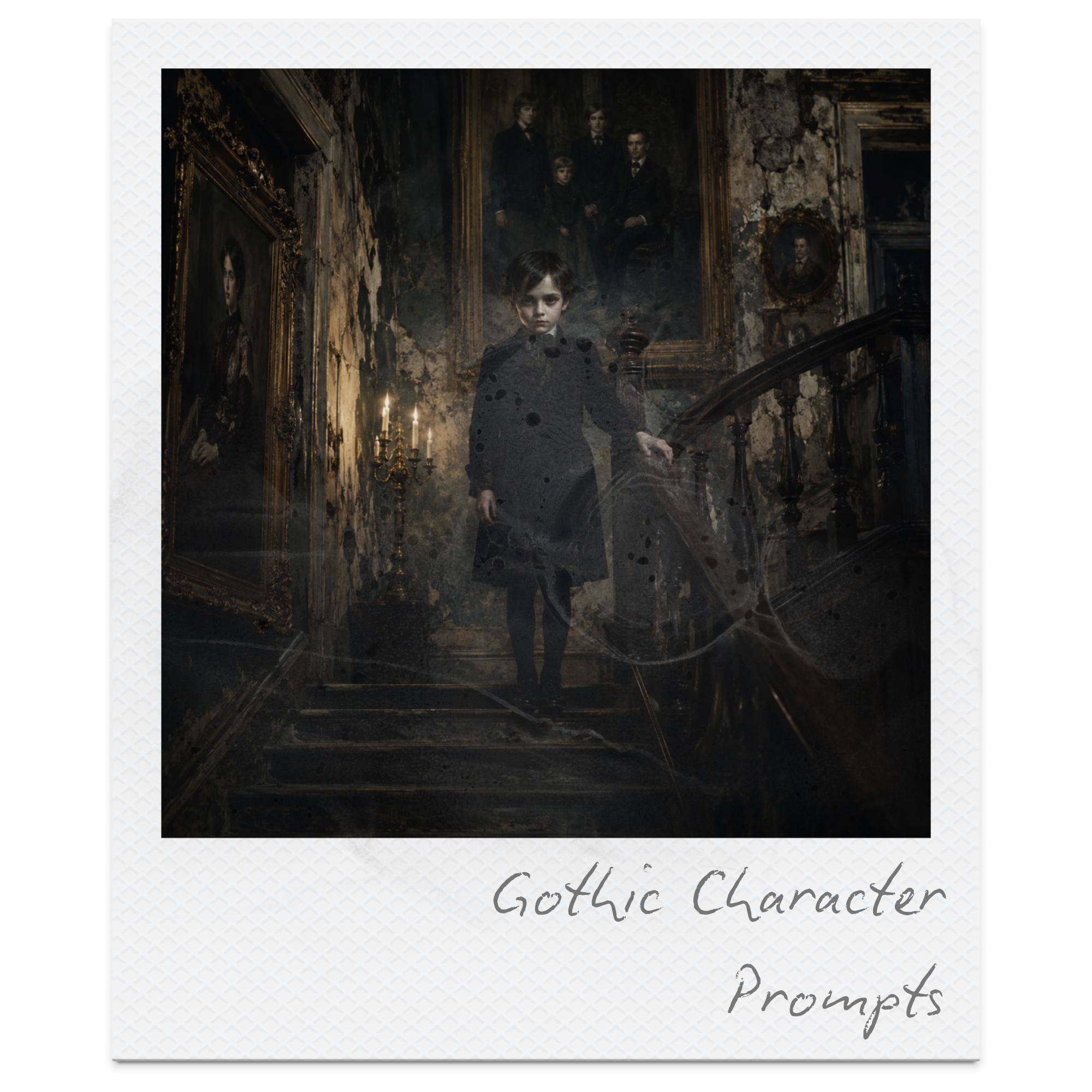
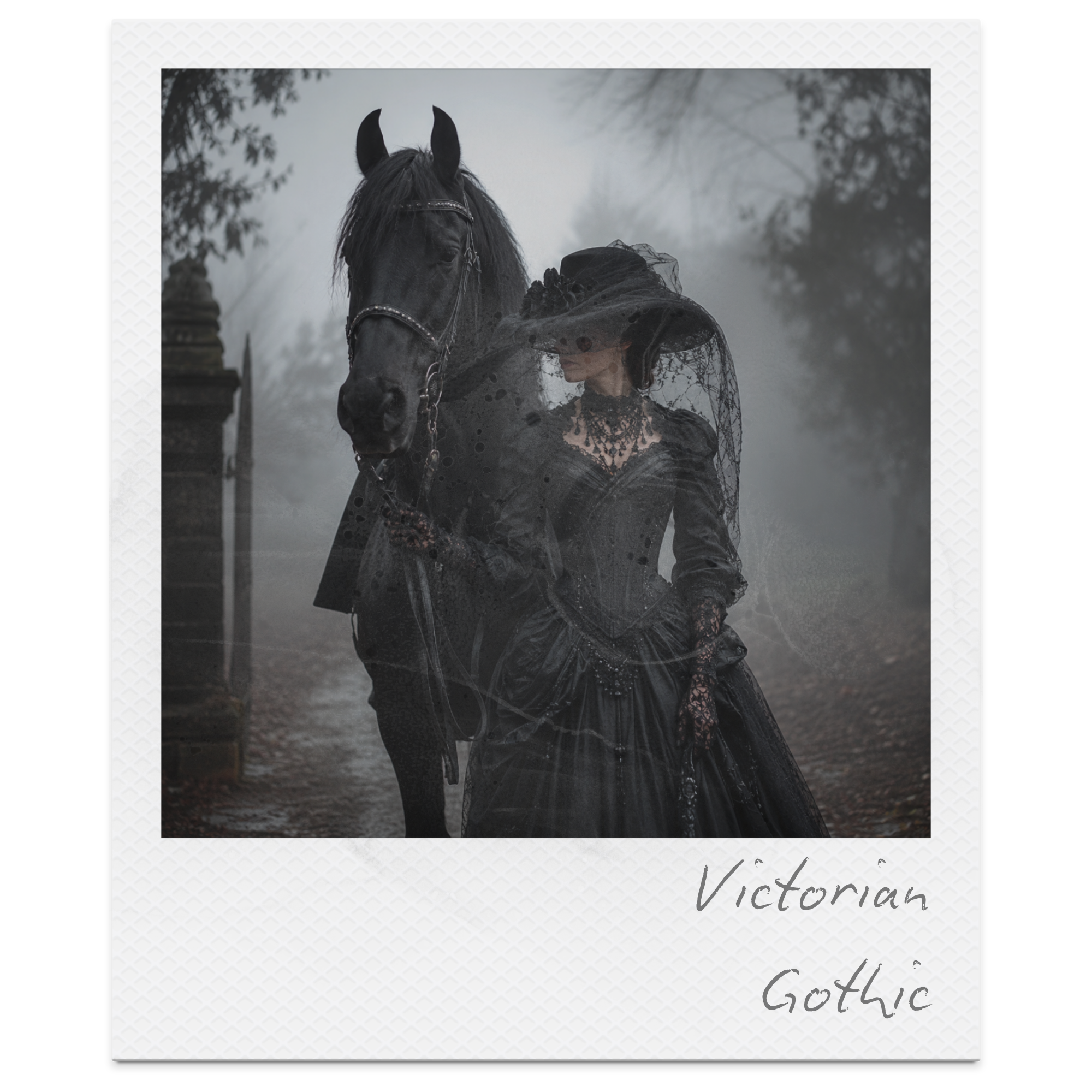
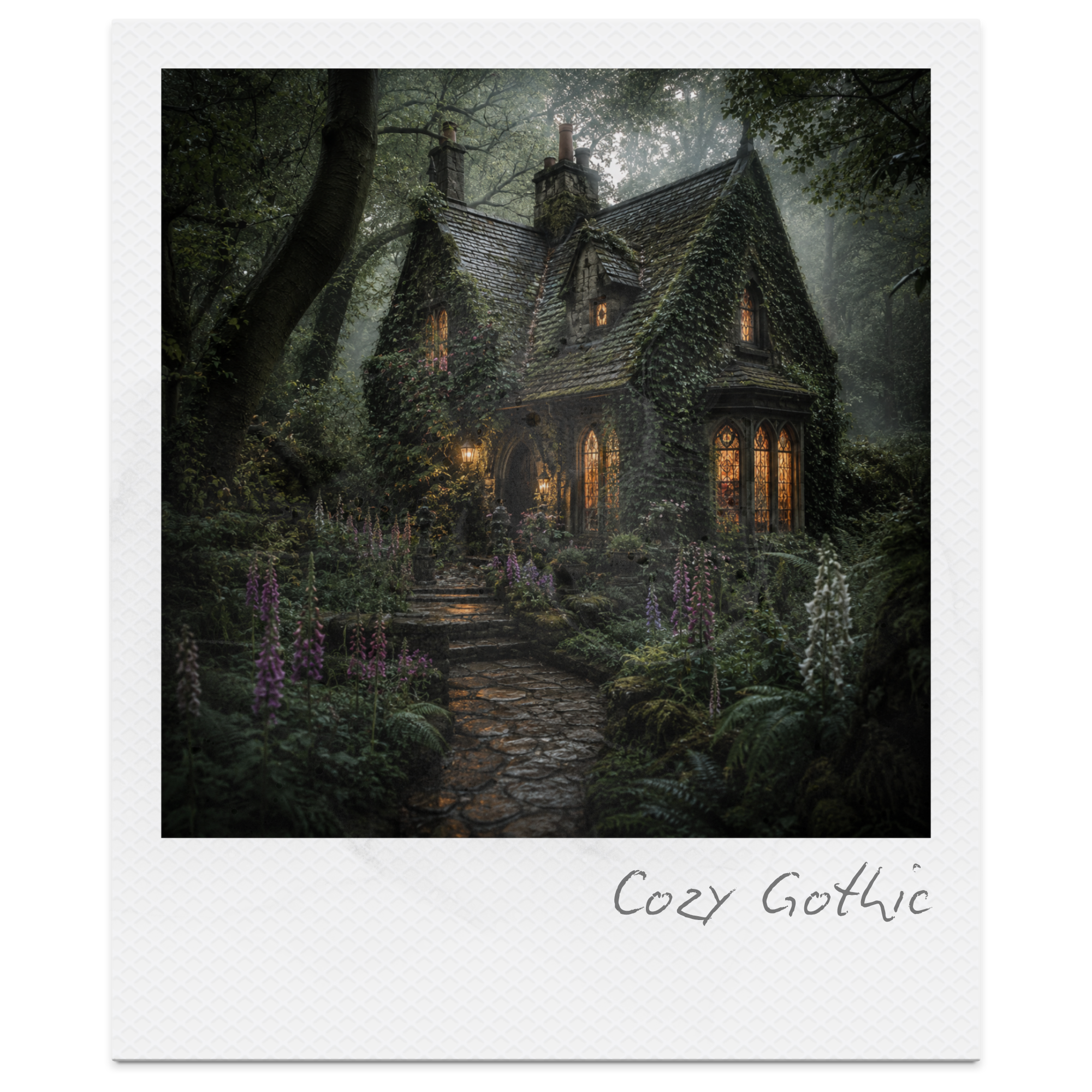
100 YA Gothic Story Ideas for Your Next Dark and Atmospheric Story
Gothic fiction thrives on secrets. Hidden rooms, decaying estates, isolated communities, troubled families and unsettling histories create worlds where the past rarely stays buried for long. In YA Gothic, those familiar elements collide with the uncertainty of growing up: leaving home for the first time, questioning the adults who have shaped your life, falling in love, testing friendships and discovering that the stories you were told about your family — or yourself — may not be true.
These 100 YA Gothic Story Ideas explore haunted houses, eerie schools, crumbling mansions, sinister families, forbidden romances, mysterious disappearances, supernatural encounters, psychological unease and secrets stretching across generations. Some lean towards classic Gothic fiction, while others combine the genre with contemporary YA, romance, mystery, horror, fantasy and the paranormal. Explore the Gothic Writing Hub for more Gothic prompts, characters, settings, names and inspiration for building beautifully unsettling stories.
Whether you are developing a YA novel, planning a short story or searching for the premise that sparks something unexpected, use these ideas as foundations rather than finished plots. Change the period, setting or supernatural elements, combine several premises or take a familiar Gothic convention somewhere completely new. And when you are ready to wander beyond dark corridors and haunted estates, the Creative Writing Archive is filled with more story ideas, prompts, characters, settings and inspiration from across genres.
1. Haunted Houses & Gothic Estates
The Gothic house is rarely just a backdrop. Its locked rooms, neglected wings, strange portraits and hidden passages can preserve generations of secrets while reflecting the fears of the people trapped inside it. For YA protagonists, entering or inheriting such a place can also represent a new stage of independence — particularly when the adults around them seem determined to prevent them from discovering what the house remembers.
After her estranged grandmother dies, seventeen-year-old Eliza inherits an enormous country house on the condition that she lives there alone for thirty nights. On the first night, she discovers that every bedroom has been prepared for a different version of herself.
A boy moves into the crumbling estate where his mother has accepted a job as caretaker. Each morning, another window has been bricked over from the inside, and nobody else seems concerned that the house is slowly sealing them in.
When three cousins are sent to clear their deceased grandfather's mansion before it is sold, they discover an entire floor missing from the architectural plans. At midnight, a staircase leading to it appears.
Seventeen-year-old Mara has grown up knowing that the west wing of her family's estate is unsafe. When her younger brother disappears through its permanently locked doors, she follows and discovers rooms preserved exactly as they were on the night her mother supposedly died in hospital.
A teenager takes a summer job cataloguing the contents of an abandoned manor before its demolition. Every object she records disappears overnight and reappears inside her own bedroom.
After his father's sudden remarriage, Noah moves into his new stepmother's ancestral home. The family portraits include generations of teenage boys who look exactly like him — despite none of them being related to him.
Four friends break into the ruined mansion overlooking their town on the final night of summer. Inside, they find evidence that each of them has lived there before, including bedrooms filled with childhood belongings they thought they had lost years ago.
A girl raised in foster care learns that she has inherited a remote Gothic estate from relatives she never knew existed. The servants welcome her by name, but insist that she has returned rather than arrived.
Every owner of Blackthorn House has abandoned it before their eighteenth birthday. When sixteen-year-old Iris moves there with her family, she becomes determined to prove the supposed curse is nonsense — until the house begins showing her exactly what happened to the teenagers who lived there before her.
A wealthy family hires a teenage photographer to document their decaying ancestral mansion before restoration begins. Her photographs reveal doors, figures and entire rooms that were not visible when she took them, including one image of herself standing behind a locked attic window.
2. Dark Family Secrets & Generational Curses
Gothic families are built upon inheritance, but what passes between generations does not have to be money or property. Children can inherit reputations, expectations, guilt, supernatural abilities and consequences created by ancestors they never knew. These YA Gothic ideas explore young characters beginning to question their families and discovering that becoming their own person may require confronting a legacy everyone else expects them to accept.
Every daughter in seventeen-year-old Cora's family dies before turning twenty. Her mother has spent Cora's entire life preparing her for the same fate, but an old diary suggests the women were never cursed — someone has been ensuring the prediction comes true.
When twins Adrian and Elias turn sixteen, their father finally explains why no member of their family is permitted to have their portrait painted. Elias secretly commissions one anyway, and Adrian begins disappearing from family photographs instead.
A teenager discovers that the women in her family have recorded their dreams for more than two hundred years. Reading the journals chronologically reveals that every generation has dreamed about the same locked room — and last night, she finally dreamed that its door opened.
After her older sister disappears, Maeve is told that she has become the new heir to a prestigious family name. Nobody will explain why the position requires her to wear her sister's clothes, move into her bedroom and gradually assume every part of her former life.
A boy discovers a hidden family tree in which one child's name has been violently scratched out of every generation. When his baby sister is born, his own name disappears from the newest branch.
Every member of one wealthy family develops an identical scar on their seventeenth birthday. When Theo's birthday arrives without one, his parents are horrified rather than relieved and immediately begin making arrangements to send him away.
Following her father's death, a teenager finds hundreds of unopened letters addressed to the eldest daughters of her family. Each contains the same warning written decades apart: Do not let them choose another bride.
For generations, one family has blamed its misfortunes on an ancestor who supposedly practised witchcraft. While researching the story for school, sixteen-year-old Amara discovers that the woman was innocent — and that the real curse may have been created by the relatives who betrayed her.
Every firstborn child in Luca's family begins hearing the dead at sixteen. His relatives treat the ability as an honour, but the ghosts tell Luca something very different: generations of his family have been using their children to keep the spirits imprisoned.
After her mother suffers a mysterious accident, seventeen-year-old Rosalie is sent to stay with relatives she has never met. Their isolated estate contains portraits of every woman in the family, each painted at exactly Rosalie's age — and every face has been carefully scratched away except hers.
3. Gothic Schools, Academies & Institutions
Schools and institutions are perfect Gothic settings because they combine rigid rules with spaces young people cannot easily escape. Ancient boarding schools, secluded academies, hospitals, convents and orphanages can preserve traditions long after their original purpose has been forgotten. These YA Gothic ideas place young characters inside institutions where authority cannot necessarily be trusted, belonging comes at a price and the rules students are expected to obey may be protecting something far darker than discipline.
When sixteen-year-old Imogen receives a scholarship to an elite boarding school housed inside a former monastery, she learns that students are forbidden from entering the corridors during the final hour before dawn. Then her roommate begins leaving their room every morning at exactly 4:17.
An isolated academy accepts only students whose siblings have died. Seventeen-year-old Daniel assumes the unusual admissions policy is part of the school's grief programme until he discovers that several students have begun seeing their dead brothers and sisters inside a sealed classroom.
Every graduating class at an ancient girls' school paints a group portrait that hangs in the dining hall. When Priya finds this year's portrait already completed months before graduation, one student has been painted with her face turned towards the wall.
After repeated behavioural problems, sixteen-year-old Gabriel is sent to a remote residential school famous for transforming difficult teenagers. He soon discovers why its students are so obedient: every punishment removes one memory of the life they had before arriving.
A prestigious music academy keeps one practice room permanently locked because a student died there a century ago. When scholarship student Lena hears someone playing her unfinished composition from inside, she becomes convinced the official story of the girl's death is wrong.
Students at a centuries-old boarding school are divided into houses according to personality, achievement and family history. Seventeen-year-old Florence is assigned to a fifth house that officially does not exist, alongside six students the rest of the school appears unable to see.
While volunteering at a former children's hospital scheduled for demolition, a group of teenagers discovers patient records bearing their own names and birth dates. The files describe treatments none of them remember receiving — and one record has never been officially discharged.
A boy is sent to live and study at the secluded religious school where generations of his family were educated. He discovers that every member of his family left behind a confession, hidden beneath the floorboards of the same dormitory, and his father's confession ends halfway through a sentence.
At an exclusive academy, every final-year student must spend one night alone in the school's oldest building before graduating. Most refuse to discuss what happens inside, but when seventeen-year-old Safiya emerges the following morning, everyone insists she has been gone for three weeks.
Following her mother's death, a girl transfers to the mysterious boarding school her mother attended as a teenager. Teachers remember her immediately, students whisper a nickname she has never heard before and the headmistress quietly hands her a detention notice written by her mother eighteen years earlier.
4. Ghosts, Hauntings & Supernatural Encounters
A Gothic ghost rarely appears without a reason. Hauntings can expose forgotten crimes, preserve overwhelming emotions or force the living to confront histories they would prefer to ignore. For YA protagonists, ghosts can become frightening reflections of their own fears about identity, loss and the future — particularly when the dead were once teenagers themselves. These story ideas explore hauntings that range from openly supernatural encounters to mysteries where the boundary between memory, grief and the paranormal remains uncertain.
Seventeen-year-old Nina begins seeing a soaked teenage girl standing at the end of her street whenever it rains. When Nina finally follows her, the ghost leads her to the house where Nina's mother lived before abruptly leaving town at seventeen.
After surviving a car accident that killed his best friend, a boy begins receiving voicemails from her phone every night. At first they contain old conversations, but soon she starts describing things that have not happened yet.
A teenager buys a second-hand Victorian mourning locket and discovers that whenever she wears it, strangers mistake her for someone named Evelyn. Then an elderly woman sees her and asks why she has not aged since 1953.
Every mirror in seventeen-year-old Arthur's new home shows the same unfamiliar boy standing behind him. The reflection moves closer each night, but when Arthur searches the local archives, he discovers that the boy is still alive — and living only a few streets away.
After her twin sister dies, Celeste becomes furious when her family claims to feel her sister's presence around the house. Celeste feels nothing until she begins finding messages written in their private childhood code warning her not to trust the person who says they saw the accident.
A group of friends spends Halloween night inside an abandoned hotel where guests supposedly hear the last words of people who died there. Seventeen-year-old Max hears his own voice coming from an empty room upstairs.
A teenage girl has been able to see ghosts since childhood but has learned to ignore them. Her rules collapse when a newly dead classmate appears beside her desk and insists that everyone at school is remembering his death incorrectly.
Every night at midnight, a ghostly train passes through the disused station behind seventeen-year-old Kit's house. One evening it stops, the doors open and his missing older brother steps onto the platform looking exactly as he did five years ago.
While renovating an old theatre for a school production, the cast begins encountering the ghost of an actress supposedly killed there in the 1920s. The spirit does not seem interested in frightening them; instead, she desperately tries to prevent the lead actress from performing on opening night.
Seventeen-year-old Ada wakes each morning with dirt beneath her fingernails and memories of conversations she never had. When she finds an old graveyard beyond the woods, she recognises every headstone — including one bearing her own name and a date of death more than a century ago.
5. Gothic Romance & Dangerous Obsessions
Gothic romance blurs the boundary between attraction and danger. A mysterious stranger may offer escape from an oppressive life, a first love can become entangled with an old family secret and intense devotion may hide something far less romantic beneath the surface. These YA Gothic ideas explore desire, obsession, forbidden relationships and the uncertainty of falling for someone when neither character fully understands what they are becoming involved in.
Seventeen-year-old Violet spends every summer at her family's remote coastal estate, where she has been warned never to speak to the boy living in the neighbouring house. When she finally meets him, he reveals that his family has been given the same warning about her.
A girl begins exchanging anonymous letters with someone who leaves them inside an old book in the school library. She falls for the writer long before discovering that the final letter in the book was written seventy years ago.
When seventeen-year-old Elias moves to a rain-soaked island, he becomes fascinated by a girl who appears on the cliffs every evening but never attends school or enters the village. His classmates insist nobody has lived in the house beside the cliffs for decades.
Two teenagers from rival families fall in love while investigating the mysterious deaths that supposedly began their families' feud. Their relationship becomes increasingly dangerous when they discover that keeping the two families apart may have been the entire purpose of the feud.
After inheriting her aunt's crumbling house, seventeen-year-old Lucy finds a collection of love letters hidden inside the walls. The letters describe an obsessive romance between two teenagers a century earlier — and the newest one is addressed directly to Lucy.
A lonely boy becomes fascinated by the beautiful new student who seems to know everything about him, including thoughts he has never shared with anyone. The closer they become, the more his friends forget that he exists.
Every generation of one family produces a pair of lovers whose relationship ends in tragedy. When seventeen-year-old Amelie recognises herself and her childhood best friend in an unfinished portrait depicting the next doomed couple, she becomes determined to discover whether the family history is prophecy or manipulation.
A girl working at a decaying hotel develops feelings for the owner's withdrawn teenage son, who is forbidden from leaving the grounds. He claims his family is protecting him from the outside world, but the locked gates may actually be protecting everyone else from him.
Seventeen-year-old Rowan becomes obsessed with the portrait of a young man hanging in the abandoned manor next door. One morning the portrait is empty, and that afternoon a new boy joins Rowan's class wearing exactly the same clothes.
After a near-fatal accident, a teenager begins seeing a mysterious girl whenever he is close to death. Their encounters become the most intense relationship he has ever experienced, leaving him increasingly tempted to put himself in danger simply to see her again.
6. Gothic Mysteries & Unsolved Disappearances
Gothic mysteries are shaped as much by atmosphere and buried history as by the investigation itself. Missing people leave behind strange possessions, old diaries contradict official accounts and apparently supernatural events may conceal very human crimes. These YA ideas place young protagonists at the centre of mysteries where uncovering the truth means challenging powerful adults, questioning familiar stories and entering places where somebody has worked very hard to ensure the past remains undisturbed.
Every ten years, a teenager disappears from the same small town during the first snowfall. When seventeen-year-old Erin notices that every missing person belonged to the same school club, she joins it to discover what connects them.
While clearing her deceased grandfather's study, a girl finds an old missing-person poster bearing her mother's photograph. Her mother is alive, has never mentioned disappearing and insists the girl in the photograph is somebody else.
A student researching the history of his boarding school discovers that one bedroom has been removed from every modern floor plan. Old school newspapers reveal that its occupants repeatedly disappeared without explanation.
When seventeen-year-old Beatrice begins working in the archives of a decaying country estate, she discovers letters written by a servant girl who vanished in 1891. The final letters describe Beatrice's arrival more than a century before she was born.
Four friends investigate a local legend about a bride who disappeared from a manor house on her wedding night. Hidden beneath the chapel floor, they discover evidence that several other young women vanished from the estate — including one within the last year.
A teenage boy's older sister disappears after attending a party at an abandoned house. Everyone who attended remembers seeing her leave, but their descriptions of who she left with are completely different.
Seventeen-year-old Anya discovers an unsent letter inside a second-hand coat accusing one of her town's most respected families of murder. When she tries to identify the writer, she learns that nobody with that name has ever officially lived there.
A girl becomes fascinated by the disappearance of five students from her school twenty-five years earlier. When she finds their abandoned classroom preserved behind a false wall, there are six desks inside — and the sixth bears her father's name.
Every summer, a wealthy family invites a small group of local teenagers to work at their isolated estate. When one employee disappears, the others discover that photographs from previous summers contain young workers nobody in town remembers.
After a landslide exposes the entrance to a sealed underground crypt, seventeen-year-old Jamie finds dozens of coffins bearing the names of people who are still alive. One coffin is empty, and the name carved into its lid belongs to his missing best friend.
7. Isolation, Wilderness & Remote Gothic Settings
Gothic stories become particularly claustrophobic when there is nowhere else to go. An island cut off by storms, a house surrounded by miles of empty moorland or a village hidden deep in the mountains can turn the landscape itself into a source of tension. For YA characters, physical isolation can also remove the familiar adults, friendships and routines they rely upon, forcing them to decide whom to trust and what they are capable of when escape is no longer an easy option.
Seventeen-year-old Freya moves with her father to a lighthouse on an isolated island where the previous keeper disappeared. During the first storm, she sees another lighthouse flashing from an island that does not appear on any map.
A group of teenagers becomes stranded at a remote mountain hotel when an avalanche blocks the only road. Each morning, they discover another guest's bedroom completely empty — while everyone except them forgets that the missing person ever arrived.
After her mother's death, sixteen-year-old Isobel is sent to live with an aunt in a lonely house surrounded by miles of moorland. Every evening, a distant figure walks towards the house but disappears before reaching the gate, and each night it gets slightly closer.
A boy spending the summer in his grandfather's isolated fishing village learns that nobody is permitted on the beach after the evening tide. When his new friend disappears, he finds her footprints continuing across the wet sand and directly into the sea.
Six students are selected for an environmental research programme inside an ancient forest where phone signals and navigation equipment mysteriously fail. They soon discover the abandoned remains of an earlier research station containing photographs of themselves.
Seventeen-year-old Hana moves to a remote valley where winter cuts the community off from the outside world for months. When the first snow arrives, the villagers board their windows and warn her not to look at the people walking down from the mountains.
Two siblings travel to an isolated coastal cottage to spend the summer with the grandmother they barely know. At low tide, a stone path appears across the bay leading to the ruins of another house — one containing family photographs taken only weeks earlier.
After a storm wrecks their sailing trip, five teenagers reach what they believe is an uninhabited island. They find a perfectly maintained manor house where five bedrooms have already been prepared for them and dinner is still warm.
A girl living in a remote village becomes obsessed with the ruined castle visible across the lake. Nobody will take her there, and every map places it somewhere different, but one morning she wakes inside it with no memory of crossing the water.
Seventeen-year-old Owen takes a seasonal job at a historic hotel in the Highlands, expecting months of hiking and independence. Instead, relentless rain destroys the road out, the other employees become increasingly secretive and something begins knocking on the hotel's locked doors from the surrounding wilderness every night.
8. Psychological Gothic & Unreliable Reality
Not every Gothic threat needs to emerge from a crypt or appear at the end of a dark corridor. Psychological Gothic turns uncertainty inward, creating protagonists who cannot entirely trust their memories, senses or even their understanding of who they are. Doppelgängers, fractured identities, impossible repetitions and obsessive thoughts work particularly well in YA fiction, where questions of identity and selfhood are already central to characters beginning to define themselves independently of their families and peers.
Seventeen-year-old Clara begins finding photographs of herself attending parties, visiting places and spending time with people she has never met. Everyone in the photographs insists the events really happened.
After moving to a new school, a boy discovers another student with his exact name, birthday and childhood memories. The stranger insists that he is the original and demands that the boy return the life he stole.
A teenager wakes every morning remembering a different version of the previous day. At first she assumes something is wrong with her memory, until she discovers physical evidence that every version actually occurred.
Following months of nightmares about an unfamiliar mansion, seventeen-year-old Jacob finally sees the house while travelling with his family. His parents refuse to stop the car — and become terrified when he asks why they already know what is inside.
A girl becomes convinced that her reflection is beginning to behave differently from her. When she tells her friends, they insist she has always hated mirrors, although she remembers spending years collecting them.
After recovering from an illness, sixteen-year-old Theo returns to school and notices small changes everywhere: his best friend prefers different music, his bedroom walls are another colour and his mother remembers conversations that never happened. Then he finds a diary written in his handwriting describing a version of himself who desperately wanted to escape.
Seventeen-year-old Alice begins dreaming about another girl living inside the same house seventy years earlier. As the dreams become more vivid, Alice starts waking with objects belonging to the girl — while objects from Alice's own life begin appearing in the dreams.
A student becomes obsessed with an anonymous diary discovered beneath the floorboards of her dormitory. The writer's thoughts resemble her own so closely that she begins using the diary to make decisions, until the final pages instruct her to do something she would never normally consider.
Everyone tells seventeen-year-old Marcus that his younger sister died when they were children. Marcus remembers her perfectly and continues seeing her around the house, but the more he investigates, the more evidence he finds suggesting that he was actually the child who died.
A girl begins noticing brief moments when everyone around her stops moving. During these frozen intervals, another version of herself appears and leaves increasingly desperate messages warning her that she has already lived this year many times before.
9. Modern & Contemporary YA Gothic
Gothic fiction does not need crumbling castles, Victorian mansions or isolated moors. Modern life has its own unsettling spaces: silent apartment corridors, abandoned shopping centres, suburban houses, empty schools and hotels where hundreds of strangers briefly pass through one another's lives. These YA ideas bring Gothic themes into the present day, combining contemporary teenage experiences with haunting histories, oppressive spaces, family secrets and the uneasy feeling that something old has found a new place to hide.
Seventeen-year-old Nia moves into a newly built apartment tower with her mother and notices that the lift occasionally offers a thirteenth floor that does not appear on the building directory. One night, another teenager steps inside and begs her not to let the doors close.
A group of friends begins exploring their town's abandoned shopping centre for a photography project. Their pictures reveal crowds of shoppers reflected in the darkened windows — and several of the figures are wearing clothes belonging to people who recently disappeared.
After her parents buy an immaculate suburban house, sixteen-year-old Ruby discovers hundreds of handwritten notes hidden beneath layers of wallpaper. Every family who lived there recorded the same complaint: somebody else was living inside the house with them.
A teenage receptionist working the night shift at a boutique hotel notices that Room 17 is regularly booked despite not existing. When a guest arrives asking for its key, the computer shows that the reservation was made in 1986.
Seventeen-year-old Jay begins receiving photographs through an anonymous social media account showing him standing outside unfamiliar houses. When he visits the first address, an elderly woman answers the door and recognises him as the boy who disappeared from the house fifty years ago.
A girl transfers to a modern private school built over the remains of a demolished Victorian institution. After students begin sharing videos of a mysterious figure in the corridors, she notices that the figure only appears beside teenagers who are about to leave the school permanently.
During the summer before university, four friends take jobs at an almost-empty seaside resort that has fallen out of fashion. Each night, music begins playing inside the abandoned ballroom, and photographs from the hotel's glamorous past show the same four teenagers among the guests.
After moving into student accommodation for a summer programme, seventeen-year-old Maya discovers that everyone on her corridor has been having the same dream about a locked room at the end of the hall. The problem is that there is no room there — until one morning a new door appears.
A teenager becomes fascinated by an abandoned house livestream that has developed an online following because viewers claim to see a girl in the upstairs window. When he finally visits the address, the bedroom contains a computer displaying a livestream of his own house.
Following a family breakdown, seventeen-year-old Leo moves with his father into a cheap flat inside a converted hospital. He soon begins hearing conversations through the walls between former patients discussing treatments performed decades ago — until one voice begins talking about Leo's father.
10. Buried Pasts, Returning Horrors & Gothic Legacies
Gothic stories are haunted by what previous generations tried to bury. Old crimes survive through their consequences, sealed rooms eventually reopen and secrets thought safely confined to the past can become the responsibility of people who had nothing to do with creating them. These final YA Gothic ideas explore inheritance in its darkest sense, placing young characters between the choices made before they were born and the future they must decide whether to repeat or rewrite.
When a centuries-old crypt beneath the local church is opened for restoration, seventeen-year-old Eva discovers that one coffin contains photographs of her family taken throughout her childhood. The most recent photograph was taken that morning.
A boy inherits a locked wooden chest from a grandfather he barely knew, along with strict instructions never to open it. When the chest begins knocking from the inside, his father begs him to destroy it — but refuses to explain why every eldest son in the family has inherited it for generations.
Construction workers uncover the foundations of a mansion deliberately demolished a century ago. Seventeen-year-old Layla begins dreaming about the family who lived there and gradually realises that one room was never destroyed because it still exists somewhere beneath the modern town.
After an unusually dry summer drains the reservoir outside her village, a teenager discovers the remains of the settlement flooded to create it. Inside one ruined house, she finds a bedroom preserved with photographs of her grandmother — who has always claimed she grew up somewhere else.
Every generation of one family appoints a single person to guard an apparently empty grave. When seventeen-year-old Isaac inherits the responsibility, he discovers that the grave is not intended to keep anyone from getting in.
A girl researching her town's history discovers that an annual memorial commemorates the victims of a nineteenth-century fire. An original newspaper reports something very different: the building was deliberately burned by the townspeople while everyone inside was still alive.
When a storm uproots an ancient tree on the grounds of her family's estate, seventeen-year-old Daphne finds dozens of objects buried beneath its roots, each belonging to a different generation of her family. The newest is the necklace she is currently wearing.
A teenager discovers that the frightening bedtime story his grandmother told him as a child describes a real creature his ancestors supposedly defeated. When his grandmother develops memory problems and can no longer finish the story, the creature begins returning — as though remembering it was what kept it away.
For generations, the oldest daughter of one family has inherited a beautiful abandoned manor nobody is permitted to enter. When eighteen-year-old Celia finally receives the property, she learns that the inheritance was never the house itself but responsibility for the people trapped inside it.
After seventeen-year-old Mara discovers evidence that her respected ancestors committed a terrible crime, she decides to expose the truth despite her family's attempts to stop her. But restoring the names of the forgotten victims also restores something else the family erased from history — and Mara must decide whether ending generations of silence is worth allowing it to return.
Uncover a Gothic Mystery with The Victoriana Collection
Some Gothic stories begin with a haunted house.
Others begin with something much smaller.
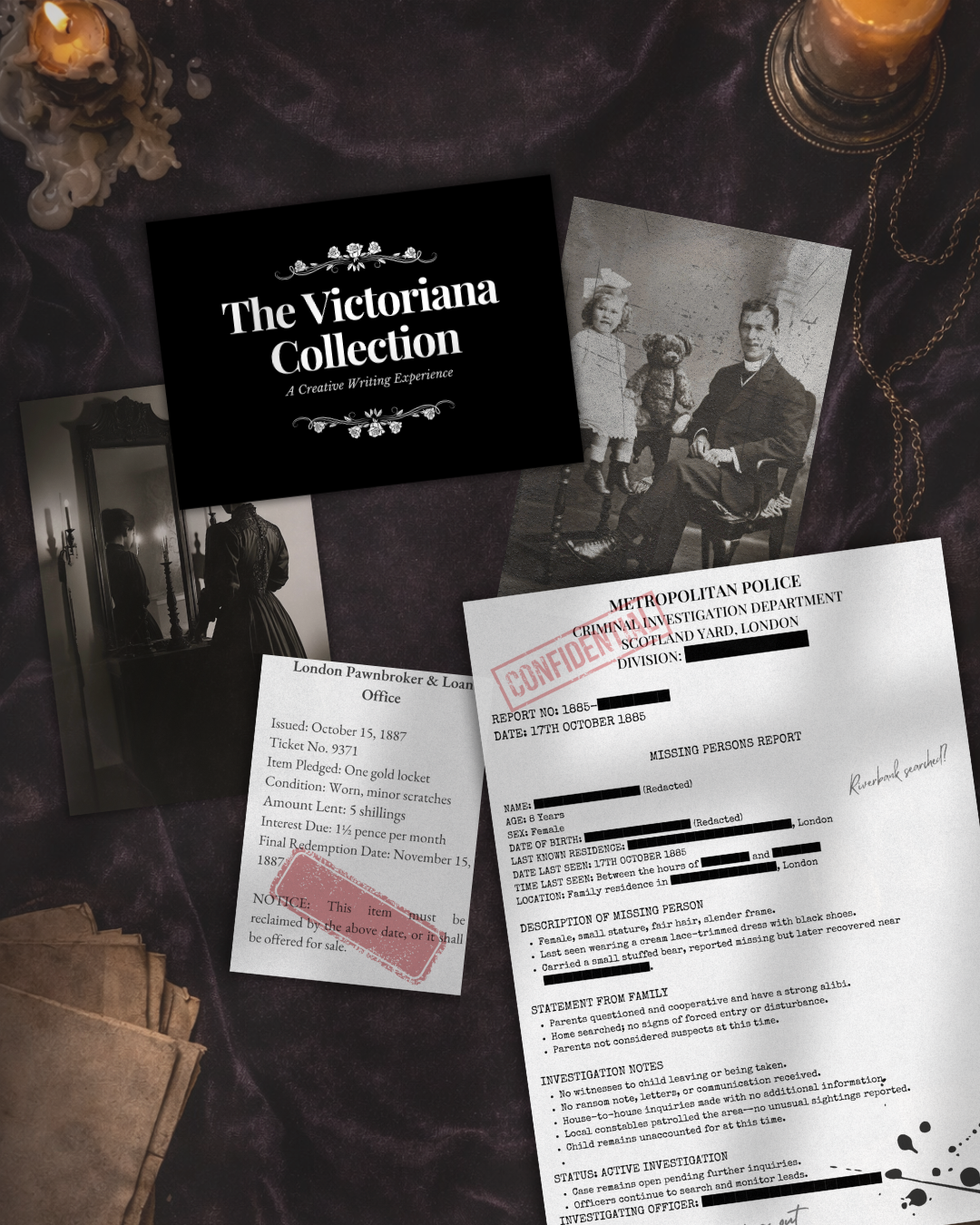
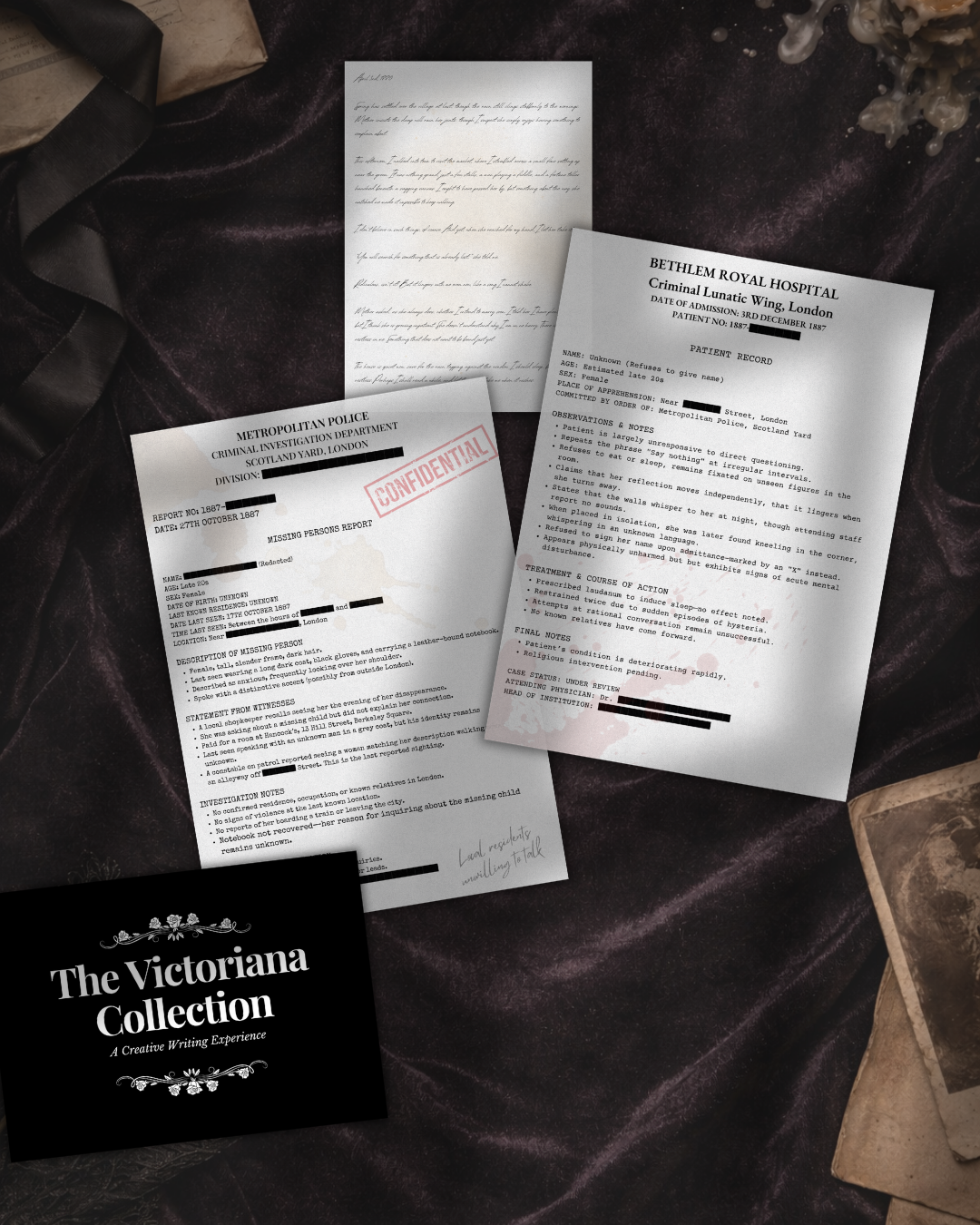
A photograph with a name scratched from the back. A child's drawing nobody can explain. A missing persons report. An unsent letter. A newspaper clipping that contradicts everything you thought you knew.
The Victoriana Collection is an immersive storyworld archive inspired by Gothic fiction, Victorian spiritualism, unexplained disappearances and histories that refuse to stay buried. Inside are more than 50 printable documents and artefacts — letters, diary entries, photographs, reports, spiritualist notes, newspaper clippings and personal mementoes — each revealing another fragment of a mystery.
There is no narrator waiting to explain what really happened.
No final chapter revealing the truth.
Instead, you become the investigator.
Follow connections between documents, notice the details that do not quite fit and decide which accounts you believe. Who disappeared? Who was searching for them? Why are pieces of the story missing? And what might have been deliberately erased?
If these YA Gothic story ideas have you imagining vanished teenagers, troubled families, restless spirits, inherited secrets and mysteries stretching across generations, use the archive to explore how a Gothic story can be built from the traces people leave behind.
Open The Victoriana Collection and see what you uncover.
Go Deeper into Writing YA Gothic Stories
YA Gothic fiction works particularly well when external darkness reflects something happening within the protagonist's life. A decaying house can represent a family falling apart, a ghost can embody something previous generations refuse to acknowledge and an inherited curse can force a teenager to question how much of their identity has already been decided for them. Gothic fiction traditionally combines atmospheric settings, buried secrets, psychological tension, isolation and uncertainty about the supernatural, but those elements can be adapted to almost any period or setting.
◆ Build Unease Before You Introduce Danger – Gothic atmosphere often depends on the feeling that something is wrong before the protagonist understands what it is. Introduce small disturbances first: a door repeatedly left open, a portrait facing the wrong direction, footsteps where nobody should be walking or an adult who abruptly changes the subject whenever a particular name is mentioned.
◆ Make the Setting Do More Than Look Gothic – A mansion does not become Gothic simply because it has turrets and candlelight. Give the setting a history, secrets and an emotional connection to the characters. Gothic locations often function almost like characters themselves, reflecting isolation, decay or psychological instability.
◆ Let the Past Interfere with the Present – One of the strongest Gothic patterns is the return of something supposedly finished. An old crime might shape a modern family, a dead teenager's story could parallel the protagonist's life or a tradition might continue long after everyone has forgotten why it began. Ask what previous generations failed to resolve.
◆ Give Your Protagonist a Reason They Cannot Simply Leave – Isolation does not have to mean locking your character inside a castle. Family loyalty, financial dependence, school rules, bad weather, social pressure, grief or the desperate need to discover the truth can trap someone just as effectively as a locked door.
◆ Use YA Conflicts to Strengthen the Gothic Plot – Connect the mystery to questions your protagonist is already facing about identity, independence, friendship, family expectations, first love or their future. A seventeen-year-old discovering a disturbing family legacy becomes more interesting when they are simultaneously deciding how much of that family they want to carry into adulthood.
◆ Turn Familiar Places Unfamiliar – Gothic unease often emerges when something recognisable becomes subtly wrong. A childhood bedroom might contain an object the protagonist does not remember owning. A familiar school corridor might suddenly have another door. A family photograph might include someone nobody can identify. Small distortions can be more unsettling than immediate supernatural spectacle.
◆ Decide What Your House Is Hiding – If you are using a Gothic house, estate, school or institution, give its architecture narrative purpose. What has been locked away? Which spaces are avoided? Who is permitted to enter them? Hidden rooms and forbidden areas become far more effective when their existence reveals something about the people controlling the building.
◆ Let Adults Know More Than They Admit – YA Gothic offers an excellent opportunity to explore the moment when young people realise that adults are capable of lying, hiding uncomfortable truths and protecting flawed institutions. Parents, teachers and guardians do not all need to be villains; sometimes they genuinely believe keeping the protagonist ignorant will protect them.
◆ Use Family History as Pressure – Inheritance is one of Gothic fiction's richest ideas. Your protagonist might inherit property, reputation, guilt, supernatural ability, obligation or an expectation to repeat somebody else's life. Then ask whether they will accept that inheritance, transform it or refuse it entirely.
◆ Create Characters Who Can Be Read in More Than One Way – The mysterious love interest might be protective or controlling. The supposedly cruel grandmother may be hiding something for a good reason. The ghost could be a victim, manipulator or projection of grief. Gothic characters become compelling when readers continually have to reconsider what they thought they understood.
◆ Use Doubles, Mirrors and Repetition – Doppelgängers, portraits, twins, reflections and repeated family histories can create the unsettling impression that identity is unstable. A YA protagonist might become particularly frightened by the possibility that they are turning into a parent, sibling or ancestor whose life they desperately want to escape.
◆ Do Not Explain Everything Too Quickly – Gothic fiction often gains power from uncertainty, particularly around whether apparently supernatural events have rational explanations. Allow several interpretations to coexist for part — or even all — of the story.
◆ Make Romance Complicated, Not Automatically Toxic – Gothic romance can explore obsession, secrecy, forbidden attraction and unequal power without presenting harmful behaviour as proof of love. Give your protagonist agency and allow them to question whether intense attraction is actually enough reason to trust someone.
◆ Bring Gothic Fiction into the Present – You do not need to remove phones, social media or modern technology to create Gothic isolation. Instead, ask why those things fail to provide safety. A protagonist can search the house online and discover that its history has been erased, post evidence nobody believes or receive messages that make the mystery even stranger.
◆ Use Sensory Details Selectively – Choose recurring sounds, textures, smells and visual details that belong specifically to your story: damp stone, warped floorboards, salt on windows, dead flowers, flickering fluorescent lights or a particular perfume lingering in an empty room. Repetition can turn an ordinary sensory detail into a warning.
◆ Give the Mystery Personal Consequences – Discovering who died fifty years ago is intellectually interesting; discovering that your mother lied about knowing them changes the protagonist's life. Connect every major revelation to relationships, identity or choices in the present.
◆ Ask Whether the Ghost Is Really the Haunting – Sometimes the supernatural presence is not the darkest thing in a Gothic story. The real horror may be the family that concealed a death, the institution that protected someone powerful or the community that decided forgetting was easier than acknowledging what happened.
◆ Let Beauty and Darkness Exist Together – Gothic settings can be magnificent as well as frightening. Ruined estates, wild landscapes, elaborate architecture and dramatic weather can create awe alongside dread. That contrast helps Gothic fiction feel romantic, melancholic and haunting rather than simply frightening.
◆ Give Your Protagonist Something to Lose by Discovering the Truth – The strongest Gothic mysteries rarely offer consequence-free answers. Solving the mystery might destroy the protagonist's understanding of their family, expose someone they love, end a relationship or reveal something uncomfortable about themselves.
◆ Decide What Will Remain Unresolved – You can solve the central mystery without explaining every strange occurrence. Perhaps the murderer is identified but the footsteps continue, or the family secret is exposed while the protagonist never learns whether the ghost was real. Leaving one carefully chosen question unanswered can allow the Gothic atmosphere to linger after the story ends.
Final Thoughts
Gothic fiction has always been interested in what people try to hide: the room nobody enters, the relative nobody mentions, the tragedy rewritten as a family legend or the terrible event an entire community has agreed to forget. YA Gothic adds another layer to those familiar shadows by placing young characters at the moment when they are beginning to look beyond the explanations adults have given them and decide what they believe for themselves.
Use these 100 YA Gothic Story Ideas as doorways into stories of your own. Take an abandoned estate and move it into the present day. Turn a supernatural haunting into a psychological mystery. Let the supposed monster become the only character telling the truth. Combine Gothic romance with a disappearance, place a generational curse inside an ordinary suburban family or create a protagonist who discovers that escaping their inheritance will require exposing everything their family has worked to protect.
And remember that Gothic does not have to mean constant darkness. Some of the most atmospheric stories create tension through contrast: beautiful houses with terrible histories, intense first loves shadowed by suspicion, magnificent landscapes that leave characters completely isolated or loving families built upon secrets nobody dares acknowledge. What matters is the sense that beneath the surface of the world lies another story waiting to be uncovered.
For more haunted settings, dark characters, Gothic prompts, mysterious houses and atmospheric inspiration, explore the Gothic Writing Hub, or venture into the wider Creative Writing Archive for story ideas, prompts, settings, characters and inspiration spanning fantasy, horror, mystery, romance, science fiction and beyond.
Choose Your Next Adventure