A decaying mansion stands at the end of an overgrown drive. Somewhere inside, a locked room has remained untouched for generations. A stranger arrives carrying a letter that should never have been written. Beneath the beauty of the setting and the apparent familiarity of the world, something is profoundly wrong.
This is the enduring appeal of Gothic fiction. From haunted houses and forbidden secrets to psychological terror, obsessive love and the unsettling influence of the past, Gothic storytelling transforms familiar fears into extraordinary narratives. Yet the most compelling Gothic stories do more than surround their characters with darkness. They create worlds where setting, atmosphere, character and conflict become inseparable.
Learning how to write Gothic fiction means understanding how to build that atmosphere, develop psychologically complex characters, manipulate suspense and use language to evoke fear, uncertainty and fascination. Whether you're writing a traditional Gothic ghost story, a supernatural mystery, a dark romance or a contemporary psychological thriller, these techniques can help you create fiction that lingers long after the final page.
In this guide, we'll explore the essential elements of Gothic fiction, practical writing techniques, story structure and original examples to help you develop your own atmospheric narratives.
For more inspiration, explore the Gothic Writing Hub, experiment with the Gothic Story Sparks generator, or browse the Creative Writing Archive for further prompts, exercises and storytelling resources.
Let's begin with the foundations of Gothic fiction — and discover what makes this literary tradition so enduringly powerful.
What Is Gothic Fiction?
Gothic fiction is a literary genre that combines mystery, psychological tension, unsettling atmosphere and the darker aspects of human experience. Often associated with haunted castles, decaying mansions, supernatural encounters and isolated landscapes, Gothic literature explores the fears, desires and secrets that lie beneath the surface of apparently familiar worlds.
At its heart, Gothic fiction is concerned with uncertainty. Characters encounter situations they cannot fully explain, places that seem to conceal disturbing histories and individuals whose appearances disguise dangerous intentions. The boundaries between reality and imagination, reason and madness, life and death frequently become blurred, leaving readers questioning what they can trust.
Although Gothic fiction shares many characteristics with horror, its distinctive power lies in the relationship between atmosphere, psychological conflict and the unknown. A Gothic story does not necessarily need a monster, a ghost or a violent confrontation to become frightening. Sometimes an unexplained sound behind a locked door, a portrait that resembles someone long dead or the gradual revelation of a family secret is enough to create profound unease.
The Origins of Gothic Literature
Gothic fiction emerged in the eighteenth century, with Horace Walpole's The Castle of Otranto (1764) widely recognised as the first Gothic novel. Combining medieval architecture, supernatural events, family secrets and threatened inheritance, Walpole established many of the conventions that would shape the genre.
Later writers developed Gothic fiction in increasingly sophisticated directions. Ann Radcliffe's The Mysteries of Udolpho (1794) emphasised suspense, atmospheric landscapes and the psychological experience of fear, while Matthew Lewis's The Monk (1796) explored transgression, corruption and supernatural horror.
During the nineteenth century, Gothic literature became an increasingly powerful means of examining human identity, morality and psychological instability. Mary Shelley's Frankenstein (1818) explored scientific ambition, responsibility and the consequences of creation. Edgar Allan Poe transformed obsession, guilt and unreliable perception into intensely psychological narratives, while Robert Louis Stevenson's Strange Case of Dr Jekyll and Mr Hyde (1886) examined the disturbing possibility of a divided human identity.
These works helped establish Gothic fiction as more than a collection of supernatural stories. The genre became a way of exploring the anxieties of its time, from scientific advancement and religious uncertainty to social repression, sexuality and the fragility of human reason.
How Gothic Fiction Has Evolved
Although Gothic fiction originated in the eighteenth century, its conventions have continually adapted to new historical periods, cultural anxieties and literary traditions.
The crumbling castles and persecuted heroines of early Gothic novels gradually gave way to Victorian anxieties surrounding scientific experimentation, urban anonymity, degeneration and concealed identities. Twentieth-century writers increasingly explored psychological uncertainty, domestic spaces and the possibility that terror might emerge from ordinary relationships rather than distant supernatural forces.
In Daphne du Maurier's Rebecca (1938), an imposing country estate becomes inseparable from jealousy, memory and the lingering influence of a dead woman. Shirley Jackson's The Haunting of Hill House (1959) uses an apparently haunted building to explore loneliness, vulnerability and the instability of perception.
Contemporary Gothic fiction continues to reinvent these traditions through psychological horror, Gothic romance, dark fantasy, historical fiction and stories set within modern communities, institutions and domestic spaces.
A Gothic story might unfold in a remote Victorian manor, but it could just as easily take place inside a modern apartment building, an isolated research facility or a seemingly idyllic village whose inhabitants refuse to discuss the past.
What makes a story Gothic is not its historical setting or supernatural content alone, but the way it uses atmosphere, uncertainty, symbolism and psychological conflict to expose something disturbing beneath the familiar.
This flexibility is one of the genre's greatest strengths. Gothic fiction can be romantic, tragic, mysterious, supernatural or deeply psychological, while retaining its fascination with beauty, fear, secrecy and the darker possibilities of human nature.
The 10 Essential Elements of Gothic Fiction
Gothic fiction is defined by more than its familiar imagery of haunted houses, crumbling castles and shadowy figures. Its distinctive atmosphere emerges from the interaction between setting, character, psychological conflict and the unknown. A seemingly beautiful place can conceal something terrible, a respectable family can be haunted by generations of wrongdoing, and an ordinary experience can gradually become impossible to explain.
Although not every Gothic story contains all ten elements, understanding these conventions will help you create narratives that feel atmospheric, emotionally complex and genuinely unsettling.
1. Dark, Atmospheric and Isolated Settings
Setting is one of the most recognisable elements of Gothic fiction. Ruined abbeys, abandoned mansions, remote villages, ancient forests and storm-battered coastlines provide more than visual atmosphere. Their isolation creates vulnerability, while their histories suggest that something disturbing may remain concealed within them.
In Daphne du Maurier's Rebecca, Manderley is inseparable from the memory of its former mistress. The estate's beauty and grandeur become increasingly oppressive as the narrator discovers how completely the past continues to shape the present.
For writers: Give your setting a history, a secret or a symbolic relationship with your protagonist. Consider what the location conceals, why your character cannot easily escape and how its atmosphere might change as the story progresses.
2. Secrets, Mysteries and Hidden Histories
Gothic narratives frequently revolve around something deliberately concealed: an unexplained disappearance, a forbidden room, an inherited curse, a family scandal or a crime buried beneath generations of respectable appearances.
These mysteries create narrative momentum, but their significance should extend beyond the pleasure of discovering an answer. The strongest Gothic secrets threaten a character's understanding of their family, identity, relationships or moral beliefs.
In Charlotte Brontë's Jane Eyre, the mystery surrounding Thornfield Hall gradually reveals the disturbing circumstances concealed beneath its apparently respectable domestic life.
For writers: Begin with a secret that has consequences in the present. Rather than revealing everything through a single dramatic confession, allow readers to discover fragments through objects, conversations, contradictions and unsettling events.
3. Psychological Fear and Uncertainty
Gothic fiction often explores the frightening possibilities of the human mind. Paranoia, guilt, obsession, grief, distorted perception and emotional instability can become as disturbing as any supernatural threat.
Edgar Allan Poe's The Tell-Tale Heart demonstrates how psychological tension can emerge from a narrator whose account becomes increasingly unreliable. The reader is drawn into the character's disturbed perspective while recognising the contradictions within it.
For writers: Consider the difference between what your protagonist experiences, what they believe is happening and what the reader suspects. Allow uncertainty to develop naturally rather than explaining every disturbing event immediately.
For further inspiration, explore these 70 Gothic Horror Writing Prompts, which develop psychological unease, supernatural mysteries and disturbing discoveries into original story ideas.
4. The Supernatural and the Unexplained
Ghosts, curses, apparitions, prophetic dreams, mysterious transformations and seemingly impossible events are familiar features of Gothic literature. However, the supernatural does not always need to be confirmed.
In Henry James's The Turn of the Screw, uncertainty surrounding the governess's experiences becomes central to the story's psychological tension. The possibility of supernatural intervention is disturbing, but so is the alternative explanation.
For writers: Decide whether the supernatural will be real, imagined or deliberately ambiguous. If you choose uncertainty, maintain enough consistency for readers to develop competing interpretations without feeling that the story is withholding information arbitrarily.
5. Isolation, Confinement and Entrapment
Gothic characters are frequently trapped, physically or psychologically. They may be imprisoned inside a building, isolated from society, controlled by powerful individuals or unable to escape a memory, relationship or inherited obligation.
Confinement intensifies vulnerability by limiting a character's choices. A remote house becomes frightening when the roads are impassable, but it becomes even more disturbing when the protagonist realises that the people inside have no intention of allowing them to leave.
For writers: Think beyond locked doors and inaccessible locations. A character might be trapped by social expectations, financial dependence, emotional manipulation, family loyalty or a secret they cannot reveal.
The most effective Gothic confinement often combines an external restriction with an internal struggle.
6. Obsession, Forbidden Desire and Dangerous Love
Gothic fiction frequently explores emotions that become destructive when taken to extremes. Love can transform into possession, grief into an inability to accept death, and ambition into a willingness to violate moral boundaries.
In Emily Brontë's Wuthering Heights, the relationship between Catherine Earnshaw and Heathcliff reveals the destructive possibilities of passion, resentment and emotional dependence. Love becomes inseparable from suffering, revenge and the haunting influence of the past.
For writers: Give your characters desires powerful enough to challenge their judgement. Consider what they are willing to sacrifice, whom their choices might harm and whether their deepest longing is ultimately incompatible with their happiness.
For ideas involving forbidden relationships, obsessive devotion and tragic love, explore these 70 Gothic Romance Writing Prompts.
7. Decay, Death and the Passage of Time
Gothic fiction is fascinated by deterioration. Crumbling architecture, neglected gardens, fading portraits, abandoned possessions and ruined family estates suggest that neither wealth, beauty nor human achievement can escape the passage of time.
Decay also functions symbolically. A collapsing ancestral home might reflect the decline of a powerful family, while a portrait that remains unnaturally beautiful could represent a character's attempt to resist ageing and mortality.
Oscar Wilde's The Picture of Dorian Gray transforms physical corruption into a powerful representation of moral deterioration, making the relationship between appearance and reality central to its Gothic horror.
For writers: Use decay selectively and meaningfully. Instead of filling every room with cobwebs and rotting furniture, choose details that reveal something about the setting's history, its inhabitants or the themes of your story.
8. The Sublime and the Power of Nature
In Gothic literature, the sublime describes experiences of overwhelming grandeur, beauty and terror that make human beings feel small or powerless. Towering mountains, violent storms, vast oceans, deep forests and immense wildernesses can inspire wonder while suggesting forces beyond human understanding or control.
Mary Shelley's Frankenstein repeatedly uses dramatic natural landscapes to explore isolation, emotional suffering and the relationship between humanity and the natural world.
For writers: Allow landscapes to influence the emotional experience of your characters. A storm might intensify an existing conflict, while an immense mountain range could offer temporary relief from personal suffering even as it reminds the protagonist of their insignificance.
Nature becomes especially powerful when its beauty and danger exist simultaneously.
9. Symbolism, Omens and Foreshadowing
Gothic storytelling often gives ordinary objects and recurring images a disturbing significance. Mirrors can suggest divided identities, locked doors can represent forbidden knowledge, and portraits can preserve memories that characters would rather forget.
Omens and foreshadowing create anticipation by suggesting that apparently insignificant details may acquire greater meaning later.
In Edgar Allan Poe's The Fall of the House of Usher, the physical condition of the mansion reflects the psychological and familial deterioration at the centre of the narrative. Its imagery develops meaning as the story approaches its conclusion.
For writers: Choose a small number of recurring symbols that connect naturally to your central conflict. Introduce them early, allow their significance to evolve and resist explaining every symbolic detail to the reader.
10. The Return of the Past
Perhaps the most enduring Gothic convention is the idea that the past never remains entirely buried. Forgotten crimes, unresolved grief, inherited guilt, ancestral secrets and historical injustices continue to influence the living.
Sometimes the past returns literally, through ghosts, curses or supernatural visitations. Elsewhere, its influence emerges through family relationships, psychological wounds, social expectations or places that preserve the traces of earlier generations.
In Susan Hill's The Woman in Black, an unresolved tragedy continues to shape the present through a haunting that connects grief, vengeance and the consequences of past suffering.
For writers: Ask what happened before your story began and why its consequences remain unresolved. A compelling Gothic narrative often starts when a character unknowingly disturbs something that others have spent years attempting to conceal.
Bringing the Gothic Elements Together
The most memorable Gothic stories rarely depend upon a single convention. Instead, their elements reinforce one another.
An isolated mansion might conceal a family secret. That secret could awaken a protagonist's deepest fears, threaten a forbidden relationship and reveal the consequences of a tragedy that occurred generations earlier. The deteriorating house becomes a symbol of the family's decline, while strange disturbances leave readers uncertain whether the haunting is supernatural or psychological.
This interconnected approach creates a more convincing Gothic narrative than simply adding ghosts, storms and abandoned buildings to an otherwise ordinary plot.
If you're looking for a starting point, these 70 Gothic Writing Prompts offer atmospheric characters, settings, mysteries and story openings that can help you experiment with different combinations of Gothic conventions.
How to Write a Gothic Story: A Step-by-Step Guide
Writing a compelling Gothic story begins with more than choosing a haunted house, introducing a mysterious stranger or describing a stormy night. The strongest Gothic narratives are built around a disturbing possibility: something has been concealed, something familiar cannot be trusted, or something from the past is beginning to intrude upon the present.
To demonstrate how these ideas develop into a complete narrative, we'll follow an original Gothic story concept through eight practical steps, from its initial premise to its final unsettling revelation.
Step 1: Begin with an Unsettling Premise
A Gothic premise should introduce a situation that feels intriguing before it becomes frightening. Rather than beginning with an obvious supernatural threat, consider a discovery, contradiction or unusual circumstance that raises questions.
For example:
A young woman inherits a remote country house from a relative whose existence her family has always denied. When she arrives, she discovers that every room contains a clock, and every clock has been stopped at precisely 3:17.
This premise introduces several possibilities without explaining them. Why was the relative concealed? What happened at 3:17? Why has someone preserved the clocks? Most importantly, why has the protagonist inherited the house?
A strong Gothic premise usually combines three ingredients:
A compelling situation: An inheritance, arrival, disappearance, forbidden relationship or unexpected discovery.
An unsettling contradiction: Something that should be impossible, concealed or inexplicable.
A personal connection: A reason the protagonist cannot simply walk away.
Writing tip: Try expressing your premise as a single sentence beginning with What if...? Then identify the question that would make a reader want to continue.
If you need inspiration, explore 100 Gothic Story Ideas, featuring haunted estates, psychological mysteries, supernatural encounters, cursed families and darkly romantic premises.
Step 2: Give Your Protagonist a Personal Reason to Stay
A Gothic protagonist should have more at stake than simple curiosity. Their circumstances, desires or emotional vulnerabilities need to connect them to the central mystery.
In our example, the young woman might have spent her childhood believing her mother was an only child. Discovering an unknown aunt raises questions about her family's honesty, while the inherited house offers an opportunity to uncover a history deliberately withheld from her.
Perhaps she is also struggling financially and intends to sell the property. Leaving would mean abandoning both her inheritance and the possibility of understanding her family.
This creates two interconnected motivations: an external goal and an emotional need.
For your own story, ask:
What does the protagonist want when the story begins?
What personal fear, loss or unresolved conflict influences their decisions?
Why is the central mystery particularly important to them?
What might they lose by uncovering the truth?
The more closely your Gothic mystery connects to the protagonist's emotional life, the more meaningful its eventual revelations become.
Step 3: Choose a Setting That Shapes the Story
A Gothic setting should influence the events of your narrative rather than simply provide atmospheric scenery.
Consider how the location's geography, architecture, history and isolation might restrict your protagonist's choices or reveal information about its former inhabitants.
Our inherited house might stand on an exposed stretch of coastline, accessible only by a narrow road that floods during severe weather. Its interior could be immaculate despite decades of supposed abandonment, with polished furniture, freshly laundered curtains and hundreds of clocks carefully maintained by an elderly caretaker.
These details create contradictions. Someone is preserving the house, but why? Its isolation makes leaving difficult, while its unnatural order suggests that the past has been deliberately prevented from changing.
Writing tip: Give your setting three defining characteristics: one beautiful, one unsettling and one that creates a practical obstacle for your protagonist.
A grand staircase might be magnificent, but the locked door at its summit introduces uncertainty. A beautiful coastal landscape might offer breathtaking views while making the house dangerously inaccessible during a storm.
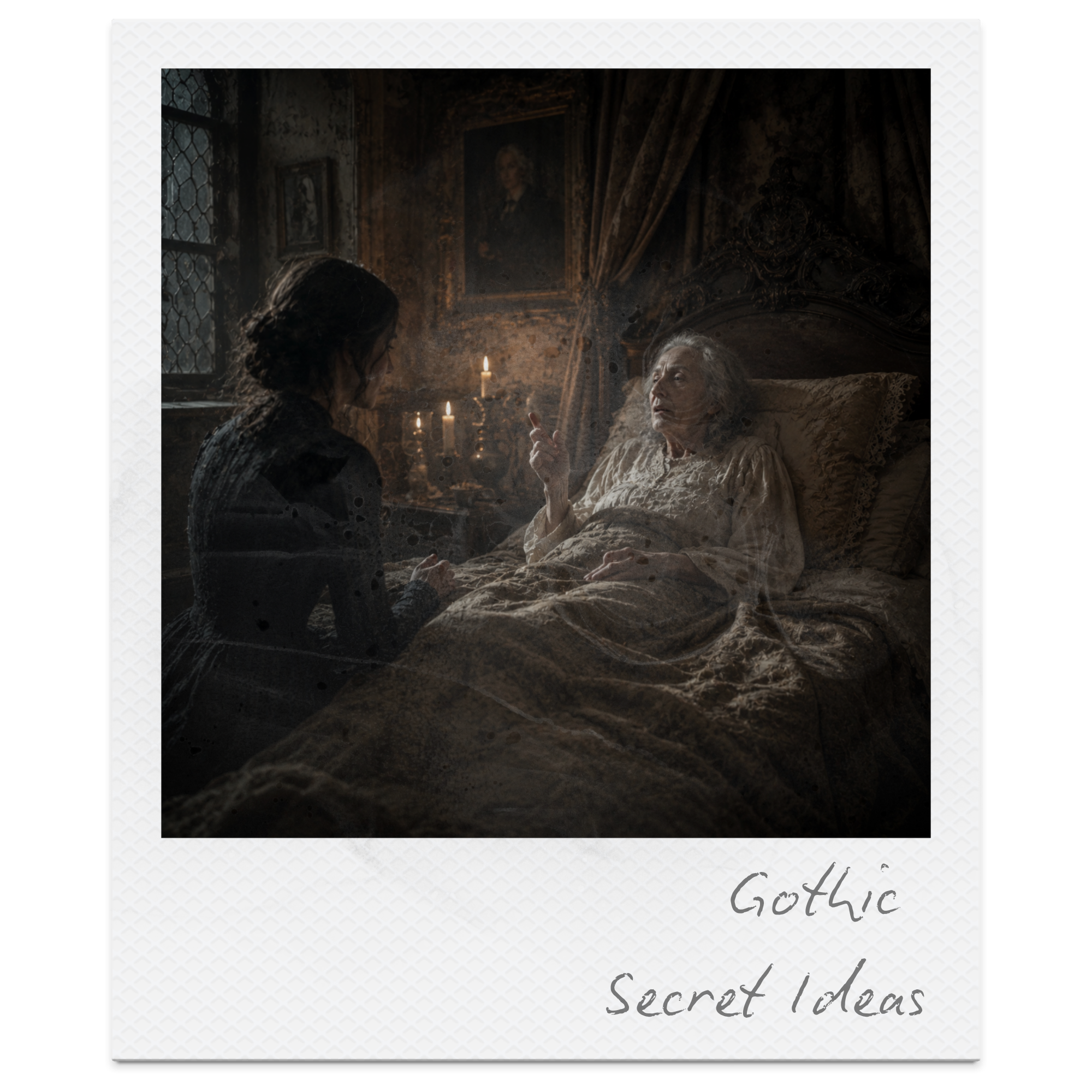
Step 4: Create a Secret Worth Uncovering
Secrets are often the engine of Gothic storytelling. They give apparently unrelated details a hidden connection and create tension between what characters know, what they reveal and what they are desperate to conceal.
A Gothic secret becomes particularly effective when its discovery changes the meaning of something the protagonist previously believed.
Returning to our example, perhaps the clocks stopped at 3:17 because that was the moment a child disappeared from the house. The family claimed the child drowned, but no body was recovered.
As the protagonist investigates, she discovers that the missing child was her mother.
This revelation transforms the mystery. The house is no longer simply an inherited property filled with unusual objects; it becomes evidence of a family history constructed around a lie.
Writing tip: Develop your secret backwards. Decide what truly happened, who knows the truth, why it was concealed and what evidence remains. Then determine how your protagonist will uncover that evidence gradually.
For further inspiration, explore 100 Gothic Secrets, featuring hidden identities, ancestral betrayals, forbidden relationships, haunted rooms and disturbing family histories.
Step 5: Introduce Disturbances That Gradually Escalate
Gothic suspense depends upon progression. If every disturbing event is equally dramatic, the reader may become accustomed to the atmosphere rather than increasingly unsettled by it.
Begin with small irregularities that can be dismissed or explained. Gradually introduce events that challenge those explanations.
In our story, the escalation might unfold like this:
The protagonist discovers that every clock in the house has stopped at 3:17.
During her first night, she hears a clock striking somewhere behind a locked wall.
The caretaker insists the house has no working clocks, although one now displays 3:18.
She finds a childhood photograph showing her mother standing beside a clock identical to one in the house.
At precisely 3:17 the following morning, every clock begins ticking simultaneously.
Notice how each event develops the central mystery rather than introducing an unrelated frightening incident.
Writing tip: Plan five escalating disturbances. Each should reveal new information, undermine an earlier explanation or force your protagonist to make a more dangerous decision.
Step 6: Make the Protagonist Question What They Know
Psychological uncertainty is one of Gothic fiction's most powerful tools. As the mystery deepens, your protagonist may begin to question their memories, relationships, perceptions or understanding of reality.
However, uncertainty becomes more compelling when the reader has enough evidence to consider several possibilities.
Perhaps the protagonist discovers that her mother has visited the house repeatedly, despite insisting she has never heard of it. The caretaker claims to recognise the protagonist from decades earlier. A childhood photograph appears to show her standing inside a room she has only just entered.
There might be a supernatural explanation, but there could also be a carefully maintained deception involving family secrets, manipulated records or unreliable memories.
Writing tip: Give readers at least two plausible interpretations of an important event. Allow evidence to support both possibilities before gradually shifting the balance.
The aim is not to confuse readers, but to make them actively question the explanations available to the characters.
Step 7: Build Towards a Revelation That Changes Everything
A Gothic climax should do more than identify the ghost, reveal the murderer or explain an unusual occurrence. Ideally, it should transform the protagonist's understanding of the story's central conflict.
In our example, the protagonist finally discovers why the clocks stopped.
Her mother did not disappear at 3:17. She was deliberately removed from the house after witnessing something her family refused to acknowledge. The clocks were stopped by her aunt, who believed that preserving the exact moment would somehow prevent the tragedy from becoming permanent.
But the protagonist also discovers something more disturbing: her aunt's final journal contains detailed descriptions of her own arrival, conversations and discoveries, written years before she inherited the property.
The original mystery has been answered, but the revelation introduces a deeper uncertainty.
Writing tip: Connect your climax to the emotional conflict established at the beginning. The revelation should force your protagonist to confront a difficult truth, make a consequential choice or recognise that their understanding of themselves has fundamentally changed.
Step 8: Choose an Ending That Leaves a Lasting Impression
Gothic stories do not necessarily require tragic endings, supernatural twists or unresolved mysteries. Their conclusions can offer escape, reconciliation, justice, transformation or a deeply unsettling recognition.
What matters is that the ending feels connected to the story's central themes.
Our protagonist might leave the house after discovering the truth, choosing to confront her surviving family rather than remain imprisoned by their secrets.
Alternatively, she might decide to stay, determined to understand the impossible events recorded in her aunt's journal.
A more ambiguous ending could reveal that, after returning home, she discovers every clock in her apartment has stopped at 3:17.
Each possibility creates a different emotional effect: liberation, determination or lingering dread.
Writing tip: Decide what feeling you want readers to carry beyond the final sentence. Then choose an image, action or revelation that reinforces that feeling without unnecessarily explaining it.
From Gothic Premise to Complete Story
These eight steps provide a flexible framework rather than a rigid formula. A Gothic short story might develop its premise, setting and central mystery within a few paragraphs, while a novel could explore the same elements through multiple characters, conflicting accounts and interconnected histories.
The essential principle is to ensure that character, setting, mystery and atmosphere develop together. Each disturbing discovery should matter to the protagonist, each revelation should alter the reader's understanding, and every important Gothic detail should contribute to the story you are trying to tell.
Once you have established that foundation, you can begin refining the individual techniques that make Gothic fiction so distinctive, from atmospheric settings and psychologically complex characters to suspense, symbolism and descriptive language.
Creating Gothic Settings and Atmosphere
In Gothic fiction, setting is rarely a passive backdrop. A house can preserve the secrets of its former inhabitants, a landscape can reflect a character's emotional turmoil, and an apparently beautiful location can gradually become a place of confinement and dread. The most effective Gothic settings do not simply look atmospheric; they influence the characters, shape the conflict and contribute to the story's deeper meaning.
Whether your narrative unfolds in a ruined medieval abbey, a windswept coastal village or an ordinary modern apartment, the challenge is to create a location that feels distinctive, believable and inseparable from the events taking place within it.
Make the Setting an Active Part of the Story
A memorable Gothic setting should have a purpose beyond providing scenery. Its architecture, history, geography or inhabitants might conceal information, restrict movement, create conflict or force characters to confront something they would rather avoid.
Consider a secluded country estate inherited by three estranged siblings. Its isolated location prevents them from leaving during a winter storm, while its unusual architecture conceals rooms their parents insisted did not exist. The building becomes essential to the plot because its physical features influence what the characters can discover and how they interact.
Ask yourself what would change if your story took place somewhere else. If the answer is very little, your setting may need a stronger connection to the narrative.
Use Beauty and Decay to Create Contrast
Gothic settings are often compelling because they combine elegance with deterioration. Grand staircases, intricate stained-glass windows, ornamental gardens and beautifully furnished rooms suggest wealth, refinement and permanence. Yet beneath these attractive surfaces, the evidence of neglect, corruption or abandonment gradually emerges.
Imagine a magnificent ballroom where crystal chandeliers still hang above a polished marble floor, although rainwater has seeped through the ceiling and darkened the painted faces of the angels overhead.
The contrast suggests more than physical neglect. It raises questions about the people who once inhabited the building, the circumstances of its decline and the attempts made to preserve its former grandeur.
Rather than describing everything as ruined or sinister, allow beauty and unease to exist together. An immaculate room within a decaying mansion may be more disturbing than another corridor filled with dust and cobwebs.
Connect the Environment to Your Character's Psychology
Gothic landscapes and interiors frequently reflect, intensify or contradict a character's emotional experience.
A protagonist overwhelmed by grief might find the silence of an abandoned house comforting, while another character experiences the same silence as oppressive. A storm-lashed coastline could represent danger to someone desperate to escape, yet offer freedom to a character who feels imprisoned by domestic expectations.
This relationship between setting and psychology becomes particularly effective when it changes.
At the beginning of a story, a character might admire the peaceful isolation of an inherited estate. As disturbing discoveries accumulate, its distance from civilisation becomes threatening. The building has not necessarily changed, but the protagonist's understanding of it has.
Writing tip: Identify how your protagonist feels about the setting when they first arrive, then consider how that relationship should evolve as the story progresses.
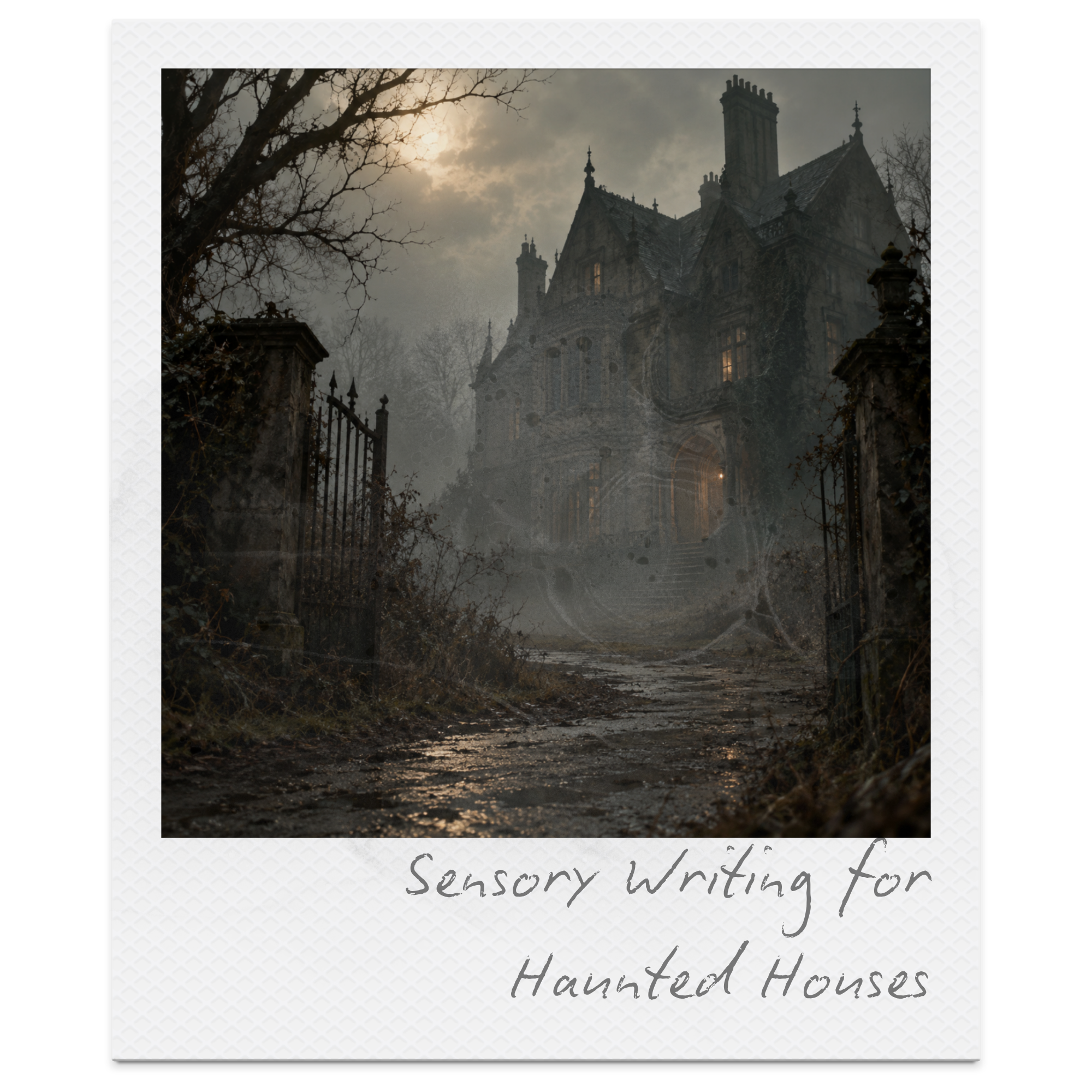
Build Atmosphere Through Carefully Chosen Details
Atmosphere emerges from the accumulation of meaningful details rather than the sheer quantity of description.
A dark corridor, a cold room or an abandoned staircase might establish a recognisable Gothic environment, but specific and unexpected observations make it memorable.
Consider this original example:
The conservatory overlooked a garden of white roses, their petals luminous beneath the evening rain. Inside, the glass was warm to the touch, although the heating had been disconnected for years. On the little wrought-iron table stood two porcelain cups, one filled with rainwater and the other containing the dark remains of freshly brewed tea.
The passage combines beauty, sensory detail and an unexplained contradiction. Nothing overtly supernatural occurs, yet the ordinary domestic objects suggest a presence that cannot immediately be accounted for.
For a detailed exploration of sensory description, including original examples using sight, sound, smell, touch and taste, see How to Describe a Haunted House: 25 Sensory Writing Examples.
Allow the Atmosphere to Change Throughout the Story
An effective Gothic atmosphere should develop alongside the narrative. Maintaining the same level of darkness, silence and foreboding throughout every scene can make even striking descriptions feel repetitive.
Instead, consider how the emotional character of a setting might shift.
A house might initially appear welcoming, with warm fireplaces, beautifully furnished rooms and attentive servants. Small inconsistencies gradually undermine that impression: a door that is always locked, a servant who refuses to enter the west wing, or a family portrait removed whenever visitors arrive.
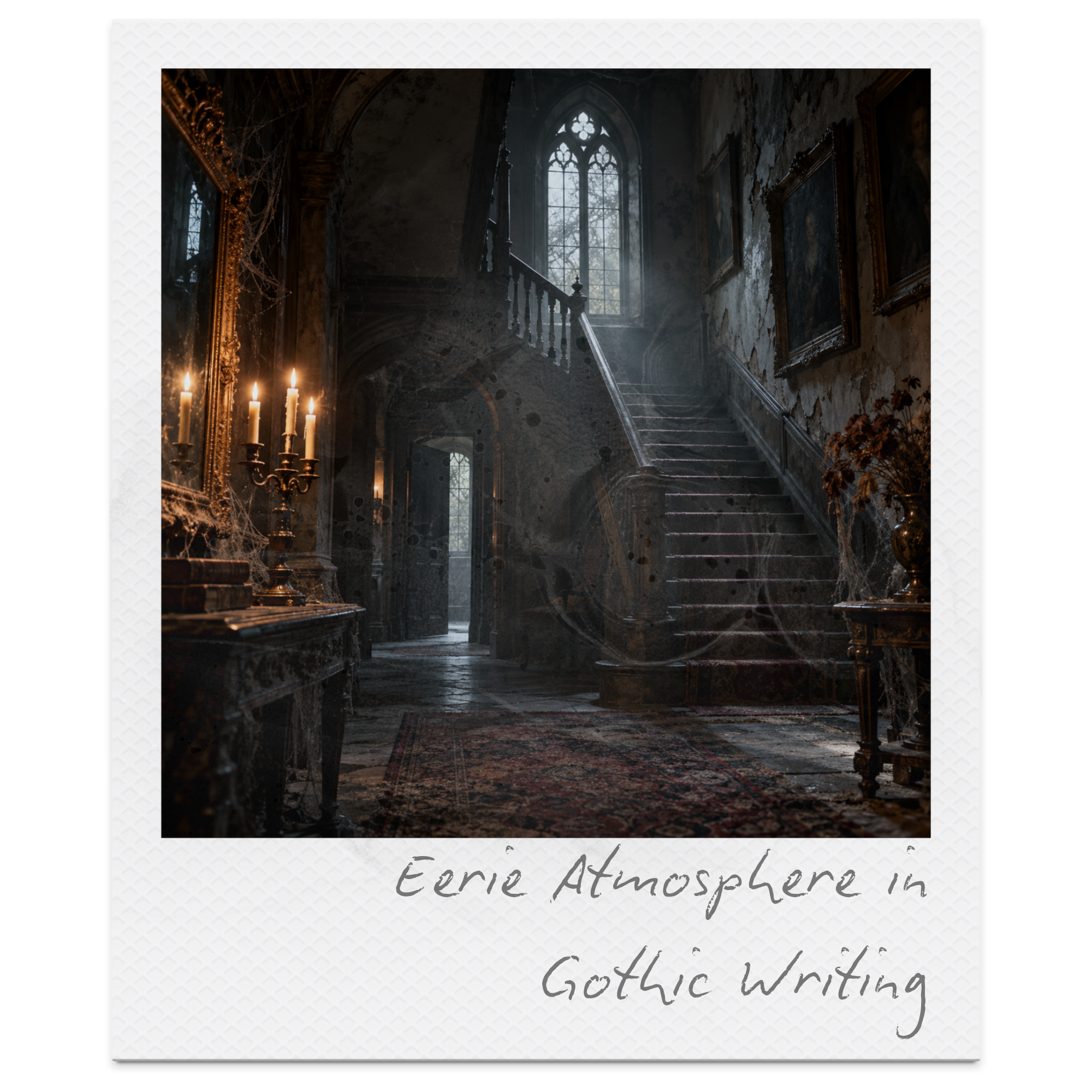
As the protagonist uncovers more information, familiar spaces acquire new significance. The drawing room becomes a place of suspicion, the nursery a reminder of an unresolved tragedy, and the garden a possible route of escape.
Moments of warmth, beauty or apparent safety can make the return of unease more powerful. Gothic atmosphere does not require uninterrupted darkness; it often benefits from the contrast between comfort and threat.
For more advanced techniques, explore How to Create an Eerie Atmosphere in Gothic Writing: 10 Techniques with Examples, which examines unsettling silence, unexplained presences, sensory contradictions, the uncanny and the power of suggestion.
Give Your Gothic Setting a History
One of the defining pleasures of Gothic fiction is the sense that a place existed long before the protagonist arrived. Its rooms, landscapes and possessions preserve traces of previous lives, creating opportunities for mystery, symbolism and revelation.
A neglected orchard might contain trees planted to commemorate children who died decades earlier. A coastal manor might have windows permanently sealed after a disastrous winter. An abandoned chapel could contain inscriptions that contradict the village's accepted history.
These details suggest that the environment has been shaped by events the reader does not yet understand.
However, a setting's history becomes most effective when it influences the present. Rather than providing several paragraphs of architectural background, reveal its past through discoveries, conflicts and consequences.
The aim is to make your Gothic setting feel as though it remembers something your characters have yet to discover. When place, history and atmosphere become interconnected, even an ordinary room can carry the weight of an entire story.
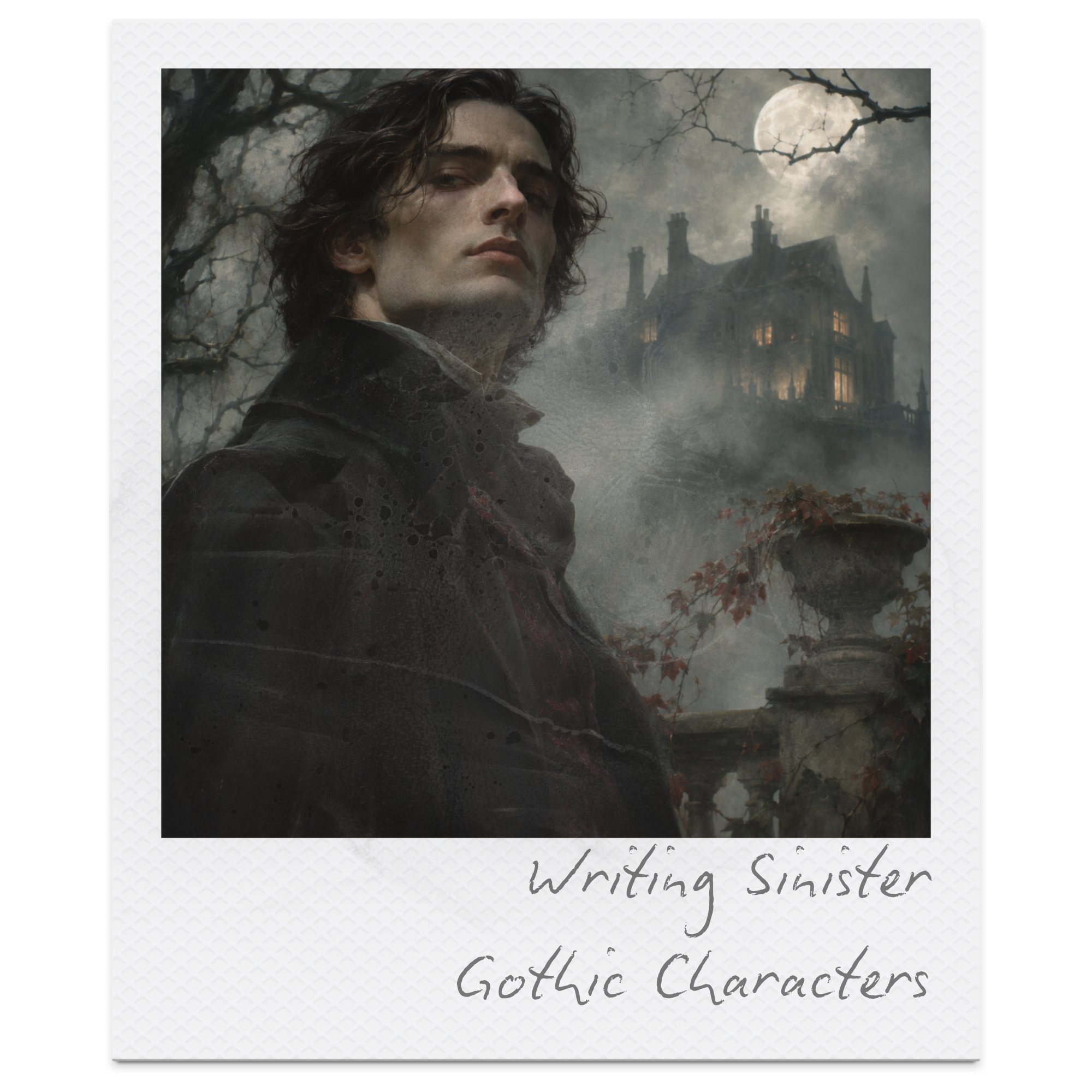
Creating Gothic Characters: Heroes, Villains and Haunted Minds
The most memorable Gothic characters are rarely straightforward heroes or villains. They are shaped by conflicting desires, concealed histories, moral uncertainty and fears they cannot easily confront. A seemingly respectable gentleman may conceal a monstrous secret, a vulnerable heroine may possess extraordinary determination, and a supernatural creature may prove more sympathetic than the people who fear it.
Gothic characterisation becomes particularly compelling when the external mystery reflects an internal struggle. A protagonist investigating a family curse might also be confronting their fear of inheriting their parents' mistakes. A character desperate to preserve a dying lover might gradually sacrifice everything that once made their relationship meaningful.
To create characters with genuine Gothic depth, consider not only what they do, but what they desire, what they conceal and how the events of the story threaten their understanding of themselves.
The Gothic Protagonist: Vulnerability, Curiosity and Inner Conflict
Gothic protagonists frequently enter situations they do not fully understand. They might inherit an unfamiliar estate, accept employment in an isolated household, investigate a disappearance or become fascinated by someone whose behaviour defies explanation.
Their vulnerability makes the mystery more immediate, but vulnerability should not mean passivity.
In Charlotte Brontë's Jane Eyre, Jane's limited social and financial power places her in a precarious position at Thornfield Hall. Yet her intelligence, independence and moral convictions shape the decisions she makes as the estate's secrets emerge.
When developing a Gothic protagonist, consider three essential qualities:
A desire: What do they want beyond solving the central mystery?
A vulnerability: What emotional wound, personal fear or circumstance makes them susceptible to danger?
A contradiction: Which of their beliefs or desires might come into conflict as the story progresses?
For example, a young archivist might pride herself on rational thinking while secretly longing for proof that her deceased sister is still present. When she discovers letters apparently written in her sister's handwriting, her professional judgement becomes entangled with her grief.
The resulting conflict gives the supernatural mystery emotional significance.
The Byronic Hero: Charm, Rebellion and Dangerous Contradictions
The Byronic hero is one of Gothic literature's most enduring character archetypes. Often intelligent, charismatic, proud and emotionally isolated, this figure possesses a troubled history and a complicated relationship with conventional morality.
Named after the literary persona associated with Lord Byron, the archetype appears in various forms throughout Gothic and Romantic literature.
Heathcliff in Emily Brontë's Wuthering Heights exemplifies many of its darker characteristics. His passionate attachment to Catherine exists alongside cruelty, resentment and a destructive desire for revenge.
However, a Byronic character does not have to be male, aristocratic or romantically desirable. The defining qualities are psychological contradiction, alienation, intense emotion and resistance to social expectations.
For writers: Avoid treating a tragic past as an automatic justification for harmful behaviour. A compelling Byronic figure should possess understandable motivations without being absolved of the consequences of their choices.
Their appeal lies in complexity, not simply in mysterious appearances or brooding silences.
Gothic Villains: Respectability, Corruption and Concealed Intentions
Gothic villains frequently challenge the assumption that evil is easily recognisable.
A respected physician may conduct forbidden experiments. A devoted guardian might exercise oppressive control over their dependants. A charming aristocrat could conceal predatory intentions beneath impeccable manners.
Count Dracula's aristocratic hospitality, for example, initially creates an appearance of civility that contrasts with the danger he represents.
The most effective Gothic antagonists often possess social authority, intimate knowledge or emotional influence that makes them difficult to challenge.
Consider what gives your villain power. Is it wealth, reputation, knowledge, supernatural ability or another character's dependence upon them?
Then ask how they justify their actions. A villain who believes they are protecting a family, preserving a tradition or correcting an ancient injustice may be more compelling than one motivated by cruelty alone.
For a closer examination of unsettling appearances, disturbing behaviour, psychological manipulation and subtle character description, explore How to Describe a Sinister Character: 10 Techniques with Examples.
Unreliable Narrators and Fractured Perception
Gothic fiction often places readers inside the perspective of someone whose understanding of events is incomplete or distorted.
An unreliable narrator may deliberately conceal information, misunderstand what they witness or interpret events through grief, guilt, fear or obsession.
In Edgar Allan Poe's The Tell-Tale Heart, the narrator's insistence upon their own rationality becomes increasingly difficult to reconcile with their behaviour.
For writers, unreliability offers an opportunity to create tension between the narrator's interpretation and the evidence available to readers.
Imagine a governess who insists that a child has been speaking to an imaginary companion. Throughout the story, she describes the child's conversations as increasingly disturbing. Only gradually does the reader discover that the governess herself has been answering the companion's questions.
The unsettling effect emerges from the discrepancy between what the narrator believes and what their account reveals.
Writing tip: Establish a recognisable pattern in your narrator's perception before introducing contradictions. Readers should have opportunities to notice inconsistencies and develop their own interpretations.
Gothic Relationships: Dependence, Obsession and Power
Relationships in Gothic fiction frequently become sources of emotional conflict and psychological tension.
Love may be complicated by secrecy, jealousy, social expectations or an imbalance of power. Family loyalty can demand silence about wrongdoing. Friendship may develop into dependence, while admiration can become obsession.
In Daphne du Maurier's Rebecca, the unnamed narrator's marriage is overshadowed by the memory of her husband's first wife. Her insecurity, the influence of Manderley and the behaviour of those around her create a relationship in which love and uncertainty become difficult to separate.
When developing Gothic relationships, consider what each character knows, what they misunderstand and what they fear losing.
A character might remain loyal to someone they suspect of wrongdoing because exposing the truth would destroy their own security. Another might conceal an important discovery because they believe honesty would place a loved one in danger.
These competing motivations create conflict without requiring every character to behave maliciously.
Give Every Important Character a Relationship with the Central Mystery
One way to create a cohesive Gothic cast is to connect each significant character to the story's central secret.
Consider a novel about a family returning to an ancestral house after the death of its owner.
The eldest daughter wants to sell the estate and escape its history. Her younger brother believes their father's death was deliberately concealed. The elderly housekeeper knows what happened but has spent decades protecting someone involved. A distant relative hopes the investigation will uncover evidence of a disputed inheritance.
Each character approaches the same mystery with a different desire, fear and understanding of the past.
Their relationships naturally generate tension because uncovering the truth threatens different aspects of their lives.
The strongest Gothic characters do not simply inhabit a mysterious world. They have helped create its secrets, inherited their consequences or become determined to expose them.
When every major character has something meaningful at stake, the Gothic mystery becomes more than a sequence of disturbing discoveries. It becomes a story about the people who must live with what those discoveries reveal.
Gothic Writing Techniques: How to Create Suspense, Imagery and Psychological Unease
The distinctive power of Gothic fiction lies not only in what happens, but in how the story is told. A locked door, an unfamiliar sound or a seemingly innocent conversation can become profoundly unsettling through the writer's choices of language, pacing, perspective and detail.
Effective Gothic writing techniques transform ordinary experiences into moments of uncertainty, allowing readers to sense danger before they understand its source. They also give emotional significance to descriptions, connect recurring images to deeper themes and create tension between what characters believe and what the reader suspects.
The following six techniques will help you develop a Gothic writing style that is atmospheric, controlled and psychologically compelling.
1. Use Sensory Imagery to Make the Unfamiliar Feel Real
Sensory imagery draws readers into a fictional environment through sight, sound, smell, touch and taste. In Gothic fiction, carefully selected sensory details can make even an impossible experience feel disturbingly tangible.
Rather than describing a room as frightening, consider the particular sensations that might make someone uncomfortable within it.
Original Gothic writing example:
The chapel smelled of wet stone and extinguished candles. Beneath the pews, the floor was cold enough to numb her feet through the soles of her shoes. Somewhere beyond the altar, water dripped steadily into a metal vessel, although the roof had been repaired years ago.
The description establishes atmosphere through physical sensations while introducing an unexplained detail. The dripping water suggests that something is wrong, but its significance remains uncertain.
Writing tip: Choose two or three sensory details that reinforce the emotional atmosphere of a scene. Avoid including every sense simply for completeness; the absence of an expected sound or sensation can be just as effective as its presence.
2. Build Suspense Through Delayed Revelation
Gothic suspense often depends upon the anticipation of danger rather than its immediate appearance. By withholding certain information, writers encourage readers to imagine possibilities that may be more disturbing than the eventual explanation.
Consider the difference between revealing a supernatural presence immediately and allowing a character to discover evidence of its existence.
Original Gothic writing example:
For three nights, someone had knocked upon the bedroom door at precisely two o'clock. On the fourth night, Eleanor dragged a chair into the corridor and waited. At two, the knocking began again.
It came from inside the bedroom.
The reversal of expectation creates tension without describing a ghost, monster or violent encounter.
Writing tip: Establish an expectation, allow the reader to anticipate what might happen, then introduce a detail that changes their understanding of the situation.
For practical activities exploring delayed revelations, unreliable perception and escalating psychological tension, see 10 Gothic Suspense Writing Exercises: How to Build Dread, Tension & Psychological Unease.
3. Use Figurative Language to Create Disturbing Associations
Metaphor, simile and personification allow Gothic writers to transform ordinary objects and surroundings into emotionally charged images.
A house might appear to watch its inhabitants, a staircase might resemble the spine of a sleeping creature, or the shadows beneath a doorway might suggest something deliberately concealed.
However, effective Gothic figurative language should contribute to the scene's meaning rather than merely make its description more elaborate.
Original Gothic writing example:
The staircase curved upwards through the darkness like the exposed spine of some enormous creature. Above it, the portraits hung in crooked rows, their gilded frames catching the candlelight while their painted faces remained stubbornly obscured.
The comparison transforms the staircase into something anatomical, suggesting that the building itself possesses an unsettling physical presence.
Writing tip: Choose figurative language that reflects the emotional concerns of your story. A narrative about grief might repeatedly associate its setting with absence and decay, while a story about confinement could use images of cages, constriction and suffocation.
For a broader collection of original passages and detailed explanations of descriptive techniques, explore Gothic Descriptive Writing: 30 Atmospheric Examples with Analysis.
4. Manipulate Sentence Structure and Pacing
The rhythm of your prose influences how readers experience a Gothic scene.
Longer sentences can create a sense of immersion, encouraging readers to linger over an unsettling environment or follow a character's increasingly anxious thoughts. Shorter sentences can interrupt that rhythm, emphasising a discovery or creating a sudden change in emotional intensity.
Original Gothic writing example:
Beyond the conservatory, the garden stretched towards the ruined chapel, its narrow paths disappearing beneath the tangled branches of neglected rose bushes, while the last of the evening light faded from the broken windows.
Then the bell rang.
The chapel had no bell.
The extended opening sentence establishes a slow, descriptive rhythm. The two shorter sentences interrupt it, directing attention towards an impossible event.
Writing tip: Read your Gothic passages aloud. Notice where the sentences encourage the reader to slow down, where they create urgency and whether a sudden change in rhythm could make an important moment more effective.
Avoid making every sentence elaborate. Contrast is essential to maintaining control over the reader's experience.
5. Use Foreshadowing and Recurring Symbols
Foreshadowing allows writers to introduce details whose significance becomes clearer as the story progresses. Gothic fiction frequently uses objects, images, sounds and locations to suggest that something remains unresolved.
A recurring symbol can also connect the external mystery to a character's emotional conflict.
Imagine a story in which a woman repeatedly discovers dead moths inside her childhood home. Initially, their presence seems an ordinary consequence of the building's neglect. Later, she finds a collection of preserved moths belonging to her missing sister. Eventually, she discovers that each specimen was labelled with the date of a disappearance.
The recurring image acquires new meaning as information emerges.
Writing tip: Introduce a symbol naturally before making its significance apparent. Allow it to return at moments when the protagonist's understanding changes, rather than repeatedly explaining what it represents.
A powerful Gothic symbol should feel inevitable in retrospect without becoming entirely predictable.
6. Create Psychological Unease Through Contradiction
One of the most effective Gothic techniques is to introduce a detail that contradicts what the character or reader believes to be true.
An abandoned house contains fresh flowers. A stranger recognises someone they have never met. A family photograph shows a person who should not have been alive when it was taken.
These contradictions unsettle readers because they challenge the apparent reliability of the fictional world.
Original Gothic writing example:
Margaret had spent twenty years avoiding the house where her mother died. When she finally returned, she found the dining room exactly as she remembered it: the same embroidered tablecloth, the same silver candlesticks, the same narrow crack in the plaster above the fireplace.
Only the family portrait had changed.
Her mother was no longer in it.
The scene begins with familiar, reassuring details before introducing a single impossible alteration. The contradiction invites readers to question whether the painting has changed, Margaret's memory is unreliable or someone has deliberately manipulated the evidence.
Writing tip: Establish what is normal before disrupting it. The more convincingly you create an ordinary reality, the more unsettling a small departure from that reality can become.
Combining Gothic Writing Techniques
These techniques become especially effective when used together, although not every passage needs to employ all six.
Consider this original example:
The nursery had been locked since the winter of 1893. Beneath the door, a thin line of dust marked the threshold, undisturbed except for a narrow groove running towards the staircase. Amelia knelt to examine it. The wood smelled faintly of lavender, the same scent her grandmother had worn every Sunday.
From inside came the slow scrape of a chair.
Amelia stood.
There had never been a chair in the nursery.
The passage combines sensory imagery, delayed revelation, sentence-length variation and an unexplained contradiction. The lavender introduces a personal association, while the groove in the dust provides a physical clue that may acquire greater significance later.
Notice that the passage never confirms what is happening behind the door. Its tension emerges from the relationship between familiar details and disturbing possibilities.
The aim of Gothic writing is not to make every sentence frightening. It is to create a world in which carefully chosen details gradually acquire unsettling significance. When imagery, suspense, symbolism and psychological uncertainty support the same narrative purpose, even the quietest scene can become deeply atmospheric.
Gothic Story Structure: How to Build a Narrative from Opening to Ending
A compelling Gothic story needs more than an atmospheric setting, a mysterious character and a collection of disturbing events. Its narrative must develop with purpose, gradually transforming uncertainty into suspense, revealing the consequences of hidden secrets and bringing its characters towards a confrontation with something they fear or refuse to acknowledge.
Although Gothic fiction can follow many different narrative structures, some of its most effective stories share a recognisable progression: an apparently familiar world is disturbed, the protagonist becomes increasingly entangled in a mystery, and each revelation makes returning to ordinary life more difficult.
The following seven-stage structure provides a flexible framework for planning a Gothic short story or developing the central plot of a longer narrative.
To illustrate each stage, we'll follow an original story premise:
A young woman accepts a position restoring paintings in an isolated country house. Every portrait in the collection depicts a different member of the same family, but one unfinished canvas bears an unmistakable resemblance to her.
1. The Opening: Establish Normality and Introduce Unease
The opening of a Gothic story should establish the protagonist's circumstances while introducing a detail that suggests something is not quite right.
Rather than beginning with an elaborate description of darkness or an immediate supernatural encounter, consider allowing the unsettling elements to emerge through an otherwise ordinary situation.
In our example, the protagonist, Clara, arrives at a country estate to restore a collection of nineteenth-century portraits. She is an experienced conservator who approaches her work with professional curiosity. The house is beautiful, the commission generous and the owner unexpectedly welcoming.
However, Clara notices that every mirror in the building has been covered with dark fabric.
This detail introduces uncertainty without interrupting the story's natural development.
Structural purpose: Establish the protagonist's ordinary world, introduce the setting and plant an early question that encourages the reader to continue.
2. The Inciting Disturbance: Introduce the Central Mystery
The inciting disturbance is the event that transforms an unusual situation into a compelling narrative problem.
In Gothic fiction, this moment often involves a discovery, encounter or contradiction that cannot easily be dismissed.
While examining a damaged portrait, Clara discovers a second painting beneath the original surface. The concealed image depicts a young woman standing in the estate's entrance hall.
The woman looks exactly like Clara.
More disturbing still, the painting appears to be over a century old.
Clara initially assumes the resemblance is coincidental, but her curiosity leads her to investigate the family's history.
Structural purpose: Introduce the central mystery and give the protagonist a personal reason to pursue it.
3. Rising Dread: Escalate the Disturbances
Once the mystery has been established, the narrative should develop through a sequence of discoveries that gradually increase the emotional and practical stakes.
Gothic rising action often alternates between apparent explanations and new contradictions.
Clara discovers that several portraits have been painted over, each concealing the image of a woman who resembles her. The estate's owner insists the paintings are ordinary family commissions, but the elderly housekeeper becomes visibly distressed when Clara mentions the hidden figures.
At night, Clara hears footsteps moving between the locked galleries. She begins dreaming about rooms she has never entered, only to discover them the following morning.
Each event deepens the mystery while increasing her uncertainty about the people around her.
Structural purpose: Build suspense, develop relationships, introduce clues and make the protagonist increasingly invested in uncovering the truth.
4. The Midpoint Revelation: Change the Meaning of the Mystery
The midpoint is an opportunity to transform the protagonist's understanding of the situation.
Rather than simply introducing another disturbing event, reveal information that changes the direction of the investigation or raises the stakes.
Clara discovers a nineteenth-century diary belonging to the estate's former mistress. Its pages describe a young woman who arrived to restore the family portraits and gradually became convinced that her likeness was appearing beneath the paint.
The diary also records the woman's disappearance.
Clara realises that the resemblance may not be a coincidence. Someone has experienced the same events before her.
The question is no longer simply why the paintings resemble her, but whether she is repeating another woman's fate.
Structural purpose: Reinterpret earlier clues, introduce a more disturbing possibility and force the protagonist to reconsider what she believes.
5. The Crisis: Force a Difficult Choice
As the story approaches its climax, the protagonist should face a decision that carries meaningful consequences.
In Gothic fiction, this often involves choosing between safety and knowledge, loyalty and truth, or personal desire and moral responsibility.
Clara discovers that the estate's owner has deliberately concealed the portraits beneath newer paintings. She also finds evidence suggesting that previous restorers disappeared after uncovering the same images.
When she attempts to leave, she discovers that the only bridge connecting the estate to the surrounding countryside has been damaged by flooding.
The owner offers to arrange her departure once the weather improves, provided she abandons the restoration.
Clara must decide whether to protect herself by accepting his explanation or continue investigating the paintings despite the danger.
Structural purpose: Remove easy solutions, intensify the central conflict and force the protagonist to act rather than simply react.
6. The Climax: Confront the Truth
The climax brings the central conflict towards its decisive moment. A Gothic climax may involve a supernatural confrontation, a psychological revelation, the exposure of a terrible secret or a choice that permanently changes the protagonist's life.
Clara returns to the gallery and removes the final layer of paint from the unfinished portrait.
Beneath it, she discovers not an image of herself, but a scene depicting the gallery as it currently appears. In the painting, Clara stands before the canvas, holding her restoration tools.
Behind her is the estate's owner.
She turns.
The owner is standing in precisely the same position.
At this point, the story might confirm a supernatural explanation, reveal an elaborate deception or preserve uncertainty about the relationship between the paintings and reality.
Whatever explanation the writer chooses, the climax should connect the central mystery to the protagonist's emotional and practical struggle.
Structural purpose: Bring the story's major tensions together and force a confrontation that changes the protagonist's circumstances.
7. The Resolution: Reveal the Consequences
A Gothic ending should reflect the consequences of the climax while reinforcing the story's central themes.
Some Gothic narratives offer a clear resolution, allowing characters to escape, expose wrongdoing or confront their fears. Others preserve an element of uncertainty, suggesting that the influence of the past has not been entirely overcome.
In our example, Clara might destroy the portrait and escape the estate, believing she has broken whatever influence the paintings possess.
Months later, she receives an invitation to examine a newly discovered collection of portraits.
The accompanying photograph shows an unfamiliar house.
In its entrance hall hangs a painting of Clara.
Alternatively, a more psychologically grounded ending could reveal that the estate's owner deliberately commissioned the paintings to manipulate Clara, forcing her to confront the consequences of a carefully constructed deception.
Neither approach is inherently more Gothic. The appropriate ending depends upon the story's themes, the evidence established earlier and the emotional experience the writer wants to create.
Structural purpose: Show the consequences of the protagonist's choices, resolve the essential conflict and leave readers with a final impression that feels earned.
How to Adapt Gothic Story Structure for Short Stories and Novels
The seven-stage framework can be adapted to different narrative lengths.
In a Gothic short story, several stages may occur within the same scene. The opening and inciting disturbance might unfold in the first few paragraphs, while the midpoint revelation and crisis could follow one another rapidly. A short story generally benefits from a concentrated conflict, a limited cast and a small number of significant discoveries.
A Gothic novel allows greater space for secondary mysteries, competing perspectives, complex relationships and revelations that reshape the reader's understanding over several chapters. The narrative may also contain multiple cycles of discovery, uncertainty and escalating danger before reaching its central climax.
However, length should not determine complexity alone. A brief Gothic story can explore profound psychological themes, while a lengthy novel can remain focused on a single haunting or unresolved secret.
The important consideration is narrative progression. Each stage should change something meaningful: what the protagonist knows, what they fear, what they want or what they are willing to risk.
A Simple Gothic Story Structure Checklist
Before drafting your story, consider whether you can answer these questions:
What unsettling detail first suggests that something is wrong?
Which discovery draws the protagonist into the central mystery?
How do the disturbances become more significant or dangerous?
What revelation changes the protagonist's understanding?
Which difficult choice forces them towards the climax?
How does the confrontation connect to their personal conflict?
What emotional impression should remain after the ending?
You do not need to follow these stages rigidly or reveal information in a predictable order. Gothic fiction frequently experiments with fragmented chronology, unreliable accounts, letters, diaries and stories within stories.
A successful Gothic structure is not simply a sequence of frightening events. It is a carefully developed progression in which each discovery changes the meaning of what came before, drawing characters and readers towards a truth that may be more disturbing than the mystery itself.
Gothic Writing Examples: Five Atmospheric Passages with Analysis
Understanding the conventions of Gothic fiction is one thing; bringing them to life on the page is another. The following original Gothic writing examples demonstrate how setting, imagery, characterisation, suspense and narrative structure can work together to create compelling fiction.
Each passage illustrates a different aspect of Gothic storytelling, followed by a short analysis of the techniques involved and suggestions for applying them to your own writing.
1. Gothic Story Opening: Establishing Mystery and Atmosphere
The house had been empty for forty-three years, although someone continued to light the lamps each evening.
From the village below, their amber glow could be seen moving from window to window as darkness settled over the hillside. Nobody admitted to watching. Nobody spoke of the woman who had vanished there in the winter of 1881, or the child whose name had been scratched from the parish register.
When Eleanor inherited the property, the solicitor handed her a single brass key and advised her not to arrive after sunset.
Why this Gothic opening works
The first sentence introduces an immediate contradiction: an abandoned house appears to be inhabited. Rather than explaining the phenomenon, the passage develops its implications through the villagers' silence and the suggestion of a concealed history.
The precise references to forty-three years and the winter of 1881 give the mystery a sense of historical specificity. The solicitor's warning introduces a potential threat while providing the protagonist with a reason to enter the setting.
Technique to try: Open with an ordinary statement that contains one impossible or unsettling detail. Develop the mystery through the reactions of other characters rather than immediately revealing its explanation.
2. Gothic Descriptive Writing: Creating Atmosphere Through Imagery
The garden had surrendered itself to the wilderness. Blackthorn crowded the gravel paths, its branches catching at the hem of Marianne's dress, while the remains of a marble fountain lay beneath a tangle of ivy. Once, roses had climbed the southern wall. Now their brittle stems twisted around the iron trellis like the fingers of something long buried.
Beyond the orchard stood the family mausoleum. Its pale stone had darkened with rain, and moss filled the carved letters above the entrance. Marianne could still make out her grandmother's name.
Beneath it, someone had begun to carve her own.
Why this Gothic description works
The passage uses natural decay to establish the history and emotional character of the setting. The neglected garden suggests abandonment, while the comparison between the rose stems and buried fingers introduces an association with death.
The description gradually directs attention towards the mausoleum, where the discovery of Marianne's unfinished inscription transforms atmosphere into narrative tension.
Notice that the passage does not depend upon a continuous sequence of frightening adjectives. Its unsettling quality emerges from the relationship between physical details, figurative language and the final revelation.
Technique to try: Begin with a descriptive passage that appears to establish the setting, then introduce a detail that changes the reader's understanding of what they have seen.
For more inspiration, explore 50 Figurative Language Examples for Death and Decay and 100 Words to Describe Darkness. Both resources offer ways to develop more precise, evocative Gothic descriptions.
3. Gothic Psychological Suspense: Showing Fear Without Naming It
The footsteps stopped whenever Catherine stopped.
She had first noticed them outside the library, where the corridor narrowed beneath a row of ancestral portraits. At the time, she had assumed the sound was an echo. Now, halfway down the eastern staircase, she was less certain.
She loosened her grip on the banister and took another step.
Behind her, the floorboard creaked.
Catherine remained perfectly still. She counted the portraits along the wall, concentrating on their faces, their elaborate collars, the small imperfections in their gilded frames.
Then she realised there were thirteen.
There had been twelve that morning.
Why this Gothic suspense works
The passage communicates Catherine's fear through her behaviour rather than explicitly describing her as frightened. Her deliberate movements, heightened attention and attempt to concentrate on the portraits suggest that she is struggling to remain composed.
The footsteps create an immediate threat, but the final revelation redirects the reader's attention towards a different mystery.
Short sentences interrupt the longer descriptive passages, controlling the pace and emphasising moments of uncertainty.
Technique to try: Give your character a small, deliberate action that reveals their emotional state. Rather than writing that they are terrified, show what they do to conceal, manage or escape their fear.
For additional examples of physical reactions, body language and psychological responses, see Show, Don't Tell: 50 Ways to Describe Fear in Creative Writing.
4. Gothic Character Encounter: Creating a Sinister Presence
Lord Ashcombe received his guests in a drawing room filled with fresh flowers.
He was an elegant man, with silver hair and an expression of almost paternal kindness. He remembered everyone's name, enquired after their families and insisted that the servants bring additional blankets when the evening turned cold.
Only once did his manner change.
When the youngest guest mentioned the locked nursery upstairs, Ashcombe placed his teacup upon its saucer with extraordinary care.
"My dear," he said, smiling, "there has never been a nursery in this house."
Behind him, above the fireplace, hung a portrait of three children.
Why this Gothic characterisation works
Lord Ashcombe's apparent kindness contrasts with the possibility that he is concealing something disturbing.
His controlled physical reaction to the mention of the nursery suggests that the subject matters to him, even though his words deny its existence.
The portrait introduces a contradiction without explicitly confirming that Ashcombe is lying. Readers are encouraged to question his behaviour and consider alternative explanations.
Technique to try: Introduce a character through ordinary, socially acceptable behaviour before revealing a small inconsistency. A carefully controlled reaction can be more unsettling than an overtly threatening appearance.
For more techniques involving unsettling mannerisms, psychological manipulation and subtle character description, explore How to Describe a Sinister Character: 10 Techniques with Examples.
5. Gothic Story Ending: Leaving a Lasting Impression
By morning, the house was gone.
The villagers found only a stretch of blackened earth where its foundations had stood. There were no fallen beams, no shattered windows, no remains of the great stone staircase. Even the garden had disappeared, leaving the hillside bare beneath the winter sky.
Isabel returned to London and tried to forget what had happened.
For several weeks, she succeeded.
Then, one evening, a letter arrived without a stamp or return address. Inside was a photograph of the house, its windows illuminated against the darkness.
On the reverse, written in her own handwriting, were six words.
You left the front door open.
Why this Gothic ending works
The disappearance of the house initially suggests that the supernatural threat has been removed. Isabel's return to ordinary life creates a brief sense of resolution.
The letter then reintroduces the mystery, implying that the events at the house may not be over. The handwriting makes the final revelation personal, suggesting a connection between Isabel and the unexplained events that remains unresolved.
The ending preserves uncertainty while providing a specific image for readers to remember.
Technique to try: Resolve the immediate conflict before introducing a final detail that changes its meaning. An ambiguous Gothic ending is most effective when it raises a meaningful question rather than simply withholding essential information.
What Great Gothic Writers Can Teach Us
These original examples draw upon techniques that have shaped Gothic fiction for centuries.
Mary Shelley's Frankenstein demonstrates how disturbing events can emerge from recognisably human desires and moral conflicts. Edgar Allan Poe's The Fall of the House of Usher reveals how architecture, atmosphere and psychological deterioration can become inseparable, while Daphne du Maurier's Rebecca illustrates how an absent character can exert extraordinary influence over a story.
The value of studying Gothic literature lies not in reproducing its familiar imagery, but in understanding the narrative decisions behind it. Why does a writer withhold particular information? How does a recurring object acquire symbolic significance? What makes an apparently ordinary conversation feel threatening?
Our guide to 10 Lessons Every Writer Can Learn from Gothic Authors: Mastering Atmosphere, Suspense and Psychological Horror explores these questions through the work of influential Gothic writers.
For a larger collection of original descriptive passages, with close analysis of the language and imagery used, explore Gothic Descriptive Writing: 30 Atmospheric Examples with Analysis.
The most important lesson is that effective Gothic writing depends upon purposeful choices. A carefully placed detail, an unexpected contradiction or a moment of restrained emotion can create greater unease than pages of elaborate description. The strongest passages combine atmosphere with narrative significance, ensuring that every unsettling image contributes to the story being told.
Common Gothic Writing Mistakes (and How to Avoid Them)
Gothic fiction thrives on mystery, atmosphere and emotional intensity, but these same qualities can become weaknesses when they are overused or poorly balanced. A story filled with gloomy corridors, mysterious strangers and unexplained noises may contain recognisable Gothic elements without creating genuine suspense.
The key is to make every Gothic convention serve a purpose within the narrative. Here are six common mistakes to avoid when writing Gothic fiction.
1. Relying Too Heavily on Gothic Clichés
Abandoned castles, flickering candles, thunderstorms and mysterious portraits are familiar features of Gothic literature. There is nothing inherently wrong with using them, but relying on these details without developing their significance can make a story feel predictable.
How to avoid it: Give familiar Gothic elements an unexpected function. A locked room might contain something the protagonist desperately wants to protect rather than a terrible secret. An isolated mansion could be beautifully maintained, with its immaculate appearance concealing something more disturbing than decay.
Originality often comes from reimagining established conventions rather than abandoning them.
2. Overloading Every Paragraph with Description
Atmospheric description is essential to Gothic fiction, but excessive detail can interrupt the narrative and diminish its emotional impact.
If every room is shadowy, every corridor oppressive and every sound ominous, readers may become accustomed to the atmosphere rather than unsettled by it.
How to avoid it: Select details that reveal something about the setting, character or developing mystery. Alternate descriptive passages with dialogue, action and moments of discovery.
A single unexpected detail can be more effective than an entire paragraph of elaborate imagery.
3. Confusing Gore with Gothic Horror
Gothic fiction can contain violence, death and disturbing imagery, but graphic content alone does not create psychological horror.
Some of the most unsettling Gothic stories reveal relatively little, allowing readers to imagine the possibilities themselves.
How to avoid it: Consider the emotional significance of frightening events. What does the protagonist fear losing? Why does a particular discovery disturb them? What might be more unsettling if left partially unexplained?
Use explicit horror when it serves the story, rather than treating it as a substitute for suspense.
4. Creating Characters Who Exist Only to Be Frightened
A protagonist who continually wanders into dangerous situations, ignores obvious warnings or reacts to every disturbance with terror can quickly become frustrating.
Readers need to understand why a character remains involved in the mystery, particularly when leaving would appear to be the safest option.
How to avoid it: Give your protagonist compelling motivations, meaningful choices and conflicting desires. Their decisions should emerge from their personality and circumstances rather than simply allowing the next frightening event to occur.
A character might remain in a haunted house because they need to recover evidence, protect someone they love or confront a secret connected to their past.
5. Revealing the Mystery Too Early
Explaining a supernatural presence or exposing a villain's intentions too soon can remove the uncertainty that makes Gothic fiction compelling.
However, withholding every important detail until the final pages can be equally frustrating.
How to avoid it: Reveal information gradually, allowing each discovery to answer one question while raising another. Give readers enough evidence to develop theories, but preserve meaningful uncertainty until the appropriate moment.
The goal is not to confuse readers, but to encourage curiosity and anticipation.
6. Using an Ambiguous Ending Without a Purpose
Unresolved mysteries are a familiar feature of Gothic fiction, but ambiguity should not become an excuse for an incomplete narrative.
An ending that introduces an unexplained event without addressing the protagonist's central conflict may leave readers feeling that the story has simply stopped.
How to avoid it: Resolve the most important emotional or narrative question, even if some supernatural uncertainty remains.
A protagonist might discover the truth about a family tragedy without learning whether the ghost they encountered was real. The supernatural mystery remains open, but the character's journey reaches a meaningful conclusion.
The Difference Between Gothic Atmosphere and Gothic Storytelling
Ultimately, the most important distinction is between including Gothic imagery and creating a genuinely Gothic narrative.
A story does not become Gothic simply because it takes place in a dark mansion or features an unsettling stranger. Its atmosphere, characters, themes and central conflict must work together to explore deeper anxieties about identity, morality, desire, mortality or the influence of the past.
The strongest Gothic fiction uses darkness to reveal something meaningful about the human experience, rather than treating darkness as an end in itself.
Five Practical Gothic Writing Exercises to Develop Your Storytelling Skills
The best way to develop your Gothic writing is to experiment with the techniques you've explored throughout this guide. The following five exercises focus on different aspects of Gothic storytelling, from creating atmosphere and psychological tension to developing mysterious characters and constructing a complete narrative.
Each activity can be adapted for independent creative writing, classroom lessons or the early stages of a longer Gothic fiction project.
Exercise 1: Transform an Ordinary Setting into a Gothic Location
Focus: Atmosphere, sensory imagery and setting
Suggested time: 10–15 minutes
Choose an ordinary location: a railway waiting room, a family kitchen, a school corridor, a hotel bedroom or a public garden.
Write a description of the location as it would normally appear. Then rewrite the same scene as the setting for a Gothic story.
You cannot change the location or introduce an obvious supernatural presence. Instead, create unease through carefully chosen details, unusual contrasts and subtle suggestions that something is wrong.
Extra challenge: Include one detail that initially appears reassuring but becomes unsettling by the end of the passage.
Exercise 2: Create a Character with a Dangerous Secret
Focus: Gothic characterisation, subtext and psychological conflict
Suggested time: 15–20 minutes
Create a character who appears entirely respectable but is concealing something that could destroy their reputation, relationships or sense of identity.
Begin by deciding what they want others to believe about them. Then establish the truth they are desperate to conceal.
Write a short scene in which another character unknowingly approaches the subject of their secret.
Your character must maintain their composure, but their behaviour should reveal subtle signs of discomfort.
Extra challenge: Allow readers to suspect the existence of the secret without revealing what it actually is.
Exercise 3: Build Suspense Around a Mysterious Object
Focus: Foreshadowing, symbolism and delayed revelation
Suggested time: 15–20 minutes
Choose an unusual object with an uncertain history. It might be a damaged mourning brooch, a photograph containing an unfamiliar figure, an antique music box or a child's toy discovered inside a sealed wall.
Write three short passages featuring the object.
In the first, introduce it as an apparently ordinary possession. In the second, reveal a detail that raises questions about its history. In the third, allow the protagonist to discover something that changes its significance entirely.
Extra challenge: Give the object a personal connection to the protagonist without explaining that connection immediately.
Exercise 4: Write a Scene Where Nothing Supernatural Happens
Focus: Psychological suspense, pacing and uncertainty
Suggested time: 15 minutes
Write a Gothic scene in which your protagonist becomes convinced that they are being watched or followed.
You cannot include ghosts, monsters, physical attacks or any confirmed supernatural activity.
Instead, develop the tension through the character's perceptions, ordinary sounds, ambiguous details and increasingly anxious interpretations.
The scene should end without confirming whether the threat was real.
Extra challenge: Include a moment when the protagonist briefly feels safe, then introduce a small detail that undermines their reassurance.
Exercise 5: Write a Complete Gothic Story in 500 Words
Focus: Narrative structure, characterisation and atmosphere
Suggested time: 30–45 minutes
Bring together the techniques from the previous exercises by writing a complete Gothic story of approximately 500 words.
Your story must include a protagonist with a personal motivation, an atmospheric setting, a mysterious discovery, an escalating conflict and an ending that changes the reader's understanding of something introduced earlier.
Choose one of these opening premises:
A woman receives a letter from a relative who died twenty years ago.
A newly appointed caretaker discovers that one room in an abandoned hospital is still being cleaned.
An antique dealer purchases a portrait that changes whenever its owner leaves the room.
A family returns to their ancestral home and discovers that someone has carefully removed every reference to their eldest child.
A historian examining an old parish register finds their own name among the recorded deaths.
Extra challenge: Include a recurring symbol that appears at least three times, acquiring a different significance with each appearance.
Once you've finished, reread your story and identify where atmosphere, characterisation and suspense contribute to the central conflict. Remove any descriptive details that do not serve a meaningful purpose.
Take Your Gothic Writing Further: Explore the Victoriana Archives
<AsyncImage query="Victorian gothic cabinet of curiosities antique mourning dress old photographs moth specimen brass keys dark academia still life" aspectRatio="16:9"/>
What if, instead of beginning with a blank page, you could step into a fictional Victorian world filled with mysterious possessions, forgotten lives and secrets waiting to be uncovered?
The Victoriana archives from Ink & Insights offer two different ways to explore Gothic storytelling through immersive fictional evidence.
Victoriana: The Cabinet of Curiosities invites you to investigate thirteen unusual Victorian objects, each accompanied by atmospheric illustrations and fragments of mysterious histories. From an eyeless teddy bear and an unsettling mourning dress to extraordinary natural history specimens and a two-faced doll, every curiosity suggests a story that has never been fully explained.
Use the objects to develop characters, invent hidden histories, create supernatural mysteries or build an entire Gothic narrative around a single artefact.
The Victoriana Collection takes you deeper into an interconnected fictional archive containing more than fifty printable documents and artefacts. Letters, photographs, diary entries, missing persons reports, newspaper clippings and spiritualist records offer glimpses of a larger mystery without prescribing a single solution.
Follow the evidence, question the contradictions and decide for yourself what happened.
Neither collection gives you a finished story. Instead, they provide the fragments from which countless different Gothic narratives can emerge.
One collection of curiosities. One archive of forgotten lives. A million stories waiting to be written.
Explore Victoriana: The Cabinet of Curiosities or discover The Victoriana Collection and begin uncovering your own Gothic mystery.
Some stories are best left buried.
But this one has surfaced.
Hidden inside a dust-covered box of forgotten papers lies the remains of a mystery. A child's drawing. A missing persons report. A letter never sent. Photographs with names scratched from the back. Newspaper clippings that seem to contradict one another.
Individually, they reveal very little.
Together, they suggest something far stranger.
The Victoriana Collection is an immersive archive inspired by gothic fiction, Victorian spiritualism, forgotten histories, and the mysteries that linger long after the people involved have vanished. Inside you'll discover letters, diary entries, photographs, reports, spiritualist notes, newspaper clippings, and personal mementoes that hint at a story hidden beneath layers of silence and time.
Some documents feel ordinary.
Others seem determined to be remembered.
Who disappeared?
Who was searching for them?
And why do so many pieces of the story appear to be missing?
There are no answers waiting at the end.
Only fragments.
What's Inside?
◆ 50+ printable documents and artefacts from the world of The Victoriana Collection
◆ Letters, diary entries, photographs, missing persons reports, spiritualist notes, newspaper clippings, personal mementoes, and more
◆ A printable prompt card to inspire exploration and storytelling
◆ Instant digital download in PDF format
Who Is It For?
Perfect for:
◆ Writers and worldbuilders
◆ Lovers of gothic fiction and Victorian mystery
◆ Mystery enthusiasts and curious minds
◆ Teachers and students
◆ Anyone fascinated by forgotten histories, spiritualism, and unexplained disappearances
What Makes This Different?
This isn't a guided story or a mystery with a solution.
It's an archive.
Every document reveals part of a larger narrative, but none reveal the whole truth.
Some pieces fit together neatly. Others raise more questions than they answer.
The story hidden inside these papers depends on what you notice, what you question, and what connections you choose to make.
Every reader uncovers a different mystery.
The Victorians were fascinated by death.
They photographed their loved ones, collected unusual specimens, attended séances and surrounded themselves with objects that promised to reveal the mysteries of the natural and supernatural worlds.
But some curiosities were never meant to be understood.
A child's teddy bear, its glass eyes carefully removed, discovered among unclaimed possessions at a Metropolitan Police auction.
An exquisite black mourning dress, commissioned for a little girl whose family insisted she was already dead.
A lepidopterist's collection containing butterflies and moths that resemble no known species, including one with a woman's face upon its wings.
A gentleman's top hat concealing strange symbols embroidered into its lining.
A doll with two faces, one smiling and damaged, the other frightened and hidden from view.
And a collection of mourning memorials commemorating people whose circumstances are considerably stranger than their epitaphs suggest.
Some objects were treasured possessions.
Others were acquired under questionable circumstances.
A few appear to have been deliberately abandoned.
And not every former owner can be accounted for.
Victoriana: The Cabinet of Curiosities is an immersive, beautifully illustrated catalogue of strange, unsettling and unaccountable objects inspired by the darker side of Victorian life.
Drawing upon Gothic literature, Victorian mourning customs, spiritualism, antiquarian collecting, forgotten superstitions and the peculiar fascination with death and the supernatural, this fictional archive brings together thirteen extraordinary curiosities, detailed collector's records, mysterious photographs and fragments of histories that refuse to remain buried.
Each artefact has its own story.
Or, at least, what remains of one.
Why were the glass eyes removed from a child's beloved toy?
Who was the mourning dress really intended for?
What happened to the naturalist who began dreaming of the creatures in his collection?
What purpose did the symbols inside a gentleman's hat serve?
And why would anyone conceal a frightened face beneath a doll's damaged smile?
There are no definitive explanations.
No complete histories.
No guarantee that the objects are quite as ordinary as they first appear.
Only curious possessions, unsettling discoveries and fragments of Victorian lives waiting to be investigated.
What's Inside?
◆ 13 beautifully illustrated Victorian curiosities, each with its own unusual history, mysterious details and circumstances of acquisition
◆ The collector's introductory letter, inviting you into a private world of strange possessions and unaccountable discoveries
◆ Detailed artefact catalogue pages featuring atmospheric illustrations, historical-style descriptions, provenance records and curious observations
◆ Unsettling Victorian objects, including mourning garments, peculiar toys, natural history specimens, personal possessions and items associated with superstition and the supernatural
◆ Atmospheric archival photographs and visual material, offering glimpses into forgotten lives, mysterious locations and the darker corners of Victorian society
◆ An illustrated cabinet inventory, documenting additional curiosities and fragments of the collection
◆ Creative writing prompts and exploration activities to inspire Gothic fiction, supernatural mysteries, historical stories and imaginative investigations
◆ Instant digital download in printable PDF format
Who Is It For?
Perfect for:
◆ Gothic horror writers and dark fiction enthusiasts
◆ Victorian history lovers fascinated by mourning customs, spiritualism and unusual traditions
◆ Novelists, short-story writers and creative storytellers
◆ Teachers looking for atmospheric visual writing prompts and imaginative classroom resources
◆ Fans of haunted houses, Victorian mysteries and supernatural fiction
◆ Historical fiction writers seeking unusual characters, objects and story inspiration
◆ Worldbuilders, journalers and solo roleplayers
◆ Lovers of antique collections, cabinets of curiosities, macabre history and mysterious artefacts
◆ Anyone who enjoys uncovering secrets hidden inside ordinary-looking possessions
What Makes This Different?
This isn't a traditional collection of writing prompts.
It's a cabinet of objects with histories that don't quite make sense.
Every curiosity suggests a former owner, a forgotten incident or an unanswered question.
But the surviving records are incomplete, the provenance is sometimes uncertain, and several objects possess details that cannot be satisfactorily explained.
Examine the eyeless bear and consider who removed its eyes, and why.
Investigate the child's mourning dress and the handwritten note concealed within its sash.
Study the lepidopterist's collection and the extraordinary specimens that occupied its former owner's dreams.
Explore the mourning memorials and imagine the stories behind their unsettling inscriptions.
Inspect the gentleman's top hat and the symbols hidden inside its lining.
Consider the doll whose two faces appear to tell entirely different stories.
Perhaps the eyeless bear was an innocent childhood possession.
Perhaps the mourning dress was commissioned for a child who never died.
Perhaps the lepidopterist discovered something that science could not explain.
Perhaps the peculiar symbols were nothing more than a gentleman's private eccentricity.
Or perhaps these objects have survived because their stories were never properly laid to rest.
You decide what these curiosities mean.
Use the collection to inspire a Victorian Gothic short story, develop a supernatural mystery, create a fictional antiquarian collector or imagine the lives of the people whose possessions have outlasted them.
Follow the provenance.
Examine the evidence.
Question the surviving accounts.
Imagine the secrets that polite Victorian society would rather have kept hidden.
Every object has a history. But would you really want to know the truth?
Digital download: An illustrated 21 page PDF collection designed in A4 landscape format, featuring thirteen individual curiosities and additional archival material. No physical product will be shipped.
Common Questions About Writing Gothic Fiction
Whether you're writing your first Gothic short story or developing a longer work of dark fiction, questions often arise about the genre's conventions, techniques and possibilities. From choosing an effective opening to deciding whether your story needs a supernatural element, the answers below address some of the most common questions about writing Gothic fiction and creating stories that are atmospheric, unsettling and original.
What Are the Main Features of Gothic Fiction?
The main features of Gothic fiction include atmospheric settings, mystery, psychological fear, isolation, secrets, supernatural or unexplained events, and themes of death, decay, obsession and the influence of the past.
However, a Gothic story does not need to include every traditional convention. A contemporary psychological mystery set in an ordinary suburban home can be just as Gothic as a supernatural tale unfolding in a ruined medieval castle.
What matters is how the setting, characters and central conflict work together to create unease and explore darker aspects of human experience.
How Do You Start a Gothic Story?
An effective Gothic opening introduces a compelling situation alongside an unsettling detail, unanswered question or suggestion that something is wrong.
You might begin with an unusual inheritance, a disturbing discovery, an unexpected visitor or a familiar location that has inexplicably changed.
For example:
The first letter arrived three days after they buried her mother. It contained no message, only a photograph of the family home taken from inside a room that had been locked for thirty years.
The opening establishes a personal connection, introduces a mystery and gives readers a reason to continue.
Avoid overwhelming your first paragraph with excessive description or explaining the central mystery before readers have had an opportunity to become curious.
Does Gothic Fiction Have to Include the Supernatural?
No. Although ghosts, curses, monsters and other supernatural phenomena are familiar elements of Gothic literature, they are not essential.
Some Gothic stories explore psychological disturbances, family secrets, obsession, manipulation or the fear of an apparently supernatural event that ultimately receives a rational explanation.
The uncertainty surrounding an unexplained experience can be more important than whether the supernatural is confirmed.
Writers can choose to reveal a supernatural cause, provide a realistic explanation or preserve ambiguity, depending on the themes and emotional effect they want to create.
What Is the Difference Between Gothic Fiction and Horror?
Gothic fiction and horror frequently overlap, but they are not identical.
Horror is primarily concerned with evoking fear, dread or revulsion, while Gothic fiction often combines these emotions with mystery, atmosphere, psychological conflict, Romantic influences and an exploration of the past.
A horror story might focus on surviving a dangerous creature. A Gothic story could use that same creature to explore inherited guilt, forbidden desire, moral corruption or the consequences of scientific ambition.
Many works belong to both traditions. The distinction lies less in the presence of frightening events than in the narrative's broader themes and approach.
Can Gothic Fiction Be Set in the Modern World?
Absolutely. Gothic fiction is not restricted to Victorian mansions, medieval castles or historical settings.
Modern Gothic stories can unfold in apartment buildings, hospitals, universities, isolated communities, abandoned industrial sites or ordinary family homes.
A contemporary Gothic narrative might explore surveillance, inherited trauma, social isolation, institutional secrecy or the unsettling relationship between technology and identity.
The essential challenge is to adapt Gothic conventions to a setting that feels authentic to the story rather than relying exclusively on traditional imagery.
How Do You Make Gothic Writing Atmospheric Without Using Too Many Adjectives?
Atmospheric Gothic writing depends upon carefully selected details, not simply the number of descriptive words used.
Rather than describing a room as dark, gloomy, terrifying and sinister, focus on an observation that allows readers to experience its unsettling qualities.
For example:
The curtains had been drawn against the afternoon sunlight. Beneath the window, a narrow strip of wallpaper was noticeably lighter than the rest, as though something had hung there for many years before being recently removed.
The description creates uncertainty through a specific detail rather than explicitly instructing readers to feel afraid.
Sensory imagery, sentence structure, symbolism and the contrast between ordinary and unusual details can all contribute to atmosphere without overwhelming the prose.
What Makes a Good Gothic Villain?
A compelling Gothic villain possesses motivations, contradictions and a meaningful connection to the story's central conflict.
Rather than relying exclusively on physical deformity, sinister clothing or openly threatening behaviour, consider how an antagonist's desires and beliefs influence their actions.
A character might commit terrible acts while believing they are protecting their family, preserving an important tradition or correcting an injustice. Another might appear generous and respectable while exercising extraordinary control over the people around them.
Gothic villains become particularly disturbing when readers can understand their motivations without necessarily sympathising with their choices.
How Do You Build Suspense in a Gothic Story?
Gothic suspense develops through anticipation, uncertainty and the gradual revelation of information.
Begin by establishing something unusual, then allow the protagonist to investigate. Each discovery should deepen their understanding while introducing new questions or consequences.
For example, a character might hear footsteps in an empty house, discover that they occur at the same time each evening and eventually realise that the sound follows a route through rooms that no longer exist.
The suspense emerges from the developing pattern and its implications rather than from the footsteps alone.
Varying sentence length, controlling the pace of revelations and allowing moments of apparent safety can make the eventual confrontation more effective.
How Long Should a Gothic Short Story Be?
There is no fixed length for a Gothic short story. Some can be told effectively in fewer than 1,000 words, while others require several thousand words to develop their characters, setting and mystery.
A shorter Gothic story generally benefits from a concentrated premise, a limited cast and one central unsettling discovery. Longer stories allow more space for layered mysteries, complex relationships and gradual psychological deterioration.
Rather than choosing a word count first, consider how much narrative space your particular story needs.
A 500-word Gothic story might revolve around a single disturbing encounter, while a 5,000-word story could explore the consequences of that encounter through several interconnected scenes.
How Do You End a Gothic Story Effectively?
An effective Gothic ending should bring the central conflict towards a meaningful conclusion while leaving readers with a lasting emotional impression.
Some stories end with the revelation of a hidden truth, the defeat of a supernatural threat or the protagonist's escape from a dangerous situation. Others conclude with an unsettling suggestion that the mystery has not been entirely resolved.
The most important consideration is whether the ending feels connected to the events, themes and character development established throughout the narrative.
An ambiguous ending can be powerful, but it should deepen the story's meaning rather than simply avoid providing a resolution.
The final image, discovery or decision should encourage readers to reconsider something they believed they understood.
What Are the Best Gothic Books to Study as a Writer?
Some of the most useful Gothic works to study include Mary Shelley's Frankenstein, Bram Stoker's Dracula, Edgar Allan Poe's The Fall of the House of Usher, Charlotte Brontë's Jane Eyre, Emily Brontë's Wuthering Heights, Daphne du Maurier's Rebecca and Shirley Jackson's The Haunting of Hill House.
Each offers different lessons in Gothic storytelling, from atmospheric setting and unreliable narration to psychological conflict, supernatural uncertainty and the relationship between characters and their environments.
When reading Gothic fiction as a writer, pay attention to how the author introduces mysteries, controls the release of information and creates emotional significance through recurring details.
The most valuable question is not simply what makes this story Gothic? but how has the writer made its Gothic elements essential to the narrative?
Final Thoughts: Bringing Your Gothic Story to Life
The most compelling Gothic fiction does more than frighten its readers. It invites them into worlds where the past refuses to remain buried, familiar places conceal extraordinary secrets, and the boundary between reality and imagination becomes increasingly uncertain.
Whether you're writing about an isolated Victorian mansion, a troubled family, a supernatural encounter or an ordinary person confronting something inexplicable, the principles remain the same. Build an atmosphere that serves your story, create characters with meaningful desires and vulnerabilities, and allow suspense to develop through carefully chosen details and revelations.
Remember, too, that Gothic fiction does not need to be relentlessly dark. Beauty, tenderness, longing and even moments of comfort can make its more disturbing elements profoundly affecting. Often, the greatest source of Gothic tension is not what lurks in the shadows, but what a character stands to lose by stepping into them.
If you're ready to develop your next story, explore our Gothic Writing Hub for more guides to Gothic literature, atmospheric description, character creation and dark storytelling. For unexpected premises and imaginative starting points, experiment with our Gothic Story Sparks, or browse the Creative Writing Archive for inspiration across a wider range of genres and techniques.
Above all, give yourself permission to experiment. Take a familiar Gothic convention and turn it into something unexpected. Give an ordinary object a troubling history. Create a character whose greatest fear is inseparable from their deepest desire.
And remember that you don't need a crumbling castle, a violent storm or a ghostly apparition to write something truly Gothic.
Sometimes, all you need is a perfectly ordinary house, a door that has always been locked, and someone who has finally decided to open it.
