There is something deeply unsettling about a house that falls silent the moment you enter. A corridor that seems longer on the return journey. A portrait whose eyes appear to follow you across an empty room. Nothing particularly frightening has happened, and yet something feels terribly wrong. This is the peculiar power of an eerie atmosphere in Gothic writing: the ability to disturb a reader long before any danger reveals itself.
Gothic fiction has always understood that the most unsettling experiences are not necessarily the most dramatic. A faint scratching behind a locked door can be more disturbing than a violent apparition. A candle that extinguishes without a draught can suggest more than a lengthy description of supernatural horrors. Often, the greatest unease comes from the smallest disturbance — an ordinary detail that refuses to behave as it should.
Creating an eerie atmosphere in Gothic writing requires more than abandoned mansions, moonlit graveyards and ominous weather. Although these familiar elements can provide a wonderfully evocative backdrop, true eeriness emerges from the relationship between a setting, its sensory details and the character experiencing it. The writer must establish what feels ordinary before introducing something that subtly undermines that sense of familiarity. A room becomes unsettling not simply because it is dark, but because its darkness appears to conceal something that should not be there.
Consider the difference between a frightening scene and an eerie one. A figure lunging from the shadows produces immediate terror; the faint impression of someone standing in those same shadows, disappearing whenever the character looks directly at them, creates uncertainty. The first offers a recognisable threat. The second invites the imagination to construct its own.
This distinction is especially important in Gothic fiction, where atmosphere frequently carries as much narrative weight as plot. Decaying architecture, oppressive silence, unnatural stillness, distorted perceptions and unexplained sensations can transform otherwise familiar surroundings into places of profound psychological discomfort. The setting becomes more than a location. It begins to feel like a presence.
In this guide, we'll explore 10 techniques for creating an eerie atmosphere in Gothic writing, with original descriptive examples, practical writing advice and ways to develop each technique in your own fiction. We'll also examine how to combine atmospheric details without overwhelming the reader, study examples of eerie Gothic description and explore recommended reading from Edgar Allan Poe, Sarah Waters and Laura Purcell.
Whether you're writing a haunted-house story, a Victorian Gothic mystery, a supernatural encounter or a contemporary tale of psychological unease, these techniques will help you create scenes in which the reader senses that something is wrong — even when they cannot explain precisely what it is.
For further inspiration, explore the Gothic Writing Hub for atmospheric story ideas, settings and writing techniques, visit Descriptive Writing Hub for practical guidance on sensory imagery and evocative language, or browse the Creative Writing Archive for more resources to develop your storytelling.
What Makes an Atmosphere Eerie in Gothic Fiction?
An eerie atmosphere emerges when something familiar begins to feel unfamiliar, when ordinary surroundings acquire an inexplicable quality that makes both character and reader question what they are experiencing. In Gothic fiction, this sensation often develops long before anything overtly supernatural or threatening occurs. A house remains empty, yet its occupants hear footsteps overhead. A garden looks perfectly ordinary, except that every bird has fallen silent. A familiar face appears in a window, although the person it belongs to died many years ago.
These moments are unsettling because they disturb our expectations of how the world should behave. The writer does not necessarily need to reveal a ghost, monster or malevolent presence. Instead, eeriness develops through suggestion, uncertainty and the uncomfortable possibility that something exists just beyond ordinary perception.
Gothic literature is particularly suited to this kind of atmospheric writing. Its characteristic settings — decaying mansions, isolated estates, neglected gardens, ancient churches and shadowed corridors — provide spaces in which the familiar and unfamiliar can exist side by side. Yet an eerie Gothic atmosphere depends less on the appearance of these locations than on the subtle ways they challenge a character's sense of safety, certainty and control.
The Difference Between Eeriness, Fear and Dread
Although these sensations frequently overlap in Gothic fiction, they create different experiences for the reader.
Fear usually emerges when a threat becomes recognisable. A character sees a figure approaching with a knife, hears someone forcing open a locked door or discovers that they are being followed. The danger may still be uncertain, but there is something identifiable to fear.
Dread develops through the anticipation of something terrible. A character knows that the locked cellar must eventually be opened, or that the footsteps climbing the staircase will soon reach their bedroom. The reader senses that an unpleasant event is approaching, even if its precise nature remains unknown.
Eeriness, however, is often quieter and more ambiguous. It arises from an absence, an unexplained presence or a disturbance that cannot be comfortably understood. A character enters a room and finds a rocking chair moving gently beside an extinguished fireplace. Nothing attacks them. Nothing speaks. The chair simply continues to move.
The effect comes from the unanswered question: What made it move?
Consider three descriptions of the same abandoned house:
Fear: The bedroom door slammed open, and a dark figure rushed towards her.
Dread: From somewhere below, she heard the slow scrape of footsteps ascending the staircase. There were thirteen steps. She counted every one.
Eeriness: The house had stood empty for twenty years, yet every evening at seven, a light appeared in the upstairs nursery.
Each description creates tension, but through a different mechanism. The first presents an immediate threat. The second encourages anticipation. The third introduces an impossible detail and allows the reader's imagination to explore its implications.
In Gothic writing, eeriness is especially powerful when the explanation remains uncertain. The reader begins to search the scene for clues, paying attention to details that might otherwise have seemed insignificant.
The Uncanny: When Familiar Things Become Unsettling
One of the most useful concepts for understanding eerie Gothic atmosphere is the uncanny: the disturbing sensation that occurs when something recognisable becomes strangely unfamiliar.
A child's doll is an ordinary household object. Place it in an abandoned nursery, sitting upright in a chair, and it may still seem harmless. But describe its head turning slightly between one visit and the next, and the familiar object becomes deeply unsettling.
The same effect can emerge through people, places, sounds and everyday routines.
A mirror reflects a room accurately, except for a figure standing behind the viewer. A familiar lullaby plays from an empty attic. A portrait resembles someone the protagonist has never met, yet somehow recognises.
The unsettling quality comes from the contradiction between what the character knows and what they appear to be witnessing.
Gothic writers can exploit this contradiction without explaining it immediately. Indeed, the longer a strange detail remains plausible enough to question but impossible to dismiss, the more effectively it can sustain an eerie atmosphere.
Presence, Absence and the Power of Suggestion
Eeriness often depends on two opposing sensations: the suggestion that something is present when it should not be, or the unsettling absence of something that should be there.
An unexplained presence might be suggested through a second set of footsteps, a breath against the back of a character's neck, or the impression of someone watching from an unlit window. The source remains unseen, allowing the reader to imagine possibilities more disturbing than any immediate revelation.
Absence can be equally powerful.
Imagine a village where every house is furnished, every table laid for supper and every clock stopped at precisely the same minute. The streets are empty. There are no signs of violence or hurried departure. The unsettling question is not what the villagers are doing, but where they have gone.
Similarly, a forest without birdsong, a church without echoes or a nursery without any sign of childhood can feel profoundly unnatural.
The writer creates unease by establishing an expectation and then quietly removing or contradicting it.
Why Restraint Matters in Eerie Gothic Writing
Perhaps the most important principle of eerie atmospheric writing is that suggestion often creates a stronger effect than explanation.
A shadow that moves independently of its owner is unsettling. Explaining immediately that it belongs to a particular supernatural creature may transform that eeriness into a more conventional form of horror.
Neither approach is inherently better, but they produce different effects.
If your intention is to sustain an eerie Gothic atmosphere, allow certain details to remain unresolved. Give the reader enough information to recognise that something is wrong, but not necessarily enough to understand why.
Consider this original example:
The conservatory had been locked since her grandmother's death. Its glass panes were thick with dust, and ivy had grown through the broken roof. Yet each morning, a fresh circle appeared on the little iron table, as though someone had recently lifted a cup from its surface. On the fourth morning, there were two.
The passage contains no visible apparition or explicit threat. Its eeriness emerges from the contrast between the neglected setting and the evidence of an impossible domestic routine. The final detail deepens the mystery without resolving it.
The reader is left to wonder who has been sitting in the conservatory — and who has joined them.
Writing Tip: Begin with the Ordinary
When creating an eerie Gothic scene, begin by establishing one or two details that make the setting recognisable and believable. Then introduce a small contradiction.
A staircase creaks beneath an invisible weight. A cold room contains a single patch of inexplicable warmth. A locked door has fresh fingerprints on its inner handle.
Avoid introducing too many supernatural disturbances at once. One carefully chosen detail, placed within an otherwise convincing environment, can create more unease than an entire catalogue of inexplicable events.
The essential question is not simply, 'What would frighten my character?' but 'What would make my character doubt their understanding of this place?'
That uncertainty is the foundation upon which an eerie Gothic atmosphere can develop.
10 Techniques for Creating an Eerie Atmosphere in Gothic Writing
Creating an eerie atmosphere is an exercise in controlled uncertainty. Rather than overwhelming the reader with frightening imagery, effective Gothic writing gradually undermines their confidence in the world being described. A familiar sound becomes inexplicable. An ordinary room develops an unnatural quality. A seemingly insignificant detail suggests that something has happened — or is about to happen — beyond the character's understanding.
The following ten techniques explore how Gothic writers manipulate sound, setting, perception, sensory imagery and narrative information to produce this distinctive sense of unease. Each includes an original descriptive example, an explanation of its atmospheric effect and practical advice for incorporating the technique into your own fiction.
1. Use Unnatural Silence and Disturbing Sounds
Sound is one of the most effective tools for creating an eerie Gothic atmosphere because it allows the writer to suggest activity beyond the character's immediate perception. A character may hear something without knowing where it originates, what produces it or whether it is even real.
In Gothic settings, silence can be equally disturbing. We expect old houses to creak, forests to rustle and inhabited buildings to contain the faint sounds of everyday life. When these familiar noises disappear, the resulting stillness can feel unnatural.
The key is to establish what the character expects to hear before introducing an absence or disturbance.
A deserted manor might be unsettling because of its oppressive quiet, but the sudden absence of ticking from a clock that has sounded throughout the evening creates a more specific and immediate unease. Similarly, footsteps overhead become more disturbing when the reader knows that the upper floor has been sealed for decades.
Original Gothic writing example
The house was never entirely quiet. Even in the deepest hours of the night, the old timbers shifted, the pipes murmured behind the walls, and the grandfather clock counted out the passing seconds from the hall.
It was the absence of these sounds that woke Eleanor.
She lay motionless beneath the blankets, listening to a silence so complete that she could hear the faint movement of her own eyelashes against the pillow. Then, somewhere beyond the bedroom door, came the soft scrape of a chair being drawn across the floor.
The sound stopped directly outside her room.
Why this creates an eerie atmosphere
The passage begins by establishing the house's ordinary soundscape. Its familiar noises become a source of reassurance, even though they might initially seem unpleasant. Their sudden disappearance suggests that something has disturbed the natural order of the building.
The scraping chair introduces an identifiable sound without revealing its source. Its apparent movement towards Eleanor's bedroom transforms an otherwise ordinary domestic noise into something deeply unsettling.
Try this in your own writing
Begin with three sounds that establish a setting's normal atmosphere. Remove one unexpectedly, then introduce a quieter, more ambiguous sound that your character cannot explain.
Consider how the distance, rhythm, repetition and eventual disappearance of a sound might influence the reader's sense of unease.
2. Make Familiar Settings Feel Unfamiliar
An eerie atmosphere does not require an obviously frightening location. In fact, familiar environments can become particularly unsettling when the writer introduces subtle distortions that challenge a character's memories or expectations.
A childhood home, a well-known staircase or an ordinary village street can feel profoundly wrong if something about its appearance has changed in a way that cannot be easily explained.
This technique draws upon the uncanny: the disturbing experience of recognising something while simultaneously sensing that it is no longer quite what it should be.
Rather than transforming the entire setting into an overtly supernatural environment, focus on small inconsistencies. A room may appear larger than the character remembers. A familiar corridor might contain an additional door. A window may overlook a landscape that should not be visible from that side of the building.
The most effective distortions are specific enough to be noticed but subtle enough to make the character question their own perception.
Original Gothic writing example
Margaret had walked the passage to her father's study a thousand times. She knew the faded wallpaper, the narrow table beneath the window and the little crack in the plaster shaped like a crooked finger.
Yet that evening, the passage seemed unfamiliar.
The window was farther away than it ought to have been. The wallpaper's pattern repeated too many times. She counted eleven doors along the left-hand wall, although she remembered only ten.
At the end of the passage, the study door stood open.
Beyond it, she could see another passage, identical to the one in which she stood.
Why this creates an eerie atmosphere
The setting is initially grounded in Margaret's intimate knowledge of the house. Specific details establish her familiarity, making the subsequent distortions more convincing.
The extra door and impossible repetition of the passage create a sense of spatial uncertainty. The reader experiences the building through Margaret's increasingly unreliable understanding of its architecture.
Rather than revealing a supernatural entity, the passage makes the house itself seem capable of behaving unnaturally.
Try this in your own writing
Choose a setting your character knows exceptionally well. Establish three recognisable details, then alter one in a way that is difficult to dismiss.
Avoid making the change immediately spectacular. A missing photograph, an unfamiliar doorway or a staircase with one additional step may be more unsettling than an entire room suddenly disappearing.
3. Create the Sensation of an Unseen Presence
Few experiences are as unsettling as the feeling of being watched when nobody is visible.
Gothic writers frequently exploit this sensation by suggesting an unseen presence through indirect sensory details, instinctive reactions and disturbances in the surrounding environment.
The presence need not be confirmed. Indeed, its uncertainty is often what makes the atmosphere eerie rather than simply frightening.
A character might become aware of a faint movement behind them, feel the inexplicable need to avoid looking towards a particular corner or notice an impression on a chair that appears to have been recently occupied.
The important distinction is between describing the presence itself and describing the evidence that makes the character suspect it exists.
If the reader is shown a ghost standing in the doorway, the scene moves towards supernatural revelation. If the reader is shown the doorway slowly darkening as though someone has stepped into it, the uncertainty remains.
Original Gothic writing example
For several evenings, Clara had felt uncomfortable in the drawing room after dusk. It was a handsome room, with tall windows overlooking the gardens and a marble fireplace beneath her grandfather's portrait. Nothing about it should have troubled her.
Nevertheless, she had begun to avoid the chair nearest the window.
Whenever she sat there, she became aware of a peculiar sensation, as though someone were standing immediately behind her, leaning close enough to read over her shoulder.
On Thursday, she decided to ignore it.
She opened her book and continued reading until she felt the faintest movement of air against her cheek.
Then, from somewhere beside her ear, came the quiet sound of a page turning.
Her own hands had not moved.
Why this creates an eerie atmosphere
The passage develops the suggestion of a presence gradually. Clara's initial discomfort is subjective and could have a perfectly ordinary explanation.
The feeling of someone standing behind her introduces an imagined figure without making it visible. The movement of air provides a physical sensation, while the final sound implies an intelligence responding to her activity.
The presence remains undefined, allowing the reader to imagine its appearance, intentions and proximity.
Try this in your own writing
Describe an unseen presence using only indirect evidence. Avoid naming it, showing its face or confirming whether it is supernatural.
Instead, explore the physical and psychological effects it has upon your character: an inexplicable chill, a disturbance in the air, a feeling of pressure or the sudden certainty that an empty room is no longer empty.
4. Use Darkness, Shadows and Uncertain Visibility
Darkness is a familiar feature of Gothic fiction, but its atmospheric effectiveness depends on more than simply making a setting difficult to see.
An eerie scene often becomes most powerful when the character can see almost enough to understand their surroundings.
Partial visibility creates uncertainty. Objects lose their familiar outlines, distances become difficult to judge and ordinary shapes begin to resemble things that should not be there.
A coat hanging beside a doorway may briefly resemble a motionless figure. A reflection in darkened glass may appear to contain another face. The shifting light of a candle may cause a shadow to move in a direction that seems inconsistent with its source.
This technique works particularly well when the writer establishes a plausible explanation for an unsettling shape, then introduces a detail that challenges that explanation.
Original Gothic writing example
The candle illuminated only the nearest portion of the gallery. Beyond its trembling circle of light, the portraits dissolved into dark rectangles, their gilded frames catching occasional flashes of yellow.
At the far end stood a narrow figure in a long black dress.
Isabel stopped.
For a moment, she thought it was her aunt, waiting beside the locked music room. Then she remembered the dress hanging on the wooden stand, where the housekeeper had left it that afternoon.
Relieved, she continued towards it.
Halfway down the gallery, the candle flame bent sharply to one side.
The figure's shadow remained perfectly still.
Why this creates an eerie atmosphere
The candlelight creates a restricted field of vision, forcing both Isabel and the reader to interpret incomplete visual information.
The apparent figure initially seems frightening, but its identification as a hanging dress provides a moment of reassurance. The final contradiction — a shadow that does not respond to the changing light — quietly undermines that explanation.
The passage ends without confirming whether the figure is merely an object or something else entirely.
Try this in your own writing
Place your character in a setting illuminated by an imperfect light source: a candle, a dying fire, a distant streetlamp or moonlight passing through moving branches.
Describe what the character can identify clearly, what remains obscured and what appears to change as the light shifts.
For additional descriptive vocabulary, explore 100 Words to Describe Darkness: Gothic, Atmospheric & Evocative Vocabulary for Writers, particularly when developing contrasts between light, shadow, obscurity and uncertain shapes.
5. Introduce Small, Inexplicable Disturbances
One of the most reliable ways to create an eerie Gothic atmosphere is to introduce a minor event that cannot be reconciled with the ordinary rules of the setting.
The disturbance should be small enough that the character initially attempts to dismiss it.
A closed book appears open on a table. A portrait hangs at a slightly different angle each morning. Fresh water collects in a basin inside a locked bedroom. A clock begins striking thirteen.
Individually, these details may appear insignificant. Their atmospheric power emerges from the tension between their apparent simplicity and the impossibility of explaining them.
This technique becomes particularly effective when disturbances develop through a pattern of repetition or escalation. The first occurrence may be dismissed as forgetfulness or coincidence. The second encourages suspicion. The third suggests that something deliberate is taking place.
However, escalation does not necessarily require greater spectacle. A tiny change in an established pattern can be more unsettling than a sudden dramatic event.
Original Gothic writing example
Every morning, Mrs Vale found a single white feather upon the kitchen windowsill.
At first, she assumed it had blown through the open window, although the glass had remained shut throughout the night. On the third morning, she examined the frame for cracks. On the fifth, she placed a heavy ceramic bowl over the feather before retiring to bed.
By morning, the bowl had not moved.
Beneath it lay two feathers.
She gathered them into the fire and watched until nothing remained but ash.
The following morning, the windowsill was empty.
There was a feather inside her pillowcase.
Why this creates an eerie atmosphere
The passage begins with an ordinary object that becomes disturbing through repetition and context. A feather is not inherently threatening, but its unexplained appearance in a sealed room introduces uncertainty.
Mrs Vale's attempts to investigate and control the disturbance provide a logical progression. Each new discovery challenges her previous explanation.
The final detail changes the established pattern. The feather no longer appears on the windowsill but inside an intimate personal object, suggesting that the unexplained phenomenon has moved closer to her.
The source remains unknown, preserving the atmosphere of unease.
Try this in your own writing
Choose an ordinary object that would not usually be associated with horror: a button, a teaspoon, a ribbon, a photograph or a folded piece of paper.
Introduce one small inexplicable change involving that object. Repeat the disturbance twice, allowing your character to investigate or attempt to prevent it.
On the final occurrence, change the pattern in a way that suggests the disturbance is no longer accidental.
The aim is not to produce the most dramatic supernatural event possible, but to make an ordinary detail feel increasingly impossible to ignore.

30 haunting stories. 30 dark and mysterious worlds. Endless possibilities for gothic storytelling.
Step into a world of crumbling mansions, forgotten secrets, ghostly apparitions and unsettling mysteries with this collection of 30 Gothic Daily Writing Prompts, designed to inspire imaginative storytelling, develop descriptive writing skills and build confidence in creative writing.
From abandoned castles and shadowy corridors to family curses, supernatural encounters and secrets buried for centuries, these atmospheric writing prompts encourage students and independent writers to explore the darker side of storytelling.
Each prompt provides a creative starting point alongside structured writing guidance, helping writers experiment with suspense, atmosphere, character development and the conventions of gothic fiction.
Ideal for English lessons, creative writing workshops, classroom starters, homework and independent writing practice.
What's Inside?
Each of the 30 gothic writing prompts offers multiple ways to approach a story, allowing students to develop their own interpretations and creative ideas.
Atmospheric Gothic Illustrations: Evocative visual prompts that encourage close observation, sensory description and imaginative storytelling.
Opening Lines: Intriguing story starters designed to establish atmosphere, introduce mystery and help students begin writing.
Closing Lines: Haunting final sentences that encourage students to consider narrative structure, suspense and the impact of a story's ending.
Plot Ideas: Gothic-inspired scenarios that introduce intriguing characters, mysterious events and opportunities for creative exploration.
Picture-Based Writing Activities: Guided questions that develop visual literacy, inference, descriptive language and interpretation.
Writing Tips and Discussion Questions: Structured activities that encourage students to explore narrative possibilities, develop their ideas and make deliberate writing choices.
Scaffolding Gothic Creative Writing in the Classroom
Gothic fiction offers wonderful opportunities to explore atmosphere, symbolism, suspense and the relationship between setting and emotion. However, students can sometimes struggle to transform an interesting idea into a developed story.
This collection provides flexible scaffolding for students with different levels of writing confidence and experience.
Students who need more guidance can draw on the illustrations, opening lines, plot ideas and discussion questions to build their stories step by step.
More confident writers can use the same prompts as a springboard for original narratives, experimenting with unreliable narrators, psychological tension, ambiguity and unexpected endings.
The activities can help teachers support:
Differentiated learning: Students can select the level of support they need.
Descriptive writing: Explore sensory imagery, pathetic fallacy and atmospheric settings.
Gothic conventions: Investigate mystery, isolation, supernatural elements, decay and the unknown.
Narrative structure: Develop effective openings, rising tension, climaxes and memorable endings.
Character development: Explore hidden motivations, internal conflict, fear and uncertainty.
Critical thinking and discussion: Encourage interpretation, inference and collaborative exploration of ideas.
Writing confidence: Provide accessible starting points for reluctant writers while challenging more experienced students.
Rather than offering a single prescribed story, each prompt encourages students to explore their own interpretations of gothic themes and imagery.
Flexible Activities for Teachers and Writers
Use these gothic writing prompts for:
Daily creative writing practice and classroom starters
Gothic literature and creative writing units
English and literacy lessons
Descriptive writing and atmosphere exercises
Short story writing and narrative development
Creative writing clubs and workshops
Paired discussions and collaborative storytelling
Homework, extension tasks and independent writing
Homeschooling and personal writing challenges
Each prompt can be completed as a short activity, developed into a longer gothic narrative or revisited to explore different storytelling techniques.
What You'll Receive
Your purchase includes one downloadable ZIP file containing:
1. PDF Version
A PDF featuring 30 illustrated gothic writing prompts, accompanying activities and writing guidance. Ideal for viewing, printing or displaying in the classroom.
2. Microsoft PowerPoint Version
A PowerPoint copy of the slides, providing an additional format for presenting and using the activities.
3. Google Slides Access
Both files include links and step-by-step instructions for accessing the Google Slides version, allowing you to use the collection online.
All materials are digital downloads. No physical product will be shipped.
A New Gothic Mystery Every Day
Whether you're introducing students to gothic fiction, helping reluctant writers find their confidence or encouraging more experienced storytellers to experiment with atmosphere and suspense, these prompts offer countless opportunities for dark and imaginative writing.
Enter the shadows. Uncover a secret. Begin a story.
Your next story is waiting...
Bring Your Gothic Atmosphere to Life with 30 Illustrated Writing Prompts
An eerie atmosphere often begins with a single unsettling detail: a candle burning in an abandoned room, an unfamiliar silhouette at the end of a corridor, or a mysterious sound echoing through an empty house. But transforming that initial spark into a compelling Gothic story requires imagination, descriptive precision and a willingness to explore the unknown.
If you're looking for inspiration to practise the techniques in this guide, my Gothic Daily Writing Prompts | 30 Illustrated Creative Writing Activities collection offers a wonderfully atmospheric starting point.
This digital resource brings together 30 Gothic-inspired creative writing activities, each accompanied by an illustration designed to spark the imagination. Whether you're drawn to crumbling mansions, shadowed landscapes, mysterious characters or the unsettling suggestion of something supernatural, the collection provides opportunities to explore the distinctive imagery and storytelling possibilities of Gothic fiction.
Rather than beginning with a completely blank page, you can use each prompt as the foundation for an original scene, descriptive passage, short story or longer narrative.
Try applying the techniques we've explored so far. Use silence to make a setting feel unnaturally still. Introduce a small, inexplicable disturbance into an otherwise familiar environment. Experiment with shadows, limited visibility or the suggestion of an unseen presence. Consider how changing just one sensory detail might transform the entire atmosphere of your scene.
The prompts are equally useful for independent creative writing, classroom activities, descriptive writing practice and developing longer Gothic fiction projects. You can work through the collection as a series of daily writing challenges or select individual prompts whenever you need fresh inspiration.
And because each activity offers a visual starting point, the collection is particularly suited to practising evocative description, sensory imagery and the careful construction of atmosphere.
Explore the Gothic Daily Writing Prompts collection and discover where your next unsettling story might begin.
For even more creative inspiration, browse the full Daily Writing Prompts collection, featuring illustrated activities across a range of genres, themes and imaginative worlds.

6. Use Decay and Neglect to Suggest a Troubled Past
Decay is one of the defining visual characteristics of Gothic fiction, but its atmospheric power extends far beyond crumbling buildings and overgrown gardens. Deterioration can suggest that something has been abandoned, forgotten, concealed or deliberately left undisturbed.
A decaying Gothic setting becomes particularly eerie when its physical condition hints at a history the reader does not yet understand.
Peeling wallpaper, rotting floorboards and damp-stained ceilings may establish an atmosphere of neglect, but these details become more unsettling when they suggest the lingering influence of former inhabitants. A nursery preserved beneath layers of dust, a dining table still laid for an interrupted meal or a staircase worn down by generations of footsteps can imply that the past has never entirely released its hold upon the present.
The most effective descriptions of Gothic decay often combine evidence of deterioration with traces of ordinary human life. This contrast encourages the reader to imagine the people who once occupied the setting and question the circumstances of their departure.
Original Gothic writing example
The drawing room had been closed for nearly forty years. Damp had loosened the wallpaper into long, curling strips, exposing the dark plaster beneath. The velvet curtains hung in brittle folds, and a pale green mould had spread across the ceiling like the branches of some enormous underground tree.
Yet the room had not been entirely abandoned.
A porcelain cup remained beside the fireplace, its contents reduced to a dark stain. A pair of spectacles rested upon an open book. Beneath the window stood a little embroidered footstool, carefully positioned as though its owner intended to return.
On the mantelpiece, someone had arranged seven small photographs face down.
Only one had been turned over.
Its glass was clean.
Why this creates an eerie atmosphere
The physical deterioration establishes the passage of time, while the abandoned domestic objects suggest an interrupted life. The reader encounters evidence of ordinary routines preserved within an environment that has been left to decay.
The photographs introduce a more deliberate disturbance. Their arrangement implies human intention, while the single clean frame suggests recent activity within a supposedly untouched room.
Rather than simply describing a ruined interior, the passage creates the impression that the building contains a history which has not yet finished unfolding.
Try this in your own writing
Describe a neglected Gothic setting using three details that establish its age or deterioration. Then introduce one object that appears strangely preserved, recently disturbed or deliberately arranged.
Consider what the object might reveal about the people who once occupied the space.
For additional inspiration, explore Figurative Language for Death and Decay, particularly when developing imagery that suggests deterioration, abandonment and the persistence of the past.
7. Distort Time and Repetition
Time is usually one of the most reliable structures through which characters understand their experiences. Clocks measure passing hours, daylight follows darkness, and familiar routines provide a sense of continuity.
When Gothic fiction disrupts these expectations, even slightly, the resulting uncertainty can create a deeply eerie atmosphere.
A clock that stops at the same hour every evening may initially seem like a mechanical fault. A character who repeatedly hears the same conversation through a locked door might begin to suspect that something stranger is occurring. An event that appears to repeat without explanation can suggest that the past is intruding upon the present.
Repetition is especially effective because it establishes a pattern that readers learn to anticipate. Once the pattern becomes familiar, a small variation can produce considerable unease.
This technique also allows the writer to create the impression that a setting possesses its own rhythms, independent of the people occupying it.
Original Gothic writing example
Every night at eleven minutes past two, the clock in the eastern corridor began to strike.
It had no hands, and the mechanism had been removed long before Agnes came to live at the house. Nevertheless, the chimes sounded through the walls with such perfect regularity that she had eventually learned to sleep through them.
There were always six.
On the night of the first snowfall, Agnes woke before the clock began. She listened to the familiar notes, counting them beneath her breath.
One. Two. Three. Four. Five. Six.
Then came a seventh.
Somewhere downstairs, a door opened.
Why this creates an eerie atmosphere
The impossible behaviour of the clock establishes a supernatural possibility, but the regularity of its chimes gradually makes the disturbance feel almost ordinary.
The seventh strike breaks an established pattern. Because the reader has been taught to expect six chimes, the additional sound carries significance without requiring an explicit explanation.
The opening door suggests that the change has consequences, but the passage ends before revealing what those consequences might be.
Try this in your own writing
Introduce a repeated event within your Gothic setting: a sound at a particular hour, a recurring dream, an unexplained light or an object that changes position overnight.
Allow the repetition to become familiar to both character and reader.
Then alter one small element. Consider whether the change should suggest that the phenomenon is becoming stronger, responding to the character or following a pattern they have not yet understood.
8. Make the Natural World Behave Strangely
Gothic landscapes frequently reflect the emotional and psychological experiences of the characters who inhabit them. Storms, fog, darkness and oppressive weather can establish a threatening atmosphere, but eeriness often emerges when the natural world behaves in ways that are subtly inconsistent with ordinary experience.
A forest may become unsettling because its trees remain motionless during a violent wind. A garden might seem unnatural because flowers bloom in the wrong season. A lake may appear perfectly still despite heavy rainfall disturbing its surface.
These contradictions suggest that the environment is governed by forces the character cannot understand.
Unnatural stillness is particularly effective. We expect landscapes to contain movement, variation and the small signs of living activity. When these disappear, a familiar outdoor setting can begin to feel strangely artificial.
Rather than relying exclusively on dramatic weather, consider how the absence of expected natural behaviour might disturb the atmosphere.
Original Gothic writing example
The orchard stood beyond the ruined chapel, its ancient apple trees leaning towards one another beneath the pale October sky.
It was a windy afternoon. Across the fields, the long grass bent in silver waves, and loose leaves hurried along the path beside Thomas's boots. Yet within the orchard, nothing moved.
The branches remained perfectly still. Not a single leaf trembled. Even the fallen apples lay undisturbed beneath the trees, their skins darkening in the damp earth.
Thomas stepped between the first two trunks.
At once, the wind disappeared.
Behind him, the chapel bell began to ring.
There had never been a bell in the chapel.
Why this creates an eerie atmosphere
The passage establishes a recognisable autumn landscape before introducing a physical contradiction. The surrounding fields respond naturally to the wind, while the orchard remains unnaturally motionless.
This contrast makes the orchard appear separate from the ordinary world. Its stillness suggests an invisible boundary, reinforced when Thomas experiences the sudden disappearance of the wind.
The final sound introduces a second impossibility without explaining the first, expanding the sense that the landscape contains something fundamentally wrong.
Try this in your own writing
Choose a natural setting such as a forest, marsh, coastline, graveyard or overgrown garden.
Establish its ordinary sensory characteristics, then contradict one expectation.
Perhaps insects continue to hum during a frost, rain falls without wetting the ground, or the trees cast shadows in the wrong direction.
Keep the disturbance restrained. A single impossible natural detail can be more effective than an entire landscape behaving supernaturally.
9. Use Sensory Contradictions
Sensory description helps readers inhabit a fictional environment, but Gothic writers can also use it to undermine the reliability of what their characters perceive.
A sensory contradiction occurs when a sound, scent, temperature or physical sensation conflicts with the surrounding environment.
A freezing cellar contains a sudden pocket of warmth. A long-abandoned bedroom smells faintly of freshly washed linen. A character feels raindrops against their skin while standing beneath a perfectly dry ceiling.
These details are unsettling because they are difficult to reconcile with what the character can see.
Sensory contradictions are particularly effective when the character experiences something that appears connected to a person or event from the setting's past. The scent of perfume in an empty corridor, the warmth of an recently occupied chair or the sensation of fingers brushing a sleeve can suggest an unseen presence without revealing one.
The writer should avoid overwhelming the scene with too many competing sensations. One carefully chosen contradiction can provide the focal point for the reader's unease.
Original Gothic writing example
The bedroom had been unoccupied since the previous winter. Its fireplace was cold, the curtains stiff with dust, and a thin layer of frost had gathered along the inside of the windowpanes.
As Lydia crossed the room, she became aware of the faint scent of lavender.
It was the fragrance her mother had worn, years before her death.
She stopped beside the dressing table. The scent grew stronger, mingling with something warmer and sweeter: the unmistakable smell of freshly extinguished candlewax.
But there were no candles in the room.
When she touched the back of the chair, the wood was warm.
Why this creates an eerie atmosphere
The passage establishes a cold, neglected bedroom before introducing sensory details that suggest recent human occupation.
The lavender carries emotional significance because it is associated with Lydia's deceased mother. The scent of extinguished candlewax implies an activity that could not have occurred in the abandoned room.
The warm chair provides a final physical contradiction, suggesting that someone has recently been sitting there.
The passage allows the reader to infer a possible presence without confirming whether Lydia has encountered a supernatural phenomenon, a memory or something else entirely.
Try this in your own writing
Choose a Gothic setting and establish its dominant sensory qualities.
Then introduce one sensation that does not belong.
Consider how the contradiction might connect to your character's memories, fears or knowledge of the location.
For further guidance, explore Sensory Writing: How to Describe a Haunted House, which examines how sight, sound, smell, touch and other sensory details can transform an ordinary building into an atmospheric Gothic setting.
10. Withhold Explanations and End on an Unsettling Detail
Perhaps the most important technique for sustaining an eerie Gothic atmosphere is knowing when to leave something unexplained.
Readers are naturally inclined to search for patterns, causes and meanings. When a writer introduces an inexplicable detail, the reader begins constructing possible explanations. The longer these possibilities remain unresolved, the more actively the imagination participates in the atmosphere.
However, withholding information does not mean making a scene deliberately confusing.
The reader should understand what the character experiences, even if they cannot explain its cause. A vague description of something strange happening is rarely as effective as a precise account of one impossible event.
The distinction is between uncertainty about what has happened and uncertainty about why it has happened.
Eerie Gothic writing is often strongest when the event itself is unmistakable but its implications remain disturbing and unresolved.
An effective ending can deepen this uncertainty by introducing a final detail that changes the reader's understanding of the scene.
Original Gothic writing example
The old woman had warned him never to enter the room at the top of the stairs.
For three nights, Daniel had heard someone moving inside it. The footsteps were slow and deliberate, accompanied by the occasional scrape of furniture across the floor.
On the fourth evening, he found the key beneath a loose board in the landing.
The lock turned easily.
Inside, the room was entirely empty. There was no furniture, no carpet and no fireplace. Bare plaster covered the walls, and dust lay thick upon the floorboards.
Daniel stood in the doorway for several minutes, listening.
Nothing moved.
At last, embarrassed by his own apprehension, he closed the door and returned downstairs.
Only then did he notice the dust upon his shoes.
There were footprints leading into the room.
None led out.
Why this creates an eerie atmosphere
The passage establishes a mystery through repeated sounds and a prohibition against entering the room. When Daniel finally opens the door, the apparent absence of anything unusual offers a moment of relief.
The final discovery reverses that reassurance.
The footprints imply that someone has entered the room, but the absence of an exit creates a new and more disturbing possibility.
Crucially, the passage does not explain who made the footprints, when they appeared or what happened to their owner. The reader is left to consider these questions after the scene has ended.
Try this in your own writing
Write a short Gothic scene centred on an unexplained event.
Allow your character to investigate and discover an apparently reasonable explanation. Then introduce one final detail that quietly undermines their conclusion.
Avoid ending with a dramatic revelation unless it serves the story. Instead, aim for an image, sound or discovery that makes the reader reconsider everything they have just witnessed.
The most memorable eerie endings often leave the reader with a simple but troubling question that the narrative refuses to answer.
The secret to creating an eerie Gothic atmosphere lies not in making every detail frightening, but in making a few carefully chosen details impossible to dismiss. A silent corridor, an unexpected scent, a repeated sound or a small contradiction can transform an otherwise ordinary scene into something that lingers in the imagination.
These techniques become especially powerful when combined thoughtfully. The next section explores how to layer Gothic atmosphere without overwhelming the reader with excessive description or competing supernatural effects.
How to Combine Gothic Techniques Without Overwriting
One of the greatest challenges in Gothic writing is knowing how much atmosphere a scene actually needs. With so many evocative possibilities — flickering candlelight, decaying architecture, unnatural silence, mysterious footsteps, oppressive weather and unexplained sensations — it can be tempting to introduce every unsettling detail at once.
Yet an eerie atmosphere is often more effective when the writer exercises restraint.
A corridor filled with shifting shadows, disembodied voices, spectral figures, moving furniture and inexplicable cold spots may contain plenty of Gothic imagery, but the accumulation of disturbances can diminish their individual impact. When everything is strange, nothing feels particularly strange.
Instead, the most convincing Gothic scenes establish a recognisable environment, introduce one carefully chosen disturbance and allow its implications to develop through the character's perceptions.
Begin with a Dominant Atmospheric Effect
Before writing an eerie scene, decide what you want the reader to experience.
Are you creating the sensation of being watched? The discomfort of entering a familiar place that has somehow changed? The suspicion that a building contains traces of its former inhabitants? Or the growing awareness that something impossible is occurring?
Your chosen effect should guide your descriptive decisions.
For example, a scene built around an unseen presence might combine unnatural silence, a faint movement of air and a character's reluctance to turn around. These details reinforce the same unsettling possibility.
Introducing an unrelated supernatural event — such as a clock suddenly shattering or a portrait bursting into flames — might create surprise, but it could also interrupt the carefully established atmosphere.
Choose details that deepen the same uncertainty rather than competing for the reader's attention.
Layer Two or Three Techniques Together
Atmospheric techniques become particularly effective when they complement one another.
Consider a character entering an abandoned Victorian nursery. You might combine:
Decay and neglect: Dust-covered toys, faded wallpaper and a rocking horse with one missing eye.
Unnatural silence: The absence of birdsong beyond the open window.
A small, inexplicable disturbance: A music box that begins playing despite its broken mechanism.
Each detail contributes something different. The neglected surroundings establish the room's history, the silence creates an unnatural stillness, and the music box introduces a contradiction that suggests an unseen influence.
However, the scene does not need every possible Gothic effect. Its atmosphere emerges from the relationship between a few carefully selected details.
Use Contrast to Make Eerie Details Stand Out
Gothic writing benefits from contrasts between the ordinary and the extraordinary, comfort and discomfort, familiarity and uncertainty.
A faint whisper is more disturbing when it interrupts an otherwise peaceful afternoon. A fresh flower becomes strange when discovered inside a sealed tomb. The warmth of a recently occupied chair feels impossible in a house that has stood empty for decades.
Contrast gives the reader something recognisable against which to measure the disturbance.
Consider the difference between these descriptions.
Overwritten example:
The terrifying, shadow-filled corridor stretched into the dreadful darkness, where sinister whispers echoed through the freezing air and ghostly shapes twisted beneath the flickering light of an ominous chandelier.
The passage relies heavily on adjectives that tell the reader how to feel. Several unsettling effects compete for attention, but none is developed sufficiently to become distinctive.
More restrained Gothic example:
The corridor was brightly lit, and every door stood open. At the far end, someone had placed a vase of fresh lilies upon the windowsill.
The house had been empty since November.
The second passage contains fewer traditionally Gothic details, yet its final sentence changes the significance of the flowers. Their freshness becomes unsettling because it contradicts what the reader knows about the house.
The eeriness comes from implication rather than descriptive intensity.
Let the Character's Reactions Shape the Atmosphere
An eerie setting becomes more convincing when its disturbances influence the character's thoughts and behaviour.
A character does not always need to tremble, scream or flee. Subtle reactions can create a more persuasive sense of unease.
They might pause before entering a room, avoid looking towards a particular window or invent a reasonable explanation for something they have witnessed. Perhaps they continue an ordinary task with exaggerated concentration because acknowledging the disturbance would mean confronting something they cannot understand.
These restrained responses allow the reader to recognise the character's discomfort without being explicitly instructed to feel frightened.
For example:
Edith noticed that the chair beside the fireplace had been moved closer to the hearth.
She returned it to its usual position.
The following morning, it stood beside the fireplace again.
Edith said nothing to the housekeeper. She merely stopped using that room after dark.
The final sentence reveals the psychological effect of the disturbance. Edith's altered behaviour suggests that she understands its significance, even though she refuses to discuss it.
Control the Pace of Atmospheric Revelation
Eeriness often develops through a gradual sequence of observation, uncertainty and recognition.
Rather than revealing every strange detail immediately, allow the reader to discover the setting alongside the character.
A useful progression is:
Establish normality. Introduce a believable setting with specific, recognisable details.
Create a subtle disturbance. Include something that appears unusual but might have an ordinary explanation.
Allow the character to question it. Show their attempt to rationalise, investigate or ignore what they have noticed.
Introduce a contradiction. Reveal a detail that makes the original explanation increasingly difficult to accept.
Leave a lingering uncertainty. End the moment before every question has been answered.
This structure is flexible rather than prescriptive. Some Gothic scenes benefit from a sudden unsettling discovery, while others develop their atmosphere across several chapters.
The important principle is to give each detail sufficient space to influence the reader's expectations.
A Worked Example: Building an Eerie Gothic Scene
Let's begin with a simple, relatively neutral description:
The library was empty. Rain struck the windows, and a fire burned in the grate. A book lay open upon the desk.
The setting is clear, but it contains little that would make the reader uncomfortable.
Now introduce a sense of neglect, an unexplained sound and one small contradiction:
The library had not been opened since the master's death. Dust lay upon the shelves, and the fireplace was filled with cold ashes. Rain tapped softly against the tall windows.
As Marianne crossed the room, she heard the faint rustle of paper.
An open book rested upon the desk.
She approached it cautiously. The pages were yellowed and brittle, their edges dark with age. Nothing moved.
Then she noticed the clean rectangle beneath the book, where the dust had recently been disturbed.
Someone had opened it.
This revised passage combines several techniques without overwhelming the scene.
Decay and neglect establish the library's abandonment. An unexplained sound draws attention towards the desk. A small physical contradiction suggests recent activity in a room that should have remained undisturbed.
The final sentence does not reveal who opened the book or why. Instead, it encourages the reader to reconsider the apparently empty library.
Notice that the description does not require a visible ghost, dramatic weather or an elaborate supernatural event. Its eerie quality develops from a few precise observations arranged in a deliberate sequence.
The Final Test: Remove What the Reader Doesn't Need
Once you've written an atmospheric Gothic passage, reread it with a particular question in mind:
Which details are genuinely making the scene more unsettling, and which are simply making it more elaborate?
Look for repeated adjectives, familiar Gothic imagery that contributes little to the scene, and descriptions that explain emotions the reader could infer independently.
If you've already established that a corridor is unnaturally silent, you may not need to describe its silence three more times. If an unexplained footprint has created uncertainty, allow the discovery to register before introducing another supernatural disturbance.
Atmospheric writing is not necessarily about using fewer words. It is about ensuring that every detail has a purpose.
The strongest eerie Gothic scenes often contain moments of ordinary observation, quiet reflection and apparent reassurance. These moments give the unsettling details room to emerge — and make their implications considerably harder to dismiss.
Ultimately, the aim is not to convince the reader that everything is frightening, but to make them suspect that something is wrong even when everything appears perfectly ordinary.
Five Original Examples of Eerie Gothic Atmosphere
Understanding how an eerie atmosphere works is one thing; seeing those techniques woven into a complete descriptive passage is another. In Gothic fiction, atmosphere emerges through the relationship between setting, sensory details, character perception and the information a writer chooses to withhold.
The following five original examples demonstrate different approaches to creating eeriness, from the unnatural stillness of an abandoned manor to the unsettling familiarity of a childhood home. Each passage combines several of the techniques explored earlier, but maintains one dominant atmospheric effect.
As you read, consider how the descriptions establish ordinary expectations before introducing something that quietly challenges them.
Example 1: The Abandoned Manor — Decay, Silence and an Unseen Presence
The gates of Blackthorn Hall had not been opened for thirty-seven years.
Beyond them, the avenue of ancient lime trees disappeared into a pale November mist. Their branches met overhead, forming a dark, tangled canopy through which the afternoon light struggled to penetrate. Fallen leaves lay in sodden heaps along the gravel drive, and the once-manicured lawns had surrendered to nettles and wild grass.
The house emerged gradually from the mist.
Its windows were black and sightless, its stonework streaked with damp. Ivy had forced its way beneath the roof tiles, and one of the great chimneys leaned at an angle that seemed impossible for so substantial a building.
Inside, the air was colder than the November afternoon.
The entrance hall smelled of wet plaster and old wood. A chandelier hung above the staircase, its glass pendants thick with dust. Along the walls stood the portraits of generations of Blackthorns, their faces almost entirely obscured by grime.
Evelyn crossed the hall towards the drawing room.
Her footsteps echoed upon the marble floor.
Then, quite distinctly, she heard another step behind her.
She stopped.
The echo stopped too.
For several moments she remained motionless, listening to the silence that had settled over the house.
At last, she turned.
There was nobody in the hall.
But the dust upon the staircase had been disturbed.
Someone had begun to descend.
Why this example works
The passage establishes Blackthorn Hall as an abandoned Gothic setting through its decaying architecture, neglected grounds and oppressive interior. These details create the impression of a place long separated from ordinary human activity.
The eerie atmosphere develops when Evelyn hears an additional footstep. Initially, the sound might be explained as an echo, but the disturbed dust introduces physical evidence that challenges this interpretation.
The final sentence suggests movement without revealing its source. The reader is left imagining who — or what — might be descending the staircase.
Writing takeaway: Establish a convincing sense of abandonment before introducing evidence of recent activity. The contrast between long neglect and an apparently present inhabitant can create powerful unease.
Example 2: The Victorian Nursery — Familiar Objects and the Uncanny
The nursery remained exactly as it had been on the morning of the children's disappearance.
A little wooden horse stood beside the fireplace, its painted mane chipped and faded. On the rug lay a collection of ivory building blocks, arranged into a crooked tower that had somehow survived the passing years. Three porcelain dolls sat upon the window seat, their lace dresses yellowed with age.
The curtains were drawn against the afternoon light.
Amelia opened them.
Beyond the glass, rain drifted across the neglected gardens. The trees were almost bare, their branches scratching faintly against the windowpanes.
She turned towards the dolls.
There had been three when she entered.
There were still three.
Yet something about their arrangement troubled her.
The smallest doll, dressed in pale blue silk, had been sitting between the others. Amelia was certain of it. Now it occupied the far end of the window seat, its little porcelain hands resting neatly upon its lap.
She approached and examined the dusty cushion.
There were four shallow impressions in the fabric.
Three beneath the dolls.
And one beside them, as though a fourth child had only recently stood up.
Why this example works
The nursery is filled with familiar childhood objects, but their association with an unexplained disappearance gives them a melancholy and unsettling significance.
The possible movement of the doll introduces uncertainty, while the fourth impression provides a more disturbing contradiction. The passage suggests the presence of someone who cannot be seen.
The final image is effective because it implies a recent departure rather than an immediate threat.
Writing takeaway: Use ordinary domestic objects to create the uncanny. Small changes in their position, condition or arrangement can suggest an unseen presence without requiring an explicit supernatural revelation.
Example 3: The Moonlit Churchyard — Unnatural Stillness and Sensory Contradiction
The churchyard lay beneath a thin veil of moonlight.
Beyond the iron gates, the village slept. A few distant windows glowed amber through the mist, and somewhere along the high street a dog barked twice before falling silent.
Within the churchyard, the air was perfectly still.
The yew trees stood motionless beside the graves, their dark branches forming a canopy above the narrow path. Pale lichen covered the older headstones, and the names beneath it had been worn almost smooth by centuries of rain.
Thomas followed the path towards the ruined chapel.
Halfway there, he became aware of the scent of roses.
It was unexpectedly strong, sweet enough to overwhelm the damp smell of earth and stone.
He looked around.
No roses grew in the churchyard. The flowerbeds had been empty since autumn, and frost glittered along the edges of the grass.
The fragrance grew stronger as he approached a small grave beneath the chapel wall.
Upon its stone lay a fresh white rose.
The petals were wet with dew.
Thomas reached towards it.
The flower was warm.
Beneath his feet, something knocked three times against the underside of the grave.
Why this example works
The passage begins with a recognisable churchyard atmosphere: moonlight, mist, old gravestones and ancient trees.
The scent of roses introduces a sensory detail that contradicts the season and the neglected surroundings. The fresh flower deepens the mystery, while its warmth creates a physical impossibility.
The final sound shifts the reader's attention beneath the grave, suggesting a presence without explaining its nature.
Writing takeaway: Combine atmospheric landscape description with one sensory contradiction. A scent, temperature or texture that does not belong can transform a familiar Gothic location into something profoundly unsettling.
Example 4: The Endless Corridor — Distorted Space and Psychological Unease
The corridor outside the guest bedrooms was longer than Catherine remembered.
She had walked it several times that afternoon, carrying her luggage from the entrance hall. There were six doors on the left, four on the right and a tall arched window overlooking the courtyard.
Now, by the light of her candle, she counted eight doors on the left.
She stopped beside the fifth.
Its brass handle was cold beneath her fingers. She opened it cautiously and found a narrow linen cupboard, its shelves stacked with folded sheets.
That was wrong.
The linen cupboard had been beside the staircase.
She closed the door and continued towards the window.
It appeared no nearer.
The candle flame trembled, throwing her shadow across the wallpaper. Catherine quickened her pace. The carpet beneath her feet was worn thin, and the familiar pattern of faded red flowers repeated endlessly towards the distant glass.
At last, she reached the window.
Beyond it lay the courtyard, illuminated by a pale moon.
Across the courtyard, through another tall arched window, she could see a woman standing in a corridor.
The woman held a candle.
She wore Catherine's nightdress.
And when Catherine raised her hand towards the glass, the woman did not move.
Why this example works
The passage distorts a familiar interior through changes in distance, architecture and spatial arrangement.
Catherine's attempts to navigate the corridor provide a logical sequence of observations, making the impossible details feel increasingly disturbing.
The final image introduces a visual contradiction. The woman across the courtyard resembles Catherine but does not mirror her movement, suggesting that the figure is something other than an ordinary reflection.
Writing takeaway: Distort one aspect of a familiar setting, such as its dimensions, layout or perspective. Allow the character to recognise the inconsistency gradually, then introduce a final detail that challenges their understanding of the space.
Example 5: The House That Remembered — Repetition, Memory and an Unsettling Ending
Every evening at half past six, the house prepared itself for supper.
The first sign was always the smell of roasting chestnuts drifting from the kitchen, although the range had been dismantled years before. Then came the faint clink of cutlery from the dining room, followed by the soft scrape of chairs being drawn across the floor.
At precisely seven, the grandfather clock struck.
And the house fell silent.
For the first week, Marianne convinced herself that the noises came from neighbouring properties. The second week, she blamed the old pipes and shifting floorboards.
By the third, she had stopped entering the dining room after dusk.
One evening, however, the familiar sounds did not begin.
There was no smell of chestnuts, no clinking silver and no movement of chairs.
The silence continued until seven.
Then the grandfather clock struck once.
Marianne rose from her chair.
From the dining room came a gentle tapping.
Three knocks, followed by a pause.
Then three more.
She approached the closed door and listened.
Someone tapped again, this time more insistently.
Marianne placed her hand upon the brass handle.
Before she could turn it, a voice spoke from the other side.
It was her own.
"Don't let her in."
Why this example works
The passage establishes an impossible domestic routine that gradually becomes familiar to both Marianne and the reader.
When the pattern changes, the absence of the expected sounds becomes more unsettling than their original appearance.
The final warning introduces a new mystery. The voice is recognisable, but its presence behind the door is impossible. Its words also imply that someone else may be approaching, although the reader has no information about who that might be.
The ending expands the uncertainty rather than resolving it.
Writing takeaway: Establish a recurring supernatural disturbance, allow the character to become accustomed to it, then interrupt the pattern. A small change in an impossible routine can create a powerful sense of approaching danger.
What These Examples Reveal About Eerie Gothic Writing
Although these passages explore different settings and supernatural possibilities, they share several important characteristics.
Each begins with a recognisable environment. The descriptions establish enough ordinary detail for the reader to understand how the setting should behave before introducing something that contradicts those expectations.
The eerie elements are also relatively restrained. Rather than relying upon constant apparitions or dramatic supernatural events, the passages focus on subtle disturbances: an additional footstep, an unexplained impression, an impossible scent, a distorted reflection or a familiar voice speaking from an empty room.
Most importantly, each passage leaves something unresolved.
The reader understands what the character has experienced, but not necessarily why it has happened. That distinction allows the atmosphere to continue beyond the final sentence.
When developing your own Gothic descriptions, consider which technique best supports the emotional effect you want to create. You do not need to imitate every characteristic of traditional Gothic fiction. Sometimes, a single carefully observed detail is enough to make an otherwise ordinary scene feel deeply, inexplicably wrong.
Recommended Reading: 3 Gothic Books That Master Eerie Atmosphere
Some of the most memorable Gothic fiction creates an atmosphere of unease long before anything overtly frightening occurs. A neglected country house, an oppressive landscape or an apparently harmless household object can become deeply unsettling when a writer manipulates the reader's expectations.
Studying how established Gothic authors achieve these effects is one of the most rewarding ways to develop your own atmospheric writing. Rather than simply looking for frightening scenes, pay attention to how descriptions establish uncertainty, how settings influence characters' perceptions and how apparently insignificant details gradually acquire disturbing significance.
The following three books offer different approaches to creating an eerie Gothic atmosphere. Sarah Waters explores the relationship between architectural decay and psychological unease, Edgar Allan Poe demonstrates the power of oppressive surroundings and unreliable perception, while Laura Purcell transforms familiar domestic objects into sources of uncanny disturbance.
Each offers valuable lessons in how to make readers feel that something is wrong without immediately revealing what that something might be.
This section contains affiliate links. If you purchase through these links, I may earn a small commission at no additional cost to you.

The Little Stranger by Sarah Waters
Few Gothic novels demonstrate the unsettling power of a deteriorating setting as effectively as The Little Stranger by Sarah Waters. Set in post-war England, the novel centres on Hundreds Hall, a once-grand country house whose declining fortunes mirror the disintegration of the family living within its walls.
What makes the novel particularly valuable for writers studying eerie atmosphere is the gradual way Waters transforms a recognisable domestic environment into a place of profound uncertainty.
Hundreds Hall is not immediately presented as a spectacularly haunted mansion. Its unsettling qualities emerge through neglect, fading grandeur, strained relationships and the increasingly disturbing suggestion that something within the house cannot be explained.
The building's physical deterioration is central to its atmosphere. Its neglected rooms and decaying architecture evoke a world that is disappearing, while the family's attachment to its former status creates a sense of emotional and historical confinement. The house feels burdened by its past, even before the novel's more inexplicable disturbances begin to emerge.
Waters also makes effective use of narrative uncertainty. Events are filtered through the perspective of Dr Faraday, whose interpretations encourage readers to question whether the disturbances have supernatural, psychological or more ordinary explanations.
This uncertainty is essential to the novel's eerie atmosphere. Rather than allowing readers to settle comfortably upon a single explanation, Waters sustains the uncomfortable possibility that the house, its inhabitants and the narrator's understanding of events may not be entirely reliable.
What Gothic writers can learn from The Little Stranger
The novel demonstrates how atmosphere can develop through the gradual accumulation of apparently insignificant details. A neglected interior, a strained conversation or an unexplained disturbance becomes more unsettling when it forms part of a larger pattern of uncertainty.
When writing your own Gothic fiction, consider how a building's deterioration might reflect its inhabitants' emotional experiences. Allow ordinary domestic details to acquire disturbing associations, and resist the temptation to explain every strange occurrence immediately.
Most importantly, remember that an eerie setting does not need to reveal its secrets to become memorable. Sometimes, the possibility that a house contains something inexplicable is more powerful than any definitive supernatural revelation.

Tales of Mystery and Imagination by Edgar Allan Poe
Few writers have shaped the atmosphere of Gothic fiction as profoundly as Edgar Allan Poe. His stories demonstrate how carefully controlled description, psychological uncertainty and oppressive surroundings can create a sense of unease that lingers long after the narrative has ended.
Tales of Mystery and Imagination by Edgar Allan Poe brings together stories that offer invaluable lessons in constructing eerie settings, particularly when the environment seems to reflect — or even influence — a character's disturbed state of mind.
One of the strongest examples is The Fall of the House of Usher, in which Poe establishes an atmosphere of profound melancholy and unease from the moment his narrator approaches the ancestral mansion.
The bleak landscape, decaying architecture, dark waters and oppressive stillness surrounding the house create an immediate impression that something is fundamentally wrong. Yet the setting is more than an atmospheric backdrop. The deteriorating mansion becomes inseparable from the psychological and physical decline of its inhabitants.
Poe's particular strength lies in making the reader experience the setting through a character's emotional response. The narrator's growing discomfort shapes how we interpret the house, encouraging us to question whether its oppressive qualities are entirely physical or partly the product of an increasingly disturbed imagination.
This relationship between external environment and internal perception is one of the most useful techniques Gothic writers can study.
Throughout Poe's fiction, ordinary sensory experiences frequently acquire unsettling significance. Silence becomes oppressive, familiar sounds suggest hidden dangers, and enclosed spaces intensify feelings of isolation and uncertainty.
In The Tell-Tale Heart, for example, the narrator's obsessive attention to sound transforms a seemingly ordinary domestic environment into a setting of extraordinary psychological tension. In The Masque of the Red Death, the elaborate arrangement of rooms, striking colours and ominous clock contribute to an atmosphere shaped by mortality and approaching catastrophe.
These stories demonstrate that an eerie atmosphere need not depend upon a traditional haunted house. It can emerge from the relationship between setting, sensory perception and the character's increasingly uncertain understanding of reality.
What Gothic writers can learn from Tales of Mystery and Imagination
Poe demonstrates the importance of allowing a setting to influence the emotional experience of a scene. Rather than describing an abandoned building as merely frightening, consider how its proportions, sounds, textures and surrounding landscape might affect the character observing it.
Pay particular attention to the relationship between physical description and psychological response. A corridor may feel oppressive because it is narrow and poorly lit, but its atmosphere becomes more compelling when the character begins to associate its darkness with something they cannot explain.
Poe also illustrates how recurring sensory details can sustain unease. A repeated sound, an oppressive silence or an architectural feature that draws the character's attention can gradually acquire greater significance as the narrative develops.
For your own Gothic writing, experiment with describing a setting through the perceptions of a character who is already uncomfortable, uncertain or emotionally vulnerable. Allow their observations to shape the atmosphere without necessarily confirming whether the threat they perceive is real.
Explore Tales of Mystery and Imagination by Edgar Allan Poe on Amazon
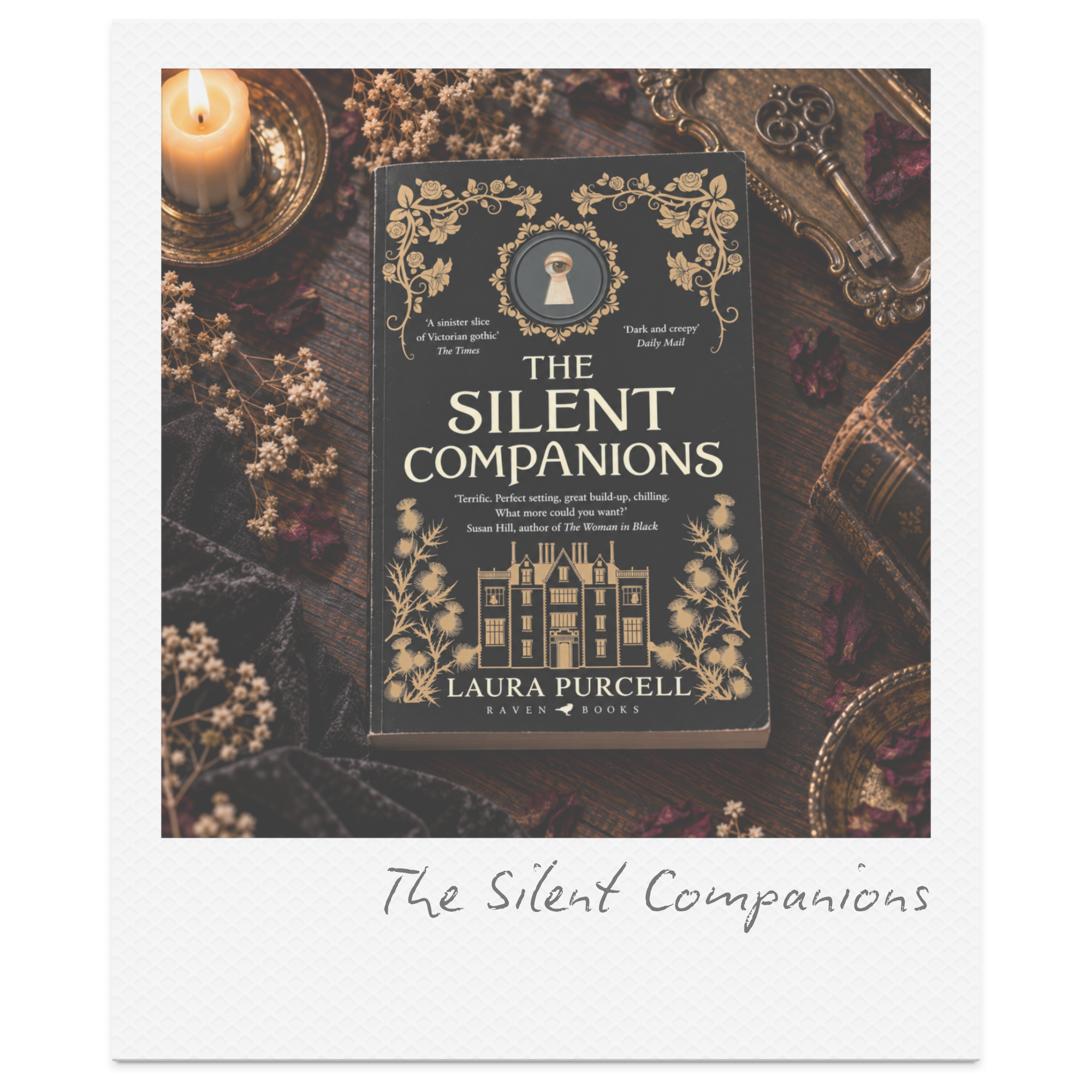
The Silent Companions by Laura Purcell
Some of the most unsettling Gothic stories transform familiar household objects into things that seem capable of watching, moving or harbouring intentions of their own. The Silent Companions by Laura Purcell is a particularly compelling example of this technique, using the uncanny to create an atmosphere of mounting unease.
Set in Victorian England, the novel follows Elsie Bainbridge, a young widow who arrives at her late husband's isolated country estate, The Bridge. Surrounded by unfamiliar servants, oppressive rooms and an increasingly disturbing sense of isolation, Elsie begins to encounter strange wooden figures known as silent companions.
These painted, life-sized figures resemble ordinary people, yet their presence within the house becomes deeply unsettling. Their apparent stillness offers little reassurance, particularly as questions emerge about their origins, their positions and the possibility that they are not quite as lifeless as they appear.
What makes Purcell's atmospheric writing so effective is her use of familiarity distorted into something unnatural. The companions are recognisably human in appearance, but their wooden bodies, painted expressions and ambiguous presence create a disturbing contradiction between the living and the inanimate.
This uncertainty encourages the reader to scrutinise seemingly ordinary details. A figure standing beside a doorway becomes unsettling because it might not have been there before. An empty corridor feels less reassuring when the reader begins to suspect that its occupants are capable of moving unnoticed.
The isolated estate reinforces this discomfort. The Bridge is not simply a backdrop for supernatural events; its enclosed rooms, oppressive atmosphere and separation from the outside world intensify Elsie's vulnerability. As the disturbances accumulate, the house becomes increasingly difficult to experience as a place of safety.
Purcell also demonstrates the value of gradual revelation. Rather than immediately explaining the nature of the companions, the narrative allows their unsettling qualities to emerge through observation, suspicion and increasingly disturbing discoveries.
The result is an atmosphere in which even moments of apparent stillness become charged with uncertainty.
What Gothic writers can learn from The Silent Companions
Purcell demonstrates how an ordinary object can become a powerful source of eeriness when its appearance, position or behaviour subtly contradicts the reader's expectations.
When developing your own Gothic fiction, consider choosing an object that is familiar but possesses an unsettling resemblance to something living: a portrait, mannequin, porcelain doll, carved figure or antique mirror.
Establish its ordinary appearance before introducing a small disturbance. Perhaps its position changes between scenes, its expression seems different in certain light, or a character becomes increasingly reluctant to turn their back upon it.
Avoid revealing too much too quickly. The uncertainty surrounding whether an object has genuinely moved can be more disturbing than watching it move openly.
The novel also illustrates how isolation can intensify an eerie atmosphere. When characters are confined within an unfamiliar setting, their inability to escape or verify their experiences makes even minor disturbances feel increasingly significant.
Above all, The Silent Companions demonstrates that Gothic eeriness often emerges from the uncomfortable possibility that something apparently lifeless may possess an awareness of its own.
Explore The Silent Companions by Laura Purcell on Amazon
Discover More Gothic Fiction with Kindle Unlimited and Audible
Reading widely is one of the best ways to develop your Gothic writing. From haunted houses and psychological mysteries to supernatural encounters and unsettling family secrets, Gothic fiction offers countless opportunities to study how authors create atmosphere, suspense and unease.
If you're looking for more eerie stories, Kindle Unlimited offers a changing selection of eligible ebooks, while Audible lets you experience atmospheric fiction through audiobook performances.
Discover Gothic Fiction with Kindle Unlimited
Explore Gothic novels, ghost stories, supernatural mysteries and psychological horror within the Kindle Unlimited catalogue. Look for examples of evocative description, unsettling settings and carefully developed suspense.
Explore Kindle Unlimited on Amazon
Experience Eerie Stories with Audible
Listening to Gothic fiction offers another way to appreciate its atmosphere. Pay attention to how descriptions, dialogue, silence and pacing create tension when experienced aloud.
Free trials and promotional offers are subject to eligibility and availability. Subscriptions renew automatically at the applicable rate unless cancelled. Available titles and membership terms may change.
Five Eerie Gothic Writing Exercises
Creating an eerie atmosphere becomes easier when you begin experimenting with the small details that make an otherwise ordinary scene feel unsettling. A familiar room that has changed, an unexplained sound or an object that appears somewhere it shouldn't can provide the foundation for an entire Gothic narrative.
The following five exercises encourage you to practise different atmospheric techniques, from manipulating sensory details to creating the suggestion of an unseen presence. Each offers a starting scenario, a focused writing challenge and an additional extension for developing your scene further.
You can use these exercises as short descriptive writing activities, expand them into complete Gothic stories or return to them whenever you want to experiment with a particular atmospheric effect.
Exercise 1: The Room That Has Changed
Focus: The uncanny, familiar settings and subtle spatial distortions
You return to a room you know intimately. Perhaps it is your childhood bedroom, a grandparent's sitting room or a familiar classroom in an old Victorian school. Everything initially appears exactly as you remember it.
The furniture occupies its usual positions. The wallpaper has the same faded pattern. Even the familiar smell of the room remains unchanged.
But as you begin to look more carefully, you notice something that should not be there.
Perhaps the room contains an additional window overlooking an unfamiliar landscape. A family portrait includes someone you have never seen before. The door stands on the opposite wall, although you are certain it has never been moved.
Your writing challenge
Write a 250–350-word Gothic description in which a familiar room gradually becomes unsettling.
Begin with comforting, recognisable details before introducing three increasingly disturbing inconsistencies. Allow your character to question their own memory rather than immediately accepting a supernatural explanation.
Avoid obvious horror imagery. Your aim is to create unease through the contradiction between familiarity and impossibility.
Extension: End the scene with the discovery that one of the changes has followed your character outside the room.
Exercise 2: Something Is Standing Behind You
Focus: Unseen presences, sensory suggestion and psychological unease
Your character is alone in an old house, completing an ordinary task. They might be sorting through letters in a study, cleaning an abandoned bedroom or examining a collection of antique photographs.
Gradually, they become aware of the uncomfortable sensation that someone is standing directly behind them.
There are no footsteps. No voice speaks. Nothing appears in the reflection of the nearby window.
Yet the feeling becomes increasingly difficult to ignore.
Perhaps the air changes temperature, a floorboard settles beneath an invisible weight or the faint scent of unfamiliar perfume drifts across the room.
Your writing challenge
Write a 300-word scene that creates the sensation of an unseen presence without ever revealing what is there.
Use at least three sensory details, but avoid relying entirely on darkness or cold temperatures.
Concentrate on your character's restrained reactions. They might deliberately continue their task, invent an explanation for what they are experiencing or become increasingly reluctant to turn around.
Extension: Introduce one physical detail suggesting that the presence has responded to something your character has done.
Exercise 3: The Sound That Shouldn't Exist
Focus: Unnatural silence, unexplained sounds and atmospheric pacing
An isolated country house has stood empty for decades. Its upper floor is inaccessible, the staircase having collapsed many years earlier.
Your character has been sent to examine the property before its sale.
As evening approaches, they begin to hear a sound from somewhere overhead.
It is not particularly loud or immediately frightening. Perhaps it resembles the steady tapping of a walking stick, the movement of a chair or the slow turning of pages.
At first, your character assumes that the noise comes from the old building settling.
Then it stops whenever they stop moving.
Your writing challenge
Write a 250–400-word passage in which sound becomes the principal source of eeriness.
Establish the building's ordinary soundscape before introducing the unexplained noise. Experiment with rhythm, distance, repetition and sudden silence.
Avoid revealing the source. Instead, allow your character's interpretation of the sound to change as the scene develops.
Extension: End with a moment in which the sound appears to imitate your character's actions.
Exercise 4: An Object Out of Place
Focus: Small disturbances, repetition and gradual escalation
Your character inherits a neglected Victorian house containing a collection of ordinary household objects.
Among them is something apparently insignificant: a silver teaspoon, a child's ribbon, an old photograph, a porcelain ornament or a small brass key.
On the first morning, the object appears somewhere unexpected.
Your character returns it to its proper place.
The following morning, it has moved again.
As the days pass, the object's unexplained movements begin to suggest a pattern. Perhaps it is travelling towards a particular room, appearing beside different family photographs or drawing attention to something the house's former occupants wanted forgotten.
Your writing challenge
Write a Gothic scene of approximately 350 words centred on one ordinary object.
Describe three separate disturbances, making each slightly more unsettling than the last.
Allow your character to investigate the phenomenon and attempt to prevent it from recurring.
The final disturbance should change the established pattern in a meaningful way.
Extension: Connect the object to an event in the house's past, but reveal this connection through a physical clue rather than an explanatory conversation.
Exercise 5: The Final Unsettling Detail
Focus: Narrative restraint, ambiguity and eerie endings
Your character has spent the night investigating an apparently haunted location.
They might have explored an abandoned hospital, searched a ruined chapel or remained alone in a house associated with a mysterious disappearance.
Throughout the evening, they have experienced a series of small disturbances. However, by morning, each seems to have acquired a reasonable explanation.
The footsteps were caused by loose floorboards. The whispering came from wind passing through a broken window. The shadow beside the staircase belonged to an old coat hanging behind the door.
Reassured, your character prepares to leave.
Then they notice one final detail that makes their explanations impossible.
Your writing challenge
Write a 400-word Gothic scene that gradually moves from uncertainty towards apparent reassurance.
Allow your character to investigate and rationalise the disturbances they have experienced.
End with a single unsettling discovery that changes the reader's interpretation of the entire scene.
The final detail should be precise and concrete rather than a vague statement that something feels wrong.
Extension: Rewrite your ending three times. In the first version, suggest an unseen presence. In the second, introduce an impossible physical detail. In the third, reveal that your character has misunderstood something fundamental about the setting.
Compare which ending creates the strongest lingering unease.
How to Get the Most from These Gothic Writing Exercises
When completing these exercises, resist the temptation to make every scene overtly frightening. The objective is to practise creating uncertainty through carefully selected details rather than relying upon dramatic supernatural events.
Begin by establishing what is ordinary about your setting. Consider which sounds, objects, routines and sensory experiences your character would naturally expect to encounter. Then introduce a small contradiction that challenges those expectations.
Pay particular attention to the relationship between description and character perception. An unexplained sound becomes more unsettling when the character recognises that it should be impossible. A familiar object becomes uncanny when its position changes in a way that cannot be comfortably dismissed.
After completing each exercise, reread your passage and identify the moment when the atmosphere begins to shift. Ask yourself whether that transition feels gradual, convincing and sufficiently unsettling.
You might also experiment with removing some of your more dramatic details. Sometimes, the quietest version of a Gothic scene is the one that leaves the strongest impression.
Above all, remember that an eerie atmosphere does not depend upon revealing what is hidden in the darkness. Often, its greatest power comes from allowing the reader to imagine what might be there.
Go Deeper: Explore More Gothic Writing and Atmospheric Description
Creating an eerie atmosphere is only one part of writing compelling Gothic fiction. The most memorable Gothic stories combine unsettling settings with psychological tension, mysterious characters, buried histories and the uncomfortable possibility that something supernatural is taking place just beyond the reader's understanding.
Whether you want to strengthen your descriptive language, develop a haunted location or transform an atmospheric scene into a complete story, there are plenty of ways to continue experimenting with the techniques we've explored.
Develop Richer Gothic Descriptions
If you particularly enjoyed working with darkness, decay, silence and sensory contradictions, begin by expanding your descriptive vocabulary.
100 Words to Describe Darkness: Gothic, Atmospheric & Evocative Vocabulary for Writers explores language for deep shadows, supernatural obscurity, shifting light, Gothic gloom and atmospheric nightscapes. It's particularly useful for creating scenes where characters can see almost enough to understand their surroundings, but never quite enough to feel reassured.
For imagery that suggests deterioration and the persistence of the past, explore Figurative Language for Death and Decay. This guide examines metaphors, similes, personification and symbolism for crumbling buildings, abandoned graveyards, dying gardens and forgotten objects. These techniques can help you give a Gothic setting emotional significance rather than simply describing its physical appearance.
You can also develop your control of sensory imagery with Sensory Writing: How to Describe a Haunted House, which focuses on transforming ordinary interiors into immersive, unsettling environments.
For broader practice, the Descriptive Writing Prompts collection offers scene challenges, observation exercises and picture prompts designed to strengthen atmosphere, precision and evocative description across different settings.
Build Suspense and Psychological Unease
An eerie atmosphere becomes especially powerful when it influences how characters behave, interpret their surroundings and respond to uncertainty.
In 10 Gothic Suspense Writing Exercises, you'll find practical challenges involving unreliable perception, shifting corridors, mysterious letters, unsettling silences and delayed revelations. These exercises are ideal for developing the tension that emerges when a character suspects something is wrong but cannot yet identify the source.
For a closer examination of emotional responses, Show, Don't Tell: Fear explores how body language, dialogue, physical sensations and subtle changes in behaviour can communicate fear without repeatedly naming the emotion.
You might also explore Gothic Madness for inspiration involving psychological deterioration, unreliable perception and the uncertain boundary between supernatural experience and a troubled imagination.
Together, these resources can help you create characters whose responses deepen the atmosphere rather than merely reacting to frightening events.
Create Haunted Settings and Unsettling Mysteries
Sometimes, the most difficult part of writing Gothic fiction is finding a setting with enough history, atmosphere and narrative potential to sustain an entire story.
Ghost Story Settings explores haunted manors, abandoned institutions, forgotten villages, ancient churches, eerie coastlines and other locations where the past seems unwilling to remain buried.
If you're developing a grand ancestral estate, Gothic Manor Names offers atmospheric names and story inspiration for ruined abbeys, secluded priories, decaying family seats and mysterious country houses.
For settings shaped by concealed histories and unsettling discoveries, explore Gothic Secrets. Its ideas involving forgotten rooms, cursed bloodlines, hidden identities and long-lost letters can help you give an eerie atmosphere a meaningful connection to the wider narrative.
Alternatively, Gothic Mystery provides inspiration for combining atmospheric locations with suspicious deaths, unexplained disappearances, strange inheritances and long-buried family secrets.
Turn an Eerie Atmosphere into a Complete Gothic Story
Once you've developed an atmospheric scene, the next challenge is deciding what happens within it.
Gothic Story Ideas offers inspiration for haunted estates, supernatural mysteries, tragic relationships, cursed families, psychological unease and dark historical secrets. These ideas can help you develop an initial unsettling image into a story with characters, conflict and narrative direction.
If you'd prefer something more unpredictable, try Gothic Story Sparks, a free interactive writing prompt generator featuring eerie settings, mysterious objects, unsettling characters, opening lines, secrets, strange discoveries and unexpected twists. Combine different elements to discover a Gothic premise you might never have considered otherwise.
For supernatural storytelling, Ghost Stories explores restless spirits, haunted houses, forgotten cemeteries and encounters with the dead, while Ghost Story Sparks offers randomly generated ideas involving apparitions, haunting rules, messages from beyond the grave and unfinished business.
You can also experiment with The Fall of the House of Usher by Edgar Allan Poe Inspired Prompts, particularly if you enjoyed examining how Poe uses architectural decay, psychological disturbance and the relationship between setting and emotion to create an oppressive Gothic atmosphere.
Explore the Wider Gothic Writing Collection
If you're ready to move beyond a single atmospheric technique, visit the Gothic Writing hub for a wider collection of writing prompts, character inspiration, mysterious settings, Gothic subgenres and storytelling resources.
From Victorian Gothic and Folk Gothic to Coastal Gothic, Gothic Winter and Gothic Romance, these collections explore different ways of combining atmosphere, history, emotion and supernatural uncertainty.
And if you're looking for inspiration beyond Gothic fiction, the Creative Writing Archive brings together genre-based writing prompts, story ideas, descriptive writing activities and interactive storytelling tools to help you develop original fiction across a wide range of imaginative worlds.
Wherever your next story takes you, remember that an eerie atmosphere begins with observation. A familiar sound, a neglected object, an unexplained absence or a subtle contradiction may be all you need to transform an ordinary setting into somewhere a reader will never quite feel comfortable entering.
Final Thoughts: Creating an Eerie Atmosphere in Gothic Writing
The most memorable Gothic scenes are not always the ones filled with dramatic supernatural encounters, violent storms or terrifying apparitions. Often, they are the quietest: an empty corridor where footsteps continue after a character has stopped walking, a familiar portrait that seems subtly altered, or a neglected room that carries the unmistakable impression of someone having just left.
Creating an eerie atmosphere in Gothic writing is ultimately an exercise in suggestion, restraint and uncertainty. By manipulating silence, distorting familiar surroundings, introducing small inexplicable disturbances and allowing the past to linger within a setting, you can transform ordinary descriptions into scenes that feel profoundly unsettling.
Remember that the techniques explored throughout this guide are most effective when used deliberately. You do not need every shadow to conceal a threat or every floorboard to produce an ominous creak. Choose a few carefully considered details, establish what your characters expect to encounter, and allow something small to contradict those expectations.
Equally important is the relationship between atmosphere and emotion. A deserted house becomes more compelling when its emptiness reflects a character's grief. A mysterious sound becomes more disturbing when it recalls something the character has tried to forget. The strongest Gothic writing allows setting, psychology and narrative mystery to influence one another.
As you continue developing your own stories, experiment with the exercises in this guide, explore the wider Gothic Writing Hub and use the Creative Writing Archive whenever you need a new setting, character or unsettling premise.
Above all, resist the temptation to explain every mystery. Sometimes, the most haunting ending is not a revelation but a question that remains unanswered.
After all, the most unsettling thing about an empty room is not what you can see within it, but the possibility that it was never truly empty at all.
Choose Your Next Adventure