I Have a Rendezvous with Death by Alan Seeger: Themes, Symbolism and Analysis
Alan Seeger's I Have a Rendezvous with Death is a powerful exploration of mortality, duty, sacrifice, courage, fate, and honour, written from the perspective of a speaker who calmly accepts the possibility of death in wartime. Through recurring symbolism, personification, repetition, contrast, and vivid natural imagery, Seeger presents death not as something to be feared but as an anticipated meeting that must be faced with dignity and resolve. The poem's central tension lies between the beauty of life and the inevitability of sacrifice, as the speaker acknowledges the comforts of love, peace, and survival while remaining committed to a promise that may ultimately lead to his death. This combination of serenity, determination, and fatalism makes the poem one of the anthology's most striking reflections on mortality, duty, and personal honour. For more poetry analysis and anthology comparisons, explore the Songs of Ourselves Volume 2 Hub and the Literature Library.
Context and Literary Background of I Have a Rendezvous with Death
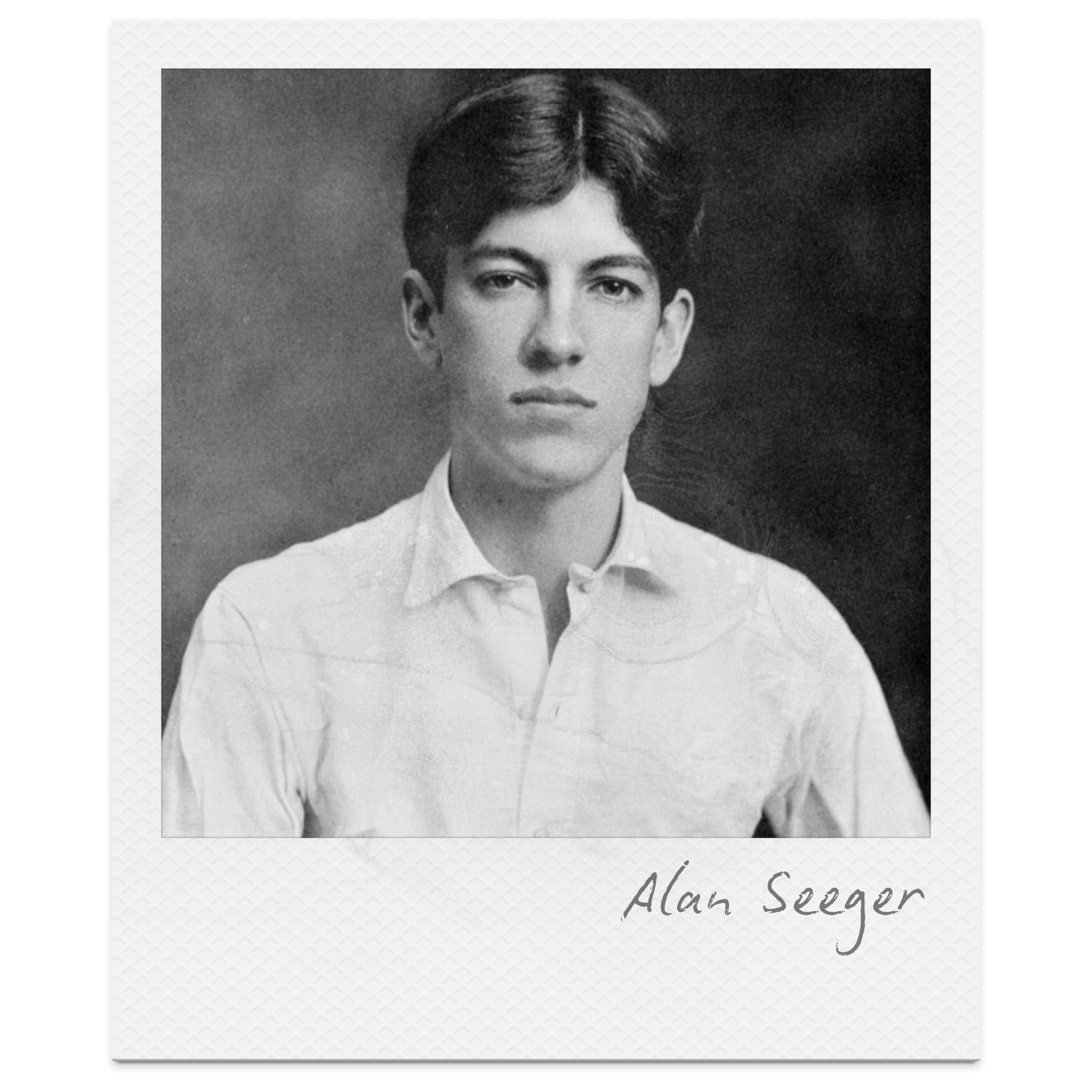
Alan Seeger (1888–1916) was an American poet who became closely associated with the literature of the First World War. Although born in the United States, he was living in Paris when war broke out in 1914 and volunteered to serve in the French Foreign Legion long before America officially entered the conflict. His experiences as a soldier profoundly shaped his writing, which frequently explores themes of duty, sacrifice, honour, courage, and mortality.
I Have a Rendezvous with Death reflects Seeger's idealistic view of military service and his belief that some causes were worth dying for. Unlike many later First World War poets who emphasised the horrors and futility of combat, Seeger often wrote about war in terms of commitment, loyalty, and personal responsibility. The poem's speaker does not fear death but instead accepts it as a possible outcome of remaining faithful to his duty and his promises.
This perspective places Seeger alongside early-war poets such as Rupert Brooke, whose poetry often presents military service in noble and patriotic terms. However, his work contrasts sharply with the poetry of Wilfred Owen and Siegfried Sassoon, who focused on the suffering, trauma, and devastation caused by modern warfare. As a result, the poem provides an important alternative perspective within First World War literature.
The poem was written during a conflict that claimed millions of lives and transformed attitudes towards war across Europe and beyond. Seeger himself served on the front line and understood the dangers he faced. This gives the poem particular significance because its repeated declaration of a "rendezvous with Death" proved tragically prophetic. In July 1916, Seeger was killed during the Battle of the Somme, one of the bloodiest battles of the war. Knowing this context adds considerable emotional weight to the poem, making the speaker's calm acceptance of mortality feel both courageous and deeply poignant.
The poem also reflects Seeger's admiration for Romantic poetry. Images of spring, flowers, sunlight, and renewal run throughout the poem, creating a striking contrast between the beauty of life and the reality of death. This juxtaposition allows Seeger to explore one of the poem's central tensions: the speaker recognises everything that makes life precious, yet remains willing to sacrifice it in fulfilment of his duty.
I Have a Rendezvous with Death: At a Glance
◆ Form: Three uneven stanzas combining lyrical reflection with a dramatic declaration of purpose.
◆ Tone and emotional movement: Calm, reflective, resigned, and ultimately determined.
◆ Central tensions: Life versus death; love versus duty; survival versus sacrifice; personal desire versus obligation.
◆ Core concerns: Mortality, courage, honour, sacrifice, fate, commitment, and wartime duty.
◆ Dominant imagery: Spring, flowers, renewal, battlefields, fire, darkness, sleep, and personified death.
◆ Stylistic features: Repetition, personification, symbolism, contrast, first-person narration, and recurring seasonal imagery.
◆ Key themes: Death and mortality, duty and honour, sacrifice, fate and destiny, the beauty of life, courage in the face of death.
◆ One-sentence interpretation: Seeger presents death as an inevitable appointment that may accompany wartime service, exploring how personal honour and commitment can lead an individual to accept mortality despite recognising the beauty and comforts of life.
Quick Summary of I Have a Rendezvous with Death
In the opening stanza, the speaker declares that he has "a rendezvous with Death" at a future battlefield. Although spring returns with beauty, flowers, and renewal, he recognises that death may be waiting for him amid conflict and warfare. The repeated phrase creates a sense of inevitability, suggesting that death is an appointment he expects may eventually have to be kept.
In the second stanza, the speaker considers different possible outcomes. Death may take him into its "dark land," ending his life, or he may survive and pass beyond the danger. Nevertheless, he continues to imagine death as a presence awaiting him somewhere on a scarred battlefield. The contrast between the violence of war and the peaceful imagery of spring reinforces the tension between life and mortality.
The final stanza introduces the poem's most significant conflict. The speaker acknowledges that it would be preferable to remain safe, surrounded by comfort, love, and human intimacy. However, despite recognising everything that makes life desirable, he remains committed to fulfilling his duty. The poem ends with a powerful statement of resolve as the speaker vows to remain true to his pledge and declares that he "shall not fail that rendezvous." The ending presents death not as a source of fear but as a possibility he is prepared to face in honouring his commitment.
I Have a Rendezvous with Death: Title, Form, Structure and Metre
Seeger's formal choices reinforce the poem's exploration of mortality, duty, sacrifice, and acceptance. The poem combines a lyrical elegance with a sense of inevitability, allowing the speaker to contemplate death while remaining remarkably calm and composed. Through repetition, structural progression, and controlled rhythm, Seeger creates a poem that feels both reflective and resolute.
The Significance of the Title
The title I Have a Rendezvous with Death immediately establishes the poem's central idea. The word "rendezvous" typically suggests a planned meeting, often associated with romance, friendship, or anticipation. By pairing this word with "Death," Seeger creates a striking contrast that transforms death from an abstract fear into a specific appointment waiting in the future.
The title also establishes the poem's unusual tone. Rather than fleeing death or resisting it, the speaker accepts its possible arrival with remarkable calmness. This sense of inevitability shapes the poem from beginning to end and reflects the speaker's commitment to duty despite the risks involved.
Form and Structural Development
The poem is divided into three stanzas of increasing length, moving from six lines to eight lines and finally ten lines. This gradual expansion mirrors the speaker's developing reflections as he moves from simply stating his fate to exploring its implications more fully.
Each stanza performs a distinct role within the poem's argument. The opening stanza introduces the idea of the speaker's anticipated meeting with death and establishes the recurring contrast between warfare and springtime renewal. The second stanza considers different possible outcomes, acknowledging that death may come while also leaving open the possibility of survival. The final stanza introduces the strongest emotional conflict, as the speaker imagines the comforts of love, safety, and domestic happiness before ultimately reaffirming his commitment to his duty.
Although the poem develops through these stages, the repeated declaration "I have a rendezvous with Death" creates structural unity. Each return to this phrase reinforces the speaker's awareness of mortality and gives the poem a cyclical quality, as though all thoughts eventually return to the same unavoidable possibility.
Repetition and Structural Cohesion
The poem's most significant structural feature is its repeated refrain. The phrase "I have a rendezvous with Death" appears throughout the poem, acting almost like an anchor that repeatedly draws the reader back to the speaker's central concern.
Each repetition gains additional significance as the poem progresses. Initially, the phrase sounds like a statement of fact. Later, it becomes a meditation on uncertainty, and by the final stanza it functions as a declaration of commitment. This development allows the repeated line to evolve alongside the speaker's thinking while simultaneously reinforcing the inevitability of the encounter.
Rhyme Scheme
The poem uses an irregular rhyme scheme rather than a fixed pattern. Although individual stanzas contain numerous end rhymes, the arrangement changes throughout the poem, creating a natural and conversational musicality rather than a rigid formal structure.
This flexibility allows Seeger to maintain the poem's reflective tone while still producing moments of lyrical beauty. The shifting rhyme patterns mirror the speaker's changing thoughts as he moves between contemplation, uncertainty, longing, and determination.
Particularly significant is the closing rhyme between "true" and "rendezvous." Positioned at the poem's conclusion, this pairing reinforces the connection between personal honour and the speaker's willingness to face death. The rhyme helps create a sense of finality and resolution, emphasising that the speaker intends to remain faithful to his commitment regardless of the consequences.
Metre and Rhythm
The poem is primarily written in iambic tetrameter, with most lines containing four metrical feet following an unstressed-stressed pattern. This regular rhythm creates a measured and controlled pace that reflects the speaker's calm acceptance of mortality.
For example:
I have | a ren- | dezvous | with Death
The steady movement of the metre prevents the poem from becoming overly dramatic or emotional. Instead, the rhythm contributes to the speaker's composure, allowing discussions of death and sacrifice to feel thoughtful rather than panicked.
At key moments, however, Seeger varies the rhythm to draw attention to important ideas. In the final stanza, phrases such as "God knows" receive additional emphasis, highlighting the speaker's acknowledgement that life, love, and comfort would be preferable to death. These rhythmic variations subtly reinforce the emotional conflict at the centre of the poem.
Form and Meaning
Ultimately, the poem's structure mirrors the speaker's journey towards acceptance. The expanding stanzas allow increasingly complex reflections on mortality, while the repeated refrain continually returns the reader to the reality of death's possible arrival. The regular metre creates a sense of dignity and self-control, while the recurring spring imagery prevents the poem from becoming entirely sombre.
As a result, Seeger presents death not as a source of terror but as a possibility that must be faced with courage and integrity. The poem's carefully controlled form reinforces this attitude, creating a work that is both elegiac and deeply determined.
Voice, Perspective and Emotional Conflict in I Have a Rendezvous with Death
Seeger uses a reflective first-person voice to create a speaker who confronts mortality with remarkable composure. Although the poem centres on the possibility of death in war, the speaker does not sound fearful, bitter, or despairing. Instead, he speaks with calm acceptance, presenting death as an anticipated meeting rather than a terrifying unknown. This controlled voice allows Seeger to explore deeper tensions between duty and desire, courage and vulnerability, life and sacrifice.
A Personal and Intimate Speaker
The poem is written entirely from the first-person perspective, creating an immediate connection between the speaker and the reader. The repeated declaration that he has "a rendezvous with Death" feels intensely personal, emphasising that he is contemplating his own mortality rather than discussing death in abstract terms.
This personal perspective gives the poem much of its emotional power. Readers experience the speaker's thoughts directly as he considers the possibility of dying and reflects upon what he may lose if that fate comes to pass.
A Voice of Calm Acceptance
One of the poem's most striking features is the speaker's composure. Death is not presented as a terrifying enemy but as a figure with whom the speaker may eventually keep an appointment.
The repeated use of the word "rendezvous" contributes significantly to this tone. Rather than employing language of fear, violence, or panic, the speaker describes death in terms associated with a planned meeting. This choice creates a sense of inevitability while also suggesting dignity and acceptance.
As a result, the poem's treatment of mortality feels thoughtful and controlled rather than tragic or emotional.
The Voice of Duty and Honour
The speaker's attitude is shaped by a strong sense of personal responsibility. Throughout the poem, he appears committed to fulfilling an obligation regardless of the risks involved.
This becomes particularly clear when he insists that he is "to my pledged word am true," revealing that honour and commitment are central aspects of his identity. He views remaining faithful to his promise as more important than preserving his own safety.
Emotional Conflict Beneath the Composure
Although the speaker appears calm throughout much of the poem, the final stanza reveals a significant emotional conflict. He imagines a peaceful alternative life filled with intimacy, comfort, and human connection, describing a world "where Love throbs out in blissful sleep."
These images reveal that the speaker values life deeply. He is not indifferent to happiness, nor is he seeking death. Instead, he recognises exactly what he may lose if he keeps his appointment with death.
This awareness makes his commitment more powerful. The speaker chooses duty not because life lacks value, but because he believes certain responsibilities are worth sacrificing life itself.
Fate, Choice, and Uncertainty
The voice also balances certainty and uncertainty throughout the poem. On one hand, the repeated refrain suggests that death is unavoidable. On the other, the speaker repeatedly acknowledges that survival remains possible, admitting that "it may be I shall pass him still."
This ambiguity creates an important tension. The speaker does not know what will happen, yet he prepares himself for the possibility of death regardless. His courage therefore emerges not from certainty but from his willingness to face uncertainty.
A Voice Defined by Resolve
By the poem's conclusion, the speaker's defining characteristic is not fearlessness but determination. He recognises beauty, love, comfort, and hope, yet remains committed to fulfilling his duty even if it leads to death.
The final declaration that he "shall not fail that rendezvous" transforms the poem from a meditation on mortality into a statement of personal resolve. Through this voice, Seeger presents courage not as the absence of fear, but as the willingness to honour one's commitments despite the possibility of loss.
Stanza-by-Stanza Analysis of I Have a Rendezvous with Death
A close analysis of each stanza reveals how Seeger develops the poem's exploration of mortality, duty, sacrifice, and personal honour. While the poem repeatedly acknowledges the possibility of death, it is not primarily concerned with fear. Instead, Seeger traces the speaker's growing acceptance of mortality, contrasting the beauty of life with the obligations that may require its sacrifice. Through recurring imagery of spring, personified death, and repeated declarations of commitment, the poem gradually moves from anticipation towards a final statement of resolve.
Stanza 1: Death, Spring, and the Anticipated Meeting
The opening stanza introduces the poem's central idea through the repeated declaration that the speaker has "a rendezvous with Death." The word "rendezvous" immediately shapes the reader's perception of death, transforming it from an abstract fear into a planned and inevitable meeting. Rather than presenting death as a violent enemy, Seeger personifies it as a figure awaiting an appointment, creating the poem's distinctive tone of calm acceptance.
The setting of this anticipated encounter is "some disputed barricade," placing the poem firmly within the context of war. The adjective "disputed" suggests conflict, uncertainty, and contested territory, reminding readers that the speaker's possible death will occur amid violence and military struggle. However, Seeger immediately contrasts this battlefield imagery with vivid descriptions of spring.
Images such as "Spring comes back with rustling shade" and "apple-blossoms fill the air" introduce a world of beauty, renewal, and growth. Traditionally, spring symbolises rebirth, hope, and the continuation of life. By placing these images alongside repeated references to death, Seeger establishes one of the poem's central tensions: the coexistence of mortality and renewal.
This contrast becomes even more striking in the final line of the stanza, where death and spring appear together once again. The phrase "blue days and fair" evokes peace, warmth, and natural beauty, emphasising everything that makes life desirable. Yet the repeated refrain reminds readers that the speaker expects his meeting with death to occur precisely when the world is at its most vibrant.
As a result, the stanza establishes both the poem's emotional conflict and its central irony. Death is anticipated not during darkness, winter, or decay, but during a season traditionally associated with life and hope. This juxtaposition reinforces the speaker's awareness that mortality exists alongside beauty, renewal, and the continuing cycle of nature.
Stanza 2: Uncertainty, Mortality, and Acceptance
The second stanza develops the speaker's contemplation of death by acknowledging uncertainty while maintaining his remarkable composure. Unlike the first stanza, which focuses on the anticipation of death, this section explores what the encounter itself might involve. The repeated phrase "It may be" introduces a note of possibility rather than certainty, reminding readers that the speaker does not know exactly what fate awaits him.
Death continues to be personified throughout the stanza. The image of death taking the speaker's hand and leading him into "his dark land" transforms dying into a journey guided by a companion rather than a violent act. This personification softens the idea of death while simultaneously emphasising its inevitability. The phrase "dark land" carries obvious associations with the unknown, suggesting mystery, uncertainty, and the possibility of an afterlife without explicitly defining what lies beyond death.
The line describing how death may "close my eyes and quench my breath" presents mortality in simple yet powerful terms. The verb "quench" is particularly significant because it suggests the extinguishing of a flame. This metaphor subtly reinforces the idea that life is fragile and temporary, capable of being extinguished at any moment.
However, the stanza does not present death as inevitable. The speaker acknowledges that "I shall pass him still," admitting that survival remains possible. This moment introduces an important tension within the poem. The speaker accepts the possibility of death, yet he does not assume that it will certainly occur. His courage therefore emerges from his willingness to face uncertainty rather than from any certainty about his fate.
The repeated declaration that he has "a rendezvous with Death" returns at the centre of the stanza, reinforcing the poem's structural and thematic unity. The setting shifts to "some scarred slope of battered hill," where the harsh adjectives "scarred" and "battered" emphasise the destructive impact of warfare upon both the landscape and the people who fight within it.
Yet once again Seeger contrasts violence with images of renewal. As spring returns and "the first meadow-flowers appear," nature continues its cycle of growth and regeneration despite the presence of war and death. This juxtaposition reinforces one of the poem's central ideas: individual lives may be fragile and temporary, but the natural world endures beyond human conflict.
As a result, the stanza deepens the poem's exploration of mortality by balancing uncertainty with acceptance. The speaker neither fears death nor assumes survival, choosing instead to confront whatever lies ahead with dignity and calm resolve.
Stanza 3: Love, Duty, and the Final Commitment
The final stanza introduces the poem's most significant emotional conflict. For the first time, the speaker openly acknowledges that death is not what he truly desires. The exclamation "God knows" immediately creates a more personal and emotionally charged tone, suggesting complete honesty as he admits that another life would be far preferable.
The speaker imagines a world of comfort, intimacy, and peace, describing how it would be better to be "pillowed in silk and scented down." These luxurious images stand in direct contrast to the harsh realities of the battlefield. Rather than facing danger and uncertainty, he imagines safety, warmth, and physical comfort.
This alternative vision becomes increasingly intimate through the poem's sensual imagery. The description of a place "where Love throbs out in blissful sleep" presents human connection as a source of fulfilment and emotional security. Similarly, the phrase "pulse nigh to pulse, and breath to breath" emphasises physical closeness and shared affection. The repeated references to heartbeat and breathing highlight the preciousness of life itself, reminding readers of everything the speaker risks losing.
The image of "hushed awakenings" further reinforces this atmosphere of tenderness and domestic happiness. These moments represent peace, love, and continuity, creating a powerful contrast with the violence and destruction associated with war.
However, the stanza pivots dramatically with the word "But." This single conjunction marks the poem's decisive turning point. Having acknowledged the attractions of life, love, and survival, the speaker immediately returns to the reality of his commitment, repeating that he has "a rendezvous with Death."
The setting now becomes even more intense. The image of "midnight in some flaming town" combines darkness with destruction, creating one of the poem's most vivid depictions of war. Unlike the earlier references to barricades and battered hills, this image suggests a community consumed by conflict and violence.
Yet even here, Seeger continues to juxtapose war with renewal. As "Spring trips north again this year," nature continues its annual cycle despite human suffering. The personification of spring as something that "trips" creates a light, graceful movement that contrasts sharply with the devastation of the battlefield.
The poem concludes with an affirmation of personal honour and duty. The speaker declares that he is "to my pledged word am true," emphasising that his actions are governed by commitment rather than fear or self-interest. The final statement that he "shall not fail that rendezvous" transforms the poem from a reflection on mortality into a declaration of resolve.
As a result, the closing stanza presents the speaker's willingness to face death not as an act of fatalism but as an expression of loyalty, courage, and personal integrity. Although he recognises the beauty of life and the comforts he might enjoy, he ultimately chooses duty over self-preservation, ending the poem with a powerful statement of commitment and sacrifice.
Key Quotes and Literary Methods in I Have a Rendezvous with Death
Seeger's most significant quotations reveal the poem's exploration of mortality, duty, sacrifice, honour, courage, fate, and the tension between life and death. Through personification, symbolism, contrast, repetition, and vivid imagery, he presents death not as a terrifying force but as an anticipated encounter that must be faced with dignity and resolve.
"I have a rendezvous with Death"
◆ Method or literary feature: Repetition; personification; refrain.
◆ Interpretation and implied meaning: Death is presented as a planned meeting rather than a random or chaotic event.
◆ Why Seeger uses it: To establish the poem's central idea and create a tone of calm acceptance.
◆ Emotional/intellectual effect: Encourages readers to view death as something inevitable rather than something to fear.
◆ Broader significance: Suggests that mortality is an unavoidable part of human experience and that courage lies in confronting it directly.
"At some disputed barricade"
◆ Method or literary feature: Wartime imagery; symbolism.
◆ Interpretation and implied meaning: The barricade symbolises both physical conflict and the dangers faced by soldiers.
◆ Why Seeger uses it: To place the poem within the context of war and military duty.
◆ Emotional/intellectual effect: Creates a sense of uncertainty and impending danger.
◆ Broader significance: Highlights the relationship between sacrifice and service during wartime.
"When Spring comes back with rustling shade"
◆ Method or literary feature: Seasonal symbolism; natural imagery.
◆ Interpretation and implied meaning: Spring represents renewal, hope, life, and continuity.
◆ Why Seeger uses it: To contrast the vitality of nature with the possibility of human death.
◆ Emotional/intellectual effect: Creates a poignant tension between life and mortality.
◆ Broader significance: Suggests that nature's cycles continue regardless of individual loss.
"And lead me into his dark land"
◆ Method or literary feature: Personification; metaphor.
◆ Interpretation and implied meaning: Death is imagined as a guide leading the speaker into an unknown realm.
◆ Why Seeger uses it: To make death seem less violent and more like a journey into mystery.
◆ Emotional/intellectual effect: Creates an atmosphere of uncertainty while maintaining the poem's calm tone.
◆ Broader significance: Reflects humanity's inability to know what lies beyond death.
"And close my eyes and quench my breath"
◆ Method or literary feature: Metaphor; euphemistic imagery.
◆ Interpretation and implied meaning: Death is presented through simple physical actions that mark the end of life.
◆ Why Seeger uses it: To portray death as natural and inevitable rather than horrifying.
◆ Emotional/intellectual effect: Produces a sense of quiet resignation.
◆ Broader significance: Emphasises the fragility and temporary nature of human existence.
"On some scarred slope of battered hill"
◆ Method or literary feature: Violent imagery; alliteration.
◆ Interpretation and implied meaning: The landscape bears visible evidence of warfare and destruction.
◆ Why Seeger uses it: To show how conflict damages both people and the natural world.
◆ Emotional/intellectual effect: Creates a stark image of war's brutality.
◆ Broader significance: Reinforces the human cost of military conflict.
"Where Love throbs out in blissful sleep"
◆ Method or literary feature: Personification; sensual imagery.
◆ Interpretation and implied meaning: Love is presented as a living, comforting force associated with peace and intimacy.
◆ Why Seeger uses it: To highlight everything the speaker could choose instead of war and sacrifice.
◆ Emotional/intellectual effect: Creates warmth and tenderness that contrast sharply with death and conflict.
◆ Broader significance: Represents the beauty and value of ordinary human life.
"Pulse nigh to pulse, and breath to breath"
◆ Method or literary feature: Repetition; intimate imagery; parallel structure.
◆ Interpretation and implied meaning: The speaker imagines profound emotional and physical closeness with another person.
◆ Why Seeger uses it: To emphasise the attractions of love, companionship, and survival.
◆ Emotional/intellectual effect: Creates one of the poem's most emotionally moving moments.
◆ Broader significance: Highlights what is sacrificed when individuals choose duty over personal happiness.
"And I to my pledged word am true"
◆ Method or literary feature: Declarative statement; honour motif.
◆ Interpretation and implied meaning: The speaker defines himself through loyalty, commitment, and personal integrity.
◆ Why Seeger uses it: To explain why he remains willing to face death despite recognising the value of life.
◆ Emotional/intellectual effect: Inspires admiration for the speaker's conviction and determination.
◆ Broader significance: Suggests that honour and responsibility can become guiding principles stronger than self-preservation.
"I shall not fail that rendezvous"
◆ Method or literary feature: Repetition; resolute conclusion.
◆ Interpretation and implied meaning: The speaker accepts the possibility of death and remains committed to his duty.
◆ Why Seeger uses it: To provide a powerful and definitive ending to the poem.
◆ Emotional/intellectual effect: Leaves readers with a sense of courage, dignity, and tragic inevitability.
◆ Broader significance: Presents sacrifice as a conscious choice rooted in honour, loyalty, and acceptance of mortality.
Key Techniques in I Have a Rendezvous with Death
Seeger uses a range of literary techniques to explore mortality, sacrifice, honour, courage, and the tension between life's beauty and death's inevitability. The poem's power comes from its ability to present death in an unusually calm and reflective manner while continually reminding readers of everything the speaker may lose. Through repetition, symbolism, personification, contrast, and carefully controlled imagery, Seeger creates a poem that is both lyrical and deeply moving.
Personification
The poem's most significant technique is the personification of Death. Rather than presenting death as an abstract concept, Seeger transforms it into a figure capable of meeting, guiding, and accompanying the speaker. Death may "take my hand" and "lead me into his dark land," creating the impression of a companion rather than a monster.
This personification softens the idea of death while reinforcing the poem's central theme of acceptance. The speaker does not resist death but prepares himself for a possible encounter with it.
Repetition
The repeated refrain "I have a rendezvous with Death" provides both structural unity and thematic emphasis. Each repetition reminds readers of the speaker's anticipated meeting while allowing the phrase to develop new significance as the poem progresses.
Initially, the refrain establishes inevitability. Later, it reflects uncertainty, and by the final stanza it becomes a declaration of commitment and resolve. This evolution gives the repeated line increasing emotional power.
Symbolism
The poem contains several important symbols. Spring symbolises life, renewal, hope, and continuity, while Death symbolises mortality and the unknown future awaiting every individual. The recurring contrast between these symbols creates one of the poem's central tensions.
Similarly, images such as the "disputed barricade," "scarred slope," and "flaming town" symbolise the destruction and sacrifice associated with war, while flowers, blossoms, and spring landscapes symbolise the life that continues beyond human conflict.
Juxtaposition
Seeger repeatedly places opposing ideas alongside one another. Death appears beside spring, battlefields alongside flowers, and sacrifice alongside love and comfort.
This technique creates a powerful emotional contrast throughout the poem. Rather than presenting death in isolation, Seeger continually reminds readers of life's beauty, making the possibility of loss feel even more significant.
Contrast
Closely related to juxtaposition is the poem's use of contrast. The peaceful imagery of "apple-blossoms," "meadow-flowers," and "blissful sleep" is set against images of war, darkness, and destruction.
The speaker also contrasts two possible futures: survival and death. This tension reinforces the uncertainty that runs throughout the poem and highlights the courage required to continue despite not knowing the outcome.
Imagery
The poem is rich in visual, sensory, and emotional imagery. Natural images such as "apple-blossoms" and "meadow-flowers" create a vivid sense of beauty and renewal, while military images such as "disputed barricade" and "scarred slope of battered hill" evoke conflict and destruction.
The final stanza introduces sensual imagery through references to silk, scent, heartbeat, and breath. These details create a powerful vision of intimacy and comfort that contrasts sharply with the realities of war.
Natural and Seasonal Imagery
Spring appears throughout the poem as a recurring motif. Traditionally associated with rebirth and renewal, spring functions as a constant reminder of life's beauty and continuity.
The seasonal imagery is particularly effective because it appears alongside repeated references to death. This creates an ongoing tension between nature's cycles of renewal and the mortality of individual human beings.
Alliteration
Seeger uses alliteration selectively to enhance the musical quality of key lines. Phrases such as "Spring brings back blue days" create a flowing rhythm that emphasises the beauty and vitality of the natural world.
Similarly, the repeated s sounds in phrases such as "scarred slope" and "silk and scented down" create a softer, more soothing effect that reinforces the atmosphere of reflection and intimacy.
Sibilance
The repeated s sounds throughout the poem contribute to its calm and lyrical tone. This is particularly noticeable in descriptions of spring and domestic comfort, where the gentle sound patterns create an atmosphere of peace and tranquillity.
The softness of the sibilance contrasts with the violence of the poem's wartime setting, reinforcing the tension between conflict and peace.
Metaphor
The poem's central metaphor is the idea of death as a "rendezvous." By describing death as an arranged meeting, Seeger transforms mortality into something anticipated and accepted rather than feared.
This metaphor shapes the reader's understanding of the entire poem and helps create its distinctive tone of dignity and composure.
Sensory Imagery
The final stanza appeals strongly to the senses. References to "silk," "scented down," "pulse," and "breath" allow readers to imagine physical comfort, intimacy, and human connection.
This sensory richness emphasises what the speaker stands to lose and therefore makes his ultimate decision to remain faithful to his duty even more powerful.
End-Stopped Lines
Many lines conclude with punctuation, creating a measured and deliberate pace. This controlled movement reflects the speaker's composed attitude towards mortality and prevents the poem from becoming emotionally chaotic.
The regular pauses encourage readers to consider each image and idea carefully, reinforcing the poem's reflective nature.
First-Person Narration
The use of first-person narration creates immediacy and emotional authenticity. Because readers experience the speaker's thoughts directly, the poem feels intensely personal despite addressing universal themes.
This perspective strengthens the emotional impact of the speaker's final declaration that he "shall not fail that rendezvous."
Romantic Influence
The poem reflects many characteristics associated with Romantic poetry, particularly its emphasis on nature, beauty, emotion, and individual experience. The recurring spring imagery and celebration of life's beauty echo Romantic traditions even as the poem confronts the realities of war and death.
This influence helps explain why the poem often feels lyrical and idealistic despite its serious subject matter.
Symbolism in I Have a Rendezvous with Death
Symbolism is central to Seeger's exploration of mortality, duty, sacrifice, courage, and the value of life. Throughout the poem, recurring images of spring, flowers, battlefields, darkness, and death operate on both literal and symbolic levels. These symbols allow Seeger to transform a personal reflection on wartime service into a broader meditation on human existence, commitment, and the inevitability of mortality.
Death
The most important symbol in the poem is Death itself. Rather than appearing as a terrifying force, death is personified as an individual with whom the speaker expects to keep an appointment. The recurring phrase "I have a rendezvous with Death" transforms mortality into a planned meeting rather than a random or meaningless event.
As a symbol, death represents both the unavoidable reality of human mortality and the specific dangers faced by soldiers during wartime. However, Seeger's treatment of death also suggests dignity, acceptance, and courage, making it more complex than a simple symbol of destruction.
The Rendezvous
The "rendezvous" symbolises destiny, obligation, and acceptance. The word normally refers to an arranged meeting, often carrying positive or romantic associations. By applying it to death, Seeger suggests that mortality is not merely something that happens to people but something that must eventually be faced.
The rendezvous also symbolises the speaker's commitment to duty. By the end of the poem, keeping the appointment becomes a matter of honour and personal integrity.
Spring
Spring functions as one of the poem's most significant symbols. Throughout literature, spring is commonly associated with renewal, rebirth, hope, growth, and the continuation of life.
In Seeger's poem, spring repeatedly appears alongside references to death. This creates a powerful symbolic contrast. While individual human lives may end, nature continues its endless cycle of regeneration. Spring therefore symbolises both the beauty of life and the continuity of existence beyond any one person's death.
Apple-Blossoms and Meadow-Flowers
The "apple-blossoms" and "meadow-flowers" symbolise beauty, innocence, vitality, and the pleasures of ordinary life. Their appearance throughout the poem emphasises everything that makes life precious and worth preserving.
At the same time, these flowers remind readers that the speaker's possible death will occur during a season traditionally associated with growth and renewal. This contrast intensifies the poem's emotional impact by highlighting the tragedy of a life potentially ending when the world is flourishing.
The Disputed Barricade
The "disputed barricade" symbolises conflict, sacrifice, and the realities of war. Although it refers literally to a military position, it also represents the boundary between life and death, safety and danger, survival and sacrifice.
The adjective "disputed" reinforces the uncertainty surrounding the speaker's future, reminding readers that the outcome of war is never guaranteed.
The Scarred Slope and Battered Hill
The images of a "scarred slope" and "battered hill" symbolise the physical and psychological damage caused by warfare. The landscape itself appears wounded, reflecting the suffering experienced by soldiers.
These symbols suggest that war leaves permanent marks not only upon individuals but also upon places, communities, and collective memory.
The Dark Land
The "dark land" symbolises the unknown nature of death. The speaker imagines death leading him into a realm that remains mysterious and undefined.
Unlike many religious depictions of the afterlife, Seeger does not explain what exists beyond death. The dark land therefore symbolises uncertainty itself, reflecting humanity's limited knowledge of what lies beyond mortal existence.
Love and the Domestic World
The images of "silk," "scented down," "pulse nigh to pulse," and "breath to breath" symbolise intimacy, companionship, comfort, and the ordinary pleasures of life.
These symbols represent everything the speaker might choose instead of war. They remind readers that his acceptance of death is meaningful precisely because he recognises the value of what he may lose.
Midnight
The image of "midnight" symbolises darkness, uncertainty, and the threshold between one state and another. Traditionally associated with endings and transition, midnight reinforces the poem's focus on mortality and the possibility of death.
However, midnight is also a moment between days, making it an appropriate symbol for the boundary between life and whatever may come afterwards.
The Flaming Town
The "flaming town" symbolises the destruction and chaos of war. Fire often represents violence, suffering, and devastation, and here it highlights the brutal reality behind the speaker's idealised language of honour and duty.
The image prevents the poem from becoming entirely romanticised, reminding readers of the genuine dangers and human costs associated with military conflict.
The Pledged Word
The speaker's "pledged word" symbolises honour, loyalty, and personal integrity. By the end of the poem, remaining faithful to this promise becomes more important than self-preservation.
As a result, the pledged word represents the moral principles that guide the speaker's actions and ultimately shape his willingness to face death.
Life and Death in Symbolic Balance
Perhaps the poem's most important symbolic pattern is the continual balance between symbols of life and symbols of death. Spring, flowers, love, breath, and intimacy stand alongside battlefields, darkness, fire, and mortality. Through this symbolic contrast, Seeger suggests that courage emerges not from rejecting life but from recognising its value while remaining willing to sacrifice it for something believed to be greater than oneself.
How Seeger Creates Meaning and Impact in I Have a Rendezvous with Death
Seeger creates meaning in I Have a Rendezvous with Death by combining personification, symbolism, repetition, and powerful contrasts between life and mortality. Although the poem focuses on the possibility of death in wartime, it is not primarily a poem about fear. Instead, Seeger explores how an individual responds to mortality when faced with a sense of duty, honour, and personal commitment. The result is a poem that is both deeply personal and universally relevant.
One of the poem's most significant achievements is its unusual presentation of death. Rather than depicting death as a violent or terrifying force, Seeger repeatedly personifies it as a figure with whom the speaker has a "rendezvous." This metaphor transforms death into an anticipated meeting, creating a tone of calm acceptance rather than panic or despair. By presenting mortality in this way, Seeger encourages readers to consider courage not as the absence of fear but as the willingness to face the inevitable with dignity.
The poem also derives much of its impact from its continual juxtaposition of life and death. Throughout the poem, references to warfare and destruction are placed alongside images of spring, flowers, sunlight, and renewal. The recurring appearance of "apple-blossoms," "meadow-flowers," and the return of spring serves as a reminder of everything that makes life beautiful. This contrast makes the possibility of death feel more poignant because the speaker is fully aware of what he may lose.
The final stanza deepens this tension by introducing an alternative vision of life. The speaker imagines comfort, intimacy, and love, describing a world of "silk and scented down" where people exist "pulse nigh to pulse, and breath to breath." These sensual images emphasise the value of human connection and reveal that the speaker does not welcome death because life lacks meaning. Instead, he recognises life's beauty while simultaneously accepting that duty may require its sacrifice.
Seeger further develops meaning through the poem's repeated refrain. Each return to "I have a rendezvous with Death" reinforces the inevitability of mortality while also marking the speaker's growing acceptance of it. By the final stanza, the phrase has evolved from an observation into a declaration of resolve. The repetition therefore mirrors the speaker's psychological journey from anticipation to commitment.
The poem's emotional impact is strengthened by its careful balance between uncertainty and certainty. The speaker repeatedly acknowledges that death may not come, admitting that "it may be I shall pass him still." This uncertainty is important because it prevents the poem from becoming purely fatalistic. The speaker does not know what will happen, yet he remains prepared to face whatever lies ahead. His courage therefore emerges from uncertainty rather than certainty.
Ultimately, the poem presents mortality as an unavoidable part of human existence while exploring how individuals choose to respond to it. Seeger suggests that honour, loyalty, and commitment can provide meaning even in the face of death. The poem's lasting power lies in its ability to balance beauty with loss, hope with sacrifice, and life with mortality, creating a moving reflection on courage, duty, and the value of remaining true to one's convictions.
Central Ideas and Themes in I Have a Rendezvous with Death
Although I Have a Rendezvous with Death is rooted in the specific context of the First World War, its themes extend far beyond the battlefield. Seeger explores universal questions about mortality, personal responsibility, courage, sacrifice, and the choices people make when confronted with uncertainty. Through the speaker's calm acceptance of a possible death, the poem becomes both a reflection on wartime service and a broader meditation on human values.
Death and Mortality
The most obvious theme in the poem is the inevitability of death. From the opening line, the speaker acknowledges that he may soon face his "rendezvous with Death," presenting mortality as an unavoidable part of human existence.
However, Seeger does not treat death as something terrifying or unnatural. Instead, the speaker approaches it with composure and dignity, accepting that death may arrive regardless of personal wishes or desires. The poem therefore explores not only the reality of mortality but also the attitudes people adopt when confronting it.
Duty and Honour
Duty lies at the heart of the speaker's decision-making throughout the poem. Although he recognises the attractions of safety, love, and survival, he remains committed to fulfilling his responsibilities.
This commitment becomes most explicit when the speaker declares that he is "to my pledged word am true." Honour is presented as a guiding principle that shapes his actions even when the consequences may be fatal. Seeger suggests that personal integrity is defined not by convenience but by remaining faithful to one's commitments.
Sacrifice
The poem repeatedly highlights the sacrifices demanded by war. The speaker understands that keeping his appointment with death may require him to surrender not only his life but also the possibility of future happiness, love, and companionship.
The final stanza is particularly important in developing this theme because it demonstrates that sacrifice only has meaning when something valuable is being given up. The speaker's vision of intimacy and domestic comfort emphasises the reality of what he may lose, making his commitment to duty all the more significant.
Fate and Destiny
The recurring image of a "rendezvous" creates strong associations with fate and destiny. The speaker speaks as though death is waiting for him at a predetermined place and time, creating the impression that certain events may lie beyond individual control.
At the same time, Seeger does not present fate as entirely fixed. The speaker admits that he may survive, acknowledging uncertainty within the poem. This tension between destiny and free will adds complexity to the speaker's relationship with death and prevents the poem from becoming wholly fatalistic.
The Beauty of Life
One of the poem's most important themes is the value of life itself. Throughout the poem, Seeger fills the landscape with images of spring, flowers, sunlight, and renewal. These images celebrate beauty, growth, and the pleasures of existence.
The final stanza develops this idea further through images of love, physical closeness, and domestic happiness. By emphasising what makes life meaningful, Seeger ensures that the speaker's willingness to face death feels genuinely significant. The poem ultimately argues that courage is meaningful precisely because life is precious.
Courage in the Face of Death
The poem presents courage as a conscious choice rather than an absence of fear. The speaker does not ignore the dangers before him, nor does he pretend that death would be desirable. Instead, he openly acknowledges the attractions of life while remaining prepared to face mortality.
This distinction is crucial. Seeger's speaker is courageous not because he welcomes death but because he remains committed to his principles despite recognising what may be lost. The poem therefore presents courage as an act of endurance, loyalty, and moral conviction.
Individual Commitment and Collective Conflict
Although the poem takes place against the backdrop of war, its focus remains firmly on individual choice and responsibility. The speaker's decisions are personal rather than political. He does not discuss military strategy, patriotism, or national victory. Instead, he focuses on his own commitment to honouring a promise.
As a result, the poem explores how individuals find meaning within larger historical events. Seeger suggests that even amidst the chaos of war, personal integrity and commitment remain powerful sources of purpose and identity.
Alternative Interpretations of I Have a Rendezvous with Death
Although I Have a Rendezvous with Death is often read as a patriotic wartime poem celebrating courage and sacrifice, Seeger's language allows for several alternative interpretations. The poem's treatment of mortality, duty, and personal commitment is complex enough to support a range of readings, many of which question the relationship between honour, fate, and the value of human life.
Psychological Interpretation: Accepting the Unavoidable
From a psychological perspective, the poem can be read as an attempt to come to terms with the constant presence of death during wartime. Rather than expressing fear directly, the speaker transforms death into a familiar figure with whom he expects to keep an appointment.
By personifying death and repeatedly referring to a "rendezvous," the speaker may be attempting to make mortality feel less frightening and more manageable. The poem therefore becomes a coping mechanism through which anxiety is converted into acceptance and emotional control.
Existential Interpretation: Creating Meaning in the Face of Death
An existential reading focuses on the speaker's response to mortality rather than death itself. The speaker recognises that life is uncertain and that death may arrive at any moment. However, instead of allowing this reality to create despair, he chooses to find meaning through commitment and personal responsibility.
From this perspective, the poem suggests that human beings cannot control death, but they can control how they respond to it. Honour, duty, and personal integrity become ways of creating purpose within an uncertain world.
Romantic Interpretation: Idealism and Heroic Sacrifice
The poem can also be viewed through the traditions of Romanticism. Seeger's recurring images of spring, flowers, beauty, and emotional intensity reflect Romantic interests in nature, individual experience, and noble sacrifice.
Under this interpretation, the speaker resembles a heroic figure willingly embracing danger in pursuit of a higher ideal. Death is not merely an ending but part of a larger narrative of courage, honour, and devotion to a cause.
Religious Interpretation: Death as a Journey Beyond Life
Although the poem contains no explicit religious doctrine, some readers may interpret the personification of death and references to a "dark land" as suggesting a transition into an afterlife.
The calmness with which the speaker approaches death could imply faith in something beyond mortal existence. From this perspective, death becomes less a source of fear than a passage into another realm, helping to explain the speaker's unusual composure.
A Critical Interpretation: The Romanticisation of War
A more sceptical reading questions the poem's treatment of military service and sacrifice. Unlike poets such as Wilfred Owen and Siegfried Sassoon, Seeger presents war through the language of honour and duty rather than horror and suffering.
Some readers may therefore interpret the poem as an example of wartime idealism that romanticises conflict. The emphasis on courage and noble sacrifice may be viewed as overlooking the brutality, trauma, and destruction experienced by many soldiers during the First World War.
A Humanistic Interpretation: The Value of Life
While the poem is often remembered for its acceptance of death, a humanistic reading emphasises how much attention Seeger gives to the beauty of life. Images of spring, flowers, love, intimacy, and companionship occupy a significant portion of the poem.
From this perspective, the poem is not primarily about dying but about recognising what makes life meaningful. The speaker's willingness to face death becomes powerful precisely because he understands the value of what he may lose.
A Fatalistic Interpretation: Destiny Cannot Be Avoided
The recurring image of a "rendezvous" may also support a fatalistic reading. The speaker often speaks as though death is waiting at a predetermined place and time, creating the impression that certain outcomes cannot be escaped.
Under this interpretation, the poem explores humanity's limited control over fate. The speaker does not choose whether death exists, only how he will respond when it arrives.
A Universal Interpretation: Mortality and Human Choice
Perhaps the broadest interpretation is that the poem transcends its wartime setting entirely. Although the speaker is a soldier, the poem addresses questions faced by all people: how should individuals live when they know death is inevitable? What responsibilities are worth sacrifice? How can meaning be found in a temporary life?
From this perspective, the poem becomes less about war and more about the universal human challenge of confronting mortality while remaining faithful to personal values and commitments.
Compare I Have a Rendezvous with Death With Other Songs of Ourselves Volume 2 Poems
Seeger's poem explores mortality, sacrifice, honour, duty, and the conscious acceptance of death. Many poems in Songs of Ourselves Volume 2 similarly examine human mortality, personal conviction, resilience, and the search for meaning, although they often approach these ideas from very different perspectives.
◆ The Exequy – Henry King – Both poems focus on death and the inevitability of mortality. However, King's poem centres on grief, remembrance, and spiritual reunion after death, while Seeger explores the acceptance of a future death that may be required by duty and personal honour.
◆ The Dead Knight – John Masefield – Both poems examine death in a martial context and present individuals confronting mortality with dignity. However, Masefield focuses on the aftermath of death and the enduring legacy of courage, whereas Seeger concentrates on the speaker's conscious preparation for a possible sacrifice.
◆ Late Wisdom – George Crabbe – Both poems explore the relationship between mortality and self-understanding. Crabbe reflects on wisdom gained through experience and hindsight, while Seeger focuses on remaining true to one's principles despite uncertainty about the future.
◆ Homecoming – Lenrie Peters – Both poems explore how individuals respond to profound life experiences and changing circumstances. Peters examines identity, belonging, and the passage of time, while Seeger reflects on duty, mortality, and personal commitment in the face of danger.
◆ Song – Alun Lewis – Both poems were written by poets associated with military experience and explore themes of war, loss, and human vulnerability. However, Lewis places greater emphasis on emotional fragility and separation, while Seeger presents a more idealistic vision of courage, honour, and sacrifice.
Exam-Ready Insight for I Have a Rendezvous with Death
Strong AS Level responses to I Have a Rendezvous with Death move beyond describing the poem as simply a patriotic acceptance of death and instead explore the tensions that exist between mortality and renewal, duty and desire, sacrifice and survival. Perceptive essays recognise that the speaker does not welcome death because life lacks value; rather, he remains willing to face death despite fully understanding the beauty, comfort, and intimacy that life offers.
Strong Responses Typically:
◆ Analyse how Seeger personifies Death as a figure with whom the speaker expects to keep an appointment.
◆ Explore the significance of the recurring refrain "I have a rendezvous with Death" and how its meaning develops throughout the poem.
◆ Examine the contrast between images of war and images of spring, renewal, and natural beauty.
◆ Analyse how spring functions symbolically throughout the poem.
◆ Explore the tension between personal happiness and public duty.
◆ Discuss how the speaker's reflections on love, intimacy, and comfort make his commitment to sacrifice more significant.
◆ Analyse the significance of the poem's wartime imagery, including the "disputed barricade," "scarred slope," and "flaming town."
◆ Examine how Seeger presents courage as a conscious choice rather than an absence of fear.
◆ Explore the relationship between honour, loyalty, and personal identity.
◆ Analyse how uncertainty operates within the poem, particularly through the acknowledgement that the speaker may survive.
◆ Consider whether the poem presents death as inevitable fate or as a possibility that must simply be accepted.
◆ Use short, embedded quotations naturally to support interpretation.
◆ Move beyond feature spotting into analysis of symbolism, contrast, personification, and thematic complexity.
The strongest responses often focus on the poem's central paradox: the speaker recognises everything that makes life beautiful and desirable, yet remains prepared to sacrifice it in fulfilment of a promise. Essays that sustain this tension between life and duty throughout their argument are likely to produce more sophisticated interpretations.
Example Thesis Statement
In I Have a Rendezvous with Death, Seeger presents mortality as an inevitable possibility rather than a source of fear, using personification, symbolism, repetition, and contrast to explore how duty, honour, and personal commitment can lead an individual to accept sacrifice despite recognising the beauty and value of life.
Model Analytical Paragraph
Seeger uses the recurring symbolism of spring to create a powerful contrast between life and mortality. Throughout the poem, death is repeatedly associated with the return of spring, a season traditionally linked to renewal, growth, and hope. Images such as "apple-blossoms" and "the first meadow-flowers" fill the poem with reminders of natural beauty and continuity. However, these images appear alongside the speaker's repeated declaration that he has "a rendezvous with Death." This juxtaposition creates a central tension within the poem. Rather than presenting death during a season of decay, Seeger places it amidst signs of life and regeneration. As a result, the speaker's willingness to face mortality becomes more significant because readers are constantly reminded of everything that makes life worth preserving. Through this contrast, Seeger suggests that true courage lies not in rejecting life, but in recognising its value while remaining willing to sacrifice it for a greater commitment.
Teaching Ideas for I Have a Rendezvous with Death
I Have a Rendezvous with Death works particularly well for advanced literary discussion because its apparently straightforward acceptance of mortality conceals much deeper tensions surrounding duty, sacrifice, personal choice, honour, and the value of life. The poem encourages students to move beyond seeing the speaker as simply brave or patriotic and instead explore the complex relationship between courage, commitment, and the awareness of what may be lost.
1. Exploring Duty versus Personal Happiness
This activity encourages students to debate whether the speaker's final decision should be admired, questioned, or viewed as tragic. Students should begin by identifying the different futures presented in the poem before evaluating why the speaker ultimately chooses one over the other. This works particularly well as a whole-class debate or a silent discussion activity.
◆ Why does the speaker remain committed to his "rendezvous with Death" despite recognising the attractions of love, comfort, and survival?
◆ Does the poem present duty as a moral obligation, a personal choice, or something closer to fate?
◆ Should readers admire the speaker's commitment, or does the poem invite us to question what he is sacrificing?
2. Close Analysis Workshop: Spring, Renewal, and Mortality
Students explore how Seeger uses recurring spring imagery to develop the poem's central ideas. Students should track every reference to spring, flowers, and renewal before examining how these images interact with the repeated references to death. This activity works particularly well for developing close-reading skills and analytical paragraph writing.
◆ Why does Seeger repeatedly place images of death alongside images of spring and new life?
◆ How do references to "apple-blossoms" and "meadow-flowers" shape the reader's emotional response?
◆ What does the contrast between renewal in nature and human mortality reveal about the poem's message?
3. Comparative Anthology Discussion: Attitudes Towards Death
This discussion encourages students to place I Have a Rendezvous with Death within the wider concerns of Songs of Ourselves Volume 2. Students should compare both ideas and methods, focusing on how different poets respond to mortality, loss, and human limitation rather than simply identifying thematic similarities.
◆ Compare how Seeger and another anthology poet present death or mortality.
◆ Which anthology poems present death as something to be feared, accepted, resisted, or transcended?
◆ How do different poets use imagery, symbolism, or structure to shape the reader's understanding of mortality?
4. Building Strong Interpretations and Thesis Statements
This activity helps students move beyond feature spotting and towards constructing conceptual literary arguments. Students should work individually or in pairs to develop thesis statements before selecting supporting quotations and literary methods. The focus should remain on linking technique to larger ideas about duty, mortality, and personal identity.
◆ Write a thesis statement exploring how Seeger presents courage through acceptance rather than fearlessness.
◆ Develop a thesis focusing on the significance of spring imagery throughout the poem.
◆ Create a comparative thesis linking I Have a Rendezvous with Death with another anthology poem exploring mortality, sacrifice, or personal conviction.
5. Personification, Fate, and Alternative Interpretations
This activity encourages students to explore how Seeger's personification of Death shapes interpretation throughout the poem. Students should begin by identifying every reference to Death as a character before considering how different readings of this figure alter the poem's meaning. This activity works particularly well as a small-group discussion or preparation for an alternative interpretations essay.
◆ How does describing death as a "rendezvous" affect the tone of the poem?
◆ Does Death appear as a threatening figure, a guide, an unavoidable fate, or something else entirely?
◆ How would the meaning of the poem change if Death were presented as an enemy rather than a companion or guide?
Go Deeper in I Have a Rendezvous with Death
I Have a Rendezvous with Death connects strongly with a range of poetry and prose exploring mortality, courage, sacrifice, war, duty, and the individual's response to death. These texts work particularly well for broader literary study beyond the Songs of Ourselves Volume 2 anthology.
◆ Dulce et Decorum Est by Wilfred Owen – Both poems explore death within the context of the First World War. However, Owen exposes the physical horror and psychological trauma of combat, while Seeger presents a far more idealistic vision of sacrifice, honour, and acceptance. Together, the poems reveal radically different responses to the same conflict.
◆ The Soldier by Rupert Brooke – Like Seeger, Brooke presents military service through the language of patriotism, sacrifice, and noble duty. Both speakers accept the possibility of death, yet Brooke focuses more heavily on national identity and legacy, whereas Seeger concentrates on personal honour and commitment.
◆ In Flanders Fields by John McCrae – Both poems examine mortality during wartime and use natural imagery to contrast life with death. McCrae's poppies become symbols of remembrance and continuity, while Seeger's spring imagery highlights renewal and the beauty of life that may be lost.
◆ For the Fallen by Laurence Binyon – Both poems honour sacrifice and explore how individuals confront mortality in service of a cause. However, Binyon reflects on those who have already died, while Seeger places readers within the mind of a speaker contemplating his own possible death.
◆ A Farewell to Arms by Ernest Hemingway – Both texts explore war, mortality, and the conflict between personal relationships and military duty. Hemingway adopts a far more sceptical view of war than Seeger, yet both works examine how individuals respond when love, survival, and obligation come into conflict.
If you're looking for more ideas for teaching First World War poetry in the classroom, explore our guide to the 10 Best WWI Poems to Teach (And How to Teach Them), which compares different perspectives on war, patriotism, sacrifice, mortality, trauma, and remembrance while providing practical activities and discussion ideas for students.
Final Thoughts
Alan Seeger's I Have a Rendezvous with Death remains one of the most distinctive poems of the First World War because of its calm and unwavering confrontation with mortality. Rather than presenting death as something terrifying or meaningless, Seeger explores how an individual might face the possibility of death with dignity, courage, and a profound sense of personal responsibility.
Throughout the poem, Seeger balances images of conflict and destruction with images of spring, flowers, love, and renewal. This contrast reminds readers that the speaker fully understands what makes life valuable. He recognises the comforts of intimacy, companionship, and survival, yet ultimately chooses to remain faithful to his "pledged word." As a result, the poem's exploration of sacrifice becomes more powerful because it is grounded in an appreciation of everything that may be lost.
The poem's enduring impact also lies in its ambiguity. Readers may interpret the speaker's attitude as heroic, tragic, idealistic, or even fatalistic. Seeger never forces a single interpretation. Instead, he invites readers to consider difficult questions about duty, honour, mortality, and the choices people make when confronted with uncertainty.
Ultimately, I Have a Rendezvous with Death is not simply a war poem. It is a meditation on courage, commitment, and the human capacity to find meaning in the face of mortality. Through its memorable refrain, vivid symbolism, and emotional honesty, the poem continues to provoke reflection on what it means to remain true to one's convictions when the stakes are at their highest.
For more poetry analysis and anthology comparisons, explore the Songs of Ourselves Volume 2 Hub and the Literature Library.
Choose Your Next Text