The Exequy by Henry King: Love, Loss, and the Hope of Reunion
The Exequy is a deeply moving elegy in which Henry King explores the devastating impact of bereavement while finding consolation in religious faith and the promise of reunion after death. Written in response to the loss of his wife, the poem combines intense personal grief with rich religious symbolism, extended metaphors, and reflections on mortality, memory, love, and resurrection. As the speaker moves between despair and hope, earthly separation and spiritual reunion, King creates a powerful meditation on enduring love that survives beyond death. For students studying Songs of Ourselves Volume 2, the poem offers a compelling exploration of how poetry can transform private sorrow into a broader reflection on faith, loss, and human resilience. For more anthology analysis, explore the Songs of Ourselves Volume 2 Hub and the Literature Library.
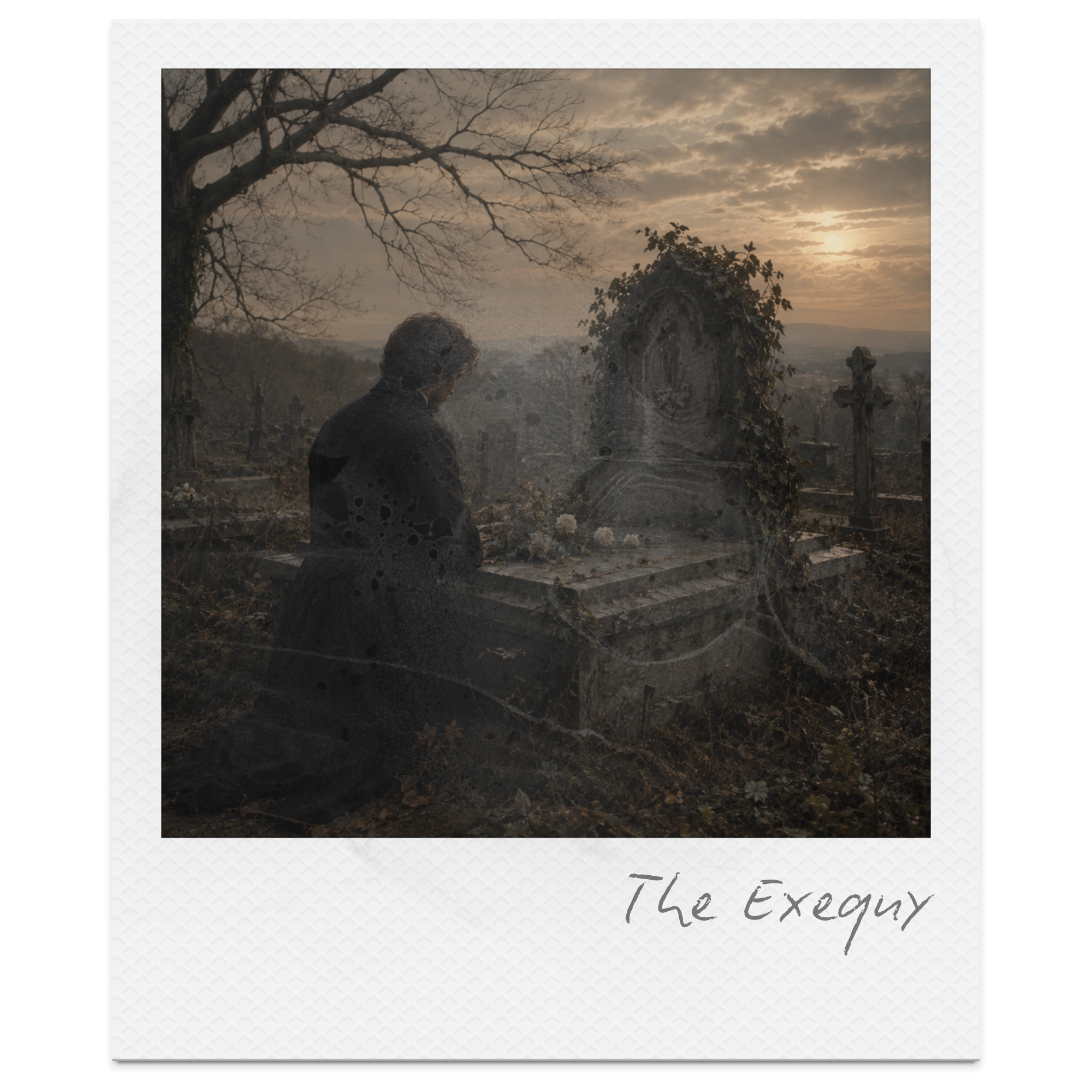
Context and Literary Background of The Exequy
Henry King (1592–1669) was a seventeenth-century English poet, churchman, and later Bishop of Chichester. The Exequy was written following the death of his wife, Anne Berkeley, and is widely regarded as one of the most personal and emotionally powerful elegies of the period. Unlike many formal elegies that focus on public mourning or conventional praise of the dead, King's poem combines intense private grief with sincere expressions of love, creating a voice that feels both deeply personal and universally recognisable.
The poem was written during a period when Christian beliefs about death, resurrection, and eternal life shaped many attitudes towards loss and mourning. Rather than viewing death as a final ending, many seventeenth-century writers understood it as a temporary separation before eventual reunion in the afterlife. This belief becomes central to King's poem, allowing moments of profound despair to coexist alongside hope, consolation, and spiritual certainty.
The title itself comes from the Latin word exequiae, meaning funeral rites or burial ceremonies. However, the poem quickly moves beyond the conventions of a funeral tribute. King transforms mourning into a meditation on love, mortality, faith, memory, and the relationship between body and soul. Throughout the poem, images of stars, eclipses, sleep, journeys, accounting, and resurrection help the speaker make sense of a loss that initially appears unbearable.
The poem also reflects features of the Metaphysical poetry tradition associated with writers such as John Donne and George Herbert. Like many Metaphysical poets, King employs elaborate conceits, intellectual imagery, religious reflection, and surprising comparisons to explore complex emotional experiences. Yet despite its intellectual sophistication, the poem remains grounded in genuine emotional pain, creating a powerful balance between personal feeling and philosophical reflection.
Understanding this context helps explain why The Exequy is both a poem of mourning and a poem of hope. While the speaker never minimises the reality of grief, he ultimately presents death not as permanent separation but as a temporary interruption in a love that he believes will endure beyond the grave.
The Exequy: At a Glance
◆ Form: Extended elegy blending personal mourning with religious meditation.
◆ Tone and emotional movement: Moves from intense grief and emotional devastation towards acceptance, consolation, and hope of spiritual reunion.
◆ Central tensions: Earthly separation versus eternal reunion; despair versus faith; mortality versus immortality; bodily death versus spiritual continuity.
◆ Core concerns: Love after death, bereavement, memory, resurrection, faith, mortality, and the endurance of emotional bonds.
◆ Dominant imagery: Stars, eclipses, light and darkness, sleep, journeys, books, tears, tombs, accounting, resurrection, and celestial movement.
◆ Stylistic features: Extended metaphysical conceits, religious symbolism, direct address, rich imagery, emotional shifts, and sustained meditation.
◆ Key themes: Love and loss; grief and mourning; faith and consolation; mortality and resurrection; memory and devotion; separation and reunion.
◆ One-sentence interpretation: Through a combination of personal grief and Christian faith, King presents death as a painful but temporary separation, suggesting that enduring love ultimately transcends mortality itself.
Quick Summary of The Exequy
The Exequy begins as an expression of profound grief following the death of the speaker's wife. Addressing her directly, the speaker describes how mourning has consumed his life, transforming his days into a cycle of tears, remembrance, and meditation. He reflects on the way loss distorts time and compares his wife's death to the setting of a sun, plunging his world into darkness. Through a series of elaborate metaphors, he explores the emotional devastation caused by her absence and the sense that the natural order of his life has been disrupted.
As the poem develops, however, the focus gradually shifts from earthly sorrow towards spiritual consolation. The speaker imagines a future resurrection in which body and soul will be reunited, allowing husband and wife to meet again beyond death. Although he acknowledges the pain of temporary separation, he ultimately finds comfort in Christian faith and the belief that death is not a permanent ending. The poem concludes with acceptance rather than despair, as the speaker views his own life as a gradual journey towards reunion with the woman he continues to love.
Title, Form, Structure and Metre in The Exequy
The formal features of The Exequy play a crucial role in shaping its emotional and philosophical journey. Although the poem is rooted in personal grief, King uses carefully controlled structure, regular rhyme, and extended metaphorical patterns to transform private mourning into a wider meditation on love, mortality, faith, and resurrection. The poem's movement from despair towards spiritual consolation is reflected not only in its ideas but also in its formal organisation.
The Significance of the Title
The title The Exequy derives from the Latin exequiae, meaning funeral rites or burial ceremonies. This immediately places the poem within the tradition of the elegy, preparing readers for a work concerned with death and mourning.
However, the title is slightly misleading because the poem quickly expands beyond the rituals of burial. Rather than focusing on funeral ceremonies themselves, King uses the occasion of bereavement to explore the emotional consequences of loss and the possibility of eternal reunion. The title therefore establishes death as the starting point rather than the ultimate subject of the poem.
Form: An Extended Elegy
The poem takes the form of a lengthy elegy, a poetic form traditionally associated with mourning the dead.
Like many elegies, The Exequy expresses grief, commemorates the deceased, and reflects upon mortality. However, King develops the form in distinctive ways. Instead of remaining solely within lamentation, the poem gradually evolves into a meditation on resurrection, spiritual endurance, and hope.
This progression mirrors the emotional movement of grief itself. The speaker initially focuses on absence and suffering but gradually finds consolation through religious faith. As a result, the elegiac form allows the poem to move from emotional devastation towards spiritual reassurance.
Structure: A Journey Through Grief
Although modern editions often present the poem as a series of stanzas, the version in Songs of Ourselves Volume 2 appears primarily as a continuous poem with indented sections marking shifts in thought and development.
These shifts are important because they chart the speaker's changing emotional state.
The poem broadly progresses through several stages:
◆ Immediate mourning and emotional devastation.
◆ Reflection on the effects of loss and the distortion of time.
◆ Cosmic imagery of eclipse, darkness, and separation.
◆ Hope for future reunion beyond death.
◆ Acceptance of burial and temporary separation.
◆ A final vision of death as a journey towards reunion.
This progression creates a clear emotional arc. Rather than remaining trapped in despair, the speaker repeatedly reinterprets loss through the lens of faith. The structure therefore mirrors a movement from earthly grief towards spiritual hope.
Rhyme Scheme and Formal Control
One of the poem's most striking features is its highly regular rhyme.
The opening stanza follows a pattern of rhyming couplets:
AA BB CC
saint / complaint
hearse / rehearse
see / thee
This pattern continues throughout much of the poem, creating a sense of order and control despite the emotional turmoil being expressed.
The frequent couplets are particularly significant because they reinforce ideas of union and partnership. Given that the poem mourns a beloved wife, the paired rhyme lines subtly echo the relationship that remains central to the speaker's identity.
At the same time, the regularity of the rhyme provides stability. Grief threatens emotional collapse, yet the poem's formal structure imposes order upon suffering, suggesting the speaker's attempt to find meaning within loss.
Metre and Rhythmic Movement
The poem is written primarily in iambic tetrameter, meaning that most lines contain four iambic feet with an unstressed syllable followed by a stressed syllable:
acCEPT | thou SHRINE | of MY | dead SAINT
reCEIVE | these TEARS | thou DOST | reHEARSE
This metre creates a steady, measured rhythm that resembles thoughtful speech rather than spontaneous emotional outburst.
The regular beat contributes to the poem's reflective quality. Although the speaker experiences intense grief, the rhythm suggests careful meditation rather than uncontrolled lamentation. This balance between emotion and restraint is characteristic of much seventeenth-century religious and metaphysical poetry.
King occasionally varies the rhythm through additional syllables, emphatic stresses, and syntactical complexity. These variations often occur at emotionally significant moments, allowing grief and longing to break briefly through the poem's formal control.
Enjambment and Emotional Continuity
King frequently employs enjambment, allowing ideas to flow across line endings without grammatical pauses:
Dear loss! since thy untimely fate
My task hath been to meditate
On thee, on thee...
This technique creates a sense of ongoing thought and emotional persistence. The speaker's grief cannot be neatly contained within individual lines, just as mourning cannot be confined to a single moment.
Enjambment also helps sustain the poem's meditative quality, allowing reflections to unfold gradually rather than appearing as isolated observations.
Caesura and Moments of Reflection
Alongside enjambment, King uses pauses within lines to create moments of emotional reflection:
My little world!
Dear (forgive
The crime) I am content to live
These interruptions slow the pace and draw attention to moments of particular emotional significance.
The parenthetical aside "(forgive / The crime)" is especially revealing because it exposes the speaker's lingering guilt about continuing to live while his wife remains dead. Such moments create intimacy by allowing readers direct access to the speaker's private thoughts.
Structural Movement from Darkness to Light
One of the poem's most important structural patterns is its gradual movement from images of darkness towards images of light.
The middle sections are dominated by eclipses, blackness, graves, dust, and separation. Yet as the poem progresses, attention shifts towards resurrection, heavenly reunion, and a realm "where no night / Can hide us from each other's sight."
This movement reflects the poem's central theological argument. Grief remains real and painful, but it is ultimately framed as temporary. The structure therefore mirrors the speaker's journey from mourning towards hope.
Form as Consolation
Ultimately, the formal features of The Exequy do more than organise the poem. The regular metre, sustained rhyme, careful progression, and recurring imagery all contribute to the speaker's attempt to impose meaning upon loss.
The poem's structure repeatedly resists chaos and fragmentation, suggesting that faith, memory, and love can provide order even in the face of death. In this sense, form itself becomes part of the poem's consolation, embodying the belief that grief can be endured because separation is not eternal.
Voice, Perspective and Emotional Conflict in The Exequy
King's presentation of voice is central to the poem's emotional power. Through direct address, personal reflection, religious meditation, and shifting emotional states, the speaker transforms private bereavement into a profound exploration of love, mortality, faith, and human endurance.
Speaker
The speaker is a grieving husband mourning the death of his wife. Although the poem emerges from Henry King's own bereavement, the speaker functions as both an individual mourner and a representative figure for anyone experiencing profound loss.
His grief dominates every aspect of his existence. He describes his days as consumed by remembrance, tears, and meditation, suggesting that mourning has become his primary occupation. Yet the speaker is not defined solely by sorrow. Throughout the poem, he also appears as a devoted lover, a reflective thinker, and a believer seeking consolation through faith.
First-Person Perspective
The poem is written entirely in the first person, creating an intimate and deeply personal perspective.
Readers experience grief directly through the speaker's consciousness, allowing emotional responses to feel immediate and authentic. The repeated use of first-person pronouns reinforces the personal nature of the elegy while emphasising how profoundly the speaker's identity has been affected by loss.
This perspective also allows readers to follow the speaker's gradual movement from despair towards acceptance, making the emotional journey feel genuine rather than imposed.
Direct Address and Apostrophe
One of the poem's most significant features is its sustained use of apostrophe, with the speaker addressing his dead wife directly throughout.
"Sleep on my love in thy cold bed"
"Stay for me there, I will not fail"
This direct address creates the impression that the relationship continues despite physical death. Rather than speaking about his wife, the speaker speaks to her, refusing to allow death to sever their emotional connection completely.
The technique reinforces one of the poem's central ideas: that love endures beyond physical separation.
Emotional Conflict
The speaker experiences a continual tension between grief and hope.
Emotionally, he feels devastated by the loss of his wife. Images of tears, darkness, eclipses, and loneliness emphasise the depth of his suffering. At times, his grief appears overwhelming, dominating his perception of time and existence.
Yet alongside this despair exists a powerful belief in eventual reunion. The speaker repeatedly imagines a future in which death is overcome and separation ends. The poem therefore presents grief not as a simple emotional state but as a conflict between immediate pain and spiritual hope.
Faith and Consolation
Religious faith plays a crucial role in shaping the speaker's voice.
While the speaker never minimises his suffering, he repeatedly interprets loss through a Christian understanding of resurrection and eternal life. This belief allows him to reframe death as a temporary separation rather than a permanent ending.
As the poem progresses, faith increasingly provides structure and meaning to his grief, helping transform mourning into expectation and hope.
Shifts in Tone
The tone develops significantly across the poem.
The opening sections are dominated by sorrow, longing, and emotional devastation. The speaker focuses on absence, memory, and the painful disruption caused by death.
As the poem progresses, however, the tone becomes increasingly reflective and contemplative. Religious imagery and visions of reunion introduce hope, while the final sections achieve a degree of acceptance and spiritual reassurance.
This tonal progression mirrors the speaker's emotional journey from mourning towards consolation.
A Voice Between Earth and Eternity
Perhaps the most distinctive feature of the speaker's voice is its position between two worlds.
The speaker remains rooted in earthly grief and human loss, yet continually directs his attention towards eternity, resurrection, and spiritual reunion. As a result, the poem exists in a space between despair and hope, mortality and immortality, absence and presence.
This tension gives The Exequy much of its emotional richness, allowing King to present grief as both deeply painful and ultimately transcendent.
Close Analysis of The Exequy
Although The Exequy appears as a continuous elegy, it develops through a series of distinct emotional and philosophical movements. As the speaker attempts to come to terms with the death of his wife, the poem shifts between intense personal grief, religious reflection, metaphysical meditation, and expressions of hope. Close analysis of these sections reveals how King gradually transforms mourning into a vision of spiritual reunion, using imagery, symbolism, extended conceits, and tonal development to explore the relationship between love, mortality, faith, and eternity.
Section 1: Mourning as Devotion and Ritual
The opening lines immediately establish the poem as both an elegy and an act of devotion. Rather than presenting a conventional funeral tribute, the speaker offers the poem itself as a substitute ritual of mourning. From the outset, grief is transformed into a form of worship, suggesting that the beloved continues to occupy a sacred place within the speaker's emotional and spiritual life.
The poem begins with the striking address "Accept, thou shrine of my dead saint". The religious imagery immediately elevates the deceased wife beyond ordinary human status. By describing her as a "saint", the speaker presents her as morally pure, spiritually significant, and worthy of reverence. At the same time, the metaphor of the "shrine" suggests a sacred site devoted to remembrance, implying that the beloved's memory has become an object of devotion. This language establishes one of the poem's central ideas: that love survives physical death.
King also draws upon the conventions of funeral ceremonies only to replace them with expressions of personal grief. The speaker offers his "complaint" instead of traditional "dirges", and his tears instead of ceremonial flowers. This substitution is significant because it privileges genuine emotion over formal ritual. The poem itself becomes a living memorial, suggesting that sincere mourning possesses greater value than external displays of grief.
The image of "sweet flow'rs to crown thy hearse" evokes traditional funeral practices while also introducing a contrast between beauty and death. Flowers are often associated with life, growth, and affection, yet they are placed upon a hearse, a vehicle carrying the dead. This juxtaposition reflects the poem's broader tension between love and mortality, a tension that will continue throughout the elegy.
The speaker's tears become a recurring symbol of grief. In asking the beloved to "Receive these tears", he presents mourning as an offering. The tears function almost like a religious sacrifice, replacing physical funeral tributes with emotional devotion. This image reinforces the intensity of the speaker's sorrow while also demonstrating his continuing connection to the deceased.
The closing lines deepen this emotional intensity through the image that the speaker is "Quite melted into tears for thee." The metaphor suggests that grief has consumed his identity so completely that he has become indistinguishable from his own mourning. The language exaggerates the effects of sorrow, yet the hyperbole effectively communicates the overwhelming nature of bereavement. Rather than merely shedding tears, the speaker imagines himself transformed into them.
As an opening section, these lines establish the poem's distinctive blend of personal grief and religious imagery. The beloved is simultaneously wife, saint, and sacred memory, while mourning itself becomes an act of devotion. Through this fusion of elegy and spiritual reverence, King creates a powerful foundation for the poem's later exploration of faith, resurrection, and enduring love.
Section 2: The Ritual of Grief and the Distortion of Time
Having established mourning as a form of devotion, the speaker now explores the all-consuming nature of his grief. This section presents bereavement not as a temporary emotional response but as a condition that reshapes perception, identity, and the experience of time itself. Through images of reading, blindness, tears, and endless meditation, King reveals how completely loss has come to dominate the speaker's existence.
The section opens with the emotional exclamation "Dear loss!", immediately personifying bereavement as a constant companion. The oxymoronic combination of affection and suffering captures the complexity of the speaker's feelings. His grief is painful, yet it remains inseparable from his love for the deceased. The phrase suggests that mourning itself has become one of the few remaining ways through which he can maintain a connection with her.
King emphasises the persistence of this devotion through repetition. The speaker explains that since her "untimely fate", his task has been to meditate "On thee, on thee". The repeated phrase mirrors the obsessive nature of grief, suggesting a mind unable to move beyond loss. The simplicity of the repetition conveys emotional sincerity while also demonstrating how completely the beloved occupies his thoughts.
One of the most striking metaphors appears when the speaker declares that "thou art the book, / The library whereon I look". Books and libraries traditionally symbolise knowledge, learning, and intellectual exploration. Here, however, the beloved becomes the sole text worthy of study. The metaphor suggests that every thought, memory, and reflection ultimately returns to her. At the same time, the image elevates her importance, implying that she contains a lifetime's worth of meaning and understanding.
This metaphor becomes even more poignant when combined with the admission that the speaker looks upon this library "Though almost blind." The image operates on several levels. Literally, his eyes are weakened by constant tears. Symbolically, grief has limited his ability to engage with the wider world. The beloved remains the focus of his attention, yet the pain of loss prevents him from seeing clearly. The paradox reflects the way mourning simultaneously preserves and obscures memory.
The speaker's description of himself as "lov'd clay" introduces important religious imagery. Clay frequently symbolises the mortal human body in Christian tradition, emphasising humanity's physical fragility and eventual return to dust. By using this image, King reminds readers that the speaker remains trapped within earthly suffering while his thoughts continually reach towards spiritual questions.
The section repeatedly emphasises inactivity and emotional paralysis. The speaker claims that he "languish[es] out, not live[s], the day", suggesting that existence has become passive endurance rather than meaningful living. The contrast between "languish" and "live" highlights the extent to which grief has diminished his engagement with life. Death has not only removed the beloved but has also partially extinguished the vitality of the survivor.
Images of vision and tears continue throughout the passage. The speaker's only "exercise" is what he practises "with mine eyes", transforming weeping into a daily occupation. This language creates a striking irony. Exercise is normally associated with activity and improvement, yet the speaker's version consists entirely of mourning. The word choice demonstrates how grief has reorganised every aspect of his existence.
King then develops one of the poem's most important ideas: the distortion of time. Through the image of "wet glasses", the speaker explains how he discovers "How lazily time creeps about / To one that mourns." The personification of time as something that slowly creeps reinforces the psychological reality of bereavement. Time no longer progresses naturally but drags painfully forward, making every moment feel prolonged and burdensome.
The closing lines continue this emphasis on temporal suffering. The speaker describes how he must "compute the weary hours / With sighs dissolved into showers." The language of calculation suggests an attempt to measure and endure time rather than enjoy it. Meanwhile, the transformation of sighs into showers extends the poem's recurring tear imagery, implying that sorrow has become so overwhelming that even breath itself turns into mourning.
As a whole, this section presents grief as an all-encompassing force that reshapes perception, memory, and daily life. Through extended metaphors of reading, blindness, tears, and time, King demonstrates how loss can consume the mourner's world, reducing existence to remembrance while simultaneously revealing the depth and endurance of love.
Section 3: The Eclipse of the Speaker's World
In this section, King expands his grief from the personal to the cosmic. The loss of his wife is no longer presented simply as an individual tragedy but as an event that has altered the entire structure of his world. Through an extended network of celestial imagery, light symbolism, and astronomical metaphors, the speaker presents bereavement as a form of darkness that disrupts both emotional and spiritual order.
The opening lines continue the poem's exploration of distorted time. The speaker explains that his life now moves "Backward and most preposterous", suggesting that grief has disrupted the natural progression of existence. The adjective "preposterous" originally carried the sense of something occurring in the wrong order, making it particularly appropriate here. Mourning has overturned what should be natural and rational, leaving the speaker trapped in a state where emotional experience no longer follows ordinary patterns.
King quickly develops this idea through the striking declaration "Thou hast benighted me." The verb "benighted" means both to plunge into darkness and to leave someone in a state of confusion or ignorance. The beloved's death has therefore produced both emotional and intellectual darkness. Without her presence, the speaker struggles to orient himself within the world.
This darkness is developed through an extended metaphor in which the wife becomes the speaker's sun. Her death is described as "thy set", referring to the setting of the sun at evening. The metaphor transforms a personal loss into a cosmic event, suggesting that her death has extinguished the source of warmth, light, and direction in his life.
The image becomes even more tragic when the speaker observes that she was "my day" despite being "overcast / Before thou hadst thy noon-tide past." The metaphor implies that her life ended prematurely. Noon traditionally represents the midpoint and fullest strength of the day, making the suggestion that she died before reaching this stage particularly poignant. The image reinforces one of the poem's recurring concerns: the injustice of untimely death.
King intensifies this sense of lost potential when he laments that "Thou scarce hadst seen so many years / As day tells hours." The comparison is deliberately shocking. A day contains only twenty-four hours, yet the speaker suggests that his wife lived fewer years than this small number. The hyperbolic comparison emphasises both the brevity of her life and the speaker's inability to accept its premature ending.
The celestial imagery continues as the speaker reflects that "By thy clear sun / My love and fortune first did run." The beloved becomes not merely a source of affection but the force that gave direction and meaning to his life. The imagery suggests that his happiness, identity, and purpose all revolved around her presence.
The emotional impact of her absence is reinforced through the declaration that she will never again appear "Folded within my hemisphere." The astronomical language expands the scale of the poem, presenting the speaker's emotional world as an entire cosmos. Her removal from this hemisphere symbolises the permanent alteration of the speaker's existence.
King then shifts from solar imagery to the image of a fallen star. The beloved's "light and motion" are compared to "a fled star" that has "fall'n and gone." Stars traditionally symbolise permanence, guidance, and beauty. Their disappearance therefore represents both loss and disorientation. The image also recalls contemporary beliefs about celestial order, suggesting that something fundamental has been removed from the universe itself.
The section culminates in one of the poem's most powerful metaphysical conceits. The speaker explains that " 'twixt me and my soul's dear wish / An earth now interposed is." On a literal level, the earth refers to the grave that physically separates husband and wife. Symbolically, it represents mortality itself—the barrier that prevents reunion and fulfilment.
This image develops into the final metaphor of "a strange eclipse." An eclipse occurs when one celestial body obscures another, temporarily blocking light from view. The metaphor perfectly captures the speaker's situation. His beloved has not ceased to exist entirely, at least within the Christian framework of the poem, but she has become hidden from him by the barrier of death.
The description of an eclipse "As ne'er was read in almanake" further emphasises the uniqueness of his suffering. Almanacs traditionally recorded predictable astronomical events, yet the speaker's loss exceeds anything that can be anticipated or explained through ordinary knowledge. His grief appears unprecedented because it has transformed the entire cosmos of his emotional world.
As a whole, this section elevates personal bereavement into a vast metaphysical drama. Through imagery of darkness, stars, eclipses, and celestial movement, King presents grief as a force capable of reshaping the universe itself. The beloved becomes both sun and star, while death emerges as a cosmic interruption that separates the speaker from the light that once gave meaning to his existence
Section 4: Bargaining Against Separation
After presenting death as a cosmic eclipse, the speaker briefly imagines a different possibility. This section introduces a form of emotional bargaining in which he considers whether grief might be bearable if separation were only temporary. Although he knows that his wife's death is permanent in earthly terms, he momentarily entertains the comforting fantasy of her eventual return. The passage therefore captures the tension between hope and reality that characterises much of the poem's emotional journey.
The section begins with a striking concession: "I could allow thee for a time / To darken me and my sad clime." The verb "allow" creates the impression that the speaker is attempting to negotiate with grief itself. His language suggests a willingness to endure suffering, but only under certain conditions. The continued imagery of darkness recalls the eclipse conceit of the previous section, reinforcing the idea that the beloved's absence has plunged his world into shadow.
King develops this imagined negotiation through increasingly expansive periods of time. The speaker claims that "Were it a month, a year, or ten", he would willingly endure exile if reunion remained possible. The progression from a month to ten years emphasises both the depth of his devotion and his desperation. Even prolonged suffering would seem acceptable if it guaranteed the eventual restoration of what has been lost.
The word "exile" is particularly significant. Exile traditionally implies separation from one's homeland or place of belonging. By describing bereavement in these terms, the speaker suggests that his wife was central to his sense of home, stability, and identity. Her absence has left him emotionally displaced, living in a world that no longer feels entirely his own.
The declaration that he would "all that space my mirth adjourn" further emphasises the extent of his devotion. The verb "adjourn" suggests postponement rather than abandonment. Importantly, the speaker does not imagine happiness permanently destroyed but temporarily suspended. This distinction reveals the underlying logic of the passage: grief would be bearable if it functioned merely as a waiting period before reunion.
The conditional nature of the speaker's hope becomes clear when he imagines the beloved promising "to return." The language deliberately echoes narratives of departure and homecoming, presenting death as though it were a journey rather than a final ending. Yet readers are also aware that such a promise cannot be fulfilled within ordinary human experience. The image therefore captures the wishful thinking that often accompanies profound grief.
King then introduces the image of the "ashy shroud." The shroud symbolises death, burial, and physical decay, while the adjective "ashy" evokes mortality and the biblical reminder that human beings return to dust. At the same time, the image hints at resurrection because the speaker imagines the beloved eventually casting off this garment. The shroud therefore becomes a temporary covering rather than a permanent condition.
This possibility culminates in the image of the beloved dispersing "this sorrow's cloud." Clouds frequently symbolise obscurity, sadness, and separation throughout literature. Here, the metaphor suggests that grief has darkened the speaker's entire world. The imagined return of the beloved would therefore restore clarity, warmth, and light, continuing the celestial imagery that runs throughout the poem.
Significantly, the passage remains entirely hypothetical. The repeated conditional language reveals that the speaker understands the impossibility of what he desires. Yet this temporary act of imaginative bargaining serves an important emotional purpose. It allows him to articulate the depth of his longing while preparing readers for the more explicitly religious consolation that will follow.
As a result, this section occupies a crucial position within the poem's development. The speaker moves beyond pure lamentation but has not yet reached acceptance. Instead, he inhabits a space between despair and hope, imagining a reunion that remains impossible in earthly terms while gradually preparing himself for the spiritual vision that will eventually provide comfort.
Section 5: Resurrection and the Promise of Reunion
This section marks a significant turning point in the poem. Having briefly imagined the possibility of earthly reunion, the speaker now recognises that such hopes are impossible. Yet rather than descending into despair, he redirects his longing towards a Christian vision of resurrection and eternal life. The movement from disappointed hope to spiritual certainty allows King to transform grief into anticipation, presenting death not as a permanent separation but as a temporary condition that will ultimately be overcome.
The section opens with a sudden rejection of the fantasy explored in the previous lines. The exclamation "But woe is me!" signals a return to reality, while the acknowledgement that "the longest date / Too narrow is to calculate / These empty hopes" reveals the speaker's growing acceptance that no amount of earthly time will bring his wife back. The phrase "empty hopes" demonstrates a painful clarity. He recognises that the reunion he longs for cannot occur within ordinary human experience.
The speaker intensifies this recognition when he admits that he will never be "so much blest as to descry / A glimpse of thee" until the end of the world itself. The verb "descry", meaning to catch sight of something from a distance, highlights the modesty of his desire. He is not asking for full restoration but merely the briefest glimpse of the beloved. Even this, however, remains impossible until the final day of judgement.
King then expands the poem's scale dramatically through apocalyptic imagery. The day of reunion is linked to the moment that "shall the earth to cinders doom." The image draws upon Christian beliefs about the Last Judgement and the destruction of the earthly world. Personal grief is therefore placed within a vast cosmic framework, suggesting that the speaker's loss can only be fully resolved through divine intervention.
The metaphor continues as a "fierce fever" is imagined to "calcine / The body of this world like thine." The comparison between the dead wife and the physical world is particularly striking. Just as her body has undergone decay, the world itself must eventually experience destruction. This parallel reinforces one of the poem's key ideas: mortality is universal, affecting individuals and creation alike.
The emotional impact of this image is heightened by the parenthetical cry "(My little world!)." This brief interruption is deeply revealing. While the previous lines focus on the destruction of the entire earth, the speaker suddenly returns to the personal significance of his wife. She was not merely part of his world; she was his world. The phrase captures the intimacy of his grief while reinforcing the extent to which his emotional universe revolved around her presence.
Despite these images of destruction, the poem quickly shifts towards hope. Once the purifying fire has passed, "our bodies shall aspire / To our souls' bliss." The verb "aspire" suggests upward movement, spiritual transcendence, and release from earthly limitations. Death is no longer presented as an ending but as a stage in a larger process leading towards fulfilment.
The promise of resurrection becomes explicit when the speaker declares "then we shall rise." This simple statement lies at the heart of the poem's Christian vision. Throughout the elegy, grief has been driven by separation, but resurrection offers the possibility of reunion. The certainty of the declaration contrasts sharply with the uncertainty that dominates earlier sections, demonstrating how faith provides stability amidst suffering.
King further develops this hope through the image that the reunited lovers will "view ourselves with clearer eyes." On a literal level, this suggests restored sight and understanding. Symbolically, it implies freedom from the limitations of earthly existence. The grief, confusion, and uncertainty that have characterised the speaker's mourning will be replaced by spiritual clarity and perfect knowledge.
The section concludes with one of the poem's most reassuring images. In the heavenly "calm region", "no night / Can hide us from each other's sight." Throughout the poem, darkness has symbolised grief, separation, and loss. Here, King imagines a realm in which such darkness no longer exists. The image directly reverses the eclipse and night imagery of earlier sections, suggesting that the separation caused by death will ultimately be overcome by eternal light.
As a whole, this section represents the poem's most important movement from despair towards consolation. While the speaker acknowledges the impossibility of earthly reunion, he finds hope in a vision of resurrection that transcends mortality itself. Through apocalyptic imagery, religious symbolism, and promises of eternal light, King transforms bereavement into a faith-driven expectation of future reunion.
Section 6: Entrusting the Beloved to the Earth
Having found consolation in the promise of resurrection, the speaker now turns his attention to the beloved's physical body. This section explores the difficult process of surrendering what he loves most to the earth while maintaining faith that the separation is only temporary. Through personification, legal and financial imagery, and religious symbolism, King presents burial not as an act of permanent loss but as a sacred trust that will one day be fulfilled.
The section begins with the direct address "Meantime, thou hast her, earth", immediately personifying the earth as a temporary custodian of the beloved. The opening word "Meantime" is particularly significant because it places burial within the interval between death and resurrection. The speaker does not view the grave as a final destination but as a waiting place before eventual reunion.
The bitter irony of "much good / May my harm do thee" reveals the speaker's continuing pain. The earth benefits by receiving something precious, yet that gain comes at the expense of his own suffering. This contrast highlights the emotional difficulty of relinquishing the person he loves most.
King then frames burial as an act of reluctant surrender. Acknowledging that "With heaven's will I might not call / Her longer mine", the speaker accepts divine authority over human desire. The phrase demonstrates the tension that runs throughout the poem between personal grief and religious submission. Although he wishes to keep her, he recognises that heaven has determined otherwise.
The repeated language of ownership is particularly important. The speaker refers to his "short-liv'd right and interest" in the woman "whom living I lov'd best." The legal terminology transforms marriage and love into a form of temporary stewardship. The relationship was never permanent possession but a gift entrusted to him for a limited time. This perspective allows the speaker to reconcile his grief with his faith.
The paradoxical phrase "a most free and bounteous grief" further develops this idea. Grief is normally associated with deprivation and suffering, yet King describes it as generous. The paradox reflects the speaker's willingness to surrender what he cannot ultimately keep. His grief becomes an act of love rather than resistance.
One of the most striking features of this section is its extended accounting metaphor. The speaker asks the earth to write every "parcel of this rarity" into its "doomsday book." The allusion draws upon both historical record-keeping and the Christian Day of Judgement. By recording every part of the beloved, the earth becomes responsible for preserving her until the final resurrection.
The beloved herself is described as "this rarity", a phrase that emphasises her uniqueness and value. Rather than presenting her merely as a body, the speaker treats her as a precious treasure entrusted to the earth's care. This language reinforces the reverence that has characterised the poem from its opening image of the "dead saint."
King develops the conceit further through imagery of accounting and financial responsibility. The earth must "make thy reck'ning straight" and eventually "yield her back again by weight." The language suggests meticulous record-keeping, as though every part of the beloved has been carefully deposited and must later be returned in full. The image transforms resurrection into a form of divine accounting in which nothing is lost.
The insistence that the earth must account for "Each grain and atom of this dust" reflects Christian beliefs about bodily resurrection. Even the smallest particles remain significant because they belong to someone who will one day be restored. The detailed imagery emphasises both the speaker's devotion and his confidence that divine justice extends to every aspect of creation.
The reminder that the earth must answer "Him that lent, / Not gave thee" the beloved reinforces the idea of stewardship. Ultimately, neither the speaker nor the earth possesses her permanently. She belongs to God, who has merely entrusted her to others for a time. This distinction allows King to present death as temporary custody rather than permanent loss.
The section concludes with the haunting image "So close the ground, and 'bout her shade / Black curtains draw, my bride is laid." The metaphor of "black curtains" evokes both theatrical and funeral imagery. On one level, it suggests the closing of a stage curtain at the end of a performance. On another, it recalls mourning drapery associated with death. Yet curtains can also be opened again, subtly reinforcing the poem's recurring belief that separation is not eternal.
As a whole, this section transforms burial into an act of trust. Through legal, financial, and religious imagery, King presents the earth not as a destroyer but as a temporary guardian. Although the speaker must surrender his beloved to the grave, he does so with the conviction that every grain of dust remains accounted for and will ultimately be restored.
Section 7: Sleep, Waiting, and the Journey Towards Death
In this section, the speaker moves beyond the act of burial and begins to imagine his own eventual death. Rather than presenting death as something terrifying, King increasingly portrays it as a necessary journey towards reunion. Through imagery of sleep, marriage, travel, navigation, and gradual movement, the speaker transforms mortality from a source of fear into a source of hope. Although grief remains present, it is now accompanied by anticipation and acceptance.
The section opens with the tender command "Sleep on my love in thy cold bed". The metaphor of sleep is a traditional Christian image for death, suggesting rest rather than annihilation. By describing the grave as a "bed", King softens the harsh reality of burial and emphasises the temporary nature of separation. The image reinforces the belief that the beloved will eventually awaken through resurrection.
This idea is developed further when the speaker declares "Thou wilt not wake / Till I thy fate shall overtake." Death is presented not as an isolated event but as a shared destination. The certainty of the statement reveals how completely the speaker has accepted the inevitability of mortality. Rather than questioning whether they will meet again, he assumes reunion will occur.
King then introduces one of the poem's most striking metaphors when he imagines that "age, or grief, or sickness must / Marry my body to that dust." The verb "marry" is particularly significant because it transforms death into a form of union rather than separation. Throughout the poem, death has divided husband and wife; here, it becomes the means by which that division will eventually be overcome. The image reflects the speaker's ability to reinterpret mortality through the lens of enduring love.
The phrase "fill the room / My heart keeps empty in thy tomb" develops the idea of absence that has dominated the elegy. The tomb contains an empty space waiting to be occupied by the speaker himself. At the same time, the image suggests an emotional vacancy within the speaker's heart, one created by bereavement and capable of being resolved only through reunion.
The direct address continues as the speaker assures his wife "Stay for me there, I will not fail / To meet thee in that hollow vale." The language resembles a promise between lovers separated by distance rather than death. The certainty of "I will not fail" reveals complete confidence in eventual reunion, demonstrating how faith increasingly shapes the speaker's response to grief.
One of the most important shifts occurs when the speaker acknowledges "I am already on the way." Death is no longer a distant future event but a journey that has already begun. Every living person, the poem suggests, moves steadily towards mortality from the moment life begins. This perspective transforms death from an interruption into part of the natural course of existence.
The speaker develops this idea through a series of images measuring time as movement. He observes that "Each minute is a short degree, / And ev'ry hour a step towards thee." Time no longer appears as an enemy that prolongs suffering. Instead, each passing moment brings him closer to reunion. This reverses the earlier presentation of time as something that "creeps about" during mourning, suggesting a significant shift in perspective.
King extends the journey metaphor through imagery of travel and navigation. When he notes that each morning he rises "nearer my west / Of life", he draws upon the traditional association between sunset and death. Just as the sun moves towards the western horizon at the end of the day, human life progresses towards its conclusion. The metaphor transforms ageing into part of a natural cosmic cycle.
The nautical imagery that follows deepens this sense of movement. The speaker imagines himself advancing "by eight hours' sail", while sleep becomes a "drowsy gale" carrying him onward. These maritime images create a sense of gradual but unstoppable progress. Life becomes a voyage whose destination is reunion with the beloved.
The final lines develop this conceit even further. The speaker explains that "from the sun my bottom steers, / And my day's compass downward bears." Here, "bottom" refers to a ship, while the compass imagery reinforces the idea of purposeful navigation. The journey is neither accidental nor aimless. The speaker moves steadily towards a known destination.
The section concludes with remarkable acceptance. The speaker no longer seeks to "stem the tide" but willingly allows himself to be carried "swiftly" towards his beloved. Earlier sections of the poem focused on resistance, sorrow, and loss; here, King presents death as a current guiding him towards reunion. The image transforms mortality from an object of fear into a force of consolation.
As a whole, this section marks one of the poem's most profound emotional developments. Through images of sleep, marriage, travel, and navigation, King reimagines death not as permanent separation but as a journey towards fulfilment. Grief remains present, but it is increasingly accompanied by patience, hope, and the certainty that every passing moment brings the lovers closer together.
Section 8: Death Reimagined as Victory
In this section, King briefly returns to the pain of separation before once again transforming death into a source of consolation. Drawing upon military imagery, he presents his wife as a victorious figure who has reached their shared destination first. Although the speaker feels sorrow and even a degree of wounded pride at being left behind, the passage ultimately reinforces his conviction that reunion is inevitable.
The section opens with an admission of emotional conflict: "'Tis true, with shame and grief I yield." The pairing of "shame" and "grief" is significant. Grief reflects the speaker's sorrow at his wife's death, while shame suggests a more complex emotional response. The speaker feels unsettled that she has gone before him, particularly because he expected age and natural order to grant him precedence in death.
King develops this idea through an extended military conceit. The beloved is imagined as a soldier who "first took'st the field" and has "gotten hath the victory." The imagery transforms death from a defeat into a triumph. Rather than being conquered by mortality, the wife is presented as courageously venturing into unknown territory and emerging victorious. This interpretation reflects the poem's Christian belief that death ultimately leads to eternal life.
The phrase "adventuring to die" is particularly striking because it reframes death as an act of bravery. The verb "adventuring" suggests exploration, courage, and purposeful action rather than passive suffering. Through this language, King presents mortality as a journey that requires faith and perseverance.
Yet beneath this admiration lies a subtle sense of frustration. The speaker notes that he, with "more years", might have expected "a just precedence in the grave." The language of precedence implies an orderly sequence that death has disrupted. The beloved's early death therefore appears not only tragic but also unnatural, reinforcing the poem's recurring concern with untimely loss.
The emotional tone shifts dramatically with the sudden interjection "But hark!" This exclamation interrupts reflection and redirects attention towards the present moment. Instead of dwelling on the unfairness of death, the speaker begins to focus on his own gradual approach towards reunion.
One of the most memorable images follows when the speaker observes that "my pulse like a soft drum / Beats my approach." The simile transforms the ordinary rhythm of a heartbeat into a military drum announcing arrival. Earlier in the poem, time seemed slow and burdensome; here, the speaker discovers evidence within his own body that he is steadily moving towards his destination.
The drum imagery also creates a powerful contrast with traditional associations of life. A heartbeat normally signifies vitality and continued existence, yet King interprets it as evidence of his gradual progress towards death. This paradox encapsulates one of the poem's central ideas: every moment of life simultaneously brings a person closer to mortality.
The speaker continues the military metaphor when he describes his remaining years as "marches." The image suggests discipline, perseverance, and purposeful movement. Although these marches may be slow, they possess a clear direction. The speaker is no longer wandering through grief but advancing steadily towards reunion.
The section concludes with a statement of calm certainty: "I shall at last sit down by thee." The simplicity of the line contrasts with the elaborate conceits that precede it. After the military imagery of battle, victory, drums, and marches, the final image is one of rest and companionship. The phrase suggests not glory or triumph but peace. Death ultimately becomes a return to the beloved's presence.
As a whole, this section transforms mortality into a military campaign whose outcome is already assured. Through imagery of victory, marching, and approach, King presents death as neither defeat nor annihilation. Although the speaker acknowledges the pain of being left behind, he finds comfort in the knowledge that every heartbeat brings him closer to the reunion he longs for.
Section 9: Acceptance, Hope, and Eternal Union
The final lines bring the poem's emotional journey to a close. After moving through intense grief, despair, reflection, and visions of resurrection, the speaker arrives at a position of acceptance. Importantly, this acceptance does not mean that his sorrow has disappeared. Instead, he has learned to endure separation because he believes it is temporary. The poem therefore concludes by balancing present suffering against the certainty of future reunion.
The opening phrase "The thought of this bids me go on" refers directly to the hope developed in the preceding sections. It is the expectation of reunion that enables the speaker to continue living. The verb "bids" suggests guidance or instruction, implying that faith itself now directs his response to grief. Rather than being paralysed by loss, he finds a reason to persevere.
King reinforces this transformation when he explains that he can "wait my dissolution / With hope and comfort." The word "dissolution" refers to the breaking apart of the physical body after death, yet the speaker no longer views this prospect with fear. Earlier sections emphasised mourning, darkness, and separation; here, death becomes something that can be awaited with patience. The pairing of "hope" and "comfort" highlights the extent to which faith has reshaped his understanding of mortality.
One of the most revealing moments occurs in the parenthetical aside "Dear (forgive / The crime)." The interruption creates an intimate moment of self-awareness. The speaker appears to apologise to his wife for continuing to live while she remains dead. The fact that he describes survival as a "crime" demonstrates the depth of his devotion and the guilt that sometimes accompanies bereavement. Yet the parenthesis also suggests that he recognises the irrational nature of this feeling.
The declaration "I am content to live" marks one of the poem's most significant developments. Earlier sections were dominated by grief so intense that life seemed reduced to tears, remembrance, and suffering. Now, although sorrow remains, the speaker accepts the necessity of continuing to live. This acceptance reflects emotional growth rather than diminished love.
However, King immediately qualifies this contentment through the image of being "Divided, with but half a heart." The metaphor captures the enduring impact of loss. The speaker remains incomplete without his wife, suggesting that death has fractured his emotional world. Yet unlike the eclipse imagery of earlier sections, this division is no longer presented as permanent. It becomes a condition that must simply be endured for a time.
The poem concludes with the reassuring promise that "Till we shall meet and never part." The certainty of "shall" is crucial. Throughout the elegy, the speaker has repeatedly imagined, hoped, and longed for reunion. Here, that hope solidifies into conviction. The final line directly reverses the separation that initiated the poem, replacing loss with permanence and absence with union.
The simplicity of the ending is particularly effective. After the elaborate metaphysical conceits, celestial imagery, legal metaphors, and theological reflections that characterise much of the poem, King concludes with a straightforward affirmation of enduring love. The emotional power lies not in complexity but in certainty.
As a whole, this final section brings together the poem's central concerns with grief, faith, mortality, and devotion. The speaker remains marked by loss, living with only "half a heart," yet he finds comfort in the belief that separation is temporary. The elegy therefore ends not with despair but with hope, presenting love as a force capable of surviving death itself and anticipating a reunion that will never again be interrupted.
Key Quotes and Literary Methods in The Exequy
The most significant quotations in The Exequy reveal King's exploration of love, grief, mortality, faith, resurrection, and eternal reunion. Through religious symbolism, metaphysical conceits, celestial imagery, personification, and extended metaphor, King transforms personal bereavement into a profound meditation on loss and spiritual hope.
"Accept, thou shrine of my dead saint"
◆ Method or literary feature: Religious metaphor; saint imagery; apostrophe.
◆ Interpretation and implied meaning: The speaker elevates his deceased wife to the status of a saint, presenting her as spiritually pure and worthy of reverence.
◆ Why the poet uses it: To establish the beloved as a sacred figure whose memory continues to command devotion.
◆ Emotional/intellectual effect: Creates an atmosphere of reverence while emphasising the depth of the speaker's love.
◆ Broader significance: Introduces the poem's central fusion of romantic love and religious faith.
"Quite melted into tears for thee"
◆ Method or literary feature: Hyperbole; metaphor; emotional imagery.
◆ Interpretation and implied meaning: Grief has consumed the speaker so completely that he imagines himself transformed into tears.
◆ Why the poet uses it: To communicate the overwhelming nature of bereavement.
◆ Emotional/intellectual effect: Highlights the intensity of the speaker's suffering.
◆ Broader significance: Establishes mourning as an all-consuming emotional state.
"Thou art the book, / The library whereon I look"
◆ Method or literary feature: Extended metaphor; intellectual imagery.
◆ Interpretation and implied meaning: The beloved has become the sole focus of the speaker's thoughts and reflections.
◆ Why the poet uses it: To demonstrate how grief narrows the speaker's world.
◆ Emotional/intellectual effect: Emphasises the beloved's central importance to his identity.
◆ Broader significance: Suggests that love becomes a source of meaning, memory, and knowledge.
"How lazily time creeps about / To one that mourns"
◆ Method or literary feature: Personification; temporal imagery.
◆ Interpretation and implied meaning: Grief distorts the speaker's perception of time.
◆ Why the poet uses it: To illustrate the psychological effects of bereavement.
◆ Emotional/intellectual effect: Creates sympathy for the speaker's prolonged suffering.
◆ Broader significance: Shows how mourning reshapes everyday experience.
"Thou hast benighted me"
◆ Method or literary feature: Metaphor; darkness imagery.
◆ Interpretation and implied meaning: The wife's death has plunged the speaker into emotional darkness.
◆ Why the poet uses it: To convey the devastating impact of loss.
◆ Emotional/intellectual effect: Creates a powerful sense of isolation and despair.
◆ Broader significance: Establishes the recurring contrast between darkness and spiritual light.
"'Twixt me and my soul's dear wish / An earth now interposed is"
◆ Method or literary feature: Metaphysical conceit; symbolism.
◆ Interpretation and implied meaning: The grave physically and spiritually separates the speaker from the beloved.
◆ Why the poet uses it: To emphasise the barrier created by death.
◆ Emotional/intellectual effect: Highlights the painful reality of separation.
◆ Broader significance: Presents mortality as the obstacle that faith seeks to overcome.
"Our bodies shall aspire / To our souls' bliss"
◆ Method or literary feature: Religious imagery; resurrection symbolism.
◆ Interpretation and implied meaning: The speaker anticipates bodily resurrection and eternal happiness.
◆ Why the poet uses it: To introduce hope after extended mourning.
◆ Emotional/intellectual effect: Provides reassurance and spiritual consolation.
◆ Broader significance: Reflects Christian beliefs about life after death.
"No night / Can hide us from each other's sight"
◆ Method or literary feature: Symbolism; light and darkness imagery.
◆ Interpretation and implied meaning: Eternal reunion will remove all separation and uncertainty.
◆ Why the poet uses it: To contrast heavenly permanence with earthly loss.
◆ Emotional/intellectual effect: Creates a sense of peace and fulfilment.
◆ Broader significance: Represents the triumph of love and faith over mortality.
"My pulse like a soft drum / Beats my approach"
◆ Method or literary feature: Simile; military imagery.
◆ Interpretation and implied meaning: Every heartbeat brings the speaker closer to death and reunion.
◆ Why the poet uses it: To transform mortality into purposeful progress.
◆ Emotional/intellectual effect: Reframes death as something anticipated rather than feared.
◆ Broader significance: Suggests that life itself is a journey towards eternity.
"Divided, with but half a heart"
◆ Method or literary feature: Metaphor; emotional imagery.
◆ Interpretation and implied meaning: The speaker feels incomplete without his wife.
◆ Why the poet uses it: To capture the enduring impact of bereavement.
◆ Emotional/intellectual effect: Creates a poignant image of emotional loss.
◆ Broader significance: Reinforces the poem's presentation of marriage as a profound spiritual and emotional union.
Key Techniques in The Exequy
King employs a wide range of literary techniques to transform personal bereavement into a profound exploration of love, mortality, faith, resurrection, and eternal reunion. The poem's emotional power comes not only from the sincerity of its grief but also from the sophisticated ways in which imagery, symbolism, metaphor, and structure work together to create meaning.
Apostrophe
The entire poem is built around direct address to the speaker's deceased wife.
From the opening "Accept, thou shrine of my dead saint" to the final promise of reunion, the speaker continually addresses her as though she remains present and capable of listening. This technique blurs the boundary between life and death while reinforcing the poem's central belief that love survives physical separation.
Extended Metaphysical Conceits
One of the defining features of the poem is its use of elaborate Metaphysical conceits.
King develops sustained comparisons between grief and celestial events, burial and financial accounting, death and sleep, life and a sea voyage. These extended metaphors allow abstract emotions and theological ideas to become vivid and tangible.
Particularly important examples include the eclipse conceit, the accounting conceit, and the journey conceit that dominates the later sections of the poem.
Religious Symbolism
Christian imagery and symbolism underpin the entire elegy.
The beloved becomes a "saint", resurrection is repeatedly anticipated, and references to judgement, resurrection, and eternal life shape the poem's movement towards hope. Religious symbolism allows King to frame death as temporary separation rather than permanent loss.
Celestial Imagery
Images of the sun, stars, eclipses, darkness, and light appear throughout the poem.
The wife is repeatedly associated with celestial bodies, becoming the source of illumination, guidance, and meaning within the speaker's life. Her death therefore appears not simply as personal loss but as a cosmic disruption that alters the speaker's entire world.
Light and Darkness Imagery
King repeatedly contrasts light with darkness.
The beloved is associated with sunlight, brightness, and visibility, while grief is linked to eclipse, night, blackness, and obscurity. As the poem progresses, these images evolve from despair towards hope, culminating in the vision of a heavenly realm where "no night" exists.
Personification
Abstract ideas and inanimate forces are frequently given human characteristics.
◆ Time "creeps about" like a living creature.
◆ The earth becomes a temporary guardian entrusted with the beloved's body.
◆ Death behaves like a force capable of separating and reuniting lovers.
◆ The speaker's pulse acts as a drum announcing his approach.
Personification helps transform philosophical concepts into active participants within the poem's emotional drama.
Hyperbole
King frequently uses exaggeration to communicate the intensity of grief.
The speaker imagines himself "Quite melted into tears", while the loss of his wife appears capable of darkening an entire universe. These exaggerations effectively convey emotions that ordinary language struggles to express.
Symbolism
Many of the poem's most important ideas are communicated through symbols.
◆ The sun symbolises life, guidance, love, and emotional fulfilment.
◆ The star symbolises beauty, permanence, and spiritual significance.
◆ The eclipse symbolises separation and the temporary obscuring of joy.
◆ The grave symbolises temporary absence rather than final loss.
◆ The journey symbolises life's movement towards death and reunion.
Through these symbols, King expands personal grief into universal reflection.
Repetition
Repetition reinforces the speaker's emotional fixation upon the beloved.
The repeated focus on "thee", recurring references to reunion, and the continual return to images of separation and longing reflect the obsessive nature of mourning. The technique mirrors the speaker's inability to move beyond loss.
Paradox
The poem frequently presents seemingly contradictory ideas.
◆ Death becomes a form of victory.
◆ Grief becomes an expression of devotion.
◆ Separation ultimately leads towards reunion.
◆ Burial becomes an act of preservation.
These paradoxes reflect the Christian worldview underpinning the poem and encourage readers to look beyond surface appearances.
Juxtaposition
King repeatedly places opposing ideas alongside one another.
Life is contrasted with death, darkness with light, despair with hope, and earthly suffering with heavenly bliss. These juxtapositions highlight the emotional and philosophical tensions at the heart of the elegy.
Imagery of Sleep
Death is repeatedly presented through images of sleep and rest.
The beloved lies in a "cold bed" and remains asleep until resurrection. This imagery softens the finality of death and reinforces the Christian belief that the grave represents a temporary state rather than annihilation.
Journey and Maritime Imagery
The latter sections of the poem are dominated by images of travel, navigation, and movement.
The speaker imagines life as a voyage carrying him steadily towards reunion. References to sailing, tides, compasses, and journeys transform mortality into purposeful progress rather than decline.
Military Imagery
Near the conclusion, King introduces images of battle and victory.
The beloved "first took'st the field" and has "gotten hath the victory." These metaphors reframe death as a courageous achievement rather than a defeat, supporting the poem's increasingly hopeful tone.
Tonal Progression
One of the poem's most important techniques is its gradual shift in tone.
The poem begins with profound grief, sorrow, and emotional devastation. It then moves through reflection, bargaining, and spiritual contemplation before arriving at acceptance and hope. This progression mirrors the speaker's emotional journey and gives the poem its powerful sense of development.
Couplet Rhyme and Formal Control
The poem's frequent use of rhyming couplets creates order and stability despite the emotional turmoil being described.
The regularity of the rhyme scheme mirrors the speaker's attempt to impose meaning upon grief. At the same time, the paired rhymes subtly echo the enduring bond between husband and wife, reinforcing one of the poem's central concerns with love and union.
Why These Techniques Matter
Taken together, these techniques allow King to elevate personal bereavement into a meditation on some of humanity's most enduring concerns: love, mortality, memory, faith, and the possibility of life beyond death. The poem's literary sophistication helps transform private grief into a work that remains emotionally and intellectually powerful centuries after it was written.
Symbolism in The Exequy
Symbolism plays a central role in The Exequy, allowing King to transform personal bereavement into a broader meditation on love, mortality, faith, resurrection, and eternal reunion. Many of the poem's most important symbols operate on both emotional and religious levels, reflecting the speaker's attempt to understand death through the lens of Christian belief.
The Saint
The beloved is introduced as a "dead saint", immediately establishing one of the poem's most important symbols.
The saint symbolises purity, spiritual virtue, and transcendence. By presenting his wife in these terms, the speaker elevates her beyond ordinary mortality and suggests that she now belongs to a higher spiritual realm. The image also reflects the reverence with which he remembers her, transforming personal love into a form of devotion.
The Shrine
The "shrine" symbolises memory and remembrance.
Shrines exist to honour individuals who continue to hold spiritual significance after death. In the poem, the shrine suggests that the beloved's influence remains active despite her physical absence. Her memory becomes a sacred space within the speaker's emotional and spiritual life.
Tears
Tears function as one of the poem's most persistent symbols.
Rather than simply representing sadness, they symbolise devotion, remembrance, and the enduring presence of love. The speaker repeatedly offers tears in place of traditional funeral rituals, suggesting that genuine emotion carries greater value than external ceremonies.
As a result, tears become symbols of continuing connection rather than mere suffering.
The Book and Library
When the speaker describes the beloved as "the book, / The library whereon I look," he transforms books into symbols of memory, meaning, and identity.
The library suggests a lifetime of knowledge and experience. By making the beloved the only text worth reading, King symbolises the extent to which his world has narrowed following her death. She becomes the source through which he interprets existence itself.
Blindness
The speaker's claim that he looks upon this library "Though almost blind" carries symbolic significance.
Blindness represents both grief and limitation. His tears prevent clear sight, but the image also suggests the difficulty of understanding loss fully. The speaker can remember the beloved, yet grief prevents him from seeing beyond his suffering.
Time
Time functions as a powerful symbol throughout the poem.
Rather than representing ordinary chronology, time symbolises endurance, separation, and the burden of mourning. When time "creeps about", it reflects the emotional reality of bereavement, where each moment feels prolonged by sorrow.
Later, however, time becomes a symbol of progress, carrying the speaker gradually towards reunion.
The Sun
The sun is one of the poem's most significant symbols.
The beloved is repeatedly associated with sunlight and illumination. She symbolises joy, guidance, purpose, warmth, and emotional fulfilment. The speaker's world once revolved around her just as planets revolve around the sun.
Her death therefore represents the loss of the central force that gave meaning to his existence.
Darkness and Night
Darkness symbolises grief, separation, and emotional suffering.
Following the beloved's death, the speaker is "benighted," suggesting that mourning has plunged him into a state of darkness. Night becomes a symbol of absence and loss, contrasting sharply with the light associated with the beloved.
This symbolism reaches its resolution in the vision of heaven where "no night" exists.
The Star
The image of the "fled star" symbolises beauty, permanence, and spiritual significance.
Stars traditionally guide travellers and provide orientation. The disappearance of the star therefore symbolises both loss and disorientation. At the same time, stars occupy the heavens, reinforcing the beloved's association with the spiritual realm.
The Eclipse
The eclipse is perhaps the poem's most important symbol of bereavement.
An eclipse does not destroy light but temporarily obscures it. This distinction is crucial because it reflects the speaker's belief that death has hidden the beloved rather than annihilated her.
The eclipse therefore symbolises temporary separation and the interruption of joy rather than permanent loss.
The Earth
The earth symbolises both burial and temporary custody.
At first, the earth appears to be the force separating husband and wife. However, as the poem develops, it becomes a guardian entrusted with preserving the beloved's body until resurrection.
This dual symbolism reflects the tension between grief and faith that runs throughout the elegy.
Dust
Dust symbolises mortality and human fragility.
The speaker repeatedly acknowledges that the body will return to dust, reflecting traditional Christian teachings about death. Yet dust also carries positive associations because every "grain and atom" will ultimately be restored.
As a result, dust symbolises both mortality and resurrection.
The Doomsday Book
The "doomsday book" symbolises divine judgement and perfect remembrance.
Unlike human memory, which fades over time, the heavenly record preserves every detail. The image reassures the speaker that nothing of the beloved will be forgotten or lost.
The symbol therefore reinforces the poem's emphasis on divine care and ultimate restoration.
The Shroud
The "ashy shroud" symbolises death and physical decay.
However, the speaker imagines the beloved eventually removing this garment. The shroud therefore functions as a temporary covering rather than a permanent condition, reflecting Christian beliefs about resurrection and renewed life.
Sleep
Sleep is one of the poem's most comforting symbols.
The grave becomes a "cold bed", and death resembles a state of rest rather than annihilation. Sleep suggests temporary inactivity followed by awakening, making it an ideal symbol for the Christian hope of resurrection.
Marriage
Marriage functions as both a literal and symbolic concept throughout the poem.
The speaker's relationship with his wife symbolises unity, devotion, and spiritual partnership. When he imagines death "marry[ing]" his body to dust, King deliberately transforms an image of mortality into one of union.
This reflects the poem's larger argument that death ultimately becomes the path towards reunion rather than permanent separation.
The Voyage
The extended maritime imagery symbolises the journey of life.
Ships, tides, compasses, and sailing all suggest movement towards a predetermined destination. The speaker increasingly views existence as a voyage carrying him towards reunion with the beloved.
The symbolism transforms death from a feared endpoint into a destination already marked on the horizon.
The Pulse and Drum
The speaker's pulse "like a soft drum" symbolises the steady progression towards mortality.
Each heartbeat reminds him that life is finite, yet it also reassures him that reunion grows closer with every passing moment. The symbol therefore combines awareness of death with hope.
Half a Heart
The final image of living "with but half a heart" symbolises emotional incompleteness.
The speaker remains alive, yet part of his identity appears absent without the beloved. The image captures the enduring effects of bereavement while also implying that wholeness will eventually be restored when they meet again.
How King Creates Meaning and Impact in The Exequy
The Exequy is far more than a poem about bereavement. Through its rich imagery, sustained metaphysical conceits, religious symbolism, and emotional progression, King explores fundamental questions about love, mortality, faith, memory, and the possibility of life beyond death. The poem's enduring impact comes from its ability to acknowledge the devastating reality of grief while simultaneously offering a vision of hope and spiritual consolation.
One of the poem's central meanings is that love survives physical death. Although the speaker is separated from his wife, he refuses to regard their relationship as ended. Throughout the poem, he continues to address her directly, preserving a sense of intimacy that transcends mortality. This sustained dialogue suggests that emotional and spiritual bonds remain intact even when physical presence has been lost.
King also explores the profound psychological effects of grief. The speaker's world becomes dominated by remembrance, tears, and longing. Time appears distorted, ordinary life loses its meaning, and the beloved becomes the centre of all thought and reflection. Through these experiences, the poem captures the way bereavement can reshape a person's identity and perception of reality.
A particularly important aspect of the poem is its exploration of absence and presence. Although the beloved is physically absent, she remains emotionally present throughout the elegy. This paradox creates much of the poem's emotional tension. The speaker feels the pain of separation while simultaneously maintaining an intimate connection with the deceased through memory, devotion, and faith.
The poem also investigates the relationship between earthly love and spiritual belief. Rather than presenting faith as an abstract doctrine, King shows how religious conviction helps the speaker endure personal suffering. The promise of resurrection does not erase grief, but it transforms its meaning. Death becomes a temporary separation rather than a permanent ending.
King reinforces this idea through the poem's recurring movement from darkness to light. Images of eclipse, blackness, graves, and separation gradually give way to visions of resurrection, heavenly reunion, and eternal visibility. This symbolic progression mirrors the speaker's emotional journey, allowing readers to experience the movement from despair towards consolation.
The poem's impact is further strengthened by its use of Metaphysical conceits. Complex images such as the eclipse, the accounting metaphor, and the sea voyage encourage readers to think about grief from multiple perspectives. Rather than simply describing sorrow, King reimagines it through intellectual and symbolic frameworks that deepen its emotional significance.
Another important meaning concerns the idea of stewardship rather than ownership. The speaker repeatedly acknowledges that his wife was never permanently his to possess. She was entrusted to him for a time by God and must eventually be returned. This perspective reflects a Christian understanding of human relationships as gifts rather than possessions, allowing the speaker to reconcile love with loss.
The poem also presents mortality as part of a larger spiritual journey. By the final sections, death is no longer viewed as a terrifying interruption but as a destination towards which all human beings inevitably travel. The speaker's pulse, his passing days, and his advancing years all become reminders that reunion grows closer with every moment.
Importantly, King never dismisses the reality of suffering. The poem remains emotionally powerful because it does not offer simplistic comfort. The speaker continues to experience loneliness, longing, and incompleteness. He lives "with but half a heart," recognising that faith cannot entirely remove the pain of absence. This honesty prevents the poem's optimism from feeling artificial.
Ultimately, The Exequy suggests that grief and hope can coexist. The speaker's sorrow remains genuine and profound, yet it is gradually transformed by a belief that death cannot destroy what truly matters. Through this combination of emotional sincerity and spiritual confidence, King creates a poem that is both deeply personal and universally resonant.
The lasting impact of The Exequy lies in its refusal to choose between mourning and consolation. Instead, King presents them as inseparable aspects of love itself, arguing that the depth of grief reflects the depth of devotion and that enduring love ultimately points beyond death towards reunion.
Compare The Exequy With Other Songs of Ourselves Volume 2 Poems
Although The Exequy is one of the anthology's most explicitly religious poems, it shares important concerns with many other poems in the collection, particularly ideas surrounding love, loss, memory, identity, mortality, separation, and emotional endurance.
◆ Last Sonnet – John Keats
Both poems explore the fear of separation from a loved one and the desire for emotional permanence. However, while Keats focuses on uncertainty and the possibility that love may ultimately fade into "nothingness," King finds reassurance in Christian faith and the certainty of reunion after death.
◆ I Years had been from Home— – Emily Dickinson
Both speakers experience emotional displacement and struggle with separation. Dickinson explores anxiety about returning to a familiar place that may no longer feel like home, while King explores the pain of losing the person who made life feel complete. Both poems are deeply concerned with absence, memory, and emotional uncertainty.
◆ Homecoming – Lenrie Peters
Both poems examine how loss alters a person's relationship with the world around them. Peters focuses on social and cultural change, while King explores personal bereavement. In both poems, the speaker feels separated from something that once provided identity, belonging, and stability.
◆ Amoretti, Sonnet 86 – Edmund Spenser
Both poems present love as enduring and transformative. Spenser celebrates the joy and fulfilment found within a loving relationship, while King reflects upon the pain of losing such a relationship. Together, the poems offer contrasting perspectives on love before and after loss.
◆ The Migrant – A. L. Hendriks
Both speakers experience displacement and longing for what has been left behind. While Hendriks examines migration and cultural identity, King explores emotional exile following bereavement. Both poems reveal how absence can shape identity and perception.
Exam-Ready Insight for The Exequy
The Exequy is often remembered as a poem about grief, but stronger responses recognise that King is not simply mourning a death. He is exploring how love survives bereavement and how Christian faith allows the speaker to reinterpret death as a temporary separation rather than a permanent ending.
What Strong Responses Usually Do
Strong essays typically:
◆ Analyse how King combines personal emotion with religious belief.
◆ Explore the significance of King's extended metaphysical conceits, particularly the imagery of eclipses, journeys, accounting, sleep, and resurrection.
◆ Examine how the speaker's attitude develops from overwhelming grief towards acceptance and hope.
◆ Analyse how imagery of light and darkness reflects the emotional movement of the poem.
◆ Discuss how the poem presents death as both a source of suffering and a pathway to reunion.
◆ Explore the tension between earthly loss and spiritual consolation.
A Strong Thesis
In The Exequy, King transforms personal bereavement into a spiritual journey, using religious symbolism and extended metaphysical conceits to argue that although death causes profound suffering, love ultimately transcends mortality through faith and the promise of resurrection.
Model Analytical Paragraph
King presents grief as both emotionally devastating and spiritually transformative through his use of celestial imagery. After the death of his wife, the speaker declares "Thou hast benighted me", suggesting that her absence has plunged his world into darkness. The metaphor implies that she functioned as a source of light, guidance, and meaning within his life. This idea develops further through the image of "a strange eclipse", where death becomes a temporary obstruction separating the speaker from "my soul's dear wish." Significantly, an eclipse obscures light rather than destroying it, reflecting the speaker's belief that death has hidden his wife from view rather than erased her existence. Through this extended conceit, King transforms personal grief into a broader meditation on mortality and faith, suggesting that separation is painful but ultimately temporary within a Christian understanding of resurrection.
Teaching Ideas
The Exequy works particularly well for advanced literary discussion because it combines intense personal grief with complex religious and philosophical ideas. While the poem appears to be a straightforward elegy, King repeatedly transforms mourning through symbolism, metaphysical conceits, and Christian beliefs about resurrection. This allows students to explore how poetry can present grief as both emotional suffering and spiritual consolation.
1. Exploring Grief, Faith, and Consolation
This activity encourages students to consider whether the poem is primarily a work of mourning or a work of hope. Students should examine how King balances emotional suffering with religious reassurance throughout the poem.
◆ Does the poem ultimately focus more on grief or on reunion?
◆ How does King's Christian faith shape the speaker's response to loss?
◆ At what points does the poem move from despair towards consolation?
2. Close Analysis Workshop: Metaphysical Conceits and Symbolism
Students explore how King uses extended metaphors to deepen the emotional and philosophical significance of bereavement. This activity works particularly well for developing close-reading skills and detailed analysis.
◆ How does the eclipse conceit help readers understand the speaker's grief?
◆ Why does King repeatedly compare the beloved to the sun, stars, and light?
◆ How do the accounting and journey metaphors contribute to the poem's meaning?
3. Comparative Anthology Discussion: Loss, Separation, and Memory
This discussion encourages students to place The Exequy within the wider concerns of Songs of Ourselves Volume 2. Students should compare both themes and methods rather than relying on surface-level similarities.
◆ Compare how King and another poet present separation from a loved person, place, or past.
◆ Which poems in the anthology present loss as permanent, and which suggest the possibility of renewal or reunion?
◆ How do different poets use imagery and symbolism to explore memory and absence?
4. Building Strong Interpretations and Thesis Statements
This activity helps students move beyond feature spotting and towards more developed literary arguments. Students should connect theme, method, and interpretation throughout their responses.
◆ Write a thesis exploring how King presents death as both a source of suffering and a pathway towards reunion.
◆ Develop a thesis focusing on the significance of religious imagery throughout the poem.
◆ Create a comparative thesis linking The Exequy with another poem that explores grief, memory, or emotional separation.
5. Unseen Poetry Connections: Elegy, Mourning, and Spiritual Reflection
This activity prepares students for unseen poetry analysis by encouraging them to identify common features of elegiac and reflective poetry.
◆ How does King combine personal emotion with philosophical reflection?
◆ In what ways does the poem follow and challenge traditional elegy conventions?
◆ How do imagery, symbolism, and structure shape the reader's response to grief and hope?
Creative Writing Extension: Ask students to write a dramatic monologue, letter, or poem addressed to someone they can no longer reach. Encourage them to use symbolism, extended metaphor, and imagery to explore memory, separation, and reunion. For further inspiration, explore the Creative Writing Archive.
Go Deeper into The Exequy
If you found The Exequy interesting, you may also enjoy exploring other poems and texts that examine grief, bereavement, enduring love, mortality, faith, and the hope of reunion beyond death. These works offer different perspectives on loss while sharing many of the emotional and philosophical concerns that shape King's elegy.
◆ In Memoriam A.H.H. – Alfred, Lord Tennyson
One of the most famous elegies in English literature. Tennyson explores grief, doubt, faith, memory, and the struggle to find meaning after the death of a close friend.
◆ Sonnet 43 – Elizabeth Barrett Browning
Although very different in tone, Browning's sonnet explores enduring love that transcends ordinary limits, making it an interesting comparison with King's belief that love survives death itself.
◆ Because I Could Not Stop for Death – Emily Dickinson
Dickinson presents death as a calm, inevitable journey rather than a terrifying ending. Like King, she explores mortality through symbolism and spiritual reflection.
◆ A Valediction: Forbidding Mourning – John Donne
This Metaphysical poem examines separation, love, and spiritual connection. Donne argues that true love can endure physical absence, an idea that strongly parallels King's treatment of bereavement.
◆ Hamlet – William Shakespeare
Shakespeare's tragedy explores grief, mortality, memory, and the question of what lies beyond death. Hamlet's reflections on loss and remembrance provide a fascinating contrast to King's certainty about resurrection and reunion.
Final Thoughts
The Exequy remains one of the most moving elegies in English literature because it combines profound personal grief with an equally powerful sense of hope. Through religious symbolism, metaphysical conceits, and deeply emotional imagery, King explores the devastating reality of loss while insisting that love can survive beyond physical death. The poem acknowledges the pain of separation, the distortion of time, and the loneliness of mourning, yet it ultimately presents faith as a source of comfort and reunion rather than despair.
For students studying Songs of Ourselves Volume 2, the poem offers an excellent example of how poets use symbolism, structure, imagery, and extended metaphor to transform personal experience into a broader reflection on mortality, memory, and human resilience. Its movement from sorrow to consolation helps explain why it continues to resonate with readers centuries after it was written.
For more anthology analysis, explore the Songs of Ourselves Volume 2 Hub. If you are studying other poems from the anthology, you may also find the Literature Library useful for further revision, comparison, and literary analysis.
Choose Your Next Text