My Parents by Stephen Spender: Summary, Themes & Analysis
Stephen Spender’s My Parents explores childhood fear, social division, and bullying through a speaker who is both protected and isolated, caught between parental control and the hostility of other children. Through simile, animalistic imagery, and a reflective narrative voice, the poem reveals how fear and prejudice are shaped and internalised, while also exposing the speaker’s later awareness of guilt and missed empathy. If you are studying or teaching Songs of Ourselves Volume 1 for CIE English World Literature (0408), explore all the poems in depth in our Songs of Ourselves Volume 1 Hub, or a wider range of texts in the Literature Library.
Context of My Parents
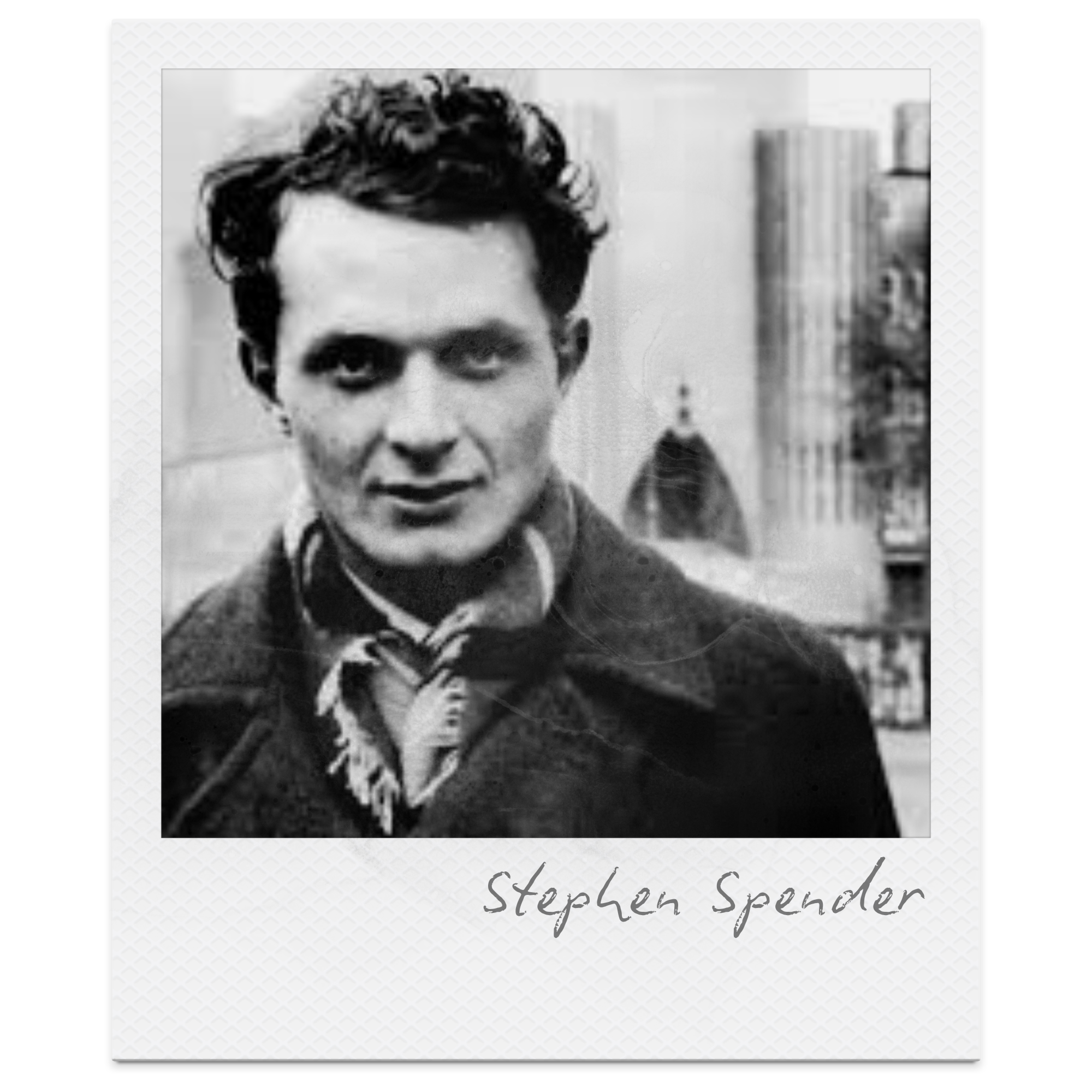
Stephen Spender was a twentieth-century British poet associated with a generation deeply concerned with social inequality, class division, and the ways individuals are shaped by their environment. Writing during the early–mid twentieth century, a period when class boundaries in Britain were highly visible and often rigid, Spender’s work frequently explores how upbringing influences perception, behaviour, and emotional response. His poetry reflects an awareness that identity is not formed in isolation but within systems of social hierarchy and expectation.
In My Parents, this context is directly reflected in the speaker’s separation from the “rough” children, suggesting a middle-class upbringing that emphasises protection, control, and distance from perceived danger. The parents’ actions create a barrier that not only prevents physical interaction but also shapes the speaker’s emotional response, reinforcing fear, othering, and internalised prejudice. The poem ultimately reveals how these divisions are not natural but constructed, highlighting the lasting psychological impact of class-based separation and the difficulty of unlearning it.
My Parents: At a Glance
Form: Lyric poem with a reflective, retrospective voice
Mood: Fearful, tense, later regretful
Central tension: The speaker’s fear of the “rough” children versus his later desire for empathy and understanding
Core themes: childhood fear, class division, bullying, isolation, guilt and regret
One-sentence meaning: A reflective exploration of how fear and social conditioning shape childhood experiences, leading to lasting feelings of distance and remorse over missed compassion
Quick Summary of My Parents
The poem begins with the speaker recalling how his parents deliberately kept him away from “rough” children, who are described through harsh, physical imagery as wild and threatening. He remembers their behaviour as aggressive and unpredictable, comparing their actions to violence and animalistic movement, which intensifies his childhood fear. This fear is not only physical but also social, as he feels exposed and humiliated by their mocking, particularly when they imitate his lisp.
As the poem develops, the speaker reflects on his own response, admitting that he avoided confrontation and pretended to smile while being targeted. The final lines reveal a shift from fear to regret, as he recognises that he “longed to forgive them” but never did, suggesting a later awareness of missed empathy. The poem ends on a note of unresolved tension, highlighting how childhood experience, social division, and internalised prejudice can lead to lasting emotional distance and guilt.
Title, Form, Structure, and Metre of My Parents
The formal choices in My Parents reinforce the speaker’s experience of restriction, fear, and instability, combining controlled structure with uneven rhythmic movement to mirror both parental control and the unpredictable threat of the other children.
Title
The title My Parents immediately frames the poem through the lens of authority and upbringing, directing attention not toward the “rough” children but toward the influence shaping the speaker’s perception. As the poem develops, the title takes on greater significance, suggesting that the central issue is not simply bullying, but how parental protection creates emotional distance and contributes to the speaker’s fear and prejudice. By the end, the title invites a more critical reading, implying that the parents’ actions may have shaped the speaker’s isolation and later regret.
Form and Structure
The poem is organised into three regular quatrains, creating a controlled and contained structure that reflects the speaker’s restricted childhood environment. Each stanza presents a stage in the speaker’s experience: initial description of the “rough” children, the height of fear and intimidation, and finally a reflective shift toward regret and missed empathy. This clear progression mirrors the movement from childhood perception to adult reflection.
Despite this structural order, the poem resists a smooth flow through the use of enjambment and limited punctuation, allowing ideas to spill across lines. This creates a sense of instability and unease, reflecting how the speaker’s fear is ongoing rather than neatly contained. The contrast between the controlled stanza form and the unsettled movement within lines reinforces the tension between protection and exposure.
Rhyme Scheme and Poetic Pattern
The poem does not follow a regular rhyme scheme, which contributes to its unpredictable and uneven tone. The absence of rhyme removes any sense of harmony or closure, reflecting the speaker’s experience of the other children as chaotic and threatening. This lack of pattern mirrors the way the children appear suddenly and aggressively, making the reader, like the speaker, feel off-balance and uncertain.
Metre and Rhythmic Movement
There is no fixed metrical pattern, but many lines fall within a similar length, creating a loose rhythmic consistency that is frequently disrupted. This irregular rhythm reflects the physicality and force of the children described, as well as the speaker’s nervous tension.
For example:
Who THREW WORDS like STONES and WORE TORN CLOTHES
The heavy use of stressed monosyllables creates a harsh, percussive effect, echoing the violence of “threw” and “stones.” The rhythm feels abrupt and forceful rather than smooth, reinforcing the sense of attack and threat. These disruptions in rhythm prevent the poem from becoming controlled or lyrical, instead maintaining a tone of unease that reflects the speaker’s childhood fear.
The Speaker in My Parents
The speaker in My Parents is a retrospective voice reflecting on childhood from an adult perspective, allowing the poem to explore both immediate experience and later self-awareness. Although the poem draws on autobiographical elements, the speaker is best understood as a constructed persona shaped by memory, presenting a child who is fearful, isolated, and influenced by his parents’ attitudes toward the “rough” children.
As a child, the speaker’s perspective is shaped by social conditioning and parental control, leading him to view the other boys as physically threatening and fundamentally different. However, the adult voice introduces a more reflective tone, revealing awareness of his own passivity and emotional distance, particularly in his admission that he “pretended to smile.” The final recognition that he “longed to forgive them” suggests regret and missed empathy, transforming the speaker into a figure who not only recalls fear but also critiques the limitations of his upbringing and earlier perception.
Stanza-by-Stanza Analysis of My Parents
This section offers a close reading of each stanza, tracking how Spender develops fear, social division, and later regret through shifts in imagery, tone, and perspective. Each stanza builds on the last, moving from immediate childhood perception to reflective awareness, showing how meaning is created through method → purpose → impact.
Stanza 1: Constructing Fear Through Social Division
The opening stanza establishes a clear divide between the speaker and the “rough” children, immediately positioning the parents as a controlling force who “kept” him away. This verb suggests restriction and protection, but also implies the beginning of separation and othering, shaping how the speaker perceives those outside his social group. The description of the children is dominated by violent simile, particularly in “threw words like stones,” which transforms language into something physically harmful, reinforcing the speaker’s fear and sense of vulnerability.
Spender intensifies this perception through visual imagery of poverty and physical exposure, such as “torn clothes” and “thighs showed through rags,” which emphasise class difference while also presenting the children as raw and uncontrolled. Their actions—“ran,” “climbed,” and “stripped”—create a sense of freedom and physicality, but from the speaker’s perspective, this becomes threatening rather than liberating. The stanza therefore reveals how parental influence and social conditioning distort the speaker’s view, constructing the other children as dangerous and fundamentally different, and establishing the poem’s central tension between fear and misunderstanding.
Stanza 2: Intensifying Fear Through Physical and Social Threat
In the second stanza, the speaker’s fear becomes more intense and personal, moving from observation to direct emotional response through the repeated phrase “I feared,” which emphasises the depth of his internalised anxiety. The simile “more than tigers” elevates the children into something animalistic and predatory, suggesting that the speaker perceives them as more frightening than natural danger. This is reinforced by “muscles like iron,” where simile presents their bodies as hard, powerful, and potentially violent, heightening the sense of physical threat.
However, Spender shifts from physical intimidation to social humiliation, particularly in “copied my lisp,” which introduces vulnerability beyond bodily harm. The adjective “coarse” and the tactile detail of “salt” suggest something abrasive and uncomfortable, reinforcing the cruelty of their behaviour. The focus on mocking speech highlights the speaker’s isolation and insecurity, showing that the fear he experiences is not only of violence but of exposure and ridicule. This stanza deepens the central tension by revealing how both physical power and social cruelty contribute to the speaker’s sense of being targeted and excluded.
Stanza 3: From Avoidance to Regret and Missed Empathy
In the final stanza, the children are again presented through animalistic imagery, as they “sprang out behind hedges / Like dogs,” reinforcing their unpredictability and the speaker’s continued perception of them as intrusive and threatening. The verb “sprang” suggests sudden movement and ambush, maintaining the sense of instability established earlier, while “bark at my world” implies not only aggression but a clash between two separate social spheres, highlighting the speaker’s ongoing isolation.
However, the focus shifts inward as the speaker reflects on his own response, admitting that he “looked the other way, pretending to smile,” which reveals passivity and emotional avoidance rather than resistance. This marks a turning point from fear to self-awareness, culminating in the final line, where he “longed to forgive them but they never smiled.” The desire to forgive introduces missed empathy, while the repetition of “smiled” underscores a lack of mutual understanding or reconciliation. The stanza ends with unresolved tension, suggesting that both sides remain trapped in miscommunication and social division, leaving the speaker with a lasting sense of regret.
Key Quotes and Methods in My Parents
This section highlights how Spender uses language, imagery, and structure to create meaning, focusing on how key quotations reveal the speaker’s fear, isolation, and later regret through clear method → purpose → impact analysis.
My parents kept me from children who were rough
◆ Technique: Verb choice (“kept”) and contrast
◆ Meaning: The parents actively separate the speaker from others, framing the children as “rough” and undesirable
◆ Purpose: To establish early social division and parental influence over perception
◆ Impact: Positions the reader to question whether this protection creates fear and prejudice rather than safety
Who threw words like stones
◆ Technique: Simile
◆ Meaning: Language is presented as physically violent, turning speech into an act of attack
◆ Purpose: To exaggerate the children’s aggression through the speaker’s fearful perspective
◆ Impact: Reinforces a sense of threat and shows how perception transforms ordinary behaviour into danger
Their muscles like iron
◆ Technique: Simile
◆ Meaning: The children are described as strong, hard, and almost mechanical
◆ Purpose: To emphasise their physical power and the speaker’s sense of vulnerability
◆ Impact: Creates an intimidating image that heightens the speaker’s fear of harm
Who copied my lisp behind me on the road
◆ Technique: Detail and tone
◆ Meaning: The children mock the speaker’s speech, exposing a personal insecurity
◆ Purpose: To shift from physical threat to social humiliation
◆ Impact: Highlights the speaker’s isolation and deepens the emotional impact of the bullying
Like dogs to bark at my world
◆ Technique: Simile and metaphor
◆ Meaning: The children are compared to animals intruding into the speaker’s space
◆ Purpose: To reinforce their perceived wildness and the division between “their world” and “my world”
◆ Impact: Emphasises othering and the speaker’s belief in separate social spheres
While I looked the other way, pretending to smile
◆ Technique: Contrast and verb choice
◆ Meaning: The speaker avoids confrontation and hides his true feelings
◆ Purpose: To reveal passivity and emotional suppression
◆ Impact: Creates a sense of self-awareness and foreshadows later regret
I longed to forgive them but they never smiled
◆ Technique: Contrast and repetition
◆ Meaning: The speaker expresses a desire for empathy that is never reciprocated
◆ Purpose: To introduce regret and highlight missed connection
◆ Impact: Leaves the poem unresolved, reinforcing themes of emotional distance and misunderstanding
Key Techniques in My Parents
Spender uses a range of structural, linguistic, and figurative techniques to present the speaker’s fear, social conditioning, and later regret, with each method contributing to how the reader experiences tension, division, and emotional distance.
◆ Simile – Comparisons such as “like stones,” “like iron,” and “like dogs” present the children as violent, mechanical, and animalistic, shaping the speaker’s perception of them as threatening and reinforcing othering. This exaggeration reveals more about the speaker’s fearful mindset than the children themselves.
◆ Animalistic imagery – Descriptions of the children as “dogs” who “bark” and “sprang” suggest instinctive, uncontrolled behaviour, positioning them as outside the speaker’s social world. This intensifies the sense of division and highlights how class difference is perceived as something almost primitive.
◆ Violent imagery – Phrases like “threw words like stones” transform language into physical attack, emphasising the speaker’s sense of being targeted and under threat. This blurs the line between emotional and physical harm, deepening the impact of the bullying.
◆ Asyndeton – The omission of conjunctions in phrases such as “who were rough / Who threw words like stones” and “their muscles like iron / Their jerking hands” creates an abrupt, compressed rhythm. This reflects the suddenness and force of the children’s actions, mirroring the speaker’s experience of unpredictability and tension.
◆ Enjambment – Lines frequently run on without punctuation, allowing descriptions to spill forward. This creates a sense of momentum and instability, reflecting how the speaker’s fear is continuous and unresolved rather than contained.
◆ Repetition – The repeated phrase “I feared” emphasises the depth of the speaker’s internalised fear, while the recurrence of “smiled” in the final stanza highlights emotional disconnection and the lack of mutual understanding, reinforcing the poem’s unresolved ending.
◆ Contrast – The poem contrasts the speaker’s controlled upbringing with the children’s physical freedom, as well as fear with later regret. This structural and thematic contrast reveals the gap between childhood perception and adult reflection.
◆ First-person retrospective voice – The use of first person combined with past tense creates a reflective tone, allowing the speaker to present both his childhood experience and his later self-awareness. This dual perspective adds depth, showing how meaning evolves over time.
◆ Lexical field of physicality – Words linked to the body and movement (“muscles,” “hands,” “knees,” “ran,” “climbed”) emphasise the children’s physical presence and power, reinforcing the speaker’s sense of vulnerability and difference.
◆ Juxtaposition – The poem places violence and vulnerability side by side, particularly in the shift from physical threat to the mocking of the speaker’s “lisp.” This highlights that the speaker’s fear is both external and psychological, intensifying the emotional impact.
How the Writer Creates Meaning and Impact in My Parents
Spender creates meaning through the interaction of language, structure, and voice, shaping the reader’s understanding of fear, class division, and later regret by revealing how perception is constructed rather than objective.
◆ Language (imagery and diction) – The use of violent and animalistic imagery (“threw words like stones,” “like dogs”) presents the children as threatening, but this exaggeration reflects the speaker’s fearful perspective rather than reality. This shapes the reader’s response, encouraging us to question how far the danger is real and how far it is constructed through social conditioning.
◆ Structure (progression and shift) – The poem moves from external description to internal reflection, creating a clear shift from childhood fear to adult self-awareness. The final line introduces regret, reframing earlier events and revealing that the speaker now recognises the limitations of his response. This progression allows meaning to develop over time rather than remaining fixed.
◆ Voice and perspective – The retrospective first-person voice allows the poem to operate on two levels: immediate experience and later reflection. This dual perspective creates complexity, as the reader can see both the intensity of the speaker’s fear and the distance from which it is now being reconsidered.
◆ Sound and rhythm – The poem’s irregular rhythm and use of abrupt phrasing create a sense of tension and unpredictability, mirroring the speaker’s anxiety. Harsh, stressed monosyllables give certain lines a forceful, almost physical impact, reinforcing the sense of attack and discomfort.
◆ Contrast and juxtaposition – Spender contrasts protection and exposure, power and vulnerability, and fear and regret, showing how meaning emerges through these oppositions. The final contrast between the speaker’s desire to forgive and the children’s lack of response highlights the poem’s lasting sense of emotional distance and unresolved tension.
Themes in My Parents
The poem explores how fear, social division, and memory shape experience, revealing that childhood perceptions are often constructed through upbringing and only later understood with greater clarity.
Childhood Fear
At its core, the poem presents an intense experience of childhood fear, where the speaker perceives the other children as physically and socially threatening. This fear is created through violent simile and animalistic imagery, which exaggerate their behaviour and transform ordinary actions into acts of danger. The use of repeated phrases such as “I feared” reinforces how deeply this response is internalised, showing that the speaker’s experience is dominated by anxiety and vulnerability.
Class Division
The poem strongly reflects class division, presenting a clear contrast between the speaker’s protected upbringing and the apparent freedom of the “rough” children. Descriptions of “torn clothes” and physical exposure emphasise poverty and difference, while the parents’ decision to “keep” the speaker away highlights how these divisions are actively maintained. Through this, Spender suggests that social boundaries are not natural but enforced, shaping perception and reinforcing othering.
Bullying and Social Cruelty
Beyond physical threat, the poem explores bullying as a form of social cruelty, particularly through the mocking of the speaker’s “lisp.” This shifts the focus from physical intimidation to emotional harm, showing how language can be used to isolate and humiliate. The combination of physical and verbal aggression reveals how the speaker is targeted both externally and psychologically, deepening his sense of isolation.
Isolation and Othering
The speaker exists in a state of isolation, positioned between his parents and the other children but fully belonging to neither. The repeated emphasis on separation creates a sense of distance, while the contrast between “my world” and the children’s behaviour reinforces the idea of two distinct social spheres. This isolation is not only physical but emotional, as the speaker struggles to connect or respond meaningfully.
Guilt and Regret
In the final stanza, the poem introduces guilt and regret, as the speaker reflects on his own passivity and emotional distance. His admission that he “longed to forgive them” suggests a later awareness that his response was shaped by fear and conditioning, rather than understanding. This theme reframes the entire poem, transforming it from a simple account of bullying into a reflection on missed empathy and the lasting impact of childhood experience.
Alternative Interpretations of My Parents
While the poem presents a clear experience of childhood fear and bullying, it also invites deeper interpretations that explore how meaning is shaped through memory, social context, and self-reflection.
Psychological Interpretation: Fear as Learned Response
From a psychological perspective, the speaker’s fear can be seen as a learned response shaped by parental influence rather than purely instinctive reaction. The parents’ decision to “keep” him away constructs the other children as dangerous before any direct interaction occurs. The exaggerated animalistic and violent imagery therefore reflects the speaker’s internalised anxiety, suggesting that the real source of fear lies in conditioning rather than reality. The later expression of regret indicates a developing awareness that his perception may have been distorted.
Social Interpretation: Class Division and Othering
A social reading positions the poem as a critique of class division, where the speaker represents a protected, middle-class perspective and the “rough” children are defined through markers of poverty and physical exposure. The language used to describe them emphasises difference and reinforces othering, suggesting that social boundaries are actively constructed and maintained. The poem can therefore be read as exposing how class systems create fear, misunderstanding, and mutual hostility, rather than genuine separation.
Philosophical Interpretation: Memory, Guilt, and Moral Awareness
From a philosophical or existential perspective, the poem explores how memory reshapes experience over time, transforming fear into self-reflection and guilt. The adult speaker recognises that he “longed to forgive” but failed to act, raising questions about moral responsibility and the limits of empathy. The unresolved ending suggests that understanding often comes too late, and that individuals must live with the consequences of missed connection and emotional inaction.
Exam-Ready Insight for My Parents
This section shows how to turn your understanding of My Parents into a strong, exam-focused response for IGCSE Literature, with a clear focus on how meaning is created through methods.
What strong responses do
◆ focus closely on the question
◆ analyse methods (language, structure, and voice), not just ideas
◆ explain how effects are created, not just what happens
◆ track shifts from childhood fear to adult reflection
◆ use short, precise quotations to support points
Conceptual argument
A strong thesis for My Parents might be:
Spender presents childhood fear as something shaped by social conditioning, using simile, animalistic imagery, and a reflective narrative voice to show how class division creates misunderstanding, before a final shift reveals regret and missed empathy.
Model analytical paragraph
Spender presents the speaker’s fear through exaggerated imagery to show how perception is shaped by social conditioning. In the simile “threw words like stones,” language is transformed into physical violence, suggesting that the speaker experiences even speech as an attack. This is reinforced by “muscles like iron,” where the children are presented as hard and threatening, emphasising their physical power. However, this imagery reflects the speaker’s fearful perspective rather than objective reality, as it dehumanises the children through comparison to objects and animals. The shift in the final stanza, where the speaker “longed to forgive them,” introduces regret, suggesting a later awareness that his fear was shaped by upbringing rather than understanding. Through these methods, Spender reveals how childhood perception can distort reality and lead to lasting emotional distance.
Teaching Ideas for My Parents
This poem is ideal for exploring how writers use language, structure, and voice to present ideas, while also building collaborative and discussion-based classroom approaches.
1. Collaborative Analytical Paragraph (Paired Writing)
Give students a focused question, for example:
How does Spender present fear in My Parents?
Students work together to produce a single paragraph, combining their ideas and interpretations. They should:
◆ select and embed quotations
◆ identify methods (language, structure, voice)
◆ explain meaning → purpose → impact
Because both students contribute, they can challenge and refine each other’s ideas, leading to a stronger, more developed response. This approach reinforces that analytical writing is built through discussion and refinement, not just individual effort.
2. Structured Group Close Analysis (Role-Based)
Instead of traditional annotation, assign students specific roles in small groups for a stanza-by-stanza reading of the poem:
◆ Structure specialist – tracks shifts and progression
◆ Language analyst – explores imagery and diction
◆ Methods expert – identifies techniques
◆ Tone tracker – comments on emotional changes
Each group analyses a stanza, then feeds back to the class. As responses are shared, build a full analysis together.
This approach makes close reading more active and collaborative, while still developing detailed analytical skills.
3. Silent Debate
Set up a silent debate around the question:
Is the speaker’s fear in My Parents justified or constructed?
Students respond to prompts in writing, building on and challenging each other’s ideas. They should:
◆ use quotations as evidence
◆ respond directly to others’ interpretations
◆ develop and refine arguments over time
This encourages deeper thinking, ensures all students participate, and allows ideas to develop more thoughtfully than in fast-paced discussion. For guidance on structuring this activity, see this post on how to run an effective silent debate in your classroom.
4. Creative Writing: Reframing Perspective
Ask students to write a short piece from the perspective of one of the “rough” children.
Prompt:
Write a narrative or monologue that shows the same events from the perspective of someone the speaker fears.
Students should aim to:
◆ challenge the original perspective
◆ use imagery and voice to shape meaning
◆ explore how misunderstanding develops
◆ create contrast between viewpoints
This helps students understand how perspective shapes meaning, while applying literary techniques in their own writing. Many Literature texts can act as powerful starting points for creative work, giving students regular practice with the skills needed for their Language paper. For more ideas and structured prompts, explore the Creative Writing Archive.
Go Deeper
To develop more comparative insight and reach top-band responses, it is useful to connect My Parents to other texts that explore childhood perspective, social division, and constructed fear.
◆ The Chimney Sweeper by William Blake – Both poems use a child’s voice to expose how society shapes experience, though Blake presents exploitation more directly, while Spender reveals it through reflection and memory.
◆ Half-caste by John Agard – Explores prejudice and othering, challenging assumptions about difference, offering a useful comparison for how language constructs division.
◆ Search for My Tongue by Sujata Bhatt – Examines identity and internal conflict, particularly how external pressures shape self-perception, similar to how the speaker’s fear is influenced by upbringing.
◆ The Class Game by Mary Casey – Directly addresses class division and social hierarchy, providing a more explicit exploration of the themes underlying Spender’s poem.
◆ Where I Come From by Elizabeth Brewster – Reflects on how environment and upbringing shape identity, offering a broader perspective on how personal experience is constructed.
◆ Piano by D. H. Lawrence – Uses memory and reflection to revisit childhood, similar to Spender’s retrospective voice and emotional shift.
Final Thoughts
My Parents is a powerful exploration of how fear is constructed, showing that the speaker’s experience is shaped as much by parental influence and social division as by direct interaction. Through imagery, structure, and a retrospective voice, Spender reveals how childhood perceptions can distort reality, turning difference into threat and reinforcing isolation.
What makes the poem particularly memorable is its shift toward regret, where the speaker recognises his own missed empathy and the limitations of his earlier perspective. This movement from fear to self-awareness transforms the poem into a reflection not only on childhood, but on the lasting impact of memory, upbringing, and unresolved emotional distance.
If you are studying or teaching this poem as part of Songs of Ourselves Volume 1, explore more detailed analyses in the Songs of Ourselves Volume 1 Hub, or broaden your understanding of literature and comparison skills in the Literature Library.
Choose Your Next Text