The End of the Beginning by Ray Bradbury: Summary, Themes, Meaning & Analysis
The End of the Beginning is one of Ray Bradbury's most optimistic science fiction short stories, exploring space exploration, human progress, hope, and the beginning of a new era for civilisation. Rather than focusing on astronauts inside the rocket, Bradbury centres the story on the parents watching from Earth as their son becomes part of humanity's first mission to build a space station. Through this intimate perspective, he examines not only the excitement and fear surrounding scientific discovery but also the emotional cost of witnessing history unfold. The story asks readers to consider what it means to stand on the threshold of the unknown and how curiosity, ambition, and faith in the future have always driven humanity forward.
More than a story about rockets, The End of the Beginning is a meditation on the future of the human race. Bradbury suggests that overcoming Earth's gravity is more than a technological achievement—it marks the symbolic end of one chapter in human history and the beginning of another. Blending moments of quiet domestic realism with profound philosophical reflection, the story explores legacy, family, the sublime, and humanity's search for meaning in an expanding universe. This guide explores Bradbury's use of symbolism, structure, setting, characters, and language, while considering why this hopeful vision of the future continues to resonate. For more Bradbury analyses, visit the Ray Bradbury Hub, or browse the Literature Library to explore more classic science fiction, genres, and modern literature.

Context of The End of the Beginning
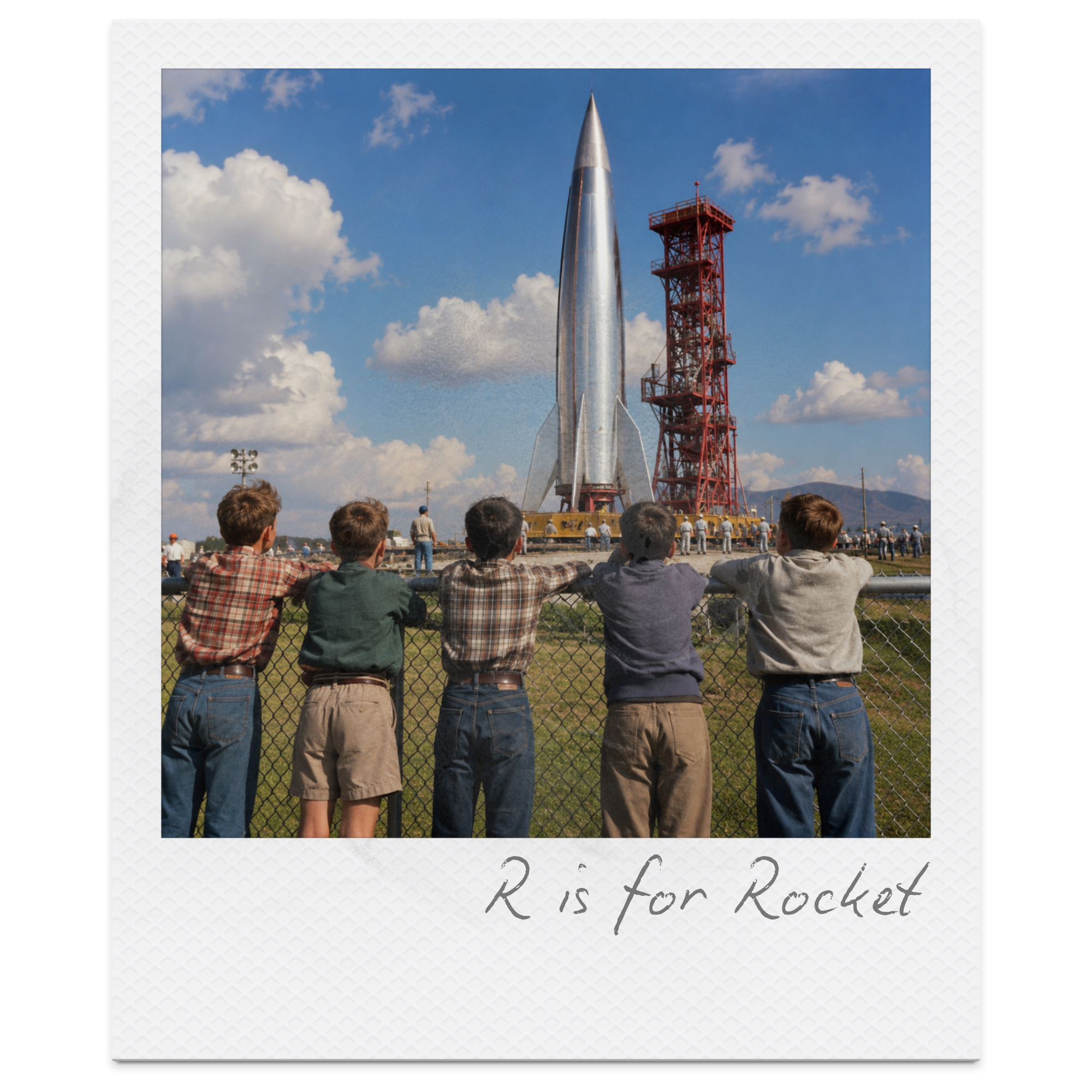
Published in 1956, The End of the Beginning emerged during a period of growing excitement about the possibility of space exploration, just one year before the launch of Sputnik 1 would begin the Space Age. Originally published under the title Next Stop, The Stars, the story was later collected in several of Bradbury's anthologies, including R Is for Rocket and A Medicine for Melancholy. Although Bradbury is often associated with cautionary tales about technology, this story represents one of his most optimistic visions of humanity's future, presenting scientific progress as an opportunity for wonder rather than a source of fear.
Like many of Bradbury's finest stories, The End of the Beginning is less concerned with the mechanics of rockets than with the emotions surrounding them. Instead of following astronauts into space, Bradbury focuses on an ordinary family watching history unfold from their front lawn, reminding readers that every great scientific achievement is also a deeply human experience. His belief that imagination, curiosity, and compassion should guide technological progress runs throughout his work, making this story an excellent example of his broader philosophy. If you'd like to explore the historical influences, recurring themes, and literary ideas that shaped Bradbury's fiction, read the Ray Bradbury Context Guide before continuing with this analysis.
The End of the Beginning: At a Glance
Form: Science fiction short story
Mood: Awe-filled, reflective, hopeful, and emotionally uplifting
Central tension: The uncertainty surrounding humanity's first great step beyond Earth is balanced against the hope that it marks the beginning of a limitless future.
Core themes: Space exploration, human progress, hope, family, legacy, the future of humanity, faith, the conquest of gravity, wonder, and the search for meaning.
One-sentence meaning: Bradbury suggests that humanity's greatest achievements begin when people dare to move beyond familiar boundaries, transforming the first journey into space into a symbol of hope, renewal, and an endless future for civilisation.
Quick Summary of The End of the Beginning
As darkness falls over a quiet suburban neighbourhood, a husband finishes mowing the lawn while he and his wife wait anxiously for the launch of humanity's first manned rocket to build a space station. Their son, Robert, is one of the astronauts aboard the mission, and although they try to remain calm, both struggle with excitement, pride, and fear as the countdown approaches.
While they sit together beneath the stars, the couple reflect on the significance of the mission. The husband shares his belief that humanity is reaching "the end of the beginning," arguing that escaping Earth's gravity marks the end of one great chapter in history and the start of another. As the countdown continues, the conversation turns from personal concern for their son to the future of the entire human race and the possibilities that space exploration could unlock.
When the rocket finally launches, the couple watch in awe as it rises into the night sky, becoming another brilliant point of light among the stars. Relieved that the mission has succeeded, they quietly accept that history has changed forever. Afterwards, the husband returns to finish mowing the lawn, reflecting on humanity's place in the universe as he continues the ordinary task that now feels profoundly connected to the extraordinary future unfolding above him.
Title of The End of the Beginning
Ray Bradbury's titles often carry significance far beyond identifying a story. They establish tone, introduce central ideas, and encourage readers to think about the deeper implications of the narrative before it even begins. In The End of the Beginning, the title immediately presents an apparent contradiction, suggesting that one era is ending precisely because another is about to begin. By the conclusion of the story, readers realise that Bradbury is not referring to the end of humanity itself, but to the close of one stage in civilisation and the opening of an entirely new future.
At first glance, The End of the Beginning appears paradoxical. Readers may expect a story about disaster, conflict, or even the collapse of society because the phrase "the end" often carries associations with death or destruction. However, Bradbury deliberately subverts these expectations. Instead of depicting an ending filled with fear, he presents one filled with hope, wonder, and possibility, suggesting that every significant beginning requires the conclusion of something that came before.
As the story develops, the title becomes a concise summary of the husband's central argument. He explains that humanity has spent billions of years bound by Earth's gravity and that the successful launch of the first manned mission to build a space station marks "the end of old man Gravity and the age we'll remember him by." The title therefore refers to the end of what he calls the "Earth Age" or the "Age of Gravity," signalling that humanity is entering a fundamentally different chapter in its history.
The title also carries powerful symbolic meaning. The "beginning" is not simply the start of space travel but the entire history of civilisation up to this moment. Bradbury suggests that everything humanity has achieved—from learning to walk upright to building rockets—has merely prepared people for the next stage of their evolution. The launch therefore becomes a symbolic threshold between survival and exploration, between remaining confined to one planet and becoming a truly spacefaring civilisation.
There is also an important element of irony. Readers might expect the dramatic climax to be the rocket launch itself, yet Bradbury presents it as only the first step in a much greater journey. The launch is simultaneously an ending and a beginning: the conclusion of humanity's struggle against gravity and the start of an endless future among the stars. This structural irony reinforces the idea that history is constantly renewing itself, with every achievement creating new possibilities rather than final destinations.
Ultimately, The End of the Beginning captures Bradbury's profoundly optimistic view of human progress. The title suggests that history is not moving towards an ending but towards continual expansion. By framing the first successful space mission as the close of humanity's earliest chapter, Bradbury invites readers to imagine a future in which exploration, curiosity, and hope continue long after the story itself has ended.
Structure of The End of the Beginning
Bradbury structures The End of the Beginning as a steadily unfolding moment of anticipation rather than a fast-paced adventure. The entire story takes place over the course of a single evening, allowing the emotional tension to build through waiting, reflection, and the countdown to launch. Instead of creating suspense through physical action, Bradbury uses conversation, philosophical reflection, and carefully controlled pacing to transform an ordinary suburban lawn into the setting for one of humanity's greatest turning points. The structure mirrors the launch itself: beginning quietly, building gradually, reaching an explosive climax, and ending with thoughtful reflection rather than spectacle.
Opening (Exposition)
The story opens in an ordinary domestic setting, with the husband mowing the lawn while the sun sets and the stars begin to appear. Bradbury deliberately grounds the narrative in familiar routines before introducing the extraordinary event taking place beyond the horizon. This contrast immediately establishes one of the story's central ideas: history-changing moments are often experienced by ordinary people living ordinary lives.
The opening also introduces the emotional conflict through the couple's quiet anxiety about their son, Robert. Rather than focusing on the astronauts themselves, Bradbury positions readers alongside the family left behind, encouraging them to experience the launch through anticipation rather than action. This restrained exposition creates emotional investment before the countdown even begins.
Rising Action
The rising action is driven almost entirely by the passing of time. As the countdown progresses from ten minutes to launch, Bradbury steadily increases the tension through shorter intervals, pauses in conversation, and repeated references to the remaining minutes. The approaching launch creates an invisible deadline that shapes every exchange between the husband and wife.
Alongside this external countdown, Bradbury develops the husband's increasingly philosophical reflections about humanity's future. His explanation that this moment represents "the end of old man Gravity" gradually shifts the story from a family's personal experience to a meditation on the future of civilisation itself. The rising action therefore operates on two levels: emotional anticipation for Robert's safety and intellectual excitement about humanity's next great step.
Turning Point / Climax
The climax arrives with the rocket launch itself. Bradbury deliberately delays this moment until the final third of the story, allowing the anticipation to become almost unbearable before releasing it in a burst of light and sound. The countdown accelerates dramatically—"Four, three, two, one"—before the couple witness "the great uprising comet" racing into the sky.
Rather than celebrating the engineering achievement, Bradbury focuses on the parents' emotional response. Their tears, relief, and inability to speak demonstrate that the true climax is not technological but deeply human. The launch symbolises the moment humanity finally escapes the limits that have defined its existence for billions of years, transforming a single rocket into the beginning of a new age.
Falling Action
Following the launch, Bradbury immediately slows the pace. The excitement gives way to quiet reassurance as the couple gradually realise that the rocket has successfully escaped Earth's gravity and that Robert is safe. Their repeated questions—"It's all right, isn't it?" and "It didn't fall back...?"—highlight the emotional release that follows the sustained tension of the countdown.
This quieter section also allows readers to absorb the significance of what has just happened. Instead of rushing towards another dramatic event, Bradbury creates space for reflection, reinforcing that the emotional consequences of the launch are more important than its technical details.
Ending (Resolution)
The story concludes by returning to the ordinary task with which it began: mowing the lawn. This creates a powerful cyclical structure, bringing readers back to the same image but giving it entirely new meaning. The lawn mower's wheels become symbolic echoes of the space station's rotating wheel and of humanity's continuing journey forward, while the husband's reflections connect everyday life with cosmic history.
Rather than ending with the rocket disappearing into space, Bradbury ends with the husband finishing his work, "bathing at last in the fresh waters of the fountain of youth." This quiet conclusion suggests that although history has changed forever, ordinary life continues. The ending therefore balances the immense scale of humanity's achievement with the enduring importance of everyday human experience, reinforcing Bradbury's belief that the future begins not with extraordinary people but with ordinary individuals willing to look up at the stars.
By framing the story within the simple act of mowing the lawn, Bradbury creates a beautifully cyclical structure that reminds readers the greatest revolutions often begin in the most familiar places.
Setting of The End of the Beginning
Bradbury uses the setting of The End of the Beginning to emphasise that history's greatest moments often unfold within the most ordinary surroundings. Rather than placing readers at the launch site or inside the rocket, he confines the story to a quiet suburban lawn beneath the night sky. This deliberate contrast between the ordinary and the extraordinary reinforces the idea that the dawn of the Space Age belongs not only to astronauts and scientists but to humanity as a whole. Throughout the story, each setting becomes symbolic, reflecting the characters' emotional journey as well as Bradbury's belief that hope, progress, and curiosity begin in everyday life.
The Front Lawn
The front lawn is the story's central setting and symbolises the meeting point between ordinary domestic life and extraordinary human achievement. The husband begins by mowing the grass, continuing an everyday routine while waiting for the launch that will change history forever. This juxtaposition suggests that civilisation advances not through abandoning ordinary life but by building upon it.
Bradbury repeatedly returns to the lawn throughout the story. Even after witnessing the rocket rise into space, the husband insists, "There's just a little more to do," before returning to finish cutting the grass. His decision demonstrates that life's ordinary responsibilities continue even after humanity enters a new age. Rather than diminishing the launch, the domestic setting makes it feel even more profound because it connects the vastness of space with the familiar rhythms of family life.
By ending where the story began, Bradbury transforms the lawn into a symbol of continuity. History may have changed forever, but the everyday world remains the foundation from which every great achievement grows.
The Night Sky
The night sky functions as both a physical setting and a powerful symbol of possibility. As the husband pauses, he notices "the stars... brightening in the clear desert sky," immediately directing both his attention and the reader's towards humanity's future rather than the ground beneath his feet.
Throughout the story, the sky represents the unknown. Bradbury fills it with vivid imagery, describing "the stars dissolved out of darkness in pale crushings of rock salt strewn from horizon to horizon." This beautiful visual image transforms the heavens into something both immense and familiar, emphasising the wonder that inspires exploration rather than the fear of the unknown.
When the rocket finally launches, it "put out the stars, and rushed away in fire flight to become another star," symbolically suggesting that humanity has joined the universe it has spent millennia observing. The setting therefore evolves from something distant and unreachable into humanity's new home.
The Desert
Although the launch site itself never appears directly, Bradbury repeatedly refers to the surrounding desert, creating a sense of vast openness. The crimson warning flares "floated shimmering down the wind above the desert," while the clear desert air provides the perfect conditions for watching history unfold.
The desert symbolises emptiness waiting to be transformed. Like space itself, it is an immense landscape that appears hostile yet invites exploration. Bradbury's decision to place the launch beyond the visible horizon also reinforces the idea that the future always lies just beyond what humanity can currently see.
The Rocket
Although technically not a traditional setting, the rocket functions as a moving symbolic space that dominates the story despite remaining physically distant. Readers never enter it, yet every conversation revolves around those inside.
Bradbury describes it as "the great uprising comet" that burns across the sky before becoming "another star in the returning profusion of the Milky Way." Through this celestial imagery, the rocket ceases to be simply a machine and becomes a bridge between Earth and the wider universe. It symbolises the point where humanity leaves one age behind and begins another.
The Porch
The porch represents comfort, security, and the familiar world that Robert must leave behind. The wife repeatedly invites her husband to sit there, saying, "Come sit on the porch," while later he helps her return there after the launch. The porch therefore functions as a quiet refuge from the overwhelming emotions created by the mission.
However, the husband continually leaves the porch to stand on the lawn beneath the stars. This movement symbolises his inability to remain emotionally sheltered while history unfolds. Bradbury contrasts the enclosed domestic space with the openness of the lawn and sky, suggesting that embracing the future requires stepping beyond familiar places.
Across the story, Bradbury transforms ordinary locations into symbols of humanity's greatest ambitions. The front lawn becomes the birthplace of a new era, the night sky represents infinite possibility, the desert suggests unexplored frontiers, the rocket embodies human progress, and the porch reminds readers of the family and security that make exploration worthwhile. Together, these settings reinforce Bradbury's belief that the journey to the stars begins not in distant galaxies, but in the everyday places where people first dare to look up.
Narrative Voice in The End of the Beginning
Bradbury tells The End of the Beginning through a third-person limited narrative, closely following the husband's thoughts, emotions, and reflections throughout the evening. Although the narrator remains outside the characters, readers experience the launch primarily through the husband's perspective, allowing Bradbury to combine intimate emotional insight with broader philosophical ideas about space exploration, human progress, and the future of civilisation. This carefully controlled viewpoint ensures that the story remains deeply personal even while addressing ideas on a universal scale.
Third-Person Limited Perspective
The narrative stays almost entirely focused on the husband, allowing readers to witness history through the eyes of an ordinary man rather than an astronaut or scientist. Bradbury grants direct access to his shifting thoughts and emotions, moving naturally between his immediate surroundings and his imagination.
Early in the story, the narrator explains that "Suddenly he was miles away," before imagining himself preparing for the mission as though he were his own son. This movement between external reality and internal thought demonstrates how completely the husband identifies with Robert's journey. The third-person perspective allows readers to experience this emotional connection while maintaining enough narrative distance to appreciate its wider significance.
A Limited but Intimate Viewpoint
Because the narration is limited to the husband's experience, readers know no more about the rocket than he does. They never see the launch site directly or enter the spacecraft, instead sharing his uncertainty throughout the countdown.
This limitation creates genuine suspense. As the husband silently counts the remaining minutes and imagines "The men snug in the rocket by now," readers must rely on his imagination rather than factual description. Bradbury deliberately withholds technical details so that the emotional experience of waiting becomes more important than the mechanics of the mission itself.
A Reflective and Philosophical Tone
One of the defining features of the narrative voice is its reflective quality. The husband frequently moves from observing his immediate surroundings to contemplating humanity's place in history, allowing Bradbury to explore philosophical questions without interrupting the natural flow of the story.
His declaration that "it's really the end of the beginning" transforms an ordinary conversation into a meditation on civilisation itself. The narrative voice comfortably shifts between domestic realism and profound reflection, suggesting that life's biggest ideas often emerge during its quietest moments. Bradbury's thoughtful tone encourages readers to view the rocket launch as more than a scientific achievement—it becomes a turning point in the human story.
Reader Positioning
By keeping readers beside the husband and wife instead of inside the rocket, Bradbury positions them as witnesses rather than participants. Readers experience the same uncertainty, excitement, and relief as millions of ordinary people watching the launch unfold from Earth.
This perspective also reinforces one of the story's central messages: the Space Age belongs to everyone, not just the astronauts. When the couple watches "the great uprising comet" disappear into the heavens, readers share their awe and emotional release because they have waited alongside them throughout the entire countdown. Bradbury therefore transforms a global event into an intimate family experience while simultaneously reminding readers that humanity enters the future together.
Ultimately, Bradbury's third-person limited narrative allows The End of the Beginning to balance the personal with the universal. By filtering history through the thoughts of one ordinary father, he demonstrates that humanity's greatest achievements are measured not only by technological success but also by the hope, wonder, and emotional connections they inspire.
The Purpose and Impact of The End of the Beginning
In The End of the Beginning, Bradbury's purpose is to celebrate human progress while reminding readers that every great scientific achievement is ultimately a human story. Rather than focusing on engineering or technological innovation, he explores the emotions surrounding humanity's first steps beyond Earth. By telling the story through the eyes of a worried father instead of an astronaut, Bradbury suggests that exploration is not simply about rockets reaching the stars but about ordinary people finding the courage to embrace an uncertain future. The story becomes a celebration of hope, curiosity, and the belief that humanity is capable of continually surpassing its own limitations.
Bradbury also challenges readers to reconsider their place within history. The husband's reflection that humanity is reaching "the end of old man Gravity" transforms a single rocket launch into the symbolic conclusion of billions of years of struggle. Instead of presenting history as a series of isolated events, Bradbury argues that this moment represents the beginning of an entirely new age. Scientific progress is therefore portrayed not as the destination but as the opening chapter of humanity's future among the stars.
At the same time, the story explores the relationship between fear and hope. Throughout the countdown, the husband and wife experience understandable anxiety for Robert's safety, while also recognising the importance of the mission itself. Bradbury deliberately refuses to separate these emotions, suggesting that genuine progress always requires uncertainty and personal sacrifice. The emotional tension reminds readers that history is created by individuals willing to accept risk for the benefit of future generations.
One of Bradbury's most powerful ideas concerns the search for meaning. The husband argues that by spreading humanity across countless worlds, people may finally answer the question that has haunted civilisation since its beginning: "What does it all mean?" His belief that humanity can achieve a form of collective immortality through exploration reflects Bradbury's enduring optimism. Individual lives remain finite, but civilisation itself can continue growing, learning, and surviving indefinitely. Rather than seeking immortality for one person, Bradbury imagines it for the entire human race.
Emotionally, the story leaves readers with a profound sense of wonder. The launch itself occupies only a few moments, yet Bradbury fills it with extraordinary significance through the couple's emotional response. Their tears, relief, and silent amazement emphasise that the greatest moments in history are often accompanied by overwhelming feelings that words cannot fully express. Instead of ending with celebration, Bradbury allows the quiet aftermath to linger, giving readers time to absorb the scale of what has just occurred.
Intellectually, The End of the Beginning invites readers to think about what defines an era of history. The husband suggests that future generations may look back on all previous civilisations as belonging to a single "Earth Age" or "Age of Gravity." This perspective encourages readers to recognise that they may be living through moments whose true significance only becomes clear with time. Bradbury therefore asks readers not only to admire scientific achievement but also to consider how humanity continually redefines itself through exploration and discovery.
Although the story is overwhelmingly optimistic, Bradbury leaves enough ambiguity to avoid presenting the future as guaranteed. The successful launch is only the first step, and the challenges that lie ahead remain unknown. The title itself reminds readers that beginnings are uncertain by nature. By ending with the husband quietly returning to finish mowing the lawn, Bradbury suggests that history's greatest revolutions begin not with dramatic conclusions but with ordinary people continuing to live, work, and hope while looking towards the stars.
Ultimately, The End of the Beginning endures because it presents one of Bradbury's most inspiring visions of humanity. It argues that progress is driven not by machines but by imagination, faith, and the courage to believe that the future can be greater than the past. Long after the rocket disappears into the night sky, readers are left with the uplifting conviction that every extraordinary achievement begins with ordinary people daring to imagine what comes next.
Characters in The End of the Beginning
Bradbury's characters in The End of the Beginning are deliberately few in number, allowing each to represent broader ideas about human progress, hope, and the emotional cost of exploration. Rather than focusing on astronauts or scientists, Bradbury centres the story on the ordinary people left behind, reminding readers that every great historical achievement is experienced not only by those making history but also by the families who watch and wait. Each character therefore embodies a different response to the dawn of the Space Age.
The Husband
The husband is the story's central character and serves as Bradbury's philosophical voice. Although he is simply a father waiting for news of his son, his reflections elevate the story beyond personal anxiety into a meditation on the future of humanity. His emotional journey mirrors civilisation's own transition from uncertainty to hope.
At first, he struggles to comprehend the enormity of what is about to happen, admitting, "The whole thing's too much for me!" His disbelief reveals that humanity is standing on the edge of an achievement that almost exceeds imagination. Bradbury presents him as an ordinary man attempting to understand an extraordinary moment in history.
As the story develops, however, the husband becomes increasingly confident in humanity's future. His declaration that this is "really the end of the beginning" reveals his belief that escaping Earth's gravity represents the conclusion of humanity's earliest chapter. He imagines future generations looking back on all previous civilisation as the "Earth Age", suggesting that exploration fundamentally changes what it means to be human.
The husband also symbolises optimism. Even while fearing for Robert's safety, he refuses to let anxiety overshadow hope. His belief that humanity will continue sending rockets "to all the planets and later, all the stars" demonstrates Bradbury's conviction that progress depends upon people willing to imagine a future beyond present limitations. By the story's conclusion, his return to mowing the lawn reflects his understanding that extraordinary achievements remain rooted in ordinary human lives.
The Wife
The wife provides the story's emotional balance. Where her husband is drawn towards philosophical reflection, she remains focused on the immediate human consequences of the launch. Her questions repeatedly bring the conversation back to the emotional realities of exploration, ensuring the story never loses sight of the individuals affected by history.
Her simple question, "Why the rockets, why tonight? Why all this?" introduces one of the story's central debates. Unlike her husband, she is not immediately convinced that exploration is worthwhile simply because it is possible. Instead, she seeks a deeper purpose, encouraging both the husband and the reader to consider why humanity continues pushing beyond familiar boundaries.
Throughout the countdown, the wife also represents the universal experience of waiting. Her concern for Robert becomes increasingly apparent as the launch approaches, culminating in her desperate hope that "Bob..." will remain safe. Bradbury portrays her fear not as weakness but as evidence of love, reminding readers that every great scientific achievement carries personal consequences for those left behind.
By questioning rather than accepting her husband's ideas, the wife also acts as the reader's representative. She prompts the philosophical discussions that allow Bradbury to explore his vision of humanity's future while ensuring those ideas remain grounded in ordinary human experience.
Robert (Bob)
Although Robert never appears directly, he is the emotional centre of the story. His absence is significant because Bradbury deliberately shifts attention away from the astronaut's experience and towards those watching from Earth.
Robert symbolises the next generation. He belongs to the first group of people willing to leave Earth permanently, making him a bridge between humanity's past and its future. His mission to help build the first space station represents more than personal achievement—it marks the beginning of a civilisation no longer confined to a single planet.
Robert also represents faith in the future. His parents repeatedly express confidence that he will succeed despite the obvious dangers involved. Their willingness to let him go reflects Bradbury's belief that meaningful progress requires each generation to trust those who follow it.
Humanity
Although not a conventional character, humanity itself functions almost as a collective protagonist. The husband repeatedly broadens his reflections from his own family to the entire human race, imagining "a billion people watching the sky right now." In doing so, Bradbury transforms the launch into a shared human experience rather than a national or scientific achievement.
Humanity is presented as curious, resilient, and endlessly determined. The husband traces civilisation's struggle from "amoebas and fish" through the conquest of gravity, suggesting that exploration is part of humanity's natural evolution. Under this interpretation, the rocket launch becomes the latest chapter in a story billions of years in the making.
Through this collective character, Bradbury argues that every individual contributes to humanity's wider journey. While astronauts travel into space, the hopes, fears, and dreams of those watching below become equally important, reinforcing the story's message that the future belongs to everyone.
The Rocket Crew
The astronauts aboard the rocket remain almost entirely unseen, existing mainly through the husband's imagination. Bradbury refers to "The men snug in the rocket by now", allowing readers to picture them preparing for launch without ever shifting the narrative away from the family on the lawn.
Their anonymity is deliberate. Rather than celebrating individual heroism, Bradbury presents the crew as representatives of all explorers throughout history. They symbolise courage, sacrifice, and humanity's willingness to risk the unknown in pursuit of knowledge. Because they remain unnamed and largely unseen, they become universal figures whose achievements belong to the entire human race rather than to themselves alone.
Key Themes in The End of the Beginning
Bradbury uses The End of the Beginning to explore humanity's place in the universe at the precise moment one era gives way to another. While the story centres on the launch of the first manned mission to build a space station, its themes extend far beyond science and technology. Through the husband and wife's conversations, Bradbury examines space exploration, hope, family, and the enduring desire to understand humanity's purpose. Together, these themes create one of Bradbury's most optimistic visions of the future.
Space Exploration
At its heart, the story celebrates space exploration as humanity's next great adventure. Bradbury presents the launch not simply as a scientific achievement but as a defining historical moment that changes the relationship between humanity and the universe.
The husband describes the mission as "really the end of the beginning," suggesting that reaching space marks the conclusion of humanity's earliest chapter rather than the completion of its journey. The rocket therefore becomes a symbol of limitless possibility, representing the first step towards a future extending far beyond Earth.
Rather than focusing on technology, Bradbury emphasises the emotional significance of exploration. The launch inspires awe, hope, and unity, suggesting that humanity explores space not because it is easy but because it reflects the deepest parts of human nature.
Human Progress
Bradbury presents history as a continuous process of growth, with each generation building upon the achievements of those before it. The husband traces humanity's development from "amoebas and fish" struggling against gravity to people capable of constructing space stations, showing that progress is both biological and intellectual.
His belief that future generations may refer to all previous history simply as the "Earth Age" illustrates how revolutionary the launch truly is. Bradbury argues that civilisation should not measure success by individual inventions but by humanity's increasing ability to overcome limitations and expand its horizons.
The story ultimately suggests that progress depends not only on scientific knowledge but also on imagination, perseverance, and the courage to attempt what once seemed impossible.
Hope
Hope shapes every aspect of the narrative. Although the husband and wife naturally fear for Robert's safety, their anxiety never overwhelms their belief in the mission's importance. Instead, Bradbury presents hope as the force that allows humanity to continue exploring despite uncertainty.
The successful launch transforms this hope into reality as the rocket "became another star in the returning profusion of the Milky Way." The imagery suggests that humanity has joined the universe it has admired for countless generations, reinforcing Bradbury's optimistic belief that the future holds greater possibilities than the past.
Rather than portraying hope as naive optimism, Bradbury presents it as the courage to embrace uncertainty while believing that progress remains worthwhile.
Family
Despite its cosmic scale, the story remains deeply rooted in family. Bradbury deliberately tells the story through Robert's parents instead of the astronauts themselves, reminding readers that every great historical achievement affects ordinary people waiting at home.
The wife's concern for her son becomes increasingly apparent as the countdown approaches, while the husband's attempts to remain calm reveal his own emotional vulnerability. Their repeated reassurances that "Bob's all right" after the launch highlight the relief that follows their long period of uncertainty.
By centring the story on a family rather than a space crew, Bradbury demonstrates that humanity's future is built upon love, support, and shared sacrifice as much as scientific achievement.
Legacy
Bradbury explores legacy by encouraging readers to think beyond individual lifetimes. Although Robert's mission is dangerous, his parents understand that his contribution will benefit generations yet to come.
The husband imagines humanity spreading across "ten thousand worlds spinning around ten thousand alien suns," suggesting that true legacy lies not in personal fame but in helping civilisation continue to grow. Individual lives remain temporary, but the achievements they contribute to can endure indefinitely.
Bradbury therefore redefines legacy as participation in humanity's ongoing story rather than personal recognition.
The Future of Humanity
The story presents one of Bradbury's most hopeful visions of the future of humanity. Rather than fearing technological advancement, he imagines it creating greater opportunity, security, and purpose.
The husband argues that settling new worlds will allow humanity to survive indefinitely, claiming that "Man will be endless and infinite, even as space is endless and infinite." Although individuals will continue to die, civilisation itself can continue evolving without limit.
Bradbury therefore presents the future as something humanity actively creates through curiosity, cooperation, and exploration rather than something that simply happens.
Faith
Faith appears throughout the story in both religious and secular forms. The husband repeatedly refers to the spiritual language of the song "A wheel in a wheel", recalling its lines about "faith" and "the grace of God." These references suggest that scientific exploration and spiritual belief need not exist in opposition.
Bradbury also presents faith as trust in humanity itself. The parents choose to believe that Robert's mission matters despite the risks involved, while the husband maintains confidence that even failure will not end humanity's determination to explore.
In this way, faith becomes belief in the future, in human resilience, and in the value of continuing to reach beyond present limitations.
The Conquest of Gravity
One of the story's most distinctive themes is the conquest of gravity. Rather than treating gravity as a scientific force alone, Bradbury personifies it as "old man Gravity," portraying it as humanity's oldest opponent.
The husband explains that every stage of evolution has involved overcoming gravity's restrictions, from fish leaving the sea to humans learning to stand upright. The rocket launch therefore represents the latest victory in a struggle billions of years old.
Gravity becomes a symbol of every limitation humanity has ever faced, making its symbolic defeat an expression of hope rather than merely technological success.
Wonder
Bradbury fills the story with a profound sense of wonder. The launch is described not as an explosion of machinery but as "the great uprising comet" that briefly outshines the stars before becoming one itself.
The husband and wife respond with tears, silence, and amazement, demonstrating that some experiences transcend ordinary language. Bradbury suggests that wonder is not childish but essential, inspiring people to continue asking questions and pursuing discoveries that reshape civilisation.
The story therefore celebrates awe as one of humanity's greatest strengths.
The Search for Meaning
Ultimately, The End of the Beginning explores humanity's enduring search for meaning. The husband reflects that people have always asked, "What does it all mean?", believing that space exploration offers a new answer to that timeless question.
Rather than finding meaning through individual achievement, Bradbury suggests it emerges from humanity's collective journey. By preserving civilisation across countless worlds, people create a future that extends beyond any single lifetime, giving purpose to the sacrifices made in the present.
The story concludes by suggesting that meaning is not discovered at the end of the journey but created through the willingness to continue exploring. For Bradbury, the search itself becomes one of humanity's greatest achievements.
Symbolism in The End of the Beginning
Bradbury fills The End of the Beginning with symbols that elevate a story about a rocket launch into a meditation on human progress, hope, and the future of civilisation. Ordinary objects become deeply significant because they connect everyday life with humanity's greatest ambitions. Through recurring symbols, Bradbury argues that the Space Age is not simply a scientific achievement but a transformation in how humanity understands itself and its place in the universe.
The Rocket
The rocket is the story's central symbol, representing human ambition, progress, and the beginning of a new era. Although it is a technological invention, Bradbury presents it as something far greater than a machine.
When the rocket launches, it becomes "the great uprising comet" before "rush[ing] away in fire flight to become another star." This imagery transforms it into part of the universe itself, symbolising humanity's first successful step beyond the limits of Earth. The rocket therefore represents both physical exploration and the limitless potential of human imagination.
As the story develops, the rocket comes to symbolise civilisation itself moving forwards. It is not simply carrying astronauts into space; it is carrying humanity into its next chapter.
Gravity
Bradbury personifies gravity as "old man Gravity," transforming a scientific force into a symbol of every limitation humanity has ever faced.
The husband explains that living creatures have spent billions of years struggling against gravity, from "amoebas and fish" leaving the sea to humans learning to stand upright. Under this interpretation, gravity represents every obstacle that has restricted human progress throughout history.
Its symbolic defeat during the launch therefore represents far more than escaping Earth's atmosphere. It becomes a victory over fear, limitation, and the boundaries that have confined civilisation since its beginning.
The Night Sky
The night sky symbolises the unknown, infinite possibility, and the future waiting beyond humanity's current understanding.
At the beginning of the story, the stars simply illuminate the evening, but as the countdown progresses they become reminders of the countless worlds still waiting to be explored. After the launch, the rocket itself becomes "another star in the returning profusion of the Milky Way," suggesting that humanity has become part of the universe it has spent millennia observing.
The changing symbolism of the sky reflects humanity's transformation from passive observer to active explorer.
The Lawn Mower
The lawn mower is one of Bradbury's most unexpected yet powerful symbols. At first it appears to represent ordinary domestic routine, contrasting sharply with the extraordinary launch taking place beyond the horizon.
However, after the rocket successfully reaches space, the husband notices "The lawn mower. A wheel in a wheel." The machine suddenly mirrors the rotating space station he has been imagining throughout the story. Bradbury therefore connects the ordinary with the extraordinary, suggesting that humanity's greatest achievements grow from everyday lives rather than existing separately from them.
By returning to finish mowing the lawn, the husband demonstrates that history continues to be shaped through ordinary actions as well as remarkable discoveries.
The Wheels
The recurring image of wheels carries multiple symbolic meanings throughout the story. Inspired by the spiritual song "A wheel in a wheel," the husband repeatedly associates wheels with movement, continuity, and faith.
The space station's rotating wheel, the lawn mower's wheels, and the symbolic wheel from the song all become interconnected images representing humanity's ongoing journey through history. Rather than suggesting a cycle that endlessly repeats itself, Bradbury presents the wheel as a symbol of continual progress, with each revolution carrying civilisation further into the future.
The wheel therefore becomes an image of both technological advancement and humanity's enduring determination to keep moving forwards.
The Countdown
The countdown symbolises the irreversible passage of history. Each minute that passes brings humanity closer to a point from which there can be no return.
Bradbury repeatedly interrupts the dialogue with announcements such as "Three minutes... two minutes...", reminding readers that history continues regardless of individual fears or doubts. The countdown therefore represents inevitability, emphasising that humanity has reached a moment when exploration can no longer be postponed.
Its steady rhythm also mirrors the movement of time itself, reinforcing the idea that one historical age is ending while another begins.
The Song
The spiritual song "A wheel in a wheel... Little wheel run by faith, Big wheel run by the grace of God" symbolises the relationship between science, faith, and human purpose.
Rather than presenting religion and scientific discovery as opposing forces, Bradbury allows the song to accompany the husband's excitement about space exploration. The lyrics suggest that humanity's technological achievements remain connected to deeper questions about existence, destiny, and meaning.
The song therefore symbolises the harmony between spiritual hope and scientific progress, reinforcing Bradbury's belief that exploration is both an intellectual and deeply human endeavour.
The Grass
The fresh-cut grass symbolises renewal, growth, and the beginning of a new chapter. The story opens with the husband surrounded by "fresh-cut grass," and concludes with him finishing the task after humanity has entered the Space Age.
Bradbury's final image of the husband feeling "all mankind bathing at last in the fresh waters of the fountain of youth" transforms the grass into a symbol of rebirth. Just as mowing clears away old growth to make way for new life, the successful launch marks the end of one era and the beginning of another.
Together, these symbols reinforce Bradbury's central message that the greatest revolutions do not simply change technology—they renew humanity's understanding of itself. The rocket, gravity, the lawn mower, the wheels, the countdown, the song, the grass, and the night sky all work together to show that The End of the Beginning is ultimately a story about leaving old limitations behind and embracing an endless future.
Key Techniques in The End of the Beginning
Bradbury combines poetic language, philosophical reflection, and carefully controlled structure to transform The End of the Beginning from a story about a rocket launch into a celebration of human progress and hope. Rather than relying on action or spectacle, he uses language and narrative techniques to emphasise the emotional and symbolic significance of humanity's first steps beyond Earth.
◆ Extended Symbolism — Bradbury fills the story with recurring symbols, including the rocket, gravity, the lawn mower, the wheels, and the night sky, all of which represent humanity's transition into a new era. Together, these symbols reinforce the idea that the launch marks far more than a scientific achievement.
◆ Personification — Gravity is repeatedly personified as "old man Gravity," transforming an invisible force into humanity's oldest opponent. By giving gravity human qualities, Bradbury presents escaping Earth as a victory over billions of years of limitation rather than simply overcoming a scientific obstacle.
◆ Extended Metaphor — The husband's explanation that humanity is reaching "the end of the beginning" becomes an extended metaphor for civilisation itself. Rather than describing one successful mission, Bradbury suggests the rocket launch represents the conclusion of humanity's earliest chapter and the beginning of an entirely new age.
◆ Imagery — Rich visual imagery fills the story with awe and wonder. Descriptions such as "the stars dissolved out of darkness in pale crushings of rock salt" and "the great uprising comet" transform familiar scenes into moments of extraordinary beauty, reflecting the emotional significance of the launch.
◆ Juxtaposition — Bradbury repeatedly contrasts ordinary domestic life with extraordinary historical change. Images of mowing the lawn, sitting on wicker chairs, and watching from the front garden are placed alongside discussions of space stations and humanity's future, emphasising that history is experienced by ordinary people.
◆ Third-Person Limited Narration — By restricting the narrative to the husband's perspective, Bradbury allows readers to experience both his personal fears for Robert and his philosophical reflections on humanity's future. This limited viewpoint creates emotional intimacy while maintaining suspense about the success of the mission.
◆ Dialogue — Much of the story unfolds through thoughtful conversations between the husband and wife. Their contrasting perspectives allow Bradbury to explore both emotional concerns and philosophical questions naturally, avoiding lengthy exposition while deepening the story's ideas.
◆ Rhetorical Questions — The wife's repeated questions, including "Why the rockets, why tonight? Why all this?", encourage readers to consider the purpose of exploration for themselves. These questions introduce the story's central philosophical debate without providing immediate answers.
◆ Repetition — The repeated countdown, recurring references to wheels, and repeated assurances that "Bob's all right" reinforce both the emotional tension and the story's central ideas. The steady repetition mirrors the passing of time as humanity approaches a decisive historical moment.
◆ Cyclical Structure — The story begins and ends with the husband mowing the lawn. Returning to this ordinary activity after the rocket launch creates a cyclical structure that demonstrates how extraordinary moments become woven into everyday life rather than replacing it.
◆ Biblical and Religious Allusion — Bradbury references the spiritual song "A wheel in a wheel", echoing imagery associated with the biblical vision in Ezekiel. These allusions elevate the rocket launch beyond a scientific achievement, presenting it as a moment of profound spiritual and historical significance.
◆ Contrast — Bradbury contrasts fear with hope, Earth with space, the familiar with the unknown, and individual lives with the future of civilisation. These contrasts reinforce the story's belief that meaningful progress always involves stepping beyond comfort and certainty.
◆ Pacing — The narrative unfolds almost entirely in real time, with the countdown steadily increasing the tension. Bradbury slows the pace through reflective passages before accelerating dramatically during the final seconds before launch, creating an emotionally satisfying climax.
◆ Philosophical Monologue — The husband's extended reflections allow Bradbury to explore ideas about history, immortality, human survival, and the search for meaning. These passages elevate the story beyond science fiction, transforming it into a meditation on humanity's place within the universe.
◆ Open Ending — Although the rocket launches successfully, Bradbury deliberately leaves humanity's future unwritten. Rather than showing the space station or Robert's mission, he concludes with the husband quietly finishing the lawn, suggesting that the greatest stories are only just beginning.
Important Quotes from The End of the Beginning
The following quotations capture the story's central ideas, revealing how Bradbury explores space exploration, human progress, hope, family, and the future of humanity through rich symbolism and philosophical reflection.
“The whole thing's too much for me!”
◆ Analysis: The husband admits that humanity's first step into space feels almost impossible to comprehend. His reaction reflects the overwhelming emotional impact of witnessing history unfold.
◆ Method: Direct speech and exclamatory language communicate genuine disbelief and emotional vulnerability.
◆ Effect: Readers appreciate the immense significance of the launch by seeing it through the eyes of an ordinary person rather than a scientist or astronaut.
◆ Link to theme: Space exploration, wonder, human progress.
“It's really the end of the beginning.”
◆ Analysis: This statement encapsulates Bradbury's central message that humanity is not reaching the end of its journey but completing its earliest stage of development.
◆ Method: Bradbury uses a paradox and extended metaphor to redefine history as an ongoing process of growth and exploration.
◆ Effect: The quotation encourages readers to think beyond the immediate rocket launch and consider its wider historical significance.
◆ Link to theme: Human progress, the future of humanity, hope.
“...the end of old man Gravity...”
◆ Analysis: Gravity becomes a symbol of every limitation humanity has overcome throughout its history. Escaping Earth's pull represents freedom from the restrictions that have shaped civilisation for billions of years.
◆ Method: Personification transforms gravity into a long-standing opponent, making scientific achievement feel like a personal victory.
◆ Effect: Readers see the launch as a symbolic triumph over history itself rather than simply a technological success.
◆ Link to theme: The conquest of gravity, human progress, space exploration.
“Man will be endless and infinite, even as space is endless and infinite.”
◆ Analysis: Bradbury imagines humanity achieving a form of collective immortality by spreading throughout the universe. Individual lives remain temporary, but civilisation itself can continue indefinitely.
◆ Method: Repetition and parallel structure reinforce the relationship between humanity and the limitless nature of space.
◆ Effect: The quotation creates an uplifting sense of optimism while encouraging readers to think about humanity's long-term future.
◆ Link to theme: The future of humanity, legacy, hope.
“Gifted with life, the least we can do is preserve and pass on the gift to infinity.”
◆ Analysis: Bradbury suggests that humanity's greatest responsibility is ensuring its own survival and continuing the achievements of previous generations.
◆ Method: Metaphor and elevated, philosophical language present exploration as both a moral and practical obligation.
◆ Effect: Readers are encouraged to view space exploration as an act of stewardship rather than conquest.
◆ Link to theme: Legacy, faith, the future of humanity.
“Why the rockets, why tonight? Why all this?”
◆ Analysis: The wife's questions introduce the story's central philosophical debate, challenging assumptions that exploration automatically justifies itself.
◆ Method: Rhetorical questions encourage both the characters and the reader to consider the deeper purpose behind scientific progress.
◆ Effect: The story becomes an exploration of meaning rather than simply a celebration of technological achievement.
◆ Link to theme: The search for meaning, faith, space exploration.
“...the great uprising comet...”
◆ Analysis: The rocket is transformed into a celestial object, suggesting that humanity is becoming part of the universe it has admired for generations.
◆ Method: Metaphor and celestial imagery elevate the launch from engineering to mythic significance.
◆ Effect: Readers experience the launch with the same sense of awe felt by the husband and wife.
◆ Link to theme: Wonder, space exploration, hope.
“It didn't fall back...?”
◆ Analysis: The wife's question reflects the uncertainty that accompanies every major step into the unknown. Her immediate concern is not history but her son's survival.
◆ Method: Ellipsis and interrogative dialogue reveal anxiety and emotional vulnerability.
◆ Effect: Bradbury reminds readers that every scientific achievement carries a deeply personal human cost.
◆ Link to theme: Family, hope, space exploration.
“The lawn mower. A wheel in a wheel.”
◆ Analysis: The ordinary lawn mower becomes symbolically connected to the rotating space station and humanity's continuing journey into the future. Bradbury suggests that extraordinary achievements remain rooted in everyday life.
◆ Method: Symbolism and motif link domestic imagery with scientific progress.
◆ Effect: Readers recognise that history is built upon ordinary lives rather than existing separately from them.
◆ Link to theme: Human progress, legacy, the search for meaning.
“...all mankind bathing at last in the fresh waters of the fountain of youth.”
◆ Analysis: The successful launch symbolically renews humanity itself. Bradbury presents the beginning of the Space Age as a moment of collective rebirth rather than simply technological advancement.
◆ Method: Biblical allusion, metaphor, and symbolic imagery transform the ordinary act of mowing the lawn into an image of renewal.
◆ Effect: The story concludes on an optimistic note, suggesting that humanity has entered a new and hopeful chapter in its history.
◆ Link to theme: Hope, human progress, the future of humanity.
Alternative Interpretations of The End of the Beginning
Like many of Ray Bradbury's finest stories, The End of the Beginning invites multiple valid interpretations. Although it appears to celebrate the dawn of the Space Age, the story also explores deeper questions about human identity, faith, history, and the search for meaning. These different readings reveal why the story remains one of Bradbury's richest philosophical works.
Humanist Interpretation: Humanity's greatest achievement
A humanist reading suggests that the story is ultimately a celebration of the very best qualities of humanity. Bradbury is less interested in rockets than in the curiosity, imagination, and determination that make space exploration possible. The husband's belief that humanity will continue travelling to "all the planets and later, all the stars" reflects Bradbury's confidence that people are capable of continual growth. Under this interpretation, the rocket symbolises human potential rather than scientific technology, and the story becomes an optimistic statement about civilisation's ability to overcome seemingly impossible challenges.
Existential Interpretation: Creating meaning through exploration
From an existential perspective, the story explores humanity's attempt to create meaning in an indifferent universe. The husband reflects on the timeless question, "What does it all mean?", suggesting that exploration is humanity's answer to the uncertainty of existence. Rather than waiting for meaning to be discovered, Bradbury implies that people create purpose through curiosity, ambition, and the pursuit of knowledge. Space exploration therefore becomes an act of self-definition, allowing humanity to shape its own future rather than accepting the limits imposed by its circumstances.
Spiritual Interpretation: The Space Age as a new form of faith
Although centred on scientific progress, the story contains strong spiritual imagery. References to "A wheel in a wheel", "the grace of God," and the almost religious language surrounding the launch suggest that Bradbury views exploration as something approaching a sacred calling. Under this interpretation, the rocket launch resembles a spiritual pilgrimage rather than simply a technological achievement. Humanity's movement beyond Earth becomes an expression of faith—not necessarily in religion, but in the belief that people are destined to keep searching, discovering, and growing.
Historical Interpretation: The birth of a new civilisation
The story can also be read as Bradbury's vision of one of history's greatest turning points. The husband argues that future generations may group all previous civilisations into a single "Earth Age," suggesting that the launch fundamentally changes humanity's relationship with history itself. From this perspective, the story is not primarily about Robert or even the rocket, but about the birth of a civilisation that is no longer confined to one planet. Bradbury encourages readers to recognise that revolutionary historical moments often feel ordinary while they are happening, only revealing their true significance with time.
Symbolic Interpretation: Leaving childhood behind
On a symbolic level, the story can be interpreted as an allegory for growth and renewal. The rocket represents humanity leaving behind the safety and familiarity of childhood, while "old man Gravity" symbolises every limitation that has prevented further development. Even the husband's return to mowing the lawn reinforces this reading, suggesting that personal and collective growth does not abandon the past but builds upon it. Under this interpretation, The End of the Beginning becomes a story about embracing change with hope rather than fear, reminding readers that every new chapter begins by stepping beyond the boundaries of the old one.
Why The End of the Beginning Still Matters
Although The End of the Beginning was published in 1956, its vision of the future feels remarkably relevant in the twenty-first century. Humanity is once again entering a new era of space exploration, with renewed missions to the Moon, plans for journeys to Mars, and increasing international collaboration beyond Earth's atmosphere. Bradbury's story reminds readers that every major scientific breakthrough begins with people willing to imagine a future that does not yet exist. While technology has advanced dramatically since Bradbury wrote the story, the emotions surrounding exploration—hope, uncertainty, and wonder—remain unchanged.
The story also continues to resonate because it explores the relationship between scientific progress and ordinary human experience. Bradbury deliberately tells the story from the perspective of parents waiting on a suburban lawn rather than the astronauts inside the rocket. In doing so, he reminds readers that history is not experienced only by those making it but also by the families, communities, and generations who witness its consequences. Whether celebrating a space launch, a medical breakthrough, or another technological achievement, society continues to experience extraordinary moments through the lives of ordinary people.
Bradbury's exploration of hope feels particularly significant in a world often dominated by stories of conflict, environmental challenges, and uncertainty about the future. Rather than presenting technology as dangerous or dehumanising, The End of the Beginning imagines scientific discovery as something capable of uniting humanity around a shared purpose. His optimism encourages readers to view innovation not simply as a means of solving practical problems but as an expression of humanity's enduring curiosity and imagination.
The story also raises important questions about legacy and the responsibilities people owe to future generations. The husband's belief that humanity should preserve and extend life across the universe reflects modern discussions about sustainability, long-term thinking, and protecting civilisation against future risks. Although Bradbury writes about space exploration, his larger message concerns the importance of investing in a future that extends beyond any single lifetime. The story encourages readers to think not only about immediate success but about the world they leave behind.
For students, The End of the Beginning remains an excellent text for exploring science fiction, symbolism, philosophical ideas, and the relationship between personal experience and historical change. Its combination of intimate family drama and expansive reflections on humanity makes it particularly valuable in the classroom, encouraging discussion about how writers use ordinary settings to explore extraordinary ideas. More importantly, it reminds readers that history is shaped not only by inventions but by the people willing to believe that a better future is possible.
Ultimately, The End of the Beginning still matters because its central question has never disappeared: What should humanity strive towards next? Bradbury's answer remains both simple and inspiring. As long as people continue to explore, imagine, and look beyond the horizon with hope, every ending has the potential to become the beginning of something even greater.
Teaching Ideas for The End of the Beginning
The End of the Beginning is an excellent text for exploring science fiction, symbolism, philosophical writing, and context. While the story contains very little physical action, it offers rich opportunities for students to analyse how Bradbury uses dialogue, symbolism, and structure to transform an ordinary evening into a reflection on humanity's future. These activities encourage students to move beyond plot and consider the larger ideas underpinning the story.
1. Discussion Questions
Use these questions to encourage students to explore the story's wider ideas before writing analytical responses.
Why does Bradbury choose to tell the story through Robert's parents rather than the astronauts inside the rocket?
Do you think Bradbury presents space exploration as a scientific achievement, a philosophical achievement, or both?
2. Model Paragraph Task (Analysis + Development)
Bradbury presents the rocket as a powerful symbol of humanity's future rather than simply a piece of technology. During the launch, the husband and wife watch "the great uprising comet burn the air" before it "became another star in the returning profusion of the Milky Way." By comparing the rocket to a comet, Bradbury transforms it into something almost celestial, suggesting that humanity is no longer separated from the universe but has become part of it. The vivid visual imagery elevates the launch beyond engineering, encouraging readers to see it as the symbolic beginning of a new era. This idea is reinforced through the title, The End of the Beginning, which suggests that escaping Earth's gravity represents the end of humanity's earliest stage of development rather than the completion of its journey. Bradbury therefore uses symbolism and imagery to argue that exploration is driven not only by scientific curiosity but also by humanity's desire to continue growing, discovering, and redefining its place within the universe.
Exam questions this paragraph could answer:
How does Bradbury use symbolism in The End of the Beginning?
Explore how Bradbury presents humanity's future in The End of the Beginning.
Success criteria
Opens with a clear conceptual argument rather than describing the story.
Embeds quotations naturally into the analysis.
Explains how Bradbury's methods develop meaning instead of simply identifying techniques.
Connects language and symbolism to the story's wider philosophical ideas.
Maintains a logical line of argument throughout.
Ends by returning to Bradbury's overall message about humanity rather than stopping after analysing the quotation.
Development task
Extend the paragraph by exploring one of the following:
Argue that the rocket symbolises hope and renewal rather than simply scientific progress.
Explain how Bradbury's domestic setting makes the launch feel more significant by contrasting ordinary life with an extraordinary historical event.
3. Essay Angles
These questions encourage students to develop conceptual arguments about the text.
Explore how Bradbury presents hope in The End of the Beginning.
How does Bradbury use ordinary settings to communicate extraordinary ideas?
4. Symbolism Focus
Track the symbolism of gravity throughout the story. Explain how Bradbury transforms it from a scientific force into a symbol of humanity's limitations, and analyse why overcoming "old man Gravity" becomes the defining image of a new historical age.
5. Creative Writing Extension
Write a short story about an ordinary family witnessing a world-changing event from their own home. Focus on how everyday routines, conversations, and emotions can make an extraordinary historical moment feel personal. Consider using a recurring symbol, like Bradbury's lawn mower or rocket, to connect the domestic setting with a much larger idea.
If you're looking for creative writing prompts and resources across a wide range of genres, tropes, and themes, explore the Creative Writing Archive.
Go Deeper into The End of the Beginning
If you enjoyed The End of the Beginning, there are many opportunities to explore Ray Bradbury's recurring fascination with space exploration, human progress, and the philosophical questions surrounding humanity's future. For more recommendations, explore Best Bradbury Stories for the Classroom, or discover how Bradbury's ideas about technology and society continue to resonate in Using Black Mirror to Teach Bradbury.
◆ R Is for Rocket by Ray Bradbury — Both stories celebrate the beginning of humanity's journey into space, exploring hope, ambition, and the emotional significance of entering a new era, although R Is for Rocket focuses more closely on coming of age and personal aspiration.
◆ The Rocket by Ray Bradbury — A moving comparison that examines humanity's longing for space from a very different perspective, exploring how imagination, sacrifice, and family can preserve hope even when dreams seem unattainable.
◆ Kaleidoscope by Ray Bradbury — While The End of the Beginning presents space as a symbol of limitless possibility, Kaleidoscope explores the vulnerability, isolation, and existential questions that arise once humanity has ventured beyond Earth.
◆ The Martian Chronicles by Ray Bradbury — Expands many of the philosophical ideas introduced here, examining colonisation, exploration, memory, identity, and humanity's complicated relationship with new frontiers.
◆ The Martian by Andy Weir — Both texts celebrate human ingenuity and resilience, although Weir approaches space exploration through scientific realism while Bradbury focuses on symbolism, philosophy, and emotional significance.
◆ 2001: A Space Odyssey by Arthur C. Clarke — Like Bradbury's story, Clarke explores humanity standing on the threshold of a new evolutionary stage, asking profound questions about progress, intelligence, and humanity's place within the universe.
Bradbury reminds readers that the greatest journeys begin long before the rocket leaves the ground. The End of the Beginning is not simply about reaching space, but about humanity choosing to imagine a future that stretches far beyond the horizon.
Final Thoughts
The End of the Beginning stands as one of Ray Bradbury's most uplifting science fiction stories, celebrating space exploration, human progress, and the limitless possibilities created by imagination. Rather than presenting technology as something to fear, Bradbury argues that humanity's greatest achievements arise from hope, curiosity, and the willingness to pursue a future beyond present limitations. By focusing on an ordinary family witnessing an extraordinary historical moment, he reminds readers that history is shaped not only by explorers and inventors but also by the people whose belief and sacrifice make exploration possible. The story's powerful symbolism and philosophical reflections transform a single rocket launch into a timeless meditation on what it means to move civilisation forward.
Whether you're studying the story for an examination or reading it as part of Bradbury's wider body of work, The End of the Beginning rewards close analysis through its rich symbolism, memorable imagery, and profound ideas about humanity's future. Its optimistic vision remains just as compelling today as it was when it was first published, encouraging readers to view every new discovery as another step in an endless journey of exploration. To continue exploring Bradbury's work, visit the Ray Bradbury Hub, browse the Literature Library.
Choose Your Next Text