The Song of the Shirt by Thomas Hood: Analysis of Poverty, Labour and Social Criticism
The Song of the Shirt is a powerful Victorian protest poem that exposes the realities of poverty, exploitation, and the hidden human cost of industrial labour. Through the voice of an exhausted seamstress trapped in relentless work, Thomas Hood explores the tension between economic survival and human dignity, revealing how systems of inequality can reduce individuals to instruments of production. Rich in repetition, symbolism, emotional imagery, and social criticism, the poem transforms one woman's suffering into a wider indictment of Victorian attitudes towards labour, class, and responsibility. For students studying Cambridge International AS & A Level Literature in English (9695), this poem offers a compelling exploration of social injustice, endurance, and the value of human life. Be sure to explore the Songs of Ourselves Volume 2 Hub and the Literature Library for more poetry analysis, comparisons, and revision support.
Context and Literary Background of The Song of the Shirt
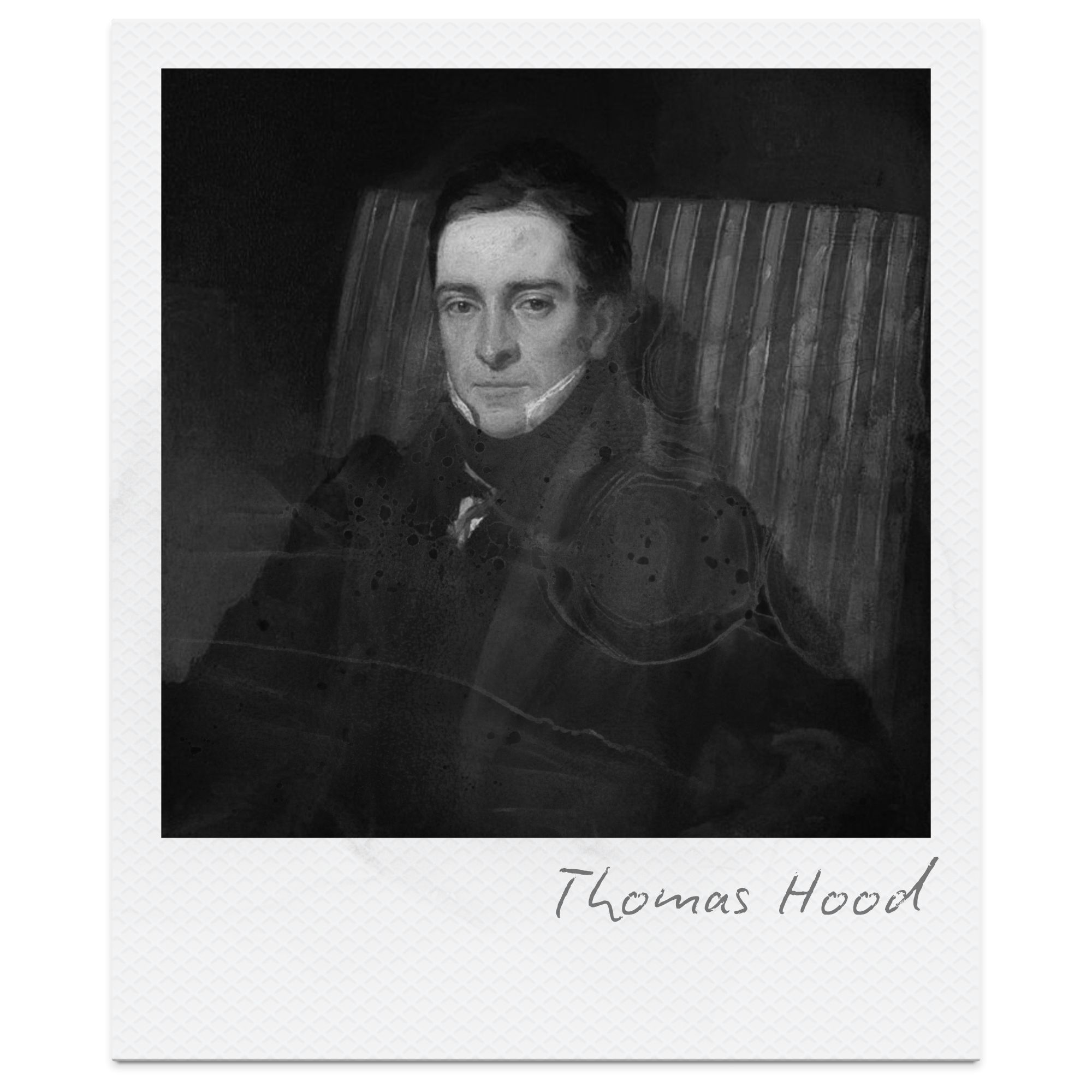
Thomas Hood was a popular nineteenth-century English poet and writer best known for his wit, humour, and contributions to magazines such as Punch. However, some of his most enduring works are his more serious poems, which focus on poverty, social inequality, and human suffering. The Song of the Shirt, first published in Punch in 1843, became one of the most influential social protest poems of the Victorian period. Although Hood often wrote comic verse, this poem demonstrates his ability to use poetry as a vehicle for compassion, social criticism, and reform.
The poem emerged during a period of rapid industrialisation in Britain. While the Victorian era is often associated with economic growth and technological progress, many working-class people experienced severe hardship. Women employed in the clothing trade frequently worked long hours for extremely low wages, often sewing garments from home under exhausting and unhealthy conditions. Hood's poem draws attention to this hidden labour, exposing the reality behind the inexpensive goods consumed by wealthier members of society.
The poem was inspired by the reported experiences of a London seamstress named Mrs Biddell. According to contemporary accounts, she struggled to support herself and her children through poorly paid sewing work. When financial desperation forced her into debt, she was eventually sent to a workhouse. Hood was reportedly moved by a newspaper report about her circumstances and transformed her story into a broader commentary on the treatment of the working poor. Rather than presenting a detailed biography of one individual, he uses her experience to represent the suffering of countless labourers whose voices were rarely heard.
This historical context is particularly important because Victorian attitudes towards poverty were often shaped by the Poor Law Amendment Act of 1834. The legislation aimed to reduce the cost of supporting the poor by encouraging those in need to enter workhouses. In practice, these institutions were deliberately harsh, based on the belief that poverty resulted from personal failings rather than wider social conditions. The Song of the Shirt challenges this assumption by presenting poverty as the consequence of economic exploitation and inequality rather than individual weakness.
The poem also belongs to a wider tradition of Victorian social criticism. Writers such as Charles Dickens used fiction to expose the realities of urban poverty, child labour, and class inequality, while Hood employed poetry to achieve a similar effect. Both sought to make readers confront social problems that were often ignored by those with wealth and influence. The direct appeal to "Men, with Sisters dear! / O Men! with Mothers and Wives!" demonstrates Hood's desire not merely to describe suffering but to provoke empathy and social responsibility.
The poem's impact extended far beyond its initial publication. It became enormously popular, was widely reprinted, and helped raise public awareness of the exploitation faced by working women. Artists were also inspired by its message, most notably Richard Redgrave's painting The Sempstress (1844), which depicts a similarly impoverished seamstress and echoes many of the poem's concerns. This cultural influence highlights the poem's significance as both a literary work and a social document.
Understanding this context deepens our appreciation of the poem's central concerns. While The Song of the Shirt exposes the realities of Victorian labour and poverty, it also raises enduring questions about human dignity, economic inequality, social responsibility, and the value placed on human life within systems driven by profit and productivity.
The Song of the Shirt: At a Glance
◆ Form – Victorian social protest poem; dramatic monologue with elements of song and public appeal
◆ Tone and emotional movement – Exhausted, sorrowful, bitter, reflective, and increasingly accusatory
◆ Central tensions – Labour versus survival; wealth versus poverty; human dignity versus economic exploitation; endurance versus despair
◆ Core concerns – Poverty, exploitation, class inequality, women's labour, social responsibility, and the human cost of industrial society
◆ Dominant imagery – Sewing and textiles, hunger, physical exhaustion, death, imprisonment, poverty, nature, and domestic hardship
◆ Stylistic features – Repetition, refrain, direct address, exclamation, vivid imagery, symbolism, irony, and rhythmic imitation of repetitive labour
◆ Key themes – Poverty, labour, exploitation, social injustice, class inequality, suffering, dignity, perseverance, and compassion
◆ One-sentence interpretation – Through the voice of an exhausted seamstress, Hood transforms repetitive sewing work into a powerful condemnation of Victorian poverty and the social systems that profit from human suffering.
Quick Summary of The Song of the Shirt
The Song of the Shirt follows an impoverished seamstress as she describes the relentless labour that dominates her life. Working endlessly with "needle and thread," she sews from dawn until late at night, trapped in a cycle of exhaustion, hunger, and poverty. Through the repeated refrains of "Work! work! work!" and "Stitch! stitch! stitch!", the poem emphasises the monotonous nature of her labour and the physical toll it takes on her body and mind.
As the poem develops, the speaker reflects on her worsening circumstances, comparing her existence to slavery and imprisonment while lamenting the lack of rest, leisure, or hope in her life. She appeals directly to society, reminding readers that the clothes they wear are produced through human suffering. The poem ends by returning to the image of the woman sewing in poverty, but Hood adds a direct appeal to the wealthy, expressing the wish that her sorrowful song might finally reach those with the power to change the conditions that created it.
Title, Form, Structure and Metre in The Song of the Shirt
The formal qualities of The Song of the Shirt are central to its meaning. Hood combines the repetitive rhythms of a work song with the emotional intensity of a social protest poem, creating a structure that mirrors the exhausting labour of the seamstress. Through recurring refrains, varied metre, and song-like rhyme patterns, the poem recreates the endless cycle of work that dominates the speaker's life while simultaneously drawing attention to the human suffering hidden behind everyday clothing.
The Significance of the Title
The title immediately establishes one of the poem's central tensions. A "song" is usually associated with pleasure, entertainment, or emotional expression, yet the seamstress's song is filled with exhaustion, hunger, and despair.
The word "shirt" is equally significant. On a literal level, it refers to the garments the speaker produces through her labour. Symbolically, however, it represents the wider clothing industry and the economic system that profits from her suffering. By linking the two words together, Hood transforms an ordinary item of clothing into a symbol of exploitation and hidden human cost.
The title also emphasises voice. Throughout the poem, the seamstress sings her own story, giving visibility to experiences that Victorian society often ignored.
Form and Overall Structure
The Song of the Shirt consists of eleven stanzas. The opening and closing stanzas are spoken by an external narrator who introduces and then revisits the seamstress, while the nine central stanzas form the seamstress's own "song." This creates a framed structure in which the narrator presents the woman's testimony before allowing her to speak directly for herself.
The framing device is significant because it transforms the seamstress from an anonymous labourer into the central voice of the poem. The opening stanza introduces her through the images of "fingers weary and worn" and "eyelids heavy and red," immediately establishing the physical consequences of poverty and overwork. The final stanza returns to the same description, creating a cyclical structure that emphasises how little has changed despite everything the reader has heard.
However, Hood deliberately alters the final stanza by adding the line "Would that its tone could reach the Rich!" This structural disruption is highly significant. After allowing the seamstress to tell her story, the narrator directly appeals to wealthy readers, transforming the poem from a personal lament into a piece of social criticism. The additional line breaks the cycle and reminds readers that the poem seeks not only sympathy but also reform.
Song Structure and Internal Organisation
The nine central stanzas function as the seamstress's dramatic monologue. Most consist of eight lines and can be divided into two smaller quatrain-like sections. The repeated refrains of "Work! work! work!" and "Stitch! stitch! stitch!" create the impression of a work song, reinforcing the connection between the poem's form and the labour it describes.
The poem progresses through several emotional stages. It begins by establishing physical exhaustion, moves into criticism of exploitative labour conditions, explores the speaker's hunger and poverty, contrasts her suffering with the freedom of the natural world, and ultimately returns to her ongoing hardship. This progression gives the poem a narrative quality while simultaneously emphasising the repetitive nature of her existence. Despite moments of reflection and longing, the speaker remains trapped within the same cycle of work and deprivation.
Metre and Rhythmic Variation
Unlike many Victorian poems, The Song of the Shirt does not follow a single strict metrical pattern throughout. Instead, Hood creates a flexible rhythm that combines iambic and anapaestic movement while regularly interrupting it with short, forceful refrains.
For example, the opening line can be scanned as:
◆ with FIN | gers WEA | ry and WORN
while the second line follows a similar pattern:
◆ with EYE | lids HEA | vy and RED
These repeated stress patterns create a steady, almost mechanical rhythm that echoes the repetitive actions of sewing.
Elsewhere, Hood continues to combine rising rhythms with longer flowing lines, as in "In poverty, hunger, and dirt" and "And still with a voice of dolorous pitch." The result is a rhythm that feels both musical and weary, reflecting the endless repetition of the speaker's labour.
The Impact of the Refrains
The poem's most memorable rhythmic feature is the repeated refrain "Work! work! work!"
Unlike the surrounding lines, the refrain is composed almost entirely of stressed syllables:
◆ WORK | WORK | WORK
The effect is abrupt, forceful, and inescapable. The rhythm resembles the repetitive physical actions of labour and functions almost like the relentless ticking of a machine. Every return of the refrain reminds readers that the speaker's life is dominated by work.
A similar effect is created through "Stitch! stitch! stitch!", whose short repetitive structure mimics the movement of a needle passing through fabric and reinforces the poem's atmosphere of monotony and entrapment.
Rhyme Scheme
The poem follows a generally regular but flexible rhyme pattern that contributes to its song-like quality.
The opening stanza follows:
◆ ABCBDEDE
This can be seen through the end words:
◆ worn (A)
◆ red (B)
◆ rags (C)
◆ thread (B)
◆ stitch (D)
◆ dirt (E)
◆ pitch (D)
◆ Shirt (E)
Many later stanzas broadly follow this pattern, although Hood introduces variations through repetition and occasional alterations to the rhyme sequence. Some stanzas create additional rhyme pairings through repeated words such as "Work! work! work!", while the final stanza slightly alters the established pattern through the addition of "Would that its tone could reach the Rich!"
The regular rhyme contributes to the musical quality of the poem, reinforcing the idea that the seamstress is literally singing her experiences. At the same time, the recurring rhyme patterns create a sense of entrapment. The poem repeatedly circles back to familiar sounds, just as the speaker repeatedly returns to the same exhausting labour.
Sound and Musicality
The poem's musical qualities are essential to its impact.
The repeated refrains, strong end rhymes, and recurring sound patterns create the impression of a folk song or ballad. This accessibility would have made the poem memorable to Victorian readers while helping Hood communicate a serious social message to a wide audience.
However, there is a striking irony at the heart of this musicality. The poem sounds like a song, yet its subject matter is suffering. Hood therefore uses an attractive, memorable form to communicate deeply uncomfortable social realities.
Form as Social Criticism
Ultimately, the poem's structure mirrors its central argument. The repetitive rhythms, cyclical framing, recurring refrains, and song-like patterns all reflect the repetitive labour that dominates the seamstress's life.
At the same time, the poem transforms that labour into art. The seamstress's voice becomes impossible to ignore, and the very song created by her suffering becomes a vehicle for social criticism. Through this combination of musical form and political purpose, Hood exposes the human cost of poverty while demanding that readers recognise the lives hidden behind the products they consume.
Voice, Perspective and Emotional Conflict in The Song of the Shirt
One of the most striking features of The Song of the Shirt is its use of voice. Hood combines an external narrator with the direct testimony of the seamstress herself, allowing readers not only to witness her suffering but to hear it expressed in her own words. This dual perspective creates both emotional immediacy and social criticism, transforming the poem from a simple description of poverty into a powerful act of witness. Throughout the poem, the speaker's voice moves between exhaustion, bitterness, longing, despair, and resilience, revealing the complex emotional consequences of relentless labour and deprivation.
The Narrator as Observer and Advocate
The poem begins and ends with an external narrator who observes the seamstress from outside her experience. Through descriptions of "fingers weary and worn" and "eyelids heavy and red," the narrator immediately draws attention to the visible effects of poverty and overwork.
However, the narrator is not emotionally detached. The closing wish that "its tone could reach the Rich!" reveals a clear sense of sympathy and moral outrage. Rather than simply recording the woman's suffering, the narrator becomes an advocate who hopes her story will inspire awareness and social change.
This framing voice helps guide the reader's response, encouraging compassion rather than indifference.
The Seamstress as a Representative Voice
The central stanzas belong to the seamstress herself, transforming the poem into a form of dramatic monologue.
Although Hood was inspired by the reported experiences of a real seamstress, the speaker functions as more than an individual character. She becomes a representative voice for countless working women living in poverty during Victorian Britain.
The frequent use of the first-person pronouns "I" and "my" creates intimacy and immediacy, allowing readers to experience her exhaustion directly. At the same time, her circumstances are presented as part of a wider social problem rather than an isolated tragedy.
A Voice Shaped by Exhaustion
Physical exhaustion dominates the speaker's voice throughout the poem.
The repeated references to "weary" fingers, heavy eyes, hunger, and physical decline create the impression of someone pushed beyond ordinary limits. Her language often circles back to the same ideas and images, reflecting both the repetitive nature of her labour and the mental fatigue created by endless work.
Even the poem's recurring refrains contribute to this effect. The constant repetition of "Work! work! work!" and "Stitch! stitch! stitch!" makes it seem as though labour has taken over the speaker's thoughts, leaving little room for anything else.
Anger Beneath Resignation
Although the speaker often sounds resigned to her circumstances, moments of anger emerge throughout the poem.
When she declares "It is not linen you're wearing out, / But human creatures' lives!", the tone becomes openly accusatory. The seamstress directly challenges those who benefit from cheap labour, forcing readers to confront the human cost hidden behind everyday consumer goods.
Similarly, the comparison of her labour to slavery and imprisonment reveals bitterness towards a society that tolerates such conditions. These moments prevent the poem from becoming merely sentimental. Beneath the sadness lies a powerful critique of social injustice.
Longing and Memory
The voice becomes noticeably softer when the speaker imagines the natural world.
Her desire "to breathe the breath / Of the cowslip and primrose sweet" introduces a tone of nostalgia and yearning that contrasts sharply with the harsh realities of work. Nature symbolises freedom, beauty, and a life untouched by exploitation.
These moments suggest that the speaker has not always lived under such conditions. Her memories of a happier existence intensify the tragedy of her current situation and remind readers of what poverty has taken from her.
Emotional Contradictions
One of the poem's greatest strengths is its emotional complexity.
The speaker is simultaneously:
◆ exhausted yet resilient
◆ hopeless yet still expressive
◆ bitter yet compassionate
◆ resigned yet quietly resistant
She claims not to fear death because it "seems so like my own," yet continues working and singing. This contradiction highlights the tension between despair and survival that runs throughout the poem.
Rather than presenting a single emotional response to poverty, Hood reveals the complicated psychological realities of living under constant hardship.
Direct Address and Social Criticism
The seamstress frequently addresses others directly, particularly in the appeal "O, Men, with Sisters dear! / O, Men! with Mothers and Wives!"
This direct address broadens the poem's audience and transforms the speaker from a passive victim into someone actively demanding recognition. By invoking family relationships, she encourages readers to imagine their own loved ones in similar circumstances.
The effect is deeply persuasive. Poverty is no longer a distant social issue but a human reality connected to ordinary lives and relationships.
The Song as Resistance
Although the poem presents a woman trapped in poverty, her voice is not entirely powerless.
The act of singing itself becomes significant. Through her song, the seamstress records her experiences, exposes injustice, and refuses to remain silent. Her labour may be repetitive and exploitative, but her voice transforms suffering into testimony.
This creates an important paradox at the heart of the poem. The seamstress appears socially powerless, yet her words possess the power to challenge, persuade, and provoke sympathy.
Ultimately, Hood uses voice and perspective to humanise Victorian poverty while exposing the systems that sustain it. By allowing readers to hear the seamstress's own account of her suffering, he creates a poem that is both emotionally moving and politically powerful. The result is a voice that remains memorable not because of its strength alone, but because of its honesty, humanity, and refusal to be ignored.
Stanza-by-Stanza Analysis of The Song of the Shirt
A close analysis of The Song of the Shirt reveals how Hood transforms the experience of one impoverished seamstress into a powerful critique of poverty, exploitation, and Victorian attitudes towards labour. Through recurring imagery, repetition, emotional contrasts, and social commentary, the poem gradually exposes the physical, emotional, and psychological consequences of relentless work. Examining each stanza individually allows readers to track the development of the speaker's voice and understand how Hood builds sympathy, outrage, and ultimately a call for social change.
Stanza 1: Introducing the Seamstress
The opening stanza immediately establishes the poem's focus on poverty, exhaustion, and human suffering. The narrator presents the seamstress through vivid physical details, encouraging readers to confront the realities of a life defined by relentless labour. Before the woman speaks for herself, Hood ensures that readers understand the visible toll her circumstances have taken on her body.
The repeated phrasing of "fingers weary and worn" and "eyelids heavy and red" emphasises physical exhaustion. The alliteration of "weary and worn" reinforces a sense of deterioration, suggesting that labour has gradually consumed her strength over time. The focus on specific body parts highlights how work has affected every aspect of her existence.
Hood also describes the woman as sitting in "unwomanly rags." The adjective "unwomanly" is particularly significant. Victorian society often associated femininity with respectability, domestic comfort, and neat appearance. By describing her clothing in this way, Hood suggests that poverty has stripped her of the social identity and dignity expected of women during the period. The phrase also criticises a society that allows such conditions to exist.
The image of the woman "Plying her needle and thread" introduces sewing as the defining activity of her life. The verb "plying" suggests continuous, repetitive labour, immediately establishing work as an unavoidable routine rather than a choice.
This sense of repetition is reinforced by the refrain "Stitch! stitch! stitch!" The repeated monosyllabic words mimic the mechanical movement of the needle passing through fabric. The abrupt rhythm creates an almost machine-like effect, foreshadowing one of the poem's central concerns: the reduction of human beings to instruments of production.
The triadic list "poverty, hunger, and dirt" summarises the conditions in which the seamstress lives and works. Hood presents these hardships as interconnected, creating a bleak portrait of deprivation that extends beyond financial struggle to include physical discomfort and social degradation.
Despite these circumstances, the woman continues to sing with a "voice of dolorous pitch." The adjective "dolorous" emphasises sorrow and suffering, while the musical language introduces the poem's central irony. Although this is a "song," it is not a celebration but a lament. The contrast between singing and suffering highlights the seamstress's resilience while simultaneously drawing attention to the tragedy of her situation.
The stanza concludes with the title phrase, "Song of the Shirt," transforming the seamstress's personal suffering into something symbolic and universal. The shirt represents the products created through her labour, while the song represents the human story hidden behind those products. From the outset, Hood encourages readers to look beyond the finished garment and recognise the individual whose life has been consumed in producing it.
Stanza 2: Labour as Enslavement
The second stanza introduces one of the poem's most important ideas: the comparison between labour and slavery. Through repetition, exaggeration, and irony, Hood emphasises the relentless nature of the seamstress's work while questioning the morality of a society that allows such exploitation to exist.
The repeated refrain "Work! work! work!" immediately dominates the stanza. Its harsh, repetitive rhythm mirrors the endless cycle of labour that governs the woman's life. Unlike a conventional song refrain, which might provide comfort or familiarity, this repetition feels oppressive and mechanical. The work itself has become all-consuming.
The seamstress explains that she works "While the cock is crowing aloof" and continues "Till the stars shine through the roof." These images stretch from dawn until late at night, emphasising the extraordinary length of her working day. The contrast between morning and night suggests that labour occupies almost every waking hour. At the same time, the image of stars shining through the roof hints at the poor condition of her home, reinforcing the connection between hard work and continuing poverty.
The stanza then becomes more openly critical through the declaration "It's O! to be a slave." This comparison is deliberately shocking. By invoking slavery, Hood suggests that the seamstress's labour is not simply difficult but fundamentally exploitative. Although she is technically free, her economic circumstances leave her with little genuine choice.
The reference to the "barbarous Turk" reflects nineteenth-century stereotypes and assumptions about the Ottoman Empire. While modern readers may find the language problematic, Hood's purpose is to contrast what Victorian society considered "uncivilised" with supposedly Christian Britain. The irony lies in the implication that British society prides itself on its morality while tolerating conditions that resemble slavery.
This criticism reaches its climax in the final line: "If this is Christian work!" The exclamation functions as a rhetorical challenge to the reader. Victorian Britain often presented itself as a Christian nation guided by compassion and moral responsibility, yet the seamstress's experience appears completely at odds with these ideals. Hood therefore exposes a gap between religious principles and social reality.
By the end of the stanza, labour has been transformed from a means of earning a living into a symbol of exploitation and hypocrisy. The seamstress's endless work raises uncomfortable questions about who benefits from her labour and whether a society that permits such suffering can truly claim to be moral or civilised.
Stanza 3: Physical and Mental Exhaustion
In this stanza, Hood explores the devastating physical and psychological effects of relentless labour. The focus shifts from the length of the seamstress's working day to the impact that constant work has on her body and mind. Through repetition, listing, and dream imagery, Hood presents labour as something that consumes every aspect of her existence.
The repeated refrain "Work—work—work" returns at the beginning of both halves of the stanza, reinforcing the monotonous cycle that dominates the speaker's life. The repetition feels increasingly oppressive, suggesting that work has become an inescapable reality rather than simply an occupation.
The seamstress works "Till the brain begins to swim" and "Till the eyes are heavy and dim." These images highlight both mental and physical exhaustion. The phrase "brain begins to swim" suggests dizziness, confusion, and an inability to think clearly, while the description of dim eyes reflects fatigue and declining health. Hood emphasises that the consequences of labour extend far beyond tired muscles; they affect the speaker's ability to function as a human being.
The repetitive sequence "Seam, and gusset, and band, / Band, and gusset, and seam" mimics the endless routine of sewing. The reversal of the order creates a circular effect, suggesting that the work never progresses or reaches completion. The language becomes almost mechanical, reflecting how repetitive labour reduces the speaker's life to a series of repetitive tasks.
The stanza reaches its climax when the speaker admits that "over the buttons I fall asleep, / And sew them on in a dream!" This image blurs the boundary between work and rest. Even when asleep, the seamstress cannot escape her labour because it continues within her subconscious. The exclamation highlights the absurdity and tragedy of a life so dominated by work that even dreams offer no relief.
At a deeper level, the dream imagery suggests the loss of personal freedom and identity. The seamstress no longer possesses a private mental space separate from her labour. Work has invaded not only her waking hours but also her unconscious mind, demonstrating the totalising nature of her exploitation.
By the end of the stanza, Hood presents labour as something that exhausts the body, overwhelms the mind, and erodes the distinction between work and rest. The seamstress is no longer simply employed; she has become trapped within a cycle that governs every aspect of her existence.
Stanza 4: Exposing the Human Cost of Consumer Goods
In this stanza, the seamstress directly addresses her audience for the first time, transforming the poem from a personal lament into a powerful social critique. Hood forces readers to confront the connection between their own comfort and the suffering of those who produce the goods they consume. The stanza marks a significant shift from describing hardship to openly challenging the society that permits it.
The repeated appeal "O, Men, with Sisters dear! / O, Men! with Mothers and Wives!" is both emotional and strategic. Rather than addressing employers or politicians directly, the speaker appeals to ordinary readers through their family relationships. By invoking sisters, mothers, and wives, Hood encourages his audience to imagine their own loved ones enduring similar conditions. This personalises the issue and makes it more difficult to dismiss the seamstress's suffering as someone else's problem.
The poem's central argument emerges in the declaration "It is not linen you're wearing out, / But human creatures' lives!" This shocking contrast forces readers to reconsider the true cost of cheap clothing. The speaker suggests that every garment carries an unseen human price. The phrase "human creatures' lives" emphasises the humanity of workers who are often treated merely as sources of labour, while the exclamation conveys outrage and moral urgency.
The refrain "Stitch—stitch—stitch" returns immediately afterwards, linking the abstract idea of exploitation to the physical reality of labour. The repetitive sound once again imitates the movement of the needle, reminding readers that the suffering described in the poem is produced through endless repetitive work.
Hood then revisits the bleak triad "poverty, hunger, and dirt," reinforcing the conditions under which the seamstress works. The repetition suggests that despite all her labour, nothing improves. Work does not lead to comfort, security, or prosperity; it simply sustains the cycle of deprivation.
The final image is among the most powerful in the poem. The speaker describes herself as "Sewing at once with a double thread, / A Shroud as well as a Shirt." Literally, she is sewing clothing for others, but metaphorically she is also sewing her own burial cloth. The shirt symbolises labour and production, while the shroud symbolises death. By linking the two together, Hood suggests that the work sustaining her life is simultaneously destroying it.
This image encapsulates one of the poem's central concerns: the tragic irony that labour, which should provide survival and security, instead contributes to the worker's physical decline. The stanza therefore functions as both a condemnation of economic exploitation and a warning about the human consequences of valuing profit over people.
Stanza 5: Poverty, Hunger and the Shadow of Death
In this stanza, Hood deepens the poem's emotional impact by linking poverty directly to death. However, rather than presenting death as the speaker's greatest fear, he reveals that her daily existence has become so harsh that death no longer seems frightening. The stanza exposes the physical consequences of hunger while criticising a society in which basic necessities are unaffordable for those who work the hardest.
The stanza opens with the rhetorical question "But why do I talk of Death?" This creates the impression of a speaker reflecting upon her own thoughts. The question also marks a transition from the external realities of labour to the psychological effects of poverty, drawing readers further into her emotional world.
Death is personified as "That Phantom of grisly bone," giving it an almost supernatural presence. The image evokes traditional depictions of the Grim Reaper and initially suggests something terrifying. However, Hood immediately subverts these expectations when the speaker admits that she "hardly fear[s] its terrible shape." This shocking statement reveals the depth of her suffering. Life has become so difficult that death no longer appears frightening by comparison.
The repetition of "It seems so like my own" is particularly significant. By repeating the line, Hood emphasises the physical deterioration caused by poverty and malnutrition. The speaker sees her own appearance reflected in the skeletal image of death itself. This comparison suggests that although she remains alive, extreme deprivation has already reduced her to a ghost-like existence.
The explanation follows in the phrase "Because of the fasts I keep." The word "fasts" carries religious associations, often suggesting voluntary self-denial. Here, however, the irony is devastating. The speaker is not fasting by choice but because she cannot afford enough food to eat. The language exposes the difference between voluntary sacrifice and enforced hunger.
The stanza culminates in the famous exclamation "Oh! God! that bread should be so dear, / And flesh and blood so cheap!" This contrast lies at the heart of Hood's social criticism. Bread, a basic necessity for survival, is presented as excessively expensive, while human life itself appears to have little value. The juxtaposition of "dear" and "cheap" highlights the moral inversion of a society that places greater value on economic profit than on human wellbeing.
By the end of the stanza, Hood transforms the seamstress's personal suffering into a broader critique of Victorian society. The speaker's resemblance to death becomes a powerful symbol of how poverty gradually destroys both body and spirit, while the final exclamation condemns a social system in which those who labour hardest are often valued least.
Stanza 6: Labour Without Reward
In this stanza, Hood focuses on the stark contrast between the effort the seamstress invests in her work and the meagre rewards she receives in return. The stanza functions as a direct critique of economic exploitation, exposing a system in which relentless labour fails to provide even the most basic standard of living. Through listing, rhetorical questions, and bleak imagery, Hood emphasises the injustice at the heart of the speaker's existence.
The stanza begins with the familiar refrain "Work—work—work!", immediately reminding readers that labour continues to dominate every aspect of the woman's life. However, the following declaration that "My Labour never flags" introduces a note of bitter irony. The seamstress's commitment and perseverance are unquestionable, yet her hard work brings little improvement to her circumstances.
This irony becomes explicit through the rhetorical question "And what are its wages?" The question encourages readers to consider whether the rewards of labour are proportionate to the effort involved. Hood immediately answers the question with a bleak catalogue of deprivation: "A bed of straw, / A crust of bread—and rags." The list highlights the basic necessities to which the speaker's life has been reduced. Despite endless work, she receives only enough to survive at the most minimal level.
The imagery becomes increasingly bleak as the speaker describes "That shatter'd roof—and this naked floor." These details suggest not merely poverty but neglect and insecurity. The damaged roof offers little protection from the elements, while the "naked floor" emphasises the absence of comfort or dignity within her home. Rather than functioning as a refuge from labour, her living space reflects the same hardship and deprivation.
The fragmented list "A table—a broken chair" further reinforces this sense of scarcity. The sparse furnishings suggest a life stripped down to essentials, while the broken chair symbolises a world in which even basic comforts have deteriorated. The repeated dashes create pauses that encourage readers to dwell on each item individually, highlighting the emptiness of the speaker's surroundings.
The stanza ends with one of the poem's most poignant images. The speaker describes "a wall so blank, my shadow I thank / For sometimes falling there!" This personification reveals the depth of her loneliness and isolation. The shadow becomes a form of companionship because there is no one else present. The image is both tragic and ironic: the seamstress is grateful for the presence of her own shadow because poverty has deprived her of human comfort and connection.
By the end of the stanza, Hood demonstrates that the true tragedy of exploitation extends beyond low wages. The speaker's labour has failed to provide security, comfort, companionship, or dignity. Instead, she exists in a state of continual deprivation, working endlessly while remaining trapped in the very poverty her labour should help her escape.
Stanza 7: Labour as Imprisonment
In this stanza, Hood intensifies his criticism of exploitative labour by comparing the seamstress's working life to imprisonment. The focus shifts from poverty and material deprivation to the psychological and emotional consequences of endless work. Through repetition, cyclical structures, and powerful comparisons, Hood presents labour not as a source of freedom or prosperity but as a form of confinement that gradually destroys both body and mind.
The repeated refrain "Work—work—work!" continues to dominate the stanza, reinforcing the idea that labour has become the defining feature of the speaker's existence. The relentless repetition mirrors the repetitive actions of sewing while also suggesting the inescapable nature of her routine.
The phrase "From weary chime to chime" emphasises the passage of time. The reference to clock chimes suggests that the speaker's life is measured entirely by the hours she spends working. The adjective "weary" implies that exhaustion has become a permanent condition rather than a temporary state. Time itself appears oppressive, marking not progress or opportunity but the continuation of labour.
The comparison "As prisoners work for crime!" is one of the poem's most striking images. By likening her situation to penal labour, the seamstress suggests that her life resembles a punishment. The irony is particularly powerful because she has committed no crime. Hood therefore exposes the injustice of a system in which innocent workers endure conditions comparable to those imposed on criminals.
The repetitive sequence "Band, and gusset, and seam, / Seam, and gusset, and band" returns from an earlier stanza, reinforcing the cyclical nature of the work. The reversal of the order creates a circular pattern that suggests endless repetition without progress. Readers experience the same sense of monotony that dominates the speaker's life.
The stanza culminates in the declaration that labour continues "Till the heart is sick, and the brain benumb'd, / As well as the weary hand." Significantly, Hood expands the effects of work beyond physical exhaustion. The "weary hand" represents the obvious bodily strain of sewing, but the "sick" heart and "benumb'd" brain suggest emotional and mental deterioration as well. The verb "benumb'd" implies a loss of feeling, awareness, and vitality, suggesting that repetitive labour gradually deadens the human spirit.
By ending the stanza with the heart, brain, and hand, Hood presents exploitation as a total assault on the individual. Labour damages not only the worker's body but also her emotions and capacity for thought. The seamstress becomes trapped in a cycle that exhausts every aspect of her humanity, reinforcing the poem's wider argument that Victorian society values production more highly than the people who produce.
Stanza 8: Nature as a Symbol of Lost Freedom
In this stanza, Hood introduces a striking contrast between the seamstress's endless labour and the freedom of the natural world. For the first time, attention shifts away from poverty and work towards images of nature, highlighting everything that the speaker has been denied. The contrast deepens the poem's emotional impact while emphasising how completely labour has separated her from ordinary human pleasures.
The stanza begins with the familiar refrain "Work—work—work", but Hood immediately expands its significance by showing that labour continues regardless of the season or weather. The seamstress works "In the dull December light" and also "When the weather is warm and bright." This contrast suggests that her existence remains unchanged while the world around her moves through natural cycles of darkness and renewal. She is excluded from the pleasures associated with changing seasons because work occupies every moment of her life.
The description of "dull December light" reinforces the poem's atmosphere of hardship and deprivation. December often symbolises cold, darkness, and endurance, reflecting the speaker's emotional state. In contrast, "warm and bright" evokes comfort, vitality, and happiness. The juxtaposition highlights the fact that even favourable conditions bring no relief to the seamstress.
Nature becomes increasingly significant through the image of "brooding swallows" clinging beneath the eaves. Swallows traditionally symbolise freedom, migration, renewal, and the arrival of spring. Unlike the speaker, they are free to move through the world and respond to the changing seasons. Their presence therefore emphasises her confinement.
The phrase "their sunny backs" introduces a brighter image that contrasts sharply with the darkness and poverty surrounding the seamstress. The adjective "sunny" suggests warmth, freedom, and joy, all qualities missing from her own life. The birds embody a world of natural beauty that remains inaccessible to her.
However, the speaker perceives the swallows almost as mocking figures. She imagines they "twit me with the spring," personifying them as if they are teasing her. The verb "twit" suggests playful ridicule, revealing the depth of her frustration and longing. Spring traditionally symbolises hope, renewal, and new beginnings, yet for the seamstress it serves only as a reminder of everything she cannot enjoy.
At a deeper level, the stanza highlights one of the poem's central criticisms of industrial labour. The speaker is not merely deprived of money or comfort; she is separated from the natural rhythms of life itself. While the swallows experience movement, freedom, and seasonal change, she remains trapped in an unchanging cycle of work. Hood therefore presents poverty as a condition that isolates individuals not only from society but also from the beauty and restorative power of the natural world.
Stanza 9: Longing for Escape and a Lost Past
In this stanza, Hood explores the seamstress's yearning for freedom, nature, and the life she has lost. After observing the swallows in the previous stanza, the speaker imagines what it would be like to escape her confinement, even briefly. The stanza is filled with nostalgia and longing, revealing that poverty has deprived her not only of material comfort but also of happiness, independence, and a sense of connection with the natural world.
The exclamation "O! but to breathe the breath / Of the cowslip and primrose sweet" immediately conveys intense desire. The flowers evoke the beauty and simplicity of the countryside, creating a sharp contrast with the "poverty, hunger, and dirt" that dominate the speaker's daily life. The sensory language of "breathe the breath" emphasises how deeply she longs for even the most basic experience of freedom and fresh air.
The natural imagery continues through "With the sky above my head, / And the grass beneath my feet." These images suggest openness, movement, and liberation. Unlike the cramped interior spaces that have characterised much of the poem, the sky and grass evoke a world without physical or social restrictions. The simplicity of these desires is significant; the speaker does not dream of wealth or luxury, only of experiences that many people take for granted.
The phrase "For only one short hour" highlights the tragedy of her situation. The seamstress is not asking for permanent escape but merely a brief respite from labour. This modest request emphasises how completely work has dominated her life and how little freedom she possesses.
The stanza then shifts towards memory and nostalgia as the speaker wishes "To feel as I used to feel." This line suggests that her current condition is not natural or inevitable. There was once a time when she experienced joy, hope, and freedom. Poverty has therefore transformed her life rather than simply defining it.
This contrast becomes clearer in the reference to "the woes of want." Here, "want" means poverty and deprivation rather than desire. The alliteration reinforces the phrase's emotional weight, while the abstract noun broadens the speaker's suffering beyond physical hunger to include emotional and psychological hardship.
The stanza concludes with the memorable phrase "the walk that costs a meal!" This striking image reveals the brutal economics of poverty. Even taking time away from work to walk outdoors carries a financial consequence because every moment not spent sewing means lost income. The exclamation conveys frustration and disbelief at a society in which simple human pleasures have become unaffordable.
By the end of the stanza, Hood presents poverty as more than a lack of money. It becomes a condition that steals time, freedom, joy, and connection to the natural world. The speaker's longing for a single hour of peace highlights the extent to which relentless labour has narrowed and impoverished her existence.
Stanza 10: Grief Without Time to Mourn
In this stanza, Hood explores the emotional consequences of poverty and overwork. While previous stanzas focused on physical exhaustion, hunger, and material deprivation, here the speaker reveals the psychological burden of her circumstances. The tragedy is not simply that she suffers, but that she has no opportunity to process or express that suffering. Even grief must be sacrificed to labour.
The stanza begins with the repeated cry "O! but for one short hour!", continuing the longing introduced in the previous stanza. The exclamation conveys desperation, emphasising how small her request really is. She does not ask for wealth, comfort, or permanent freedom, but merely "A respite however brief!" The noun "respite" suggests temporary relief from an otherwise relentless existence, highlighting the absence of rest in her daily life.
The speaker then clarifies what she desires. Significantly, she seeks "No blessed leisure for Love or Hope, / But only time for Grief!" This contrast is deeply revealing. Love and hope are often associated with happiness, aspiration, and fulfilment, yet the speaker no longer expects these things. Instead, she asks only for the opportunity to mourn her circumstances. The capitalisation of "Love," "Hope," and "Grief" personifies these emotions, giving them greater significance and emphasising the emotional landscape of her life.
The admission that "A little weeping would ease my heart" highlights the therapeutic role of emotional expression. Crying would provide a release from the pressures she endures, suggesting that her suffering has become psychologically overwhelming. However, even this small comfort is denied to her.
The image of tears resting in "their briny bed" is particularly striking. The metaphor suggests that her tears remain trapped within her eyes rather than being released. The adjective "briny" evokes the saltiness of tears while also hinting at an ocean of suppressed emotion beneath the surface.
The final lines reveal why she cannot allow herself to cry: "My tears must stop, for every drop / Hinders needle and thread!" This conclusion encapsulates one of the poem's central criticisms. Labour has become so dominant that even basic human emotions are treated as obstacles to productivity. The practical concern that tears might interfere with sewing highlights the brutal reality of her situation: survival depends on constant work.
At a deeper level, the stanza suggests that poverty denies people not only material comfort but also emotional freedom. The seamstress cannot rest, dream, mourn, or heal because every moment must be devoted to labour. Hood therefore presents exploitation as something that affects the inner life as profoundly as the body, reducing even grief to a luxury she cannot afford.
Stanza 11: Returning to the Song and Appealing to the Rich
The final stanza returns to the imagery and structure of the opening, creating a powerful sense of circularity. By repeating the description of the seamstress almost word-for-word, Hood emphasises that despite everything the reader has learned, nothing has changed for the woman herself. The poem therefore ends not with resolution but with a reminder of the continuing reality of poverty and exploitation.
The repeated images of "fingers weary and worn" and "eyelids heavy and red" immediately reconnect readers with the physical suffering that opened the poem. These descriptions now carry even greater significance because readers understand the causes of her exhaustion. What initially appeared to be simple observations have become symbols of the relentless labour, hunger, and deprivation described throughout the poem.
Similarly, the image of the woman "Plying her needle and thread" reinforces the cyclical nature of her existence. Despite her testimony, she remains trapped in the same repetitive routine. The return of "Stitch! stitch! stitch!" further emphasises this idea, suggesting that the cycle of labour continues uninterrupted.
The repeated phrase "poverty, hunger, and dirt" reminds readers that the seamstress's circumstances have not improved. The accumulation of these hardships throughout the poem makes the repetition especially powerful, transforming what was once a description into an indictment of a society that allows such conditions to persist.
However, Hood introduces one crucial alteration. The addition of "Would that its tone could reach the Rich!" marks the narrator's direct intervention. Unlike the seamstress, who focuses on describing her experiences, the narrator explicitly addresses the poem's intended audience. The exclamation reveals both frustration and hope: frustration that the suffering of the poor is often ignored, and hope that increased awareness might inspire change.
The capitalisation of "Rich" is significant because it transforms wealth into a social category rather than a description of individuals. Hood directs responsibility towards those with economic power, suggesting that they have both the ability and the obligation to respond to the suffering described throughout the poem.
The poem concludes with the title phrase "Song of the Shirt," bringing the work full circle. Yet the title now carries far greater weight than it did at the beginning. Readers understand that the shirt symbolises not merely clothing but the exploitation hidden behind consumer goods, while the song represents the voice of the working poor demanding recognition.
By ending in this way, Hood avoids offering an easy solution. The seamstress remains at work, her poverty unchanged. Nevertheless, the poem itself becomes an act of resistance. Through the addition of the appeal to the rich, Hood transforms the woman's private suffering into a public challenge, ensuring that her voice continues beyond the boundaries of the poem itself.
Key Quotes from The Song of the Shirt
Thomas Hood's poem is filled with memorable quotations that capture the realities of poverty, labour, social injustice, and human suffering. Through repetition, symbolism, emotional appeals, and vivid imagery, Hood transforms the experiences of a single seamstress into a broader criticism of Victorian society. These quotations are particularly important because they reveal how the poem combines personal testimony with social protest.
"With fingers weary and worn"
◆ Method: Alliteration and physical imagery
◆ Meaning: The repeated "w" sound emphasises exhaustion and deterioration, immediately establishing the physical consequences of relentless labour.
◆ Purpose: Hood encourages readers to confront the human reality behind industrial production rather than focusing on the finished products.
◆ Impact: Readers are invited to sympathise with the seamstress from the opening line.
◆ Link: Poverty, labour, exploitation, human dignity.
"Stitch! stitch! stitch!"
◆ Method: Repetition, refrain, and onomatopoeic rhythm
◆ Meaning: The repeated monosyllabic words imitate the movement of a sewing needle and reflect the repetitive nature of the speaker's work.
◆ Purpose: Hood recreates the monotony of labour while showing how work dominates every aspect of the seamstress's life.
◆ Impact: The relentless rhythm becomes oppressive, helping readers experience the speaker's exhaustion.
◆ Link: Labour, repetition, exploitation.
"Work! work! work!"
◆ Method: Refrain and repetition
◆ Meaning: The repetition suggests that work has become the defining feature of the speaker's existence.
◆ Purpose: Hood emphasises the inescapable cycle of labour that traps the seamstress in poverty.
◆ Impact: The phrase develops an almost mechanical quality, reinforcing the dehumanising effects of exploitation.
◆ Link: Labour, poverty, imprisonment.
"It's O! to be a slave"
◆ Method: Comparison, hyperbole, and exclamation
◆ Meaning: The speaker compares her working conditions to slavery, highlighting her lack of freedom and control.
◆ Purpose: Hood shocks readers into recognising the severity of the exploitation experienced by working women.
◆ Impact: The comparison transforms economic hardship into a moral and social issue.
◆ Link: Exploitation, inequality, social criticism.
"It is not linen you're wearing out, / But human creatures' lives!"
◆ Method: Direct address, contrast, and emotional appeal
◆ Meaning: The speaker reminds consumers that clothing is produced through human suffering.
◆ Purpose: Hood forces readers to recognise the hidden human cost behind manufactured goods.
◆ Impact: The accusation creates guilt and encourages social awareness.
◆ Link: Consumerism, exploitation, social responsibility.
"Sewing at once with a double thread, / A Shroud as well as a Shirt"
◆ Method: Symbolism and metaphor
◆ Meaning: The shirt symbolises labour and survival, while the shroud symbolises death.
◆ Purpose: Hood suggests that the very work sustaining the seamstress is simultaneously destroying her.
◆ Impact: The image creates one of the poem's most memorable criticisms of exploitation.
◆ Link: Death, labour, poverty, suffering.
"Oh! God! that bread should be so dear, / And flesh and blood so cheap!"
◆ Method: Exclamation, contrast, and social criticism
◆ Meaning: The speaker contrasts the cost of food with the low value society places on human life.
◆ Purpose: Hood exposes the moral failures of an economic system that prioritises profit over people.
◆ Impact: The quotation creates outrage and encourages readers to question social inequalities.
◆ Link: Poverty, inequality, human worth.
"As prisoners work for crime!"
◆ Method: Simile
◆ Meaning: The seamstress compares her labour to punishment, suggesting that her life resembles imprisonment.
◆ Purpose: Hood highlights the lack of freedom experienced by many working-class labourers.
◆ Impact: Readers are encouraged to view exploitative work as a form of social injustice.
◆ Link: Imprisonment, exploitation, freedom.
"The cowslip and primrose sweet"
◆ Method: Natural imagery and symbolism
◆ Meaning: The flowers represent beauty, freedom, peace, and a life beyond labour.
◆ Purpose: Hood contrasts the natural world with the harsh conditions of industrial poverty.
◆ Impact: The imagery intensifies the reader's awareness of everything the speaker has lost.
◆ Link: Nature, freedom, hope, escape.
"My tears must stop, for every drop / Hinders needle and thread!"
◆ Method: Irony and emotional imagery
◆ Meaning: The speaker cannot even allow herself to cry because survival depends on constant work.
◆ Purpose: Hood demonstrates how poverty restricts not only physical freedom but emotional expression.
◆ Impact: The quotation highlights the inhuman demands placed upon the poor.
◆ Link: Grief, labour, emotional suffering.
"Would that its tone could reach the Rich!"
◆ Method: Direct appeal, exclamation, and authorial intervention
◆ Meaning: The narrator hopes the seamstress's story will be heard by those with wealth and influence.
◆ Purpose: Hood transforms the poem from a personal lament into an explicit call for social awareness and reform.
◆ Impact: The ending leaves readers with a sense of responsibility rather than closure.
◆ Link: Social responsibility, class inequality, reform.
Key Techniques in The Song of the Shirt
Thomas Hood employs a wide range of literary techniques to expose the realities of poverty, exploitation, and social inequality. Many of these techniques work together to recreate the repetitive nature of labour while encouraging readers to sympathise with the seamstress's suffering. Through repetition, imagery, symbolism, sound patterns, and direct appeals to the audience, Hood transforms the poem into both a personal lament and a powerful piece of social criticism.
Repetition and Refrains
Repetition is one of the most important techniques in the poem. The recurring refrains "Work! work! work!" and "Stitch! stitch! stitch!" appear throughout the poem, creating a relentless rhythm that mirrors the repetitive nature of sewing.
The repetition reflects the speaker's trapped existence. Just as the words continually return, so too does the cycle of labour, poverty, and exhaustion. The technique also reinforces the mechanical nature of industrial work, suggesting that the seamstress's life has become dominated by routine and repetition.
Imagery
Hood uses vivid imagery to make the seamstress's suffering tangible and immediate.
The opening description of "fingers weary and worn" and "eyelids heavy and red" immediately establishes the physical effects of overwork. Throughout the poem, readers encounter images of "poverty, hunger, and dirt," a "shatter'd roof," a "naked floor," and a "broken chair." These details create a vivid picture of deprivation and encourage readers to visualise the harsh realities of working-class life.
The recurring physical imagery ensures that poverty is presented as a lived experience rather than an abstract social issue.
Epizeuxis
Hood frequently employs epizeuxis, the immediate repetition of words without interruption.
Examples include "Work! work! work!" and "Stitch! stitch! stitch!"
This technique creates urgency and intensity while reinforcing the monotonous nature of the speaker's labour. The repeated words resemble the repetitive movements of sewing and help readers experience the relentless rhythm that dominates the seamstress's life.
Symbolism
Several important symbols run throughout the poem.
The shirt symbolises labour, production, and the economic system that depends upon the work of the poor. The shroud symbolises death and physical decline. When the speaker describes herself as "Sewing at once with a double thread, / A Shroud as well as a Shirt," Hood suggests that the labour sustaining her life is simultaneously destroying it.
Nature also functions symbolically. The swallows, cowslips, and primroses represent freedom, renewal, and the life that poverty has denied the speaker.
Alliteration and Consonance
Hood uses alliteration and consonance to create emphasis and emotional intensity.
The repeated "w" sounds in "fingers weary and worn" reinforce the speaker's exhaustion, while the repeated consonants in "bread should be so dear, / And flesh and blood so cheap" help emphasise the moral outrage contained within the statement.
Similarly, the repeated sounds in "Band, and gusset, and seam, / Seam, and gusset, and band" create a circular rhythm that mirrors the repetitive nature of sewing.
Chiasmus
Hood uses a form of chiasmus in the sequence "Seam, and gusset, and band, / Band, and gusset, and seam."
The reversed order creates a circular structure that suggests endless repetition without progress. The technique reinforces the idea that the speaker's labour never truly ends and that her life is trapped in a cycle of monotonous work.
Caesura
Frequent dashes, exclamation marks, and pauses create caesurae throughout the poem.
Lines such as "Work—work—work!" and "A crust of bread—and rags" are interrupted by pauses that slow the reader's progress and create a fragmented rhythm.
These interruptions mirror the speaker's physical exhaustion and emotional strain while also drawing attention to key moments of social criticism.
Personification
Hood frequently personifies abstract concepts and elements of the natural world.
Death becomes "That Phantom of grisly bone," transforming an abstract idea into a haunting presence. The swallows appear to "twit" the speaker with the arrival of spring, while emotions such as "Love," "Hope," and "Grief" are capitalised and treated almost as living forces.
These examples make the speaker's emotional experiences more vivid and memorable.
Apostrophe and Direct Address
The poem frequently uses direct address, particularly in the appeal "O, Men, with Sisters dear! / O, Men! with Mothers and Wives!"
This technique broadens the poem's audience and transforms the seamstress from a passive sufferer into an active voice demanding recognition. By addressing readers directly, Hood forces them to engage with the realities of poverty rather than observing from a distance.
Rhetorical Questions
The speaker occasionally uses rhetorical questions to encourage reflection.
The question "But why do I talk of Death?" initially appears conversational, but it also invites readers to consider why death has become such a prominent part of the speaker's thinking.
The technique helps reveal her psychological state while drawing readers more deeply into her perspective.
Metaphor and Comparison
Metaphors and comparisons play a crucial role in communicating the severity of the seamstress's suffering.
The comparison "It's O! to be a slave" suggests that poverty has stripped the speaker of genuine freedom. Similarly, when death "seems so like my own," the speaker metaphorically compares herself to a skeletal figure, highlighting the physical effects of hunger and deprivation.
These comparisons intensify the poem's social criticism by demonstrating how exploitation affects both body and spirit.
Irony
Irony runs throughout the poem.
The title promises a "song," yet the poem is filled with suffering rather than celebration. The speaker works constantly, yet remains trapped in poverty. Most strikingly, labour—which should provide security and stability—becomes the very force that contributes to her physical decline.
Through these ironies, Hood exposes the contradictions at the heart of Victorian society and challenges readers to question systems that reward hard work with continued suffering.
Symbolism in The Song of the Shirt
Symbolism plays a crucial role in The Song of the Shirt. While the poem is grounded in the realistic experiences of an impoverished seamstress, Hood uses recurring symbols to explore wider issues of poverty, labour, social inequality, and human dignity. These symbols transform the speaker's personal suffering into a broader criticism of Victorian society and the systems that profit from exploitation.
The Shirt
The shirt is the poem's central symbol.
On a literal level, it is the garment the seamstress spends her life producing. However, the shirt also symbolises the wider clothing industry and the economic system that depends upon the labour of poorly paid workers.
The title itself draws attention to this symbol. Throughout the poem, the shirt becomes a reminder that everyday consumer goods are connected to hidden human suffering. Hood encourages readers to look beyond the finished product and consider the lives involved in its creation.
The shirt therefore symbolises labour, production, and the often invisible workers who sustain society.
The Shroud
One of the poem's most powerful symbols appears when the speaker describes herself as "Sewing at once with a double thread, / A Shroud as well as a Shirt."
A shroud is a burial cloth used to wrap the dead. By linking the shirt and the shroud, Hood suggests that the labour sustaining the seamstress's life is simultaneously contributing to her physical decline.
The symbol highlights the tragic irony at the heart of the poem. Work should provide security and survival, yet here it becomes closely associated with suffering and death.
The shroud symbolises mortality, exploitation, and the destructive consequences of poverty.
Needle and Thread
The recurring image of "needle and thread" symbolises both survival and entrapment.
The seamstress depends upon sewing to earn a living, making the needle a symbol of economic necessity. However, it also represents the repetitive labour that dominates her life.
Because the image appears throughout the poem, it becomes a symbol of the cycle from which she cannot escape. Even her tears must stop because they "Hinder needle and thread."
The symbol therefore reflects both dependence and imprisonment.
The Refrains
The repeated cries of "Work! work! work!" and "Stitch! stitch! stitch!" function as symbolic representations of industrial labour.
They are more than simple descriptions of activity. Their relentless repetition symbolises the mechanical routines that dominate the speaker's existence and reduce her life to endless production.
As the poem progresses, the refrains become symbolic of a social system that values productivity more highly than human wellbeing.
The Room
The seamstress's room symbolises the wider reality of working-class poverty.
The "shatter'd roof,""naked floor,""broken chair," and "blank" wall create an environment stripped of comfort, beauty, and security.
The room reflects the speaker's circumstances and emotional state. Just as the room is damaged and empty, her life has been reduced to survival rather than fulfilment.
The room therefore symbolises deprivation, isolation, and social neglect.
Bread
Bread appears in one of the poem's most famous lines: "Oh! God! that bread should be so dear."
Bread symbolises the most basic necessities of life. The fact that it remains difficult to obtain despite the speaker's constant labour highlights the injustice of her situation.
Because bread is such a fundamental requirement for survival, it becomes a symbol of economic inequality and the failure of society to meet basic human needs.
The Phantom of Death
Death is personified as "That Phantom of grisly bone."
This figure symbolises more than physical death. It represents the constant presence of suffering, hunger, and decline within the speaker's life.
When the seamstress claims that death "seems so like my own," the symbol becomes even more powerful. Poverty has reduced her to such a state that she identifies with the skeletal image itself.
The phantom symbolises mortality, deprivation, and the physical consequences of exploitation.
Swallows and Spring
The natural imagery of the swallows, cowslips, primroses, and spring introduces a contrasting symbolic world.
These elements symbolise freedom, renewal, beauty, and hope. Unlike the seamstress, the swallows can move freely and participate in the rhythms of the natural world.
Their presence highlights everything poverty has taken from the speaker. She can see these symbols of freedom but cannot fully experience them herself.
Spring therefore becomes a symbol of the life she longs for but cannot reach.
Tears
The speaker's tears symbolise emotional suffering and the need for release.
She admits that "A little weeping would ease my heart," suggesting that tears offer the possibility of comfort and healing. However, she cannot allow herself to cry because "every drop / Hinders needle and thread."
The tears therefore symbolise emotions that must be suppressed in order to survive. Hood suggests that poverty restricts not only physical freedom but emotional expression as well.
The Song
The song itself functions as the poem's most important symbol.
On one level, it is the seamstress's personal lament. On another, it represents the voices of countless working people whose suffering often goes unheard.
The song transforms private hardship into public testimony. By the end of the poem, it becomes a symbol of resistance, empathy, and social awareness.
Ultimately, Hood uses the song to ensure that the experiences of the poor cannot be ignored, turning an individual voice into a wider call for recognition and change.
How Does Hood Create Meaning and Impact in The Song of the Shirt?
Thomas Hood creates meaning and impact by combining emotional testimony, vivid imagery, repetitive rhythms, and social criticism. Rather than presenting poverty as an abstract social issue, he allows readers to experience the physical, emotional, and psychological realities of exploitation through the voice of the seamstress herself. As a result, the poem functions both as a moving personal narrative and as a powerful critique of Victorian society.
Creating Sympathy for the Seamstress
One of Hood's most important achievements is his ability to generate sympathy for the speaker.
From the opening description of "fingers weary and worn" and "eyelids heavy and red," readers are confronted with the visible effects of poverty and overwork. The focus on physical suffering humanises the seamstress and encourages readers to see her as an individual rather than simply a member of the working class.
Because the poem presents her thoughts, emotions, and experiences directly, readers gain an intimate understanding of her circumstances. This emotional connection strengthens the poem's social message.
Exposing the Reality of Exploitation
Throughout the poem, Hood reveals the gap between hard work and reward.
Despite labouring constantly, the speaker receives only "A bed of straw, / A crust of bread—and rags." This contrast exposes the injustice of a system in which those who work hardest often remain trapped in poverty.
The poem repeatedly challenges the assumption that labour naturally leads to security or prosperity. Instead, Hood presents exploitation as a cycle that becomes increasingly difficult to escape.
Transforming Labour into Experience
The repeated refrains "Work! work! work!" and "Stitch! stitch! stitch!" do more than describe labour; they recreate it.
Readers encounter the same repetitive sounds again and again, mirroring the repetitive actions that dominate the speaker's life. The poem therefore becomes immersive. Rather than simply learning about monotony, readers experience a version of it through the poem's rhythm and structure.
This technique strengthens the emotional impact of the poem and reinforces its central themes.
Challenging Social Indifference
Hood repeatedly encourages readers to consider their own role within systems of inequality.
The declaration "It is not linen you're wearing out, / But human creatures' lives!" directly links consumer goods to human suffering. The speaker forces readers to recognise that poverty is not distant or invisible but connected to everyday actions and choices.
Similarly, the closing wish that "its tone could reach the Rich!" makes the poem's purpose explicit. Hood wants his audience to move beyond sympathy towards awareness and responsibility.
Highlighting the Loss of Humanity
The poem repeatedly demonstrates how poverty affects more than material circumstances.
The seamstress loses opportunities for leisure, companionship, emotional expression, and connection with nature. She longs simply to spend "one short hour" outdoors and admits that she cannot even cry because "every drop / Hinders needle and thread."
These details reveal that exploitation damages the whole person rather than merely creating financial hardship. Hood suggests that poverty strips individuals of experiences that make life meaningful.
Contrasting Nature and Labour
The contrast between nature and work is another important source of meaning.
Images of swallows, primroses, cowslips, and spring symbolise freedom, beauty, and renewal. In contrast, the seamstress remains trapped indoors, surrounded by poverty and repetitive labour.
This contrast highlights everything she has lost while emphasising how unnatural her circumstances have become. Readers are encouraged to recognise that human beings need more than survival; they also need freedom, rest, and connection with the wider world.
Turning a Personal Story into Social Criticism
Although the poem focuses on one seamstress, Hood uses her experiences to represent the struggles of many workers.
The speaker becomes a symbol of the working poor, particularly women whose labour often remained invisible. By focusing on an individual voice, Hood gives a human face to wider social problems and makes those problems more difficult to ignore.
The poem therefore operates on two levels simultaneously: it tells one woman's story while also criticising the structures that create such suffering.
A Call for Awareness and Change
Ultimately, the poem's impact comes from its combination of emotional power and social purpose.
Hood does not simply document poverty; he challenges readers to respond to it. Through vivid imagery, repetition, symbolism, and direct appeals, he transforms the seamstress's song into a demand for recognition and compassion.
The result is a poem that remains powerful because it asks readers to consider a fundamental question: what happens when a society values production and profit more highly than the people whose labour makes those things possible?
Key Themes in The Song of the Shirt
Through the experiences of a single seamstress, Thomas Hood explores a range of interconnected themes including poverty, labour, exploitation, and social responsibility. While the poem is rooted in Victorian society, its concerns remain relevant because it raises enduring questions about the treatment of workers, the value of human life, and the hidden costs of economic inequality.
Poverty
Poverty dominates every aspect of the seamstress's existence.
Throughout the poem, Hood repeatedly returns to images of "poverty, hunger, and dirt," emphasising that deprivation is not simply a lack of money but a condition that affects every part of life. The speaker's home contains little more than "A bed of straw, / A crust of bread—and rags," highlighting how her basic needs remain unmet despite constant labour.
The poem also demonstrates how poverty extends beyond material hardship. It limits freedom, restricts opportunities, and prevents the speaker from enjoying even simple pleasures such as spending time outdoors or expressing her emotions freely.
Labour
Labour is presented as both necessary and destructive.
The seamstress depends on sewing for survival, yet her work gradually exhausts her body and mind. The repeated refrains "Work! work! work!" and "Stitch! stitch! stitch!" reinforce the relentless nature of her labour, while the cyclical structure of the poem suggests that work has become an inescapable routine.
Rather than offering dignity or security, labour becomes a force that dominates every aspect of the speaker's life. Hood therefore challenges idealised views of hard work by revealing its darker consequences when combined with exploitation.
Exploitation
The poem repeatedly exposes the exploitation of working people.
Despite her commitment and perseverance, the seamstress remains trapped in poverty. She works from dawn until late at night, yet receives only the bare minimum required for survival. This imbalance between effort and reward highlights the injustice of a system that profits from labour while failing to protect workers.
The powerful image of "Sewing at once with a double thread, / A Shroud as well as a Shirt" encapsulates this theme. The work that keeps the seamstress alive is simultaneously contributing to her physical decline, demonstrating the destructive nature of exploitation.
Social Injustice
Hood presents poverty not as a personal failing but as a social problem.
The poem repeatedly challenges the idea that the poor are responsible for their own suffering. Instead, it highlights wider economic structures that trap individuals in hardship regardless of how hard they work.
This criticism is particularly clear in the exclamation "Oh! God! that bread should be so dear, / And flesh and blood so cheap!" The contrast suggests that Victorian society places greater value on profit and commodities than on human life itself.
The poem therefore functions as a protest against systems that normalise inequality and suffering.
Class Inequality
Class divisions are central to the poem's message.
The seamstress belongs to a world of poverty and labour, while the "Rich" occupy a position of comfort and privilege. Hood repeatedly emphasises the gap between these groups, particularly through the narrator's wish that the seamstress's song might finally reach those with wealth and influence.
The poem suggests that many members of the upper classes benefit from labour without fully understanding the conditions under which goods are produced. By exposing these realities, Hood encourages readers to recognise the human consequences of class inequality.
Suffering
Physical, emotional, and psychological suffering permeate the poem.
The speaker experiences hunger, exhaustion, loneliness, grief, and despair. Her "fingers weary and worn" and "eyelids heavy and red" reveal the physical effects of labour, while her inability to cry because "every drop / Hinders needle and thread" highlights the emotional consequences of poverty.
Hood presents suffering as a constant presence in the seamstress's life, shaping both her daily experiences and her understanding of the world.
Dignity
Despite her circumstances, the seamstress retains a sense of dignity and humanity.
She is not portrayed as passive or voiceless. Instead, she reflects on her situation, criticises injustice, and communicates her experiences through song. Her observations reveal intelligence, emotional depth, and self-awareness.
By allowing the seamstress to speak for herself, Hood challenges stereotypes about the poor and emphasises the humanity of those often ignored by society.
Perseverance
The poem highlights the remarkable endurance required to survive poverty.
Even when exhausted, hungry, and emotionally overwhelmed, the seamstress continues working. She repeatedly returns to her labour despite its damaging effects, demonstrating resilience in the face of extraordinary hardship.
However, Hood presents this perseverance as both admirable and tragic. The speaker's determination allows her to survive, but it also reveals the harsh conditions that make such endurance necessary.
Compassion
Ultimately, the poem calls for compassion.
Through vivid imagery, emotional appeals, and direct addresses to readers, Hood encourages empathy for those living in poverty. The appeal "O, Men, with Sisters dear! / O, Men! with Mothers and Wives!" asks readers to recognise the shared humanity that connects them to the seamstress.
The final wish that "its tone could reach the Rich!" reinforces this message. Hood hopes that understanding will lead to awareness, and that awareness may eventually inspire change.
In this way, compassion becomes both a theme and a purpose of the poem itself, transforming the seamstress's suffering into a powerful appeal for greater social responsibility.
Alternative Interpretations of The Song of the Shirt
Like many powerful social protest poems, The Song of the Shirt can be interpreted in several different ways. While it is often read as a condemnation of Victorian poverty and exploitation, Hood's exploration of labour, suffering, identity, and human value allows for a range of alternative perspectives. These interpretations demonstrate the poem's complexity and help readers engage with its deeper meanings.
Psychological Interpretation: the mental toll of repetitive labour
From a psychological perspective, the poem explores the damaging effects of relentless work on the human mind.
The repeated refrains "Work! work! work!" and "Stitch! stitch! stitch!" suggest a form of mental entrapment in which labour dominates the speaker's thoughts and identity. The admission that she can "fall asleep" and continue sewing "in a dream" implies that work has invaded her subconscious, leaving no space for rest or escape.
This interpretation suggests that Hood is concerned not only with physical hardship but also with the psychological consequences of repetitive, exhausting labour.
Marxist Interpretation: labour, profit, and exploitation
A Marxist reading views the poem as a criticism of economic systems that profit from the labour of the working class.
The seamstress produces goods that others wear and enjoy, yet she remains trapped in poverty herself. The declaration "It is not linen you're wearing out, / But human creatures' lives!" highlights the imbalance between those who produce wealth and those who benefit from it.
From this perspective, the poem exposes how workers become commodities within a system that values production and profit more highly than human wellbeing.
Feminist Interpretation: the exploitation of women's labour
A feminist interpretation focuses on the speaker's identity as a working woman.
The description of her "unwomanly rags" suggests that poverty has denied her the social expectations associated with Victorian femininity. At the same time, the poem highlights forms of labour traditionally performed by women that often went unnoticed or undervalued.
The seamstress becomes representative of countless women whose work sustained society while remaining largely invisible. Hood therefore exposes both economic and gender-based inequalities.
Religious Interpretation: a challenge to Christian morality
The poem can also be read as a challenge to Victorian religious values.
The speaker questions the morality of her circumstances through the exclamation "If this is Christian work!" The line creates tension between Christian ideals of compassion and the reality of widespread poverty.
From this perspective, Hood is not criticising religion itself but rather a society that claims to be Christian while tolerating suffering and exploitation.
Social Criticism Interpretation: exposing Victorian hypocrisy
A social criticism reading focuses on the poem as a direct attack on Victorian society.
The repeated contrasts between wealth and poverty, comfort and deprivation, reveal a society that benefits from labour while ignoring the people who perform it. The narrator's wish that the song might "reach the Rich" suggests that the true target of the poem is not simply poverty but indifference.
This interpretation views the poem as an attempt to raise awareness and inspire social reform.
Humanist Interpretation: the value of every human life
A humanist reading emphasises the poem's concern with dignity and shared humanity.
The seamstress is presented not as a statistic or social problem but as a complete individual with emotions, memories, hopes, and fears. Hood repeatedly encourages readers to recognise her humanity, particularly through appeals such as "O, Men, with Sisters dear!"
From this perspective, the poem argues that every person possesses inherent value regardless of wealth, status, or occupation.
Existential Interpretation: survival in a hostile world
An existential reading focuses on the speaker's struggle to find meaning within a life dominated by suffering.
The seamstress continues working despite exhaustion, hunger, loneliness, and despair. Even when she admits that death "seems so like my own," she persists. Her continued labour becomes an act of endurance in a world that offers little comfort or reward.
This interpretation suggests that the poem explores the resilience required to maintain identity and purpose under extremely difficult circumstances.
Contemporary Interpretation: modern labour and hidden exploitation
Although rooted in Victorian England, the poem remains relevant today.
Modern readers may see parallels with sweatshops, insecure employment, low-paid labour, and industries that depend upon workers whose experiences remain largely invisible to consumers. The warning that people are wearing out "human creatures' lives" continues to resonate in discussions about ethical production and workers' rights.
From this perspective, the poem becomes a timeless reminder that behind every product lies a human story that deserves recognition and respect.
Comparisons with Other Poems
The Song of the Shirt connects strongly with several poems in the Cambridge International anthology through its exploration of poverty, inequality, human suffering, and resilience. These comparisons can help students develop a deeper understanding of how different poets approach social criticism and human experience.
◆ The White House by Claude McKay – Both poems expose forms of injustice that deny people dignity and equality. Hood focuses on economic exploitation and poverty, while McKay examines racial exclusion and discrimination. Both speakers are marginalised by society and reveal the emotional consequences of oppression.
◆ To a Millionaire by A. R. D. Fairburn – Both poems criticise wealth and social inequality. Hood highlights the suffering hidden behind cheap labour, while Fairburn directly challenges the values and priorities of the wealthy. Both poets encourage readers to question the morality of unequal societies.
◆ The Migrant by A. L. Hendriks – Both poems explore lives shaped by forces beyond individual control. The seamstress is trapped by poverty and labour, while Hendriks' speaker experiences displacement and uncertainty. Both works examine vulnerability and the struggle to maintain dignity in difficult circumstances.
◆ Homecoming by Lenrie Peters – Both poems contain strong feelings of isolation and loss. Hood's speaker longs for freedom from labour, while Peters explores emotional and cultural disconnection from home. Both reveal the psychological effects of circumstances that separate people from comfort and belonging.
◆ Old Man & Very Old Man by James Henry – Both poems focus on physical suffering and decline. Hood presents a body worn down by labour and hunger, while Henry examines the effects of ageing. In both poems, the body becomes a powerful symbol of hardship and human vulnerability.
◆ I Years Had Been from Home by Emily Dickinson – Both poems explore the emotional impact of separation and loss. Dickinson focuses on estrangement from home and familiarity, while Hood explores separation from freedom, leisure, and a better quality of life. Both speakers reflect on what has been lost.
◆ The Border Builder by Carol Rumens – Both poets question social structures created by human beings. Hood critiques economic systems that exploit workers, while Rumens examines the divisions created by borders. Both suggest that human systems can cause suffering when they prioritise power over people.
◆ The Poplar-Field by William Cowper – Both poems reflect on loss and change over time. Cowper laments the destruction of a familiar landscape, while Hood presents a speaker who mourns the loss of freedom, health, and happiness. Both poems contain a strong sense of regret and sadness.
◆ London Snow by Robert Bridges – Both poems focus on ordinary lives, but from very different perspectives. Bridges presents a temporary transformation that brings wonder and enjoyment, whereas Hood reveals the harsh realities of daily existence for the working poor. The contrast highlights Hood's social criticism.
◆ Late Wisdom by George Crabbe – Both poems examine hardship and suffering through realistic descriptions rather than idealised portrayals. Hood focuses on poverty and labour, while Crabbe reflects on human experience and regret. Both writers present an unsentimental view of life.
Exam-Ready Insight
Strong AS Level responses to The Song of the Shirt move beyond describing the seamstress's suffering and instead explore how Hood transforms an individual experience into a wider criticism of Victorian society. Perceptive essays analyse how repetition, symbolism, song structure, emotional appeals, and vivid imagery expose the human cost of poverty while challenging readers to confront the realities of exploitation and class inequality.
Strong responses typically:
◆ Explore how the repeated refrains "Work! work! work!" and "Stitch! stitch! stitch!" mirror the relentless cycle of labour that dominates the speaker's life.
◆ Analyse how Hood uses the song form to contrast musical structure with painful subject matter.
◆ Examine how the seamstress functions as both an individual character and a representative figure for the wider working poor.
◆ Explore the significance of the poem's cyclical structure and the repeated opening and closing descriptions.
◆ Analyse how the imagery of physical exhaustion reveals the bodily consequences of poverty and overwork.
◆ Discuss how Hood uses direct address to challenge readers and encourage social awareness.
◆ Explore the symbolism of the shirt, shroud, needle, and thread.
◆ Analyse how nature imagery highlights the freedom and happiness that poverty has denied the speaker.
◆ Examine the contrast between relentless labour and the meagre rewards the seamstress receives.
◆ Explore how Hood presents poverty as a social failure rather than an individual weakness.
◆ Analyse the significance of the final appeal that the song might "reach the Rich."
◆ Use short, embedded quotations naturally to support interpretation.
◆ Move beyond identifying techniques and instead explore how literary methods shape the reader's emotional response.
The strongest responses often focus on the poem's central contradiction: although labour should provide security, dignity, and survival, Hood presents work as the very force that contributes to the seamstress's physical decline, emotional suffering, and loss of freedom. Essays that sustain this tension throughout their argument are often able to produce more sophisticated interpretations of the poem's social criticism.
Example Thesis Statement
In The Song of the Shirt, Hood presents poverty as a destructive social condition that consumes both body and spirit, using repetitive refrains, vivid imagery, symbolism, and emotional appeals to expose the human cost of exploitation and challenge Victorian attitudes towards labour and class inequality.
Model Analytical Paragraph
Hood presents labour as a relentless and dehumanising force through the poem's repeated refrains and cyclical structure. The recurring cry of "Work! work! work!" appears throughout the poem and creates a mechanical rhythm that mirrors the repetitive actions of sewing. The repetition emphasises how completely labour dominates the seamstress's existence, leaving little opportunity for rest, freedom, or personal fulfilment. Hood reinforces this sense of entrapment through the similarly repetitive "Stitch! stitch! stitch!", whose sharp monosyllables imitate the movement of the needle itself. These recurring refrains gradually become oppressive, encouraging readers to experience a version of the monotony endured by the speaker. As a result, Hood transforms the everyday act of sewing into a powerful symbol of exploitation, revealing how labour has become not a path to security but a cycle of physical exhaustion and emotional suffering.
Teaching Ideas
The Song of the Shirt works particularly well for advanced literary discussion because it combines powerful social criticism with memorable imagery and emotional storytelling. The poem encourages students to move beyond simple sympathy for the seamstress and instead explore how Hood critiques Victorian attitudes towards poverty, labour, and class inequality.
1. Exploring Poverty as Individual Tragedy or Social Failure
This activity encourages students to debate whether the poem presents poverty as a personal misfortune or as the result of wider social and economic systems. Students should closely analyse Hood's treatment of labour, wages, and inequality.
◆ Is the seamstress responsible for her circumstances, or is she a victim of a flawed system?
◆ How does Hood encourage readers to sympathise with the speaker?
◆ What criticism does the poem make of Victorian society?
2. Close Analysis Workshop: Repetition and Labour
Students explore how Hood uses repetition, rhythm, and song structure to recreate the experience of work throughout the poem. This activity works particularly well for developing close-reading and analytical writing skills.
◆ How do the repeated refrains "Work! work! work!" and "Stitch! stitch! stitch!" shape the reader's experience?
◆ Why does Hood present the poem as a song?
◆ How does repetition reinforce the themes of monotony and exploitation?
3. Comparative Anthology Discussion: Inequality and Human Dignity
This discussion encourages students to place The Song of the Shirt within the wider concerns of Songs of Ourselves: Volume 2. Students should compare both thematic concerns and literary methods.
◆ Compare how Hood and another poet present inequality or injustice.
◆ Which anthology poems focus on people who are marginalised or excluded from society?
◆ How do different poets encourage readers to sympathise with their speakers?
4. Building Strong Interpretations and Thesis Statements
This activity helps students move beyond feature spotting and towards more conceptual literary arguments. Students should focus on connecting theme, method, and interpretation throughout their responses.
◆ Write a thesis statement exploring how Hood presents labour as both necessary and destructive.
◆ Develop a thesis focusing on the relationship between poverty and human dignity.
◆ Create a comparative thesis linking The Song of the Shirt with another poem exploring inequality, suffering, or social criticism.
5. Unseen Poetry Connections: Labour, Poverty, and Social Protest
This activity prepares students for unseen poetry analysis by encouraging them to identify common features of social protest poetry and Victorian literature.
◆ How does Hood transform an individual experience into a wider social criticism?
◆ What techniques make the poem emotionally persuasive?
◆ How do repetition, imagery, and symbolism help communicate the poem's message?
◆ In what ways does Hood encourage readers to challenge accepted social attitudes?
◆ How might a modern reader respond differently to the poem's criticism of poverty and labour?
Go Deeper into The Song of the Shirt
The Song of the Shirt connects strongly with a range of literary works that explore poverty, labour, inequality, social responsibility, and the hidden costs of economic systems. These texts provide useful opportunities for broader literary study and help place Hood's concerns within wider discussions about class, exploitation, and human dignity.
◆ Hard Times by Charles Dickens – Both texts expose the harsh realities of industrial society and criticise systems that prioritise productivity over human wellbeing. Like Hood, Dickens explores how economic structures can reduce people to instruments of labour while ignoring their emotional and personal needs.
◆ Oliver Twist by Charles Dickens – Both works focus on poverty and social neglect within Victorian England. Hood examines the suffering of working adults, while Dickens highlights the vulnerability of children. Together, they reveal the human consequences of inequality and inadequate social support.
◆ The Grapes of Wrath by John Steinbeck – Both texts explore how economic hardship can strip people of security, dignity, and opportunity. Although set in different periods and countries, both Hood and Steinbeck focus on ordinary people struggling against forces far larger than themselves.
◆ North and South by Elizabeth Gaskell – Like Hood's poem, Gaskell's novel examines industrial labour, class divisions, and the relationship between employers and workers. Both writers encourage readers to consider the human impact of economic systems and social inequality.
◆ Nickel and Dimed by Barbara Ehrenreich – This modern non-fiction work provides a contemporary parallel to Hood's concerns. Ehrenreich investigates low-paid work and demonstrates how many people remain trapped in poverty despite working constantly. The text highlights the continued relevance of Hood's criticism of labour and exploitation.
Final Thoughts
The Song of the Shirt remains one of the most powerful social protest poems of the Victorian period. Through the voice of a single seamstress, Thomas Hood exposes the realities of poverty, exploitation, hunger, and inequality while challenging readers to recognise the human cost hidden behind everyday goods and comforts.
The poem's enduring impact comes from its combination of emotional immediacy and social criticism. Hood does not simply describe hardship; he allows readers to experience the monotony of labour through repetitive refrains, witness the physical effects of poverty through vivid imagery, and understand the emotional consequences of a life dominated by work. As a result, the seamstress becomes both an individual character and a symbol of countless workers whose voices often go unheard.
Through its powerful symbolism, memorable repetition, and direct appeals for compassion, The Song of the Shirt challenges readers to question societies that value productivity more highly than people. More than 180 years after its publication, its concerns about labour, inequality, and human dignity remain strikingly relevant.
For more poetry analysis, explore the Songs of Ourselves Volume 2 Hub. You can also discover additional poetry guides, anthology comparisons, and literary analysis in the Literature Library.
Choose Your Next Text